What You Need to Know in 30 Seconds
- An online doctor video consultation is a live, two-way audio-video medical appointment with a licensed clinician that legally substitutes for an in-person office visit for many conditions.
- It works well for minor acute illness, rashes, stable chronic disease check-ins, lab result reviews, therapy, psychiatry, and follow ups. It does not replace emergency care, physical palpation, auscultation, or imaging.
- Costs range from $0 with insurance to roughly $49 to $99 self-pay for urgent care, $134 (25 min) to $184 (50 min) for therapy, and $129 (15-min follow-up) to $299 (45-min initial) for psychiatry.
- Medicare Part B covers eligible telehealth video visits through December 31, 2027; joint DEA/HHS telemedicine prescribing flexibilities for controlled substances run through December 31, 2026.
Three Checks to Run Before You Book Anything
Most bad virtual visits fail for reasons that have nothing to do with medicine. Three quick checks prevent almost all of them.
- Acuity check. Ask yourself whether a clinician would need to touch you, listen to your chest, or image something within the hour. If the honest answer is yes, book in person, or call 911 if the symptoms look dangerous.
- Licensure check. Confirm the clinician is licensed in the state where you will physically sit during the call. Not where you live. Where you will be.
- Money check. Ask for the copay or the flat self-pay fee before the appointment opens, and ask what happens if the session is cut short.
Do those three things and the rest of this guide becomes mostly logistics.
An online doctor video consultation is a live, two-way audiovisual medical appointment connecting a patient with a licensed healthcare provider over a secure digital platform. It allows clinicians to collect clinical history, conduct visual assessments, establish diagnoses, adjust treatment plans, and issue prescriptions remotely without physical co-location.
Across United States health systems in 2026, virtual care visits have moved from emergency measures into routine healthcare delivery for primary care, non-emergent urgent conditions, chronic disease management, and mental health services. Federal frameworks under the Health Resources and Services Administration (HRSA) and the Centers for Medicare & Medicaid Services (CMS) classify telehealth video visits as a formal care delivery modality that substitutes for an in-person office visit while maintaining established standards of clinical documentation and patient privacy.
What Is an Online Doctor Video Consultation?
An online doctor video consultation is a real-time, synchronous clinical encounter conducted via encrypted video software between a patient and a board-certified clinician. The primary objective of an online doctor video call is to deliver clinical evaluation, triage, health counseling, and medical management remotely when physical palpation or emergency interventions are not required.
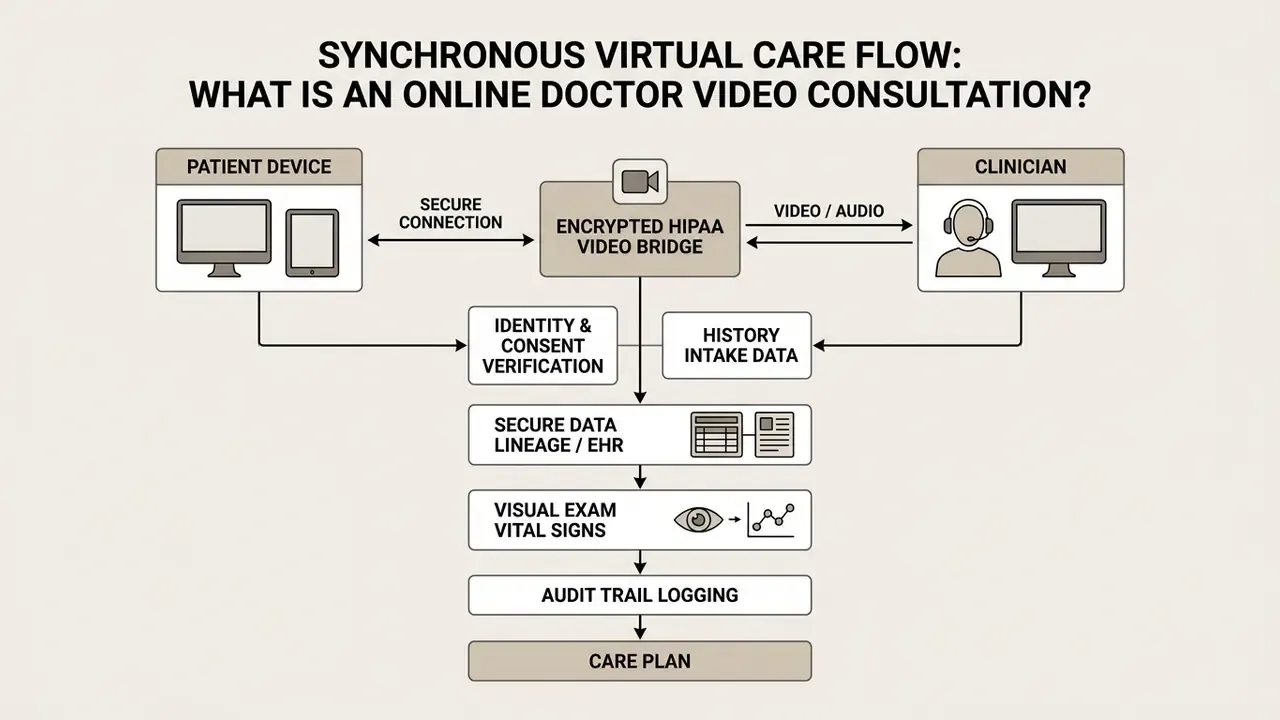
Federal healthcare guidelines established by HHS define synchronous video visits as interactive encounters where independent professional clinical judgment is exercised and documented directly in the electronic health record (EHR). HRSA's Uniform Data System definitions go further, specifying that a virtual visit is a documented, interactive, real-time two-way audio and/or video interaction with a licensed or credentialed provider. When patients use an online video doctor consultation, the interaction replicates the structural components of an office visit: subjective intake, objective visual observation, clinical assessment, and a mutual plan.
«Medicare defines telehealth as services delivered by a distant-site provider using interactive audio and video technology, with the patient able to be located anywhere in the U.S., including at home.»
Because these encounters carry protected health information (PHI), clinical video bridges are engineered around three non-negotiable properties: end-to-end encryption, low latency for accurate visual assessment, and full auditability of who joined the session, when, and from where. Consumer video-calling apps that lack a signed business associate agreement do not meet that bar. Convenient is not the same as compliant.
How a Video Visit Connects You With a Doctor
A video visit connects a patient with a healthcare provider through an integrated patient portal, mobile app, or web-based video portal. The process starts when a patient completes digital registration, submits medical history, and selects either a scheduled appointment or a direct doctor on demand queue.
Before the session launches, the telehealth platform performs automated identity verification and collects required informed consent disclosures, including the patient's physical location. That location field is mandatory for two separate reasons: state licensure compliance, and dispatching emergency services if the clinical picture deteriorates mid-visit. Once the provider opens the secure link, both parties enter a private virtual room. The online video call doctor consultation enables live audiovisual assessment, so the clinician can observe your general appearance, respiratory effort, skin condition, and cognitive responsiveness while reviewing real-time intake data.
Two scheduling models dominate. Scheduled appointments, where the clinic assigns a slot and sends a join link by text, email, or portal notification. And unscheduled or on-demand queues, where patients enter a virtual waiting room and are matched with the next available clinician, typically within 5 to 16 minutes depending on the platform and the hour. Late evenings run longer, in my experience of watching these queues, though platforms rarely publish that breakdown.
Video Consultation, Phone Visit, and Online Doctor Without Video
Choosing an online doctor video consultation differs significantly from a phone-only visit or an online doctor without video consultation (asynchronous text messaging or portal questionnaires, for instance). Visual cues carry diagnostic data that audio-only or text-based interactions simply cannot supply.
| Telehealth Modality | Communication Format | Visual Assessment | Primary Clinical Applications |
|---|---|---|---|
| Online Doctor Video Consultation | Synchronous two-way audio and video | Full real-time visual inspection | Rashes, swelling, throat inspections, gait and range of motion, initial mental health assessments, acute minor illness |
| Phone Visit (Audio-Only) | Synchronous two-way audio only | None | Routine follow ups, medication refill checks, verbal counseling, tech-limited patient safety net |
| Asynchronous Care (No Video) | Store-and-forward text and intake forms | Static photos or submitted records | Routine questionnaire-based refills, non-urgent photo reviews, administrative check-ins |
«Patients preferred video visits for assessing visual symptoms such as rashes or swelling, while audio visits were favored for multitasking or when technical limitations existed.»
Clinical guidelines from the American Telemedicine Association, specifically the Practice Guidelines for Live, On Demand Primary and Urgent Care published by the ATA, establish that direct-to-patient primary and urgent care may be delivered through real-time video and, in defined circumstances, audio alone. On that basis, an online doctor no video setup or phone consultation is clinically acceptable for routine medication follow ups, results review, or administrative counseling. However, an online doctor visit no video format is inadequate when physical visual inspection is clinically indicated: examining a skin lesion, assessing eye inflammation, watching how someone actually moves. NHS England guidance draws the same line from the opposite direction, noting that video is unnecessary where an online form or telephone call is demonstrably sufficient.
Regulatory standards in several jurisdictions also restrict initial prescriptions for complex conditions when the interaction relies solely on asynchronous text with no real-time exchange. Australian and Indian telemedicine guidance both classify questionnaire-only prescribing, conducted without any live patient-clinician contact, as falling below good medical practice.
Medical Disclaimer & Regulatory Notice
What Can an Online Video Doctor Visit Help With?
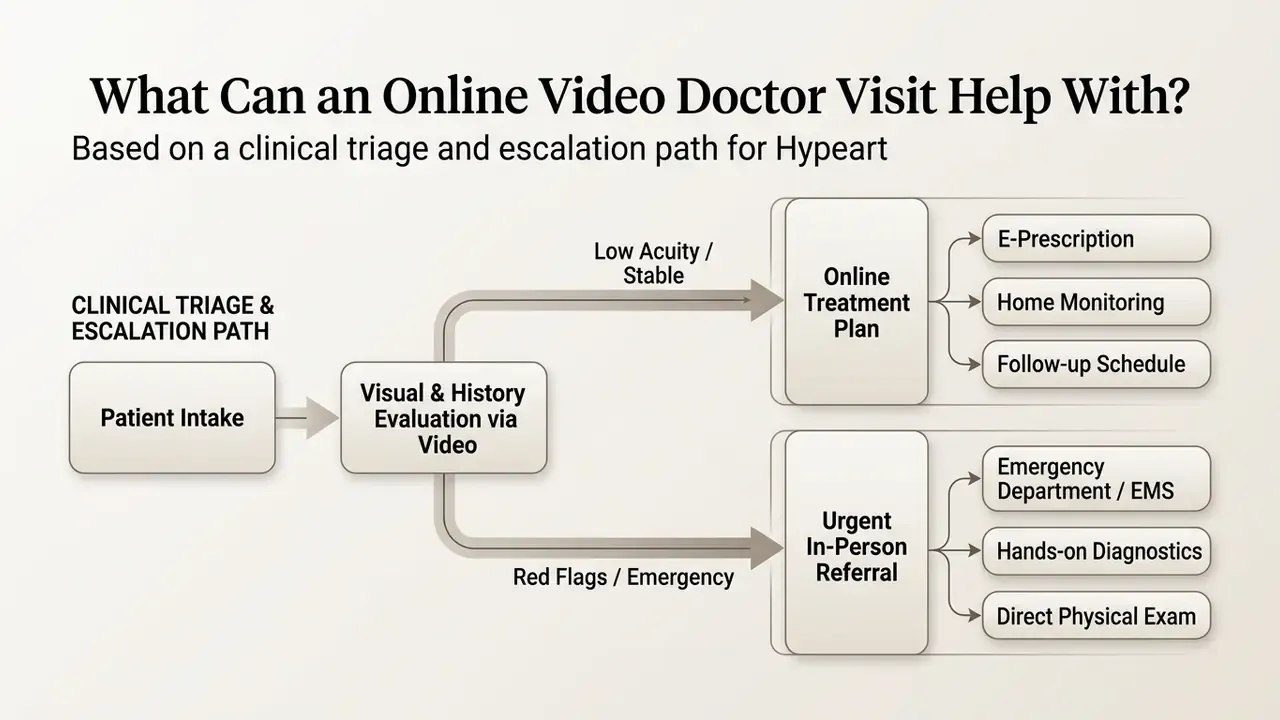
An online video doctor visit can evaluate, diagnose, and treat a broad spectrum of non-emergency medical conditions across primary care, urgent care, chronic disease management, and mental health care. Using real-time visual observation plus clinical history, clinicians decide whether a condition can be fully managed online or needs referral to an in-person facility.
Care Tiers: Where Video Consultations Fit in the System
Video consultation applicability varies by level of care. Understanding which tier you are in explains why one clinic offers video freely while another insists on an in-person appointment.
- Primary care (first contact). The most common setting for video visits: initial assessment of minor acute illness, prescription issuance and renewal, lab result interpretation, and preventive counseling. GP-equivalent practices run the highest volume of virtual appointments of any tier.
- Secondary care (specialist, by referral). Dermatology, cardiology, endocrinology, and psychiatry consultations delivered after referral. Video is used for history-taking, treatment titration, and pre- or post-procedure discussion, while diagnostic procedures stay on-site.
- Tertiary and quaternary care (highly specialized). Complex surgical, oncologic, and transplant care remains predominantly face-to-face given acuity and procedural intensity. Video is limited to multidisciplinary team reviews, second opinions, and pre-admission planning.
- Community care (continuous, home-based). Also described as telehealth "video visits," this tier supports ongoing monitoring of chronic and frail patients at home. It is valuable when demand on clinicians is high, when weather prevents travel, or when the physical effort of attending would harm the patient. Regular short video contacts build familiarity, improve the accuracy of collected clinical information, and surface early warning signs for the primary care team, which in turn helps prevent avoidable readmissions.
Urgent Care and Primary Care Visits Online
Online urgent care and primary care video visits address non-life-threatening concerns that need prompt clinical attention but not emergency department resources. Common conditions managed via an online video call with doctor include:
- Respiratory symptoms mild asthma, seasonal allergies, sinus congestion, uncomplicated bronchitis, and sore throat.
- Dermatological issues mild rashes, superficial burns, contact dermatitis, insect bites, and localized skin infections.
- Gastrointestinal complaints uncomplicated nausea, mild diarrhea, heartburn, and dietary upset.
- Genitourinary complaints uncomplicated urinary tract infection symptoms and yeast infections.
- Routine primary care chronic disease check-ins (hypertension, stable type 2 diabetes review), lab result discussions, prescription refills, and preventive health counseling.
«Across 782,596 encounters, telemedicine visits showed no significant difference in 7-day hospitalizations compared with in-person care.»
That same cohort quantifies clinician caution during virtual encounters. The pattern matters for anyone who assumes an online visit means an automatic antibiotic.
«Medications were prescribed in 29.5% of telemedicine visits versus 39.8% of in-person visits, a 10.3 percentage-point difference after covariate adjustment.»
Clinicians hold conservative prescribing thresholds during video encounters, ordering fewer unnecessary antibiotics and fewer imaging studies when a hands-on exam is not possible. Follow-up rates stay modest too: one 2024 primary care cohort recorded a 6.28% follow-up rate within seven days of a video visit, broadly consistent with office-based care. Not identical, but close enough that the modality is not the deciding factor.
Mental Health Video Consultations
Telemental health is one of the most clinically validated applications of online video consultations. Psychiatrists, psychologists, and licensed clinical social workers use video calls to conduct comprehensive psychiatric evaluations, deliver psychotherapy, and manage psychotropic medications.
In a landmark randomized controlled trial published in The BMJ (Haun et al., 2024; the PROVIDE-C study), primary care patients who received five structured video consultations with offsite mental health specialists achieved statistically significant and sustained reductions in depression and anxiety scores over 12 months compared with usual care.
«Adjusted between-group difference in PHQ-ADS scores was −2.4 points at 6 months and −2.9 points at 12 months (p < 0.01).»
The visual component proved critical. It lets clinicians observe affect, facial expression, and non-verbal cues that carry weight in therapeutic rapport. This is also why professional bodies such as the RANZCP require initial psychiatric assessments to be conducted by video rather than audio: safe risk assessment generally depends on seeing the person.
Operationally, video also reduces missed appointments. NHS England's telemental health case study of Berkshire Healthcare NHS Foundation Trust reported shorter waiting times, easier access for new and existing patients, and scheduling flexibility around work and caring responsibilities. Those factors measurably reduced "did not attend" (DNA) outcomes, freed clinical capacity, and cut the cost of rebooking. Removing travel time and transport cost is the mechanism most often credited for the improvement.
On medication management, federal regulations extended joint DEA and HHS telemedicine flexibilities through December 31, 2026. Under these rules, board-certified clinicians can prescribe eligible Schedule II to V controlled substances via telemedicine when evaluating patients through real-time, two-way audio-video communication, provided federal and state requirements are met. Requirements diverge outside the United States: India's telepsychiatry guidance, for example, requires synchronous video for a first consultation before prescribing certain psychotropics, while permitting audio or text for later refills.
Matrix: Conditions Suitable for Online Video Visits vs. In-Person Care
The matrix below outlines general guidance on care modality selection. The final determination must always be made by a qualified healthcare provider during intake triage. As a rule of thumb, anything requiring palpation, auscultation, internal examination, wound debridement, or same-hour imaging belongs in person; anything resolvable through history plus visual inspection is a candidate for video.
| Clinical Category | Suitable for Online Video Consultation | Requires In-Person or Emergency Evaluation | Clinical Evidence & Guidelines |
|---|---|---|---|
| Urgent Care | Minor sprains, superficial cuts, mild conjunctivitis, uncomplicated UTI symptoms, rash review. | Suspected fractures, deep lacerations needing sutures, high fever in infants, severe abdominal pain requiring palpation. | ACEP emergency telehealth practice guidance mandates immediate escalation for unstable or high-acuity presentations. |
| Primary Care | Blood pressure monitoring checks, stable diabetes review, lab result interpretation, prescription renewals. | New severe chest tightness, acute shortness of breath, unexplained neurological deficits, acute abdomen, any exam needing auscultation. | Cohort studies show primary care video visits maintain low 7-day hospitalization rates similar to office care (Reed et al., 2021; Casey et al., 2024). |
| Mental Health | Depression, generalized anxiety, PTSD counseling, stress management, routine medication check-ins. | Active suicidal ideation with intent, acute psychosis, severe agitation, active substance withdrawal requiring detox. | The PROVIDE-C trial (The BMJ, 2024) confirms long-term efficacy of brief primary care video therapy protocols. |
| Follow-Up Visits | Post-treatment check-ins, wound visual checks, medication tolerance review, lifestyle coaching. | Worsening surgical site infections requiring drainage, unresolved acute deterioration after initial discharge. | Post-ED virtual follow ups require clear return-to-care safety nets if symptoms evolve (Shah et al., 2022; HHS telehealth guidance). |
| Community / Home Care | Chronic disease monitoring, device readings review, carer coordination, early-warning check-ins. | New falls with injury, suspected sepsis, dehydration needing IV fluids, acute functional decline. | NHS England community telehealth case studies document reduced DNA rates and earlier escalation to the GP. |
ALERT: Emergency Medical Warning
This information is general in nature and does not replace consultation with a specialist; in life-threatening situations, seek emergency care immediately. If you or someone in your care experiences severe chest pain, sudden weakness or facial drooping, difficulty speaking, severe shortness of breath, major uncontrolled bleeding, bluish lips or face, or sudden confusion, do not attempt to schedule an online doctor video consultation. Call 911 or go straight to the nearest hospital emergency room. National EMS clinical guidelines route suspected stroke, STEMI or acute coronary syndrome, and major trauma directly to emergency services, not to routine telemedicine.
How to Prepare for an Online Doctor Video Call
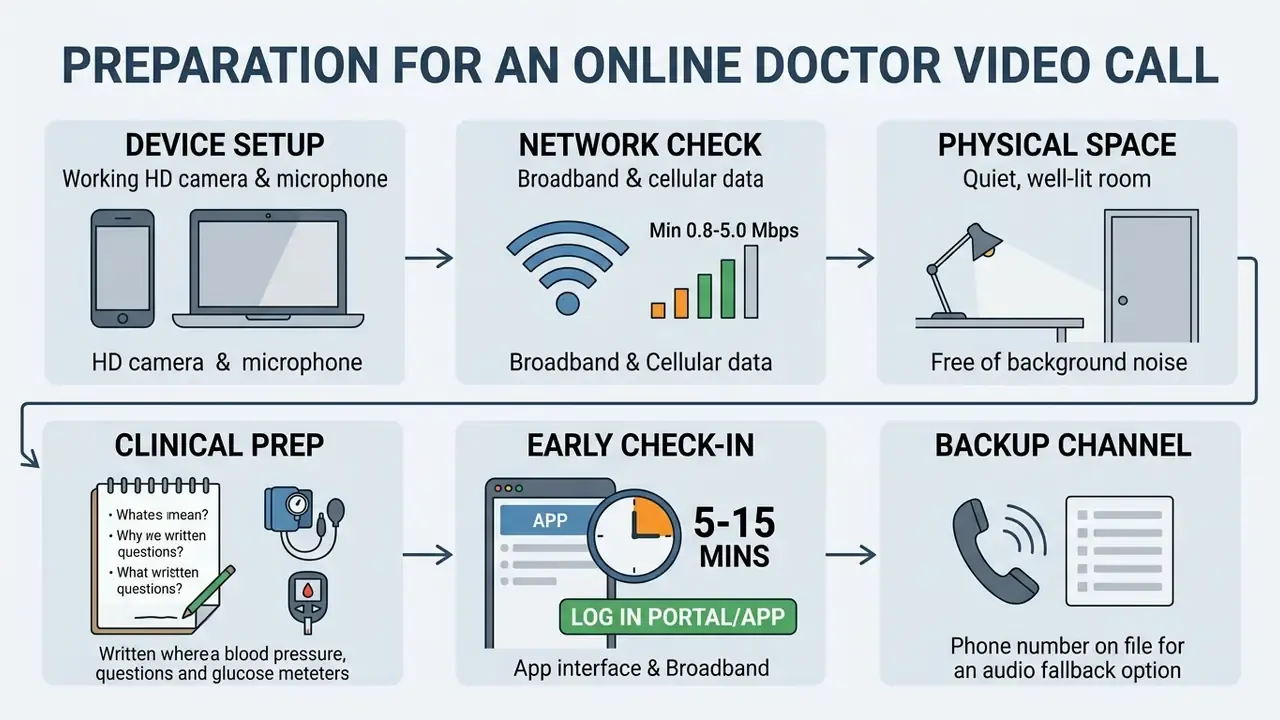
Technical, spatial, and clinical preparation is what keeps an online video call doctor consultation free of connectivity failures and privacy disruptions. Research on telehealth usability suggests clinician comfort is now near-universal, while a minority of patients still need hands-on onboarding:
«98% of physicians reported high comfort with video visits, yet 10 to 15% of patients expressed a need for additional technical support and training.»
Technical friction, in other words, is still the main barrier to good virtual care. It is also the easiest barrier to remove, and a five-minute pre-visit routine usually does it.
What You Need Before the Appointment
Gather the following tools and clinical information before your start time. Make sure each item is within reach, not in another room.

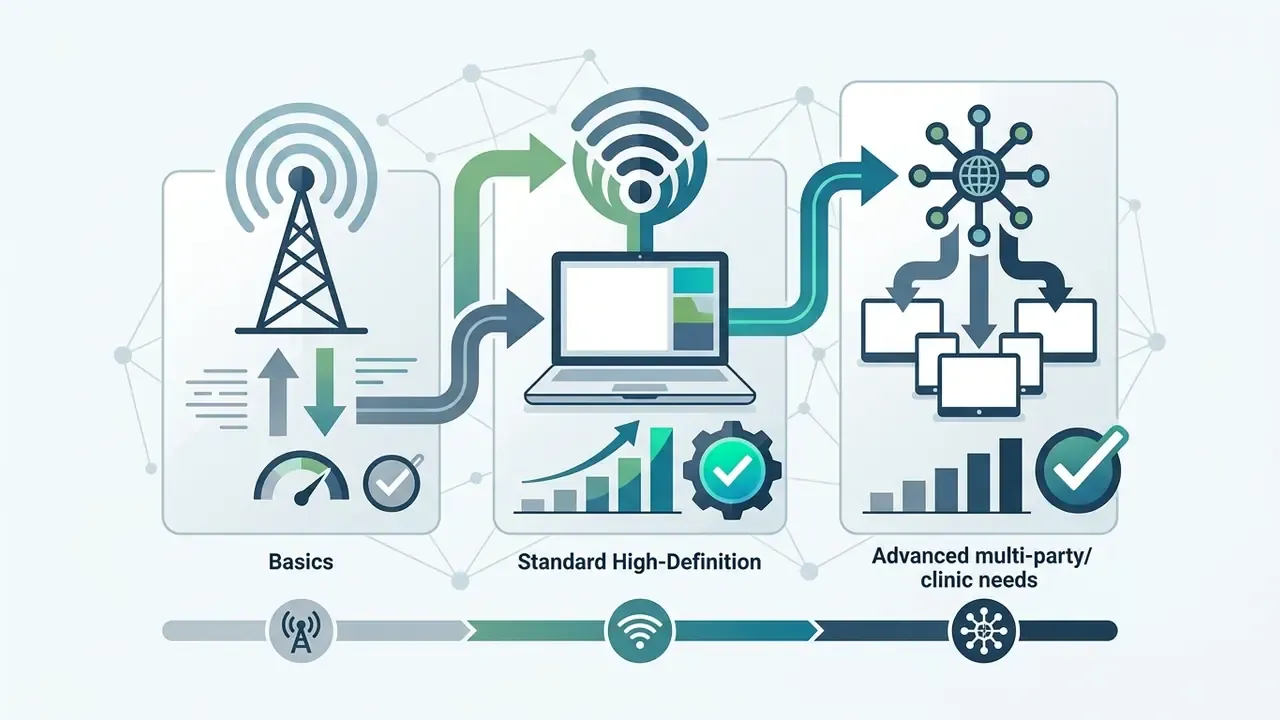
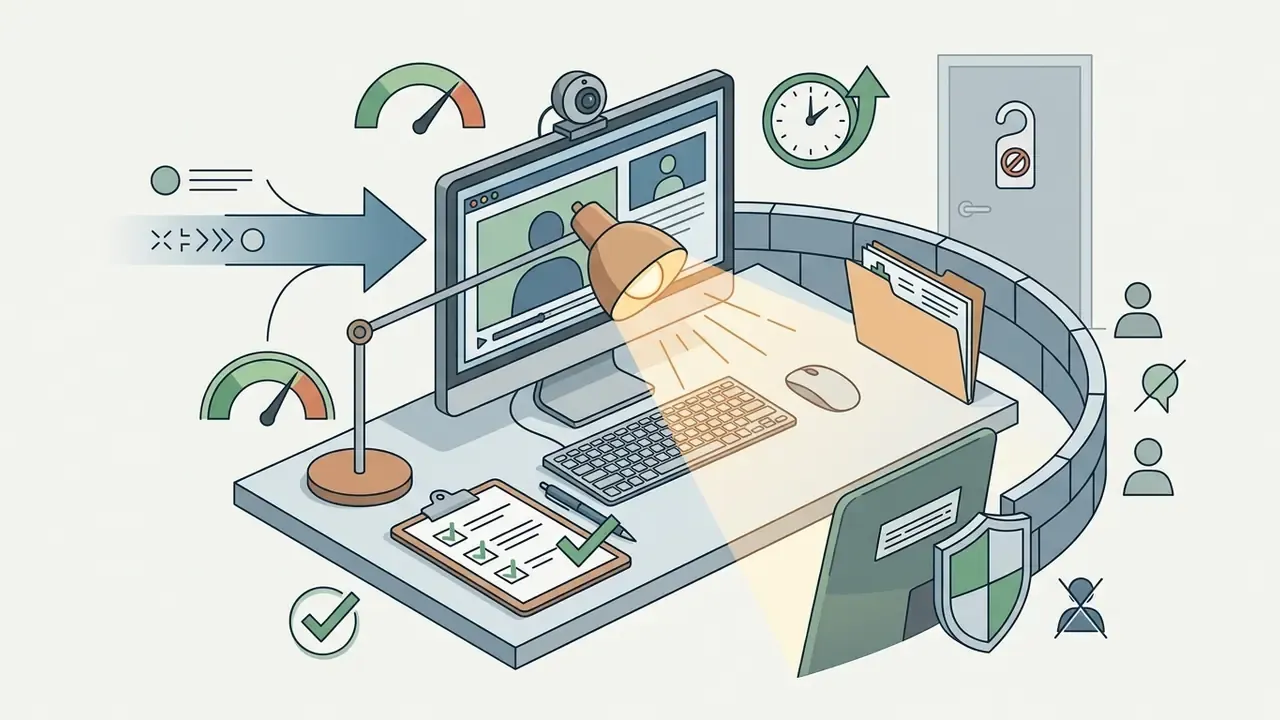

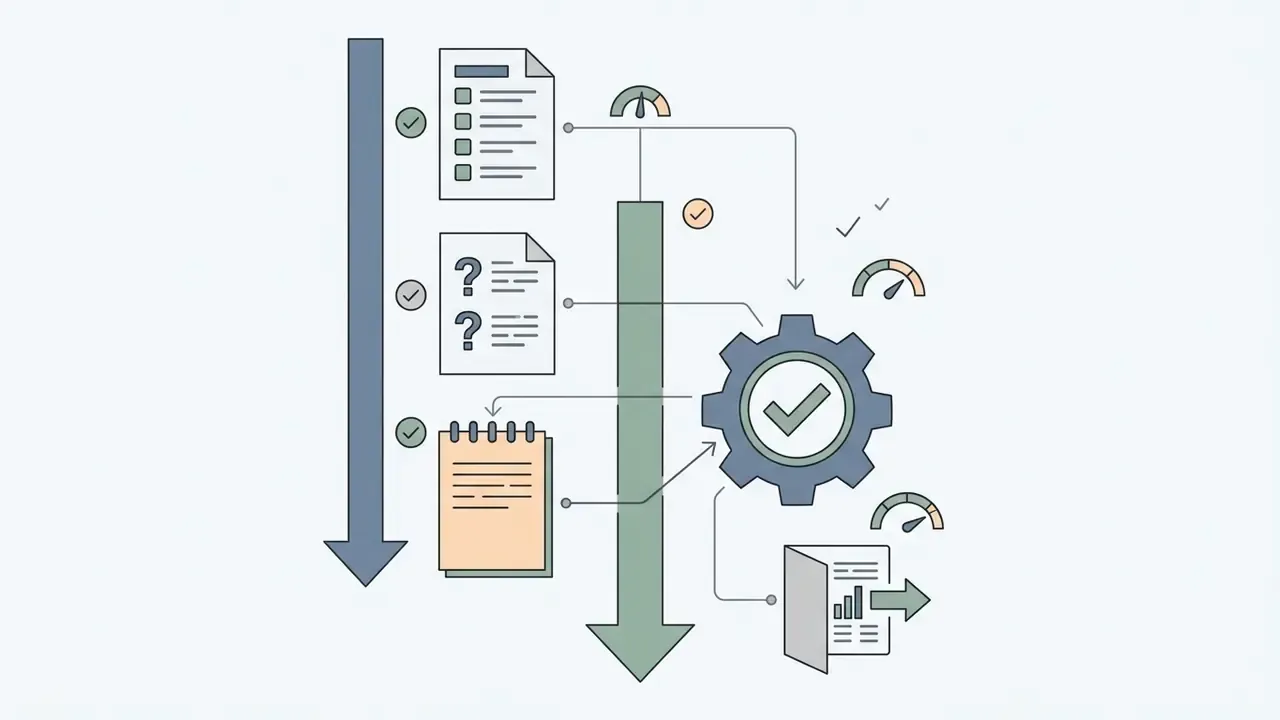
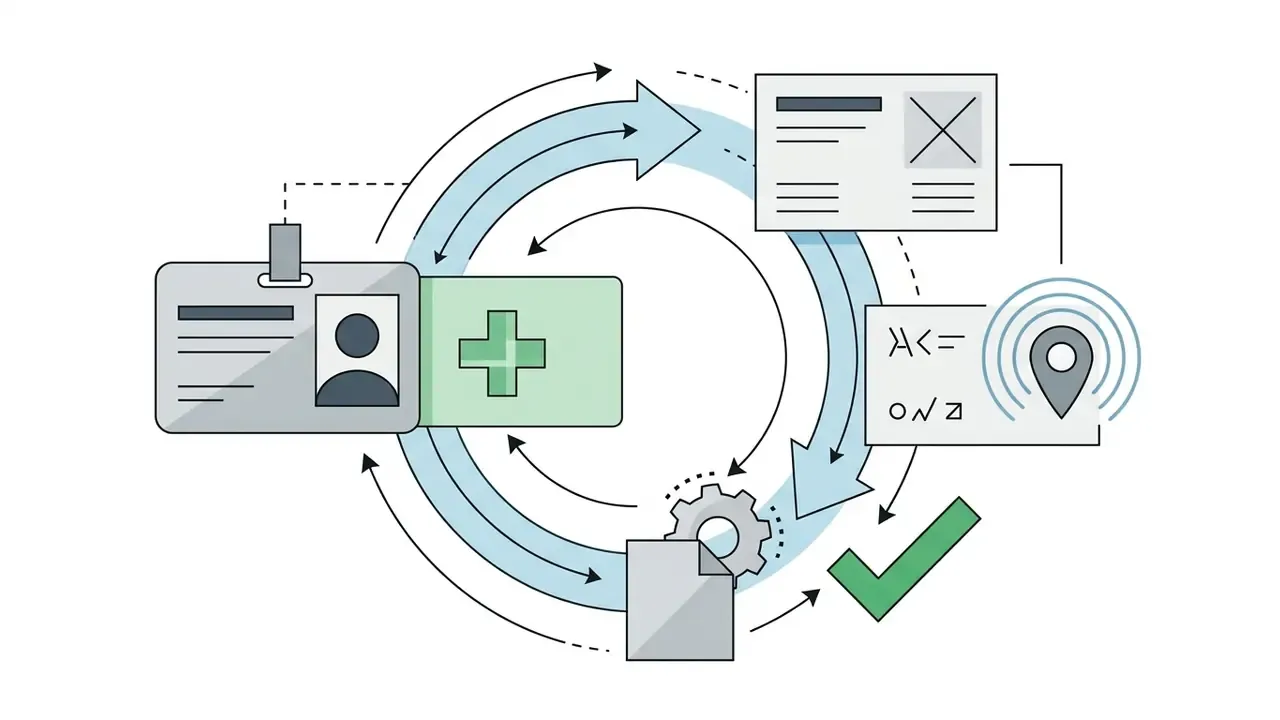
Fallback Protocol: What Happens If the Video Connection Fails
What Happens During and After a Virtual Care Visit
A standardized online video medical consultation follows a clinical workflow built for safety and thorough documentation:
- Identity and location verification.The clinician confirms your full name, date of birth, current physical location (required for state licensing and emergency dispatch), and verbal consent for telehealth.
- Subjective history taking.The doctor reviews your chief complaint, symptom timeline, medical history, allergies, current medications, and review of systems.
- Objective visual assessment.The provider runs a targeted visual evaluation, for example inspecting throat, eyes, or a skin rash, or asking you to demonstrate joint range of motion or press gently on a tender area. Home device readings such as blood pressure or pulse oximetry may be incorporated.
- Clinical assessment and diagnosis.The doctor synthesizes findings, explains the primary and any accompanying diagnoses, and builds a treatment plan.
- Prescriptions and orders.Where medically necessary, e-prescriptions go directly to your local pharmacy and diagnostic lab orders are generated.
- After-care plan and escalation guidance.You receive written summary notes, follow-up instructions, a monitoring plan, and clear indicators for when to seek in-person evaluation if symptoms worsen. Visit notes are added to your medical record after the call.
Checklist: Preparing for Your Online Doctor Video Visit
Work through these steps before launching your online video doctor consultation:
Checklist0 / 7
Costs, Insurance, and Paying for Video Consultation Online
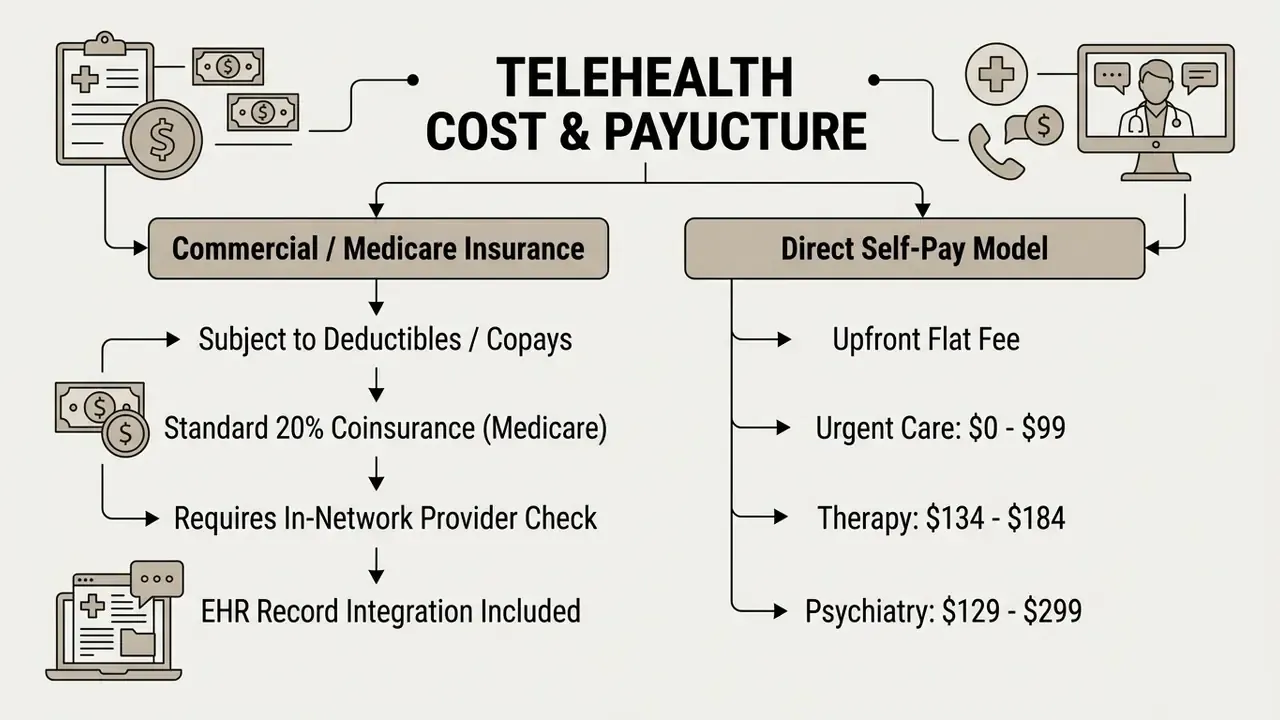
Understanding how to pay for video consultation online means reviewing insurance coverage rules, specialty tiers, session length, and out-of-pocket arrangements. Under US federal policy, Medicare Part B covers eligible telehealth video visits through at least December 31, 2027, so beneficiaries can receive virtual care from home across all US geographic regions.
«Medicare Part B covers telehealth services, including office visits and psychotherapy, with a 20% patient coinsurance of the Medicare-approved amount after the deductible.»
What Affects the Cost of an Online Consultation?
Out-of-pocket expense for an online video doctor consultation depends on several structural factors:
- Clinician specialty. Primary care and urgent care video visits generally carry lower fee schedules, from a $0 copay up to about $99 for self-pay, compared with specialized psychiatric or subspecialty consultations.
- Appointment type and duration. Initial evaluations always cost more than brief follow ups, because they include full history-taking and diagnostic formulation.
- Payment model. Patients can pay fee-for-service per visit, or use employer-sponsored and consumer subscription models that bundle virtual visits into a monthly fee, historically as low as $10 to $99 per month depending on inclusions.
- Insurance network status. An in-network healthcare provider applies plan-negotiated rates and copays, while out-of-network visits usually require full upfront self-pay.
- Clinician type. A visit with a physician, nurse practitioner, psychologist, or psychiatrist is priced differently even for the same presenting complaint.
Price by Session Length and Specialty
Initial and follow-up appointments are priced very differently, and the gap is driven mainly by scheduled minutes.
Public fee schedules follow the same logic. Medicaid telemedicine rates in one state list a psychiatric diagnostic evaluation at $137.38 per encounter, with psychotherapy paid at $59.22 for 30 minutes, $78.18 for 45 minutes, and $115.10 for 60 minutes. That is a near-linear relationship between documented time and reimbursement. When you compare quotes between services, compare dollars per scheduled minute, not the headline price.
Leading US Telehealth Platforms Compared
The comparison below summarizes publicly advertised self-pay pricing and service models. Verify current pricing and state availability on each provider's site before booking, since fee schedules and coverage change often.
| Service / Platform | Focus | Self-Pay Cost (No Insurance) | Typical Wait / Access |
|---|---|---|---|
| Doctor On Demand (Included Health) | Urgent care, therapy, psychiatry, primary care | $99 (15-min urgent care); therapy $134 / 25 min, $184 / 50 min; psychiatry $299 initial 45 min, $129 / 15-min follow-up | On-demand or scheduled; often minutes for urgent care |
| Teladoc Health | General medical, dermatology, mental health | Historically about $38 to $85 per visit depending on service line and plan | On-demand with callback, commonly within about 15 minutes |
| MDLIVE | Urgent care, dermatology, behavioral health | About $45 to $82 for general medical, higher for behavioral health | On-demand, typically 10 to 15 minutes |
| Amazon Clinic / Amazon One Medical pay-per-visit | Routine conditions, refills (acne, allergies, UTI) | Condition-based pricing (roughly $30 to $75; message-based visits cheaper than video); accepts FSA/HSA cards | Asynchronous messaging or scheduled video |
| 2nd.MD / SecondOpinions | Specialist second opinions | From about $49 per consult (SecondOpinions) up to about $3,000 per case (2nd.MD, employer-sponsored) | Specialist match typically within days |
| Health-system video visits (academic or NHS-style portals) | Primary, secondary, community care | Insurance cost-share; self-pay discounts often available | Scheduled through the patient portal |
Medication costs are not included in visit fees on any of these platforms. If a prescription is issued, you fill it at the pharmacy of your choice.
Insurance Coverage and Payment Before Your Visit
Before starting an online doctor video consultation, verify coverage rules with your health plan. Under Medicare Part B and most major commercial policies, covered video visits are billed using standard CPT codes with specific telehealth modifiers (POS 10 or 02, for example), applying the same deductible, copay, or coinsurance obligations as in-person visits. Prior authorization mirrors in-person rules as well: telehealth delivery alone does not create a new authorization requirement, but if the equivalent office service needs approval, so does the virtual one.
If the plan does not cover video visits, most health systems apply a self-pay discount and bill the patient after the encounter. Worth asking about explicitly, since it can cut the price materially versus the list rate.
Payment Option Comparison: Insurance Billing vs. Self-Pay
The table below shows how payment, verification, and documentation workflows differ across insurance-backed and self-pay virtual visits:
| Operational Feature | Insurance Coverage (Medicare / Commercial) | Direct Self-Pay (Out-of-Pocket) |
|---|---|---|
| Pre-visit verification | Eligibility, copay tier, and in-network provider status verified before the visit launches; payer contact, policy, group, and ID numbers collected. | No insurance verification required; fixed fee displayed upfront. |
| Payment timing | Copay or coinsurance collected during digital check-in, or billed after claim processing. | Full visit fee charged to a credit card or HSA/FSA card before the visit starts; some systems bill after service with a discount. |
| Out-of-pocket cost | Subject to plan deductible, coinsurance (20% under Medicare Part B, for instance), or a set copay, as low as $0 on many employer plans. | Flat fee structure, typically $49 to $99 for urgent care, $134 to $184 for therapy, $129 to $299 for psychiatry. |
| Documentation and claims | Provider submits a standard CMS-1500 claim form to the payer. | Patient receives an itemized receipt or superbill to submit for possible out-of-network reimbursement. |
| System record integration | Fully integrated with health system EHR and the primary care medical record. | Stored within the platform portal; manual record export is needed for outside physicians. |
«Older adults, racial and ethnic minority patients, and those with lower socioeconomic status were more likely to use telephone rather than video visits among Medicare beneficiaries.»
That disparity is a practical planning point, not just a policy statistic. If broadband, device access, or digital confidence is limited, ask the clinic to schedule an audio-supported visit or arrange in-person care rather than risk a failed video encounter.
Prescriptions, Privacy, and Choosing an Online Doctor Service
Choosing a reliable platform for online video consultations means verifying clinical credentials, federal regulatory compliance, data privacy standards, and electronic prescription capability. Robust telehealth platforms employ board-certified clinicians and maintain confidential systems compliant with HIPAA (Health Insurance Portability and Accountability Act) standards. HHS is explicit that telemedicine does not create a separate privacy regime: patient confidentiality, secure documentation, and access controls remain fully required for remote care.
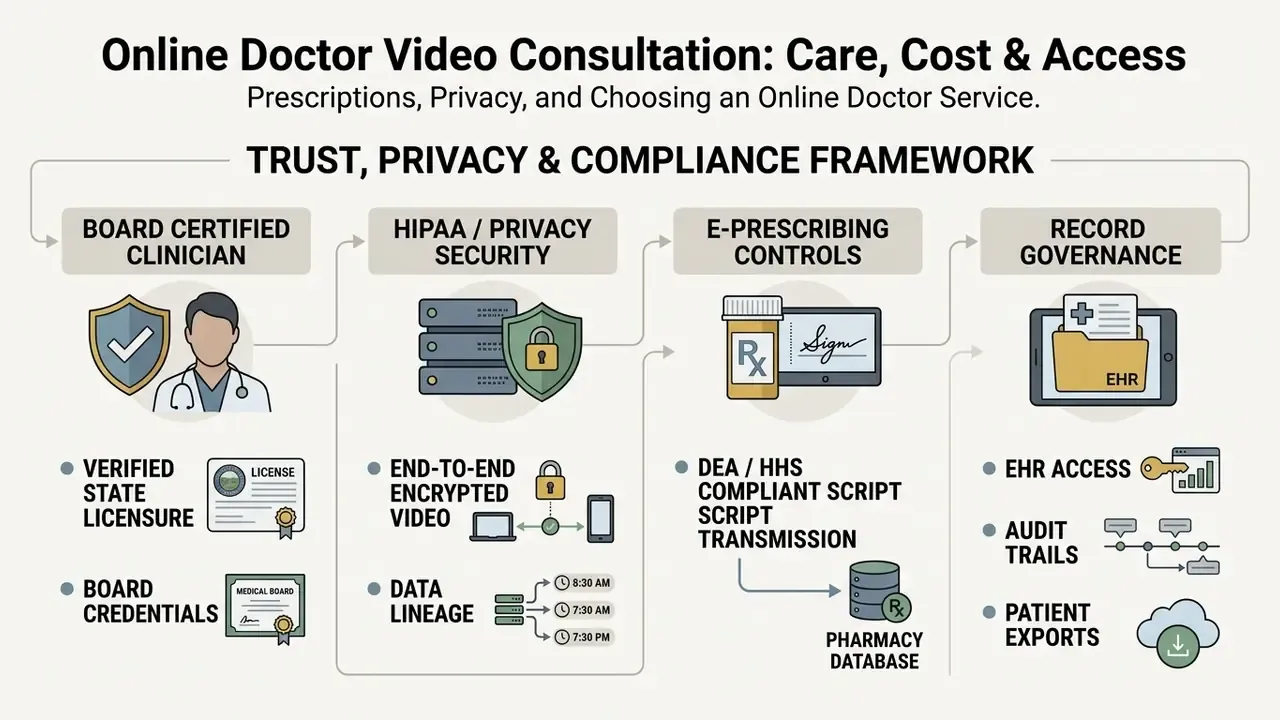
In a telemental health initiative across a network of rural clinics, administrators audited platform compliance before onboarding providers. By selecting a HIPAA-compliant video vendor with full audit logging and enforced state-level licensure verification at registration, the network passed state health department compliance checks with zero privacy infractions. The same audit habit is available to patients. Any service that cannot describe its encryption, recording policy, and record-export process in plain language should be treated as unsuitable for clinical care.
Questions to Ask Before You Start a Video Consultation
To evaluate a telehealth or doctor on demand service, ask these operational questions:
Why it matters: US medical licensing laws require the clinician to hold an active license in the state where the patient is physically located during the call.
Why it matters: Platform video infrastructure must use end-to-end encryption and comply with HIPAA privacy standards. Video calls must not be recorded without explicit written consent, and records should be accessible only to authorized personnel.
Why it matters: Clinicians can prescribe non-controlled routine medications via video. Controlled substances, however, require adherence to strict DEA/HHS telemedicine flexibilities (currently extended through December 31, 2026) and to state medical board rules. Some states prohibit controlled-substance prescribing without a prior in-person relationship.
- Are the clinicians board-certified and licensed in my state?Are the clinicians board-certified and licensed in my state?
- How is my health data and video session protected?How is my health data and video session protected?
- What are the platform's prescribing policies for medications?What are the platform's prescribing policies for medications?
- How are my medical records stored and shared with my primary care doctor?How are my medical records stored and shared with my primary care doctor?
Why it matters: Continuity of care requires that visit summaries, lab orders, and prescription notes can be exported directly to your primary EHR or downloaded for your own records.
«Telehealth satisfaction was initially lower among older and non-English-speaking patients, but differences from in-person visits narrowed substantially within the first year.»
Why it matters: Reliable platforms publish technical support contacts, define an audio fallback path, and document how high-risk patients are transferred to local emergency services using the location recorded at check-in.
- What support and emergency escalation protocols exist if my connection fails or my condition worsens?What support and emergency escalation protocols exist if my connection fails or my condition worsens?
- What happens to the fee if the visit is cut short or converted to a phone call?What happens to the fee if the visit is cut short or converted to a phone call?
Why it matters: Policies differ. Confirm in writing whether interrupted sessions are rescheduled at no additional cost.
FAQ: Frequently Asked Questions About Online Video Consultations
Can an online doctor write me a prescription?
Yes. Licensed clinicians may e-prescribe non-controlled medications after an appropriate video assessment, sending the script directly to your chosen pharmacy. Controlled substances (Schedules II to V) require compliance with DEA/HHS telemedicine rules, currently extended through December 31, 2026, plus your state's own restrictions, and always require real-time two-way communication.
Can a video doctor issue a sick note or work or school excuse?
Frequently, yes, for conditions the clinician actually assessed and documented during the visit. Requirements vary by employer, school, and state, so state your need at intake. Some platforms exclude work-status documentation for conditions they cannot verify visually.
Does the doctor have to be licensed in my state?
Yes. Licensure follows the patient's physical location at the time of the call, which is why the clinician confirms where you are before starting. If you travel across state lines, tell the platform: your appointment may need to be reassigned to a clinician licensed in that state.
What if my internet fails mid-visit?
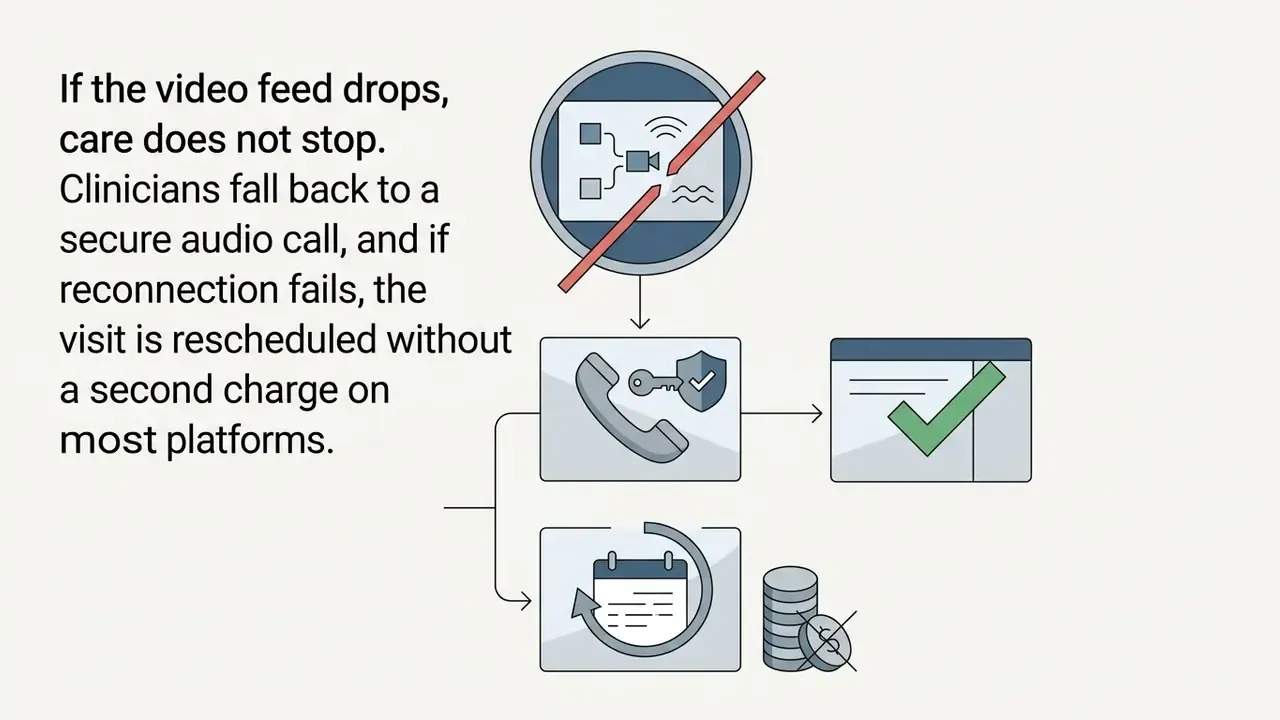
The clinician will normally continue on a secure audio call using the number on file. If reconnection is not possible within a few minutes, the visit is rescheduled, on most platforms without a second charge.
Is a video visit as good as seeing a doctor in person?
For selected conditions, outcomes look comparable. A 782,596-encounter cohort in JAMA Health Forum (2024) found no significant difference in 7-day hospitalizations, and the PROVIDE-C randomized trial in The BMJ (2024) showed sustained improvement in depression and anxiety scores. Video still cannot replace palpation, auscultation, internal examination, or imaging.
Do I need insurance to book an online doctor video consultation?
No. All major platforms offer self-pay pricing, typically $49 to $99 for urgent care, and accept HSA/FSA cards. If you are insured but out of network, request an itemized superbill for possible reimbursement.
Are video visits covered by Medicare?
Medicare Part B covers eligible telehealth services, including visits from home anywhere in the US, through December 31, 2027. Standard cost-sharing applies: 20% coinsurance of the approved amount after the Part B deductible. Next Steps: How to Choose a Telehealth Provider and Book Your Visit
- Triage first. Check your symptoms against the emergency warning list above. Anything suggesting stroke, cardiac event, major trauma, severe breathlessness, or acute psychiatric risk goes to 911 or the emergency department, not to a video queue.
- Match the tier to the need. Routine illness and refills point to a primary care video visit. A specialist question means secondary care video by referral. Ongoing chronic monitoring belongs in a community care or telehealth program. Complex procedural care stays in person.
- Verify licensure and credentials. Confirm the clinician is board-certified and licensed in the state where you will physically be during the call.
- Check coverage before you book. Call your plan or use the platform's eligibility tool. Ask for the exact copay or coinsurance, and whether prior authorization applies as it would in person.
- Compare dollars per minute. Use the pricing and platform tables above to weigh a 15-minute urgent care visit against 25-, 45-, and 50-minute specialty sessions.
- Confirm privacy and record portability. Ask how the session is encrypted, whether it is recorded, and how the visit summary reaches your primary care physician.
- Lock in the fallback. Give the platform a working callback number and confirm the no-charge reschedule policy.
- Prepare with the checklist. Complete the checklist above, then join the session 5 to 15 minutes early so identity verification and consent do not eat into clinical time.
Medical Reviewer & Regulatory Sources
Medical review and fact-checking standard: This guide on online doctor video consultations was reviewed for clinical accuracy, regulatory alignment, and policy currency against US federal telehealth standards. All pricing examples reflect publicly advertised self-pay rates at the time of the last update and should be re-verified with the provider before booking. Content is educational and does not constitute medical, legal, or financial advice. Key regulatory and clinical references:
- CMS telehealth guidance (2026): Centers for Medicare & Medicaid Services policy on Medicare Part B covered telehealth services, with originating-site flexibilities extended through Dec 31, 2027, and standard 20% coinsurance after the Part B deductible. CMS Telehealth Resources
- HHS / DEA telemedicine prescribing rules (2026): Joint HHS and DEA extension of telemedicine flexibilities for prescribing controlled substances via synchronous video encounters through Dec 31, 2026. Telehealth.HHS.gov
- HHS telehealth privacy guidance (2026): Federal and state privacy obligations for protecting patient health information during remote care. Telehealth privacy laws and policy
- BMJ clinical trial (Haun et al., 2024): Integrated mental health video consultations in primary care (PROVIDE-C), assessor-masked multicenter randomized controlled trial; adjusted PHQ-ADS difference −2.4 points at 6 months and −2.9 at 12 months (The BMJ, 384:e077463). https://www.bmj.com/content/384/bmj-2023-077463
- JAMA Health Forum cohort study (Casey et al., 2024): Telemedicine vs In-Person Care, medication prescribing 29.5% versus 39.8%, no significant difference in 7-day hospitalizations across 782,596 encounters (JAMA Health Forum, 5(3):e240012). https://jamanetwork.com/journals/jamahealthforum/fullarticle/2815000
- Frontiers in Medicine (Sinha et al., 2023): Clinician and patient telehealth usability; 98% clinician comfort with video visits, 10 to 15% of patients requiring additional technical support. https://www.frontiersin.org/journals/medicine
- JAMA Network Open (Ganguli et al., 2023): Disparities in video versus telephone telehealth use among Medicare beneficiaries. https://jamanetwork.com/journals/jamanetworkopen
- Mayo Clinic Proceedings: Digital Health (Westfall et al., 2024): Longitudinal telehealth satisfaction trends among older and non-English-speaking patients. https://www.mayoclinicproceedings.org/digital-health
- Telemedicine Reports (Kruis et al., 2024): Qualitative study of patient modality preference between video and audio-only visits.
- American Telemedicine Association: Practice Guidelines for Live, On Demand Primary and Urgent Care; telestroke guidelines for emergency escalation pathways. https://www.americantelemed.org/
- HRSA health center telehealth standards (2025/2026): Health Resources and Services Administration UDS definitions for synchronous interactive audio-video clinical encounters. https://www.hrsa.gov/
- NHS England telehealth guidance and case studies: Video consultation implementation, audio fallback protocol, and reported reductions in "did not attend" outcomes in mental health services. Related reference material on digital media and terminology is collected in our AI Media Glossary.