Author note: Marcus Hale writes about AI governance and model risk for this publication.
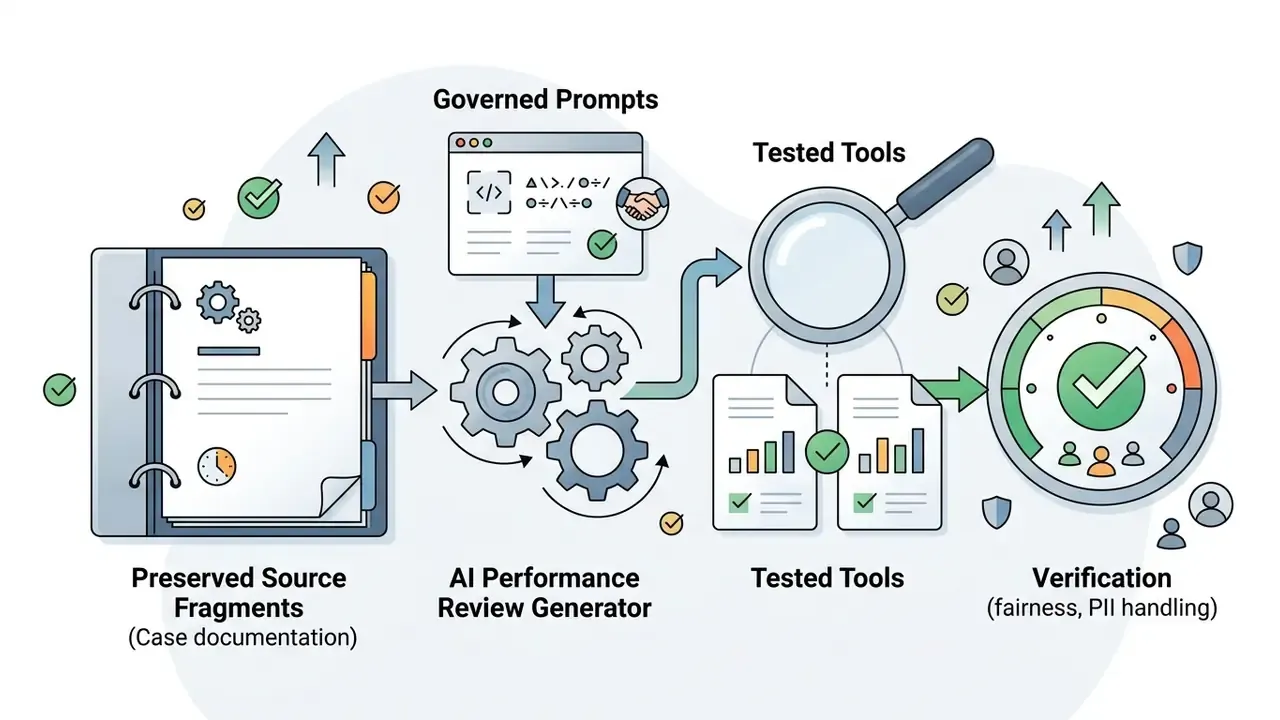
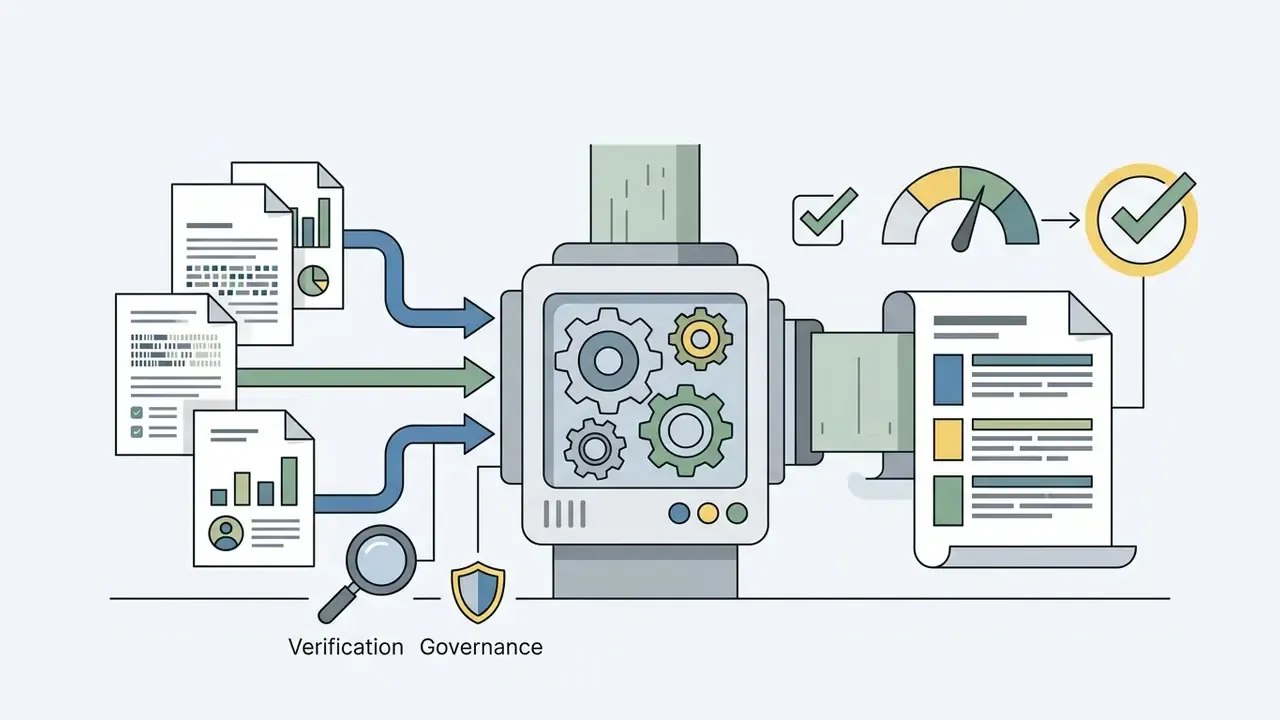
An AI performance review generator is a specialized large language model application that converts raw operational data into structured, professional appraisal drafts. Deployed inside an enterprise governance framework, an AI employee review generator speeds up narrative drafting while keeping human verification mandatory. Accuracy, fairness, confidentiality: none of those transfer to the model.
"No evidence, no autonomy. Generative AI tools can accelerate drafting, but without human calibration and verifiable audit trails, automated evaluations introduce severe model and governance risks."
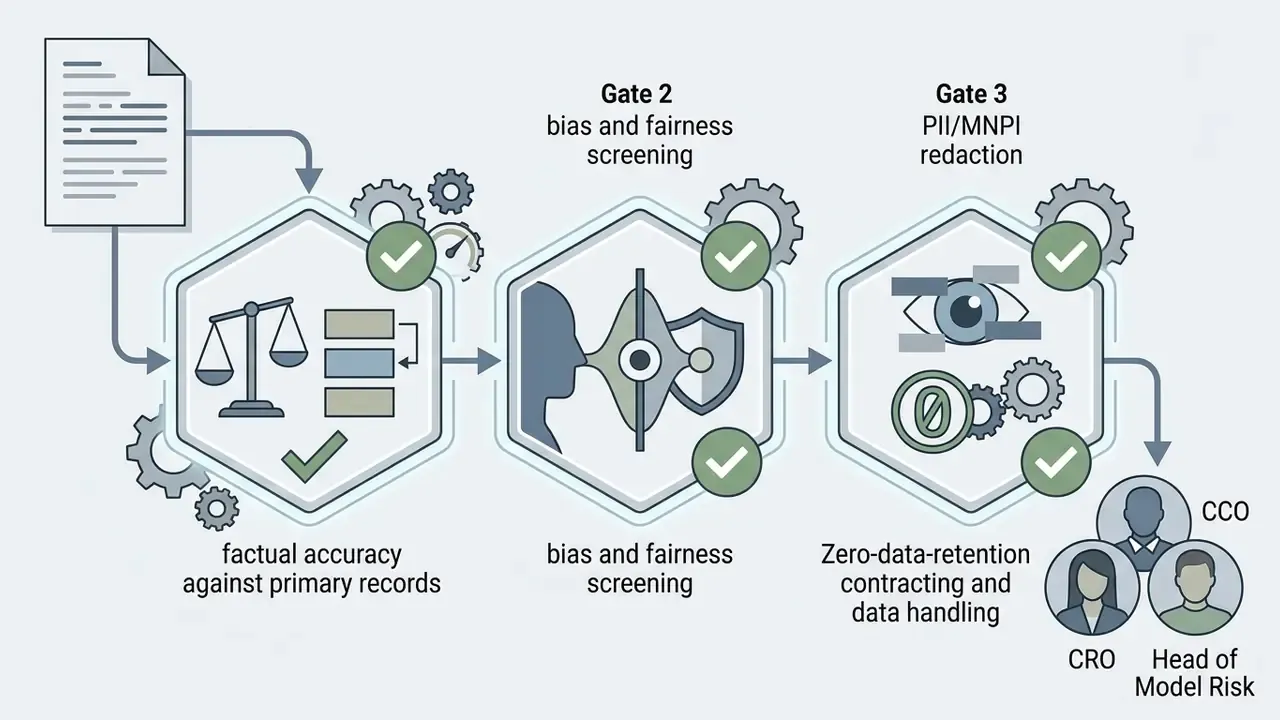
Executive Summary for CROs, CCOs, and Heads of Model Risk
Who This Guide Is Written For (and How to Read It)
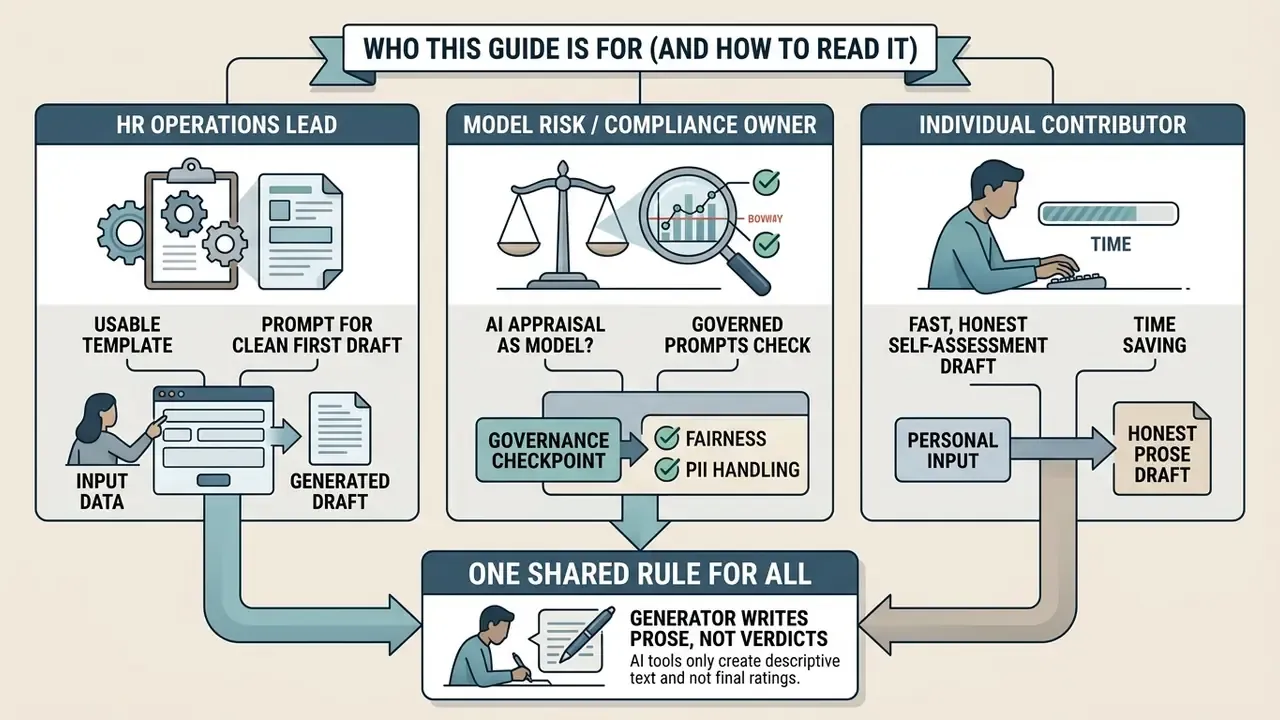
Three readers show up for this topic, and they want different things.
The HR operations lead wants a usable template and a prompt that produces a clean first draft. Start with the data-input section and the prompt library, then run the export checklist before pasting anything into Workday.
The model risk or compliance owner wants to know whether an AI appraisal generator counts as a model under SR 11-7, who owns it, and what evidence lands in the audit file. Start with the verification section and the deployment-tier table.
The individual contributor writing a self-assessment wants a fast, honest draft. Use the self-evaluation prompt, redact anything sensitive, and keep every claim tied to something a manager can confirm.
One shared rule applies to all three: the generator writes prose, not verdicts. Everything else in this article follows from that single line.
What Is an AI Performance Review Generator and Which Evaluations Need One
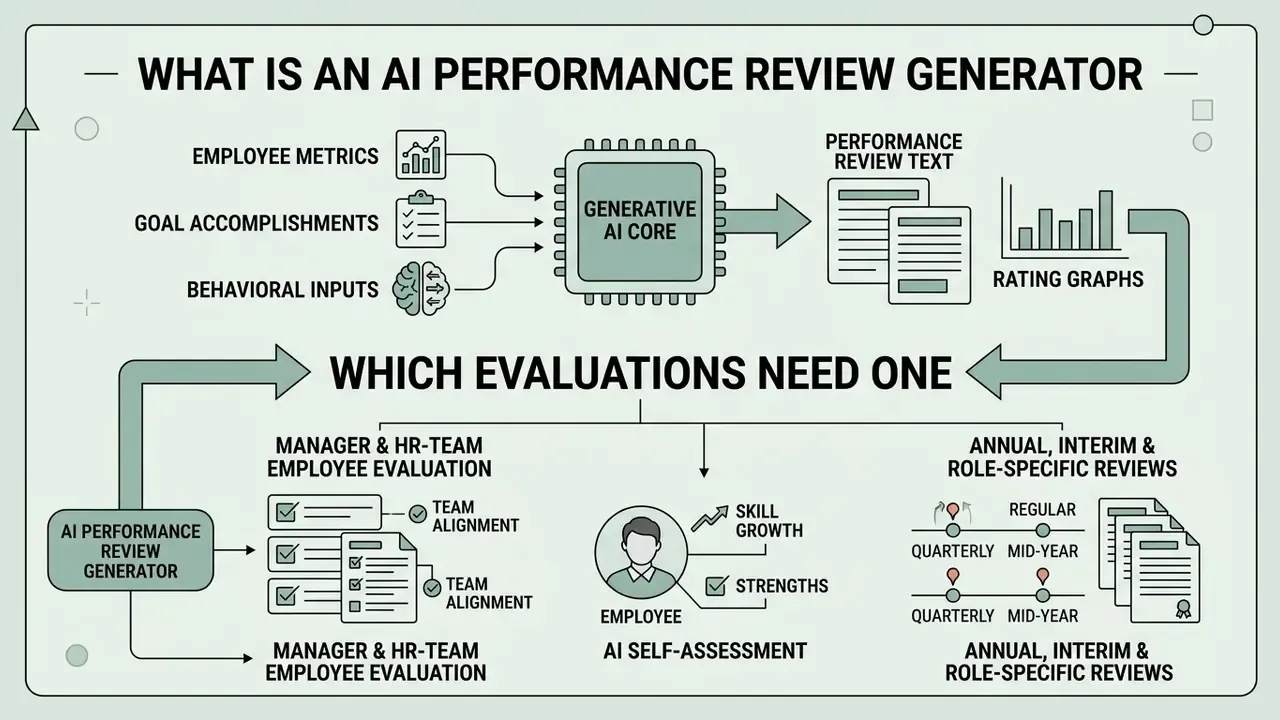
An AI performance review generator is a software tool powered by generative artificial intelligence that synthesizes employee metrics, goal accomplishments, and behavioral observations into formal appraisal narratives. Organizations use an AI appraisal generator across several evaluation workflows: manager assessments, employee self-evaluations, interim check-ins, and annual performance cycles.
Verification note. Workforce-research working groups, including labor-relations programs at major U.S. universities, describe generative AI as an increasingly common tool for summarizing employee achievements and surfacing performance insights for leadership. The specific 2026 working-paper attribution used in an earlier version of this article could not be independently verified at the time of this update, so the claim appears here as an industry pattern rather than a sourced statistic (the original wording is preserved in Appendix A). What is verifiable is the governance requirement: NIST AI RMF guidance expects such outputs to stay under human oversight, monitoring, and final approval before they touch a formal personnel decision.
"GPT-4 exhibits higher internal consistency than individual human experts when scoring text-based work outputs, yet remains susceptible to halo and contextual biases."
"In enterprise risk management, an AI draft is never a decision; it is a raw input. Treating automated text as a final rating without human verification creates unmitigated model risk." Marcus Hale, author
Manager and HR-Team Employee Evaluation
A manager-led performance review generator processes operational key performance indicators (KPIs), project logs, and qualitative feedback into structured evaluation drafts for supervisors and human resources teams. The system sorts performance attributes into technical execution, communication, and core competencies. An AI-powered workflow lets managers save time on drafting while keeping narratives aligned with internal rating rubrics. Final scoring, developmental feedback, and merit decisions stay strictly human-owned under corporate governance standards.
Document the split explicitly in the HR AI policy. AI may summarize evidence, organize multi-source feedback, and write narrative text. Humans own the rating, the record, and the conversation. That last item matters more than people expect, since the conversation is where fairness is actually perceived.
AI Self Performance Review Generator for Self-Assessment
An AI self performance review generator helps individual team members turn milestone logs and project outcomes into articulate, first-person self-assessments. Employees enter accomplishments, quantifiable metrics, and professional growth challenges into an AI self review generator to produce structured text. Credibility depends on the edit pass: the user must review and adjust the AI self performance review generator free output so every claim reflects personal contribution and matches actual deliverables.
Effective self-assessment inputs start from concrete wins, quantify outcomes wherever possible, and use situation-action-result framing. The test is simple. Would the sentence survive a calibration meeting where your project lead is in the room?
Annual, Interim, and Role-Specific Performance Reviews
Evaluation cadence sets the required input depth and analytical horizon of an AI year end review generator.
| Review Type | Analytical Horizon | Content Focus | Typical AI Task |
|---|---|---|---|
| Annual / year-end | 12 months | Strategic alignment, final KPI achievement, competency progression, rating submission to HR | Consolidate self-assessment, peer input, and KPI data into one narrative |
| Interim / mid-cycle | 3 to 6 months | Progress against objectives, obstacles, objective or weighting revisions | Condense recent milestones and flag course corrections |
| Role-specific | Variable | Job description duties, role competencies, domain-linked KPIs | Apply a narrower, role-tailored review template |
| Probationary | 30 to 90 days | Onboarding ramp, baseline expectations, readiness decision | Draft a short structured verdict with evidence |
Comprehensive annual reviews analyze twelve months of strategic alignment, major deliverables, and competency progression. Interim mid-year check-ins concentrate on recent milestones, course corrections, and objective updates. Role-specific reviews use tailored templates that assess technical skills, job responsibilities, and domain-linked key performance measures. Policy design varies: some organizations require one interim review per cycle, others mandate both mid-year and year-end checkpoints. For adjacent benchmarks, research on the Hypeart AI Media platform or see the overview of automated operational flows.
What Data the AI Needs to Produce a Substantive Performance Review
An AI review generator needs granular context across six categories to produce a substantive evaluation instead of generic filler. Specific role descriptions, exact evaluation dates, measurable key performance metrics, observable behavioral examples, multi-source feedback, and defined output constraints drive factual precision. Empirical work by Li et al. (2024) indicates that large language models evaluate knowledge-work performance reliably only when supplied with structured rubrics and verifiable inputs.
"GPT-4 demonstrates higher internal consistency than individual human raters when evaluating textual work products against structured rubrics."
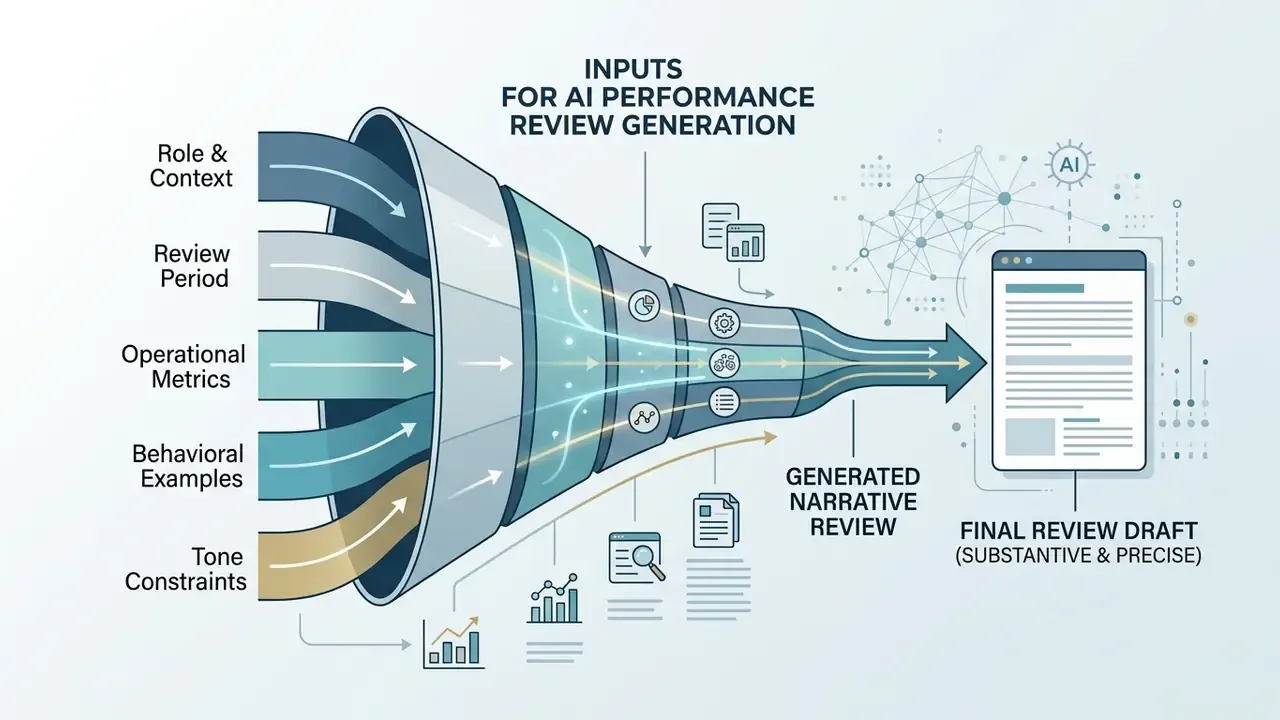
The Six Mandatory Input Blocks
- Role context job title, responsibilities, reporting line, and a written definition of "good performance" for that role.
- Time context the exact review period plus dates of key events, so credit lands in the correct cycle.
- Evidence base KPIs, dashboards, project reports, deliverables, and milestones with quantitative data wherever available.
- Behavioral context observable examples structured as Situation-Behavior-Impact, with no judgment-only language.
- Feedback context employee self-assessment, peer or 360 input, stakeholder or client feedback, and prior review history for continuity.
- Output constraints tone, audience, format, length, and policy limits. Governance guidance also expects trusted instructions to stay separated from user inputs, with prompts and responses logged.
Role Context, Responsibilities, and Review-Period Goals
Clear operational boundaries start with job descriptions, reporting structure, and explicit review period objectives. Define baseline expectations versus exceptional delivery, and the model stops leaning on generic job assumptions. State the target timeline, and accomplishments get attributed to the current evaluation cycle rather than to something the employee shipped two years ago.
A practical prompt structure separates Role Objective, Processes and Tasks, and High-Level Goals into distinct fields. That separation prevents the model from collapsing duties and outcomes into vague summary language, which is the single most common complaint about generated review text.
Metrics, Achievements, and Behavioral Examples: SBI vs. STAR
STAR (Situation-Task-Action-Result) suits objective-driven annual reviews, because it names the assigned task and the measurable result.
Wording discipline matters as much as the framework, maybe more. Goal statements should answer whether the employee met or exceeded stated performance goals, and should cite measurable results rather than activities. Achievement statements should reflect outcomes and organizational impact, with numbers wherever numbers exist. Behavior statements should always pair a competency with an observed example.
Case illustration (composite, anonymized). In a representative finance-function scenario, an analyst managed complex portfolio reconciliations, automated compliance reporting, and reduced monthly closing time by 14 hours. The supervisor entered those exact metrics and project timestamps into the generator prompt. The resulting evaluation produced an evidence-based assessment that passed internal HR review without factual corrections. Presented as an illustrative composite, not an attributed client engagement (original phrasing preserved in Appendix A).
How to Use an AI Performance Review Generator: A Step-by-Step Workflow
A governed generation process follows one sequence: select the review scope, gather contextual metrics, engineer a constrained prompt, generate the draft, run mandatory human post-editing, then export to the HRIS of record. Follow the order and you suppress hallucinations, dampen position bias, and stay inside institutional policy. Teams evaluating tools can check the Cost per Usable Output Benchmark to weigh drafting efficiency against compliance overhead.
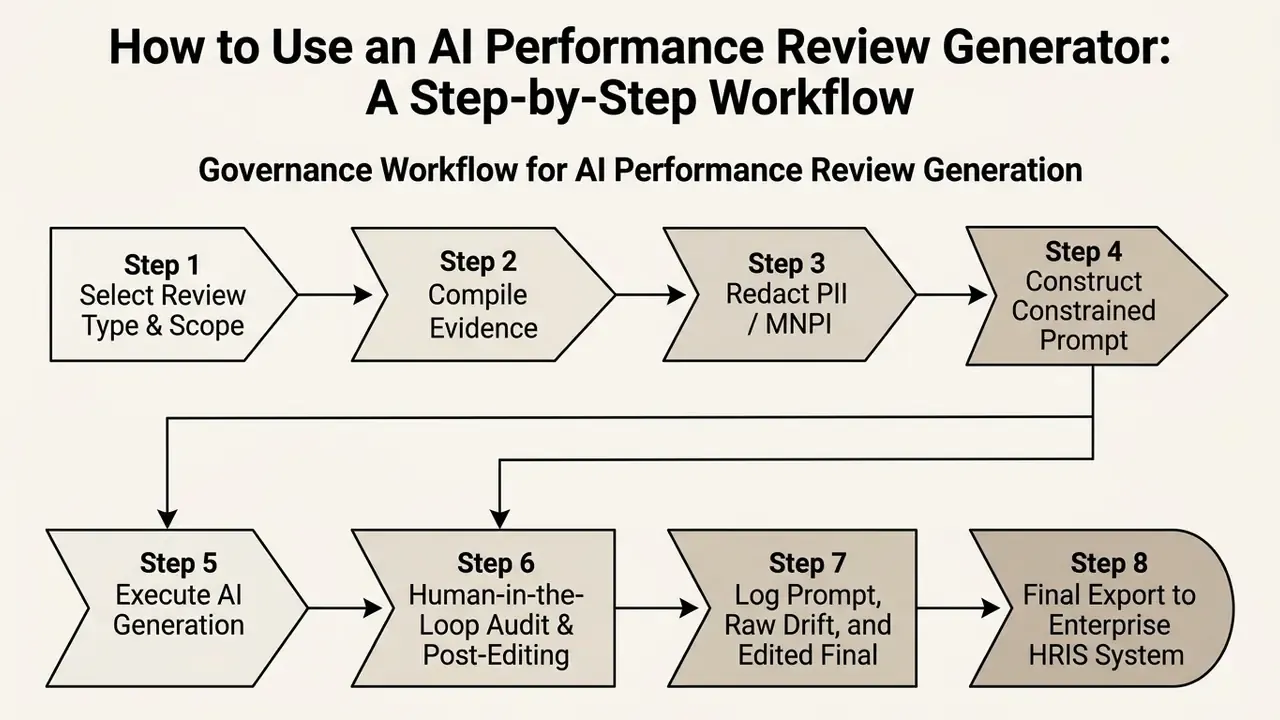
Step 1: Select the Review Type and Define the Structure
Setup begins with the right performance review template for the appraisal objective: manager review, self assessment, interim check-in, or probation decision. The user then defines explicit sections, typically key achievements, core competencies, growth areas, and upcoming SMART goals. Naming the rating scale, a 4-point or 5-point rubric, keeps generated narratives aligned with enterprise HR performance tiers.
Common published scales include a five-level structure (Exceeds Expectations, Meets Expectations, Partially Meets Expectations, Below Expectations, Unsatisfactory) and four-level university-style structures anchored on Meets and Exceeds. Whichever scale applies, state it in the prompt so narrative intensity matches the final rating. A glowing paragraph attached to a "Partially Meets" score is how disputes start.
Step 2: Build a Prompt with Facts, Metrics, and Style Constraints
Prompt engineering for a performance review AI generator combines role context, quantitative results, and explicit narrative constraints. Instruct the model to use professional language in third person for manager reviews, or first person for self-evaluations. A length limit between 200 and 500 words prevents padding while still covering required competencies.
"LLM-based evaluators are most reliable on well-defined tasks with clear criteria and structured context."
Practical tone rules from published manager writing guides: keep language neutral and professional, avoid absolute intensifiers such as "always" or "never," and tie every statement to a behavior, result, date, project, or measurable outcome. Prompt frameworks used in public-sector AI quick-start guidance define six fields, Context, Objective, Style, Tone, Audience, Response, and that maps cleanly onto review drafting.
Step 3: Edit the Output Before Publishing or Submitting
Human-in-the-loop editing is the compliance checkpoint before any generated content reaches enterprise HR systems. Managers audit each phrase against primary source documents, strip unverified claims, correct tone exaggerations, and remove language that could carry algorithmic bias.
"Changing the order of candidate responses in the prompt allowed a weaker model to be declared the winner in 66 of 80 queries."
The post-editing algorithm has four steps: verify facts against primary sources, rewrite tone to match HR policy, delete unsupported claims, and approve only after a consistency pass across sections and rating language. Budget real minutes for this. In practice it is where the time saved on drafting partly returns.
Step 4: Export, Formatting, and Perspective Conversion
Most drafting failures surface at hand-off, not at generation. Use the checklist below as your export best practices baseline.
- Tense and perspective conversion.Self-evaluations use first-person active voice ("I orchestrated the migration..."), manager reviews use third person objective voice ("the engineer orchestrated the migration..."). Reviews addressed directly to the employee use second person and need a separate pass. Never mix perspectives in one document.
- Sentence form vs. outline form.Full paragraphs give calibration committees narrative context; bulleted outlines scan faster and spotlight specific competencies. Decide before generation and state it in the prompt.
- Intermediate editor pass.Paste raw output into Google Docs or Microsoft Word to strip hidden HTML or Markdown artifacts, then reconcile headings with your HR form labels.
- Plain-text normalization for HRIS.Convert to clean plain text or simple Markdown before pasting into Workday, SAP SuccessFactors, or BambooHR, to avoid broken formatting and character-limit truncation.
- Accessibility for exported PDFs.When a review summary goes out as a visual PDF for executive evaluation, meet WCAG accessibility standards: high-contrast palettes, screen-reader-friendly typography, clear heading hierarchy, alt text on charts.
- Retention of artifacts.Store the prompt, the raw draft, and the final human-edited version in the same record for audit purposes.
How to Verify Quality, Fairness, and Confidentiality of an AI-Generated Review
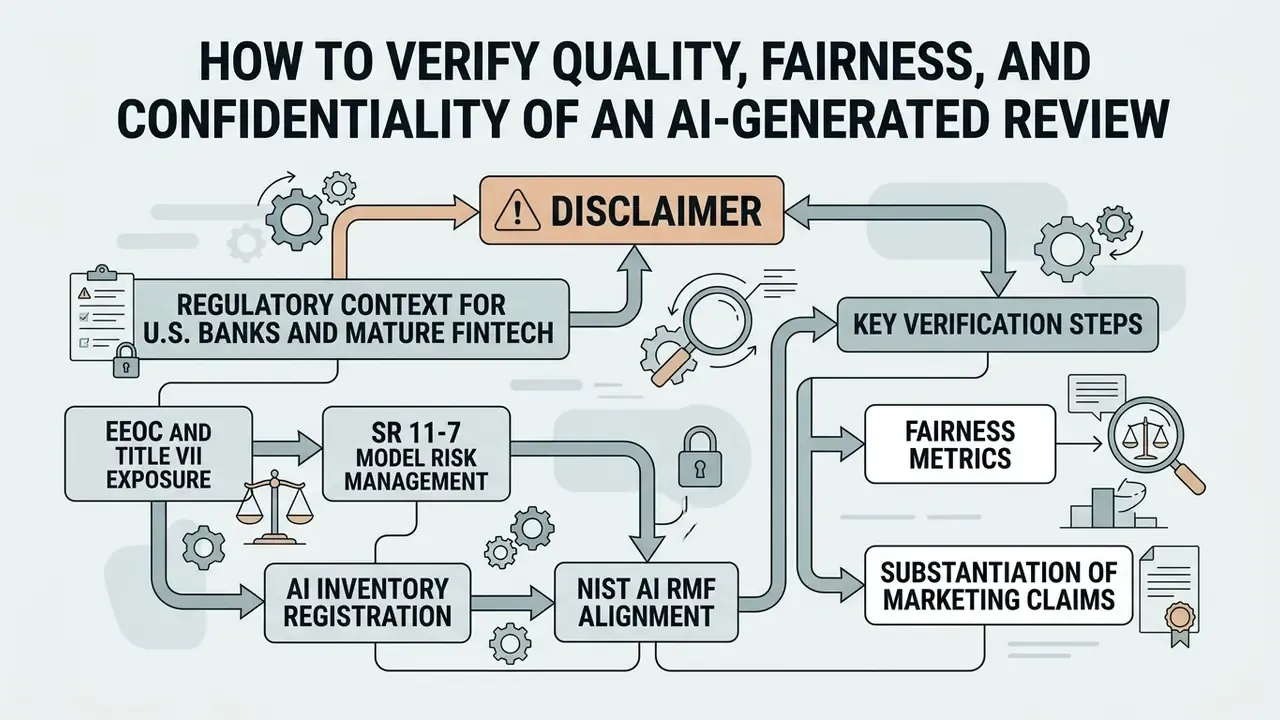
Integrity of AI-generated appraisal narratives rests on verification protocols covering factual accuracy, algorithmic bias, and corporate data security. Standards from NIST, SIOP, and the Future of Privacy Forum point the same direction: automated assessment tools require documented validation and retained human accountability. Controls must also prevent confidential workforce data from drifting into public model training sets.
"Employees trust algorithmic performance evaluations more than human ones when they expect supervisor bias."
Regulatory Context for U.S. Banks and Mature Fintech
- EEOC and Title VII exposure. AI-assisted evaluation that produces disparate impact on protected classes creates discrimination liability even without intent. Document your adverse-impact testing methodology and retain the results.
- SR 11-7 model risk management. If AI output feeds compensation, promotion, or termination decisions, supervisors may treat the tool as a model. That means a named owner, documented purpose, conceptual soundness review, ongoing monitoring, and independent validation.
- AI inventory registration. Add the generator, including any shadow browser-based tool already in use, to the institutional AI inventory with a risk tier, data-classification note, and accountable executive.
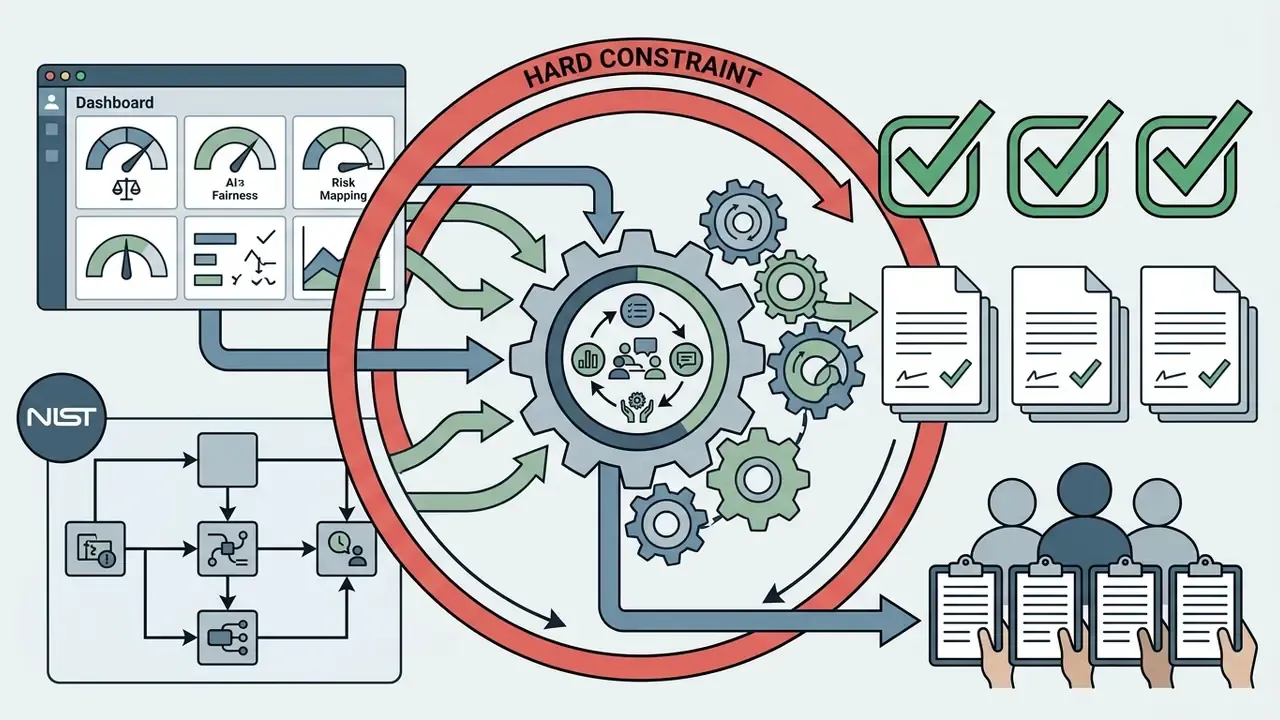
- NIST AI RMF alignment. Apply the four functions (GOVERN, MAP, MEASURE, MANAGE) from AI RMF 1.0 (2023) and the Generative AI Profile (July 2024): collect external feedback, monitor output quality, and preserve human intervention whenever outputs deviate from standards.
- Fairness metrics. Public-sector AI policies require identifying demographic groups, applying metrics such as statistical parity and equal error rates, and documenting datasets, statistical methods, and known limitations.
- Substantiation of marketing claims. Vendor phrases such as "bias free" or "objective" need documented evidence behind them. An unsubstantiated claim is itself a compliance exposure, and it will be quoted back to you in an examination.
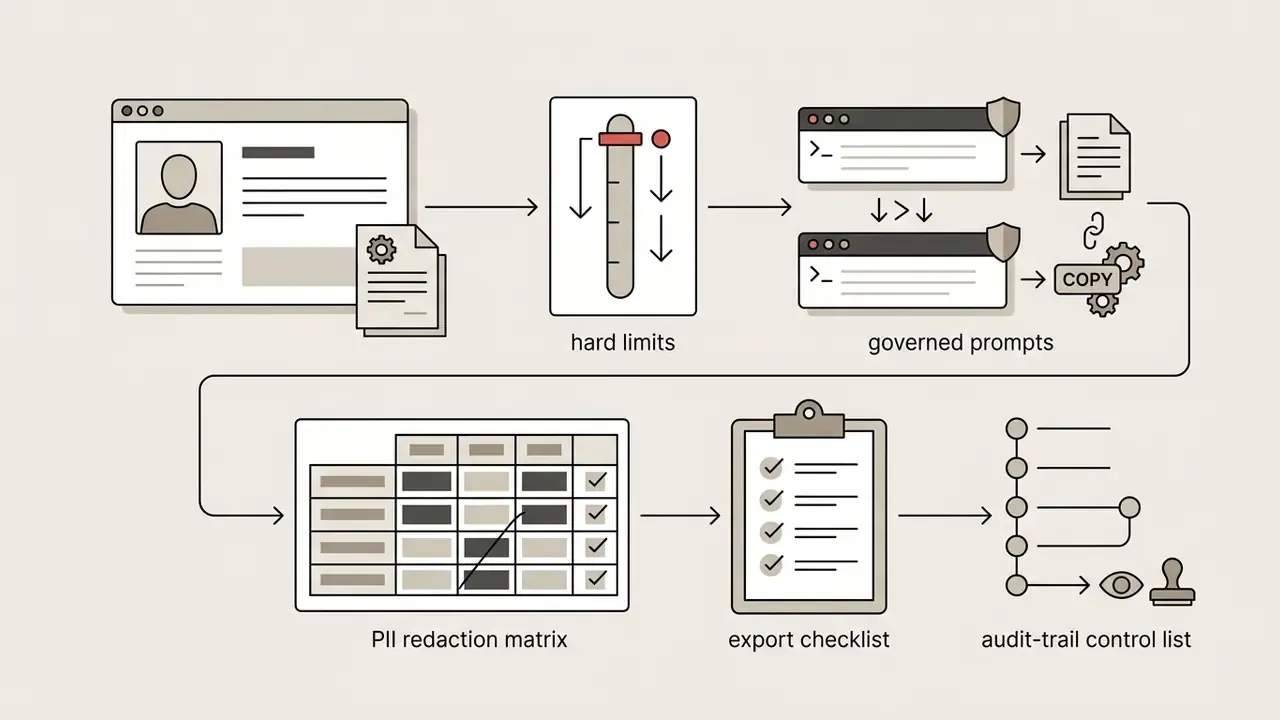
PII / MNPI Redaction Matrix (Apply Before Any Prompt)
| Data Element | Status for External AI Prompts | Safe Substitution |
|---|---|---|
| Full legal name | Prohibited | "the employee," "Engineer A" |
| Employee ID / HRIS record number | Prohibited | omit entirely |
| National ID / SSN / tax number | Prohibited | omit entirely |
| Base salary, bonus, equity figures | Prohibited | "compensation band mid-range" |
| Home address, personal email, phone | Prohibited | omit entirely |
| Health, disability, or leave details | Prohibited | omit entirely |
| Protected characteristics (age, race, gender, religion, national origin) | Prohibited | omit entirely |
| Unreleased financial results / MNPI | Prohibited | "confidential internal target" |
| Named clients or deal codes | Restricted | "a Tier-1 institutional client" |
| Job title and level | Permitted | keep as-is |
| KPI values and percentages | Permitted if non-MNPI | keep as-is |
| Project names (internal, non-confidential) | Permitted | generalize if sensitive |
| Dated behavioral examples | Permitted after de-identification | "on 14 October, during the incident bridge" |
Privacy guidance is blunt on one point: personal information entered into an AI system, and AI output containing personal information, both remain subject to privacy obligations. Before onboarding a vendor, confirm whether submitted data trains models, whether retention is enabled by default, and whether contractual safeguards are actually in force rather than merely described on a marketing page.
Fact, Metric, and Example Verification
Break the generated review into discrete verifiable claims: completion dates, percentage growth figures, project leadership roles. Cross-reference each one with a primary operational record such as Jira logs, sales dashboards, or financial ledgers. Any hallucinated accomplishment or unverified statement gets deleted or rewritten before approval, no exceptions.
One habit helps more than any tool: lateral reading. Step outside the AI response and verify each element against an external source, instead of re-reading the model's own text and mistaking fluency for truth.
"A systematic review of LLM evaluation in medicine proposes the QUEST framework: quality of information, understanding, expression style, safety, and trust."
Adapted to HR, QUEST becomes a five-gate checklist. (1) Quality: is every metric traceable to a system of record? (2) Understanding: does the draft reflect the actual role scope? (3) Expression: is the tone policy-compliant and free of coded language? (4) Safety: does it avoid protected-characteristic inference and defamatory phrasing? (5) Trust: would the employee recognize the described events as accurate?
Feedback Balance and Employee Data Protection
Balanced reviews pair 2 to 3 specific strengths with 1 to 2 actionable growth areas, each grounded in observable workplace behavior. Open with strengths, bridge to development areas with a connecting phrase such as "to build on this," and keep every improvement point tied to behavior rather than personality.
"Higher exposure to algorithmic performance evaluation correlates with reduced well-being and lower perceived fairness, an effect moderated by system transparency."
To protect confidential workforce information, anonymize prompts by removing direct identifiers, employee IDs, and proprietary financial figures. HR should also confirm that vendor contracts carry explicit zero-data-retention clauses, so employee inputs never train third-party foundation models.
Shadow-AI incident pattern (composite). A familiar failure mode in regulated fintech environments is undocumented shadow AI usage, where team leads paste unredacted payroll and performance records into public LLM tools during review season. The standard remediation runs on three controls: an internal anonymization gateway, mandatory manager training on structured prompting, and DLP rules blocking uploads of HR record patterns to unapproved domains. Presented as an anonymized composite, not a named client engagement (original wording preserved in Appendix A).
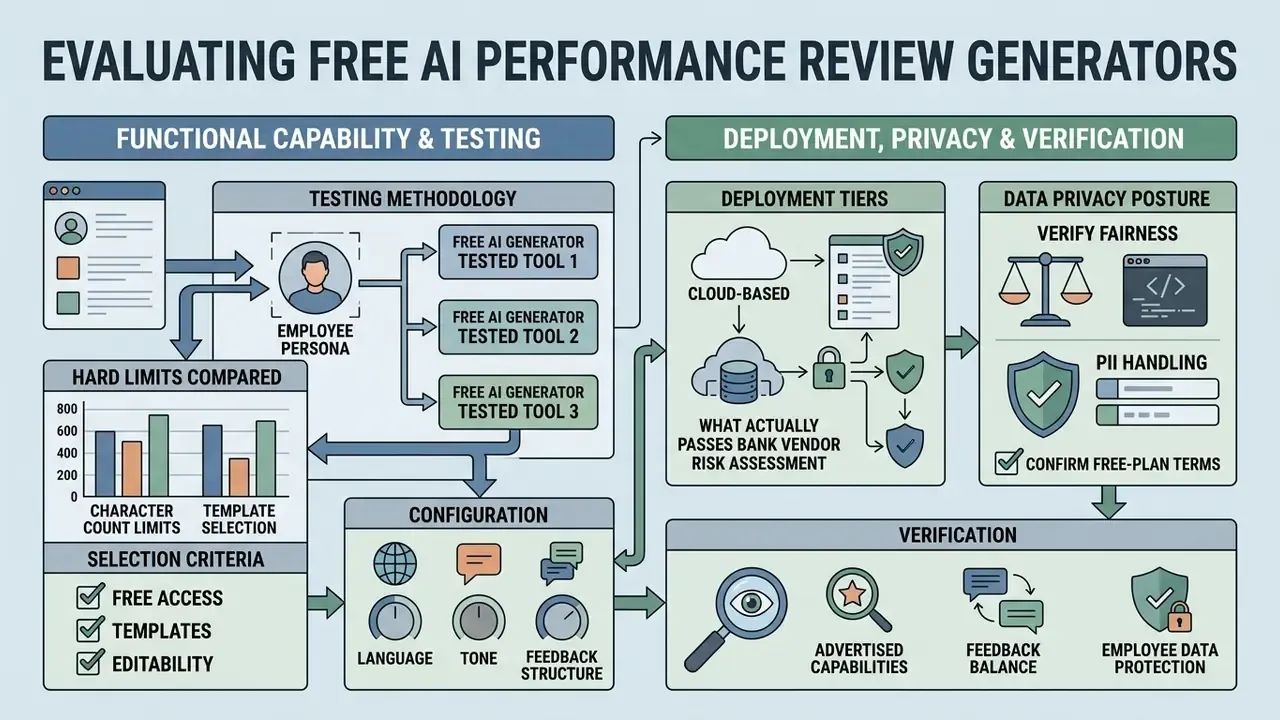
How to Compare Free AI Performance Review Generators (Tested)
"Ensembles of heterogeneous LLM evaluators improve accuracy and stability over single models, especially when combined with human labeling."
Testing Methodology
Weighted rubric (score out of 5):
| Criterion | Weight | What it measures |
|---|---|---|
| Output quality and usefulness | 40% | Clarity, specificity, balanced strengths vs. growth areas, absence of generic filler |
| Input flexibility and detail | 25% | Ability to enter achievements, strengths, goals, rating scale, and development points separately |
| Ease of use and speed | 20% | Interface clarity, guidance, generation latency |
| Export and sharing options | 10% | Copy, PDF, DOCX, plain-text availability and formatting cleanliness |
| Access requirements and free-tier limits | 5% | Sign-up friction, paywalls on core functions, daily caps |
We also ran light-input tests, entering only one achievement and one development area, to see whether a tool could still build a complete, non-hallucinated review or whether it padded the draft with invented accomplishments. Tools that fabricated metrics under sparse input were downgraded on output quality regardless of how polished the prose looked. Polish is cheap. Traceability is not.
Free AI Performance Review Generators: Hard Limits Compared
| Tool | Free Tier Allocation (Hard Limits) | Supported Review Types | Privacy & Data Handling | Export Formats | Tone / Perspective Controls |
|---|---|---|---|---|---|
| Easy-Peasy.AI | 2 reports per day; 10,000-character cap on key achievements; 5,000-character cap on areas for improvement; advanced model reserved for paid tiers | Manager, self, annual | Vendor terms; paid tiers add customization | Copy only (no file download on free tier) | Multiple language options; first/third person "point of view" switch |
| Writify.AI | Unlimited reports, ad-supported; roughly 1,000-word monthly export allowance; no sign-up | Manager, self | Vendor terms; ads served in-app | PDF, copy | Tone and language selection; format adjustment |
| Vondy | 4 free reports before account creation; credit-based daily limits after sign-up | Self evaluation, manager draft | Standard vendor terms; account required | Copy to clipboard | Formal / conversational |
| Manus | Daily credit renewal; higher limits paywalled | Manager, self, peer 360 | States encryption in transit and no third-party sharing | Text copy | Multi-tone selection |
| FormsPal | Small daily generation limit; no sign-up | Summary, manager appraisal | States in-browser processing with no server storage | PDF, Word | Fixed rubric |
| Windmill | 100% free, no premium tier | Self review, goals | States client-side execution with zero storage | PDF, text | Basic customization |
| aiwriter.ai | Unlimited free drafting, no sign-up | Annual, probationary, quarterly | States no input logging or training use | Plain text / copy | Standard professional |
| Perform Review | 2 credits every 6 months (self and peer assessments) | Self, peer, manager | States inputs are private and not used for training | Text, PDF | Tone adjustment |
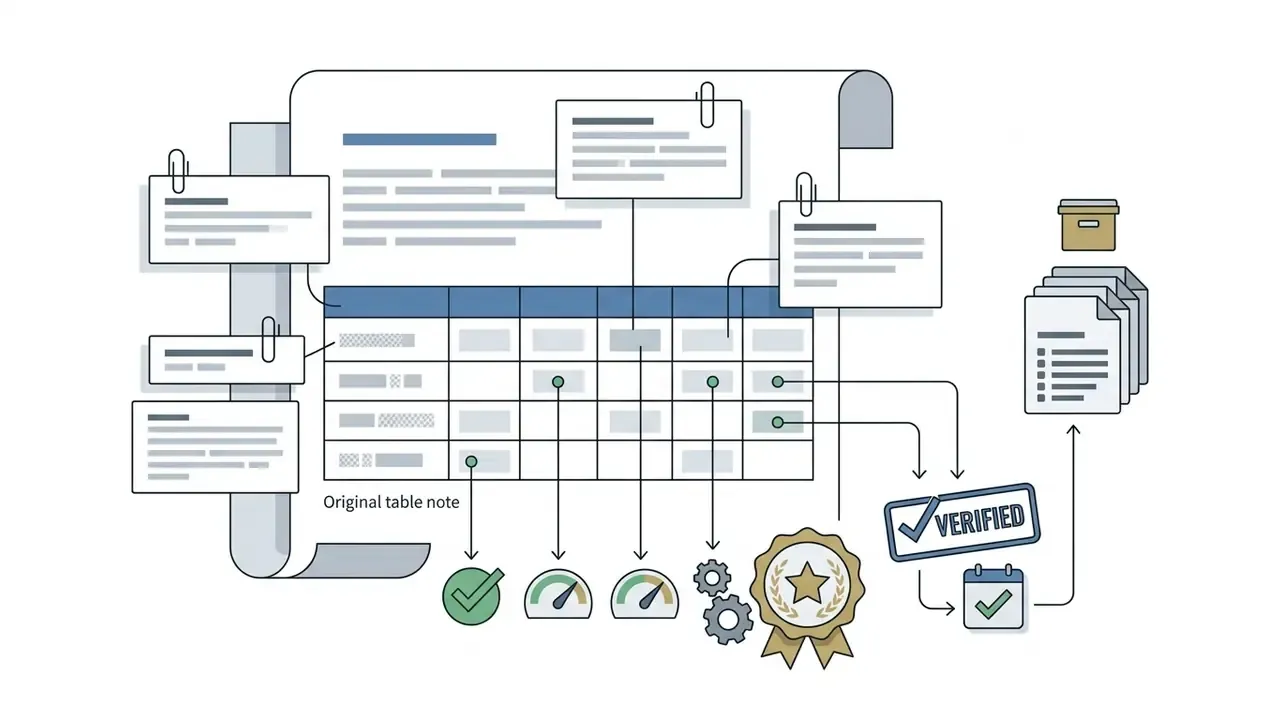
Verification note: free-tier terms change often. Limits above reflect vendor documentation and publicly available product terms observed during testing. Re-verify before procurement, and treat every vendor privacy claim as unaudited unless backed by a SOC 2 report or a signed data-processing agreement. (Original table note preserved in Appendix A.)
Deployment Tiers: What Actually Passes Bank Vendor Risk Assessment
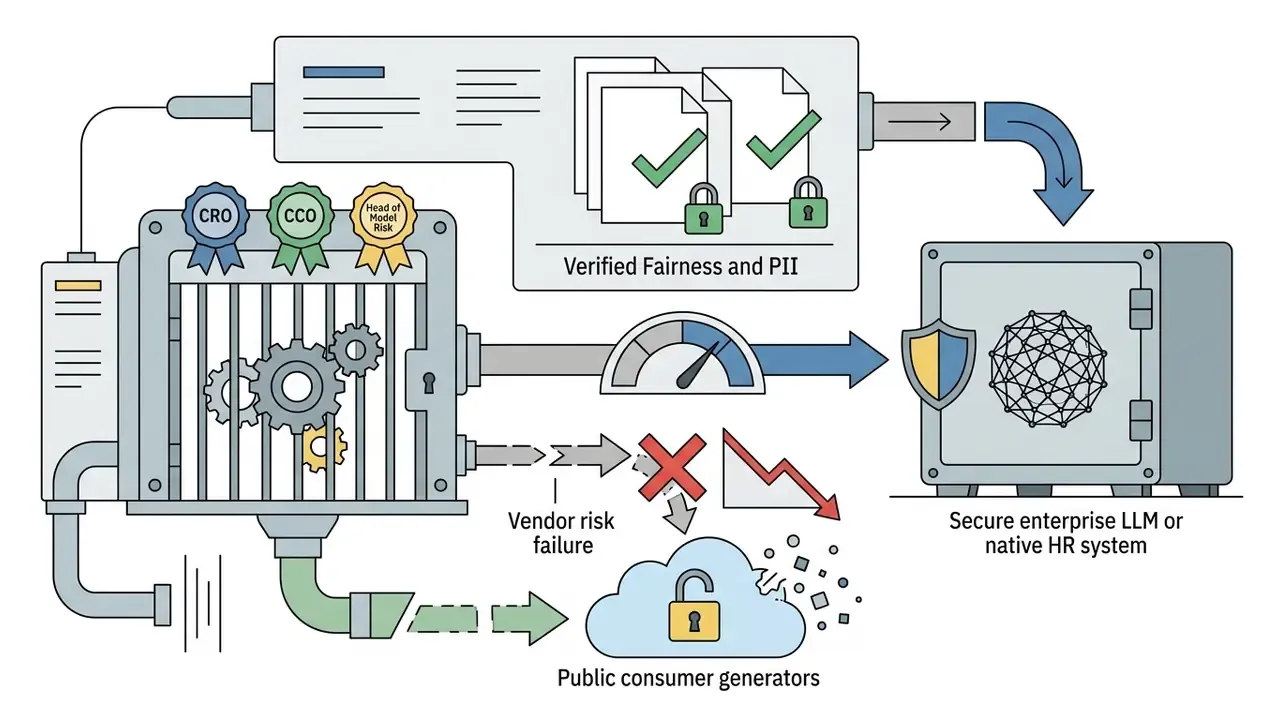
Free consumer tools fit one scenario: an individual drafting a personal self-assessment with fully redacted inputs. They do not fit manager evaluations inside a regulated institution. Use this tiering when you write the policy.
| Deployment Tier | Examples | PII/MNPI Handling | Model Risk Posture | Verdict for Regulated Firms |
|---|---|---|---|---|
| Public web tools | Free browser generators, consumer chat apps | Uncontrolled; retention often default-on | No validation, no logging, no inventory entry | Prohibited for employee data; personal use only with full redaction |
| Enterprise SaaS LLM (contracted) | Enterprise plans with DPA, zero-data-retention, SSO, admin logging | Contractually restricted; regional hosting options | Vendor documentation plus internal validation feasible | Conditionally approved after Legal, InfoSec, and MRM review |
| Private / self-hosted LLM contour | VPC-deployed open-weight or licensed models | Data never leaves the perimeter | Full prompt and response logging; internal validation | Preferred for manager reviews containing employee data |
| Native HRIS AI | AI features inside Workday, SAP SuccessFactors, and comparable platforms | Data stays inside the existing HR system of record | Covered by existing HRIS vendor governance | Preferred where feature parity is sufficient |
Selection Criteria: Free Access, Templates, and Editability
Choosing the best free AI performance review generator comes down to generation caps, feature locks, and editing depth. Strong free tools hand you a structured multi-section review template instead of one open-ended text box.
"A survey of 115 employees found that respondents welcomed reduced bias in AI evaluations but were concerned about opacity and the system's inability to capture qualitative aspects of work."
Prioritize services that allow inline text editing, clean copy-paste, and PDF or document export without forced watermarks, the same editability test we apply when ranking the best free AI generators by output quality in other tool families. Editability counts as complete when the service offers inline comments, workspace editing, and PDF or TXT export. When only clipboard copying exists, score the criterion weak and move on.
Configuring Language, Tone, and Feedback Structure
Advanced tools support professional language presets, formal tone customization, and multiple language options for global teams. The platform should hold a calm, objective voice and resist both hyperbole and vague praise. Structured feedback controls let managers group comments into categories such as technical execution, strategic alignment, and interpersonal communication.
Documented tone-control patterns in adjacent AI products include named presets (Professional, Informal, Enthusiastic, Custom), language-specific formal and informal pronoun handling, and a mandatory test step before a tone profile is saved. Multilingual handling and tone configuration usually travel together: a "reply in the employee's native language" toggle plus a team-level default tone.
How to Confirm Free-Plan Terms and Advertised Capabilities
Templates and Prompts for AI Performance Reviews
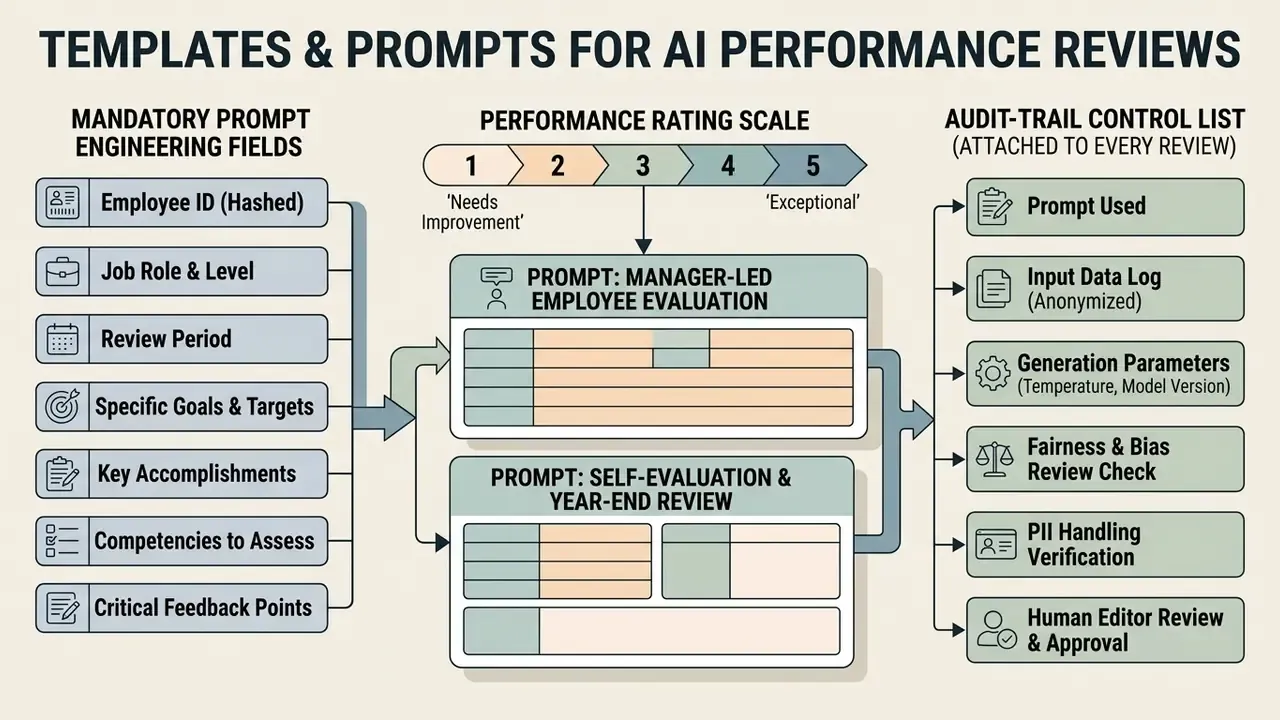
Standardized prompt templates keep generated drafts professional, structured, and compliant. A complete prompt names the persona, role context, evaluation period, quantitative inputs, growth areas, narrative tone, and output formatting rules. Apply the PII / MNPI redaction matrix above before pasting anything into a prompt. Teams that want interactive estimation resources can explore AI Media Calculators to model operational parameters.
Mandatory Prompt Engineering Fields for a Performance Review AI
Checklist0 / 10
Prompt for a Manager-Led Employee Evaluation
Managers can copy and adapt the template below in any AI generator for performance review to produce a professional third-person appraisal draft:
You are an expert HR performance management advisor. Generate a formal, objective, third-person performance review draft for a [Job Title] covering the period [Start Date to End Date].
INPUT DATA:
- Core Responsibilities: [Insert 2-3 key duties]
- Quantitative Accomplishments: [Insert specific metrics, e.g., increased sales by 18%]
- Observed Strengths: [Insert 1-2 examples using Situation-Behavior-Impact]
- Objective-Driven Results: [Insert 1-2 examples using Situation-Task-Action-Result]
- Growth Areas: [Insert 1-2 constructive development areas]
- Rating Scale: [e.g., 5-point scale; proposed rating: Exceeds Expectations]
- Target Tone: Professional, direct, analytical, and constructive.
FORMAT REQUIREMENTS:
1. Executive Performance Summary (1 paragraph, 100-150 words)
2. Key Achievements & Competencies (bullet points with quantitative metrics)
3. Areas for Professional Development (constructive narrative with actionable advice)
4. Recommended SMART Goals for Next Period (3 specific, time-bound objectives)
CONSTRAINTS:
- Do not invent facts, metrics, or events not provided in the input data.
- Do not use absolute intensifiers such as "always" or "never."
- Do not reference age, gender, race, health, religion, national origin, or family status.
- If a required detail is missing, output "[DATA REQUIRED]" instead of estimating.
Prompt for Self-Evaluation and Year-End Review
For an annual self assessment, this structure works inside a free AI self performance review generator and produces an evidence-based narrative:
You are a professional career development coach. Help me draft a structured, first-person self-performance appraisal for my annual year-end review as a [Job Title].
INPUT DATA:
- Review Horizon: [Full Year 2025, submitted in the 2026 review cycle]
- Major Wins & Deliverables: [List 3-4 key projects and quantitative outcomes]
- STAR Examples: [Situation, Task, Action, Result for 1-2 signature achievements]
- Overcome Challenges: [Describe 1 situation and how it was resolved]
- Skill Growth & Training: [List new certifications, tools, or competencies acquired]
- Future Goals: [Insert 2-3 career objectives for the upcoming year]
FORMAT REQUIREMENTS:
- Narrative Perspective: First person ("I achieved", "I led").
- Tone: Confident, factual, professional, and balanced.
- Sections: Accomplishments Summary, Challenges & Growth, Future SMART Goals.
- Length: 300 to 400 words total.
CONSTRAINTS:
- Base all statements strictly on the supplied project details without adding exaggerated claims.
- Quantify outcomes wherever data is provided; never estimate a missing number.
Audit-Trail Control List (Attach to Every Generated Review)
Checklist0 / 7
Limitations, Open Questions, and Measurable Impact
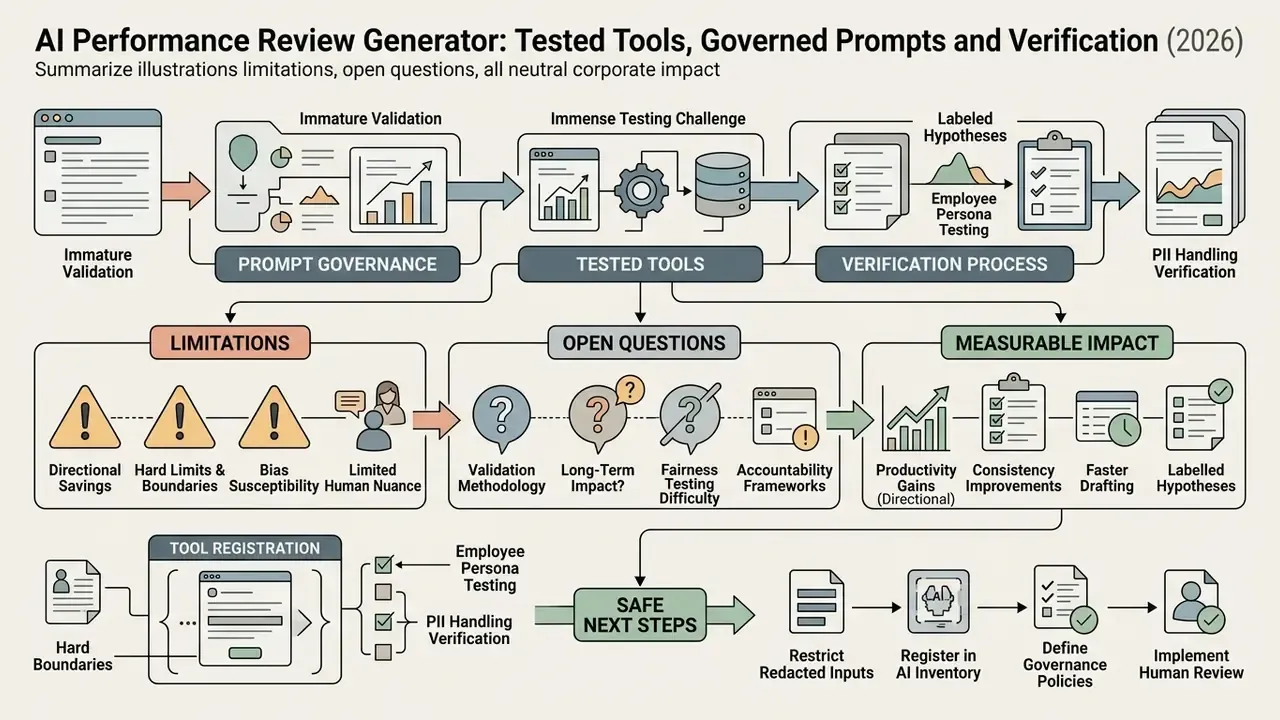
Honesty first: parts of this picture are still unsettled.
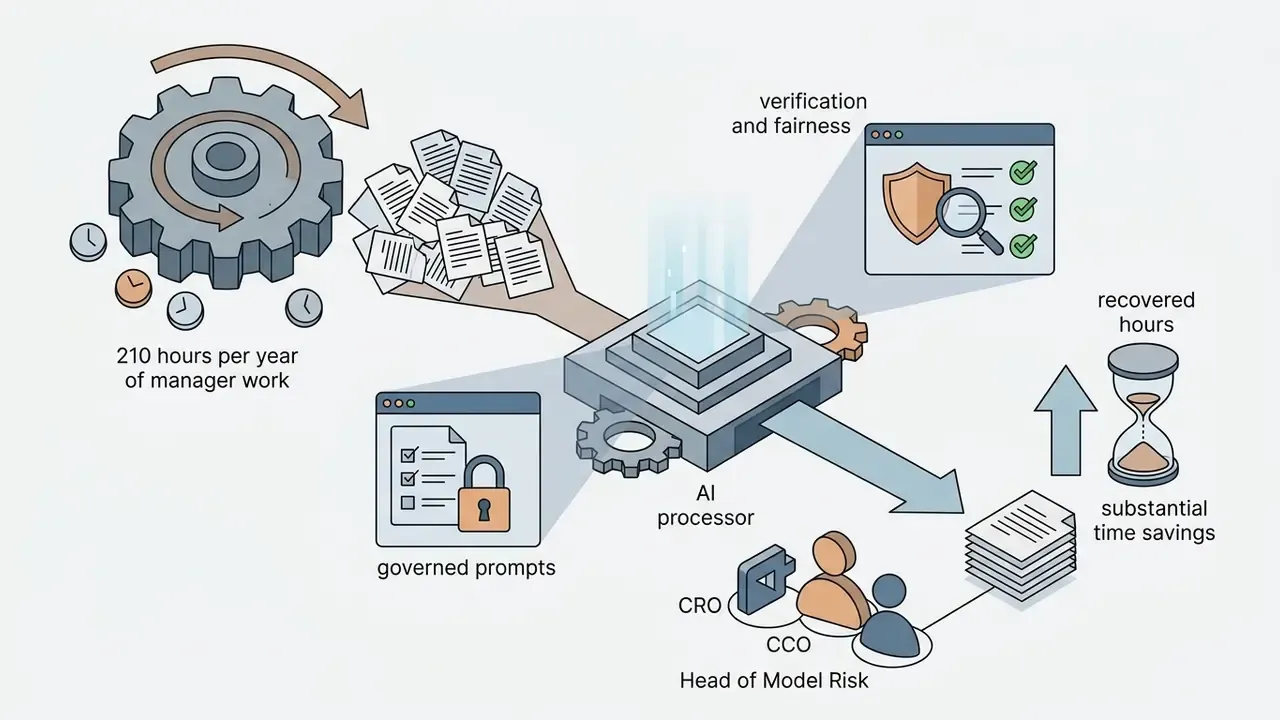
The savings figure is directional. The 210-hour annual appraisal workload circulates widely in HR advisory material, yet it is not an audited institutional metric. Measure your own baseline before and after, using drafting minutes per review, number of post-edit corrections, and calibration-meeting rework.
Validation methodology for generative drafting is immature. Classic model validation assumes a stable scoring function. A narrative generator has no score to backtest, so firms are improvising with output-quality sampling, red-team prompts, and reviewer agreement rates. Treat your first-year approach as a hypothesis, documented as such.
Fairness testing is harder than it looks. Adverse-impact analysis on free-text narratives requires coding language features, not just comparing ratings. Few institutions have that instrumentation today.
Audience assumptions stay labeled as hypotheses. Statements in this article about what CROs, CCOs, and finance transformation leaders prioritize remain hypotheses until validated through interviews, CRM evidence, or analytics.
A safe next step, if you are early: register the tool in the AI inventory, restrict it to redacted inputs, log prompts and outputs for one full review cycle, and report the evidence to your AI governance committee before widening access. Small scope, real evidence, then expansion.
FAQ: AI Performance Review Generators in Regulated Environments
These are the frequently asked questions we hear most often from HR operations and second-line risk teams.
Can the generator be used for 360-degree feedback?
Yes. An AI performance evaluation generator can aggregate multi-rater 360-degree input from peers, direct reports, and supervisors into anonymized summary reports. The model identifies recurring behavioral themes, summarizes qualitative strengths, and groups constructive criticism against a defined competency model. Published HR prompt guidance describes designing a 360 instrument with roughly eight quantitative items and four qualitative items across a rater pool of peers, reports, and the manager, with results delivered without breaking confidentiality. Automated 360 systems also depend on role-based access control, competency-driven dynamic questionnaires, and weighted scoring. Human managers still review the aggregate to confirm individual reviewer confidentiality holds and to correct contextual misreadings before anything reaches the employee.
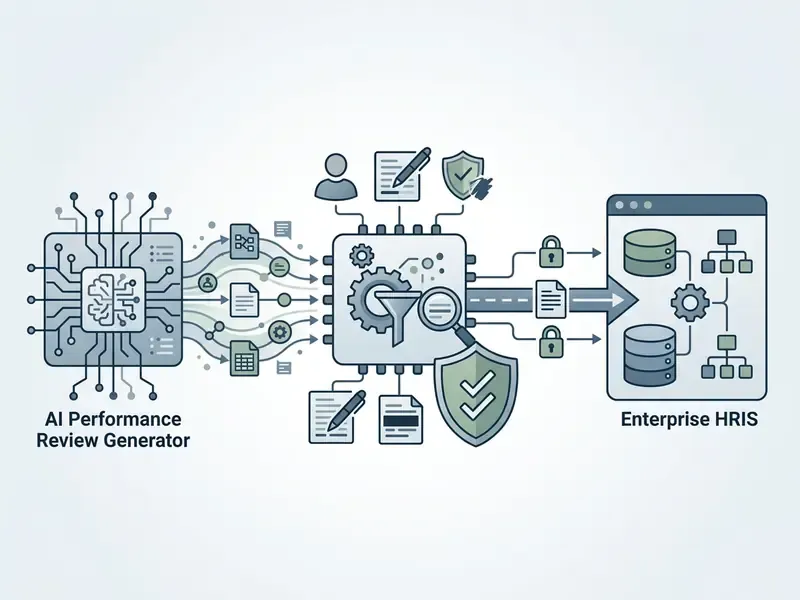
Can a generated review be transferred into an HR system?
Yes. Once human post-editing is complete, the text can be exported and pasted into corporate platforms such as Workday, SAP SuccessFactors, or BambooHR. Format it as clean plain text or Markdown first to avoid upload errors. Note that no cross-vendor standard currently defines how AI-generated evaluation text should be transferred; enterprise document-generation flows typically follow a template, then permitted employee data, then DOCX or PDF output, then storage or downstream hand-off. HR policy should state whether AI usage must be logged in the audit trail, which keeps the talent management lifecycle transparent. Teams reviewing training media options can read the synthesia ai training analysis or check tool-level review proof documentation.
Is AI allowed to assign the final performance rating?
No. Governance guidance is consistent here. AI may summarize evidence and draft text; the final rating, the documentation, and the review conversation remain human-owned. Some organizations go further and prohibit generative AI in staff evaluation altogether, citing bias, accountability, and privacy. Where AI output influences compensation or promotion, expect supervisory scrutiny in line with model risk management expectations.
How much manager time does AI drafting actually save?
Industry benchmarks widely cited by HR-tool vendors place the average manager's annual appraisal workload at up to 210 hours. That figure traces to HR advisory research and should be read as directional, not audited. In practice the savings land at the first-draft stage, while verification, bias screening, and the conversation itself do not compress at all. Model the net effect as drafting time saved minus added audit and validation overhead, the same logic applied in the Cost per Usable Output Benchmark.
Do free tools meet enterprise privacy requirements?
Generally, no. Free-tier privacy claims range from "nothing is stored or logged" to "encrypted and not shared with third parties," and none of the surveyed tools offered audited, standardized security verification. Treat unaudited claims as marketing until a data-processing agreement, retention controls, and a zero-data-retention clause exist on paper.
What is the difference between SBI and STAR for review writing?
SBI (Situation-Behavior-Impact) suits behavioral feedback on a single observed event, so it works well for coaching moments and competency comments. STAR (Situation-Task-Action-Result) suits objective-driven annual reviews, because it names the assigned task and the measurable result. Mature review templates use SBI for competency sections and STAR for achievement sections.
Does an AI drafting tool count as a model under SR 11-7?
It depends on how the output is used, which is an unsatisfying answer, but the honest one. A generator that produces narrative text later rewritten by a human, with the rating set independently, may sit closer to a productivity tool. A generator whose output materially shapes ratings, compensation, or termination decisions looks much more like a model and should carry an owner, documented purpose, monitoring plan, and independent validation. Ask Model Risk Management to make the call in writing, and store that determination with the tool's inventory entry.
Appendix A: Preserved Source Fragments and Verification Notes
The passages below appeared in an earlier version of this article and are retained verbatim for transparency and version traceability. Each carries the reason it was revised in the main text.
Status: Needs external verification. Retained as an industry pattern in the main text; the specific working-paper attribution was removed pending confirmation.
Status: Unattributed example. Reframed in the main text as an illustrative composite.
Status: Anonymous case in a regulated subject area. Reframed as an anonymized composite incident pattern with an explicit control set.
Status: Date-bound, inconsistent with the current March 2026 revision, and non-reproducible. Replaced with a re-verification instruction plus an explicit statement that vendor privacy claims are unaudited.
Status: Insufficiently specific. Replaced with numeric daily report caps, character limits, and export allowances, plus a deployment-tier table for regulated environments.