If you sit in a control function at a US bank or a mature fintech, content looks like a marketing problem until the first unreviewed claim reaches a customer. Then it becomes yours. That is the practical reason AI media workflows belong in the same conversation as model risk, records retention, and third-party oversight, not in a separate creative sandbox.
An AI media workflow is a structured, end-to-end operational pipeline that combines artificial intelligence models with human expertise to plan, generate, verify, format, publish, and analyze digital content. Moving beyond ad-hoc prompting, enterprise content operations rely on orchestrated architectures to scale content creation, protect brand integrity, and achieve measurable efficiency gains.
Executive Summary: What to Settle Before You Automate
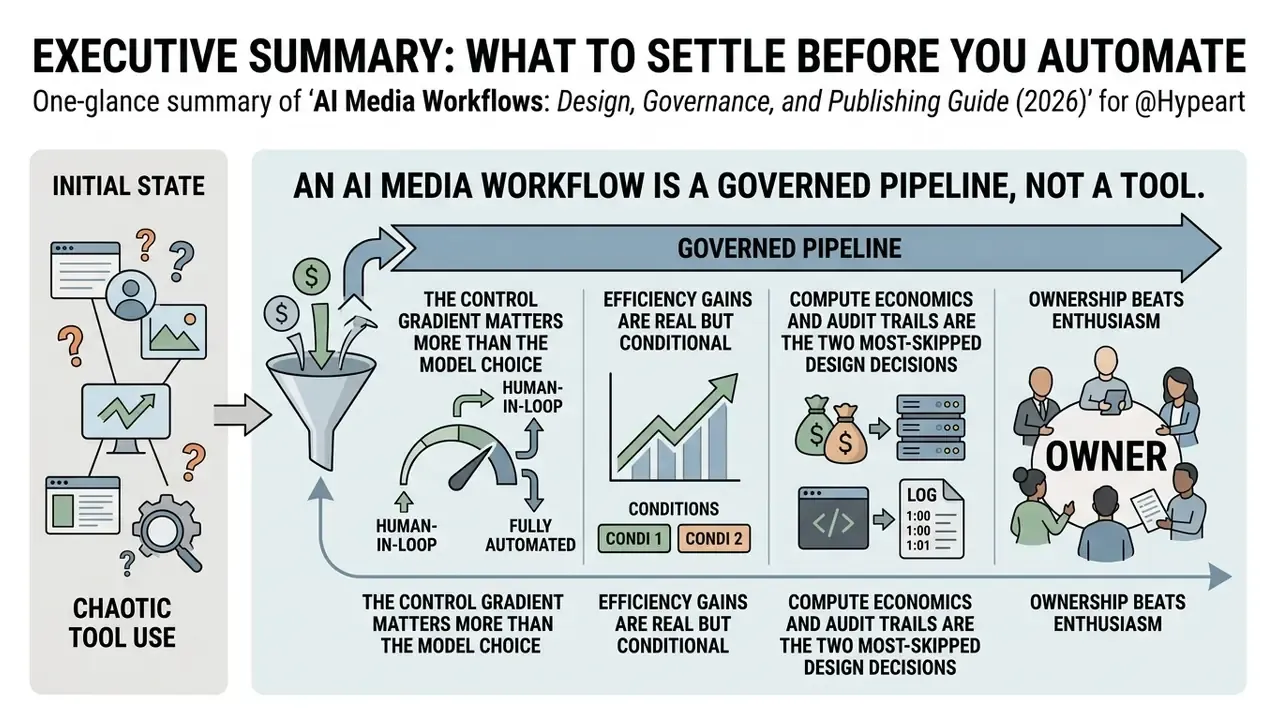
- An AI media workflow is a governed pipeline, not a tool. It links data, generative models, orchestration logic, a content management system, publishing APIs, and analytics into one repeatable operating system with explicit human decision gates.
- The control gradient matters more than the model choice. Traditional automation is deterministic, managed AI workflows are model-driven but bounded, and autonomous agents plan their own steps. That is precisely why high-impact and regulated communications must stay inside human-gated workflows (EU AI Act, Article 14).
- Efficiency gains are real but conditional. Simulation-based research reports 60% to 65% reductions in production time. Those gains only survive contact with reality when review cost, hallucination triage cost, and residual risk cost sit inside the ROI model.
- Compute economics and audit trails are the two most-skipped design decisions. Checkpoint-resume patterns with waitpoint tokens cut idle compute spend during long generations, while a generation metadata registry (prompt, model version, seed, reviewer ID, sign-off timestamp) is what makes the workflow defensible to an external auditor.
- Ownership beats enthusiasm. Every automated step needs a named accountable human, an escalation path, and a kill switch. No evidence, no autonomy.
Who This Guide Serves and Which Decision It Supports
This material is written for people who approve, fund, or challenge AI adoption: chief risk and compliance officers, heads of model risk, AI governance leads, and the finance transformation owners who are quietly using the same pipelines for reconciliations and reporting summaries.
The decision in scope is narrow and useful: which content processes may run through generative models, under what controls, and with what evidence retained. Everything below builds toward that. Treat the audience assumptions here as working hypotheses until your own interviews, analytics, and CRM data confirm them.
One caution before the mechanics. Most failed rollouts we see described publicly did not fail on model quality. They failed on ownership, logging, and an ROI model that ignored the cost of review.
What AI Media Workflows Are and Why They Matter
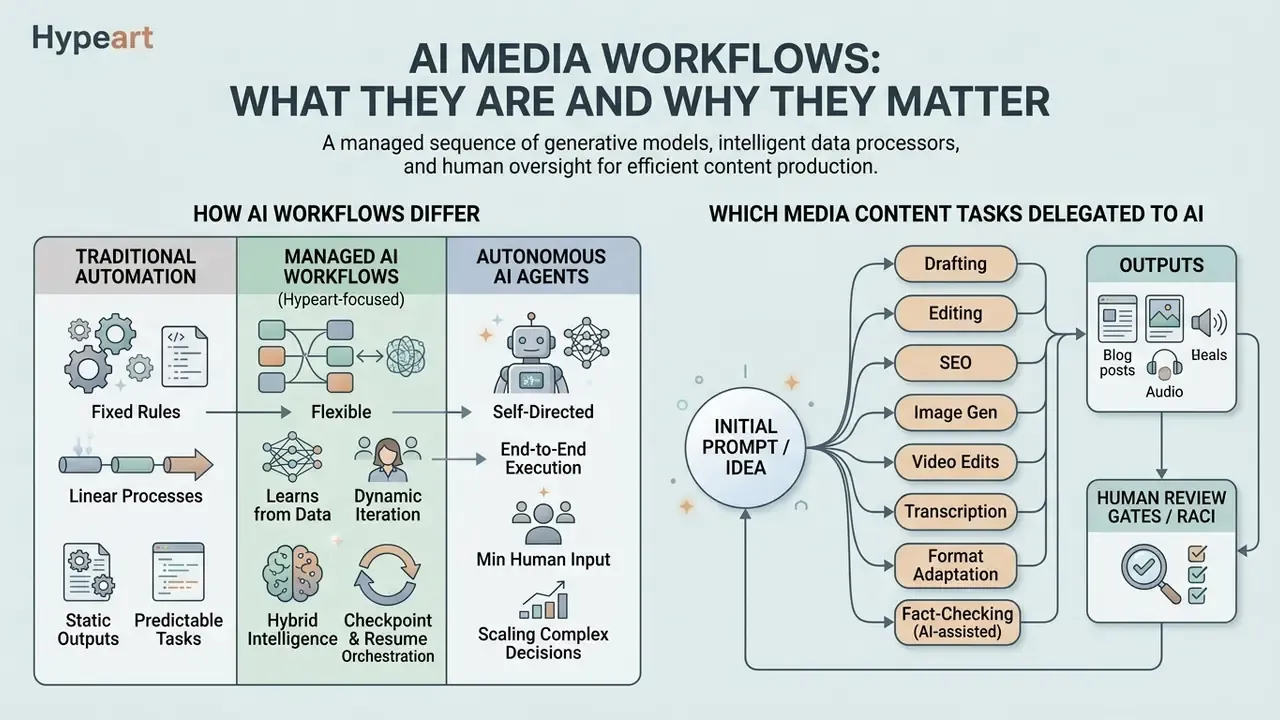
An AI media workflow is a managed sequence of tasks where generative models, intelligent data processors, and human oversight work in tandem to execute content production across channels. Unlike isolated AI generation tools, a workflow connects data ingestion, content creation, brand governance, distribution, and performance tracking into a repeatable operational system.
Enterprise organizations implement AI media workflows to scale content production without increasing headcount or compromising compliance standards. According to a simulation-based media automation study published by Nishal et al. (2026), structured AI media integration can reduce overall production time by 60% to 65% while significantly lowering manual processing error rates.
The same simulation research calibrates its baseline against consulting benchmarks on intelligent automation in digital production systems.
«Embedding intelligent automation within digital production systems delivers efficiency gains in the range of 50% to 70%.»
That McKinsey figure is quoted here indirectly, through the IJBDS simulation study, and should be read as a calibration range rather than a measured outcome for any specific institution. In practice, these workflows strip out administrative friction, shorten time-to-market for campaigns, and keep every asset aligned with verified organizational requirements. Or at least they can. Whether they do depends entirely on the gates you install next.
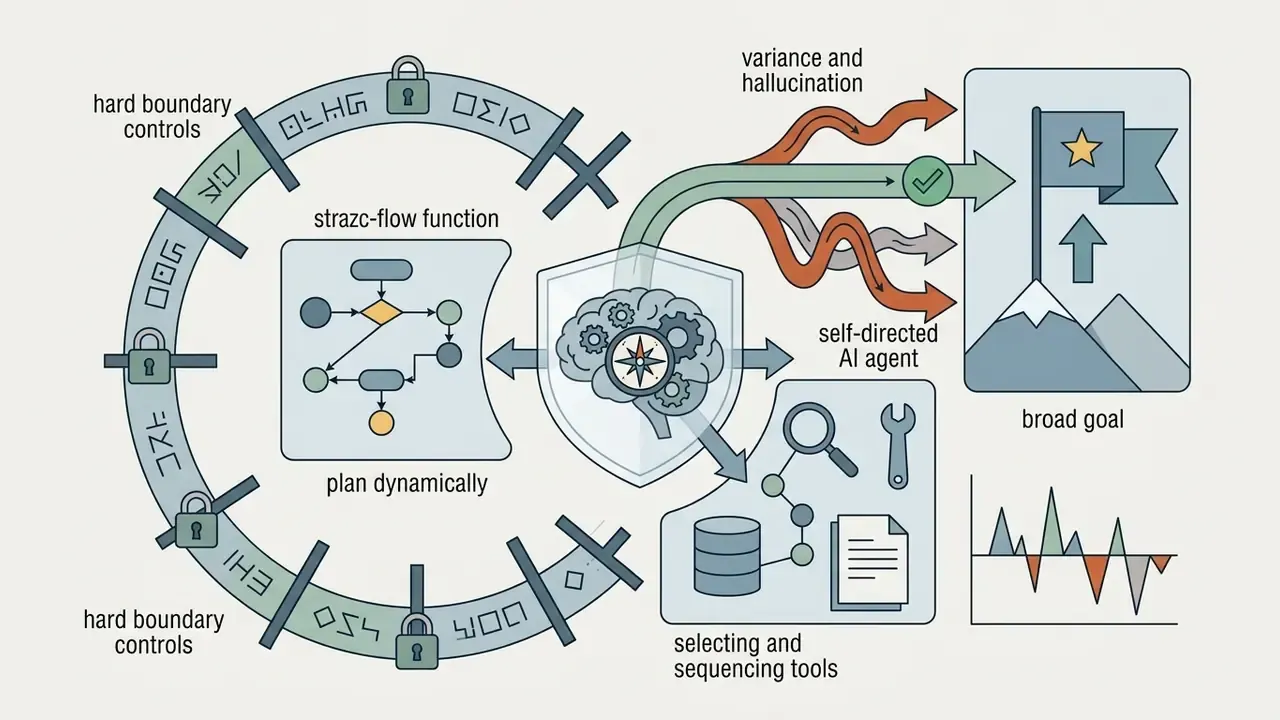
How AI Workflows Differ from Traditional Automation and AI Agents
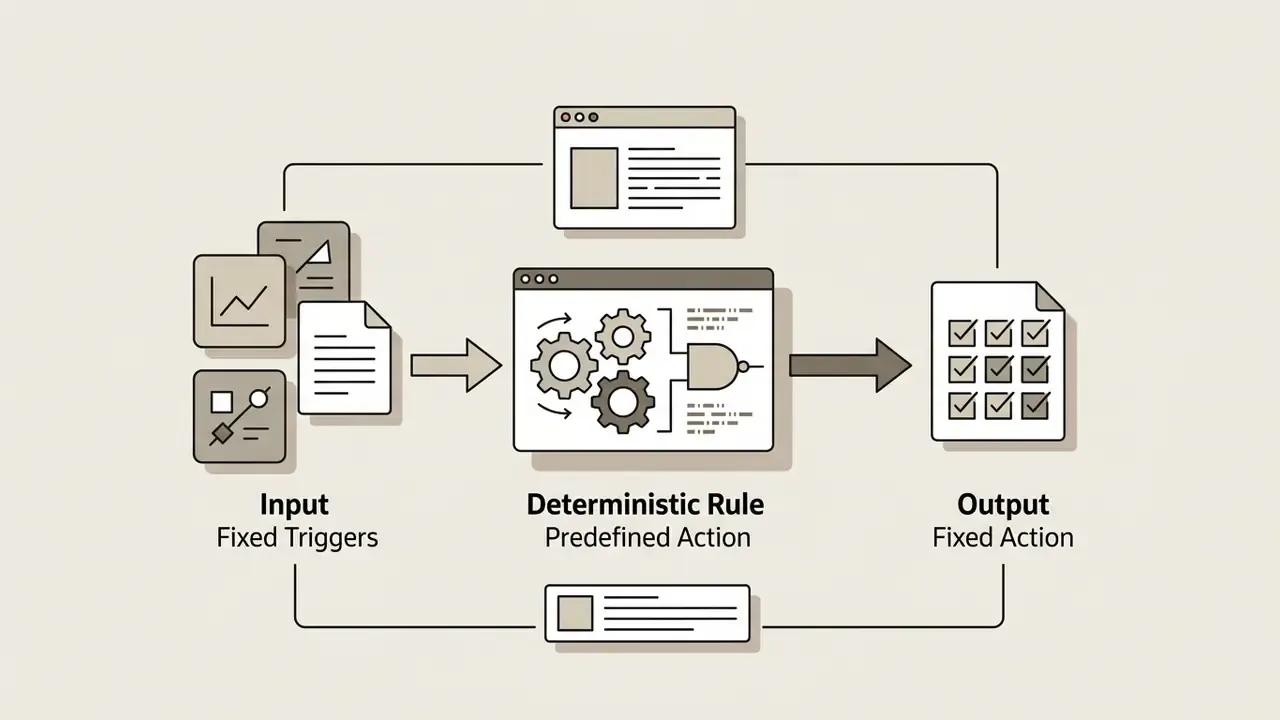
Traditional automation, managed AI workflows, and autonomous AI agents operate at distinct levels of control, decision-making, and execution complexity. Understanding these differences lets content teams deploy the right mechanism for each operational stage, instead of granting agent-level freedom to a task that needed a rule.
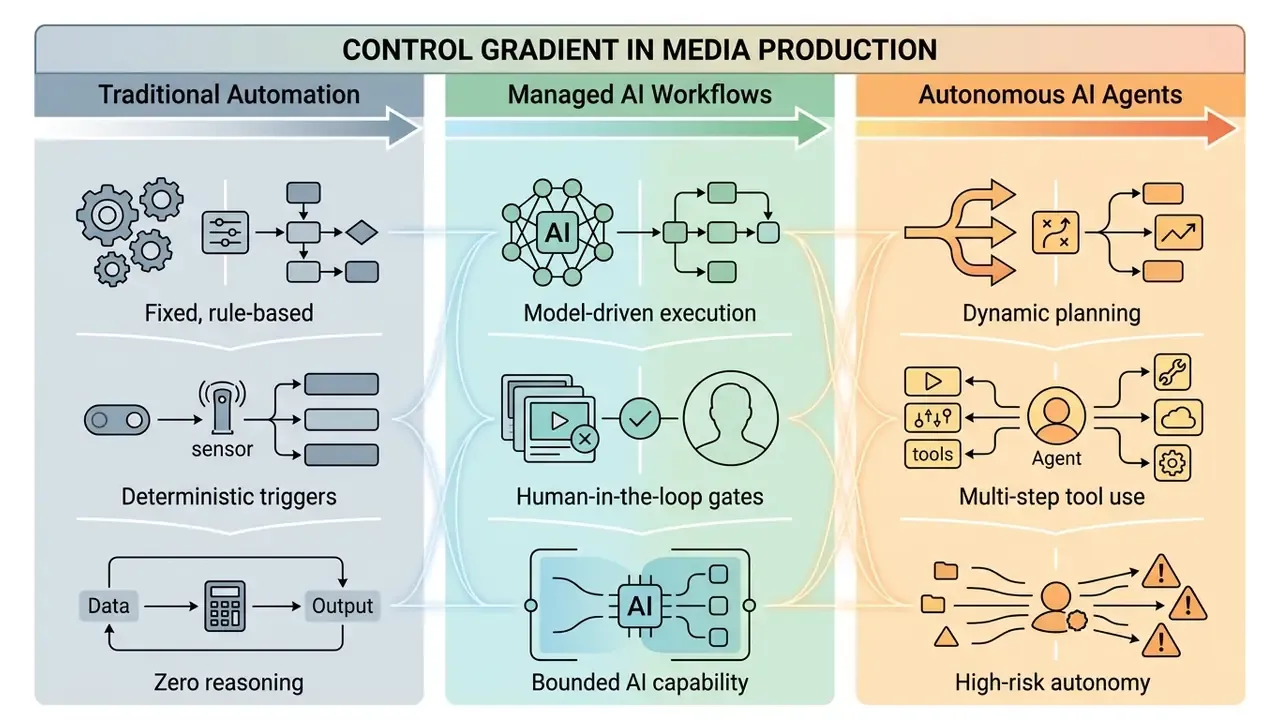
A short way to hold the distinction: a workflow is a process you can reproduce, an agent is a decision you have to supervise.

Which Media Content Tasks Can Be Delegated to AI
Delegating repetitive, high-volume work to artificial intelligence frees human strategists and creators for creative direction, claim verification, and strategic messaging. It does not free them from accountability.
In text-based content production, AI tools handle first drafts, article outlines, short-form promotional copy, and summaries of dense report data. For visual media, models automate image generation, background extensions, and initial video clip selection. Teams evaluating generation stacks usually start from a comparison of AI image generators and a shortlist of AI video generators before wiring anything into the pipeline. A 2026 computer vision study on the AutoCut framework shows how multimodal models automate video editing by scoring visual-textual relevance and cutting multi-scene assets according to narrative rules.
«AutoCut moves video editing from template rules to reasoning: multimodal models score visual-textual relevance and cut scenes according to narrative logic.»
In social media content operations, AI systems draft scheduled distribution, reformat assets, and tag metadata across channels. Teams running multi-channel campaigns streamline specialized asset creation through dedicated pipelines: an AI Video for YouTube Shorts pipeline for creator-led channels, an AI Product Photography for Ecommerce pipeline for catalog operations, or a regulated-industry equivalent such as automated regulatory-report summaries and internal compliance training media, where the same orchestration logic runs under stricter review gates. For analytics, AI parses engagement metrics, flags underperforming assets, and produces structured performance reports for executive review.
What cannot be delegated? Claim ownership, disclosure decisions, and anything a regulator would ask you to evidence. That list is short, and it does not move.
How to Design an AI Media Workflow Before Selecting Tools
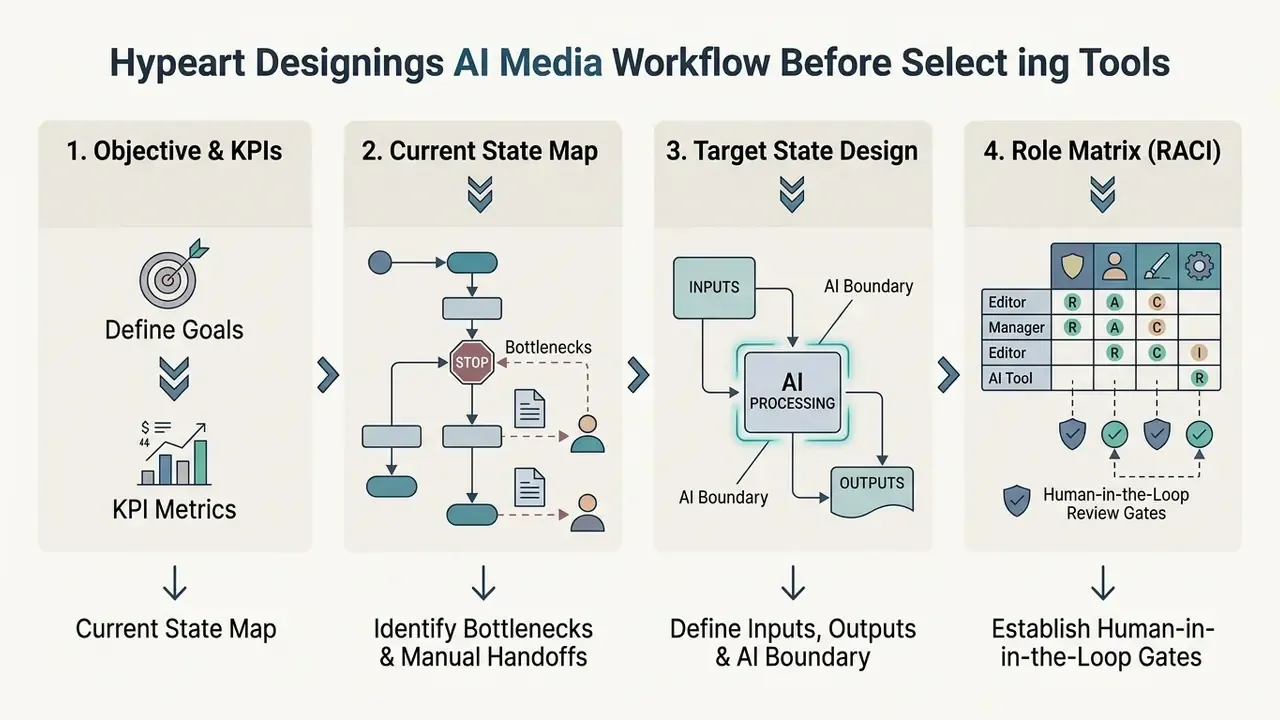
Designing an effective content workflow starts with operational mapping, well before software platforms or API services enter the conversation. Applying the "Map" function from the NIST AI Risk Management Framework (NIST AI RMF 1.0) fixes business goals, data handoffs, operational risks, and human review gates ahead of technology deployment.
«The "Map" function of NIST AI RMF 1.0 requires organizations to fix business objectives, risks, and human control points before technology is selected.»
Define the Objective, Audience, and Measurable Outcome
An AI media workflow must serve defined commercial objectives measured through specific operational key performance indicators. Define target audience segments, engagement expectations, and quality criteria before you configure a single automated system.
«The 2026 study isolates four core operational KPIs: production time, cost per asset, output volume, and a scalability index.»
Evaluate implementation success across four primary operational KPIs:
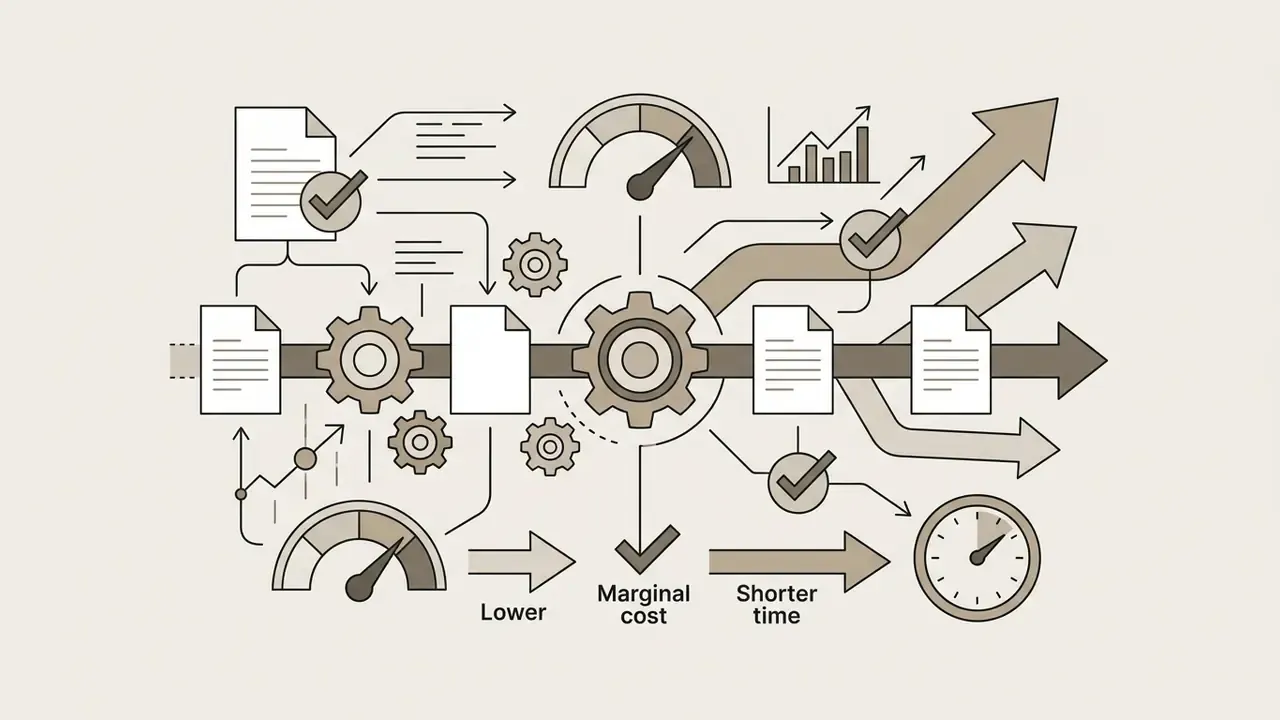
Risk-adjusted cost efficiency. In regulated environments, a naive "cost per asset" figure misleads, because it ignores the control layer that makes the workflow lawful. A defensible formula adds three terms:
True Cost per Asset =
      Compute/API cost
    + Reviewer labor cost (editorial + legal/compliance hours)
    + Hallucination triage cost (detection, correction, re-review)
    + Residual risk cost (expected cost of an undetected error × probability)
Teams that model only the first term routinely report 80% cost reductions in a pilot, then watch the number collapse once compliance review, IP clearance, and rework loops get attributed back to the pipeline. That collapse is not a failure of AI. It is a failure of accounting.
Content quality criteria should be scored across five dimensions: narrative coherence, visual and stylistic consistency, emotional alignment, technical formatting accuracy, and brand-voice adherence.


Map Your Current Content Workflow
Mapping the existing content pipeline exposes bottlenecks, manual transfer friction, and version control risk. A thorough mapping exercise documents every phase in sequence:
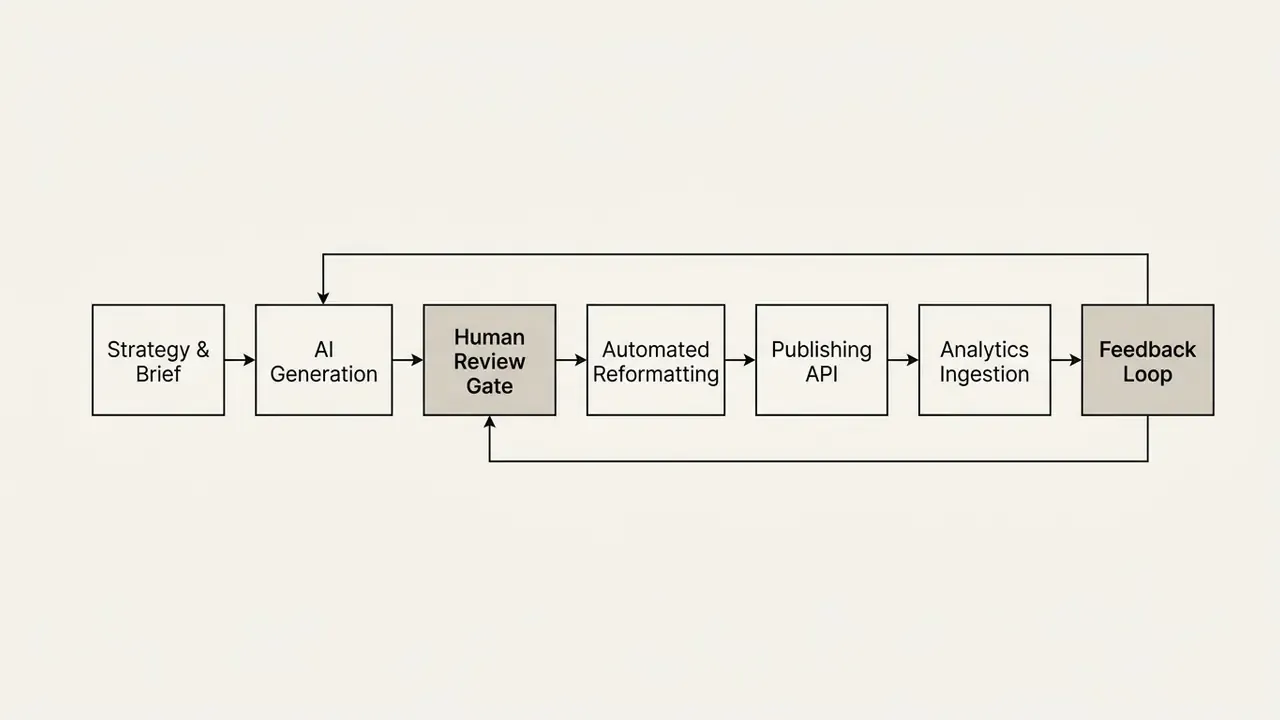
[Ideation] ➔ [Briefing] ➔ [Drafting] ➔ [Editing] ➔ [Design] ➔ [SEO] ➔ [Approval] ➔ [Publishing] ➔ [Analytics]
Recording task ownership, time spent at each node, and data transfer methods reveals the usual failure points. Repetitive approval loops, manual copy-pasting between systems, chasing delayed notifications, and asset reformatting are the primary candidates for workflow automation. One discipline matters more than the rest: keep the current-state map separate from the target-state map. Teams that redesign while mapping end up documenting the process they wish they ran rather than the one they actually run.
Small observation from practice: the node with no named owner is almost always the node where content sits for three days.
Assign Team Roles and Decision Points
Integrating AI requires an explicit redistribution of responsibility between people and automated systems. A Human-in-the-Loop (HITL) architecture guarantees that humans keep authority over binding decisions, public release, and regulatory compliance.
| Workflow Phase | AI Task Delegation | Human Owner Responsibility | Decision Gate |
|---|---|---|---|
| Setup & Briefing | Data retrieval, SERP gap analysis, brief drafting | Define strategy, target audience, and compliance boundaries | Human approves creative brief |
| Content Generation | Text drafting, image synthesis, variation generation | Review raw drafts, verify claim sources, check brand voice | Human filters candidate assets |
| Editing & Polish | Grammar checks, automated reformatting, metadata tagging | Factual validation, nuance refinement, legal review | Human signs off on final draft |
| Release & Publishing | API payload transfer, automated scheduling, CMS sync | Final release sign-off, access oversight, kill-switch authority | Human authorizes publication |
Data, AI Tools, and Platforms for Media Workflows
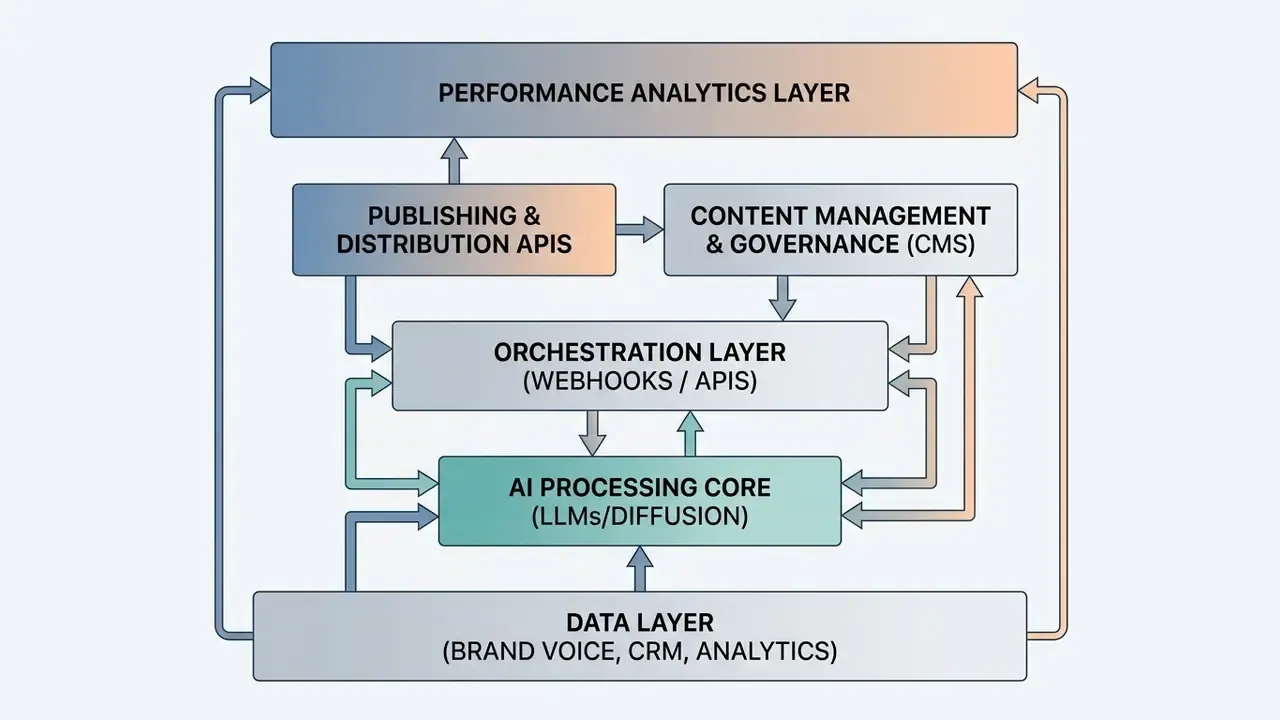
A connected AI media workflow rests on a layered technological architecture. The stack ties a structured data layer, specialized AI models, orchestration mechanisms, content management systems (CMS), and distribution APIs into one ecosystem.
What Data AI Needs for Relevant Content Output
Accuracy and relevance of AI-generated assets depend directly on the data you feed the models. A robust data layer maintains three distinct repositories:
- Brand Voice & Governance Data Codified style guidelines with 3 to 5 core voice attributes, explicit do and don't phrasing rules, preferred and forbidden vocabulary dictionaries, and contextual tone parameters.
- Historical Asset Corpus A curated database of top-performing past publications across channels, structured as paired "on-brand versus off-brand" examples used to prompt and evaluate models against organizational standards.
- Performance Analytics Context Live channel engagement data, audience demographic metrics, and historic conversion statistics that inform automated topic selection and angle generation.
Data privacy controls inside the data layer. For organizations in finance, healthcare, or any sector handling non-public information, the data layer is also your primary containment boundary against shadow AI. Four controls are non-negotiable before the first API call:
- Enterprise endpoints with zero-retention terms: use commercial API tiers or private deployments where prompts and outputs are contractually excluded from model training and retained for the minimum operational window.
- Network isolation: route inference traffic through a VPC endpoint or private link rather than the open internet, and log egress at the orchestration layer.
- Pre-inference redaction: run PII and PHI detection and masking in the orchestration step before the payload reaches any model, so sensitive fields never leave the trust boundary.
- Least-privilege retrieval: scope vector indexes and CRM queries to the role of the requesting workflow, not to the entire corpus.
If an employee can paste a customer record into a consumer chatbot faster than into your sanctioned pipeline, the control gap is a usability problem before it is a policy problem.
How to Connect AI Tools, Content Management, and Publishing
Connecting modern AI tools with enterprise content management platforms depends on reliable API integration and event-driven webhooks. W3C HTTP Webhook profiles and current API endpoints (OpenAI, Google Gemini, headless CMS platforms) let systems exchange metadata and payload state in real time. That same orchestration layer is what allows specialized video editing tools and photo editing tools to participate as pipeline steps rather than living on as manual detours.
For organizations building custom pipelines, initiating integration through a Starter API Workflow establishes the foundational data exchange patterns. Automated triggers push newly drafted assets into headless CMS repositories, where versioning, governance policies, and metadata tags apply. Once human review approval is logged through webhook events, publishing systems push final assets to social channels, web portals, or distribution endpoints without manual copy-pasting, including derivative formats produced by text-to-video AI and voice synthesis through an AI voice generator.
Optimizing latency and compute cost. Heavy media generation (video synthesis, high-resolution diffusion, long-form audio) returns anywhere from 30 seconds to several minutes per call. If the orchestration worker sits blocked while waiting for the payload, you pay compute hours for inference time you do not control. The remedy is a checkpoint-resume pattern built on waitpoint tokens:
The same token mechanism doubles as the human approval gate. A supervisor pattern generates the asset, pauses on a waitpoint token, waits for an editor's approve or reject decision, applies feedback if required, and only then releases to publishing. No timeout limit, no polling loop, no idle billing.
To avoid rate-limit rejections during batch runs, apply a coordinator pattern with explicit concurrency limits: a hard cap of N simultaneous generations per API key, queued overflow, and exponential-backoff retries. For sequential enhancement chains (generate, style transfer, upscale, compress for delivery), the coordinator runs stages in order and persists intermediate artifacts, so a failure at the upscaling step never forces a full regeneration from the prompt. Cheap discipline. Large savings.
- The generation step issues an asynchronous request to the AI API and mints a unique wait token (
wait.forToken). - The workflow checkpoints and suspends. CPU and RAM consumption drop to zero while the model runs.
- On completion, an external webhook returns the status plus the token, and the orchestrator resumes the chain exactly where it paused.
Where AI Agents Help and Where You Need a Controlled Workflow
Autonomous AI agents perform well in low-risk, deterministic operational environments. Controlled, human-gated workflows remain mandatory for high-impact or public-facing communications.
Task Delegation Matrix:
Autonomous AI Agents:
  • Low-risk asset resizing
  • Routine metadata tagging
  • Internal data log aggregation
  • Automated transcription indexing
Controlled Workflows (Mandatory Human Review):
  • External public communications
  • Binding legal / financial statements
  • Sensitive customer data processing
  • Core brand voice & campaign messaging
Government and regulatory frameworks, including guidance from the U.S. Department of Defense and Singapore's IMDA, require explicit human control points wherever error costs run high. Autonomous agent execution suits background processing: auto-transcribing audio files, reformatting assets into standardized platform dimensions, indexing archives.
«ECHO embeds mandatory human confirmation into a Plan-Confirm-Execute loop, making AI edits explainable and controllable before they are applied.»
Generating final editorial pieces, approving promotional messaging, or issuing public statements is a different category. Those require a strict content workflow with human sign-off gates and a recorded decision.
| System Layer | Primary Operational Role | Standard Integration Method | Risk Level |
|---|---|---|---|
| Data Layer | Centralizes brand voice rules, asset archives, and CRM data | Database queries / Vector Index | Low |
| AI Processing Core | Executes text drafting, image synthesis, and audio generation | Model REST APIs / SDKs | Medium |
| Orchestration | Routes event triggers, enforces logic steps, manages webhooks | Workflow Engines / Middleware | Medium |
| Content Management | Stores assets, manages versioning, enforces access control | Headless CMS APIs | Low |
| Publishing APIs | Distributes approved assets to public digital channels | Social / Web Endpoints | High (Requires Human Gate) |
| Performance Analytics | Ingests engagement metrics, feeds feedback loop | Analytics Data Pipelines | Low |
Build vs. Buy: Cost Structure per 1,000 Media Assets
Executive sponsors usually want a financial frame before approving an orchestration project. The table below compares the two dominant deployment models on the cost drivers that actually move the total, using a normalized batch of 1,000 mixed media assets (text plus image, with 10% video).
| Cost Driver | Self-Hosted Models (GPU fleet) | Managed API + SaaS Orchestration |
|---|---|---|
| Inference cost | Fixed GPU reservation; unit cost falls sharply with volume | Metered per call; predictable at low or medium volume, rises linearly |
| Idle compute | Paid whether utilized or not; requires autoscaling engineering | Near-zero with checkpoint-resume; you pay for active compute only |
| Engineering overhead | High: model serving, queueing, versioning, GPU ops | Low to medium: integration, retries, concurrency configuration |
| Data residency & privacy | Strongest control; data never leaves the perimeter | Requires enterprise tier with zero-retention and regional endpoints |
| Time to first pilot | Weeks to months | Days |
| Best fit | High, stable volume with strict residency requirements | Variable volume, fast iteration, multi-model experimentation |
For most enterprise media teams the practical answer is hybrid: managed APIs for experimentation and low-volume formats, self-hosted or reserved capacity for the two or three highest-volume asset types once unit economics stabilize. Vendor independence is worth protecting here, since model pricing and capability shift faster than procurement cycles.
AI Media Workflows Tutorial: Implementation Steps from Pilot to Scale
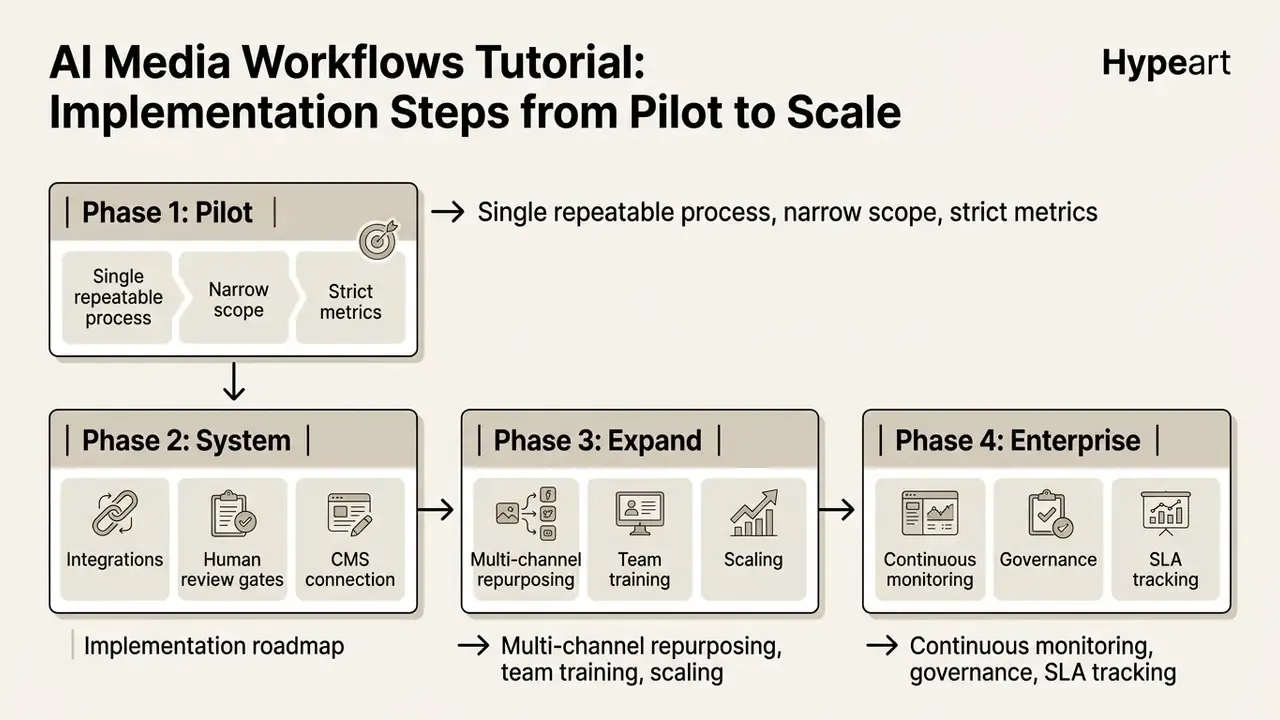
Deploying AI media workflows successfully calls for a staged rollout. Following guidance from the U.S. Department of State Generative AI Playbook and Adobe's enterprise scaling framework, organizations should move from a contained pilot to full enterprise deployment across four operational phases.
«Organizations that begin with a single repeatable process achieve more durable AI adoption: users first test the tool on an isolated task, then extend the chain.»
Start with One Repeatable Content Process
An enterprise AI media workflows tutorial starts with one highly repeatable process that has clearly bounded inputs and measurable target outputs. High-volume structured tasks make the best pilot candidates: weekly email newsletter summaries built from published blog posts, or standardized social posts derived from an approved master asset.
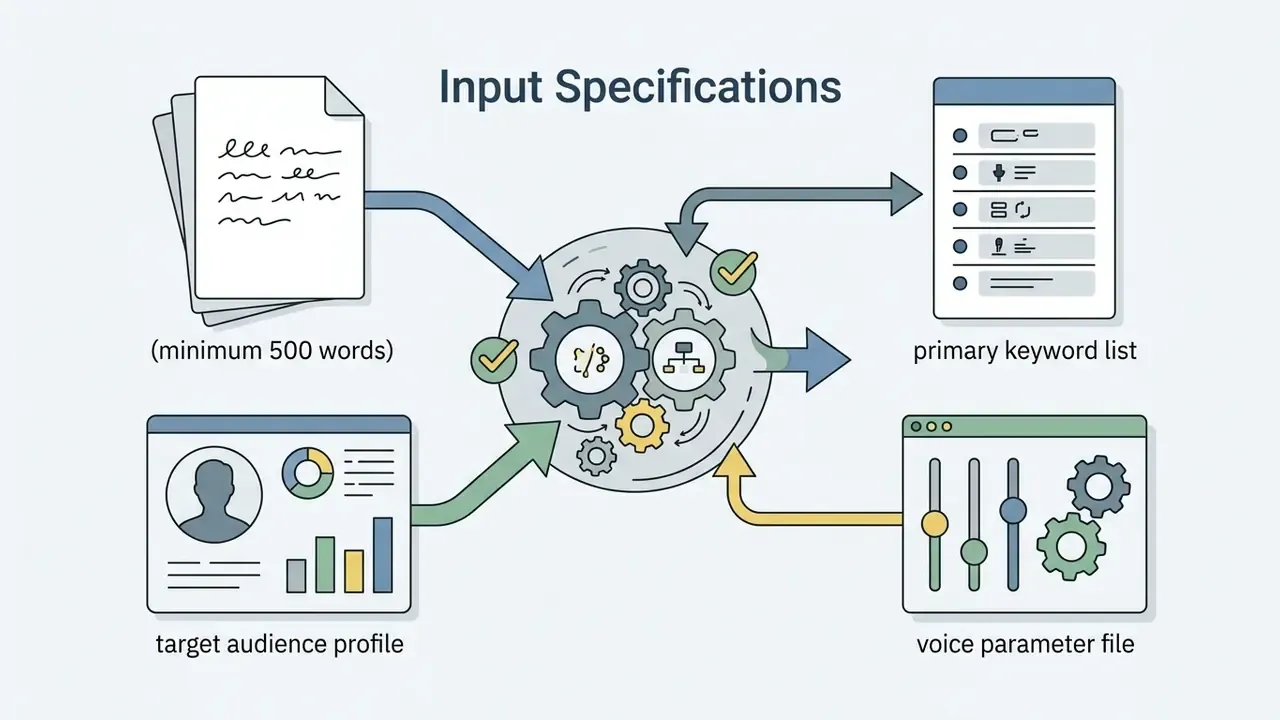
To construct a precise pilot process, define explicit boundary parameters:
A pilot you cannot measure in two weeks is not a pilot. It is a hope.


Configure Generation, Review, and Publishing Stages
A compliant execution pipeline links generation models directly to human editorial checkpoints and scheduled publishing tools. Formal guidance from international publishing bodies, including IEEE, ICMJE, and the European Commission, requires explicit disclosure of AI usage and clear human accountability for published material.
Marketing organizations juggling multi-brand creative requirements typically raise throughput by replacing one-off manual asset creation with an orchestrated pipeline. Using Agency Creative Production patterns, the workflow generates platform-specific image variations and social captions in parallel, then routes every candidate through a single editorial gate. Reported throughput multiples vary substantially by asset type and review depth, so treat any published multiplier as a directional signal. Measure your own baseline before and after the pilot rather than importing an external figure into a business case that risk will later challenge.
Measure Performance and Improve the Workflow Each Cycle
A closed-loop feedback mechanism lets real audience metrics improve the generative pipeline over time. Standardized frameworks from NIST expect organizations to capture post-publication performance data and feed insights back into system prompts and data repositories.
«Generative AI users track audience engagement and adjust prompts based on reactions, turning publication metrics into a signal for improving generation.»
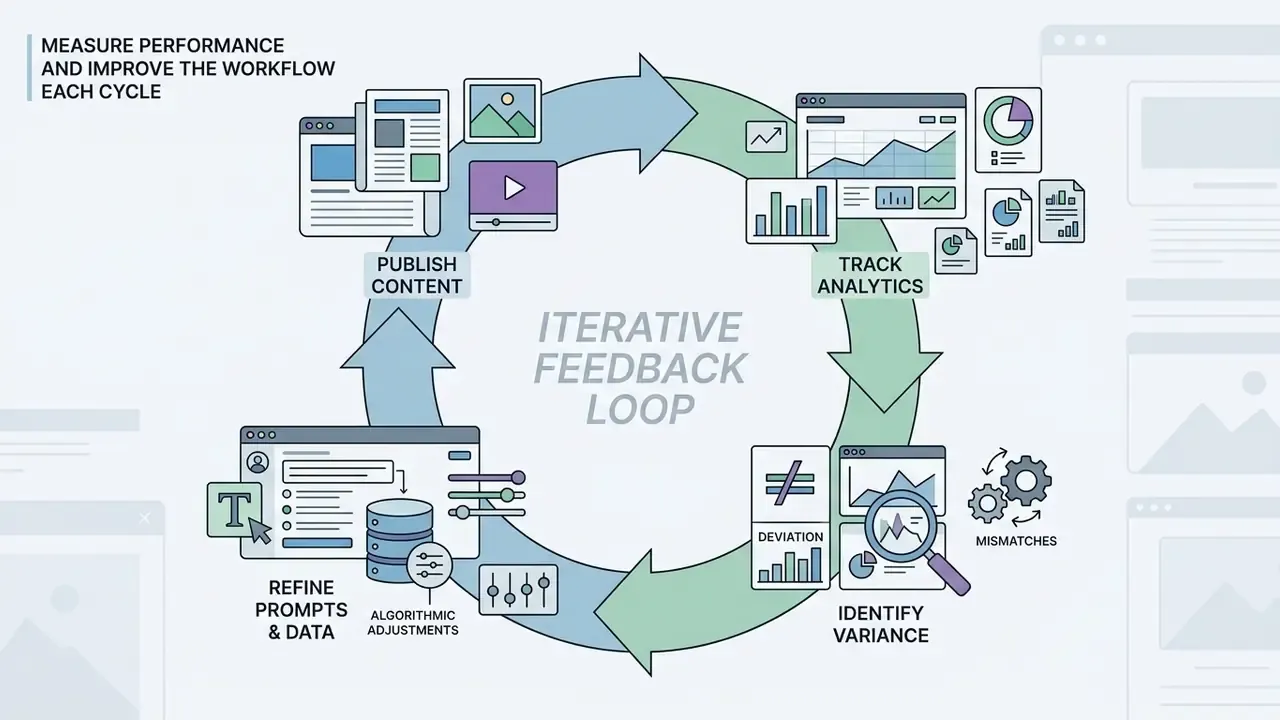
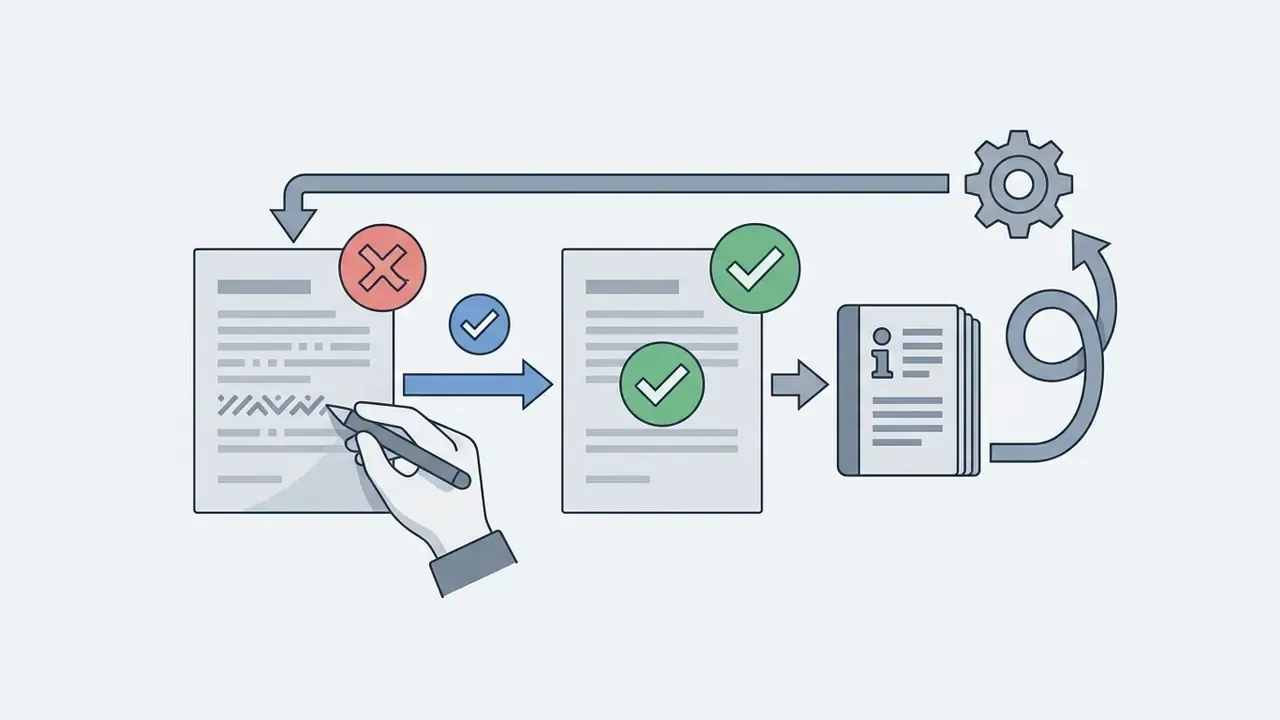
Track engagement metrics (click-through rates, retention time, conversion rates) alongside operational execution metrics (human editing time required, prompt revision counts, claim error flags). When analytics show that certain messaging angles or visual formats underperform, update system prompts and reference data layers for the next creation cycle. Version those prompt changes. An unversioned prompt is an unlogged model change, and model risk teams will treat it that way.
Workflow for AI-Powered Content: From Idea to Social Media Publishing
Creating multi-format AI-powered content takes a structured pipeline that turns a single core hypothesis into tailored assets across digital platforms.
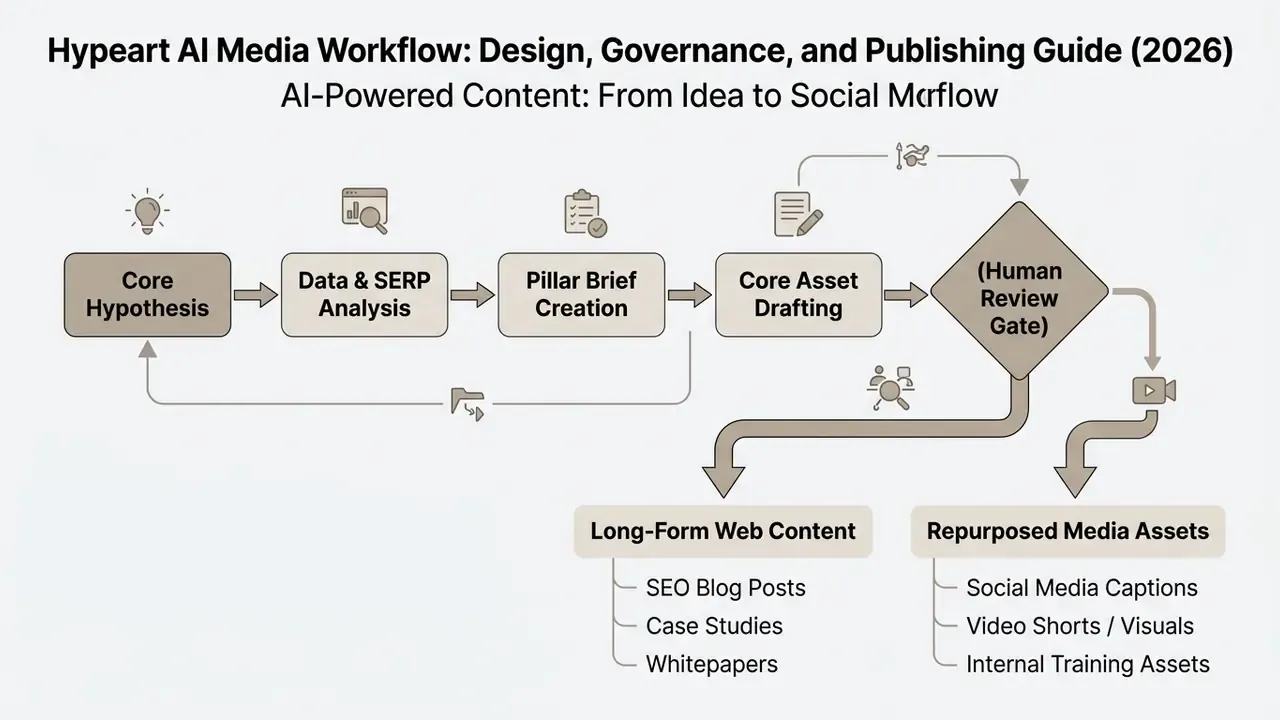
Use AI for Ideas, Briefs, and Content Pillars
Coherent content marketing pillars start with analysis of audience data, search intent gaps, and competitive SERP structures. Generative tools parse raw topic domains to surface opportunities that human strategists then refine into defined pillars, which is also how teams justify producing more content without diluting the message.
«Participants prompt AI with topics and audience interests, receive topic lists and headline variants, and then structure them into content pillars.»
To generate structured content briefs automatically, AI models run three sequential steps:
- SERP & Gap ExtractionAnalyzing top-ranking URL headings, user intent questions, and missing thematic coverage.
- Brief AssemblyBuilding a target outline with recommended word counts, required semantic entities, and audience alignment.
- Content Pillar GroupingOrganizing individual topic briefs into 3 to 4 overarching strategic pillars.
Create Text and Visual AI-Generated Content
Synthesizing multi-modal generated content requires strict alignment between text, image generation, and established brand standards. Diffusion models and LLMs run concurrently to produce copy and visual assets matched to campaign parameters.
«VideoStudio uses an LLM to convert a prompt into a multi-scene script grounded in the model's logical knowledge, then generates consistent scenes with video models.»
When synthesizing visual assets or enterprise training content, keep technical and aesthetic consistency under control. Standardized visual pipelines, such as producing an avatar training video for internal onboarding, hold presentation uniform across corporate communication assets. Every text draft and generated visual must clear brand voice review rules, plus a check on commercial usage rights for AI image generators, before entering the final layout stage. Licensing questions that surface after publication are expensive; the same question asked before generation costs a minute.
Adapt Content Output for Different Platforms
Content repurposing turns a master asset into platform-tailored derivatives optimized for specific audience behaviors and channel constraints, often combining static assets with image-to-video conversion and compression steps handled by a video compressor before delivery.
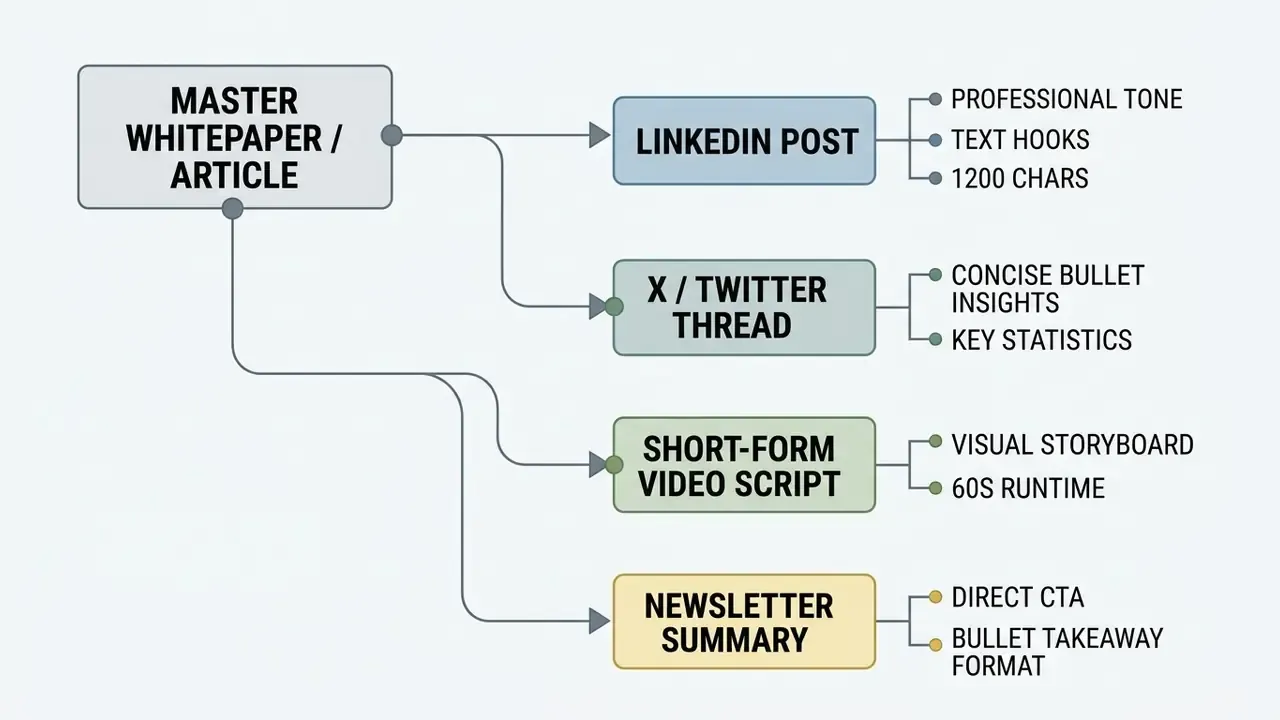
Each target channel demands explicit formatting checks during automated reformatting:
Accessibility validation belongs in the automated stage, not the manual one. Captions, transcripts, alt text, plain-language checks, and mobile rendering should be enforced as pass or fail conditions before an asset becomes eligible for the publishing queue.

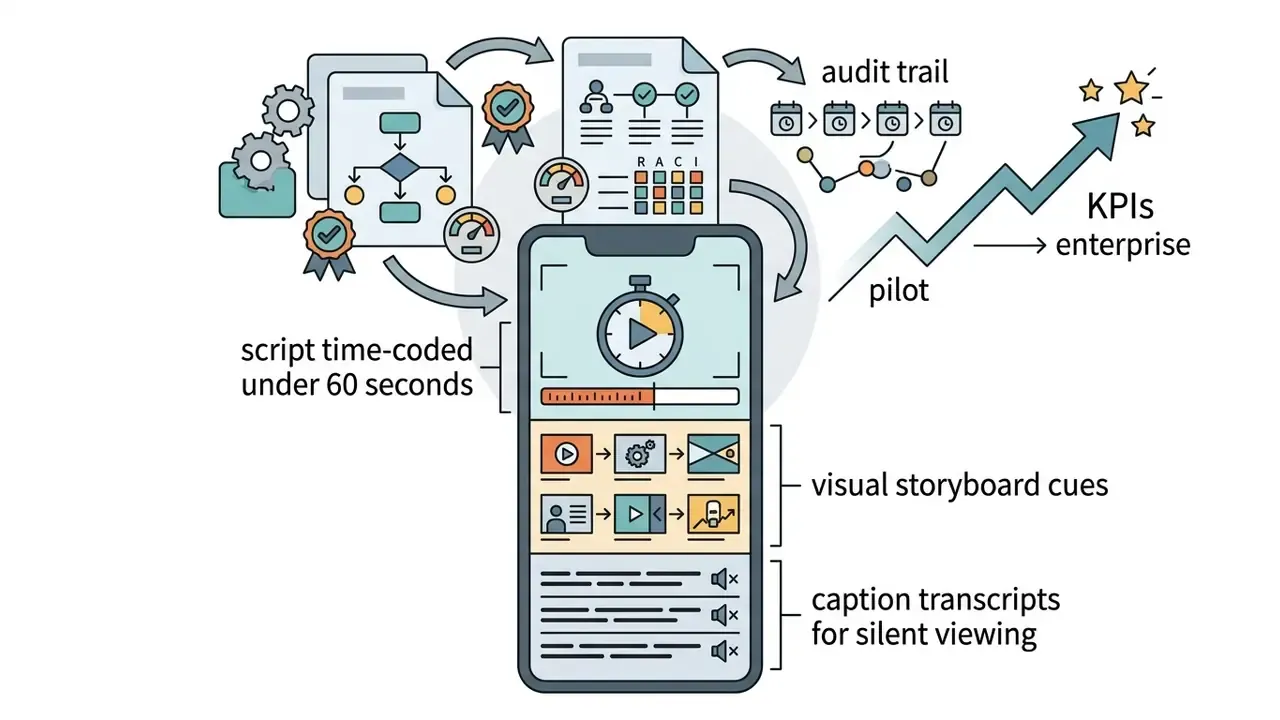

AI Media Workflows Best Practices: Quality, Brand, and Control
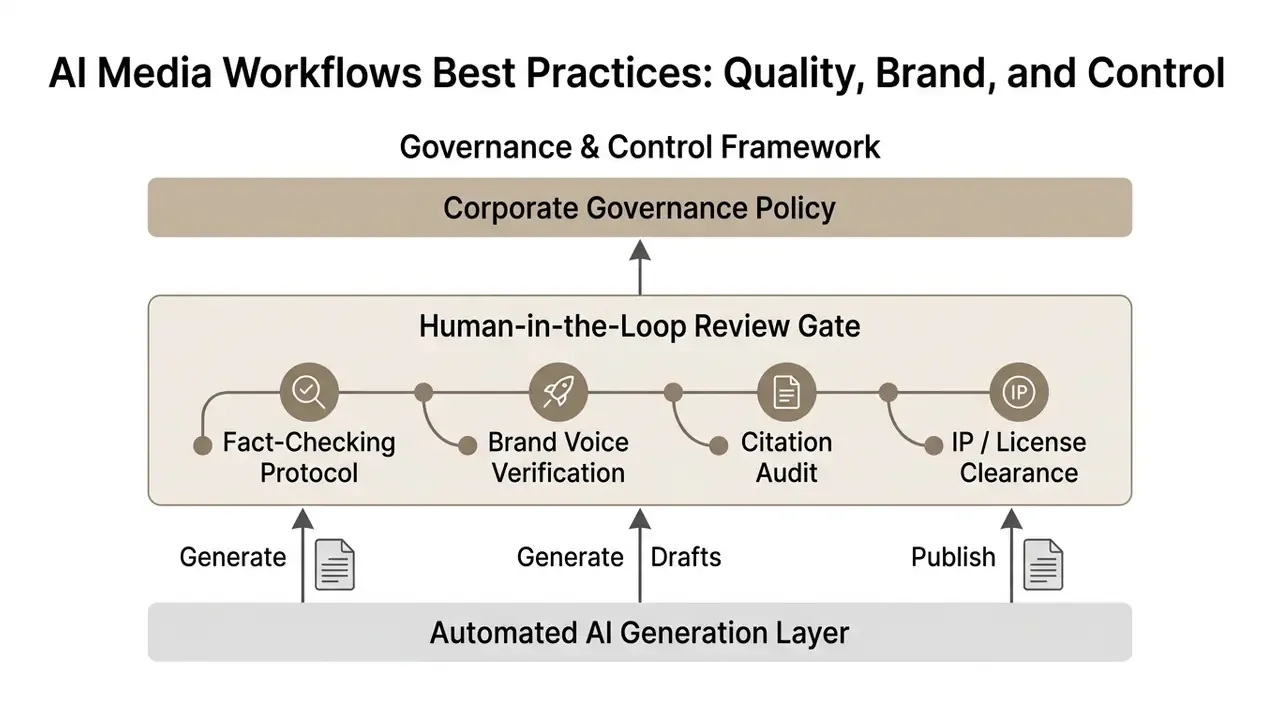
Long-term credibility, audience trust, and legal compliance depend on strict governance around AI media workflows best practices. Uncontrolled generative output introduces factual hallucinations, brand voice drift, and intellectual property liabilities. None of those failures announce themselves early.
Set AI Usage Boundaries and Brand Voice Rules
Establish explicit policies that separate permissible AI assistance from prohibited usage. Public sector and regulatory standards, including state-level generative AI guidelines across US jurisdictions, expect clear usage boundaries and documented human oversight.
«AI4Media recommends publishing internal staff instructions with step-by-step AI usage scenarios and considering the appointment of an AI ethics owner.»
- Permissible Scenarios Initial brainstorming, SERP analysis, rough draft generation, grammar checking, translation support, asset size reformatting, and metadata tagging.
- Impermissible Scenarios Unreviewed direct-to-public publishing, entering non-public sensitive or financial data into public AI models, fully automated legal and compliance decisions, or generating unverified factual claims.
Brand-voice prompting template. Vague prompts produce generic output, and generic output erodes brand equity faster than almost anything else. Constrain the model with role, task, audience, tone, forbidden vocabulary, and one calibrated example:
[Role]: Editor for a B2B engineering blog.
[Task]: Draft the introduction for an article on AI media workflows.
[Audience]: CTOs and Heads of Content at enterprise organizations.
[Tone]: Precise, engineering-led, no metaphors, no hype.
[Banned words]: "revolutionary", "game-changer", "transformation", "unlock".
[Constraint]: Every claim must be attributable or removed.
[Calibration example]: "Introducing an orchestrated AI pipeline reduced the
production cycle for multi-platform assets from 14 days to 4."
Add Human Review, Monitoring, and Exception Handling
A Human-in-the-Loop quality control protocol guarantees that natural persons evaluate model output before release.
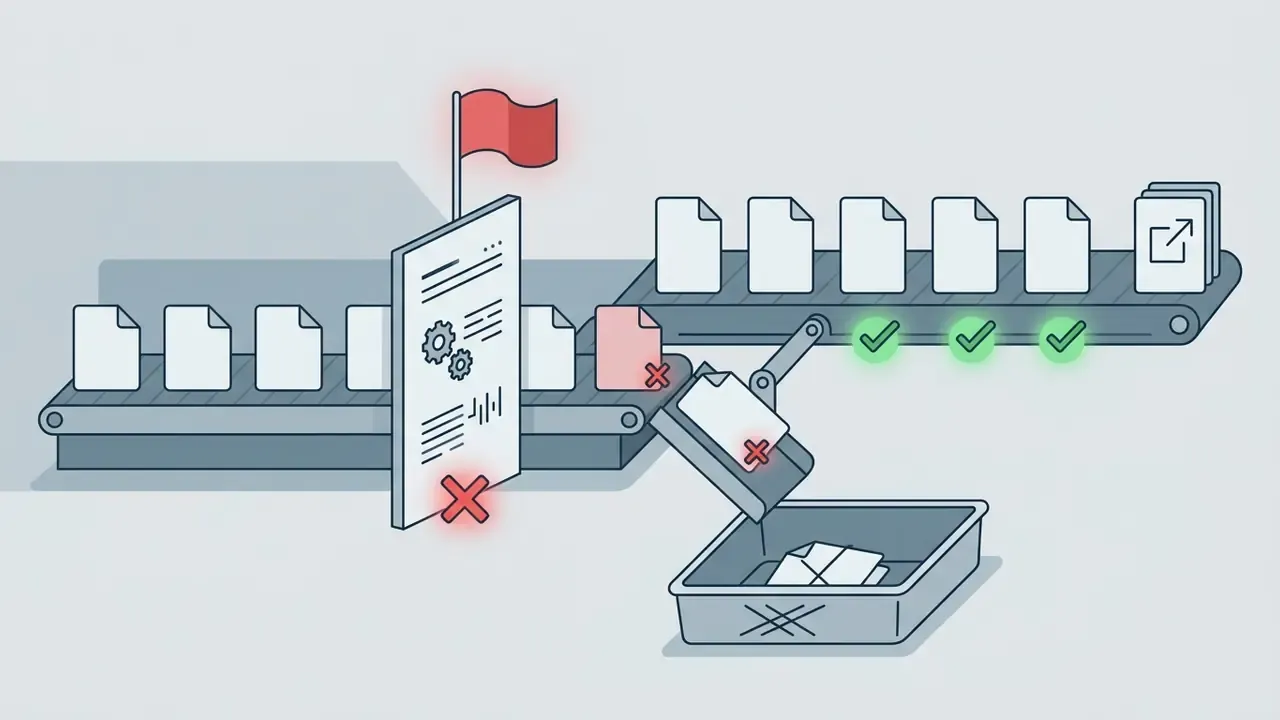
When an AI system produces hallucinated facts, off-brand phrasing, or broken formatting, an exception-handling protocol must fire:

| Verification Control | Trigger Condition | Owner | Escalation Path |
|---|---|---|---|
| Claim grounding check | Any statistic, date, or quotation present | Editor | Subject-matter expert review |
| Brand voice scan | Every generated draft | Content lead | Rewrite or reject |
| IP / licensing clearance | Any generated or third-party visual | Legal / rights desk | Asset replacement |
| Sensitive-data scan | Any payload containing customer or financial fields | Compliance | Block and log incident |
| Release sign-off | Before publishing API call | Named accountable human | Kill-switch / rollback |
Fact-Checking Protocol & Verification Checklist
| Logged Field | Purpose |
|---|---|
prompt_text / prompt_hash | Reproduce the exact instruction set |
model_name + model_version | Attribute output to a specific model release |
seed / generation parameters | Reproduce visual or video output deterministically where supported |
source_documents | Show grounding evidence for factual claims |
reviewer_id + role | Identify the accountable natural person |
signoff_timestamp + decision | Prove the gate was resolved before publication |
exception_log_ref | Link corrections and incidents to the asset |
disclosure_flag | Record whether AI involvement was disclosed publicly |
This record is the difference between a workflow that is governed and a workflow that merely feels governed. Reproducibility can't be retrofitted after an examiner asks for it.
FAQ on AI Media Workflows
Can AI fully replace a media content team?
No. Artificial intelligence can't replace a media content team outright. AI models accelerate execution and scale asset throughput dramatically, yet human professionals stay indispensable for strategic direction, brand voice management, complex editorial reasoning, and ethical governance.
«Participants describe generative AI as a co-author: it absorbs repetitive and exploratory work while humans curate, refine, and make the final calls.» Sun et al., CHI (2024)
Modern content operations drift toward a hybrid operating model. Repetitive drafting, asset resizing, and metadata tagging move to AI systems.
«Journalists retain control over topic selection, framing, and fact verification. AI supports transcription, drafts, and formatting, but does not replace editorial judgment.» Tow Center for Digital Journalism, "Artificial Intelligence in the News" (2022-2023)
Human team members shift into strategic roles as editors, curators, compliance officers, and workflow directors, often owning the specialist tooling layer as well, from AI photo editors to headshot and avatar pipelines. Organizational accountability, legal liability, and brand trust still rest on human judgment.
What is the difference between an AI workflow and an AI agent?
A deterministic engine orchestrates an AI workflow: the step sequence, the checkpoints, and the release conditions are fixed by design, and the model contributes bounded semantic work inside that frame. An AI agent plans its own path, selects tools dynamically, and can chain actions the designer never enumerated. Use workflows where the cost of an unexpected action is high. Use agents where the task is reversible, contained, and cheap to redo.
Where should the human review gate sit in the pipeline?
At minimum, before any irreversible or externally visible action: publication, distribution to third parties, binding statements, and anything touching sensitive data. In higher-risk contexts, add a second gate right after briefing. Approving the brief prevents expensive downstream rework far more efficiently than catching a flawed premise at sign-off.
How do we prevent brand voice drift as volume scales?
Treat brand voice as data, not as culture. Maintain a versioned voice primer (3 to 5 attributes, banned and preferred vocabulary, annotated on-brand versus off-brand pairs), inject it as a persistent instruction in every generation call, and sample a fixed percentage of published assets each month for scored voice audits. Drift shows up in measurement, not in intuition.
What are the most common failure modes in the first 90 days?
Four recur consistently: piloting a process too broad to measure; omitting review and rework hours from the ROI model, which produces a savings figure that can't survive audit; blocking orchestration workers during long generations instead of using checkpoint-resume, which inflates compute bills; and logging approvals in chat threads rather than in a queryable audit registry, which leaves no defensible evidence trail.
Do we have to disclose that content was produced with AI?
Disclosure obligations depend on jurisdiction, channel, and content type, and they keep tightening. EU transparency guidance requires machine-readable marking for AI-generated or manipulated content, while academic and publishing bodies (IEEE, ICMJE, and the European Commission's guidance on generative AI in research) require explicit declaration of AI assistance. Build a disclosure_flag into the asset record so the decision gets documented rather than improvised.
How does this connect to our existing model risk framework?
Generative pipelines rarely fit legacy validation templates cleanly, and pretending otherwise creates false comfort. A workable approach: register each workflow in the AI inventory with an owner and risk tier, document prompts and model versions as change-controlled artifacts, and define pass or fail acceptance tests for output quality. Where validation methods for agentic behavior remain immature, say so in the documentation instead of implying coverage you don't have.
Limitations, Open Questions, and a Safe Next Step
Some honesty about the evidence base. The 60% to 65% production-time figure comes from a simulation study, not from audited institutional data, and the McKinsey range reaches this article second-hand. Several 2026 references are preprints whose peer review status is unsettled. Validation methodology for agentic behavior is still developing across the industry, and no framework currently offers a complete answer for continuous monitoring of open-ended generation.
Three questions remain genuinely open in most institutions: how to price residual risk from an undetected error, how to test agent behavior in a way an examiner accepts, and who owns disclosure decisions when marketing, legal, and compliance disagree.
A low-risk starting move: pick one repeatable, internally facing content process, run it for 30 days with full logging and a single named reviewer, and compare the true cost per asset (compute, review labor, triage, residual risk) against your current baseline. If the numbers hold, extend the chain. If they don't, you have learned that cheaply, with nothing published that you would rather retract.