This AI video API pricing guide evaluates current pricing structures, compares the primary model providers, provides bottom-up budgeting formulas with worked examples, and details implementation workflows for software engineering, procurement, and model-risk teams. Think of it as a developer guide with a governance spine attached.
Executive Summary for Governance Leaders
For CROs, CCOs, Heads of Model Risk, and AI governance leaders who need the decision in 60 seconds:
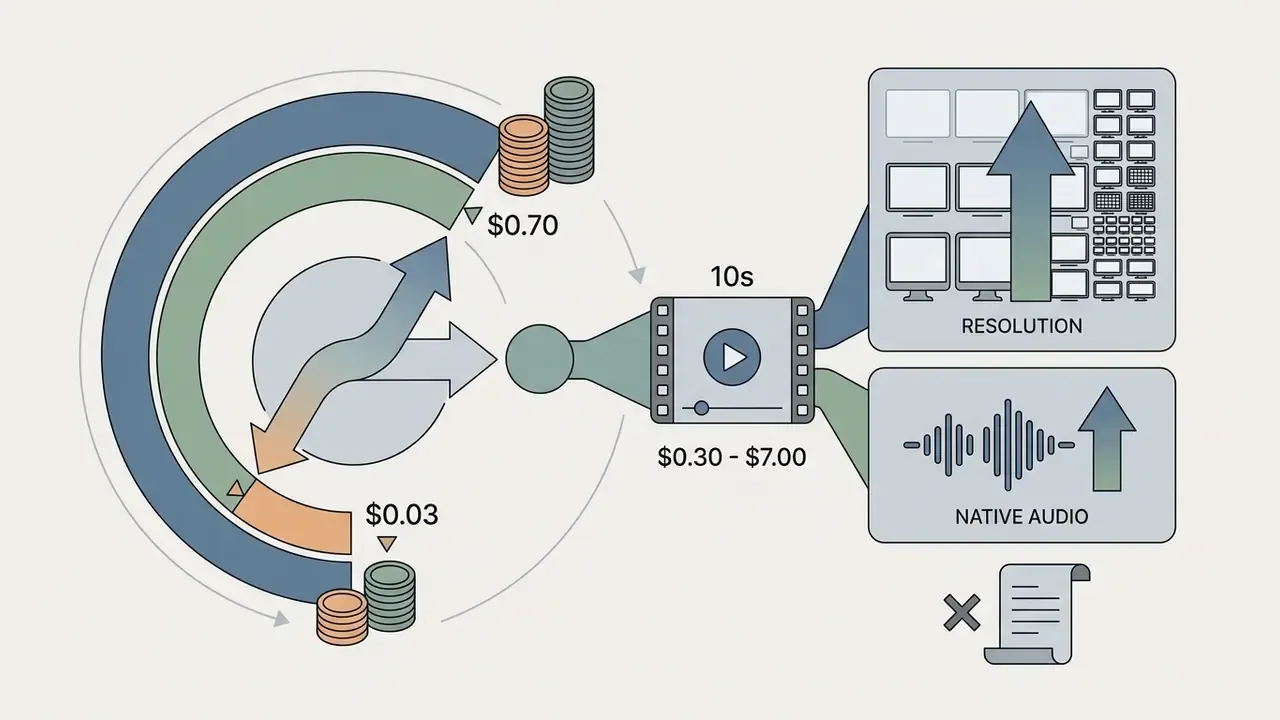
- Unit price range.First-party AI video APIs are billed between $0.03 and $0.70 per generated second in 2026, which normalizes to $0.30 to $7.00 per 10-second clip. Resolution and native audio, not prompt length, are the dominant cost multipliers.
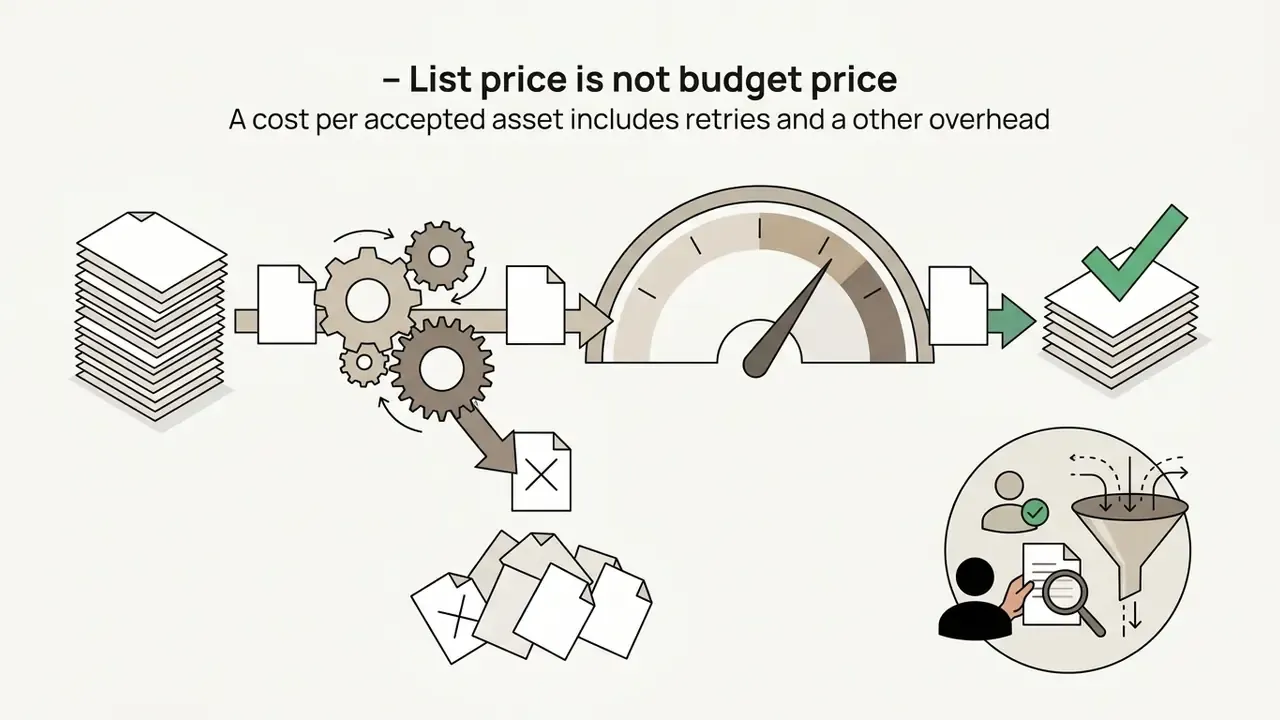
- List price is not budget price.Because diffusion models reject or misalign a share of outputs, the only defensible planning metric is cost per accepted asset, which includes retries, human review, moderation, and log retention.
- Lifecycle risk is immediate.OpenAI's standalone Videos API and Sora 2 models are scheduled for shutdown on September 24, 2026. Any production dependency on Sora requires a migration plan and a model abstraction layer now, not next quarter.
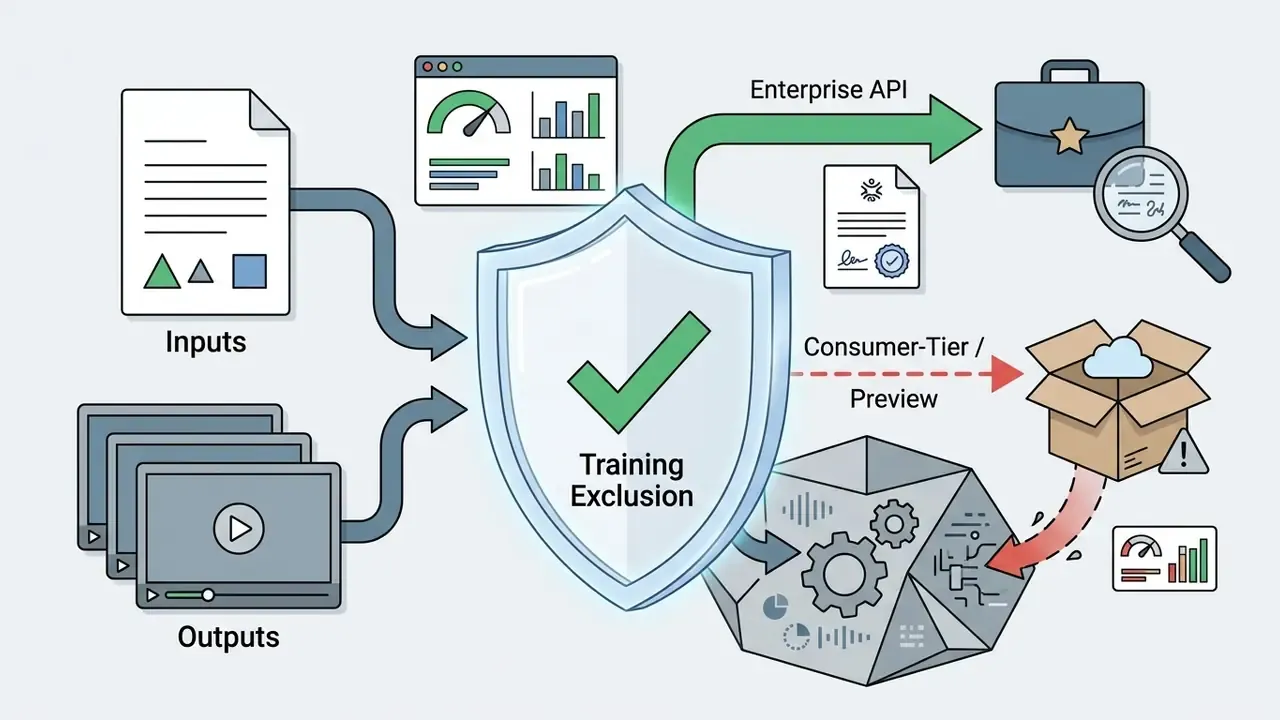
- Security screening is non-negotiable in regulated environments.Before any pilot, confirm SOC 2 Type II status, Zero Data Retention (ZDR) eligibility, training-opt-out language, IP indemnification, and whether prompts or reference images may contain PII.
- Volume changes the contract.Public per-second rates are list prices. At 20,000+ clips per month, enterprise agreements with committed-use discounts, custom SLAs, dedicated capacity, and data-processing addenda materially change the effective rate.
- Cheapest viable route wins, not cheapest rate.A $0.03/sec model with a 60% rejection rate is more expensive than a $0.12/sec model with a 10% rejection rate once reviewer time is priced in.
Three Questions to Settle Before Procurement Starts
Most stalled video-generation programs fail on one of three questions, and none of them is technical.
Who owns the output? Name a single accountable owner for the generation pipeline, with an approved role, access limits, an escalation path, and a documented shutdown switch. No evidence, no autonomy.
What data may leave the perimeter? Decide, in writing, whether prompts and reference assets can contain customer names, account details, ID documents, or internal screens. If the answer is unclear, the pilot is already out of policy.
What is the acceptance bar? A clip is not "done" when the API returns HTTP 200. Define who approves, against what checklist, and how long that takes. That number drives the budget more than any per-second rate on a vendor page.
How AI Video API Pricing Works
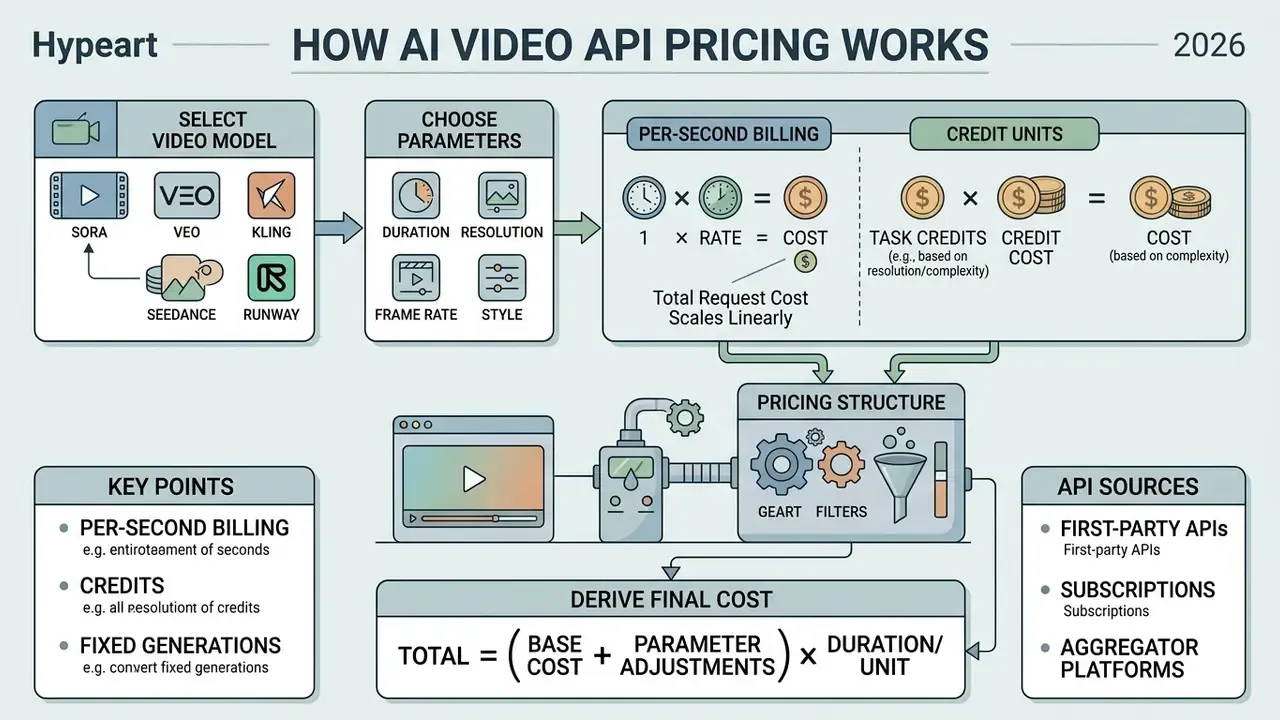
AI video API pricing in 2026 is structured on a metered, per-second output basis or equivalent credit units, where total request cost scales linearly with duration and non-linearly with resolution and multimodal additions. Unlike static image generation, video inference requires temporally coherent frame synthesis across dozens of diffusion steps. That compute intensity makes output duration and spatial resolution the primary billing drivers for model providers.
Before committing to a specific vendor, it is worth mapping the broader landscape of AI video generators so that API rates are compared against the correct capability class rather than across mismatched model tiers. Comparing a distilled draft engine with a flagship cinematic model is a common way to produce a budget nobody can defend.
Per-Second Billing, Credits, and Fixed Generations
Model providers use two main usage-based billing mechanics: direct currency per second, or abstracted credit meters. Direct per-second metering charges a fixed fiat rate (for example, $0.10/sec) multiplied by output length. Credit-based systems convert fiat currency into developer credits (for example, $0.01 per credit), deducting a set amount per second based on model complexity.
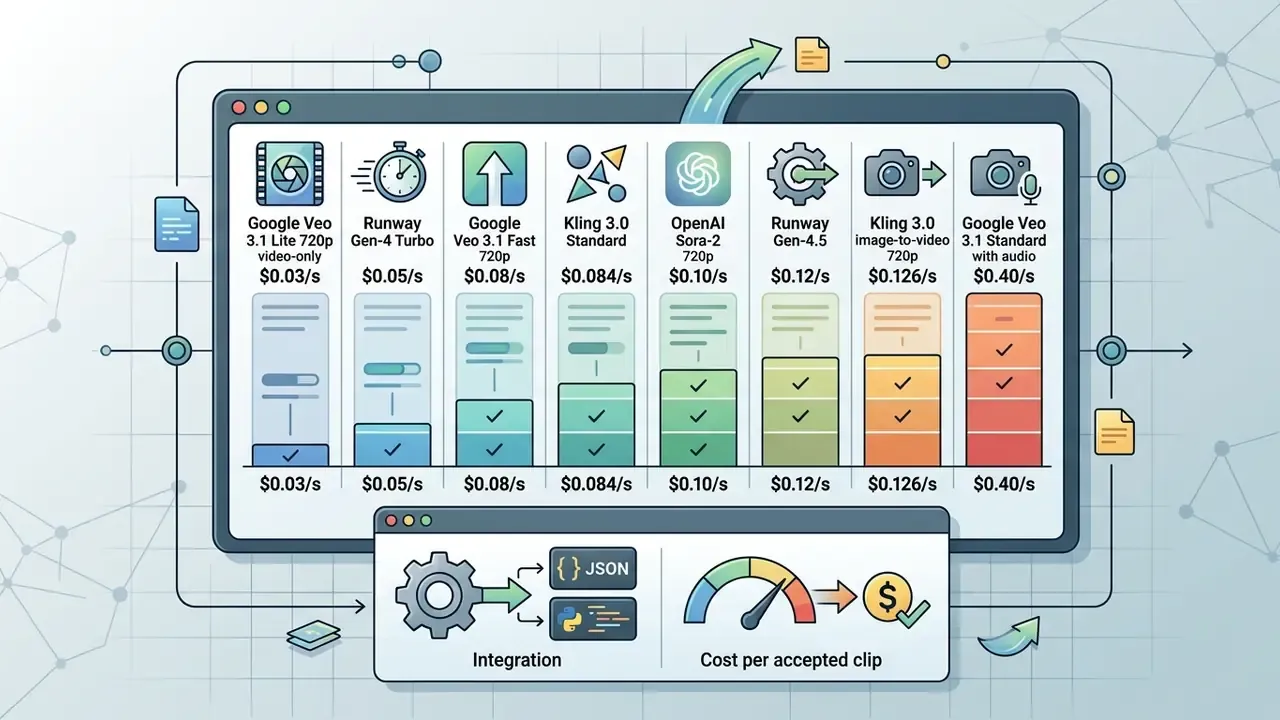
Runway's Dev API illustrates the pattern: 5 credits per second ($0.05/sec) for gen-4-turbo, and 12 credits per second ($0.12/sec) for gen-4.5. Fixed clip packages sell preset durations (4, 8, or 12 seconds) as indivisible billing units. Sora-class endpoints historically sold 4s/8s/12s/16s/20s bundles at 48/96/144/192/240 credits respectively. Granular usage-based metering bills the exact generated time, which aligns better with custom application logic.
A third variant is increasingly common: token-metered video pricing, where the provider prices the whole task based on input asset volume, model variant, and output resolution rather than a flat rate per second. BytePlus Seedance 2.0 uses this structure, and it makes per-second normalization impossible without the vendor calculator. Annoying for spreadsheets, but it does reflect real compute.
First-Party APIs, Subscriptions, and Aggregator Platforms
Developers can reach video models through first-party metered APIs, consumer platform subscriptions, or unified aggregator platforms. First-party APIs provide raw endpoint access billed strictly by consumption, which suits backend integration into production platforms. Consumer subscriptions charge fixed monthly fees for pooled credits designed for manual creative workflows, but they lack SLA guarantees and programmatically scalable billing.
Unified access aggregators such as FAL.AI or Replicate expose multiple video models behind a single API key and a standardized payload format. Aggregators often leverage regional compute arbitrage or bulk commitments to offer discounted rates. However, an aggregator introduces a platform layer dependency and requires monitoring of vendor-specific rate limits and routing policies. Teams evaluating aggregators should also examine the methodology behind text-to-video AI generation, because routing behavior can silently substitute model versions between requests. One silent substitution and your acceptance-rate baseline is worthless.
For regulated buyers there is a fourth commercial track that rarely appears on public pricing pages: enterprise agreements. Banks, insurers, and large fintechs typically do not purchase generative video capacity at list price. Enterprise contracts add committed-use discounts (commonly 15% to 35% at volume), custom SLAs with uptime and latency guarantees, dedicated or reserved compute pools, private networking, regional data residency, and a signed data processing addendum. Model-risk teams should treat the public per-second rate as a ceiling, not a forecast.
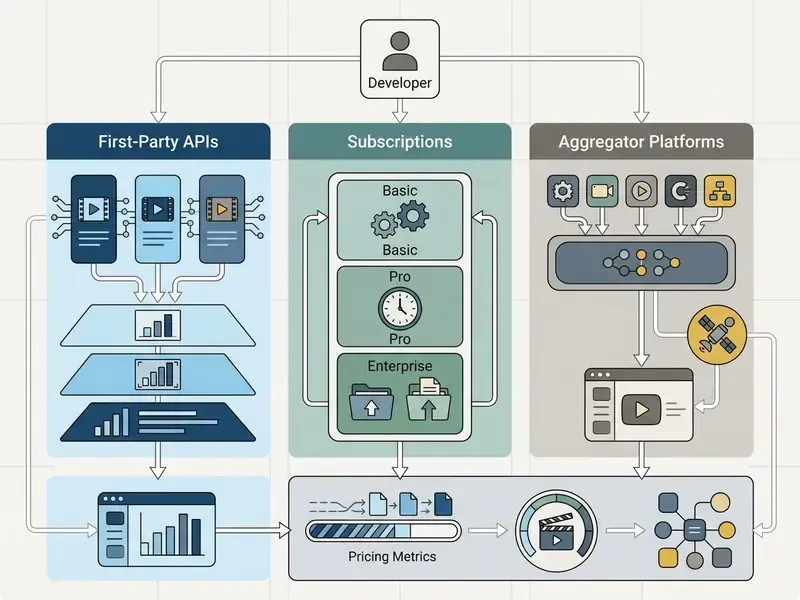
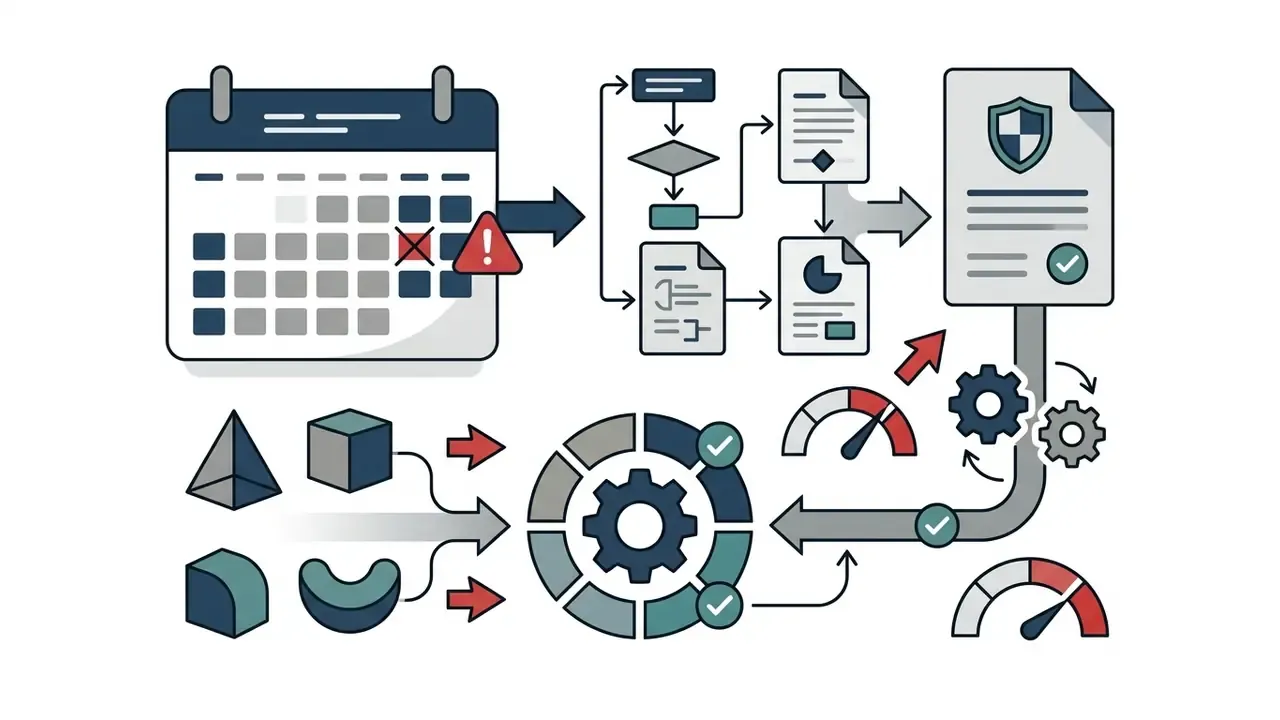
Pipeline stages, duplicated in text for accessibility and audit:
Figure 1: The operational pipeline converting request parameters (model choice, duration, spatial resolution, aspect ratio, and audio settings) into an effective unit cost per API call.
Critical Vendor and Regulatory Risk Factors
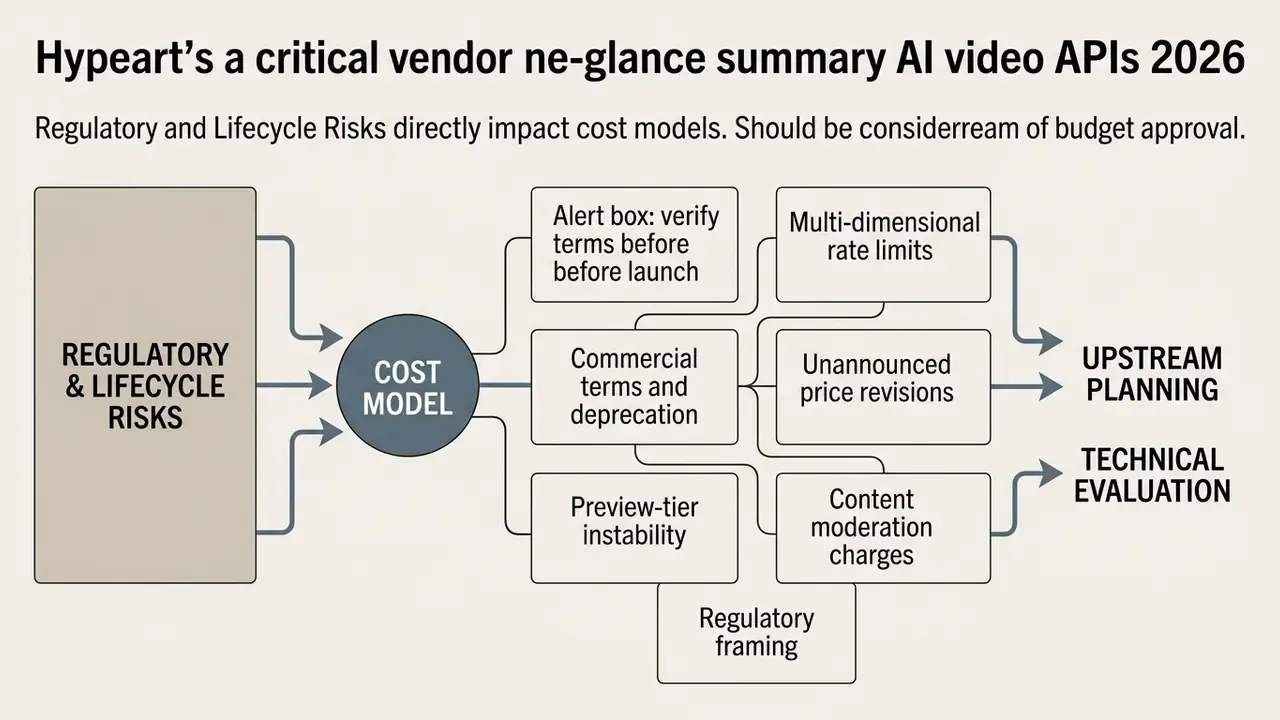
Regulatory and lifecycle risks change the cost model directly, so they belong upstream of budget approval rather than at the tail end of a technical evaluation.
Alert box: verify terms before launch.
- Multi-dimensional rate limits. The Gemini API and OpenAI evaluate Requests Per Minute (RPM), Tokens or Seconds Per Minute (TPM), and Requests Per Day (RPD) independently. Exceeding any single ceiling triggers 429 status codes. Rate limits apply per project or organization, not per individual API key.
- Commercial terms and deprecation. Verify whether outputs are licensed for commercial use on entry-tier or preview plans. Sora's scheduled deprecation on September 24, 2026 shows why modular abstraction layers that permit swapping video backends are worth the engineering time.
- Unannounced price revisions. Provider release notes in 2026 show that scheduled price changes can be cancelled, replaced, or reissued at short notice. Budget models should carry a plus-or-minus 20% rate sensitivity band.
- Preview-tier instability. The lowest published rates (for example, Veo 3.1 Lite at $0.03/sec) frequently sit on Preview endpoints with fixed quotas, regional restrictions, and no SLA. Preview pricing must not anchor a production budget.
- Content moderation charges. Failed, moderated, cancelled, and timed-out jobs may still be billed. Record the terminal state and the reported charge for every job so invoices can be reconciled.
- Regulatory framing. Generative video used in customer communications, onboarding, or training falls inside model-risk frameworks such as NIST AI RMF, SR 11-7 for US banks, and EU AI Act transparency obligations. Synthetic media disclosure and provenance labelling are becoming default requirements, not differentiators.
AI Video API Price Comparison by Provider and Model
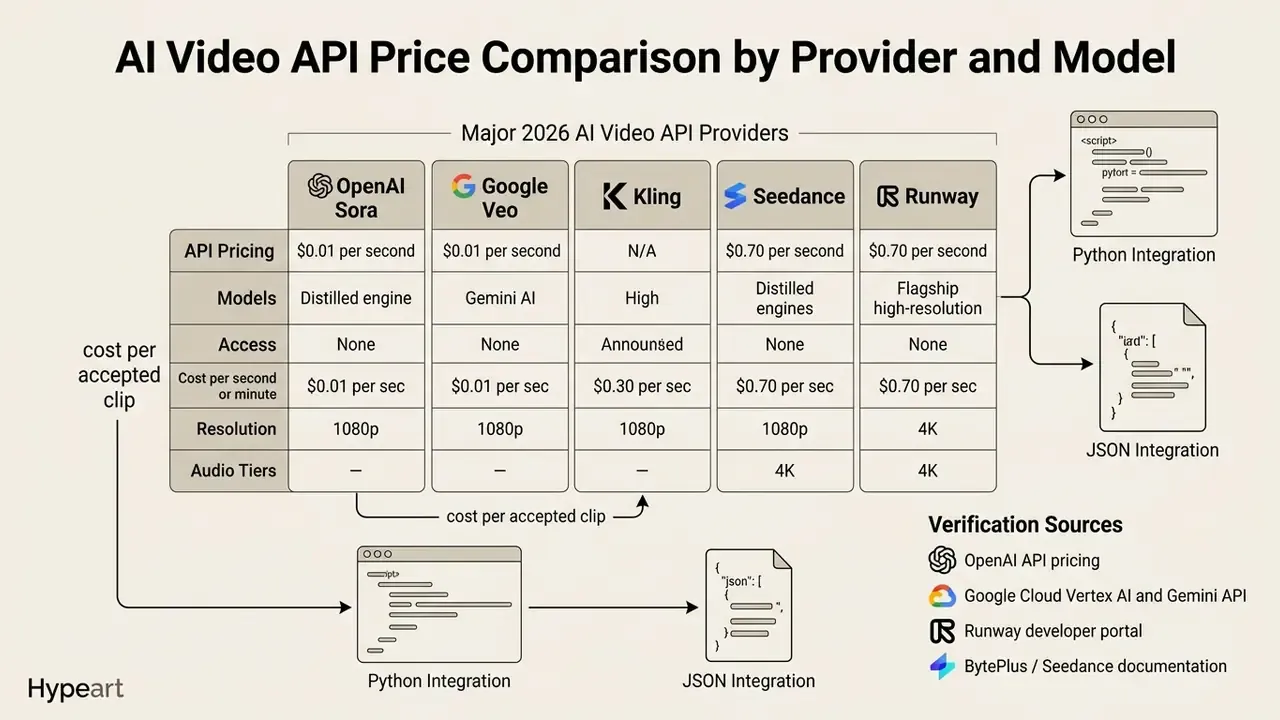
Across major 2026 AI video providers, raw generation costs range from $0.01 per second for entry-level distilled engines to $0.70 per second for flagship 1080p and 4K models with native audio. Provider selection requires analyzing the trade-off between unit cost, visual fidelity, temporal stability, data-handling guarantees, and commercial API lifecycle status.
OpenAI Sora: API Pricing, Models, and Access
OpenAI's public pricing schedules list sora-2 at $0.10 per second for 720p resolution. The higher-capacity sora-2-pro is priced at $0.30/sec for 720p, $0.50/sec for 1024p, and $0.70/sec for 1080p output. Asynchronous batch queues offer a 50% discount ($0.05/sec for standard 720p), which makes off-peak processing genuinely cost-effective for non-real-time jobs.
Practically, Sora rates now serve two purposes only: costing existing workloads until cutover, and building a migration benchmark against at least two replacement candidates. Anything else is unhedged exposure.
Google Veo and Kling: Cost, Resolution, and Audio Tiers
Google Veo 3.1 pricing inside the Gemini API ecosystem is segmented into Standard, Fast, and Lite speed tiers. Standard mode with native audio generation costs $0.40 per second for 720p and 1080p, and $0.60 per second for 4K. Veo 3.1 Fast reduces that to $0.10/sec (720p), $0.12/sec (1080p), and $0.30/sec (4K). Veo 3.1 Lite offers entry-level pricing at $0.05/sec (720p) and $0.08/sec (1080p), dropping to $0.03/sec for 720p video-only output. Teams planning a Veo deployment can follow the detailed Google Veo implementation guide for endpoint-level parameters, quotas, and regional availability.
One documented inconsistency deserves attention. Google's pricing pages list video-with-audio SKUs, while current Agent Platform documentation marks sound generation as unsupported on certain Standard and Fast -001 endpoints while supporting it on Lite. Verify the exact platform and callable route before you budget for native audio. Google documents 4-, 6-, and 8-second outputs, with GA endpoints carrying retirement dates of November 17, 2026 or later, and Veo 3.1 Lite remaining in Preview.
Kling 3.0 via metered developer endpoints costs roughly $0.084 per second for standard silent video at 720p, rising to $0.112 per second with native audio synthesis. High-render Pro tiers cost $0.112/sec silent and $0.140/sec with audio, while 4K video with audio reaches $0.420 per second. Kling routes also differentiate Turbo versus full-model dispatch and voice-control availability, so the exact route and submitted parameters must be stored with every job for cost reconciliation. Kling documents native audio, multi-shot generation, multilingual support, and outputs up to 15 seconds.
Seedance and Runway: Pricing for Production Video Generation
Unlike classic per-second billing, Seedance 2.0 from BytePlus uses a tokenized rate grid: from $0.19 to $0.42 per clip (Mini variant, 480p) up to $4.20 to $9.33 for complex 4K video-input requests. Published per-video ranges:
| Seedance 2.0 variant | 480p | 720p | 1080p | 4K |
|---|---|---|---|---|
| Seedance 2.0 Mini | $0.19-$0.42 | $0.41-$0.91 | Not supported | Not supported |
| Seedance 2.0 Fast | $0.30-$0.66 | $0.64-$1.43 | Not supported | Not supported |
| Seedance 2.0 | $0.39-$0.86 | $0.84-$1.86 | $2.06-$4.57 | $4.20-$9.33 |
The lower bound corresponds to short inputs. Longer inputs and higher resolutions push the charge toward the upper bound. Because the metric is token-based rather than per-second, Seedance 2.0 cannot be assigned a single comparable dollar-per-second figure. Use the live BytePlus calculator or provider-reported usage for budgeting.
The forthcoming Seedance 2.5 extends single-request output from 15 seconds to up to 30 seconds and supports multimodal input of up to 30 images, 10 video clips, and 10 audio clips in one task, targeting longer storytelling, continuity, and editing workflows. Until the production route, supported parameters, and live billing are confirmed, Seedance 2.5 should not carry a fixed per-second price in procurement models. Treat it as a capability signal, not a line item.
Runway's seedance2_5 gateway implementation charges a split output and input credit rate: 68 credits/sec ($0.68/sec) for 1080p output plus 34 credits/sec ($0.34/sec) for input video references, with 30 + 15 credits/sec at 720p and 20 + 10 credits/sec at 480p, subject to an 80-credit minimum. Reference images and audio inputs are not billed.
Runway's native gen-4.5 operates at 12 credits/sec ($0.12/sec) and provides high motion fidelity for complex enterprise video assets without surcharges for static reference images or audio inputs. gen-4-turbo runs at 5 credits/sec ($0.05/sec).
Table: indicative AI video API pricing, normalized 10-second cost, and enterprise data-handling posture (checked against 2026 documentation and industry reports).
| Provider / Model | Pricing model | Cost per second (720p) | Cost per second (1080p) | 10-second equivalent (720p) | Audio support | Aspect ratios | Typical max duration | Enterprise data posture (verify in contract) | Primary API access | Key documentation |
|---|---|---|---|---|---|---|---|---|---|---|
| OpenAI Sora-2 | Per-second metered | $0.10 (standard) | N/A (Pro only) | $1.00 | Yes (native) | 16:9, 9:16 | 10s-20s | Enterprise ZDR available on request; API inputs excluded from training by default | First-party OpenAI API (deprecated Sept 24, 2026) | developers.openai.com/api/docs/pricing |
| OpenAI Sora-2-Pro | Per-second metered | $0.30 | $0.70 | $3.00 | Yes (native) | 16:9, 9:16 | 10s-25s | Same as Sora-2; batch queue at 50% rate | First-party OpenAI API | openai.com/api/pricing |
| Google Veo 3.1 Lite | Per-second metered | $0.03 video-only / $0.05 with audio | $0.05 video-only / $0.08 with audio | $0.30 | Optional | 16:9, 9:16 | 4s-8s (Preview) | Vertex AI regional residency, CMEK, VPC-SC on enterprise projects | Gemini API / Vertex AI | cloud.google.com/vertex-ai/pricing |
| Google Veo 3.1 Fast | Per-second metered | $0.08 video-only / $0.10 with audio | $0.10 video-only / $0.12 with audio | $0.80 | Yes (route-dependent) | 16:9, 9:16, 1:1 | 4s-10s (GA) | Same as Lite; GA retirement dates from Nov 17, 2026 | Gemini API / Vertex AI | cloud.google.com/vertex-ai/pricing |
| Kling 3.0 (Standard API) | Per-second metered | $0.084 (video-only) | $0.112 (video-only) | $0.84 | Optional ($0.126/s at 720p) | 16:9, 9:16, 1:1 | 3s-15s | Regional processing; confirm cross-border transfer terms before PII exposure | Direct API / EvoLink / fal.ai | costbench.com/software/ai-media-apis/kling-api |
| ByteDance Seedance 2.0 (Mini / Fast / Full) | Tokenized per-video ranges | $0.41-$1.86 per clip (720p) | $2.06-$4.57 per clip (1080p, full) | Not per-second comparable | Route-dependent | 16:9, 9:16, 1:1 | Up to 15s | BytePlus enterprise contracts; verify residency and retention explicitly | BytePlus / fal.ai / Runway gateway | docs.byteplus.com |
| ByteDance Seedance 2.5 (announced) | To be confirmed | Not published | Not published | Not published | Yes (multimodal audio input) | 16:9, 9:16, 1:1 | Up to 30s | Pre-GA; do not contract on preview terms | BytePlus (coming soon) | docs.byteplus.com |
| Runway Gen-4 Turbo | Credits (5 cr/s) | $0.05 | $0.05-$0.08 | $0.50 | No native audio | 16:9, 9:16, 1:1 | 10s | Enterprise plans include custom retention terms | Runway Dev API | docs.dev.runwayml.com/guides/pricing |
| Runway Gen-4.5 | Credits (12 cr/s) | $0.12 | $0.12-$0.15 | $1.20 | No native audio | 16:9, 9:16, 1:1 | 10s | Same as Gen-4 Turbo | Runway Dev API | docs.dev.runwayml.com/guides/pricing |
Rate cards alone rarely settle a vendor decision. Cross-reference this table against a capability-first review of the best AI video generators so that price per second is weighted against prompt adherence and temporal stability.
Verification and official documentation sources. API pricing, access availability, and deprecation schedules reflect verified provider documentation as of August 2026. Primary source schedules include:

What Drives AI Video Generation Cost
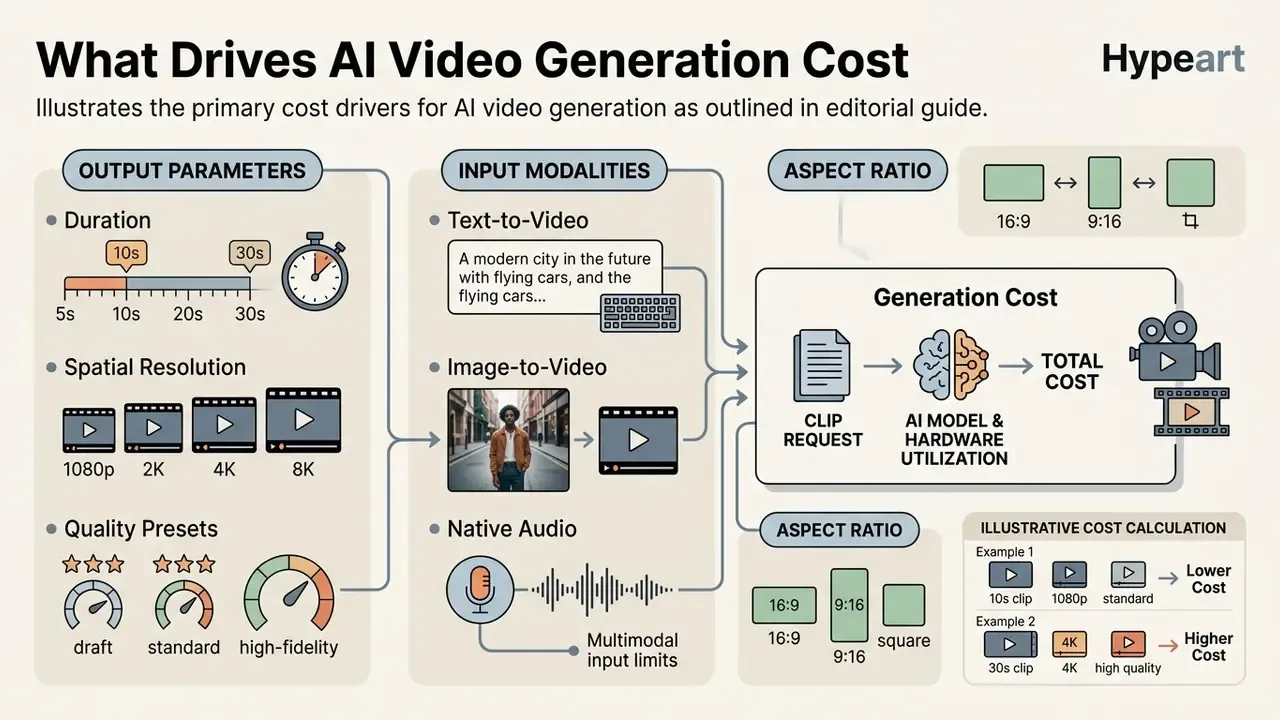
The primary cost drivers in AI video generation are clip duration, spatial resolution, quality presets, input modalities (text, image, or video references), aspect ratio handling, and native audio synthesis. Understanding these multipliers lets developers optimize requests before submitting payloads.
Video Duration, Resolution, and Quality Presets
Output length scales linearly in billing systems: a 10-second clip costs twice as much as a 5-second clip at identical settings. Resolution multipliers, by contrast, are non-linear steps. Moving from 720p ($0.30/sec) to 1080p ($0.70/sec) on OpenAI Sora 2 Pro increases unit cost by 2.33 times because of higher VRAM usage and more compute per frame. On other schedules, 4K can be a straight 4x multiple of 720p, and some vendors price 720p and 1080p identically at the same duration while charging a premium only for 4K.
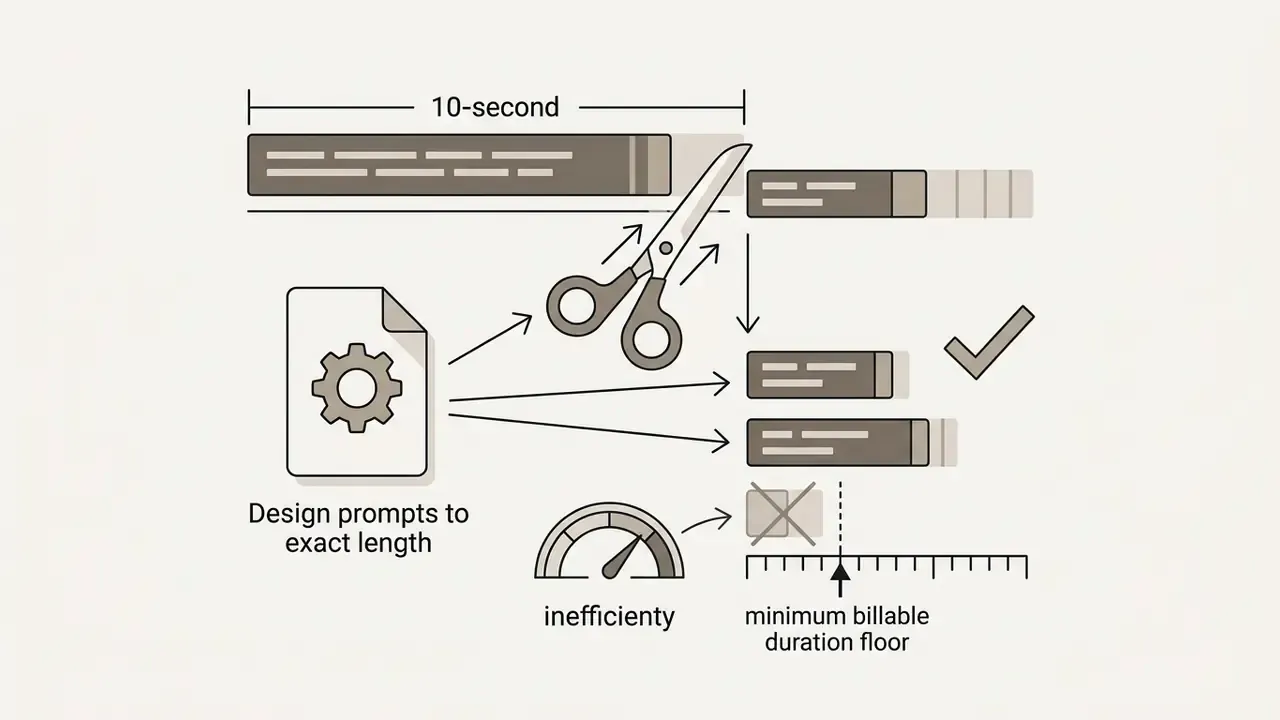
Quality presets also modify unit price. Fast or distilled models trade spatial fidelity and temporal consistency for lower inference cost and lower end-to-end latency. Minimum billable durations matter too: some endpoints enforce a 3-second billing floor, so a 1-second clip costs the same as a 3-second clip. Small detail, big invoice difference at volume.
Text-to-Video, Image-to-Video, and Native Audio
Input modalities alter pricing based on processing overhead. Text-to-video is the baseline, but passing reference frames in image-to-video or video-to-video pipelines can incur input frame processing charges. The Kling API applies roughly a 50% premium for image-to-video ($0.126/sec) over basic text-to-video ($0.084/sec).
Native audio generation adds 20% to 100% to base cost. Google Veo 3.1 Standard charges $0.20 per count for silent output but $0.40 per count when generating synchronized native audio. Published credit schedules show the same pattern: 6 to 9 credits/sec at 720p, and 8 to 12 credits/sec at 1080p when native audio is enabled.
Multimodal input limits. When designing pipelines, account for per-request caps on reference assets. Kling 3.0 accepts a single start frame. Kinovi-class routes accept up to 9 images plus 3 videos and 3 audio files in one context window. Seedance 2.0 accepts multimodal reference sets within a token budget, and the announced Seedance 2.5 raises the ceiling to 30 images, 10 video clips, and 10 audio clips per task. Reference images and audio are free on Runway's native models, but input and reference video seconds are billed separately, a distinction that quietly doubles cost on video-to-video workloads. For deeper implementation patterns, see the guide to image-to-video AI workflows.
Field example (illustrative, composite). A commercial video team building compliance training workflows evaluated video generation APIs for automated scenario creation. Initial tests using 1080p native audio produced an average cost of $4.20 per accepted clip, driven by high model rates and a 30% prompt rejection rate. By shifting the architecture to a 720p text-to-video model paired with a separate AI voice generator API for narration, they cut generation costs to $1.15 per accepted clip while keeping visual clarity acceptable for corporate review. That is a 72% reduction achieved entirely through modality decoupling rather than a model downgrade.
How to Calculate API Cost for Video in Production
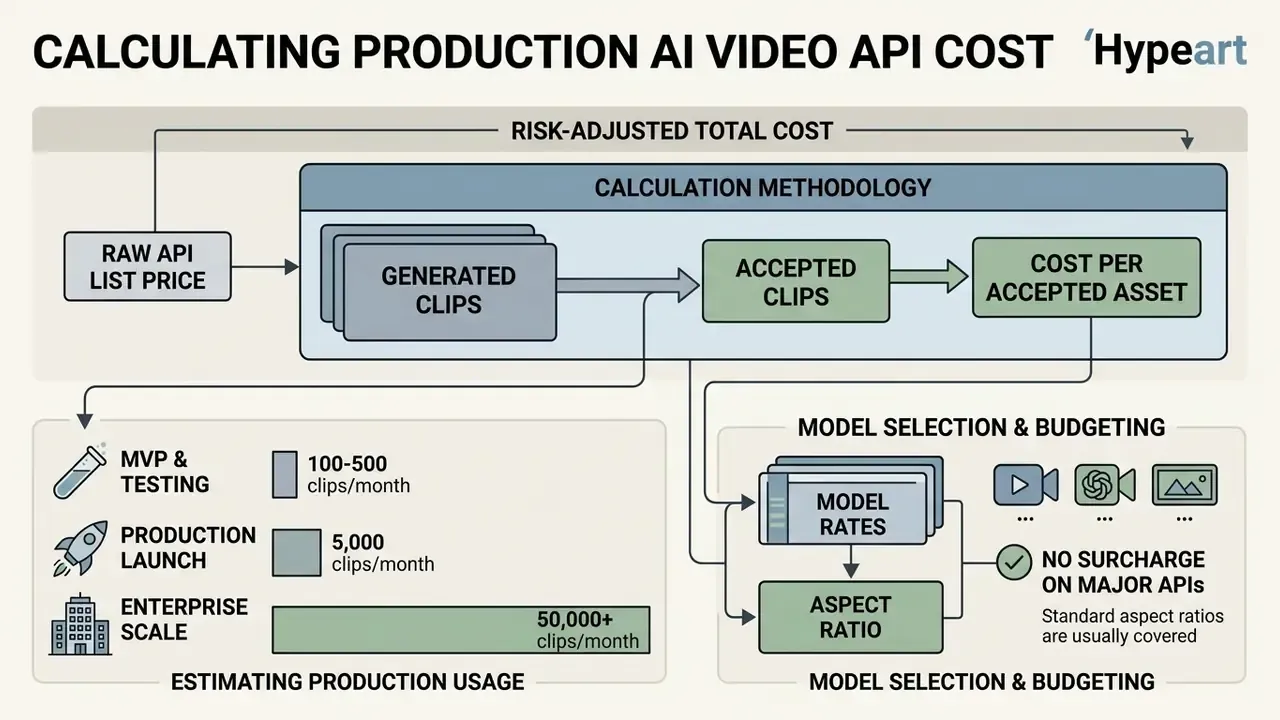
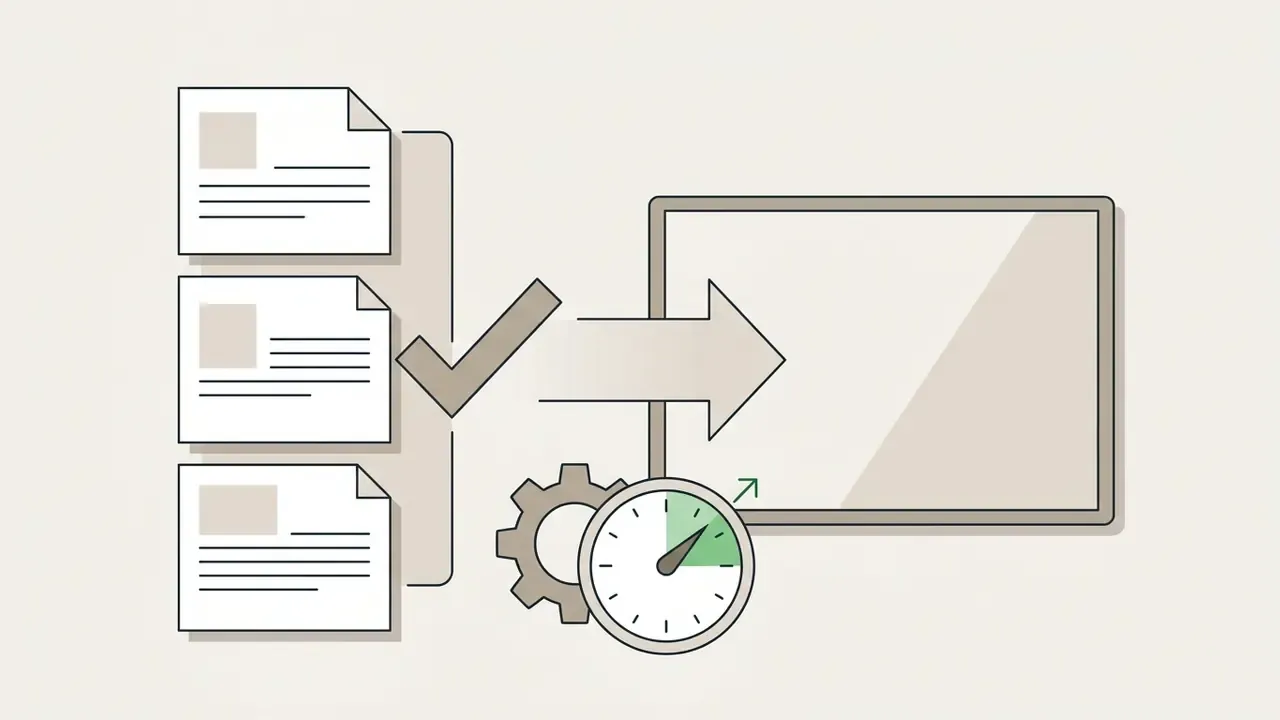
Production AI video budgeting requires total cost per accepted asset rather than raw list price. Because diffusion models can produce artifacts or miss prompt alignment, total spend must account for retry rates, and in regulated environments, for the cost of the controls that make outputs releasable.
Calculating the Price of One Generated Video
The formula for the total API cost of a single accepted video asset () is:
Where:
- = base rate per output second.
- = video duration in seconds.
- = multiplier for resolution and audio options.
- = rejection or retry rate ().
Risk-adjusted total cost of ownership. The generation-only formula understates true cost in any environment with review obligations. The governance-adjusted form adds a control cost term:
Where:
- = human-in-the-loop review time per accepted asset, in hours.
- = fully loaded hourly cost of the reviewer or compliance approver.
- = automated screening, watermark and provenance checks, brand-safety classifiers.
- = retention of prompts, parameters, job IDs, and terminal states for audit evidence.
- = object storage, egress, and CDN delivery of accepted assets.
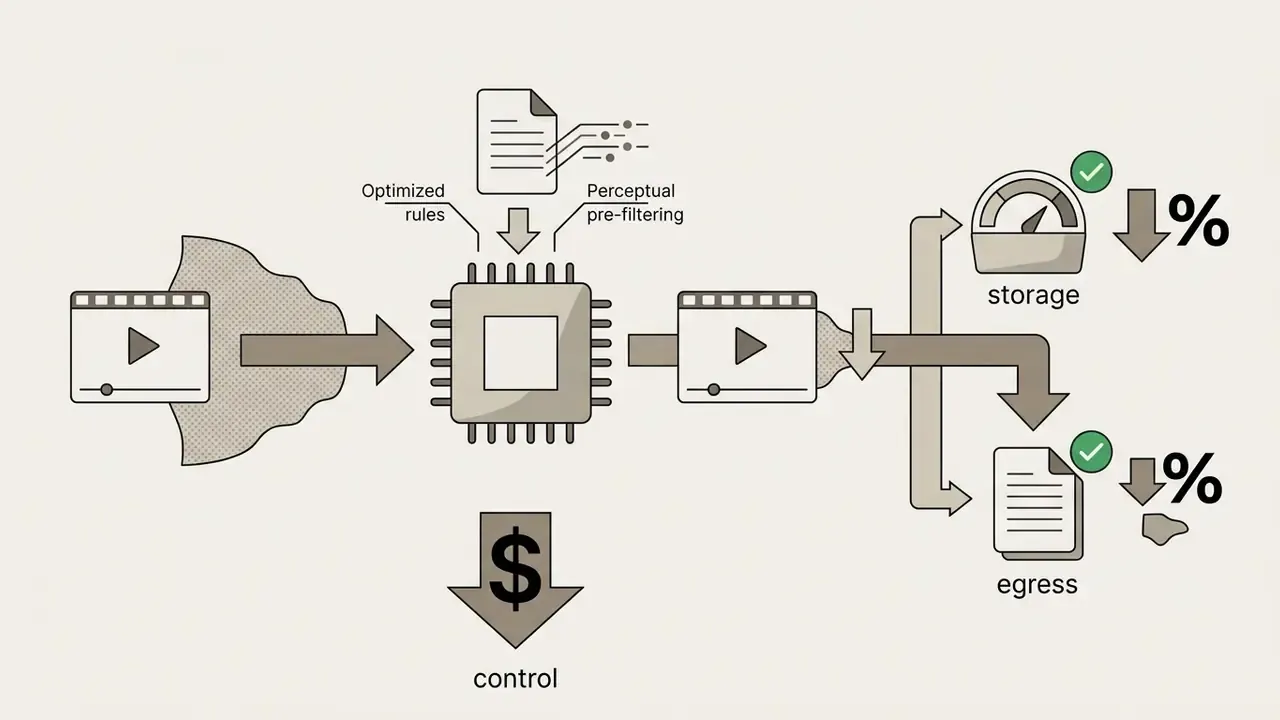
In practice, frequently exceeds the generation term. A 5-second 720p clip at $0.08/sec with a 25% rejection rate costs about $0.53 to generate, but may carry 6 minutes of reviewer time at a $70 per hour loaded rate, which is $7.00, plus retention and delivery. Treating generation cost as the budget is the single most common error in first-year enterprise video programs. Storage and egress can be materially reduced by standardizing delivery formats with a video compressor step before CDN distribution.
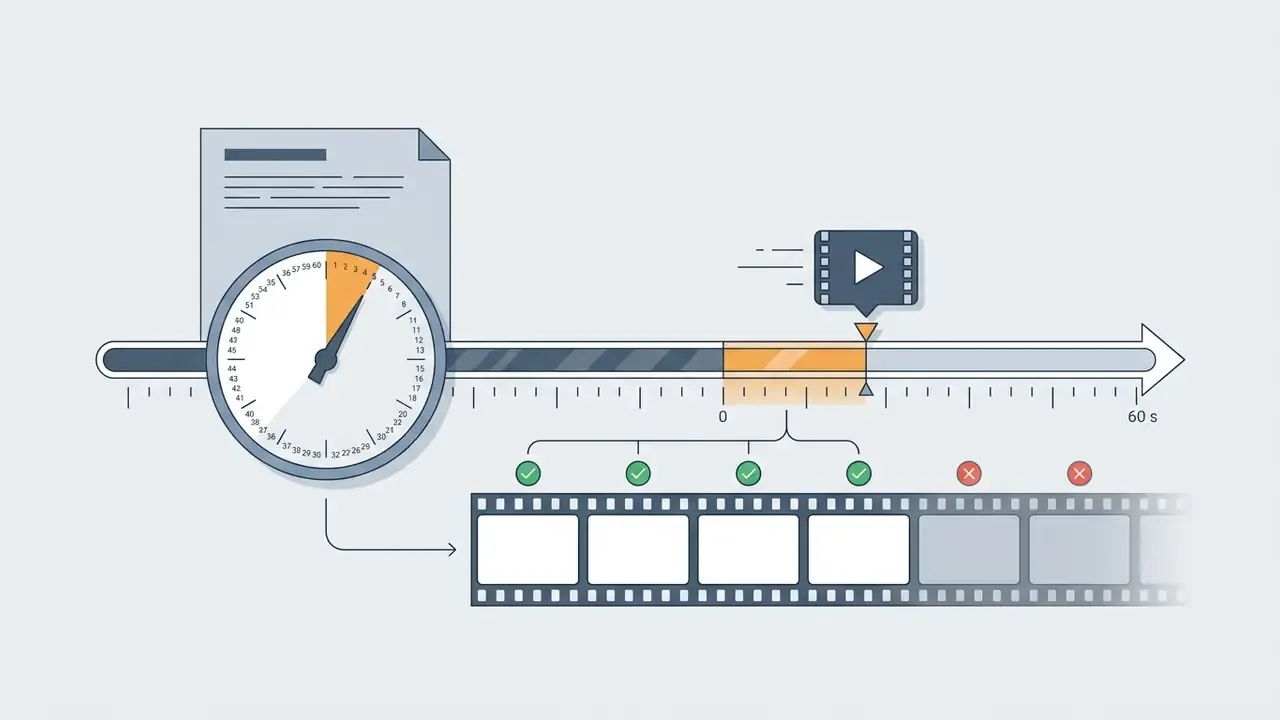
According to that same LTX Studio production analysis, typical iteration counts range from 3 attempts per finished shot for controlled models to 8 attempts for highly exploratory prompts, across roughly 12 to 15 shots per finished minute at 3 to 5 seconds per shot. A 30% buffer for non-final experiment shots is standard practice in production budgets, and honestly, most first-year teams need more than that.
Monthly Budget for Testing, Launch, and Scale
Monthly budget planning depends on production scale and model selection:
- MVP and testing (100 to 500 clips per month).Mid-tier models such as Kling 3.0 Standard or Runway Gen-4 Turbo at roughly $0.05 to $0.08/sec for 5-second clips produce raw generation spend between $25 and $200 per month.
- Production launch (5,000 clips per month).Assuming 5-second clips at 720p with a 25% retry rate on a mid-tier model ($0.08/sec), monthly API cost equals:
- Enterprise scale (50,000+ clips per month).Heavy workloads on high-tier models such as Veo 3.1 Fast at $0.10/sec require $25,000 to $60,000 per month. To model custom enterprise scenarios, teams can use our interactive api cost calculator to project monthly spend across custom model blends.
At the 50,000+ tier, list-price modeling should be replaced by a negotiated rate assumption. Committed-use discounts, reserved capacity, and multi-model portfolio agreements typically shift effective cost 15% to 35% below public schedules, which is often the difference between an approved and a rejected business case.
Input fields, duplicated in text for accessibility:
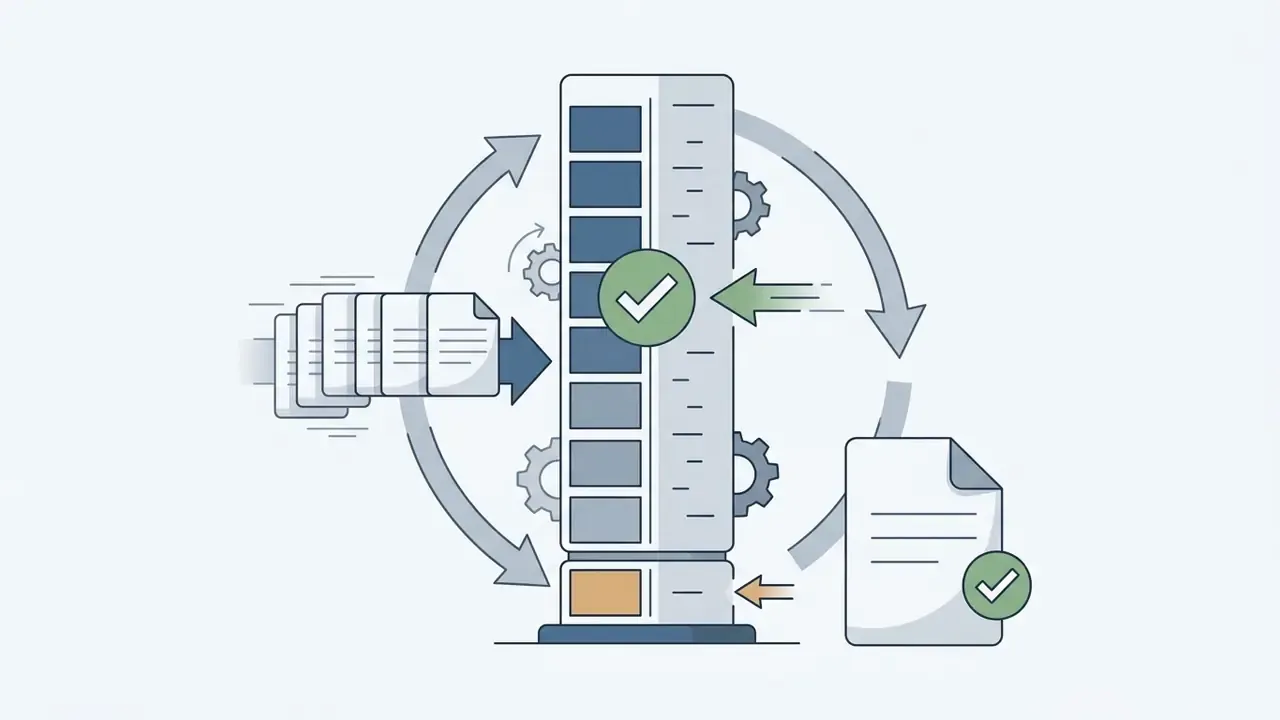
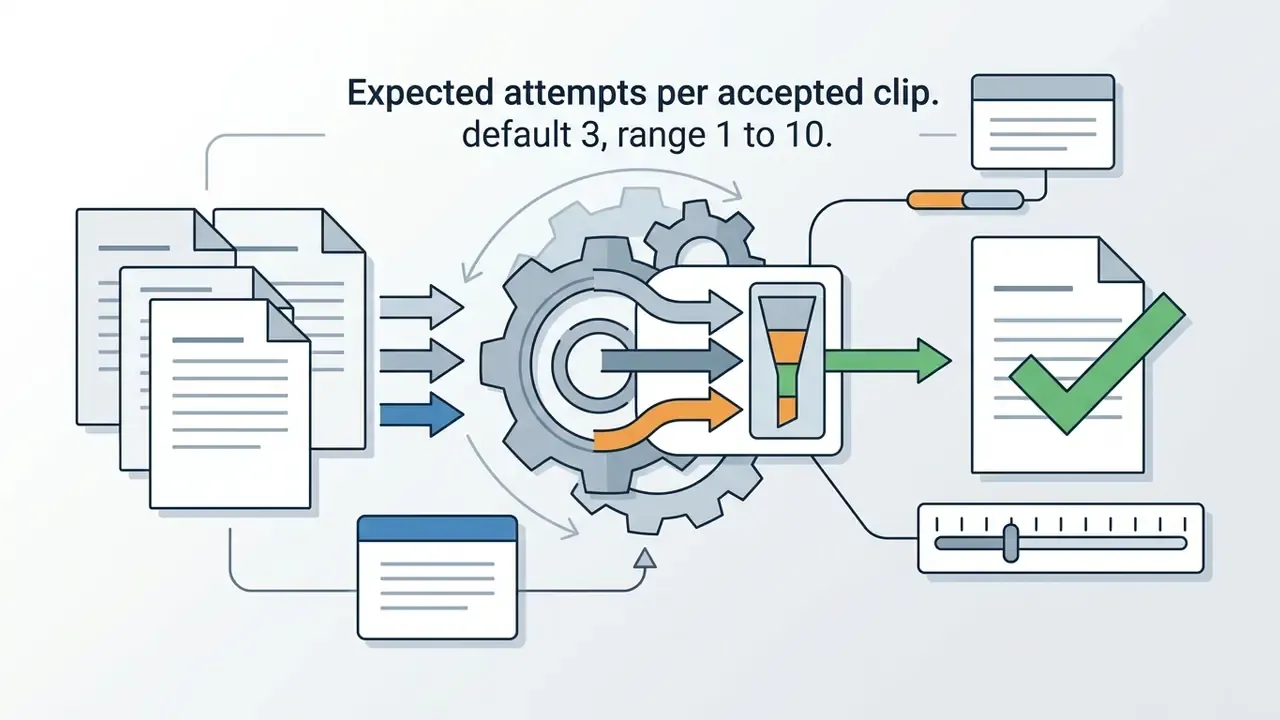
Outputs: cost per attempt (rate multiplied by duration); generation cost per accepted asset (rate multiplied by duration multiplied by attempts); control cost per accepted asset (review minutes divided by 60, multiplied by reviewer rate).
Formula: . Rates grounded in verified 2026 documentation.
Security, Data Residency, and Model Governance
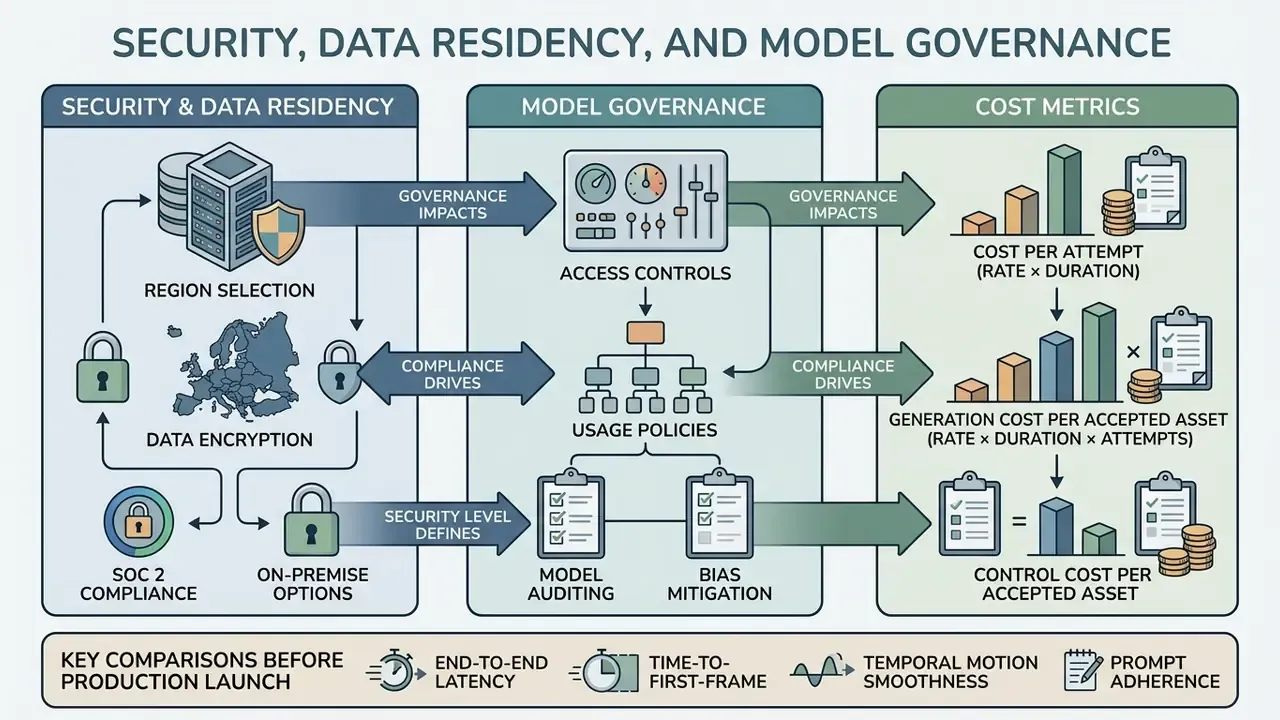
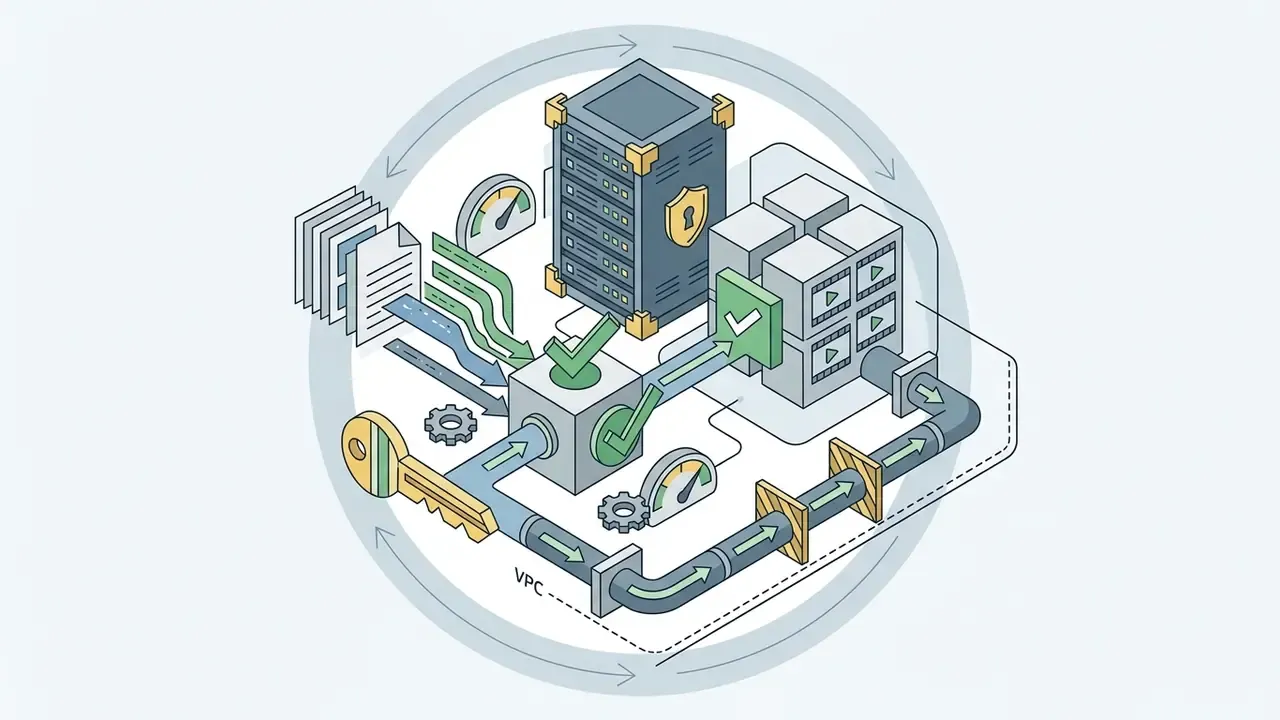
For banks, insurers, healthcare operators, and fintechs, unit economics are a secondary gate. The primary gate is whether prompts, reference images, and generated outputs can lawfully traverse a third-party inference endpoint. Screen this before a single pilot request leaves your network.
Data Protection Criteria for Vendor Selection
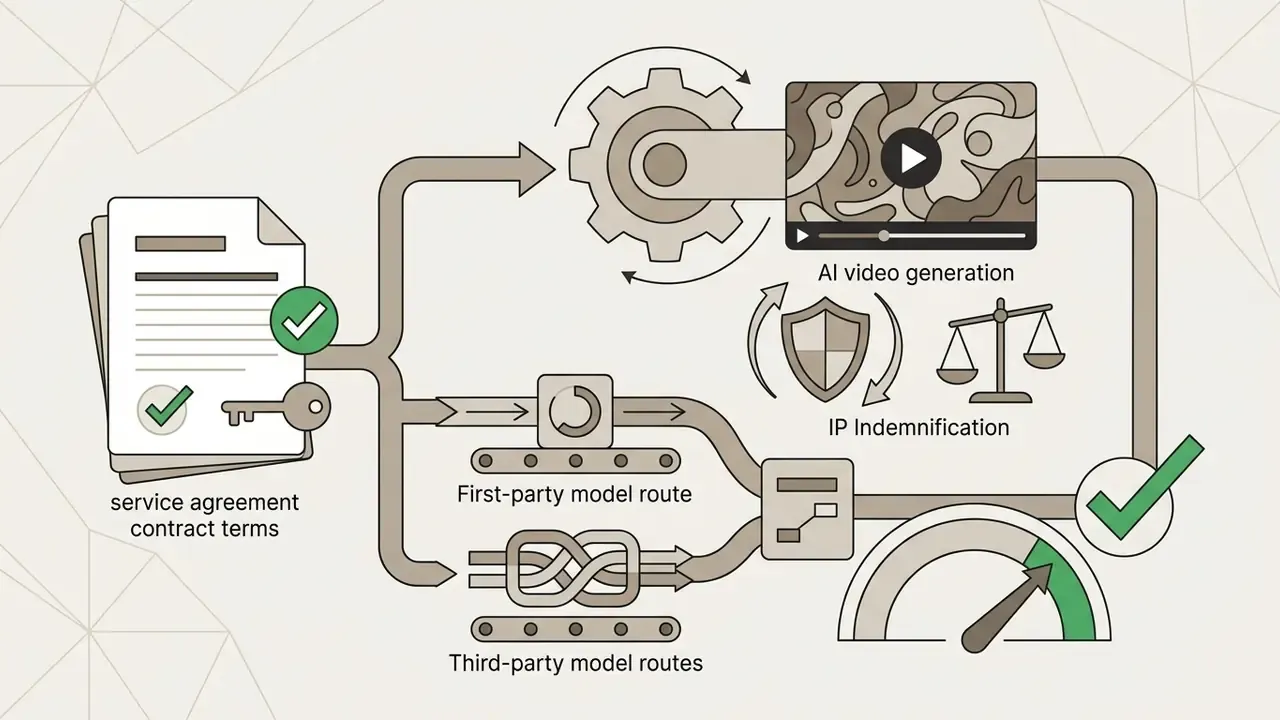
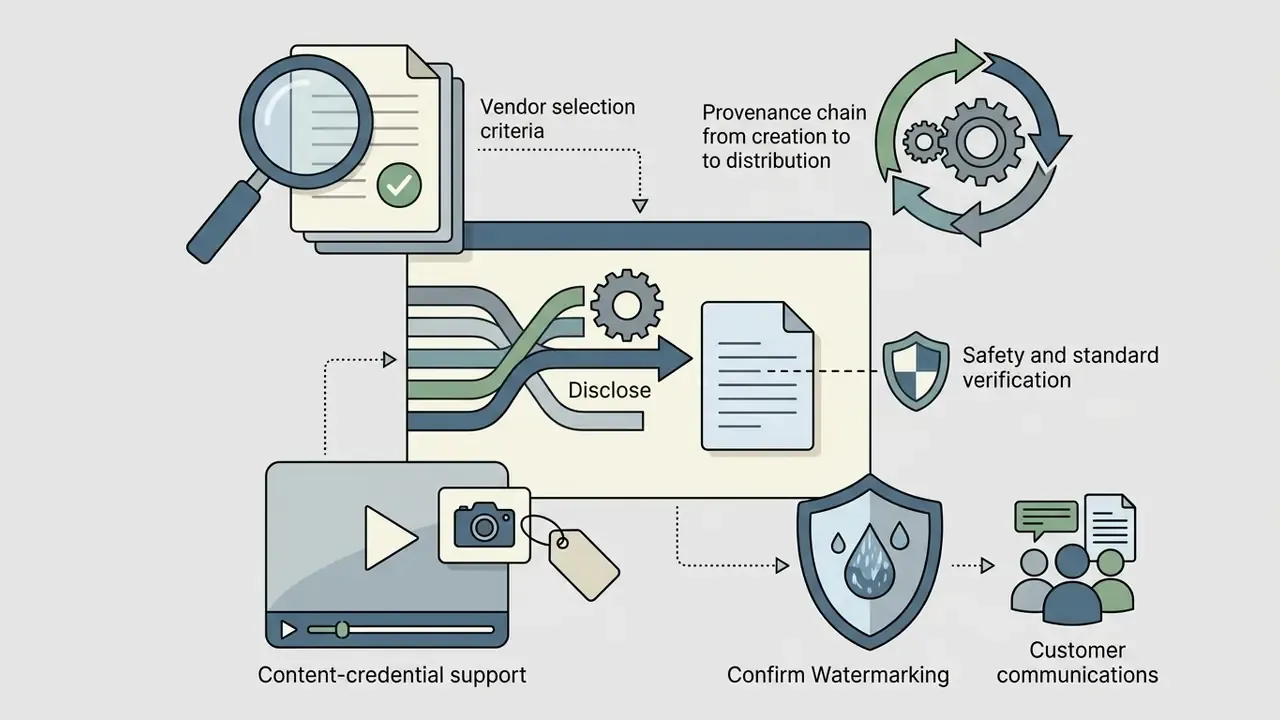
Assess every candidate provider against these contractual and technical controls:
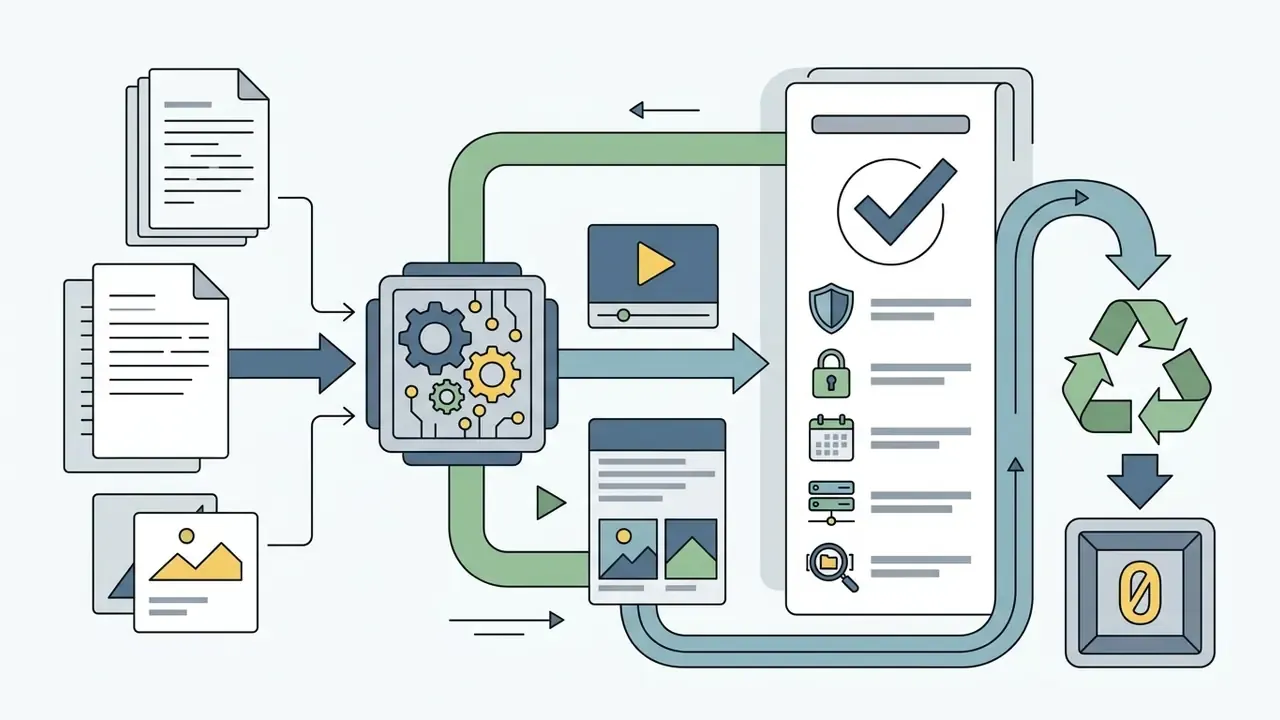
Recommended architectural pattern. Route all outbound generation traffic through an internal API gateway or security proxy that strips or masks PII from prompts and reference assets, enforces per-team spend and rate ceilings, writes an immutable audit record of prompt, parameters, model ID, job ID, terminal state, and realized charge, and applies allow-lists for permitted model routes. This keeps provider credentials out of application code and produces the evidence trail model-risk reviews expect.


Model Lifecycle Risk and the Abstraction Layer
The Sora deprecation is a template, not an exception. Mitigate lifecycle and lock-in risk with a five-step pattern:
- Normalize the request contract.Define an internal schema (
prompt,duration_seconds,resolution,aspect_ratio,generate_audio,reference_assets) and translate to provider-specific payloads in adapters. - Maintain two qualified alternates.Every production route should have at least two pre-tested substitutes with recorded acceptance rates on the same evaluation prompt set.
- Version and store parameters.Persist model ID, route, and full parameters per job so outputs stay reproducible and auditable after a provider change.
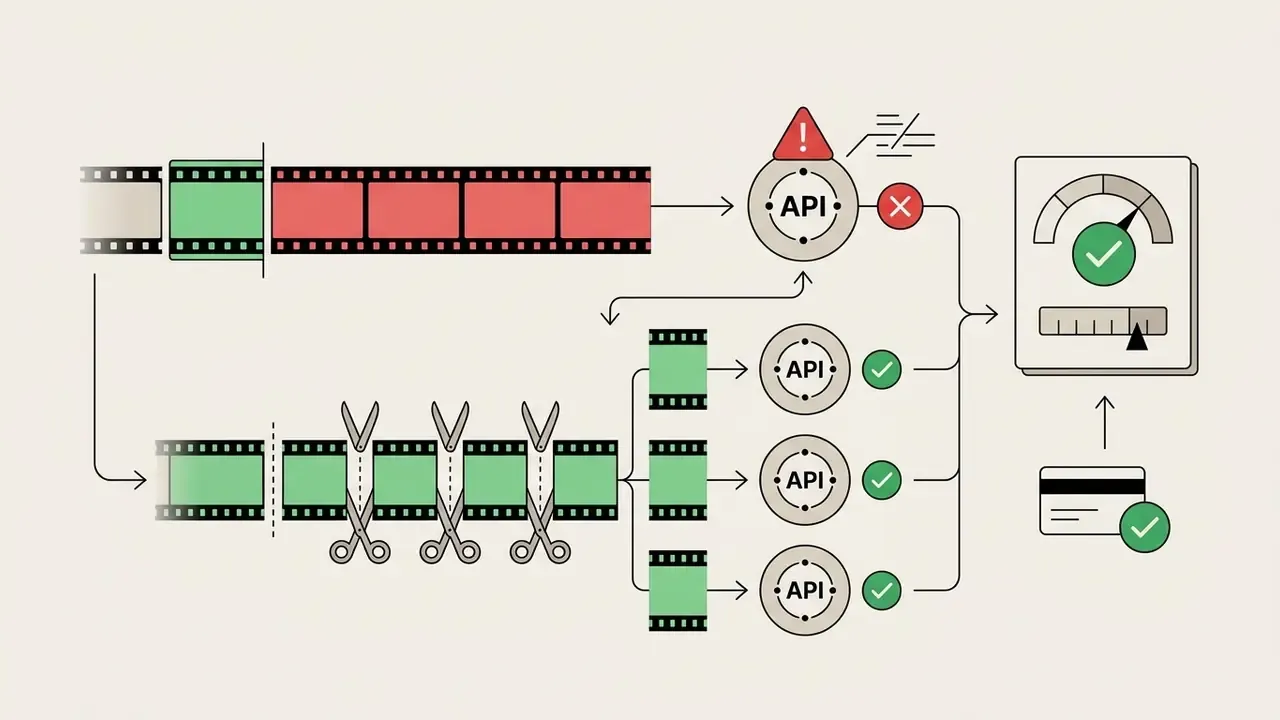
- Instrument fallback.On 429, 5xx, moderation rejection, or SLA breach, fail over automatically to the alternate route and log the substitution.
- Rehearse cutover.Run a quarterly migration drill on a sample workload to confirm that acceptance rates and cost per accepted asset stay within tolerance.
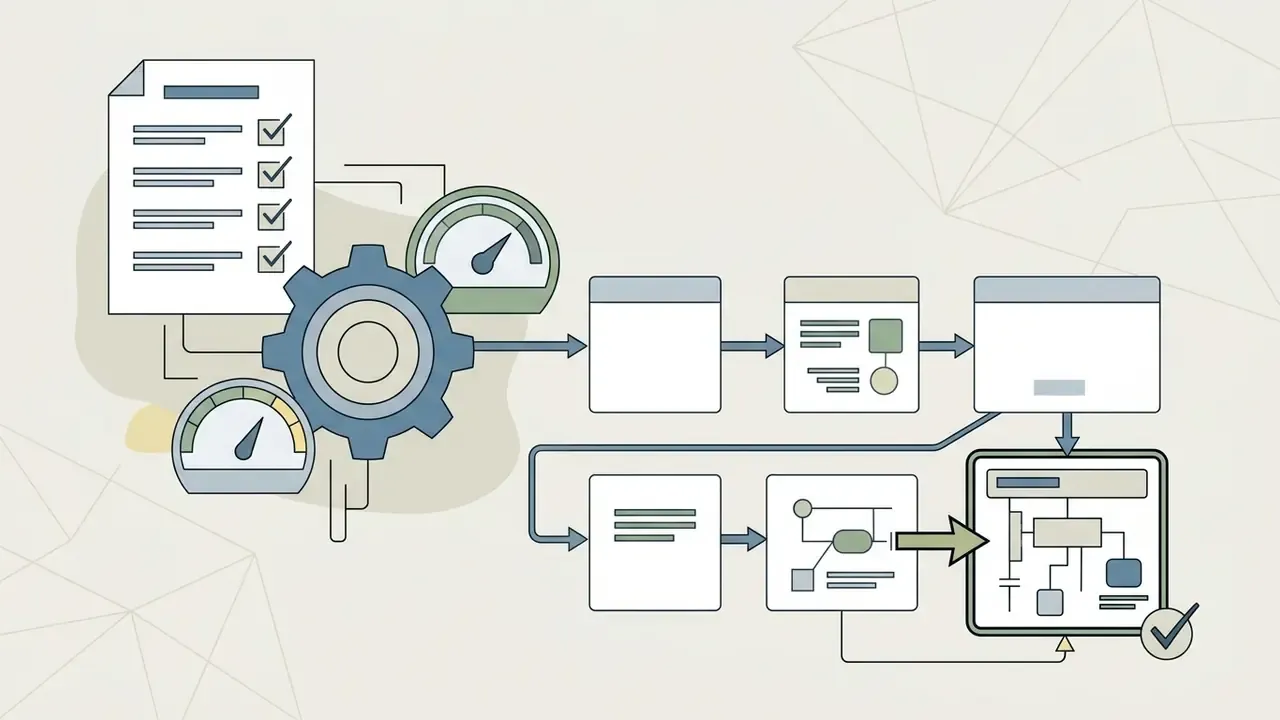
Pre-Production Governance Checklist
- SOC 2 Type II report reviewed and dated within 12 months.
- ZDR or a documented retention window agreed for the specific endpoint and region.
- Training-exclusion language confirmed in the enterprise agreement.
- PII masking enforced at the gateway, verified with negative tests.
- Data residency and cross-border transfer mechanism documented.
- IP indemnification scope confirmed for all permitted model routes.
- Commercial-use rights validated for the exact plan tier in use.
- Synthetic-media disclosure and provenance policy defined for customer-facing output.
- Deprecation calendar tracked for every active model, with named alternates.
- Rate-limit ceilings (RPM, TPM, RPD) mapped and alerted per project.
- Immutable audit log of prompts, parameters, terminal states, and charges.
- Human-in-the-loop review threshold defined by content risk tier.
- Cost-per-accepted-asset dashboard live before scale-up.
- Quarterly migration drill scheduled and owned by a named individual.
How to Test AI Video APIs Before Production Integration
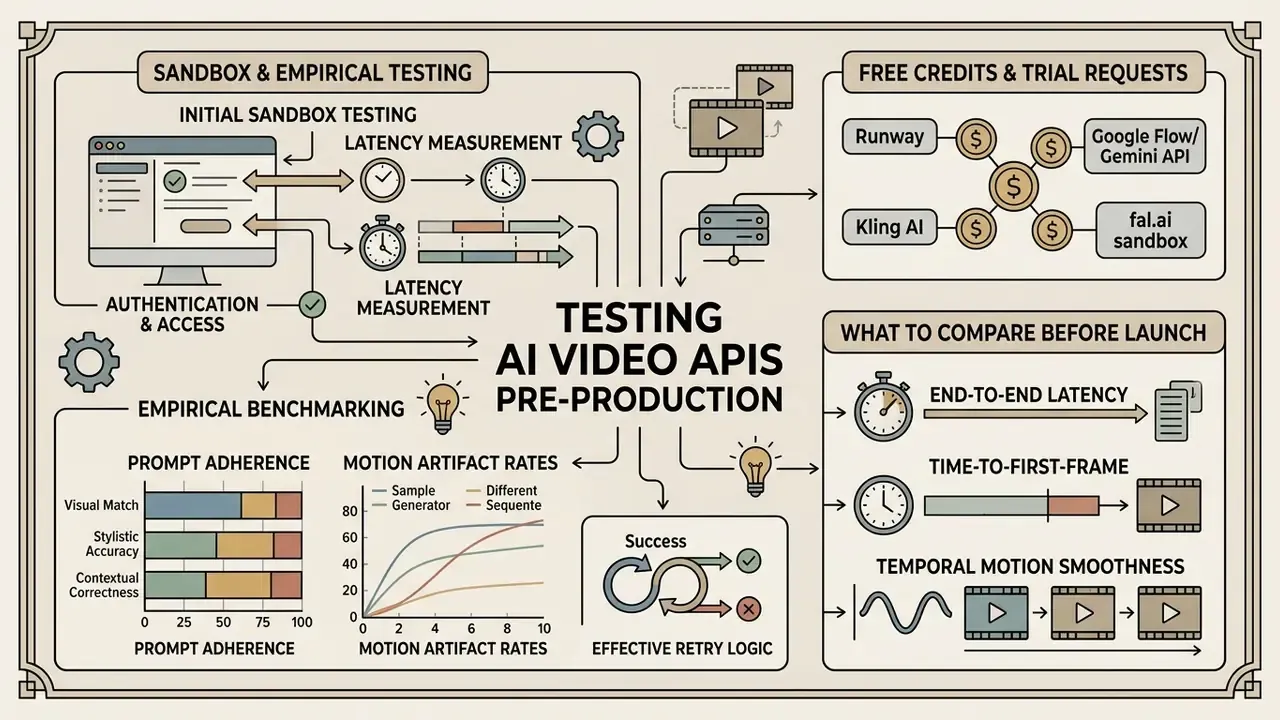
Pre-production evaluation must combine sandbox testing of authentication and latency with empirical benchmarking of prompt adherence, motion artifact rates, and effective retry costs. Vendor demo reels prove nothing about your prompts.
Free Credits and Trial Generation Requests
Evaluating provider access without upfront commitment relies on free credit allocations:
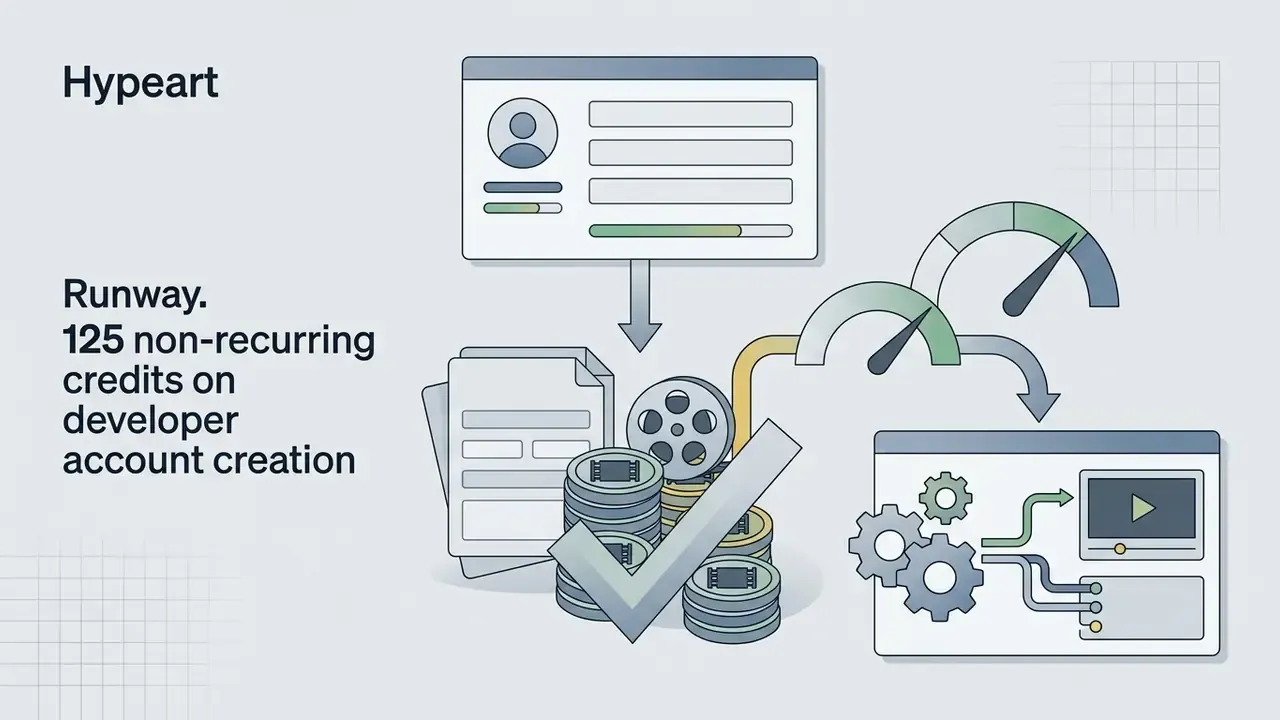
- Runway 125 non-recurring credits on developer account creation.
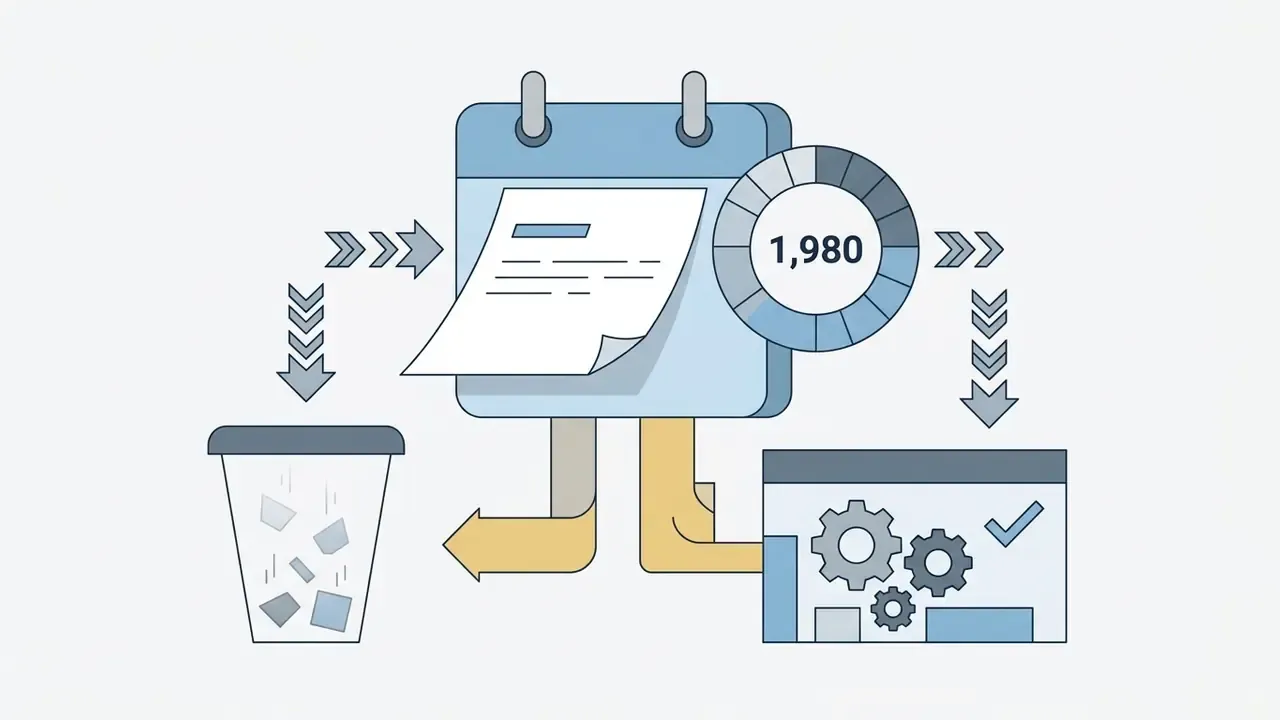
- Kling AI a Free plan tier with daily-expiring credits (around 1,980 credits per day), useful for initial manual prompt tests.
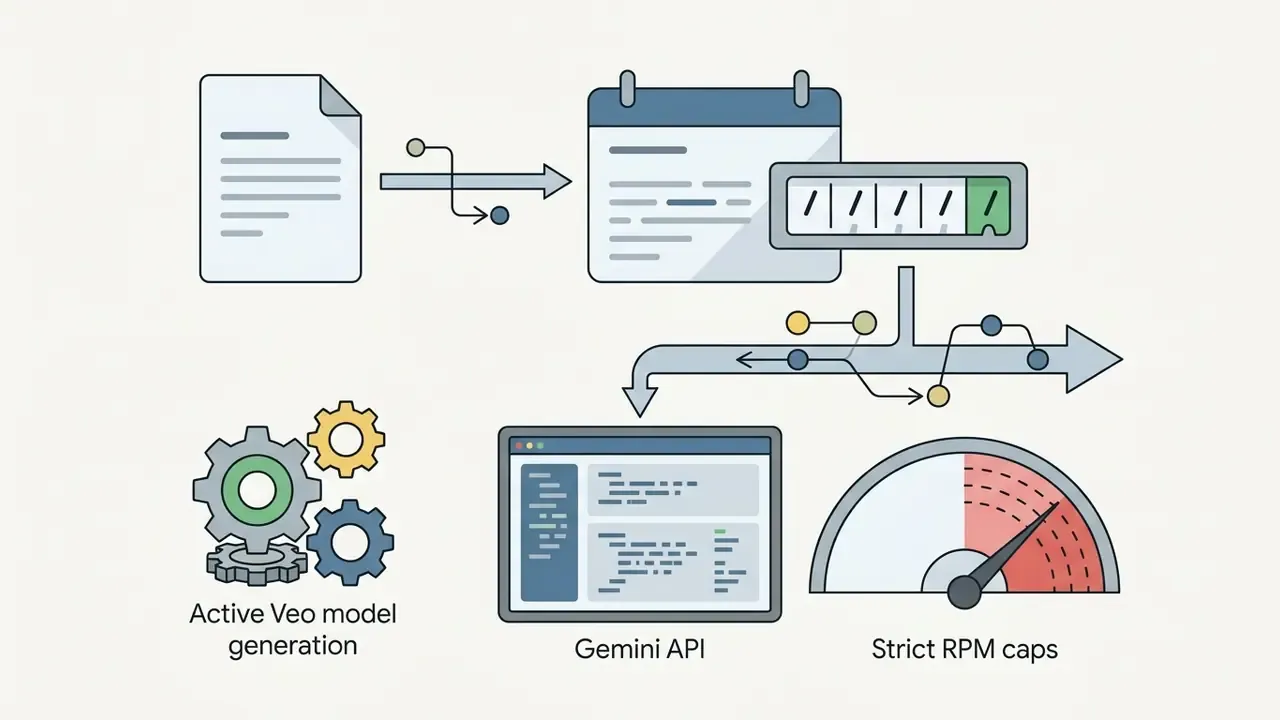
- Google Flow / Gemini API 50 daily generation credits for Veo models on non-subscribed developer accounts, subject to strict RPM caps.
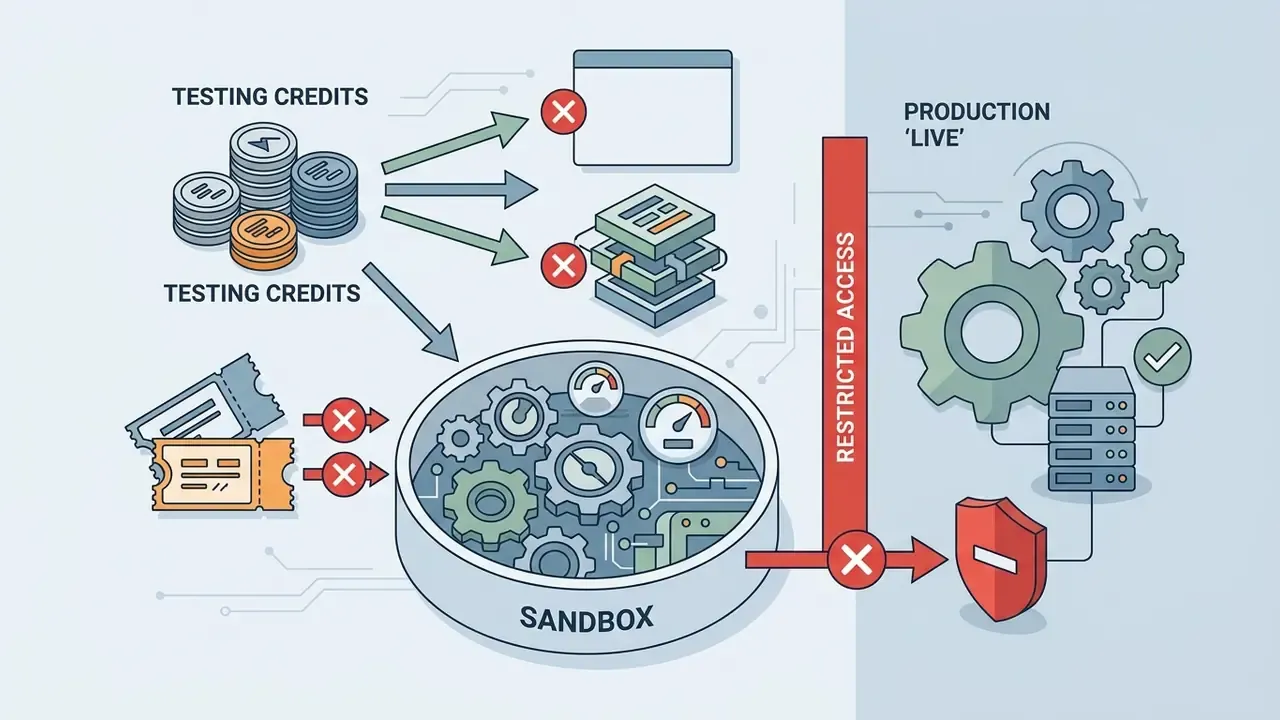
- fal.ai sandbox playground testing credits restricted to non-production web environments. Free credits and request coupons typically do not work through the API or Workflows.
Teams that want to validate output quality before spending anything can also survey free AI video generators to calibrate quality expectations against paid API tiers.
What to Compare Across Models Before Production Launch
Engineering teams should evaluate candidate video models against five technical criteria:
- End-to-end latency and time-to-first-frame.Measure queue wait and TTFF during peak traffic hours, not at 3 a.m.
- Temporal motion smoothness.Quantify frame-to-frame distortion, ghosting, and flickering across complex movement vectors.
- Prompt adherence.Benchmark object retention, spatial orientation, and action execution against a fixed prompt set.
- FPS and output resolution consistency.Confirm returned MP4 containers hold target frame rates (24, 30, or 60 fps) without dropped frames.
- Tool ecosystem.Evaluate how candidate services compare against broader api video tools on webhook support, SDK availability, and CDN delivery.
«Atlas Cloud (2026) compared Seedance 2.0, Veo 3.1, Wan 2.7, Gen-4.5, and Kling 3.0 on latency and throughput under load.»
Practical evaluation protocol. Use a fixed 30-job evaluation set and record the actual billed response for each: ten text-to-video prompts covering people, products, camera motion, visible on-screen text, and multi-subject scenes; ten image-to-video jobs using identical licensed reference assets; and ten edge cases covering moderation triggers, long prompts, and unusual aspect ratios. Report acceptance rate, median latency, and realized cost per accepted asset per route. That single artifact replaces most vendor marketing claims in a procurement review, and it survives challenge from internal audit.
Integrating an AI Video API: From First Request to Result
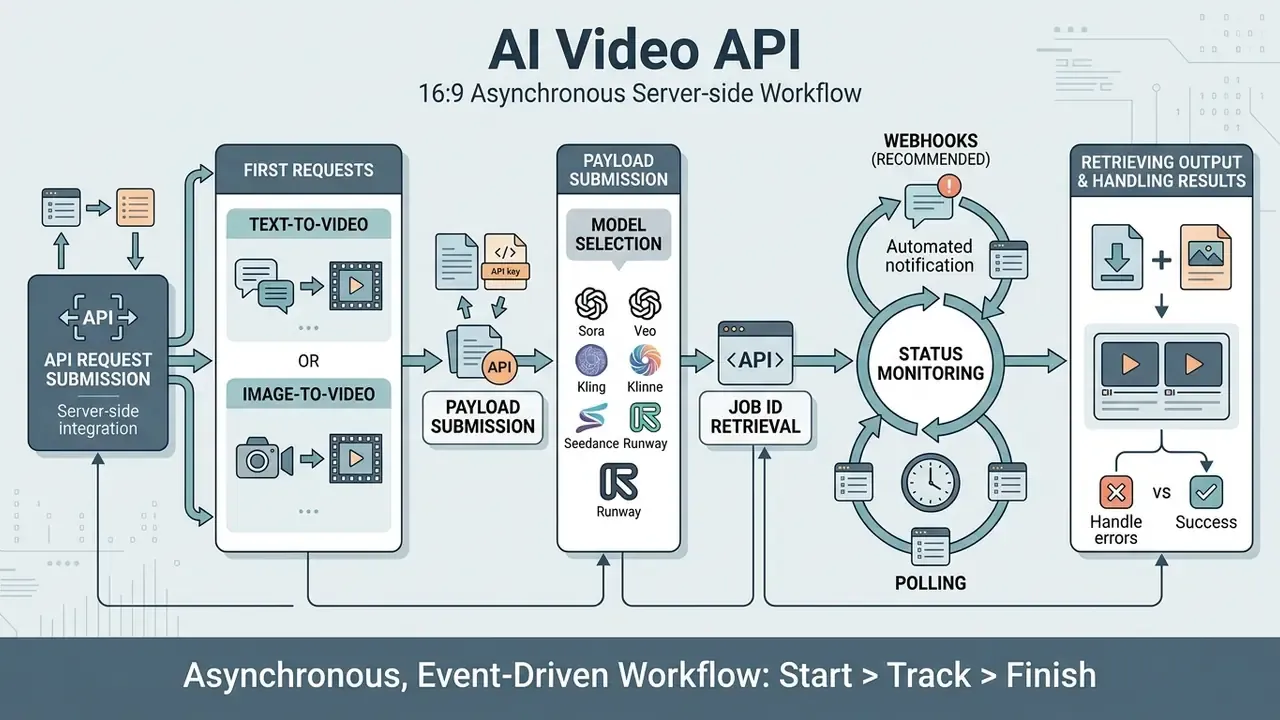
Server-side integration follows an asynchronous, event-driven workflow: submit the request payload with API credentials, retrieve the job ID, track status by webhook or polling, then persist media securely to object storage.
First Request: Text-to-Video and Image-to-Video
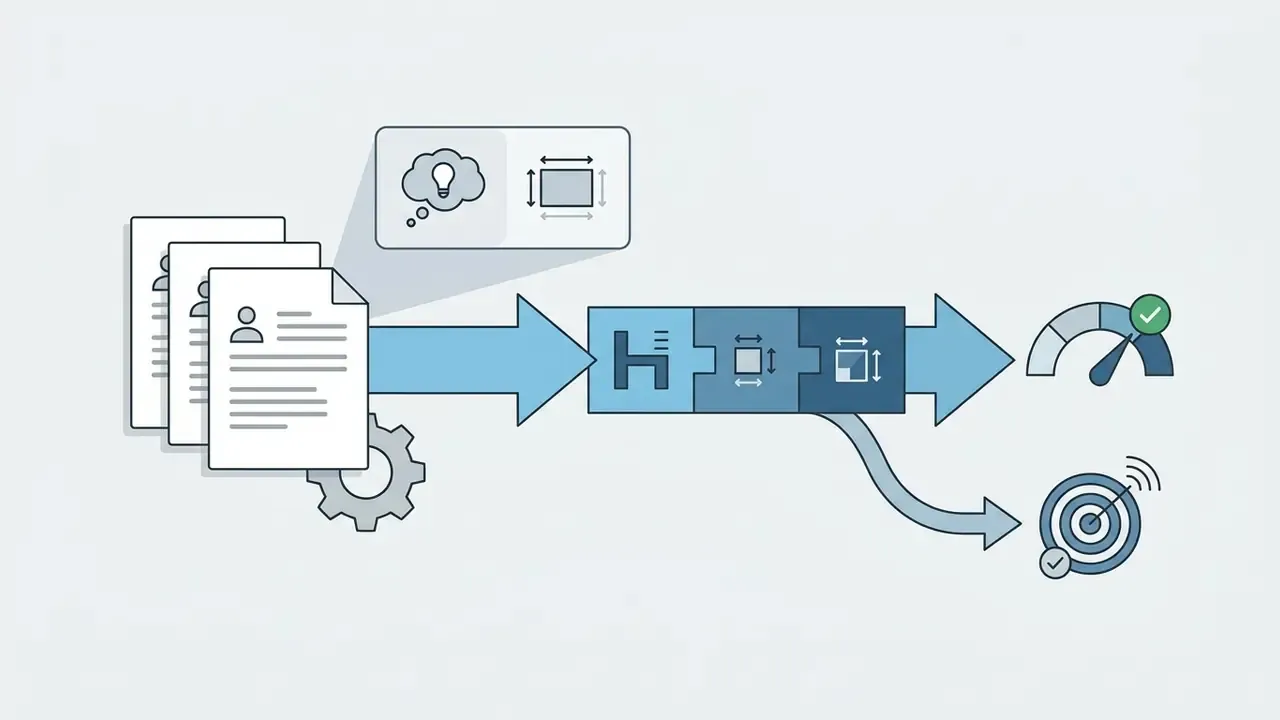
An initial generation request submits a JSON payload to the provider endpoint via HTTPS POST with Bearer token authentication. Note the explicit aspect_ratio field. Major 2026 APIs (Kling 3.0, Veo 3.1, Runway Gen-4 and Gen-4.5) accept 16:9, 9:16, and 1:1 without a cropping surcharge, and omitting the parameter forces provider defaults that frequently mismatch mobile placements. These examples are deliberately minimal so they map onto any adapter.
POST /v1/video/generations HTTP/1.1
Host: api.provider.com
Authorization: Bearer YOUR_API_KEY
Content-Type: application/json
{
  "model": "veo-3.1-fast",
  "prompt": "Cinematic shot of a corporate office building at sunset, smooth camera pan",
  "duration_seconds": 5,
  "resolution": "1080p",
  "aspect_ratio": "9:16",
  "generate_audio": false,
  "webhook_url": "https://api.yourdomain.com/webhooks/video-complete"
}
For image-to-video, the payload includes an accessible source URL (image_url) representing the initial keyframe, plus optional negative_prompt, style, and seed fields on providers that expose them.
Most production teams prefer an SDK over raw HTTP. Many 2026 video endpoints are exposed through OpenAI-compatible clients, which lets a single dependency serve multiple providers by swapping base_url:
from openai import OpenAI
# OpenAI-compatible client pointed at a video generation route
client = OpenAI(
    api_key="YOUR_API_KEY",
    base_url="https://api.provider.com/v1"
)
response = client.post(
    path="/video/generations",
    cast_to=dict,
    body={
        "model": "veo-3.1-fast",
        "prompt": "Cinematic shot of a corporate office building at sunset",
        "duration_seconds": 5,
        "resolution": "1080p",
        "aspect_ratio": "16:9",
        "generate_audio": False,
        "webhook_url": "https://api.yourdomain.com/webhooks/video-complete"
    }
)
print(f"Job ID created: {response['job_id']}")
For image-to-video with the same client, add the reference asset and keep every other field identical, so cost and quality remain comparable across modalities:
body = {
    "model": "kling-3.0",
    "prompt": "Product rotates slowly under soft studio lighting",
    "image_url": "https://cdn.yourdomain.com/refs/product-hero.jpg",
    "duration_seconds": 5,
    "resolution": "720p",
    "aspect_ratio": "1:1",
    "generate_audio": False
}
Store model, route, and the full parameter set alongside the returned job ID. Without that record, invoice reconciliation and audit reproduction become impossible after a provider version change. Ask any team that has tried to explain a $40,000 line item six months later.
Retrieving Output and Handling Generation Results
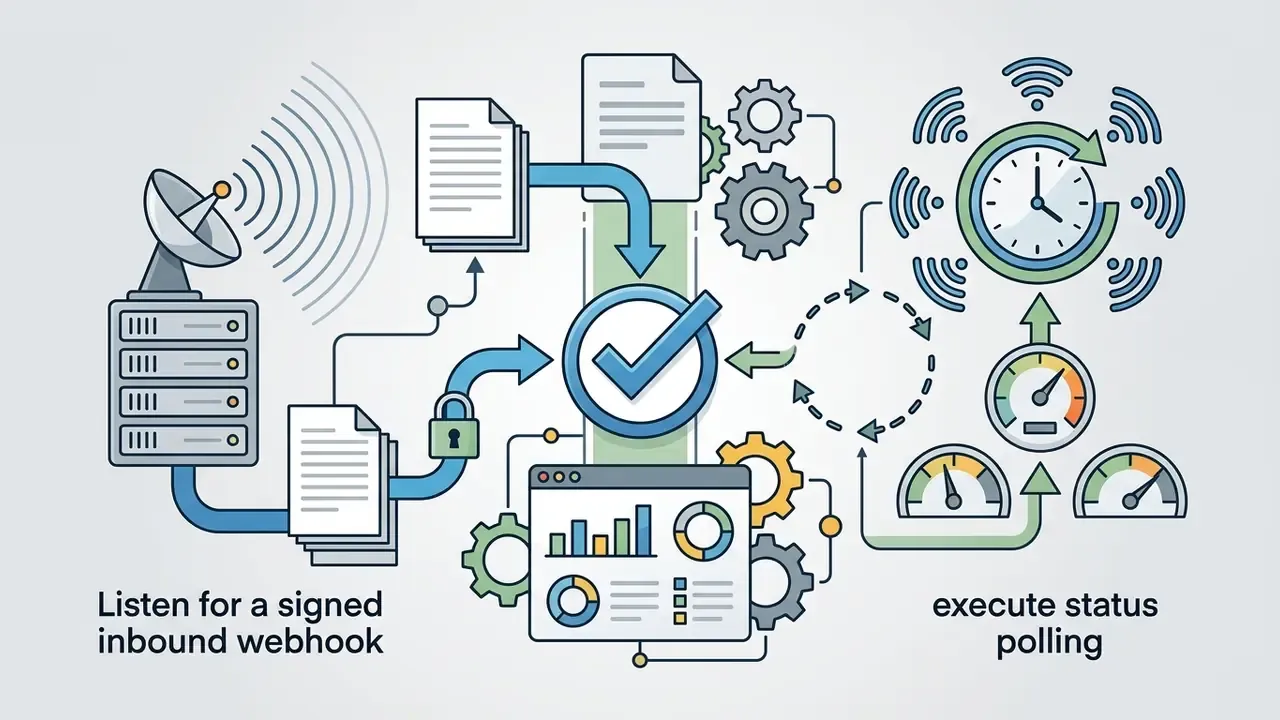
Because diffusion rendering takes between 15 seconds and several minutes, endpoints process asynchronously. The server returns an initial 202 Accepted response containing a unique job_id.
Two patterns exist for output retrieval:
- Webhooks (recommended).The provider posts a signed HTTP payload to
webhook_urlwhen the job reaches a terminal state (completedorfailed). The receiving server verifies the cryptographic signature, extracts the pre-signed download URL, and copies the media file to internal S3 storage. - Polling.The client periodically executes
GET /v1/jobs/{job_id}until the status field moves fromprocessingtocompleted.
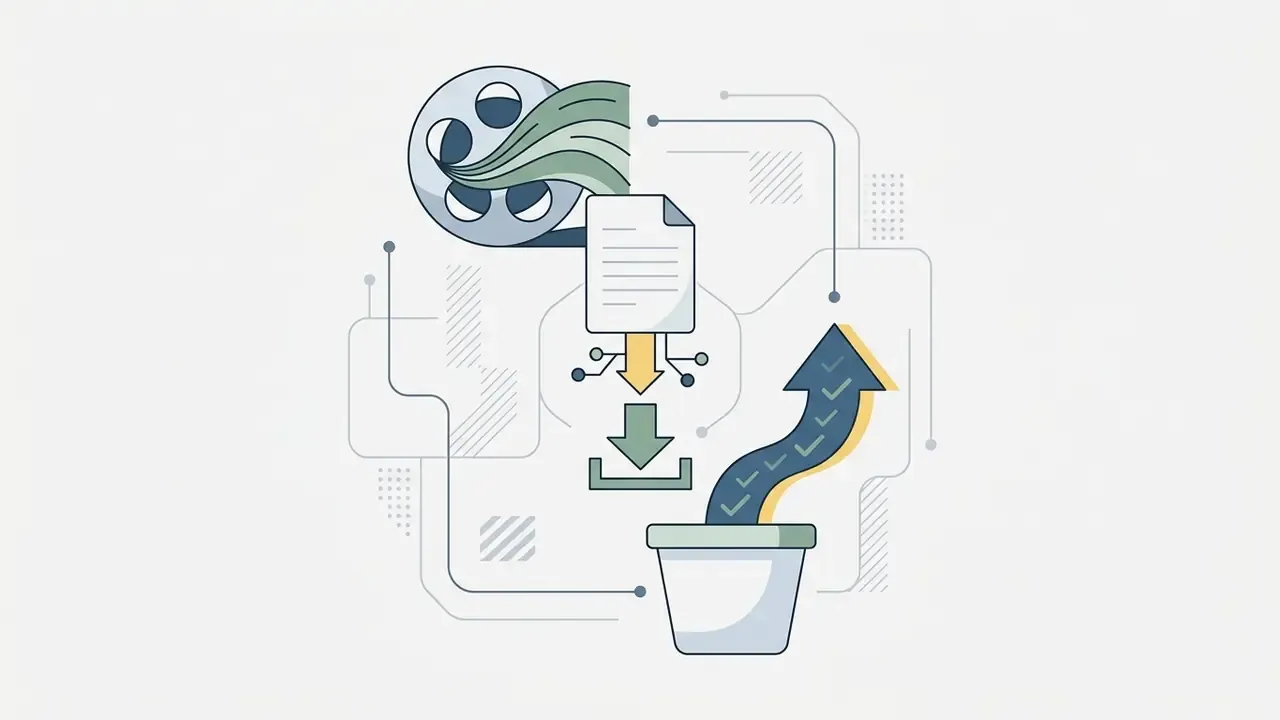
Pre-signed URLs in API payloads expire, typically within 1 to 24 hours. Applications must fetch and persist the binary asset to private object storage or a CDN before expiry. Log the terminal state for every job, including failed, moderated, cancelled, and timed_out, because several providers still bill for terminated work.
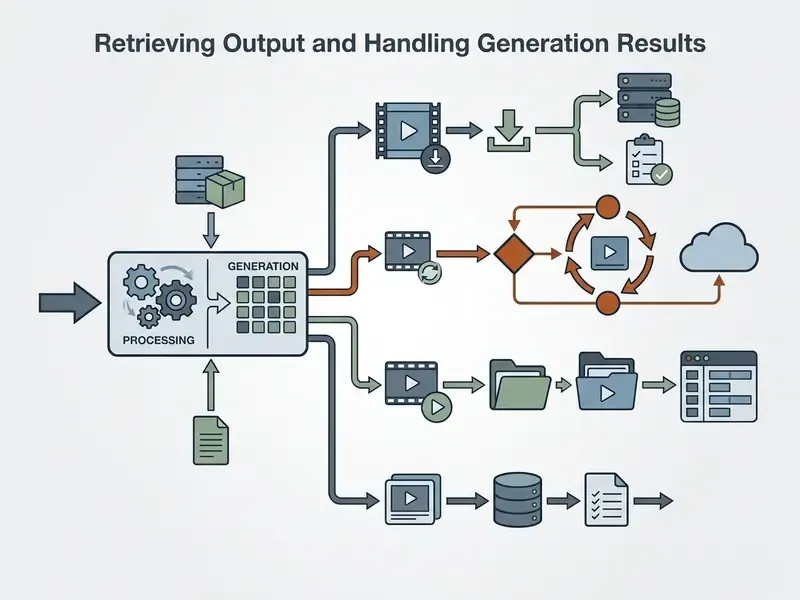
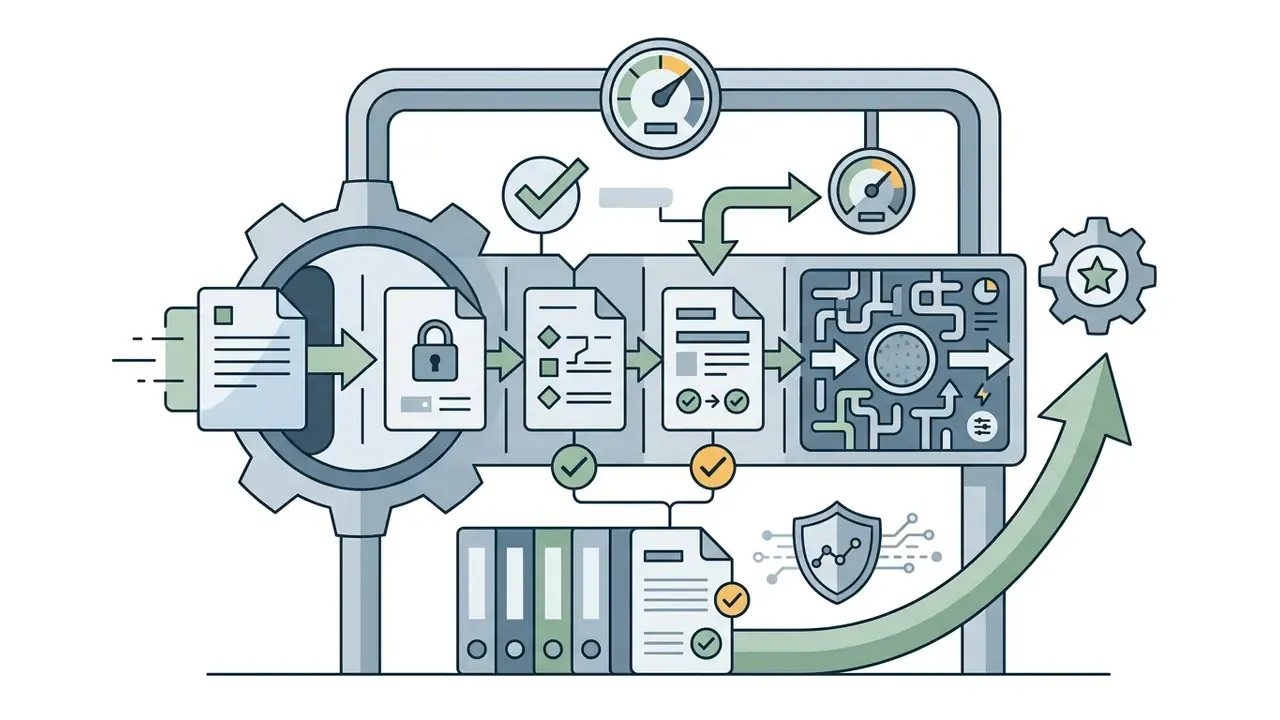
Sequence, duplicated as a numbered list in the DOM:
Figure 2: Asynchronous integration sequence, with all outbound calls passing through an internal gateway that masks PII and records audit evidence.

How to Reduce Costs Without Losing Video Quality
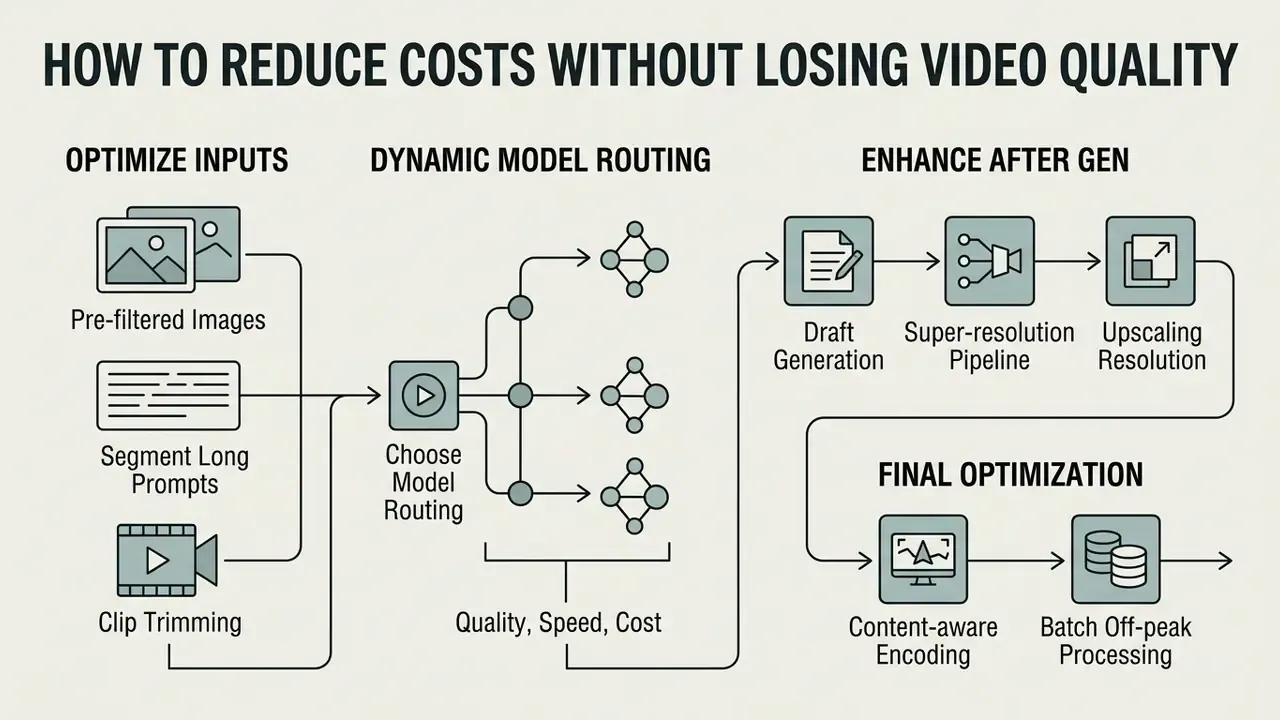
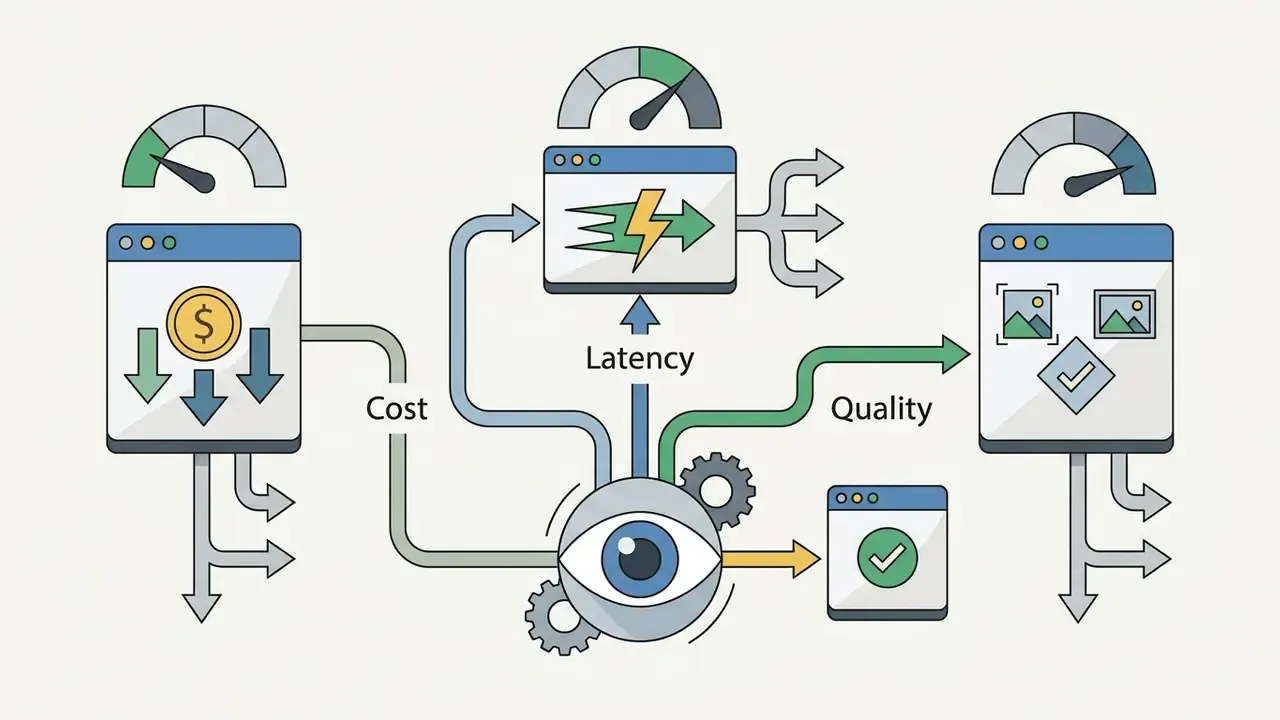
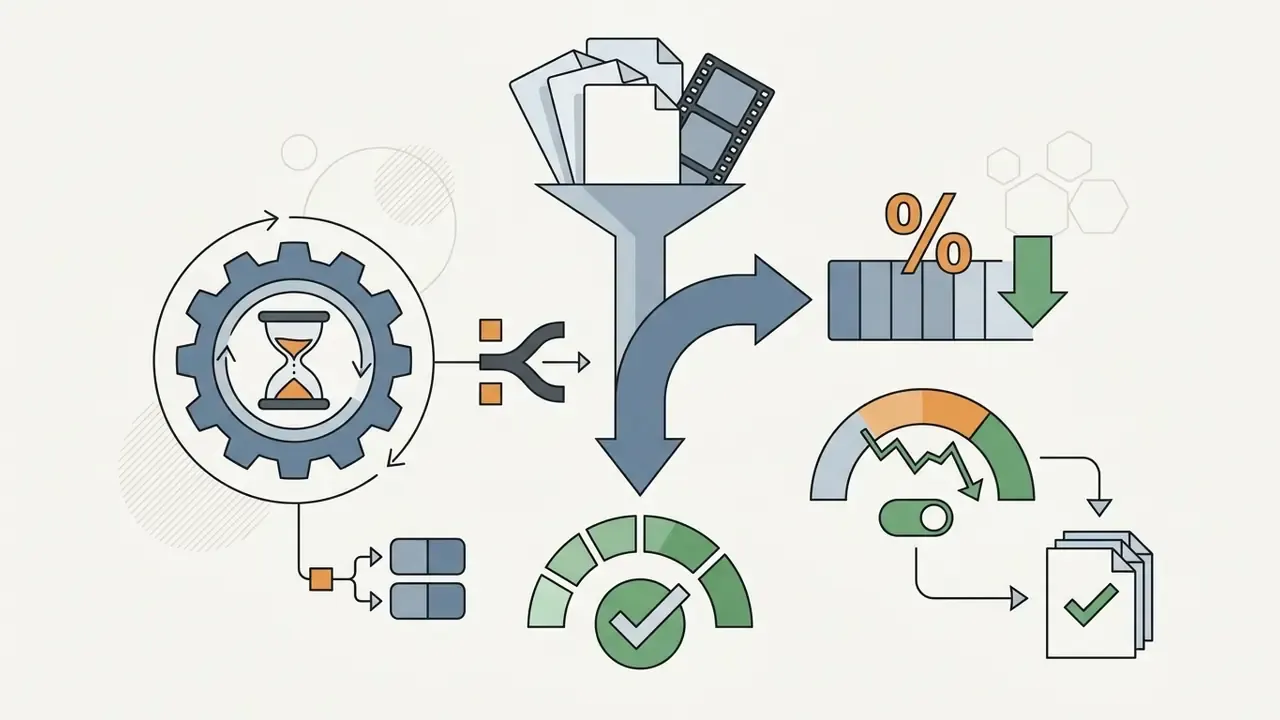
Cost optimization for AI video APIs relies on dynamic model routing, resolution upscaling pipelines, and duration trimming rather than compromising output standards.
Choosing Models by Quality, Speed, and Cost
Implementing a model router architecture (such as the SCORE framework) allows applications to evaluate request complexity dynamically before dispatching jobs. Simple prompts and internal draft requests are routed to low-cost engines like Hailuo MiniMax ($0.01 to $0.03/sec) or Wan 2.6 ($0.05/sec). High-priority customer-facing jobs are routed to premium endpoints such as Google Veo 3.1 Standard or Runway Gen-4.5.
«Teamday (2026) showed FAL.AI offering Wan 2.6 at $0.05/sec, while Replicate charged $0.09 to $0.25/sec for the same model.»
Routers should maximize predicted quality minus weighted cost and latency penalties, with explicit budget and latency constraints per request class. In practice, a three-tier router (draft, standard, premium) with a hard monthly ceiling per tier captures most achievable savings without adding meaningful complexity. Anything more elaborate tends to be harder to audit than it is to justify.
Optimizing Duration, Resolution, and Image Inputs
- Draft generation plus super-resolution. Generate initial assets at 720p or lower draft resolution ($0.03 to $0.05/sec). Pass accepted outputs to an upscaling endpoint (for example,
upscale_v1at $0.02/sec) to produce 1080p or 4K files, saving 40% to 60% versus rendering directly at native high resolution. Teams building this stage can evaluate complementary AI image upscalers for keyframe and thumbnail post-processing in the same pipeline.
Which AI Video API to Choose for a Specific Use Case
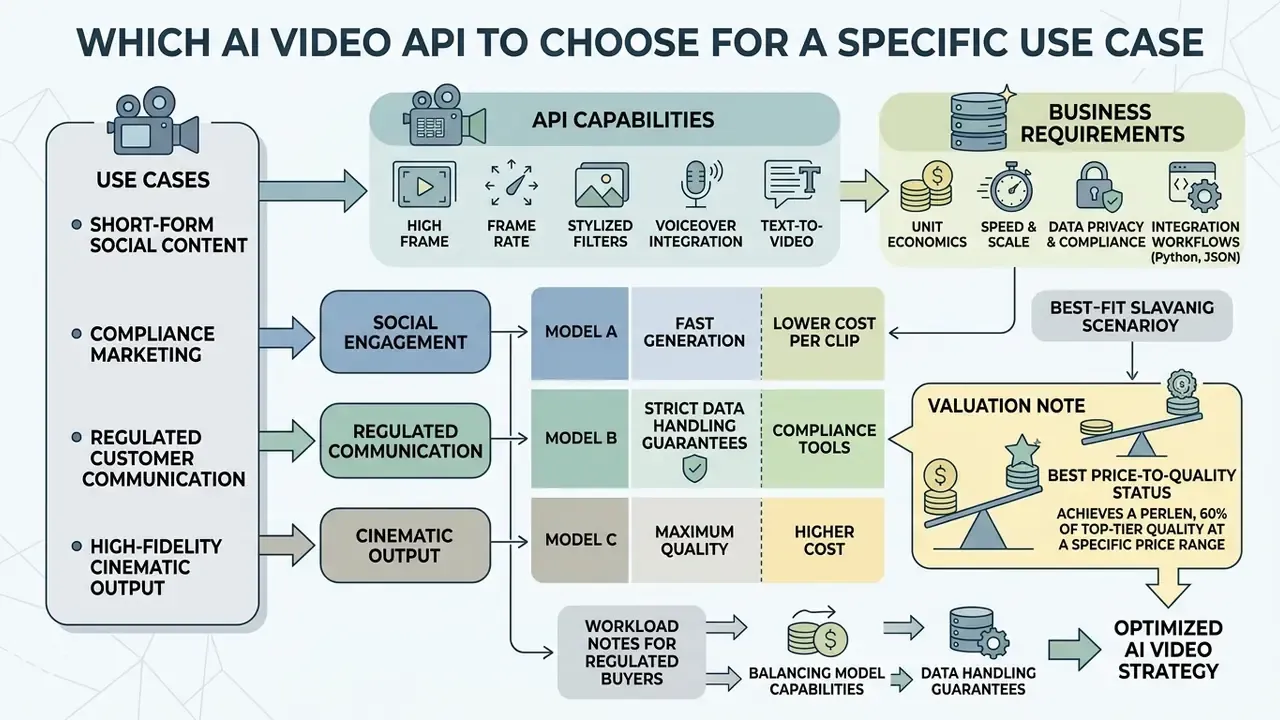
Selecting the right AI video API means aligning business requirements (short-form social engagement, compliance marketing, regulated customer communication, or high-fidelity cinematic video) with provider feature sets, data-handling guarantees, and cost profiles.
Limitations, Open Questions, and a Safe Next Step
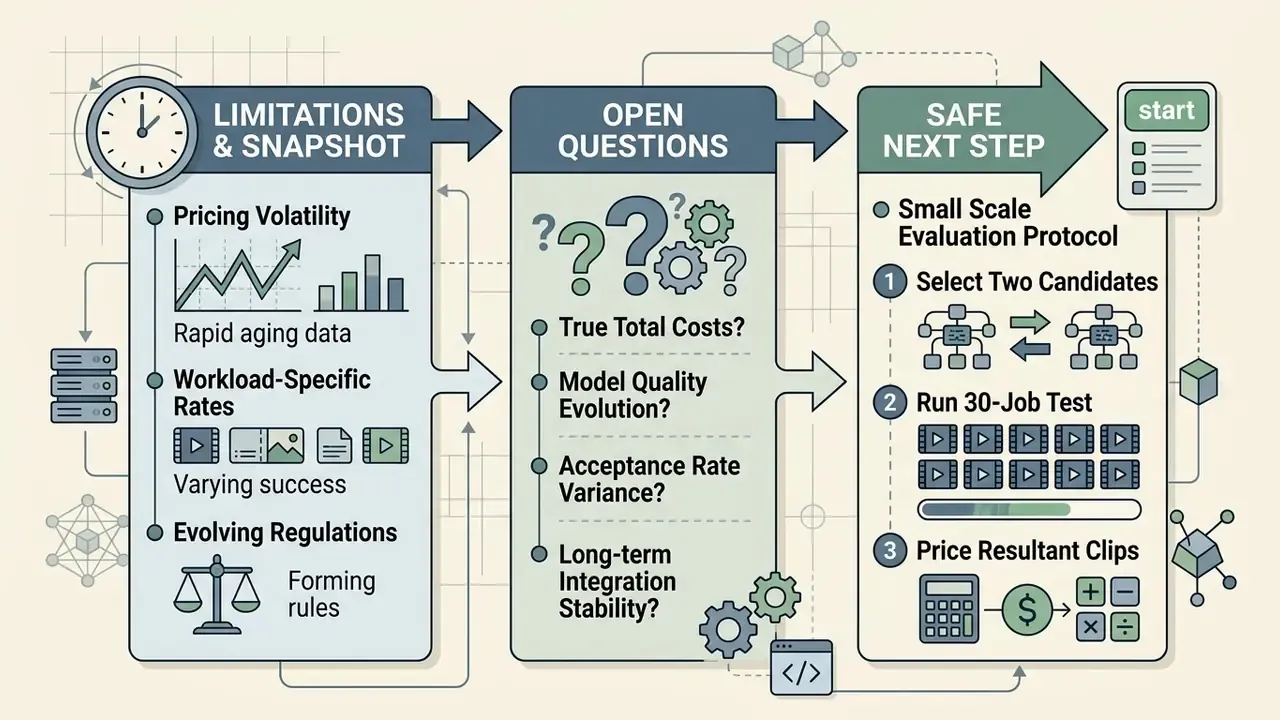
A guide like this ages fast, so treat the numbers as a snapshot rather than a contract. Three limits deserve explicit mention.
Pricing volatility. Every figure here reflects documentation verified in August 2026. Providers revise rates, retire routes, and re-tier preview endpoints without long notice. Rebuild the model quarterly, or attach a plus-or-minus 20% sensitivity band to any approval memo.
Acceptance rates are workload-specific. Published benchmarks measure someone else's prompts. Your rejection rate depends on brand rules, review strictness, and content risk tier, and it is the single largest variable in cost per accepted asset. Measure it in-house on 30 jobs before you extrapolate.
Regulatory expectations are still forming. Synthetic-media disclosure, provenance labelling, and the treatment of generative video inside model-risk frameworks continue to evolve. Where evidence is incomplete, document the assumption rather than resolving it silently.
The safe next step is small: run the 30-job evaluation protocol on two candidate routes, price the result with the governance-adjusted formula, and bring one number to committee, cost per accepted asset, with named owners and an audit trail behind it. If that number holds under challenge, scale. If it does not, you have saved a budget cycle.
FAQ: AI Video API Pricing and Integration
How much does it cost to generate one AI video through an API in 2026?
Base rates range from $0.03/sec (Veo 3.1 Lite, 720p video-only) to $0.70/sec (Sora 2 Pro, 1080p). Normalized to a 10-second clip, that is $0.30 to $7.00. The realistic cost of an accepted 5-second clip, including iterations, sits at $0.25 to $1.50 for mid-tier models, before human review and storage.
Which AI video API is cheapest in 2026?
For a directly comparable 720p video-only configuration, Google Veo 3.1 Lite has the lowest published first-party rate at $0.03 per second, giving an 8-second baseline of $0.24. However, Lite sits on a Preview endpoint with fixed quotas, so the cheapest production route is the lowest total cost among routes that pass your acceptance criteria, not the lowest list price.
Do AI video APIs support aspect ratio selection?
Yes. Most modern APIs (Kling 3.0, Veo 3.1, Runway Gen-4 and Gen-4.5, Seedance) accept 16:9, 9:16, and 1:1 parameters with no additional cropping charge. Pass aspect_ratio explicitly in the payload, because provider defaults often differ from your target placement and force a costly regeneration.
Is the OpenAI Sora API being shut down?
Yes. OpenAI's official documentation, updated August 21, 2026, states that the standalone Videos API and the Sora 2 model family are deprecated and scheduled for shutdown on September 24, 2026. Existing integrations should complete migration before that date and benchmark at least two replacement routes.
Does native audio generation increase API cost?
Yes, typically by 20% to 100%. Google Veo 3.1 Standard moves from $0.20 to $0.40 per unit when synchronized audio is enabled, and Kling 3.0 rises from $0.084/sec to $0.126/sec at 720p. Generating silent video and adding narration through a separate text-to-speech API is frequently cheaper and much easier to localize.
How many reference assets can I pass in one request?
Limits vary sharply. Kling 3.0 accepts a single start frame. Some aggregator routes accept up to 9 images plus 3 videos and 3 audio files. Seedance 2.0 accepts multimodal references within a token budget, and the announced Seedance 2.5 supports up to 30 images, 10 video clips, and 10 audio clips per task, with up to 30 seconds of output.
Can regulated organizations use these APIs with customer data?
Only under enterprise terms and with upstream controls. Confirm SOC 2 Type II status, Zero Data Retention eligibility, training exclusion, regional residency, IP indemnification, and sub-processor disclosure. Mask or tokenize personal data at an internal gateway before any prompt or reference image leaves your perimeter. This article is general information, not legal or compliance advice.
What should a model-risk file for generative video contain?
At minimum: the approved use case and content risk tier, the named accountable owner, the model inventory entry with route and version, the evaluation protocol and acceptance-rate evidence, the prompt and parameter log retention policy, the human review threshold, the deprecation calendar with named alternates, and the realized cost-per-accepted-asset trend. If any item is missing, the workflow is not production-ready.
Appendix A: Superseded and Legacy Data Points
Retained for continuity and audit traceability. Do not use these figures for 2026 budgeting.
| Legacy data point | Status | Replacement |
|---|---|---|
| ByteDance Seedance 1.0 Pro at $0.024/sec (480p), $0.052/sec (720p), $0.122/sec (1080p) via BytePlus | Outdated, superseded by the Seedance 2.0 lineup, which moved to tokenized per-video billing | Seedance 2.0 per-video ranges of $0.19 to $9.33 depending on variant, input length, and resolution; Seedance 2.5 pricing not yet published |
| Seedance 1.0 Pro listed as a "Corporate Marketing and Training" recommendation at $0.052/s | Superseded | Seedance 2.0 Fast (per-clip ranges) or Veo 3.1 Fast at $0.10/sec |
JSON payload without an aspect_ratio field | Incomplete | Payload now includes explicit aspect_ratio (16:9, 9:16, 1:1) |
| Generation-only cost formula used as the budgeting metric | Insufficient for regulated environments | Governance-adjusted |
| Sora deprecation date stated without a primary citation | Now sourced | OpenAI API Pricing Documentation, updated August 21, 2026; shutdown September 24, 2026 |
Author note: Marcus Hale writes about AI governance and model risk for this publication.