Executive Summary
- An AI product description generator converts structured product attributes, images, and brand rules into publishable e-commerce copy. It is a draft engine, not a source of truth.
- Documented enterprise case data shows 75 to 94% less manual copywriting effort, content accuracy rising from 85% to 94%, and consistency of 96% versus 80% for manual production.
- Budget owners should model a risk-adjusted ROI that subtracts human-in-the-loop (HITL) review hours, API spend, and remediation cost for hallucinated claims. The formula sits in Section 1.
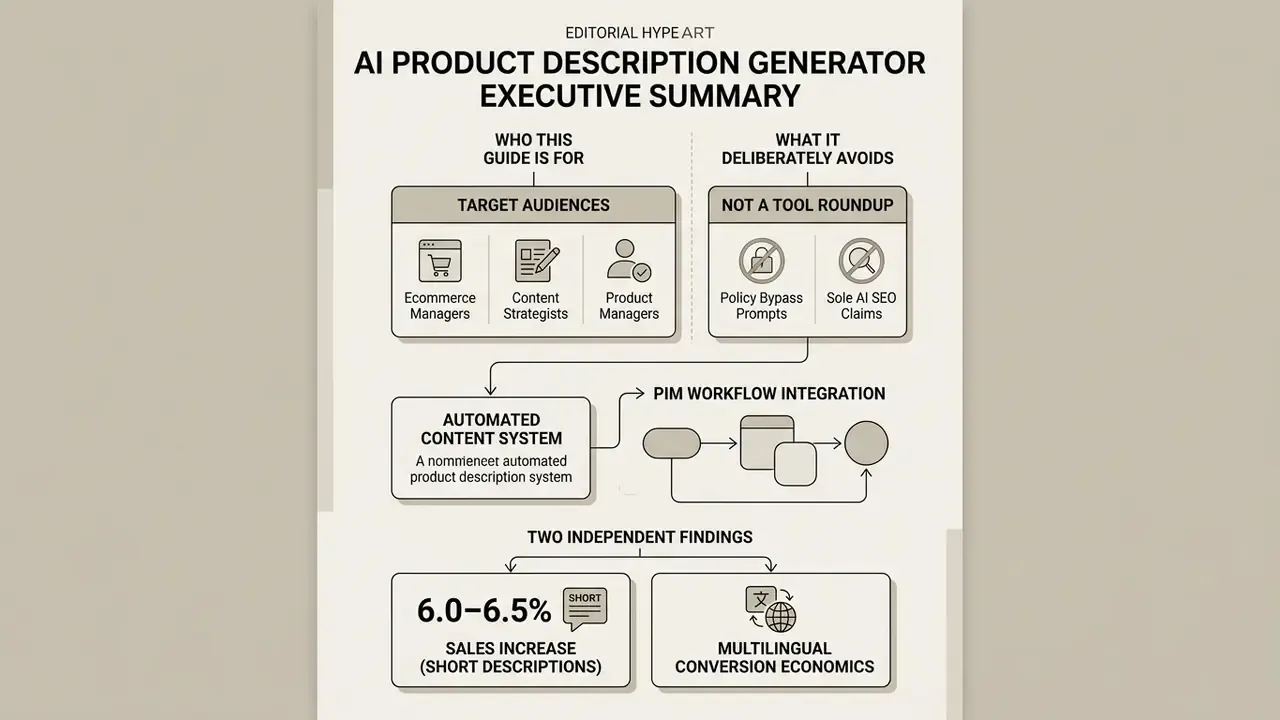
Who this guide is written for, and what it deliberately avoids
This is an implementation document, not a tool roundup. It assumes you own a catalog, a PIM or ERP record of truth, and somebody who signs off before text goes live.
Three audiences will get the most out of it. E-commerce and merchandising leads planning a catalog-wide refresh. Content operations managers who need a repeatable pipeline instead of ad-hoc prompting. And governance or risk owners who must explain, later, how a published claim came to exist.
What you will not find here: prompt tricks that bypass platform policy, claims that AI copy ranks by itself, or vendor rankings without a control layer attached. Where evidence is single-source, we say so.
An AI product description generator is an automated content system that leverages large language models (LLMs) and multimodal computer vision to transform structured item attributes into accurate, high-converting, and SEO-optimized product copy. Modern e-commerce organizations use these tools to clear manual copywriting bottlenecks, hold tone-of-voice consistency across expansive catalogs, and shorten time-to-market for new inventory.
The evidence base splits cleanly into two independent findings, and mixing them distorts planning. The first concerns sales volume on under-described items:
The second concerns multilingual conversion economics in a controlled retail study, where generative production replaced agency translation and copywriting:
«Generative AI produced descriptions in three languages in 2 hours 20 minutes, cutting cost from CHF 147,630 to $0.46, while conversion rose to 23.7%.»
Capturing either result requires moving beyond simple text prompts to structured data pipelines, automated fact-checking, and platform-specific formatting rules. No pipeline, no payoff.
What Is an AI Product Description Generator and What Business Problems Does It Solve?
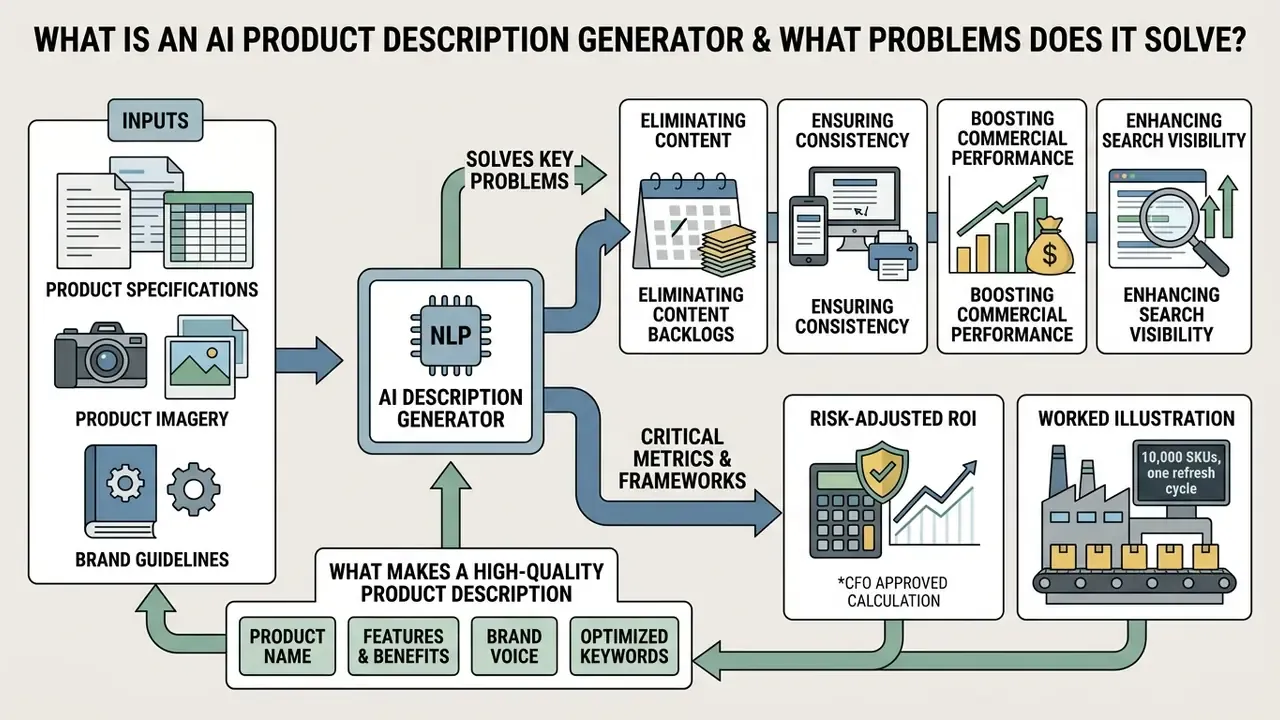
An AI product description generator is a specialized natural language processing (NLP) application designed to convert raw product specifications, imagery, and brand guidelines into persuasive product copy for e-commerce listings. Its primary business function is to automate scalable catalog content creation, rewrite underperforming legacy product pages, and enforce structural consistency across multi-channel storefronts.
By replacing repetitive manual writing, an ai product description generator ecommerce workflow saves time and cuts operational overhead. Industry implementations document a 75% to 85% reduction in manual copywriting effort, which lets content teams move from line-by-line drafting to editorial oversight. The most detailed published case measurement goes further:
«AI generation cut manual copywriting effort by 94% and raised content accuracy from 85% to 94%.»
The strategic tasks solved by an ai product content generator include:
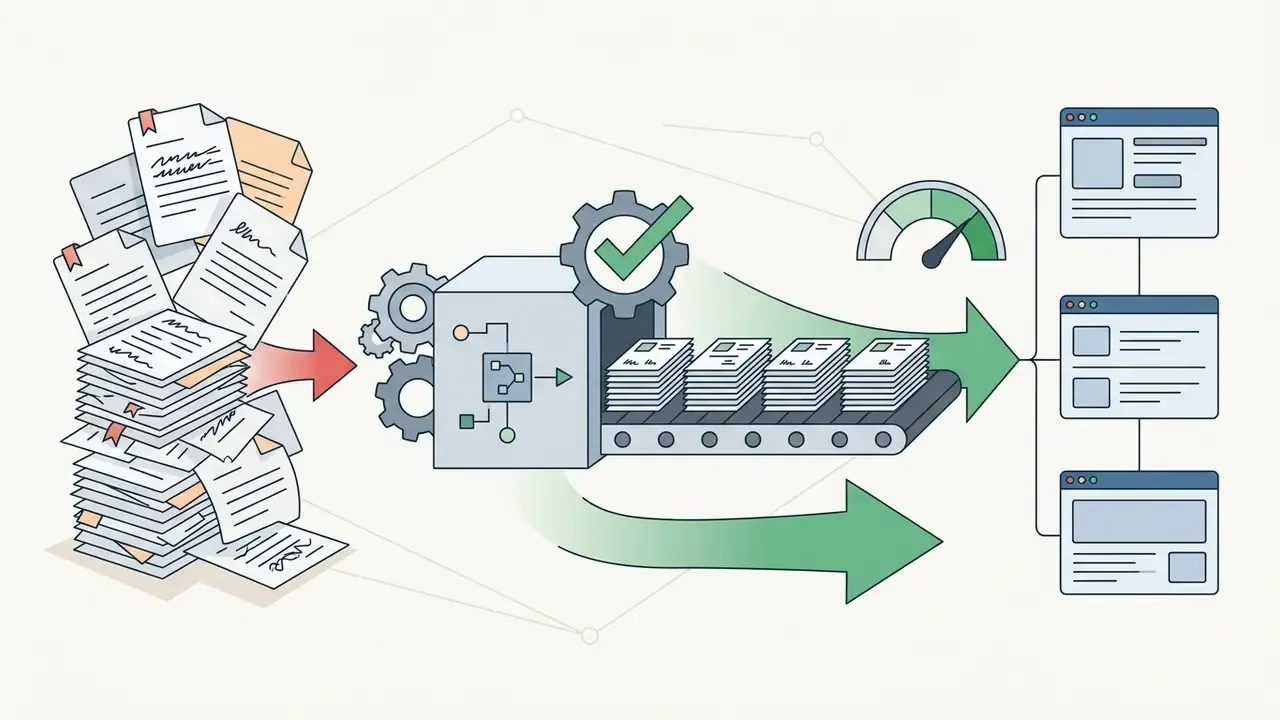
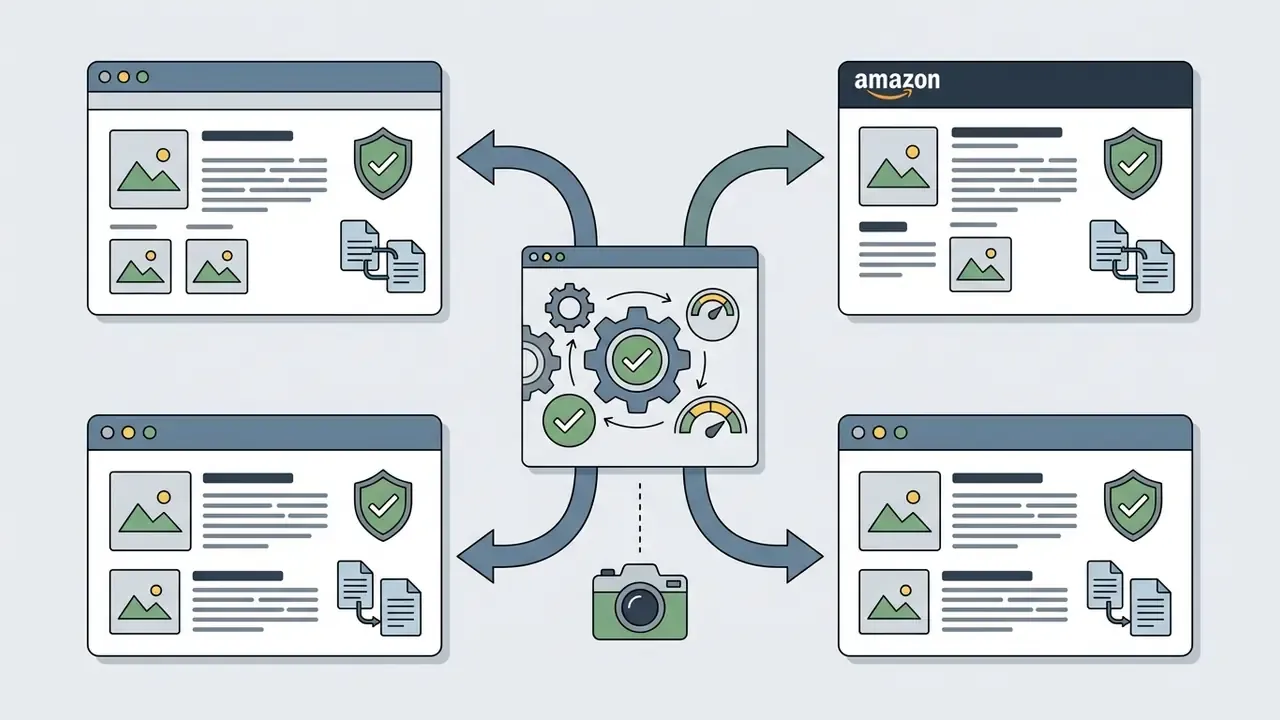

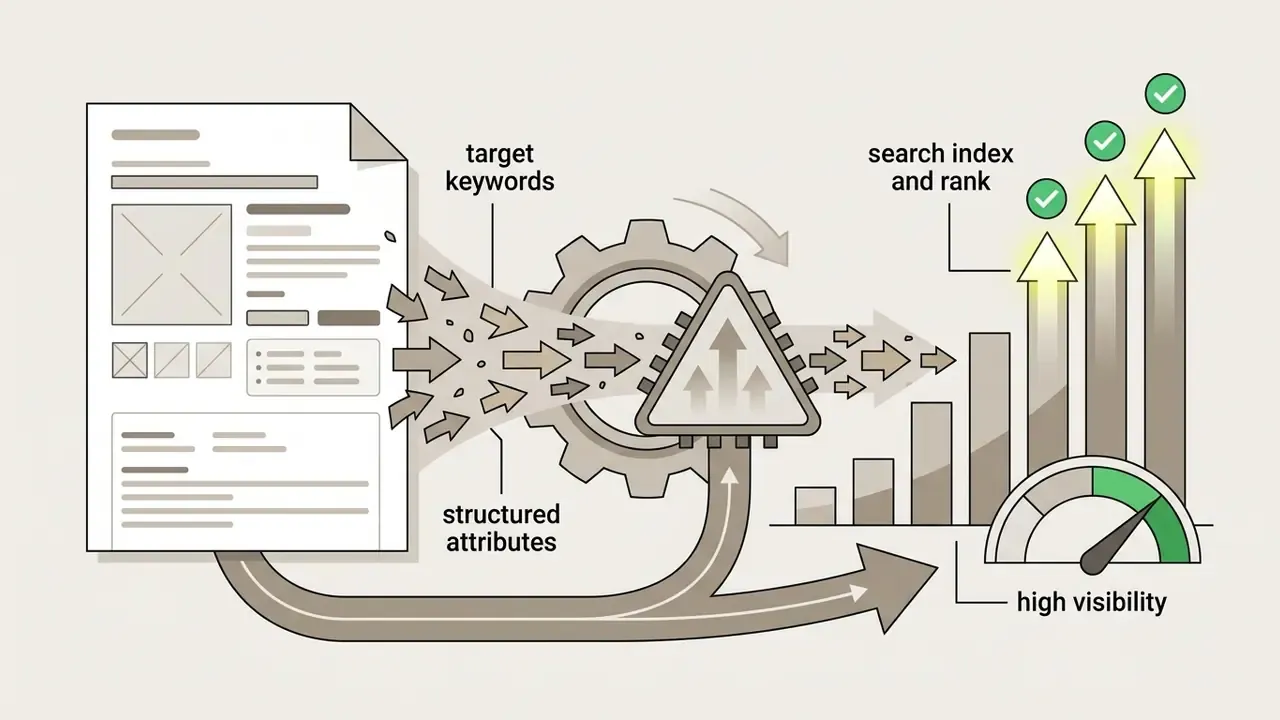
In one enterprise implementation, a retail brand facing a 10,000-SKU catalog update connected an AI draft generator to its PIM. The pipeline turned raw technical specs into structured drafts within 48 hours, cut copywriting turnaround by 80%, and lifted indexable catalog coverage to 100%. Worth noting: the same team still spent three weeks tuning the prompt before the batch ran. That setup cost rarely appears in vendor decks.
Risk-Adjusted ROI: the calculation CFOs actually approve
Gross productivity figures are not enough for budget defence, because they ignore the cost of the control layer. Model the net value of an AI description program like this:
Risk-Adjusted Net Value =
   [ Δ Conversion Rate × Sessions × Average Order Value × Gross Margin ]
 + [ Hours Saved × Loaded Hourly Copywriting Cost ]
 − [ HITL Review Hours × Loaded Editor Cost ]
 − [ Platform / API / Token Spend ]
 − [ Hallucination Remediation Cost × Expected Error Rate × SKU Volume ]
 − [ Integration & Prompt-Engineering Amortization ]
Worked illustration (10,000 SKUs, one refresh cycle):
| Input | Assumption | Value |
|---|---|---|
| Manual copywriting baseline | 25 min/SKU at $38/hour loaded | $158,300 |
| AI drafting spend | API + platform licence | $6,400 |
| HITL review | 5 min/SKU at $42/hour loaded | $35,000 |
| Remediation | 3% error rate × 12 min rework | $2,520 |
| Integration amortization | prompt engineering + PIM connector | $18,000 |
| Cost side total | $61,920 | |
| Gross efficiency saving | $158,300 − $61,920 | $96,380 |
| Conversion upside | +1.3% CR on thin-description SKUs (field-experiment range) | modelled separately per category |
Field-experiment data supports conservative conversion modelling rather than headline numbers: conversion rose 1.3% and orders 1.1% where AI copy replaced thin descriptions, with no measurable effect on already well-described items. Plan the upside line only for SKUs that currently fall below the 50-word threshold. Everything else is efficiency, not growth.
What Elements Make Up a High-Quality Product Description
A high-converting product description combines precise technical specifications with customer-centric value propositions, structured for rapid scanning. The core architecture of a high-quality product page rests on six components:
- Product namea clear, search-friendly title containing the brand, core item identifier, and key differentiator (colour, size, or primary material).
- Key details and key featuresa bulleted summary of technical specifications, dimensions, materials, and operational parameters.
- Features-to-benefits mappingexplicit statements translating technical key features into tangible consumer benefits. "Constructed from 600D water-resistant polyester" becomes "keeps your electronics completely dry during heavy rain".
- Selling points and unique selling points (USPs)differentiating factors that explain why the item outperforms direct competitors.
- Target audience alignmentvocabulary, tone, and framing tailored to the demographics and purchase triggers of the intended buyer.
- Detailed descriptionscontextual narrative paragraphs covering practical use cases, care instructions, and compatibility details.
These elements are not stylistic preferences. Quantitative perception research found that structure and tone interact measurably:
«The interaction of text structure and emotional tone significantly affects perceived product attractiveness and purchase decisions.»
A practical habit from our own desk: if a reviewer cannot answer "who buys this and why" after reading the first 40 words, the draft goes back regardless of grammar.
When an AI Generator Helps an Ecommerce Business
An ai generator product description strategy pays off most in environments with high SKU volume, fast inventory turnover, or thin internal copywriting capacity.
- Large product catalogs and enterprise retailers retailers managing thousands of SKUs across categories use AI tools to generate uniform baseline copy and prevent sparse or missing product pages. The measured payoff is threshold-dependent: items with under 50 words of description recorded a 6.1 to 6.5% order increase after AI content deployment, while products with already-developed descriptions showed no statistically meaningful effect (Field Experiments on Retail Platforms, 2023–2024, https://doi.org/10.2139/ssrn). Prioritize the thin tail of the catalog first.
- Small businesses and emerging brands resource-constrained teams lean on a free ai product description generator or mid-tier tool to publish professional, persuasive copy without agency retainers. The same teams typically combine text drafting with free AI image generators to build a complete listing at near-zero marginal cost.
- Drop-shippers and marketplace sellers operators handling third-party inventory turn generic manufacturer spreadsheets into unique product listings tailored to Amazon or eBay guidelines.
- New product line launches brands shipping seasonal collections use bulk generation to deploy hundreds of new product pages at once, which compresses time-to-market.
Tailored solutions by role:
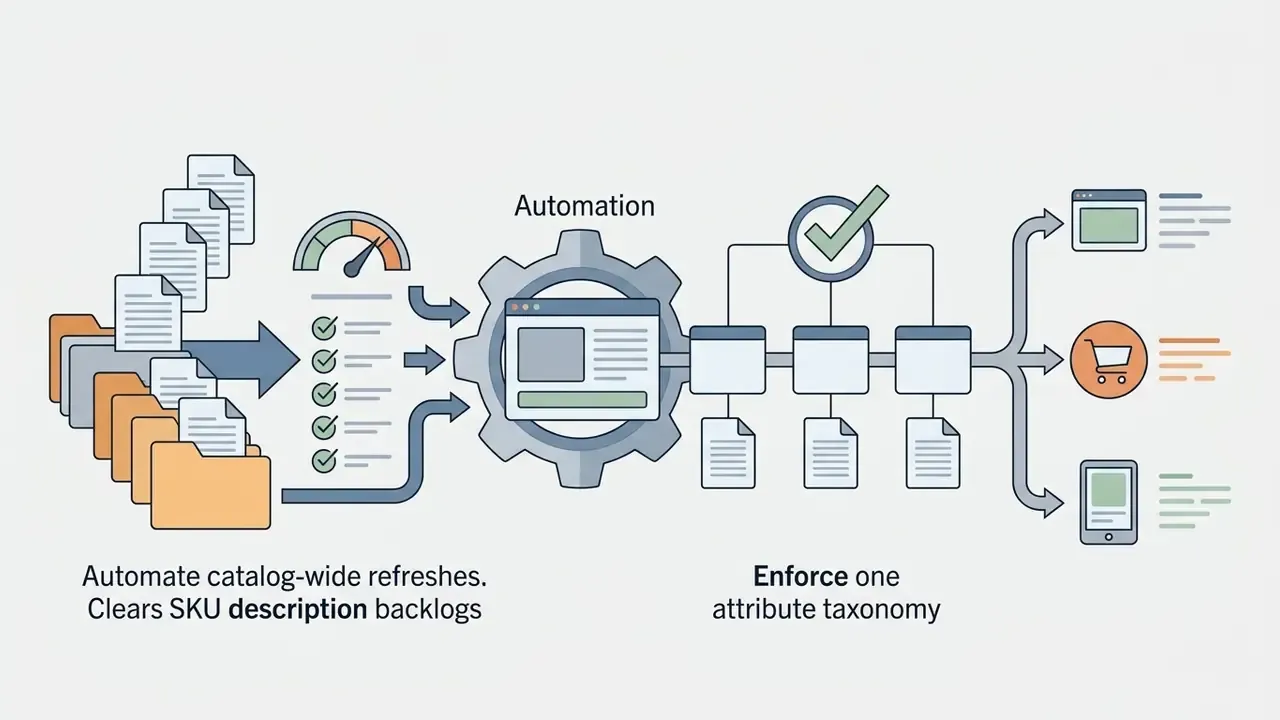
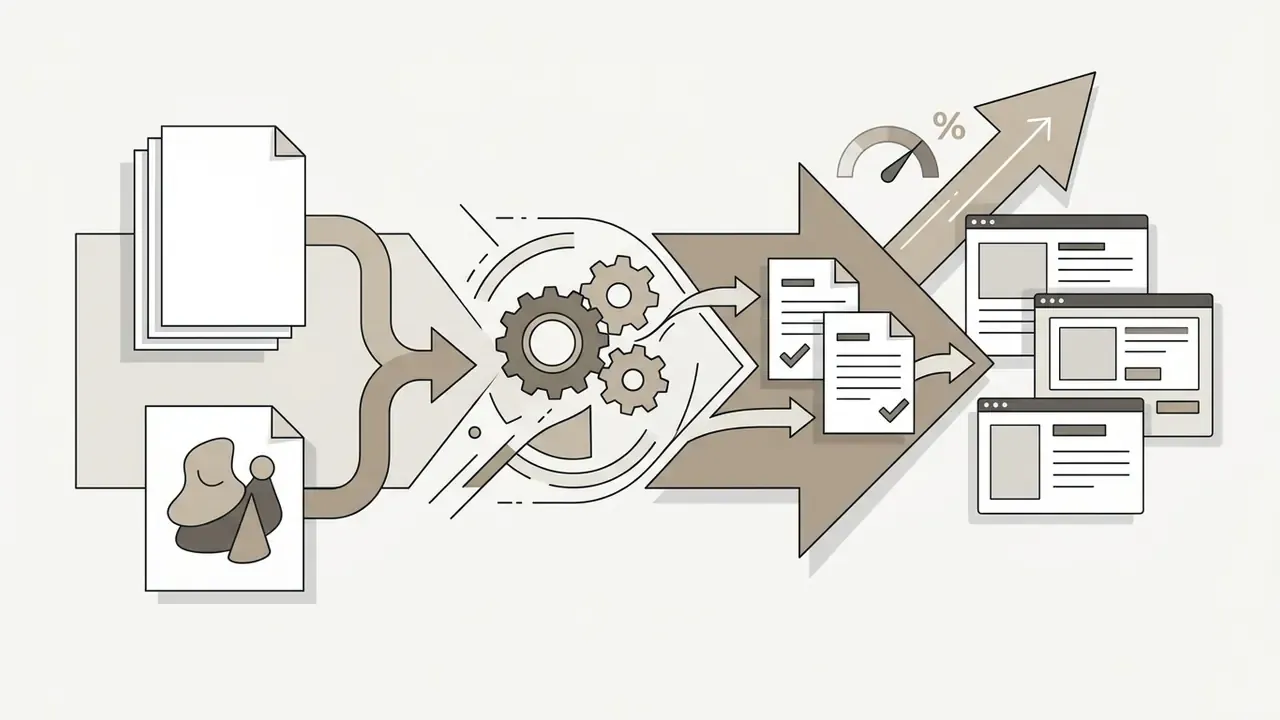
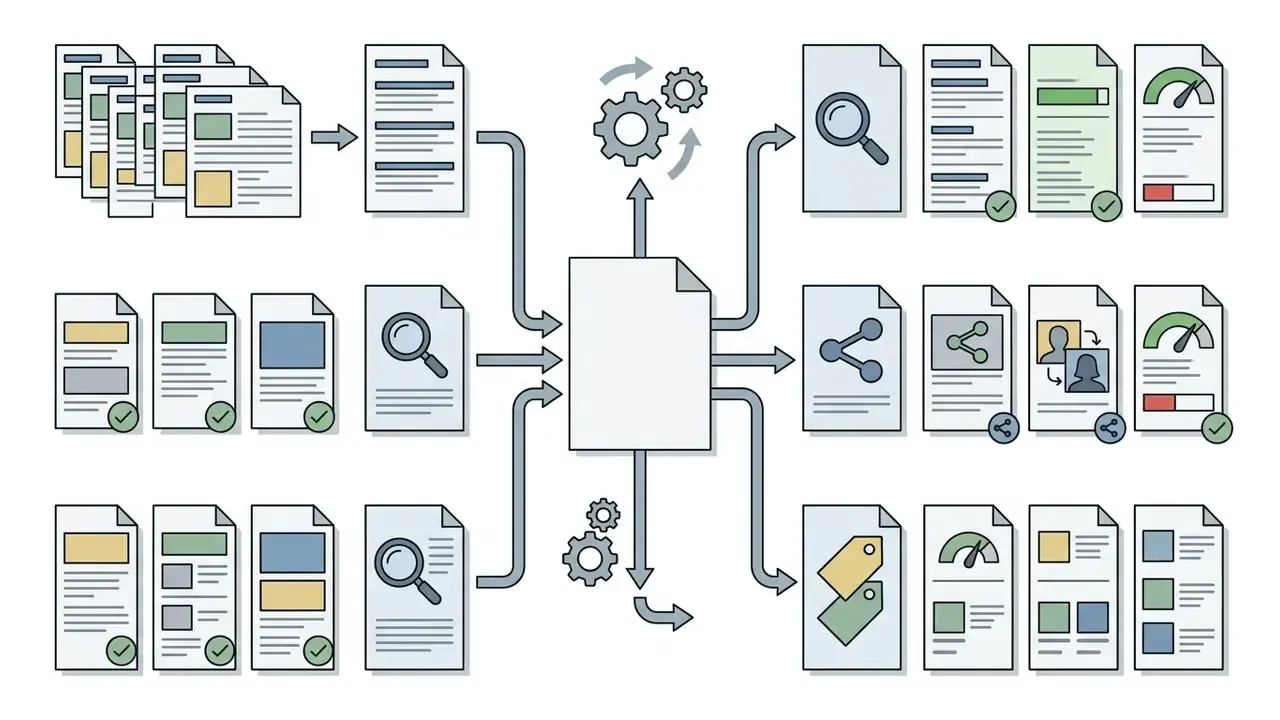
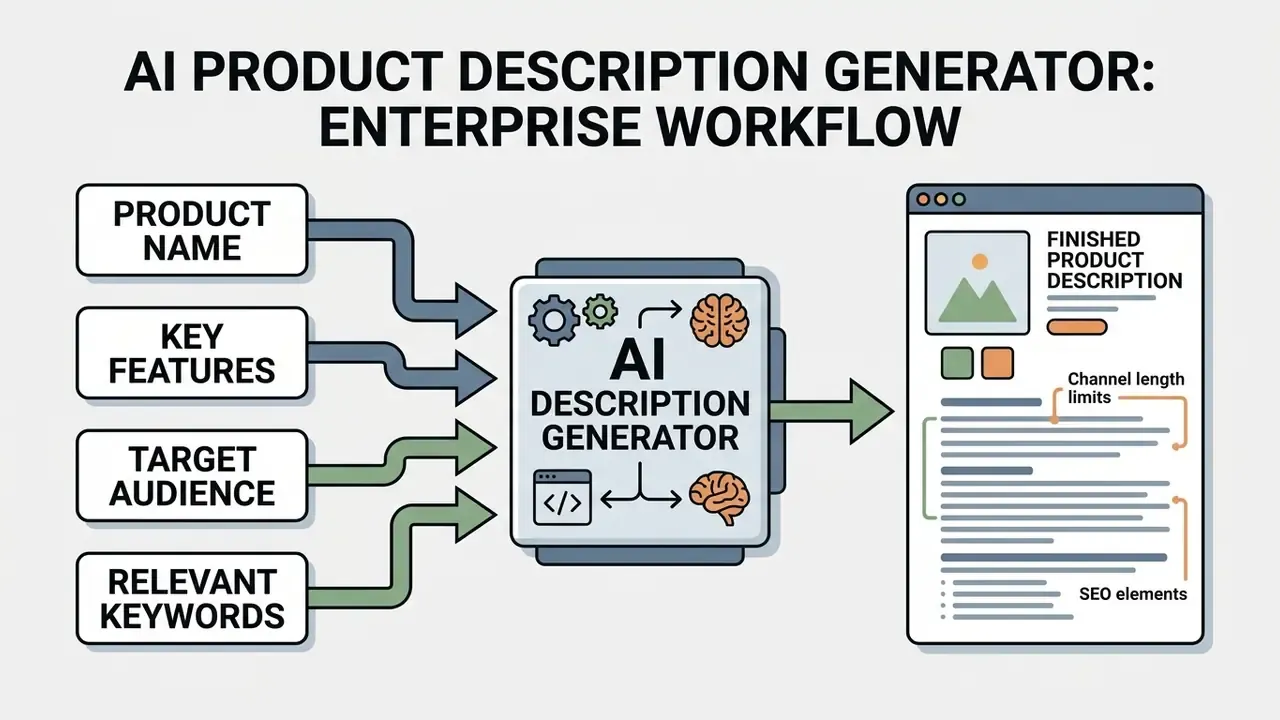
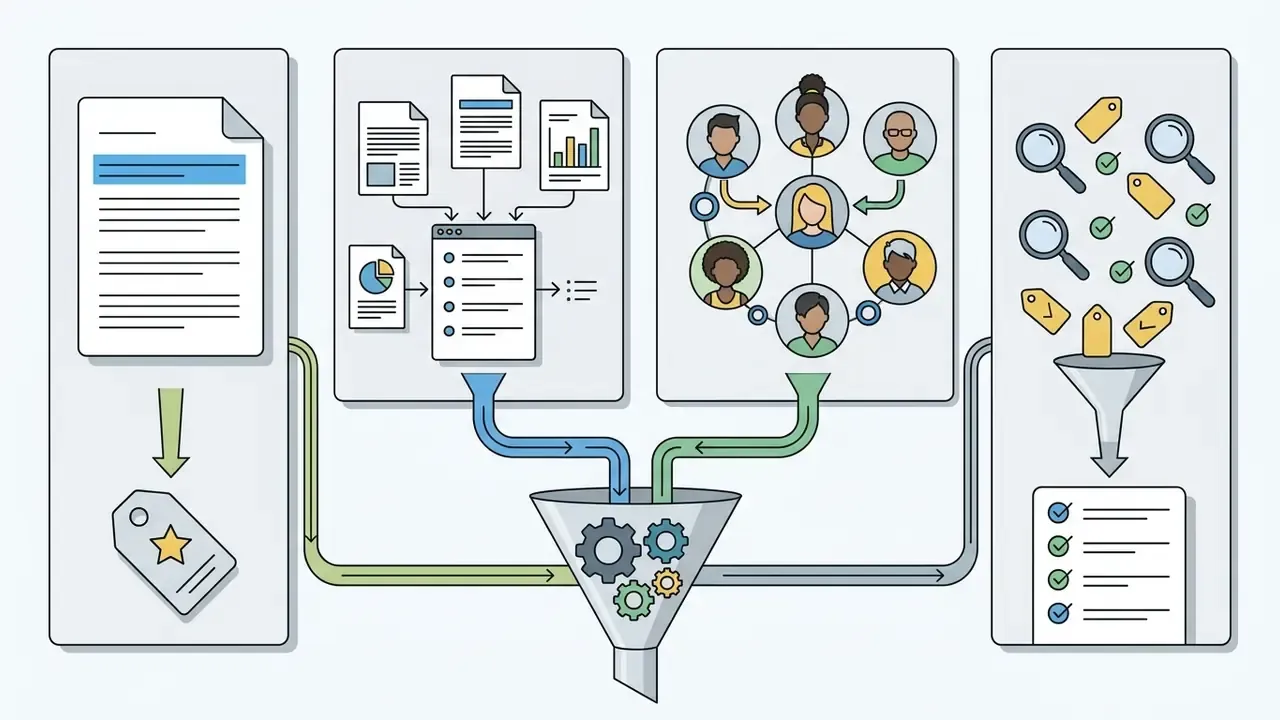
product name, key features, target audience and relevant keywords from PIM or ERP.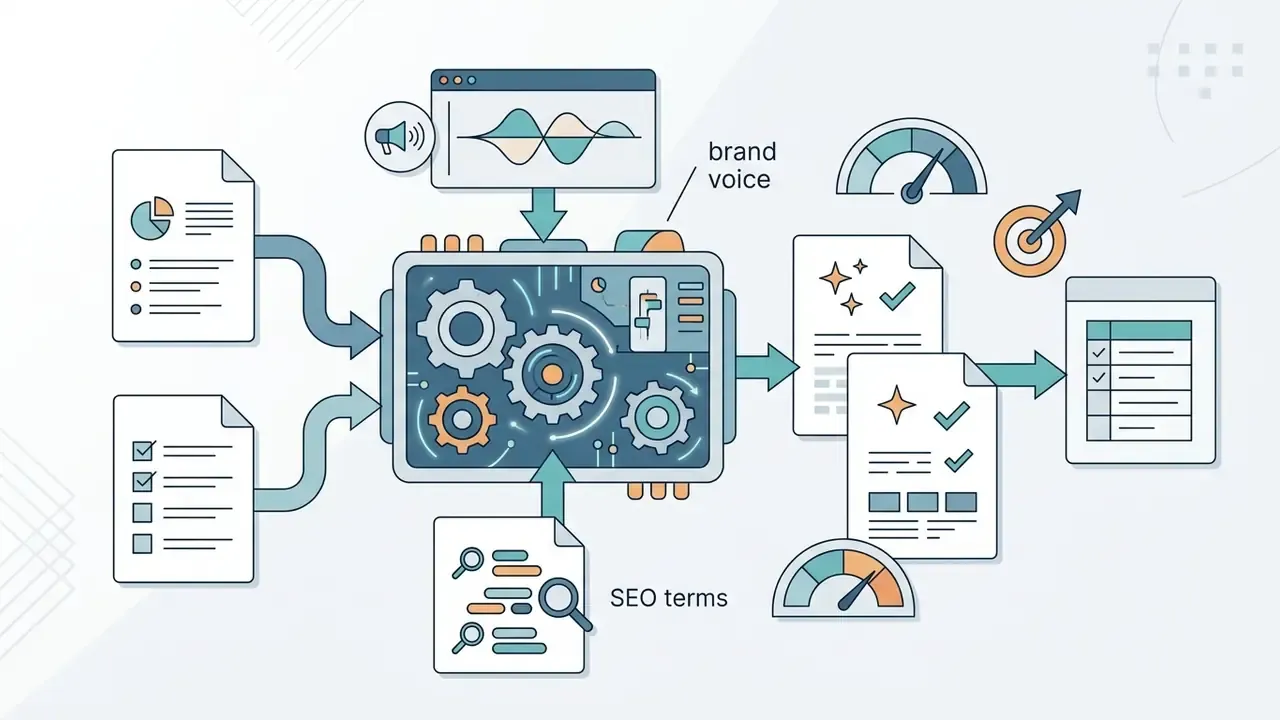
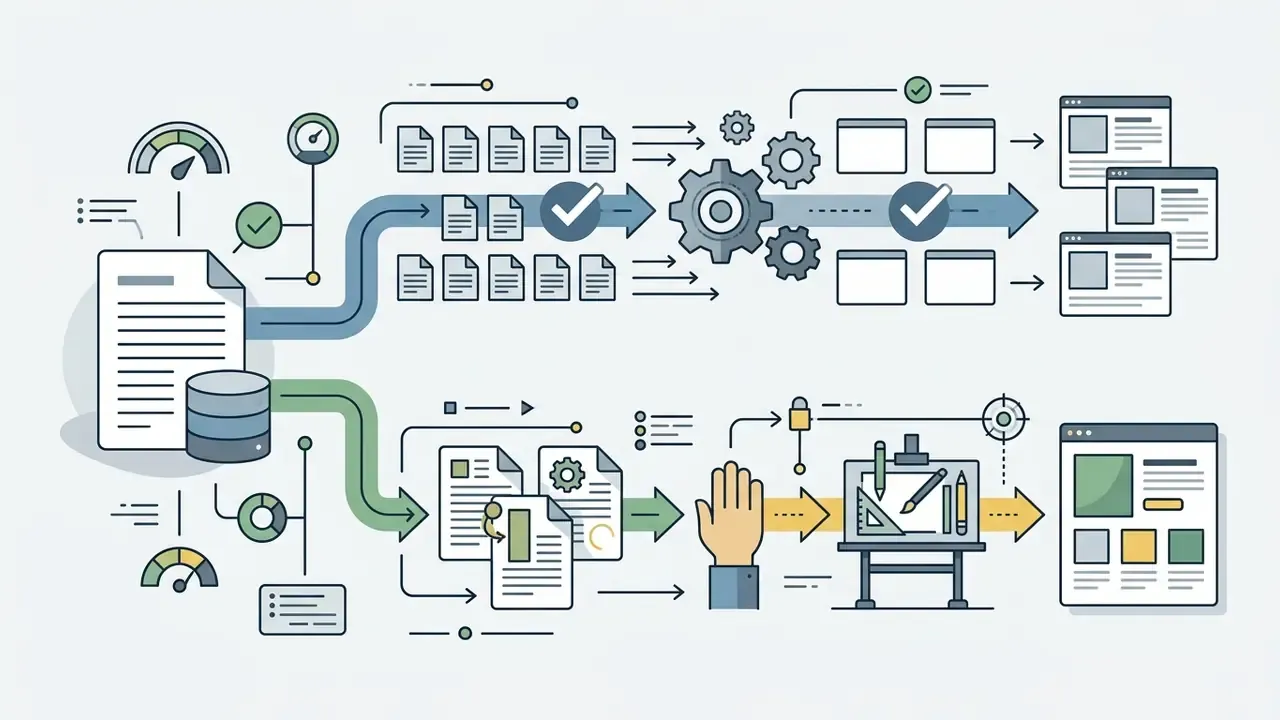
features-to-benefits), apply brand voice, and integrate SEO terms.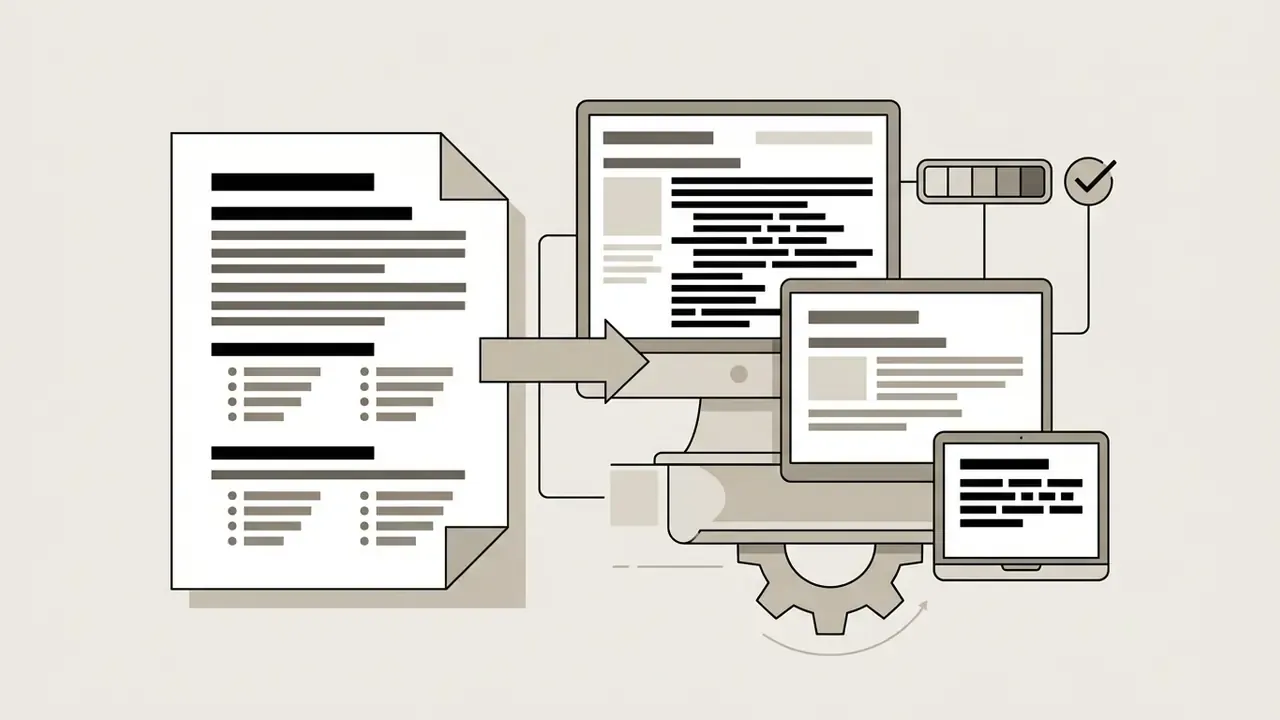
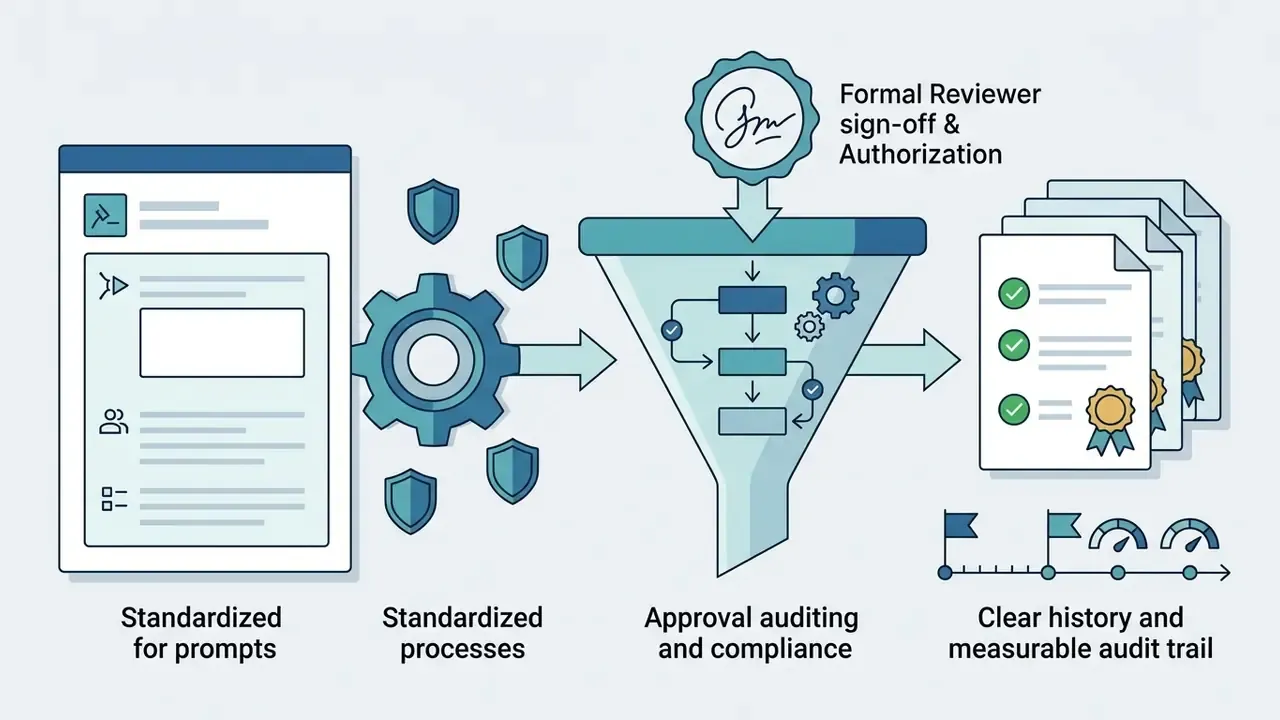
product copy with H2/H3 structure, bullet lists, and channel-balanced length for product pages.How an AI Generator Creates Product Descriptions
An ai generator for product description workflow processes input attributes through probabilistic language modelling, turning raw facts into coherent, customer-facing copy. Modern systems rely on transformer-based architectures that predict contextually appropriate word sequences from training data, system prompts, and structured input context.
Given explicit attributes, artificial intelligence algorithms construct product descriptions based on input parameters rather than creative assumption. Peer-reviewed work on e-commerce description generation reports that fusing image features, marketing keywords, and reference texts from similar samples as in-context material improves generation accuracy by up to 3.3% Rouge-L and textual diversity by up to 9.4% D-5 versus conventional methods (multimodal in-context tuning study presented at LREC-COLING, 2024). Independent replication of these exact deltas on other catalogs has not been published, so treat them as directional evidence for architecture choice, not a performance guarantee.
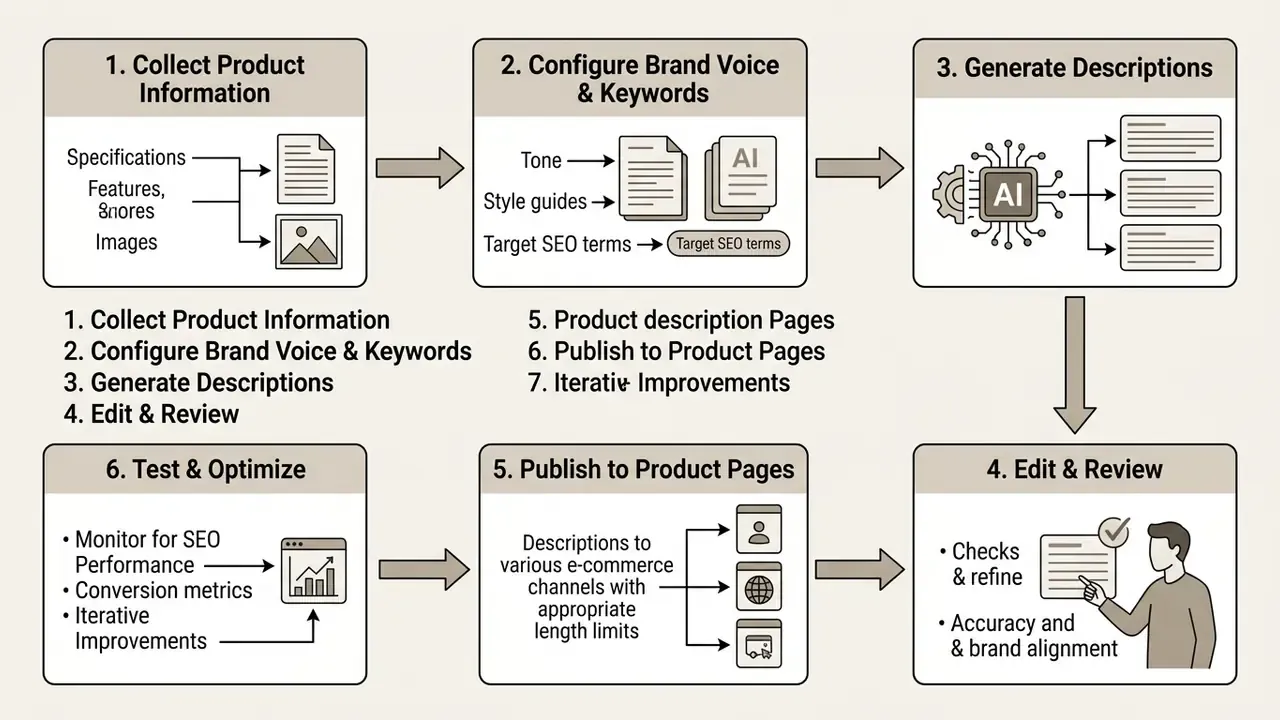
To ai create description outputs that are factual and brand-aligned, the platform follows a three-step generation framework:
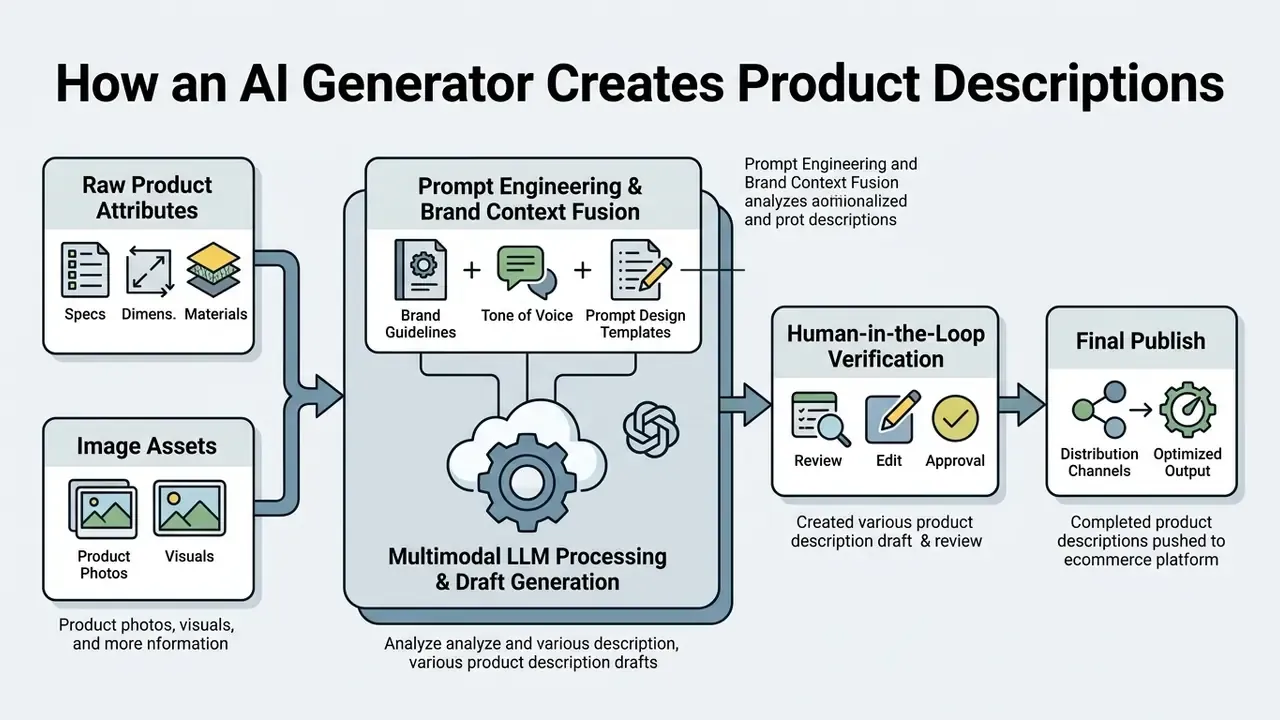
The fourth box is the one that gets cut under deadline pressure. Resist that.
Generating Descriptions from Product Information and a Text Prompt
Reliability depends directly on the structure and quality of the input prompt and the baseline product information. Rich context prevents model hallucination and keeps output aligned with commercial targets.
An enterprise-grade prompt structure contains four defined instruction blocks:
- Product facts block
product name, SKU, material composition, dimensions, and explicit technical specifications. - Brand voice and tone block 3 to 5 tone descriptors ("professional, authoritative, concise"), sentence length guidelines, and formatting preferences.
- Stop-words and guardrails block forbids unverified claims, absolute safety guarantees, hype language ("revolutionary", "best ever"), and generic filler.
- SEO and target audience block primary and secondary relevant keywords, buyer personas, and intentional keyword density rules.
Real-world generation showcase 1: peripherals (DTC storefront)
INPUT PROMPT
Product Facts: Wireless Ergonomic Mouse, 4000 DPI optical sensor,
silent switches, 70-day battery on one charge, USB-C, 2.4 GHz + Bluetooth 5.2.
Brand Voice: professional, minimalist, efficiency-focused; sentences under 22 words.
Guardrails: no "revolutionary", "best-in-class", "game-changer"; no unverified
compatibility claims; no health or medical claims about wrist strain prevention.
SEO: primary "wireless ergonomic mouse"; secondary "silent clicks", "long battery mouse".
Format: 1 lead paragraph (max 45 words) + 4 bullets + 1 compatibility line.
AI-GENERATED OUTPUT
Boost your daily workflow with the Wireless Ergonomic Mouse. A precise 4000 DPI
sensor and whisper-quiet switches deliver smooth tracking without adding noise to
shared workspaces, while the rechargeable battery runs up to 70 days per charge.
• 4000 DPI optical sensor: accurate cursor control for spreadsheets and design work
• Silent clicks: comfortable use in open offices, meetings and shared rooms
• 70-day battery life: fewer charging interruptions during long project weeks
• Dual connectivity: 2.4 GHz receiver or Bluetooth 5.2 for a second device
Compatibility: Windows, macOS and ChromeOS via USB-C charging and 2.4 GHz receiver.
Real-world generation showcase 2: home fragrance (marketplace listing)
INPUT PROMPT
Product Facts: Hand-poured soy wax candle, 220 g, lavender and vanilla,
cotton wick, 45-hour burn time, reusable amber glass vessel.
Brand Voice: warm, sensory, calm; second person; no exclamation marks.
Guardrails: no therapeutic, sleep-aid or wellness claims; no "100% natural"
unless certified; no HTML.
SEO: primary "lavender vanilla soy candle"; secondary "45-hour burn time".
Format: marketplace bullets under 125 characters each + 60-word description.
AI-GENERATED OUTPUT
• Hand-poured soy wax with lavender and vanilla for a soft, layered evening scent
• 45-hour burn time from a 220 g pour: steady light through long weeks
• Cotton wick burns cleanly and evenly to the edge of the glass
• Reusable amber glass vessel works as a brush holder or small planter
This hand-poured soy candle blends calm lavender with warm vanilla, filling a room
without overpowering it. The 220 g pour delivers up to 45 hours of even burn, and
the amber glass vessel is made to be washed and reused once the wax is gone.
Both examples show the control pattern that matters in production: the model never introduces a number, certification, or compatibility statement that was absent from the product facts block. When it does, that is a prompt defect, not a model quirk.
AI Product Description Generator from Image
An ai product description generator from image uses multimodal vision-language models (VLMs) to analyze visual assets and extract physical properties, visual style, and material characteristics. Identification of products in images is the useful part; inference beyond the pixels is the risky part.
Comparative benchmark testing on product imagery reports that specialized VLMs reach 89.8% to 93.9% accuracy when identifying non-compliant or mislabeled product image features. Moondream2 recorded 93.87% accuracy and 95.06% precision, LLaVA 89.84% accuracy and 90.34% precision in the same 2025 comparison, while a fine-tuned LLaVA-based model outperformed a general-purpose frontier model by 9.4% and 29.13% on two product-understanding benchmarks (WACV vision-language product study, 2025). Because the primary study identifiers were not independently re-verified by our desk, treat the exact percentages as vendor-independent but single-source evidence.
The boundary of the technology is well documented:
«Multimodal models can extract product attributes from images, but cannot determine technical specifications, warranty terms, or exact dimensions.»
So an image-to-text pipeline must always run as a hybrid. Vision models extract visual attributes from product photos, which are then cross-referenced against structured technical data from the ERP before the draft listing is generated. Every visually derived attribute (colour name, finish, pattern, silhouette) enters Pass 1 of the two-pass verification described in Section 10, because a visual inference is a hypothesis, not a record.
Output Formats and Length Specifications by Channel
A versatile best ai product description generator must support several textual formats to serve different touchpoints along the customer journey. A single product record should yield:
- Detailed descriptions comprehensive narrative copy (150 to 250 words) covering technical details, construction quality, and care instructions for the main product detail page.
- Persuasive product descriptions short, high-energy sales copy weighted toward emotional benefits, for promotional landing pages or hero banners.
- Scannable bullet points concise 3-to-5 point lists pairing primary specs with immediate user benefits for fast mobile reading.
- Social media and channel micro-copy short, character-constrained posts (50 to 80 words) tuned for Instagram, Facebook Shop, or Pinterest ad hooks.
- Friendly descriptions for support and chat plain-language variants that answer "will this fit my setup" without marketing varnish.
Length specification matrix (use these as prompt constraints, not post-hoc edits):
| Channel / Format | Target Length | Structural Focus | Primary Objective |
|---|---|---|---|
| Amazon / marketplace bullets | 100–125 characters per bullet | Feature + instant benefit | Rapid mobile scan and keyword indexing |
| Marketplace short description | 50–100 words | Specs-first, no promotional language | Policy-compliant listing approval |
| DTC main description | 150–250 words | Narrative + specs + care instructions | Deep brand engagement and SEO authority |
| Premium / storytelling pages | 300–500 words | Origin story + use cases + comparison block | Considered purchases, high AOV items |
| Social commerce (IG / TikTok) | 30–60 words | Hook + visual cue + call to action | Impulse click and visual alignment |
| Ad micro-copy (paid search/social) | 15–30 words | USP + promotional trigger | High CTR on paid channels |
| Meta title / meta description | 50–60 / 150–160 characters | Primary keyword + model + CTA | Snippet click-through |
| Email merchandising block | 40–70 words | One benefit + one proof point | Click-through to product page |
Concise formats win the fast-scan moment. Longer detailed descriptions let buyers understand fit, compatibility and care before they commit. Both are generated from the same master record, never rewritten independently, otherwise the variants drift within a quarter.
Workflow for Implementing an AI Product Description Generator Across a Catalog
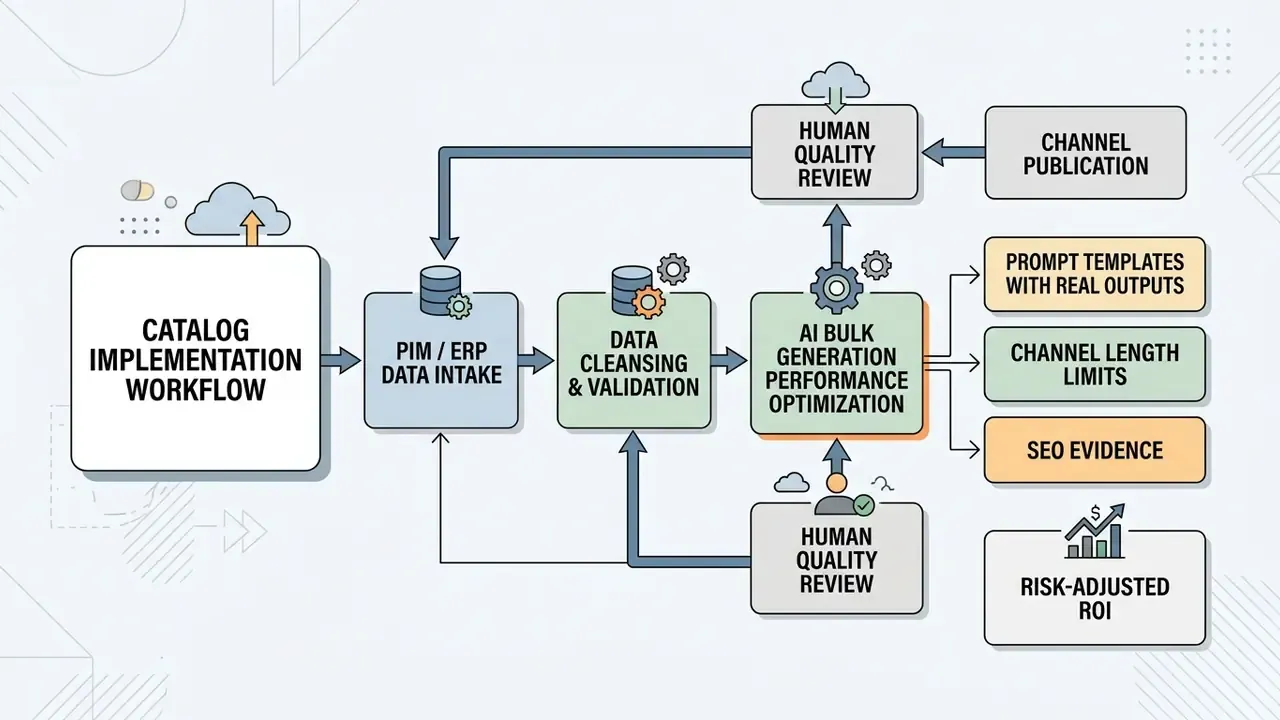
Integrating an ai product listing generator into an existing operation means building an end-to-end data pipeline from master data sources to publication channels. Rather than treating AI writing as an isolated task, mature teams embed generation into a governed content pipeline: audit the current process, define brand and data inputs, generate in batches, review, publish, then measure and iterate.
Governed pipelines beat ad-hoc prompting on both effort and consistency:
«AI descriptions reached 96% consistency versus 80% for manual copywriting, while audience engagement rose from 60% to 80%.»
Preparing Source Data for a Product Detail Page Generator
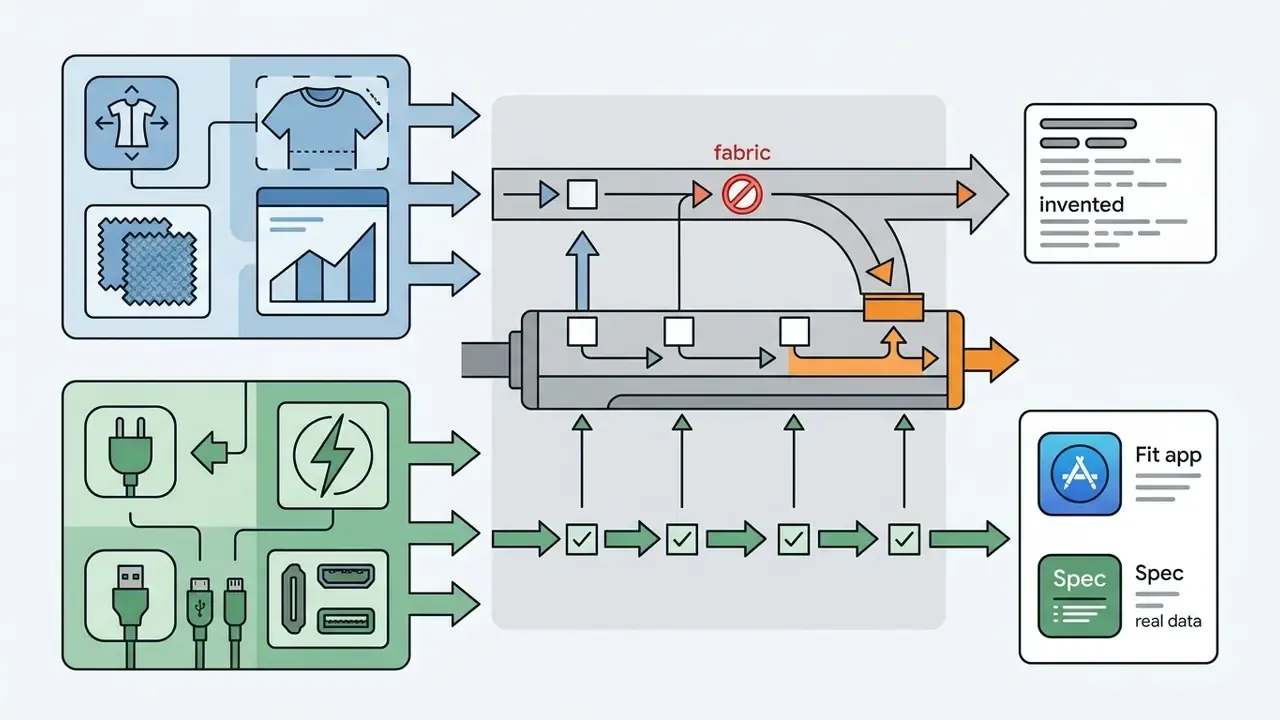
Before triggering an ai product detail page generator, raw product records need systematic cleansing and standardization. Feeding incomplete or inconsistent master data into an LLM produces propagated errors and confident factual hallucinations.
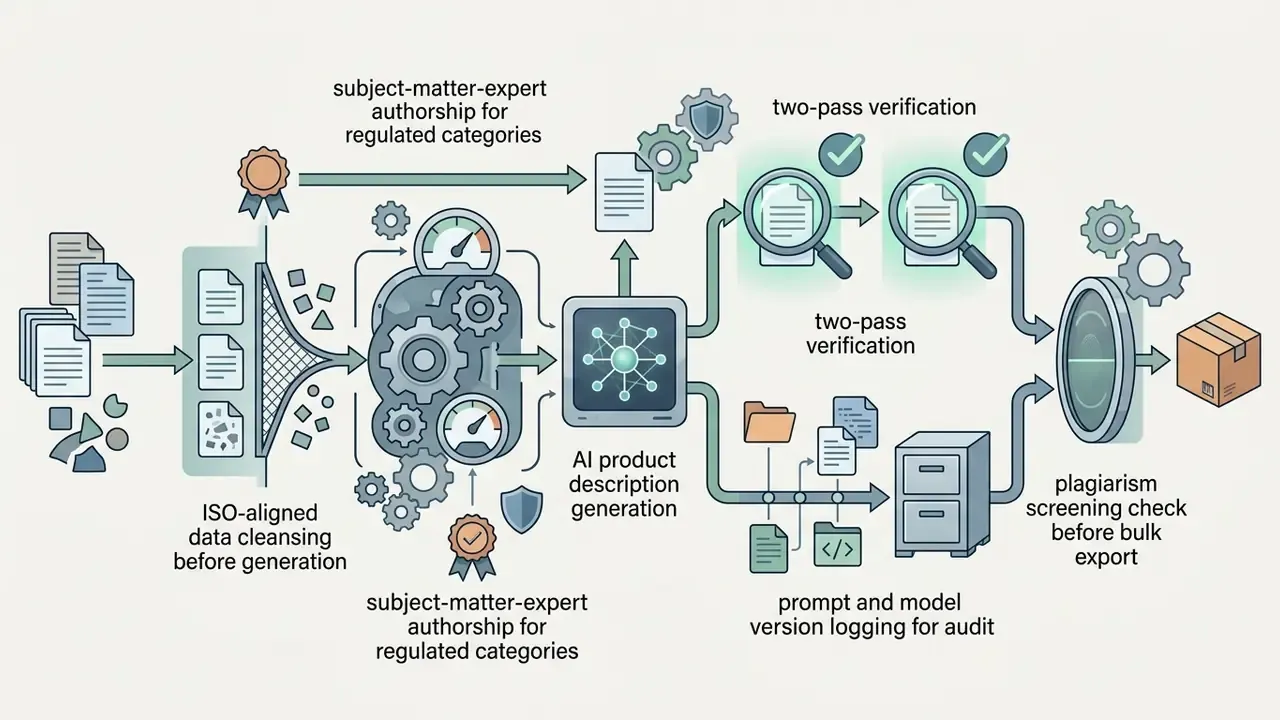
Following international data quality standards (ISO 8000-1:2022; ISO/TS 8000-82:2022; ISO 8000-150:2022; ISO/IEC 5259-1:2024), pre-generation data prep must enforce:
One more practical note. Garbage attribute data does not produce garbage prose. It produces fluent, plausible prose that is wrong, which is considerably harder to catch.
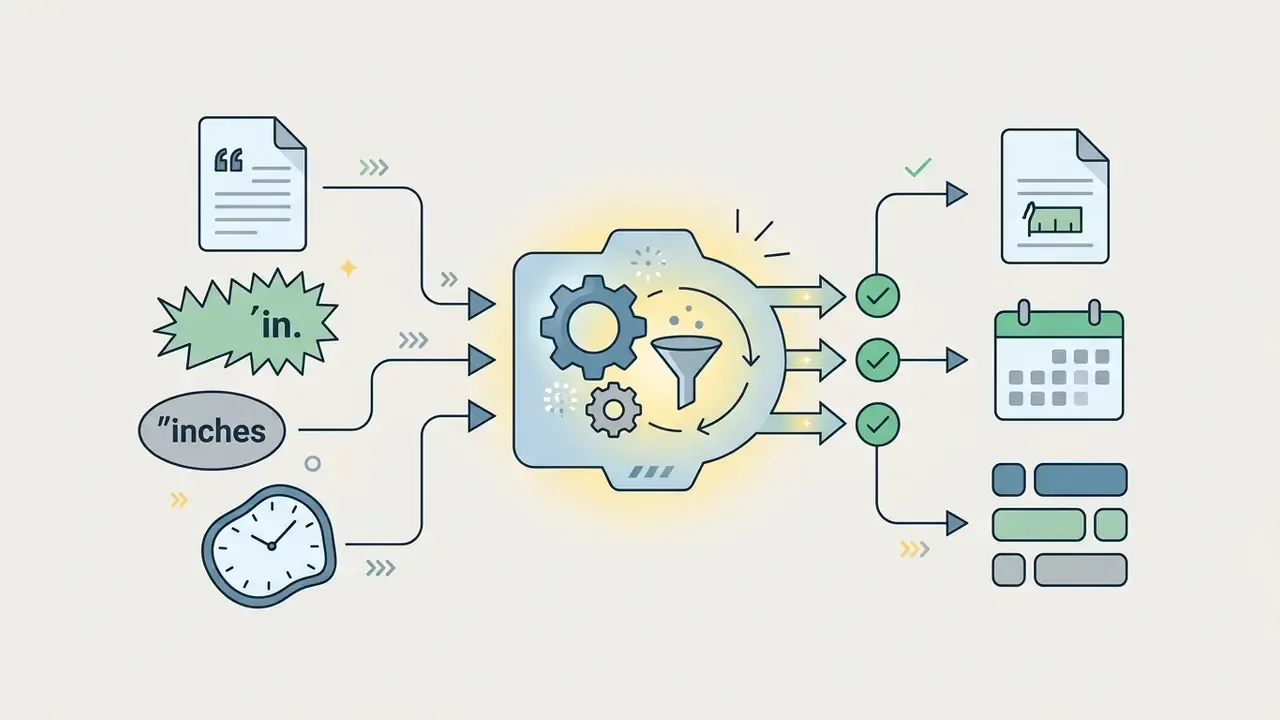

product name, material, category, primary feature) populated before anything reaches the API. Image assets should pass the same bar; low-resolution or inconsistent source photos undermine multimodal extraction, which is why catalog teams run product image enhancement before the vision pass.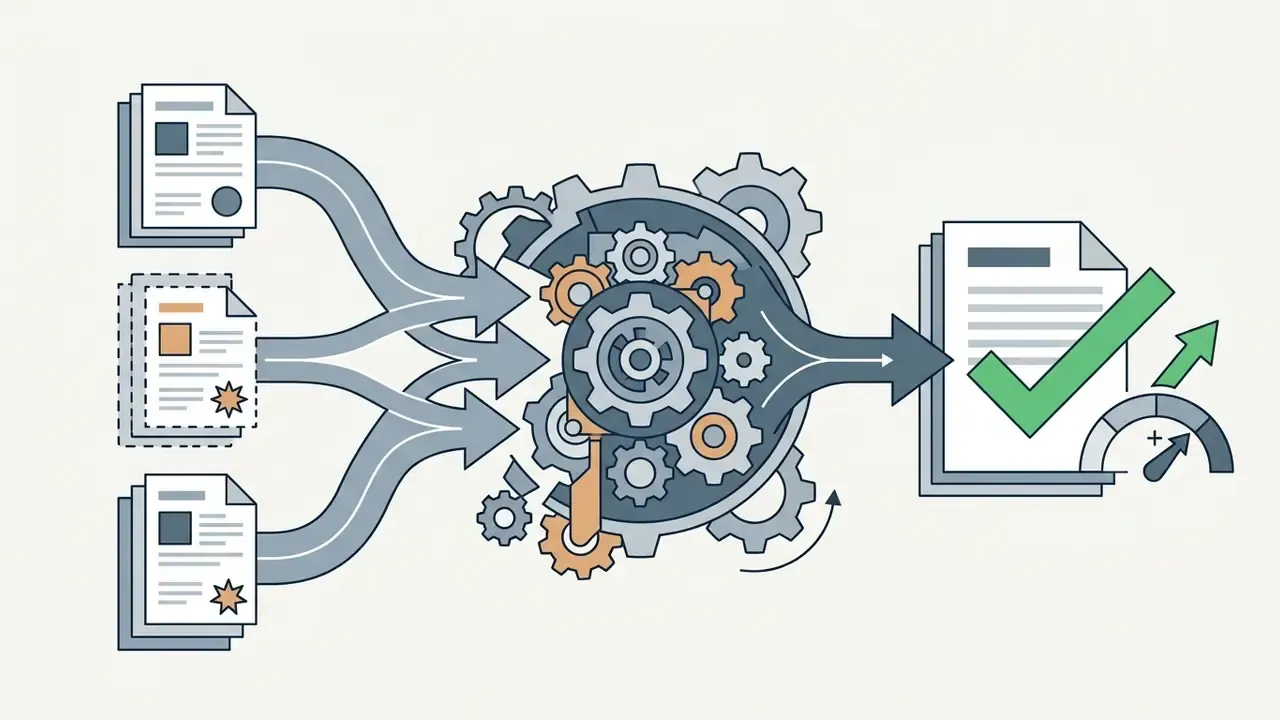
Editing AI Product Copy Before Publication
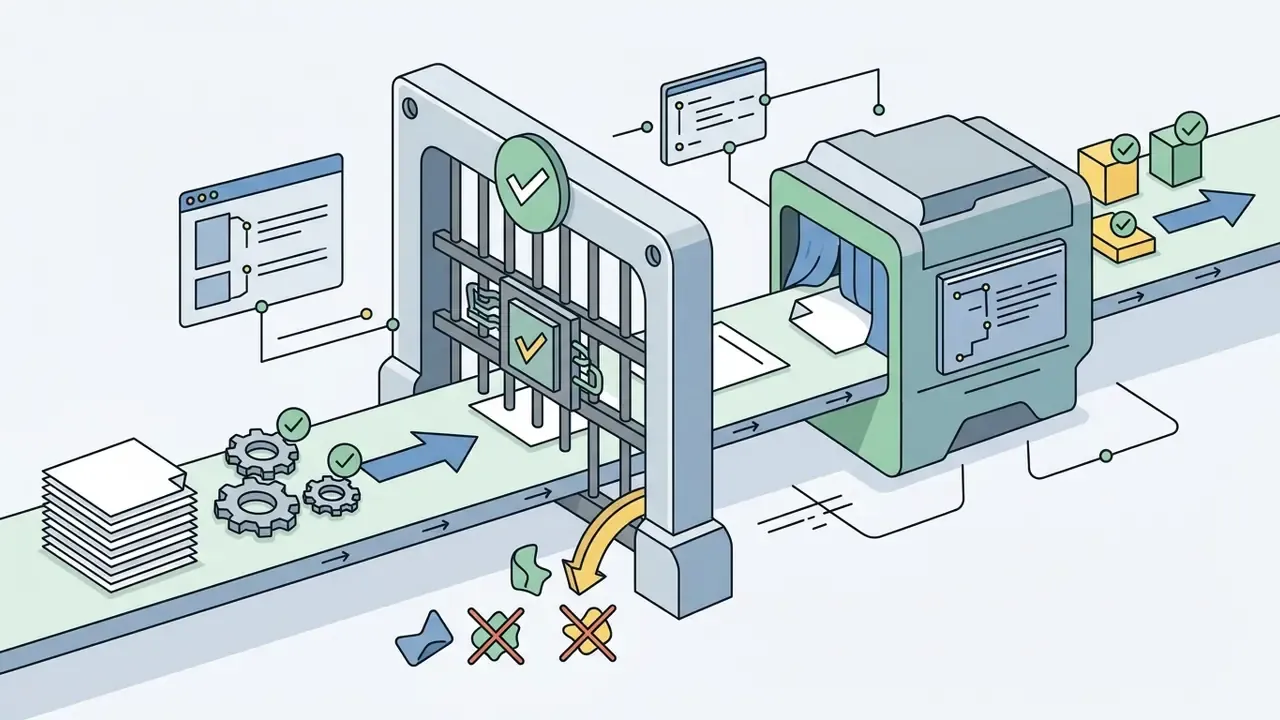
Human editorial verification, or human-in-the-loop (HITL), is a non-negotiable requirement for enterprise AI content. Generated copy must be reviewed for factual accuracy, regulatory compliance, and the removal of repetitive synthetic phrasing.
To keep review fast, editorial teams should apply a two-pass checklist:
| Verification Pass | Focus Areas | Action Items |
|---|---|---|
| Pass 1: Fact & Compliance Check | Factual accuracy, numbers, materials, legal disclosures | Cross-reference all dimensions, ingredients, and warranty claims against official spec sheets. Remove unverified claims. Re-check every claim again after any rewrite, translation or "humanizing" pass. |
| Pass 2: Style & Brand Voice Check | Tone consistency, scannability, SEO flow | Eliminate AI clichés ("game-changer", "testament to", "delve"), check keyword integration, and ensure natural sentence rhythm. |
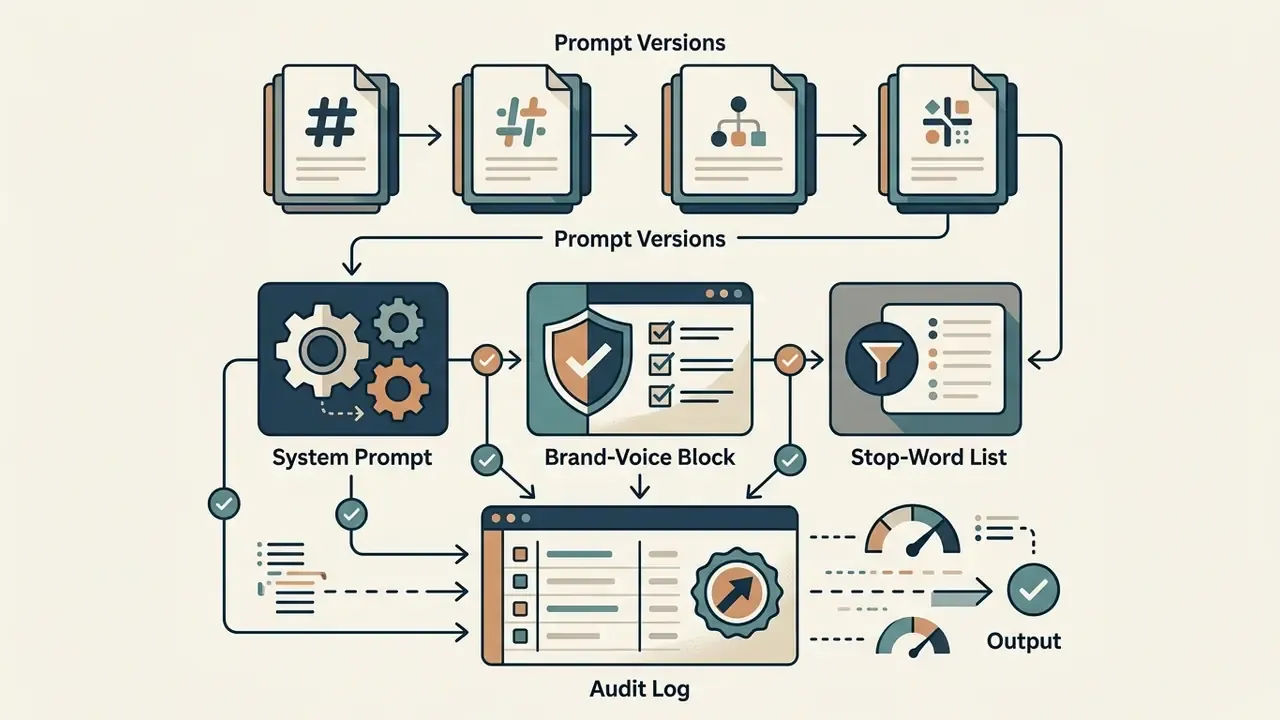
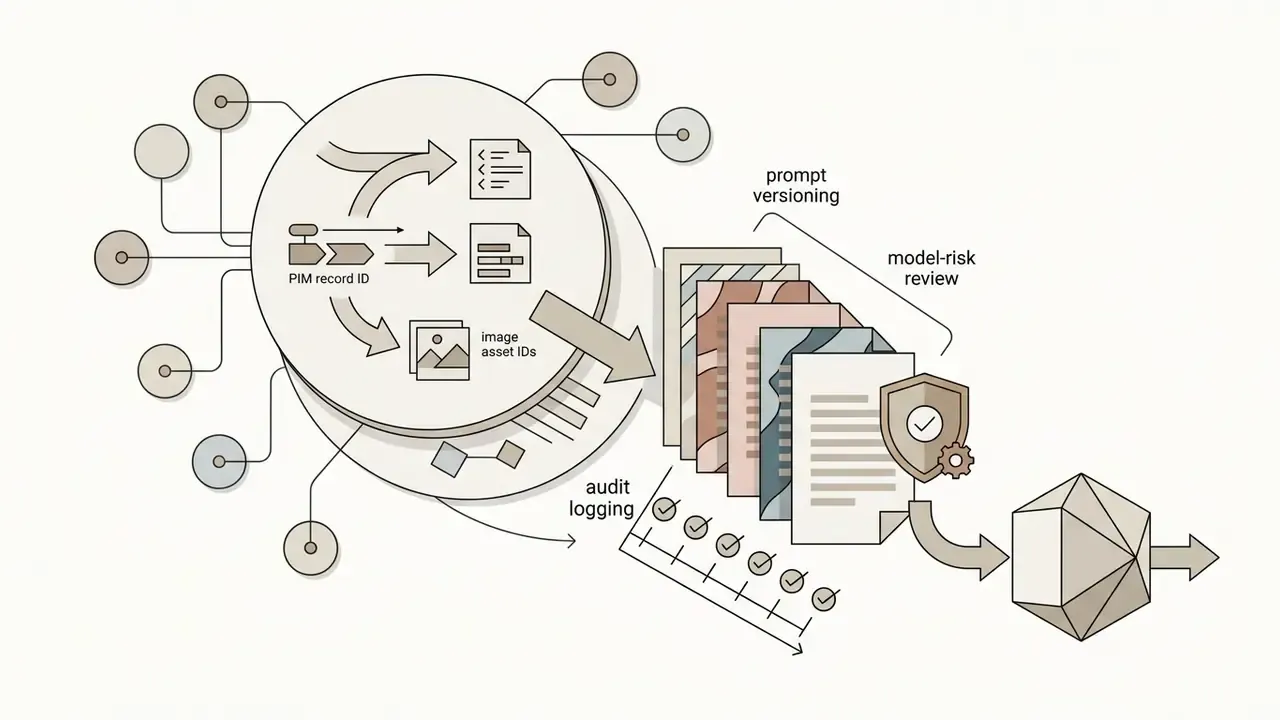
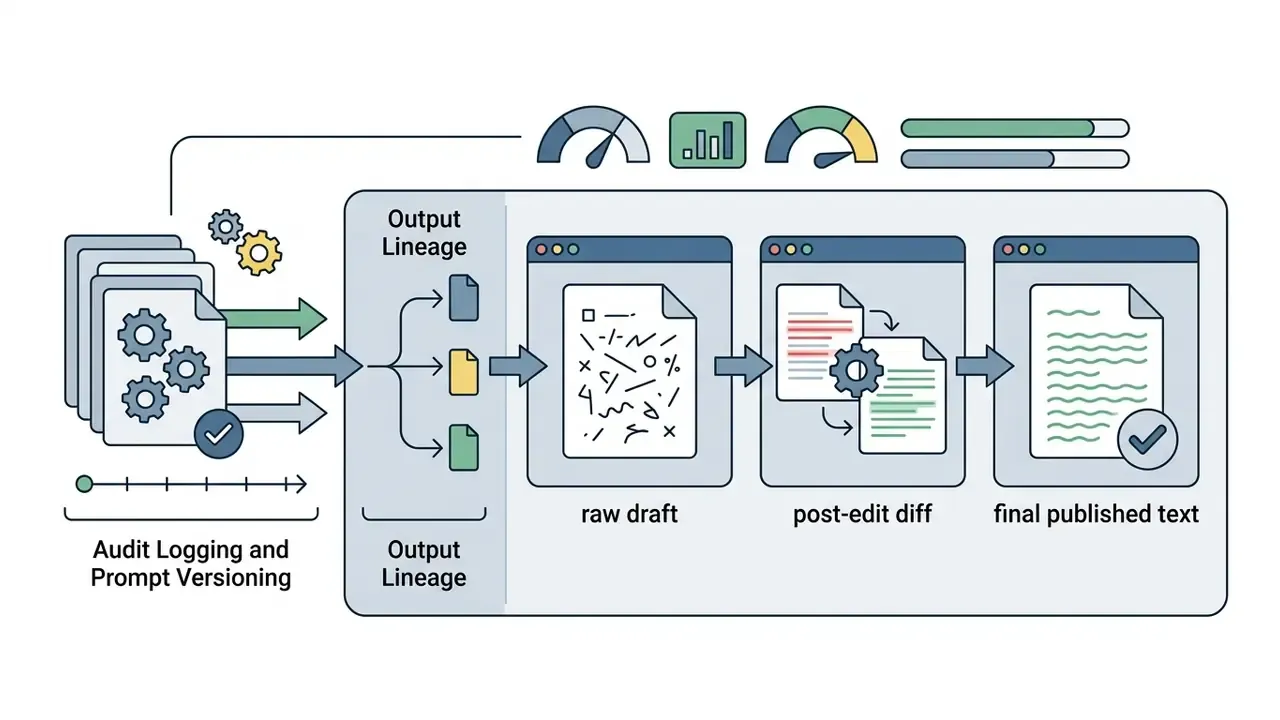
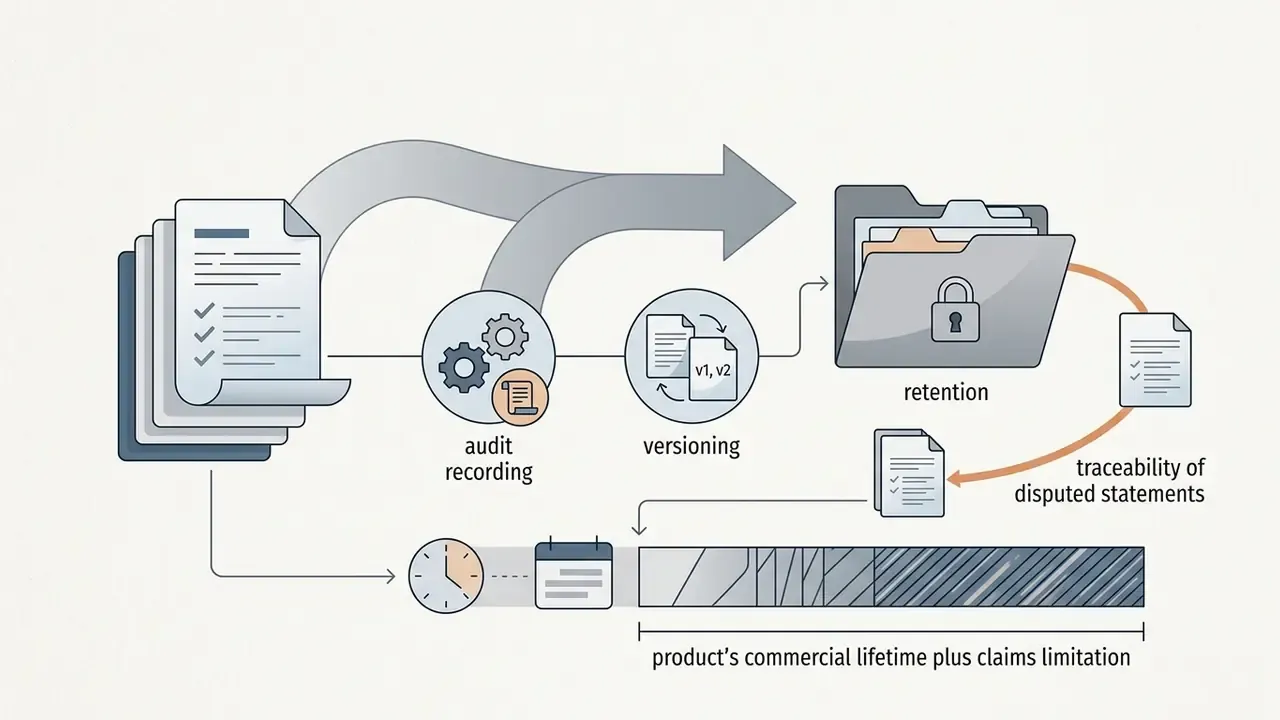
Audit logging and prompt versioning (required for model-risk review)
Reviewable content requires a reproducible record. For every published SKU, persist:
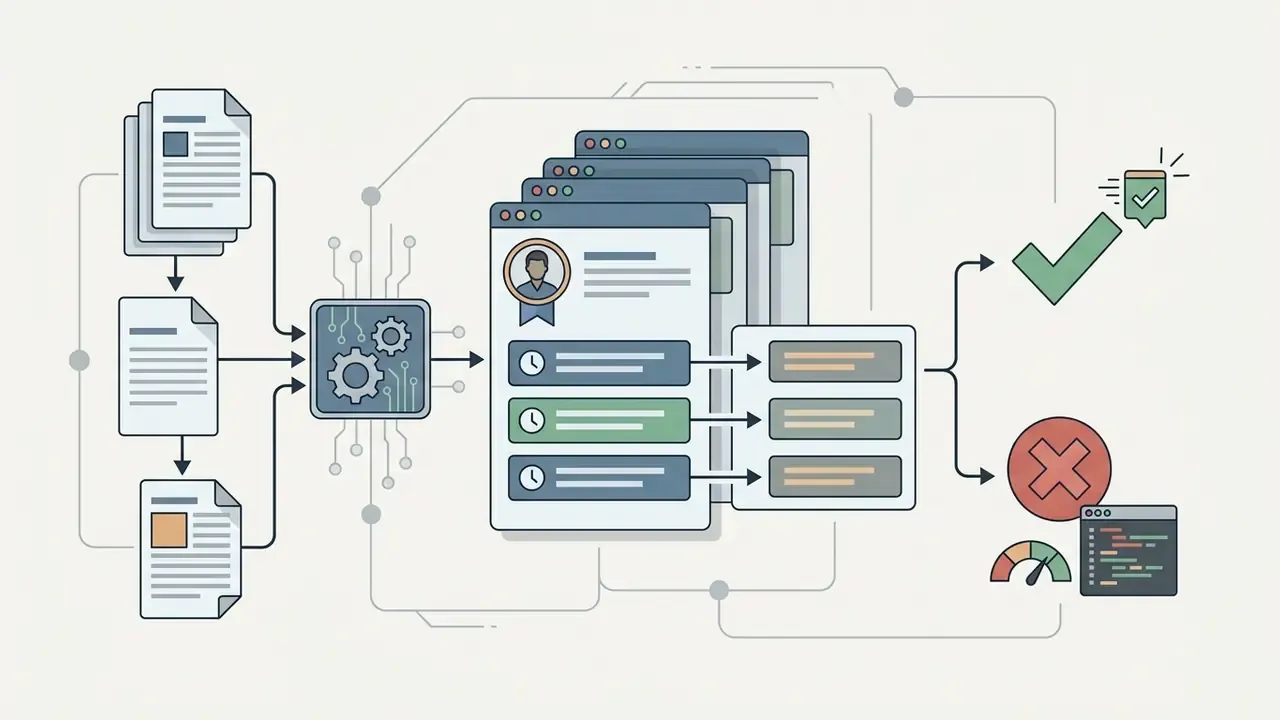
This log is what converts "we used AI" into a defensible control narrative during internal audit, a marketplace escalation, or a regulator inquiry. Retrieval-grounded generation, citation fields, and consistency checks across model versions are the standard system-level controls that sit alongside it.
How to Choose the Best AI Product Description Generator for Your Business
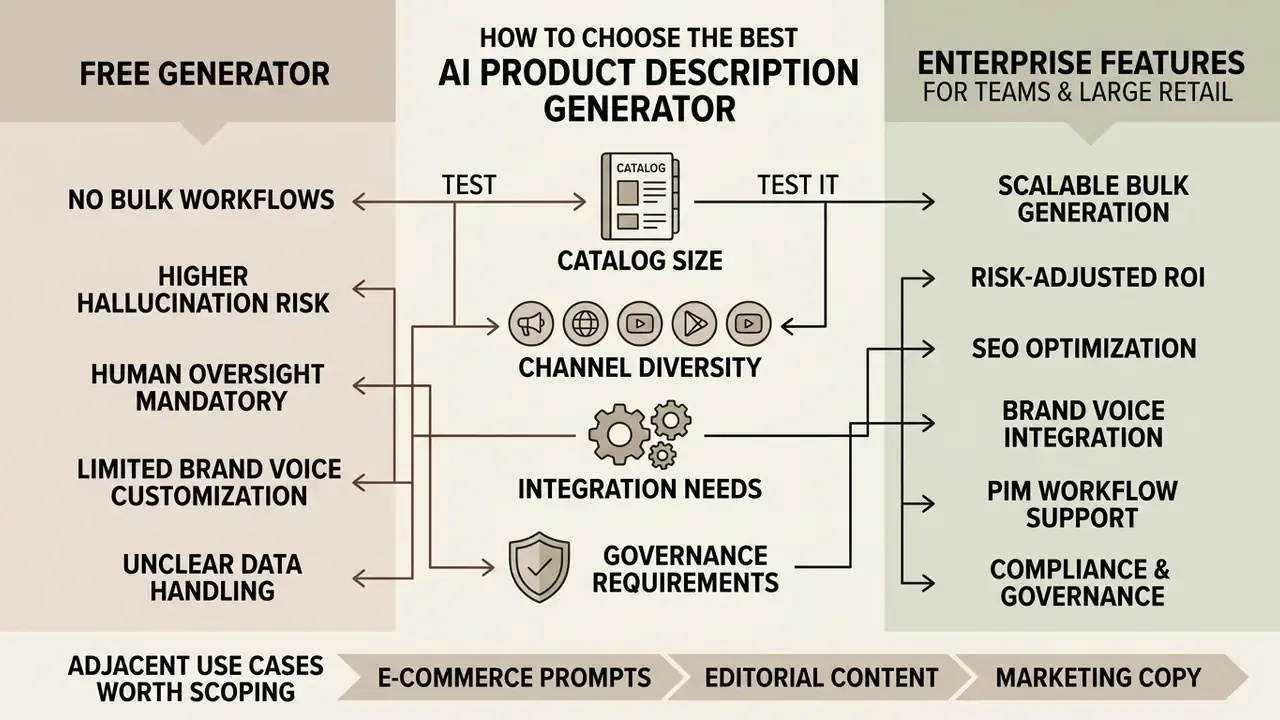
Selecting the best ai product description generator means testing software capability against catalog size, channel diversity, integration needs, and governance requirements. Organizations must decide whether a standalone SaaS writing tool, a PIM-embedded generator, or an enterprise API framework matches their operational maturity. Google Cloud's evaluation guidance reduces the decision to three questions: is the business goal measurable, does the user experience improve, and which workflow actually changes.
Search performance data belongs in the tool decision, not in a post-launch retrospective:
«Content classified as fully AI-generated ranks first in only 9–10% of cases, while human content ranks first in 80.5%.»
Put plainly: any tool that cannot be governed into a human-edited pipeline buys you volume at the cost of visibility.
When reviewing ai product description generator tools, compare them across the operational criteria below.
| Feature / Capability | Free / Entry-Level AI Tools | Standalone SaaS Writing Tools | Enterprise PIM / ERP Integrated AI |
|---|---|---|---|
| Primary Target Audience | Solopreneurs, small catalogs | Mid-market marketing teams | Enterprise retail, large multi-channel stores |
| Bulk Generation (CSV/API) | Limited or unavailable | CSV upload / standard API | Native API / automated PIM triggers |
| Image-to-Text Support | Basic vision processing | Variable by vendor | Multimodal enterprise pipelines |
| Brand Voice Control | Basic text prompts | Custom style guides and rules | Fine-tuned models and RAG context |
| Multilingual Support | Standard machine translation | 25 to 30+ localized languages | Full multi-region catalog localization |
| SEO & Schema Capabilities | None / manual entry | Keyword density prompts | Automated metadata and JSON-LD schema |
| Data Privacy & IP Rights | Inputs may train vendor models; output ownership often unclear | Contractual opt-out of training; output assigned to customer in most paid tiers | DPA, regional data residency, no-training guarantees, output assignment plus indemnity clauses |
| Governance & Audit Trail | None | Version history, basic roles | Prompt and model version logging, approval workflows, reviewer IDs |
| Cost Structure | Free tier / token limits | ~$29 to $99 per month | Custom enterprise licensing |
Reference points from vendor documentation. Shopify Magic generates descriptions from title, keywords and prompt details inside the store admin, and is included in paid Shopify plans. Oracle AI Assist produces formatted descriptions from existing Product Information Management attributes. Google's Description Genius uses Vertex AI models, accepts extra sources such as reviews and usage instructions, and includes custom quality-criteria scoring, while being explicitly labelled as not an officially supported Google product. Copy.ai documents 25+ languages with plans from about $29 per month; third-party 2026 coverage reports Jasper at 30+ languages from roughly $59 per seat per month.
Adjacent use cases worth scoping in the same purchase. The same engine usually doubles as an ai store description generator for category and "about" pages, an ai service description generator for service catalogs, and an ai project description generator for portfolio or case-study pages. Governance stays identical, only the source record changes. Many vendors also bundle unrelated writers, a cover letter generator or a blog outline tool, in the same subscription. Ignore those in scoring unless they share the brand-voice engine and the audit log. What separates the best ai description generator from a novelty is boring: attribute grounding, version history, and an export that your PIM accepts.
One perception caveat belongs in the same decision memo as the feature list:
«Products described with an AI mention are consistently less popular: AI branding lowers emotional trust, which reduces purchase intention.»
Use AI to produce the copy. Do not make "AI-written" a selling point inside the copy.
Decision-makers evaluating visual media generation alongside text automation can review our AI Media Comparison Matrices for cross-category benchmarks, or go straight to the ranked overview of the best AI image generators when imagery and copy are procured together.
Free AI Product Description Generator: Capabilities and Limits
A free ai product description generator, or a free product description generator powered by ai, is a reasonable entry point for small businesses testing automated copywriting. Tools such as Shopify Magic draft basic descriptions directly inside the store admin at no extra cost (Shopify Help Center, product description documentation). For a 40-SKU store, an ai powered free tool may be all you need this quarter.
The limits show up quickly, though:
That last point, not quality, is usually what ends the free-tier experiment in a regulated or competitive category.
- No bulk workflows
- manual, line-by-line generation stops being feasible past roughly 50 SKUs.
- Higher hallucination risk
- generic baseline models lack deep custom context, which raises the chance of fabricated product details. Peer-reviewed work on LLM-enriched product listings defines hallucination as output unfaithful to the source input, and documents it as a direct factual risk to product attributes.
- Human oversight remains mandatory
«Base models without custom context more often generate inaccurate specifications; human oversight remains mandatory for 87% of SEO teams.» Semrush, Does AI Content Rank Well in Search? Survey + Data Study (2025). https://www.semrush.com/blog/ai-content-seo/
- Limited brand voice customization
- no way to enforce strict corporate tone rules or complex stop-word lists.
- Unclear data handling
- free tiers frequently reserve the right to use submitted inputs for model improvement, which is unacceptable for unreleased SKUs, pricing, or supplier data.
Enterprise Features for Teams and Large Retail
Enterprise-grade content platforms are built for scale, with deep system integrations, collaboration controls, and documented security protocols.
Key capabilities include:
- Native PIM and CMS integrations plug-and-play API connections to platforms such as Amplience, Oracle PIM, and Shopify Enterprise, allowing event-triggered generation through webhooks from connected systems (Amplience Workforce Studio; Oracle AI Assist documentation).
- Role-based access and governance version history, multi-stage approval workflows, team folders, role permissions, and comment threads for editorial review.
- Custom model grounding fine-tuning LLMs on brand guidelines, historical top-performing sales copy, and proprietary product knowledge bases. Jasper documents brand-voice grounding plus API access for custom CMS platforms.
- Retail management reporting batch completion rates, rejection reason codes by category, and per-reviewer throughput, which is how you find the prompt that keeps failing Pass 1.
- Contractual protections data processing agreements, no-training commitments, regional data residency, and output-ownership plus indemnity language. These clauses, not feature counts, make enterprise licensing materially different from a free tier.
Scaling Descriptions Across Ecommerce Channels
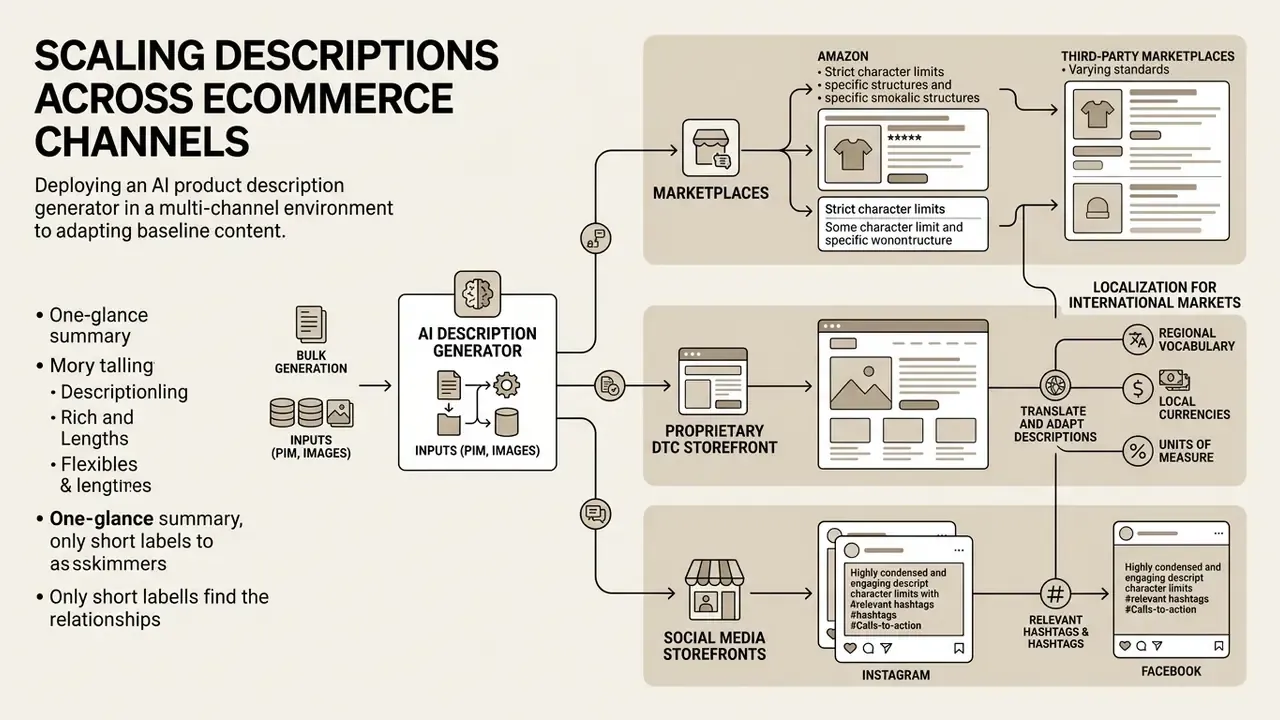
Deploying an ai product description generator e commerce strategy in a multi-channel environment means adapting baseline content to different character limits, structural requirements, and platform policies. A description written for a brand site will fail marketplace review if it is copied verbatim.
To maintain consistency across diverse sales channels, businesses distribute tailored variations of one core product master record from a centralized PIM. That protects brand integrity across direct-to-consumer sites, third-party marketplaces, and cross-border channels. Because each channel also demands its own aspect ratios and background treatments, teams commonly pair copy variants with image-to-image generation, so visual assets scale at the same cadence as text. Teams optimizing asset management inside broader creative production can review established workflows for cross-channel blueprints.
Bulk Generation for Large Catalogs and New Product Lines
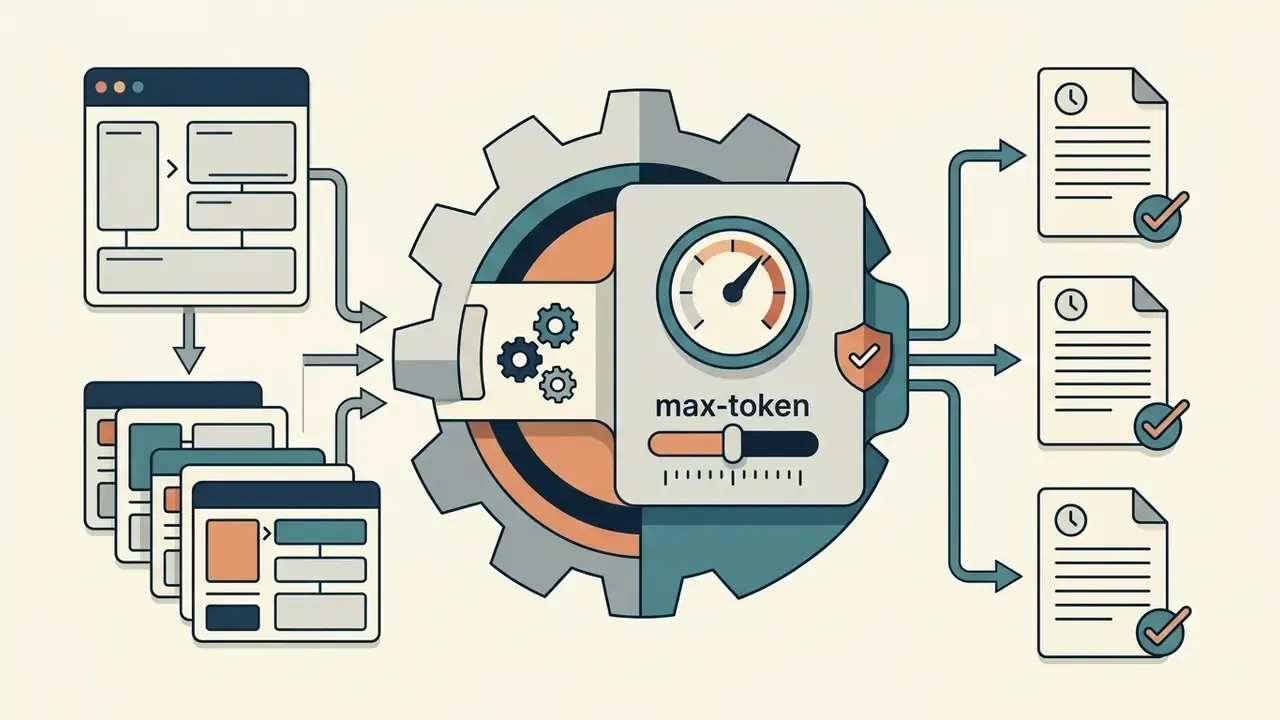
Managing large product catalogs requires bulk generation through batch REST APIs, CSV imports, or native PIM integrations. Instead of generating descriptions quickly one at a time, operators process thousands of SKUs against standardized prompt templates.
Enterprise bulk platforms use rate-limit management and queued job processing to push large catalogs without timeouts. Documented bulk-data patterns are instructive: batch APIs commonly cap payloads (for example, 1,000 identifiers per request with CSV output) and apply download quotas per key. That is why production pipelines chunk catalogs, retry on backoff, and validate schemas on upload rather than firing one giant job.
When launching new product lines, teams tune and approve a single benchmark description first, then apply that exact prompt architecture across the remaining batch. Mature pipelines also run several models in parallel on the same record, cross-check conflicting fields, resolve duplicates across languages, and only then export to PIM or shop APIs. A small habit that saves a weekend: run the first 100 SKUs, review them properly, and only then release the other 9,900.
Localizing Descriptions for International Markets
Expanding into international markets calls for localized adaptation rather than literal machine translation. Localization research defines the task as adapting content, SEO metadata, graphics, layouts, currencies, dates, addresses and compliance text for a specific country. Not swapping words. Controlled retail evidence shows how far the economics move when this is automated correctly:
«Generative AI produced descriptions in three languages in 2 hours 20 minutes, cutting cost from CHF 147,630 to $0.46, while conversion reached 23.7%.»
An automated localization pipeline, even one that can auto-translate to any language on demand, must still adapt:
- Units and currenciesconverting imperial to metric, updating currency references, size charts and payment method mentions.
- Regional vocabularyadjusting terms by dialect ("sweater" in the US versus "jumper" in the UK), plus phrasing that generic translation flattens.
- Regulatory disclosurescountry-specific safety warnings, tax disclosures, and consumer protection mandates.
- Review tieringlocalization practice separates homepage, top sellers, long-tail pages, checkout and legal text into different review depths. Full human transcreation for hero and legal content, machine-first with spot checks for the long tail.
How to Make AI Product Descriptions Useful for SEO and Conversion
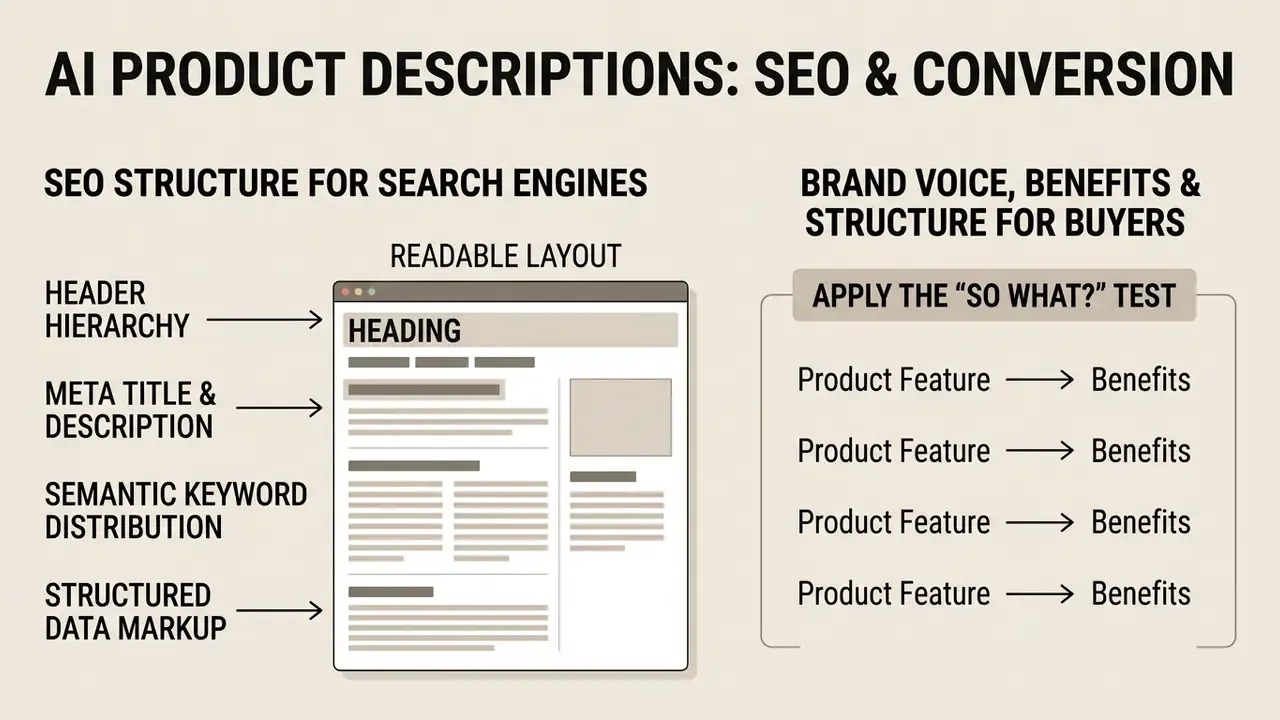
To rank in search engines and convert buyers, AI-generated descriptions must balance algorithmic optimization with readability. Foundational SEO for product pages still means unique, valuable content plus clean technical structure, the same baseline that applies to human-written commerce copy.
The measurable differentiator is the human editing ratio:
«Pages where AI content stays below 50% hold 82.2% of top-3 positions and receive 2–3× more organic impressions than predominantly AI pages.»
Combined with Semrush's 2025 finding that fully AI-classified content reaches position one in only 9 to 10% of cases, the operational rule is simple. Generate the draft, then invest human editing until original, product-specific substance dominates the page.
Stuffing keywords into synthetic text produces ranking suppression and reader distrust, in that order. Structure descriptions so that relevant keywords sit naturally inside an authoritative, benefit-focused narrative that speaks to purchase intent.
SEO Structure of a Product Description for Search Engines
An optimized descriptions architecture aligns semantic keyword placement with clean markup, to maximize search visibility and snippet eligibility:
- Header hierarchy one H1 for the product title, H2 for major sections (Features, Specifications, Usage Scenarios, Reviews, FAQ), and H3 for nested sub-details, without skipping levels.
- Meta title and meta description distinct snippet tags containing the primary keyword, product model, and a clear call to action within character limits (50 to 60 characters for titles, 150 to 160 for descriptions). Google documents the meta description as the snippet source and recommends a quality description tag per page.
- Semantic keyword distribution one primary keyword and 2 to 3 semantic variants per page. Place the primary keyword in the H1, the first 50 words, and one subheadline; distribute secondary LSI terms across feature bullets and body text.
- Structured data markup implement Schema.org
ProductJSON-LD, making surename,description,sku,brand, andoffersmatch the visible page content exactly. - Readable layout concise blocks, specification tables and comparison lists, rather than mechanical repetition of the same term.
Brand Voice, Benefits and a Clear Structure for the Buyer
Converting potential customers means moving past dry technical lists toward persuasive, benefit-driven copy that still sounds like your brand.
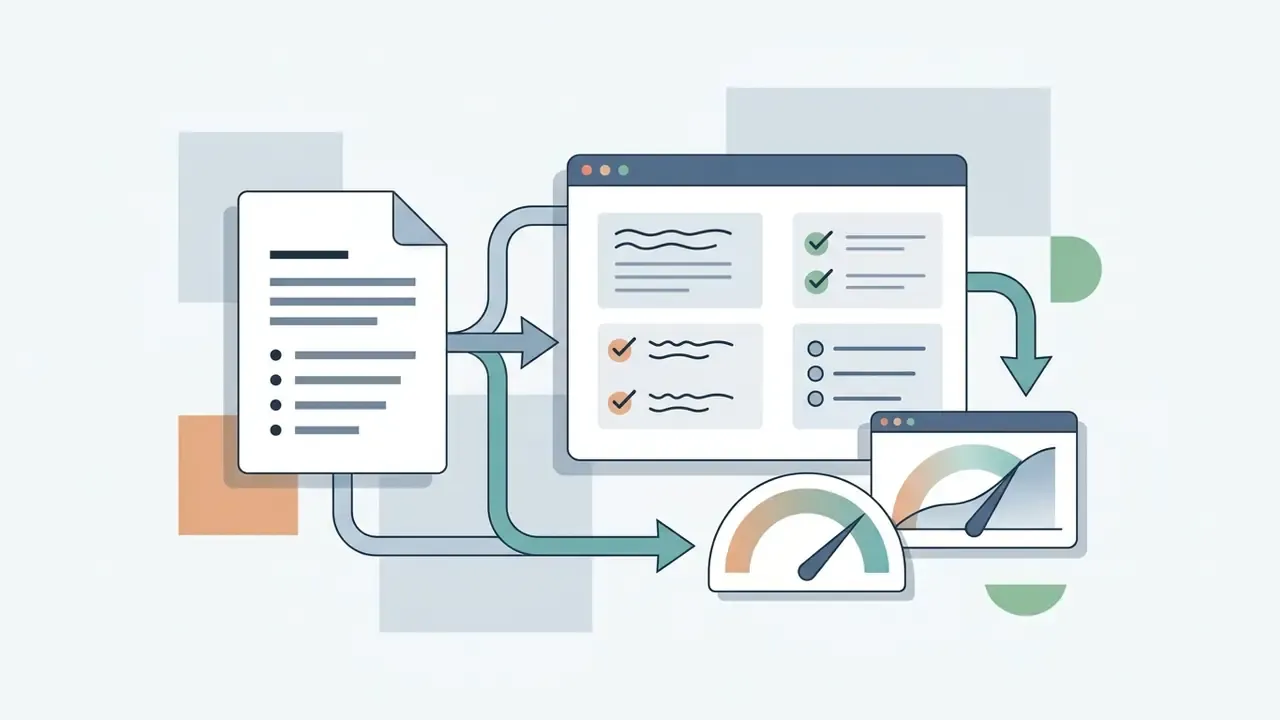
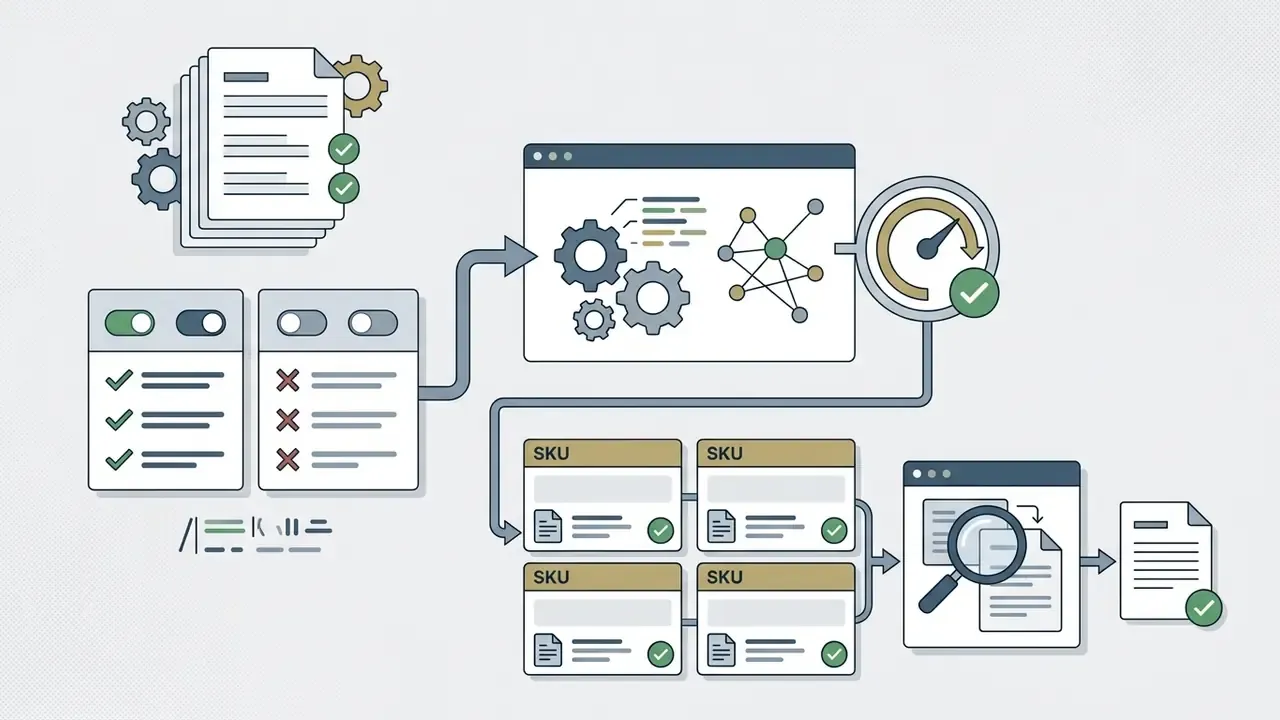
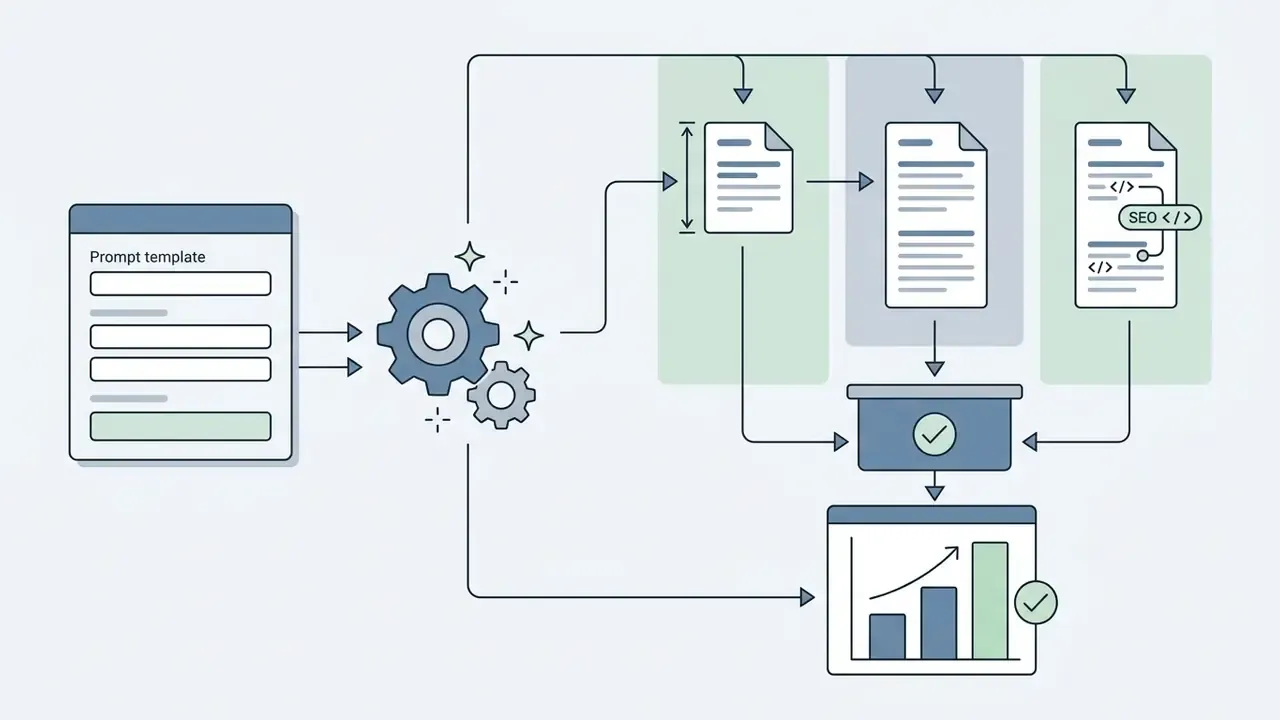
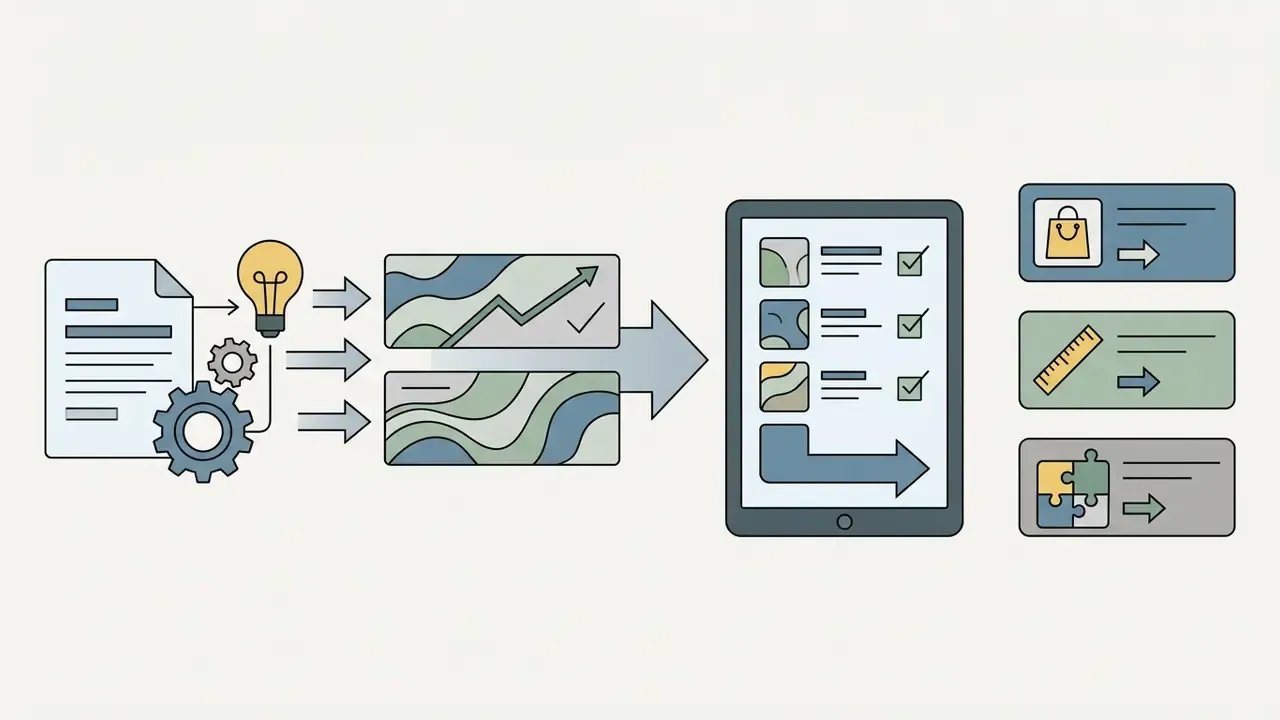
High-converting vocabulary framework for AI prompts
Inject target emotional drivers into the Brand Voice Block using specific word categories, and pair each power word with a verifiable fact so persuasion never drifts into unsupported claims. Best practices, condensed:
- Sensory words (visual, tactile, auditory) silky, whisper-quiet, featherlight, matte-finish, brushed, cushioned, crisp.
- Trust and durability words lab-tested, precision-engineered, reinforced, seamless, backed by a 2-year warranty, drop-tested to 1.2 m.
- Efficiency and value words instant-setup, maintenance-free, intuitive, effortless, high-yield, single-charge, tool-free.
- Fit and reassurance words true-to-size, adjustable, compatible with, machine-washable, returns within 30 days.
- Banned by default revolutionary, game-changer, best-in-class, miracle, 100% safe, guaranteed results, cures. These belong in the stop-word block of every prompt, because they attract compliance scrutiny and dilute trust at the same time.
A/B Testing Product Copy Variants to Improve Conversion Rates
High converting product copy comes from continuous empirical optimization, not from a single lucky draft. Teams should perform split tests on structurally distinct hypotheses rather than minor synonym swaps. Field-experiment evidence sets realistic expectations for the effect size you are hunting:
A structured testing protocol looks like this:
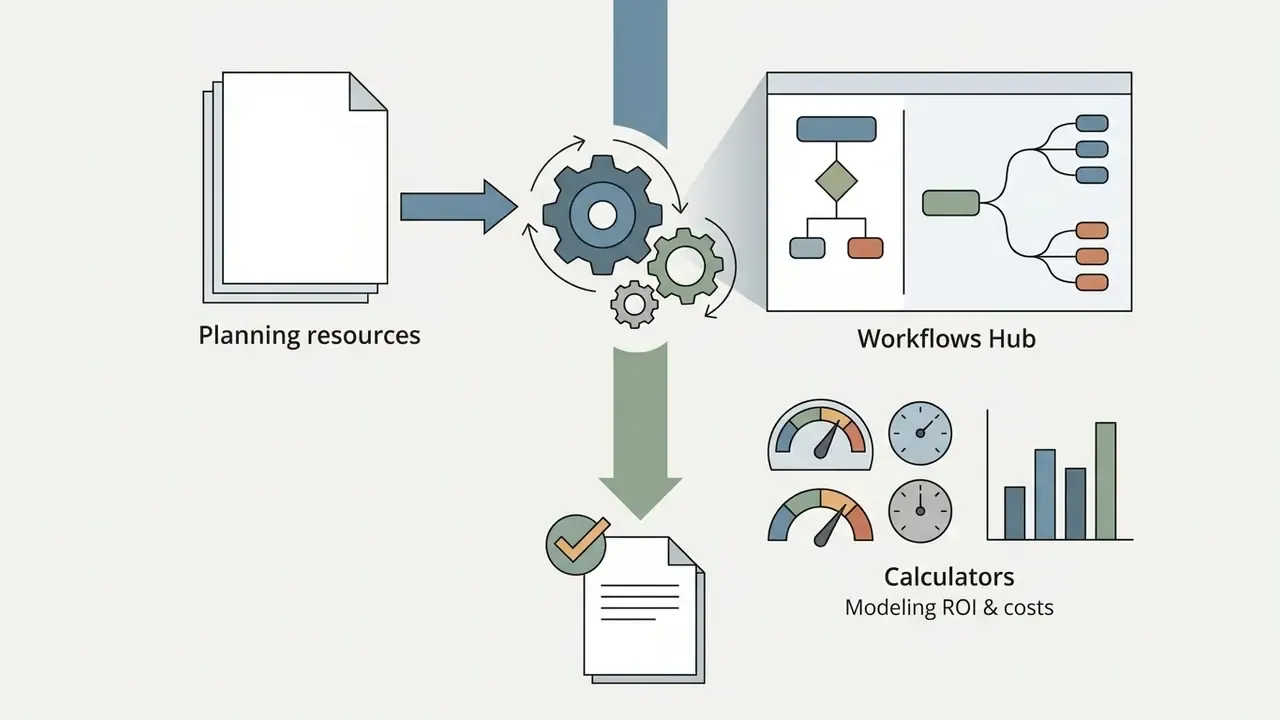
Teams modelling the financial side of these tests can run scenarios through our calculators before committing to a catalog-wide rollout.
FAQ: Frequently Asked Questions About AI Product Description Generators
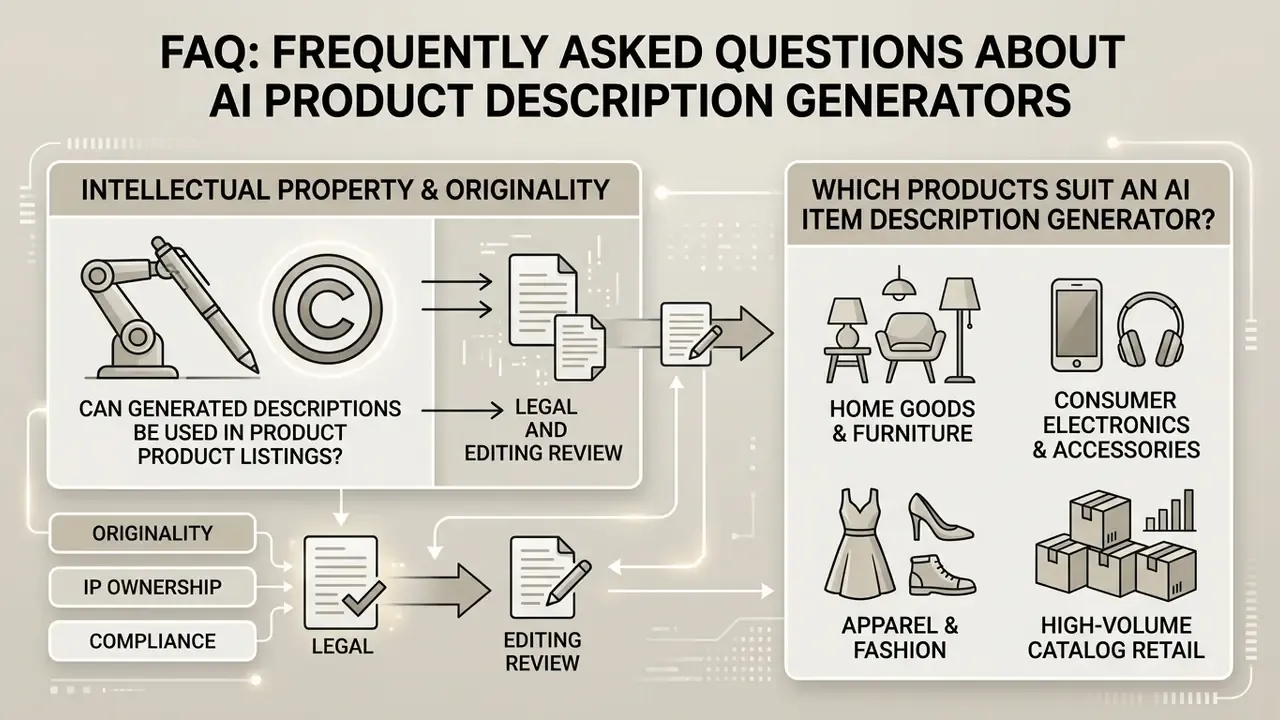
Short answers to the operational, legal, and technical questions that come up when AI content moves into production.
Can Generated Descriptions Be Used in Product Listings?
Yes. AI-generated descriptions are permitted across major e-commerce platforms and search engines, provided they are accurate, non-deceptive, and compliant with platform content policies.
Search engines evaluate content on quality, value, and user relevance rather than method of creation. Practitioner data confirms how the industry works inside that allowance:
«72% of SEO specialists believe AI content ranks no worse than human content, yet 87% keep humans directly involved in creation and editing.»
Platform-level obligations still apply, and they change often. Merchant feed programs increasingly require that AI-origin metadata in product imagery be preserved, and that AI-generated assets be labelled through the platform's own content-label settings. Major marketplaces have introduced tagging requirements for photorealistic AI-generated people in listings and enhanced-content modules, with consumer-facing indicators shown where applicable. Confirm the current wording in the relevant seller or merchant help centre before a bulk publish, and treat all generated copy as subject to human fact-checking prior to publication. Advertising law applies the same truthfulness standard regardless of who, or what, wrote the text.
Intellectual property and originality. Three questions should be settled contractually before scale-up:
Which Products Suit an AI Item Description Generator?
An ai item description generator performs well across a wide range of standard consumer categories with repeatable, structured attributes:
- Home goods and furniture dimensions, materials, assembly instructions, and interior styling compatibility.
- Consumer electronics and accessories technical specifications, compatibility matrices, and operational benefits.
- Apparel and fashion style notes, fit descriptions, and care guidelines, often supported by multimodal vision models.
- High-volume catalog retail uniform descriptions for tools, hardware, replacement parts, and drop-shipped inventory.
Highly regulated categories are a different story. Medical devices, prescription health products, complex financial instruments, children's products and safety equipment need primary content written by subject-matter experts, with AI restricted to basic formatting assistance. Low-confidence, high-impact or compliance-sensitive outputs should route to human review by policy, not by exception. Consumer perception reinforces the restriction:
«Mentioning "artificial intelligence" in descriptions of medical devices and financial services reduces emotional trust and purchase intent more sharply than in other categories.»
Appendix A: Editorial Revision Log
This log preserves superseded claims and documents why each was updated, in line with our own audit-trail recommendation.
| Original statement (superseded) | Issue identified | Updated in this version |
|---|---|---|
| "…yields a 6.0% to 6.5% increase in sales and up to a 23.7% lift in conversion rates (de Almeida & Zumstein, 2025; Field Experiments on Retail Platforms, 2023–2024)" | Two independent studies merged into one sentence; no URLs or methodology | Split into two separately sourced statements with links (field experiments for sales on thin descriptions; Springer study for multilingual conversion) |
| "JETIR Case Study, 2025" (effort reduction, consistency) | Source cited without URL or figures | Replaced with quoted metrics and journal URL in Sections 1 and 8 |
| "Assessing Cultural Nuance in Multilingual LLM Translations, 2025" (localization) | Source not present in the verified research set | Replaced with de Almeida & Zumstein (2025) plus localization-practice evidence |
| "NIST AI RMF 1.0, 2023" (free-tool hallucination risk) | Source not present in the verified research set for this claim | Replaced with Semrush (2025) plus a peer-reviewed hallucination study on product listings |
| "Google Search Central, 2024" and "Google Search Central, 2026" (SEO priority, isolated variable testing) | Citations unverifiable as supplied; one dated in the future | Replaced with Ahrefs (2024), Semrush (2025) and the Journal of Systems and Software review (2024) |
| "Journal of Systems and Software, 2024" used for copy-hypothesis claim | Source supports experimentation methodology, not the conversion claim | Conversion claim re-sourced to field experiments; methodology claim retained with correct attribution |
| "Google Merchant Center Log, 2026; Amazon Seller Policy, 2026; FTC Deception Policy Guidance, 2024; FDA AI-Enabled Product Guidance, 2024" | Unverified identifiers and forward-dated references | Reframed as platform and advertising-law requirements to verify in the current help centre, plus Washington State University (2024) for category-specific perception risk |
| "Amazon…capping product titles at 75 characters (Amazon Seller Central Policy, 2026)" | Category-dependent limit stated as universal | Restated as up to 200 characters in many categories, 75 characters cited for non-media and recommended for mobile legibility, with an instruction to verify per category |
| "LREC E-Commerce Study, 2024" (3.3% Rouge-L, 9.4% diversity) | Reference retained but flagged | Kept with methodology description and an explicit note that the deltas are single-source and directional |
| "WACV Vision-Language Study, 2025" (89.8–93.9% accuracy) | Identifier not independently re-verified | Kept with model-level detail and a single-source caveat |
| Tutorial links on image resizing, transparency and consumer video effects | Off-topic for a B2B catalog-automation audience | Replaced with topically relevant resources listed below |
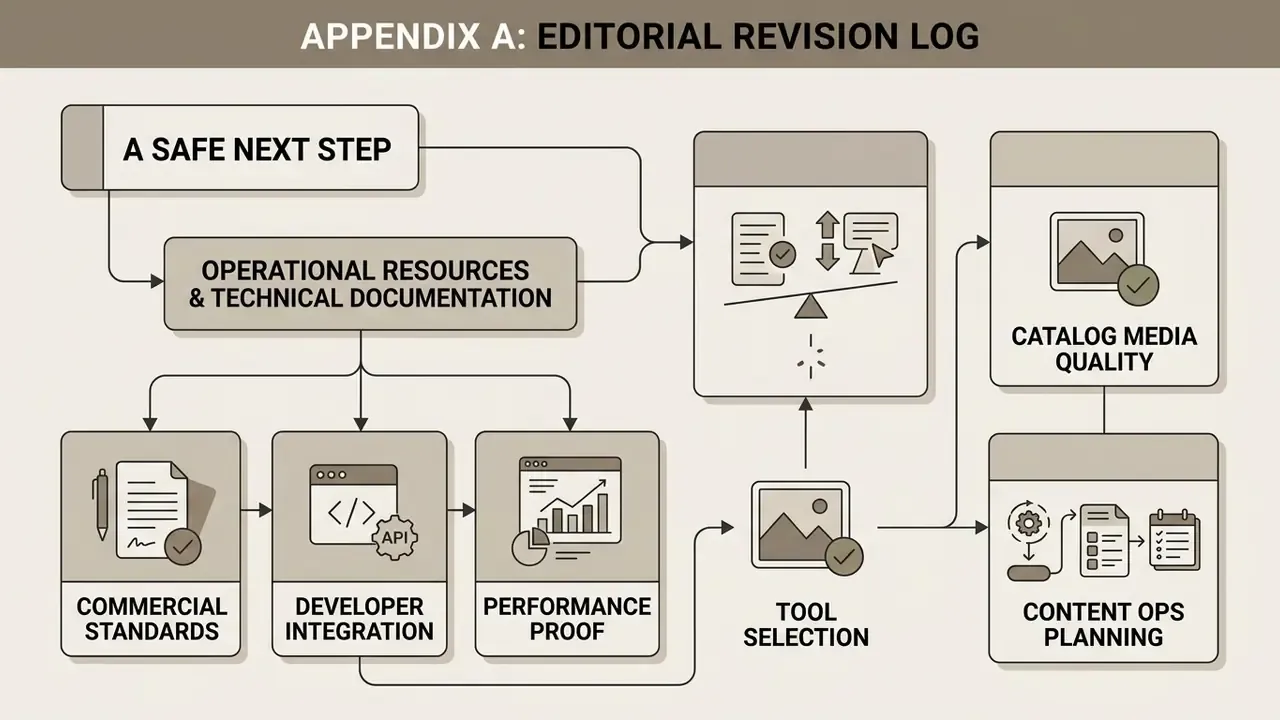
A Safe Next Step
If you are starting this quarter, do not begin with a tool trial. Begin with a 200-SKU slice of your thinnest descriptions, a documented prompt, and one named reviewer. Measure effort per SKU, Pass 1 rejection rate, and conversion on that slice only. If the numbers hold, scale the pipeline. If they do not, you have lost two weeks instead of a catalog.
Operational Resources & Technical Documentation
Organizations building scalable content and media automation pipelines can review our developer resources and technical guides: