Executive Summary for CFOs, CROs, and Procurement Leads
- Licensing is the minority of spend.Direct software licensing typically accounts for less than 40% of total AI operational cost once GPU orchestration, storage, integration, and compliance controls are included. Budget the other 60% explicitly, or the program will overrun. Quietly, and then loudly.
- Hybrid billing is now the market default.Roughly 85% of generative software vendors bill on usage-based or hybrid models; subscription remains the single most common headline model at about 42% of vendors. Fixed retainers alone no longer describe real cost behaviour.
- Video is the cost outlier.Text inference has collapsed in price (roughly 1,000x cheaper for equivalent quality over three years), while video generation still runs $0.05 to $0.25 per generated second. One minute of premium synthetic video can cost more than 10 million text tokens.
- Compliance is a line item, not an assumption.SSO/SAML, RBAC, SOC 2 Type II, zero-data-retention, audit logging, and model-risk documentation typically add 20% to 50% over standard seat pricing. In regulated financial institutions they also trigger internal model validation cost under SR 11-7-style governance.
- Choose the model before you build the budget.Select the procurement archetype (point solution, SaaS platform, agency retainer, custom build), then apply the fixed, variable, and contingency formulas in this guide, then validate with a 30 to 90 day proof of concept before any multi-year commitment.
How to Use This Guide: A Reading Path by Role
Different owners need different pages. Rather than reading front to back, use the mapping below and then reconcile numbers in one shared model.
| Role | Sections that matter most | Decision you own |
|---|---|---|
| CFO / Finance Transformation | Cost drivers, budget formulas, contingency reserve | Approve the multi-year lifecycle estimate, not a single-year licence line |
| CRO / Head of Model Risk | Compliance overhead, tariff clause audits, agentic controls | Confirm each material use case has an owner, validation plan, and kill switch |
| Procurement / Vendor Management | Pricing models, clause audits, vendor risk checklist | Negotiate rate-card locks, overage bands, and exit terms |
| Head of Content or Media Ops | Tool categories, benchmark matrix, workflow features | Define the constant benchmark workload used for every vendor test |
| Internal Audit | Auditability scores, logging requirements, technical documentation | Verify reproducible evidence before production sign-off |
One practical habit: freeze a single benchmark workload (for example, 100 short videos plus 500 documents per month) and price every vendor against it. Headline rate cards mislead. Cost per finished deliverable does not.
What AI Media Pricing Guides Include and Who Needs Them
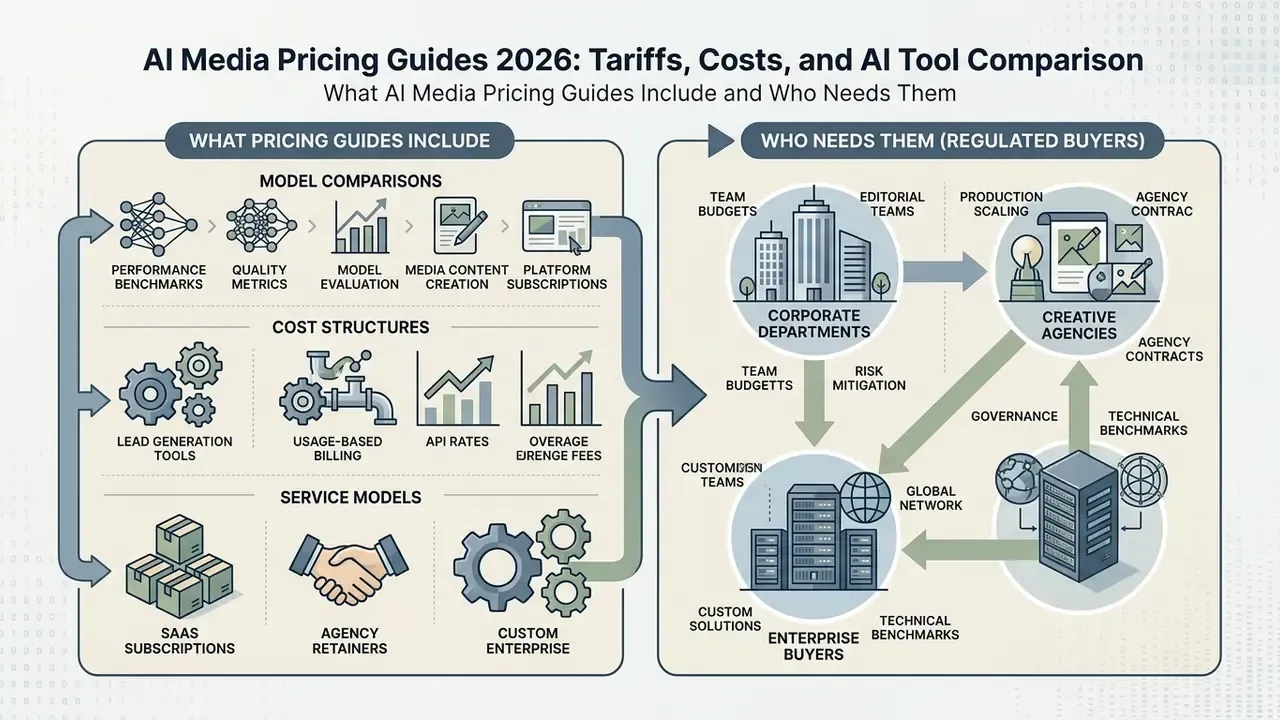
AI media pricing guides provide structured financial and technical benchmarks for evaluating generative models, media processing pipelines, and agency service contracts. Good ones aggregate pricing models, usage quotas, overage terms, and compliance overhead across text, image, audio, and video modalities. Weak ones just republish vendor marketing tables.
For enterprise buyers, commercial decision-makers, and governance officers, these guides establish a baseline for total cost of ownership (TCO) estimation. They bridge the gap between technical infrastructure costs and operational business value, ensuring that model risk and billing transparency are assessed before anyone signs a long-term vendor commitment.
In practice, the audience splits into three procurement personas with materially different spend envelopes: solopreneurs and micro-teams operating at roughly $15 to $249 per month on self-serve tiers; mid-market and SMB buyers running $500 to $3,000 per month across bundled platforms; and enterprise or managed-service buyers ranging from $1,000 to $25,000+ per month under annual contracts with negotiated security addenda. The third group rarely fails on licence price. It fails on integration and evidence.
AI Tools for Media Content Creation, Management, and Delivery
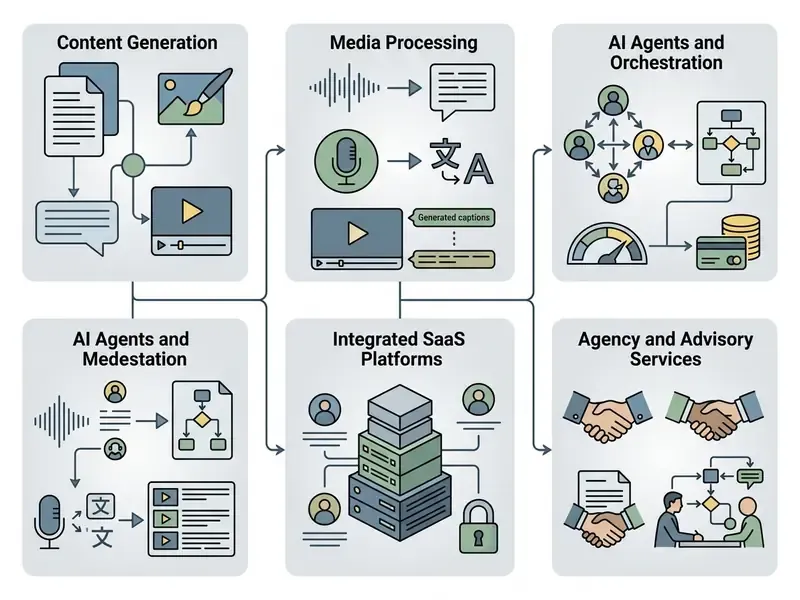
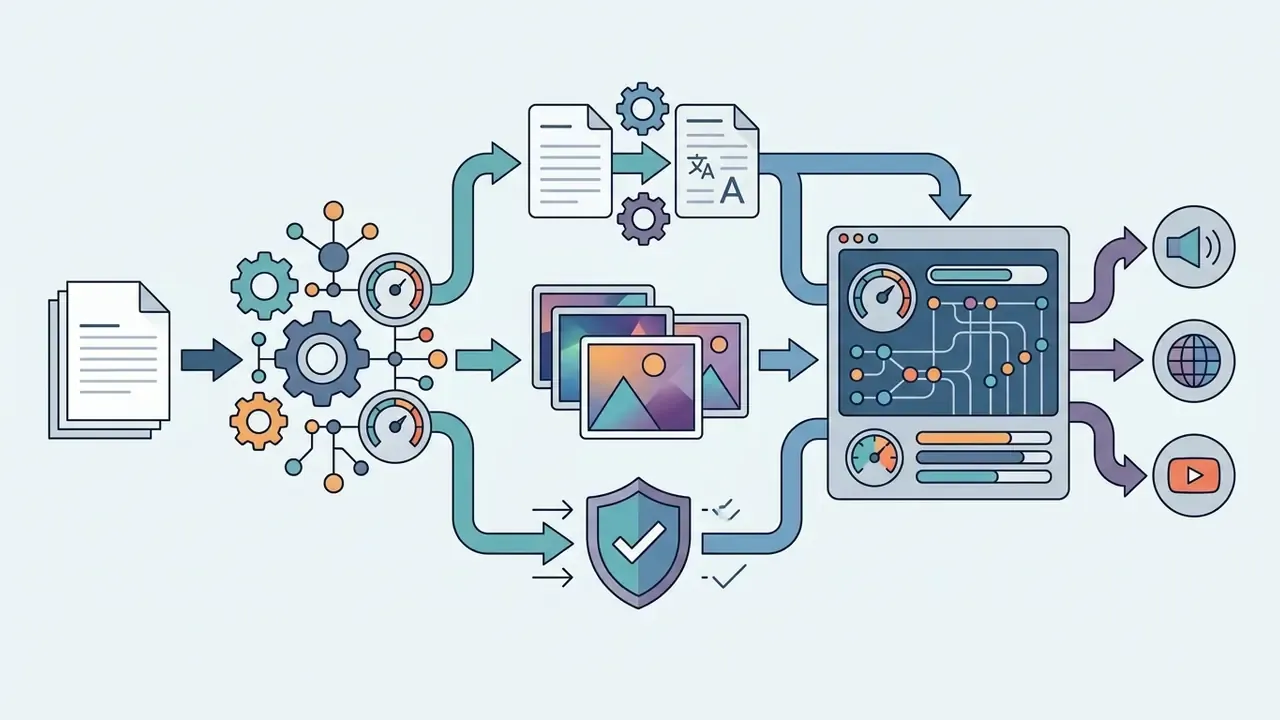
Modern AI tools for media span five core functional capabilities: text generation, video synthesis, voice processing (TTS and STT), automated image generation, and caption display plus delivery. Leading platforms in 2026 operate across both cloud API edges and integrated SaaS environments to process real-time and batch media workflows.
For text and metadata generation, frontier models such as GPT-5.2 and Gemini 3.1 Pro handle automated summarization, compliance tagging, and translation. In video synthesis, platforms like Google Veo and Runway deliver automated generation with pricing metered per second or per generation credit (Runway Help Center, 2026). Image pipelines run from consumer-grade utilities through to production-grade AI art generators, with commercial API rates beginning at fractions of a cent per render.
Voice and audio pipelines rely on high-accuracy speech-to-text models such as Whisper and Gemini TTS, where pricing varies by character count or processed audio minute (Google AI for Developers, 2026). Accuracy and price must be evaluated together rather than sequentially. A cheaper transcription engine that raises word error rate simply pushes cost downstream into human review, where it is harder to see and harder to defend in a budget review.
Subtitling and caption delivery tools, such as Sonix and CapCut, convert audio into time-stamped SRT and VTT formats, supporting live streaming and post-production localization. Sonix technical documentation confirms word-level timestamp transcription with export to SRT, VTT, or burn-in captions, while Clipchamp advertises AI subtitles across more than 100 languages at no cost to all users. Integrating these tools into content pipelines means evaluating not only generation speed but also word error rates (WER), resolution thresholds, and data privacy limits. Teams standardizing publishing pipelines frequently pair these capabilities with a dedicated YouTube video editing workflow, so caption assets, thumbnails, presentation content, and metadata are produced in one pass instead of three.
Platform Subscriptions, Agency Services, and Custom Enterprise Solutions
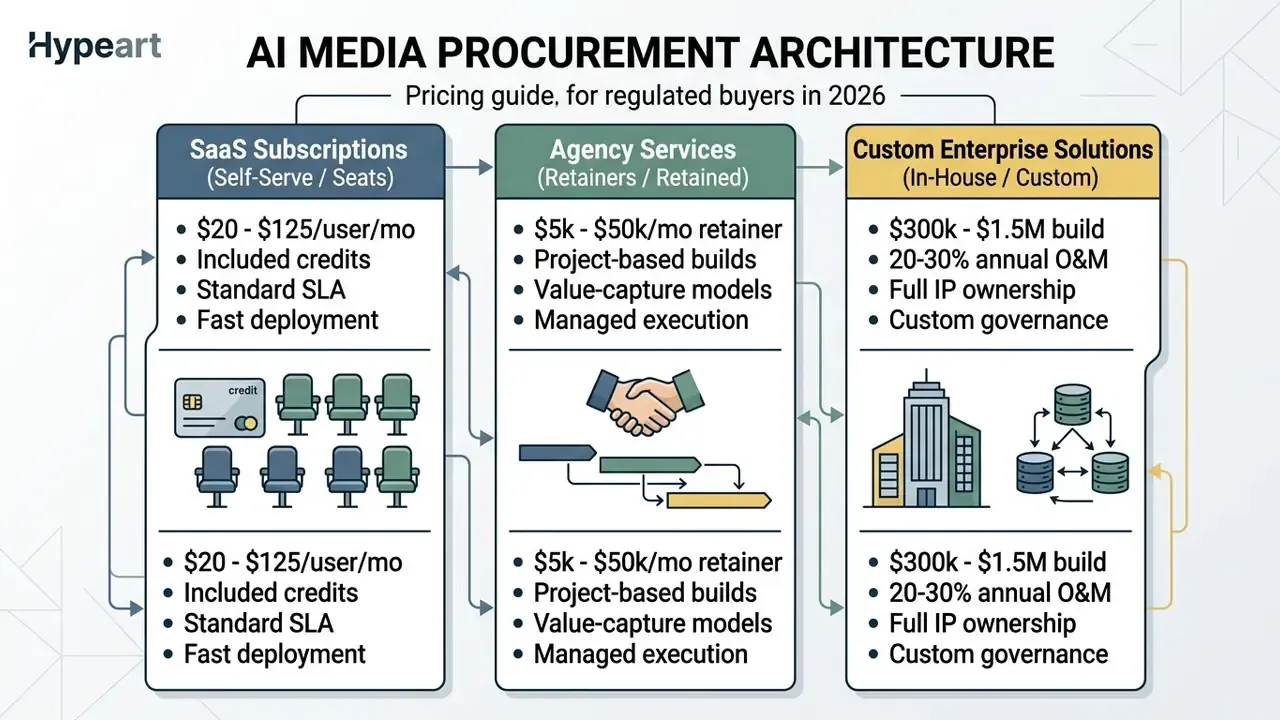
Procuring AI media capabilities means choosing between self-serve SaaS subscriptions, specialized AI agency services, and custom enterprise platform engineering. Each approach carries distinct cost structures, risk profiles, and operational trade-offs.
Core Pricing Models for AI Media Products
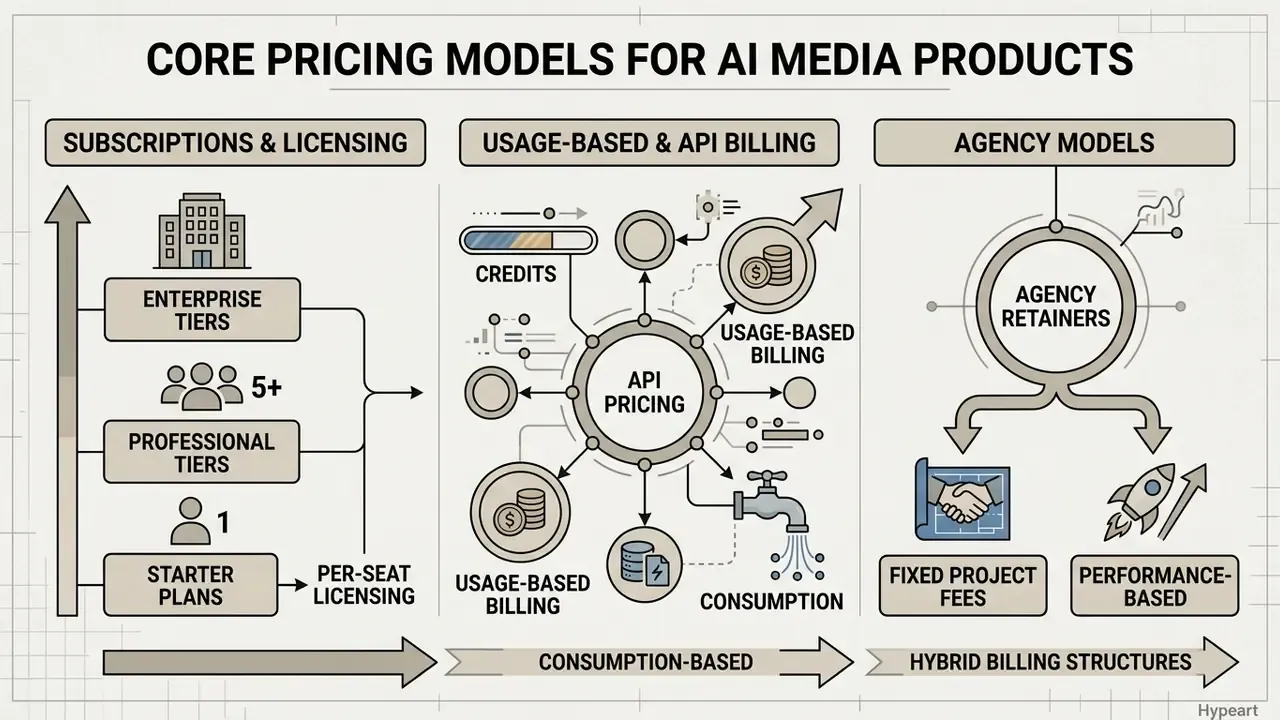
Pricing models for AI media products in 2026 reflect a clear transition toward consumption-based and hybrid billing structures. Industry survey data shows that more than 85% of software vendors offering generative tools use usage-based or hybrid billing to capture compute intensity while preserving some base subscription predictability.
Understanding the trade-offs between flat subscriptions, per-seat licensing, API unit rates, and agency retainers is essential for accurate cash-flow forecasting. It is also, frankly, the difference between a forecast and a guess.
Subscriptions, Pricing Tiers, and Per-Seat Licensing
Per-seat subscription plans bill a fixed monthly fee per credentialed user, usually bundling a structured feature set and a usage quota. In corporate settings, per-seat pricing simplifies baseline budgeting but creates overage friction the moment user activity exceeds bundled allowances.
Tiers typically range from Free or Starter through Professional to Enterprise:
- Starter Plans $15 to $30 per user per month, providing basic UI access and strict monthly credit limits. Teams testing this tier should also benchmark against free AI video generators and free photo editors, where watermark, resolution, and licensing limits often decide whether the paid upgrade is genuinely necessary.
- Professional Tiers $40 to $100 per user per month, offering higher rate limits, expanded export options, and team collaboration features.
- Enterprise Tiers Custom annual contracts requiring minimum seat counts, with dedicated support, enhanced security, and customizable credit allocations.
Vendor management architectures enforce seat limits at the API edge, where excess calls are either throttled or shifted to variable overage rates (SAP Subscription Billing Documentation, 2026). SAP's own documentation caps billable usage records at 20,000 per subscription item per billing period and 100 items per invoice. That constraint matters more than it sounds when a single video pipeline emits thousands of metered events daily.
Usage-Based Billing, Credits, and API Pricing
Usage-based billing meters exact system consumption using specific operational units: text tokens (per 1M input or output tokens), audio duration (per minute or second), image outputs (per generated unit), or raw GPU compute time. Credit systems act as an accounting abstraction layer, converting dollar spend into prepaid operational balances. GitHub Copilot documentation, for example, fixes 1 AI credit at $0.01 USD.
| Modality / Billing Unit | Representative Baseline Pricing (2026) | Primary Cost Drivers |
|---|---|---|
| LLM Text API (Standard) | $0.15 to $1.75 / 1M input tokens; $0.60 to $14.00 / 1M output tokens | Context window length, reasoning depth, model parameter size. |
| Audio Speech-to-Text (STT) | $0.004 to $0.016 / processed minute | Language specialization, real-time versus batch processing, WER quality. |
| Voice Text-to-Speech (TTS) | $4.00 / 1M characters (WaveNet standard) up to $160.00 / 1M characters (Studio voices); see AI voice generators | Voice model realism (Standard versus Studio), audio token output rate. |
| AI Image Generation API | $0.003 to $0.05 / low-res image; $0.05 to $0.20 / high-res output | Rendering resolution (1K/2K versus 4K), style accuracy, step count. |
| AI Video Generation API | $0.05 to $0.25 / generated second; roughly $6 for 60 seconds via Sora-2 (see Google AI image and video tooling terms) | Framerate, resolution (1080p versus 4K), model complexity (for example Veo, Sora). |
The historical trend line matters as much as the current rate card. Multi-year contracts signed at today's prices can look uncompetitive within two quarters.
Choosing the correct billing mechanism is a utilization question, not a preference question.
For API operations, providers implement tiered rate limits based on requests per minute (RPM) and tokens per minute (TPM). Exceeding baseline allowances triggers automated scale charges or rate-limiting responses (Google Gemini API Pricing, 2026). Google's rate-limit documentation additionally couples RPM, TPM, and spend-based caps across a rolling ten-minute window, which means throttling and billing behaviour are architecturally linked. Read that twice before you design a batch job.
Frontier model rate cards should be re-verified quarterly:
Project, Retainer, and Performance-Based Agency Models
Agencies delivering AI media production and integration services use three main pricing structures:
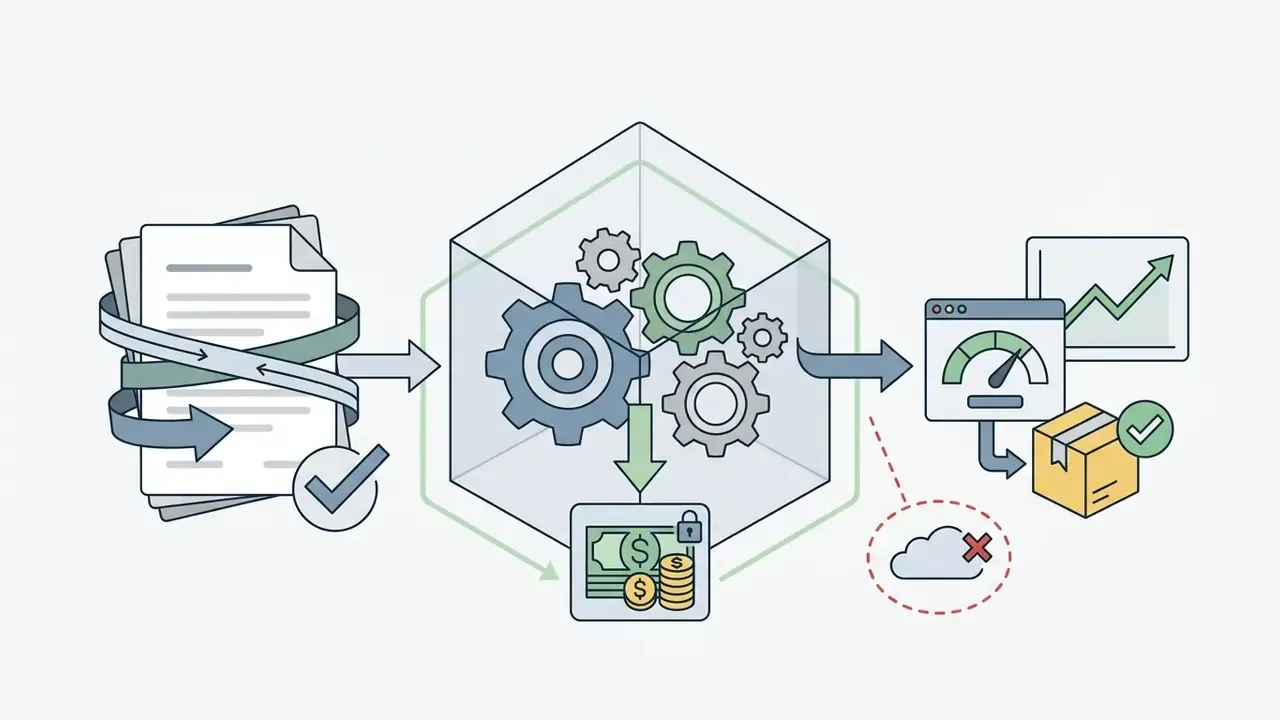
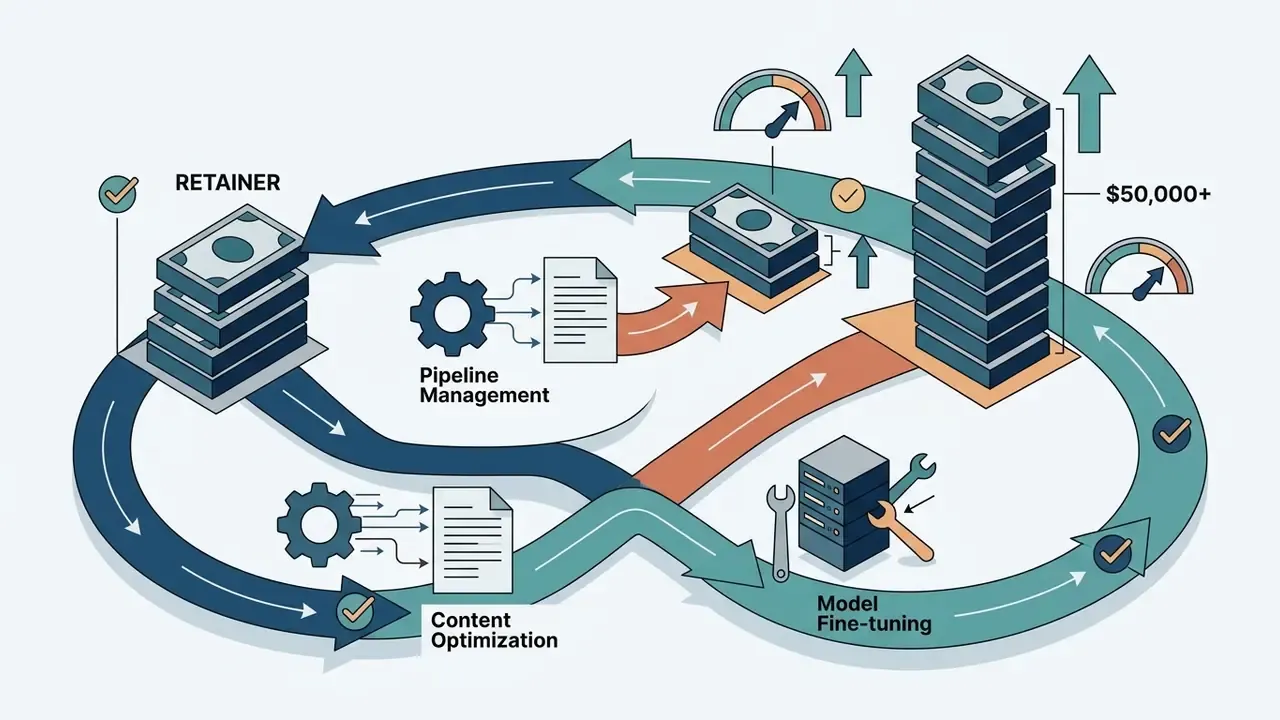
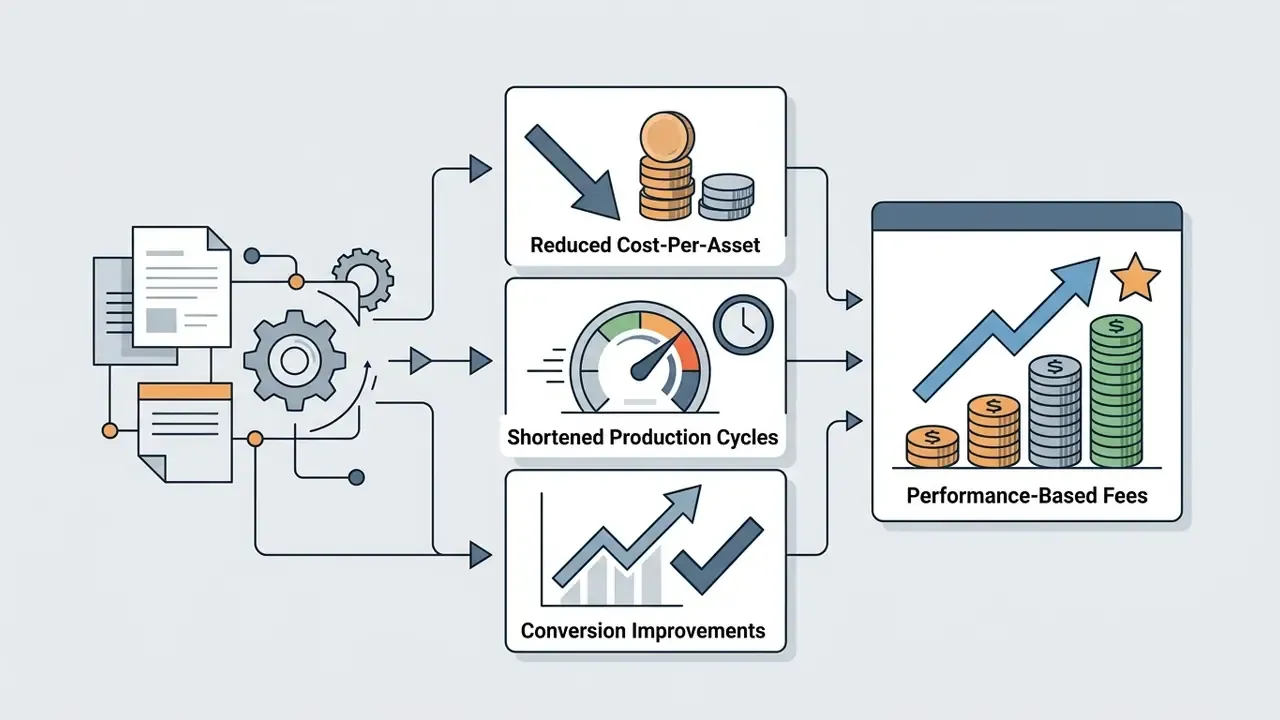
When contracting AI agencies, buyers must evaluate itemized add-on unit rates alongside baseline retainers. A retainer that looks competitive on headline price frequently becomes expensive once incremental deliverables are priced à la carte. The benchmarks below reflect standard market rates for individual AI-assisted deliverables in 2026:
| Deliverable Unit | Standard AI-Assisted Rate | Enterprise / Industry Specialist Rate | Included Revision Allowance |
|---|---|---|---|
| Standard article or asset (1,500 words) | $700 to $800 | $1,000 to $1,250 | 1 round |
| Technical or industry domain article | $800 to $950 | $1,300 to $1,600 | 2 rounds |
| PR or authority thought leadership asset | $1,050 to $1,400 | $2,000 to $3,500 | Unlimited within scope |
| Short-form video generation (30 to 60s) | $450 to $750 | $1,200 to $2,500 | 2 rounds |
| Custom prompt or workflow automation build | $2,500 to $5,000 (flat) | $8,000 to $15,000 (flat) | Milestone-based acceptance |
Published agency rate cards corroborate this structure: tiered content programs commonly start near $2,500 per month at entry level and $6,500+ per month for enterprise scope, with incremental standard articles billed at roughly +$700, industry articles at +$805, authority articles at +$910, and PR-led assets starting near $1,050.
| Pricing Model | Billing Unit | Predictability Level | Optimal Operational Scenario |
|---|---|---|---|
| Flat Subscription | Monthly or annual fixed charge | Very high | Internal teams with steady, predictable media creation needs. |
| Per-Seat Licensing | Per active user per month | High | Broad organization access where usage is evenly distributed. |
| Usage-Based (API) | Per 1M tokens, minute, or image | Low to moderate | Variable-intensity applications and backend integrations. |
| Prepaid Credits | Prepaid credit packs | Moderate | Projects requiring budget caps with variable execution speed. |
| Fixed Project | Flat statement-of-work fee | High within scope | One-time system integrations or distinct campaign builds. |
| Performance Retainer | Base plus a share of verified outcomes | Moderate | High-scale commercial marketing with clear attribution. |
Traditional vs. AI-Native Agency Cost Comparison (2026 Benchmarks)
AI adoption shifts agency billing from pure billable hours toward hybrid output-and-infrastructure models. Counterintuitively, AI-native providers often quote higher hourly and retainer rates than traditional shops, because the fee now bundles orchestration engineering, model governance, and token passthrough rather than manual production hours.
| Service Category | Traditional Digital Agency Rate | AI-Native Agency Rate | Primary Cost Structure Shift |
|---|---|---|---|
| SEO and content marketing | $1,200 to $6,500/mo ($75 to $150/hr) | $2,000 to $20,000+/mo ($100 to $300/hr) | From hourly writing to high-retainer API, prompt engineering, and audit work |
| Media buying and ad ops | 10% to 15% of ad spend | 5% to 8% of ad spend plus roughly $1,500 automation retainer | Lower percentage fees offset by software orchestration retainers |
| Video and creative production | $5,000 to $25,000 per project | $1,500 to $7,500 per project | 60% to 80% reduction in production cost via diffusion and video models |
| Custom development and integration | $120 to $220/hr (pure labor) | $150 to $350/hr plus token passthrough | Higher hourly rate for AI architects, offset by roughly 3x faster delivery cycles |
Market reporting places average AI SEO engagements near $3,200 per month, custom AI development between $50,000 and $500,000+, SaaS-style productized offers from $99 per month, and AI automation builds at $2,500 to $15,000+ with monitoring retainers of $500 to $5,000+ per month. Token-metered subscription products, where clients pay by monthly consumption instead of hours, are now offered by major consultancies. That confirms the structural retreat from time-based billing rather than a temporary experiment.
Key Cost Drivers and Total Cost of Ownership in AI Media
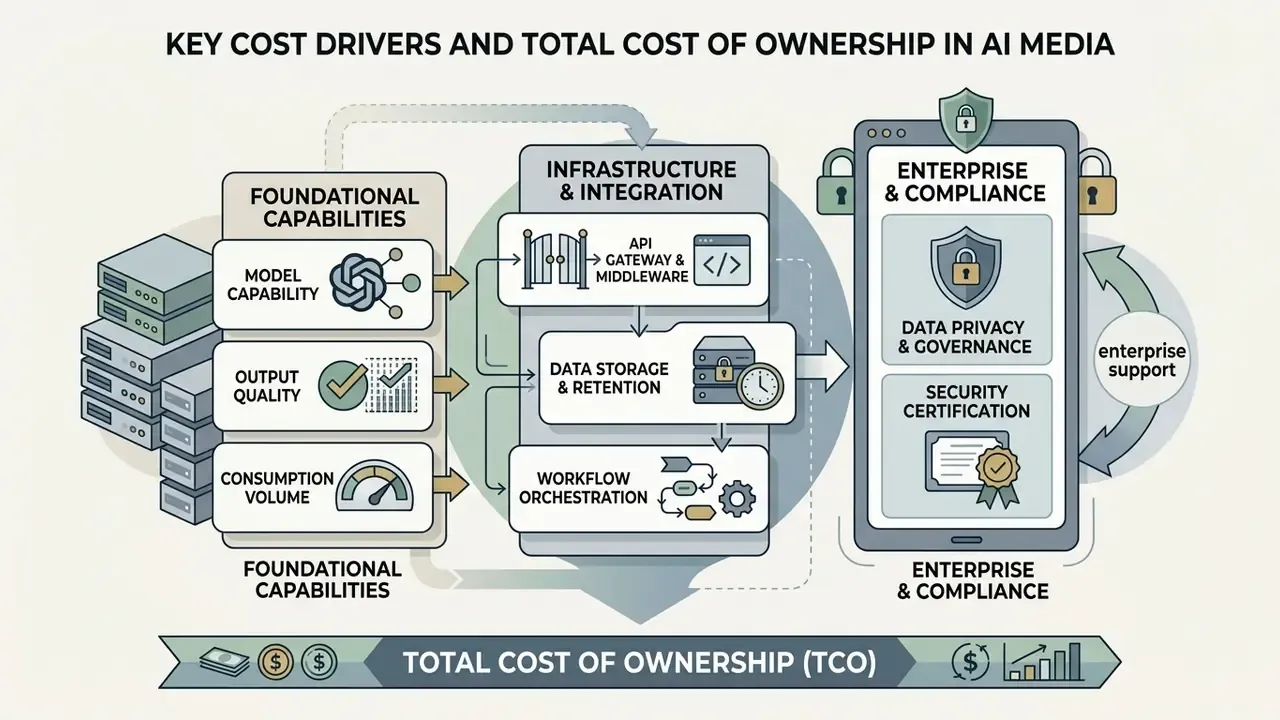
The total cost of ownership for AI media solutions extends well beyond headline subscription rates. Full lifecycle costing requires accounting for model architecture, integration effort, continuous data processing, and compliance overhead.
Vendor-neutral TCO frameworks reinforce the same decomposition: direct investment, workflow adaptation, integration, specialized setup and configuration, security and compliance monitoring, and user training all belong in the model. Hardware-oriented analyses additionally require memory, storage, and GPU instance support to be sized explicitly rather than assumed. Assumption is where most business cases quietly leak.
Model Capability, Output Quality, and Consumption Volume
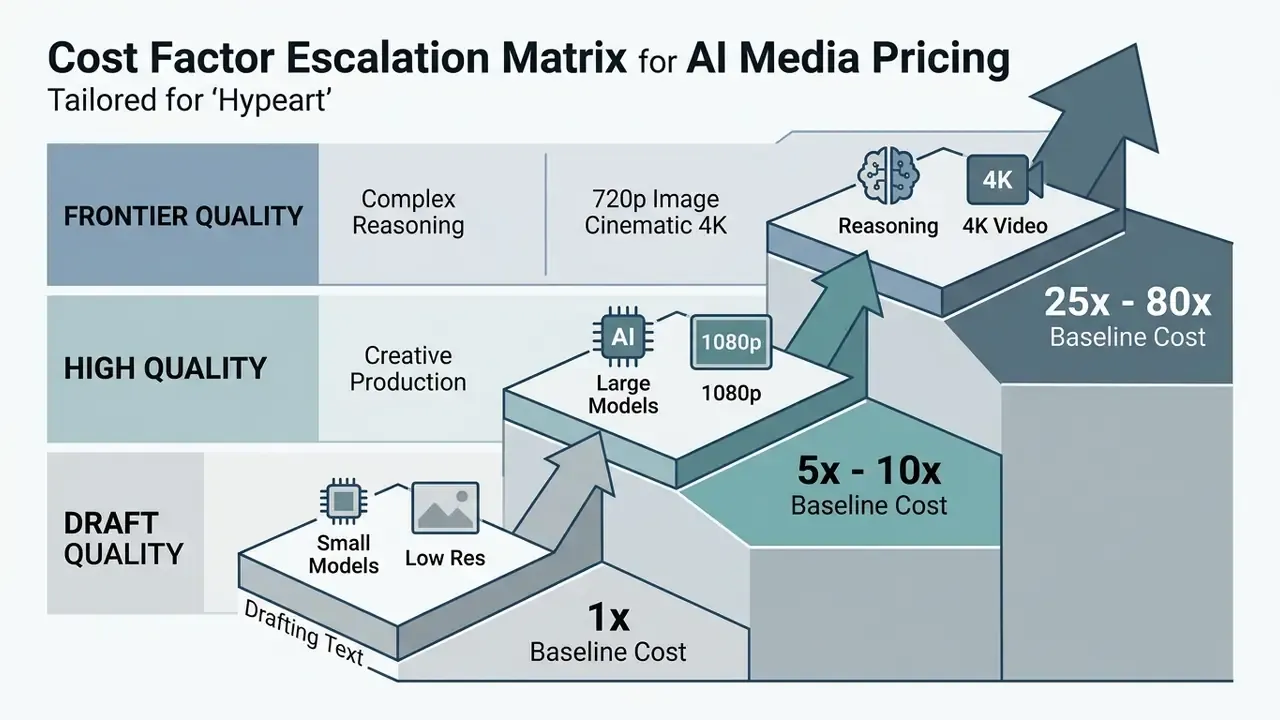
Model selection dictates inference economics. High-parameter reasoning models deliver better generation quality and lower error rates, but command significantly higher unit costs. Licensing terms scale with capability too, so confirm output rights before standardizing on a tier. Comparative reviews such as Midjourney versus competing image generators illustrate the practical differences.
Generating high-resolution 4K imagery requires higher token sampling densities than draft-quality assets. Teams often cut cost by generating at lower resolution and finishing with AI image expansion and upscaling tools. Google Gemini API rates show output image costs scaling directly with rendering parameters, rising from 1,120 tokens at 1K and 2K resolutions to 2,000 tokens at 4K, with 560 tokens charged per input image (Google AI for Developers, 2026). High-throughput video pipelines demand GPU-intensive processing that increases billing far faster than any text operation. Academic cost models formalize this as , linking price directly to content volume and achievable throughput.
Infrastructure, API Integration, and Technical Overhead
Integrating AI media tools into existing enterprise workflows introduces secondary infrastructure costs:
- API gateway and middleware overhead
- High-frequency API pipelines need load balancing, authentication controls, and routing infrastructure. Diagnostic documentation indicates that standard enterprise endpoints recommend limiting thread processing to manageable thresholds (for example 4 parallel threads and 100 RPS limits) against a nominal ceiling of 200 RPS to keep the system stable (Diadok API Documentation, 2026).
- Data storage and retention (updated)
- Storing high-volume video, uncompressed audio, and intermediate vector embeddings incurs recurring cloud fees. Cold object and vector storage typically runs $0.02 to $0.10 per GB per month, while high-availability real-time indexing and file-search environments are billed far more aggressively. OpenAI documents file-search storage at $0.10 per GB per day beyond the first free gigabyte, and Google Cloud prices index storage at roughly $0.006849315 per GiB-hour with 10 GiB free monthly. Compression strategy therefore has direct P&L impact; see the trade-offs in this guide to video compressors.
- Workflow orchestration
- Connecting AI assets into media asset management (MAM) or CRM platforms requires dedicated engineering effort and maintenance. Where custom inference is required, hosting choice materially changes unit economics.
Security, Data Privacy, Compliance, and Enterprise Support
This information is general in nature and does not substitute for advice from qualified legal or compliance counsel with respect to a specific jurisdiction and regulatory environment.
Enterprise deployment in regulated sectors introduces compliance-driven cost factors that can significantly increase base platform pricing:
- Data privacy and governance Compliance with frameworks such as the NIST AI Risk Management Framework (AI RMF 1.0) and the EU AI Act requires continuous logging, lineage tracking, and zero-data-retention commitments (NIST AI RMF 1.0, 2023; EU AI Act Guidance, 2026). The European Commission's Code of Practice on Transparency of AI-generated Content (2026) adds disclosure and provenance obligations on generation and distribution tooling, which becomes an engineering requirement for watermarking and asset metadata.
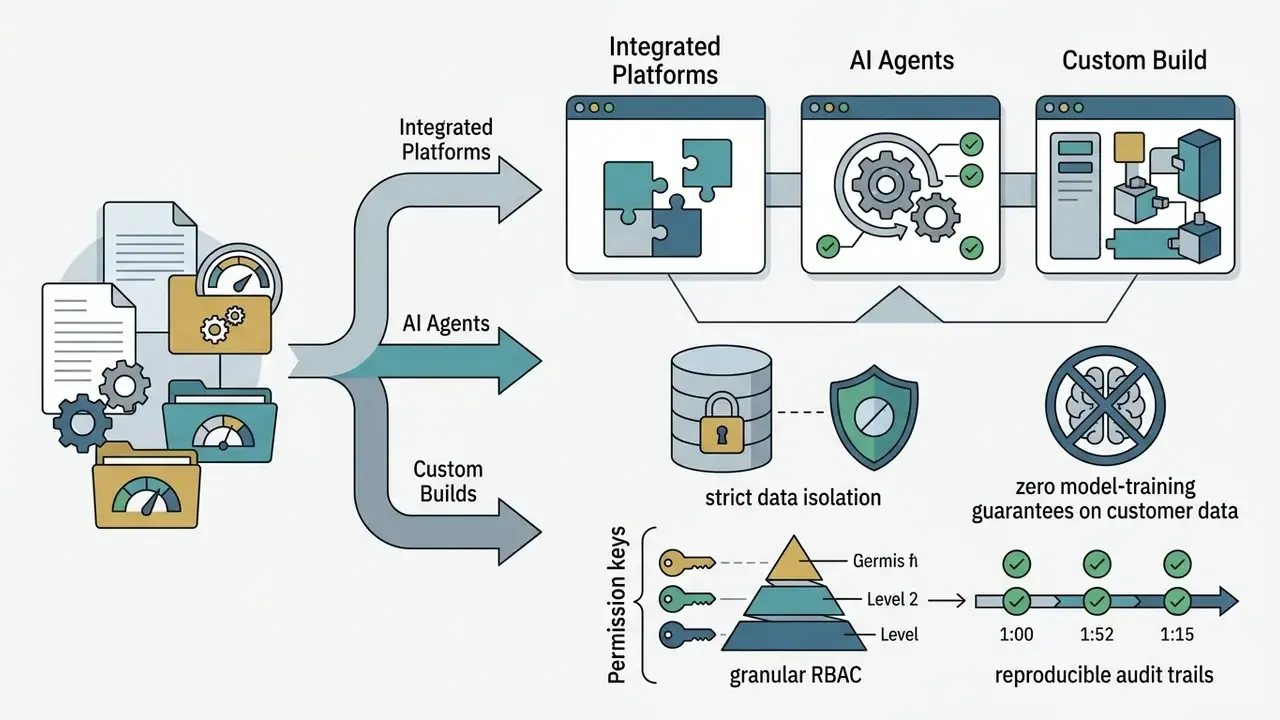
- Security certification Platforms must support enterprise security controls including Single Sign-On (SSO via Okta, Azure AD, or Google Workspace, with SAML and OIDC), Role-Based Access Control (RBAC), SOC 2 Type II certification, and ISO 27001 auditability. Recurring operational controls typically include encryption at rest and in transit, MFA, DLP, access reviews, and documented breach-response planning.
- Model risk management (MRM) integration In banks and other prudentially regulated institutions, generative media tools that influence customer-facing communications frequently fall inside supervisory expectations for model governance and third-party risk, including U.S. Federal Reserve and OCC guidance on model risk management (SR 11-7) and interagency third-party risk management guidance. Practical cost lines include AI asset inventory maintenance, independent validation of outputs, retention of immutable audit logs, prompt and output archiving for supervisory examination, and integration of vendor telemetry into an existing GRC or MRM platform. Budget owners should assume incremental internal validation effort per material use case, separate from vendor licence fees.
- Enterprise support and SLAs Guarantees for 99.9% uptime, 24/7 priority ticket response, and dedicated account management usually require a custom enterprise contract, adding 20% to 50% above standard seat pricing.
One more governance line that rarely appears in vendor quotes: shadow AI remediation. If teams already pay for unsanctioned tools on personal cards, part of your "new" AI budget is really consolidation, and part of the savings claim is inventory hygiene rather than productivity.
Evaluating AI Media Pricing Plans: Critical Tariff Clause Audits
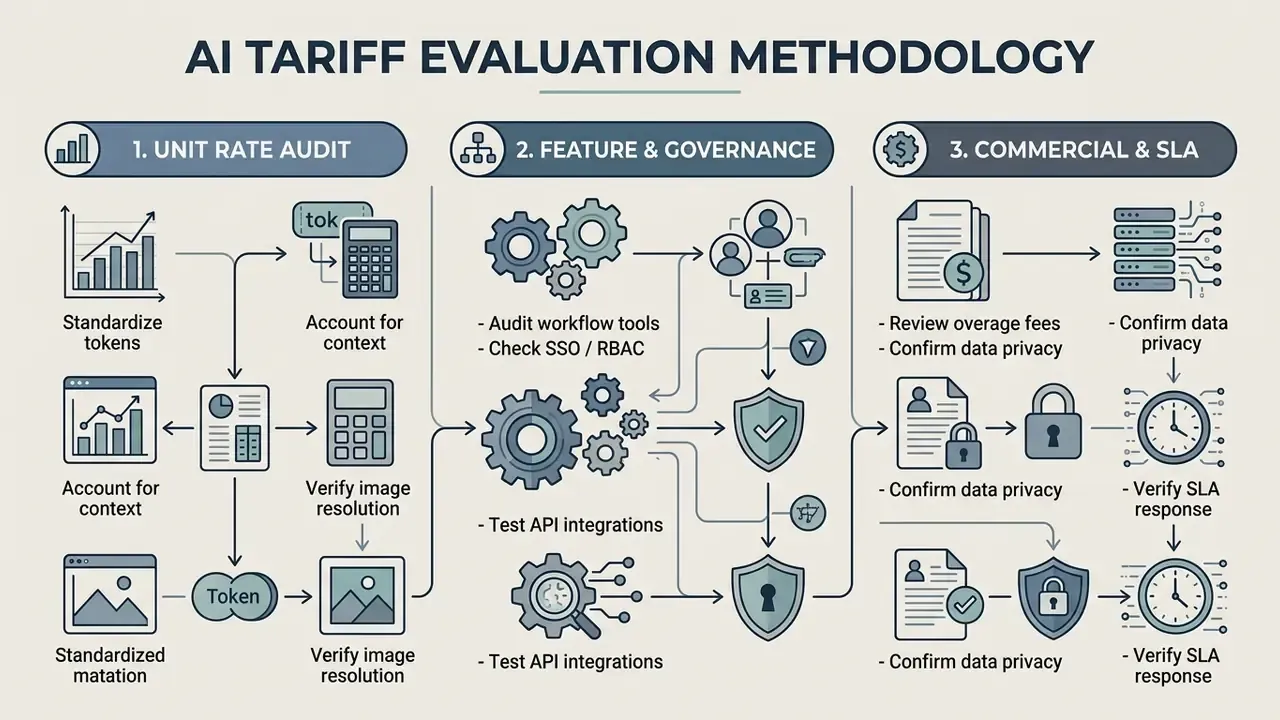
Evaluating vendor pricing plans requires a structured approach to uncover hidden fees, enforce billing transparency, and verify real business ROI before entering long-term contracts. A workable comparison method scores every plan on five axes: published unit price, usage caps, output quality measured against one constant benchmark workload, commercial and licence terms, and annual all-in cost per finished deliverable.
Functional Capabilities for Content, Marketing, and Media Workflows
When evaluating workflow capabilities across plan tiers, enterprise buyers should verify specific functional requirements:
Team Governance, Enterprise SLAs, and Contractual Terms
Team collaboration requires administrative oversight and security controls. Mid-market and enterprise buyers must evaluate:
- Identity and access management SAML/OIDC SSO integration, multi-factor authentication (MFA), and granular RBAC for managing team permissions (Requesty Enterprise Specs, 2026). Note that some vendors ship only basic group-level RBAC while listing granular RBAC and SAML on a roadmap. For regulated buyers, that is a material governance gap, not a minor feature delay.
- Service level agreements Financial credit guarantees tied to service downtime and defined incident escalation pathways.
- Contractual flexibility Terms covering annual contract reassignment, credit rollover permissions, and data export guarantees on termination.
| Evaluation Dimension | Starter / Small Business Plan | Mid-Market Growth Plan | Enterprise Custom Contract |
|---|---|---|---|
| Pricing model | Fixed subscription or pay-as-you-go | Tiered per-seat plus usage pool | Custom annual contract or volume tier |
| Model access | Lightweight or commodity models | Standard flagship models | Unrestricted access plus fine-tuning |
| Usage limits | Hard monthly caps | Soft caps with overage billing | Dedicated throughput or custom quota |
| Security controls | Basic password and MFA | Standard team RBAC | Full SAML/SSO, granular RBAC, SOC 2 |
| Support level | Community or email support | Priority email support | 24/7 dedicated support plus SLA |
| Workflow tools | Standard web interfaces | API access plus standard integrations | Custom API limits, MAM and GRC webhooks |
To evaluate commercial video generation platforms, enterprise buyers can compare options using specialized benchmarks such as the AI Video Pricing guide, which aligns platform feature limits with production expectations.
Enterprise Benchmark Matrix: Top AI Media Tools Compared
To help procurement teams, we scored leading AI media platforms across six operational dimensions. Scores are editorial ratings from 1 to 10, based on default out-of-the-box configurations rather than heavily onboarded enterprise deployments. "Transparency" measures whether a buyer can audit why the system produced or changed an output.
| Tool / Platform | Primary Modality | Automation Depth (1 to 10) | Transparency / Auditability (1 to 10) | Time-to-Value | Baseline Entry Price |
|---|---|---|---|---|---|
| Runway (Gen-3) | Video generation | 8/10 | 6/10 | Minutes | $12 / user / month |
| Google Veo API | Enterprise video | 9/10 | 4/10 (black-box API) | Days (API integration) | $0.05 to $0.25 / sec |
| ElevenLabs | Voice synthesis and TTS | 7/10 | 8/10 | Minutes | $5 / month |
| CapCut / Sonix | Subtitling and editing | 6/10 | 9/10 (deterministic) | Minutes | Free tier; $10 to $22 / mo |
| Meta Advantage+ | Media buying and ads | 8/10 | 3/10 (high opacity) | Minutes | Included in ad spend |
| Google Performance Max | Media buying and ads | 8/10 | 3/10 (no channel-level detail) | Minutes | Included in ad spend |
| Revealbot / Optmyzr | Rule-based ad automation | 7/10 | 8/10 (you author the logic) | Hours to days | Roughly $99 to $249 / mo |
| Agentic orchestration tools | Multi-channel orchestration | 8/10 | 9/10 (chat-native audit log) | Hours | Usage-based |
Three honest reads follow from the matrix. First, depth and speed are not the same axis: platform-native automation is both fast and deep, yet least transparent, while enterprise suites are deepest and slowest to deploy. Second, rule engines are the most auditable precisely because a human authors the logic, which is also their ceiling, since they only automate rules you already know. Third, opacity is the dominant complaint among practitioners. When performance dips inside a black-box buying product, you cannot separate creative fatigue from audience saturation from auction shift, and that ambiguity carries a real remediation cost that never appears on the invoice.
How to Select the Optimal AI Media Plan for Your Business
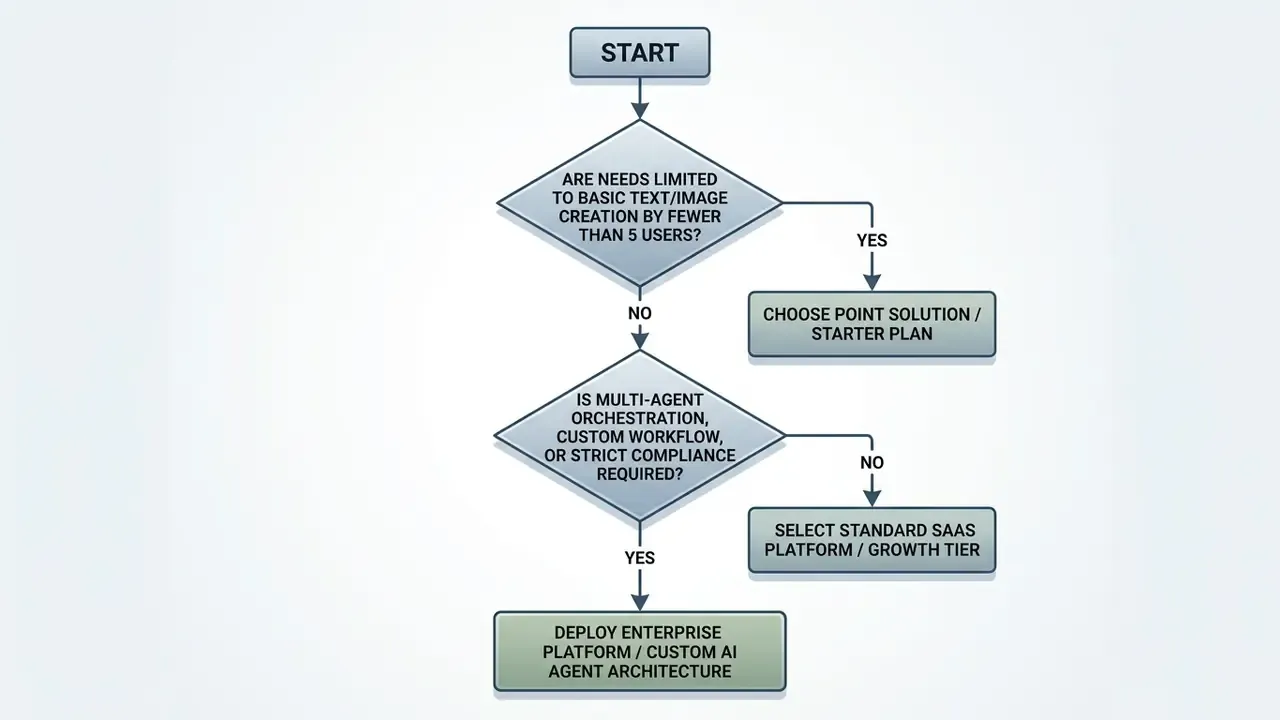
Selecting an optimal AI media tariff means weighing technical complexity, team scale, regulatory exposure, and expected time-to-value. Choose the procurement archetype first. The budget model in the next section only produces reliable numbers once the archetype is fixed.
When Point Solutions or Starter Tiers are Sufficient
Point solutions (standalone tools built for a single task, such as background removal or subtitle generation) and entry-level starter plans are sufficient under specific conditions. Teams at this stage should also review free video and photo editing alternatives before committing budget.
- Focused workload scope (updated): The requirement is limited to a single, isolated function without multi-system integration. Standard solution-evaluation practice, as framed by the IIBA's Solution Evaluation guidance and conventional vendor-selection criteria, assesses coverage of requirements, integration burden, implementation timeframe, vendor viability, ongoing cost, and total cost of ownership. When all of these fit inside a standard package, the narrow point tool is the rational choice.
- Small user footprint: Independent creators or small teams (fewer than 5 users) operating without complex access hierarchies.
- Low regulatory risk: Content is intended for internal draft use, where compliance, data logging, and strict retention controls are not mandatory.
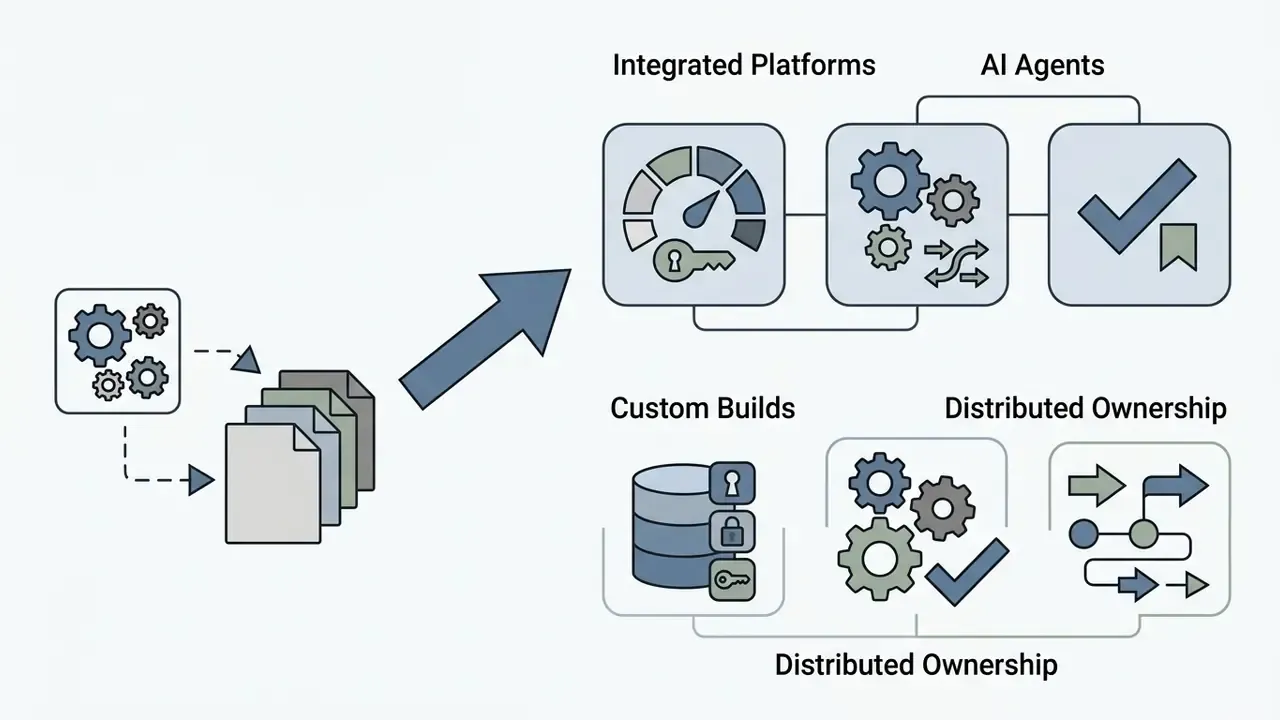
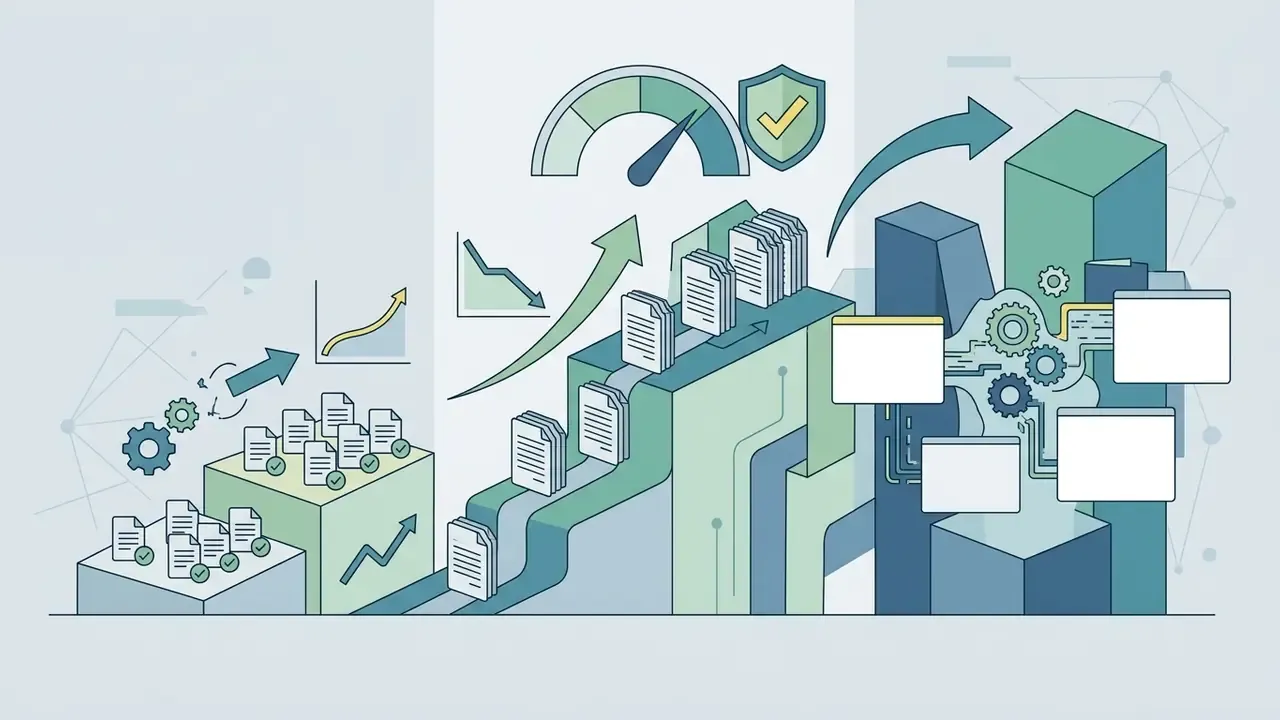
When to Upgrade to Integrated Platforms, AI Agents, or Custom Builds
Moving from individual point tools to multi-agent architectures or enterprise platform subscriptions becomes necessary when:
Executing Proof-of-Concept Pilots Before Contract Signing
Before committing to multi-year enterprise contracts, run a structured proof of concept following recognized framework guidance:
- Define objective success metrics: Establish quantitative KPIs before launch, such as target time savings, error rate thresholds, or cost-per-asset reductions (NIST AI Playbook Guidance, 2023).
- Time-box the pilot: Limit testing to 30 to 90 days using a representative production workload, not an idealized vendor demo environment (Microsoft Agent Factory ROI Benchmark, 2026). The same source recommends identifying one process where agent-assisted automation can deliver measurable ROI inside 90 days.
- Measure all-in costs: Track direct consumption alongside setup effort, staff training, and integration overhead.
- Conduct a formal go/no-go review: Compare observed performance against pre-established benchmarks before signing long-term licensing commitments.
Checklist0 / 8
How to Calculate Your Operational AI Media Budget
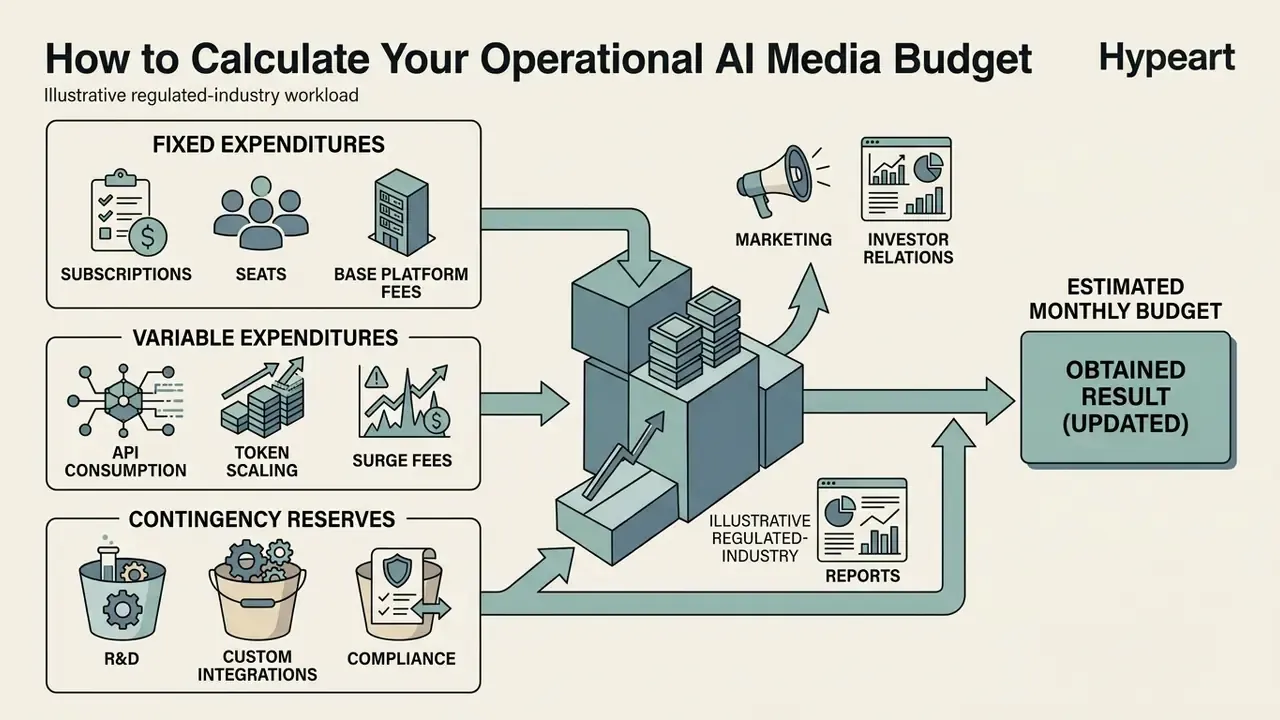
Accurate monthly budgeting means synthesizing fixed licensing baselines, variable consumption estimates, and operational contingency buffers into one financial model. Public-sector budgeting guidance frames the same requirement as a multi-year lifecycle estimate covering initial implementation, operations and maintenance, and development or enhancement work. Not a single-year licence line.
Fixed Expenditures: Subscriptions, Seats, and Base Platform Fees
Fixed costs represent the baseline expenditure required to maintain software access and user credentials. The primary equation for fixed monthly spend () is:
Where:
- = monthly cost per user seat for tool (for example $20 per user per month for ChatGPT Plus, $39 per user per month for GitHub Copilot Enterprise).
- = number of licensed team members for tool .
- = base platform tenant fees or minimum monthly recurring software commitments.
Vendor licensing guidance frames total monthly cost identically, as user licence costs plus additional AI credit costs. So model the fixed layer separately from consumption, even when a single invoice combines them.
Variable Expenditures: API Consumption, Token Scaling, and Surge Fees
Variable operational costs () scale with generation volume, API request frequency, and data throughput:
Where:
- = forecasted monthly usage quantity for unit (millions of input or output tokens, minutes of processed audio, generated images).
- = contracted price per unit .
- = estimated surge costs during peak load, calculated using demand envelope multipliers.
For instance, a marketing production pipeline generating 5,000 localized images per month ($0.05 per image) and transcribing 1,000 minutes of audio ($0.016 per minute), combined with 50 million input and output LLM tokens ($1.50 per 1M blended rate), incurs a base variable monthly spend of:
Useful modelling assumptions when volume data is thin: estimate call volume as api_calls_per_user_per_day × users × 30, and assume roughly 1,500 input plus 500 output tokens per retrieval-augmented call before scaling for longer prompts or chained workflows. For asset transformation pipelines, add per-render costs for image-to-video and expansion tooling separately, since these are billed per output rather than per seat.
When selecting variable-rate video tooling, teams can use an interactive AI Video Plan tool to map projected monthly video volumes against tiered consumption costs.
Illustrative regulated-industry workload (marketing and investor relations): 100 short videos plus 500 documents per month.
| Component | Assumed Volume | Unit Rate | Monthly Cost |
|---|---|---|---|
| Short-form video generation (45s average) | 4,500 generated seconds | $0.12 / sec | about $540 |
| Voiceover synthesis (Studio-grade) | 1.2M characters | $160 / 1M chars | about $192 |
| Transcription and captioning for archive | 900 minutes | $0.012 / min | about $11 |
| Document summarization and tagging | 40M blended tokens | $1.50 / 1M | about $60 |
| Vector and asset storage (cold plus index) | 900 GB | $0.05 / GB / mo blended | about $45 |
| Seats (12 producers and reviewers) | 12 seats | $60 / seat / mo | $720 |
| Compliance overhead (logging, validation support) | Allocated | about 15% of subtotal | about $235 |
| Estimated monthly total | n/a | n/a | about $1,803 |
Note what dominates that table. Seats and compliance, not generation. Most first drafts of an AI budget get this backwards.
Contingency Reserves: R&D, Custom Integrations, and Compliance
Unanticipated model shifts, prompt optimization, regulatory changes, and pilot testing all require an operational contingency reserve.
Obtained result (updated): No official standard prescribes a fixed percentage for AI contingency reserves. The most defensible primary methodology is risk-based sizing: the IMF's cash-buffer guidance derives a target buffer from stress duration, stress magnitude, and existing risk mitigations rather than a flat ratio (IMF, How to Set Up a Cash Buffer, 2020). Practitioner literature commonly cites 10% to 20% above total base operational projections (), although those figures are editorial rather than standards-based, and they are internally inconsistent across sources (10% to 15% in some, 10% to 20% in others). Document your chosen buffer as a governance decision with stated assumptions. The reserve covers model fine-tuning, emergency overage allocations, and legal compliance reviews.
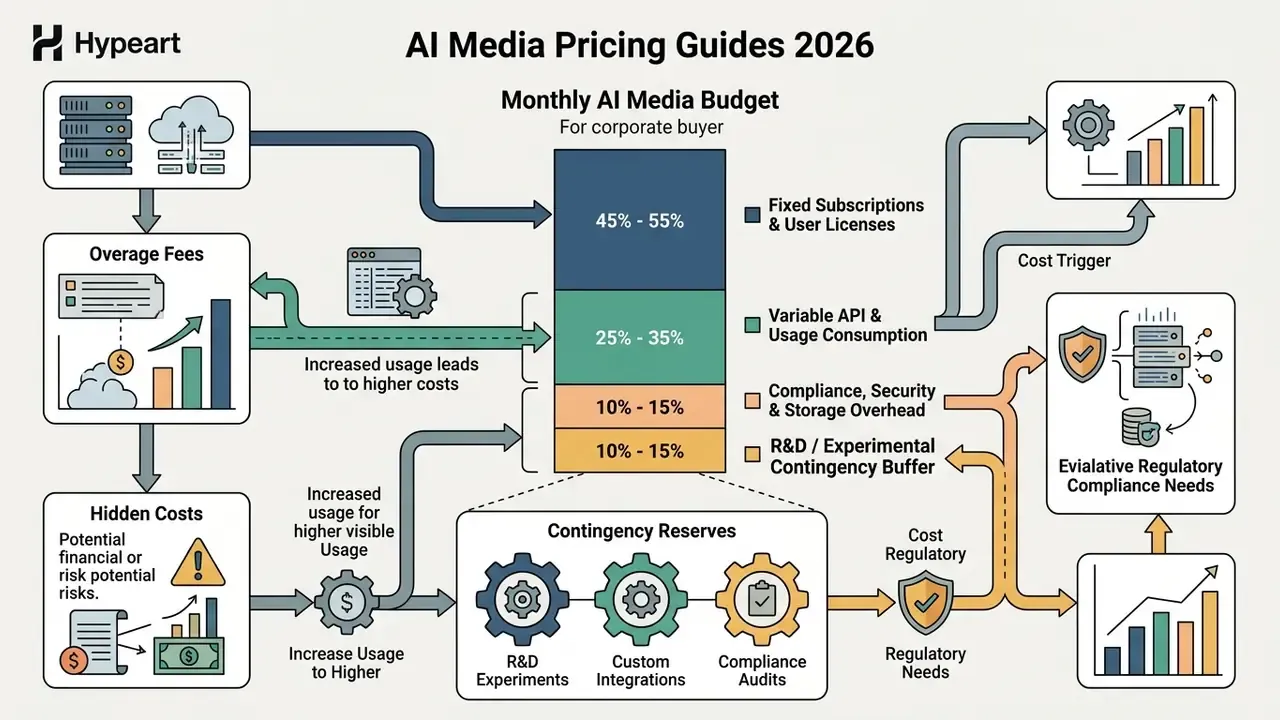
| Budget Calculation Parameter | Baseline Assumption | Input Variable Range | Monthly Cost Impact |
|---|---|---|---|
| Team size (user seats) | 10 active editors | 5 to 50 seats | $200 to $1,950 / month |
| Text generation (tokens) | 20M tokens / month | 5M to 200M tokens | $30 to $300 / month |
| Voice processing (TTS/STT) | 500 audio minutes | 100 to 2,500 minutes | $8 to $40 / month |
| Image generation (API) | 2,000 images / month | 500 to 10,000 outputs | $40 to $400 / month |
| Contingency reserve | 15% allocation | 10% to 20% safety margin | Calculated dynamically |
For pipelines that need maximum usage flexibility without fixed long-term commitments, a flexible pay as you go ai video model lets teams align monthly variable expenses directly with campaign activity.
SaaS Pricing Page UX Evaluation Checklist for Enterprise Buyers
When reviewing vendor pricing pages during software selection, governance teams should audit the presence of these interface elements. Their absence is itself a procurement signal, because opacity in the storefront usually predicts opacity in the invoice.
- Credit usage hovers and tooltips Does the vendor explain exactly how many credits a single action consumes, for example one minute of 4K video or one 1080p image?
- Monthly versus annual discount toggles Is the annual saving (typically 15% to 25%, often framed as "two months free") stated per tier rather than revealed at checkout?
- Persona mapping headers Is each tier mapped to an explicit team size or use case ("Starter: 1 to 5 users", "Scale: multi-brand teams") so buyers can self-select without a sales call?
- Hard versus soft cap notifications Is it documented whether excess usage triggers hard throttling or automated variable billing?
- Feature comparison table Is there a full cross-tier matrix, not just three summary cards, with usage-based components grouped separately from feature entitlements?
- Upgrade path clarity Are upsell triggers driven by both usage and functionality, and is add-on pricing published rather than hidden behind "contact us"?
- Published FAQ and billing documentation Are credit expiry, rollover, refund, and rate-limit rules documented publicly rather than buried in an MSA?
- Tier count discipline Fewer than five tiers is generally scannable. Seven or more usually signals packaging confusion that resurfaces later as contract complexity.
Market analysis of leading AI pricing pages found that nearly all vendors have replaced free trials with limited free versions, that most publish pricing openly except pure enterprise players, that subscription or subscription-plus-usage hybrids dominate, and that genuine outcome-based pricing remains rare: a single vendor in a twenty-company review.
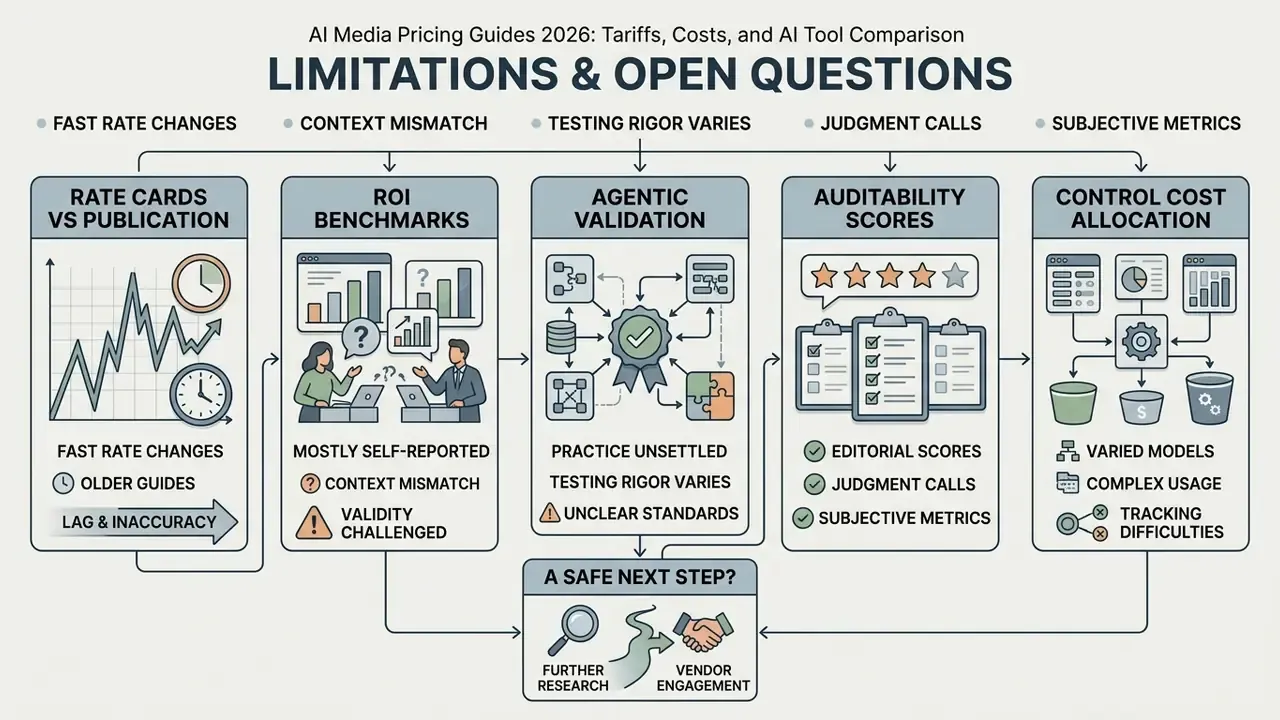
Limitations and Open Questions
Frequently Asked Questions (FAQ) on AI Media Pricing
How do free tiers differ from paid plans in AI media APIs?
Free tiers provide entry-level access for evaluation and low-volume testing, but they enforce strict rate limits (RPM and TPM), low usage quotas, and weaker data retention terms. Paid tiers remove those restrictions, unlock flagship model variants, guarantee operational throughput, and support zero-data-retention commitments for enterprise data privacy (Google Gemini API Documentation, 2026). A single vendor page can show both free-tier and paid rows for the same product, because the free tier is a usage-limited offer that ends at a quota rather than a separate product.
What happens when an organization exceeds its usage limits or credit allocations?
Handling varies by billing architecture. Systems enforce hard limits (throttling or blocking requests), trigger automatic credit top-ups, or charge variable overage rates on the next statement. Google Cloud, for example, bills usage above subscribed QPM at the Standard Edition rate. Enterprise accounts can negotiate soft-cap notifications and custom overage bands to prevent service interruptions (SAP Subscription Billing, 2026; Google Cloud Pricing, 2026).
Are prepaid AI credits refundable, and do they roll over monthly?
In most commercial SaaS agreements, prepaid monthly credits do not roll over and expire at the end of each billing cycle. Runway's documentation, for instance, states that subscription credits refresh monthly without rollover, that credits can be purchased at $0.01 each, and that purchases above roughly $9,999 require the account or sales team. One-time credit packs or enterprise annual allocations may support extended retention, but policies vary and must be verified in the contract service terms.
Where can technical teams verify API pricing, rate limits, and system documentation?
Verified operational parameters, pricing schedules, and rate limits live on official vendor developer portals, for example ai.google.dev, platform.openai.com, and docs.dev.runwayml.com. Independent technical documentation benchmarks such as the VoiceWriter speech-to-text leaderboard also provide cross-platform performance and accuracy evaluations, which should be read alongside price rather than after it.
How does caption display and automated subtitling impact media pricing?
Caption generation is billed on processed audio duration (per minute) or character volume. Integrated platforms may include subtitling within base subscriptions, and Clipchamp offers AI subtitles in more than 100 languages at no cost, while developer APIs charge separate speech-to-text processing and time-stamping fees (Sonix Documentation, 2026; Clipchamp Feature Overview, 2026). For delivery, caption formats also affect downstream localization cost, since SRT and VTT outputs feed translation pipelines directly.
What enterprise security requirements add indirect costs to AI media contracts?
Mandatory controls such as SAML SSO integration, custom RBAC permissions, SOC 2 Type II audit reporting, isolated data environments, and guaranteed SLAs typically require upgrading from growth tiers to custom enterprise agreements, raising base licensing costs by 20% to 50%. Regulated institutions should additionally budget for internal model validation, audit-log retention, and third-party risk assessment work that sits entirely outside the vendor invoice.
Why do AI-native agencies sometimes charge more per hour than traditional agencies?
Because the billable unit changed. Traditional agencies bill production labour; AI-native providers bill orchestration architecture, prompt and workflow engineering, model governance, and token passthrough. Hourly rates rise from roughly $75 to $150 up to $100 to $300, but delivery cycles compress and per-asset production cost for video can fall by 60% to 80%. Evaluate cost per finished deliverable, not cost per hour.
Which vendor claims should not be taken at face value?
Any anonymized ROI figure, any "up to" saving, and any transparency claim that cannot be tested with an audit log. Treat published case-study percentages as directional and re-derive them against your own workload during the 30 to 90 day pilot. Editorial note on company positioning: regarding the platform domain hypeart.ai, no verified information is available concerning legal registration, compliance status, or validated commercial offerings. Operating parameters must be evaluated strictly against verified vendor documentation.
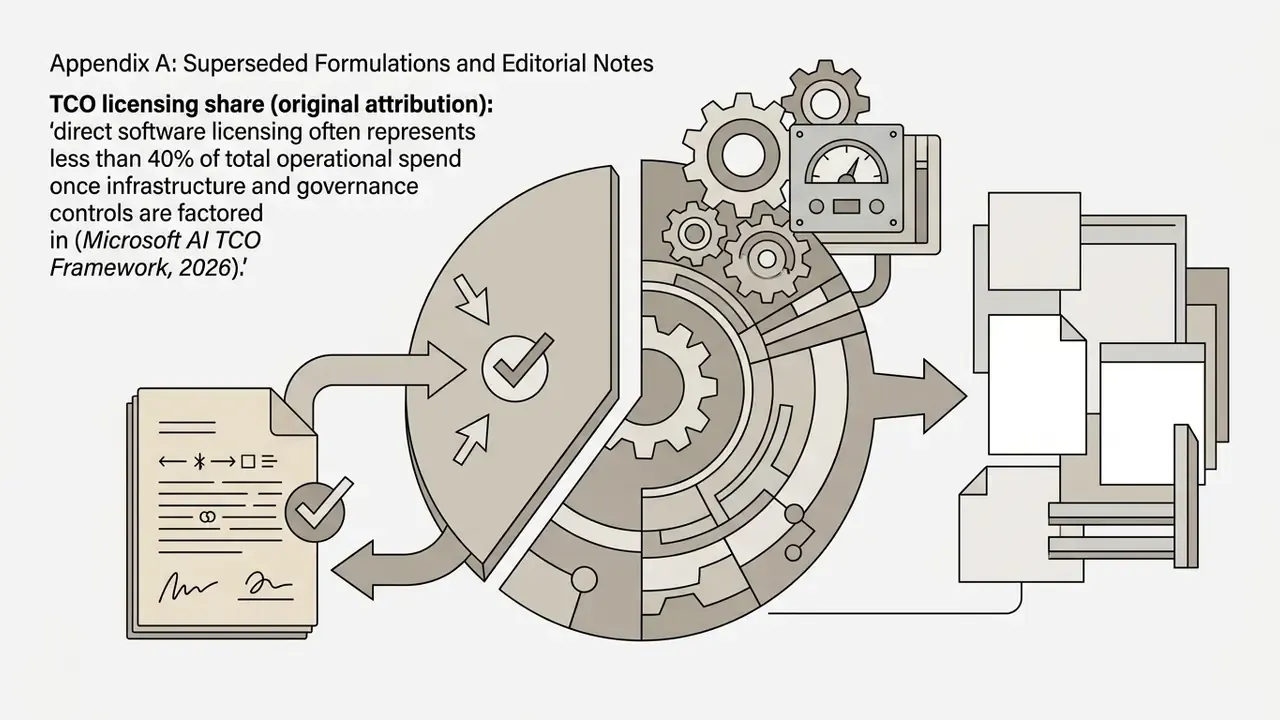
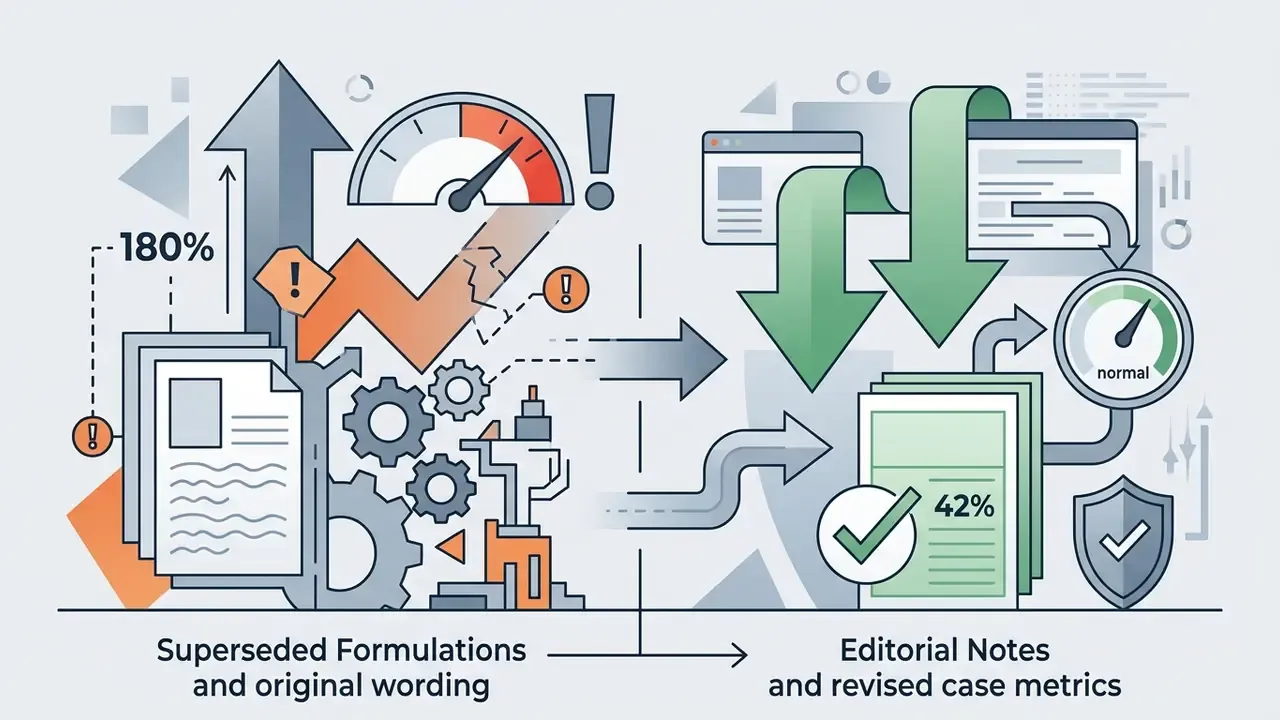
Appendix A: Superseded Formulations and Editorial Notes
The following original formulations were revised in the main text after fact-check review. They are retained here for transparency and version traceability.
Disclaimer: This article is provided for general informational purposes only and does not constitute legal, financial, accounting, tax, or regulatory advice. Pricing, rate cards, quotas, and regulatory obligations change frequently and vary by jurisdiction, contract, and vendor tier. Verify all figures against current official vendor documentation, and consult qualified legal, compliance, and financial advisors before making procurement or model-deployment decisions.