Not a creative decision. A procurement and control decision.
Executive Summary for Technology, Risk, and Finance Leaders
| Decision Dimension | Bottom Line (as of August 2026) |
|---|---|
| Market structure | Two architectures dominate: direct provider APIs (Google Veo, Runway, Kling, Luma, OpenAI) and unified aggregation gateways (Fal.ai, Replicate, ModelsLab). Direct access gives deeper controls and SLAs; aggregators give faster model switching and lower lock-in risk. |
| Highest visual fidelity | Runway Gen-4.5, Google Veo 3.1 Standard/4K, Luma Ray 3.14 (16-bit HDR, ACES, EXR), Sora 2 Pro. |
| Best cost efficiency | Hailuo 2.3 Fast ($0.01-$0.03/sec), WAN 2.5 via aggregators, Veo 3.1 Lite ($0.05/sec at 720p). |
| Deprecation alert | OpenAI documents Sora 2 and the Videos API as deprecated, with shutdown scheduled for September 24, 2026. Any Sora-dependent pipeline needs a migration plan now. |
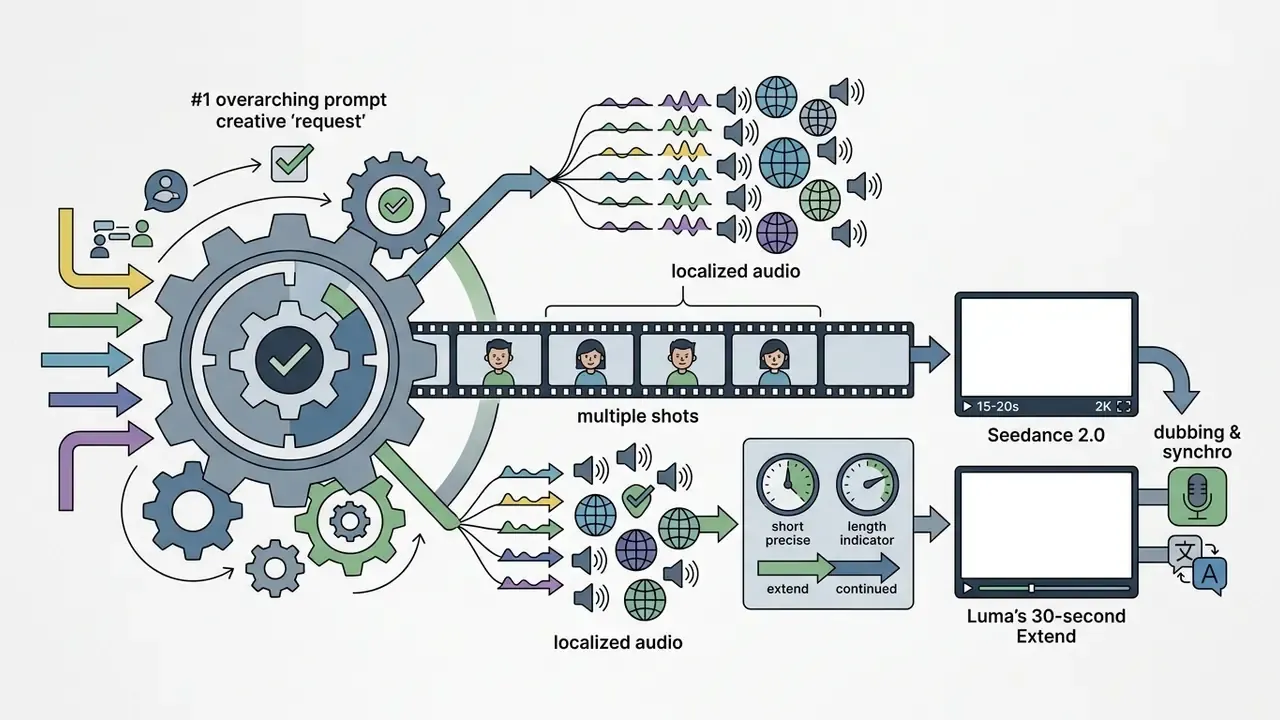
| Newest capability gap-filler | ByteDance Seedance 2.0 adds multi-shot storytelling and jointly generated audio in 8+ languages at roughly $0.14/sec. |
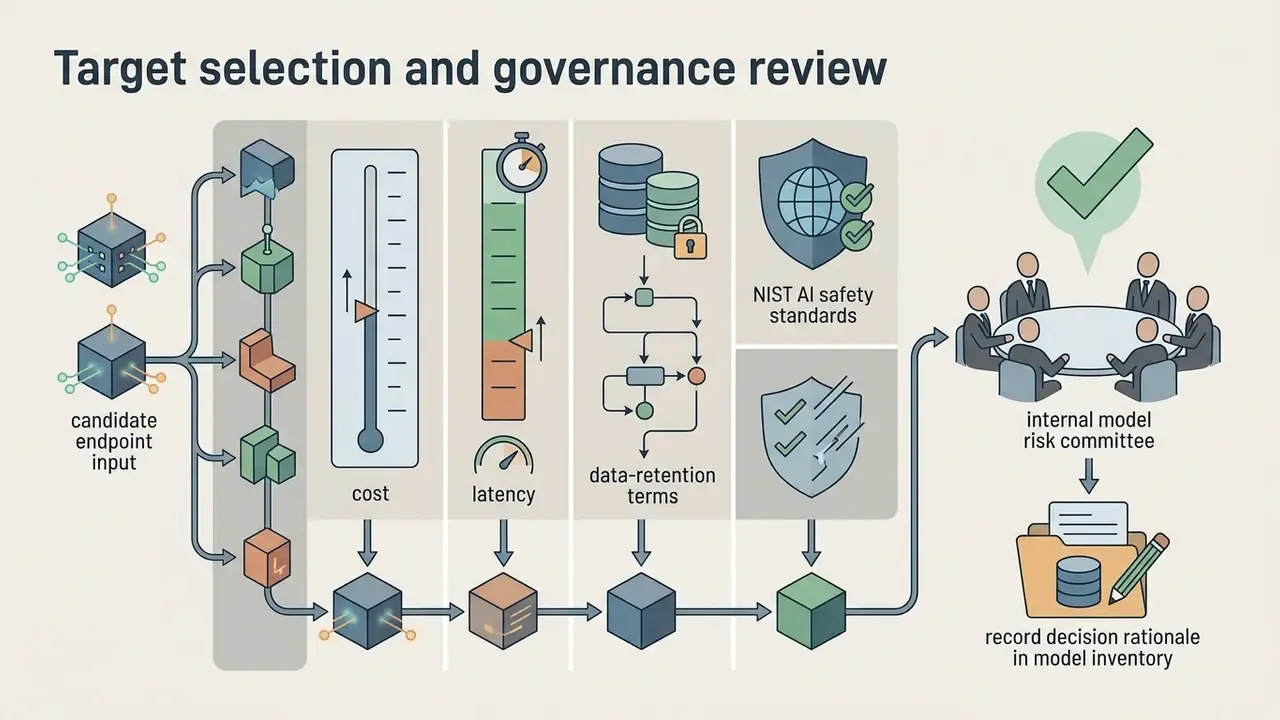
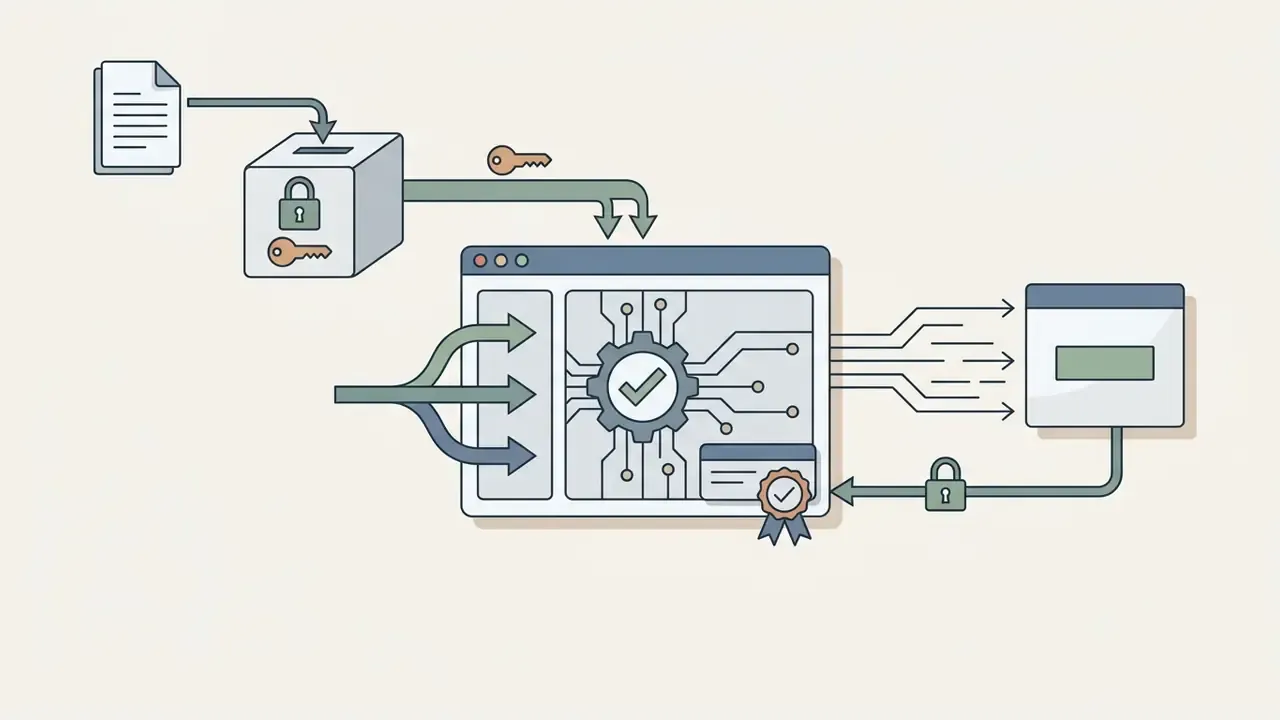
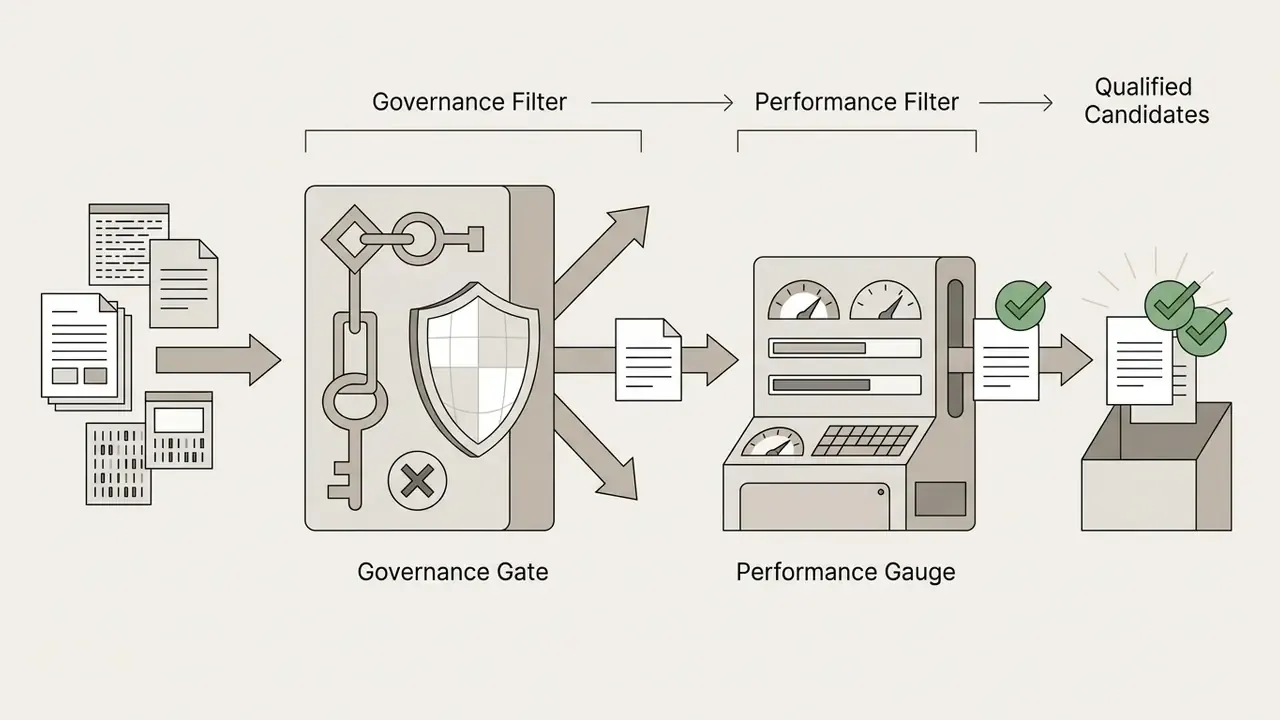
| Risk and governance | Vendor selection must be gated on data-retention tier (zero data retention vs. training opt-out), SOC 2 / ISO 27001 attestation, private-network deployment, and NIST AI 600-1 alignment. Model risk teams should treat each video endpoint as a third-party model under SR 11-7-style validation, with logged prompt hashes, seeds, and model versions. |
| Budget math | Effective cost per usable asset = base per-second price × resolution multiplier × (1 + retry rate). Ignoring retries understates budgets by 12-25% in production. |
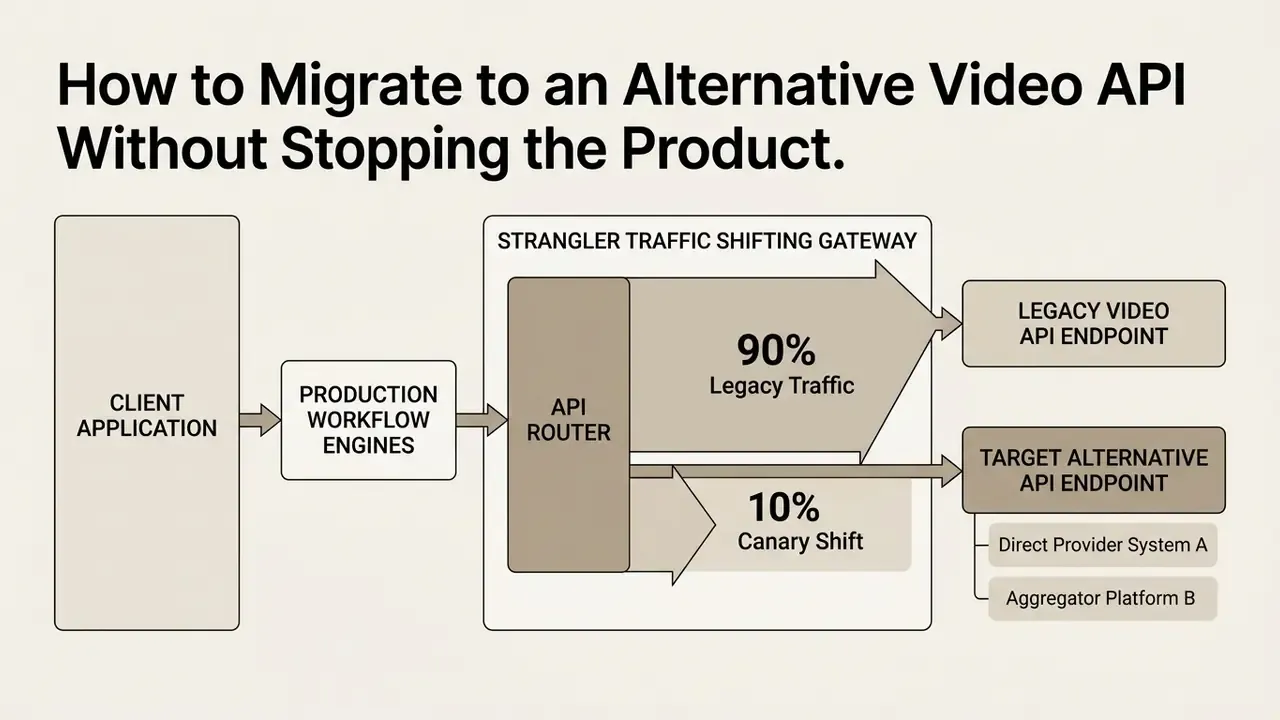
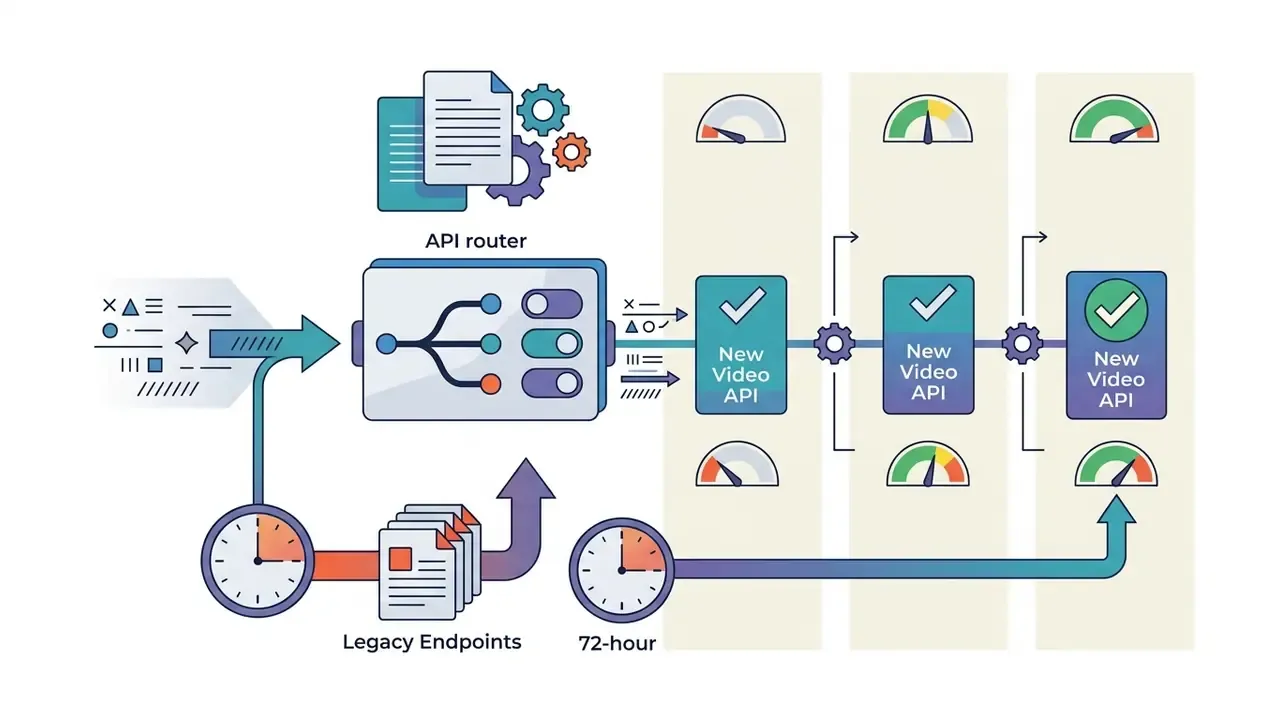
| Migration path | Strangler Fig pattern: parallel gateway, payload mapping, 50-prompt automated quality gate (VBench plus ITU-T P.910), phased 10% to 50% to 100% traffic shift, 72-hour reversible rollback window. |
Who should read what: architects go to sections 1-7 and 20-22; CFO and finance transformation to sections 17-19; CRO, CCO, and Heads of Model Risk to sections 4, 16, and the FAQ entry on intellectual-property exposure.
Scope, Method, and How to Read This Analysis
1. What AI Video API Alternatives Are and Which Solutions to Compare
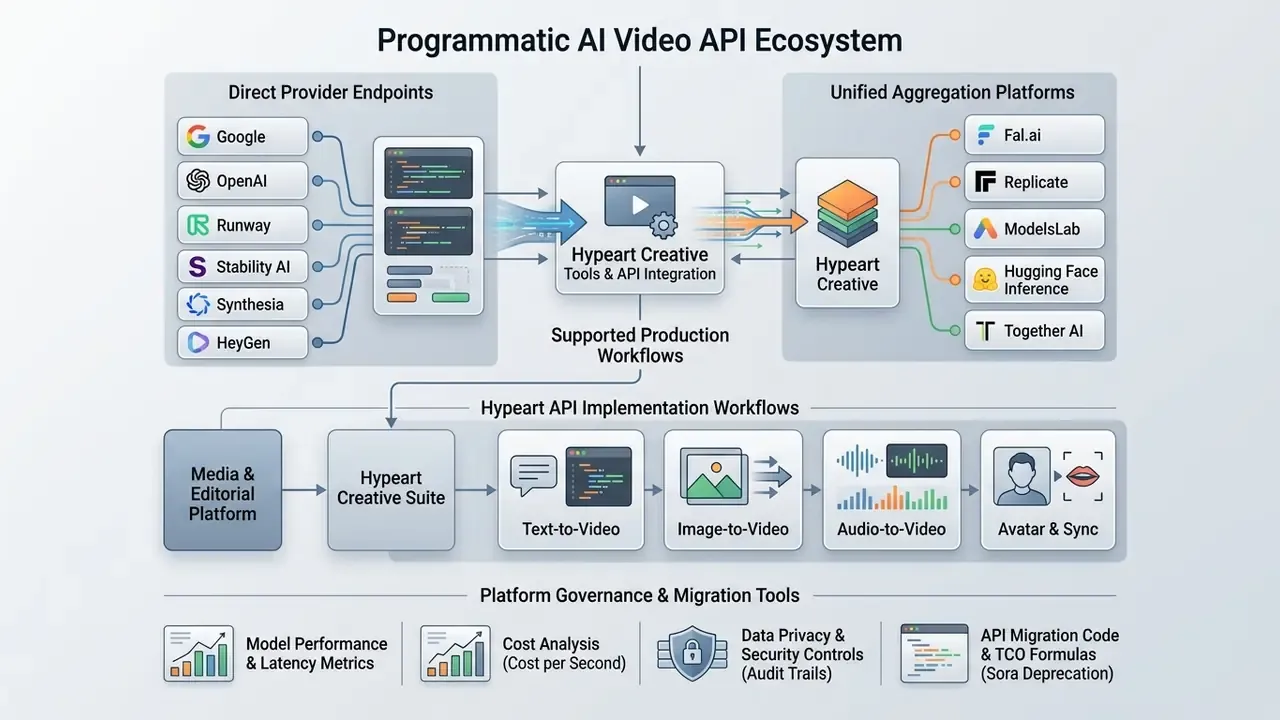
In two sentences: AI video API alternatives are programmatic endpoints that render video from text, image, or audio inputs without in-house GPU infrastructure. The first architectural fork, direct provider endpoint versus unified aggregation gateway, determines your latency profile, governance surface, and vendor lock-in exposure.
AI video API alternatives are programmatic software interfaces that let developers automate video generation, transformation, and rendering without maintaining custom deep learning hardware. These APIs replace or augment legacy media pipelines by accepting text, image, or audio payloads and returning synthesized video files or streaming URLs.
When choosing an alternative, enterprise architecture teams weigh two delivery mechanisms: direct provider APIs that expose vendor-specific model families, and multi-model platforms that unify access across several generative backends. That single decision dictates integration flexibility, operational latency, rate limits, and lock-in risk. For regulated institutions it also dictates where prompts and reference assets physically travel, which is a governance question long before it is an engineering one.
2. Video Generation Model APIs: Text-to-Video and Image-to-Video
Text-to-video (T2V) and image-to-video (I2V) are the core generative workflows exposed by modern video generation APIs. T2V endpoints synthesize frames entirely from natural language prompts, which requires heavy internal text parsing and visual composition; teams new to the workflow can review the fundamentals of text-to-video AI before designing prompt schemas. I2V endpoints accept a reference static image, such as a product photo or an approved brand card, and animate motion vectors around anchor objects to preserve visual continuity. The practical constraints of image-to-video AI workflows determine how tightly you can lock brand geometry.
Security-checked { "workflow_type": "image-to-video", "prompt": "Cinematic camera dolly backward revealing product packaging on granite table", "image_anchor_url": "https://cdn.enterprise.com/assets/product_v1.png", "motion_bucket_id": 127, "guidance_scale": 7.5, "duration_seconds": 5 }Image-to-video APIs generally deliver higher visual consistency for commercial use, because the input frame locks subject geometry, color grading, and branding before generation begins. Updated (2026): rather than leaning on a single image-conditioned benchmark, current practice evaluates I2V and T2V outputs across multi-dimensional, peer-reviewed suites that align objective metrics with human ratings.
Image-conditioned workflows measurably reduce temporal flickering and subject distortion versus prompt-only generation, because the anchor frame constrains subject identity before diffusion starts. Cinematic output demands strict motion smoothness, aesthetic scoring, and temporal compositionality, which makes image conditioning the default for brand-governed production. And where an anchor frame is legally reviewed and archived, I2V produces a cleaner audit artifact than a free-form prompt. That matters when someone has to reconstruct, months later, why a specific frame was rendered at all.
3. Direct Provider Access or a Unified Multi-Model Platform
Direct provider APIs, such as Google's Gemini API for Veo or OpenAI's API for Sora, grant access to proprietary model architectures, native performance controls, and specialized parameter flags. Direct endpoints remove third-party operational overhead and offer predictable latency, enterprise SLA guarantees, and dedicated compliance boundaries. The trade-off is blunt: direct integration binds your workflows to one vendor's release cycle, pricing changes, and deprecation schedule.
Deprecation notice (updated, August 2026): OpenAI's model documentation marks Sora 2 and the Videos API as deprecated, with a scheduled shutdown on September 24, 2026. Published rates ($0.10/sec for Sora 2 at 720p; $0.30/sec at 720p, $0.50/sec at 1024p, and $0.70/sec at 1080p for Sora 2 Pro) apply only to existing contracts during the wind-down window. Any pipeline still calling Sora endpoints should treat migration as a dated remediation item with an owner, not a roadmap nicety. This is exactly the vendor-concentration risk that single-provider integration creates.
Multi-model aggregation platforms, such as ModelsLab, Fal.ai, or Replicate, abstract dozens of underlying generative models behind a unified API schema. Developers reach many models, including Kling, Luma, WAN, Seedance, and open-weight diffusion engines, using one API key and a standardized payload format. That flexibility simplifies benchmarking and keeps switching costs low. It also adds a network layer that can introduce variable request latency and obscure provider-native execution metadata.
Aggregators bring a distinct governance trade-off as well. Routing prompts through an open developer platform without an executed enterprise agreement, data-processing addendum, or NDA creates shadow-AI exposure: customer-adjacent data may transit systems your third-party risk register never assessed. Institutions in regulated sectors should require written zero-data-retention terms plus provider-side confirmation that submitted payloads are excluded from model training, before any aggregator touches production traffic.
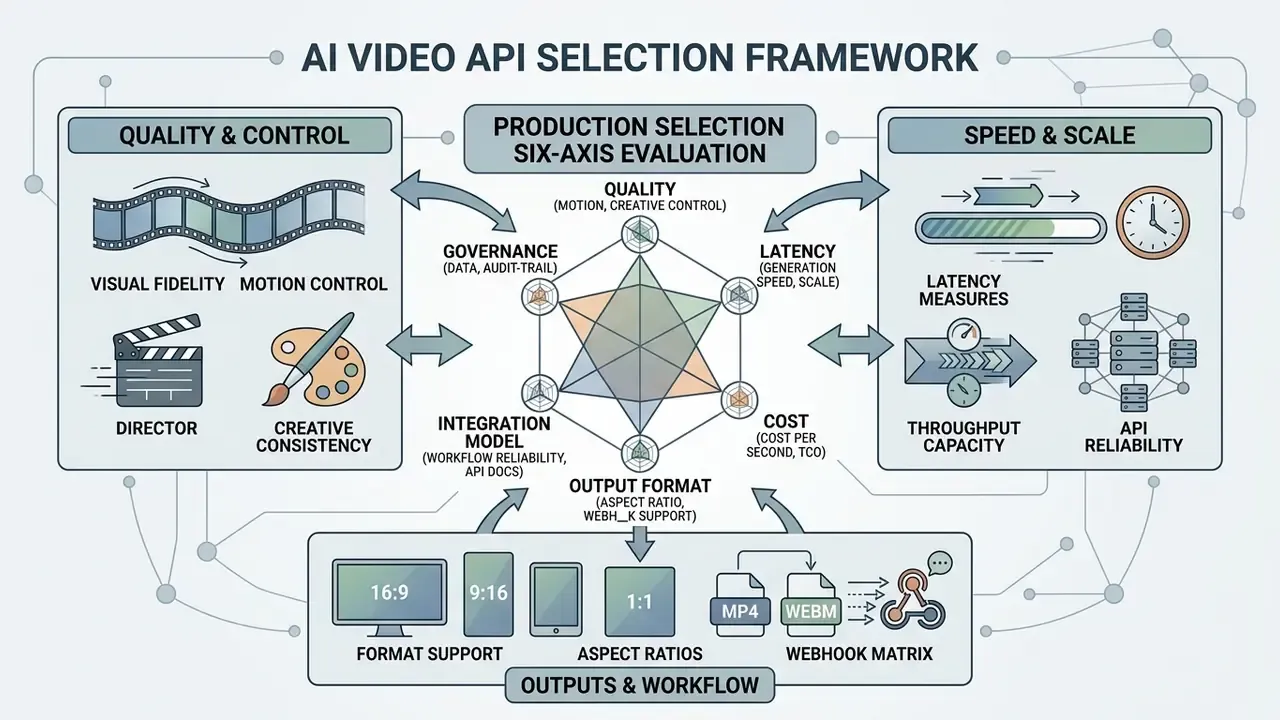
4. Selection Criteria for a Production AI Video Generation API
5. Quality, Motion Control, and Creative Control
Visual quality and creative control are quantified through standardized academic benchmarks, not aesthetic opinion. EvalCrafter measures T2V outputs across visual quality, text-video alignment, motion quality, and temporal consistency (Liu et al., CVPR 2024). VBench expands the framework into 16 hierarchical dimensions, measuring subject consistency, background flickering, dynamic degree, and temporal smoothness (Huang et al., CVPR 2024).
Those spreads matter commercially. A subject-consistency score below the mid-90s shows up as visible identity drift on a spokesperson, a product, or a logo. In regulated communications that is not an aesthetic wobble; it is a compliance defect with a paper trail.
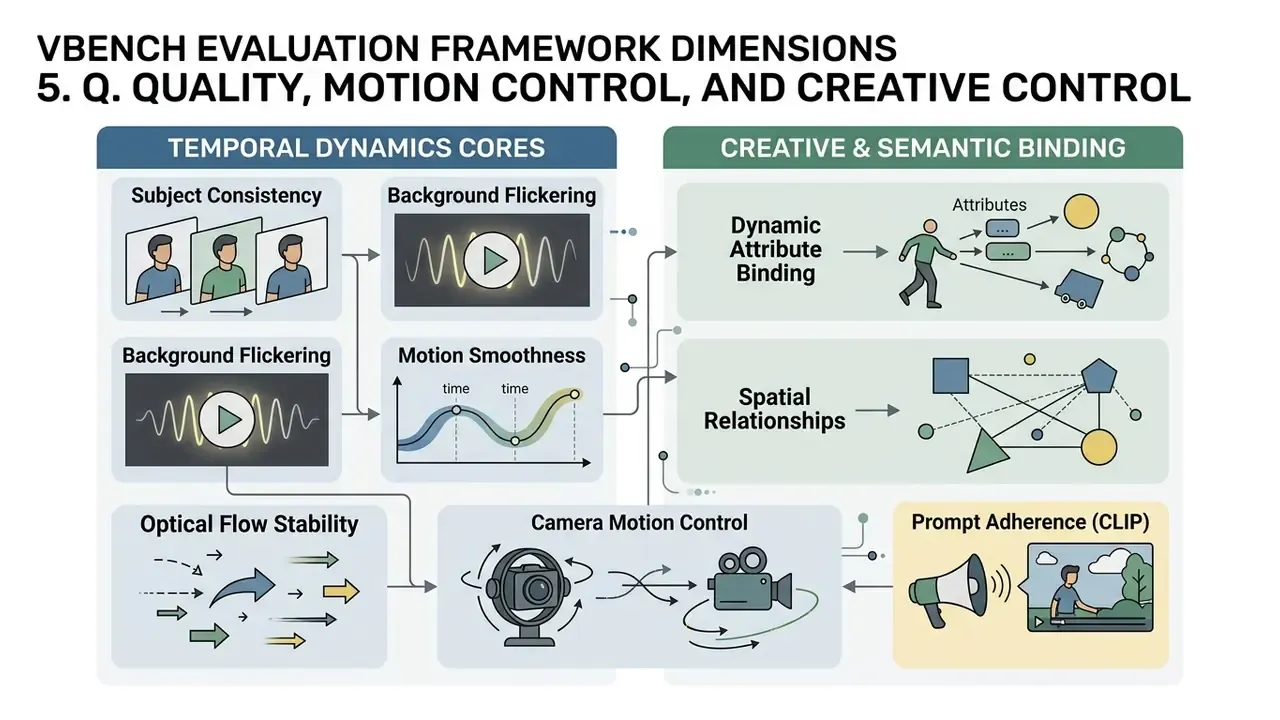
Deterministic creative control depends on explicit parameter inputs exposed by the generation api. The key controls: seed for latent-space reproducibility, guidance_scale (typically 6.0-10.0) for prompt adherence, and explicit camera motion vectors (dolly, pan, tilt, aerial). APIs that expose motion_bucket_id or reference-frame anchors enable the fine-grained motion control brand-governed assets require. Reproducibility is also an audit feature, and this is the part creative teams tend to underrate: a fixed seed plus a stored prompt hash makes a rendered asset re-derivable during a review or a dispute.
6. Generation Speed, Scale, and Workflow Reliability
Production workloads need predictable latency and defensible SLA terms. Generation latency is measured as Time to First Frame (TTFT) or total clip render time. Standard latency tiers group high-throughput workloads into low latency (under 3 seconds), balanced (3-5 seconds), and maximum throughput (up to 10 seconds) processing windows.
Scale means holding concurrency during traffic spikes you did not forecast. High-performing providers support throughput above 20 requests per second while keeping API uptime over 99.5%. To be precise, those figures reflect published reference-architecture sizing targets, and NVIDIA's inference sizing guidance reaches 23.24 RPS at 10x scale. They should be renegotiated per contract rather than assumed, because vendor-specific concurrency ceilings are rarely disclosed publicly. Reliability then rests on automated queue management, failure retries, and transparent error codes when GPU capacity saturates.
Vendor documentation itself admits wide variance. Google's Veo 3.1 documentation states request latency can range from roughly 11 seconds to 6 minutes during peak hours. So capacity planning belongs on p95 and p99 latency observed in your own region and account, not on a marketing median.
7. Output Formats, Aspect Ratio, and Webhook Support
Production video workflows need flexible containers, customizable aspect ratios, and asynchronous job notification. Standard output containers include MP4 (H.264/HEVC), WebM (VP9/AV1), and Apple ProRes for high-bitrate post-production. Custom aspect ratios (16:9, 9:16, 1:1, 4:5) must carry explicit pixel aspect ratio metadata so downstream players do not stretch the frame. Apple's asset guidelines require valid pixel-aspect-ratio (pasp) atoms in ProRes files, while WebM container guidelines expose an AspectRatioType flag with free-resize, keep-aspect, and fixed modes. Mismatched metadata is a leading cause of the "it looked fine in QC" distribution defect.
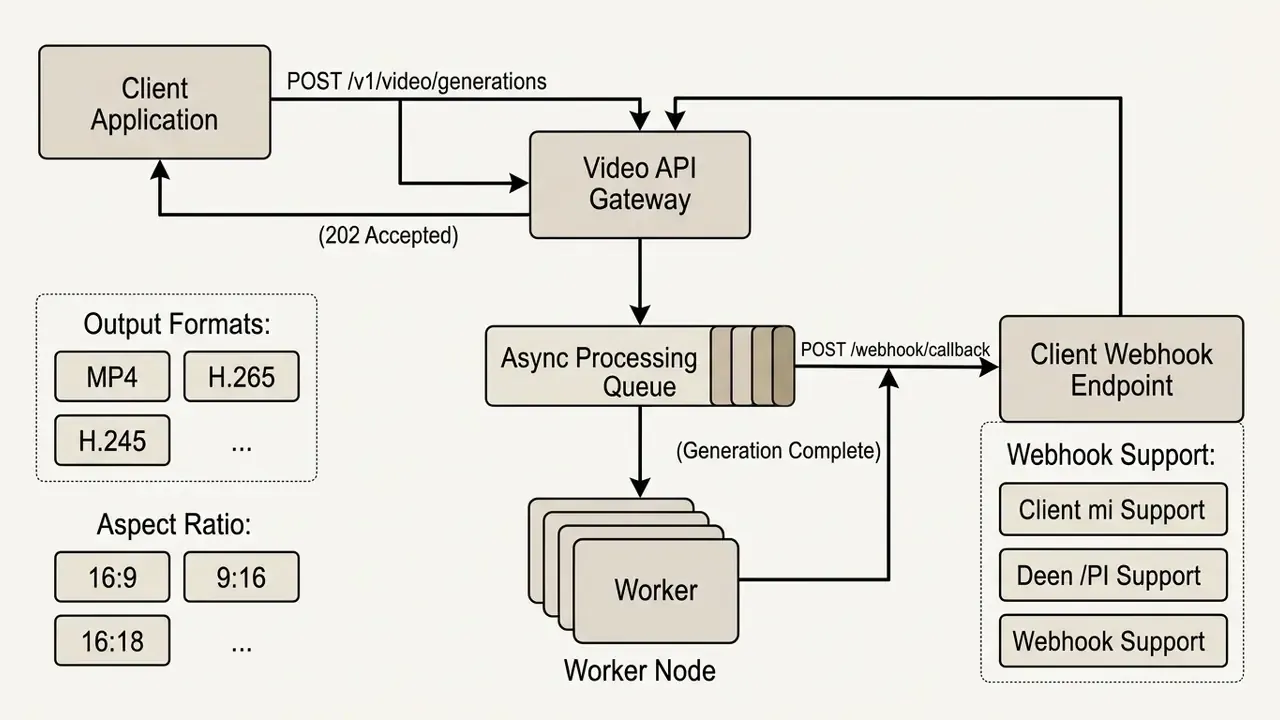
Because generation is computationally heavy, synchronous HTTP connections are impractical in production. Enterprise architectures use asynchronous job creation: the initial call returns a job identifier (task_id), and on completion the platform POSTs to a registered webhook URL, which removes client polling and cuts connection overhead. Webhook endpoints must verify request signatures, enforce idempotency on repeated deliveries, and fall back to polling when a callback misses its expected SLA window.
Matrix of Selection Criteria for Video Generation APIs
| Criterion | Quality & Motion Metrics | Speed & Latency Targets | Cost & Billing Structure | Output Formats & Aspect Ratios | Integration & Webhooks | Enterprise Scale & SLAs | Risk & Data Governance |
|---|---|---|---|---|---|---|---|
| Target Requirement | >95% Subject Consistency; VBench Motion Score >60% | TTFT under 5s; render time under 45s for 5s clip | Per-second pricing; predictable volume discounts | MP4, WebM, ProRes; 16:9, 9:16, 1:1 ratios | Async job submission; HTTPS POST webhooks | 99.5%+ uptime SLA; 20+ RPS concurrency | Contractual zero data retention; training opt-out; SOC 2 Type II; provenance watermark |
| High-Fidelity Tier | Native 4K, 16-bit HDR, ACES color spaces | Render time 45-90s per 5s clip | $0.10-$0.70 per generated second | ProRes 422 HQ, MP4 (H.265); custom ratios | Polling or webhook depending on provider | Dedicated capacity, enterprise security terms | Enterprise agreement, private networking, regional data residency options |
| High-Speed Tier | 720p/1080p SDR, stable subject motion | Render time 15-35s per 5s clip | $0.01-$0.05 per generated second | MP4 (H.264), WebM; standard aspect ratios | Native HTTPS webhooks with signature verification | Multi-tenant dynamic scaling, high RPS limits | Retention terms vary by aggregator; verify per underlying model, not per gateway |
No matching rows Clear one or more filters to restore the matrix.
8. Comparison of the Best AI Video API Alternatives
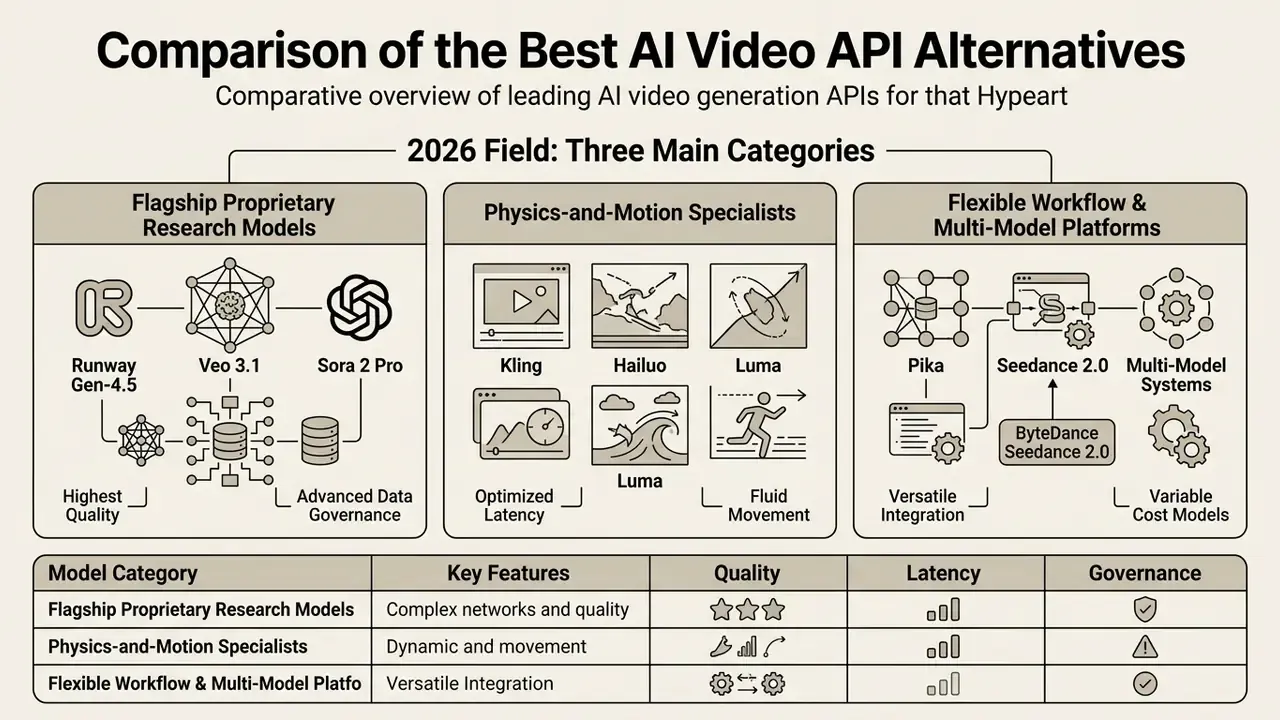
In two sentences: The 2026 field splits into flagship proprietary research models (Runway Gen-4.5, Veo 3.1, Sora 2 Pro), physics-and-motion specialists (Kling, Hailuo, Luma), and multi-shot narrative newcomers (Seedance 2.0). Ranking by a single "best" score is a category error; rank by the constraint that binds your product.
Choosing among ai video api alternatives means contrasting model capabilities on generation quality, maximum clip duration, cost structure, and target use case. Leading solutions split between flagship proprietary research models and versatile multi-model aggregation engines. Teams that want a broader survey of end-user tooling before committing to an endpoint can review comparative rankings of AI video generators alongside the API-level analysis below.
9. Google Veo and Runway for High-Fidelity Generation
"Luma Dream Machine scores 9.48/10 across eight production criteria, versus 8.51 for Sora and 8.43 for Google Veo." AiToolLand, Luma Dream Machine Benchmark, 2026. https://aitoolland.com/luma-dream-machine-ai
Composite scores like that are directional, not decisive. They aggregate criteria weighted by the reviewer, not by your workload. Use them to shortlist, then validate on your own prompt suite.
In a recent financial technology infrastructure deployment, an enterprise media team migrated an automated promotional rendering pipeline to a structured google veo ai video generator implementation. Updated (2026): by adding automated payload validation, schema-level pre-flight checks, and error-handling wrappers with typed retries, the team materially reduced failed rendering calls and stabilized brand compliance across multi-channel distribution. The exact reduction is internal and not independently published, so it is reported here as a qualitative outcome rather than a benchmarked percentage.
10. Kling, Luma, and Hailuo for Motion and Longer Videos
Those figures show "realistic physics" is only partly solved. Even leading models fail roughly one mechanics prompt in five, so any claim of physical accuracy in a customer-facing video should be human-reviewed rather than assumed. One in five. That is not a rounding error in a regulated communication.
Luma Dream Machine, built on the Ray 3.14 architecture, offers advanced physical reasoning and post-production capabilities. Luma supports extended clip generation up to 30 seconds through sequential continuation endpoints, currently the longest documented single-clip ceiling among mainstream providers, and readers evaluating tooling around these endpoints can consult the broader AI video generator overview for commercial-use context. Luma also offers native 16-bit HDR color profiles, ACES color space alignment, and EXR export, which makes it unusually compatible with professional grading tools such as DaVinci Resolve.
11. Pika, Seedance, and Multi-Model Platforms for Flexible Workflows
Pika's API targets short-form animation with rapid rendering and agent-driven workflows. Its format is optimized for programmatic parsing by LLMs and automated tools, rendering 3-second clips at 1080p, with 1-10 second generation supported on current tiers at roughly $0.03-$0.08/sec. Advanced consumer features such as lip-syncing, Pikaffects, and specialized sound effects stay restricted on the developer endpoint, and generated assets are retained for only 30 days. Hybrid pipelines therefore have to export and archive outputs to owned storage, ideally in the same job that receives the callback.
Comparative Overview of Leading AI Video Generation APIs
| Provider / Model | Input Modalities | Max Clip Duration & Max Res | Motion & Quality Characteristics | API Billing Model & Est. Cost | Webhook & Async Support | Data Retention & Privacy Tier | Primary Production Use Cases |
|---|---|---|---|---|---|---|---|
| Google Veo 3.1 | Text, Image, Reference Video | 8 seconds @ 4K (extendable via chaining) | High photorealism; native synced audio; SynthID watermarking | $0.05-$0.60 per output second | Async via Gemini API callbacks | Enterprise cloud terms; regional residency and VPC options via Google Cloud | High-end marketing, commercial trailers, broadcast media |
| Runway Gen-4.5 | Text, Image, Video Motion | 10 seconds @ 4K (incl. upscale) | #1 Elo (~1,247); VFX, relighting, character dialogue | ~$0.12 per second (legacy tiers $0.50-$1.00 / 5s clip) | Polling / direct platform API | Commercial terms on paid plans; verify training opt-out contractually | Creative agency production, VFX pre-visualization |
| Kling 3.0 / 3.1 | Text, Image, Motion Transfer | 10-15 seconds @ up to 4K | Strong dynamic action, multi-camera consistency, lip-sync | $0.07-$0.14 per second | Native webhook callbacks supported | Free tier non-commercial and watermarked; paid tiers grant commercial rights | Sports highlights, action marketing, dynamic social ads |
| Luma Ray 3.14 | Text, Image, Extension | 30 seconds (via Extend) @ 1080p | 16-bit HDR, ACES color, physical logic, EXR export | ~$0.08/sec ($0.30-$0.60 per 5s clip) | Polling / aggregator webhook support | Credit-based commercial licensing; review retention terms per plan | Professional cinema, post-production VFX, hero ads |
| Hailuo 2.3 Fast (MiniMax) | Text, Image Conditioning | 6-10 seconds @ 1080p (1080p capped at 6s) | Physics simulation (fluids, mechanics); face consistency | ~$0.01-$0.03 per second | Async processing endpoints | Consumer-oriented defaults; enterprise terms require direct agreement | High-volume social batches, realistic product physics, MVP prototyping |
| Seedance 2.0 (ByteDance) | Text, Image (up to 12 refs), Audio, Video | 15-20 seconds @ 2K | Multi-shot storytelling; jointly generated audio in 8+ languages | ~$0.14 per second | Async generate/poll plus aggregator webhooks | Verify regional data-transfer terms before regulated use | Multilingual advertising, short-form drama, localized product stories |
| Pika API | Text, Image | 1-10 seconds @ 1080p | Fast short-form rendering; agent-legible API format | ~$0.03-$0.08 per second | Polling / limited webhook coverage | 30-day asset retention; export required for archival | Social media micro-loops, UI mockups, rapid prototyping |
| OpenAI Sora 2 / 2 Pro | Text, Image, Character reuse | 20 seconds @ 1080p | Cinematic quality; edits, extensions, characters | $0.10-$0.70 per second | Webhooks documented | Deprecated. Shutdown 24 Sep 2026; migrate now | Legacy pipelines pending migration |
12. Which AI Video APIs to Choose for a Specific Use Case
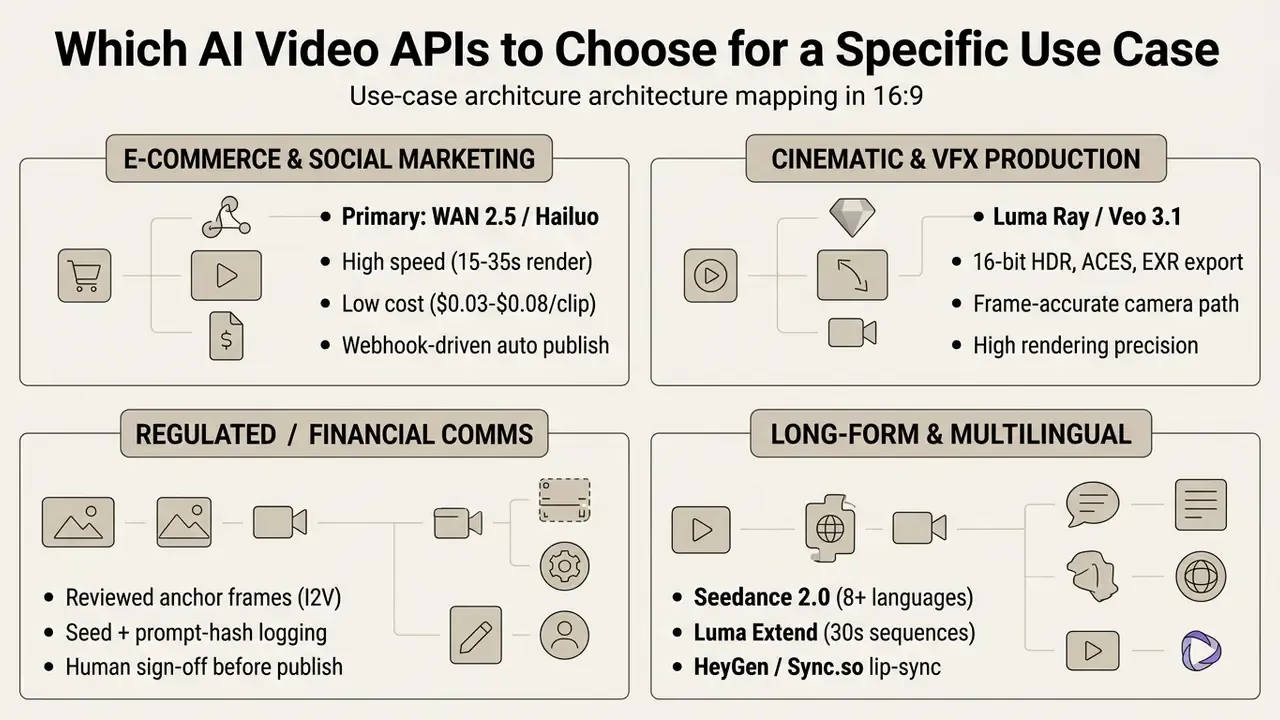
In two sentences: Model selection should be reverse-engineered from the delivery surface, whether that is a social feed, a product card, a broadcast master, or a regulated customer communication. Each surface has a different tolerance for cost, latency, and error, and therefore a different optimal endpoint.
Deploying the right engine means matching model profiles to business objectives. Selecting an API without analyzing operational requirements invites cost inflation, rendering failures, or a quality mismatch nobody notices until distribution.
14. APIs for Creative Teams and Cinematic Production
Film studios, VFX teams, and high-end agencies need precise camera control, high dynamic range, and pipeline integration. Luma Dream Machine leads here thanks to native ACES color space support, 16-bit HDR depth, and EXR export, which drop straight into post-production suites. Teams standardizing their downstream stack should align those exports with their chosen video-editing tools before scaling volume.
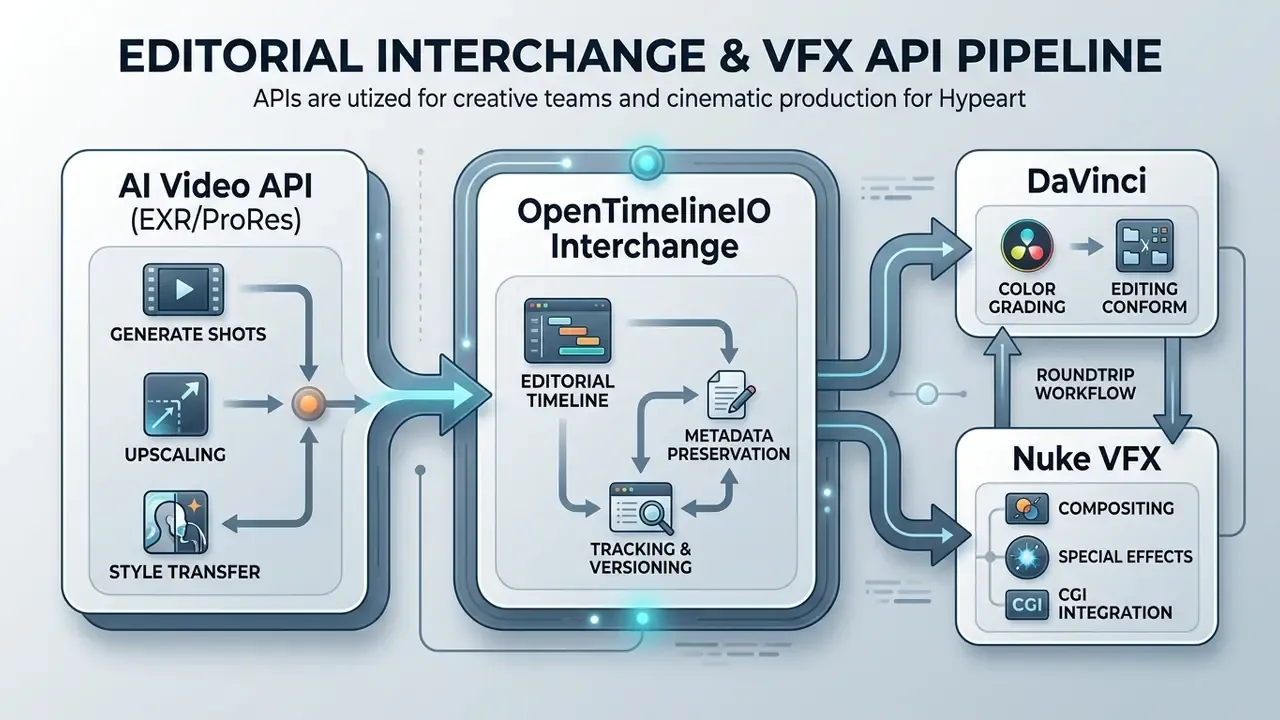
Cinematic workflows rely on standardized interchange formats such as OpenTimelineIO (OTIO), described in its own documentation as "an interchange format and API for editorial cut information," to pass cut lists, timing data, and camera metadata between generation engines and non-linear editing software. Combining Veo 3.1's 4K output with OTIO interchange enables automated pre-visualization and asset assembly without rebuilding timelines by hand. On-set metadata practice is converging too: the VES On-Set VFX Data Collection and Usage Guide (v1.1.0, 2026) consolidates how production and post vendors exchange VFX data, which is what makes AI-generated plates auditable inside a conventional pipeline.
The practical implication for creative control: no single scalar score predicts whether a model renders your specific composition. Spatial relationship accuracy and motion binding have to be tested independently on representative shots.
14a. APIs for Regulated Industries: Banking Communications, Onboarding, and Internal Training
Banks, insurers, and healthcare organizations use generative video for a narrower, more controlled set of tasks than media companies, and the selection logic changes accordingly. Four patterns recur.
Across all four the governance pattern is identical: approved input assets, no PII in payloads, logged seeds and prompt hashes, a named human approver before publication, and retention of the rendered asset alongside its generation metadata. Dull, repeatable, defensible.
15. APIs for Long-Form Storytelling and Multilingual Audio
Long-form production requires holding character consistency and synchronization across sequential clips. Models supporting frame-anchored continuation, such as Luma's Extend feature, enable multi-clip rendering up to 30 seconds per request without visual jumping, while Seedance 2.0 handles 15-20 second multi-shot sequences with jointly generated audio across eight or more languages in a single call.
For automated dubbing and lip-syncing, specialized avatar and speech alignment APIs run alongside the primary diffusion backend. HeyGen's Lipsync Precision mode provides frame-accurate mouth alignment on long-form video and runs asynchronously with a callback_url; Sync.so processes source files of 30 minutes or longer in one asynchronous request without manual splitting and stitching; VEED's lip-sync API accepts clips up to 10 minutes and files up to 5 GB, returning output at source resolution. HeyGen's Video Agent can also generate avatar videos from a single text prompt, selecting avatar, voice, and style automatically, which is useful for internal communications at volume.
16. Enterprise Video Workflows, Governance, and Scaling Generation
Enterprise deployments in regulated sectors, including financial services, healthcare, and public technology, have to comply with strict AI risk governance frameworks. NIST guidance (AI 600-1 Generative AI Profile) requires organizations to maintain an inventory of generative models, log output data provenance, and establish incident response protocols for third-party API dependencies (NIST AI Risk Management Framework, 2024). NIST's 2026 initial public draft SP 800-239 adds a zone-based reference architecture for AI data centers, and SP 800-228 covers API protection for cloud-native systems. Both matter when a video endpoint sits inside a regulated network perimeter.
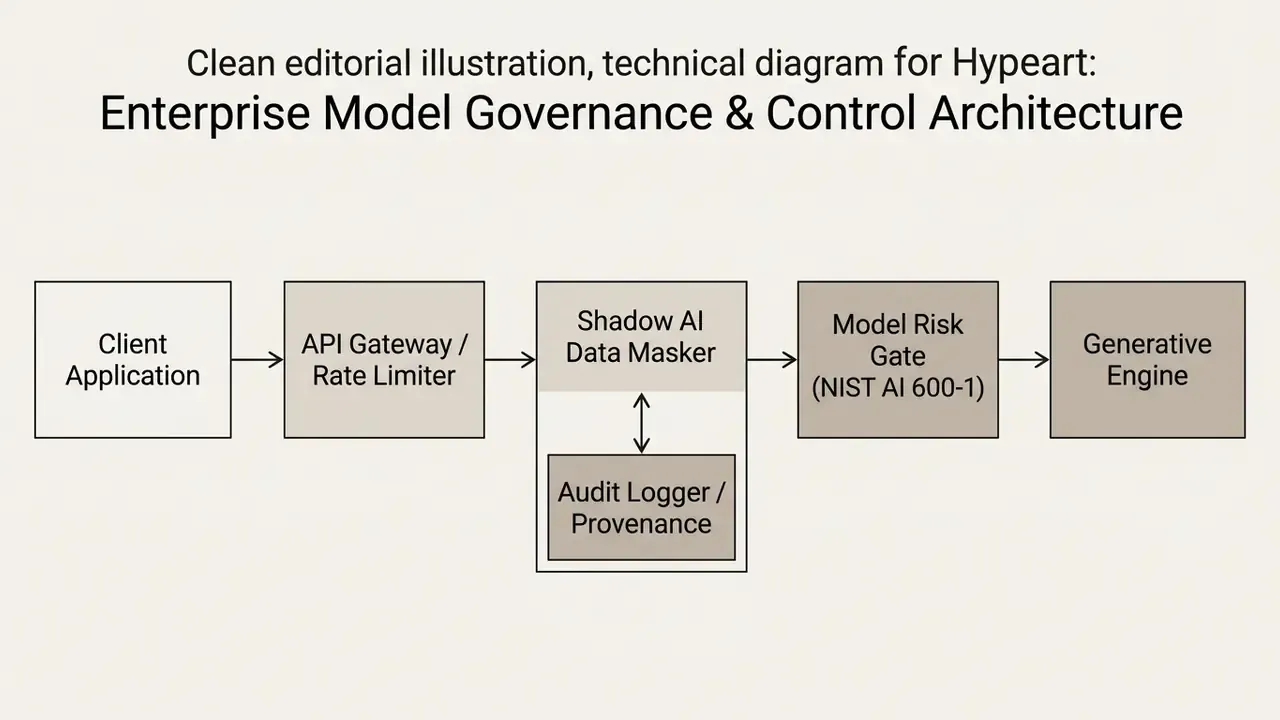
To prevent shadow AI usage and data leakage, enterprise API gateways must scrub sensitive fields from outgoing payloads, verify vendor retention policies, and enforce role-based access control. Automated audit trails on every programmatic request are what make compliance with internal model risk management policy demonstrable rather than merely asserted.
Audit trail specification (updated 2026). Supervisory expectations for third-party models, the family of guidance that includes the Federal Reserve and OCC SR 11-7 approach to model risk management alongside NIST AI 600-1 provenance requirements, translate into a concrete logging schema. Every generation request should persist:
| Field | Purpose in review or audit |
|---|---|
prompt_sha256 | Immutable evidence of the exact instruction issued, without storing raw text that may contain sensitive content |
input_asset_hash plus approval ID | Links the anchor image or reference video to its compliance sign-off record |
model_id, model_version, provider | Third-party model inventory reconciliation; identifies affected assets when a vendor changes weights |
seed, guidance_scale, motion_bucket_id | Reproducibility, allowing re-derivation of the asset during challenge or dispute |
output_hash, watermark/provenance flag | Detects tampering; supports synthetic-media disclosure obligations |
| Automated screening results (safety, brand, text-accuracy detector scores) | Demonstrates that a control operated, not merely that a policy existed |
| Human reviewer ID, timestamp, decision | Establishes accountable ownership before publication |
| Retention and deletion event log | Evidences data-lifecycle compliance with the vendor's retention tier |
Mapping academic quality metrics onto institutional risk is the step most teams skip. A VBench subject-consistency drop is a brand-integrity risk. A text-rendering failure inside a generated video card is a potential misstatement of product terms. A physical-plausibility failure in a customer-facing simulation is a misleading-claims risk. Setting numeric thresholds on those metrics, and failing the pipeline automatically when they are breached, converts a subjective creative review into a documented, testable control. That conversion is the entire governance argument in one sentence.
This section is general information and does not replace advice from qualified information-security, legal, or AI risk specialists. Nothing here constitutes legal, regulatory, or compliance advice; verify all obligations with counsel and your own risk functions before deployment.
17. Pricing and Developer Economics: How to Compare Video Generation Cost
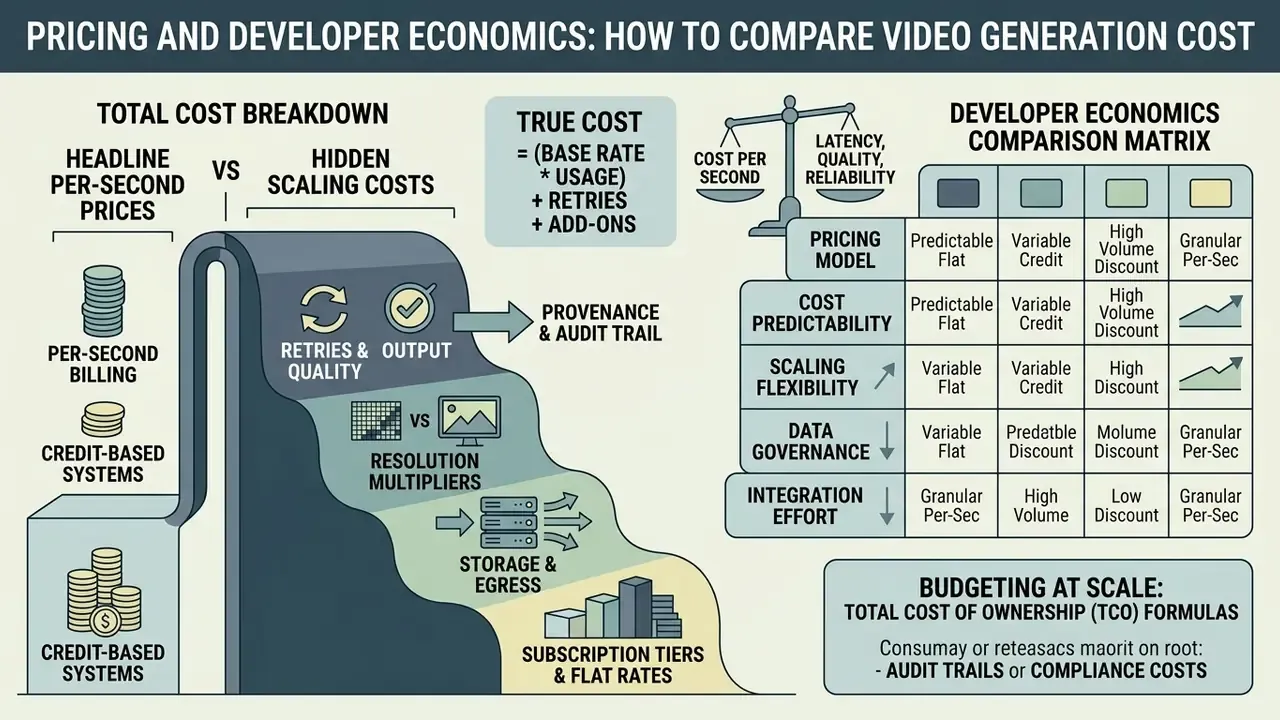
In two sentences: Headline per-second prices are the smallest component of true cost; retries, resolution multipliers, storage, and egress dominate at scale. Normalize every vendor to one unit, cost per usable second at a fixed resolution, before comparing anything.
Calculating total cost of ownership for video APIs requires accounting for usage metrics, retry rates, and infrastructure overhead. Comparing raw unit prices without failure rates and bandwidth ingress and egress produces budgets that miss. Enterprise TCO frameworks published in 2026 recommend modeling direct API spend plus the hidden multipliers, network egress, maintenance, utilization, retries, and engineer-weeks, on a per-scenario unit-cost sheet rather than in one blended average.
18. Cost per Second, Credits, and Flat Pricing
Vendor billing falls into three structures.
- Per-second billingcharges track the precise duration of synthesized output (for example $0.10/sec for Sora 2, $0.08/sec for Luma Ray 2, $0.05/sec for Veo 3.1 Lite, ~$0.12/sec for Runway Gen-4.5, ~$0.01-$0.03/sec for Hailuo 2.3 Fast).
- Credit-based systemsorganizations prepay credit packages that burn down at variable rates depending on resolution, step count, and model tier. Luma's published rates, for instance, consume 100 credits per 5-second 720p generation and 300 credits per 10-second clip on Ray 3.2, which means credit burn is non-linear in duration. Worth modeling before you commit a quarter's budget.
- Flat-rate and subscription tiersfixed monthly fees, such as ModelsLab's $149/month tier or enterprise tiers starting near $100/month that bundle direct API access, custom configuration, and usage monitoring, grant fixed quotas or unlimited use across selected model subsets. Free tiers exist, but most carry watermarks and non-commercial terms, so they belong in evaluation, not production.
When handling large video files, engineering budgets also need ancillary storage, bandwidth compression, and post-processing lines. Teams frequently use optimized file tooling and specialized video compressors to cut CDN distribution bandwidth and storage overhead after receiving raw API outputs.
19. How to Budget for Retries, Output Quality, and Scale
Realistic developer economics start with modeling failure. If an API shows a 20% retry rate from prompt misalignment or motion distortion, effective cost per usable asset rises proportionally. Provider documentation confirms retries bill as new tasks: platforms exposing an enable_retry flag submit and charge each attempt separately.
The baseline budget formula:
Where:
- = number of required production video assets.
- = base API cost from output duration and resolution multipliers.
- = average retry rate (for example for a 20% failure rate).
Developer Economics and Pricing Comparison Matrix
| Provider / Model Tier | Billing Basis | Cost @ 720p (5s Clip) | Cost @ 1080p (5s Clip) | Cost @ 4K (5s Clip) | Estimated Retry Rate () | Effective Cost per Usable Asset (incl. Retries) |
|---|---|---|---|---|---|---|
| OpenAI Sora 2 (deprecated) | Per-second output | $0.50 ($0.10/s) | $3.50 ($0.70/s Pro) | N/A | ~15% | $0.58 (720p) / $4.02 (1080p) |
| Google Veo 3.1 Fast | Per-second output | $0.50 ($0.10/s) | $0.60 ($0.12/s) | $1.50 ($0.30/s) | ~12% | $0.56 (720p) / $0.67 (1080p) |
| Google Veo 3.1 Lite | Per-second output | $0.25 ($0.05/s) | $0.40 ($0.08/s) | N/A | ~15% | $0.29 (720p) / $0.46 (1080p) |
| Runway Gen-4.5 | Per-second output | $0.60 ($0.12/s) | $0.60 ($0.12/s) | Upscale-dependent | ~10% | $0.66 (720p) / $0.66 (1080p) |
| Seedance 2.0 | Per-second output | ~$0.70 ($0.14/s) | ~$0.70 ($0.14/s) | N/A (2K max) | ~15% | ~$0.81 per 5s multi-shot sequence |
| LTX-2.5 Fast | Per-second output | $0.45 ($0.09/s) | $0.65 ($0.13/s) | $1.50 ($0.30/s) | ~18% | $0.53 (720p) / $0.77 (1080p) |
| Hailuo 2.3 Fast | Per-second output | $0.05-$0.15 ($0.01-$0.03/s) | $0.15 ($0.03/s) | N/A | ~22% | $0.06-$0.18 (720p) / $0.18 (1080p) |
| WAN 2.5 (Aggregated) | Per-call multiplier | $0.05 (flat) | $0.12 (flat) | N/A | ~25% | $0.06 (720p) / $0.15 (1080p) |
| Kling 3.1 (Direct) | Per-clip / credits | $0.10 (derived) | $0.25 (derived) | Upscale-dependent | ~15% | $0.11 (720p) / $0.29 (1080p) |
20. How to Migrate to an Alternative Video API Without Stopping the Product
In two sentences: Zero-downtime migration means running both providers behind one router while an automated quality gate proves parity. The Strangler Fig pattern, incremental traffic shifting with a rehearsed reversible rollback, is the documented approach in both cloud-vendor migration guidance and API-decomposition patterns.
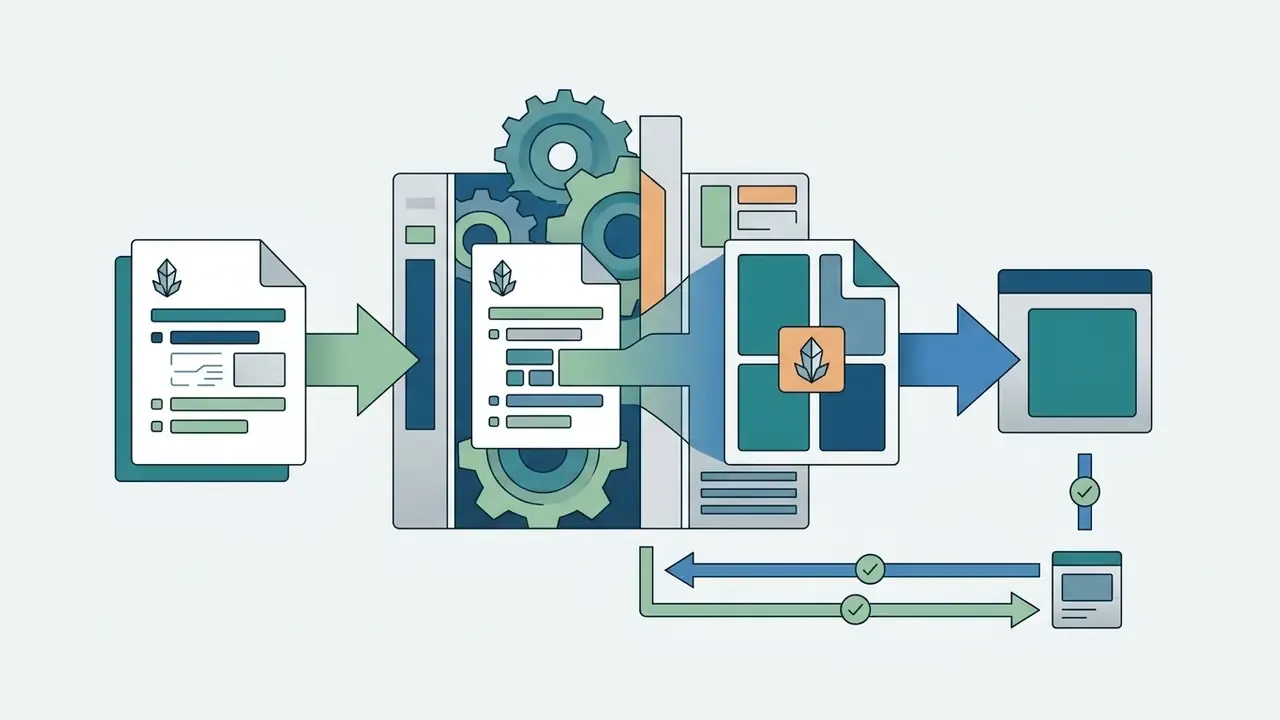
Migrating production systems between video generation providers requires a zero-downtime integration strategy. Strangler Fig lets engineering teams shift traffic incrementally while validating output quality and system stability. Teams whose downstream editing steps also change during migration may need to re-tool post-processing; comparative reviews of free video editing software help scope that dependency before cutover.
21. Endpoint Migration Map: API Key, Endpoints, and Payloads
A migration plan begins with mapping legacy endpoint parameters onto target schemas. Developers map authentication schemes, REST or gRPC paths, and JSON payload fields.
// LEGACY PAYLOAD (Provider A)
{
  "text_prompt": "Cinematic aerial shot of coastline",
  "clip_length": 5,
  "aspect_ratio": "16:9"
}
// TARGET MAPPED PAYLOAD (Provider B / Aggregator)
{
  "model_id": "kling-v3-1",
  "input": {
    "prompt": "Cinematic aerial shot of coastline",
    "duration": 5,
    "ratio": "16:9",
    "seed": 1337,
    "guidance_scale": 7.5,
    "webhook_url": "https://api.enterprise.com/v1/callbacks/video"
  }
}
When integrating gRPC endpoints, developers use Protocol Buffer definitions (.proto) to define HTTP-to-gRPC transcoding rules, mapping authentication tokens into header metadata keys such as x-api-key. Google's AIP-127 transcoding conventions, with path templates like /v1/{parent=publishers/*}/books and an explicit body binding, are the canonical basis for a formal endpoint migration map. The json_name field option lets you preserve legacy JSON key names while the underlying message schema changes.
Executable migration harness (updated 2026). The client below submits a generation job, registers a webhook, and degrades gracefully to polling where a provider does not deliver callbacks. It is deliberately provider-agnostic: only MODEL_MAP changes when you switch backends.
"""
Provider-agnostic AI video API migration harness.
Python 3.11+, httpx. Submit -> webhook (preferred) -> poll fallback.
"""
import asyncio
import hashlib
import json
import logging
from dataclasses import dataclass, field
import httpx
log = logging.getLogger("video-migration")
BASE_URL = "https://api.aggregator.ai/v1"
GENERATE = f"{BASE_URL}/generations"
# Single switch point: remap logical tiers to concrete vendor model IDs.
MODEL_MAP = {
    "quality":  "runway/gen-4.5",
    "balanced": "kling/kling-3.1",
    "cheap":    "minimax/hailuo-2.3-fast",
    "narrative": "bytedance/seedance-2.0",
}
@dataclass
class JobResult:
    task_id: str | None = None
    success: bool = False
    model: str = ""
    prompt_sha256: str = ""
    seed: int | None = None
    error: str | None = None
    raw: dict = field(default_factory=dict)
def audit_fingerprint(prompt: str) -> str:
    """Persist a hash, not raw prompt text, for audit-trail compliance."""
    return hashlib.sha256(prompt.encode("utf-8")).hexdigest()
async def submit_generation(
    client: httpx.AsyncClient,
    api_key: str,
    prompt: str,
    webhook_url: str,
    tier: str = "balanced",
    duration: int = 5,
    ratio: str = "16:9",
    seed: int | None = 1337,
) -> JobResult:
    model_id = MODEL_MAP[tier]
    payload = {
        "model_id": model_id,
        "input": {
            "prompt": prompt,
            "duration": duration,
            "ratio": ratio,
            "guidance_scale": 7.5,
            "motion_bucket_id": 127,
            "seed": seed,
            "webhook_url": webhook_url,
        },
    }
    headers = {
        "Authorization": f"Bearer {api_key}",
        "Content-Type": "application/json",
        "Idempotency-Key": audit_fingerprint(prompt + model_id),
    }
    try:
        r = await client.post(GENERATE, json=payload, headers=headers)
        r.raise_for_status()
        body = r.json()
        return JobResult(
            task_id=body.get("task_id") or body.get("id"),
            success=True,
            model=model_id,
            prompt_sha256=audit_fingerprint(prompt),
            seed=seed,
            raw=body,
        )
    except httpx.HTTPStatusError as exc:
        return JobResult(
            success=False,
            model=model_id,
            prompt_sha256=audit_fingerprint(prompt),
            error=f"{exc.response.status_code}: {exc.response.text[:200]}",
        )
    except httpx.RequestError as exc:
        return JobResult(success=False, model=model_id, error=f"network: {exc}")
async def poll_until_done(
    client: httpx.AsyncClient, api_key: str, task_id: str,
    interval: float = 5.0, timeout: float = 420.0,
) -> dict:
    """Fallback for providers without webhook delivery (e.g. polling-only APIs)."""
    headers = {"Authorization": f"Bearer {api_key}"}
    waited = 0.0
    while waited < timeout:
        r = await client.get(f"{GENERATE}/{task_id}", headers=headers)
        r.raise_for_status()
        body = r.json()
        if body.get("status") in {"succeeded", "failed", "canceled"}:
            return body
        await asyncio.sleep(interval)
        waited += interval
    return {"status": "timeout", "task_id": task_id}
async def batch_migrate(
    api_key: str,
    prompts: list[str],
    webhook_url: str,
    tier: str = "balanced",
    concurrency: int = 4,
) -> list[JobResult]:
    """Replay a legacy prompt suite against the target provider, concurrency-capped."""
    sem = asyncio.Semaphore(concurrency)
    results: list[JobResult] = []
    async with httpx.AsyncClient(timeout=httpx.Timeout(30.0)) as client:
        async def run(idx: int, prompt: str) -> None:
            async with sem:
                res = await submit_generation(
                    client, api_key, prompt, webhook_url, tier=tier
                )
                status = "OK" if res.success else "FAIL"
                log.info("[%d/%d] %s | %s | %s",
                         idx + 1, len(prompts), status, res.model,
                         res.task_id or res.error)
                results.append(res)
        await asyncio.gather(*(run(i, p) for i, p in enumerate(prompts)))
    ok = sum(1 for r in results if r.success)
    log.info("Migration submitted: %d/%d accepted", ok, len(prompts))
    # Emit audit records for the model-risk log described in section 16.
    for r in results:
        log.info("AUDIT %s", json.dumps({
            "task_id": r.task_id, "model": r.model,
            "prompt_sha256": r.prompt_sha256, "seed": r.seed,
            "accepted": r.success, "error": r.error,
        }))
    return results
if __name__ == "__main__":
    logging.basicConfig(level=logging.INFO)
    legacy_suite = [
        "Cinematic aerial shot of a coastline at golden hour",
        "Slow dolly-in on product packaging, granite surface, soft key light",
        "Underwater reef, volumetric light shafts, gentle current",
    ]
    asyncio.run(batch_migrate(
        api_key="sk-...",
        prompts=legacy_suite,
        webhook_url="https://api.enterprise.com/v1/callbacks/video",
        tier="balanced",
    ))
Because most gateways accept the same envelope shape, switching providers reduces to changing one MODEL_MAP entry while base_url and credentials stay constant. That property is the practical value of an aggregation layer during a forced migration such as the Sora sunset.
22. Verifying Output Quality Before Go-Live
Before a production cutover, teams run automated A/B testing and perceptual quality verification on a fixed test prompt suite. Verification uses objective standards, ITU-T P.910 and VBench scores among them, to confirm the new API clears quality baselines. ITU-T P.910 and P.913 specify non-interactive subjective assessment for one-way video, including controlled comparison across devices and viewing environments, while ITU-R BT.1885 established the source-versus-processed diagnostic comparison model that automated pipelines now emulate programmatically.
In one automated infrastructure optimization initiative, an enterprise video processing service updated its rendering backends behind a canary deployment. Running automated side-by-side quality evaluations on 100 test prompts, the team confirmed visual parity before rerouting live traffic and avoided a service interruption. Unglamorous work. It is also the reason nobody had to write an incident report.
Migration Workflow Execution Specification
To execute a backend migration without service disruption, follow a structured five-stage pipeline.
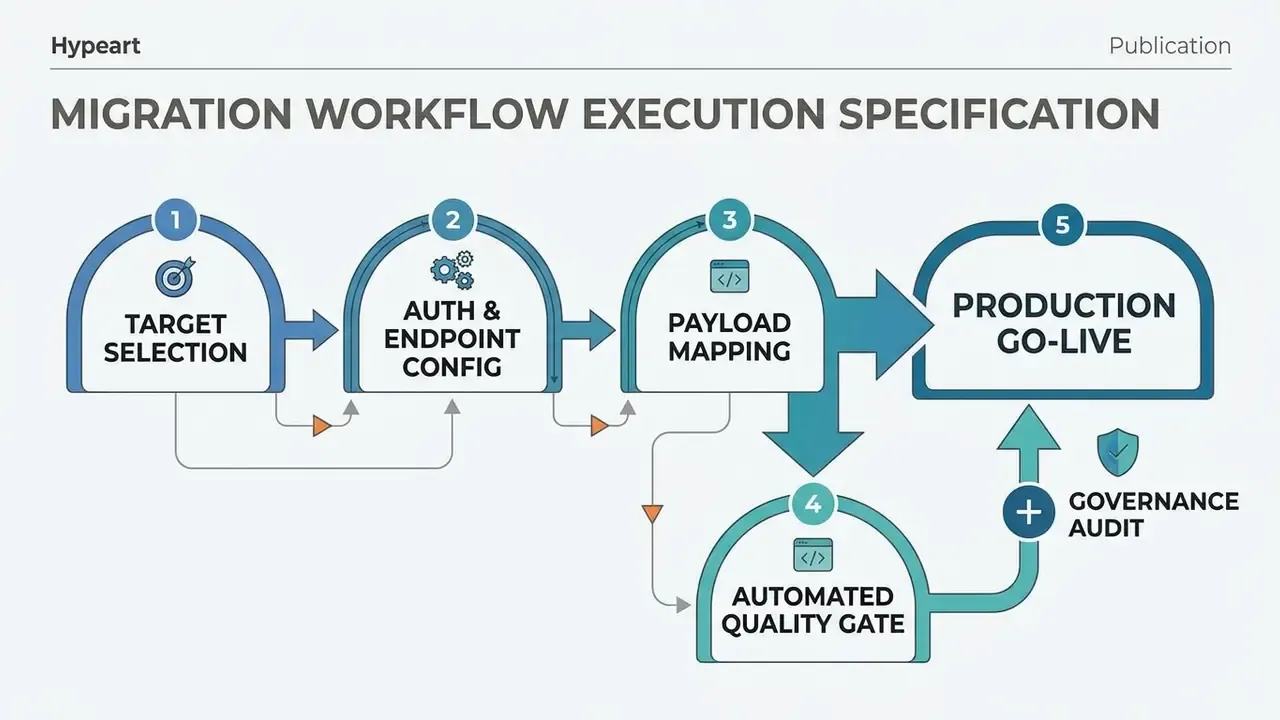
seed reproducibility.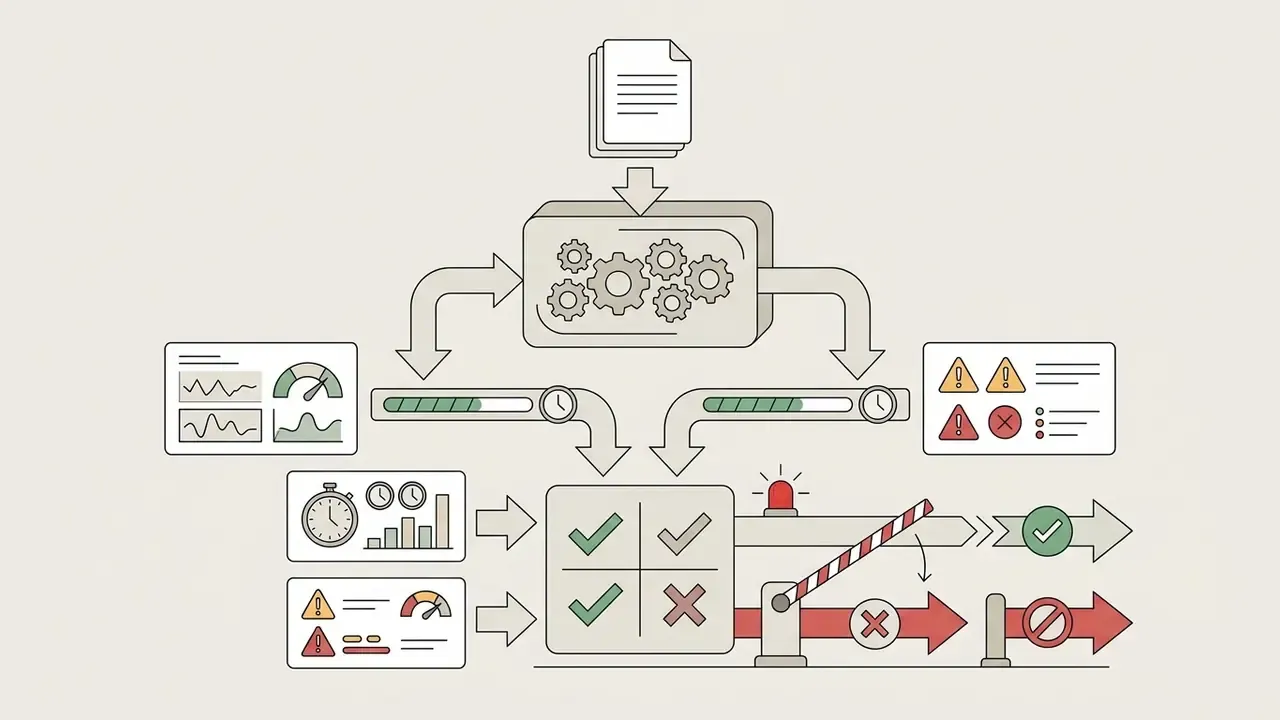
23. Recommendations for Choosing an AI Video API Alternative
In two sentences: Pick the constraint that would kill the product if unmet, whether fidelity, latency, or unit cost, and optimize for it explicitly. Established operations-strategy sequencing puts quality and dependability first, reaction speed second, and cost efficiency last, which is a defensible default for regulated environments.
Sound ai video api alternatives recommendations start with clear operational priorities. Decide whether the application demands maximum visual quality, minimal latency, or the lowest defensible unit cost. Trying to win all three at once is how pilots stall.
24. When to Choose Quality-First, Speed-First, or Cost-First Models
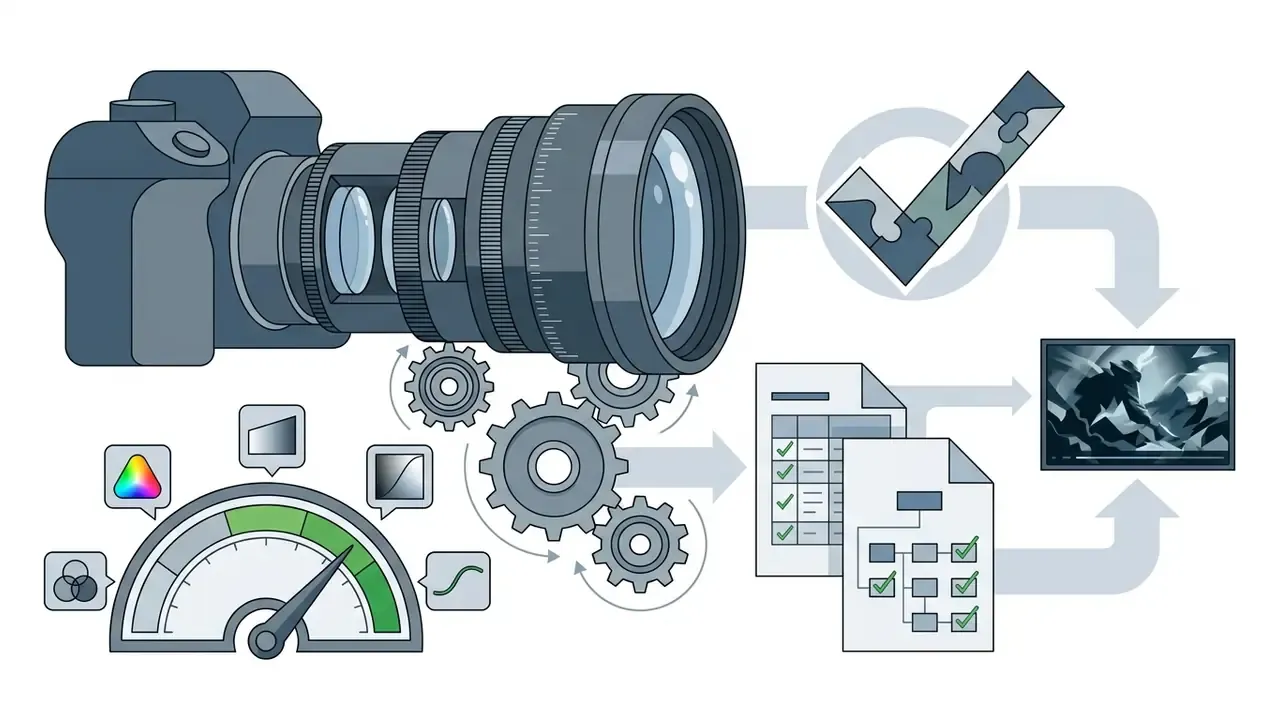
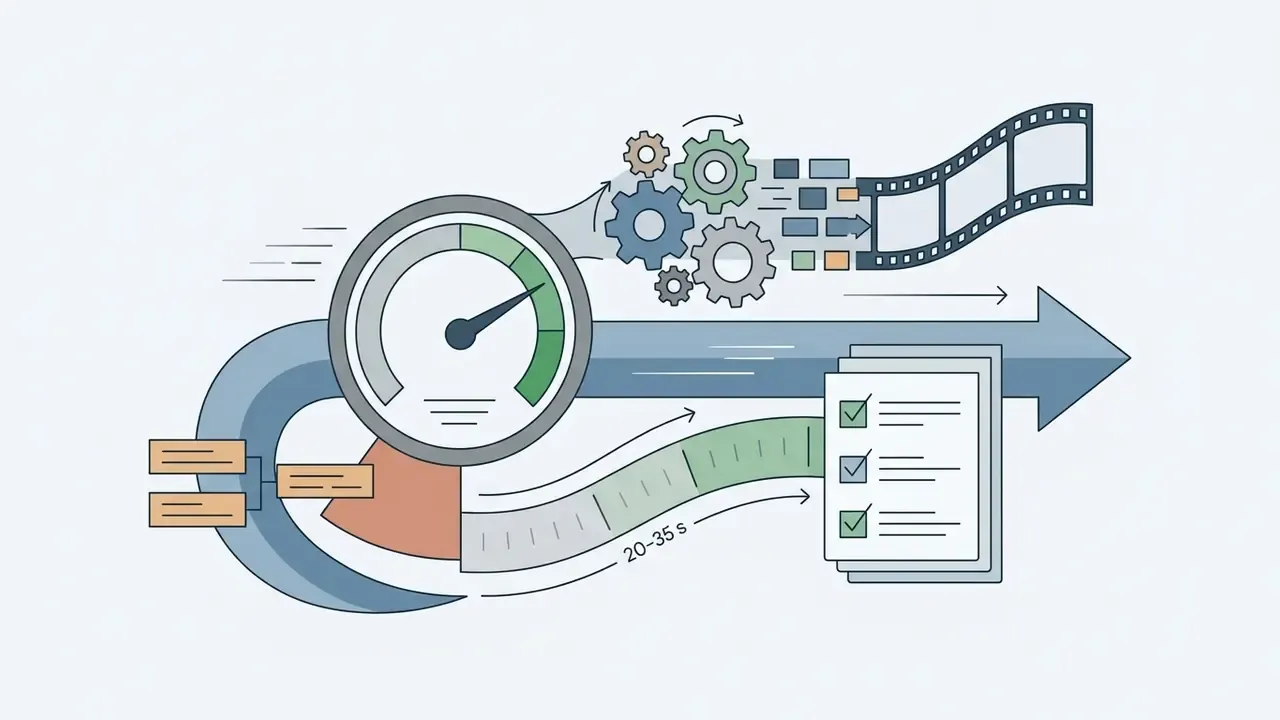
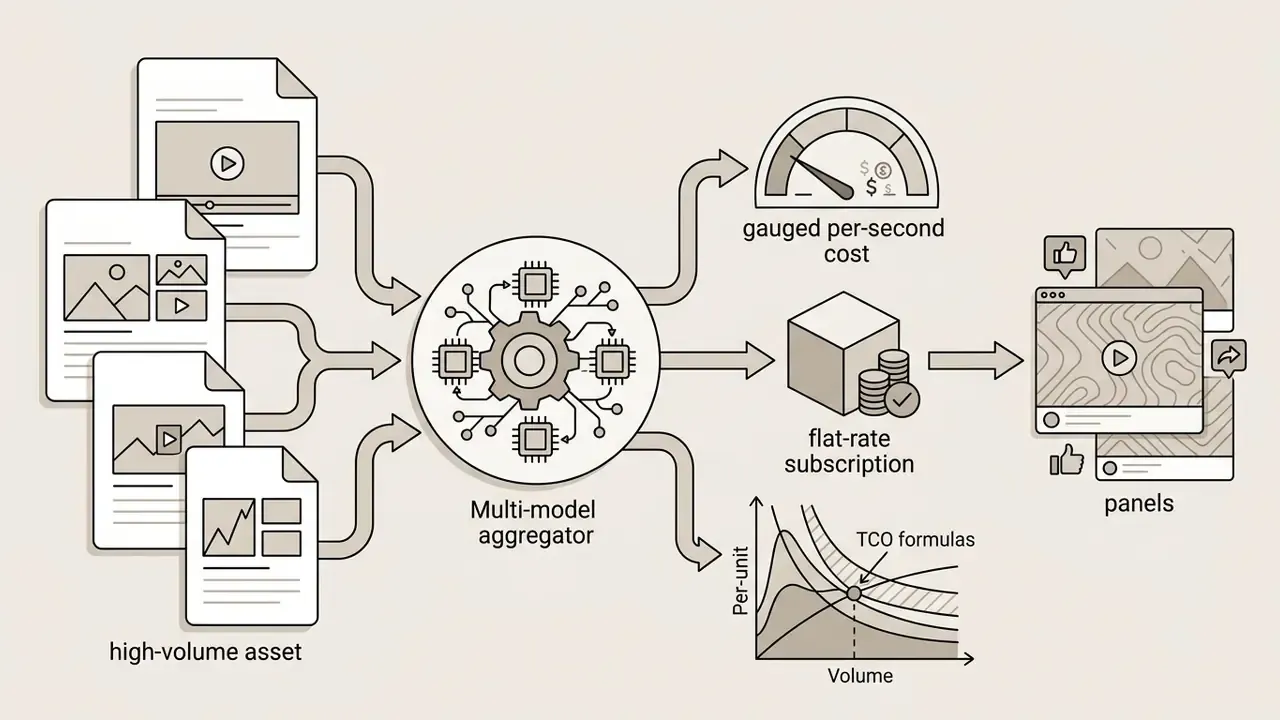
Prioritize the trade-offs according to business requirements:
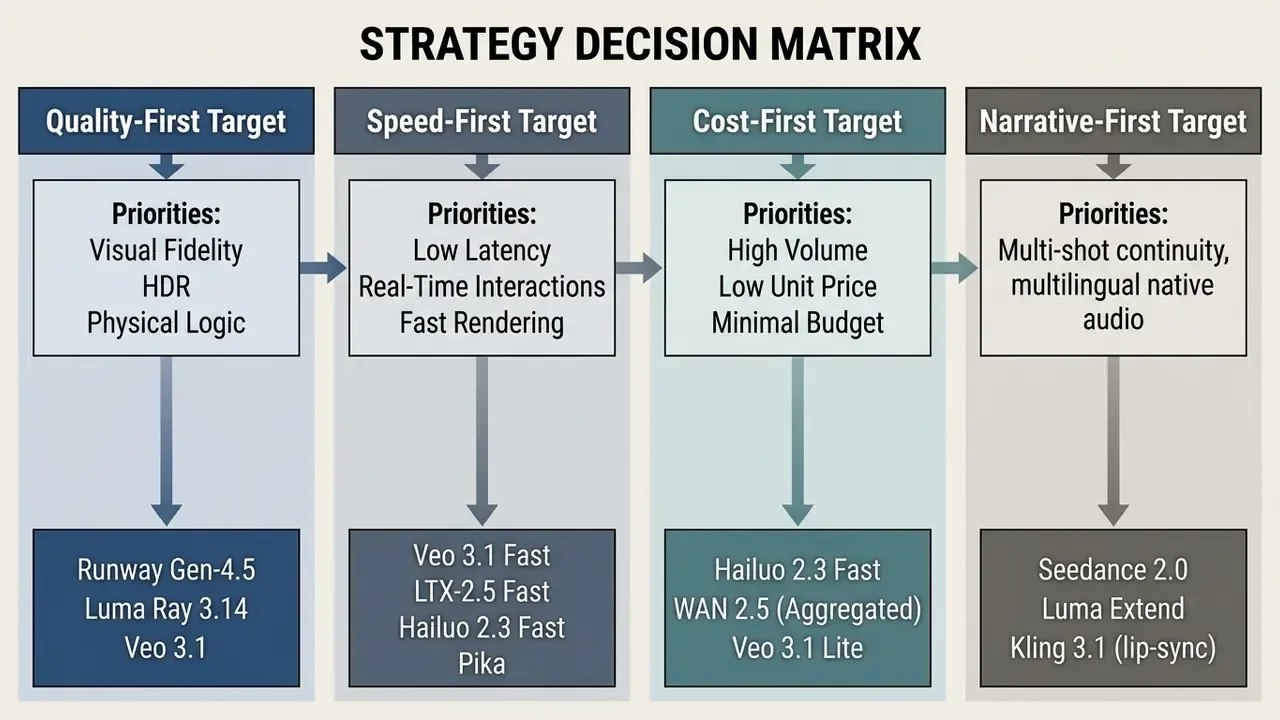
A reasonable next step, and a low-risk one: run the 50-prompt gate against two shortlisted endpoints, log the audit fields from section 16, and take the evidence to your model risk committee before signing anything. No production traffic required.
Developer FAQ: AI Video API Integration, Limits, and Legal Risk
What is the best AI video API in 2026?
There is no single winner. Runway Gen-4.5 currently leads public arena rankings for visual quality (around 1,247 Elo) at roughly $0.12/sec; Google Veo 3.1 is the strongest option for native 4K with synchronized audio; Hailuo 2.3 Fast is the cheapest credible production tier at $0.01-$0.03/sec; Seedance 2.0 leads multi-shot multilingual narrative. Choose by binding constraint, and keep an aggregation layer so the decision stays reversible.
Is Sora still available through the API?
OpenAI's documentation marks Sora 2 and the Videos API as deprecated with a shutdown date of September 24, 2026. Existing rates ($0.10-$0.70/sec) apply during the wind-down. Treat any Sora dependency as a dated remediation item and follow the migration workflow in section 20; the top five alternatives by arena score all rank at or above Sora 2's baseline.
What latency should we expect with webhook-based generation?
End-to-end render time, not network latency, dominates. Benchmarks show fast tiers completing a 5-second clip in 20-35 seconds and premium tiers in 45-90 seconds; Google's own Veo 3.1 documentation cites a range from about 11 seconds to 6 minutes at peak. Design for asynchronous submission with webhook callbacks, signature verification, idempotent handling of duplicate deliveries, and a polling fallback when the callback misses its SLA window.
Do we need GPUs or ML expertise on our side?
No. These are REST, and in some cases gRPC, endpoints: send a JSON payload with a prompt and parameters, receive a task ID, then a video URL. No GPU provisioning, model hosting, or ML engineering required. What is required is standard API engineering, meaning retry logic, idempotency, secrets management, and observability, plus prompt-template governance to hold retry rates down.
Is image-to-video supported by every model?
Most leading models support it. Kling, Seedance, WAN, Hailuo, Luma, Veo 3.1, and Runway all accept a reference image, though the constraints differ. Veo 3.1's reference-image workflow behaves differently across its 4, 6, and 8-second modes; Kling accepts motion-transfer reference video of 3-30 seconds; Seedance 2.0 accepts up to 12 reference images for style control. Verify anchor-frame resolution and aspect-ratio requirements per provider before standardizing a payload.
How long can a single generated clip be?
Typical single-request output runs 5-20 seconds. Current ceilings: Pika 1-10s, Hailuo 6-10s (1080p capped at 6s), Runway Gen-4.5 5-10s, Veo 3.1 up to 8s per call with chained extension, Kling 10-15s with extension, Seedance 2.0 15-20s, Luma up to 30s via Extend. Longer narratives get assembled by chaining clips with frame anchoring to preserve identity across cuts.
What are the maximum resolutions and output formats?
Common containers are MP4 (H.264/HEVC), WebM (VP9/AV1), and ProRes or EXR on high-end tiers. Resolutions run from 480p through native 4K (Veo 3.1) and 2K (Seedance 2.0), with several providers offering 4K only through upscaling. Confirm pixel-aspect-ratio metadata support, pasp for ProRes and AspectRatioType for WebM, if outputs feed a broadcast or NLE pipeline.
Who owns the copyright to AI-generated video, and can we use it commercially?
Commercial rights are contractual and tier-dependent, never universal. Kling's free tier, for example, is explicitly non-commercial and watermarked while paid tiers grant commercial usage. Separately, providers restrict generation of real people, copyrighted characters, and licensed music, and some apply provenance watermarking (SynthID on Veo outputs). Before commercial deployment, review each provider's terms for output ownership, indemnification, training-data warranties, and synthetic-media disclosure obligations. This is not legal advice; obtain qualified counsel for your jurisdiction and use case.
How do we prove to auditors that a generated video was controlled?
Persist the audit fields listed in section 16: prompt hash, input-asset approval ID, model ID and version, seed and sampling parameters, output hash, automated screening scores, named human approver, and retention events. That record set makes an asset reproducible and the control operation demonstrable, which is precisely what third-party model reviews and supervisory model-risk expectations look for.
What does a realistic monthly budget look like?
Multiply asset count by per-second rate, by the resolution multiplier, by (1 + retry rate), then add storage, egress, and post-processing. As a reference point: 1,000 clips of 30 seconds at 1080p costs roughly $300-$900 on Hailuo 2.3 Fast, $2,100-$4,200 on Kling 3.0, $1,500-$4,500 on Runway Gen-4.5, and $4,500-$12,000 on Veo 3.1 Standard tiers, before retries.
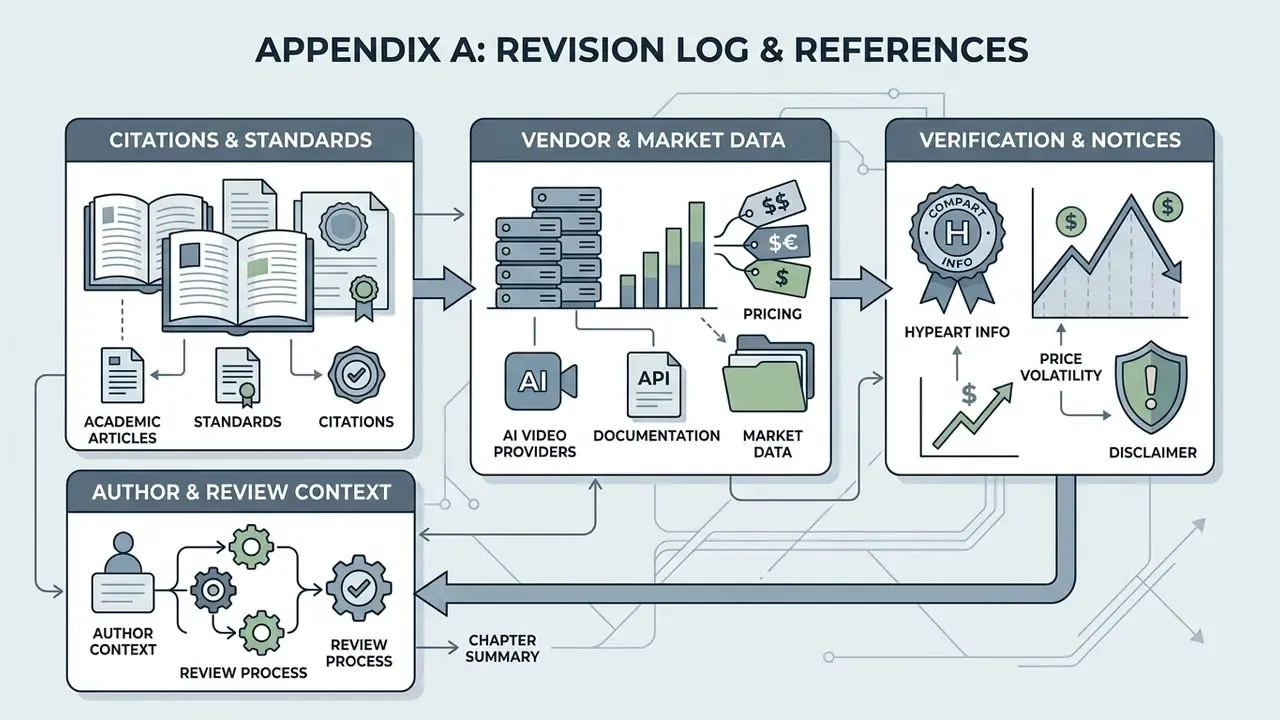
Appendix A: Superseded Formulations and Revision Log
Retained for traceability, so reviewers can audit what changed between revisions.
| Section | Superseded formulation (previous revision) | Current formulation and reason |
|---|---|---|
| 2. Text-to-video / image-to-video | "Benchmarks such as AIGCBench evaluate I2V across 11 control-video alignment metrics, proving that image-conditioned workflows significantly reduce temporal flickering… (AIGCBench Assessment Study, 2024)." | Replaced with the peer-reviewed EvalCrafter (CVPR 2024) citation. The previously cited AIGCBench URL could not be verified against the source set; AIGCBench's 11-metric image-to-video framework remains a valid conceptual reference, but the verified citation is used in the main text. |
| 3. Provider vs. platform | Sora 2 pricing presented without lifecycle status. | Deprecation notice added: OpenAI documents shutdown of Sora 2 and the Videos API on 24 September 2026. Pricing retained as historical and contractual reference. |
| 6. Speed and reliability | "20+ RPS while maintaining API uptime above 99.5%" stated as a market fact. | Reframed as a reference-architecture sizing target requiring contractual confirmation, with the NVIDIA sizing figure (23.24 RPS at 10x scale) cited as the basis. |
| 9. Veo and Runway | "Runway Gen-3 Alpha and Gen-4…"; "reduced failed API rendering calls by 34%." | Updated to Runway Gen-4.5 as current flagship with Elo context; the 34% figure was removed from the main claim because it is internal and not independently published, and the outcome is now stated qualitatively. Gen-3 and Gen-4 characteristics retained as reference points. |
| 10. Motion and duration | "Hailuo 2.0" as current tier. | Updated to Hailuo 2.3 Fast ($0.01-$0.03/sec) as the current value tier; Hailuo 2.0 physics characteristics retained. |
| 19. Budget model | Resolution multipliers presented as "standard industry" constants. | Provenance note added: coefficients derive from published per-resolution duration-conversion factors and are vendor-specific approximations; direct rate-card modeling recommended for flat-rate providers. |
| Verification statement | Hypeart DNS verification appeared inline before the closing sections. | Moved into the consolidated sources and verification block below to preserve reading flow. |
Sources, Verification Notes, and Disclaimers
Metadata Summary
- SEO Title AI Video API Alternatives 2026: Models, Pricing and Migration Guide
- Meta Description Compare AI video API alternatives, including Runway Gen-4.5, Veo 3.1, Kling, Luma, Hailuo 2.3, and Seedance 2.0, by quality, cost, latency, and governance, plus Sora migration code and TCO formulas.