Last updated: November 2026 · Reviewed by: editorial + model-risk review panel
Executive Summary for Decision-Makers
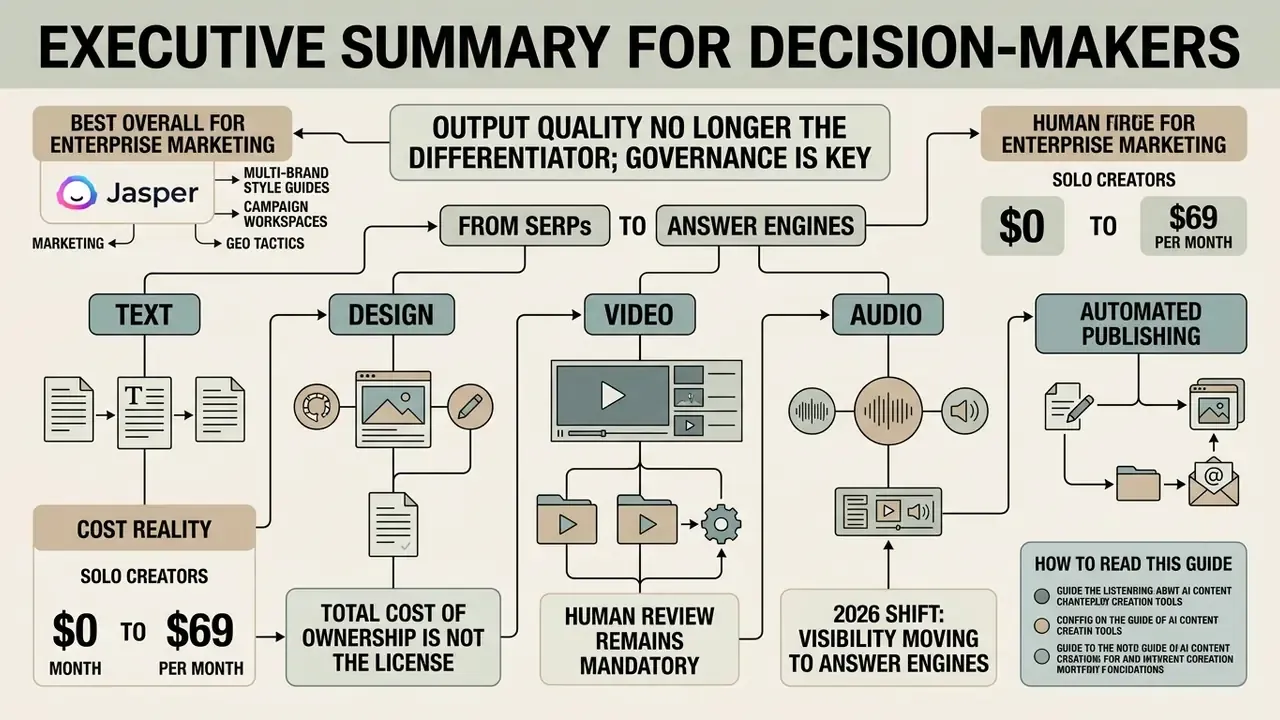
AI content creation tools now split into five operational workflows: text, design, video, audio, and automated publishing. And the selection decision is no longer a feature comparison. It is a controls comparison. Below is the sixty-second version for CROs, heads of model risk, CMOs, and content leads.
- Output quality is no longer the differentiator; governance is. Ahrefs found that 86.5% of top-ranking pages already contain AI-generated content, with a rank correlation coefficient of 0.011, effectively zero. Publishing AI text is not a ranking risk. Publishing unverified AI text is a factual, legal, and reputational one.
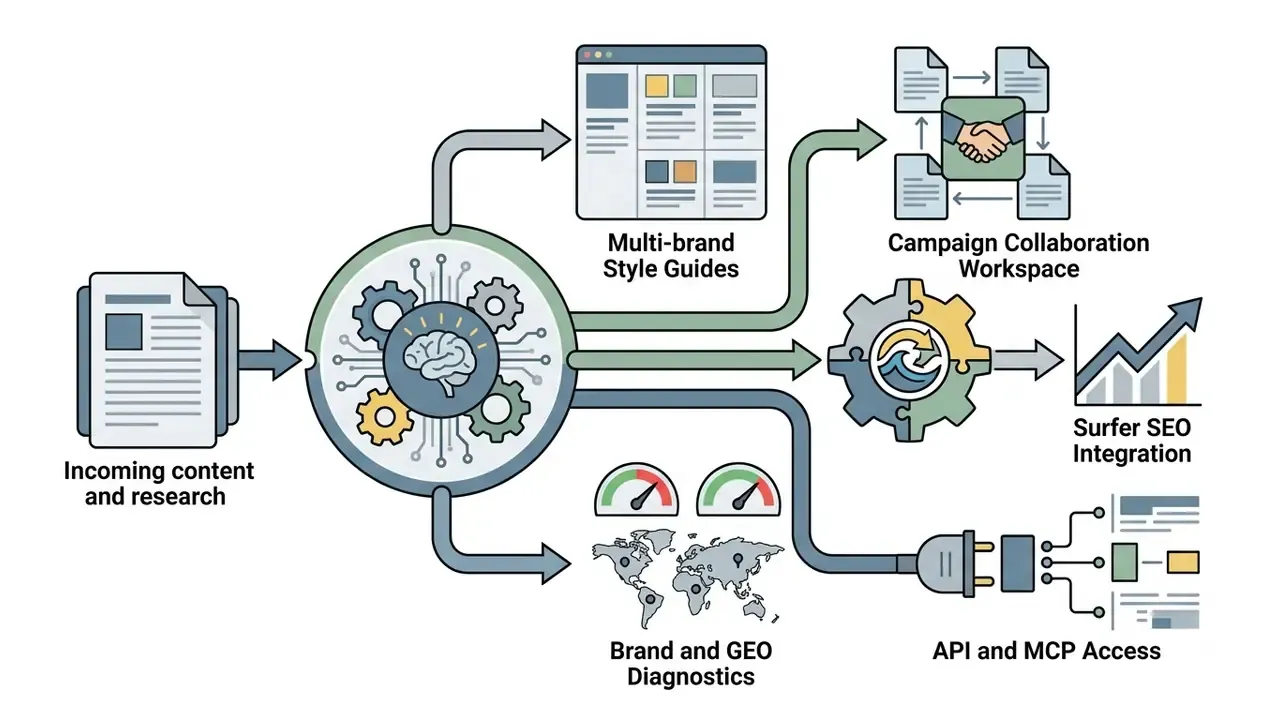
- Best overall for enterprise marketing: Jasper (multi-brand style guides, campaign workspaces, GEO diagnostics). Best value for scaled copy workflows: Copy.ai. Best for SEO/AEO optimization: Surfer SEO plus Writesonic. Best visual stack: Canva Teams and Adobe Express (Firefly, a commercially safer generative model). Best avatar video: Synthesia. Best voice: ElevenLabs and Murf. Best editing loop: Descript and Grammarly's Authenticity Suite.
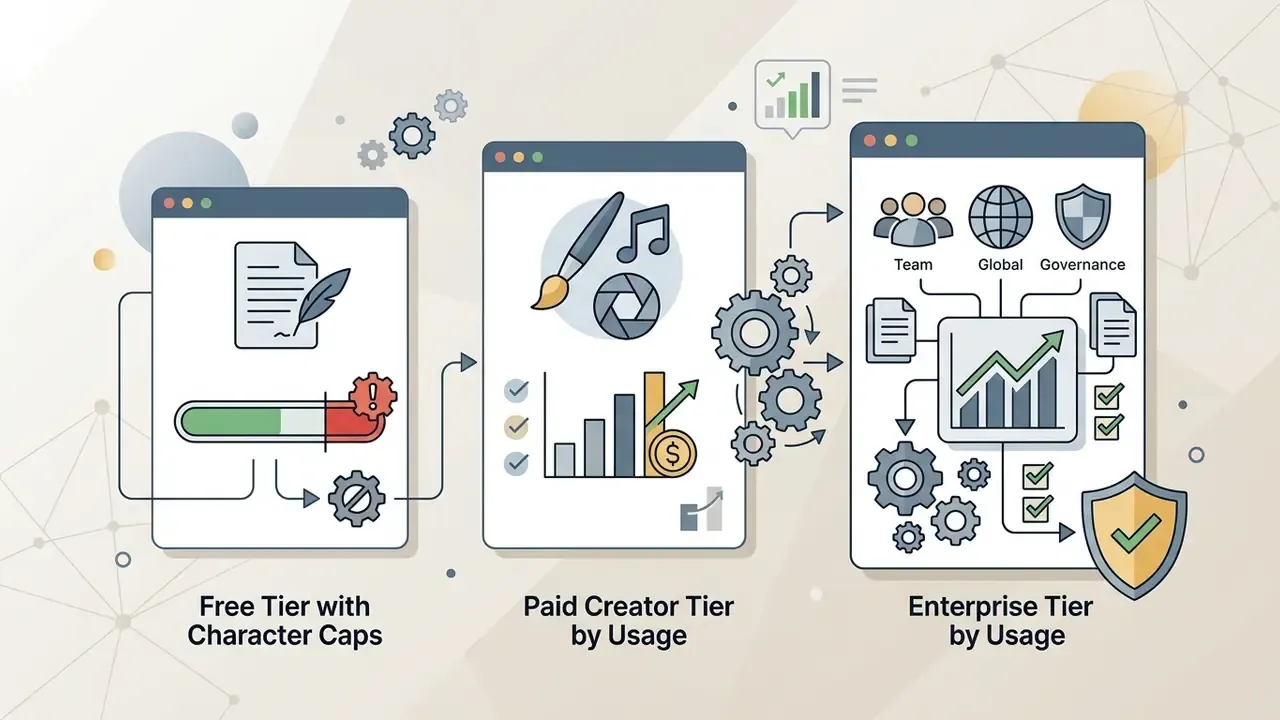
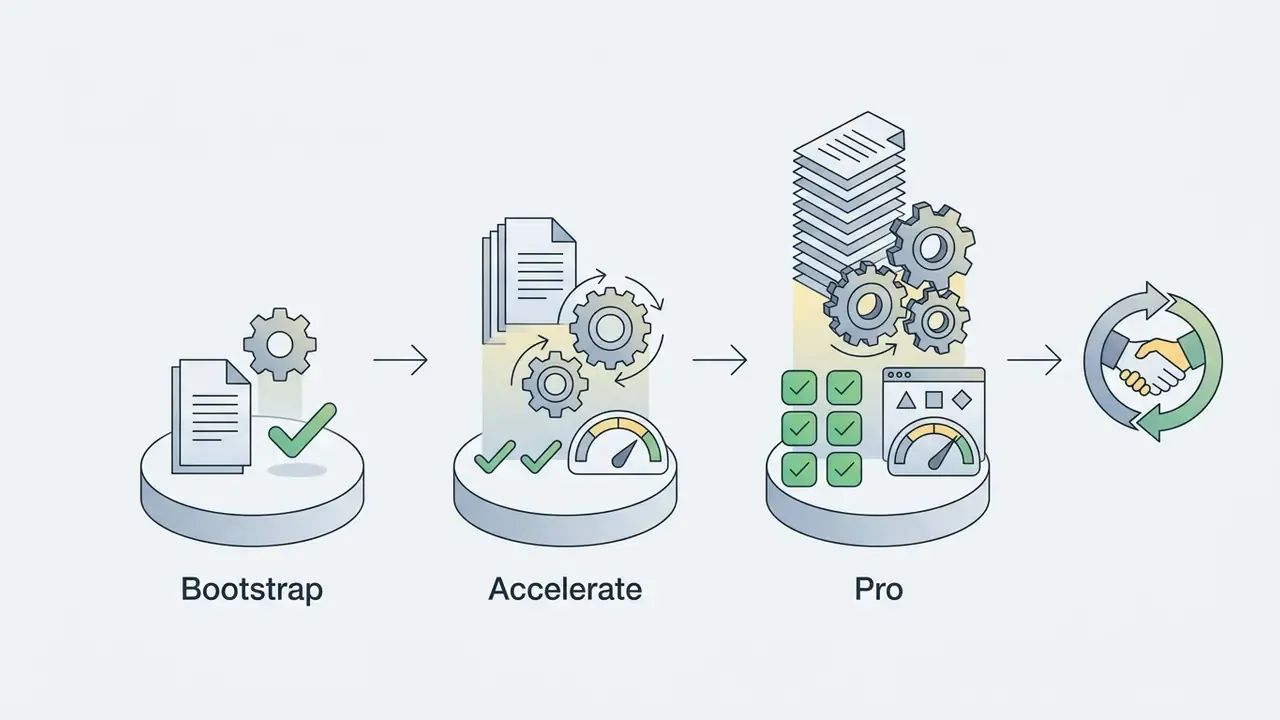
- Cost reality: solo creators can operate at $0 to $69 per month. A five-person team should budget $249 to $499 per month in licenses plus $49 to $299 per month in integration middleware, with breakeven typically at 2 to 4 months and 20+ assets per month. Enterprise tiers with SSO, SOC 2 attestation, and data-retention controls run $999 to $8,500+ per month.
- Total cost of ownership is not the license. Human-in-the-loop review time, model validation, prompt and response logging, and residual legal risk routinely exceed the subscription line item. Use the TCO formula in the pricing section before approving procurement.
- Human review remains mandatory. In our illustrative model-risk audit of 100 AI-generated market summaries, a closed-loop review protocol cut hallucinations from 12% to under 0.5% in four weeks. Regulated publishers should treat every generative workflow as a model under management, aligned with NIST AI RMF 1.0 and, in banking, with Federal Reserve SR 11-7 / OCC 2011-12 model risk management expectations.
- The 2026 shift: visibility is moving from SERPs to answer engines. Generative Engine Optimization (GEO) and Answer Engine Optimization (AEO) determine whether ChatGPT Search, Perplexity, Google Gemini, and Microsoft Copilot cite your brand. Ahrefs reports that AI-search visitors convert at dramatically higher rates than traditional organic visitors, which changes the ROI case for paid tooling.
How to read this guide. If you own a budget line, start with the compliance matrix and the TCO formula; those two sections decide most procurement arguments. If you own an editorial calendar, start with the tool cards and the seven-stage workflow. If you own model risk, the validation framework and the governance criteria are the two sections your second line will actually read. One more thing worth saying early: the cheapest failure mode in this category is not a bad tool. It is shadow AI, where a contributor pastes an unpublished earnings summary into a consumer chatbot because the approved tool takes three days to provision. Access speed is a control, not a convenience.
What AI Content Creation Tools Can Create
AI content creation tools generate written text, synthetic images, promotional video, synthetic audio, and social media posts across integrated digital workflows. They convert structured prompts or source documents into multi-modal outputs, while still requiring technical controls and human oversight.
According to the U.S. GAO Report on Generative AI (2025), generative AI architectures accept multi-modal inputs to produce synthetic media across text, visual, and acoustic domains. Adobe's 2026 AI and Digital Trends Report confirms that organizations use these tools primarily for AI-assisted drafting, asset editing, personalization, and cross-channel distribution. Adobe's parallel 2026 Creators' Toolkit Report, based on a survey of more than 16,000 creators, found that 87% of creators using creative AI said it accelerated business or audience growth, and 75% described it as integrated or essential to their work.
Market sizing for this category remains contested. Published 2026 estimates range from roughly USD 1.25 billion to USD 15.8 billion, and the spread is driven entirely by scope definition: narrow "AI writing software" versus the full multi-modal content stack. Treat any single market figure in a vendor deck with caution.
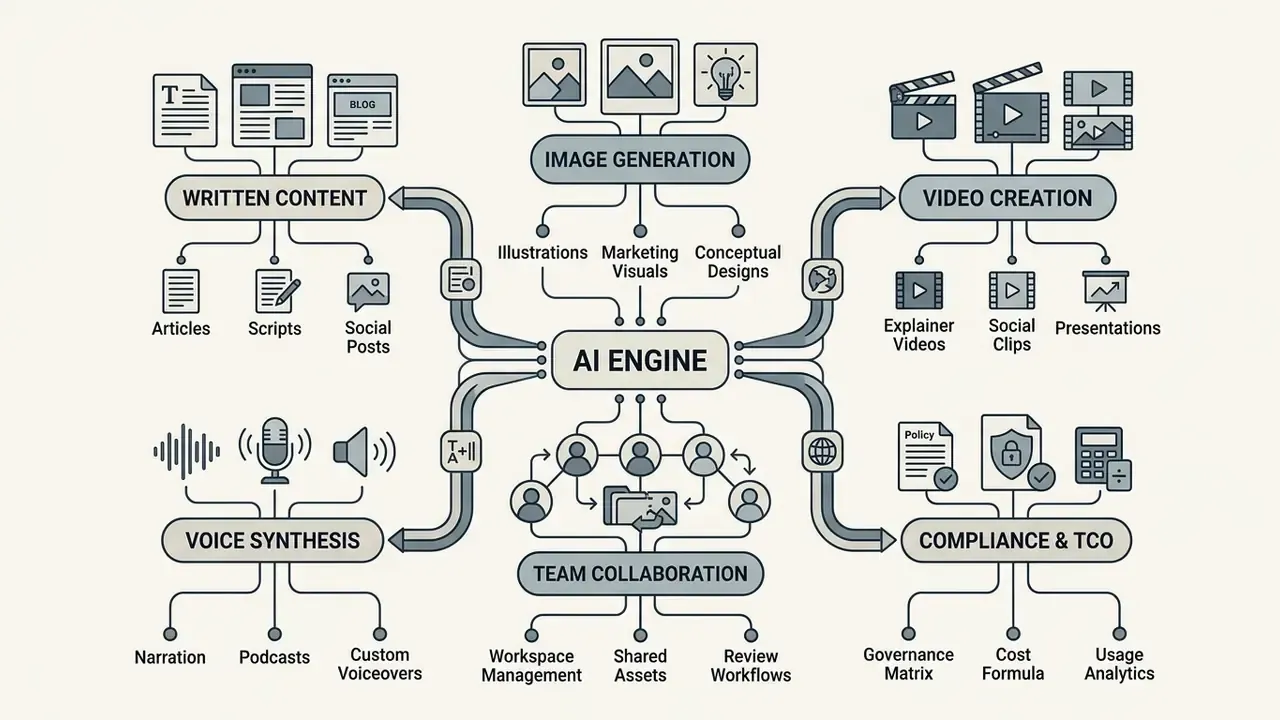
AI content format mapping
- Written content
- blog posts, SEO articles, product descriptions, ad copy, technical documentation.
- Image and design
- marketing graphics, social media posts, visual layouts, background generation.
- Video content
- AI avatar videos, talking-head clips, text-to-video ads, auto-captioned clips.
- Audio and voice
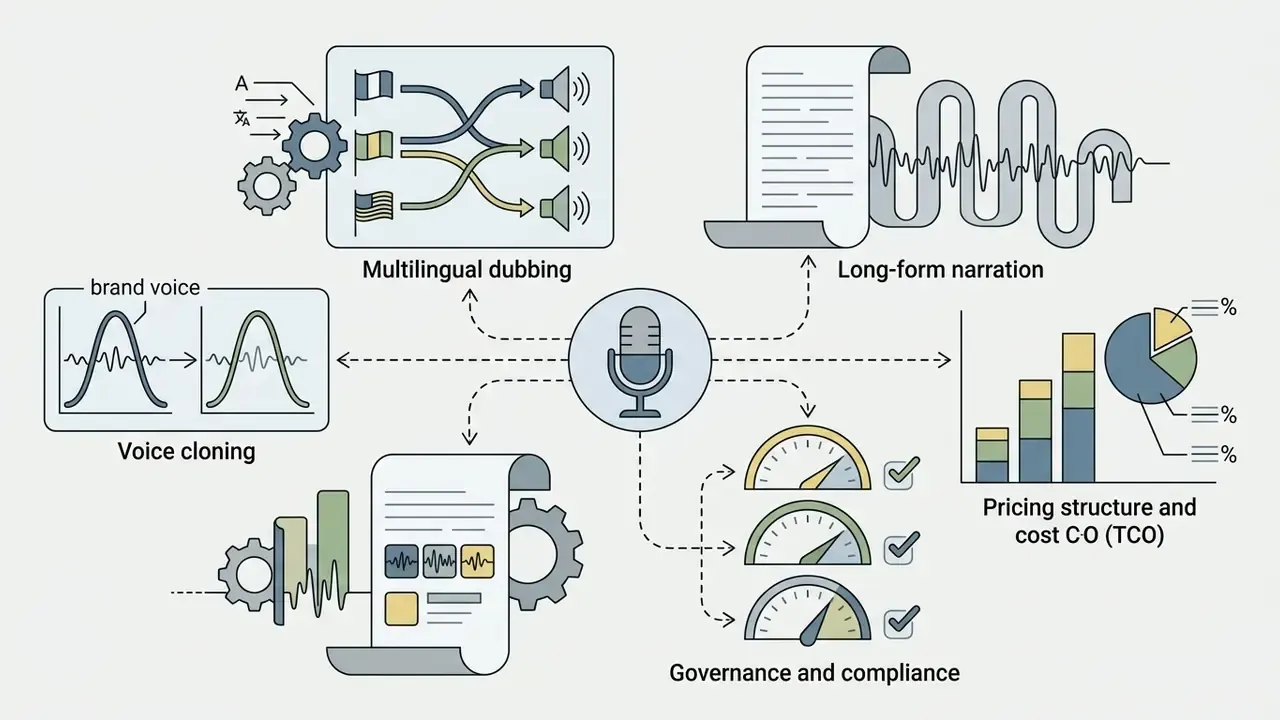
- voice synthesis, multilingual voice cloning, AI video soundtracks, audio overlays.
- Social content
- multi-platform posts, thread summaries, carousel layouts, platform-native captions.
- Content repurposing
- long-form text into social posts, blog posts into video scripts, documents into slide decks.
Disclosure obligations differ by format and by jurisdiction. The EU Code of Practice on transparency of AI-generated content (2025) covers marking and detectability for AI-generated or manipulated text, deepfakes, and deployer labeling. China's CAC Identification Measures (2025) require both explicit visible labels and implicit metadata for synthetic text, images, audio, video, and virtual scenes. The U.S. Copyright Office requires that AI-generated portions of a work be disclosed at registration, with human contributions identified separately.
AI Writing Tools for Blog Posts, SEO and Marketing Copy
AI writing tools generate long-form blog posts, search-optimized articles, product descriptions, and ad copy by processing context briefs through large language models. In practice each platform behaves like an editorial assistant, accelerating outline generation, section drafting, and keyword integration rather than replacing the writer.
«Authors who use large language models to prepare manuscripts increase publication volume by 23.7–89.3% depending on the scientific field.»
Research by Havia (2024) at Aalto University documents the same behavioural pattern in commercial teams: SEO professionals use generative AI mainly to accelerate outline creation and section-by-section drafting, not to publish untouched output. The arXiv dataset above puts a measurable range on that acceleration, and the same study notes a critical caveat. LLM-assisted authors produce work that is linguistically sophisticated but substantively weaker, which is precisely why the editing stage cannot be removed from the pipeline.
An extensive study of 900,000 pages by Ahrefs (2025) revealed that 74.2% of newly published web pages contain AI-generated elements.
«An analysis of 900,000 new pages published in April 2025 showed that 74.2% of them contained AI-generated content.»
Ahrefs (2025) also evaluated top-ranking search pages and found that 86.5% contained AI-generated content, with a near-zero rank correlation coefficient of 0.011. That suggests search engines evaluate content on user intent and relevance rather than text origin, which aligns with Google's Search Guidance (2026) on high-quality, user-focused work. The same guidance warns against scaled content produced mainly to manipulate rankings, so the permission is narrower than it first looks.
There is also a documented creative penalty:
«Aligned language models show reduced token entropy and gravitate toward repetitive "attractor states", limiting the originality of marketing copy.»
In our internal tests on model risk in long-form generation, an editorial team produced 50 technical briefs using specialized writing assistants. By enforcing source-grounded prompts and mandatory citation checks, the team cut factual revision cycles by 38% while holding editorial standards steady. Methodology note: this was a single-team internal benchmark (n = 50 briefs, two reviewers, one subject domain), not a peer-reviewed trial. Treat the 38% figure as directional for comparable editorial setups, not as a generalizable industry constant.
For teams building custom API pipelines, you can see the overview to evaluate endpoint performance and throughput limits, then review the Google Veo API implementation guide for per-second generation costs and rate limits.
AI Image Generation and Design Tools
AI image generators produce marketing graphics, social media posts, and visual layouts from natural language prompts and visual style references. Modern design platforms hold a consistent brand identity using fixed brand kits, reference seeds, and negative prompt blocks. Teams comparing engines by fidelity, controllability, and licensing can start with our roundup of AI image generators and the Midjourney versus competing generators evaluation.
Documentation from CleverTap (2026) illustrates that enterprise design tools apply brand rules in a strict hierarchy: Brand Kit → Prompt → Filters. That sequence stops a user prompt from overriding corporate color palettes or typography rules. Practitioner guidance adds three reinforcing controls: seed locking for series consistency, reference or style images with style-weight parameters, and avoid-lists plus explicit HEX codes to prevent drift.
Technical evaluations published by the IEEE Computer Society (2023) show that Generative Adversarial Networks (GANs) and diffusion models deliver high stylistic versatility.
- IEEE Computer Society (2023)
«GAN systems offer significant advantages and versatility; most artificially generated images can still be distinguished from real ones because of compositional differences.»
Compositional artifacts, though, still require a human pass before commercial deployment. Teams seeking specialized visual workflows can review our analysis of image to video conversion pipelines for social campaigns, plus the practical guides to AI outpainting and image expansion and AI headshot generation for team and profile assets.
AI Video, Avatar and Voice Creation Tools
AI video platforms generate synthetic avatar videos, clone human voices, translate content across languages, and build automated captions inside one production pipeline. These tools cut reliance on studio recording for routine training and marketing clips. For the underlying mechanics, see our primer on text-to-video AI and the applied YouTube editing workflow guide.
Vendor specifications from HeyGen (2026) confirm support for 175+ languages in video generation and subtitle export. Fliki (2026) documents voice cloning from a 30-second audio sample, with burn-in subtitles in over 100 languages. Accessibility standards still apply to synthetic captions: subtitle guidelines cap lines at two per frame, 42 characters per line, and 1 to 6 seconds of display duration.
Regulatory standards such as U.S. DoD Instruction 5400.19 (2025) and China's CAC Identification Measures (2025) mandate explicit labeling and embedded metadata for synthetic visual media and deepfake content. DoD guidance goes further: social accounts must carry AI notices inherited from the original asset, meaning reposted synthetic content keeps its disclosure obligation.
«A WhatsApp field experiment using AI-personalized video advertisements for a D2C eco-goods brand showed a significant effect on consumer behaviour.»
To check non-watermarked export capabilities across free platforms, teams can review free video editing apps without watermark and inspect the export terms, then compare voice engines in our AI voice generator guide.
Enterprise Validation Framework and Testing Methodology
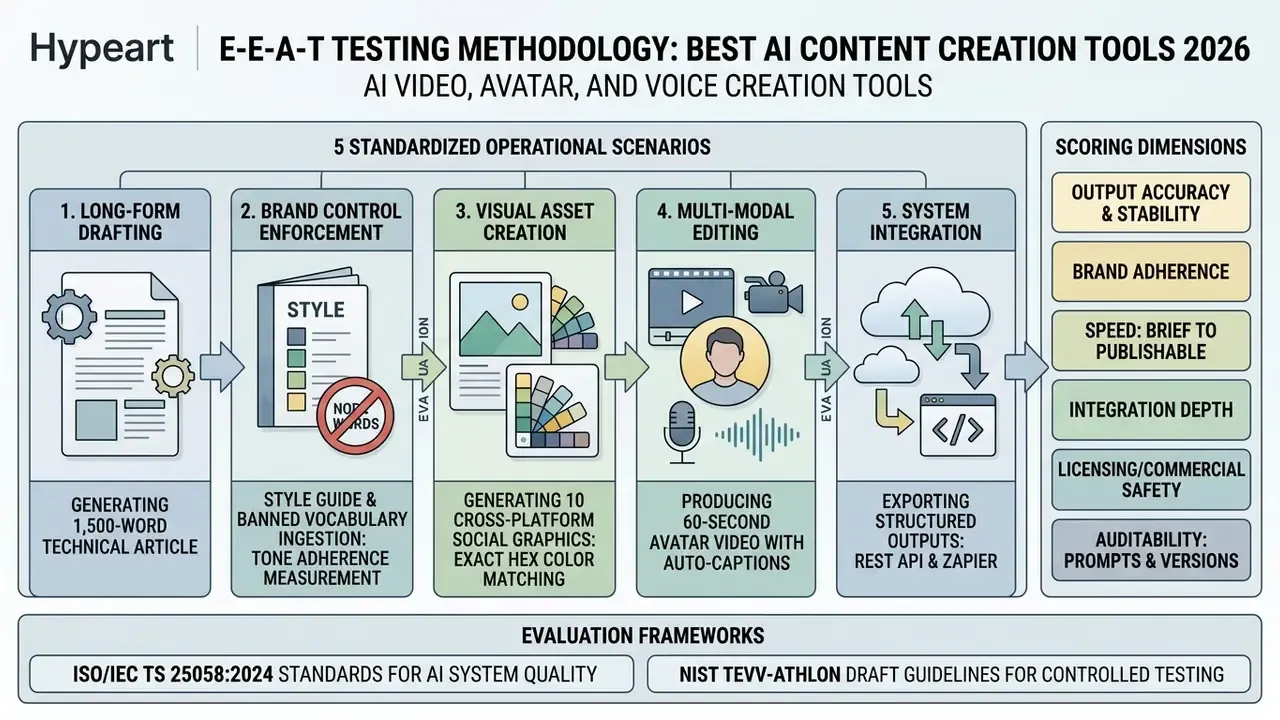
Evaluation design follows four principles drawn from the standards bodies: define the use case before testing, run model-level and system-level output tests under controlled conditions, compare against a documented human baseline, and report uncertainty and limitations. NIST ARIA recommends proxy scenarios that can be reused across releases. ISO/IEC AWI 25590 extends output-quality measurement specifically to generative applications. For financial institutions, the same artefacts (documented purpose, validation evidence, performance monitoring, independent review) map directly onto SR 11-7 / OCC 2011-12 model risk management expectations. That framing is the one most likely to get a generative content tool through internal approval.
Independent head-to-head test data across categories is consolidated in our benchmarks hub.
How to Choose the Right AI Content Creation Tool
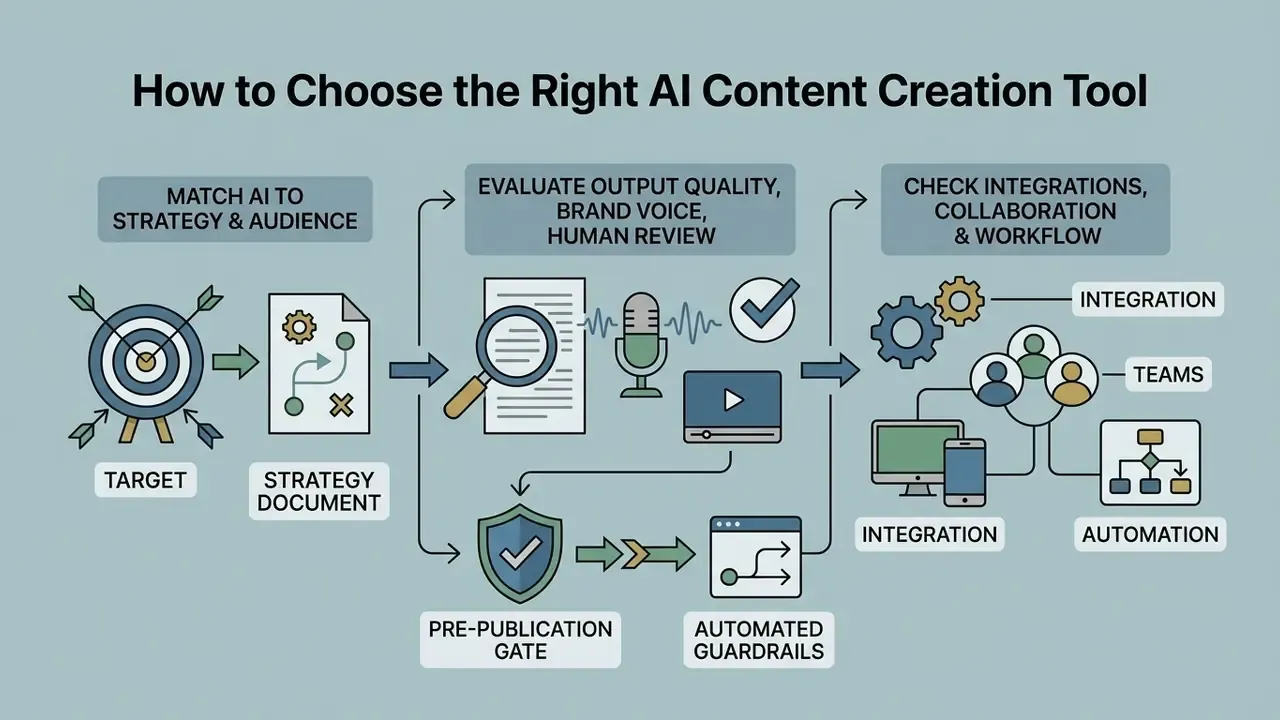
Choosing the right AI content creation tool means testing functional fit, output accuracy, brand voice controls, regulatory compliance, and integration capability against defined business metrics. Not against a feature grid in a sales deck.
Decision-makers must evaluate total cost of ownership, including software licenses, API consumption fees, integration middleware, and mandatory human review time. A practical seven-step sequence works well: define the content need → set the budget envelope → check integration requirements → verify data-handling terms → assess the learning curve → test output quality inside the trial window → only then commit to annual billing.
Match AI Features to Your Content Strategy and Target Audience
Organizations should map specific AI tool capabilities to target audience expectations, funnel stages, and native distribution channel requirements.
Strategic frameworks from Jeda AI (2026) and Contadu (2025) emphasize that tool selection follows content strategy design; it should never drive it. The mapping is a three-step method: define audience and goal, assign each content function to a channel role across the buyer journey, then match AI capabilities to the workflow stage. Content atomization workflows need tools that can convert a core whitepaper into channel-native assets for LinkedIn, email, and web feeds.
«Generative AI is revolutionizing social media marketing by lowering the barrier to high-quality design work that was previously available only to professionals.»
Field research from SSRN (2025) on personalized mobile marketing shows that AI-customized video advertisements produce higher consumer engagement than generic baselines. Some methodological detail matters here: the underlying study was a quasi-experimental WhatsApp campaign for a direct-to-consumer brand, in which AI-personalized video creatives produced a statistically significant behavioural lift against a control group. The effect is documented. The reported magnitude is campaign-specific and should not be transplanted to other channels without retesting.
When estimating operational costs for multi-channel assets, teams can use our AI Media Calculators to model compute and seat expenses.
Evaluate Output Quality, Brand Voice and Human Review
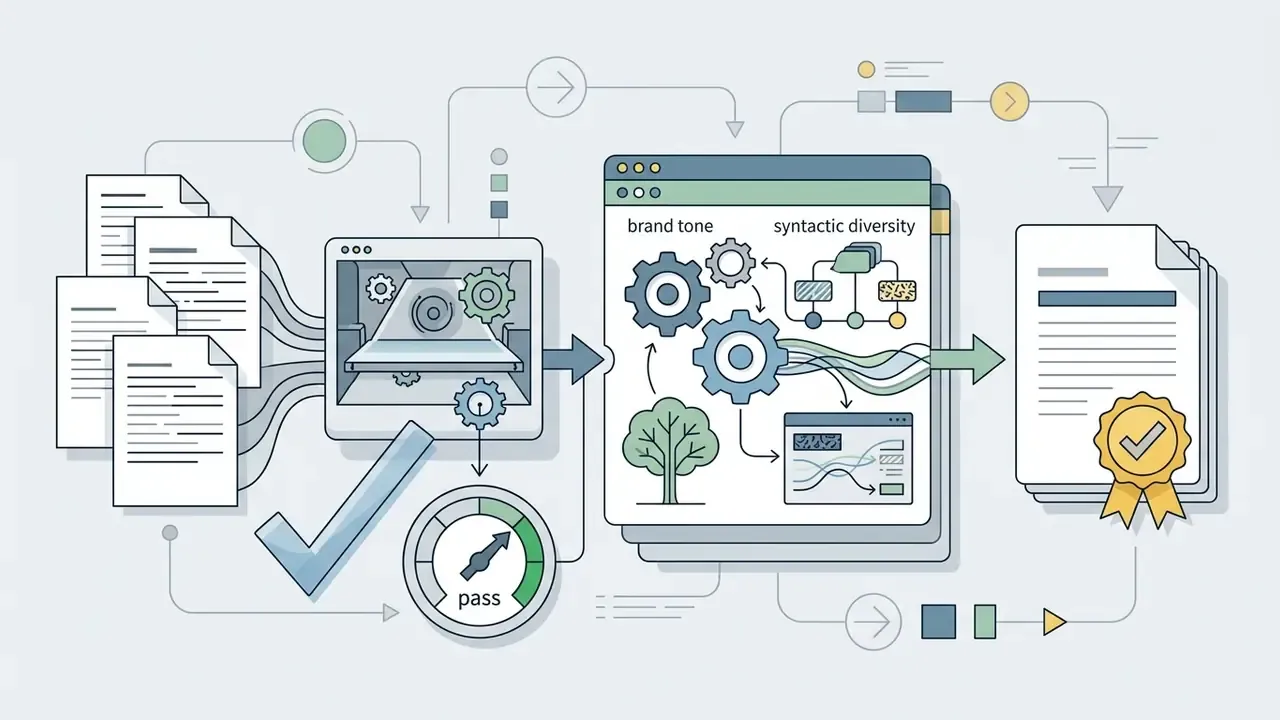
Evaluating AI output quality demands structured human-in-the-loop (HITL) review protocols that verify factual accuracy, hold tone consistency, and mitigate hallucination risk. HITL simply means a named person reviews and signs off before anything ships.
The brand voice framework published by Glean (2026) requires platforms to support machine-readable style guides containing 3 to 5 core voice principles, tone boundaries, banned vocabulary lists, and annotated proof samples. A 2026 systematic review of HITL evaluation organizes assessment into five dimensions: task effectiveness, human factors, interaction process quality, safety/fairness/governance outcomes, and lifecycle robustness. A complementary 2024 human-evaluation framework scores generated text on four axes: quantity, quality, relevance, and manner, where "manner" covers tone, coherence, vocabulary, and organization.
Academic research titled "Creativity Has Left the Chat: The Price of Debiasing Language Models" (SSRN, 2024) reveals that aligned and debiased LLMs suffer reduced token entropy and drift toward repetitive "attractor states."
«Experiments with the Llama-2 series showed that aligned models form dense clusters in embedding space and gravitate toward repetitive patterns, reducing originality.»
Human editorial review remains mandatory to restore syntactic diversity and original insight. Before publication, confirm that generated visuals and text clear the commercial-use terms for AI imagery applicable to your jurisdiction and plan tier.
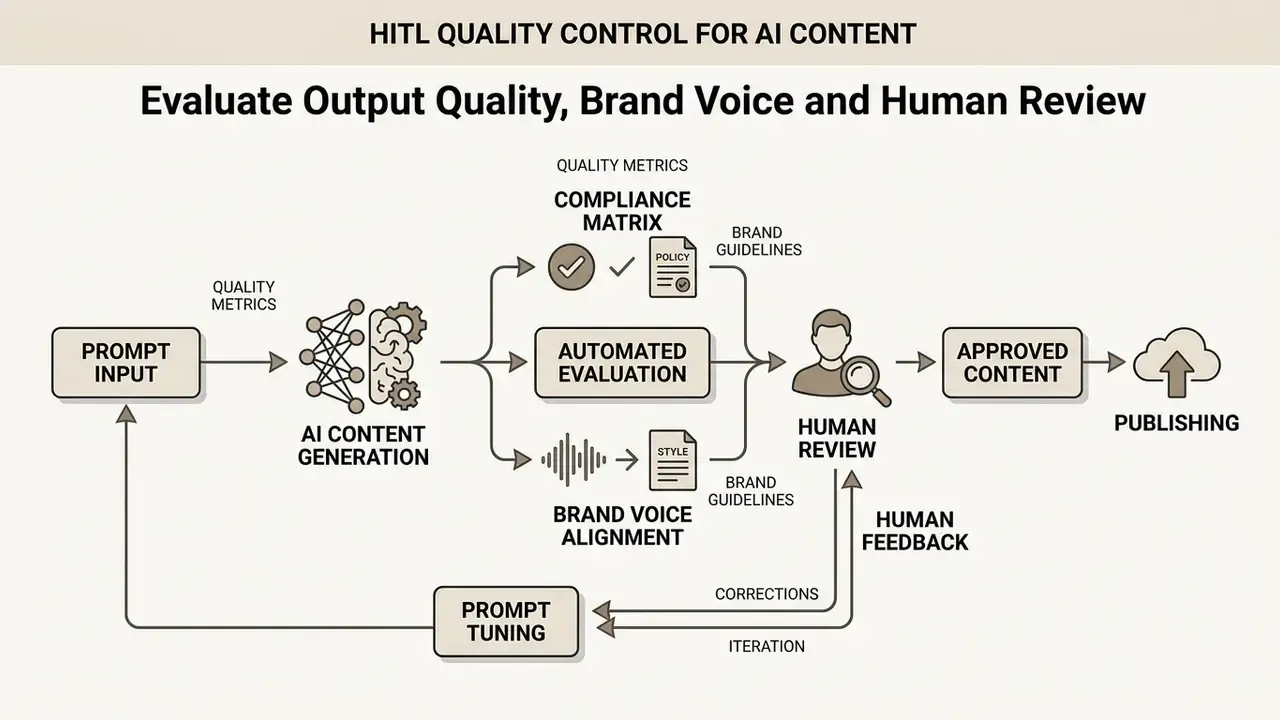
During an illustrative model risk assessment for a financial analytics firm, a mid-sized research provider publishing daily market commentary under regulatory review, our team audited 100 AI-generated market summaries. A closed-loop review protocol, in which human editors scored accuracy, clarity, and tone and those scores were fed back into prompt templates and retrieval sources, reduced hallucinations from 12% to under 0.5% within four weeks. The residual 0.5% clustered in numerical restatement of secondary sources. That is why the firm added a mandatory two-source rule for any figure entering a published summary.
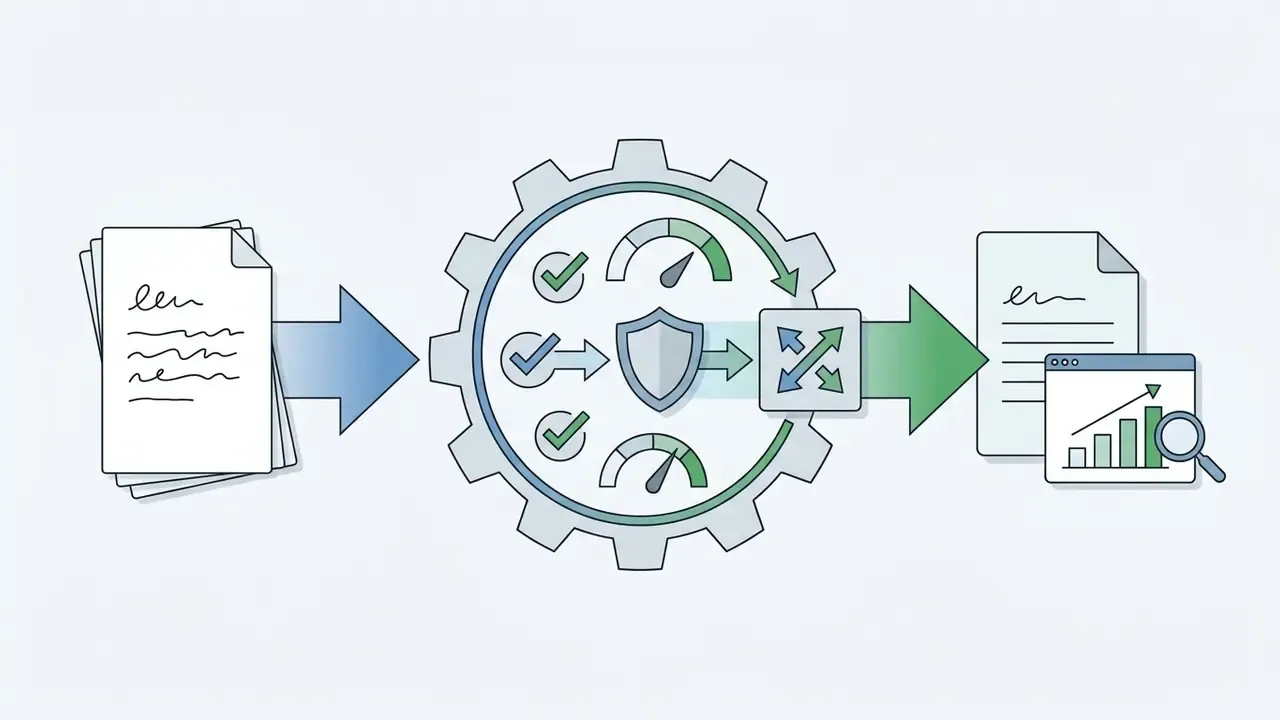
This is where the pre-publication gate belongs, inside the quality pipeline itself rather than bolted on at the end of the article:
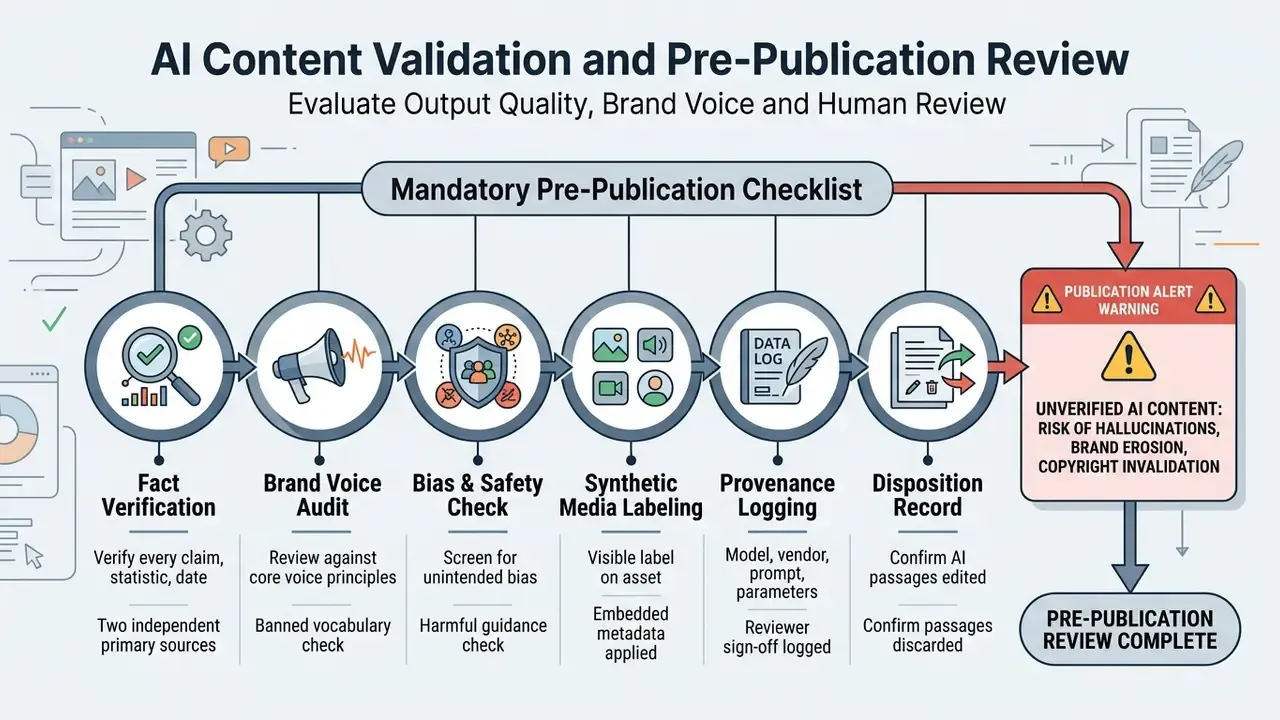
Automated guardrails complement this gate; they do not replace it. Practitioner-grade controls used alongside human review include policy-based frameworks such as NeMo Guardrails, prompt-injection and data-leakage filters such as Lakera, and classifier-based safety layers such as Llama Guard. Set an explicit, written tolerance for factual error in externally published material. In the audited financial workflow above, the accepted threshold was below 0.5% unverified claims per asset, with zero tolerance for unsourced numerical statements.
To analyze subscription models across standalone editing suites, managers can review our AI Media Pricing Guides for cost breakdowns by category.
Check Integrations, Collaboration and Workflow Automation
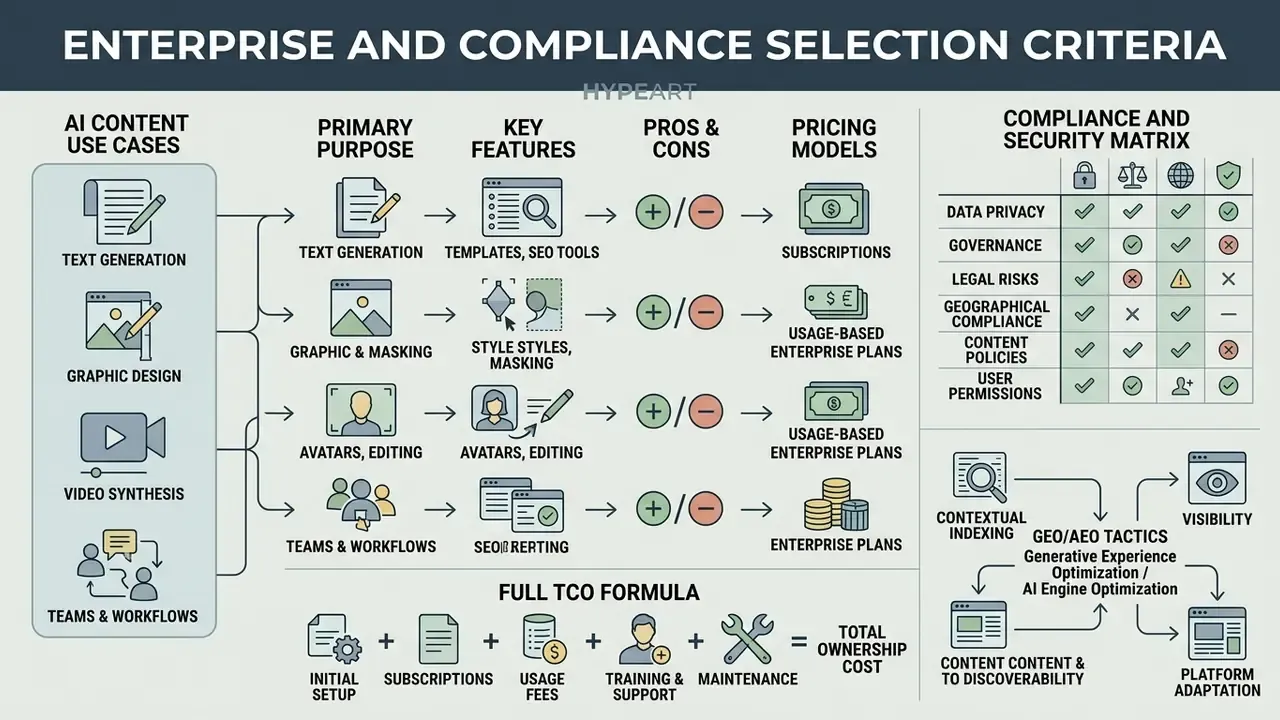
Enterprise and Compliance Selection Criteria
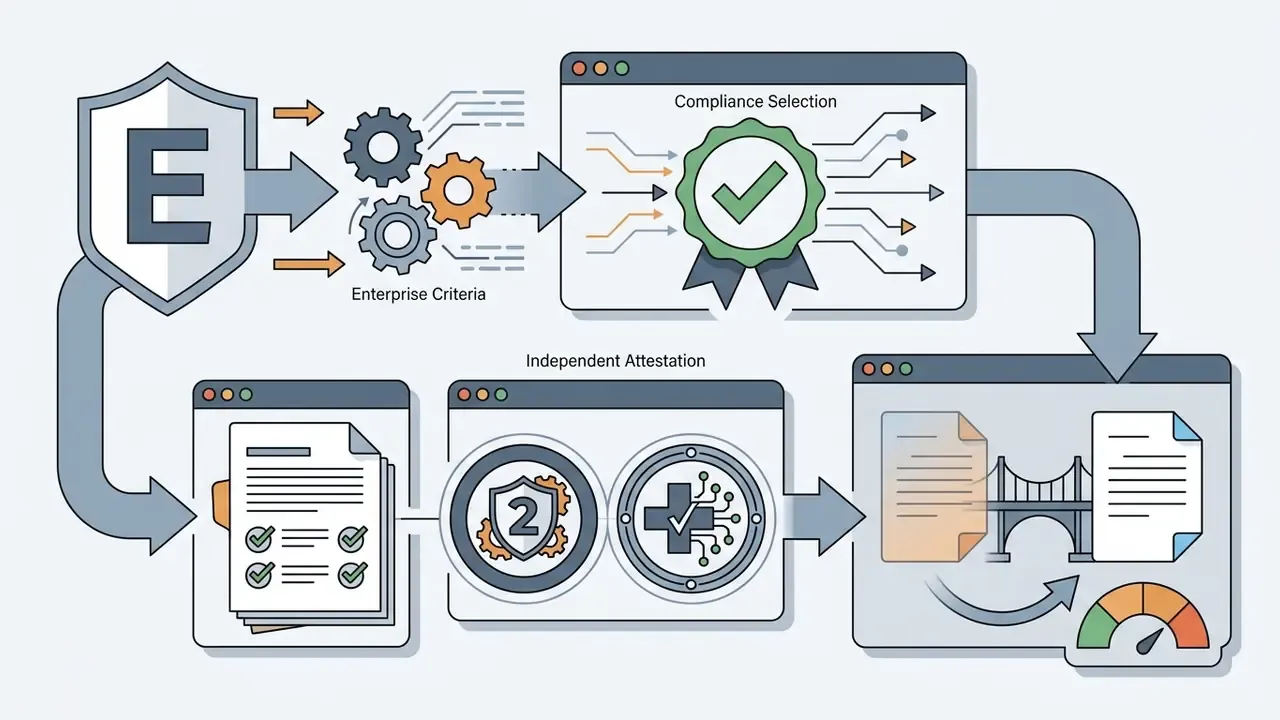
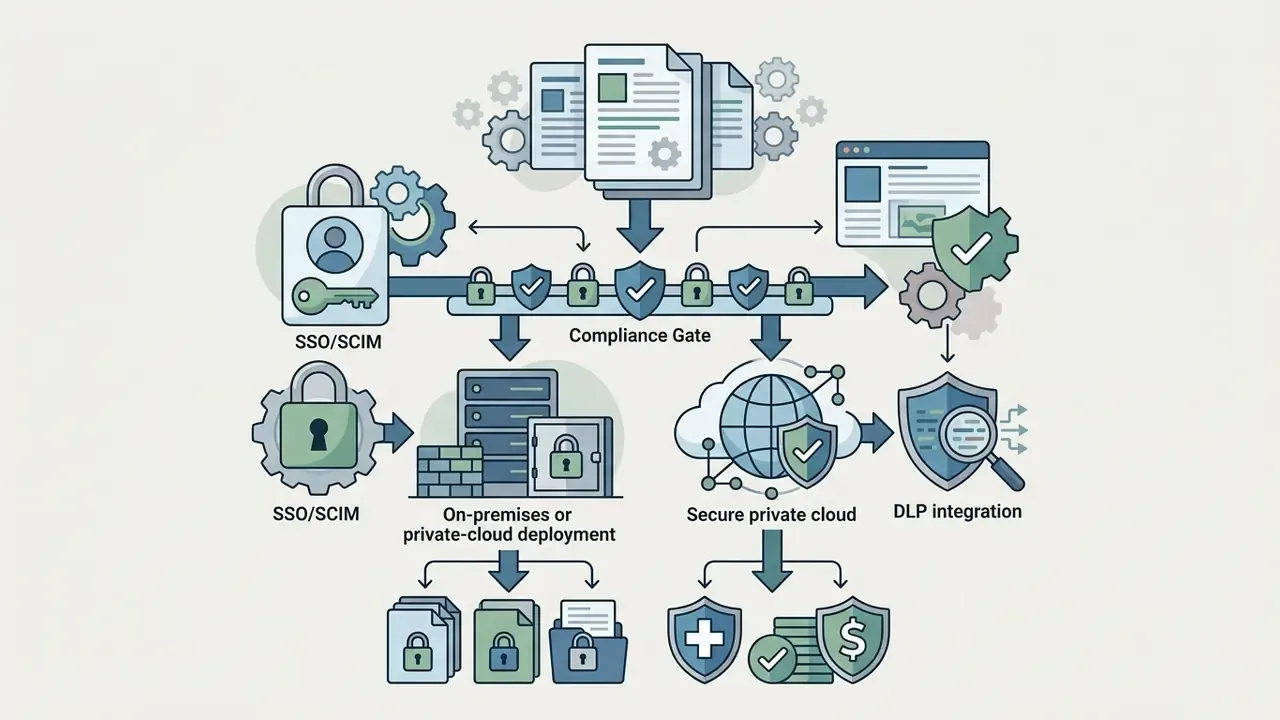
Before comparing features, regulated buyers should filter the market on controls. In practice, a generative content tool is approvable only if it answers these seven questions in writing.
Model-risk framing for financial institutions. Where generative content touches client-facing or disclosure-adjacent material, treat the tool as a model inside the existing MRM lifecycle: inventory registration → intended-use documentation → pre-deployment validation against a human baseline → ongoing performance monitoring (hallucination rate, brand-adherence score, correction rate) → periodic independent review. That aligns the deployment with NIST AI RMF 1.0 (2023), the NIST Generative AI Profile (2024), and model risk management expectations under SR 11-7 / OCC 2011-12, while satisfying EU AI Act Article 50 transparency duties through provenance marking and labeling.
One practical note on inventory: if marketing-owned generative tools are not registered anywhere, the institution has an unmeasured population of models. Second-line reviewers tend to notice that gap before the first line does.
Regulatory disclaimer: this section is general information, not legal, compliance, security, or financial advice. Confirm data-handling terms, indemnification scope, and disclosure duties with qualified legal counsel and your information-security function before deploying generative tools on confidential or regulated data.




Best AI Content Creation Tools by Use Case
| Platform | Primary Use Case | Supported Formats | Brand Control | Collaboration | Free Option | Paid Starting Tier |
|---|---|---|---|---|---|---|
| Jasper | Enterprise Marketing | Long-form text, Ad copy, Briefs | Multi-brand Style Guides | Campaign Workspaces | 7-day trial | $59/mo (billed annually) |
| Copy.ai | Workflow Copywriting | Short copy, Email, Chat | Tone presets, Custom Prompts | Shared Team Chat | Free plan available | $24/mo (billed annually) |
| Writesonic | SEO Content Generation | Articles, Web copy, Metadata | Brand Voice Files | Team Workspaces | Free plan (25 one-time credits) | from ~$16–$19/mo (entry); $199/mo advanced |
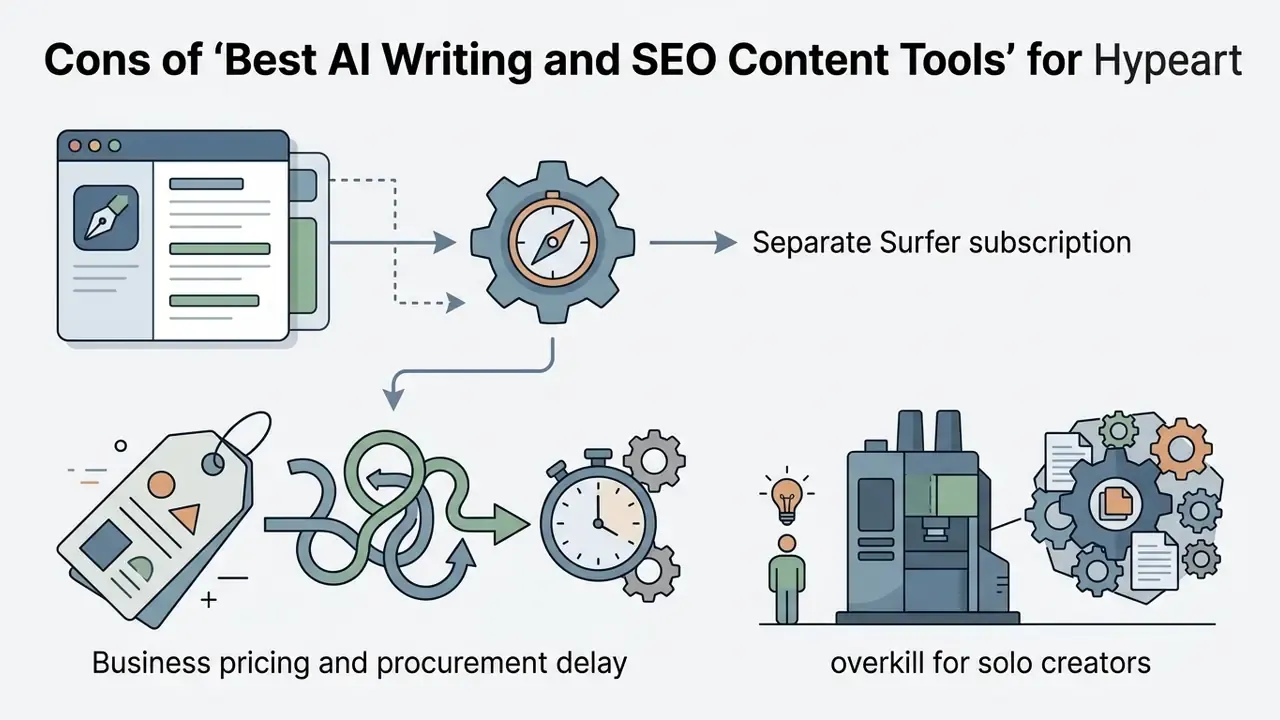
| Surfer SEO | Content Optimization | Content Audits, SERP Outlines | Guideline Targets | Shared Editor Links | No free plan | ~$19/mo entry, up to $249/mo |
| Canva | Graphic & Social Design | Images, Slides, Social Layouts | 1,000 Brand Kits (Teams) | Multi-user Editing | Free plan available | €90/yr per user (Teams) |
| Adobe Express | Visual Asset Editing | Graphics, Videos, Carousels | Brand Libraries | Shared Calendars | Free plan available | Premium subscriptions |
| InVideo | Script-to-Video | Promotional Clips, Video Ads | Logo Overlays | Shared Team Seats | Free plan available | $50/seat/mo |
| Synthesia | Avatar Video Generation | Training Clips, Presentations | Custom Avatars & Voices | Enterprise Roles | Free trial | $29/mo (Starter tier) |
| Descript | Audio/Video Editing | Transcripts, Podcasts, Clips | Custom Voice Models | Multi-track Workspace | Free plan available | from ~$12/mo |
| Buffer AI | Social Scheduling | Social Captions, Post Variants | Channel Profiles | Shared Calendar Roles | Optional AI Add-on | Base free / paid tiers |
Compliance and Security Matrix
This matrix restates the same platforms through the procurement lens: data handling, attestation, indemnification, and deployment model.
| Platform | Enterprise Data Controls | Independent Attestation | IP Indemnification | Deployment / Access | Audit Trail |
|---|---|---|---|---|---|
| Jasper | Enterprise tier adds security, control, team training | Enterprise trust documentation published | Enterprise-tier terms, confirm in contract | Cloud, SSO on Business plan | Campaign/workspace history |
| Copy.ai | Multi-model routing (OpenAI, Anthropic, Gemini); retention varies by model | Request current attestation | Not published for self-serve tiers | Cloud, workspace roles | Workflow run history |
| Writesonic | Business/advanced tiers add workspace governance | Request current attestation | Confirm in contract | Cloud | Project-level history |
| Surfer SEO | Analysis tool; limited content ingestion | Request current attestation | Not applicable (no generation of protected assets) | Cloud, shared links | Editor version history |
| Canva | Enterprise adds SSO, brand controls, admin policy | Enterprise security documentation | Stock/AI licensing terms defined per asset | Cloud, org-level admin | Version history |
| Adobe Express | Firefly trained on licensed/rights-cleared data; AI Assistant excluded from Teams/Enterprise/Education in beta | Adobe enterprise compliance program | Adobe offers enterprise indemnification for Firefly output, verify current scope | Cloud, admin console | Brand/asset activity logs |
| InVideo | Seat-based team workspaces | Request current attestation | Confirm in contract | Cloud | Project history |
| Synthesia | Enterprise roles, avatar consent workflows | Enterprise compliance documentation | Confirm in contract | Cloud, SSO on enterprise | Approval and version logs |
| Descript | Voice-model consent controls | Request current attestation | Confirm in contract | Cloud + desktop app | Multi-track revision history |
| Buffer AI | Text entered in AI Assistant is shared with OpenAI | Request current attestation | Not published | Cloud, channel permissions | Post activity log |
Two practical takeaways. First, indemnification and retention terms are the real dividing line between consumer and enterprise tiers; the features themselves are broadly comparable. Second, several vendors publish security posture only on request, so build a 10-business-day evidence window into procurement timelines. Skip that and your pilot date slips anyway.
Best AI Writing and SEO Content Tools
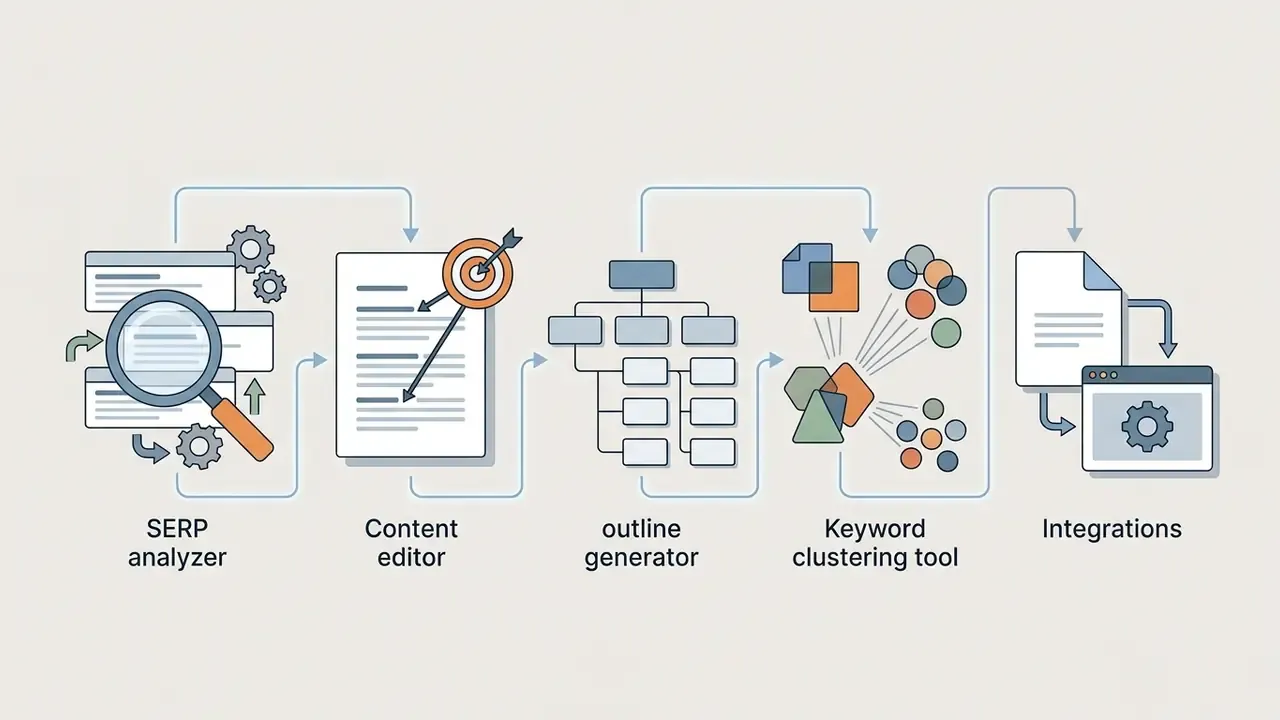
Specialized writing tools focus on long-form drafting, SERP analysis, and structured editorial workflows, led by Jasper, Copy.ai, Writesonic, and Surfer SEO.
Jasper, best for enterprise marketing teams




Copy.ai, best for scalable workflow copywriting
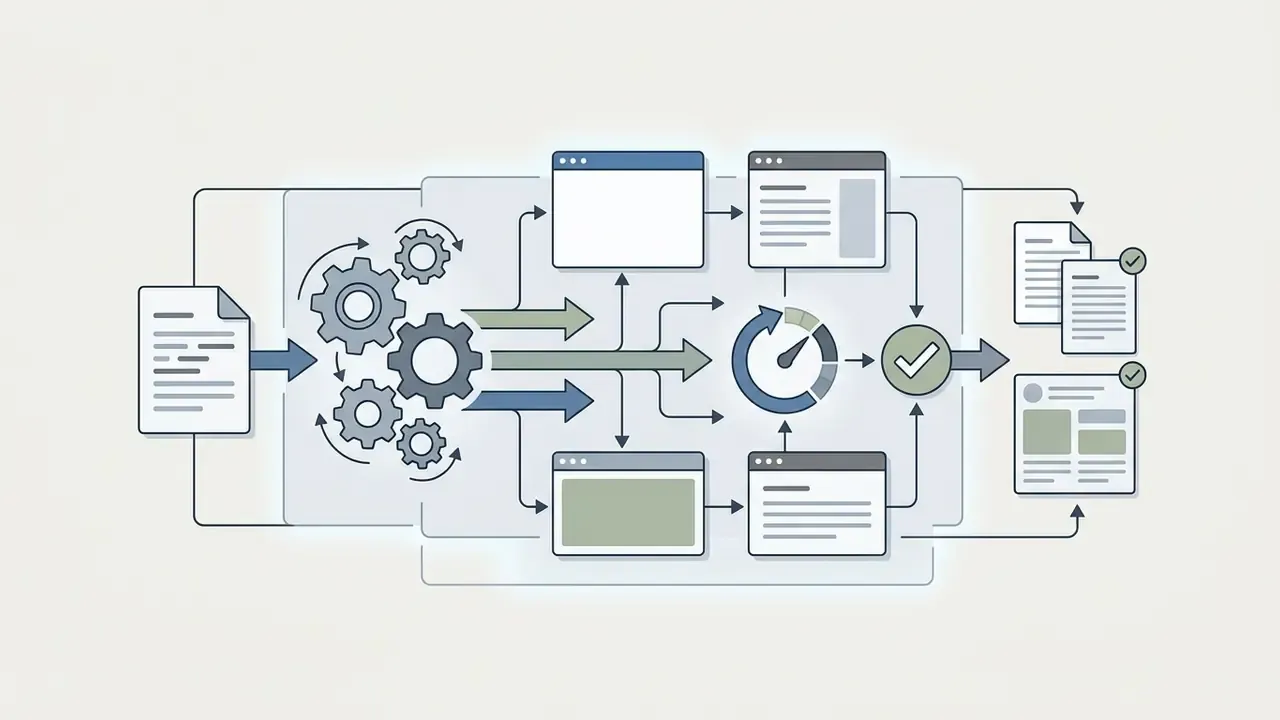
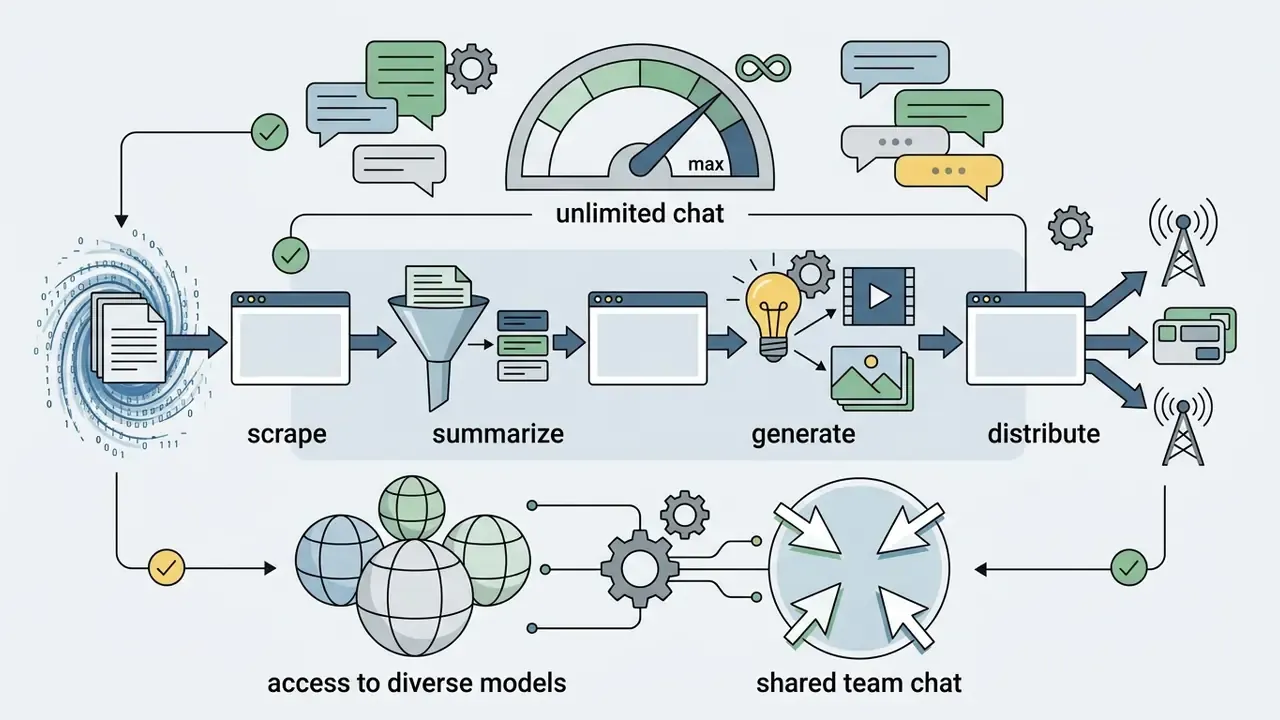
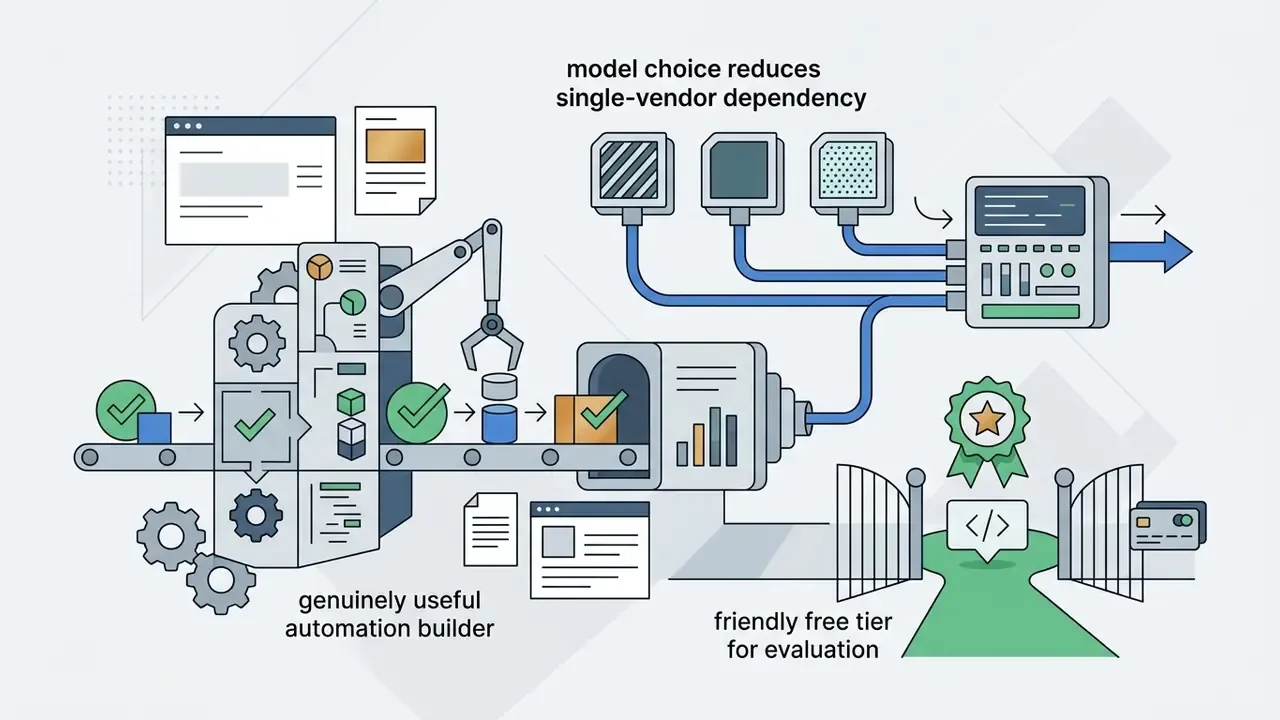
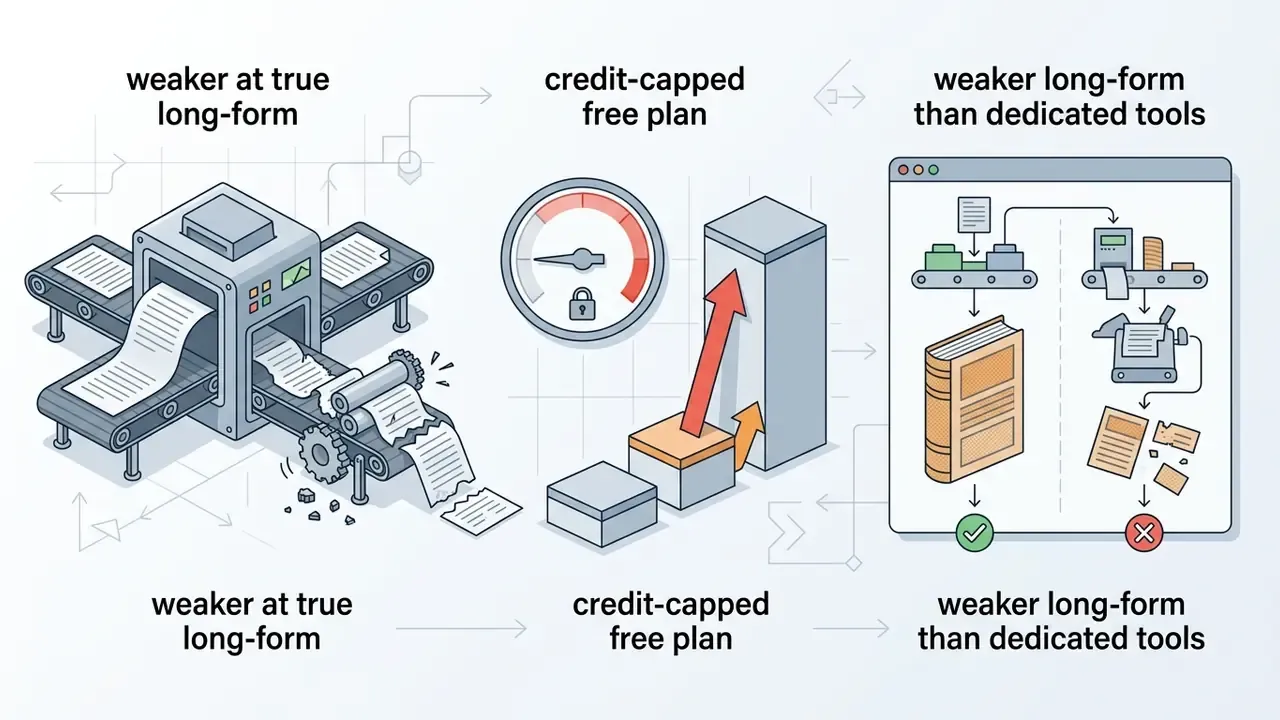


Writesonic, best for SEO-native article production



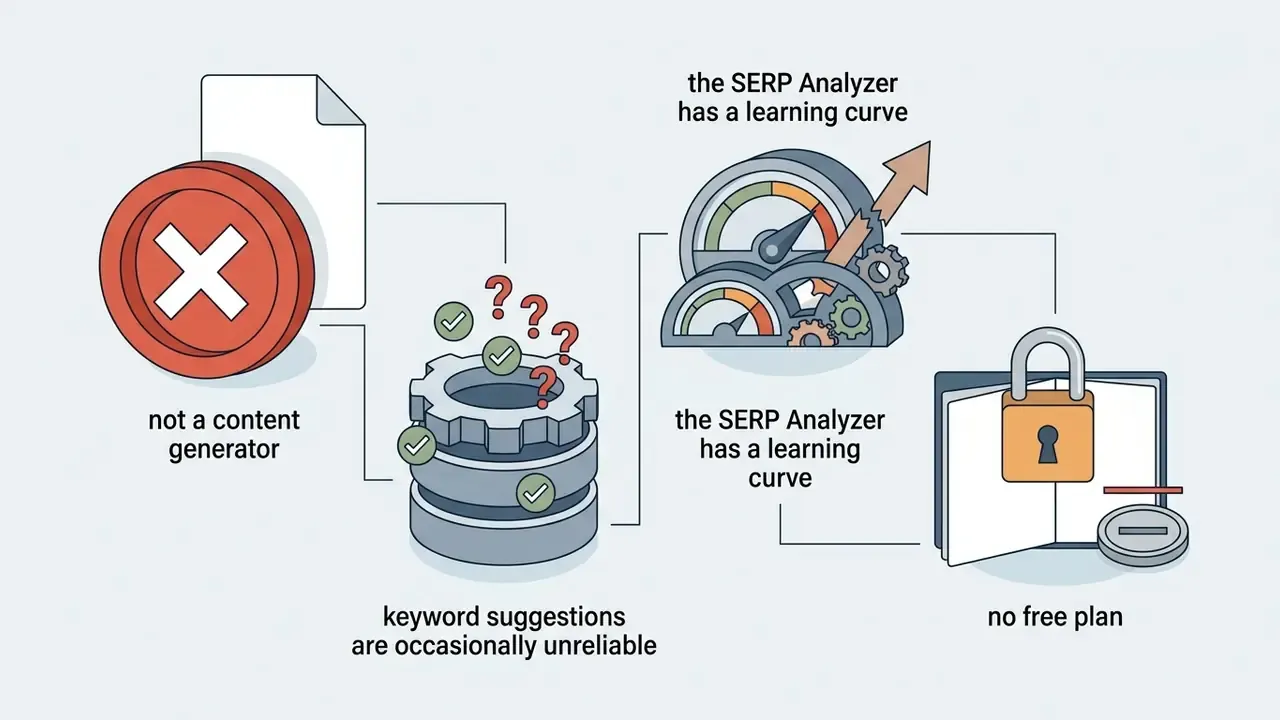
Surfer SEO, best for optimization rather than generation



Perplexity and research-grade assistants, best for sourced ideation
To compare competing writing and editing suites across the industry, you can open the hub and explore the category breakdowns.
- Primary purpose
- fact-checked research synthesis and topic discovery with visible citations.
- Pros
- inline sources shorten verification; strong for competitive and market scans.
- Cons
- citation quality varies by query; still requires primary-source confirmation for any statistic entering publication.
- Best use case
- stage-one research and source-gathering before drafting.
Best AI Tools for Images, Design and Social Media Posts
Design-centric AI platforms enable rapid visual asset creation and template restyling, led by Canva and Adobe Express.
Canva, best all-round design suite for non-designers
- Key features prompt-to-layout generation, background removal, Magic Resize, translate, AI logo concepting, Content Planner, 1,000 Brand Kits and 1TB storage on Teams, 25+ AI tools.
- Pros the shortest learning curve of anything tested; multiple variations per prompt; edits stay fully editable inside the design; Canva AI is accessible on free accounts with usage caps.
- Cons generated text inside images (logos, badges) still misspells frequently; AI imagery can lack originality; copyright treatment of generated assets varies by market and plan.
- Pricing Free €0; Pro from roughly $12.99/month; Teams €90 per year per person (about US$100/year), minimum three members; Enterprise by quote.
- Best use case SMB and in-house social teams producing high-volume on-brand graphics. Licensing and export details are unpacked in our Canva AI Generator commercial-use review.
Adobe Express, best for commercially safer generative visuals



Midjourney, best for artistic concepting and storyboards
To inspect detailed feature sets for desktop and mobile design, creators can review our guide on good video editing apps for visual workflows, plus the roundup of free AI art generators for zero-budget experimentation.
Best AI Video, Audio and Editing Tools
AI video and audio platforms automate video creation, avatar synthesis, transcription, and voice editing, led by InVideo, Synthesia, Murf, and Descript. Category-level comparisons are collected in our AI video generator roundup.
InVideo, best script-to-video generalist
- Key features text-to-video sequencing, timeline editor, 1,000+ templates, stock library, team seats.
- Pros broad format coverage from ads to long-form; usable without editing experience; strong template depth.
- Cons credit consumption is easy to underestimate; render quality varies by template; seat pricing adds up quickly.
- Pricing paid tiers from $50 per seat per month with 2,000 generation credits; a free plan exists with watermarking limits.
- Best use case performance marketing teams producing many short video variants.
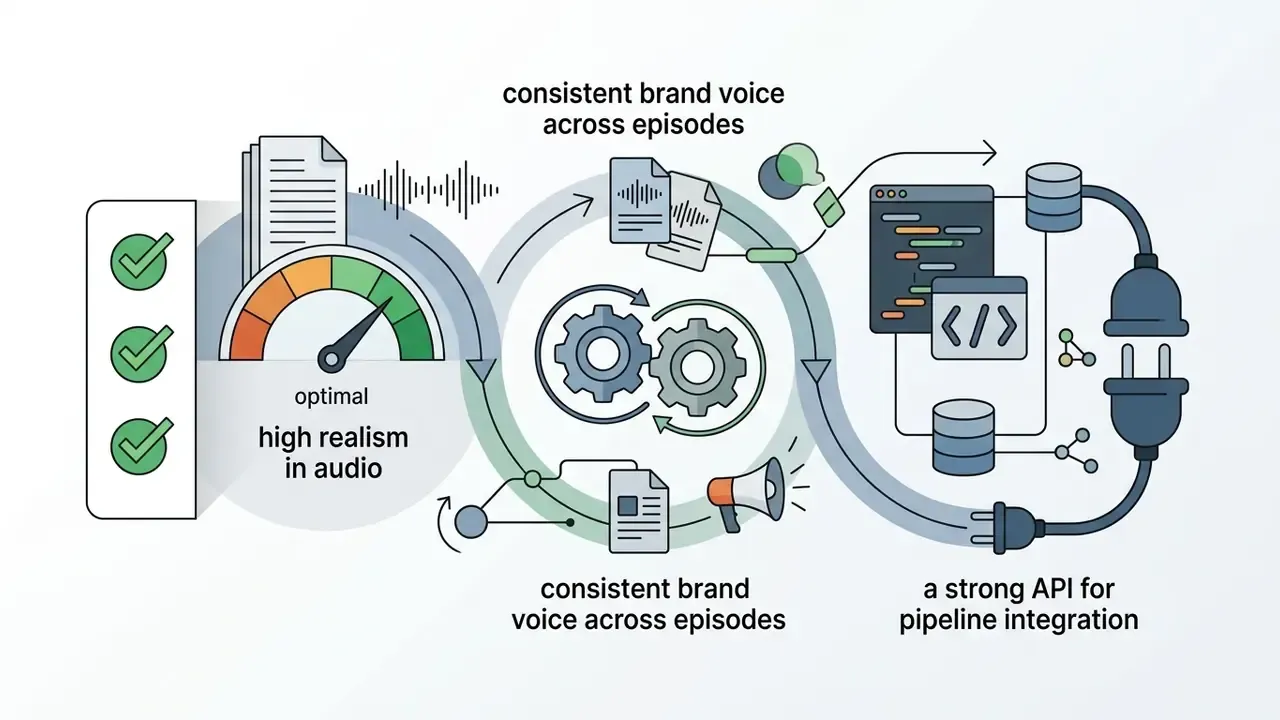
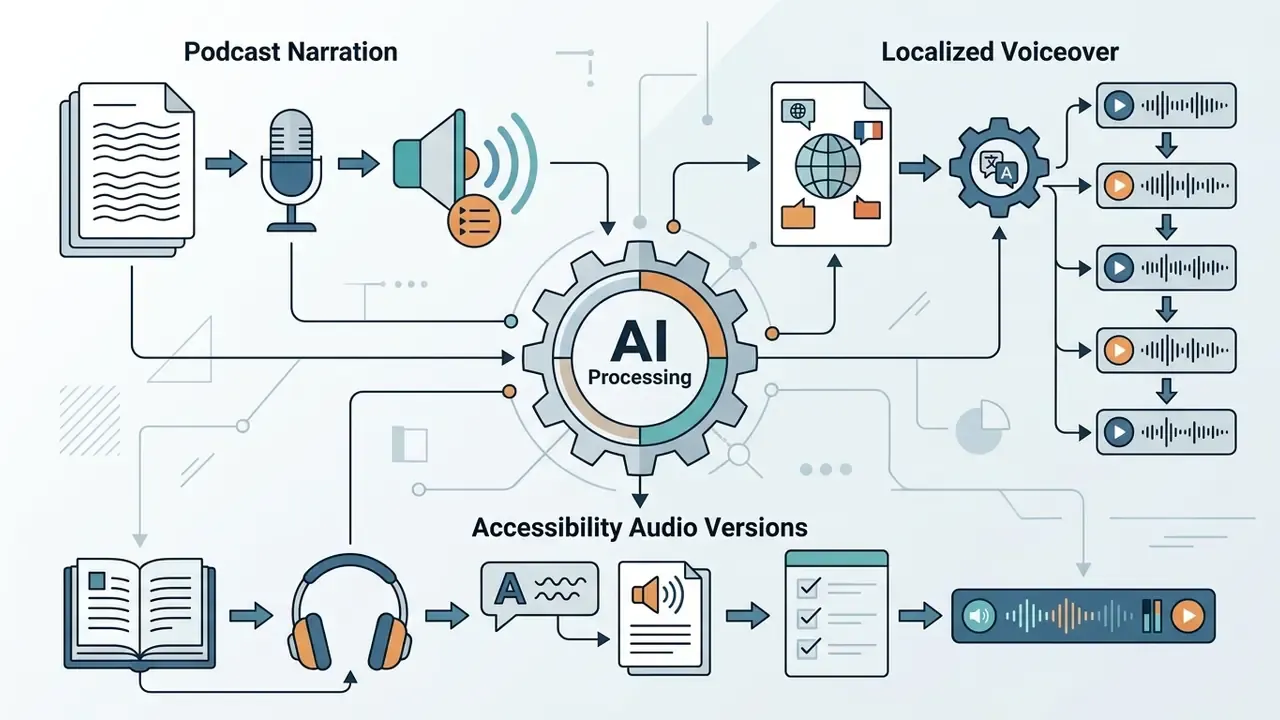
ElevenLabs, best voice synthesis and dubbing engine

Murf, best budget voice generation for marketing
- Pros: clean studio-style voices, a simple editor, affordable entry (plans reported from around $19/month).
- Cons: less expressive than premium engines on long-form emotional reads; fewer language variants.
Descript, best editing and transcription loop
Teams evaluating mobile-first video creation can explore options for a free video editing app mobile to assess handset capabilities, and technical teams can price generation directly through the Google Veo API guide or check compression trade-offs in the video compressor guide.
Best AI Platforms for Social Media Management and Automation
Social management AI tools help with content ideation, cross-platform scheduling, and workflow automation, led by Buffer AI Assistant and Zapier integrations.
- What it does operates inside the Buffer composer using OpenAI models to generate post ideas, rephrase text, and reformat copy for specific social channels without automatically altering scheduled queues.
- Pros optional and non-intrusive, nothing is rewritten unless you open it in the composer; clean cross-channel analytics; a generous base plan.
- Cons text entered into the assistant is shared with OpenAI, which matters for confidential campaigns; core scheduling itself is not AI-driven.
- Best use case solo marketers and small teams wanting ideation inside an existing scheduler.
SocialBee (CoPilot)

Zapier
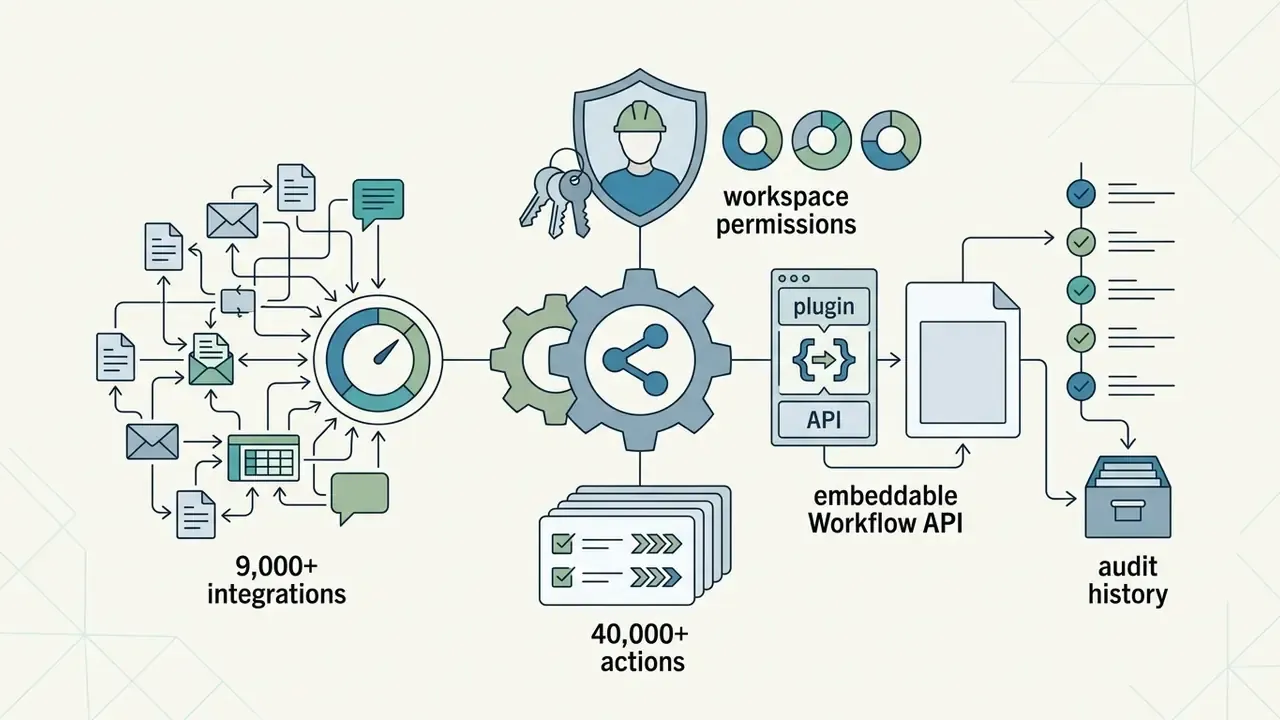

«Generative AI expands personalization and consumer-engagement optimization by automating content production from ad generation through cross-platform distribution.»
Adjacent category: inbox and research automation. Content teams lose measurable hours to email triage and research collection. Sanebox applies AI filtering and prioritization to keep the editorial inbox clear; Boomerang adds AI scheduling, reminders, and follow-up suggestions; HubSpot bundles AI-assisted email creation and tracking with its free CRM tier. None of these create content. They reclaim the hours that content creation needs.
For entertainment-led or viral social campaigns, marketers can evaluate funny ai generators for creative social concepts.
GEO and AEO: Optimizing AI Content for Answer Engines
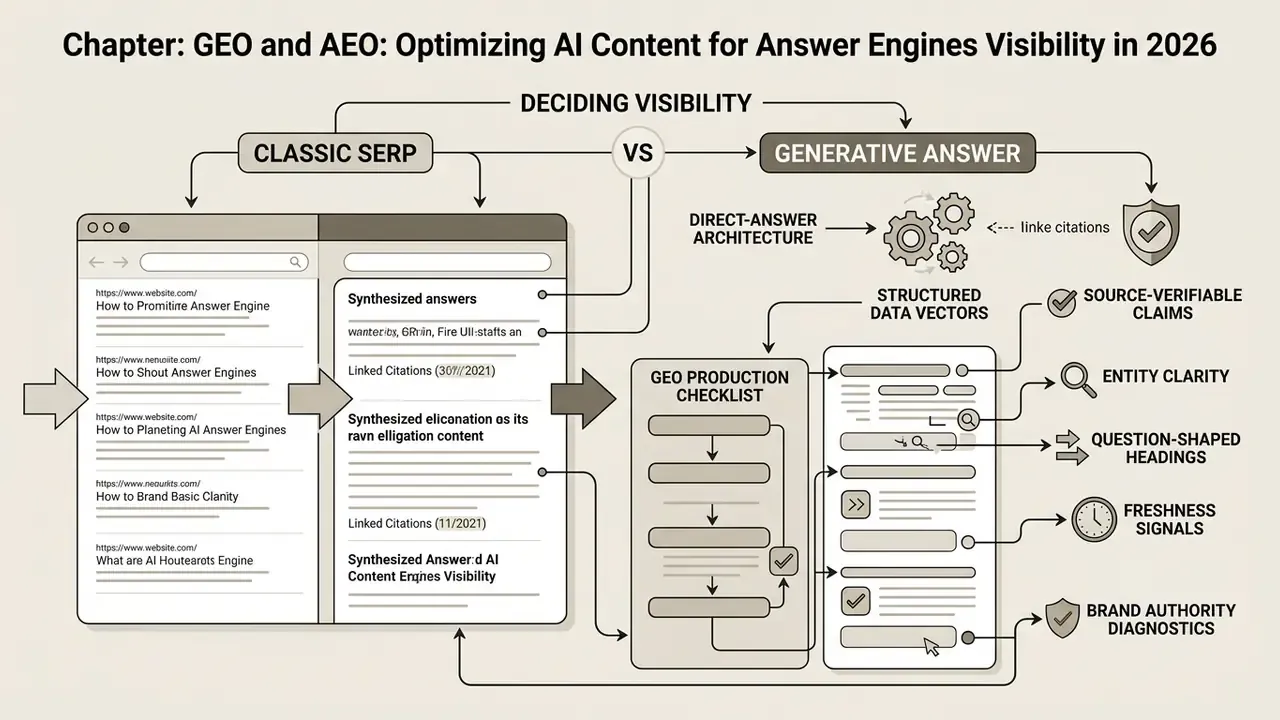
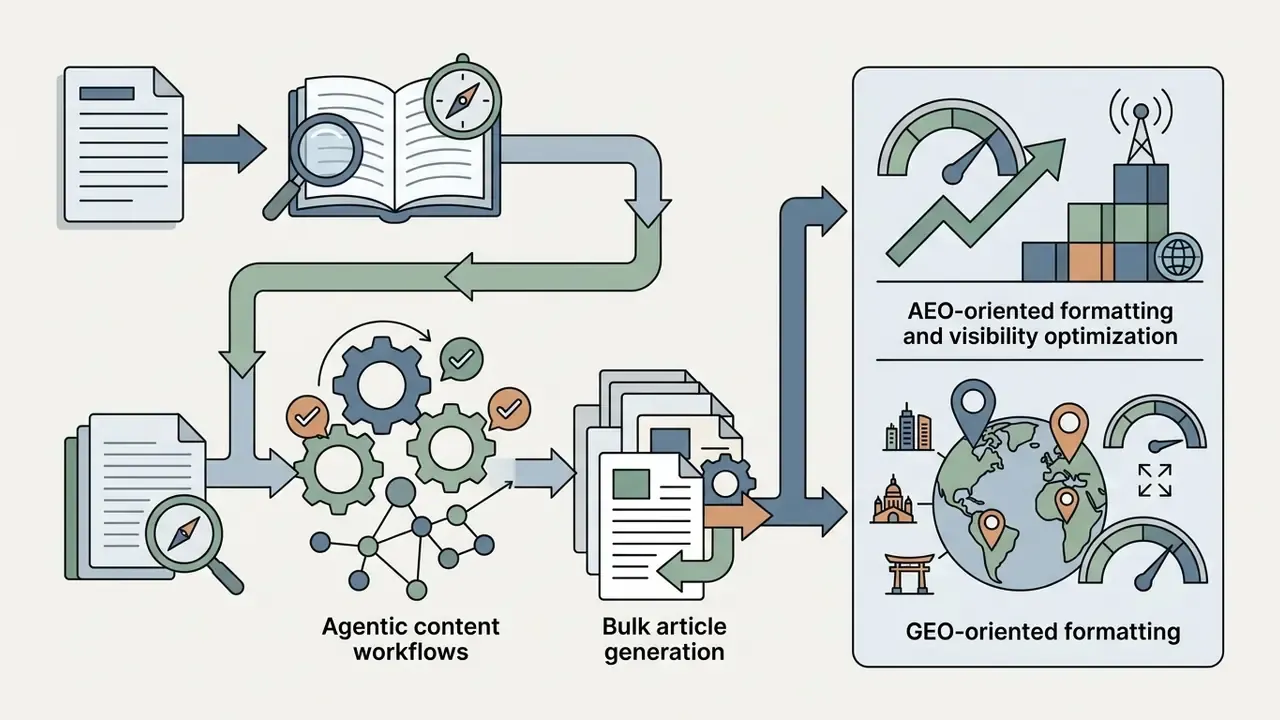
Visibility in 2026 is decided in two places: the classic SERP and the generative answer. Generative Engine Optimization (GEO) and Answer Engine Optimization (AEO) describe the practice of structuring content so that ChatGPT Search, Perplexity, Google Gemini, and Microsoft Copilot can parse, trust, and cite it. Unlike traditional engines that return a list of links, answer engines synthesize a single response from several sources and attribute it. So the competitive unit is no longer the ranked page. It is the cited sentence.
The commercial stakes are concrete:
«Visitors arriving from AI search convert at a dramatically higher rate than visitors from traditional organic search; Ahrefs measured a 23x difference.»
What actually earns citations, the GEO production checklist:
- Direct-answer architecture. Open every major H2 with a concise two-sentence summary that answers the heading as a standalone claim. Answer engines extract these blocks verbatim.
- Structured data vectors. Implement JSON-LD schema (
TechArticle,FAQPage,HowTo,Product,Organization) so crawlers can parse entities, authorship, and update dates without inference. - Source-verifiable claims. Every statistic should carry a named publisher, a year, and a resolvable URL. Models preferentially cite content whose claims can be traced.
- Entity clarity. Name products, standards, and organizations explicitly instead of using pronouns; answer engines resolve entities, not vibes.
- Question-shaped headings. Mirror real user phrasing in H2 and H3 text, then answer immediately below.
- Freshness signals. Publish a visible "last updated" date and a change note; several engines weight recency heavily for tool and pricing queries.
- Brand authority diagnostics. Audit citation frequency by running a standardized prompt set ("best AI content creation tools", "alternatives to X", "is Y safe for enterprise data") monthly across ChatGPT Search, Perplexity, Gemini, and Copilot. Log which competitors are cited instead and which of your pages surface. Jasper, Writesonic, and dedicated GEO tools now ship scoring for exactly this.
- Machine-readable disclosure. Ironically, clean AI-content labeling and provenance metadata improve trust signals for both regulators and answer engines.
Governance caveat. Do not let GEO become scaled content abuse. Google's 2026 generative-search guidance explicitly warns against content produced primarily to manipulate rankings, and the anti-spam position applies equally to AI-authored answer bait. GEO works when the underlying claim is true, sourced, and genuinely useful, which is the standard the HITL pipeline above already enforces.
To benchmark your own citation share against category leaders, start with the comparative test data in our benchmarks hub.
AI Content Creation Platforms for Teams
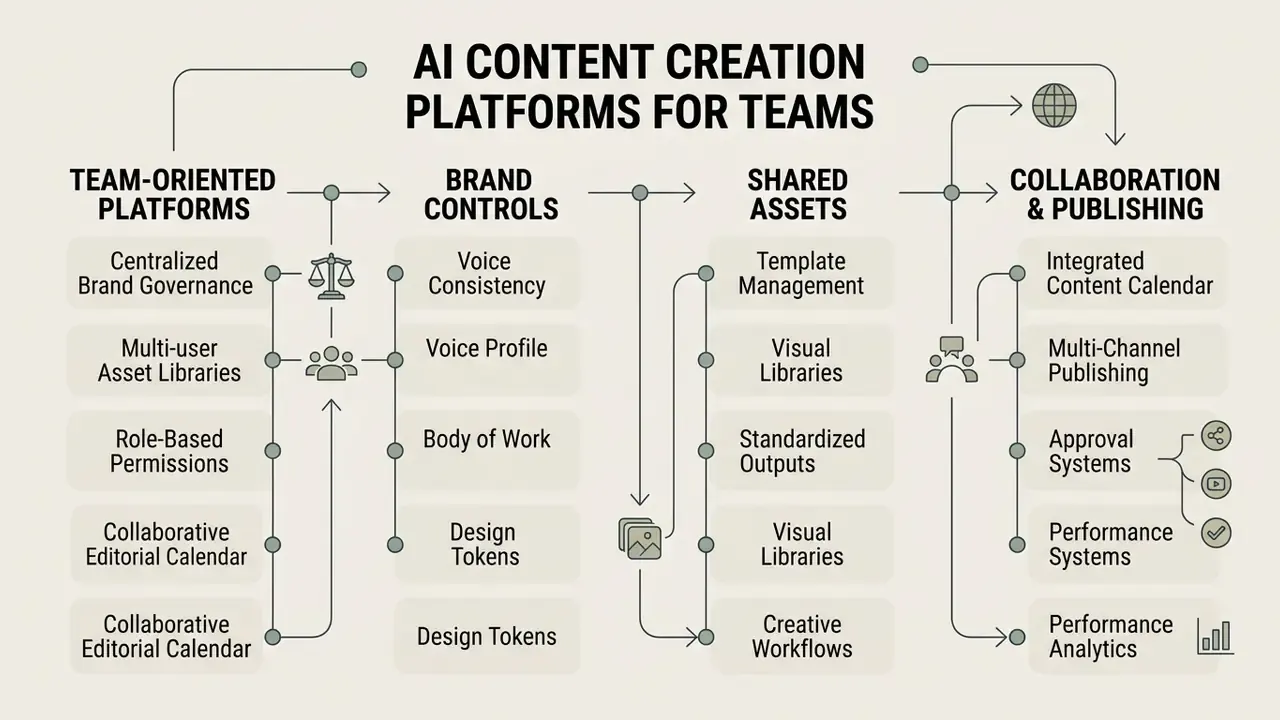
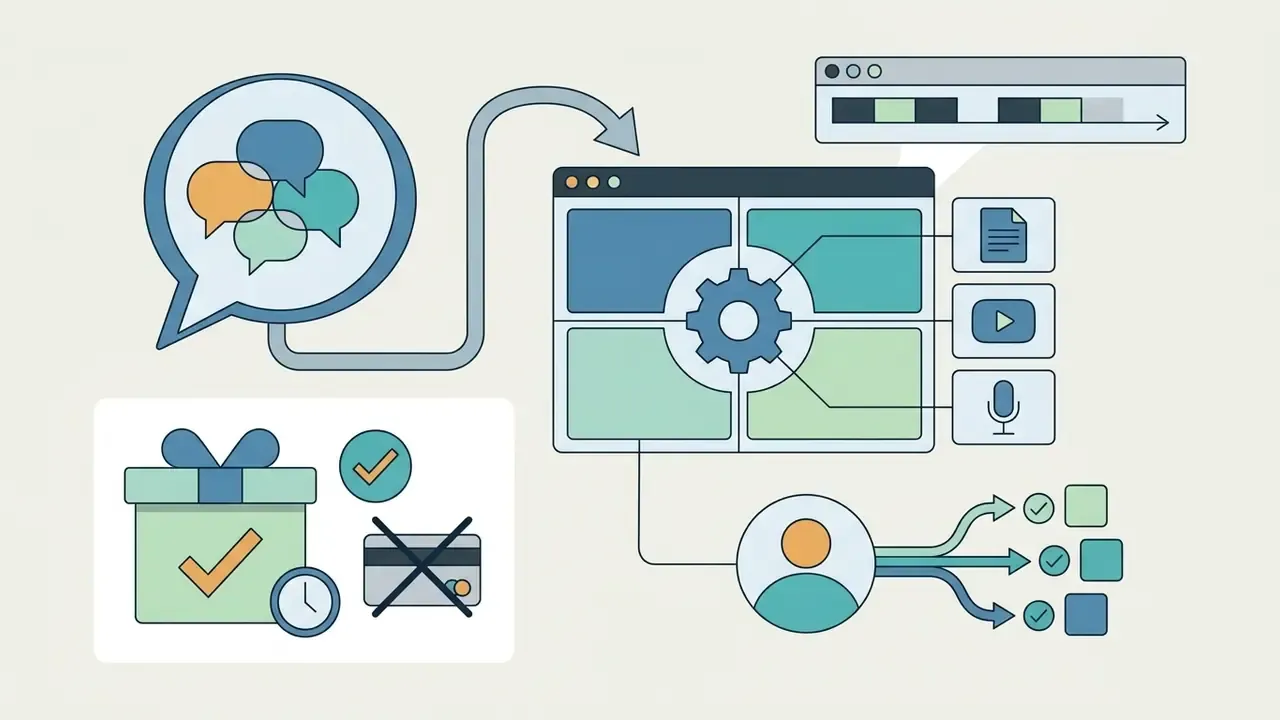
Team-oriented AI content creation platforms provide centralized brand governance, multi-user asset libraries, role-based permissions, and collaborative editorial calendars.
When multiple contributors use generative tools, centralized platform controls prevent tone fragmentation and hold corporate security boundaries. They also head off the more expensive failure mode noted earlier: unmanaged consumer accounts handling material that should never have left the tenant.
Collaboration, Content Calendar and Multi-Channel Publishing
Effective team platforms centralize campaign scheduling, assign explicit asset ownership, and streamline multi-channel publishing from one workspace.
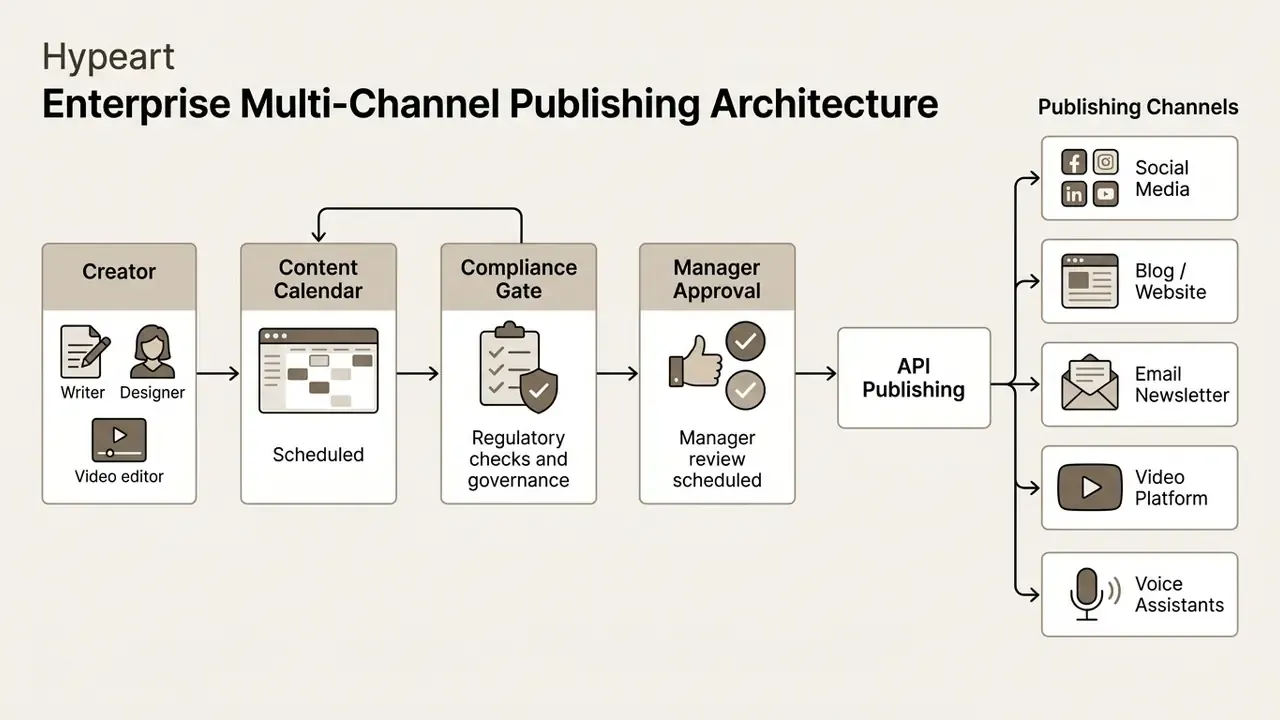
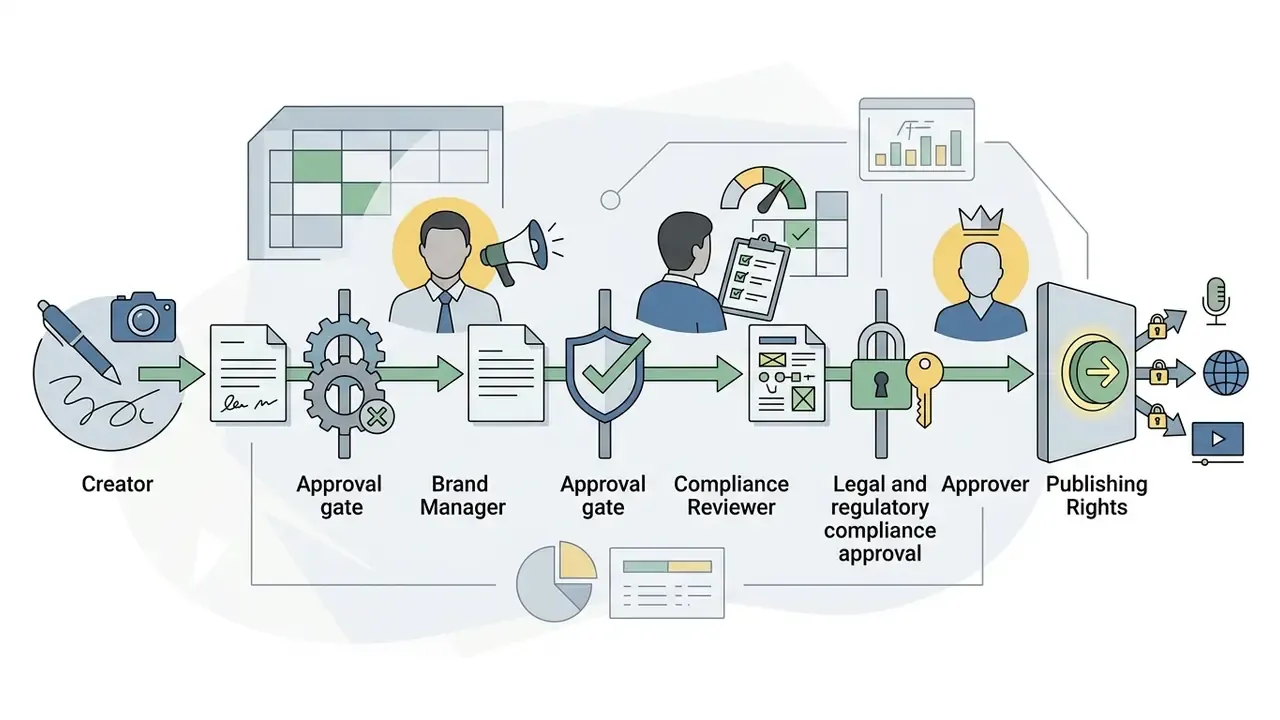
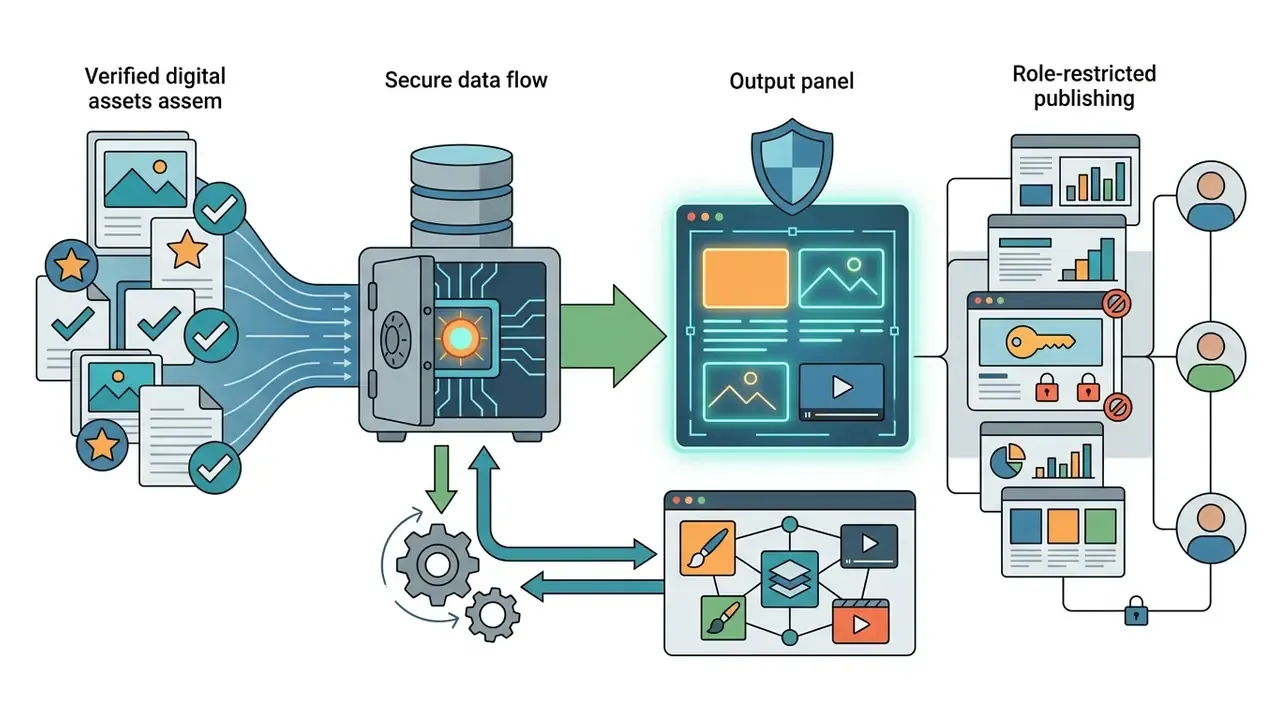
Documentation from Adobe Express (2026) highlights role-based access management: general team members build and preview content schedules, while designated managers hold exclusive authority to connect social channels and publish live posts.
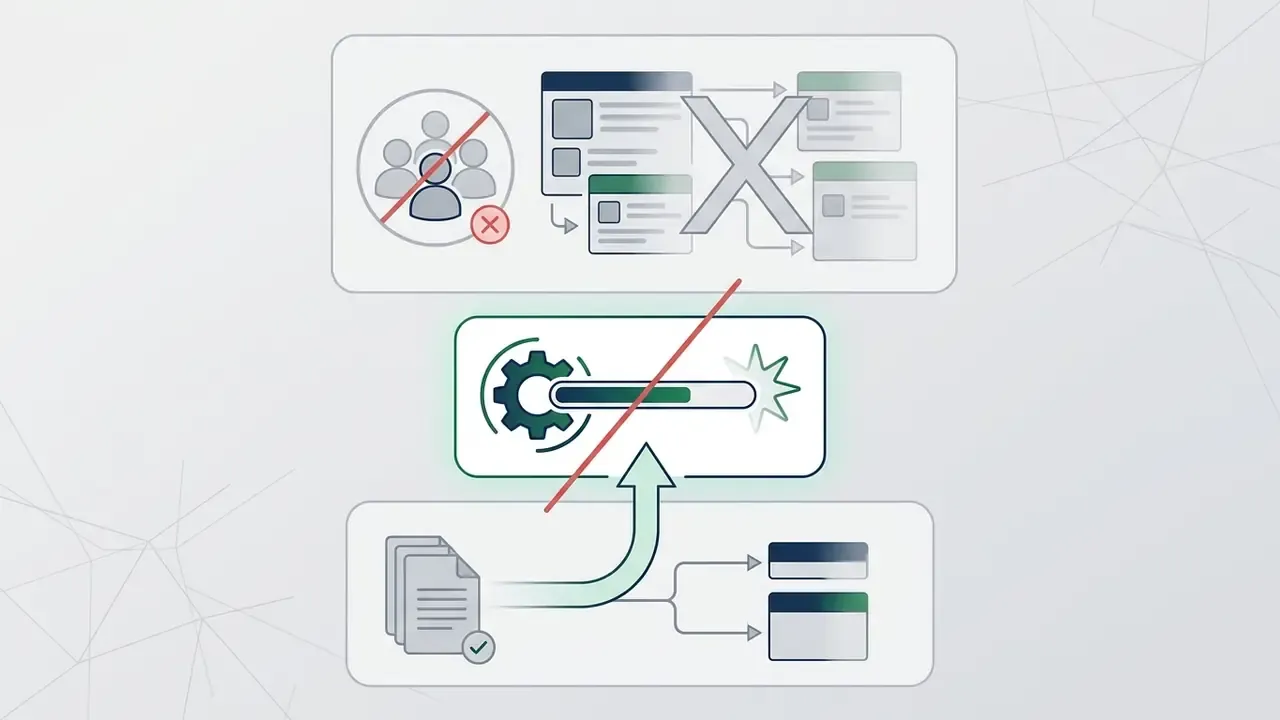
Asana's Editorial Framework (2026) lets a single master content asset map across multiple channel projects without duplicating the underlying data files. Shared-calendar templates from Zoom and comparable suites add owner assignment and status tracking across blog, social, and newsletter streams in one view. That is the minimum viable structure for cross-functional approval, and honestly it is where most stalled AI programmes actually break.
To compare head-to-head evaluations between competing creative suites, you can open the hub for detailed analysis.
Free Plans, Free Trials and Paid Plans Compared
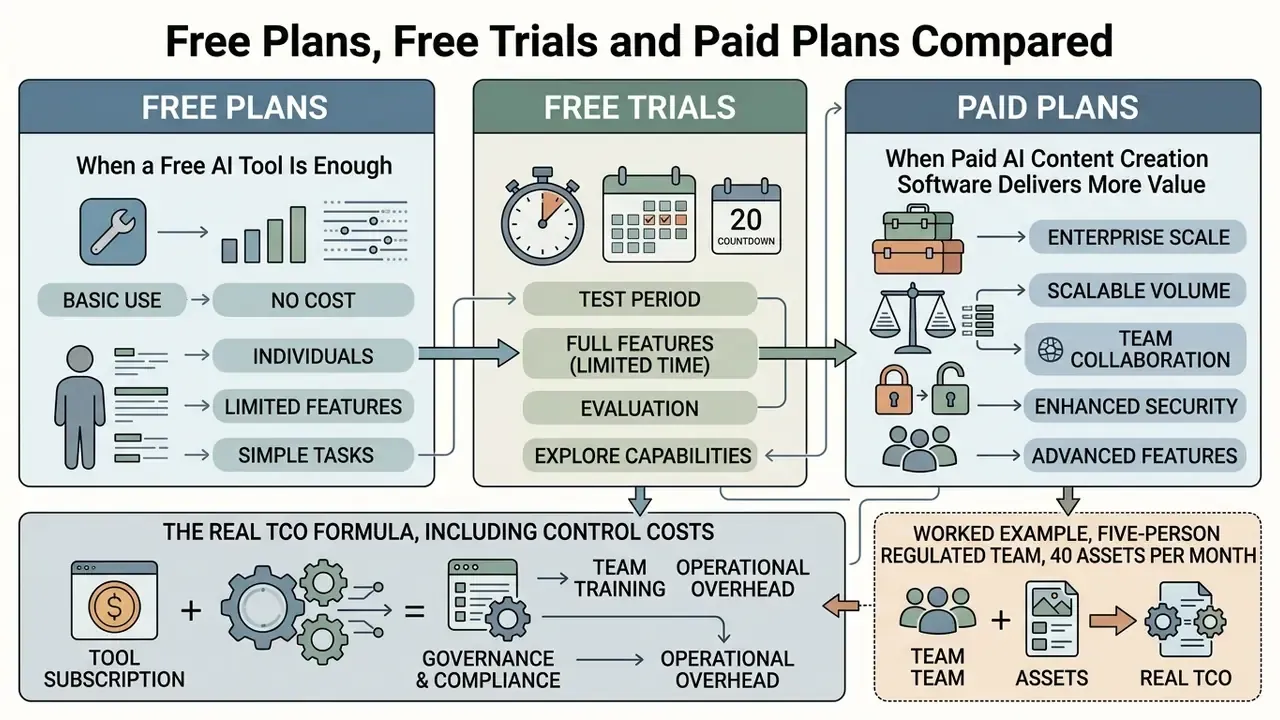
AI tool pricing structures range from restrictive free tiers and time-limited trials to scalable paid plans built for enterprise content volume and security needs.
Trial design itself predicts conversion: a 2026 pricing-model review reports free-to-paid conversion of 2 to 5% for freemium, 8 to 15% for opt-in trials, and 25 to 40% for card-required trials. Useful context when a vendor's "free" tier is really a lead-capture mechanism. The same literature offers a viability rule of thumb: a paid plan should price at roughly five times the monthly inference cost per free user for the freemium model to survive.
When a Free AI Tool Is Enough
Free AI tools suit individual creators, freelancers, and small businesses doing low-risk ideation, initial drafting, or basic social post generation.
Information here is general in nature and does not replace consultation with an information-security specialist or legal adviser when handling confidential data.
NIST AI RMF 1.0 (2023) and the NIST Generative AI Profile (2024) observe that free consumer tiers generally lack strict data privacy protections, dedicated compute capacity, and audit logging. The NIST synthetic-content report (2024) adds that provenance and transparency techniques are required precisely because AI output is easily mistaken for human-authored work. UNESCO's 2024 guidance notes that "free" generative products are typically free only under restrictions: capped features, constrained access, or policy limits.
«74.2% of new webpages contain AI content, evidence of how widely free and low-cost tools are already used for baseline content production.»
So free tools are fine for personal productivity or public ideation, and unsuitable for confidential corporate data, customer PII, or high-stakes regulatory filings. If confidentiality is the binding constraint, review the access and retention trade-offs of free image generation tools and the limits documented in our free photo editor guide before uploading anything client-owned.
A concrete illustration of the free-tier ceiling: on one major assistant, the free tier caps advanced-model use at 5 prompts per day, 5 deep-research reports per month, 100 image generations per day, and a 32,000-token context window, while the paid tier raises the same limits to 100 prompts per day, up to 20 research reports per day, 1,000 image generations per day, and a 1,000,000-token context window. Long-document work, the core of enterprise content, is effectively a paid feature.
When Paid AI Content Creation Software Delivers More Value
Paid software becomes cost-effective once teams exceed 5 active users or produce more than 20 content assets monthly, since that is where API access, brand controls, and workflow integrations start to pay for themselves.
Operational economic data from Cited.so (2026) and Artezio (2026) indicate that a five-person team investing $249 to $499 per month in software plus $49 to $299 per month in integration middleware typically reaches breakeven within 2 to 4 months. Source caveat: these are vendor-published operational benchmarks rather than peer-reviewed findings, and the underlying methodology is not disclosed. Use them as planning ranges and validate breakeven against your own blended editorial cost per asset. Comparable vendor benchmarks put content-volume bundles at roughly $2,500/month for 100 assets and $8,500/month for 500 assets, with ROI periods of 3 to 6 months, while enterprise custom contracts range from $5,000 to $15,000+ per month.
«Visitors from AI search convert 23x better than visitors from traditional organic search.»
That conversion differential is the strongest current financial argument for paid tiers. The tools that support structured, citable, schema-marked output are the tools that buy visibility inside answer engines.
| User Profile | Monthly Volume | Recommended Tier | Key Required Features | Expected Cost Range |
|---|---|---|---|---|
| Beginner / Freelancer | 1–5 assets | Free Plan / Basic | Standard text generation, basic templates, public data | $0 / Month |
| Small Business Owner | 5–20 assets | Professional Tier | Custom Brand Voice, export tools, basic analytics | $20 – $69 / Month |
| Marketing Team (5-15) | 20–100 assets | Team / Pro Plan | Shared calendar, role permissions, API integrations | $249 – $499 / Month |
| Enterprise (20+ Users) | 100+ assets | Enterprise Custom | SSO, SOC 2 compliance, dedicated support, custom LLMs | $999 – $8,500+ / Month |
The Real TCO Formula, Including Control Costs
License price is the smallest line in a governed deployment. Model the full cost before approving procurement:
TCO (monthly) =
    (Seats × License)                          licenses and per-seat add-ons
  + (API / credit consumption)                 generation, rendering, voice characters
  + (Integration middleware)                   Zapier / iPaaS / custom connectors
  + (HITL review hours × blended editor rate)  fact-check, brand audit, sign-off
  + (Governance overhead)                      validation, documentation, prompt/response
                                               logging, GRC integration, periodic review
  + (Residual risk reserve)                    legal/IP review, correction and retraction
                                               cost, reputational contingency
  − (Displaced cost)                           freelance/agency spend, studio recording,
                                               stock licensing, translation
Worked example, five-person regulated team, 40 assets per month: licenses $399 + credits $120 + middleware $99 + review (40 assets × 0.75 h × $65) $1,950 + governance overhead $600 + risk reserve $250 = $3,418 per month, against displaced freelance and studio spend of roughly $4,400 per month. Breakeven holds. But only because review time is budgeted explicitly. Teams that model licenses alone typically under-forecast true cost by three to six times, which is the most common reason AI content programmes miss their stated ROI.
Two sensitivity levers dominate the model: review minutes per asset, compressible through source-grounding and template discipline as our 38% and 94% internal results suggest, and correction rate, compressible through automated guardrails and two-source numerical rules.
Organizations evaluating commercial licensing and copyright terms can browse the hub for regulatory guidance.
How to Build an AI-Powered Content Creation Workflow
Building an effective AI content workflow means a structured process with explicit human checkpoints, from research and drafting through editing, publishing, and performance tracking.
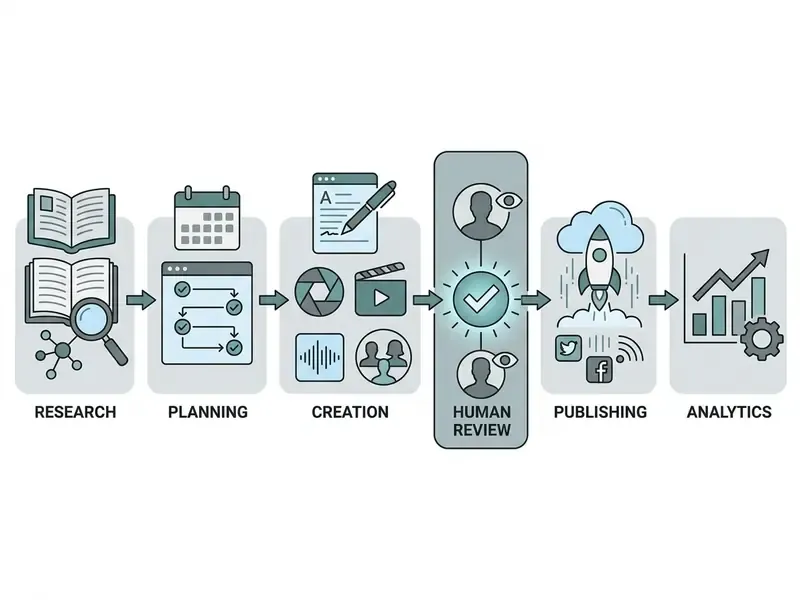
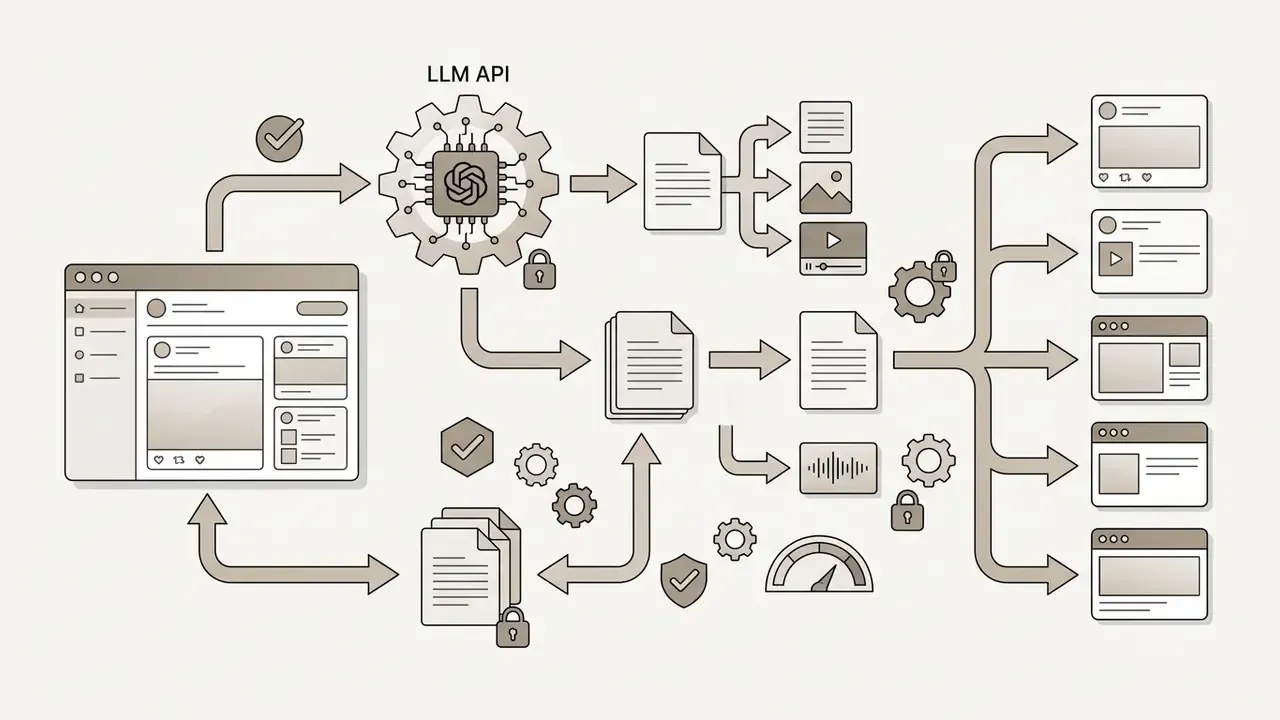
Stage-level exit criteria matter more than the diagram. Research closes only when every open question has an answer, a named source, or an explicitly recorded gap. Publishing closes only when body text, titles, descriptions, schema, tags, author data, internal links, and labeled assets are all in the CMS. Analytics closes the loop by measuring production time, correction count, audit failures, cost per asset, and editorial acceptance rate, not just pageviews.



From Research and Content Ideas to Drafts and Editing
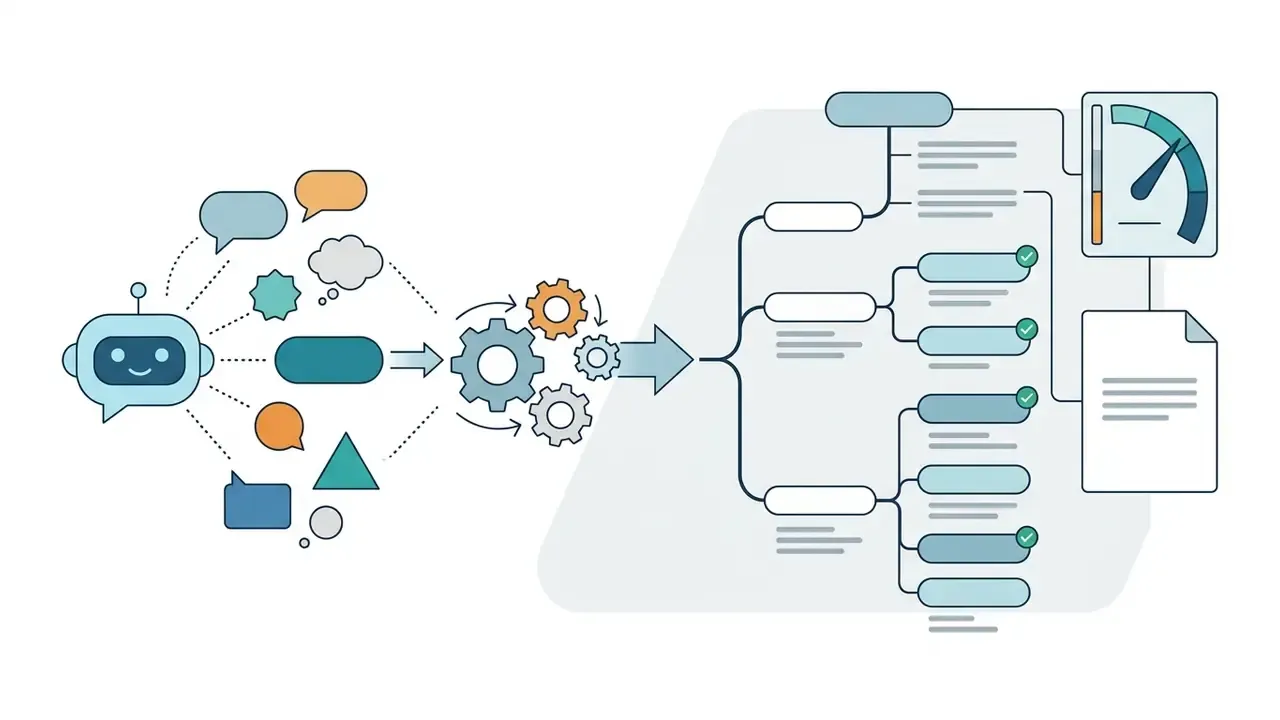
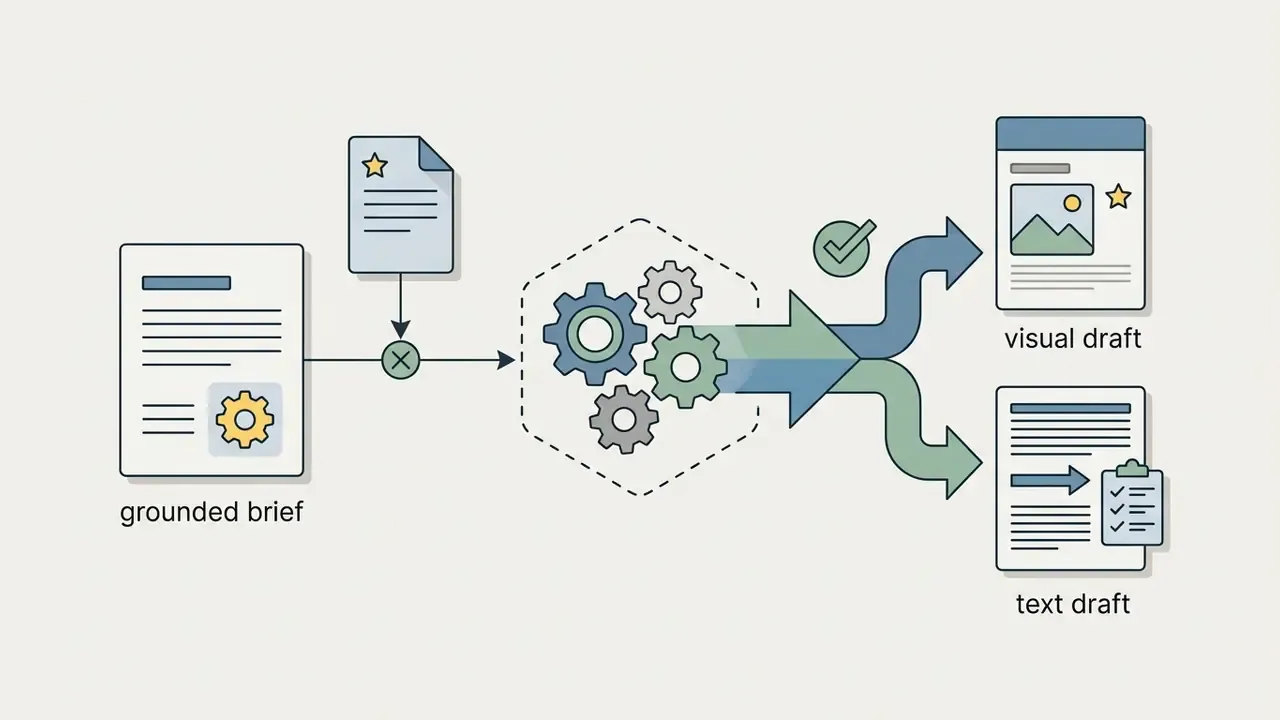
A controlled drafting workflow moves in sequence: source-grounded brief preparation, AI outline generation, then human-led fact verification and style editing.
The CMA AI Playbook Fact-Checking Protocol (2026) mandates multi-source verification and recorded audit trails for high-stakes AI-generated content. Authors must verify dates, statistical claims, and named entities against primary documentation before publication. The TITAN Guideline Checklist (2025) specifies exactly what to record: model and vendor, version, date used, prompts and parameters, the supervising reviewer, and confirmation of which AI passages were edited or discarded.
«Marketers report that AI substantially accelerates lead collection and email content creation, but requires deliberate effort to verify currency and accuracy of information.»
In an internal workflow audit for an enterprise client, a mandatory source-grounding rule, where the LLM was restricted to analyzing provided PDF reports, eliminated 94% of unverified claims in first-pass drafts. Methodology note: this was a single-client audit across one content type and one model version. The 94% reduction reflects that configuration and should be re-measured in any new environment rather than assumed.
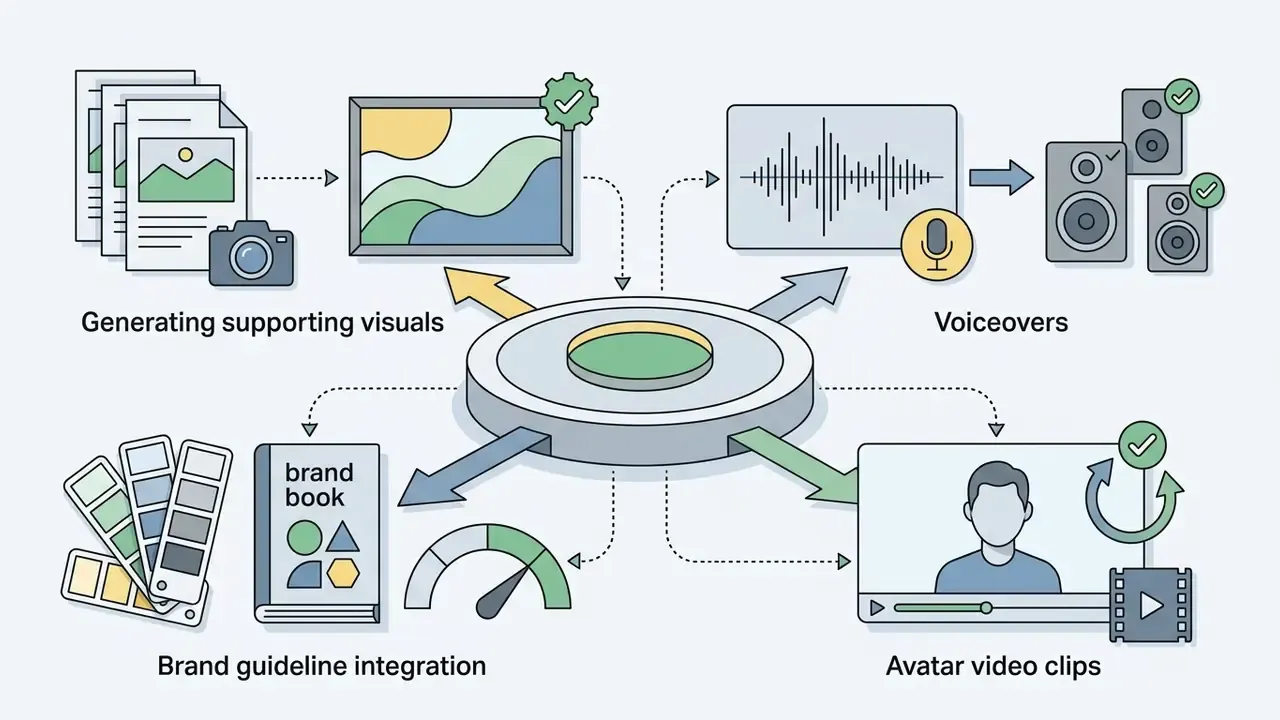
When generating supporting visuals, voiceovers, or avatar clips at stage five, hold them to the same brand and labeling rules as text. Voice engine trade-offs are compared in the AI voice generator guide.
Repurpose Content Across Multiple Channels and Measure Results
Automated repurposing adapts primary long-form assets into channel-native posts, short videos, and email newsletters while tracking engagement metrics against platform baselines.
The repeatable method: identify the source asset, map it into platform-specific formats, publish the variants, compare performance across formats, then promote the best-performing transformations into reusable templates.
«Building semantic networks from a source text and then modifying them allows AI to generate new texts with different emphases for different channels and audiences.»
Content adaptation frameworks stress evaluating performance against platform-specific medians rather than comparing repurposed social snippets directly against original long-form whitepapers. Apples and oranges, otherwise.
Key performance indicators include reach multiplier ratios, engagement rates, click-through rates, conversion actions, watch time, saves and shares, and, increasingly, AI-answer citation share for the topics you own. Visual repurposing pipelines, including static-to-motion conversion, are covered in our image to video analysis.
FAQ: Frequently Asked Questions About AI Content Creation Tools
AI content creation tools augment human writers rather than replace them. They work as assistants for ideation, research synthesis, and initial drafting under human editorial direction.
Can You Create Content Without Replacing Human Writers?
Yes. Generative AI functions as a force multiplier that speeds research synthesis and first-draft generation, while human writers keep strategic direction, voice harmonization, and critical reasoning. A 2026 workplace study found that human and AI co-creation quality, not raw usage frequency, predicts innovation and productivity gains, with the human retaining intent-setting, verification, and final responsibility while the model generates options. Guidance from the Hong Kong Generative AI Technical Guidelines (2025) mandates full human editorial review and explicit fact-checking before publishing AI-assisted materials. The TITAN Guideline Checklist (2025) requires organizations to log model versions, parameters, and supervising reviewers for every published asset.
«Authors using LLMs produce work that is linguistically sophisticated but substantively weaker, which underlines the need for human editorial control.» - Scientific production in the era of Large Language Models, arXiv (2024). https://arxiv.org/ Practical role split for co-creation: the human sets intent and constraints, the model generates candidate structures and drafts, the human verifies against primary sources, harmonizes voice, and signs off. Visual and editing counterparts to that loop are documented in our photo editor and animation maker guides.
How Do I Optimize AI-Generated Content for AI Search Engines (GEO/AEO)?
Lead each section with a direct two-sentence answer, mark the page up with JSON-LD (TechArticle, FAQPage, HowTo), attribute every statistic to a named publisher with a resolvable URL, name entities explicitly instead of using pronouns, publish a visible update date, and audit your citation share monthly across ChatGPT Search, Perplexity, Gemini, and Copilot using a fixed prompt set. Avoid scaled content produced purely for ranking; Google's 2026 generative-search guidance treats that as spam regardless of authorship.
Will Publishing AI-Generated Content Hurt My Search Rankings?
No, on current evidence. Ahrefs measured that 86.5% of top-ranking pages contain AI-generated content, with a rank correlation coefficient of 0.011, statistically indistinguishable from zero. Quality, intent match, and verifiability drive performance; origin does not. Scaled, unverified, low-value output is the actual risk.
Is It Safe to Put Confidential or Regulated Data Into These Tools?
Not on consumer tiers. Free and low-cost plans commonly lack tenant isolation, retention controls, and audit logging, and some assistants explicitly share entered text with the underlying model provider. For PII, unpublished financials, or regulated disclosures, require contractual opt-out from training, zero-data-retention or region-pinned processing, SOC 2 Type II evidence, SSO/SCIM, and exportable prompt and response logs. Confirm terms with legal counsel and your security function before deployment.
What Governance Standards Apply to AI Content in Regulated Industries?
Anchor the programme to NIST AI RMF 1.0 (2023) and the NIST Generative AI Profile (2024) for risk management, ISO/IEC TS 25058:2024 (with ISO/IEC AWI 25590 for generative output quality) for evaluation, and EU AI Act Article 50 plus China's CAC Identification Measures (2025) for transparency and labeling. Financial institutions should additionally map validation, monitoring, and independent review artefacts onto SR 11-7 / OCC 2011-12 model risk management expectations.
Do I Need to Label AI-Generated Images, Audio and Video?
In many jurisdictions, yes. The EU transparency code covers marking and detectability for generated or manipulated media including deepfakes. China requires both visible labels and embedded metadata. U.S. DoD Instruction 5400.19 (2025) requires generative visual information to be cited or labeled, and social reposts inherit the original notice. The U.S. Copyright Office separately requires disclosure of AI-generated portions at registration. Build labeling and provenance metadata into the publishing step rather than retrofitting it later.
How Much Human Review Time Should I Budget per Asset?
In our benchmarking, governed long-form assets required roughly 30 to 60 minutes of human review per 1,000 words once source-grounding and brand templates were in place, rising sharply for numerical or regulated content. Budget review explicitly in the TCO model; teams that omit it typically under-forecast true cost by three to six times.
Which Tool Should I Pick if I Only Buy One?
For a governed multi-brand marketing organization: Jasper plus Surfer SEO and Grammarly's Authenticity Suite. For an SMB with no designer: Canva Teams plus Buffer. For a video-led team: Synthesia or InVideo, with ElevenLabs for voice and Descript for editing. For a research-heavy publisher: a citation-visible research assistant at stage one, Writesonic for drafting volume, and a strict two-source rule at the review gate.
Conclusion
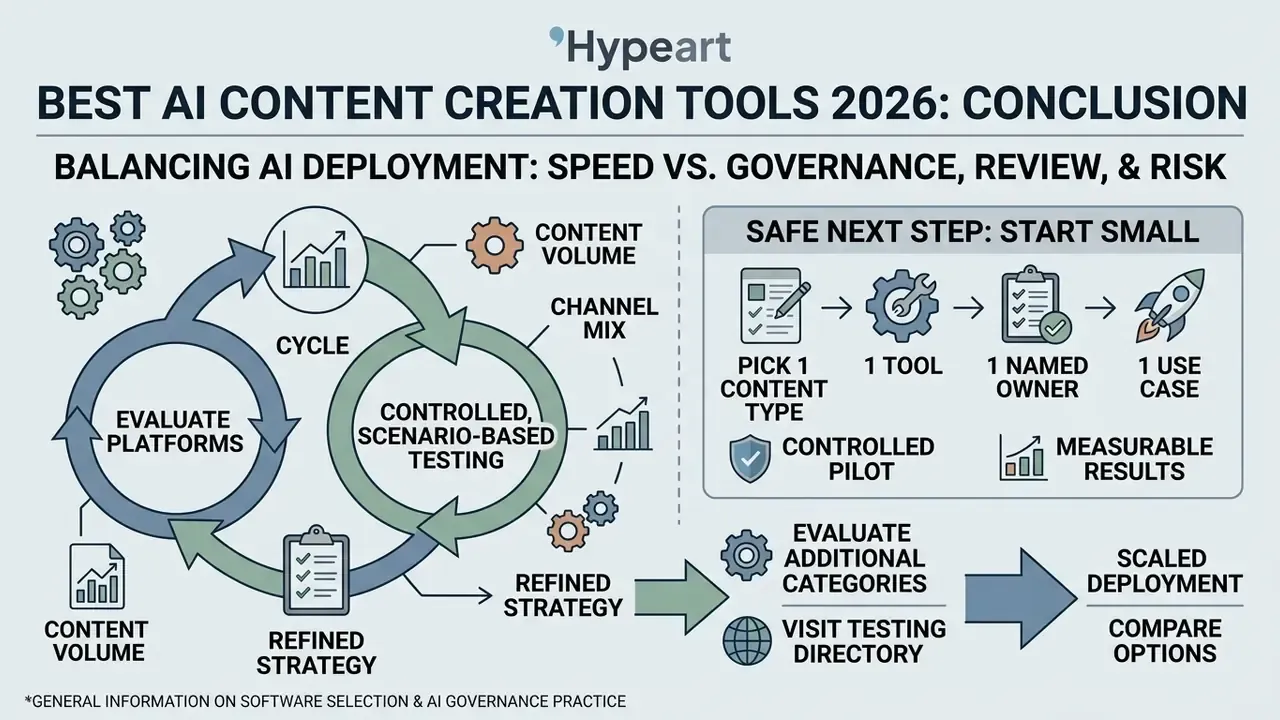
Deploying AI content creation tools successfully means balancing operational speed against governance, human review, and technical risk controls. Organizations that treat generative models as collaborative assistants, enforcing machine-readable brand guidelines, closed-loop editorial review, provenance logging, and integrated workflow automation, tend to capture measurable efficiency gains while protecting brand integrity.
Evaluate platforms through controlled, scenario-based testing tied to your content volume, channel mix, and regulatory obligations. Model total cost of ownership including review and control costs. Insist on contractual clarity around retention and indemnification. Then measure success not only in published volume, but in correction rate, audit outcomes, and citation share inside AI answer engines.
A safe next step, if you are still early: pick one content type, one tool, one named owner, and one documented review gate, and run it for 30 days with the metrics above. Small scope, real evidence.
To evaluate additional software categories and compare options, visit our testing directory. To price a specific pipeline, start with the AI media calculators and the pricing guides.
General disclaimer: this guide provides general information on software selection and AI governance practice. It is not legal, compliance, security, or financial advice, and pricing is subject to vendor change. Verify current terms, attestations, and disclosure obligations with the vendor and with qualified advisers before deployment in regulated environments.