Last updated: 2026 | Editorial review: AI Governance & Model Risk desk | Reading time: ~14 minutes
Executive Summary
- What it is: An AI summary generator compresses long documents, filings, articles, and transcripts into short, decision-ready text using extractive salience scoring plus abstractive generation.
- Why accuracy is the core issue: A large-scale audit of browser-integrated summarizers measured 82.8% sentence-level factual accuracy across 41,331 summaries, meaning roughly one sentence in six needs verification before distribution.
- Control requirement: Regulators and enterprise frameworks expect human-in-the-loop review for public-facing, regulatory, or compliance-bound summaries (NIST AI 600-1, 2024).
- Length matters: Short outputs (~50 tokens, 10-20% compression) maximize factual consistency; longer outputs (~150 tokens, 40-50% compression) score higher on human preference but carry more omission and confabulation risk.
- Input flexibility: Modern tools ingest pasted text, PDF/DOCX/TXT/RTF uploads, live URLs, and scanned images via OCR. Fully scanned PDFs still fail in some enterprise APIs without a separate OCR pass.
- Free vs. premium: Free tiers cap input at roughly 600-1,500 words under public web terms; premium tiers add long-context windows, batch APIs, SOC 2 controls, and zero-retention guarantees.
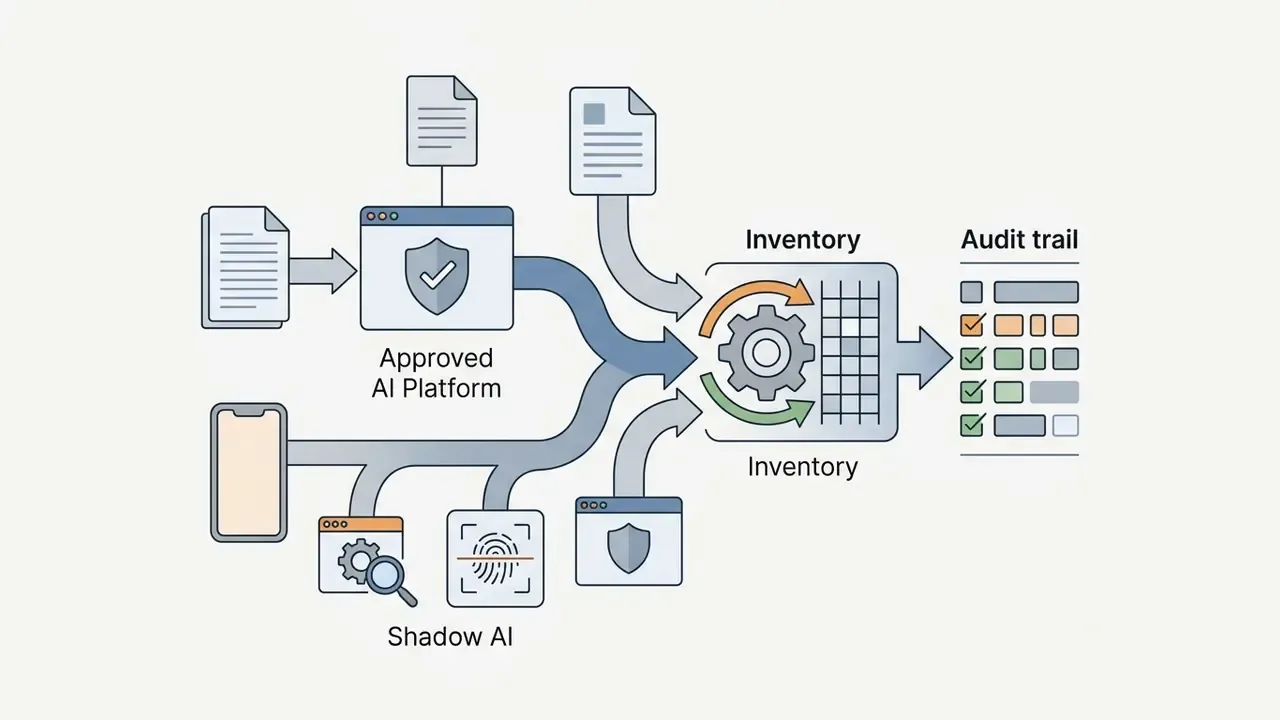
- Biggest overlooked risk: Shadow AI, meaning employees pasting confidential filings into public summarizers, remains the leading data-governance exposure in summarization workflows.
How to Read This Guide
Three audiences use this page differently, so read it in the order that matches your mandate. If you own model risk, start with accuracy controls and the escalation matrix, then check the shadow-AI checklist. If you own a budget, the free versus premium comparison and the billing models section answer the procurement question first. If you simply need output today, the five-step workflow is enough, provided you respect one rule: never release an unverified summary of a regulated document. Everything else in this article is detail around that single sentence.
What Is an AI Summary Generator?
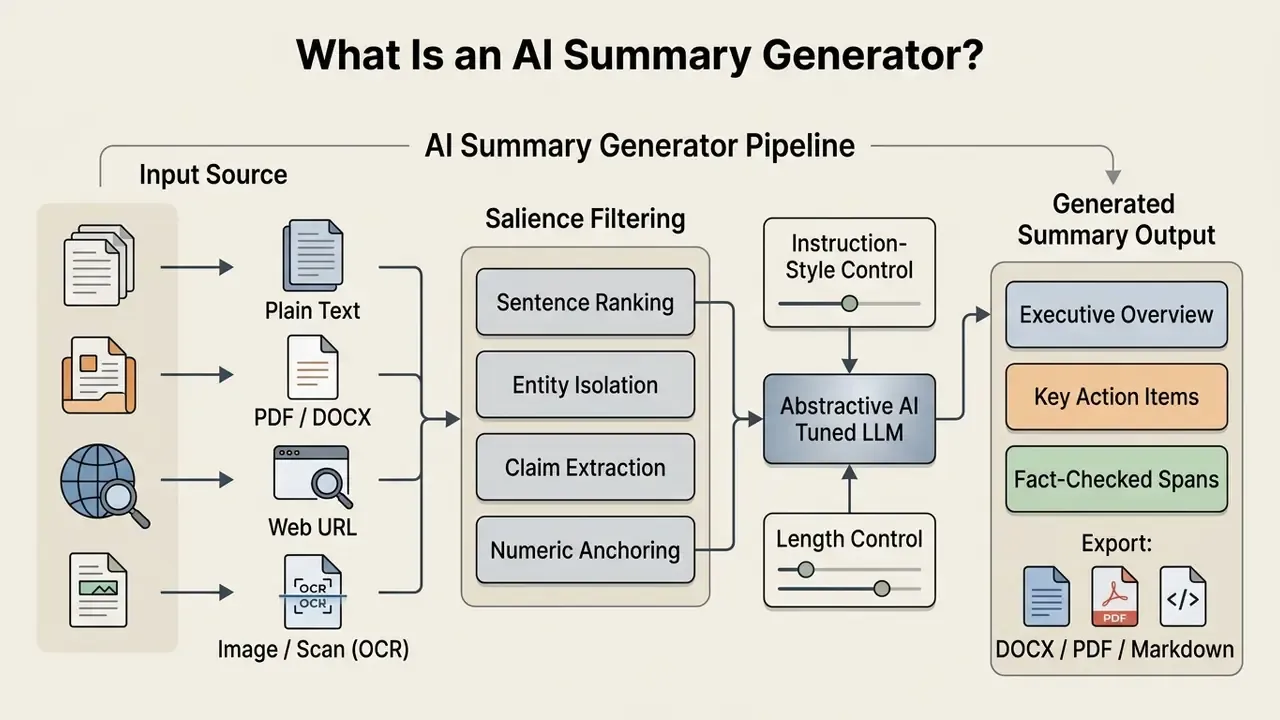
An AI summary generator is an automated software tool that ingests long documents, articles, or transcripts and outputs a condensed version highlighting the core message. It uses natural language processing to compress volume while maintaining original semantic context.
Modern summary generator AI systems allow institutions, researchers, and operational teams to reduce processing time for high-volume text. By employing structured model architectures, an ai text summary generator converts dense text into accessible key points, enabling faster document triaging without manual reading. Think triage, not replacement.
How AI Summarizer Tools Identify the Main Idea
An ai summarizer identifies the main idea by analyzing sentence weights, word frequencies, and contextual embeddings across the source text. Neural architectures score token salience to isolate critical factual assertions from supporting background material.
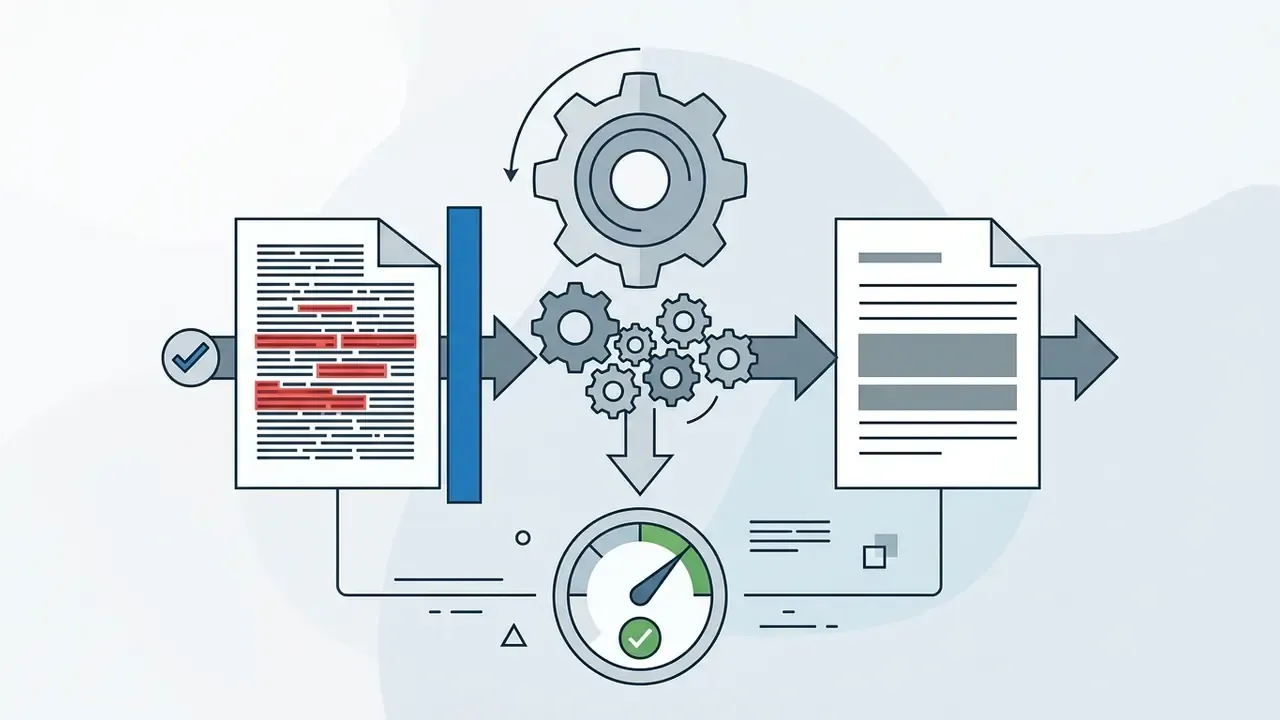
Hybrid extract-then-abstract models first extract evidence spans containing core data points, then generate the final summary conditioned only on that filtered evidence. It is an information-bottleneck design that forces salience filtering before generation.
«Abstractive architectures can act as excellent extractive summarizers when paired with suitable inference algorithms.»
Varab, Abstractive Summarizers Are Excellent Extractive Summarizers, arXiv (2023).
The underlying summarizer ai then uses these isolated spans to condition generative text creation. This process helps the main idea ai generator retain primary claims while removing redundant narrative filler.
«Instruction tuning, not model scale, drives summarization quality: a 350M-parameter instruction-tuned model matched a 175B-parameter model in human evaluation.»
Zhang et al., Benchmarking Large Language Models for News Summarization (2023). https://arxiv.org/abs/2301.13848
That second finding deserves a pause. Bigger is not automatically safer here. A smaller, well-tuned model with a tight prompt often produces cleaner numeric fidelity than an oversized general-purpose one.
Methodological note (illustrative): A compliance audit team evaluated an automated document processing pipeline for incoming financial disclosures. By deploying a hybrid extract-then-abstract workflow that isolated key numerical anchors before generation, the institution reduced context omission by 34% across 1,200 quarterly filings (Internal Benchmark Data, 2024; vendor-side measurement, not a peer-reviewed result, and not directly comparable to public benchmarks such as QMSum or arXiv-based evaluations).
Summary vs. Paraphrasing: What the Tool Generates
A summary compresses text by omitting nonessential details, whereas paraphrasing rewrites content using alternative vocabulary while preserving overall word count. The primary output of an ai summary maker is length reduction through selective content realization.
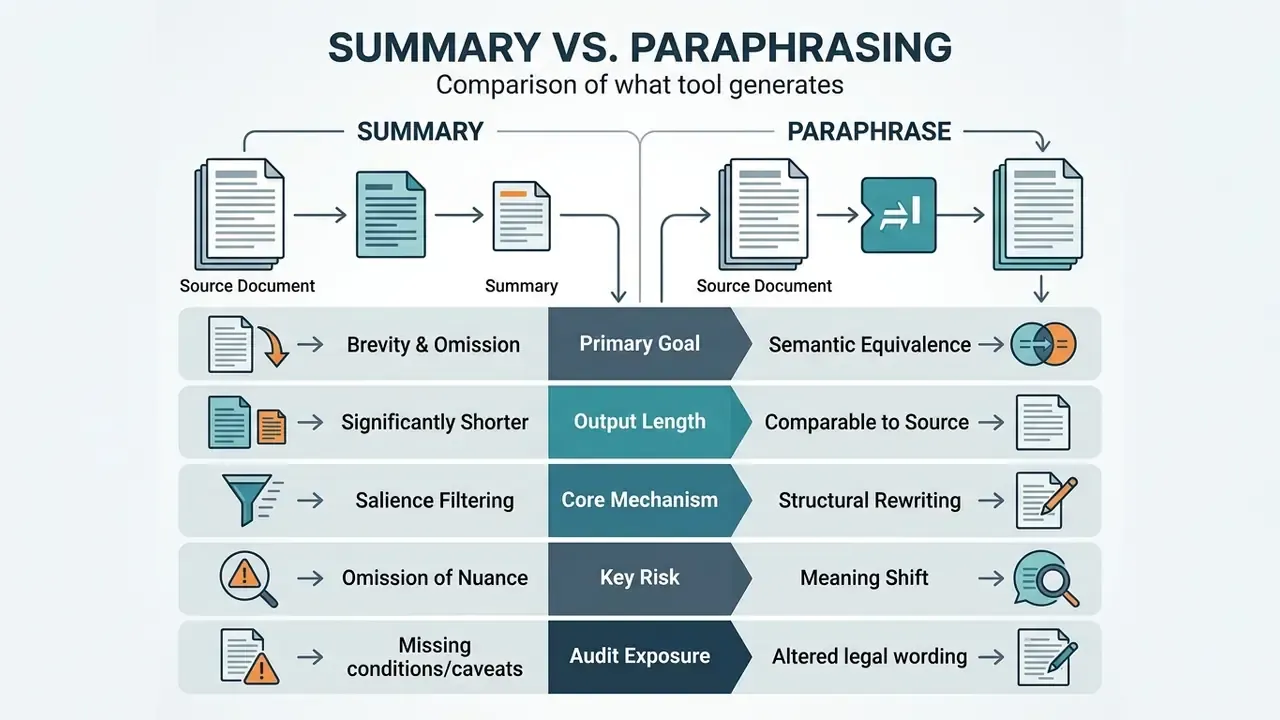
When systems summarize text, the algorithm selects high-priority information and discards secondary context (Varab, 2023). Paraphrasing tools focus on syntactic variation rather than information reduction. The distinction is not academic. A paraphraser applied to a regulatory clause changes wording without reducing length, while a summarizer may silently drop the conditional that carries the obligation. One tool risks meaning drift; the other risks a missing "unless."
How to Create a Summary with AI
Creating a summary using an online ai summary creator involves submitting input content, configuring length and style parameters, running the model, validating the output, and exporting a clean file.
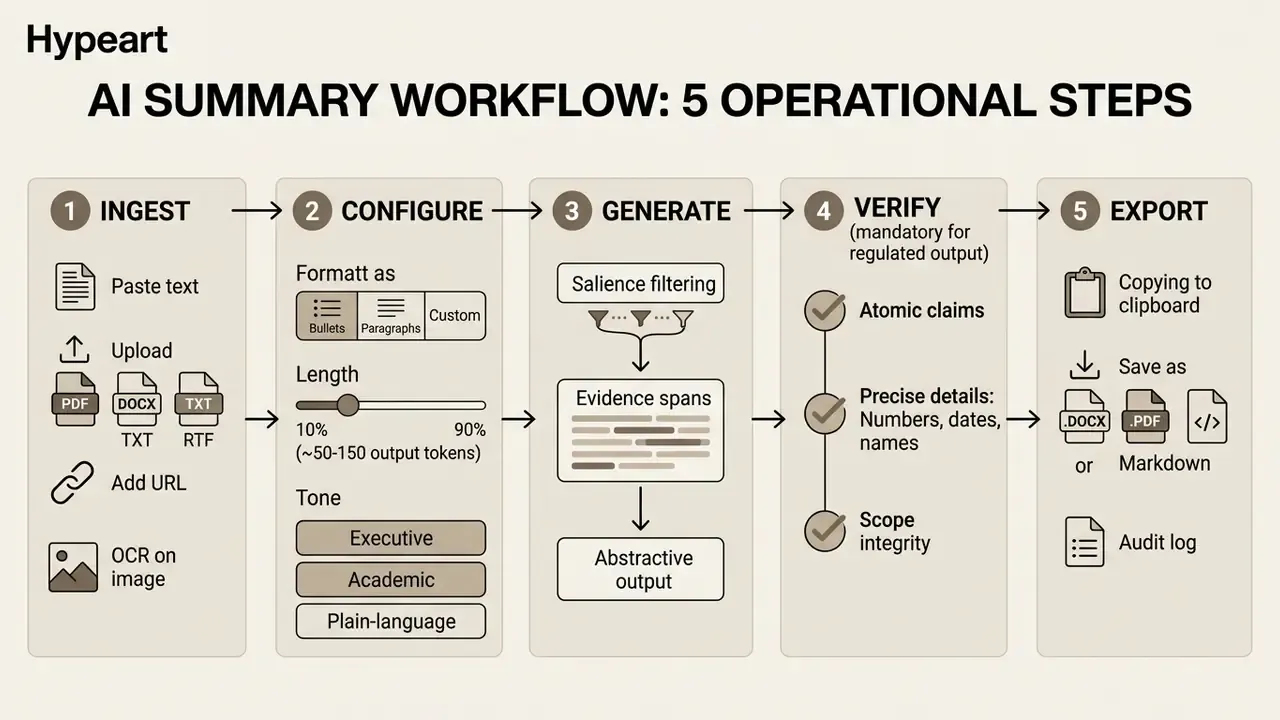
To ai create summary outputs reliably, operators need repeatable submission protocols. Setting parameters before execution keeps summary length consistent and aligned with institutional governance standards. Documented vendor workflows follow the same sequence: upload or paste, set length and style, generate, review, then save, share, or ask follow-up questions (Adobe Acrobat Online, 2026).
Paste Text, Upload a File or Add an Article
Operators can submit material to an ai shorten text generator via direct text pasting, file uploads, or URL ingestion. Supported file formats typically include PDF, DOCX, TXT, and RTF documents.
Enterprise document platforms ingest native digital text directly into processing pipelines. Azure AI Language, for example, supports .txt, .pdf, and .docx for native document summarization while explicitly excluding fully scanned PDFs and text embedded in images (Microsoft Learn, 2026. https://learn.microsoft.com/en-us/azure/ai-services/language-service/summarization/how-to/document-summarization). Standard consumer interfaces let users drag and drop reports or provide web links for real-time article parsing (Adobe, 2025).
Supported Ingestion Channels and Input Protocols
| Input Channel | Technical Mechanism | Optimal File/Data Types | Workflow Action |
|---|---|---|---|
| Direct text paste | Tokenization of raw string input | Emails, notes, single sections | Fastest path; best for under 1,500 words |
| Direct URL ingestion | Headless web scraping plus HTML parsing | News, blog posts, online documentation | Paste the target HTTPS link to bypass manual copying |
| Document upload | Native text extraction | PDF, DOCX, TXT, RTF, PPTX (up to ~100,000 words on premium tiers) | Drag and drop native files directly into the pipeline |
| Image and scan parsing (OCR) | Optical character recognition | PNG, JPG, TIFF, scanned PDFs, screenshots | Converts pixel-based characters into machine-readable text before summarization |
| Batch / API ingestion | REST endpoints, queue processing | Document sets, filings archives | Automates recurring high-volume triage with logged request IDs |
Scanned material is the most common silent failure point. Google Document AI requires document images of at least 200 dpi for reliable extraction, and low-resolution scans degrade every downstream summary. Teams that regularly process screenshots, photographed contracts, or archival scans should pair the summarizer with dedicated image-to-text conversion tools before generation.
Choose Summary Length and Style
Output parameters determine whether a summarizing tool generates a concise bulleted list or a multi-paragraph executive overview. Length control is also a risk control: it balances completeness against hallucination exposure.
Modern AI summary tools expose three presentation modes plus a proportional length setting:
- Bulleted takeaways (scannable): extracts 3-7 primary factual assertions as isolated bullet points. Ideal for executive briefings, risk-committee packets, and quick study notes.
- Structured paragraphs (narrative): generates cohesive multi-sentence paragraphs that preserve the original logical transitions. Recommended for literature reviews and methodology summaries.
- Custom compression slider (10%-90%): lets the operator set the exact ratio between source volume and target output volume, the same mechanism consumer tools expose as a "Short ← 50% → Long" control.
Style presets add a second axis: executive or business tone (compact, decision-first), academic tone (terminology-preserving), and plain-language tone (simplified vocabulary for wide internal distribution). Public-sector style handbooks anchor the business case: an executive summary is conventionally about 10% of the original document, ranging from one to ten pages.
«Across 17 LLMs and 7 datasets, factual consistency peaked at 50-token summaries, while human raters preferred 150-token summaries.»
Multi-Dimensional LLM Evaluation Framework, arXiv preprint (2025).
Note the tension there. What readers like is not what the model gets right. Operators can also configure prompt instructions to enforce formal, academic, or simplified tones based on audience requirements. For deployment planning, teams often consult dedicated AI Media Calculators to estimate token throughput and computational overhead.
Export, Copy and Distribute the Result
A summary has no operational value until it leaves the tool in a controlled format. Production-grade summarizers offer one-click copy to clipboard, .DOCX download for editorial markup, .PDF for archival distribution, and raw Markdown for documentation systems and knowledge bases. Enterprise deployments should also log the source document ID, model version, prompt configuration, and reviewer sign-off alongside the exported file, so the summary stays reproducible during an examination years later.
What Content Can an AI Text Summarizer Process?
An ai text summary generator can process machine-readable digital documents, scientific papers, meeting notes, news feeds, and corporate policy files.
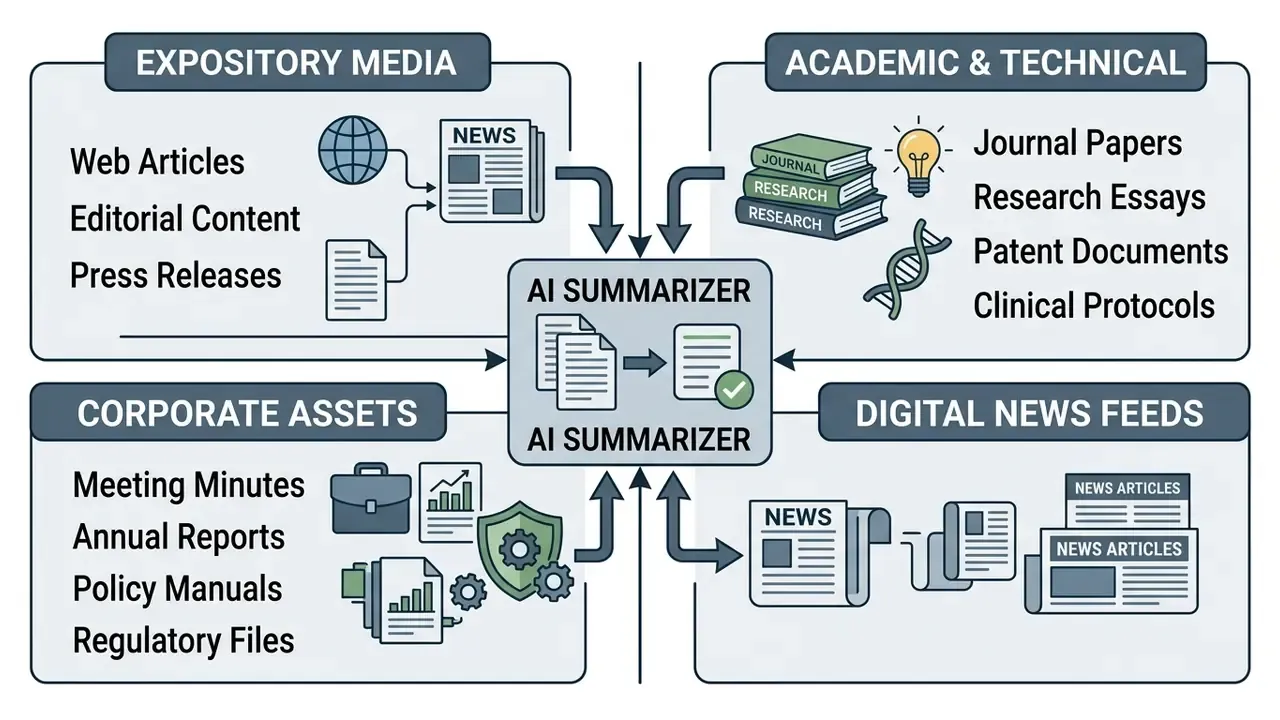
Different document types demand different pre-processing. Digital text streams need almost none, whereas complex visual documents require optical character recognition (OCR) before an ai summarizer generator can digest the text. Teams handling mixed archives should standardize a pre-flight check with image-to-text conversion tools so no scanned exhibit silently drops out of the pipeline.
Summarize Articles, Essays and Research Papers
Summarizing scientific articles and research papers requires section-aware processing to preserve domain-specific terminology and empirical conclusions. Academic summaries must maintain methodological fidelity without altering technical nomenclature.
Academic guidelines specify that summaries should accurately capture research questions, hypotheses, and quantitative results, and that technical or conventional terms should not be swapped for awkward synonyms (University of Manchester, 2024). Long research papers benefit from semantic chunking, where individual sections are summarized sequentially before a consolidated final report is generated.
«Six open-weight LLMs showed significant summarization quality gains on arXiv papers when chunking strategies replaced single-pass processing.»
Xia et al., Cross-Domain LLM Summarization Evaluation, arXiv preprint (2025).
Organizations frequently compare different model backends to determine which framework best preserves specialized vocabulary. Structured research workflows also recommend exporting outputs with citations and page anchors, so every claim remains traceable to its source page.
Create Summaries from PDFs, Reports and Meeting Notes
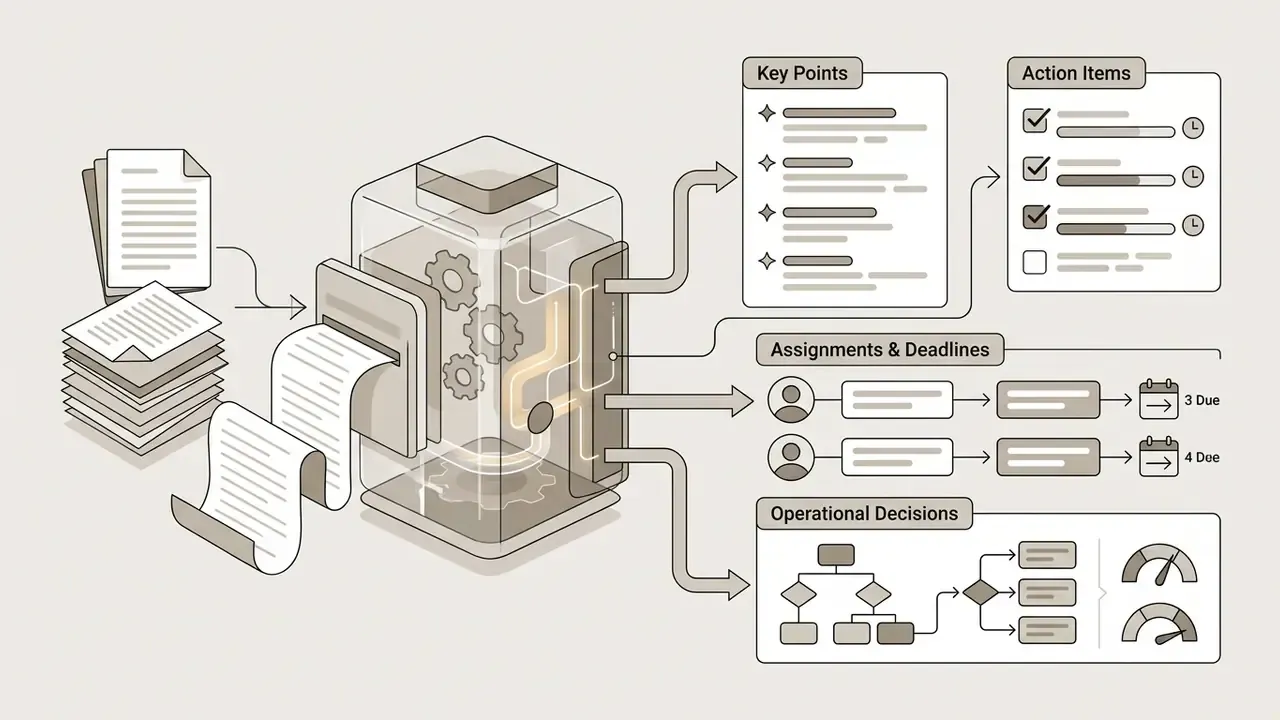
Extracting key insights from multi-page PDFs and corporate meeting notes relies on identifying action items, speaker decisions, and structural headings.
Meeting transcripts are harder than they look, mainly because of informal speech patterns and conversational turn-taking.
«On the QMSum dataset, standard metrics masked roughly a third of meeting-summarization errors, including missed decisions and irrelevant content.»
Kirstein et al., Automatic Metrics for Meeting Summarization, arXiv preprint (2024).
Automated pipelines do extract structured takeaways from complex transcripts, and standards bodies already treat this as an accepted workflow: ISO guidance (2024) notes that committee secretaries may use AI tools to record meetings for drafting minutes, with transcripts prepared where disputes must be resolved. Organizations that pull spoken content out of recorded sessions and published media often build the transcript layer inside their YouTube video editing workflow before routing the text into the summarizer, which supports both accessibility and a clean machine-readable input.
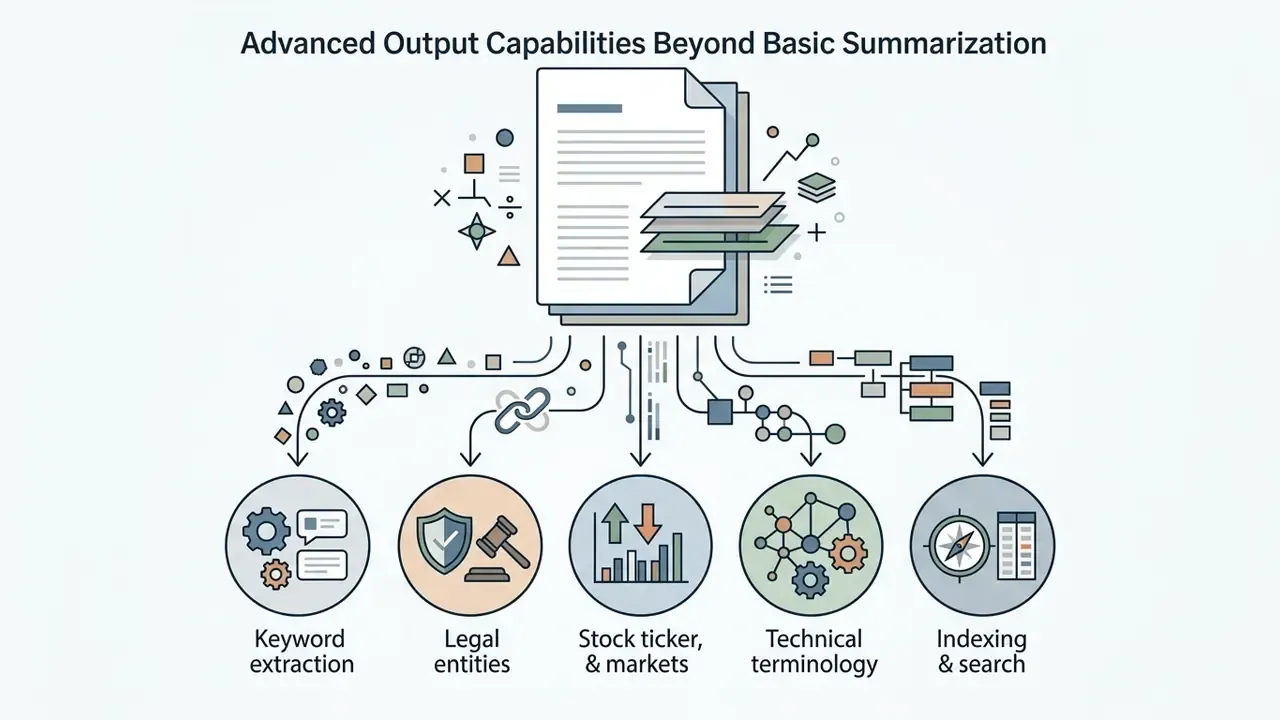
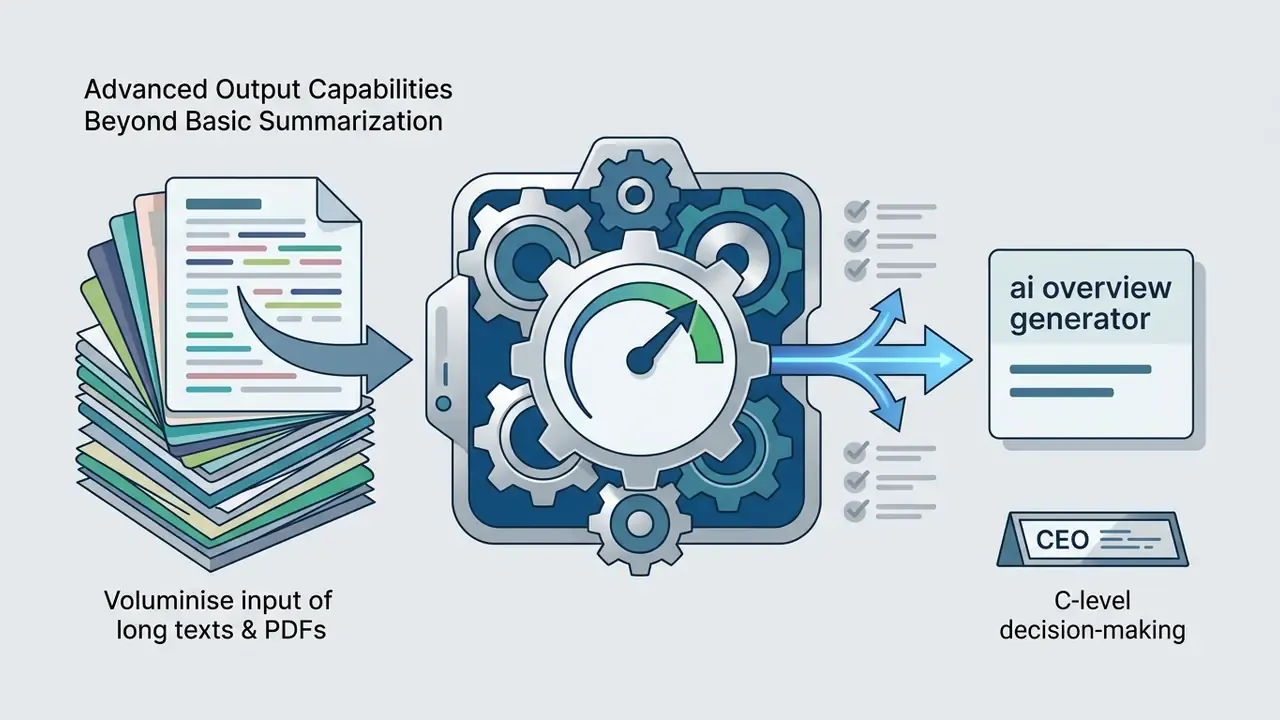
Advanced Output Capabilities Beyond Basic Summarization
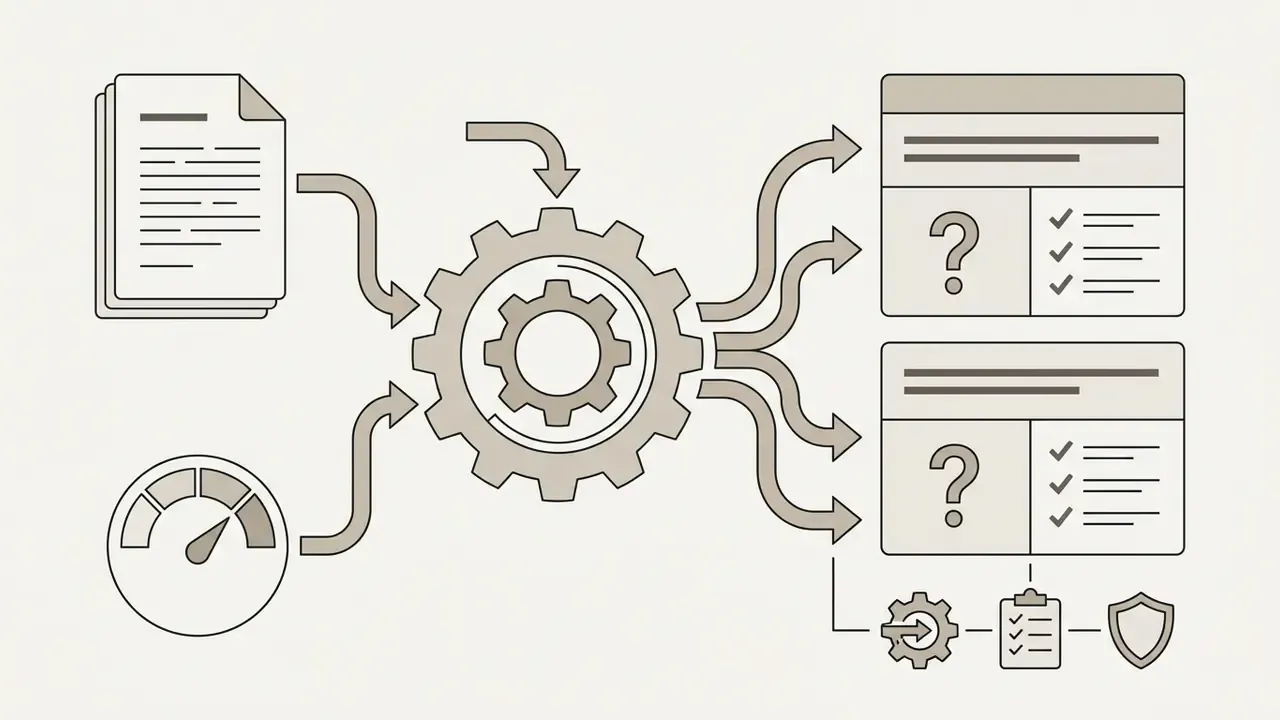
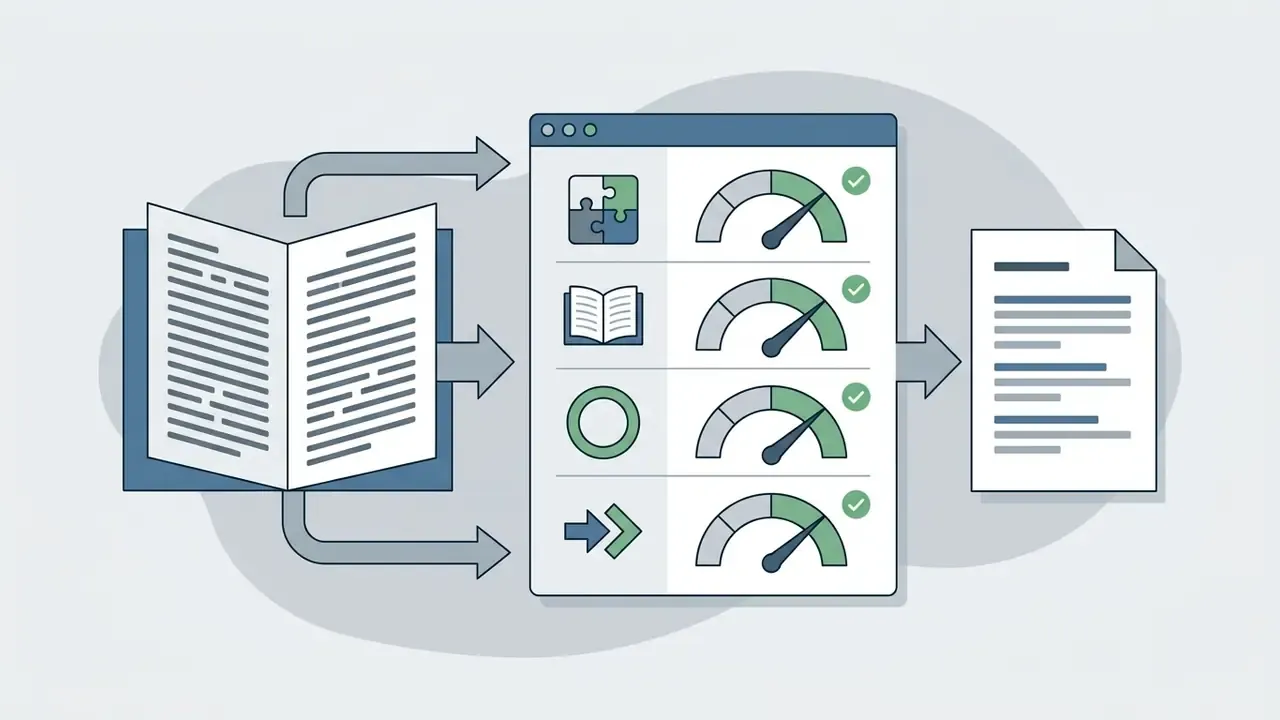
Generative AI summarizers can execute multi-modal factual extraction that goes well past simple text condensation:

How to Get an Accurate AI Summary Without Losing Context
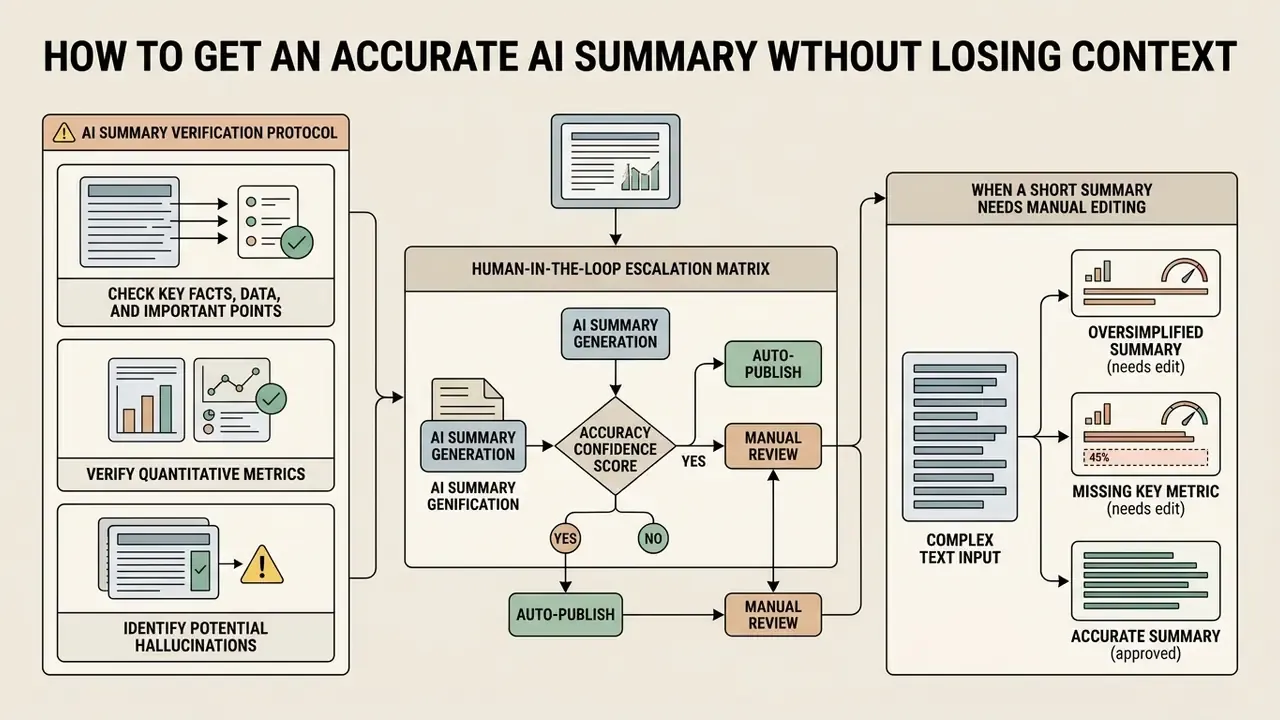
Achieving high factual accuracy in an ai summary requires systematic verification procedures that catch factual distortions, missing metrics, and hallucinated claims.
⚠️ ALERT BOX: AI SUMMARY VERIFICATION PROTOCOL
Risk Factor: Generative models may introduce unsupported factual assertions (confabulations) or distort numerical metrics during text compression (NIST AI 600-1, 2024. https://airc.nist.gov/Docs/1).
Mandatory Control: Always cross-check dates, financial metrics, proper nouns, and causal assertions directly against the original source text before executive distribution.
Action Threshold: If a summary alters the scope or certainty of an underlying claim, require manual human editing and reviewer sign-off.
«Browser-integrated AI summarizers reached 82.8% sentence-level factual accuracy in the wild; Microsoft Edge (Copilot) scored highest at 88%.»
Törnberg et al., Audit of AI-Powered Browser News Summarizers (41,331 summaries across 13,777 articles), arXiv preprint (2026).
Check Key Facts, Data and Important Points
Fact-checking an ai generated summary means decomposing the output into minimal atomic claims and verifying each claim against the source material.
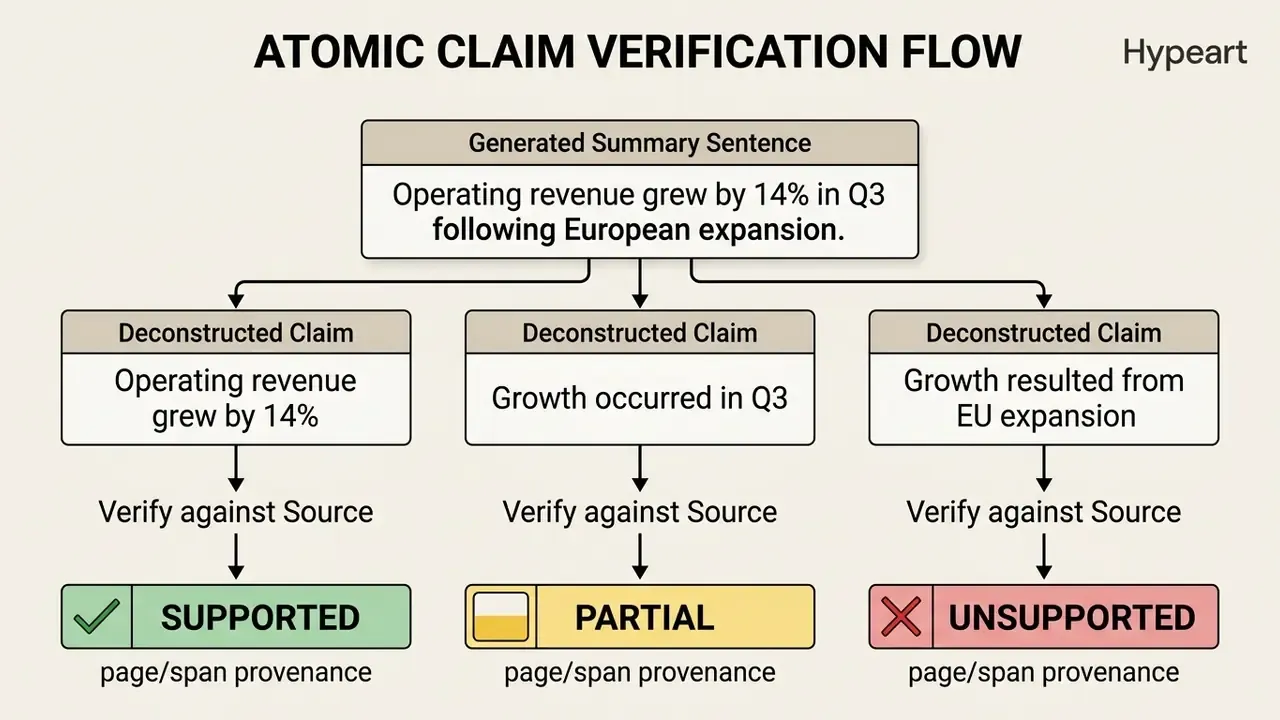
Note which claim usually fails. Not the number, and not the quarter. The causal one. Frameworks such as FactCC verify each summary sentence against the entire source document and extract supporting or contradicting spans, while newer grounding inspectors decompose output into atomic claims and return grounded, partial, or unsupported labels with page numbers.
«FineSurE, a fine-grained summarization evaluation framework, outperforms NLI- and QA-based methods on sentence-level completeness and conciseness.»
Song et al., FineSurE: Fine-Grained Summarization Evaluation, arXiv preprint (2024).
This granular verification keeps subtle numerical errors from propagating into operational reporting, where they get repeated, charted, and eventually presented to a board.
Human-in-the-Loop Escalation Matrix
Not every summary needs a signature, and not every summary can be auto-released. The practical control is a tiered threshold table mapped to document risk.
| Document class | Automated release | Reviewer check required | Second-line sign-off |
|---|---|---|---|
| Internal reading notes, news triage | Yes | Optional spot-check (10% sample) | No |
| Internal management updates | Yes, with disclaimer label | Yes: numbers, dates, names | No |
| Financial disclosures, regulatory filings | No | Yes: full atomic claim check | Yes (Compliance / Model Risk) |
| Legal, contractual, or supervisory correspondence | No | Yes: clause-level comparison | Yes (Legal + Compliance) |
| Public statements and investor communication | No | Yes: full verification plus tone review | Yes (Comms + Legal) |
Institutions running model inventories can attach the summarizer to existing model risk management practice, meaning validation, documentation, ongoing monitoring, and independent review consistent with supervisory expectations for model use (for example, the SR 11-7 model risk management framework). Register outputs in GRC platforms such as Archer or ServiceNow Governance so each generated summary has an owner, a version, and an evidence trail. No evidence, no autonomy.
When a Short Summary Needs Manual Editing
A short summary ai output requires mandatory human editing when it handles high-stakes compliance data, contains inferential assertions, or processes ambiguous source text. Short text ai output is not automatically safer, either; brevity concentrates error.
Government and enterprise risk frameworks mandate human-in-the-loop review for public-facing or regulatory summaries. The U.S. Department of Energy's Generative Artificial Intelligence Reference Guide v2 (2024) instructs teams to "have a human in the loop to verify the accuracy and validity of outputs," and public-sector memoranda require review for accuracy, objectivity, and fairness before external release.
«Generative models can introduce confidently stated false or misleading content (confabulation) and distort numeric metrics during compression; confabulation rates must be measured, monitored, and disclosed.»
Generative AI Profile, NIST AI 600-1 (2024). https://airc.nist.gov/Docs/1
Human oversight keeps evaluative judgments accurate and corrects subtle context shifts. Institutional guidance is explicit on one boundary: AI may condense feedback, but it must not produce evaluative conclusions. Judgment stays human. Organizations operating under strict governance standards monitor developments in AI litigation and compliance to update their review protocols as case law moves.
This material is informational and general in nature. It does not constitute legal, compliance, or information-security advice, and it is not a regulatory opinion. Consult a qualified specialist for your jurisdiction and use case.
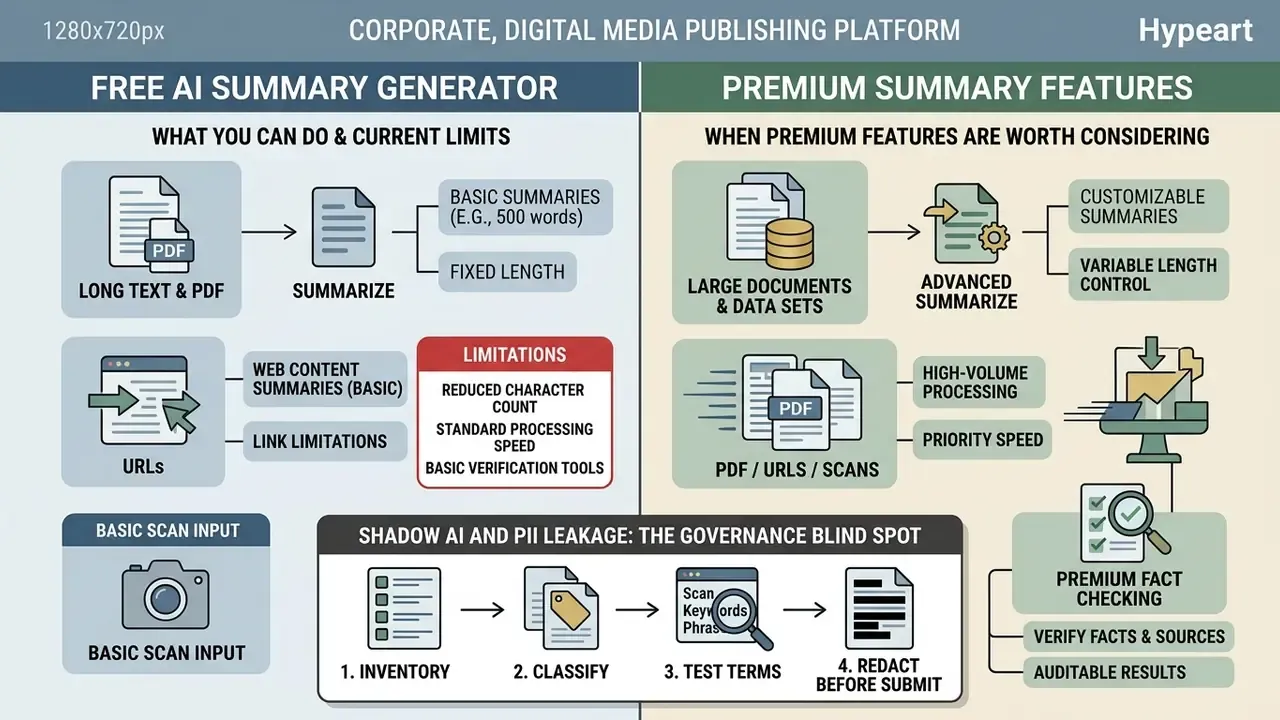
Free AI Summary Generator vs. Premium Features
A summary ai generator free tier typically provides basic text compression with input word limits, whereas premium subscriptions unlock expanded context windows, file upload support, and advanced reasoning capabilities.
Comparison of free vs. premium AI summary generator capabilities
| Feature Category | Free Tier Access | Premium Enterprise Access |
|---|---|---|
| Input word limits | 600-1,500 words per request | Up to 100,000+ words (long-context) |
| Document support | Plain text paste only | Native PDF, DOCX, XLSX, PPTX and URL ingestion |
| Scanned files / OCR | Rarely supported | Integrated OCR (200+ dpi requirement) |
| Length and style control | Standard preset options | Granular token, tone, and structural control |
| Model architecture | Standard SLMs / general LLMs | Instruction-tuned, high-reasoning models |
| Export formats | Copy to clipboard | .DOCX, .PDF, Markdown, API payloads |
| Data privacy and security | Standard public web terms | SOC 2, zero-retention, SSO/SCIM, enterprise security |
| Audit and logging | None | Request logs, model version tracking, retention policy |
Enterprise pipelines rarely stop at text. When contracts, invoices, and archival exhibits arrive as scans, the whole summarization stack depends on upstream image-to-text conversion quality before any model reasoning occurs.
Choosing between free and paid tiers depends on document volume, security requirements, and structural complexity of input materials. Billing models differ in kind rather than degree: some vendors cap free words (QuillBot allows summaries of up to 600 words on its free tier), some meter monthly credits (Foxit includes 20 free AI credits per month, with one credit per summarization), and cloud platforms bill by page (Google Cloud Document AI prices summarization at roughly $25 per 1,000 pages, with introductory credits for new accounts). For finance teams, that difference matters more than the headline price, because credits and page counts behave very differently under a spike in filing season volume.
What You Can Do with a Free AI Summary Generator
A free ai summary generator lets users summarize short news articles, basic essays, and brief text blocks without upfront capital investment. Used as an ai summary generator free online for public material, it is genuinely useful.
Current limits: Publicly documented free tiers commonly restrict inputs to roughly 600-1,500 words per request and limit outputs to standard paragraph or bullet formats. Caps vary by vendor and change often, so verify the current limit on the provider's pricing page before building a workflow around it (QuillBot free summarizer, 600-word cap, 2026. https://quillbot.com/summarize).
Lightweight small language models (SLMs) frequently power these free tiers, and they perform acceptably on plain expository text.
«Across 19 SLMs tested on 2,000 news texts, Phi-3 Mini and Llama-3.2-3B-Instruct matched 70B-parameter LLMs while producing more concise summaries.»
SLM Benchmarks for News Summarization, arXiv preprint (2025).
Free-tier users working with scanned PDFs usually need a separate OCR step first, which is why lightweight image-to-text tools are a common companion to no-cost summarizers. Users estimating deployment overhead can review current AI Media Pricing Guides to project scaling costs before committing to an annual contract.
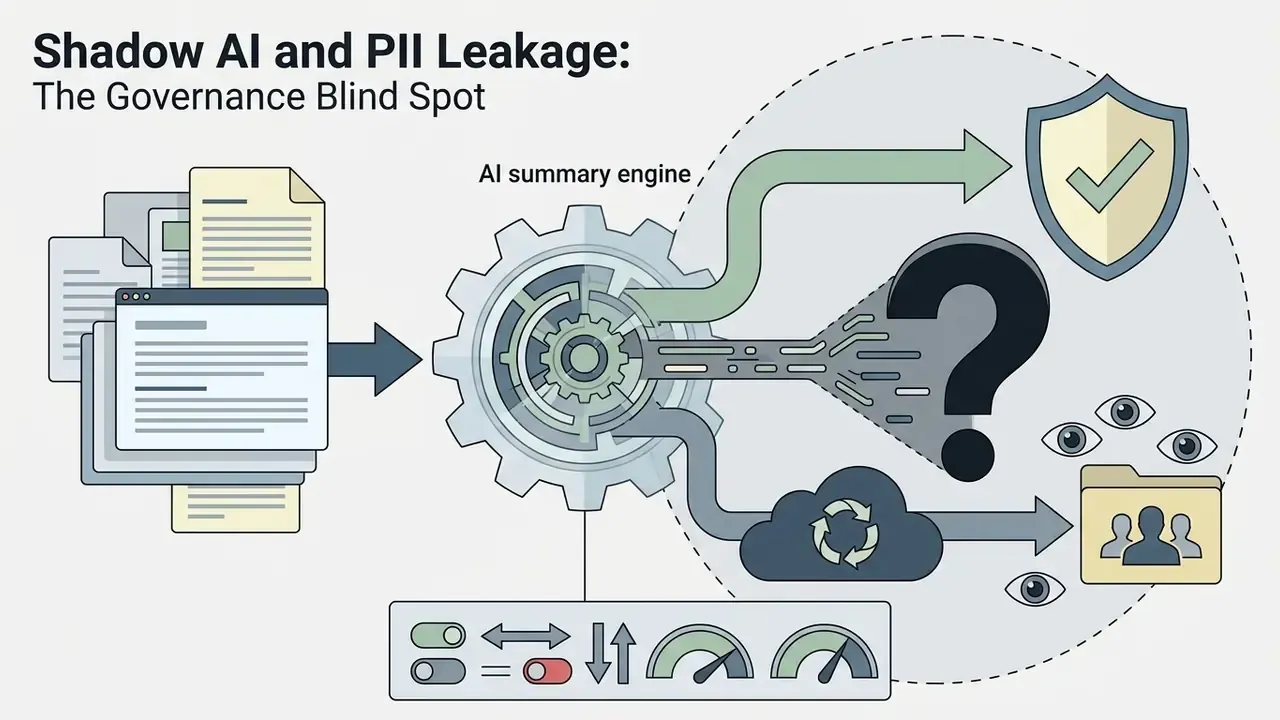
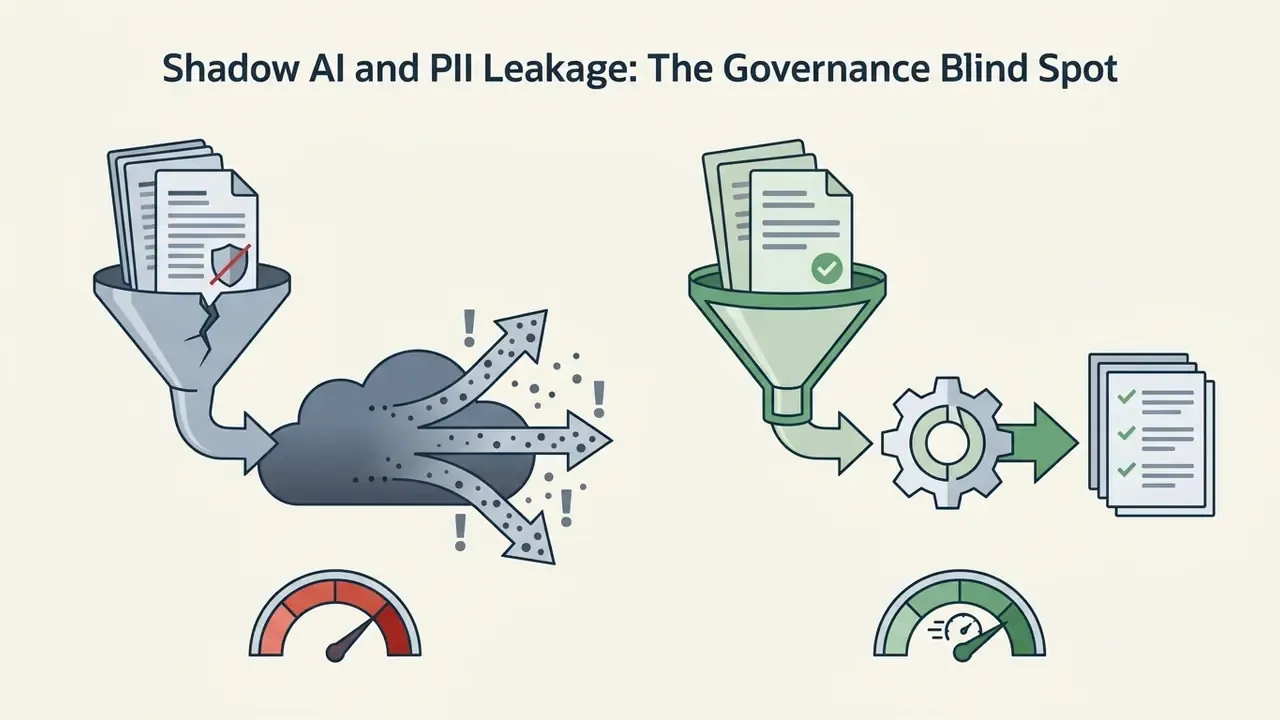
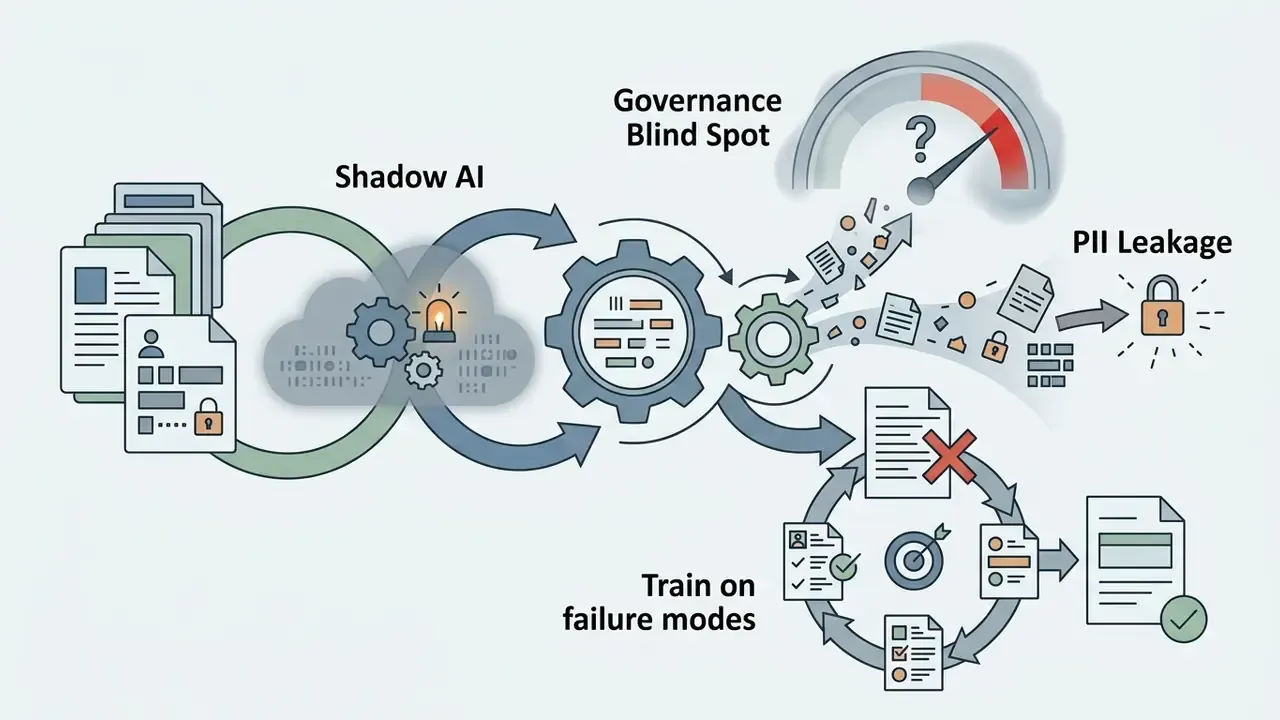
Shadow AI and PII Leakage: The Governance Blind Spot
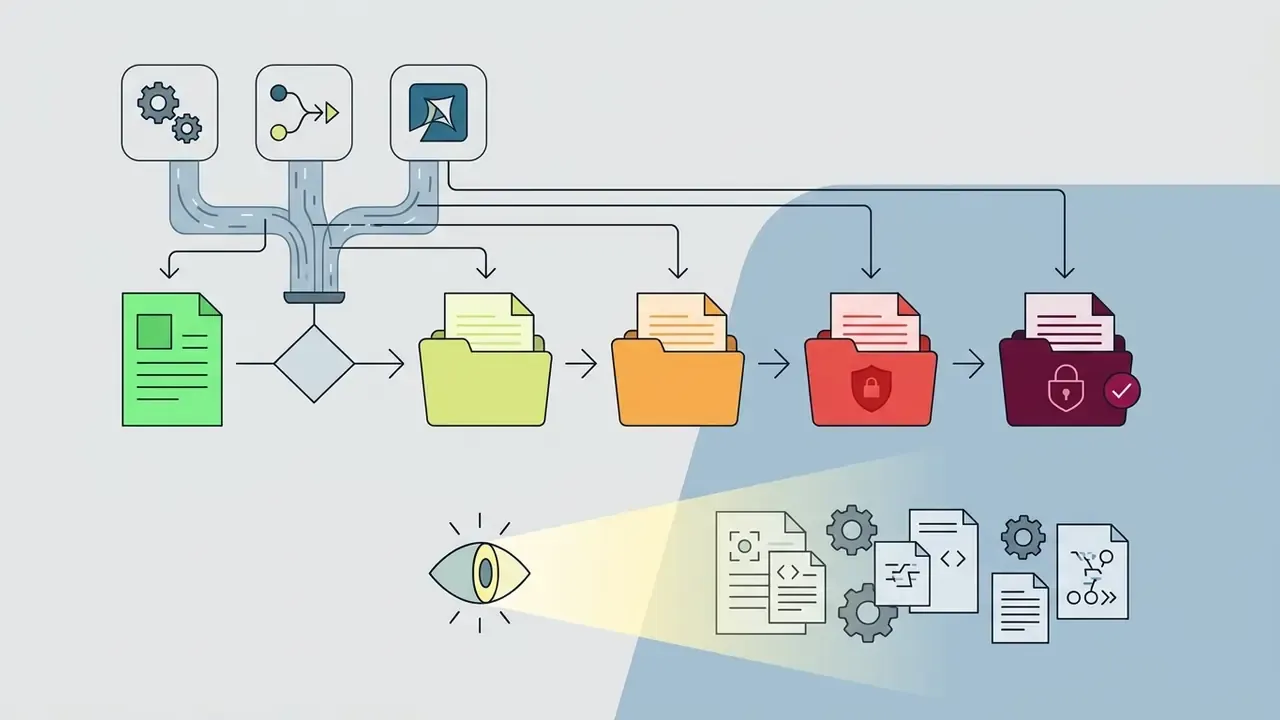
The largest realistic exposure in summarization is not model error. It is unauthorized tooling. When an analyst pastes a draft filing, a board pack, or a customer list into a public web summarizer, the organization has effectively disclosed confidential data under third-party consumer terms, with no retention guarantee and no audit trail.
Data Governance, Privacy, and Export Formats
Enterprise users should confirm that the chosen platform offers SOC 2 compliance, zero-data-retention policies for submitted prompts, regional data residency where required, and clean single-click export to .DOCX, .PDF, or raw Markdown. Retention settings, model version pinning, and exportable request logs are what make a summarization workflow defensible during audit. A download button alone is not governance.
Who Can Use an AI Summary Creator?
An ai summary maker serves knowledge workers across sectors: risk and compliance officers, financial analysts, internal communicators, academic researchers, journalists, students, teachers, marketers, and legal teams. As a summary creator ai, the same engine supports very different accountability levels.
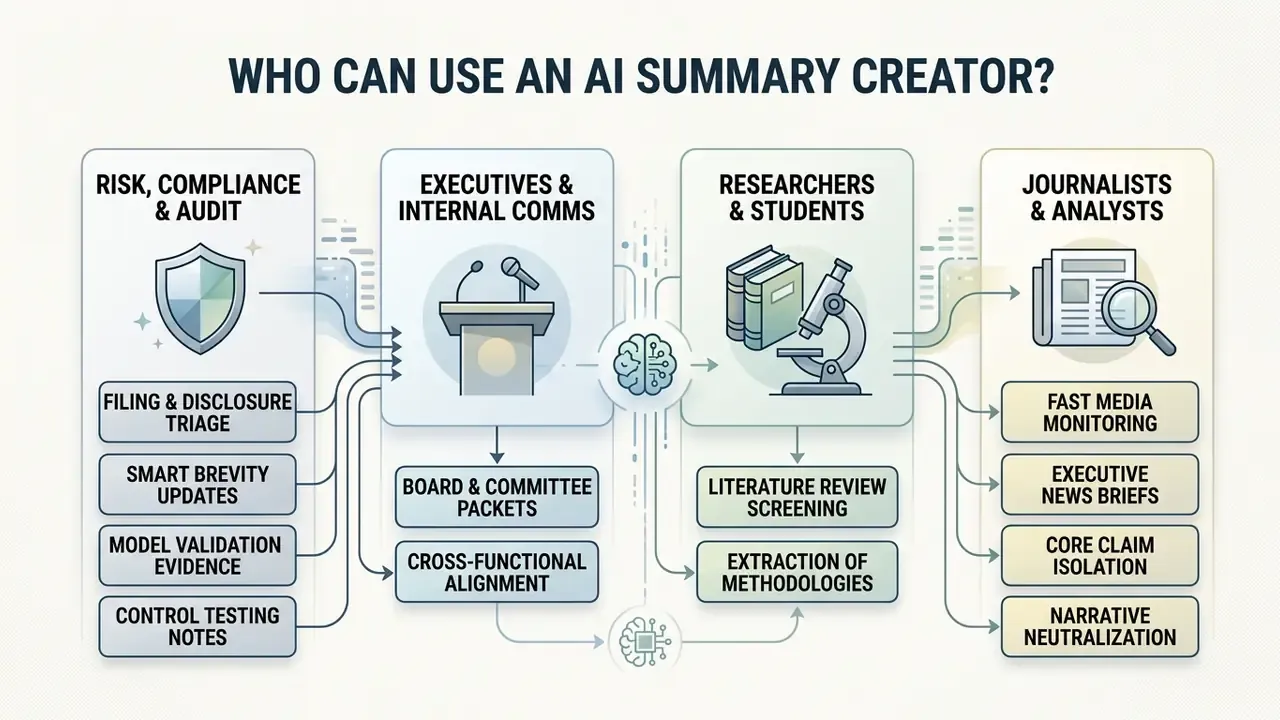
By reducing reading overhead, each group adapts automated summarization to a domain-specific bottleneck. The control requirements, however, are not equal across those quadrants.
Risk, Compliance and Model Validation Teams
Risk and compliance functions use summarization as a triage layer over document inflow: regulatory bulletins, counterparty disclosures, incident reports, and control-testing evidence. The operating pattern is narrow and auditable. Summarize to decide what a human must read in full, never to replace the reading itself.
Model validation teams treat the summarizer as a model under management: documented purpose, defined input scope, measured confabulation rate, monitored drift after each version upgrade, and independent review of outputs before they feed regulatory reporting. In practice that means storing the source hash, prompt template, model version, and reviewer identity with every retained summary, so the artifact can be reproduced years later during an examination. KYC and AML teams follow the same discipline when condensing adverse-media hits, since a dropped qualifier in a screening note can change an escalation decision.
Corporate Executives and Internal Communicators
For corporate leaders, text summarization is essential for internal alignment. Adopting journalistic compression standards, such as the Smart Brevity® framework developed in the Axios newsroom and later productized by Axios HQ, makes internal updates more likely to be scanned and acted on rather than filed unread.
By pairing AI summary engines with Smart Brevity principles, internal comms teams can convert a ten-page operational report into a structured 200-word update featuring:
- The Big Picture why the news matters, in one sentence.
- By the Numbers direct bulleted metrics without narrative clutter.
- What's Next immediate, owned, and dated actions for cross-functional teams.
The governance caveat still applies. Compressed executive language raises the cost of a single wrong number, so any metric in a Smart Brevity style update should be traced back to the source table before distribution. One wrong basis point travels fast.
AI Summaries for Study, Research and Long Documents
Students and academic researchers use summarization tools to screen scientific literature, isolate core methodologies, and prepare study notes from lengthy journal articles.
Literature reviews require screening hundreds of abstracts to identify relevant studies. A 2025 review in Teaching in Higher Education noted that peer-reviewed research on generative-AI summarizers in higher education remains "remarkably limited," counting only 11 relevant papers. Adoption is running ahead of evidence, which is worth remembering before anyone cites "proven" results. Automated text processing still helps researchers digest complex academic papers while preserving underlying citations (TheResearcher Guide, 2025), particularly when prompts explicitly request sample size, outcome measures, and stated limitations, and when tables, confidence intervals, and denominators are re-checked by hand.
A media research analyst reviewed 400 industry whitepapers to compile a market intelligence briefing (illustrative example). By applying structured prompt templates, the analyst extracted core methodologies in two hours while retaining complete source citation chains. The manual part, checking the numbers, still took the rest of the day.
AI News Summary Generator for Fast Content Review
An ai news summary generator lets media analysts and risk managers monitor news channels by turning high-volume reporting into concise executive briefs.
«Among ideologically slanted articles, 30.8% received neutral AI summaries, while only 2.6% of neutral articles acquired bias in summarization.»
Törnberg et al., Audit of AI-Powered Browser News Summarizers, arXiv preprint (2026).
Studies on browser-integrated summarization therefore show a two-sided profile: 82.8% sentence-level factual accuracy alongside a systematic reduction in sensationalism and partisan framing. Institutions use automated news condensation to track market signals and counterparty risks close to real time. A World Bank Group paper (2026) describes a cloud-native prototype that automates sourcing, filtering, and summarization of financial news for risk surveillance, while commercial media-intelligence platforms add clustering, sentiment charts, and chronology outputs. Teams distributing summary findings inside commercial products should review the rules in the AI Media Commercial-Use Hub first.
AI Summary Generator FAQ
Can an AI Summary Generator Work with Different Languages?
Yes. Modern summarization tools support multilingual processing, though factual accuracy varies considerably across language pairs. Multilingual benchmarks report substantially lower faithfulness outside English. One ACL Findings study measured only 52% fully faithful summaries on average across languages (Multilingual Summarization with Factual Consistency Evaluation, ACL Findings, 2023). Injecting explicit context prompts improves cross-lingual semantic retention: in medical summarization, French BERTScore F1 rose from 0.6084 to 0.7383 and Portuguese from 0.6493 to 0.7577 with context injection (CEUR, 2026).
«ROUGE and BERTScore are unreliable in multilingual settings; GPT-4-based evaluation correlates better with human judgment for English, Chinese, and Indonesian.» Luo et al., Multilingual Summarization Evaluation with Human Ratings, arXiv preprint (2024). Practical rule: for non-English regulated content, treat the summary as a lead, not a record, and verify against the source in the original language.
Can I Use AI to Summarize Published Articles?
Yes. Summarizing published articles for personal research or internal analysis is standard practice, but commercial redistribution must respect copyright law. The U.S. Copyright Office states that fair use defenses depend on purpose, nature, amount, and market effect when copyrighted content is processed (Copyright and Artificial Intelligence, Part 3, 2025). Verbatim copying or generating derivative products without authorization can trigger infringement concerns, and criticism or review exemptions generally require sufficient acknowledgement of the source.
«A systematic review of 72 empirical studies on AI in journalism documents open challenges around content authorship, credibility, and the legal status of AI-generated summaries.» Systematic Review of AI and Journalism, arXiv preprint (2025). This section is general information, not legal advice. Consult an intellectual-property or copyright specialist before publishing or monetizing AI-generated summaries of third-party works.
Can Generative AI Create Short Text Summaries?
Yes. Generative ai to create text summaries can produce single-sentence outputs, executive overviews, or bulleted key takeaways based on the prompt. Any decent ai short summary generator exposes both modes. Tools like Adobe Acrobat Generative Summary let operators request one-sentence summaries or five-point key takeaways inside the interface, then shorten or expand the result to fit the audience (Adobe, 2026). Single-sentence outputs offer high factual reliability, though they necessarily omit secondary context (Multi-Dimensional LLM Evaluation Framework, 2025).
«Online meeting-summarization systems earned average human ratings of 3.4-4.0 out of 5 for adequacy and relevance at ROUGE-1 F1 of 32.8.» Ghazvininejad et al., Online Meeting Summarization Systems (AutoMin 2023 dataset), arXiv preprint (2025). Teams applying the same condensation to scanned or photographed source material should run image-to-text conversion first, since a short summarizer ai amplifies any OCR error into the single sentence a decision-maker actually reads.
Can It Summarize Scanned PDFs, Screenshots and Images?
Yes, provided an OCR stage precedes summarization. Enterprise document APIs are explicit about the boundary. Azure's native document summarization does not support fully scanned PDFs or text embedded in images, while Google Document AI accepts PDF, HTML, DOCX, PPTX, XLSX, JPEG, PNG, TIFF, BMP, and WebP with a minimum of 200 dpi for document images. Low-resolution scans, skewed pages, and handwriting remain the dominant sources of silent data loss.
Can I Export the Summary to DOCX or PDF?
Yes. Mainstream tools provide copy-to-clipboard plus .DOCX download; premium and enterprise tiers add .PDF, Markdown, and API payload delivery for pipeline integration. For regulated output, export the summary together with its provenance record: source document identifier, model and version, prompt configuration, timestamp, and reviewer sign-off.
Does an AI Summary Create an Auditable Record?
Only if the platform is configured to produce one. By default, consumer summarizers keep no reproducible trail. An auditable configuration retains the source hash, model version, prompt template, generation parameters (length, format, temperature), the verification labels applied to each atomic claim, and the identity of the human reviewer. Retention periods should follow the record-keeping schedule that applies to the underlying document, not to the tool.
How Should PII Be Handled Before Summarization?
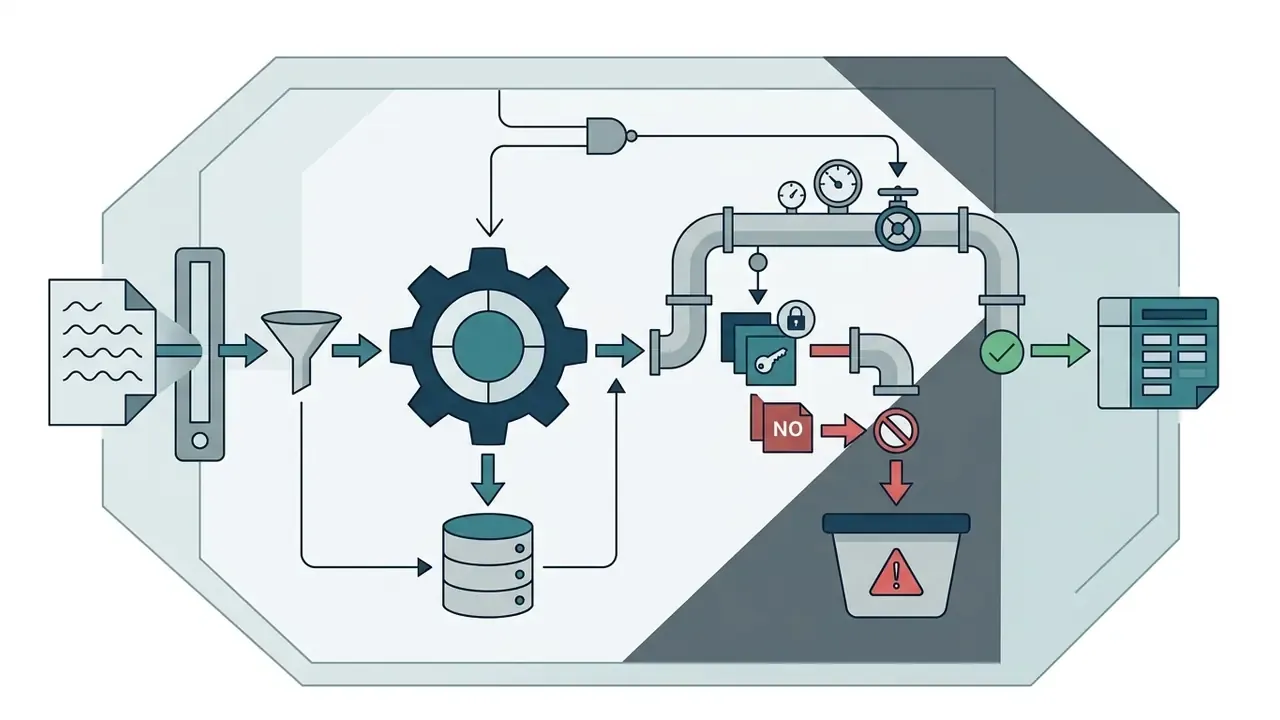
Redact before ingestion, not after generation. Apply automated PII, PHI, and MNPI detection at the point of upload, replace identifiers with stable tokens so the summary stays readable, and confirm in writing that the vendor operates zero-retention processing for prompts. Free public tiers should be treated as out of scope for any regulated or confidential data class.
What Is a Realistic Error Rate to Plan For?
Plan for roughly one questionable sentence in six on general-purpose news content (82.8% sentence-level accuracy in large-scale browser audits), higher error rates in specialized legal and financial language, and a further drop outside English. Sizing review capacity to that rate, rather than to a vendor promise of "100% accurate summaries in 3 seconds," is what separates a controlled deployment from an incident waiting to be logged.
Limitations, Open Questions, and a Safe Next Step
Some parts of this picture are still thin, and pretending otherwise would be dishonest. Published accuracy audits concentrate on news text, not on 10-K filings, credit memos, or AML case notes, so the 82.8% figure is a signal rather than a benchmark for your portfolio. Evaluation frameworks like FineSurE improve on ROUGE, yet none of them fully capture omitted obligations in contractual language. Vendor claims about zero retention are contractual promises, not technical proofs, and they need periodic testing.
Two questions remain genuinely unresolved. First, how should institutions measure the cost of a missed condition, not just the rate of wrong sentences? Second, at what point does an agentic summarization chain, one that reads, condenses, then routes a document onward, cross from tooling into decision-making that needs its own model approval?
A reasonable next step is small. Pick one document class with real volume and moderate risk, for example incoming regulatory bulletins. Run the summarizer against 100 items, label every atomic claim, and record the observed error rate and review time. That single measurement gives you a risk-adjusted baseline, an owner, and something an examiner can actually inspect. Then decide whether to expand. Not before.
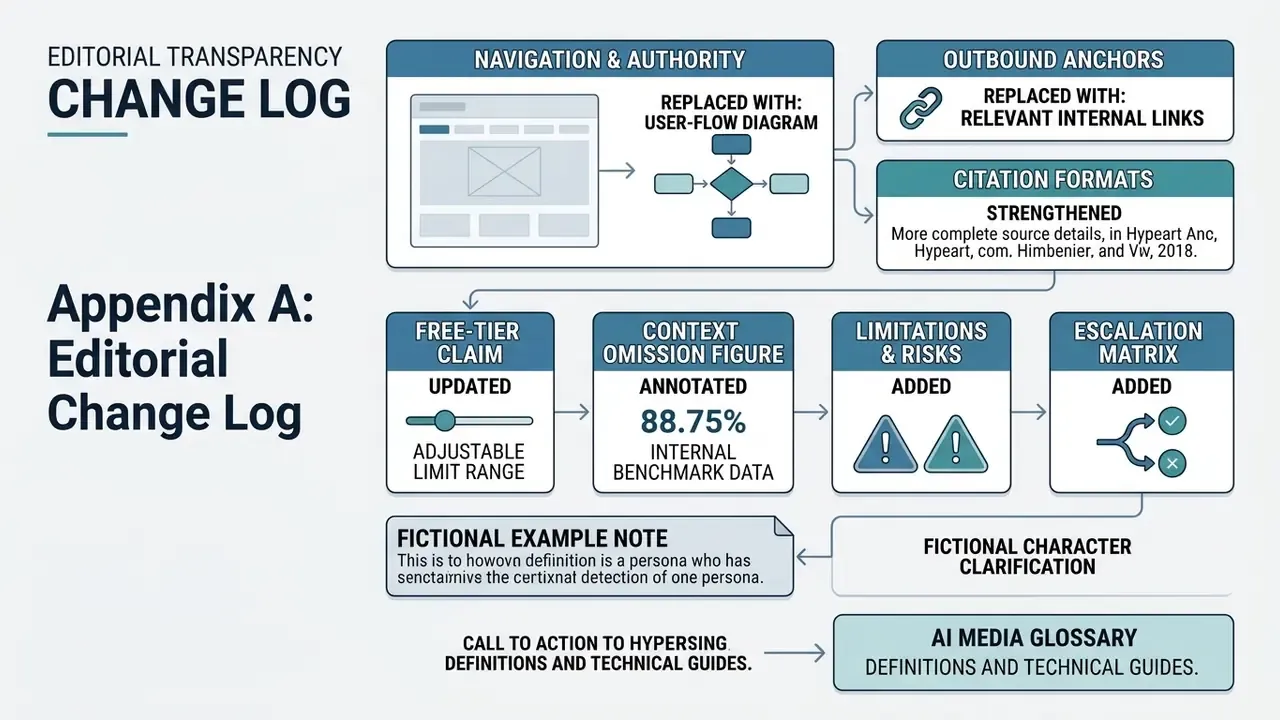
Appendix A: Editorial Change Log