About the author. Marcus Hale, author. The author covers AI governance, model risk management and litigation-readiness programs for banks, insurers and enterprise legal departments.
AI litigation covers legal disputes where artificial intelligence models, training datasets or generated outputs sit at the centre of the claims, defenses or evidentiary record. Managing these disputes takes a structured case timeline: dates, primary court records, key filings and disputed facts organised into a single auditable chronology that decision-makers can actually use.
Executive Summary
- Courts now police AI, not just parties. Standing orders in the Southern and Eastern Districts of Texas, New York's Unified Court System Part 161 (effective June 1, 2026) and the U.S. Department of Labor's OALJ directive converge on one rule: generative AI may assist drafting, but a human must independently verify every citation, quote and factual assertion before filing.
- The timeline is the control surface. Fact-centric, evidence-linked chronologies, not document-centric spreadsheets, are what let counsel separate undisputed from disputed facts, surface evidentiary gaps and defend Rule 11 certifications.
- The efficiency case is measurable, with caveats. Reported benchmarks include roughly 85% compression at case assessment, 70% at discovery, 60% at motion practice and 55% at trial preparation, plus a 12% F1-score improvement and 16% recall gain in graph-augmented eDiscovery retrieval.
- Tool selection is a governance decision. Evaluate platforms against NIST AI RMF 1.0, ISO/IEC 42001:2023, ISO/IEC 23894:2023, SOC 2 Type II and zero-retention contractual terms, not feature lists.
Why This Matters for Risk, Compliance and Legal Leaders
Litigation exposure is where AI governance stops being a slide deck. A chief risk officer can tolerate an imperfect pilot. A fabricated citation in a filed brief is a different order of problem, because it lands on the docket with a lawyer's signature attached.
Three readers tend to arrive at this topic from different doors. Litigation counsel wants a defensible chronology. Model risk leaders want to know whether a legal-tech tool falls inside their validation perimeter. Finance and operations leaders want to know what the control layer costs. Those framings are working hypotheses about our audience until interviews and analytics confirm them, and we label them as such.
One practical note before the detail: the same discipline that governs a credit model, meaning documented ownership, access limits, escalation paths and an audit trail, is the discipline courts are now demanding of AI-assisted legal work. No evidence, no autonomy.
What AI Litigation Means and Why Case Timelines Matter
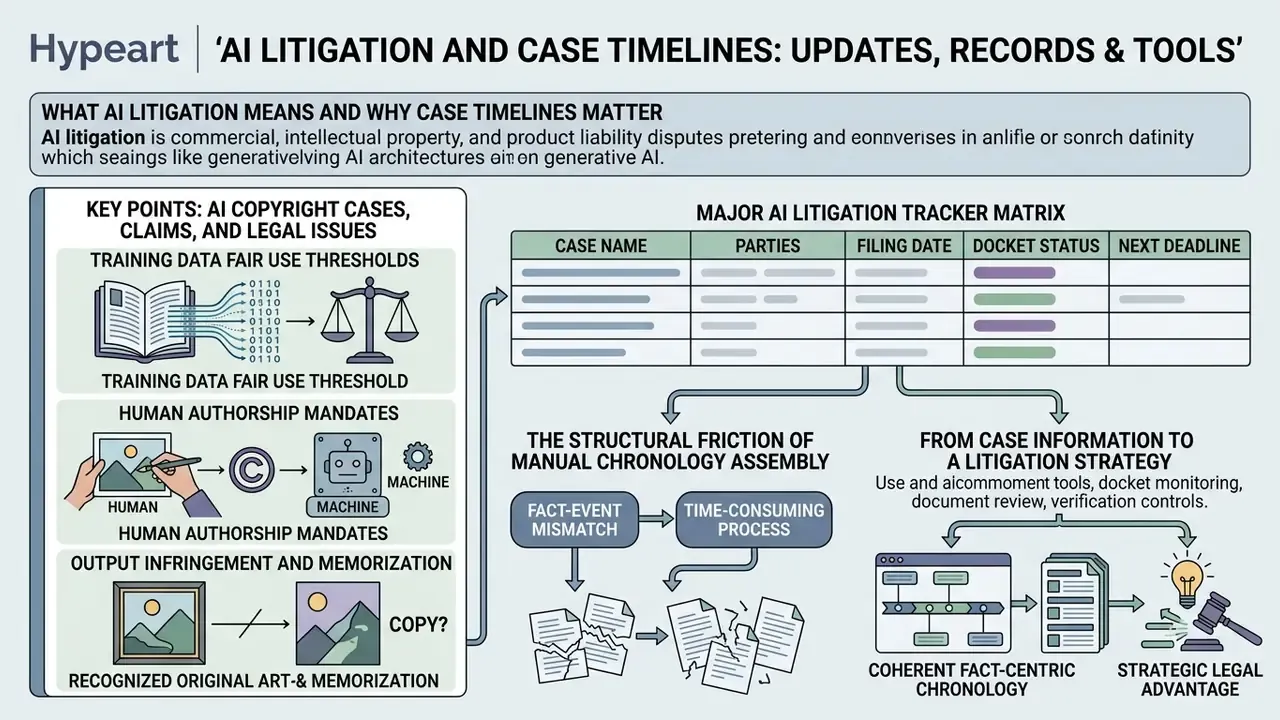
AI litigation describes a distinct class of commercial, intellectual property and product liability disputes where artificial intelligence architectures, including generative AI, large language models (LLMs) and autonomous algorithmic systems, are central to the legal theory. A structured case timeline is the backbone for analysing complex facts, testing disputed claims, linking evidence and shaping litigation strategy across every procedural phase.
Why treat AI-related disputes as their own category? Because the same evidentiary conflicts recur at every stage: motion to dismiss, discovery, summary judgment, pretrial admissibility hearings, post-judgment challenges. Each stage consumes one underlying asset, a dated and sourced record of what happened, who acted and which document proves it.
AI Litigation Ecosystem: Structural Categories
| Category | Core Legal Question | Typical Evidentiary Anchor |
|---|---|---|
| Training Data Infringement | Was the acquisition and ingestion of protected works lawful? | Dataset licenses, acquisition logs, repository provenance |
| Output Memorization & Reproduction | Does the model emit near-verbatim protected expression? | Prompt/output pairs, red-team transcripts, model checkpoints |
| Systemic Compliance & Product Liability | Did deployment cause discriminatory or unsafe outcomes? | Validation audits, deployment logs, complaint records |
AI Copyright Cases, Claims and Legal Issues
AI copyright litigation turns mainly on one question: does using copyrighted works to train generative AI models constitute fair use or unlawful copyright infringement? By early 2026, tracked disputes had expanded from the initial class actions to more than 80 active federal matters involving major model developers, a trajectory already visible in earlier filing counts.
«As of March 13, 2024, at least sixteen suits had been filed against OpenAI and other model developers, many of them class actions.»
Key judicial rulings have drawn nuanced boundaries around model training and output generation:
- Training data fair use thresholds. In Bartz v. Anthropic (N.D. Cal., June 2025) and Kadrey v. Meta (N.D. Cal., June 2025), federal district courts held at summary judgment that using copyrighted texts to train commercial language models can be transformative fair use. In Bartz, the court called the training use "quintessentially transformative," while treating copying from pirate repositories as a separate liability question. The distinction between legitimate web-scale acquisition and copying from unauthorised sources has held firm.
- Human authorship mandates. The D.C. Circuit reaffirmed in Thaler v. Perlmutter (D.C. Cir., March 2025; cert. denied March 2, 2026) that human authorship remains an absolute prerequisite for U.S. copyright registration. AI-generated works produced without direct human creative control cannot be registered.
- Output infringement and memorization. Plaintiffs in ongoing actions against developers such as OpenAI and Stability AI continue to press theories of direct and vicarious infringement, alleging that models memorise expressive content and reproduce near-verbatim outputs under specific prompting conditions. Teams checking whether a disputed exhibit is synthetic increasingly pair document review with AI image detectors as a first-pass authenticity screen, and only as a screen.
«Memorization is defined as the ability to reconstruct from the model an exact copy of a substantial portion of a specific training data item.»
Major AI Litigation Tracker Matrix
| Matter | Forum / Date | Core Claim | Procedural Posture |
|---|---|---|---|
| Bartz v. Anthropic | N.D. Cal., June 2025 | Training on copyrighted books; pirate-source copying | Partial summary judgment; training use held transformative |
| Kadrey v. Meta | N.D. Cal., June 2025 | Training-data infringement, DMCA theories | Broad infringement claims rejected at summary judgment |
| Thaler v. Perlmutter | D.C. Cir., March 2025; cert. denied March 2, 2026 | Registrability of AI-authored work | Human-authorship requirement affirmed; final |
| Mobley v. Workday, Inc. | N.D. Cal. (ongoing through 2026) | Algorithmic employment discrimination | Active; treated as leading AI employment matter |
| Claims v. OpenAI, Stability AI, Runway, Perplexity, Adobe | Multiple federal districts, 2023 to 2026 | Output memorization, secondary liability, dataset sourcing | Mixed: pleadings, discovery, dispositive motions |
For a broader view of active federal dockets, legal teams lean on a centralised AI Litigation Tracker to follow filing changes and judicial assignments as they land.
From Case Information to a Litigation Strategy
«Lawyers integrate generative AI into existing workflows to reduce cognitive load and accelerate early fact verification, while retaining final judgment.»
The Structural Friction of Manual Chronology Assembly
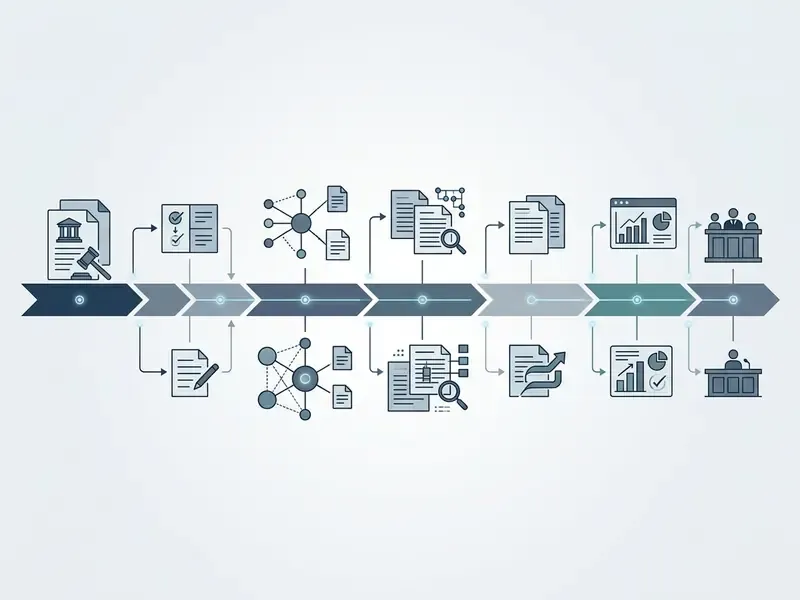
How AI Changes the Litigation Timeline From Filing to Trial
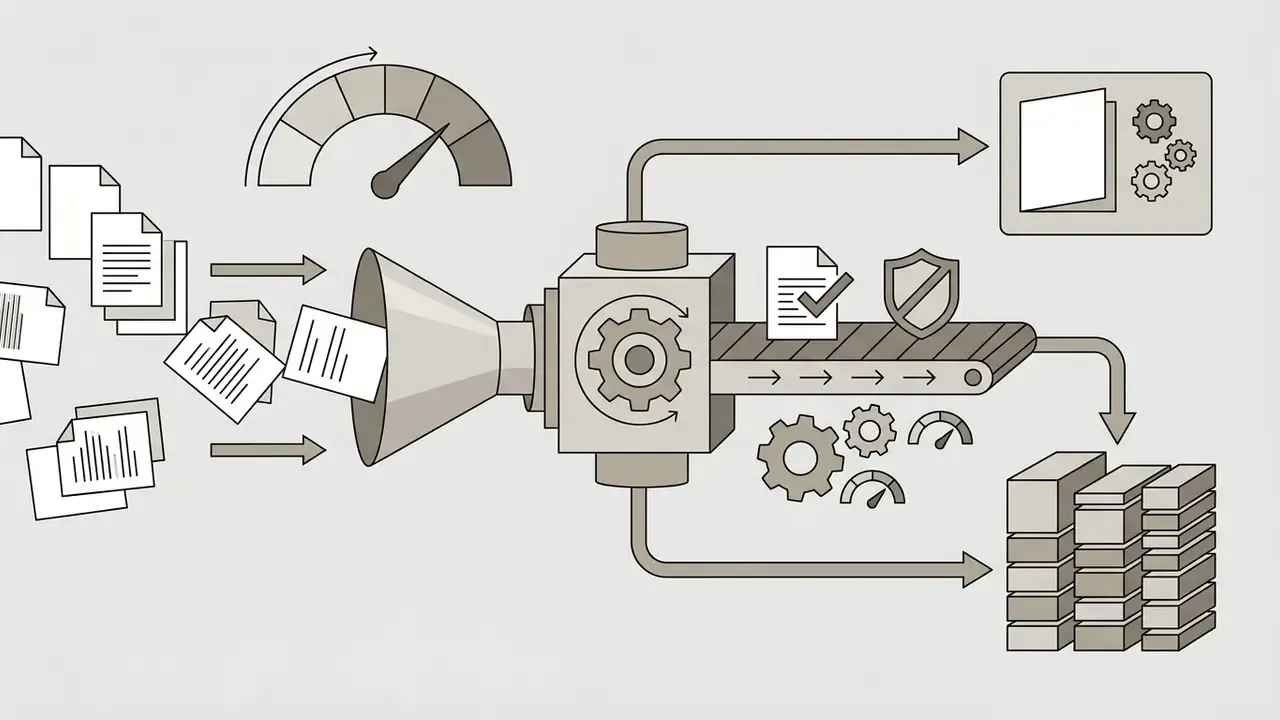
AI in litigation practice reshapes the procedural timeline from complaint to trial: faster document processing, semi-automated preliminary case assessment, tighter discovery workflows. Generative AI cuts manual hours in document review, yet court orders issued through 2025 and 2026 impose strict human verification before any machine-assisted work product reaches the docket.
Empirical efficiency benchmarks across the litigation lifecycle
Organisations running integrated AI litigation platforms report the following compression by phase:
- Case inception and intake: roughly 85% reduction in initial factual extraction, analysis and risk-scoring time.
- Discovery and document review: roughly 70% compression in review cycle duration via Technology-Assisted Review and graph-augmented retrieval.
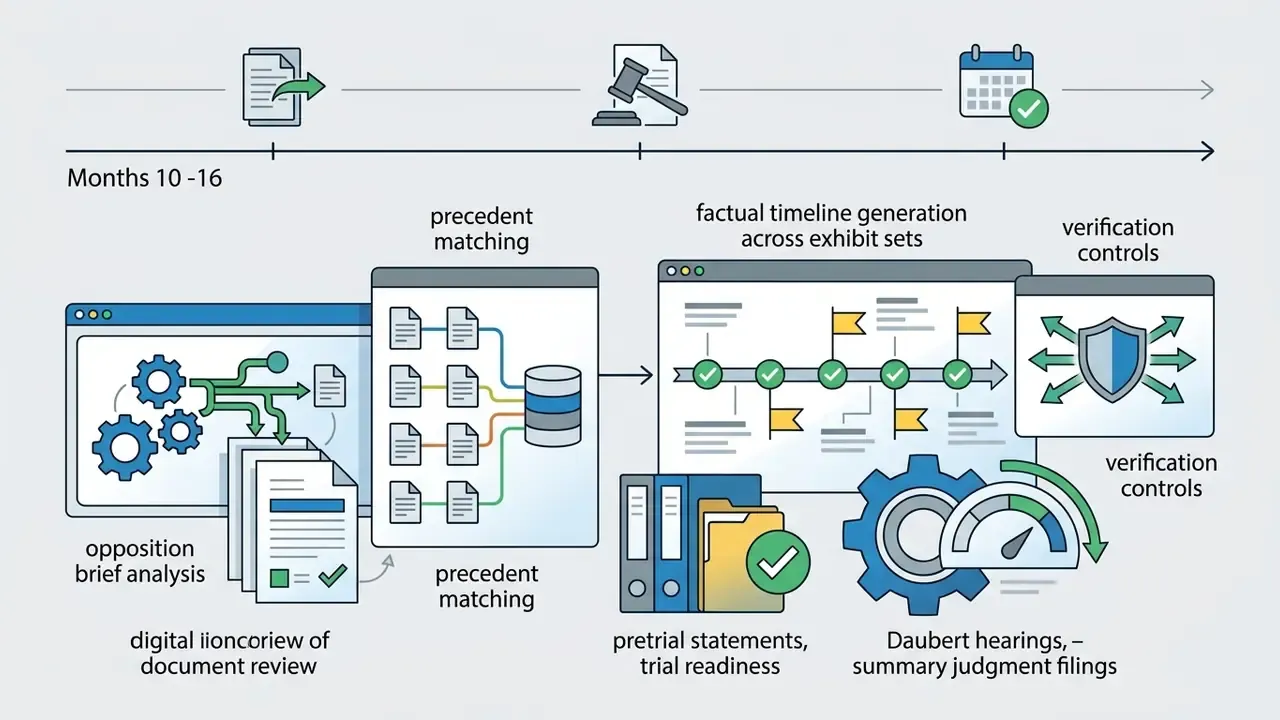
- Motion practice briefing: roughly 60% reduction in authority cross-checking, precedent matching and brief preparation.
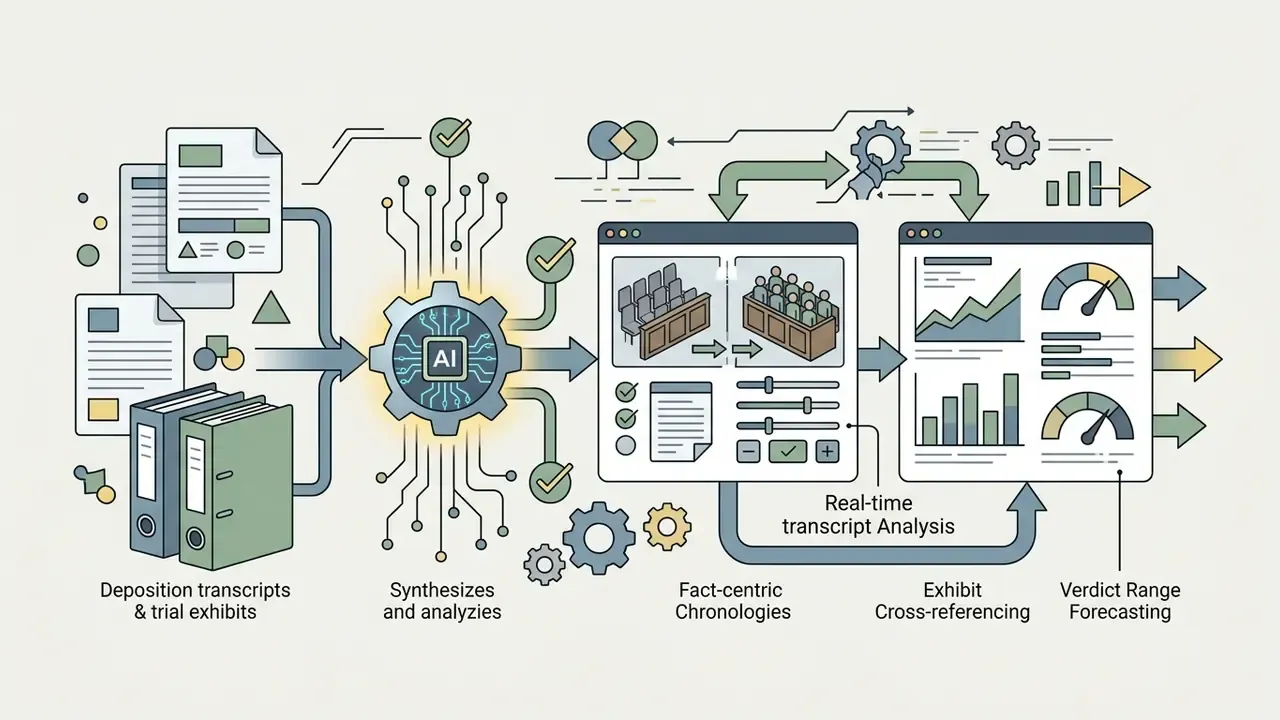
- Trial preparation: roughly 55% reduction in exhibit binder assembly, evidence organisation and witness timeline alignment.
- Settlement negotiation: roughly 45% reduction in negotiation cycle length where valuation analytics inform expectations.
A caution worth repeating: these are vendor-reported program benchmarks, not peer-reviewed measurements. Validate them against your own baseline hours before a procurement decision, and note that none of them price the control layer.
Litigation Lifecycle: Workflow Stages and AI Integration Points
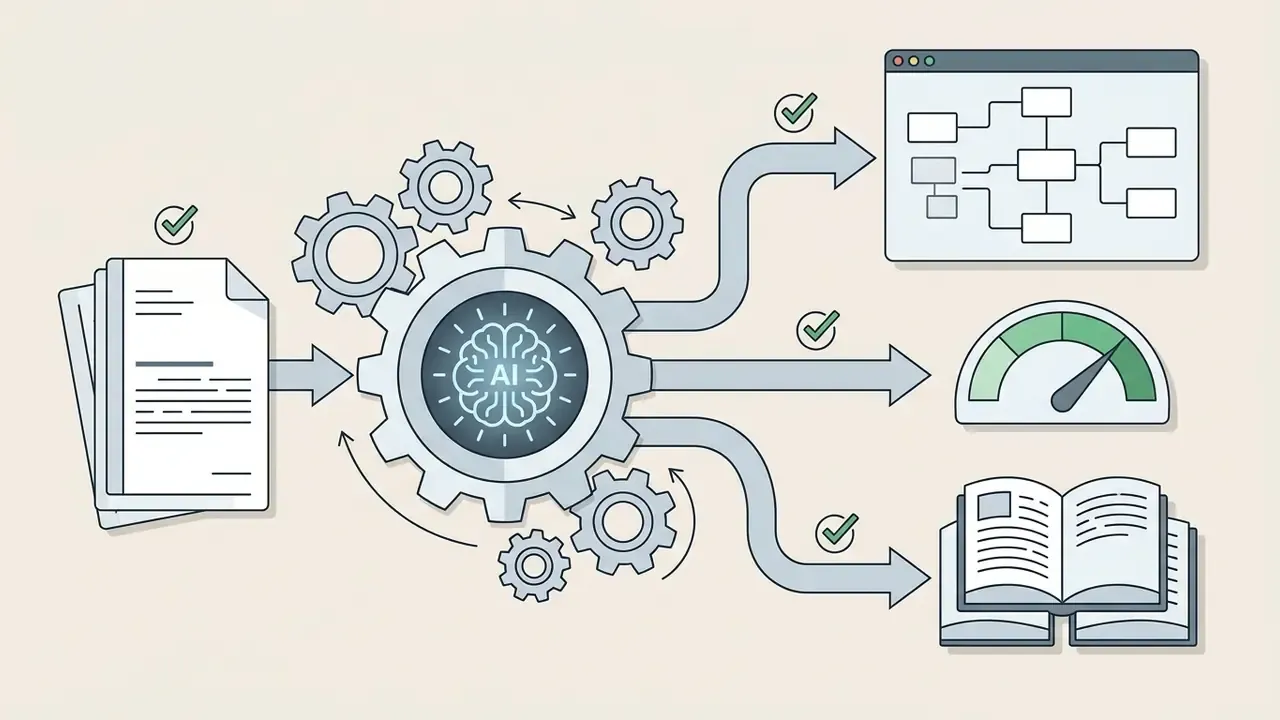
Case Inception, Assessment and Early Fact Review
Case inception demands rapid parsing of unstructured data to test legal merits, estimate exposure and set initial strategy. AI-powered ingestion platforms read hundreds of client documents, contracts and internal communications within hours of engagement, flagging potential liabilities and sketching first fact patterns. Early case assessment drives the decision to settle, negotiate or litigate, which is exactly why compressing it from weeks to hours changes the economics rather than merely the workload.
During early assessment, litigation tools sort legal claims against jurisdictional precedents. In preliminary evaluation of AI product liability claims of the kind at issue in Mobley v. Workday, Inc., early fact review systems pull algorithmic deployment logs, user complaints and internal validation audits. That synthesis lets counsel draft responsive pleadings grounded in verifiable technical facts instead of assumption.
Discovery, Motion Practice and Trial Preparation
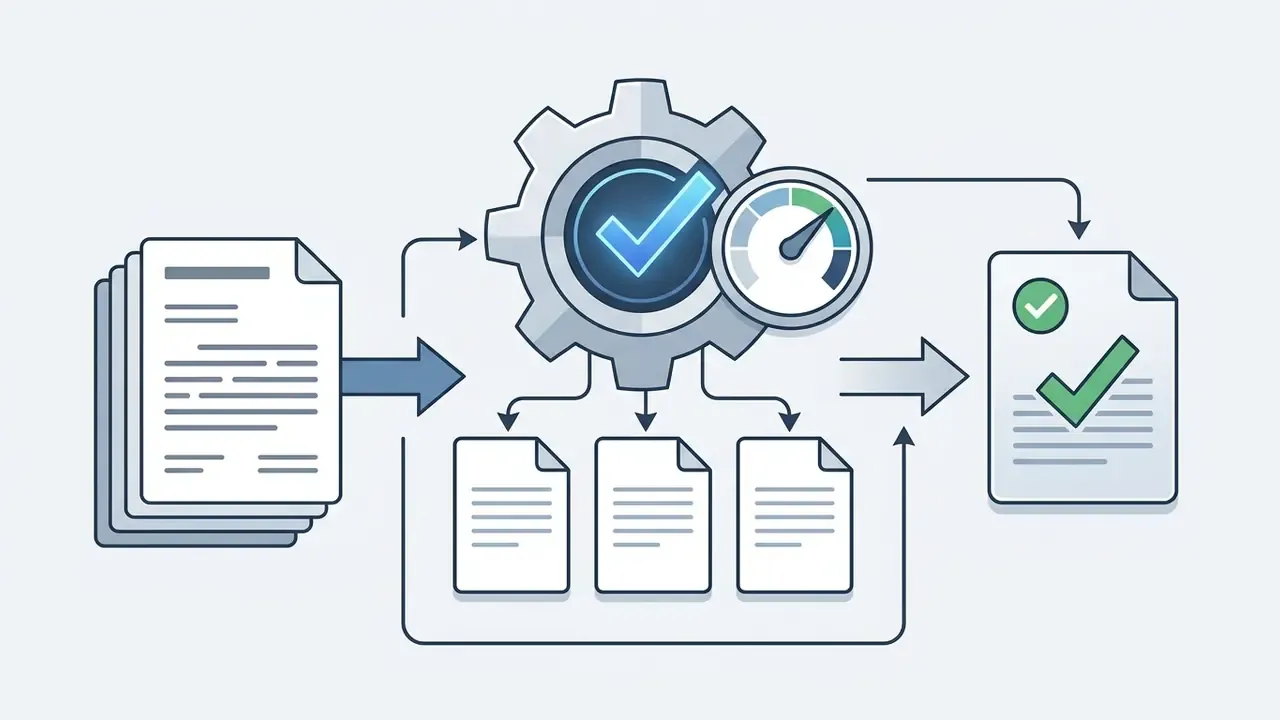
Discovery remains the most resource-intensive segment of the timeline. AI review workflows here follow a validated protocol: seed-set training, control-set validation, recall and precision measurement, then elusion testing before scaling to the full corpus.
«The DISCOG hybrid system improves F1 by 12%, precision by 3%, and recall by 16% over baselines, while reducing document review cost by 99.9% relative to manual review.»
Scanned productions, exhibit photographs and handwritten annotations still enter the corpus as images. Teams route these through OCR and image-to-text tools before anything can be indexed, tagged or privilege-scored at all.
«Calibrated uncertainty thresholds in human-on-the-loop workflows reduce privilege-waiver risk by up to 61% compared with fully automated processes.»
In motion practice and trial preparation, AI tools help analyse opponent briefs, extract cited authorities and spot unaddressed precedents. But federal standing orders, including General Order 2025-04 in the Southern District of Texas and Standing Order JDL 4.9.25 in the Eastern District of Texas, require a formal certificate confirming that human counsel independently checked all AI-assisted text, quotations and case citations against primary court records. Under the Eastern District order, filings lacking the Certificate of Generative Artificial Intelligence Usage may have to be re-filed. A governance lapse becomes a calendar problem.
How to Track AI Litigation Through Court Records and Legal Updates
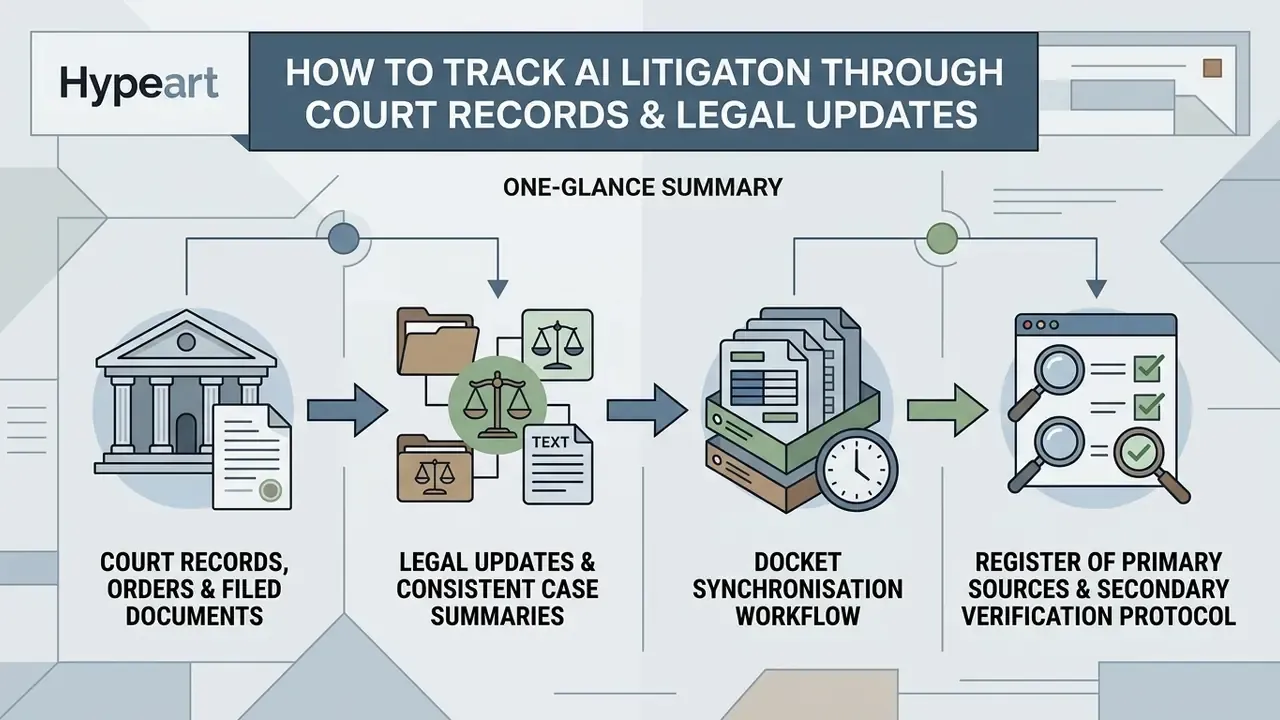
Tracking AI litigation properly means systematic monitoring of official court records, judicial orders and primary filings across federal and state registries. Relying on law firm summaries or news coverage alone carries risk, since secondary sources often omit procedural nuance, interlocutory rulings or docket update delays.
Court Records, Orders and Filed Documents
Official court records, meaning docket sheets, orders, complaints, motions and trial transcripts, are the authoritative source of truth for any case timeline. In federal jurisdiction, Public Access to Court Electronic Records (PACER) is the definitive record of filings and judicial actions. Mature monitoring stacks combine three layers: direct register access (PACER, state e-filing portals), docket-alert services such as LexisNexis CourtLink for near-real-time filing and order updates, and curated AI-litigation trackers maintained across all fifty states.
Court records fall into three verifiable source groups, each with its own failure mode:
| Source Group | Contents | Primary Verification Anchor |
|---|---|---|
| Court records | Docket sheet, case file, register of actions | Docket entry number and sequence |
| Orders and judgments | Daily, interim and final orders; judgments | Dated signed PDF issued by the court |
| Filings | Pleadings, motions, service papers, exhibits | Clerk filing stamp and case number match |
To protect chronology integrity, litigation teams apply a strict verification protocol when ingesting court records:
- Verify docket metadata. Cross-reference the official docket entry number, stamp date and filing time against the primary PDF. Where docket metadata and the PDF filing stamp diverge because a case file was updated later, treat the earliest official docket entry as the anchor.
- Review judicial orders. Distinguish daily administrative directions, magistrate discovery orders and binding dispositive rulings from the presiding judge.
- Audit exhibit attachments. Confirm that supporting evidence, declarations and affidavits attached to filings are catalogued with their exact docket exhibit designations.
- Confirm publication restrictions. Check with the applicable registry or clerk whether a publication ban, sealing order or same-day restriction applies, because posted data may not yet reflect it.
For instance, following procedural developments in AI Case Timeline: Bartz v. Anthropic means cross-checking motion-to-dismiss filings against Northern District of California docket entries to confirm oral argument dates and stay orders.
Checklist0 / 6
Legal Updates and Consistent Case Summaries
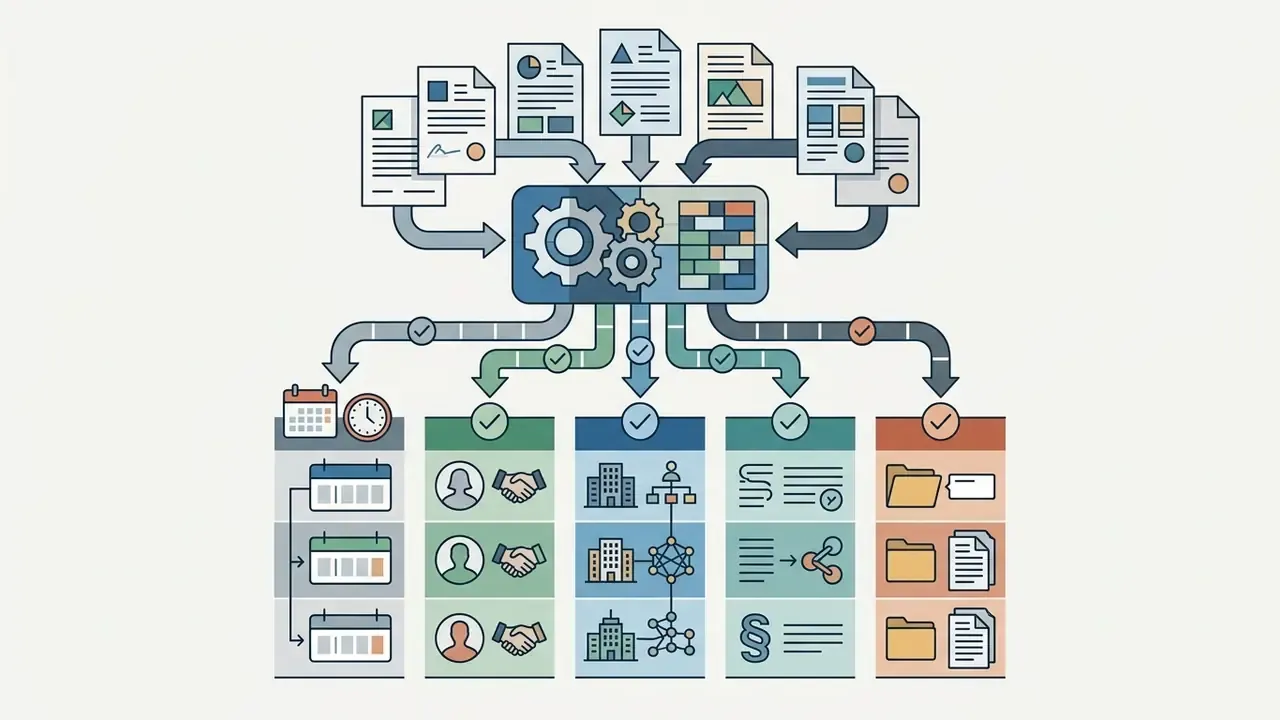
Keeping case summaries consistent across a multi-matter portfolio means updating the enterprise chronology whenever new judicial orders or filings appear. A standardised case summary pulls procedural history, active claims, key rulings, upcoming deadlines and unresolved issues into a short narrative. In practice, a complete summary carries five components: material people and entities, the timeline of key events, the court documents that must be read, the legal arguments in play, and current status.
Docket synchronisation workflow
| Stage | Action | Output |
|---|---|---|
| 1. Ingestion | Poll primary court API or register for new entries | Raw docket entry plus source PDF |
| 2. Extraction | Date-stamp the entry and extract the procedural holding | Structured event record |
| 3. Verification | Attorney confirms holding, date and case number against the filed document | Approved timeline entry |
| 4. Distribution | Publish to enterprise portal, co-counsel and risk committee | Single synchronised case view |
When new filings land, legal analysts extract key procedural holdings and fold them into the master timeline. That synchronisation keeps institutional stakeholders, co-counsel and risk committees on one updated view of case status, which reduces missed deadlines and conflicting arguments between teams.
Building an AI-Powered Case Timeline From Legal Documents
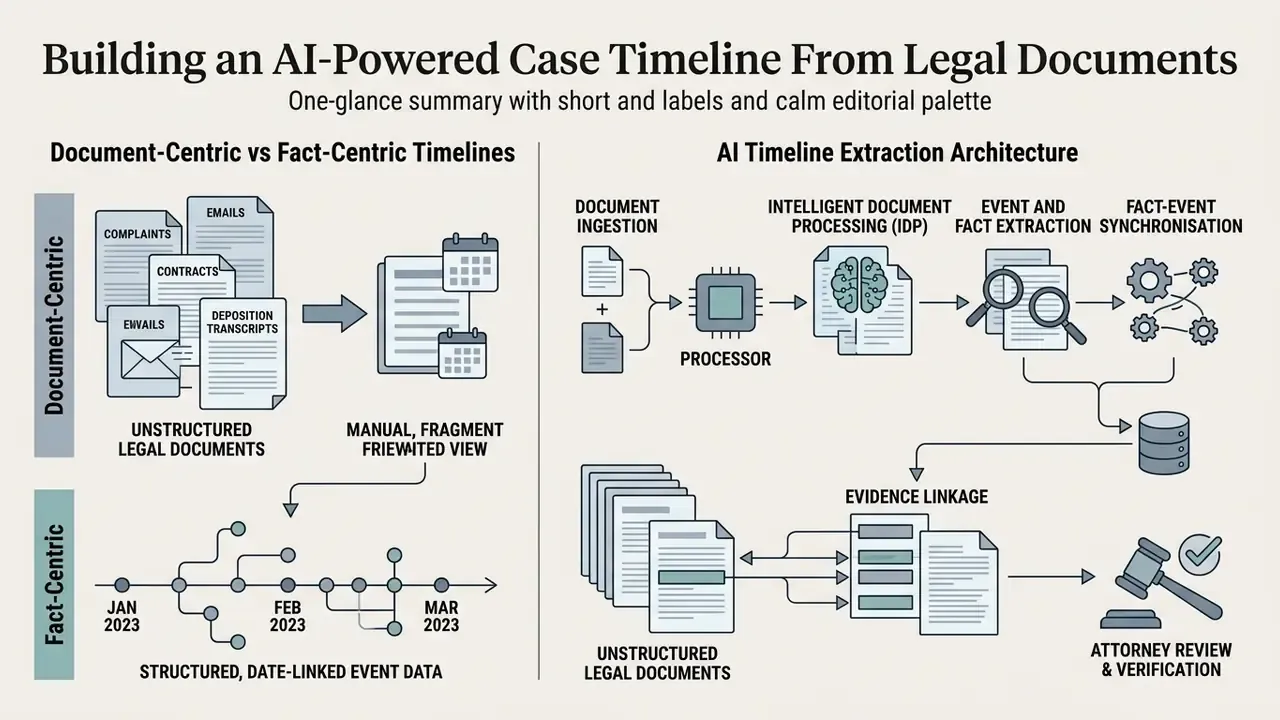
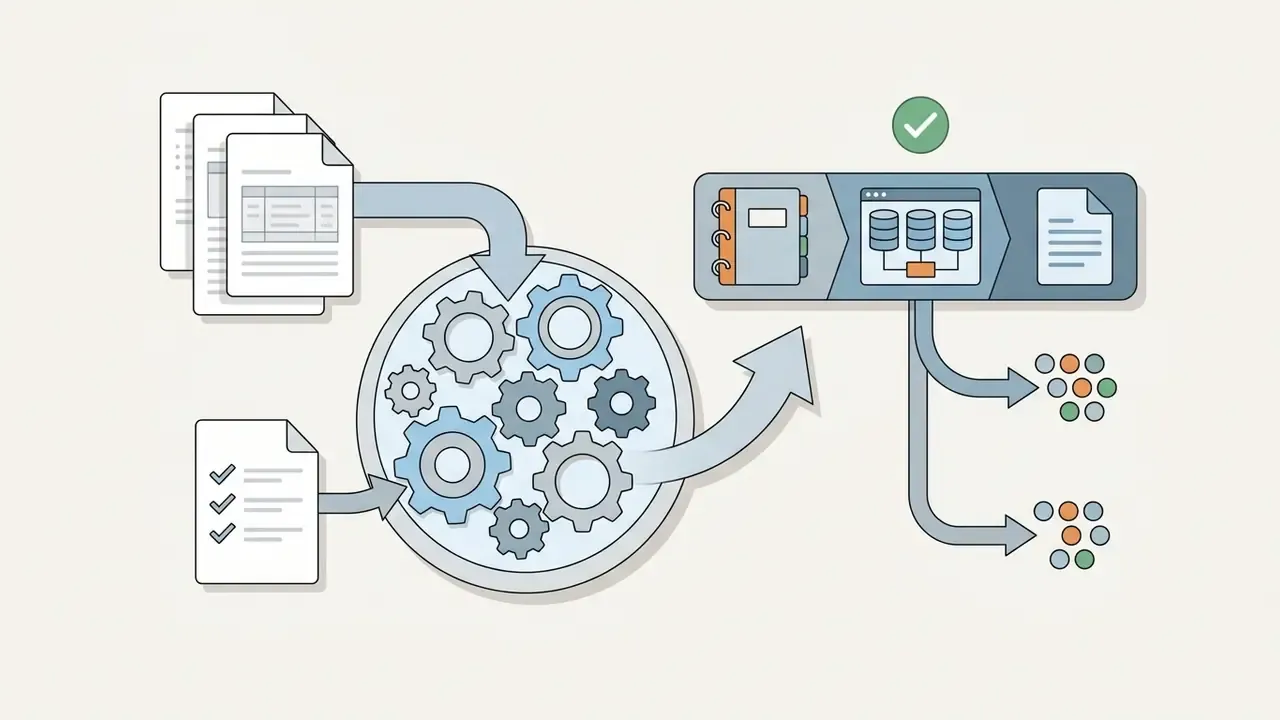
Building an AI-powered case timeline means turning unstructured legal documents, complaints, contracts, emails, deposition transcripts, into structured, date-linked event data. Legal technology platforms use Intelligent Document Processing (IDP) and Natural Language Processing (NLP) to parse those files, extract chronological facts and link each event to its supporting primary exhibit.
The Paradigm Shift: Document-Centric vs Fact-Centric Timelines
Traditional workflows relied on document-centric chronologies, rigid spreadsheets built around file metadata such as email send dates, filing timestamps or Bates numbers. This legacy approach forces the team to see the case through the lens of a document dump, and buries the narrative under metadata.
Modern AI-powered litigation calls for a fact-centric timeline architecture. Instead of organising a case by when a file was created, a fact-centric model anchors on when the human event or legal breach actually occurred. Cross-indexed exhibits, witness depositions, issue tags and disputed claims then attach as supporting nodes to a single factual event. The narrative becomes the anchor; documents become the evidence lines.
| Dimension | Document-Centric Chronology (Legacy) | Fact-Centric AI Timeline (Modern) |
|---|---|---|
| Primary anchor | Document creation or receipt timestamp | Proven historical event or alleged breach |
| Data structure | Isolated rows in Excel or Word tables | Dynamic knowledge graph node |
| Evidence mapping | 1 document = 1 line item | 1 event = N exhibits plus transcripts plus claims |
| Narrative clarity | High risk of fragmented storylines | Fast identification of cause-and-effect patterns |
| Collaboration model | Local spreadsheets, version conflicts | Single shared, filterable strategy hub |
One record, several jobs. The same fact-centric chronology serves as a baseline narrative repository at early case assessment, a verification engine while drafting pleadings, a contextual map during document review, a witness-specific filter for deposition preparation, an evidentiary framework separating undisputed from contested facts at summary judgment, and a storytelling canvas at trial.
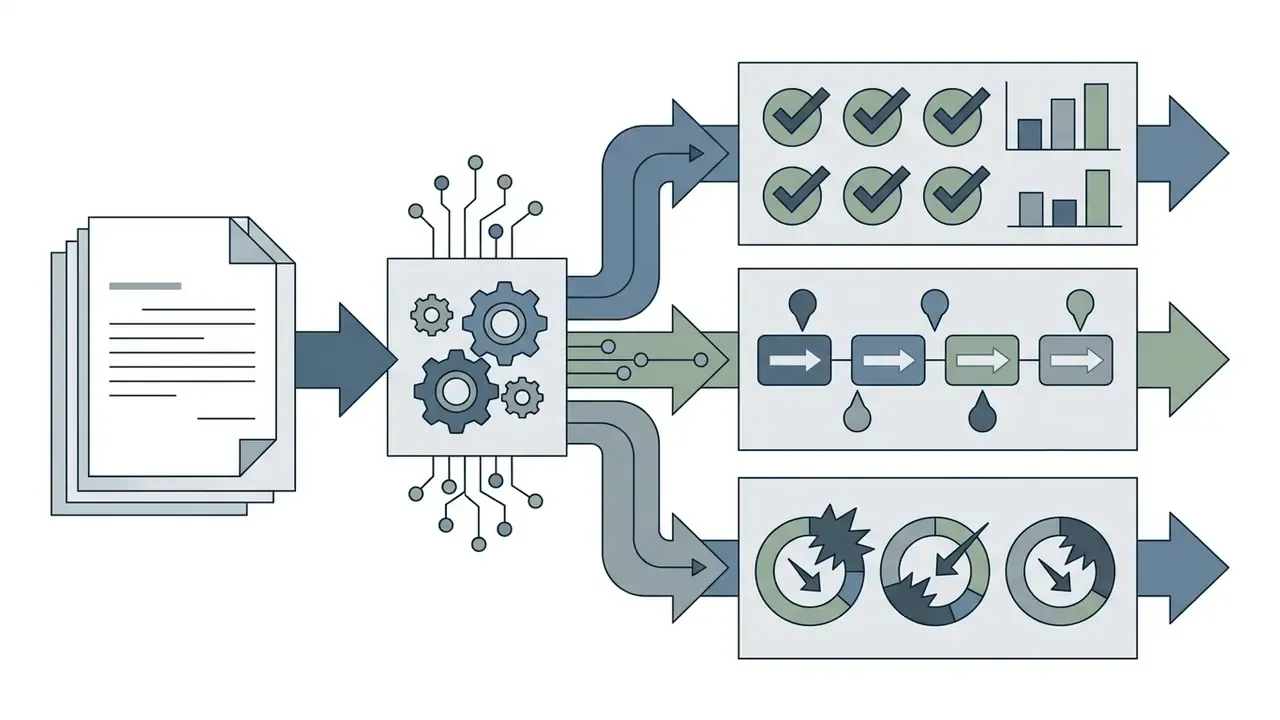
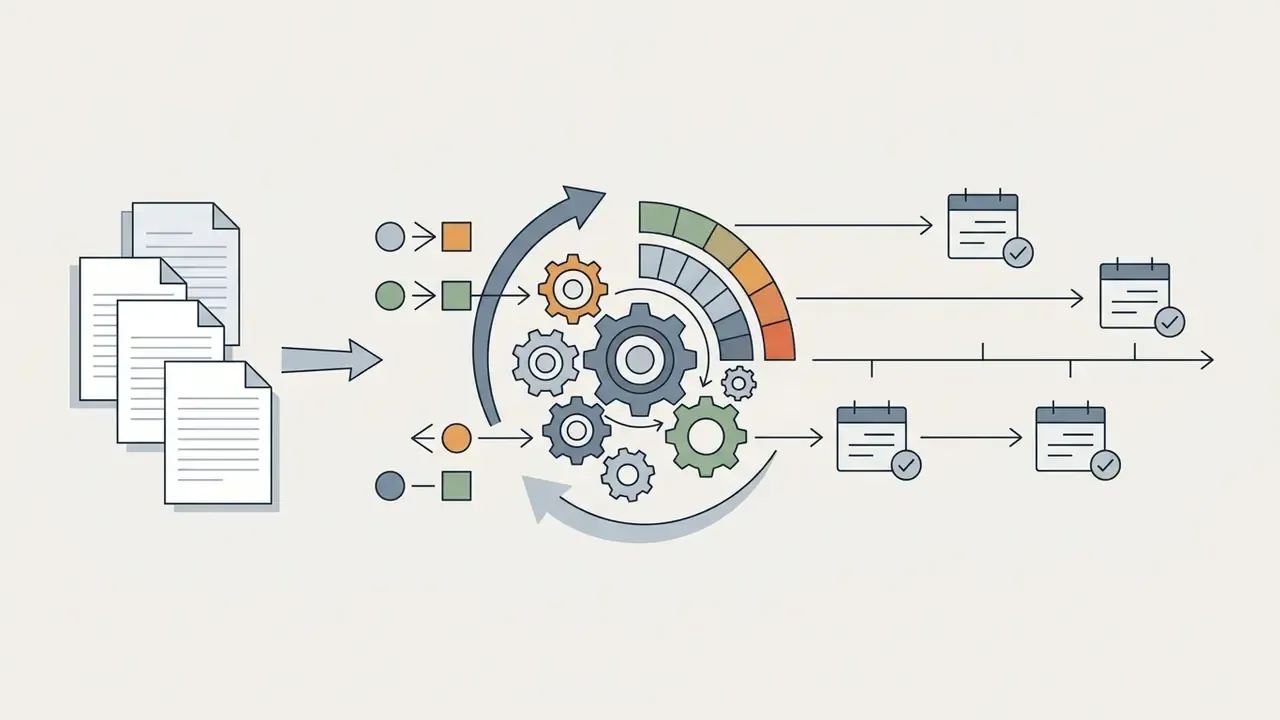
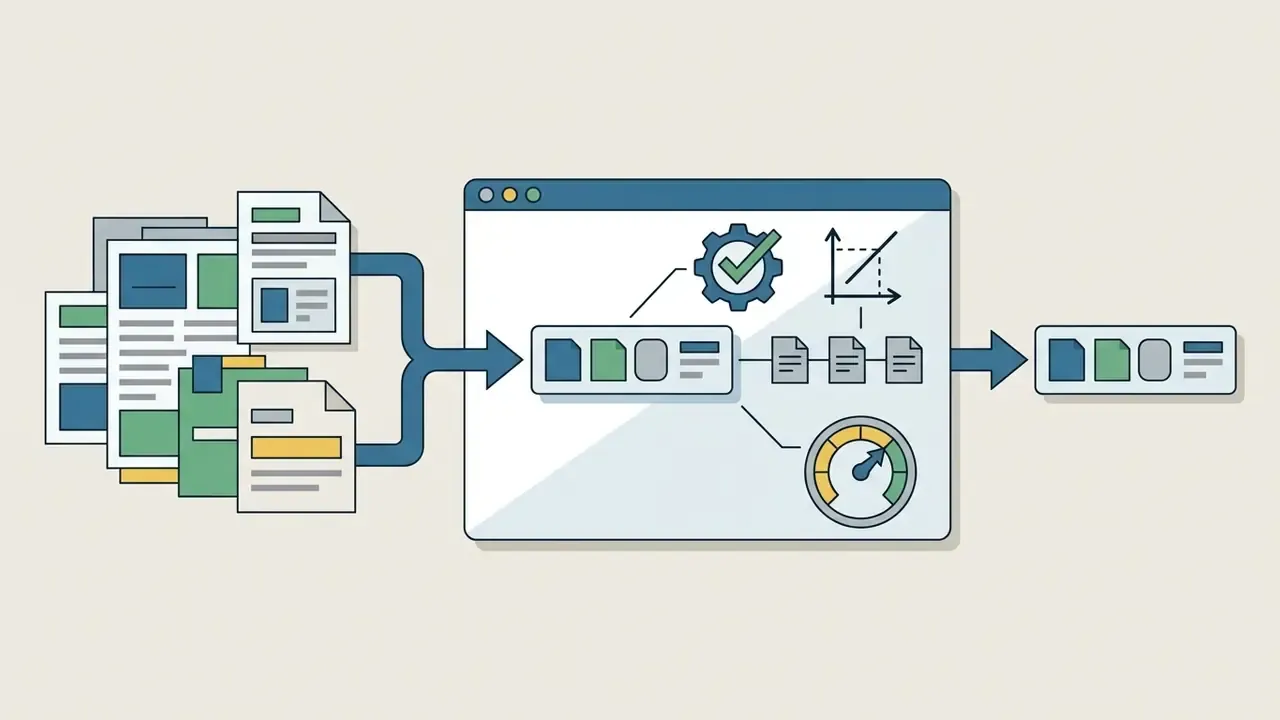
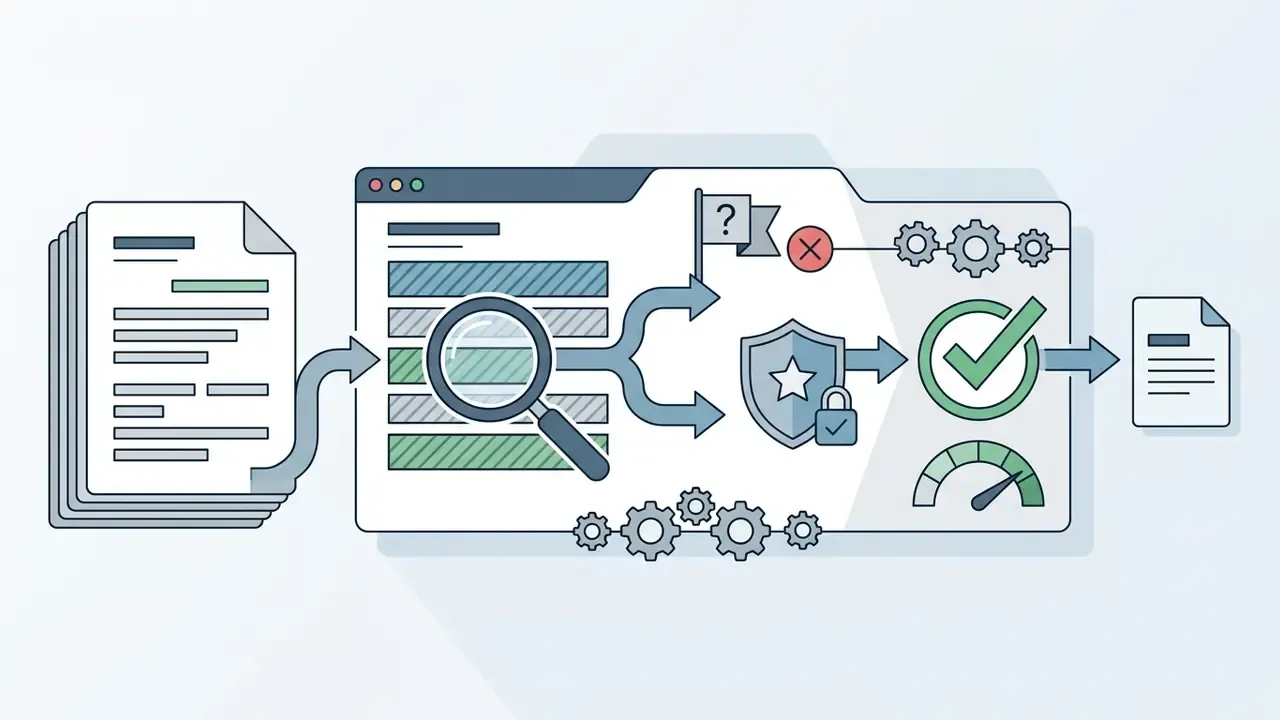
AI Timeline Extraction Architecture
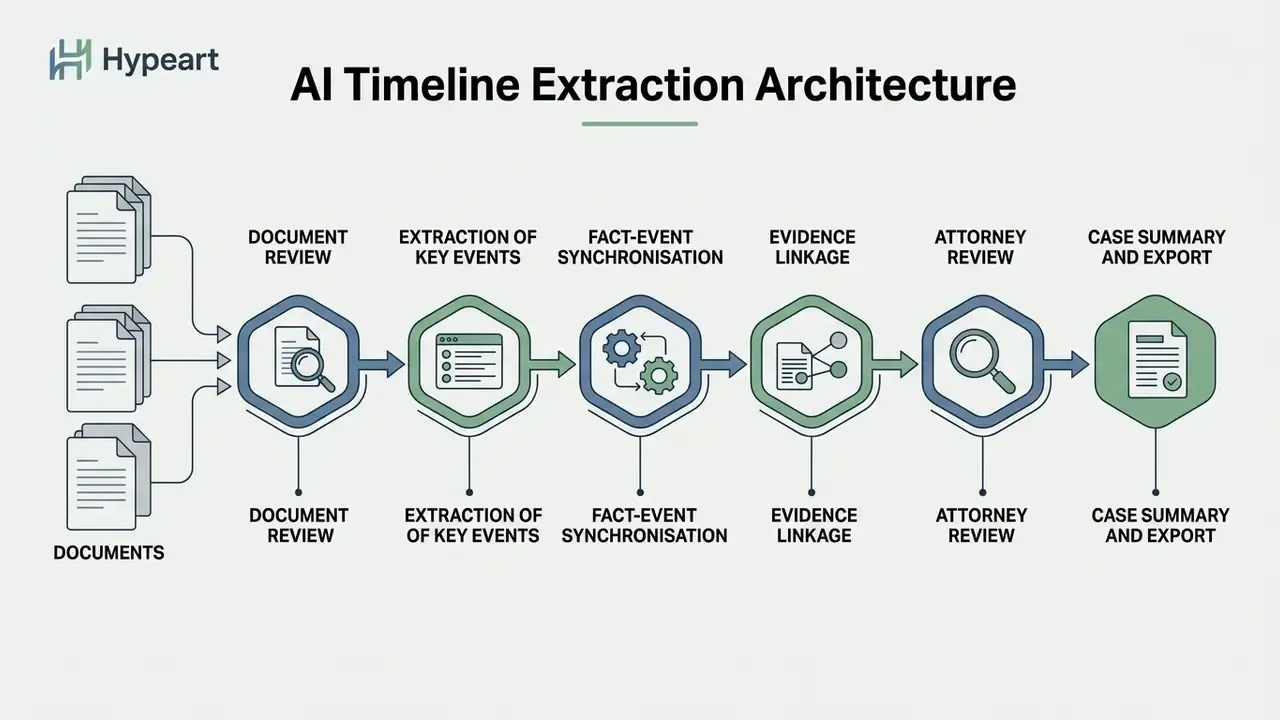
Official court guidance sets the minimum format that automated output must satisfy: column one the date, column two the detail of the event, column three the related document, with numbered attachments. Automation changes the speed of production. It does not change the evidentiary discipline.
Automated Extraction of Key Events and Dates
Intelligent Document Processing systems read complex legal texts to pull out temporal anchor points. IDP algorithms use named entity recognition (NER) and pattern-matching parsers to extract party names, execution dates, contract term expirations, renewal dates, billing amounts and operational events with high precision. Where source material arrives as scans or photographs, preprocessing pipelines, including AI photo editors used narrowly for deskewing and contrast correction, measurably improve downstream OCR and extraction accuracy.
«Legal information-extraction systems reach 93.79% precision, 80.39% recall and an F1-score of 85.33% on specialized legal datasets.»
By parsing hundreds of discovery documents at once, automated systems assemble a first draft chronology in minutes, flagging timeline gaps and missing document sequences for attorney investigation.
Solving the "Deceptive Timestamp" Dilemma and Executing AI Gap Analysis
Standard metadata extraction tools stumble on deceptive timestamps. An email sent on a Friday morning may contain a long paragraph recounting a critical, unwritten verbal agreement from the preceding Tuesday. A document-centric parser files the event under Friday and breaks the true sequence, which leaves the team exposed when opposing counsel walks the witness through the real order of events.
Legal NLP models resolve this by separating document date (metadata) from event occurrence date (semantic context), and by converting relative expressions such as "the previous Tuesday" or "three days after signing" into explicit calendar dates anchored to the document's own timestamp.
AI-driven gap analysis in action. Once a platform builds a fact-centric baseline chronology, blind spots become visible. If the extracted timeline shows an abrupt 14-day blackout in inter-company communications immediately before an alleged copyright infringement or breach of contract, counsel can:
- Flag the blackout as an evidentiary gap inside the chronology, with a dedicated status tag.
- Run targeted natural-language queries across the unstructured corpus for that window, including alternate channels such as chat, SMS and calendar entries that may sit outside the email production.
- Generate witness-specific deposition outlines aimed at concealed interactions during the missing period.
- Assess whether the gap points to a preservation failure warranting a spoliation motion or an ESI protocol challenge.
Fact-verification research supports this layered approach. Chronology-aware models match claims to evidence at the event, token and temporal levels, using entity linking and semantic role labeling to retrieve documents and extract discrete events rather than trusting file dates.
In one enterprise legal deployment involving a 180,000-page collection, an internal litigation team used an ai timeline generator workflow to parse incoming production sets. With automated event extraction plus mandatory pinpoint citation linkage, the team cut initial chronology construction from weeks to four days while keeping full auditability back to original discovery exhibits. This account reflects an internal engagement and carries no independently published metrics. Treat the figures as indicative, not benchmarked.
Connecting Facts, Evidence and Disputed Claims
| Extracted Date | Event Description | Source Document / Citation | Claim / Issue Mapping | Fact Status |
|---|---|---|---|---|
| May 12, 2024 | Defendant acquires third-party training dataset containing copyrighted literature. | Exhibit A-04, p. 12 (Dataset License Agreement) | Direct copyright infringement; access | Undisputed |
| Aug 18, 2024 | Model training run v3.5 completed using distributed server cluster. | Exhibit B-12, p. 88 (Engineering Log) | Fair use defense; transformative purpose | Disputed |
| Nov 02, 2024 | Commercial API release of model v3.5 to enterprise users. | Motion for Preliminary Injunction, Docket #14, p. 6 | Irreparable harm; market substitution | Disputed |
| Jan 15, 2025 | Plaintiff issues formal DMCA takedown notice for generated outputs. | Exhibit C-01, p. 1 (Cease & Desist Letter) | Statutory notice; pre-suit knowledge | Undisputed |
Knowledge graph architectures model entities, events, filings and legal issues as connected nodes. Attorneys can then query relationships that a spreadsheet cannot express, for example every disputed fact involving one corporate officer between two dates. The payoff is simple: each assertion in a brief traces back to verifiable primary evidence.
AI Use Cases for Litigation Teams, Attorneys and Law Firms
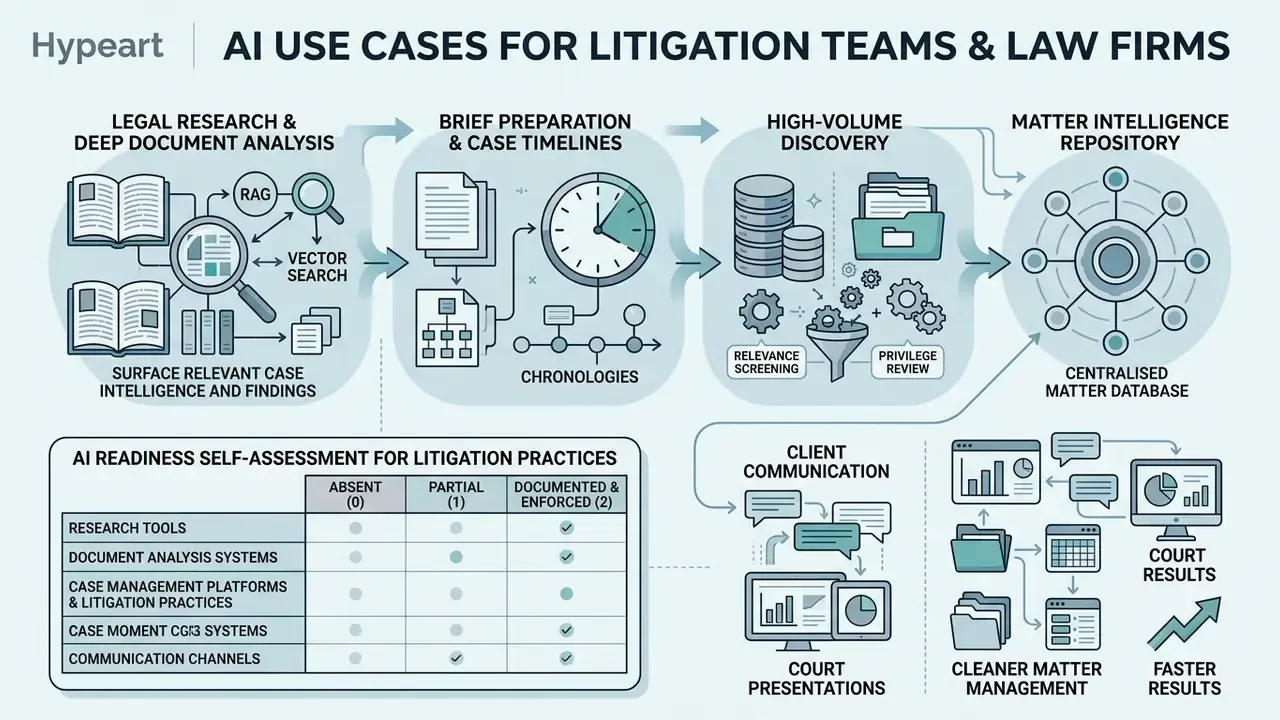
Litigation teams, corporate legal departments and law firms use AI across a spread of operational tasks: high-volume discovery, faster legal research, cleaner matter management. Benchmarking data from legal departments in 2025 put contract drafting, review and analysis at 64% adoption, legal research at 49% and document translation at 38%. The point of using AI here is to shift attorney time from manual document processing toward case analysis and advocacy.
AI readiness self-assessment for litigation practices
Score your practice on each dimension (0 = absent, 1 = partial, 2 = documented and enforced):
| Dimension | What "documented and enforced" looks like |
|---|---|
| eDiscovery volume and validation | Control sets, recall and precision targets, elusion testing defined in writing |
| Local court AI compliance | Standing orders and certification requirements tracked per forum |
| Citation verification protocol | Named reviewer, authoritative database check, logged approval |
| Evidence preservation for AI data | Prompts, outputs and logs inside litigation hold templates |
| Vendor data governance | Zero-retention terms, SOC 2 Type II, no training on client inputs |
A score of 8 to 10 suggests governance maturity. A score of 4 to 7 signals medium risk that needs remediation before wider deployment. A score of 0 to 3 warrants suspending external reliance on AI outputs until policy is in place.
Legal Research, Deep Document Analysis and Brief Preparation
Legal research platforms now combine Retrieval-Augmented Generation (RAG) with vector search to surface case authorities, statutory provisions and regulatory guidance. Established products, among them Westlaw Edge Quick Check, LexisNexis Brief Analysis and Bloomberg Law Brief Analyzer, parse uploaded draft briefs to suggest uncited precedent, verify authority status, flag adverse authority and build tables of authorities from both machine-readable and image-based PDFs.
«The Better Call GPT study found LLMs comparable to practising lawyers on structured, checklist-driven contract review with explanation and assumption fields.»
The discovery section above deals with first-pass relevance and privilege screening at scale. This is the analytical layer built on top: issue spotting across an already-reviewed corpus, deposition and transcript synthesis, argument outlining, and preliminary drafting of briefs, memos and pleadings. Attorneys keep sole responsibility for refining arguments, confirming context and verifying reasoning before anything is filed.
«Lawyers tend to rate AI-generated legal documents lower than human-written ones, even at comparable quality.»
That perception gap carries a practical consequence. AI-assisted drafts need substantive verification and stylistic normalisation before they circulate to partners, clients or the court.
Collaboration, Client Communication and Court Presentations
Enterprise AI applications work best as a centralised, searchable repository for matter intelligence. Shared case timelines let co-counsel, expert witnesses and in-house legal leaders read one identical factual record, which cuts miscommunication across distributed teams and retires the fragmented local spreadsheets that break during trial prep.
On client communication and court presentations, guidance from international legal bodies, including Singapore's Ministry of Law 2026 Legal Sector Guide, the Hong Kong Judiciary's 2025 AI Directives and the Caribbean Court of Justice's Practice Direction No. 1 of 2025, permits generative AI for drafting executive summaries, suggesting presentation topics and outlining submissions, subject to fact-checking and independent citation verification. Singapore's guide goes further and directs firms to tell clients and stakeholders when GenAI is used in their matters. Presentation-layer work such as demonstrative graphics can be produced faster with AI image generators, provided the output stays illustrative and never stands in for an evidentiary exhibit. These frameworks flatly prohibit AI-generated text in witness affidavits, signed declarations or evidentiary trial exhibits, and Ireland's 2025 direction expressly bans deepfake material in court documents, requiring complete human control over submitted evidence.
Accuracy, Review and Risk Controls When Using AI in Litigation
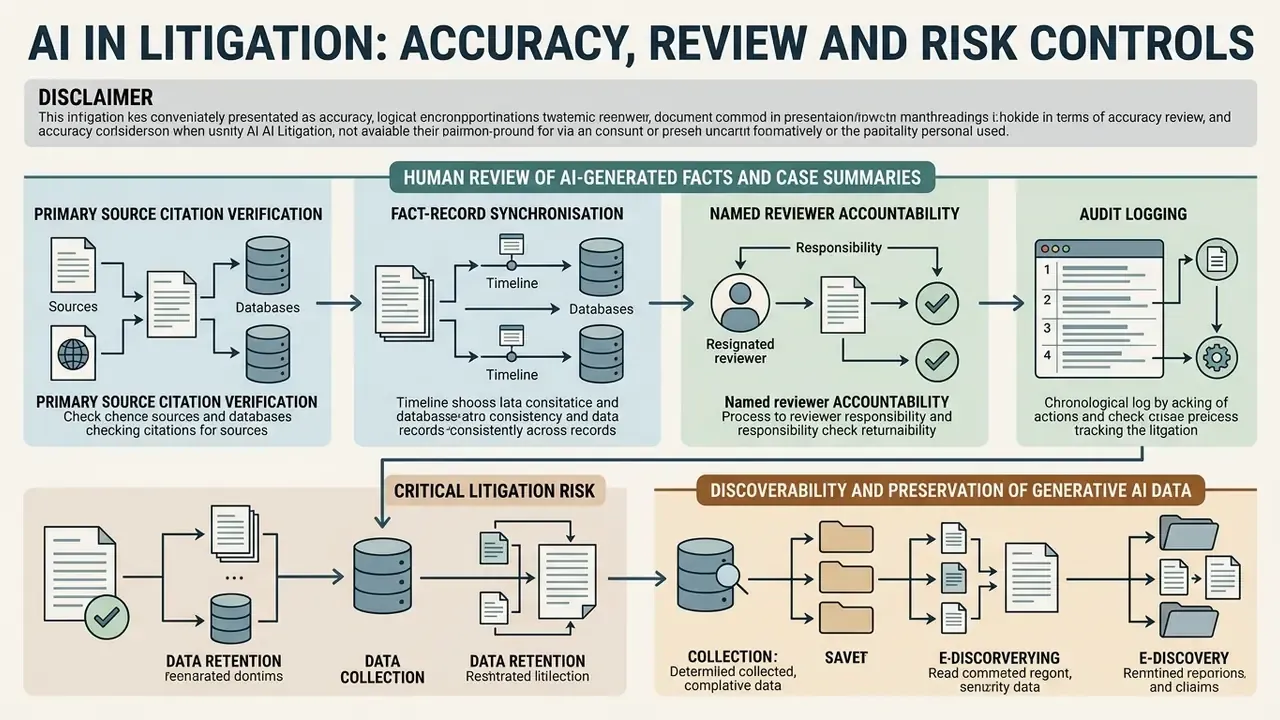
Using AI in litigation without hard controls invites legal, ethical and procedural exposure. The primary failure mode, algorithmic hallucination, can push non-existent judicial citations, inaccurate factual summaries, misquoted statutes, misstatements of the record or jurisdictional errors into court filings. Courts treat unverified AI-generated filings as serious procedural breaches, subject to sanctions under Rule 11 of the Federal Rules of Civil Procedure.
Human Review of AI-Generated Facts and Case Summaries
Discoverability and Preservation of Generative AI Data
As generative AI settles into legal workflows, discoverability questions follow. Prompts entered into AI systems, generated outputs, internal system logs and model configurations are Electronically Stored Information (ESI) subject to ordinary litigation hold obligations. Because GenAI content can be hard to distinguish from other ESI, parties increasingly negotiate ESI protocols that expressly address preservation and collection of AI-related data, prompts, outputs and associated metadata.
«Multiple liability profiles for AI-generated outputs exist under international, EU and UK copyright law, including direct infringement by users and secondary liability for platforms.»
Under federal ESI principles, once litigation is reasonably anticipated, parties must preserve relevant ESI, including prompts submitted to enterprise AI tools and the outputs returned. Preservation duties attach at reasonable anticipation and are operationalised through written holds, custodian identification and preservation of relevant hardware, software and access credentials. Legal teams then need information governance protocols that define retention periods for AI interaction logs, maintain security boundaries around privileged client data, and configure enterprise systems so third-party vendor models cannot train on confidential matter inputs. Synthetic media pipelines create their own record classes too: outputs from AI voice generators and comparable tools produce logs, prompts and artefacts that fall inside hold scope once litigation is anticipated.
How to Evaluate AI Tools for Case Timeline Management
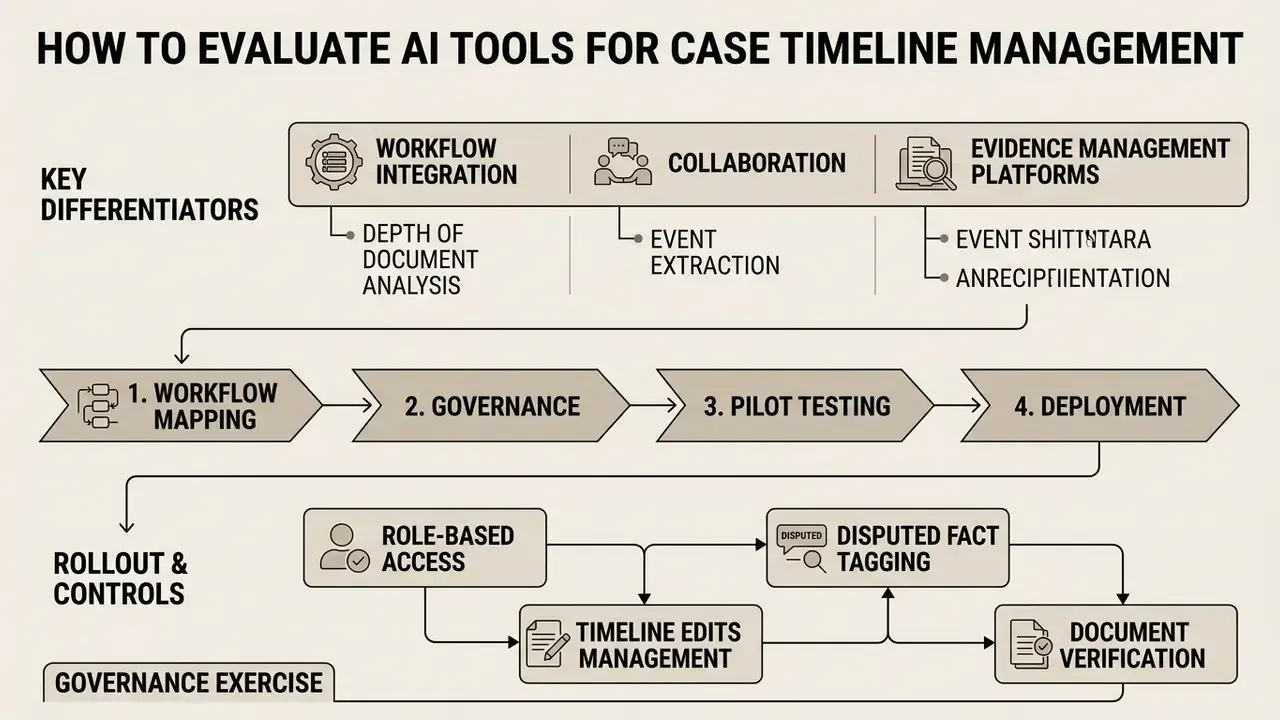
Choosing AI tools for case timeline management is a governance exercise as much as a software comparison. Assess platforms against legal risk management, technical reliability, interoperability and security compliance, using frameworks such as the NIST AI Risk Management Framework (AI RMF 1.0), ISO/IEC 42001:2023, ISO/IEC 23894:2023 for AI risk management, ISO/IEC 38507:2022 for governing-body oversight, and applicable mandates including EU AI Act transparency requirements.
«Contemporary legal retrieval systems reach 72.77% precision and 87.12% recall on the COLIEE 2023 dataset, supporting reliable retrieval of relevant cases and statutes.»
Comparative evaluation criteria for enterprise AI timeline management platforms
| Evaluation Criterion | Operational Capability Required | Empirical Benchmark / Standard | Governance & Risk Control Impact |
|---|---|---|---|
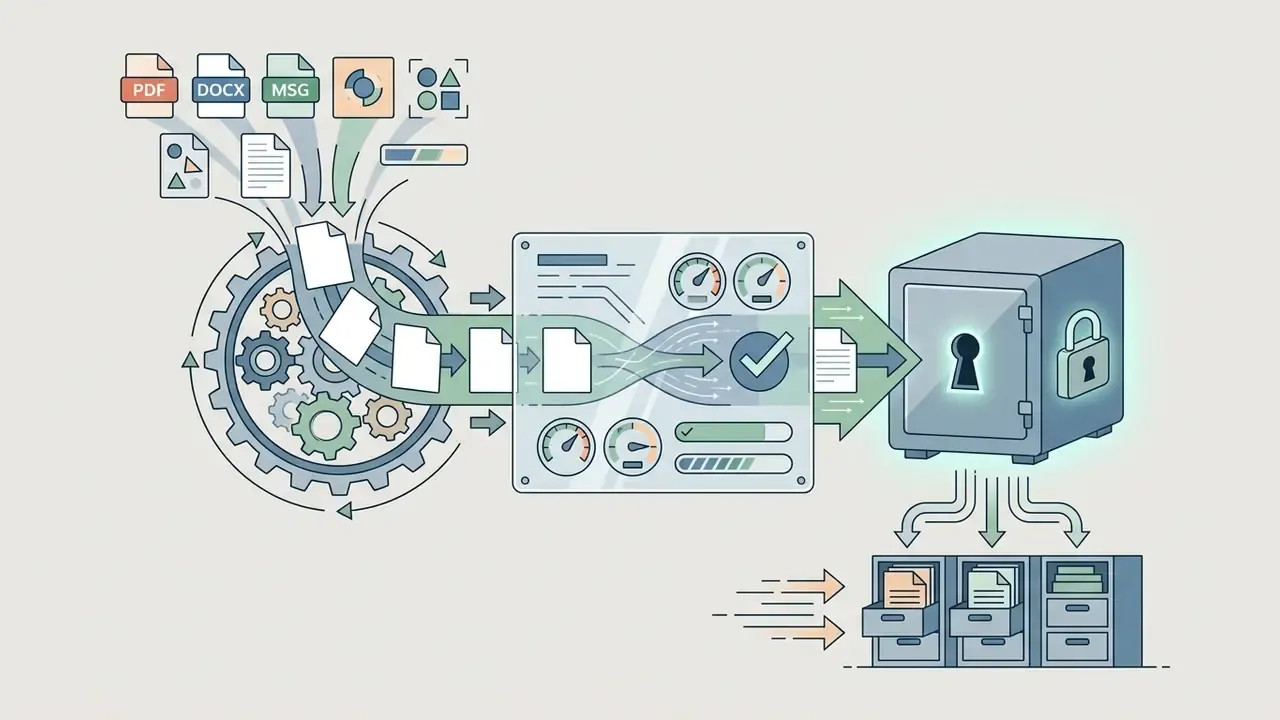
| Document ingestion and processing | Multi-format parsing (PDF, DOCX, MSG, OCR) with automated metadata extraction. | Supports high-volume discovery ingestion; metadata preservation compliant with ESI standards. | Removes manual data entry errors and ensures complete file coverage across matter records. |
| Event extraction accuracy | Automated identification of key dates, entities, actions and temporal sequences. | F1-score at or above 85%; precision at or above 90% on legal NLP benchmarks (Legal AI Survey, arXiv 2024). | Reduces the risk of omitted procedural milestones or missed contractual deadlines. |
| Deceptive timestamp resolution | Separation of document date from event occurrence date; resolution of relative time expressions. | Demonstrable event-level, not file-level, anchoring on a test corpus. | Prevents chronological distortion that undermines causation arguments on cross-examination. |
| Evidence linkage and traceability | Pinpoint citation linking every timeline event to original source page and line. | 100% auditable citation links back to ingested court records or exhibits. | Gives reviewers immediate verification capability during brief drafting. |
| Risk and privilege safeguards | Uncertainty scoring, privilege tagging, automated confidential data masking. | Up to 61% reduction in privilege-waiver risk using calibrated HITL thresholds (arXiv, 2024). | Protects attorney-client privilege and work product doctrine during automated review. |
| Workflow interoperability | API integration with enterprise GRC, matter management and eDiscovery systems. | Native integration with iManage, Relativity, Casefleet or standard legal tech stacks. | Prevents information silos and embeds timeline data into existing firm workflows. |
| Export and presentation fidelity | Export of fact chronologies to Word, PDF or HTML with live links to supporting evidence. | Source links or pinpoint citations preserved in every exported format. | Maintains verifiability when chronologies leave the platform for briefs and trial binders. |
| Security and data governance | SOC 2 Type II, ISO/IEC 27001, zero data retention for vendor model training. | Compliance with bank-grade data security and client confidentiality mandates. | Keeps proprietary client data out of external public model fine-tuning. |
Platforms in this category differentiate along the same axes: depth of document analysis, event extraction quality, evidence linkage, collaborative editing, native case-management integration and export fidelity. Systems that generate structured facts with date, title and participants linked back to source pages, and that export chronologies with live links, meet the traceability test most directly.
Workflow Integration, Collaboration and Evidence Management
Getting AI timeline tools into an existing practice takes a four-stage plan: workflow mapping, governance gating, phased implementation and continuous auditing. Tools should fit inside current case management frameworks rather than spawning a parallel process, and governance checks belong embedded in the workflow, not bolted on afterwards. Video depositions, screen recordings and demonstrative media now enter the same evidence pipeline, so teams assessing adjacent tooling such as AI video generators should apply identical provenance and retention controls.
During rollout, firms set role-based access controls to manage timeline edits, tag disputed facts and keep audit trails showing who added or changed each entry. Matter-management systems should record where AI was used, tag AI-assisted work product and define escalation triggers for incorrect or high-risk outputs. Connect the timeline software to enterprise document repositories, and the team keeps a synchronised evidence base in which every event links to a verified primary document, from first filing through trial.
Quick Audit: Is Your Case Timeline Litigation-Ready?
Checklist0 / 6
Limitations, Open Questions and a Safe Next Step
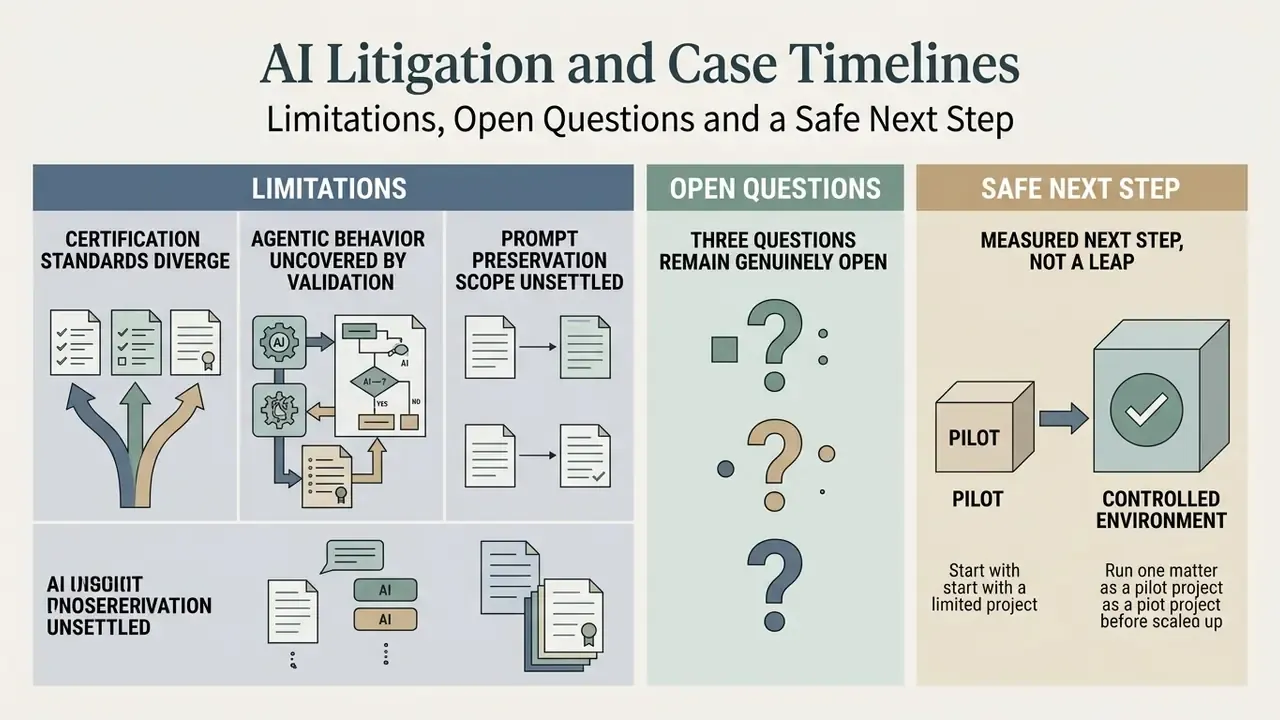
Honest accounting first. Most efficiency numbers in this space come from vendors or from single-firm deployments, not from controlled studies. The 85% and 70% compression figures are plausible directionally, but they exclude the cost of the verification layer that courts now require. Net risk-adjusted savings will be smaller. How much smaller depends on your baseline, and nobody has published a clean answer.
Three questions remain genuinely open:
- Certification standards diverge. A workflow acceptable in one district may need disclosure in another. Portfolio-wide policy will lag forum-specific practice for a while yet.
- Agentic behaviour is not covered by classic validation. A tool that reads a docket and drafts a summary is a model. A tool that polls the docket, updates the chronology and notifies counsel is closer to a digital worker, and it needs an owner, an access limit, an escalation path and a shutdown mechanism.
- Preservation scope for prompts is unsettled. Practice is moving toward express ESI protocol treatment, but retention periods vary widely across institutions.
A measured next step, not a leap: run one matter as a controlled pilot. Pick a mid-size production, build the chronology twice, once manually and once with the tool, then compare event counts, citation accuracy and total hours including review. Document the delta. That single artefact tends to persuade an audit committee more than any vendor benchmark.
FAQ: AI Litigation and Case Timelines
What counts as AI litigation?
Disputes where AI models, training datasets or generated outputs form the substance of the claims or defenses. In practice that means training-data copyright suits, output memorization claims, algorithmic discrimination matters and product liability actions tied to automated decisions.
How is a case timeline different from a docket sheet?
A docket sheet records filings in the order the court received them. A case timeline records facts in the order they happened, with each fact linked to a source document and marked disputed or undisputed. The docket is an input; the chronology is the analysis.
Do we have to disclose AI use in court filings?
It depends on the forum. Some standing orders require a certificate of generative AI usage; New York's Part 161 permits AI-assisted drafting without disclosure but still requires independent verification. Track requirements per court, not per firm.
Where should legal updates on AI cases come from?
Primary registers first: PACER, state e-filing portals, official judicial sites. Docket-alert services help with speed. Law firm alerts and trade media are useful for context, but verify holdings, dates and case numbers against the filed documents before anything enters an enterprise case summary.
Are prompts and AI outputs discoverable?
Treat them as ESI. Once litigation is reasonably anticipated, prompts, outputs, logs and model configurations can fall within preservation obligations, and increasingly they are addressed directly in negotiated ESI protocols.