What Matters Before You Buy
- New games buy from first-party stores (Nintendo eShop, PlayStation Store, Xbox, Steam, GOG) or major retailers (Amazon, Best Buy, GameStop) for MSRP-level pricing and clean warranty paths.
- Used games expect 40–60% off launch pricing on AAA titles; prioritize sellers who publish a grading scale and a defect window (7–90 days).
- Retro games the median online transaction sits near $44, but sealed and graded copies can multiply that several times over. Verify cartridge PCBs, disc matrix rings and shell screws before paying.
- Selling back store credit typically pays 20–30% more than cash. Always get an itemized quote before shipping.
- Imports Switch, PS4/PS5 and Xbox One/Series are region-free for physical software; NES, SNES, N64, Genesis and PS1/PS2 are not. Japanese hardware runs on 100V.
- Old consoles on new TVs analog output needs a line-doubler (RAD2X) or an upscaler (OSSC, RetroTINK); light-gun games still require a CRT.
How We Evaluated Stores (Method Note)
Before any recommendation below, four things were checked on each merchant type: published condition grading, the written defect or return window, disclosure of seller status (professional trader versus private individual), and whether prices track live sold comps rather than optimistic asking prices.
No sponsorships, no affiliate weighting, no "editor's choice" badges. Where evidence is thin, that is stated plainly instead of being smoothed over.
Purchasing software and hardware through online video game retailers really comes down to three variables: catalog depth, buyer protection, and pricing transparency. Sourcing current-generation releases, pre-owned discs and vintage cartridges are three different jobs, and they rarely reward the same merchant choice.
How to Choose the Best Online Video Game Store
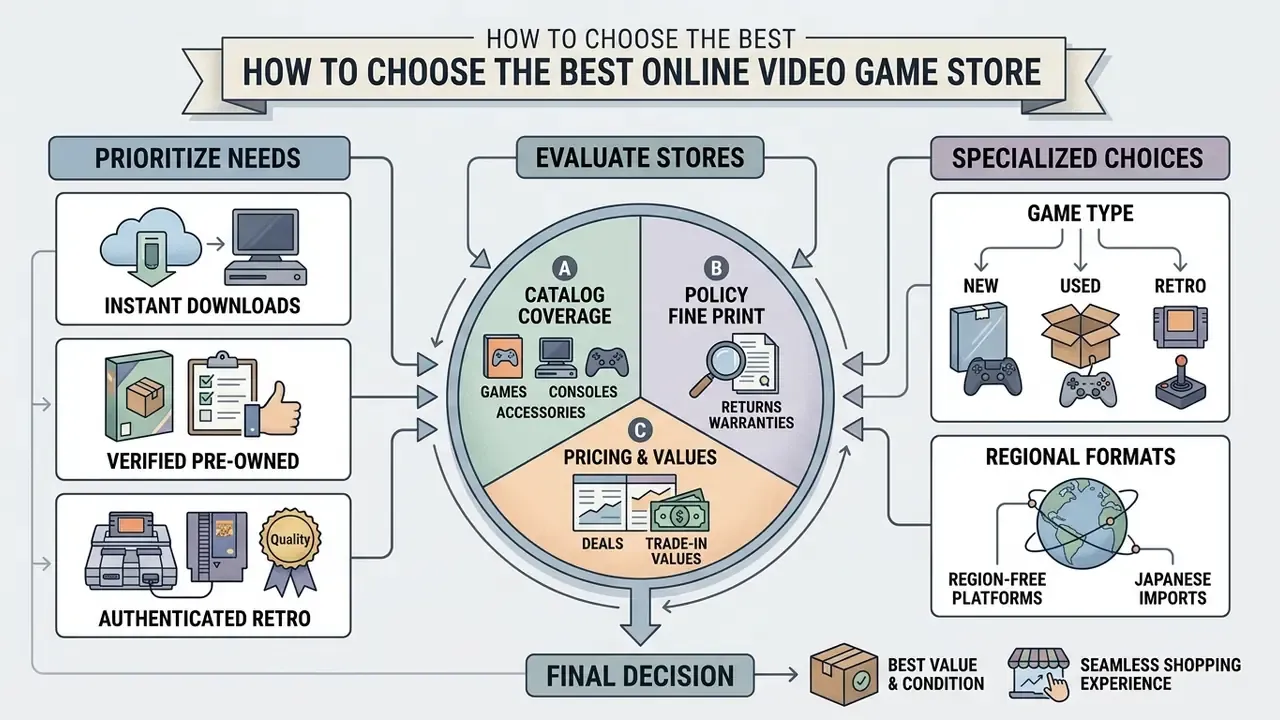
Choosing the best online video game store depends on whether you prioritize instant digital downloads, verified pre-owned condition, or authenticated retro hardware. Read the merchant disclosures first. Then match your purchasing intent to the retail model rather than to the homepage banner.
Industry analytics indicate that the global second-hand game platform market reached $7.2 billion in 2025, with online stores accounting for 58.4% of sector revenue, and a projected climb toward $13.8 billion by 2034.
«Online stores accounted for 58.4% of second-hand game platform revenue, with the segment valued at $7.2 billion in 2025.»
A broader market definition, one that counts consoles, physical media and accessories together, values the same sector far higher: $28.15 billion in 2025, where used consoles generate 50.6% ($14.24 billion) and physical game media accounts for 36.5% ($10.27 billion). The two figures are not contradictory. They reflect different scope boundaries, so compare them only within the same methodology.
«Online marketplaces generated roughly 60.4% of second-hand game revenue in 2025, while used consoles accounted for 50.6% of turnover.»
Evaluating these channels means comparing catalog scope, condition criteria, and warranty coverage side by side. The table below does that in one pass; if you want a broader methodology for structured buying decisions, our compare hub uses the same column logic.
Comparison of online video game store types by catalog, platforms, condition, warranty and price positioning
| Store type | Representative examples | Typical catalog coverage | Platform focus | Condition of products | Typical warranty / return window | Price positioning |
|---|---|---|---|---|---|---|
| First-party digital storefront | Nintendo eShop, PlayStation Store, Xbox, Steam, GOG | Current and back-catalog digital software, DLC, subscriptions | Platform-locked digital libraries | Digital licenses only; no physical condition variable | Refunds restricted once download or playtime begins | MSRP with recurring seasonal sale windows |
| Generalist online video game store | Amazon, Best Buy, GameStop, Walmart | Wide range of new games, select used titles, consoles and accessories across modern platforms | Current-generation platforms (PlayStation, Xbox, Nintendo Switch, PC) | Primarily factory-sealed new items; standardized grading for pre-owned stock | Physical games usually returnable only unopened; pre-owned windows are short (often 7–30 days) | Aligned with official list prices; promotional discounts during seasonal events |
| Online second-hand game platform | eBay, Mercari, eStarland, Back Market | Extensive selection of pre-owned discs, cartridges, used gaming consoles and peripherals | Multi-generational home consoles, handhelds, physical media formats | Variable pre-owned condition; requires verification of listing details | Marketplace buyer-protection claims; specialist resellers such as eStarland publish up to 90-day guarantees on tested stock | Discounted against original price; governed by cosmetic wear and completeness |
| Specialist online retro video game store | DKOldies, Lukie Games, Retro Games Plus, The Video Game Cavern, Retro Gamer Depot, Super Potato | Curated inventory of classic games, legacy systems, rare cartridges, physical collectibles | Legacy hardware (NES, Super Nintendo, N64, Sega, early optical disc platforms) | Graded original stock, tested hardware, refurbished legacy components | Commonly a 30-day defect guarantee (exchange or store credit), defect-only coverage, receipt required | Market-driven pricing; premium valuations for complete-in-box and graded titles |
Reading the policy fine print. In the EU, a marketplace must disclose whether the seller is a professional trader or a private individual, because statutory consumer protection applies only to trader sales. Authenticity programs are also narrower than most shoppers assume: eBay's authentication covers selected categories rather than the whole retro-games catalog, and Mercari states that its authenticity screening does not itself guarantee authenticity. Small print, large consequences.
Catalog Coverage: Games, Consoles and Accessories
A well-built store keeps three top-level branches, games, gaming consoles / systems and accessories, instead of dumping peripherals into software listings. Separating system hardware from add-on peripherals removes navigation friction when buyers shop all inventory and choose options across variants.
E-commerce standards, such as the Shopify Standard Product Taxonomy, separate main console platforms from console accessories, then split accessories further into subcategories like home-console accessories and console skins. Deeper filtering follows from that split.
«Electronics > Video Game Consoles and Electronics > Video Game Console Accessories are maintained as distinct category trees.»
Market data confirms why the split matters commercially: used gaming consoles represent 50.6% of second-hand platform spending, while dedicated accessories generate 12.9% ($3.63 billion). Good catalogs also treat platform, genre, brand and accessory type as filters rather than as separate categories. BigCommerce's taxonomy guidance warns explicitly against confusing attributes with subcategories. Whether you are hunting an original game system or a set of replacement controllers, category clarity is what protects hardware compatibility at checkout.
One small tell of a serious merchant: the controller page lists the console revision it fits. Vague listings usually mean vague testing.
Choosing Between New, Used and Retro Games
Selecting between new, used and retro inventory means balancing list-price reductions, physical condition, and collectible authenticity against what you actually want to do with the game. Factory-sealed titles guarantee mint condition. Pre-owned copies simply cost less, often much less.
- New means factory-sealed, unopened, never used. Reputable listings disclose packaging damage in photos and notes.
- Used is graded from Like New down to Acceptable. "Good" is the mainstream tier; "Acceptable" is for buyers who want to play rather than display.
- Retro prices disperse the hardest. A loose common cartridge can cost a few dollars, while a sealed or professionally graded copy of the same title can reach three or four figures.
«Retro video games sold online cluster between $28 and $76, with a median near $44, and demand peaks in December while bottoming out in June.»
«Pre-owned AAA console titles are discounted 40%–60% relative to new releases priced above $69.99 in North America.» — Dataintelo, Global Second Hand Game Platform Market Report (2025). https://dataintelo.com/report/global-second-hand-game-platform-market/
Casual players usually take the loose disc or cartridge and get on with it. Collectors hunt complete-in-box (CIB) copies with original manuals and unblemished packaging, and pay a visible premium for both. Regulatory definitions back that hierarchy: EU Regulation 2024/1781 treats second-hand and refurbished products as not new, while remanufactured goods may be presented as new. That is precisely why "refurbished" hardware should never be priced like sealed stock.
Navigating Regional Formats and Japanese Imports
Buying foreign-region software (NTSC-J or PAL) means identifying hardware lockout mechanisms before money moves:
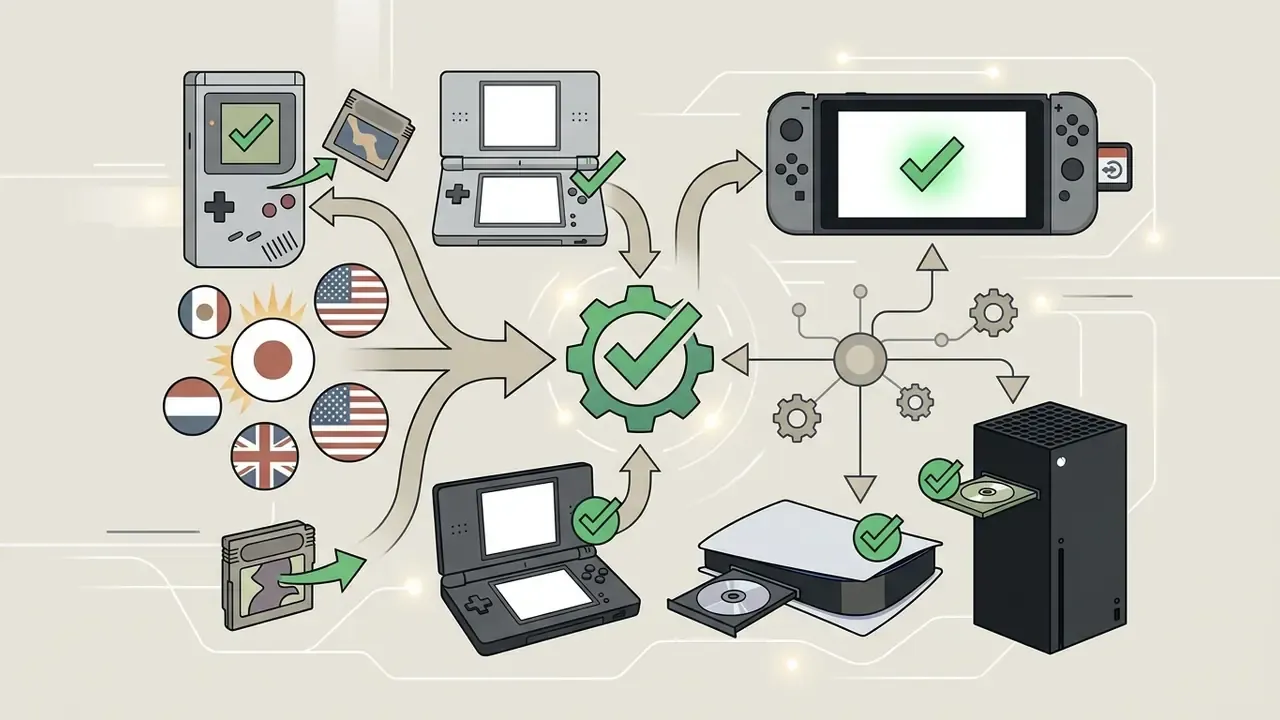
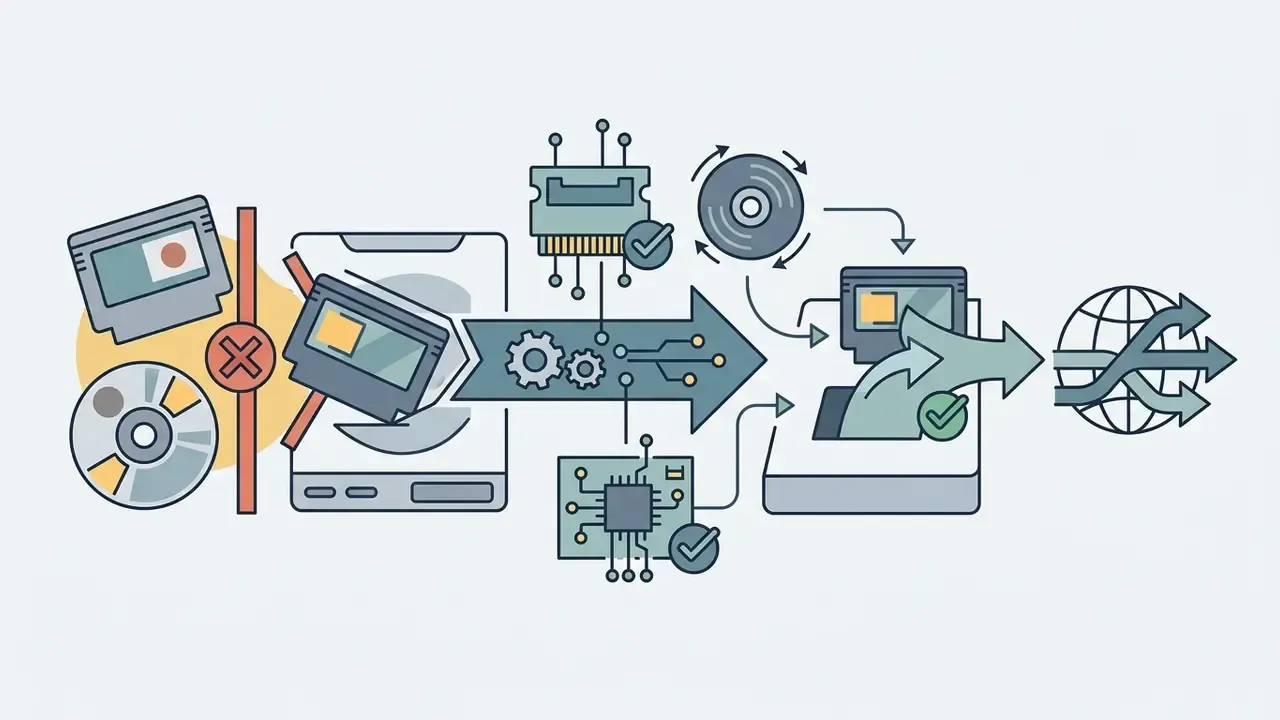
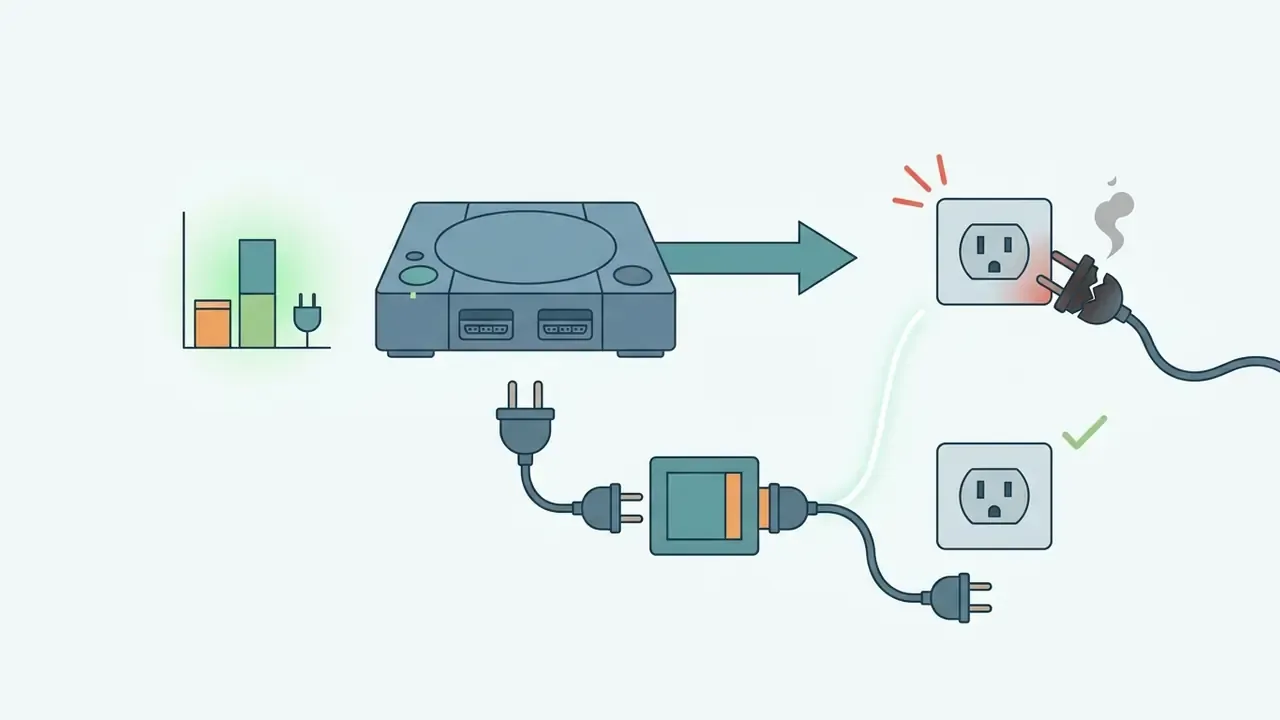
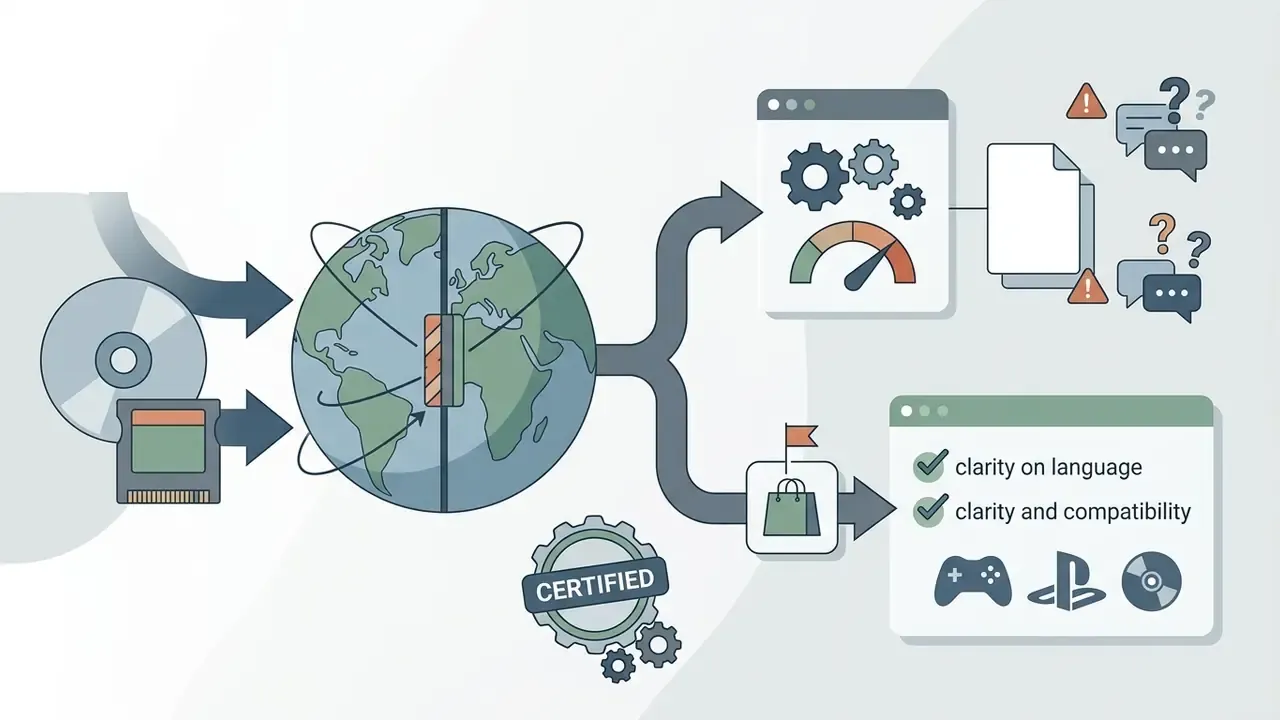
Regional compatibility quick reference for imported physical games
| Platform | Physical region lock | Workaround needed | Power standard note |
|---|---|---|---|
| Nintendo Switch / Switch 2 | None | Not required | Universal USB-C PSU, verify plug type |
| PS4 / PS5 | None (discs) | Not required; DLC still tied to account region | Auto-voltage on most SKUs |
| Xbox One / Series X | None | Not required | Internal PSU, check regional model |
| SNES / Super Famicom | Yes | Cartridge adapter or shell swap | JP units 100V, use a step-down transformer |
| Nintendo 64 | Yes | Adapter or cartridge pin modification | JP units 100V |
| Sega Genesis / Mega Drive | Yes | Region switch mod or pass-through adapter | Region-specific PSU polarity matters |
| PS1 / PS2 | Yes | Boot disc, swap trick or modchip | JP units 100V |
Where to Buy Video Games Online by Platform
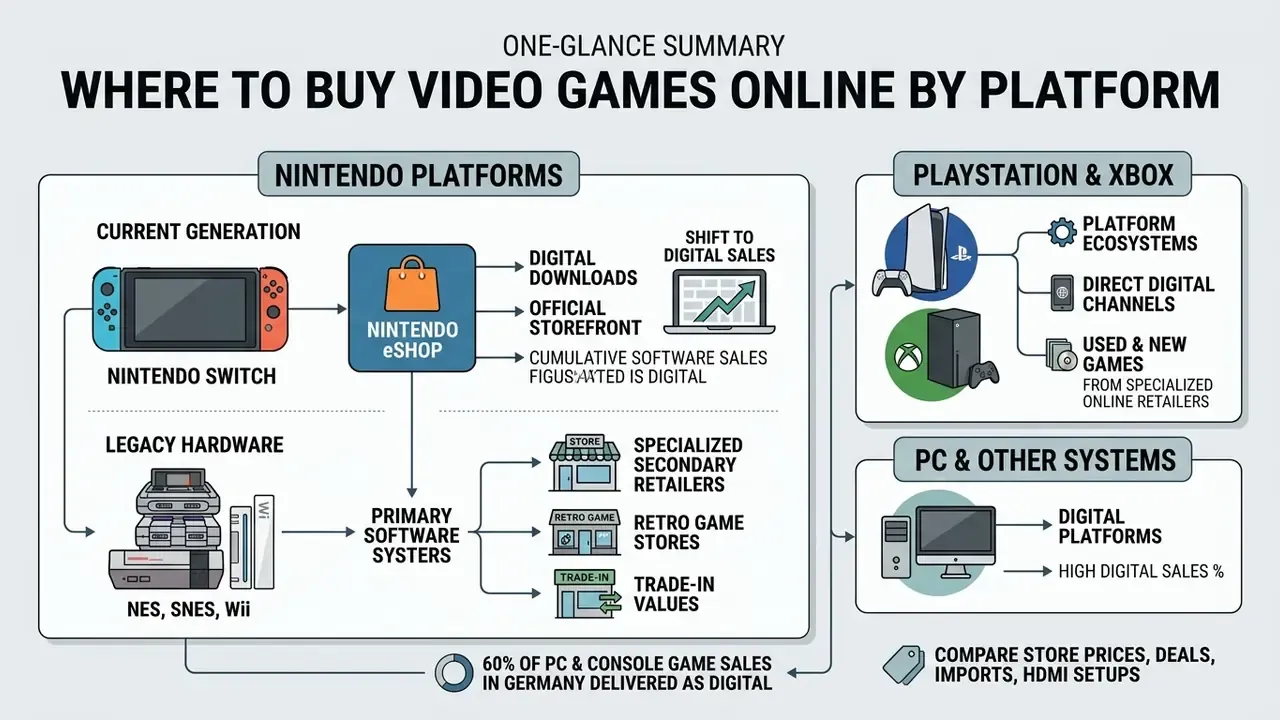
Finding where to buy video games online means aligning platform ecosystems with the right first-party storefront or specialized secondary retailer. Platform holders dominate digital distribution. Pre-owned physical media, by contrast, lives with independent online video game retailers and dedicated marketplaces.
Industry statistics show that 60% of PC and console game sales in Germany were delivered as digital downloads by 2023, while physical boxed unit sales dropped by more than 20% across European markets.
«UK physical video game sales fell 26% in units and 35% in revenue within a single year, according to GfK panel data.»
Current-generation ecosystems lean on direct digital channels; legacy hardware depends on specialized physical resellers. Structurally, Nintendo, Sony and Microsoft each run first-party stores, while Sega distributes through an approved-partner list of third-party and platform storefronts (PlayStation Store, Xbox, Steam, GOG, Nintendo) rather than a single Sega-owned consumer shop.
Nintendo Games and Classic Nintendo Systems
Online inventory for Nintendo platforms runs from digital downloads on the official Switch eShop to secondary-market listings for legacy systems. Demand for classic hardware stays elevated alongside steady physical software sales.
According to Nintendo's official investor-relations disclosures, cumulative Nintendo Switch software sales have passed the 1.3-billion-unit mark, with the platform's latest hardware and software totals published in the company's quarterly earnings releases rather than in third-party estimates.
«Cumulative Nintendo Switch hardware and software unit sales are published in the company's official dedicated video game platform sales data.»
Nintendo's own fiscal reporting shows how deep the digital shift runs: dedicated-platform digital sales reached ¥443.3 billion in the fiscal year ended March 2024, up 9.4% year on year and equal to 50.2% of dedicated-platform software sales. Evergreen blockbusters carry the software line, with Pokémon Sword and Pokémon Shield accumulating 26.27 million units and Pokémon Scarlet and Pokémon Violet exceeding 24.92 million units, per the same official annual report.
For legacy platforms, the NES Nintendo generation, the Super Nintendo, the Nintendo Wii, buyers rely on specialized retro channels that perform physical board authentication and voltage testing. Special edition Nintendo bundles and limited-edition Nintendo variants are where counterfeit boxes appear most often, so treat the box art as a claim, not as evidence. Nintendo publishes a policy and documents hub, but no model-by-model authentication checklist, which leaves cartridge verification to buyer and merchant alike.
PlayStation, Xbox, Sega and Other Game Systems
Buying Used and Retro Video Games Online
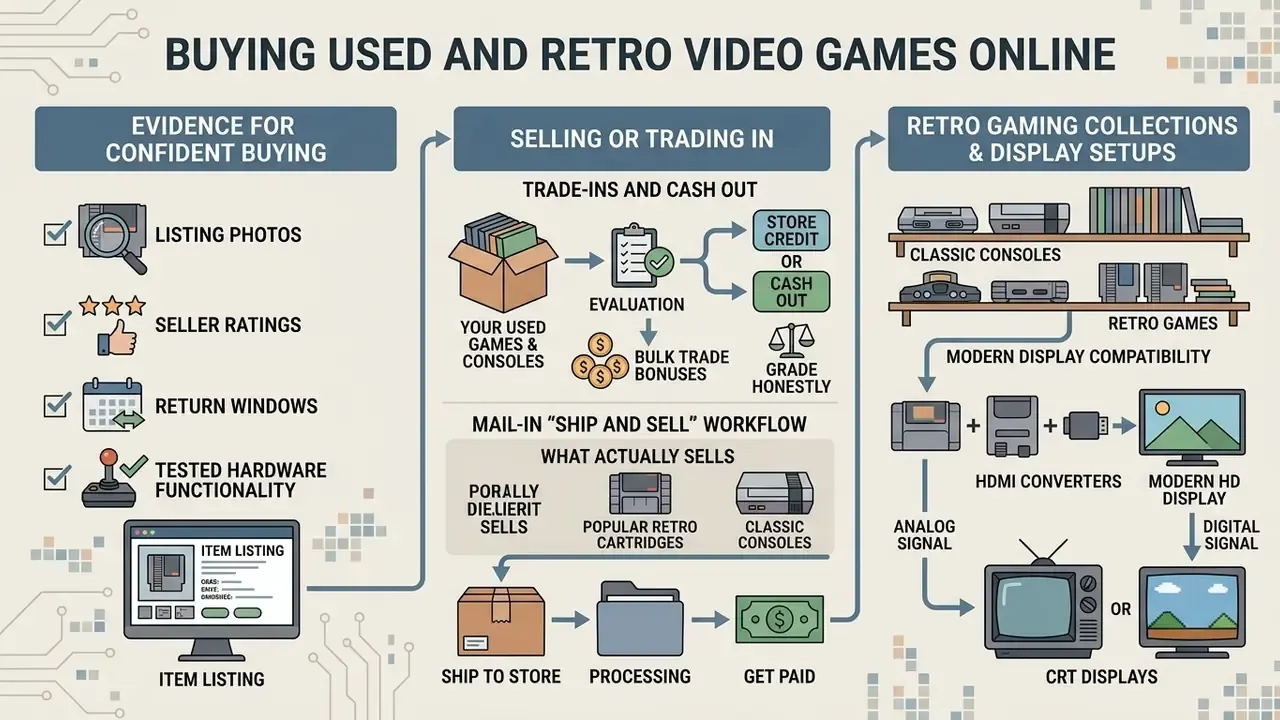
Buying used and retro video games online is an exercise in reading evidence: listing photos, seller ratings, return windows, tested hardware functionality. The global retro gaming market expanded to $3.8 billion in 2025 and is projected to reach $4.18 billion in 2026, which lifts transaction volume and counterfeit risk in the same motion.
«The retro console segment grew 21.8% in 2025, its strongest single-year expansion in recent years.»
«Physical consoles and handhelds account for about 40% of retro gaming revenue, with physical collectibles contributing a further 15%.» — TrendVault Research, Retro Video Games Market 2025–2033 Overview. https://trendvaultresearch.com/retro-video-games-market/
Individual peer-to-peer transactions make up nearly 78.6% of second-hand platform volume, against 21.4% for commercial buyers. Translation: most of the market is strangers selling to strangers, so authenticity checks sit with you.
How to Sell or Trade In Your Used Games and Consoles
Selling into the same market you buy from is the cheapest way to fund the next purchase, and the mechanics are surprisingly standardized across specialist stores.
To maximize return on legacy hardware or software:
- Store credit versus cash out: merchants typically offer 20%–30% higher valuation for store credit than for cash, because credit recycles into their own margin.
- Mail-in "ship and sell" workflow: email or upload an itemized list, secure a written quote, photograph the packed contents before sealing the box, and use tracked shipping so valuation disputes can be resolved against documented condition. Specialist chains run exactly this two-option model: walk-in quote with no appointment, or list-by-email quote followed by paid shipment.
- Bulk trade bonuses: promotions such as "trade 3 AAA titles for 20% extra credit" meaningfully offset the cost of new-generation software. Stack them with clearance windows rather than launch weeks.
- What actually sells: beyond games and consoles, retro specialists actively buy strategy guides, import titles, PC games, trading cards, and even small CRT televisions (13 inches and under). Bundling raises the total quote and cuts per-item shipping cost.
- Grade honestly: sellers who disclose scratches, missing manuals or untested status up front get quoted faster and re-graded less often on arrival.
A quick sanity check before you ship: run your list through a price tracker and compare the store's offer against median sold comps. If the gap exceeds roughly 40%, sell privately instead. Our AI Media Calculators hub applies the same "check the baseline before you commit" habit to other cost decisions.
Classic Consoles, Retro Gaming Collections and Modern Display Setups
Sourcing authentic retro consoles and original media means dealing with classic video game store online USA merchants and global specialists who actually restore legacy hardware. Collectors consistently prefer verified original components over low-cost reproduction units, and resale values reflect that preference.
Established specialists include NOSTOS in Duluth, Georgia (repair, authentication and value guides), Retro Gamer Depot in the US (NES, Super Nintendo and Genesis focus, with in-store testing stations), Retro Revival in Canada (gameplay-based and diagnostic-software testing), Retro Regen in Texas (mail-in console restoration), and Super Potato and Retro Game Camp in Japan. Board repairs, capacitor replacements and live diagnostic testing are the routine work behind those listings.
«Retro console sales rose 32% year over year; 14% of US gamers regularly play pre-2000 titles, and 45% of UK consumers plan to buy a retro device soon.»
Back Market's survey data also records that 71% of respondents report seeking classic hardware from past console generations. That demand keeps refurbishment specialists busy, and, less comfortably, keeps counterfeit sellers profitable.
Modern Display Compatibility: HDMI Converters versus CRT Displays
Connecting analog legacy systems (composite, S-Video, RGB SCART, component) to modern 4K panels introduces input latency and soft, smeared scaling, because TV-internal scalers were never designed for 240p signals.
- Basic HDMI adapters line-doublers such as RAD2X cables and similar plug-in converters output 480p or 720p digital video with effectively zero added lag. Cheapest fix for casual play.
- Advanced upscalers dedicated processors like the OSSC and the RetroTINK line provide integer scaling, scanline filters, aspect-ratio correction and per-console profiles for enthusiast setups.
- Native CRT monitors light-gun peripherals (NES Zapper, Namco GunCon, Sega Menacer) strictly require a native cathode-ray-tube display running at 15kHz. No HDMI converter restores their timing. That is why retro stores still stock and buy 13-inch and smaller CRTs.
- Cabling economics budget for cable and PSU when pricing a console. A "cheap" console without its original power supply, RF/AV cable or region-correct adapter stops being cheap once replacements land in the basket.
How to Find Cheap Video Games Online and Compare Prices
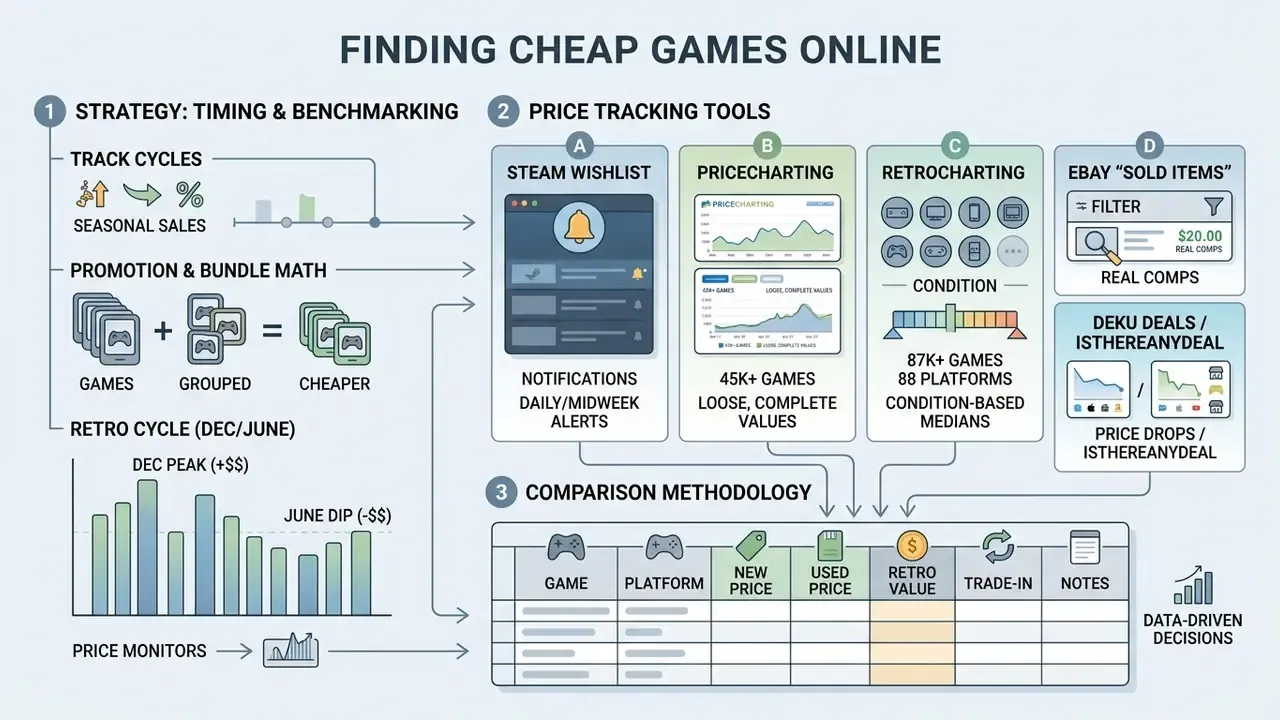
Buying cheap video games online is mostly timing plus benchmarking: track promotional cycles, use digital price monitors, and compare live listings against historical indexes. Watch the market trends and you can buy video games online cheap without gambling on condition.
Retro game sales peak in December and dip in June, which moves prices by a few dollars in both directions. Pre-owned AAA titles fall 40% to 60% below original price within months of launch. Discounted retro stock also tends to go on sale quick and sell out faster than restocks arrive, so a wishlist alert beats a weekly browse.
Price tracking tools worth using:
- Steam Wishlist notifications send email or mobile alerts when wishlisted PC titles enter Daily, Midweek or Weekend Deal windows.
- PriceCharting publishes current and historic values for 45,000+ games, split by loose, complete and brand-new condition. https://www.pricecharting.com/
- RetroCharting tracks 87,000+ games across 88 platforms and reports condition-based medians: roughly $18 for complete PlayStation games and about $30 for complete Nintendo games. https://retrocharting.com/
- eBay "sold items" filters plus Deku Deals or IsThereAnyDeal give real transaction comps and cross-store digital price history instead of asking prices.
Methodology for your own comparison sheet. Use MSRP as the New baseline, median sold comps (not listings) for Used and Retro, and calculate discount as (original price minus sale price) ÷ original price × 100%. Peer-reviewed retro-price research uses the same logic: a repeat-sales study of retro games across ten consoles built standardized indexes from eBay sales data spanning 2014 to 2022. If you prefer worked pricing walkthroughs, the AI Media Pricing Guides hub follows a comparable baseline-and-comp structure.
Worked example: comparing prices of new, used and retro video games online (indicative ranges, verify against live sold comps)
| Game / item | Platform | Original list price (MSRP) | Typical new price | Typical pre-owned price | Retro / collector price | Condition and edition notes |
|---|---|---|---|---|---|---|
| Current-gen AAA release (e.g. a flagship Call of Duty entry) | PS5 / Xbox Series X | $69.99 | $59.99–$69.99 | $29.99–$41.99 | N/A | Standard edition; pre-owned reflects the documented 40–60% used discount |
| The Legend of Zelda: Tears of the Kingdom | Nintendo Switch | $69.99 | $49.99–$59.99 on sale | $35–$45 (cart plus case) | N/A (still in print) | First-party Nintendo titles discount slowly; evergreen demand supports resale value |
| Complete PlayStation-era title (median) | PlayStation 1 | $49.99 (historical) | Out of print | $8–$15 (disc only) | ~$18 CIB median | Check disc surface, matrix ring and manual presence; jewel-case cracks are common |
| Complete Nintendo cartridge title (median) | NES / Super Nintendo / N64 | $49.99–$69.99 (historical) | Out of print | $15–$25 loose | ~$30 CIB median; $100+ for graded or scarce titles | Verify tri-wing screws, PCB text and label print sharpness before paying CIB premiums |
| Sega Genesis Mini (plug-and-play console) | Dedicated retro hardware | $79.99 (launch) | ~$140 new/sealed | ~$65.56 loose | ~$100 CIB | Classic loose / CIB / sealed ladder: completeness drives more than a 2× spread |
| Median online retro transaction (all platforms) | Mixed legacy | Varies | N/A | $28 low band | $44 median, $76 upper band | December peaks and June troughs shift these bands by several dollars |
Promotions and bundle math. During promotional events, prioritize retailer "Buy 2 Get 1 Free" offers on pre-owned inventory under $15 to optimize cost per title. That structure effectively cuts the per-game price by a third, and several specialist stores run it permanently rather than seasonally. Before checkout, verify three footnotes: whether the free item must be the lowest-priced of the three, whether promotional items remain individually exchangeable if defective, and whether the promotion sits outside the store's standard defect guarantee. Bundle offers that void return rights are rarely worth the saving, especially on hardware.
One more caveat, and it applies to every number above. Indicative ranges age quickly. Treat them as a starting hypothesis, then confirm against sold comps on the day you buy.
FAQ About Ordering Video Games Online
Can I order video games online with guaranteed delivery timeframes?
Yes. Federal Trade Commission (FTC) rules in the United States require online video game retailers to ship orders within the promised timeframe, or within 30 days if no delivery date is specified. European Union consumer protection rules mandate full price disclosure, shipping costs included, before payment, alongside a 30-day maximum delivery window.
«Sellers must ship within the time stated, or within 30 days if no time is stated.» — FTC, Mail, Internet, or Telephone Order Merchandise Rule. https://www.ftc.gov/legal-library/browse/rules/mail-internet-or-telephone-order-merchandise-rule Disclaimer: this information is general, reflects rules that change over time, and does not replace advice from a qualified legal or consumer-rights professional in your jurisdiction.
What is the best place to order video games online for used and retro titles?
It depends on whether you value return guarantees or the lowest price. Specialized online used video game stores such as eStarland, DKOldies, Lukie Games and The Video Game Cavern offer 30-to-90-day defect coverage and functional testing. Peer-to-peer marketplaces such as eBay and Mercari provide larger inventory and sharper pricing, but require self-directed authenticity verification, since marketplace authentication programs are category-limited and do not blanket-cover retro games.
What are the standard return policies for physical and digital video game purchases?
EU regulations provide a 14-day right of withdrawal for physical media bought from professional commercial traders, although opened physical media and initiated digital downloads are generally non-refundable. Major North American retailers typically restrict physical returns to unopened items, while digital purchases become non-refundable once downloading begins, unless specific platform defect criteria are met.
«Consumers have 14 calendar days to withdraw from a distance contract concluded with a trader.» — EU Consumer Rights Directive 2011/83/EU. https://eur-lex.europa.eu/legal-content/EN/TXT/?uri=CELEX:32011L0083
How can buyers ensure accessories and consoles ordered online are fully compatible?
Cross-reference hardware revision numbers, region specifications (NTSC-U, PAL, NTSC-J) and connection interfaces listed on the product card. Verifying power supply requirements (100V Japan, 120V North America, 230V Europe), controller protocol compatibility, and optical drive attachments before purchase prevents most post-delivery headaches.
How much will a store pay me for my old games?
Quotes depend on current sell-through, condition and completeness, but two rules hold across merchants: store credit outpaces cash by roughly 20–30%, and boxed, manual-complete items are quoted materially higher than loose media. Get the quote itemized in writing before shipping, and photograph the packed box.
Do I need special equipment to play imported or retro games on a modern TV?
Often, yes. Region-locked platforms need an adapter, boot disc or mod. Japanese hardware needs a step-down transformer. Analog consoles need a line-doubler (RAD2X class) or an upscaler (OSSC, RetroTINK) for a sharp, low-lag picture. Light-gun titles remain CRT-only, with no workaround worth recommending.
More Gaming Guides and Tools
- Retro Console Hardware Repair Guide, covering contact cleaning, recapping and safe testing:
/guides/retro-repair - Video Game Price Tracker, with condition-based loose / CIB / sealed benchmarks:
/tools/price-tracker - Region and Import Compatibility Reference, covering lockout mechanisms, adapters and voltage:
/guides/import-compatibility - Trade-In Value Checklist, covering documentation, packaging and quote-protection steps:
/guides/trade-in-checklist
Related Reference Hubs
- AI Media Support and Troubleshooting for capture, encode and playback issues when recording retro gameplay
- AI Media API Guides for automating price-comp collection and catalog syncs
- AI Media Commercial-Use Hub for licensing questions around gameplay footage and thumbnails
- AI Litigation and Case Timelines for disputes shaping media and IP rights
- Editing utilities: mute video online, plus glossary entries on no filter ai, nsfw ai art, nsfw ai image, nsfw ai photo and the nsfw ai story generator definitions Footer navigation: AI Media Glossary | Terms of Service | Privacy Policy | System Status