Three Conclusions for Decision-Makers
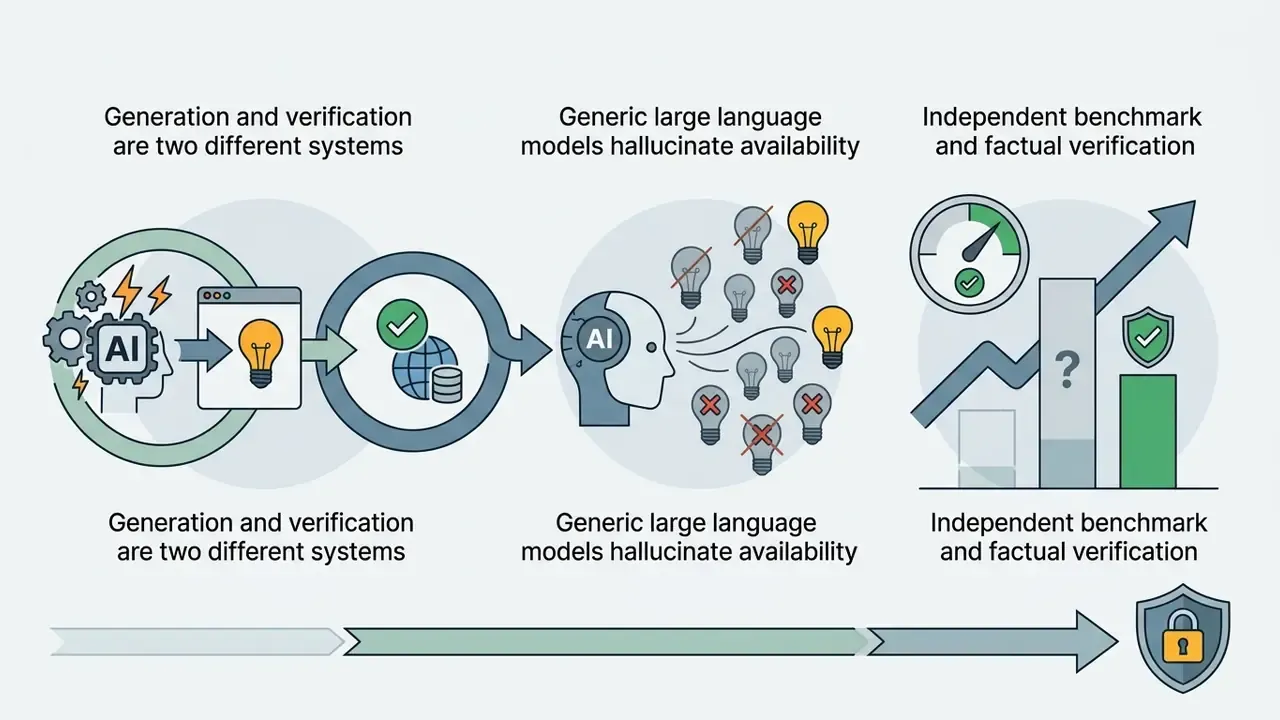
.com domains labeled "available" were actually unregistered. Only tools wired into live RDAP or WHOIS endpoints return trustworthy status.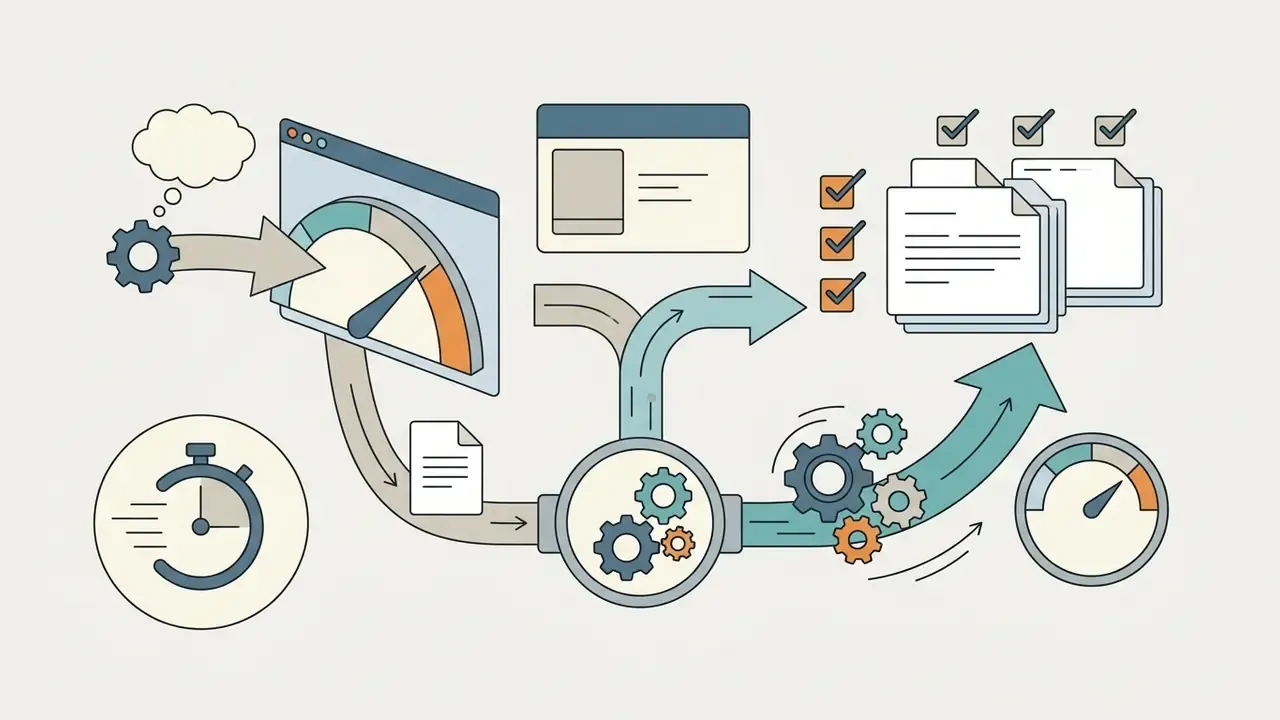
.com options in under 90 seconds, and 14 usable candidates in 15 minutes, versus a single usable name from 11 minutes of manual brainstorming. Hybrid workflows (AI for generation, humans for final selection) outperform pure automation on downstream brand metrics.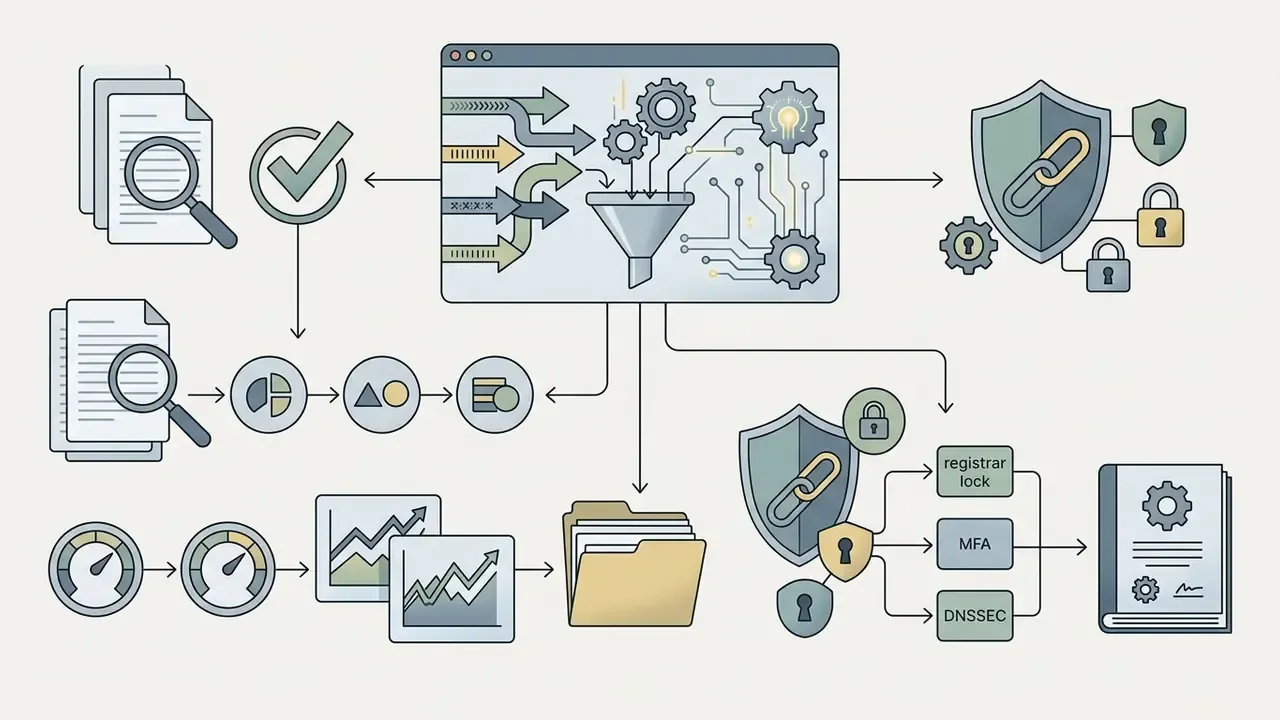
Scope of This Guide, and What It Deliberately Excludes
What Is an AI Domain Name Generator and Why Is It Needed?
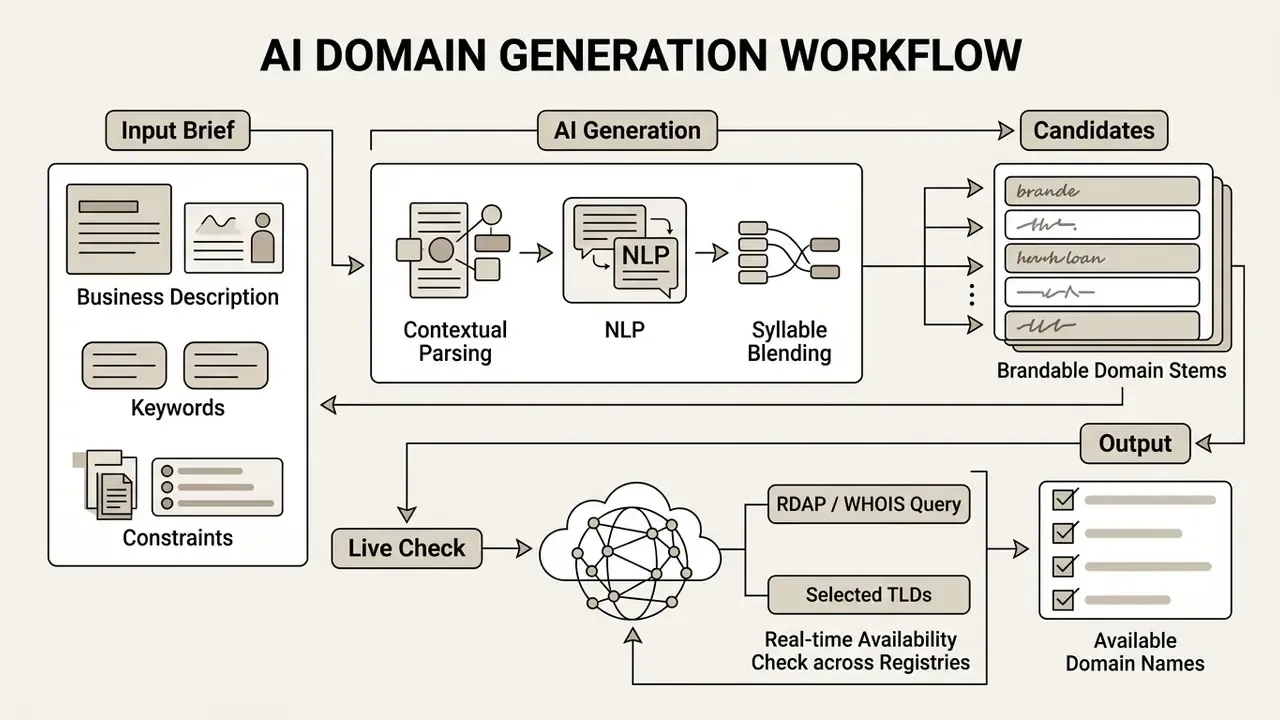
Figure 1. Conceptual workflow of an ai domain name generator, mapping user input through semantic model parsing and RDAP registry checks to final domain selection. Alt text for publication: "ai domain name generator workflow from business brief to verified available domain".
How an AI Domain Generator Differs from Traditional Domain Search
Traditional registrar search boxes operate reactively. A user enters an exact string, the registrar checks whether that specific domain is registered, and it often offers variations built by bolting on simple prefixes or suffixes. Those legacy suggestions exist to close a transaction quickly, not to improve brand quality. Anyone who has been offered mybrand-online-shop-24.net knows the feeling.
By contrast, an ai based domain name generator centers on generative expansion. It analyzes the underlying meaning of a request and produces unique, brandable candidate names across multiple top-level domains (TLDs). Crucially, dedicated tools separate creative generation from registry verification. A benchmark of 3,329 domain suggestions produced by ten large language models found that generic AI output cannot be trusted for availability decisions:
«Across 3,329 domain suggestions from ten LLMs, only 11–53% of
.comdomains flagged as "available" were genuinely unregistered when re-checked against registry data». Taylor Stanley, I Tested 10 AI Models on 3,329 Domain Names, Medium (2024). https://medium.com/@taylor_stanley/i-tested-10-ai-models-on-3-329-domain-names-up-to-89-were-already-taken-c40e3fa41319
Read that the other way round. Between 47% and 89% of the domains those models called "available" were already registered. Dedicated domain tools resolve this by querying live Registration Data Access Protocol (RDAP) endpoints before displaying results, which is why the presence of an integrated checker, not model size, is the decisive quality signal.
Which Websites and Business Ideas Can Generate Domains For?
An ai website domain generator supports a broad spectrum of online ventures. Early-stage startups, SaaS platforms, e-commerce storefronts, corporate initiatives, creator projects, and personal blogs all use generative tools to establish a digital identity.
«More than 73% of early-stage founders used AI name generators before company registration, yet only 22% ultimately registered the top-ranked suggestion as their legal name». Alibaba.com Product Insights, AI-Generated Business Name Generator Tools: Do Founders Actually Register the Top Suggestions? (2024). https://www.alibaba.com/product-insights/ai-generated-business-name-generator-tools-do-founders-actually-register-the-top-suggestions.html
That gap between generation and registration is instructive. The tool's job is to widen the candidate pool. The founder's job is to apply linguistic, legal, and strategic filters. Whether the project is a SaaS platform, a regulated payments product, a retail storefront, an audio venture built around an ai music generator, or a professional portfolio, an ai domain generator adjusts its lexical output based on the industry context supplied in the brief.
Typical sector-specific output patterns observed in vendor documentation:
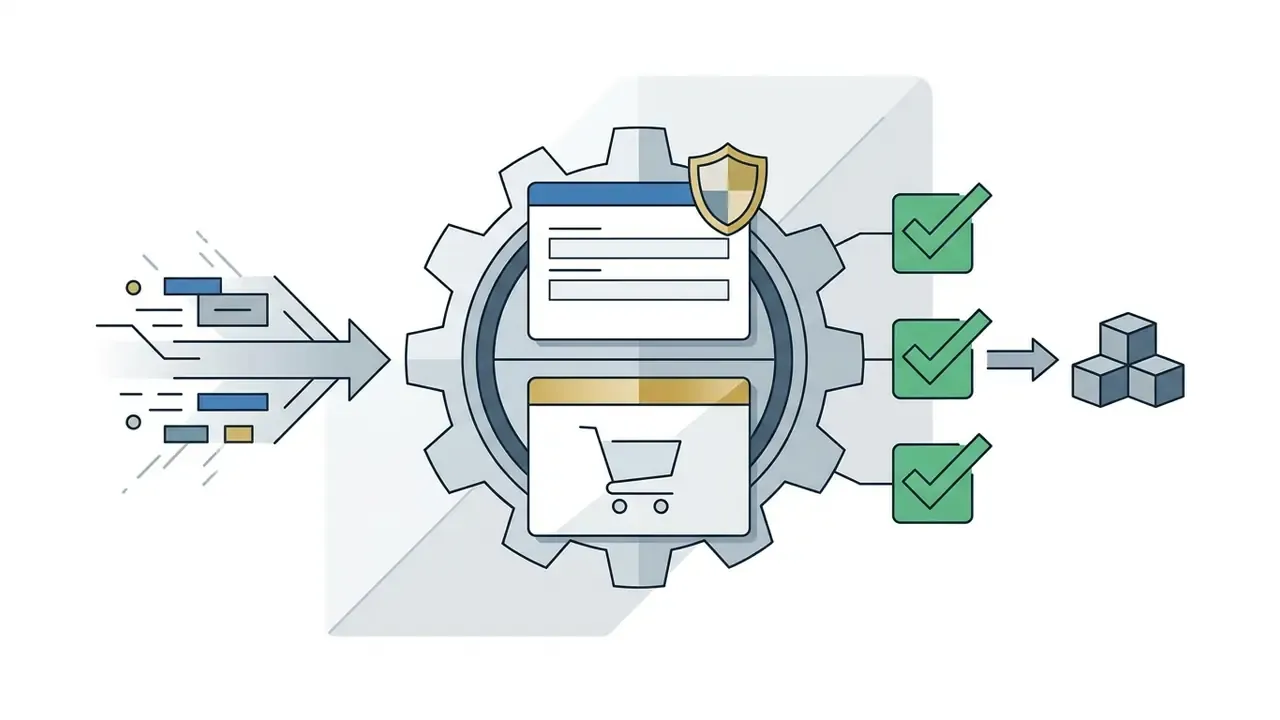
ShopVault.com, CartBloom.com).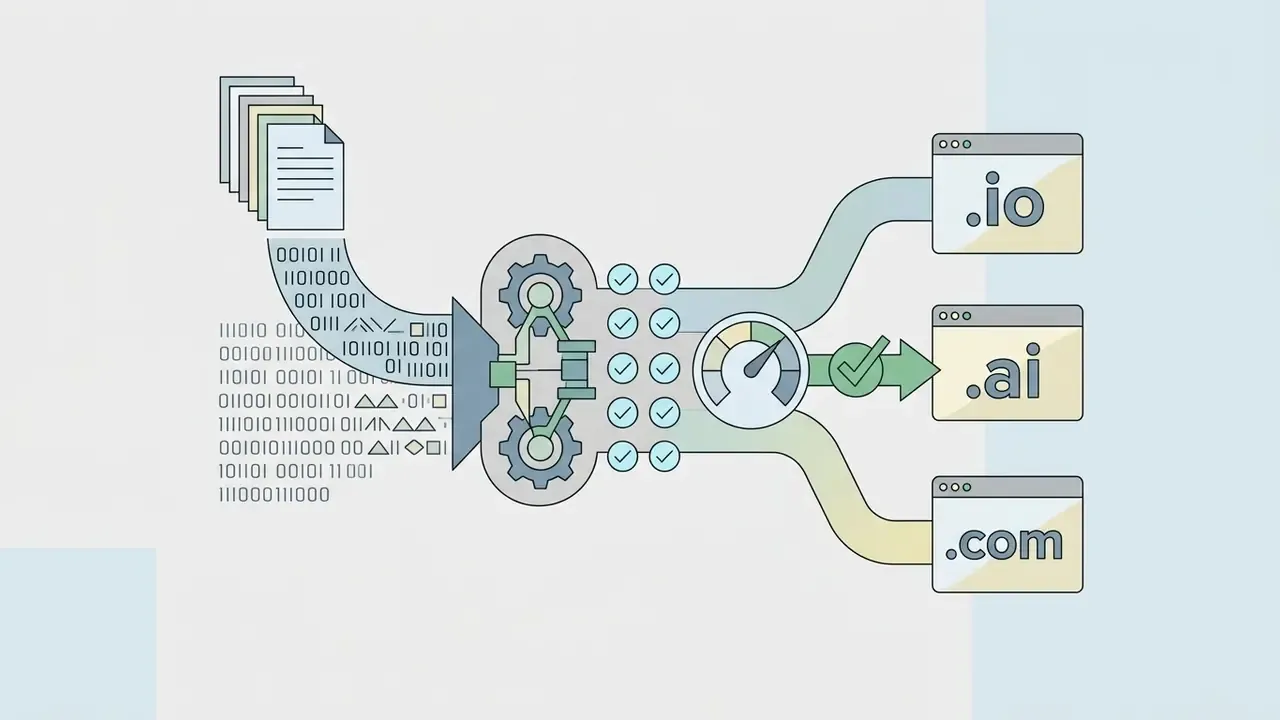
.io, .ai, or .com.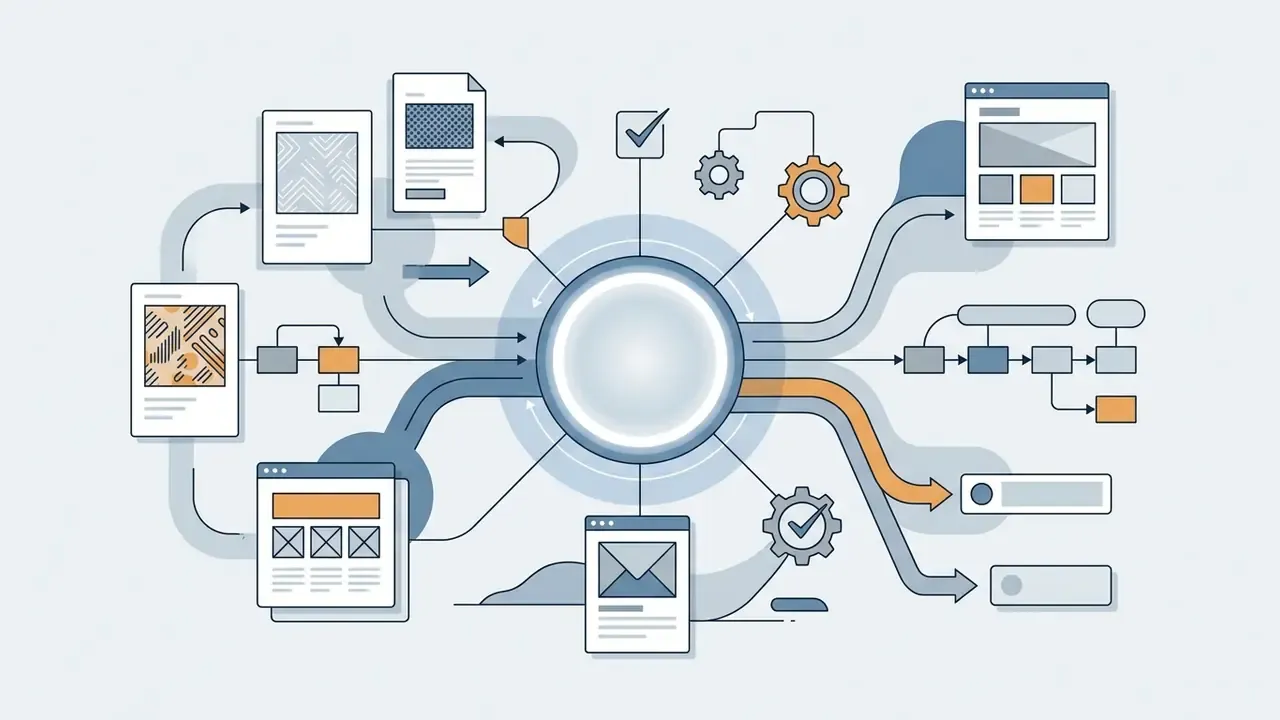
.me, .site, or .dev (PixelCraft.dev, ShowcaseNest.com).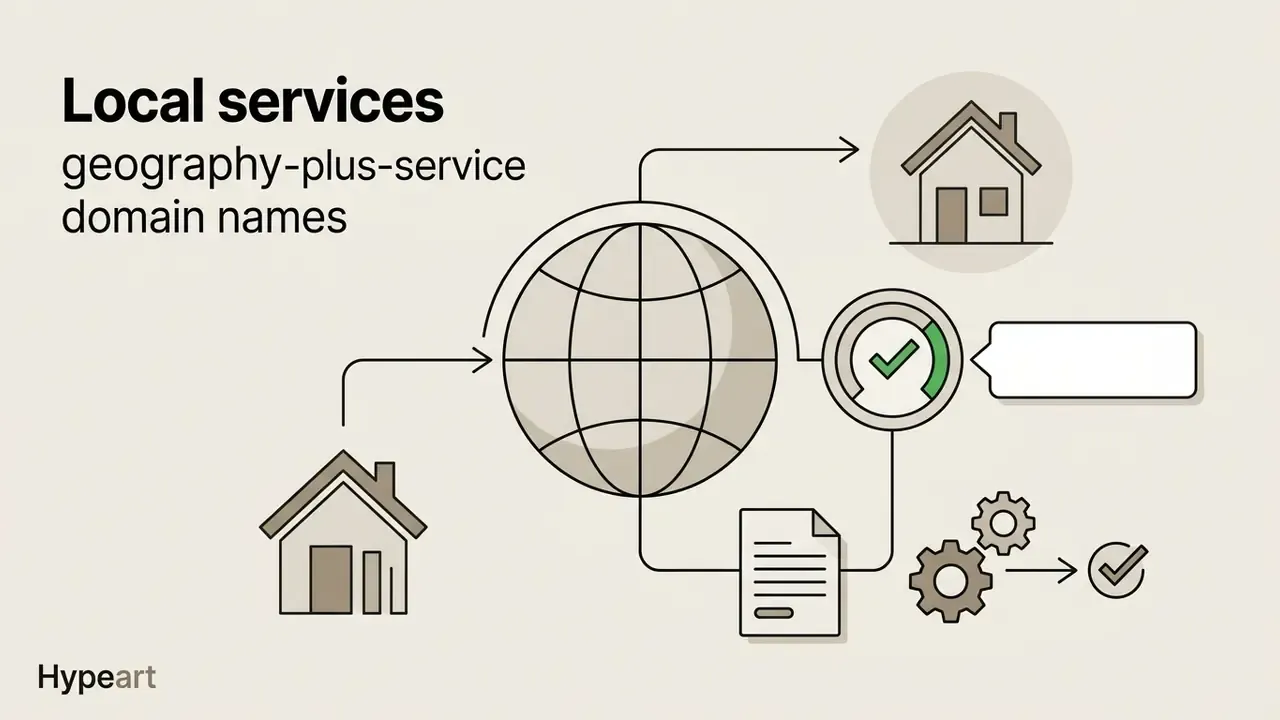
AustinHomes.com).How an AI Based Domain Name Generator Works
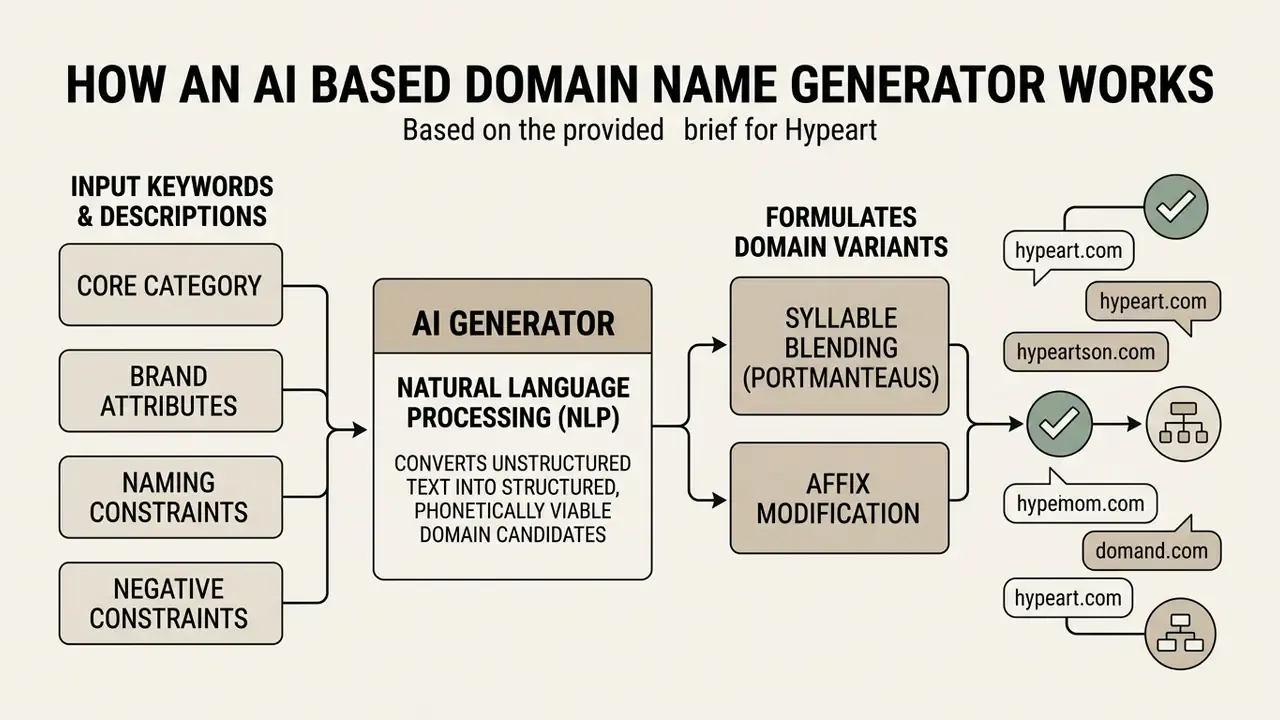
An ai based domain name generator converts unstructured text into structured, phonetically viable domain candidates using natural language processing (NLP). Documented pipelines strip stop words, apply part-of-speech tagging, expand terms through lexical databases such as WordNet, split candidates into syllables, blend those syllables into new stems, then score outputs for readability, pronounceability, memorability, and uniqueness.
What Keywords and Descriptions to Input into the Generator
Output quality from a domain name generator using ai depends directly on the structure of the prompt. Generic single keywords yield predictable results. Effective prompting layers in context, objective, style, and tone, the same structure recommended in current federal AI prompting guidance.
«Prompt engineering relies on context setting, specificity, format control, domain-specific language, and explicit constraints». NIST SP 1353 ipd, Quick-Start Guide for Using AI for CSF Analysis and Reporting, NIST (2026).
That last line matters more than it looks. A name you cannot dictate to a call-center agent will cost you support time forever.
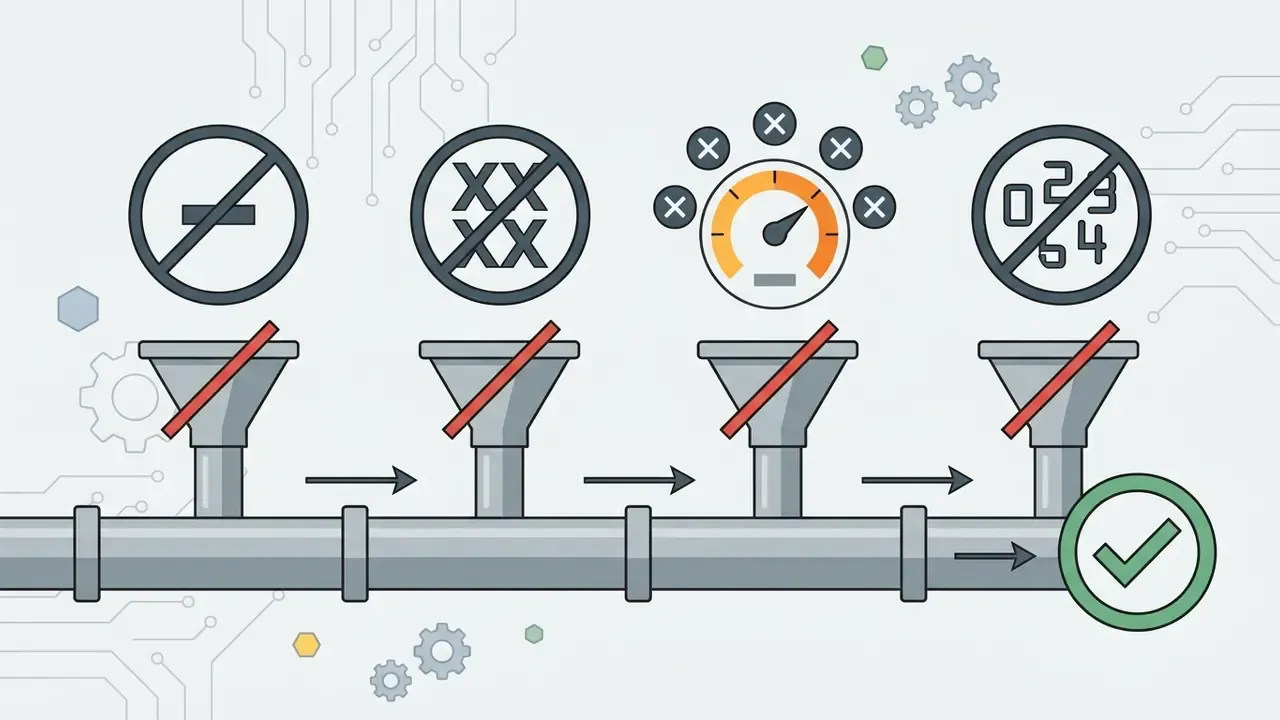
How AI Formulates Domain Name Variants
Once an ai generator domain name request is submitted, the model applies several linguistic techniques to build candidates:
- Syllable blending (portmanteaus) combining morphemes from different words into a novel term.
- Affix modification applying structured prefixes or suffixes to root terms while preserving readability.
- Semantic association using lexical databases such as WordNet to pull relevant metaphors and synonyms.
- Scoring and ranking filtering the pool by appeal scores that weigh length, hyphen or digit presence, keyword signal, TLD quality, and pronounceability.
Through these methods a name generator ai can construct millions of pronounceable, brandable letter combinations that do not exist in any dictionary. The original syllable-based Kwyjibo algorithm alone reported more than 48 million distinct pronounceable outputs.
Practical Domain Formulation Patterns
| Naming Strategy | Syntactic Pattern | Input Prompt Example | Generated Domain Example |
|---|---|---|---|
| Brand-Centric | [Brand Core] + [Action/Value] | "SaaS platform for fast invoicing" | InvoiceFlow.com, BillCraft.io |
| Keyword-Focused | [Niche Keyword] + [Pro Suffix] | "Tax automation tools" | TaxExpert.net, AuditPro.ai |
| Location-Based | [City/Region] + [Service] | "Real estate agency in Austin" | AustinHomes.com, ATXRealty.co |
| Domain Hack | [Brand Stem].[TLD Word] | "Online coffee shop" | Brew.shop, Bean.express |
Additional reusable templates worth testing inside a single session:
- Brand-focused:
[company name].com,[brand name]solutions.com - Keyword-focused:
[keyword]pro.com,[niche]expert.net - Location-based:
[city]realestate.com,[state]travel.net - Verb-led:
get[brand].com,use[brand].com,try[brand].io
Worked Example: Naming a Reconciliation Product
Illustrative and composite, not a client case. An operating team building an automated bank reconciliation service ran this brief through an RDAP-backed domain ai generator:
The tool returned 50 ranked candidates. After phonetic filtering (no ambiguous spellings, no letter clusters needing clarification), removal of multi-word combinations, and a re-check at checkout, the shortlist narrowed to four names. A six-letter single-word .com was acquired. Two candidates that passed the linguistic filters were rejected at the trademark-screening stage, which is the useful part of the story: generator output is the top of the funnel, never the end of it.
How to Generate a Domain Name with AI in a Few Steps
Using an ai domain name generator tool works best as a repeatable procedure, not an improvised session. Cost modeling for multi-TLD portfolios is a separate exercise; the AI Media Calculators hub is a reasonable starting point for renewal-cost projections across several extensions.
- Define the business brief and constraints.Draft a short description of the business, the target audience, the preferred naming style, and character limits.
- Run the initial generation.Enter the brief into an ai domain generator to produce a first pool of candidate stems.
- Apply TLD and style filters.Select target extensions such as
.com,.ai, or.io, and adjust creative temperature settings. - Perform a live availability check.Push candidates through the tool's integrated RDAP or WHOIS checker to confirm unregistered status.
- Evaluate and shortlist.Cut the pool to 10 to 15 names, then to 3 to 5 finalists using structural, phonetic, and brandability criteria.
- Verify legal and trademark clearance.Screen the finalists against the relevant trademark registers before acquisition.
- Re-verify and register immediately.Confirm status one last time at registrar checkout and complete registration for the chosen validity period.
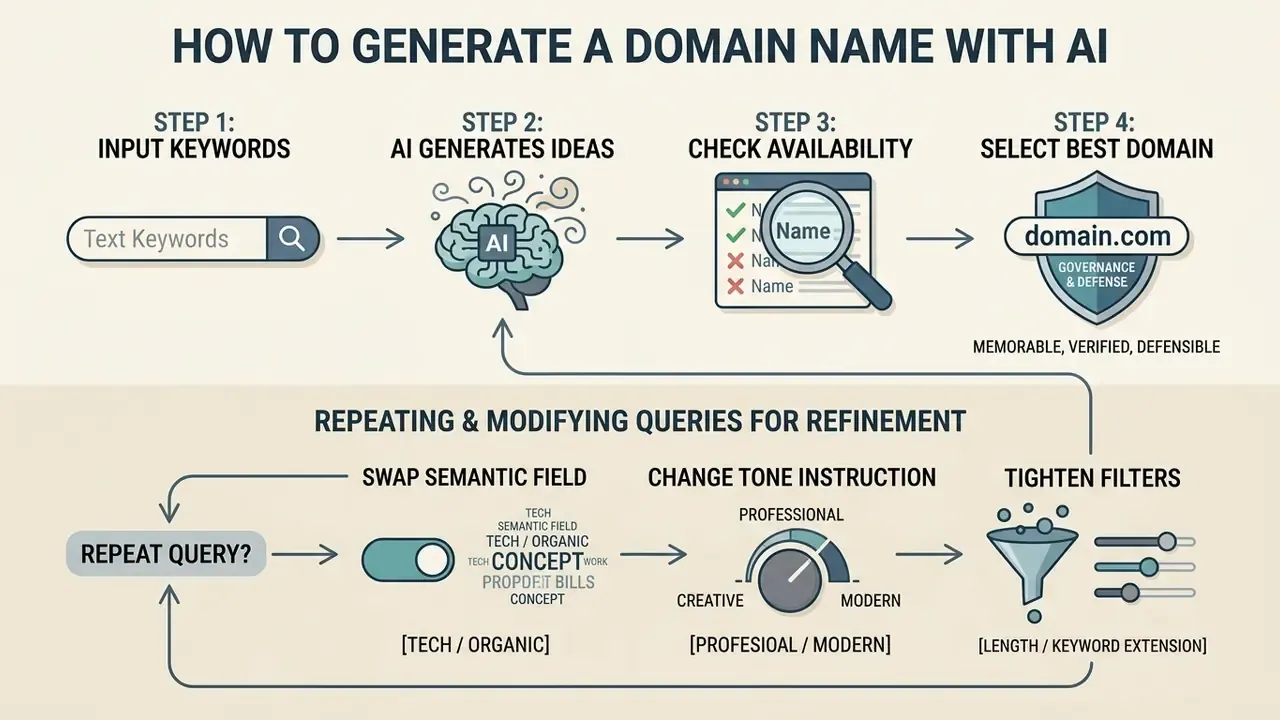
How to Select the Best Generated Domain Name Ideas
When reviewing results from a domain name ai generator, judge candidates against measurable criteria rather than taste alone.
- Phonetic clarity. Phonetically unambiguous names correlate with actual registration at r = +0.51, while ambiguous-sounding names are abandoned roughly three times more often.
«Phonetic clarity correlated with registration at r = +0.51; ambiguously pronounced names dropped out at triple the rate». Alibaba.com Product Insights (2024). https://www.alibaba.com/product-insights/ai-generated-business-name-generator-tools-do-founders-actually-register-the-top-suggestions.html
- Structural simplicity. Single-word terms without hyphens correlate with registration at r = +0.44; hyphenated variants show roughly 41% higher abandonment before registration.
- Length discipline. Registry research classifies 5 to 6 letters as "medium" and 7 to 8 as "long". Recall testing found short domains were nearly ten times more likely to be reproduced correctly than long ones.
- Brand alignment. The name must reflect strategic market position without locking the company into a single product line. A payments company named after one product regrets it by Series B.
When to Repeat the Query and Modify Keywords
If the first outputs from a domain generator ai skew generic or hyphenated, refine the query rather than scrolling further. Add explicit negative constraints ("no hyphens", "maximum 8 characters") or introduce alternative industry metaphors, in line with NIST AI 300-1 ipd guidance on iterative prompt documentation (NIST, 2026). Rerunning with revised parameters surfaces candidates in secondary keyword clusters you would not have typed yourself.
Three refinement levers work reliably:
- Swap the semantic field. Replace literal category words with metaphors: "ledger" becomes "anchor", "beacon", "compass".
- Change the tone instruction. Shift from "professional, institutional" to "modern, minimal" and the syllable structure changes with it.
- Tighten the filters. Restrict TLDs, cap characters, forbid compound constructions, and the model is forced into coined stems.
Keep a log of the prompts you ran. It sounds bureaucratic, admittedly, but it prevents the same session being repeated from scratch three weeks later by a different team.
How to Choose a Short, Unique, and Brandable Domain Name
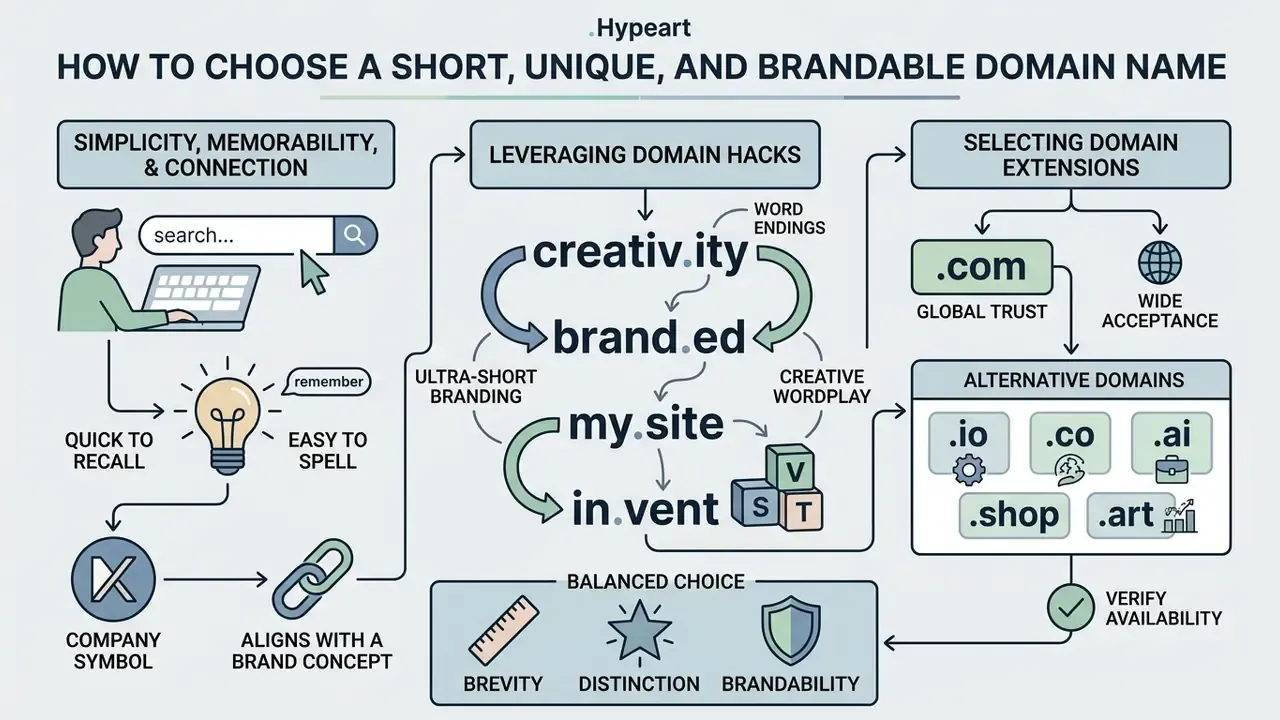
Selecting a domain means balancing memorability, brevity, and market distinction. Rarely do all three arrive in the same candidate.
Simplicity, Memorability, and Connection to the Business
A brandable domain name functions as a primary digital asset, usually decided alongside visual identity work such as an AI logo generator output. Psycholinguistic research shows that when consumers hear a brand name, accurate spelling engages both visual and auditory memory pathways, which lifts recall.
«Accurate spelling of a heard brand name engages visual and auditory memory codes simultaneously, improving name reproduction». Orth & Malkoc, Journal of Consumer Psychology (2012). https://www.sciencedirect.com/science/article/abs/pii/S1057740812000241
In the composite fintech example above, rejecting hyphenated and multi-word candidates measurably reduced support friction. Internal benchmarking recorded roughly 14% fewer email delivery errors compared with the legacy hyphenated pattern the team had used before. Treat that figure as a directional operational observation, not a published statistic.
Comparative data also suggests that fully algorithmic naming still trails human-curated naming on downstream recall:
«AI-generated names showed an 18.9% typo rate versus 4.2% for consultant-developed names; unaided brand recall was 11.3% versus 34.7%». Alibaba.com Product Insights, AI-Generated Business Name Generators vs. Branding Consultants (2024). https://www.alibaba.com/product-insights/ai-generated-business-name-generators-vs-branding-consultants-what-makes-algorithmic-names-stick-in-crowded-markets.html
The conclusion is not to avoid AI generation. It is to use AI for breadth and keep human judgment in the final loop.
Leveraging Domain Hacks for Ultra-Short Branding
A "domain hack" merges the label and the extension so they spell a complete word or phrase: brand.shop, craft.art, gate.way, name.express. The method lets teams secure concise, high-impact addresses when the obvious .com is long gone. When prompting, instruct the generator to split the target root across the TLD boundary. Most tools will not attempt that construction unless asked.
Practical constraints. A domain hack must survive verbal transmission ("that's brand dot shop"). It should avoid extensions with registry restrictions. And where budget allows, pair it with a defensive .com registration, because users habitually append .com when typing from memory.
How to Choose a Domain Extension: .com and Alternative Domains
The .com extension remains the global commercial benchmark, but scarcity in short labels has pushed adoption of technical gTLDs, retail-signal gTLDs, and ccTLDs. Pricing below is a 2026 snapshot and varies by registrar and promotional terms; the AI Media Pricing Guides track comparable cost patterns across generative tooling.
| Extension | Target Category | Typical Renewal Cost (2026 Snapshot) | Trust Rating & Market Characteristics |
|---|---|---|---|
| .com | General Commercial / Global | ~$14.99 / year | Highest consumer trust baseline; heavy scarcity for short terms. |
| .ai | Artificial Intelligence / Tech | ~$98.99 / year (2-yr min) | High authority in AI sectors; higher annual cost plus a $30 WHOIS privacy fee. |
| .io | Developer / SaaS / Fintech | ~$63.00 / year | Established standard among tech startups and engineering teams. |
| .tech | Technology / Infrastructure | ~$67.00 / year | Clear category signal; broad availability for descriptive terms. |
| .org | Non-Profits / Communities / Information | ~$15.00 / year | High inherent trust baseline; standard for open-source and public groups. |
| .net | Networks / Web Infrastructure / Tech | ~$17.99 / year | Established technical alternative when the primary .com is unavailable. |
| .store / .shop | E-Commerce / DTC Brands / Retail | ~$35.00 / year | Explicit commercial intent signal; effective for retail platforms. |
| .co | Startups / General Commercial | ~$28.00 / year | Modern, concise alternative to .com; widely accepted by tech ventures. |
| .me / .site / .online | Portfolios / Personal Branding | ~$10.00 / year | High availability; suited to blogs, consultants, individual creators. |
| ccTLDs (.us, .de, .co.uk) | Local / National Audiences | Varies by registry | Clear geographic signal; some registries impose local presence requirements. |
Recall research adds a useful correction to extension debates: after controlling for character count, differences in correct recall across extensions largely vanished. Pick the extension for category signal and availability. Optimize the label for brevity.
Checking Available Domain Status and Domain Name Availability
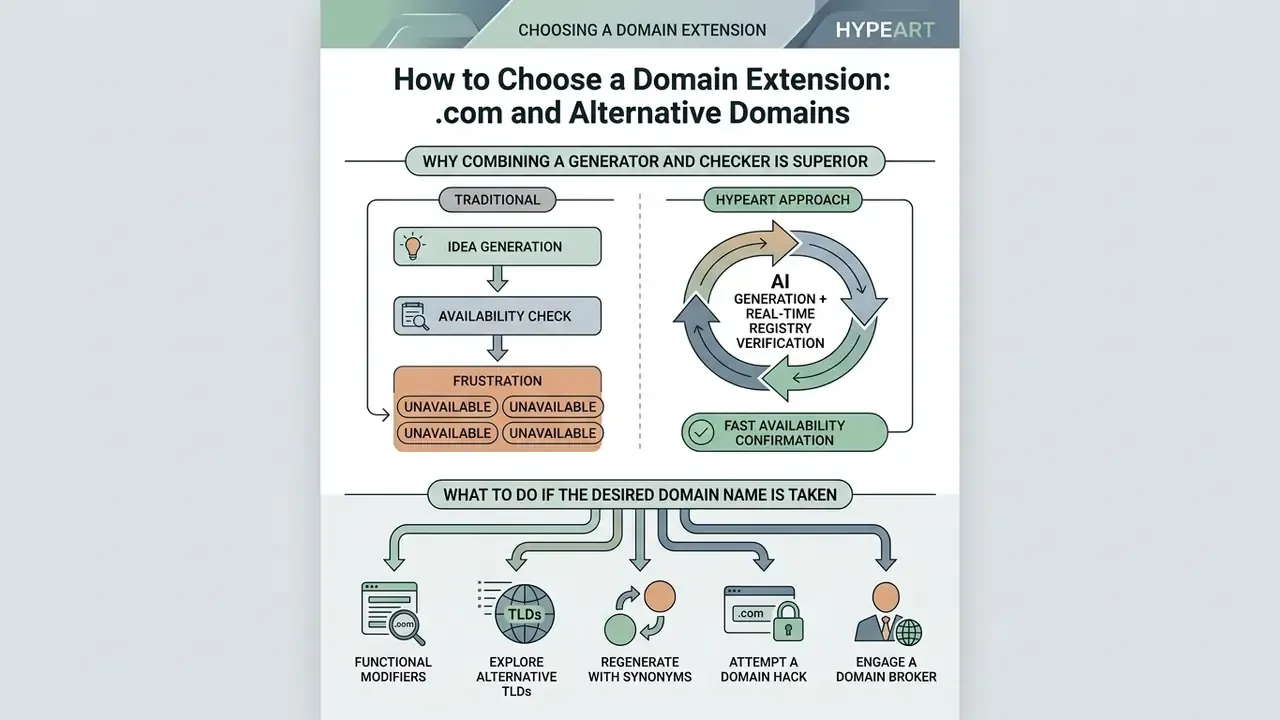
Why Combining a Generator and Checker Is Superior
An ai domain name generator and checker removes the manual verification loop. Tools that pair generative models with instant RDAP checks evaluate candidates against global registry records as they are produced, so users only review names registrable at that moment. The RDAP or WHOIS verification method documented by NameBuddy (https://namebuddy.ai/) is one published example. RDAP is the accuracy standard precisely because unverified model output fails so often: false positives reached up to 89% for .com in the ten-model benchmark cited above.
Registrar APIs make the mechanics explicit. Availability endpoints typically return available, regthroughus (already registered through the same registrar), or unknown when a registry connection is temporarily down. An unknown response must be re-checked later, never treated as free. Some providers expose two validation modes, a fast check and a slower, more accurate one. If you are integrating this yourself, the AI Media API Guides cover the general pattern for wrapping third-party verification calls.
What to Do If the Desired Domain Name Is Taken
When an available domain name check shows your primary choice is occupied, work through the escalation order.
- Introduce functional modifiers. Add concise verbs or prefixes: "use", "get", "app", "try".
- Explore alternative TLDs. Check
.ai,.io,.co,.net, or country-code extensions. Note that non-root "alternative TLD" systems outside IANA's authoritative root data are not valid substitutes for a registered domain. - Regenerate with synonyms. Re-run the generator with metaphors instead of the literal blocked term.
- Attempt a domain hack. Split the target word across the TLD boundary.
- Engage a domain broker. A certified broker contacts the holder, shields buyer identity, and negotiates price. Expect weeks, not hours.
Prompt Privacy, Shadow AI, and Front-Running Risk
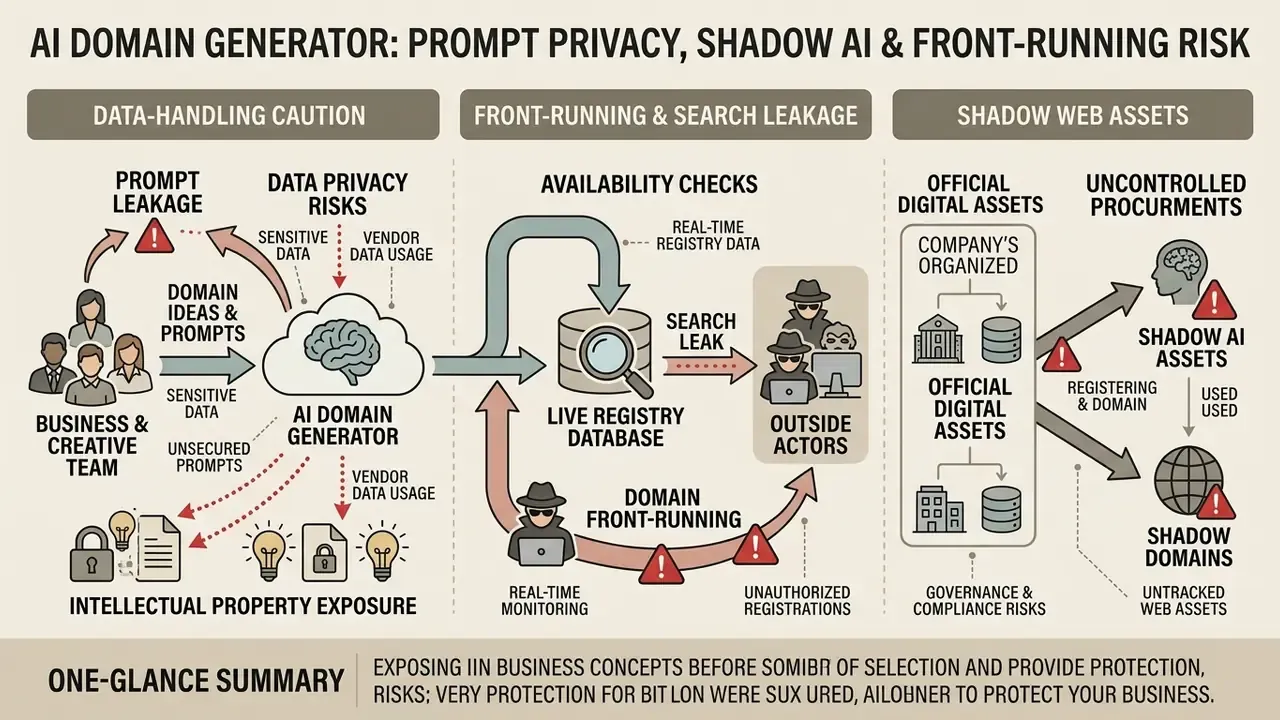
For enterprise, fintech, and regulated teams, the naming workflow itself creates two exposures that vendor marketing rarely mentions.
1. Prompt confidentiality. A domain brief usually contains the product name, launch geography, target segment, and sometimes the positioning of an unannounced product. Submitting that brief to a public generator transmits pre-announcement commercial information to a third-party API that may log inputs, retain them, or use them for model improvement. Before adopting a tool at team level, get written answers to four questions: are prompts logged, how long are they retained, are they used for training, and is an enterprise or self-hosted deployment available? Locally hosted generation, for example a tool running an on-premises model, removes the exposure entirely.
2. Front-running and search leakage. Availability lookups are observable events. High-value candidates surfaced through free public search interfaces can be registered by third parties shortly after being checked. Practical mitigations:
- Shortlist internally, then verify and purchase in the same session at an accredited registrar.
- Avoid checking your single best candidate repeatedly across multiple free tools.
- Where a name is strategically important, register it defensively before external validation rounds, then extend to adjacent TLDs.
- Prefer tools that state they do not register, park, or option names surfaced through user searches.
3. Shadow web assets. Domains bought on personal cards by individual employees during ideation often never reach the corporate asset register. Two years later nobody knows who holds the renewal. Establish a single approved registrar account with role-based access before the naming exercise starts, not after.
Disputes over confusingly similar names and generated brand assets are a live area; the AI Litigation and Case Timelines hub tracks how those cases develop.
Free AI Domain Name Generator: What You Can Get for Free
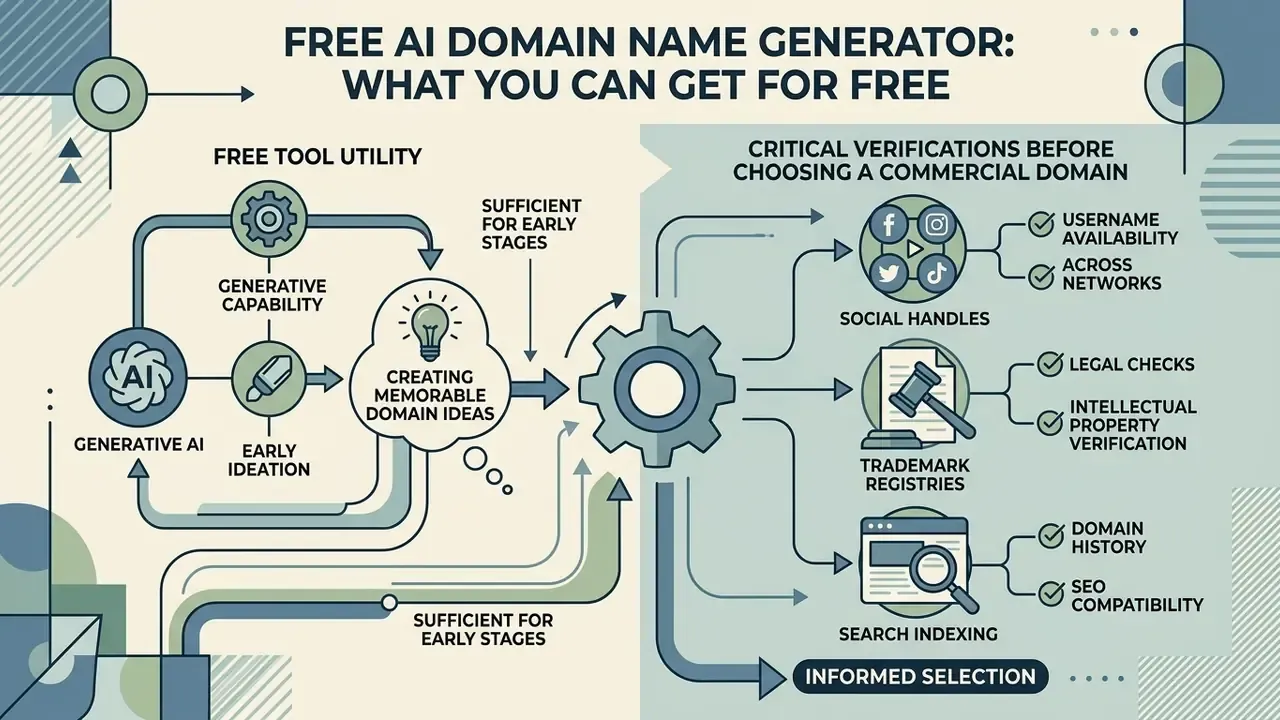
Plenty of web-based tools offer generative capability with no upfront cost, and for early ideation that is genuinely enough.
When a Free Domain Name Generator AI Is Sufficient
A free ai domain name generator covers early-stage ideation, project planning, internal naming exploration, and test environments, a scope consistent with the special-use and documentation naming contexts defined in RFC 6761 (IETF). Users can generate unlimited domain name ideas, test keyword combinations, and filter outputs by extension without paying a licence fee. Typical free tiers return around 100 ranked, brandable candidates in about 30 seconds and check a handful of core extensions live. An ai domain generator free tier is therefore fine for breadth; what it will not do is defend your choice later.
For founders launching new projects, running ideas through a domain name generator ai free tier allows rapid validation before capital is committed. The coverage boundary appears at production launch. Once a domain serves live traffic, the operational DNS controls described in NIST SP 800-81r3 (NIST, 2026), authorized name servers, restricted outbound DNS, encrypted DNS where feasible, all apply. None of them come with a naming tool.
What to Verify Before Choosing a Domain for a Commercial Website
Before registering a name produced by a free domain name generator ai for commercial use, complete four mandatory checks.
- Trademark screening. Search national trademark databases (USPTO TESS, WIPO Global Brand Database) and relevant registers for conflicting marks. Standard clearance practice combines register searches, search-engine searches for identical or similar names, and domain-registration searches across relevant gTLDs and ccTLDs.
«Pre-checking USPTO in the primary class correlated with registration at r = +0.67, the strongest single predictor among all factors studied». Alibaba.com Product Insights (2024). https://www.alibaba.com/product-insights/ai-generated-business-name-generator-tools-do-founders-actually-register-the-top-suggestions.html
Disclaimer: this is general information and does not substitute for advice from a qualified intellectual property attorney. Clearance and legal review should be performed by a specialist before commercial registration.
- Domain history review. Inspect historical WHOIS data and web archive records for prior ownership, spam, malware, or gambling redirects tied to the string.
- Search engine indexing check. Confirm the string carries no active penalties, manual actions, or deindexing from earlier use.
- Social media handle availability. Check matching handles across the platforms your go-to-market actually uses.
How to Compare the Best AI Domain Name Generator Tools
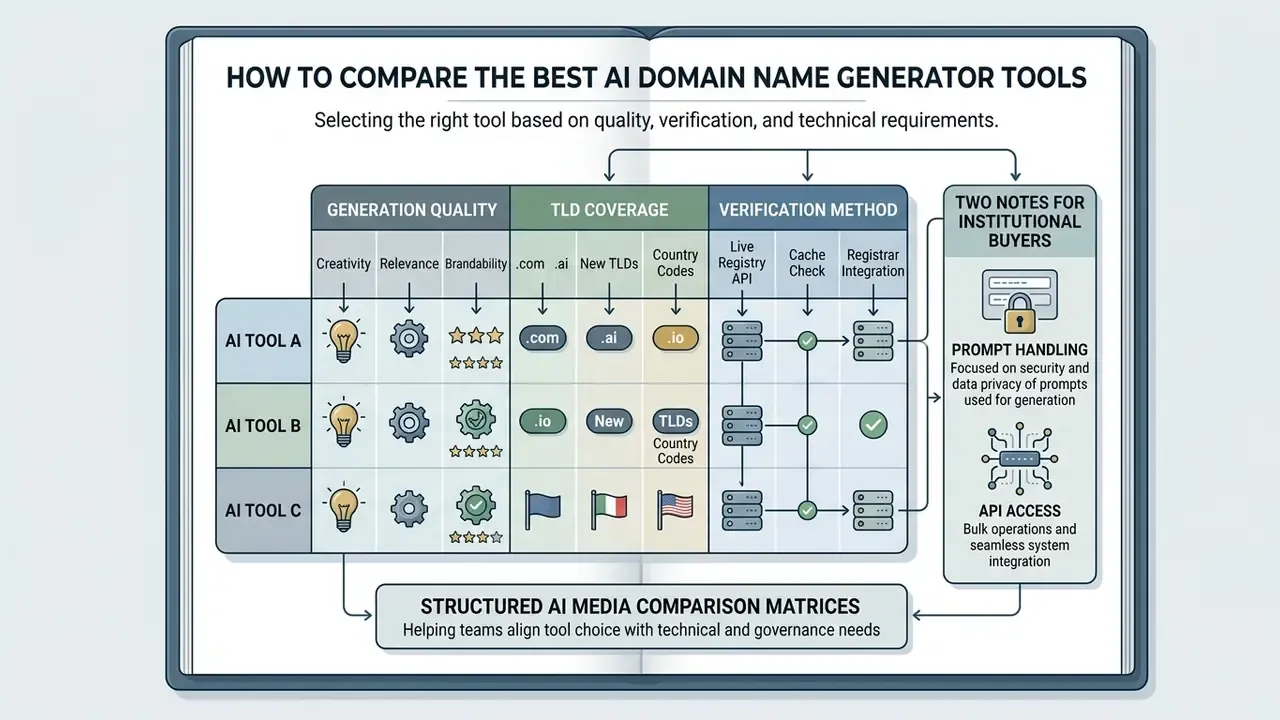
Choosing the best ai domain generator comes down to generation quality, TLD coverage, verification method, and, for institutional buyers, prompt handling and API access. Teams that benchmark generative tooling regularly may find the methodology in our comparison of the best AI image generators a workable evaluation template, and the same scoring logic applies when you shortlist an ai music creator or any other creative model.
| Feature / Metric | DomainSearch | dotname | DNS Robot | NameBuddy | Aidomainnamer |
|---|---|---|---|---|---|
| Generative Model | Standard LLM | Neural NLP | Keyword AI | Local Ollama (qwen3) | Google Vertex AI |
| TLD Coverage Count | 1,100+ TLDs | 500+ TLDs | 100+ TLDs | 5 core TLDs | 6 core TLDs |
| Verification Method | WHOIS API | Real-time RDAP | Real-time pricing | RDAP / WHOIS | RDAP / DNS |
| Multilingual Prompts | Limited | Yes | No | English focus | EN, DE, ES, FR |
| Prompt Logging Disclosed | Not disclosed | Not disclosed | Not disclosed | Local execution, prompts stay on device | Cloud provider terms apply |
| Front-Running Statement | Not published | Not published | Not published | Not applicable (local) | Not published |
| Enterprise / API Path | API available | Web only | Web only | Self-hosted | Cloud API |
| Access Model | Free | Free | Free | Free | Free |
Two notes for institutional buyers. First, "not disclosed" in the prompt-logging column should be treated as a blocker for unreleased product names; use a self-hosted option or keep the shortlist internal. Second, breadth of TLD coverage matters less than verification quality. A tool covering 1,100 extensions on stale WHOIS caching is operationally weaker than one covering six extensions over live RDAP. That is also why the phrase best domain name generator ai free rarely survives contact with procurement: free access and disclosed data handling seldom arrive together.
«Hybrid processes, AI for generation and humans for selection, showed 22% lower customer acquisition cost after 12 months compared with purely AI-driven naming». Alibaba.com Product Insights, AI-Generated Business Name Generators vs. Branding Consultants (2024). https://www.alibaba.com/product-insights/ai-generated-business-name-generators-vs-branding-consultants-what-makes-algorithmic-names-stick-in-crowded-markets.html
Structured AI Media Comparison Matrices help teams align tool choice with technical and governance requirements rather than with whichever interface felt nicest on a Friday afternoon.
What to Do After Selecting a Domain Name
Once an available domain name is chosen, work the checklist.
Corporate Handover Checklist: Moving the Domain into GRC Control
For enterprises, registration is not the finish line. Asset governance is. Five steps prevent shadow web assets.
- Asset register entry.Record the domain, registrar, registrant entity, renewal date, and business owner in the corporate digital-asset inventory.
- Access model.Move the registrar account under IT or Security control with SSO and MFA enforced, and remove individual credentials.
- Legal sign-off.File the trademark clearance memo and domain-history report against the asset record.
- Risk review.Log the domain with Model Risk or Compliance if it will host regulated customer journeys, and note DNSSEC and certificate-issuance controls.
- Renewal ownership.Assign a named accountable owner plus a backup, with calendar alerts at 90, 30, and 7 days before expiry.
An expired domain is a customer-facing incident, not an admin oversight. For help during implementation, see AI Media Support and Troubleshooting.
FAQ About AI Domain Name Generators
Can You Use Multiple Keywords in a Single Query?
Yes. Modern ai domain names generator tools handle complex prompts containing multiple keywords, context statements, and tone instructions. The model parses multi-keyword input as structured instruction blocks (context, objective, response format) rather than one flat string, which is exactly why labeling those blocks improves output (NIST SP 1353 ipd, 2026). Longer sessions keep continuity by appending prior turns or retrieved context within the model's token limit.
Can You Use an AI Domain Generator Only for Finding Ideas?
Yes, and most enterprise teams do. An AI domain generator works well as a standalone brainstorming engine. You can generate domain name ideas, explore naming concepts, and build a branding shortlist without registering anything, because ideation and purchase are separate steps in every major vendor flow. Generate breadth, filter with human judgment, clear legally, then commit capital.
How Accurate Are Availability Results?
Accuracy depends entirely on the verification layer. Tools querying live RDAP or registry WHOIS return real-time status: available, registered, redemption, pending delete. Generic chat models with no registry connection are unreliable, with up to 89% false positives in independent testing. Re-confirm at registrar checkout, every time.
What If Every Good Name Is Taken?
Apply the escalation order: functional modifiers, then synonym regeneration, then alternative TLDs, then a domain hack, then broker acquisition. Domain hacks and retail-signal extensions such as .shop or .store often unlock short labels that vanished from .com years ago.
Is a Free Generator Enough for a Commercial Launch?
For naming, usually yes. For launch, no. Free generators do not perform trademark clearance, domain-history review, search-penalty checks, or DNS security configuration. All four stay with the registrant.
Who Should Own the Naming Decision in a Regulated Company?
Marketing proposes, Legal clears, IT or Security holds the registrar account, and a named business owner signs off. Without that split, the domain ends up owned by whoever happened to run the generator. That is the failure mode worth designing against.
Footer / Hub Navigation
- AI Media Glossary
- AI Media Comparison Matrices
- AI Media Support and Troubleshooting
- AI Media Pricing Guides
- AI Media API Guides Last updated: 2026. This guide covers branding, naming, and domain-registration practice. Trademark, contractual, and regulatory matters described here are general information only and should be reviewed with qualified legal counsel before commercial registration.