If you sit in a risk, compliance or finance seat at a US bank, this question is not academic. It shows up in headcount plans, in model inventories, and in the control costs nobody priced at pilot stage. So let us treat "will AI create more jobs" as a governance question, not a headline.
Executive summary for board and risk committees
- Net direction is positive, but the timing is uneven.The World Economic Forum projects 170 million new roles and 92 million displaced roles by 2030, a net gain of 78 million jobs (+7% employment). The International Labour Organization finds that generative AI's augmentation potential is roughly six times larger than its full-automation potential (3.3% of global employment).
- AI rarely deletes whole occupations; it rewrites task mixes.The near-term displacement signal appears as hiring friction at entry level, not mass termination of experienced staff. Most of the 2022 to 2025 tech layoff cycle reflects pandemic-era over-hiring corrections and interest-rate pressure, not AI substitution.
- Automation funds control functions.Every deployed model creates demand for validation, monitoring, explainability, red-teaming and compliance work. Budget for this as a line item. Unpriced oversight is where AI ROI quietly evaporates.
- Productivity expands demand, and expanded demand expands headcount.The 1980s spreadsheet precedent, McKinsey's $13 trillion GDP projection to 2030, and PwC's 4.8x productivity differential in AI-exposed sectors all point the same way: cheaper analysis unlocks more analysis.
- The binding constraint is skills, not silicon.Roughly 38% of enterprise workers need systematic retraining, and the WEF expects 44% of worker skills to require updating by 2030.
How to read this article
This piece is organised around one decision chain: the evidence, the mechanisms of AI job creation, the roles being created, the roles being rewritten, the structural conditions that decide the outcome, the skills that travel well, and the employer actions that make the difference. Risk and finance leaders will find the control-cost model and the agentic decision-ownership matrix most directly usable. Workforce and talent leaders will get more value from the skills and apprenticeship sections. Every number carries its source, horizon and geography, because mixing forecasts is the fastest way to mislead a board.
Whether artificial intelligence creates more jobs than it eliminates depends on the timeframe, the sector, and the speed of organizational adaptation. Official global economic data indicates that AI is driving a net-positive labor shift over a five-to-ten-year horizon, even as near-term task automation causes localized job displacement and measurable friction in entry-level hiring.
Will AI create more jobs than it eliminates?
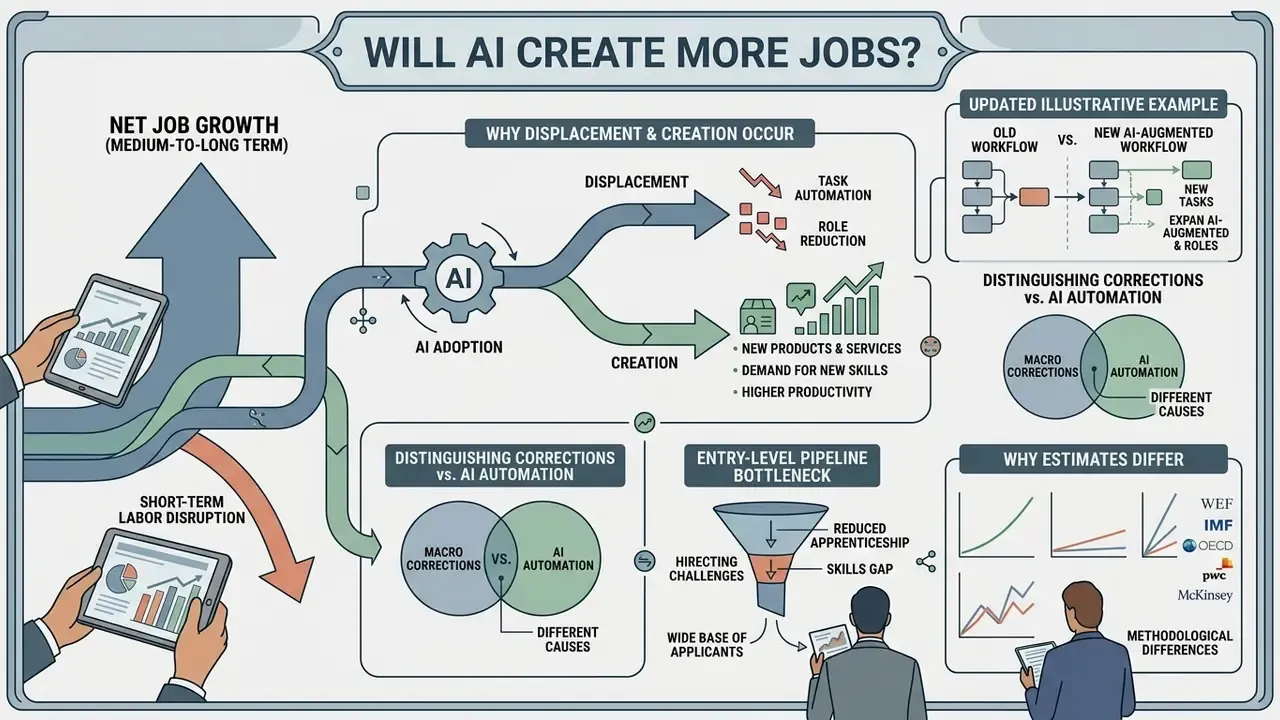
Artificial intelligence is projected to create more jobs than it displaces over the medium-to-long term, though short-term labor market disruption remains significant. The World Economic Forum's Future of Jobs Report 2025 projects that by 2030, AI and related technological advancements will create 170 million new roles globally while displacing 92 million existing jobs, generating a net gain of 78 million positions (a 7% net employment increase). Near-term transition frictions still matter. Job creation and displacement move at different speeds across industries and skill levels, and rarely in the same building at the same time.
«Employers across 55 economies report 170 million new jobs created and 92 million displaced by 2030.»
Disclaimer: Labor-market projections in this article are general in nature and reflect data available at the time of publication. Actual outcomes vary by industry, geography, regulatory regime and adoption pace. This material is informational and does not substitute for professional career, legal, or workforce-strategy advice.
| Scenario | Core Mechanism | Typical Conditions | Illustrative Direction & Examples |
|---|---|---|---|
| Creation of New Roles | AI enables entirely new products, infrastructure, and governance models. | High enterprise AI adoption, robust data infrastructure, growing demand for risk-adjusted governance. | AI prompt engineers, AI ethics officers, data center power technicians, AI compliance leads, forward-deployed AI engineers. |
| Transformation of Existing Jobs | AI automates routine sub-tasks while expanding the requirement for human judgment. | Partial automation of repetitive tasks, high demand for emotional intelligence and decision making. | Customer service agents operating AI assistants, financial analysts using generative models for initial synthesis, HR staff shifting toward coaching and mentoring. |
| Automation & Displacement | AI systems execute the majority of core, rules-based tasks without requiring human intervention. | Predictable, codifiable processes with low requirement for contextual reasoning or empathy. | Standardized data entry, routine clerical work, basic transaction and payment processing, repetitive bookkeeping. |
Read the table as three simultaneous flows rather than three stages. In most large banks, all three run at once: a new model risk role opens on Monday, a credit analyst's task mix changes on Tuesday, and a keying-in task disappears on Wednesday. That is why the net-count question cannot be answered by counting redundancies alone.
Why job creation and job displacement happen at the same time
Job creation and job displacement occur simultaneously because generative AI primarily automates specific tasks within a job rather than eliminating whole occupations at once. According to research from the International Labour Organization (ILO), generative AI has a 3.3% global employment exposure to full automation, whereas its potential for job augmentation is nearly six times larger.
Automation targets codifiable, repetitive tasks, such as standard data entry or routine document screening, while creating immediate demand for complementary roles. As institutions deploy machine learning models, they need new specialists to build, calibrate, test and oversee those systems. The ILO's task-level mapping of nearly 30,000 occupational tasks found that roughly one in four workers sits in a role with some generative-AI exposure. Only a small minority occupy the highest-exposure category, which is precisely why transformation, not wholesale replacement, is the dominant outcome.
Updated illustrative example (composite, anonymized): In a documented mid-sized commercial bank deployment pattern, automating preliminary credit document review reduced routine administrative processing hours by roughly 40%. Headcount did not fall. Instead, the institution expanded its risk management and model validation team by approximately 15% to audit model outputs, manage edge cases, and maintain regulatory compliance under model-risk guidance. This dual dynamic shows how task-level automation directly funds and necessitates specialized job creation. The appendix at the end explains how composite examples are constructed and why they are not attributable to a single named institution.
Distinguishing macro corrections from AI automation
A common misconception attributes the technology-sector workforce reductions of 2022 to 2025 directly to AI substitution. The available evidence does not support that reading. Those adjustments mainly reflected corrections from pandemic-era over-hiring, with inflated growth assumptions fuelled by near-zero interest rates, combined with sectoral slowdowns and pressure on unit economics. Mass displacement cannot credibly be attributed to a technology that most large organizations were still running in pilot mode during that window.
The entry-level pipeline bottleneck
Where AI-driven labor substitution genuinely occurs in the short term, it manifests as hiring friction rather than mass terminations. Organizations retain experienced senior talent while quietly reducing entry-level job postings for roles whose baseline tasks generative AI can already execute. Startups and scale-ups accelerate the pattern. Resource-constrained and free of legacy headcount, they routinely ask whether a smaller team plus an AI stack can deliver what previously required a much larger one.
This shifts the enterprise challenge from redundancy management to pipeline architecture. The traditional apprenticeship model, which assigns routine tasks, builds competence, then promotes, breaks when AI absorbs the routine tier. Institutions therefore need to redesign apprenticeship pathways deliberately, so junior workers still accumulate foundational domain competence while working alongside AI copilots instead of being excluded from the ladder entirely.
A small observation from review meetings: the first sign of a broken pipeline is not a vacancy report. It is a senior reviewer who says, quietly, that nobody junior can spot the error anymore.
Why estimates of how many jobs AI will create differ
Projections regarding how many jobs AI will create vary widely because research institutions use fundamentally different methodologies, time horizons and geographical scopes. Long-term econometric models scale job creation against structural productivity gains. Employer surveys measure immediate hiring expectations over two-to-five-year cycles. Both are legitimate. Neither is interchangeable with the other.
«Generative AI could raise global GDP by about 7% over a decade by accelerating productivity in knowledge-intensive industries.»
Forecast comparison matrix (E-E-A-T)
| Institution & Publication | Published / Horizon / Scope | Headline finding | Methodological limitation |
|---|---|---|---|
| World Economic Forum, Future of Jobs Report 2025 | Jan 2025 · 2025 to 2030 · 55 economies, 1,000+ employers | +170M jobs created, 92M displaced; net +78M; 22% of jobs disrupted; 39% to 44% of skills requiring change | Relies on employer survey expectations and self-reported corporate forecasts |
| Goldman Sachs Economic Research, An AI Job Apocalypse? and updates | Nov 2023, revised 2026 · 10 years · Global and US | About 300M full-time jobs exposed to automation; 6% to 9%+ temporary displacement; roughly 1.5pp annual US labour-productivity uplift | Task-exposure modelling assumes full technical adoption, ignoring regulatory and cost barriers |
| OECD, Employment Outlook and The Geography of Generative AI (2024) | 2024 to 2025 · 38 member countries | Vacancies requiring management, emotional and digital skills in AI-exposed roles grew +8pp; 31.6% of US workers exposed, ranging from 27.6% (Mississippi) to 44.3% (District of Columbia) | Measures skill-vacancy shifts and occupational exposure, not gross job counts |
| International Monetary Fund, Gen-AI: AI and the Future of Work | Jan 2024, plus 2026 discussion note · Global | 40% of global employment exposed to AI; up to 60% in advanced economies; framed as skill-gap realignment | Measures potential task exposure and complementarity, not firm-level headcount decisions |
| PwC, Global AI Jobs Barometer | May 2024, 2026 update · 1B+ job ads, 27 countries | AI-exposed sectors show 4.8x higher labour-productivity growth; AI-skilled roles carry up to a 25% wage premium; a "two-track" labour market emerges | Uses online job-posting data, over-indexing formal, digital and knowledge-worker roles |
| McKinsey Global Institute, AI economic impact simulation | 2018 to 2024 · to 2030 · Global | AI could add $13 trillion in global economic activity by 2030, about +1.2% GDP growth per year | Simulation-based; assumes average adoption and absorption rates that have not yet materialised uniformly |
Methodological divergence explains why headline numbers conflict. Task-based models measure what technology can automate theoretically. Market studies measure what organizations actually hire for under regulatory and budget constraints. Goldman Sachs emphasises exposure; WEF and PwC quantify net creation and skill change. These are different instruments pointed at different parts of the same system, not contradictions.
One practical habit for board packs: never cite a job number without its horizon, geography and unit of analysis on the same slide.
How AI creates new job opportunities
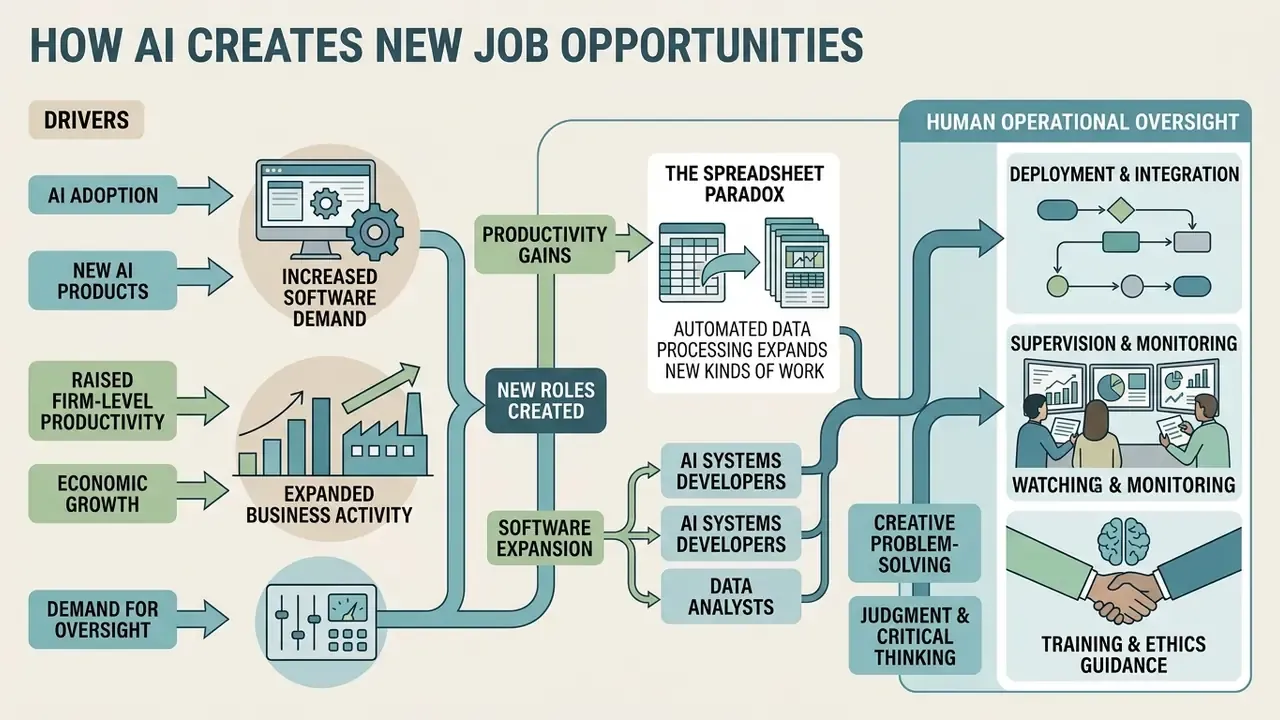
Artificial intelligence creates new job opportunities by driving software expansion, raising firm-level productivity, and demanding human operational oversight. When businesses deploy AI technology, the resulting cost savings and revenue expansion unlock capital for new service lines, which requires additional human teams. Economists typically decompose this into three channels: a productivity and income effect, a capital-accumulation effect, and a task-reinstatement effect through which entirely new work is created around the technology.
New demand created by AI products and AI adoption
The widespread commercial adoption of AI products creates primary demand for software developers, system integrators and infrastructure providers. Beyond core technology vendors, traditional enterprises across financial services, healthcare and retail are establishing specialized internal teams to implement generative AI tools and proprietary machine learning workflows.
Enterprise demand for specialized software engineers and data scientists has expanded across non-tech industries. According to data from the US Bureau of Labor Statistics (BLS), employment for data scientists is projected to grow by 33.5% between 2024 and 2034, while software developers are expected to grow by 15.8%, adding roughly 267,700 positions, driven directly by enterprise AI integration.
«Employment of data scientists is projected to grow 33.5% from 2024 to 2034, much faster than the average for all occupations.»
As companies adopt AI systems, they require specialized talent to connect large language models to enterprise databases, ensure data governance, and maintain business-specific knowledge bases. That integration work spans the full product surface: enterprise search, underwriting copilots, and synthetic media pipelines built on video and AI voice generation platforms. Each layer introduces its own licensing, provenance and QA workload. Even the consumer end of the market generates governed work. Marketing and operations teams now standardise on tools ranging from a free photo editor to a free online video converter, and someone has to own the review policy for each of them.
A useful historical parallel. Before the iPhone launched in 2007, mobile app development barely existed as a profession. The commercial internet produced SEO specialists, social media managers, digital marketing strategists and data scientists, none of which existed at meaningful scale before the late 1990s. The precise shape of AI-native careers in 2035 is as unknowable today as the app economy was in 2005.
Productivity, economic growth and expanded business activity
AI adoption drives labor productivity gains, allowing organizations to expand operational scale and launch new lines of business. Research published by Goldman Sachs Research indicates that generative AI could increase global GDP by 7%, roughly $7 trillion, over a ten-year period by accelerating output and lowering execution costs across knowledge-intensive industries. The McKinsey Global Institute simulation reaches a comparable conclusion from a different direction: AI could deliver approximately $13 trillion in additional global economic activity by 2030, equivalent to about 16% higher cumulative GDP and roughly 1.2% additional GDP growth per year, driven by both labour substitution and product innovation.
The spreadsheet paradox. Historical automation shows that automating a core task frequently expands total sector employment. When spreadsheet software such as Lotus 1-2-3 and Microsoft Excel emerged in the 1980s, commentators predicted the elimination of accounting work. Instead, spreadsheets collapsed the unit cost of financial calculation, and demand for deep financial modelling skyrocketed. Routine bookkeeping roles declined, while overall employment for financial analysts, advisers and corporate strategists expanded dramatically. Generative AI operates under the identical economic dynamic. Lowering the cost of baseline content generation and data synthesis unlocks vast new demand for high-level strategic analysis. The pattern is already visible in inference economics: as per-token model costs fall, usage expands faster than headcount contracts.
Updated illustrative example (composite, anonymized): A regional financial services provider integrated AI-driven document analysis into its commercial loan processing workflow. By reducing preliminary document review time by approximately 65%, the firm lowered unit processing costs. Rather than reducing total headcount, the institution reallocated staff to launch a custom advisory service for small business clients, ultimately increasing total department headcount by roughly 12% to manage expanded customer relationships. Firm-level academic evidence supports the mechanism. A 2024 study of 4,184 AI-patenting firms found a positive and statistically significant employment effect from AI patent families, concentrated in service sectors and younger firms. That is consistent with product innovation creating new jobs rather than merely displacing old ones.
Human work required to deploy and supervise AI systems
Deploying agentic AI systems safely in regulated environments requires continuous human-in-the-loop (HITL) and human-on-the-loop (HOTL) control structures. Regulatory guidelines, including the NIST AI Risk Management Framework, expect automated systems to maintain human oversight for high-risk decisions, ensuring accountability and auditability.
«Processes for human oversight must be defined, assessed and documented in line with organizational policy, with TEVV used for validation and monitoring.»
"Autonomous AI agents must operate under strict risk tiering and clear escalation boundaries. No mission-critical financial decision should execute without an audit trail that links model recommendations directly to an accountable human supervisor." Marcus Hale, author
Human oversight roles are expanding in model validation, output verification and system monitoring. Organizations hire specialists to review edge cases, evaluate hallucination rates, and audit decisions made by AI-driven automated workflows before execution. Worth noting: regulators do not agree on the intensity of that oversight. NIST draft guidance emphasises mandatory approval gates before models reach production, while European Commission guidance explicitly treats full human-in-the-loop review as one option among several oversight modes, and notes that intervening in every decision cycle is often neither possible nor desirable. Enterprises therefore need a documented risk-tiering rationale, not a blanket policy.
Risk-adjusted ROI: pricing the cost of control
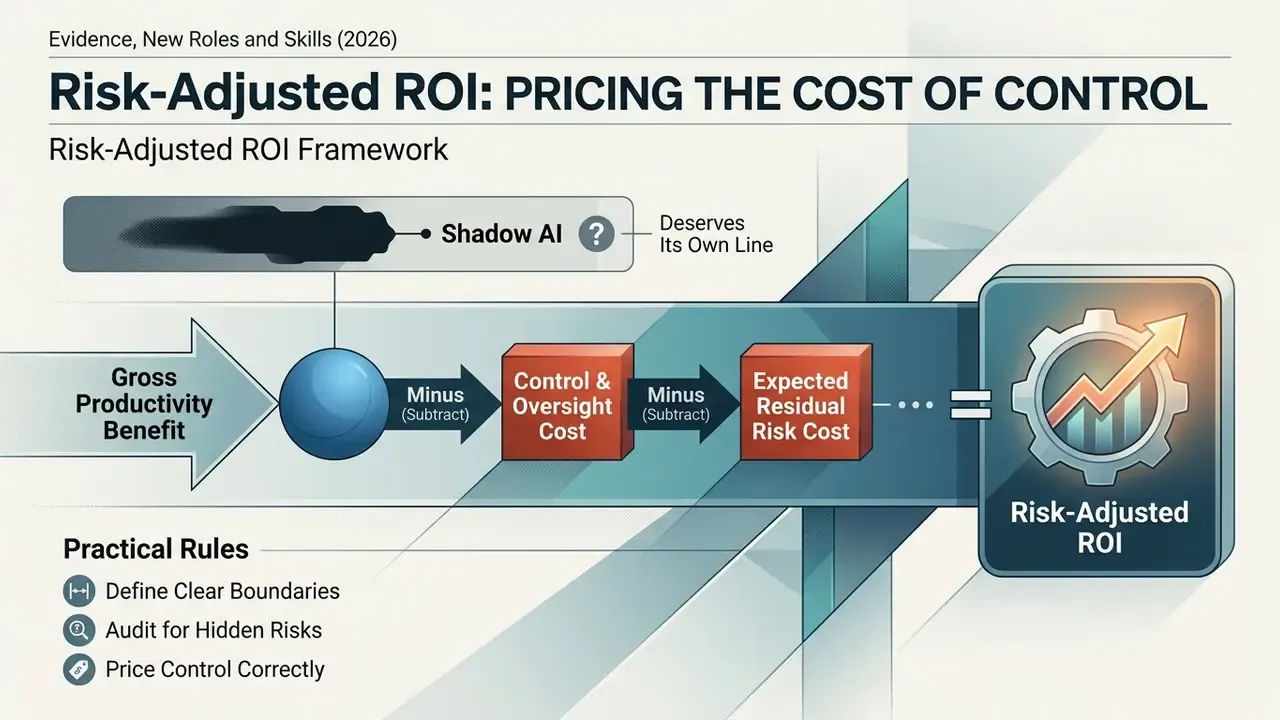
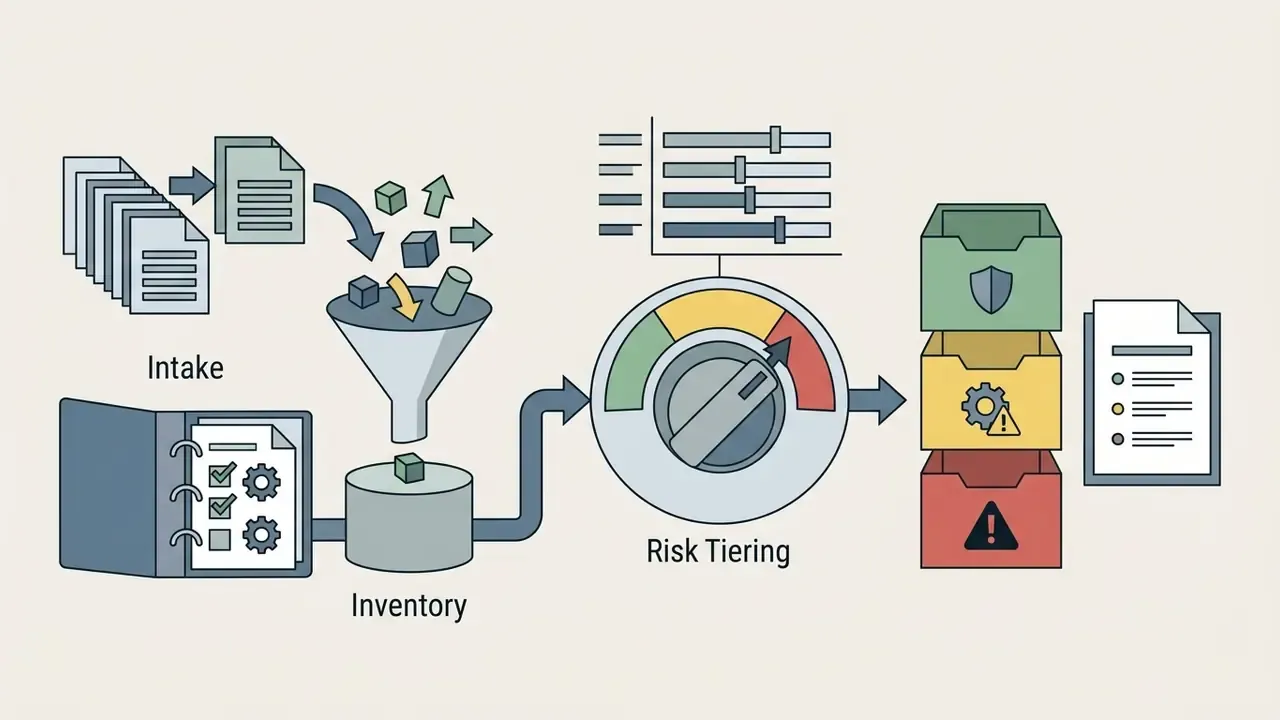
Most AI business cases fail audit review for the same reason. They model efficiency gains but not the cost of the controls that make those gains permissible. A defensible calculation treats oversight as an operating input rather than an overhead surprise.
Risk-Adjusted ROI framework
Risk-Adjusted ROI = ( Gross productivity benefit
                      − Control & oversight cost
                      − Expected residual risk cost
                      − Enablement cost )
                    ÷ Total AI programme cost
| Cost component | What it includes | Typical owner | Why it is usually understated |
|---|---|---|---|
| Control & oversight cost | HITL and HOTL reviewer time, model validation, independent challenge, red-teaming, monitoring dashboards | Model Risk / Second Line | Reviewer minutes per transaction are rarely metered at pilot stage |
| Expected residual risk cost | Hallucination remediation, prompt-injection and data-poisoning incidents, biased-outcome remediation, regulatory findings | CRO / CCO | Modelled as zero because pilots run on low-stakes use cases |
| Enablement cost | Upskilling curricula, prompt and data literacy training, apprenticeship redesign for junior staff | HR / L&D | Booked as training budget rather than programme cost |
| Shadow-AI cost | Ungoverned tool usage, data leakage, duplicate licensing, unreviewed outputs entering client deliverables | CIO / CISO | Invisible by definition until an incident surfaces |
| Gross productivity benefit | Cycle-time reduction, throughput gain, revenue from new service lines | Business unit | Often the only quantity actually measured |
Three practical rules follow. First, meter oversight per unit of output, so reviewer minutes per document, per claim, per credit file. That is the only figure that scales honestly. Second, price residual risk through scenario analysis, including at least one hallucination event reaching a client and one prompt-injection attempt against a production agent. Third, treat validation staffing as a revenue-enabling function. In the composite bank example above, the 15% expansion of model validation capacity is what made the 40% efficiency gain usable in a supervised environment.
Shadow AI deserves its own line. When policy is silent, staff default to whatever is free and fast, from a browser-based transcription tool to a free nsfw ai generator someone found in a forum, and the first evidence often arrives as a client complaint. Inventory beats prohibition. To model integration costs, licence economics and workforce ROI scenarios, use our interactive AI Media Calculators and the accompanying AI Media Pricing Guides.
New AI jobs and roles companies are creating
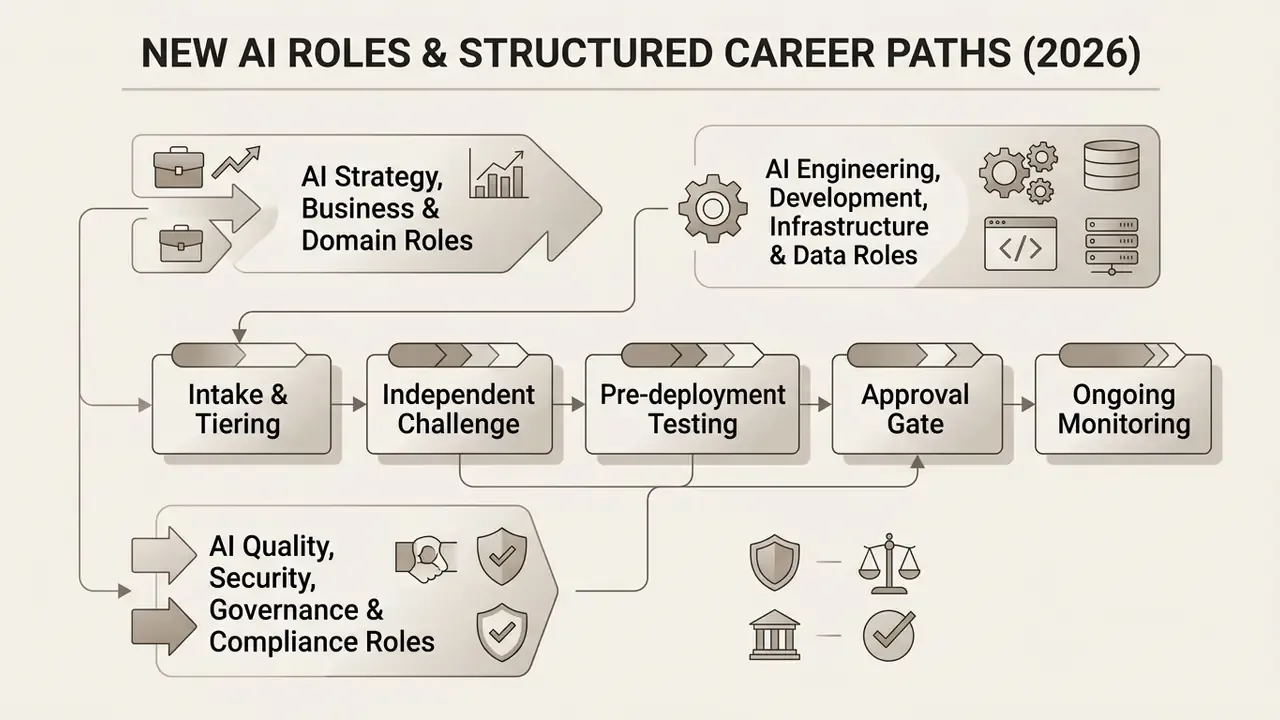
Organizations are establishing structured career paths dedicated to AI development, enterprise architecture, security and ethical governance. These roles span executive strategy down to specialized technical execution across various industries. Jobs and Skills Australia's Emerging Roles analysis identified 37 emerging occupations including AI Engineer. UK government skills guidance now separates AI Experts, AI Specialists and AI Implementers as distinct labour-market groups. Microsoft's 2024 work-trend research found 12% of recruiters already creating roles tied specifically to generative AI.
Enterprise AI job creation framework
| Layer | Representative roles | Primary accountability |
|---|---|---|
| Business & Strategy | Chief AI Officer, AI product managers, heads of AI, domain AI specialists | Use-case selection, value realization, board-level reporting |
| Engineering & Development | AI engineers, ML specialists, prompt and context engineers, forward-deployed engineers | Model integration, agentic workflow construction |
| Infrastructure & Data | Data engineers, cloud and AI platform engineers, data center technicians, electricians, facilities managers | Compute, power, pipelines, data architecture |
| Quality & Security | AI security managers, model validation leads, AI testers, red teamers, human-in-the-loop validators | Hallucination detection, adversarial testing, output verification |
| Governance & Compliance | AI compliance managers, AI ethics officers, explainability experts, audit leads | Regulatory conformance, documentation, reproducible audit evidence |
Note what the framework implies for hiring plans. Software engineers are one layer of five. Institutions that budget only for engineering discover the missing layers during the first examination cycle.
AI strategy, business and domain-specific AI roles
At executive level, organizations are establishing C-suite authority to manage AI integration and model risk. The position of Chief AI Officer (CAIO) has emerged across US healthcare systems, banks and multinational corporations to unify technology procurement, regulatory compliance and business unit strategy. Public-sector policy has formalised the role. US OMB memorandum M-24-10 assigns CAIOs responsibility for agency AI coordination, innovation, risk management, the annual AI use-case inventory, and an agency AI strategy. Japan's AI Safety Institute CAIO manuals define the role as a senior executive integrating strategy, governance, risk, talent development and procurement, typically reporting to the CEO.
Domain-specific AI roles bridge the gap between technical machine learning capability and line-of-business execution. AI product managers lead the development of specialized domain applications, owning product strategy, evaluation-driven development, agentic workflows and business-outcome economics. Industry specialists evaluate how generative models can be safely integrated into clinical diagnostics, legal research or credit underwriting. These professionals keep AI adoption aligned with industry-specific operational standards and regulatory compliance requirements. "Head of AI" is now among the fastest-growing titles on major professional networks across developed economies, which signals that AI strategy has become a board-level rather than departmental concern.
AI engineering, development, infrastructure and data roles
Technical demand remains heavily focused on AI engineers, machine learning specialists and data infrastructure professionals. According to the Stanford University Human-Centered AI (HAI) Index, machine learning skills remain among the most sought-after technical qualifications across global job postings, and have ranked as the single most demanded AI skill in the US labour market since 2010. European job-ad analysis reinforces the concentration: AI and ML engineering appeared in almost one-third of AI-related postings, while data analysis, data engineering and AI/ML development together accounted for 98% of AI role descriptions.
Volume data confirms the scale of creation. LinkedIn's Economic Graph tracked approximately 1.3 million new AI-related jobs globally in just two years, with prompt engineers and forward-deployed engineers among the fastest-growing titles. Critically, over 600,000 net new positions were documented in the AI infrastructure layer alone in a single year, extending well beyond software engineers to electricians, facilities managers, data-centre technicians and network operations specialists.
«LinkedIn documented over 600,000 net new infrastructure jobs in a single year and 1.3 million new AI-related roles in two years.»
The physical buildout of AI capabilities has also catalyzed an infrastructure hiring boom. Operating large-scale AI models requires expanded data center capacity, high-performance computing clusters and substantial power infrastructure. That same constraint shapes developer economics for high-compute workloads such as video generation APIs, where cost per second of output tracks available compute. Data center operators face persistent talent shortages. The Uptime Institute's Global Data Center Survey reported that 51% of data center facility operators struggled to find qualified candidates, with electrical labour ranking as the second-highest skill-shortage concern, driving sharp wage increases for electrical engineers, network architects and facility maintenance technicians.
Hard hats, not just headsets. That is the part most AI job forecasts still underweight.
AI quality, security, governance and compliance roles
To protect against data leaks, algorithmic bias and compliance violations, enterprises are creating specialized risk and security positions. AI Security Managers focus on protecting model pipelines against prompt injection, data poisoning and unauthorized access to proprietary data sets, working within baseline frameworks such as the UK AI Cyber Security Code of Practice.
Demand for AI Compliance Managers and AI Ethics Specialists is accelerating in parallel. According to PwC's Global AI Jobs Barometer, job postings requiring AI skills have grown roughly 3.5 times faster than all other postings since 2016, and carry a wage premium of up to 25%.
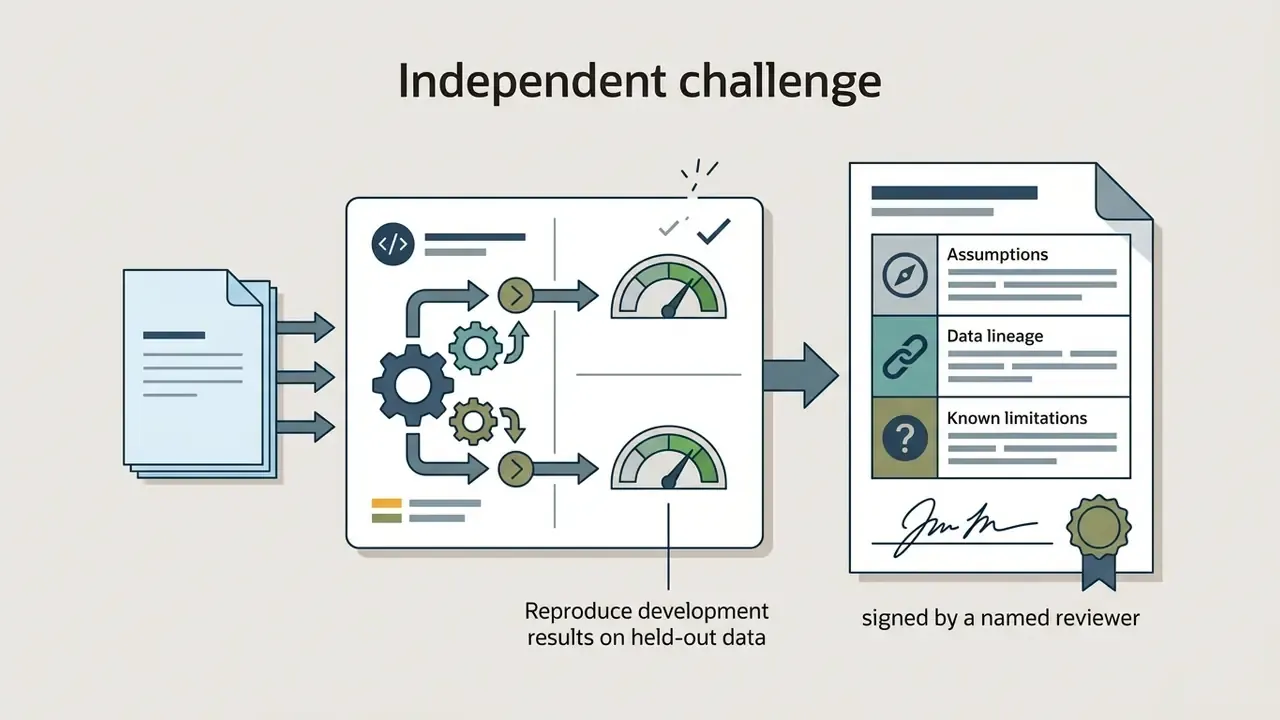
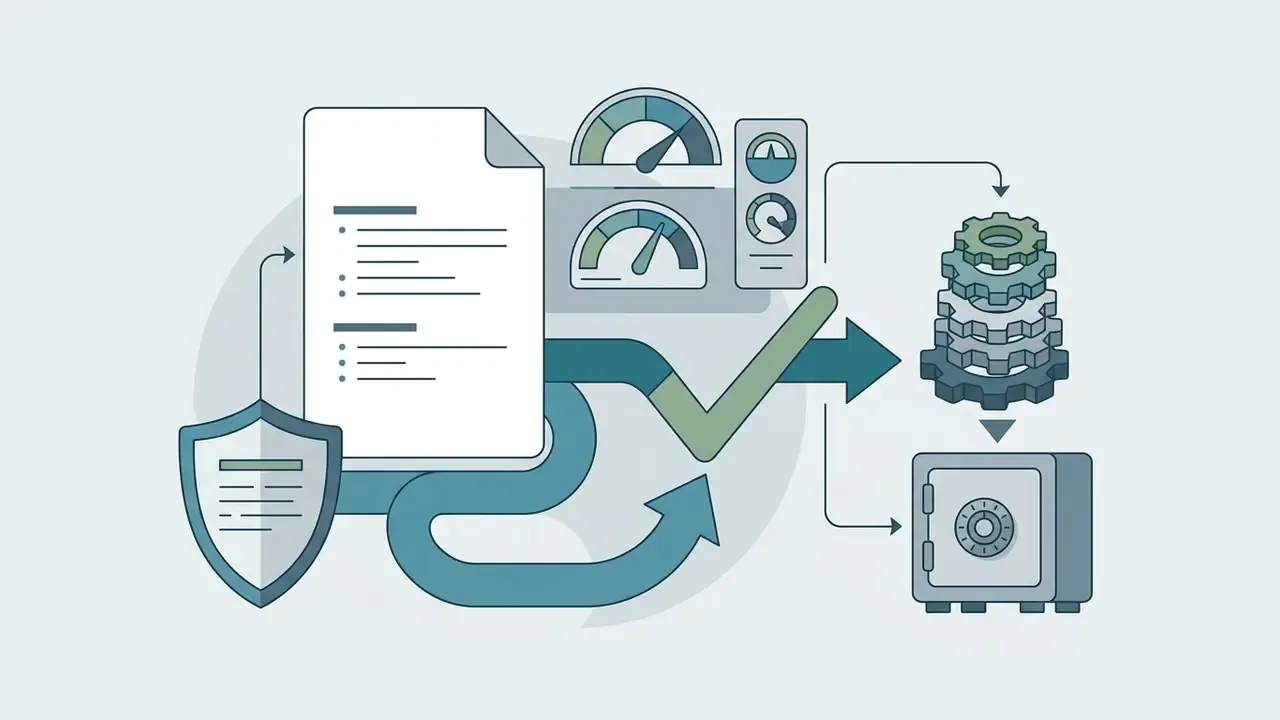
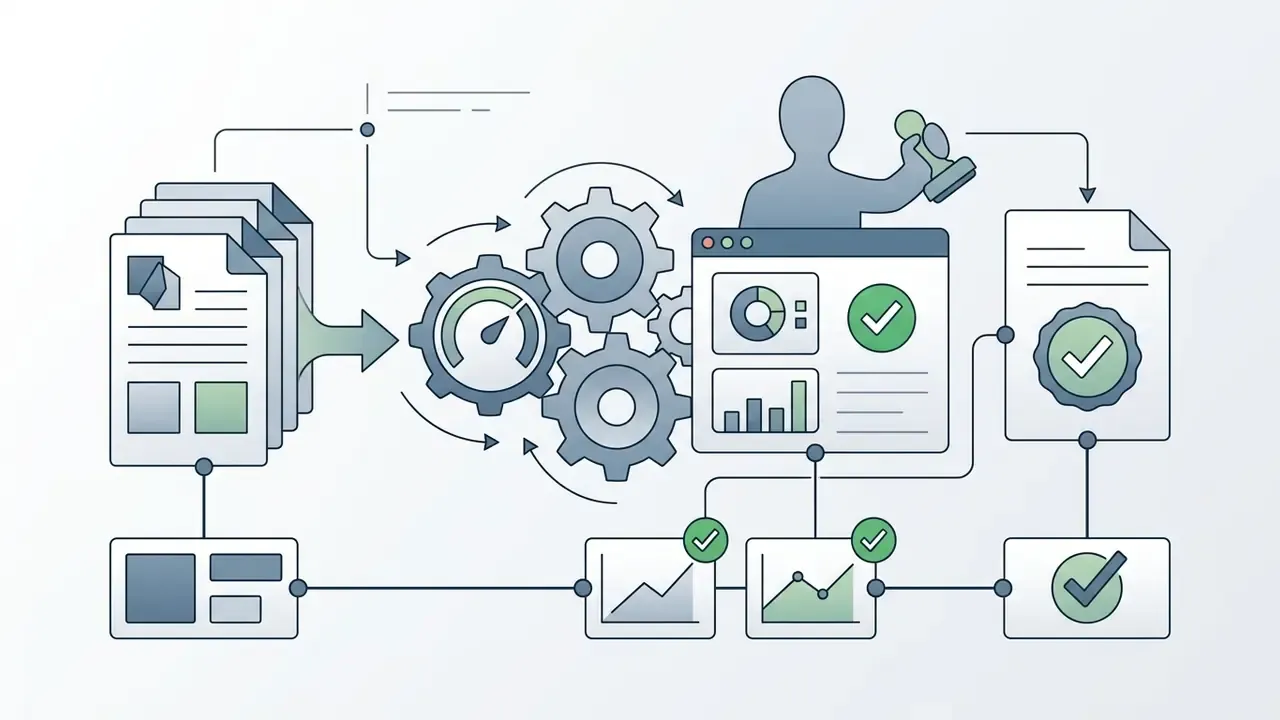
These professionals keep machine learning deployment aligned with legal frameworks such as the European Union AI Act, US Federal Reserve SR 11-7 guidance on model risk management, and federal consumer protection standards. They establish reproducible evidence chains, document training data lineage, and conduct pre-deployment bias testing to maintain audit readiness. Governance is arguably the most underestimated engine of AI job creation. Risk and compliance management, data governance and responsible AI now rank among the fastest-growing skill clusters, and IT governance roles are among the hardest positions to staff.
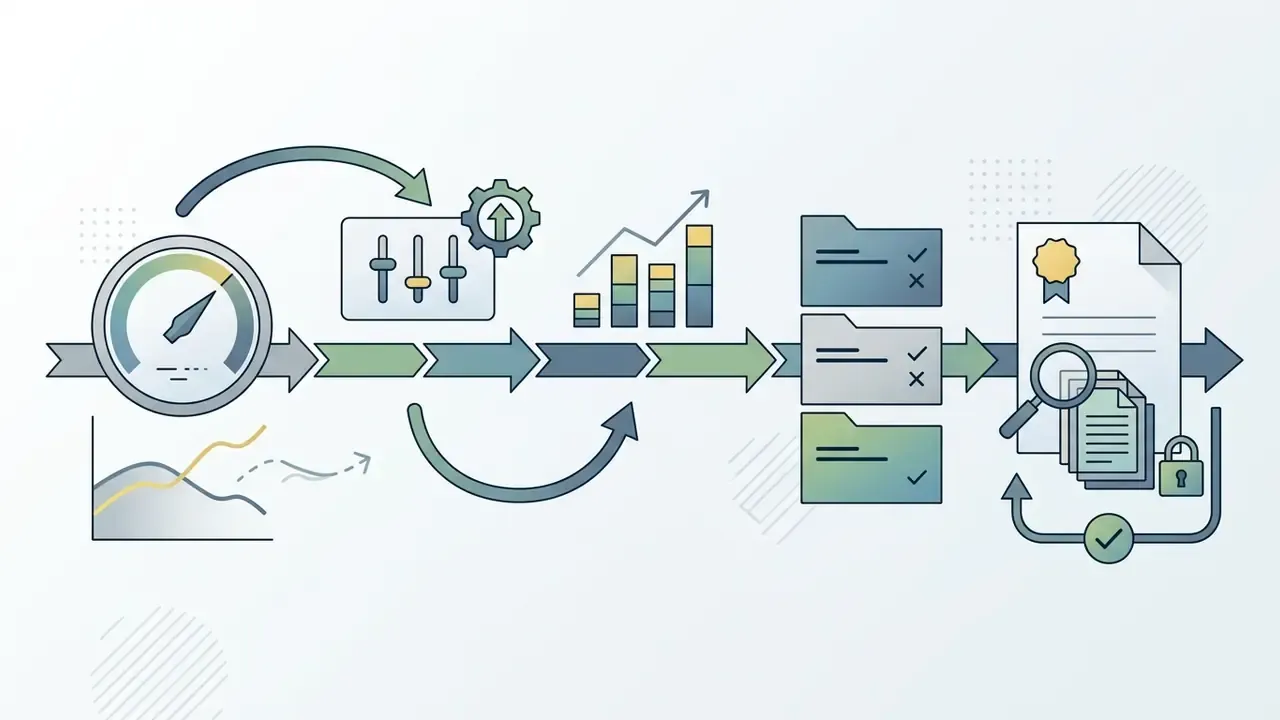
How a Model Validation Lead produces reproducible audit evidence, in five steps
Emerging operational and synthesis roles
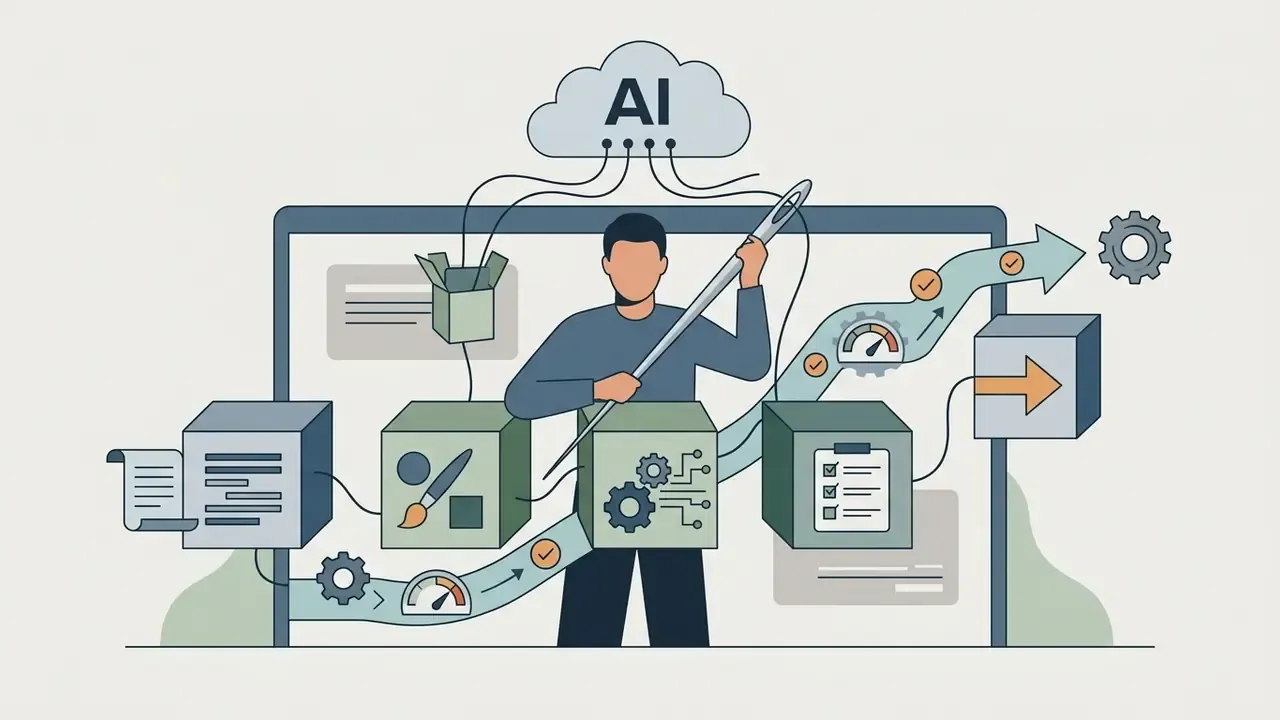
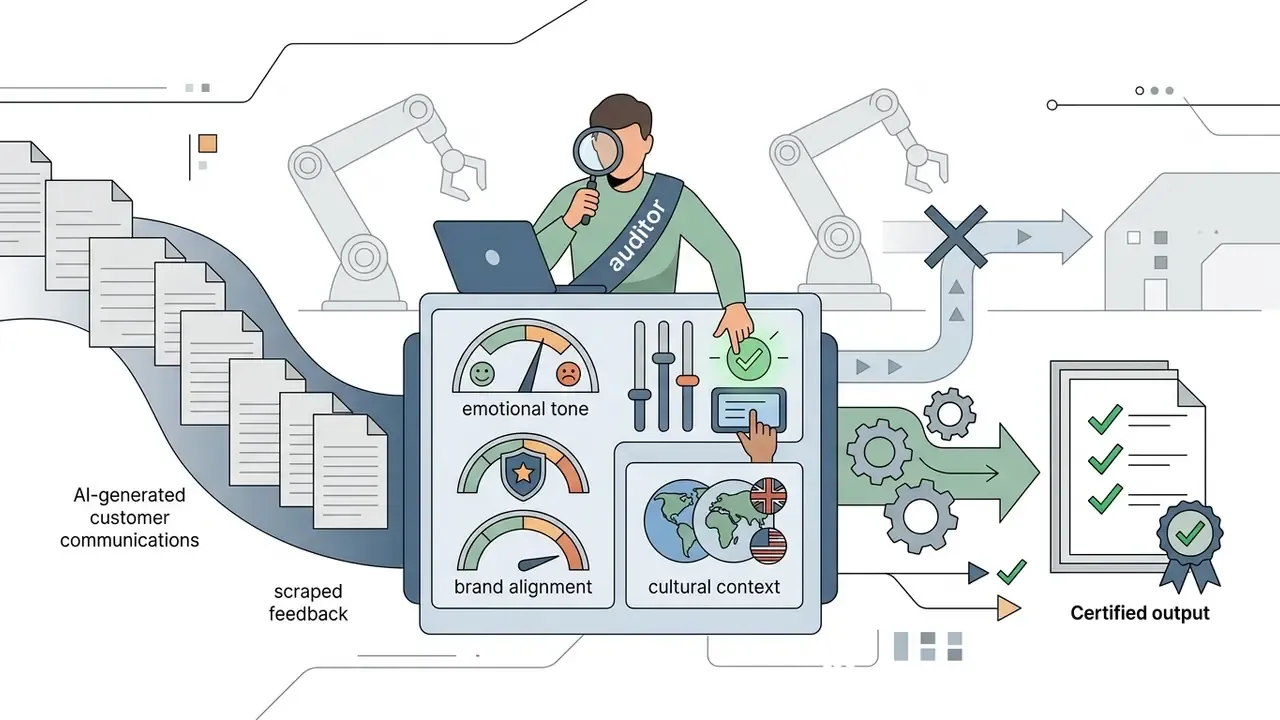
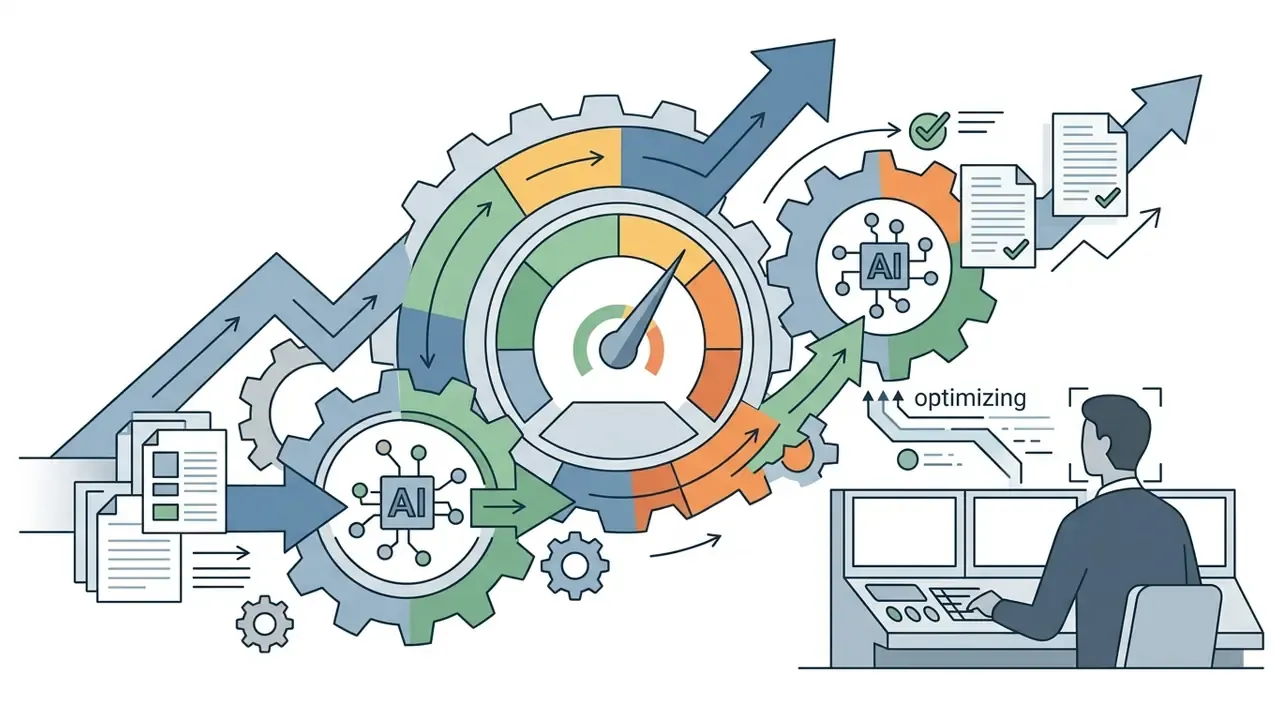
Beyond the classic AI job families, a second wave of hybrid roles is forming around deployment, education and human judgment:




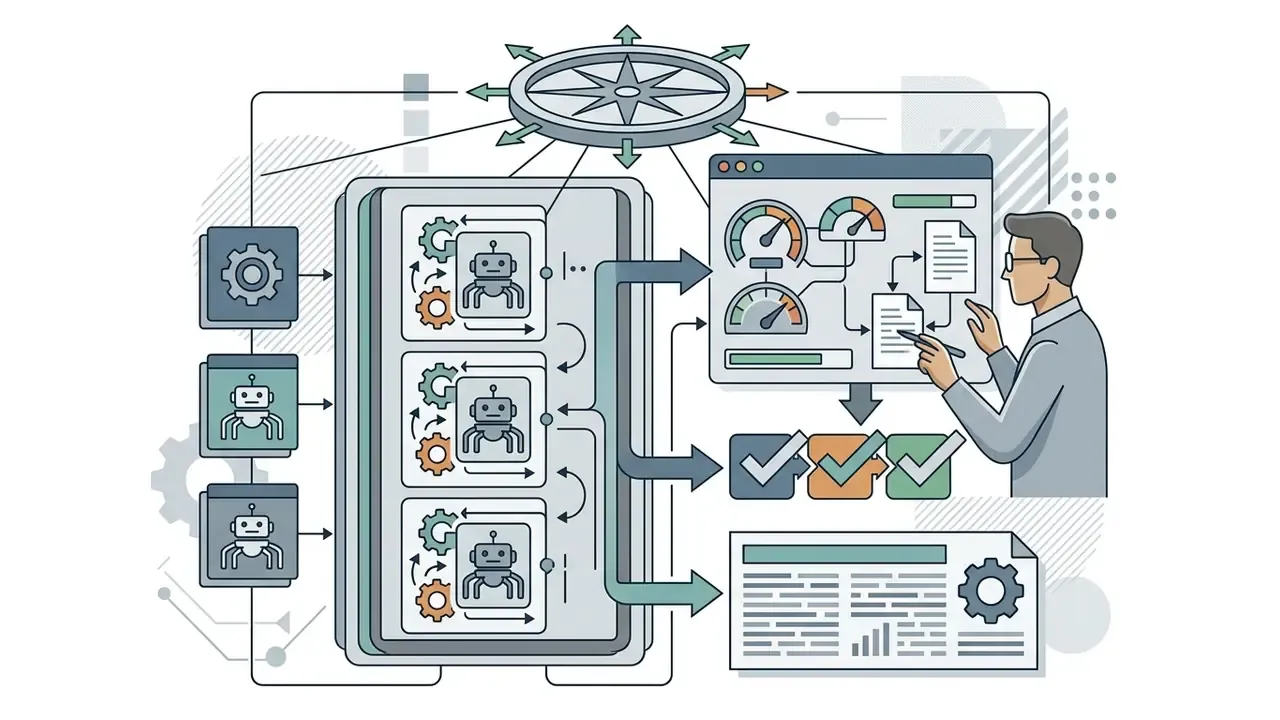
Decision ownership and escalation pathways for agentic AI
As agents move from advisory to executing roles, the governance question shifts from "is the model accurate?" to "who owns the decision, and where does it stop?" The matrix below is a template for assigning that ownership.
| Risk tier | Example action | Autonomy mode | Decision owner | Escalation trigger |
|---|---|---|---|---|
| Tier 1 (Low) | Internal document summarisation, meeting notes | Agent executes, sampled review | Business unit manager | Recurring factual error rate above threshold |
| Tier 2 (Moderate) | Draft client correspondence, first-pass document classification | Human-in-the-loop approval before release | Team lead plus named reviewer | Low model confidence, novel entity, sentiment flag |
| Tier 3 (High) | Credit file pre-assessment, claims triage, KYC screening | Human decision with AI recommendation; full audit trail | Model Validation Lead plus first-line approver | Any adverse customer outcome, protected-class disparity signal |
| Tier 4 (Critical or prohibited) | Final credit decline, pricing changes, regulatory filings | No autonomous execution; dual human authorisation | CRO or CCO delegate | Attempted autonomous execution is itself an incident |
Every tier needs three artefacts to survive examination: a documented rationale for the tier assignment, a logged human approver for tiers 2 to 4, and a monitored override and escalation rate reported to the governance committee rather than stored locally. In AML and KYC workflows, add one more: a record of which alerts the agent suppressed, not only the ones it raised.
Which existing jobs will change most because of AI?
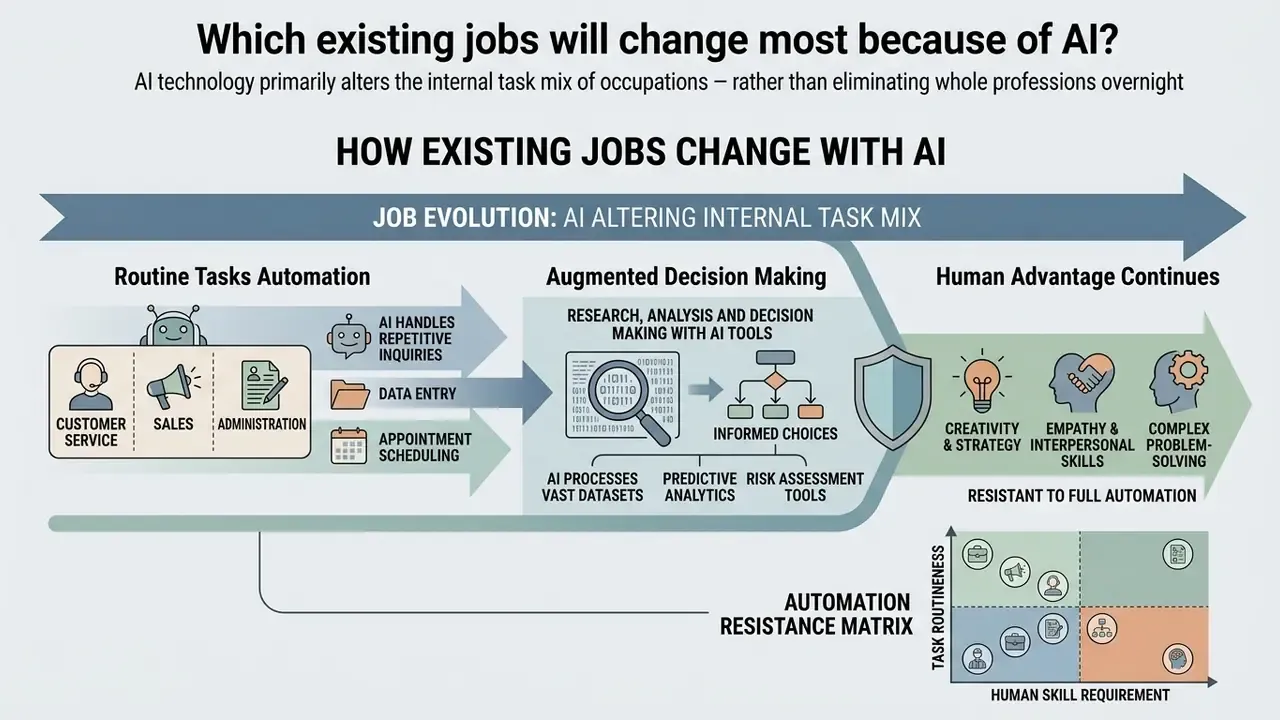
Rather than eliminating entire professions overnight, AI technology primarily alters the internal task mix of existing occupations. Positions dominated by routine, predictable information processing experience the highest degree of task transformation. The ILO's refined exposure index identifies clerical, administrative, ICT and professional roles as most exposed, because language- and information-heavy tasks align most closely with generative-AI capabilities. PwC's sector data points to the same concentration: information and communication, professional services and financial services lead AI-skill demand, followed by manufacturing, education, health and public administration.
Routine tasks in customer service, sales and administration
Customer service representatives, administrative assistants and entry-level sales support staff are experiencing rapid operational evolution. Automated voicebots and generative AI assistants now handle standard inquiries, order tracking and basic schedule management.
«40% of global employment is exposed to AI, rising to about 60% in advanced economies.»
Frontline service workers are shifting focus from repetitive data retrieval to complex exception handling and high-value customer interactions. Administrative assistants use AI tools to generate initial document drafts, transcribe meetings and maintain CRM records, which frees time for project coordination and executive workflow management. Meeting documentation is a good micro-example: a free online video transcription service removes the typing, then someone still has to decide what belongs in the official record. In sales, automated software tools handle list building, CRM updates, quote generation and email outreach, allowing account executives to concentrate on pipeline oversight, contract negotiation and relationship building. Bookkeeping follows the same trajectory. Cloud-based AI accounting services now collect, store and reconcile transactional data, pushing human accountants toward advisory, assurance and exception work. Contact-centre research indicates that these tools also redefine supervision itself, introducing remote monitoring and AI-assisted coaching into frontline management.
Research, analysis and decision making with AI tools
Knowledge workers, including financial analysts, paralegals, market researchers and software engineers, increasingly use AI tools to augment complex cognitive tasks. Large language models accelerate information synthesis, literature reviews and preliminary code generation.
«Around 44% of legal tasks are potentially automatable by generative AI, restructuring how legal work is organised.»
Research from the University of Pennsylvania and OpenAI adds an important distributional nuance. White-collar workers earning up to approximately $80,000 per year show the highest task-level exposure to generative-AI automation. Exposure in this wave is therefore not concentrated at the bottom of the wage distribution. It sits squarely in the professional middle.
While AI tools dramatically reduce the time required to analyze large datasets, human oversight remains mandatory to evaluate context, verify source data and make strategic decisions. Updated illustrative example (composite, anonymized): a corporate legal department implemented generative search tools to parse case history during discovery, reducing preliminary document review timelines by approximately 70%. Senior attorneys spent the recovered hours refining legal arguments, evaluating case strategy and conducting deeper client consultations, which shifted department output from manual research to high-level strategic counsel. Peer-reviewed evidence supports a cautious reading of such gains. A 2024 systematic review of knowledge workers and intelligent machines found consistent productivity and creativity benefits but mixed decision-quality outcomes, dependent on task-AI fit and the level of human review.
Jobs that continue to require human advantage
Occupations reliant on deep emotional intelligence, physical adaptability, advanced leadership and complex ethical judgment face low exposure to AI automation. Roles such as corporate executives, teachers, psychologists, human resource directors and healthcare providers remain anchored in human capability.
Automation resistance matrix
| Exposure band | Representative occupations | Why the band holds |
|---|---|---|
| High human advantage (low AI exposure) | Psychologists and psychiatrists, HR directors, CEOs and senior managers, teachers, surgeons, judges | Require experiential empathy, accountability for irreversible decisions, leadership legitimacy and physical dexterity |
| High AI transformation (augmented work) | Financial analysts, software engineers, lawyers and paralegals, marketing managers, market researchers, computer systems analysts | Routine synthesis is automated; judgment, verification and client counsel expand |
| High automation exposure (task replacement) | Data entry clerks, basic bookkeepers, receptionists, routine telemarketers, standardized warehouse picking | Tasks are repetitive, codifiable, rule-based and low in contextual reasoning |
The US Bureau of Labor Statistics identifies interpersonal communication and leadership as essential, non-automatable competencies across more than 300 surveyed occupations. Interpersonal skills were rated very or extremely important in 306 occupations and leadership in 185. AI cannot replicate authentic empathy, trust-building, crisis management or nuanced organizational leadership. Recent peer-reviewed work continues to describe emotional intelligence and experiential empathy as "quintessentially human" and resistant to substitution.
What determines AI job creation potential?
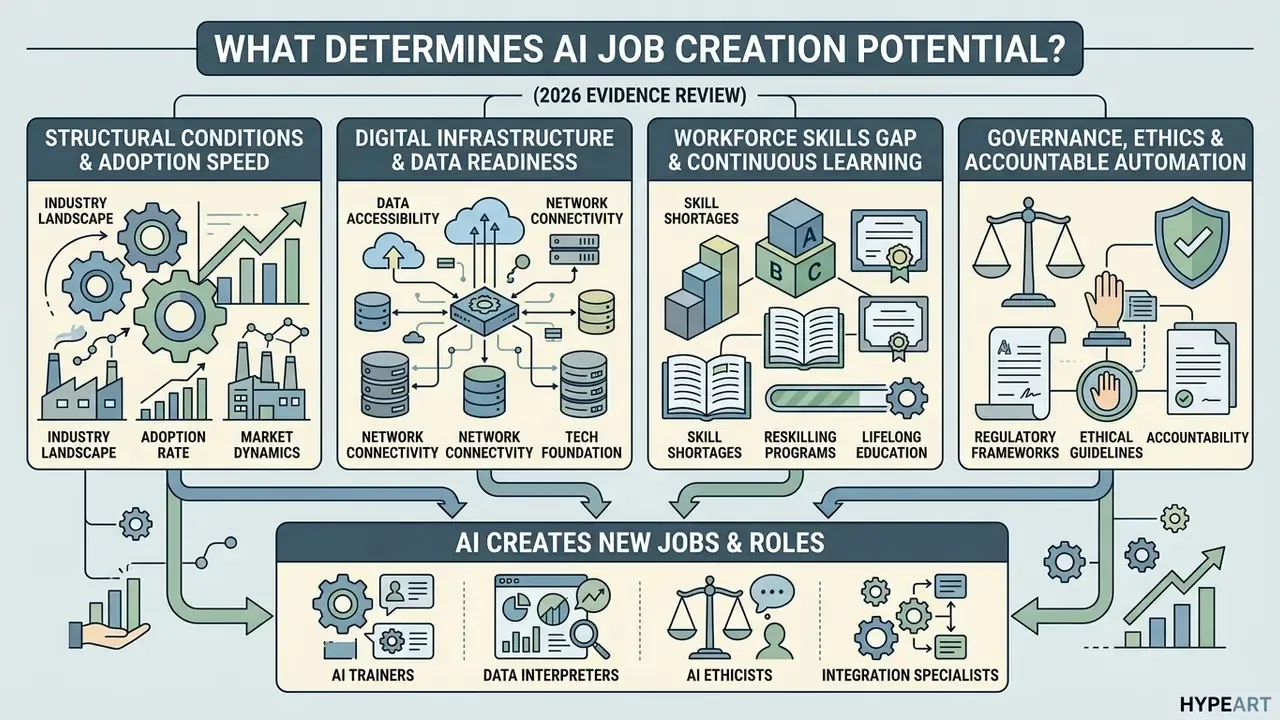
The extent to which AI creates new jobs within a specific sector or region depends on structural conditions, digital infrastructure, workforce skill availability and regulatory frameworks. Firm-level evidence suggests employment gains concentrate where AI complements rather than replaces work, where AI specialisation is deepest, and where organisations are young enough to build around the technology rather than retrofit it.
Adoption speed, infrastructure and data readiness
The pace at which an industry creates AI-related roles depends directly on its foundational technology infrastructure and data governance maturity. According to research from the International Monetary Fund (IMF), national and corporate "AI preparedness", covering digital connectivity, data availability, institutions, regulation and governance, dictates whether AI deployment yields net job growth or operational bottlenecks.
«AI benefits depend on AI preparedness: institutions, digital infrastructure, workforce, regulation and governance.»
Organizations with mature data architecture, clean data pipelines and cloud-based infrastructure can deploy AI applications rapidly, generating immediate demand for data stewards, integration engineers and model managers. Institutions burdened by legacy technology stacks and fragmented data storage struggle to move AI pilots into production, which delays both productivity gains and specialized job creation. The World Bank frames the same requirement as the "4Cs", meaning connectivity, compute, context and competency, and reports AI-related job postings rising 16% in upper-middle-income and 11% in lower-middle-income economies. Readiness and role creation move together.
Skills gap and access to continuous learning
A major constraint on AI job creation is the widening skills gap across the current workforce. Research from MIT Center for Information Systems Research (CISR) indicates that nearly 38% of enterprise workers require systematic retraining or skill upgrades to work effectively alongside automated systems. The underlying survey, with 342 leaders reporting on their own workforces, should be read as an enterprise self-assessment rather than a labour-market census. It establishes the order of magnitude, not a precise national figure.
«38% of the workforce needed fundamental retraining or replacement within three years to address skills gaps.»
Checklist0 / 5
Scoring: 4 to 5 checked means high readiness · 2 to 3 checked means frictional risk · 0 to 1 checked means high vulnerability to displacement and unbudgeted control cost.
Countries and corporations that establish continuous learning programs, micro-credentialing and enterprise upskilling pathways adapt more smoothly. When workers receive accessible training in prompt engineering, data literacy and AI tool usage, they transition into transformed roles rather than facing structural unemployment. Evidence from adult-learning research favours work-integrated formats, such as microlearning, mentoring and in-workflow digital learning, over detached classroom cycles that cannot keep pace with model release schedules.
Governance, ethics and accountable automation
Regulatory policy and corporate governance decide whether automation is executed responsibly. Frameworks such as the European Commission's Trustworthy AI guidelines stress that AI systems must respect worker autonomy, maintain human oversight and preserve high job quality across seven requirements: human agency and oversight, technical robustness and safety, privacy and data governance, transparency, diversity and fairness, societal and environmental well-being, and accountability.
Responsible AI adoption balances efficiency gains with human-centric job design. By mandating explicit human controls, risk assessments and model audits, governance policies push AI integration toward supervisory and compliance positions rather than uncontrolled workforce reductions. Ethics-by-design guidance makes this operational rather than declarative. It requires defined roles, monitoring procedures, ethics officers or committees, provenance records for models and datasets, and mechanisms for staff to raise concerns. Commercial deployment adds a further layer of licensing, rights clearance and downstream usage terms, documented in our AI Media Commercial-Use Hub.
Skills that help workers access new AI job opportunities
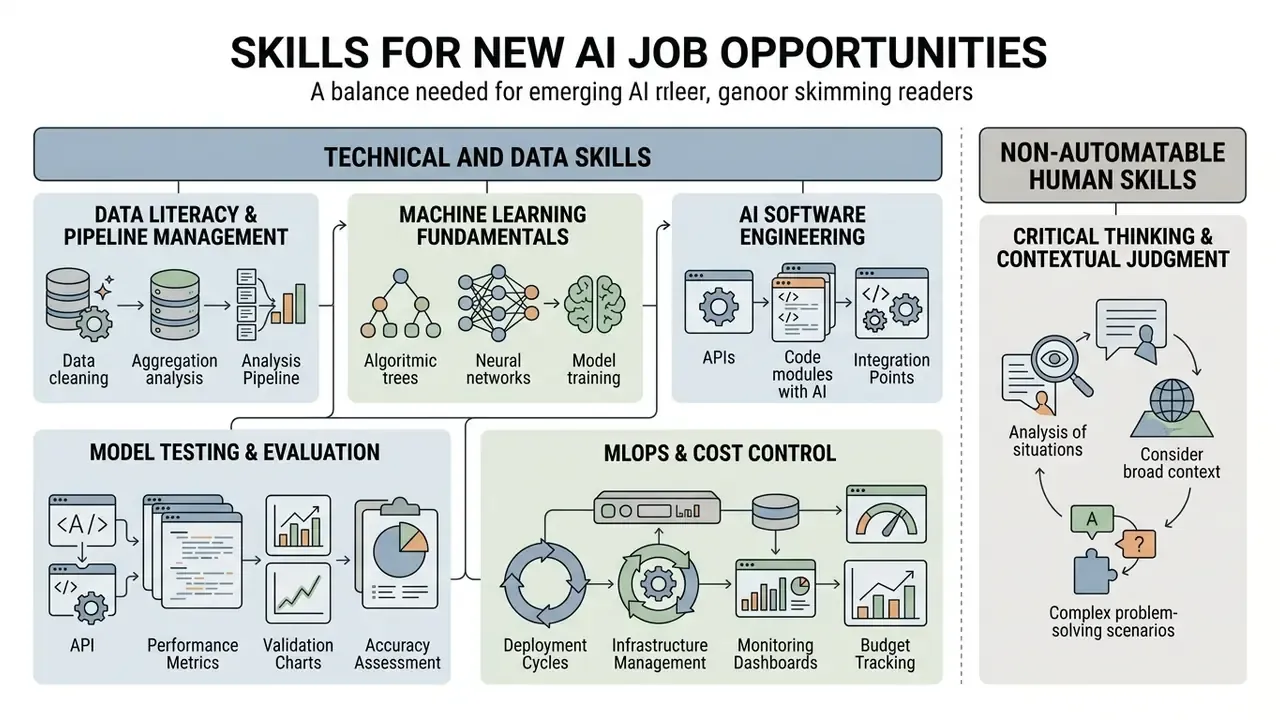
To secure emerging AI job creation opportunities, professionals need a balance of technical capabilities, domain expertise and non-automatable human skills. US federal AI-workforce guidance codifies this split explicitly, naming 14 technical competencies and 43 general competencies for AI-related work, alongside four AI-literacy areas: understanding AI principles, using AI directly, evaluating AI outputs, and using AI responsibly.
The T-shaped AI professional skill profile
| Axis | Content |
|---|---|
| Breadth (horizontal) | AI literacy · data ethics · critical thinking · emotional intelligence · digital collaboration · information management |
| Depth (vertical) | Deep industry domain expertise, for example banking compliance and model risk, clinical care pathways, legal strategy, industrial operations |
Human skills that AI does not replace easily
As AI automates routine analytical and administrative tasks, uniquely human cognitive and interpersonal skills become market differentiators. Critical soft skills include:
- Critical Thinking & Contextual Judgment Evaluating AI-generated outputs for subtle errors, logical flaws and real-world applicability, a competency NIST explicitly names alongside a "safety-first mindset" in its Generative AI Profile.
- Emotional Intelligence & Empathy Managing client relationships, conducting sensitive negotiations and leading human teams.
- Complex Problem-Solving Addressing unstructured, ambiguous business challenges that lack historical data patterns.
- Ethical Leadership Making value-based decisions that account for social, regulatory and organizational impact.
- Accountability & Attention to Detail Owning outcomes produced with machine assistance, including the errors machines introduce.
Lifelong learning, specialization and career agility
For comparative evaluation of enterprise AI tooling, licensing models and vendor claims, review our AI Media Comparison Matrices.
- Enterprise CRM & agentic systems
- Salesforce Trailhead (AI Associate and AI Specialist credentials).
- Technical & ML engineering
- Coursera (DeepLearning.AI professional certificates).
- Professional & skills analytics
- LinkedIn Learning (AI skill clusters and prompt-engineering paths).
- Applied workflow integration
- Udemy (generative AI architecture and MLOps bootcamps).
- Governance & risk
- NIST AI RMF Playbook materials and regulator-published model-risk guidance, used as the reference standard for validation and oversight practice.
How employers can turn AI adoption into job creation
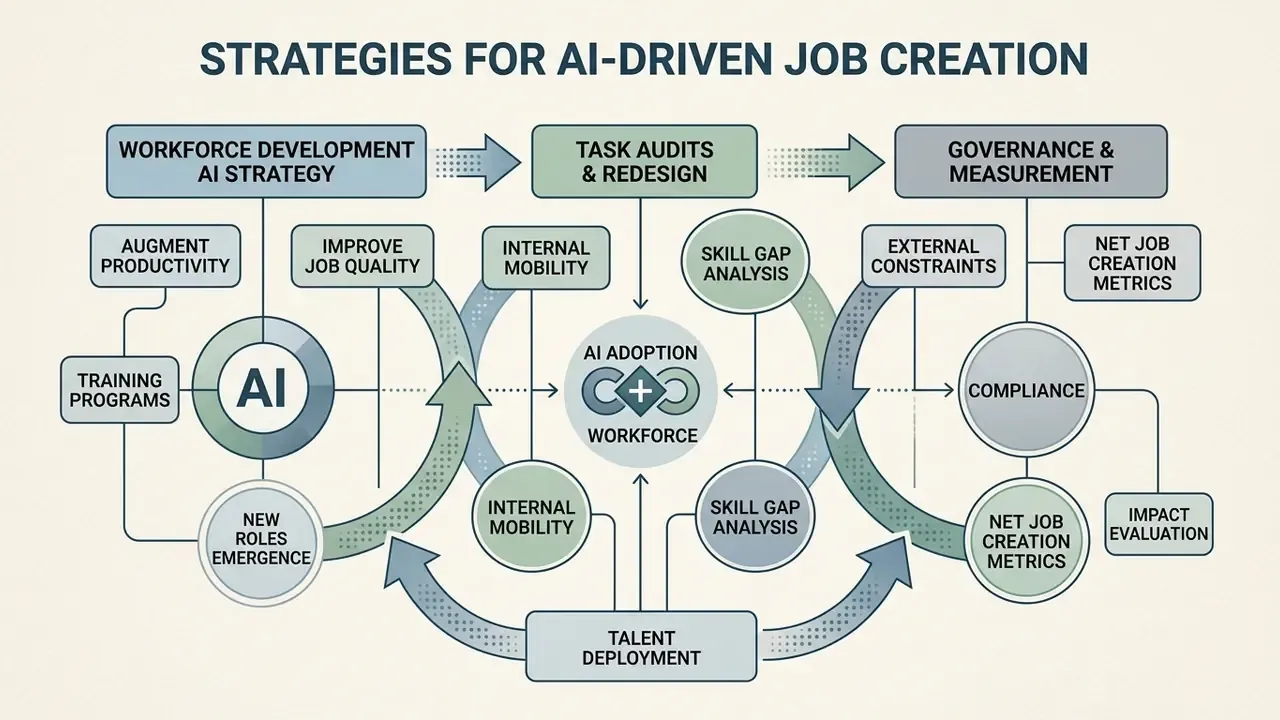
Corporate executives and HR leaders can design AI adoption strategies that raise employee productivity, improve job quality and drive net job creation rather than wholesale workforce reduction. The employment outcome of any AI deployment is not technologically predetermined. It is a design choice, and that design choice sits squarely within the CIO's and CHRO's joint remit.
Task audits, redesign and internal mobility
Employers should begin AI adoption by conducting systematic task audits across business units. Rather than evaluating whole jobs for elimination, task audits break occupations down into discrete components to separate repetitive, rules-based tasks from high-value human judgment.
«AI-exposed sectors show 4.8x higher labour productivity growth than less-exposed sectors.»
Once routine tasks are automated, management can redesign roles around business expansion, client support and strategic oversight. Clear internal mobility pathways let employees whose administrative tasks have been automated retrain and move into higher-value internal positions. Audits should also run before deployment goes live, testing each planned rollout for intent. Is this system designed to substitute for a role, or to extend what a role can accomplish? The answer determines the employment outcome far more than the model architecture does.
Building an AI strategy centered on workforce development
A resilient corporate AI strategy integrates employee training directly into software rollout plans. Forward-thinking organizations establish internal AI training academies, peer-mentoring programs and structured reskilling initiatives.
«An average of 44% of workers' skills will require updating across all occupations by 2030.»
Checklist0 / 9
When enterprise software deployment is paired with comprehensive workforce upskilling, employees learn to operate AI tools efficiently, which drives higher productivity and job satisfaction. Because skills gaps rather than technology are the primary barrier to AI ROI, HR is not a downstream stakeholder. It is a value-capture function. Questions about integration scope or tooling fit can be routed through AI Media Support.
Governance, measurement and external constraints
Enterprise AI implementation must operate under strict governance and audit controls. Employers should track clear performance metrics, including output quality, error rates, model hallucination frequencies, override and escalation rates, and workforce retention, to evaluate the true ROI of AI investments.
«31.6% of US workers are exposed to generative AI, ranging from 27.6% in Mississippi to 44.3% in the District of Columbia.»
That regional dispersion matters operationally. Exposure, and therefore reskilling need, is not distributed evenly across a national footprint. Multi-site employers should measure at site level rather than assume a single corporate average.
Recommended authoritative sources
| Institution | Publication | Analytical focus |
|---|---|---|
| World Economic Forum | The Future of Jobs Report 2025 (Jan 2025) | Global occupational projections, structural job churn, net employment modelling |
| OECD | Job Creation and Local Economic Development 2024: The Geography of Generative AI | Regional exposure metrics, skill-vacancy shifts, adult competency frameworks |
| International Monetary Fund | Gen-AI: Artificial Intelligence and the Future of Work (Jan 2024); Staff Discussion Note (2026) | Macroeconomic productivity impacts, cross-border AI readiness, labour reallocation |
| PwC Global | Global AI Jobs Barometer (2024; 2026 update) | Empirical job-advertisement analysis, wage premiums, sector productivity gains |
| US Bureau of Labor Statistics | Employment Projections 2024 to 2034 (updated 2025) | US occupational growth rates, computer and mathematical role forecasts |
| International Labour Organization | Generative AI and Jobs (2023); Jobs, Rights and Growth (2025) | Task-level exposure mapping, augmentation versus automation, job quality |
| NIST | AI Risk Management Framework 1.0 and Playbook; Generative AI Profile (AI 600-1, 2024) | Oversight, TEVV, human-in-the-loop governance and documentation |
By aligning AI integration with verified industry benchmarks, institutional risk limits and transparent governance frameworks, enterprise leaders can navigate technology transitions securely while expanding career opportunities for their workforce. Collaboration between IT leadership, HR and policymakers is not a social nicety here. It is a practical requirement for extracting value from AI without accumulating governance debt.
Limitations, open questions and a safe next step
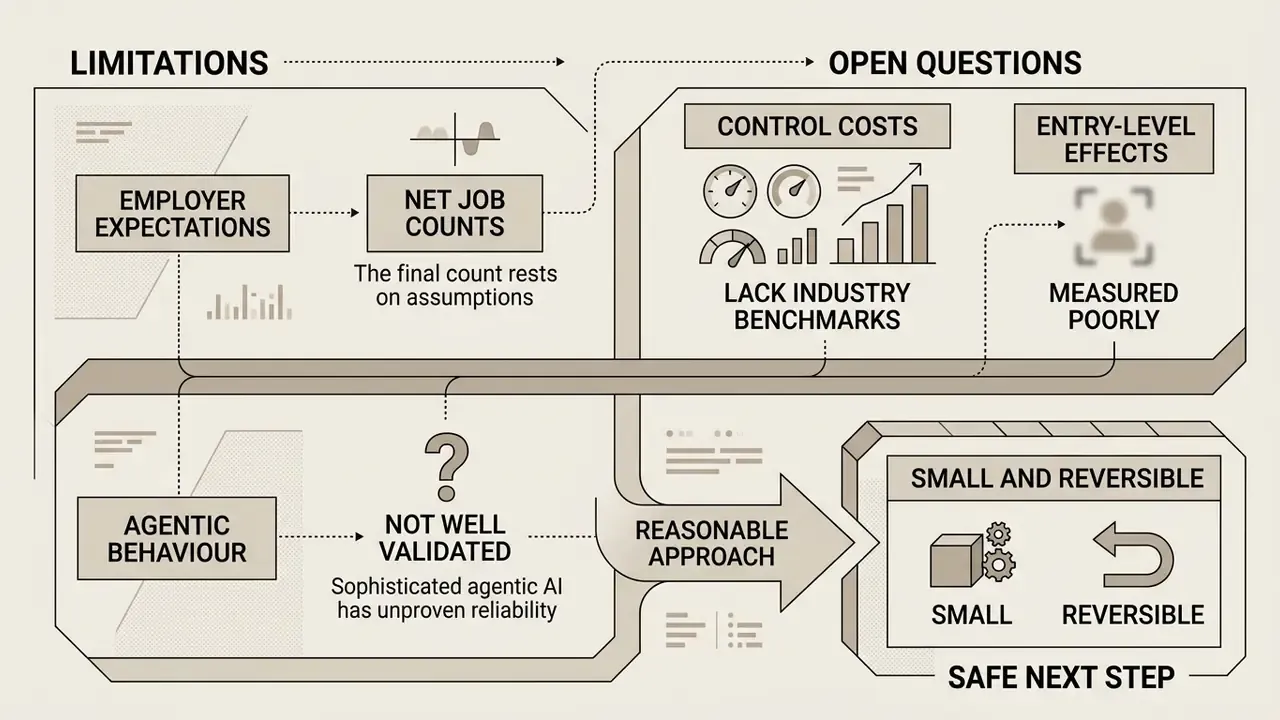
Honesty about the gaps is part of the governance argument. Four things remain genuinely unsettled.
Net job counts rest on employer expectations. The WEF figure of 78 million net jobs comes from surveyed intentions, not observed hiring. Intentions revise, sometimes sharply, when credit conditions change.
Agentic behaviour is not yet well validated. Traditional model validation assumes a bounded input-output mapping. An agent that plans, calls tools and retries breaks that assumption, and the supervisory literature has not fully caught up. Treat current agentic controls as provisional.
Control costs lack industry benchmarks. There is no accepted figure for reviewer minutes per credit file or per KYC alert. Institutions must build their own baselines, then defend them.
Entry-level effects are measured poorly. Reduced postings are visible in job-ad data, but the counterfactual is not. We cannot yet separate AI substitution from ordinary cyclical caution.
A reasonable next step is small and reversible. Pick one Tier 2 workflow, meter oversight per unit of output for a quarter, and publish the resulting risk-adjusted ROI to the governance committee. No enterprise commitment is required to learn whether the economics hold in your institution.
FAQ: AI job creation, exposure and control costs
Will AI create more jobs than it destroys?
On current official projections, yes, over a five-to-ten-year horizon. The WEF's 2025 figures imply a net gain of 78 million jobs by 2030, and the ILO finds augmentation potential roughly six times larger than full-automation potential. The caveat is distributional: gains and losses land on different people, in different regions, at different times.
How many jobs does AI create, and can AI create jobs in regulated industries?
Volume data gives a partial answer. LinkedIn tracked about 1.3 million new AI-related roles globally in two years, including more than 600,000 net new infrastructure positions in a single year. In regulated sectors, AI creates jobs mainly through control functions: validation, monitoring, explainability and compliance documentation. Each deployed model adds oversight work that someone has to staff.
Are the 2022 to 2025 tech layoffs evidence of AI replacing workers?
Largely no. The available evidence attributes that cycle mainly to corrections from pandemic-era over-hiring under near-zero interest rates, sectoral slowdowns and unit-economics pressure. AI's short-term labour effect shows up as reduced entry-level hiring, not mass termination of experienced staff.
Which workers are most exposed?
Task-level exposure concentrates in clerical, administrative, ICT and professional roles. University of Pennsylvania and OpenAI research found white-collar workers earning up to roughly $80,000 per year have the highest exposure. That is the professional middle, not the wage floor.
Which jobs are safest?
Roles anchored in empathy, accountability for irreversible decisions, leadership legitimacy and physical dexterity: psychologists and psychiatrists, teachers, surgeons, judges, HR directors and senior managers. BLS data rates interpersonal skills as very or extremely important in 306 occupations.
What should a CRO or Head of Model Risk budget for?
Reviewer time metered per unit of output, independent validation capacity, red-teaming and adversarial testing, monitoring infrastructure, periodic revalidation, and a scenario-based estimate of residual risk including hallucination incidents and prompt-injection attempts.
What is the single highest-leverage employer action?
Redesigning the entry-level pipeline. Efficiency gains are recoverable later. A broken apprenticeship ladder produces a senior-talent shortage five to ten years out that no amount of automation fixes.