That question is the spine of this guide.
Key Takeaways
- An ai conversation generator turns a scene description, a cast of speakers, and a set of constraints into a finished multi-turn dialogue. A chat assistant, by contrast, answers you one turn at a time.
- Output can be shaped as screenplay, novel prose, branching game dialogue tree, or audio-drama script, then exported to
.DOCX,.PDF,.TXT,HTML, orJSON. - Commercial use requires documented human authorship (US Copyright Office, 2025–2026), a read of the vendor terms, and, in regulated industries, a reproducible audit trail.
Who this guide is for, and what it will not do
Three reader groups, roughly. Writers and game designers who need better scenes. Content teams who need dialogue-shaped articles that people actually finish. And risk, compliance, and model-governance leads who need generated conversations to behave like any other controlled model output.
What this guide will not do: promise you a legally bulletproof answer on copyright, or claim that any single tool is compliant by default. Neither claim would survive contact with an examiner. Where the evidence is thin, the text says so.
An ai conversation generator is a specialized text generation architecture built to produce structured, multi-turn dialogues between defined personas based on user prompts. Unlike an open-ended conversational model, a dedicated ai generator conversation tool conditions the language model on precise speaker profiles, interaction goals, and environmental context. That control layer is what lets novelists, screenwriters, game designers, students, marketers, and risk officers simulate realistic interactions, generate synthetic training datasets, and draft multi-speaker scripts with usable turn-by-turn coherence.
What is an AI conversation generator
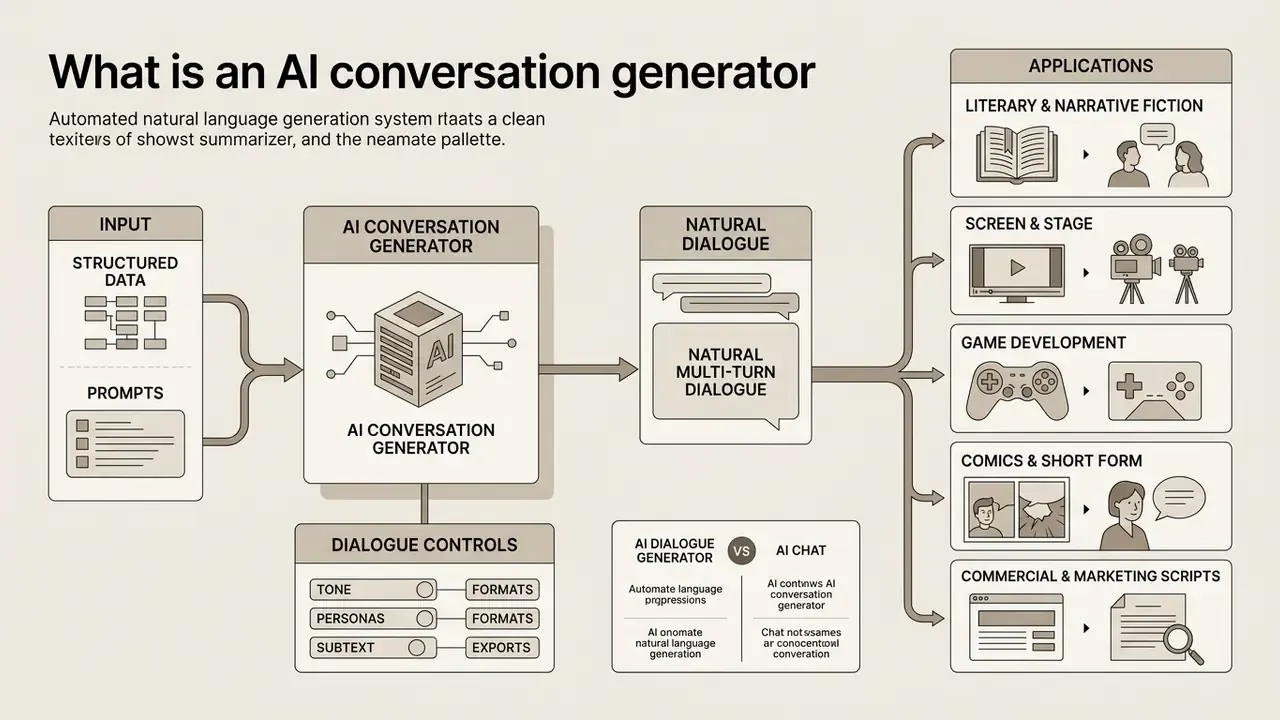
An ai conversation generator (also called an ai conversation maker or conversation ai generator) is an automated natural language generation system that transforms structured scene parameters into multi-speaker conversational text. Rather than running live question-and-answer with a single user, a conversation generator ai builds a self-contained interaction where two or more personas exchange lines according to parameters you set in advance.
In creative and enterprise settings alike, these tools work as pre-generative platforms. The dialogue is produced, reviewed, and edited before it reaches a reader, a player, an actor, or a production environment. That separation is unglamorous and quietly valuable: it lowers compliance exposure, because nothing reaches an audience without a human pass.
«Models that support multi-turn interaction must retain context, plan turns, and integrate tools, unlike single-turn assistants.»
Difference between an AI dialogue generator and AI Chat
An ai dialogue generator targets scripted multi-character output. General chat ai models offer flexible, mostly single-turn human-to-AI interaction. Platforms such as ChatGPT or Claude operate as interactive assistants: they respond dynamically to whatever you type, without enforcing script boundaries.
Specialized dialogue workflows do the opposite. They enforce explicit scene layouts, speaker role assignments, and output constraints. Multi-speaker quality hangs almost entirely on holding speaker identity and local turn coherence across a long context, and general chat interfaces do not standardize that behaviour without custom system prompting. You can force it manually, of course. Most people forget by turn nine.
«MPCEval (2026) evaluates generators both on next-turn prediction and on producing a full dialogue from a single task description.»
Writers, showrunners, game designers, and risk managers lean on specialized tooling for one prosaic reason: export. Formatted scripts, roleplay transcripts, and screenplay drafts that land in the next system without reformatting.
Comparison of text generation tools
| Parameter | AI Dialogue Generator | AI Chat | AI Writer |
|---|---|---|---|
| Input | Participants, scene context, objectives, tone, constraints | Open-ended user request | Topic, keywords, article outline |
| Output type | Multi-party dialogue with attributed turns | Interactive single response | Monolithic text (article, essay, report) |
| Primary purpose | Scripts, NPC dialogue, negotiation simulation | Task solving, Q&A, editing | Articles, blog posts, documentation |
| Role control | Hard binding to personas and voices | Dynamic adaptation during chat | Single uniform author voice |
| Typical export | Screenplay, prose, JSON dialogue tree | Copy-paste chat log | DOCX, Markdown, CMS draft |
What conversations an AI generator creates
A modern ai convo generator produces several distinct output families:
- Literary and narrative fiction multi-character prose, short story exchanges, novel scenes, dialogue-heavy chapter drafts. Finished scenes are often voiced for audiobook demos with an ai voice generator.
- Screen and stage film and TV scene drafts, stage-play exchanges, sketch comedy, and podcast or audio-drama scripts where vocal distinction replaces visual identification.
- Game development branching NPC (non-player character) dialogue trees, quest-giving interactions, barks, and lore-grounded exchanges for RPGs and TTRPG sessions.
- Comics and short form panel dialogue that must carry personality and plot inside a strict word budget, plus short-form social video scripts you can assemble in an animation maker.
- Commercial and marketing scripts sales call simulations, objection-handling drills, customer onboarding flows, interview-style content drafts.
- Education and language practice structured example dialogues for learners, classroom roleplay, dramatic-writing exercises.
- Enterprise and risk training simulated compliance escalations, audit interview preparation, and synthetic conversation data used to train downstream classification models.
Supported dialogue types and languages
The system adapts syntax, pacing, and lexicon to the main varieties of human talk:
- Arguments and conflicts: escalating pressure with clear peaks, interruptions, and a decisive turning point.
- Confessions and interrogations: layered information release, strategic evasion, deflection, psychological pressure.
- Interviews and Q&A: formal structure with a clean split between questions and expert answers, ideal for blog repurposing.
- Negotiations: anchoring, concessions, deadlines, and asymmetric leverage between parties.
- Banter and comedy: short, fast, rhythmical exchanges with setup and punchline timing, plus running gags.
- Romance and seduction: layered subtext where the surface topic and the real intent pull apart.
- Philosophical and dramatic scenes: longer turns, imagery, thematic argument instead of plot mechanics.
Multilingual generation (18+ languages). Dialogue can be produced in English, Spanish, French, German, Italian, Portuguese, Dutch, Polish, Russian, Ukrainian, Turkish, Arabic, Hindi, Chinese, Japanese, Korean, Vietnamese, Indonesian, and others. A decent generator preserves idioms, slang registers, honorifics, and culture-specific forms of address rather than producing word-for-word transfer. Existing dialogue can also be pasted in and re-rendered in another language while keeping the tone and each character's voice. Keeping, at least, most of it. Register drift in the target language is real and worth spot-checking with a native speaker.
Which AI engine to choose for dialogue generation
Style and reliability follow the architecture you pick:
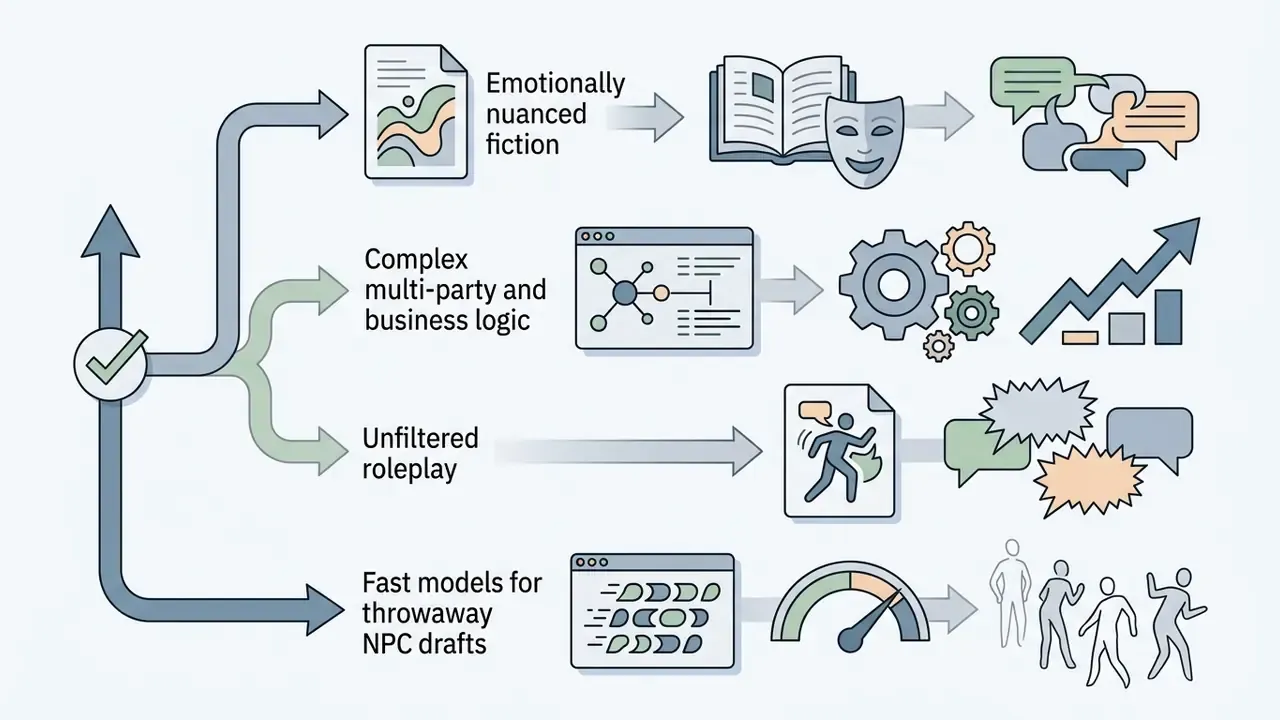
- Claude 4 Sonnet the reference choice for literary prose and dramatic scenes. It catches emotional shading, restraint, and natural pauses better than most alternatives.
- GPT-5 / Gemini 3 Pro strongest for multi-party scenarios, professional negotiations, technical Q&A, and business simulations where factual and logical consistency dominates.
- L3-Euryale and uncensored community models built for TTRPG roleplay, dark fantasy, and morally complex characters that should not be stylistically smoothed into politeness.
- Fast models (Mistral Small 3.1, Flash-class) rough NPC barks, high-volume drafts, brainstorming inside the editor.
- Creative, Standard, and Fast presets if a tool hides model names, read "Creative" as high-temperature expressive output, "Standard" as balanced, "Fast" as draft quality for iteration.
Why use an AI generator for dialogue creation
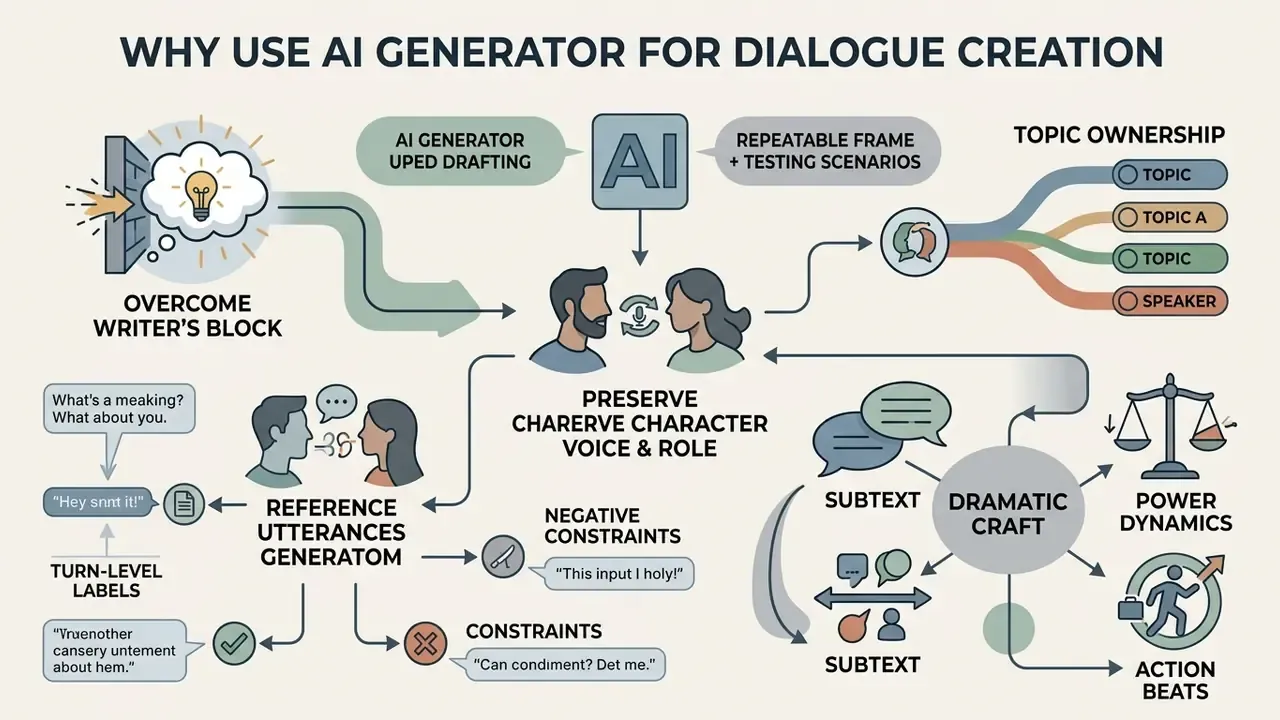
An ai generator speeds up drafting and gives you a repeatable frame for testing scenarios. Change a motivation, change a genre convention, change a policy constraint, then compare what the conversation does. That is closer to experimentation than to writing, and it is often the point.
How AI helps overcome writer's block
Think of the ai generator as an interactive brainstorming engine that unsticks a stalled page.
When you cannot tell how a character should react, or how a negotiation should proceed, ask the ai conversation generator for five distinct openings, ordered from conservative to strange. Patterns that reliably work: "Give me five ways this scene can start, from predictable to surprising", "List three unexpected interruptions: an environmental hazard, an unwanted third party, and withheld information", and "Rewrite this exchange assuming Speaker B already knows the secret." Blank-page hesitation becomes an editing problem, which is a much easier problem.
“AI removes the friction of starting a scene, allowing writers to focus on structural tension and emotional resonance.” — Marcus Hale
How to preserve the voice and role of each character
Holding a consistent voice and distinct persona traits across many turns is the hard part. Without explicit constraints, models drift, and speakers slowly converge into one agreeable narrator wearing three name tags.
«The SBS framework raised human-rated character coherence from 2.35 to 2.61 and profile consistency from 2.58 to 2.86 (p < 0.001).»
Feed the generator detailed character cards: background, education level, vocabulary limits, verbal tics, emotional baseline, and what the character refuses to say. That last field does more work than writers expect. Four anchors that reduce drift in long scenes:
- Reference utterances
- paste two or three lines the character already spoke earlier in the manuscript, then instruct the model to match that register.
- Turn-level labels
- force strict
NAME: lineattribution so the model re-reads role assignments on every turn. - Negative constraints
- "Elena never apologizes"; "Marcus never uses more than 12 words per line."
- Topic ownership
- give each speaker a domain of concern. In scenes with three or more characters, this single move cuts role blur sharply.
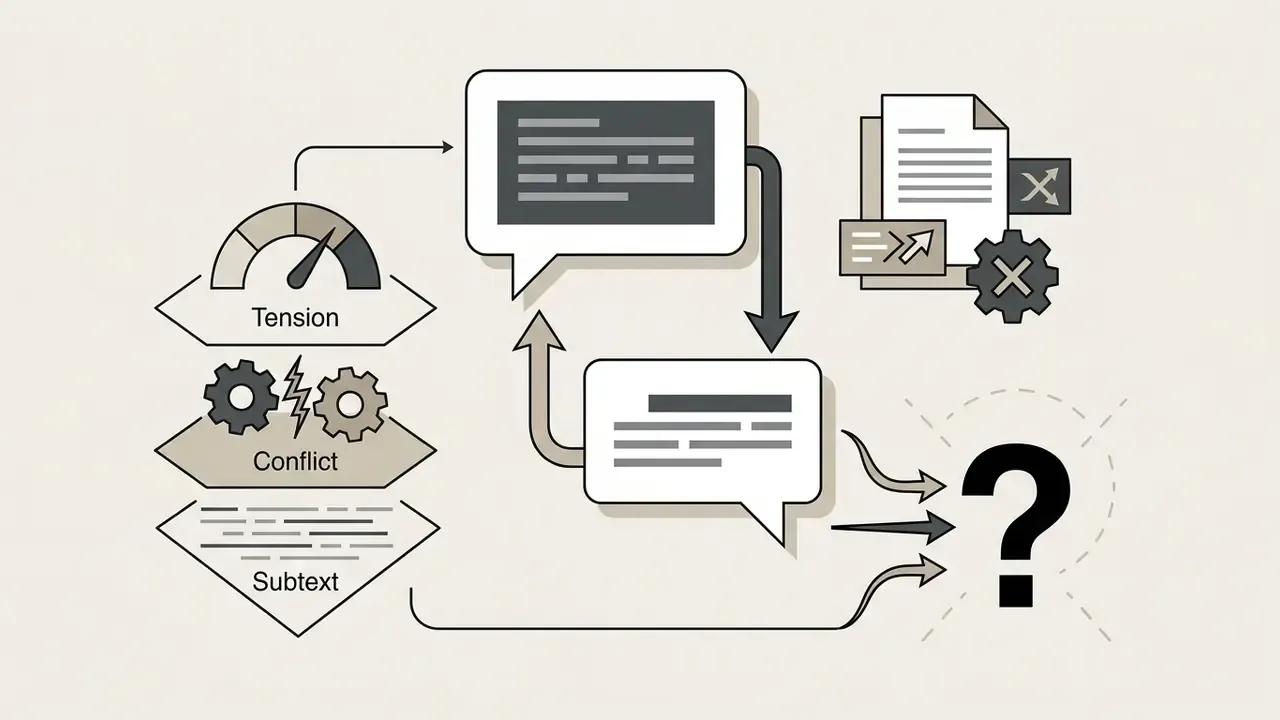
Dramatic craft: subtext, power dynamics, and action beats
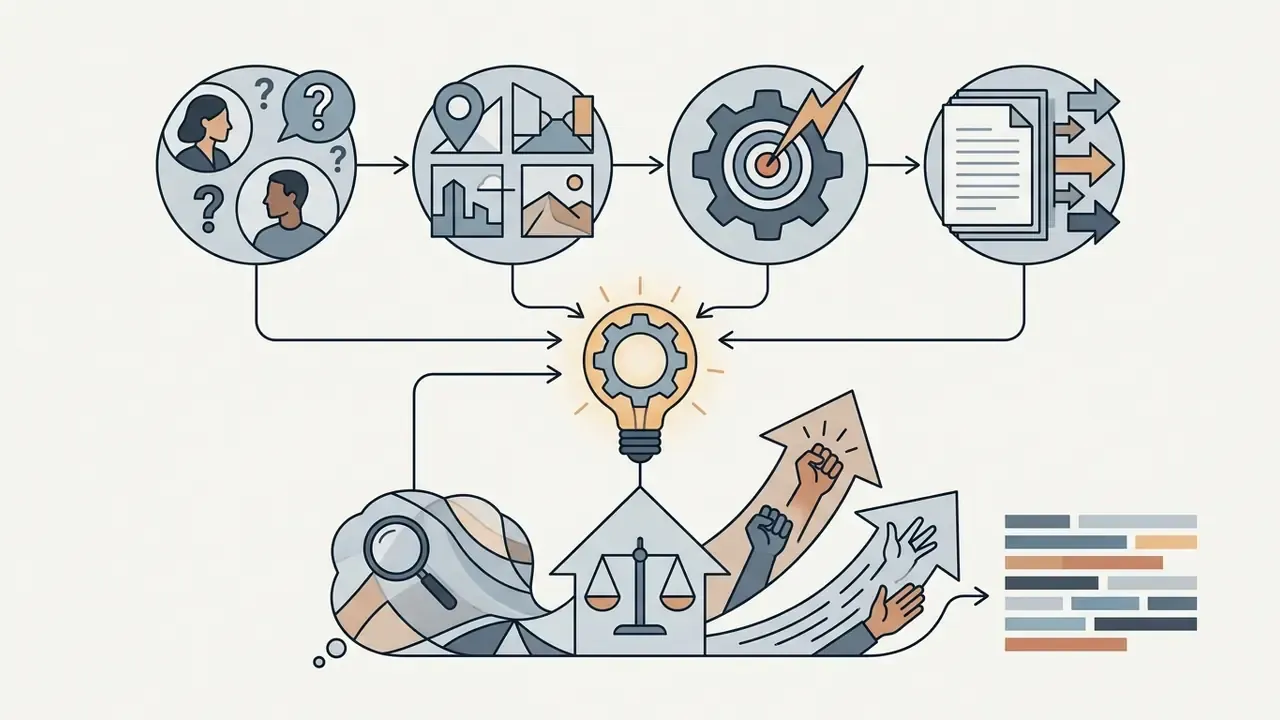
To stop dialogue reading like an information exchange, the failure writers call on-the-nose, use four mechanisms:
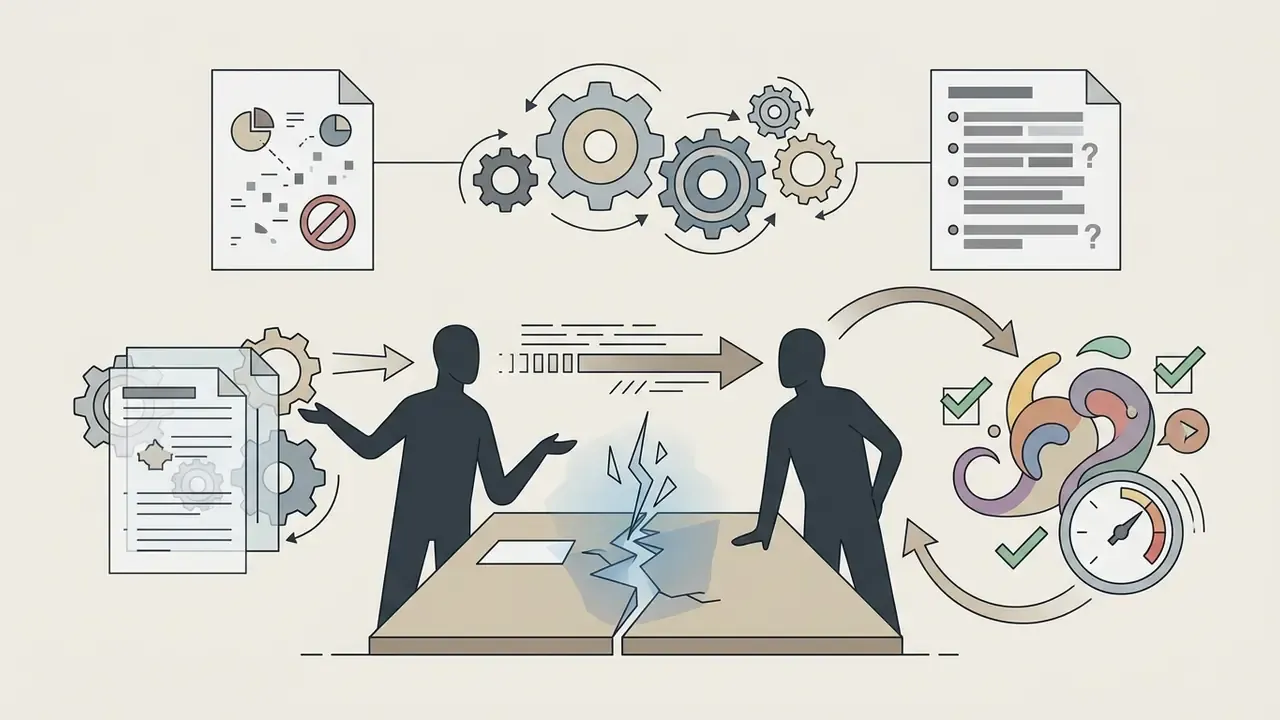
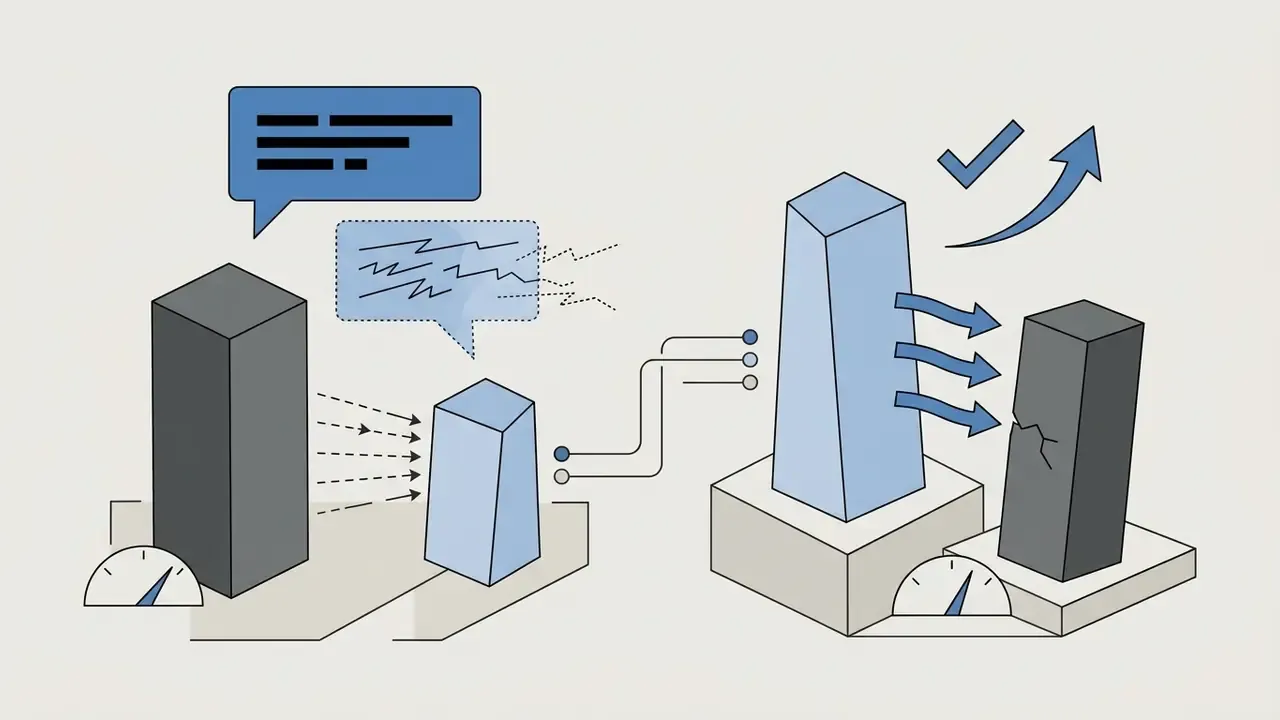
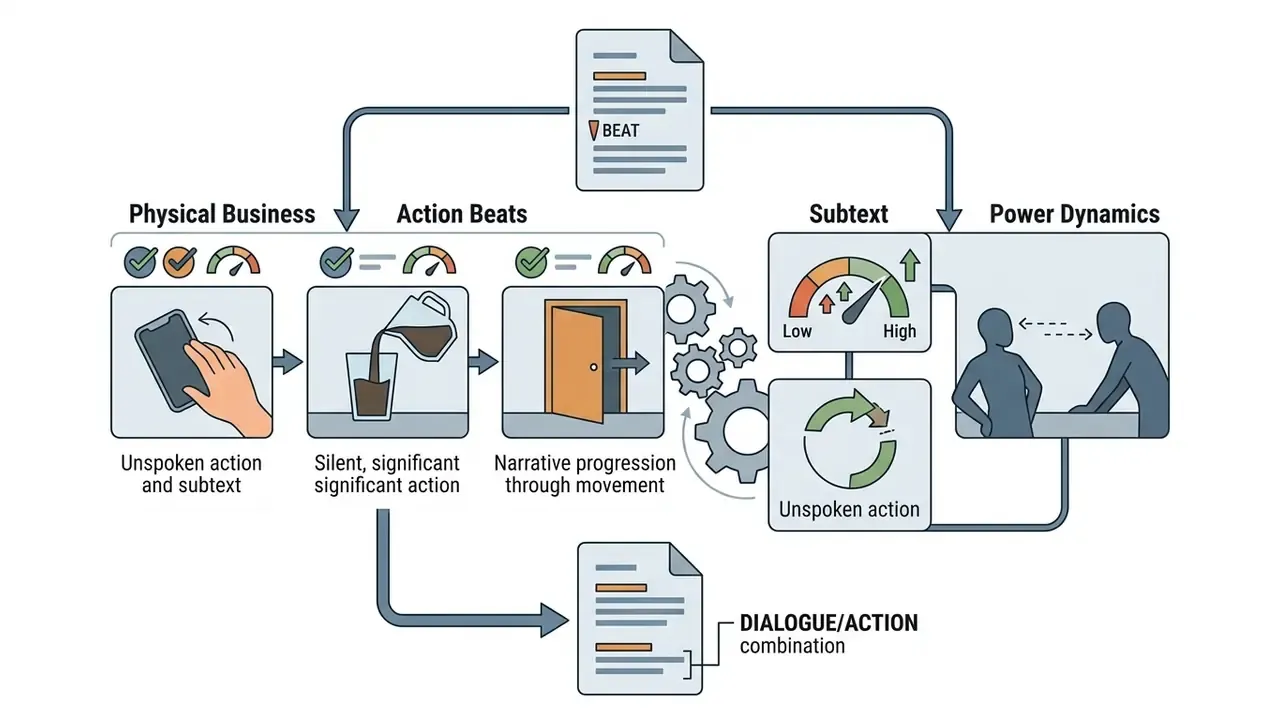
How to use the generator for content and blogs
Conversational formats inside marketing material, educational articles, and blog content raise completion rates because they break dense information into readable Q&A. A dialogic structure also lets a brand answer customer objections through a synthetic expert-and-client exchange, without sounding like a datasheet.
Marketing teams often turn a structured interview script into a narrative blog post, then pair the text layer with visuals produced by AI art generators or refined in a plain photo editor to ship a complete package. If you are comparing tooling before you commit budget, the comparison portal is a reasonable place to view the guide.
One caveat worth planning around before scaling dialogue content across a full editorial calendar:
Mitigation is unromantic: vary personas and constraints deliberately from article to article, and rewrite at least one turn per exchange by hand.
How an AI conversation generator works
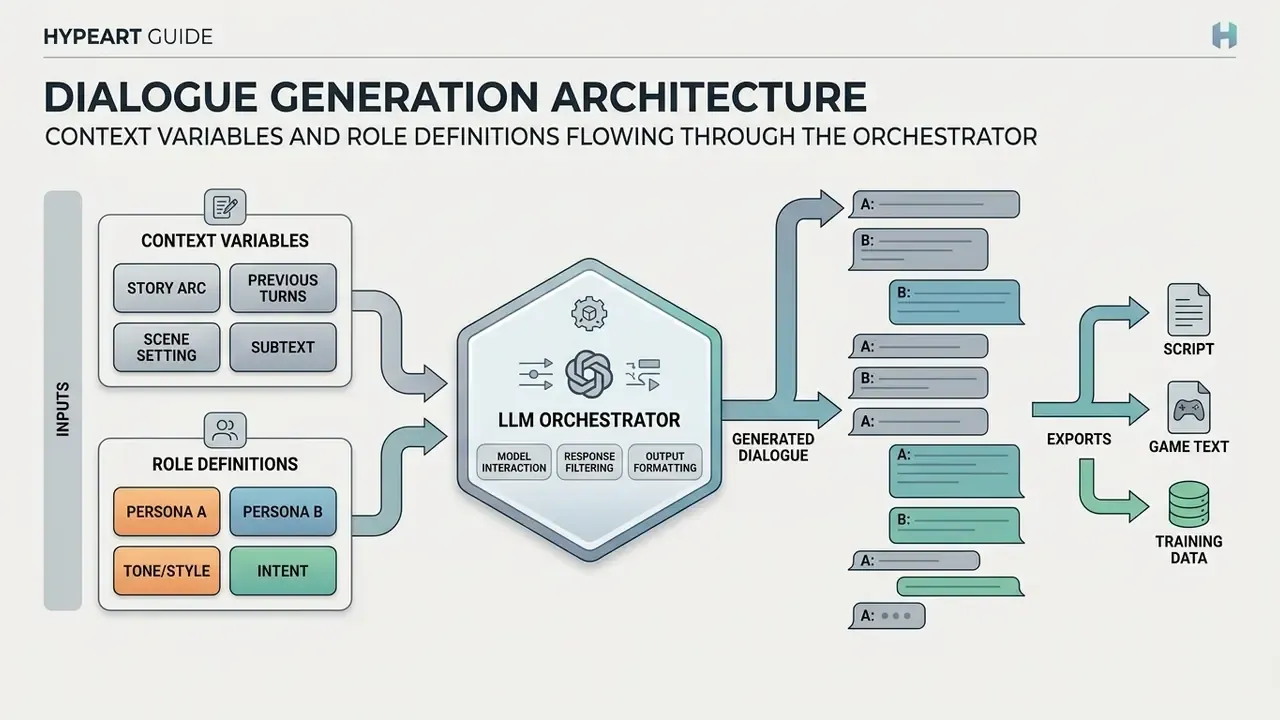
An ai conversation generator pushes your input through a staged pipeline. It parses character instructions, generates candidate turns, applies safety and stylistic filtering, and returns structured text.
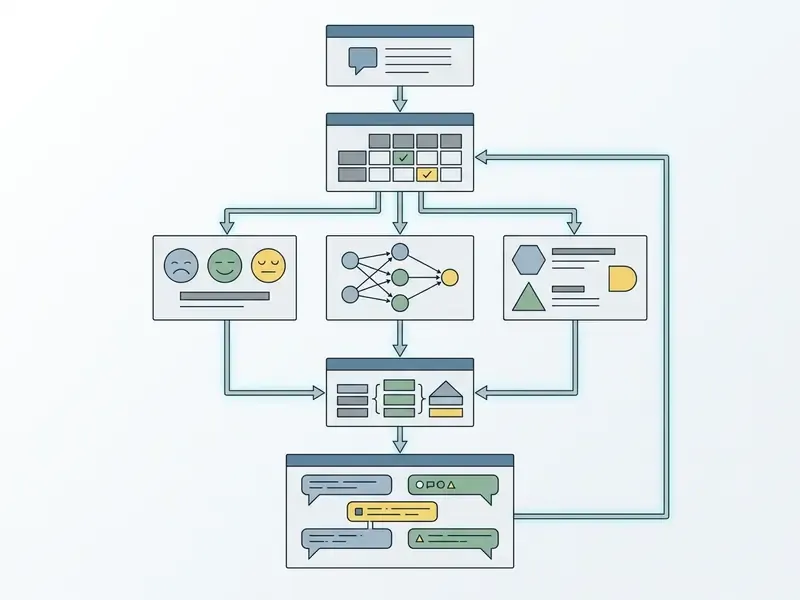
Step-by-step process
- Input detailsdefine the setting, the starting situation, the conflict, and the goal of the conversation.
- Define personas and toneset names, backgrounds, emotional states, and speech rules for each participant.
- Generate the draftrun the model to produce a sequence of attributed turns.
- Edit and refinecheck logic, remove contradictions, adjust style with an ai writer or inline AI editing.
- Export the outputsave the result as a screenplay, prose passage, or JSON structure.
Describe the scene, the goal, and the participants
You have to fence the interaction in. Clear details about setting, time period, and immediate objective stop the model from importing irrelevant context, which it will otherwise do with great confidence.
For a creative scene that means location, hour, weather, who arrived first, and what happened five minutes ago. For a professional scene, say a high-stakes banking audit meeting, it means the room, the regulatory mandate, and the specific discrepancy on the table. Spell out what each participant wants, and the turns stay on target.
Choose tone, style, and text format
Tone sets the stylistic envelope. Prompt-engineering frameworks such as CO-STAR (Context, Objective, Style, Tone, Audience, Response) treat tone and style as explicit control variables, separate from the task instruction itself. Useful discipline, even if you never write the acronym down.
Formal, adversarial, empathetic, noir, comedic, clinical: each choice reshapes word choice, sentence length, and pacing while leaving the narrative facts intact. Period and register cues ("1920s noir," "Victorian drawing room," "street-level vernacular") move vocabulary and grammar the same way.
«Increasing the number of prompt constraints makes familiar narratives harder to reproduce and pushes models toward more original dialogue.»
Generate and edit the result
The first output starts a revision loop, nothing more. Treat a draft from an ai generator as foundational material that requires human oversight.
Writing-centre and post-editing guidance converges on the same habit: revise in structured passes, never in one heroic fix-everything sweep. Structural logic and scene purpose first. Tone and character voice second. Surface mechanics last. With an ai writer or manual inline editing, adjust cadence, strip repeated phrasing, and confirm that factual assertions match project requirements.
«Writers often treat generated text as raw stock, rewriting most of it and keeping only the fragments that provide a spark of inspiration.»
Fine-tuning tools inside the interface
While a draft is open, use the editing controls rather than regenerating from zero:
- Edit with AI (magic wand) select one line and ask for "more sarcastic," "colder," "ten words shorter," or "in period vocabulary."
- Continue writing when generation stops mid-sentence or on a cliffhanger, this extends the conversation with prior context intact.
- Length switcher move between a short exchange and a long, multi-page confrontation.
- Regenerate variant produce alternate takes of the same beat and compare emotional temperature before committing.
- Export save in one click as
.DOCX,.PDF,.TXT,HTML,Markdown, orJSONfor game engines and localization pipelines.
Formatting the output for your niche
Ask for a specialized delivery format:
- Screenplay scene heading, centred character name, parentheticals, action lines between speeches.
- Novel prose quoted dialogue with attribution tags, descriptive beats, interiority, paragraph breaks per speaker.
- Game dialogue tree branching structure with player choices (Choice A / Choice B / Choice C), NPC responses, condition flags, JSON-friendly node IDs.
- Stage play character name in caps, minimal stage directions, dialogue that carries the dramatic weight alone.
- Audio drama or podcast speaker labels plus SFX cues and delivery notes for voice actors, which is the natural input for a downstream ai voice generator.
- Comic script panel-by-panel breakdown with balloon text capped at a set word count.
How to write a request for an AI conversation maker
An effective prompt for an ai conversation maker needs structured instructions: roles, contextual boundaries, structural constraints. Vagueness in, mush out.
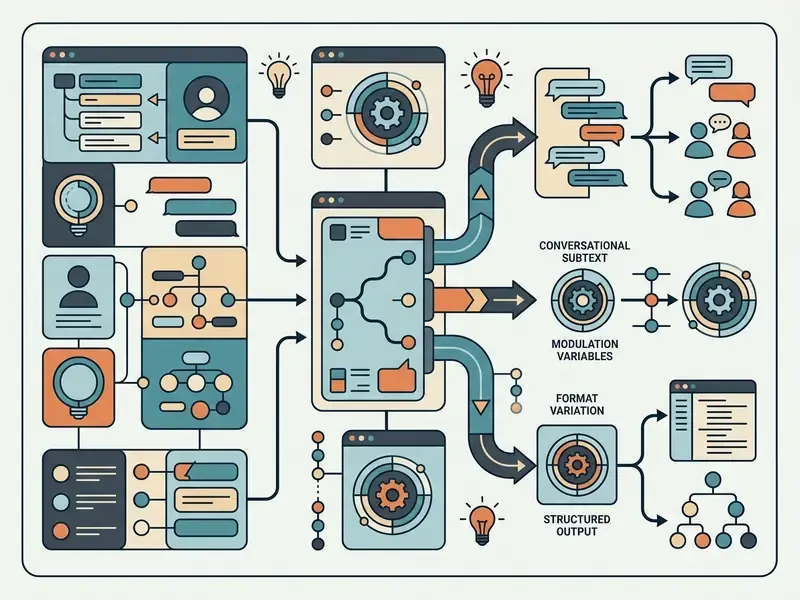
Prompt checklist before you submit
Checklist0 / 9
What details to add to the prompt
For realistic conversations, include explicit character facts and implicit behavioural rules:
- Background context what happened immediately before this conversation?
- Information asymmetry what does Speaker A know that Speaker B does not?
- Emotional state on entry how does each character feel before the first line?
- Linguistic trait limits should a speaker avoid technical jargon, or lean entirely on formal legal phrasing?
- Turn limits name the target, for example "12 to 16 alternating turns, maximum 25 words per turn."
- Narrative purpose reveal a secret, escalate a conflict, close a deal, set up a betrayal.
Prompt for a dialogue between several characters
Three or more participants raise the risk of character drift and turn-taking confusion. Structure such prompts with distinct character tags and explicit turn directives.
Example 1. Fiction and screenplay (three characters, subtext-driven):
Write a screenplay-formatted scene with three characters at a lakeside cabin,
2 a.m., power out, one flashlight.
CHARACTERS
1. NORA (42, veterinarian): controlled, speaks in short declaratives, never
   raises her voice. Secretly knows the car keys are in her pocket.
2. VIC (48, her brother): loud, jokes to defuse fear, uses three sentences
   where one would do. Wants to leave immediately.
3. THEO (19, Vic's son): monosyllabic, deflects with questions, saw something
   outside but is afraid to say it.
SUBTEXT: They are ostensibly arguing about whether to drive back tonight.
They are really arguing about who is responsible for the accident last summer.
POWER DYNAMIC: Vic dominates the first half; Nora takes control after Theo
reveals what he saw.
CONSTRAINTS: 18-22 turns, no line longer than 20 words, at least four action
beats, one question left unanswered, no character states their feelings directly.
FORMAT: Screenplay with scene heading, centered character names, action lines.
Example 2. Game development (branching NPC dialogue tree):
Generate a branching NPC dialogue tree in JSON for a fantasy RPG.
NPC: BRAM THE TOLLKEEPER. Greedy, superstitious, speaks in bargaining terms,
refers to the bridge as "she." Hates mages, respects payment.
PLAYER GOAL: Cross the bridge without paying.
SCENE: Dusk, storm approaching, bridge partially collapsed.
REQUIREMENTS
- 3 root player choices: intimidate, bribe, invoke local superstition.
- Each choice has 2 follow-up options and one failure branch.
- Superstition branch unlocks only if flag "heard_the_river_legend" is true.
- Node schema: {id, speaker, text, conditions[], choices[{label, next}]}
- Max 25 words per NPC line; keep Bram's dialect consistent across all nodes.
Example 3. Business and risk training (three characters, professional register):
Generate a dialogue between three characters in a bank's risk management office.
CHARACTERS
1. Marcus (Chief Risk Officer): reserved, analytical, speaks in short phrases.
   Goal: establish the root cause of the model failure.
2. Elena (Lead AI engineer): defensive, uses technical jargon, wants to explain
   system complexity.
3. Dmitry (Auditor): neutral, demanding, looking for policy violations.
CONTEXT: A generative algorithm failure in credit scoring.
TONE: Tense, businesslike, strictly professional.
CONSTRAINTS: No monologue longer than 30 words. Each character must speak at
least three times. No invented regulation numbers.
FORMAT: Character name: [line].
That last constraint, "no invented regulation numbers," is not decoration. Models fabricate citation-shaped strings happily, and a fake SR reference inside a training script will eventually be quoted by someone who trusts it.
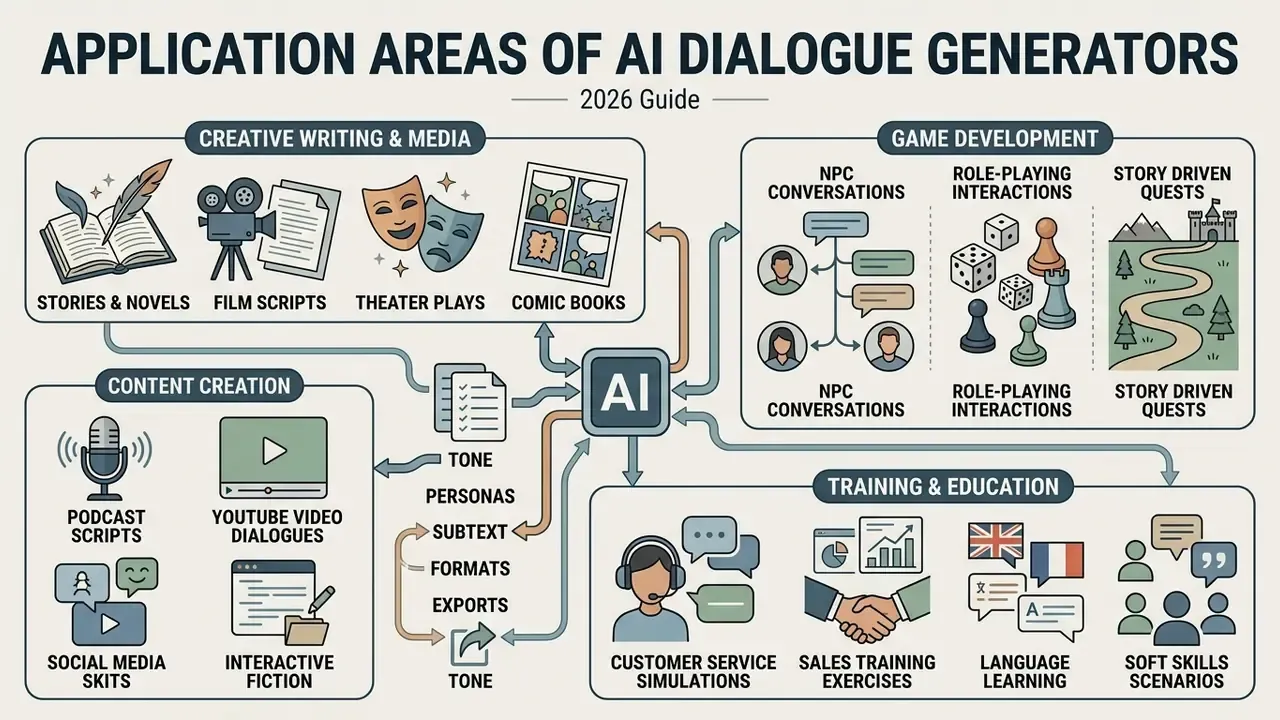
Use cases for an AI dialogue generator
Specialized dialogue platforms serve creative, commercial, and operational work, and the discipline required rises as you move rightward across that list.
Dialogue for stories and creative writing
In fiction, dialogue carries character and plot at once. Authors use an ai dialogue generator to draft initial scene interactions, test subtext, and sharpen conflict.
Models produce grammatically pristine text and then, left alone, resolve everything politely. Writers beat this by prompting explicitly for disagreement, withheld motive, and friction that does not get tidied up.
«LLM-generated stories are statistically less tense and structurally less varied than human-written ones: models systematically avoid climaxes and major turning points.»
Workflows that hold up in practice:
- Novelists stress-testing whether two characters still sound different once attribution tags are stripped.
- Screenwriters generating three alternate takes of one confrontation, comedic, restrained, explosive, before choosing.
- Playwrights drafting exchanges that must land with no camera and no narration.
- Game masters and TTRPG designers improvising NPC voices at the table and pre-building faction dialogue banks.
- Comic writers compressing an emotional beat into two balloons of eight words each.
- Writing students generating annotated examples of subtext, escalation, and voice differentiation for study.
Authors building illustrated or animated companions to their scenes often compare visual tools in the best AI art generator comparison, or weigh motion options in the guide to animation makers.
Conversations for blogs, content, and chats
Content teams use generated conversations to turn dry technical data into something readable.
- Q&A blog posts complex explanations framed as an interview between a curious non-expert and a specialist.
- Customer support scripts training transcripts for representatives handling difficult requests.
- Sales enablement objection-handling drills, discovery-call simulations, onboarding walkthroughs.
- Interactive social feeds multi-speaker posts, debate formats, short-form video scripts assembled inside a YouTube video editing workflow.
- Audio and video repurposing a written exchange narrated through a voice generator, then packaged with a video compressor for distribution.
Before you scale any of this, it is worth modelling unit cost per asset with the calculators and checking current tiers against AI Media Pricing.
Enterprise and risk-training scenarios
In regulated environments, generated dialogue works as controlled training material, not customer-facing copy. Simulated compliance escalations. Audit interview rehearsals. Incident post-mortem roleplay. Synthetic conversation datasets for classifier training, where real transcripts would carry customer data you should not be moving.
Each of these deserves the same treatment as any other model output: documented inputs, named human reviewer, version control. A KYC or AML escalation script that circulates for two years without a review date is a small governance debt that compounds quietly.
Free AI conversation generator, pricing, and commercial use
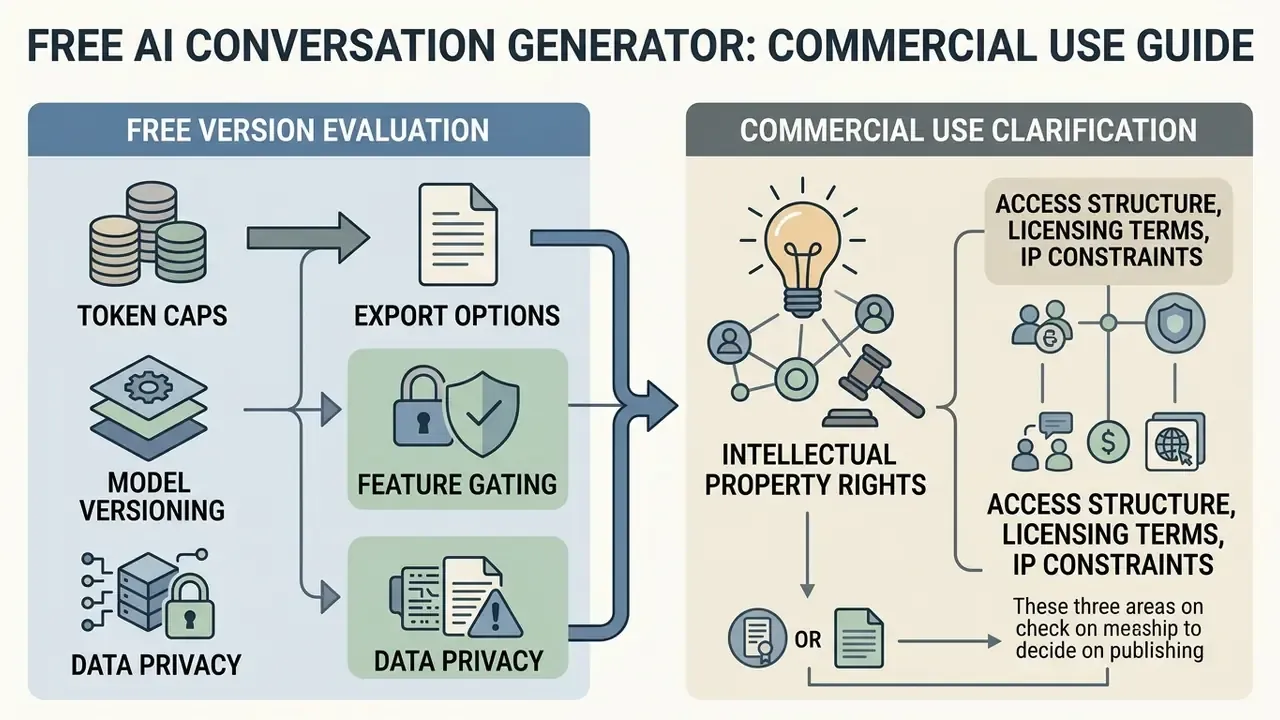
Deciding whether to publish generated text commercially means reading three things: access structure, licensing terms, and intellectual property constraints.
What to check in the free version of an AI generator
When testing a free ai generator, look at the structural limits before you build a workflow on top of it:
- Token caps per-request and daily generation limits.
- Export options whether text leaves in raw formats (
.TXT,.DOCX,.PDF, Markdown,HTML,JSON) without watermarks. - Model versioning whether the free tier runs legacy architectures or current foundation models.
- Feature gating whether "Edit with AI," "Continue," long-length generation, and history sit behind the paywall.
- Data privacy whether free-tier inputs feed public model training, and whether an enterprise opt-out exists in writing.
If a vendor's answer to the last point lives only in a support chat, treat it as unverified.
What to clarify before using dialogue in commercial content
- Intellectual property rights.Under US Copyright Office guidance (updated 2025–2026), purely AI-generated text without human authorship is not eligible for copyright protection. Human editorial contribution, meaning prompt design, structural editing, and selection, must be documented if you intend to claim protection for a composite work. Readers weighing the same question for other media can review our notes on commercial use of AI-generated images.
- Platform terms of service.Read the vendor agreement on output ownership. OpenAI's Terms of Use, for example, assign right, title, and interest in generated output to the user, subject to policy compliance. The European Commission's IP Helpdesk similarly ties commercial exploitation to national law plus the tool's terms.
- Regulatory compliance in financial services.US banking supervisors, including the OCC and the Federal Reserve through SR 11-7 model risk management guidance, expect transparent data lineage and human oversight wherever AI systems shape customer-facing communications. Generated dialogue used in credit, collections, or KYC workflows is not exempt because it looks like writing.
«Multi-agent systems without validation mechanisms amplify errors: one agent's incorrect data cascades across the entire conversation.»
This information is general and does not replace advice from a lawyer or an intellectual property specialist.
Audit trail and data privacy checklist
For regulated deployments, reproducibility is the evidence. Log the following for every published or deployed dialogue asset:
| Artifact to log | Why it matters |
|---|---|
| Model name and version | Output cannot be reproduced across silent model updates |
| System prompt plus user prompt, verbatim | Demonstrates the constraints applied at generation time |
| Seed, temperature, top-p | Establishes whether output is deterministic or sampled |
| Timestamp and operator identity | Links the asset to a named human reviewer |
| Human edit diff, pre- and post-edit versions | Evidences the human authorship needed for copyright and oversight claims |
| Approval record | Shows who signed off before publication or deployment |
On privacy, confirm four things before any prompt leaves your perimeter: whether the vendor offers zero-retention or an enterprise no-training mode; whether the processing region satisfies your data-residency obligations under GDPR and equivalents; whether the vendor holds a current SOC 2 Type II attestation; and whether customer information inside prompts would fall under GLBA safeguards or comparable sectoral rules. The safest operating rule is boring and effective. Never paste identifiable customer data into a dialogue prompt when a synthetic placeholder produces the same training value.
Teams planning enterprise rollouts can browse the hub of litigation notes, open the hub for API integration patterns, or check licensing detail in the commercial use section. Cost and quota questions usually land faster in support, where the answers get updated more often than any article.
How to improve generated dialogue before publication
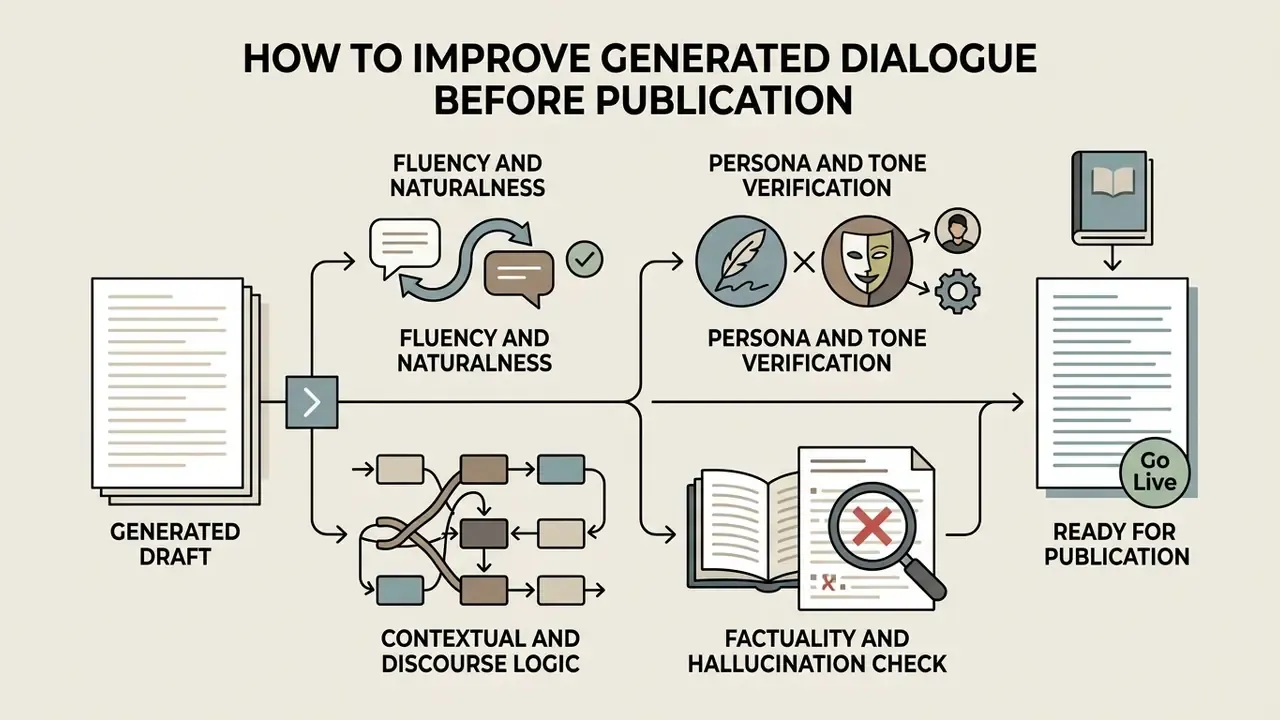
A generated draft is raw material. Turning it into publishable dialogue takes systematic post-editing: preliminary analysis, the editing passes, then a final error-reporting and quality-control step.
Checking naturalness, tone, and logic
Four passes, in this order:
- Fluency and naturalness.Read the turns aloud. Cut unnatural cadence, repetitive sentence shapes, robotic transitions. Restore contractions, interruptions, trailing thoughts.
- Persona and tone verification.Confirm each character keeps their assigned vocabulary level, emotional baseline, and vocal style. The test: strip the attribution tags. If you cannot tell who is speaking, the voices have collapsed and no amount of polish will fix it.
- Contextual and discourse logic.Check that information introduced early is acknowledged later. Remove abrupt topic jumps and contradictions with earlier turns.
- Factuality and hallucination check.Validate every factual assertion, regulatory reference, statistic, and technical claim inside character speech. Extraction and verification are two separate operations; doing them in one pass is how errors survive.
«MPCEval separates local evaluation (next turn) from global evaluation (the full dialogue), revealing where models lose task focus and break role structure.»
Publication rules worth enforcing on dialogue specifically: keep at least three turns, maintain strictly alternating attribution in two-speaker scenes, split overlong exchanges at natural topic breaks, rewrite weak endings, and keep the number of manual interventions per pass low so every edit stays traceable.
FAQ about AI conversation generators
Can I use an AI conversation generator together with other AI tools?
Yes, and most production pipelines do. A dialogue generator can produce script text that then feeds an AI voice generator for multi-speaker audiobooks, podcasts, or game barks. Scene descriptions embedded in the script can be extracted as prompts for image models reviewed in our best AI art generators comparison, then finished in a photo editor. Developers usually wire these stages together through custom API workflows rather than by hand.
How many characters can a single dialogue include?
No hard structural limit, but coherence decays as the cast grows. Two and three speakers are the reliable zone. For four or more, give each speaker a distinct topic of concern, enforce strict NAME: labels, and cap turn length, otherwise voices start merging around the halfway mark. If a tool exposes only two character slots, describe the extra participants inside the context field.
Is generated dialogue safe to use commercially?
Generally yes, subject to vendor terms and jurisdiction. Most major platforms assign output rights to the user. Copyright protection is the separate question: purely machine-generated text is not protected in the US, so document your prompt design, structural edits, and selection choices if you plan to claim authorship in a composite work. See the commercial-use section above, and take counsel on anything material.
How do I keep prompts confidential in a regulated environment?
Use a tier with contractual no-training and short-retention commitments. Verify the processing region against your data-residency obligations. Prefer synthetic placeholders to real customer records. Log every prompt for audit. Where GLBA safeguards or GDPR apply, treat the prompt itself as regulated data, because that is exactly what it is.
Can I integrate a dialogue generator with internal systems via API?
Yes. The usual pattern sends a structured payload (personas, scene, constraints, format) and receives attributed turns as JSON, which then writes into a CMS, a localization pipeline, a game engine, or a GRC training module. For governance, store model version, prompt, sampling parameters, and reviewer identity beside the returned text, and gate publication behind human approval. Implementation and cost considerations for comparable generative APIs sit in our API implementation hub.
What if the dialogue stops mid-scene?
Use the Continue control instead of regenerating. The model re-reads the preceding turns and extends with the same personas and tone. Voice consistency survives far better than with a fresh generation, which tends to reinvent everyone slightly.
Which languages are supported, and does tone survive translation?
Generation and translation cover 18 or more languages, including English, Spanish, French, German, Italian, Portuguese, Polish, Russian, Turkish, Arabic, Hindi, Chinese, Japanese, and Korean. Tone usually survives if you restate the register explicitly in the target language ("informal, teenage, urban") instead of hoping the model infers it from the source text.
Does a free tier produce lower-quality dialogue?
Sometimes, though not always for the reason people assume. The gap is usually feature gating and older model versions rather than a deliberately degraded engine. Test the same prompt on both tiers with identical constraints before drawing conclusions.
Appendix A. Common failure modes in generated dialogue and how to fix them
| Failure mode | What you see in the draft | Fix at the prompt level |
|---|---|---|
| Persona drift | All speakers converge on one polite register by turn eight | Character cards plus reference utterances plus strict NAME: labels |
| On-the-nose dialogue | Characters announce their feelings and motives | Declare subtext explicitly; forbid direct emotional statements |
| Consensus collapse | Conflict resolves in three turns, everyone agrees | Assign incompatible goals; require one unresolved question |
| Talking heads | No physical world, pure verbal exchange | Request four or more action beats and one environmental interruption |
| Turn-taking confusion | Three-plus-character scenes lose track of who answers whom | Give each speaker topic ownership; cap line length |
| Fabricated authority | Invented regulation numbers, fake statistics, plausible-looking citations | Ban invented references in the prompt; verify every claim in a separate pass |
| Register loss in translation | Slang flattens into textbook phrasing | Restate register in the target language; spot-check with a native speaker |
| Unreproducible output | Same prompt yields materially different scenes next month | Log model version, seed, temperature; pin the model where the vendor allows it |
Note on revision history: earlier drafts of this guide carried unsourced claims about multi-party benchmarks, persona-consistency frameworks, and writing-centre guidance. Those were replaced with cited references, and consumer-oriented internal links were swapped for topically relevant guides on voice generation, art generation, animation, video workflows, and licensing.