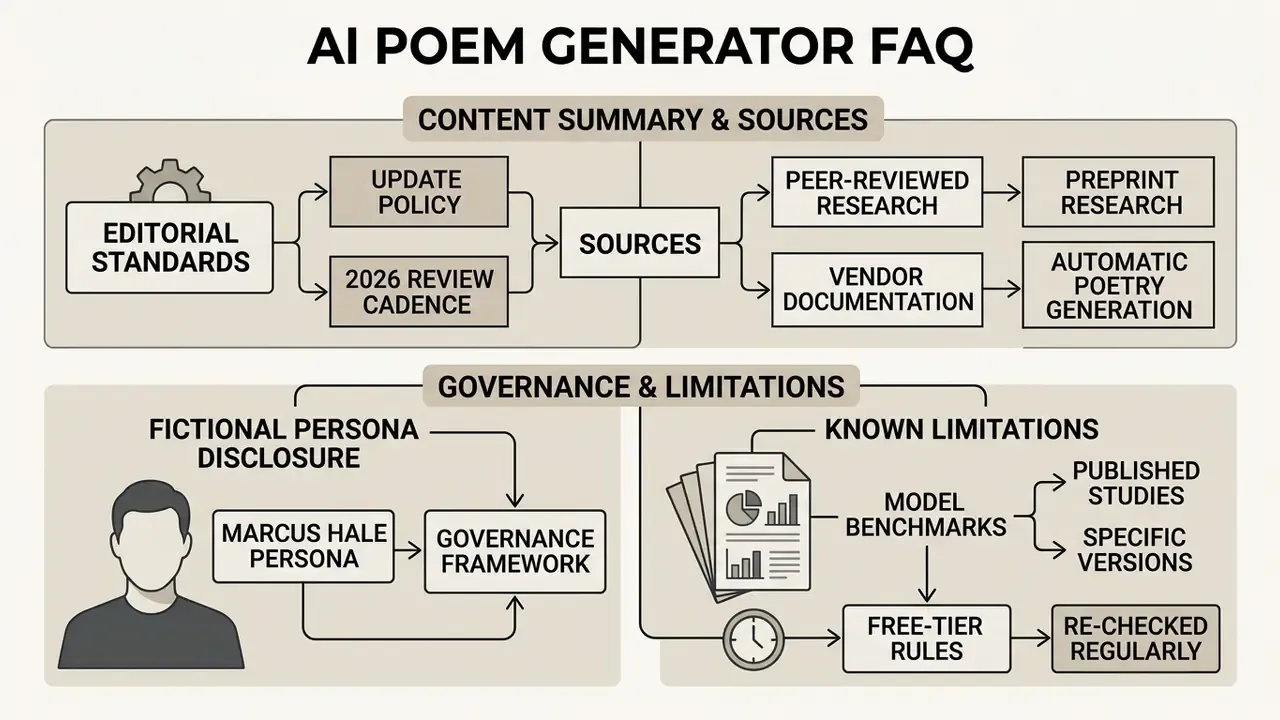
About this guide: written and fact-checked by the AI Media editorial desk, which specializes in generative-tool evaluation, licensing terms, and enterprise deployment risk. Last content and legal audit: the copyright section below reflects published U.S. Copyright Office guidance and is reviewed on each update cycle in 2026.
Executive Summary
- What it is an AI poem generator turns a short prompt (topic + form + tone) into complete verse in seconds by predicting tokens under structural constraints. Vendors label the same function as poem generator, poem maker, or poetry generator. The difference is branding, not capability.
- Where models are strong fixed forms with countable rules, so sonnets, limericks, acrostics, and ballads. Where they are weak: syllable-exact short forms (haiku, tanka, cinquain), original imagery, and emotional depth. Human poets still outscore top models on creativity, imagery, and emotional resonance.
- The single biggest quality lever negative constraints. Banning default AI vocabulary ("whisper", "echo", "shadow", "tapestry") and obvious rhyme pairs (heart/part, forever/never) strips out most of the machine "house style."
- Legal position raw, unedited AI text is not copyrightable in the United States. You may still publish and monetize it, and substantial human editing gives you protection over your version.
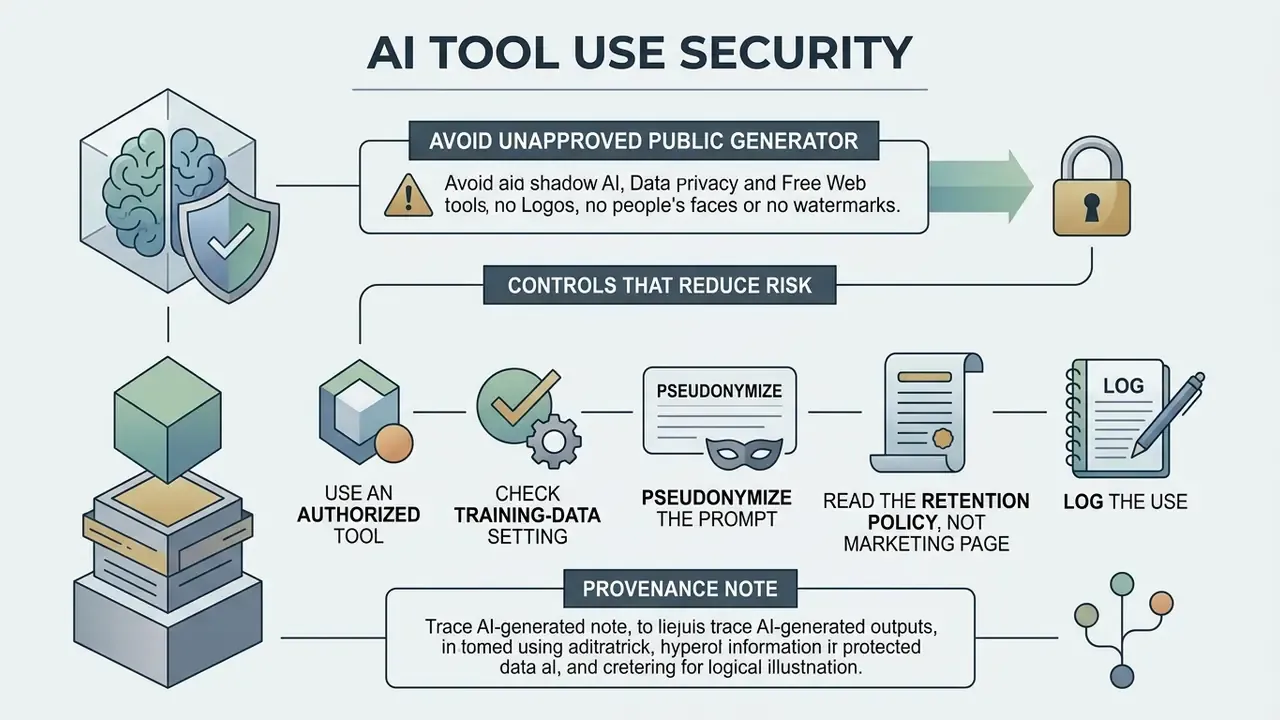
- Operational risk never paste personal data, client names, or confidential material into free, unauthenticated web generators. That is textbook Shadow AI exposure (see the data-privacy checklist below).
- Cost free tiers usually cap output at roughly 5 to 50 generations per day, or apply a lifetime and token quota. Paid tiers add unlimited volume, style controls, and explicit commercial rights.
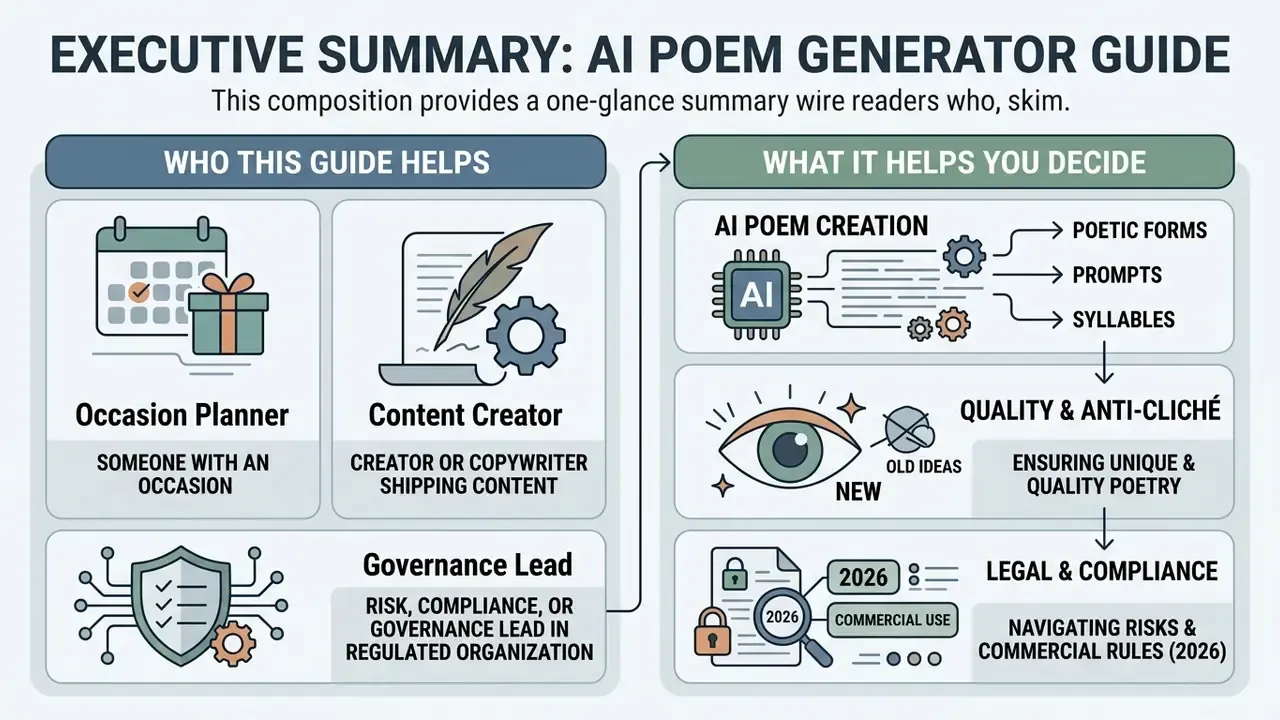
Who This Guide Helps, and What It Helps You Decide
Three audiences keep landing on the same page for very different reasons, so the guide answers all three questions in order.
- Someone with an occasion on the calendar. A wedding toast, a eulogy, a card that has stayed blank for three days. You need a usable draft, a form that fits, and the confidence to edit it. Sections 2 to 4 cover that.
- A creator or copywriter shipping content. You need repeatable prompt patterns, anti-cliché controls, and a clear answer on commercial rights before the campaign goes live.
- A risk, compliance, or governance lead in a regulated organization. Your question is narrower: is a free, no-login ai poem generator online an acceptable tool for staff to use on corporate content, and what controls make it defensible? Start with the Shadow AI section, then the commercial-use checklist.
One honest caveat before we go further. Poetry generation looks like the most harmless generative use case in the building, which is exactly why it slips past procurement unnoticed.
What Is an AI Poem Generator?
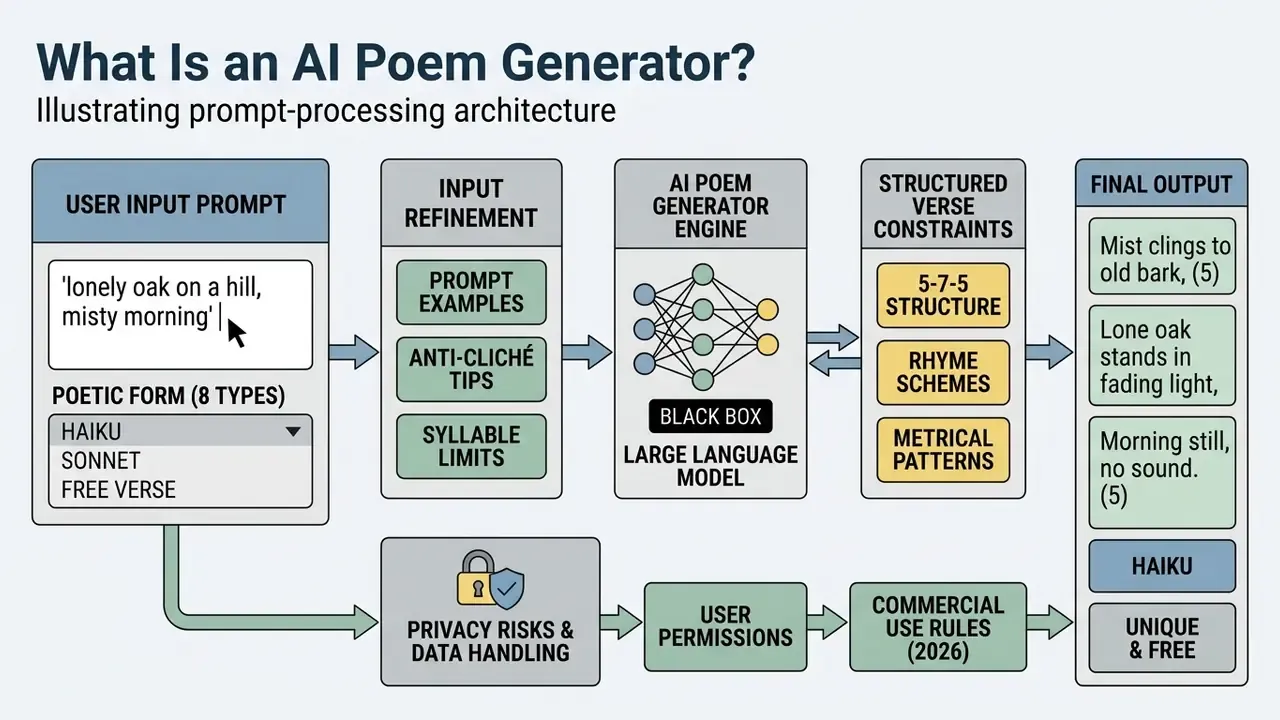
An AI poem generator is a software tool powered by large language models (LLMs) that processes text input to generate original poetic compositions. The primary poem generator is built to interpret thematic directives, apply structural patterns such as meter or rhyme, and output complete poems on demand.
Users who want to ai create a poem use these systems to draft creative content, break through writer's block, or explore stylistic variations. Whether searched as an ai poem maker, an ai poetry generator, or an ai generator for poems, these interfaces run on identical underlying generative mechanics: converting semantic tokens into structured stanzas.
«GPT-4 and GPT-4o show high accuracy in identifying fixed poetic forms, including sonnets, sestinas, and pantoums, often outperforming human annotators.»
How AI Creates a Poem From Your Prompt
AI platforms build poetry by modeling probability distributions over vocabulary, conditioned on preceding lines and structural constraints. When you prompt a system to ai create poem content, the model reads your topic, maps requested stylistic tokens (such as "metaphor" or "melancholic"), and samples words that satisfy both semantic meaning and formal pattern.
Research systems formalize this as constrained generation: control codes describe line length, rhyme scheme, and meter, and the decoder is conditioned on those signals while the poem is produced line by line. Some architectures go further and steer output character by character to hit an exact format target. Most consumer tools approximate the same effect with prompt templates plus a post-generation correction pass.
Measured accuracy by form type:
«Models achieve high accuracy on fixed forms, but perform substantially worse on non-fixed and thematic forms.»
That asymmetry matters operationally. A sonnet is a countable object: 14 lines, a declared rhyme scheme, a turn at a fixed position. A "melancholic autumn poem" has no verifiable target, so the generator ai falls back on statistical defaults, usually a standard iambic-like cadence and conventional rhyming couplets, unless you supply explicit imagery constraints or a feedback loop that re-checks meter after the first draft.
Ask the same tool for three drafts and you will see the pattern yourself. The countable parts stay stable. The imagery drifts toward the same handful of motifs.
AI Poem Generator, Poem Maker, and Poetry Generator
Searchers arrive with a wide spread of labels, including ai poem creator, ai generated poem maker, ai poem creater, and typo variants such as ai peom generator, ai poem genrator, or ai poen generator. The functionality behind them is uniform across vendors.
- Poetry Generator / AI Poetry Generator broader industry terminology for algorithmic verse generation. Academic literature uses the equivalent term automatic poetry generation.
- AI Poem Generator / Poem Generator Online practical product labels used by consumer web tools and desktop software.
- Poem Maker / AI Poen Maker direct, user-oriented naming that emphasizes prompt-driven composition.
Regardless of branding or common misspelled searches (ai generator poetry, ai generator poem, ai generator poen, or the German query ai gedicht generator), these applications process input strings and return automated verse. No functional distinction exists between "creator", "maker", and "generator". That is vendor marketing, not method.
Practical consequence for anyone maintaining a tool inventory: three departments can adopt what looks like three different products and in fact route prompts to two model providers. Name the model, not the interface.
How to Use an AI Poem Generator Online
To generate poetry with an ai poem generator online, you enter a core topic, define the preferred poetic form, add contextual detail, and run the generation command. The software turns those parameters into instant drafts you can revise or expand.
Follow this sequence for better output when you use an ai poem generator free online tool:
- Define the core conceptenter your main topic, central image, or emotional thesis into the prompt field.
- Select the poetic formchoose a target structure, such as a 14-line sonnet, a 3-line haiku, or unrhymed free verse.
- Set tone and keywordsspecify stylistic parameters (for example "reflective", "celebratory") and add key vocabulary to guide lexical selection.
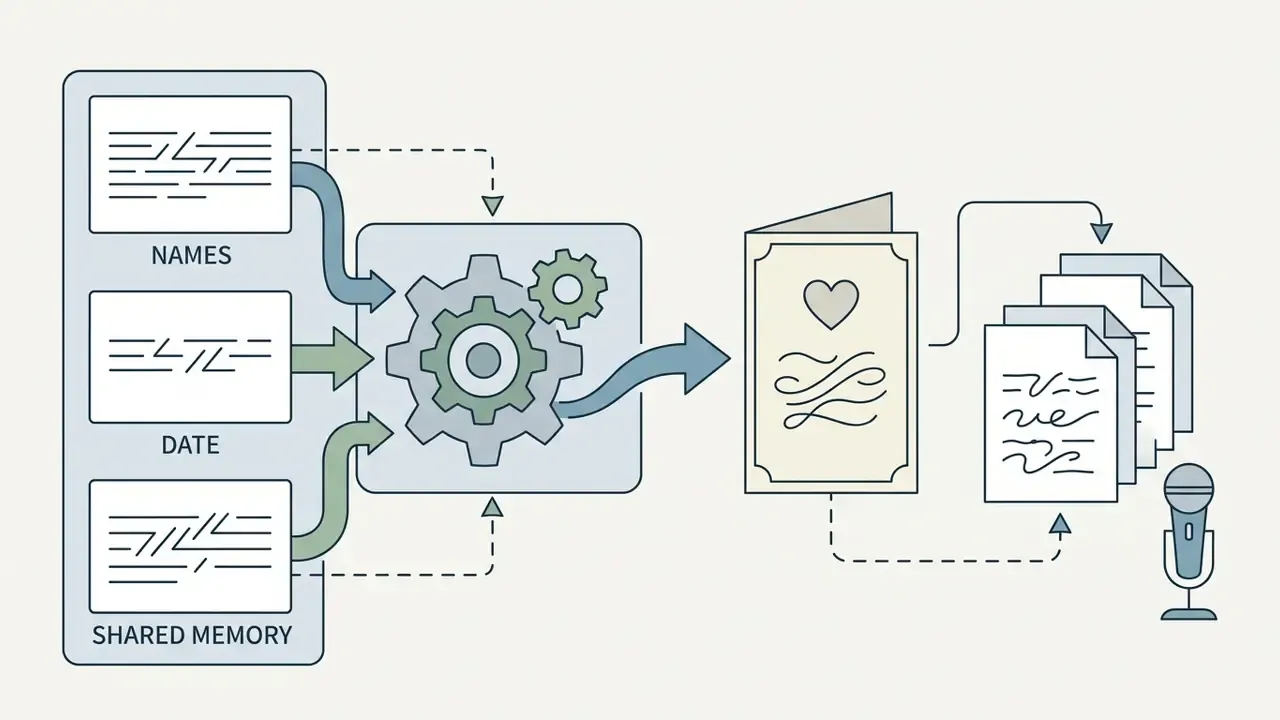
- Add personal detailsupply names, dates, a place, and one shared memory. This is what separates a written poem from a filled-in template.
- Generate draftsrun the tool to produce different verse outputs across several attempts. Two or three drafts is the practical minimum.
- Refine and editreview cadence, replace repetitive phrasing, and confirm structural alignment.
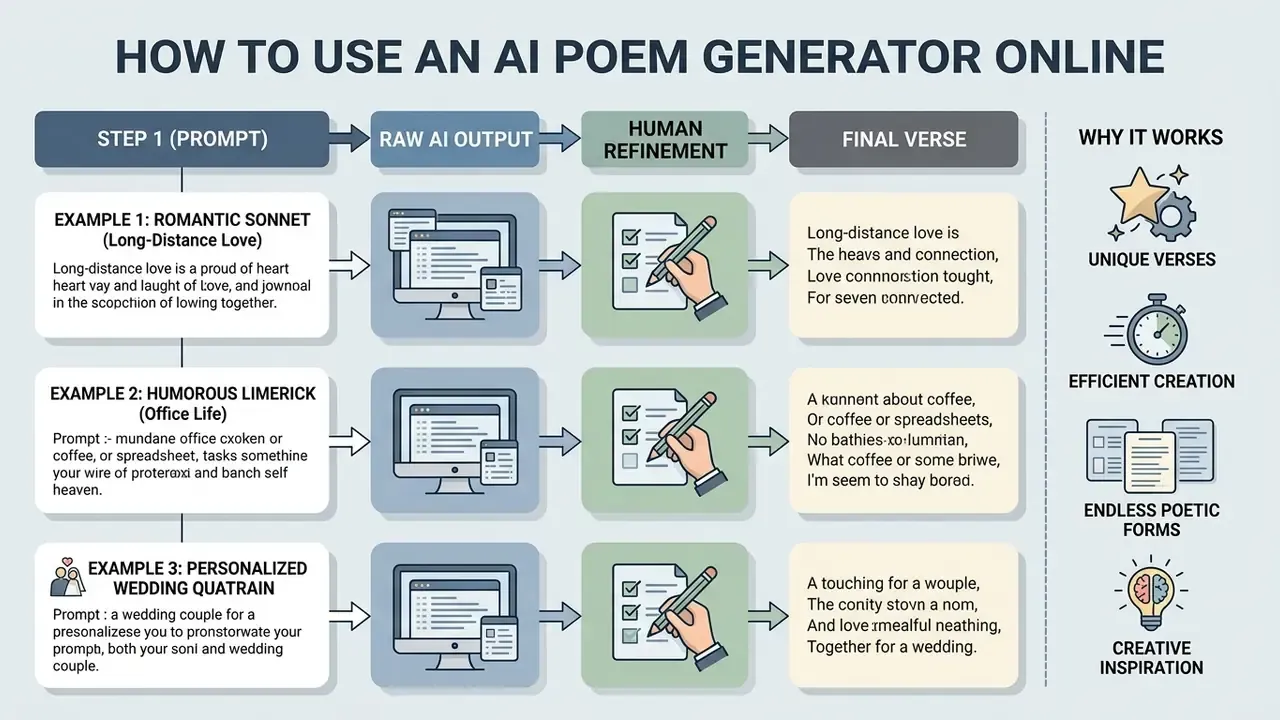
Step-by-Step Prompting Examples: From Input to Final Verse
For higher-quality verse, prompt in two moves: set the structural rules first, then apply emotional and lexical constraints.
Example 1: Romantic Sonnet (Long-Distance Love)
- Step 1 (Prompt): "Write a 4-line stanza of a sonnet about a long-distance relationship. Avoid clichés like 'whispering winds' or 'tapestry'."
Raw AI Output:
Though miles divide the soil on which we stand,
The midnight clock strikes softly in my room;
I trace the quiet shadow of your hand,
And find your light despite the gathering gloom.
- Human Refinement: swap "gathering gloom" for a concrete detail ("the unmade bed", "the cooling room") to strip out generic imagery. "Shadow" can become a physical object the reader can actually see.
Example 2: Humorous Limerick (Office Life)
- Step 1 (Prompt): "Create a lighthearted 5-line limerick about a coffee spill before a big presentation. Use AABBA rhyme."
Raw AI Output:
There once was a manager named Pete,
Who spilled his hot tea on his sheet.
He leaped with a shout,
Turned his laptop about,
And rushed out in stain-covered defeat!
- Human Refinement: tighten the anapestic bounce in line 2 and replace the abstract "defeat" with a specific consequence ("in a shirt full of Earl Grey and heat").
Example 3: Personalized Wedding Quatrain
- Step 1 (Prompt) "Write a 3-stanza rhyming poem for Sarah and Mark's wedding on June 12. Include their first meeting at a rainy coffee shop in Chicago. No abstract nouns; use objects and weather."
- Why it works the model now holds proper nouns, a date, a location, and a sensory anchor. Personal detail is the cheapest originality available. A generator cannot statistically default its way out of one specific rainy Chicago window.
Choose a Theme, Mood, and Poetic Words
Precise themes and evocative words control output quality directly when you want unique poems. Tell an ai generator poems tool to "write about love" and you get boilerplate; give it targeted material and the imagery sharpens.
Corpus evidence:
«Without constraints, models gravitate toward repeated vocabulary such as "whisper", "echo", "shadow", and toward rhyming quatrains with iambic rhythm.»
That study compared thousands of AI-generated poems with a human-written control corpus. Overlap is high at the single-word level and collapses at the bigram and trigram level: the vocabulary looks varied, the phrasing does not. Independent stylistic analyses from 2024 through 2026 report the same pull toward abstract universal motifs, light, silence, dream, which reads as poetic on the first pass and as filler on the second.
Generate, Edit, and Refine the Verse
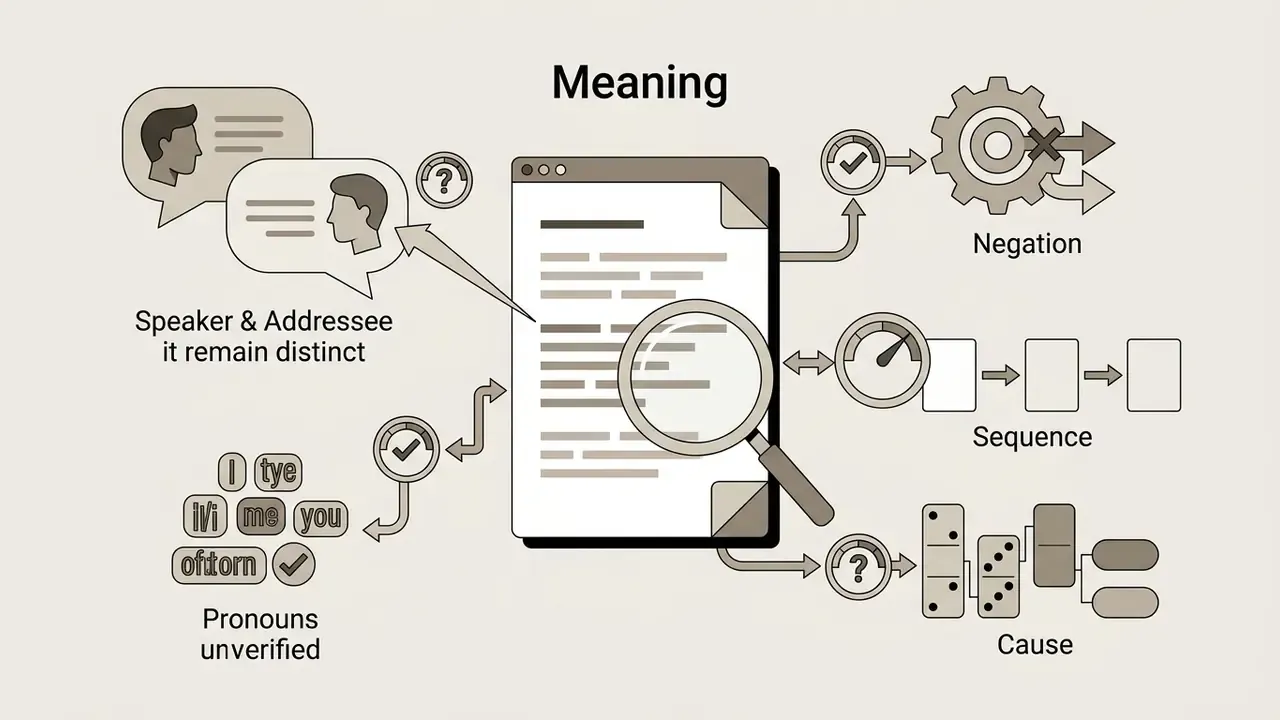
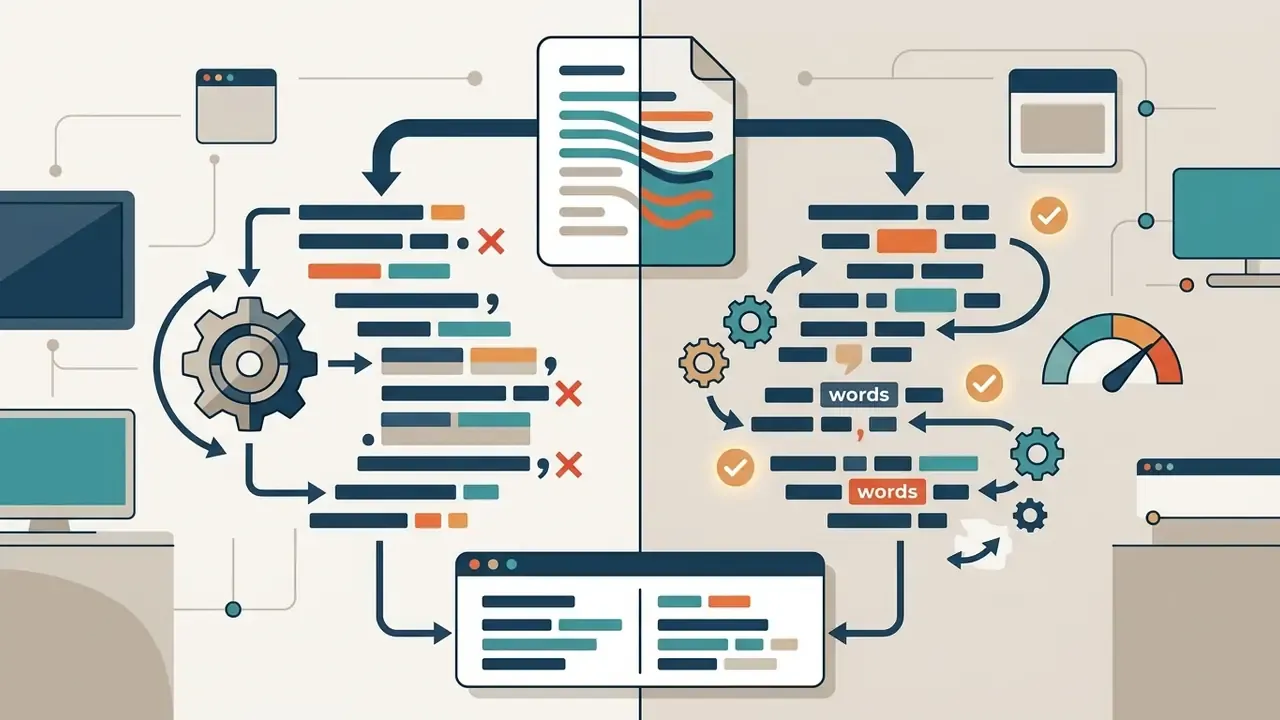
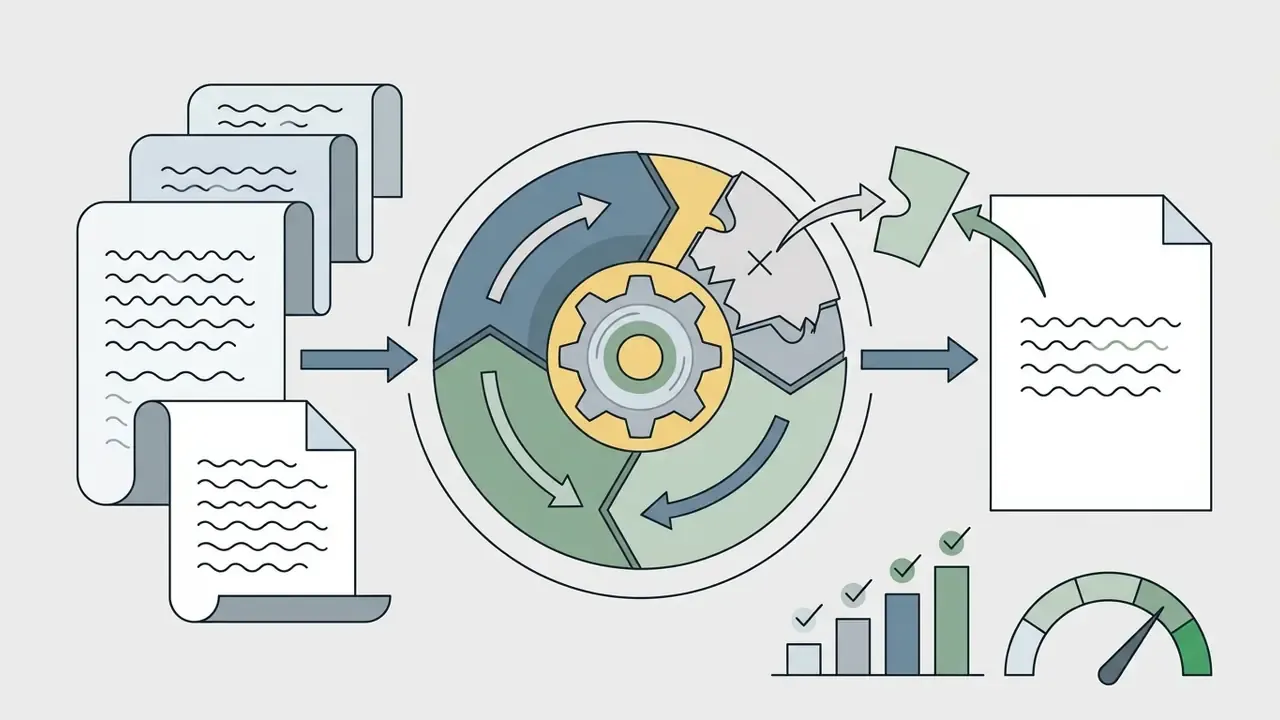
Post-generation editing is what converts raw output into work worth signing. Automated tools help with drafting; human review resolves rhythmic stumbles, awkward line breaks, and forced rhymes.
«Human poets outperform the best LLMs on all advanced metrics: creativity 4.02, emotional resonance 4.06, and imagery 4.49 out of 5.»
A disciplined editing pass separates three layers and fixes them one at a time.
Experimental work on metrical repair supports the same workflow: iterative feedback after the first draft measurably improves adherence to target metrical constraints. Which is why "generate once, edit thoughtfully" beats "regenerate twenty times and hope."
To compare cost structures for higher-volume text and media generation APIs, check the AI Media Pricing index.
Poetry Styles You Can Create With AI
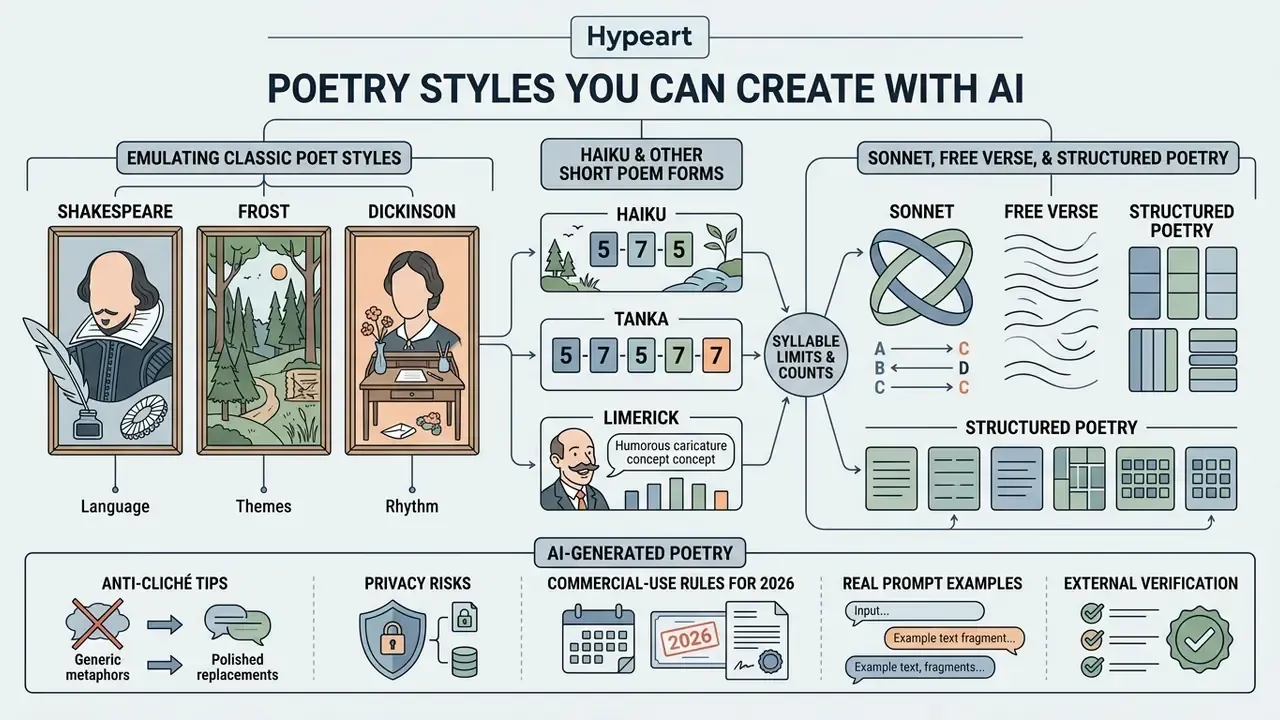
An ai poem generator can build a wide range of formal structures, from rigid syllabic frameworks to open-form contemporary verse. The table below compares how automated generators perform across the eight most requested poetic forms.
| Poetic Form | Structural Rules | Syllable & Meter Constraints | AI Reliability & Challenge Level | Primary Practical Use Cases |
|---|---|---|---|---|
| Haiku | 3 lines (5-7-5 syllable structure) | High syllabic precision required | Moderate; models require exact token checking | Brief nature snapshots, minimal greetings |
| Sonnet | 14 lines; regular rhyme scheme | High structural & metrical constraints | High formal accuracy; meter requires editing | Classic love poems, reflective compositions |
| Free Verse | No fixed line count or rhyme | Low formal rules; relies on natural rhythm | High narrative fluency; risks default rhyming | Modern personal expression, marketing copy |
| Limerick | 5 lines; AABBA rhyme scheme | Strict anapestic meter & line lengths | High reliability; excellent for light humor | Funny birthday cards, lighthearted jokes |
| Acrostic | First letters spell a target word | First-letter character constraint per line | High precision; token-level boundary alignment | Personalized gifts, kids' educational tasks |
| Ballad | Quatrains (ABCB or ABAB) | Alternating iambic tetrameter/trimeter | Moderate; rhythm requires manual check | Storytelling, music lyrics, romantic tales |
| Villanelle | 19 lines (5 tercets + 1 quatrain) | Two repeating refrains & strict rhymes | Hard; models often mix refrain placement | Complex emotional themes, elegies |
| Elegy / Eulogy | Formal poem of serious reflection | No fixed meter; tone-driven rules | High; requires restraint & specific detail | Funerals, memorials, tributes |
Beyond these eight, mature generators expose ode, tanka, cinquain, couplet, blank verse, sestina, epic, epitaph, ghazal, and rap verse. Rule of thumb: the more countable the form, the more reliable the machine.
«Style conditioning and character-level modeling improve diversity across nearly all measured dimensions compared with baseline systems.»
Knowing these trade-offs lets you choose the right format before you write a single prompt.
Emulating Classic Poet Styles (Shakespeare, Frost, Dickinson)
Modern models can mimic the stylistic signatures, vocabulary, and rhythm of celebrated poets. Name the persona in the prompt to steer word selection.
- William Shakespeare: ask for iambic pentameter, archaic pronouns (thou, thee), and dramatic metaphors built on time, nature, and mortality.
- Emily Dickinson: prompt for short lines, frequent slant rhymes, non-standard capitalization, and dash-heavy punctuation focused on interior reflection.
- Edgar Allan Poe: request trochaic meters, internal rhyme, dark atmospheric imagery, and a repeating refrain (for example "nevermore").
- Robert Frost: instruct the tool toward conversational rhythm, rural narrative imagery, and understated philosophical closes.
- Walt Whitman: ask for long unrhymed lines, anaphora ("I hear… I see…"), catalogues of concrete nouns, and an expansive first-person voice.
- Sylvia Plath / Pablo Neruda / Rumi: frequently offered as presets in commercial tools, useful for confessional intensity, sensual concrete imagery, and devotional metaphor respectively.
Style emulation is a stylistic instruction, not a licence. Reproducing a substantial part of a specific protected poem can infringe copyright even when the request was phrased as "in the style of."
Haiku and Other Short Poem Forms
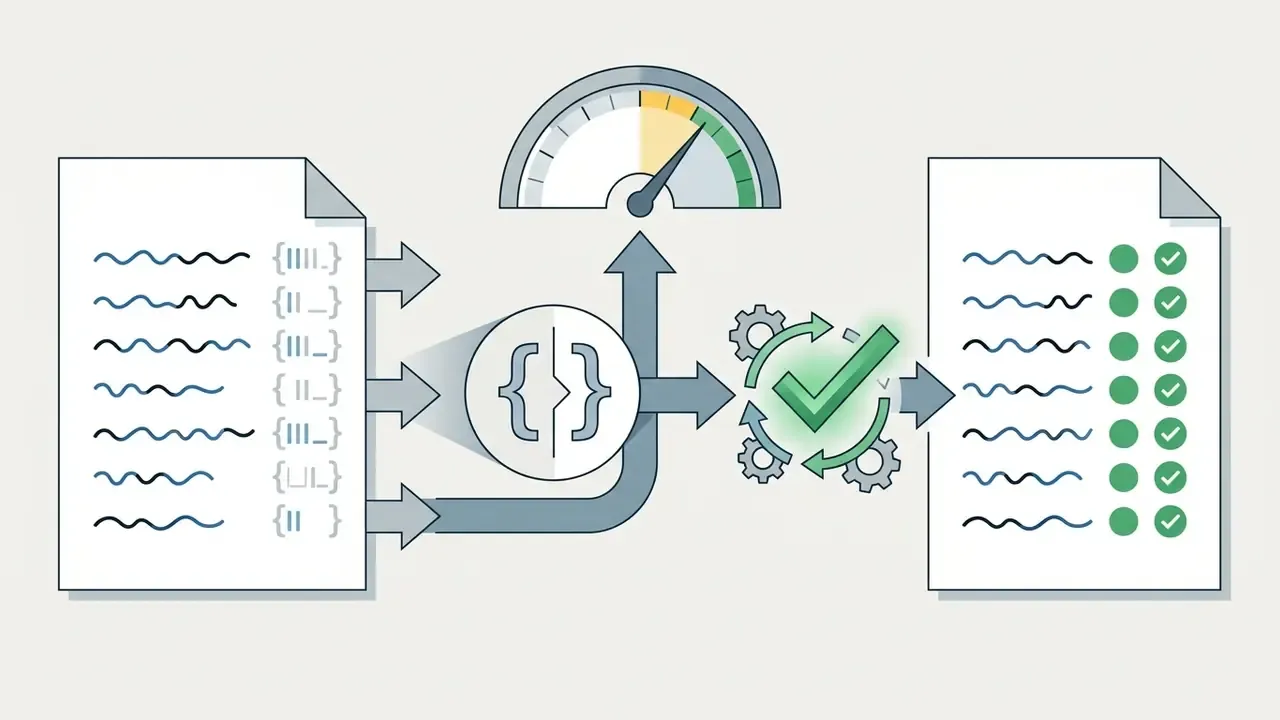
Short forms such as haiku demand strict line and syllable management. An ai generator for poems produces three-line stanzas instantly, yet general LLMs still miscount syllables because of how tokenization works.
«The best model reaches form-compliance accuracy of 4.26 out of 5 and near-perfect thematic alignment of 4.99, yet short forms still require manual syllable checking.»
Why the miscounting happens: a note on tokenization. Most LLMs read text through byte-pair encoding (BPE), which splits input into statistically frequent sub-word chunks rather than letters or phonetic syllables. "Everything" may arrive as two or three tokens; "strengths" may arrive as one. The model therefore has no native representation of syllable at all. It approximates the count from patterns in training data. Consequences for practitioners:
- 5-7-5 haiku, tanka, and cinquain are the highest-risk forms, because one miscount breaks the form outright.
- Acrostics behave better than expected when you ask for one line per letter explicitly, because first-letter constraints align with token boundaries more predictably than syllable boundaries do.
The same mechanism explains why "write exactly 40 words" and "make every line 8 syllables" fail more often than "write 14 lines with an ABAB CDCD EFEF GG scheme". Line counting is discrete and visible; syllable counting is phonetic and invisible to the tokenizer.
Sonnet, Free Verse, and Structured Poetry
Complex forms like the sonnet require strict adherence to a 14-line structure, a specific rhyme scheme (ABAB CDCD EFEF GG, for instance), and rhythmic consistency such as iambic pentameter. Free verse removes formal rules and gives the generator maximum freedom over line length and phrasing.
In practice, free verse is the easier task. With no rhyme or meter to satisfy, the model spends its capacity on topic, coherence, and voice. Sonnets expose the harder skill, global planning plus line-level constraint satisfaction at once, and that is where multi-constraint failures cluster. Expect to hand-correct meter in roughly every sonnet, and to hand-correct the ending in free verse, where models default to a summarizing final line that flattens everything above it.
When finished verse becomes shareable media, most creators move the text into a layout or motion tool. Our overview of video editors for creative projects covers the export formats and caption workflows that matter for poetry reels and readings.
When to Use an AI Poem Generator
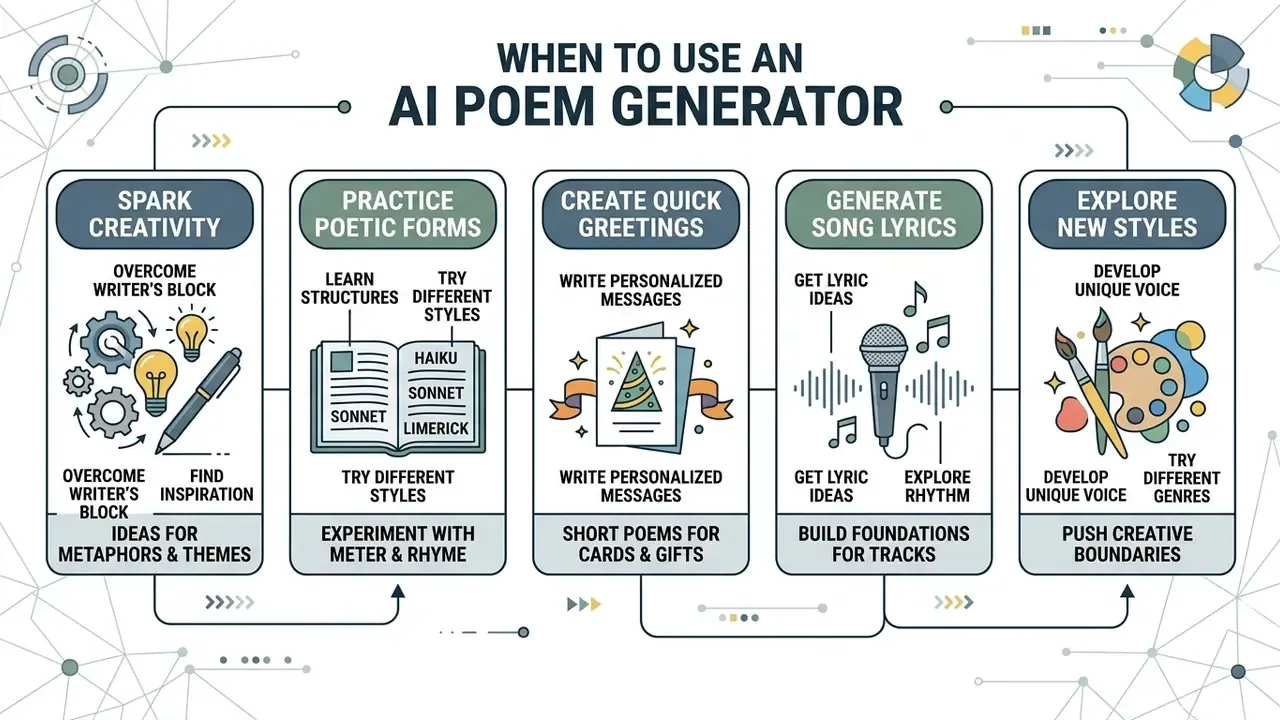
An ai poem generator serves personal communication and commercial copywriting alike. It speeds up early drafting, unlocks stalled writers, and supplies structured phrasing for many media formats.
Love Poems, Greetings, and Personal Expression
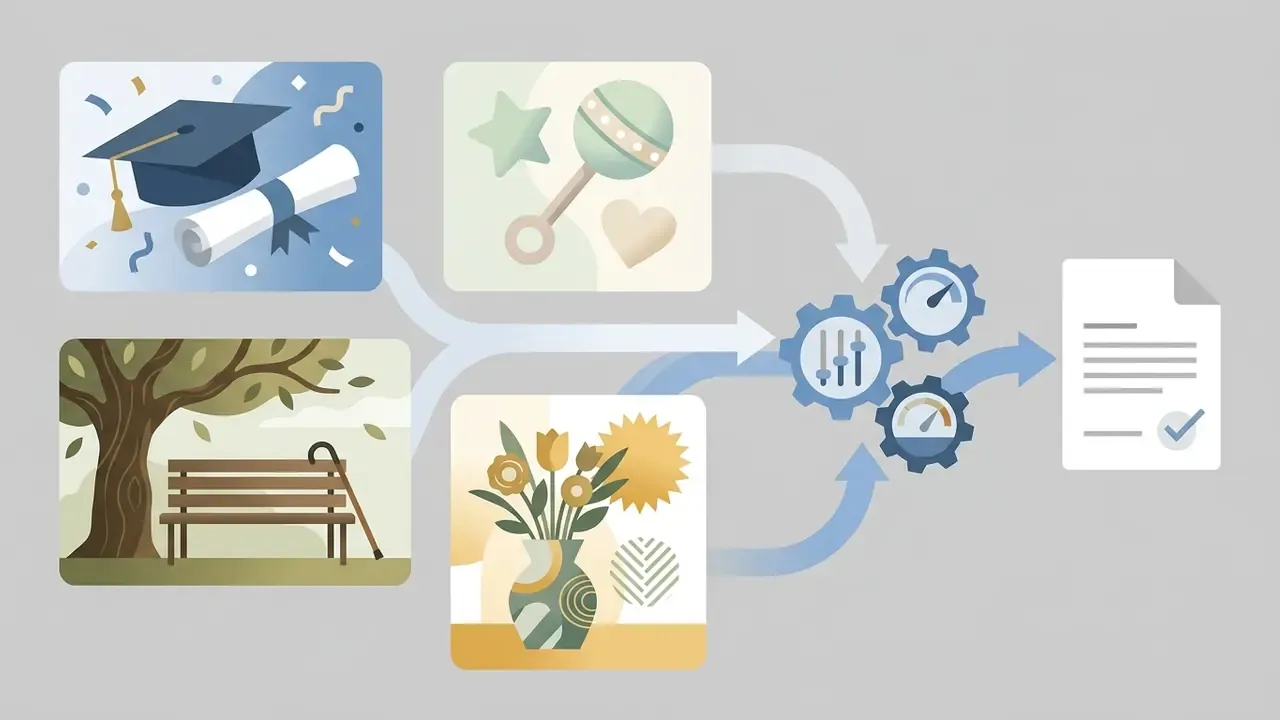
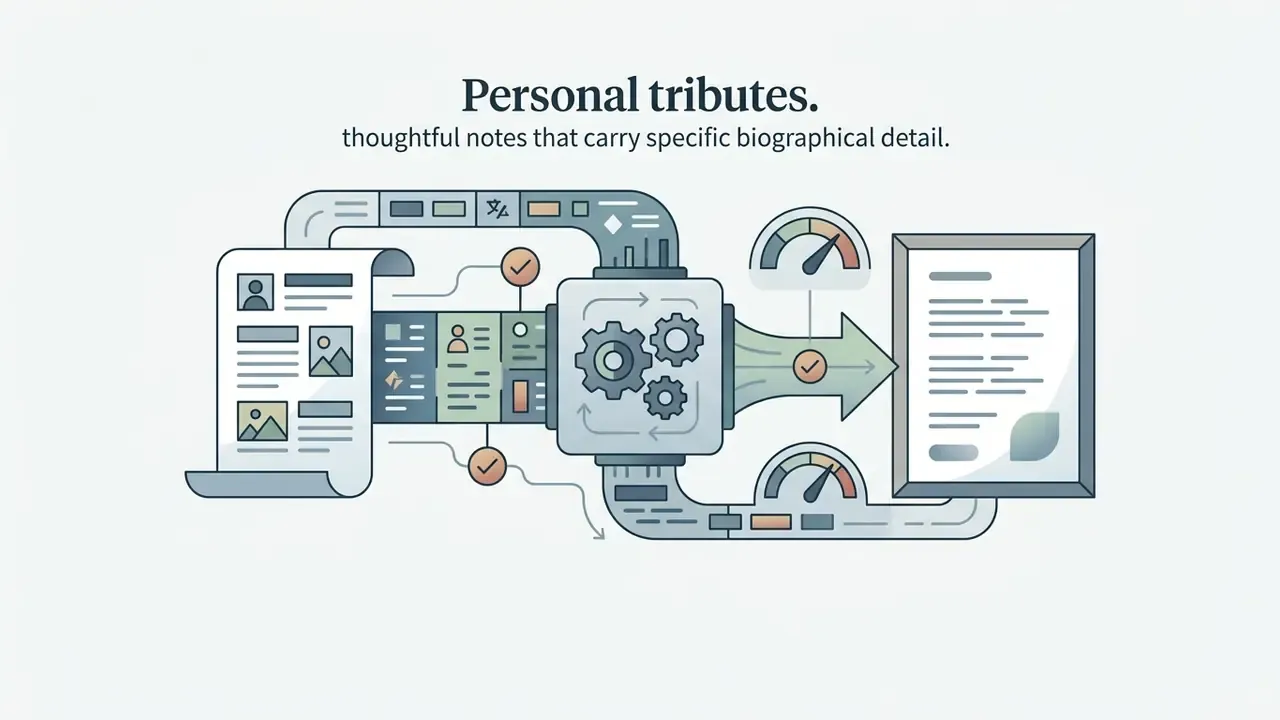
Personalized poetry is still the single most frequent application for an ai poems generator. Users feed in specific names, shared memories, or anniversary dates to create custom cards and beautiful poems for private messages.
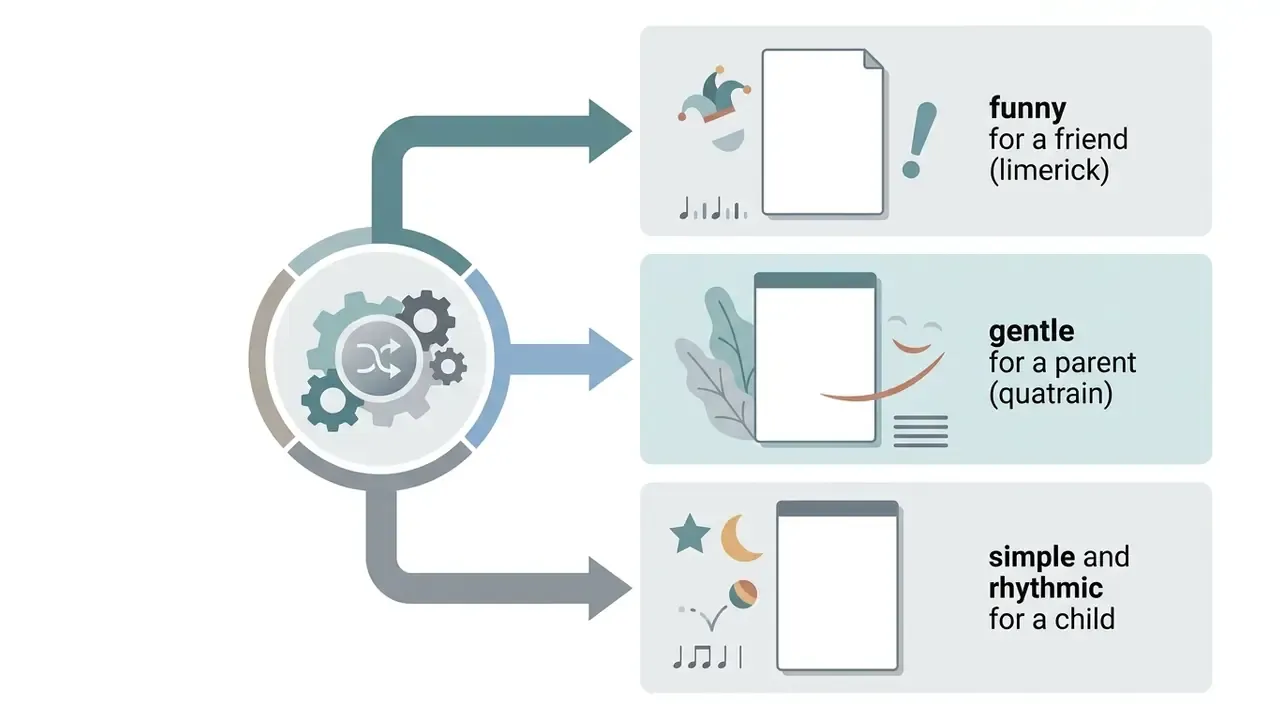
Most people who need a poem are not writing for pleasure. There is a wedding on Saturday, a retirement lunch, a funeral, a homework deadline, or a card that has been blank for three days. The occasion sets the register, and the register sets the prompt.
Personalization mechanics that actually work: give the tool material, not an instruction. "Include: Sarah, Mark, June 12, rainy Chicago coffee shop, the umbrella he lost" produces a poem built around those objects. "Make it personal" produces nothing of the kind.
Creative Writing and Content Ideas
For copywriters and creative authors, poetry ai works as a rapid ideation engine. Generators return metaphorical phrasing, alternative stanza arrangements, and rhythmic hooks that can feed a broader campaign.
Evidence on diversity gains:
«Multi-agent systems with negative decoding increase lexical diversity by 3.0 to 3.7 pp and novelty by 5.6 to 11.3 pp on distinct-n and novel-n metrics.»
Two practical implications. First, diversity is engineerable: telling the system what not to produce raises novelty more reliably than telling it to "be creative." Second, diversity is not free. Broad ideation from one model converges across users, so outputs from the same tool on the same brief begin to resemble each other. Rotate models, rotate constraints, and treat the generator as a first-pass idea surface rather than a finished voice.
Can You Use AI-Generated Poems Commercially?
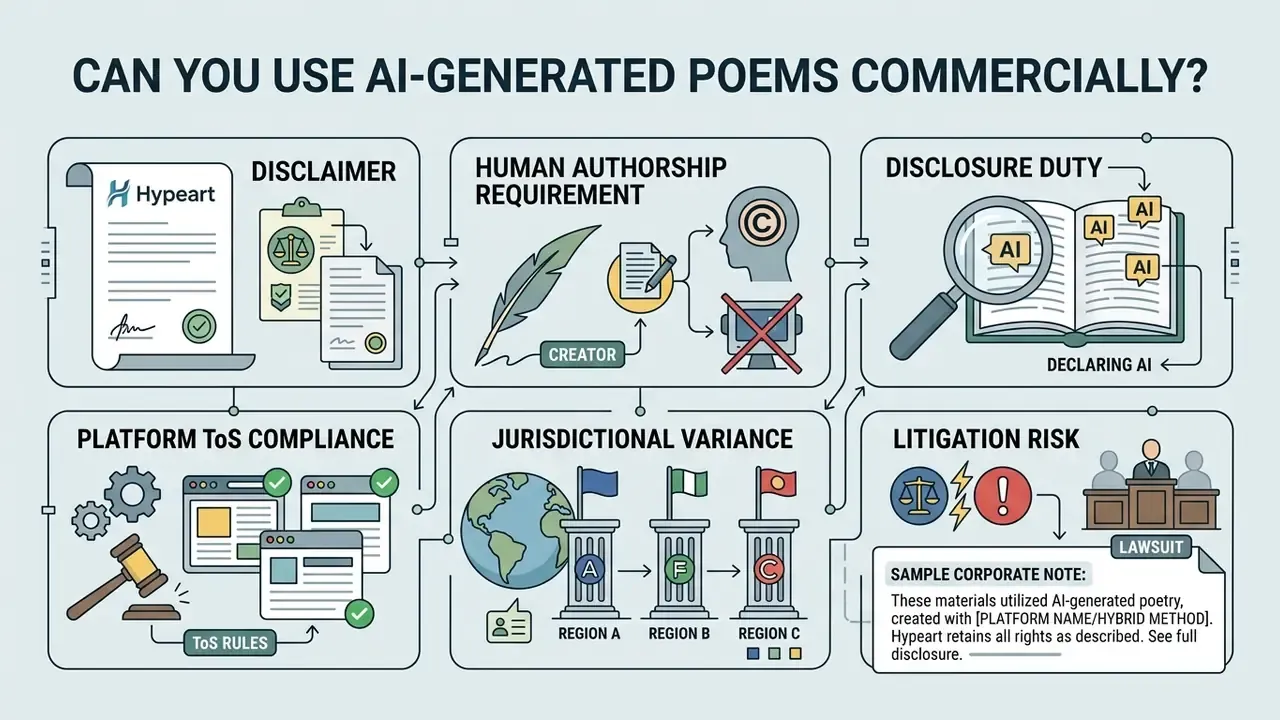
Using AI-generated verse in commercial publications, merchandise, or advertising calls for careful legal verification. Under current frameworks, purely machine-generated text without substantial human input is generally ineligible for protection.
«Material generated solely by AI, without human creative intervention, is not the product of human authorship and cannot be registered for copyright.»
Checklist0 / 6
If you plan to publish books, sell greeting cards, or launch branded campaigns, significant human editing protects both the artistry and the legal position. The same licensing questions recur across modalities: our breakdown of commercial licensing for AI tools maps how vendors word output rights. To compare licensing terms across different media tools, explore the hub of commercial policy guides.
Shadow AI, Data Privacy, and Free Web Tools
A Five-Minute Governance Check Before You Approve a Poem Tool
Worth saying plainly: a poem generator rarely justifies a full model-risk review. It does deserve a short, repeatable check, and the same five questions work for any low-stakes generative utility.
- Owner.Who inside the organization owns this tool's use, and who escalates if a prompt leaks?
- Data path.Where do prompts travel, how long are they retained, and can retention be switched off in writing?
- Approved content types.Marketing copy and internal greetings, yes. Anything containing customer identifiers, no.
- Evidence.Can you reconstruct, months later, which content was AI-assisted and who edited it? Draft history plus a one-line register usually suffices.
- Exit.If the vendor changes its terms or the free tier disappears, what replaces it, and does anything break?
Note the deliberate limit here. This checklist is illustrative and non-exhaustive; it is not a substitute for your institution's own policy, and it assumes the content itself carries no regulated data.
Is a Free AI Poem Generator Worth Using?
Evaluating an ai free poem generator means weighing convenience against platform limits. Most web tools give you a functional baseline without payment, though high-volume users hit daily caps or feature tiering fast.
| Platform Tier | Typical Usage Limits | Key Features Included | Common Operational Constraints |
|---|---|---|---|
| Free Access | 5 to 50 generations / day; some vendors cap lifetime uses | Standard poetic styles, basic web export | Ad displays, daily quotas, no commercial license guarantees |
| Freemium Account | Token-based limits (for example 30k tokens/day) | Advanced prompt settings, history storage, more forms and languages | Requires registration, limited priority processing |
| Paid / Professional | Unlimited or high quota | Full commercial rights, custom fine-tuning, style controls, priority models | Monthly subscription fee |
An ai poems generator free tier is genuinely sufficient for card verse, one-off greetings, and learning how forms behave. Upgrade when one of four things becomes true: you hit the quota weekly, you need explicit commercial rights in writing, you need output without ads or watermarks, or you need retention and privacy controls that free tiers do not offer.
Mobile matters too. If you mostly draft on a phone, an ai poem generator app adds offline history, share sheets, and export to image, though app store listings and web terms are not always the same document. Verify the app's licensing text separately, since it occasionally differs from the browser version of the same brand. The wider free-versus-paid calculus repeats across modalities: see how the trade-offs land in our comparison of free AI image generators.
Before you commit, read the published service terms and confirm whether registration or a paid tier matches your project needs. For further platform performance comparisons, see the overview of top media tools, or model budget allocations across services when you open the hub of analytical tools.
FAQ About AI Poem Generators
Will an AI Poem Generator Create a Unique Poem Every Time?
An ai poems generator produces distinct phrasing across separate runs thanks to probabilistic sampling parameters such as temperature and top-p, but uniqueness depends heavily on prompt specificity. Determinism is a setting, not a guarantee. Vendor documentation for major model families says temperature 0 makes outputs "mostly deterministic" while small variation remains possible, and that a fixed seed is only best-effort. Change the model version or any sampling parameter and the result can change. Repeat-run benchmarking finds that even at temperature 0, a meaningful share of identical prompts return non-identical text.
«GPT-generated poems are highly homogeneous structurally: rhyming quatrains, iamb-like rhythm, and sentimental vocabulary recur even across different prompts.» Walsh, Preus & Gronski, Does ChatGPT Have a Poetic Style? (2024). https://arxiv.org/abs/2406.01268 Raising temperature adds variation, yet models still reuse familiar structural patterns and recurring vocabulary. For a genuinely original composition, add unique prompt detail and refine the verse by hand.
Can Teachers or AI Detectors Tell a Poem Was Written by AI?
Sometimes. Generic AI poems often show uniform line lengths, predictable rhyme schemes, abstract motif vocabulary, and high structural probability, and both experienced readers and detection algorithms pick up those signals. Equally important: detectors are unreliable in both directions, and human-written poems get flagged as machine-made regularly. A detector result is evidence, not proof. In academic settings, the defensible use is to generate a version, study how the form works, then write your own, treating the output as a structural outline rather than a submission.
How Do AI Poem Generators Handle Syllable Counting in Haikus?
Because large language models read text as sub-word tokens rather than phonetic syllables, they miscount in rigid structures such as haiku (5-7-5), tanka, or cinquain. Published evaluations place syllable-constraint accuracy in the high-80s to mid-90s percent range. Workaround: ask the model to print the count beside each line and verify manually, or pick a tool with a live syllable meter that flags off-count lines before export.
Can I Generate Poems in Languages Other Than English?
Yes. Top-tier models and consumer tools handle verse in dozens of languages, including Spanish, French, German, Italian, Portuguese, Dutch, Polish, Turkish, Russian, Arabic, Hindi, Urdu, Japanese, Korean, and Mandarin. Some platforms advertise 20 or more. Keep in mind that strict English structures, a Shakespearean sonnet or an English limerick, do not transfer cleanly into other rhyming conventions or prosodic systems. Specify the target language's native forms, or accept that meter will need local adjustment.
Do I Own the Rights to the Poems I Generate?
Under current U.S. guidance, raw, unedited text generated entirely by AI cannot be copyrighted and effectively sits in the public domain. You can use, edit, publish, and monetize it, but you cannot stop someone else from using an identical poem. Substantial human edits give you copyright in your modified version, which must be disclosed appropriately at registration. Rules differ by jurisdiction, and your platform's Terms of Service govern commercial resale independently of copyright law.
How Do I Force the AI to Use Specific Names, Dates, or Memories?
Use a dedicated personalization block in the prompt. Instead of "Write a wedding poem," enter: "Write a 3-stanza rhyming poem for Sarah and Mark's wedding on June 12. Include details about their first meeting at a rainy coffee shop in Chicago." Give the model material to build around, so names, a place, a date, one shared memory, one object, and tell it to weave those in rather than list them. Remember the privacy rule above: pseudonymize sensitive details in the prompt and restore them in your own editor.
Can I Edit the Poem Afterwards, and Should I?
Yes, and you should. Every line is yours to change: rewrite a word, cut a stanza, retitle the piece, then copy it or export it as text or an image. Editing is also what turns an unprotectable machine output into a work with your authorship inside it, a legal benefit stacked on top of the obvious literary one.
Summary and Next Steps
An ai poem generator free tool turns a concept into structured verse within seconds. Choose an explicit form, define atmospheric keywords, ban the default clichés, and refine the output by hand. That sequence produces poetry worth sending, whether the goal is personal expression or published content, while keeping personal data out of public tools and human authorship inside the finished work.
What remains unresolved, honestly, is the legal edge. Guidance on how much editing counts as "substantial" is still developing, and courts have not settled every question about training data. Document your edits now and you will be in a better position later, whichever way that goes.
To evaluate further software capabilities, review technical integration documentation, or inspect enterprise service terms, use our resource directories:
- Reference definitions and compare options across tools at our central hub.