If you sit in a control function at a US bank or a mature fintech, synthetic video probably arrived through marketing, not through model risk. Someone generated a product explainer in an afternoon. Nobody registered the pipeline. Nobody kept the seed, the prompt, or the plan tier. That is the gap this business guide addresses.
Commercial use of an AI video generator requires two separate things: an explicit contractual license from the software vendor, and verifiable evidence of human authorship if you want copyright to attach. Vendor platforms grant operational usage rights through paid subscription tiers. Federal copyright law protects only human-authored creative contributions. Those are not the same asset, and confusing them is where the exposure starts.
Key Takeaways for Executive Oversight
- A paid plan is not a copyright.Vendor terms grant contractual commercial rights. U.S. federal copyright attaches only to human-authored contributions. Purely prompt-driven output is not registrable and, in practice, sits unprotected.
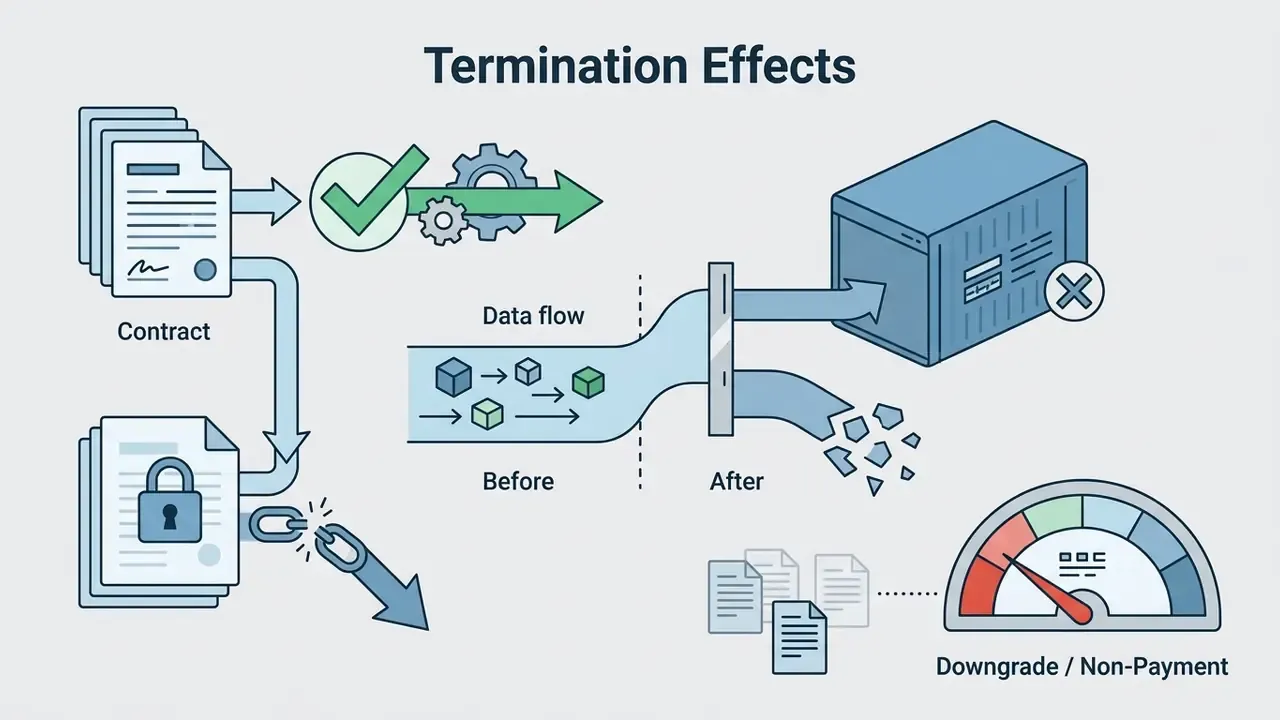
- The plan tier at the moment of generation is the controlling fact.Free-tier generations stay non-commercial forever. Paid-tier generations generally retain commercial rights even after a downgrade, but only where vendor terms grant post-termination use.
- Pre-GA and Preview models can void your commercial rights entirely.Google Veo 3 and similar preview-classified models are governed by Pre-GA Offerings Terms that override subscription permissions, even on a tier priced near $249.99 per month.
- Disclosure is now a compliance control, not a courtesy.EU AI Act Article 50, FTC deception standards, state statutes in New York, Utah, West Virginia and Colorado, plus ad-network AIGC labeling rules, all apply to customer-facing synthetic video.
- No audit trail, no defense.Seeds, prompts, model versions, ToS snapshots, invoices and human-contribution logs are the only evidence that survives a copyright challenge or a model-risk examination two years after launch.
Scope: How to Use This Framework
The material runs in six blocks, and each one answers a different question you will be asked in a committee.
The first block defines commercial use and separates licensing from ownership. The second covers residual legal risk that no vendor contract removes: copyright, trademark, right of publicity, regional disclosure duties. The third block is tool selection, with governance criteria alongside benchmark evidence. The fourth is the production workflow, from creative brief to publication gate. The fifth is documentation, including how to map the generation record into your existing model inventory. The last block is a short FAQ on the questions that keep resurfacing, plus an appendix with superseded formulations for version traceability.
One request before you read on. Treat every statement about a named vendor as a snapshot. Terms move faster than internal policy documents.
What Commercial Use Means for AI-Generated Video
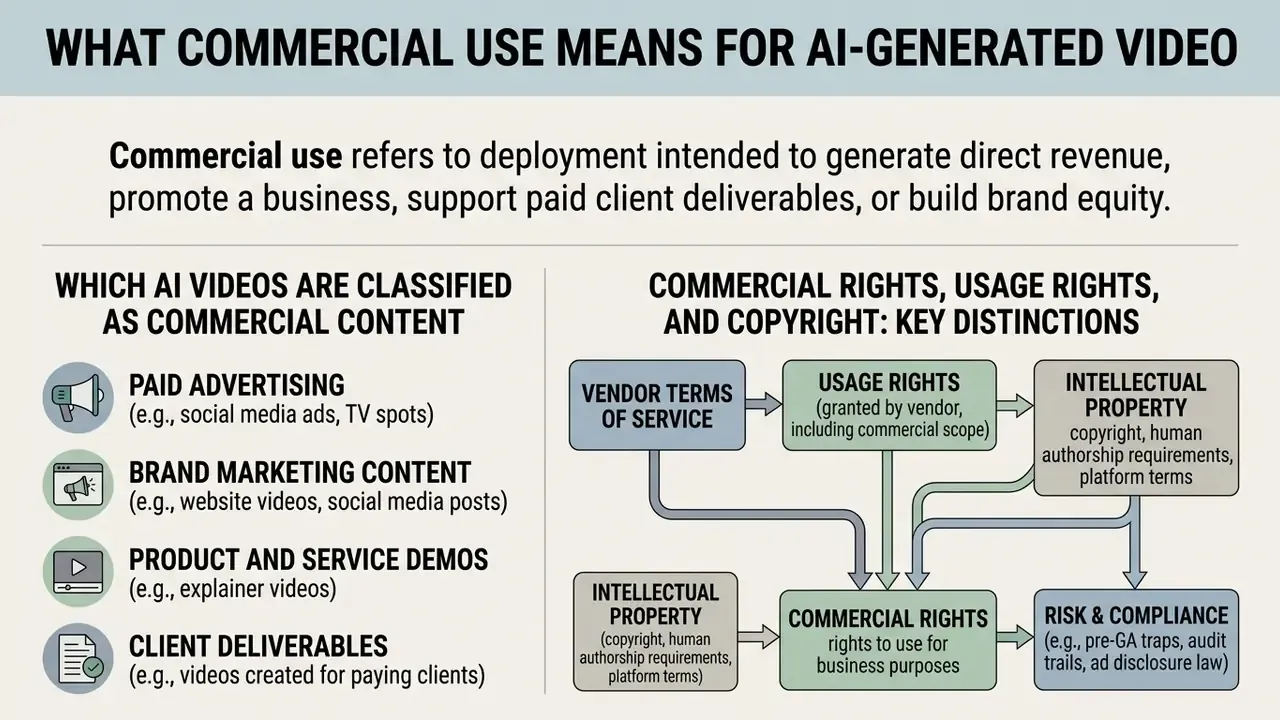
Commercial use refers to any deployment of AI-generated video intended to generate direct revenue, promote a business, support paid client deliverables, or build brand equity. The classification depends on the economic and promotional context of the asset, not on its underlying technical architecture. A diffusion model and a camera crew are judged by the same commercial test.
«Commercial use is defined by the video's function as advertising or marketing, regardless of whether it was produced by a human or by AI.»
Commercial deployment spans paid advertising campaigns, organic social marketing, product explainer assets and agency client deliverables. Using an AI video generator without verifying commercial usage rights exposes an organization to contract breach claims, ad account suspensions and third-party intellectual property liabilities. For a broader cross-format view of the licensing question, see our reference on Commercial Use for AI Media.
Which AI Videos Are Classified as Commercial Content
Any AI-generated video deployed to advance a commercial enterprise, monetize an audience, or support customer-facing communications falls under commercial content. Four categories cover almost everything a regulated marketing function produces.
- Paid advertising video ad creatives on ad networks, social ad units and programmatic placements. Where the advertising character dominates the asset, disclosure and labeling obligations apply across the full runtime, not only in the closing frames.
- Brand marketing content organic video posts on corporate social channels, product landing pages and email marketing assets.
- Product and service demos walkthrough clips, app feature previews and UI animations embedded inside commercial SaaS products or physical retail displays.
- Client deliverables custom video assets generated by agencies, studios or freelancers in exchange for client compensation. Before scoping a retainer, compare plan-level restrictions across vendors using our commercial use ai tools matrix.
A practical rule borrowed from advertising regulators: any video published in return for payment or an in-kind benefit, where a product, service or brand occupies the primary role, is treated as advertising. Synthetic production methods create no exemption. None.
According to a 2026 legal analysis on generative AI in advertising published by Palermo University, general advertising regulations apply to commercial messages whether the content was produced through human artisanal methods or synthetic AI tools.
«Advertising law defines misleading advertising by its capacity to deceive the average consumer and to affect that consumer's transactional decisions.»
Consequently, pushing unverified synthetic media into customer-facing channels creates immediate legal and regulatory exposure, sometimes on the first impression served.
Commercial Rights, Usage Rights, and Copyright: Key Distinctions
Commercial rights grant contractual permission to monetize an output. Copyright is exclusive, legally enforceable ownership of an original work of authorship. A platform vendor can grant commercial usage rights through its terms of service. No vendor can manufacture federal copyright protection where the statutory threshold is unmet.
Diagram (text version): AI video rights and legal framework
- Vendor terms of service. Grants commercial usage rights. Defines license scope and plan tiers. Governs platform asset output and retention.
- Federal and regulatory copyright law. Determines intellectual property status. Requires a human authorship threshold. Disclaims purely synthetic expressive elements.
- Where the two layers meet. Only the overlap supports risk-adjusted commercial deployment: a valid license plus a documented human contribution.
The U.S. Copyright Office's 2025 Part 2 Report on Generative AI Outputs affirms that copyright protection attaches exclusively to original works created by human authors.
«Copyright protects only material that is the product of human creativity; expressive elements determined by AI are not treated as human authorship.»
Prompting a model with text instructions does not constitute human authorship. The prompt functions as an unprotectable idea rather than direct expressive control.
«Prompts do not provide sufficient human control for the user to qualify as author: the same instruction can generate different outputs.»
For contextual definitions across digital media formats and a technical primer on the model categories involved, see our overview of AI video generators.
Table: glossary of legal, governance and licensing terms in AI video commercial deployment
| Term | Operational definition in enterprise workflows | Governing baseline or primary source |
|---|---|---|
| Commercial use | Deployment of media assets primarily aimed at generating revenue, supporting marketing, or fulfilling paid client contracts. | HeyGen Terms of Service (2025); Luma AI licensing framework |
| Commercial rights | Contractual permissions issued by a vendor allowing a user to exploit generated output in commercial activities. | Luma Dream Machine documentation (2025) |
| Usage rights | Specific contractually bounded actions such as editing, hosting or sublicensing, permitted under a given service plan. | Synthesia Customer Terms of Service (2025) |
| Ownership | Legal control over an asset, distinct from physical or digital possession of the file output. | U.S. Copyright Act (17 U.S.C. § 201); VEED AI terms |
| Copyright | Exclusive statutory rights granted to human creators for original expressive works fixed in a tangible medium. | U.S. Copyright Office AI guidance (2025 and 2026 reports) |
| Output | The synthesized video, audio or image asset generated by a model in response to user input. | NIST AI Risk Management Framework (AI 100-4) |
| Licensing | A binding legal agreement defining the terms, scope and duration under which asset rights are granted. | ISO/IEC 38507:2022 AI governance standards |
| Pre-GA / Preview offering | A model or feature released for evaluation only; commercial exploitation is restricted regardless of subscription tier. | Google Cloud Pre-GA Offerings Terms (2025/2026) |
«A platform may waive its own copyright claims to a user's AI images, yet this does not render them "copyright-free": third-party rights remain in force.»
How AI Video Generator Licensing Defines Commercial Rights
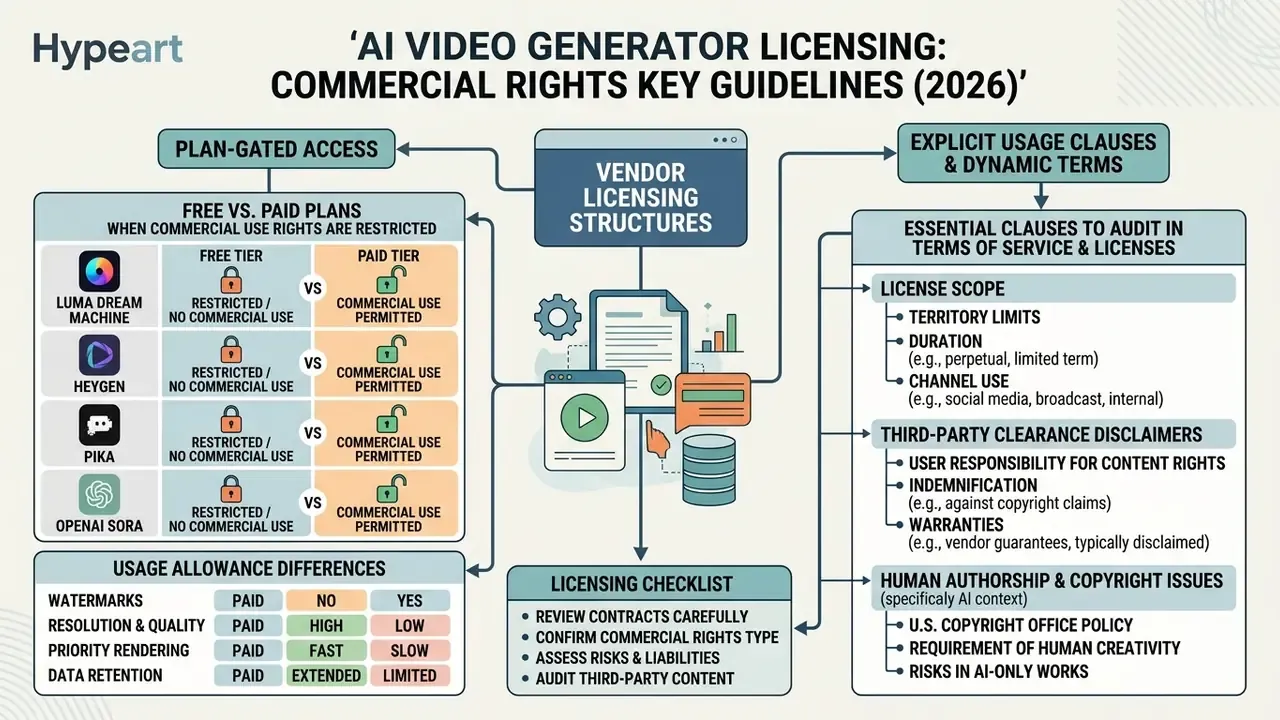
Vendor licensing structures control the scope of commercial rights through plan-gated access, explicit usage clauses and dynamic service terms. Most AI video platforms separate non-commercial testing from commercial production through tiered subscriptions.
To stay compliant, risk managers need to audit vendor terms for explicit grant language before any output reaches a marketing or production pipeline. Reading the pricing page is not an audit. The pricing page sells; the terms bind.
Free vs. Paid Plans: When Commercial Use Rights Are Restricted
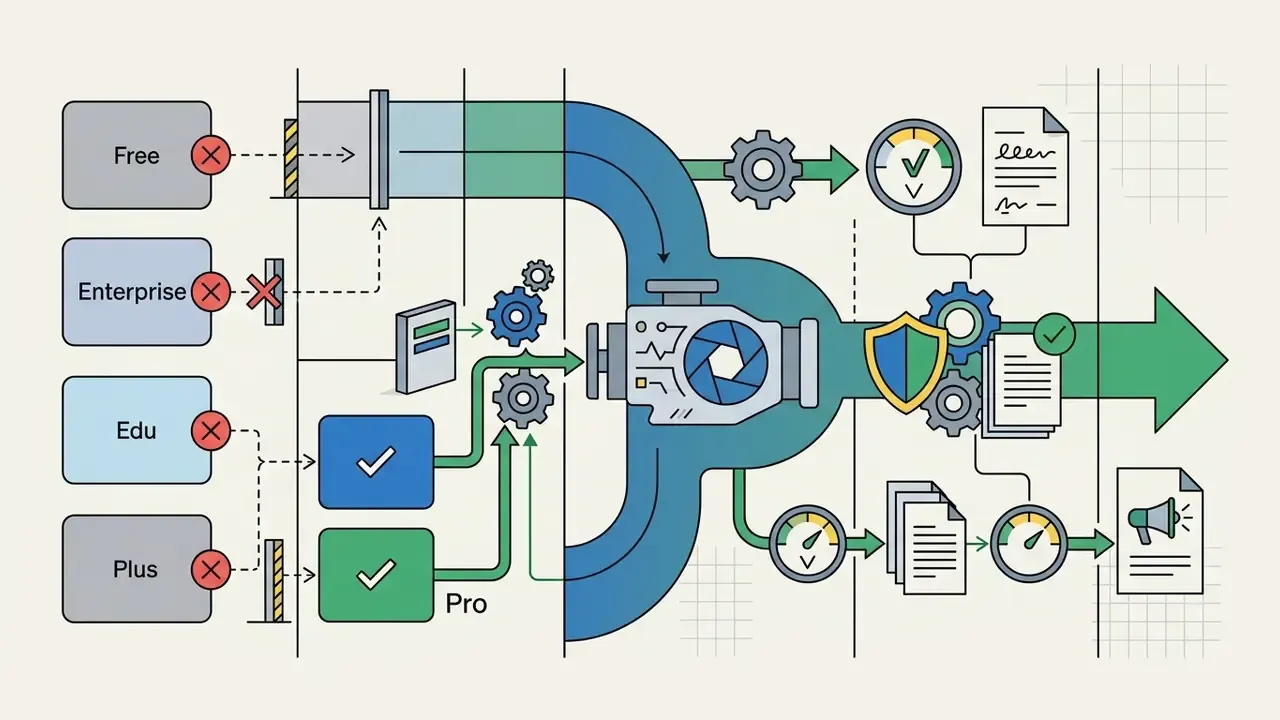
Free AI video tiers restrict outputs to personal, educational or evaluation purposes. Paid tiers grant explicit commercial usage rights. If your team is still evaluating, review the trade-offs documented in our comparison of free AI video generators before committing campaign budget.
Platform operators implement temporal gating. Commercial rights apply strictly according to the plan tier active at the exact moment of asset generation.
- Luma Dream Machine: Free and Lite generations are watermarked and restricted to personal use. Paid plans (Plus, Unlimited, Enterprise) include commercial usage rights. Downgrading does not retroactively grant commercial rights to earlier free generations.
«Commercial rights attach to the plan in force at the moment of generation; cancelling a subscription does not revoke rights in previously created assets.»
When comparing vendors across teams, our structured enterprise AI video tool comparison sets tier restrictions, output ownership language and administrative controls side by side.
Essential Clauses to Audit in Terms of Service and Licenses
Risk teams should audit vendor Terms of Service for specific clauses before authorizing commercial deployment. Read this section and Section [8] as one continuous control gate: Section [6] governs the contract you sign, Section [8] governs the residual statutory risk the contract cannot eliminate.
A comprehensive vendor terms audit covers six clause families.
- License scope: verify whether the agreement grants a "non-exclusive, worldwide, perpetual" commercial license, or restricts deployment to "internal business operations only." Flag the words non-transferable, non-sublicensable and revocable.
- Third-party clearance disclaimers: vendors routinely disclaim responsibility for clearing third-party intellectual property embedded in outputs. VEED and Luma both state that their licenses do not clear underlying music, trademarked logos or personal likenesses.
- Model training grants: check whether the vendor claims a perpetual license to use client inputs and generated outputs to train proprietary foundation models.
«Platforms may reserve the right to use user-uploaded material for model training. This must be verified before any corporate asset enters the pipeline.»
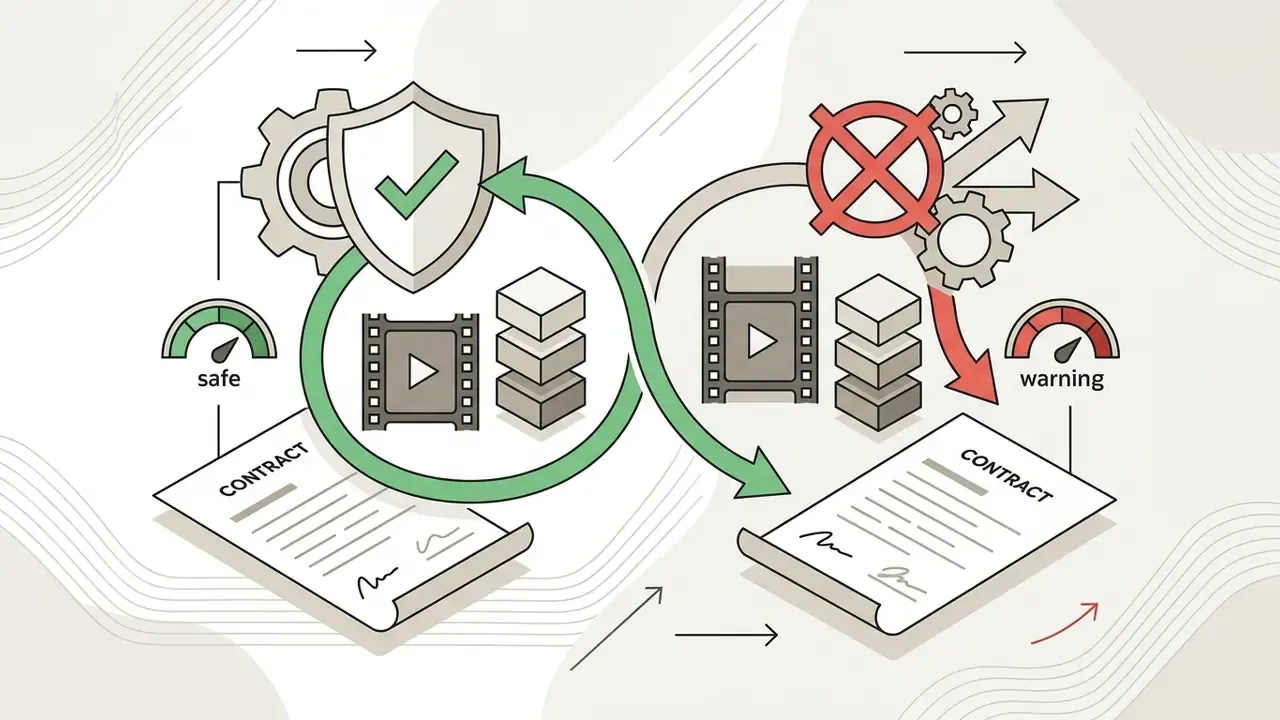
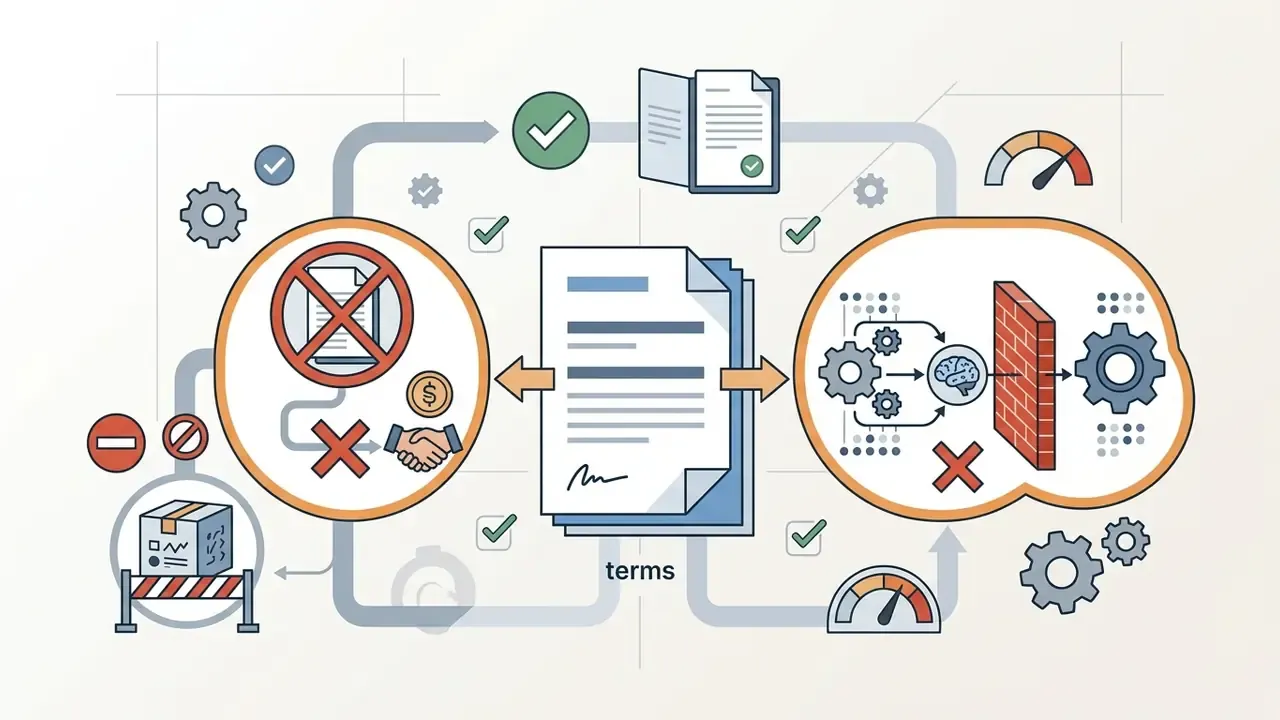
The Pre-GA (Preview) Licensing Trap: The Case of Google Veo 3
Vendor audit case pattern (composite, anonymized). In a procurement pattern reported by risk teams in regulated financial services, a regional firm evaluated three generative video vendors for client-facing ad creation. During the audit, risk managers found that two providers claimed broad licenses to ingest uploaded client brand assets into general training datasets. The firm restricted pipeline access to vendors offering explicit enterprise data isolation and zero-training guarantees, which prevented unauthorized exposure of proprietary material. This is a representative composite of a recurring pattern, not a single named engagement. Verify the equivalent clauses against your vendor's current terms before drawing conclusions.
Why Rights to AI-Generated Content Change Over Time
Vendor terms and platform policies move quickly in response to court rulings, statutory updates and revised business models.
Platforms routinely amend their terms of service to adjust data retention, content moderation and licensing scope. Many agreements state that changes take effect as soon as they are posted, which places the monitoring burden squarely on the customer. Consumer-protection regulators have signalled the limits of that practice: the U.S. Federal Trade Commission has warned that a company which begins using consumer data for AI training and discloses it only through a retroactive amendment may be acting unfairly or deceptively. Well-drafted enterprise agreements therefore include a notice period and an explicit statement that changes do not apply retroactively.
Regulatory frameworks add their own drift. The EU AI Act (Regulation EU 2024/1689) imposes transparency and deepfake disclosure duties that alter operational obligations even for content generated earlier.
«Article 50 of Regulation (EU) 2024/1689 obliges providers to mark synthetic video in machine-readable formats and to disclose that content is artificially generated.»
Practical control: capture a dated snapshot of the operative vendor terms on every generation date (see Section [20]) and schedule a quarterly terms-diff review as a recurring model-risk control. Quarterly is a starting cadence, not a rule. Fast-moving preview products may justify monthly checks.
E-E-A-T compliance and legal disclaimer
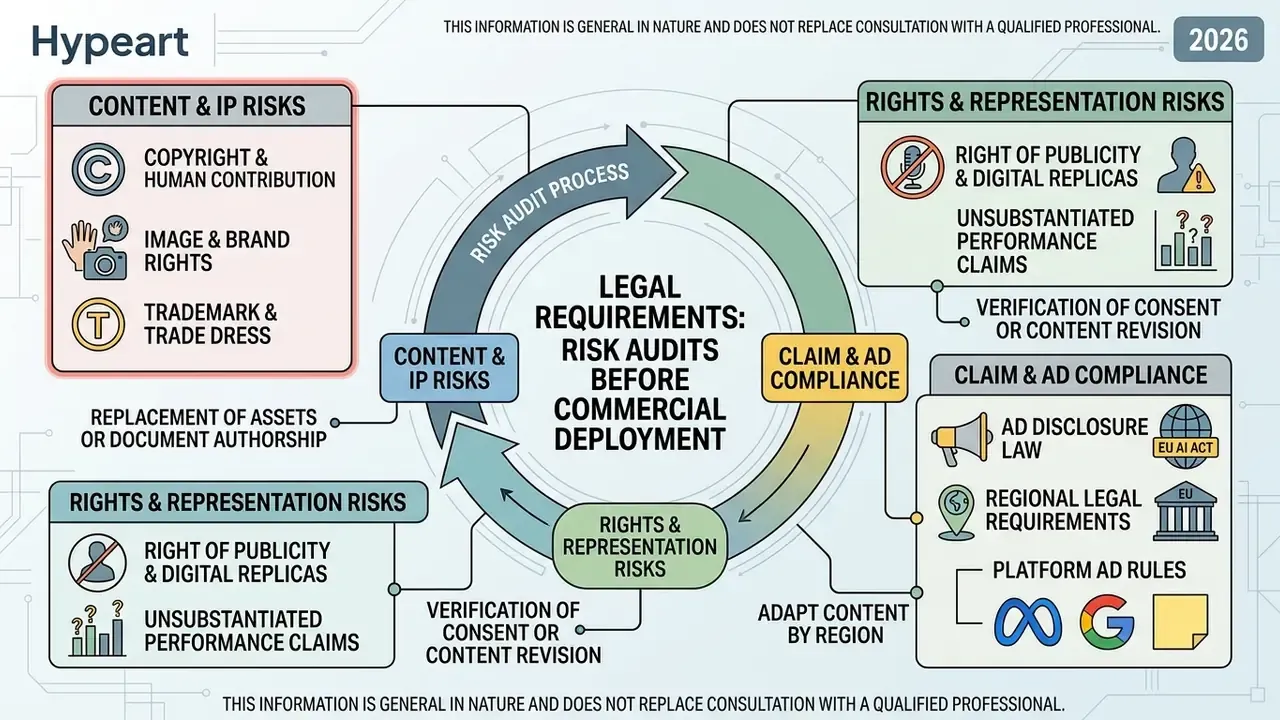
Legal Requirements: Risk Audits Before Commercial Deployment
This information is general in nature and does not replace consultation with a qualified professional.
Commercial licenses granted by software vendors do not shield an enterprise from residual legal risk, including copyright infringement, trademark violations and right of publicity claims.
A vendor license grants permission to use the software's output within contract boundaries. Nothing more. Risk leaders still need independent asset-level review to confirm that generated content does not infringe third-party IP or breach consumer protection law. Congressional research analysis notes that infringement questions continue to turn on conventional factors, including the nature of the work and the market effect of the use, so a platform license does not neutralize an infringement analysis where source material has been reproduced.
Where a generator composites third-party stock footage, music beds or licensed imagery into the output, the commercial license must extend to those underlying assets. Otherwise, claims can arrive directly from the original rights holders, and your vendor contract will not be the document that answers them.
Copyright and Human Contribution in AI-Generated Video
Purely AI-generated video that lacks human creative direction cannot be registered for federal copyright protection.
«Copyright protects only material that is the product of human creativity; expressive elements determined by AI are not human authorship.»
Guidance from the U.S. Copyright Office requires applicants to disclose and disclaim AI-generated material that exceeds a de minimis threshold. Human contribution must be substantial: creative selection, manual arrangement, post-generation editing, or integration with original human-authored footage. That is what establishes a protectable interest in the final composite work.
«Where an artist edits or arranges AI-generated elements together with other material, the resulting work may be protected by copyright, even if individual frames are not.»
The 2025 D.C. Circuit ruling reinforces the same boundary. Human authorship is required, yet works created with AI assistance remain protectable where a human created, operated or directed the system in a way that shapes expressive output.
Table: human authorship and the copyright threshold
| Prompt-only generation | Hybrid, human-directed workflow |
|---|---|
| Text prompt submitted to the model | Custom human storyboards and editorial decisions |
| Unpredictable, non-reproducible output | Multi-layered visual post-processing |
| No human expressive control over the frame | Original human audio and video integrated into the cut |
| Status: not copyrightable | Status: copyrightable, human-authored portions only |
Images, Products, and Brands in AI Video Generation
Generating video that realistically depicts recognizable individuals, corporate trademarks or protected product designs creates significant exposure. Three vectors dominate.
- Right of publicity and digital replicas: deploying AI-generated video featuring realistic depictions of real people without express written consent violates state right-of-publicity laws.
«Digital replicas are digitally created or manipulated assets that realistically but falsely depict a real individual, creating right-of-publicity exposure.»
- Trademark and trade dress infringement: incorporating proprietary logos, brand colors or distinct packaging designs into AI video can cause consumer confusion or imply false endorsement. UK government analysis notes a further route: individuals can register names, signatures, nicknames, voice clips or images as trademarks, then pursue infringement claims when a digital replica uses them without consent.
- Unsubstantiated performance claims: using synthetic visuals to simulate exaggerated product performance, such as altered before-and-after comparisons, breaches FTC deception guidelines and ad platform policy at the same time.
Regional Legal Requirements and Platform Advertising Rules
«Deepfakes forming part of artistic or satirical works are not exempt from transparency requirements; disclosure may be delivered in closing credits or accompanying descriptions.»
Faceless AI Video Channels and State-Level Legislation
E-E-A-T fact check: the "copyright-free" myth
This information is general in nature and does not replace consultation with a qualified professional.
Selecting an AI Video Generator for Enterprise and Business Use
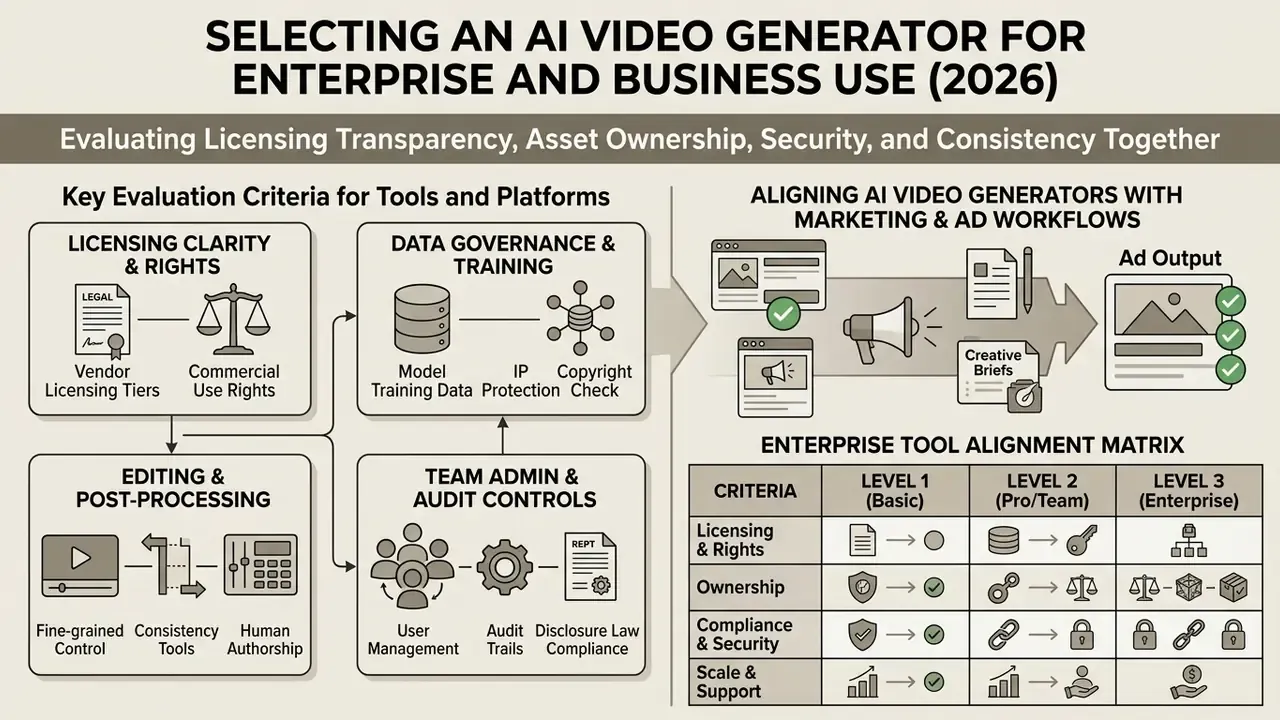
Selecting an enterprise-grade AI video generator means evaluating licensing transparency, asset ownership structures, security compliance and output consistency together. For a capability-first shortlist that complements the governance criteria below, see our review of the leading AI video generators.
Procurement teams have to balance generative performance against governance, ensuring candidate tools support multi-user auditing, data privacy controls and clear commercial usage rights. Otherwise the bottleneck simply moves from production into legal review.
Independent benchmark frameworks give a defensible scoring baseline. VBench (CVPR 2024) evaluates video generative models across 16 dimensions grouped into video quality and video-condition consistency, including subject consistency, background consistency, frame-wise quality, aesthetic quality and human action fidelity. T2VHE (NeurIPS 2024) adds four objective metrics, covering video quality, temporal quality, motion quality and text alignment, plus two subjective metrics for ethical robustness and human preference. ISO/IEC 38507:2022 supplies the governance overlay: organizations should govern AI use so that it stays effective, efficient and acceptable within the organization.
Key Evaluation Criteria for Tools and Platforms
Score AI video tools across four governance and technical vectors.
- Licensing clarity and commercial rightsclear contractual language granting unrestricted commercial exploitation, without vendor-imposed royalty caps or hidden distribution limits. Confirm whether output rights are granted "to the extent permitted by applicable law," a formulation that quietly shifts copyright risk to the customer.
- Data governance and model trainingguarantees that customer prompts, seed images and generated outputs are excluded from public model training datasets.
- Editing and post-processing controlthe ability to modify, re-render and combine outputs with human-authored assets, including version history and regeneration controls, which is what establishes copyright boundaries.
- Team administrative and audit controlsrole-based access control, centralized billing, prompt logging and exportable generation metadata for model-risk compliance.
«Platforms that provide generation-metadata export and account activity logs simplify the documentation of usage rights in team workflows.»
Aligning AI Video Generators with Marketing and Ad Workflows
Different tools serve different production jobs across marketing, sales and training operations.
Table: enterprise tool alignment matrix
| Use case | Primary tool examples | Core advantage |
|---|---|---|
| Corporate training and demos | Synthesia, HeyGen | Avatar consistency |
| Creative brand and ad work | Luma Dream Machine, Runway | High cinematic quality |
| Social and editing workflows | VEED AI, OpusClip | Fast post-processing |
| Performance and UGC ads | Higgsfield, InVideo | Character and template speed |
| Long-to-short repurposing | Pictory, Descript | Transcript-based editing |
Teams building a shortlist that includes zero-cost tiers should cross-reference the watermark, credit and export limits documented in our comparison of free AI video generators, since several of those limits also carry explicit commercial-use exclusions.
Table: comparative analysis of AI video generators for enterprise commercial use
| Platform | Commercial license structure | Free vs. paid distinctions | Output ownership and usage terms | Key content and regulatory restrictions | Verification status |
|---|---|---|---|---|---|
| Luma Dream Machine | Tiered plan licensing; commercial rights unlocked on paid tiers. | Free/Lite: watermarked, personal use only. Plus/Unlimited: full commercial usage rights. | Plan-gated usage rights. Vendor explicitly does not clear third-party IP or music rights. | User must independently clear third-party logos and personal likenesses. | Verified 2025/2026; Luma licensing guide |
| HeyGen | Subscription-based commercial rights; paid plan required for ads. | Free: monetization, client work and advertising prohibited. Paid: commercial rights granted. | User retains rights to uploaded inputs. Output license granted under an active paid contract. | Strict bans on unauthorized impersonation, celebrity voice cloning and deceptive ads. | Verified 2025/2026; HeyGen terms |
| Runway (Gen-2 / Gen-3) | Subscription licensing; paid subscribers may use outputs commercially, free tier restricted. | Free: watermarked, limited credits, no commercial deployment. Paid/Enterprise: commercial use permitted. | Subscription auto-renews at the then-current price; commercial rights tied to active plan status. | Prohibits deceptive synthetic depictions of real people and non-consented likeness generation. | Verified 2025/2026; Runway Terms of Use |
| Pika | Subscription-gated commercial rights; restricted avatar distribution. | Free: personal non-commercial use only. Paid: commercial usage allowed per plan terms. | Limited, non-exclusive license. Avatar monetization restricted to on-platform deployment. | Prohibits offensive depictions, political candidate impersonation and sensitive topics. | Verified 2025/2026; Pika terms |
| VEED AI Tools | Broad usage policy for legal purposes; liability shifted to the user. | Commercial use governed by the overall subscription agreement and content policy. | User holds output rights to the extent permitted by law. Vendor disclaims third-party liability. | Prohibits misleading information, political propaganda, defamation and unconsented TTS avatars. | Verified 2025/2026; VEED AI policy |
| Synthesia | Enterprise customer agreements covering synthetic avatar video. Starter from about $29 per month (roughly $264 per year); Creator about $89 per month. | Business and Enterprise plans include commercial video production licenses. | Limited, non-exclusive license during the subscription term and afterwards for videos generated under the service. | Strict identity verification for custom avatars; explicit bans on deepfakes. | Verified 2025/2026; Synthesia customer terms |
| OpenAI Sora | Access gated by ChatGPT plan; use governed by OpenAI Terms of Use and Service Terms. | Free, Enterprise and Edu accounts are not eligible. Plus and Pro accounts obtain access. | Publishers must confirm they hold necessary rights; OpenAI retains rights to reproduce, distribute, modify and display shared content to operate and promote the service. | Likeness, impersonation and third-party rights obligations sit with the user. | Verified 2025/2026; OpenAI Help Center and Service Terms |
Pricing thresholds and plan-gated commercial scope. Vendor pricing changes frequently and is often restructured without notice. Treat the figures below as an August 2026 procurement baseline and re-verify on the vendor's own pricing page before contracting.
| Platform | Pricing baseline (commercial tier) | Commercial license scope | Watermark and free-tier exclusions | Key content and usage restrictions |
|---|---|---|---|---|
| Artlist AI | about $19.99 per month, billed annually | Universal Commercial License covers ads, client work and broadcast on download. | Trial credits only; no permanent free tier. | Coverage tied to an active Universal License agreement. |
| InVideo | about $20 to $28 per month, billed annually | Full commercial rights on paid tiers for templated ad generation. | Free tier excludes commercial use and carries a prominent watermark. | Stock library add-ons may carry secondary licensing rules. |
| Pictory | about $25 per month, billed annually | Royalty-free commercial usage on paid plans for long-to-short repurposing. | Free trial only; no permanent free plan. | Premium Getty assets and ElevenLabs voices require paid add-ons. |
| Descript | about $16 per month, billed annually | Commercial rights on paid plans for transcript-based editing. | Free plan watermarked and unusable for client deliverables. | AI features capped on lower tiers; prompt-to-video not supported. |
| Higgsfield | about $9 to $15 per month | Commercial rights included on paid tiers; optimized for character consistency in performance ads. | Limited free credits. | Fine print enforces per-minute output caps on ad creatives; pricing recently restructured. |
| Google Veo 3 | about $249.99 per month (AI Ultra / Vertex AI) | Prohibited under Pre-GA terms absent explicit written vendor authorization. | Not applicable; paid access only. | Pre-GA restrictions override general subscription terms; limited geographic availability. |
Deploying AI-Generated Video in Advertising and Marketing Campaigns
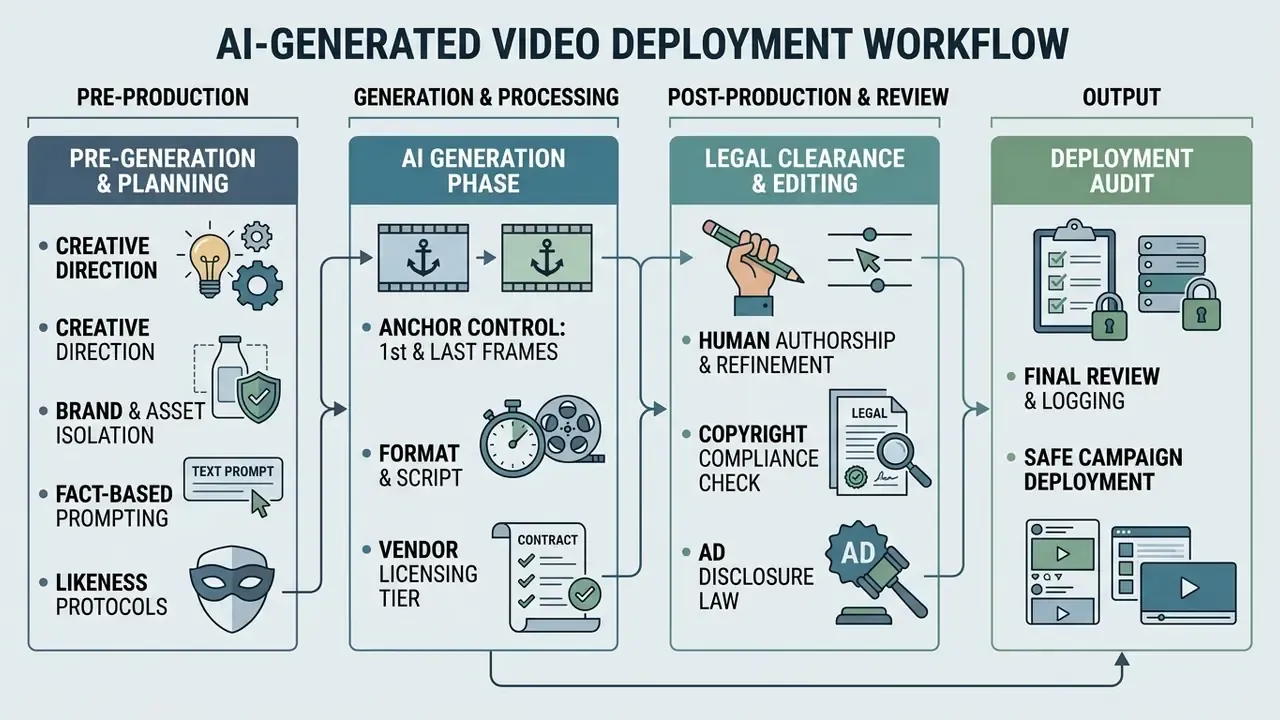
Deploying synthetic video in commercial campaigns requires a structured workflow: pre-generation prompt discipline, legal clearance, then post-generation human editing.
Ad networks operate automated scanning and manual review gates to detect undisclosed AI content. A risk-aware production pipeline prevents campaign rejections and protects brand integrity. NIST AI 100-4 (2025) frames the control objective plainly: synthetic content workflows should track provenance data to preserve the authenticity, integrity and credibility of digital content at every handoff.
Pre-Production: Product Assets and Creative Direction
Pre-production sets the boundary conditions for generation. It is where you prevent misleading product claims and third-party IP contamination, before a single frame renders.
- Audience and objective definitionfix the audience, conversion objective and distribution channel before concept work, since format and disclosure requirements derive from the placement.
- Concept, format and scriptdevelop the concept, determine form and style, write the script, then storyboard. Storyboards double as the primary artifact evidencing human expressive control (see Section [9]).
- Fact-based promptingalign prompts strictly with substantiated product capabilities. Avoid visuals implying false transformations or impossible performance.
- Brand and asset isolationuse clean, licensed brand photography or original 3D models as reference inputs, not unverified web images.
- Likeness protocolsavoid prompting public figure names, celebrity likenesses or trademarked character styles. Use consented model footage or custom brand avatars, and secure model and property releases where required.
Technical Pre-Production Protocols for E-Commerce Video Ads
Generation, Post-Editing, and Legal Review Workflows
«A 2026 study found that explicit disclosure of AI origin in advertising reduces trust and ad attitude, particularly where the ad promotes intangible benefits.»
The operational implication is not to conceal AI use. That is unlawful in many placements. The implication is to design disclosure language deliberately and to invest in the human craft layer that consumers actually reward.
Documenting Usage Rights for Clients, Audit Trails, and Teams
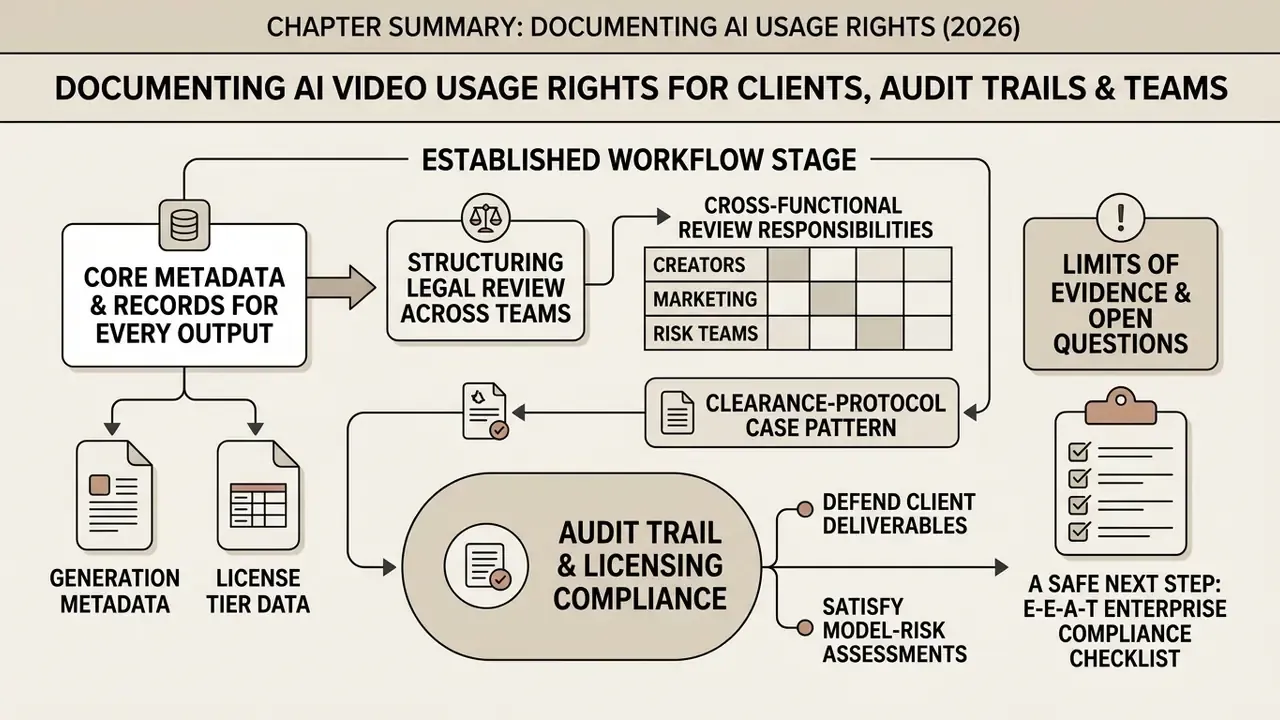
Documenting AI asset provenance and usage rights produces the audit trail that defends client deliverables, satisfies model-risk assessments and evidences licensing compliance.
Agencies and corporate marketing departments should archive generation metadata for every commercial asset. Without centralized record-keeping, verifying plan tier validity or defending a copyright challenge years after launch becomes guesswork. Ask any control function which they would rather present to an examiner: a rendered MP4, or a record showing who generated it, under which plan, from which prompt, with which human edits.
Core Metadata and Records to Archive for Every Generated Output
Policy should require production teams to log a standardized asset record for every AI video deployed commercially.
- Generation metadata: model name, version build, date and time stamp, and the unique generation seed or asset ID, as recommended by Luma AI.
«Luma recommends storing generation identifiers and plan confirmation alongside the asset record, to evidence rights in later reviews.»
Integrating the audit trail with MRM and GRC systems. In regulated financial services, this archive should not live in a creative asset manager alone. Map each field into the existing model inventory so AI video generation becomes examinable under standard model-risk governance.
| Archive field | Governance mapping | Framework anchor |
|---|---|---|
| Model name and version build | Model inventory entry; third-party model record | SR 11-7 model inventory and vendor-model expectations |
| Prompt, seed and parameters | Input documentation and reproducibility evidence | SR 11-7 developmental evidence; NIST AI RMF (Measure) |
| ToS snapshot, invoice and tier | Third-party risk and contract control register | ISO/IEC 42001 AI management system controls |
| Human contribution log | Effective challenge and human-oversight evidence | SR 11-7 effective challenge; ISO/IEC 38507:2022 |
| Disclosure record and provenance credential | Regulatory reporting and conduct-risk control | EU AI Act Article 50; NIST AI 100-4 provenance |
Treat the AI video pipeline as a registered use case with a named owner, a validation cadence and a documented control matrix. Where high-risk AI system obligations apply, event logging is a statutory requirement rather than an internal preference.
Structuring Legal Review Across Creators, Marketing, and Risk Teams
Clear review responsibilities prevent unvetted media from reaching a live placement. They also make decision ownership visible, which is usually the first question in an examination.
Table: cross-functional review responsibilities
| Creative team | Marketing operations | Legal and risk control |
|---|---|---|
| Logs prompts, seeds and asset IDs | Applies platform disclosure tags | Audits vendor Terms of Service |
| Executes edits and composites | Verifies ad claims against evidence | Clears third-party IP and likenesses |
| Files model and property releases | Owns publication risk | Signs off high-risk claims and placements |
Creators are accountable for documenting inputs, releases, licenses and claim evidence before an asset enters legal review. Marketing owns publication risk and disclosure execution, since marketers remain responsible for the materials they publish regardless of production method. Legal reserves manual review for high-risk categories: regulated claims, real-person likenesses, competitor references, and political or social-issue placements. Disclosure decisions belong inside the review gate, not in post-publication cleanup.
Clearance-protocol case pattern (composite, anonymized). A recurring three-tier protocol observed among mid-sized financial-services marketing organizations works like this: creative teams log generation seeds and raw clips, marketing managers verify ad-claim substantiation, and compliance officers review final assets for platform disclosure and trademark clearance. Teams running this structure report materially fewer ad rejections and a reproducible compliance record available for examination. Treat it as a generalized pattern rather than a documented engagement, and validate the control design against your own regulator's expectations.
Limits of the Evidence and Open Questions
A Safe Next Step
If you want a low-risk starting move, pick one live campaign and reconstruct its full asset record: plan tier, model version, seed, prompt, ToS snapshot, edit log, disclosure applied. The exercise usually takes an afternoon and tells you more about your control gaps than a policy workshop would. Then register the pipeline in the model inventory with an owner and a review cadence.
E-E-A-T enterprise compliance checklist
FAQ: Commercial Use of AI-Generated Video
Is Disclosure or Tool Attribution Required When Publishing AI Video?
Ad networks and regional regulations require disclosing synthetic content. Naming the specific vendor software is generally optional. Under the EU AI Act (Article 50) and the major ad platform policies at TikTok, Meta and Google, commercial deployments of realistic synthetic video must carry visible disclaimers or machine-readable AIGC tags. Platforms do not require you to specify whether a video came from Luma, HeyGen or Runway. A broad transparency badge such as "AI-Generated Media" satisfies the standard.
«Framing AI as an assistant to a human creator, rather than a replacement, can reduce the negative effect of disclosure on advertising trust.» Source: More than Saying "It's AI": How Role Disclosure Transparency in AI-Generated Ads Influences Consumer Responses (2026) Several US state statutes are more prescriptive than platform policy. Minimum on-screen duration, legibility, persistence, audio-layer disclosure and tamper-evident metadata may all be mandated for specific ad categories.
Can I Use Outputs Generated During a Paid Subscription After Downgrading to Free?
Commercial rights generally remain valid for assets generated during an active paid plan, provided vendor terms grant continuing post-termination use. Luma AI's licensing framework, for example, specifies that commercial usage rights attach at the time of generation under a qualifying paid tier. Downgrading to a free plan, or cancelling later, does not revoke commercial rights in assets already created under a valid paid tier. New assets generated after the downgrade fall under free-tier non-commercial restrictions. The same temporal logic applies to adjacent modalities, so see our overview of image-to-video AI tools for equivalent plan-gated structures. The critical caveat: not every vendor grants perpetual post-termination rights. Some license models terminate all use rights when the subscription ends, distinguishing term-limited access from perpetual rights in purchased materials only. Read the termination clause before assuming survival, and archive the ToS snapshot that supports your position.
Are AI Commercial Video Generators "100% Copyright-Free"?
No. Vendor claims that AI-generated commercial videos are inherently "copyright-free," "cleared for commercial use" or automatically owned by the user are legally misleading. A vendor may waive its own proprietary rights to the output through its terms, but no vendor can grant statutory copyright protection over purely synthetic media. Under U.S. Copyright Office policy, unedited AI output is not registrable, and AI-generated portions must be disclaimed in any registration. Two gaps sit behind the marketing language.
- Third-party exposure survives the license. Vendor terms do not protect users against claims where the output replicates copyrighted training data, reproduces a substantial part of a protected work, incorporates trademarked brand elements, or depicts an unauthorized personal likeness.
- "You own your content" is not "your content is protected." Contractual ownership language allocates rights between you and the vendor. It says nothing about enforceability against a third party who copies your synthetic ad frame for frame, and against purely machine-generated footage enforcement is weak by design. Practical position: obtain the commercial license, then build the human authorship layer through editing, scripting, original audio and composition. That layer is what creates a defensible asset. Treat "copyright-free" claims as marketing copy requiring independent verification.
Appendix A: Superseded Formulations and Editorial Notes
Retained for completeness and version traceability. The main text carries the updated formulations.
- Section [2], original paraphrase"Advertising standards measure compliance by the capacity of the video to influence consumer transactional decisions." Superseded by the directly attributed Palermo University (2026) formulation on misleading advertising and the average consumer.
- Section [1] and [3], internal linkingboth the "Commercial Use for AI Media" anchor pointing to
/glossary/commercial-use/and the "AI video generators" anchor pointing to/glossary/ai-video-generator/are retained in the main text, since they serve different intents (licensing definition versus model primer). - Section [2] and [5], internal linkingthe "commercial use ai tools matrix" anchor pointing to
/commercial-use/commercial-use-ai-tools-matrix/is retained in the client-deliverables paragraph, and the "enterprise AI video tool comparison" anchor pointing to/compare/best-ai-video-generator/is retained in the plan-tier paragraph. - Section [6], original case narrative"In a recent enterprise implementation, a regional fintech firm evaluated three generative video vendors for client-facing ad creation…" Retained in generalized, explicitly composite form to avoid an unverifiable single-client attribution.
- Section [10], original paraphrase"The U.S. Copyright Office defines a 'digital replica' as a digitally created or manipulated asset depicting a real individual's likeness or voice." Superseded by the directly attributed Part 1 Report (2024) formulation.
- Section [21], original case narrative"A mid-sized fintech platform implemented a three-tier clearance protocol for AI-assisted video campaigns…" Retained in generalized, explicitly composite form, with the original "zero ad rejection rate" claim softened to a directionally accurate statement pending verifiable data.