«In controlled digital workflows, an AI system functions as an ideation engine rather than an autonomous decision-maker. Useful lyric generation depends on structured constraints, clear thematic boundaries, and systematic human editing.» - Marcus Hale, Editorial Contributor. Marcus Hale, author.
Last updated: legal and licensing references verified against U.S. Copyright Office guidance and platform terms published through 2026.
Key Takeaways for Decision-Makers and Songwriters
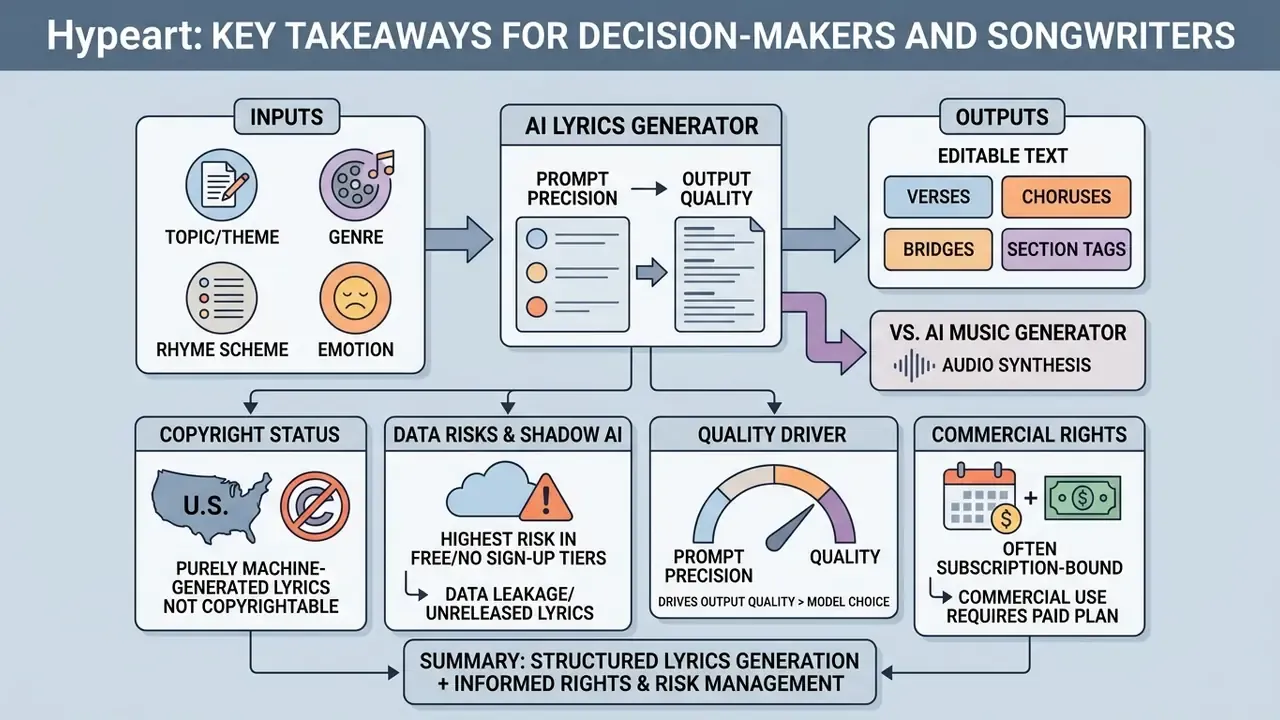
- An AI lyrics generator produces editable text (verses, choruses, bridges, section tags), while an AI music generator synthesizes audio. Choose the tool class before you choose the brand.
- Purely machine-generated lyrics are not copyrightable in the United States. Only human selection, arrangement, and substantial rewriting are protectable, so document every edit.
- Free and "no sign-up" tiers are the highest-risk surface for Shadow AI and data leakage: unreleased lyrics, artist names, and campaign briefs entered into anonymous tools may be retained or used for model training.
- Prompt precision drives output quality more than model choice. Specify genre, BPM, syllables per line, rhyme scheme (AABB, ABAB, ABCB, AAAA, internal rhyme), and section structure.
- Commercial rights on most platforms are subscription-bound. They exist only while the paid plan is active, and they rarely indemnify you against third-party infringement claims.
One sentence version? Generate fast, edit hard, log everything.
What this guide covers
- What an AI lyrics generator is and what it can create
- Commercial use of AI-generated lyrics: legal position, licensing, audit trail
- Shadow AI, data retention, and corporate leakage risks
- How to use an AI generator for song lyrics step by step
- How to get better AI-generated lyrics, including rhyme schemes
- Genres, languages, and songwriting styles
- Ready-to-use AI lyric prompts for specific workflows
- Free AI lyrics generator: limits, sign-up, and access
- How to choose the best AI lyric generator
- FAQ
- Appendix A: superseded source attributions
What Is an AI Lyrics Generator and What Can It Create?
«KeYric uses a three-stage GPT-2 module with a topic guide, main generator and inverse prompting, improving lyric coherence by 5% objectively and 19% subjectively.»
These tools help songwriters break writer's block by quickly producing raw ideas, rhymes, and complete verse structures. That is the honest use case: volume of options, not finished art.
When building a full creative production pipeline, musicians often pair text generation tools with backing track creators, such as an ai beat maker, to test how lyrics sound over a rhythm.
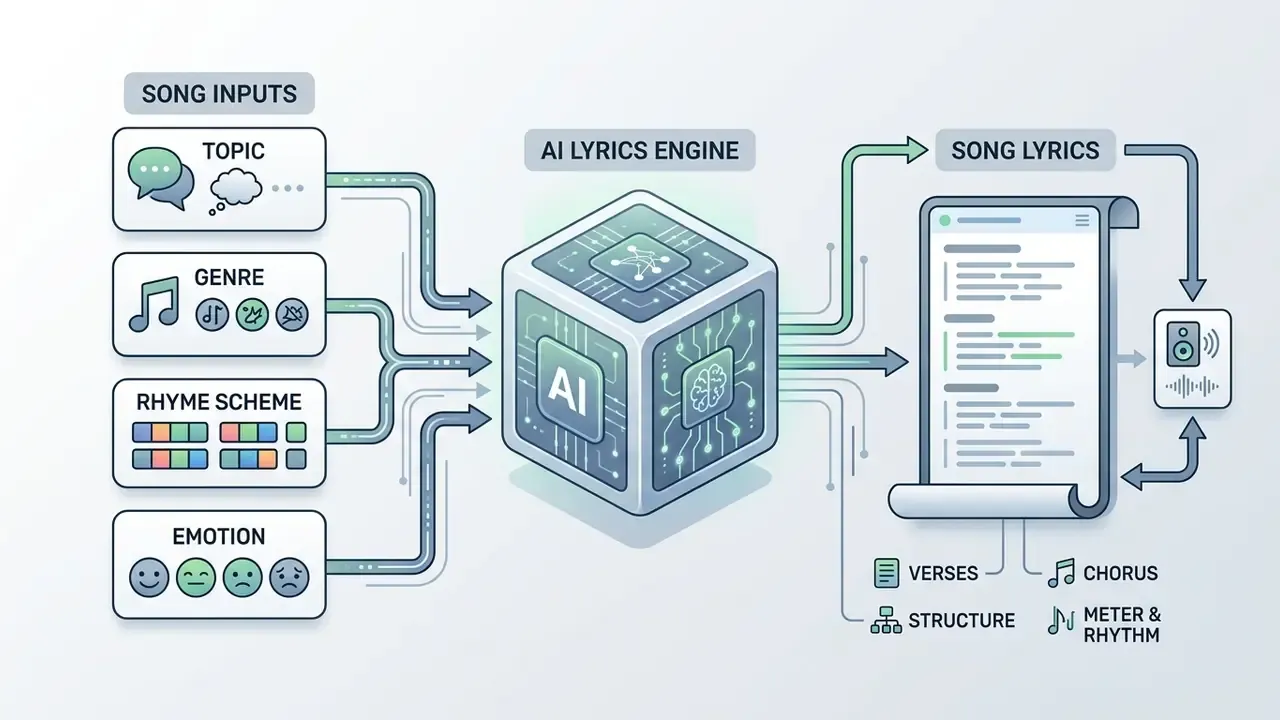
AI Lyrics Generator vs AI Music Generator
What a Generated Song Draft Usually Includes
A standard AI-generated song draft includes structured lyrical sections (intro, verses, pre-chorus, chorus, bridge, outro) arranged in a complete narrative arc. It typically provides syllable counts, metric cadence, and suggested rhyme schemes to simplify vocal arrangement.
Advanced prosody models, such as XAI-Lyricist, generate word stress templates, syllable counts, and line lengths alongside the text so the lyrics fit musical bars.
«XAI-Lyricist encodes a prosodic template as conditional input and outputs syllable counts, stress patterns and word lengths, reducing time and retries when singing.»
Songwriters receive a formatted text document that serves as a blueprint for vocal tracking, demo recording, or further manual editing. Structural-analysis research on AI-generated music typically segments compositions into 4-bar units, which is why bar-aligned lyric blocks transfer cleanly into a DAW session grid.
| Tool Type | Primary Output | Song Structure Support | Music Output | Editing and Refinement Role |
|---|---|---|---|---|
| AI Lyrics Generator | Textual song lyrics (lines, verses, choruses) | Implicit support via coherence, prosody, and section tags | None; requires external melody or audio input | High; outputs serve as editable drafts for manual refining |
| AI Lyric Writer Tool | Lyrical drafts plus ideation support (keywords, phrases) | Explicit support for song sections and narrative arcs | None; focuses on line-by-line textual adjustment | High; designed for step-by-step drafting and melody fitting |
| AI Music Generator | Audio tracks, instrumental arrangements, sung vocals | Musical phrasing and section transitions in audio | Yes; outputs playable MP3, WAV, or stems | Medium; editing focuses on stem mixing or prompt re-generation |
Can You Use AI-Generated Lyrics for Commercial Songs?
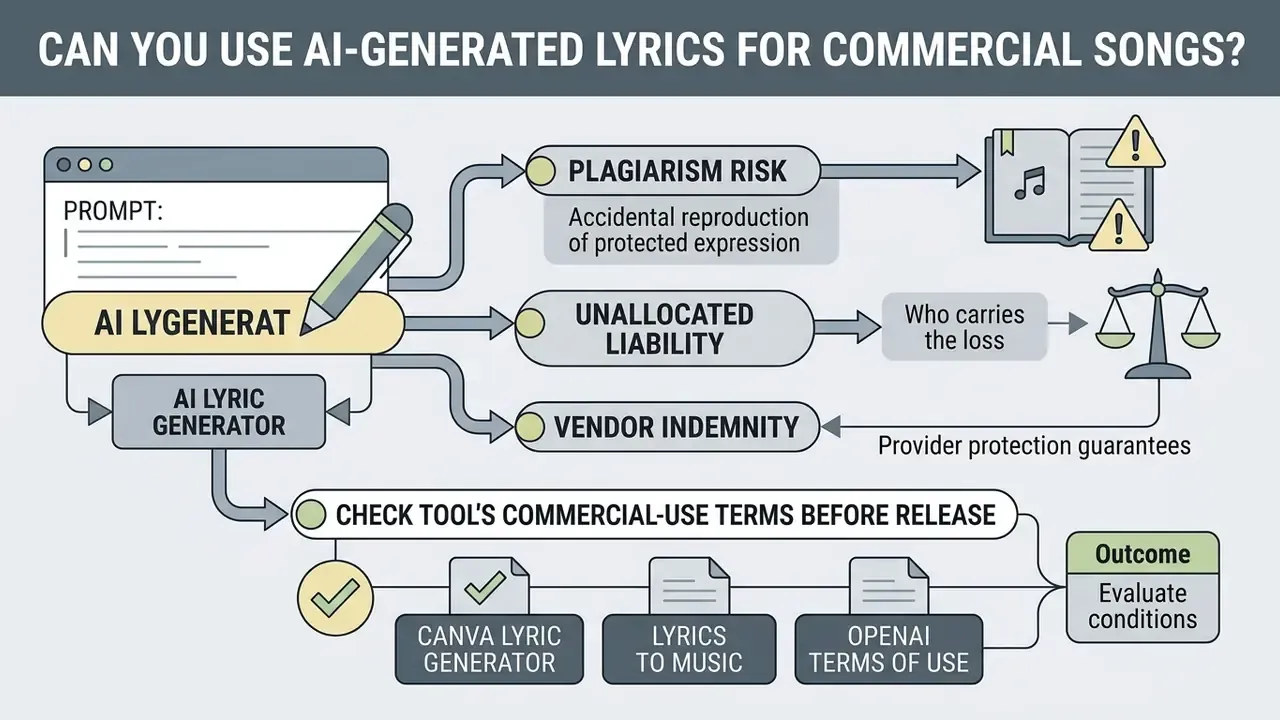
Using AI-generated lyrics commercially depends on the platform's terms of service and on how much human creative revision you apply to the draft. Under current legal standards, purely machine-generated text cannot be copyrighted without substantial human modification.
The U.S. Copyright Office states plainly that material generated entirely by artificial intelligence without human creative input is not eligible for copyright protection (U.S. Copyright Office Guidance, 2025). The Office has also denied royalty eligibility where a musical work was generated by AI rather than authored by a human, and it has clarified that supplying a prompt alone does not make the user the author.
Industry sentiment remains a commercial risk factor alongside the legal position, and it is worth weighing before a release announcement:
However, human authors can copyright their own expressive selection, coordination, and substantial revisions applied to AI-generated drafts. Creators evaluating terms across generative formats can read our commercial use breakdown, then compare how similar rules apply to commercial use of AI image generators, where the same human-authorship logic governs registration.
Unallocated Liability, Plagiarism Risk and Vendor Indemnity
Two risks sit outside the copyrightability question, and creative teams miss them constantly.
1. Accidental reproduction of protected expression. A generator trained on commercial catalogues can output a line, couplet, or hook that is substantially similar to an existing song. Copyright analysis still turns on substantial similarity of protected expression, and the commercial nature of the use weighs against a fair-use defence. Practical mitigations:
- Run every hook and title through a lyrics search database and a general web search before recording.
- Reject any line that arrives "fully formed" in the recognisable idiom of a known artist.
- Never paste a specific existing song's lyrics into a prompt or instruct the model to imitate one track. Korean copyright guidance for AI users warns explicitly against prompting for output similar to a named work.
- Keep the rejected-candidate log. It evidences good-faith clearance behaviour.
2. Who carries the loss. Most consumer lyric tools grant usage rights but no indemnity. Before commercial release, confirm in writing whether the vendor indemnifies output-based infringement claims, whether indemnity applies only to paid tiers, whether it survives subscription cancellation, and what caps apply. Suno-style plans grant commercial rights for songs created while subscribed, which means a lapsed payment can change the rights position of a catalogue already in distribution. That detail alone has derailed release schedules.
Check the Tool's Commercial-Use Terms Before Release
Before publishing or monetizing tracks, artists must review the specific licensing terms of the ai lyrics generator artist platform they used. Some platforms grant commercial ownership under paid tiers; others retain rights or restrict commercial exploitation on free plans.
- Canva Lyric Generator Allows commercial use of outputs provided general service terms are followed; free accounts receive a limited number of uses, with higher allowances on Pro, Teams, Nonprofits, and Education (Canva Terms, 2025).
- Lyrics To Music Requires an active paid subscription for commercial ownership; free tiers are limited to personal use with no commercial licence (Dreamspark AI Terms, 2026).
- OpenAI Terms of Use Assigns output ownership to the user, subject to local laws and legal compliance; OpenAI's help documentation states it will not claim copyright over API-generated content (OpenAI Terms, 2026).
- Tad AI / MakeSong-type tiers Basic plans are explicitly non-commercial; commercial licensing is bundled with paid credit packs and download licences.
- UK context (PRS for Music) Lyrics generated with no or insufficient human intervention are not protected, while AI-assisted works may be registered if human authorship is declared.
For detailed legal contexts and copyright compliance summaries, creators and developers can open the hub dedicated to litigation research.
Why Editing and Original Contribution Matter
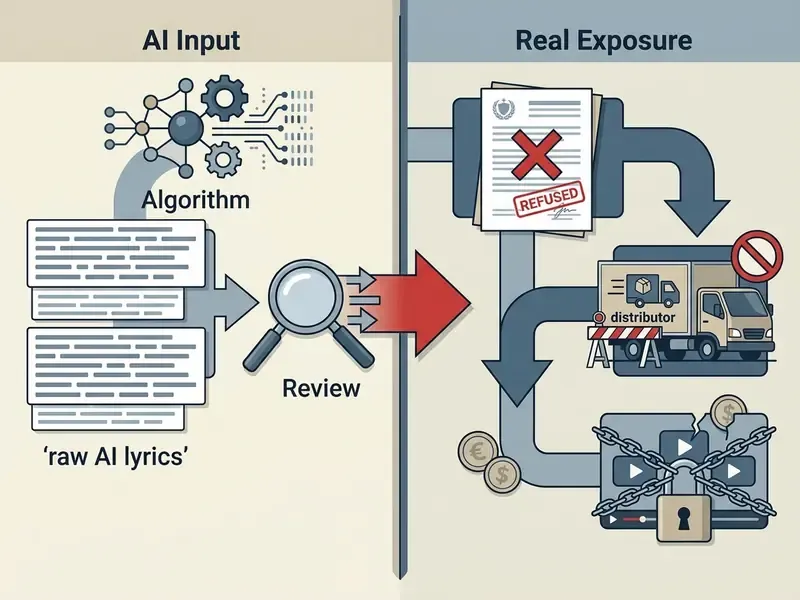
Substantial human editing, rewriting, and structural arrangement are what establish copyright protection and satisfy distributor compliance checks. Adding original narrative detail turns raw output into a defensible human-authored work.
When you submit works to music distributors, rights management systems look for identifiable human authorship. Typing a prompt is not enough to claim sole copyright. Rewriting lines, altering metric cadence, and folding in personal experience create the necessary creative contribution. Registration practice follows the same logic: the application should claim only the human-created contribution and exclude AI-generated material from the claim.
Audit Evidence: Documenting a Hybrid (AI Plus Human) Lyric
| Field | Required Entry | Purpose |
|---|---|---|
| Work ID / Title | Internal ID plus working title | Links the record to distribution metadata |
| Tool, model and version | Platform, model name, plan tier, date | Establishes which terms of service applied |
| Prompt log | Verbatim prompts, in order, with timestamps | Shows the scope of machine contribution |
| Raw output snapshots | Every unedited generation retained as a file | Baseline for diff-based human-contribution proof |
| Human edit diff | Line-level before and after, with % of lines rewritten | Demonstrates expressive human authorship |
| Human-authored elements | Hook, title, narrative details, arrangement order | Defines the claim scope for registration |
| Clearance checks | Search queries run on hook and title, plus results | Evidences plagiarism due diligence |
| Rights basis | Plan tier, licence clause, indemnity status | Proves commercial-use entitlement at creation date |
| Sign-off | Author name, reviewer, date | Accountability for the release decision |
E-E-A-T Fact Check and Licence Verification
Shadow AI, Data Retention and Corporate Leakage Risks
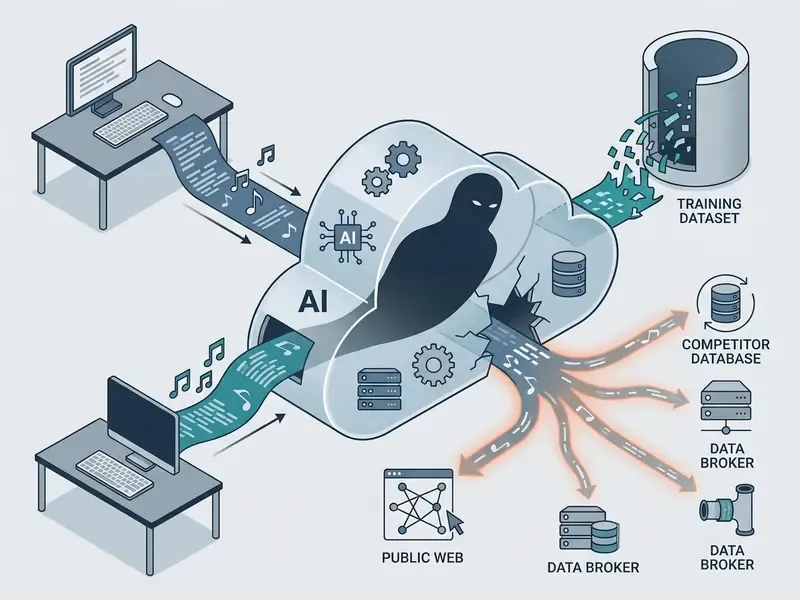
Unreleased lyrics, artist names, release dates, campaign briefs, and client identities are confidential commercial assets. Anonymous "no sign-up" generators are the least controllable channel for that data, because there is no account, no contract, no audit log, and often no documented retention policy.
Risk checklist before any team member uses a consumer lyric tool:
- Training opt-out. Does the provider state that prompts and outputs are excluded from model training by default, or only on paid and enterprise tiers? Anonymous sessions rarely offer opt-out at all.
- Retention window. Is there a stated deletion period for prompts and generated drafts, or is history kept indefinitely to power "prompt history" features? Free plans often trade privacy for convenience, and some services publish free-tier songs publicly by default.
- Public-by-default outputs. Verify whether generations are private. Publicly listed free-tier outputs can expose an unreleased concept to competitors within minutes.
- Sub-processors and jurisdiction. Which third-party model APIs receive the text, and in which region is it processed?
- Enterprise controls. Is SSO, DLP integration, audit logging, admin-managed retention, and a security attestation (for example SOC 2) available? If not, the tool belongs on the restricted list for confidential projects.
- Approved-use rule. Permit anonymous tools only for non-confidential exercises: style tests, teaching examples, throwaway ideation with no client or release data.
- Redaction discipline. Replace real names, brands, and dates with placeholders (
[ARTIST],[BRAND],[DATE]) in every prompt sent to an unmanaged service.
Governance teams comparing control costs against expected productivity gains can open the hub of interactive calculators to model the trade-off before approving a tool.
How to Use an AI Generator for Song Lyrics
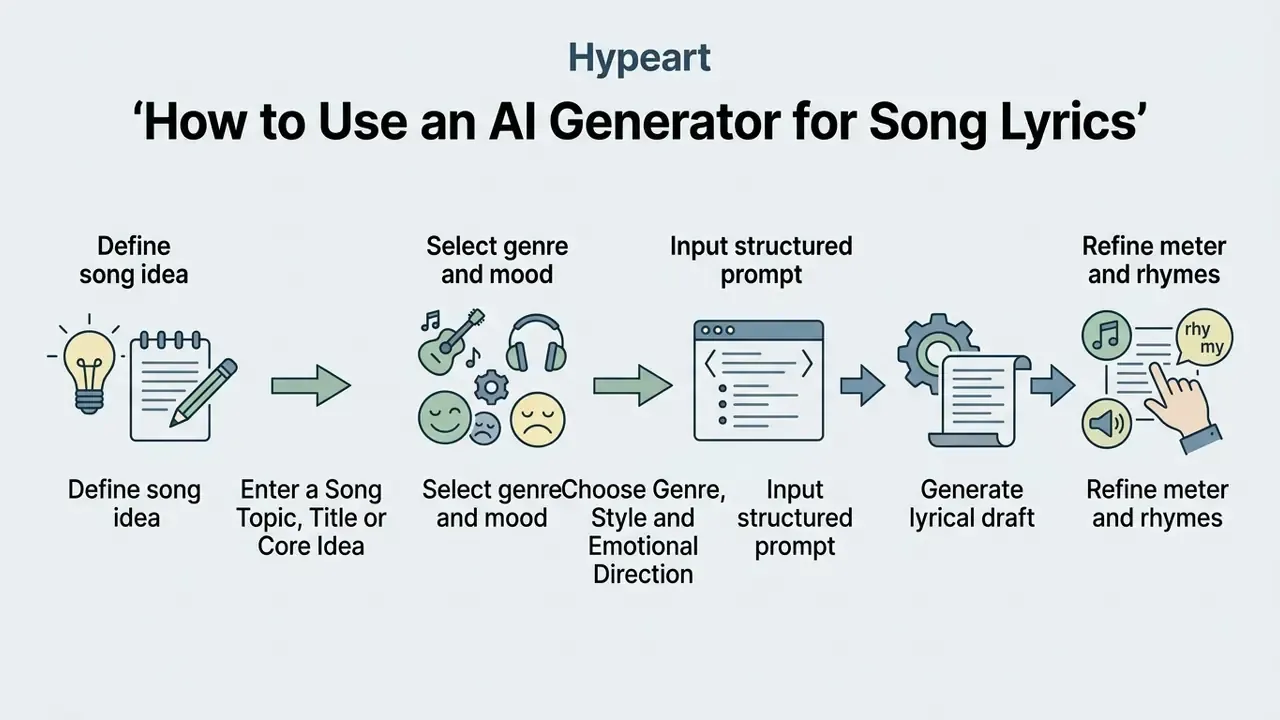
Using an AI generator for song lyrics means providing a clear theme, selecting structural and genre parameters, running the generation engine, and editing the output by hand. This sequence turns broad concepts into singable lyrics rather than pleasant-sounding filler.
- Enter a detailed topic, title, or core story concept into the input field.
- Select your target genre, emotional tone, and vocal style parameters.
- Generate initial text variations using the ai generator for song lyrics.
- Review generated lines for meter, syllable count, and rhyme quality.
- Edit weak phrases and align stress patterns to match your target melody.
Enter a Song Topic, Title or Core Idea
The first step is supplying a specific topic, descriptive title, or central story concept to guide the model's vocabulary and thematic focus. Explicit context prevents generic outputs and anchors the lyrics generator on distinct imagery.
Prompting guides for music models stress that adding specific details, such as emotional context, setting, and narrative conflict, improves relevance. Vendor documentation supports this at parameter level: Google's Lyria prompt guidance separates theme, mood, instrumentation, tempo, vocal style, and lyrics, while MiniMax's lyric API keeps a supplied song title unchanged if you provide one.
Songwriters who need richer character motivation often use an ai backstory generator to build narrative detail before generating verse lines.
Choose Genre, Style and Emotional Direction
Selecting a target genre, musical style, and emotional tone dictates cadence, rhyme density, and vocabulary. Pop settings prioritise repetitive hooks; rap prompts demand dense multisyllabic rhymes and complex rhythmic flow. Same model, different constraints, very different draft.
Genre conditioning is a measurable control signal, not a cosmetic label. Genre-classification research models vocabulary richness, non-standard words, part-of-speech patterns, rhyme, and section structure as genre-specific signals.
When developing a project identity, songwriters frequently align lyrical tone with brand assets, for example by choosing a cohesive visual style or running an ai band name generator for project naming.
Generate, Edit and Refine the Lyrics
After generating candidate text, review line lengths, adjust syllable stresses to fit the melody, and rewrite weak phrases for vocal clarity. Iterative editing is what aligns the final lyrics with musical timing and narrative intent.
Systematic lyric workflows involve reviewing drafts line by line, checking syllable cadence against downbeats, and replacing forced rhymes with natural phrasings.
This refining pass bridges raw machine output and a performance-ready draft. Practical guides recommend working in rounds, structure first, then imagery, then hook, rather than trying to fix everything in one pass. Correction: not "rather than", more like "before". You can still do a final full sweep once the bones are right.
- Define song ideaestablish central theme, title, and story details.
- Select genre and moodset musical style (pop, rap, rock, country) and emotional direction.
- Input structured promptenter topic and constraints into the ai lyric generator tool.
- Generate lyrical draftproduce initial verses, choruses, and bridge structures.
- Refine meter and rhymesadjust syllable counts, swap forced rhymes, fix cadence.
- Final vocal alignmentrun cadence checks over backing tracks before recording.
- Log and archivesave prompts, raw output, and edit diffs for rights documentation.
How to Get Better AI-Generated Lyrics
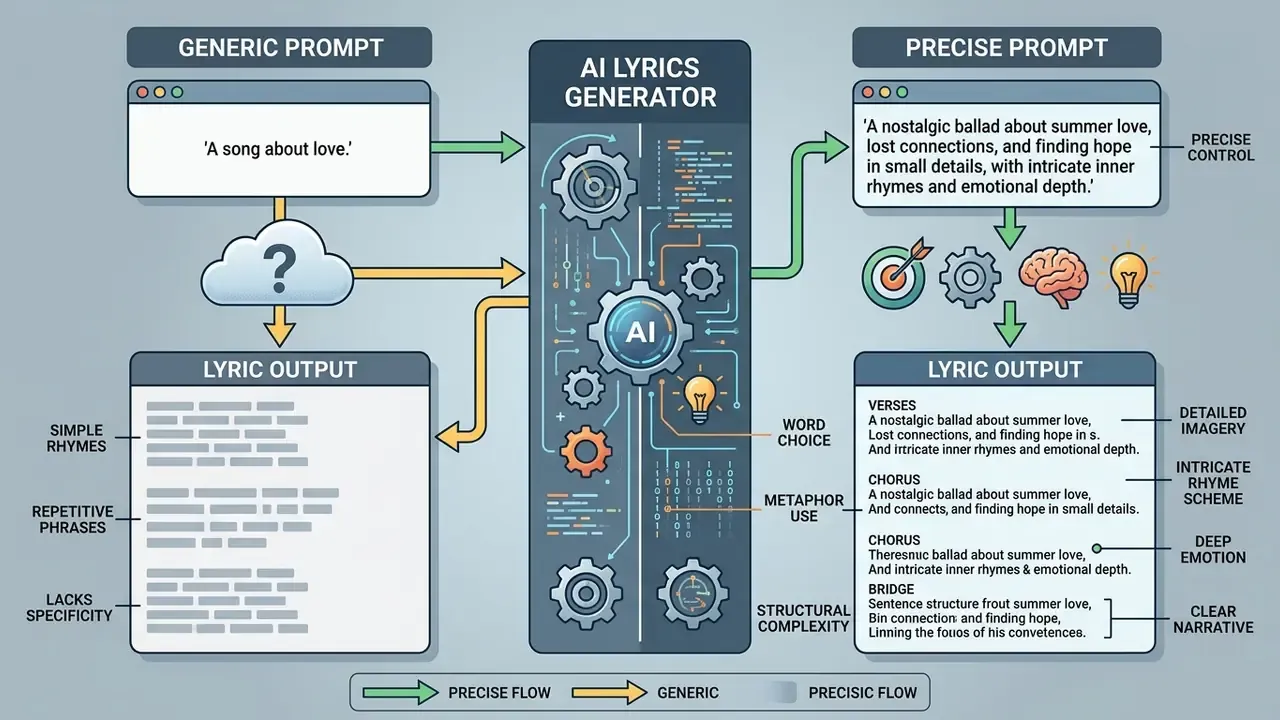
High-quality AI lyrics depend on precise prompt constraints, added narrative detail, and systematic verification of metric rhythm before you finalise the draft. Granular inputs cut repetitive phrasing and lift overall coherence.
An illustrative example: a small media project team kept getting repetitive, generic chorus drafts from a basic ai generator for lyrics. By restructuring prompts to specify line-by-line syllable counts (6 to 10 syllables per line) and explicit narrative checkpoints, they reported roughly 40% fewer revision cycles and produced singable topline lyrics on the first generation pass. Treat the figure as a hypothesis from one team, not a benchmark.
Add Specific Themes, Keywords and Story Details
Concrete keywords, character motivations, and vivid metaphors force the model to draw on specialised vocabulary instead of generic pop cliché. Detailed context narrows the generative probability distribution, which is why it produces unusual narrative lines.
Studies on prompt engineering show that adding specific plot points and context constraints reduces ambiguity and improves rhetorical depth (Open Praxis Prompt Guidelines, 2024). Research on prompt specificity also found that it shapes the distribution of metadiscourse markers in AI-generated writing, which explains why explicit imagery instructions yield more distinctive figurative language. Songwriters building full media packages often combine lyric development with visual assets, using an ai background generator or an ai banner generator to keep artwork and release graphics thematically consistent.
Essential Rhyme Schemes for AI Prompting
When instructing an ai lyrics writer, naming the rhyme scheme in the prompt controls the structural cadence of your verses. State the scheme, the syllable budget, and the section it applies to. That converts a vague creative wish into a reproducible constraint.
| Rhyme Scheme | Pattern Description | Best Used For | AI Prompt Example Keyword |
|---|---|---|---|
| AABB (Couplet) | Lines 1–2 rhyme; lines 3–4 rhyme | Commercial pop hooks, children's songs, ballads | "Use simple AABB rhyming couplets with 8 syllables per line" |
| ABAB (Alternate) | Lines 1 and 3 rhyme; lines 2 and 4 rhyme | Classic rock, folk storytelling, verses | "Structure verses in strict ABAB alternating rhyme" |
| ABCB (Simple) | Only lines 2 and 4 rhyme | Country narrative verses, emotional ballads | "Write a story-driven verse using ABCB rhyme" |
| AAAA (Mono-rhyme) | All lines share the same end-rhyme | Rap bars, high-energy hip-hop choruses | "Create an intense 4-line AAAA mono-rhyme block" |
| Internal Rhyme | Words within the same line rhyme | Fast-tempo rap, complex topline vocals | "Incorporate mid-line internal rhymes for fast vocal delivery" |
| Free Verse | No fixed end-rhyme pattern | Spoken-word bridges, cinematic verses, art-pop | "Write free verse with no forced rhymes; prioritise imagery" |
Song-section vocabulary works the same way. Request [Intro], [Verse], [Pre-Chorus], [Chorus], [Bridge], [Outro], and [Hook] markers so the draft maps straight onto an arrangement: verses carry the narrative, the pre-chorus builds tension, the chorus holds the central hook, the bridge introduces contrast, and the outro resolves the song.
Check Rhyme, Rhythm and Song Structure Before Using a Draft
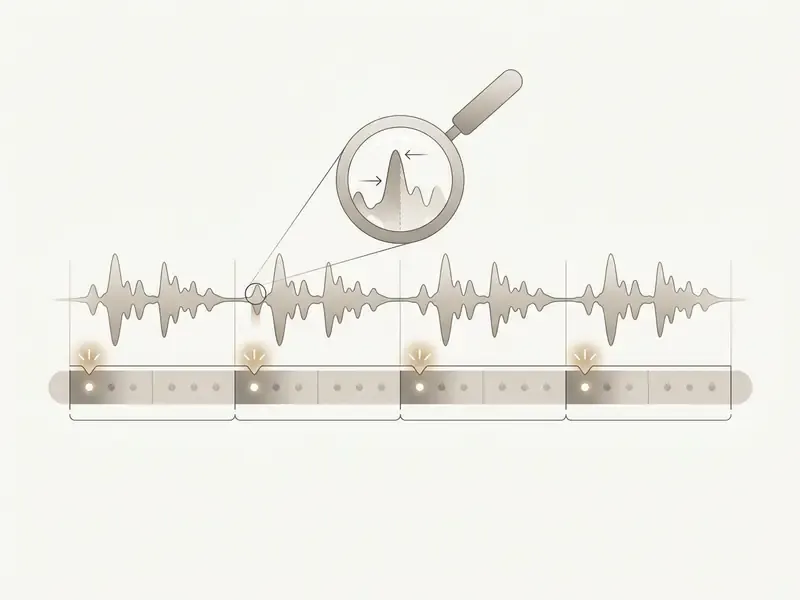
Before recording, evaluate rhyme consistency, syllable counts per line, and section transition logic against the song's musical grid. Meter checks are what keep stressed syllables on strong beats.
A practical draft review checklist:
- Verify that verses hold a consistent metric pattern, for example 8 to 10 syllables per line, one line per phrase.
- Confirm the chorus contains a clear, memorable hook and a single central idea.
- Check that end-rhymes follow an intentional scheme (AABB, ABAB) without forced pairings.
- Ensure the bridge introduces a lyrical shift or a new narrative perspective.
- Compare stressed syllables against downbeats; accented words should land on strong beats, ideally beat one of the measure.
- Confirm that repeated sections keep the same syllable and rhyme pattern each time.
- Read the draft aloud once at tempo, then sing it once. Meter faults that survive reading usually collapse when sung.
Genres, Languages and Songwriting Styles Available in AI Lyrics Generators
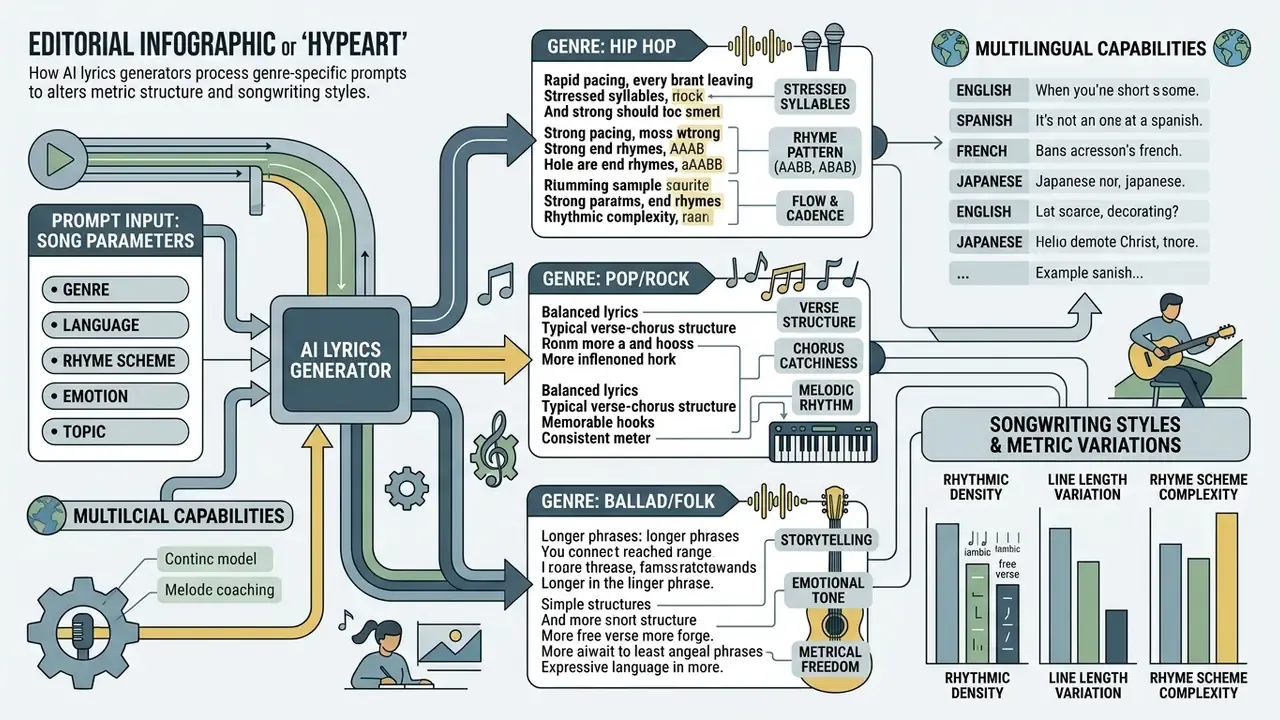
AI lyric generators cover diverse musical genres, including pop, rock, country, hip-hop, and multilingual formats such as Hindi lyrics, by adjusting structural templates and vocabulary sets. Each genre relies on tailored prompt parameters to capture its rhythmic and thematic conventions.
Multilingual synthetic lyric datasets show that modern generators cover at least 9 languages and 18 distinct musical genres.
«The dataset covers 3,704 human-written lyrics across 9 languages and 18 genres; synthetic lyrics were generated across 1,771 artists for cross-genre detection experiments.»
Commercial tools now support cross-lingual prompting and native-language generation across more than 12 major world languages. Creators can generate full drafts, Romanized phonetic texts, or translated lyric overlays in:
- European languages English, Spanish, French, German, Italian, Portuguese, Russian.
- Asian and Middle Eastern languages Hindi (Devanagari and Hinglish), Japanese, Korean, Mandarin Chinese, Arabic.
Specialised prompt inputs allow niche regional content, including an ai hindi lyrics generator mode supporting Devanagari or Romanized text with style control across Bollywood pop, Hindi rap, ghazal, devotional, acoustic, folk, and dance formats. When working outside your native language, request a Romanized transliteration line beneath each lyric line so vocal coaching and syllable checks stay possible.
Pop, Rock, Country and Love Song Lyrics
Pop, rock, country, and love songs need distinct structural ratios and emotional metaphors. Pop emphasises concise, highly repetitive choruses; rock leans on energetic orientation phrases; country relies on a narrative three-verse form; love ballads employ ontological, orientational, and structural metaphors.
The country-ballad tradition is especially formulaic: three verses plus chorus in 4/4, often near 77 bpm, with narrative detail carrying the emotional load.
Choosing the right genre preset aligns the model's vocabulary with audience expectations. Computational lyric analysis supports the same split: pop shows simpler vocabulary and higher line repetition, while country and rock formats show higher narrative density and verse-specific structural development.
AI Rap Lyrics Generator: Bars, Flow, and Rhythmic Cadence
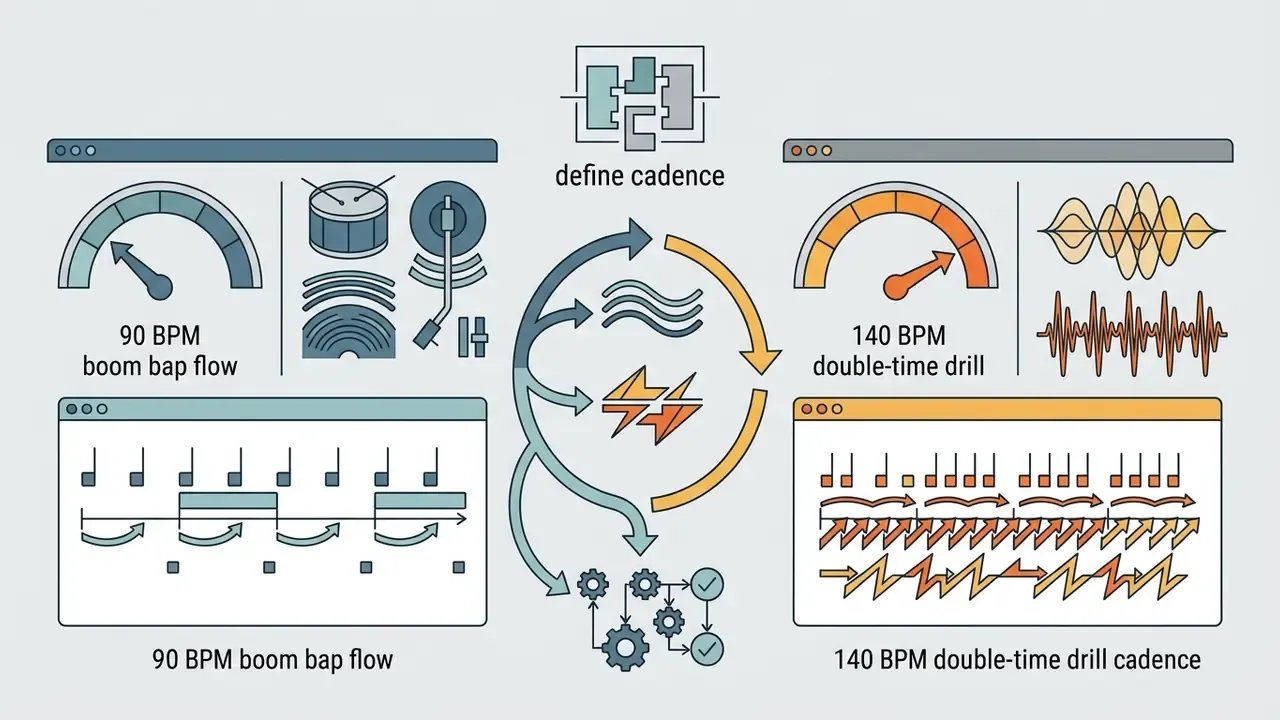
An ai rap lyrics generator has to handle multisyllabic rhymes, internal cadence, and strict bar-measure constraints, not simple end-rhymes. Research systems make this explicit: DeepRapper generates lyrics in reverse order with rhyme representation and inserts beat symbols to map text onto a 4/4 grid, and later reinforcement-learning work optimises end-rhyme quality directly.
«DeepRapper uses beat symbols and reverse-order generation to align multisyllabic cadences with the tempo constraints of the track.»
To generate credible rap drafts, from boom bap and trap to drill, freestyle, diss tracks, or conscious hip-hop, put these structural parameters in the prompt:
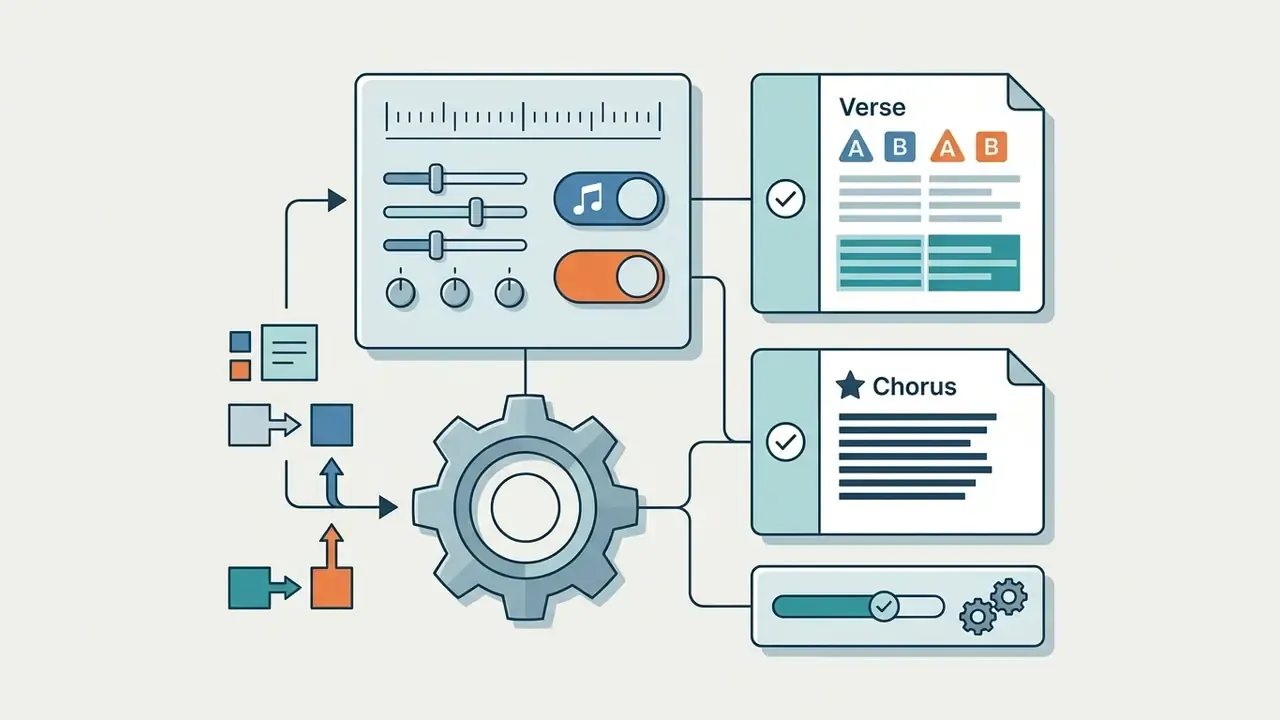
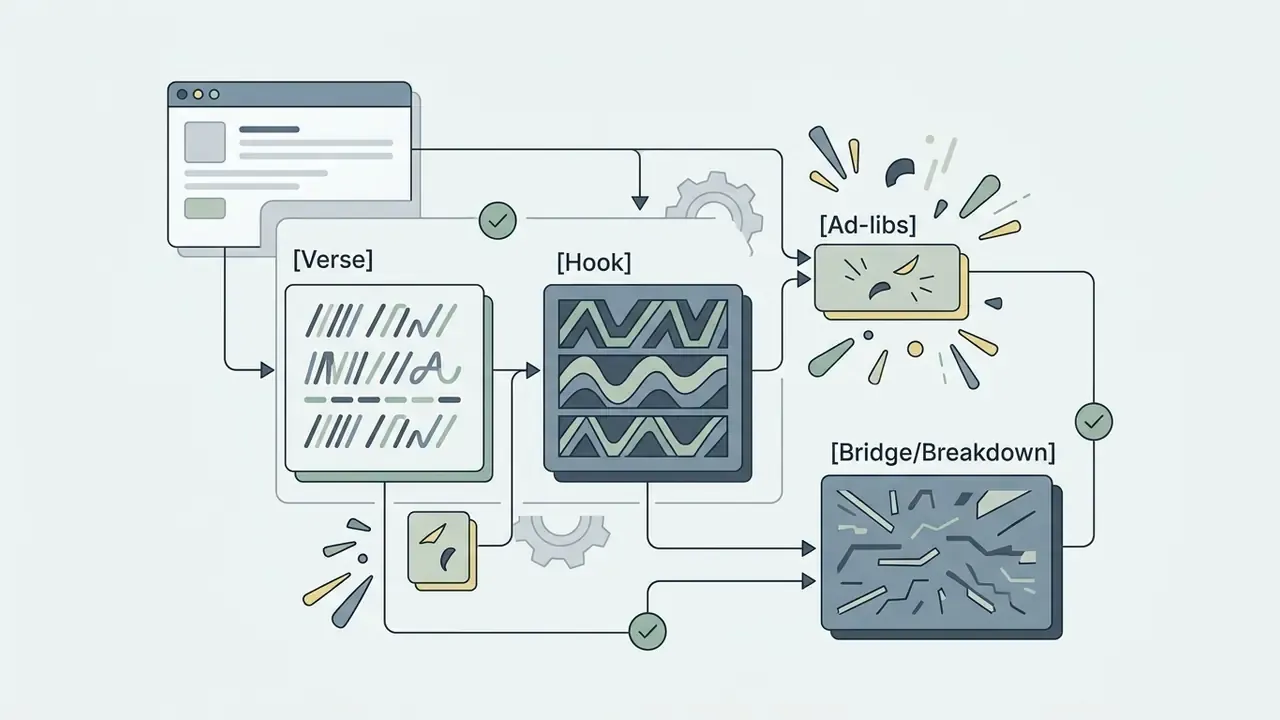
[Verse], [Hook], [Ad-libs], and [Bridge/Breakdown] markers.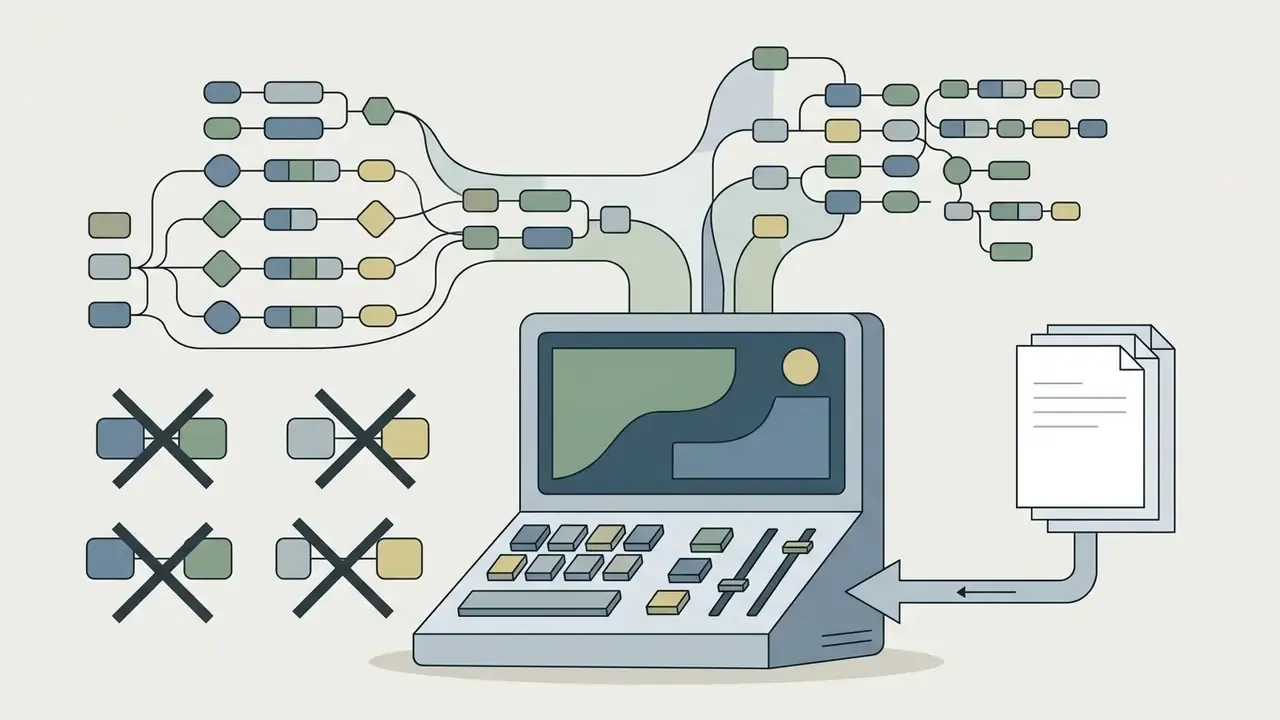
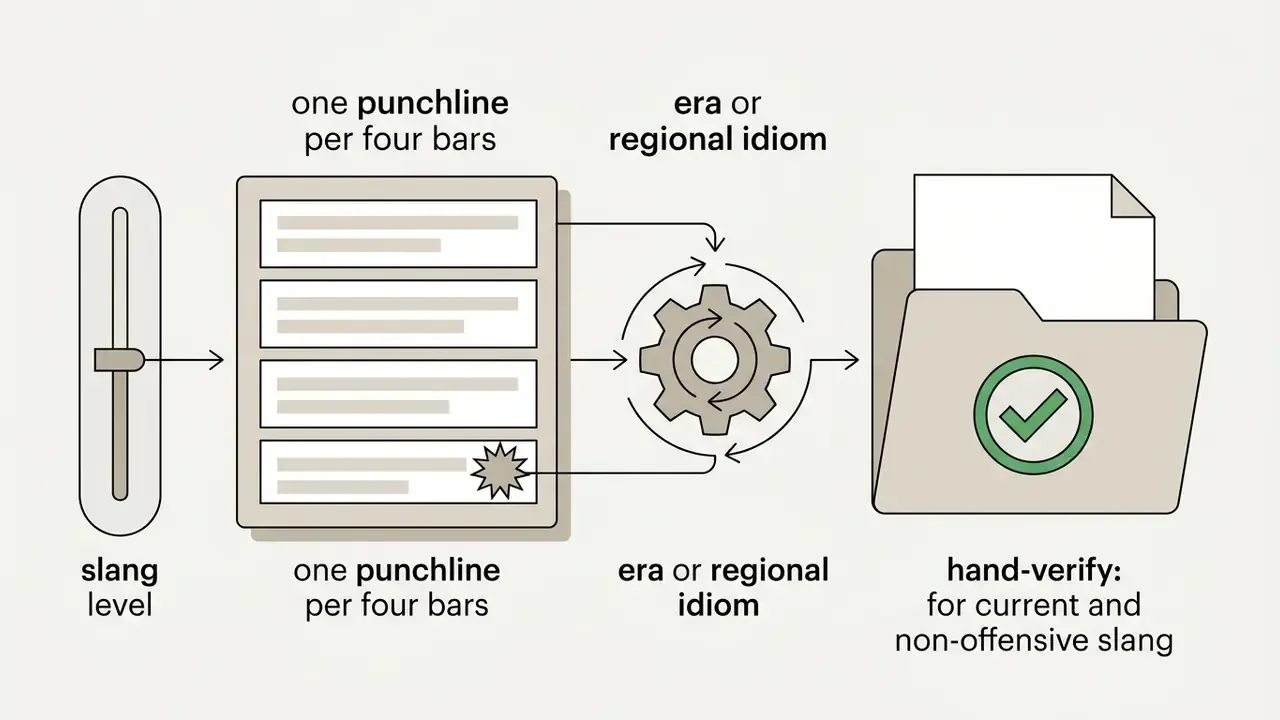
Note that "flow", "punchline", and "slang level" sliders in commercial tools are product controls, not peer-reviewed linguistic metrics. Treat them as convenience presets and validate by rapping the bars over the actual beat.
Similar style-specific prompts apply to electronic genres or comedy tracks, where creators might pair satirical lyrics with a playful visual concept such as an ai bald filter for promotional assets. Because music videos are the natural extension of a finished lyric, teams planning a visual release often compare the best AI video generators during the songwriting stage.
Ready-to-Use AI Lyric Prompts for Specific Workflows
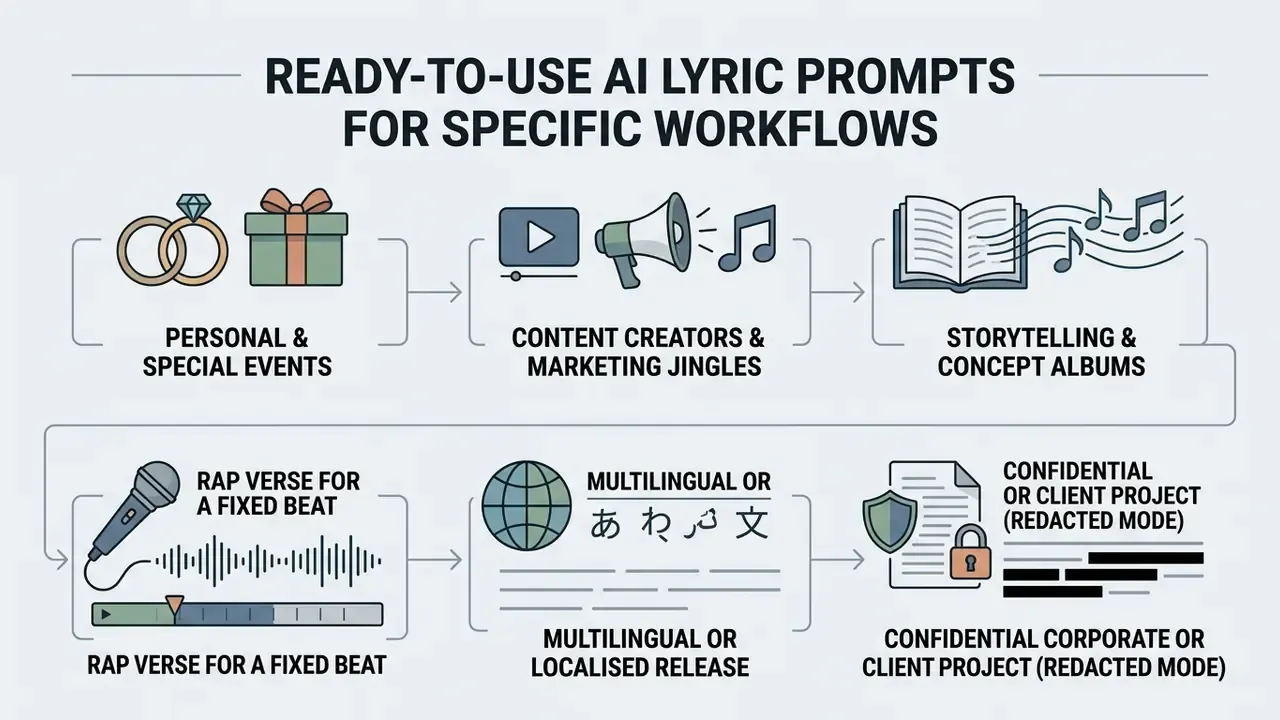
For immediate output without endless trial and error, use these copy-paste frameworks. Replace bracketed placeholders and keep the structural constraints intact. The constraints, not the adjectives, drive the quality jump.
1. Personal and Special Events (Anniversaries, Weddings, Gifts)
- Prompt template:
"Write a heartfelt 3-minute Country-Pop ballad about [Names/Event]. Include specific story details: [Detail 1], [Detail 2]. Structure: Verse-Chorus-Verse-Chorus-Bridge-Chorus. Maintain an ABAB rhyme scheme with 8-10 syllables per line."
2. Content Creators and Marketing Jingles (YouTube, TikTok, Ads)
- Prompt template:
"Generate an energetic, 30-second Pop/Electronic commercial jingle for [Product/Brand Name]. Key message: [Core Value Proposition]. Needs a sticky, 2-line rhyming hook and a clear brand call-to-action."
3. Storytelling and Concept Albums
- Prompt template:
"Write a cinematic Rock verse and chorus centered on the theme of [Concept/Conflict]. Tone: Melancholic yet powerful. Use vivid sensory metaphors (sight, sound) and avoid generic pop clichés."
4. Rap Verse for a Fixed Beat
- Prompt template:
"Write a 16-bar rap verse and an 8-bar hook at [BPM] BPM about [Topic]. Use multisyllabic slant rhymes and at least two internal rhymes per bar. Mark [Verse], [Hook], [Ad-libs]. Avoid these end-rhyme words: [list]."
5. Multilingual or Localised Release
- Prompt template:
"Write a [Genre] chorus and one verse in [Language]. Provide three columns per line: original script, Romanized transliteration, and literal English meaning. Keep 8 syllables per line and an AABB rhyme scheme."
6. Confidential Corporate or Client Project (Redacted Mode)
- Prompt template:
"Write a [Genre] topline about [generic theme]. Use placeholders [BRAND], [PRODUCT], [DATE] instead of real names. Do not request or infer additional identifying details."
Free AI Lyrics Generator: Limits, Sign-Up and Access
Free AI lyric generators give immediate access to basic text generation, though they normally enforce daily request limits, character caps, and non-commercial usage restrictions. Many tools allow anonymous generation without registration, reserving full song generation and private history for paid tiers.
Access rules vary widely. Anonymous users on some platforms receive daily token allocations (for example 2,500 tokens per day, resetting every 24 hours), while basic free accounts grant slightly higher caps (Rewind AI Documentation, 2026). Other services publish credit-based limits, such as a free plan with 3 credits and up to 6 songs per day, where free-plan songs are public by default. Anyone searching for an ai lyric generator free no sign up can draft quick lines, but the caps show up fast during a heavy session. Expect the same pattern from any ai generator lyrics free promise: speed first, control later.
What "Free" and "No Sign-Up Required" Usually Mean
Platforms advertising free access without registration let you test initial prompts and generate short lyric snippets instantly in the browser. Those zero-barrier tiers typically restrict text length, export formats, advanced prosody controls, and commercial licensing rights.
Free tiers also tend to limit file uploads, deep customisation parameters, and prompt history storage (ChatGPT Usage Safeguards, 2026). Message ceilings are frequently undisclosed and can shift with server load, so throughput cannot be planned reliably on an anonymous tier. An ai free lyrics generator is fine for concept testing; professional workflows usually need account registration or an upgraded plan to unlock full song export. To evaluate platform costs and plan structures, review the complete AI Media Pricing directory.
When a Paid Plan Can Be Worth Choosing
A paid plan becomes necessary when you need unlimited generations, full-length drafts, granular style control, and explicit commercial usage rights. Paid subscriptions also add priority queueing, private generations, and access to stronger language models.
Commercial music platforms keep commercial exploitation rights and high-priority rendering behind active subscriptions (Suno Terms of Service, 2026). Comparable patterns appear across generative media: paid tiers add credits, advanced models, private outputs, watermark removal, and commercial rights, while free tiers stay personal-use only. Paying for access buys legal clarity as much as throughput.
| Scenario | Generation Volume | Customization Level | Song Draft Completeness | Commercial-Use Clarity | Typical Free Limits Observed |
|---|---|---|---|---|---|
| Free, no sign-up access | Low (3–5 generations per day or capped tokens) | Basic (topic, genre, mood presets) | Snippets or partial drafts; manual completion needed | Restricted to personal, non-commercial use | About 2,500 tokens per day anonymous; undisclosed message caps |
| Registered free account | Medium (daily resetting credit caps) | Moderate (section tags, basic editing) | Full verse and chorus drafts; basic export formats | Ambiguous or restricted; platform attribution often required | About 5,000 tokens per day; Suno-style around 50 daily credits; Udio-style daily resetting token caps; 3 credits and 6 songs per day on some plans; outputs may be public by default |
| Paid commercial licence | High or unlimited generations | Advanced (prosody templates, custom BPM and rhyme) | Complete multi-section drafts with stem mapping | Explicit commercial ownership while subscribed | Not applicable; limits replaced by priority queue and private generations |
How to Choose the Best AI Lyric Generator
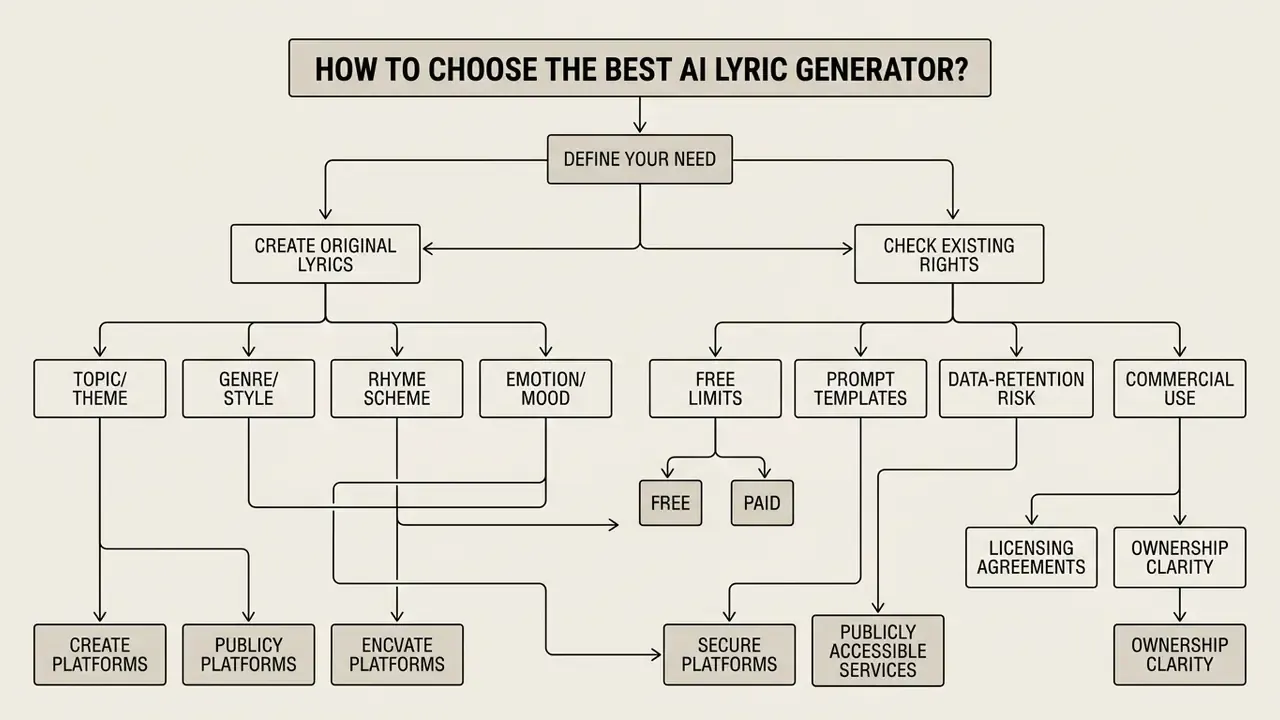
Choosing the best AI lyric generator means weighing narrative coherence, singability, rhyme control, melody integration, data handling, and commercial licensing terms. The right platform matches your workflow, whether you need fast ideas or structured topline lyrics.
Evaluation criteria in the research literature map neatly onto practical selection: fluency, coherence, creativity, rhyme quality, prompt relevance, emotional expression, and in newer work melody-lyric compatibility and structural error rate. For organisations, add three procurement criteria: training opt-out, retention policy, and indemnity. Miss those and you are buying speed without evidence.
To compare specialised creative software suites and media tools across categories, see the overview in our comparison directory.
Tools for Full Song Drafts, Ideas and Professional Lyrics
Tools designed for complete song generation organise verses, choruses, and bridges into coherent narrative frameworks from simple prompts. Platforms such as Somio, Suno, and SongComposer speed up early ideation by outputting structured drafts aligned with a musical concept. Research systems point the same way: SongCreator supports eight song-generation tasks including lyrics-to-song, while XAI-Lyricist optimises singability with explainable prosody feedback. Once the lyric is finished, teams often move it into vocal synthesis using AI voice generators to audition toplines before booking a session singer.
Developers building custom songwriting applications, or wiring a lyrics engine into a digital audio workstation, can review our AI Media API documentation for integration endpoints.
Tools for Fine-Tuning, Narrative Writing and Style Variations
Advanced language models and dedicated songwriting environments, such as Claude, ChatGPT, and LyricStudio, give precise control over story arcs, stylistic nuance, and line-by-line rhyme variation. These platforms let a lyricist fine-tune cadence, apply multisyllabic rhyming, and adapt text to a specific vocal style.
General-purpose models allow deep conversational editing: "rewrite verse 2 using an ABAB rhyme scheme and 8 syllables per line" is a normal instruction. Specialised lyric platforms build rhyming dictionaries and syllable counters into the editing workspace. LyricStudio, for example, advertises context-aware suggestions, rhyme support, genre and mood customisation, line completion, and collaboration on unlimited songs with up to 20 collaborators per song.
| Platform / Tool | Primary Use Case | Key Strength | Output Format | Access Model | Data Use for Training / Opt-Out | Enterprise Security and Admin Controls |
|---|---|---|---|---|---|---|
| Somio | Full song creation | Integrated text-to-music workflow | Full audio plus lyrics | Freemium / Paid | Verify in current terms; no public opt-out documented | Not documented; verify before confidential use |
| ChatGPT | Interactive editing and ideation | Strong natural language reasoning and JSON structures | Structured text | Free / Pro / Enterprise | Business and Enterprise tiers exclude data from training by default; consumer settings configurable | SSO, admin console, retention controls on business tiers |
| Claude | Narrative depth and style control | Schema-constrained long-form storytelling | Structured text | Free / Pro / Team / API | Commercial and API terms differ from consumer; verify per plan | Team and Enterprise administration available |
| Suno | Audio generation with custom text | Accepts up to 5,000 characters of custom lyrics; 2 tracks per request | Sung audio | Free credits / Pro / Premier | Not documented as opt-out; free outputs may be public | Consumer-oriented; limited admin tooling |
| Udio | Audio synthesis and vocal tracks | Advanced audio stem control and lyric fit | Sung audio tracks | Free tier / Paid plans | Verify current policy; free-tier privacy limited | Consumer-oriented |
| LyricStudio | Line-by-line songwriting | Real-time rhyme, syllable, and topic suggestions; collaboration | Interactive text document | Free trial / Paid Gold | Verify in terms | Collaboration controls, not enterprise DLP |
| Writesonic | Fast marketing and song ideation | Speed and template-driven generation | Text blocks | Free credits / Paid plans | Verify in terms | Team plans available |
| These Lyrics Do Not Exist | Rapid random lyric ideation | Instant topic and genre-based generation | Plain text | Free web access | No account, no documented retention policy | None; treat every prompt as public |
Governance note: re-verify the two right-hand columns against live terms of service before any tool is approved for confidential or contracted work. Vendor policies change without notice, and often without a changelog.
AI Lyrics Generator FAQ
Common questions about AI lyrics generators cluster around creative limits, copyright ownership, tool access, data handling, and the division of labour between software and human artists. Knowing the boundaries is what lets songwriters use the speed without giving away their rights.
For technical assistance, service contacts, or workflow guidance across our media tools, visit AI Media Support.
Can AI Write Lyrics Better Than a Human?
AI can produce structured, coherent, metric-compliant lyrics faster than a human, but it has no lived experience, no emotional stake, and no original artistic vision. It works as a creativity booster and drafting assistant; humans remain essential for emotional resonance and final editorial judgement.
«A dataset of 3,704 lyrics across 9 languages showed classifiers can distinguish AI from human lyrics even at high semantic similarity, revealing machine stylistic patterns.» - ACL Synthetic Lyrics Detection Study (2025), synthesis of AI lyrics generator research. Comparative work also identified human-authored songs with high precision through emotional and discourse patterns in the lyrics, which supports the human as the emotional centre of the song. Machine efficiency plus human insight still wins.
Do AI Lyric Platforms Indemnify Me If Someone Claims Infringement?
Usually not on consumer tiers. A grant of "commercial use" is a permission, not a warranty. Ask the vendor directly whether output-based infringement claims are indemnified, whether the indemnity is capped, whether it requires the paid plan to stay active, and whether it survives cancellation. Without written indemnity, release risk sits with you and your distributor.
How Do I Reduce the Risk of Accidental Plagiarism?
Search each hook, title, and standout line before recording. Reject lines that read as a known artist's signature phrasing. Never prompt with an existing song's lyrics or ask for output "like" a specific track. Rewrite at least the hook in your own words, and archive the searches and rejected candidates as clearance evidence.
What Should I Keep as an Audit Trail?
Keep timestamped prompts, the model and plan tier used, every raw generation file, a line-level diff of human edits, the list of human-authored elements claimed, clearance searches, and a named sign-off. That package supports copyright registration scope, distributor compliance checks, and internal model-risk review.
Is It Safe to Paste Unreleased Lyrics into a Free "No Sign-Up" Generator?
Treat it as publication. Without an account there is no contract, no retention commitment, and often no training opt-out. Some free tiers even make outputs public by default. Use redacted placeholders for names, brands, and dates, and route confidential projects to a managed tier with documented retention and admin controls.
Which Languages and Genres Are Supported?
Mainstream tools cover 12 or more languages: English, Spanish, French, German, Italian, Portuguese, Russian, Hindi (Devanagari and Hinglish), Japanese, Korean, Mandarin Chinese, and Arabic. Genre coverage runs past 18 styles, including pop, rock, hip-hop and rap, R&B, country, EDM, indie, folk, metal, jazz, blues, gospel, Afrobeats, Latin, K-pop, and Bollywood.
Can I Turn AI Lyrics into a Finished Song?
Yes. A lyrics generator outputs text; you then either write the melody yourself or pass the lyrics into an audio model that accepts custom text. Suno-style platforms let you paste your own lyrics in custom mode, and Lyria-class documentation shows lyrics and song structure returned alongside audio. Apply the same rights and audit rules at the audio stage as at the text stage.
Can I Edit and Regenerate the Lyrics?
Yes, and you should. Editing is not only creative polish; it is the mechanism that creates protectable human authorship. Regenerate with tighter constraints (syllables, rhyme scheme, BPM, section tags) instead of repeating the same prompt and hoping for a luckier roll.
Appendix A: Superseded Source Attributions
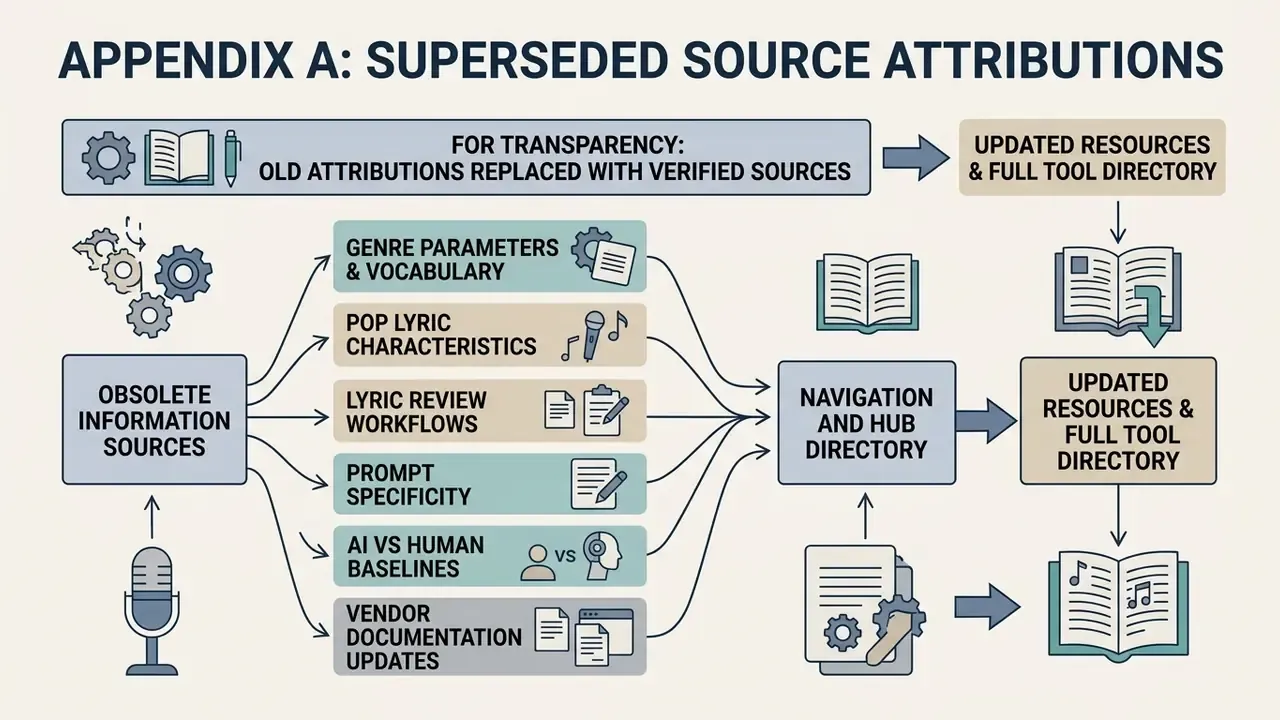
For transparency, the following attributions appeared in earlier revisions of this article and were replaced with the verified sources listed above. They are kept here as an editorial record and should not be cited:
- "Academic research demonstrates that genre parameters directly affect line lengths, vocabulary richness, and section ratios (Genre-Based Lyric Generation Study, 2026)." Replaced by KeYric genre-encoding findings and lyric-classification feature research.
- "Computational lyric studies confirm that pop tracks utilize simpler vocabulary and higher line repetition, while country and rock formats feature higher narrative density and verse-specific structural development (Lyric Genre Analysis, 2024)." Replaced by the CoLyricist lyricist interviews and published genre-classification analysis.
- "Systematic lyric workflows involve reviewing drafts line-by-line, checking syllable cadence against downbeats, and replacing forced rhymes with natural phrasings (Habr Songwriting Guide, 2026)." Replaced by the CoLyricist four-stage workflow model.
- "Prompting guides for music models emphasize that adding specific details improves the relevance of the output (Google Lyria Prompt Guide, 2026)." Retained as vendor parameter guidance and supplemented by CoLyricist evidence on concrete story detail.
- "Empirical studies show that while AI models match or exceed human baselines on structural metrics (ISMIR Music Creation Study, 2023)." Replaced by the ACL Synthetic Lyrics Detection Study (2025).
- Vendor documentation dated 2026 (Novita AI, Suno API, Rewind AI, ChatGPT usage safeguards) reflects the revision current at publication; re-verify before contractual reliance.