Deploying synthetic vocal models in creative media workflows takes more than surface realism. Somebody has to check rhythmic downbeat alignment, data lineage, and the commercial exposure sitting underneath the render. This guide speaks to two readers at once: the creator who wants to hear their bars performed in the next five minutes, and the production or compliance lead who signs off before the track ships.
Executive Summary
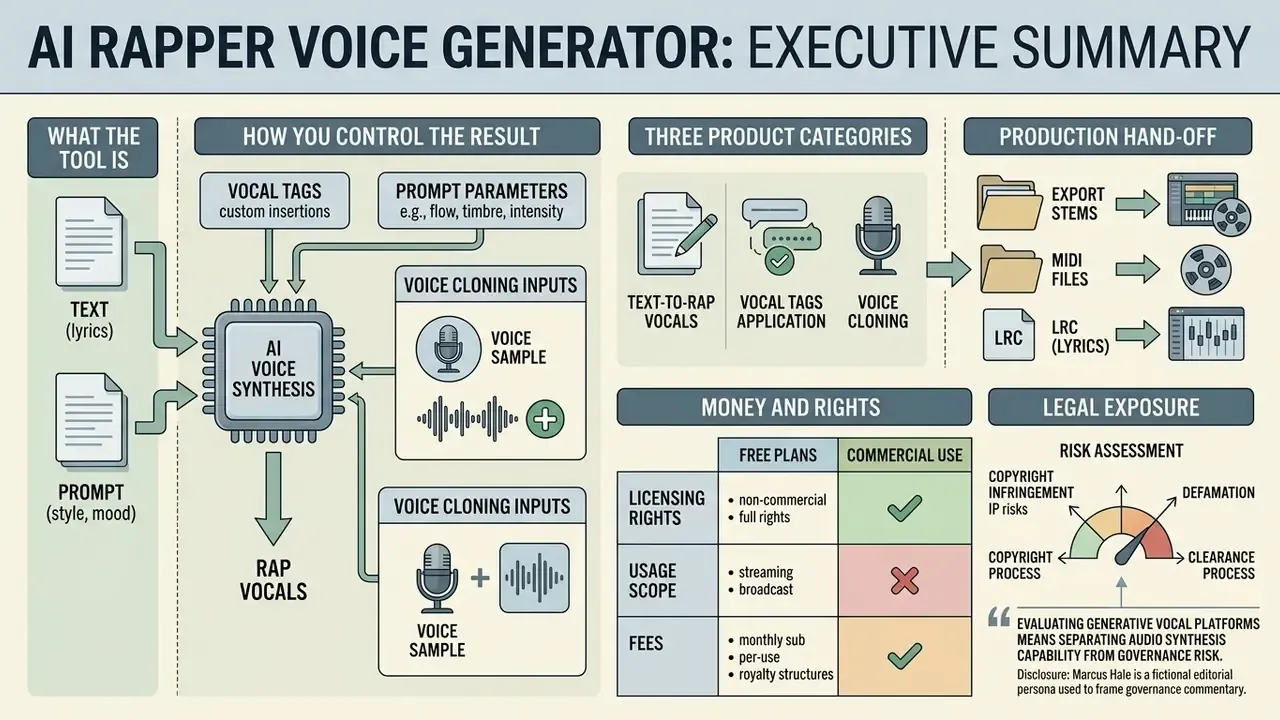
- What the tool is. An ai rapper voice generator converts typed lyrics into rap vocals by aligning phonemes to a tempo grid. It does not simply read text aloud the way conversational text-to-speech does.
- Three product categories. TTS rapper voice (dry acapella stem), AI rap vocal generator (beat-aligned vocal over your instrumental), AI rap song generator (lyrics, vocals, beat and arrangement in one render).
- How you control the result. Section tags (
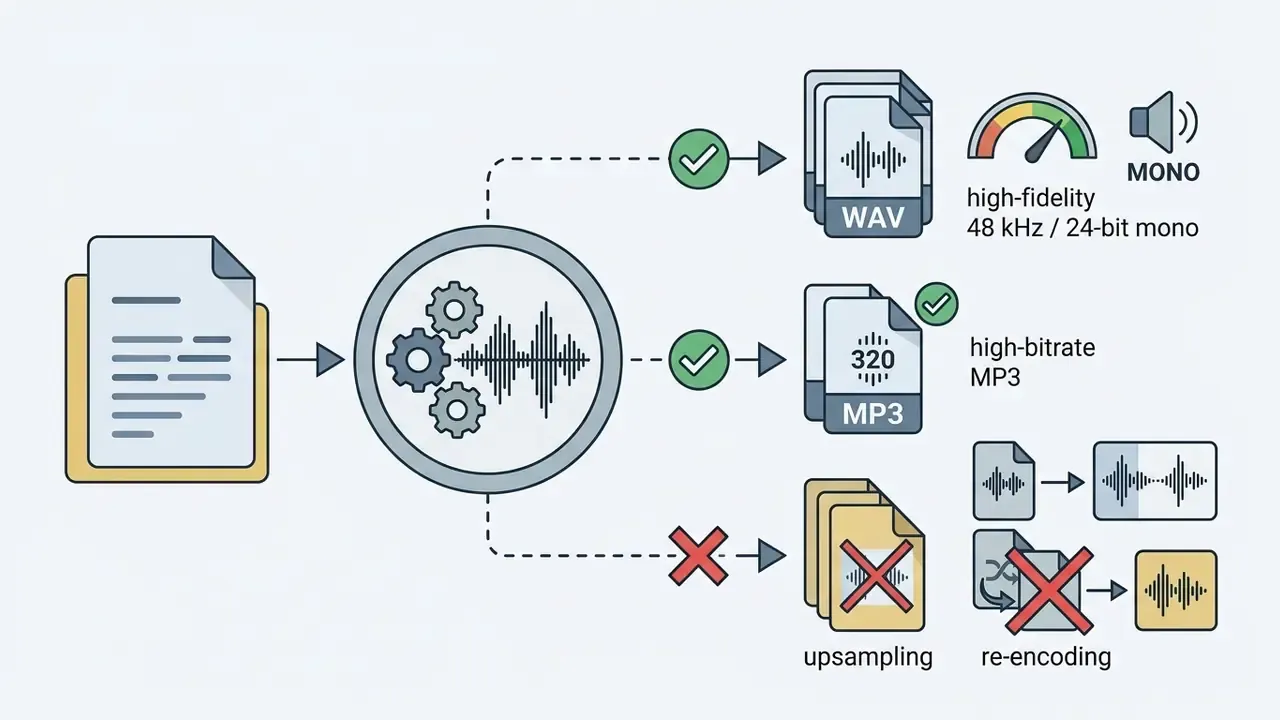
[Verse],[Chorus]), vocal tags ([Female Vocal],[Fast Flow],[Pause]), and parameter sliders (Rhyme Focus, Structure Bias, Tempo, POV, Persona, Profanity Level). - Production hand-off. Modern platforms export 24-bit/48 kHz WAV, up to 12 separated stems, MP3/WAV-to-MIDI conversions, and time-synced LRC/SRT lyric files.
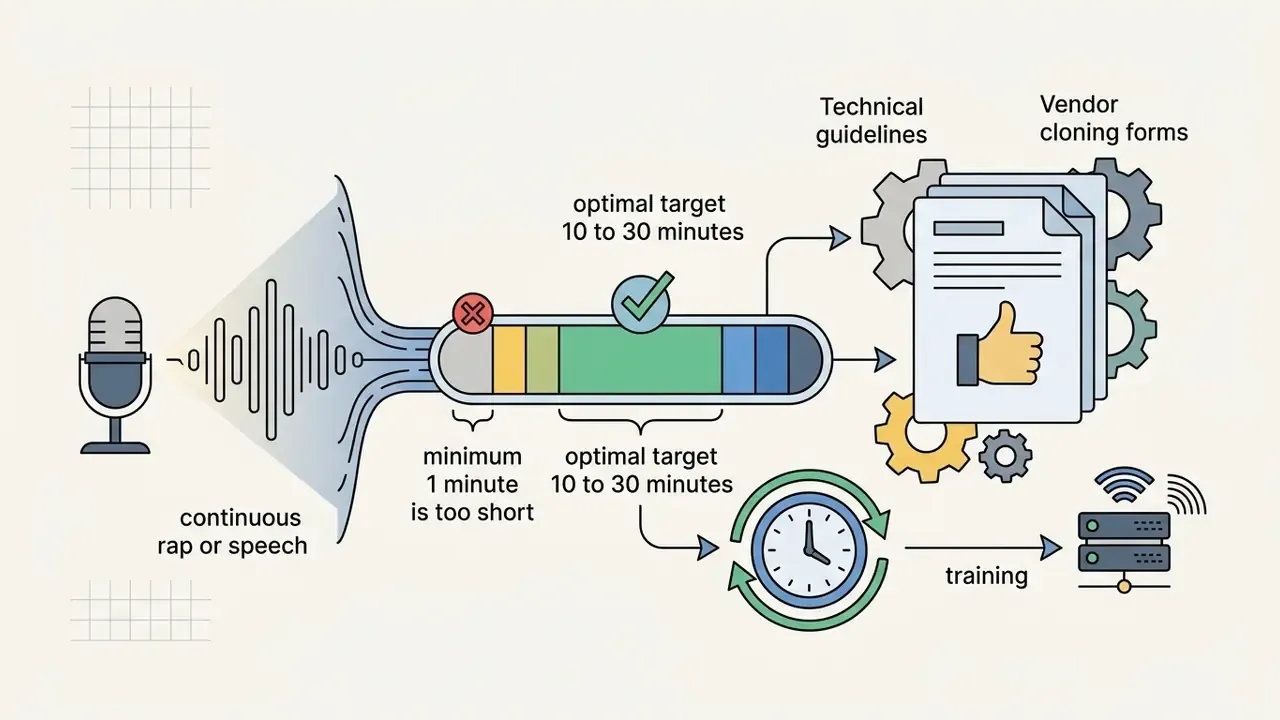
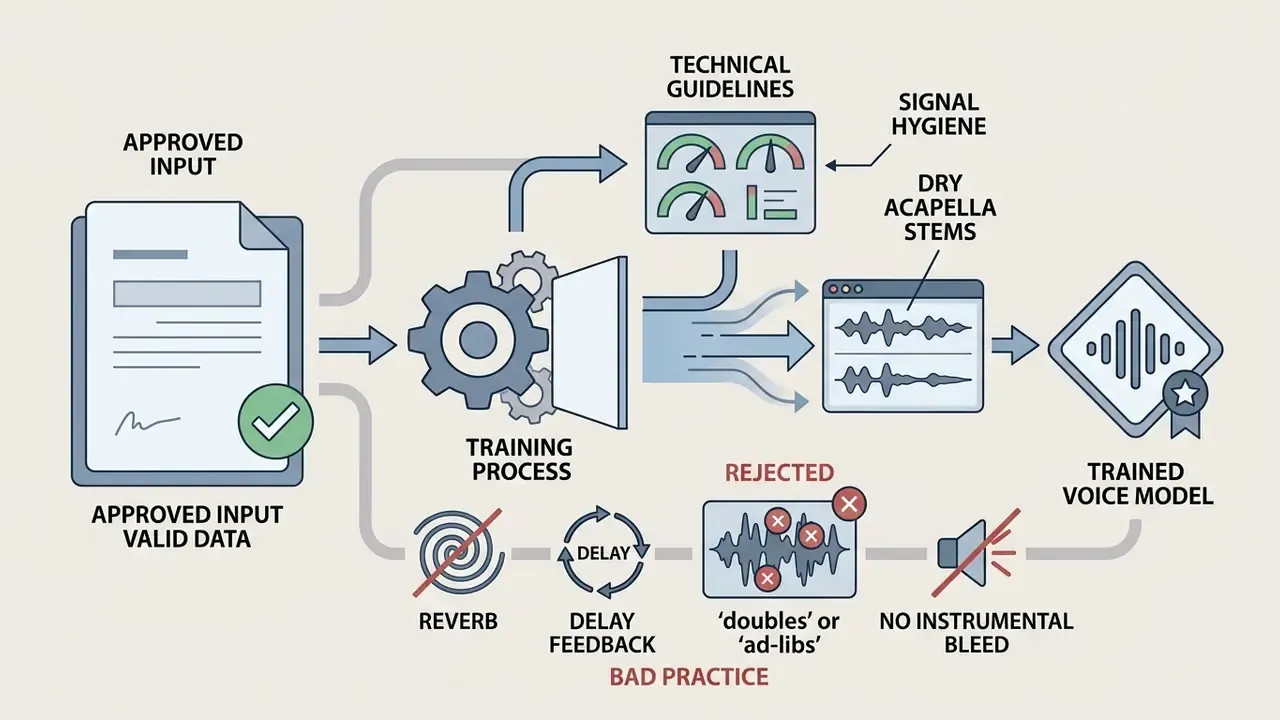
- Voice cloning inputs. 10 to 30 minutes of dry acapella, mono, 48 kHz/24-bit WAV, no reverb, no instrumental bleed. Some engines run zero-shot from a 3-second prompt.
- Money and rights. Free tiers are near-universally non-commercial (ElevenLabs free: roughly 10 minutes per month, no commercial licence). Commercial rights typically start at $5 to $10 per month.
- Legal exposure. AI-only audio is not registrable for U.S. copyright without documented human authorship, and imitating a recognizable artist's voice triggers Right of Publicity risk under statutes such as Tennessee's ELVIS Act.
What Is an AI Rapper Voice Generator?
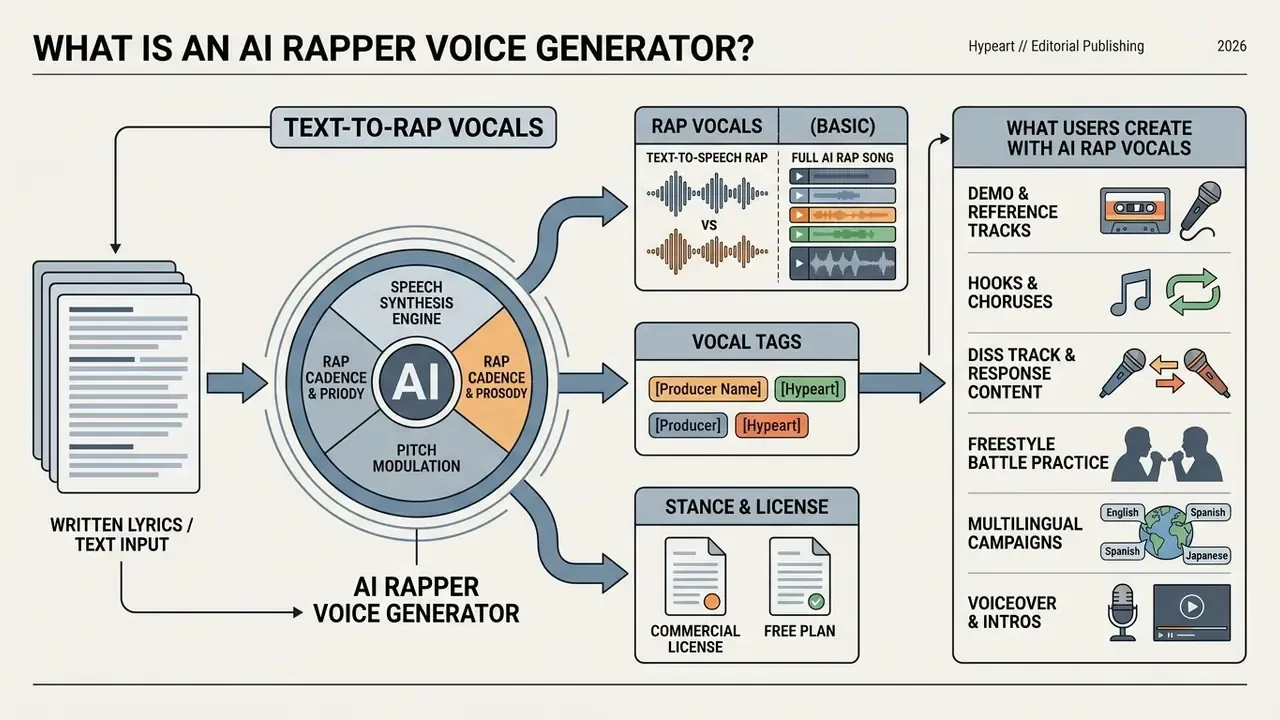
An ai rapper voice generator is a specialized speech synthesis system that converts written text or lyrics into rap vocals with stylized cadence, prosody, and pitch modulation. Unlike standard text-to-speech tools engineered for conversational prose, an ai rapper voice generator aligns phonetic delivery to tempo grid patterns, downbeats, and subgenre-specific rhythmic flows.
Modern voice generation technology relies on deep neural networks conditioned on explicit musical parameters. Standard text-to-speech engines optimize for naturalness and intelligibility across narrative paragraphs. An ai rap generator text to speech platform does something different: it predicts syllable duration, stress patterns, and pitch contours so the generated speech locks to the underlying tempo. Advanced architectures, such as the Freestyler framework introduced in academic research, use conditional flow matching and neural vocoders to synthesize acapella rap vocals directly from text and accompaniment audio features, without requiring symbolic MIDI scores.
«Freestyler is the first system to generate rapping vocals directly from lyrics and accompaniment inputs, without symbolic score notation». Freestyler: Rap Vocal Generation, arXiv (2024). https://arxiv.org/
Earlier research on rapping-singing synthesis reached the same principle from a different angle. A neural TTS model fine-tuned on limited recordings, driven by phoneme-level prosody control, can extract target pitch and duration from an a cappella reference and re-perform new lyrics inside that rhythmic profile. That is the architectural reason rap engines expose timing controls ordinary narration voices never bother with.
Understanding what an ai rap vocal generator can actually do means separating single-vocal generation from end-to-end music synthesis. Creators and media production teams pick specialized tools depending on whether they need isolated vocal stems or a fully arranged backing track. For adjacent context on synthetic speech quality, licensing, and language coverage, see our guide to AI voice generators.
<table>
  <caption>Comparison of Text-to-Speech Rapper Voice, AI Rap Vocal Generator, and AI Rap Song Generator</caption>
  <thead>
    <tr>
      <th>Tool Type</th>
      <th>Primary Inputs</th>
      <th>Primary Outputs</th>
      <th>Vocals Included</th>
      <th>Lyrics Handling</th>
      <th>Beat / Instrumental</th>
    </tr>
  </thead>
  <tbody>
    <tr>
      <td>Text-to-speech rapper voice</td>
      <td>Text script, voice style parameters</td>
      <td>Dry acapella vocal stem with rap prosody</td>
      <td>Yes (synthetic rap speech)</td>
      <td>Raw text conversion</td>
      <td>No (supplied externally)</td>
    </tr>
    <tr>
      <td>AI rap vocal generator</td>
      <td>Formatted lyrics, reference audio or beat stem</td>
      <td>Rhythmically synchronized vocal track</td>
      <td>Yes (beat-aligned rap delivery)</td>
      <td>Structured lyric mapping</td>
      <td>Input beat conditions vocal timing</td>
    </tr>
    <tr>
      <td>AI rap song generator</td>
      <td>Topic prompt, subgenre tag, style keywords</td>
      <td>Full song file (vocals, lyrics, beat, arrangement)</td>
      <td>Yes (integrated vocal layer)</td>
      <td>Automatically generated</td>
      <td>Yes (internally synthesized backing track)</td>
    </tr>
  </tbody>
</table>
Earlier research on rapping-singing synthesis reached the same principle from a different angle. A neural TTS model fine-tuned on limited recordings, driven by phoneme-level prosody control, can extract target pitch and duration from an a cappella reference and re-perform new lyrics inside that rhythmic profile. That is the architectural reason rap engines expose timing controls ordinary narration voices never bother with.
Understanding what an ai rap vocal generator can actually do means separating single-vocal generation from end-to-end music synthesis. Creators and media production teams pick specialized tools depending on whether they need isolated vocal stems or a fully arranged backing track. For adjacent context on synthetic speech quality, licensing, and language coverage, see our guide to AI voice generators.
<table>
  <caption>Comparison of Text-to-Speech Rapper Voice, AI Rap Vocal Generator, and AI Rap Song Generator</caption>
  <thead>
    <tr>
      <th>Tool Type</th>
      <th>Primary Inputs</th>
      <th>Primary Outputs</th>
      <th>Vocals Included</th>
      <th>Lyrics Handling</th>
      <th>Beat / Instrumental</th>
    </tr>
  </thead>
  <tbody>
    <tr>
      <td>Text-to-speech rapper voice</td>
      <td>Text script, voice style parameters</td>
      <td>Dry acapella vocal stem with rap prosody</td>
      <td>Yes (synthetic rap speech)</td>
      <td>Raw text conversion</td>
      <td>No (supplied externally)</td>
    </tr>
    <tr>
      <td>AI rap vocal generator</td>
      <td>Formatted lyrics, reference audio or beat stem</td>
      <td>Rhythmically synchronized vocal track</td>
      <td>Yes (beat-aligned rap delivery)</td>
      <td>Structured lyric mapping</td>
      <td>Input beat conditions vocal timing</td>
    </tr>
    <tr>
      <td>AI rap song generator</td>
      <td>Topic prompt, subgenre tag, style keywords</td>
      <td>Full song file (vocals, lyrics, beat, arrangement)</td>
      <td>Yes (integrated vocal layer)</td>
      <td>Automatically generated</td>
      <td>Yes (internally synthesized backing track)</td>
    </tr>
  </tbody>
</table>
Text-to-speech rapper voice versus a full AI rap song
A text-to-speech rapper voice generator produces an isolated vocal track from text. A full AI rap song generator builds a complete composition: lyrics, vocal performance, instrumental beats, and mix.
Text-to-speech vocal tools process raw text inputs and return dry vocal stems. Those outputs are raw building blocks for producers who plan to mix the rap voice into a custom digital audio workstation (DAW) project. A full ai rap song voice generator engine goes the other way. It writes context-specific lyrics, generates the background instrumental, and mixes the vocal into a finished stereo file. The choice between these two modes comes down to one question: do you need granular control over individual stems, or an automated end-to-end track?
What users can create with AI rap vocals
Creators use ai rap vocals generator tools for acapella tracks, vocal demos, social media voiceovers, and custom hooks in commercial media projects.
Folding an ai rap vocal generator into a content workflow lets producers prototype musical ideas without booking studio time. Marketers build localized audio ads with synthetic rap vocals; game developers synthesize character dialogue delivered in distinct hip-hop cadences. The recurring production scenarios look like this:
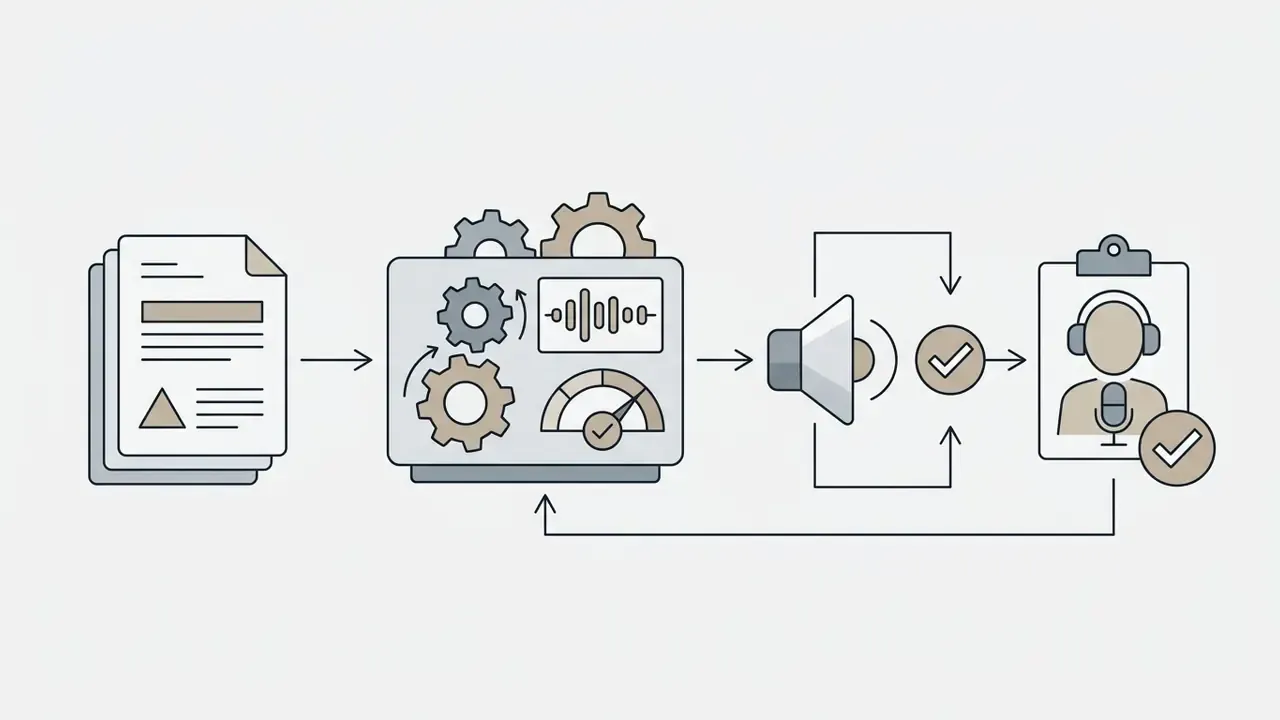
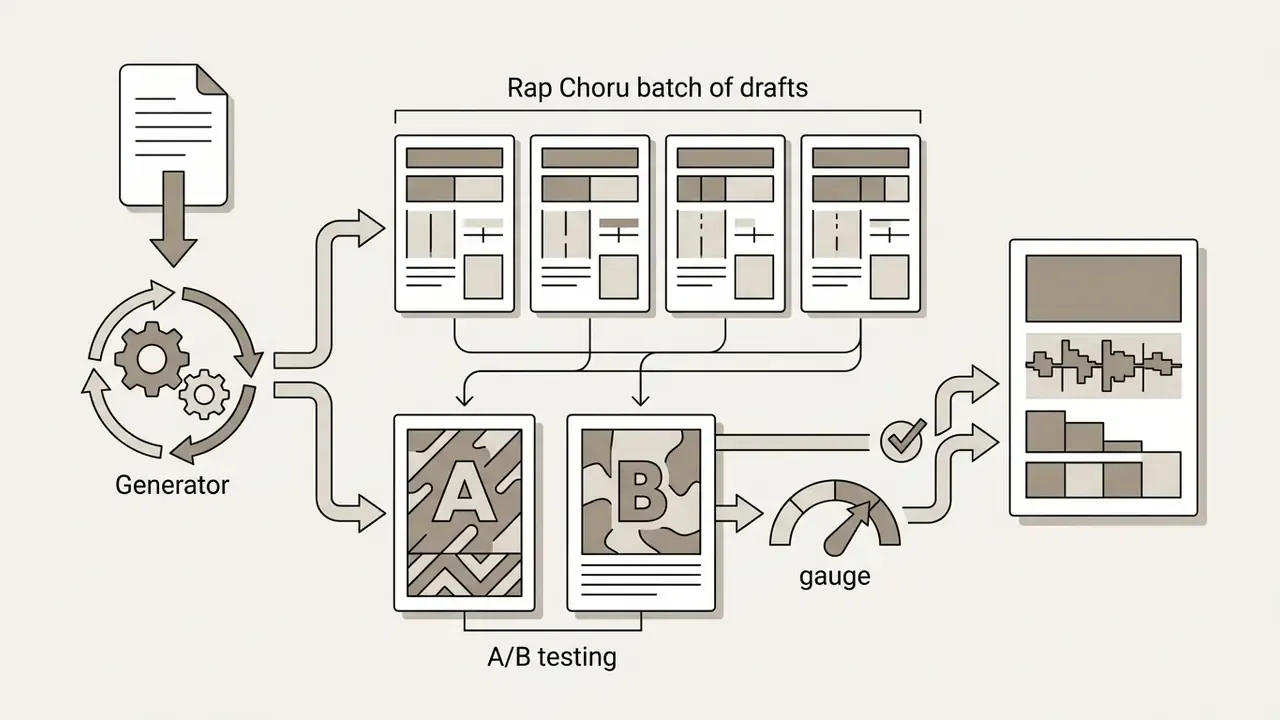

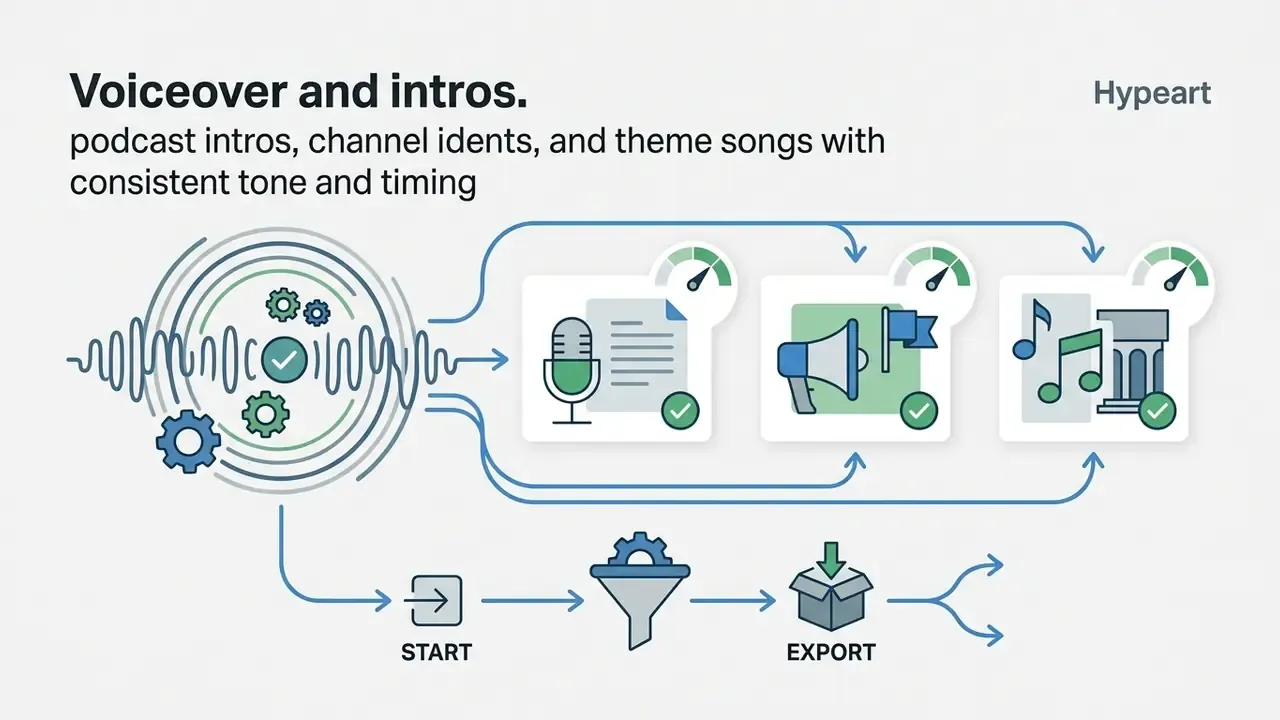
Illustrative production scenario (directional, not audited). A marketing team needed 12 localized rap jingles for digital ads inside a 48-hour window. The workflow: script each jingle to a fixed 8-bar length, tag sections explicitly, render beat-aligned acapella stems from an ai rap generator voice tool, then mix each stem against a licensed instrumental in the DAW. The team reported a much shorter turnaround than booking studio sessions for 12 separate vocalists. Figures of this kind are workflow-dependent, so benchmark them internally before quoting anything as a planning assumption. Teams that also handle the video side can compare rendering options in our comparison of free AI video generators or browse the wider set of AI Media Comparison Matrices.
How to Choose an AI Rap Voice Generator Tool
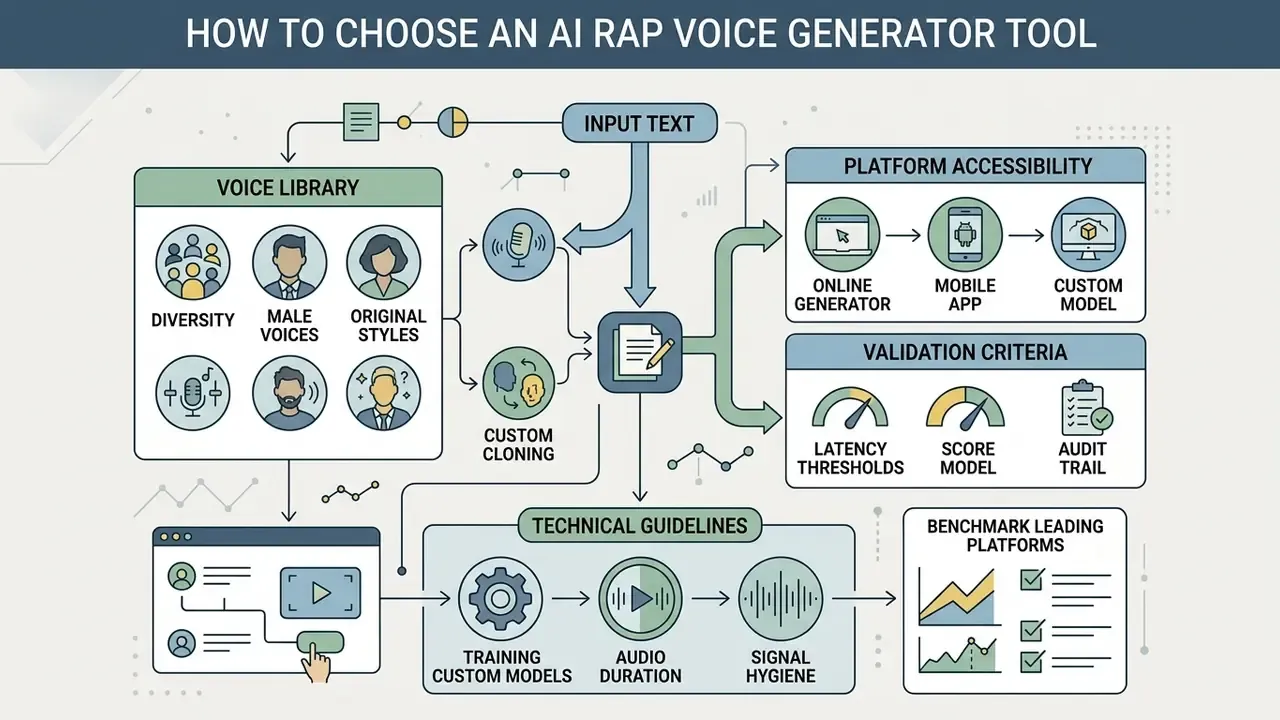
Choosing the right ai rap voice generator tool means weighing voice library diversity, custom cloning options, latency thresholds, and platform accessibility.
Assess whether a platform meets production requirements by examining its core features:
- Library timbres: distinct male, female, and stylistic voice models.
- Platform format: web browser tool, native desktop software, or mobile app.
- Custom vocal training: support for training a model from uploaded audio.
- Export standards: uncompressed exports such as 24-bit 48 kHz WAV.
- Language coverage: native non-English phonetic sets versus crude transliteration.
- Governance surface: consent capture for cloned voices, data retention terms, and a licence record per render.
<table>
  <caption>Tool Selection Matrix by User Objective</caption>
  <thead>
    <tr>
      <th>User Objective</th>
      <th>Recommended Tool Format</th>
      <th>Key Technical Requirement</th>
    </tr>
  </thead>
  <tbody>
    <tr>
      <td>Rapid narration with rap delivery</td>
      <td>Browser-based text-to-speech generator</td>
      <td>Low-latency inference and instant script editing</td>
    </tr>
    <tr>
      <td>Mixing vocals into an existing beat</td>
      <td>AI rap vocal generator with beat alignment</td>
      <td>Accompaniment-conditioned rhythm matching</td>
    </tr>
    <tr>
      <td>Voice conversion on recorded audio</td>
      <td>Standalone app or API with voice cloning</td>
      <td>Self-supervised acoustic representation modeling</td>
    </tr>
    <tr>
      <td>End-to-end rap track production</td>
      <td>All-in-one AI music generator studio</td>
      <td>Integrated lyric, beat, and vocal synthesis</td>
    </tr>
    <tr>
      <td>Enterprise custom voice deployment</td>
      <td>API with zero-shot / custom voice training</td>
      <td>Strict consent verification and high-definition exports</td>
    </tr>
    <tr>
      <td>Editorial or video localization at volume</td>
      <td>Multilingual TTS platform with API batching</td>
      <td>Native phoneme sets per language, not transliteration</td>
    </tr>
  </tbody>
</table>
<table>
  <caption>Tool Selection Matrix by User Objective</caption>
  <thead>
    <tr>
      <th>User Objective</th>
      <th>Recommended Tool Format</th>
      <th>Key Technical Requirement</th>
    </tr>
  </thead>
  <tbody>
    <tr>
      <td>Rapid narration with rap delivery</td>
      <td>Browser-based text-to-speech generator</td>
      <td>Low-latency inference and instant script editing</td>
    </tr>
    <tr>
      <td>Mixing vocals into an existing beat</td>
      <td>AI rap vocal generator with beat alignment</td>
      <td>Accompaniment-conditioned rhythm matching</td>
    </tr>
    <tr>
      <td>Voice conversion on recorded audio</td>
      <td>Standalone app or API with voice cloning</td>
      <td>Self-supervised acoustic representation modeling</td>
    </tr>
    <tr>
      <td>End-to-end rap track production</td>
      <td>All-in-one AI music generator studio</td>
      <td>Integrated lyric, beat, and vocal synthesis</td>
    </tr>
    <tr>
      <td>Enterprise custom voice deployment</td>
      <td>API with zero-shot / custom voice training</td>
      <td>Strict consent verification and high-definition exports</td>
    </tr>
    <tr>
      <td>Editorial or video localization at volume</td>
      <td>Multilingual TTS platform with API batching</td>
      <td>Native phoneme sets per language, not transliteration</td>
    </tr>
  </tbody>
</table>
Benchmark comparison of leading AI rap voice platforms
| Platform | Primary vocal function | Free plan allowance | Commercial export | Key limitation |
|---|---|---|---|---|
| ElevenLabs | Precision TTS prosody, music/section editing | ~10,000 credits/month (~10 min), 128 kbps | Paid plans only (from ~$6/mo) | Manual lyric formatting needed for tight flow |
| Typecast | Script-driven rapper voice with tone/pace/emotion controls | Unlimited previews, ~3,000 lifetime download credits (~5 min), attribution required | Paid tiers | Download credits, not minutes, gate output |
| Uberduck | Text-to-rapping, singing, voice conversion, API | None (paid only) | Creator ~$9.99/mo, ~1,000 generations/mo | Higher latency on custom models; limited low-tier customization |
| VoxBox | Multilingual TTS, 100+ rapper-style voices, 250+ languages | Limited free trial | Paid tiers | No native beat generation; limited style shaping |
| AIRapGen | Custom vocal tags, up to 8-minute tracks, MIDI, LRC/SRT | Daily free credits | Annual plan issues a commercial licence certificate | Artist-name prompts are blocked and fail generation |
| Musicful | Full track generation, 12-stem splitter, MIDI/MP3/WAV export | Free daily generations | Paid tiers | Melodic variation caps on lower models |
| OpenMusic / MusicCreator | Parameterized rap (Rhyme Focus, Persona, Profanity Level), 10+ languages | Free generation tier | Annual plans; retroactive licensing on upgrade | Free-tier output limited to personal projects |
Producers who also assemble visuals around these tracks can follow our YouTube video editing workflow guide, which covers the publishing end of the same pipeline. Budget owners modelling render volumes will find the AI Media Calculators and AI Media Pricing Guides more useful than a vendor feature sheet.
Voice library, male voices and original rapper styles
A professional ai rap voice generator male library needs diverse timbres, subgenre cadences, and explicit emotional delivery controls.
Evaluations of synthetic voice libraries keep pointing to one thing: genre authenticity depends on training data composition. Research published in the Synthetic Singers survey shows model performance leans heavily on multi-speaker datasets annotated for specific vocal styles.
«Surveyed singing-voice datasets range from roughly 4.8 to 18.9 hours of audio with style annotations, the basis for multi-style synthesis». Synthetic Singers: A Survey on Singing Voice Synthesis, arXiv (2023). https://arxiv.org/
A robust library includes specialized ai rapper voices tuned for distinct hip-hop subgenres, so creators can match aggressive, melodic, or spoken-word cadences without fighting the model. Perceptual research adds a caveat worth remembering: synthetic-voice quality is multi-dimensional. Human-likeness, audio quality, emotion, dominance, calmness, and perceived seniority behave as partly independent constructs. That is why a technically "clean" voice can still sound entirely wrong for drill.
Validation criteria: how to score a rap voice model before production
Model risk owners need thresholds, not adjectives. Subjective listening stays the reference standard, while objective metrics carry the automation and regression testing across model versions.
| Metric | What it measures | Practical reading | Method note |
|---|---|---|---|
| MOS / ACR (1 to 5) | Perceived naturalness | 4.0 and above acceptable for release vocals; 3.5 to 4.0 usable for demos | Follow ITU-T P.800-style protocols; report listener count |
| UTMOS | Automated MOS proxy | Use for version-to-version regression, not absolute claims | Correlates with MOS but drifts across domains |
| PESQ / STOI | Signal quality and intelligibility | Flag renders that degrade against a clean reference | Reference-based; needs paired audio |
| ASR-based WER | Lyric intelligibility | Rising WER on identical lyrics signals slurred delivery | Run the same ASR model across all candidates |
| Speaker-embedding cosine similarity | Timbre match to target voice | Track drift after fine-tuning or model updates | Fix the embedding model to keep scores comparable |
| Downbeat alignment error (ms) | Rhythmic accuracy against the grid | Audit any phrase drifting past a perceptible offset | Measure per bar, not per track average |
A workable acceptance routine: render three candidates per section, score intelligibility automatically, run a small blind listening panel on the top two, then audit alignment bar by bar on the winning take before it enters the mix. Boring? Yes. It is also the only way to defend a release decision six months later.
Evidence and audit trail for team deployments
Online generator, app or custom voice model
Choosing between an ai rap voice generator online, an ai rapper voice generator app, or a custom voice model comes down to interface requirements, processing speed, and privacy controls.
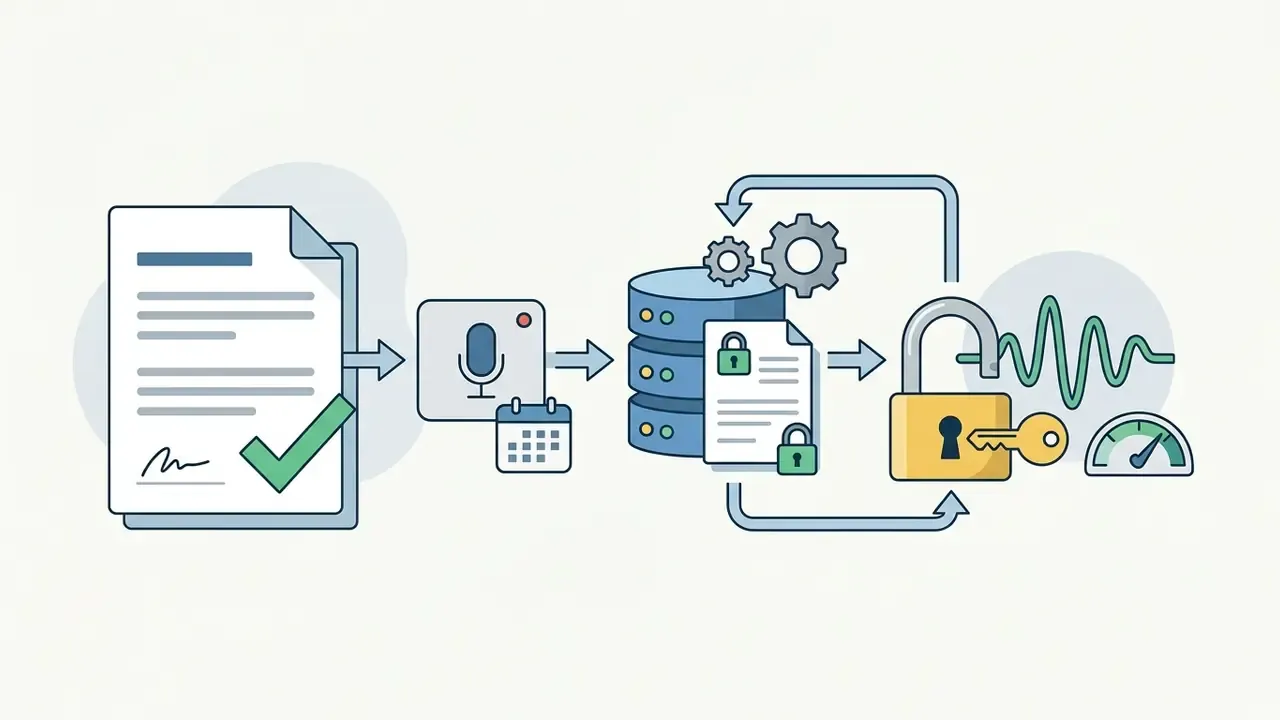
Web services give instant access with no local hardware, which makes an ai rap voice generator online free interface handy for quick prototyping. Mobile and desktop applications add offline capability and lower latency for live editing; local-first desktop tools win whenever audio must not leave the machine. For proprietary enterprise workflows, custom voice cloning pipelines extract vocal embeddings from short audio samples, sometimes as short as three seconds, and deploy dedicated models under a defined governance framework. Several major cloud vendors ship instant custom voice as a restricted-access feature that requires a recorded consent statement plus a cloning key.
«Freestyler demonstrates zero-shot timbre control from a three-second prompt, without retraining the model for a new performer». Freestyler: Rap Vocal Generation, arXiv (2024). https://arxiv.org/
Technical guidelines for training custom rapper voice models
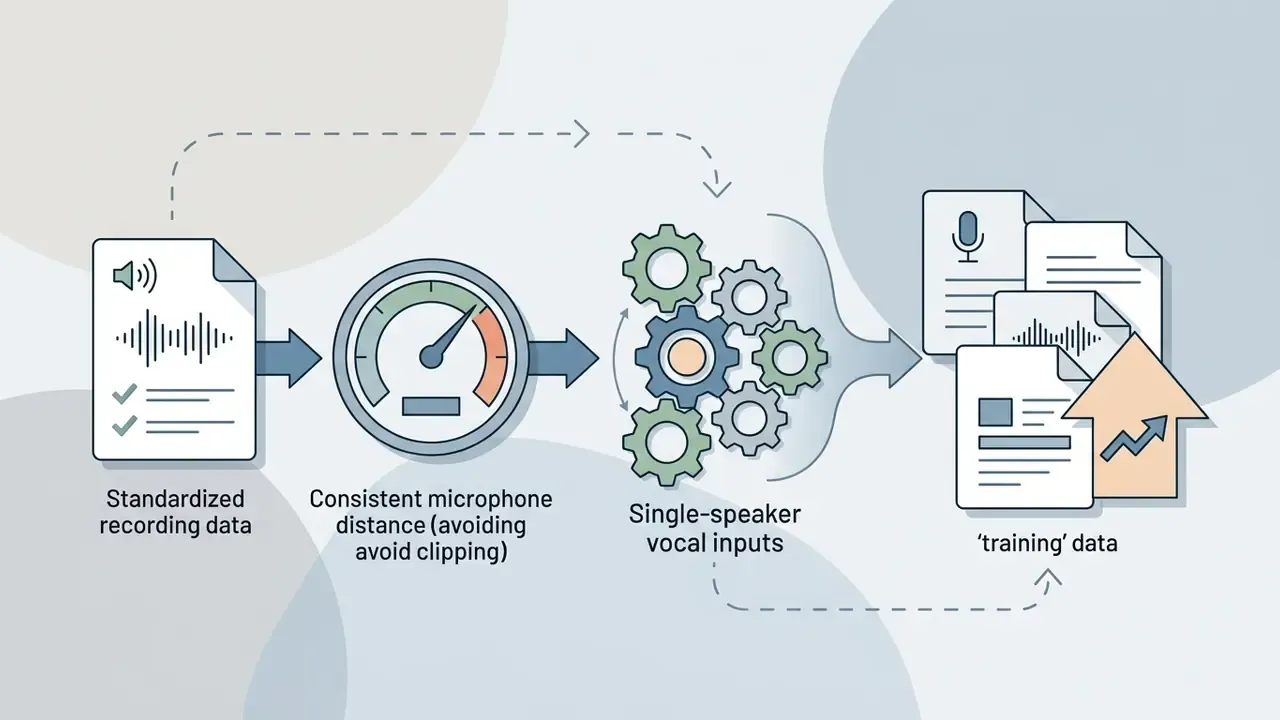
To deploy custom voice cloning (voice-to-voice modeling) without robotic artifacts, the input audio has to respect strict acoustic parameters:
How to Generate Rap Vocals from Text
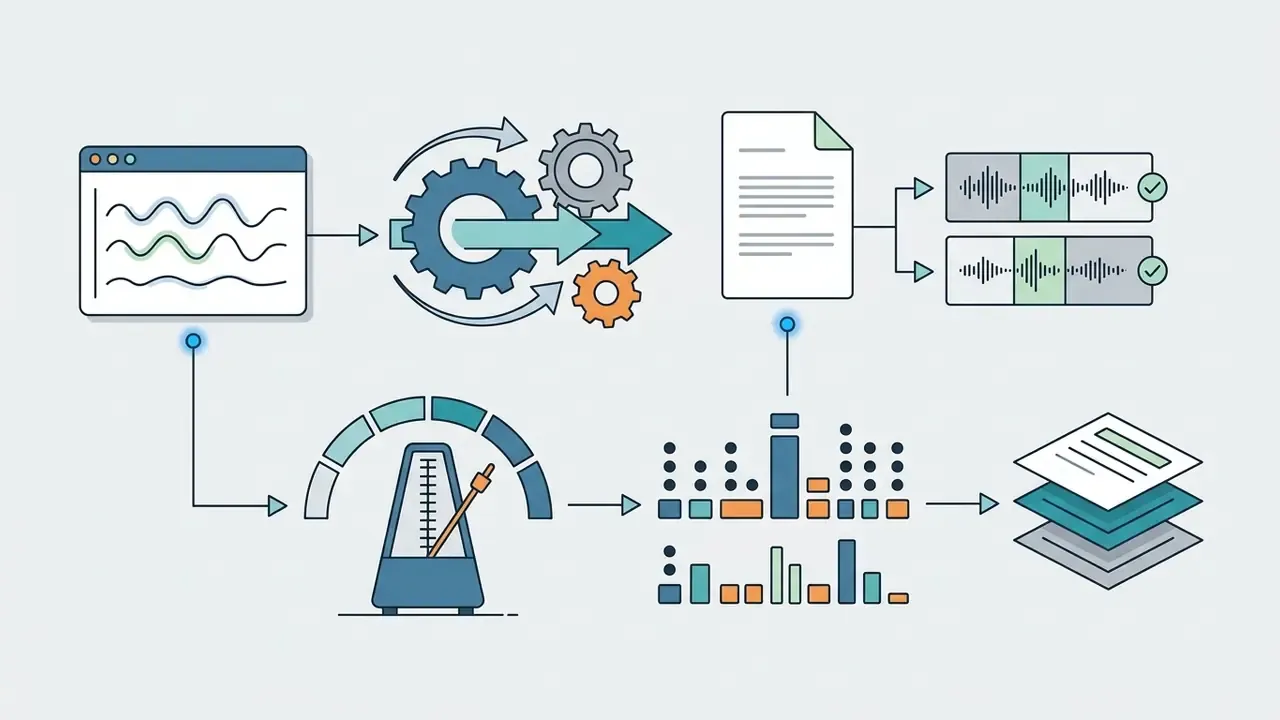
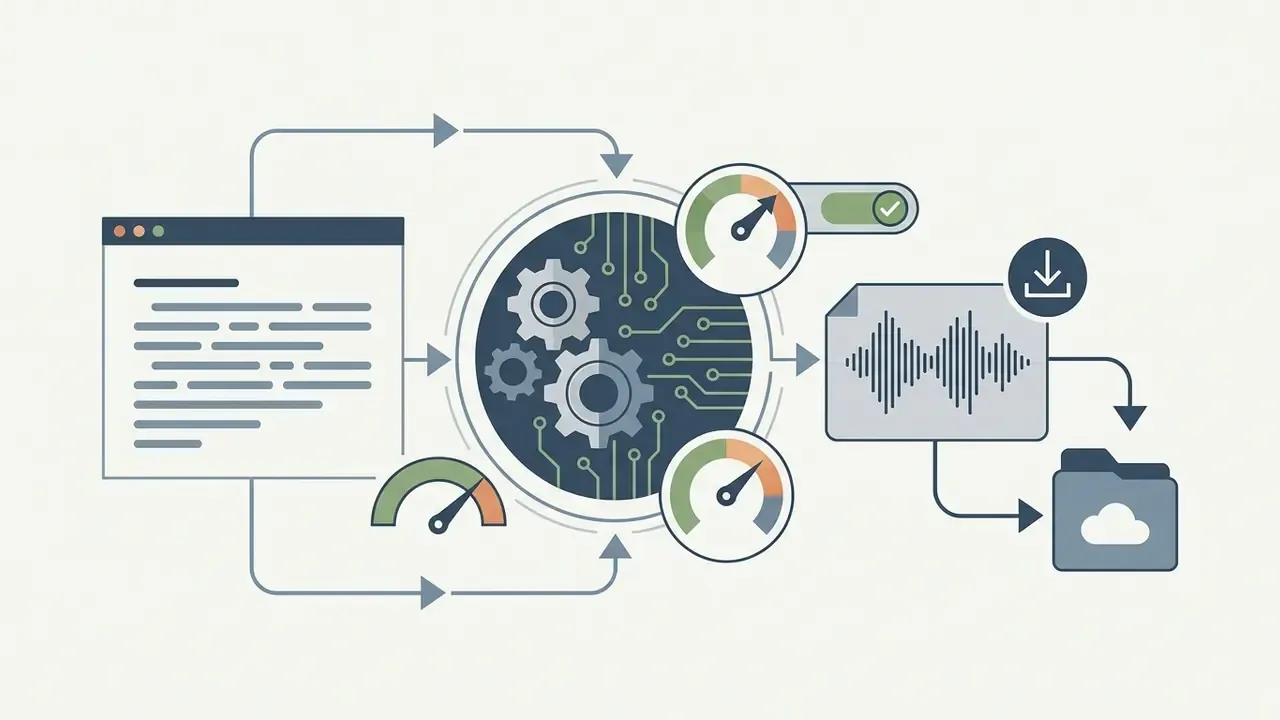
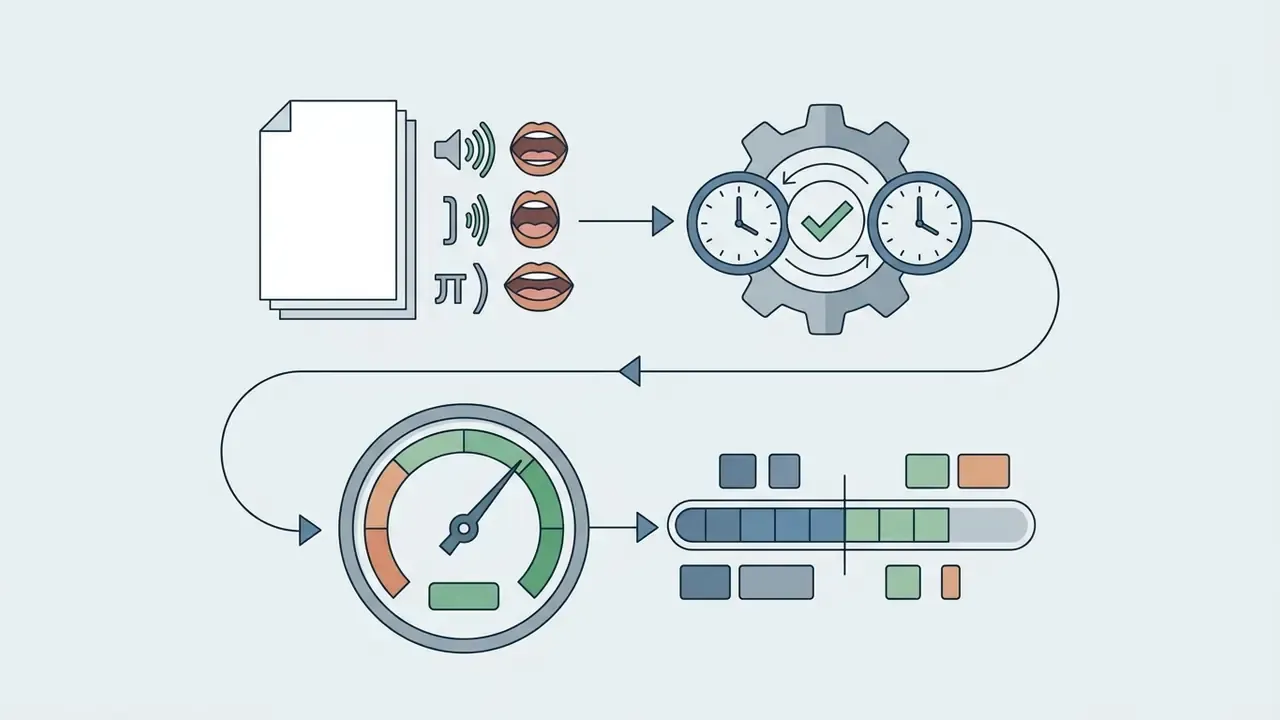
Generating rap vocals from text comes down to three moves: enter formatted lyrics, configure vocal style parameters, render the stem.
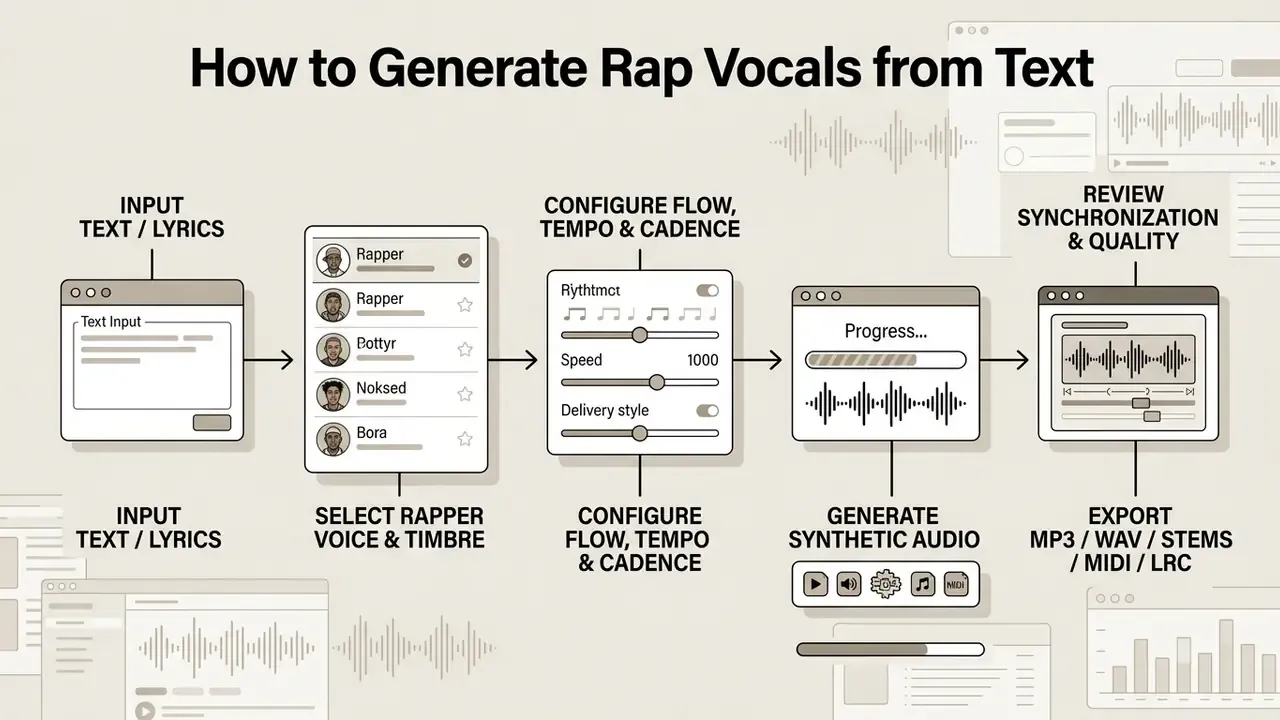
Text version of the flow chart:
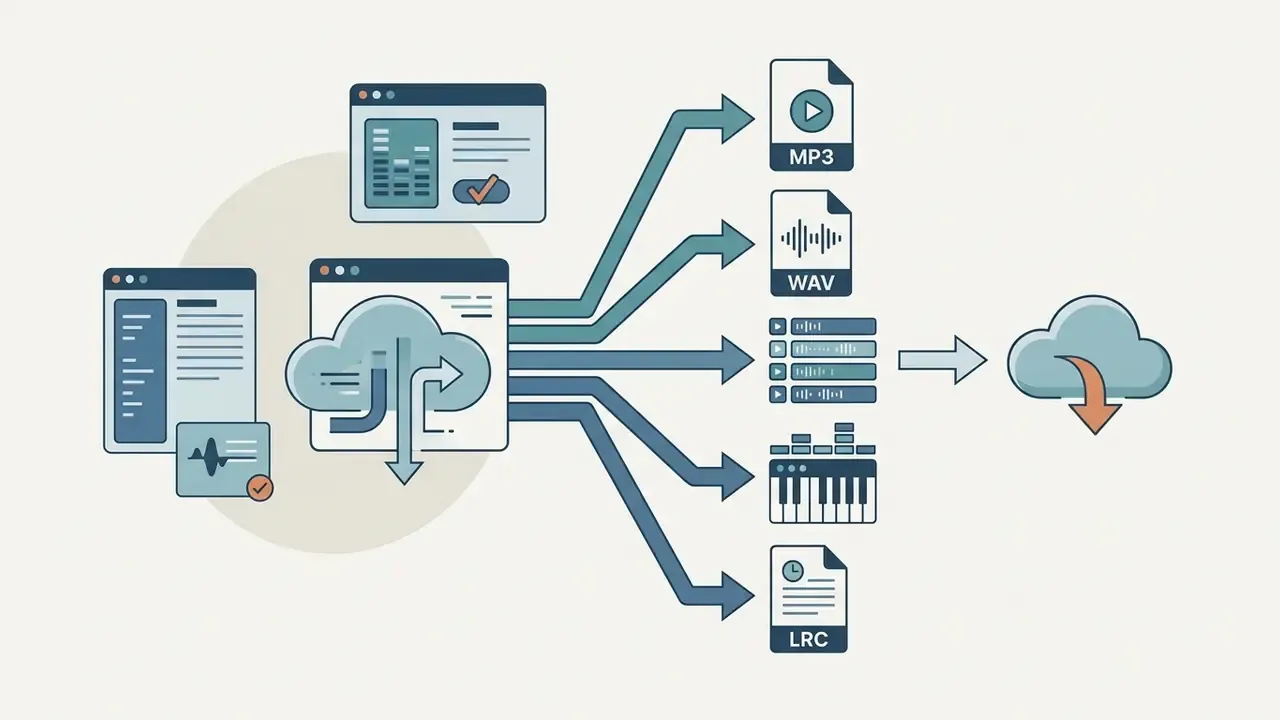
Enter lyrics or text for the rap delivery
Formatting text with explicit section tags, punctuation, and structural line breaks is what actually controls cadence and downbeat timing in an ai rapper voice generator text to speech model.
Input text must reflect the musical phrasing you want. Punctuation acts as breath pauses, while structural tags such as [Verse], [Chorus], and [Bridge] steer pacing. Syllable density per line sets delivery speed, and consistent syllable counts across rhyming couplets stabilize the flow. A handful of formatting rules hold across engines: one idea per line, 4 lines per verse and 2 to 4 lines per chorus as a starting shape, one blank line between sections, and a short repeating hook.
Before (unformatted input):
i used to sleep on the floor now im buying the whole building everyone who

ignored my calls is suddenly acting like were best friends
After (formatted input):
[Chorus]
Used to sleep on the floor, now I'm up in the penthouse,
Counting stacks, no cap, I could buy the whole damn house,
[Verse 1]
I remember cold nights, no heater on the floor,
Ignored my every call, left me knocking at the door,
[Pause / 1-Bar Rest]
Now the ceiling's where I ball and they beg me for more.
The second version hands the model section boundaries, an 11 to 13 syllable target per line, end-rhyme anchors (floor / door / more), and an explicit rest. Those four levers fix drifting flow more reliably than any slider.
Advanced vocal tagging and prompting syntax
To control delivery, vocal switches, and structure in text-to-speech and text-to-rap engines, drop structural brackets straight into the lyric field:
- Gender and multi-vocal switching
[Male Vocal - Aggressive][Female Vocal - Melodic][Duet]/[Chorus - Both]- For an alternating duet, swap
[Male Vocal]and[Female Vocal]per section and mark shared lines with[Duet]. - Rhythmic and dynamic controls
[Fast Flow / Triplet Cadence][Half-Time Delivery][Pause / 2-Bar Rest][Whisper / Low Energy][Ad-Lib],[Double]for layered emphasis- Structural controls
[Intro],[Verse 1],[Pre-Hook],[Chorus],[Bridge],[Outro]
Parameter matrix for AI rap prompts
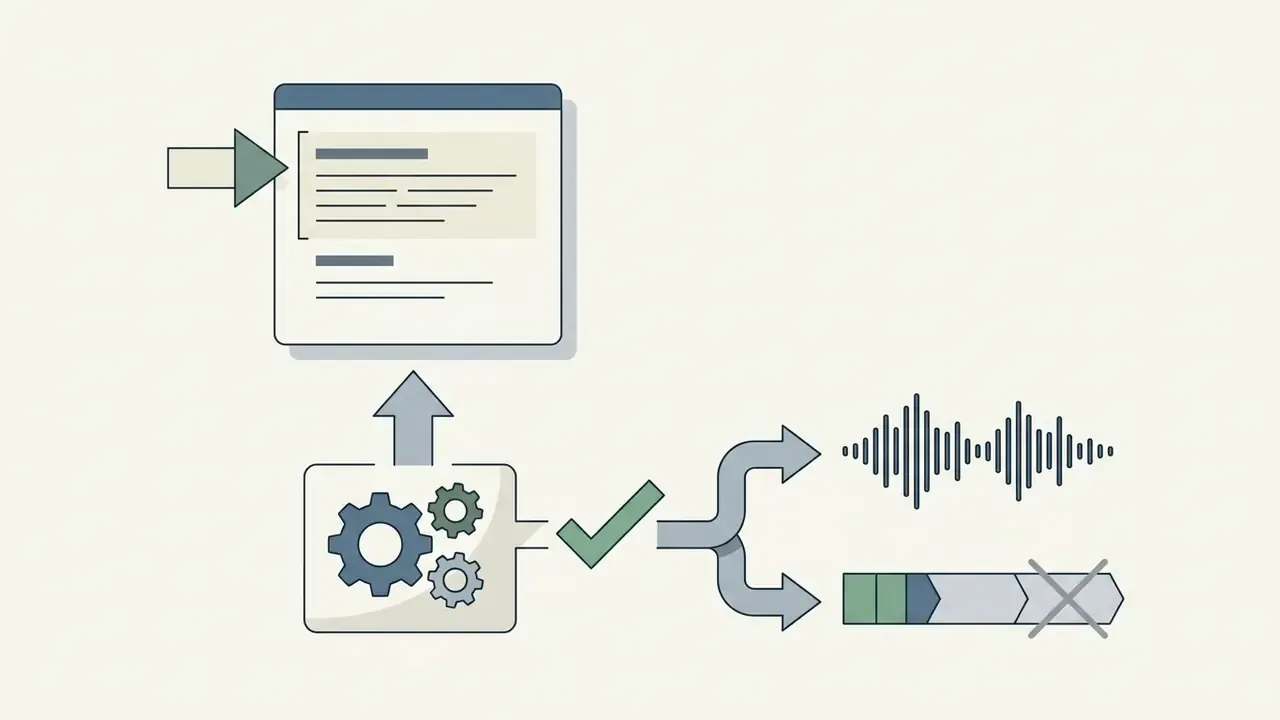
| Parameter | Typical values | Effect on output |
|---|---|---|
| Rhyme Focus | High / Medium / Low | Multi-syllabic density and internal rhyme frequency |
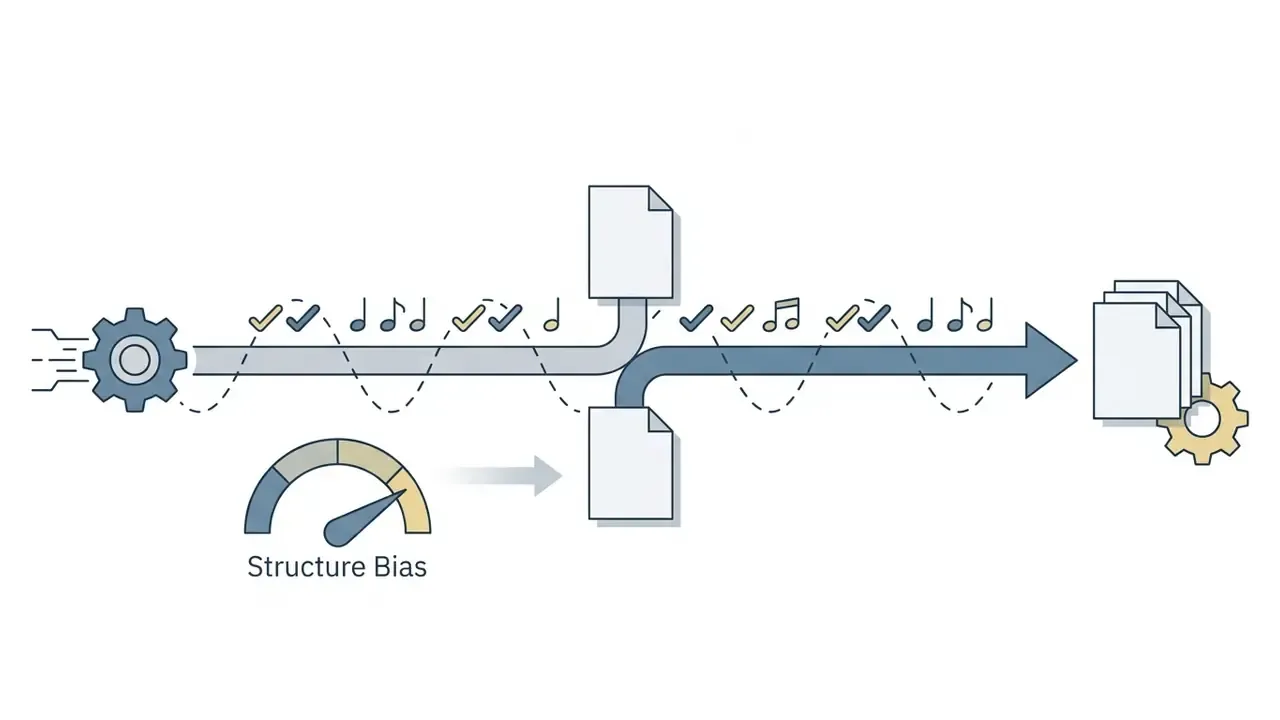
| Structure Bias | Radio hook / Story / Freestyle | Hook repetition versus continuous long-form verses |
| Profanity Level | Clean (radio edit) / Explicit | Lexical filtering; Clean is required for most ad placements |
| Tempo | Slow / Medium / Fast | Syllables per bar and perceived urgency |
| Emotion | Aggressive / Confident / Reflective / Melancholy | Vocal strain, breathiness, accent weight |
| POV | First / Second / Third | Narrative stance of generated lyrics |
| Persona | Rebel / Storyteller / Hustler / Observer | Vocabulary register and punch-line logic |
| Rhyme Targets | Explicit word list | Forces end-rhyme anchors on chosen words |
| Influenced by artists | Style descriptors | Many platforms block real artist names and fail the render, so describe the style instead ("dark UK drill cadence, deadpan delivery") |
Choose a rapper voice, style and flow
Selecting an ai rap voice generator text to speech profile means picking a target timbre, adjusting inter-accent timing intervals, and setting emotional intensity.
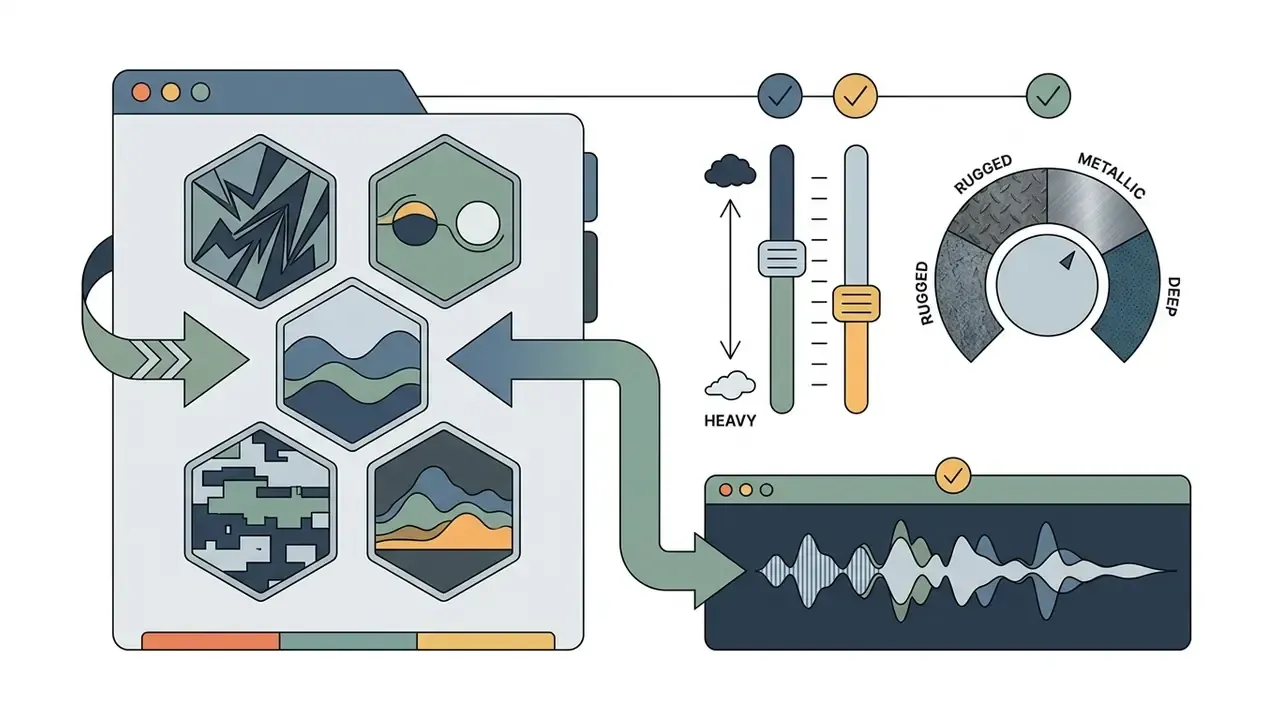
Modern synthesis models separate speaker identity (timbre) from acoustic style (prosody). You can apply an aggressive ai rap generator voice timbre while modulating pitch contour variability to sit on slow boom-bap or fast trap. Emotional delivery sliders alter vocal strain, breathiness, and accent emphasis. Research on style-controllable singing synthesis shows style vectors can be swept across a bounded range while naturalness scores hold, which explains why incremental changes beat maximum settings in practice. Push a slider to 100 and the artefacts arrive first.
Generate, review and download the vocal track
Before exporting to MP3 or WAV, review generated stems for downbeat synchronization and phonetic clarity.
After generation, compare the output stem against your reference track. Small timing misalignments usually respond to adjusted punctuation or a targeted re-generation of the offending phrase, not a full re-render.
«ConSinger applies a consistency model with a minimal number of diffusion steps, preserving quality while substantially accelerating generation». ConSinger: Efficient Diffusion-Based Singing Voice Synthesis, arXiv (2024). https://arxiv.org/
Once validated, export compressed MP3s for quick auditioning and uncompressed 24-bit WAV files for the final mix.
«SoulX-Singer, trained on more than 42,000 hours of vocal data, reaches state-of-the-art synthesis quality across languages». SoulX-Singer: Open-Source Singing Voice Synthesis System, arXiv (2024). https://arxiv.org/
Advanced DAW export workflows: stems, MIDI, and LRC subtitles
Professional production needs modular elements pulled out of the synthetic render:
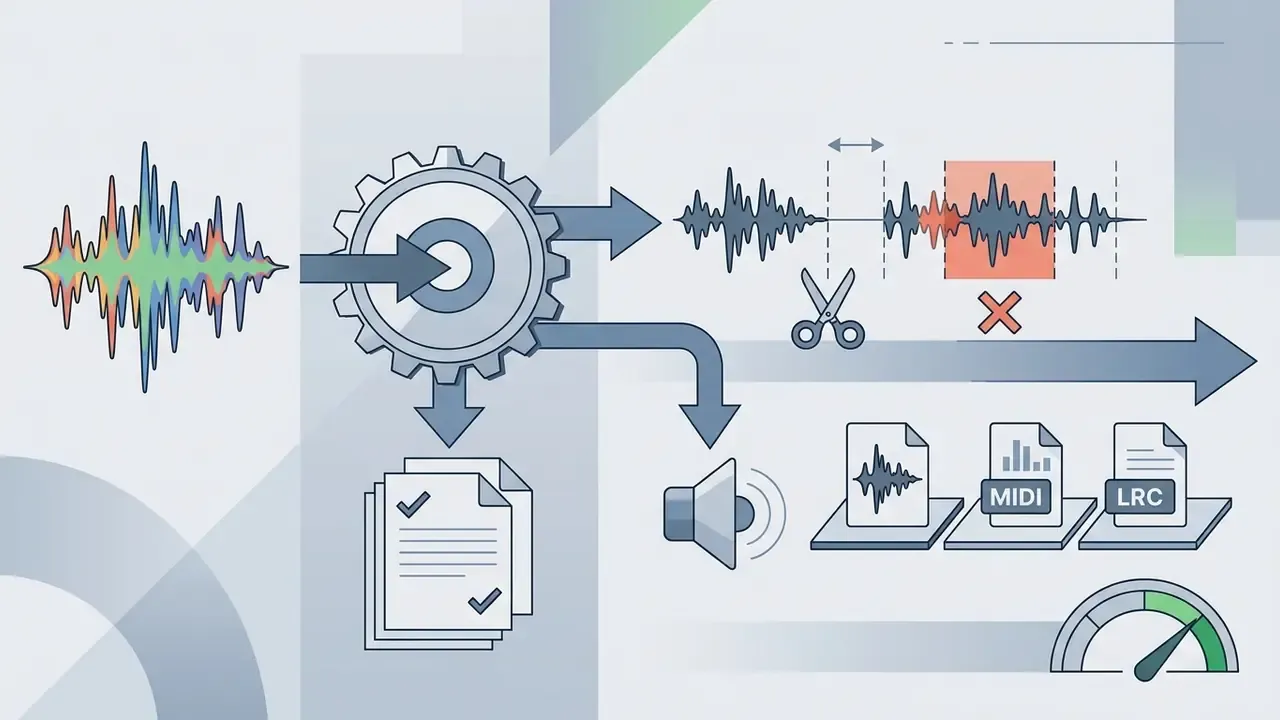
- Stem isolation (vocal removal HQ) split a rendered track into dry vocals, bassline, drums, and synth layers. Leading platforms separate up to 12 distinct stems for re-balancing in Ableton, FL Studio, or Logic. The same feature lets you re-use an existing acapella as cloning input.
- Audio-to-MIDI vocal conversion convert generated pitch contours (F0 data) and vocal melodies into MIDI note tracks, then trigger synths, harmonies, or doubling instruments from the same performance. Several platforms ship MP3/WAV-to-MIDI conversion to subscribers.
- Time-synced subtitles (LRC / SRT export) generate time-coded lyric files aligned to syllable delivery for karaoke-style players, lyric videos, and social captions.
- Song extension and continuation continuation algorithms stretch a track to full length. Current generators support renders up to roughly 8 minutes, which matters when a 30-second hook has to become a full arrangement.
- Format discipline keep an uncompressed 24-bit master, export MP3 only as a review copy, and re-render rather than re-encode when the mix changes.
Developers scripting these steps as a batch pipeline can review request and response patterns in our media generation API implementation guide, or scan the broader set of AI Media API Guides for authentication and rate-limit conventions.
Rap Styles and Controls for More Natural AI Vocals
Natural AI rap vocals come from tuning three things: subgenre prosody, micro-pitch contours (F0 variation), and inter-accent timing intervals.
<table>
  <caption>Subgenre Style Characteristics and Technical Delivery Parameters</caption>
  <thead>
    <tr>
      <th>Rap Subgenre</th>
      <th>Vocal Delivery Style</th>
      <th>Key Prosodic Parameters</th>
      <th>Beat Interaction</th>
    </tr>
  </thead>
  <tbody>
    <tr>
      <td>Melodic Rap</td>
      <td>Sung-rapped delivery with pitch glides</td>
      <td>Wide F0 variance, sustained vowels, heavy pitch correction</td>
      <td>Melodic alignment with synth hooks</td>
    </tr>
    <tr>
      <td>Trap</td>
      <td>Syncopated, triplet-heavy cadence</td>
      <td>Sharp accent placement, high energy, crisp staccato phrasing</td>
      <td>Sits over fast hi-hats and half-time 808s</td>
    </tr>
    <tr>
      <td>Drill</td>
      <td>Deadpan, ominous, low-pitch delivery</td>
      <td>Narrow F0 range, heavy breath controls, dark timbre modulation</td>
      <td>Synchronized with sliding 808 bass lines</td>
    </tr>
    <tr>
      <td>Classic Boom-Bap</td>
      <td>Dry, lyric-centric, highly articulated</td>
      <td>Moderate pitch inflection, clear consonant pronunciation</td>
      <td>Strict downbeat alignment on 4/4 snare hits</td>
    </tr>
    <tr>
      <td>Cloud Rap</td>
      <td>Airy, reverb-soaked, semi-detached delivery</td>
      <td>Soft attack, low intensity, long tails, minimal consonant bite</td>
      <td>Floats over ambient pads and sparse percussion</td>
    </tr>
    <tr>
      <td>Hardcore Hip-Hop</td>
      <td>Forceful, projected, high-pressure delivery</td>
      <td>High intensity, compressed dynamics, aggressive accents</td>
      <td>Locked to hard snare and kick placement</td>
    </tr>
    <tr>
      <td>Emo Rap</td>
      <td>Vulnerable sung-rap with cracked tone</td>
      <td>Breathiness, pitch instability as expression, moderate tuning</td>
      <td>Guitar-led loops, half-time drums</td>
    </tr>
    <tr>
      <td>Experimental Hip-Hop</td>
      <td>Irregular phrasing, spoken-word hybrids</td>
      <td>Unstable meter, wide dynamic range, unconventional pauses</td>
      <td>Non-standard meters and shifting grids</td>
    </tr>
  </tbody>
</table>
Natural AI rap vocals come from tuning three things: subgenre prosody, micro-pitch contours (F0 variation), and inter-accent timing intervals.
<table>
  <caption>Subgenre Style Characteristics and Technical Delivery Parameters</caption>
  <thead>
    <tr>
      <th>Rap Subgenre</th>
      <th>Vocal Delivery Style</th>
      <th>Key Prosodic Parameters</th>
      <th>Beat Interaction</th>
    </tr>
  </thead>
  <tbody>
    <tr>
      <td>Melodic Rap</td>
      <td>Sung-rapped delivery with pitch glides</td>
      <td>Wide F0 variance, sustained vowels, heavy pitch correction</td>
      <td>Melodic alignment with synth hooks</td>
    </tr>
    <tr>
      <td>Trap</td>
      <td>Syncopated, triplet-heavy cadence</td>
      <td>Sharp accent placement, high energy, crisp staccato phrasing</td>
      <td>Sits over fast hi-hats and half-time 808s</td>
    </tr>
    <tr>
      <td>Drill</td>
      <td>Deadpan, ominous, low-pitch delivery</td>
      <td>Narrow F0 range, heavy breath controls, dark timbre modulation</td>
      <td>Synchronized with sliding 808 bass lines</td>
    </tr>
    <tr>
      <td>Classic Boom-Bap</td>
      <td>Dry, lyric-centric, highly articulated</td>
      <td>Moderate pitch inflection, clear consonant pronunciation</td>
      <td>Strict downbeat alignment on 4/4 snare hits</td>
    </tr>
    <tr>
      <td>Cloud Rap</td>
      <td>Airy, reverb-soaked, semi-detached delivery</td>
      <td>Soft attack, low intensity, long tails, minimal consonant bite</td>
      <td>Floats over ambient pads and sparse percussion</td>
    </tr>
    <tr>
      <td>Hardcore Hip-Hop</td>
      <td>Forceful, projected, high-pressure delivery</td>
      <td>High intensity, compressed dynamics, aggressive accents</td>
      <td>Locked to hard snare and kick placement</td>
    </tr>
    <tr>
      <td>Emo Rap</td>
      <td>Vulnerable sung-rap with cracked tone</td>
      <td>Breathiness, pitch instability as expression, moderate tuning</td>
      <td>Guitar-led loops, half-time drums</td>
    </tr>
    <tr>
      <td>Experimental Hip-Hop</td>
      <td>Irregular phrasing, spoken-word hybrids</td>
      <td>Unstable meter, wide dynamic range, unconventional pauses</td>
      <td>Non-standard meters and shifting grids</td>
    </tr>
  </tbody>
</table>
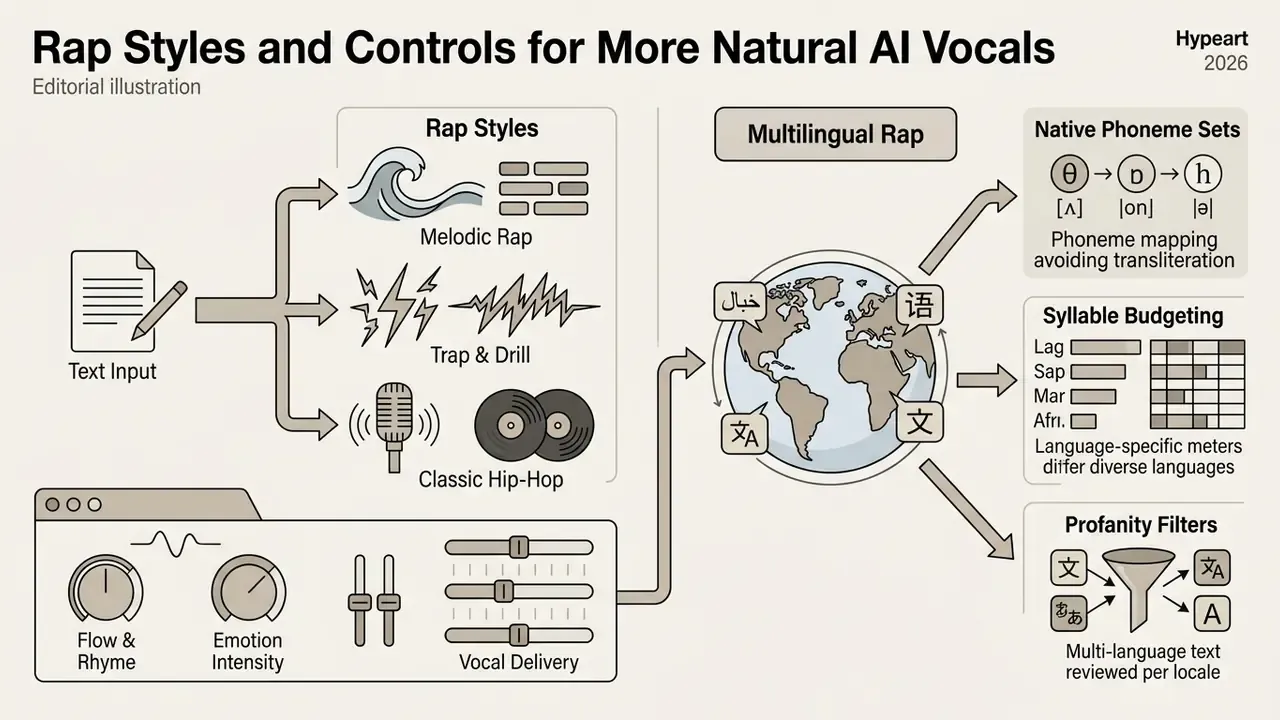
Melodic rap, trap, drill and classic hip-hop styles
Configuring an AI vocal generator for a specific rap style category means adjusting pitch variation and articulation, not just picking a preset name.
Research analyzing rap vocal pitch dynamics shows that rap carries higher fundamental frequency (F0) total variation than standard speech.
«Across roughly 43,000 songs, rap remains an outlier in F0 total variation among genres, though the downward trend has slowed». F0 Total Variation Analysis of Popular Rap Vocals 2009 to 2023, arXiv (2024). https://arxiv.org/
Melodic rap wants higher F0 variation and smooth pitch glides. Drill wants deadpan, low-variance contours paired with heavy vocal weight. Trap needs precise syncopation over triplet subdivisions, while classic boom-bap rewards dry, sharply articulated consonants. Cloud rap and emo rap invert the priority: intelligibility gets traded for texture, so reverb tails and intensity matter more than consonant precision.
Flow, rhyme, emotions and vocal delivery
Controlling vocal flow means manipulating rhyme density, inter-accent timing intervals, and pitch-based rhythmic layering over the instrumental.
Musicological analysis of rap flow shows cadences rest on recurring time intervals between accented syllables. Mitchell Ohriner's model describes flows as combinations of 2-unit and 3-unit inter-accent intervals, which is exactly what a "triplet cadence" tag approximates inside a prompt. Advanced models analyze the rhyme structure of input lyrics and cluster stressed phonemes onto beat positions.
«Raply, a GPT-2-based rap lyric generator, jointly models rhyme structure and reduces profane content without losing stylistic fidelity». Raply: A Profanity Mitigated Rap Lyrics Generator, arXiv (2023). https://arxiv.org/
One caveat before anyone over-tunes this. A 2025 study measuring rhyme density (rhyming syllables divided by total syllables) against listener-rated sadness, anger, and pride found no significant relationship. Rhyme density is a timing and structure lever, not an emotion dial. Emotion travels through timbre, intensity, and accent placement instead.
Expressive range itself is modulated by controlling acoustic token variance, which is how intense, whispered, or melodic performances get synthesized without obvious digital artefacts.
«An LLM-based expressive TTS system at ICAGC 2024 reached MOS 3.89 for quality and 3.85 for emotional expressiveness, separating timbre from style via audio prompts». LLM-Based Expressive Text-to-Speech System, ICAGC 2024, arXiv (2024). https://arxiv.org/
Multilingual rap: generating verses beyond English
Leading rap generators now cover 10 or more languages, including Spanish, French, German, Portuguese, Italian, Japanese, Korean, and Chinese, while multilingual TTS platforms advertise coverage in the hundreds. Three practical rules apply:
- Prefer native phoneme sets over transliteration.Writing Japanese lyrics in Latin script forces the model to guess vowel length; native script preserves mora timing.
- Recalibrate syllable budgets per language.Spanish and Italian pack more syllables into the same bar than English; German compounds do the opposite. Rewrite line lengths per language rather than translating word for word.
- Re-check the profanity filter per locale.Clean and explicit classifiers are trained unevenly across languages, so a "Clean" setting may wave through slang that fails a local broadcast standard. Have a native speaker audit localized renders before publication.
Free Plans, Pricing and Commercial Use of AI Rap Voices
Free tiers for an ai rap vocal generator free tool almost always impose character caps, lower bitrates, and non-commercial licence restrictions.
<table>
  <caption>Representative Platform Tiers and Commercial Usage Terms</caption>
  <thead>
    <tr>
      <th>Platform Tier</th>
      <th>Typical Monthly Cost</th>
      <th>Generation Limits</th>
      <th>Audio Quality</th>
      <th>Commercial Usage Rights</th>
    </tr>
  </thead>
  <tbody>
    <tr>
      <td>Free Tier</td>
      <td>$0</td>
      <td>~10,000 credits (~10 mins) or limited daily songs</td>
      <td>128 kbps MP3</td>
      <td>Strictly non-commercial (attribution often required)</td>
    </tr>
    <tr>
      <td>Creator Tier</td>
      <td>$5 to $15</td>
      <td>~100,000 credits (~100 mins) or ~1,000 generations</td>
      <td>320 kbps MP3 / WAV</td>
      <td>Commercial license included</td>
    </tr>
    <tr>
      <td>Pro Studio Tier</td>
      <td>$25 to $50</td>
      <td>500,000+ credits, batch generation</td>
      <td>24-bit 48 kHz WAV</td>
      <td>Full royalty-free commercial rights + custom models</td>
    </tr>
  </tbody>
</table>
Free tiers for an ai rap vocal generator free tool almost always impose character caps, lower bitrates, and non-commercial licence restrictions.
<table>
  <caption>Representative Platform Tiers and Commercial Usage Terms</caption>
  <thead>
    <tr>
      <th>Platform Tier</th>
      <th>Typical Monthly Cost</th>
      <th>Generation Limits</th>
      <th>Audio Quality</th>
      <th>Commercial Usage Rights</th>
    </tr>
  </thead>
  <tbody>
    <tr>
      <td>Free Tier</td>
      <td>$0</td>
      <td>~10,000 credits (~10 mins) or limited daily songs</td>
      <td>128 kbps MP3</td>
      <td>Strictly non-commercial (attribution often required)</td>
    </tr>
    <tr>
      <td>Creator Tier</td>
      <td>$5 to $15</td>
      <td>~100,000 credits (~100 mins) or ~1,000 generations</td>
      <td>320 kbps MP3 / WAV</td>
      <td>Commercial license included</td>
    </tr>
    <tr>
      <td>Pro Studio Tier</td>
      <td>$25 to $50</td>
      <td>500,000+ credits, batch generation</td>
      <td>24-bit 48 kHz WAV</td>
      <td>Full royalty-free commercial rights + custom models</td>
    </tr>
  </tbody>
</table>
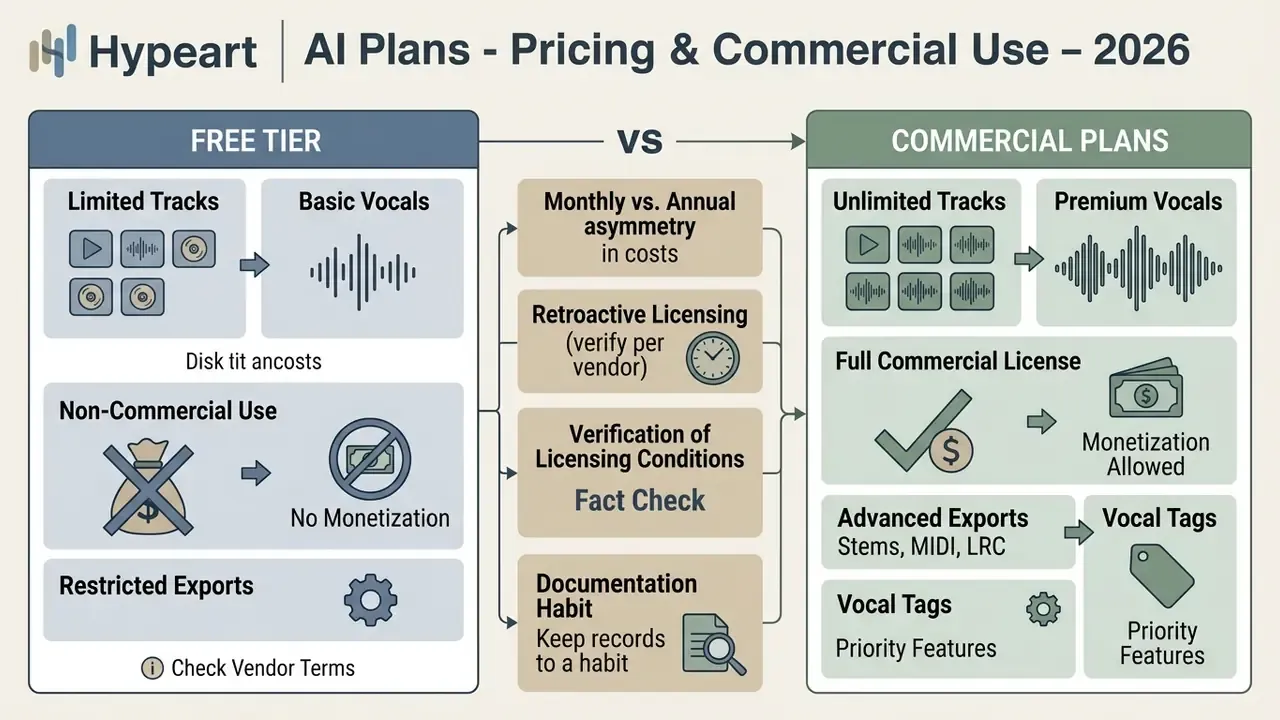
What is included in a free AI rap voice generator
An ai rap voice generator free online plan lets you test vocal synthesis but restricts commercial deployment and output resolution.
Free plans from platforms such as ElevenLabs and Typecast give entry-level access with hard limits. Expect around 10,000 monthly credits (roughly 10 minutes of audio), standard voice libraries, and 128 kbps MP3 exports. ElevenLabs states plainly that free output is non-commercial. Typecast allows unlimited previewing but meters downloads through a lifetime credit pool and requires attribution. Song generators meter differently again: free tiers are commonly capped at a small number of full-length tracks per day, and download counts can be limited separately from generation counts. For a wider view of how free tiers behave across AI tooling categories, see our comparison of free AI art generators.
Commercial license, royalty-free usage and paid features
Upgrading to a paid subscription unlocks full commercial use rights, high-definition WAV downloads, larger credit allocations, and custom voice cloning.
To monetize tracks containing AI vocals on streaming platforms or in commercial media, you need an active commercial licence. Paid tiers typically grant non-exclusive, perpetual, worldwide royalty-free rights to the generated vocal, meaning no per-play royalty is owed on the synthetic vocal itself. Rights in any third-party beat or composition stay separate, and that distinction trips up more releases than any technical setting. Uberduck, for example, separates a personal-use starter plan from a Creator plan that adds a commercial licence, a monthly generation quota, and API access. Adjacent licensing logic across AI media is mapped in our Canva AI generator commercial licensing overview and across the AI Media Commercial-Use Hub.
Fact check: verification of licensing conditions
Verify licensing terms before publishing generated audio. It is cheaper than a takedown:
- Free tier non-commerciality free tiers across major providers explicitly restrict output to personal or evaluation use, and some require visible attribution on every download.
- Commercial monetization annual or Pro subscriptions issue formal commercial licence terms, sometimes with a per-track licence certificate, granting monetization rights for YouTube, Spotify, podcasts, and broadcast ads.
- Monthly versus annual asymmetry on several rap-specific platforms, monthly subscribers remain limited to personal, non-commercial use, while only annual subscribers receive worldwide, perpetual, royalty-free commercial rights. Read the plan wording, not the marketing headline.
- Retroactive licensing (verify per vendor) some platforms say upgrading extends commercial rights retroactively to previously generated tracks; others require the track to be regenerated under an active paid subscription. These clauses change without notice, so capture a dated screenshot of the terms page for each released track and keep it with the project files.
- Documentation habit store the plan name, billing date, licence text, and render ID for every commercially published track. That record is what resolves a dispute months later, when nobody remembers which plan was active.
Content policy limits worth checking before a campaign
Profanity settings are only one part of platform moderation. Vendors also restrict sexualized content, political impersonation, and hate speech, and enforcement quality differs sharply between categories. If your team works across multiple AI media formats, the policy patterns in adjacent categories are instructive: our notes on the ai nsfw video generator category, on ai nude art tooling, and on the ai nude filter and ai naked generator categories exist mainly to document where commercial licences stop and where account termination begins. Read them as risk maps, not recommendations.
Copyright, Voice Rights and Safe Use of AI Rapper Voices
Commercial deployment of an ai rappers voice generator demands compliance on two fronts at once: copyright law covering compositions, and state Right of Publicity protections covering voice likeness.
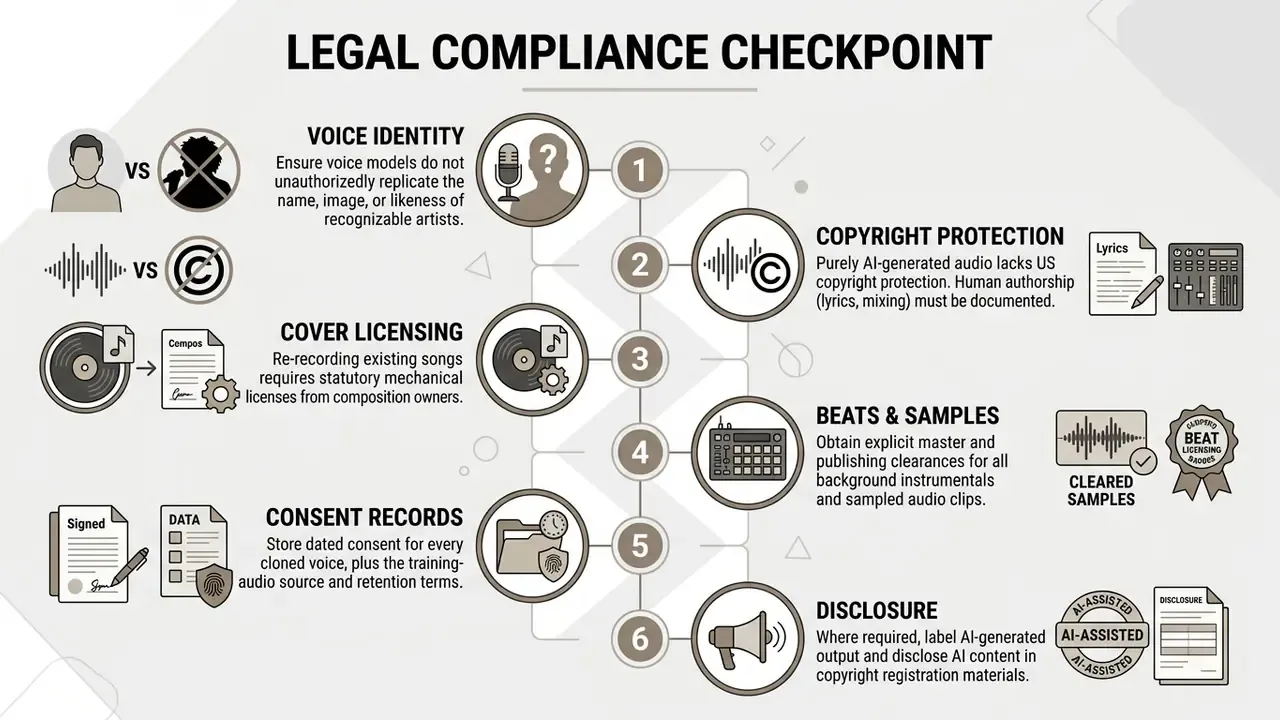
Readers evaluating AI rights questions across other media formats can compare frameworks in our guide to commercial use of AI image generators, and track how disputes are actually resolved through AI Litigation and Case Timelines.
Using celebrity-like rapper voices and voice cloning
Cloning or simulating a recognizable celebrity voice without authorization creates liability under state Right of Publicity laws and digital replica regulations. Not a grey area. A documented one.
United States Copyright Office reports on digital replicas emphasize that voice identity is a protected attribute of personal publicity rights (U.S. Copyright Office, Copyright and Artificial Intelligence, Part 1: Digital Replicas). Congressional research briefs note that the Right of Publicity covers "other aspects of identity (such as voice)" while federal protection stays incomplete, leaving state statutes to fill the gap. Unauthorized commercial voice cloning that mimics a famous artist, the widely discussed "Fake Drake" scenario, implicates those state laws, including Tennessee's ELVIS Act plus Louisiana and New York digital replica provisions covering computer-generated sounds similar to an artist's voice.
«By 2024, 1,018 voice-cloning tools were catalogued, and deepfake volume had grown roughly 550% since 2019». Deepfakes, Digital Replicas and Human Digital Twins, Wiley (2024). https://arxiv.org/
«A digital replication right would protect voice, image and appearance against unauthorized use in AI-generated content». The Digital Replication Right as an Element of the Right of Publicity in the AI Age, SSRN (2024). https://ssrn.com/
«Existing copyright and data-protection regimes do not fully cover synthetic voices produced without consent; new legal principles are required». Voice Cloning in an Age of Generative AI: Mapping the Limits of the Law, SSRN (2024). https://ssrn.com/
The operational conclusion for enterprise users is narrow. Deploy original synthetic voices, licensed library voices, or fully consented clones. Describe target styles by musical attribute rather than by artist name, a practice several platforms already enforce technically by failing any generation that contains a recognized artist or band name.
Covers, beats, samples and original rap tracks
Commercial rap tracks with AI vocals require mechanical licences for covers and full clearances for sampled beats.
US Copyright Office guidance confirms that purely AI-generated audio without human creative contribution cannot be registered, and that applicants must disclose AI-generated content while describing the human author's contribution (U.S. Copyright Office AI guidance). So document the human input: original lyric writing, vocal arrangement, section editing, mixing decisions.
Three distinct clearance paths apply to the musical bed:
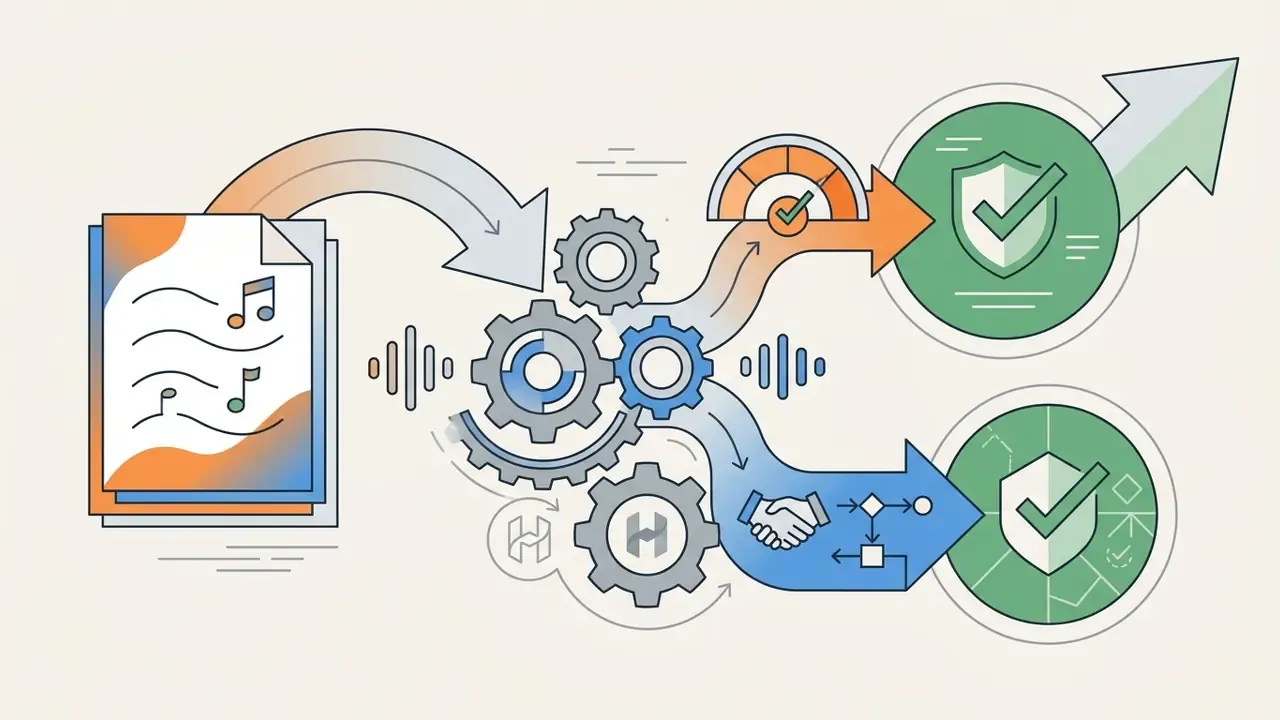
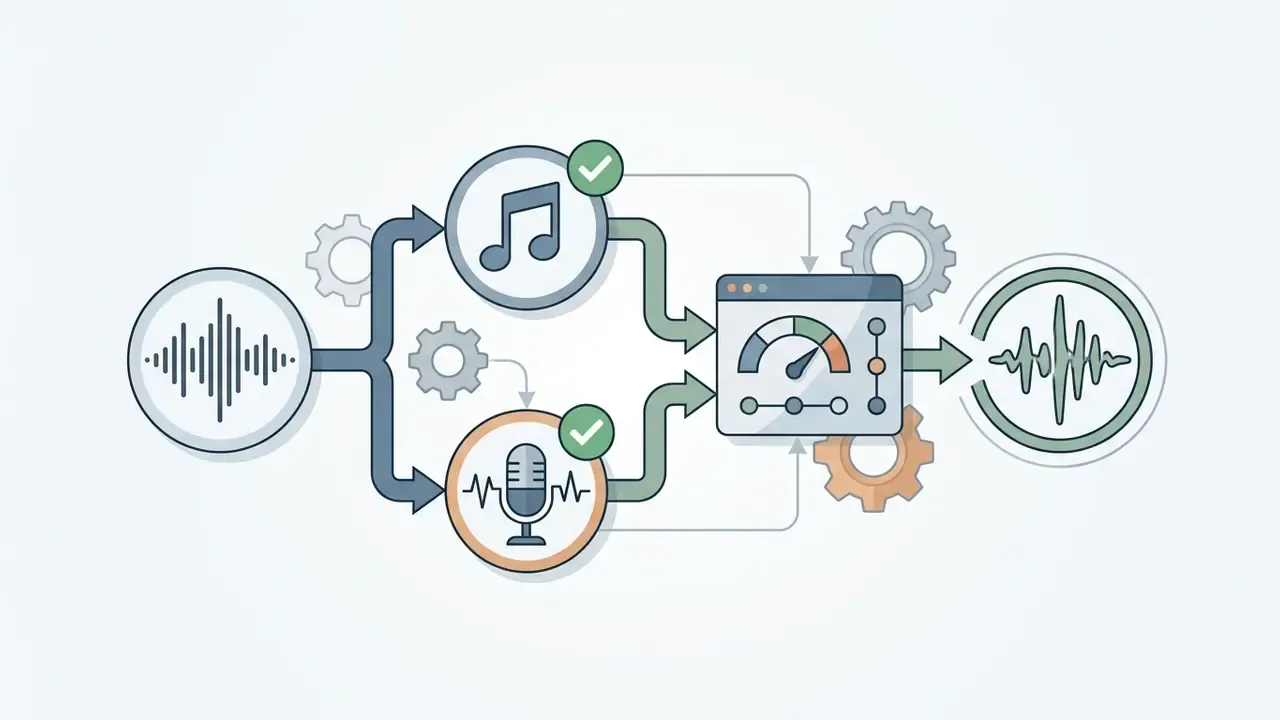
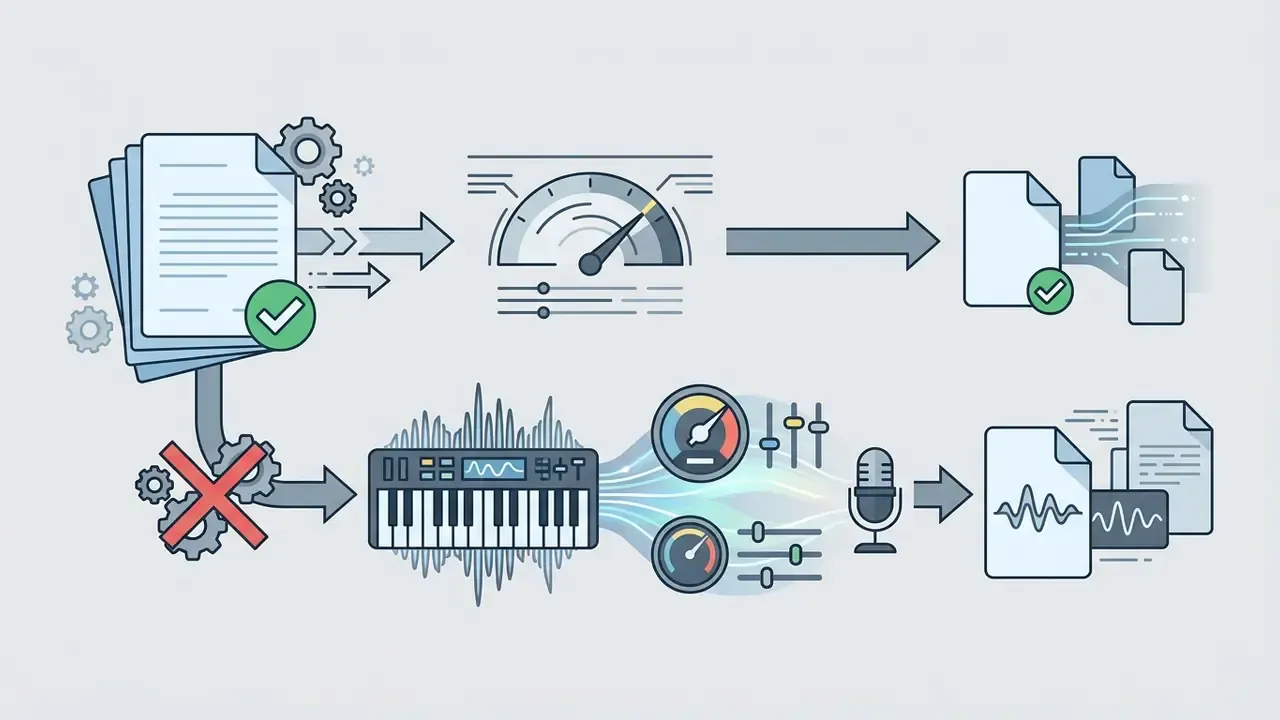
«An AI cover is an AI rendition of a song replicating a specific performer's vocals; rightsholders may block training through the Article 4(3) opt-out mechanism». AI Covers: Legal Notes on Audio Mining and Voice Cloning, Journal of Intellectual Property Law & Practice (2024). https://academic.oup.com/jiplp
Regional disclosure rules also diverge. U.S. registration practice centres on human authorship and disclosure, while EU-facing obligations add machine-readable marking of AI output and visible labelling of deepfakes, cloned voices included. Multi-market releases should satisfy the stricter regime and stop guessing.
Limitations and open questions
Two honest gaps remain. First, no published benchmark reliably predicts perceived rap "flow quality" from objective metrics alone, so blind listening panels still decide release-grade takes. Second, retroactive licensing language varies enough between vendors that a single policy statement cannot cover a multi-tool studio. Treat both as unresolved, document your assumptions, and re-verify each quarter.
FAQ About AI Rap Voice Generators
Do you need musical skills to create rap music with AI?
No formal music theory background is required to generate rap vocals with an ai rap generator, because modern software automates pitch matching, downbeat synchronization, and prosody alignment. That said, basic knowledge of bar structures, syllable counting, and rhyme schemes improves lyric formatting and output quality noticeably. Production tutorials converge on the same advice: clean the text, mark performance intent, and split verse, hook, ad-libs, and doubles into separate generation tasks. That beats a single unstructured prompt every time.
Can generated lyrics and rap vocals be edited?
Yes, iteratively. You can modify text inputs, adjust punctuation to change cadence, or manipulate timing and pitch nodes in the in-app editor. Current music editors support lyric rewriting, adding or removing sections, changing section duration, applying style keywords, and issuing natural-language change requests before re-generating. Note-grid tools go further, allowing syllable splitting across notes and line-by-line lyric replacement, while structural tools expose tempo, repeating patterns, intensity, and clip length. Advanced platforms also allow phrase-by-phrase regeneration, so you can fix one bad line without re-synthesizing the whole track.
Can an AI rap generator create multiple rap songs?
Yes, an ai rap voice generator online platform can synthesize multiple songs per day. Volume depends on credit allocation, processing queues, and plan limits. Free tiers in 2026 clustered around a handful of full-length tracks daily (for example, 3 full-length songs per day on one major platform and roughly 10 on another), while paid tiers replaced daily caps with monthly credit pools of several thousand credits. Watch the second meter: several vendors now limit downloads separately from generations, so a plan can allow abundant drafting yet restrict how many finished files you may export.
How do I create a female vocal or a male and female duet?
Use custom or advanced mode and place voice tags at the start of each lyric section: [Female Vocal] for a female-only render, [Male Vocal] for male-only, and alternating tags with [Duet] on shared lines for a two-voice arrangement. Keep each tag on its own line, directly above the lines it governs.
Can I make a diss track or a freestyle?
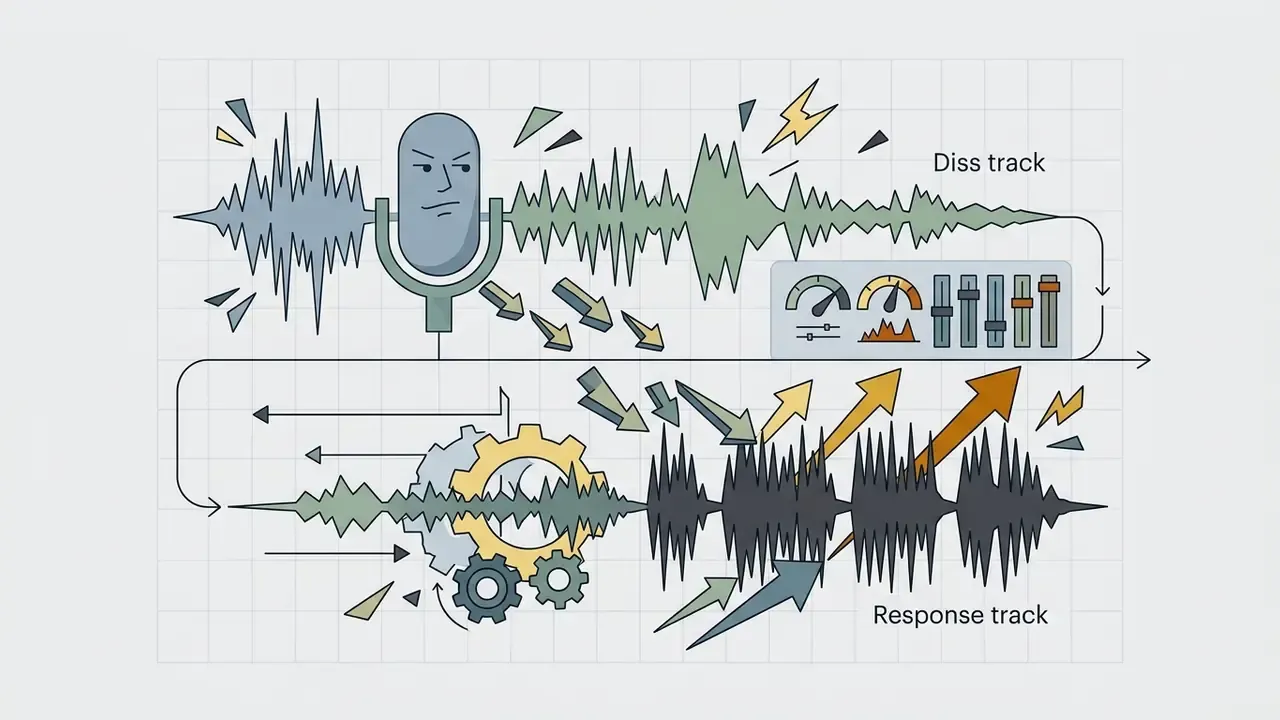
Yes. For a continuous freestyle, set Structure Bias = Freestyle, raise Rhyme Focus, and omit chorus tags so the model produces uninterrupted verses. For a diss or response track, use an adversarial persona, an aggressive emotion setting, explicit rhyme targets for punch lines, and pick Clean or Explicit profanity based on the distribution channel. Keep claims about real people non-defamatory. Creative aggression is not a defence against defamation or publicity claims.
Can I export stems, MIDI, or synced lyrics?
Yes, on platforms that support it. Common exports include up to 12 separated stems, MP3/WAV-to-MIDI conversion of the generated melody, and LRC/SRT time-synced lyric files for karaoke players, lyric videos, and social captions. Always keep an uncompressed 24-bit WAV master alongside these derivatives.
How many languages are supported?
Rap-specific song generators typically advertise 10 or more languages, while general multilingual TTS platforms claim coverage into the hundreds. Quality is uneven. Verify native phoneme handling, re-tune syllable counts per language, and have a native speaker audit the render before commercial release.
Is the output copyrightable and safe to monetize?
Only the human-authored elements are protectable in the United States, and AI-generated content must be disclosed during registration. Monetization additionally requires an active commercial licence on the generation platform plus clearances for any third-party beat, sample, or interpolation. When in doubt, get written legal advice for the specific release.