Saving networked media into local files sounds trivial. It is not. You need a working grasp of transcoding standards, web-platform security parameters, and the regulatory limits of copyright. Web tools in the online video converter youtube class let users extract a media stream from the video hosting platform through a direct URL and transform it into MP4 or MP3 inside the browser, with no locally installed software.
Research on multimedia compression standards shows that the quality of the resulting file is fully determined by the parameters of the source video stream and by the processing method chosen (IEEE 1857.2-2023; ISO/IEC 14496-14:2020). So the real work is balancing three things: convenience of access, device security, and legal requirements. Miss one and the other two stop mattering.
«IEEE 1857.2-2023 defines objective quality metrics, PSNR and SSIM, for evaluating losses during video and audio transcoding». IEEE 1857.2-2023 (2023). https://ieeexplore.ieee.org/document/10304655
Executive summary
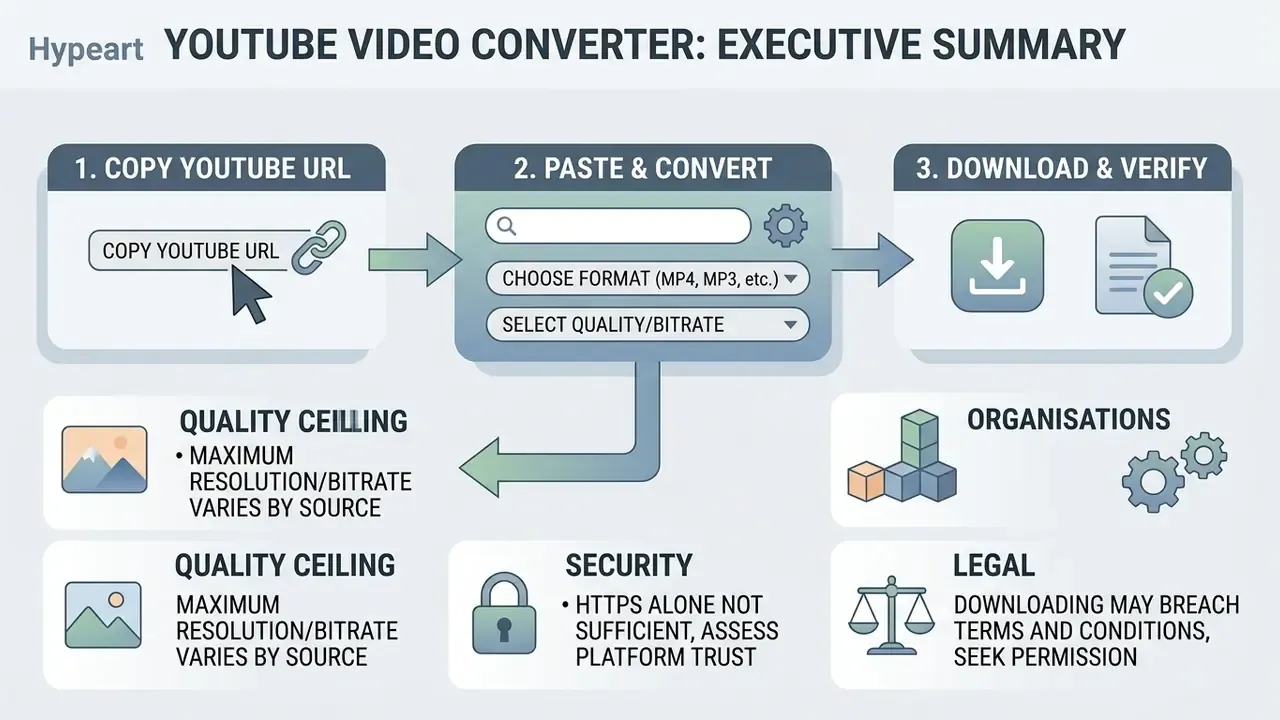
- What it is. A browser service that accepts a YouTube URL, pulls the available media representation, and returns an MP4 (video) or MP3 (audio) file, plus WEBM, 3GP, AVI, MKV, FLAC or AAC on the more advanced platforms.
- Quality ceiling. Output never exceeds the source: 720p in, 720p out. Upscaling only inflates file size without improving PSNR or SSIM.
- Three steps. Copy the
watch?v=URL, paste it and choose a format and bitrate, then download and verify playback. - Security. HTTPS alone proves nothing. Demand a published deletion window (8 to 24 hours), media-only outputs (
.mp4/.mp3, never.exe,.apk, or password-protected archives), and no open redirects. - Legal. Downloading without an explicit download control or written permission breaches YouTube's Terms and, for protected works, the exclusive rights in 17 U.S.C. §106. Only your own uploads, Creative Commons-licensed clips, and public-domain material are safe to save.
- Organisations. Treat public web converters as Shadow IT: media uploaded to a third-party server leaves your perimeter. Approved local tooling (yt-dlp, FFmpeg) or a contracted enterprise media service is the controlled alternative.
What an online video converter YouTube is and what it is for
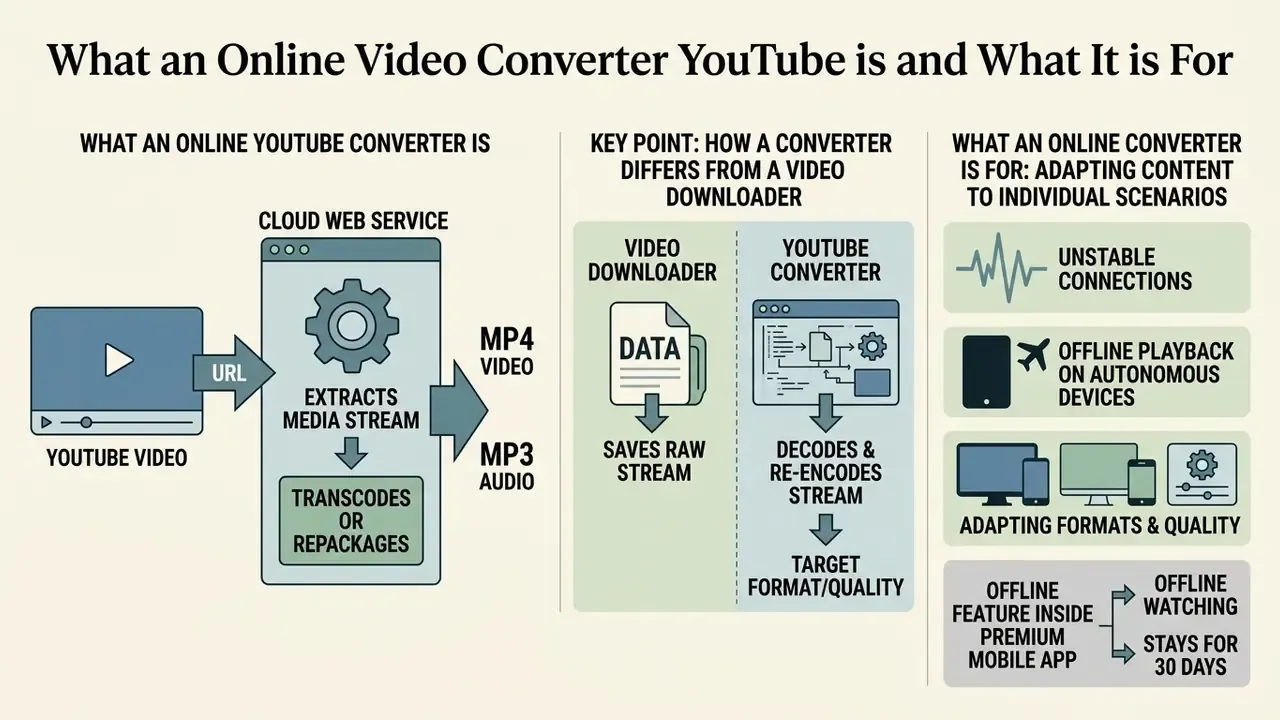
Online video converter youtube is a cloud web service that takes a URL pointing to a video, extracts the media stream from the platform's servers, and transcodes or repackages it into a local MP4 (video) or MP3 (audio) file without requiring local software. These services shift the heavy lifting to remote server capacity instead of burning the user's CPU.
The main job of an online video converter for youtube is adapting media content to individual scenarios: listening to recorded lectures in autonomous mode, watching training material on devices with no stable network, archiving a conference talk you presented yourself. The service receives the incoming video url, performs a syntactic analysis of the page structure, and returns a direct link to download video.
In our own practice of corporate digital-tool assessment, our experts analysed the streaming-video processing workflow during a media-archive migration. Browser-based solutions made it possible to avoid deploying third-party executables on 150 workstations, which removed the installer-based malware vector. That was the win. The loss, as the security review showed, was a new one: outbound data transfer to third-party processing servers (see the Shadow IT section below).
How a YouTube converter differs from a video downloader
The core difference between a youtube converter and a video downloader is the depth of technical processing applied to the source media. A video downloader fetches an existing media stream "as is" without changing codec or container, preserving the original data structure byte for byte.
A converter youtube tool, by contrast, decodes the source stream and re-encodes it into the target video format, for example producing mp4 files or extracting the audio track through an mp3 converter. Direct downloaders such as the command-line utility yt-dlp work with YouTube's original streams (including flags like -x --audio-format mp3 that trigger extraction rather than raw saving), whereas a browser online video converter normalises the final file to the standard the user selected. If you plan to cut, caption, or repurpose the result afterwards, compare the options in our guide to YouTube video editors.
When saving YouTube video to a file is convenient
Saving youtube video locally makes sense on unstable connections, for offline playback on autonomous devices, for extracting lecture audio, and for long-term personal archives. Offline access removes buffering delays and saves mobile data. On a commuter train, that difference is not theoretical.
According to YouTube Help (2026), the official offline feature inside the YouTube Premium mobile app keeps clips for up to 29 days, after which the device must reconnect so the platform can re-verify rights; in some countries the window is as short as 48 hours. Converting into an independent mp4 video file preserves access for playback on any media player, smart TV, or in-car system without being tied to a proprietary app. For a full export of your own channel, developers use Google Takeout, which is slower but returns the original files rather than a re-encode.
«Downloading video without platform authorisation infringes the reproduction rights codified in Section 17 U.S.C. §106 of the U.S. Copyright Act». U.S. Copyright Office, Title 17 U.S.C. §106 (2023). https://www.copyright.gov/title17/92chap1.html
Which formats and quality a YouTube video converter supports
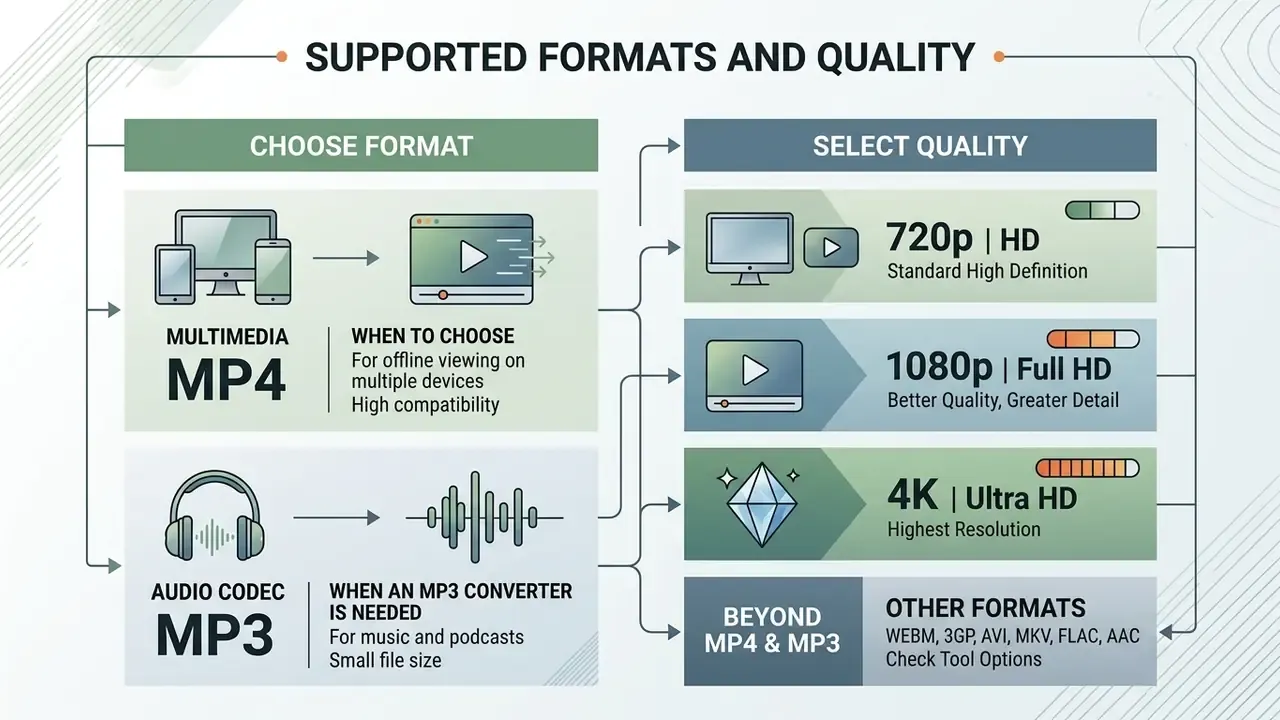
Online converters predominantly support MP4 (multimedia container) and MP3 (audio codec). The maximum resolution of the file, from 720p HD to 1080p Full HD and 4K, is strictly limited by the parameters of the source upload. Format choice follows the target device and the task, not ambition.
The table below compares the main output parameters when converting clips.
| Parameter | MP4 (video + audio) | MP3 (audio only) |
|---|---|---|
| Content type | Multimedia container (H.264/AVC + AAC) | Compressed audio stream (MPEG-1 Audio Layer III) |
| Use cases | Offline video viewing, playback on PC, TV, and smartphones | Podcasts, lectures, music in a player or car |
| Compatibility | Full compatibility with modern OSes and hardware decoders | Universal support on virtually any audio device |
| Dependence on the original | Capped by the source resolution and bitrate | Capped by the quality of YouTube's audio track |
| File size | High (depends on resolution and bitrate) | Compact (depends on bitrate: 128 to 320 kbps) |
When to choose YouTube to MP4
The online video converter youtube to mp4 route is chosen when the synchronised video track and audio track must both be preserved for viewing on smartphones, computers, or televisions. The MP4 standard (ISO/IEC 14496-14:2020) is a universal container that supports video compression without visible loss of detail.
To maximise compatibility, services package the video stream with the H.264 (AVC) codec and audio with AAC-LC (Android Developers, 2026). That combination guarantees hardware decoding on most processors, including ageing tablets that choke on newer codecs.
«MP4 with H.264 and AAC delivers hardware decoding on the majority of consumer devices while preserving perceived quality». IEEE 1857-2023 (2023). https://ieeexplore.ieee.org/document/10304655
When you select hd quality, the source frame rate (30 or 60 fps) is preserved, which prevents frame tearing; Android's supported-media matrix documents fixed playback profiles at 12 and 30 fps, so matching the source rate, rather than changing it, is the safe default. Readers exploring adjacent production tooling can review our overview of AI video generators and, if generation is the actual goal, the walkthrough on how to create an ai model.
When an MP3 converter is needed
An mp3 converter is needed to extract the audio track from a clip (podcasts, lectures, music) in order to shrink file size and play it on any audio device. Extracting audio removes the need to process video pixels, which reduces load on storage and on the CPU of an older phone.
MP3 uses lossy psychoacoustic compression (Library of Congress, 2023). During conversion, a user may select a bitrate between 128 kbps and 320 kbps. However, if the source YouTube audio stream was uploaded at 128 kbps AAC, re-encoding to 320 kbps MP3 will not add the missing frequencies. It will only increase file size, which is a strange kind of victory.
«Re-encoding from one lossy format into another accumulates degradation: information removed by the first codec is not restored by the second compression pass». IEEE Audio Coding Standards, IEEE 1857.2-2023 (2023). https://ieeexplore.ieee.org/document/10304655
YouTube's own guidance recommends AAC-LC or Opus at 48 kHz with a stereo bitrate of 320 kbps or higher for music uploads, while its lossy-audio floor is 64 kbps. That is exactly why the source ceiling, not the converter setting, defines fidelity. If the resulting file is too heavy for distribution, see our practical guide to video compressors.
How to choose HD, 1080p, or 4K quality
The choice between HD (720p), Full HD (1080p) and 4K depends on the source resolution on the platform, the screen size, and available network bandwidth. Services cannot artificially restore detail that the original upload never contained.
In adaptive streaming architecture (MPEG-DASH), each resolution is a separate representation inside the manifest (MPD):
- 720p HD bitrate ~1.5 Mbps, optimal for smartphones;
- 1080p Full HD bitrate 3 to 5.8 Mbps (1920×1080 frame), the standard for monitors;
- 4K Ultra HD bitrate 12 to 20 Mbps (3840×2160 frame), requires a capable decoder.
Attempting to upscale a 720p video to 4K during conversion only increases the volume of video files without raising the PSNR or SSIM metrics. If you want to sanity-check storage and bandwidth maths before a bulk job, our calculators section covers file-size and bitrate estimates.
«Upscaling creates no new detail: objective PSNR and SSIM metrics do not improve when pixels are interpolated from a low-resolution source». IEEE 1857-2023 / IEEE 1857.2-2023 (2023). https://ieeexplore.ieee.org/document/10304655
Because DASH clients are codec-agnostic and must decode every delivered frame locally, higher resolutions also raise device-side decode and render load. A practical argument, then, for 1080p over 4K on older laptops and tablets.
Beyond MP4 and MP3: WEBM, 3GP, AVI, MKV, FLAC, AAC
Besides MP4 and MP3, advanced converters support WEBM (VP9/AV1 codecs for open web delivery), 3GP (legacy mobile devices), AVI and MKV (desktop containers that tolerate high-bitrate, near-lossless mastering), plus audio formats such as FLAC, AAC, M4A, OGG and WAV without extra compression. Device-oriented profiles (iPhone, iPad, Android, PS3, Xbox, Apple TV) are essentially MP4 presets with locked resolution and bitrate ceilings.
Most universal platforms also accept links from TikTok, X (Twitter), Instagram, Facebook, Vimeo, Dailymotion, Twitch, VK Video, Rutube and Youku; some aggregators advertise 200+ supported sites. Two caveats apply, and they are not decorative. First, the terms of service of each platform still govern what you may save. Second, exotic containers frequently mean an extra lossy re-encode. Choose WEBM for web embedding, MKV for archiving, FLAC for audio mastering, and MP4 or MP3 for everything else.
How to convert YouTube video online: the step-by-step process
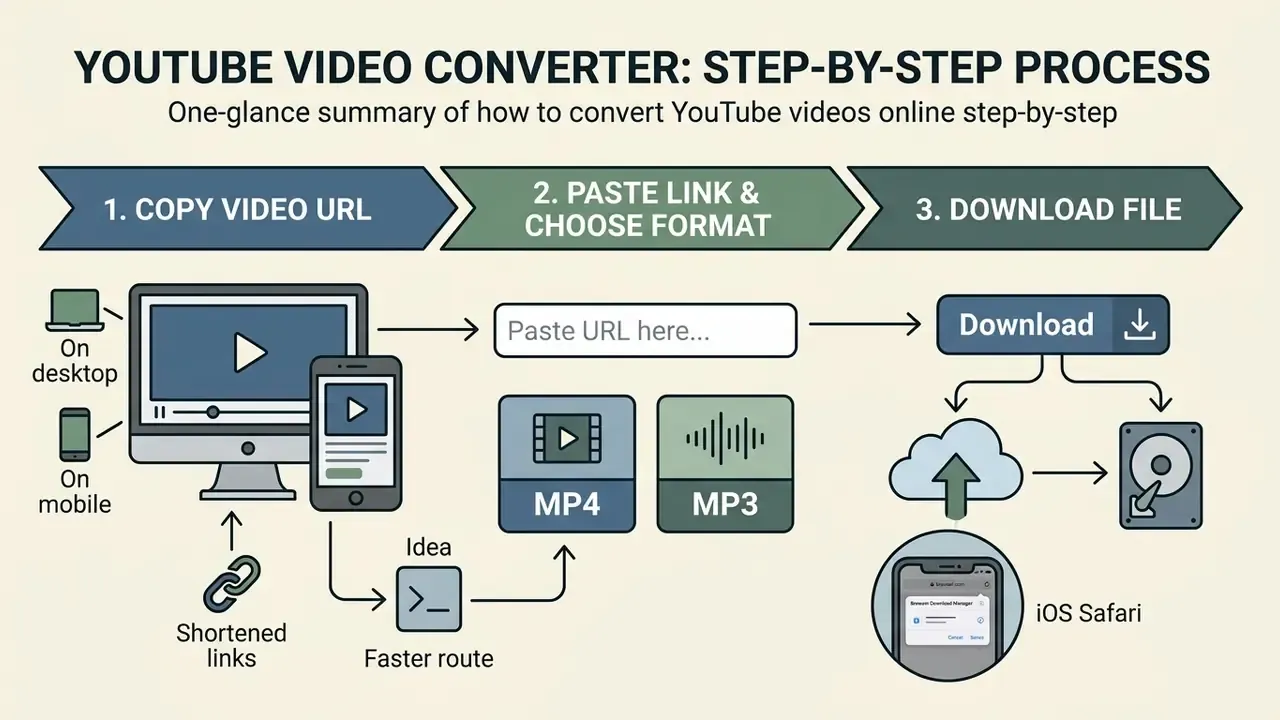
The conversion process consists of three sequential steps: copying the URL of the clip on YouTube, pasting the link into the web service and selecting a format (MP4 or MP3), then pressing the start button to download the finished file.
Expected download time for a converted 10-minute 1080p file (~300 MB) by connection type:
| Connection | Realistic throughput | Download time for ~300 MB |
|---|---|---|
| 5G (mid-band) | ~200 Mbps | ~12 to 15 seconds |
| Wi-Fi 6 (home fibre) | ~300 Mbps | ~8 to 10 seconds |
| Wi-Fi 5 (shared office) | ~50 Mbps | ~50 seconds |
| 4G LTE | ~20 Mbps | ~2 minutes |
| 3G | ~3 Mbps | ~13 to 15 minutes |
Server-side conversion adds its own latency: published figures range from roughly 15 seconds for short clips to 30 to 90 seconds for longer files, depending on queue priority on free tiers.
How to copy a video URL on YouTube
To begin, obtain a correct video url from the browser or the official YouTube app. The link is the unique identifier of the media resource, and a single stray character breaks the parse.
- On desktopcopy the full address from the browser address bar (it contains
watch?v=) or click Share under the player and choose Copy. - On mobile (Android/iOS)in the app, tap Share and select Copy link (YouTube Help, 2026).
- Shortened linksservices also reliably recognise
youtu.be/IDlinks.
How to choose MP4 format or MP3
In the converter interface, the user defines the target video format based on their own task and the playback capabilities of the device.
If visual information must be preserved, choose mp4 format and specify the desired resolution (720p or 1080p). If the task reduces to listening to speech or music, choose an mp3 converter at 192 or 256 kbps. One nuance people skip: extension alone is not proof of support. Mozilla and Android document support at the codec level (MP3, AAC-in-MP4), so check both container and codec for your target device. For post-conversion editing, trimming, and publishing, see our comparison of YouTube video editors.
How to download the finished video file
Once server-side processing completes, the web interface generates a direct download video link that saves the result to the local disk.
Clicking the download button activates the HTML download attribute or the server header Content-Disposition: attachment (MDN Web Docs, 2026). The browser then stores video files in the system directory. Behaviour varies more than you would expect: some browsers prompt for a filename, others save silently, and Chrome may open the file in an external app. Always confirm that the file plays correctly after the download finishes.
Mobile nuances worth knowing:
- iOS Safari: the download lands in Files → iCloud Drive → Downloads (or the Downloads tray icon), and the built-in video viewer may intercept the request and preview the stream instead of saving it.
- Android: the file appears in the Files → Downloads section of device storage; some browsers require explicit storage permission on the first download.
How to convert playlists and YouTube Shorts
Batch conversion of playlists lets you save up to 100 clips in a single operation on services that implement it. Copy the playlist URL (the one containing the &list= parameter), paste it into a converter that supports batch mode, such as the desktop tool 4K Video Downloader or the browser service noTube, and apply one shared quality profile to the whole queue. Desktop batch downloaders additionally support entire channels, subtitle tracks, and scheduled jobs.
For YouTube Shorts, the same rules apply, but the URL structure youtube.com/shorts/ID should be normalised to the canonical youtube.com/watch?v=ID form if the parser rejects it. Vertical Shorts are typically mastered at 1080×1920, so requesting a horizontal 1080p profile will letterbox the result. Producing vertical clips rather than saving them? Then the relevant reading is how to create an ai avatar and the broader primer on how to create an ai pipeline for short-form content.
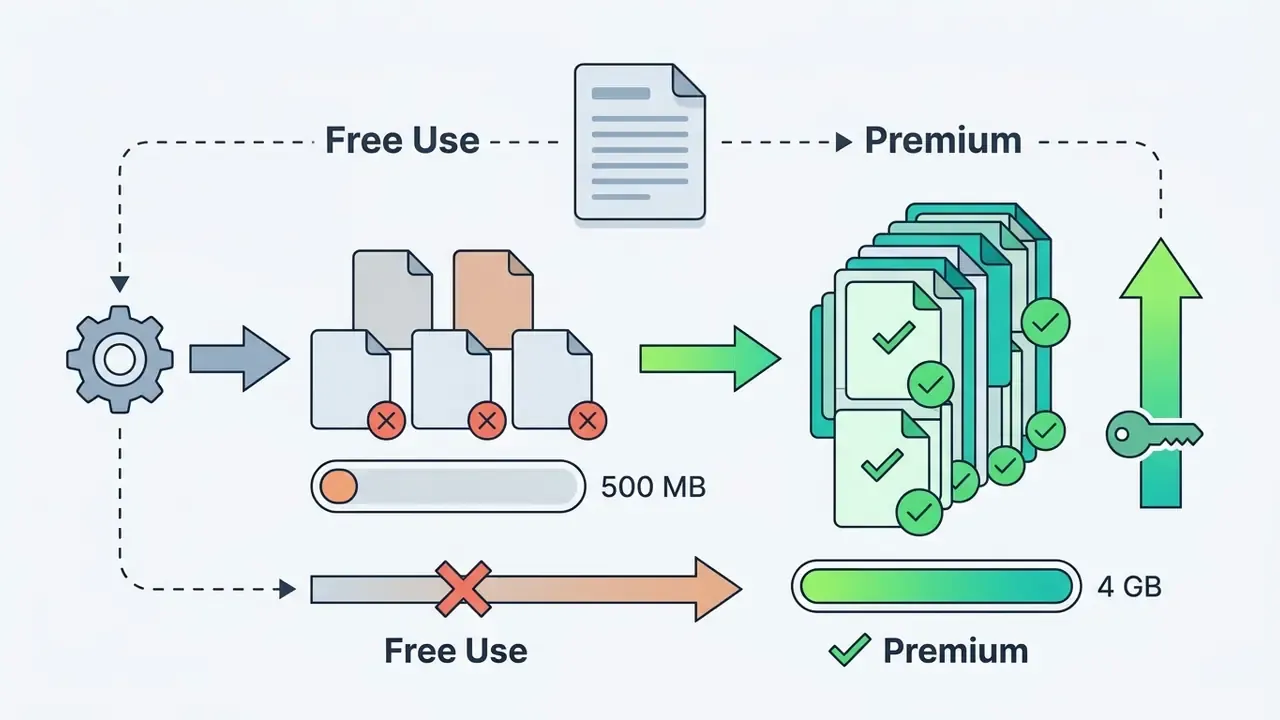
Two practical limits. Free tiers frequently cap batch jobs (5 files per day and 500 MB per file on some services; 20 conversion minutes per day on others). And platform terms do not become more permissive simply because the operation is bulk.
Top tools and services for converting YouTube video
The market splits into three technical classes: browser services (nothing installed, processing happens on a third-party server), desktop applications (local processing, richer batch features), and command-line utilities (no throttling, direct access to the original media streams). The table summarises the options readers ask about most.
| Tool | Class | Strengths | Limitations |
|---|---|---|---|
| yt-dlp | Open-source CLI (Windows/macOS/Linux) | Direct fetch of original streams, no speed limits, precise format selection, -x --audio-format mp3 extraction, scriptable | Command line only; requires FFmpeg for re-encoding |
| 4K Video Downloader+ | Desktop app | 4K/8K output, whole playlists and channels, subtitle and audio extraction, one-click queue | Feature-limited free tier; ads after account creation |
| Wave.video | Cloud converter + editor | Browser-based, no install or registration, unlimited MP4 conversions, results can be edited and re-published | No simultaneous multi-file conversion; not available in the mobile app |
| SaveFrom.net | Web service + browser extension | Resolutions from 144p to 1080p, one-click capture from the page, works on Windows/macOS/Linux/Android/iOS | Extension installs into the browser; ad-supported |
| noTube | Browser converter | MP3/MP4/WAV, no registration, playlists up to 100 videos, Shorts support, URL-substitution shortcut | Output options depend on server-side profiles |
| iTubeGo | Desktop batch downloader | HD downloads from 10,000+ sites, built-in browser, segment downloads, password protection | Free version is heavily feature-limited; no browser extension |
| FreeConvert | Web converter | 60+ video formats, 256-bit SSL, files auto-deleted after 8 hours | 20 conversion minutes per day, 5 minutes per file on the free tier |
| FFmpeg | Open-source CLI (local) | Fully local transcoding, exact control over codec, bitrate, container; nothing leaves the device | No download layer; requires a separate fetcher and syntax knowledge |
Selection logic in one line: for one-off personal clips use a reputable browser converter, for recurring bulk work use a desktop app, and for auditable, data-resident workflows use local yt-dlp plus FFmpeg. Side-by-side breakdowns of adjacent media tools sit in our compare hub.
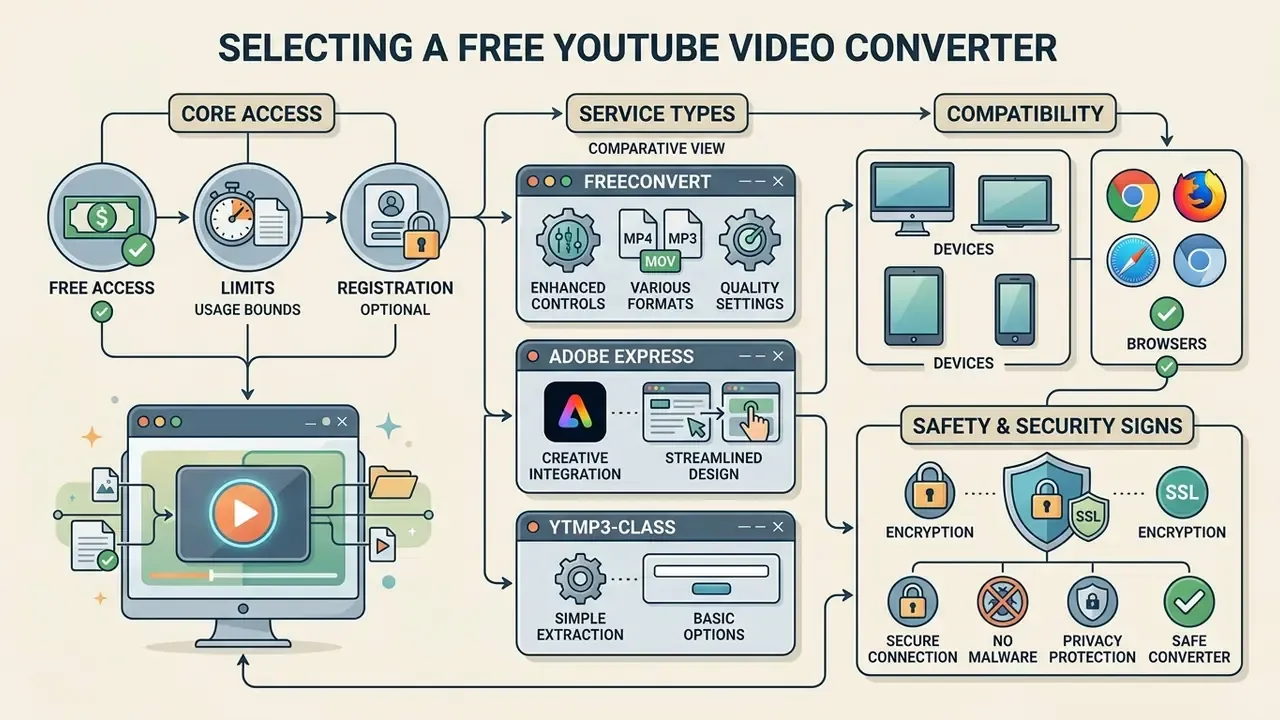
How to choose a free YouTube online video converter
A safe and effective free youtube online video converter is characterised by the absence of a mandatory registration wall, HTTPS encryption, a transparent file-deletion policy, and no attempts to install third-party programs (.exe or .apk).
The matrix below sets out the evaluation criteria for online converters.
| Criterion | Signature of a safe service | Risks and hidden limits |
|---|---|---|
| Registration | No registration required: functionality without an account | Collection of personal data, demands for card details |
| Security | Valid SSL/TLS (HTTPS), 256-bit SSL, no open redirects | Third-party archive downloads, pop-ups, malware |
| Data policy | Automatic server-side deletion after 8 to 24 hours | Indefinite storage of downloaded user video |
| Speed | Short clip processed in 15 to 60 seconds with no artificial throttling | Deliberate speed throttling on free tiers |
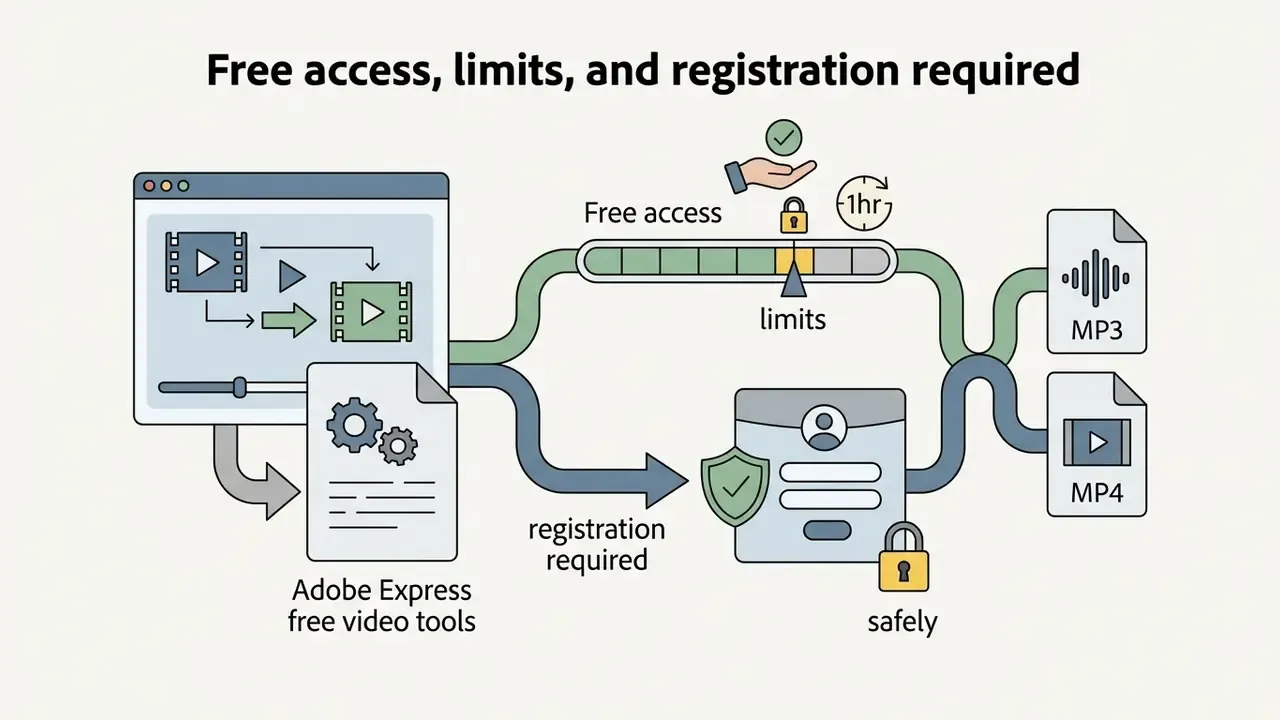
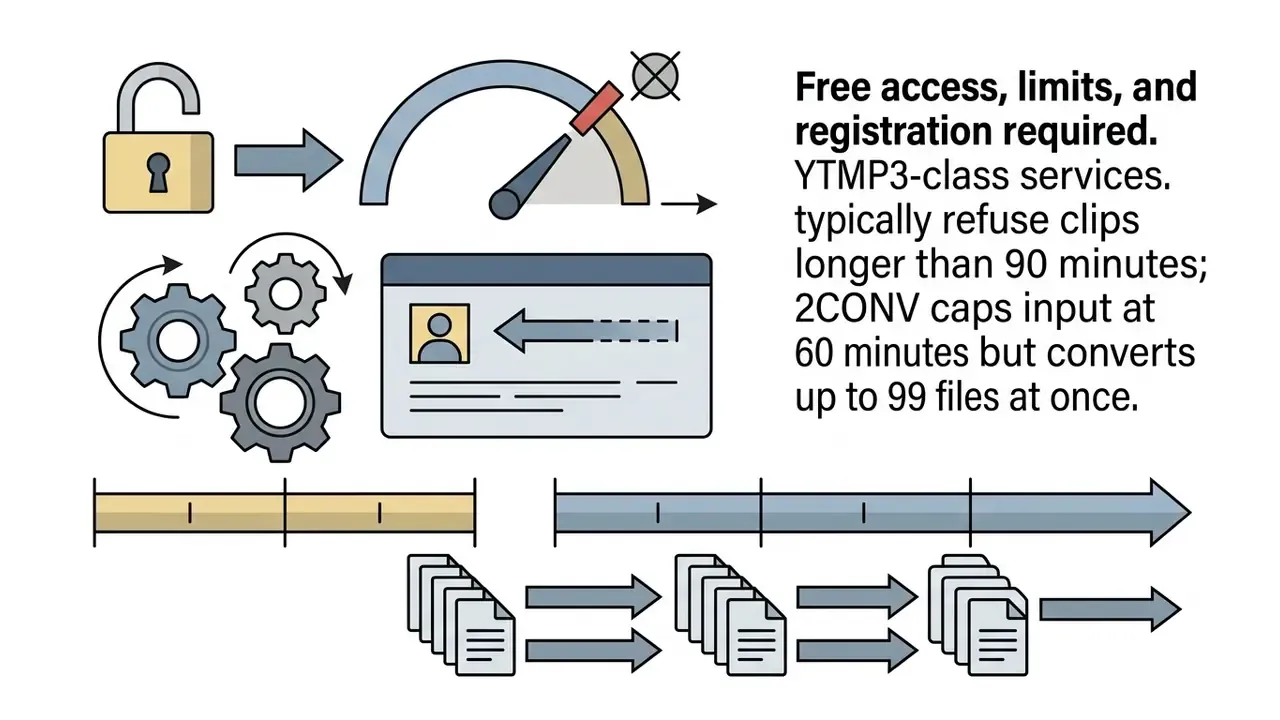
Free access, limits, and registration required
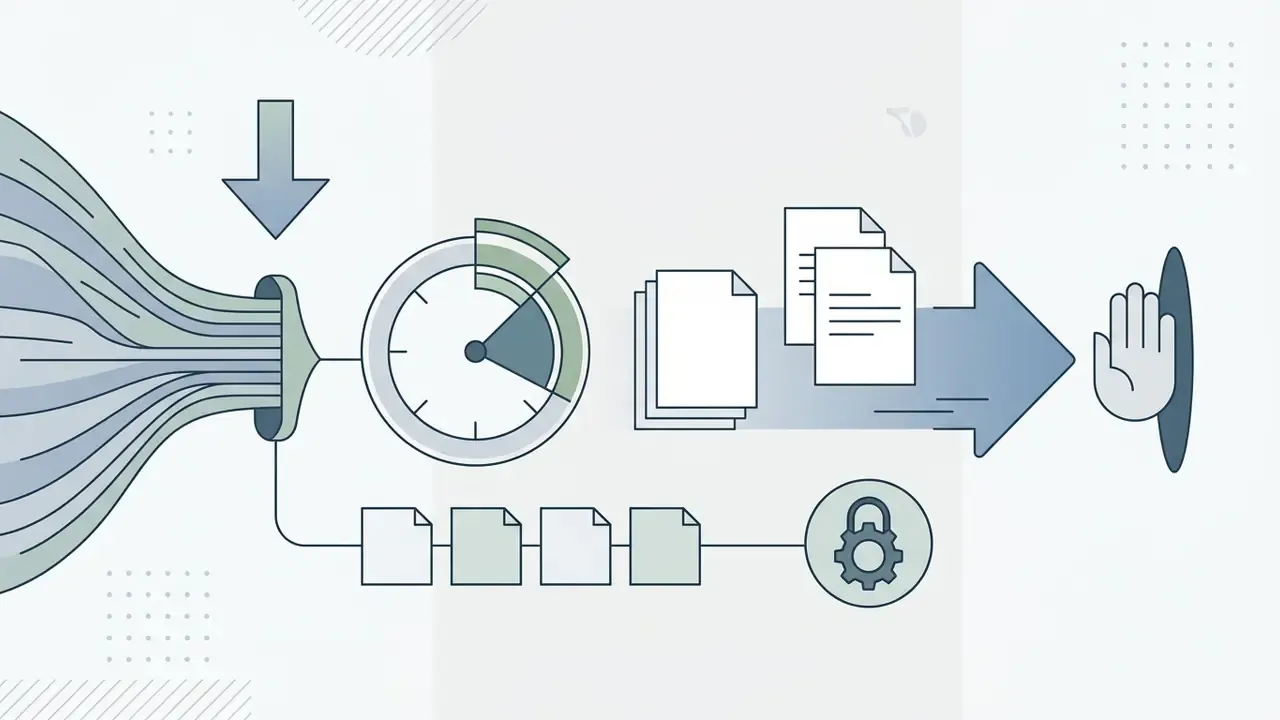
Many services position themselves as an online youtube video converter free, yet impose limits on the free tier in order to monetise. Nothing scandalous about that, as long as the limits are visible before you start.
Typical freemium restrictions:
The absence of a no registration requirement speeds up the process, though for regular large volumes services push paid subscriptions. Worth noting: "speed limit" often means lower queue priority rather than a literal bitrate cap. For adjacent free tooling, see our roundup of free AI video generators.
Compatibility with devices and browsers
A modern online video converter yt must work reliably through web standards in all popular browsers: Chrome, Safari, Firefox and Edge.
Desktop browsers handle mp4 files downloads fairly uniformly. Mobile platforms do not. In iOS Safari, the built-in video viewer can intercept a direct download and redirect the file into the internal storage of the Files app (PDFObject, 2024). Documented browser-support matrices also flag Safari as "mostly supported" for inline media handling, and Chromium-based Edge behaves differently from legacy Edge.
«IEEE audio-video coding standards are designed for a broad device spectrum, from smartphones to televisions, securing MP4/H.264 compatibility at the hardware-decoding level». IEEE 1857-2023 (2023). https://ieeexplore.ieee.org/document/10304655
Signs of a safe and secure converter
Using free web converters carries malware-infection risk. Security guidance here is consistent, and blunt: encryption in transit says nothing about storage, deletion, or tracking on the server side.
«Attackers publish video-platform content promising free access to paid tools and deliver malware to users who follow the embedded links». Malware distribution via video sharing platforms study (2024). https://doi.org/10.1016/j.cose.2024.103821
Tool-safety checklist:
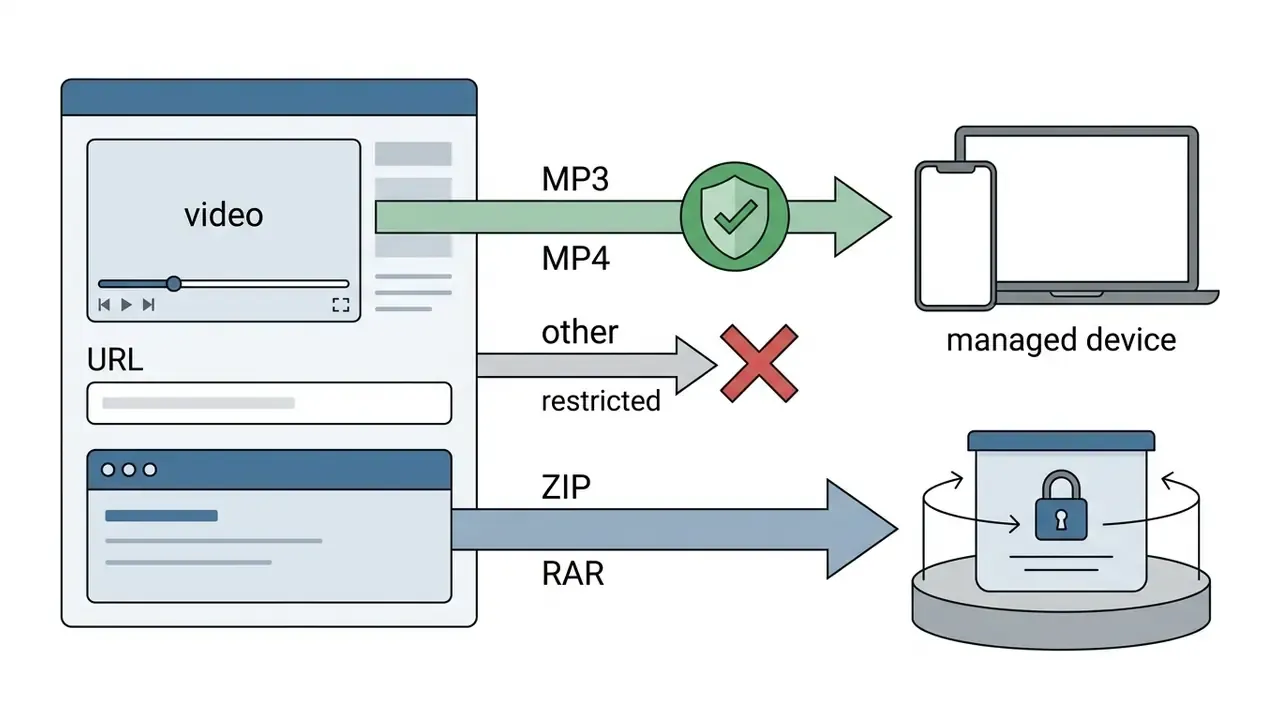
- Encryptionthe address bar starts with
https://(a requirement of NIST SP 800-44 Rev. 2, which also recommends disabling access on ports other than 443 when TLS is in use). - Download formatthe service returns a media file only (
.mp4or.mp3), never executables (.exe,.msi,.apk) or password-protected archives (.zip,.rar) that can conceal malware. - No redirectsclicking the button does not open suspicious third-party tabs (CWE-601 Open Redirect).
- Exact domainverify spelling character by character; typo-squatted mirrors of popular converters are common.
- Published deletion policya stated retention window (8 to 24 hours) and, ideally, local in-browser processing.
- Local inspectionscan the downloaded file before opening it, and never upload confidential, financial, identity, health, legal or client media to a public converter.
Shadow IT and DLP risk for organisations
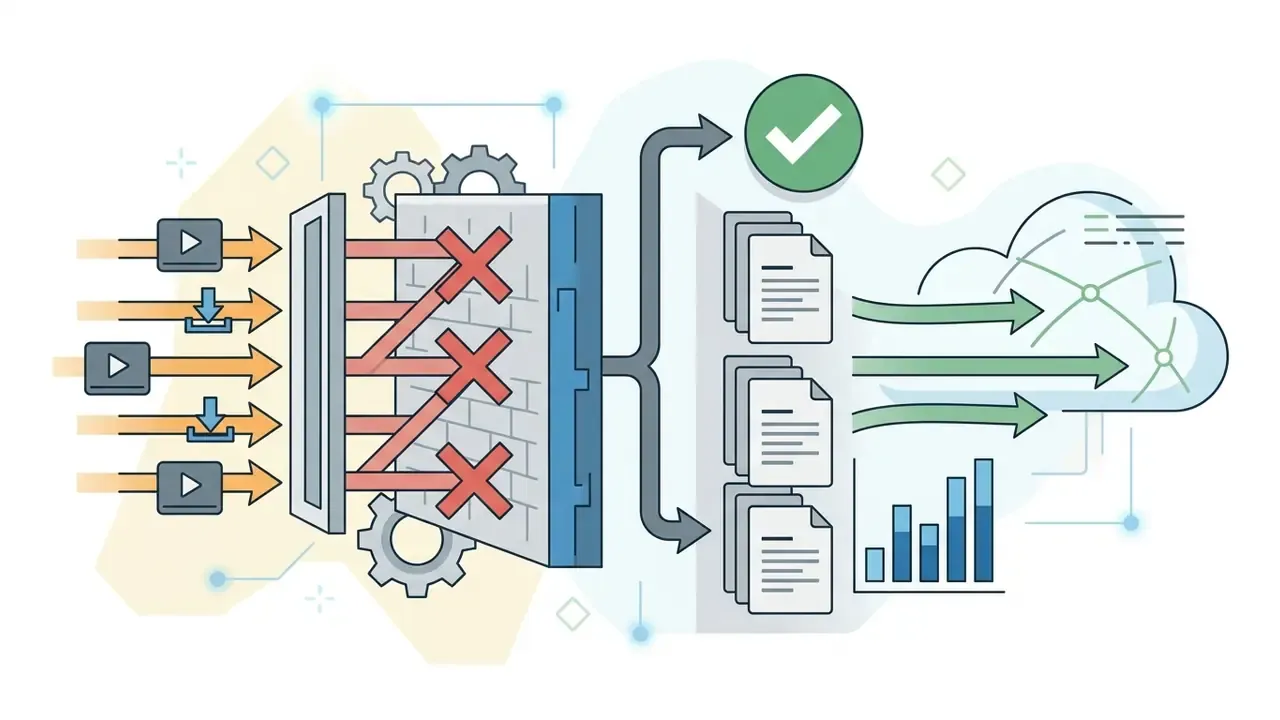
For a bank, insurer, or any regulated institution, a public converter is not a productivity tool. It is an unsanctioned data-processing channel. The media file, its metadata, and the requesting IP address all leave the perimeter and land on infrastructure with no contract, no SLA, and no auditable deletion guarantee. Try explaining that in an audit walkthrough.
Consolidated risk view:
| Risk domain | Specific exposure | Control |
|---|---|---|
| Security | Malware in returned archives, open redirects, typo-squatted mirrors, browser-extension over-permissions | Web-gateway category blocking, download-type filtering, extension allow-listing, endpoint scanning |
| Data / DLP | Internal recordings, client calls, or unreleased marketing media uploaded to a third-party server | DLP egress rules on media MIME types, block uploads to uncategorised converter domains |
| Legal | Reproduction of protected works on corporate devices; contractual breach of platform terms | Approved-source policy, documented licence provenance for every media asset |
| Compliance / MRM | Unvalidated third-party processing inside model or content pipelines; no vendor assessment record | Vendor questionnaire (encryption, residency, retention, sub-processors), entry in the tool inventory |
Information-security checklist for controlling converters:
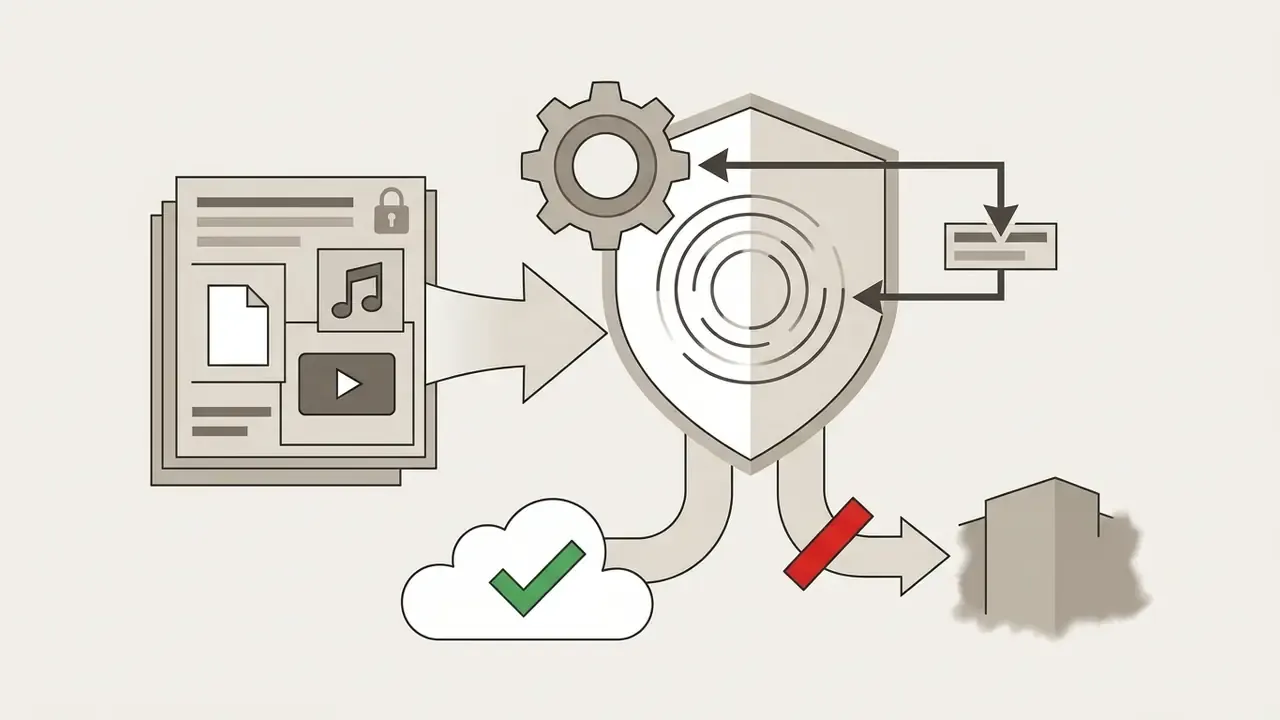
Architecturally the difference is simple. With a browser converter the client hands the URL to a third-party server, which fetches the stream from the platform and stores the artefact on its own disk before serving it back. With a local utility, the only network path is client to platform, and the file never touches an intermediary.
yt-dlp plus FFmpeg build or a contracted media-processing service, so the requirement does not migrate to personal devices. Demand does not disappear when you block it; it relocates.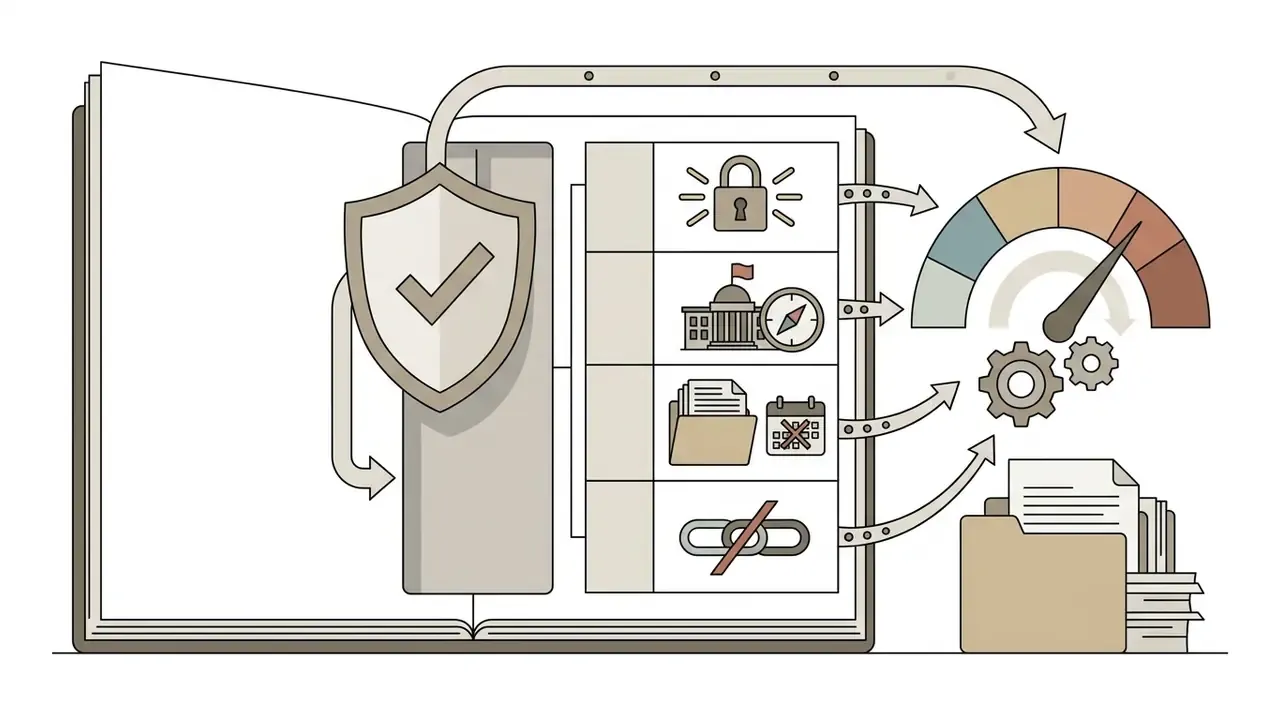
Is it legal to download YouTube videos through an online converter?
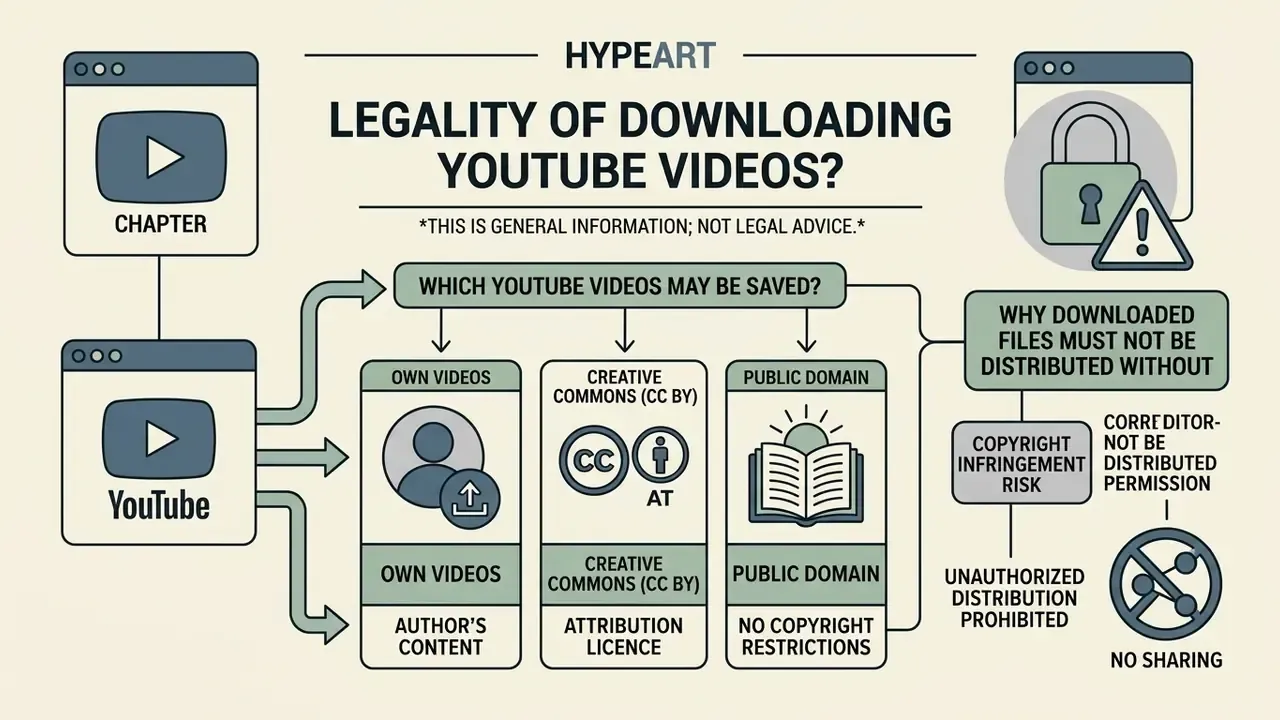
This information is general in nature and does not replace consultation with a copyright lawyer in your jurisdiction.
Downloading and converting video from YouTube without the rights holder's permission or an explicit download control breaches the platform's Terms of Service and copyright law (Title 17 U.S.C.). Users must respect those boundaries when saving content.
Under 17 U.S.C. §106, the copyright owner holds exclusive rights of reproduction, distribution, and the creation of derivative works (U.S. Copyright Office, 2023). YouTube's terms explicitly prohibit downloading material except where the platform itself displays a download link for that specific item, and the YouTube API Services Terms forbid downloading, importing, caching, or storing copies of audiovisual content without prior written approval.
A direct indication, then, that the overwhelming majority of YouTube content is protected by law.
In addition, the DMCA Anti-Circumvention rules (17 U.S.C. §1201) prohibit circumventing technological protection measures (TPM). Protection on the platform also covers copyright management information (CMI) under §1202.
«The ninth triennial §1201 proceeding concluded in 2024: the updated exemptions run to October 2030, but none of them covers bulk stream ripping». U.S. Copyright Office, Section 1201 Triennial Proceeding (2024). https://www.copyright.gov/1201/
Which YouTube videos may be saved
Lawful saving of clips through an online converter is possible only in strictly limited content categories (Google Help, 2026):
- The author's own videosa clip created and uploaded by the user, who retains the full scope of copyright.
- Creative Commons licence (CC BY)material published by authors with explicit permission for reuse and adaptation, subject to attribution. Note that CC BY is not the same as public domain, and the licence may be applied only to content eligible for it.
- Public domainworks whose copyright term has expired, or content that never attracted protection in the first place.
«Stream ripping remains among the most widespread forms of online copyright infringement reported by users». UK Intellectual Property Office, Online Copyright Infringement Tracker Wave 12 (2023). https://www.gov.uk/government/publications/online-copyright-infringement-tracker-wave-12
Creators publishing derivative work should also check licence status before monetising it; the same logic applies to generative assets, as discussed in how to create nft art.
Why downloaded video files must not be distributed without permission
Even if a youtube video downloader was used to save a clip for personal purposes, subsequently publishing, selling, or transferring it to third parties is a direct violation of the law.
For infringing the exclusive rights of reproduction and distribution, U.S. law provides for civil liability in the form of statutory damages from $750 to $30,000 per work, rising to as much as $150,000 per work for proven willful infringement (17 U.S.C. §504). Enforcement is not only monetary: national registries and court procedures, for example blocking orders issued through the Moscow City Court in Russia, can remove infringing resources from public access entirely. For details on licensing and permitted commercial scenarios, see our overview of commercial use of AI-generated content and the wider AI Media Commercial-Use section.
What to do if the YouTube converter will not download or convert a video
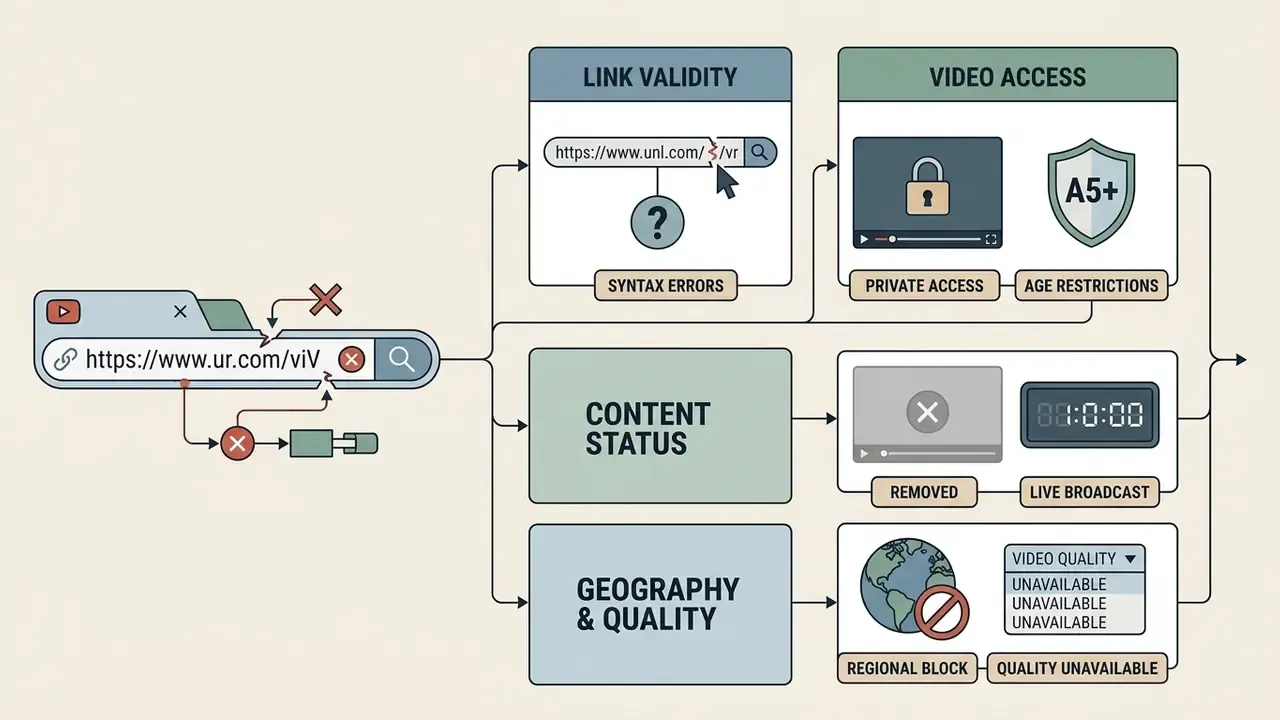
If conversion breaks off, check the validity of the URL, the public status of the video, age or regional restrictions, and whether the requested quality actually exists in the source file. YouTube's own troubleshooting guidance (updated 2026) adds four more checks: restart the internet connection, test the line speed against the selected resolution, restart the app or device, and disable extensions such as ad blockers.
Why the service does not recognise the video link
A service returns a link-recognition error for these common reasons (YouTube Help, 2026):
- Private access the video is marked Private or requires direct authorisation.
- Age restrictions the clip is flagged 18+, which requires age confirmation via a Google account and is never viewable when signed out.
- Live broadcast the service cannot process an active, unfinished live stream.
- Syntax errors the URL contains extra spaces, playlist parameters, or timecodes that break parsing of the canonical address (
watch?v=ID). - Regional blocking the uploader applied country-specific restrictions, so the link is unavailable from your region.
- Removed content the video was deleted or made unavailable after you copied the link.
Details on configuring programmatic interfaces are available in the AI Media API Guides section.
FAQ about the online video converter YouTube
Do I need to install a program for an online video converter yt?
No. A classic free youtube to video converter online runs entirely inside the web browser. All computation for stream extraction and transcoding happens on the provider's remote cloud servers. This saves the user's CPU, avoids per-device installs, keeps the workflow identical on Windows, macOS, Chromebook, phones and tablets, and means updates are applied server-side and available immediately. The trade-off is unavoidable: your media is processed on infrastructure you do not control, which is why local tools remain preferable for sensitive material.
Where do I find downloaded MP4 files after download video?
The location of downloaded files depends on the operating system and browser settings:
- Windows: open File Explorer and go to
C:\Users\ \Downloads. In Edge, the exact path is shown under Settings → Downloads → Location. - macOS: files are saved automatically to the system
Downloadsfolder, Apple's default internet download location. - iOS (iPhone/iPad): in Safari, tap the Downloads icon, or open the Files app, then
iCloud Drive, then Downloads. - Android: open the Files app and go to the Downloads section of device storage.
Can I convert a video longer than 2 to 3 hours?
Usually only with a desktop or command-line tool. Free web converters impose duration and size ceilings, commonly 60 minutes (2CONV), 90 minutes (YTMP3-class services), one hour (Adobe Express), or 5 conversion minutes per file with a 20-minute daily budget (FreeConvert). Long conference recordings and full-length streams also break browser sessions: a 3-hour 1080p file approaches 5 to 6 GB, which exceeds the 500 MB to 2 GB free-tier caps. Practical routes for long material: use a local yt-dlp plus FFmpeg pipeline, move to a paid tier that lifts the size cap (4 GB and above), or split the source into segments. Several desktop tools, including iTubeGo, can download a defined time range instead of the whole file.
Which is safer, a web converter, a desktop app, or a command-line utility?
Ranked by data exposure, a local command-line utility is safest, since nothing leaves the device. A reputable desktop app comes second: local processing, but an installer and update channel you have to trust. A public web converter is last, because your URL, metadata and output artefact are all handled by a third party. Ranked by convenience the order reverses, which is precisely why shadow usage happens. For regulated environments, the local option is the only one that survives a vendor-assessment review.