«A portfolio is not a passive archive. It is a structured evidence chain that proves creative competency, technical control, and decision ownership.»
And most portfolios fail for boring reasons. Wrong page count, poor photography, no context, sentimental leftovers from three years ago. This guide fixes those first, then moves to sequencing, rights, and the website.
The short version
Before you start: five decisions that shape everything else
Most of the pain in portfolio building comes from making these choices late, or not at all. Settle them on paper first, in about twenty minutes.
- Who reads it.An admissions panel, a client, a curator, or a grant jury. Each scores different things.
- What format is binding.If a portal specifies a single PDF at 50 MB, that limit is the brief, not a suggestion.
- How many works.Convert the published count into a page plan, one work per page, before you touch image files.
- What capture standard you will hold.Fixing lighting once is cheaper than re-shooting eleven paintings in a panic.
- What you are allowed to show.NDA work, work-for-hire output, and licensed assets all need a written answer before publication.
Write the answers at the top of your working document. Everything downstream becomes a smaller decision.
What an art portfolio is and why artists need one
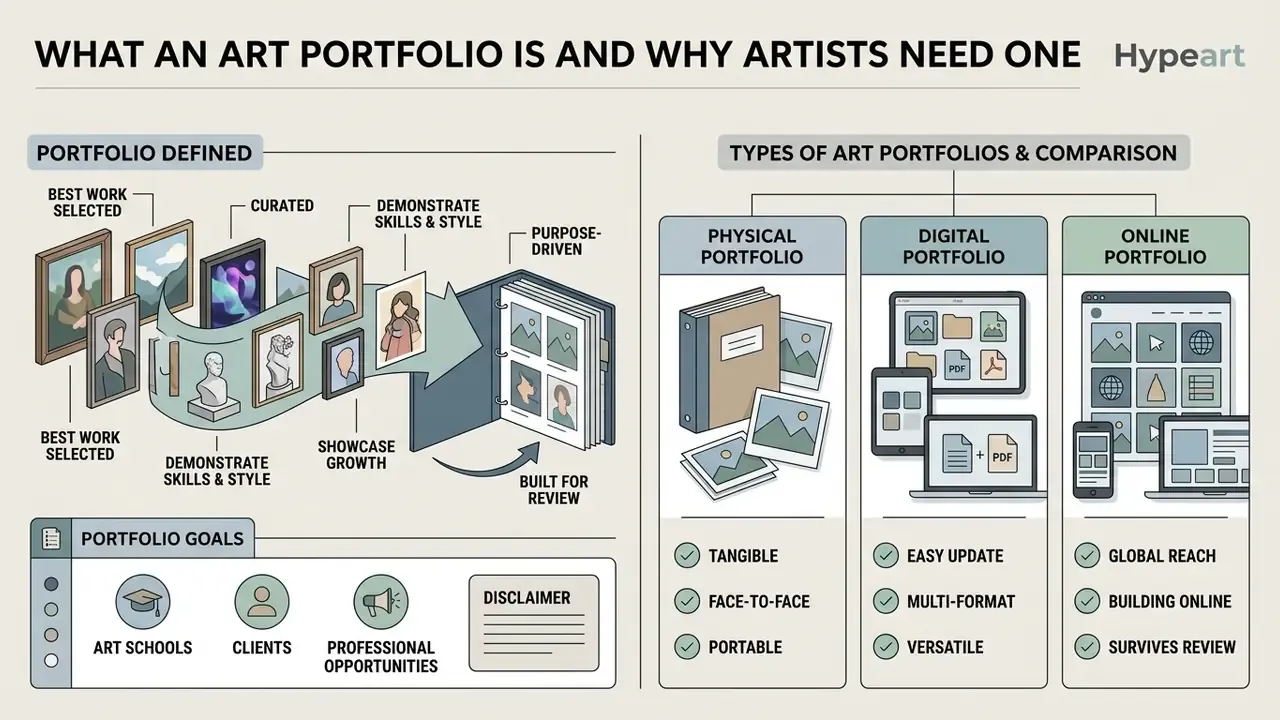
An art portfolio is a curated, purpose-driven selection of an artist's best work, built to demonstrate technical skill, artistic identity, and creative growth to evaluators, clients, or admissions committees. It is not an exhaustive personal archive. A strong portfolio provides verifiable evidence of creative problem-solving and control over your chosen media.
Institutional guidelines frame portfolios in two ways at once: as self-presentation and as formal assessment. Mid-program review standards at major art institutions use portfolio evaluations to decide whether a student holds the foundational competencies needed for advanced studio work. That is a gate, not a showcase.
«The portfolio functions simultaneously as a self-presentation tool and as a formal mechanism for assessing technical and conceptual competency.»
Outside academia, an organized artistic portfolio works as a visual brand. It signals professional reliability, stylistic direction, and technical versatility to prospective clients and commercial partners. A 30-month study across four Australian universities reached a similar conclusion from the student side: the portfolio is where competency becomes legible to employers.
Portfolio goals: art schools, clients and professional opportunities
Requirements shift depending on who is holding the rubric. Academic portfolio reviews score foundational design principles, observational accuracy, and conceptual development against fixed criteria (University of Wyoming, ART 2000 Portfolio Review Syllabus, Spring 2023). Admission counts differ sharply by school: RIT requires 7–10 works, SAIC requires 10–15 pieces, and ArtCenter asks for 15–20 selections. All three ask for best or most recent work, never a complete archive.
Commercial clients read the same document differently. They assess delivery capability, stylistic fit, and whether your assets are licensing-ready. Artists preparing client-facing work can review rights management and commercial asset preparation in the AI Media Commercial-Use Hub before anything goes public.
Types of art portfolios: physical, digital and online
Artists work with three primary formats: physical portfolios for in-person evaluations, digital PDF documents for formal application portals, and online portfolio websites for public discovery. Each serves a different review environment and imposes its own technical ceiling.
Physical portfolios let evaluators inspect material texture, surface finishing, and craftsmanship directly. Heavy matte paper, flat-lay binding, and a plain durable cover remain the standard build for gallery and interview settings. A digital portfolio in PDF gives you a fixed, device-independent layout, which guarantees the same presentation on a laptop and on a reviewer's tablet, and PDF/UA-1 remains the recognised accessibility standard for document submissions (Library of Congress, Recommended Formats Statement). An online portfolio adds global reach, filtering, continuous updates, and analytics you can actually read.
Comparison of physical, digital, and online art portfolios
| Portfolio format | Primary viewing mode | Strengths | Limitations | Typical goals and contexts |
|---|---|---|---|---|
| Physical portfolio | In-person review of prints or original works in a studio or gallery | Direct evaluation of material depth, scale, surface texture, and physical craftsmanship | Logistically restrictive, high transport risk, manual distribution only, limited reach | Gallery reviews, studio visits, capstone degree displays |
| Digital portfolio (PDF) | Screen-based page navigation via email attachments or upload portals | Preserves exact layout, works offline, supports standardized rubrics, archival-grade with PDF/UA tagging | Static file size limits (typically 10–50 MB), no live interaction, harder to discover organically | Art school admissions, scholarship panels, structured corporate pitches |
| Online portfolio (website) | Browser navigation across desktop, tablet, and mobile displays | Global availability, video and interactive media, easy updating, analytics and SEO | Needs hosting maintenance, depends on connectivity and browser performance, requires deliberate IP protection | Commercial freelancing, public branding, ongoing client acquisition |
In practice the choice is rarely exclusive. Most working artists keep a PDF for portals and a website for everyone else.
Define the audience, purpose and requirements before creating an art portfolio
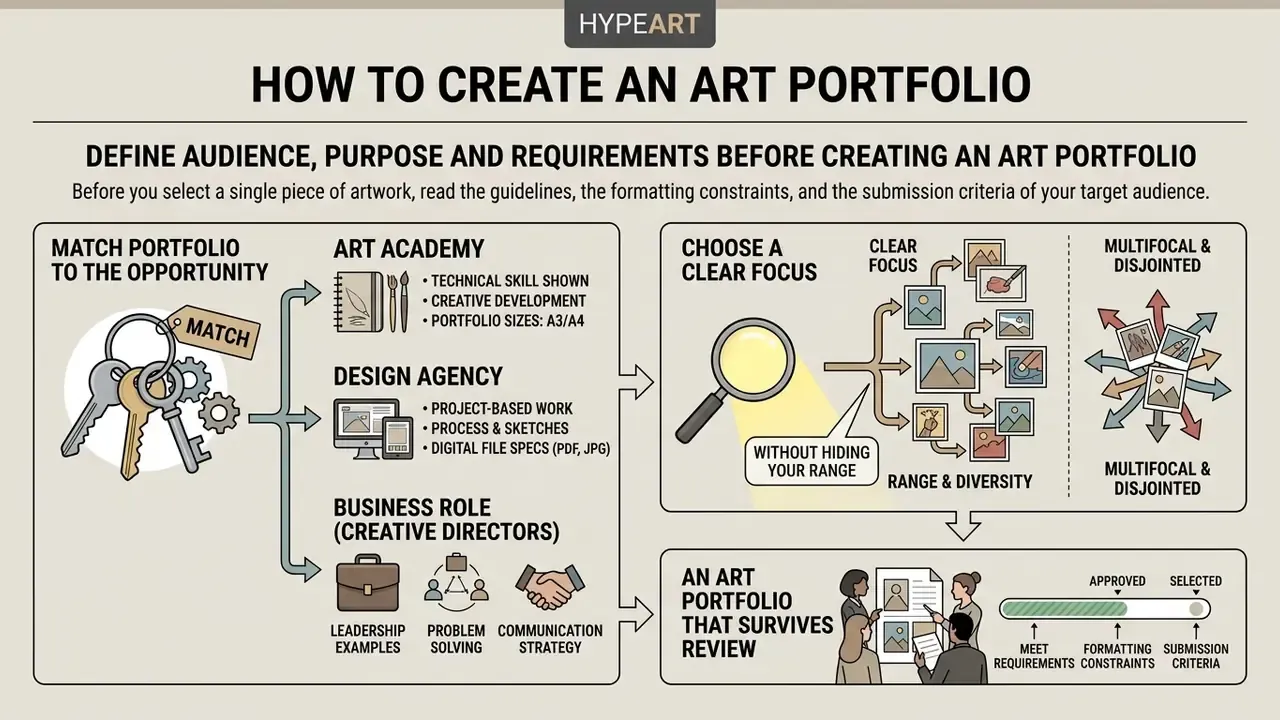
Before you select a single piece of artwork, read the guidelines, the formatting constraints, and the submission criteria of your target audience. Twice. Misalignment with an explicit instruction produces administrative disqualification or a low score, no matter how good the work is.
A serious how-to-create-an-art-portfolio process starts with target outcomes per discipline: fine art, digital art, graphic design, interior design, or web design. Each field weights competencies differently. Fine art panels want observational drawing and conceptual depth. Graphic design reviewers look at typography and layout systems. Interior design committees expect spatial planning and material schedules. Web and UX panels want prototypes, wireframes, and measurable outcomes, not static imagery.
Match the portfolio to the opportunity you are applying for
Tailoring contents to a specific brief scores better than sending one generic collection everywhere. When you are applying for specialized grants, academic admissions, or a targeted commercial role, every piece must answer something the prompt actually asked for.
University assessment guidelines penalize submissions that ignore assigned thematic parameters or upload the wrong file format. Thematic application is scored as its own criterion, alongside observation and craftsmanship (University of Wyoming, ART 2000 Portfolio Review Syllabus, Spring 2023). So instead of a rigid universal set, re-sequence and swap individual pieces per submission.
Illustrative scenario (composite, not a verified case study). An illustrator applies for a commercial editorial grant with a generic studio portfolio: mixed figurative studies, a few landscape paintings, one poster. The panel reads it as unfocused, because nothing in it answers the editorial brief. A tailored rebuild, a 12-page PDF built around three narrative editorial projects, each opening with character sheets and thumbnail development before the final published spread, speaks directly to the call. The mechanism that changes the outcome is alignment with the brief, not extra work. (Composite example constructed to illustrate the selection principle; not attributable to a named applicant or funder.)
Portfolio requirements also reach well past studio practice. Curatorial, managerial, and marketing roles in the art sector get assessed on documentation and outcomes as much as on imagery.
Portfolio requirements for non-traditional art and business roles
| Specialized role | Primary focus and core assets | Key evaluation benchmark |
|---|---|---|
| Art curator | Exhibition spatial maps, critical essays, artist loan agreements, floor plans, installation photography | Cohesive thematic narrative and scholarly contextualization |
| Gallery manager | Press coverage documentation, event logistics schedules, sales catalogue layouts, private-view programming | Commercial execution clarity and operational rigor |
| Art marketer | Campaign analytics reports, brand identity guides, social engagement metrics, audience-growth dashboards | Verifiable ROI metrics and visual campaign reach |
| Luxury and art business professional | Product design visuals, retail space curation, partnership decks, pricing and positioning rationales | Commercial judgement demonstrated through documented projects |
For these roles, open with a short personal statement that explains why you work the way you do, before the what, how, and where of your experience. The common thread behind your career choices usually persuades a hiring panel more than a list of achievements.
Choose a clear focus without hiding your range
A successful portfolio balances a distinct creative identity with enough technical range. Evaluators want a recognizable voice that still flexes across media and subject matter. Depth alone reads as narrow. Breadth alone reads as unresolved.
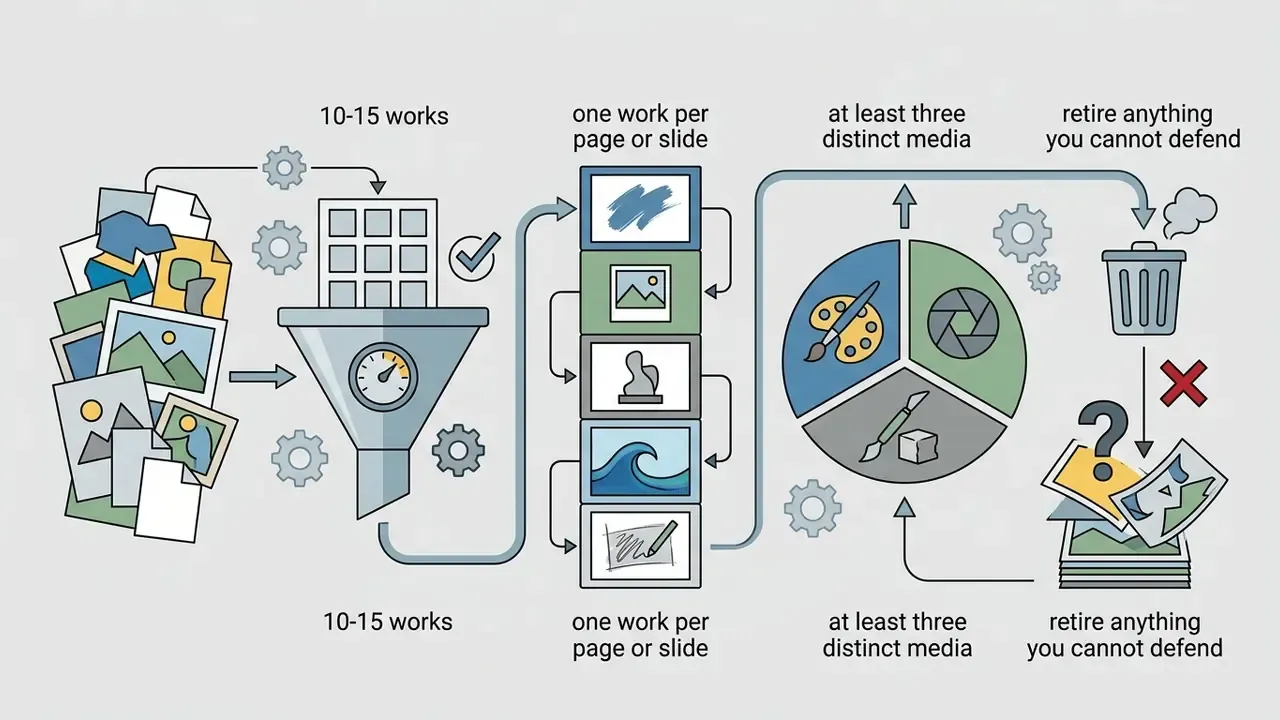
Academic review panels recommend 10 to 15 well-curated works that hold a core subject matter while proving technical breadth in at least three distinct media.
«Portfolios should include work in a minimum of three different media and contain drawings from direct observation, demonstrating both specialization and foundational versatility.»
Observational drawing is not optional for most programs. It is expected in fine art applications, and it is frequently welcomed in architecture, fashion, and industrial design portfolios even where drawing is not the core discipline.
Select your best work: quality, relevance and range
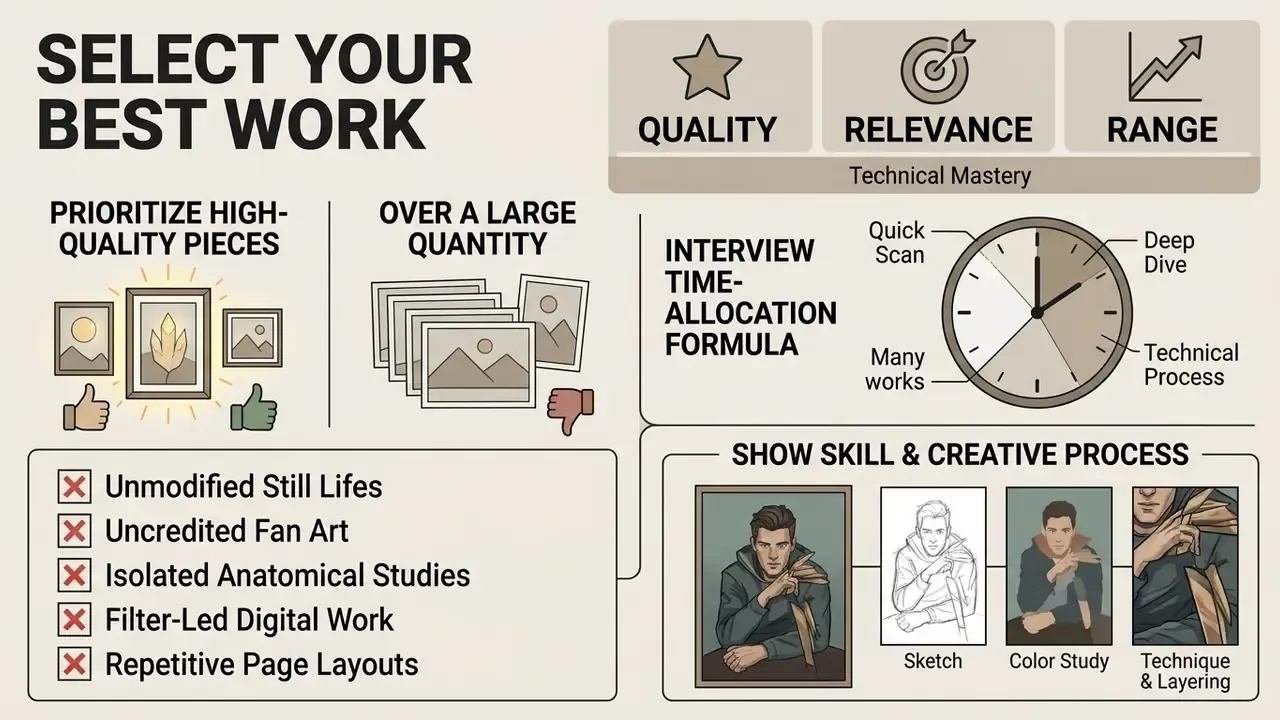
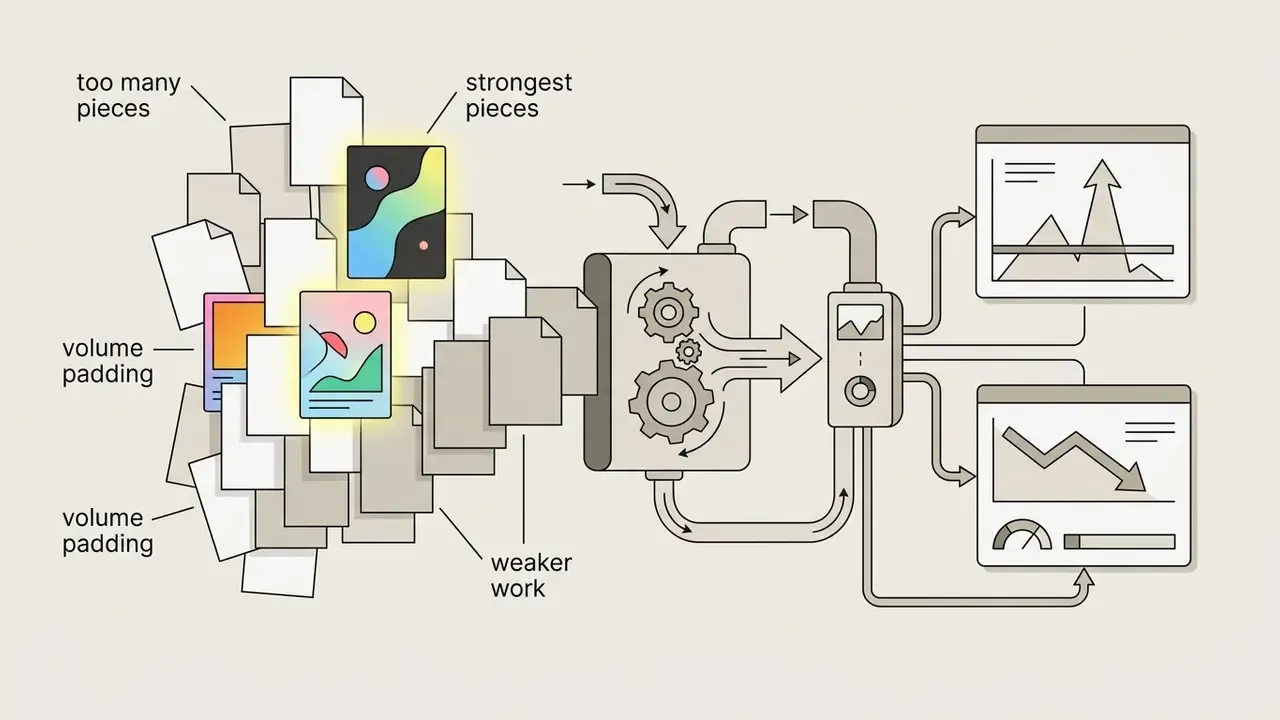
Selecting artwork demands strict curation: piece quality, relevance to the opportunity, and demonstrated technical mastery, in that order. Padding a portfolio with weak or unfinished items to hit an arbitrary count dilutes your strongest works. It is the most common self-inflicted wound in this process.
Prioritize high-quality pieces over a large quantity of work
Fewer high quality pieces read better than a longer sequence carrying mediocre or outdated work. Review committees routinely cap submissions at 10 to 15 selected pieces, which forces applicants to test every piece against explicit technical standards (MSU Denver Sophomore Portfolio Review Guidelines, 2023).
Assessment data from university portfolio reviews shows pass rates tracking closely with strict adherence to foundational drawing and composition criteria.
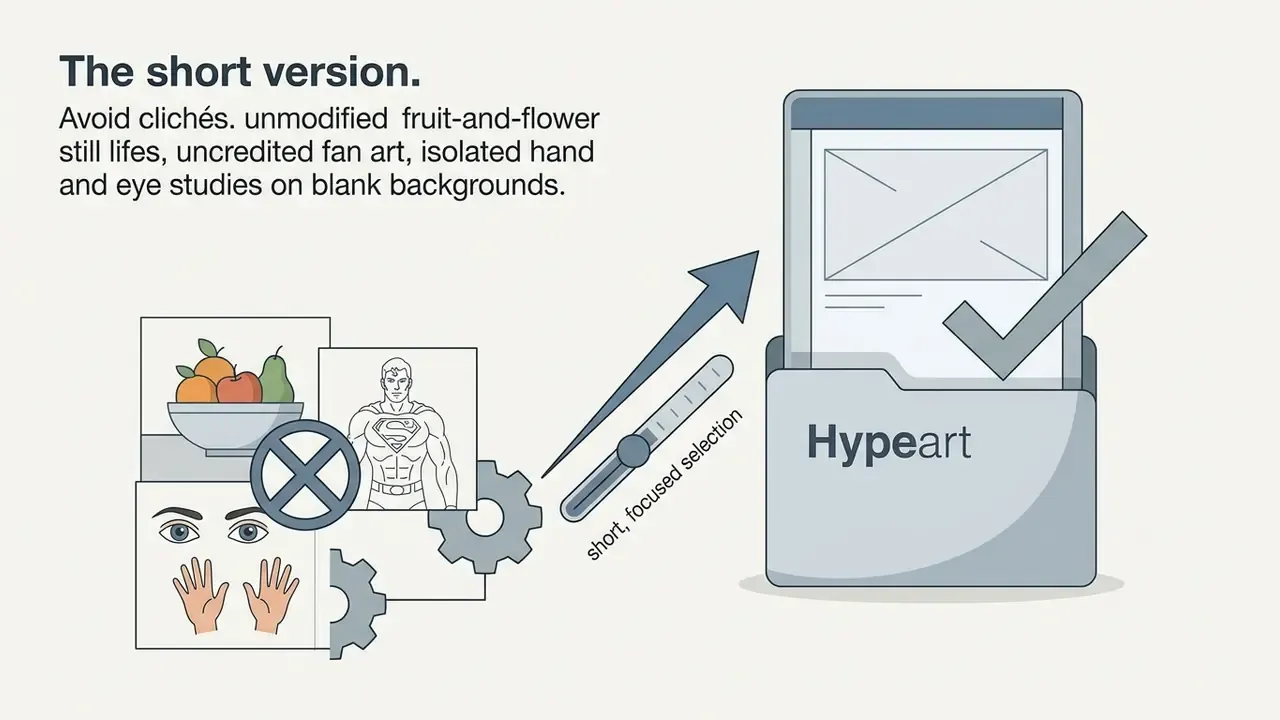
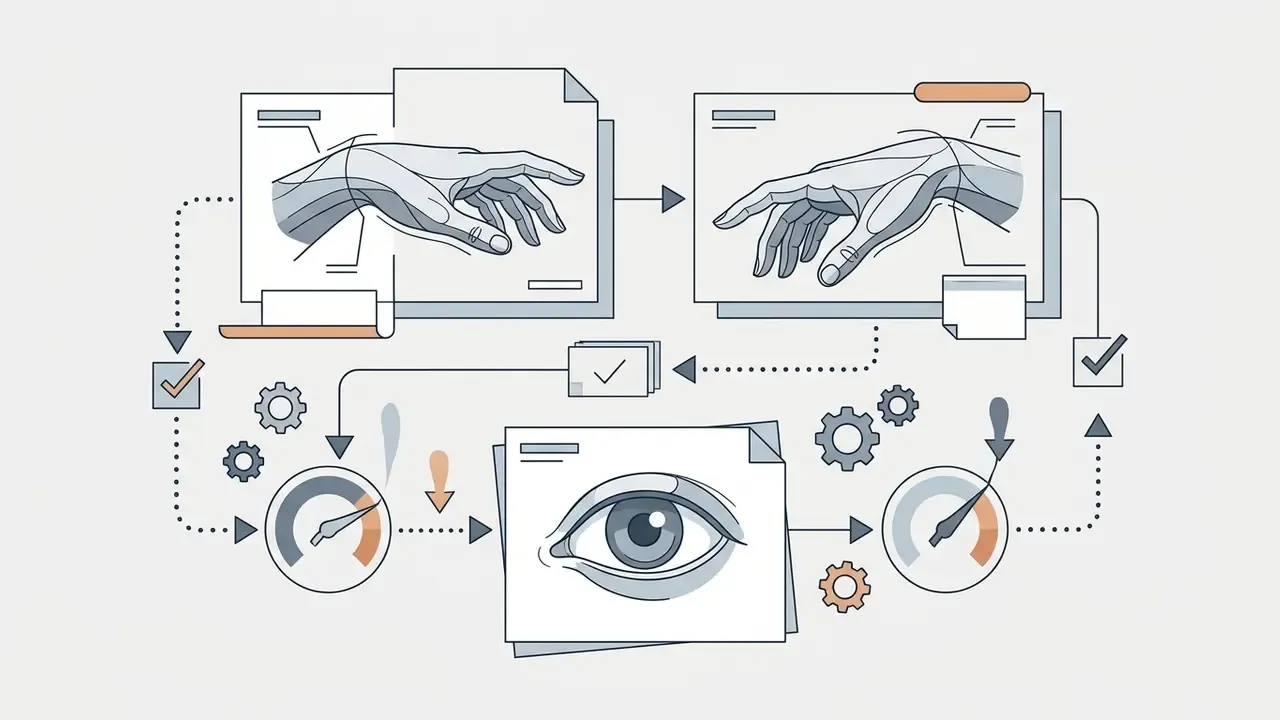
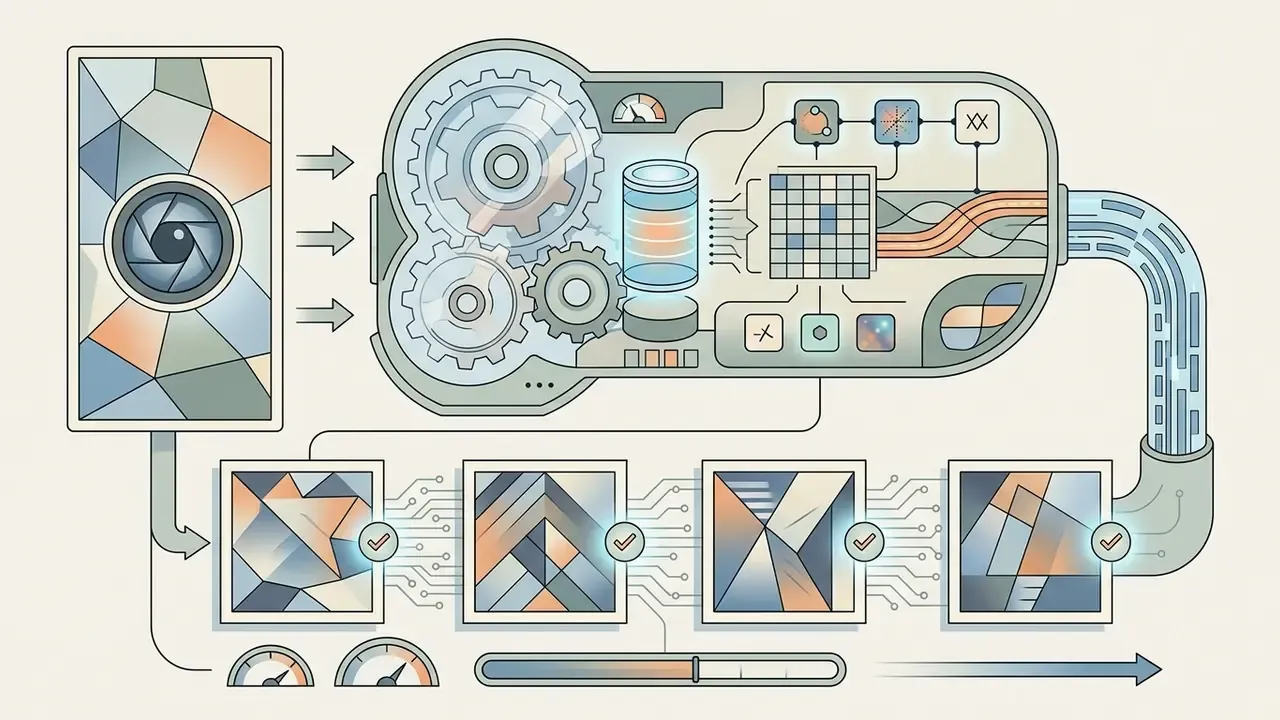
Overused visual clichés to exclude or redesign
Admissions panels and creative directors read hundreds of portfolios a week. Standardized studio exercises without a personal conceptual framing pull scores down (California College of the Arts, Admissions Portfolio Tips). Avoid the following unless you bring a distinct iteration:
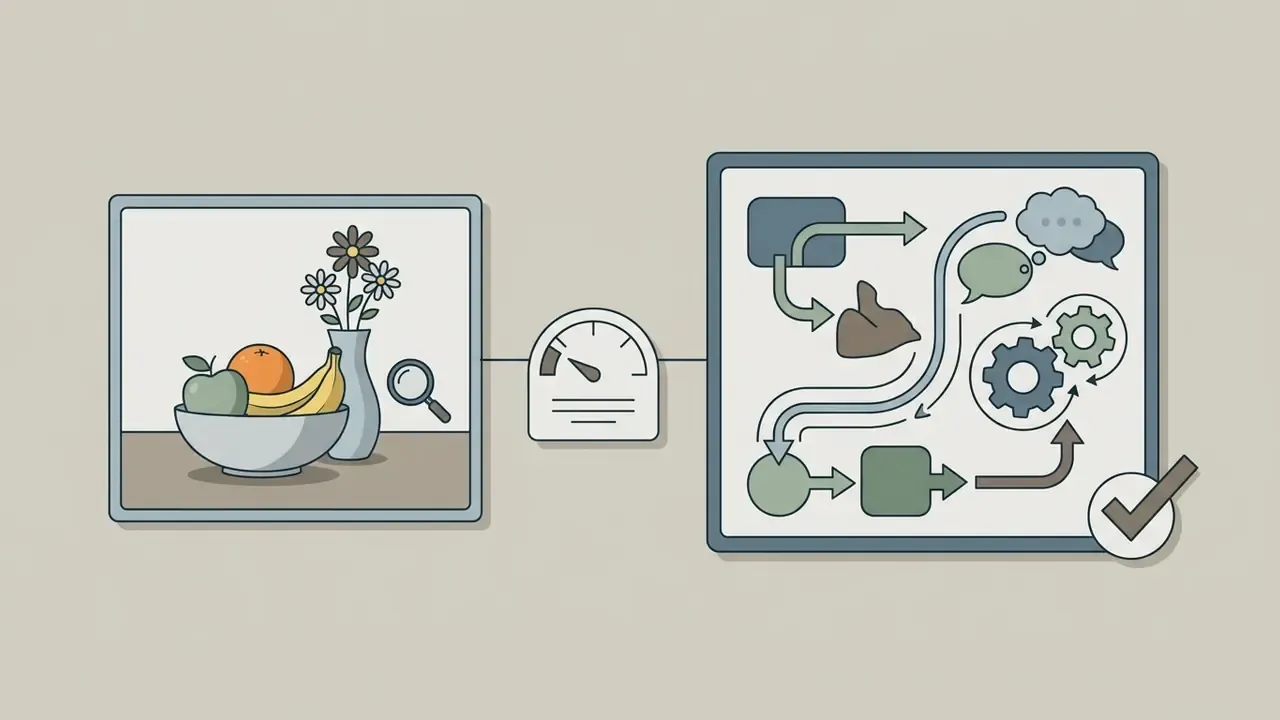
Show technical skill and creative process through selected pieces
«The ePortfolio procedure involves collecting traces of work, selecting key artefacts, and combining them into a story of learning with a reflective introduction.»
It is also legitimate, and often persuasive, to show the idea you discarded. Putting the rejected route beside the chosen one proves editorial judgement rather than luck. Artists working on digital asset pipelines can study how structured prompts and technical parameters get built in guides on how to write clear generative art specifications, and can compare rendering engines through published reviews of the best AI art generators before locking a project to one toolchain.
Checklist0 / 8
If a work fails two boxes, it usually belongs in the archive, not the portfolio.
Organize artwork into a portfolio that tells a visual story
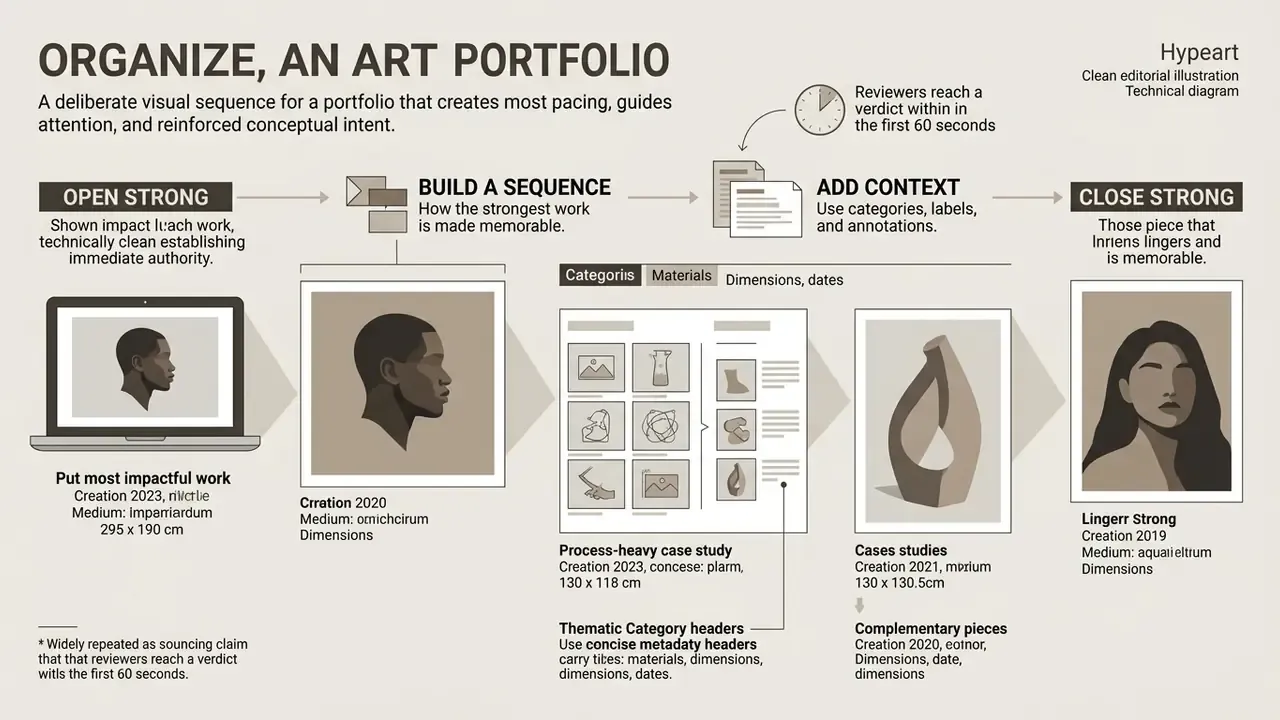
A deliberate visual sequence creates pacing, guides attention, and reinforces conceptual intent. A well-organized portfolio shows thematic connections between projects while avoiding visual fatigue. Three sequencing methods appear repeatedly in institutional guidance: reverse-chronological order, grouping by project or theme, and process-to-final pairing, where development work sits directly beside the resolved piece.
Build a sequence that makes the strongest work memorable
Open with your strongest work to establish authority immediately, and close with a piece that lingers. Reviewers form impressions fast, and serial-position effects mean the first and last items in a sequence are remembered most reliably. So weaker transitional material belongs in the middle. Never at the edges.
Use categories, labels and annotations to add context
Concise metadata labels and thematic category headers carry the essentials: materials, dimensions, dates, project roles. Museum practice favours a uniform label format restricted to factual detail. British Museum templates cap standard object labels at roughly 18 lines (about 110 words), while institutions such as Fitchburg Art Museum limit optional interpretive statements to 50 words per label.
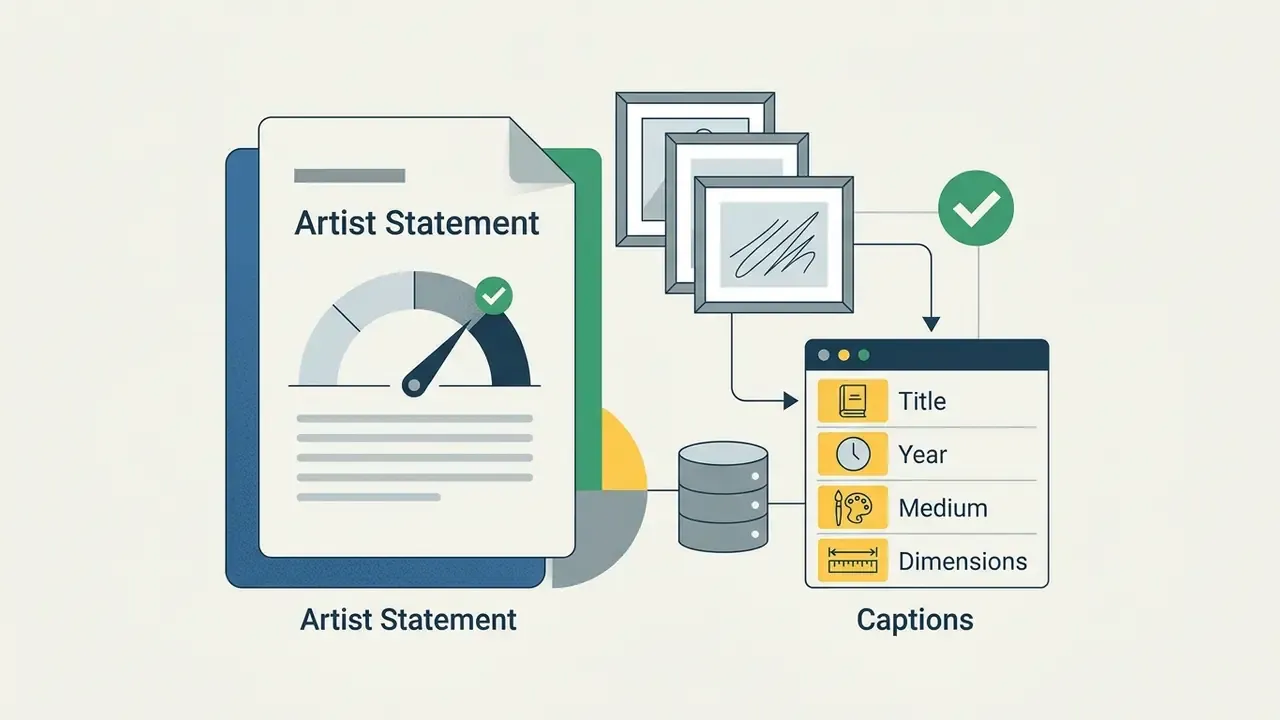
Every piece, digital or physical, needs a clean caption with title, creation year, medium, and dimensions, in the same order throughout the document. Written articulation is scored, not decorative.
Annotations double as a springboard for interviewers. One line about the brief, the constraint, or a material decision invites exactly the question you want to answer. When you present complex digital media or AI-assisted artworks, document the generation parameters, model versions, and editing tools used, following structured methodology guides such as how to write prompts for ai art. That record is also your provenance trail if authorship is ever questioned.
Prepare professional images, labels and an artist statement
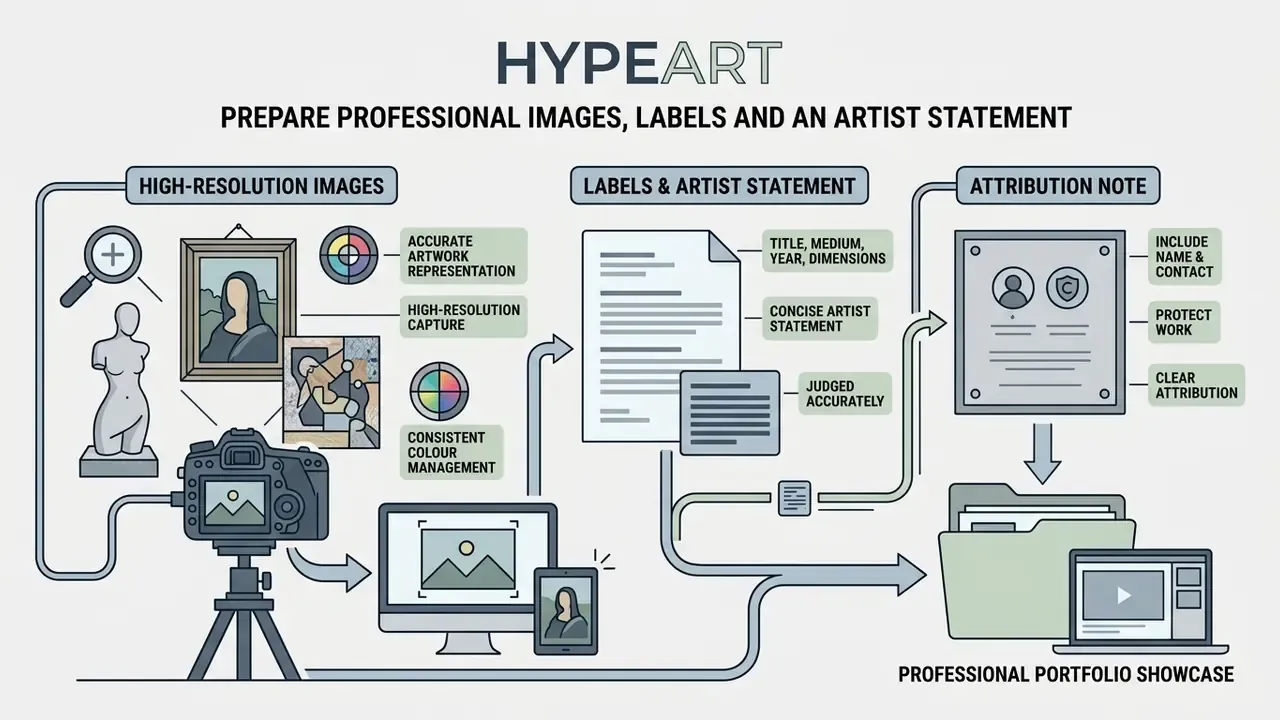
High-resolution capture, consistent colour management, and a compact artist statement make sure the work is judged accurately. Poor photography, a colour cast, or a cluttered background actively devalues a strong original during a digital review. Reviewers see the file, not the painting.
Use high-resolution images that represent the artwork accurately
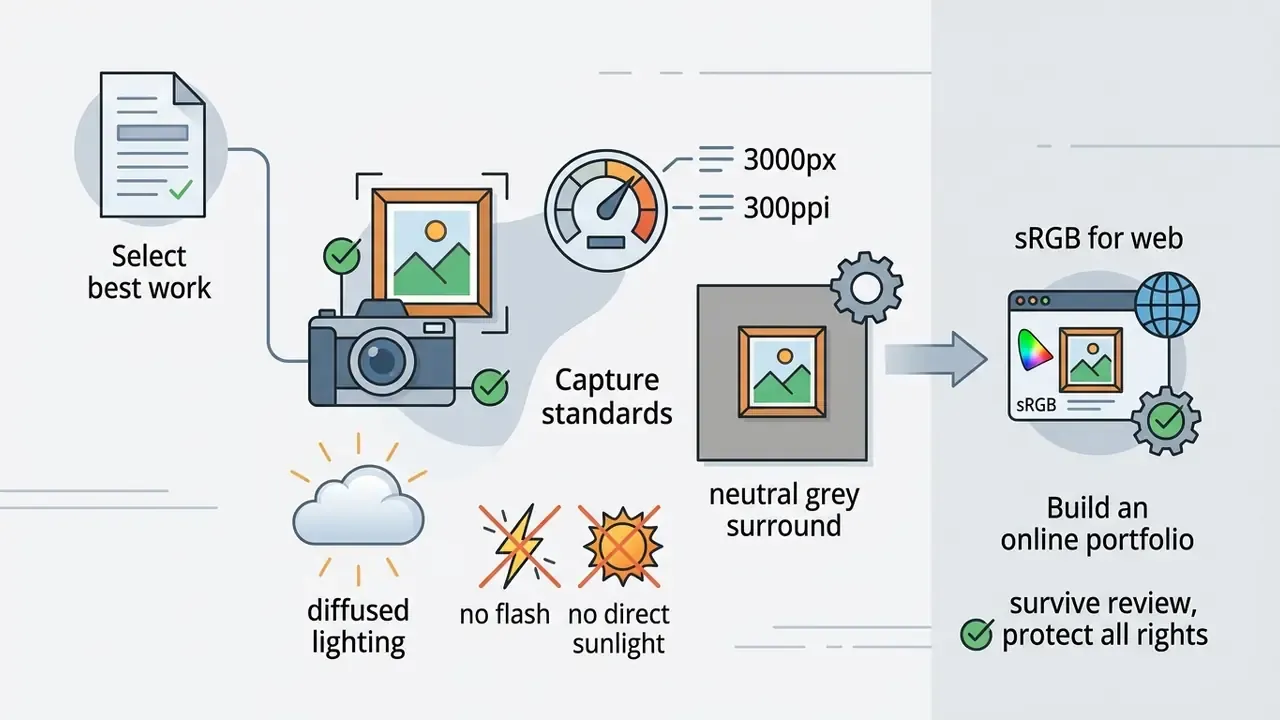
Digitizing physical artwork calls for diffused lighting, a neutral grey surround, true-to-life colour calibration, and a minimum of 3000 pixels on the longest side at 300 ppi (FADGI, Technical Guidelines for Digitizing Cultural Heritage Materials, 2023). FADGI also specifies capturing the entire object without cropping, leaving a small border visible, and including a grey scale, colour reference, and dimensional scale in reference captures. Keep the camera plane parallel to the work, use daylight or an evenly lit room, and avoid direct flash or harsh sunlight, both of which create glare and flatten subtle value transitions (Valdosta State University, artwork photography guidance).
Use high quality sRGB exports for web viewing, which prevents unexpected colour shifts on uncalibrated consumer screens. Keep 16-bit RGB TIFF masters where an institution requests print-ready files, and submit unadjusted copies whenever you have applied colour correction. A reliable free photo editor handles levels, white balance, straightening, and export presets, and a video compressor keeps time-based documentation inside portal upload limits without visible quality collapse.
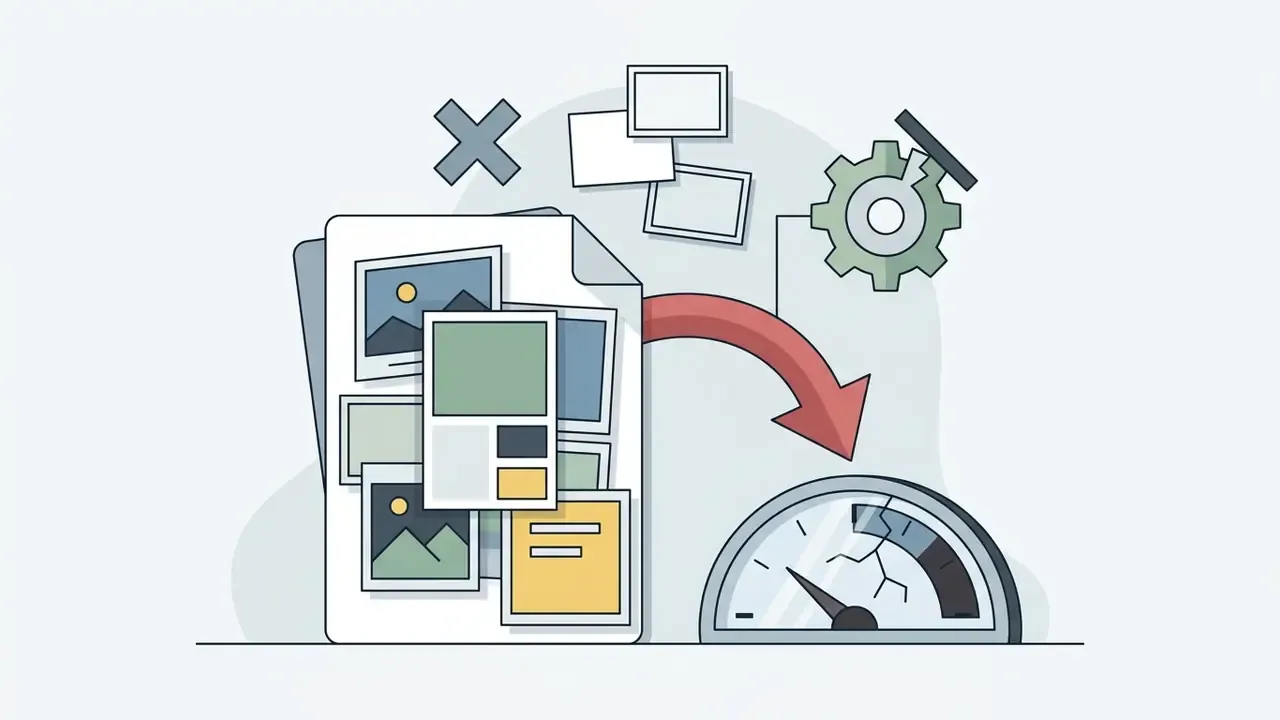
Submission portals impose hard ceilings, and going over is treated as non-compliance, not as an accident.
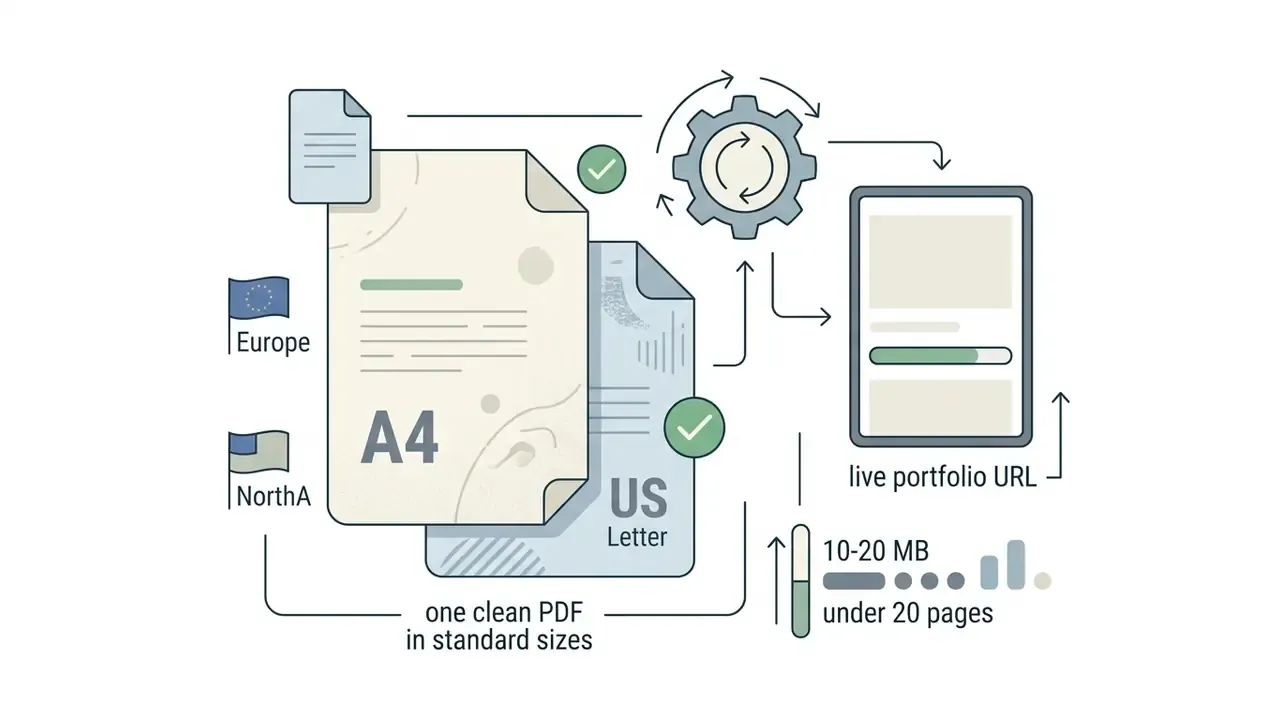
For most other contexts, a 10–20 page PDF under 10–20 MB, A4 for Europe or US Letter for North America, one artwork per page, remains the safest default.
Write concise labels and an artist statement
An artist statement should articulate creative intent, methodology, and thematic focus in 100 to 200 words, written in plain first person.
«Use first person, avoid jargon and clichés, and explain motivation, process, medium, style, and what is unique about the work.»
Keep it as short as it can be while staying specific: a few sentences, at most two short paragraphs (Western Michigan University, Developing Artist Statements, 2023). Maintain a 25-word micro-version for application fields with tight character limits, and a 150-word standard version for the portfolio itself (Claremont Graduate University; Mid-America Arts Alliance, Writing Your Artist's Statement, 2025). Skip academic jargon, sweeping generalizations, and emotional fluff. Explain what drives your subject matter and how your material choices execute the concept. That is all it needs to do.
Protect intellectual property, NDA work and file security
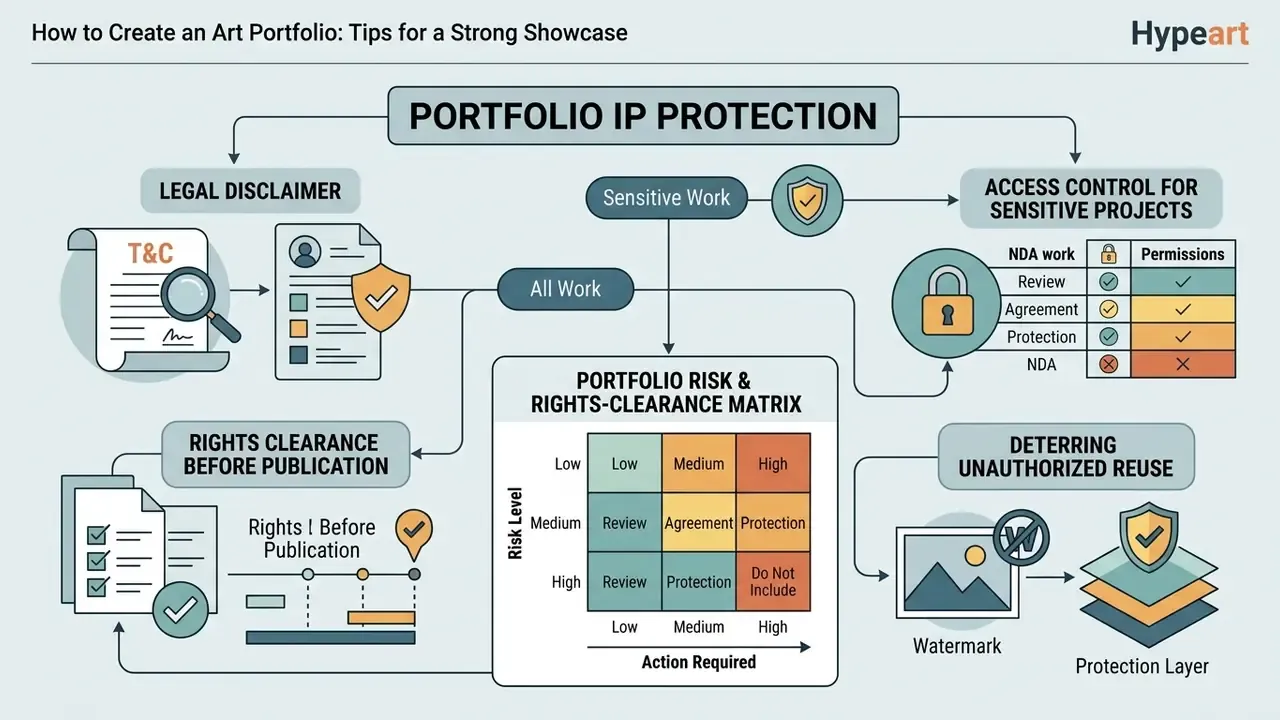
A portfolio is a publication. That means every asset inside it carries a licensing status, and every distribution channel carries an access-control decision. This is the step most artists skip, and the one that creates contractual exposure rather than merely a weaker submission.
Rights clearance before publication. Confirm that you own or have licensed every component on display: photographic references, typefaces, purchased 3D assets and textures, music in showreels, and any generative model outputs whose terms restrict commercial reuse. Work created under a work-for-hire agreement usually belongs to the commissioning party, so showing it may require written permission even when your name sits in the credits. Where an NDA governs the relationship, either exclude the work or publish an approved redacted version.
Access control for sensitive projects. Password-protect individual project pages for confidential work, exclude those URLs from search indexing, and send time-limited links instead of permanent public pages. For PDFs sent by email, keep a public version and a restricted version separately. An unlisted URL is not a security control.
Deterring unauthorized reuse. Publish web-resolution derivatives rather than print masters, apply discreet watermarks on high-value imagery, embed copyright and contact metadata in the file, and keep dated originals plus process files as proof of authorship. Periodic monitoring with an AI reverse-image-search tool helps you find unattributed copies of published work.
Portfolio risk and rights-clearance matrix
| Risk | Where it appears | Control | Cost of the error |
|---|---|---|---|
| NDA or work-for-hire breach | Client case studies, unreleased product visuals | Written release, redaction, or password-gated page | Contract termination, damages, loss of referral network |
| Unlicensed assets (fonts, stock, 3D, music) | Layout pages, showreels, renders | Licence register per project with receipt links | Takedown notices, retroactive licence fees |
| Unclear authorship of AI-assisted work | Generative imagery, upscaled or expanded assets | Documented prompts, model versions, and editing steps | Disqualification for undisclosed tooling, commercial-use dispute |
| Image theft and resale | Public gallery pages, social distribution | Web-resolution exports, watermarks, embedded metadata | Lost licensing revenue, diluted exclusivity for galleries |
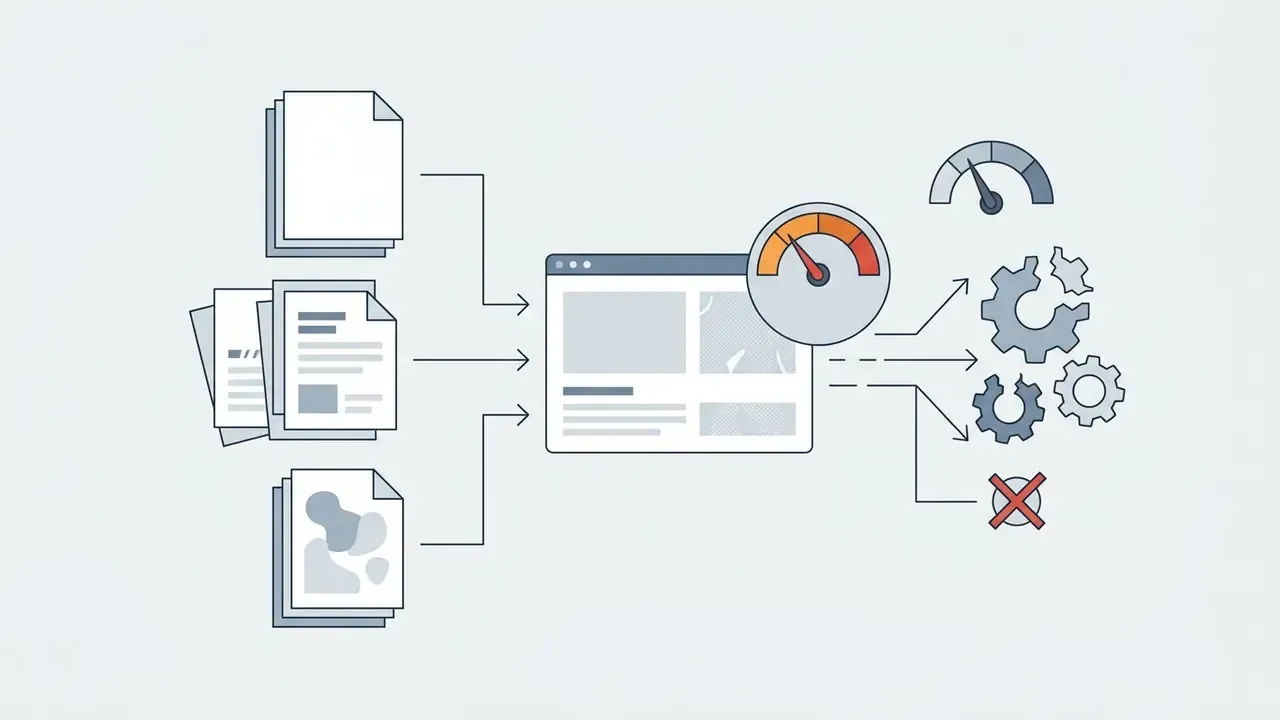
| Oversized or corrupted uploads | Admissions and grant portals | Pre-flight check against stated MB and page limits | Automatic technical failure regardless of quality |
Choose the best format for an online art portfolio
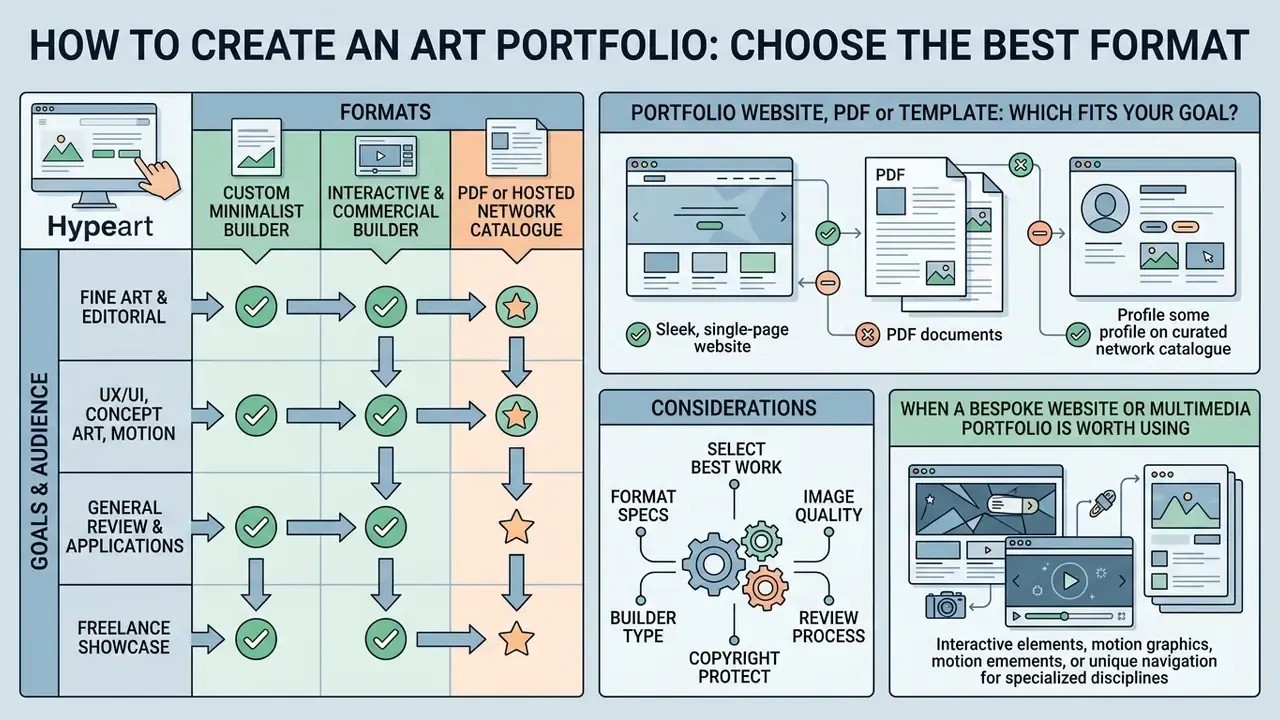
Choosing between a personal portfolio website, a downloadable digital portfolio in PDF, and a templated site builder depends on audience expectations and technical submission rules. Formal institutions usually demand standardized PDF dossiers. Commercial clients usually expect an interactive web link. Most working artists therefore run both: a live URL as the presentation layer, a PDF as the portable, offline-safe dossier.
Portfolio website, PDF or template: which presentation format fits your goal?
Academic admissions and grant applications typically mandate PDF submissions through upload portals, for archivability and offline review. Accessible PDFs need tagged reading order, alternative text, bookmarks, and navigation aids (W3C, PDF Techniques for WCAG; U.S. Section 508 guidance on creating accessible PDFs). Commercial clients, by contrast, prefer a live portfolio website URL they can open on a phone between meetings.
PDF clarity is not cosmetic. It is scored, and it is read without you in the room.
Recommended platform ecosystems.
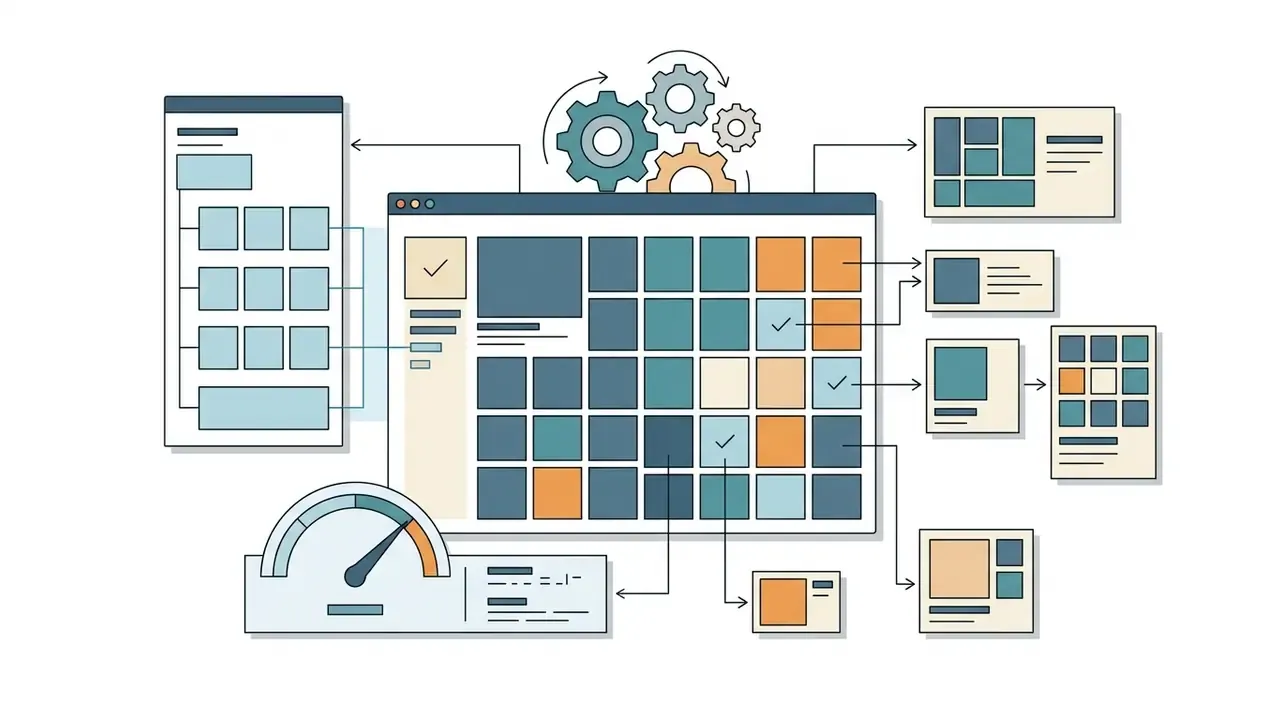
Bespoke, hand-coded sites give complete freedom, at the cost of development time, domain maintenance, and, for non-coders, dependency on a developer. Template builders trade that control for speed and a lower bill, accepting layout constraints and some vendor lock-in. Choose deliberately. The format should be invisible next to the work.
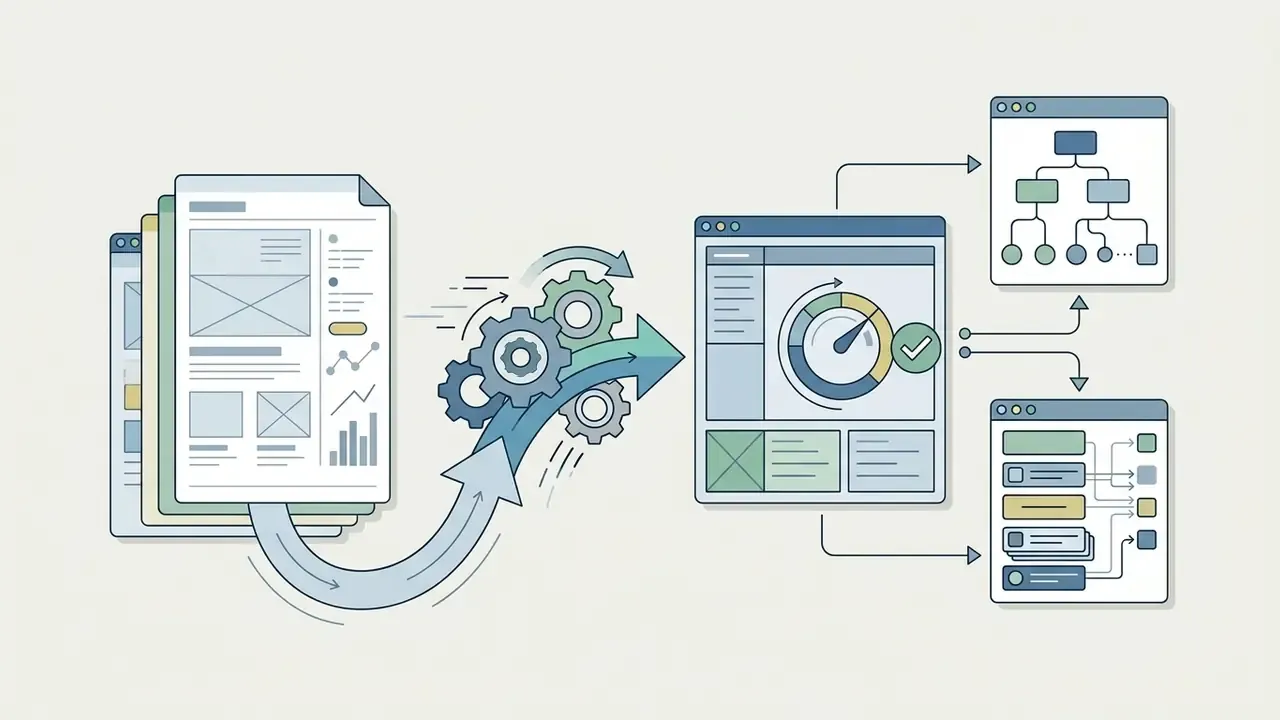
While compiling assets, keep one source-of-truth folder per project: masters, web derivatives, captions, licences. Then updating a single work never means rebuilding the whole document.
When a bespoke website or multimedia portfolio is worth using
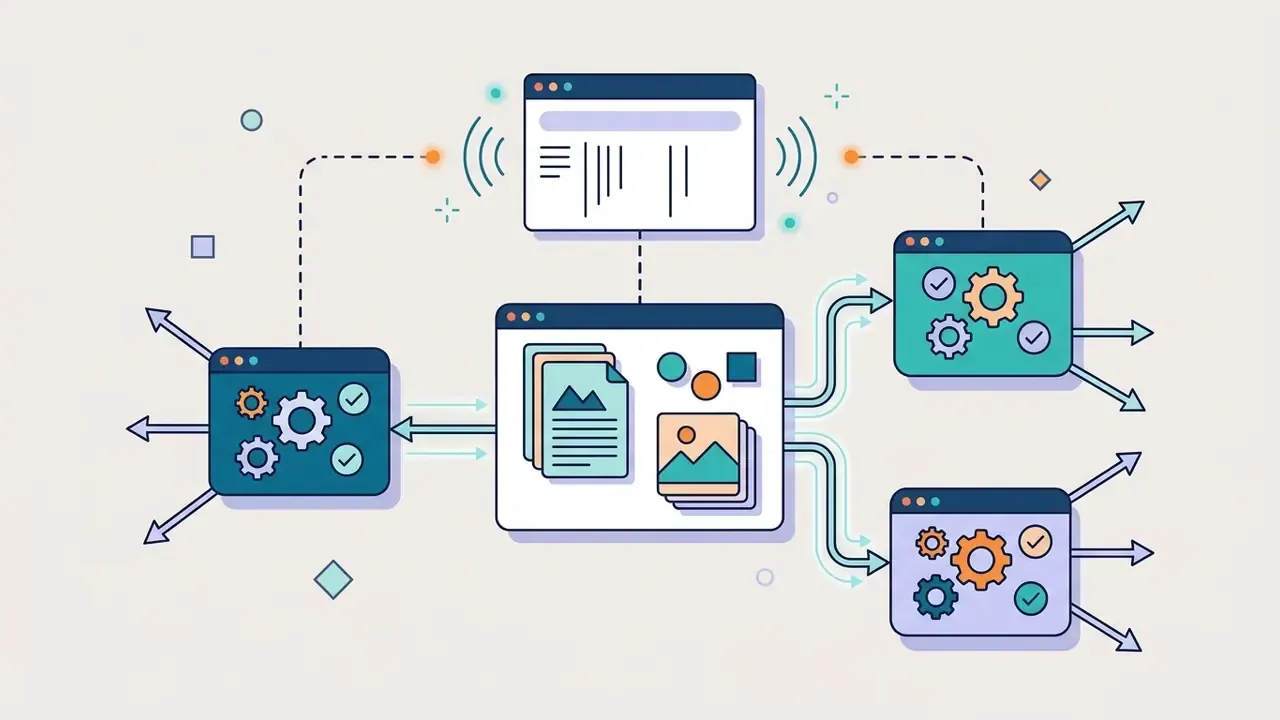
A bespoke website or multimedia portfolio earns its cost when you show interactive design, game development, video art, animation reels, or custom web architecture that templates cannot host. Web design, digital art, and motion graphics need a custom presentation environment to prove execution, and interaction-design guidance expects research, sketches, wireframes, prototypes, and measurable results rather than static screenshots.
A video or showreel format also hands you control over timing and transitions, blending still artwork, clips, concept art, and animation into one paced narrative with audio. Artists building video documentation can plan capture and editing with a practical YouTube video editor workflow guide, and can evaluate generative video pipelines through the Google Veo implementation guide before committing to a toolchain.
A few practical notes on distribution, since this is where portfolios quietly break. If a reel lives on a hosting platform, keep a local master too: an online video converter helps you produce a portal-friendly MP4 from a higher-bitrate export, while an online video downloader youtube workflow is useful for retrieving your own published uploads when the original project files are gone. For presentation decks, a short guide on how to insert youtube video into canva presentation saves you from playing a reel in a separate browser tab during an interview, and an online youtube video conversion step keeps aspect ratios consistent across slides. Compress exports for cross-device compatibility, supply captions and transcripts for spoken content, and keep keyboard access plus visible focus states so interactive portfolios stay usable under WCAG 2.2 and Smithsonian accessible-design expectations for audiovisual programs.
Matrix of portfolio goals and recommended online formats
| Portfolio goal / context | Portfolio website | Digital PDF portfolio | Multimedia presentation (video / interactive) |
|---|---|---|---|
| Art school admissions (BFA / MFA) | Secondary, useful as a supplemental link showing broader personal projects | Primary format required, must follow page counts, file size limits, and layout rules | Allowed for time-based media, performance art, or animation reels |
| Commercial freelancing and clients | Primary format required, fast loading, branded, responsive on mobile and desktop | Secondary, effective as a custom downloadable pitch deck attached to email | Essential for motion design, 3D visualization, and interactive UX walk-throughs |
| Fine art gallery representation | Primary format required, clean minimal layout acting as an authoritative digital catalog | Primary format required for exhibition proposals, press kits, and PDF dossiers | Used to document spatial installations and performance works |
| Grants, residencies and open calls | Supporting link only, panels rarely browse beyond the required file | Primary format required, 8–15 works aligned to the call, strongest first, lean file size | Only where the call explicitly accepts time-based media |
How to create an online art portfolio website
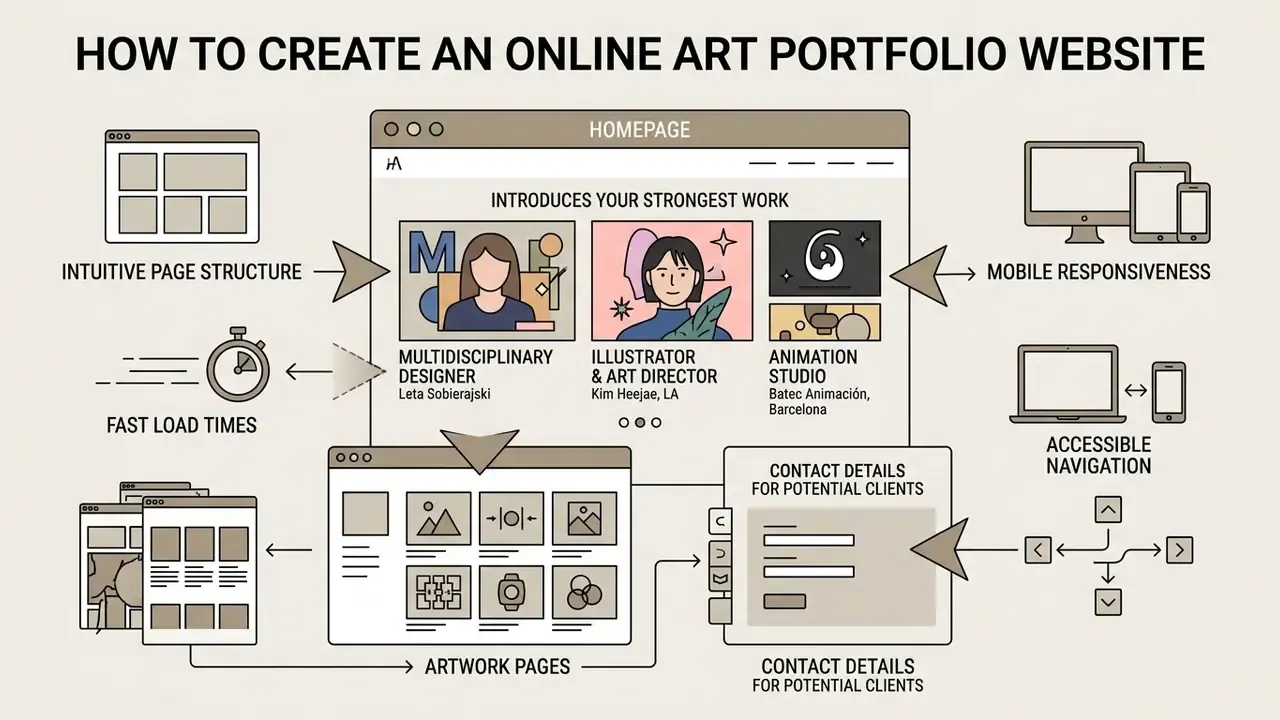
An effective portfolio website needs an intuitive page structure, fast load times, mobile responsiveness, and accessible navigation. Clean presentation means prospective clients and evaluators reach the artwork galleries without friction, and without a second click to figure out what you do.
«Unclear navigation and overloaded layouts prevented users from understanding portfolio structure and content.»
While setting up, artists can estimate file optimization parameters and screen dimension ratios with visual asset calculators, which keeps images crisp on high-DPI retina screens, and can prepare consistent profile imagery with an AI headshot generator for the about page.
Build a homepage that introduces your strongest work
A homepage should carry your core value proposition, a condensed artist statement, and three to five featured projects above the fold. State your name and discipline immediately, hold the navigation menu in the same position on every page, and prefer several short pages over a few long ones (Penn State portfolio navigation guidance; Bennington College Digital Portfolio Guide). Cut splash pages, long intro animations, pop-ups, and crowded navigation bars. They delay access to the galleries, which is the only thing the visitor came for.
Maintain high contrast ratios and accessible typography aligned to WCAG 2.2 (W3C, Web Content Accessibility Guidelines 2.2, 2024), with text alternatives for every artwork image.
«Inconsistent page structure and the absence of clear orientation cues on the home page were the most frequent barriers for evaluators.»
Deconstructing successful real-world portfolios.
Creative teams choosing platform software can compare hosted content systems using published AI Media Comparison Matrices, including the roundup of free AI art generators for artists testing tooling before paying for a subscription.
Add artwork pages and contact details for potential clients
Dedicated artwork pages should carry high-resolution galleries, project context notes, and an obvious contact channel that turns a casual viewer into an enquiry. Each project page needs the problem, the creative process, the tools, the final result, and where relevant the project status and your specific role. That mirrors the metadata structure used in formal project documentation, and reviewers read it faster.
Contact details should include a professional email address, a working contact form, and links to professional profiles, in the same location on every page so nobody has to hunt (W3C, Technique G220; WCAG 2.2 consistent help). Where images are close-cropped from larger compositions, tools that expand an image with AI outpainting can rebuild consistent aspect ratios for gallery grids without distorting the original work. Developers or technical artists building custom sites can wire automated contact endpoints and image CDN pipelines by following AI Media API Guides.
Illustrative scenario (composite, not a verified case study). A freelance concept artist replaces a flat image gallery with dedicated case study pages: high-resolution renders, wireframe overlays, a short problem statement, and one direct inquiry button at the end of each page. The mechanism that improves inquiry volume is structural, since reviewers can now see scope, role, and contact path in a single scroll. We cannot verify a specific percentage uplift here, so treat it as a design pattern, not a benchmark. (Composite example; no client data attached.)
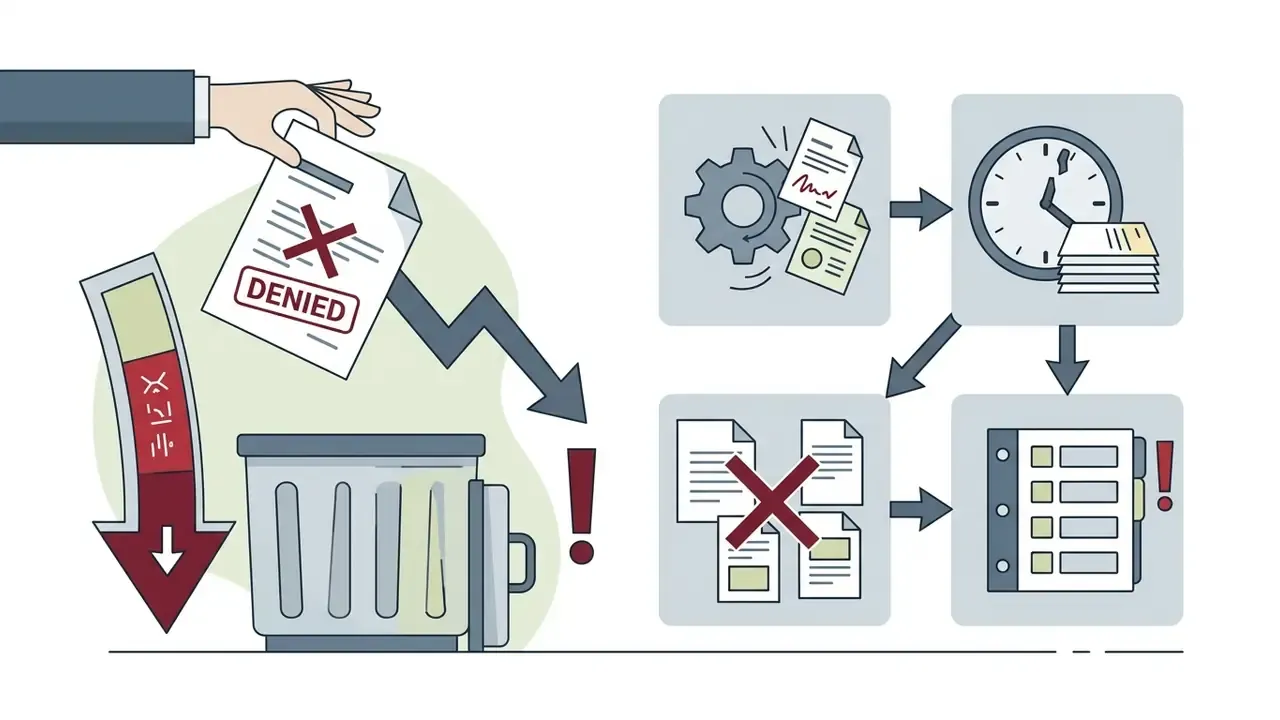
Common reasons portfolios get rejected, and what each error costs
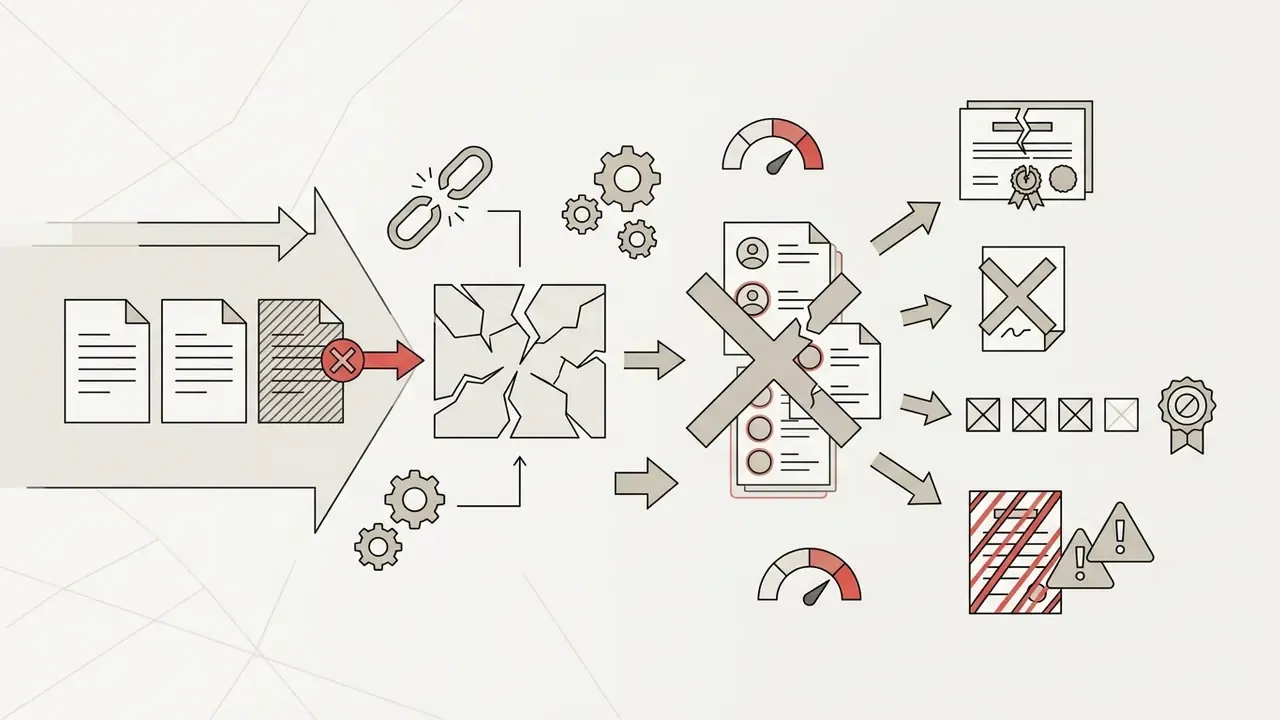
Most rejections are procedural, not artistic. Reviewers rarely refuse a portfolio because the work is bad. They refuse it because the submission is non-compliant, unreadable, or forgettable.
Fix the first three and you remove most of the risk. They cost nothing but attention.
Get feedback, refine the portfolio and keep it updated
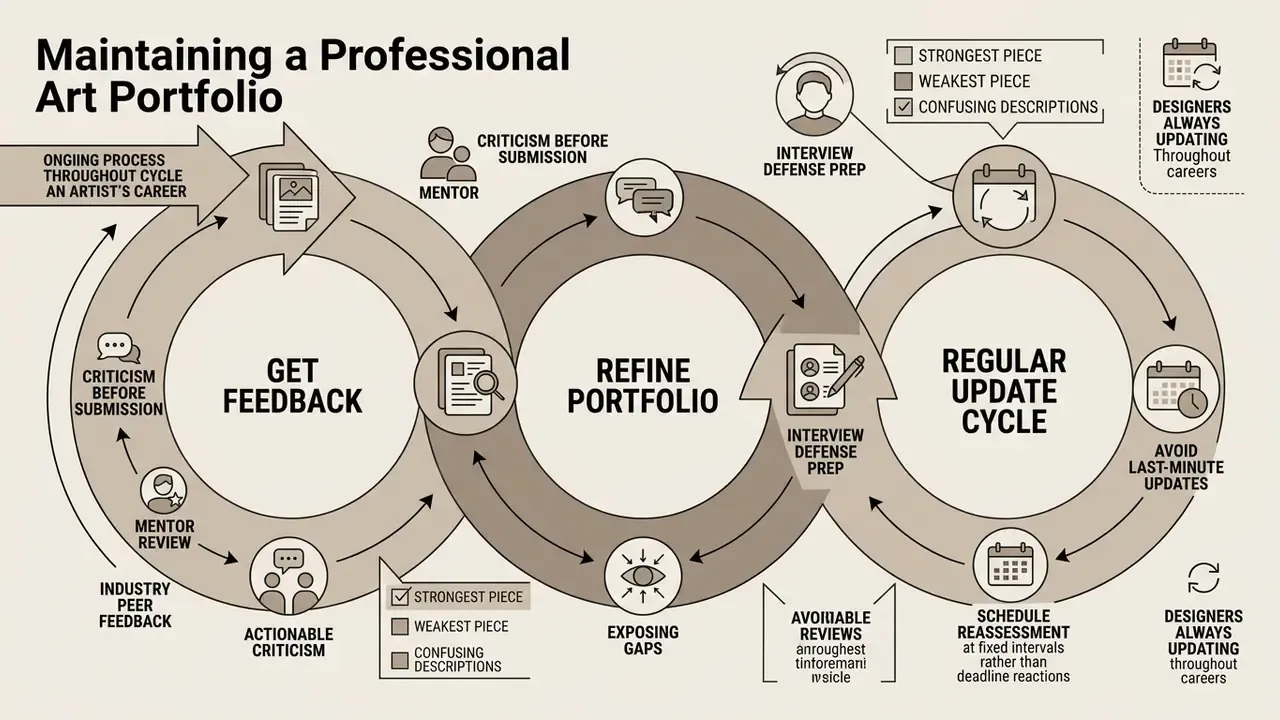
Maintaining a professional art portfolio is a continuous cycle. As your technical skills develop and new projects land, older work that no longer represents you has to be retired, deliberately and on schedule, to hold the quality threshold.
Schedule reassessment at fixed intervals instead of reacting to deadlines. Portfolio-management standards describe the cycle as assess, plan, implement, improve, with cyclical reviews written into the calendar. Consolidate each round of feedback into a dated update roadmap with specific edits and follow-up dates, and keep a free photo editor workflow ready so re-shooting or re-exporting never becomes the reason an update stalls. Quarterly works for most freelancers. After every significant project works better.
Ask for constructive criticism before submitting or publishing
Asking for specific, actionable constructive criticism from mentors and industry peers exposes gaps in narrative clarity, image quality, and rubric compliance before submission. Avoid vague prompts like "Do you like it?". Ask instead about composition balance, project sequence, and thematic clarity (eCampusOntario Portfolio Review Guidance, 2024).
«Teachers who apply explicit criteria in feedback, craftsmanship, originality, personal meaning, develop more deliberate quality judgement in students.»
Use structured review prompts: strongest piece, weakest piece, any confusing project description. Both the "rose, bud, thorn" and the "strengths / weaknesses / unclear parts" frameworks produce balanced, usable notes. Supply context as well, the brief, the audience, the submission rules, so reviewers comment on fit rather than guessing your intent. And prioritise readers who already hold the role you are targeting: hiring managers, recruiters, tutors, curators. Then check that your visual sequence still matches your written artist statement, because those two drift apart more often than you would expect.
Interview defense preparation. For every piece included, prepare short answers to three questions:
You do not need to memorise every detail of older works. Revisit them before the meeting, though. Panels routinely ask about process on pieces made years earlier, and failing to explain your own decisions undermines otherwise strong work. Pair this with the five-minute rule, so six confident answers fill the window instead of twelve rushed ones.
- What specific technical or conceptual problem were you solving?
- Why this medium or digital workflow rather than the alternatives?
- With more time or budget, which structural element would you iterate?
FAQ
Can social media replace an online art portfolio?
No. Social platforms lack structured categorization, control over layout, custom branding, and formal evaluation formatting. Feeds order content by algorithmic engagement and recency rather than by quality or project scope.
«Unlike social feeds, an ePortfolio lets students select authentic evidence of skills and build an employability-relevant story of competence.» - The art of ePortfolios: Insights from the creative arts experience (four Australian universities) Instagram, Behance, and ArtStation work well as distribution and networking channels. Evaluators, art schools, and commercial clients still expect a structured, self-hosted portfolio website or a standardized PDF dossier for assessment. Data-portability limits matter too: you do not control the migration of your audience or your presentation layer. Keep the dedicated portfolio as your authoritative showcase, use social media for reach, and compare production tools through the roundup of the best AI art generators when deciding what to publish where.
How many pieces should an art portfolio contain?
Between 10 and 15 selected works for most contexts, one work per page or slide. Verify the exact figure with the reviewing body first: RIT specifies 7–10, SAIC 10–15, ArtCenter 15–20, and grant calls commonly accept 8–15. For a live presentation, convert the count into minutes with the five-minute rule instead of filling a page quota.
What file size and format should a PDF portfolio use?
A single PDF, A4 in Europe or US Letter in North America, generally 10–20 pages and under 10–20 MB unless the portal says otherwise. Some institutions allow far more, since MSU Denver permits up to 50 MB and 40 pages, so treat the published limit as binding and pre-flight the export before uploading.
Can I include work covered by an NDA or made for a client?
Only with written permission, or as an approved redacted or password-protected version. Work-for-hire output usually belongs to the commissioning party, and confidentiality clauses often survive the end of an engagement. When in doubt, present the process and the problem-solving without exposing the identifiable client asset, and seek legal advice on high-value contracts.
Do art portfolios need a single theme?
No. A theme is optional, and a rigid one can stop you from showing range. What must stay consistent is the presentation system: formatting, typeface, caption order, background treatment. That consistency is what reads as professionalism.
Should I disclose AI-assisted tools?
Yes, where the tool materially shaped the output. Record model versions, prompts, and editing steps in your project notes. Several institutions and clients now treat undisclosed generative tooling as a compliance issue, and clear documentation doubles as your provenance record.
How often should I update an art portfolio?
After every significant project, with a full review at least twice a year. Remove work that no longer reflects your level, refresh the artist statement, and re-check every portal requirement, because page limits and accepted formats change quietly between application cycles.
Appendix A: editorial source notes
For transparency, three citations present in earlier versions of this guide have been corrected:
Last updated: editorial review of sources, formats, and accessibility standards current to 2026. Reviewed by Marcus Hale, author.
- "Resumly & Fueler Portfolio Review Analysis, 2025"
- was previously cited for the claim that reviewers form quality judgements within the first 60 seconds. That source does not publish a verifiable sample or methodology, and the date is anachronistic. The claim now appears as a practical heuristic, and the sequencing principle rests instead on The art of ePortfolios: Insights from the creative arts experience (four Australian universities).
- "Synthesized Art School Admissions & Faculty Review Panel Criteria, 2023"
- was not a single publishable document. The reviewer-priority quotation is now attributed to its constituent sources: Nazareth University Portfolio Review Guidelines (2023) and the University of Wyoming ART 2000 Portfolio Review Syllabus (Spring 2023), with supporting rubric detail from the Bowling Green State University BFA Portfolio Review Handbook (2023–2024) and Pennsylvania Academy of the Fine Arts portfolio guidance.
- "Adobe Portfolio Design Report, 2024"
- , previously cited in the social media FAQ, has been replaced with the ePortfolio research above, since the report could not be verified as a published document.