Last updated: 2026 · Reviewed by: Marcus Hale, digital asset risk and tokenization workflow analyst, focused on IP clearance, wallet operations, and marketplace fee architecture for creator and enterprise NFT drops. Marcus Hale, author.
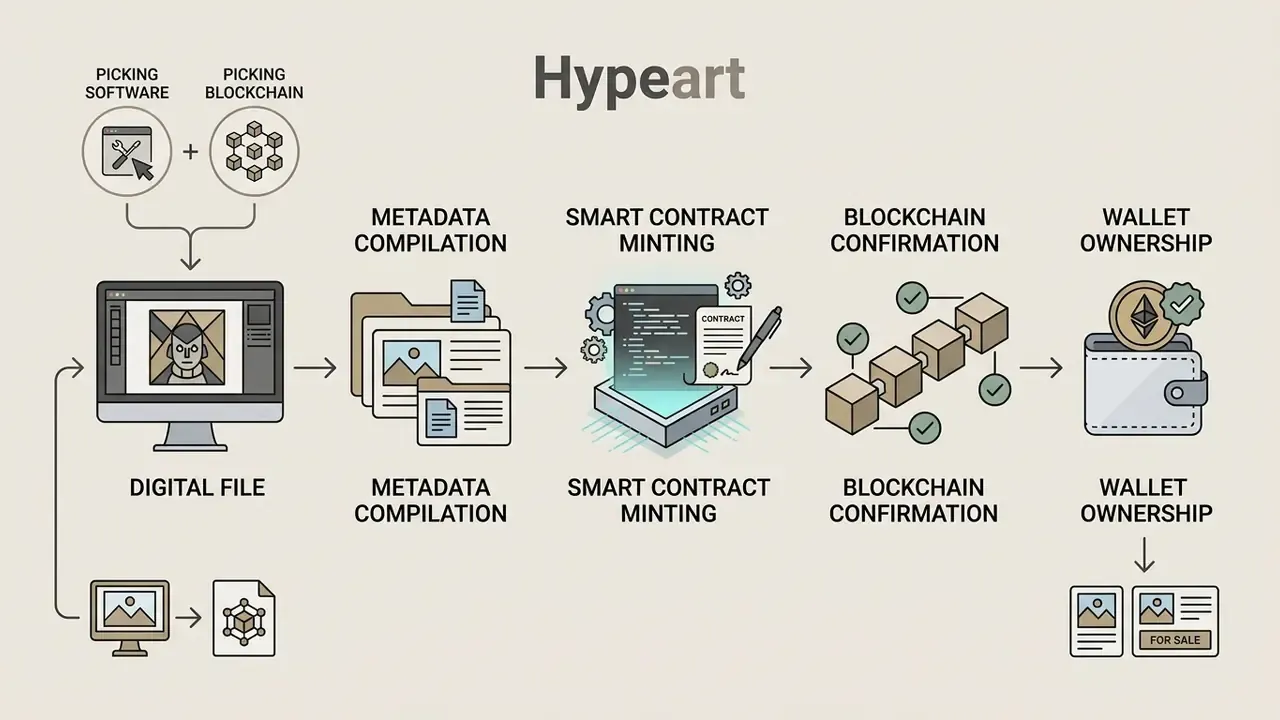
Creating and selling NFT art means turning a digital file into a cryptographic token on a blockchain while holding onto legal clarity, technical integrity, and commercial alignment. The end-to-end workflow moves from asset design and metadata architecture to wallet setup, blockchain selection, smart contract execution, and marketplace listing. Nothing exotic. Just a sequence with irreversible steps.
Executive Summary: Three Decisions That Determine the Outcome
- Rights precede technology.Minting does not create copyright and does not transfer it. Clear IP ownership, written license terms, and provenance signing must exist before the first on-chain transaction.
- Infrastructure sets your cost ceiling.The blockchain, wallet architecture, and marketplace you pick dictate gas exposure (from sub-cent to $50+ per transaction), custody risk, and platform commission (0% on Blur to 15% on SuperRare).
- Security and metadata permanence outlive the drop.Decentralized pinning (IPFS/Arweave), audited contracts, multi-signature or MPC custody, and revoked token approvals protect the asset long after the listing goes live.
Before You Start: What This Workflow Assumes
A short readiness check saves money later. You will need each of the following in place before the first signature:
- A cleared asset. Full ownership or a written commercial license for every visual, font, sample, and code library inside the file.
- A named owner. One accountable person for the mint decision, plus a documented escalation path if something breaks mid-drop.
- A funded operational wallet. Small balance, separated from treasury holdings, used only for signing mint and listing transactions.
- A storage plan. An IPFS or Arweave target with redundant pinning, decided before upload rather than after.
- A fee model. Gas, platform commission, royalty split, and audit spend estimated in advance; teams can sanity-check the arithmetic with our calculators.
- A rollback story. Immutable contracts cannot be patched. Decide in advance what "we stop the drop" actually means operationally.
What Is NFT Art and What Does an NFT Actually Represent?
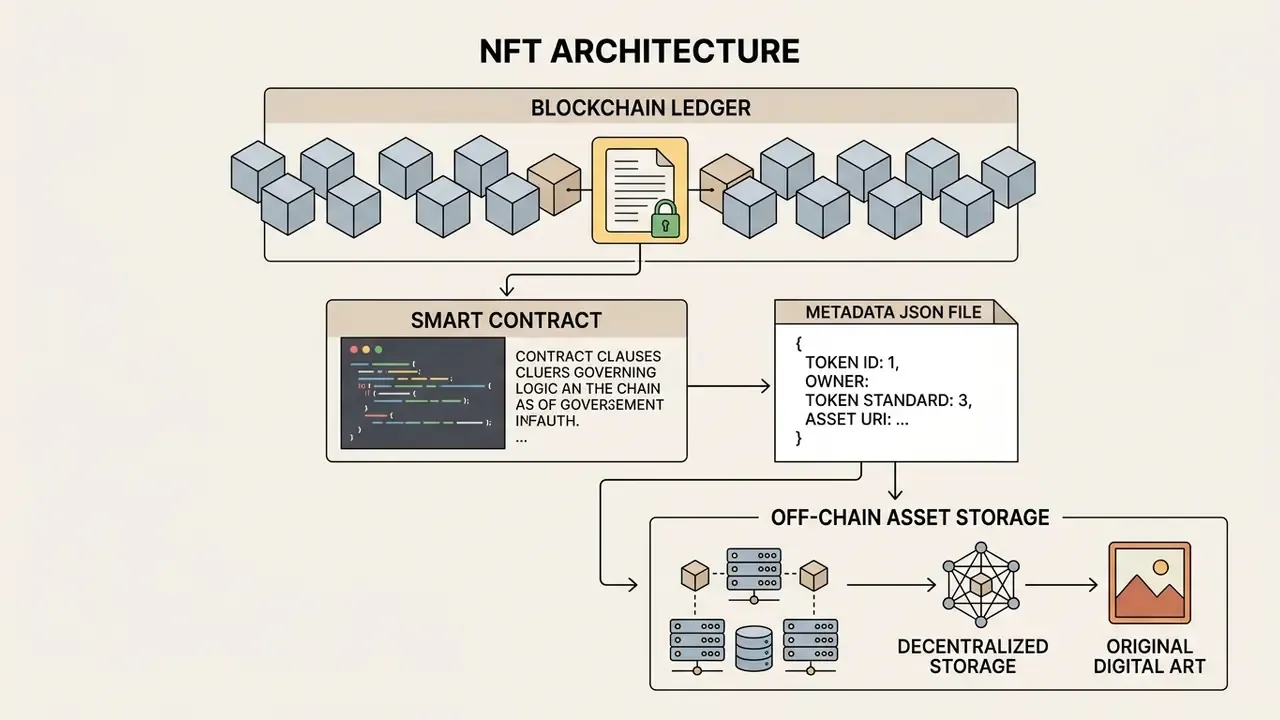
An NFT (non-fungible token) is a unique, indivisible blockchain-based data record that serves as a verifiable digital certificate of authenticity for a linked asset. According to the National Institute of Standards and Technology (NIST IR 8472, 2024), an NFT is an owned, transferable record managed by a smart contract that references an underlying physical or virtual asset (NIST.IR.8472). The token itself exists as an on-chain entry, while the associated digital artwork typically resides off-chain. That split matters more than most first-time creators expect.
«An NFT is a unique digital file recorded on a blockchain that functions as a certificate of authenticity for the asset linked to it.»
The U.S. Government Accountability Office frames the same structure in consumer terms: an NFT is a digital identifier comparable to a certificate of ownership, capable of proving which image is the original even while identical copies circulate freely (GAO-22-105990, 2022, https://www.gao.gov/assets/gao-22-105990.pdf).
NFT Art, Digital Artwork, and the Non-Fungible Token
A non-fungible token is technically and legally distinct from the digital artwork it represents. A fungible token, such as a standard cryptocurrency unit, holds identical value across units and can be swapped freely. A non-fungible token, by contrast, carries a unique token identifier (tokenId) and a pointer (tokenURI) that references one specific metadata file.
«The NFT is not the artwork itself; it is a technology layer that adds value by functioning as proof and traceability of ownership.»
In standard implementations such as ERC-721 or ERC-1155, the smart contract records token ownership on-chain, while the metadata JSON file stores asset attributes, title, description, and the storage address of the digital artwork. ERC-1155 exposes metadata through a uri function and can hold both fungible and non-fungible items inside a single contract, which makes the media link metadata-driven rather than balance-driven. The digital artwork itself stays a separate file, often parked on decentralized storage networks like IPFS or Arweave, and it remains publicly viewable regardless of who holds the token. Teams that want to understand how a public, resolvable asset address behaves in practice can review how to create a url for an image before committing to a pinning strategy.
Ownership, Copyright, and Licensing When You Sell NFTs
Purchasing or minting an NFT transfers ownership of the cryptographic token, not the copyright or intellectual property in the underlying artwork. As noted in the Joint USPTO-USCO Report on NFTs and Intellectual Property (2024), a legal transfer of copyright or an exclusive license under U.S. copyright law requires an explicit written agreement signed by the copyright owner (uspto.gov).
«Buying an NFT does not automatically transfer copyright: the buyer receives the token and display rights, but not reproduction or derivative-work rights.»
When a digital artist sells an NFT, the buyer acquires token ownership plus the right to display or transfer that token. Unless an explicit licensing agreement or assignment contract is executed alongside the transaction, the artist retains full copyright: reproduction, distribution, and derivative work creation. EU guidance published by Eurojust (2024) states the same default: NFT holders obtain no copyright in the artwork unless the creator expressly grants it in a licensing agreement. Commercial templates follow that logic. An NFT purchase and license agreement drafted by Arnold & Porter (2023) grants the buyer ownership of the token but "no right, title, or interest" in the artwork, with the seller expressly reserving copyrights.
One illustrative example: a hypothetical digital asset team preparing a corporate brand drop drafted explicit licensing terms directly into the token metadata JSON file using standardized Creative Commons parameters. The effect was less about aesthetics and more about dispute prevention, since secondary buyers could read the commercial boundary without contacting legal.
Plan Your NFT Artwork Before You Create an NFT
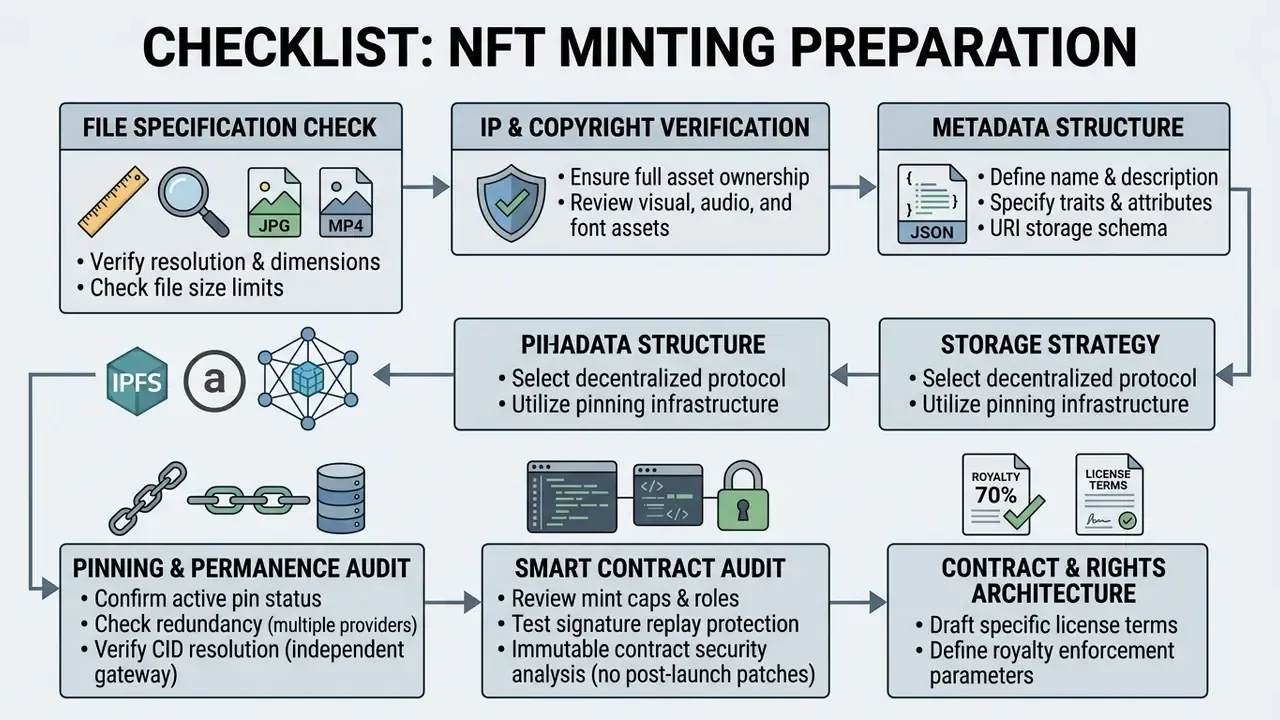
Effective NFT preparation means organizing file parameters, choosing metadata schemas, and deciding whether the release is a single unique work or a structured collection. Planning asset formats and collection parameters before deployment prevents technical failures during minting and protects long-term asset value. Ten minutes of planning beats a failed transaction.
Choose the Format and Concept for Your Digital Artwork
Creating digital artwork for tokenization starts with supported file formats and explicit composition parameters. Standard image formats include PNG, JPG, SVG, and animated GIF, while video and 3D assets use MP4, MOV, GLTF, or GLB containers. Technical specifications recommend keeping primary files under 50 MB for efficient rendering across NFT marketplaces, with preview images formatted as 300x300 pixel squares under 2 MB. Platform ceilings vary: curated Ethereum platforms accept image files up to 300 MB and recommend still images around 3000 px wide, where 1080p to 4K delivers the most consistent display results. Creators evaluating generation software can compare output resolution and licensing terms across AI art generators before locking a production pipeline. Portrait-led projects and PFP-style sets often start from personal reference material, and the capture and consistency issues are covered in our guide on how to create AI images of yourself.
Visual & Compositional Benchmarks
Composition is a measurable pricing variable, not only an aesthetic preference. Research analyzing 94,039 trades across 26 major Ethereum collections shows that visual composition moves valuation.
«Artworks with high focal saturation, clear compositional concentration, and smooth curvature consistently earned price premia, while visual clutter and dispersed palettes were discounted.»
Select Your Creation Tools: 2D, 3D, and Generative Software
Pick production software based on medium and the scale of the drop:
- 2D Raster & Vector Art Adobe Photoshop, Adobe Illustrator, and Procreate (iPad) remain the industry standards for single 1-of-1 assets and base trait layering. Budget-constrained creators can substitute open or freemium tooling reviewed in our free photo editor comparison without losing export resolution.
- 3D Asset Creation Blender (open-source), Autodesk Maya, and SideFX Houdini provide complete pipelines for rendering GLTF/GLB models and high-resolution 3D animations. Advanced users extend these pipelines toward virtual land and metaverse-ready assets.
- Generative No-Code Collection Tools No-code platforms such as Bueno and NFT-inator let artists upload layered PNG assets, configure trait rarity percentages, and generate multi-thousand item collections along with pre-formatted JSON metadata.
- Canvas and Composition Utilities Frame extension, background regeneration, and aspect-ratio normalization for preview cards can be handled with the AI outpainting tools compared in our commercial-use guide. If a preview card needs a cleaner backdrop, our walkthrough on how to change the background of a picture covers the non-destructive route.
Convert Traditional Physical Art into Digital NFTs
Physical visual media (canvas paintings, watercolor, ink sketches) must be digitized at high fidelity before smart contract minting:
- High-Resolution ScanningUse a flatbed 2D scanner capturing at a minimum of 600 DPI to preserve stroke texture and paper grain and to eliminate lens distortion. Flatbed reproduction generally delivers more accurate color than handheld capture.
- Color-Calibrated PhotographyIf scanning is impossible because of artwork dimensions, shoot in RAW format using a 50mm+ prime lens under 5500K daylight-balanced lighting. Use a color checker chart to standardize white balance and verify that hues stay true to the original surface.
- Digital Post-ProcessingImport files into Adobe Photoshop or Lightroom to adjust dynamic range, correct color profiles to sRGB for screen rendering, and crop to exact display dimensions without losing visual fidelity. Retouching workflows and platform support are broken down further in our online photo editor guide.
- Edition StrategyA digitized painting can be minted as a 1-of-1 provenance record for the physical piece, or as a limited numbered edition. State explicitly in the listing whether the physical original transfers with the token.
Create One NFT or Build an NFT Collection
Creators can deploy work as individual 1-of-1 assets or as structured, multi-item collections. A 1-of-1 NFT represents a single, unique digital artwork positioned for high scarcity and individual provenance. An NFT collection, by contrast, consists of multiple items unified by a shared concept, theme, or generative trait system.
Generative collections typically range from 100 items to the industry-standard 10,000 (a supply ceiling popularized by iconic PFP projects such as CryptoPunks and Bored Ape Yacht Club) and rely on standardized trait combinations compiled via code. Micro collections of 100 items or fewer usually align with hand-made 1/1 art practices, while drops of 5,000 to 10,000+ items fit open generative nft projects with defined rarity tiers, IPFS metadata, and pre-launch contract testing.
Large collections can build brand recognition and serial collector engagement. But empirical studies on marketplace economics reveal a volume-effort trade-off: pushing out large quantities of low-effort tokens without sustained demand dilutes collector attention and reduces engagement per listing.
Choose a Blockchain, Crypto Wallet, and NFT Marketplace
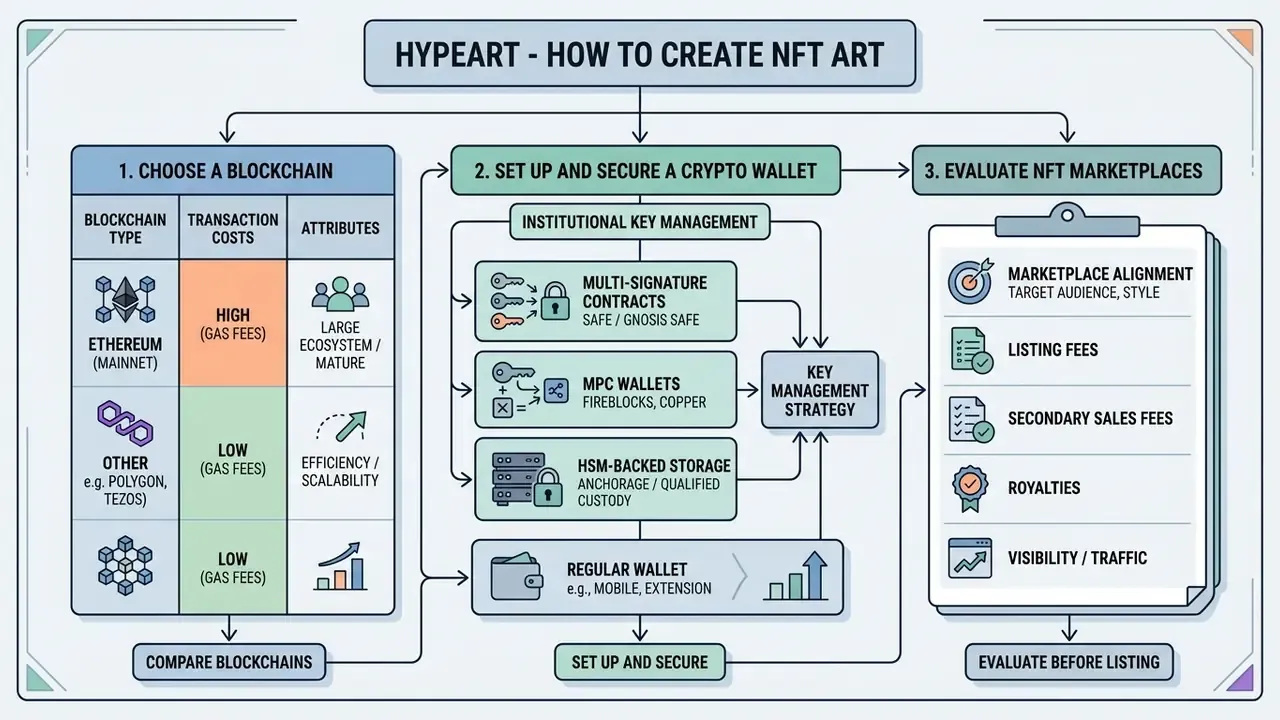
Selecting the operational infrastructure means weighing blockchain transaction costs, wallet security architecture, and marketplace alignment. The chosen combination dictates settlement speed, environmental impact, initial capital requirements, and target audience accessibility.
«Gas fees impose a significant fixed burden on small on-chain transactions, producing persistent deviations from arbitrage benchmarks even on decentralized venues.»
| Blockchain / Network | Consensus / Speed | Gas Fee Range | Primary Wallet Options | Institutional Custody Support | Marketplace Ecosystem | Ideal Project Profile |
|---|---|---|---|---|---|---|
| Ethereum (L1) | Proof-of-Stake (~16 TPS) | High ($5 – $50+) | MetaMask, Coinbase Wallet, Rainbow | Broad (Fireblocks, Anchorage, Safe multi-sig) | OpenSea, Blur, Foundation | High-value 1/1 art, major institutional drops |
| Solana | Proof-of-History (~2,500 TPS) | Negligible (< $0.01) | Phantom, Solflare | Partial (select qualified custodians) | Magic Eden, Tensor | High-frequency collections, lower-cost mints |
| Polygon (L2) | Proof-of-Stake (~1,000 TPS) | Low ($0.01 – $0.50) | MetaMask, Rabby | Broad (EVM-compatible custody stacks) | OpenSea, Magic Eden | Mass-market digital assets, enterprise loyalty |
| Arbitrum / Base (L2) | Optimistic Rollup (~2,000 TPS) | Low ($0.05 – $0.20) | MetaMask, Coinbase Wallet | Growing (EVM custody + Safe deployments) | OpenSea, Element | Scaling Ethereum drops with lower transaction costs |
Compare Blockchains for NFT Creation
Ethereum mainnet remains the primary settlement layer for high-value nft art, offering deep liquidity and established smart contract standards (ERC-721, ERC-1155). Network congestion, however, can lift gas fees sharply, and cited environmental material puts mainnet throughput at roughly 16 TPS.
Solana and Layer-2 scaling solutions such as Polygon, Arbitrum, and Base deliver high throughput and sub-cent transaction costs. Teams still evaluating visual production stacks alongside network choice can review the output quality and usage rights documented in our AI image generator comparison, or scan the broader AI Media Comparison Matrices for tool-by-tool benchmarks. Solana operates at over 2,500 TPS with minimal energy consumption (0.00412 Wh per transaction according to Solana's 2024 Energy Report, which also projects roughly 8,755 MWh annual network consumption), which suits high-volume collections.
Verification note: the Solana throughput and energy figures come from a foundation-published corporate report rather than an independent peer-reviewed study; reported values vary by measurement date and methodology, and Polygon's own documentation similarly estimates validator electricity use at about 0.00079 TWh per year. Treat both as vendor-reported directional figures.
Layer-2 rollups batch transactions before settling on Ethereum, combining low minting expenses with Ethereum security; cited Ethereum-aligned material places aggregate rollup throughput near 10,000 TPS. For regulated issuers, compatibility with institutional custodians (Fireblocks, Anchorage) and with Safe multi-signature deployments is often a harder constraint than gas cost, because unsupported chains simply cannot be onboarded into existing key-management policy.
Set Up and Secure a Crypto Wallet
A crypto wallet manages private keys and signs the blockchain transactions required to mint, transfer, or list digital assets. Non-custodial wallets such as MetaMask or Phantom talk directly to decentralized applications (dApps) without third-party key custody. Install only the official extension or mobile application; cloned extensions remain a primary distribution vector for credential theft (MetaMask Help Center, 2026, https://support.metamask.io/stay-safe/safety-in-web3/).
Store the 12-to-24 word Secret Recovery Phrase offline, in a physical, fireproof location. Phantom's own guidance adds three rules worth repeating: never type the phrase into any website, enable auto-lock, and separate app-facing accounts from long-term holdings (Phantom Help Center, 2026, https://help.phantom.com/articles/13515761228051).
«Digital wallets are core components of the NFT lifecycle; users must responsibly manage seed phrases and private keys to prevent asset loss or theft.»
Enable automatic wallet locking, keep separate operational wallets for active marketplace signing, and reserve air-gapped hardware wallets (Ledger, Trezor) for long-term storage. You'll need both: a hot wallet for daily signing and a cold device for anything you would hate to lose.
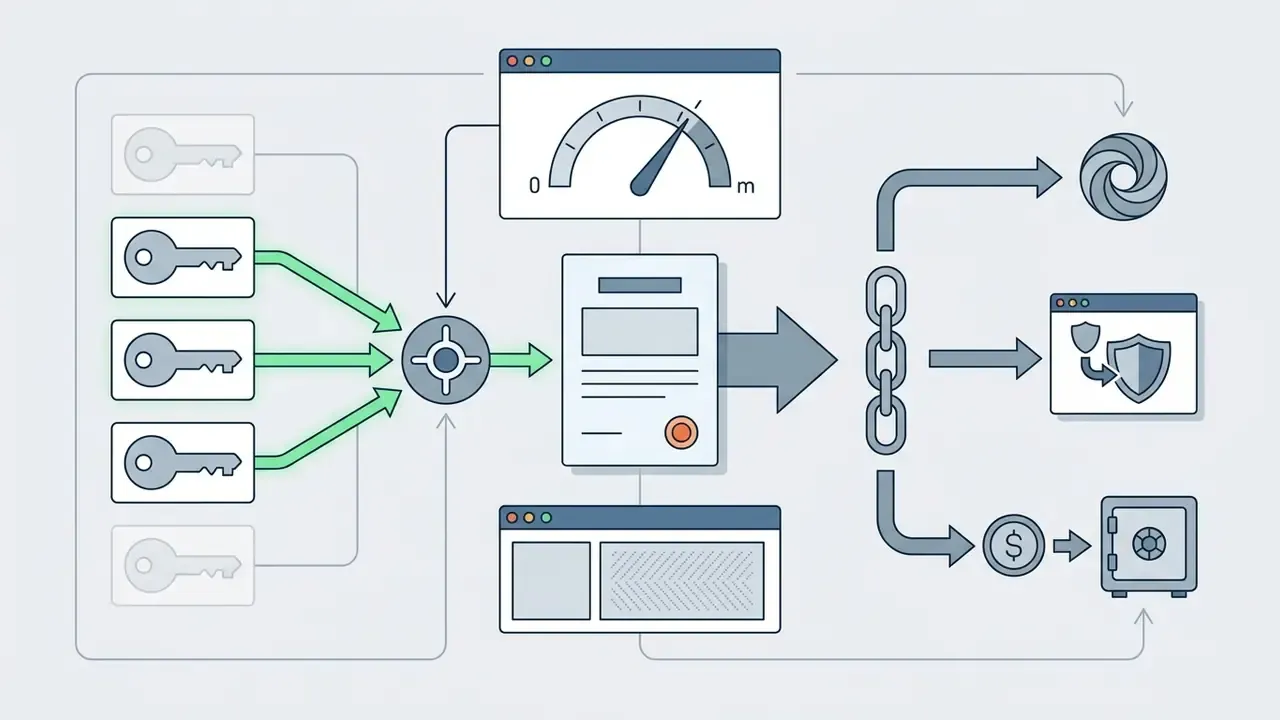
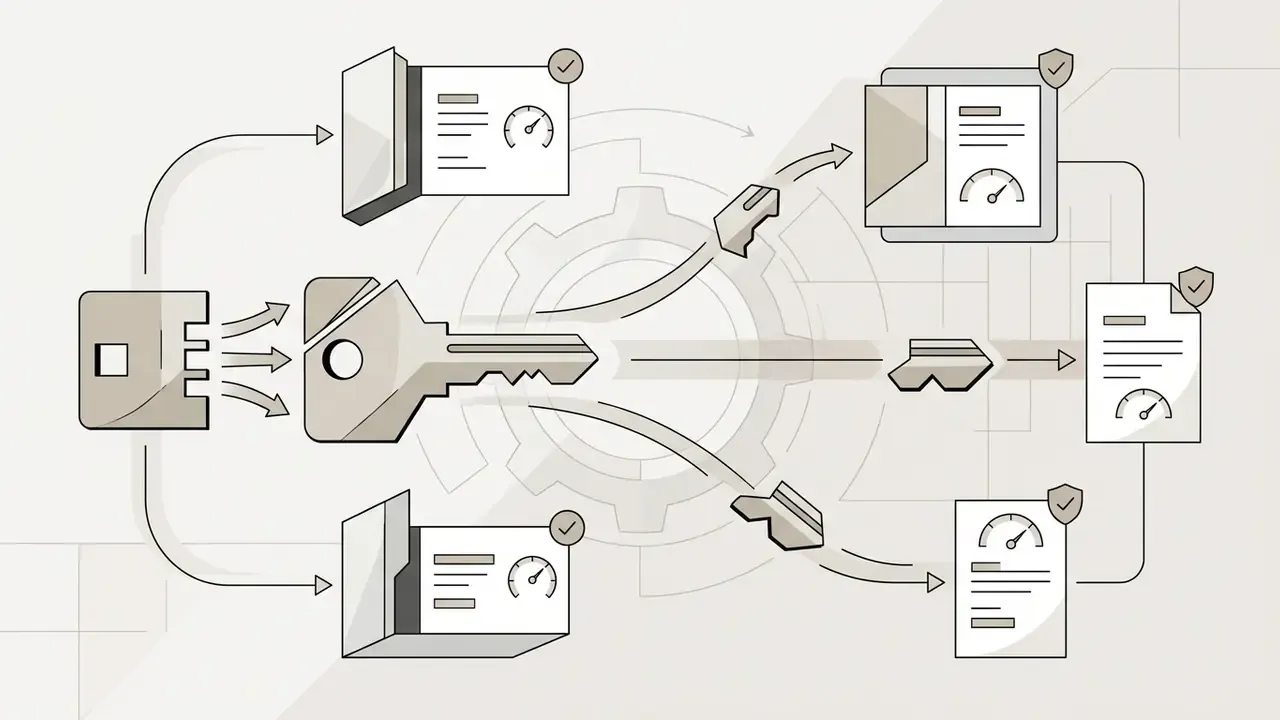
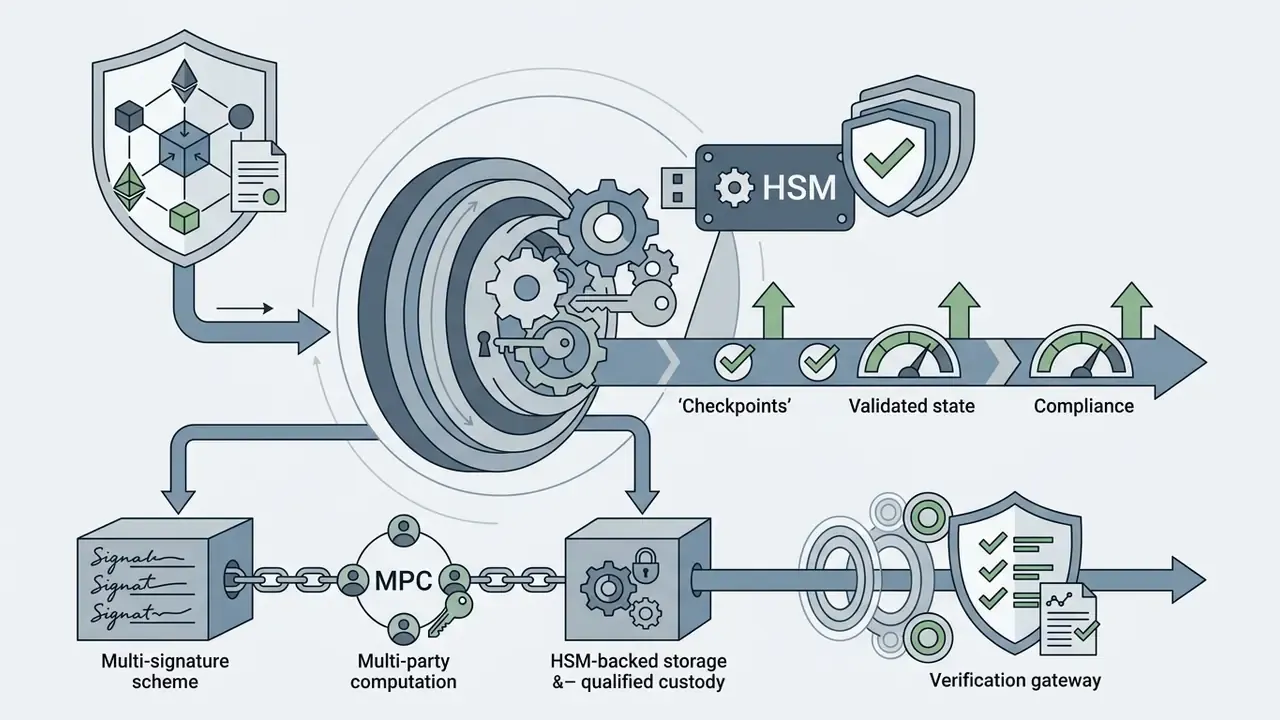
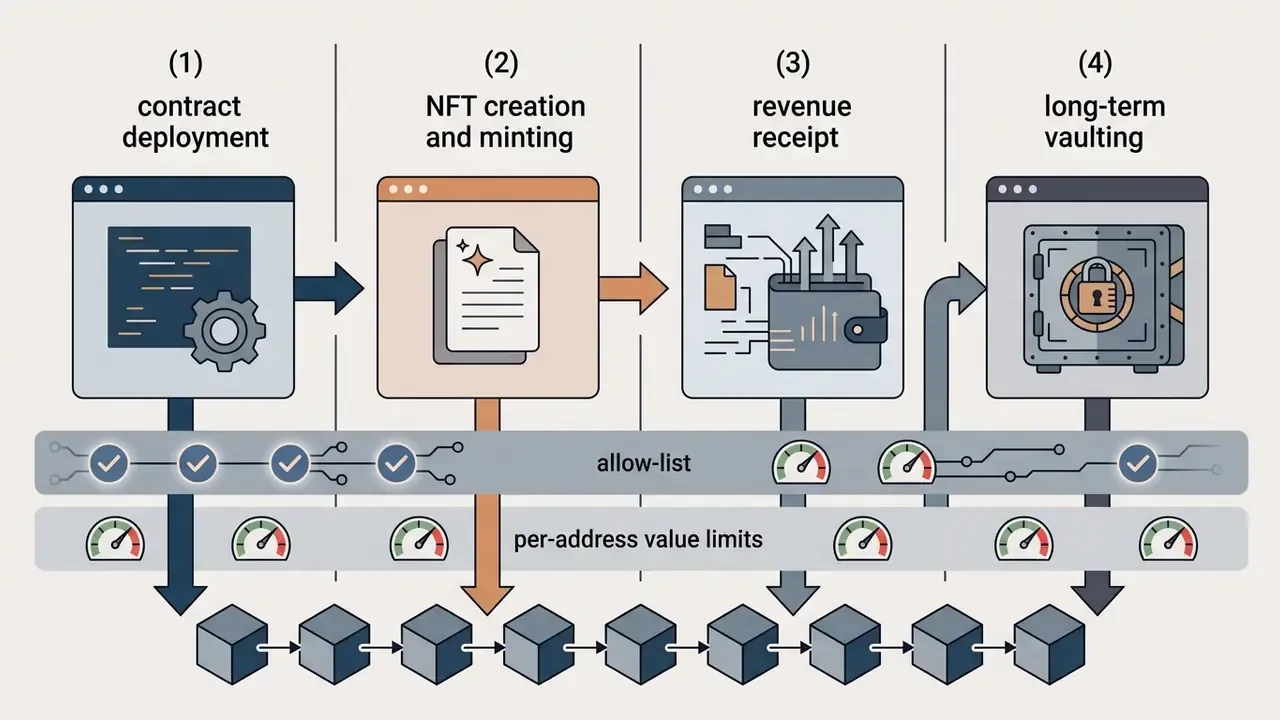
Institutional Key Management: Multi-Signature, MPC, and HSM
A single personal hot wallet is not an acceptable control layer for corporate treasury-held NFTs. For institutional issuers, layer custody as follows:
Evaluate NFT Marketplaces Before Listing Your Art
Marketplace selection dictates fee structures, platform moderation, and underlying chain support.
- OpenSea Charges a platform fee per trade, commonly documented at 1% on secondary sales and up to 10% on primary drop mints, with 2.5% appearing in earlier fee schedules. It supports over nine networks, including Ethereum, Polygon, Klaytn, Arbitrum, Optimism, Avalanche, Zora, Base, and Blast. Gas is paid to the network, not to the platform.
- Magic Eden Implements a 0% listing fee and a 2% transaction fee, with dynamic multi-chain support across Solana, Ethereum, Polygon, and Bitcoin Ordinals; royalties are optional unless enforced in metadata.
- SuperRare A curated 1-of-1 fine-art platform enforcing a 15% primary sale commission (85% goes directly to the artist) and a standardized 10% secondary market royalty for creators.
- Blur Operates a zero-fee platform tailored for high-volume traders on Ethereum, focused on bid liquidity rather than retail visual discovery.
- Foundation and Rarible Foundation remains creator-curated on Ethereum with invite-driven onboarding; Rarible supports fixed price, timed auction, and open-for-bids listings across RARI Chain, Ethereum, Polygon, Immutable-X, zkSync Era, Base, Astar zkEVM, and Kroma.
Fee accuracy note: platform commissions, royalty enforcement rules, and promotional fee holidays change frequently and without notice. Verify the current schedule on each marketplace's official fee page immediately before listing rather than relying on any published figure, including the ones above.
When comparing platforms, inspect metadata storage policies closely. Platforms that lean on centralized server hosting introduce a quiet failure mode: if the platform's domain dies, the token still sits on the blockchain, pointing at a broken media link.
«Current marketplace and storage practices are insufficiently robust to protect artists' rights, particularly where long-term cultural preservation is the priority.»
Decentralized storage integration via IPFS or Arweave keeps data available over time, provided pins are actively maintained and redundantly distributed.
How to Create NFT Art and Mint It Step by Step
Minting converts digital media into a cryptographic asset by writing its token ID and metadata reference onto the blockchain. The execution path: connect a wallet, configure JSON metadata, select smart contract parameters, issue the minting transaction.
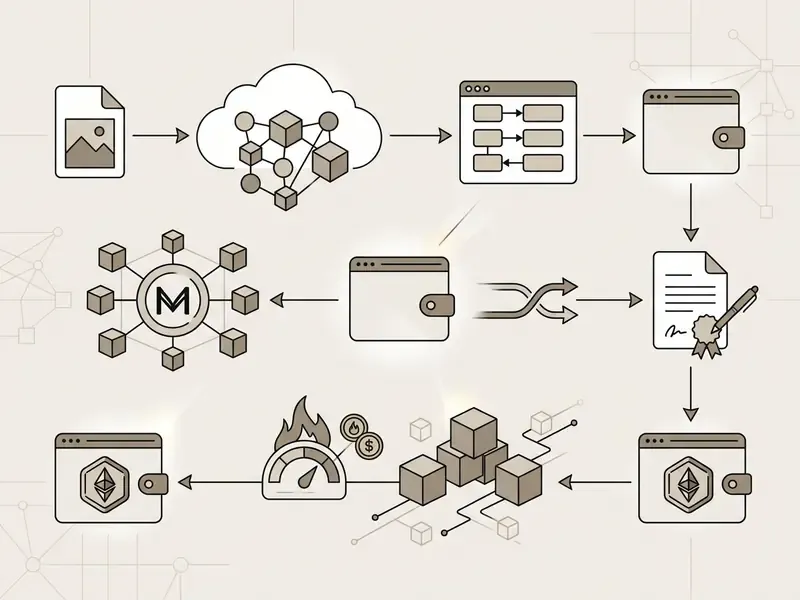
Connect Your Wallet and Upload Your NFT Artwork
To start minting, open the selected marketplace or custom minting portal and click Connect Wallet. Authenticate the connection request inside the wallet interface. That signature request verifies wallet ownership; it does not expose private keys or move funds.
Once connected, go to the creation interface and select Create or Mint. Upload the final asset file (PNG, JPG, MP4, SVG). Confirm that the uploaded file meets required resolution standards, for instance 3000px wide for still images, and that the preview renders correctly. Where source files fall below platform thresholds, evaluate resolution-recovery workflows in our photo editing and enhancement guide instead of shipping a soft-focus master file.
Add Metadata and Set Up the Token
Metadata structures define how the blockchain and external platforms interpret the digital artwork. The metadata JSON file contains the core attributes required by ERC-721 specifications:
{
  "name": "Institutional Sovereign #001",
  "description": "A verified digital asset exploring controlled automation.",
  "image": "ipfs://QmXoypizjW3WknFiJnKLwHCnL72vedxjQkDDP1mXWo6uco/image.png",
  "attributes": [
    { "trait_type": "Background", "value": "Obsidian" },
    { "trait_type": "Algorithm", "value": "Deterministic" }
  ]
}
«Metadata attributes can be systematically leveraged for dynamic smart-contract pricing: trait-rarity scores show statistically significant effects on realized prices.»
Populate the asset name, a detailed description, and custom properties or traits. If you are deploying a collection, verify that trait names and values match the planned rarity architecture. Link explicit licensing terms inside the description or metadata URI fields so commercial usage rules are readable, not assumed. Guidance from the Metaverse Standards Forum additionally recommends recording file format, creator attribution, rights holder, and usage permissions in metadata, so viewing, sublicensing, and transfer rights are explicit rather than inferred.
Mint the NFT and Confirm the Creation Costs
Choose between standard on-chain minting and lazy minting. Standard minting writes the token to the blockchain immediately, and the creator pays the network gas fee upfront. Lazy minting defers on-chain creation until the first buyer purchases the item, shifting that initial gas cost to the buyer or folding it into the purchase transaction.
Availability differs by platform. OpenSea retired its standalone lazy-minting tool in favor of OpenSea Studio in October 2023, while previously lazy-minted items remain tradable and other marketplaces continue to offer deferred minting.
When confirming standard minting, read the transaction prompt inside your crypto wallet. It displays the required gas limit and gas price (in Gwei). The standard calculation is gas fee = gas limit × gas price (Gwei), where 1 Gwei equals 0.000000001 ETH. Confirm the transaction to write the token to the blockchain. After network confirmation, the first NFT appears directly in the connected wallet address.
In one illustrative rollout, a hypothetical corporate asset team weighed upfront Ethereum gas against lazy minting. They published a 500-item collection with no initial capital outlay, moved settlement fees to the point of sale, and kept full metadata integrity on IPFS. Not elegant, but defensible under budget scrutiny.
Teams automating this pipeline (trait generation, batch metadata writes, scheduled mints) should read the technical configuration material in our AI Media API Guides, and, where automation starts making decisions on its own, the control questions raised in how to create AI agents. An automated minting script needs the same discipline as any digital worker: a named owner, an approved role, access limits, an audit trail, and a shutdown switch.
Avoid Common NFT Creation Risks and Costly Mistakes
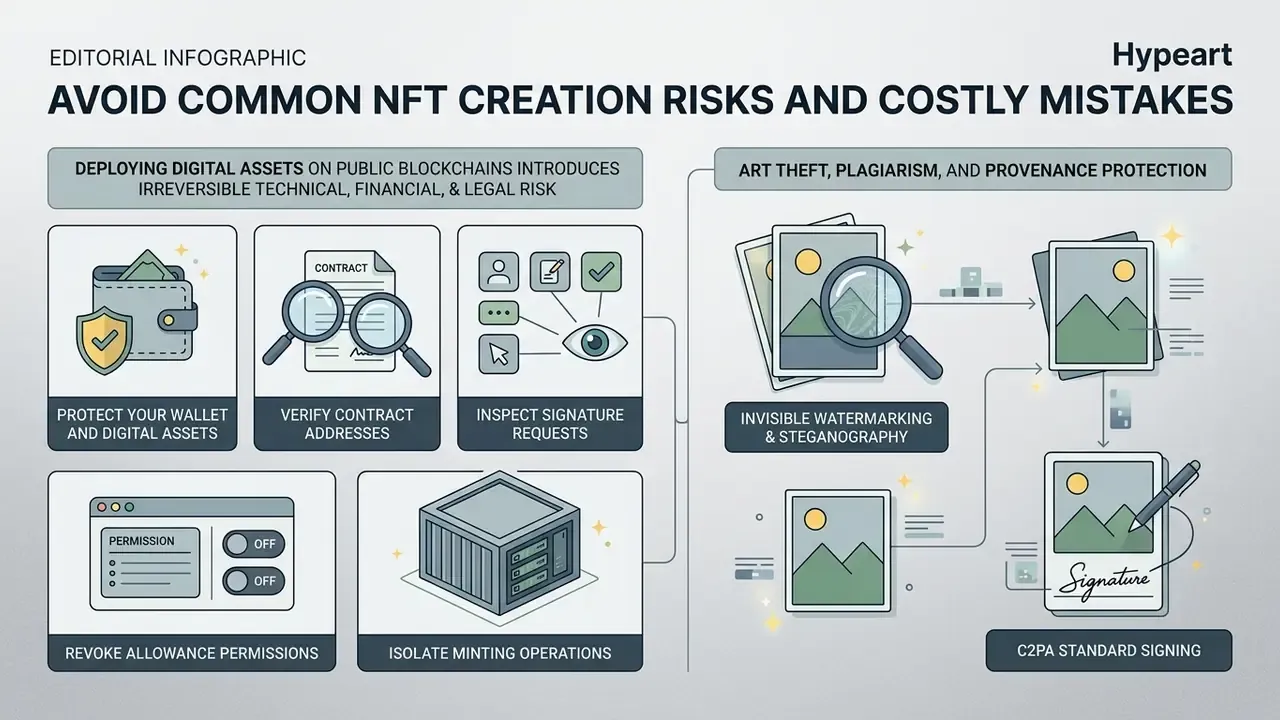
Deploying digital assets on public blockchains introduces irreversible technical, financial, and legal risk. Mitigation comes down to wallet operational hygiene, rights clearance, and pre-mint contract verification. NIST IR 8472 catalogues 27 distinct security issues across NFT ownership, minting, and transfer, including buyer deception, counterfeiting, impersonation, and resale of stolen tokens.
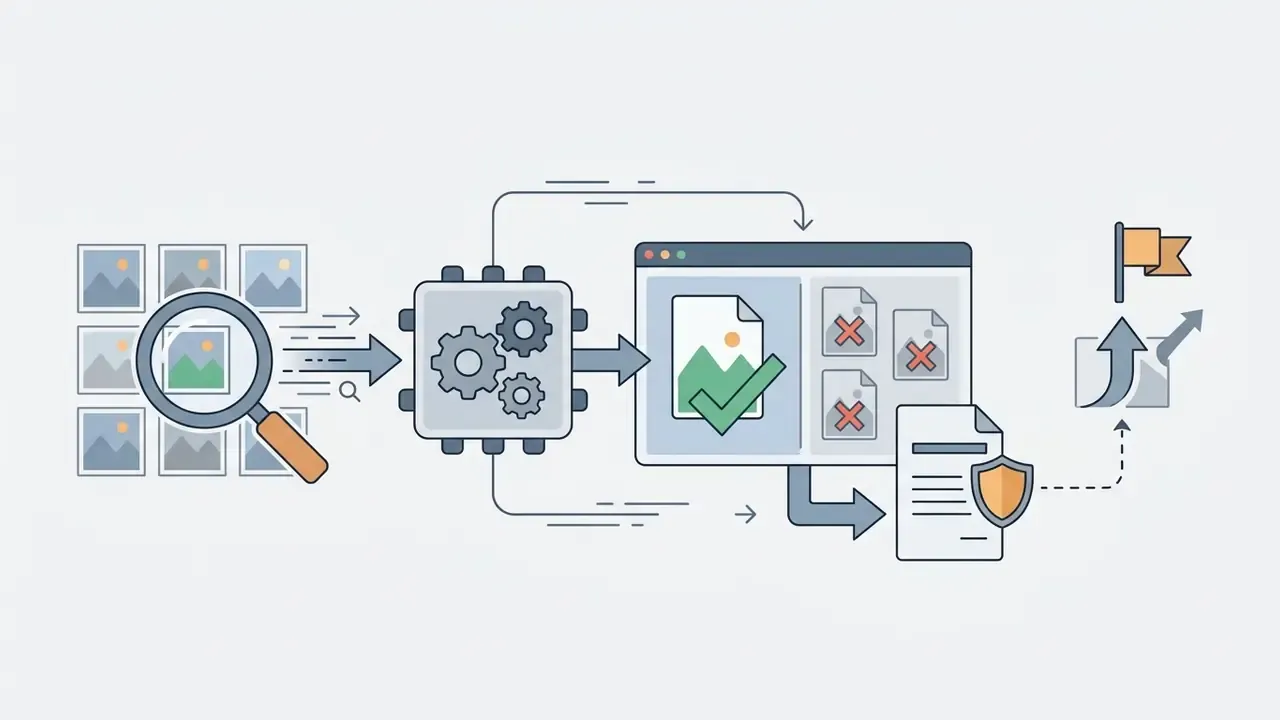
Before uploading, confirm full copyright ownership or explicit licensing for every asset, fonts, samples, and reference imagery included. Duplicate-detection sweeps using AI reverse image search tools help verify that a candidate asset is genuinely original before it becomes an immutable ledger entry.
Protect Your Wallet and Digital Assets
Wallet security failures remain the leading cause of asset loss in Web3. Attackers deploy phishing sites, fake minting links, malicious smart contracts, and crafted signature requests designed to drain connected wallets. The FBI has documented attackers posing as NFT developers, pushing users to spoofed mint pages, then draining wallets after connection and signature approval.
«Documented threats include counterfeit artist profiles, fake NFTs, and wash-trading fraud; improving wallet UX remains a key area for development.»
To reduce exposure, implement phishing-resistant controls (NIST SP 800-63-4, 2026):
- Verify Contract Addresses
- Confirm smart contract addresses through official project channels before signing anything.
- Inspect Signature Requests
- Refuse unreadable, blind, or over-privileged transaction requests, for example
SetApprovalForAll. - Revoke Allowance Permissions
- Periodically review and revoke active smart contract permissions with allowance tools such as Revoke.cash. Joint guidance from Singapore's Cyber Security Agency and SingCERT (2026) recommends verifying both the website and the contract before connecting a wallet, then revoking suspicious approvals.
- Isolate Minting Operations
- Keep a dedicated hot wallet with minimal funds for active minting, and hold primary collections on cold storage hardware or, for institutional holdings, behind multi-signature and MPC custody.
Art Theft, Plagiarism, and Provenance Protection
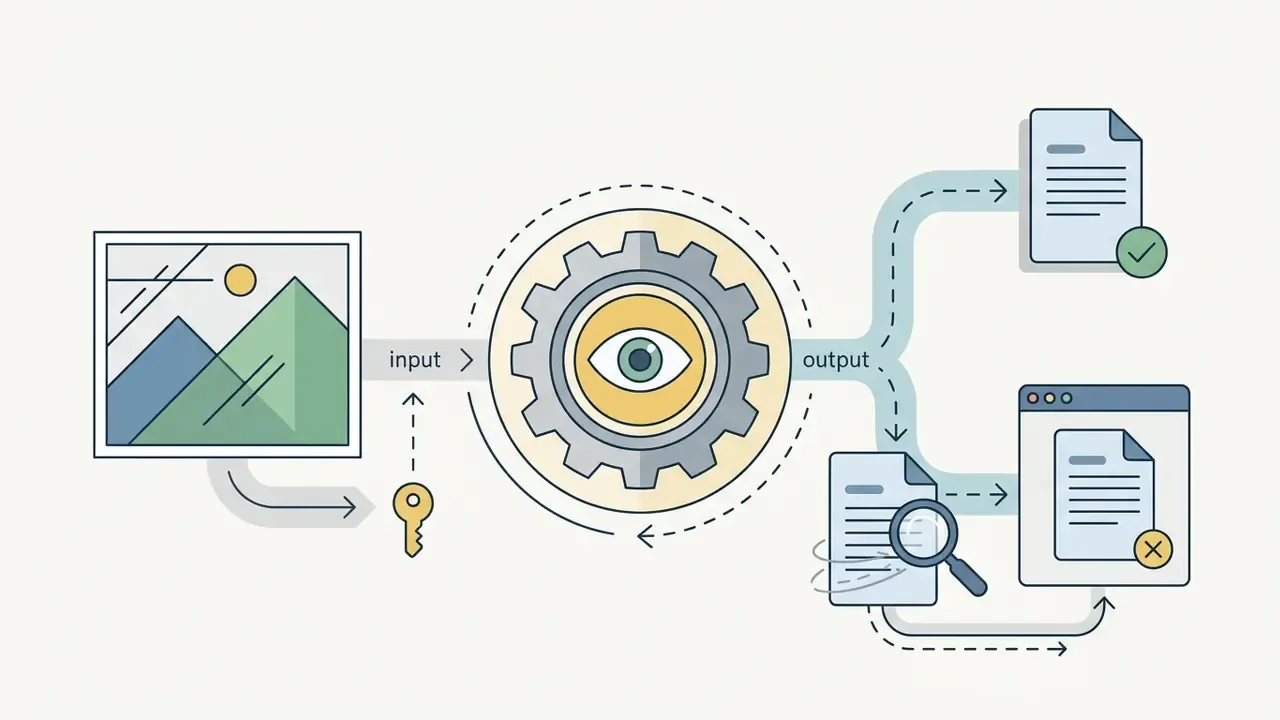
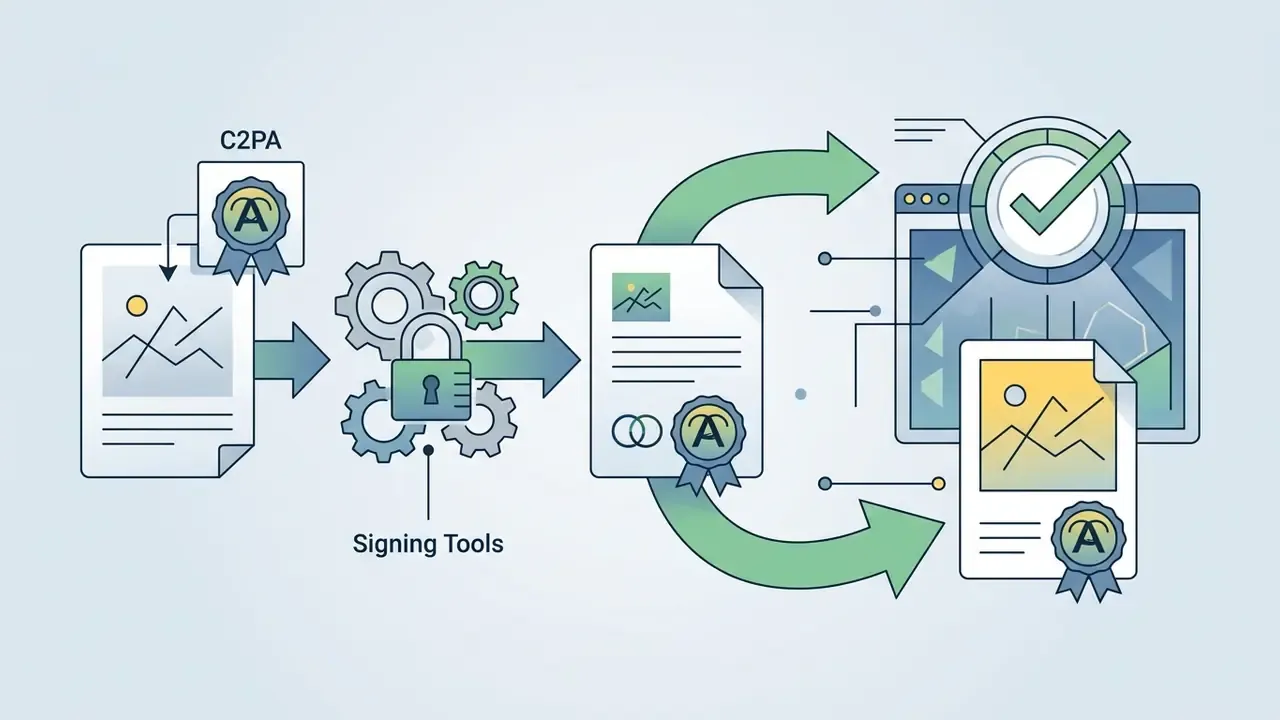
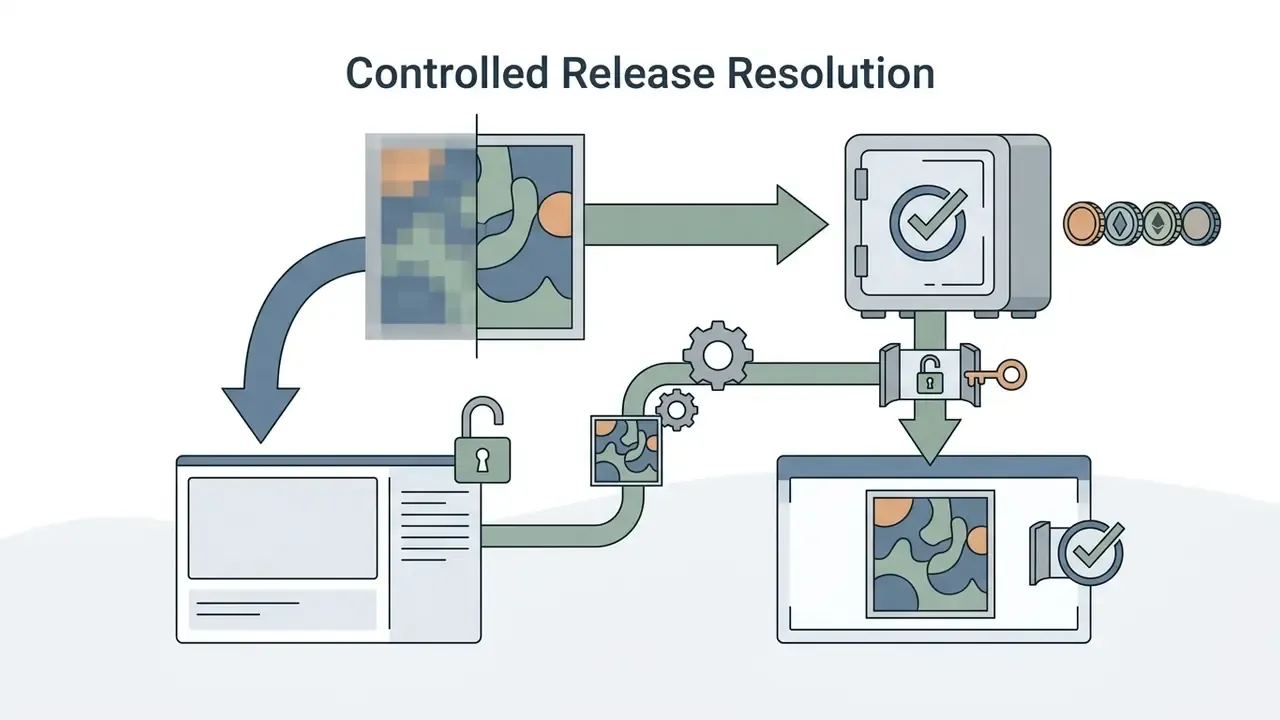
Public digital assets face constant scraping and unauthorized minting. Historical marketplace audits found that up to 80% of tokens created with free lazy-minting tools contained plagiarized imagery, spam, or unauthorized copyright use. Prominent cases, such as the unauthorized posthumous minting of artist Qing Han's (Qinni) portfolio after her death in 2020, sold as NFTs against her family's wishes, show why provenance protection needs to be proactive:
Check Rights, Fees, and Marketplace Terms Before Minting
Minting material without proper copyright clearance creates direct legal liability. Under U.S. Copyright Office guidelines, minting an NFT tied to third-party copyrighted material without permission constitutes infringement.
«In most NFT transactions the buyer receives only a limited non-commercial use license; minting without the rights holder's consent infringes third-party rights.»
Make sure all visual elements, fonts, audio samples, and code libraries in the asset are owned outright or licensed for commercial tokenization. WIPO guidance reinforces the same boundary: owning a digital object in which a work is embedded does not mean owning the copyright in that work. The export-rights breakdowns in our AI Media Commercial-Use library show how quickly those terms differ between tools.
Also audit platform terms of service for fee structures, royalty enforcement mechanisms, and takedown procedures. Marketplace documentation commonly separates a configurable creator royalty (0.1% to 50% on some platforms) from a fixed network or platform fee. Verify total fee requirements, including minting gas, marketplace transaction cuts, and potential bridging fees, to avoid transaction failures or negative net returns on a first sale.
Set a Price and Sell Your NFT Art
Selling nft art requires a pricing model, a clear view of transaction costs, and transparent marketplace listings. Listing format choice feeds directly into liquidity, pricing efficiency, and buyer trust.
Choose a Fixed Price or Auction Format
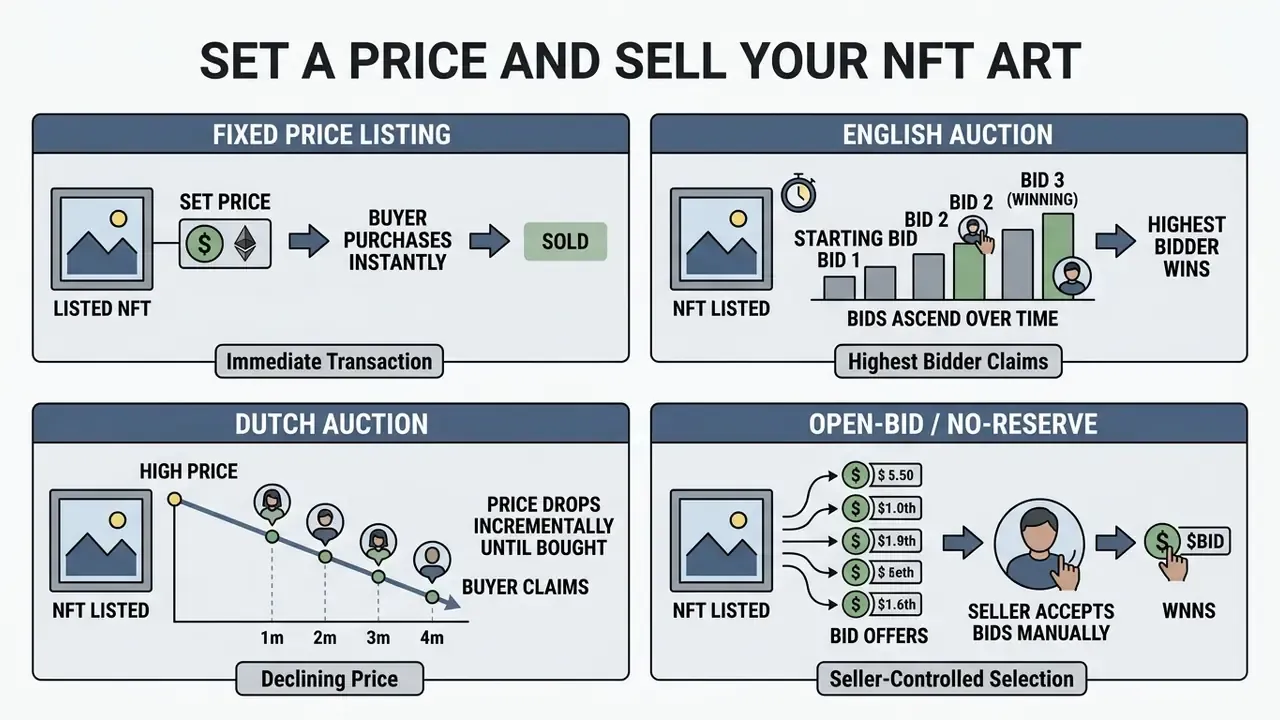
Marketplaces support four primary sale formats:
- Fixed PriceThe seller sets a non-negotiable price. The transaction completes instantly when a buyer meets it.
- English Auction (Timed Auction)Bidding starts at a minimum reserve price and rises over a set duration. The highest bidder at close wins the asset.
- Dutch AuctionThe listing opens high and declines incrementally until a buyer accepts the current price.
- Open-Bid / No-Reserve AuctionThe seller sets no minimum threshold and no explicit time limit. Buyers submit offers continuously until the seller accepts one manually. This format supports organic price discovery for non-standard assets, but it carries liquidity risk if high-value bids never materialize. It is the highest-risk configuration for the seller.
Fixed-price listings offer predictability for standard releases, while auctions help establish market value for rare 1-of-1 artworks with uncertain demand. Empirical microstructure work notes that English and Dutch formats appear more often for art pieces and collectibles precisely because they capture dispersed willingness-to-pay.
Price Your NFT Artwork for Its Market Context
Setting an initial list price means accounting for production expense, network gas, marketplace fees, and secondary market comparables. The total cost structure includes marketplace service fees (typically 1% to 2.5%, rising to 15% on curated fine-art platforms) plus the network gas needed for listing approval. Primary-market research reports that total fees can reach 19.5% of sale price, with gas as the largest component.
The audit line item covers external smart contract review before deployment, a non-optional expense for custom contracts, since immutable code cannot be patched after launch. The volatility buffer, commonly modeled at 20–40% of projected gas, absorbs congestion spikes and failed-transaction gas, which is consumed even when a transaction reverts.
Baseline pricing should cover transaction overhead while reflecting creator brand equity and the floor prices of comparable works in the ecosystem. Documented valuation practice benchmarks launch price against median recent comparable sales and collection floor-price signals, then adjusts for provenance, uniqueness, and creator reputation. Observed creator behavior confirms responsiveness to demand signals: offer prices moved roughly −7% to +23% in reaction to bid counts. Avoid pricing purely cost-plus without checking current demand and visual trait benchmarks.
«Trait-based price premia are cycle-dependent: they amplify during expansion phases and can reverse during downturns.»
Prepare the Listing So Buyers Understand the Value
«Clearly stating rights in the listing is a primary way to prevent misunderstanding: buyers and sellers frequently diverge on which rights a sale includes.»
Security research also indicates that verified artist and collection badges materially raise buyer confidence, and that buyers should confirm the contract address from official sources before purchase.
Promote NFT Art and Build an Audience Around Your Collection
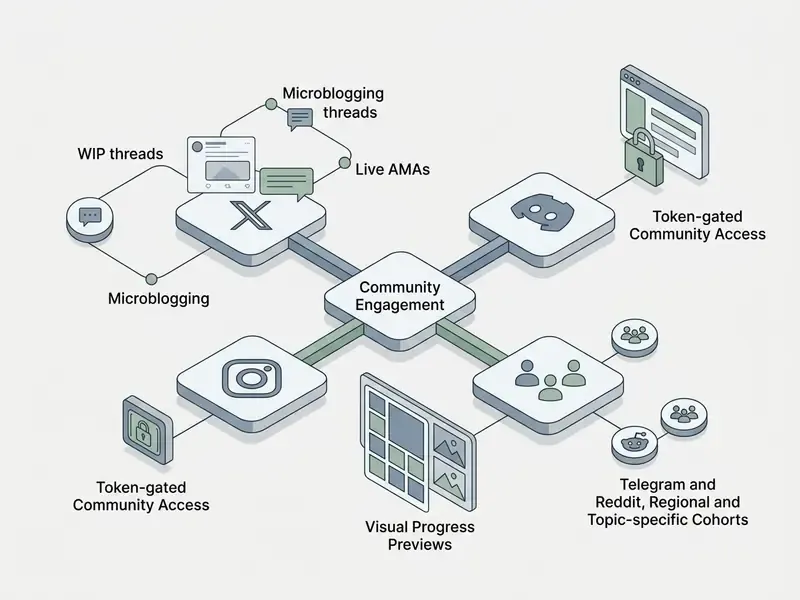
Visibility for an nft collection comes from direct audience engagement, transparent creative documentation, and a consistent project narrative across channels.
Present an NFT Collection as a Cohesive Project
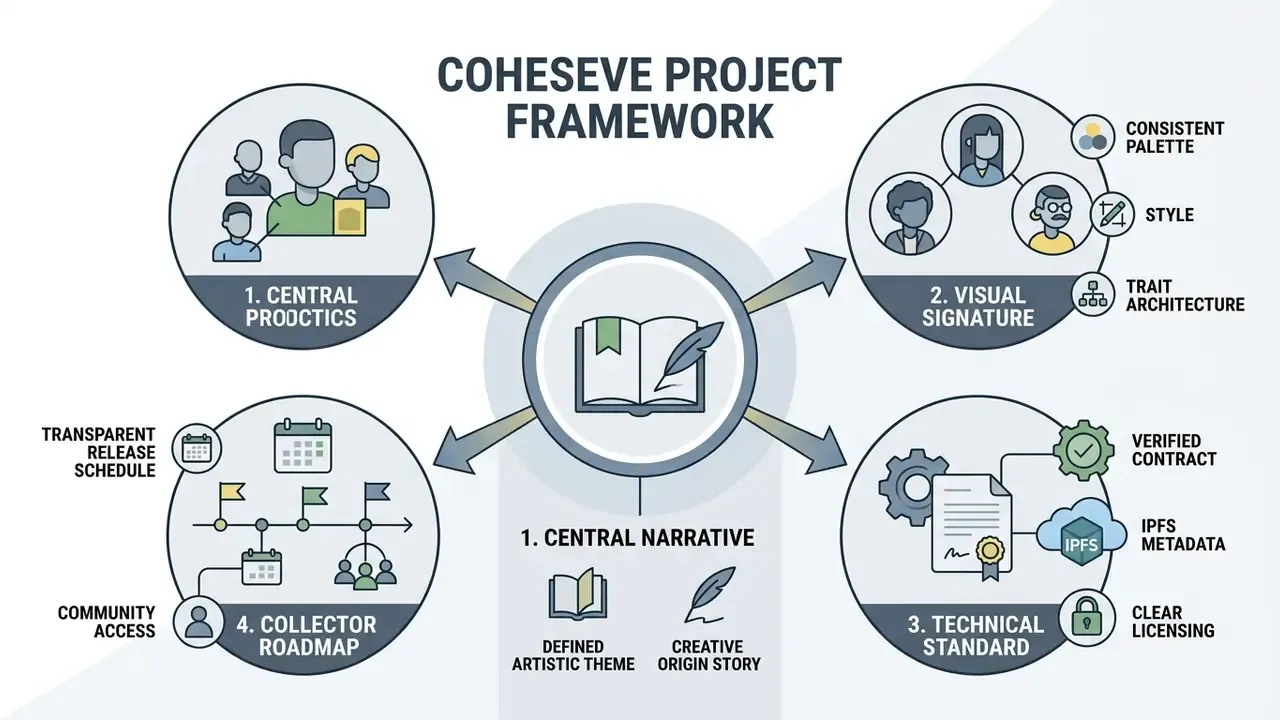
Successful nft projects present a unified brand identity, a clear artistic narrative, and an explicit framework buyers can read in one pass.
«Wallets are more likely to explore collections whose visual characteristics resemble their existing holdings; the model quantifies both exploration probability and a visual similarity score.»
FAQ: Gas, Rights, Storage, and Costs
How much does it cost to create an NFT?
Cost depends on network and platform. Minting on Solana or an Ethereum Layer-2 can cost well under one dollar, while Ethereum mainnet minting has ranged from a few dollars to several thousand under extreme congestion. Add marketplace commission (0%–15%), any listing fee, and external contract audit costs for custom deployments.
Who pays the gas fee?
With standard minting, the creator pays gas at mint time. With lazy minting, on-chain creation is deferred and the gas cost is absorbed into the buyer's first purchase transaction. Gas goes to network validators, not to the marketplace.
Do I lose my copyright when I sell an NFT?
No. Selling an NFT transfers the token, not the copyright. Copyright transfers only via a written, signed assignment or exclusive license, per the Joint USPTO-USCO Report on NFTs and Intellectual Property (2024). Absent such a document, the buyer receives display and resale rights in the token only.
Why store files on IPFS or Arweave instead of a marketplace server?
Because the token is immutable but the link is not. If a centralized host disappears, the token persists while the media reference breaks. IPFS content addressing plus active pinning across redundant providers, or Arweave's pay-once permanence model, keeps the referenced asset resolvable.
Can any image be sold as an NFT?
Technically yes: any file can be minted. Legally, only assets you own or have licensed for commercial tokenization should be minted. Minting third-party copyrighted material without permission is infringement and exposes the minter to takedown and liability.
Is a hardware wallet enough for a corporate NFT treasury?
Not by itself. Single-signer hardware devices concentrate risk in one operator. Institutional holdings should sit behind multi-signature contracts, MPC key sharding, or HSM-backed qualified custody with dual-control approval workflows.
Reference Manual & Contextual Resource Directory
To help digital creators and digital asset managers navigate production workflows, tokenization economics, implementation standards, and comparative tool analyses, review the following categorized resources:
- Asset Production & Commercial Rights Comparisons For comparative evaluations of generation tools, style accuracy, and commercial usage terms that apply directly to mintable artwork, examine the AI Media Commercial-Use guides. Expect structured breakdowns of style precision, export rights, and business implementation rules across leading generator platforms, the same license clarity you must mirror in your NFT metadata.
- Production Workflow & Pipeline Guides For step-by-step execution manuals, media processing workflows, and multi-format asset transformation pipelines used when preparing files for IPFS upload, consult the AI Media Workflows library.
- Comparative Testing & Tool Matrices To review benchmark performance evaluations, feature matrices, and tool selections across free and premium creation software before building a collection pipeline, refer to the AI Media Comparison Matrices.
- API & Automation Protocols Developers and technical teams building automated minting pipelines, trait-generation scripts, or media engines integrated into dApps can inspect configuration manuals in the AI Media API Guides.
- Benchmark & Review Proof Data To evaluate verified performance data, output quality benchmarks, and reproducible test results for media processing models, explore AI Media Benchmarks and Review Proof.
- Cost, Fee, and Royalty Calculation Frameworks To model gas exposure, platform commissions, royalty splits, audit spend, and operational margins before minting, use the standardized tools at calculators.
- Provenance & Duplicate Detection To monitor unauthorized reuse of your minted imagery and prepare DMCA evidence packages, compare accuracy and discovery features in the reverse image search tool review.
Appendix A: Pre-Mint Evidence Pack and Control Ownership
For a creator, the launch is the finish line. For a regulated issuer, the launch is the moment evidence starts mattering. Keep the following artifacts assembled before the first on-chain write, and name an owner for each one:
| Evidence Artifact | What It Proves | Typical Owner |
|---|---|---|
| Rights clearance file (licenses, font and sample receipts, model releases) | The minted asset is lawfully ours to tokenize | Legal / IP counsel |
| Smart contract audit report and deployment hash | Mint caps, role privileges, and replay protection were reviewed pre-launch | Engineering plus external auditor |
| Custody policy and signer list (m-of-n approvals) | No single person can move or re-point the asset | Treasury / security |
| Storage proof (CID, pinning providers, independent gateway test) | The referenced media resolves and is redundantly pinned | Platform engineering |
| Fee and pricing model with volatility buffer | Net proceeds were modeled, not guessed | Finance |
| License text published in metadata and listing | Buyers were told which rights transfer | Legal plus marketing |
| Incident and takedown playbook | Plagiarism, phishing, or a failed drop has a defined response path | Risk / operations |
Two practical notes. First, store this pack where internal audit can retrieve it without asking the project team, otherwise it is not evidence, it is folklore. Second, unresolved questions remain: royalty enforceability varies by marketplace, long-horizon pinning economics are still unsettled, and secondary-market license propagation is largely untested in U.S. courts. Where evidence is incomplete, say so in the listing rather than implying certainty.
A note on earlier versions: passages on trait premia and collector visual affinity originally appeared without attribution and have since been sourced; the marketplace fee list was expanded with a verification caveat; and the sales-format list, once limited to fixed price plus English and Dutch auctions, now includes open-bid / no-reserve.