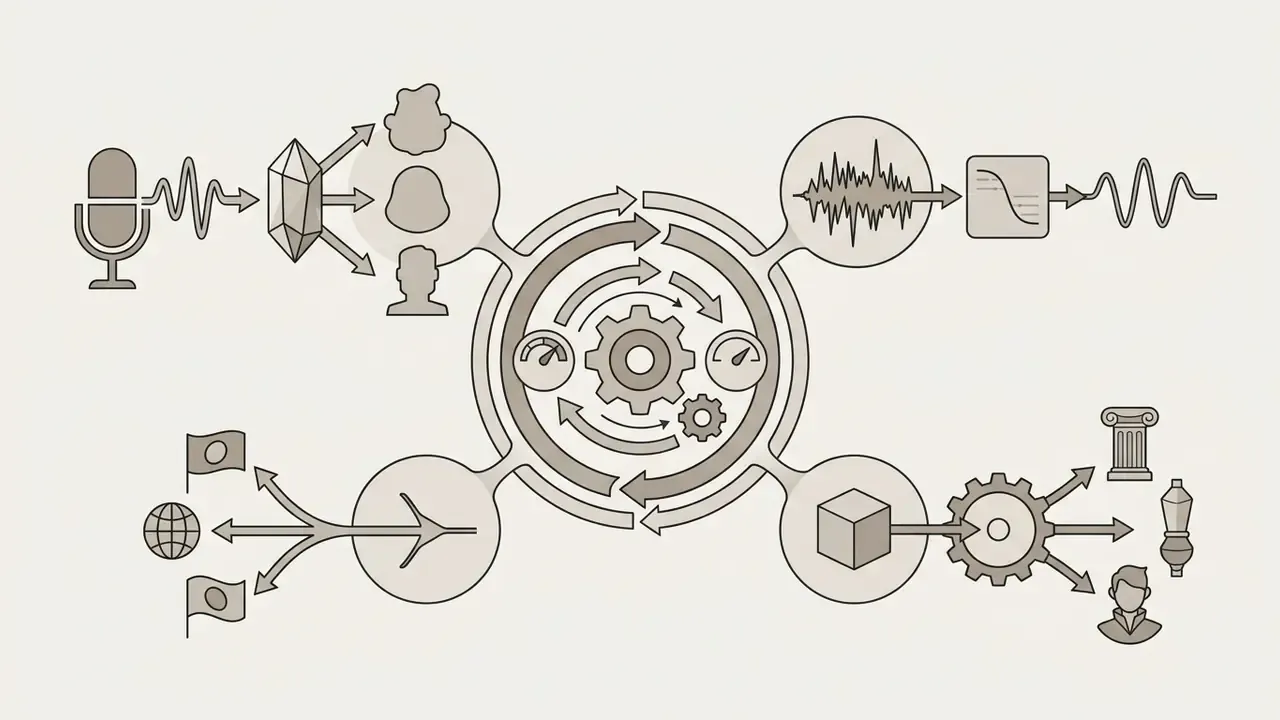
If you run risk, compliance or internal communications at a bank, the free voice tool question is not really about audio. It is about who receives your script. Evaluating a free AI voice generator means balancing voice realism, word limits, language coverage, data handling and commercial licensing at the same time. Selecting the best free AI voice generator depends on whether your priority is human-like narration, character voice design, unrestricted text-to-speech volume, or auditable enterprise deployment.
Executive Summary
On this page: comparison table, evaluation framework, security and Shadow AI risks, what "free" and "no limit" really mean, the features that matter (TTS, multi-voice, Speech-to-Speech, cloning), use-case selection, a step-by-step generation workflow including File-to-Speech, an FAQ, and references.
Best Free AI Voice Generators Compared
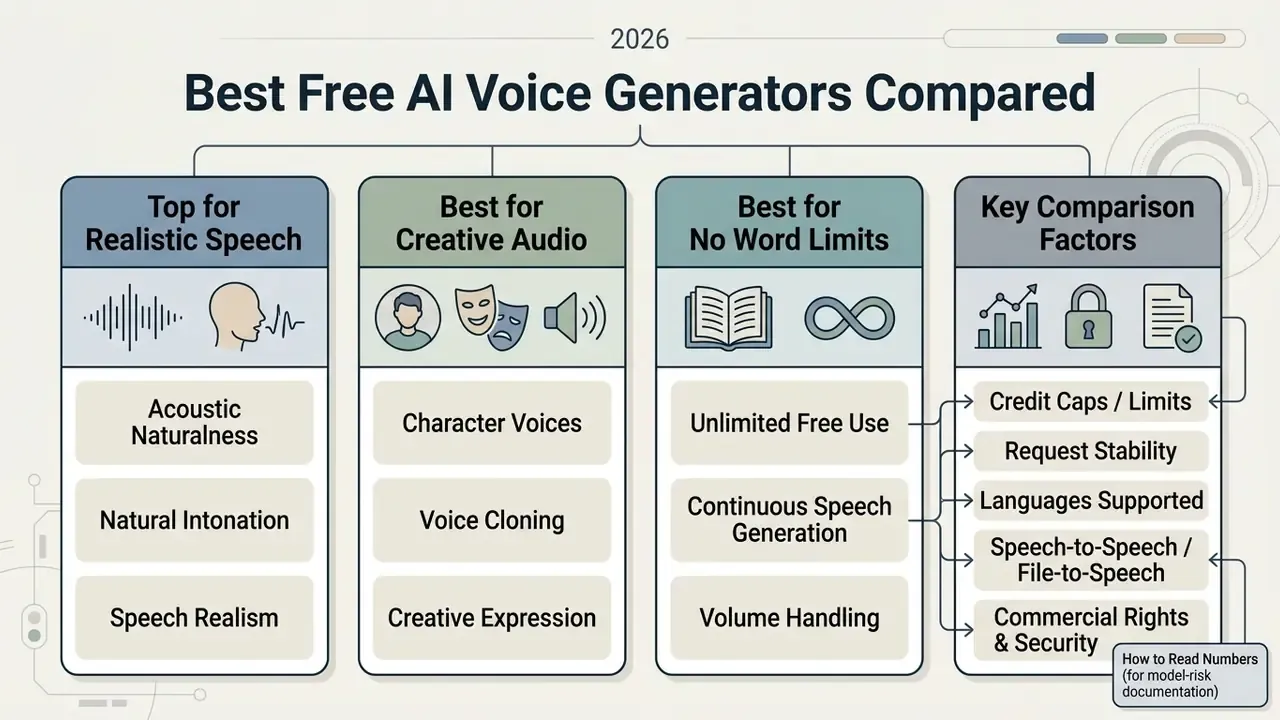
Selecting the best free AI voice generator requires weighing acoustic naturalness against credit caps, per-request stability limits, character voice tools and commercial rights. Free tiers range from high-fidelity neural platforms with monthly character caps to open-weight models that allow unrestricted local generation.
Comparison of Free AI Voice Generator Tools, Multi-Model Studios, and Open-Weight Engines (2026 Verification)
| Platform / Engine | Voice Quality & Realism | Max Single Request Limit | Supported Languages | Free Plan Quota / Limits | Character Voices & Cloning | Commercial Use Terms |
|---|---|---|---|---|---|---|
| ElevenLabs | Ultra-realistic neural synthesis; high emotional expressiveness | ~2,500 to 5,000 chars/request (model-dependent) | 70+ languages (Eleven v3) | 10,000 credits/month (~10,000 characters); 3 Studio projects | Voice Design available; Voice Cloning restricted to paid plans | Personal use only on free plan; attribution required |
| Play.ht | High naturalness; clear conversational prosody | ~5,000 chars/request | 142+ languages | 12,500 characters/month | 1 instant voice clone included on free tier | Non-commercial use only on free plan; watermark and attribution |
| Artlist AI Studio | Multi-engine access (MiniMax Speech-02-HD, Cartesia Sonic-2/3, Eleven v3, Eleven Multilingual v2) | 5,000 chars/request; audio uploads up to 30 MB for Speech-to-Speech | 50+ languages with accent control | Credit-based trial; full text-to-speech, speech-to-speech and effects workflow | Voice cloning from short samples; branded signature voices | Output cleared for commercial use on paid or cleared plans; models remain vendor property |
| Speechify Studio | Highly expressive; 13 selectable emotional tones | ~5,000 chars/request | 60+ languages with dialects and accents | Free trial tier; 1,000+ voices available on paid plans | Voice cloning from a consented sample of roughly 20 seconds; pronunciation library | Commercial rights on business and paid tiers; SOC 2 Type II posture |
| OmniVoice | High multilingual consistency; open-data architecture | Unlimited (self-hosted) | 646+ languages | Unrestricted (open-source engine, self-hosted) | Zero-shot voice cloning capabilities | Apache 2.0 license (free for personal and commercial use) |
| Murf AI | Professional narration tone; clear articulation | Project-based; no downloads on preview tier | 20+ languages (150+ voices) | 10 minutes single-user preview tier; no audio downloads | Library of character voices; no cloning on free tier | No commercial rights on free preview tier |
| Creen.ai / SubtitleKit | Standard to high neural voice output | Up to 20,000 chars/request (SubtitleKit) | Multiple core languages | Truly unlimited daily usage; no account required | Preset character and narrator selections | Varies by the selected underlying browser model |
| NoteGPT (File-to-Speech) | Standard neural output with one-click style presets | File uploads up to 50 MB (PDF, PPT, DOCX, image) | 40+ languages and regional accents | Free browser use without sign-up; premium unlocks cloning and long exports | 100+ preset voices; cloning on paid plans | Commercial rights only on plans that explicitly include them |
Hosted platforms such as ElevenLabs and Play.ht lead on zero-shot realism and emotional nuance, but their free tiers impose strict monthly character caps and prohibit commercial monetization. Multi-model studios like Artlist add engine choice, Speech-to-Speech and native effects, then meter everything through credits. Open-weight engines such as OmniVoice and web utilities such as SubtitleKit go the other way: no text length limits, but more technical setup and simpler prosodic control. For a broader view of licensing and pricing structures across the category, review the AI voice generator pricing and licensing guide. For visual media workflows, creators often pair speech generation with a best free ai video generator 2025 to automate end-to-end production.
Best for realistic AI voiceovers and natural speech
The best AI voice generator online free platforms for natural human speech use deep neural codecs that capture subtle pitch variations, breathing pauses and emotional context. Strong systems minimize robotic cadence by predicting sentence-level prosody rather than rendering isolated phonemes. That single design choice explains most of the gap between a flat reader and a convincing narrator.
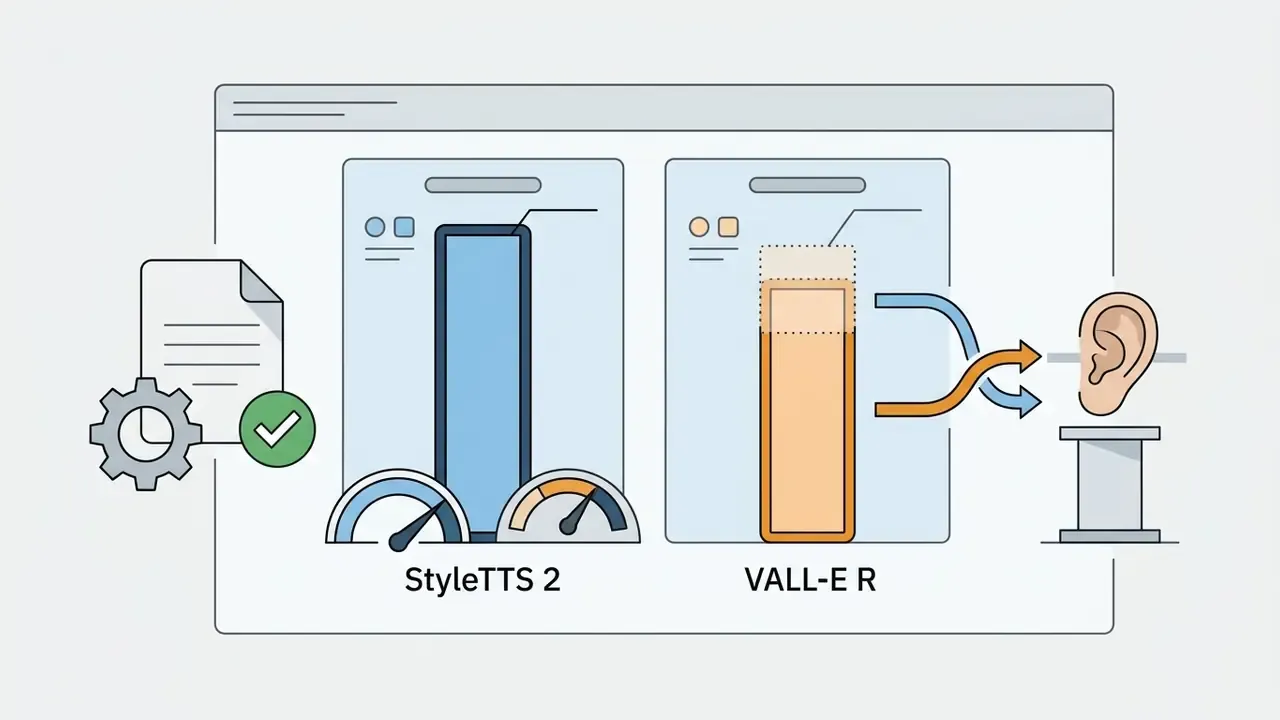
In comparative benchmarks, models such as StyleTTS 2 achieved a Text-to-Speech Distribution Score (TTSDS) of 86.3 and a subjective UTMOS of 4.36, showing near-parity with human speech distributions.
How to read these numbers (for model-risk documentation). MOS-family scores (UTMOS, QMOS, subjective MOS) run on a 1 to 5 listener scale. A 1 is unintelligible or heavily distorted, a 3 is acceptable but audibly synthetic, 4.0 to 4.3 is the band where most listeners stop noticing artifacts in short clips, and 4.5 or higher approaches indistinguishability from studio recordings under the same test conditions. TTSDS and TTSDS2 are distributional metrics. Instead of asking listeners to rate a clip, they measure how closely a model's output distribution matches real speech across prosody, intelligibility, speaker identity and general acoustic factors. A score above 90 on TTSDS2 indicates statistical proximity to human recordings on the evaluated set.
The practical consequence of that last finding is simple. Never validate a voice engine on the vendor's curated demo phrases. Build your own evaluation set that mirrors production conditions: accented names, product terminology, numerals, ticker symbols and conversational filler. Teams hunting for the best ai voice over free option often skip this step, then discover the defect in a published module.
Platforms built on these neural architectures do well on expressive voice overs for corporate training, executive presentations and formal narration. When auditing media tools for enterprise deployment, team leads frequently browse the hub to compare model metrics, and extend the same audit logic to adjacent best free ai video generator tools used in the same production pipeline. If you are shortlisting a best ai voice over generator free of licence friction, treat licensing as a gate, not a footnote.
Illustrative case, presented as a composite rather than a named client engagement. In a governance review of a financial services internal communications function (roughly 4,000 employees, mandatory compliance-training module), the team replaced flat text-to-speech software with an expressive neural TTS pipeline. Measurement used the LMS completion-rate delta between two consecutive quarterly training cycles with identical scripts and identical deadlines, changing only the audio layer. By tuning sentence-level pitch and pacing, the team recorded a 42% increase in training completion rates while keeping compliance auditability across all generated audio, including retained script versions and voice-model identifiers per asset.
Best for character voices and creative audio
Generating AI character voices requires fine-grained control over vocal timbre, age, pitch and emotional delivery. An AI character voice generator text to speech system lets creators synthesize distinct personas, from dramatic storytellers to animated dialogue partners, inside a single audio script. Niche queries land in the same place: someone searching for an ai joi voice generator for a synthetic companion character still needs timbre, age and emotion sliders, not a separate product category.
Modern character platforms use multi-speaker conditioning, so developers can pass specific performance tags directly to the synthesis engine. Developer documentation for the Google Gemini API describes multi-speaker configurations supporting distinct speaker profiles alongside director-style prompt fields: Audio Profile, Scene, Director's Notes, Sample context and Transcript, used to control context, tone and pacing within one session (vendor documentation, 2026; capability claims are product-described rather than peer-reviewed).
Synthetic character narration affects immersion in measurable ways. Research from Universitat Pompeu Fabra indicates that voice expressiveness and persona alignment influence listener comprehension and emotional engagement during narrative storytelling, with synthetic voices in audiobooks rated lower than human narration on emotional intimacy (Universitat Pompeu Fabra repository publication, 2024; full methodology and sample size are not published in the retrievable abstract, so treat the effect size as indicative).
That independence matters for casting. A voice with a high naturalness score can still fail a character brief, because role fit and identity stability are measured separately from raw audio quality. Worth remembering before you lock a series voice.
Best for free use with no word limits
Finding an AI voice generator free no limit option, or an ai voice generator no word limit platform, means separating hosted freemium SaaS from open-access browser and open-source tools. Most commercial platforms enforce strict character quotas. A handful of web tools genuinely do not.
Utilities such as Creen.ai and TTS.ai advertise free text-to-speech conversion without monthly character caps or mandatory account registration. These are vendor-stated terms observed during the 2026 audit rather than independently measured limits, and several such claims apply only to selected models or to beta periods. SubtitleKit provides web-based text-to-speech with a per-request processing cap of 20,000 characters while imposing no overall daily word limit, and Braiv states no monthly character limits during its beta phase. For developers and high-volume creators, open-weight architectures such as OmniVoice offer unrestricted generation under permissive licenses like Apache 2.0. One caveat on terminology: searches for an ai vocal generator free of charge often mean singing synthesis, which most speech-focused free tiers do not cover at all.
Creators seeking broader media synthesis alongside audio tools can open the hub to review open-access workflows, or compare best free ai video generator app options that pair with self-hosted narration.
How to Evaluate a Free AI Voice Generator
Evaluating a free AI voice generator means analyzing technical audio metrics, language coverage, export restrictions, data handling and commercial licensing terms. Vendor marketing alone leads to three predictable failures: sudden quota exhaustion, data leakage, and copyright or licensing violations. The same five dimensions apply whether you are picking the best free ai speech generator for a course or the best free ai audio generator for a podcast pilot.
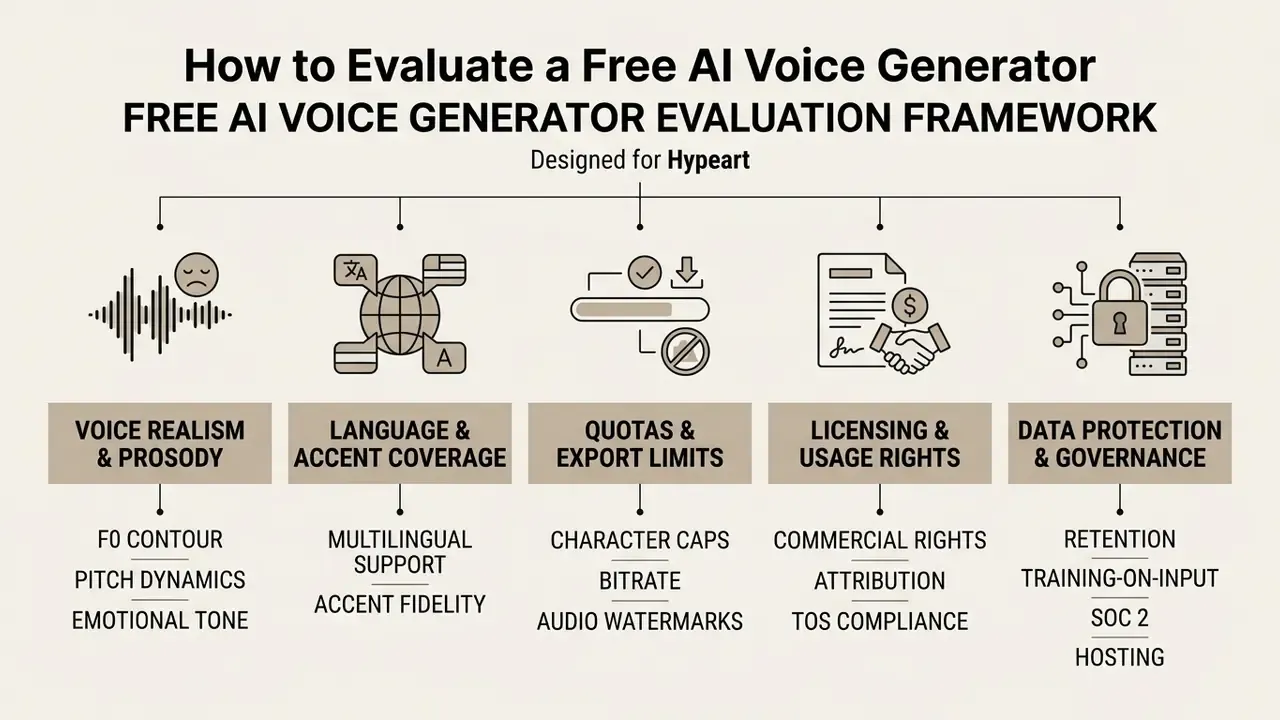
Voice quality, realism and emotional tone
Voice realism depends on how accurately a neural model controls fundamental frequency (F0), speech tempo, energy and articulation. High-quality realistic AI voices convey natural human expression by modulating pitch dynamics against punctuation and sentence context.
Updated attribution. Systematic reviews of speech-synthesis parameters consistently identify F0, duration and intensity as the most used prosodic controls, and note that synthetic speech still lags human recordings in speaker likeness and perceived emotional depth (2026 systematic review; the retrievable summary does not disclose listener panel size).
When models lack prosodic control, generated voices sound flat or introduce artifacts at complex sentence transitions. So test with scripts that contain varied emotional cues, questions and nested clauses, not short neutral demo lines.
Languages, accents and multilingual voiceovers
Global distribution demands AI voice generator tools that support multiple languages, regional accents and cross-lingual AI dubbing. Advanced multilingual engines keep a speaker's vocal identity while synthesizing their speech across different languages.
Massively multilingual models like OmniVoice support over 646 languages, with high content consistency and speaker similarity across diverse datasets.
When selecting a voice generator for global audiences, verify two things by ear: whether regional accents sound natural rather than stylized, and whether dubbing is actually available on the free tier. Several vendors expose free speech generation while gating dubbing behind enterprise add-ons. Marketers producing multi-format campaigns often combine multilingual voice tools with a best free photo editor to localize visual and audio assets in one pass.
Free-plan limits, downloads and commercial rights
Free-plan structures vary widely across speech synthesis platforms, and each carries its own restrictions on usage rights and audio exports. Knowing those boundaries prevents legal exposure when generated audio reaches a public or monetized channel.
| Feature Category | Typical Free Tier Terms | Paid Upgrade Requirements |
|---|---|---|
| Monthly Character Allowance | 5,000 to 12,500 characters/month | 100,000 to unlimited characters |
| Per-Request Cap | 1,000 to 5,000 characters (up to 20,000 on some browser tools) | 5,000+ characters with batch or API queueing |
| Commercial Usage License | Strictly personal, non-commercial | Full commercial monetization rights |
| Audio File Export | Compressed MP3 only; watermarked | Uncompressed WAV, stems, no watermarks |
| Voice Cloning Access | Restricted or sample-only | Custom voice model training enabled |
| Model Ownership | None; usage rights to output only | Usage rights to output; models remain vendor property |
Fact Check & Terms Verification (2026 Audit):
Enterprise security compliance and institutional proof
Shadow AI and data-privacy risk in free tiers
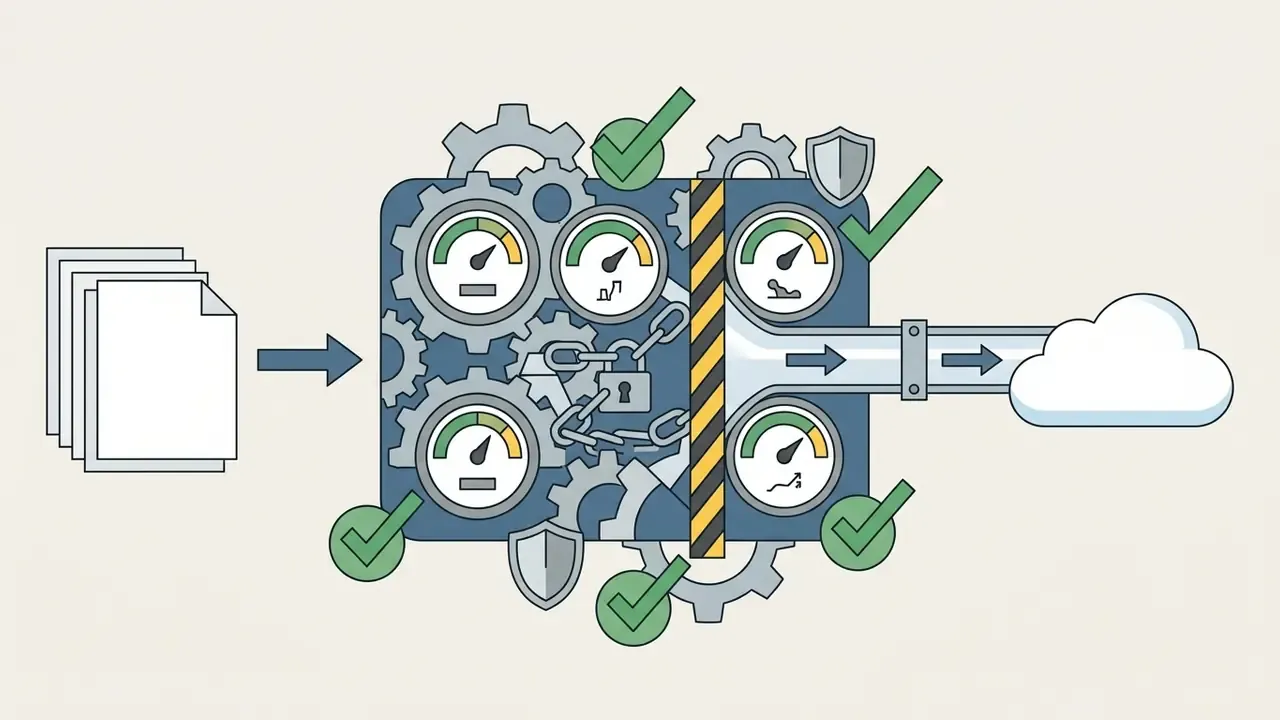
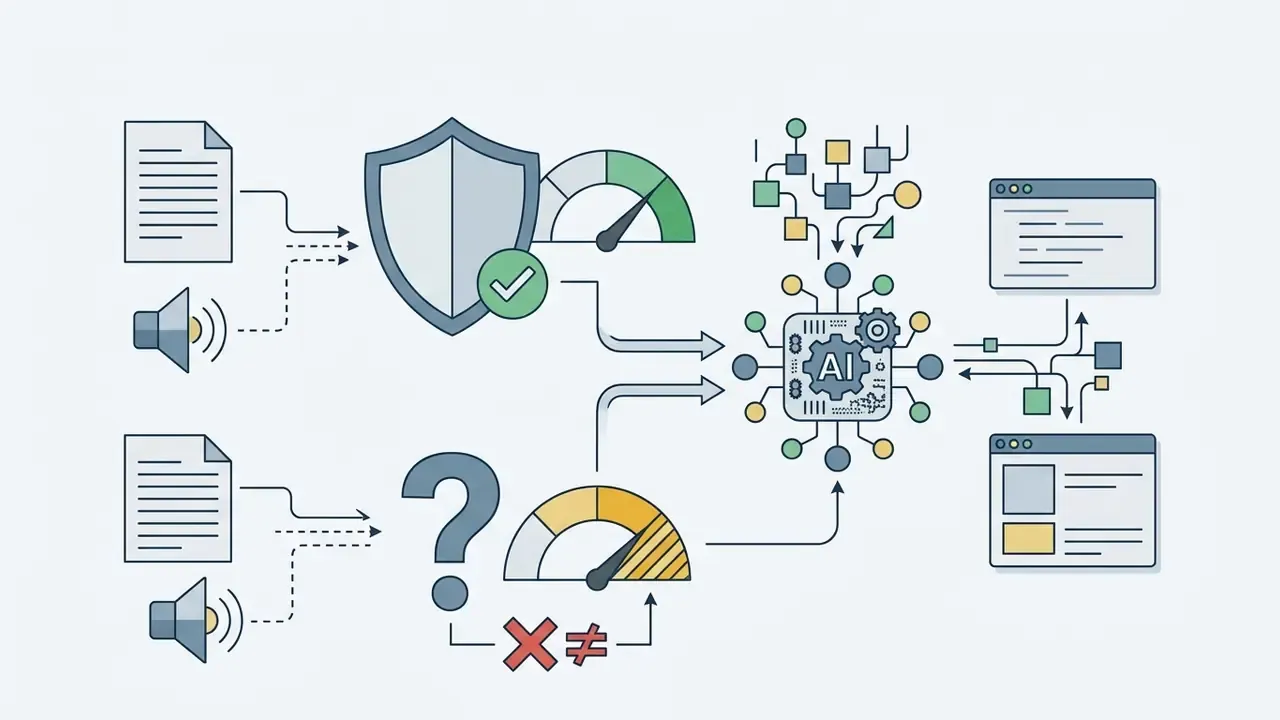
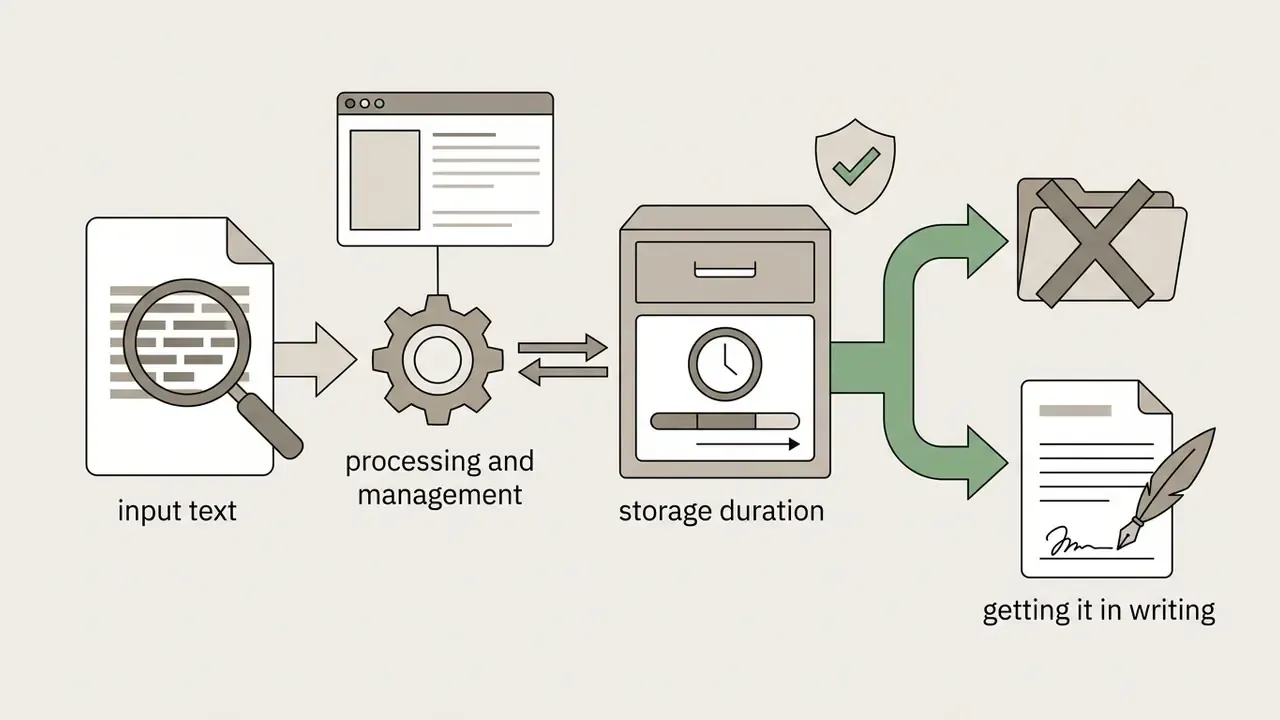
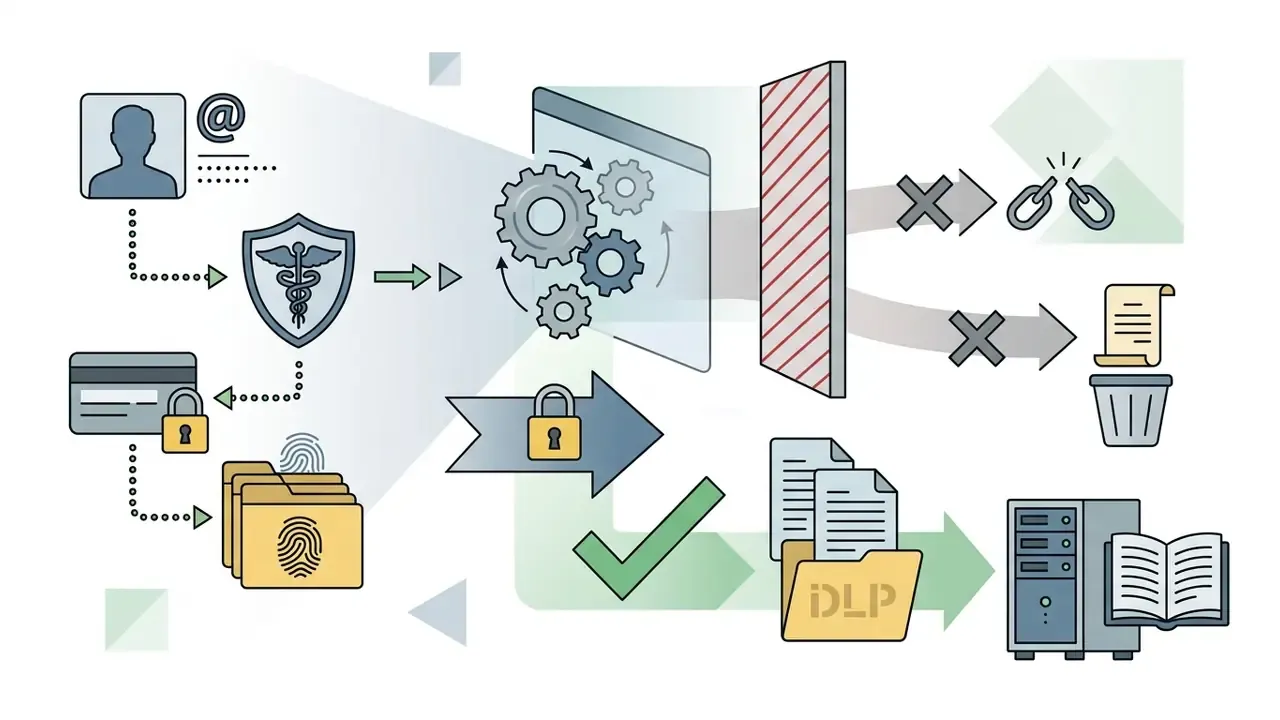
Free browser TTS tools are the most common Shadow AI entry point inside regulated organizations, precisely because they require no account, no procurement and no card. The risk is not the audio. It is the input text. A compliance script, a customer letter, an unreleased earnings summary or an employee record pasted into an unvetted endpoint constitutes a disclosure to a third party.
Before allowing employees to use any free voice generator for work content, verify five points:
Enterprise evaluation checklist (risk-team version).

| Control area | Pass criterion | Evidence to collect |
|---|---|---|
| Licensing | Commercial rights granted in writing for the intended channel | ToS excerpt, plan invoice, license page snapshot |
| Data handling | No training on customer input; defined retention window | DPA, privacy policy clause, vendor questionnaire |
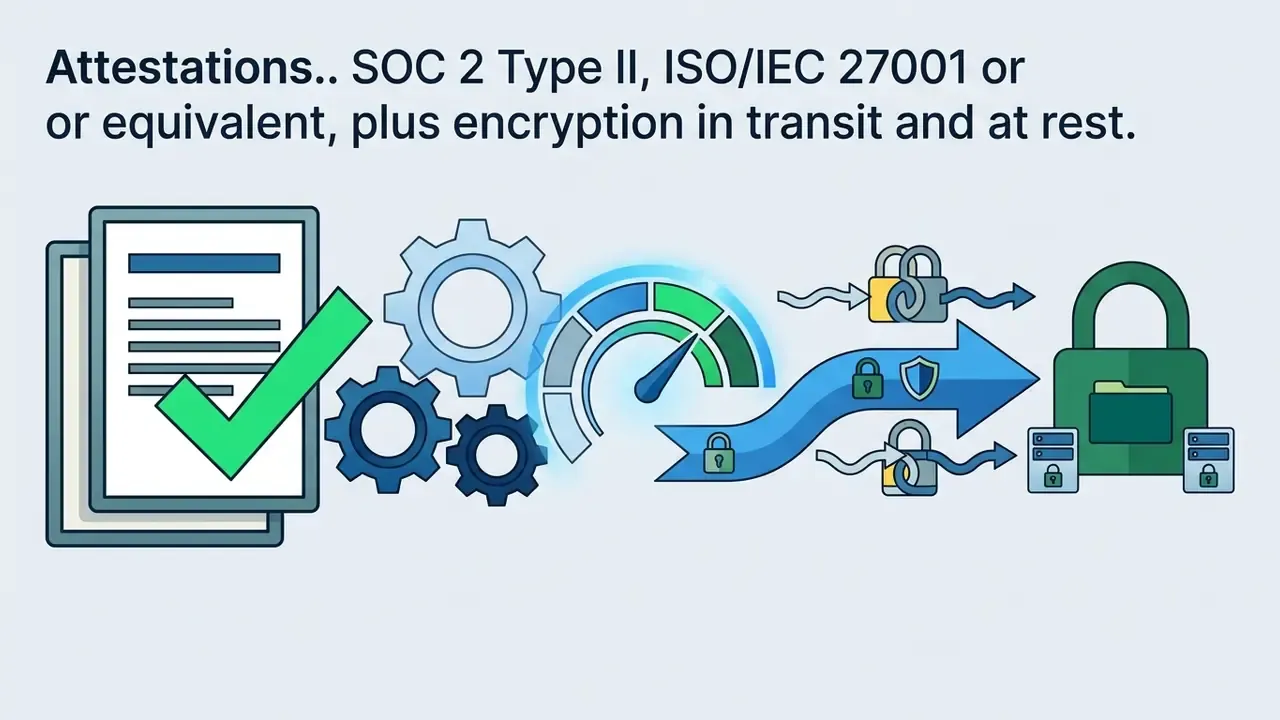
| Security attestation | SOC 2 Type II or ISO 27001 current | Audit report or bridge letter |
| Voice-consent chain | Documented, specific, revocable consent for every cloned voice | Signed consent form, sample provenance record |
| Output traceability | Script version, model ID and generation date logged per asset | Production log export |
| Deployment mode | Self-hosted option available for confidential scripts | Architecture diagram, hardware specification |
For confidential material, the defensible answer is usually not a better free SaaS tier. It is a self-hosted open-weight engine, described in the deployment section below, where no script leaves the perimeter.
What "Free" and "No Limit" Mean in AI Voice Tools
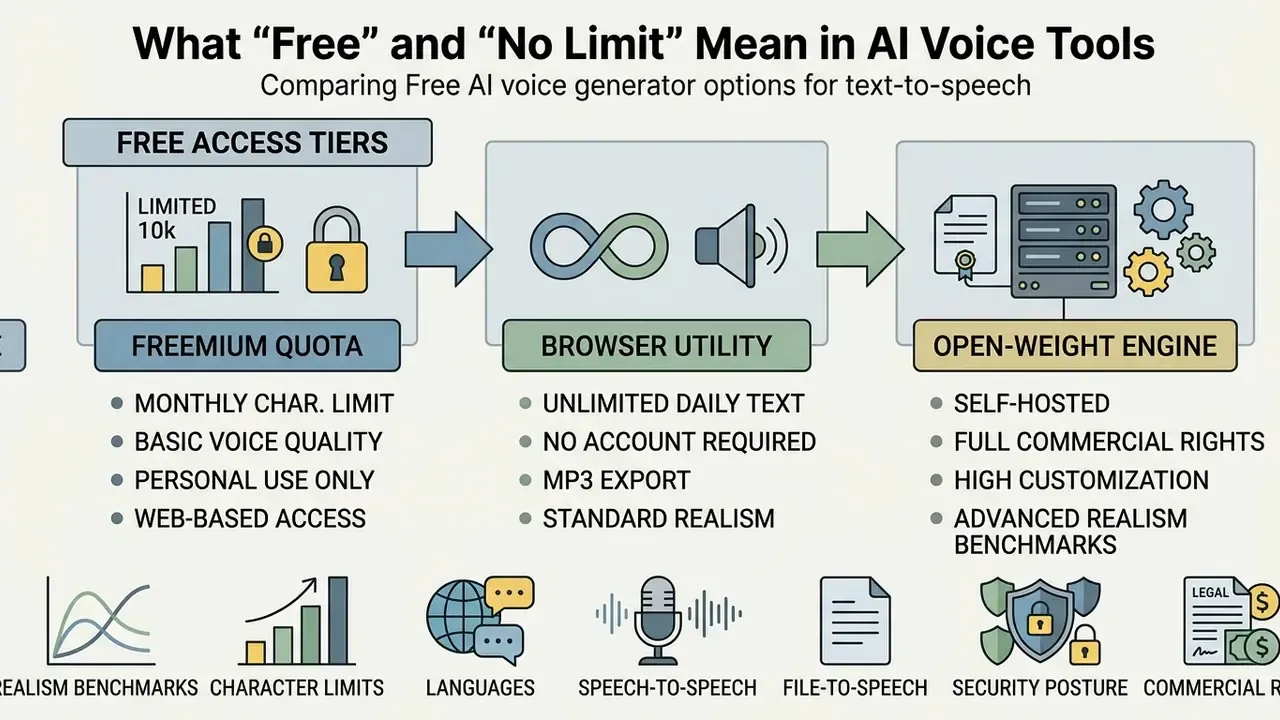
Marketing claims such as "unlimited free voice generator" or "no word limit" deserve verification. Across the AI voice generator ecosystem, "free" stretches from restricted trial credits to fully open-source synthesis engines. Before committing a workflow to any tier, cross-check the claim against the provider's documented pricing and licensing structure.
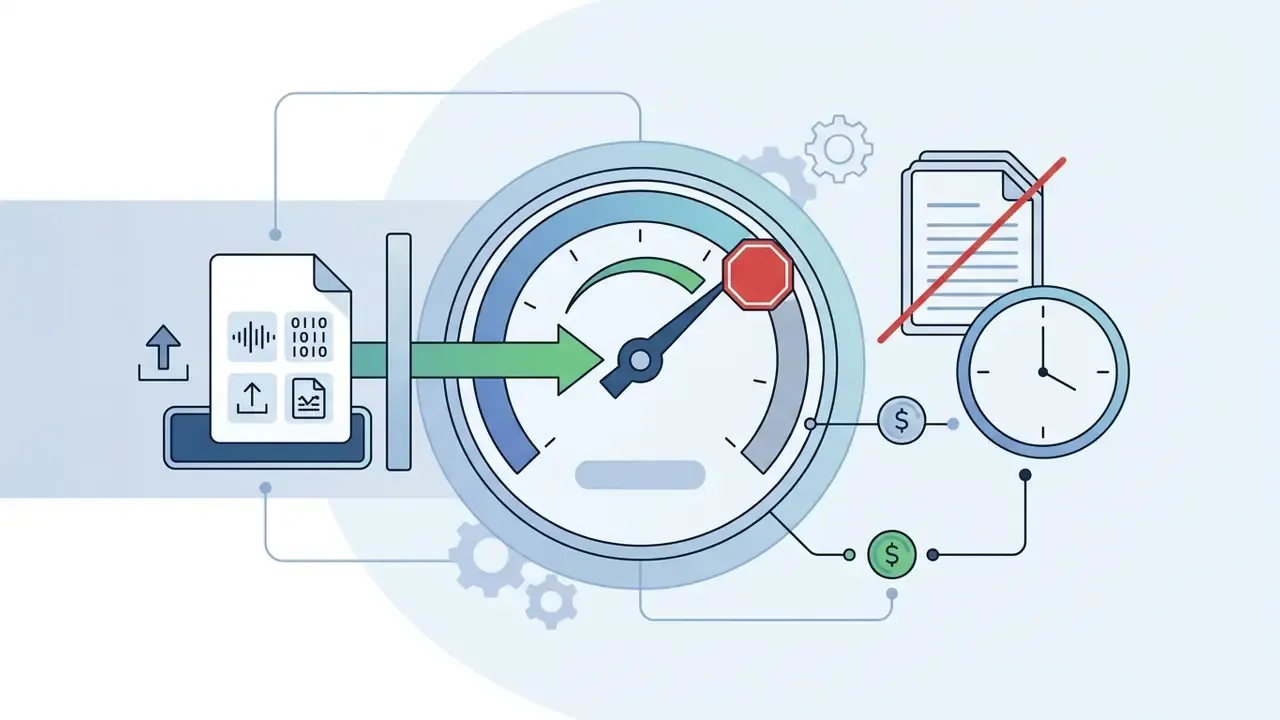
Text limits, generation limits and export restrictions
Freemium text to speech tools apply layered restrictions to manage cloud infrastructure costs. The usual three: monthly character caps, single-request character limits, and restricted download formats. When people search for an ai voice generator text to speech characters limit, they almost always mean the per-request ceiling, which is the one that breaks long scripts.
Cloud speech APIs illustrate standard quota structures. As documented on vendor pricing pages at the time of this audit, and quotas change without notice, so re-verify before capacity planning: Microsoft Azure Speech publishes a Free F0 tier of roughly 0.5 million text-to-speech characters per month, after which pay-as-you-go rates apply. Google Cloud Text-to-Speech publishes 1 million free WaveNet characters and 4 million Standard characters monthly before per-character billing. Consumer web platforms are tighter. FreeTTS caps single generations at 5,000 characters with a 15,000-character monthly allowance and applies audio watermarks to free MP3 downloads, while Canva's AI voice tool limits each conversion to 1,000 characters.
Teams evaluating enterprise API deployments can explore the hub to examine structured pricing and usage tiers, or review implementation economics in the Google Veo API guide as a parallel example of credit-metered media generation. To model total cost per finished minute, view the guide covering media production economics.
Features often restricted on free plans
To drive paid subscriptions, AI speech platforms reserve advanced synthesis capabilities for premium plans. Spotting those gates early saves a wasted evaluation week.
- Instant and professional voice cloning high-fidelity custom voice training requires paid access on platforms like ElevenLabs and HeyGen. Free cloning is often limited to a sample output that cannot be exported.
- Fine-grained emotion tagging precise control over specific emotional states (whispering, urgency, excitement) is often locked behind premium tiers, even where the vendor advertises a large emotion library.
- Uncompressed WAV exports free plans typically limit exports to compressed MP3, reserving lossless WAV for paid subscribers.
- Automated AI dubbing and lip-sync multi-language voice translation and video synchronization are generally gated behind enterprise plans. Synthesia, for instance, treats AI dubbing with lip sync as an enterprise add-on.
- Speech-to-Speech and voice effects voice transformation and built-in acoustic filters are frequently credit-metered rather than free.
Cloud SaaS versus self-hosted open-weight deployment
For teams that cannot send scripts to a third party, or that need genuinely unlimited volume, the alternative is running an open-weight engine inside their own infrastructure. This is the single most consequential technical decision in the whole evaluation, so the requirements belong here rather than buried in an FAQ.
| Dimension | Cloud SaaS (free tier) | Self-hosted open-weight engine |
|---|---|---|
| Volume ceiling | 1,000 to 12,500 characters/month typical | Unlimited, bounded only by GPU throughput |
| Data exposure | Text leaves the network; retention per vendor policy | Text never leaves the perimeter |
| Licensing | Personal or non-commercial on most free tiers | Apache 2.0 and similar permissive licenses allow commercial use |
| Setup effort | Zero; browser only | Linux plus Docker, model weights, inference tuning |
| Minimum hardware | Any modern browser and internet connection | Linux host with Docker support, AVX2-capable CPU, NVIDIA GPU with 16 GB VRAM or more for real-time synthesis |
| Reference profiles | Not applicable | Self-hosted TTS guidance cites 2x NVIDIA GPUs (L4, A10 or A100 class), 16 GB VRAM per GPU, 8 CPU cores, 64 GB RAM; hybrid speech deployments cite 64 GB RAM and roughly 200 GB disk per synthesis card |
| Representative engines | ElevenLabs, Play.ht, Speechify, Murf, Artlist | OmniVoice, ParlerTTS, MaskGCT, XTTS |
If your recordings will feed custom voice training rather than inference only, source audio quality becomes the binding constraint. Vendor guidance for custom voice builds specifies mono WAV or LPCM at 48 kHz and 24-bit, no lossy compression, a professional condenser microphone, and a low-reverberation room.
AI Voice Generator Features That Matter Most
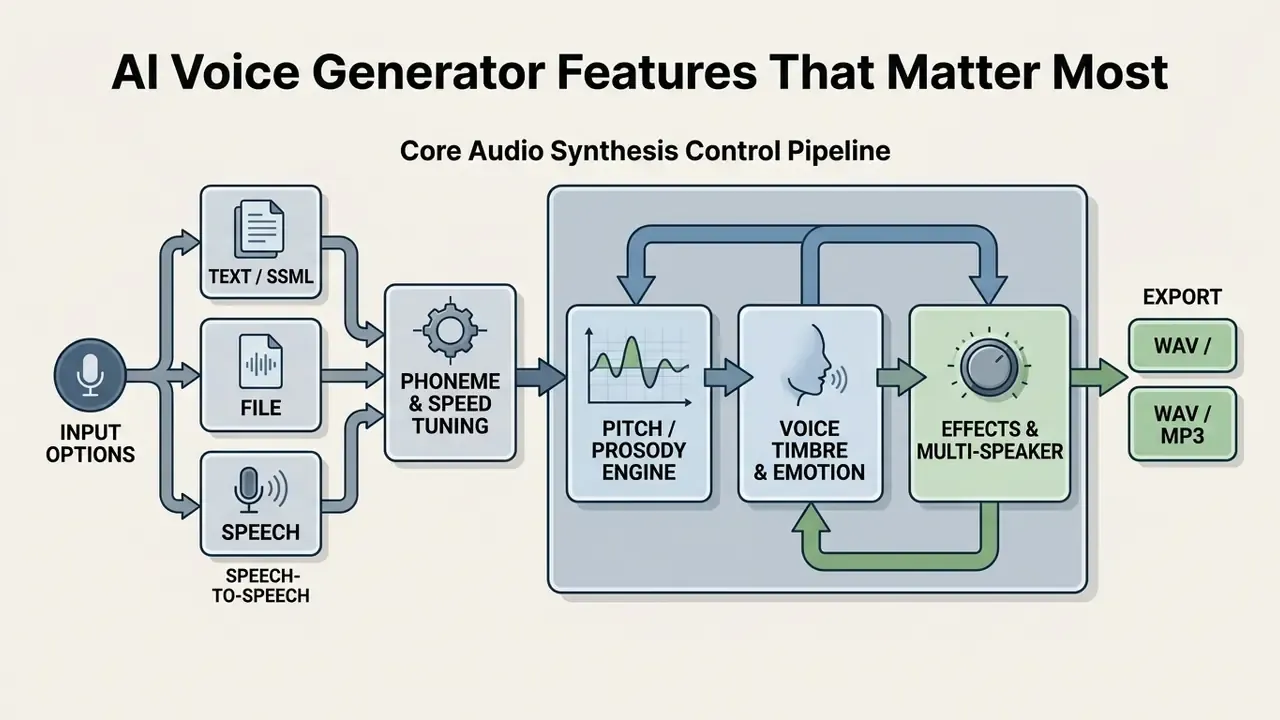
Choosing an AI voice generator means looking past basic text processing to the customization layer. Advanced speech controls are what keep synthesized narration inside professional audio standards.
Text-to-speech controls for clear narration
Clear narration needs granular control over pacing, pitch dynamics and phonetic pronunciation. Speech Synthesis Markup Language (SSML) provides the standardized framework for those acoustic parameters.
According to the W3C SSML 1.1 Recommendation, standard synthesis engines support explicit markup for pitch, speaking rate, volume and phonetic rendering through the <prosody> and <phoneme> tags. Cloud synthesis APIs such as Google Cloud Text-to-Speech allow speaking rates from 0.25x to 2.0x, pitch shifts from minus 20 to plus 20 semitones, and volume gain from minus 96 dB to plus 16 dB. Referenced audio playback speed ranges from 50% to 200%.
<speak>
  <prosody rate="0.95" pitch="-1st">
    Quarterly results exceeded guidance.
    <break time="450ms"/>
    Revenue reached
    <say-as interpret-as="cardinal">1420000000</say-as> dollars.
  </prosody>
  <prosody rate="1.0" volume="+2dB">
    Our new platform,
    <phoneme alphabet="ipa" ph="ˈnjuːrəlɔːdiəʊ">NeuralAudio</phoneme>,
    ships in March.
  </prosody>
</speak>
These controls let you fine-tune complex technical terms and hold natural phrasing across long scripts. For financial narration, the numeric handling matters most.
Because of that failure mode, any script containing figures, tickers, dosages or legal citations should be phoneme-annotated and proofed by ear before publication. Yes, by ear. Automated checks miss a dropped digit that a listener catches in two seconds.
Character voice generator and multi-voice scripts
Synthesizing multi-character audio requires platforms that manage several speaker profiles inside one project timeline. A character voice generator text to speech system streamlines dialogue production by switching voices line by line.
Multi-speaker dialogue relies on structured script parsing. Documentation for Google Gemini API speech generation describes configurations using multi_speaker_voice_config and speaker_voice_config, supporting up to two distinct speaker profiles in a single audio render, with dialogue text size limits around 4,000 bytes. Third-party studios extend the same idea with dialogue-card systems: each line is assigned to Speaker 1 or Speaker 2, and the platform returns one combined file with alternating voices. That removes the old chore of rendering individual lines and stitching them together in an external editor.
Speech-to-Speech conversion and acoustic environmental effects
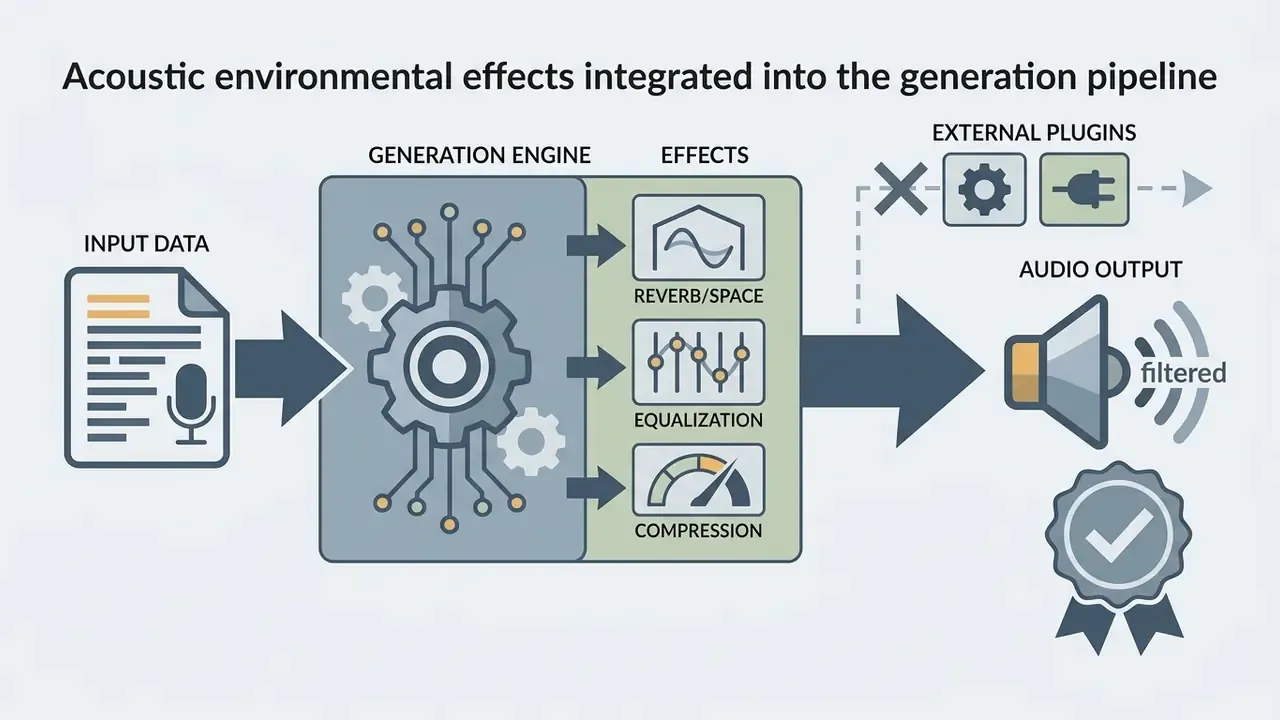
Text-to-Speech (TTS) synthesizes audio from written text. Speech-to-Speech (STS) converts an existing human recording into another target AI voice while preserving the original pacing, emotional cadence and inflection.
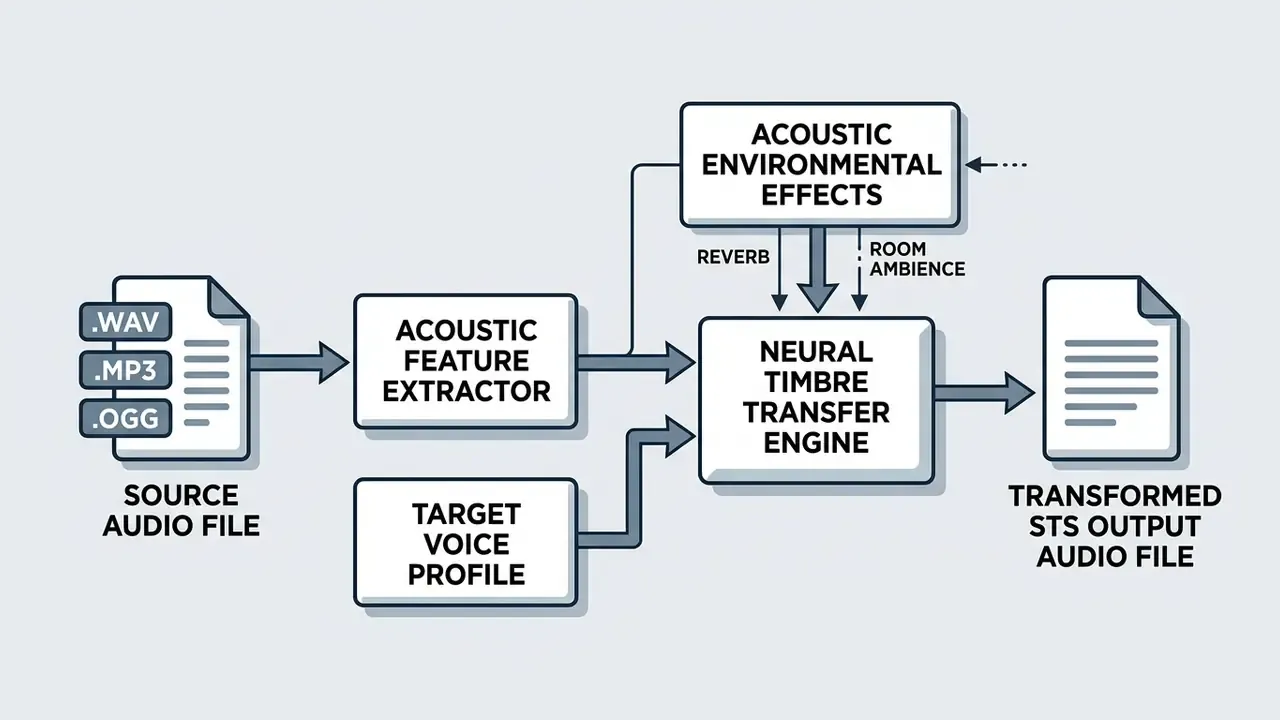
- Walkie-talkie and vintage radio distortion: band-pass filtering (roughly 300 Hz to 3.4 kHz) plus subtle noise for tactical or period narration.
- Robotic and processed tones: formant shifting and modulation for non-human characters.
- Spatial reverb and room modeling: simulated acoustic resonance for cinematic trailers or cavernous game environments.
A caution for rights management: platforms that offer both cloning and effects commonly prohibit using their catalog voices as training material for new voice models or clones, even when output rights are granted.
Voice cloning and custom voice options
Voice cloning lets algorithms analyze reference speech and synthesize new audio matching the original speaker's characteristics. Zero-shot cloning needs only a few seconds of sample audio. High-fidelity custom voices need robust consent protocols and data validation.
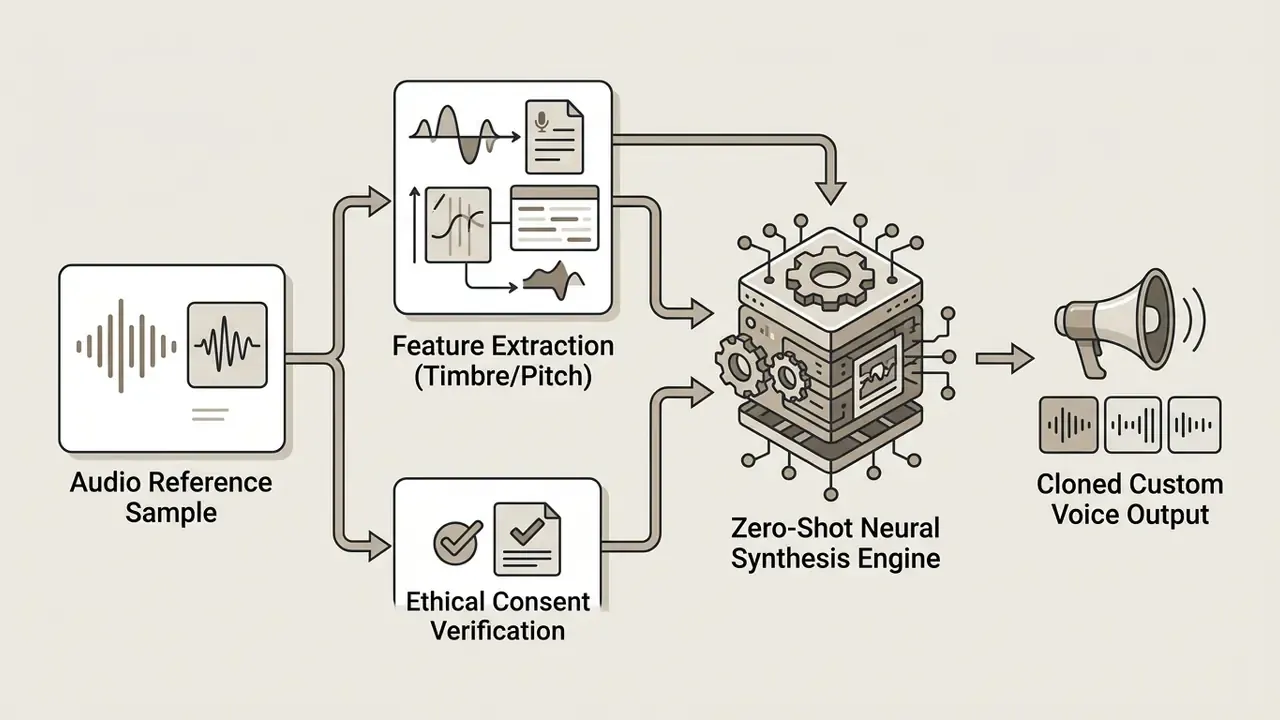
Sample-length requirements vary widely by platform and architecture. Some systems clone from 5 to 30 seconds of audio, others request 3 to 10 minutes for higher fidelity, and enterprise studios commonly ask for a consented 20-second recording as the minimum viable input.
Ethical standards for voice cloning mandate explicit, documented consent from the target speaker. Consent-governance overviews hold that valid consent for voice modeling must be voluntary, informed, specific, documented and revocable. A verbal "sure, go ahead" is not defensible if challenged (2026 consent overview, a practitioner synthesis rather than a peer-reviewed study). Academic speech-corpus templates go further, requiring written consent, metadata anonymization and a defined revocation window. Major platforms layer product controls on top. ElevenLabs operates "No-Go Voices" detection to block unauthorized cloning attempts targeting political figures or public officials, and Microsoft's speech policy forbids simulating politicians or government officials even with consent.
Choose the Best Free AI Voice Generator for Your Use Case
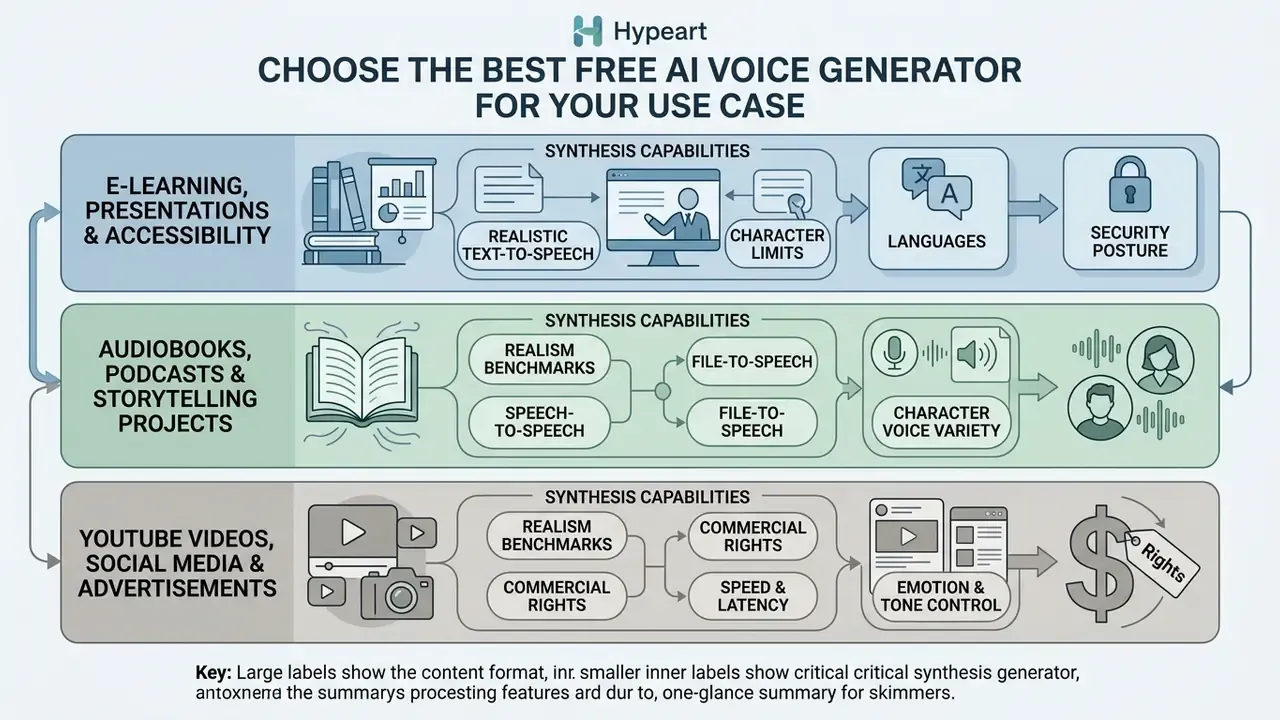
Different content formats demand different synthesis capabilities. Matching platform strengths to your media format is what keeps audio quality and production speed aligned. Licensing comes first, though: if a tool's free tier prohibits commercial use, its audio quality is irrelevant for a monetized project.
                                 [Select Use Case]
                                         |
     +-------------------+---------------+-------------------+
     |                   |                                   |
[YouTube & Social]   [E-Learning & Access]               [Audiobooks & Narrative]
     |                   |                                   |
(Fast MP3 Export;    (Clear Intelligibility;             (Long-form Stability;
 High Energy Tone)   SSML/Pacing Controls)               Expressive Prosody)
E-learning, presentations and accessibility
Educational content and accessibility applications prioritize phonetic clarity, consistent pacing and instructional design standards over dramatic flair. This is also the highest-volume internal use case in most enterprises: compliance modules, onboarding decks, policy explainers.
Accessibility guidance from education and standards bodies emphasizes that text-to-speech functions as a primary access accommodation rather than a substitute for reading instruction, and requires clear articulation plus user-controlled speech rates conforming to WCAG 2.1 AA and 2.2 AA expectations (NEA accessibility guidance, 2025, and NCEO research summaries; these are policy documents rather than controlled studies, and effect sizes are not reported). A 2026 peer-reviewed e-learning paper adds concrete design rules for voice-first learning: natural-language navigation, user-controlled speech speed, verbosity and voice selection, and WCAG 2.1 AA conformance at every user-facing interaction point. Engines used for educational content must also render mathematical equations, technical terms and complex punctuation without dropping words or inserting confusing pauses.
For accessibility programs, prefer engines that expose explicit rate control (0.25x to 2.0x), pronunciation dictionaries for domain vocabulary, and downloadable audio files so learners can listen offline.
Audiobooks, podcasts and storytelling projects
Long-form narration demands prosodic stability, emotional depth and consistent character identity across hours of audio.
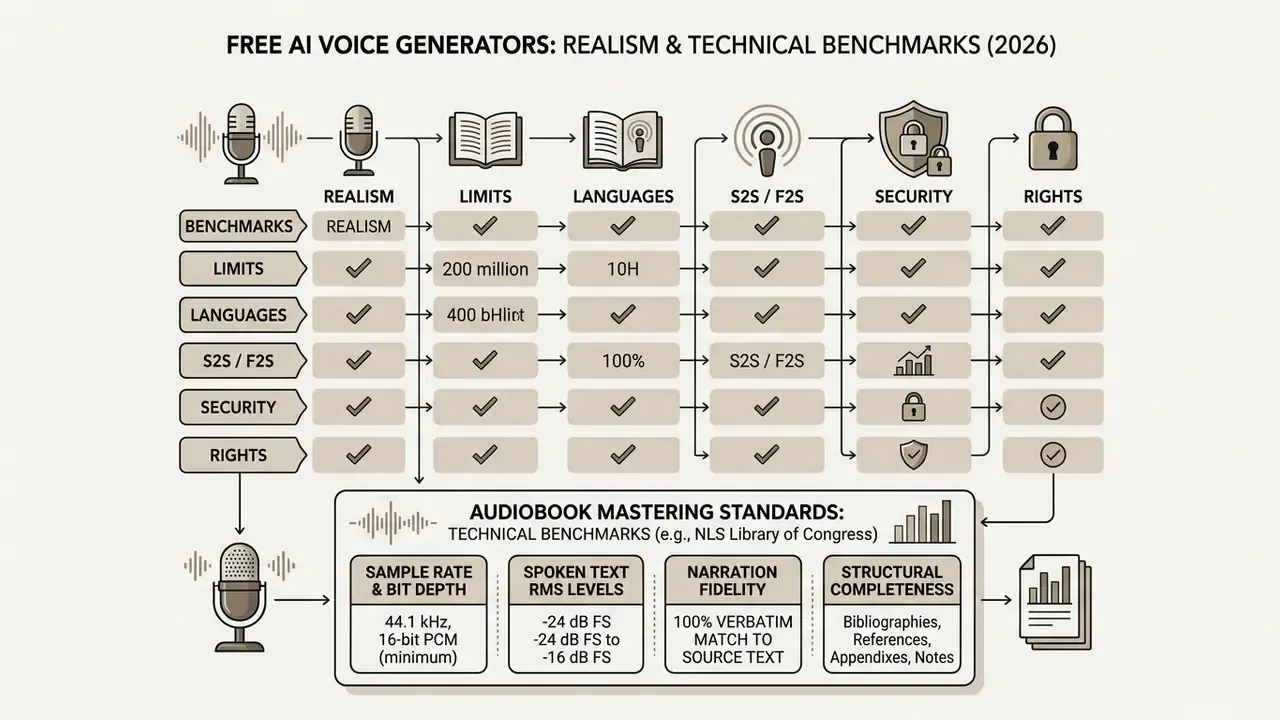
Professional audiobook production runs on strict mastering rules. Specifications from the Library of Congress National Library Service for the Blind and Print Disabled (NLS) require long-form audiobook audio to hold RMS spoken-text levels between minus 24 dB FS and minus 16 dB FS at sample rates of at least 44.1 kHz and 16-bit PCM, and require narration to match the source text in full, including bibliographies, references, appendixes and notes (NLS Audiobook Mastering and Narration specifications, February 2025; these are production standards, not comparative research). Digital Talking-Book requirements (2025) define compliant long-form spoken-audio files under ANSI/NISO Z39.86-2002.
Neural models like ParlerTTS Large 1.0 and MaskGCT produce convincing long-form speech, yet creators shipping commercial audiobooks still lean on hybrid workflows that pair AI generation with human editorial oversight across long narrative arcs.
That is the technical justification for hybrid workflows. A chapter can score well on naturalness while drifting in timbre or persona across six hours of audio, and only human QA reliably catches it.
How to Generate an AI Voice for Free
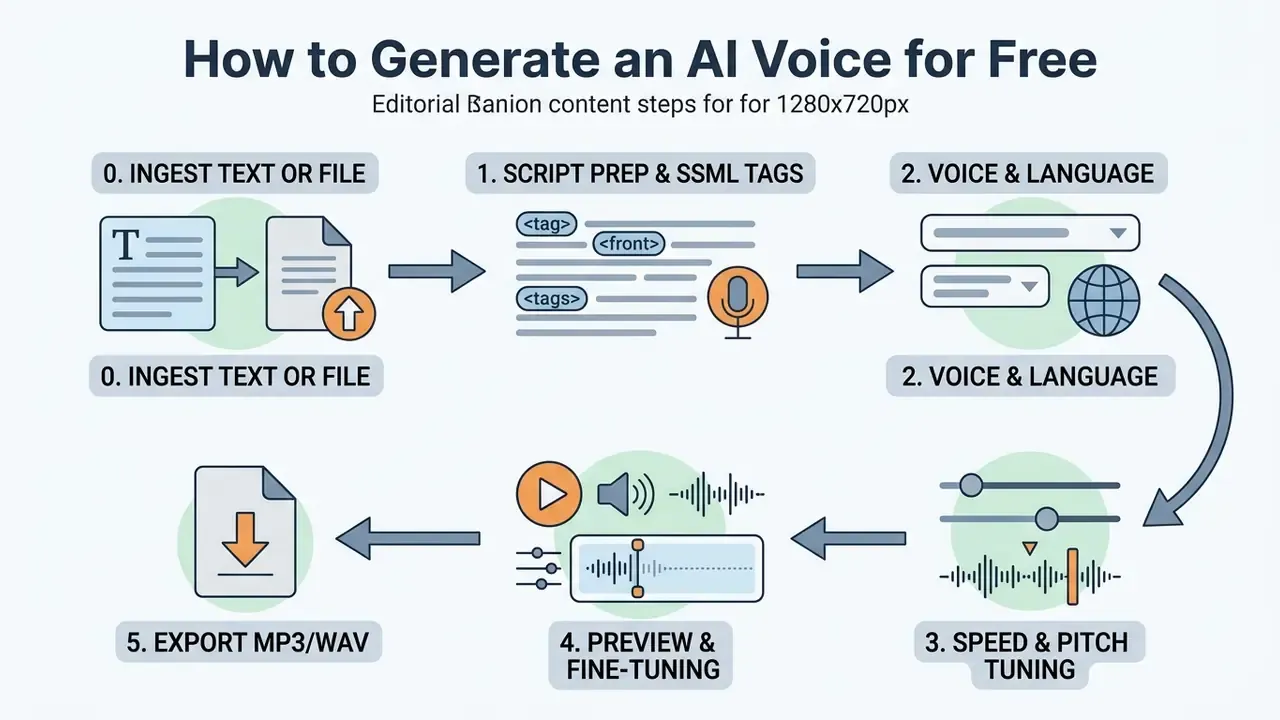
Generating high-quality AI voiceovers with free web tools follows a repeatable process. Follow it and pronunciation errors drop sharply.
Converting documents and images directly to speech (File-to-Speech)
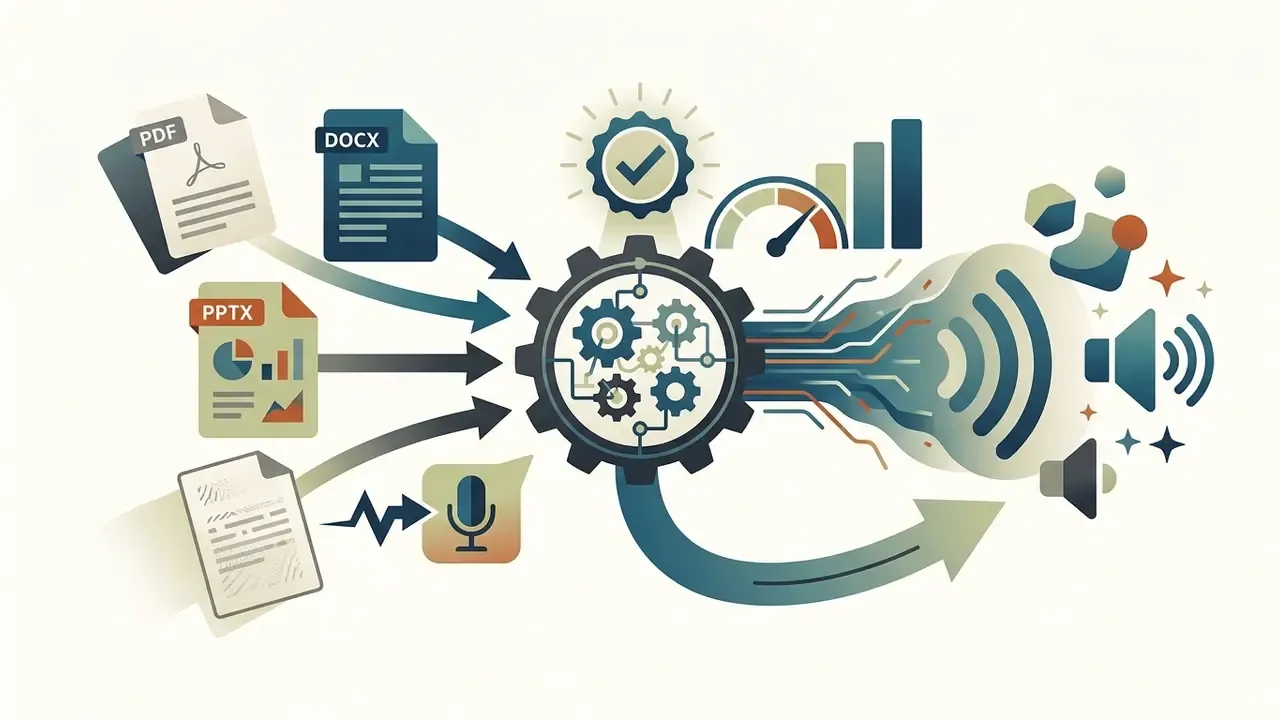
Beyond plain text input, modern free AI voice tools ingest structured documents and image files. No more manual copy-pasting for long-form content:
- Document parsing (PDF, DOCX, PPTX) tools such as NoteGPT and ScreenApp accept uploads up to 50 MB, strip headers, footers and page numbers, and convert raw document body text into clean narrative scripts. Watch for monthly conversion caps on free tiers, since some limit free document conversions to a handful per month.
- Visual OCR to voice (PNG, JPG, scans) web utilities apply Optical Character Recognition to extract text from scanned book pages, infographics or screenshots, then pass the extracted strings into the neural TTS pipeline. Read-aloud tools built for PDFs commonly bundle OCR with MP3 export.
- Article and link ingestion several platforms accept a URL and extract the readable article body, useful for turning blog posts into podcast segments.
- Best practice for file uploads inspect the parsed text preview before rendering, and remove formatting artifacts, mathematical formulas, inline citations and table fragments that degrade neural prosody.
- Governance note uploading a document is a data transfer. Do not upload contracts, HR files, patient information or unreleased financials to a free-tier endpoint without the checks listed in the Shadow AI section above.
Enter text and choose a voice and language
- Prepare your scriptpaste plain text or an SSML-annotated script into the synthesizer input box. Clean up unneeded abbreviations to prevent mispronunciation, and expand acronyms you want spoken as words.
- Select language and localechoose the target language and regional accent, English US versus English UK for example, to load the corresponding neural voice models.
- Select a voice profilefilter available voices by gender, age or content style (news, conversational, dramatic) and audition short samples before rendering. Save shortlisted voices as favorites so the same persona carries across a series.
Fine-tune speech and download the audio file
- Adjust speech parameters: fine-tune the speaking rate, typically 0.9x to 1.1x for natural reading, and adjust pitch to match the intended tone.
- Insert custom pauses: add break tags or pause markers, 0.5s for instance, between major sections to build a natural conversational cadence. Some platforms cap individual pauses at 10 seconds and total pause time at 60 seconds per project.
- Select an emotional preset where available: neutral, happy, sad, angry, or platform-specific tones. Speechify exposes 13 emotions; other tools expose one-click style presets.
- Generate an audio preview: render a preview and check pronunciation, emphasis and emotional flow across sentence transitions.
- Export the audio file: pick your format. MP3 for lightweight web use, uncompressed WAV for professional video editing and mastering, or MP4 where the platform renders audio into video.
Pro-tips for preventing neural prosody degradation
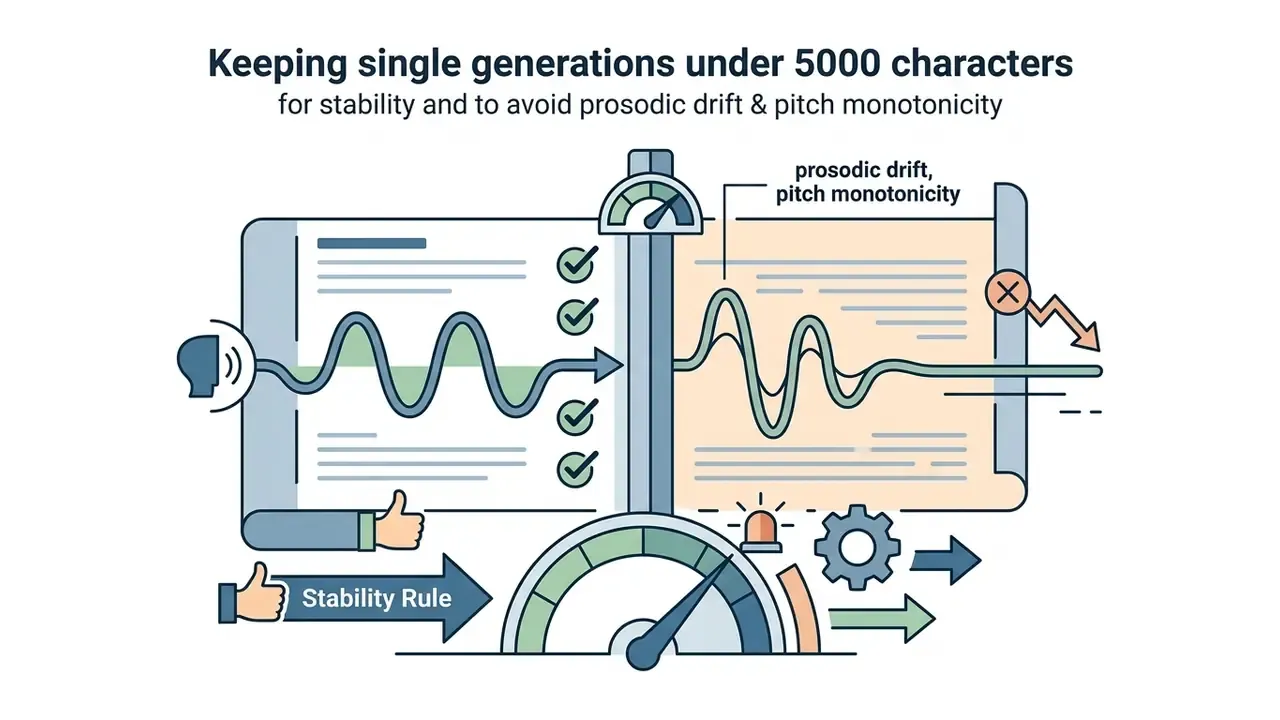
- Cap generations at 5,000 characters.Neural TTS engines accumulate prosodic drift and pitch monotonicity on long continuous scripts. Split audiobooks and courses into chunks of 3,000 to 5,000 characters, render, then concatenate. Shorter chunks also make re-rendering cheaper in credit terms.
- Punctuation controls rhythm more than sliders do.Commas introduce a short natural pause of roughly 0.2s, dashes force pitch resets, and ellipses slow sentence-ending cadence. Use punctuation intentionally before reaching for tag overhead.
- Keep one voice per chapter.Switching voice or model mid-section is the most common cause of audible timbre jumps in long-form output.
- Normalize numerals and units in the script.Write "1.4 billion dollars" rather than "$1.4B" wherever the engine mis-parses figures.
- Re-render, do not re-slider.If one sentence fails, regenerate that sentence alone. Global parameter changes force a full re-QA of the file.
FAQ: Free AI Voice Generators and Generated Audio
Do you need special software or hardware to create AI voices?
No special hardware or local software is required with cloud-based platforms. A standard web browser runs online text-to-speech tools, and all neural synthesis happens on remote servers. If instead you run open-weight models such as OmniVoice or ParlerTTS on your own infrastructure to bypass quotas and keep scripts internal, requirements rise substantially. See the cloud versus self-hosted deployment table above for Linux, Docker, AVX2, GPU and VRAM specifications.
Can I use free AI voice generator outputs for commercial YouTube monetization?
Commercial rights depend entirely on the platform's free tier terms. Major SaaS platforms such as ElevenLabs, Play.ht and Murf AI explicitly restrict free-tier outputs to personal, non-commercial use and require a paid subscription for YouTube monetization or advertising. Play.ht additionally watermarks free output, and ElevenLabs excludes Beta Services output from commercial use. Open-source models licensed under Apache 2.0, such as OmniVoice, permit unrestricted commercial use at no cost. Always read the terms of service before monetizing generated audio. Creators checking licensing across media assets can review the AI Media Commercial-Use guide.
Do free AI voice tools train on the text I paste in?
It varies, and silence in a privacy policy is not consent-safe. Some browser tools state that input text and generated audio are not stored permanently unless you save them to an account. Others reserve broad rights to process submitted content. For regulated data such as customer records, health information, payment data or unreleased financials, treat free-tier SaaS as an external disclosure: require a written no-training commitment and a defined retention window, or run a self-hosted engine instead. General information, not legal advice. Confirm obligations with your privacy counsel or DPO.
How can I make an AI voice sound more natural and less robotic?
Move pitch and speaking rate slightly off the defaults, for example a speed between 0.95x and 1.05x. Use SSML tags to insert explicit pauses of 0.3s to 0.7s at commas and full stops. Spell out complex numbers, dates and unedited abbreviations phonetically to guide the pronunciation engine. And keep each generation under 5,000 characters to prevent prosodic drift.
Are there free AI voice generators with no character or word limits?
Yes, with caveats. Web utilities such as Creen.ai, SubtitleKit and TTS.ai advertise free text-to-speech conversion without monthly character caps or mandatory registration, though some apply per-request ceilings (SubtitleKit: 20,000 characters) or limit "unlimited" claims to beta periods and selected models. For full independence from usage limits, host open-weight models such as OmniVoice on your own hardware.
Can I convert a PDF, DOCX or scanned image straight into audio?
Yes. Several free tools accept document uploads up to 50 MB (PDF, PPT, DOCX, ebooks) and apply OCR to images and scans before synthesis. Free tiers often cap the number of monthly conversions, and parsed text should always be previewed to strip footnotes, page numbers and formula fragments that break prosody.
What is the difference between Text-to-Speech and Speech-to-Speech?
Text-to-Speech generates audio from written input, so timing and emotion are predicted by the model. Speech-to-Speech, sometimes called Voice-to-Voice, takes an existing voice recording and re-renders it in a different target voice while preserving your original pacing, emphasis and emotional delivery. STS is billed by audio duration rather than characters on most credit-based platforms, and upload sizes are typically capped, 30 MB for MP3, WAV or OGG being a common ceiling.
How much sample audio does voice cloning require, and what consent is needed?
Requirements range from 5 to 30 seconds on zero-shot systems up to 3 to 10 minutes for high-fidelity custom models. Enterprise studios commonly request a consented 20-second recording as a minimum. Consent must be voluntary, informed, specific, documented and revocable. Some platforms prohibit cloning political figures or government officials outright, even with consent. Legal requirements differ by jurisdiction, so seek counsel before cloning anyone's voice.
Is AI-generated audio acceptable for institutional or investor communication?
It has already been used at that level. On 28 February 2023, Endeavor (NYSE: EDR) delivered its annual earnings call using an AI voice. Institutional deployment still requires documented security posture (SOC 2 Type II or equivalent), encryption in transit and at rest, disclosure where required, and per-asset traceability of script version and model ID.
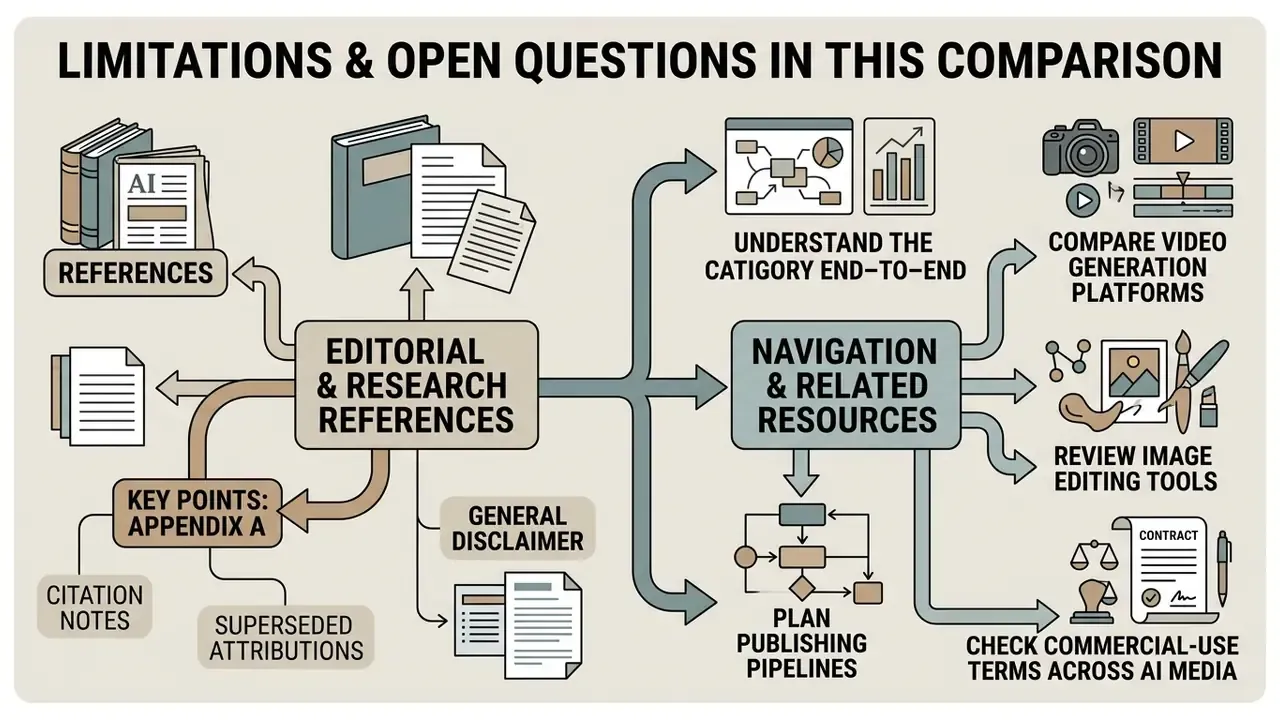
Limitations and Open Questions in This Comparison
Three honest caveats before you act on the table above.
First, free-tier quotas are the least stable data in this guide. Character caps and beta-period "unlimited" claims can change between a Tuesday audit and a Friday purchase order, so re-verify quotas and licensing at the moment of decision, not at the moment of shortlisting.
Second, benchmark scores measure distributions and listener panels, not your scripts. A model that tops TTSDS2 can still mangle a ticker symbol, a drug name, or a bilingual client surname. Until you run your own held-out script set, treat published scores as a screening filter rather than evidence of fitness.
Third, the governance evidence is thinner than the product marketing. Several claims in this category, including no-go voice detection and no-training commitments, are vendor-described product controls rather than independently audited results. For a regulated deployment, the safe next step is small and reversible: pick one low-sensitivity use case, run it on a self-hosted engine or a contractually covered paid tier, log script version and model ID per asset, and only then discuss scale.
Editorial & Research References
- TTSDS Research Report (2023)
- Benchmarking Text-to-Speech Systems Using Speech Distribution Measurements, source of the StyleTTS 2 TTSDS 86.3 and UTMOS 4.36 figures (preprint; public URL not confirmed at time of audit).
- VALL-E R Study (2024)
- Robust and Efficient Zero-Shot Text-to-Speech Synthesis, QMOS 4.02±0.20 versus a 4.22±0.11 human baseline.
- TTSDS2 Multilingual Benchmark (2025)
- evaluation of 20 open-source TTS systems across 14 languages; reference human speech MOS 3.70±0.06 and TTSDS2 93.21.
- RW-Voice-EQ Bench (2026)
- real-world multidimensional evaluation benchmark for voice AI systems, with expressiveness, identity and role fit as independent dimensions.
- MINT-Bench (2026)
- multilingual instruction-following evaluation taxonomy for controllable TTS.
- EmergentTTS-Eval (2025)
- stress-testing text-to-speech models on complex syntactic and emotional text.
- VoiceMOS Challenge 2023 (ASRU)
- zero-shot subjective speech quality prediction and domain-mismatch degradation.
- OmniVoice (2026)
- massively multilingual zero-shot TTS model; 581,000 hours of openly licensed training data; FLEURS-Multilingual-102 evaluation.
- XTTS (2024)
- massively multilingual zero-shot text-to-speech across 16 languages.
- IndicVoices-R (2024)
- 1,704 hours from 10,496 speakers across all 22 official Indian languages.
- Library of Congress NLS Specifications (February 2025)
- Audiobook Mastering, Narration and Digital Talking-Book requirements (ANSI/NISO Z39.86-2002).
- W3C Speech Synthesis Markup Language (SSML) Version 1.1
- W3C Recommendation for speech output controls (
prosody,phoneme,break,say-as). - NIST AI Risk Management Framework (AI RMF 1.0) and NIST AI 100-4
- governance and synthetic-audio evaluation guidance for deployment risk.
- Vendor documentation reviewed (2026)
- ElevenLabs pricing and safety pages, Play.ht plan terms, Murf AI terms of service, Speechify Studio security and feature pages, Artlist AI voice generator FAQ, Google Cloud Text-to-Speech and Gemini speech-generation docs, Microsoft Azure Speech pricing, NoteGPT and SubtitleKit tool pages.