Last updated: August 2026 · Reviewed for: CROs, Heads of Model Risk, AI Governance Leads, Marketing Operations Directors
Executive Summary for Executives and Risk Owners
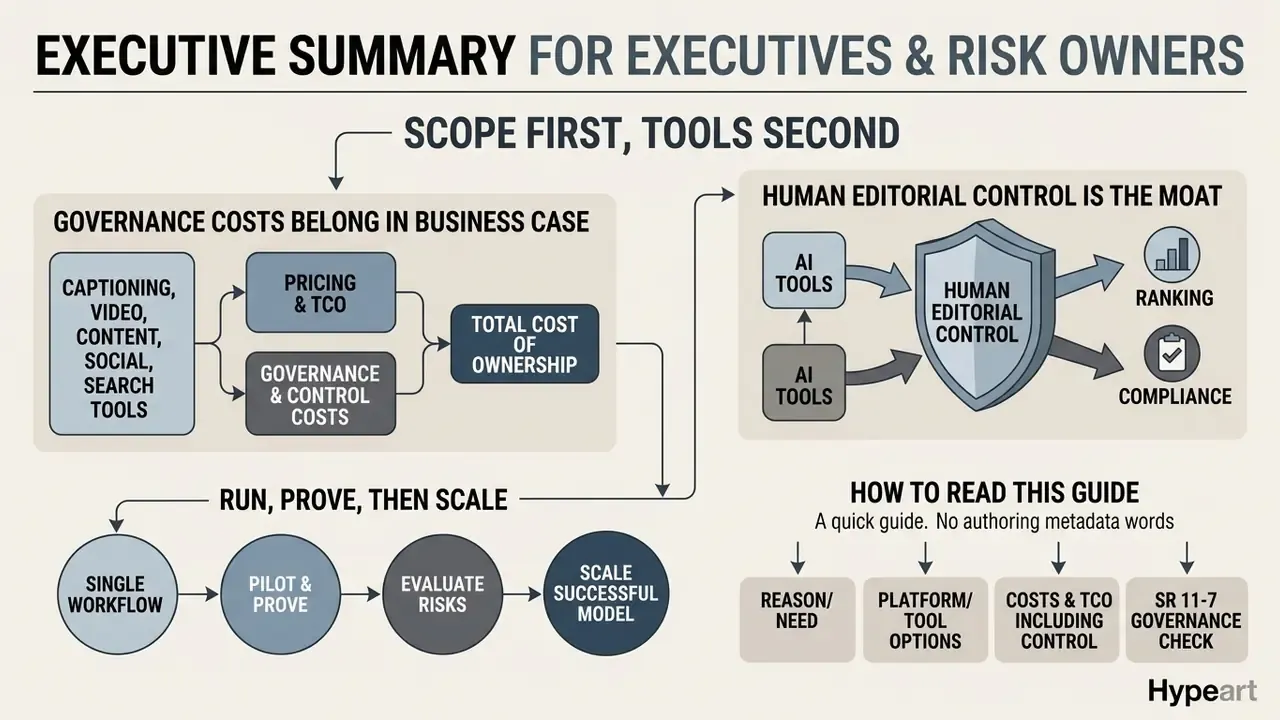
- Scope first, tools second. AI-Media is a broadcast captioning and translation platform (LEXI, iCap Alta, 4K 12G-SDI hardware). Most "alternatives" do not replace it, they extend it. Decide between a full platform swap and a complementary stack before you shortlist a single vendor.
- Governance costs belong in the business case. Subscription and token spend is the smaller half of total cost of ownership. Human-in-the-loop review, legal sign-off, model validation under SR 11-7 / OCC 2011-12, and hallucination monitoring frequently exceed licence fees at scale.
- Human editorial control is still the ranking and compliance moat. Semrush's analysis of 42,000 blog posts found Position 1 results are 8× more likely to be human-written (80.5%) than purely AI-generated (9%). And 93% of AI-using companies review generated content before publication.
- Run one workflow, prove it, then scale. A 30-day isolated pilot with pre-defined acceptance criteria, prompt version control, and a human sign-off log produces the audit evidence needed to justify a controlled rollout. Anything faster is shadow AI with a purchase order attached.
How to read this ai media alternatives by reason guide. The first two sections define scope and selection criteria. The middle sections group tools by job: content, social, search visibility, and platform architecture. The final sections cover method, comparison scoring, pilot design, and a printable governance checklist. Skip ahead if you already know your switching reason; the criteria table is where most procurement disputes get settled.
What Are AI-Media Alternatives and When Should You Compare Them?
An AI-Media alternative is any software platform, standalone generative model, or integrated suite capable of replacing or augmenting AI-powered media workflows. Organizations compare options when operational friction, governance requirements, or domain-specific needs outgrow an incumbent tool.
AI-Media operates primarily as an enterprise captioning and translation platform for live and recorded broadcast environments. Its core architecture features automatic captioning, language translation, native 4K 12G-SDI UHD hardware support, and caption encoders like iCap Alta. Vendor documentation groups the stack into Encoders, iCap, LEXI Local, EEG Cloud, LEXI Solutions, Recorded Media, SCTE Triggering, Virtual Encoders, and AI-Stream. That is a platform family, not a single tool. AI-Media's own materials cite 96% accuracy for LEXI and 5–7 second typical caption latency on iCap Alta TS, which is the objective benchmark every alternative must be measured against.
However, when a digital workflow expands beyond caption generation into end-to-end video production, generative design, automated copywriting, or multi-platform publishing, a broader comparison of ai media alternatives by reason becomes necessary.
The decision to evaluate ai alternatives depends on whether an institution requires a complete platform swap or specialized alternative ai software. Enterprise adoption remains the binding constraint, not employee enthusiasm:
«75% of knowledge workers use generative AI, while only about 8% of firms across OECD economies have formally adopted it in business processes.»
That disparity is the structural precondition for shadow AI: employee-driven adoption outpaces corporate governance. In regulated institutions the gap is sharper still, because every generative model touching customer-facing media falls inside the model inventory perimeter defined by Federal Reserve SR 11-7 and OCC Bulletin 2011-12 on model risk management. So compare ai platforms and ai tools when unsanctioned usage creates security exposure, or when existing media architectures fail to deliver verifiable business value.
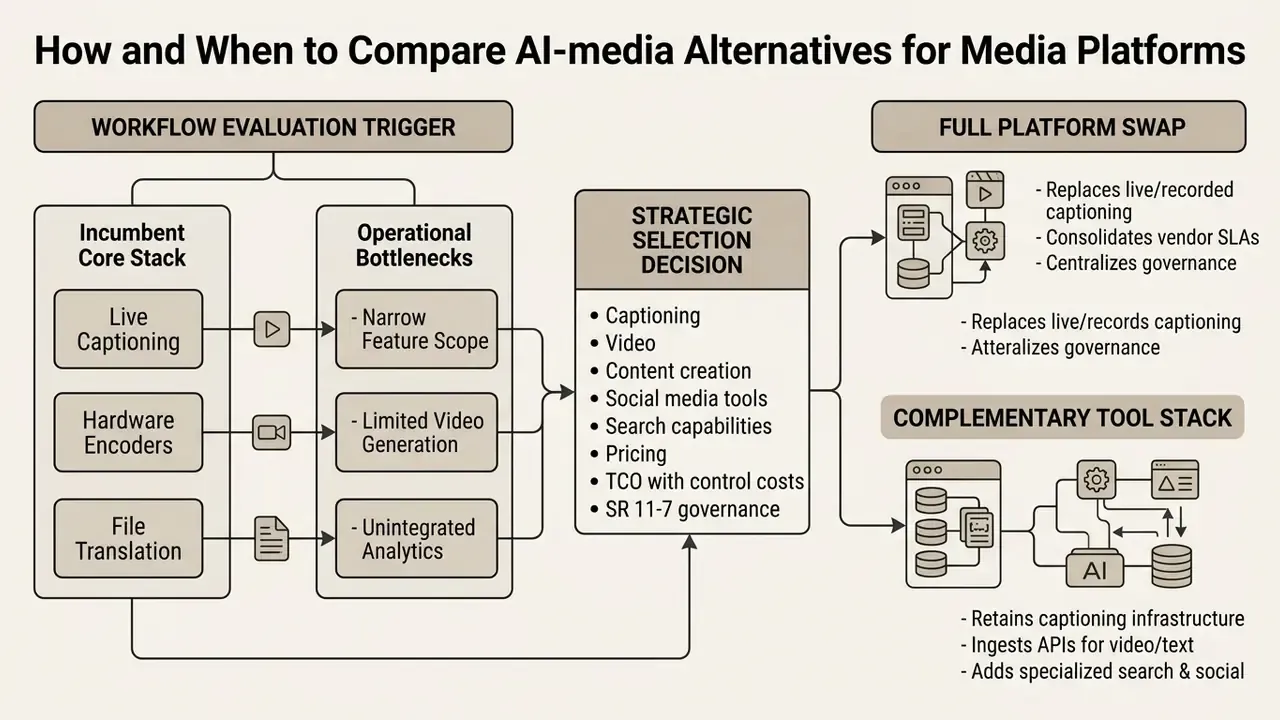
Reasons to Look for an AI-Media Alternative
Primary drivers for switching platforms stem from scale limits, specialized video editing demands, and integration bottlenecks. AI-Media handles recorded media through file-based API workflows, yet modern marketing and enterprise communications need comprehensive pipelines. Those pipelines combine prompt ideation, synthetic script generation, custom avatar rendering, and automated distribution across social channels, the capability set covered by modern AI video generators and adjacent synthesis tooling.
When media operations require rapid visual iteration or advanced search visibility, a single caption-centric platform creates friction. Two data points frame the demand side. On the enterprise side, formal adoption remains thin (roughly 8% of OECD firms, per the World Bank figure above), which means most media AI spend is still departmental, and often invisible to procurement. On the practitioner side, adoption is already mainstream:
«68% of small businesses report higher content marketing ROI with AI tools, and 65% report better SEO results.»
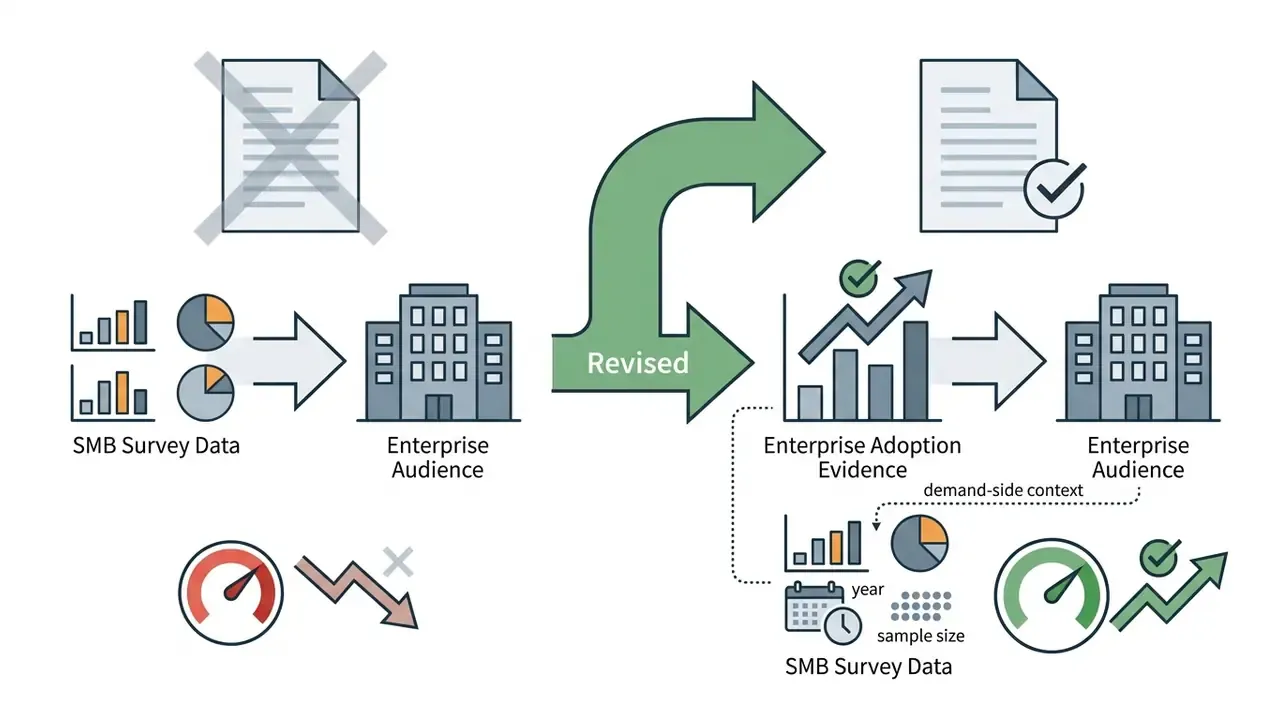
Industry data from Semrush also reveals that 67% of small-to-midsize businesses use AI for content marketing and SEO. Takeaway for regulated buyers: SMB survey data explains why tools spread, not whether they are deployable in a bank. Treat those figures as demand evidence, then validate deployability against the governance criteria in the next section. Organizations seek alternative software to address content volume constraints, remove manual formatting steps, and enforce strict data control standards across multi-channel campaigns.
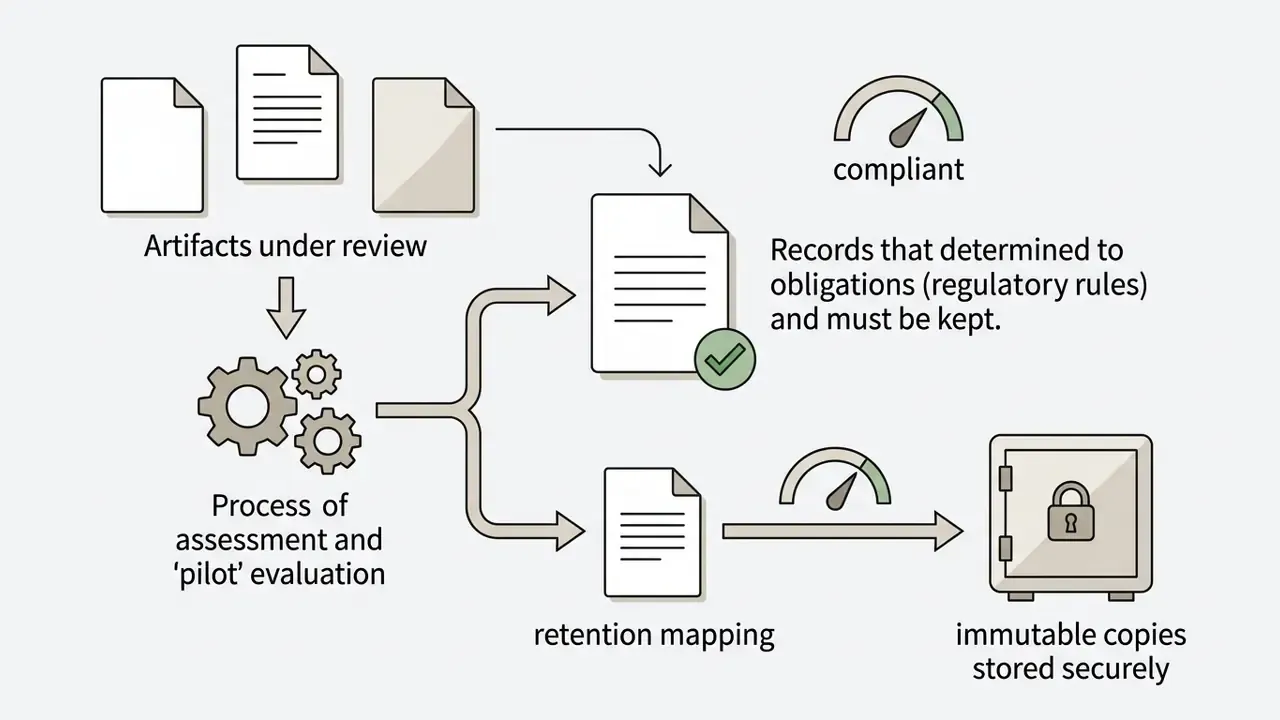
Regulated media pipelines carry one extra constraint that consumer roundups skip: records retention. Public communications, investor webcasts, and their caption or transcript tracks are frequently in scope for broker-dealer and investment-adviser recordkeeping obligations (for example SEC Rule 17a-4 and FINRA recordkeeping guidance). Any alternative that can't export immutable, timestamped caption and transcript artifacts fails the archival test, however good the output looks.
AI-Media Alternative vs Complementary AI Tools
A full platform swap replaces the media stack end to end, centralizing system connectivity, security permissions, and vendor management inside one system. Integrating complementary AI tools does the opposite: it preserves the core infrastructure, such as AI-Media's live broadcast encoders, and adds deterministic, task-specific services through external APIs. Microsoft's integration-platform guidance frames the swap case as centralizing connectivity and enforcing governance across APIs, events, and workflows. Tool-level vendors such as Telerik and Syncfusion frame the complementary case as registering callable tools inside an existing agentic workflow, preserving repositories, permissions, and routing.
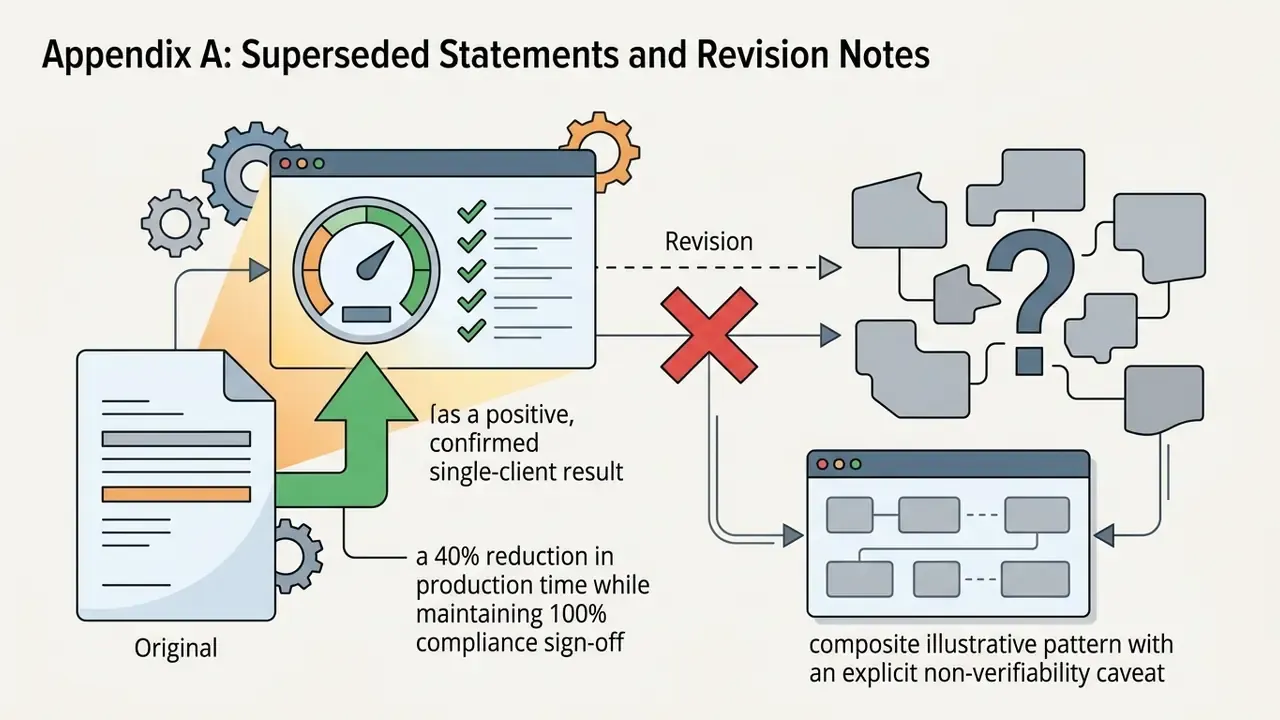
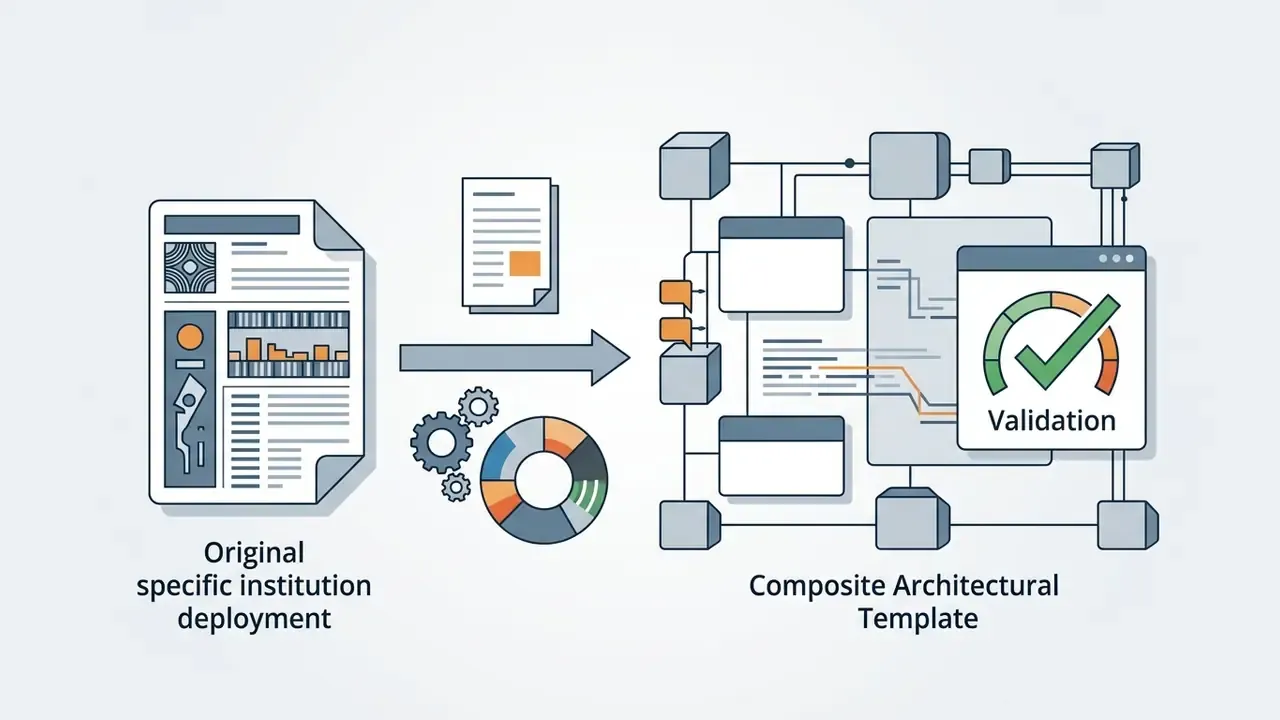
Illustrative pattern (composite, based on documented workflow architectures rather than a single named client). Updated: attribution clarified. A US financial institution reviewing its public video communications pipeline retained AI-Media's LEXI infrastructure for real-time live-captioning accuracy and Section 508 accessibility compliance. To scale video distribution, the team integrated specialized API services for transcript summarization, social asset generation, and document indexing. The hybrid approach preserved existing regulatory workflows while expanding digital media capability. Because the case is composite, read it as an architectural template requiring local validation, not as a benchmarked outcome.
How to Choose the Right AI-Media Alternative by Reason
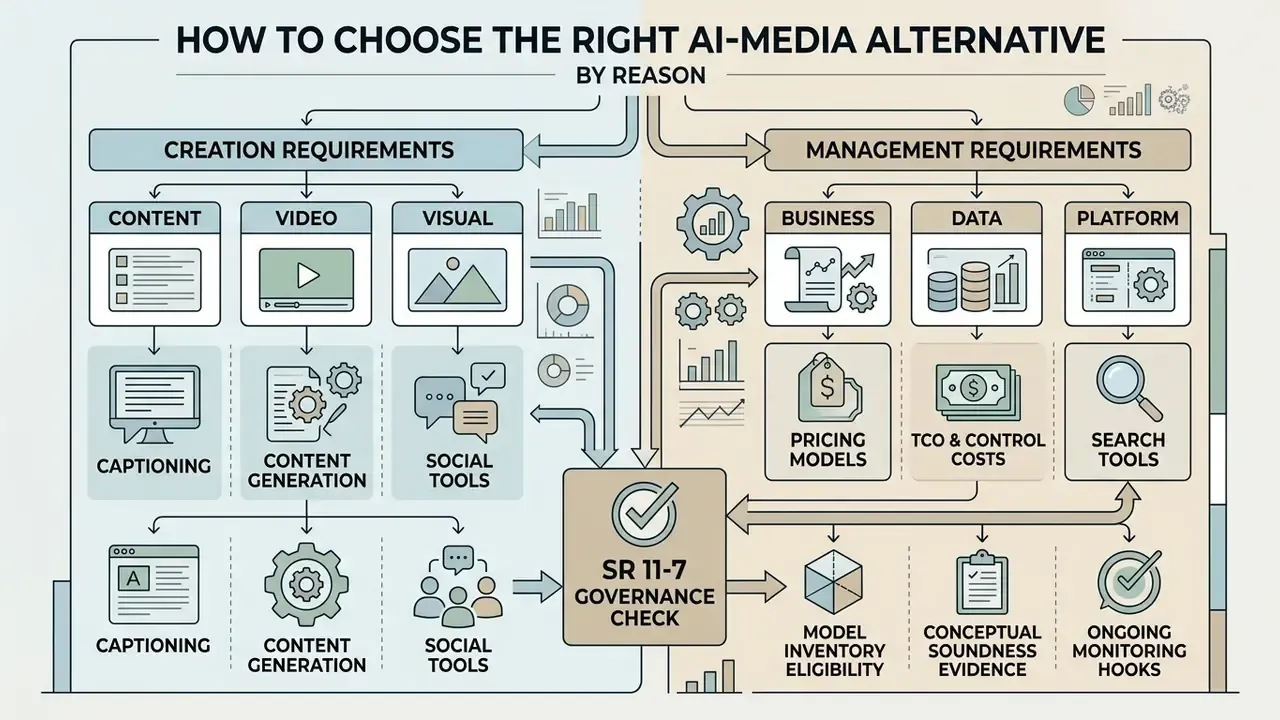
Selecting an AI-Media alternative means testing software capability against specific business objectives, not counting features. Decision-makers should weigh data protection, workflow compatibility, and measurable throughput above generic AI functionality when working out how to choose the right platform.
A structured comparison balances immediate operational goals against long-term governance costs. Ask whether the business requirement demands an enterprise management suite, a specialized video generation engine, or a free open-source research tool. Scoring platforms against predefined criteria prevents software redundancy and keeps purchases inside institutional risk tolerance.
| Reason for Switching | Key Required Capabilities | Suitable Platform Category |
|---|---|---|
| Content Creation & SEO Scaling | AI-assisted drafting, keyword intent clustering, human editorial review workflows, on-page optimization. | Traditional SEO platforms with native AI; specialized AI writing suites. |
| Video Production & Synthetic Media | Text-to-video generation, custom avatar controls, timeline editing, multi-lingual audio synthesis, API access. | Specialized AI video generation platforms; enterprise visual creation tools. |
| Social Media Management | Multi-channel post generation, platform-specific formatting, automated scheduling, performance analytics. | Social media publishing platforms with embedded AI agents. |
| Search Visibility & GEO/AEO | Structured schema markup support, AI Overview tracking, entity consistency controls, citation monitoring. | AI search optimization toolkits; enterprise SEO intelligence platforms. |
| Enterprise Management & Governance | Role-based access controls (RBAC), audit trails, data loss prevention (DLP), SOC 2/ISO 42001 compliance, model inventory integration. | Enterprise AI management ecosystems; unified workflow automation platforms. |
Takeaway: the left column is the procurement trigger, the right column is the shortlist filter. If a requirement in the middle column can't be evidenced in vendor documentation, treat it as absent rather than "on the roadmap".
Content, Video and Visual Creation Requirements
Media creation pipelines demand strict quality control, asset consistency, and predictable rendering standards. Visual and video workflows should follow ISO/IEC 14496-12 for media timed presentations and ISO/IEC 14496-10 for advanced video coding; volumetric and immersive pipelines additionally reference ISO/IEC 23090-5 for decoding and reconstruction. These baselines keep generated media rendering reliably across browser environments and broadcast systems.
For synthetic video generation, visual quality control relies on multi-metric evaluation frameworks scoring temporal consistency, prompt fidelity, and resolution stability. Recent evaluation research groups 16–32 metrics into consistency, realism, and traditional quality bands. Basic consumer applications produce simple clips; enterprise video production needs precise control over lighting, camera movement, and audio-video synchronization. Platforms must offer robust export options, brand asset libraries, and flexible API integrations to support production at scale. Where file weight drives delivery cost, pair rendering tools with a documented compression policy. Our guide to video compressors covers acceptable quality-loss thresholds.
Business, Data and Platform Management Requirements
Enterprise AI adoption requires alignment with established security and risk frameworks: NIST AI RMF 1.0, NIST AI 600-1 (Generative AI Profile), ISO/IEC 27001:2022, and ISO/IEC 42001:2023. Institutions in regulated environments must confirm that candidate AI platforms do not use customer inputs or proprietary media assets to train external foundational models.
For US banking institutions, those security frameworks are necessary but not sufficient. Generative video, voice, and text models that influence customer communications or disclosures are candidates for the model inventory under SR 11-7 and OCC Bulletin 2011-12, which require conceptual soundness review, ongoing monitoring, and independent validation with effective challenge. Practically, that adds three items to a standard security questionnaire:
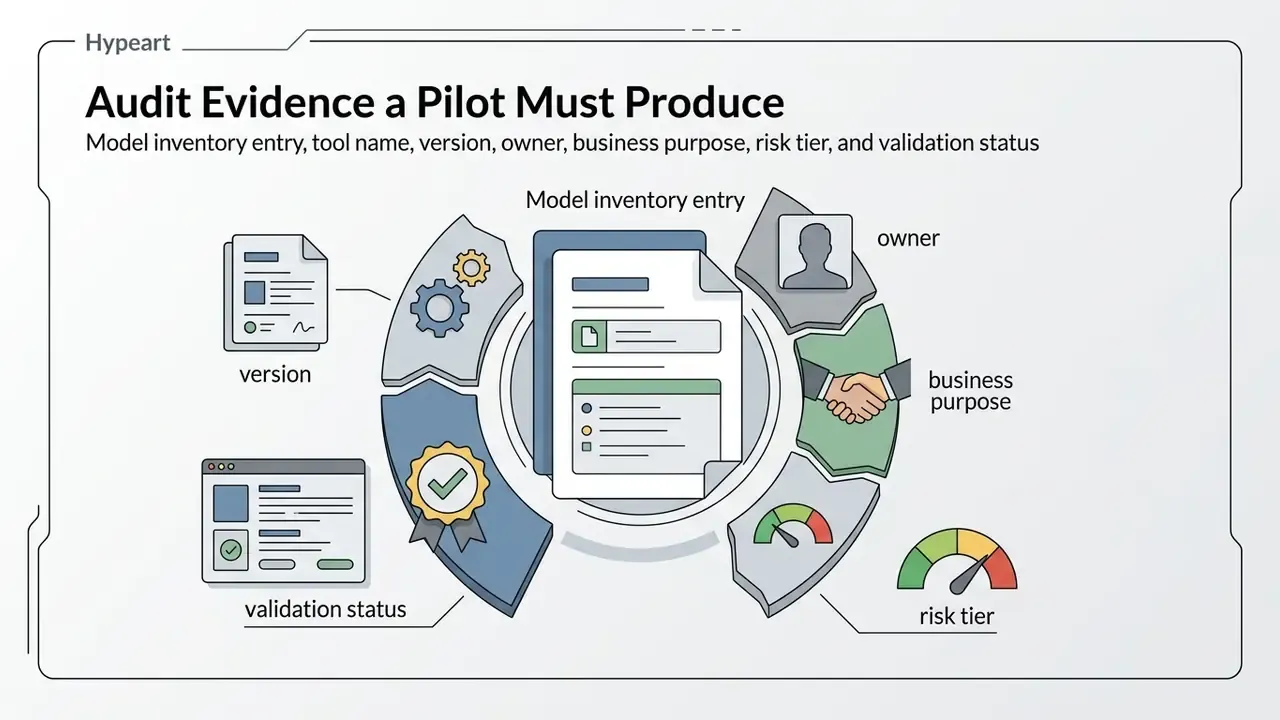
- Model inventory eligibility. Does the tool produce outputs that inform customer-facing statements? If yes, it needs an inventory entry, an owner, and a validation tier.
- Conceptual soundness evidence. Can the vendor supply model cards, training-data provenance statements, and known-limitation documentation sufficient for independent challenge?
- Ongoing monitoring hooks. Does the platform expose logs, versioning, and output samples that let validators detect drift or degradation after deployment, as NIST AI RMF and EMA-style monitoring guidance both require?
Workspace management needs granular role-based access control (RBAC), attribute-based access control (ABAC), SSO integration, and complete data lineage logs. NIST's generative AI profile explicitly requires documented authorization, duration, and type of access to data containing personal, confidential, or proprietary information, on a least-privilege and separation-of-duties basis. For instance, Google Workspace's Gemini integration keeps organization prompts and generated content within internal boundaries, states it does not use Workspace data to train external models without permission, and maintains ISO 42001, BSI C5, and FedRAMP High attestations while supporting HIPAA obligations. Platforms that can't provide verifiable audit evidence introduce regulatory and operational risk that most institutions should not accept.
Alternatives for AI Content Creation and Marketing Workflows
Alternatives for content creation replace or supplement manual drafting with specialized language and visual models. Evaluating them means testing output quality against human review standards and search engine guidelines.
Organizations adopting ai content platforms use them across the full campaign lifecycle: planning, drafting, asset design, distribution. Adobe frames this as a "content supply chain" spanning create, activate, measure, optimize; Jasper documents a five-stage plan, create, adapt, activate, optimize pipeline. Marketing teams use content creation software to hold messaging consistent across channels. Brand voice and factual accuracy, though, still depend on structured human oversight rather than fully autonomous publishing. There's no shortcut there.
AI Tools for Writing, Research and Content Planning
Leading writing platforms, Claude, Jasper and Copy.ai among them, serve distinct operational needs. Claude handles advanced reasoning and natural long-form prose, which suits technical reports and deep research. Jasper and Copy.ai lean on structured marketing templates, campaign workflows, and team collaboration controls.
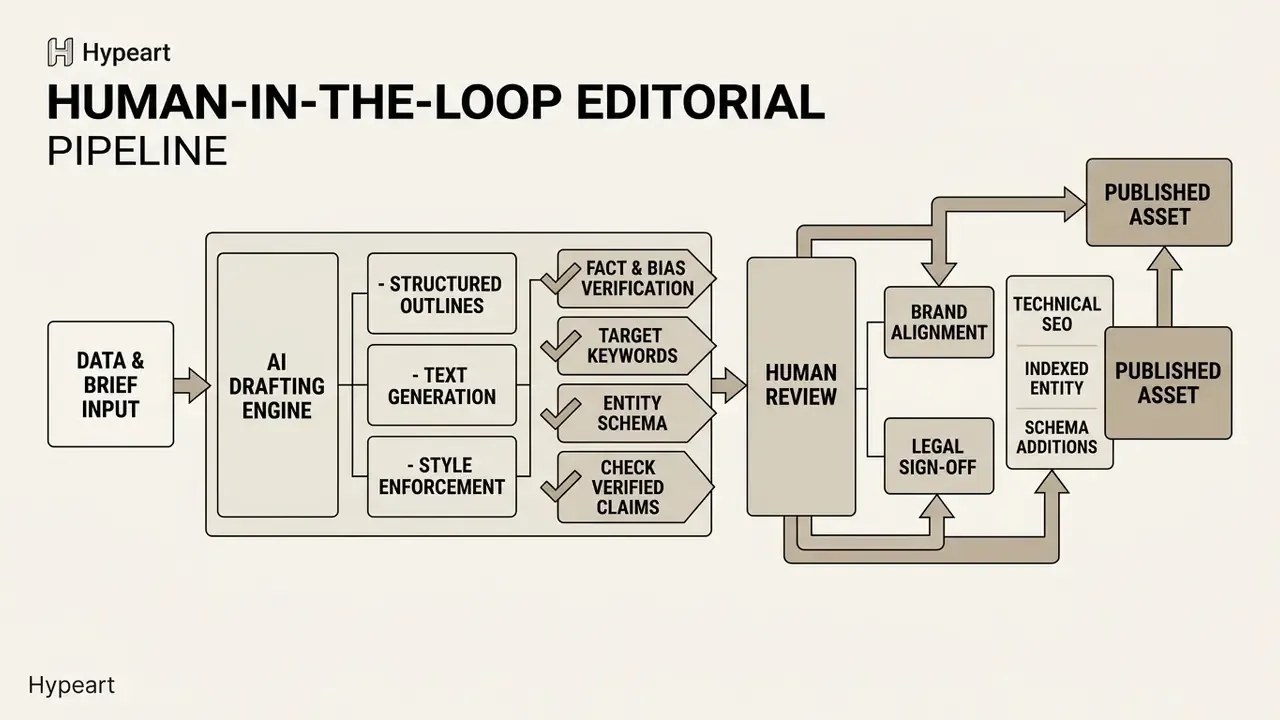
Despite advances in LLM capability, human editorial review stays mandatory. Academic and medical publishing standards, such as ICMJE guidelines and JAMA/APS author policies, state plainly that AI systems can't hold authorship responsibility, that confidential manuscript text should not be uploaded to external AI tools, and that outputs require independent human verification. Empirical data from Semrush supports the same conclusion:
«Analysis of 42,000 blog posts: Position 1 pages in Google are 8× more likely to be human-written (80.5%) than purely AI-generated (9%).»
Using creation tools for research and outline generation yields real efficiency. Human expertise is still what secures the top of the SERP.
Claude (Anthropic)
- Best for long-form technical writing, policy drafting, document analysis, and research synthesis where reasoning quality matters more than template speed.
- Key features long-context document handling; strong instruction adherence for style guides; API access for internal tooling.
- Pros the most natural long-form prose of the three in recent comparative reviews; handles regulatory and technical source material without heavy prompt engineering; API-first for controlled internal deployments.
- Cons no native design, video, or social scheduling layer; new API users receive only a small allocation of free credits, so trial depth is limited (Anthropic, Claude Platform Docs, 2026).
- Pricing consumer subscription tiers plus metered API pricing per million input/output tokens; confirm current per-token rates on Anthropic's pricing page before modelling volume.
- Who it's for risk, legal, and technical content teams that need defensible drafts and accept separate visual tooling.
Jasper
- Best for marketing teams producing high volumes of on-brand copy across campaigns and channels.
- Key features brand-voice training on style guides and product data; campaign workflows and team collaboration; API for custom integrations.
- Pros strongest brand-consistency controls in this group; mature approval and collaboration features; documented plan, create, adapt, activate, optimize pipeline.
- Cons no native graphic design or video editing; premium positioning with no free-forever plan; scheduling and analytics must come from a social platform.
- Pricing paid tiers only, billed per seat with annual discounting; verify current tier pricing on Jasper's pricing page.
- Who it's for mid-market and enterprise marketing functions with multiple writers and a formal brand book.
Copy.ai
- Best for template-driven short-form output (ads, subject lines, product descriptions) and GTM workflow automation.
- Key features large template library; workflow automation across sales and marketing steps; team workspaces.
- Pros fastest time-to-first-output for repetitive short copy; workflow builder reduces manual handoffs; lower entry price than Jasper.
- Cons weaker long-form depth than Claude; output needs heavier editing for technical or regulated subject matter; template reliance can flatten brand voice.
- Pricing free tier with usage caps plus paid seat-based tiers; confirm current limits before committing.
- Who it's for demand-gen and sales-enablement teams optimizing volume and speed over prose nuance.
AI Tools for Design, Visuals and Videos
Visual and video creation tools target distinct segments, from individual creators to enterprise marketing teams. Midjourney and Runway focus on high-fidelity image and video generation for creative ideation; readers comparing engines can start with our roundup of leading AI video generators and our head-to-head on Midjourney image generation. HeyGen targets corporate communications with business features including self-serve SSO, centralized billing, 60-minute video and translation caps, five custom avatars per organization, 5× generation capacity, and enterprise-grade security controls (HeyGen release notes, January 2026).
Runway
- Best for cinematic generation and editing, fast social-format output, creative ideation.
- Key features text-to-video and video-to-video generation; in-editor motion and style controls; documented business use cases for Instagram and TikTok output.
- Pros high creative ceiling; rapid iteration for concept work; strong editing toolset alongside generation.
- Cons creator-oriented governance, with limited enterprise identity controls compared with avatar platforms; output variance requires human selection passes.
- Pricing tiered credit-based subscriptions with a limited free tier; render volume, not seats, drives cost.
- Who it's for brand and creative studios producing concept and social assets at speed.
HeyGen
- Best for avatar-led corporate communications, training modules, and multilingual localization.
- Key features custom avatars, translation and lip-sync, self-serve SSO, centralized billing, 60-minute generation ceilings.
- Pros clearest enterprise control surface in this category (SSO, org-level avatar limits, security posture); documented deployments in compliance-sensitive medical video production; strong localization economics.
- Cons avatar output isn't a substitute for cinematic or product footage; likeness and consent management adds legal workload.
- Pricing seat-plus-usage tiers with a Business tier gating SSO and capacity; confirm current tiers on HeyGen's pricing page.
- Who it's for internal communications, L&D, and regulated marketing teams needing repeatable presenter video.
Synthesia
Midjourney
- Best for high-fidelity concept imagery and style exploration.
- Key features strong stylistic control, reference-image conditioning, rapid variation generation.
- Pros best-in-class aesthetic quality for ideation; fast exploration of visual directions.
- Cons no enterprise identity or DLP layer; commercial-use terms and likeness constraints require legal review before production use.
- Pricing subscription tiers keyed to generation volume and concurrency.
- Who it's for creative directors and design teams at the pre-production stage. See also our comparison of the best AI art generators for licensing detail.
Google Veo
- Best for workspace-integrated video generation and programmatic rendering via API.
- Key features API access with documented latency and cost characteristics; integration into Google's productivity and cloud stack.
- Pros enterprise identity and data-region controls inherited from Workspace and Cloud; predictable API integration path.
- Cons creative control is narrower than dedicated editing suites; per-second economics require volume modelling.
- Pricing metered API usage; see our Google Veo implementation guide for cost, limits, and developer use cases.
- Who it's for engineering-led media teams building automated rendering pipelines.
Canva (with AI features)
- Best for template-driven brand visuals produced by non-designers.
- Key features very large template and asset library; Brand Kit consistency controls; Magic Resize, background removal, and Magic Write assistance; content planner for scheduling.
- Pros minimal learning curve; generous free plan; strong brand-consistency tooling for distributed teams.
- Cons the built-in writer is weaker than dedicated AI writing tools; scheduling and analytics are basic next to social platforms.
- Pricing free plan available; Pro (single user) and Business (team) tiers priced per seat. Check the current rate card, and review licensing detail in our Canva AI Generator overview.
- Who it's for marketing generalists, social managers, and SMB teams needing volume visuals fast.
When evaluating synthetic media production, balance unit costs against licensing terms. Teams cutting subscription overhead can assess Cheaper AI Video solutions, while brand managers needing clean commercial exports often prefer No-Watermark AI Video Alternatives. For high-scale programmatic rendering, a dedicated AI Video API gives predictable queue management and deterministic batch processing. Where commercial image rights decide the matter, our guide to AI image generators for commercial use sets out the licence questions to ask before production.
Alternatives for Social Media Content and Management
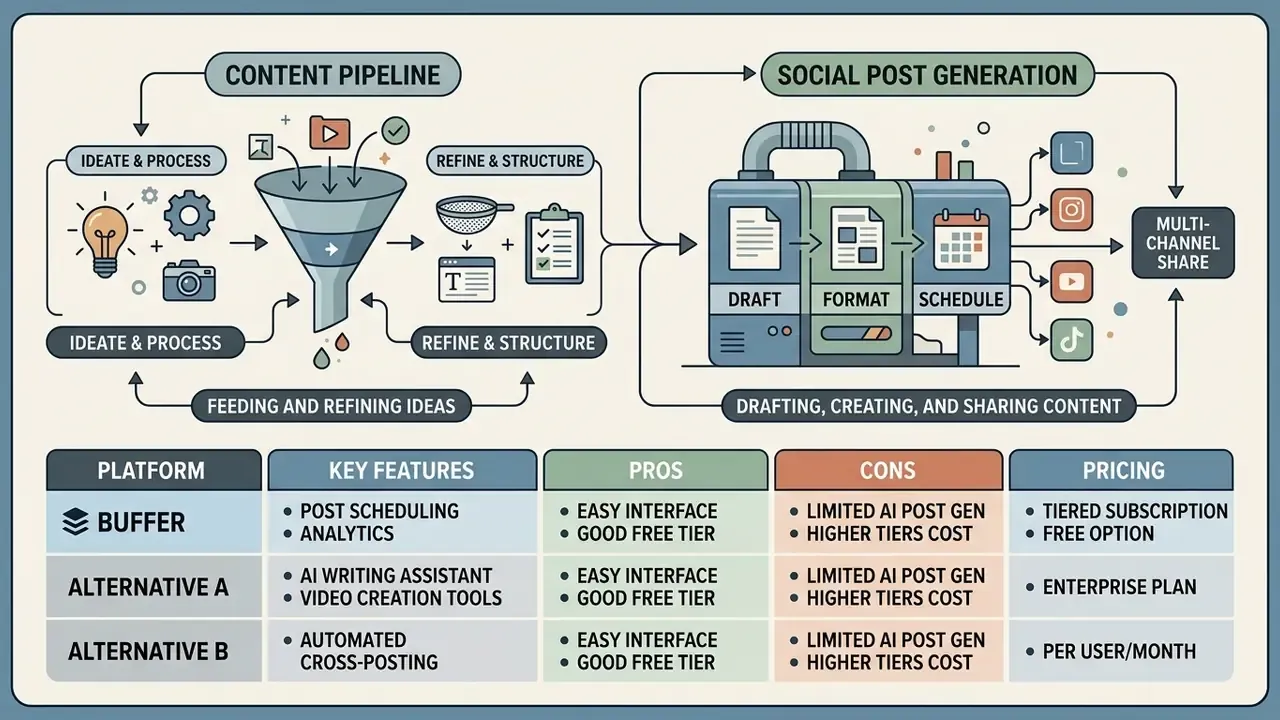
Social media AI platforms combine automated post generation, asset reformatting, and multi-channel scheduling into one publishing pipeline. These systems help marketing teams hold channel presence steady while controlling operational overhead.
Deploying social media automation requires tools that adapt core campaign messaging into channel-specific formats. Modern ai social applications read audience engagement data, refine draft copy, and streamline publishing across networks. The right social media tools let teams scale posts efficiently without losing brand consistency.
| Platform Category | Core Capabilities | Primary Channel Integrations | Ideal Deployment Scenario |
|---|---|---|---|
| Scheduling-Centric AI (e.g., Buffer) | Post drafting, caption rewriting, automated scheduling, channel adaptation. | 11+ networks (LinkedIn, X, Instagram, TikTok, Bluesky, Mastodon, YouTube, Google Business Profiles). | Small teams requiring cross-channel scheduling with light AI assistance. |
| Campaign Automation (e.g., Postiz, Postly) | Bulk scheduling, API automation, visual calendar, approval workflows. | 30+ networks, messaging apps, RSS, webhooks. | Mid-market agencies managing complex multi-tenant client campaigns. |
| Repurposing & Brand Engines (e.g., Typeface) | Asset transformation, brand rule enforcement, multi-format export. | Enterprise CMS, social channels, email marketing suites. | Enterprise brands scaling core collateral into localized social assets. |
Takeaway: scheduling breadth and content production are separate problems. Buffer wins on channel coverage per dollar; Postiz and Postly win when the bottleneck is producing and approving volume; Typeface wins when brand rules must be machine-enforced across markets.
Tools to Feed, Process and Refine Content Ideas
The first phase of social media management converts raw ideas and trend data into structured content plans. Tools like Buffer's AI Assistant, Iconosquare, Canva's social post generator, and Trendia process search patterns and social analytics to generate channel-specific concepts. They surface emerging topics, propose post hooks, and generate preliminary drafts aligned with audience interest.
Ideation engines analyze performance metrics across past posts to recommend publishing formats. Iconosquare's AI Content Inspiration generates network-specific ideas and adapts captions, hashtags, and emoji to platform format; Trendia analyzes Instagram trends, hooks, and Reels engagement patterns to suggest script frameworks for short-form video. Wiring audience research into the ideation pipeline keeps generated social content anchored to verified user interest rather than assumption.
Creator-Ownership and Decentralized Network Alternatives
A separate class of alternative sits at the network layer rather than the tool layer, driven by content-rights exposure rather than features. X's terms permit its own Grok models and third-party AI partners to train on user posts and comments, which means published creative material becomes training data without compensation. For rights-holders (labels, publishers, journalists, brand-owned creator accounts) that is a governance question, not a preference.
- Bluesky (alternative to X). Decentralized architecture running across independent servers, with account portability: username, posts, and follower connections can move to another server. Users can select, build, or subscribe to their own feed algorithms instead of accepting one engagement-optimized ranking. For creators, the practical benefits are content ownership, portability, early-niche positioning, and the option to run it in parallel with incumbent channels.
- MeWe (alternative to Facebook). Positioned as privacy-first: "no surveillance, no algorithms." Supports posts, stories, live streaming, and group discussions. Native monetization is absent, so it works best as a privacy-premium community layer beside a monetized primary channel.
- Pixelfed (alternative to Instagram). Decentralized and self-hostable, part of the federated ecosystem prioritizing privacy and freedom from opaque ranking. Content surfaces chronologically, so posting consistency, not algorithmic favor, determines reach. Without ad-revenue models, the objective is authentic interaction and visual storytelling.
Trade-off, stated plainly: audiences are smaller and monetization options are thinner today. The counterweight is lower competition inside niches, a more deliberate follower base, and reduced platform-concentration risk, a live concern after abrupt disruptions such as the temporary US TikTok ban. Institutions with brand-safety mandates should note the reputational dimension too: The Guardian publicly ceased posting on X, citing platform content and political-influence concerns.
Alternatives for Search, Research and AI Visibility
Search and research alternatives focus on brand visibility inside generative answer engines and AI-driven search interfaces. Strategies have to adapt as user behavior shifts from link clicks to direct answer consumption.
Understanding search ai mechanisms means understanding how systems like Google's ai overviews summarize web content. The traffic consequence is measurable:
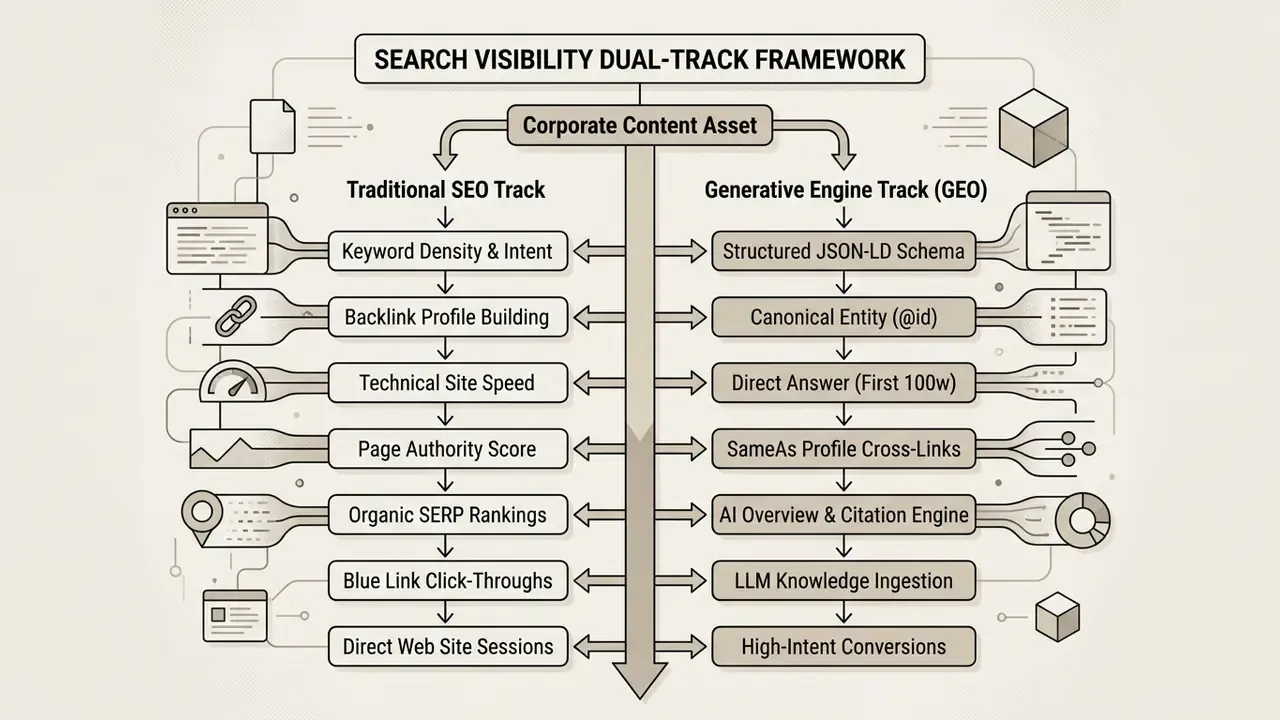
As google and alternative engines surface direct answers, holding brand visibility requires structuring content for LLM indexing. Aligning traditional seo with Generative Engine Optimization (GEO) keeps corporate assets discoverable across both classic search engines and AI assistants. Google Search Central's own guidance frames generative-AI optimization as an extension of search optimization rather than a separate discipline, and points to the Generative AI performance report in Search Console for monitoring.
Search Platforms With Optional AI or No AI
AI Visibility Alternatives to Traditional Earned Media
Generative Engine Optimization (GEO) and Answer Engine Optimization (AEO) act as modern complements, sometimes alternatives, to traditional digital PR.
«Incorporating cited sources, statistics, and quotations improved source visibility in generative engine responses by up to 40%.»
Visibility in AI search requires explicit entity consistency across digital properties. Implement structured JSON-LD schema markup using Organization, @id, mainEntityOfPage, and sameAs attributes to stabilize brand identity across LLM knowledge bases, then keep entity facts identical across schema, visible HTML, and external profiles: company name, leadership, founding date, category terms, logo. For teams publishing video and document assets into that graph, our reference on text-to-video AI tools covers the asset types most often orphaned from structured markup. Document discoverability guidance from Search.gov adds a simple, high-yield fix: descriptive file names and populated document title metadata for PDFs.
The traffic economics justify the work:
So while AI search currently drives lower overall traffic volume than traditional web search, visitors arriving from AI engines convert at roughly 23 times the rate of standard organic traffic. Measured on sign-up conversions, not revenue, which matters for how far you extrapolate.
AI-First, Traditional and Enterprise Platform Alternatives
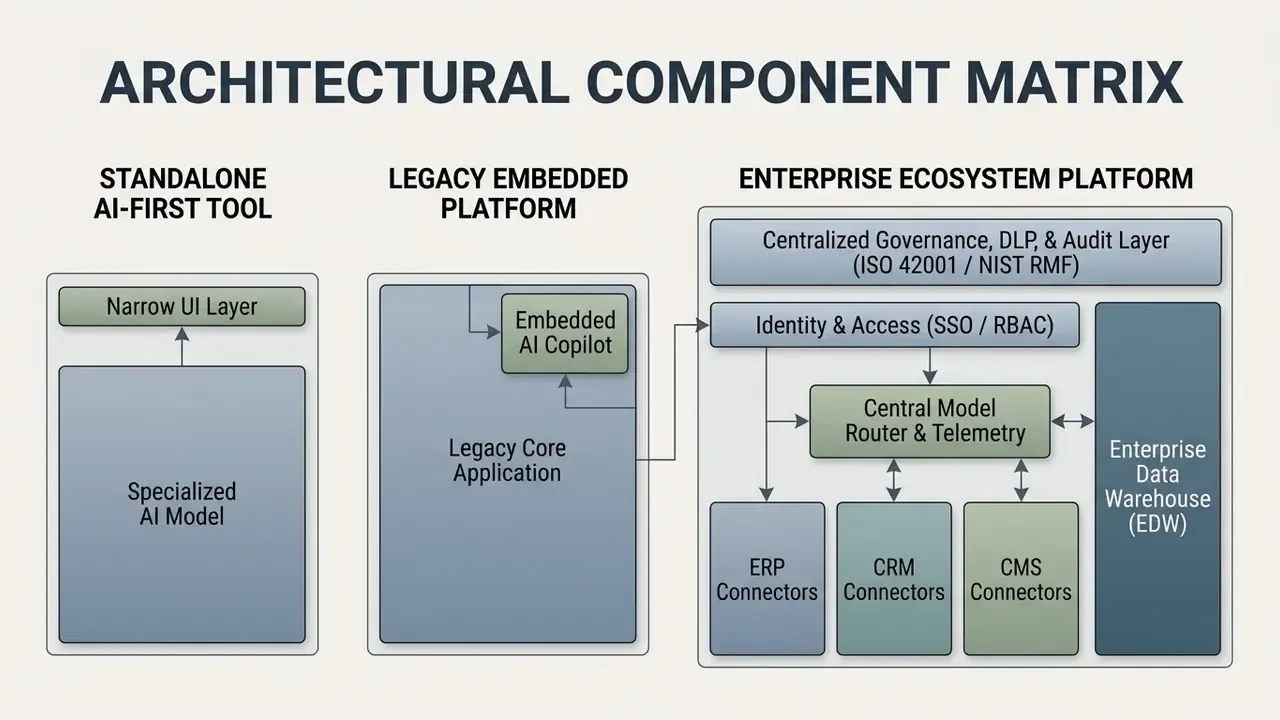
Evaluating AI media options means choosing between standalone AI-first tools, legacy platforms with embedded AI features, and unified enterprise ecosystems. Each architectural model carries clear trade-offs in implementation speed, operational control, and long-term cost.
Deploying ai powered solutions requires knowing how the underlying ai technology integrates with existing infrastructure. Point tools ship innovation quickly; enterprise ai systems prioritize security, user permissions, and compliance. The question is whether individual software services or unified platforms fit your operational risk profile.
AI-First Tools vs Traditional Platforms With AI Features
Standalone AI-first platforms focus entirely on generative model capability, delivering advanced features and novel interfaces. Structurally, they expose a narrow interface, rely heavily on user-supplied context and a limited connector set, and enforce permissions at the application layer after the model has already processed input. That ordering matters for DLP. These tools also tend to operate as isolated silos, requiring manual data transfer and separate access management.
Established software platforms, Adobe Creative Cloud, Canva and HubSpot among them, embed native AI features directly into existing operational workflows. HubSpot, for example, integrates native AI agents across marketing, sales, and service modules while preserving existing customer data permissions, and embeds Canva's AI design tools inside HubSpot to remove context switching. Adoption of embedded capability is already routine in marketing operations:
«60% of marketers use AI for keyword research, 48% for content ideation, and 38% for briefs and content outlines.»
Traditional platforms may introduce generative capability more conservatively than startups, and critics argue retrofit AI is often "a feature, not the foundation". Their deep integration with enterprise repositories still minimizes change management and security friction. The honest trade-off: AI-first vendors can redesign workflows around proactive, context-aware behavior from day one, while incumbents own the distribution, the customer data, and the existing permission model. Teams consolidating spend around incumbents should also audit adjacent tooling, for instance replacing paid point tools with capable free video editing software where output requirements allow.
Enterprise and Ecosystem Tools for Businesses
Enterprise AI ecosystems provide centralized management across business units and operational teams. Structurally, they organize AI as shared services: central policy enforcement, model routing, access control, auditability, observability, and cross-system orchestration sitting above individual applications. Frameworks like IBM watsonx governance establish end-to-end model lifecycles covering use-case review, risk assessment, model testing, operational guardrails, tuning, production setup, runtime monitoring, and ongoing governance. NIST's federal AI playbook adds the organizational layer: an AI PMO or governance office, stakeholder working groups, defined meeting cadence, and change management for solution oversight.
The governance gap is widest at the small end of the market:
«About 18% of SMEs began experimenting with generative AI services less than a year after public release, typically without structured governance policies.»
For organizations weighing corporate media tools, licensing should be assessed through a dedicated Commercial-Use AI Tool framework so intellectual property stays protected. Large institutions requiring strict data isolation, role-based access controls, and custom model deployments should select an Enterprise-Ready AI Media platform rather than an unverified consumer application.
How We Tested and Compared These Alternatives
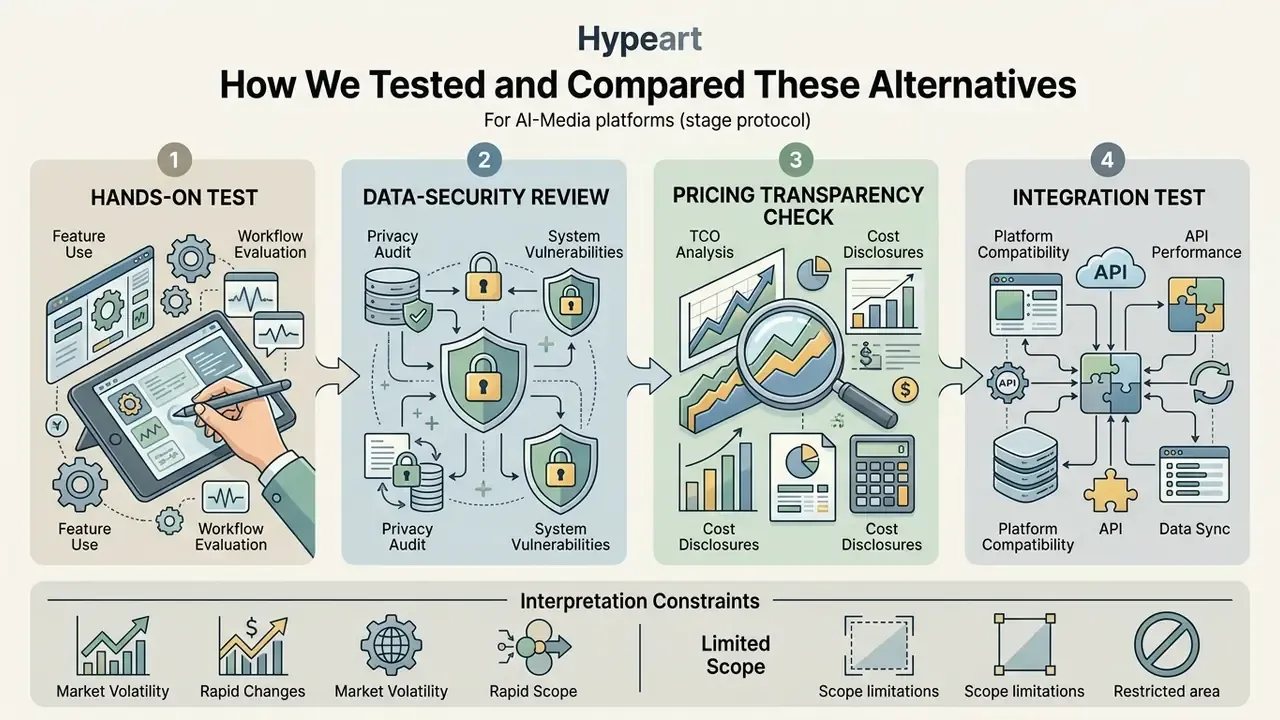
Every tool referenced in this guide was assessed against a four-stage protocol. Where a stage could not be completed, because a vendor gates access or documentation is incomplete, the limitation is stated in the relevant card rather than filled with an estimate.
- Hands-on test. Generation of 10 test outputs (videos or long-form texts) per tool using identical prompts, scored for prompt fidelity, temporal or structural consistency, and rework required before an output was publishable.
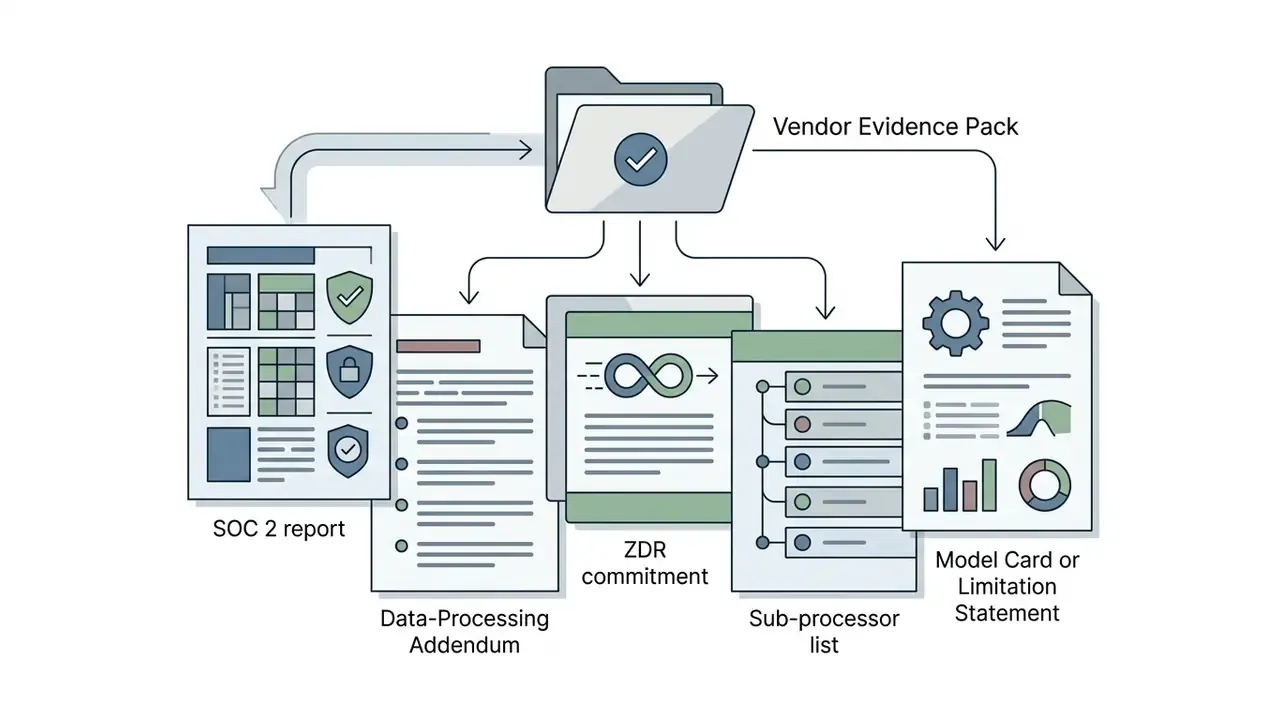
- Data-security review. Examination of GDPR and SOC 2 posture, sub-processor lists, retention defaults, and, critically, contractual terms governing whether customer inputs may train vendor or third-party models. Zero-data-retention availability was recorded as present, optional, or absent.
- Pricing transparency check. Calculation of realistic total cost of ownership at 10+ seats, including per-channel and per-second or per-token metering, add-ons required to unlock SSO or approvals, and the cost delta after promotional pricing expires.
- Integration test. Verification of REST API availability, OpenAPI spec completeness, webhook support, response latency under sequential load, and export formats for migration.
Two constraints on interpretation. Pricing changes faster than publication cycles, so re-verify every figure on the vendor's own pricing page before procurement. And hands-on testing measures our workloads, not yours; replicate the protocol on representative company data, as NIST AI RMF and IMDA testing guidance both recommend, before you sign anything.
Comparison Framework for AI-Media Alternatives
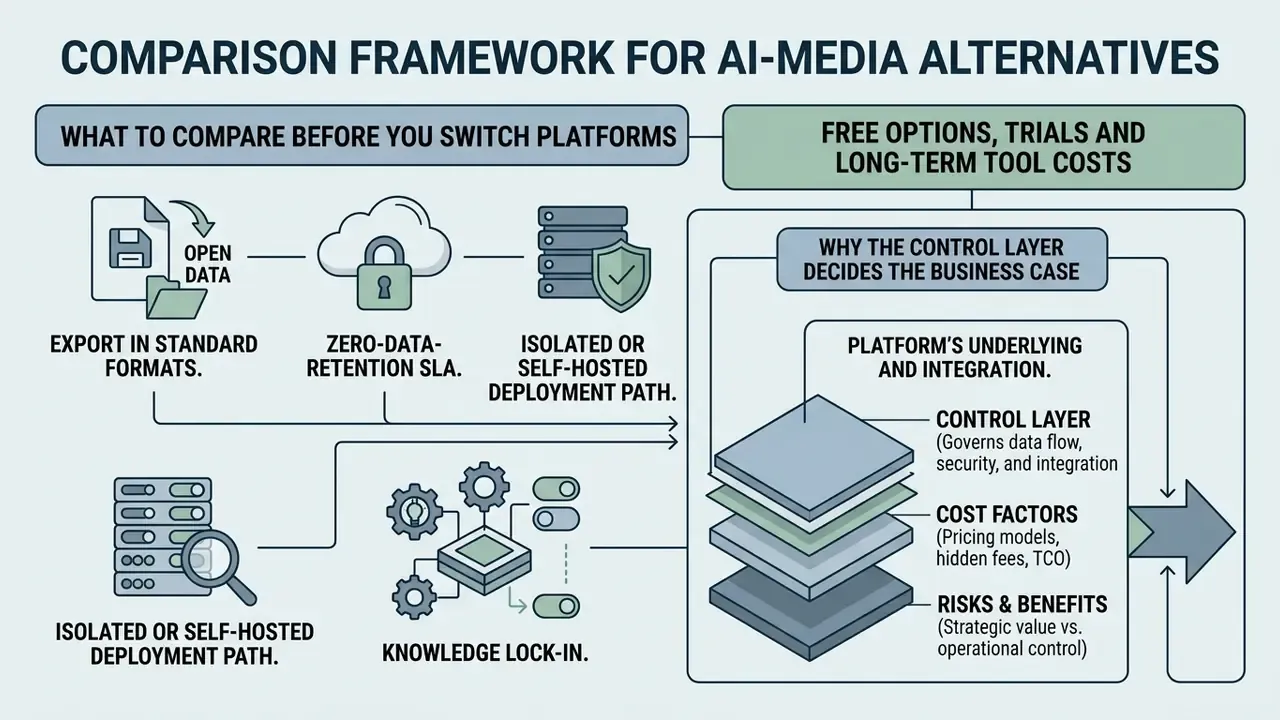
A standardized framework lets decision-makers evaluate options across technical, financial, and operational criteria. Systematic scoring prevents hype-driven migrations and ties purchases to verified business needs.
Running a thorough ai media alternatives by reason comparison means teams compare candidate platforms on empirical metrics. Analyze data governance, verifiable performance results, free trial terms, and vendor support services. These are the ai media alternatives by reason options that survive contact with a validation team.
| Comparison Dimension | Key Technical & Operational Criteria | Verification Source / Standard |
|---|---|---|
| Technical Accuracy & Quality | Output fidelity, hallucination rate, latency (e.g., <7s live captioning), codec compliance. | FCC caption quality standards (accuracy, synchronicity, completeness, placement); ISO/IEC 14496 video benchmarks. |
| Data Governance & Security | Data isolation, zero training on customer data, RBAC/ABAC support, audit logging. | NIST AI RMF 1.0 & AI 600-1; ISO/IEC 42001; SOC 2 Type II reports. |
| Model Risk & Validation | Model inventory eligibility, conceptual soundness documentation, independent validation, ongoing monitoring. | Federal Reserve SR 11-7; OCC Bulletin 2011-12; internal model validation framework. |
| Workflow Compatibility | API availability, CMS/CRM native connectors, export format versatility, SSO integration. | Vendor API documentation; staging environment pilot testing. |
| Financial Total Cost of Ownership | Base subscription fee, API token usage scaling, seat licensing, support SLAs, control and compliance overhead. | Vendor pricing schedules; internal usage volume projections; ROI/NPV/payback appraisal. |
| Vendor Viability & Support | P1 SLA response commitments (<4 hours), product roadmap stability, exit data portability. | Enterprise Service Level Agreements (SLAs); corporate financial audits. |
No matching rows Clear one or more filters to restore the matrix.
Takeaway: rows 1 and 2 disqualify vendors. Row 3 decides whether a compliant vendor is actually deployable in a regulated function. Rows 4 to 6 pick between the survivors. Scoring in that order avoids the common failure: shortlisting on features, then discovering validation blockers after contracting.
What to Compare Before You Switch Platforms
Before replacing an active media platform, evaluate output accuracy, vendor lock-in risk, and technical support availability. Accuracy assessment means testing models against representative company data rather than vendor marketing claims. Evaluation guidance recommends explicit testing for hallucination, bias, grounding, confidence calibration, and edge cases, with independent validation instead of vendor self-reporting.
Perception and evidence diverge sharply on output quality, which is exactly why independent testing matters:
«72% of SEO professionals believe AI content ranks as well as human content; measured data shows Position 1 is human-written in 80.5% of cases.»
The direction of travel still favors building AI visibility capability rather than ignoring it:
«AI search traffic grew 9.7× year over year, while traditional organic traffic declined by roughly 21%.»
Assessing lock-in risk means checking data exportability, API dependencies, and schema compatibility. Confirm that proprietary media assets, transcript libraries, and workflow configurations can move without loss. A short, enforceable checklist:
- Export in standard formats. Captions (SRT/VTT/SCC), transcripts (JSON/TXT), media (MP4/MOV/MXF), and configuration, on demand, without vendor assistance.
- Zero-data-retention SLA. Written commitment covering prompts, outputs, and logs, with retention windows specified in the contract, not the FAQ.
- Isolated or self-hosted deployment path. Availability of VPC, on-premises, or self-hosted operation for workloads that can't leave the environment.
- Feature exclusivity audit. Which workflows would break entirely on exit, and what is the rebuild estimate in engineering days?
- Knowledge lock-in. How much prompt, template, and automation IP lives inside the vendor rather than in your repository?
Support commitments must be backed by enforceable Service Level Agreements with clear escalation paths for critical outages. A P1 response target above four hours should be treated as a disqualifier for live media workflows. No exceptions worth arguing.
Free Options, Trials and Long-Term Tool Costs
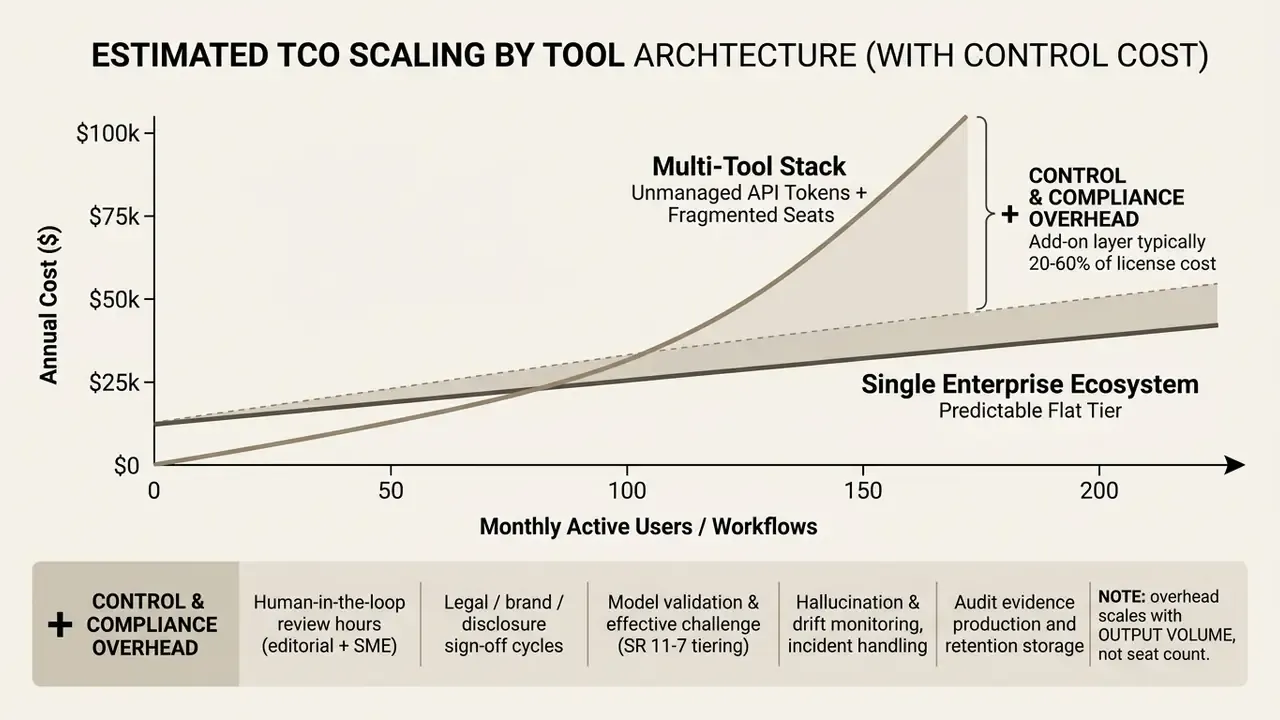
Why the control layer decides the business case. Licence and token spend is the visible cost; the reviewable cost is human. Every generated asset that reaches a customer consumes reviewer minutes, and in regulated functions it also consumes validation and archival capacity. Model it explicitly:
TCO = (licences + metered usage + infrastructure) + (review hours × loaded rate) + (validation & monitoring effort) + (audit evidence storage & retention) + residual risk provision.
Two consequences follow. First, a tool that halves drafting time but doubles review time has negative ROI. Second, consolidation reduces control cost faster than it reduces licence cost, because each extra vendor brings its own validation, monitoring, and evidence workload. Unmanaged multi-tool stacks therefore produce escalating subscription spend, redundant capability, and duplicated governance effort. Teams evaluating flexible billing can explore pay as you go ai video tools to align operational costs with usage volume before committing to enterprise annual contracts. Financial appraisal should follow standard investment discipline, ROI, NPV, and payback period, in line with CSIRO-style benefit-cost guidance, rather than time-saved anecdotes.
Practical Recommendations for Selecting an AI-Media Alternative
Deploying an AI-Media alternative calls for a phased adoption strategy that limits operational risk. Run controlled pilots on isolated business workflows before scaling software across business units.
Following structured ai media alternatives by reason recommendations lets teams start with tested workflows. By using ai only where it delivers verified efficiency gains, organizations can help operational teams work faster while avoiding duplication. Decision-makers don't need to acquire every new market tool. They need solutions that solve documented operational problems.
Start With One Workflow and Test Results
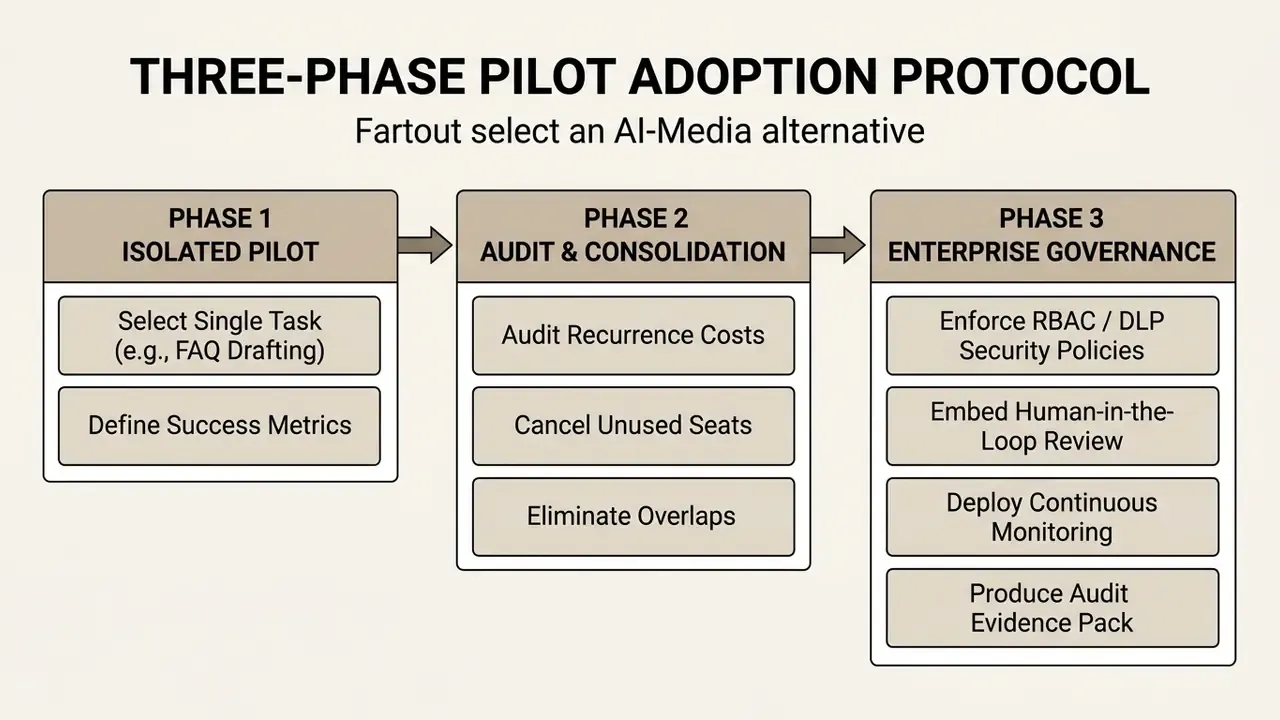
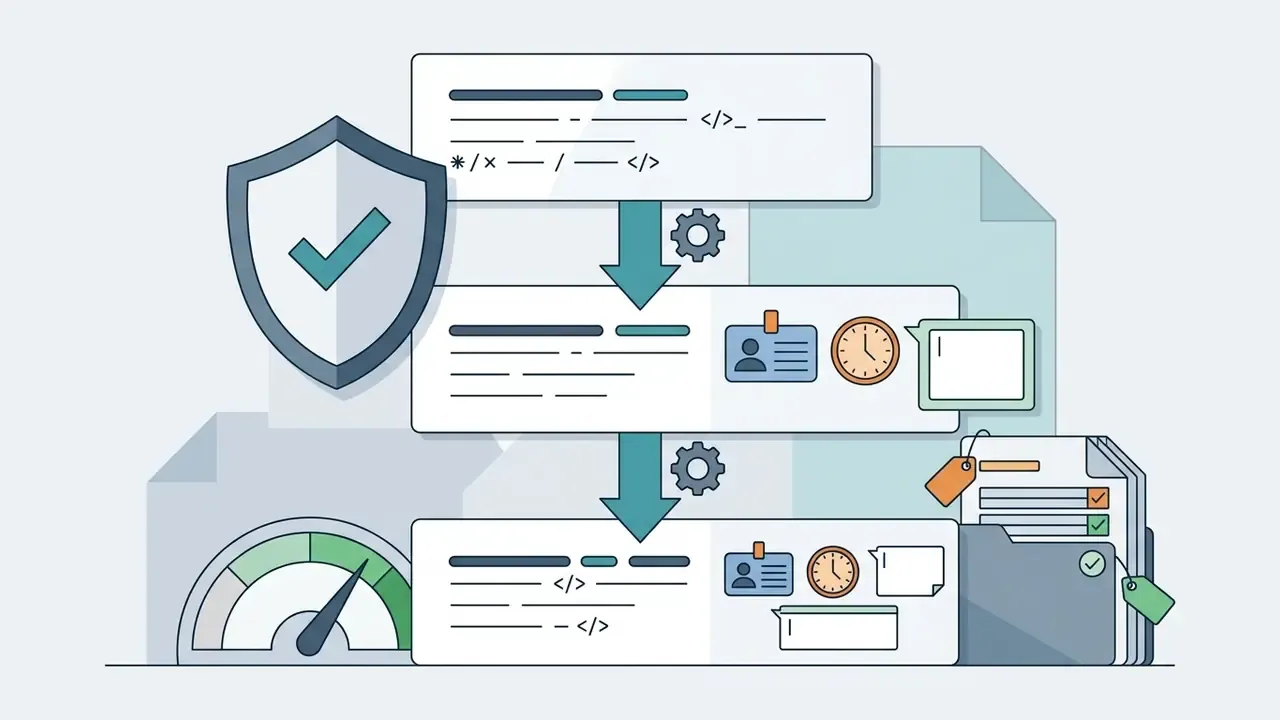
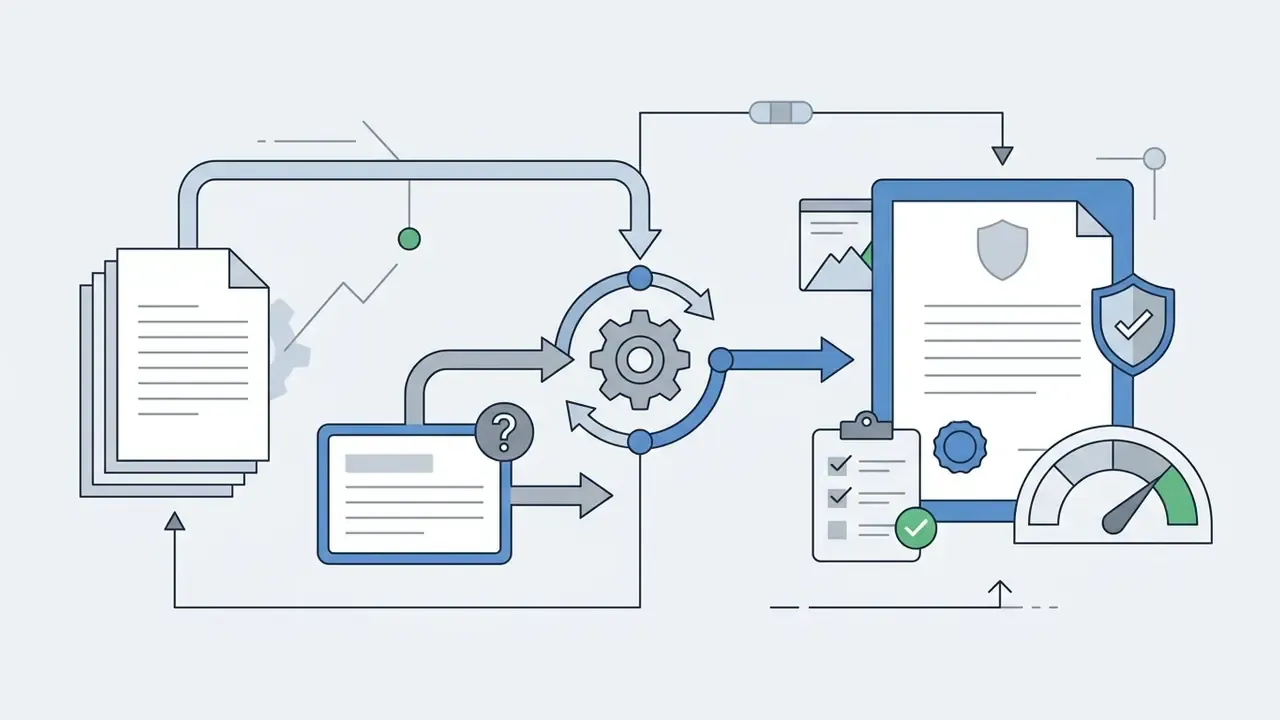
A pilot should isolate a single non-critical workflow: drafting transcripts, creating social captions from approved whitepapers, or optimizing metadata for search visibility. Establish baseline performance metrics before launch so output quality, processing speed, and cost savings can be judged objectively. Write and approve the test plan before testing begins, in line with EU draft Annex 22 practice, and structure it in three stages, development, validation and reporting, then deployment with post-go-live monitoring, as WHO's evidence framework recommends.
Human review isn't an optional pilot stage:
«93% of companies using AI review AI-generated content before publishing.»
Audit Evidence a Pilot Must Produce
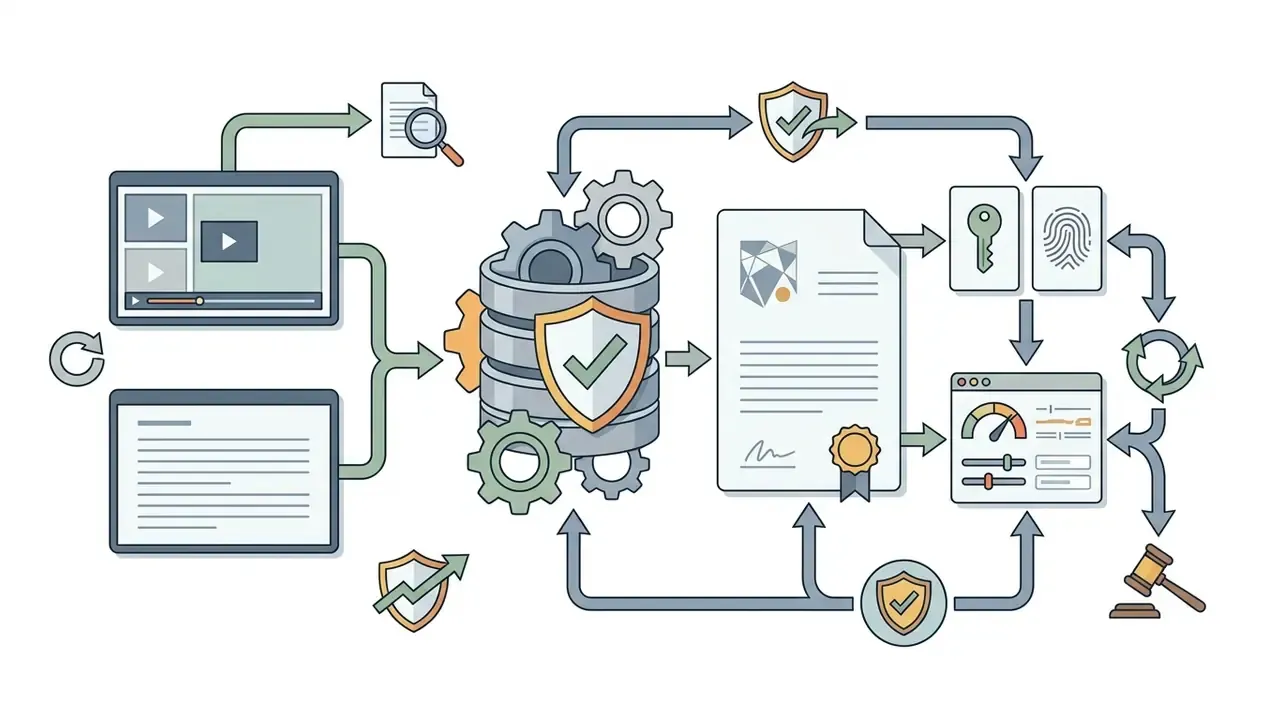
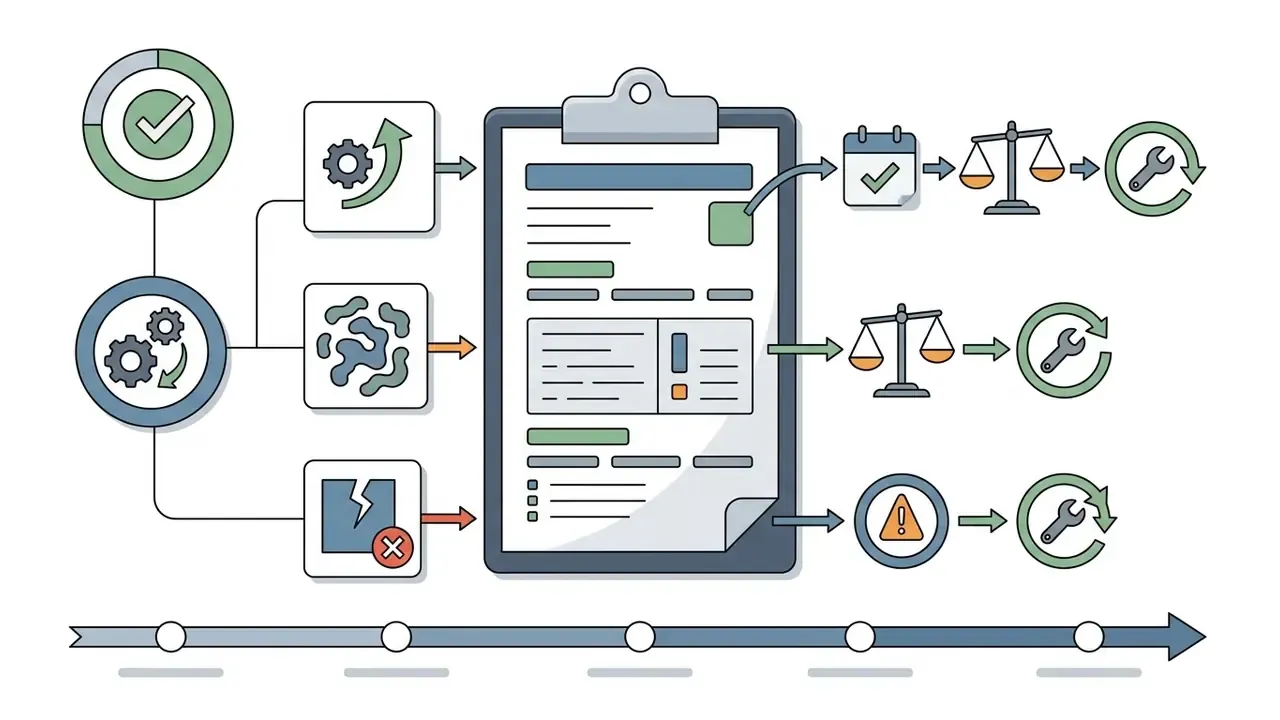
Phase 3 succeeds only if it generates reproducible artifacts. At minimum, retain:

Build a Tool Stack Without Duplicating Platforms
To stop subscription sprawl, audit active software licences on a schedule. Inventory tools across teams, identify overlapping capability, and consolidate around core foundational systems. A repeatable audit method: pull two months of statements, list every AI subscription with monthly cost and last-use date, compute cost per use, then mark each line Keep, Downgrade, or Cancel. Cancel anything unused for 30 or more days or functionally duplicated elsewhere, and test the replacement before dropping the incumbent plan.
An effective consolidation strategy maps every active tool to one primary function: research, drafting, visual asset creation, or publishing. Keep one paid tool per function. Removing redundant applications lowers subscription cost, simplifies security monitoring, shrinks the validation surface, and keeps data handling consistent across the organization. When consolidating visual production, compare candidates against our roundup of AI image generators so the retained tool covers both quality and licensing needs.
Enterprise AI Media Governance & Model Risk Checklist
Print or copy this before a vendor call. Every "no" is either a remediation item or a disqualification.
Checklist0 / 18
FAQ
Is AI-Media replaceable by a general AI video platform?
Rarely as a like-for-like swap. AI-Media's differentiators are live captioning latency (5–7s on iCap Alta TS), stated 96% LEXI accuracy, broadcast transport support (MPEG TS, SMPTE 2110, CDI, SRT), and caption-encoder hardware. General generative video platforms don't provide these. Most institutions keep captioning infrastructure and add generative tools alongside it.
How do we stop shadow AI without blocking productivity?
Publish an approved-tool list per function, provide a sanctioned default in each category, and make the approval path faster than the workaround. Given that roughly 75% of knowledge workers already use generative AI while only about 8% of OECD firms have formally adopted it, prohibition alone fails. Substitution works.
Do generative media tools fall under SR 11-7?
If outputs influence customer-facing statements, disclosures, or decisions, treat them as in scope pending a formal determination: create a model inventory entry, assign a validation tier, require ongoing monitoring. Purely internal, non-decisioning creative uses are usually lower tier, but the determination should be documented rather than assumed. Confirm the classification with your model risk function and legal counsel.
What is the main intellectual-property risk?
Two exposures. Inbound: training-data provenance of the generative model, and whether outputs may infringe. Outbound: whether your inputs and published content become training data for the vendor or its partners. X's terms permitting Grok and third-party AI training on user posts is the clearest platform-level example of the second. Require written provenance and training-use terms, and route commercial output through a licensing review.
Can data leak through an API integration?
Yes, via prompt content, uploaded assets, retained logs, and sub-processors. Mitigate with zero-data-retention terms, field-level redaction before transmission, DLP at the egress point, least-privilege API keys, and a documented sub-processor list. NIST's generative AI profile requires documented authorization, duration, and type of access to sensitive data.
Can AI Overviews be turned off in Google Search?
Google does not provide a simple permanent switch. The practical alternatives are engines with explicit no-AI modes: DuckDuckGo's dedicated no-AI entry point is fastest, Startpage allows disabling suggestions and instant answers, and Mojeek states it will not replace results with AI-generated answers and keeps summarization opt-in.
Does AI-written content rank?
It can, though human authorship still dominates the top position. Semrush's 42,000-post analysis found Position 1 results are 8× more likely to be human-written (80.5%) than purely AI-generated (9%), despite 72% of SEO professionals believing parity exists. Use AI for research, outlining, and drafting; keep human expertise on final substance.
Which alternative should a rights-conscious creator or brand pick at network level?
Bluesky for portability and algorithm choice, Pixelfed for self-hosted chronological visual publishing, MeWe for privacy-first community. Expect smaller reach and thinner monetization today, offset by content ownership and lower niche competition.
Limitations, Open Questions and a Safe Next Step
Appendix A: Superseded Statements and Revision Notes
Retained for transparency and version traceability. Each item shows the original phrasing and the reason for revision; corrected versions appear in the main text above.

Social Media Alternatives Grouped by Job to Be Done
Category roundups collapse tools that solve different problems. Splitting the market by job produces cleaner shortlists, and fewer refund conversations later.
Takeaway: if the bottleneck is production, scheduling tools won't fix it. If the bottleneck is governance, agentic generators make it worse without approval gates.