Executive Summary for Decision-Makers
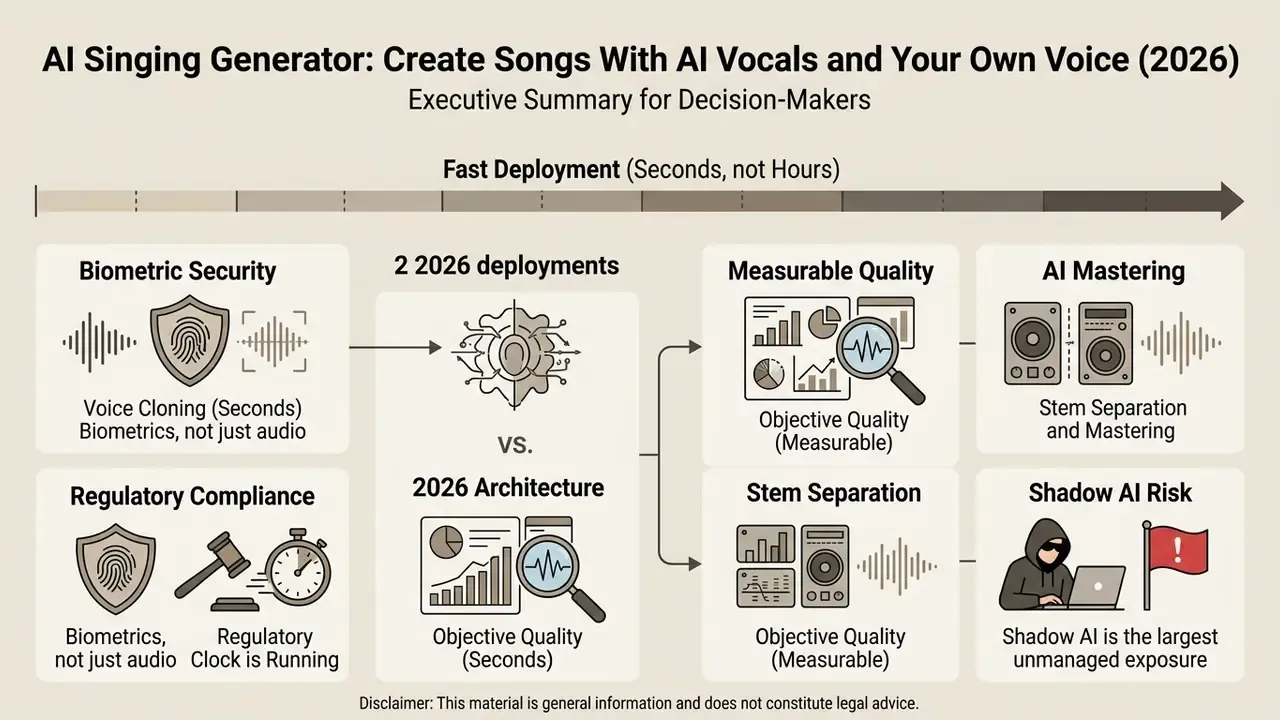
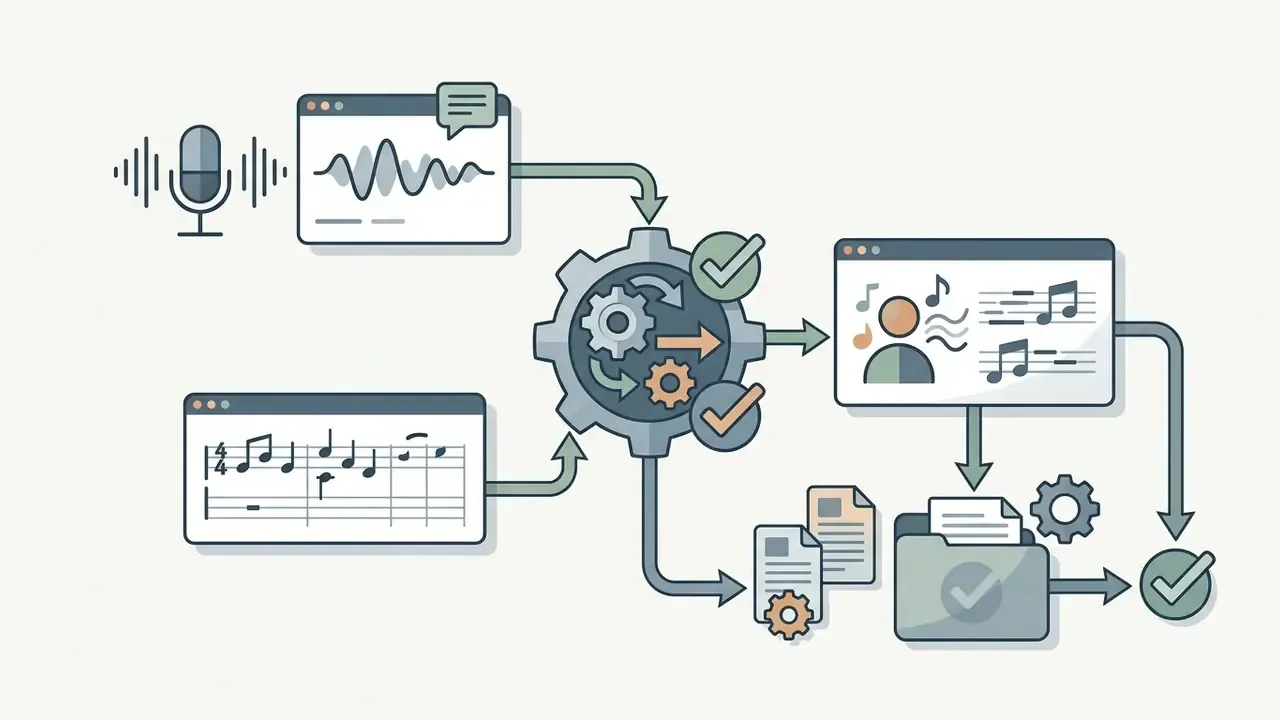
- Two architectures dominate 2026 deployments. Cascaded singing voice synthesis (SVS) pipelines predict intermediate acoustic features before vocoding, while end-to-end text-to-song engines generate vocals and accompaniment jointly. Model selection changes your control surface, latency, and validation burden.
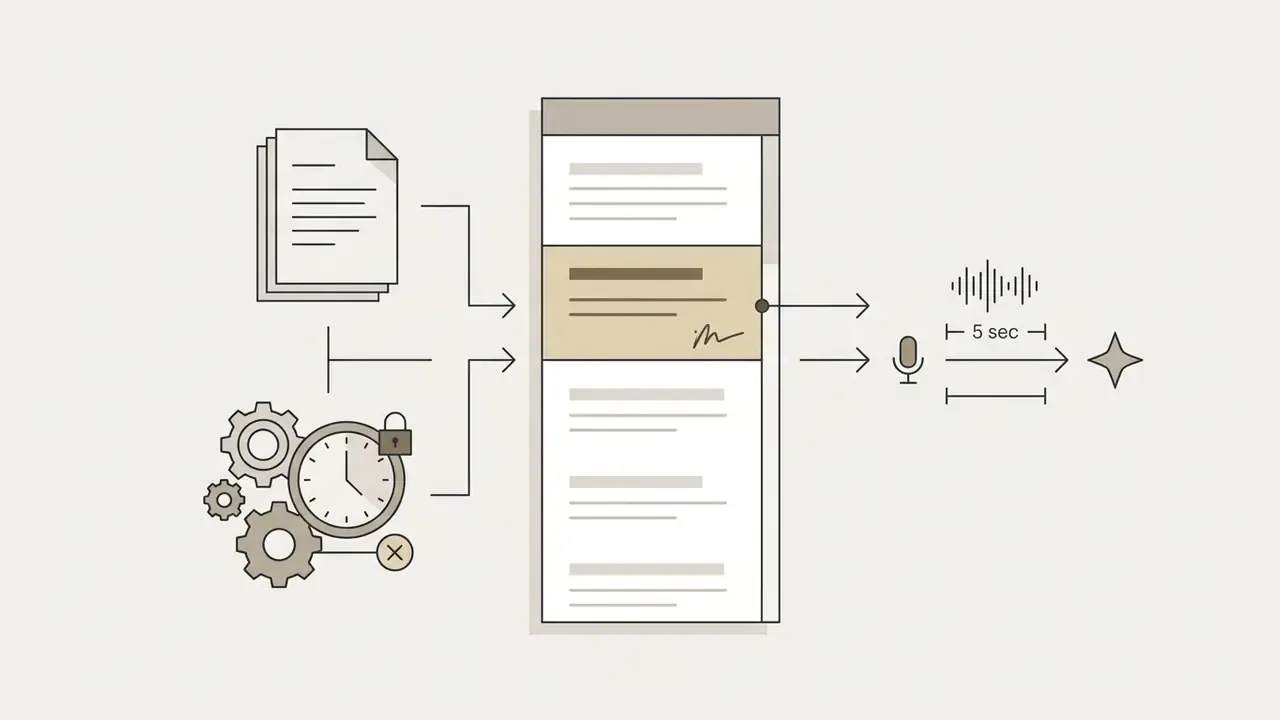
- Voice cloning now works from seconds, not hours. Zero-shot systems reproduce timbre from 3 to 5 seconds of clean reference audio. Enterprise-grade expressive models still benefit from 10 to 30 minutes of dry vocal recordings.
- Biometrics, not just audio. Any uploaded voice sample is potentially biometric data under GDPR Article 9 and Illinois BIPA. Vendor selection must cover consent capture, encryption, tenant isolation, retention limits, and SOC 2 Type II attestation.
- The regulatory clock is running. Article 50 of the EU AI Act requires machine-readable marking of synthetic audio from 2 August 2026. US Copyright Office guidance (2025) states that purely AI-generated audio without human authorship cannot claim copyright.
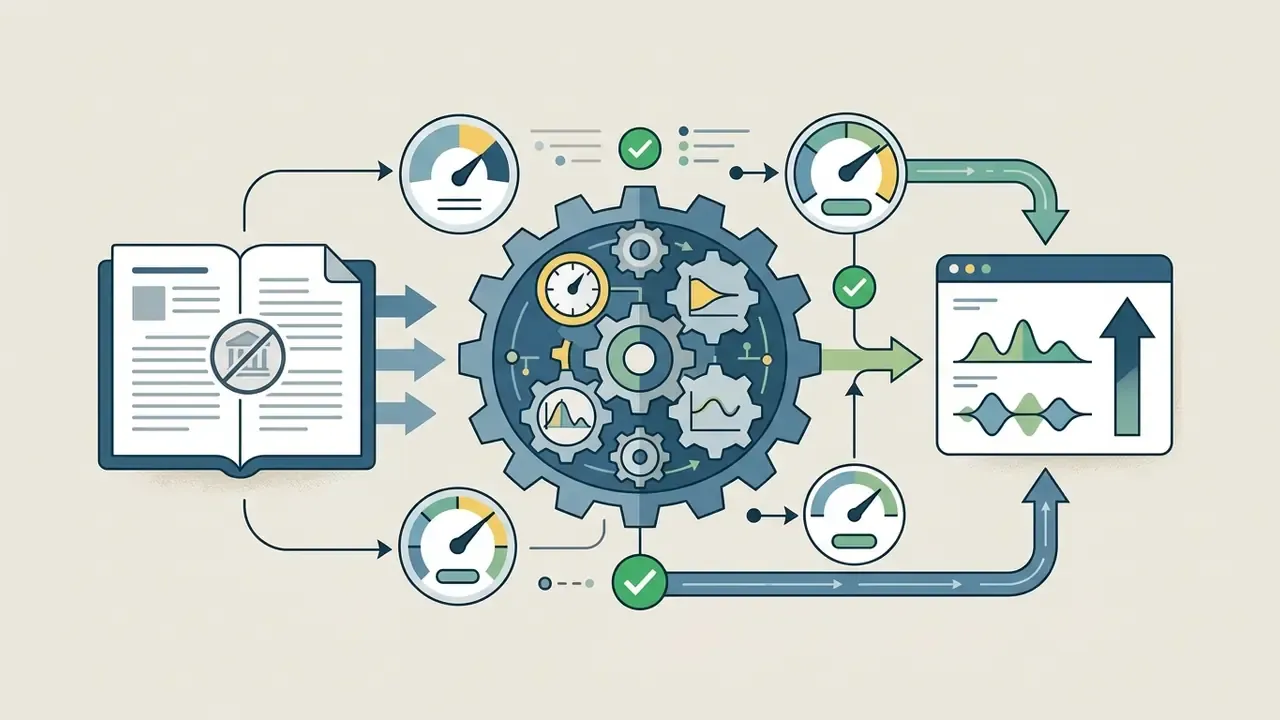
- Objective quality is measurable. FAD, PER, MOS, MuQ-T, and ITU-R BS.1387-2 provide the metric vocabulary needed to slot synthetic vocals into an existing model validation framework (Fed SR 11-7 / OCC 2011-12, NIST AI RMF, ISO/IEC 42001).
- Shadow AI is the largest unmanaged exposure. An employee who uploads an executive or talent voice into a consumer song generator creates irreversible biometric leakage. Blocklists, DNS controls, and an approved-tool registry are the fastest mitigations.
Disclaimer: This material is general information and does not constitute legal advice. Licensing terms, commercial-use rights, biometric-consent obligations, and disclosure requirements vary by platform and jurisdiction and must be validated by your legal department.
Who Should Read This and What Changed in 2026
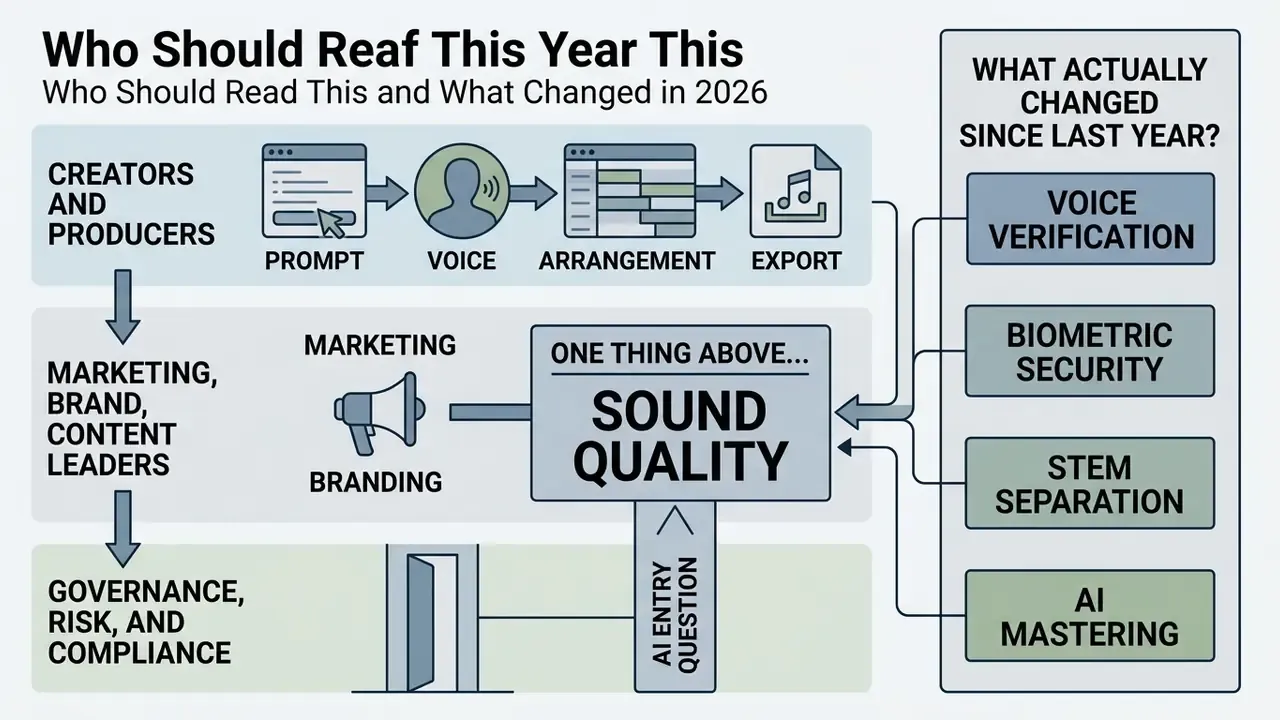
Three audiences get value from this guide, and they read it differently.
Creators and producers want the workflow: prompt, voice, arrangement, export. Skip to the step-by-step process and the post-processing suite.
Marketing, brand, and content leaders care about one thing above sound quality, and that is whether the track can legally ship. Read the commercial-rights matrix twice.
Governance, risk, and compliance readers arrive with a narrower question: can this tool enter the AI inventory without creating an untraceable biometric liability? The deployment pipeline, the metric mapping, and the auditor checklist were written for you.
What actually changed since last year? Four things. Short-reference cloning became standard rather than experimental. Provenance marking moved from voluntary to mandatory in the EU timeline. Free tiers hardened around watermarks and download blocks. And vendors began issuing generation-time licence artifacts instead of vague terms-of-service language. That last shift is the one procurement teams underestimate.
What Is an AI Singing Generator and What Songs It Can Create
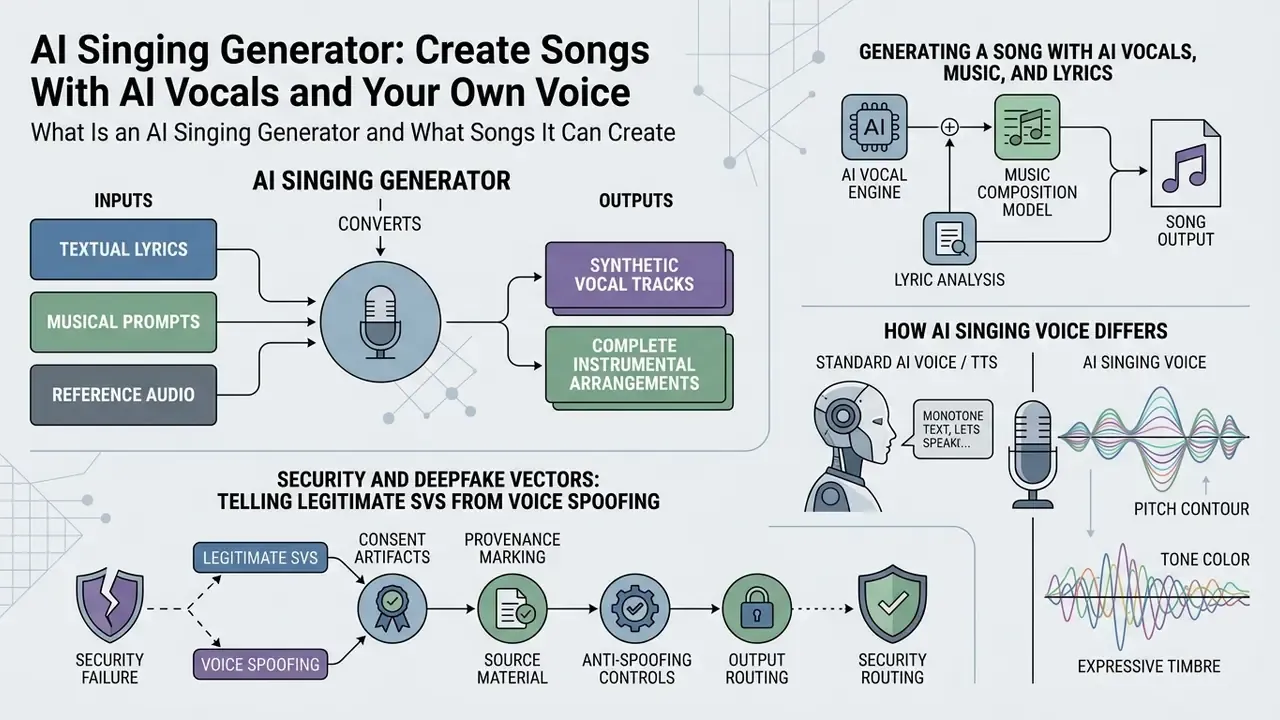
An ai singing generator is a software system that converts textual lyrics, musical prompts, or reference audio into synthetic vocal tracks and complete instrumental arrangements. Modern platforms use deep learning models to generate coherent ai song compositions, transforming simple text prompts or score data into studio-grade musical renditions.
"Text-to-song is a natural extension of SVS: it adds accompaniment to the vocal track and allows complete compositions to be produced from textual descriptions."
The same 2026 survey classifies production systems into cascaded pipelines (acoustic model plus vocoder) and end-to-end paradigms, and treats song generation, singing voice synthesis, and singing voice conversion as three distinct but overlapping tasks. That taxonomy matters commercially. A cascaded SVS engine gives note-level editability. An end-to-end song engine gives speed and arrangement coherence with less granular control. Neither is universally better; the choice follows the use case.
Generating a Song with AI Vocals, Music, and Lyrics
An ai generator singing system converts written lyrics and musical parameters directly into fully arranged musical tracks. Recent end-to-end architectures generate vocal tracks alongside synchronized instrumental accompaniment based on genre descriptors and melodic constraints.
Systems such as MelodyLM (2024) use intermediate MIDI representations to structure melodic tokens before synthesizing accompaniment through latent diffusion models.
"MelodyLM defines a song as a musical composition containing a vocal track and instrumental accompaniment, and generates both components from a textual description."
Similarly, SongBloom (2025) uses an autoregressive diffusion architecture to maintain structural coherence across multi-section songs up to 150 seconds in length.
"SongBloom outperforms existing methods on both subjective and objective metrics and reaches quality comparable to commercial music generation platforms."
Practically, accompaniment generation is frequently formulated as a conditional problem, where the instrumental track is produced from the generated vocal waveform plus the text prompt. That ordering explains why lyric-first, vocal-first, and prompt-conditioned pipelines coexist rather than converging on a single industry standard. Anyone waiting for one winning paradigm before procuring will probably wait a while.
How AI Singing Voice Differs from Standard AI Voice and TTS
An ai singing voice differs from standard text-to-speech (TTS) by controlling fundamental frequency (), vibrato depth, sustain, and rhythmic alignment with musical bars. Standard speech models optimize for conversational prosody, whereas an ai generator singer targets precise musical pitch contours and note dynamics.
"SVS requires explicit modeling of target note pitches and vocal breathiness; TTS systems do not operate on musical scores and do not control vibrato or note dynamics."
In classical SVS literature, vibrato is parameterized explicitly by phase, depth, and rate, while breathiness appears as a timbre, energy, or technique label. Speech TTS exposes none of these controls, which is precisely why repurposing a narration model for music produces flat, note-missing output. It sounds like a robot reading a hymn sheet.
Voice conversion systems such as Retrieval-based Voice Conversion (RVC) extract source pitch contours, while dedicated SVS models calculate acoustic feature maps directly from musical scores. Readers comparing narration engines with musical engines can review the differences in our guide to AI voice generators, which covers voice quality, language coverage, pricing, and commercial licensing side by side. For structured feature-by-feature scoring across modalities, the AI Media Comparison Matrices hub keeps the same evaluation columns for audio, image, and video tools.
Security and Deepfake Vectors: Telling Legitimate SVS from Voice Spoofing
Singing synthesis and voice-spoofing attacks share the same underlying technology stack, so governance teams need explicit separation criteria:
- Consent artifacts. A legitimate custom model has a stored consent record, a verification recording, and an identifiable data controller. A spoofing pipeline has none of these.
- Provenance marking. Compliant generators embed machine-readable provenance metadata (C2PA-style manifests or inaudible watermarks) that survive normal transcoding.
- Source material. Legitimate cloning uses first-party audio submitted by the voice owner. Scraped commercial recordings or conference-call audio are red flags for both copyright and publicity-rights exposure.
- Anti-spoofing controls. Any voice-authentication system in your own estate must be tested against synthetic singing and speech inputs, because pitch-shifted sung output can defeat naive speaker-verification thresholds.
- Output routing. Deepfake risk rises sharply when generated audio can be published without human review. Require an approval gate before distribution to external channels.
One uncomfortable detail worth stating plainly: the technical difference between an approved vocal clone and a fraud attempt is often zero. The difference lives entirely in the paperwork and the logs.
Available AI Voices: Preset, Male, Custom, and Personal Voices
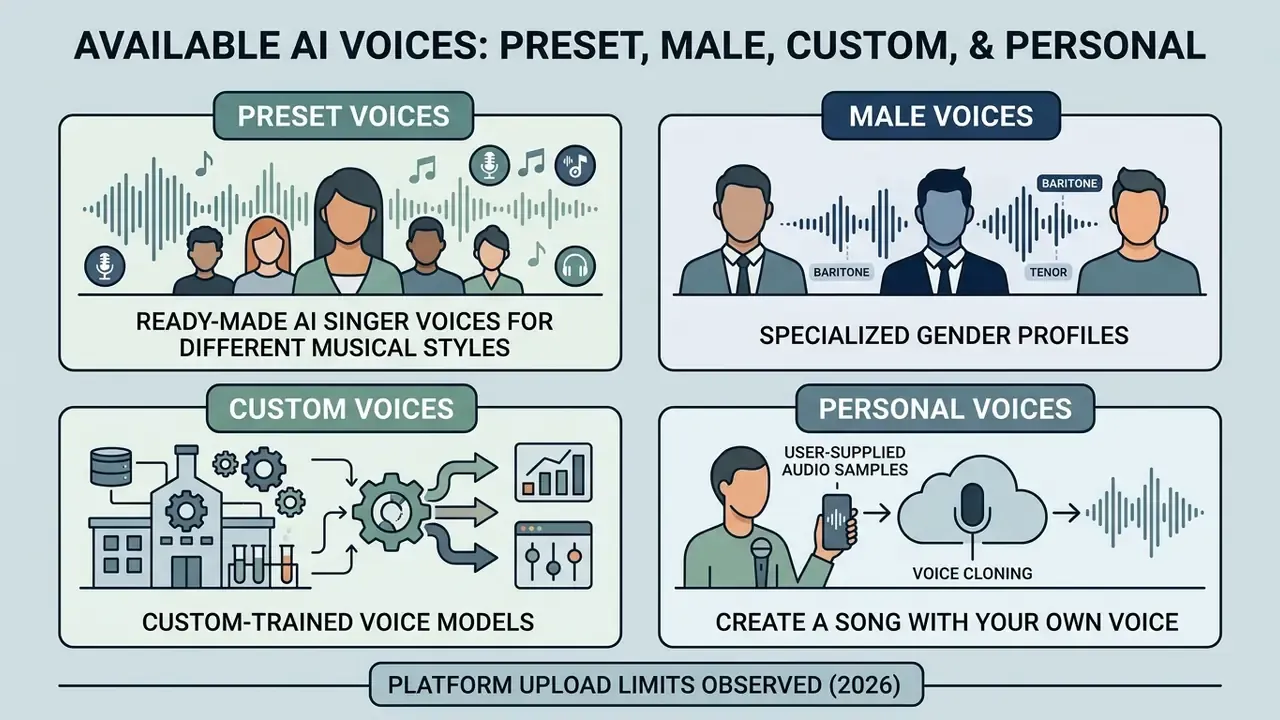
Modern vocal platforms offer pre-trained stock voices, specialized gender profiles, custom-trained voice models, and personal voice clones created from user-supplied audio samples. Selecting an appropriate ai artist voice depends on target genre requirements, brand voice guidelines, and available reference data.
Vendor libraries have grown accordingly. Commercial vocal synth catalogues now publish well over 140 voice models spanning Rap, Pop, Chanson, Ballad, Kids Choir, and Country presets across multiple languages, which makes preset selection a curation problem rather than an availability problem.
Ready-Made AI Singer Voices for Different Musical Styles
Stock AI singer libraries provide instant access to curated vocal profiles tuned for specific genres such as Pop, Rock, R&B, and Electronic music. Preset vocal models let producers generate vocal hooks immediately, with no voice capture session and no consent workflow attached.
"Prompt-Singer demonstrates control over singer gender, vocal range, and volume through textual prompts, without uploading any audio."
Genre adaptation remains uneven. Research on genre-conditioned synthesis reports that Pop achieves the highest out-of-the-box acoustic alignment, while other genres gain far more from lightweight genre-specific continued training than from zero-shot prompting. Authentic vocal rasp, strained rock delivery, or jazz phrasing therefore usually requires targeted fine-tuning rather than a prompt keyword. Adding the word "gritty" to a prompt rarely produces grit.
How to Create a Song with Your Own Voice
Generating tracks using your own voice requires uploading clean vocal samples to an ai create song with my voice feature or an ai music generator upload voice create song workflow. Modern systems build a personalized vocal model capable of performing original lyrics across dynamic melodies.
In one illustrative deployment (composite, not a named client), an enterprise media group evaluated short-reference vocal synthesis for customized branding. The technical team processed isolated dry vocal stems, configured a zero-shot reference profile, and generated multilingual vocal variations while preserving speaker identity. Production guidelines for optimizing vocal stems align with methods detailed in our guide on how to compare the best AI art generators, where output-quality benchmarking follows the same evaluate-then-license logic.
Recording preparation checklist for your own voice:
- Record in a quiet, treated room. No background music, television, traffic, or overlapping speakers.
- Deliver dry audio: no reverb, delay, compression, auto-tune, or mastering processing.
- Keep a single speaker per file and a consistent microphone distance.
- Duration targets by clone mode: 10 to 30 seconds for instant cloning, 1 to 3 minutes for custom cloning, 10 minutes as a practical accuracy floor, and 30 minutes to 3 hours for high-expressiveness professional models.
- Prefer uncompressed WAV (16-bit or 24-bit) at the project sample rate. MP3 and M4A are widely accepted but lossy.
- Include sustained sung notes and spoken passages if the platform supports both, since pitch range coverage improves note accuracy.
Quality outweighs quantity. Long noisy material trains a noisy model, and reverb baked into the reference is inherited permanently by the clone. There is no later fix for that; you re-record.
Voice Cloning and Building a Custom Voice Model
Advanced vocal production relies on an ai music clone generator or an ai music generator with voice cloning engine to construct a dedicated voice model from source audio. Platforms offering an ai music maker sample your own voice framework convert target speech or singing datasets into reusable synthetic vocal instruments.
Research on short-reference synthesis shows that singer-specific voices can be produced from roughly 5 seconds of clean reference audio without any prior training on that singer.
"SongGen confirms that a three-second reference clip is sufficient for zero-shot timbre cloning within full song generation."
For higher expressive accuracy, enterprise platforms use 10 to 30 minutes of dry, isolated vocal recordings, and expressive-cloning literature reports that 2 to 3 hours of target data may be required to fine-tune a pretrained synthesis model correctly. Teams evaluating adjacent generative tooling can also review our comparison of free AI art generators for licensing patterns that repeat across modalities.
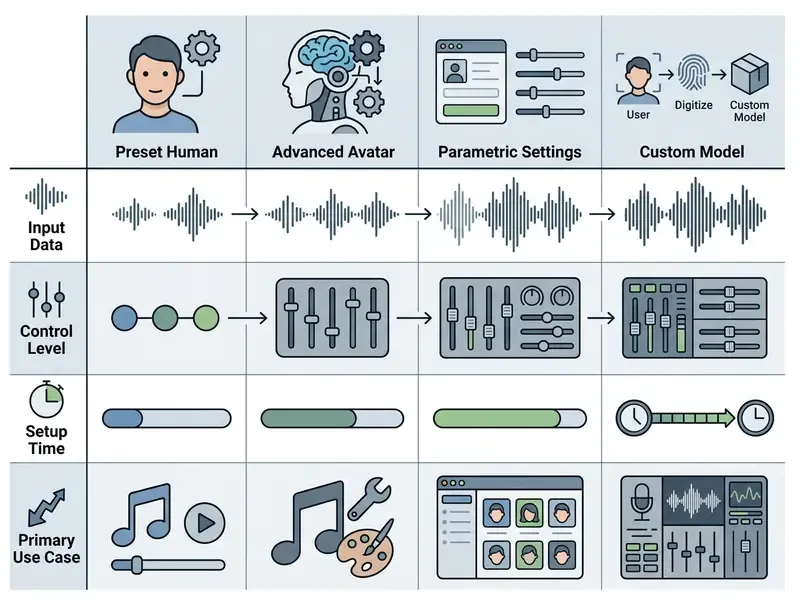
| Voice Type | Input Data Required | Control Level | Setup Time | Primary Use Case |
|---|---|---|---|---|
| Preset AI Voice | Text lyrics / prompt | Moderate | Immediate | Instant demo vocals and standard genre tracks |
| Custom Voice Model | 10 to 30 min clean speech/singing | High | Medium (10 to 30 min) | Branded synthetic artists and recurring projects |
| Own Voice (Cloned) | 5 sec to 2 min dry reference audio | Maximum | Fast to medium | Personalized song creation and voice swapping |
| AI Artist Voice | Licensed performance dataset | High | Immediate (pre-built) | Stylized vocal covers and genre-specific tracks |
Text summary of the table: preset voices win on speed and carry no biometric burden; custom models win on brand consistency; cloned own voice wins on personalization but pulls consent and retention duties with it; licensed artist voices win on stylistic authenticity but demand rights clearance before any release.
Platform upload limits observed across published documentation (2026): single-file uploads of WAV, MP3, M4A, or WEBM; minimum durations from 3 to 10 seconds; instant-clone windows of 30 seconds to 5 minutes; file-size caps between 4 MB and 32 MB; professional cloning datasets of 30 to 180 minutes. Always verify limits against the vendor's current documentation before designing an ingestion workflow, because these numbers move between releases.
Ethical Vocal Sourcing, Voice Ownership Verification, and Biometric Security
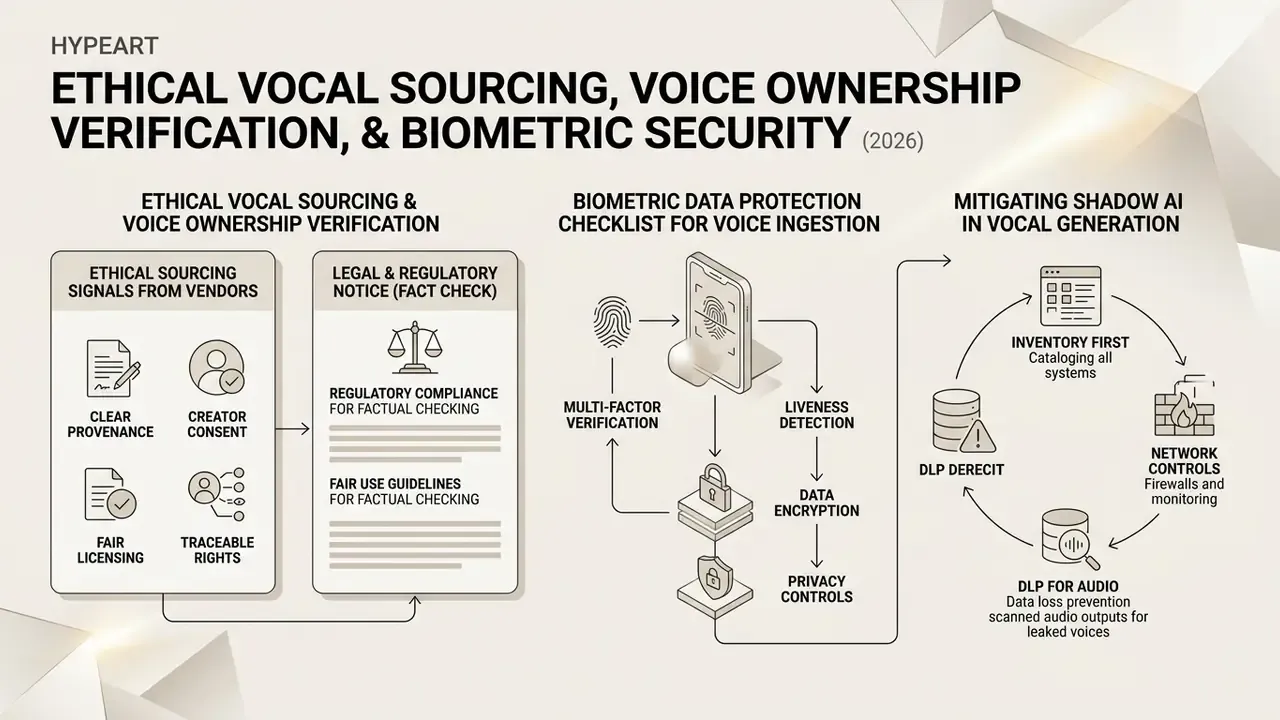
Ethical Vocal Sourcing and Voice Ownership Verification
Biometric Data Protection Checklist for Voice Ingestion
Voice samples used to build a model are frequently classified as biometric identifiers. Treat ingestion as a regulated data flow, not a file upload.
| Control | Requirement | Reference framework |
|---|---|---|
| Written consent before capture | Purpose, retention period, and third-party disclosure stated in advance | Illinois BIPA; GDPR Art. 9(2)(a) |
| Lawful basis and DPIA | Data protection impact assessment for biometric processing | GDPR Art. 9, Art. 35 |
| Encryption | TLS 1.2+ in transit; AES-256 at rest for raw audio and embeddings | ISO/IEC 27001 |
| Tenant isolation | Dedicated storage namespace; no cross-customer model reuse or training | SOC 2 Type II |
| Raw-audio deletion | Documented deletion of source recordings after embedding creation | BIPA retention schedule |
| Access control | Role-based access to voice models; no shared accounts; MFA enforced | NIST AI RMF (Govern) |
| No training on customer data | Contractual prohibition on using uploads to improve vendor base models | Vendor DPA |
| Audit logging | Immutable logs of upload, verification, inference, and export events | Fed SR 11-7 documentation expectations |
| Subprocessor transparency | Named subprocessors, hosting regions, and cross-border transfer mechanism | GDPR Chapter V |
| Incident response | Contractual breach-notification window for biometric data | Local breach-notification law |
If a vendor cannot answer the deletion and no-training rows in writing, the security review is finished. Politely, but finished. Integration questions about programmatic ingestion, quota limits, and log export are covered in the api reference section.
Mitigating Shadow AI in Vocal Generation
Unmanaged use of consumer song generators is the most common failure mode observed in regulated environments, because a single upload of an executive's or talent's voice cannot be recalled.
- Inventory first.Add every approved SVS, voice-conversion, and text-to-song service to the AI inventory with an owner, purpose, and data classification.
- Network controls.Block unapproved generator domains at the DNS or proxy layer and monitor egress for large audio uploads to unclassified destinations.
- DLP for audio.Extend data-loss-prevention rules beyond documents to WAV, MP3, and M4A payloads leaving managed endpoints.
- Sanctioned alternative.Publish one approved tool with a documented workflow. Prohibition without a substitute simply drives usage off-network.
- Training and attestation.Require annual acknowledgement that uploading another person's voice without written consent is prohibited.
- Procurement gate.No corporate card and no SSO provisioning for generative audio tools without a completed vendor security review.
Point 4 is the one most programs get wrong. Ban everything, and marketing will still ship a jingle by Friday, just from a personal laptop.
How to Create an AI Song with Vocals: Step-by-Step Process
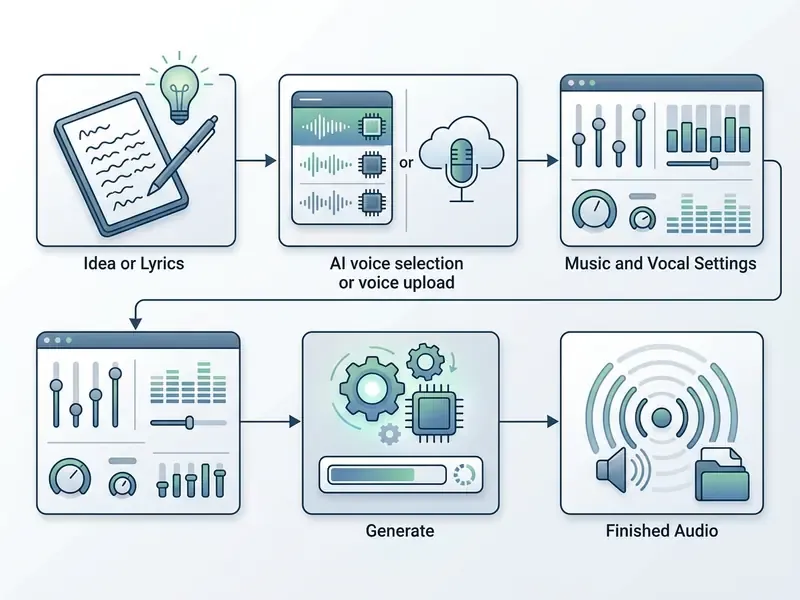
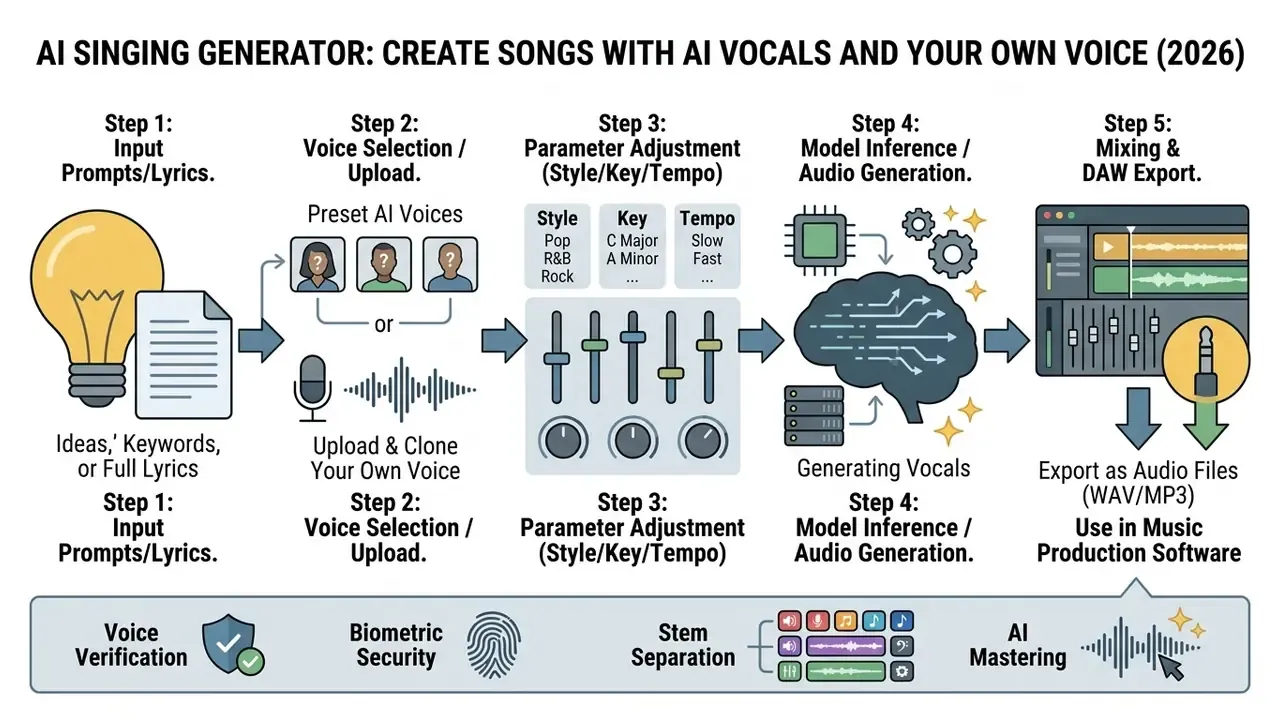
Building an original track with an ai music generator for vocals follows a structured workflow from conceptualization to final stem export. Controlled step-by-step procedures protect audio clarity and musical timing, and they also produce the log entries an auditor will later ask for.
"SongGen achieves high OVL, REL, and VQ scores, approaching values around 4.5 out of 5 obtained by ground-truth recordings in listening tests."
Add Your Creative Idea, Lyrics, or Source Audio
The generation workflow begins by entering descriptive text prompts, structured lyrics, or reference audio files into an ai music generator voice interface. Section tags such as [Verse], [Chorus], and [Bridge] guide the generative model's arrangement logic.
Structuring lyrics on separate lines directly under structural bracket tags prevents vocal overlap and improves word pronunciation clarity. Formatting rules that hold across current generators: place each tag alone on its own line in square brackets; use [Verse 1] and [Verse 2] for repeated narrative blocks; keep [Chorus] short and literally repeated so the hook is reinforced; and position [Bridge] as a contrasting section late in the arrangement before the final chorus.
Select an AI Voice or Upload Your Own Voice
Users next choose a pre-configured ai music artist voice generator profile, select an ai male voice singing generator, or use an ai music generator my voice module. Uploaded reference files must contain isolated vocal audio free from reverb, background noise, or heavy instrumentation.
System specifications for instant cloning typically accept WAV or MP3 files ranging from 10 seconds to 3 minutes. Clean source audio prevents acoustic phase artifacts during synthesis, and teams planning distribution alongside generation often align this stage with YouTube publishing workflows so that audio deliverables match the target platform's loudness and format requirements.
A typical voice-swap (audio-to-audio) sequence looks like this: open the voice changer module, drag in or upload a vocal-containing file, select a target voice or custom model, confirm ownership or licensing of that target voice, then generate and download the transformed take. Accepted input formats commonly include mp3, wav, m4a, aac, and ogg.
Fine-Tune Music, Vocals, and Download the Finished Track
The final step involves setting vocal placement, adjusting backing track levels, and triggering the generation cycle within the ai music and voice generator. Once synthesized, the system outputs mixed audio files or uncompressed stem tracks.
Professional mixing workflows export synchronized 24-bit WAV files starting at bar one, so integration into digital audio workstations (DAWs) stays seamless. Set relative balance from the primary element, usually the lead vocal or the kick, and preserve 6 to 10 dB of headroom before mastering. Reverb and delay tails that are integral to a part should be printed with that stem group. Lossy formats such as MP3, AAC, or OGG should never be used for stem delivery. For a broader view of how usage rights are structured across generative media categories, review our analysis of commercial-use terms for Google's AI image generator.
Governance View: A Safe Deployment Pipeline and Audit Trail
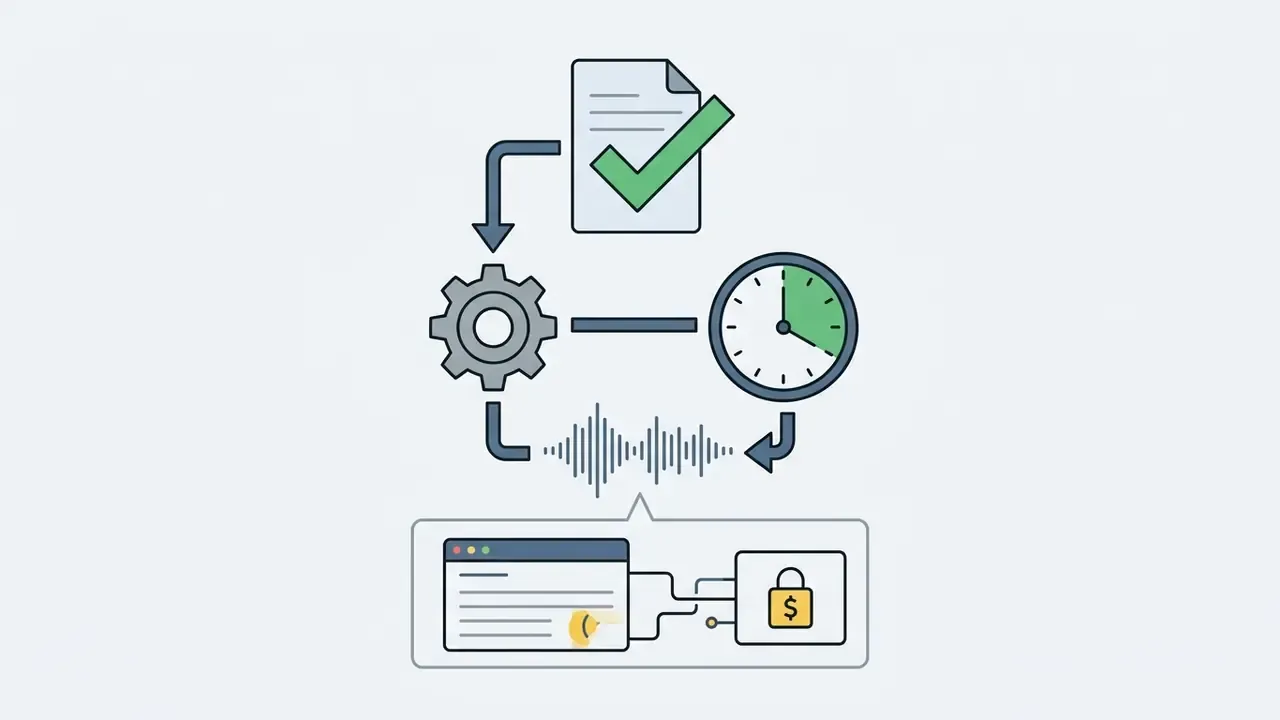
For organizations, the creative workflow above sits inside a control pipeline:
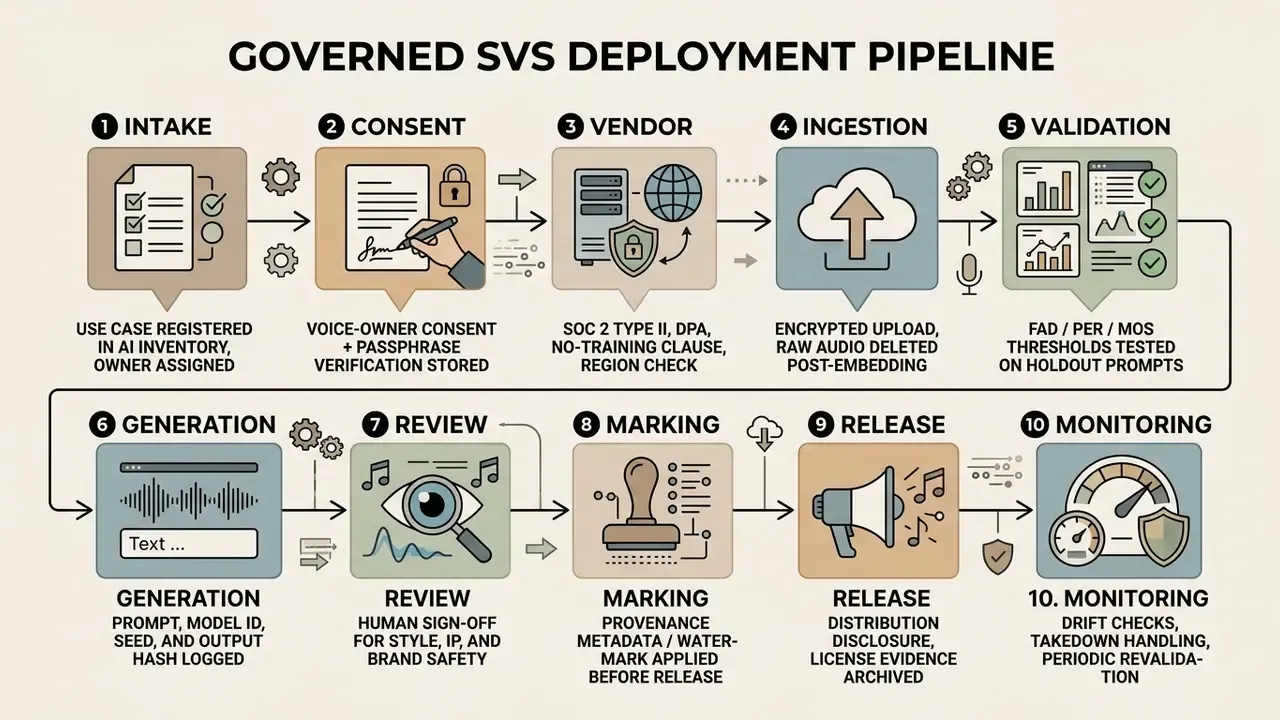
Audit-trail record template (one row per generated asset): asset ID · date and time · requester · use case · model ID and version · voice model ID and consent reference · prompt and lyrics text · tempo, key, and style parameters · seed or determinism flag · credit or token consumption · output file hash · watermark or provenance manifest ID · reviewer and approval date · licence tier active at generation time · distribution channel.
One practical note from reviewing these logs: the field teams forget most often is the licence tier at generation time. Six months later, nobody can prove which plan was active when the track was rendered.
How to Adjust Lead Vocals, Backing Vocals, and Song Style
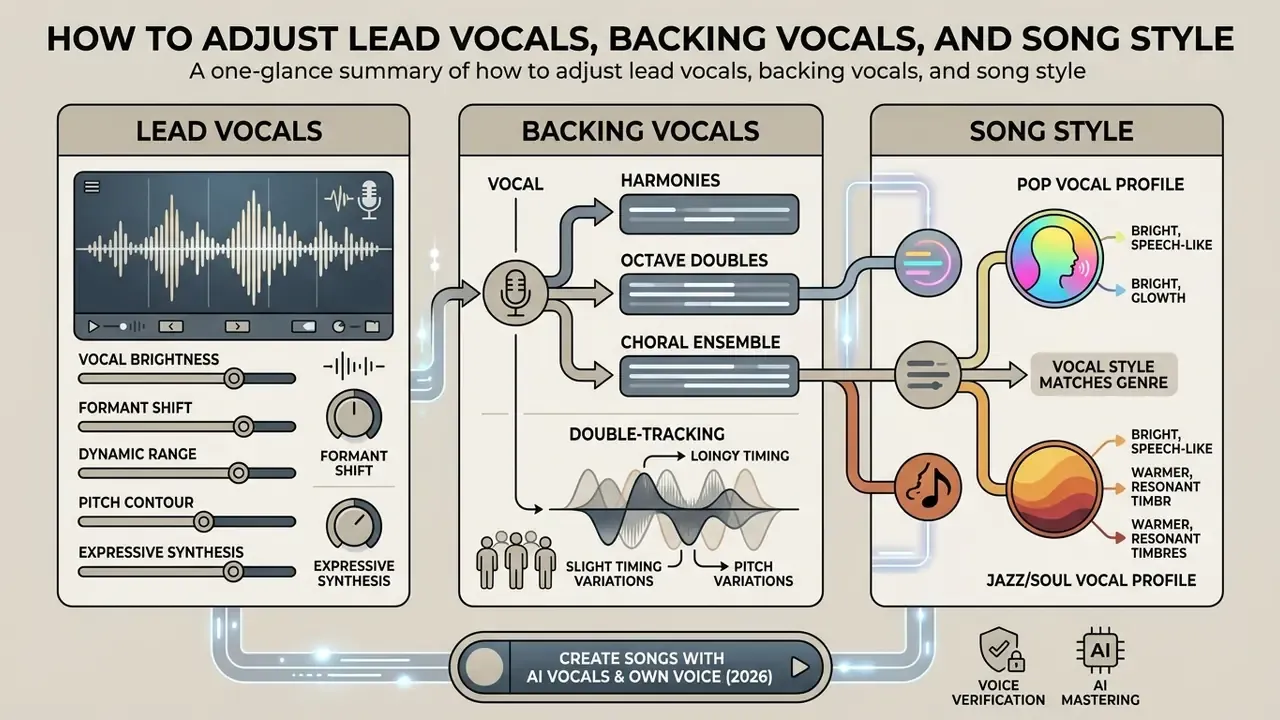
Achieving professional song quality requires independent control over lead vocal delivery, dynamic range, harmonic balance, and backing vocal integration. Fine-tuning an ai music generator with singing voice engine lets producers match specific genre aesthetics.
Lead Vocals, Harmonies, and AI Backing Vocals
An ai backing vocals generator automatically builds multi-part vocal harmonies, octave doubles, and choral textures to support the main lead voice. Automated harmonizers analyze lead melody pitch contours and generate supporting interval tracks, such as parallel thirds and sixths.
"JAM provides word-level and phoneme-level timing control, enabling precise synchronization of lead and backing vocal parts at the word level."
Double-tracking algorithms introduce slight timing and pitch variations to simulate natural ensemble singing. Blending rules from vocal-arrangement practice still apply to synthetic stacks: match phrasing, consonant endings, and dynamics between lead and backing parts; build harmonies from chord tones; keep upper voices within an octave of each other in dense four-part textures; and place darker timbres on upper harmonies with brighter timbres below when you need a tight, non-competing stack. Octave decisions should be constrained by the target voice's comfortable tessitura, with shifts of , , or semitones evaluated for the smallest shift that keeps most notes in range.
Styles, Genres, and Singing Voice Character
Adjusting vocal delivery requires modifying parameters for vocal brightness, formant shift, dynamic intensity, and vibrato speed within an ai music generator with artist voice framework. Matching vocal timbre to genres such as Synthwave, R&B, or Metal requires distinct frequency characteristics and delivery styles.
Expressive-synthesis literature identifies timing onset deviations, amplitude envelopes, and pitch contour shaping as the primary levers for expressive delivery, alongside vibrato parameters and phonetic timing.
"LeVo achieves the highest MuQ-T (0.34) and the lowest PER (7.2%) among open-source systems, demonstrating accurate adherence to textual style and genre instructions."
Bright, speech-like vocal profiles fit Pop compositions, while warmer, resonant timbres suit jazz or acoustic arrangements. Practical genre presets worth trying first: Pop, bright timbre, moderate vibrato, speech-adjacent diction, tight dynamic range; R&B, warm mid-range, heavy melodic ornamentation, breath noise retained; Metal, strained delivery, compressed dynamics, minimal vibrato, doubled harmonies at the octave; Synthwave, narrow dynamic range, generous reverb and chorus, formant shift upward for a retro sheen.
Visual identity usually follows the sonic one. Teams that finish a Synthwave or hip-hop track often need matching cover art in the same session, which is where a graffiti art generator or a general-purpose graphic maker fits into the release checklist rather than a separate design sprint.
Post-Processing Suite: Isolation, Stem Separation, and AI Mastering
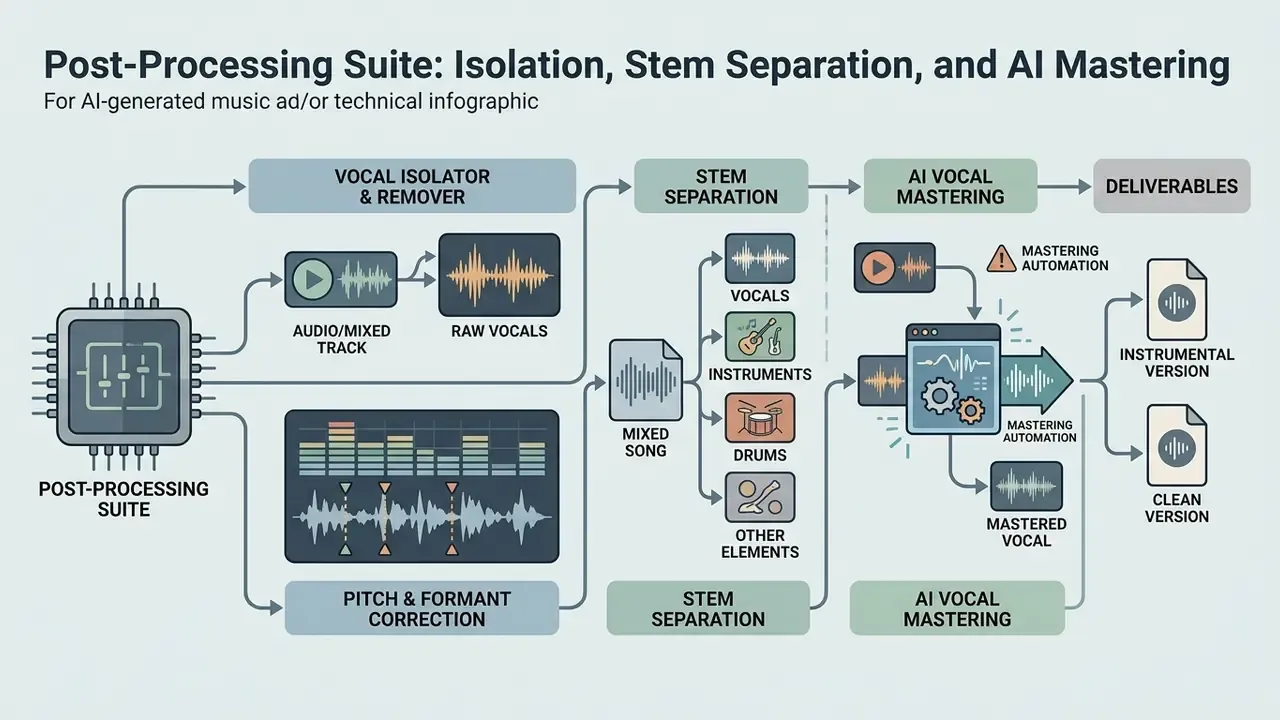
Generating raw vocals is only the first phase of synthetic song creation. Complete vocal production workflows lean on integrated AI audio processing tools:
- Vocal isolator and remover. Extracts dry vocal stems from pre-recorded reference tracks, stripping room reverb, bleed, and background instrumentation down to isolation thresholds. This is also the fastest way to prepare a clean cloning reference from an existing recording.
- Pitch and formant correction. Real-time alignment corrects off-key user inputs while preserving natural acoustic formants and breathiness, so corrected takes remain usable as training references.
- Stem separation. Splits generated tracks into distinct stem layers (lead vocal, backing harmonies, bass, drums, synth) for precise mixing. Contemporary DAWs perform four-way separation natively, covering vocals, drums, bass, and others, writing each stem to its own track, with unselected parts collapsed into a submix.
- AI vocal mastering. Dynamic spectral balancing and multi-band compression tuned specifically for synthetic vocal tracks to meet streaming loudness targets ().
- Instrumental and clean-version deliverables. For sync licensing, the highest-quality instrumental is bounced from the session with vocal tracks muted; AI extraction should be treated as a fallback when session files are unavailable. Clean versions are produced through replacement lyrics, reversal, targeted muting, or dropping the affected vocal line entirely.
A small warning about mastering automation. It flattens problems it cannot hear, including synthetic sibilance and phase smear in stacked harmonies. Listen on two systems before approving.
Specialized Production Workflows Across Creative Industries
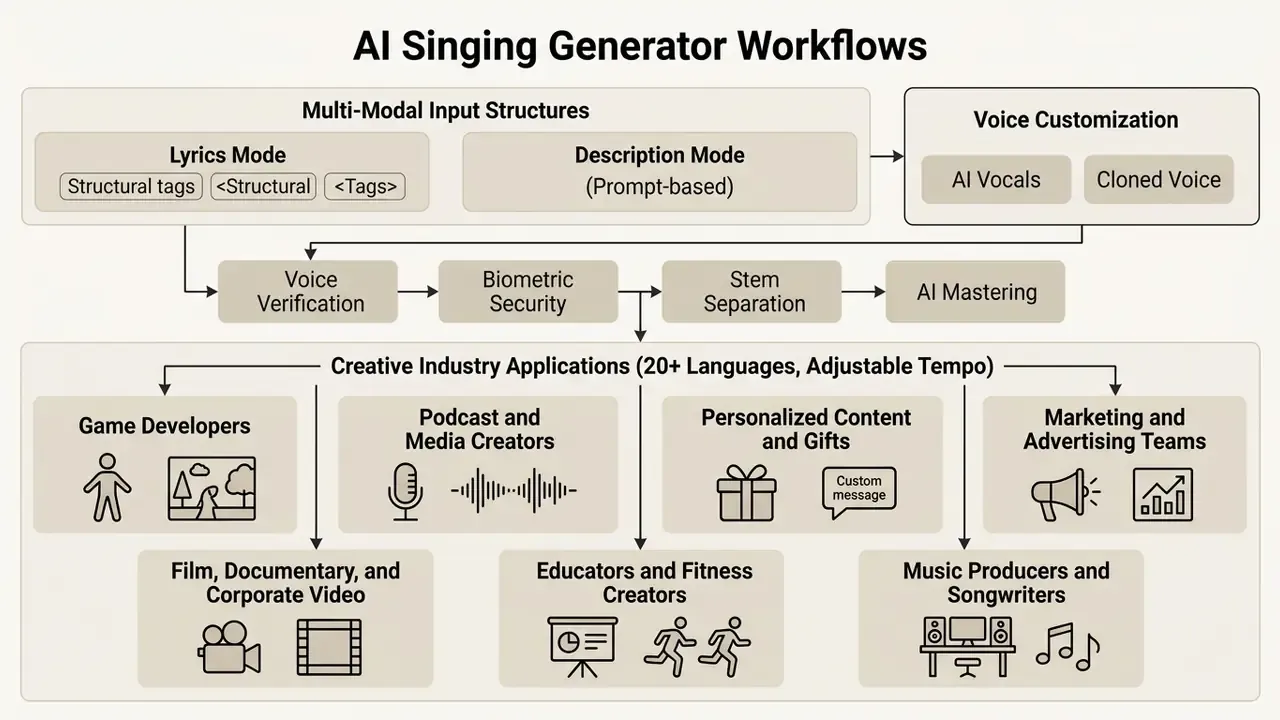
Advanced AI singing generators support multi-modal input structures (Lyrics Mode with structural tags versus prompt-based Description Mode) across 20+ global languages and tempo ranges from 60 to 180 BPM, with 50+ selectable style presets spanning Pop, Rock, Electronic, Jazz, Classical, and Folk. Tailored workflows serve distinct creative sectors:
- Game developers. Dynamic genre-adaptive soundtracks and character vocals for RPG and FPS titles, without licensing external studio vocalists. An ai character voice song generator is especially useful for in-world diegetic music, such as a tavern ballad sung by a named NPC.
- Podcast and media creators. Bespoke intro and outro jingles plus sound logos tailored to show branding in seconds.
- Personalized content and gifts. Turning handwritten text, wedding vows, birthday messages, or speech scripts into customized multi-genre songs (Pop, Rock, EDM, R&B). A duet-style birthday track paired with happy birthday twins images is one of the highest-volume consumer requests, and our guide to happy birthday twins greetings covers the wording variants that work best when set to music.
- Marketing and advertising teams. Rapid prototyping of localized commercial tracks across varied vocal timbres and languages, including multilingual versions of one hook for regional campaigns.
- Film, documentary, and corporate video. Score sketches and temp tracks that survive review cycles without repeated composer briefs. Where the audio ships with moving image, generation stacks often pair a song engine with a grok video generator or a hailuo ai video model so the tempo grid and cut rhythm are planned together.
- Educators and fitness creators. Course background beds and tempo-locked workout music generated at fixed BPM targets.
- Music producers and songwriters. Demoing top lines in a target artist's register before booking a session vocalist, and testing arrangement variants with identical lyrics.
How to Choose an AI Music and Voice Generator for Your Needs
Selecting an appropriate ai music vocal generator requires evaluating core functional architecture, voice cloning capabilities, stem export options, and output audio fidelity. Platforms differ significantly between all-in-one song generators and specialized vocal processors. Teams comparing generative media stacks more broadly can also consult our comparison of free AI video generators for how limits, credits, and watermarks are typically structured.
Music Generator with Vocals vs. Standalone AI Voice Generator
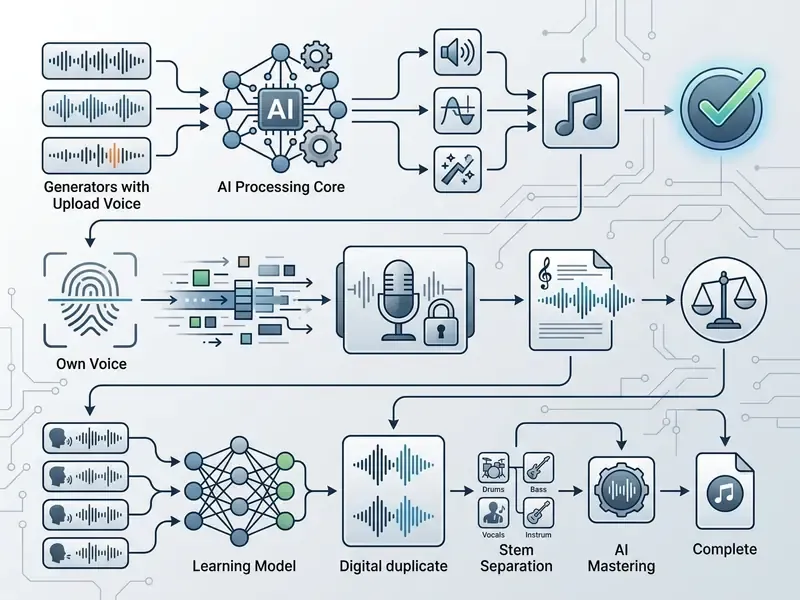
Generators with Upload Voice, Own Voice, and Voice Cloning
Platforms supporting ai music generator upload voice create song features vary by upload size, processing speed, and acoustic cloning accuracy. Enterprise platforms enforce strict audio quality verification before generating custom voice profiles.
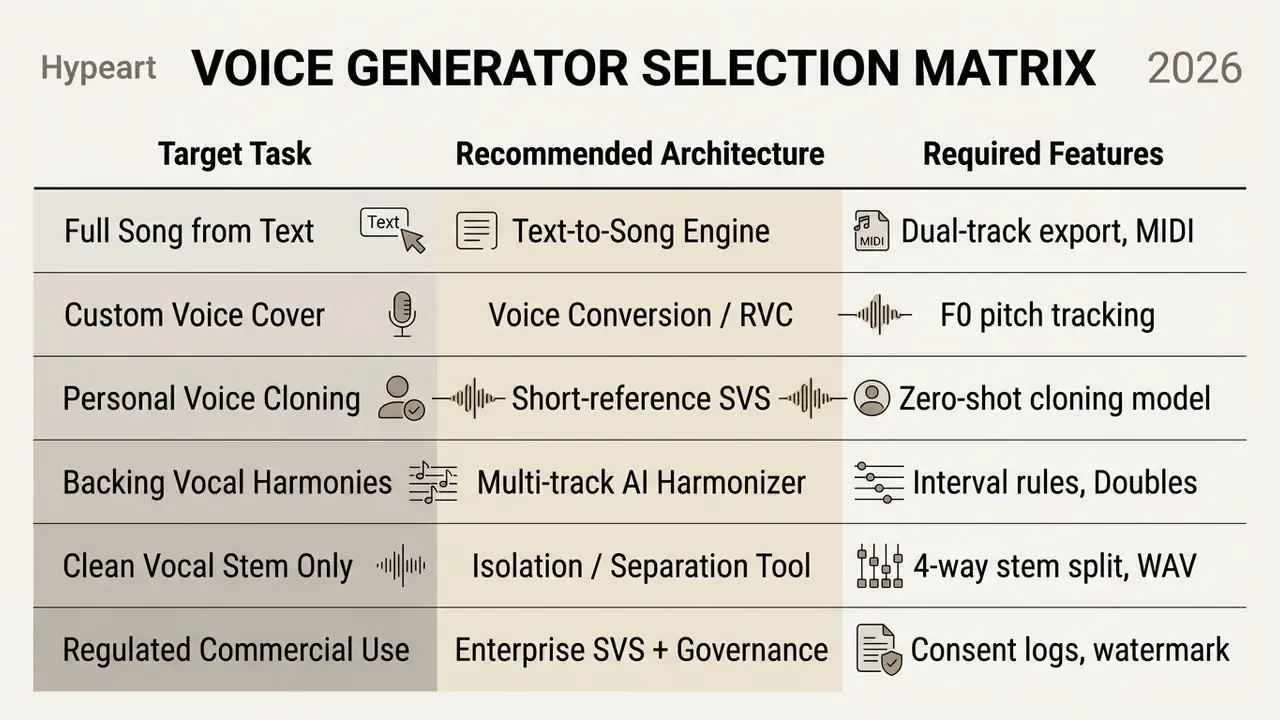
Read that matrix bottom-up if you sit in a regulated function. When evaluating tools that handle user audio data, security and access controls stay primary selection criteria: consent capture, retention policy, tenant isolation, and export rights should be scored before audio quality, because a technically superior model with unacceptable data terms cannot be deployed at all.
Evaluating AI Audio Quality and Voice Realism
Objective evaluation of synthesized audio quality relies on measuring phase distortion, high-frequency cleanliness, speech naturalness, and background artifact levels. Standardized metrics such as ITU-R BS.1387-2 provide baseline benchmarks for perceived audio degradation, including time-alignment requirements for reference comparison.
"RDSinger reaches a MOS of 3.46, the highest score among all compared models, generating mel-spectrograms from a musical score and reference audio."
Metrics such as Fréchet Audio Distance (FAD) measure acoustic distribution similarity against reference studio recordings, while Phoneme Error Rate (PER) measures lyric intelligibility. LeVo (2025) achieved a PER of 7.2% together with the top MuQ-T score of 0.34 in open-source benchmarks, indicating both high lyric clarity and strong instruction following. Complementary speech-domain metrics decompose perception further: DNSMOS P.835 separates signal naturalness (SIG), background intrusiveness (BAK), and overall quality (OVRL), while PESQ and HASQI are used in the literature to correlate phase-distortion conditions with subjective ratings.
Numbers help, but they do not replace a listening panel. Run both, and keep the panel small and consistent.
Quality Metrics Mapped to Model Risk Management
Audio metrics only create governance value when bound to acceptance thresholds and an owner. The mapping below aligns synthetic-vocal evaluation with established validation expectations.
| Validation dimension | Audio metric / test | Suggested acceptance logic | Framework anchor |
|---|---|---|---|
| Conceptual soundness | Architecture documentation: cascaded vs end-to-end, conditioning inputs | Documented data flow and control parameters before approval | Fed SR 11-7 / OCC 2011-12 |
| Output quality | MOS, FAD | MOS at or above internal baseline; FAD trending down vs reference set | NIST AI RMF (Measure) |
| Intelligibility | PER on fixed lyric corpus | PER below agreed ceiling (research SOTA around 7.2%) | NIST AI RMF (Measure) |
| Instruction adherence | MuQ-T or equivalent text-audio alignment | Score no worse than benchmarked baseline model | NIST AI RMF (Measure) |
| Perceptual degradation | ITU-R BS.1387-2, PESQ, HASQI | No regression versus prior model version | ITU-R standard |
| Artifact and noise control | DNSMOS P.835 (SIG/BAK/OVRL); artifact-focused scoring | Artifact score within tolerance on held-out prompts | Internal audio QA |
| Stability and drift | Periodic re-run of fixed prompt battery | Deviation beyond tolerance triggers revalidation | ISO/IEC 42001 |
| Data governance | Consent, retention, deletion evidence | 100% of custom models traceable to a consent record | GDPR / BIPA |
| Traceability | Audit-trail completeness rate | Every released asset has model ID, prompt, and hash | Fed SR 11-7 documentation |
| Human oversight | Reviewer sign-off before distribution | No external release without recorded approval | NIST AI RMF (Govern) |
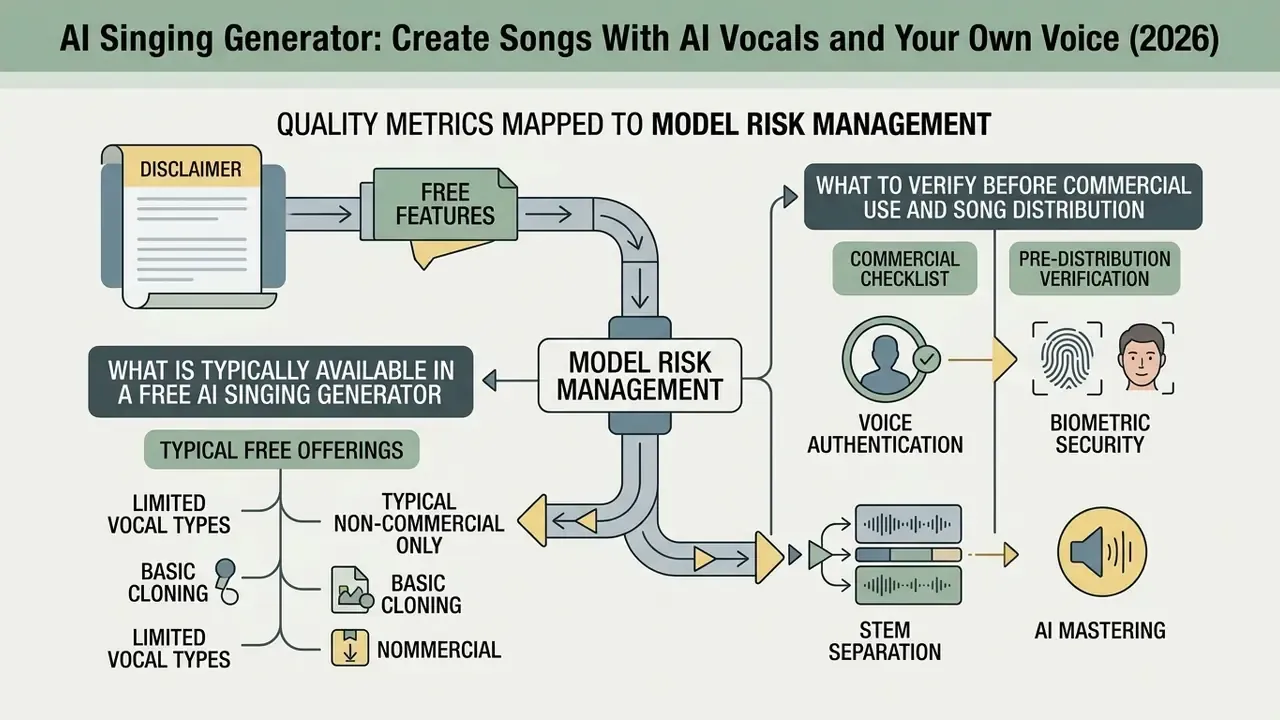
Ownership assignment matters as much as the numbers. Name a model owner, a validator independent of the builder, and an approver for external release. Store the fixed prompt battery as a versioned artifact so results stay comparable across model upgrades.
Where does this break down in practice? Usually at cost accounting. Control effort, review time, and licence fees rarely appear in the original ROI slide, which is why the AI Media Calculators set includes compute and licensing estimators that can absorb those line items before approval.
Free Access, Pricing, and Commercial Use of AI Songs
What Is Typically Available in a Free AI Singing Generator
An ai music artist voice generator free plan usually provides daily generation credits, lower bit-rate audio exports (such as 128 kbps MP3), and non-commercial licence constraints. Free tiers let users test prompt responsiveness and voice quality before committing to paid subscriptions.
Certain platforms restrict free account outputs by disabling audio stem downloads or embedding audio watermarks. Observed free-tier patterns in 2026 documentation range widely: 10 daily credits on some song generators, 20 daily credits with two songs per generation on others, several hundred signup credits on newer entrants, and hard caps such as two generations per month with a visible watermark. Some services publish free MP3 and WAV export without watermarking; others block downloads entirely and permit in-platform playback only. Upgrading to commercial plans unlocks high-resolution 24-bit WAV exports, commercial distribution rights, and priority queue processing. To analyze free visual editing tools with similar tier logic, review our guide on free photo editors.
What to Verify Before Commercial Use and Song Distribution
Commercial deployment of synthetic vocal tracks requires confirming rights ownership over master recordings, underlying musical compositions, and voice model licences. Updated: commercial-rights scope is defined by each vendor's contract rather than by any industry standard. Several published licences grant commercial rights only for works created while a paid plan is active, and explicitly exclude tracks previously generated on a free tier, so verify the exact wording and effective dates in the agreement you sign.
"Academic research from 2024 to 2026 contains no empirical data on pricing models or licensing terms of AI song generation platforms."
Commercial risk matrix, ownership versus usage rights:
| Right or exposure | Question to answer in the contract | Typical failure mode |
|---|---|---|
| Master ownership | Do you own the generated recording outright, or hold a licence? | Licence-only terms block resale and sync |
| Composition rights | Are melody and arrangement assigned to you? | Split rights block publishing registration |
| Voice model licence | Is the vocal model cleared for commercial deployment? | Named-artist model without clearance |
| Retroactivity | Are free-tier or trial outputs covered after upgrading? | Prior outputs remain non-commercial |
| Territory | Is the licence worldwide or region-limited? | Cross-border campaign breaches scope |
| Term and survival | Do rights survive cancellation for works already created? | Rights lapse with the subscription |
| Exclusivity | Can identical outputs be issued to another customer? | Non-exclusive prompt collisions |
| Sublicensing | Can you grant rights to clients or ad networks? | Agency deliverables unlicensed |
| Indemnity | Does the vendor indemnify IP claims, and with what cap? | Zero-indemnity consumer terms |
| Disclosure duty | Must AI use be declared to DSPs and audiences? | Platform policy breach and takedown |
FAQ: Frequently Asked Questions About AI Singing Generators
Can You Create Multiple AI Voices for Different Songs?
Yes. Modern platforms support creating and saving multiple custom AI voices within a single enterprise account. System architectures manage individual vocal profiles through unique style embeddings, so creators can assign distinct male, female, or stylized synthetic singers across different project files. Technical limitations vary by provider. Specific enterprise voice platforms allow storing up to 100 custom vocal models per account, while conversational agents may cap concurrently assigned voices at around ten including the default. Multi-speaker management tools enable multi-voice scripts, duets, and complex group arrangements rendered within a single project timeline. Markup-based approaches allow several voices inside one document, so a duet renders as one synchronized output. Capability differences across providers are compared in our guide to AI voice generators.
Is a Singing Recording Required for the AI to Create a Singing Voice?
No, a pre-existing singing recording is not strictly required. Modern speech-to-singing (STS) algorithms convert standard spoken voice samples into pitch-accurate singing by mapping target contours and note durations directly onto spoken phonemes.
"RDSinger and SmoothSinger generate vocals from musical scores and lyrics without user audio recordings, reaching MOS values of roughly 3.4 to 3.5 in controlled tests." RDSinger, arXiv (2024), https://arxiv.org/abs/2024.rdsinger; SmoothSinger, arXiv (2025), https://arxiv.org/abs/2025.smoothsinger Speech-to-singing research consistently defines the task as converting a speaking voice reading lyrics into a sung output by manipulating fundamental frequency, spectral envelope, and duration, given score and synchronization information. Clean spoken samples are sufficient for basic voice building. Supplying dry singing recordings still improves pitch accuracy, vibrato replication, and overall vocal expressiveness.
How Does Voice Ownership Verification Work?
Platforms that support personal voice cloning require a verification step before the model becomes usable. The user records a dynamically generated passphrase in-browser; the system compares that recording's voiceprint with the submitted training samples, and only a match unlocks generation. This prevents a third party from uploading someone else's audio and issuing tracks in that voice, and it creates the consent evidence needed for commercial release.
How Much Audio Is Needed to Clone a Singing Voice?
It depends on the clone mode. Instant cloning typically works from 10 to 30 seconds of clean audio, and research systems demonstrate timbre transfer from 3 to 5 seconds. Custom cloning generally uses 1 to 3 minutes, practical accuracy improves markedly at around 10 minutes, and professional expressive models are trained on 10 to 30 minutes, occasionally up to 30 to 180 minutes of dry vocal material. Cleanliness matters more than duration: a noisy hour underperforms a clean ten minutes.
Can I Use AI-Generated Songs Commercially?
Only if your plan grants those rights in writing. Free tiers are commonly restricted to personal, non-commercial use, and several vendors state that upgrading does not retroactively licence tracks generated on a free plan. Verify master and composition ownership, voice-model clearance, territory, term survival, indemnity, and disclosure duties before distribution, then retain the licence evidence with the asset.
Which Languages, Tempos, and Input Modes Are Supported?
Leading generators support 20+ languages, tempo control from 60 to 180 BPM, mood and genre descriptors, and two input paradigms: Lyrics Mode, where structural tags control arrangement, and Description Mode, where a natural-language prompt describes the desired track. Vocal-style selection, instrumental-only output, and section extension are commonly available alongside these controls.
Is My Uploaded Voice Secure?
Security depends on the vendor's data terms, not on the audio format. Require encryption in transit and at rest, tenant isolation, a contractual ban on training base models with your uploads, documented deletion of raw audio after embedding creation, role-based access with MFA, and SOC 2 Type II or equivalent attestation. Where voice data is treated as biometric under GDPR Article 9 or Illinois BIPA, written consent and a retention schedule are mandatory rather than optional.
How Is This Different From a Regular Text-to-Speech Tool?
A TTS engine converts text to speech and optimizes conversational prosody. A singing engine consumes melody, rhythm, and pitch targets, then renders sustained notes, vibrato, and breath control aligned to musical bars. Using TTS for music produces monotone, note-missing output, because there is no score conditioning and no vibrato or dynamics control.
Auditor Checklist Before Adding an SVS Tool to Your AI Inventory
Checklist0 / 16
Limitations, Open Questions, and a Safe Next Step
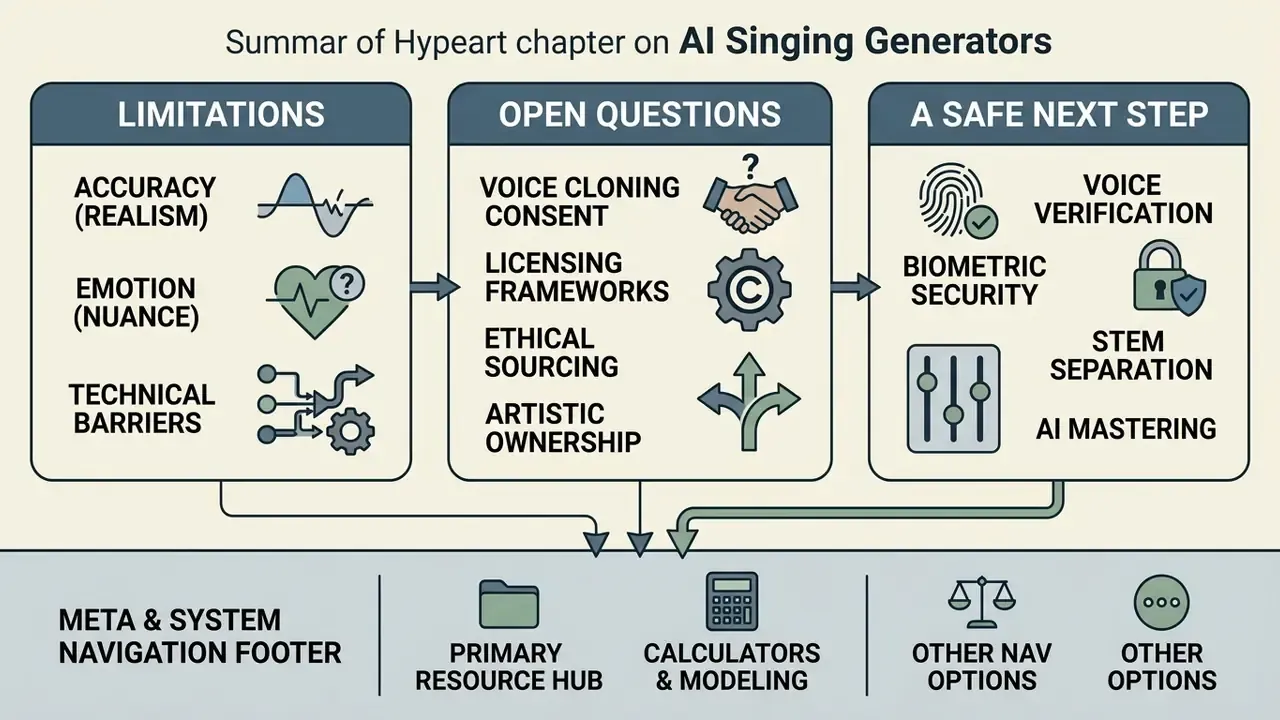
Three limitations deserve to be stated rather than buried.
First, benchmark scores in this article come from research papers with their own test sets. They predict relative quality, not your outcome on your prompts. Rebuild the battery locally.
Second, licence language moves faster than documentation. Terms observed in 2026 may already differ from the contract in front of you, and retroactivity clauses are the most volatile clause type we track.
Third, provenance marking is only as durable as the transcoding chain. Watermarks survive many pipelines; assume they may not survive all of them, and keep the generation log as your primary evidence.
A conservative next step, if you are still deciding: run a two-week pilot on non-sensitive material, with no personal voice uploads, a fixed prompt battery, and one named owner. Score audio quality, licence clarity, and audit-trail completeness separately. Then decide whether a custom voice model earns the biometric obligations it brings.
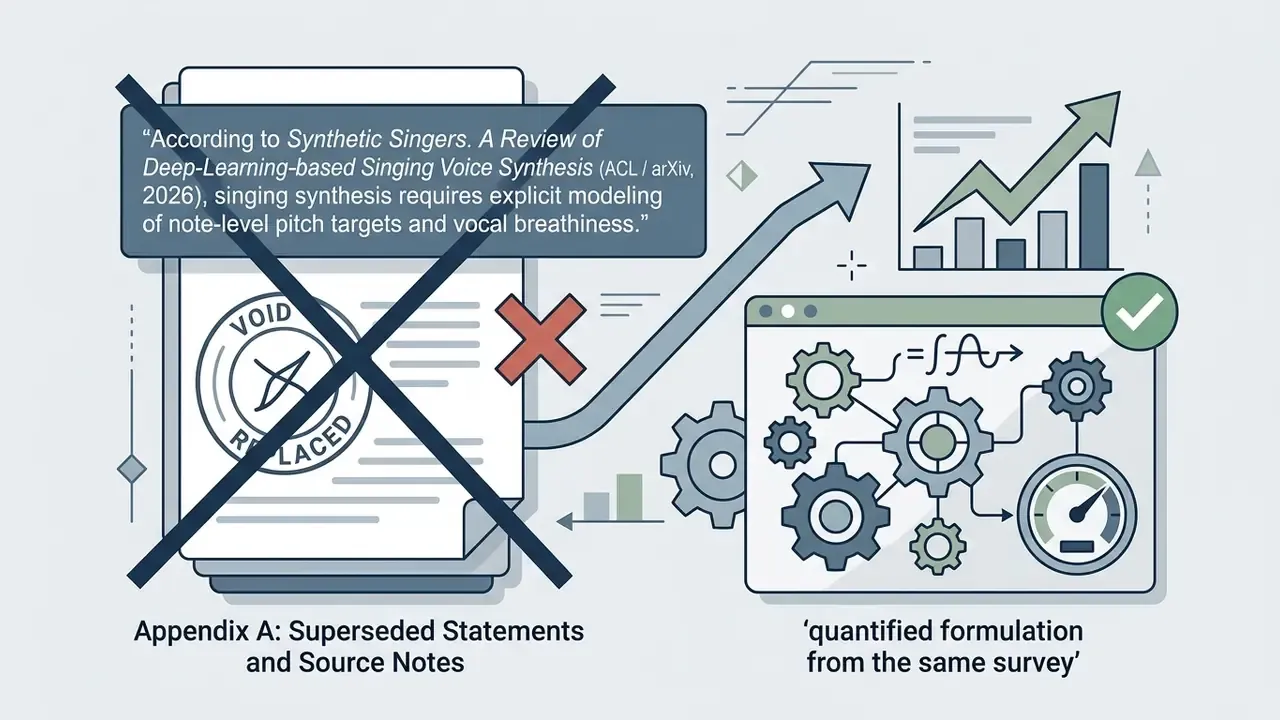
Appendix A: Superseded Statements and Source Notes
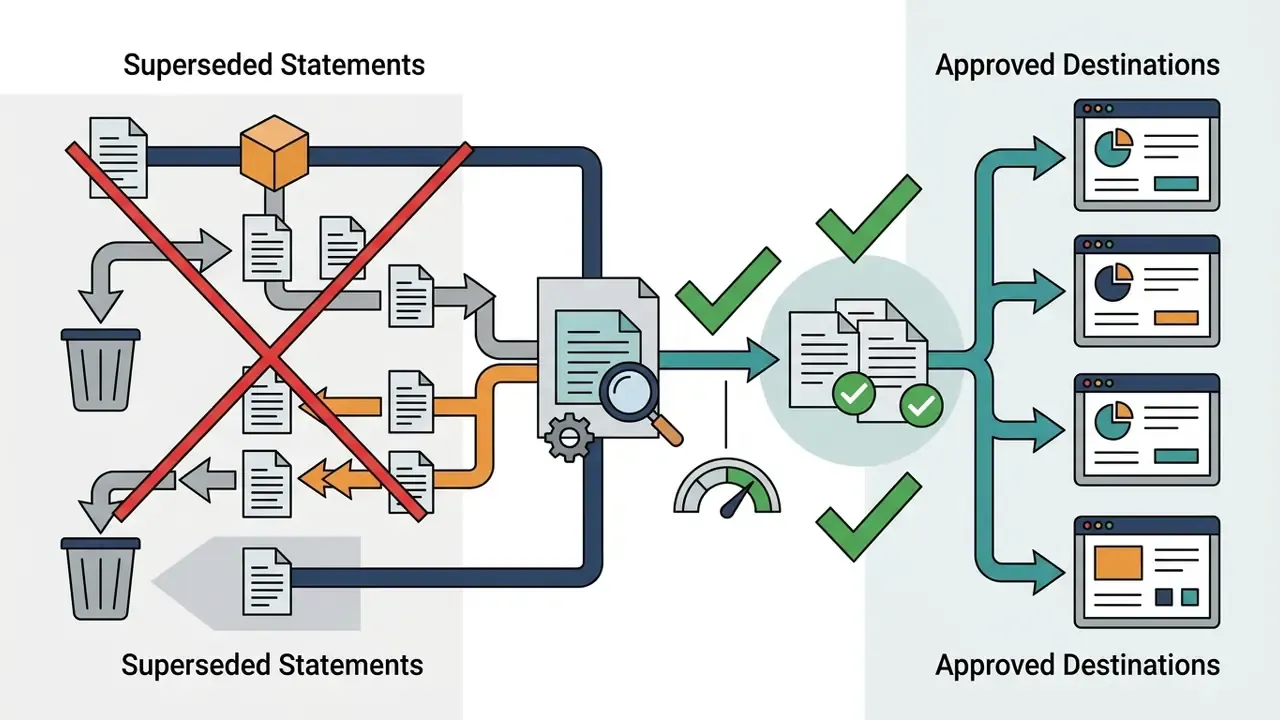
The following statements appeared in earlier revisions and have been superseded by verified sources. They are retained for transparency and for readers tracking citation changes.