Last updated: 2026 editorial revision. Reviewed by: AI Governance & Model Risk editorial desk.
Why Attribution Matters Before You Validate Anything
A quick framing before the history. Attribution questions look academic until they hit a model inventory. Then they get expensive.
- A "creator" claim in a vendor deck usually hides the method. Rule engine or transformer? The validation burden differs by an order of magnitude.
- A model inherited from symbolic AI can be read line by line. A deep model cannot, so your controls must shift from inspection to monitoring.
- Regulators do not ask who invented AI. They ask who owns this model, what data trained it, and who signs off when it misfires.
So the history below is organized around one practical question: which research lineage does the system in your production environment actually descend from?
Who Is the Creator of AI: Short Answer
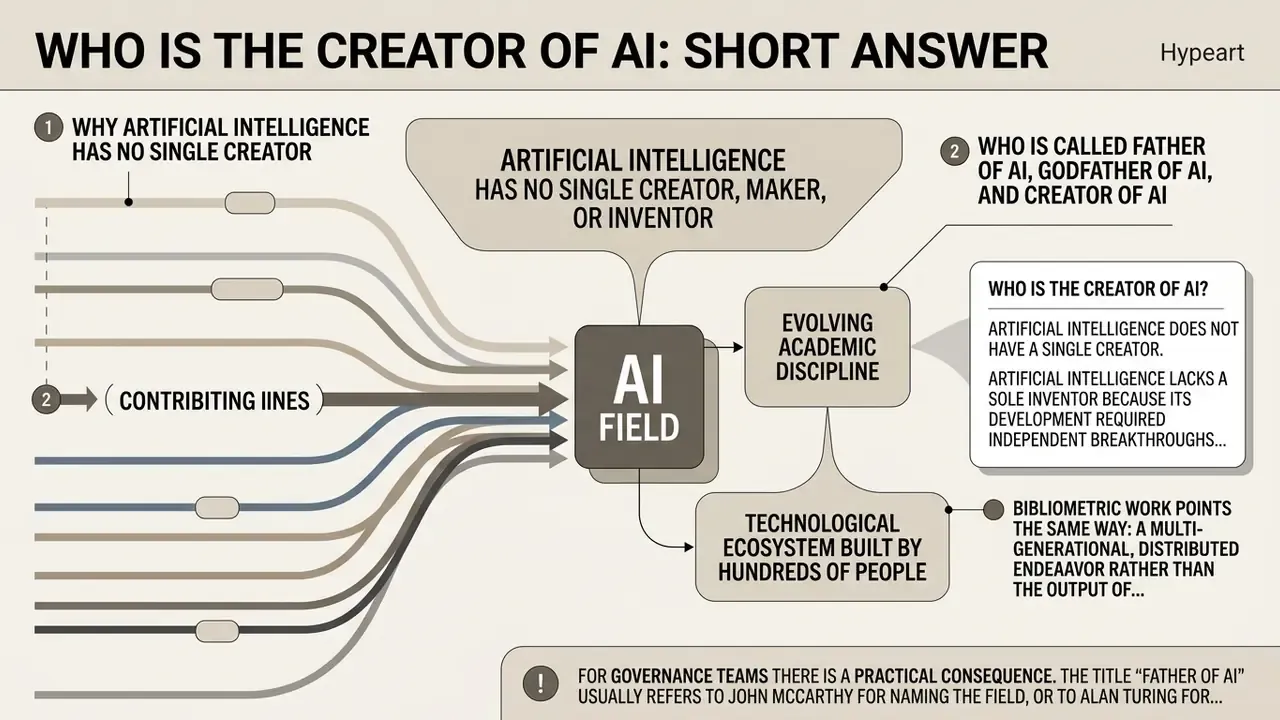
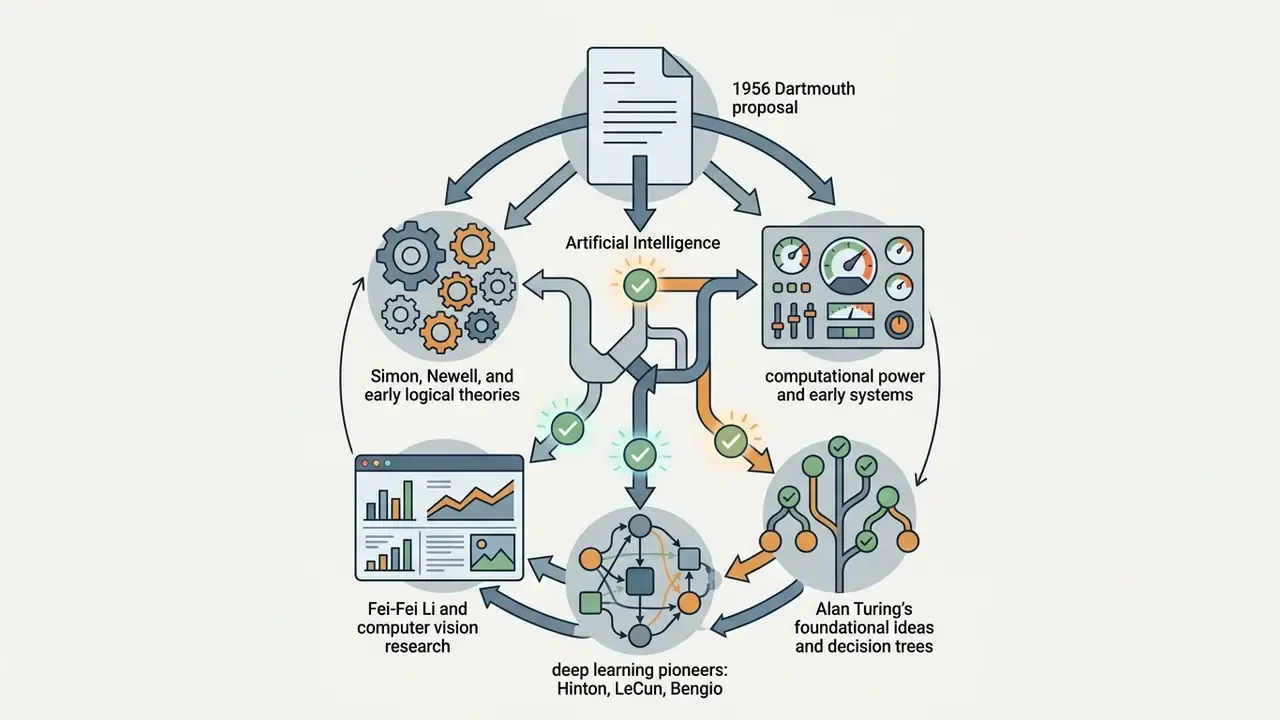
Artificial intelligence has no single creator, maker, or inventor, because it represents an evolving academic discipline and a technological ecosystem built by hundreds of researchers over seven decades. Computer scientist John McCarthy coined the term "artificial intelligence" in 1955. But foundational concepts came earlier from Alan Turing, the first working reasoning programs were built by Allen Newell and Herbert Simon, and modern deep learning architectures were developed by Geoffrey Hinton, Yann LeCun, and Yoshua Bengio, with the data infrastructure of modern computer vision contributed by Fei-Fei Li.
Definition card: Who is the creator of AI?
Artificial intelligence does not have a single creator. The term "artificial intelligence" was coined by John McCarthy in a 1955 proposal for the Dartmouth Summer Research Project, earning him the informal title of a "father of AI." Yet the functional idea of machine intelligence predates the term. Pioneer programs were developed by Christopher Strachey, Arthur Samuel, and the Logic Theorist team of Allen Newell and Herbert Simon. Modern AI systems based on deep learning were developed decades later by researchers such as Geoffrey Hinton, Yann LeCun, and Yoshua Bengio, who received the ACM A.M. Turing Award for their breakthroughs in neural networks. AI is therefore a collective scientific field with distributed authorship across several generations.
Why Artificial Intelligence Has No Single Creator
Artificial intelligence lacks a sole inventor because its development required independent breakthroughs across formal logic, statistical decision theory, computer hardware, and cognitive psychology. Intellectual histories show that symbolic AI research and empirical data-processing traditions grew in parallel during the Cold War before converging into the architectures enterprises now run.
«Symbolic AI and empirical data-processing traditions developed in parallel during the Cold War before converging into contemporary architectures.»
Bibliometric work points the same way: a multi-generational, distributed endeavour rather than the output of one laboratory.
«A bibliometric analysis of 137 million scholarly publications found 3.1 million AI-related papers spanning more than 98% of scientific disciplines.»
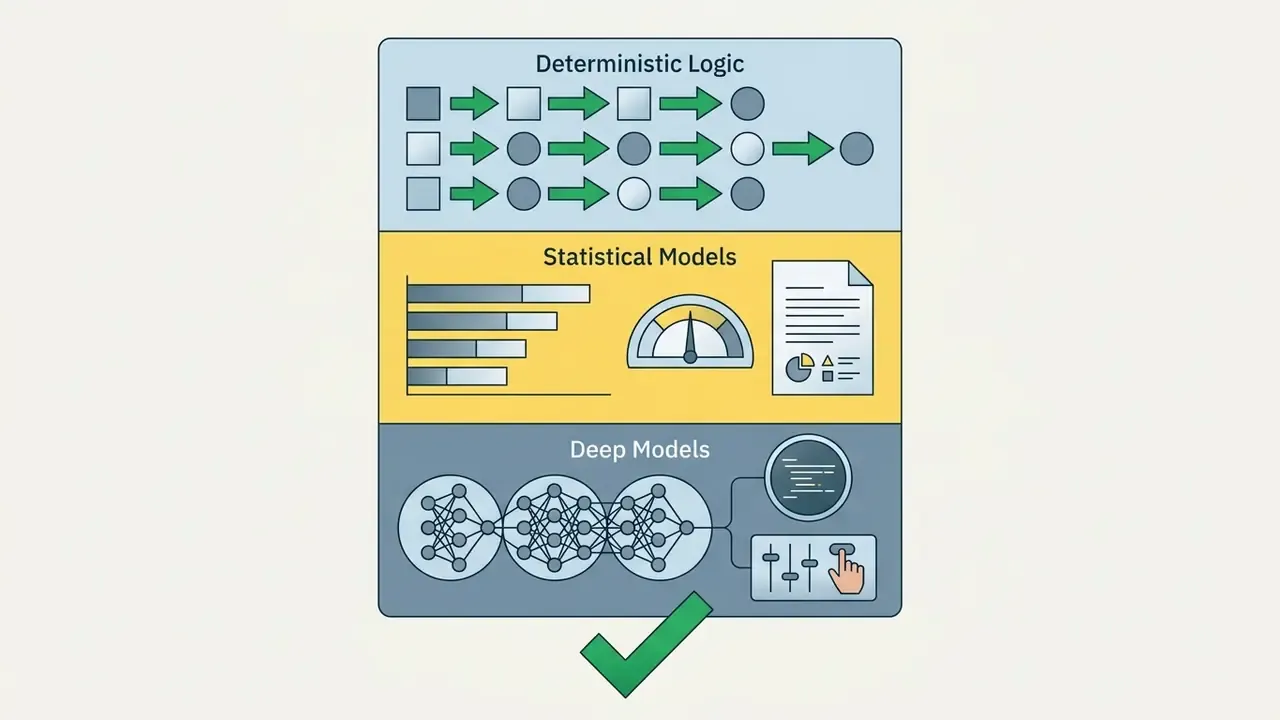
For governance teams there is a practical consequence. Model lineage documentation cannot point to a single inventor or a single canonical method. It has to record which paradigm a given production model inherits, whether symbolic rules, statistical learning, or deep neural networks, because each paradigm carries a different validation burden. That distinction is also the cheapest one to get right early.
Who Is Called Father of AI, Godfather of AI, and Creator of AI
The title "father of AI" usually refers to John McCarthy for naming the field, or to Alan Turing for supplying its mathematical foundation. "Godfathers of AI" designates the deep learning pioneers Geoffrey Hinton, Yann LeCun, and Yoshua Bengio. The phrase "creator of AI" is media shorthand rather than a recognized technical or historical designation. The 2018 ACM A.M. Turing Award citations draw the line clearly: Hinton, LeCun, and Bengio are honoured for conceptual and engineering breakthroughs in artificial neural networks, not for inventing AI as a whole. Fei-Fei Li, in turn, is widely described in media and academic commentary as the "godmother" or "mother of AI" for building the dataset infrastructure that made deep learning verifiable at scale.
Search behaviour reflects the confusion. Queries such as "who is AI creator", "maker of AI", "whos the creator of AI", and the frequent misspelling "creater of AI" all point to the same expectation of one name. There isn't one.
| Informal title | Person(s) most often named | Basis for the title | Formal recognition |
|---|---|---|---|
| Father of AI | John McCarthy | Coined "artificial intelligence" (1955), co-organized Dartmouth (1956), created LISP (1958) | 1971 ACM A.M. Turing Award |
| Father of theoretical machine intelligence | Alan Turing | "Computing Machinery and Intelligence" (1950), Imitation Game, "child machines" | ACM Turing Award named in his honour |
| First AI programmers | Allen Newell, Herbert Simon, J.C. Shaw | Logic Theorist (1956), General Problem Solver (1958) | 1975 ACM A.M. Turing Award; Simon, 1978 Nobel Prize in Economics |
| Godfathers of deep learning | Geoffrey Hinton, Yann LeCun, Yoshua Bengio | Backpropagation, CNNs, representation learning | 2018 ACM A.M. Turing Award; Hinton, 2024 Nobel Prize in Physics |
| Godmother / mother of AI | Fei-Fei Li | ImageNet (2009), data-centric AI research | Widely used honorific; no single formal citation |
| Creator of AI | No one person | Media shorthand only | No formal designation exists |
Before AI Had a Name: Karel Čapek and Artificial People (1921)
The cultural demand for artificial minds predates computer science by three decades. The word "robot" entered the global vocabulary in 1921, when Czech playwright Karel Čapek staged R.U.R. (Rossum's Universal Robots), a drama about mass-manufactured artificial workers who eventually displace their makers. Čapek built no machine and wrote no algorithm. What he supplied was vocabulary: artificial people, manufactured labour, loss of human control. That vocabulary framed both engineering ambition and public anxiety for the next century.
This matters for attribution. The question "can we manufacture a thinking agent?" circulated widely in the 1920s and 1930s, long before Turing formalized it mathematically in 1950 and long before McCarthy gave the research programme its official name in 1955. Any honest account of who created AI therefore begins with a shared cultural premise, not a single act of invention.
John McCarthy: The Father of Artificial Intelligence
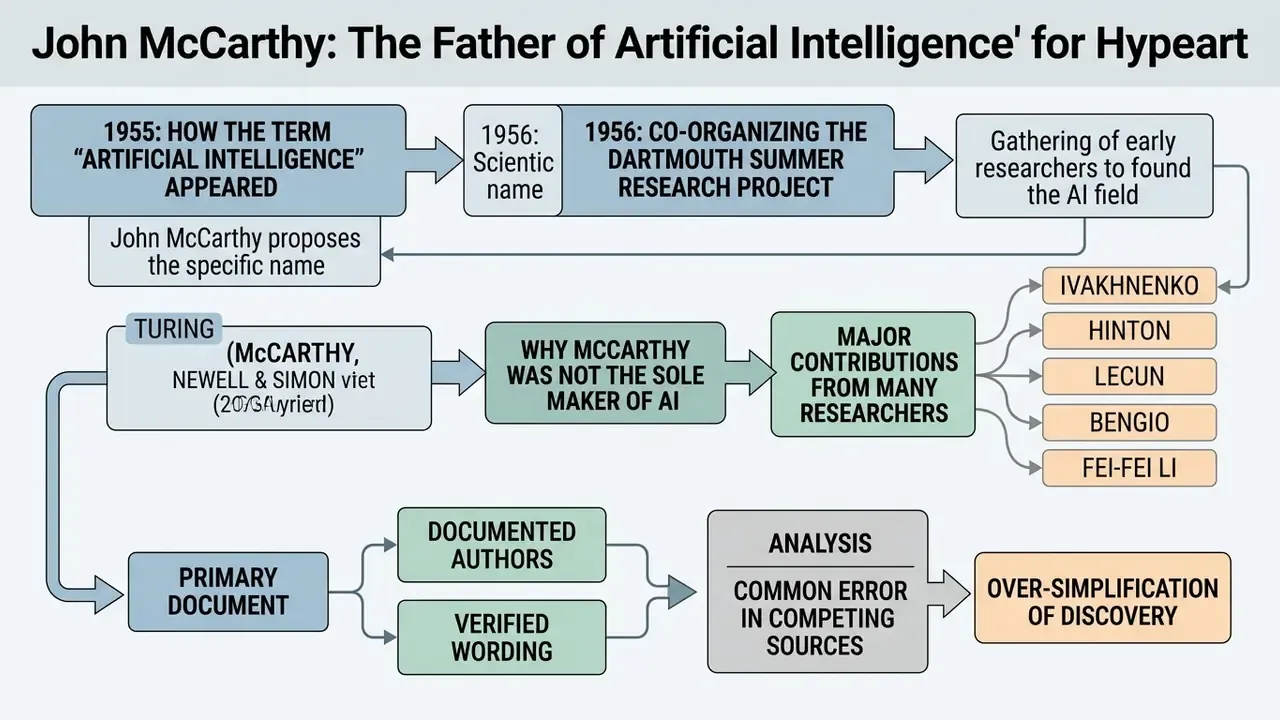
John McCarthy earned the informal designation "father of artificial intelligence" mainly by proposing the term in 1955 and co-organizing the 1956 Dartmouth Summer Research Project. As a computer scientist at Dartmouth College and later at Stanford University, he established AI as an independent academic discipline and developed LISP, the foundational programming language for symbolic AI and early expert systems. He also proposed general-purpose time-sharing at MIT in the late 1950s, co-founded the MIT Artificial Intelligence Project with Marvin Minsky, and became founding director of the Stanford Artificial Intelligence Laboratory (SAIL) in 1965.
How the Term Artificial Intelligence Appeared
The term "artificial intelligence" first appeared in print on August 31, 1955, in a grant proposal authored by John McCarthy, Marvin Minsky, Nathaniel Rochester, and Claude Shannon. Submitted to the Rockefeller Foundation, the document proposed a two-month study at Dartmouth College during the summer of 1956 to test the conjecture that every aspect of learning or intelligence can be described precisely enough for a machine to simulate it.
«We propose that a 2 month, 10 man study of artificial intelligence be carried out during the summer of 1956 at Dartmouth College.»
Historians note that McCarthy picked this phrasing partly as a branding decision, to separate his agenda from Norbert Wiener's cybernetics framework.
«McCarthy chose the term partly so he would not have to accept Wiener as a guru or argue with him about the direction of the field.»
Not just trivia, either. Choosing "artificial intelligence" over "cybernetics" or "automata studies" split symbolic reasoning research away from control theory and feedback engineering. That split still shapes how enterprises classify deterministic rule engines versus adaptive learning systems, and how differently the two are validated.
Why McCarthy Was Not the Sole Maker of AI
McCarthy cannot be treated as the sole maker of AI, because his work centred on symbolic logic and hand-coded rules, while modern production systems in banking run on statistical machine learning and deep neural networks. Functional AI applications existed before his terminology, including Christopher Strachey's checkers program and Arthur Samuel's learning systems at IBM. Samuel also introduced the phrase "machine learning" in 1959, describing programs that improve through experience rather than explicit instruction. And the industry's shift toward data-driven models in the 1990s largely bypassed explicit symbolic logic in favour of probabilistic architectures McCarthy did not design.
[E-E-A-T Fact Check / Historical Verification:
Illustrative field observation (hypothetical composite). Picture a model risk assessment at a mid-size US bank evaluating legacy expert systems against a vendor's claim of "autonomous AI." The audit team reads historical model lineage to separate rule engines from statistical ML classifiers, then builds a risk-tiered inventory that keeps deterministic logic and stochastic models in different lanes. In this composite scenario, validation turnaround falls by roughly one third and internal audit gets the transparency evidence it asked for. Treat the number as directional. It is a scenario constructed for illustration, not a published, peer-reviewed, or client-verified benchmark.
AI Pioneers: Alan Turing, Allen Newell, and Herbert Simon
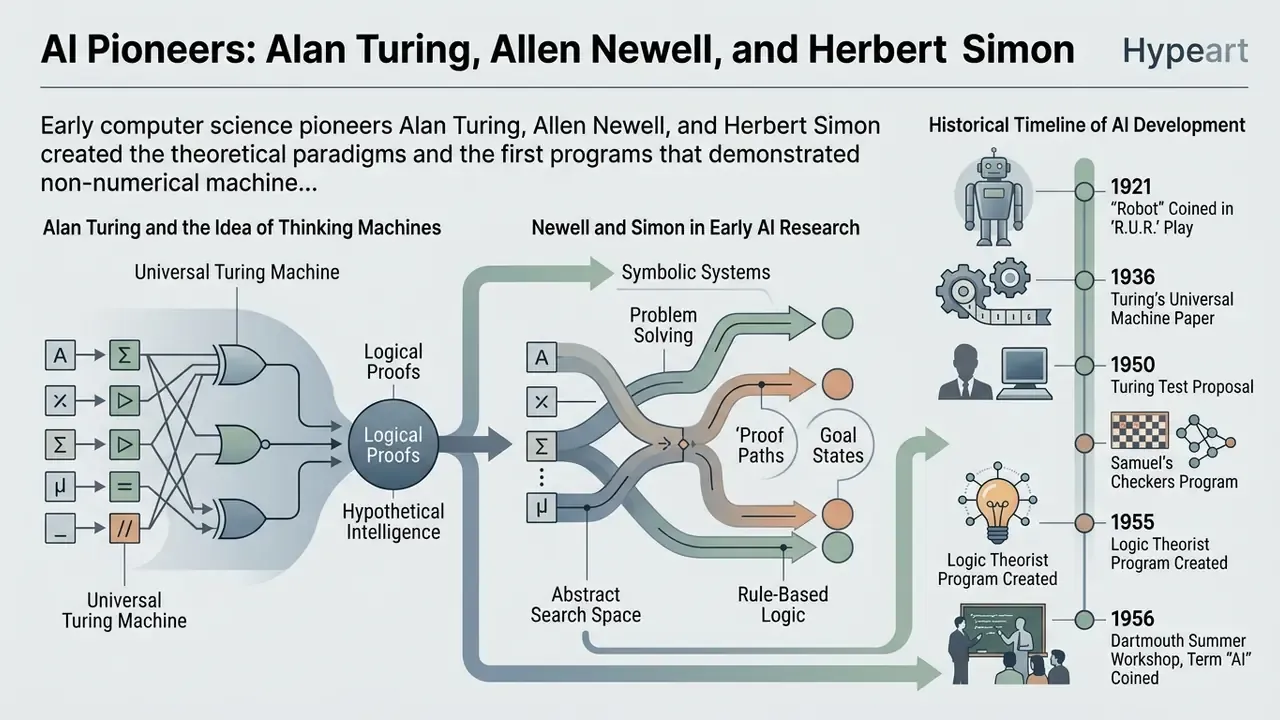
Early computer science pioneers Alan Turing, Allen Newell, and Herbert Simon created the theoretical paradigms and the first programs that demonstrated non-numerical machine reasoning. Turing set the theoretical boundaries of machine cognition in 1950. Newell and Simon delivered the Logic Theorist in 1956, the first functioning AI program built to simulate human problem-solving.
Alan Turing and the Idea of Thinking Machines
Newell and Simon in Early AI Research
Allen Newell and Herbert Simon advanced symbolic AI by creating the Logic Theorist in 1956 and the General Problem Solver (GPS) in 1958. Working with J.C. Shaw, they implemented heuristic search and means-ends analysis in Information Processing Language (IPL), proving 38 of the 52 mathematical theorems they attempted from Russell and Whitehead's Principia Mathematica. That work brought them the 1975 ACM A.M. Turing Award for foundational contributions to artificial intelligence and human cognitive psychology. In 1976 they formalized the Physical Symbol System Hypothesis, arguing that symbols and search are sufficient conditions for general intelligent action. It was the claim that defined mainstream AI research for two decades, and the claim deep learning later undercut.
«Reconstruction of the Logic Theorist from IPL-V source confirmed heuristic search and means-ends analysis modeled on human problem-solving protocols.»
Historical Timeline of AI Development
- 1921: Czech playwright Karel Čapek introduces the word "robot" in R.U.R. (Rossum's Universal Robots), establishing the cultural concept of manufactured artificial workers.
- 1936: Alan Turing publishes "On Computable Numbers," defining the theoretical limits of mechanical computation.
- 1950: Turing publishes "Computing Machinery and Intelligence," introducing the Imitation Game and the notion of machines that learn.
- 1952: Christopher Strachey and Arthur Samuel write early game-playing programs with rudimentary machine learning behaviour.
- 1955 to 1956: John McCarthy, Marvin Minsky, Nathaniel Rochester, and Claude Shannon author the Dartmouth proposal (August 31, 1955); the 1956 Dartmouth Conference formally launches AI as a field.
- 1956: Allen Newell, J.C. Shaw, and Herbert Simon demonstrate the Logic Theorist, proving logic theorems via heuristic search.
- 1958: Frank Rosenblatt builds the Perceptron at Cornell Aeronautical Laboratory, an early hardware neural network. McCarthy releases LISP.
- 1959: Arthur Samuel coins the term "machine learning" while describing self-improving checkers programs at IBM.
- 1965 to 1970: Soviet-Ukrainian cybernetician Alexey Ivakhnenko publishes the Group Method of Data Handling (GMDH), the first working deep multilayer polynomial networks whose architecture is selected from data.
- 1974 to 1980 and 1987 to 1993: The first and second "AI winters" arrive, driven by unmet expectations, compute bottlenecks, and sharp funding cuts.
- 1986: David Rumelhart, Geoffrey Hinton, and Ronald Williams publish the formalization of backpropagation for multilayer neural networks in Nature.
- 1988 to 1998: Yann LeCun develops convolutional neural networks and the LeNet family for document and digit recognition.
- 1990s to 2000s: Machine learning shifts toward statistical models, support vector machines, and probabilistic reasoning over structured data.
- 2009: Fei-Fei Li's team at Princeton and Stanford releases ImageNet, a labeled dataset of more than 14 million images.
- 2012: AlexNet, built by Alex Krizhevsky with Ilya Sutskever and Geoffrey Hinton using GPUs on ImageNet, triggers the modern deep learning revolution.
- 2017 to the present: The Transformer architecture ("Attention Is All You Need") enables foundation models and modern generative AI systems.
Who Created Modern AI: Hinton, LeCun, Bengio, and Fei-Fei Li
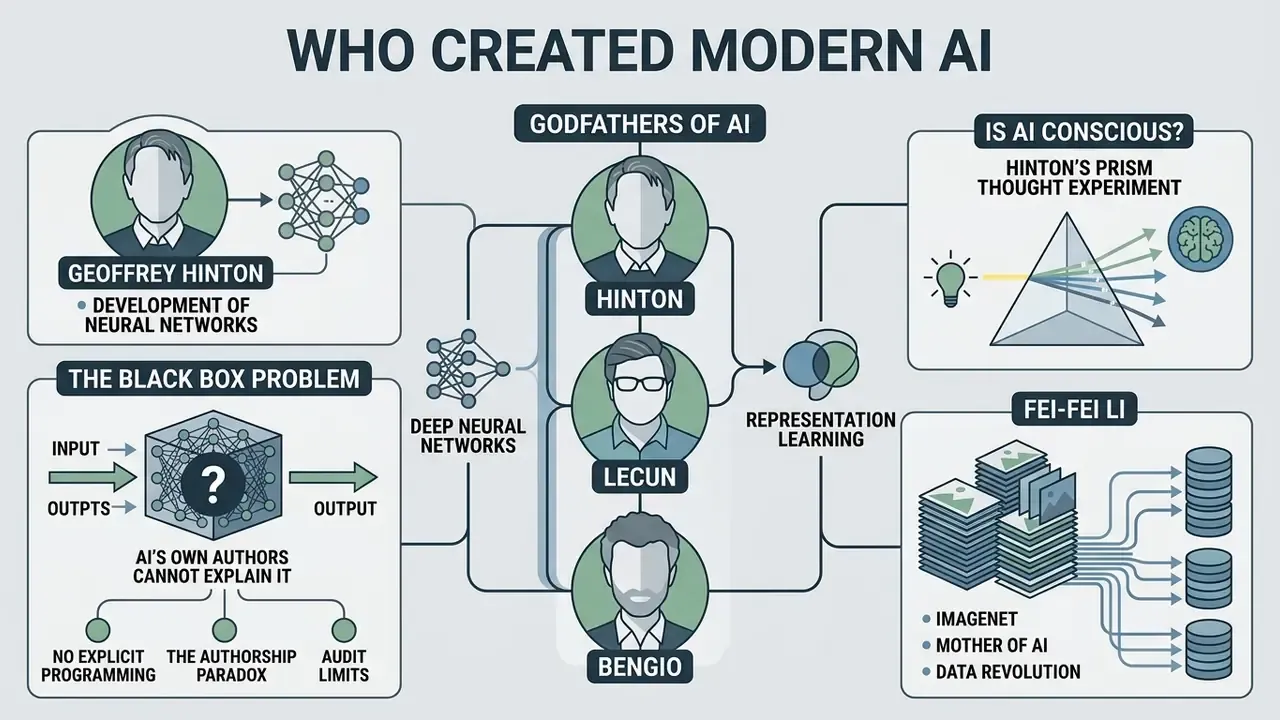
Modern artificial intelligence was built largely by Geoffrey Hinton, Yann LeCun, and Yoshua Bengio, who pioneered deep neural networks and representation learning. Often called the godfathers of deep learning, their mathematical and algorithmic breakthroughs turned machine learning from rule-based symbolic processing into high-capacity statistical systems that handle unstructured image, audio, and text data.
Geoffrey Hinton and the Development of Neural Networks
Computer scientist Geoffrey Hinton reshaped modern AI by co-authoring the 1986 paper on backpropagation and introducing Deep Belief Networks in 2006. His research showed how hidden layers in multilayer neural networks can learn complex internal representations, clearing the structural limitation that had stalled neural network research for years. Hinton's 2006 method combined complementary priors with greedy layer-wise pretraining, then fine-tuned the stack using backpropagation. That combination is what made genuinely deep networks trainable in practice.
In 2024, Hinton shared the Nobel Prize in Physics with John Hopfield.
Is AI Conscious? Hinton's Prism Thought Experiment
Hinton has pushed the discussion past risk and into philosophy. In a 2026 Royal Institution lecture he argued that chatbots may already hold some version of subjective experience, and that humans may be wrong about the uniqueness of consciousness. His illustration: a robot points at an object whose apparent position has been distorted by a prism, and once told about the distortion, the robot corrects its account of what it "saw." Hinton contends that this correction sits closer to reporting an experience than to plain information processing. He extends the argument with a classic replacement thought experiment. If each biological neuron were swapped one at a time for an equivalent nanoscale unit, at which swap would experience switch off?
Critics answer that he conflates function with experience, that behaving as if one had a perspective is not evidence of having one. Either way, the debate shows something odd: the researcher who supplied the training algorithm has also reopened the oldest question in the field, the one Turing deliberately set aside in 1950 by swapping "can machines think?" for an observable test.
Fei-Fei Li and ImageNet: The Mother of AI and the Data Revolution
If Hinton and his colleagues built the brain of modern deep learning, Stanford professor Fei-Fei Li gave it sight. In 2009 Li led the release of ImageNet, a labeled database of more than 14 million images organized along a semantic hierarchy, paired with the annual ImageNet Large Scale Visual Recognition Challenge that turned computer vision progress into a public, measurable benchmark.
ImageNet made the 2012 AlexNet breakthrough possible. Before Li's work, the research community focused almost entirely on refining algorithms. She demonstrated that data volume, labelling quality, and evaluation infrastructure can matter more than architecture, an argument that now sounds obvious and did not at the time.
Her legacy is also the cleanest counterexample to single-creator narratives. The deep learning revolution needed an algorithmic contribution (Hinton), an architectural one (LeCun), a data contribution (Li), and a hardware contribution from GPU vendors, all landing inside the same decade.
Why LeCun, Hinton, and Bengio Are Called Godfathers of AI
Yann LeCun, Geoffrey Hinton, and Yoshua Bengio earned the title godfathers of deep learning because their combined discoveries set the computational architecture of contemporary AI. LeCun invented convolutional neural networks (CNNs) for spatial pattern recognition. Bengio pioneered sequence modelling, attention-based architectures, and deep learning theory. Hinton developed efficient training algorithms for deep multilayer networks. Their joint contributions were recognized with the 2018 ACM A.M. Turing Award, announced on March 27, 2019, for "conceptual and engineering breakthroughs that have made deep neural networks a critical component of computing." The same convolutional and transformer lineage now powers the neural-network image generators and the canva ai video tools that consumers use daily, mostly without knowing whose research made them work.
[E-E-A-T List of Key Peer-Reviewed Sources & Official Records:
- LeCun, Y., Bengio, Y., & Hinton, G. (2015). Deep learning. Nature, 521(7553), 436-444. DOI: 10.1038/nature14539.
- Rumelhart, D. E., Hinton, G. E., & Williams, R. J. (1986). Learning representations by back-propagating errors. Nature, 323(6088), 533-536.
- ACM A.M. Turing Award (2018). Official citation for Fathers of the Deep Learning Revolution: Yoshua Bengio, Geoffrey Hinton, and Yann LeCun. https://www.acm.org/media-center/2019/march/turing-award-2018
- The Nobel Prize in Physics 2024. Press Release: Royal Swedish Academy of Sciences (John J. Hopfield and Geoffrey E. Hinton). https://www.nobelprize.org/prizes/physics/2024/press-release/
- A Proposal for the Dartmouth Summer Research Project on Artificial Intelligence (August 31, 1955). Stanford University Historical Archives.
- NIST AI Risk Management Framework (AI RMF 1.0), January 2023. https://doi.org/10.6028/NIST.AI.100-1]
Differences Between Artificial Intelligence, Machine Learning, and Deep Learning
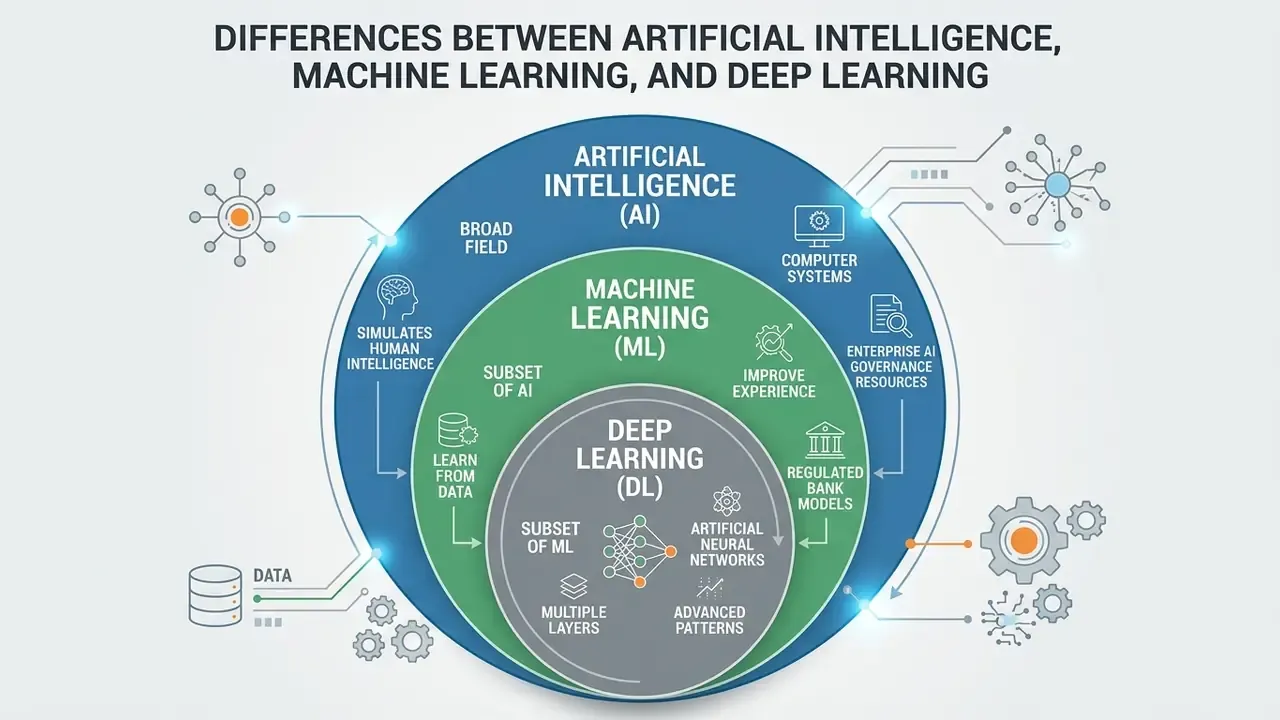
Artificial intelligence is the broad field covering any machine that simulates human intelligence. Machine learning is a subset focused on learning from data. Deep learning is a narrower subset that uses multilayer neural networks. Conflating the three produces bad assumptions about model risk, data requirements, and historical authorship, and it is remarkably common in vendor documentation.
Read the table alongside the text, since each comparison is restated in prose: AI can run on hand-written rules with no training data at all, ML needs moderate structured datasets, and DL needs massive unstructured corpora before it stops overfitting. The pioneers differ too, and so does the audit story.
| Parameter | Artificial Intelligence (AI) | Machine Learning (ML) | Deep Learning (DL) |
|---|---|---|---|
| Core definition | The broad discipline of building machines that simulate human cognitive functions and decision-making (Nature, 2015). | A subset of AI focused on algorithms that learn patterns from data without explicit rule programming (Technology in Society, 2023). | A subset of ML using deep multilayer neural networks to extract hierarchical representations from data (Nature, 2015). |
| Primary architecture | Rule-based expert systems, symbolic logic, search heuristics, statistical models. | Decision trees, support vector machines, regression, shallow neural networks. | Deep convolutional networks (CNNs), recurrent networks (RNNs), transformers. |
| Data requirements | Can operate on hand-crafted rules with zero training data, or use structured datasets. | Needs moderate structured datasets to train statistical patterns and feature parameters. | Needs massive unstructured datasets (image, text, audio) to prevent overfitting. |
| Key pioneers | John McCarthy, Alan Turing, Allen Newell, Herbert Simon, Marvin Minsky. | Arthur Samuel, Tom Mitchell, Vladimir Vapnik, Leo Breiman. | Alexey Ivakhnenko, Geoffrey Hinton, Yann LeCun, Yoshua Bengio, John Hopfield, Fei-Fei Li. |
| Model risk profile | Largely deterministic and inspectable: risk sits in rule completeness, stale logic, undocumented change history. | Statistical and semi-interpretable: risk sits in feature drift, sampling bias, overfitting to historical outcomes. | Black-box and emergent: risk sits in non-explainability, data drift, training-data provenance, unstable behaviour on out-of-distribution inputs. |
| Primary applications | Automated reasoning, symbolic logic solvers, early game playing, rule engines. | Fraud detection scoring, credit risk modelling, KYC and AML alert triage, churn prediction. | Computer vision, speech recognition, large language models, AI video generation and synthetic voice systems. |
Note the middle column, since that is where most regulated bank models still live. Credit scorecards, transaction monitoring, and AML alert prioritization are usually statistical ML, not deep learning, and they should be validated as such.
Enterprise AI governance resources. Risk teams comparing capabilities across vendors can consult our AI Media Comparison Matrices and the AI Media Commercial-Use Hub. Teams estimating infrastructure overhead and integration expenses use the AI Media API Guides and AI Media Pricing Guides. Legal risk leaders tracking intellectual property exposure monitor the AI Litigation and Case Timelines. Finance decision-makers model operational ROI with our enterprise calculators, and technical resolution steps live in AI Media Support and Troubleshooting.
How AI Evolved: From Early Research to Modern Models
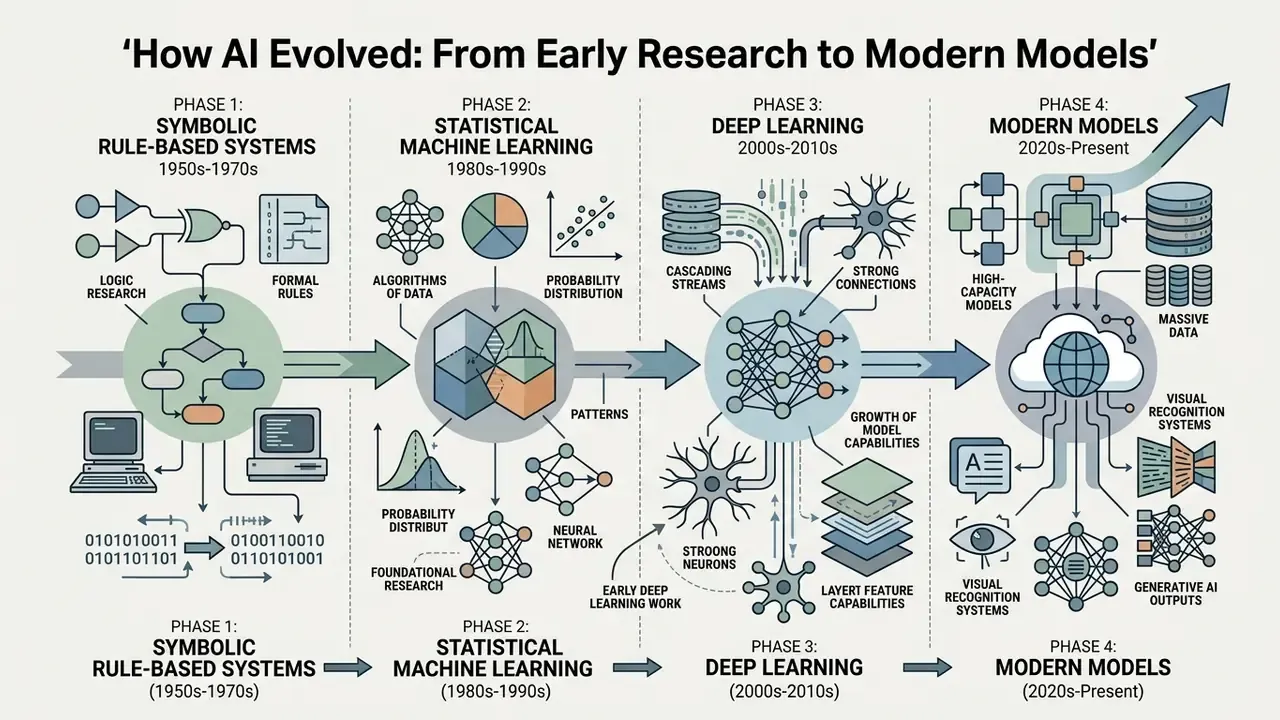
The evolution of artificial intelligence ran through four phases: symbolic rule-based systems in the 1950s to 1970s, statistical machine learning in the 1980s to 1990s, deep learning acceleration in the 2010s, and generative transformer models after 2017. Understanding the sequence helps enterprise leaders assess legacy technical debt and govern models built under very different assumptions.
Early AI and the First Attempts to Build Intelligent Systems
The Forgotten Pre-History of Deep Learning: Alexey Ivakhnenko and GMDH
Standard accounts jump from Rosenblatt's 1958 Perceptron straight to Hinton's 1986 backpropagation paper, skipping a working line of multilayer research conducted in the Soviet Union. Between 1965 and 1970, Ukrainian cybernetician Alexey Ivakhnenko developed the Group Method of Data Handling (GMDH), described in Heuristic Self-Organization in Problems of Engineering Cybernetics (1970). GMDH networks were genuinely deep. They stacked polynomial layers and, critically, selected their own architecture from data by growing and pruning layers against an external validation criterion.
In modern terms, Ivakhnenko implemented deep supervised learning with automated architecture search decades before either phrase existed. His work stayed under-cited in Western literature for years, which is instructive in itself: attribution in AI history depends heavily on language, publication venue, and geopolitics, not only on priority of discovery. Any claim that one person or one country created AI collapses the moment parallel national research programmes are placed on the same timeline.
Machine Learning, Data, and the Growth of Modern Model Capabilities
Through the 1990s and 2000s, artificial intelligence moved from hand-crafted symbolic rules to data-driven statistical machine learning, supported by big data pipelines and GPU computing. The statistical learning paradigm consolidated around risk minimization, cross-validation, kernel methods, and disciplined model selection. Once massive unstructured datasets became available, multilayer neural networks could finally scale.
The 2012 ImageNet competition was the hinge. AlexNet, implemented by Alex Krizhevsky with Ilya Sutskever and Geoffrey Hinton, cut error rates sharply and proved that deep neural networks accelerated by graphics hardware could beat traditional statistical models on hard perception tasks.
«Annual deep learning publication output grew from 26 papers in 2019 to 434 in 2025, an increase of 1,569%.»
The Transformer architecture, introduced in 2017, then enabled foundation models and generative systems: large language models, the generative image tools embedded in ordinary marketing workflows, plus mainstream productivity features such as the canva ai presentation generator and the canva ai voice generator. Seventy years of research lineage, now shipping inside a design app.
International Pioneers: Fathers of AI by Country
The foundations laid by John McCarthy and Alan Turing are usually described as Anglo-American. Yet AI development rested on distinct national schools of cybernetics and computer science. Mapping them clarifies why no single jurisdiction or laboratory can claim authorship of the field, and why "sovereign AI" arguments tend to flatten the record.
| Country | Recognized pioneer / "father of AI" | Key contribution and date | Historical significance |
|---|---|---|---|
| United States | John McCarthy | Coined "artificial intelligence" (1955); created LISP (1958) | Established symbolic AI, logic-based reasoning, expert systems |
| United Kingdom | Alan Turing | Turing Test and the concept of thinking machines (1950) | Built the theoretical foundation of computation and machine intelligence |
| France | Yann LeCun | Invented convolutional neural networks (1988 to 1998) | Basis for computer vision and document recognition |
| USSR / Ukraine | Alexey Ivakhnenko | Group Method of Data Handling, GMDH (1965 to 1970) | Created the first working deep multilayer networks with data-driven architecture |
| Canada | Geoffrey Hinton | Backpropagation (1986) and Deep Belief Networks (2006) | Centre of the deep learning revival; 2024 Nobel Prize in Physics |
| Canada (Montréal school) | Yoshua Bengio | Representation learning, sequence models, attention research | Made deep learning a general-purpose method across modalities |
| China / United States | Fei-Fei Li | ImageNet dataset and benchmark (2009) | Shifted the field toward data-centric AI and reproducible evaluation |
| Australia | Anton van den Hengel | Founded the Centre for Augmented Reasoning, Adelaide (2021) | Led applied AI deployment in agriculture, robotics, medical imaging |
| Czechia (cultural origin) | Karel Čapek | Introduced the word "robot" in R.U.R. (1921) | Framed the cultural concept of manufactured artificial agents |
Actionable Takeaways for Model Risk and Audit Teams
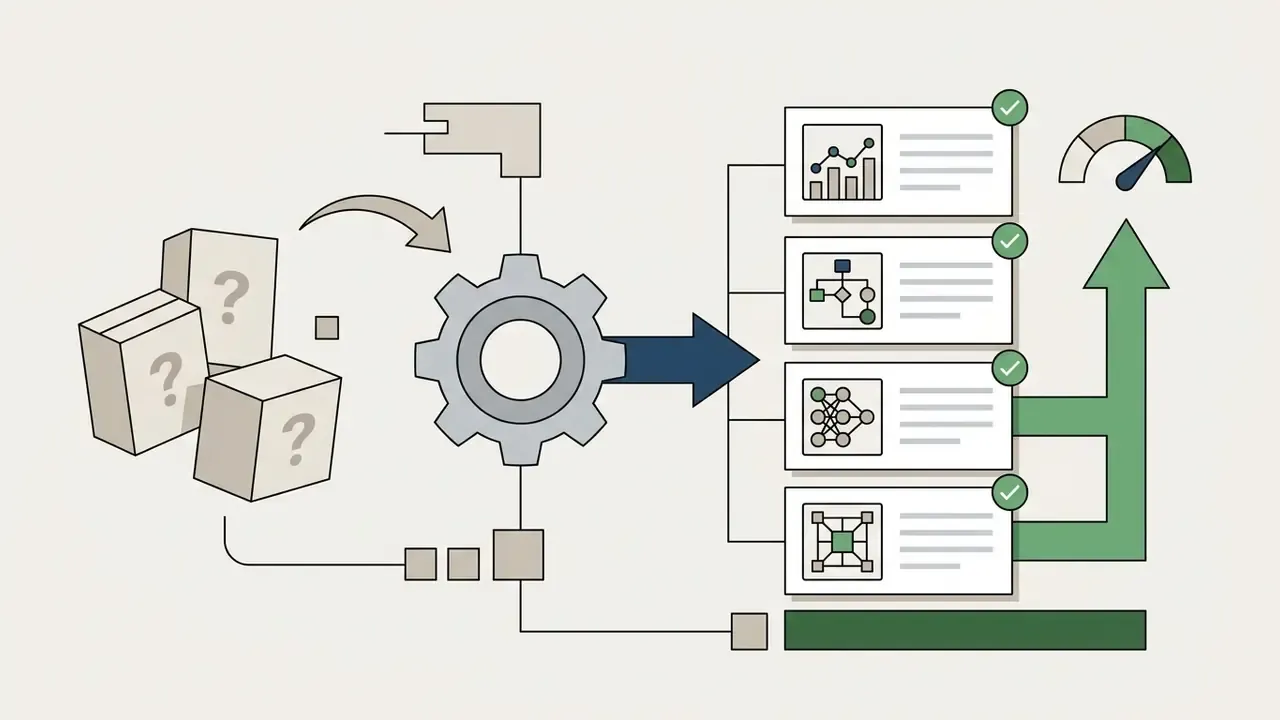
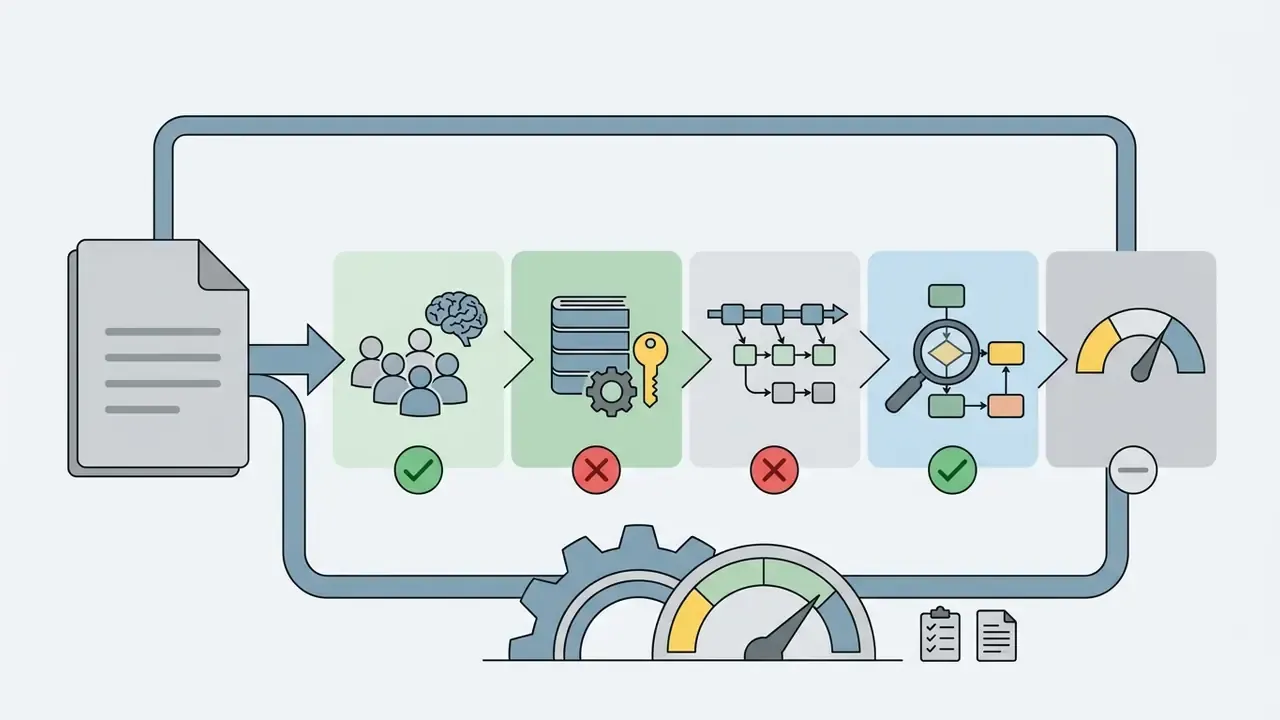
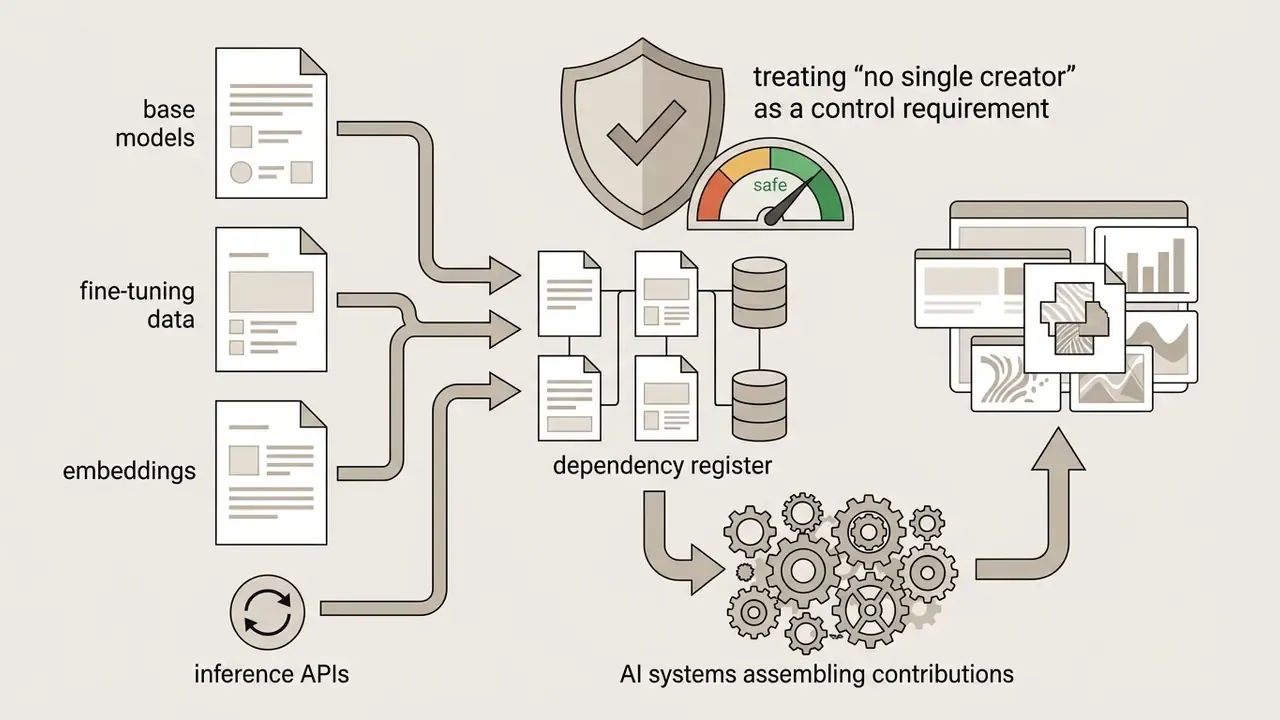
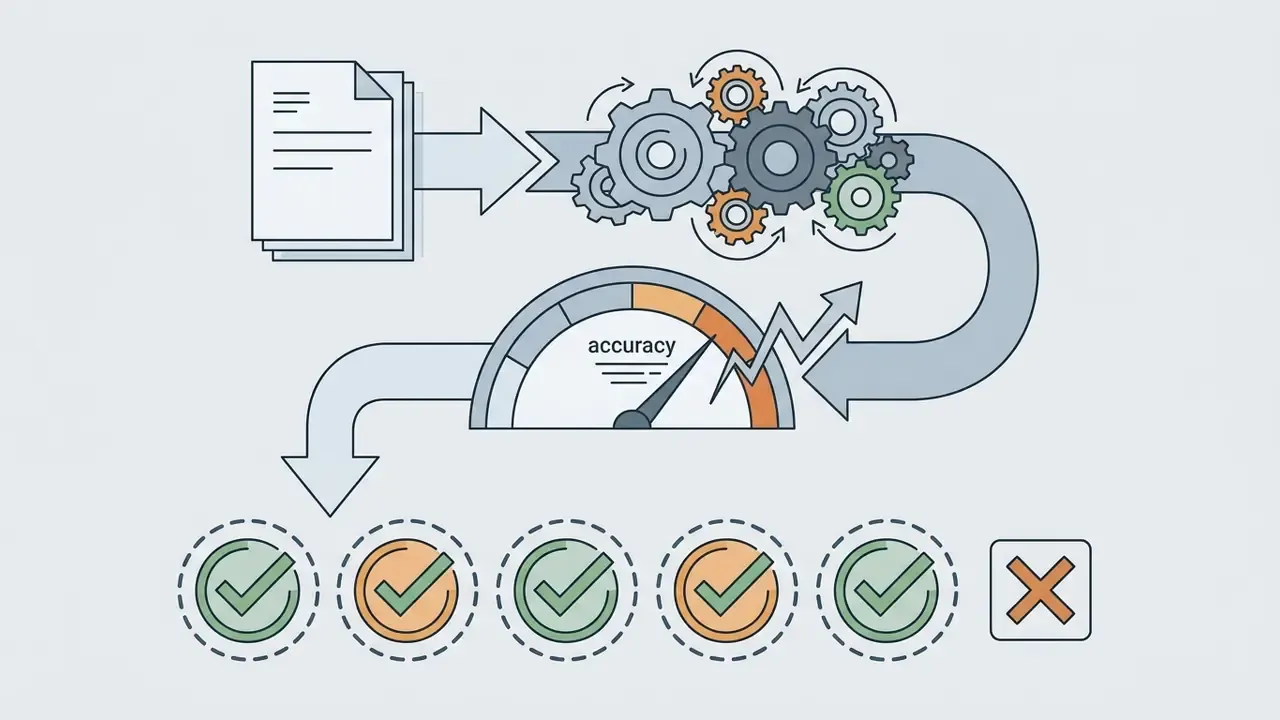
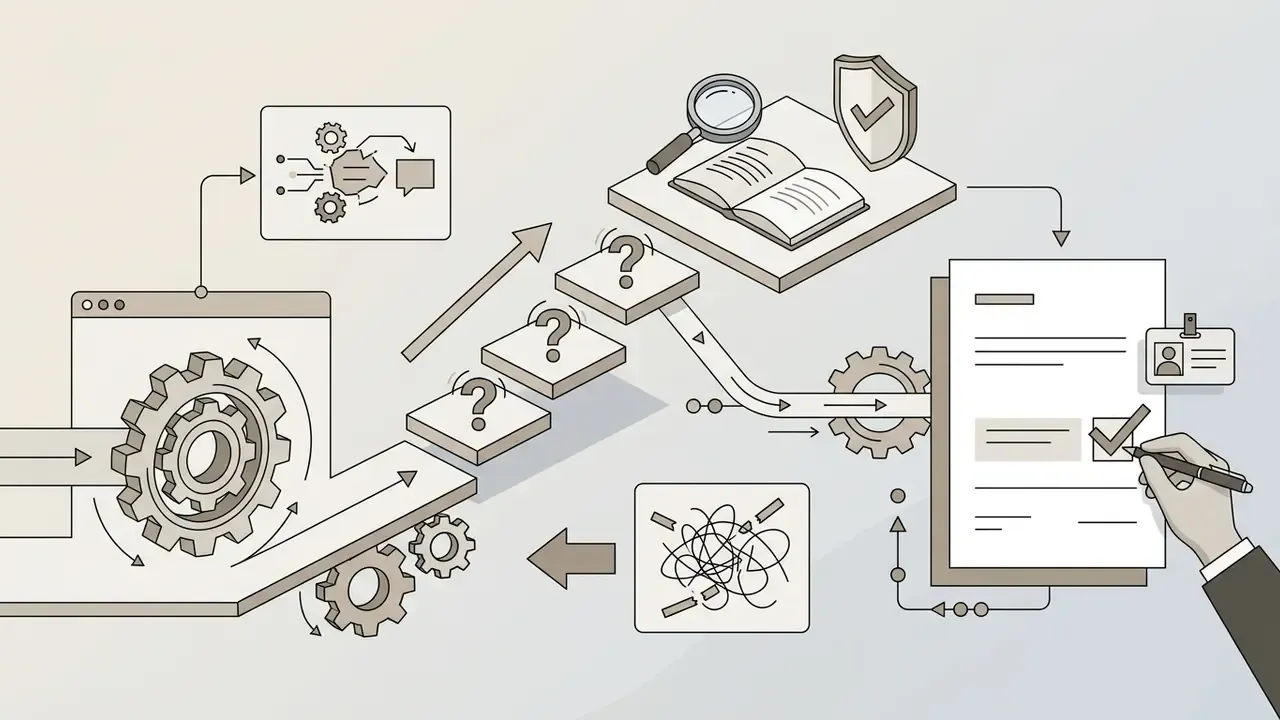
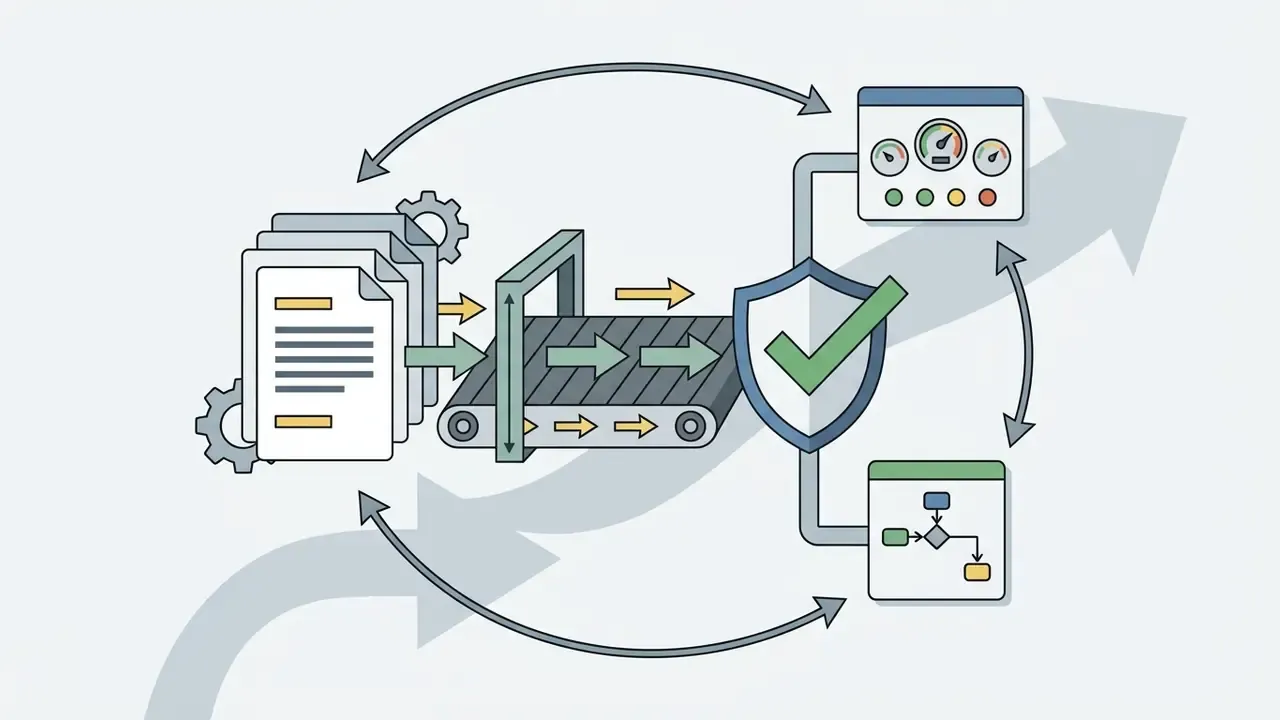
History becomes useful for governance only when it converts into inventory decisions. The checklist below translates the multi-author nature of AI into concrete validation practice.
One caveat worth stating plainly. None of this eliminates residual risk, and a control catalogue is not the same as evidence that controls operate. Testing frequency is where most programmes quietly fall short.
FAQ: Common Questions About the Creator of AI
Frequently asked questions about the creator of AI cluster around four things: whether one individual invented the technology, when official research began, which programming languages enabled the earliest systems, and how the major scientific awards recognize AI pioneers. Standards bodies frame the field the same collective way.
«Framework development is a collaborative activity across the public and private sectors.» NIST AI Risk Management Framework (AI RMF 1.0), National Institute of Standards and Technology (2023). https://doi.org/10.6028/NIST.AI.100-1
Did one person invent artificial intelligence?
No. The field has no sole inventor. Turing supplied the theoretical test and the computability framework in 1950. McCarthy named the discipline in 1955 and organized its founding workshop in 1956. Newell, Shaw, and Simon wrote the first reasoning programs. Rosenblatt and Ivakhnenko built early neural architectures. Rumelhart, Hinton, and Williams formalized backpropagation in 1986. LeCun and Bengio developed convolutional and sequence architectures, and Fei-Fei Li built the dataset infrastructure. "Creator of AI" is media shorthand, not a documented title.
When did AI research officially begin?
The proposal that named the field is dated August 31, 1955, and the Dartmouth Summer Research Project on Artificial Intelligence ran in the summer of 1956. Working programs with learning behaviour existed slightly earlier, including Christopher Strachey's and Arthur Samuel's game-playing systems in 1952.
Which programming language enabled early AI systems?
McCarthy created LISP in 1958, and it became the standard language for symbolic AI and expert systems. It remains historically significant, and some legacy rule engines still carry its fingerprints. Newell, Shaw, and Simon used Information Processing Language (IPL) for the Logic Theorist and the General Problem Solver.
Who received a Nobel Prize for AI-related research?
Geoffrey Hinton and John Hopfield received the 2024 Nobel Prize in Physics from the Royal Swedish Academy of Sciences for foundational discoveries and inventions that enable machine learning with artificial neural networks. Earlier, in 1978, Herbert Simon, co-creator of the Logic Theorist, received the Nobel Prize in Economics for his research into decision-making processes inside economic organizations. That makes him another AI pioneer honoured by the Nobel Committee, and a reminder of how closely early AI tracked the study of human judgment. Computing's own highest honour recognizes AI repeatedly: Minsky (1969), McCarthy (1971), Newell and Simon (1975), Judea Pearl (2011) for probabilistic reasoning, and Bengio, Hinton, and LeCun (2018).
«The ACM A.M. Turing Award, often referred to as the "Nobel Prize of Computing," is given to scientists who created the systems and theoretical foundations underpinning the information technology industry.» ACM Media Release (2024). https://www.acm.org/media-center/2024/april/turing-award-2023 Readers who want to see this seven-decade lineage in its current consumer form can compare practical outputs in our roundup of the best AI art generators, review editing workflows in the canva video editor and canva video maker overviews, or examine platform-level licensing constraints in the Canva AI generator overview.
Is AI conscious, and does that change who its author is?
There is no scientific consensus that current systems are conscious. Hinton argues that machine experience may already exist in some limited form. Critics counter that functional self-correction is not subjective experience. Either position leaves attribution untouched: consciousness claims concern what models are, not who built them. For governance purposes the operative issue is not machine sentience but machine opacity, and opacity is testable.
Editorial Standards and Author attribution
Marcus Hale, author. Any engagement described in this article is a composite illustration. Historical claims are sourced to primary archives and peer-reviewed publications where available, and points that remain contested in the historiography are flagged as such rather than smoothed over. Our editorial principle is short: no evidence, no autonomy.
Internal Navigation Footnote
For definitions of technical terminology and historical governance frameworks, visit the AI Media Glossary.