Last updated: August 2026 · Editorial review: AI Governance & Model Risk desk
Short version: A free AI writing generator with no sign up produces paragraphs, letters, stories and micro-copy directly in a browser session, with no credentials attached. Anonymous tiers usually cap input at roughly 150 to 500 words per request and 3 to 20 generations per day, enforce IP-level rate limits, and gate history, exports and higher token ceilings behind an account. Outputs stay outside copyright protection until a human materially edits them, must be disclosed under Article 50 of the EU AI Act in defined public-interest contexts, and must never receive confidential, personal or material non-public information.
What Is a Free AI Writing Generator With No Sign Up?
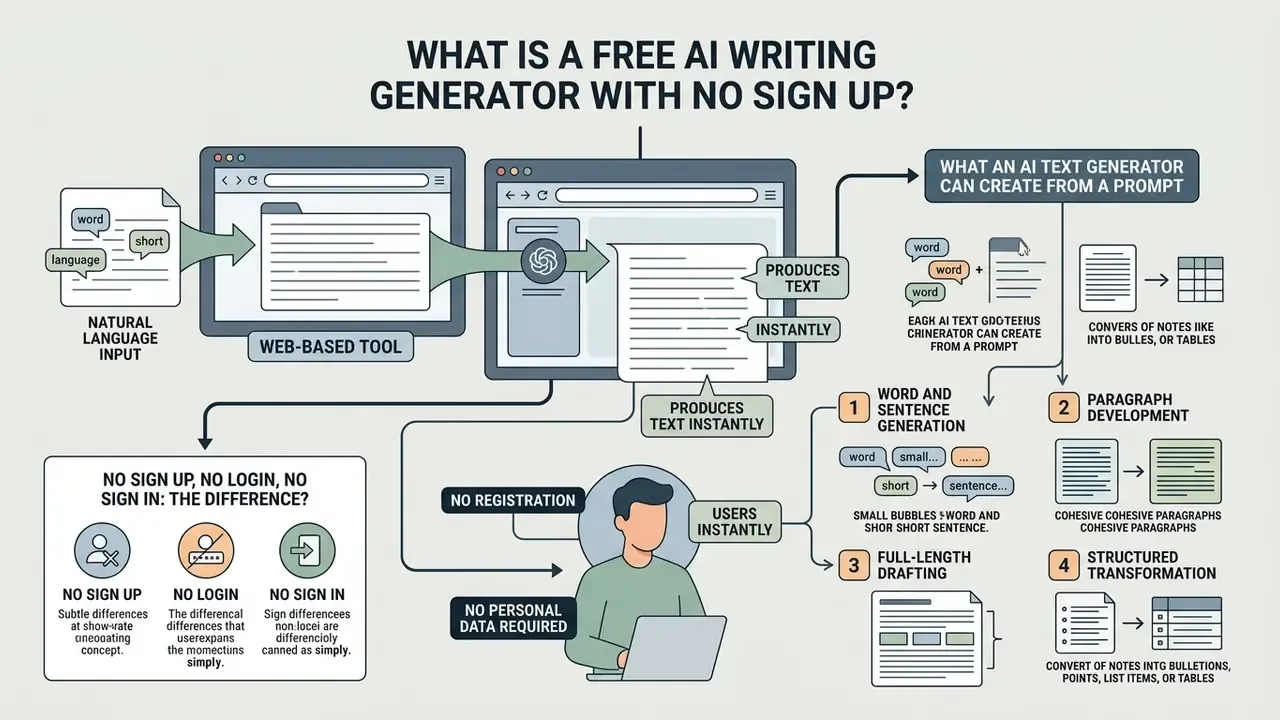
A free AI writing generator with no sign up is a web-based natural language processing tool that produces text instantly in a browser, without registration or personal identification. These tools sit on top of large language models (LLMs), turning user instructions into coherent text and removing the authentication friction that slows down quick drafting.
Modern web architectures host these interfaces to keep automated content creation publicly reachable. Users open an ai text generator online free no sign up in a standard browser session and type a raw prompt to get structured written output. Unlike enterprise software with identity management, anonymous text generators lean on session cookies or network-layer rate limits. The same access pattern now spans media types, so teams reviewing anonymous writing tools often benchmark them next to free AI image generators that require no sign up to map the whole unauthenticated tool surface inside the organization. The architecture fits rapid content generation, temporary brainstorming and short drafting jobs, provided nobody pastes sensitive or proprietary data into a public web form.
No Sign Up, No Login and No Sign In: What Is the Difference?
The wording around unauthenticated access is not cosmetic. Each phrase marks a different friction boundary and a different data retention posture. A free ai writing generator no sign up asks for no account creation and no credentials, so prompt input starts the moment the page loads.
"No login" and "no sign in" mean something narrower: no existing session or authentication token is needed to run the basic text generator interface. Many public platforms still trigger a login prompt when a user tries to save document history, export to a specialized format, or push past a temporary browser usage threshold. Access control documentation from providers such as Apple and Microsoft treats account creation as a separate legal branch from session access. Platforms routinely park advanced features, higher token limits and persistent document storage behind an explicit sign-up wall.
| Term | What it guarantees | Where the wall usually appears |
|---|---|---|
| No sign up | No account creation, no email, no card to start generating | Saving drafts, exporting DOCX/PDF, exceeding daily generation counters |
| No login | No existing session or credential required for the core generator | Personalization, brand-voice presets, longer context windows |
| No sign in | No authentication token needed for the public demo layer | Usage history, team sharing, API keys, billing-linked features |
Small distinction, large consequence. A tool that never asks who you are also never promises what it does with your text.
What an AI Text Generator Can Create From a Prompt
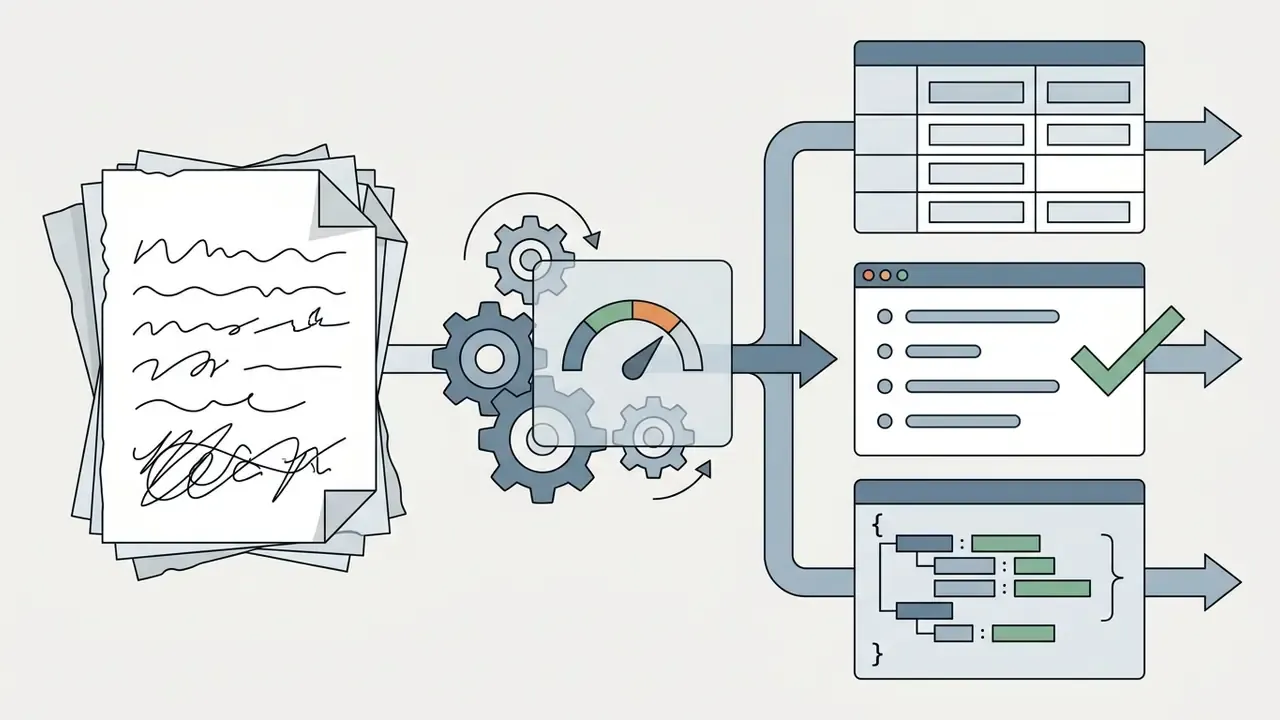
An ai generator text free no sign up converts natural language prompts into full paragraphs, single sentences, contextual vocabulary or multi-section documents. Research from the National Institute of Standards and Technology (NIST GenAI Text Challenge, 2025/2026) shows that prompt-driven language models handle outputs ranging from short summaries under 250 words to structured narratives and JSON-formatted data schemas.
«A systematic review of 136 studies defines text generation as producing contextually relevant written content from non-linguistic internal representations across five tasks: open-ended generation, summarization, translation, paraphrasing and question answering.»
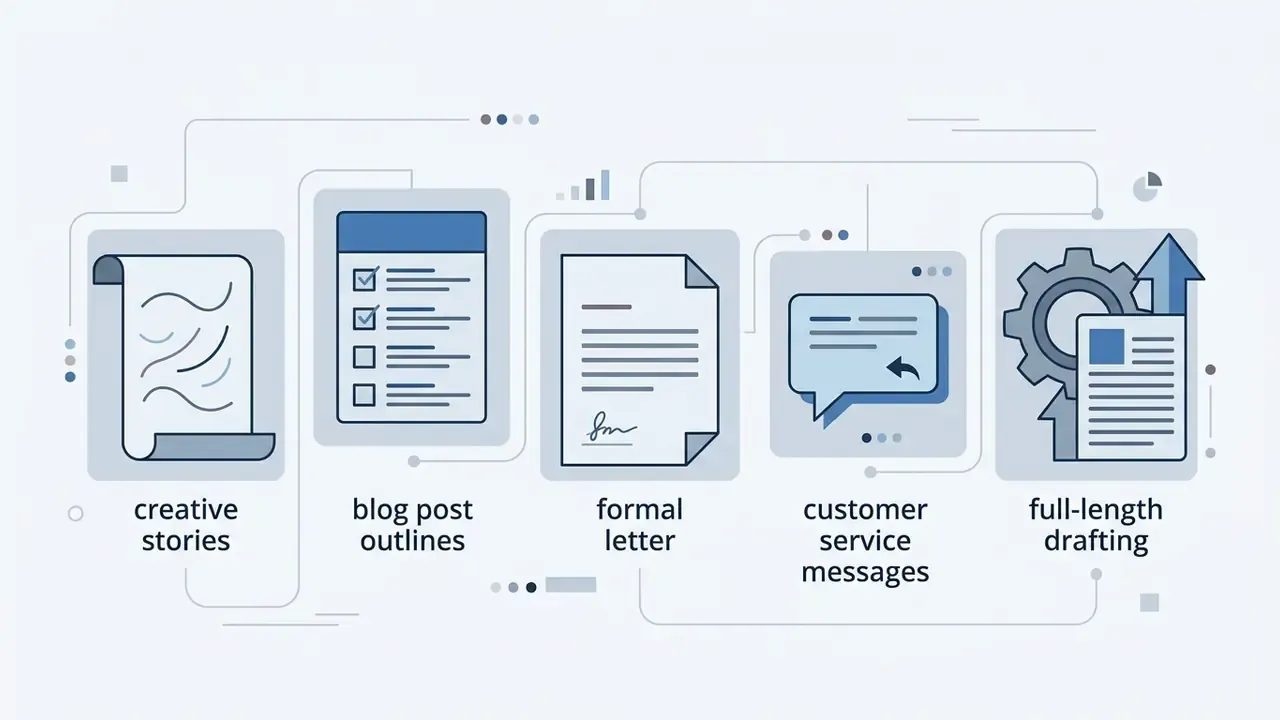
Given specific instructions, an ai text generator free no sign up reads the input parameters and builds output that fits the context:

How to Generate AI Text Free Without Login
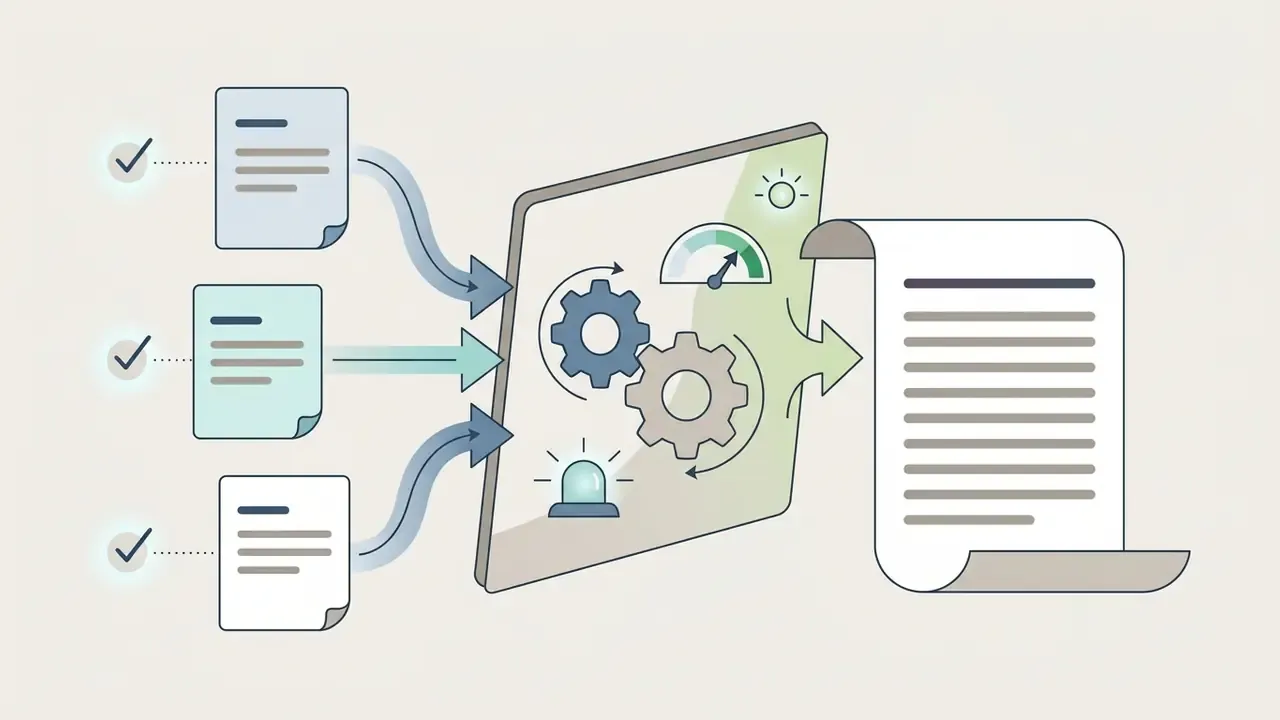
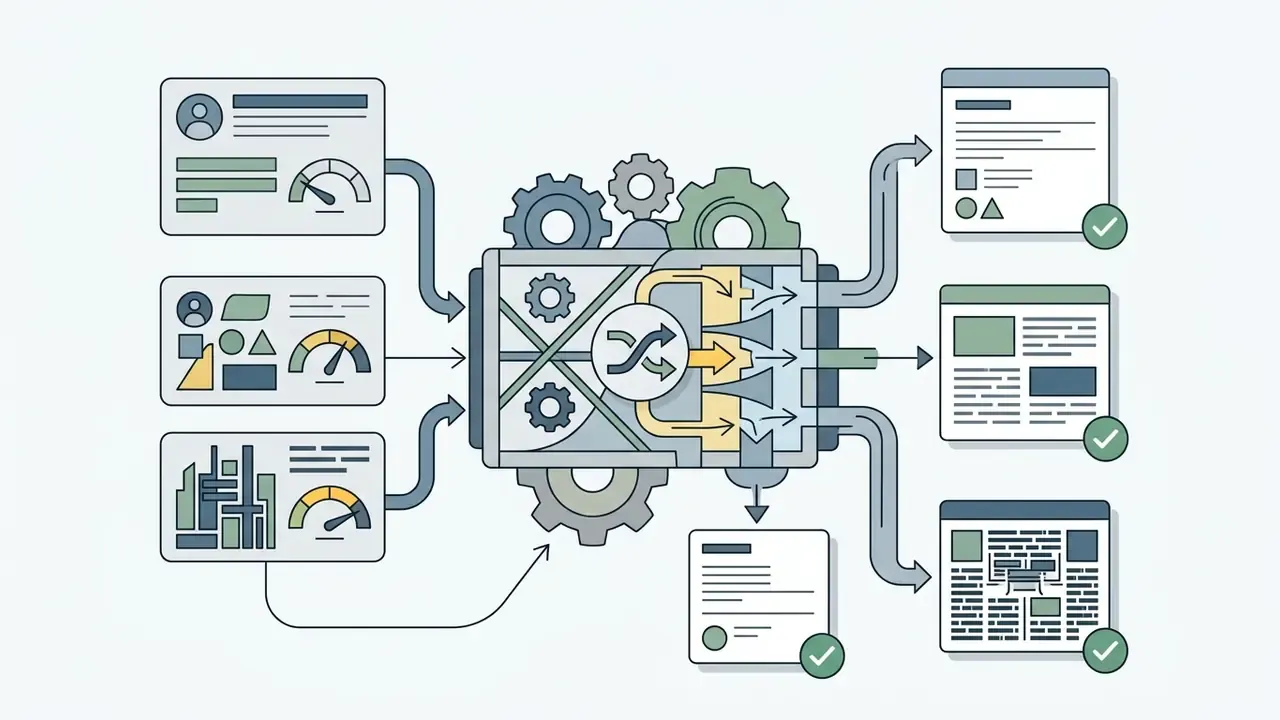
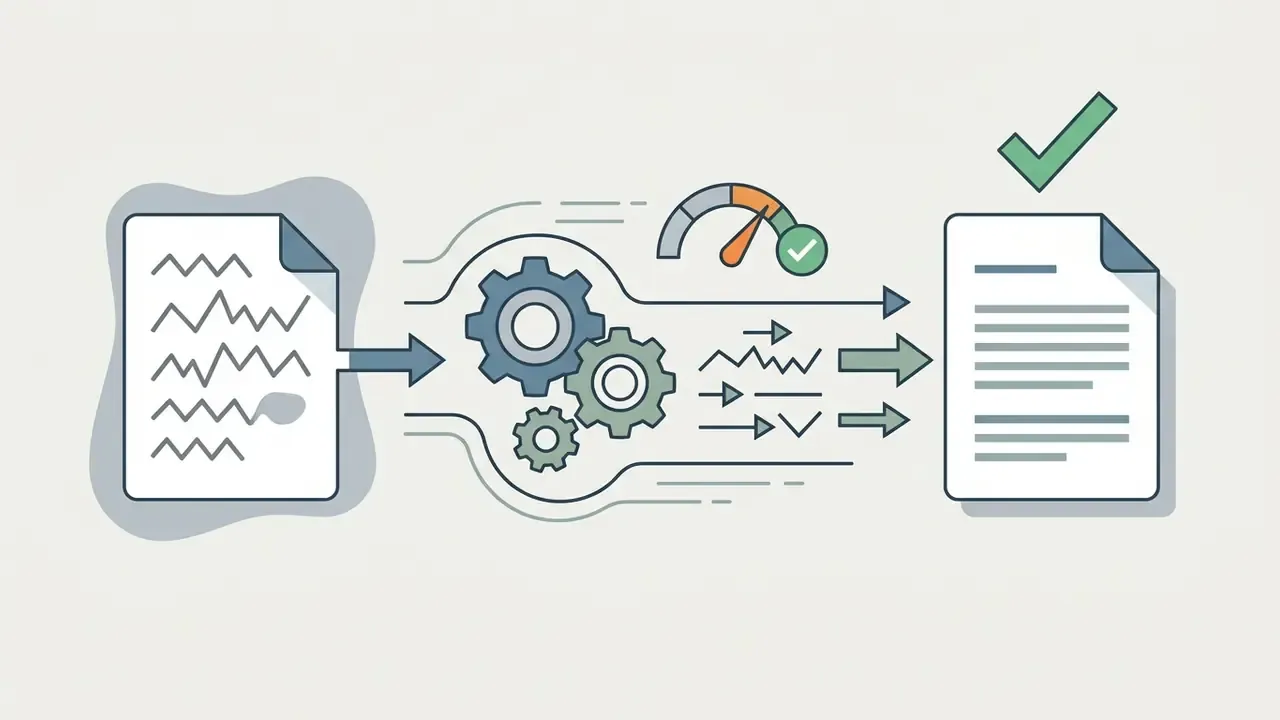
To generate text with an ai content generator free without login, the user types structured prompt parameters into a browser form and runs the generation command. Working with an ai text generator free no login productively means fixing the scope, the audience, the structure and the tone before you hit the button.
An ai text generator without login runs on direct pattern recognition. Specificity of input dictates precision of output, almost mechanically. Writers get stronger first drafts by setting clear boundaries instead of submitting broad, open-ended statements.
Multimedia block: numbered checklist, plain text in the DOM, no instructional image.
- Define topic and objective.State the core subject, the key points to cover, and the intended audience.
- Specify format and structure.Pick the output shape: a three-paragraph email, a bulleted summary, a long-form article outline.
- Set tone and stylistic rules.Choose the voice (formal, persuasive, conversational) and constrain vocabulary or perspective.
- Execute generation.Submit the prompt through the browser interface to produce the initial output.
- Review and edit output.Check factual accuracy, structural flow and tone, then adjust manually before publication.
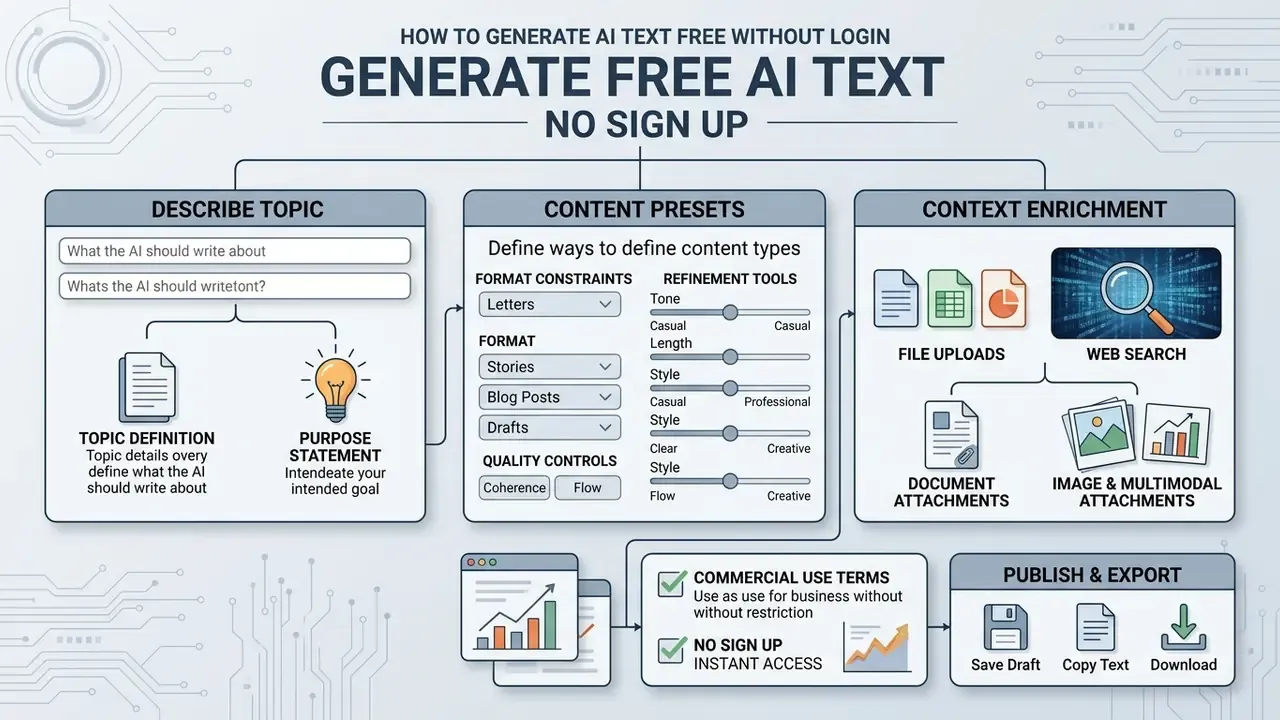
Describe the Topic, Purpose and Format
Prompt precision starts with three declarations: subject matter, commercial or editorial purpose, and target document structure. Guidance from Harvard University Information Technology stresses that effective generative prompts must state the task, the surrounding context, the audience and the output format, otherwise the model defaults to generic filler.
When using an ai writer generator free no sign up, clear directives pay off immediately:

Context Enrichment via File Uploads and Web Search
Advanced unauthenticated interfaces no longer stop at a single text box. Two context-expansion mechanisms now appear on public tiers, and both change how grounded the output is:
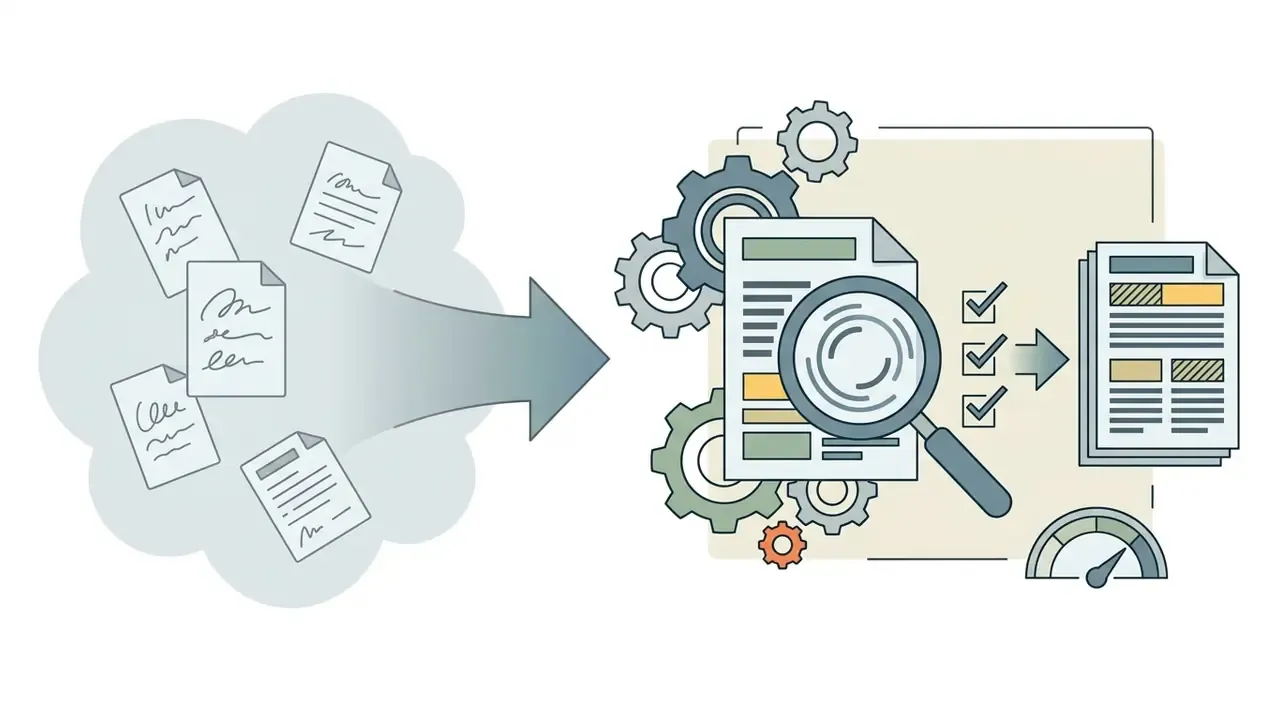
- Document attachments users upload context files in
.pdf,.doc,.docxor.txtinstead of retyping source material. On free tiers, only the first 150 to 500 words of the attachment are typically ingested per generation, which makes attachments better suited to summarization, key-point extraction and tone matching than to full-document rewriting. - Image and multimodal attachments some public chat-style generators accept up to 10 images per message (commonly capped at 20 MB per file) for caption drafting, chart description or screenshot summarization.
- Live web browsing a "search online" or "automatic web access" toggle lets the model pull current news, prices or reference data before composing an answer, which reduces reliance on stale training data.
- Agent-style handling a subset of tools can compute, process attached files and return downloadable artifacts inside the same anonymous session.
Risk note for regulated teams: every uploaded file leaves the corporate boundary. Attachments holding personal data, material non-public information, client records or unreleased financials must never reach an anonymous endpoint, whatever the vendor's stated retention policy says.
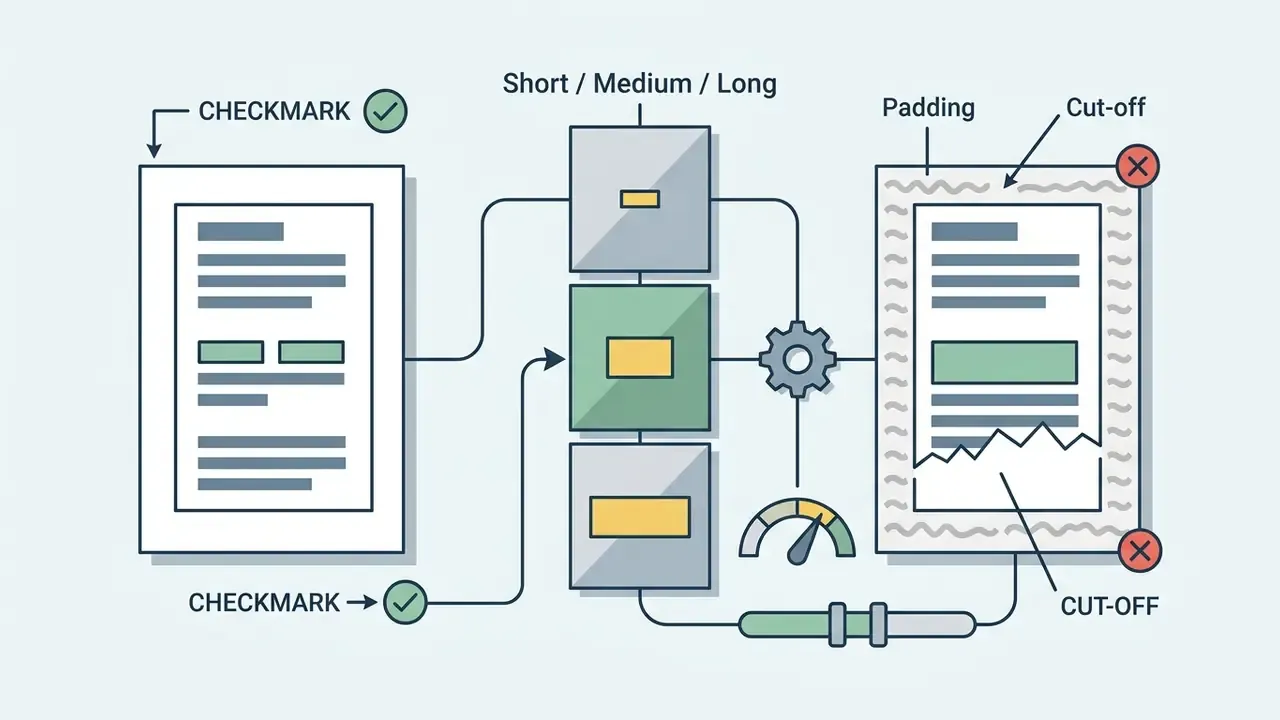
Set Tone, Length and Writing Goal
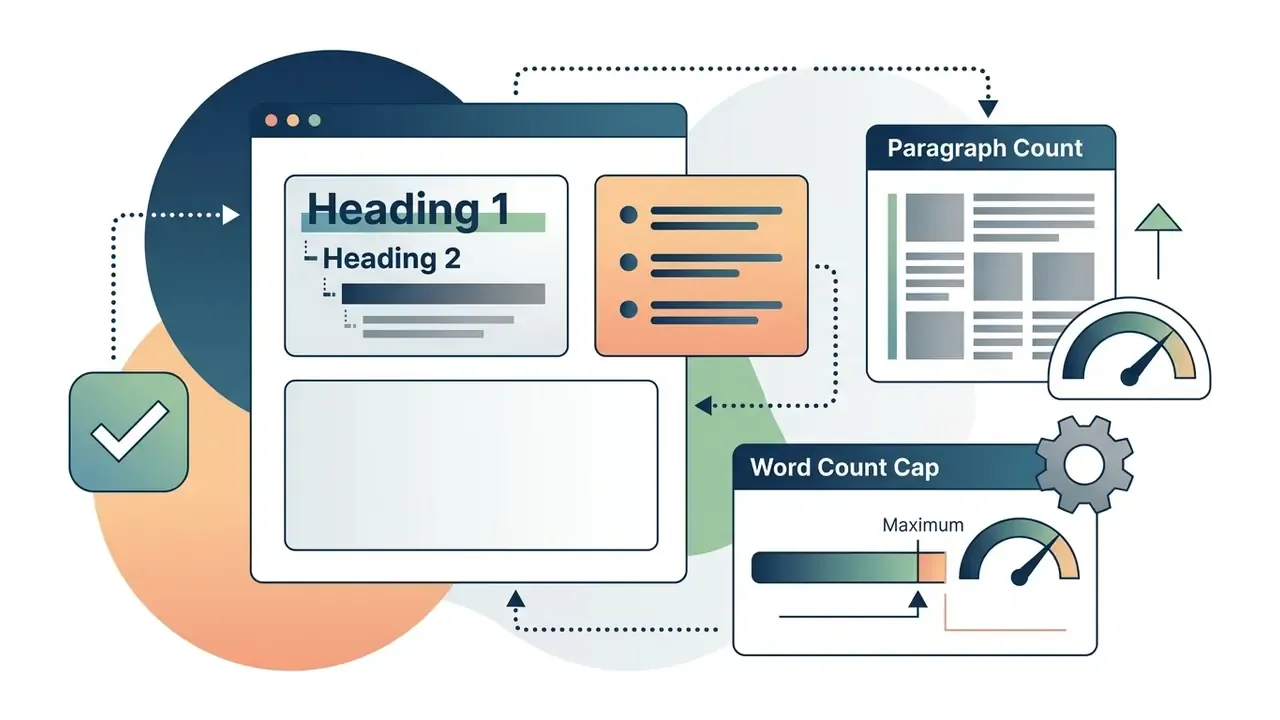
Tone and length parameters govern lexical choice and structural density. The strongest available evidence for parameter-driven quality gains comes not from vendor documentation but from controlled academic measurement of assisted writing.
«With proper instruction, generative AI cut average writing time by 64.5% and lifted quality scores from B+ to A, for native speakers and English-as-a-second-language students alike.»
Naming the audience and the tone removes ambiguity in token selection and aligns the stylistic perspective with institutional expectations. Configuring these controls in an ai text generator free no sign up narrows output variance:

Generate, Edit and Refine the Output
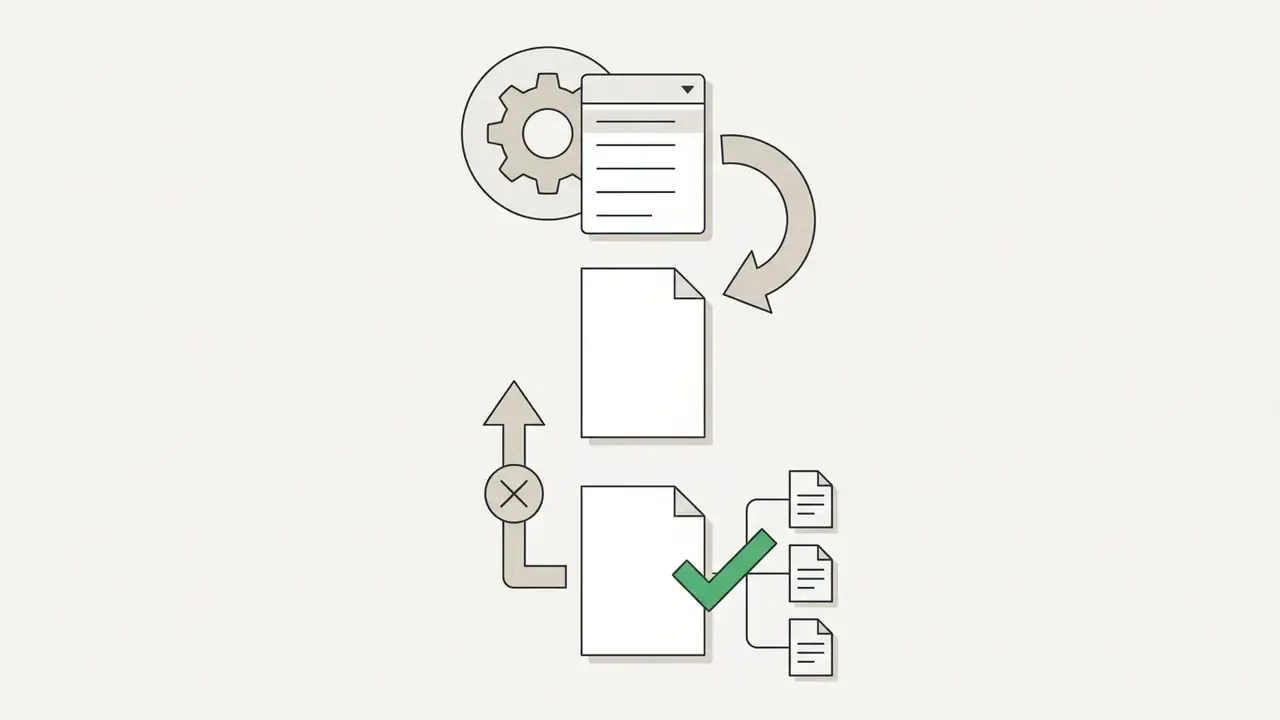
The draft is phase one, not the deliverable. Human review and editorial refinement remain the part that carries legal weight. According to U.S. Copyright Office guidance (2025), raw machine output lacks copyright protection, so human authors have to substantially modify, arrange or rewrite generated text to establish original creative authorship.
«On a shopping-guide platform, users who applied AI-generated article structures increased sales of mentioned brands by roughly 20%, conditional on subsequent human editing and verification.»
Standard In-Browser Refinement Actions
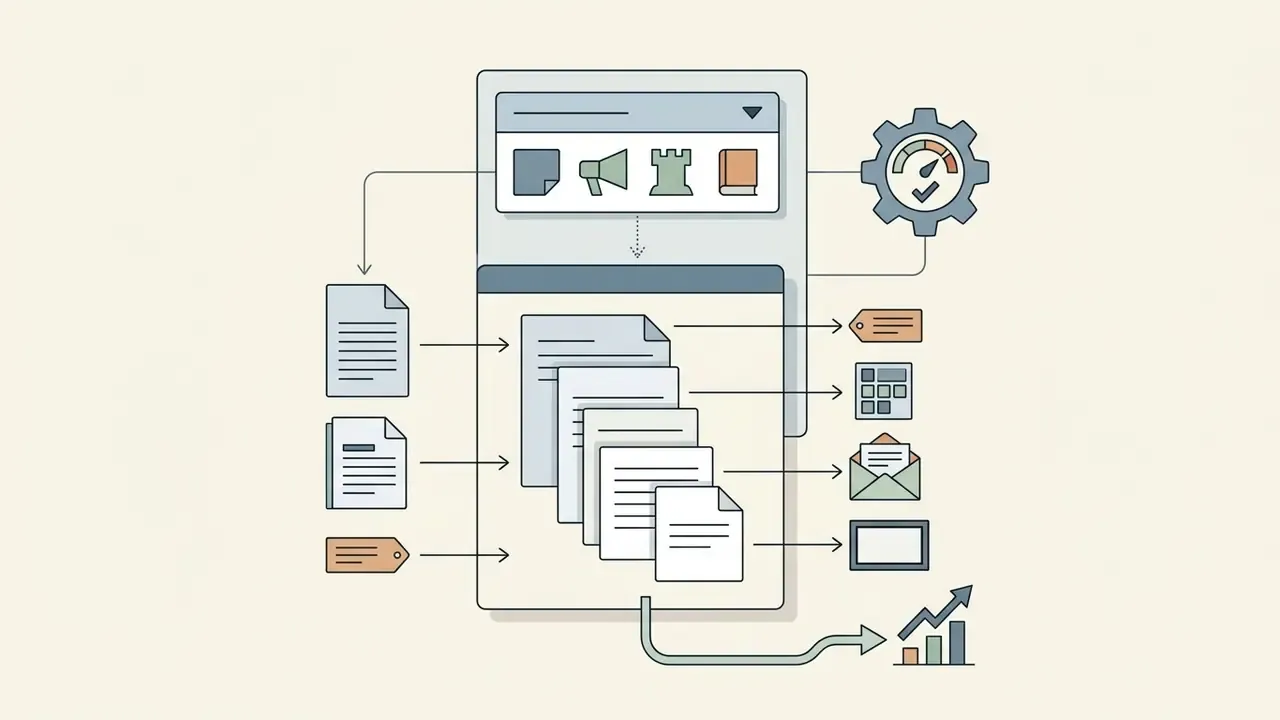
Modern free AI writers ship single-click context modifiers that edit existing text without resubmitting a full prompt. Learning these controls is the difference between five wasted regenerations and one targeted revision.
- Continue / Extend: appends the next logical paragraph using the existing narrative state and tone.
- Longer: expands technical explanations, adds supporting detail, develops thin sections.
- Shorter: condenses the draft into an executive summary or a length-capped abstract.
- Rephrase: rewrites the same meaning with different sentence architecture and vocabulary density.
- More Formal / tone shift: converts casual phrasing into a technical, formal or client-facing register, and back again.
- One-click handoffs: moves raw output straight into secondary tools (AI Humanizer, Paraphraser, Grammar Checker, plagiarism scanners, AI-detection modules) without leaving the session.
- Export actions: copy to clipboard is universally free. Download to Word, PDF or Docs is the feature most often reserved for registered accounts.
| Refinement action | Primary use case | Typical availability on anonymous tier |
|---|---|---|
| Continue / Extend | Long-form drafting momentum | Free |
| Longer / Shorter | Length calibration for briefs and summaries | Free |
| Rephrase | Removing repetition and robotic cadence | Free |
| More Formal / tone shift | Client, regulator or executive audiences | Free |
| Humanize / Paraphrase handoff | Style variation and cadence adjustment | Free, often quota-shared |
| Grammar and plagiarism check | Pre-publication assurance | Partially gated |
| Download / version history | Audit trail and reuse | Account required |
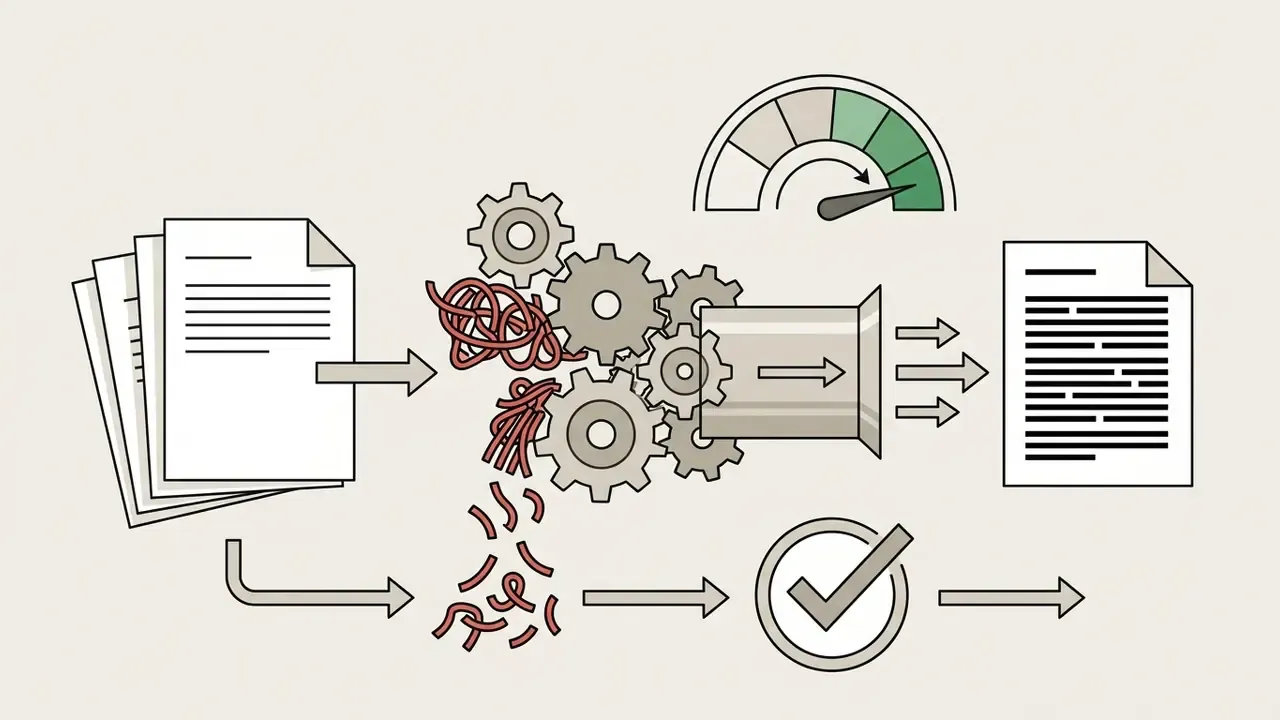
Beyond the one-click controls, manual editorial refinement follows three patterns:

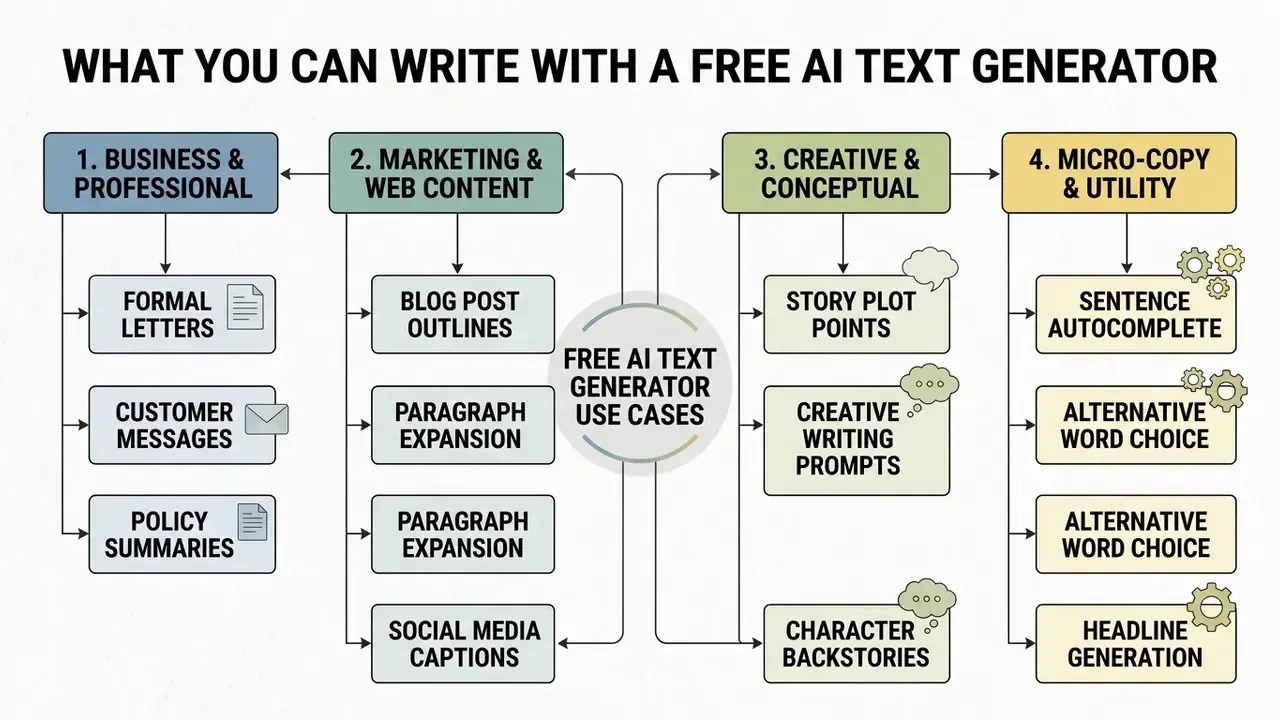
What You Can Write With a Free AI Text Generator
A free ai content generator without login covers a wide spread of writing tasks: commercial communications, marketing ideation, creative narrative drafting. The right generation mode depends on whether your target document needs rigid formal structure, persuasive copy or open-ended narrative development.
Blog Posts, Paragraphs and Content Ideas
Content creators reach for an ai writing generator free no sign up mainly to beat drafting friction, shape blog posts and spin up thematic content ideas.
«AI-structured articles prompted consumers to use search queries with high semantic proximity to the text, which produced more precise and relevant search results.»
To build structured digital content, writers stack point-solution generation tasks:
- Generating topic ideation clusters for specialized industry verticals.
- Drafting introductory paragraphs that answer search intent directly.
- Expanding complex technical concepts into standalone, single-idea paragraphs.
- Producing headline variants and meta descriptions inside exact character counts.
For adjacent media workflows, creators evaluate specialized modules inside the broader AI Media Comparison Matrices to balance text drafting against visual asset production, and benchmark visual quality tiers using our review of free AI art generators.
Letters, Messages and Professional Copy
An ai letter generator free no sign up handles formal business correspondence, customer service notifications and outreach emails without much ceremony. An ai letter generator no sign up applies established professional templates, folding in recipient details, core message intent and a formal sign-off automatically.
«Generative AI proved most useful for summarization, structuring arguments and sustaining a professional tone, especially for students writing in English as a second language.»
Set the sender's goal, the recipient context and the tone up front, and an automated letter generator returns structured drafts fit for client communications, vendor inquiries or internal administrative updates. A reliable prompt skeleton for correspondence names six things: sender role, recipient role, purpose, three key points, required tone, maximum length. Then apply "make it shorter" or "more formal" as a second pass instead of rewriting the prompt from scratch.
Stories and Creative Writing Prompts
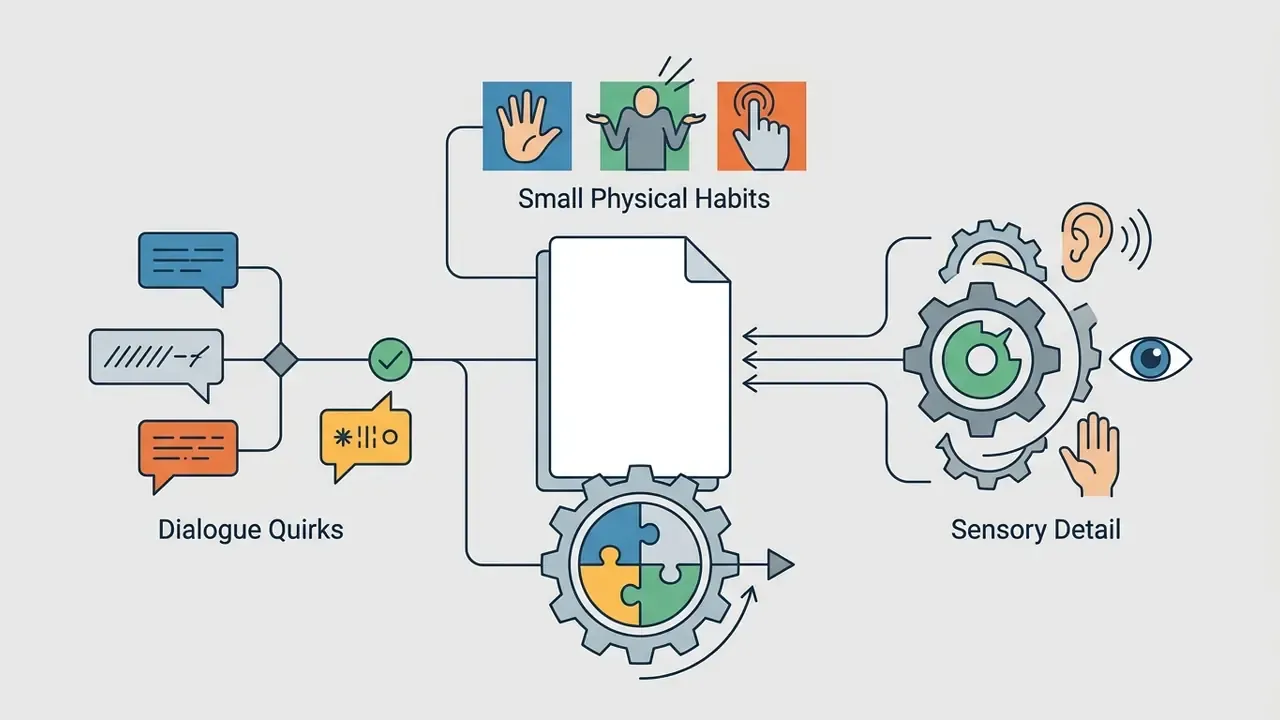
Creative writers use a story generator ai interface to develop narrative concepts, build character arcs and outline plot progression. A dedicated story generator reads genre parameters, stylistic constraints and narrative perspective, then offers options when the page refuses to move. Most creative tools accept extremely short seeds (10 characters is often the technical minimum) and expand one line such as "a lost dog that finds its way home through dreams" into a readable draft scene in seconds.
«In a controlled experiment with 36 participants, ChatGPT users generated more detailed ideas, yet group-level semantic diversity was significantly lower and the sense of ownership weaker.»
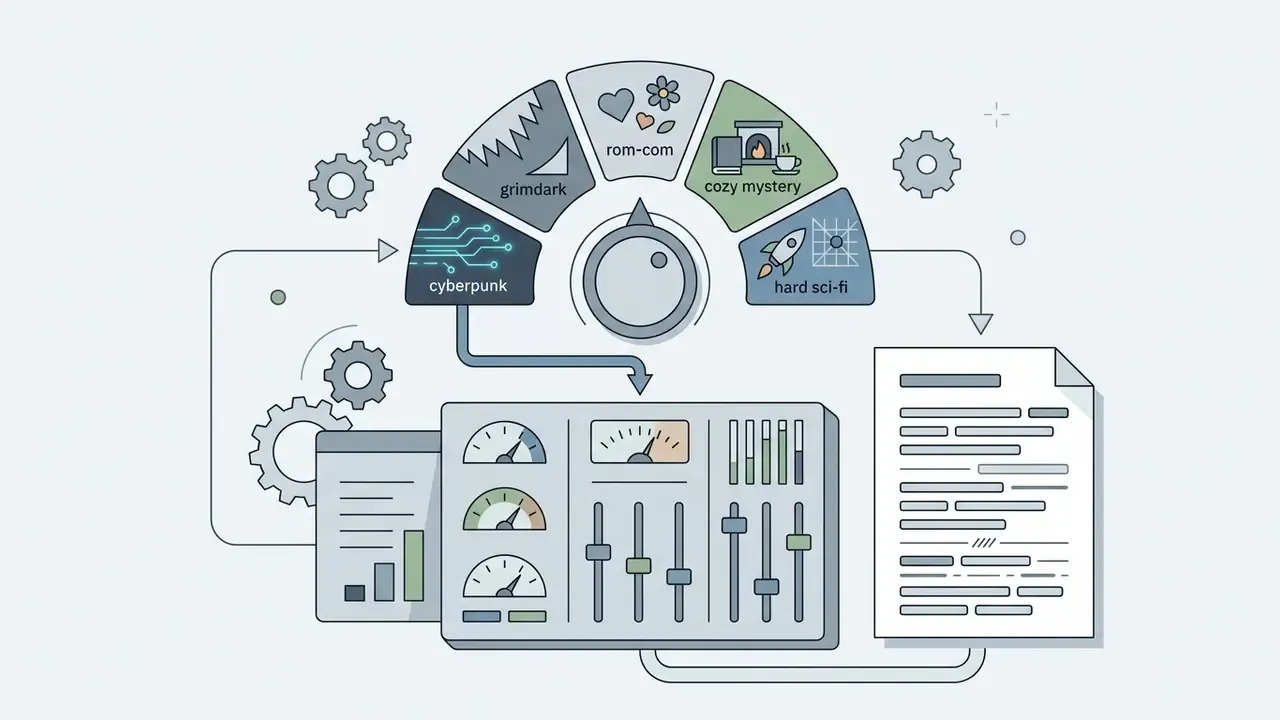
To get more from a story generator AI without login, use sub-genre tags and structural modifiers rather than a bare "write a story":
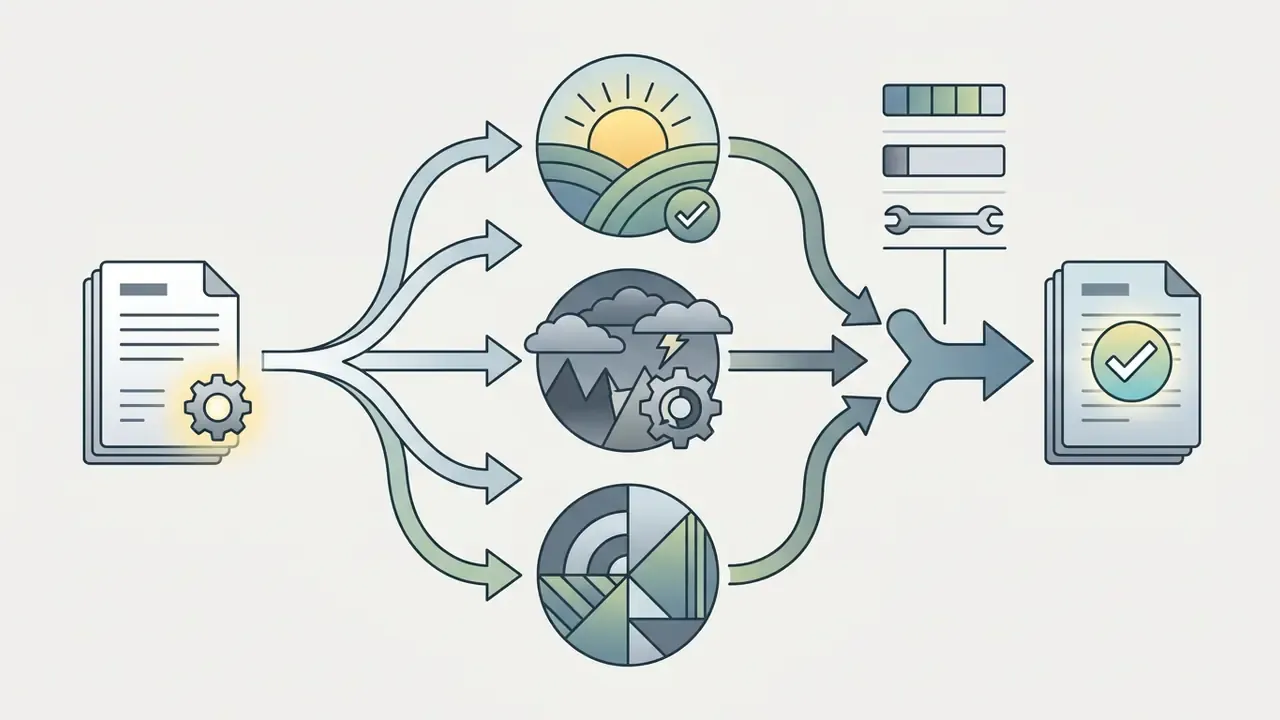
So authors should treat machine output as a conceptual springboard and actively inject their own plot twists, style and character voice. The ACM homogenization findings make that practice necessary, not optional.
Quick Answers: Sentences, Words and Languages
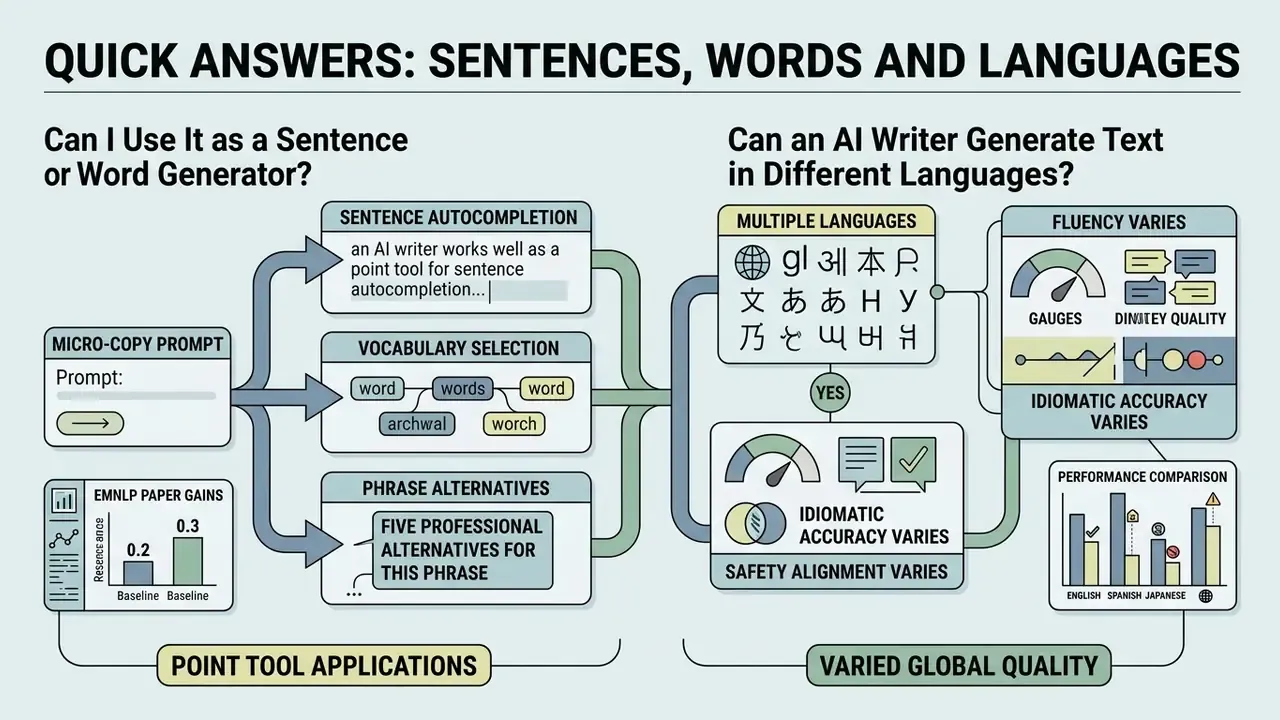
Can an AI Writer Generate Text in Different Languages?
Yes. Most web-based AI writing generators expose 50 or more major languages, including English, Spanish, French, German, Portuguese, Italian, Dutch, Polish, Russian, Turkish, Arabic, Hebrew, Hindi, Bengali, Tamil, Telugu, Chinese (Simplified and Traditional), Japanese, Korean, Vietnamese, Indonesian, Filipino, Swahili, Amharic and Ukrainian. The selector sits before generation rather than acting as a post-hoc translation step.
«GlotEval unifies 27 benchmarks across nine tasks and supports evaluation in more than 1,500 languages; MUG-Eval scales to 2,102 languages via GlotLID.»
Fluency, idiomatic accuracy and safety alignment vary sharply, though. High-resource languages (English, Spanish, French, German, Chinese) usually read naturally. Low-resource languages (Amharic, Swahili, Basque, Pashto, Sinhala) often show grammatical rigidity, calqued syntax and weak style preservation, and need native-speaker post-editing before publication. Multilingual style-transfer research also finds that style accuracy, content preservation and fluency degrade unevenly across language pairs. "Supported" never means "equally good."
Can I Use It as a Sentence or Word Generator?
An AI writer works well as a point tool for sentence autocompletion, vocabulary selection and phrase rephrasing. Published autocompletion research reports high accuracy in constrained prediction settings, but the numbers are not directly comparable across studies, since languages, tasks and metrics differ.
«A hybrid LSTM + LLM autocomplete system reported 92.4% Top-1 and 98.6% Top-5 accuracy across 3,000 test sentences, outperforming trigram and simple RNN baselines.»
An earlier EMNLP next-phrase-prediction paper (2021) reported gains of 0.2 to 0.3 over baselines on both evaluated datasets, which confirms a directional benefit for sentence completion without supporting a universal accuracy claim. Treat any single-number accuracy figure as task-specific, and verify it against the underlying paper before quoting it internally.
Users hunting micro-copy submit narrow prompts: "provide five professional alternatives for this phrase," or "complete this sentence in a concise tone." An ai word generator free no sign up reads the local context and returns targeted structural or vocabulary options. Nothing more, and that is usually enough.
Is a Free AI Text Generator Really Unlimited?
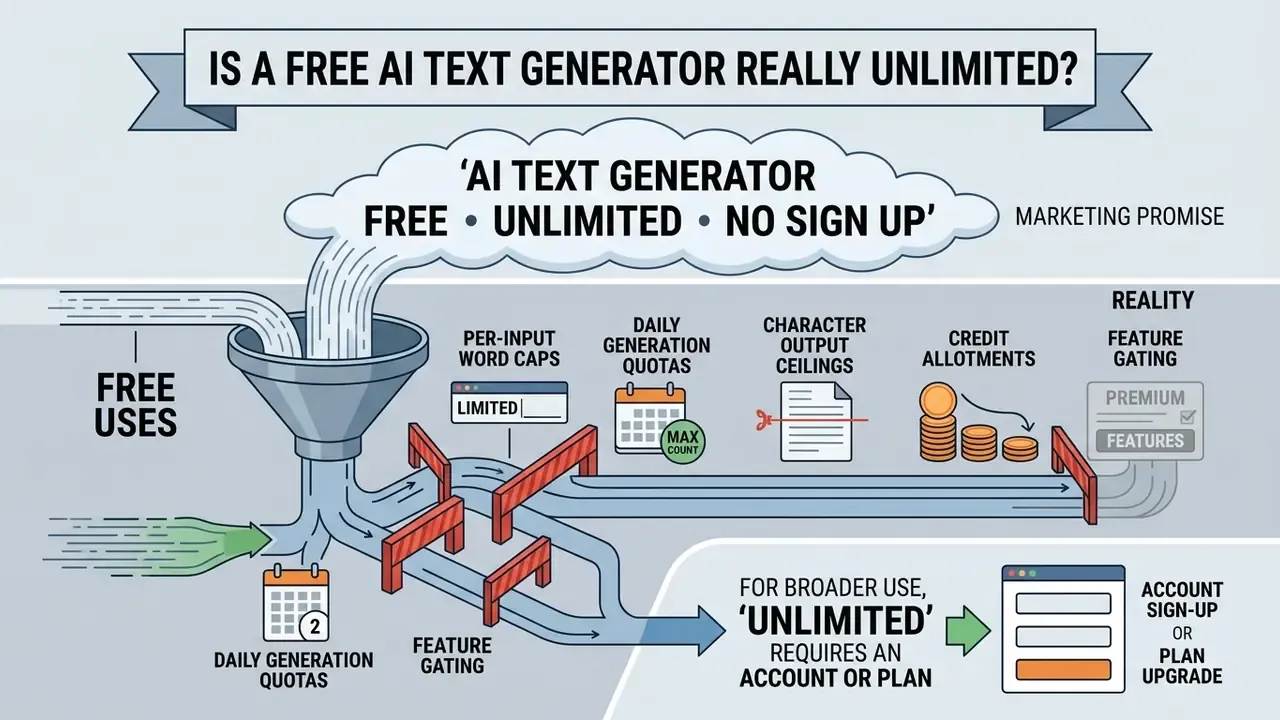
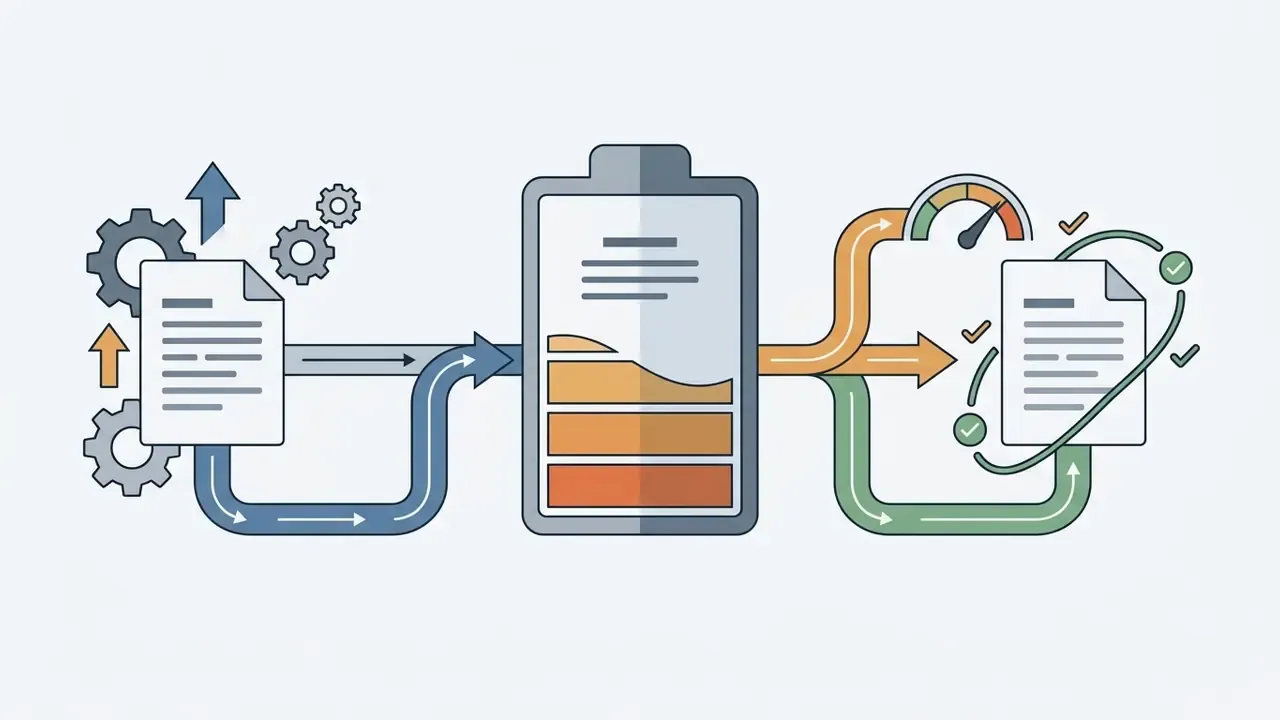
The phrase ai text generator free unlimited no sign up shows up constantly in marketing, yet genuinely unconstrained generation without cost or authentication barely exists at the infrastructure level. Running advanced language models burns compute and server hardware budget, so providers fall back on rate limits, token quotas or feature gating.
«Safety-filter evaluations show detectors such as Prompt-Guard block most malicious requests at the input layer, with detection rates from roughly 70% to 100%, operations that consume substantial compute.»
Every anonymous request therefore carries a generation cost plus a moderation cost. That is a primary economic reason free tiers meter usage. Labels such as ai text generator no limit, ai text generator no limits and ai text generator unlimited normally describe un-metered short-form generations inside a single browser session, or refer to paid-tier capability rather than open public access.
Multimedia block: comparative table with caption, thead and tbody in the published markup; no screenshot; each criterion also explained in the body text.
| Access model | Registration required | Input / output limits | Usage quotas | Advanced editing tools |
|---|---|---|---|---|
| Free (anonymous) | No sign up required | Typically 150 to 500 words per request | Session IP or hourly rate limits; commonly 3 to 20 generations per day | Basic copy/paste, one-click refine actions, limited rephrasing |
| Free (account tier) | Email / login required | Moderate token window (roughly 1,000 to 1,500 words) | Daily or monthly credit allotment | Standard expand, shorten, tone tools, downloads, history |
| Freemium / trial | Account plus temporary access | Full model output capability | Fixed trial credits (for example, 5,000 words total) | Full toolset active during the trial |
| Unlimited (paid) | Account plus paid subscription | High token ceilings per request | Uncapped fair-use operational limits | Advanced tools, history saving, API access, bulk generation |
Published platform documentation confirms the pattern. Free API tiers commonly allow on the order of 20 requests per minute and 50 requests per day for unfunded accounts, rising roughly twentyfold only after a first credit purchase. Institutional generative-AI allocations are frequently expressed as 500 to 1,250 credits per month per user. Enterprise coding assistants have moved to explicit per-seat credit ceilings. In each case, "unlimited" is a plan label, not a property of the infrastructure. Before you budget for volume, read the tier definitions on the vendor's pricing page and check what resets daily versus monthly.
Free Uses, Credits and Output Limits
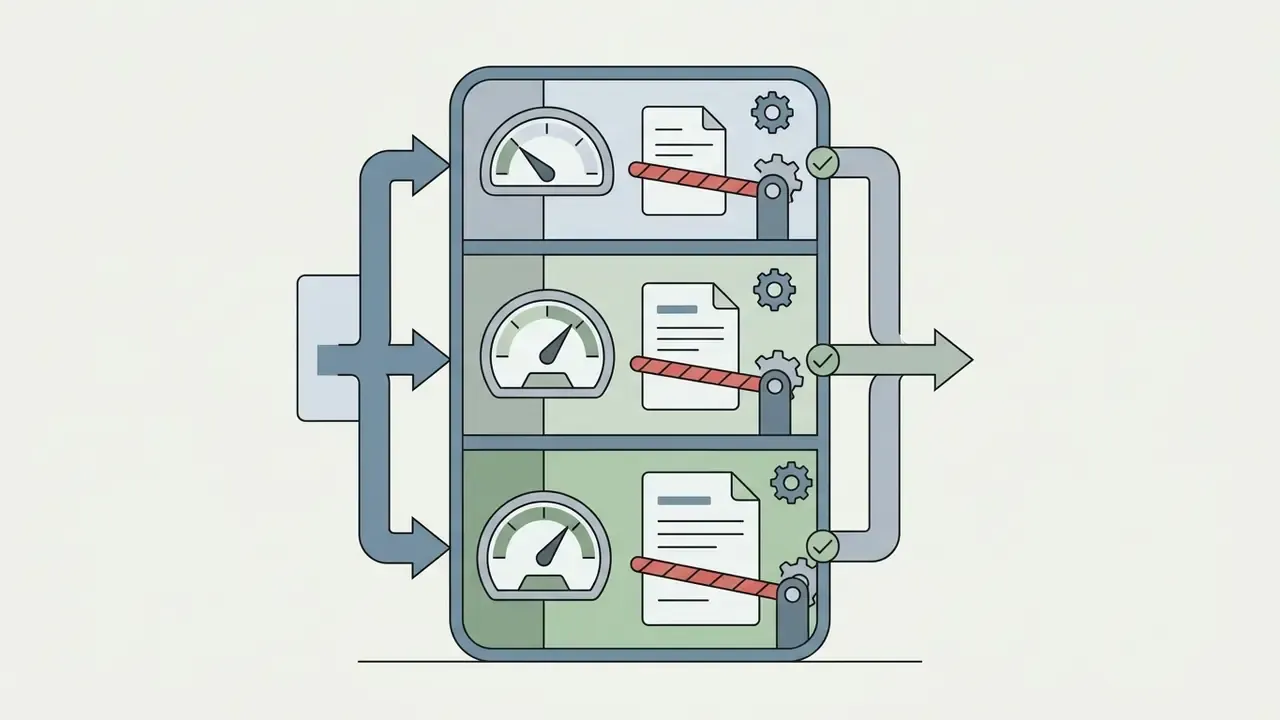
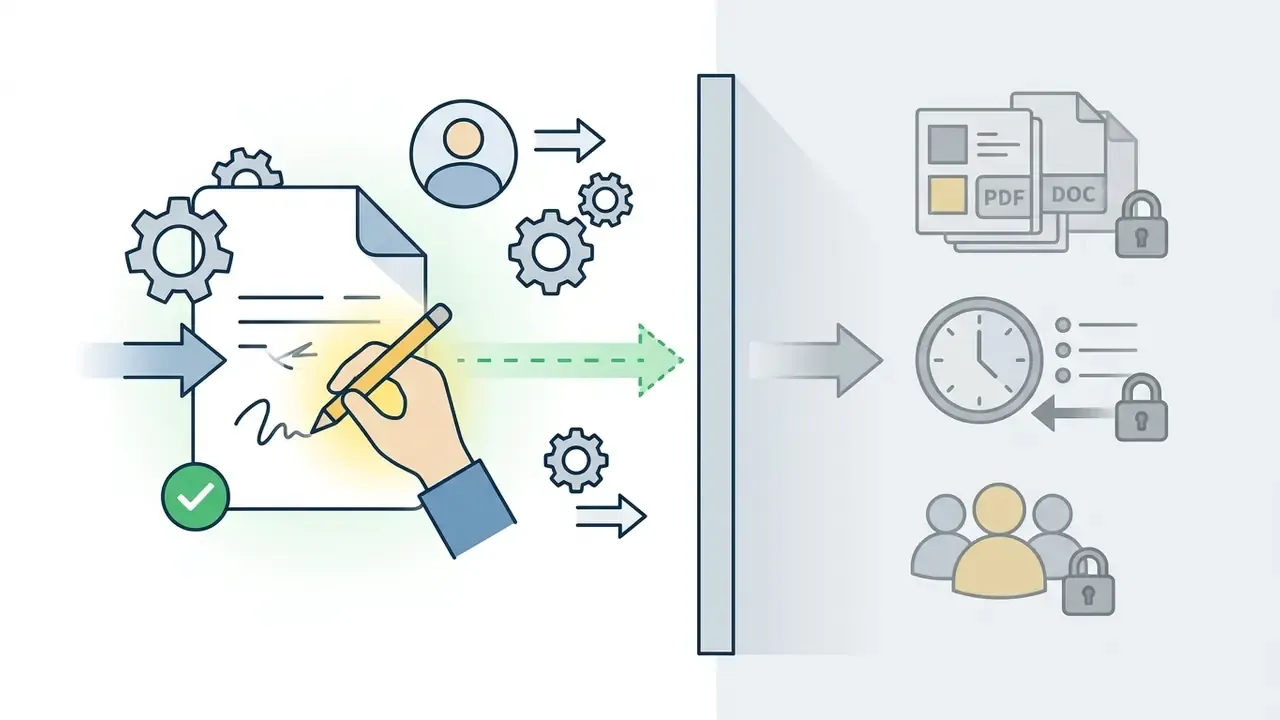
Public interfaces offering an ai text generator no sign in enforce boundaries without accounts: IP rate limiting, browser fingerprinting, reCAPTCHA challenges. Cloudflare network control documentation describes how edge servers throttle anonymous traffic by IP and, in advanced modes, by cookies, headers, country, path and fingerprints, mainly to stop bot scraping and denial-of-service overload.
Common restriction mechanisms include:
To model infrastructure costs for scaled text processing, engineering teams use the AI Media Calculators resource for token economics.

When "Unlimited" Requires an Account or Plan
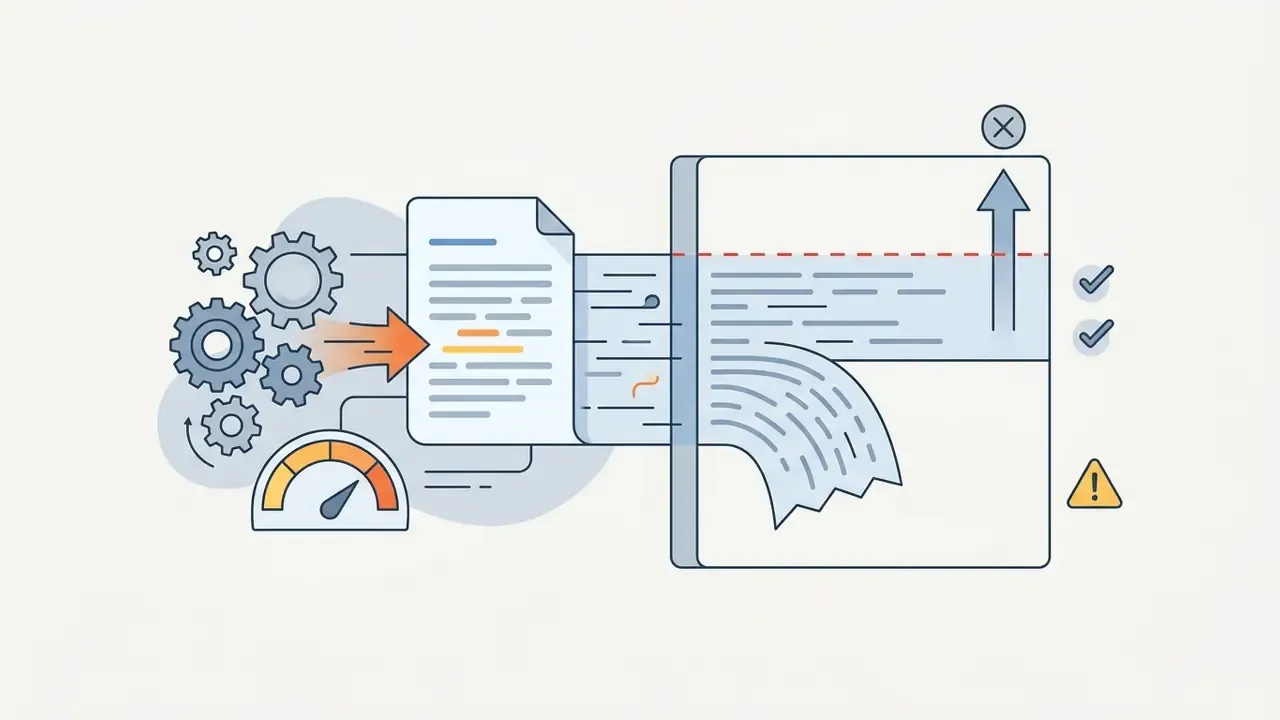
When a service advertises an ai text generator unlimited experience, unrestricted generation, faster processing and fine-tuning almost always sit behind registration or a paid subscription.
Vendor terms of service across major AI platforms show the same design: tier upgrades unlock dedicated compute. Consumer AI subscription onboarding requires sign-in to a personal account, acceptance of terms and a payment method before higher ceilings activate. In other words, "unlimited" lives behind identity and billing by design. Anonymous layers act as an introductory product demo. Once a user wants continuous document saving, a custom brand voice or high-volume generation, platform rules push authentication so the provider can handle billing, security compliance and abuse monitoring.
AI Text Generator With No Restrictions: Quality and Content Boundaries
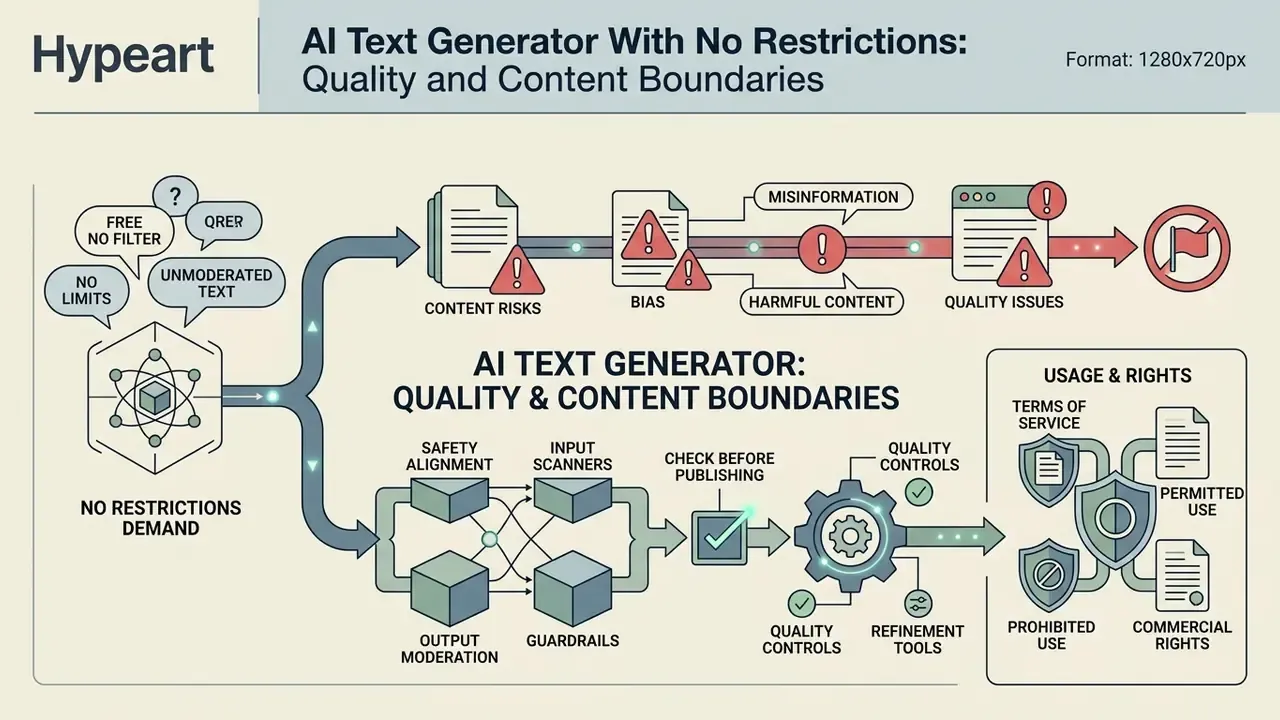
Queries such as ai text generator free no filter, ai text generator with no restrictions and ai writing generator no restrictions signal real demand for unmoderated language models. Technically and legally, though, a fully unrestricted public generator brings heavy operational, factual and safety exposure.
Models running without robust safety alignment or a system prompt can produce misleading claims, biased statements or offensive material. Unfiltered generation also raises hallucination risk, where the model presents plausible but fabricated facts, dates and citations as verified truth. The NIST Generative AI Profile sorts these exposures into data privacy, obscene or abusive content, and information-integrity failures. U.S. Department of Energy guidance adds accuracy, bias and hallucination as named risks that require provenance and versioning controls.
What "No Filter" and "No Restrictions" Usually Mean
In product positioning, "no filter" usually means relaxed content moderation around sensitive topics, creative themes or stylistic parameters. It describes a marketing posture and a product mode, not a legal status. Liability still follows the jurisdiction and the use case. Systematic safety research in the Jailbreaking Attacks vs. Content Safety Filters study (2025) shows that nearly all public web generators keep baseline filters at the input or output layer anyway.
«A comprehensive assessment of 17 jailbreak methods across eight LLMs found every model vulnerable, with maximum attack success rates reaching 0.88 even for well-aligned models such as Llama 3.»
Primary security boundaries include:
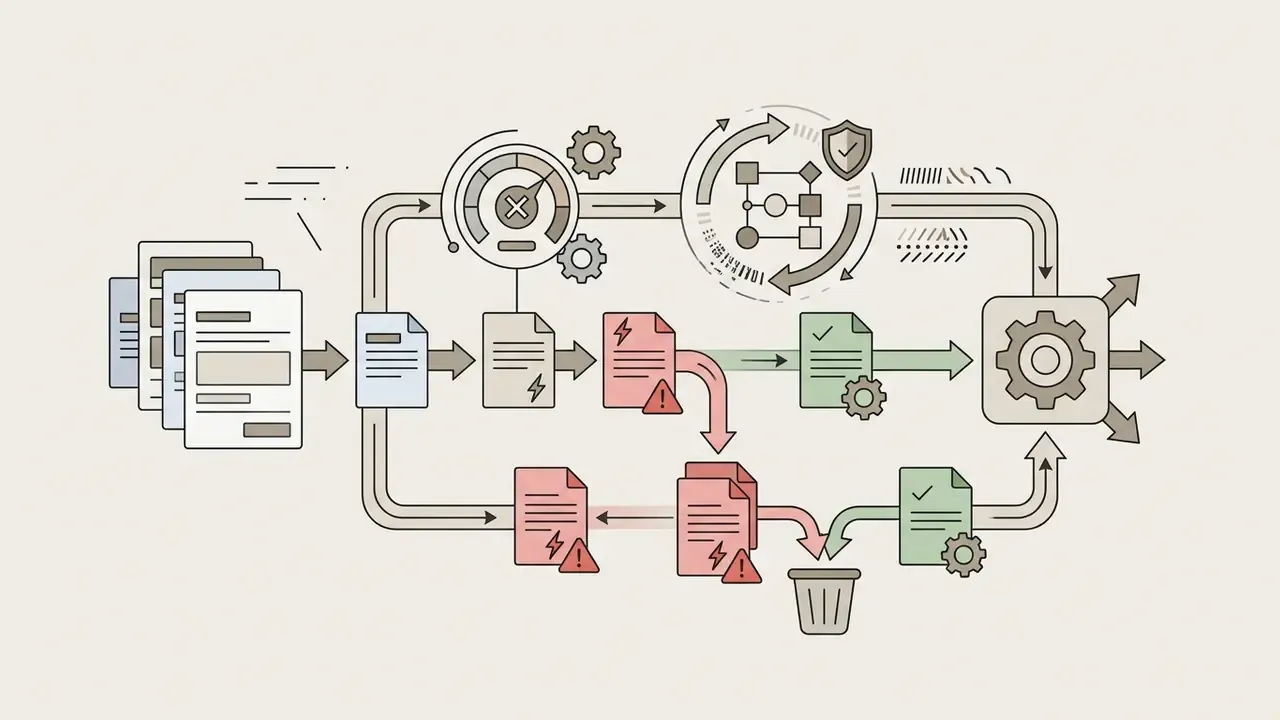
The governance conclusion is blunt. Neither a "no filter" claim nor a filtered default counts as a control. Residual jailbreak success rates leave human output review as the only dependable safeguard.
How to Check AI-Generated Text Before Publishing
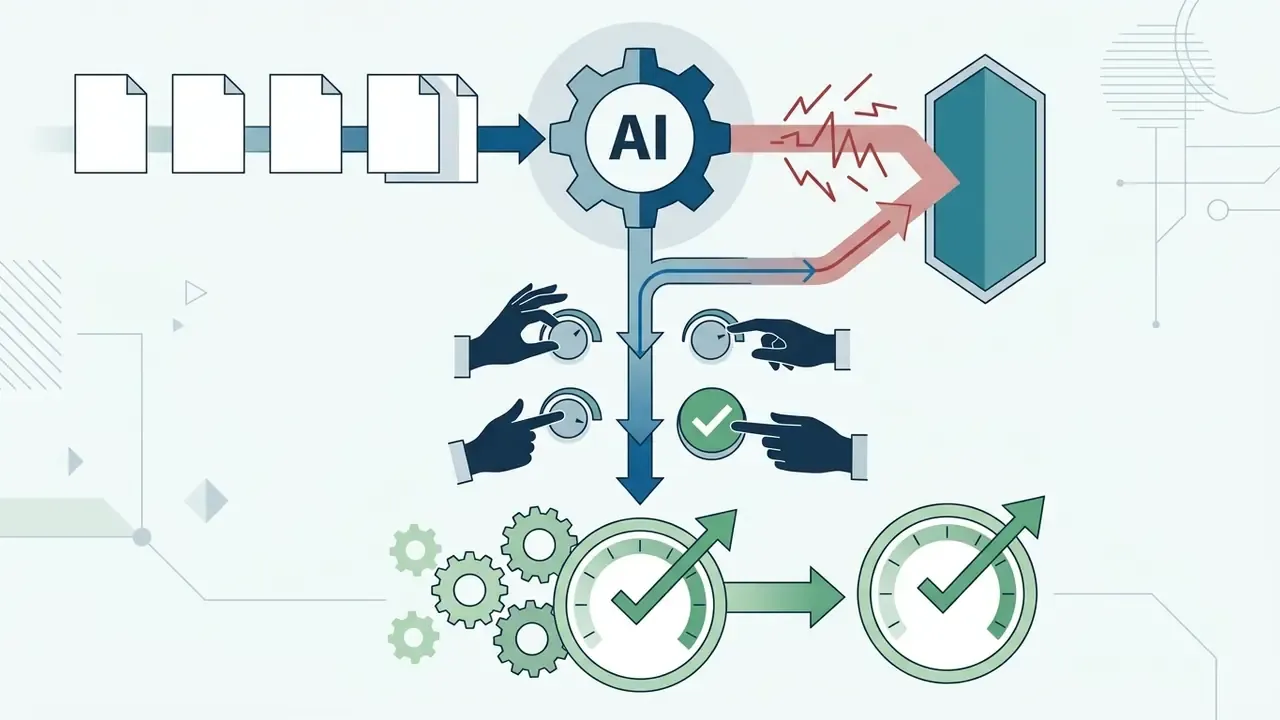
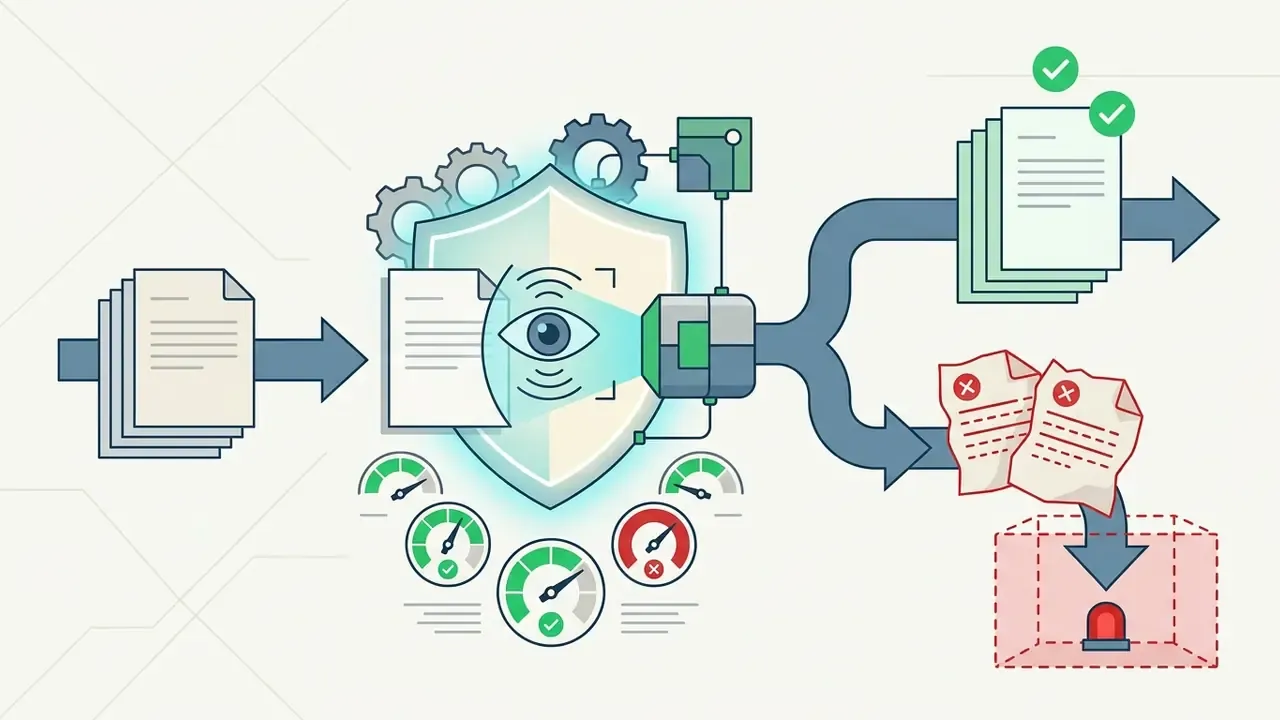
Before publishing anything an AI writer produced, content managers need a systematic editorial review covering factual integrity, tone and stylistic coherence. Guidelines from NIST (AI RMF 1.0) and academic institutions treat human verification as a mandatory safeguard against automated error propagation.
«WETBench found trained detectors reach 78% mean accuracy while zero-shot detectors reach only 58%; style transfer proved the hardest task to detect.»
Since automated detection performs at those levels, the controlling assurance step is human editorial verification, not a detector score. Teams screening visual assets as well can pair this workflow with AI image detectors for mixed-media publications.
A workable editorial review checklist:
| Action item | Risk mitigated | Verification method |
|---|---|---|
| Fact-checking dates, statistics, quotes, figures | Fabricated data published as fact | Match every number against an authoritative primary source; record the URL |
| Source verification of every citation | Hallucinated academic and legal references | Open each reference; confirm title, author, year, and that the claim appears in the text |
| Context and coherence review | Logical breaks, repetition, robotic transitions | Read aloud; check paragraph-to-paragraph argument flow |
| Brand tone verification | Off-voice or non-compliant register | Compare against institutional voice guidelines and the prohibited-phrase list |
| Regulatory and disclosure check | Missing AI-content labels where mandated | Apply EU AI Act Article 50 and internal disclosure policy tests |
| Confidentiality back-check | Sensitive data echoed into an anonymous tool | Confirm no PII, MNPI, client or contract data appeared in the prompt or attachment |
| Provenance capture | No defensible audit trail | Log tool, date, prompt summary and human edits in the review record |
Audit Trail Template for AI-Assisted Text
Shadow AI Guardrails: Permitted vs Prohibited Use of Anonymous Generators
Anonymous tools cannot be procured, contracted or audited. So control has to move to the level of use cases and data classes. The matrix below is written for direct hand-off to compliance and security.
| Scenario | Status | Rationale |
|---|---|---|
| Drafting a public blog outline from non-confidential, already-published information | Permitted | No sensitive input; output receives human editing and disclosure review |
| Rewording a generic marketing headline or social caption | Permitted | Low data sensitivity; commercial rights secured through human rewriting |
| Learning prompt technique in a personal sandbox with synthetic examples | Permitted | No corporate data enters the session |
| Summarizing a public regulator consultation paper | Permitted with verification | Citations and figures must be re-checked against the original document |
| Drafting internal policy or procedure text containing internal taxonomy | Restricted | Use governed enterprise tooling; anonymous tools lack retention guarantees |
| Any prompt containing PII, client identifiers, payroll or health data | Prohibited | Privacy exposure; privacy regulators explicitly warn against entering personal or sensitive data into public generative tools |
| Any prompt containing MNPI, deal data, unreleased financials or trade secrets | Prohibited | Market-abuse and trade-secret exposure; no confidentiality contract exists |
| Source code, security configurations, credentials, model parameters | Prohibited | Security exposure and IP leakage |
| Regulated customer communications, credit decisions, advice text | Prohibited | Requires documented, validated, auditable systems |
Uploading contracts, client files or board packs as .pdf/.docx attachments | Prohibited | File attachments carry the same exposure as pasted text, at greater volume |
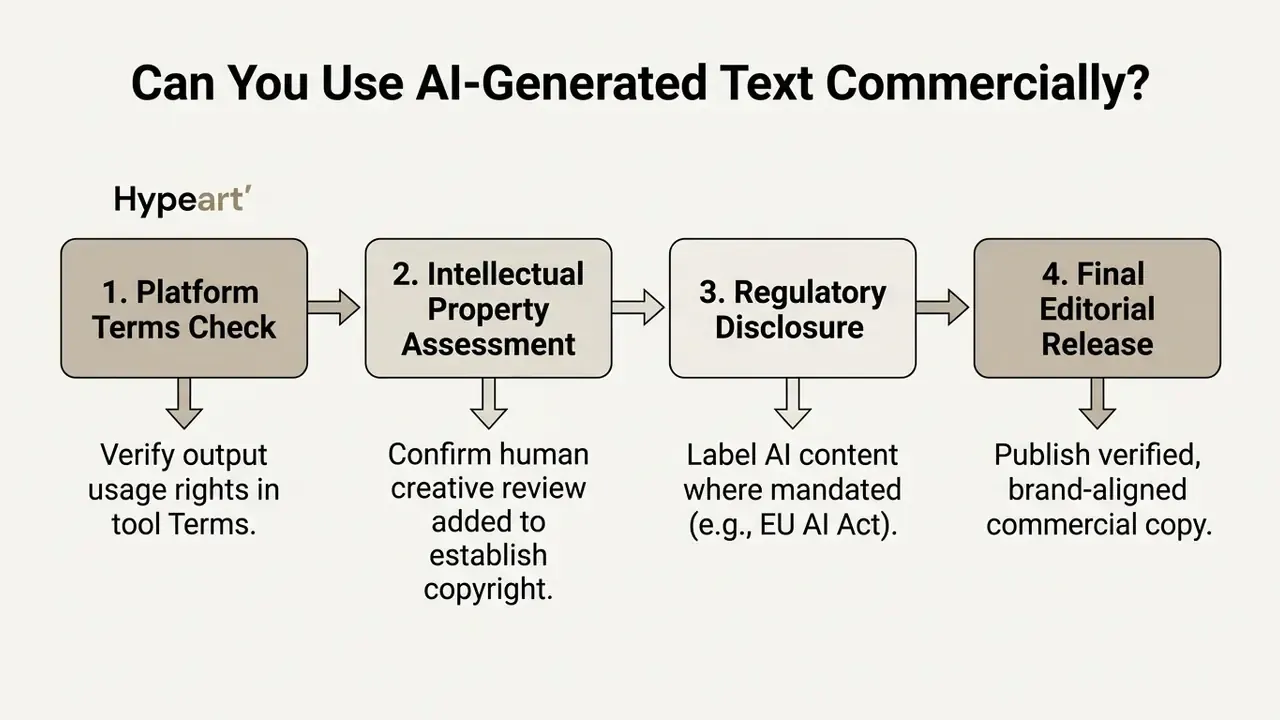
Can You Use AI-Generated Text Commercially?
Check Terms, Plans and Rights to Generated Content
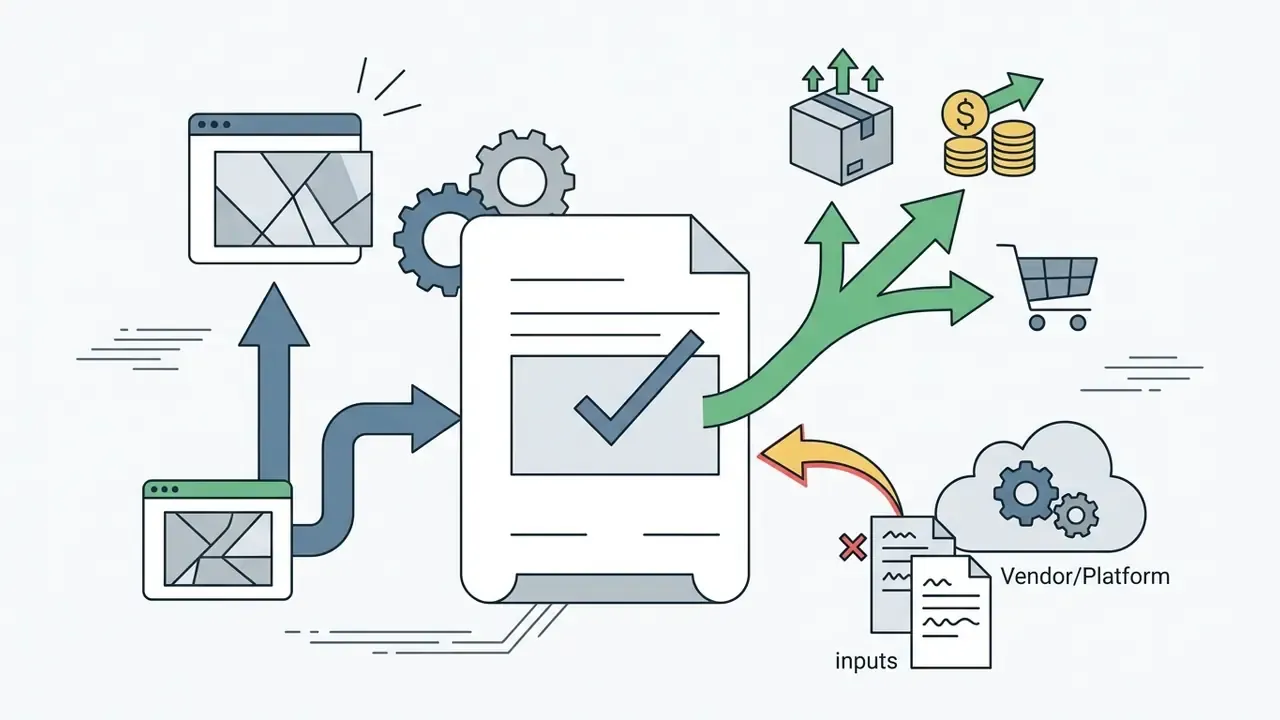
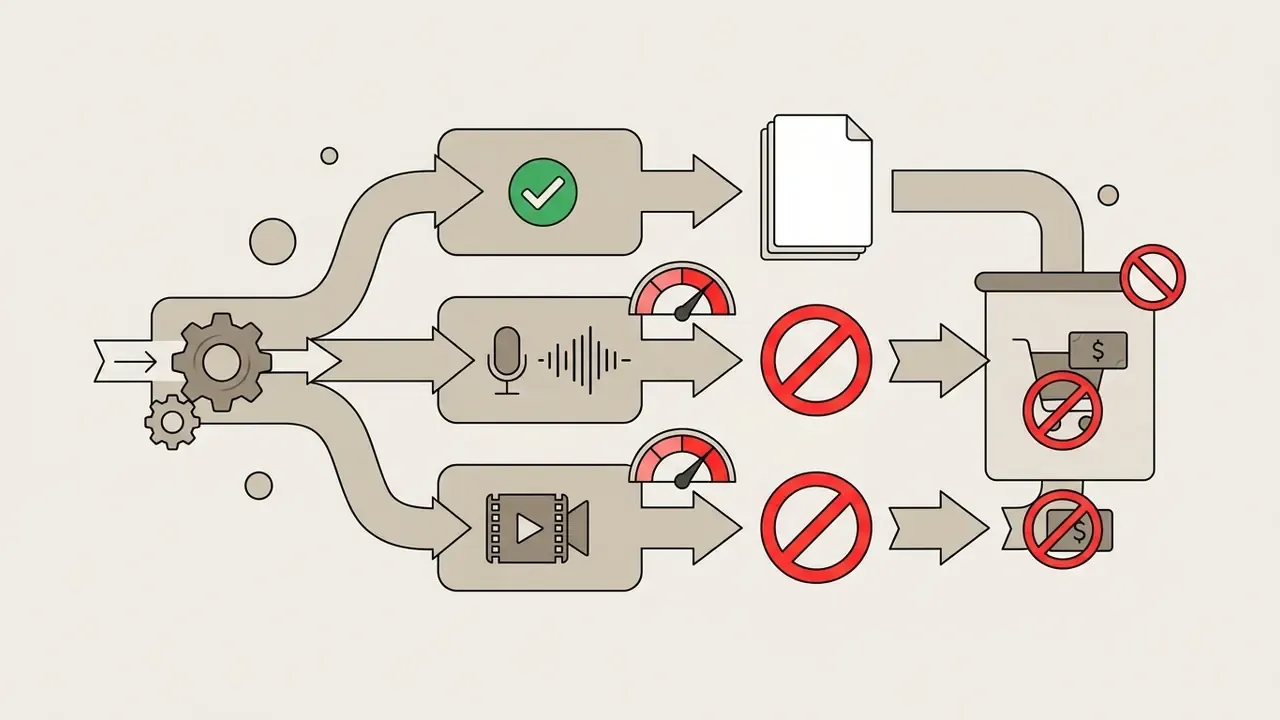
A platform's Terms of Use contractually define the commercial rights attached to generated text. OpenAI's Terms of Use, for example, assign output ownership to the user "to the extent permitted by applicable law." Other vendors go the other way: some website terms grant the operator an irrevocable, perpetual, worldwide licence to use and commercialize user-submitted content. Anonymous, non-account tools sometimes add clauses restricting commercial exploitation unless the user upgrades to a registered tier.
Key compliance considerations:

Add Human Review Before Using Text for Business
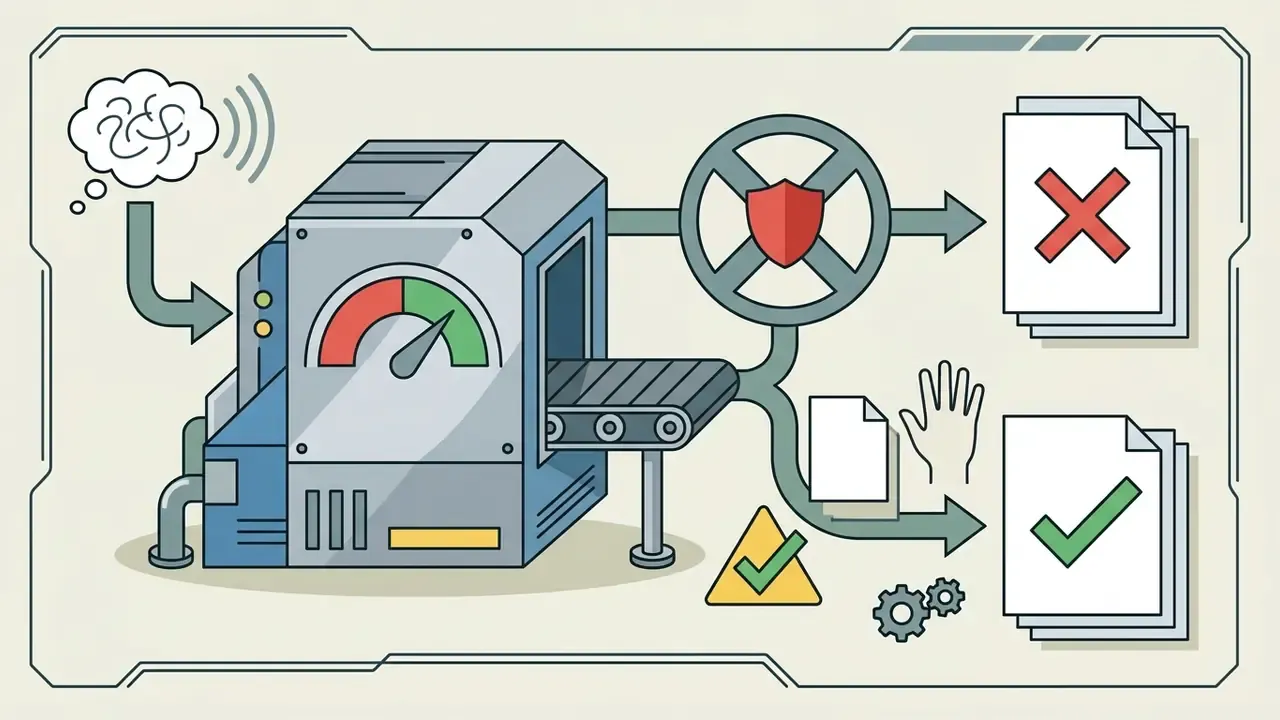
Human editorial oversight, often called human-in-the-loop review, is a hard requirement for commercial deployment. Article 50 of the EU AI Act requires that publicly published text intended to inform the public on matters of public interest disclose its synthetic origin, unless the content has undergone human editorial review and oversight. The disclosure obligation applies from 2 August 2026.
«In an Instagram content-marketing study of eSports teams, AI content matched human content on likes, but human content attracted a higher share of new followers.»
That asymmetry is instructive. Parity on surface metrics is not parity on audience growth, and the gap is exactly where human editorial judgment earns its keep.
In one illustrative rollout (composite, not a verified engagement), an enterprise fintech firm drafted promotional copy with an automated assistant. Before publishing, senior editors reviewed the material, added proprietary market survey data and rewrote the key value propositions. That intervention delivered compliance with transparency mandates and established enough original authorship to protect the final marketing copy under commercial copyright law. The review record also documented which passages were human-authored, which is the part auditors ask for later.
For broader guidance on licensing structures and commercial asset management, teams work from the centralized AI Media Commercial-Use Hub.
FAQ About Free AI Writing Generators Without Sign Up
Do Free Anonymous Generators Watermark Their Output?
Most public text generators embed no visible watermark and no hidden marker, so drafts can be copied, edited and downloaded freely. Absence of a watermark is not absence of detectability, though, and it certainly is not absence of disclosure duty. NIST's synthetic-content work promotes provenance and metadata approaches, and Article 50 obligations attach to the content's origin regardless of technical marking.
Are My Prompts Private on a No-Sign-Up Tool?
Anonymous access removes account identity. It does not remove network telemetry, server-side logging or model-improvement processing. Privacy regulators advise against entering personal information, and especially sensitive information, into publicly available generative AI products. Assume every prompt and attachment may be retained and reviewed, and route confidential work to a contracted enterprise environment instead.
Can I Use a Free Online Generator for Regulated Client Communications?
No, and this is the one answer worth reading twice. An ai text generator free online no sign up has no service contract, no validation record, no versioning, no owner and no escalation path. Customer-facing credit, advice or collections language belongs in a governed system with documented model risk controls, tested prompts, logged approvals and a shutdown mechanism. No evidence, no autonomy.
When Should I Choose a Specialized AI Writing Tool?
Specialized tools become necessary when the project demands strict data privacy controls, complex formatting templates, direct API integration or enterprise workflow governance. An anonymous best free ai writing generator no sign up is good at quick, lightweight drafting and poor at persistent memory, security certification and domain-specific data connectors. NIST guidance is explicit: users should select tools authorized by their organization's security and privacy team, and review retention, training-use and confidentiality terms before submitting sensitive input. Pick a specialized platform when you are:
- Handling confidential data: proprietary business records or regulated personal information that requires SOC 2 or HIPAA protections.
- Producing complex formats: structured long-form publications built with tools such as an ai document generator or an ai ebook generator.
- Integrating systems: wiring text generation into automated enterprise publishing pipelines with a custom api key.
- Documenting compliance: meeting EU AI Act technical documentation expectations, including system description, lifecycle change log, applied standards, conformity declaration and post-market performance monitoring.
- Creating mixed media: combining text with visual production tools, such as an ai editing software suite, an AI photo editor, an ai doll generator, an ai dog pictures generator, or an interactive ai draw me canvas. For platform documentation, troubleshooting help and usage rules, teams use the AI Media Support and Troubleshooting platform.
Company Verification Notice
Vendor identity underpins every contractual and privacy assurance discussed above, so our editorial process verifies the legal existence of each named provider before recommending it. One query in this cycle failed the check. Company query: Hypeart.ai As of August 2026, domain resolution and legal registry lookup for Hypeart.ai return no verified active record. No verified information is available regarding official company status, product catalogs or commercial US footprint. All operational scenarios described here are hypothetical analytical evaluations.
Appendix A: Superseded Source Attributions
Retained for editorial transparency. The formulations below appeared in an earlier version of this article and have been replaced in the main text with verifiable, cited evidence.
Explore industry terminology and technical definitions in the AI Media Glossary.
- "Research published in Meta AI documentation (2026) confirms that explicitly specifying target audience demographics and tone parameters removes ambiguity in language model token selection, directly aligning the output's stylistic perspective with institutional expectations." Superseded: vendor documentation is not peer-reviewed evidence and carried no methodology, figures or URL. Replaced by the SSRN graduate-writing study (2024).
- "Academic studies from Wharton (2024–2026) show that incorporating generative assistants into business communication workflows improves message clarity and drafting speed." Superseded: attribution unverifiable without a specific paper or URL. Replaced by Carnegie Mellon University, Heinz College (2024).
- "Empirical research on content marketing published on SSRN (2024) indicates that structured AI-generated content outlines can increase downstream reader engagement and search precision by providing clear topic frameworks." Superseded: general paraphrase without figures. Replaced by the direct finding and URL from the SSRN persuasion study (2024).
- "Studies evaluating next-phrase prediction and constrained text infilling show that language models achieve over 90% top-k prediction accuracy when suggesting contextually relevant sentence completions." Superseded: single unsourced aggregate figure. Replaced by task-specific reported results with an explicit non-comparability caveat.
- "While the initial draft reduced overall writing time by over 60%, internal auditors identified three factual inconsistencies in regulatory citations." Superseded: unattributable anonymous case metrics. Reframed as an explicitly hypothetical governance scenario anchored to published productivity research.