The short version
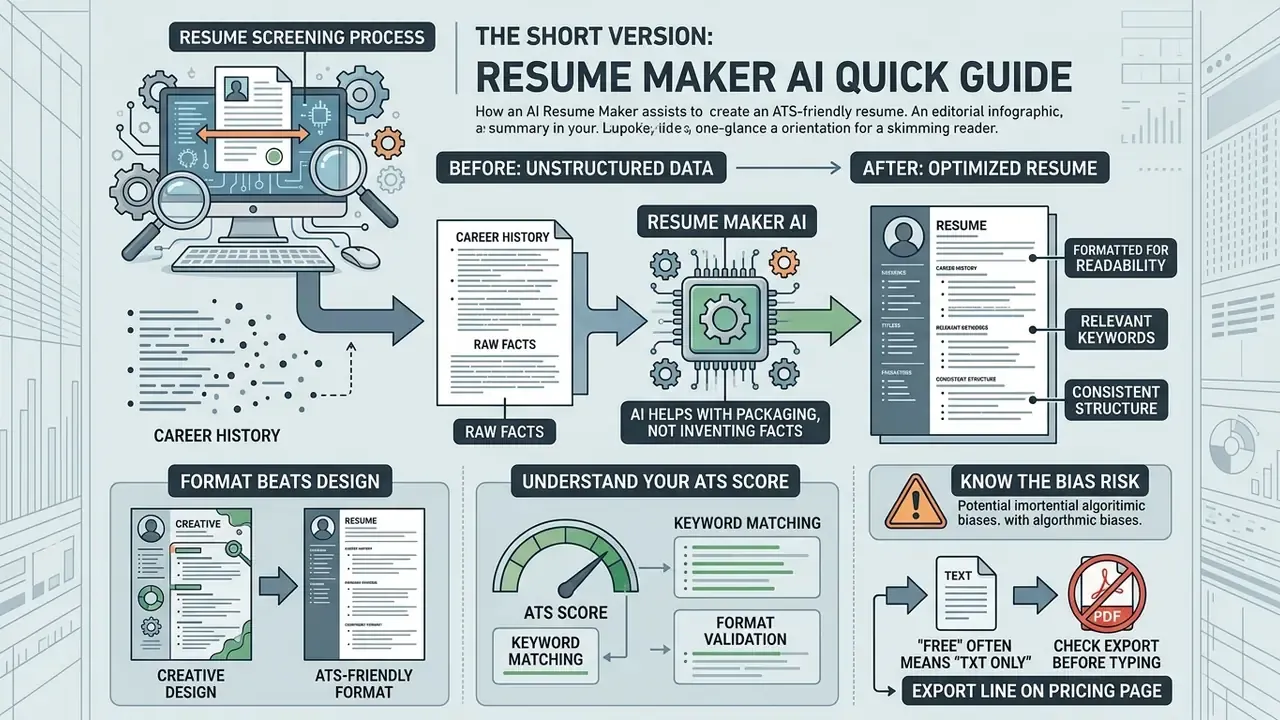
- The first reader of your resume is software. Applicant Tracking Systems (ATS) and LLM-based screeners process up to 75% of incoming resumes before a human ever opens the file. Research on the AI Resume Builder and Analyzer system reports that roughly 75% of resumes are rejected because of formatting problems or weak keyword optimization. Source: AI Resume Builder and Analyzer, IJMRSET (2026). https://www.ijmrset.com
- AI helps most with packaging, not with inventing facts. Grammar cleanup and rephrasing measurably lift hiring odds; fabricated metrics get you rejected in the interview.
- Format beats design. A single-column, text-selectable
.docxor text-based PDF is the only reliably parseable output. Image-only PDFs score 0% readability. - Understand your ATS score. Modern tools break it into four auditable components: Content, Format, Optimization, Best Practices.
- Know the bias risk. Peer-reviewed audits show LLM screeners are not neutral, which is a reason to use plain, blind-friendly resume structures.
- "Free" often means "TXT only." Check the export line on the pricing page before you spend 30 minutes typing your career history into a form.
A quick orientation before you read on. The guide moves from definitions to the free build process, then to data hygiene, then ATS mechanics, templates by seniority, vendor comparison, pricing tiers and finally short answers. If you only have five minutes, read the ATS score table and the privacy checklist. Those two blocks prevent the most expensive mistakes: a document no parser can read, and a resume full of employer-confidential numbers sitting on someone else's server.
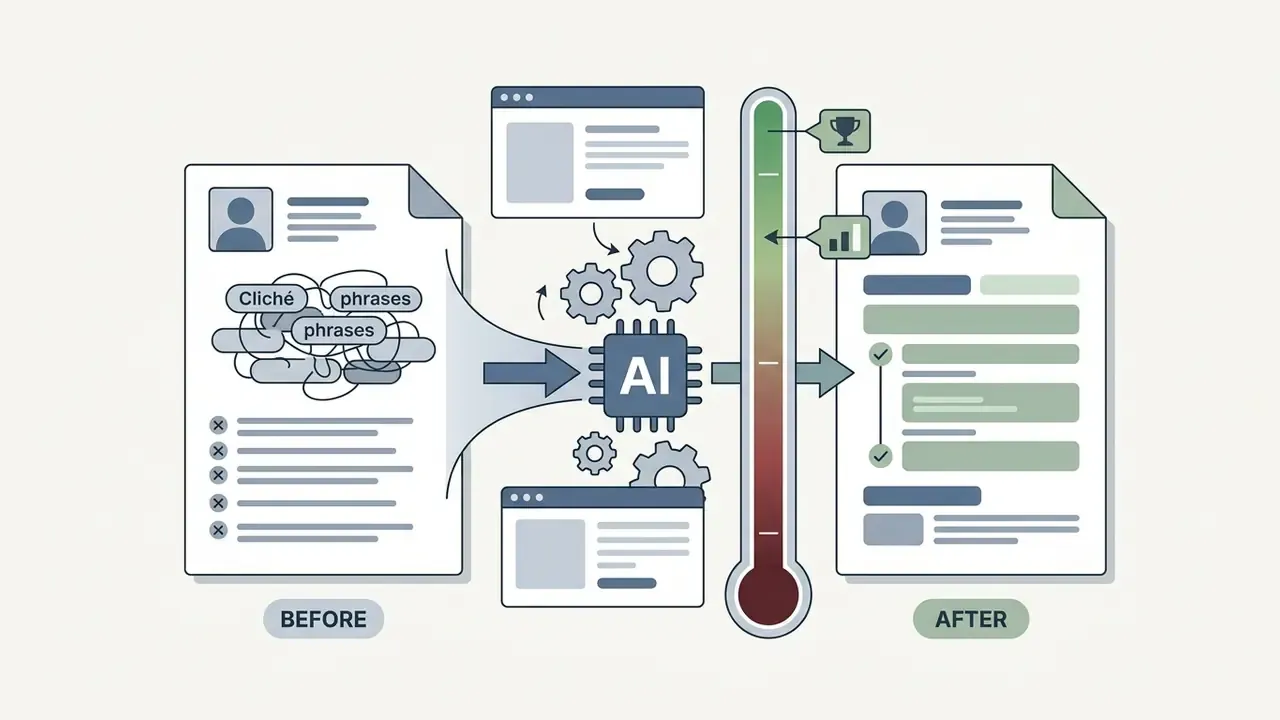
In modern hiring, the technology stack of first-round screening has changed fundamentally. Applicant Tracking Systems (ATS) and algorithms built on large language models (LLMs) process up to 75% of incoming resumes before the document ever reaches a recruiter. That figure is not marketing folklore: research into automated resume analysis reports that around three quarters of resumes are filtered out because of layout problems or insufficient keyword optimization. Source: AI Resume Builder and Analyzer, IJMRSET (2026). https://www.ijmrset.com
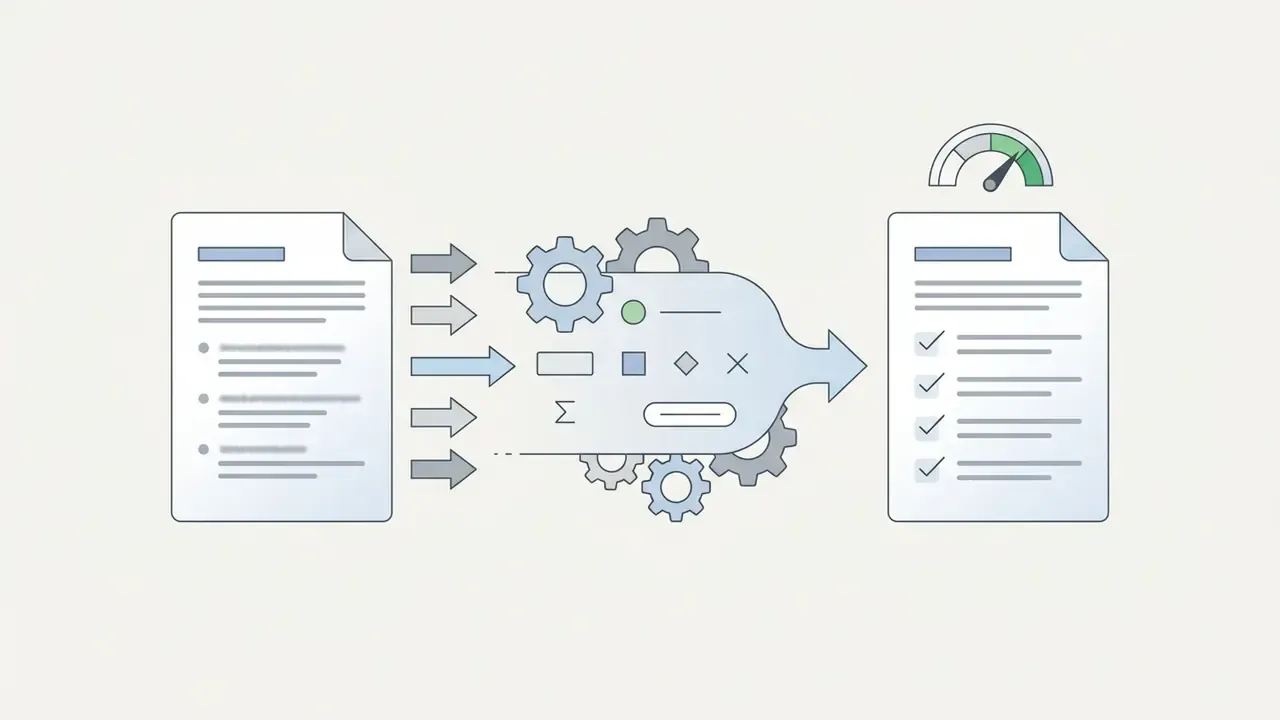
Using a dedicated resume maker AI lets candidates convert unstructured career history into a machine-readable, relevant and properly structured document, without hiring a resume writer.
1. What resume maker AI is and how it helps you create a resume
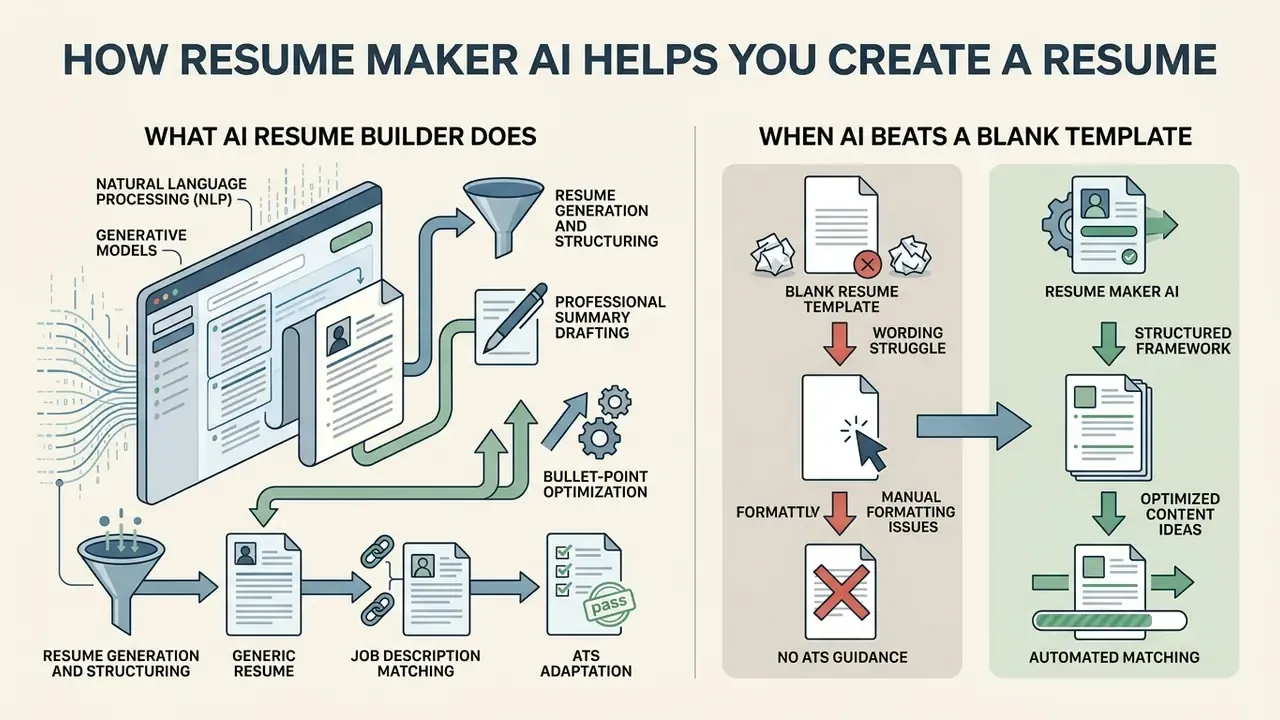
Resume maker AI is an interactive software platform built on natural language processing (NLP) and generative models. It collects, formats and optimizes a resume against employer expectations and ATS parsing rules. Unlike a static file, an AI resume builder analyses the structure of your text, proposes relevant skills, reframes responsibilities as measurable results and supports a systematic job search rather than a one-off document.
Algorithmic assistance compresses the time needed to create a resume from hours to minutes while keeping the document inside industry-standard conventions. Its core job is turning non-quantified duty lists into concrete, evidence-based statements.
1.1 What an AI resume builder actually does
A modern free AI resume creator, and its commercial equivalents, covers the full document-preparation cycle:
- Resume generation and structuring automatic distribution of information across sections (Experience, Education, Skills, Summary).
- Professional summary drafting a short positioning statement built from your key skills and career target.
- Bullet-point optimization rewriting duties as achievements using action verbs and quantified outcomes.
- Job description matching parsing the vacancy text and surfacing missing keywords to raise the job-match score.
- ATS adaptation verifying parser readability and enforcing a single-column structure.
«The system reaches roughly 85% resume-classification accuracy and improves the ATS score by 20–25 percentage points after optimization.»
The same research reports that automated pre-processing cuts recruiter handling time for a first-pass review by close to 70%.
Vendor documentation from 2025 and 2026 converges on the same four functions: JD-based tailoring, auto-generated summaries, skill and experience suggestions, and bullet-point generation. In other words, the market has standardized. The differences between tools now sit in depth, export rights and privacy terms, not in the feature list. If you want a structured way to compare software categories before committing, the AI Media Comparison Matrices hub explains the evaluation logic we use across tool reviews.
1.2 When an AI resume maker beats a blank resume template
An AI resume maker outperforms filling in a blank template whenever the task requires deep content adaptation to a specific role rather than cosmetic layout work.
A static resume template, or the default builder in MS Word, gives you a rigid frame and a set of placeholders like [Your Name] and [Company Name]. Everything else is manual. An AI assistant, by contrast, reads existing resume examples, extracts the strongest formulations and re-aligns your experience with the semantic core of a particular vacancy. That removes the blank-page problem and prevents the classic formatting mistakes that break parsers.
The practical 2026 pattern is simple: generate with AI, verify manually, export as selectable text.
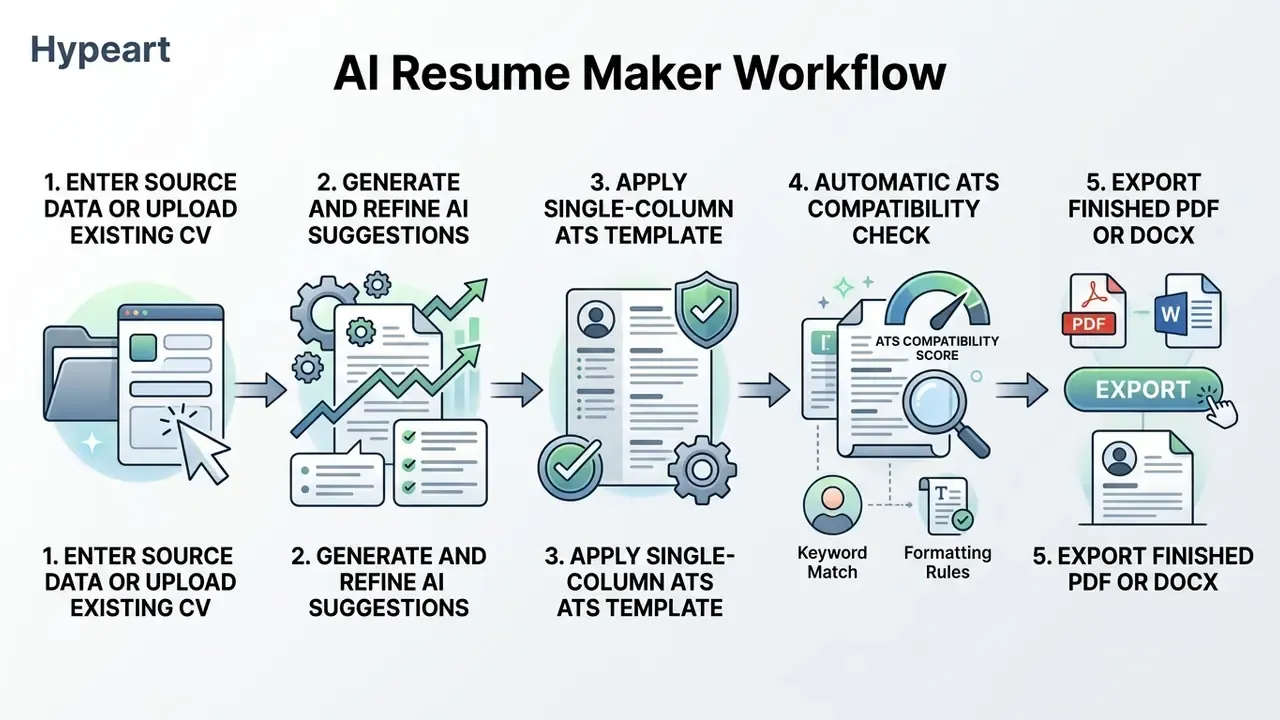
2. How to create a resume with AI for free: the step-by-step process
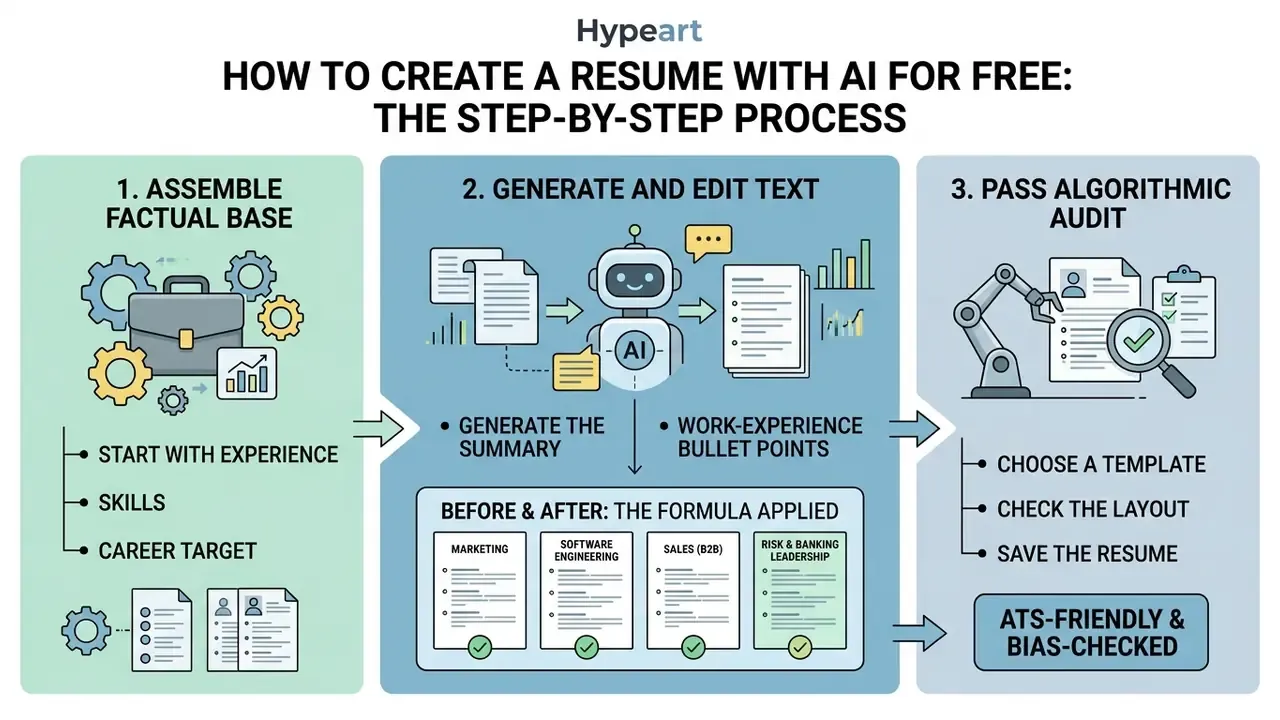
To build a professional resume with AI at no cost, you move through a chain of stages: assembling the factual base, generating and editing text, then passing an algorithmic audit. Tools in the "create a resume free with AI" category let most users assemble a complete document in a single sitting. Vendors advertise "minutes," and in our editorial testing a first draft typically takes one focused session, though no independent study currently quantifies average completion time, so treat vendor claims as marketing rather than data.
The one non-negotiable rule: you keep full control over factual accuracy. The algorithm optimizes phrasing; the candidate owns the facts.
2.1 Start with experience, skills and a career target
The first step in any free AI resume generator is entering your employment history in reverse-chronological order.
List official job titles, employers, dates and core responsibilities. In the skills block, separate hard skills (programming languages, financial modelling, regulatory frameworks) from soft skills. For a career objective or profile, candidates with limited experience should lead with relevant education and academic projects. University career-center guidance is consistent here: an objective is optional and should never exceed about three lines, while a skills summary works best at four to eight bullet points.
Structural best practice per experience entry: organization, position title, dates, then two to four bullets covering duties, scope and results.
2.2 Generate the summary and work-experience bullet points
A built-in AI resume writer uses specialized prompts to convert flat duty statements into compact achievement claims.
When generating bullet points, the algorithms follow one formula: action verb + context or task + measurable result. Career-center guidance says the same thing in plain language. A bullet should answer what you did, how you did it, and what changed as a result, with three to five bullets per role.
The payoff is measurable. Labour-market research found that algorithmic writing assistance materially improves outcomes:
«Job seekers with AI-assisted resumes secured 7.8% more contracts, an 8% higher hiring probability, and 8.4% higher offered wages, with no drop in employer satisfaction.»
The same paper isolates a detail most candidates ignore:
«Applicants with spelling accuracy above 99% were hired nearly three times more often than those below 90%.»
That single finding is the strongest practical argument for running any resume, AI-written or not, through a proofreading pass. Two minutes of spellcheck against a tripled hiring rate. Not a hard trade.
Before and after: the formula applied
Marketing
- Before (weak): Responsible for managing social media accounts and creating content.
- After (AI-optimized): Grew Instagram engagement by 47% in six months by building a data-driven content calendar and A/B testing post formats across three platforms.
Software engineering
- Before (weak): Refactored code and fixed bugs in the service.
- After (AI-optimized): Cut page load time by 35% by rewriting critical components in React and optimizing the heaviest SQL queries.
Sales (B2B)
- Before (weak): Talked to clients and met the sales plan.
- After (AI-optimized): Delivered 140% of quota by closing 12 enterprise deals with $50k+ average contract value using SPIN methodology.
Risk and banking leadership
- Before (weak): Oversaw model risk and reported to committees.
- After (AI-optimized): Reduced open model-validation findings by 62% across a 140-model inventory and brought the framework into documented alignment with SR 11-7 and the NIST AI Risk Management Framework.
Notice the pattern: the "after" version is auditable. Every number is something you can defend when an interviewer asks, "walk me through that."
2.3 Choose a template, check the layout and save the resume
For reliable parsing, pick a simple single-column layout with no decorative elements, tables or embedded charts.
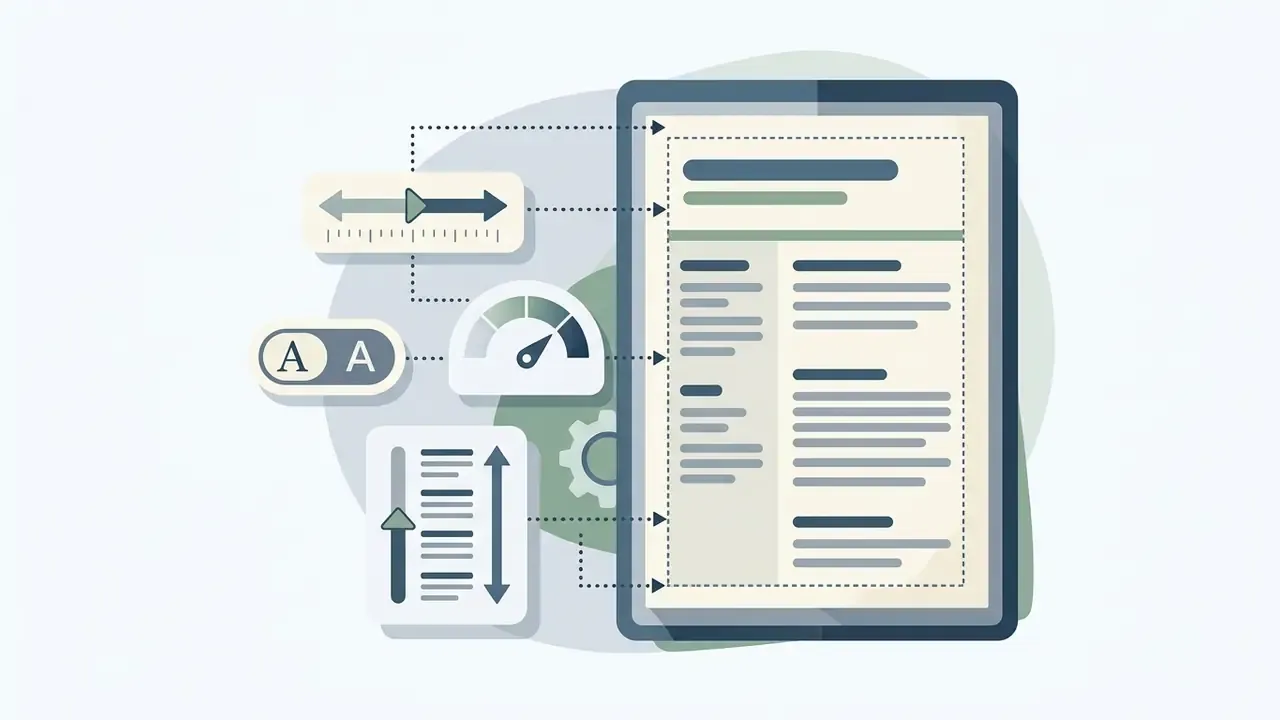
Before you download the finished document, confirm the sections run sequentially: Summary → Experience → Education → Skills. The safest export formats are .docx or a text-based .pdf whose text you can select with the mouse. Official U.S. and university guidance converges on 1 to 2 pages, roughly one-inch margins, left alignment, 10 to 12 pt body text and 14 pt or larger section headers.
If you later reuse resume content in commercial materials, such as portfolio sites, pitch decks or personal branding assets, the AI Media Commercial-Use Hub documents licensing standards for AI-generated content in corporate environments. The same applies if you package your career story into a longer format with an ai ebook generator: licence terms for generated text differ from licence terms for generated images.
3. Data hygiene, privacy and quality control before you upload anything
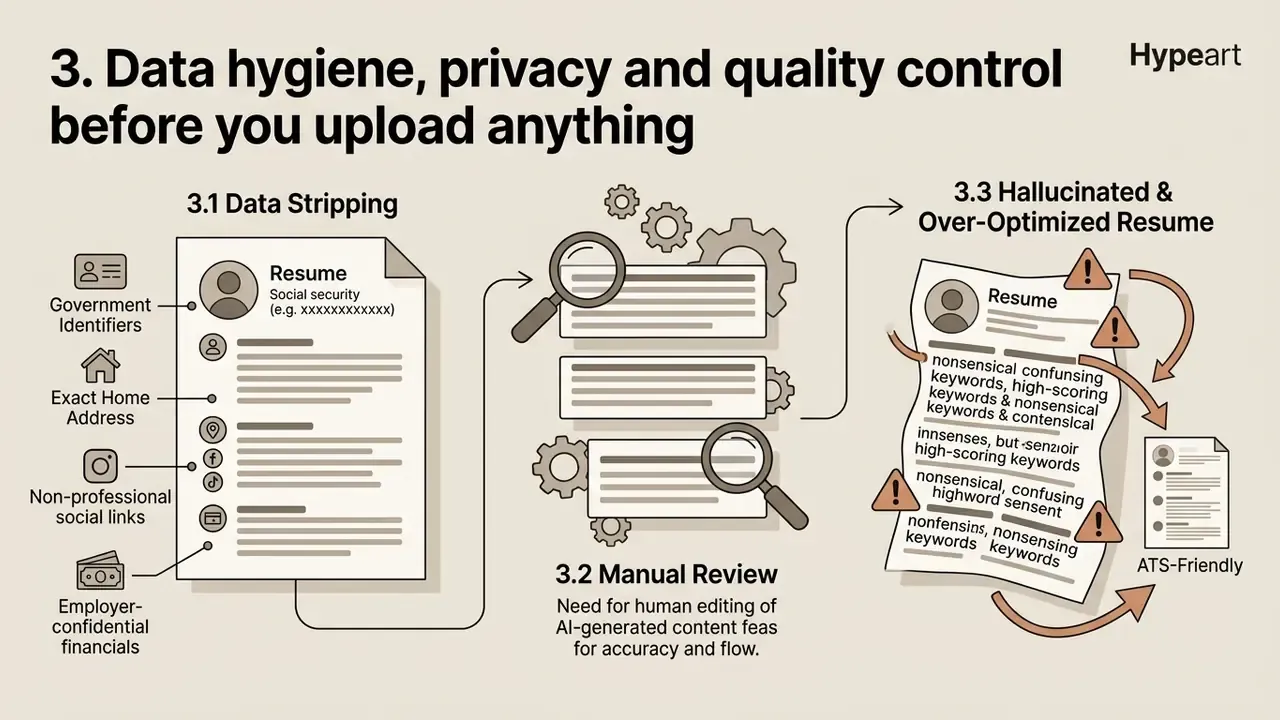
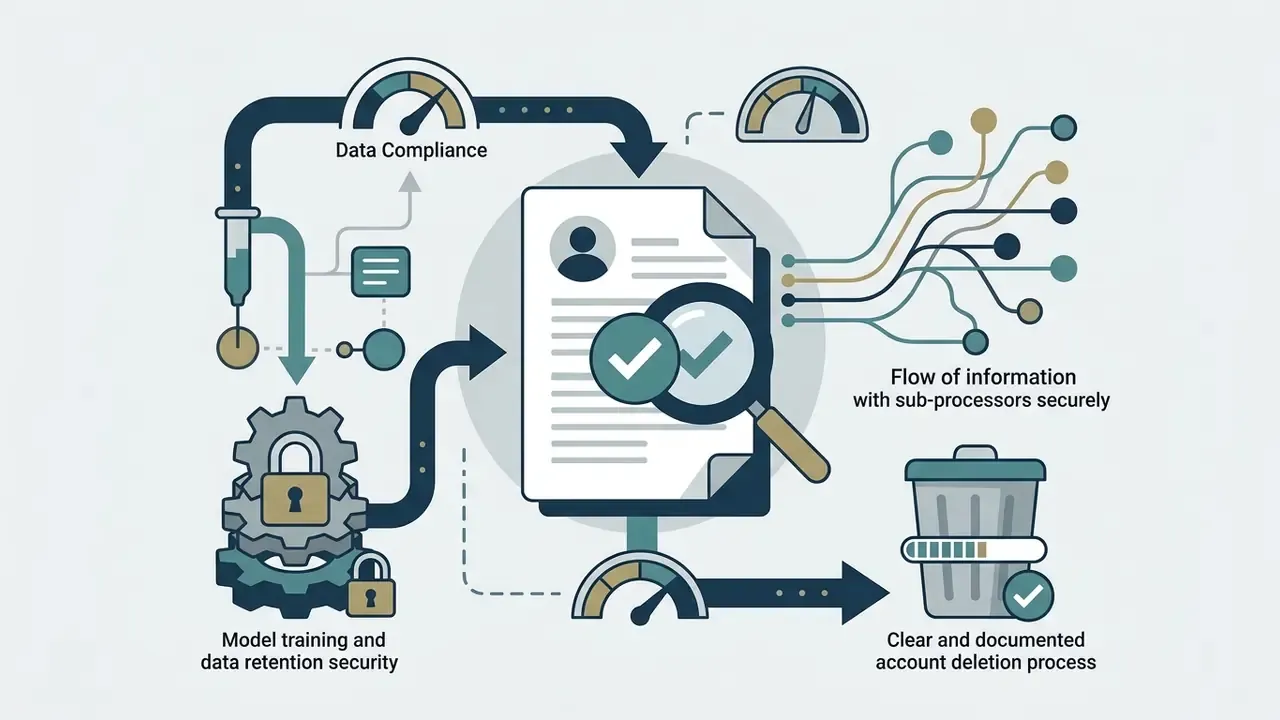
Read this section before you paste a resume into a browser window. Online generators transmit personal information to third-party servers and introduce algorithmic distortion risk. Candidates need digital hygiene when handling an existing resume and a critical eye on generated content.
Regulators already treat this as a data-protection matter. Australia's OAIC guidance on commercially available AI products (2024) states that hallucinations about an identified or reasonably identifiable individual constitute personal information under the Australian Privacy Principles. The UK ICO's recruitment guidance (2025) requires employers to tell candidates how AI tools process their personal information.
That last point deserves a sentence more, because it is where careers get damaged. In regulated institutions, pasting a resume that lists client names, deal terms or model inventory details into an unapproved consumer tool can trigger an information-security incident, not just an HR conversation. Assume your bank's data-loss prevention stack logs the upload. Write the resume from a sanitized personal copy instead.
3.1 What to strip from your existing resume before uploading
Before you upload a live resume to an AI CV maker website, remove sensitive personal information (PII):
Then read the privacy policy for four specific things:
- Whether your resume text is sent to an external model provider (OpenAI, Anthropic, Gemini) for generation.
- Whether that provider is contractually barred from training on your data, and whether an opt-out exists.
- Whether the original uploaded file is processed in memory and discarded, or persisted alongside AI usage logs.
- Whether the vendor publishes a security posture (SOC 2 Type II, ISO 27001) and a deletion path for your account data.
- Government identifierspassport numbers, national insurance, social security or tax IDs.
- Exact home addresscity plus relocation availability is sufficient.
- Non-professional social linksanything unrelated to the role.
- Employer-confidential financialsrevenue figures, client names, deal terms or model inventories covered by commercial confidentiality or banking secrecy.
Published vendor policies differ sharply on these points. Some state that uploaded files are processed in memory and never persisted, while others retain resumes, exports and AI usage logs indefinitely and share them with sub-processors "as needed." A third group explicitly states that uploading special-category data constitutes consent to process it. Read the paragraph, not the badge on the landing page.
For engineering teams automating candidate-data processing at scale, the AI Media API Guides cover implementation patterns, rate limits and cost models for provider APIs.
3.2 Why AI-generated content needs manual editing
The primary generative-AI risk is hallucination plus generic, non-differentiated prose.
Research into LLM self-preference shows that AI screeners are not neutral judges of AI writing:
«LLM screening systems preferred AI-generated resume text with 67–82% probability, even when content quality was held constant.»
«Candidates using the same AI system as the employer gained a 23–60% higher chance of being shortlisted.» Source: Xu, Li and Jiang, UMD Smith School working preprint (2024). https://rhsmith.umd.edu
The catch: a human recruiter instantly recognizes template clichés, things like "seasoned professional," "results-driven leader," "out-of-the-box thinker." Optimizing for the machine while alienating the human is a losing trade.
Always verify generated statements against reality. If the AI credits you with managing a $5M budget that never existed, delete it. If a tool invents a certification, remove it. Practical post-editing focuses on four things: factual verification, removal of demographic markers, alignment of skills to the actual job description, and rewriting generic phrasing into a consistent personal voice. For platform-specific problems during export or account deletion, see AI Media Support and Troubleshooting.
3.3 Counter-example: what a hallucinated, over-optimized AI resume looks like
This is the version that gets binned by a risk-aware hiring manager in under fifteen seconds:
Four red flags, all typical of unedited generation:
Fixed version: "Built the AI model-risk governance framework for a 140-model inventory across three business lines; reduced open validation findings by 62% in 18 months and passed a regulatory examination with no matters requiring attention."
Same career. Different level of evidence. That is the whole edit.

3.4 Algorithmic bias risk in AI screening
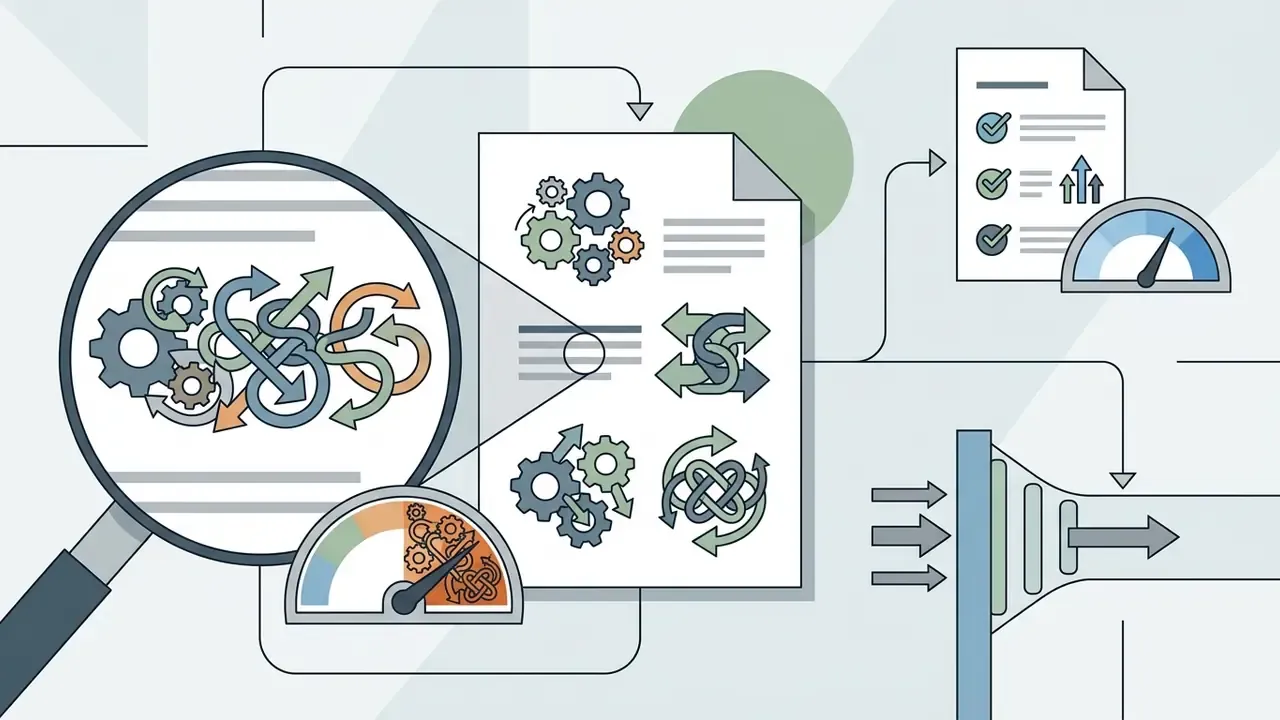
Generative and retrieval models carry measurable implicit bias, and candidates should factor that into how they format documents.
«LLMs favored white-associated names 85% of the time when ranking resumes, and never favored Black male-associated names over white male-associated names.»
«MTE retrieval models preferred names associated with white candidates in 85.1% of cases; Black male candidates were disadvantaged in up to 100% of intersectional comparisons.» Source: Wilson and Caliskan, Gender, Race, and Intersectional Bias in Resume Screening via LLM Retrieval, arXiv (2024). https://arxiv.org/
«An audit of 14 LLMs found GPT-3.5-turbo favored resumes with white-associated names by 2.12 percentage points; models released from 2024 onward show a different, sometimes inverted pattern.» Source: Can LLMs Hire Fairly? Racial Bias in Resume Screening, arXiv (2026). https://arxiv.org/
«Newer LLMs reduced explicit gender and racial bias but retain significant implicit bias based on a candidate's educational background.» Source: Fairness and Bias in LLMs for Job–Resume Matching, arXiv (2025). https://arxiv.org/
Practical mitigation. When applying to international employers, prefer a blind-resume structure: omit gender, age, marital status and photographs; keep professional profile links neutral; and avoid decorative elements that force a parser into guesswork. You cannot audit an employer's model. You can remove the fields it is most likely to misuse. Regulatory pressure on that gap is still forming, and the pending cases are tracked in AI Litigation and Case Timelines.
4. How to make an AI resume ATS-friendly for your job search
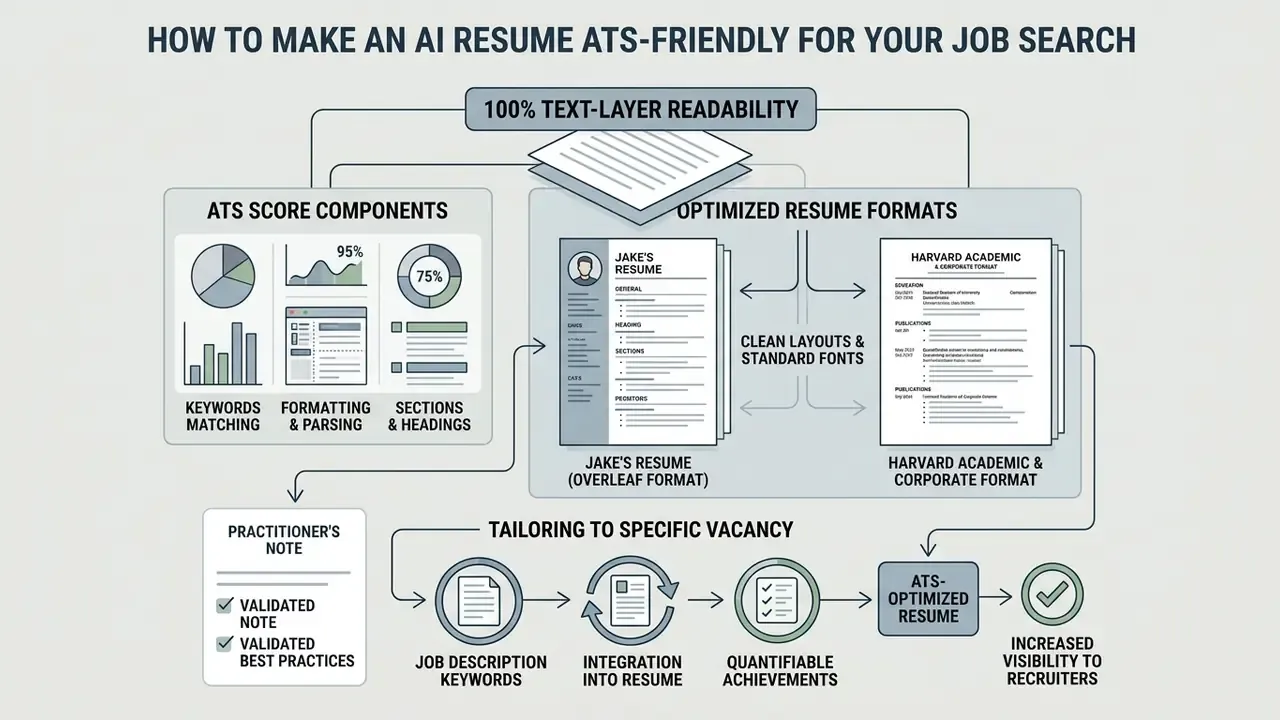
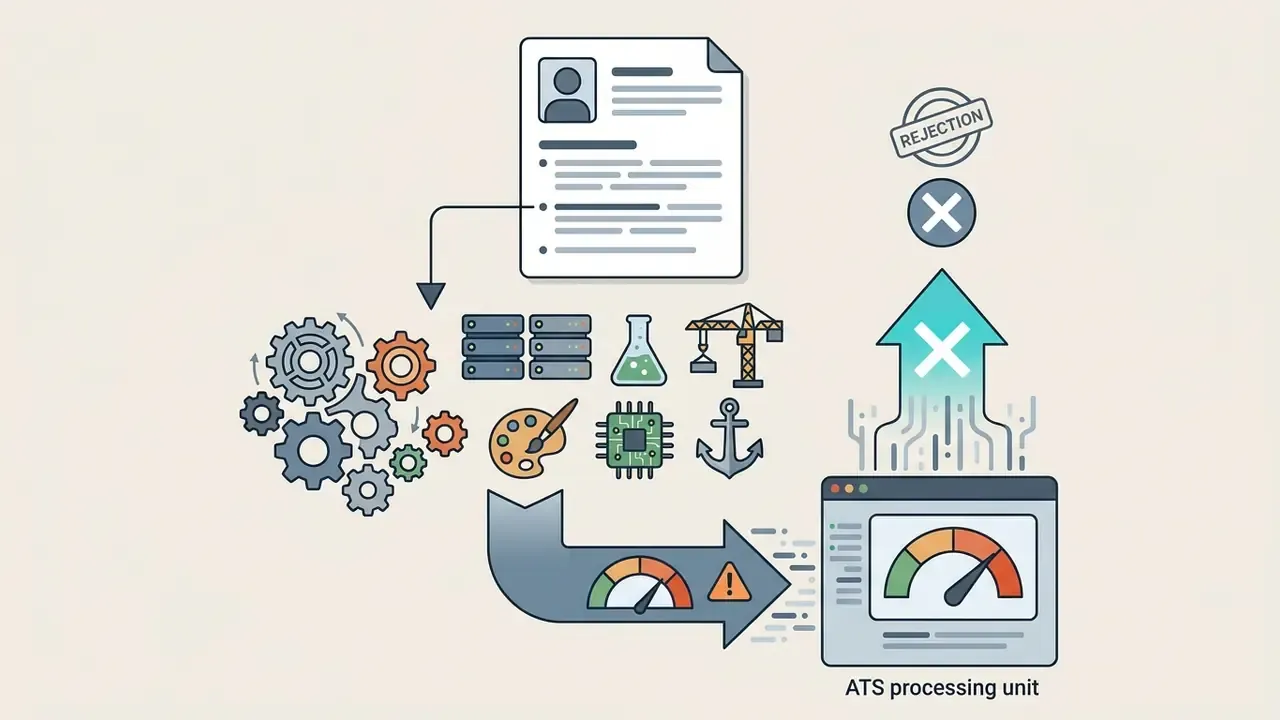
The core objective when optimizing for an Applicant Tracking System is 100% text-layer readability. An ATS does not perceive design: it extracts plain text, maps it into database fields and assigns a match score based on keyword and semantic overlap with the vacancy.
Using an ATS-focused builder prevents the scenario where a qualified candidate is filtered out silently, with no explanation, at the automated stage.
4.1 What the ATS score is actually made of
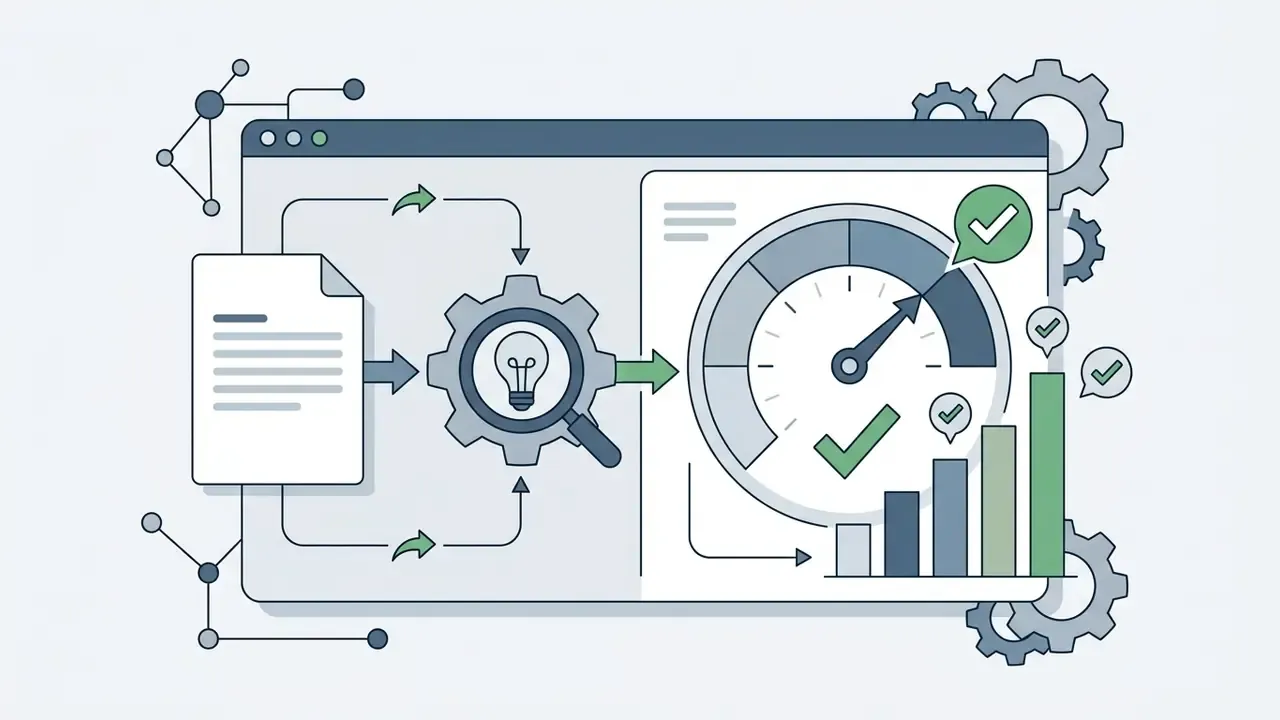
The final ATS score, the compatibility indicator in modern services, is produced by auditing four independent components:
| Component | What it measures | Typical failure |
|---|---|---|
| Content | Presence of quantified results (metric plus action verb), absence of spammy clichés | Duty lists with no numbers |
| Format | Parser readability of the structure (no tables, no columns, correct heading hierarchy) | Two-column layout with a sidebar |
| Optimization | Percentage overlap between resume keywords and the target job description | Generic resume sent to 200 roles |
| Best Practices | Optimal length (1 to 2 pages), contact block present, consistent employment dates | Missing phone number; overlapping dates |
Seeing the score decomposed matters, because the fixes are different. A low Format score is a five-minute template swap, while a low Content score requires rewriting every bullet.
Threshold behaviour is also worth knowing: 2026 guidance commonly targets 70 to 80% overall keyword match, with 85% or higher on core required terms, meaning ATS evaluation is graded rather than binary.
4.2 Which resume formats and layouts work for ATS
Only traditional single-column layouts (simple or basic) parse reliably.
Parsers read a document top-to-bottom, left-to-right. Modern designs with two columns, sidebars, text boxes, icons and tables break that assumption: text from separate columns can be stitched into one unreadable string. Use standard section names, such as Work Experience, Education, Skills, Professional Summary.
Speed is part of why format discipline matters. Automated screening is now fast enough that no human intervenes before rejection.
«LLM-based resume screening agents operate roughly 11 times faster than traditional manual methods, with an 87.73% F1 classification score.»
Among hundreds of layouts, two industry standards are recognized for near-perfect parser pass rates:
- Jake's Resume (Overleaf format)a single-column, high-density text layout, originally distributed as a LaTeX template and now available in builders without LaTeX coding. It is the de facto standard for software engineers, data scientists and IT specialists.
- Harvard academic and corporate formata traditional layout with strict hierarchy (Education → Experience), education-first and clean. Optimal for finance, consulting (MBB) and recent graduates from competitive programs.
Both share the same virtues: one column, standard headings, no graphics, no skill bars.
4.3 How to tailor a resume to a specific vacancy
To raise your job match, align the resume text with key phrases from the job description.
AI builders can separate required skills from preferred skills and weight repeated terms as priority keywords. The AI then embeds those terms using the employer's exact wording, including both the acronym and the expanded form (for example: Search Engine Optimization (SEO)). Placement matters as much as presence: headline and title, two to three keywords in the summary, the remainder in the skills block, and the strongest matches inside recent experience bullets.
E-E-A-T FACT CHECK: validating the ATS recommendations
5. Resume templates and examples for different experience levels
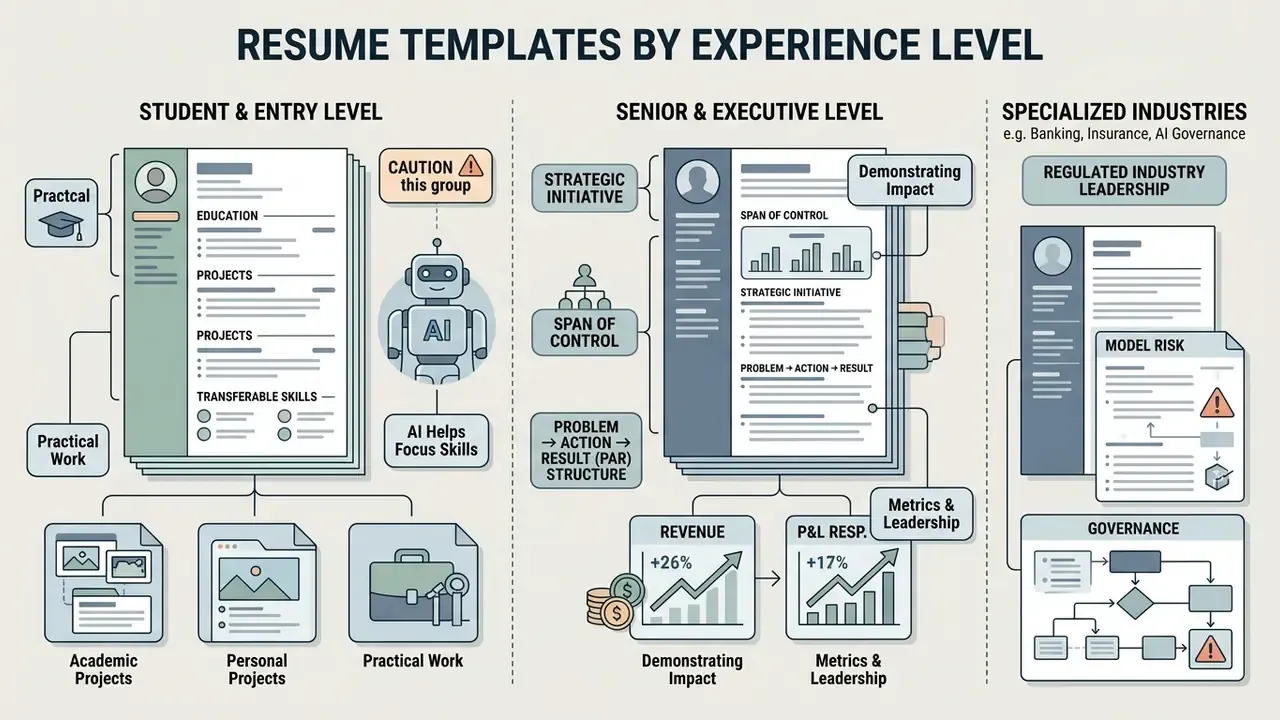
Structure and emphasis change substantially with career stage. A flexible free AI resume maker lets you reorder section priority depending on whether you are applying for an entry-level role or a vice-president seat.
5.1 Resumes for students, entry-level and candidates with no experience
For students and junior candidates, the anchor sections are Education, academic and personal projects, and volunteer work.
With no commercial track record, an AI generator helps you focus on transferable skills and practical work. Project entries are quantified exactly like jobs: technologies used, your role in the team and the outcome achieved. Career-center guidance for entry-level resumes places education first with degree, expected graduation date, GPA if 3.0 or above, relevant coursework and academic honors.
One caution specific to this group. Because entry-level resumes carry less differentiating experience, name-level and background signals weigh proportionally more in automated ranking. The retrieval-bias findings cited above (Wilson and Caliskan, arXiv 2024; University of Washington, AAAI/ACM 2025) are a direct argument for keeping early-career resumes plain, blind-friendly and project-heavy rather than personality-heavy.
5.2 Resumes for senior, executive and career changers
For executives and senior specialists, the priority is demonstrating span of control, strategic initiative and financial impact.
Executive resumes use a Problem → Action → Result (PAR) structure with mandatory metrics: revenue and P&L movement, budget optimization, headcount and ROI. For career changers, AI re-expresses prior experience in the vocabulary of the target industry, surfacing relevant competencies rather than legacy job titles.
For regulated-industry leadership, including banking, insurance, model risk and AI governance, generic business metrics are not enough. Screening committees and boards look for framework literacy plus quantified control outcomes:
| Executive domain | Metric to quantify | Framework language to include |
|---|---|---|
| Model risk / CRO | Reduction in open validation findings; model inventory size; VaR or capital impact | SR 11-7, Basel, IFRS 9, stress-testing |
| AI governance | Number of AI use cases inventoried, reviewed and approved; time-to-approval reduction | NIST AI RMF, EU AI Act readiness, ISO/IEC 42001 |
| Compliance / financial crime | False-positive reduction in monitoring; examination outcomes (for example, no MRAs) | AML and KYC, OFAC, consumer-protection regimes |
| Data and privacy | Records-of-processing coverage; incident mean-time-to-contain | GDPR, SOC 2 Type II, ISO 27001 |
| Board reporting | Committee cadence; risk-appetite metrics owned and reported | Three-lines-of-defence model, risk appetite statements |
The comparison below maps template requirements to candidate level:
| Candidate level | Primary emphasis | Lead section | Optimal length | Key formatting notes |
|---|---|---|---|---|
| Student / Junior | Education, projects, potential | Education / Projects | 1 page | Detail coursework, tech stack, volunteering |
| Mid-Level | Practical experience, hard skills | Work Experience | 1 to 2 pages | Quantified bullets, vacancy-relevant skills |
| Senior / Lead | Leadership, scalability of solutions | Executive Summary / Experience | 2 pages | Architecture, process ownership, team leadership |
| Executive | Strategy, P&L, business outcomes | Core Competencies / Experience | 2 to 3 pages | ROI metrics, valuation, turnaround work, framework literacy |
| Career Changer | Transferable skills | Summary of Qualifications / Skills | 1 to 2 pages | Reframe terminology for the target sector |
Terminology and tooling definitions across AI media categories are catalogued in the AI Media Glossary.
6. Best free AI resume makers: how to compare services
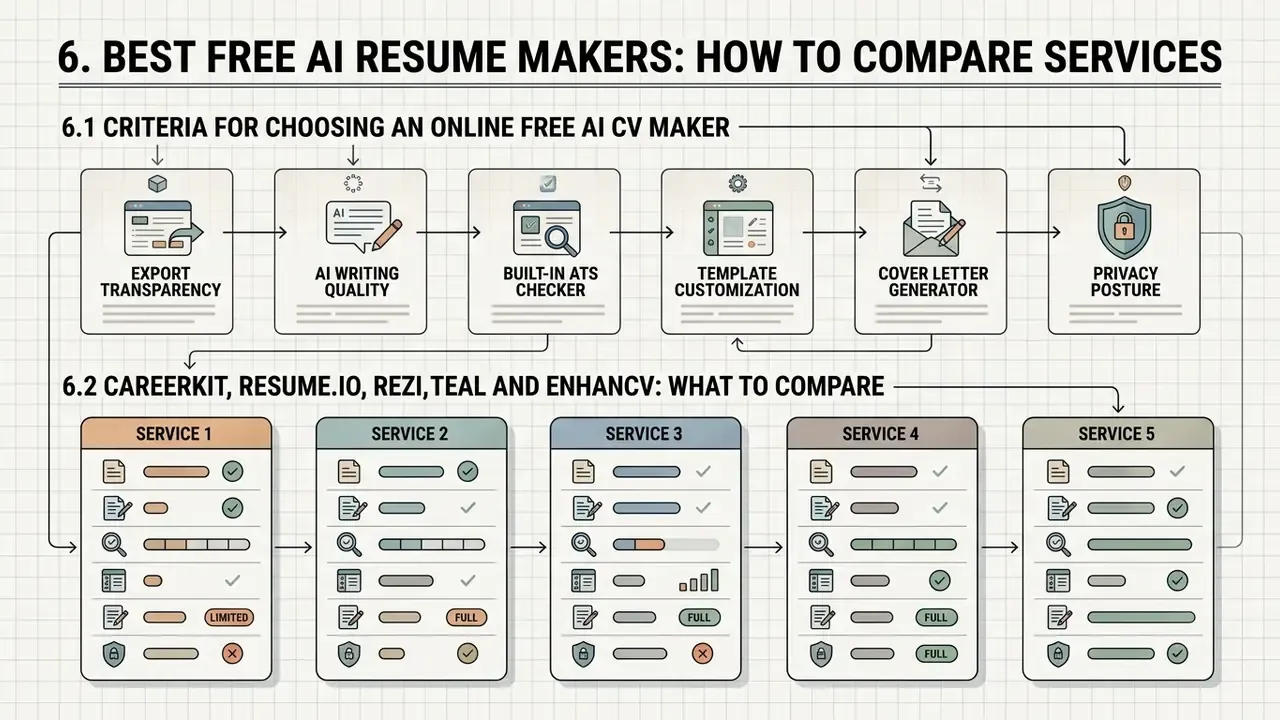
Choosing a platform in the "best free AI CV maker" category means auditing the actual limits of the free tier, not the marketing headline. Several widely used services allow unlimited document creation but restrict the free download to a plain .txt file, meaning the formatted PDF you actually need sits behind a paywall. Vendor pricing pages confirm this pattern for multiple tools (see the table below). We have found no published industry-wide figure for how common the practice is, so treat it as a pattern to verify per vendor rather than a statistic.
6.1 Criteria for choosing an online free AI CV maker
A credible free AI resume maker should satisfy the following:
Point 6 deserves the same weight as the first five, because model behaviour is not neutral: «Newer LLMs reduced explicit gender and racial bias but retain significant implicit bias based on educational background.» Source: Fairness and Bias in LLMs for Job–Resume Matching, arXiv (2025). https://arxiv.org/ A vendor that publishes how its AI works and audits for bias is materially safer than one that publishes nothing.
6.2 Careerkit, Resume.io, Rezi, Teal and Enhancv: what to compare
6.3 How to verify a free resume maker is genuinely free
To avoid losing 40 minutes inside an aggressive paywall, run an express check before you start.
Open the Pricing page, find the "Free" or "Basic" plan, and read the export line specifically. If it says "Unlimited creation, TXT download only," you will not get a formatted PDF without paying. Then check the trial line: a "$1 trial" that auto-converts to an annual plan is a subscription, not a trial.
| Service | Free functionality | ATS tooling | Export formats (free) | Freemium limits | Privacy and data-handling notes |
|---|---|---|---|---|---|
| Careerkit | Full editor, 3 templates | Live ATS score, keyword matching | PDF, DOCX, TXT | ~1 export per month (up to 3 lifetime on some plans) | Parseability warning below 90%; no card required at signup |
| Rezi | 1 resume, basic generation | Rezi Score, parsing analysis | 3 lifetime downloads; AI credit cap | File import supported; check retention terms for uploads | |
| Resume.io | 1 resume plus 1 cover letter | Basic structure and ATS checker | TXT (PDF paid) | Paywall on PDF download; single template | Separate free ATS checker returns score without account data |
| Teal | Unlimited resumes plus job tracker | Match score vs. vacancy | PDF, DOCX | AI generation credit cap | Free-tier terms vary by release; verify current policy |
| Enhancv | 1 resume, basic editor | ATS text check | TXT or watermarked PDF | Watermark or paid download; fixes gated | ATS checker requires resume upload, so strip PII first |
Reported free-tier limits differ across vendor pages and third-party reviews because plans, trials and promotional states change frequently. Verify on the pricing page on the day you sign up. Cost modelling across AI subscription categories is covered in the AI Media Calculators.
7. Free vs premium AI resume maker: what each tier includes
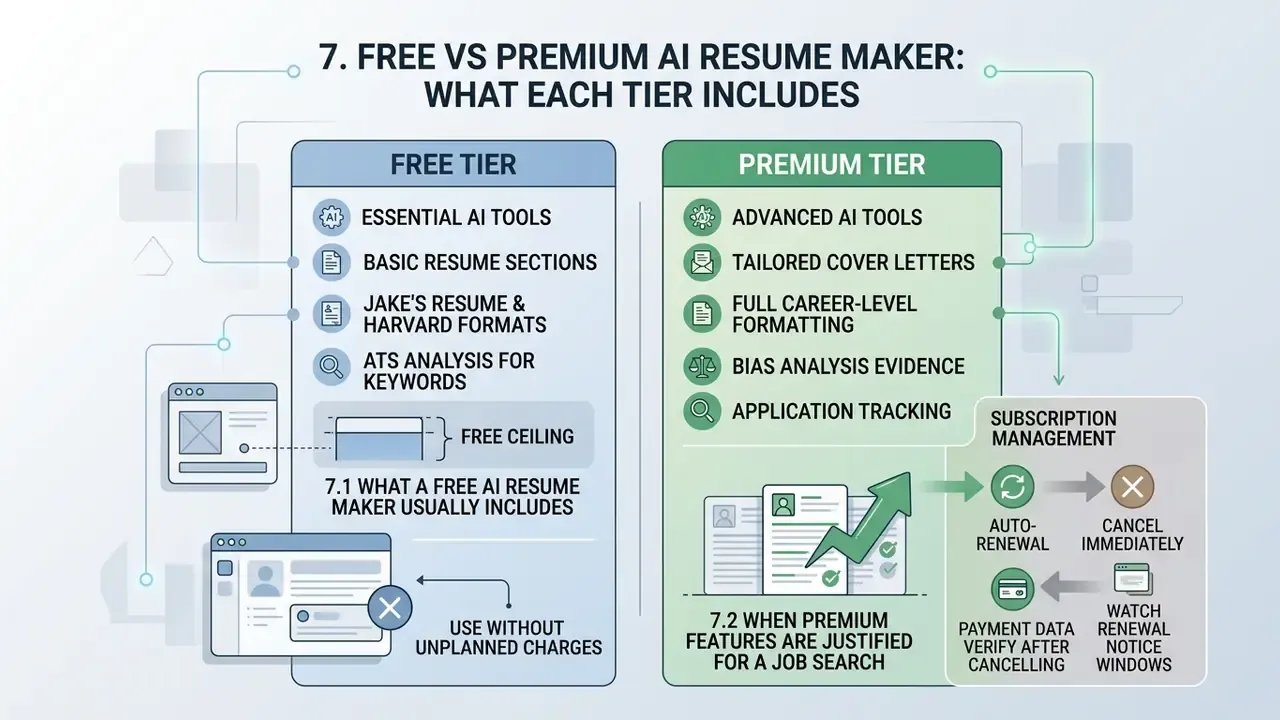
Knowing where the free ceiling sits lets you use an AI CV maker without unplanned charges. On most platforms the free tier covers the basic need, one document, while Premium is built for sustained, high-volume applying.
7.1 What a free AI resume maker usually includes
A standard free plan typically provides:
- Access to one to four basic single-column templates.
- A basic text generator with a request cap (for example, three to five generations per day, or a fixed lifetime credit pool).
- In-browser document preview.
- Download as
.txt, or a limited number of.pdfdownloads.
8. FAQ: short answers about resume maker AI
What is the difference between a web version and a mobile AI CV maker app?
The web version runs directly in the browser with no installation and offers the full feature set: precise layout control, margin editing, DOCX and PDF export, plus ATS checking. A mobile app is convenient for quick text edits on the move and for submitting applications from a phone, but it often limits fine layout control. If a role requires a specific format, finalize on desktop.
How does a resume differ from a CV, and which should I build in an AI tool?
In the US and Canada, a resume is a short, targeted 1 to 2 page document for the commercial sector. A CV (curriculum vitae) is an exhaustive record of academic and research work with no length ceiling, and it is standard in academia, scientific research and medicine. In Europe, Ireland and New Zealand, "CV" is commonly used to mean what Americans call a resume. Choose by region and sector, not by preference.
What is an AI resume slide maker and where is it used?
An AI resume slide maker produces a resume as a presentation deck (PowerPoint or Google Slides). It is used for final-round executive case defences, creative agency applications and pitch sessions. It does not replace a traditional ATS resume for the initial application. A slide deck will not parse.
Should I include a photo, and can AI generate it?
For the US, UK and Canadian markets, photos are not recommended outside acting and modelling portfolios, precisely because they introduce bias into screening. Where a photo is customary, as in parts of the EU, use a purpose-built AI headshot generator for a neutral business portrait rather than a cropped social-media image, and check the tool's privacy terms before uploading your face.
Can I use AI image or avatar generators for professional application materials?
Entertainment-oriented generators are fine for social profiles but have no place in formal application documents. That includes stylized avatars, an ai doll generator, prompt-to-illustration tools of the ai draw me type, and novelty output such as ai dog pictures. For legitimate professional visual assets, such as portfolio thumbnails or personal-site imagery, use AI photo editors and verify commercial usage rights in the AI Media Commercial-Use Hub before publishing.
Can AI write my cover letter and follow-up emails?
Yes, generative models handle short business correspondence well. Use the AI cover letter module inside your resume builder so the voice stays consistent with the resume, then edit for specifics: name the company, name the role, and reference one concrete achievement relevant to that team. A general-purpose ai email generator works for follow-ups and thank-you notes, though it needs the same manual pass. Generic AI cover letters underperform no cover letter at all.
What software should I use for final document polish?
For an ATS resume, a clean text editor plus the builder's own export is the best choice, because every added graphic layer increases parsing risk. For separate visual materials, ai editing software, professional photo editing software and free photo editors handle image correction. Keep all of them entirely out of the resume file itself.
Will an ATS penalize me for using AI to write my resume?
No, and current evidence points the other way. LLM-based screeners showed a 67 to 82% self-preference for AI-assisted text (UMD Smith School, 2024–2026), and candidates using the same AI stack as the employer saw a 23 to 60% shortlist advantage. The penalty comes later, at interview, when you cannot substantiate an AI-invented metric.
How do I test whether my resume is really machine-readable?
Three checks, two minutes. First, open the exported PDF, select all, and copy into a plain text editor; if sections scramble or vanish, the parser will fail too. Second, confirm no critical content sits inside an image, icon, chart, header or footer. Third, verify the order reads Summary → Experience → Education → Skills after copying. If your builder offers a plain-text preview, use it before every submission.
How do I estimate total spend across all the AI tools I use?
Use the interactive AI Media Calculators to model subscription and per-credit costs. For the regulatory context around AI in hiring and content generation, see AI Litigation and Case Timelines.