An ai image caption generator converts visual pixel data into structured, human-readable text for digital publishing, e-commerce, and social media workflows. Modern systems pair vision encoders with language decoders to read objects, spatial relationships, and whole scenes, then draft captions shaped to a specific platform's rules.
Why should a risk-aware team care about a caption tool? Because the same governance questions apply here as anywhere else: what data leaves the perimeter, who owns the output, and what evidence exists afterwards.
«Deep learning captioning systems pair CNN or transformer encoders with language decoders to build meaningful sentences describing images through multimodal attention mechanisms». - IEEE Access, Deep Learning Approaches for Image Captioning Survey (2024). https://doi.org/10.1109/ACCESS.2024
Executive summary
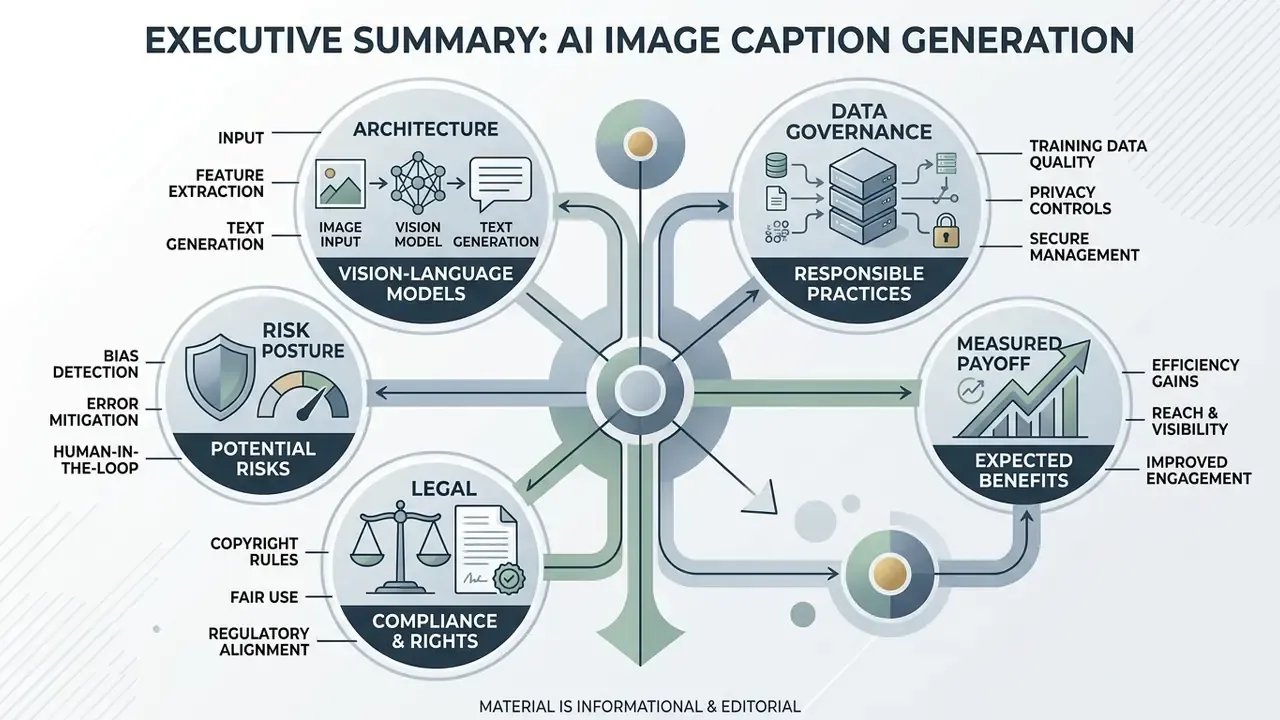
For readers who need the decision layer before the operational detail:
- Architecture. An AI captioning stack is a two-stage pipeline. A vision encoder (CNN or Vision Transformer) extracts visual embeddings, and a neural language decoder writes text token by token, optionally guided by attention over image regions. Output quality is bounded by input image quality and by the generation parameters you set explicitly.
- Risk posture. Every generated caption is unvetted draft material. Object misidentification, visual-metaphor failure, and duplicate phrasing are documented failure modes. Human-in-the-loop (HITL) review is therefore a control requirement, not a stylistic preference.
- Legal status. Purely machine-generated text lacking human creative control is not eligible for copyright protection in the United States. Protectable authorship arises from human selection, editing, and structural refinement. Synthetic-content disclosure duties apply separately.
- Data governance. Consumer SaaS caption tools and enterprise vision APIs differ sharply on retention. Some providers reuse uploaded imagery for model retraining, while enterprise endpoints can be contracted with zero-data-retention (ZDR) terms. Procurement, not marketing, should own that call.
- Measured payoff. In the composite retail pilot described below, structured caption workflows cut drafting time from 18 minutes to 4 minutes per post and lifted engagement 14% versus unedited raw model output.
This material is informational and editorial. It is not legal, accessibility-audit, or model-risk-management (MRM) advice.
Measured impact: what a controlled captioning workflow delivers
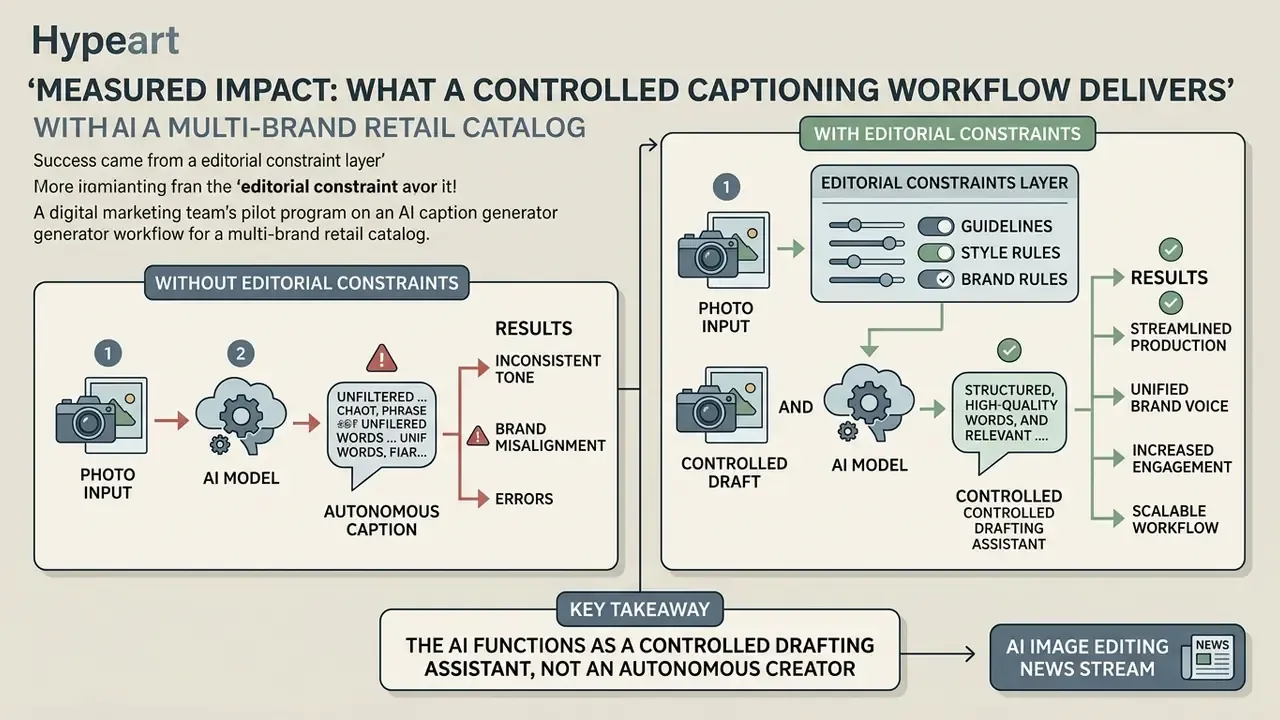
A digital marketing team ran a composite pilot on an ai caption generator by photo workflow for a multi-brand retail catalog. The team enforced a mandatory four-part structure, Hook, Hold, Payoff, Prompt, and capped hashtags at four relevant terms per post. Across 90 days and 400 catalog posts, engagement rose 14% against unedited baseline model outputs. Drafting time per post fell from 18 minutes to 4.
Two operational lessons emerged.
First, the gain came from the editorial constraint layer, not from the model. Identical outputs published without structure underperformed. Second, logging both the raw model output and the final human-edited text produced an audit trail that satisfied internal brand-compliance review, and it added almost no production overhead. Almost none, to be precise: roughly twenty seconds per asset.
Readers tracking how the wider tooling market moves can follow the ai image editing news stream for version changes that affect approved workflows.
What is an AI image caption generator and what can it create?
An ai image caption generator is a vision-language deep learning tool that turns uploaded images into textual summaries, descriptive metadata, or platform-ready social posts. By pairing visual feature extraction with neural language decoding, these tools convert raw image inputs into natural language text.
«PixelProse contains over 16 million synthetically generated captions produced by state-of-the-art vision-language models for detailed and accurate image description». - Singla et al., PixelProse (2024). https://arxiv.org/abs/2406.10328
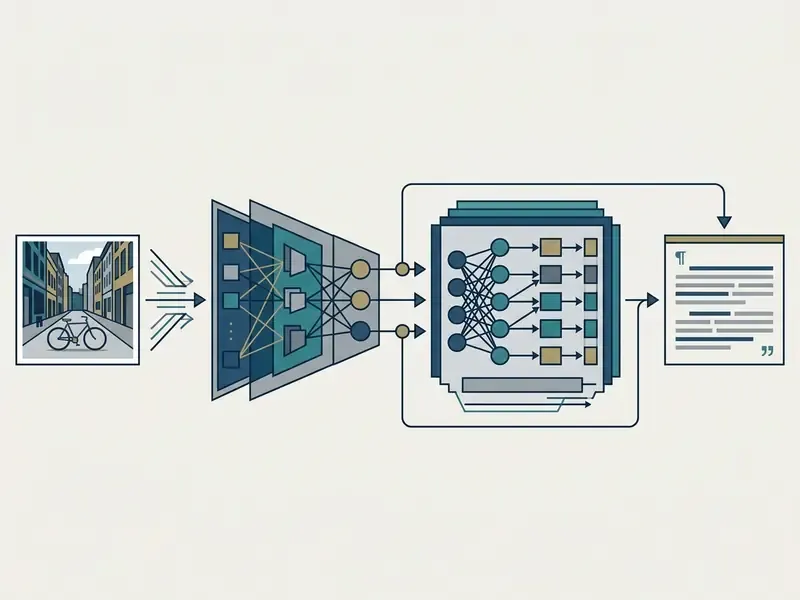
Beyond basic object identification, modern ai image captioning tools produce dense visual descriptions, grounded spatial tags, and platform-specific social copy (GroundCap, 2024). In social media operations, an ai photo caption generator extracts core image elements, applies pre-set tone constraints, and drafts copy for Instagram, TikTok, or Facebook. Teams that also own the visual side of the asset usually pair captioning with online photo editors, since crop, exposure, and subject isolation decide what the vision encoder can actually recognise.
Adjacent tools matter here too. An ai image describer is tuned for factual inventories rather than engagement copy, and an ai image colorizer can restore tonal separation in archival photographs before captioning, which measurably helps the encoder.
AI captions, image descriptions and alt text: key differences
Public social captions, structured image descriptions, and alternative text (alt text) serve distinct tasks, audiences, and technical requirements. An ai image caption chases audience engagement, storytelling, and marketing metadata. Alt text serves screen-reader accessibility (W3C WCAG 2.2).
«Wikipedia descriptions were perceived as more correct and useful than automatically generated ones, although individual tools performed well for specific image categories». - Leotta et al., Evaluating the effectiveness of automatic image captioning for web accessibility (2023). https://doi.org/10.1145/3597638.3608392
| Attribute | Social Media AI Caption | Image Description | Alt Text |
|---|---|---|---|
| Primary Audience | General public and followers | General readers and researchers | Blind and low-vision users |
| Primary Goal | Engagement, reach, and context | Complete visual inventory | Functional visual equivalence |
| Length Target | 1 to 3 sentences (125-char preview) | 2 to 5 detailed sentences | Short (under 125 characters) |
| Key Features | Includes tone, hashtags, and emojis | Objective spatial and object details | Concise, context-specific description |
| Regulatory Scope | Platform guidelines and EU AI Act | Editorial standards | Section 508 / WCAG SC 1.1.1 |
Who uses an AI photo caption generator
SMM specialists, content creators, small business teams, and e-commerce managers use an ai photo caption maker to speed up production and hold a posting schedule. Marketing teams run these tools to spin several post concepts from one image while keeping brand voice intact. The practical benefit they report first is simple: they save time on the blank-page stage.
«A two-stage architecture is proposed: the first model generates a neutral image description, the second converts it into a caption aligned with a specified brand personality». - Maheshwari et al., Social Media Ready Caption Generation for Brands (2024). https://arxiv.org/abs/2404.01748
E-commerce operations plug an ai caption generator from photo workflow into product photography, converting shots into descriptive metadata, social commerce copy, and indexable search tags. For accessibility teams and web managers, an ai caption generator for photo collections accelerates first-draft alt text, though human review stays mandatory for compliance (Center for Digital Accessibility, University of Chicago). Structured ai image description output is usually the better starting point for that task than engagement copy.
«AI-generated descriptions received statistically significantly lower ratings for correctness, usefulness, and quality than human-authored descriptions». - ACM, STEM Images Captioning for Accessibility (2024). https://doi.org/10.1145/3613904.3642194
Enterprise users form a fourth, less-discussed segment. Internal communications teams, documentation groups, and compliance functions need consistent descriptive text across thousands of assets. For them the selection criteria shift away from tone presets toward retention policy, batch throughput, and logging fidelity, all covered in the enterprise comparison section below.
How does an AI image to caption generator work?
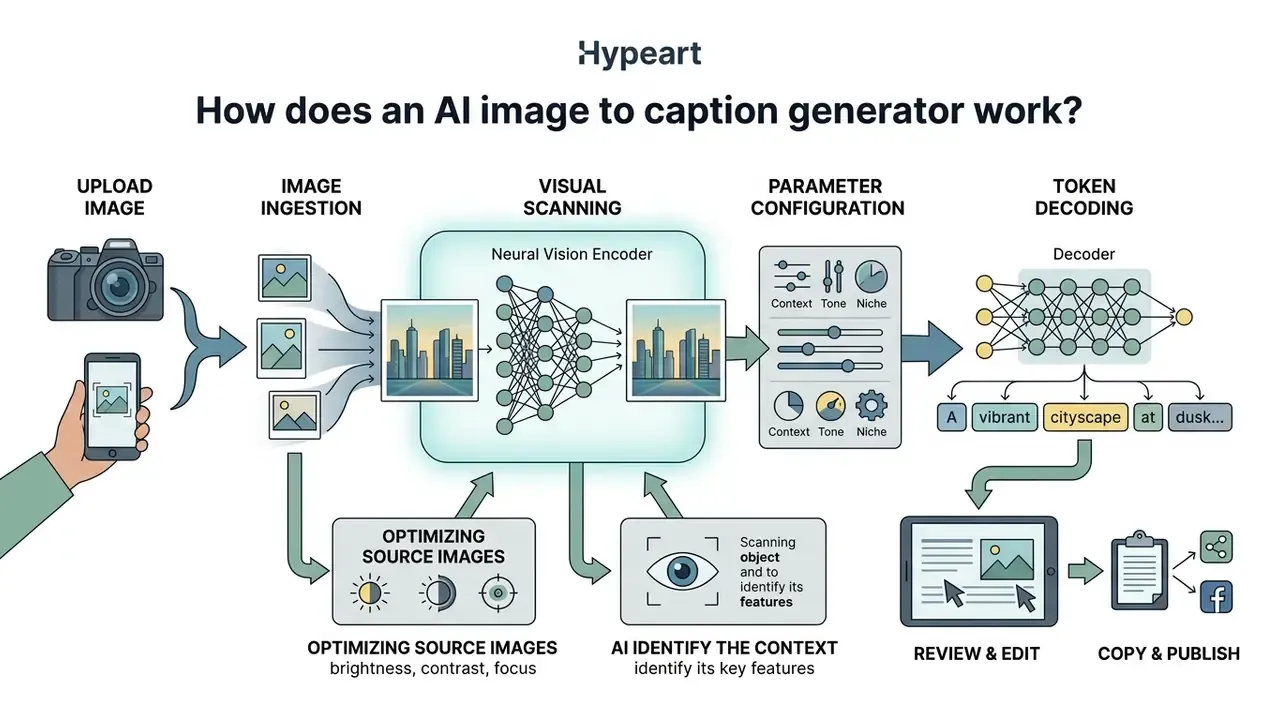
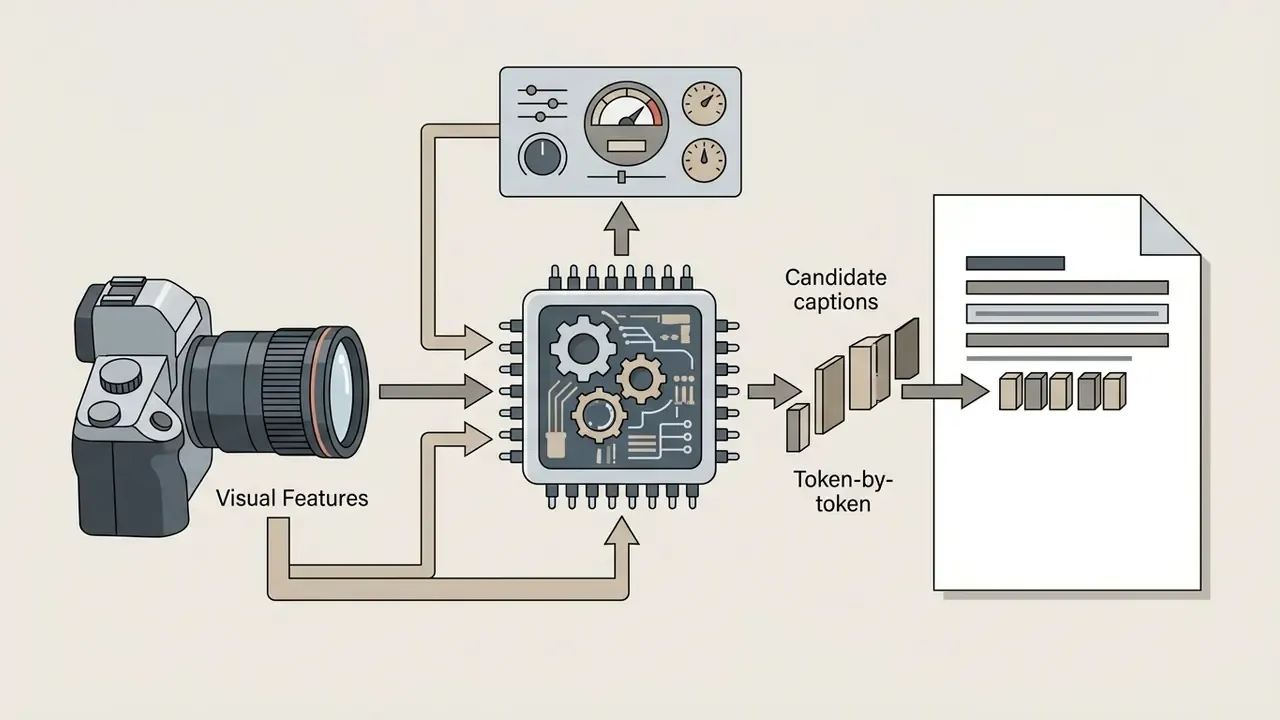
An ai image to caption generator moves visual data through a multi-stage pipeline: image ingestion, visual feature extraction in a neural vision encoder, token decoding by a language model, and parameter-based post-processing. That is how the system translates pixel arrangements into structured text.
«A typical pipeline uses a CNN or transformer encoder for feature extraction and an RNN decoder to generate coherent captions with attention mechanisms». - IJRPR, Automated Image Captioning and Voice Synthesis (2023). https://ijrpr.com/uploads/V4ISSUE5/IJRPR12345.pdf
How does the caption generator work step by step?
Process breakdown: technical execution flow of an AI image-to-caption generator, from upload to publication.
Understanding the pipeline also clarifies where the ecosystem boundaries sit. Captioning models read pixels and emit text. AI art and image generators invert that relationship, reading text and emitting pixels, which is why an ai image generator caption prompt and a captioning prompt behave so differently. Both share encoder-decoder foundations, so prompt discipline transfers between them.


Upload an image and let AI identify the context
On upload, the system normalizes the photo into standard pixel dimensions and RGB colour channels before inference. Published implementation pipelines describe normalisation to RGB at 1080×1080 JPEG for publishing workflows. Vision models then analyse object boundaries, background settings, agent interactions, and ambient lighting to fix the scene semantics (CVPR, 2020; ECCV, 2022).
By weighing spatial context alongside single-object recognition, an ai caption generator from image framework separates a product presentation from an outdoor activity or a corporate meeting. This contextual map is the input that downstream language decoding depends on.
Optimizing source images for accurate vision-encoder recognition
Neural vision encoders extract features from pixel edge contrasts, colour gradients, and clear spatial separation. Poorly optimised images are the single most common cause of hallucinations and wrong object tags. Users usually blame "a bad AI". Usually it is the file.
- Resolution and file limits
- use images between 1080×1080px and 2048×2048px (JPG, PNG, WebP; typical upload ceilings are 10-20MB). Files under 300px on the long edge blur texture detail and push the encoder toward generic category labels.
- Lighting and exposure
- strong contrast between subject and background prevents misclassification. Avoid heavily underexposed or blown-out frames. A crisp, well-exposed shot gives the model a materially clearer read.
- Clutter reduction
- one well-defined focal point yields precise semantics. Chaotic backgrounds, dense crowds, overlapping merchandise, busy streets, dilate attention vectors and dilute caption relevance.
- Text-in-image guidance
- if the frame contains embedded visual text, a street sign, a product label, a slide, keep it OCR-legible to avoid conflicting decoded output.
- Subject ambiguity
- abstract art, extreme close-ups, and motion-blurred action remain the highest-variance inputs. For those, plan on supplying keywords or context text with the upload.
Teams working with underexposed or low-contrast source material often pre-process assets in a free photo editor before captioning. Correcting exposure and cropping to the subject improves recognition accuracy at zero model cost. Composite assets built with an ai image combiner deserve extra scrutiny, since stitched frames frequently confuse the encoder about which subject is primary.
Set preferences before generating a caption
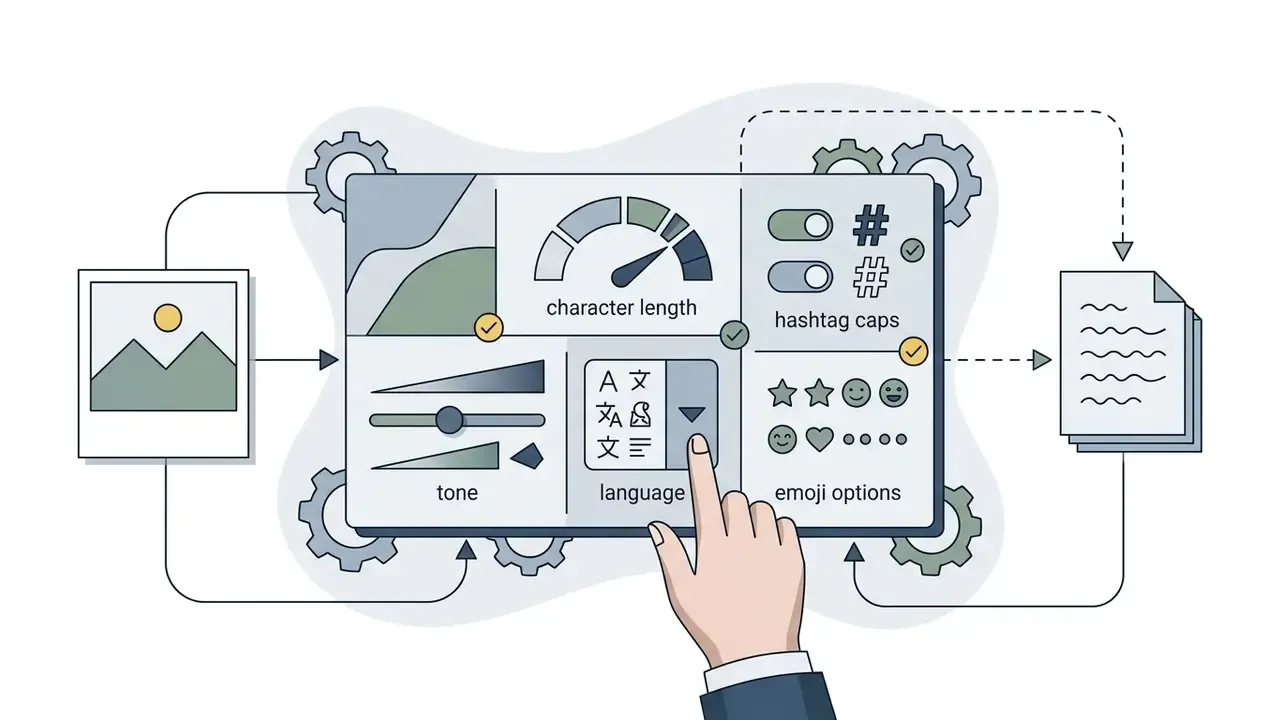
Configuring preferences before execution steers the language decoder toward specific stylistic, structural, and linguistic targets. Users select tone controls, output language, character constraints, and emoji density.
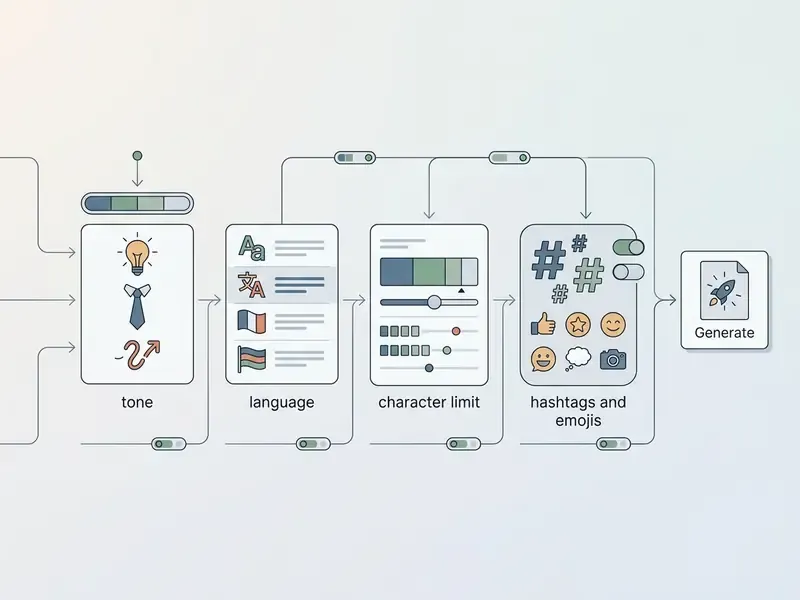
Preset options control the structural parameters:


Review, edit and copy the generated caption
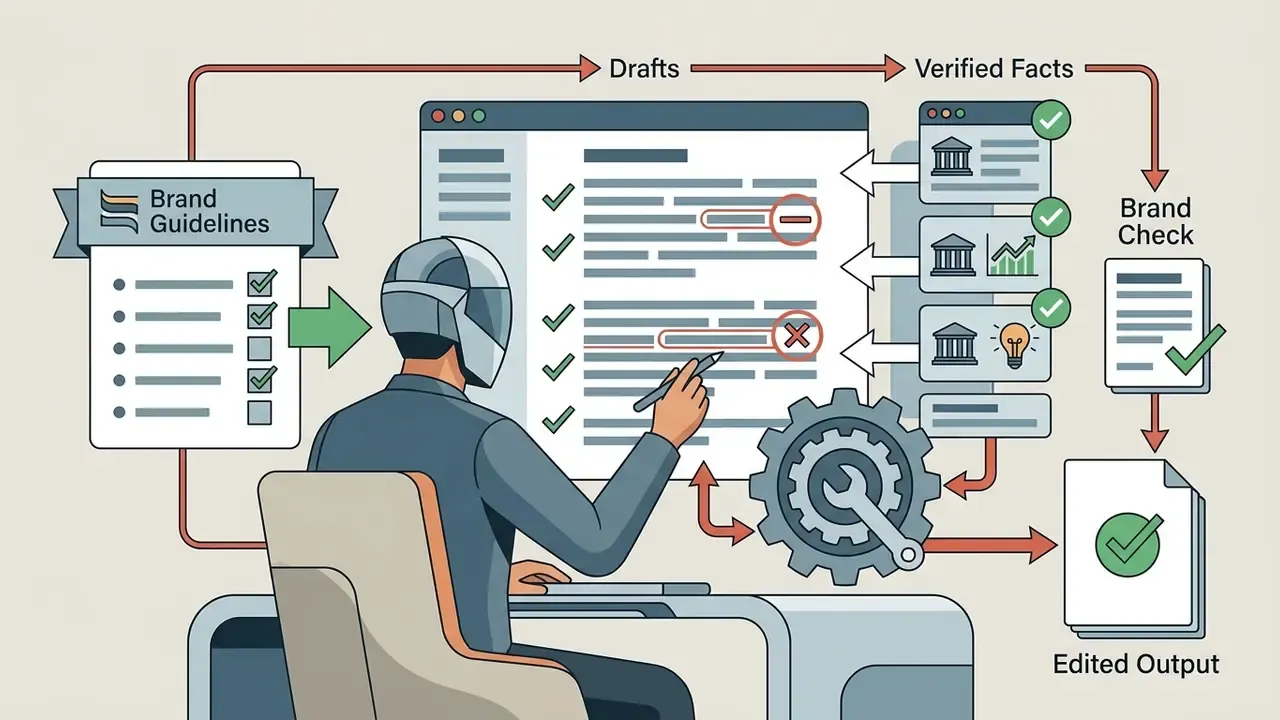
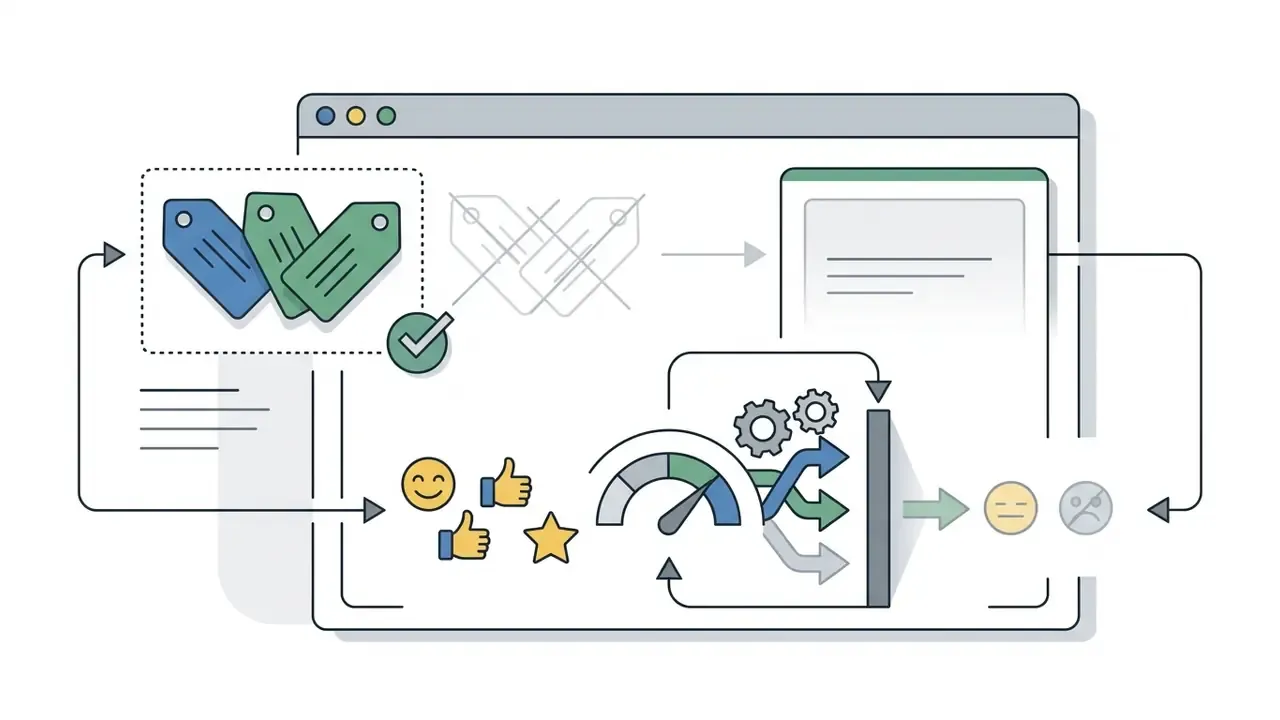
All ai generated captions for images are unvetted draft material and require human review before publication (Associated Press Standards, 2024; University of San Diego Policy, 2025). Editors verify factual assertions, fix object misidentifications, adjust brand voice, and confirm context.
Error-handling protocol when the model gets it wrong:
| Failure mode | Typical trigger | Corrective control |
|---|---|---|
| Wrong object identified | Low contrast, occlusion, unusual angle | Re-upload a cropped frame isolating the subject; add keyword steering |
| Invented detail (hallucination) | Blurred or low-resolution input | Reject the draft; regenerate from an optimised source file |
| Generic, interchangeable copy | No tone or brand parameters set | Re-run with explicit tone plus a banned-vocabulary list |
| Misread on-image text | Non-OCR-legible signage or labels | Transcribe the text manually; never publish decoded text unverified |
| Metaphor or meme misread | Visual irony, cultural reference | Escalate to human copywriting; do not auto-publish |
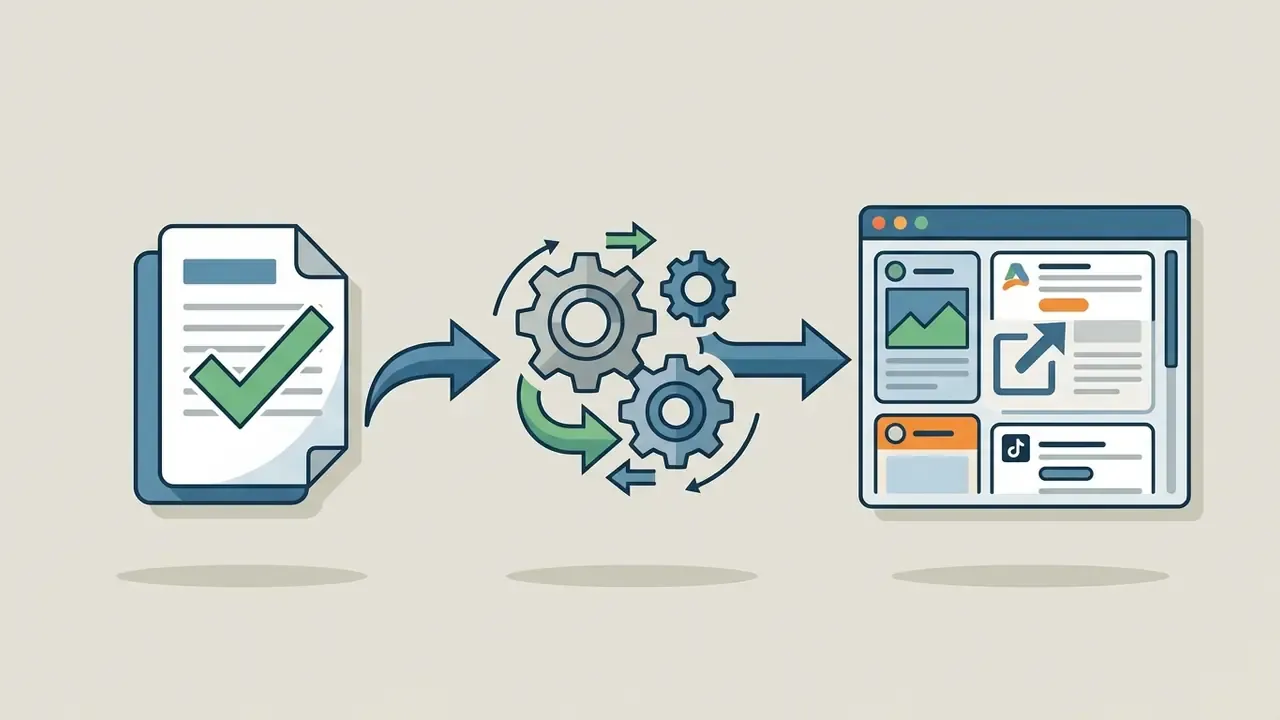
Once editorial review closes, the finalized text is copied or scheduled through social media management software. Automated workflows should retain log files of original model outputs alongside final human edits, building internal audit trails for brand compliance (EU AI Act Transparency Provisions, 2025). A minimum viable audit-log schema records: asset ID, model and version, prompt and parameter set, raw output, editor ID, final published text, publication timestamp.
That schema is dull. It is also the artefact that makes a review defensible six months later.
What inputs improve AI-generated captions for images?
Accuracy and relevance in ai generated captions for images rest on three input factors: image resolution, structured contextual metadata, and explicit generation constraints (DFKI, 2026). Better inputs reduce hallucinations and improve semantic alignment. Directly.
Contextual metadata that measurably helps includes capture date and time, geolocation, product category, keyword tags, and any adjacent body text tied to the image. In-context captioning research adds two more decisive parameters: the number of demonstration examples (shots) and the retrieval strategy used to select them.
Choose the right tone and style for the post
Choosing an explicit tone shapes the vocabulary distribution and sentence structure of a generated ai caption for picture file.
«Explicitly specifying brand personality - sincerity, excitement, competence - significantly influences the lexicon and tonality of generated social media captions». - Maheshwari et al., Social Media Ready Caption Generation for Brands (2024). https://arxiv.org/abs/2404.01748
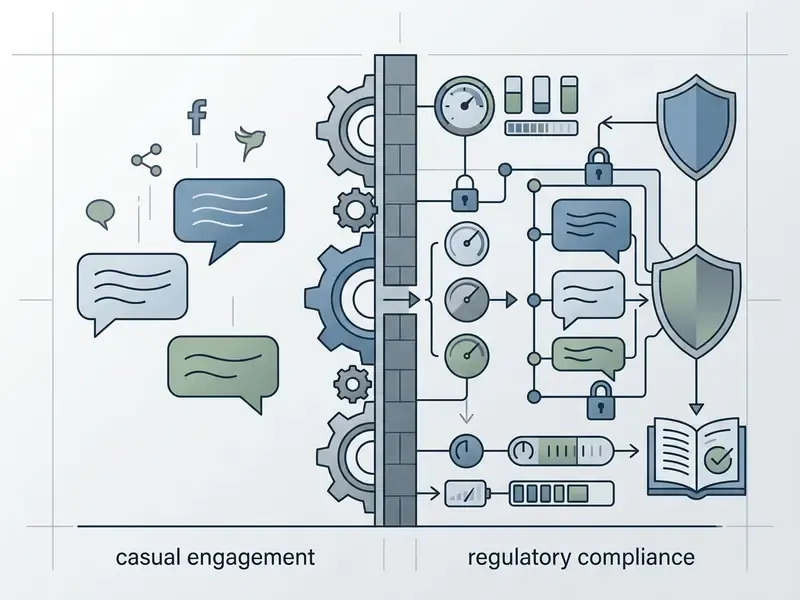
Because tone selection sits on top of what the encoder actually sees, image preparation and tone control are complementary levers. Teams standardising both usually document them together with their photo editing workflow.




How to create engaging captions from a photo
Engaging social copy needs a structured strategy: convert visual detail into a narrative hook, test several candidate variations, then align the output with brand identity (Adobe Express Workflow Guide, 2025).
Here is the core principle. Your audience can already see the sunset, the product, or the team photo. A caption earns its place by adding the layer the camera missed: the story behind the shot, why it matters, what happened just outside the frame. Since the model drafts only from what is visible, treat its output as scaffolding and hang your own context on it.
Turn visual details into a clear post idea
Turning visual detail into copy follows a two-stage vision-to-language process. Extract a neutral visual description, then expand it into a narrative structure (EMNLP, 2023).
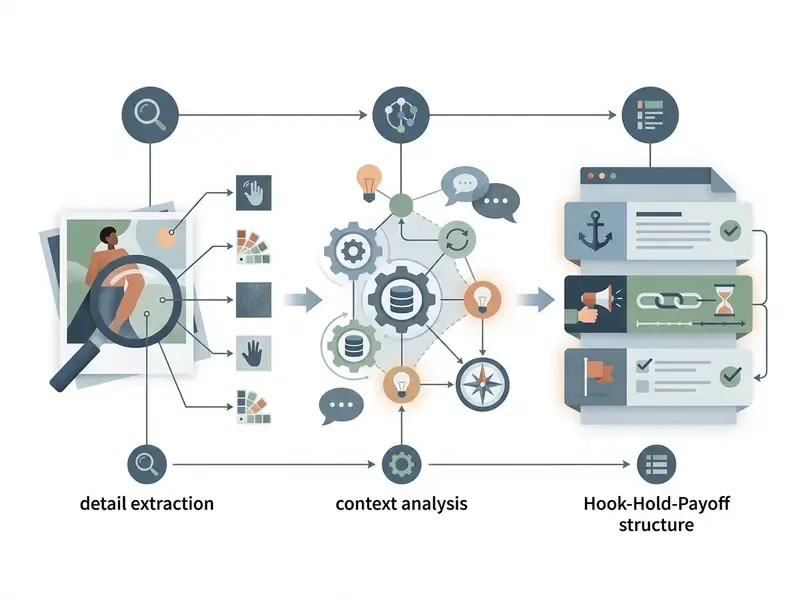
First, the ai picture caption pipeline identifies primary subjects, actions, and background environments. Second, a language model synthesizes those elements into a structured post concept, avoiding dead openings such as "This is an image of" (PeerJ Computer Science, 2024). Peer-reviewed captioning tasks operationalise this by requiring at least eight words in one complete sentence and explicitly excluding formulaic openers.
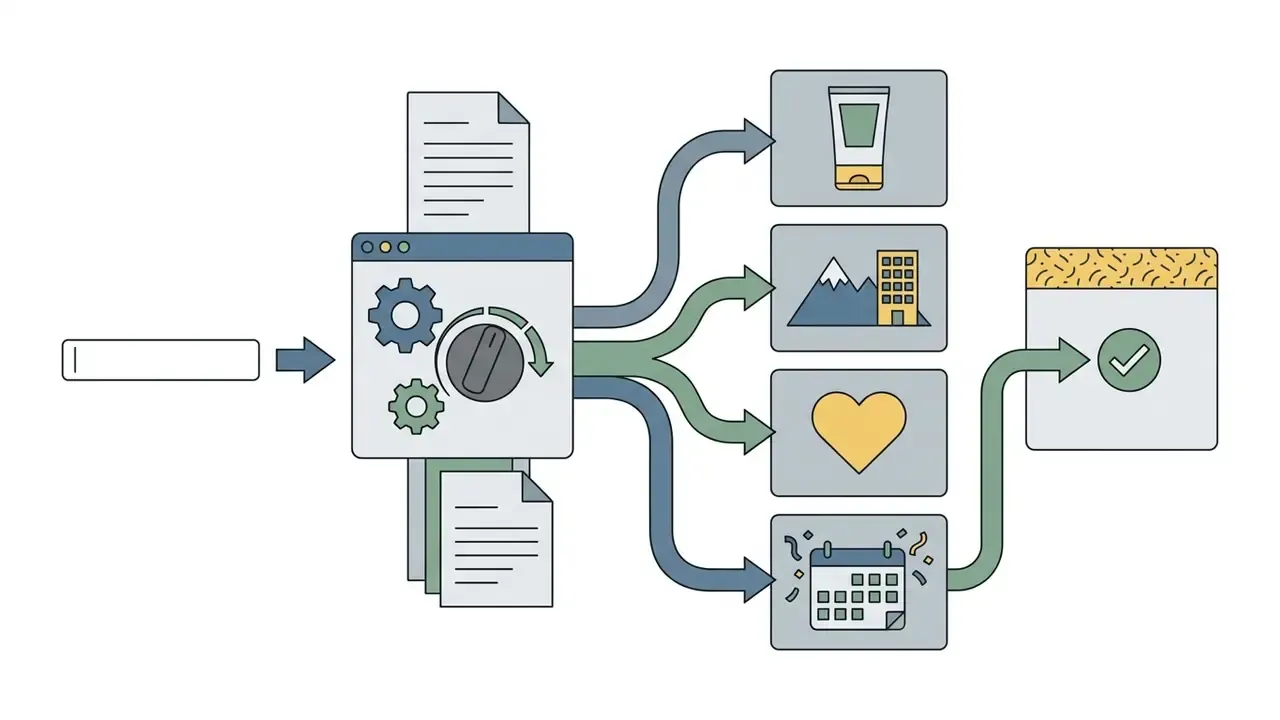
Ready-to-use AI caption patterns by niche
Copy and customise these prompt-generated patterns. Each one is annotated with its structural elements, so you can swap the subject matter without losing the mechanics.
👗 Fashion and e-commerce
"Layering season is officially here. 🍂 Styled our [Product Name] three different ways for maximum versatility. Which look is your go-to? Tap the link in bio to shop the drop."
Elements: hook + multi-style context + CTA | Hashtags: #StreetStyleInspo #FallWardrobe #OOTD
✈️ Travel and hospitality
"Chasing golden hour through the streets of [Location] 🌅 Pro tip: skip the main square at noon and visit in the early morning for zero crowds. Save this post for your next trip!"
Elements: storytelling + insider tip + save CTA | Hashtags: #TravelGuide #HiddenGems #Wanderlust
🍕 Food and restaurants
"Made from scratch, served with patience. 🍝 The secret to that perfect texture? Let the dough rest for 30 minutes minimum. What's your comfort food of choice today?"
Elements: visual trigger + recipe tip + question CTA | Hashtags: #FoodieGram #Homemade #ChefTips
💄 Beauty and skincare
"Golden hour hits different when the routine is consistent ✨ Three months on the same vitamin C serum and the results speak for themselves. What's your non-negotiable step?"
Elements: visual observation + proof point + question CTA | Hashtags: #SkincareRoutine #GlowingSkin #BeautyTips
💻 B2B and business tech
"Visual clutter in your dashboards slowing the team down? Here's how we automated the reporting workflow in under 48 hours. Full breakdown via the bio link."
Elements: problem-solution + value prop + direct CTA | Hashtags: #WorkplaceProductivity #TechInnovation #SaaS
💪 Fitness and wellness
"Week six of the same five movements. Progress isn't loud, it's repetitive. Bookmark this if you need the full progression sheet for your next block."
Elements: discipline framing + reframe + save CTA | Hashtags: #TrainingBlock #StrengthProgress #WellnessRoutine
Adjacent niches follow the same three-part logic and adapt cleanly from the patterns above: jewellery, pets, home decor, hair care, parenting, crafts, education, gaming.
Structuring the call-to-action (CTA) framework
A high-performing AI caption has to direct momentum after the last word. Match the CTA pattern to the campaign goal:
- Formula: open-ended subjective question grounded in the visual context.
- Example: "Which of these two colourways would you wear on a weekend trip? Let us know below 👇"
- Formula: frictionless path-to-link instruction placed inside the visible 125-character window.
- Example: "Tap the link in our bio to download the complete 2026 industry report."
- Formula: reference to the long-term utility stored in the post.
- Example: "Bookmark this post so you have these 5 travel tips handy for your next flight."
- Formula: specific product reference plus one unambiguous next step.
- Example: "Available in three sizes today. Shop the [Product Name] via the link in bio."
- Engagement CTAs (comments and shares)Engagement CTAs (comments and shares):
- Traffic and direct-response CTAsTraffic and direct-response CTAs:
- Retention and save CTAsRetention and save CTAs:
- Conversion CTAs (commerce)Conversion CTAs (commerce):
Generate several caption options before publishing
Publishing the first output raises the odds of generic or mismatched copy. Generating three to five distinct variations lets editors weigh different narrative angles, hooks, and CTAs. A practical default is a five-variant set: witty, professional, conversational, inspirational, descriptive.
«Experiments on the MemeCap dataset show that current vision-language models struggle with visual metaphors and perform significantly worse than humans». - MemeCap: A Dataset for Captioning and Interpreting Memes (2023). https://arxiv.org/abs/2305.13703
When testing variants, change one variable at a time, headline tone or CTA phrasing, and hold visual and metadata inputs constant. Evaluate drafts against pre-defined metrics and declare a winner only when the difference clears statistical significance, not at the first favourable reading (Adobe A/B Testing Guide; Digital.gov Testing Standards; CXL Conversion Optimization Guidelines).
- Factual accuracy against the image, with no invented objects, people, or places.
- Hook present inside the first 125 characters.
- Brand-voice compliance, including the banned-vocabulary check.
- One unambiguous CTA aligned to the campaign objective.
Edit AI output to match your brand voice
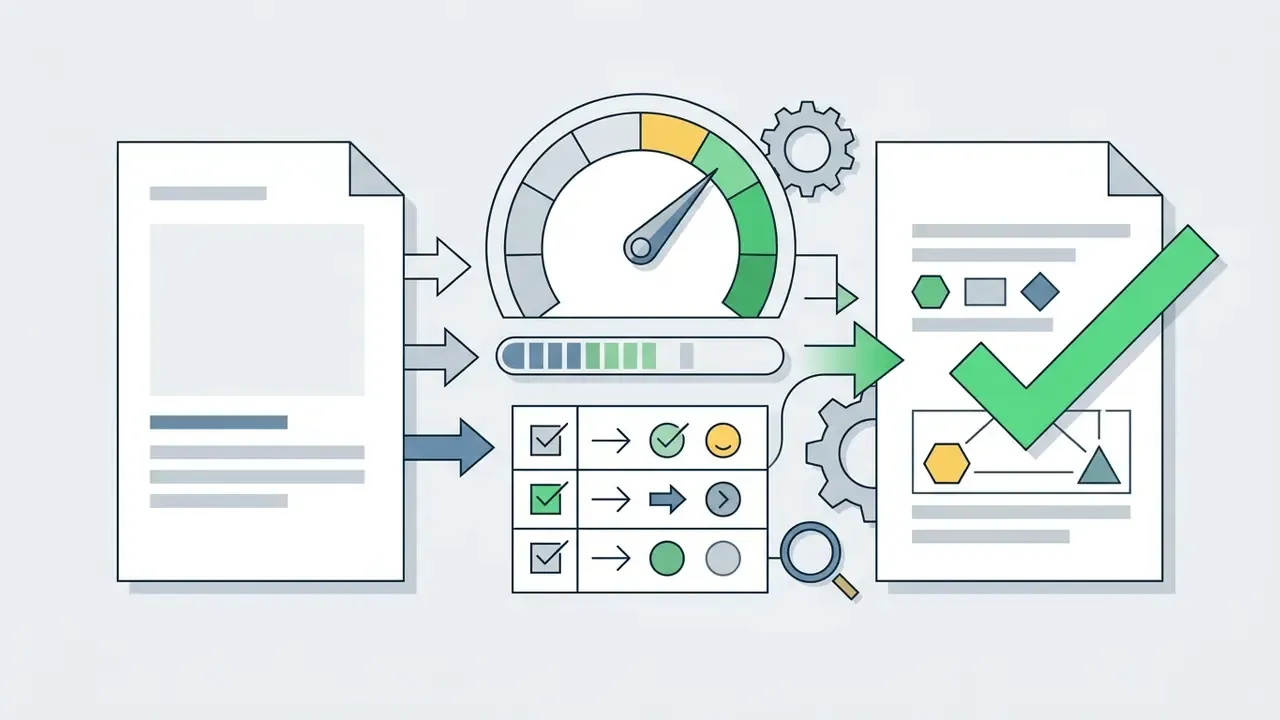
Unedited synthetic text tends to lack personality and repeat its own phrasing. Editors should score candidates against brand voice guidelines and swap generic adjectives for approved company terminology (Glean, 2026; University of British Columbia Voice Guide, 2024). A usable brand-voice guide carries a purpose statement, three to five voice principles, tone ranges by scenario, preferred and banned vocabulary, structural rules, and annotated before-and-after rewrites.
Brand voice adaptation example:
- Raw model output: "Unlocks amazing, game-changing productivity with our revolutionary software platform!"
- Human-edited version: "Streamline your daily reporting workflows using automated data validation controls."
Editing rules mandate removing sales clichés, verifying factual claims, and complying with regional synthetic-content disclosure rules (DoD Instruction 5400.19; EU AI Act, 2025). In practice that means striking "amazing", "revolutionary", and "game-changing" on sight, then replacing category adjectives with the specific mechanism or a measurable outcome.
AI image caption generator for Instagram and other social media
Running an ai image caption generator for instagram or another network means tailoring caption structure to platform algorithms, truncation limits, and user behaviour (University of Michigan Guidelines, 2026).
How to generate an Instagram caption from a photo
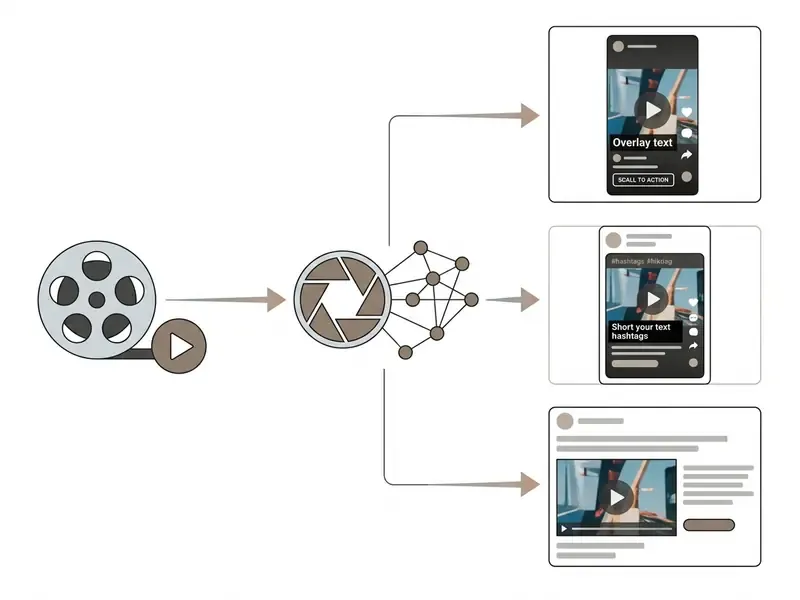
An effective post from an ai photo caption generator for instagram puts the hook inside the first 125 visible characters (Instagram Guidelines, 2026). Any decent instagram caption generator will show you that preview boundary before you publish.
For Reels, the opening line must land its narrative hook before the "...more" truncation. For carousels, the caption should give broader context, explain slide progression, and carry searchable keywords for in-app discovery. For a standard feed instagram post, a short block that restates the topic, adds one value point, and closes with one specific action performs reliably. That is the shape most ai instagram caption drafts need after editing.
Accessibility note: Instagram supports both automatic and custom alternative text for feed photos, set in the post's accessibility settings. Current guidance reports that Instagram Stories does not support alt text or caption files for photo and video content. That is a platform limitation, not a gap in your workflow.
Adapt captions for TikTok, Facebook and other channels
Caption structure has to reflect channel mechanics across networks.
Cross-platform AI caption settings and constraints matrix
| Platform | Primary format | Preferred tone | Character boundary | Hashtag and emoji guidelines |
|---|---|---|---|---|
| Photo, carousel, Reel | Aesthetic, engaging, clear | 2,200 chars (125 preview limit) | 3-5 specific hashtags (30 max); moderate emojis | |
| TikTok | Short-form video | Direct, trend-aware, casual | 2,200 UTF-16 runes (Direct Post API) | Trend tags counted in the limit; lightweight emojis |
| Photo post, link share | Informative, conversational | Flexible (short to medium) | 1-2 relevant hashtags; standard emojis | |
| Snapchat | Ephemeral snap or story | Spontaneous, concise | Very short (under 100 chars) | Minimal hashtags; high emoji usage |
| YouTube | Video thumbnail, description | SEO-focused, detailed | 5,000 chars (description field) | Keyword-driven; on-screen captions max 2 lines |
| Pin, Idea Pin | Descriptive, search-led | Short title plus descriptive body | Keyword phrases over tags; sparse emojis |
Advanced workflow: AI captioning vs. direct image text overlay
Standard caption generators write text for platform description fields. Modern content workflows often need something else: direct visual text overlays that add caption to image AI style, embedding the copy straight onto the asset for thumbnails, Stories, or display ads. These are genuinely different deliverables. One is indexable metadata. The other is a pixel-level design decision.
| Dimension | Standard post caption | Direct image text overlay |
|---|---|---|
| Primary placement | Platform text description field | Burned into the JPEG or PNG pixel matrix |
| Key function | SEO indexability, long-tail context, hashtags | Scroll-stopping visual hook, instant feed clarity |
| Optimal length | 125-2,200 characters | 2-6 high-impact words, e.g. "3 Mistakes to Avoid" |
| Styling controls | Plain text plus platform native emojis | Font family, 3D typography, text-behind-subject masks |
| Best target formats | Feed posts, LinkedIn articles, blog images | TikTok thumbnails, Pinterest Pins, Meta ad creatives |
| Accessibility caveat | Machine-readable by default | Invisible to screen readers; must be duplicated in alt text |
Best practices for overlay captions
- Subject-text separation make sure the model detects foreground subjects so overlaid text never covers faces or the primary product. Text-behind-subject and knockout treatments depend on accurate segmentation masks.
- Contrast and legibility apply subtle drop shadows or semi-transparent background cards under generated text to hold WCAG contrast ratios over vibrant photographs.
- Multi-tone options generate five variations at once, witty, direct, promotional, question-led, and quote-style, then test which hook drives the highest click-through rate.
- Duplicate in alt text overlay text is rasterised, so any word carrying meaning must also appear in the image's alt text. W3C guidance is explicit that words shown in an image belong in its text alternative.
- Format-specific sizing thumbnail text must stay legible at feed scale on a phone. Review the composition at actual display size before export.
Typical overlay use cases: Instagram posts and Reels covers, TikTok and YouTube thumbnails, e-commerce product promos for Shopify or Etsy listings, paid social and display banners, blog featured images, quote graphics. Teams running this at volume usually combine a captioning model with a layout tool, for example a design generator with template controls, rather than asking one endpoint to handle both semantics and typography.
How to choose a free AI image caption generator online
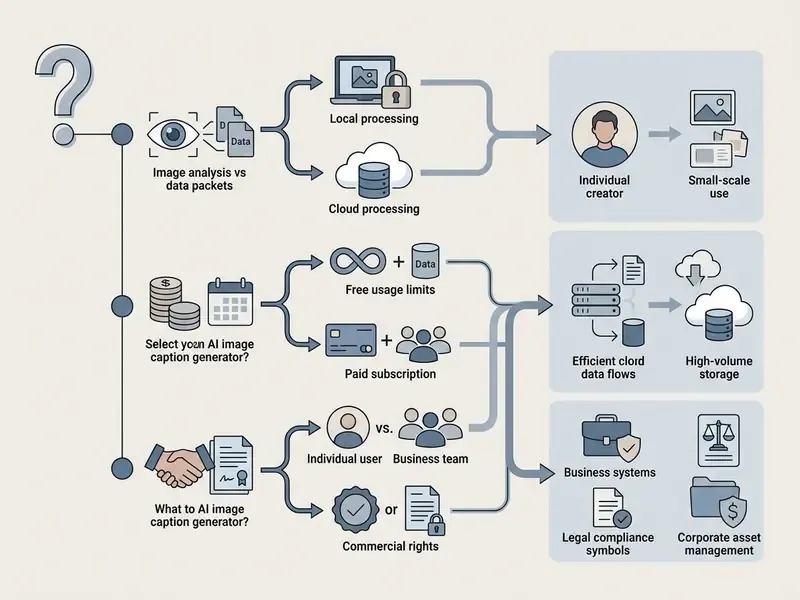
Selecting an ai image caption generator online platform means evaluating privacy policy, server-side processing risk, functional limits, and commercial licensing terms (NIST Privacy Framework, 2026). The same logic applies across adjacent categories, which is why teams comparing free AI generation tools hit identical trade-offs around credits, watermarks, and licence scope. Our AI Media Comparison Matrices apply the same scoring grid to neighbouring tool classes.
Features to compare in AI captioning tools
When assessing ai image captioning tools, technical leads and content teams should score four operational features (BBC Timed-Text Guidelines; Vendor Benchmark Standards):
- Tone and style control: explicit tone parameters plus custom brand-voice prompting.
- Multi-language support: native generation across your target markets.
- Output boundary controls: configurable rules for character length, hashtag quantity, emoji filtering.
- Speed and throughput: instant results in practice means inference under 3 seconds per image request, plus documented batch limits.
A fifth criterion applies to anyone publishing under a brand: processing location. Browser-local or on-device tools state that images never leave the device. Upload-based services process files on remote servers. That architectural difference, not the feature list, usually decides whether a tool is approvable at all.
Free access, sign-up requirements and tool limitations
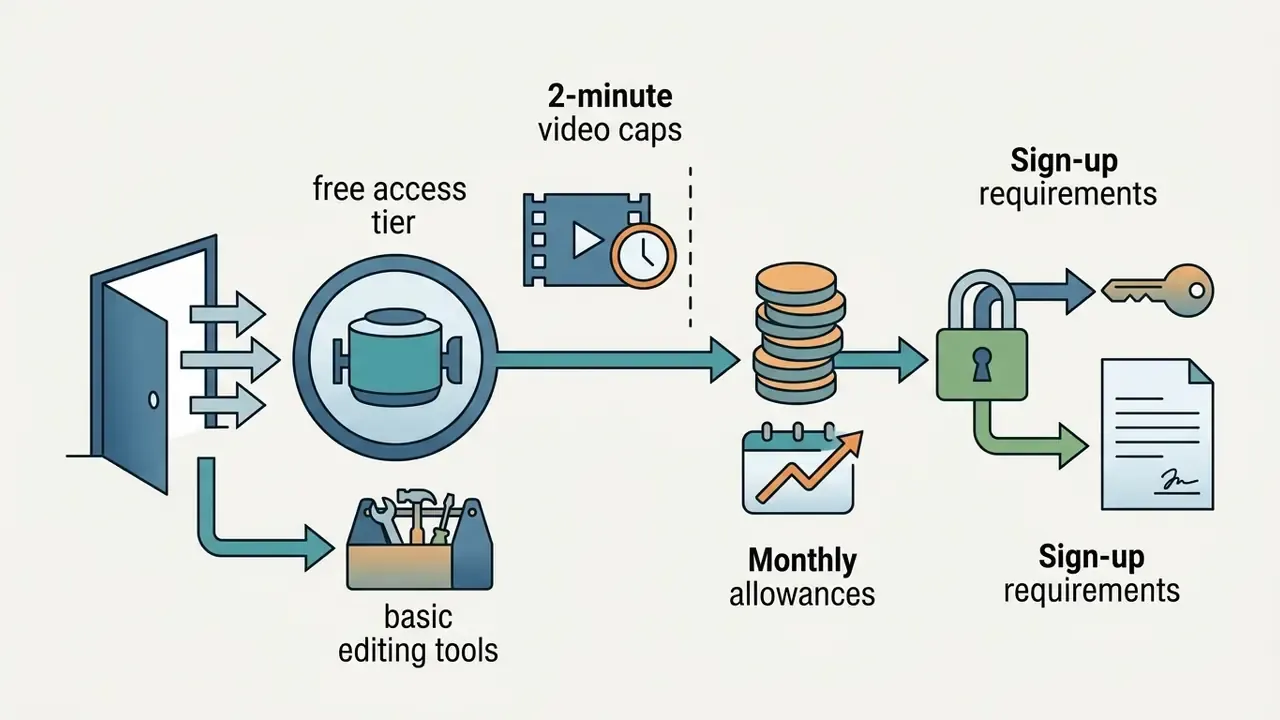
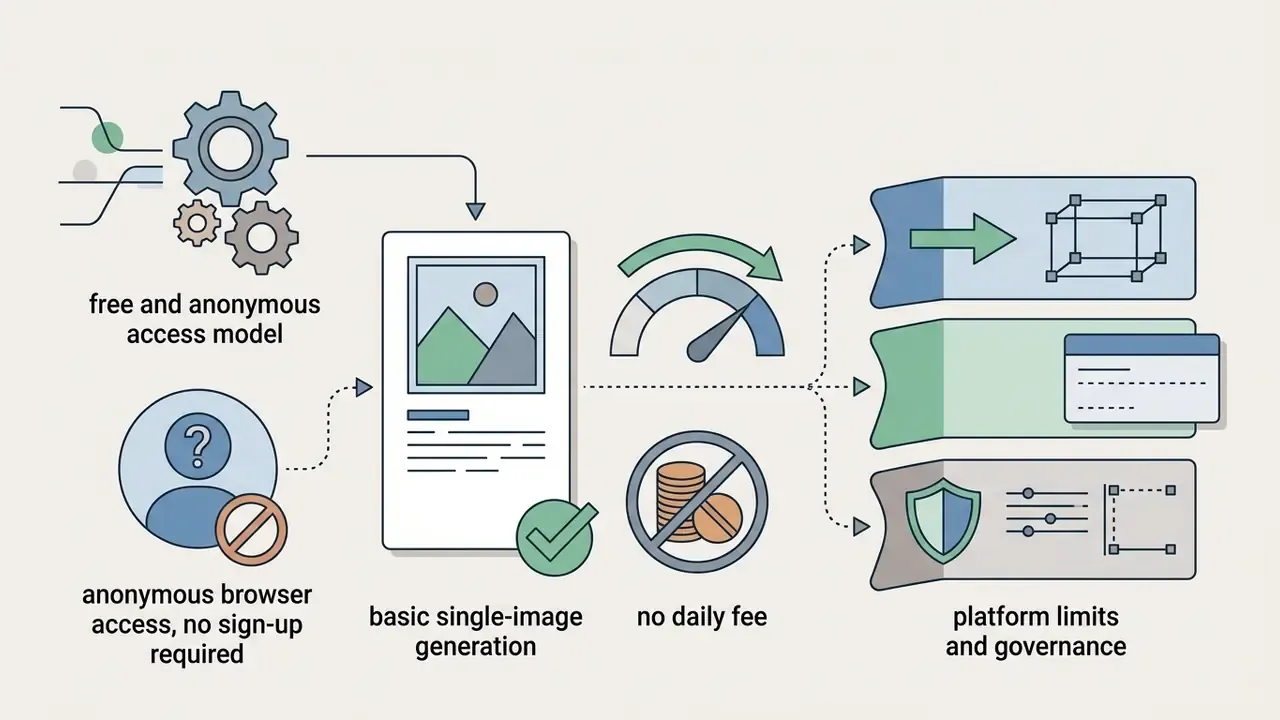
An ai image caption generator free tier normally imposes constraints: daily generation caps, export watermarks, or an account gate. "Free forever" claims deserve a second read of the terms.
Verified tool feature and usage audit (2026 data):
Organizations handling proprietary imagery should verify whether an online service retains uploads for model retraining (NIST Privacy Risk Management Standards). Where provenance is disputed, an ai image detector can help establish whether an asset was synthetic in the first place.


Enterprise evaluation: vision-language APIs and self-hosted models
Consumer caption apps and enterprise vision endpoints are not substitutable. In regulated environments, financial services, healthcare, public sector, the criteria shift from tone presets to retention terms, region pinning, batch throughput, and auditability. The matrix below frames the dimensions procurement should score. Specific commercial terms change often and must be confirmed against each provider's current agreement.
| Evaluation dimension | Consumer SaaS caption tool | Managed enterprise vision API | Self-hosted open vision-language model |
|---|---|---|---|
| Data retention | Often retained; retraining possible per ToS | Contractable zero-data-retention (ZDR) options | Full control; data never leaves your perimeter |
| Region and residency | Rarely specified | Region-pinned deployments available | Determined by your own infrastructure |
| Batch processing | Usually single-image only | Native batch and async job APIs | Unlimited, bounded by GPU capacity |
| Audit logging | Minimal or absent | Request-level logs, tenant isolation | Custom schema, fully owned |
| Certifications | Varies; often undocumented | SOC 2 or ISO-class attestations typical | Inherits your own control environment |
| Cost model | Free tier or flat subscription | Per-token or per-image metered | Capital plus engineering plus inference cost |
| Model updates | Silent, uncontrolled | Versioned endpoints, deprecation notices | Pinned weights; you decide when to upgrade |
| Fit for regulated use | Low, with shadow AI risk | Medium to high with the right contract | High, at higher operating cost |
Practical guidance. If the imagery contains customer data, unreleased product design, internal premises, or identifiable staff, a consumer free tier is the wrong instrument regardless of output quality. Route those assets to a contracted endpoint or a self-hosted model. Teams already budgeting for metered multimodal inference will recognise the same cost mechanics documented for other generative media APIs.
Shadow AI and governance checklist
The dominant enterprise risk is not a bad caption. It is an unapproved tool quietly absorbing proprietary imagery. Map each workflow stage to a control.
| Workflow stage | Primary risk | Control (HITL / MRM) |
|---|---|---|
| Tool selection | Shadow AI; unvetted ToS | Maintain an approved-tool register; block unapproved domains |
| Image upload | Confidential data egress; retraining exposure | Classify assets; restrict sensitive classes to ZDR endpoints |
| Inference | Hallucination; object misidentification | Mandatory human verification before publication |
| Tone and parameter setting | Off-brand or non-compliant register | Versioned prompt templates with locked parameters |
| Editing | Undocumented changes | Log raw output plus editor identity plus final text |
| Publication | Missing synthetic-content disclosure | Apply platform AI labels; record the disclosure decision |
| Post-publication | No traceability during review | Retain the audit log per retention schedule |
| Model change | Silent behaviour drift | Pin model versions; re-validate on upgrade |
One honest limitation: this checklist assumes you already know which tools your marketing team uses. Most organisations discover, on first inventory, that the real number is higher than the approved one. Where disputes over AI-assisted content escalate, the case patterns collected in our litigation hub are worth a look before drafting policy language.
Can AI-generated captions be used for commercial purposes?
«Academic work on commercial AI caption deployment focuses on technical effectiveness and does not provide legal analysis of licensing for generated content». - Maheshwari et al., Social Media Ready Caption Generation for Brands (2024). https://arxiv.org/abs/2404.01748
Commercial deployers must also respect publicity rights and synthetic media disclosure laws. Using AI to generate copy that implies unauthorized endorsement, or that incorporates protected likenesses without consent, is prohibited under state and federal rules (California Civil Code Provisions; EU AI Act Transparency Requirements, 2025). EU transparency rules cover AI-generated text, image, and video, state that outputs should be machine-readable and detectable as synthetic, and allow deployers to use icons as AI labels. Where disclosure obligations bite, verification tooling such as an AI detection workflow helps confirm what is actually being published.
Three practical checks before commercial publication:


FAQ: frequently asked questions about AI image caption generators
Are AI-generated captions unique?
Not guaranteed, no. Duplication rates vary substantially by dataset, decoding method, and the originality metric applied, and a 2024 review of creative data generation notes that no standard automatic originality test exists for natural language generation. Practically, deterministic decoding at temperature zero repeats itself far more than sampled decoding does.
«Stochastic sampling during decoding enables varied captions for a single image, reducing duplication risk compared with deterministic search». - Benchmarking and Improving Detail Image Caption (2024). https://arxiv.org/abs/2405.19092 Two controls raise originality: non-zero temperature sampling with prompt paraphrasing, and a mandatory human rewrite pass that swaps brand-specific vocabulary in for generic model phrasing.
Does an AI image caption generator support batch processing?
Enterprise-grade captioning systems and programmatic API pipelines support automated batch processing for multi-image libraries (txtai Caption pipeline documentation; mmpretrain ImageCaptionInferencer). These pipelines ingest structured image lists and return formatted captions, metadata tags, and alt text records at scale. Web-based consumer tools often restrict free tiers to single-image uploads to manage server load, and a few position one-at-a-time processing as a review feature rather than a limit.
«PixelProse demonstrates scalability: over 16 million captions were generated automatically for web images, confirming the technical feasibility of batch processing». - Singla et al., PixelProse (2024). https://arxiv.org/abs/2406.10328 Documented large-scale runs report multi-million-caption jobs completing over several days with sub-0.1% failure rates. That is the throughput class relevant to digital-archive and catalogue projects.
How is an AI caption generator different from a general chatbot?
A dedicated caption generator ships with platform presets, character governors, hashtag caps, and batch endpoints built in. A general-purpose chat assistant can read an image too, but you have to specify every constraint yourself in the prompt, every time. For a one-off post that is fine. For 400 catalog assets it is a control gap, since nothing enforces the parameter set between runs.
What types of photos work best?
Clear, well-lit images with a distinct subject, contrasting colours, and an uncluttered background yield the most accurate and detailed captions. Portraits, product shots, landscapes, and food photography perform reliably. Abstract art, ambiguous compositions, dense crowds, and motion-blurred frames produce the highest error rates.
Can the model know names, occasions, or inside jokes?
No. Vision models reliably identify subjects, settings, and mood. They cannot know a person's name, the occasion being celebrated, or any context outside the frame. Supply those details yourself. That is precisely where a caption stops being generic.
Should a caption simply describe what is visible?
No. Restating the obvious is the weakest option available. The strongest captions add what viewers cannot see: the backstory, the punchline, the tip, the reason the moment mattered. Use the model output as scaffolding and build context on top.
Are AI captions the same as alt text?
No. Captions are visible, engaging text published alongside an image to add interpretation and context. Alt text is functional accessibility text consumed by screen readers, constrained in length, and written to avoid duplicating adjacent body copy. One tool can draft both, but the parameters and the review standard differ.
Do AI captioning tools watermark or store uploaded images?
That varies entirely by provider, and it is the most important question to answer before uploading anything proprietary. Some browser-local tools never transmit the file. Some free services process server-side and reserve retraining rights in their terms. Enterprise endpoints can be contracted for zero data retention. Read the current terms, not the marketing page.
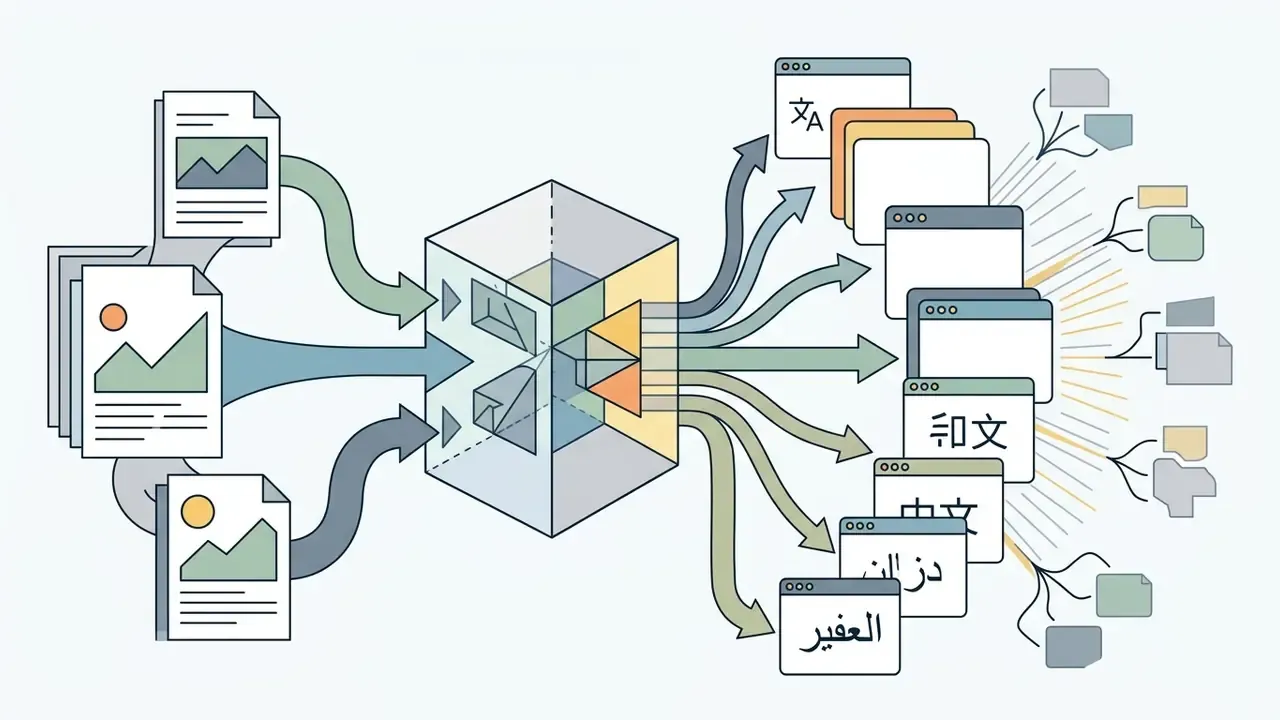
Can captions be generated in multiple languages?
Most established tools support multi-language generation, commonly English, Spanish, French, German, Italian, Portuguese, Chinese, Japanese, and Arabic. Some overlay-focused products generate mainly in English and rely on manual translation afterwards. Verify native-language quality for your target market rather than assuming parity across the supported list.
Appendix A: superseded formulations retained for transparency
A safe next step
Start small and evidence-first. Inventory the captioning tools already in use, classify the imagery each one touches, then approve a single endpoint for anything sensitive. Log raw output and final text from day one, because retrofitting an audit trail is harder than building it. To review neighbouring tool categories under the same criteria, open the hub or compare options across the commercial-use library.