"No evidence, no autonomy. Evaluating generative AI and video avatar platforms requires measurable technical benchmarks, explicit risk controls, and verifiable audit trails before deployment into production workflows."
Last updated: Q1 2026 | Testing window: 60+ hours across 15 platforms | Verification basis: vendor documentation, security attestations, and hands-on generation tests
That is the gap this guide tries to close. Not "which tool looks coolest," but which tool survives procurement, security review, and a model inventory entry.
This guide walks through our ranking method, a like-for-like platform comparison, the security and governance matrix, real cost per finished minute, twelve detailed reviews, the production workflow, shadow AI controls, model risk validation, and a buyer checklist you can reuse in a trial.
Executive Summary for Buyers, CROs and Content Leads
- Best overall for scale and expressiveness HeyGen. 1,100+ stock avatars, 175+ languages and dialects, phoneme-level lip sync through its Avatar IV engine, SOC 2 Type II attestation.
- Best for enterprise learning and governance Synthesia. 240+ ready-made avatars, AI scene generation powered by Veo 3, SCORM export, SOC 2 Type II, ISO/IEC 27001, 27701 and 42001 certifications.
- Best for real-time interactive agents D-ID. Sub-second WebRTC streaming avatars, single-photo avatar generation, API-first architecture, ISO/IEC 27001:2022.
- Best for structured compliance training Colossyan. 300+ workplace presenters, PDF/PPTX-to-video, branching scenarios, SCORM/LMS export.
- Best for conversational sales twins Tavus. Digital twin cloning plus real-time conversational APIs and dynamic variable insertion.
- Best fully free option Vivideo. A free tier with zero watermarks and multi-model generation (Kling, Runway, Luma).
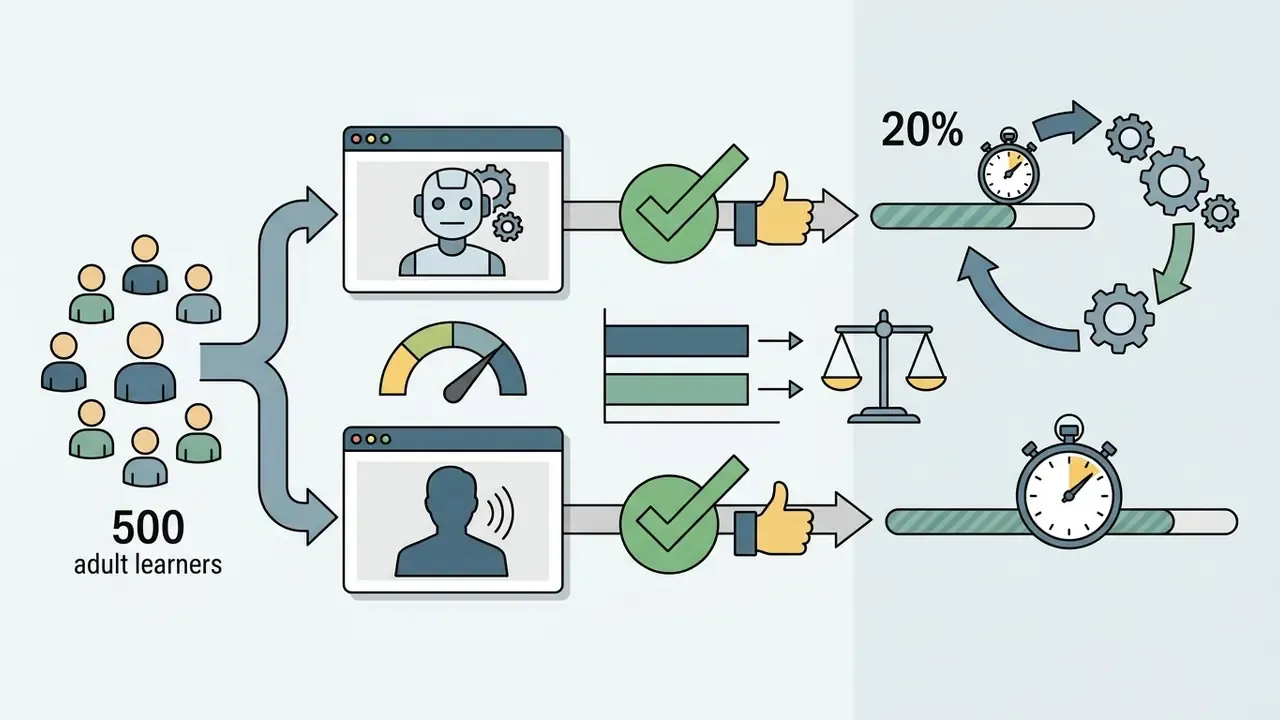
- Evidence, not vibes A USC Marshall evaluation across 250+ business professionals found identical knowledge transfer between human presenters and top-tier AI avatars. A separate study of 500 adult learners found no significant engagement or retention gap, while viewers completed the AI version roughly 20% faster.
- Governance is the real gate Digital twins and voice clones require recorded consent matching the training footage, synthetic-media disclosure under EU AI Act Article 50 and US FTC guidance, and vendor attestations (SOC 2 Type II, ISO 27001) before production deployment.
- Cost reality Headline subscription price is a poor comparator. Measure cost per finished minute, including custom avatar fees, seat licences, and the internal cost of compliance review.
How We Ranked the Best AI Avatar Software for Video Generation
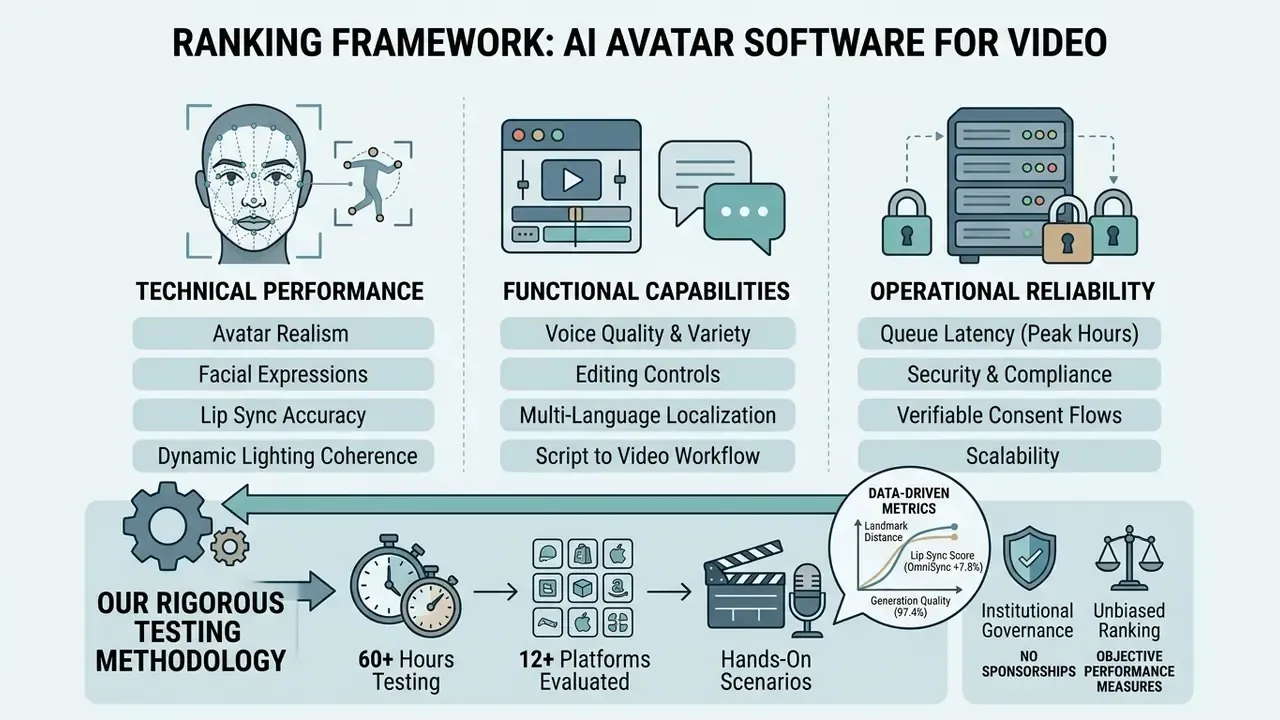
Determining the best ai avatar software for video generation requires an objective evaluation framework across technical, functional, and governance dimensions. Platforms were scored on five primary criteria: avatar visual realism, lip-sync accuracy, voice synthesis range, editing flexibility, and production cost per finished minute. Evaluators examined public product specifications, security documentation (SOC 2 Type II, GDPR), and consent verification protocols for custom avatar creation and voice cloning.
How we tested. Our evaluation team ran more than 60 hours of hands-on testing across 15 AI avatar platforms in 2026. We executed identical standardized scripts (100 to 300 words in English, Spanish, and Mandarin) on every tool to measure lip-sync accuracy (LSE-D scores), voice naturalness, rendering speed, and artifact generation under dense technical terminology. Drift was inspected at the 30-, 60-, and 90-second marks on every render. Each output was reviewed by two independent evaluators, and disagreements were resolved by generating a third render from the same prompt. Scoring weights were fixed before testing: avatar realism 25%, lip-sync accuracy 20%, voice and language range 20%, editing and workflow flexibility 20%, cost per finished minute 15%.
Testing also covered the unglamorous edges that break production pipelines: queue latency during peak hours, failure rates on scripts containing acronyms and numerals, subtitle burn-in accuracy, and export compatibility with enterprise video management systems. That last one sinks more pilots than realism ever does.
Rankings reflect measured performance, not vendor sponsorships or affiliate arrangements.
For institutional governance, platforms must provide verifiable consent flows for personal likeness use, robust role-based access controls, and clear data retention policies. Organizations evaluating enterprise media tools can explore the hub for technical performance benchmarks across generative media systems.
Avatar Realism, Facial Expressions and Lip Sync
Recent research benchmarks, such as the Avatar V report, evaluate visual fidelity through identity consistency, lip-sync accuracy, motion naturalness, and artifact control, using quantitative measures including Face Similarity, Sync-C/Sync-D, and Q-Align scores.
"Models evaluated on 70 cross-scene test cases reach a Face Similarity of 0.840 against a 0.861 reference, outperforming competitors scoring 0.714 to 0.732."
Holding lip sync over long durations without visible temporal drift remains the practical threshold for high-quality talking head videos. In our own testing, desynchronization appearing after roughly 45 seconds of continuous speech was treated as a scoring penalty. To be precise about what that number is: an internal evaluation convention, not a published industry standard. Teams should recalibrate it against their own content lengths. Independent academic corroboration of a universal drift threshold is not yet available, so we report it as a practitioner heuristic that still needs data.
Voice, Editing and Localization Capabilities
An advanced ai video generator has to pair expressive ai voice synthesis with flexible in-browser editing.
"A virtual instructor with an AI-generated voice and an appealing AI-generated appearance significantly improved learner performance and motivation."
Quick Comparison of Top AI Video Avatar Generators
Selecting the best ai video avatar generator 2025 or its 2026 successor comes down to matching platform strengths to your workflow and deployment model. Buyers who want a wider market view can also compare leading AI video generators across quality, duration limits, credits, and export rights. Leading platforms such as HeyGen, Synthesia, D-ID, Colossyan, Elai, and AI Studios differ sharply on stock avatar diversity, custom digital twin fidelity, translation range, and enterprise security controls.
Quick comparison of the best AI avatar software for video generation (verified Q1 2026).
| Platform | Avatar types and library | Custom avatar creation | Lip sync and realism | Voice cloning and translation | Editing and workflow tools | Free plan / trial (2026) | Optimal use case |
|---|---|---|---|---|---|---|---|
| HeyGen | 1,100+ stock avatars, expressive digital humans | Instant photo avatar and high-fidelity video twin from a 15-second clip | Avatar IV engine, phoneme-level alignment, gesture control | Voice cloning, dubbing in 175+ languages and dialects | In-browser editor, brand kit, auto-captions, API | Free plan (1 to 3 videos/mo by region, 720p, watermarked) | Marketing campaigns, personalized sales outreach, social ads |
| Synthesia | 240+ professional studio and full-body avatars | Personal avatar from one photo or short video, recorded consent required | High temporal stability, micro-expressions, Veo 3 scene generation | Voice cloning, 160+ languages and 1-click dubbing, 1,000+ voices | SCORM export, media import, interactive quizzes, Brand Kit | Free Basic plan (10 min/mo, limited stock avatars) | Enterprise L&D, corporate training videos, internal comms |
| D-ID | Photo-based avatars, stylized and 3D real-time agents | Single-image photo to talking avatar; video-trained premium avatars | Real-time WebRTC streaming lip sync, sub-second response | Voice cloning, multi-language dubbing (up to 29 languages) | API-first architecture, web widgets, studio editor, RAG agents | 14-day free trial; plans from about $5.90/mo | Interactive customer support, real-time AI agents, developers |
| Colossyan | 300+ workplace and presenter avatars, 100+ languages | Instant photo avatar and studio custom twin | Multi-presenter dialogue synchronization, custom pronunciation | 15+ custom voices, 120+ translation languages | PDF/PPTX to video, SCORM export, quizzes, branching, brand kit | Free tier plus 14-day full-feature trial | Structured course creation, compliance training, onboarding |
| Elai | 80+ avatars including photo and cartoon options | Personal digital twin and animated avatars | Automated viseme-to-mouth mapping | Voice cloning, 75+ dubbing languages | Article-to-video, automated PPT conversion | Free plan (1 minute credit) | Educational content, product explainers, news-style clips |
| AI Studios (DeepBrain AI) | 150+ realistic 2D and 3D presenters | Custom digital human cloning (paid plans only) | Broadcast-grade full-body motion, ultra-realistic modelling | Voice cloning, AI dubbing in 150+ languages | Script assistant, URL to video, template builder, bulk API | Free trial with watermark; enterprise pricing on request | Broadcast media, executive communications, retail kiosks |
| Tavus | Conversational digital twins, developer-first replicas | Replica cloning from short footage | Natural mouth movement, real-time conversational latency | Cloned voice, multilingual conversation support | Real-time conversational API, dynamic variables, CRM automation | Free tier; paid plans from about $39/mo up to enterprise | Personalized sales outreach, live interactive agents |
| Speechify Studio | Narrator-led avatars with audio-first pipeline | Digital twin avatars and voice cloning from short samples | Natural mouth movement, strong audio-visual pacing | 100+ neural voices, multilingual narration | Document-to-video, audio cloning, fast rendering | Free trial; avatar pricing on request | Audiobooks, narrated documents, educational recaps |
| Vivideo | Prompt-generated characters, photo animation | Photo-to-avatar animation | Multi-model rendering (Kling, Runway, Luma) | AI voices and dubbing across about 30 languages | Captioning, branding, resizing, browser and mobile apps | Free tier with zero watermarks, no credit card | Creators, casual marketers, budget-constrained projects |
| VEED | Basic stock avatars inside a full editing suite | Limited custom avatar options | Adequate for short clips; weaker on long-form realism | AI voices, subtitles and translation | Full editor, eye-contact correction, meme tools, templates | Free plan with watermark; paid from about $29/mo | Social edits, subtitle-heavy content, quick repurposing |
| Vidnoz | Full-body avatars generated from images | Image-to-avatar with gestures | Lip sync suited to slideshow and explainer formats | Voice cloning and translation on Business tier | Templates, canvas editor, brand kit on higher tiers | Free daily credits (about 3 min/day, 720p, watermark) | Simple marketing and explainer videos at low cost |
| Vidyard AI Avatars | Sales-focused personal avatars | Custom avatar from about 90 seconds of training video | Consistent talking-head delivery | Cloned voice, personalized variable playback | Video messaging, engagement analytics, CRM integration | Free plan for video messaging; avatar features on paid tiers | Personalized sales prospecting and follow-up at scale |
Read across the table and one pattern stands out. Library size and language count cluster tightly at the top, so they rarely decide a purchase. Consent workflow, certification depth, and metering model do.
Enterprise Security and Data Governance Matrix
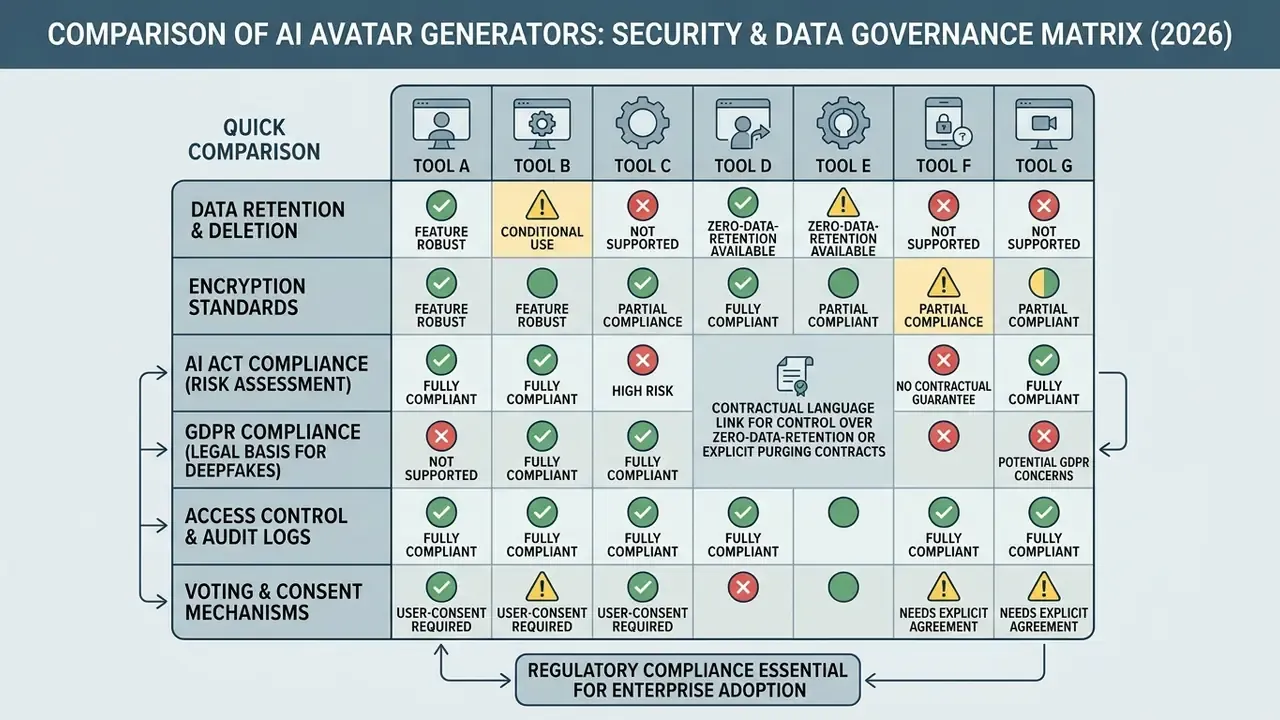
| Control | HeyGen | Synthesia | D-ID | Colossyan | AI Studios |
|---|---|---|---|---|---|
| Published attestation | SOC 2 Type II, GDPR | SOC 2 Type II, ISO/IEC 27001, 27701, 42001, UK Cyber Essentials | ISO/IEC 27001:2022 | SOC 2 Type II, GDPR | Enterprise agreements; confirm per contract |
| SSO / SAML | Yes (enterprise) | Yes (enterprise) | Confirm per contract | Confirm per contract | Confirm per contract |
| Role-based access control | Yes | Yes, with admin controls and audit logging | API key scoping | Team roles | Enterprise admin console |
| EU data residency | Confirm per contract | Documented EU residency option | Confirm per contract | Confirm per contract | Confirm per contract |
| Consent workflow for likeness | Recorded consent video, 24-hour consent links, pre-recorded consent supported | Live recorded consent statement matching avatar footage | Consent required for likeness use | Consent required for instant avatars | Consent required on custom digital humans |
| Content moderation | Automated plus human review | Combined human and AI moderation, dedicated Trust and Safety team | Policy-based moderation | Policy-based moderation | Policy-based moderation |
| Opt-out from model training | Request in DPA | Request in DPA | Request in DPA | Request in DPA | Request in DPA |
| Synthetic-content labelling | Supported disclosure practices | Publishes EU AI Act Article 50 labelling on AI-generated content | Supported disclosure practices | Supported disclosure practices | Supported disclosure practices |
Two further controls deserve explicit contractual language regardless of vendor: zero-data-retention or short-retention processing for scripts containing material non-public information, and provenance signing of exported files. Content Credentials under the C2PA specification provide tamper-evident, machine-readable labels for media created or modified with generative AI. The IAB AI Transparency and Disclosure Framework asks that synthetic avatars carry both a visible label such as "AI-generated person" and machine-readable C2PA metadata. Where a vendor cannot sign outputs yet, add the signing step downstream in your own media pipeline. Teams checking licence scope for external publication can also review the commercial use hub before a campaign goes live.
Cost per Finished Minute, Enterprise Licensing and Total Cost of Ownership
Headline subscription prices mislead procurement because platforms meter differently. Some sell minutes, some sell credits, some sell seats, and most charge separately for custom avatars. The only comparable unit is cost per finished minute of approved, exportable video.
| Platform | Entry paid tier | Metering model | Indicative cost per finished minute | Notable extra costs |
|---|---|---|---|---|
| HeyGen | $29/mo Creator; $49/mo Pro; $149/mo Business + $20/seat | Credits and minutes | Low at Pro volumes, rises sharply on overage credits | Additional custom avatars, seat fees, API throughput |
| Synthesia | $29/mo Starter; $89/mo Creator; Enterprise on request | Minutes per month | Predictable; best value at Enterprise volumes | Custom avatar creation, additional seats, SCORM-heavy workflows |
| D-ID | From about $5.90/mo, up to about $300/mo | Minutes and streaming credits, unused minutes expire monthly | Very low for short clips, high for long-form | Real-time streaming minutes, premium avatar training |
| Colossyan | $27 to $120/mo | Minutes plus translation credits | Moderate; translation credits are the swing factor | 15 custom avatars and 3 voices bundled on higher tiers |
| Elai | Paid tiers after 1-minute free credit | Minutes | Moderate | Custom avatar, extra languages |
| AI Studios | Enterprise on request | Volume contract | Lowest at bulk broadcast volumes | Custom digital human, dedicated support |
| Vivideo | Free tier; premium for longer renders | Free with premium upgrade | Effectively zero on the free tier | Longer durations and priority queues |
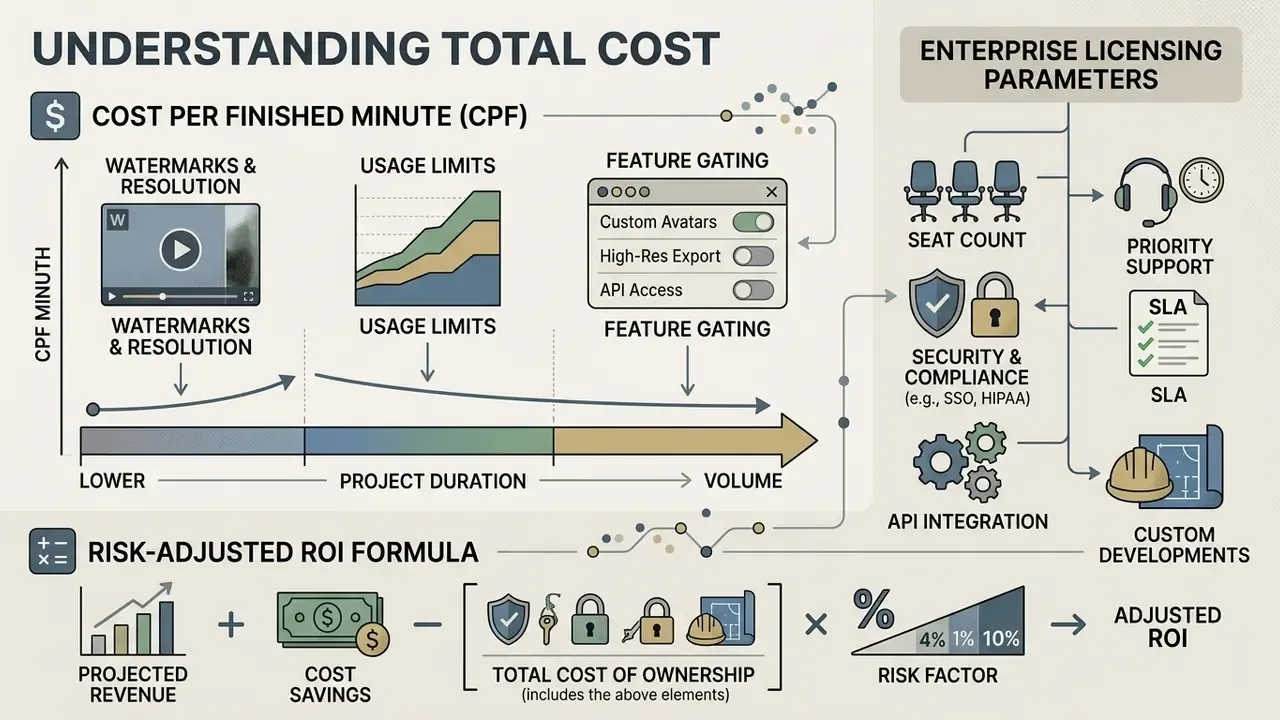
Free tiers, trials and paid plans: what actually changes. Free tiers and trial environments let teams test interface usability, avatar rendering quality, and lip-sync accuracy before committing capital. Teams benchmarking no-cost options can also consult our overview of free AI video generators. Free plans typically enforce strict operational limits:
- Watermarks and resolution Free tiers generally export with vendor watermarks and cap output at 720p. Paid subscriptions unlock 1080p and 4K exports without watermarks. Vivideo is the notable exception, offering a free tier with zero watermarks.
- Usage limits Free plans restrict generation to roughly 1 to 3 minutes or 1 to 3 videos per month, and some competitors meter daily credits instead. Free trials may grant temporary access to full features for 14 days before requiring an upgrade. Colossyan's trial notably includes watermark-free export and full avatar library access.
- Feature gating Advanced capabilities, including custom avatar creation, professional voice cloning, API access, Brand Kit enforcement, SCORM export, and SSO, are restricted to paid Creator, Pro, or Enterprise tiers. To compare subscription cost structures across creative tools, managers can review our AI Media Pricing Guides.
Enterprise parameters worth negotiating. Institutional agreements should specify minimum annual minutes with rollover, number of included custom avatars and cloned voices, seat expansion pricing, API rate limits, uptime SLA with service credits, a named support contact, data residency region, retention period, and deletion SLA. Ask explicitly whether unused minutes expire monthly, since at least one major vendor documents monthly expiry.
Risk-adjusted ROI formula. A defensible business case nets out the cost of controls, not just licence spend:
Risk-Adjusted ROI = (Avoided Production Cost + Avoided Translation Cost + Cycle-Time Value)
                    − (Software Licence + Custom Avatar Fees + Compliance Review & Audit Cost
                       + Governance Tooling + Training)
                    ÷ Total Investment
Compliance review cost is the line item pilots forget. Budget reviewer hours per published video, legal sign-off for any likeness used externally, and periodic re-validation of the platform inside your model inventory. In a mid-sized rollout of 200 videos a year, review labour can rival or exceed the licence itself. Worth modelling before you sign.
Best Tools by Use Case and Industry
Platform performance varies sharply across business applications:
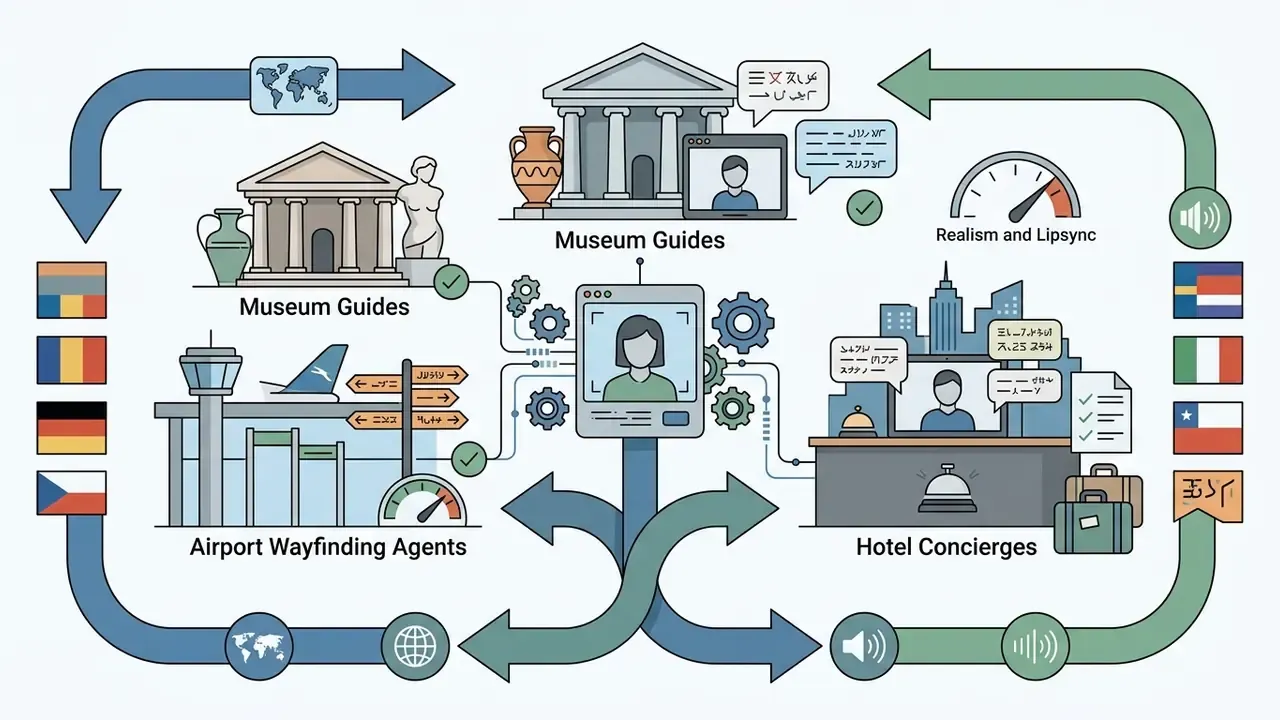
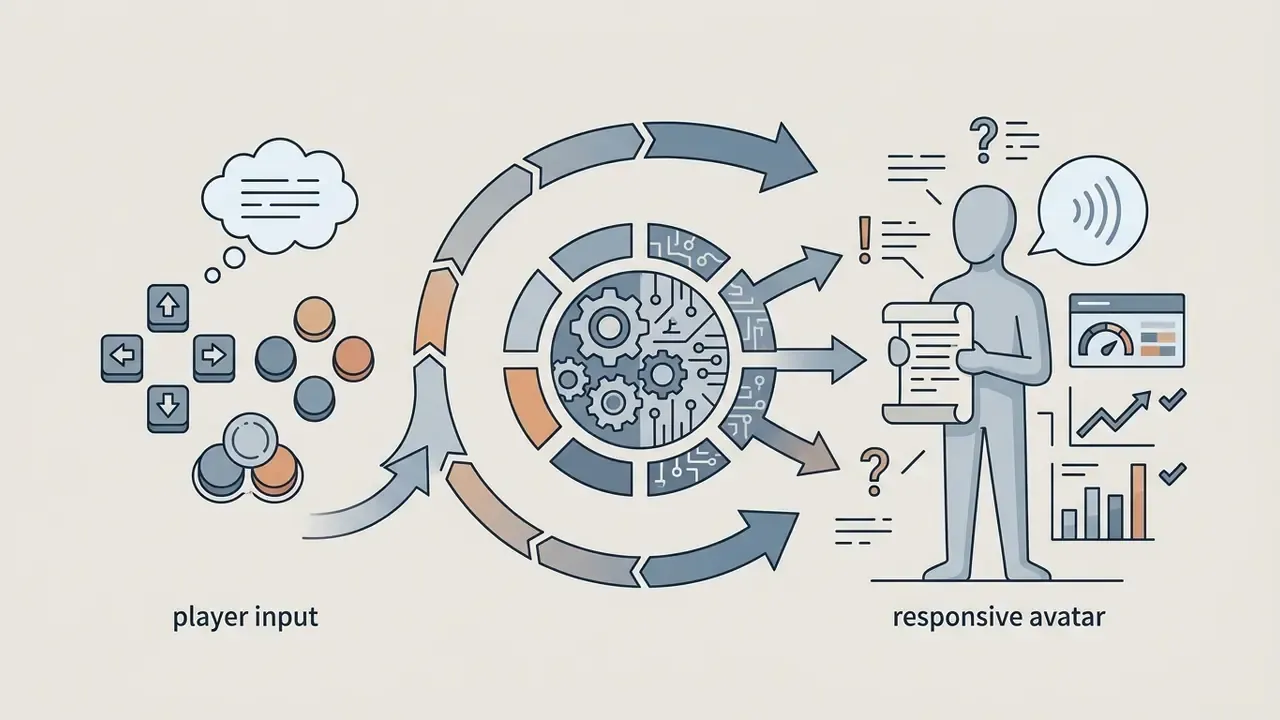
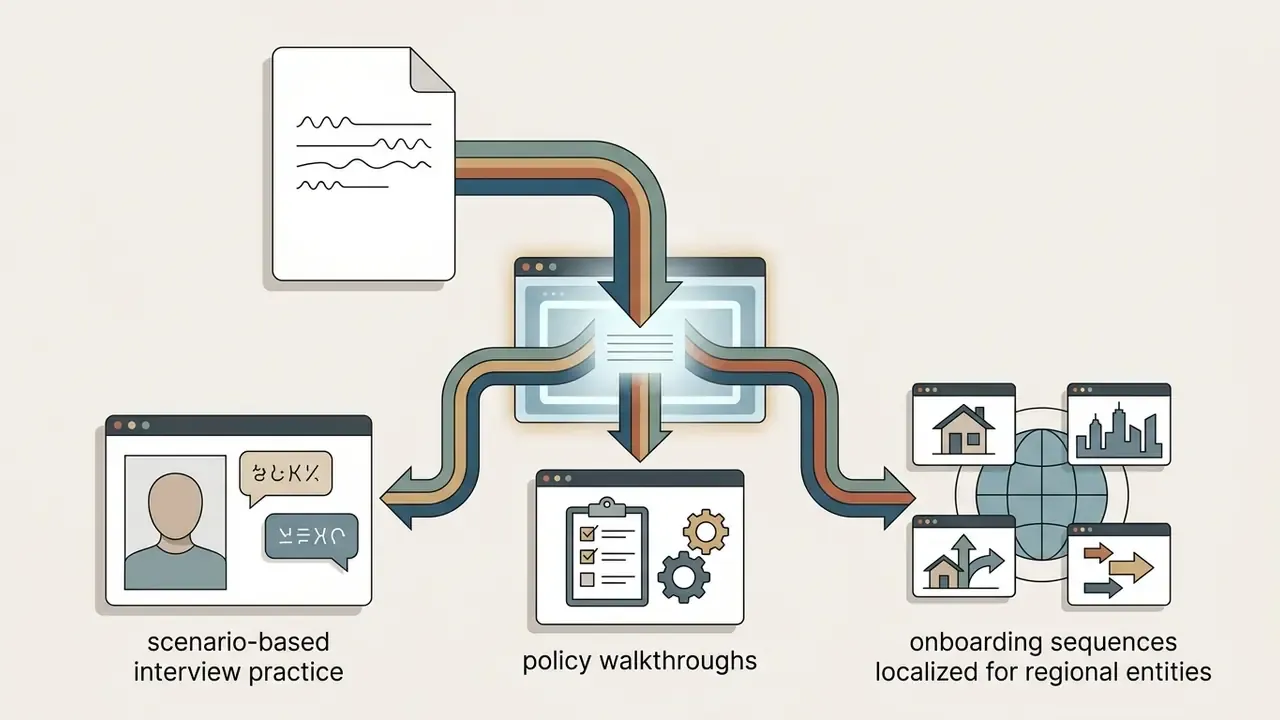
- Corporate training videos: Synthesia and Colossyan lead in learning and development thanks to SCORM export, LMS integration, and built-in interactive quizzes.
That matters for training specifically. If your scripts require gesture-heavy demonstration or standing full-body presenters, test body coherence separately from face quality, because a platform can score excellently on lip sync and still produce unstable hands and shoulders.
Detailed Reviews of the Best AI Avatar Video Generators
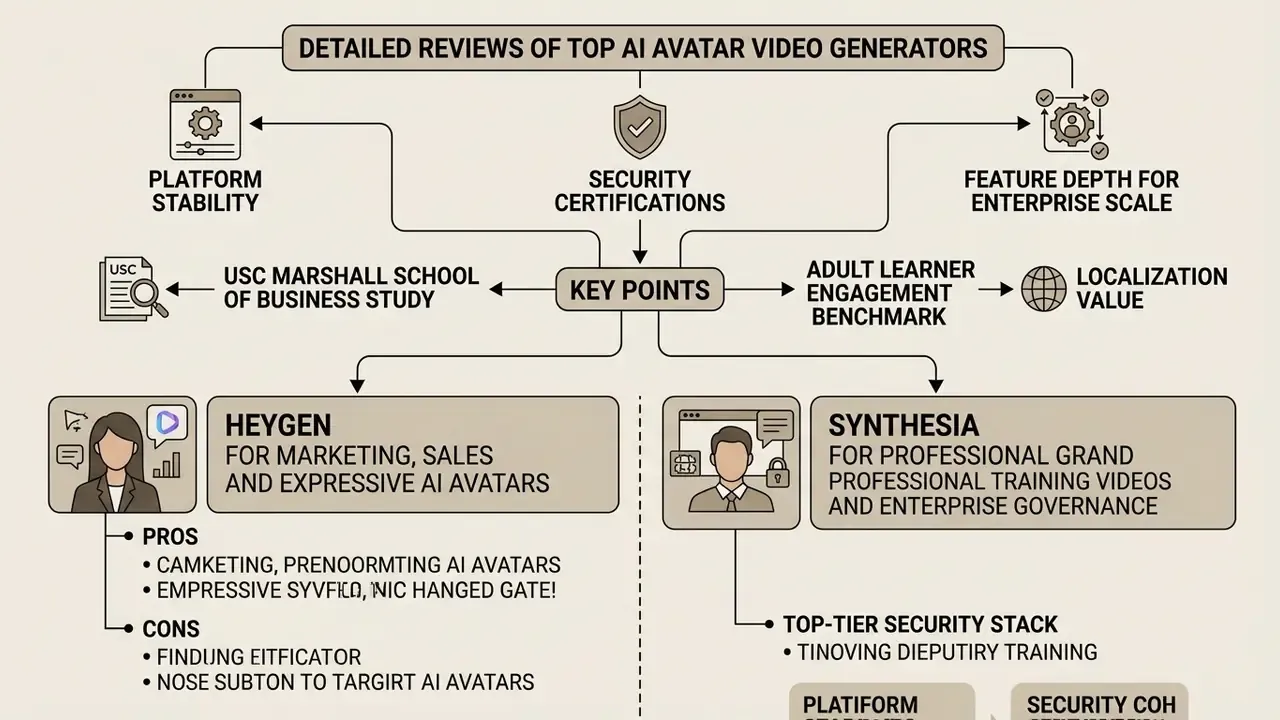
A thorough read of top ai avatar video generator reviews means looking at platform stability, security certifications, and feature depth for enterprise scale. Organizations moving from pilot to production must verify whether platforms satisfy SOC 2 Type II, ISO 27001, and GDPR expectations.
Evidence-based engagement and ROI. Empirical research supports the effectiveness of AI presenters in corporate and educational settings:

"A survey of 357 respondents across 39 countries found that technology trust, perceived usefulness and enjoyment significantly predicted consumer willingness to engage with digital human stylists."
Put together, these findings move the decision away from "will audiences accept an avatar" and toward "which avatar, with what disclosure, for which audience." Trust is the mediating variable, and realism raises it. A 2025 JCOM study found that higher perceived realism increased trustworthiness in AI avatars when realism was rated on scales spanning "computer-animated to real" and "digitally copied to authentic."
HeyGen for Marketing, Sales and Expressive AI Avatars
HeyGen is built for high-impact commercial work, with expressive ai avatars, dynamic gestural control, and fast localization. The platform accepts text, image, and audio inputs and produces high-definition video with natural visual cadence. Its Avatar IV engine combines phoneme-level lip synchronization, facial expression tracking, and hand gestures, delivering strong visual coherence across varied frame rates.
Key features include instant custom avatar creation from a short clip (a digital twin can be trained from as little as 15 seconds of footage, which also clones one voice from the training material), high-fidelity voice cloning, and automated ai dubbing across more than 175 languages and dialects. One master campaign can be localized into unlimited language versions with lip-sync retiming. HeyGen provides SOC 2 Type II certification, SAML SSO, enterprise role-based access control, and strict consent verification, requiring explicit recorded video consent before digital twin creation, with 24-hour consent links and support for pre-recorded consent clips on enterprise plans.
Pros:
- 1,100+ hyper-realistic stock avatars and 175+ languages and dialects.
- Industry-leading lip-sync precision (Avatar IV engine) with phoneme-level tracking.
- Instant custom photo-avatar generation and automated video dubbing.
- Fast rendering with API automation for high-volume personalized outreach.
- Free plan available for evaluation before purchase.
Cons:
- Watermarks on the free tier; strict monthly generation limits on entry plans.
- Advanced features such as API access and Brand Kit enforcement sit on high-tier plans.
- Credit-based overage pricing can make costs unpredictable at scale.
- Expensive for individual creators compared with free alternatives.
Synthesia for Professional Training Videos and Enterprise Governance
Synthesia specializes in workplace communication, learning and development, and enterprise knowledge management. It provides over 240 ready-made avatars and supports multilingual video generation in more than 160 languages with 1,000+ AI voices. Its native editor lets learning designers turn PDFs, slide decks, URLs, and text documents into structured video courses with embedded quizzes and SCORM compliance. Customizable avatars can be prompted into new outfits, settings, and on-screen actions through AI scene generation powered by Veo 3, which removes filming and manual compositing.
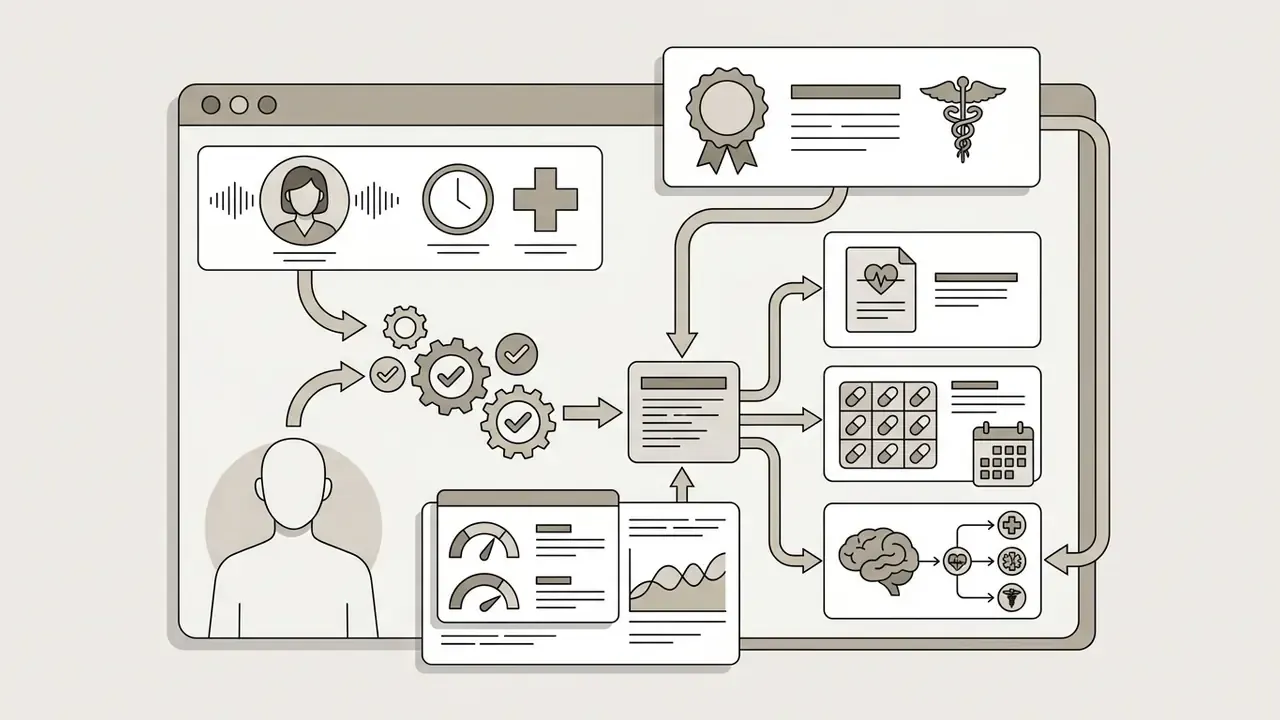
Synthesia operates under rigorous governance frameworks, holding SOC 2 Type II, ISO/IEC 27001, 27701, and 42001 certifications, plus UK Cyber Essentials, EU data residency options, SSO/SAML, admin controls, and combined human and AI content moderation. Personal avatars require a live recorded consent statement, and the person in the consent video must be the same individual shown in the avatar footage.
"LongCat-Video-Avatar 1.5 outperforms HeyGen and OmniHuman 1.5 in expert evaluations across 508 image-audio pairs on naturalness, physical plausibility, and temporal stability."
Comparisons like that are a useful reminder: commercial platform quality is a moving target. Procurement should re-benchmark annually rather than treat a 2026 shortlist as permanent.
- 240+ professional avatars with native AI scene generation powered by Veo 3.
- SCORM export, built-in interactive quizzes, and clean LMS integration.
- 160+ languages with one-click translation for global training rollouts.
- Free Basic plan for avatar and voice testing without a credit card.
Cons:
- Limited free allowance (10 minutes per month) and no unlimited free production tier.
- Less optimized for viral short-form social content than marketing-first tools.
- Some stock-avatar scenarios and features are gated to Enterprise agreements.
- Language-count claims vary across vendor pages, so confirm coverage for your specific locales.
AI Studios by DeepBrain AI for Broadcast-Grade Digital Humans
DeepBrain AI's AI Studios targets broadcast-quality digital human presentation, offering full-body ai presenters suited to executive announcements, retail kiosks, and news formats. Avatars are modelled on real human performers, supporting 2D and 3D full-body output with AI dubbing across 150+ languages and script-to-video automation for large production runs.
Pros:
- Ultra-realistic avatars based on real human models with strong body animation.
- Bulk generation and API support for enterprise content pipelines.
- AI dubbing in 150+ languages with synchronized lip movement.
- Custom voice and avatar creation for corporate identities.
Cons:
- Custom avatar creation is restricted to paid or enterprise plans.
- Pricing requires a sales conversation, which reduces budgeting transparency.
- Cloud rendering demands stable bandwidth for large projects.
D-ID for Real-Time Interactive Agents and Photo-to-Video
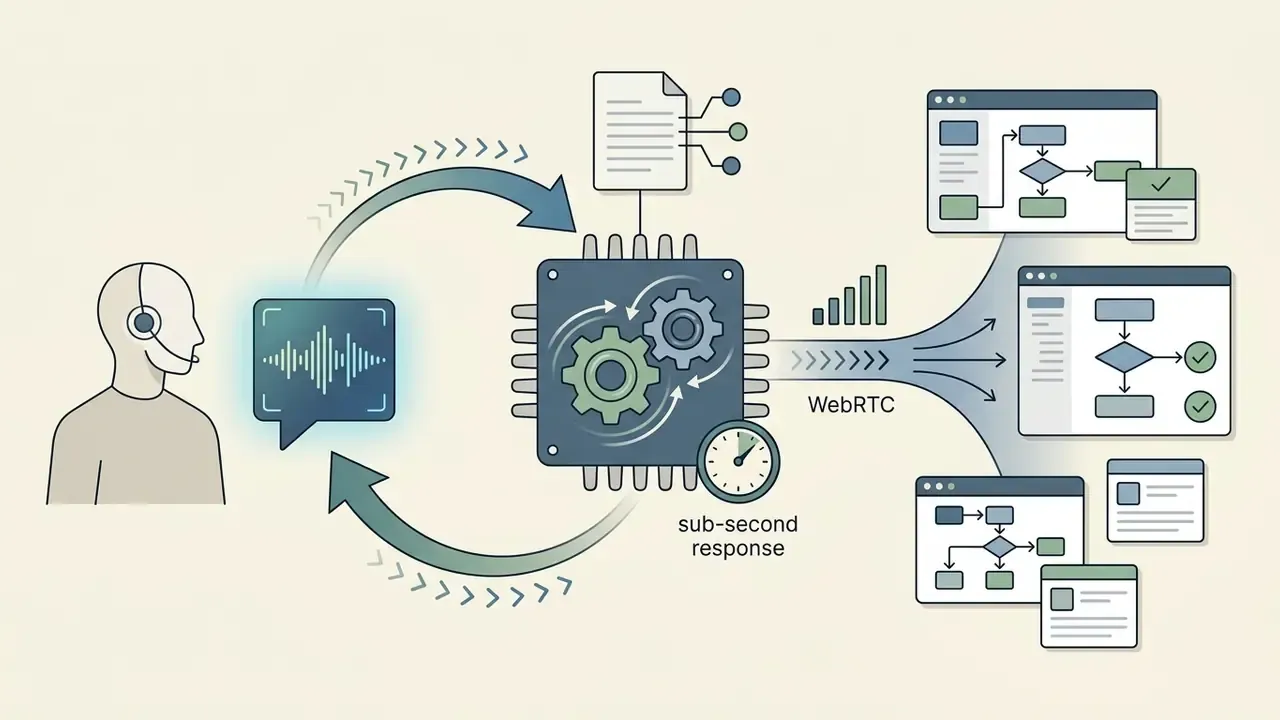
D-ID's Creative Reality Studio focuses on streaming avatars, with real-time WebRTC APIs powering interactive visual agents for customer support and automated web interactions. It converts a single still image into a talking avatar and supports retrieval-augmented generation, so agents answer from approved knowledge bases with sub-second latency. D-ID publishes ISO/IEC 27001:2022 certification and documents scalable training-video creation from scripts, documents, and presentations.
Pros:
- Best-in-class real-time conversational agents with WebRTC streaming.
- Any photo can become an avatar; flexible low-cost entry pricing.
- API-first architecture with embeddable web widgets.
- Multilingual translation and campaign engagement analytics.
Cons:
- Output quality swings with input photo quality.
- Credit-based system where unused minutes expire monthly.
- Stylized avatars can look uncanny in long-form video.
- Smaller curated avatar library than HeyGen or Colossyan.
Colossyan for Compliance and Structured Course Creation
Colossyan focuses on corporate training and instructional design, with automated script generation, multi-avatar dialogue setup, branching scenarios, custom pronunciation dictionaries for technical terminology, and PDF/PPTX-to-video translation. It offers 300+ presenters with multilingual lip sync and SCORM export for LMS integration, and states SOC 2 Type II certification with GDPR compliance and independently audited controls.
Pros:
- Purpose-built for compliance and structured training programmes.
- SCORM export plus quizzes and branching for measurable learning.
- 300+ avatars and 100+ languages with instant photo avatars.
- Custom pronunciation support for regulated or technical vocabulary.
Cons:
- Avatars convey less emotional range than marketing-first competitors.
- Pricing tiers can confuse, with translation credits metered separately.
- Narrow fit for creative or social-first content.
Elai for Article-to-Video and Lightweight Education Content
Elai offers article-to-video automation and varied avatar styles, including photo avatars and cartoon presentations, letting teams scale production without specialized hardware. Its four avatar types and 75+ dubbing languages suit news-style updates, product explainers, and lightweight L&D libraries.
Pros:
- Automated article-to-video and PPT conversion workflows.
- Mixed avatar styles including cartoon and photo presenters.
- Free plan credit for immediate testing.
Cons:
- Smaller avatar library (80+) than category leaders.
- Enterprise security documentation is less detailed publicly.
- Lower ceiling on realism for premium brand content.
Tavus for Hyper-Personalized Conversational Digital Twins
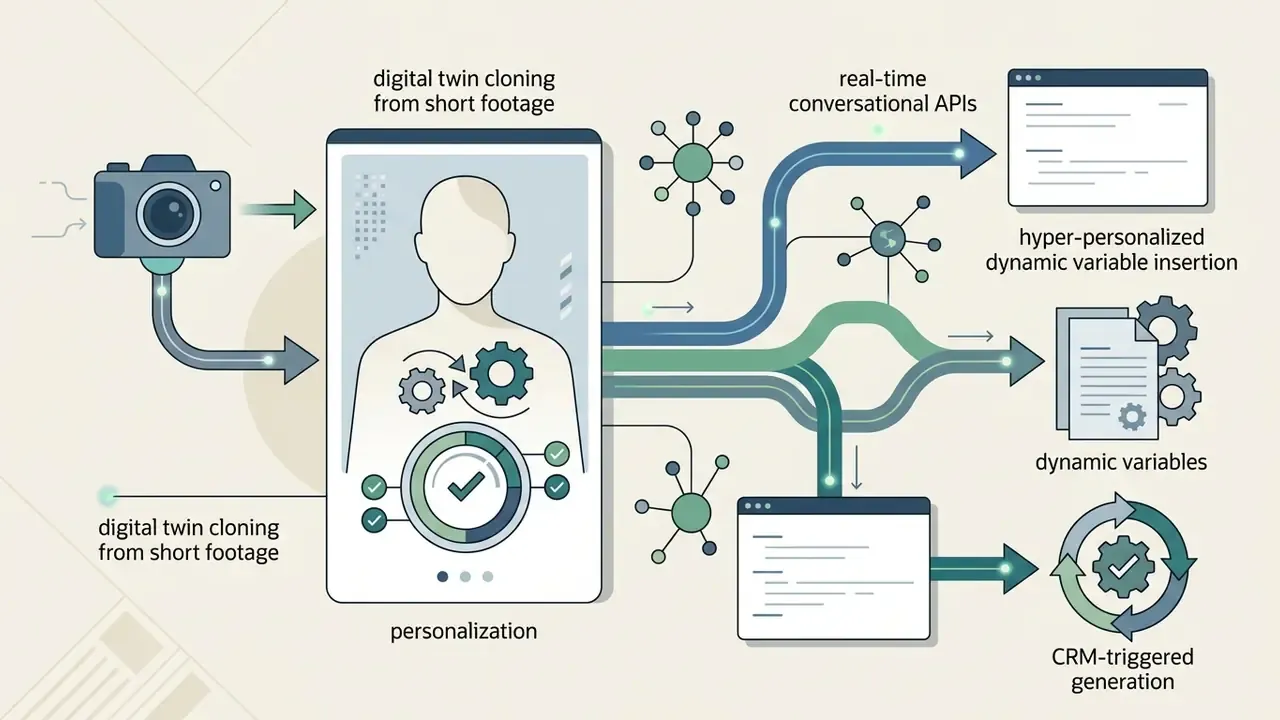
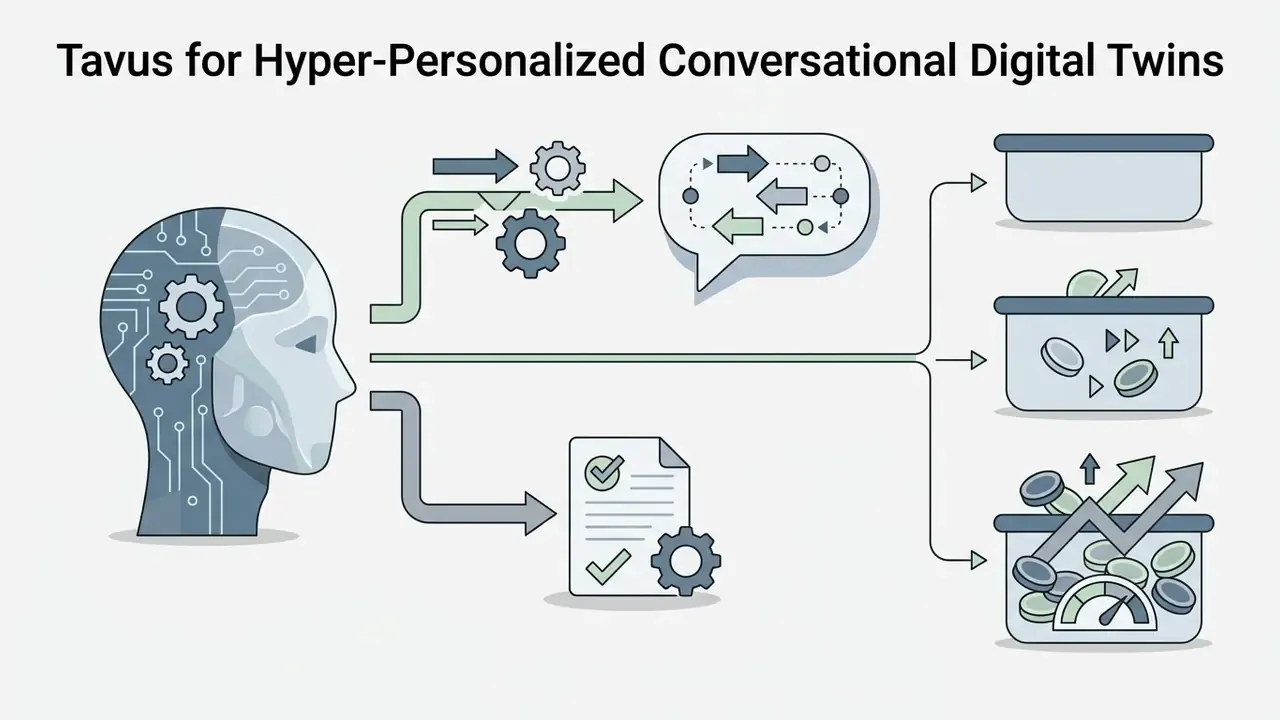
Tavus specializes in developer-first digital twin creation and interactive real-time conversation. Teams generate personal replicas for high-volume sales outreach and customer engagement, with dynamic variable insertion turning one recording into thousands of personalized renders.
Pros:
- Strong personalization for sales and customer engagement at scale.
- Supports live, two-way conversation with a cloned avatar.
- Natural mouth movement and low conversational latency.
Cons:
- Avatars become visually repetitive in longer sessions.
- Premium tiers are expensive for small teams.
- Better suited to short interactive clips than full-length presentations.
Speechify Studio for Audio-First Video Generation
Speechify pairs its voice synthesis with fast avatar rendering, converting long-form text and documents into narrator-led presentations. Voice cloning works from a few seconds of permissioned audio, and the same cloned voice can read PDFs and web pages.
Pros:
- Category-leading voice quality and cloning speed.
- Fast text- and document-to-video generation.
- Natural interactivity and mouth movement on short clips.
Cons:
- Avatar visuals lag dedicated avatar platforms.
- Some users report voice timing issues that distract from the visual.
- Avatar pricing is opaque and negotiated case by case.
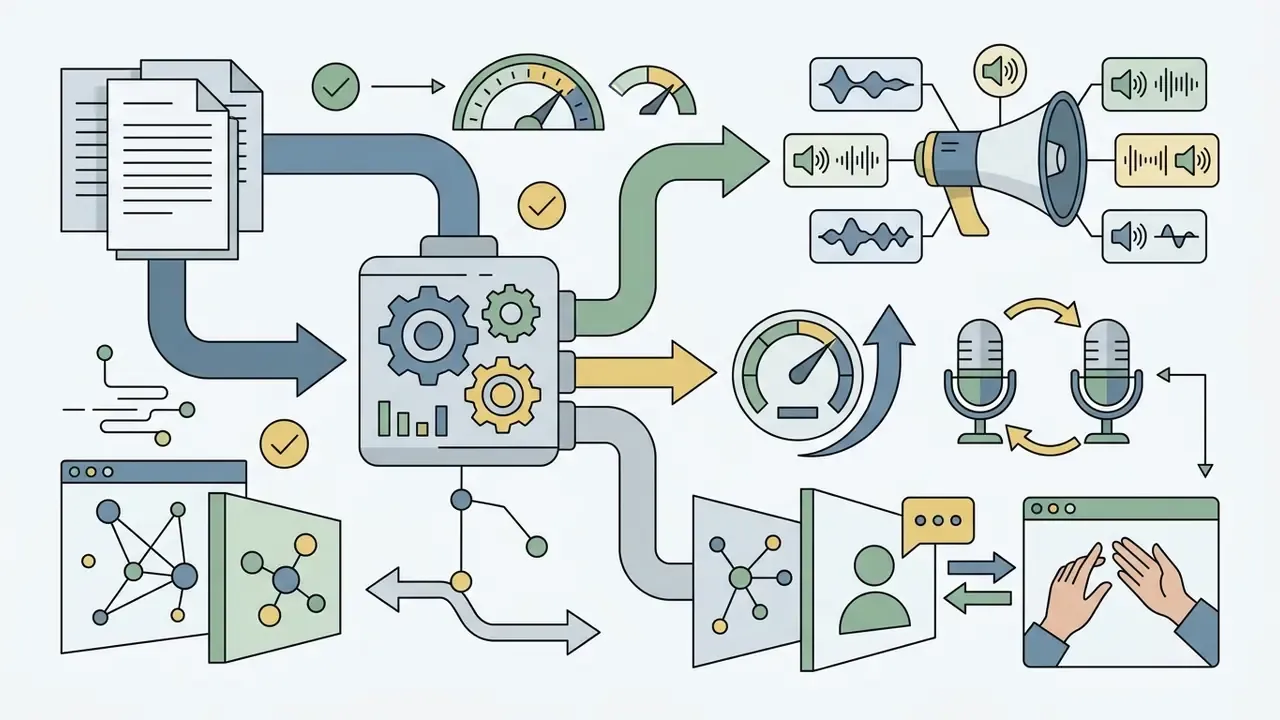

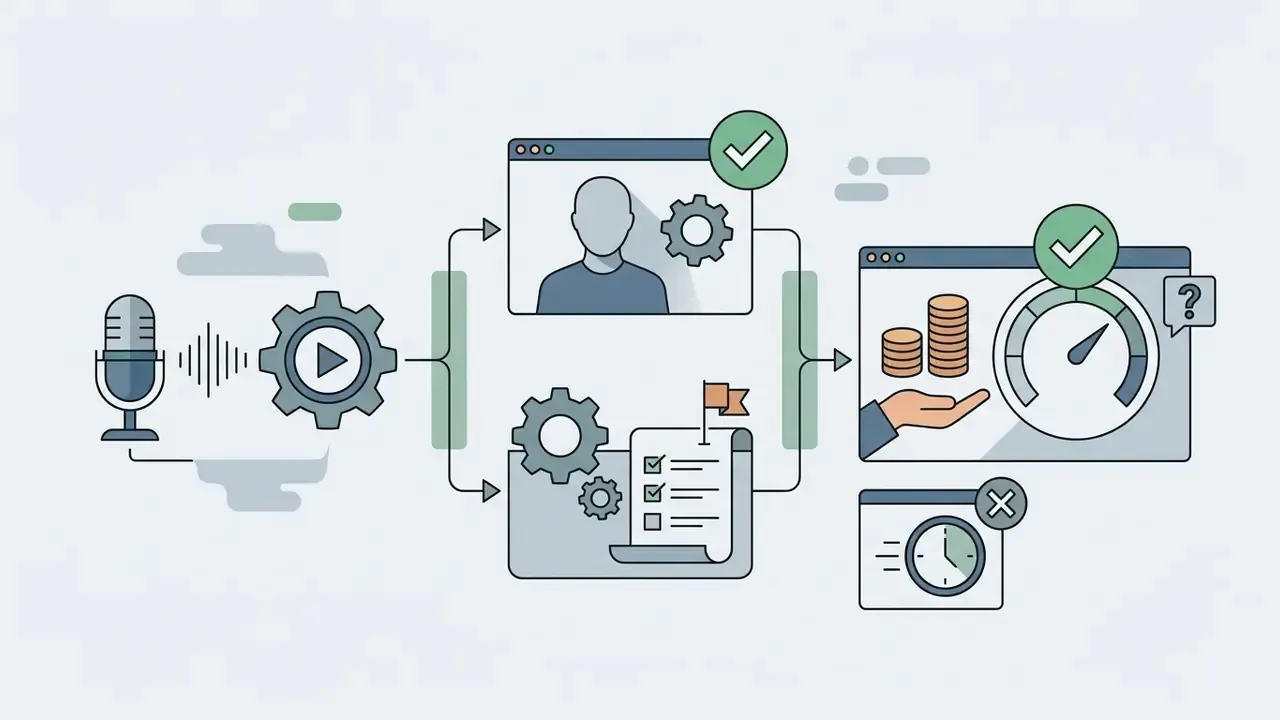
Vivideo for Free, Watermark-Free Generation
Vivideo is an accessible entry point with watermark-free text-to-video and photo-to-avatar generation through multi-model architectures, including Kling, Runway, and Luma. The free tier carries zero watermarks and no credit card requirement, available on web, iOS, Android, and as a Chrome extension.
- Key features Zero-watermark exports on the free tier, photo animation, multi-model engine access, captioning and localization across about 30 languages.
- Best for Creators, casual marketers, and budget-constrained projects.
- Pricing Free tier available; premium unlocks extended render times.
Pros:
- Free tier with no watermarks and no credit card required.
- Multiple underlying AI models inside one studio.
- Cross-platform access including mobile and browser extension.
Cons:
- Newer platform with a shorter enterprise track record.
- Premium required for extended lengths and priority rendering.
- Limited enterprise security documentation compared with SOC 2-attested vendors.
VEED for Editing-Led Avatar Workflows
VEED suits teams building personal or corporate presentations inside a full editing suite. It offers eye contact correction, subtitle automation, meme generation, and template libraries, though its avatar features stay basic next to specialists. Editors who mostly need assembly and captions may prefer a standard toolchain, and the best free video editing software for PC 2025 roundup covers those options in depth.
Pros:
- Broad editing toolkit suitable for beginners and professionals.
- Eye-contact correction improves presenter quality on recorded footage.
- Affordable tiered pricing with a free plan.
Cons:
- AI avatar features are basic compared with competitors.
- Reports of instability on very large projects.
- Steeper learning curve for advanced AI features.
Vidnoz for Low-Cost Explainers and Slideshow Videos
Vidnoz creates lifelike avatars from images, aimed at marketing and content creation. It fits course content and slideshow-style videos with gestures and real-time speech, with voice cloning, translation, and brand kit features gated to its Business tier.
Pros:
- Full-body avatars with expressions and gestures generated from images.
- Large template library for common marketing scenarios.
- Generous freemium daily credits for testing.
Cons:
- Free tier caps at 720p with watermarks and a 3-minute limit.
- Voice cloning, brand kit, and translation require the Business tier.
- Realism trails premium enterprise platforms.
Vidyard AI Avatars for Sales Enablement
Vidyard positions AI avatars specifically for personalized sales at scale, sending video messages built from a custom avatar trained on roughly 90 seconds of footage. Its real strength is the surrounding revenue stack: engagement analytics, CRM integration, and messaging distribution.
Pros:
- Purpose-built for personalized prospecting and follow-up.
- Engagement analytics tied to pipeline reporting.
- Custom avatar from a short training recording.
Cons:
- Narrow scope outside sales use cases.
- Avatar realism is secondary to distribution features.
- Avatar capability sits behind paid tiers.
Which AI Avatar Types and Features Matter Most?
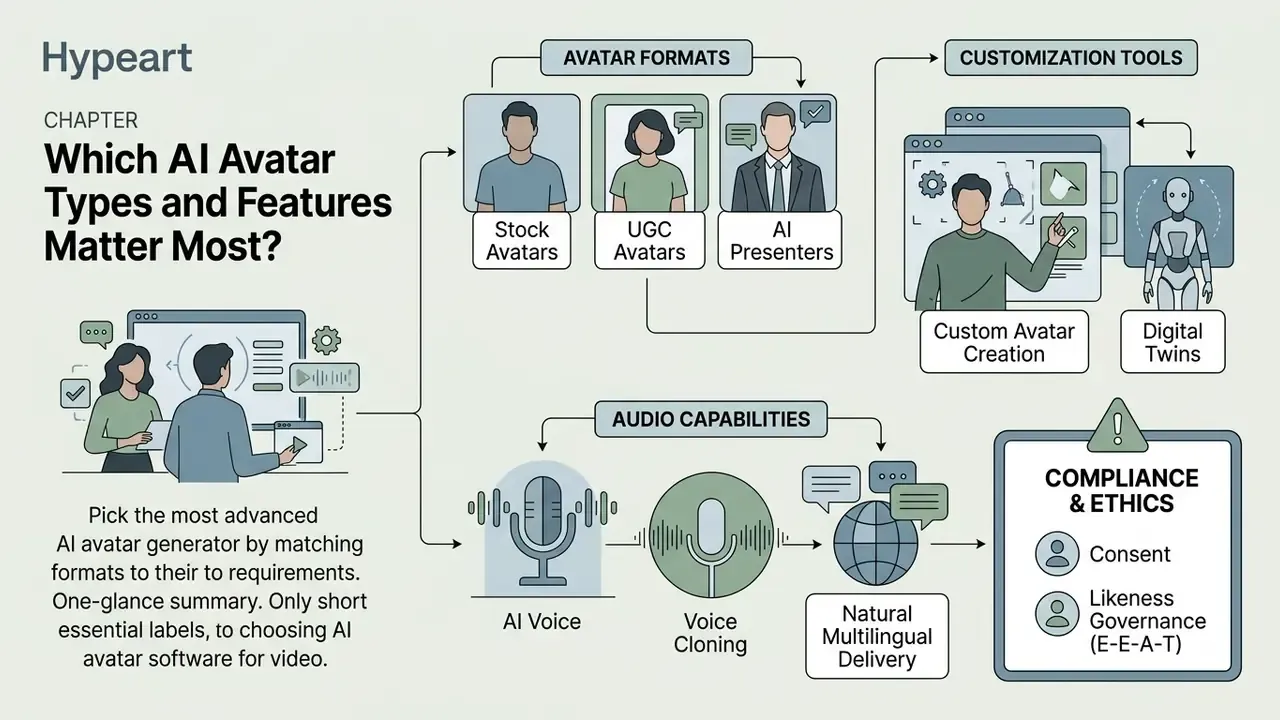
Picking the most advanced ai avatar generator for videos 2025 or 2026 depends on matching avatar formats to content requirements. Organizations choose between stock presenters, user-generated content (UGC) style avatars, custom digital twins, and animated characters based on audience expectations and risk tolerance. For short-form ads and social UGC, the critical variables are consent, platform-native disclosure, and delivery style. For corporate and explainer video, visual consistency and speech clarity dominate. For founder-led or personalized content, likeness fidelity and voice continuity decide it.
"The AI-attractive instructor condition, synthetic voice plus AI-generated appearance, significantly improved learner performance and motivation without reducing attention to instructional materials."
That replaces the unverified completion-rate figure we previously cited for instructor digital twins; the retained original wording appears in Appendix A for transparency. Teams wanting foundational context can review how AI video generators differ in output quality, limits, and licensing before selecting an avatar format.
Stock Avatars, UGC Avatars and AI Presenters
Stock avatars provide pre-approved, high-resolution presenters ideal for corporate communications, policy updates, and general product explainers. They remove camera setup and talent licensing costs, offer immediate access to diverse demographics and visual styles, and need no consent workflow because the vendor already licensed the performer.
Stock UGC-style avatars simulate creator-led video, which makes them popular for paid social ads and promotional content. They are judged on demographic fit, voice consistency, and visual consistency across clips, so a series feels like one peer rather than a rotating cast. Regulatory standards, including US FTC guidelines and European Union transparency rules, require clear disclosure when synthetic avatars or AI-generated voices appear in commercial advertising. European Commission transparency guidance summarized in 2026 requires disclosure for AI-generated or manipulated content that resembles an existing person, object, place, entity, or event and could appear authentic. Wholly imaginary avatars are treated differently, unless they are presented as a genuine customer, expert, or witness, in which case disclosure is still required. India's Election Commission advisory goes further for political content, requiring labels such as "AI-Generated," "Digitally Enhanced," or "Synthetic Content."
Custom Avatar Creation and Digital Twins
A personal custom avatar or digital twin is a high-fidelity synthetic model built from video and audio recordings of a specific individual. Digital twins let executives, subject matter experts, and brand ambassadors present at scale without repeated studio sessions.
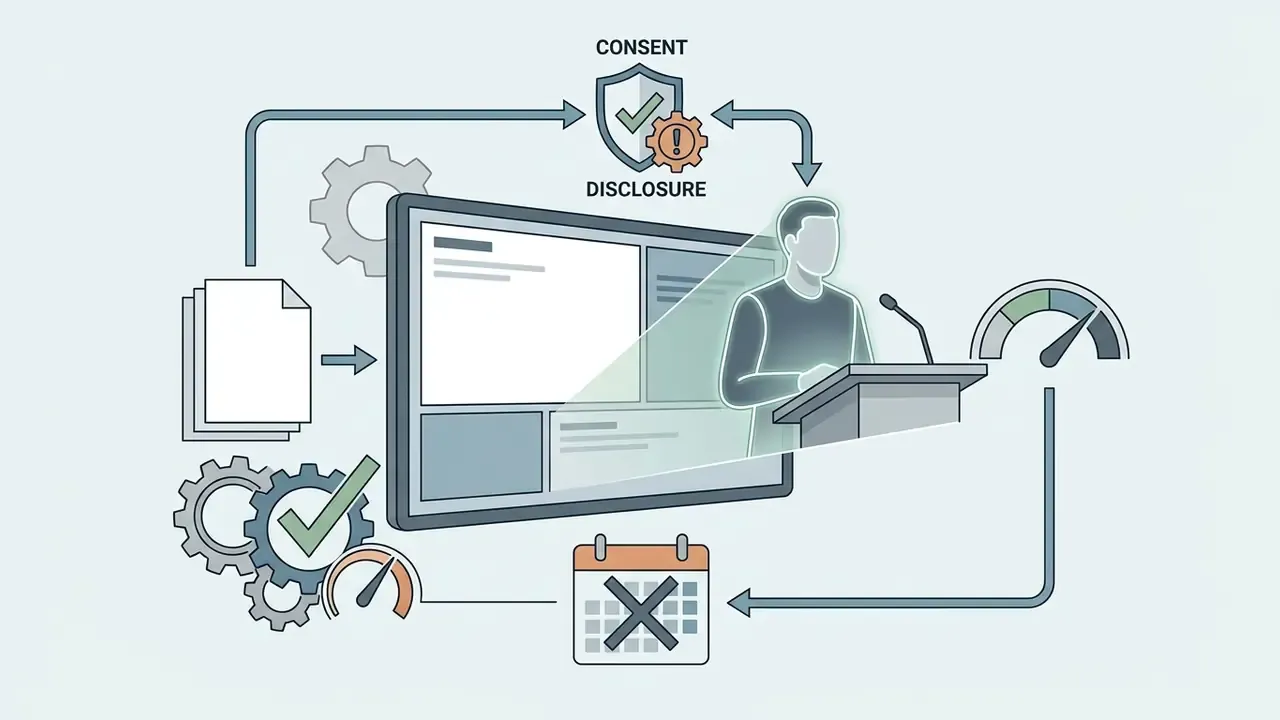
High-quality twin generation needs controlled recording conditions: 4K resolution, a continuous single take, 60 fps capture, clear directional lighting, one visible face, clean audio. Organizations must also implement rigid legal consent protocols verifying that the individual explicitly authorizes their visual and acoustic likeness for commercial video generation. Platform consent workflows typically require reading a provided statement verbatim in a short clip, and the person in the consent video must match the person in the training footage.
Institutional guidance also treats a digital twin as a managed asset rather than a one-off file. ITU-T guidance requires unique identification, searchable maintenance, access-right management, and synchronization with the physical counterpart on request. In practice, every twin needs an owner, an expiry date, a revocation path, and an audit record of every video it has appeared in.
Informational note: this section is general information, not legal advice. Creating digital twins and cloning voices requires compliance with applicable personal-data legislation and documented consent from the data subject in your jurisdiction.
AI Voice, Voice Cloning and Natural Multilingual Delivery
Synthetic voice quality drives viewer retention and perceived message authority. Modern ai voice generation uses neural audio synthesis to replicate speech cadence, pitch inflection, and emotional resonance across languages.
Professional voice cloning builds a digital voice model from 1 to 10 minutes of permissioned speech data, while instant cloning can work from samples as short as 15 seconds at lower fidelity.
Combined with automated ai dubbing, platforms synchronize generated voice tracks to visual mouth movement, enabling localization while preserving the speaker's acoustic profile. Implementations differ meaningfully. Some expose a cloning-strength setting between 0 and 10 and warn that maximum similarity can reduce naturalness across phonetically distant languages. Others require at least five consecutive seconds of single-speaker speech with a maximum input length of five minutes.
Informational note: this section is general information and does not replace legal advice. Voice cloning and digital twin creation are regulated by the law of the user's jurisdiction, including the GDPR, the EU AI Act, and applicable national rules.
Alert box: compliance, consent, and likeness governance (E-E-A-T)
AI Video Creation Workflow: From Script to Finished Video
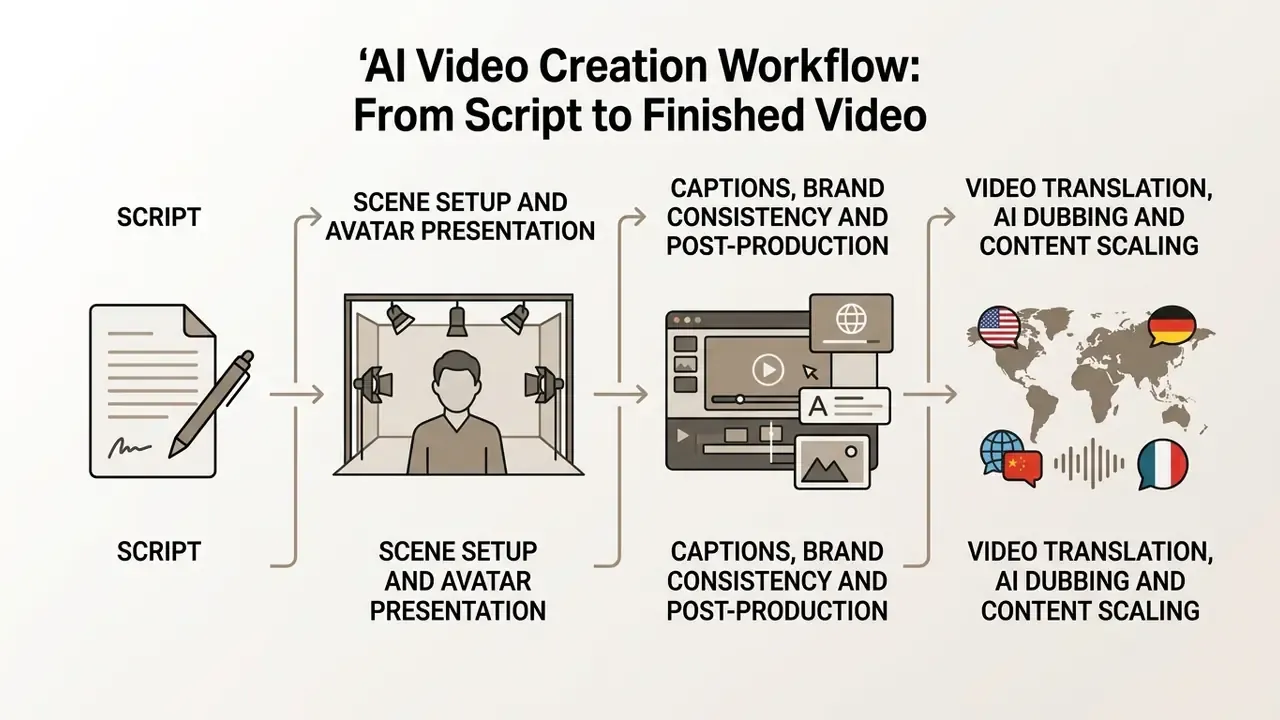
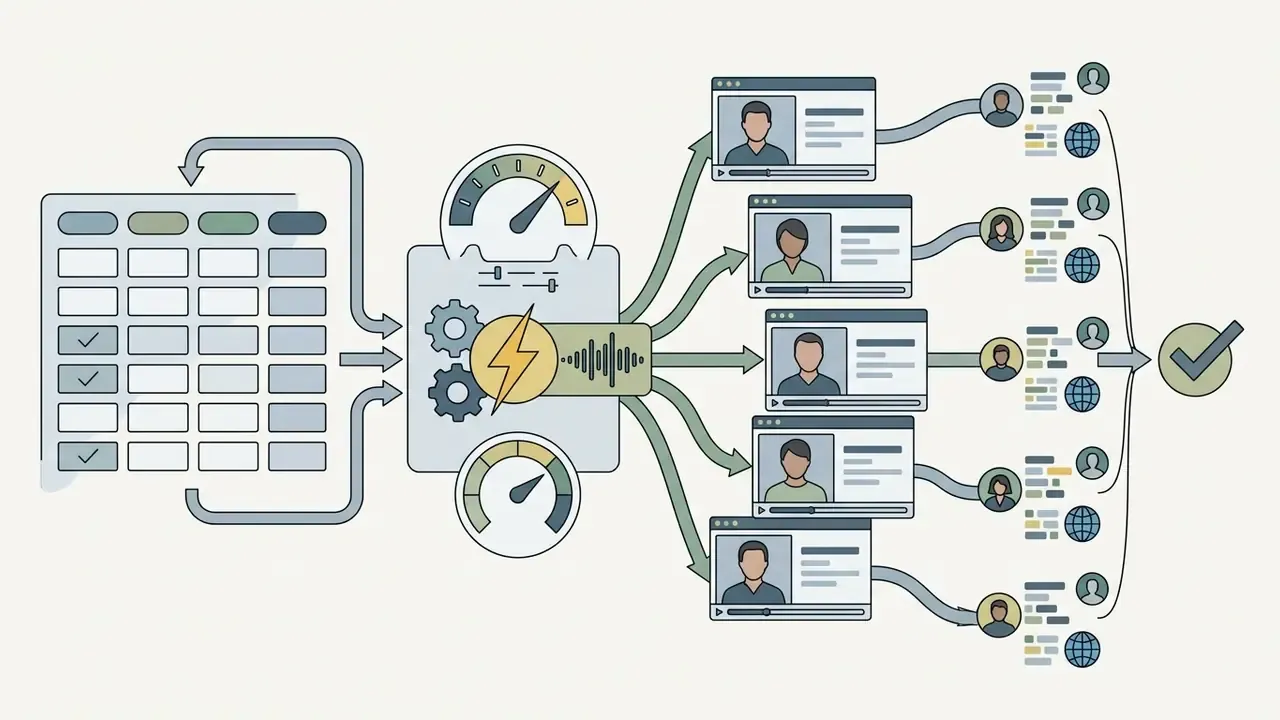
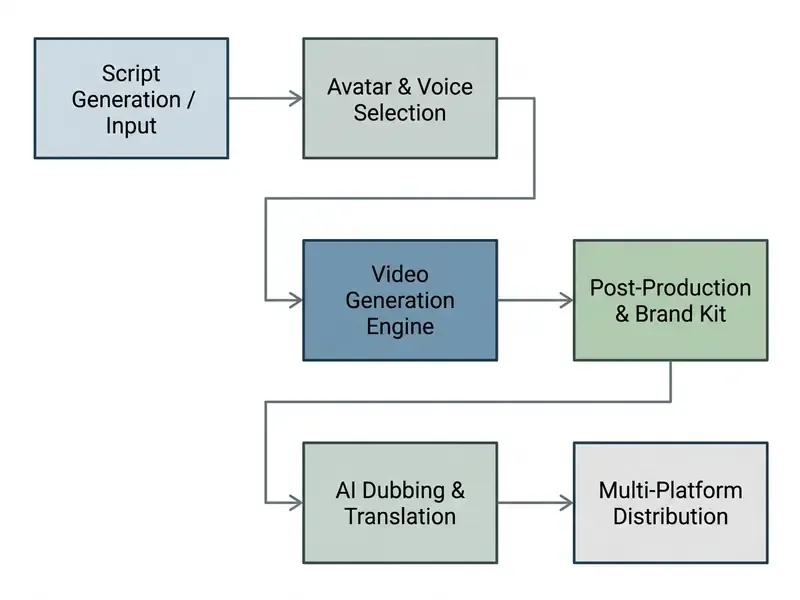
An efficient ai video creation workflow runs from concept to localized distribution without manual handoffs. Modern platforms fold script generation, avatar selection, voice alignment, post-production editing, and multilingual translation into one browser pipeline. The canonical eight-stage sequence: script, then avatar selection or creation, then voiceover and cloning, then generation, then editing, then subtitles and brand styling, then translation, then publishing.
To see how automated generation integrates into broader web and media stacks, teams can review the AI Media API documentation.
Script, Scene Setup and Avatar Presentation
Creation starts with the script, often assisted by integrated LLM tools that convert prompts, articles, slide decks, or URLs into structured scenes. Producers split scripts into logical scenes, assign camera angles, and select ai presenters matching the content tone.
Setting up avatar presentation means adjusting framing (close-up, medium shot, wide angle), backgrounds, and gestures. Good scene structure keeps pacing natural and prevents visual fatigue during technical explainers or training modules. Training guidance favours microlearning segments of one to six minutes with captions, callouts, and chapter markers, which conveniently also reduces the risk of visible lip-sync drift on long continuous takes.
Captions, Brand Consistency and Post-Production
Post-production raises engagement through automated subtitles, custom typography, brand colour integration, and background media. Brand Kits enforce corporate visual guidelines across every generated scene, applying logos, fonts, and intro/outro sequences automatically, and leading editors now push the Brand Kit into templates and assistant-generated drafts by default.
Strong post-production tooling also lets creators overlay dynamic lower-thirds, screen recordings, and stock footage over avatar presentations. Teams optimizing media management can consult our guide to best free video editing software for additional editing and publishing insight, and mobile-first teams may prefer the best free video editing app comparison. (Updated link; the previously published URL is retained in Appendix A.) For thumbnail and still-frame work, the best free photo editor roundup covers the companion toolset.
Video Translation, AI Dubbing and Content Scaling
Scaling video operations globally requires automated translation and voice-preserving ai dubbing.
Shadow AI Risk Mitigation and Governance Matrix
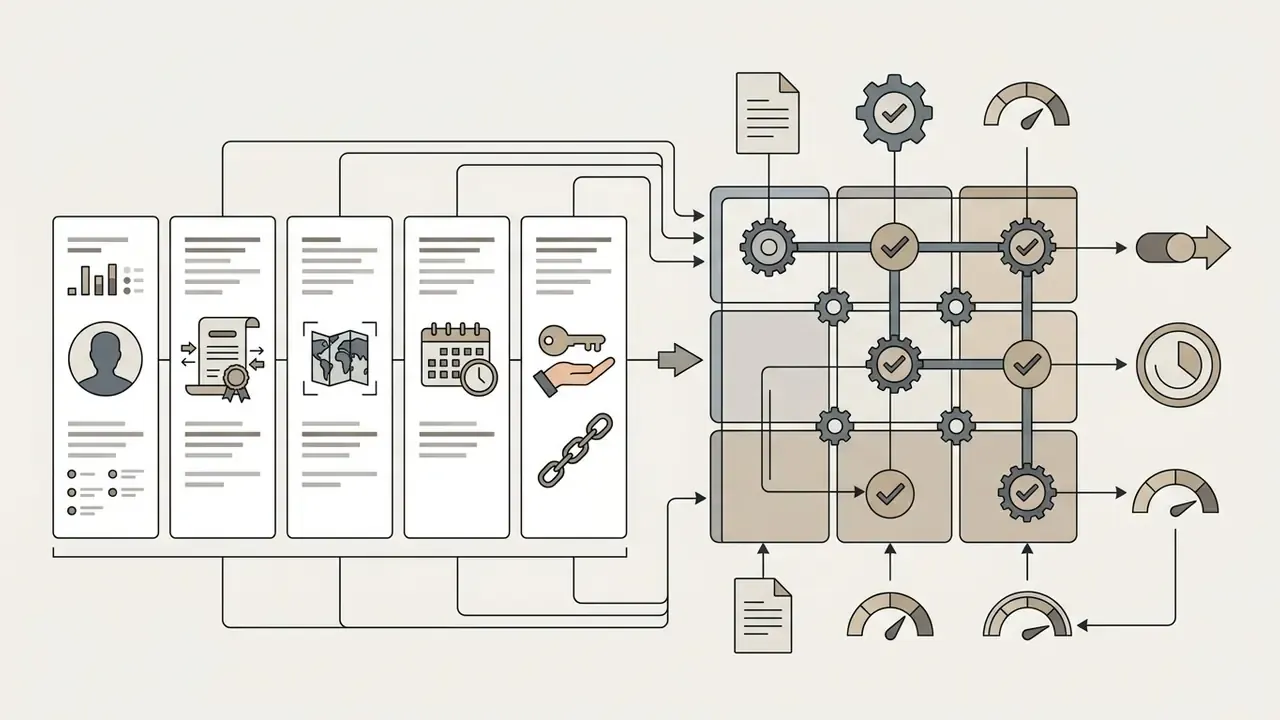
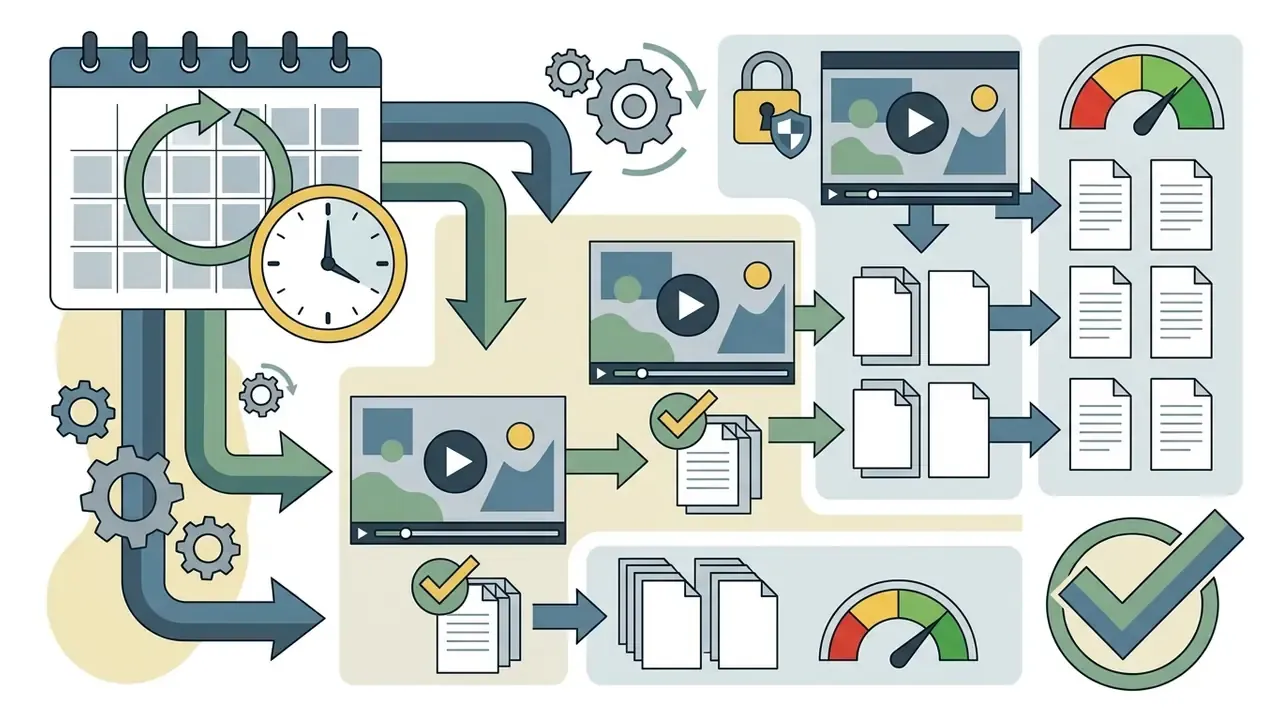
The largest avatar-related incident risk in a regulated organization is not the approved platform. It is the unapproved one. Employees generating executive likenesses or customer-facing claims on consumer free tiers create three exposures at once: uncontrolled upload of confidential scripts, unconsented likeness use, and unlabelled synthetic media.
- Route all avatar generation through an enterprise tenant with SSO/SAML so every render is attributable to a named identity.
- Block consumer generative video domains at the CASB or DLP layer, and log attempted uploads containing document classifications above "internal."
- Publish a single approved-tools list with a lightweight exception request path, so teams get a sanctioned fast lane instead of an incentive to bypass.
- Require provenance metadata and a visible AI-generated label on every externally published asset.
Escalation and approval matrix:
| Content type | Creator | Reviewer | Approver | Additional control |
|---|---|---|---|---|
| Internal onboarding / L&D | L&D designer | Subject matter expert | L&D lead | Script version archived in LMS |
| Compliance training | L&D designer | Compliance officer | Compliance lead | Regulatory citation check, retention of render log |
| External marketing | Marketing producer | Brand manager | Marketing director plus legal for claims | Disclosure label, provenance signing |
| Executive digital twin | Comms producer | Executive assistant of subject | Named executive plus legal | Recorded consent, expiry date, revocation path |
| Customer-facing real-time agent | Product engineer | Security review | Product owner plus compliance | Knowledge-base scoping, conversation logging, human handoff |
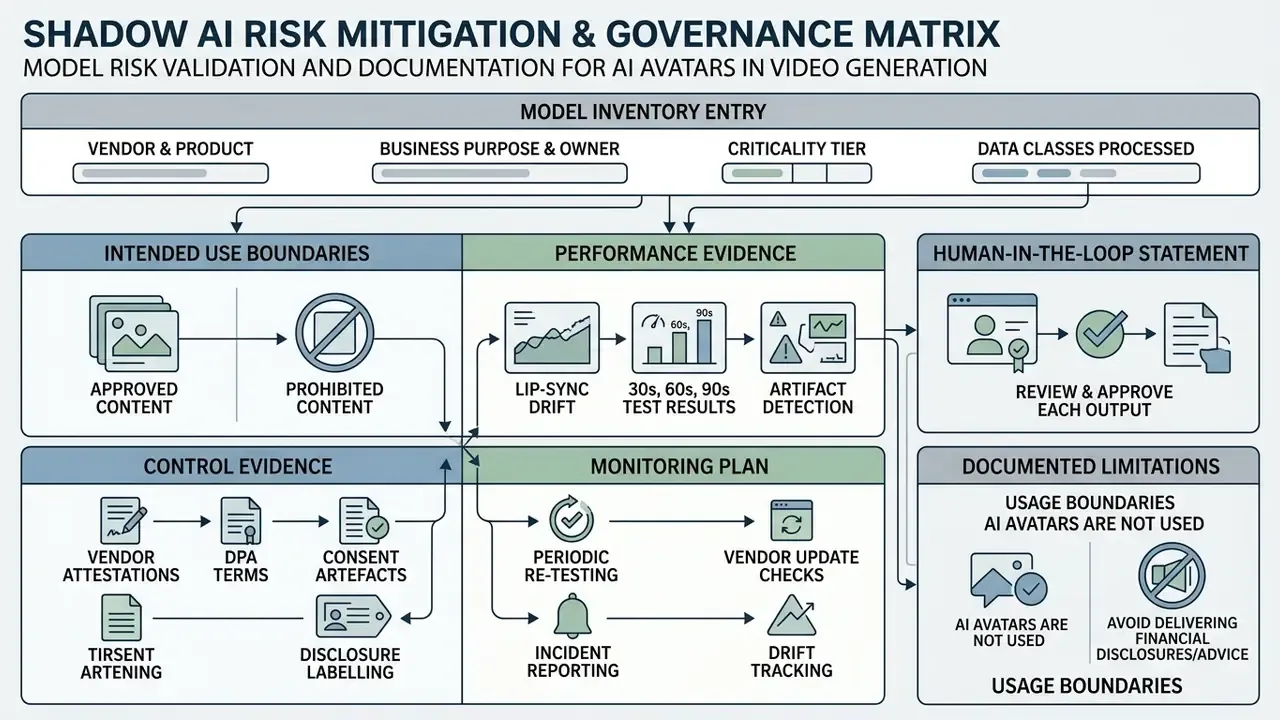
Model Risk Validation and Documented Limitations
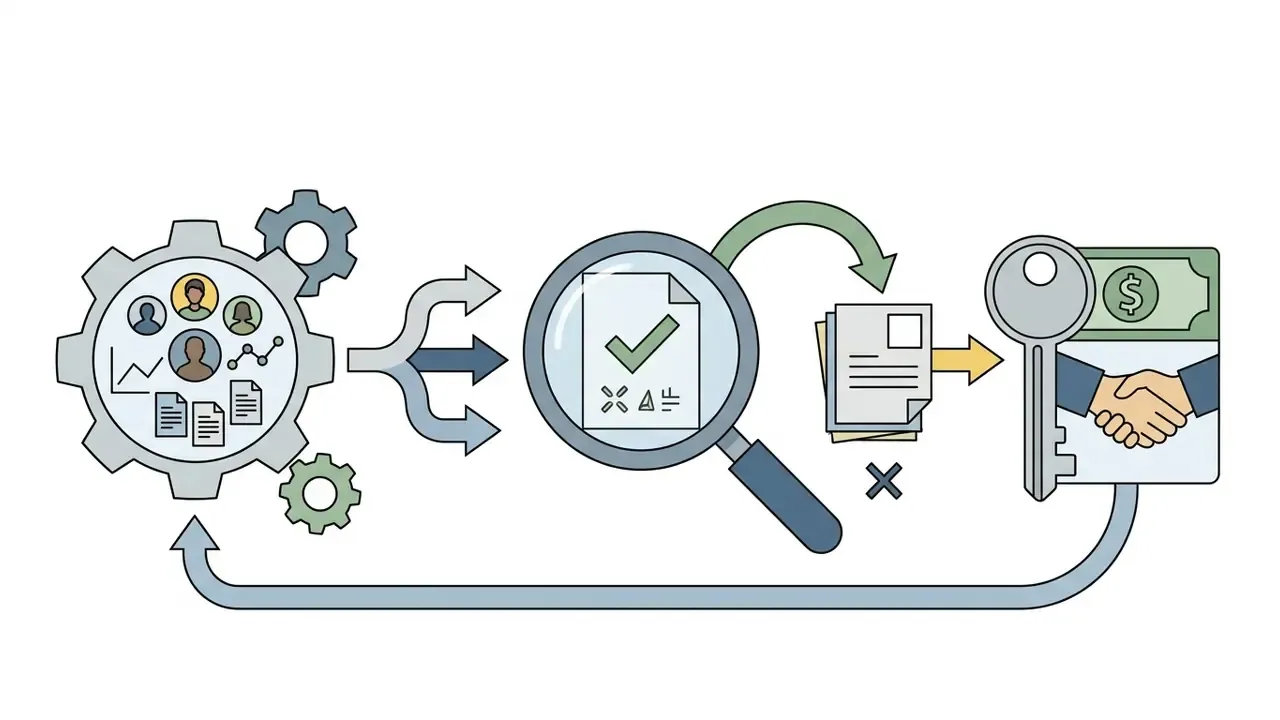
How to Choose the Right AI Avatar Generator Before You Pay
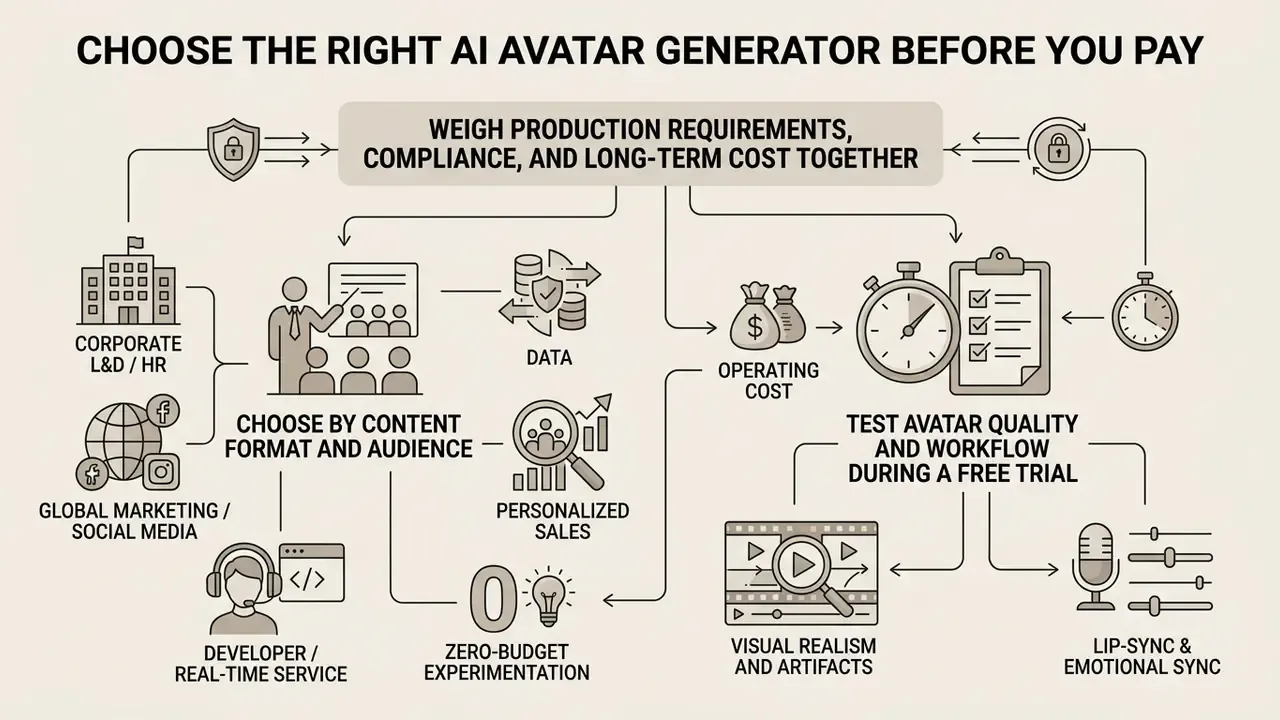
Selecting the right ai avatar platform means weighing production requirements, compliance constraints, and long-term operating cost together. Shortlist against no-cost options first by reviewing free AI video generators, then move to paid evaluation only where the free ceiling blocks the use case. Software selection committees should run structured pilot testing before signing multi-seat enterprise agreements. Formal practice supports this: NIST's 2025 generative image evaluation plan shows the standard method is comparison against pre-defined metrics rather than subjective impression.
Teams modelling cost and platform limits can see the overview of media production metrics.
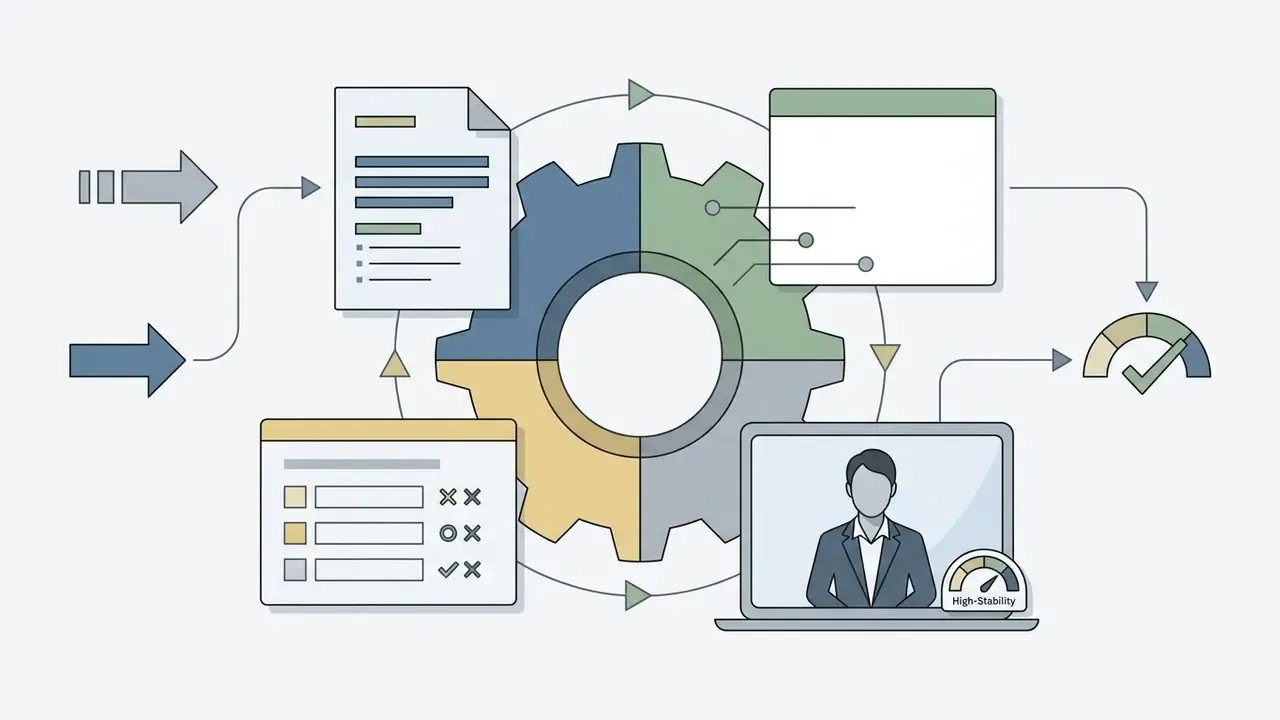
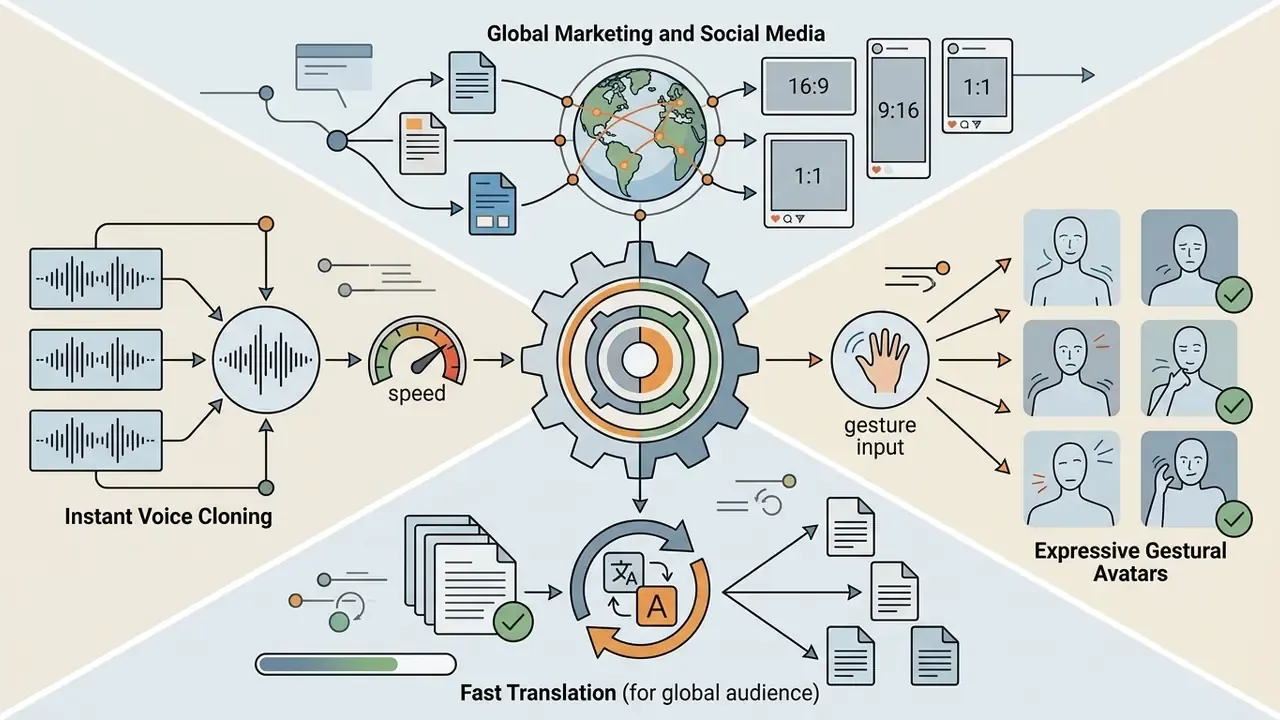
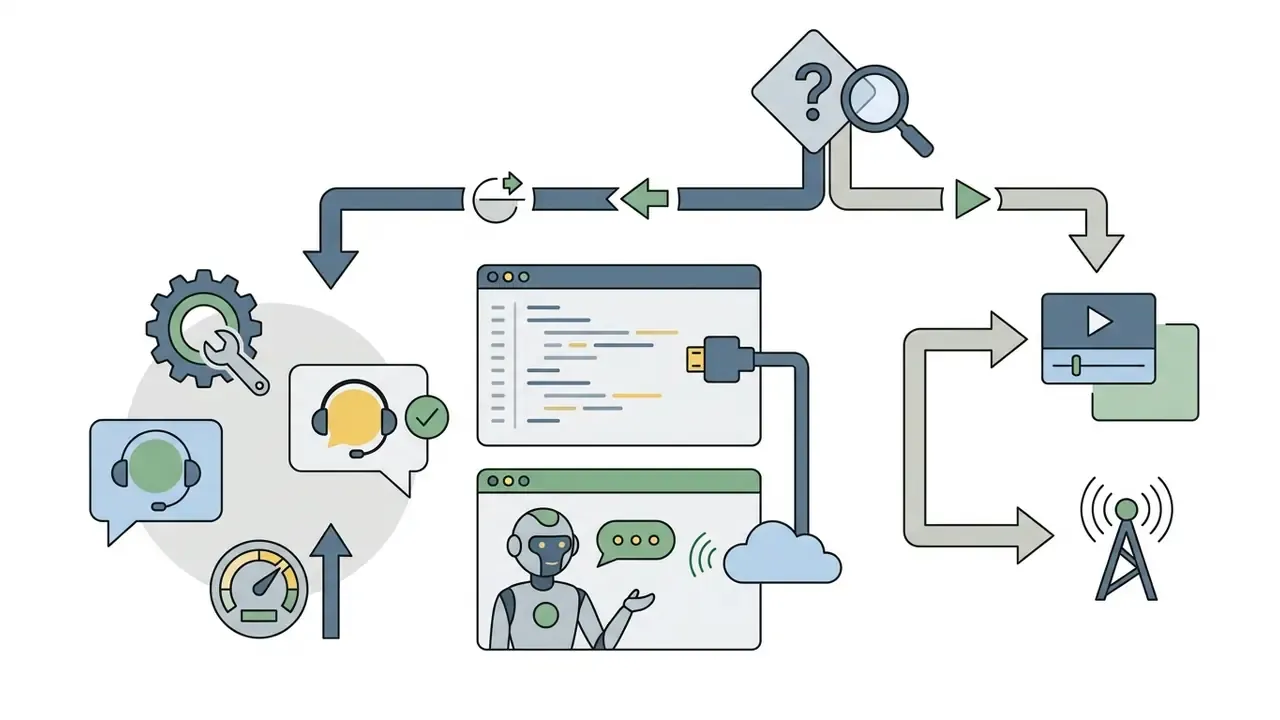
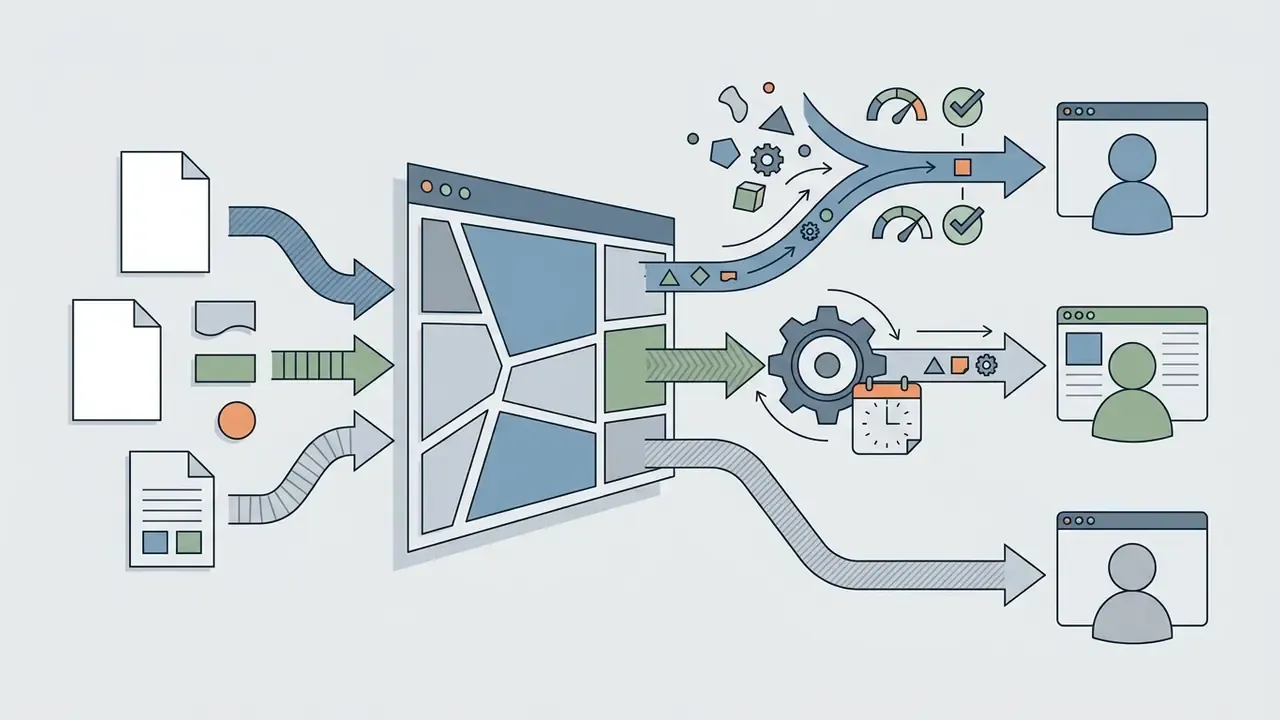
Choose by Content Format and Audience
Match platform capability to your primary channels and audience:
Test Avatar Quality and Workflow During a Free Trial
During a trial, score platforms on four technical dimensions using the same scripts:
- Visual realism and artifactsInspect rendering around hair edges, eye blinks, dynamic lighting transitions, and hand movement. Score identity preservation across multiple renders of the same avatar.
- Lip-sync accuracyTest with dense technical vocabulary and non-English scripts to check phoneme alignment, and look for drift at the 30-, 60-, and 90-second marks.
- Voice quality and emotionEvaluate pacing, pause placement, handling of numerals and acronyms, and absence of metallic acoustic artifacts.
- Rendering speed and export optionsMeasure total render time per finished minute, queue latency at peak hours, and export compatibility with internal video management systems.
AI Avatar Platform Selection Scorecard
Checklist0 / 11
Interactive Decision Matrix: Which Tool Should You Choose?
Checklist0 / 9
FAQ: Frequently Asked Questions About AI Avatar Software
Can I Create an AI Avatar Video for Free?
Yes. Several platforms offer free plans or trial credits that let you generate short AI avatar videos without payment. Free tiers typically cap monthly output at 1 to 3 videos or roughly 1 to 10 minutes, export in 720p, apply vendor watermarks, and limit access to stock avatar libraries. Some competitors meter daily credits instead of monthly minutes, and credits on certain platforms do not refresh. Professional features such as custom avatar creation, voice cloning, 4K rendering, and commercial licensing require paid subscriptions. Vivideo is the notable exception in this comparison, with a free tier that carries zero watermarks and no credit card requirement.
Can I Turn a Photo Into a Talking AI Avatar?
Yes. Advanced platforms convert a single front-facing photograph into an animated talking avatar, and readers exploring portrait generation can also review AI headshot generators for source-image guidance. These tools apply neural landmark tracking and viseme mapping to drive lip synchronization, eye blinks, and subtle head motion from text or audio input.
"Text2Lip generates lip-synchronized video from text alone without audio, achieving SSIM 0.740 and PSNR 19.023 on the GRID benchmark, the strongest results among compared methods." Text2Lip (2024 to 2025), arXiv preprint. (Public URL not provided in the research corpus.) Higher-resolution source photos with neutral expressions and directional lighting produce the most realistic results. Typical input requirements are JPG/JPEG/PNG up to 10 MB with a minimum of roughly 300 by 300 pixels and a clear, front-facing, unobstructed face. Using another person's photograph engages privacy and publicity rights in most jurisdictions, and biometric-data rules may require documented consent.
Which AI Avatar Generator Is Best Overall?
There is no single winner across all use cases. In our testing, HeyGen led on expressiveness, avatar library size, and language coverage. Synthesia led on enterprise governance, learning workflows, and certification depth. D-ID led on real-time interactivity, Colossyan on structured compliance training, and Vivideo on genuinely free output. Choose by the dominant use case and the strictest compliance constraint you must satisfy.
Are AI Avatars Realistic Enough for Brand and Training Content?
For most corporate formats, yes, with caveats. Independent research found identical knowledge transfer between human presenters and top-tier avatars across 250+ professionals, and no significant engagement or retention gap across 500 adult learners. Still, benchmarks such as WB-DH show whole-body motion lagging facial realism, and real-time rendering can degrade fine detail like hair and skin texture. Test your own scripts at your own content lengths before standardizing.
Do I Have to Disclose That a Video Uses an AI Avatar?
In most commercial contexts, yes. EU AI Act Article 50 requires disclosure when an AI system generates or manipulates image, audio, or video content constituting a deepfake, and US FTC guidance requires clear disclosure where synthetic presenters could mislead consumers. Even wholly imaginary avatars require disclosure if presented as a genuine customer, expert, or witness. Best practice is a visible on-screen label plus machine-readable C2PA provenance metadata.
What Consent Is Required to Clone Someone's Face or Voice?
Platforms generally require a recorded consent video in which the subject reads a prescribed statement, and the person in that clip must match the person in the training footage. Consent must be freely given, specific, informed, and unambiguous under the GDPR, and withdrawal must be as easy as granting it. Keep the consent artefact, the permitted-use scope, and a revocation path in an avatar registry for the life of the asset.
What Are the Main Technical Limitations Today?
Four constraints recurred across testing and the literature: degradation on extreme head poses and off-distribution appearances; loss of fine texture detail in real-time rendering; uneven conversational reliability in live agents, including latency and hallucinated answers; and inconsistent handling of numerals, acronyms, and code-switching in multilingual scripts. Plan human review of every externally published render.
How Do Enterprise Plans Differ From Creator Plans?
Enterprise agreements add SSO/SAML, role-based access control, audit logging, data residency options, negotiated retention and deletion terms, uptime SLAs, higher API rate limits, shared workspace avatars and voices, and named support. They also tend to replace credit metering with committed annual volume, which is what makes cost per finished minute predictable enough for a business case.
Summary and Verification Status
Appendix A: Revision Notes and Superseded Fragments
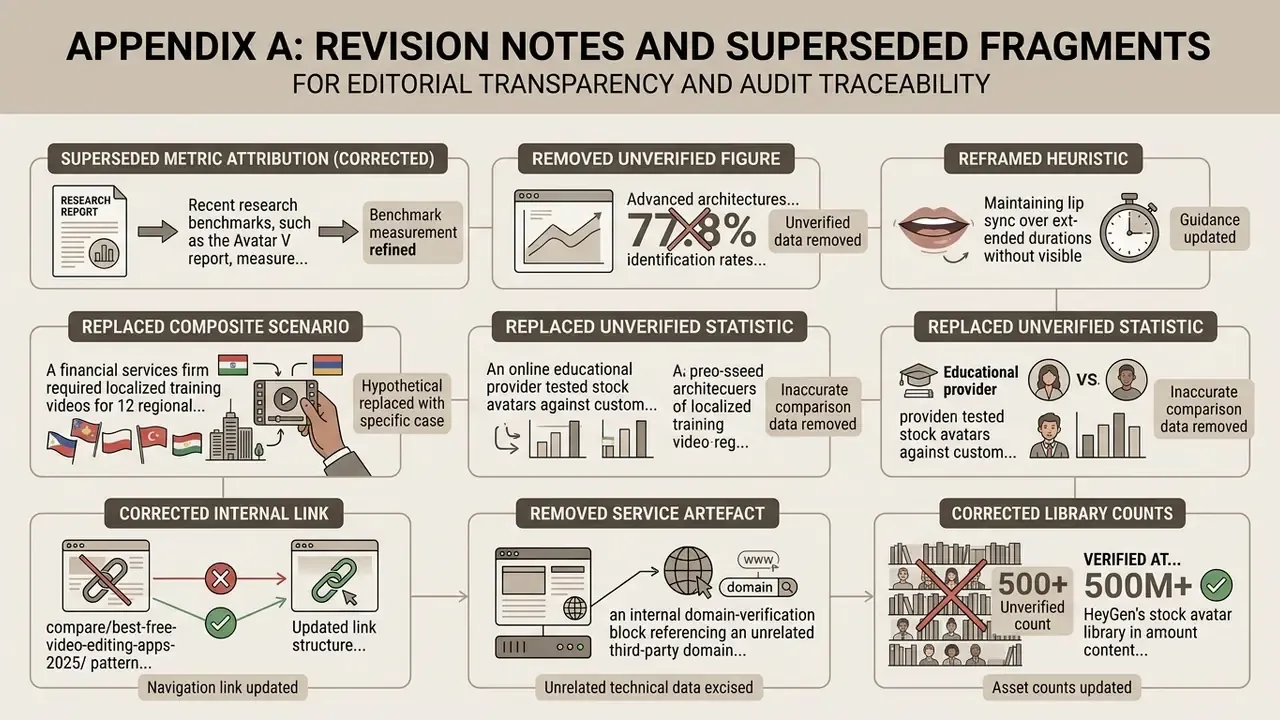
Retained for editorial transparency and audit traceability. Each item below appeared in an earlier version of this article and has been corrected, replaced, or reframed in the main text above.
- Superseded metric attribution (corrected): "Recent research benchmarks, such as the Avatar V report, measure visual fidelity on a 5-point Mean Opinion Score (MOS) across identity consistency, lip-sync accuracy, motion naturalness, and artifact control." Note: the Avatar V evaluation in our corpus reports Face Similarity, Sync-C/Sync-D and Q-Align as primary measures; MOS appears in related vendor reporting rather than as the primary metric set of the cited preprint.
- Removed unverified figure: "Advanced architectures achieve up to 77.8% real-video identification rates in controlled perception tests." Note: this figure could not be verified within the research corpus available for this revision and has been withdrawn from the main text.
- Reframed heuristic: "Maintaining lip sync over extended durations without visible temporal drift after 45 seconds remains a primary threshold for high-quality talking head videos." Note: retained in the main text as an internal testing convention, not a published industry standard; independent confirmation is still required.
- Replaced composite scenario: "A financial services firm required localized training videos for 12 regional compliance teams without increasing studio recording costs. By deploying an enterprise avatar platform with centralized brand governance, the team converted master compliance documentation into 12 localized video modules within 48 hours. This reduced production turnaround time by 82% while maintaining full auditability across all generated scripts." Note: this was an illustrative composite, not a verified client engagement, and has been superseded in the main text by the USC Marshall and adult-learner studies.
- Replaced unverified statistic: "An online educational provider tested stock avatars against custom instructor twins across a 4-week compliance course. Data showed that student completion rates increased by 24% when lectures were delivered by recognizable instructor digital twins rather than generic stock avatars." Note: the 24% figure could not be verified and has been replaced by the 2024 virtual-instructor study findings.
- Corrected internal link: the previously published URL
/compare/best-free-video-editing-apps-2025/pattern used in an earlier draft did not resolve to a verified destination in our current site map and has been replaced in the main text. - Removed service artefact: an internal domain-verification block referencing an unrelated third-party domain appeared at the end of an earlier draft. It had no relationship to the platforms reviewed here and has been removed as an editorial error.
- Corrected library counts: HeyGen's stock avatar library was previously stated as 500+ and is now verified at 1,100+. Synthesia's was previously stated as 230+ and is now verified at 240+ with AI scene generation powered by Veo 3.
Disclaimer: This article provides general information about commercial software and applicable regulatory frameworks. It is not legal, financial, medical, or compliance advice. Voice cloning, likeness reproduction, biometric data processing, and synthetic-media disclosure obligations vary by jurisdiction and evolve quickly, including under the GDPR, the EU AI Act, US FTC guidance, and national election and advertising rules. Verify current vendor terms, security attestations, and statutory requirements with qualified counsel and your own security team before deploying AI avatars in regulated workflows.