About the reviewer: Marcus Hale is the author. The author focuses on model risk management and AI governance for regulated content workflows: human-in-the-loop validation, output traceability, and intellectual-property exposure inside generative publishing pipelines. Any experience implied here is illustrative, not documented employment history. This guide was reviewed against the NIST AI Risk Management Framework: Generative AI Profile (AI 600-1), current U.S. Copyright Office registration guidance, and USPTO trademark search practice. Last updated: 2026.
Executive Summary
- What it does: An AI book title generator converts a 2 to 4 sentence premise plus genre, tone, and audience signals into 8 to 20 short title candidates. It is an ideation engine, not a naming authority.
- What drives quality: Structured, constrained prompts beat open-ended requests. Extract-then-abstract conditioning improved title-generation ROUGE-L by 21% over direct generation in disaster-headline research (2023).
- What you must still do manually: Trademark clearance through the USPTO Trademark Center search tool, marketplace duplication checks on Amazon KDP, Google Books and Goodreads, plus AI-content disclosure at copyright registration.
- The measurable risk: Writers who let AI act as the primary generator report significantly lower ownership over the final work (adjusted p < 0.001, CHI 2024), and post-2022 machine-mediated text shows sharp lexical homogenisation, which is the direct cause of clichéd titles.
- Enterprise caveat: Free consumer tiers may log prompts for retraining. Anyone drafting titles for confidential manuscripts, unreleased products, whitepapers, or regulated research should use zero-data-retention tiers and document each human decision for audit.
What This Guide Covers
- What an AI book title generator actually is
- How to use one, with the pre-publication legal checklist and copy-paste prompts
- What makes a book title memorable and effective, with formulas and real precedents
- Titles for books, novels, and stories, plus goal-based segmentation
- How to check and improve generated titles, including the audit-trail template
- Whether a free tier is enough for commercial use, plus Shadow AI controls
- Limitations and open questions
- FAQ
- Appendix A: Editorial Corrections Log
What Is an AI Book Title Generator?
An ai book title generator is a software tool that uses large language models (LLMs) to transform short plot summaries, character outlines, and genre parameters into structured candidate titles. Unlike general-purpose text generators that write full prose or long narrative chapters, a dedicated ai title generator produces short, context-bound naming options optimized for reader interest and genre conventions.
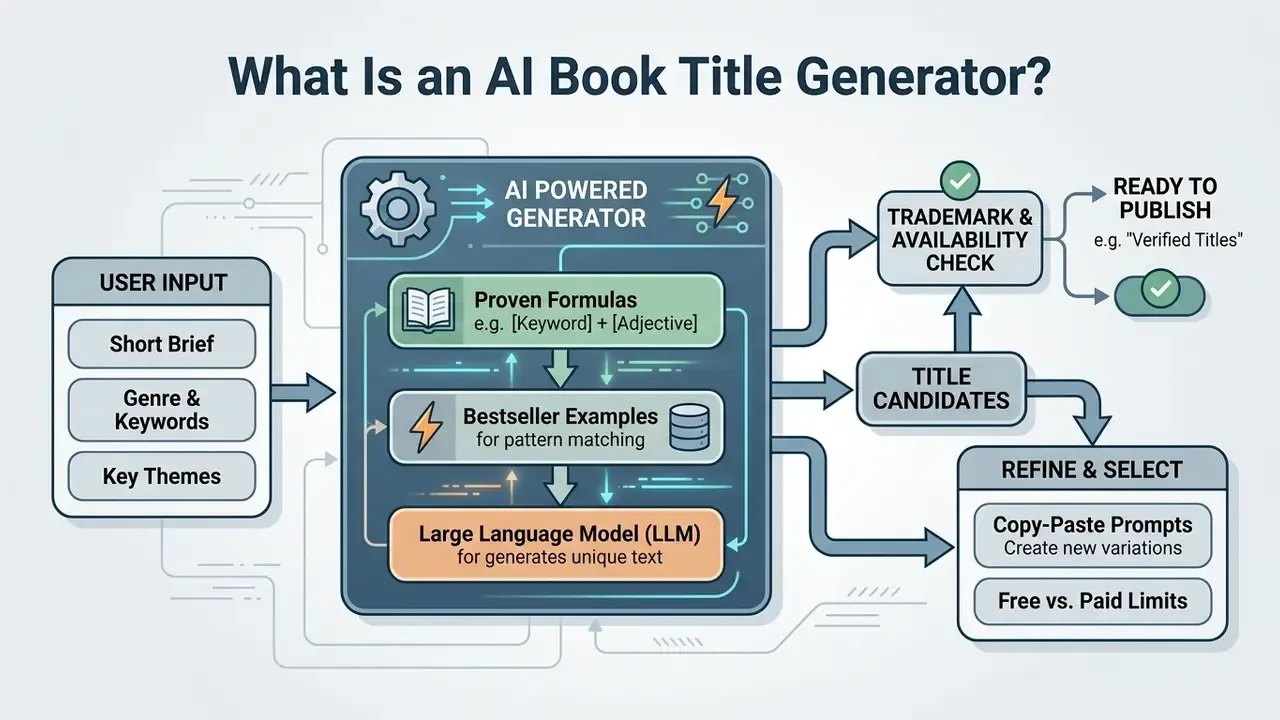
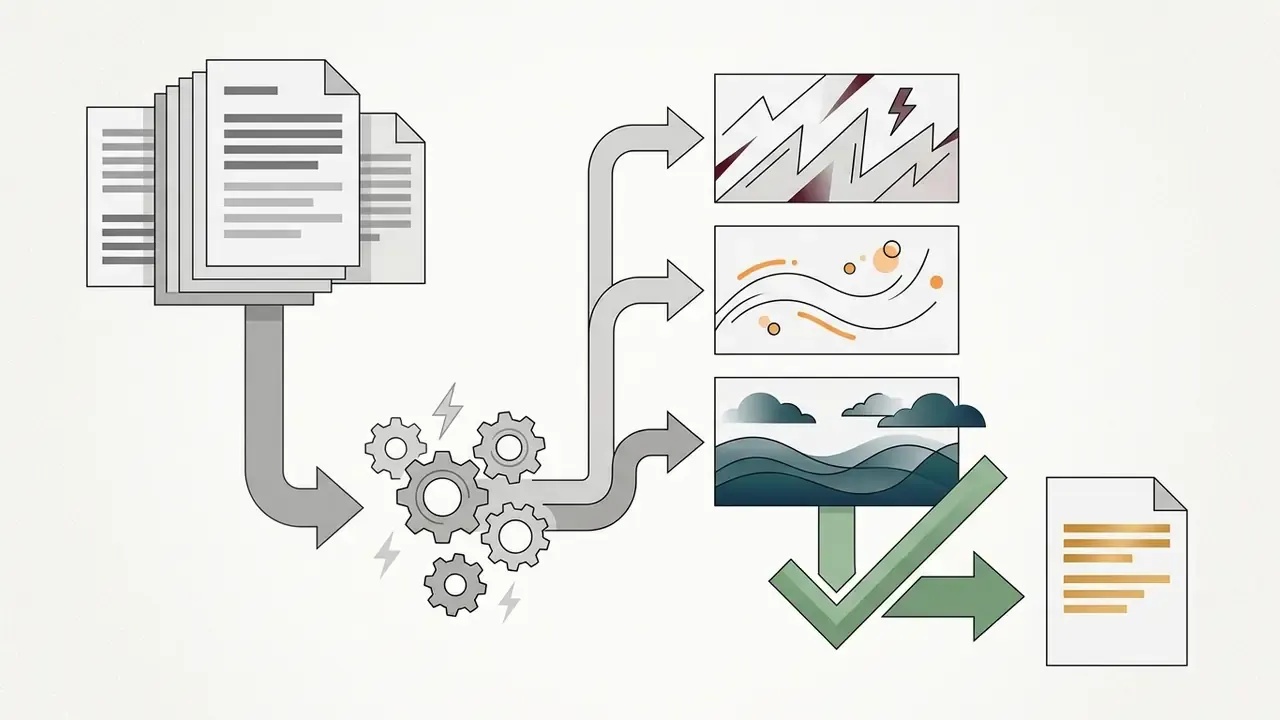
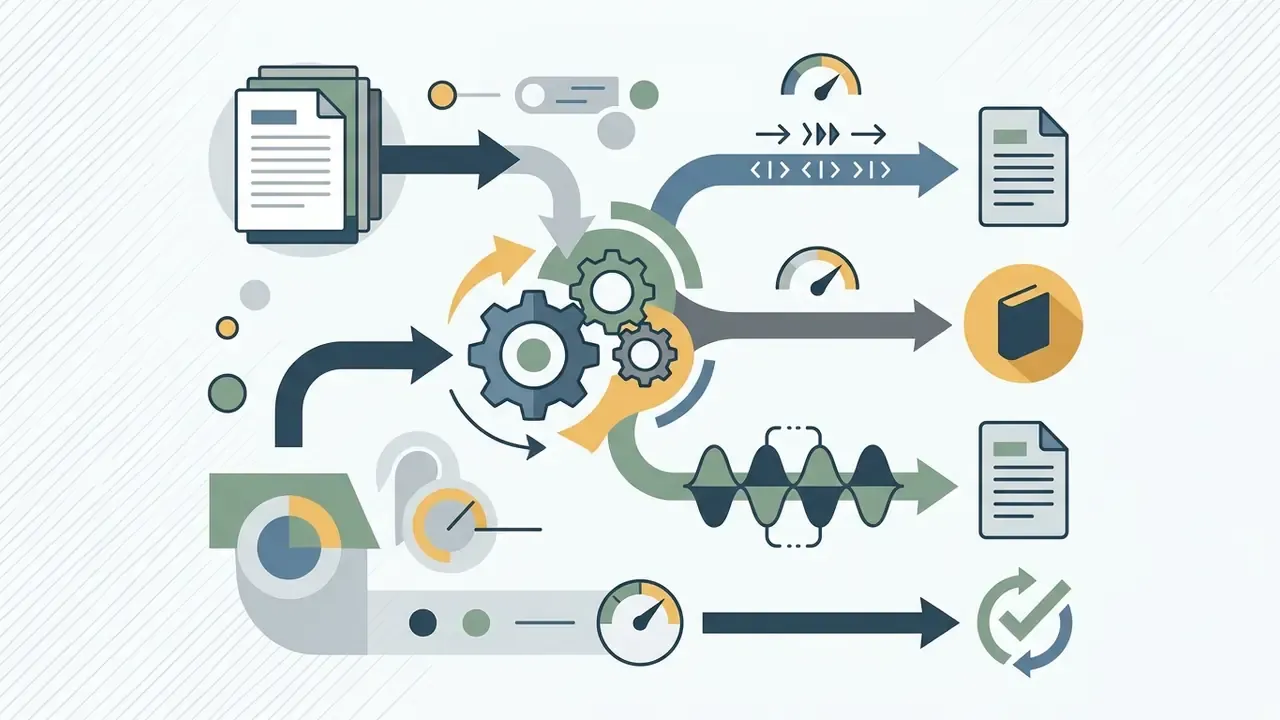
Read the flow as four stages. Stage 1, story summary: you input plot, conflict, and core premise. Stage 2, genre and tone: you set conventions, mood, and hard constraints. Stage 3, generation: the model extracts themes and maps 10 to 20 candidate titles. Stage 4, human review: you shortlist, edit, and run trademark and marketplace safety checks. Nothing in stage 3 is a decision. Only stage 4 is.
The generator is designed to streamline brainstorming during early planning or final manuscript polishing. When writers query an ai book name generator, the system evaluates word relationships and genre-specific patterns to yield actionable title candidates. The same mechanism supports non-fiction and corporate long-form work: analyst reports, internal playbooks, and thought-leadership manuscripts are named using identical genre-plus-benefit conditioning.
How AI Generates Book Title Ideas
AI systems generate title options by processing input text through natural language understanding models that extract central themes, emotional tone, and narrative stakes. Contemporary frameworks utilize extract-then-abstract architectures or structured prompt conditioning to distill long synopses into concise lexical markers.
According to guidelines published in the NIST AI 600-1 Generative AI Profile (2025), generative text evaluation relies on structured relevance assessments, including LLM-assisted relevance scoring, to ensure artificial intelligence tools maintain alignment with user intent. Rather than pulling titles from a fixed database, the book title generator ai algorithm constructs new linguistic combinations based on conditional probability. Worth repeating: nothing is retrieved from a curated list of "good titles". It is assembled.
«Automatic title generation captures the most salient aspects of a document in a compact form, balancing informativeness and brevity». — Automatic Generation of Titles for Research Papers Using Pretrained Language Models, preprint (2026)
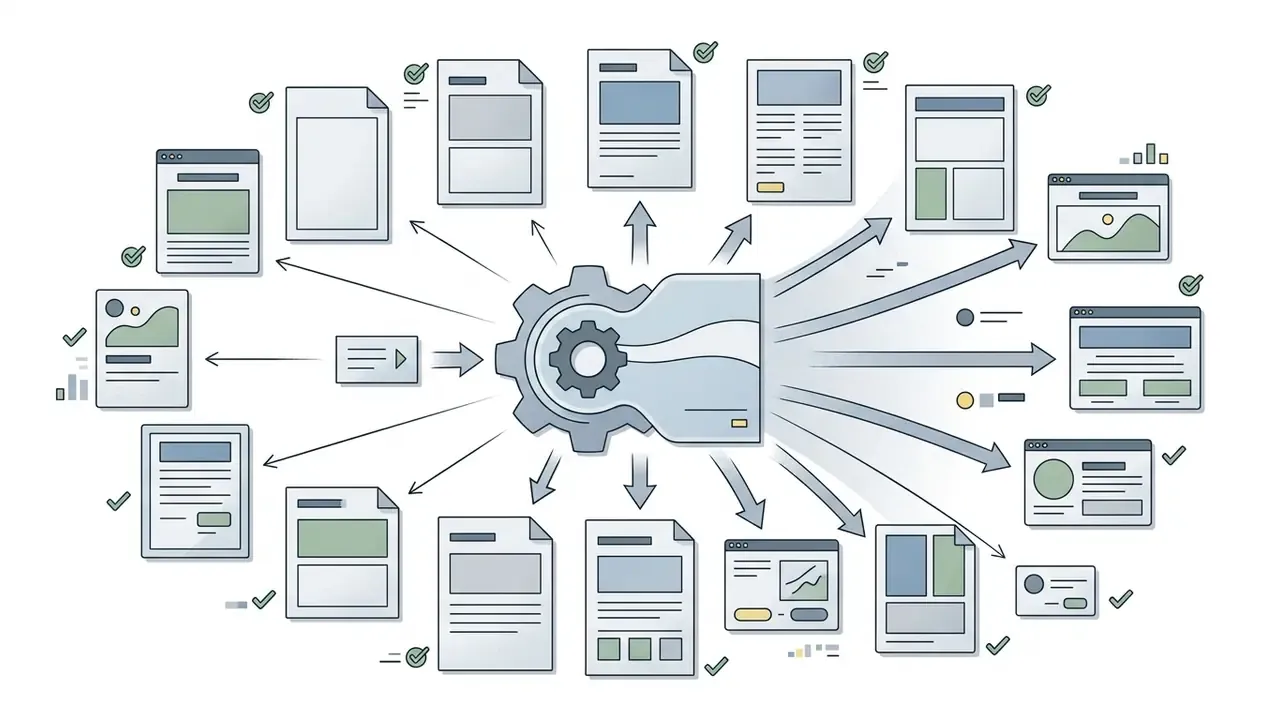
This process generates 8 to 20 title suggestions per query, providing writers with diverse directions to evaluate. Vendor behaviour varies: Reedsy and Type.ai return 10 options per generation, Kittl returns 8 unique variations, and some free tiers cap output at 5 per prompt. A book title ai generator with a low cap is not necessarily worse; it just forces more regeneration cycles.
Book Titles, Novel Titles, and Story Names
The application of an ai generator book title tool varies depending on whether the target text is a full-length book, a multi-act novel, or a short story. Formatting standards and marketing functions differ significantly across these formats:
- Book Titles Broad non-fiction or specialized works usually require clear, benefit-driven main titles paired with explanatory subtitles.
- Novel Titles Standalone or series fiction titles emphasize mood, character arc, or world-building signals, often using title case formatting in italics.
- Story Names Short stories or anthology entries frequently use concise, highly metaphorical titles placed inside quotation marks per standard style guides (MLA Style Center, 2026).
Understanding these structural distinctions ensures that writers configure the ai title generator book prompt according to the formal expectations of their specific literary category. Style systems diverge on capitalisation rather than on the italics-versus-quotation-marks rule: MLA applies title case to all principal words, while the Australian Style Manual prescribes sentence case for book titles. Small thing, but a reviewer will catch it before a reader does.
How to Use an AI Book Title Generator
Using an ai title generator effectively requires supplying clear inputs regarding plot, target market, tone, and character dynamics. Authors achieve higher relevance when providing a structured brief rather than submitting generic keywords.
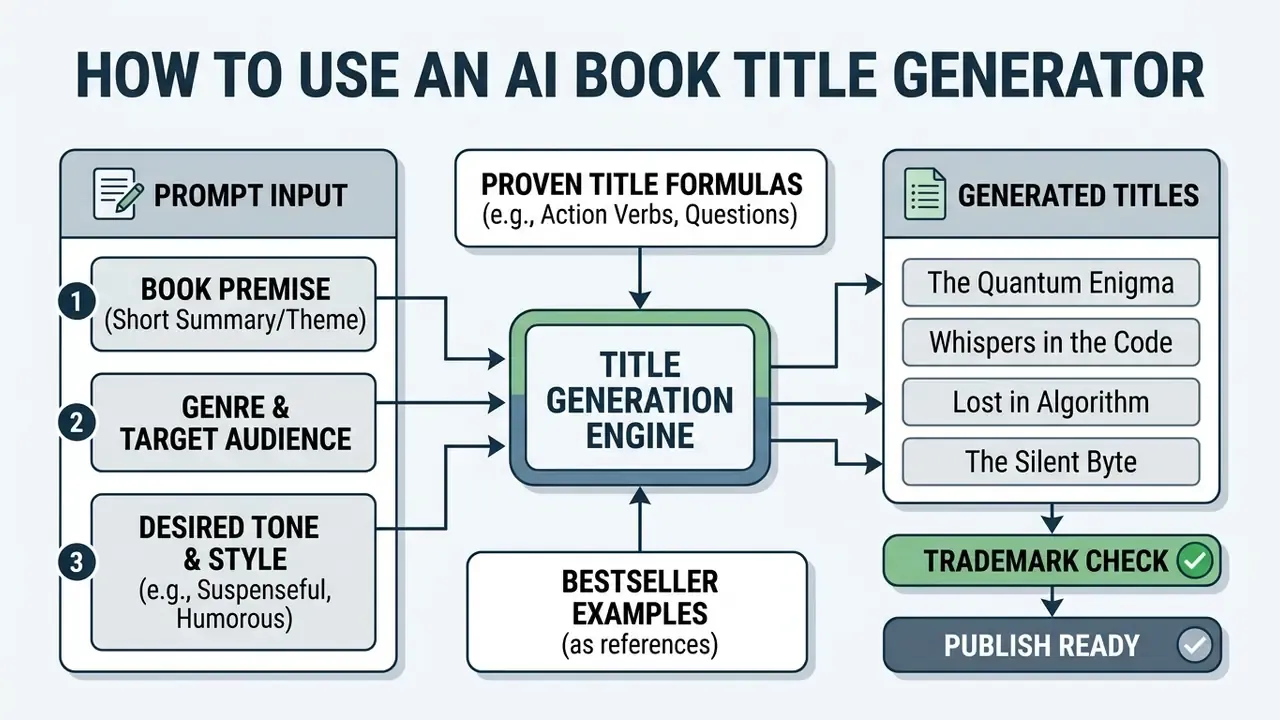
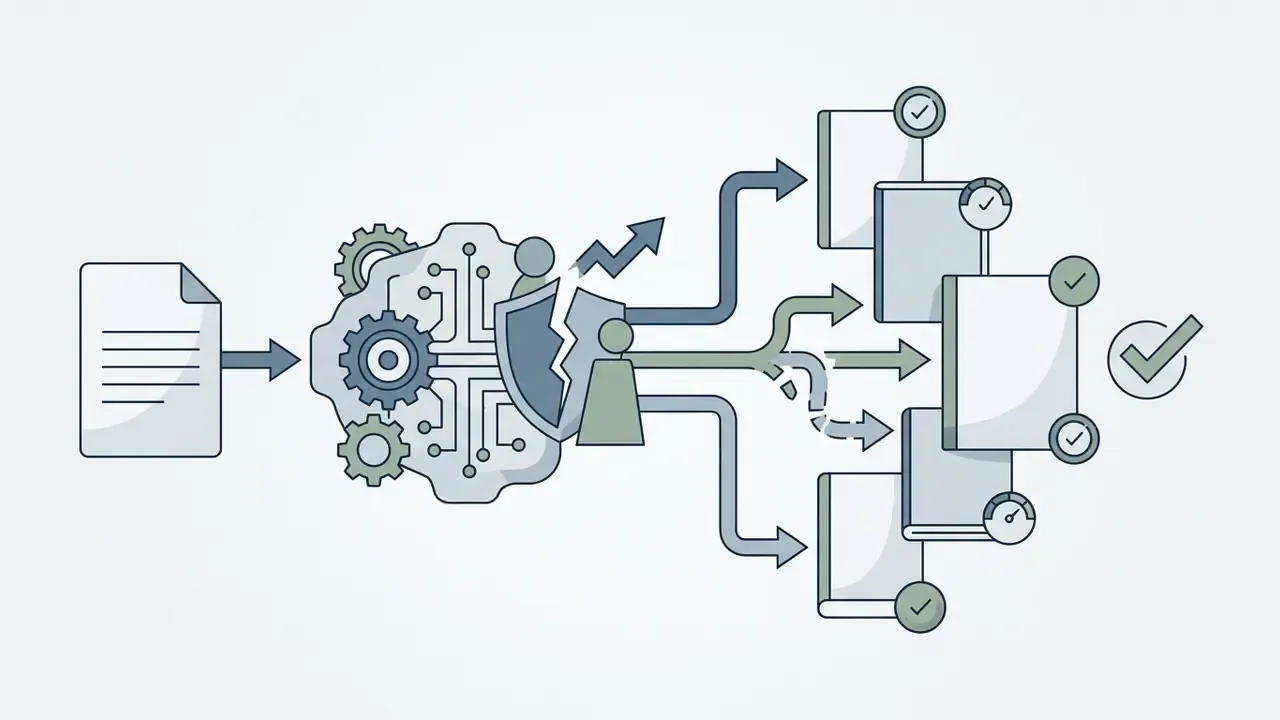
To maximize output quality, authors should follow a systematic workflow that combines precise prompt engineering with structured review loops. Because title clearance is a gating step rather than a final formality, run the legal and market screen before you fall in love with a candidate.
Pre-Publication Legal & Market Checklist (Updated 2026)
Describe the Book, Story, Characters, and Core Theme
The initial input must summarize the protagonist's primary goal, central conflict, and thematic core in two to four sentences. Unclear summaries force the model to rely on statistical averages, producing bland titles. That is the whole failure mode in one line.
Research on human-AI co-writing from the CoAuthor dataset demonstrates that generative models perform best when given specific contextual constraints rather than open-ended prompts. Quantitative headline research makes the effect measurable:
«Extract-then-abstract modeling improved ROUGE-1 by 17%, ROUGE-2 by 13%, and ROUGE-L by 21% when titles were conditioned on salient extracted sentences». — Disaster News Headline Generation via Extract-then-Abstract Modeling (2023)
Including details about setting, central stakes, and underlying themes allows the book name generator ai to generate title options that accurately reflect the narrative's substance. Authors who need supporting metadata at the same stage often draft the premise once and reuse it inside a book blurb generator, so title and back-cover copy stay semantically aligned.
Choose Genre, Tone, and Style
Selecting the exact genre and desired tone directs the AI toward appropriate vocabulary choices and syntactic structures. A cozy mystery demands soft intrigue, whereas a space opera requires expansive, high-stakes terminology.
«Short-video title generation shows that tone and genre settings guide models toward vocabulary and structures that maximise viewer interest and content alignment». — Short Video Title Generation and Cover Selection (TCR method, SVTG dataset) (2023)
Writers using an ai story name generator should explicitly specify tonal modifiers, such as dark, poetic, satirical, or analytical, to prevent output that feels misaligned with the text's actual atmosphere. Genre pages in commercial tools work the same way: selecting "Regency Romance" rather than "Romance" narrows lexical range before generation starts.
Generate, Review, and Refine Title Options
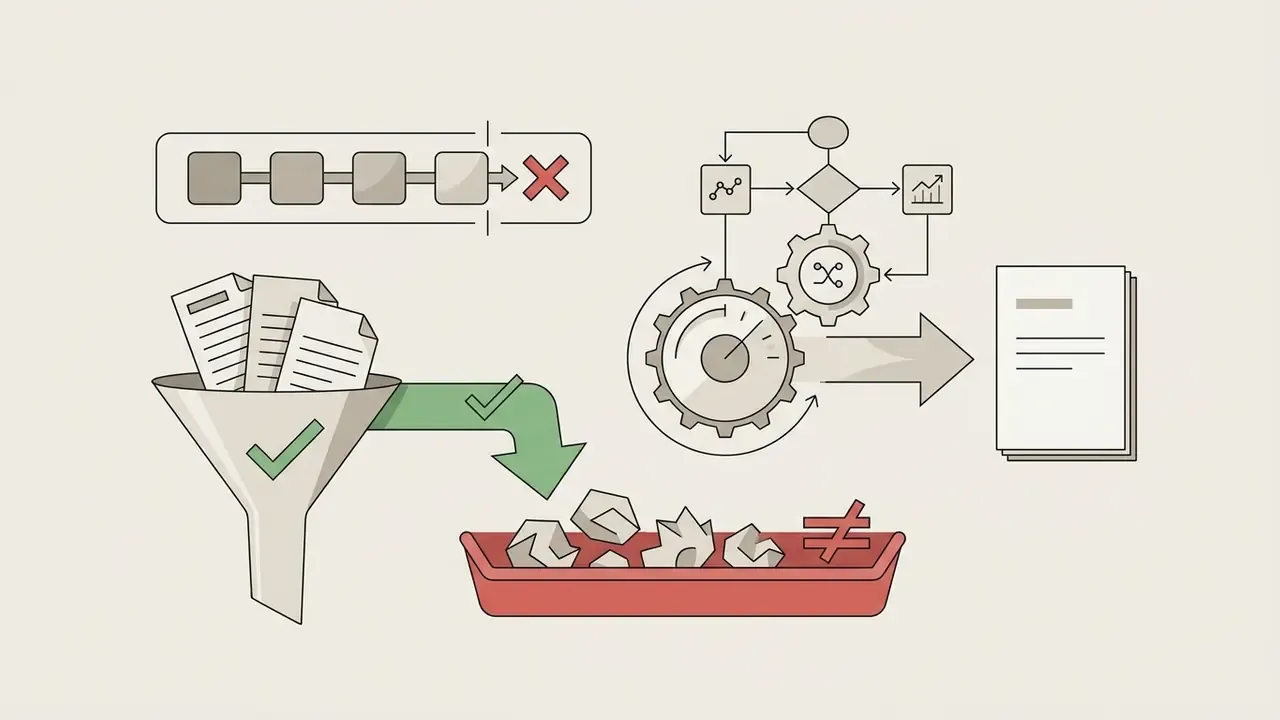
Generating title ideas is an iterative process that requires reviewing multiple outputs, adjusting input parameters, and refining promising options. Authors should avoid accepting the first output without critical evaluation. Documented prompt-refinement loops follow a stable pattern: produce candidates, mark preferred and non-preferred elements, feed those preferences back into the prompt, regenerate, and stop when improvement plateaus.
«CoAuthor data show AI-assisted writing increased vocabulary diversity and reduced spelling errors compared to purely human-produced text». — CoAuthor: Towards Data-Driven Narrative Writing Collaboration between Humans and AI (2023)
To maintain full control over the creative process, writers should keep every intermediate shortlist. A practical loop: generate 20 candidates, star 5, request 10 variants of each starred option, then cut anything that fails brevity, pronunciation, or genre-fit tests. Naming a cast of characters benefits from the same discipline, which is why many authors pair title work with a character name generator session in the same drafting block.
Ready-to-Use Prompt Templates and Sample Outputs
Copy and customize these prompt templates to generate higher-precision titles.
Template 1: Dark Fantasy / Sci-Fi
Act as a publishing strategist. Generate 10 title options for a Dark Fantasy novel.
Protagonist: A grieving astronomer who discovers dead stars contain trapped memories.
Setting: A crumbling orbital city. Tone: Melancholic, atmospheric, high-stakes.
Constraints: 2 to 4 words, no cliché words like "Shadow", "Dark", or "Chronicles".
Sample AI output and why it works: Whispers of the Hollow Moon, metaphorical, evokes loss and gothic atmosphere without naming the emotion; The Starlight Graveyard, a high-imagery noun pairing that signals both setting and stakes; Memory's Last Orbit, premise-driven, compressing the central mechanic into three words.
Template 2: Non-Fiction / Business
Generate 5 main titles with subtitles for a business productivity book.
Core Topic: Async communication for remote software teams.
Target Audience: Engineering managers. Benefit: Reducing meeting fatigue by 50%.
Constraints: Main title 1-3 words; Subtitle must contain a clear benefit proposition.
Sample AI output: Silent Flow: How Asynchronous Work Doubles Engineering Output; Zero Sync: The Leader's Guide to Eliminating Wasteful Meetings. The two-part structure follows the standard non-fiction pattern: the title creates recognition or curiosity, the subtitle restores clarity and states the payoff.
Template 3: Mystery / Thriller
Generate 12 title options for a contemporary cozy mystery, first in a series.
Protagonist: A retired court stenographer who reads lies in transcript margins.
Setting: A coastal town during off-season. Tone: Wry, warm, quietly menacing.
Constraints: Max 5 words; must scale into a series pattern; avoid the words
"Murder", "Deadly", "Secrets". Return each title with a one-line rationale.
Sample AI output: The Margin Notes, a series-scalable noun phrase tied to the sleuth's craft; Off-Season Testimony, pairing setting with the legal motif; What the Transcript Forgot, an implicit-question form that opens a curiosity gap.
Template 4: Whitepaper / Thought Leadership (regulated sectors)
Generate 8 report titles with subtitles for a financial-services analyst paper.
Topic: Model risk controls for generative AI in customer communications.
Audience: Heads of Model Risk, CCOs. Tone: Precise, non-promotional, auditable.
Constraints: No hype words ("revolutionary", "game-changing"); subtitle must state
scope and method; keep main title under 6 words. Do not include client names,
internal metrics, or any confidential product details in the prompt or output.
Sample AI output: Controlled Generation: A Validation Framework for AI-Assisted Customer Messaging; Evidence Before Autonomy: Human-in-the-Loop Controls for Generative Text Workflows. Note the constraint against confidential inputs. See the Shadow AI section below for why that line belongs in every corporate prompt.
What Makes a Book Title Memorable and Effective?
A memorable book title balances reader curiosity with genre transparency, ensuring the target audience immediately understands the book's appeal. Commercial publishing data confirms that titles must be easily pronounceable, scannable, and distinct from existing market competitors. That distinctiveness question runs alongside cover and imprint identity, which is why some authors test wordmark ideas with an AI logo generator once the shortlist is fixed.
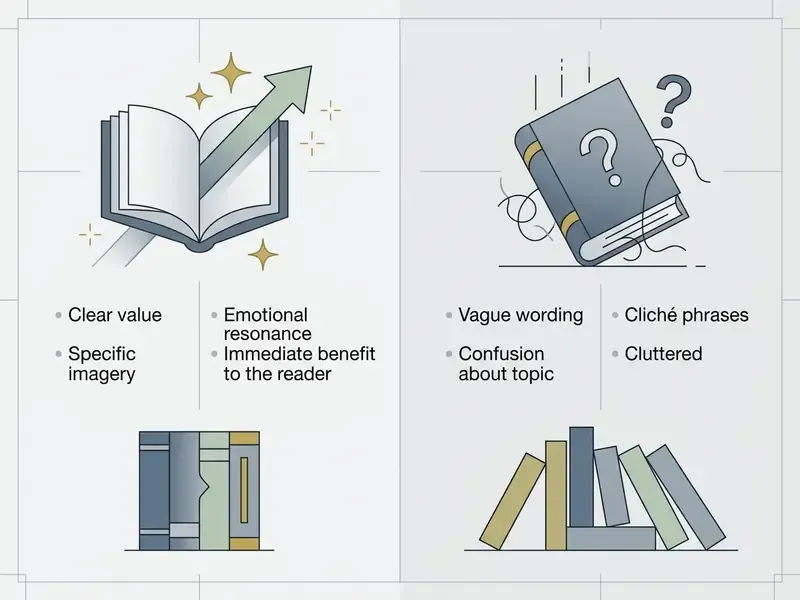
| Criterion | Effective Title Attributes | Weak Title Attributes |
|---|---|---|
| Genre Alignment | Signals sub-genre expectations clearly through targeted vocabulary | Uses generic wording that confuses market placement |
| Clarity vs. Mystery | Pairs intriguing imagery with a grounding descriptor or subtitle | Uses obscure jargon or overly abstract phrasing |
| Phonetic Flow | Easy to pronounce, memorable rhythm, 1 to 4 words | Clunky syllable structure, difficult to repeat verbally |
| Market Uniqueness | Distinctive within its specific Amazon/Goodreads category | Highly similar to established bestsellers in the same niche |
| Recall Durability | Survives a 24 to 48 hour delayed-recall test with new readers | Forgotten or misremembered after a single exposure |
Proven Title Formulas and Real-World Examples
Famous bestsellers rarely launch with their initial working titles. Examining publishing history reveals how refining a raw title aligns a manuscript with reader expectations:
- 1984 by George Orwell: originally titled The Last Man in Europe. The shift to a stark, memorable date created immediate political intrigue and a title readers could repeat verbatim.
- Lord of the Flies by William Golding: originally titled Strangers From Within. The final title used a vivid, visceral metaphor to signal core thematic conflict.
- Gone With the Wind by Margaret Mitchell: originally titled Tomorrow Is Another Day, a line of dialogue traded for an image of irreversible loss.
To replicate this success using AI, apply four established market patterns:
- Character Focuscenters on the protagonist (Harry Potter, Percy Jackson). Prompt cue: "build the title around the protagonist's name or defining role."
- Thematic Contrastpairs opposing forces or concepts (Pride and Prejudice, War and Peace). Prompt cue: "pair two opposing abstract nouns drawn from the central conflict."
- Core Metaphoruses symbolic imagery to build atmospheric depth (To Kill a Mockingbird, The Catcher in the Rye). Prompt cue: "derive the title from one recurring physical image in the manuscript."
- Intriguing Premiseposes an implicit question or narrative scenario (The Girl on the Train, Do Androids Dream of Electric Sheep?). Prompt cue: "phrase the title as an unresolved situation or question."
Genre lexicons reinforce these patterns. Fantasy leans on "[Noun] of [Noun]" and "The [Adjective] [Noun]" constructions that signal scope. Detective fiction historically avoids blunt words like murder or crime in favour of a promise of suspense. Non-fiction relies on explicit value framing such as "How to [outcome] by [method]" or "[Number] strategies for [result]", while romance foregrounds relationship and emotional-state cues.
Match the Reader's Genre Expectations
Readers rely on title conventions to identify books that match their reading preferences. A thriller title usually implies urgency or danger, while non-fiction titles rely on clear value propositions.
«Memory sensitivity was higher in the image condition (mean 1.82) than text-only (mean 1.15), yet titles that enabled content inference still contributed meaningfully to recognition». — Italian Novel Cover Study, experimental study with 50 participants (2023)
Cognitive research on reader memory therefore suggests that text elements improve book recognition primarily when they allow readers to infer core content and connect it to familiar genre frameworks. A story title generator ai must be calibrated to respect these category expectations while avoiding completely derivative phrasing, and the cover art must carry part of the recognition load, since imagery outperformed text alone in recall testing.
Create Curiosity Without Hiding the Book's Meaning
An effective title creates a "curiosity gap" that piques interest without leaving the reader completely confused about the book's subject. Balance is key: intrigue attracts attention, but clarity closes the decision to read. Contemporary headline research treats this as a paired design problem, moving from curiosity to clarity, rather than as a trade-off. Practical craft guidance frames the same mechanic more bluntly: the title creates the image or the intrigue, the subtitle restores clarity.
«Disaster headline models foregrounding event, consequences, and primary effects achieved ROUGE-L improvements of 21% over direct-generation baselines». — Disaster News Headline Generation via Extract-then-Abstract Modeling (2023)
In book publishing, fiction titles often achieve this balance through striking metaphors, whereas non-fiction relies on a sharp title combined with a descriptive subtitle. Workable curiosity forms include a direct promise, the inversion of a common belief, a coined term, a metaphor, an exact question, and a short positional statement.
Keep the Title Clear, Distinctive, and Easy to Remember
Brevity and phonetic simplicity significantly improve word-of-mouth recommendations and search discoverability. Titles containing one to four words are generally easier to recall than lengthy, complex phrases, and naming research consistently finds one- and two-syllable core words easiest to retain.
Standard naming methodologies test title retention through delayed recall assessments after 24 to 48 hours: read the candidate aloud once, wait a day, then ask the listener to write it back. Complementary screens include a competitor-confusion test against the three most recognisable titles in the category, a third-party pronunciation test, and a semantic check for double meanings or negative cross-language connotations. When testing generated options from a free ai book title generator, writers should verify that the title passes basic pronunciation tests and presents no unintended awkward sound combinations. Before locking metadata, confirm the final string against your ISBN and imprint registration guide so print and digital records match exactly.
Generate Titles for Books, Novels, and Stories
Different creative formats require tailored prompt strategies to produce relevant titles. An ai novel title generator focuses on narrative arcs and character dynamics, whereas an ai story title generator prioritizes thematic brevity.
AI Novel Title Generator for Genre-Specific Ideas
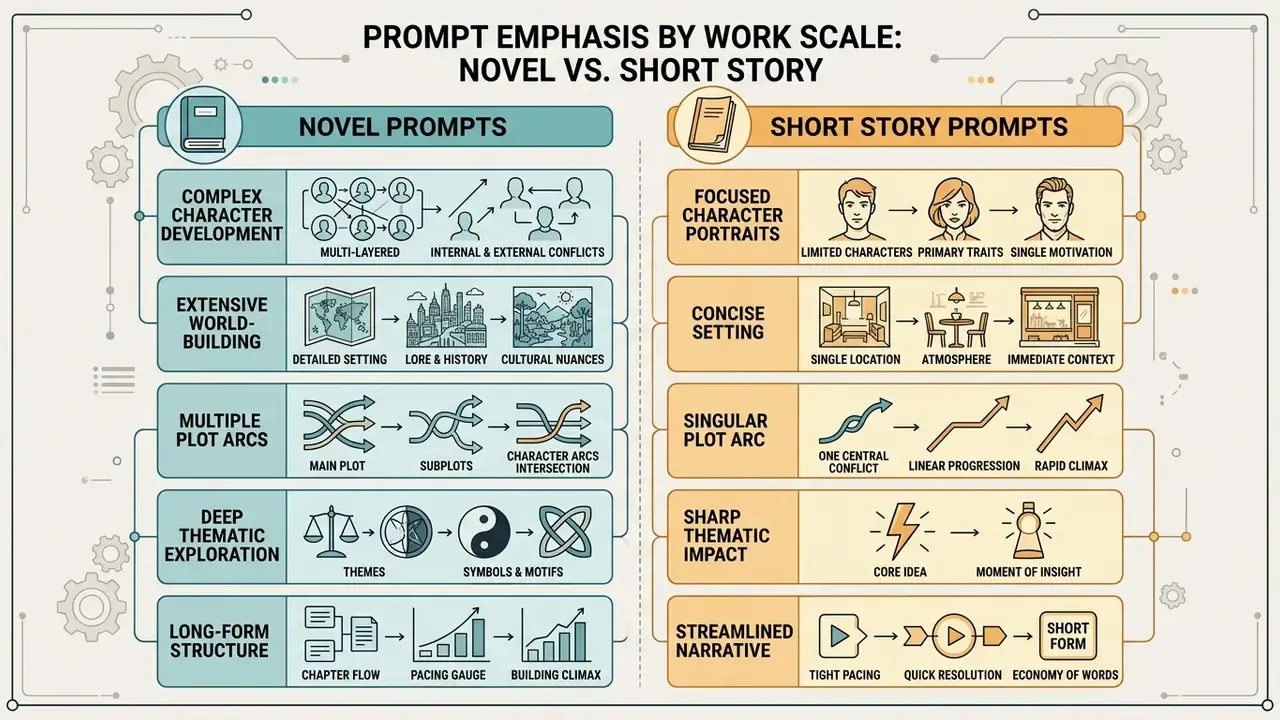
Generating novel titles requires directing the AI model toward central plot conflicts, character transformations, and genre-specific tropes. Novels rely heavily on emotional resonance to attract prospective fiction readers, and multi-act structure gives the model more thematic anchors to compress.
«Hierarchical prompting generated over 5,000 story titles from 57 chapter themes, with at least 70 stories per chapter retained after human filtering». — SS-GEN: Social Story Generation via Hierarchical Prompting of Advanced LLMs (2026)
That scalability matters for series authors: a theme-level hierarchy lets one prompt tree produce consistent naming patterns across an entire arc instead of isolated one-off titles. When managing multi-channel book marketing alongside manuscript planning, teams often audit complementary creation tools, for example testing a photo editor for cover graphics or a video montage maker for launch teasers before locking the final title treatment.
| Format | Information to Include in Prompt | Primary AI Focus |
|---|---|---|
| Non-Fiction Book | Target audience, main problem solved, core methodology, author authority | High clarity, searchability, explicit benefit statement |
| Fiction Novel | Protagonist motivation, core conflict, setting, primary sub-genre | Emotional resonance, genre signaling, narrative intrigue |
| Short Story | Single climax point, central metaphor, key dialogue fragment or motif | Conceptual brevity, sharp imagery, atmospheric focus |
The table above details how prompt inputs should adapt based on the scope of the literary work. Providing format-specific parameters ensures the story name generator ai aligns with standard publishing structures. Structural scale also changes prompt granularity: outline-oriented book prompts typically specify 10 to 12 chapters with per-chapter summaries, novel prompts specify a three-act arc across 10 to 15 chapters, and short-story prompts specify a single scene arc with a hard word ceiling.
AI Story Name Generator for Short Stories
Short story titles demand high conceptual impact within a compact word count. Because short stories focus on a single narrative arc or emotional beat, their titles often derive from central metaphors or key dialogue lines.
Craft guidelines from Flash Fiction Online (2021) emphasize that short story names should grow directly from the plot's central tension rather than abstract thematic concepts. A good title can come from "a line of dialogue that sums up the central concern" or from an image that suggests contradiction.
«Creative short-story evaluation shows novelty and surprise are crucial quality dimensions, suggesting titles should reflect the story's most unexpected or distinctive element». — Evaluating Creative Short Story Generation in Humans and Large Language Models, preprint (2024)
Using an ai story name generator allows writers to extract striking phrases directly from their manuscript text to build memorable short story titles. Paste the sharpest 200 words of the story into the prompt and ask the model to return only titles that already appear implicitly in that passage. A story title ai generator used this way behaves less like an inventor and more like a highlighter.
Tailoring Title Generation to Your Publishing Goal
- Indie authors (self-publishing / Amazon KDP) focus prompt constraints on sub-genre micro-keywords to optimise Amazon search discoverability and visual cover fit. Add a constraint for character count so the title survives thumbnail display.
- Academic and student writers prompt the AI for structured, objective titles that highlight methodological scope and research parameters. Editorial guidance favours precise, jargon-free titles that use the fewest words accurately describing the content.
- Brand storytellers and thought leaders prioritise high-clarity main titles paired with authority-building subtitles stating specific commercial results, and exclude promotional adjectives that will not survive legal or compliance review. If the title will also head a webinar deck, sanity-check it against your video presentation format early.
How to Check and Improve Generated Book Titles
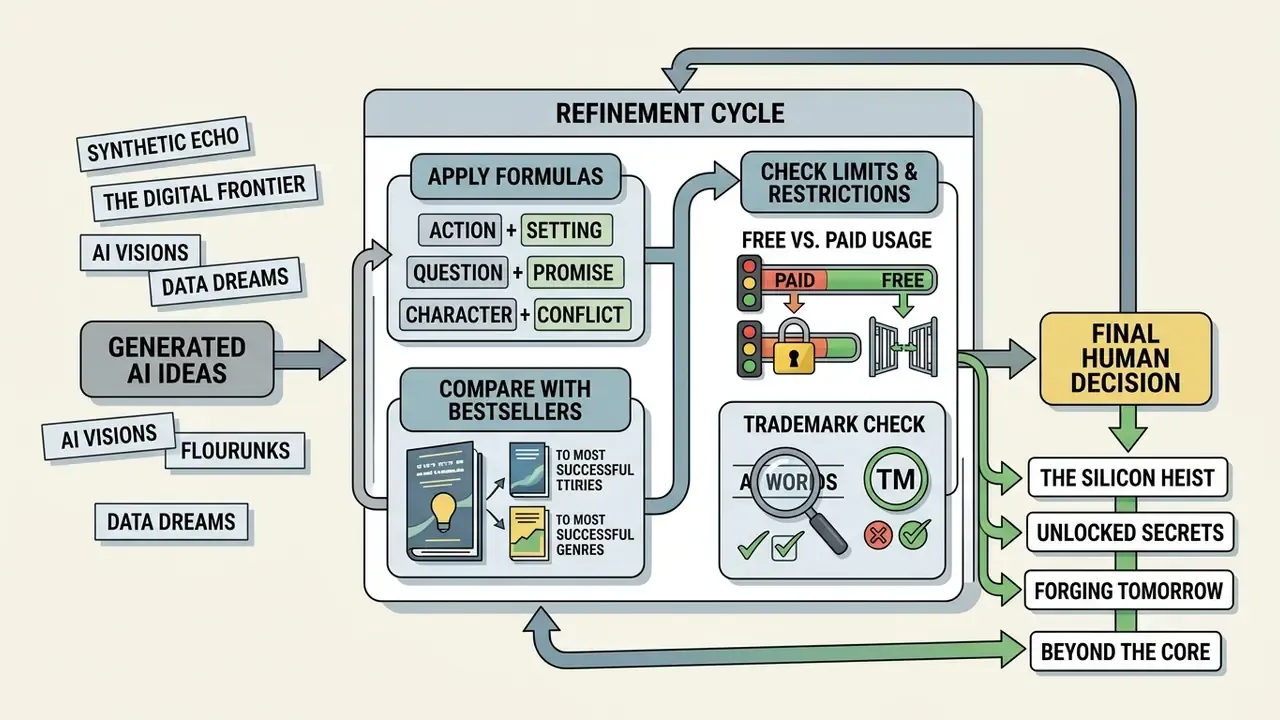
AI-generated titles serve as raw creative material rather than final, publication-ready copy. Authors must review, test, and refine generated outputs to ensure original positioning and market safety.
Compare Options Against the Book's Core Idea
Selected title candidates must be evaluated against the manuscript's primary theme and emotional tone. Any title that misrepresents the book's actual content risks alienating readers and generating negative reviews.
Empirical evaluation guidance in the NIST AI RMF Generative AI Profile (2024) recommends assessing generative output against known ground truth, combining human oversight with automated evaluation and content-input review before adoption.
«LLM-generated stories achieve high stylistic complexity but lag behind human writers in novelty, surprise, and diversity, per expert rater evaluations». — Evaluating Creative Short Story Generation in Humans and Large Language Models, preprint (2024)
Authors should therefore filter out titles that rely on generic clichés or fail to reflect the narrative's true tone. A workable scoring rubric borrowed from name-generation research rates each candidate on fluency, consistency with source meaning, relevance, completeness, pronounceability, memorability, and uniqueness, then ranks the survivors. Seven criteria sounds heavy. In practice it takes twenty minutes for a shortlist of five.
Use AI Results as Ideas, Not Final Copy
The most effective titles often result from combining two separate AI suggestions or manually adjusting a generated phrase. Treating AI outputs as flexible suggestions preserves human editorial control.
«In AI-primary writing mode, participants reported significantly lower ownership over the final article, with adjusted p-values below 0.001 versus independent writing». — The Value, Benefits, and Concerns of Generative AI-Powered Assistance in Writing, CHI (2024)
Conversely, writers who actively edit, combine, and rephrase AI suggestions maintain full creative agency while benefiting from expanded lexical choices. The homogenisation risk is documented:
«Post-2022 academic abstracts show sharp rises in AI-associated vocabulary like "delve," "underscore," and "meticulous," signalling stylistic homogenisation in machine-mediated text». — Lexical Traces of AI in Academic Abstracts, bibliometric study (2024)
Practical humanisation moves are consistent across editorial guidance: swap stiff words for simpler ones, shift word order for emphasis, alternate short and long phrasing in the title-plus-subtitle pair, and read every finalist aloud. Authors planning an audiobook edition should also test the shortlist against narration constraints, which is easier with an AI voice generator before the title is committed to metadata and cover art.
Human-in-the-Loop Audit Trail Template
Regulated publishers, corporate communications teams, and academic authors increasingly need reproducible evidence that a human, not a model, made the final naming decision. Log the following six fields per title decision:
| Audit field | What to record | Why it matters |
|---|---|---|
| Prompt version | Full prompt text, date, model/tool name and tier | Reproducibility of the generation step |
| Raw output set | All candidates returned, unedited | Shows the human selected rather than rubber-stamped |
| Screening results | Trademark search date and registry, marketplace duplication checks | Demonstrates IP diligence |
| Human edits | Before/after strings for every manual change | Evidences human expressive contribution |
| Rationale | 1 or 2 sentences on why the final title beat the alternatives | Explains the override decision to auditors |
| Approver | Named individual, role, sign-off date | Assigns accountability |
This log also supports copyright registration. Because the Copyright Office requires applicants to identify human contributions and disclaim AI-generated material, a per-decision record makes the disclosure statement straightforward rather than reconstructive. Reconstructing it eighteen months later, from memory, is where teams lose time.
Is a Free AI Book Title Generator Enough for Commercial Use?
A free ai book title generator is generally sufficient for initial idea generation, but commercial publishing requires reviewing platform terms of service and legal standards. While titles themselves are short phrases that fall outside basic copyright protection, vendor terms govern how tool outputs may be commercially deployed. So the question is rarely "is it good enough", it is "what did I agree to".
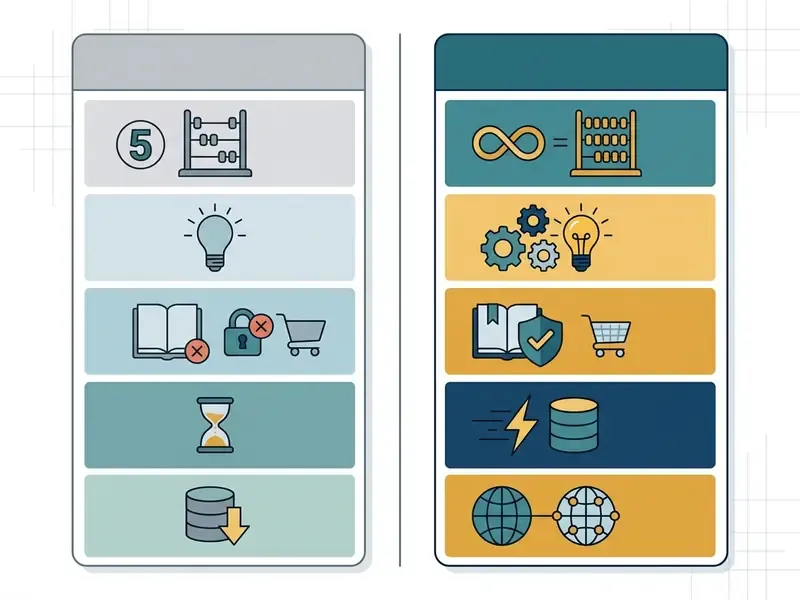
| Feature Parameter | Free AI Title Tier | Commercial / Paid / Enterprise Tier |
|---|---|---|
| Generation Volume | Capped queries or fixed output batches (5 to 10 titles per prompt; some tools cap weekly word quotas) | High-volume or unlimited generation runs, batch API calls |
| Customization Depth | Basic genre and tone dropdowns | Advanced prompt parameters, system prompts, custom fine-tuning |
| Commercial Rights | Permitted under standard ToS; typically non-exclusive rights | Full customer assignment of output rights, vendor indemnity or copyright-shield clauses |
| Data Privacy | Prompts may be logged and used for model retraining | Zero-data-retention options; inputs excluded from training |
| Security Attestations | Rarely published for consumer tiers | SOC 2 Type II reports, DPAs, regional data residency |
| Auditability | No exportable prompt history in many tools | Exportable logs, role-based access, retention policies for audit trails |
| Support & SLA | Community help only | Contractual uptime SLA and named support contacts |
What a Free Book Title Generator Can Do
Free tools excel at breaking writer's block and providing immediate lexical variety without financial investment. They allow authors to quickly explore multiple naming angles during prewriting, which is exactly the stage where paying per query makes no sense.
Usage analyses across popular platforms indicate that free tiers from Canva, QuillBot, Kittl, Reedsy, and Type.ai are functionally capable of generating standard title candidates, though limits differ sharply by vendor model: Canva Free restricts the number of queries before requiring Pro, Kittl returns 8 variations per run, Type.ai and QuillBot return 10 suggestions per generation, and some tools cap free usage by weekly word quota rather than by query count. That is why the phrase ai book title generator free means different things on different sites. For creators exploring adjacent software, checking a free photo editor for cover art drafts, a video quality enhancer for trailer footage, or an animation maker for book trailers supports broader marketing tasks. Pricing and per-seat limits sit in one place if you want to explore the hub first.
Check Usage Rights Before Publishing or Selling a Book
Official guidance further states that copyright protection requires human creative authorship: where a machine determines the expressive elements, the output is not registered as a human-authored work, and prompting alone is generally insufficient. While titles themselves are short phrases excluded from copyright protection (37 CFR § 202.1), the Copyright Office specifies that titles are generally unprotectable regardless of whether a human or an AI produced them. That is precisely why trademark law, not copyright, governs title collisions in commerce. Authors using generative AI to produce significant portions of their manuscript text must explicitly disclaim AI-generated elements during registration, and UK consultation material notes that AI output can still infringe where it reproduces a substantial part of a protected work.
To review software pricing tiers or commercial licensing parameters across creative tooling hubs, creators can compare options before launching commercial products, and use a video script template if the same title anchors a promotional series.
Manage Shadow AI and Protect Confidential Manuscript Data
Limitations and Open Questions
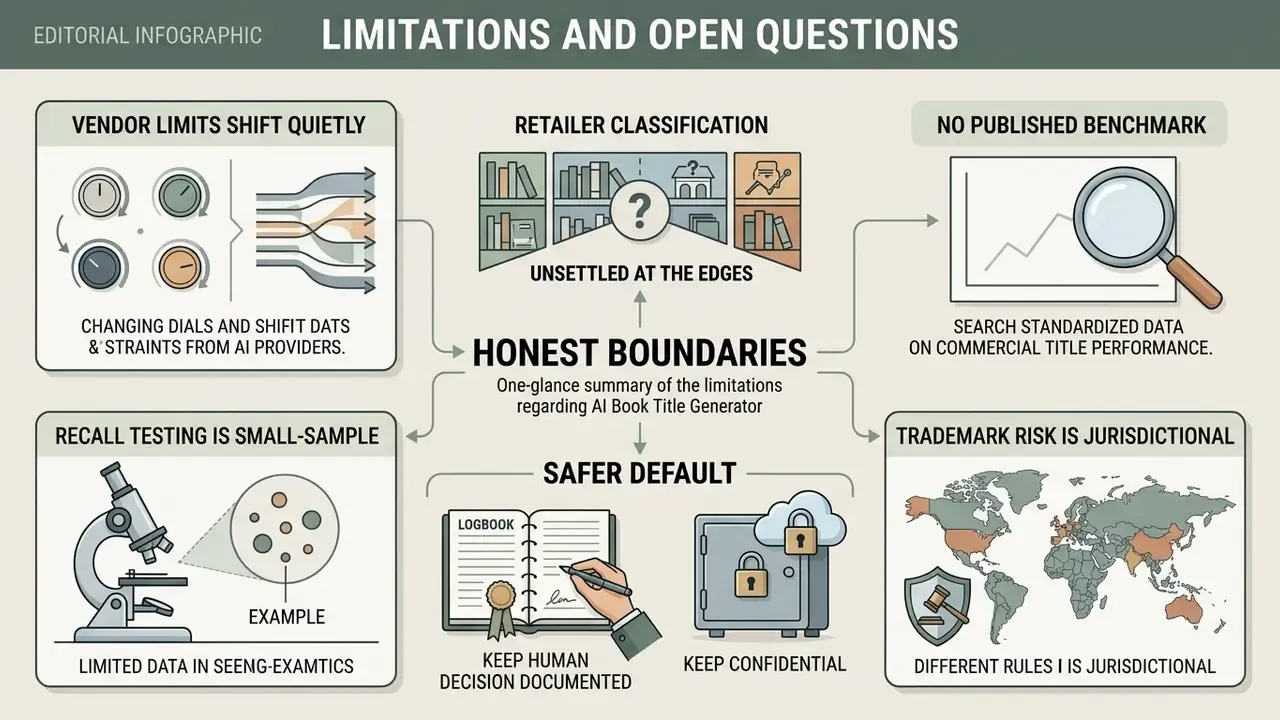
Honest boundaries first. This guide summarises published research and public policy documents; it does not measure how a specific vendor behaves under your contract.
- Vendor limits shift quietly. Free-tier caps, retention defaults, and rights language change without notice. Re-verify before every launch cycle, not once a year.
- Retailer classification is unsettled at the edges. Platforms distinguish AI-generated from AI-assisted text, but a title produced by a model and then rewritten by a human sits in a grey zone that policy language does not fully resolve.
- No published benchmark measures commercial title performance. ROUGE scores come from headline and summarisation research, not from book sales. Treat them as evidence about model conditioning, not about conversion.
- Recall testing is small-sample by nature. A 24 to 48 hour delayed-recall check with five readers is a signal, not a study.
- Trademark risk is jurisdictional. A clean USPTO search says nothing about EU, UK, or Canadian registers if you plan international distribution.
Where evidence is incomplete, the safer default holds: keep the human decision documented, keep confidential inputs out of consumer tools, and keep the generated shortlist reviewable.
AI Book Title Generator FAQ
Can I Generate a Title Before Finishing the Book?
Yes, generating working titles early in the writing process helps clarify the central theme and target audience. Early titles serve as structural anchors during drafting, even if they are modified prior to publication. Editorial research from the Journal of Microbiology & Biology Education (2021) indicates that developing provisional titles from core research questions or plot premises helps writers maintain focus on their central narrative thread. The same guidance suggests deriving the title from the top search keywords and testing ambiguity on an uninformed reader.
«Prewriting with LLMs is described as discovering and developing ideas before drafting, where AI acts as a "second mind" supporting divergent thinking». — It Felt Like Having a Second Mind: Investigating Human-AI Co-creativity in Prewriting with LLMs (2024)
Can an AI Generator Create Several Title Options?
Yes, most AI title generators produce 8 to 20 distinct title options per query. Users can request additional variations by adjusting tone settings, adding specific keywords, or modifying plot summaries. Structured prompt formats that separate persona, instructions, context, constraints, and output specification make batch requests reliable. Simply state the exact number of variants required.
«CoAuthor's five-suggestion interface supports divergent thinking without overwhelming writers, enabling comparative evaluation of multiple candidate titles». — CoAuthor: Towards Data-Driven Narrative Writing Collaboration between Humans and AI (2023)
Can I Use the Generator for Any Genre?
Yes, an ai book title generator supports any literary genre, including romance, hard science fiction, historical non-fiction, and niche hybrid categories. Providing clear genre inputs ensures the model applies the appropriate stylistic patterns.
«Genre labels guide models toward appropriate lexical and structural choices, as shown across disaster news, video, and research paper title generation studies». — Disaster News Headline Generation (2023); Short Video Title Generation (2023); Automatic Generation of Titles for Research Papers (2026) Coverage is strong but not uniform. Recent work on poetry found models handled figurative meaning better than formal features such as rhythm and sound, and literary evaluation frameworks add genre-specific exceptions for fantasy and science fiction. For rare, hybrid, or highly formal genres, expect to supply more explicit structural constraints and to edit more heavily.
What Is the Difference Between a Title and a Subtitle?
The title is the hook; the subtitle supplies clarity, scope, or audience. Non-fiction, academic work, and thought-leadership manuscripts benefit most from the pair, because the title can carry the image or intrigue while the subtitle states the concrete benefit and method. Fiction typically needs no subtitle unless it carries series identification.
Who Owns an AI-Generated Book Title?
Titles are short phrases and generally fall outside copyright protection entirely, so most vendors permit commercial use of generated titles under their terms of service, though some grant non-exclusive rather than exclusive rights. Ownership questions bite harder for manuscript body text than for titles. The operative risks for a title are trademark collision in your product class and marketplace confusion with an existing bestseller, both addressed by the pre-publication checklist above.
What Common Mistakes Should I Avoid?
Avoid vague or hard-to-pronounce constructions, titles that are excessively long, and naming conventions already saturated in your sub-genre. Also avoid publishing the first output verbatim: the lexical-homogenisation evidence above shows machine-mediated text drifts toward a narrow vocabulary band, which is exactly how identical-sounding titles proliferate in the same category.
Appendix A: Editorial Corrections Log
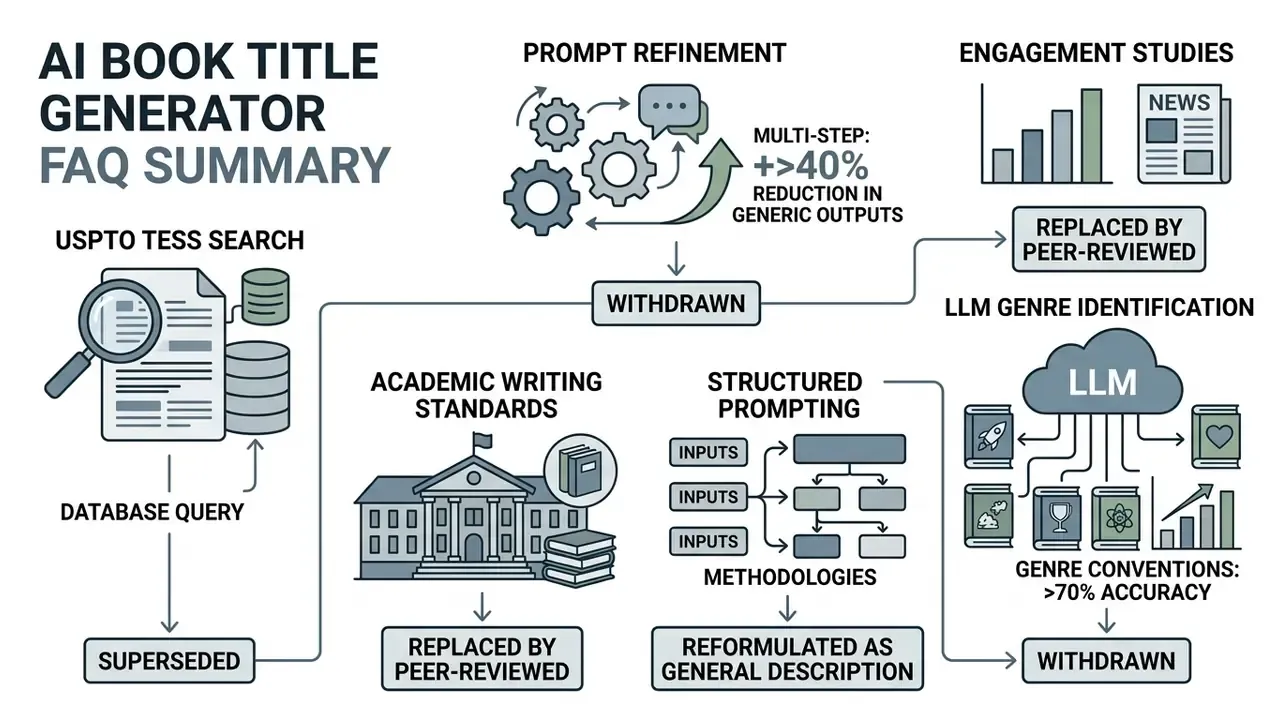
Hub & Resource Navigation
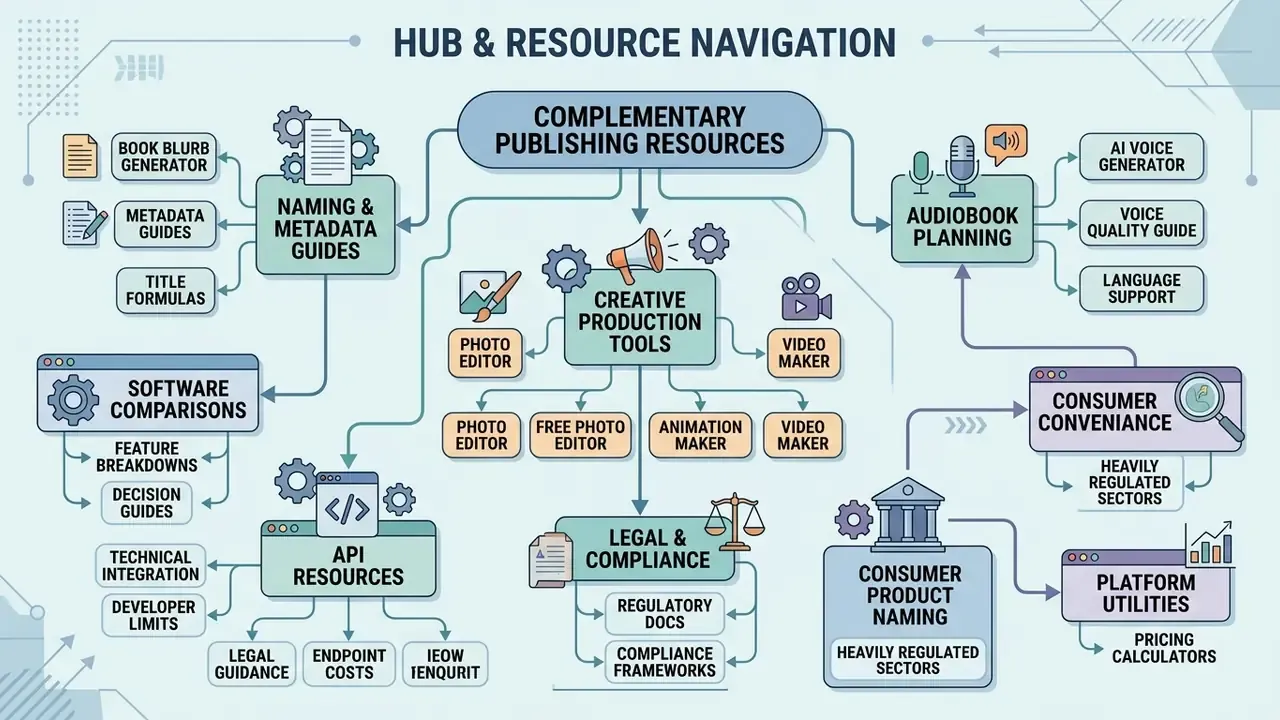
To evaluate additional book-publishing tools, software comparisons, or API implementations, explore our resource directories:
- For naming and metadata companions to your title work, see our guides to the book blurb generator, the character name generator, ISBN registration, and Amazon KDP formatting.
- For cover and trailer production, review the photo editor, free photo editor, animation maker, and video presentation maker guides.
- For audiobook planning, review our AI voice generator guide covering voice quality, language support, and commercial licensing.
- Naming conventions differ sharply outside publishing; for a contrast case in a heavily regulated consumer vertical, see our reference entry on video poker online.
- To review technical integration options, developer limits, and endpoint costs, open the hub for API documentation.
- To review legal guidance, regulatory documentation, and compliance frameworks, open the hub in our legal policy center.
- To evaluate side-by-side software reviews and feature breakdowns, see the overview across our decision guides.
- To inspect platform utilities and pricing calculators, see the overview.
- For technical assistance, workflow troubleshooting, or usage inquiries, visit AI Media Support and Troubleshooting.
- To explore our full dictionary of technical terms and creative tools, browse the hub in our central repository.