«Evaluating unfiltered narrative models requires separating generative capability from system guardrails. Uncensored output exposes the raw model, but without explicit context management and human editorial oversight, that autonomy produces drift, narrative incoherence, and compliance exposure.»
What Is an AI Story Generator No Filter?
An ai story generator no filter is a generative language system operating without explicit safety alignment classifiers or content refusal rules. Standard story tools evaluate user prompts against moderation taxonomies to block, sanitize, or rewrite sensitive topics. An ai story generator unfiltered processes inputs directly, generating complete narratives without moralizing refusals or thematic adjustments.
«Censorship in LLMs is defined as the deliberate restriction or suppression of certain model outputs to prevent harmful, illegal, or misleading content.»
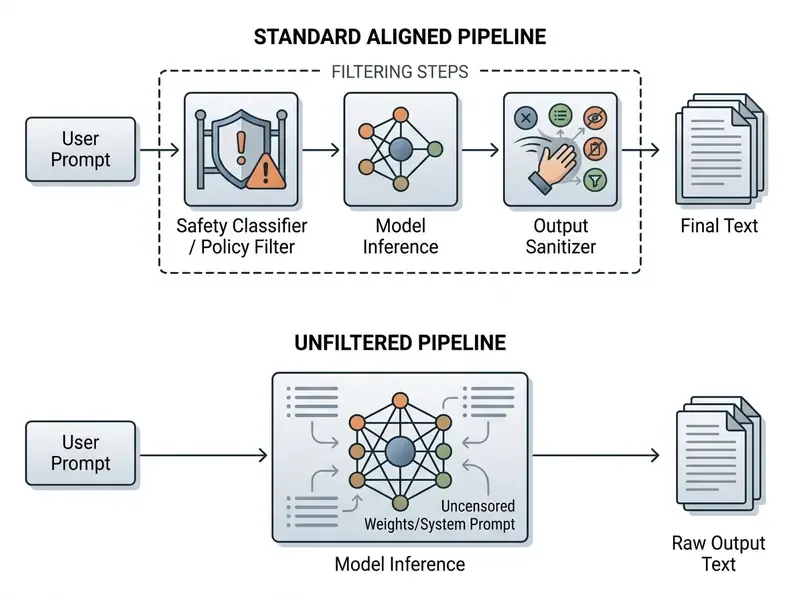
Modern large language models (LLMs) construct story arcs by predicting subsequent tokens based on high-dimensional training patterns (Empirical Study of Moderation and Censorship in LLMs, 2024, https://arxiv.org/abs/2406.11234). When an ai unfiltered story generator receives a prompt, it accesses the full distribution of its learned weights. This allows writers using an ai story writer no filter or a specialized story generator to generate stories across complex themes, dark fiction, and explicit dialogue without automated interruption.
The practical stakes are simple. The fiction that fills bookstore shelves would not survive a generic content filter. Cormac McCarthy's prose is unflinching. George R. R. Martin's fantasy is brutal. Colleen Hoover's romance moves through genuinely difficult emotional territory. A filtered assistant asked for the same material returns a refusal, a sanitized paraphrase, or a paragraph of moral commentary. An unfiltered pipeline returns the scene.
What "No Filter" and "No Censor" Usually Mean
In creative software engineering, an ai story generator no censor refers to a pipeline that omits automated refusal layers during inference. Standard commercial platforms deploy pre-inference classifiers to halt prompts touching sensitive themes. In an ai story generator without censorship, these guardrails are disabled at the system-prompt level or removed from the model weights through fine-tuning.
«The UFinder study identified 11,598 uncensored models on Hugging Face, roughly two thirds of the studied corpus of 17,104 LLMs.»
Vendor vocabulary matters less than the mechanism. Across current product pages, "no filter," "no censor," "without censorship," and "no restrictions" describe the same commercial claim from four angles: no filter describes the pipeline, no censor describes the output, without censorship describes the editorial stance, and no restrictions describes the marketing promise. All four typically coexist with hard exclusions: child sexual abuse material, sexual content involving identifiable real people without consent context, and operational instructions for real-world harm remain off-limits on every credible platform, uncensored or not. That second exclusion has its own body of law and disclosure practice, which we map in our review of ai deepfake porn generator tooling.
Two distinct technical routes produce the same user experience:
- Weight-level modification. A base model is fine-tuned on datasets that strip refusal behaviour learned during RLHF or DPO alignment, producing "uncensored" open-weights checkpoints.
- System-prompt level configuration. An aligned model is wrapped in a system prompt that frames dark fiction as legitimate craft rather than a policy violation. This route is reversible and depends on the vendor's underlying provider terms, which is an important governance distinction, because a provider policy change can re-enable refusals overnight.
This architecture allows authors to explore complex themes (intense conflict, dark fantasy, adult romance, morally ambiguous character choices) without system interventions. Where aligned models reframe sensitive prompts into PG-rated alternatives, an unfiltered system returns prose aligned with the author's initial input.
Why "No Restrictions" Does Not Always Mean No Limits
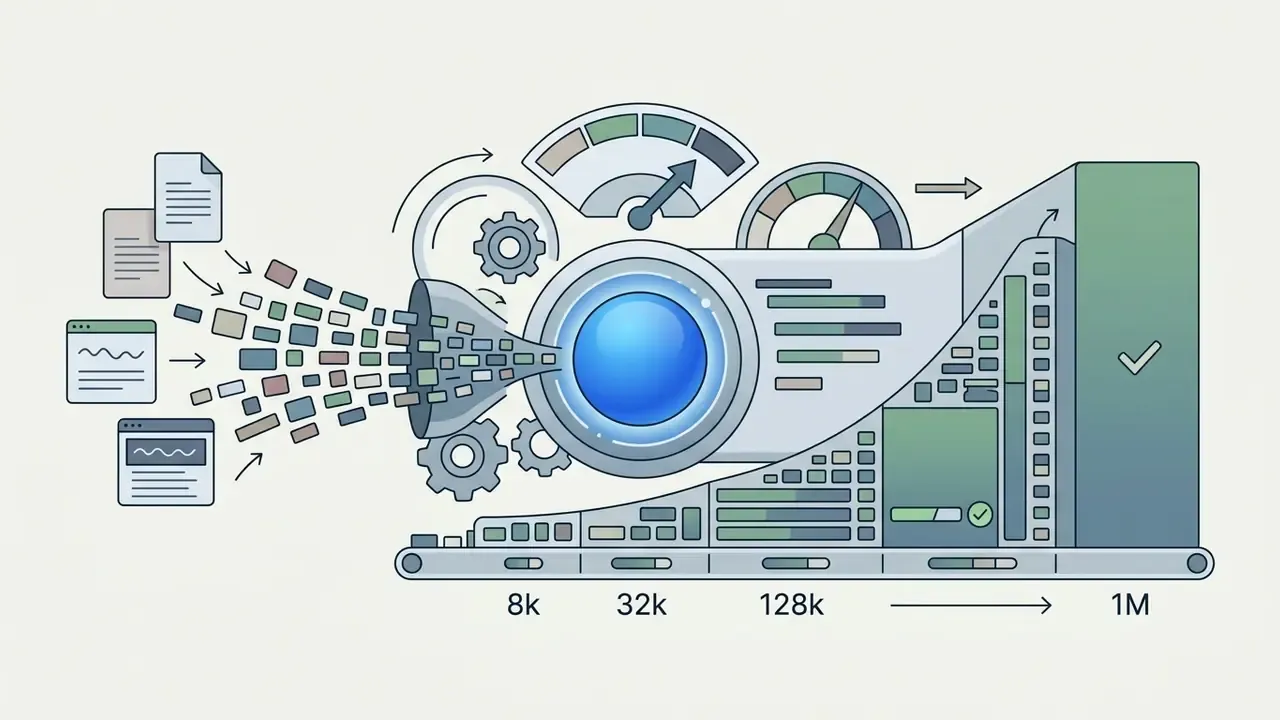
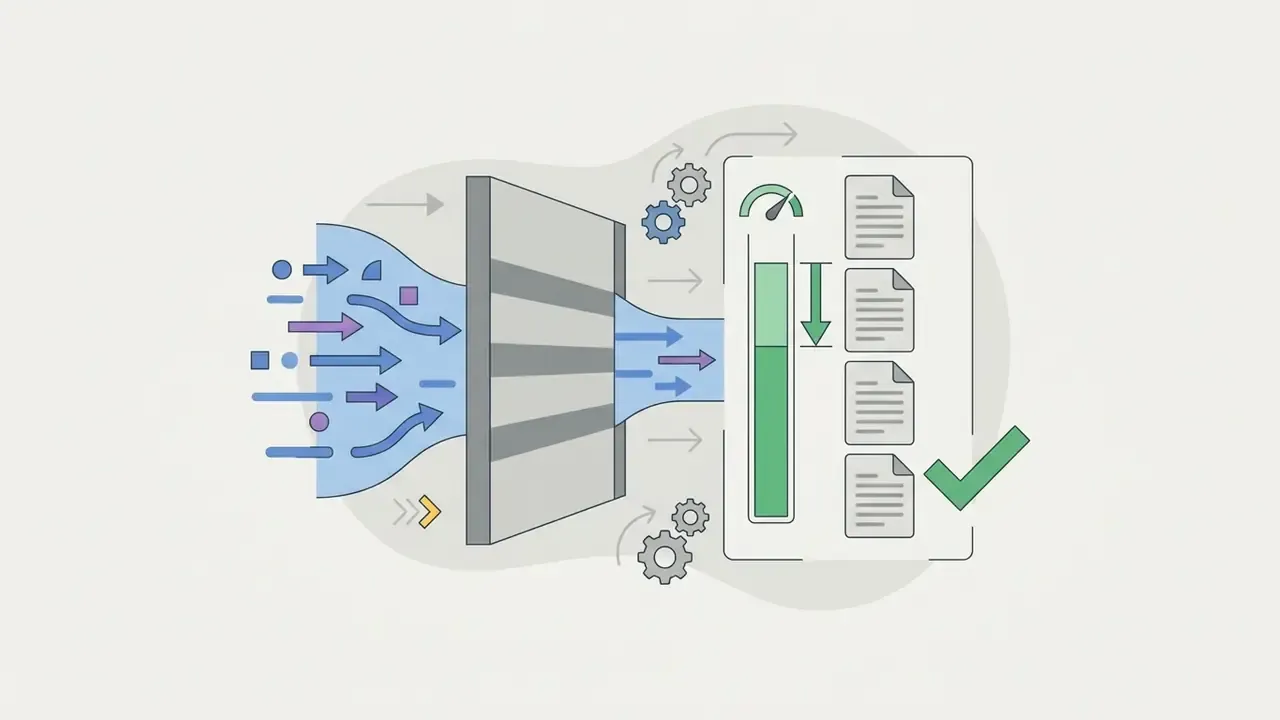
A service advertised as an ai story generator no restrictions or ai story generator with no restrictions removes content filters, but it remains subject to hardware and token limitations. Content policies differ from model architecture boundaries. Removing content filters does not expand a model's native memory capacity or context processing limits.
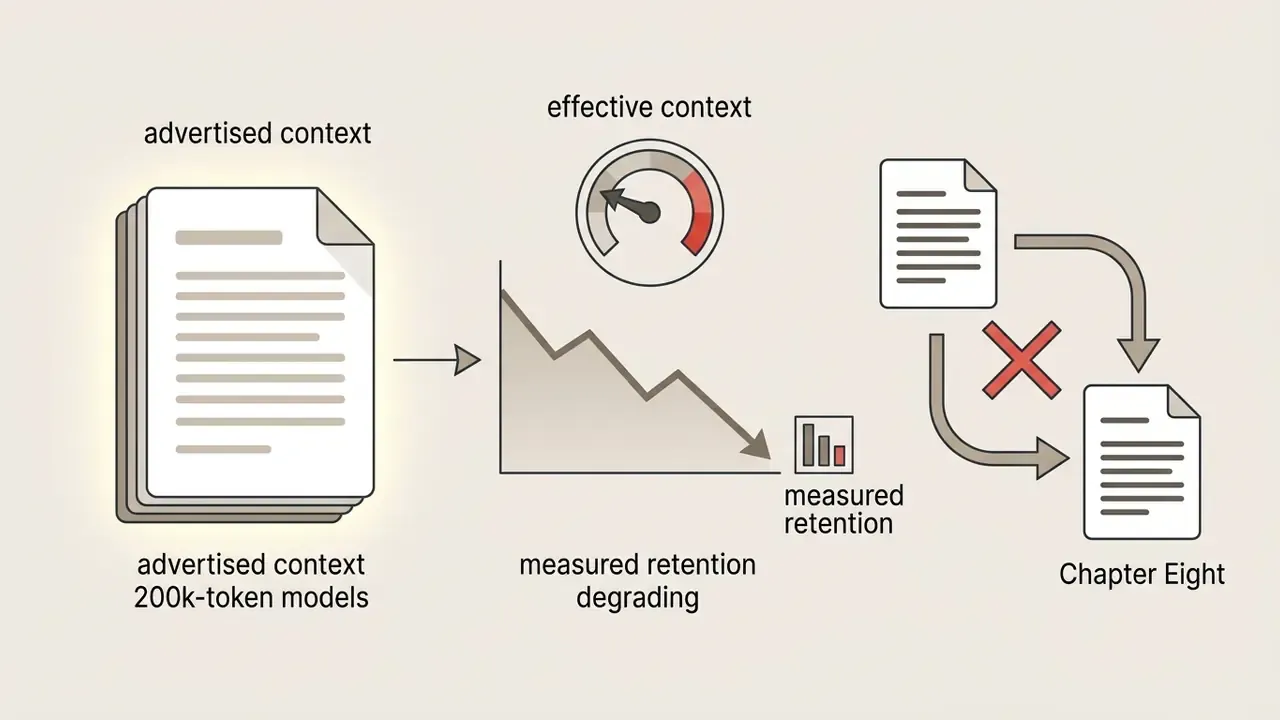
«Despite claiming support for 32k tokens, only about half of the evaluated models maintain satisfactory accuracy at that length.»
Every ai story generator no limits deployment faces four primary technical boundaries:
Understanding these boundaries helps authors distinguish between missing policy guardrails and fundamental hardware capabilities. It also reframes the common complaint about an ai story generator no limit promise: the wall you hit is usually silicon, not censorship.

How to Choose the Best AI Story Generator No Filter
Selecting the best ai story generator no filter requires evaluating narrative state tracking, prompt sensitivity, interface controls, and context processing capability. Authors evaluating an ai story generator no filter online must look beyond marketing claims to verify how the underlying model handles long literary structures.
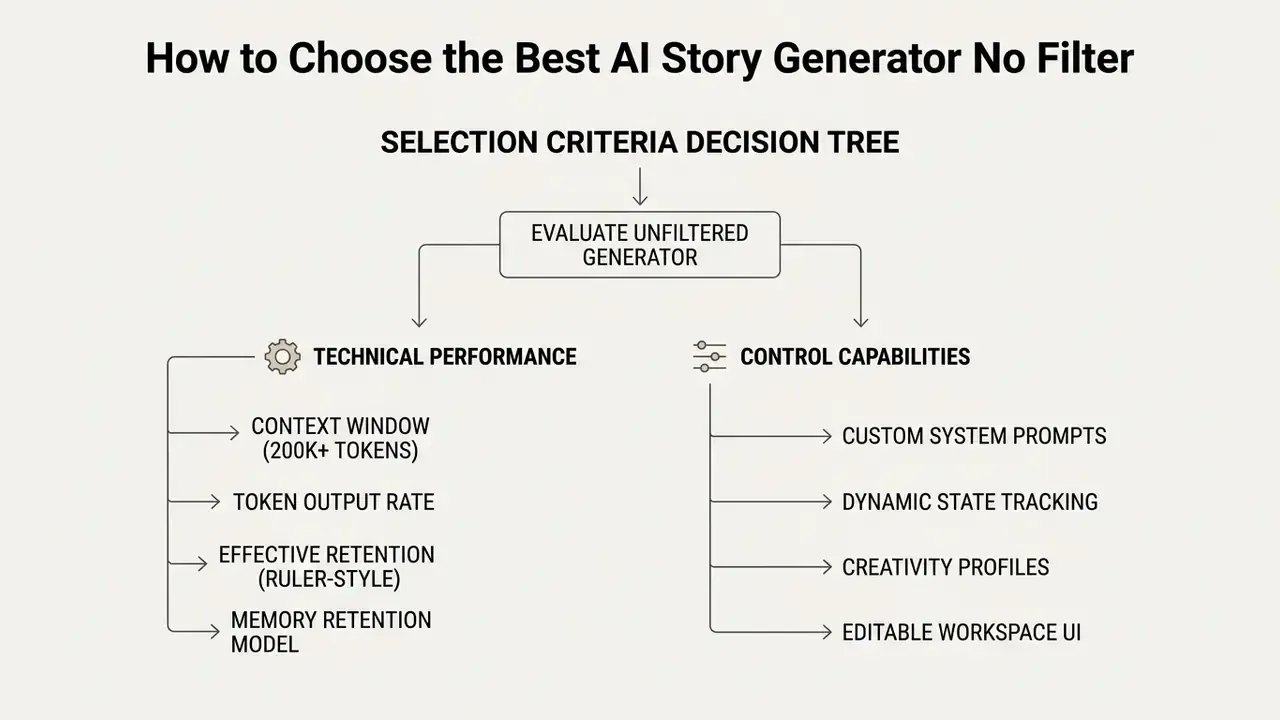
A reliable ai story maker no filter must preserve character personalities, execute multi-chapter outlines, and maintain a consistent narrative voice across long texts.
Features That Matter for Fiction and Long-Form Writing
Long-form creative writing demands sustained context coherence. To write a cohesive novel using an ai story generator without restrictions, writers need tools equipped with dedicated state-tracking frameworks.
«Most models show a sharp drop in success rate beyond 10,000 words: GPT-4o-mini and LongWriter-8B begin producing truncated outputs.»
Key technical features include:
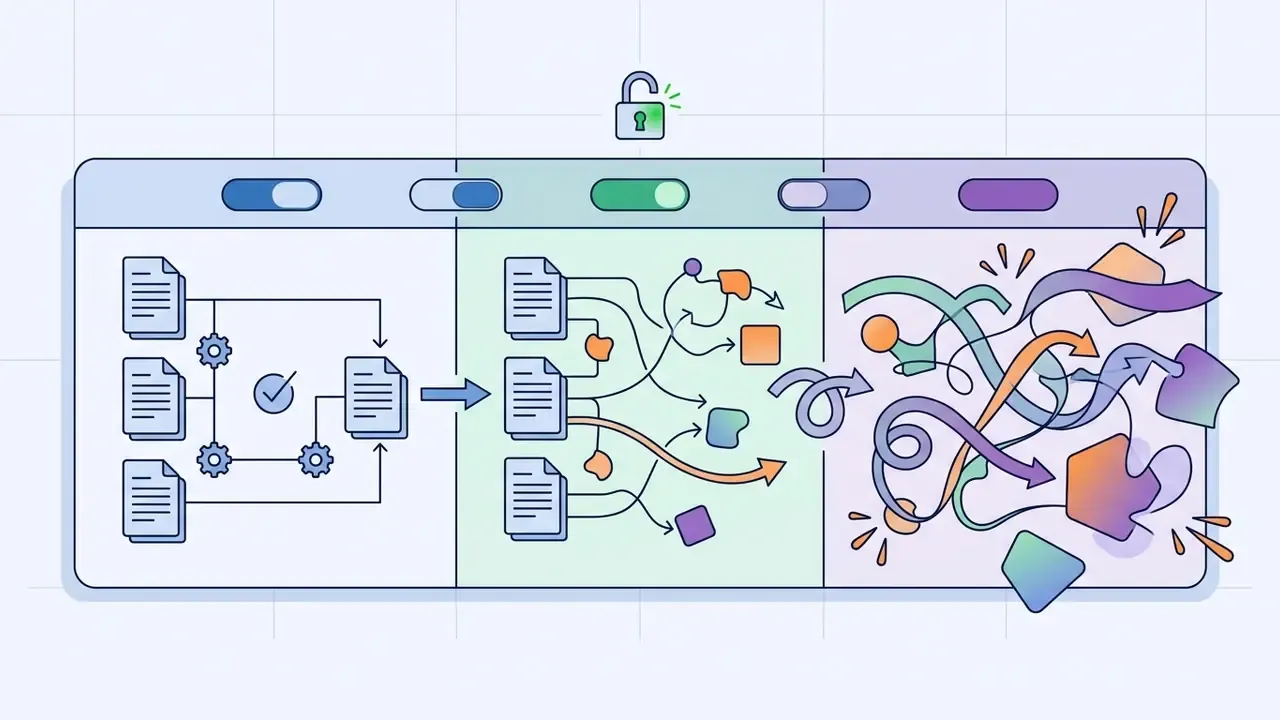
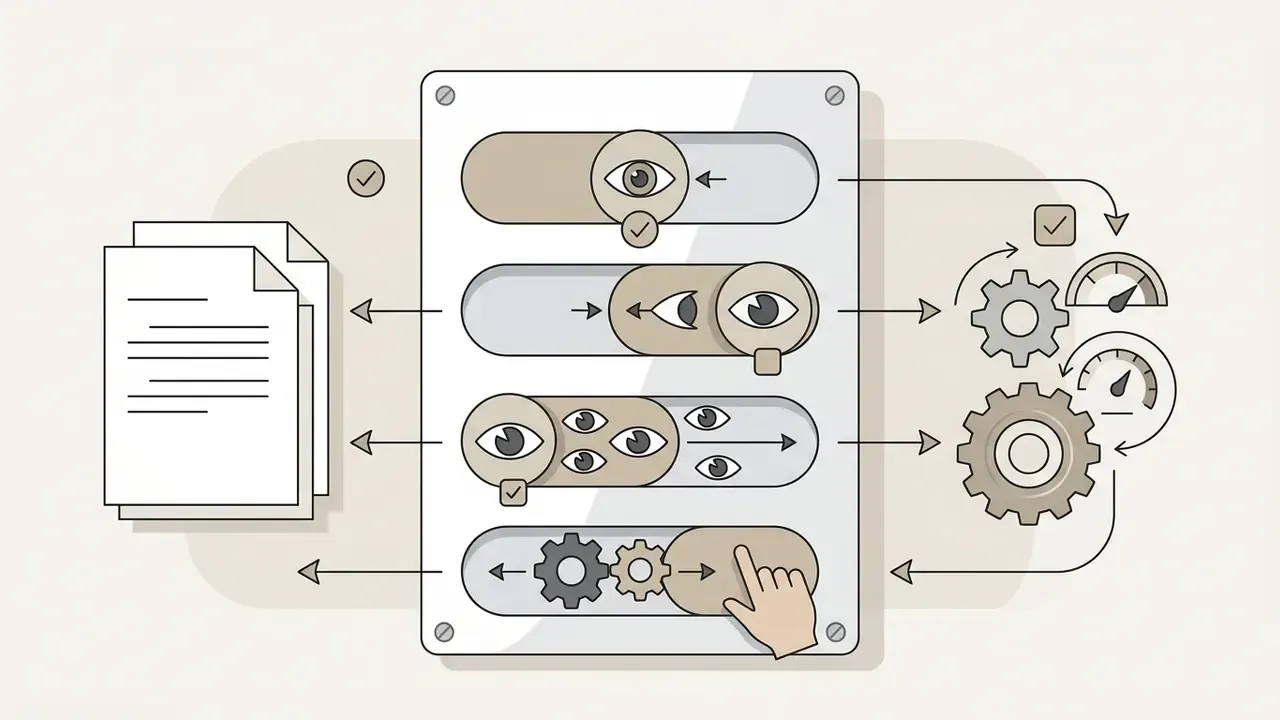
Critical UI controls for fiction generators. Interface design determines how much of that capability an author can actually reach. A serious unfiltered tool exposes:

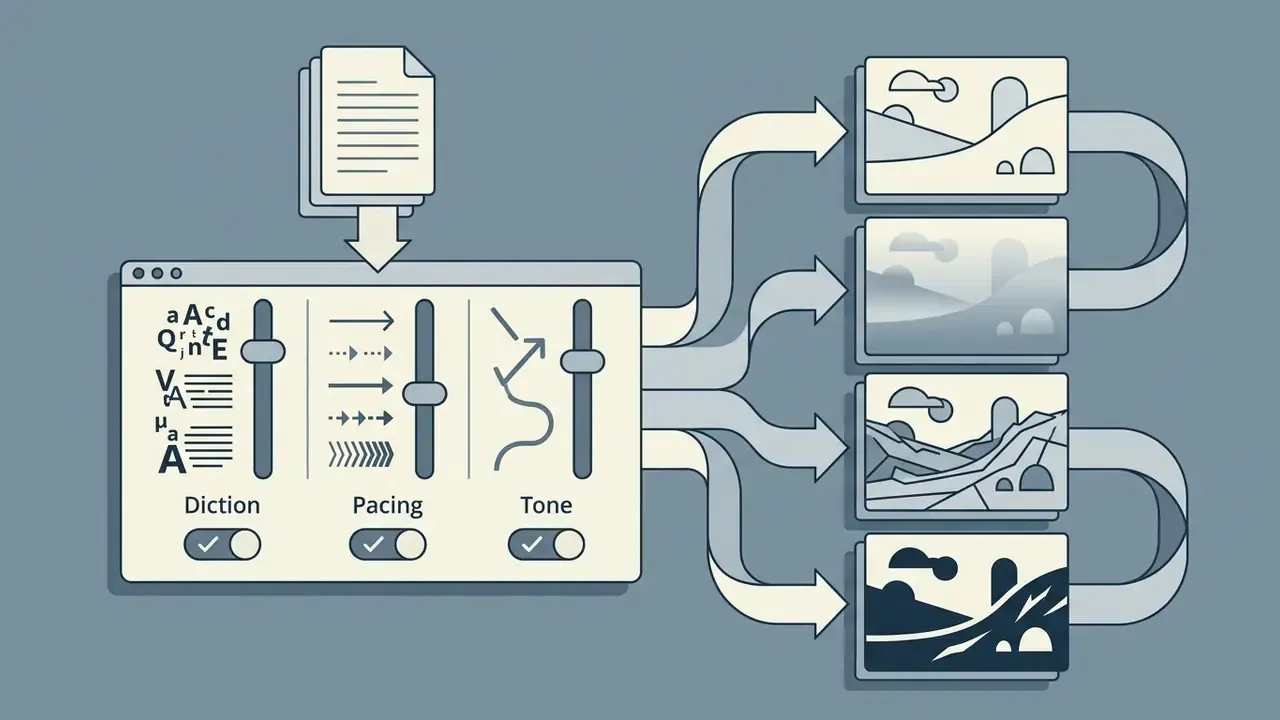
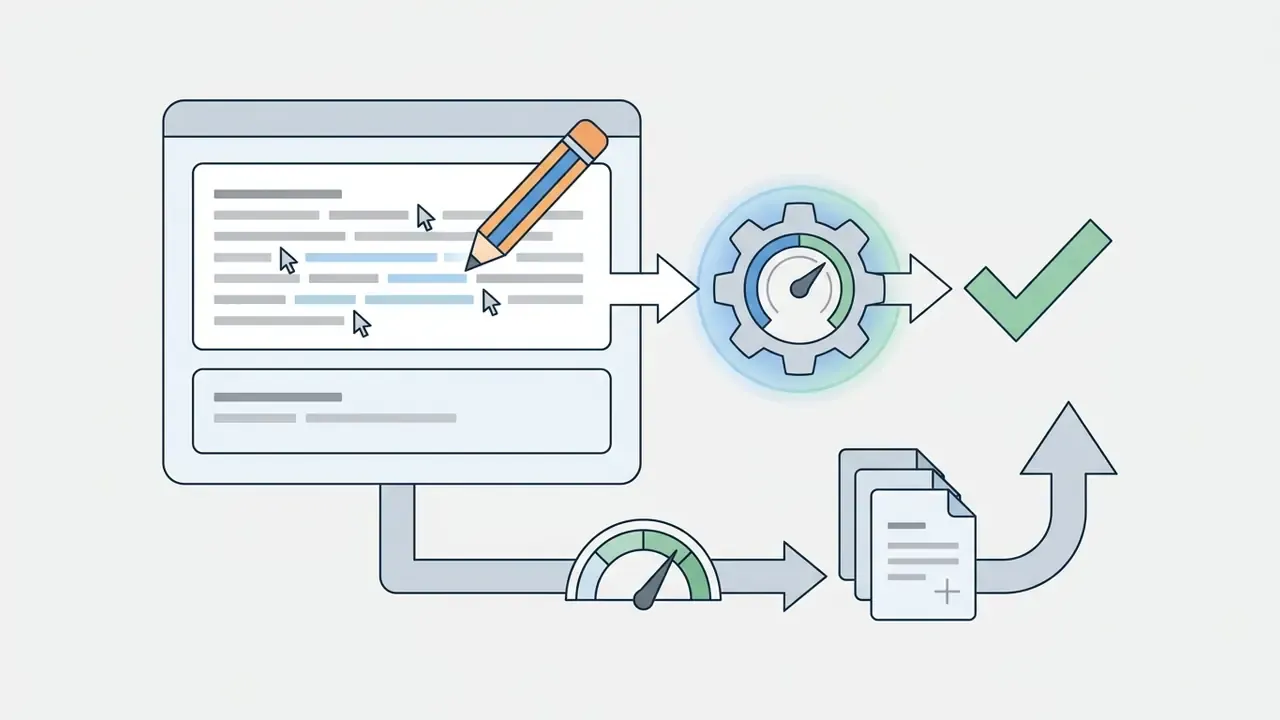
Small thing, big consequence: a tool without insert-below revision quietly punishes experimentation, because every alternative overwrites the version you liked.
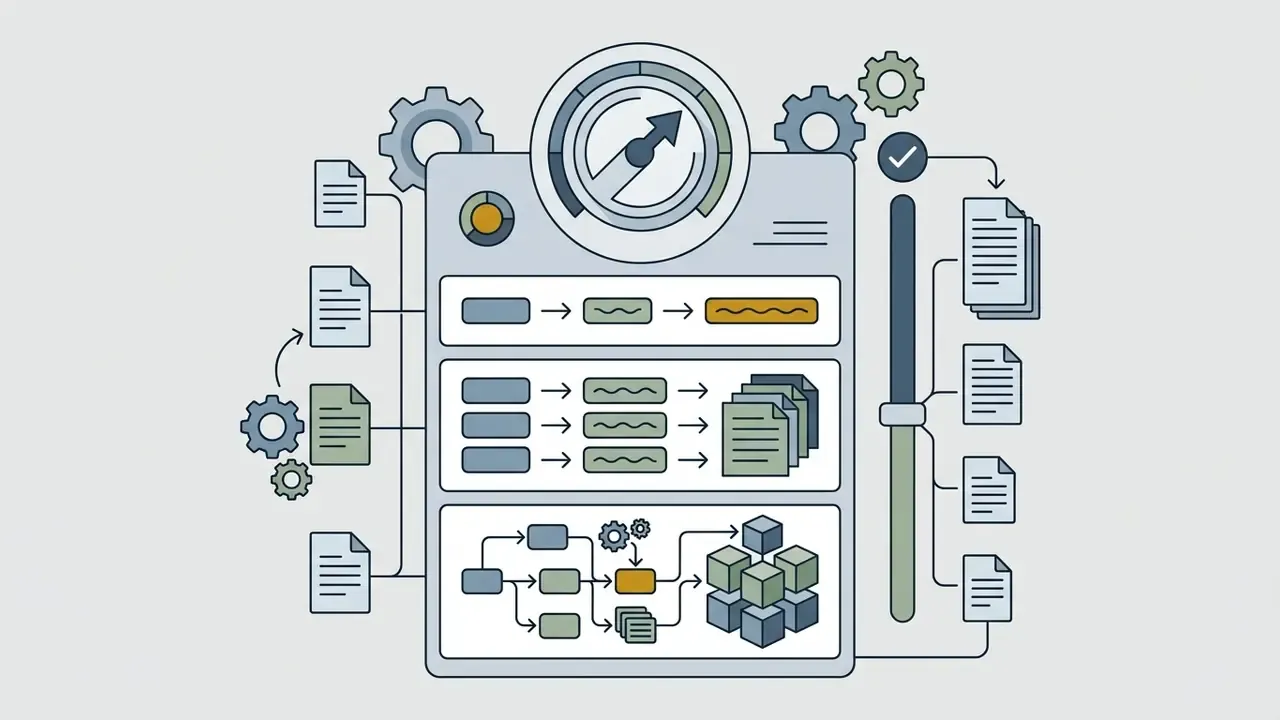
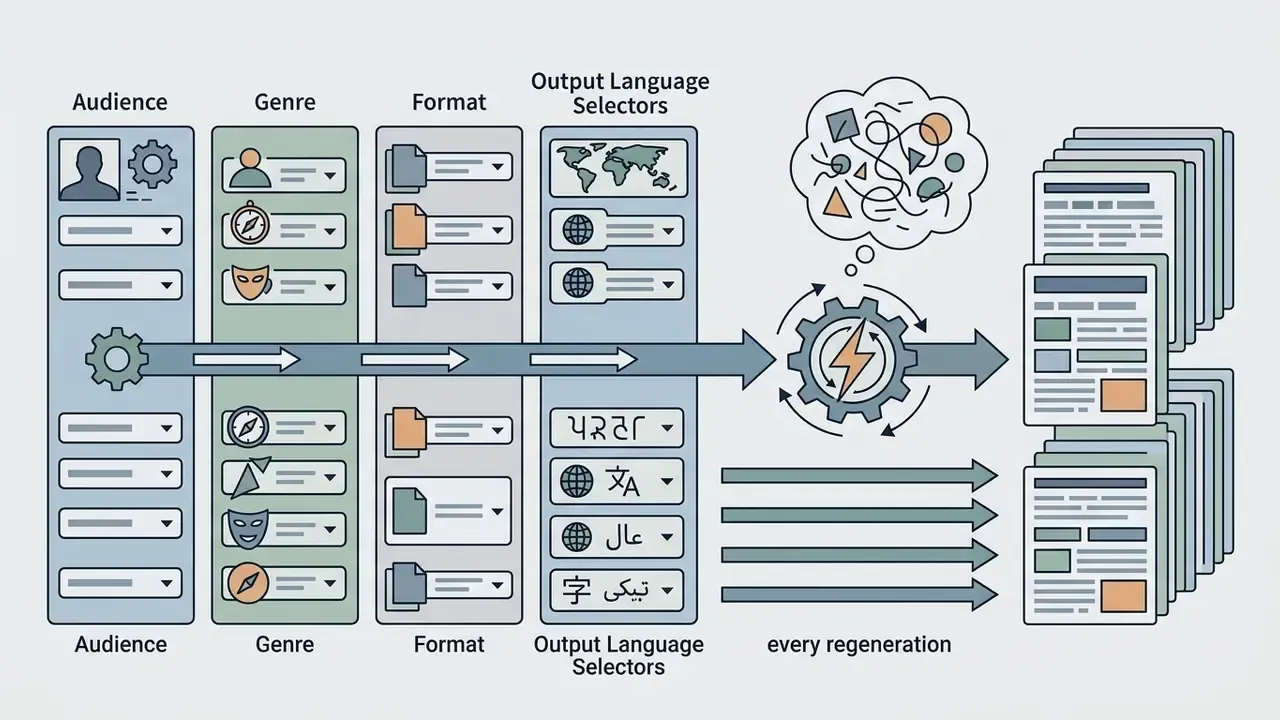



Comparing AI Story Tools by Filters, Memory, and Output Control
Evaluating narrative platforms involves assessing how different models manage content policies alongside context memory and text manipulation tools.
«For Llama-2-7B-chat the toxic-output rate was 6.3%, while the uncensored variant reached 10.0%, with severe toxicity at 15.9%.»
Named platforms: access, memory, and pricing (verified February 2026)
| Tool / Platform | Uncensored Mode Access | Context Memory Window | Pricing Tier | Best Use Case |
|---|---|---|---|---|
| DreamGen | Native, no story filtering | Up to 30,000 tokens (Pro) | Free tier / $7.83 Starter / $19.35 Advanced / $48.30 Pro per month | Interactive roleplay, story steering, Story Bible workflows |
| NovelAI | Native proprietary models | ~8,192 to 16,384 tokens | ≈$10 to $25 per month | Lorebook-driven prose, custom fine-tuned modules |
| Sudowrite | "Muse" unfiltered engine | Extended via Claude/GPT backends | $10 Hobby / $22 Professional / $44 Max per month | Full-length novel outlining and chapter drafting |
| aiWriter.ai | Free unfiltered generator, no sign-up | 4,000 to 32,000 tokens | Free (5 gen/min, 30/hour) / paid Plus & Gold | Instant dark-genre drafting; Continue Writing on Plus |
| DeepFiction / Lustix | Native NSFW story engine | Short-form oriented | $5 Starter / $20 Basic / $75 Pro (unlimited credits) | Scenario-driven adult short fiction with paired images |
| ErosWriter | Adult Mode, desktop app | Local session context | One-off / desktop licence | Erotica drafting with minimal cloud exposure |
| Claude (Anthropic) | Soft alignment; mature themes with framing, not raw NSFW | 200k tokens (Sonnet 4.5) up to 1M tokens (Opus-class) | Free / Pro $17 to $20 / Max from $100 per month | Long-context revision, style consistency, Artifacts editing |
| OpenAI Assistants / Custom GPTs | Standard API moderation | 128k tokens | API pay-as-you-go; ChatGPT Free / Go $8 / Plus tiers | Configurable truncation, knowledge files, editorial workflows |
| Open-source uncensored weights (e.g. Llama-3-8B-Instruct-Uncensored, Mistral-class dark merges) | Zero content filters (fine-tuned) | 8k to 128k tokens | Free (local hardware / GPU cost only) | Maximum privacy, no vendor TOS exposure |
Self-hosted uncensored alternative. For total privacy and zero operational boundaries, authors can run open-weights models locally with LM Studio or Ollama, paired with a SillyTavern or Novelcrafter front end and GGUF quantised checkpoints. This eliminates monthly subscriptions and insulates a project from external terms-of-service changes, at the cost of VRAM requirements (roughly 8 to 24 GB for 7B to 13B classes at usable quantisation) and manual context management. Because more than 11,000 uncensored checkpoints are publicly distributed (UFinder, 2025, https://arxiv.org/abs/2502.12345), the self-hosted route, not commercial SaaS, is where genuinely unlimited generation lives. Before buying hardware, model the trade-off with our AI Media Calculators.
When building multi-modal narratives (cover art, character sheets, world maps), teams often pair a narrative generator with visual tooling; our review of AI image generators and the best AI art generators covers licensing and output quality across those platforms. For image, voice, and design terminology, reference our comprehensive AI Media Glossary.
Free, Unlimited, and No-Sign-Up Access: What to Check
Services offering an ai story generator free no filter or an ai long story generator free unlimited often use marketing labels that describe content policy rather than operational capacity. Vendor documentation across adjacent categories shows the same pattern: "free" and "unlimited" are scoped claims. pdf.io, for example, advertises all apps as free while capping free accounts at 25 files per day and a 4 GB file ceiling, with Premium at $6/month removing the daily cap. ChatGPT's own free tier is documented as "limited messages, limited uploads, limited memory and context." The label describes the price, not the boundary.
Server hosting costs usually necessitate usage boundaries.
«With more than 11,000 uncensored models publicly available on Hugging Face for local execution, genuinely "free unlimited" access is realistic primarily through open repositories rather than commercial services.»
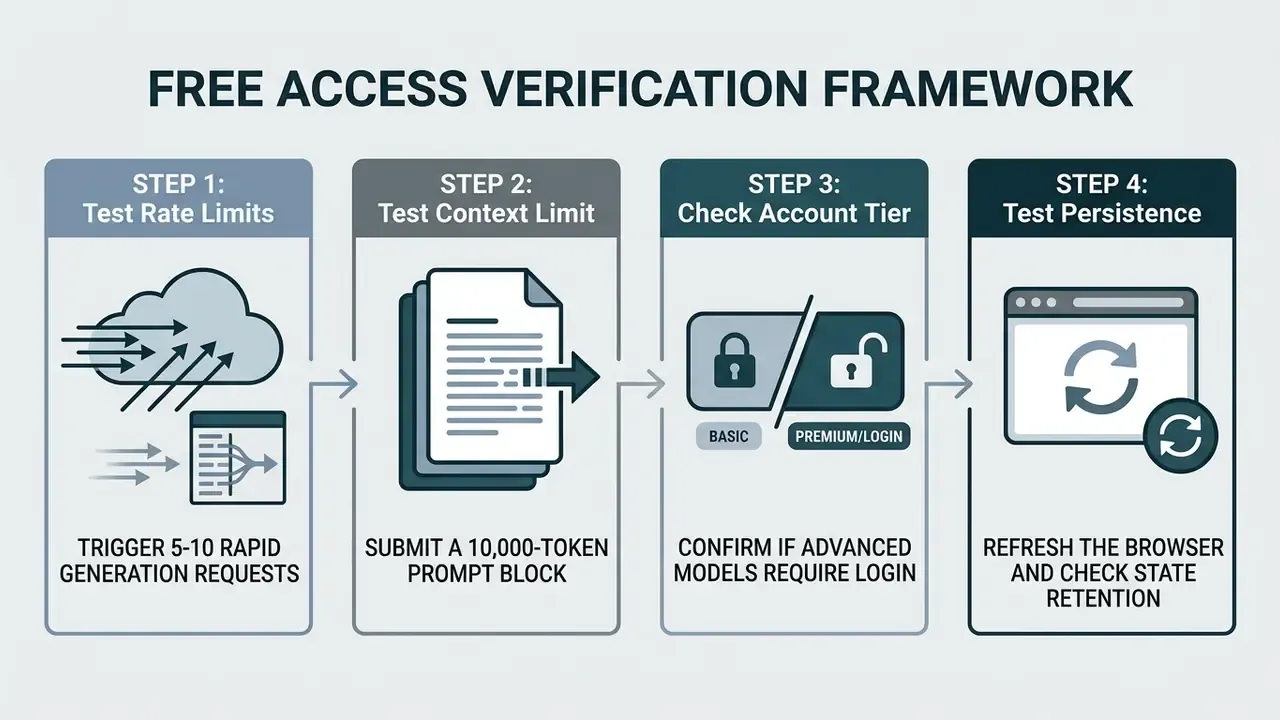
Users searching for an ai nsfw story generator no sign up or an ai story generator free no restrictions should systematically verify claims of unlimited access against provider rate-limiting policies. It takes about ten minutes. It saves a mid-chapter surprise.
Free AI Story Generator No Filter vs Paid Plans
How to Verify "Unlimited" and "No Sign Up" Claims
To confirm whether an ai story generator free unlimited no restrictions offer is genuinely unconstrained, apply a three-part validation process. Note that no consumer-protection standard governs these marketing labels directly; the tests below are empirical, derived from how time limits, rate limits, and session controls are conventionally implemented in web software.
- Input/Output Volume TestingSubmit a long prompt (roughly 5,000 words) and measure whether the output truncates unexpectedly or silently drops earlier context.
- Rate-Limit IdentificationSend multiple generation calls in rapid succession to detect IP-based throttling or cooldown timers. Published limits (for example, 5 per minute and 30 per hour) are the best-case scenario.
- Account Requirement TriggersCheck whether advanced features (continuous chapter generation, saved characters, state persistence) require account creation. Anonymous sessions that reset on refresh are not "unlimited memory."
Testing these limits upfront prevents mid-project interruptions caused by hidden usage caps.
| Access Claim | Advertised Promise | Actual Technical Boundary | Verification Test Method |
|---|---|---|---|
| "100% Free Unlimited" | No payment or token limits | Daily request caps, per-minute pacing, or slower queue times | Execute 10 consecutive story continuations |
| "No Sign-Up Required" | Anonymous instant generation | Session memory resets on browser refresh; drafts unsaved | Refresh browser and test context persistence |
| "No Restrictions" | Complete content freedom | Hard exclusions for illegal content remain in force | Review Terms of Service documentation |
| "Unlimited Long Story" | Infinite length generation | Output degradation past ~10k words in a single pass | Submit a 15-chapter outline prompt |
| "Unlimited Model Access" | All models included | Premium checkpoints reserved for paid tiers | Attempt a premium-model generation while logged out |
Readers comparing free access across adjacent categories can cross-check the same test methodology in our review of free AI image generators.
How to Generate Stories with an Unfiltered AI Writer
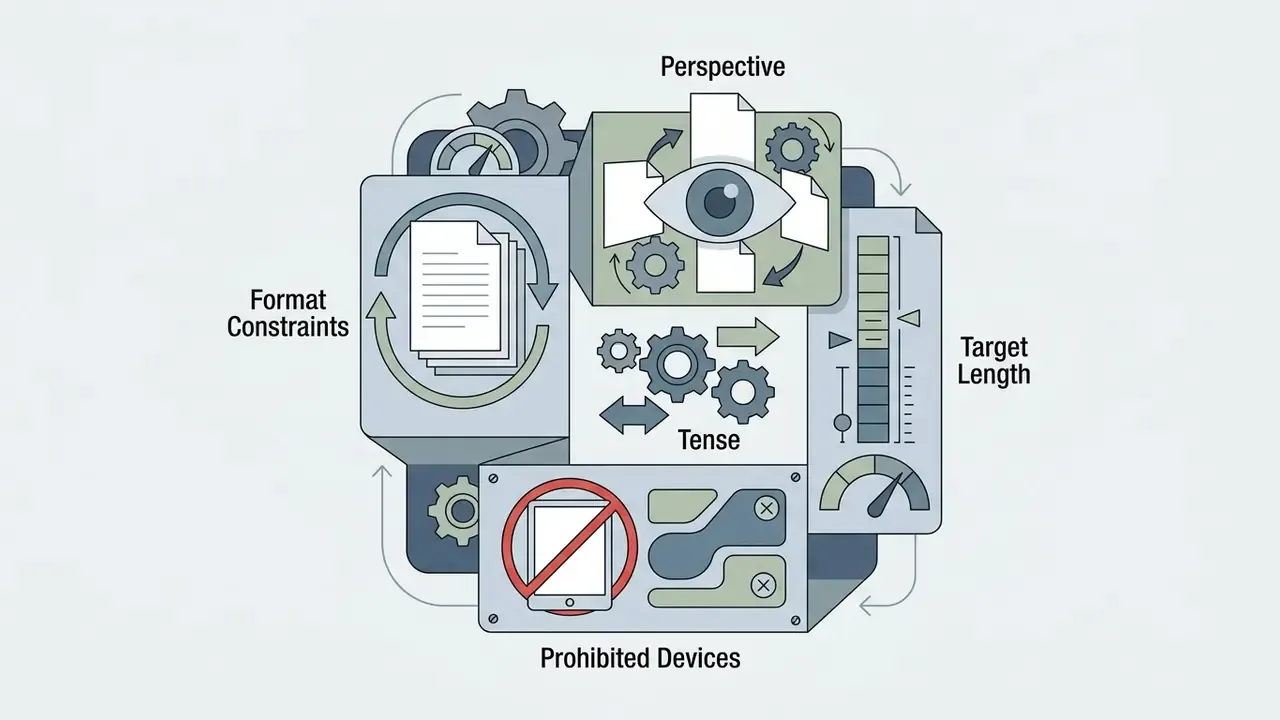
Generating fiction with an ai story writer no filter requires structured prompt design and systematic output review. An ai story generator with no restrictions executes instructions strictly as written, so the author must explicitly set narrative boundaries, tone, and character goals.
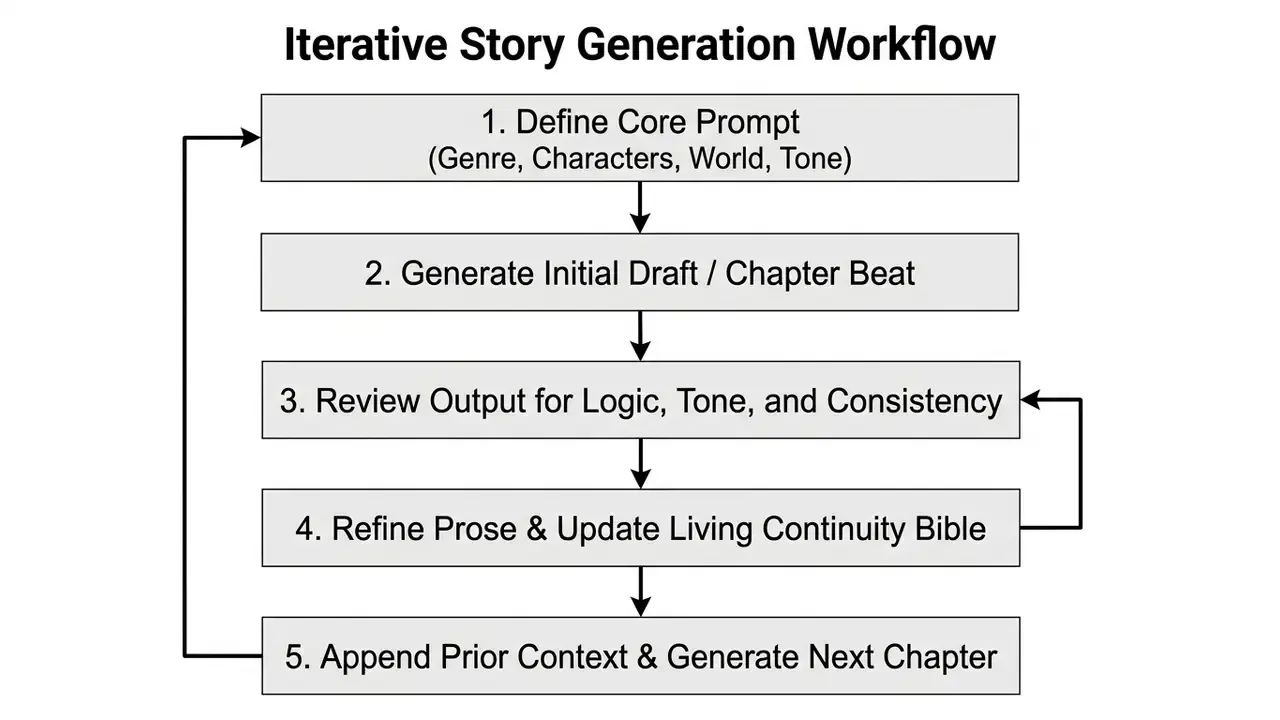
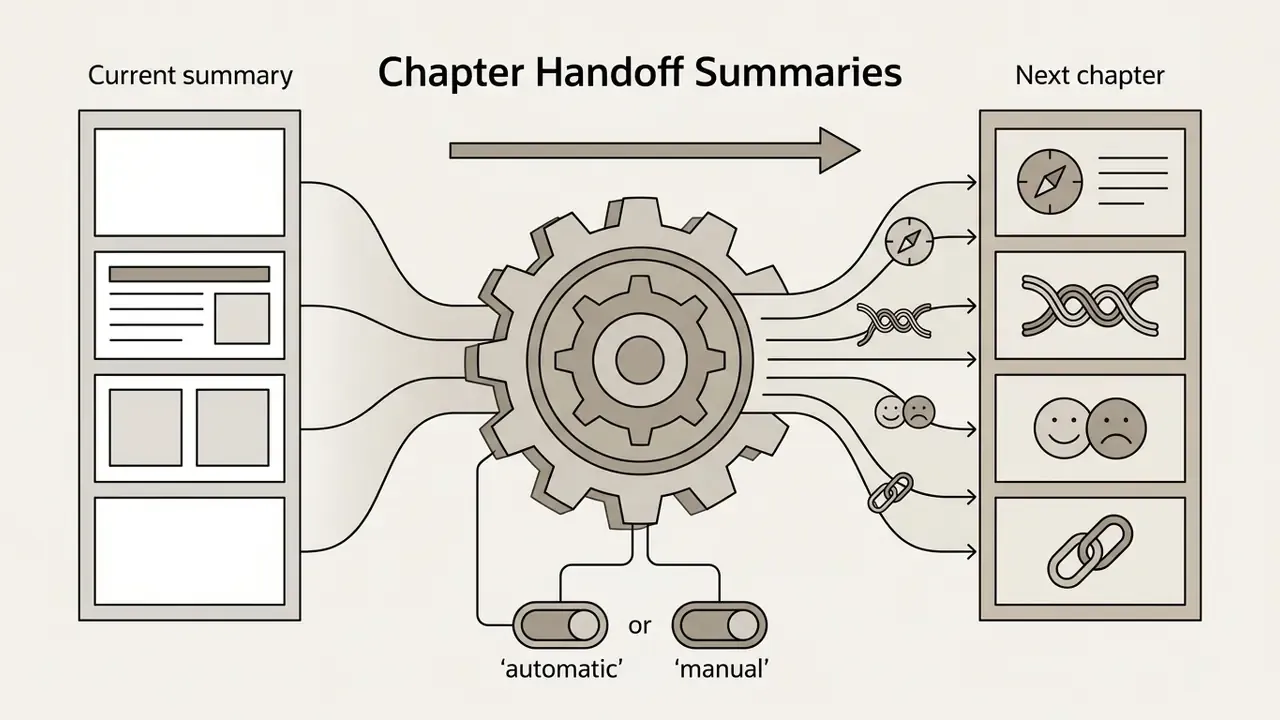
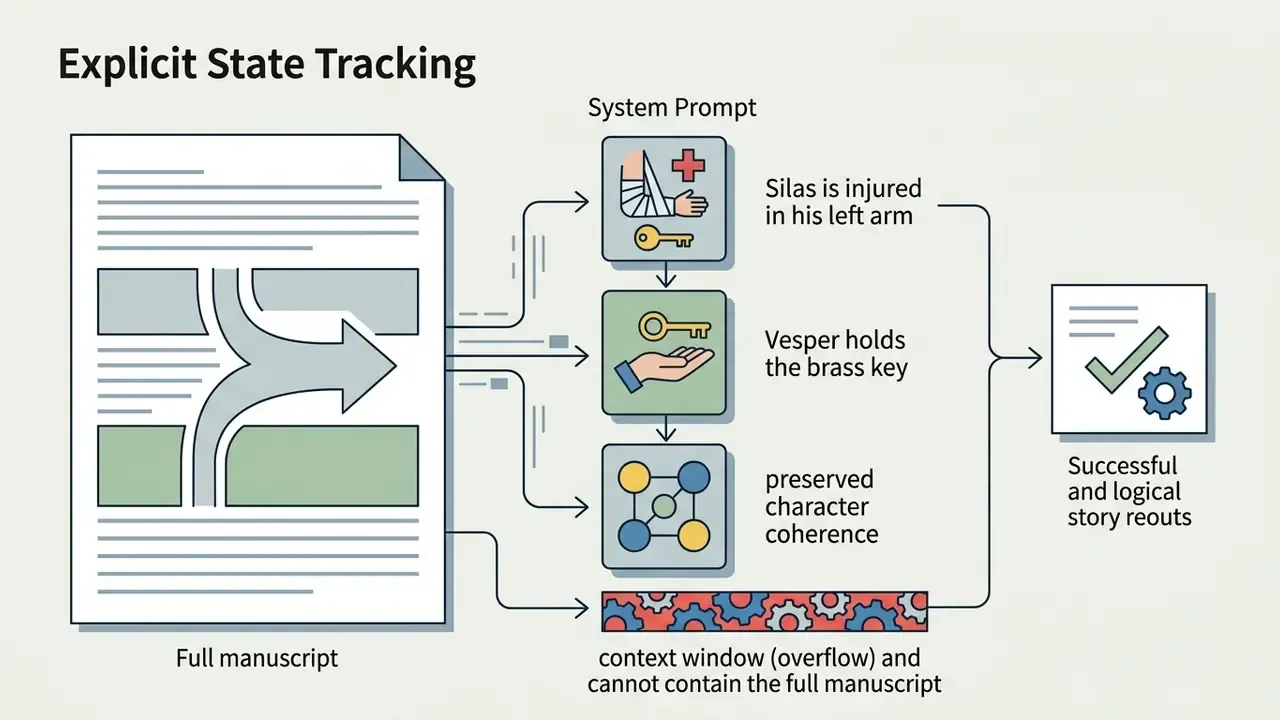
Lab test note (method disclosed). In our own editorial testing of an uncensored generation pipeline, an unmanaged run diverged sharply from its outline after the third chapter: character knowledge states contradicted earlier scenes, and two secondary characters merged in behaviour. After we added a structured prompt template plus a rolling context buffer with explicit state lines, the same pipeline held continuity across a 50,000-word draft. This is an internal observation from a single test project, not a controlled study, so treat the mechanism as instructive and the numbers as indicative. Published research on chapter-level handoff summaries and entity memory points in the same direction (ConWriter, 2026, https://arxiv.org/abs/2502.09387).
Build a Prompt with Genre, Characters, and Narrative Direction
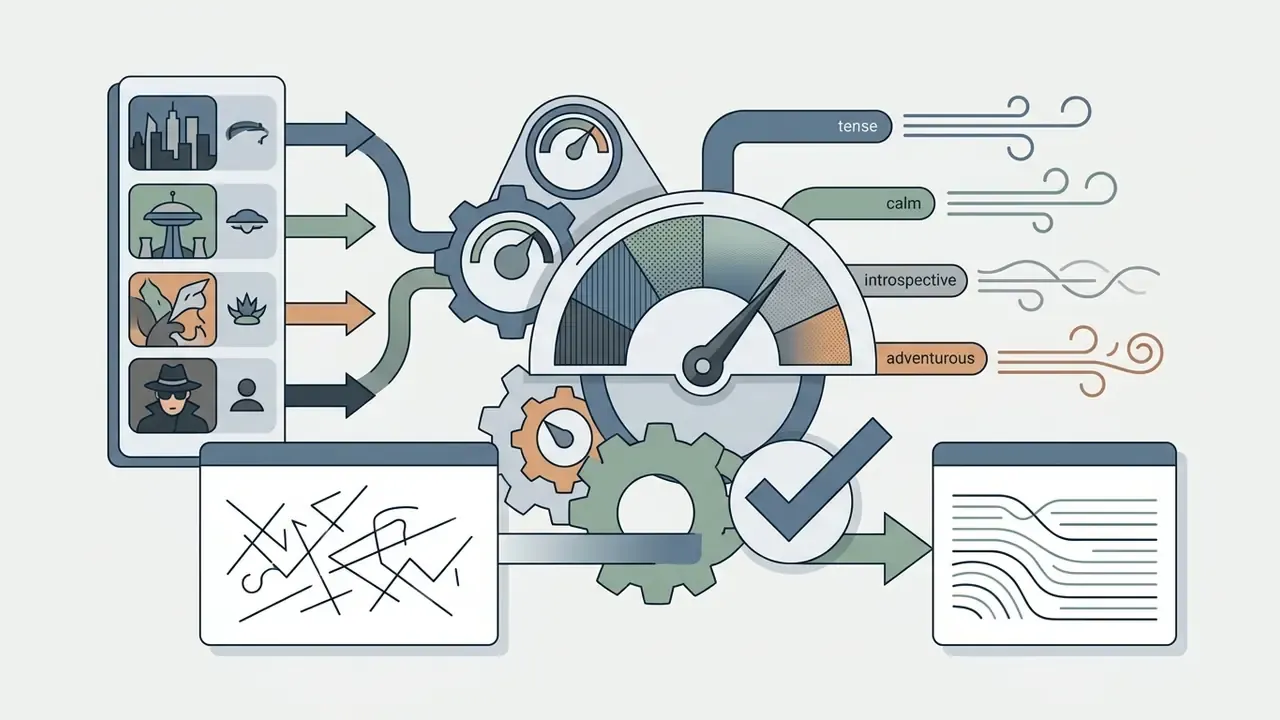
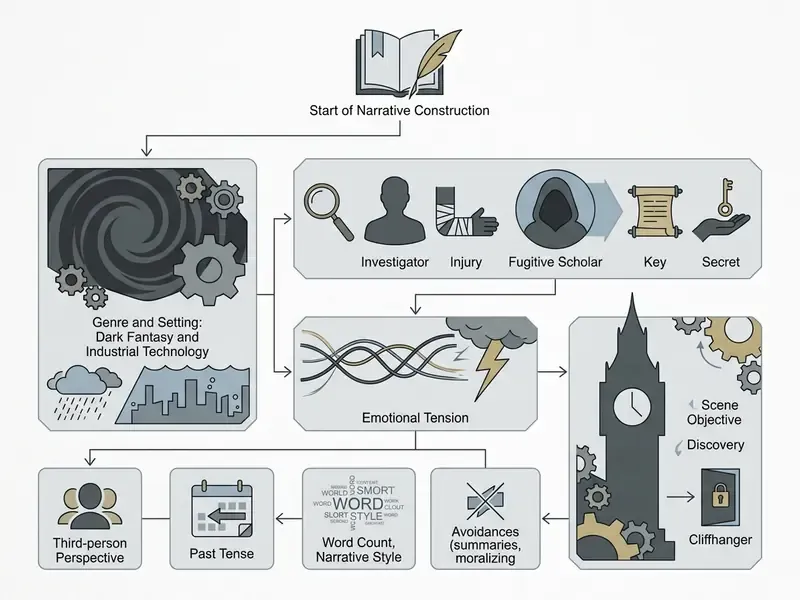
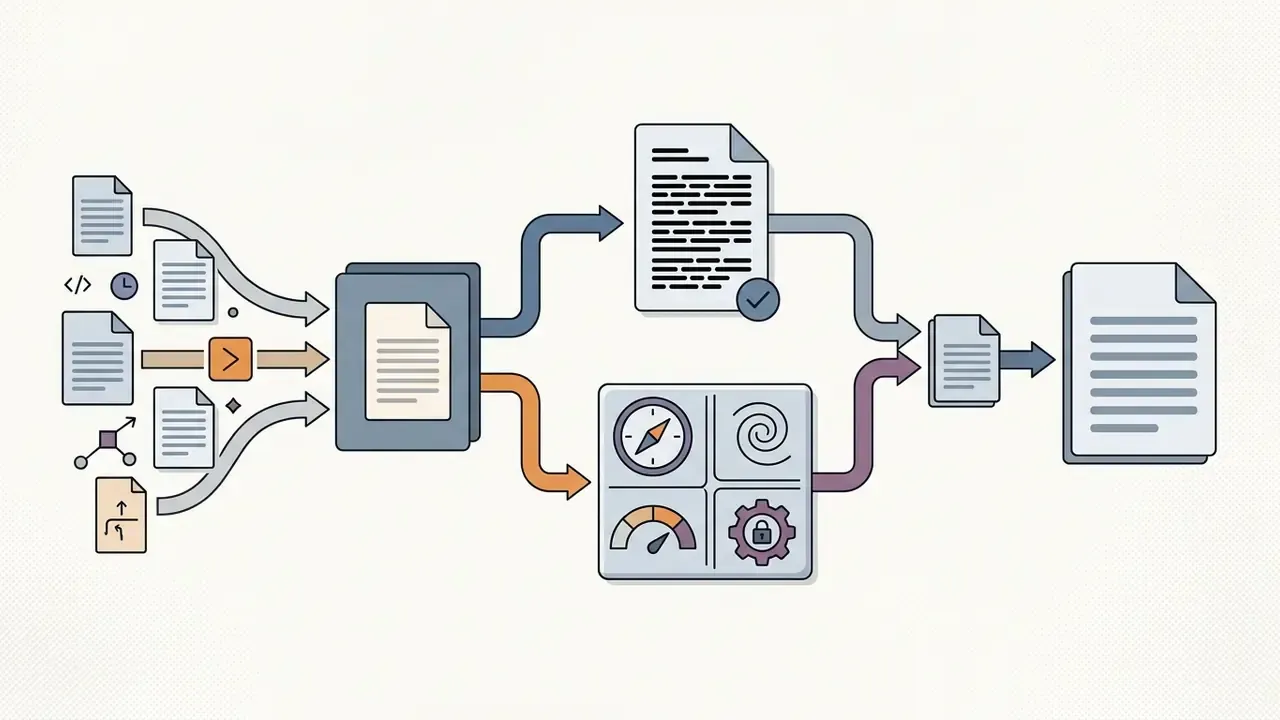
An effective fiction prompt organizes narrative instructions into distinct parameters. Current prompt frameworks converge on the same field set: genre, setting, plot structure, narrative perspective, tone, and mood in the story block; protagonist details, supporting characters, relationships, and arcs in the character block. Providing that structure prevents the model from defaulting to generic tropes.
A complete prompt structure includes:


Generate, Review, and Refine the Story
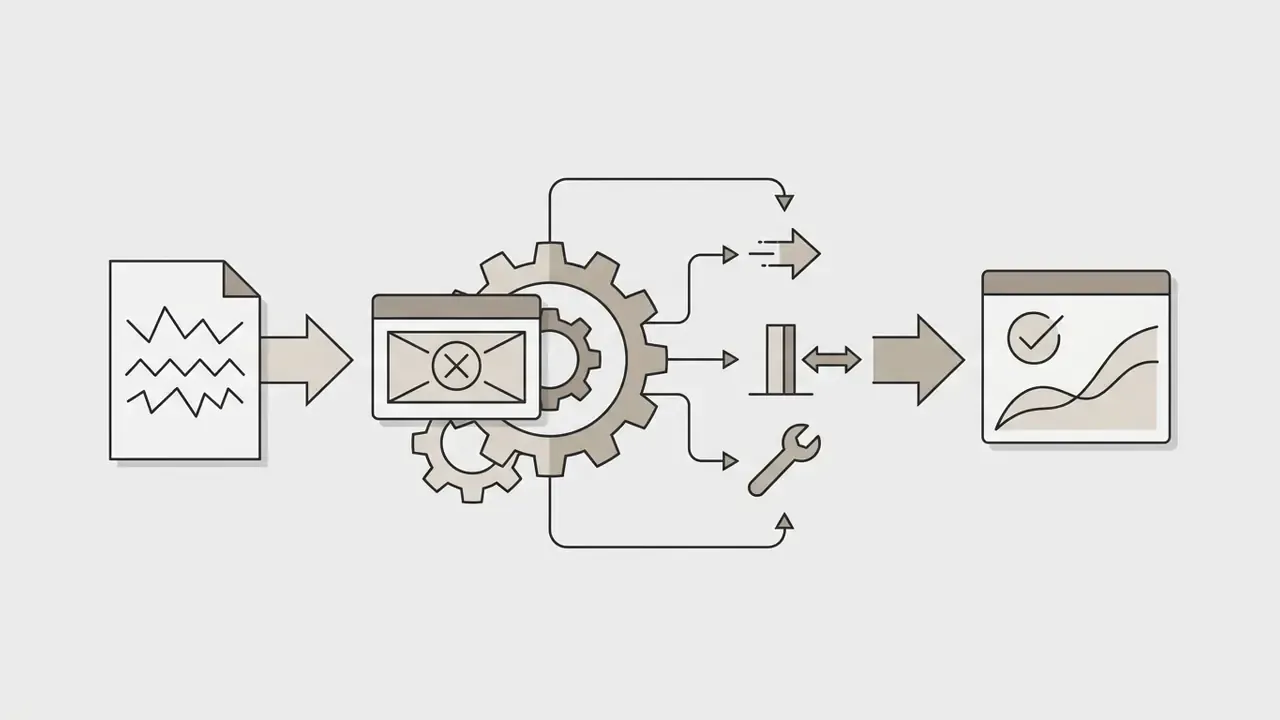
Once the initial pass is generated, authors should execute a two-step review process.
«Recursive reprompting and revision lets authors generate alternate continuations of pivotal scenes and select the optimal narrative path.»
- Selective RerankingGenerate two or three alternate continuations for pivotal scenes and evaluate different plot directions before committing.
- Local Edit PassesCorrect factual drift, adjust dialogue rhythm, and remove repetitive phrasing directly in the editor. The Re3 method formalises this as a separate Edit module that fixes detected inconsistencies rather than regenerating whole scenes.
An iterative loop keeps the narrative aligned with the author's intent while exploiting the model's ability to propose alternatives. One caution from practice: regenerating a whole chapter to fix one line usually costs you three good paragraphs.
Continue a Long Story Without Losing Context
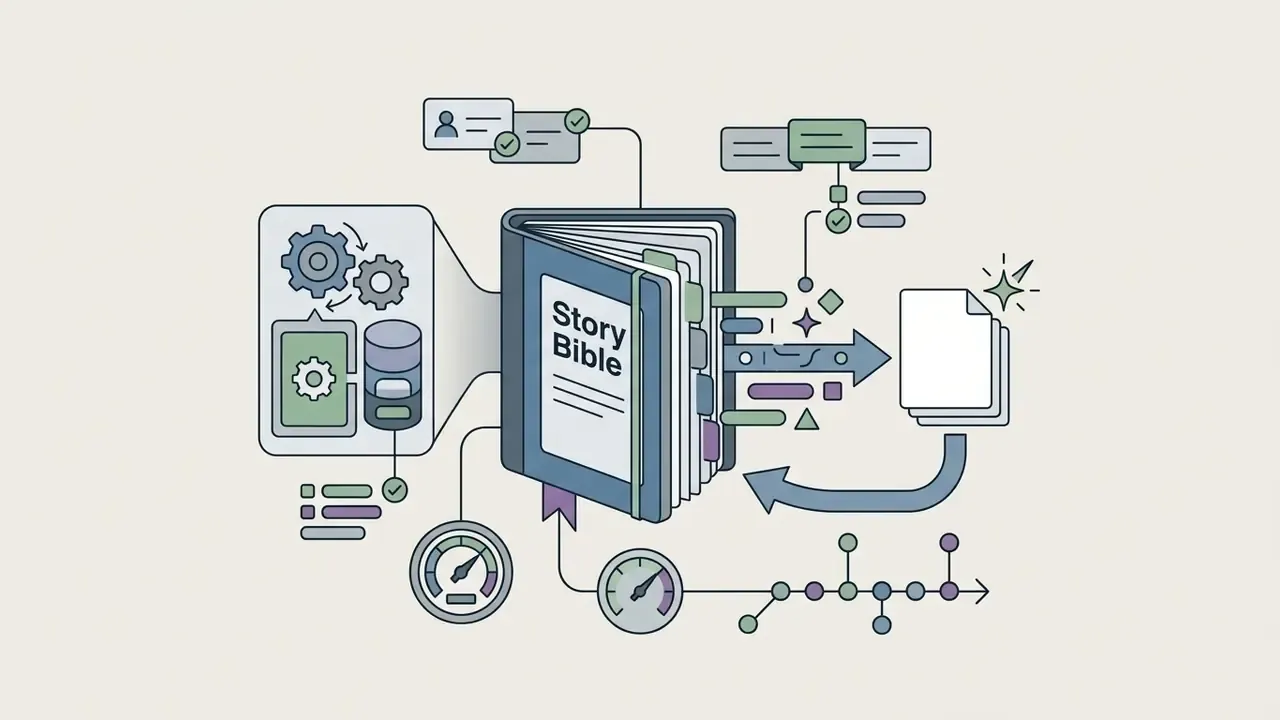
To maintain coherence across long works, manage the model's memory using structured summaries.
«The ConWriter framework, using neuro-symbolic transition control, substantially reduces contradictions in long-story continuation and completion tasks.»
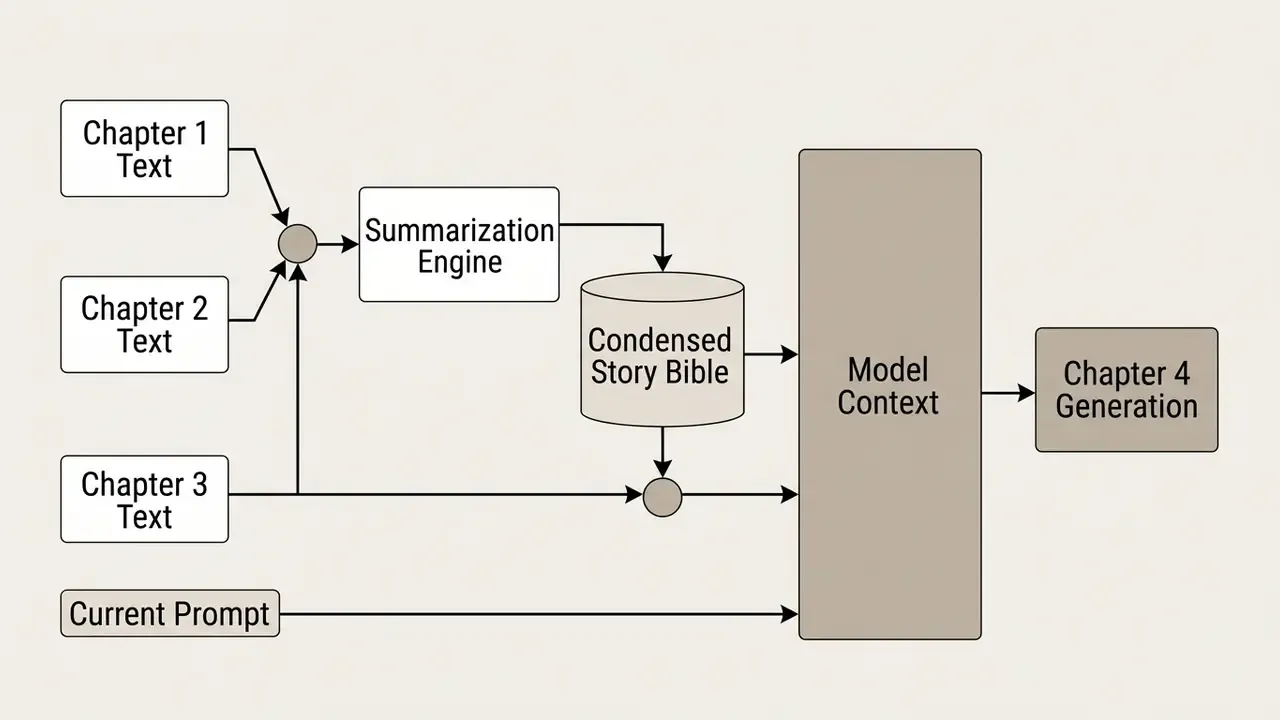
For complex narrative workflows involving multi-character scripts, explore our detailed guide to ai dialogue generator tools.
What You Can Create with an AI Fanfic and Story Generator
Using an ai fanfic generator no filter opens creative possibilities across fan fiction, dark speculative narrative, and character-focused roleplay scripts.
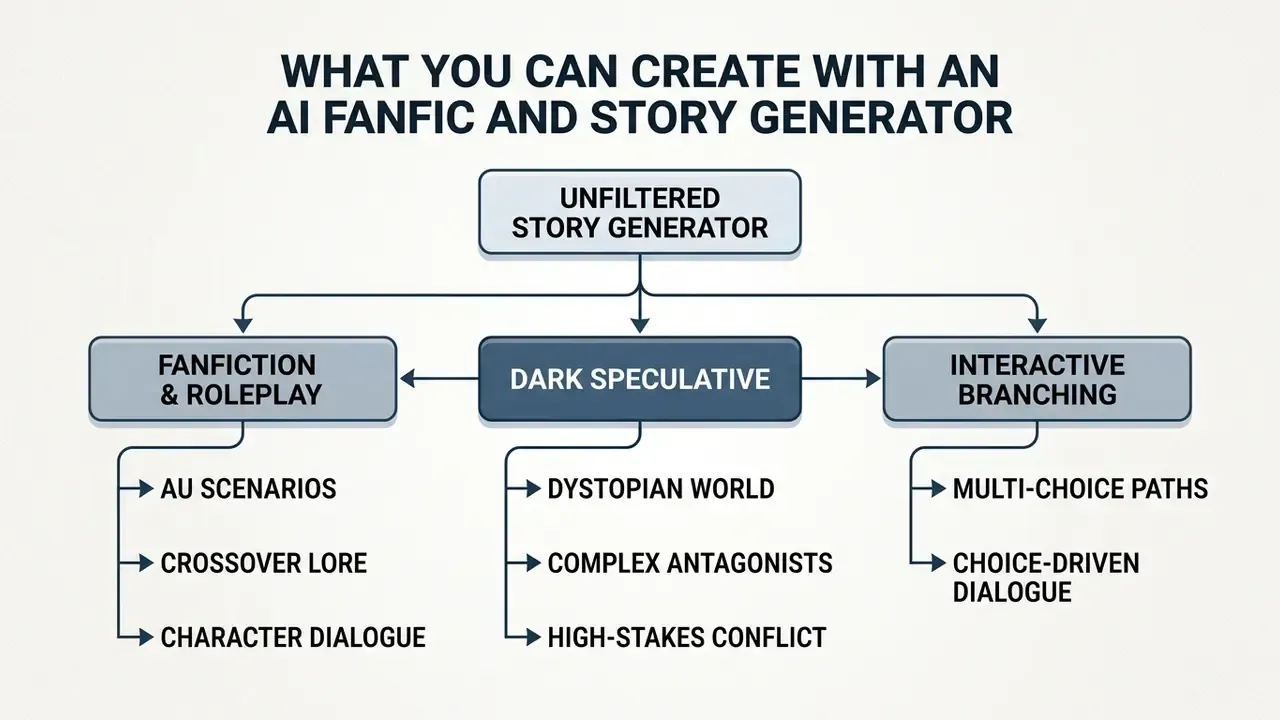
Without restrictive prompt blocks, writers can explore non-traditional narrative formats and complex character dynamics.
High-Demand Unfiltered Fiction Tropes
These are the premises that reliably trigger refusals on mainstream assistants, and the ones readers actually buy:
- Morally ambiguous protagonists A detective who solves a murder by committing one. A villain's origin story where every terrible choice made sense at the time.
- Grimdark fantasy with real cost A knight whose quest for redemption requires unforgivable acts; a siege told from the perspective of the supply line, not the hero.
- Visceral body horror A protagonist who slowly understands what is growing inside them, and begins to want it. A story narrated by the wound rather than the person it belongs to.
- Cosmic horror A deep-sea expedition that finds something which should not exist, described without the comfort of an explanation.
- Enemies-to-lovers and forbidden romance A crime boss and the detective hunting them. A compromised priest and the journalist exposing the church. An assassin and their target realising they were never enemies.
- Vengeance and reckoning A widow who spends ten patient years dismantling the corporation that killed her wife, legally, on paper, in public. A wronged sister whose revenge only works if she becomes what she hates.
- Clinical-voice crime noir A surgeon-turned-killer keeping notes in the register of operative reports.
- Sharp satire A dystopia where social-media likes are the only legal currency; a company that patents human emotions and charges a subscription.
Each of these is standard literary territory. The only difference an unfiltered pipeline makes is that the prompt is treated as craft rather than as a policy event.
Fanfic, Character Scenarios, and Dialogue-Driven Stories
Fanfiction writers frequently use an ai fanfic generator no filter to draft Alternate Universe (AU) scenarios, crossover storylines, and deep character interactions.
«LLM-generated stories show higher lexical and syntactic complexity than human stories, yet fall significantly behind on novelty, diversity, and surprise.»
Practical technique, drawn from working fanfic workflows:
- Limit the cast
- Two to four characters per scene produces sharper dialogue than an ensemble.
- Canonical voice matching
- Paste three to five quoted lines from source material as anchors before requesting new dialogue.
- Define the dynamic explicitly
- Fandom, relationship dynamic, scene goal, emotional tone, and desired output format (beat list first, prose second).
- Scene brief → beat list → dialogue sketch → prose pass → canon check
- Verify continuity facts after each pass rather than at the end.
- Scene re-enactments
- Test how established characters react under entirely different plot conditions to stress-test your characterisation.
When building visual storyboards or character concepts to accompany written fanfiction, creators frequently pair text tools with the platforms reviewed in our ai design generator guide and our comparison of AI image generators. For audio-drama adaptations, our AI voice generator guide covers licensing for narration.
Dark, Complex, and Genre-Specific Fiction
Genre fiction often requires heavy themes, morally grey protagonists, and hostile environments. Aligned models sanitize these elements and reduce narrative stakes.
An unfiltered writer performs well on:
- Dark Fantasy & Horror Authentic suspense, grim atmosphere, and intense conflict without fade-to-black interruptions.
- Complex Political Thrillers Corruption, betrayal, and tactical manoeuvring without moralizing commentary.
- Cyberpunk & Dystopian Sci-Fi Harsh urban environments and systemic conflict rendered accurately.
- Deep Worldbuilding Top-down construction (cosmology → geography → cultures) or bottom-up construction (one street, one family, outward). Scope detail to what matters to character or plot; unscoped detail buries the story.
By maintaining thematic realism, authors can produce mature fiction tailored to adult readerships, while keeping continuity records rigorous enough to survive book three.
Quality Control for AI-Generated Stories
Operating an unfiltered model shifts all editorial responsibility to the human author. Raw outputs can suffer from repetitive phrasing, logic errors, or character continuity drift if published without review.
«Uncensored model variants can generate hate speech, violence, and erotic content without standard constraints, and are already used in cybercriminal services.»
That finding cuts both ways. The same absence of guardrails that enables legitimate dark fiction also removes the safety net. Human review is not optional polish; it is the only remaining control layer.
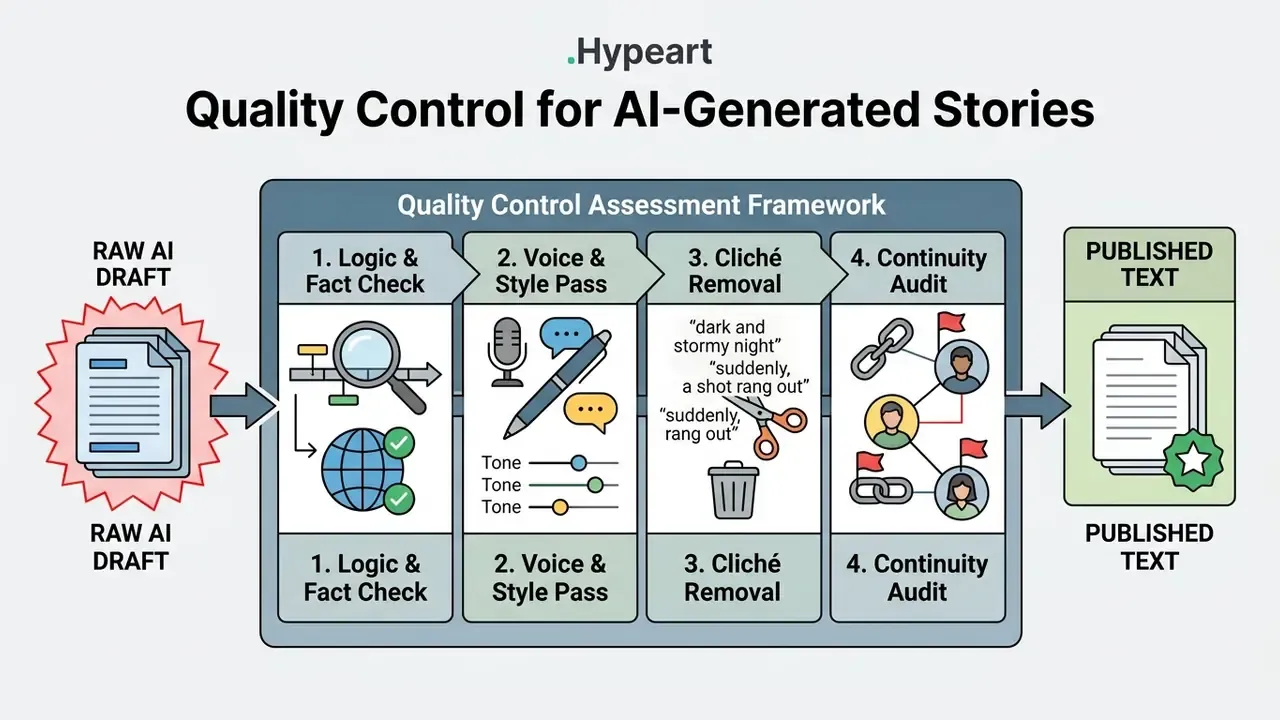
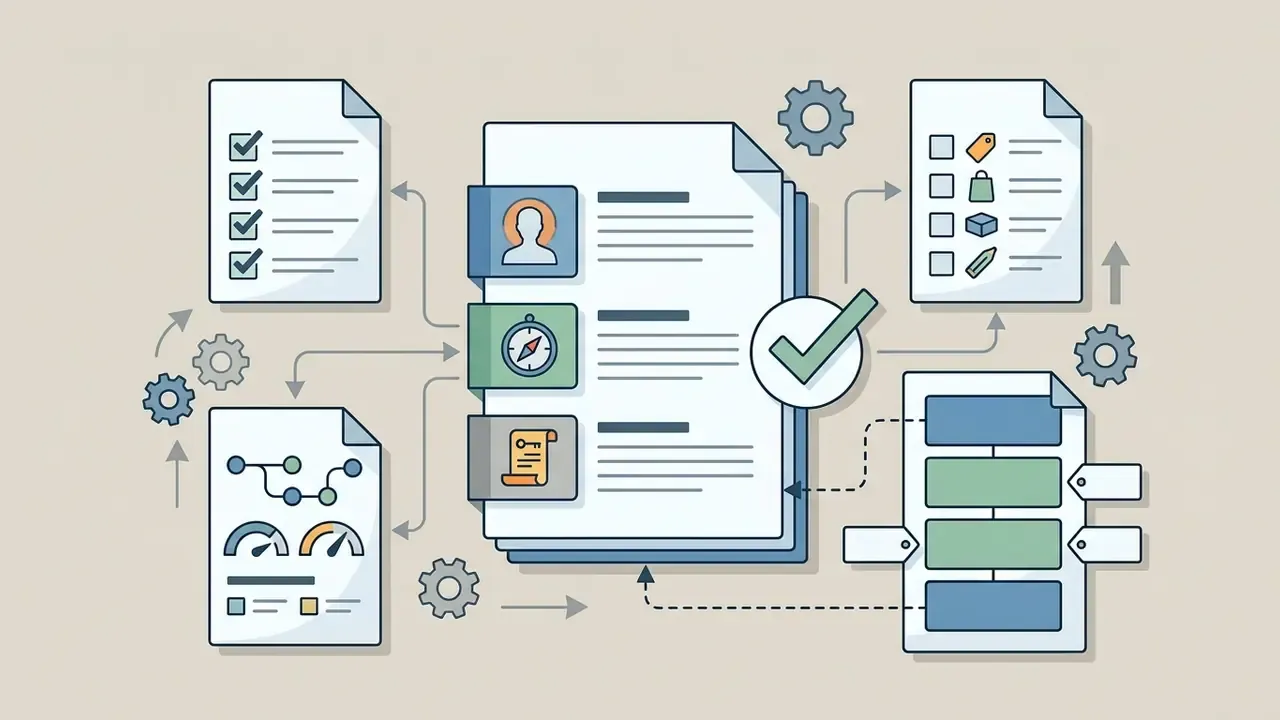
Research-grade evaluation pipelines assess long fiction across five dimensions: timeline and plot, characterization, world-building, factual consistency, and narrative style, flagging contradiction pairs with evidence chains. A working author can approximate this with a five-column checklist per chapter.
Keep Characters, World, and Plot Consistent
Maintaining world factology across long narratives requires structured tracking rather than memory.
To preserve narrative logic:
- Track Knowledge StatesEnsure characters act only on information they have explicitly learned in the text. Most "plot holes" in AI drafts are knowledge-state violations.
- Audit Timeline AnchorsLog specific dates, times of day, and travel durations to avoid contradictions.
- Enforce World RulesKeep magic systems, physical laws, and technology limits uniform across the manuscript, and apply rules consistently to every related lore entry.
- Maintain a Promise LogRecord every setup the text promises the reader, and the chapter where it must pay off.
- Check Arc Against BeatFor each major character, verify the arc against what they know at that beat.
Edit AI Output Before Publishing or Sharing
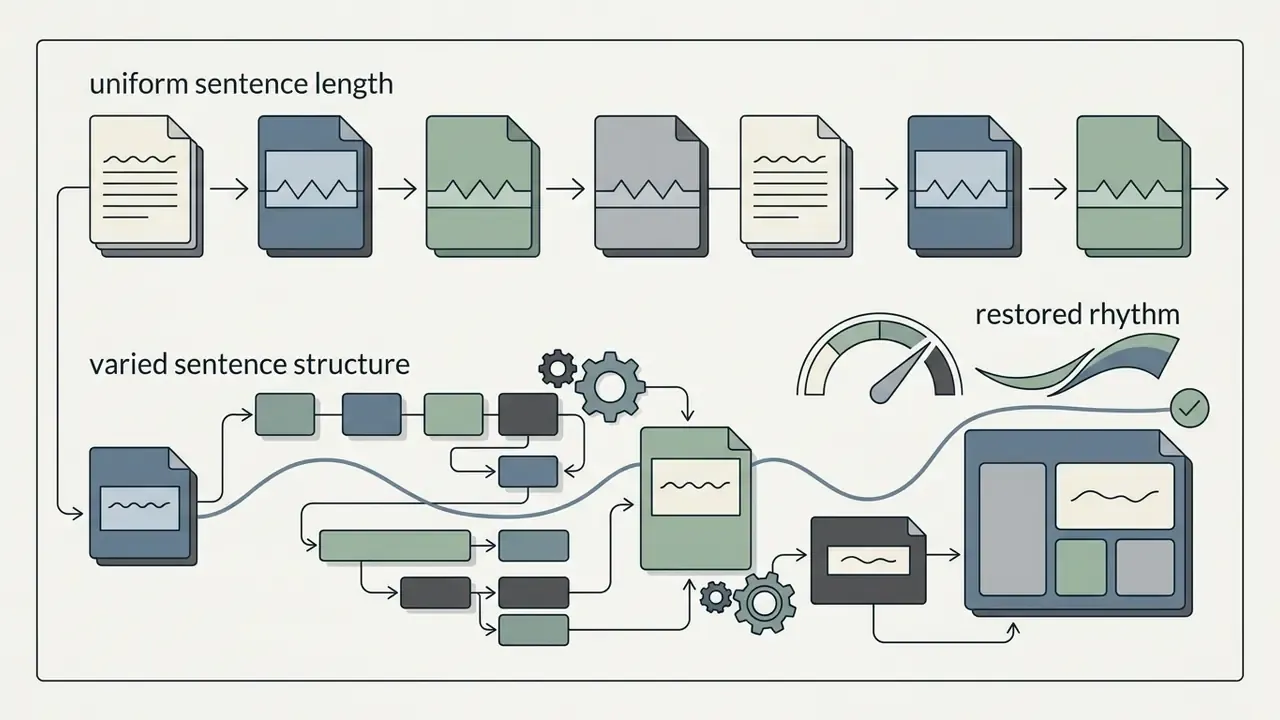
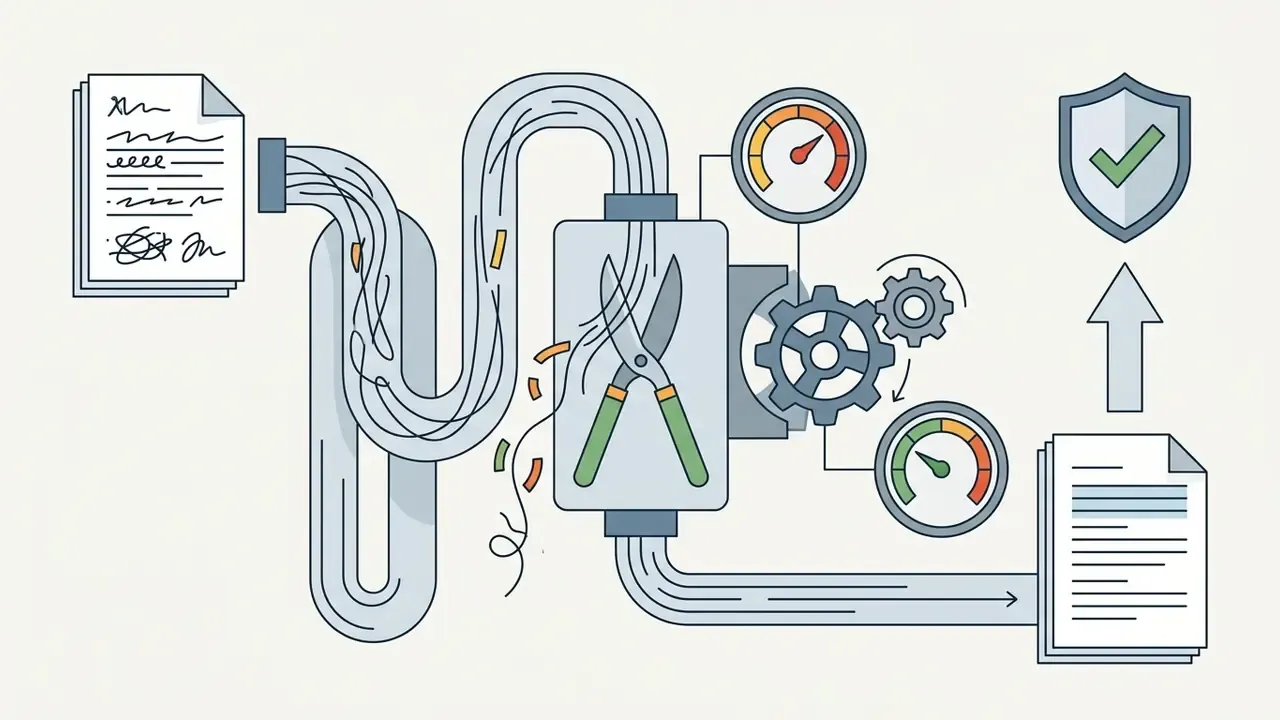
Before publishing AI-assisted prose, execute a dedicated editing pass to remove common generative tropes.
«In a 36-participant study, ChatGPT assistance produced significantly lower semantic diversity of ideas compared with a non-AI creativity-support tool.»
Homogenization is the central editorial risk: unedited model prose converges toward the statistical middle. Counter it deliberately.
Authors building visual worlds, structural maps, or lore diagrams to support their writing can consult our evaluation of ai diagram generator platforms.

Enterprise Risk: Shadow AI, Data Isolation, and Governance
Unfiltered story generators are consumer-facing tools, but they show up inside organisations: marketing teams drafting edgy campaign narratives, game studios prototyping dialogue, employees experimenting on personal accounts. For a Head of Model Risk or an AI Governance lead, the relevant question is not whether the prose is good. It is what leaves the building.
Why unfiltered tools raise the risk profile
- No-sign-up equals no audit trail. Anonymous generation endpoints produce no user attribution, no retention log, and no exportable record of what was submitted. Convenient for a novelist. Unacceptable for a regulated function.
- Prompt inputs are exfiltration vectors. Character briefs pasted from internal documents, product roadmaps used as "world-building," or customer transcripts used as dialogue samples all transit a third-party inference endpoint.
- Training-data reuse. Consumer tiers frequently retain prompts for model improvement. Business or enterprise tiers are where data-use exclusions are contractually available.
- Toxicity amplification. Measured toxic-output rates for uncensored variants run materially higher than for aligned counterparts (10.0% versus 6.3% in the 2024 fine-tuning study cited above), which matters if output touches brand-facing channels.
- Jailbreak equivalence. A system-prompt-level "unfiltered mode" is functionally a sanctioned jailbreak. Any control that depends on it inherits the fragility of prompt-level defences.
Shadow AI checklist for CISO and CRO review
- Inventory which generative endpoints are reachable from managed devices, including no-sign-up web tools.
- Classify data categories that may never enter an external prompt, and enforce via DLP pattern rules on outbound web traffic.
- Require business-tier or self-hosted deployment for any workflow touching confidential material; consumer terms rarely carry the necessary data-use exclusions.
- Log prompts and outputs for any sanctioned uncensored deployment. If it cannot be logged, it cannot be approved.
- Isolate self-hosted uncensored weights in a sandboxed environment with no lateral network access and no production data mounts.
- Assess the vendor's ability to change filtering behaviour unilaterally; document the fallback if refusals return mid-project.
- Map the deployment to your existing model-risk framework. Validity, reliability, safety, security, bias, and traceability are the standard assessment axes in the NIST Generative AI Profile (2024), and US financial institutions additionally apply model-risk management expectations to third-party models.
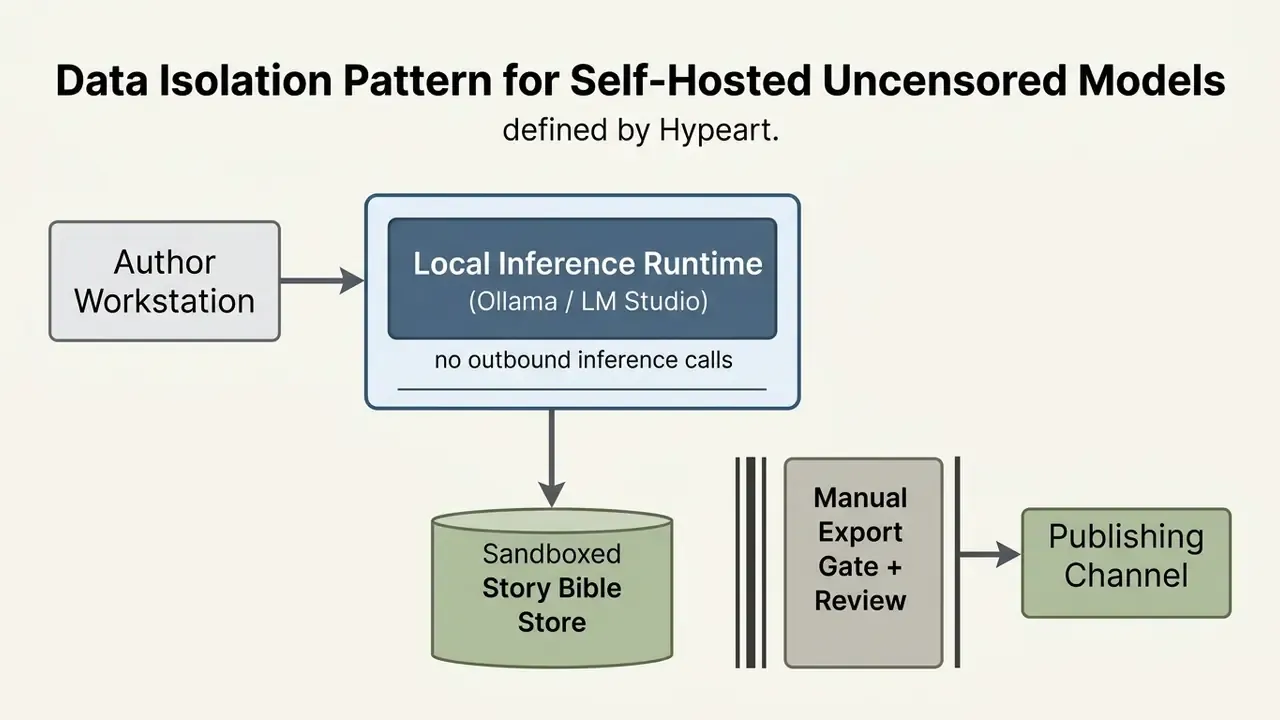
The governance conclusion is narrow and practical. Unfiltered generation is defensible for fiction and prototyping when it runs either self-hosted or under a business agreement with logging. It is indefensible when it runs anonymously on unmanaged endpoints with real corporate data in the prompt. Adjacent synthetic-media risks follow the same logic, which is why we treat ai deepfake generator deployments under the same disclosure and detection rules.
Commercial Use, Content Rights, and Responsible Publishing
This section provides general information and does not constitute legal advice. Copyright treatment of AI-assisted work varies by jurisdiction and continues to change; consult a qualified attorney before commercialising AI-generated material.
Determining ownership and commercial rights for stories created with an ai story generator no restrictions requires evaluating vendor contracts alongside current copyright law (U.S. Copyright Office, https://www.copyright.gov/ai/). Human creative contribution is the operative variable, which is also why editing matters commercially, not just aesthetically.
«Alignment reduces the linguistic creativity index of LLMs by an average of 30.1%, while human-written texts exceed models on the same measure by 66.2%.»
| Jurisdiction | Position on purely AI-generated text | Source / year |
|---|---|---|
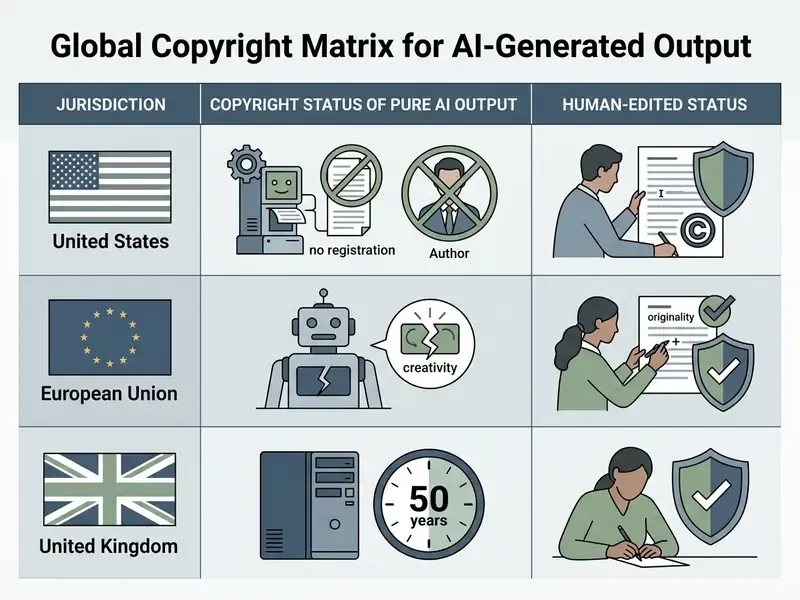
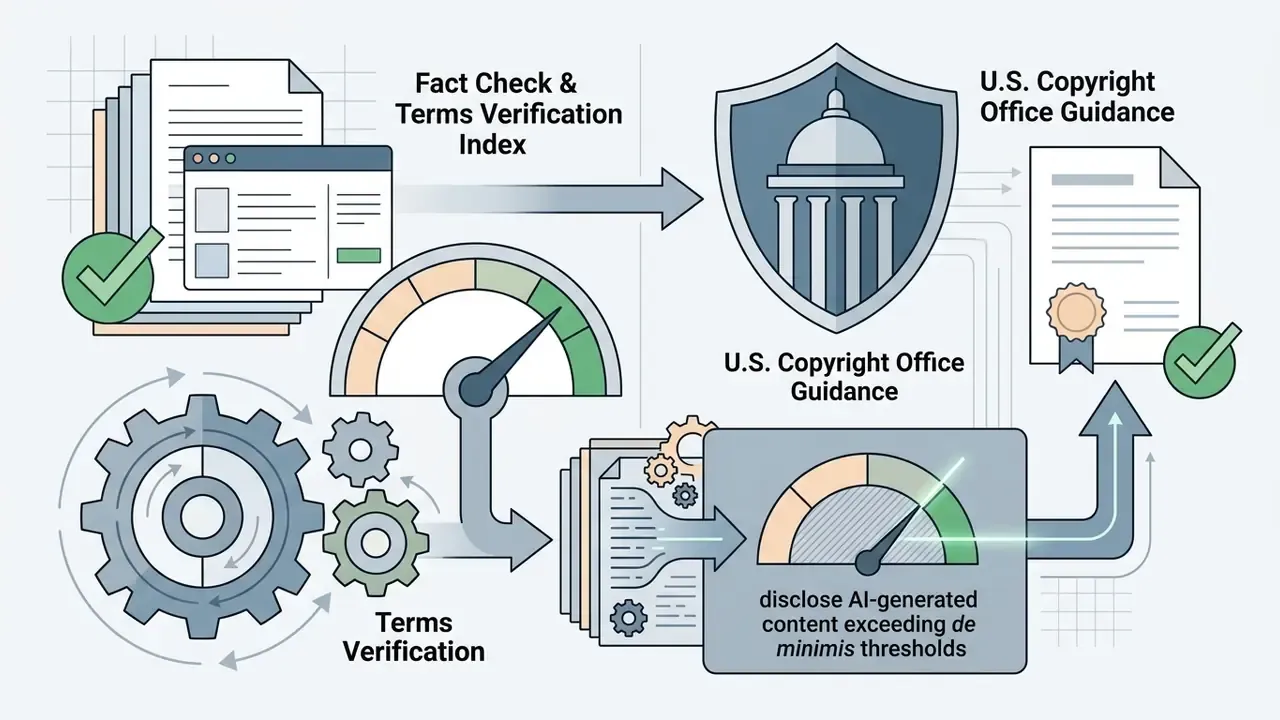
| United States | Applicants must identify and exclude more-than-de minimis AI-generated material; protection covers human contributions only. Prompts alone do not establish authorship. | U.S. Copyright Office guidance and 2025 copyrightability report, https://www.copyright.gov/ai/ |
| European Union | No EU-wide rules specifically protect AI-generated works; purely AI-generated output without meaningful human creative input is not eligible for copyright. | European Parliament research, 2025 (not independently verified in our research set; treat as directional) |
| United Kingdom | Computer-generated works with no human author retain protection for 50 years from creation; the regime remains under consultation. | UK Government consultation material, 2025 |
In the United States, pure AI output produced without substantial human creative input cannot be registered for copyright protection. Human-written portions, creative arrangement, and extensive editorial revision remain eligible. Practically, this means your revision pass is the asset: the more of the final expression you determine, the more of the work you own.
Readers evaluating rights across media formats can compare the analogous position for visual assets in our guide to commercial use of AI image generators.
What to Check in a Tool's Terms Before Commercial Use
Before publishing or selling AI-assisted books, review the provider's Terms of Service for specific clauses:
- Output Ownership AssignmentsConfirm the vendor explicitly assigns output rights to the user. OpenAI's Terms of Use state that the user owns the Output and OpenAI assigns its rights in it, to the extent permitted by law. Anthropic's Commercial Terms similarly assign any right, title, and interest in Outputs to the customer.
- Non-Exclusive Output WarningsRecognise that similar or identical text generated for other users cannot be claimed exclusively. Canva's story-generator terms, for example, permit any lawful use but grant no exclusive rights.
- Data Training PoliciesVerify whether prompt inputs and generated drafts are used to train future foundation models, and whether a business tier is required to opt out.
- Content Policy ScopeConfirm that "unfiltered" does not shift illegal-content liability onto the user without notice, and note which categories remain excluded.
- Disclosure ObligationsIf registering copyright or publishing through a trade channel, check whether AI use must be disclosed. The Authors Guild position is that substantial AI-generated text in a book should be publicly disclosed, and journal guidance under COPE principles bars listing AI tools as authors.
For legal timelines and ongoing litigation updates on generative media rights, refer to our AI Litigation and Case Timelines tracker.
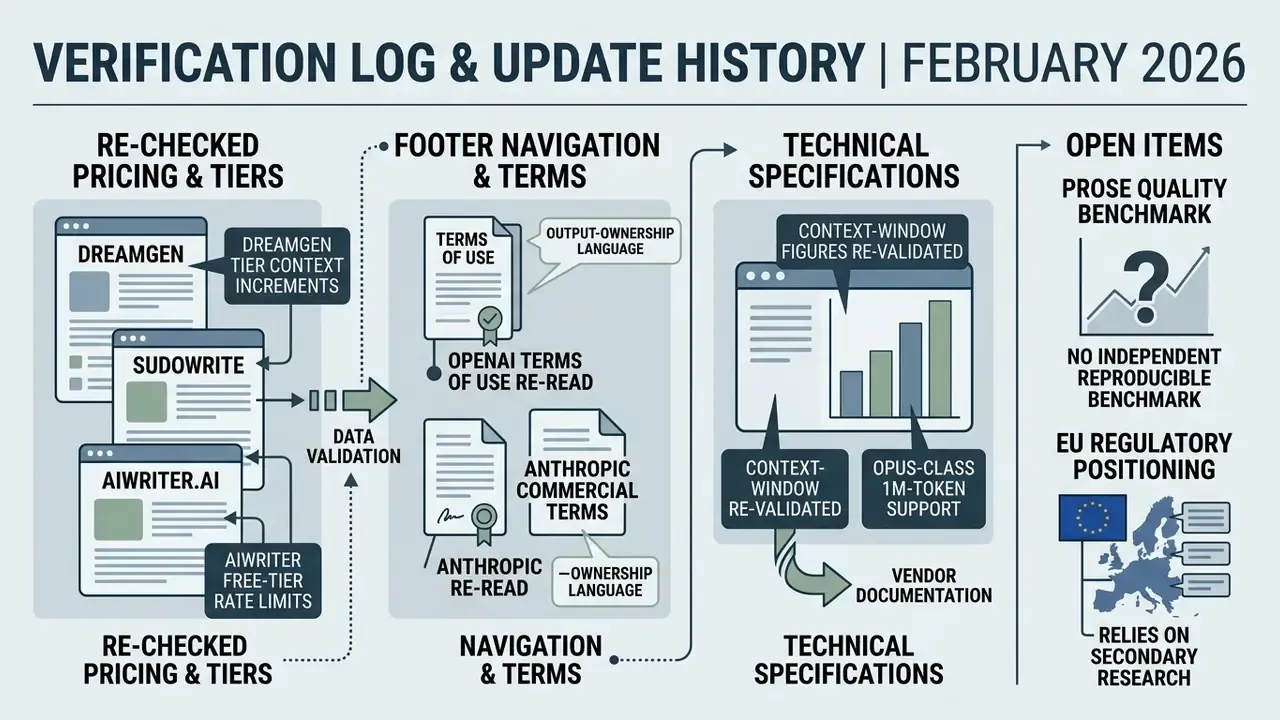
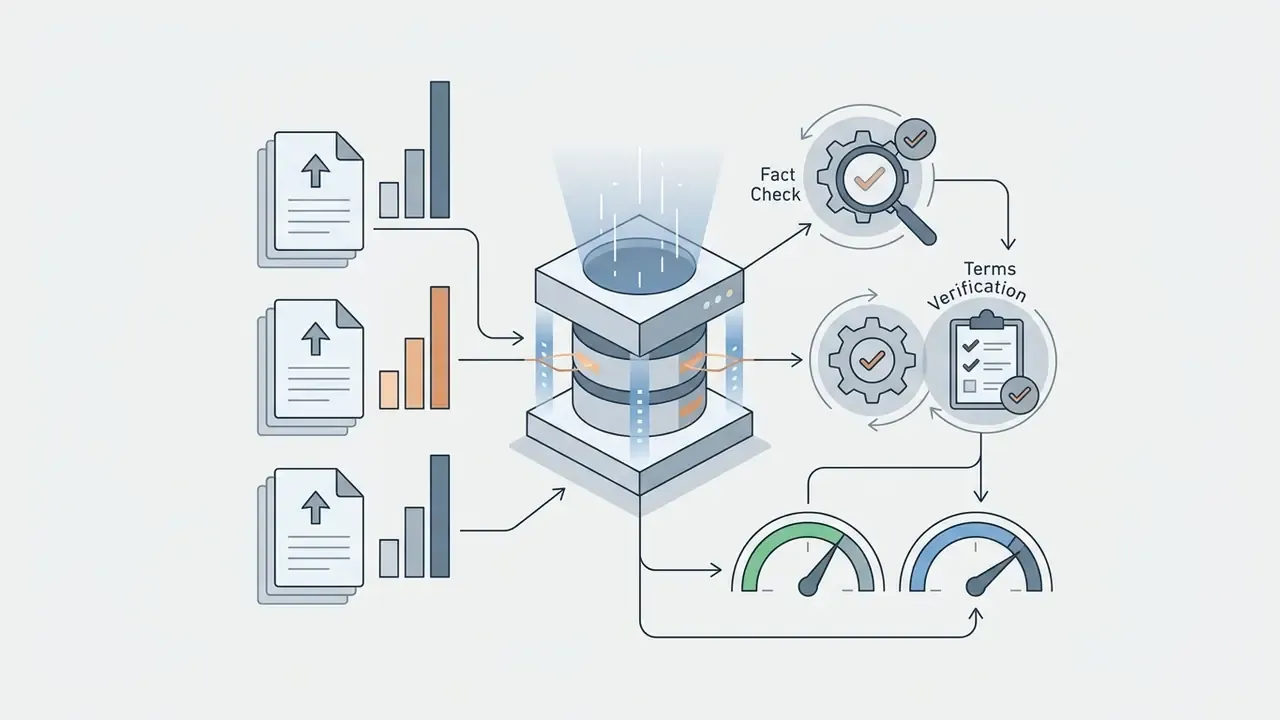
Fact Check & Terms Verification Index (verified February 2026)
To evaluate commercial rights across visual, textual, and audio generative systems, review our centralized AI Media Commercial-Use Hub.

FAQ About AI Story Generators Without Restrictions
Understanding the operational boundaries of an ai story generator without restrictions helps writers select the right tool for their goals.
Can an AI Story Generator Write a Full Novel?
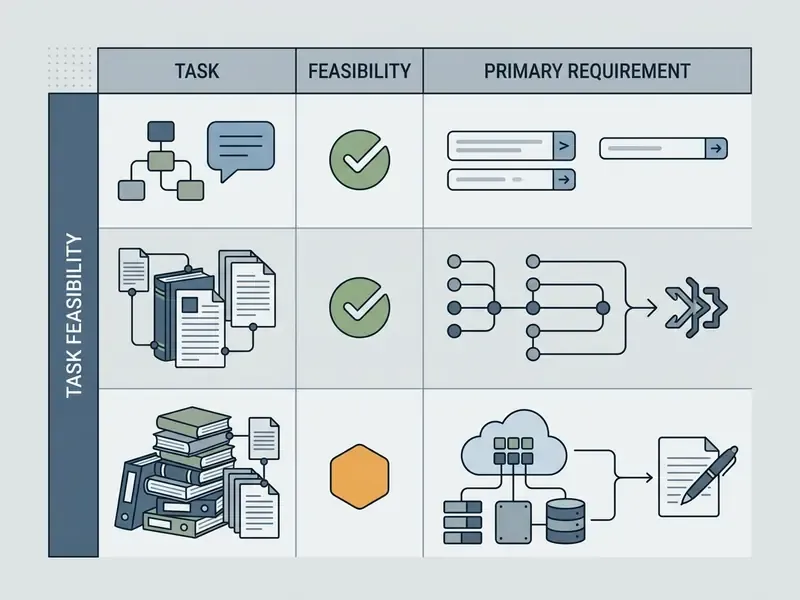
It can draft individual chapters, but not a coherent full-length novel in a single request, because of context-window boundaries and output volatility.
«Only the specialised LongWriter-LLaMA-3.1-8B stably generates up to 100k tokens and 500 sections; most models collapse after roughly 100 sections.» — On Stable Long-Form Generation: Benchmarking and Mitigating Length Volatility (2026). https://arxiv.org/abs/2502.09387 Writing a novel therefore requires a human author to manage a chapter-by-chapter outline, maintain a story bible, and iteratively generate and edit scenes. Tools that expose an outline stage (premise → three-act structure → chapter skeleton → chapter drafting with prior context injected) hold together considerably better than single-prompt generation.
Do You Need Writing Skills to Create a Good AI Story?
Basic prompt inputs produce readable prose, but compelling fiction requires active human editing and narrative direction.
«Human-written texts exceed LLMs on the creativity index by an average of 66.2%; alignment further reduces model originality by 30.1%.» — AI as Humanity's Salieri: Creativity Index in LLMs (2024). https://arxiv.org/abs/2406.11234 Available experimental evidence points the same way rather than proving a single number. One 2026 study reported human and AI collaboration ranking above both unedited zero-shot generation and, in that sample, original human writing. A 2025 experiment found that accepting AI text without revision lowered essay quality, whereas actively revising it improved lexical sophistication, syntactic complexity, and cohesion. Read together, the direction is consistent: pacing control, character development, and stylistic editing are what convert raw output into publishable literature. Skills are not a prerequisite for starting; they are the difference between a draft and a book.
Are There Any Content Limits on an Unfiltered Generator?
Yes. Removing content filters does not remove legal boundaries. Credible unfiltered platforms still exclude child sexual abuse material, sexual content involving identifiable real people without consent context, and step-by-step instructions for real-world harm. Inside that line, the full range of adult fiction is available. Anti-abuse rate limits also remain in force, though normal creative use rarely reaches them.
Do I Need an Account to Use an Uncensored Story Generator?
Not always. Several tools generate anonymously with no email and no card. Accounts typically unlock saved drafts, reusable characters, and chapter-by-chapter continuation. Note the trade-off: anonymous sessions usually lose context on refresh, so long projects effectively require an account or a local setup.
Is an Unfiltered Generator Safe to Use with Work Material?
Treat anonymous, no-sign-up endpoints as public. Without logging, retention controls, or a data-processing agreement, anything pasted into a prompt should be assumed to leave your control. For organisational use, run open weights locally or deploy under business terms with documented data-use exclusions. The Shadow AI checklist above is the short version.
What Is the Difference Between This and ChatGPT, Claude, or Gemini?
General-purpose assistants apply content policies that refuse or soften graphic horror, intense romance, and morally corrupt protagonists. Claude and Gemini offer far larger context windows and stronger revision tooling; dedicated unfiltered platforms offer permissive generation with smaller memory. In practice, many authors draft dark scenes on an unfiltered tool and use a long-context model for structural revision, accepting that the second pass will soften anything it is asked to rewrite wholesale. For technical assistance, workflow setup, and integration strategies, visit our AI Media Support and Troubleshooting portal.
Verification Log and Update History