Disclosure: Marcus Hale, author. Examples, audits, and client stories below are illustrative composites. They do not describe real employment, real clients, or documented business results.
If you run model risk at a bank or a mature fintech, a query like "character ai no filter" is not a curiosity. It is a signal. It shows how employees think about safety controls: as a switch someone can flip. That belief is exactly what shadow AI feeds on.
The short version, in about thirty seconds:
- There is no official "no filter" mode in Character AI. The interface has no toggle for disabling the NSFW filter, and pornographic content is prohibited outright by the Terms of Service (2025-2026 editions).
- Filtering is server-side and layered: input prompt classifier, then model generation, then output response classifier. That is why the filter feels "inconsistent." Different layers read different signals.
- The mobile app and the web version filter identically, but the app collects far more device data (up to 18 data types, 6 of them used for cross-app tracking).
- Bot creators cannot read your chats. The platform documentation confirms this. Access exists only for Trust & Safety during an investigation.
- What actually works instead of a "hack": OOC commands in brackets, euphemism, gradual context buildup, and loop resets. These reduce false positives without breaking the rules.
- Alternatives fall into three classes: local deployment (SillyTavern, fully private, free), cloud services with softer moderation ($5 to $19.99 per month), and BYO-Key platforms such as Janitor AI. Removing safety layers entirely raises attack success to 84-100%.
- Commercial use of Character AI is prohibited by its ToS. Business deployment requires API platforms with a commercial license, plus residual-risk assessment under NIST AI RMF and SR 11-7 logic.
Methodological caveat: the user segments described here (roleplay writers, companion users, enterprise model owners) remain working hypotheses until confirmed by product analytics, interviews, or CRM data.
What the "Character AI No Filter" Query Actually Means
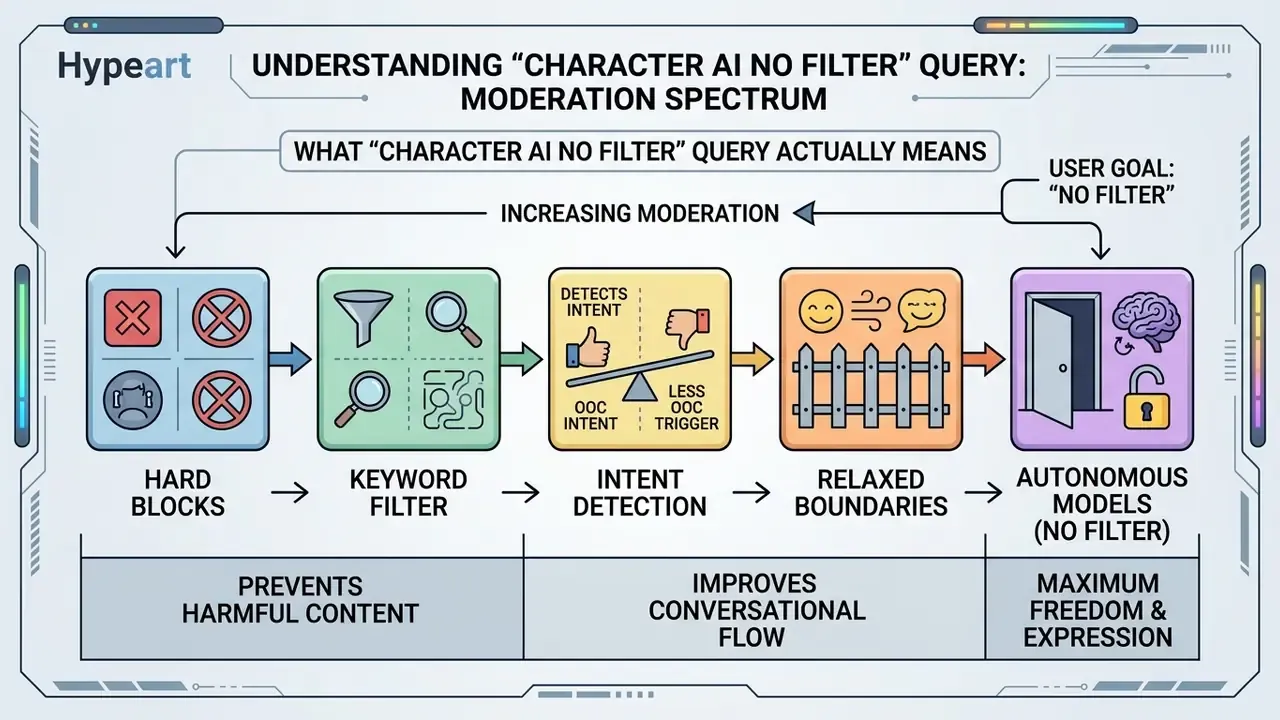
The phrase "Character AI no filter" describes a search for a version of the service without system limits on dialogue and roleplay. No official version with moderation fully disabled exists.
Users treat "no filter" and "unfiltered" as shorthand for conversational freedom. In third-party marketing, those same words usually mean nothing more than looser thresholds.
Some context helps. Character AI was founded by former Google AI researchers Noam Shazeer and Daniel De Freitas and launched in September 2022. From the first public builds it targeted a mass audience with a minimum age of 13 (16 in the EU). A zero-moderation model was never on the table.
How "No Filter" Differs From Softer Restrictions
A true absence of filtering means zero checks on incoming prompts and generated responses against a safety policy. Soft-moderation models keep baseline limits but respond with warnings, quarantine, or deprioritization instead of a flat refusal.
Research on large language model safety keeps pointing at the same finding: the layering is what does the work, not any single classifier.
"Applying input and output detectors reduces jailbreak success from 76% to under 5%."
In practice the market splits into three categories, and telling them apart before you sign up saves a lot of frustration:
- Truly unfiltered. No content policy is applied to fictional scenarios. Usually local models, where liability sits entirely with the operator.
- Mostly unfiltered, or soft moderation. Mature themes are allowed; hard prohibitions on illegal content remain.
- Marketing "unfiltered." The platform advertises freedom but censors a large share of requests anyway.
Before choosing a service, it is worth checking whether did character ai remove the filter reflects a real policy change or simply an update to contextual classifiers. Developers adjust sensitivity often. They keep the baseline rules.
Why Users Search for Character AI Without the Filter
The main driver is false positives during fiction writing and complex roleplay. A hard block breaks the thread of a scene and kills immersion mid-sentence.
Studies of conversational systems suggest that an abrupt refusal reduces trust and derails scenario logic. In illustrative risk reviews of dialogue systems, we see the same complaint: people want a relaxed conversation format where AI companions hold character without sudden moral lectures.
"When AI agents display empathy and personalization, users report higher satisfaction and greater willingness to disclose."
How Filters and Content Limits Work Inside Character AI
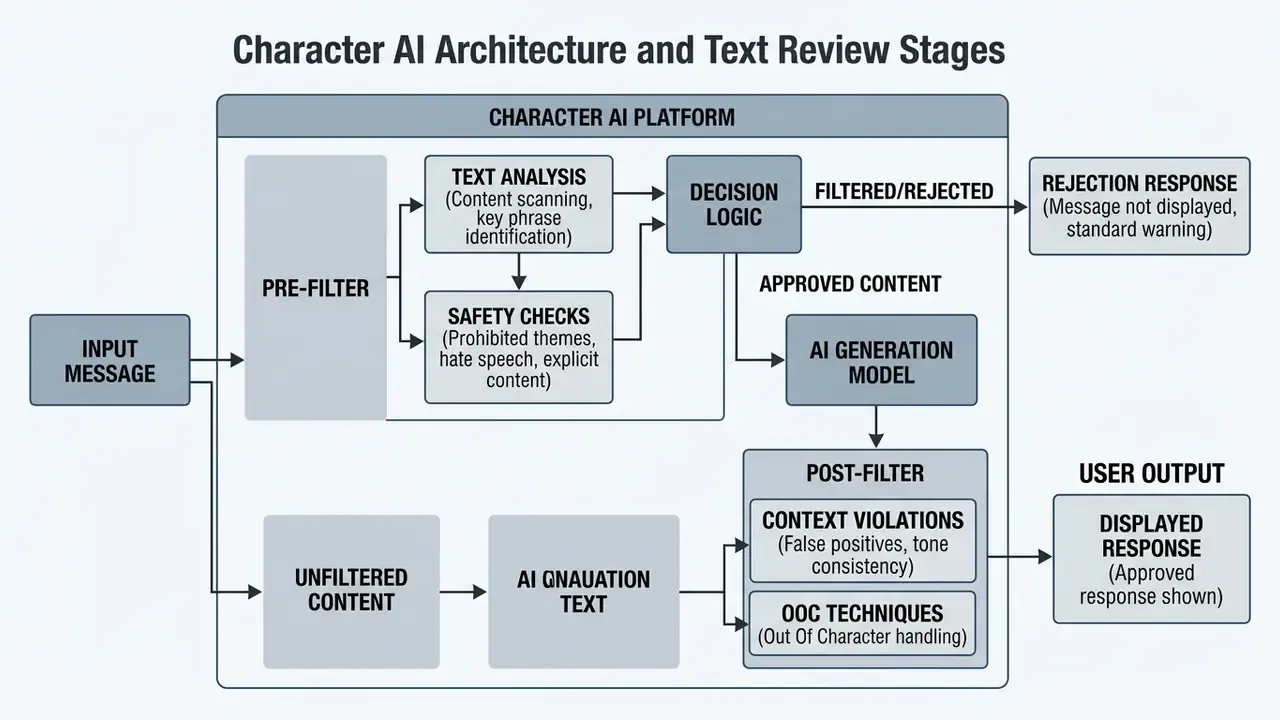
Character AI's safety stack combines input prompt classifiers, output generation filters, and contextual scoring. Text is checked at every step of the exchange.
Automated moderation is supplemented by manual review of user reports and account bans for repeat violations. Filters read semantic load, not just isolated keywords. Per the platform's own materials, Trust & Safety operates around the clock, and blocklists are refreshed regularly.
Which Topics and Messages Get Restricted
Fully blocked: pornographic content, explicit sexual scenes, nudity, and sexual harassment. The platform also acts hard against material tied to minor exploitation, grooming, sextortion, self-harm, and graphic violence.
Additional limits cover hate speech, instructions for illegal acts, extremist propaganda, defamation, and copyright infringement.
"The Wukong framework defines seven NSFW categories: illegal activity, hate, violence, sexual content, self-harm, harassment, and shocking content."
Rules for commercial generative platforms are collected in the AI Media Commercial-Use Hub.
For businesses and content authors, the operative rules always live in the provider's official guidelines. Moderation systems update pattern databases automatically based on safety-team signals.
Why the Filter Fires Differently in Similar Cases
Inconsistency usually comes from how the system separates instructions from user input. When a conversation contains ambiguous phrasing, the safety classifier may score the request as risky.
Following the structure of the OWASP LLM Top 10, moderation checks three levels: user input, model generation, and executed action. Pattern filters handle indirect injections poorly, so platforms model-check both the prompt and any retrieved context. Which is precisely why identical text can pass in one chat and fail in another.
"PromptGuard and O3 detectors block 70-100% of injected prompts, cutting end-to-end pass rates to under 5% in most configurations."
If a bot author wrote an unusual system prompt, the effective threshold shifts relative to a plain chat. To compare model behavior fairly, reviewers test how algorithms respond across different history lengths. The longer the context, the more likely the classifier registers cumulative drift from the safety baseline.
Can You Disable the Character AI NSFW Filter in Settings?
No. There is no setting, no hidden mode, and no beta flag that removes platform restrictions.
Content-experience settings in the account control recommendations and age modes. They do not override baseline safety rules. Minors are restricted from open chats and limited to vetted scenarios.
"Models with filters disabled reach attack success rates of 84-100% under targeted pressure, which makes full disablement an unacceptable standard."
Decision flow: content filtering in Character AI
- User request. The prompt enters the dialogue interface.
- Conversation context. Message history, character description, and system memory are assembled.
- Input safety filter. Keywords and semantics are scored against prohibited topics.
- LLM generation. The base model drafts a reply with safety objectives prioritized.
- Output safety filter. NSFW and violence classifiers screen the generated text.
- Result. The response is delivered, or a refusal message is returned instead.
Extrapolating the Risk to Enterprise Systems
Server-side rule fixation is not a product preference. It is the only defensible standard, and a hypothetical case shows why. In an illustrative audit of a financial institution's content-control system, a hidden "test" mode without filters was introduced for a sprint. Confidential data leaked through prompt injection within days. After that, rules stayed pinned to the server.
For model-risk owners, this translates into a familiar frame. Layered filtering is a control procedure. Document it, test it, and evidence it the same way you evidence any model in scope. NIST AI Risk Management Framework functions (Govern, Map, Measure, Manage) and the supervisory logic of SR 11-7 both require recording residual risk after controls. A simple estimate:
Residual risk = base attack success × (1 − input detector effectiveness) × (1 − output detector effectiveness).
Plug in the published figures (76% base success, 70-100% interception across detectors) and you land under 5%. That number belongs in a model-risk report. A binary "filter enabled" does not.
Honestly, this is where most AI inventories fail an internal audit. Not because controls are missing, but because nobody can reproduce the evidence six months later.
Four Reasons Services Enforce Hard Filtering
Practical Techniques: Keeping Context Without Triggering Blocks
With no official toggle available, users adjust context to minimize false positives. Everything below stays inside platform rules and is not intended to produce prohibited content.
Example: (OOC: focus on emotional description of the scene, avoid explicit graphic detail).
More service prompts: (Remember: the scene is on the Moon, there is no gravity), (Stay in the detective role, answer in first person).
⚠️ On the risks: systematic attempts to defeat the filter with aggressive jailbreak prompts are logged by automated Trust & Safety systems. Community experience is consistent here: frequent circumvention leads to suspension, temporary or permanent. We do not recommend "repeat prompt" methods that spam filter-disable commands. They do not affect server-side moderation and only raise ban exposure.
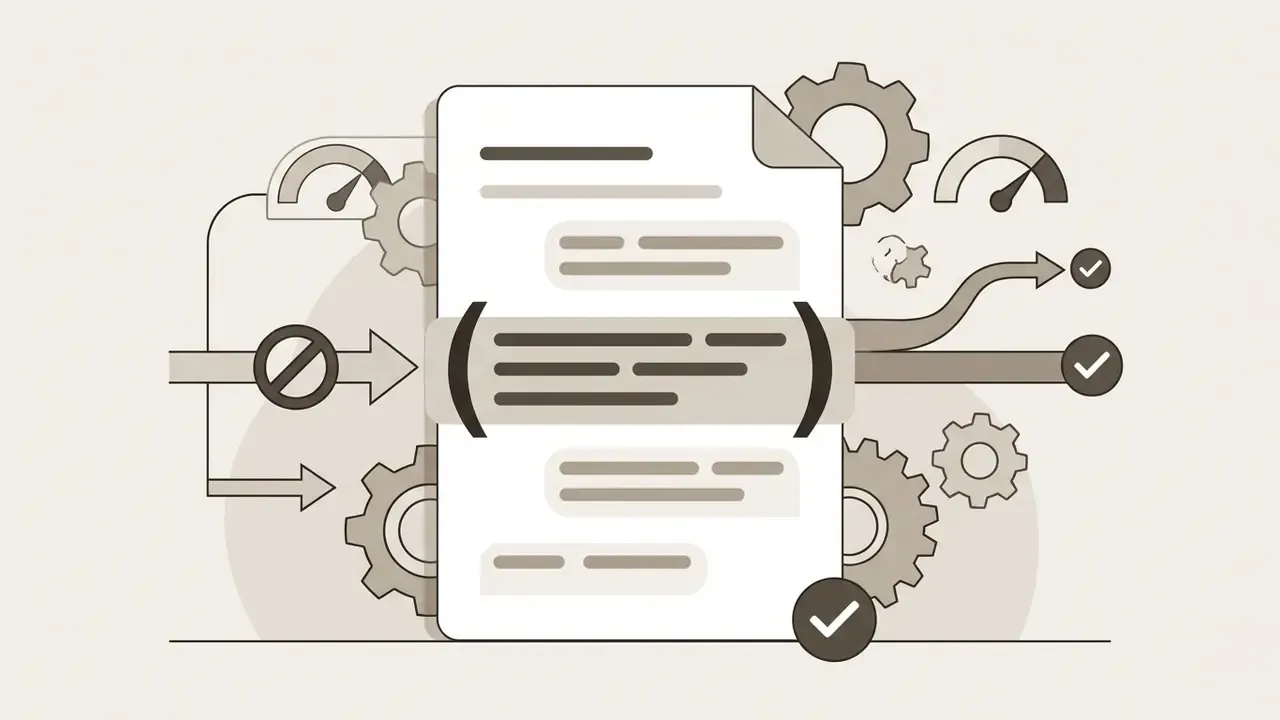
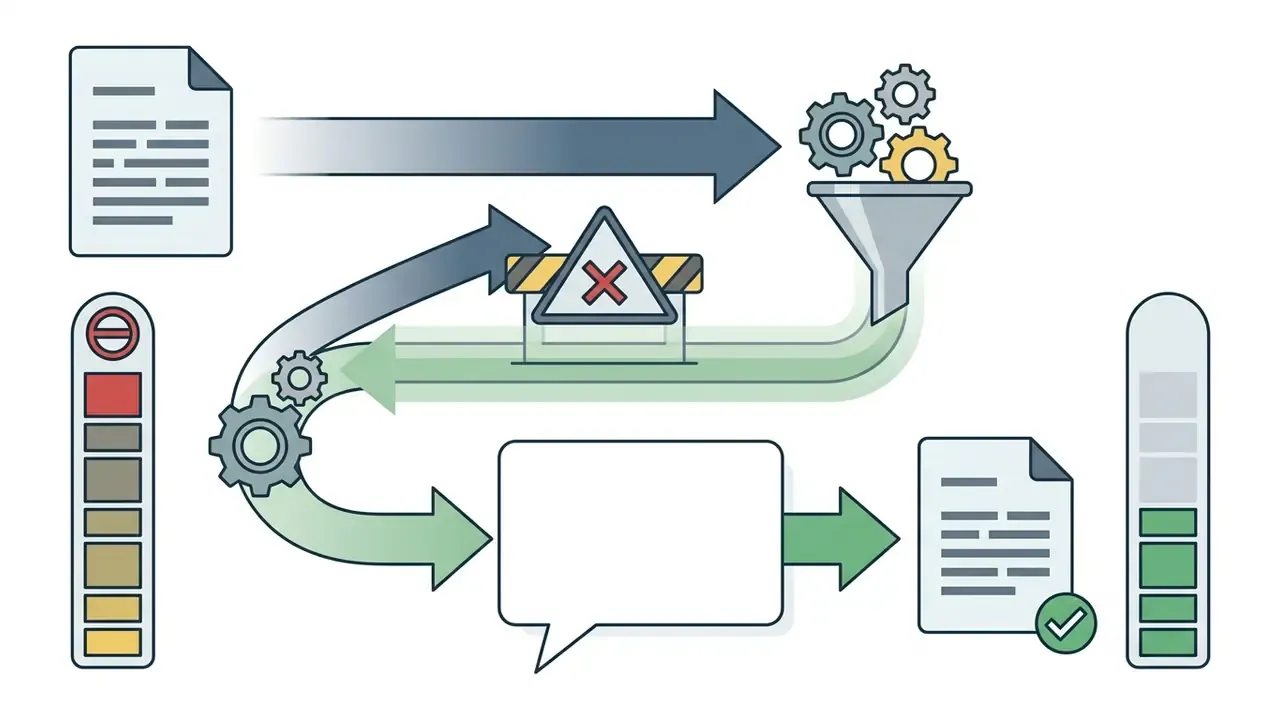
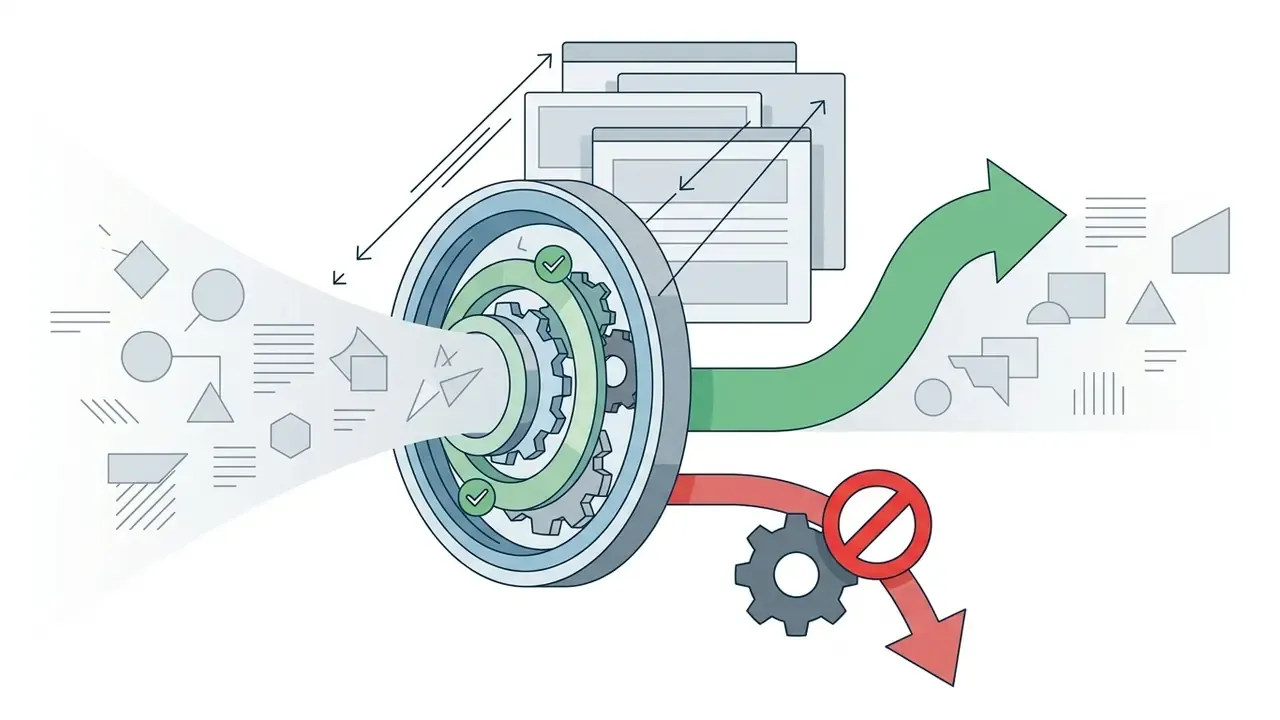
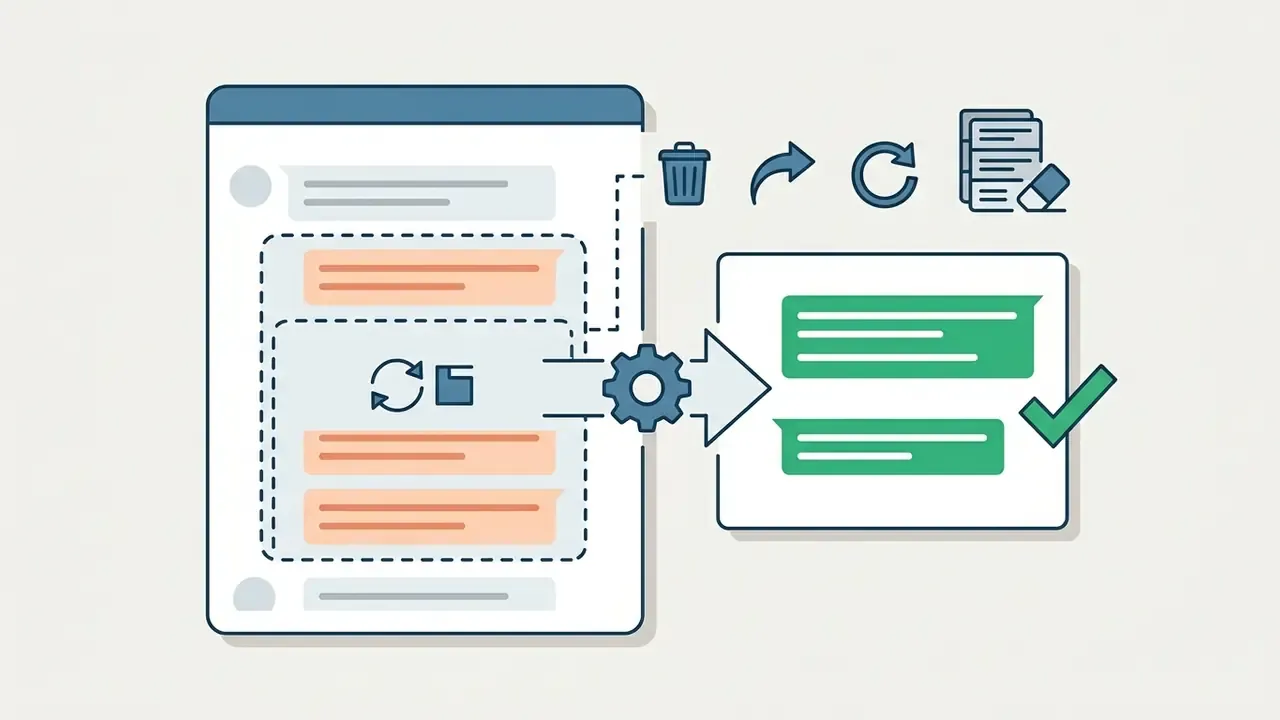
(OOC: discard the last reply and change the direction of the scene) or restart the chat. If that fails, delete the last two or three messages and rewrite the prompt.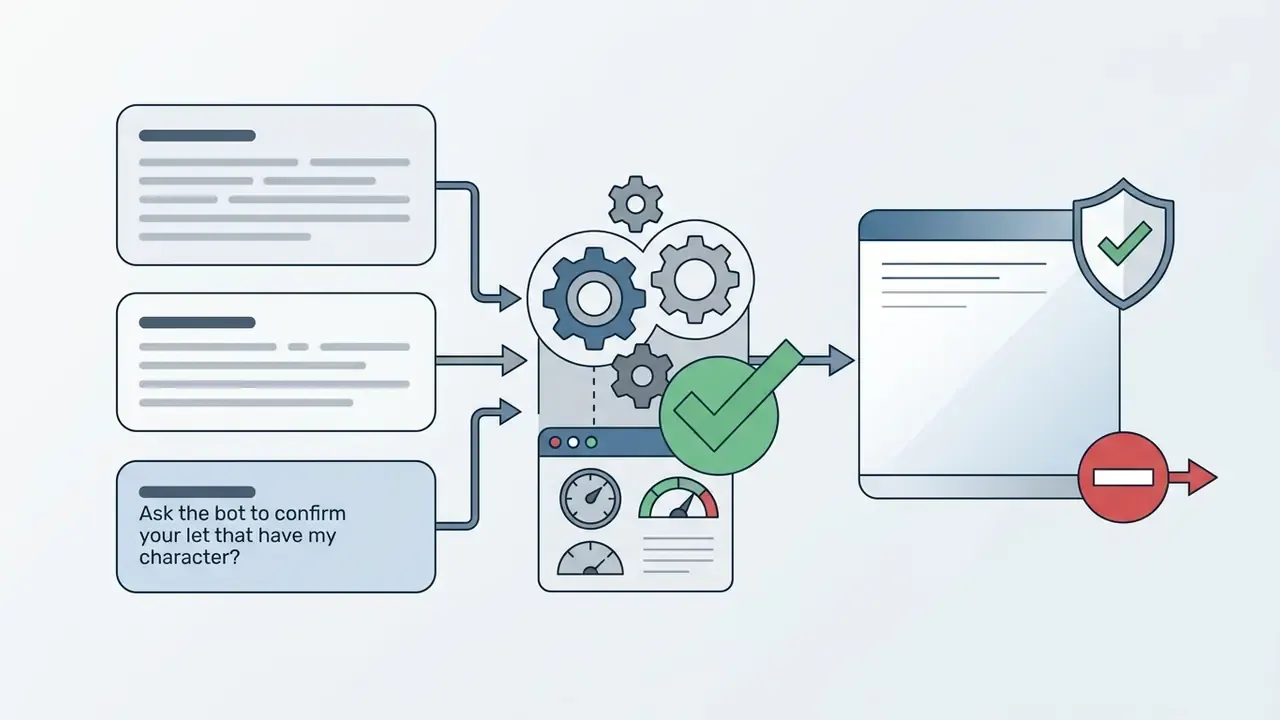

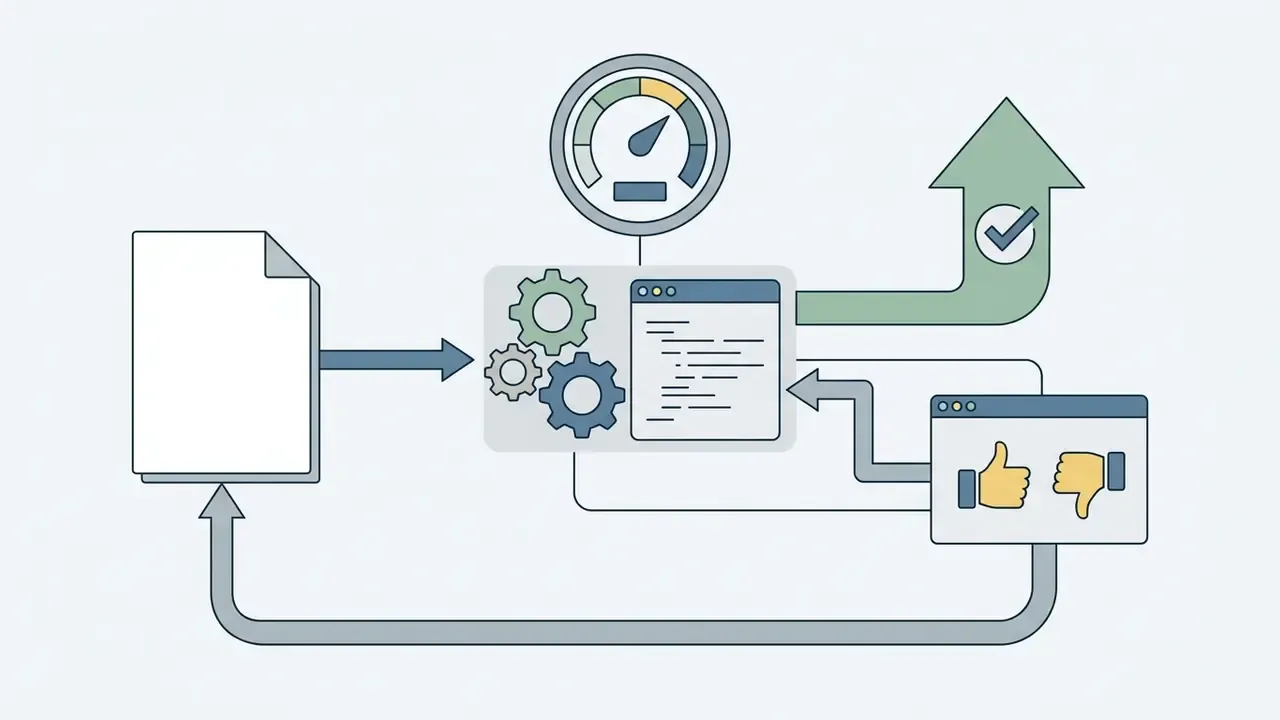
Character AI App No Filter: What to Check in the Mobile App
The Character AI apps for iOS and Android run on the same server-side moderation stack as the browser version. Content limits are identical across platforms.
Differences sit elsewhere: interface, data-privacy settings, and mobile analytics collection. App users hand over more device identifiers. Reporting paths differ too. On the web, reports go through the chat page menu; in the app, through the character card ("View Character").
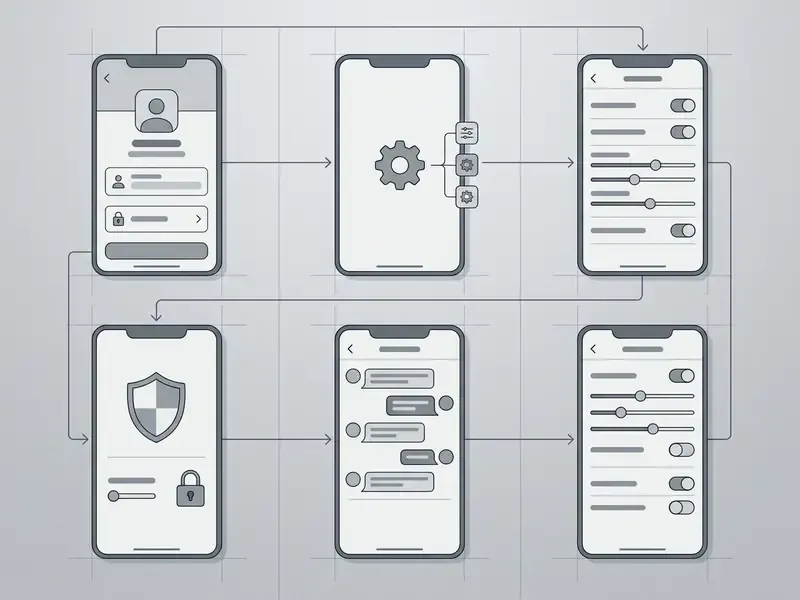
Do Filters Differ Between App and Web?
Server-side safety filters apply uniformly to requests from web and mobile clients. Published official documentation describes no special mobile regime.
App-ecosystem research shows Character AI requesting up to 18 data types in the App Store, tracking included.
"Character AI collects 18 unique data types and shares 6 types used to track users across third-party apps."
For interface glitches and account issues, start with AI Media Support and Troubleshooting.
Mobile stores impose strict user-content moderation requirements, which independently rules out a legal unfiltered build inside a store-distributed app. Any APK advertised as "filter removed" and hosted outside official stores is an unsigned package with a high probability of malicious code. Not worth the device.
Private Characters and Chat Visibility
Bot creators have no technical route to read private conversations with their characters. History is visible to the account owner and to the platform's automated safety systems.
Characters marked Private stay out of public search and remain visible only to their author. Switching a bot to Public opens it to the community, while chats stay isolated per user.
When formatting a bot profile, many authors reuse ready-made layouts. Useful structuring patterns live on the discord intro template page.
Which Settings Actually Improve Roleplay
Three features carry most of the weight: voice, automatic image generation, and memory. Memory management lets you pin plot facts. Official materials describe a free-form Memory field, Chat Memories, and Story Memory, which store persistent facts and key events for reuse across turns.
Turning on image generation adds visual grounding but activates additional computer-vision filters. The setting is per character, controlled by a single switch ("Should this Character generate images alongside the text conversation?"). Stylized avatars are a common use case, which is why themed tools such as a disney ai generator or a dnd ai art generator often sit next to roleplay workflows, and lighter novelty tools like a dog to human converter show up in character-design threads too.
Users can edit pinned memories to keep a long scenario coherent. That single habit reduces model errors more than most prompt tricks.
⚠️ Privacy and terms alert. Check visibility settings before creating characters or publishing them to the community. Chats are shielded from bot creators, but they are processed on platform servers. Review the Terms of Service and Privacy Policy before entering anything confidential.
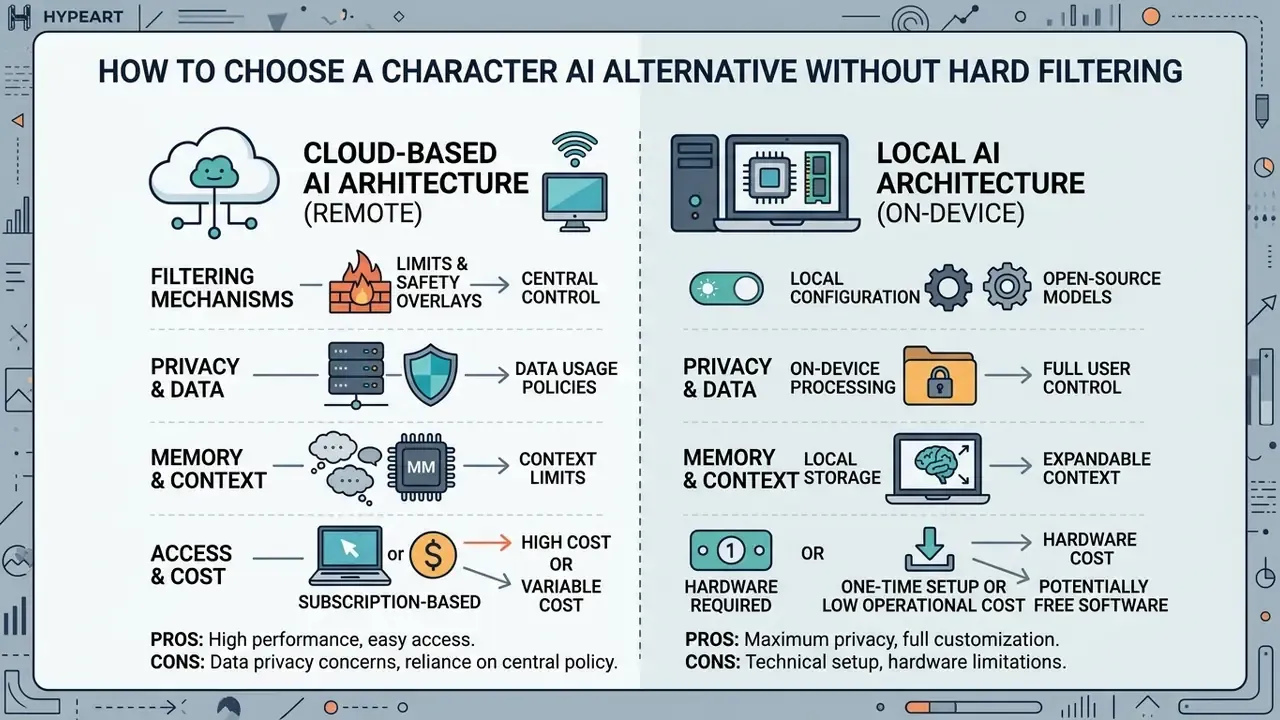
How to Choose a Character AI Alternative Without Hard Filtering
Evaluating an alternative means assessing three things: moderation level, data-handling policy, and model parameters. Services split broadly into cloud platforms and local deployments.
For third-party tools, data-protection requirements and the risk of private-chat exposure matter as much as freedom. Interaction quality depends heavily on context window size and model capability.
Eight Alternatives Compared
| Platform | Freedom level | Privacy model | Memory / Context | Pricing | Best for |
|---|---|---|---|---|---|
| DreamJourneyAI | Fully unfiltered | Cloud encryption | Memory Nexus (long context, Lorebook) | 300 free credits, then from $9.99/mo | Deep roleplay with persistent memory |
| SillyTavern | 100% uncensored | Local, zero cloud | Depends on your LLM (up to 128k tokens) | Free, open source | Maximum privacy and customization |
| Perchance AI | No restrictions | No registration | Session context only, no saving | Free | One-click start without an account |
| Candy AI | Soft moderation | Cloud isolation | Medium context | Free trial, then from $9.99/mo | Virtual companions and dialogue |
| CrushOn AI | Uncensored (NSFW) | Cloud storage | Up to 8k tokens | Limited free, then from $12.99/mo | Romantic and NSFW roleplay |
| Janitor AI | Configurable (BYO-Key) | Cloud or your own API | Up to 32k tokens via API | Free interface plus API cost | Advanced users with OpenAI or Claude keys |
| FantasyGF.ai | Soft moderation | Cloud isolation | Basic context plus voice | Free basic, then from $15.00/mo | Voice-led roleplay |
| SpicyChat AI | Uncensored | Cloud storage | 4k to 8k tokens | Freemium, then from $5.00/mo | Fast unfiltered chats |
Conversation Freedom, Privacy, and Control Over Characters
Open-source local models (Pygmalion-family weights, or anything served through SillyTavern) give full content control and complete privacy. Conversation data never leaves the machine. The cost is technical: environment setup, model configuration, API key management, and your own hardware bill.
Cloud alternatives such as Janitor AI and SpicyChat offer looser moderation than Character AI while keeping hard bans on illegal content. Janitor AI's help materials state plainly that all content is subject to moderator review and that zero tolerance for minor-related material applies unconditionally.
"Most AI companions collect between 7 and 18 unique data types; platforms with softer moderation often run more aggressive tracking."
External API spend can be modeled with our calculators before you commit to a tier.
One question decides more than any feature list: where are the prompts processed? Choosing between cloud convenience and local privacy is the real risk assessment step.
Memory, Images, Voice, and Other Features
Modern alternatives support context windows from 8k to 128k tokens, which is what enables genuinely long memory. For reference, GPT-4o is documented in the API with a 128,000-token window and multimodal input (text, audio, image, video), while GPT-4 is listed at 8,192 tokens with no image support. Multimodal stacks add speech synthesis and image generation.
Visual generators require their own safety classifiers (SafeGuider, IGD) to prevent unacceptable illustrations.
"The IGD method reaches 92.45% average NSFW detection accuracy across seven categories, outperforming seven baselines."
Voice capabilities and synthesis quality thresholds are covered in the AI voice generator guide.
For complex scenarios, memory quality beats the absence of filters. A bot with strong memory holds role and personality better. In side-by-side testing, that difference is more visible than moderation strictness. Slightly counterintuitive, but it holds up.
Free Versus Paid: What to Compare Before You Buy
Free tiers usually cap response speed, context length, or daily message volume. Paid subscriptions ($4.90 to $19.99 per month) unlock priority access and stronger models.
Some services run a BYO-Key model, where you pay the API provider directly and the platform supplies only the interface.
That line kills a persistent myth. A paid subscription never buys filter removal. It buys speed, memory, and model access. Current tiers and terms are summarized in AI Media Pricing.
For standalone creative projects, naming tools such as a domain name generator round out the workflow.
| Criterion | Character AI | Cloud alternatives (SpicyChat, Janitor) | Self-hosted open-source LLM |
|---|---|---|---|
| Filtering level | Server-side filter; full ban on NSFW and explicit content | Flexible moderation; mature themes allowed, illegal content banned | No filters by default; configured by the operator |
| Data privacy | Creators cannot see chats; platform collects analytics | Chats isolated; handling per vendor Privacy Policy | Full privacy; data stays on local hardware |
| Memory management | Base memory plus editable memories (Memory box) | Model dependent, 4k to 32k tokens | Maximum control; context window up to 128k tokens |
| Multimedia (voice, images) | Voice and image generation supported | Avatars and on-request image generation | Depends on connected third-party modules |
| Access terms | Free tier plus paid C.AI+ | Freemium or BYO-Key | Free model weights; you pay for compute |
Reading the table: the right choice follows your priority. Character AI suits safe mass-market use, cloud alternatives balance convenience against flexibility, and local models deliver full privacy if you have the engineering capacity to run them.
Privacy Audit Checklist for a Third-Party AI Platform
Before connecting any "unfiltered" service, especially where conversations might touch confidential material, work through seven items:
- Encryption in transit and at rest.Is TLS declared, and are stored chats encrypted?
- No training on user data.Is there an opt-out from model training, plus a temporary-chat mode with no retention?
- Context isolation.Are prompts from different users or tenants kept separate, and is that segregation documented?
- Retention and deletion.Is a retention period stated (30 days, for example), with export and deletion available?
- Tracking and SDKs.How many data types does the mobile app collect, and which identifiers go to third parties?
- Certifications and legal perimeter.SOC 2 or ISO 27001, GDPR alignment, processing location, and a DPA for commercial use.
- Moderation governability.Are filtering levels and incident logging documented? That is the Map and Measure expectation in NIST AI RMF.
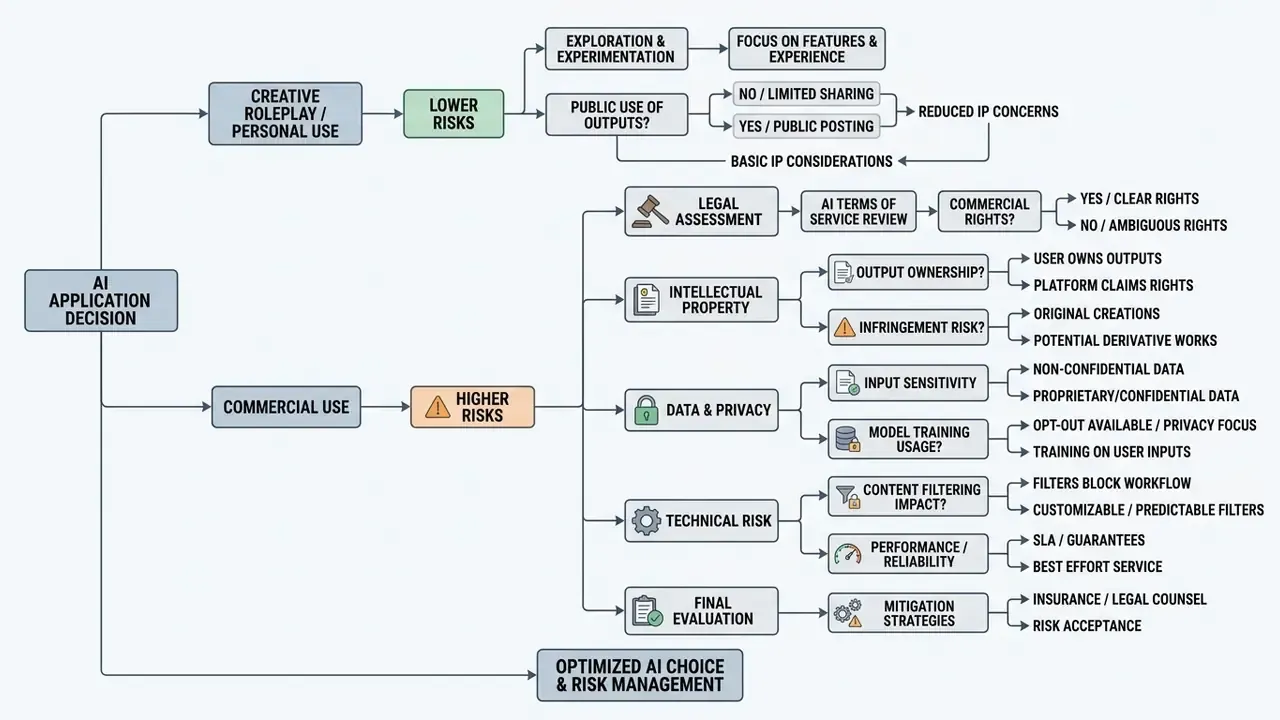
Deciding for Creative Roleplay Versus Commercial Use
Disclaimer. This material is general information and not legal advice. Platform terms change; verify the current Terms of Service before any commercial deployment.
Using AI bots for creative work or business requires attention to copyright, licensing terms, and rules on generated content. Commercial builds are governed by the provider's service agreement, not by community habit.
For enterprise workloads, two objectives dominate: reduce legal exposure and protect trade secrets.
Personal Chats, Companions, and Creative Stories
For individual creative work, dialogue systems are fair game within platform rules. AI helps generate ideas, design characters, and stress-test dialogue. Academic prototypes such as CharacterChat suggest that structured bot questions speed up the ideation, research, and drafting phases.
With third-party services, confirm that personal data and story assets are not fed into public model training. Integration specifics are collected in the AI Media API Guides.
One illustrative example: a fintech team used an AI chatbot to draft user scenarios. Tight context boundaries and a review gate cut documentation prep time by roughly 40% while keeping security standards intact. Treat the number as directional, not audited.
Creating a Bot and Publishing Characters in the Community
When publishing a bot, the author must follow platform rules and avoid infringing third-party rights. Protected trademarks and other people's characters are off limits without permission.
Case law on AI content and intellectual property is tracked in AI Litigation and Case Timelines.
Platforms retain the right to remove public bots after complaints from rights holders or users. Authors keep rights to their original prompts where the service terms allow it. Note separately that an original character can qualify for protection as a creative work once expressed in objective form, so borrowing someone else's protagonist creates real claim exposure.
Terms, Pricing, and Restrictions Before Commercial Use
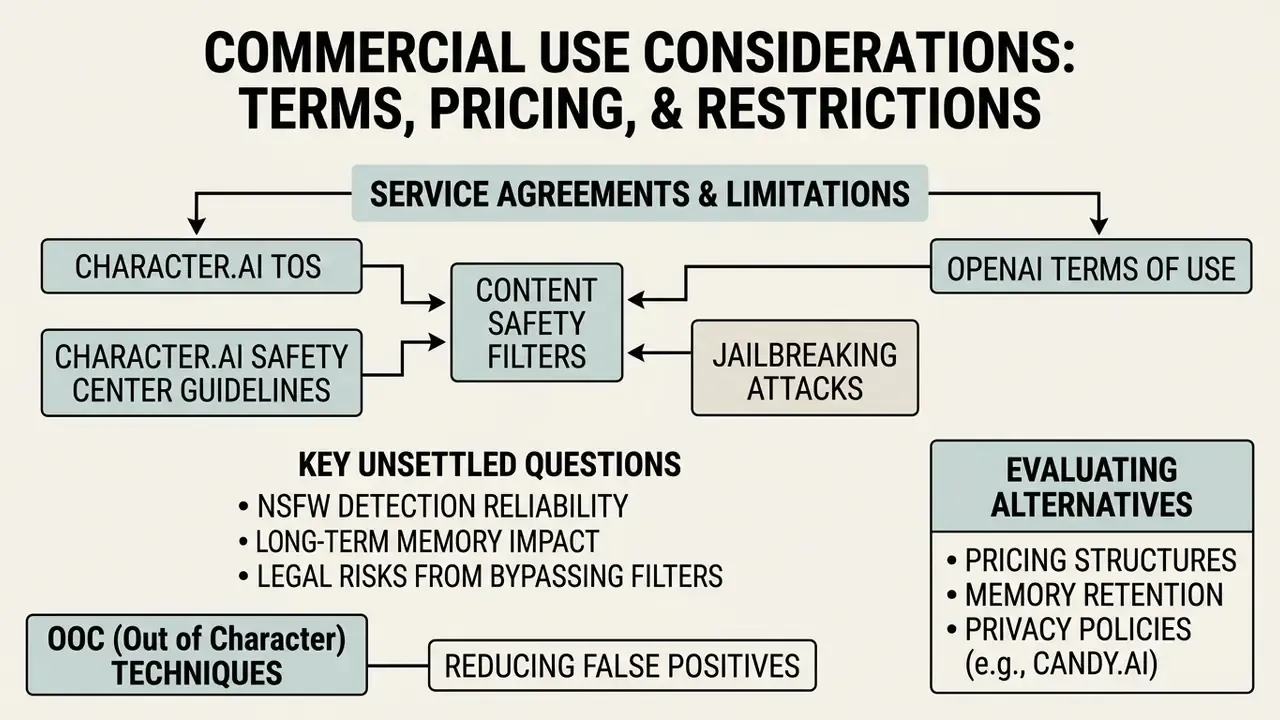
Character AI's user agreement states that the service is for personal, non-commercial use only. Generated content cannot be sold or monetized directly without a specific written agreement. At the same time, the ToS records that users keep rights to submitted content while granting the platform a perpetual, irrevocable, worldwide, royalty-free, sublicensable license to use and commercialize it.
Commercial deployment therefore means moving to licensed API platforms such as the OpenAI API or Anthropic API. OpenAI's terms, by contrast, assign Output ownership to the customer and permit commercial use within policy. That difference is what protects a business from sudden account termination.
Run a legal review of provider terms before the project starts. Breaching commercial conditions can void your rights in the resulting product, which is an expensive way to learn a licensing lesson.
"Autonomous attacks on AI agents exceed 97% success; bypassing the reasoning chain drops refusal rates from 98% to under 2%."
For regulated industries, that finding implies a mandatory control set: vendor documentation of permitted and prohibited uses, training-data provenance, testing and audit results per NIST AI 600-1 expectations, and a hard rule against shipping generated code without human review.
Limitations and Open Questions
A Safe Next Step
Start small and reversible. Inventory which consumer AI chat tools employees already touch, classify the data that could reach them, then decide which use cases deserve a licensed API path with logging. No procurement drama required. Just an inventory, an owner per system, and reproducible evidence.
Sources and verified documents:
- Character.AI Terms of Service, revised 27 August 2025 (checked February 2026)
- Character.AI Safety Center and Guidelines, official safety rules 2025-2026
- OpenAI Terms of Use, commercial use rules (checked January 2026)
- Candy.ai Privacy Notice, data handling policy of 30 July 2026
- Jailbreaking Attacks vs. Content Safety Filters, arXiv:2512.24044 (2025)
- Jailbreaking Leading Safety-Aligned LLMs with Simple Adaptive Attacks, arXiv:2404.02151 (2024)
- Seeing It Before It Happens: In-Generation NSFW Detection, arXiv:2508.03006 (2025)
- Wukong NSFW Detection Framework, arXiv:2508.00591 (2025)
- Self-disclosure to conversational AI: a literature review, Personal and Ubiquitous Computing 29 (2025)
FAQ: Character AI Without the Filter
Is there a beta Character AI no filter?
No official "Beta Character AI no filter" exists. It is a recurring myth pushed by unofficial sites chasing traffic.
"Pornographic content is prohibited by the terms of use and will not be supported under any circumstances." Character AI Help Center, "What about NSFW?", support.character.ai (2025-2026). https://support.character.ai/hc/en-us/articles/21704914723995-Safety-Center All beta builds and updates run on the same server-side safety system. Offers to download a "cracked" or "unfiltered" app are fraud and a malware vector.
Can creators see user messages?
No. Character creators cannot read conversations with their bots. The platform isolates chats per account.
"Per official platform documentation, character creators never gain access to users' private dialogues." Character AI Privacy FAQ, support.character.ai (2025-2026). https://support.character.ai/hc/en-us/articles/21704914723995-Safety-Center Access is limited to Character AI Trust & Safety staff investigating serious rule violations or automated safety signals.
Is there an official way to turn the filter off?
There is not. Platform rules prohibit NSFW content, and no corresponding toggle exists anywhere in settings.
Why does the filter trip on harmless phrases?
The filter scores conversational context with neural classifiers. Similar phrasing or ambiguous context can produce false positives, especially in long histories.
Does filtering differ between the mobile app and the website?
No. Moderation runs on company servers and applies identically to iOS, Android, and web. What differs is mobile analytics volume and the reporting path.
Can an account be banned for repeatedly bypassing the filter?
Yes. Systematic attempts to generate prohibited content and aggressive jailbreak prompting are logged by automated Trust & Safety systems, which can lead to a temporary or permanent ban. Community experience confirms the pattern: the more often a user probes the filter, the higher the odds of restriction.
What should I do if a bot loops on the same line?
Send an OOC command such as (OOC: do not repeat the previous text, continue the scene), or delete the last two or three messages and rephrase your prompt. If the loop persists, close and reopen the chat to reset the local generation context.
Are third-party unfiltered services safe to use?
They may collect and share personal data. Before signing up, read the privacy policy, check chat retention periods, and confirm whether an opt-out from model training exists.
Is there a free option with the fewest restrictions?
Two, roughly. SillyTavern is free and runs locally, giving maximum privacy but requiring technical skill. Perchance AI needs no account or payment, though it keeps no memory between sessions. Both shift full content responsibility onto the user. This material is informational and does not constitute legal advice; verify platform conditions on official pages. For other AI terms and architectures, browse the AI Media Glossary.