Executive summary
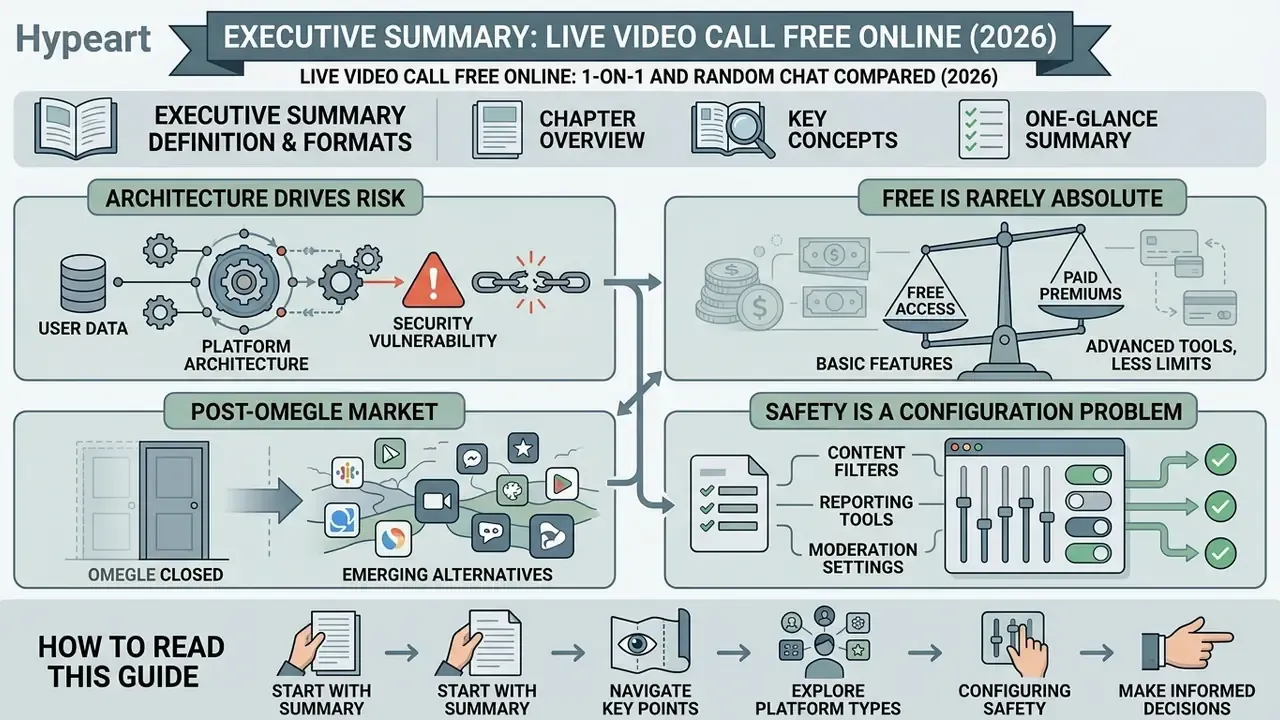
- Definition and formats. A live video call free online is real-time audiovisual transmission with no upfront subscription. Three formats dominate in 2026: private 1-on-1 calls, random video chat (queue-based matching with strangers), and multi-participant rooms or live streaming.
- Architecture drives risk. Private 1-on-1 calls usually run over peer-to-peer WebRTC with DTLS-SRTP encryption and explicit
getUserMedia()consent. Group and live formats route media through SFU relays, which changes both latency and the data-exposure profile (W3C WebRTC 1.0; IETF RFC 8827). - Free is rarely absolute. Baseline calling really is free on major services. But gender and region filters, ad removal, priority matching and in-app currencies (Quids, Diamonds, tokens) form a monetization layer that FTC and EU CPC rules require to be disclosed before payment data is collected.
- Post-Omegle market. Omegle shut down on 8 November 2023, and demand migrated to actively moderated alternatives: OpenTalk, Chatroulette, OmeTV, Monkey, HOLLA, Chamet. Moderation transparency, instant reporting and 18+ enforcement are now the primary selection criteria. Not video resolution.
- Safety is a configuration problem. Geolocation off, VPN or relay routing, background apps closed, WebRTC leak test passed, one-tap report available. Those five checks remove most practical exposure for an individual user. Organizations need three more layers: session logging, DLP and SSO.
How to read this guide. Sections 1 to 3 define the formats and the transport underneath them. Sections 4 and 5 cover the launch sequence and in-call controls. Sections 6 to 7.5 handle pricing honesty, freemium boundaries and the market that formed after Omegle closed. Sections 8 and 9 are the selection and matching layer, sections 10 and 11 the safety and moderation layer, sections 12 and 13 the etiquette layer. A limitations note and an FAQ close the piece.
What is a live video call free online, and which communication formats are available
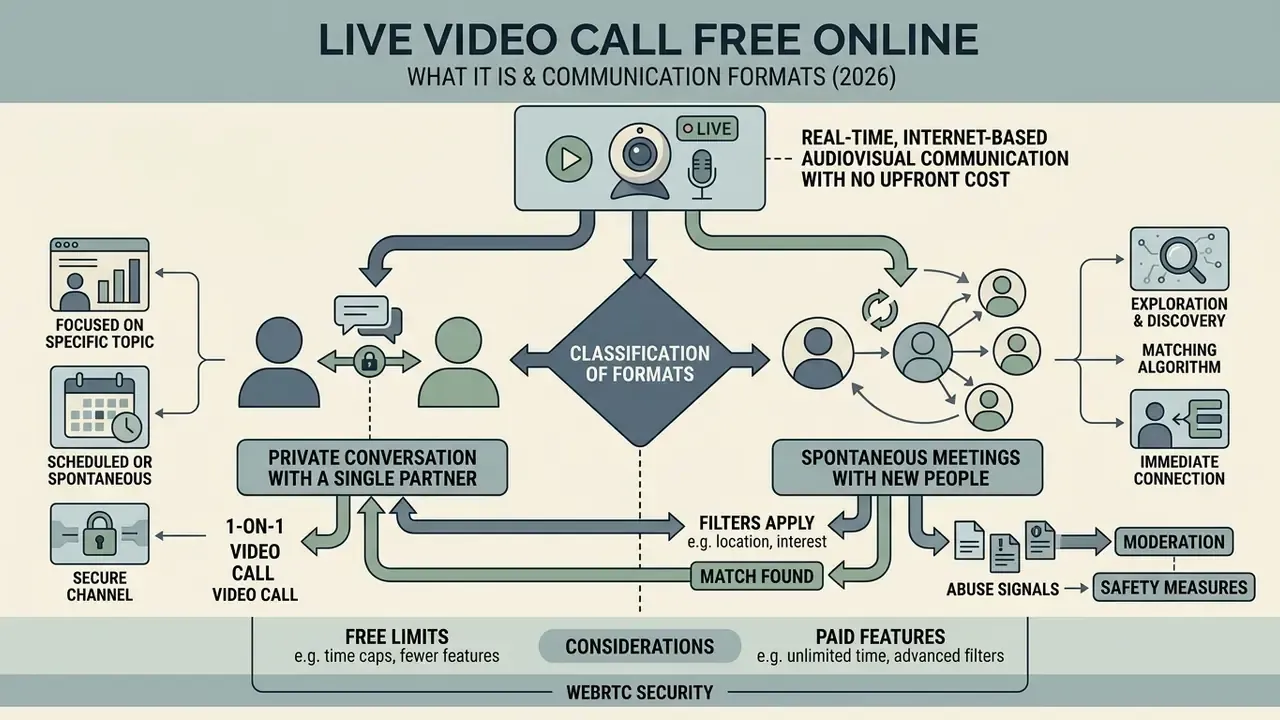
A live video call free online is a real-time, internet-based audiovisual transmission that lets two or more participants communicate instantly without paying an upfront subscription fee. Modern communication networks offer three main formats: direct bilateral connections, queue-based random matching with strangers, and multi-participant video spaces.
Figure 1. Video-call architecture (text schematic).
- Private 1-on-1 path, peer-to-peer WebRTC
- User A grants camera and microphone access through
getUserMedia(). - User A sends DTLS-SRTP encrypted media directly to User B.
- Both endpoints exchange signaling and SDP data through a signaling server.
- When NAT traversal fails, media falls back through a STUN or TURN relay.
- User A grants camera and microphone access through
- Group and live path, server-relayed media
- Users C and D publish their streams to an SFU media server.
- Viewer E subscribes to the same SFU.
- The SFU redistributes every stream back to C, D and E.
The practical difference matters for individuals and organizations alike. In a P2P call, media travels straight between endpoints and is encrypted per session. When traversal fails, traffic falls back to a TURN relay, which hides residential IP addresses but adds latency and inserts a third-party server into the media path. In an SFU topology every stream passes through provider-operated infrastructure. That design enables recording, moderation sampling and audit trails, and it also creates a data-loss-prevention surface that has to be governed explicitly rather than assumed.
According to the Federal Office for Information Security (BSI) 2024 minimum standards for video conferencing, secure video communication requires encrypted signaling and media streams over untrusted networks, chat that a moderator can disable, and automatic deletion of chat messages when a meeting ends. The Cybersecurity and Infrastructure Security Agency (CISA) makes a similar point: real-time video platforms need access controls, restricted screen and file sharing, and secure session management. National communication surveys from the Bundesnetzagentur show that more than 90% of adults regularly use web-based communication tools, with 77% multi-homing across several platforms.
Users who simply want to call video online can pick between private calls with known contacts and broader social environments. If your goal is to chat free video online, the architecture is not trivia: it decides where your media travels and who can theoretically hold a copy of it.
Why format classification comes first. Before comparing brands, separate the formats. Each one carries a different consent model, a different moderation obligation and a different data footprint. For an individual, the choice affects privacy exposure. For an organization, it determines whether a tool gets approved, conditionally allowed, or blocked as shadow IT. So the next two sections describe the formats that generate the most questions: private dyadic calls and random matching with strangers.
1-on-1 video call: a private conversation with a single partner
A 1 on 1 video call online is a private, two-way session established directly between two endpoints. This format isolates the conversation from public viewers and offers better data privacy than open group streaming.
Technical implementations rely on the W3C WebRTC 1.0 standard and IETF RFC 8827. Those protocols require explicit user consent for camera and microphone access, and they encrypt media with DTLS-SRTP. RFC 8827 adds a detail that matters for privacy-minded users: WebRTC lets a caller join without revealing location, and a callee can avoid disclosing presence before answering. The trade-off is TURN relaying and delayed ICE, which cost latency.
Dyadic calls also behave differently from grid-view group meetings in terms of cognitive load:
Choosing a dedicated 1 on 1 video call free online channel gives you a direct peer connection built through ICE candidate gathering. In practice that means fuller control over resolution, bitrate and microphone gain during a 1on1 video call online, without a provider-side mixer deciding for you.
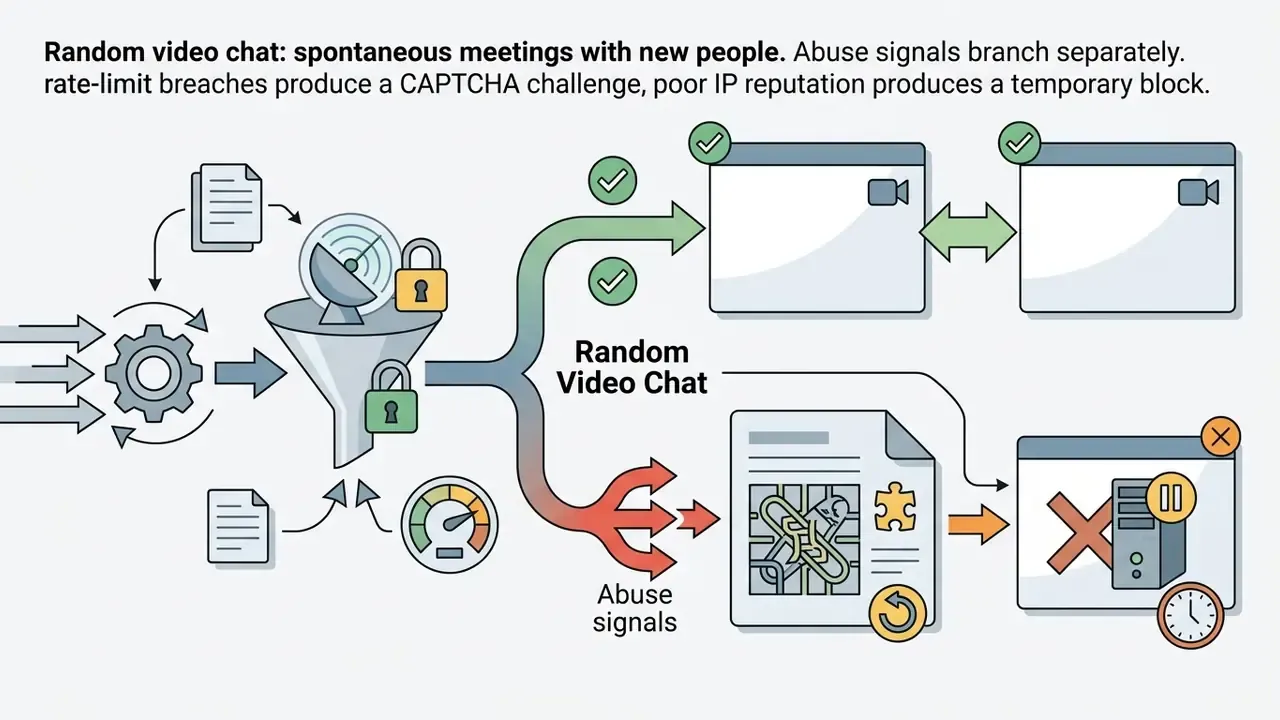
Random video chat: spontaneous meetings with new people
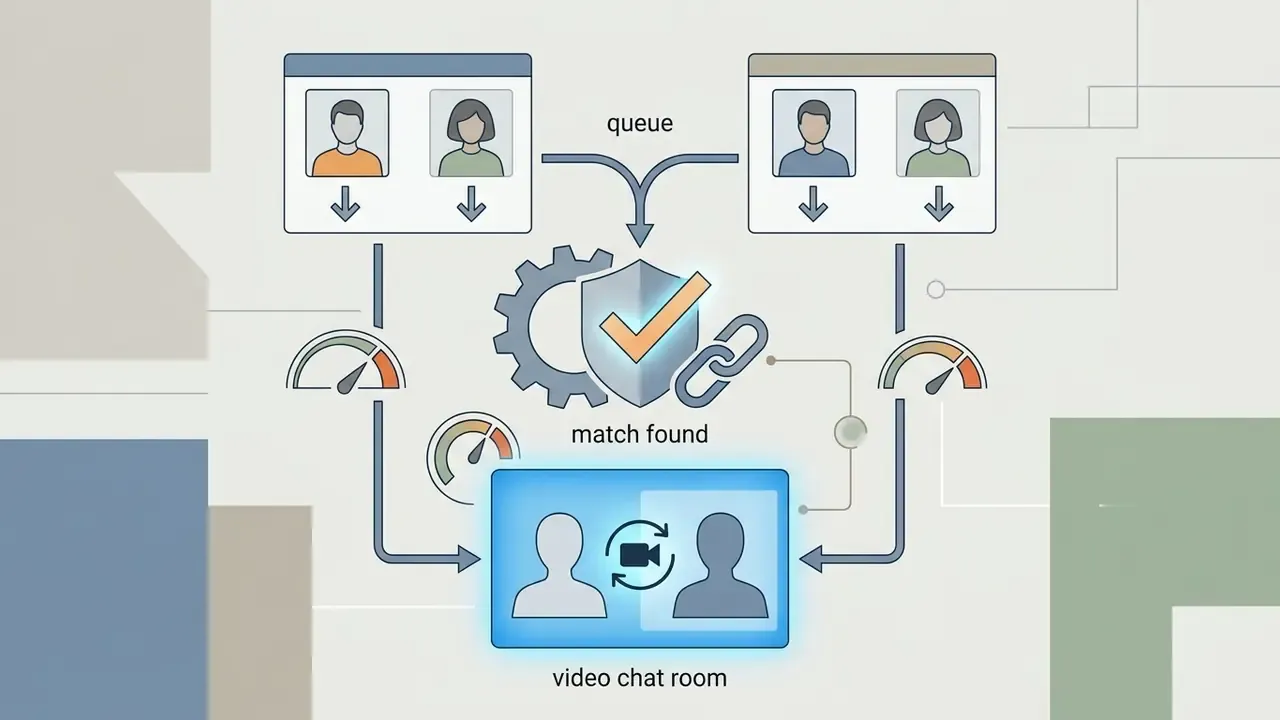
Random video chat uses automated queue algorithms to pair available users instantly across regions. Platforms weigh latency, language tags and availability to establish a video chat random match within seconds. Usually seconds. Sometimes the queue stalls at peak hours, and that is normal behaviour, not a fault.
Figure 2. Rotation logic in a random chat (text schematic).
- Waiting queue holds users in FIFO order.
- The 1-on-1 session runs until someone acts.
- Next or Skip triggers a cooldown plus recent-pair memory, which prevents an immediate rematch, then returns the user to the queue.
- Report sends the session to a moderation queue with a frame log for human review.
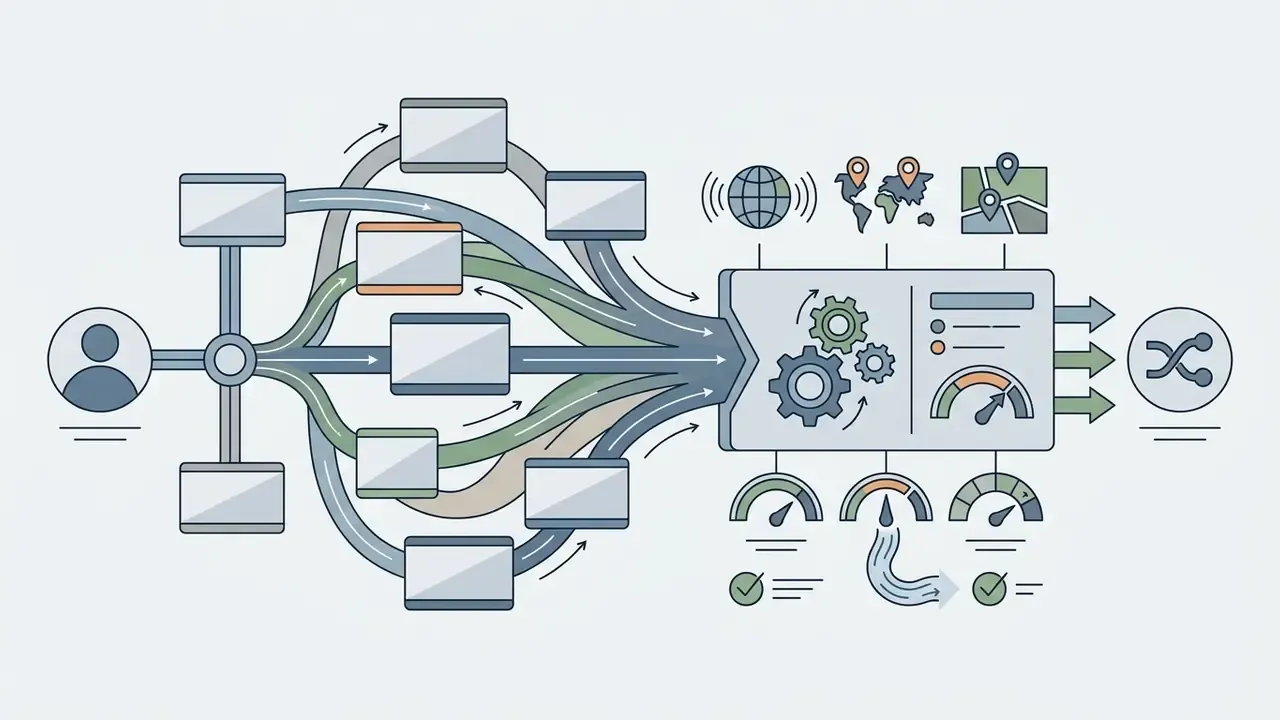
Public platform documentation and academic work on Chatroulette and Omegle-era systems describe matching as a First-In, First-Out process. The longest-waiting user is paired with the next available user, a room is created, both are dequeued, and recent pairings are cached to block instant re-matching. Filtered variants add same-language, same-region and low-latency constraints, and repeated skipping can trigger cooldowns or lower queue priority. Exact implementations stay proprietary, so verify per platform before you treat any queue behaviour as guaranteed. To defend service integrity, providers layer rate limiting, CAPTCHA challenges and IP reputation scoring on top.
In a chat random video online free session, participants can disconnect and switch partners at will. That high-velocity rhythm is exactly why chat random video call online free tools remain popular for casual social discovery, and why moderation load per minute is far higher here than in a scheduled meeting.
How to start a free video chat online
To launch an online video chat, you select a platform, grant browser media permissions, and press start so peer discovery can begin. Modern web architectures allow an instant connection with no heavy third-party software. A disciplined video chat start routine prevents unauthorized device access, which is the most common self-inflicted failure. You can safely chat video online free, or run a call video online free, by reading the browser permission prompt instead of clicking it away. One more habit worth stealing from institutional video-conference guidance: join early, test audio and video, confirm which camera is active. That thirty-second rehearsal removes most first-minute friction. If a workflow question comes up mid-setup, our AI Media Support hub covers the recurring device and permission cases.
- Platform selection.Open an established browser-based tool or a native mobile app.
- Device permission request.Grant explicit camera and microphone access through the
getUserMedia()prompt. On Android Chrome you can revise permissions later in Settings → Site settings → Microphone/Camera, and app-level access must be allowed in Settings → Apps → Chrome → Permissions. On iOS Safari, both Camera and Microphone need to be set to Allow for the site. - ICE candidate gathering.The client establishes STUN or TURN routes for media transmission.
- Queue entry or direct dial.Trigger the video chat start action to join the matching queue, or ring a chosen contact.
- Session management.Run the live video call, toggle text chat, or press Next to end the connection.
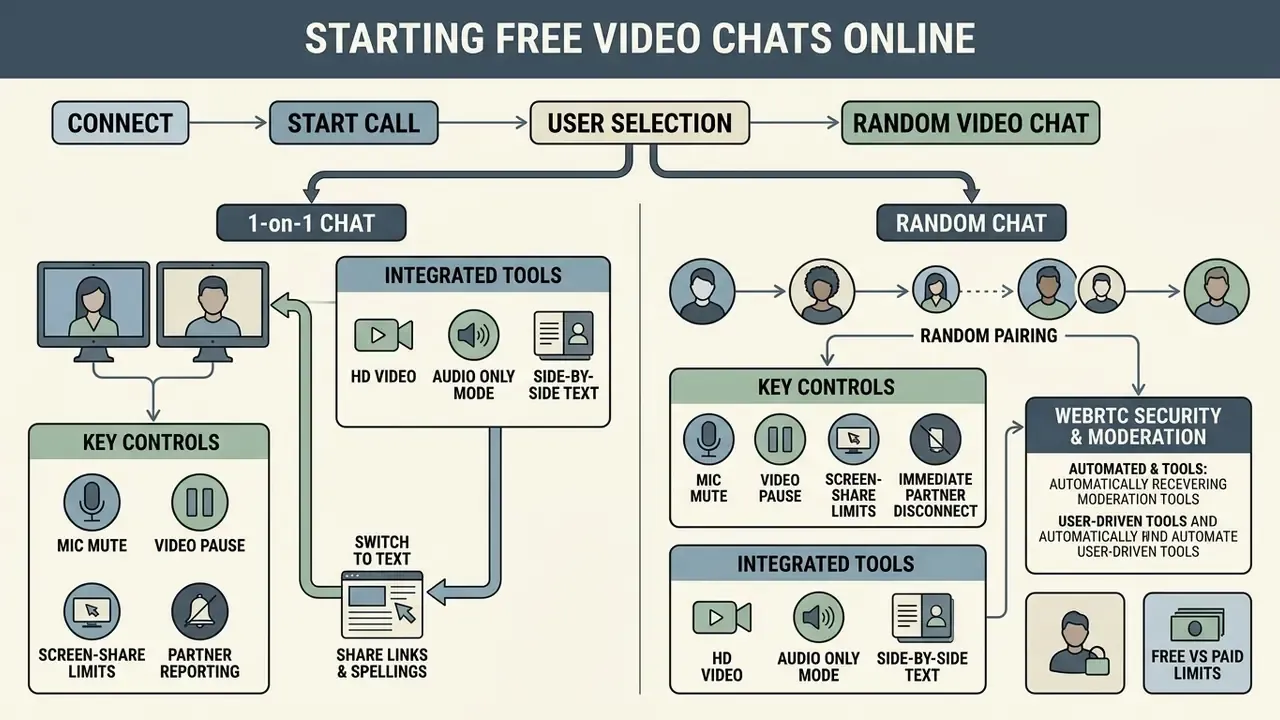
Video, text chat and conversation controls
Integrated tools let you toggle between high-definition video, audio-only mode, and a side-by-side chat text channel. That flexibility helps with low-bandwidth conditions and with personal comfort boundaries, which are not the same thing.
Standard controls include microphone muting, video pausing, screen-sharing limits and immediate partner skipping. Enterprise tools document them explicitly. Nextcloud Talk, for example, publishes keyboard shortcuts for muting audio (M or the space bar) and disabling video (V), while random-match services standardize a Next button for rotation and a Report button for one-tap complaints.
Switching to chat text lets participants share a link or a spelling without cutting across live speech. Well-built platforms close the text sidebar automatically when a 1v1 online video chat ends, and the BSI minimum standard expects chat content to be deleted at session termination. If you plan to keep and reuse call footage later, plan the editing step in advance: a highlight video maker workflow is usually faster than trimming raw recordings by hand.
Is a 1-on-1 video call online free really free?
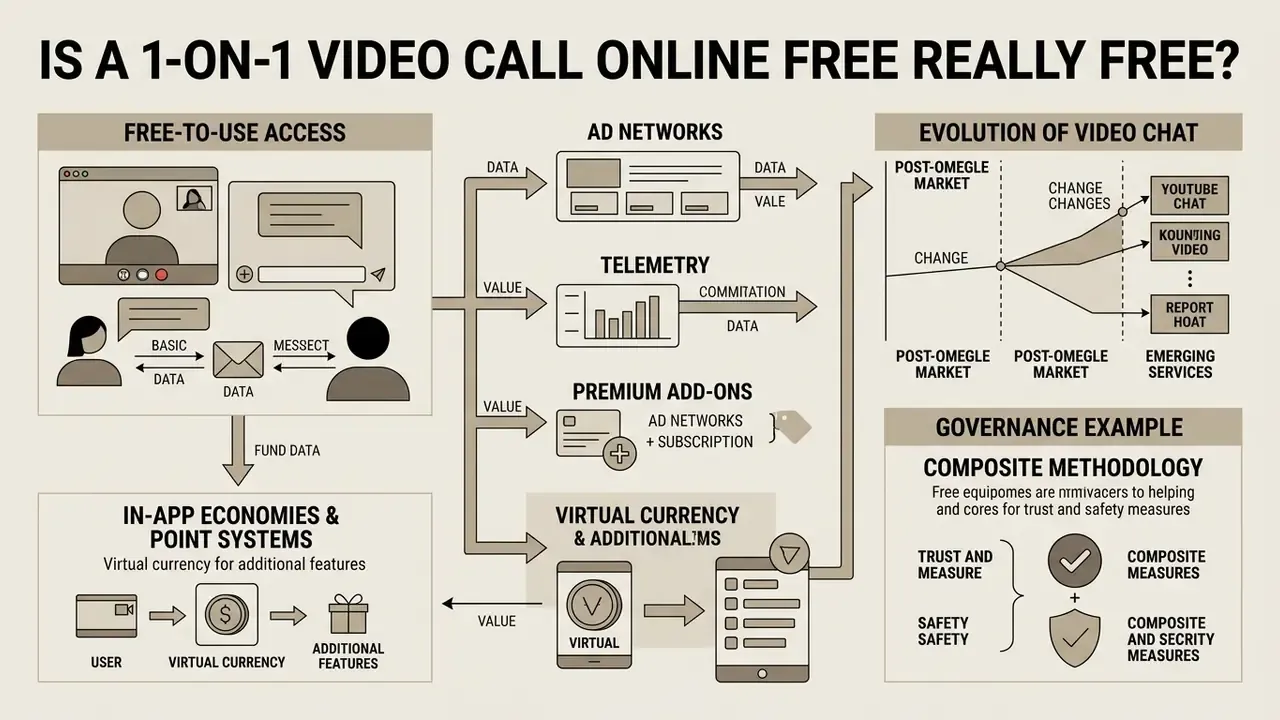
A 1 on 1 video call online free service allows core calling without a mandatory subscription, funding itself through ad networks, telemetry, or premium add-ons. Consumer protection regulators police the boundary tightly, because hidden billing is where this category historically misbehaved.
The Federal Trade Commission and the European Consumer Protection Cooperation rules require platforms to disclose recurring charges and trial terms before payment details are collected. The billed amount, the billing frequency and the post-trial price must appear where card data is entered. FTC guidance adds a format rule: disclosures must be clear, conspicuous and close to the claim, and written claims need written disclosures rather than an audio-only or video-only mention. Legitimate best free online video calling tools keep a visible line between unpaid core features and paid extensions.
Anyone weighing a 1on1 video call free online option should read the service terms and confirm that basic calling stays unmonetized. Free access delivers a complete 1 on 1 chat video call online free experience when the baseline privacy standards hold. For cost modelling across mixed free and paid media stacks, our AI Media Calculators apply the same per-seat and per-minute logic.
Free-to-use access and features that differ between platforms
Free tiers cover baseline bilateral calls and text exchange. Advanced routing, ad-free viewing and custom matching filters usually sit behind a paid upgrade.
| Feature criteria | Free basic tier | Premium or paid upgrade | Operational impact |
|---|---|---|---|
| Account requirement | Anonymous or basic profile | Verified account | Basic allows instant access; paid improves trust verification. |
| 1-on-1 calling access | Standard-definition video | High definition (HD or 4K) | Free tier saves bandwidth and CPU load. |
| Random matching | Global FIFO queue | Gender and region filters | Paid filters shrink the match pool by targeting preferences. |
| Integrated text chat | Plain text sidebar | File sharing and emoji | Basic text keeps data-exposure risk low. |
| Mobile app support | Standard browser or app | Priority server access | Mobile web works with no installation. |
| Session time limits | Unrestricted 1-on-1 | Unlimited group duration | Individual calls rarely face hard duration caps. |
| Audit trail and session logging | Absent or ephemeral | Retention policies, exportable logs | Required for regulated-sector evidence and incident review. |
| DLP and file-transfer control | Usually absent | Content inspection, transfer blocking | Prevents uncontrolled document egress via chat sidebars. |
| SSO and SAML integration | Not offered | Identity-provider federation | Enables central offboarding and access revocation. |
| In-app currency | Starter balance, earnable | Purchasable bundles | Turns free access into a soft paywall for filters. |
In-app economies and point systems. Many free platforms run an economic layer: Quids on Chatroulette, Diamonds on Chamet. A user receives a starting balance on entry (Chatroulette documents +15 starting Quids, up to +50 per chat, +3 when someone chooses you), then spends it on premium behaviours such as gender filters or connecting to “Top Users”. Balances can usually be replenished through positive chat reputation, CAPTCHA completion, daily logins or gifting mechanics, which lets attentive users skip cash payments entirely. Party rooms and PK-style gift battles extend the same logic into gamified group formats. Treat these systems as pricing mechanics, not decoration. They decide which features you can realistically reach for free.
Readers who habitually compare free digital media tools will recognise the same freemium boundaries described in our review of free AI video generators, where export limits and watermarks replace call filters. Our AI Media Pricing Guides and AI Media Comparison Matrices apply that scoring method across categories, which makes limits easier to compare than marketing pages allow.
Governance example (composite, methodology disclosed). In a composite risk evaluation assembled from publicly documented enterprise deployment patterns, rather than from a single named client, an operational team audited freemium video platforms for remote-workforce adoption. By enforcing strict data-retention controls, requiring multi-factor authentication, and disabling unvetted file transfers, the modelled organization removed shadow-IT exposure while keeping per-user licensing cost at zero. The figures illustrate the control set. They are not an audited customer outcome.
Evolution of video chat: the market after Omegle's shutdown
Omegle ceased operations on 8 November 2023, after fourteen years of service and sustained criticism of its moderation model. Industry analysts estimate that tens of millions of displaced users (figures around 65 million circulate in vendor research and should be read as market estimates, not audited data) redistributed to alternatives such as OpenTalk, Chatroulette, OmeTV, Monkey, HOLLA and Chamet. Chatroulette predates that shift by a decade: it launched in November 2009 and remains the reference implementation of random matching.
The defining change in the post-Omegle generation is the retreat from unmoderated rooms toward end-to-end moderation pipelines, AI screening plus human review, and hybrid security protocols. Public risk data explains why regulators pushed the market that way:
When selecting a platform in 2026, favour services with instant bans for rule violations, published moderation statistics, a one-tap report button, verifiable 18+ enforcement, and anonymous WebRTC connection without mandatory account creation. Searches for an Omegle alternative, sites like Omegle or post-Omegle video chat now resolve to these criteria. Availability alone stopped being a differentiator years ago. For teams tracking how platform liability keeps shifting, our AI Litigation and Case Timelines tracker follows the enforcement side of the same story.
How to choose the best platform for online video chat
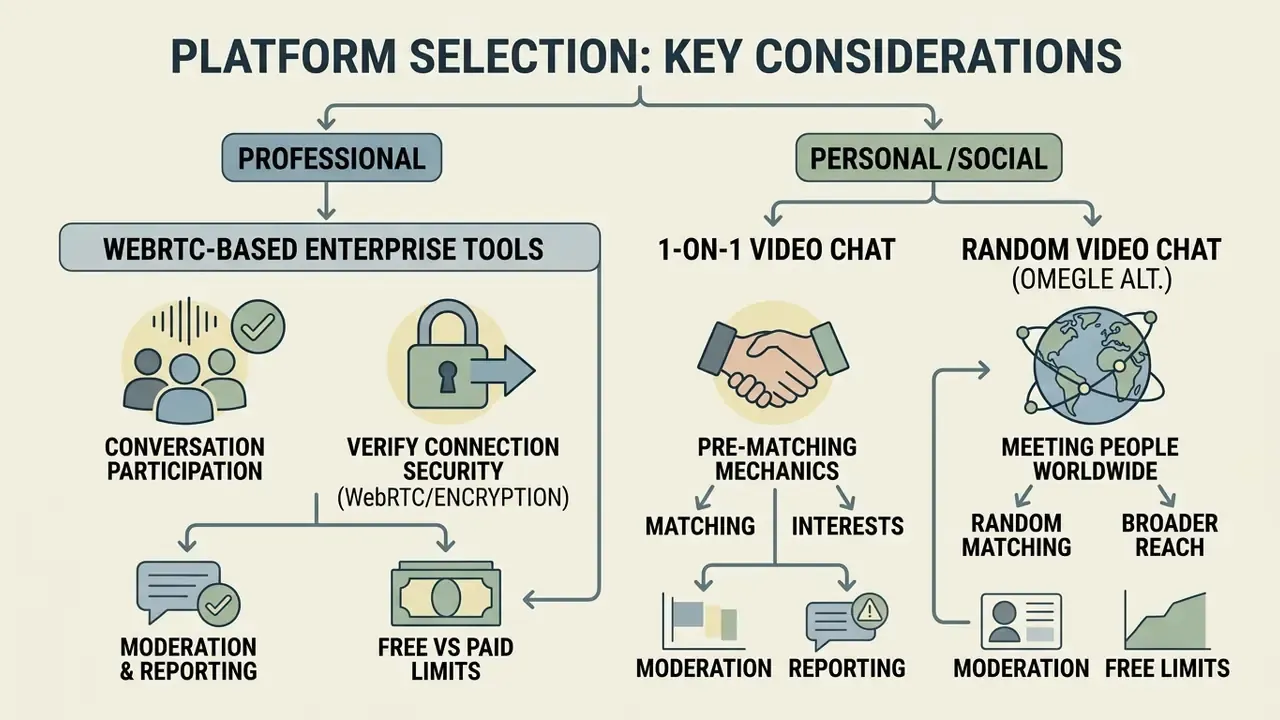
Choosing the best online video chat platform means assessing four things: media encryption, active content moderation, hardware compatibility, and data governance.
Figure 3. Platform-selection matrix (text decision path).
- Known contact or stranger?
- Known contact. Does the tool offer end-to-end encryption and no mandatory recording? Yes: approve it as a private 1-on-1 WebRTC tool. No: check relay routing, retention period and jurisdiction before use.
- Stranger. Is there active AI plus human moderation with 18+ enforcement? No: reject, because abuse exposure is unacceptable. Yes: continue.
- Can you enter anonymously, without handing over personal data? No: return to the retention and jurisdiction check. Yes: continue.
- Is the free tier transparent, with no hidden recurring charges? Yes: approve for social discovery. No: reject, or restrict use to a paid, audit-ready tier.
| Platform | Connection format | Registration | Moderation (AI and human) | In-app economy | Language and geo filters |
|---|---|---|---|---|---|
| OpenTalk | WebRTC, browser | Not required | Automated plus 24/7 human review | Free, ad-free | Yes, 100+ countries |
| Chatroulette | WebRTC with photo pre-match | Not required | AI screening plus human review | Quids currency | Yes, country and language |
| HOLLA | P2P, mobile app | Optional | AI real-time moderation | Freemium (HOLLA Plus) | Yes, 190+ countries |
| Chamet | SFU, web and app | Required | 24/7 AI plus “real-person” check | Diamonds and gifts | Yes, regional rooms |
| OmeTV and Monkey | Browser or app-first | Varies (Monkey: required) | Basic to moderate | Ads, in-app purchases | Partial |
Pre-matching mechanics. Not every service drops you straight into a FIFO connection. Chatroulette shows photos of potential partners and opens the call only when both sides agree. That mutual-consent step filters abusive traffic before any camera stream starts, and it makes profile-photo quality functionally relevant, since a good selfie measurably improves match rates. If you plan to use a pre-matching platform, the preparation logic mirrors the professional-portrait advice in our guide to AI headshot generators: neutral background, even lighting, face clearly visible.
Professional collaboration usually lands on WebRTC-based enterprise platforms such as Nextcloud Talk or Zoom SDK integrations, which expose HD media, screen sharing, cloud recording and live transcription. Social discovery leans the other way, toward lightweight web services tuned for mobile browsers. Teams that need to embed calling into their own product should start from documented interfaces instead of scraped endpoints; our AI Media API notes explain why documented integration paths survive audits better.
Evaluating a video chat platform comes down to one question you can actually verify: does the connection use end-to-end encryption, or does it pass through relay servers you cannot inspect? Picking a verified 1v1 video call online free service is the cheapest defence against unauthorized stream monitoring.
Matching, interests and meeting people worldwide
Global matching connects people across borders using standardized language subtags (IETF RFC 4647) plus topic interest tags. RFC 4647 defines three comparison methods, basic filtering, extended filtering and lookup, while the W3C document Language Tags and Locale Identifiers for the World Wide Web describes the ordered, weighted language priority lists used to match tagged content to a user's preference.
Interest-based matching is documented in language-exchange research and product design: learners find partners with overlapping interests, then move into topic-based text, audio or video conversation to practise writing and speaking (Journal of Digital Education and Technology, 2026). Apps such as HelloTalk filter candidates by language, age, region and interest tags, with algorithmic partner recommendations on top. Automatic translation and preference filters keep the dialogue productive rather than polite and empty.
Using video chats for language exchange. Random video chat is one of the most effective ways to break a speaking barrier, because it forces unscripted production under mild time pressure. To turn a session into structured practice:
- Set the RFC 4647 language subtag in your search parameters, for example
en-USores-ES, and add a country filter where the platform allows one. - Use the text sidebar and auto-translation to unpack difficult phrases without stopping the conversation.
- Prepare three or four neutral topics in advance, such as hobbies, local food, cinema or travel, so the dialogue survives the first awkward pause.
- Keep sessions short and frequent rather than long and rare. The fatigue research cited above points the same way.
- Record only with your partner's explicit consent, and if you keep study recordings, trim and compress them responsibly. Our video compressor guide covers the storage side of that habit.
Meeting people worldwide through a 1 v 1 video chat online widens cultural perspective faster than any textbook. Users who want to chat for free online video chat can lean on interest filters to meet new people and make friends with genuinely compatible partners, whether the aim is friendship, a debate on a topical issue, or systematic English practice with native speakers. Enjoy the format for what it is: high variance, low commitment, occasionally excellent.
Safety in live video chat with strangers
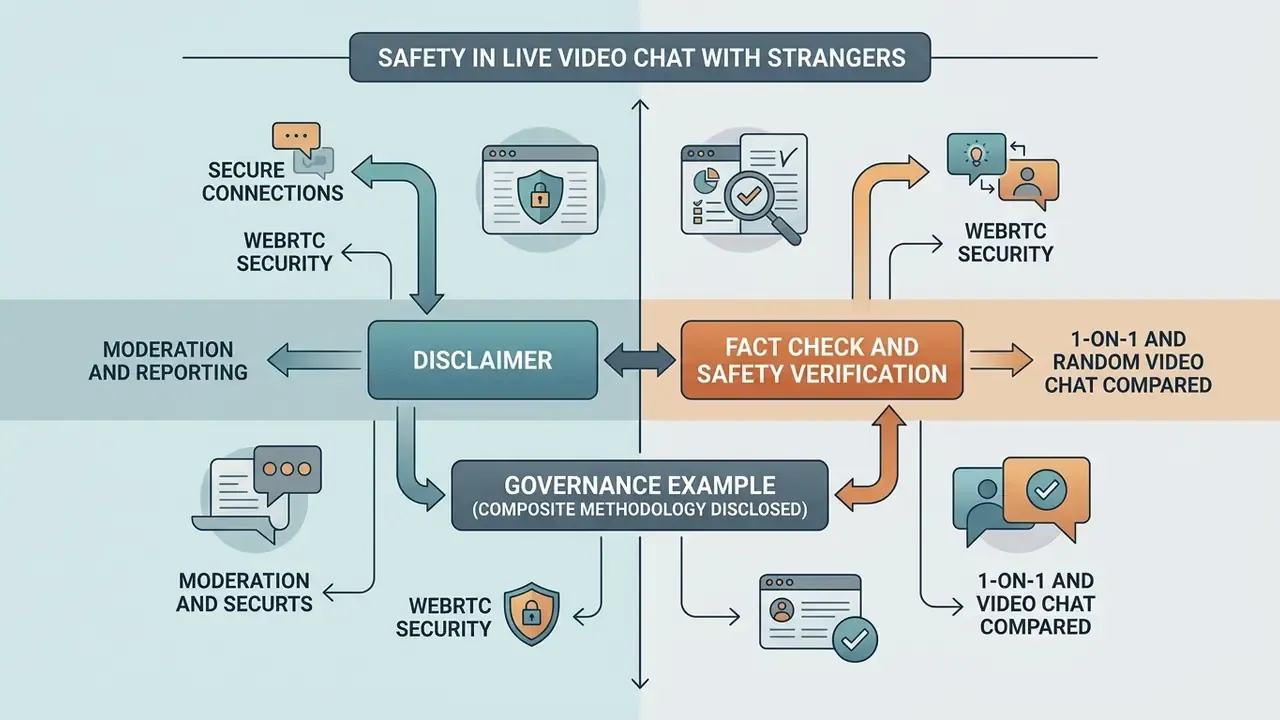
Interacting with strangers in online video chats introduces real privacy risks: IP geolocation exposure, unmonitored behaviour, silent screen recording. CISA states it plainly, video-conferencing tools are not secure by default and can leak sensitive data when configured carelessly.
CISA guidance recommends disabling location permissions, closing unnecessary background applications, and using a VPN to hide residential IP addresses. Australia's eSafety Commissioner defines total anonymity as not revealing identifying information, and lists VPNs among the technical methods that mask location and device details including IP address (Anonymity and identity shielding, eSafety Commissioner, 2026. https://www.esafety.gov.au/industry/tech-trends-and-challenges/anonymity). In other words, technical anonymity is what stands between you and unauthorized de-anonymization. Academic work on video-chat privacy documents the concrete attack set: de-anonymization, phishing and man-in-the-middle interception, with IP lookup revealing approximate geographic location (Intrusions into Privacy in Video Chat Environments, arXiv, 2010. https://arxiv.org/pdf/1007.1473v1). The criminal misuse volume cited in the DOJ national strategy above is precisely why moderated platforms now enforce zero-tolerance policies.
Checklist0 / 6
Synthetic partners are the newer risk. Generative tooling now produces convincing faces and voices in real time, which means a “person” on the other side of a random match may be a rendered persona driving a scripted romance or investment script. If you want to understand why those images look plausible at first glance, our explainers on how does ai generate images and how does ai art work unpack the mechanics, and our note on the hyper realistic beautiful AI persona trend shows how these profiles are typically assembled. Practical tell-tales: refusal to change lighting, mismatched blink and speech timing, edge artefacts near hair and glasses, and pressure to move the conversation to a payment channel.
When using a chat random video call online free service, never disclose financial details, a full name, or a physical address. Consistent identity hygiene is what keeps a free video chat session both safe and controlled.
Moderation, reports and the ability to stop a conversation
Text-layer moderation follows a parallel track, where transformer-based classifiers handle abusive-language detection (Solopova, 2023). Numbers of that kind are dataset-dependent, so read them as “up to roughly 98% on standard moderation benchmarks”, not as guaranteed field performance. When a user presses Report, the system logs the preceding media frames for human review and drops the offender into a quarantine queue. Chatroulette states that confirmed violations produce an immediate ban rather than a warning, typically within minutes of human review.
If an interaction turns uncomfortable, press Next or close the browser tab. The peer connection dies instantly. Prompt reporting is unglamorous, and it is the main reason a moderated online video chat community stays usable at all.
Governance example (composite, methodology disclosed). In a composite governance assessment modelled on documented real-time communication deployments, not a single identifiable organization, a compliance team evaluated unmoderated video channels. The team introduced mandatory STUN and TURN relay routing, automated stream screening, and strict session-timeout policies. In that model, direct IP exposure disappeared while full regulatory auditability was retained across roughly 10,000 active endpoints. The numbers illustrate the control architecture rather than an independently audited result. Teams publishing or reusing recorded call content should also review licence terms in our AI Media Commercial-Use Hub before distribution.
How to make a 1v1 video chat comfortable and useful
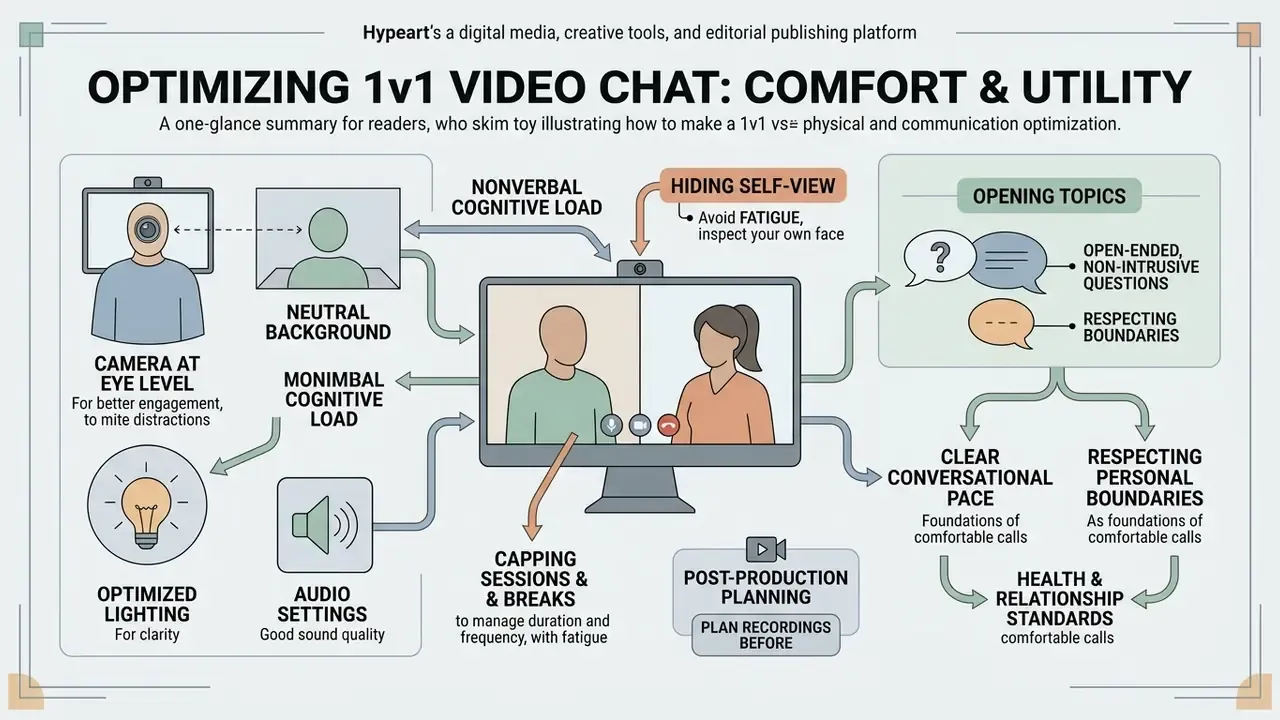
Optimizing a 1v1 video chat online experience is mostly physical: lighting, audio settings, and managing nonverbal cognitive load.
Practically, that means hiding self-view instead of inspecting your own face on a loop, capping session length, and taking short breaks between calls to restore focus. Institutional etiquette guidance (Villanova University, North Carolina A&T, Monroe Community College, Northern Essex Community College) converges on three operational rules: mute when not speaking, use explicit turn-taking cues, and open with a short purpose or agenda statement.
If you keep recordings of language sessions or interviews, plan post-production before you record, not after. Our YouTube video editing workflow guide covers trimming and publishing pipelines, AI voice generator tooling is often used for narration when a recording needs anonymization, and the primer on how do people make ai videos explains where synthetic assets fit into that chain. For anything beyond a personal archive, it is usually cheaper to hire video editor support than to rebuild a broken export twice.
To get more out of your video chat experience, put the camera at eye level and keep the background neutral. Small adjustments, disproportionate effect: people talk more freely when they are not squinting at a silhouette.
Opening topics and respectful communication
Opening with open-ended, non-intrusive questions sets a friendly tone while respecting boundaries. Australia's Respect.gov.au guidance recommends questions that cannot be answered with a simple yes or no, and warns against judgmental framing. Minnesota's public-sector boundary-setting guide adds a calm tone and non-threatening body language as tools for protecting a conversation instead of ending it.
Health and relationship standards reinforce the point. The NIH Build Healthy Relationships checklist advises deciding in advance what you are and are not willing to do, and says plainly that no is an acceptable answer. Technical hygiene belongs in the same conversation:
Neutral topics work best as icebreakers: local culture, hobbies, favourite media, current events, language-practice goals. Loughborough University's EDI toolkit adds a framing rule worth borrowing: agree confidentiality boundaries first, permit respectful comment, exclude derogatory or abusive language.
Search demand here often arrives in gendered phrasing, for example chat with girls online video or chat with boy online video call. The applicable standard does not change with who is on the other side of the camera: mutual respect, civil discourse, no pressure, no requests for identifying or financial information. In cross-cultural and professional settings the same etiquette scales directly. State your purpose, invite participation, adjust register to your partner's comfort. If someone signals discomfort, change the subject or close the session without pressure. If a boundary is crossed, use Report, then Next.
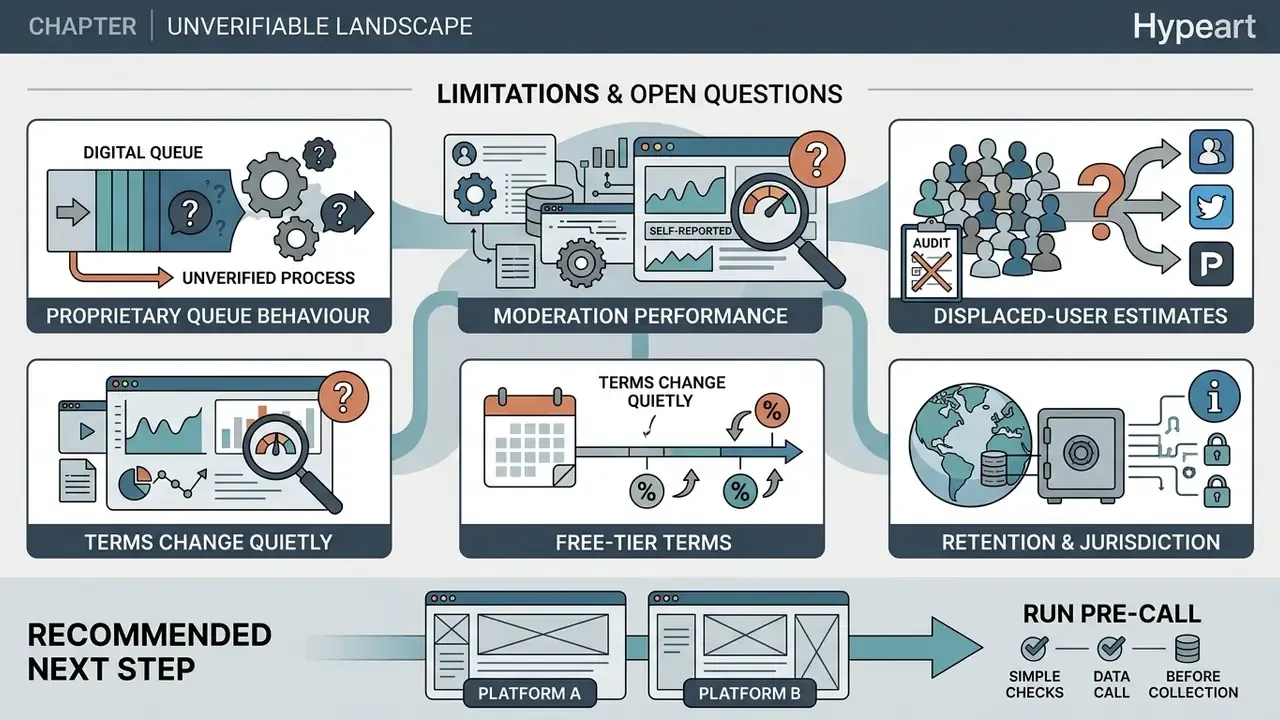
Limitations and open questions
FAQ
Is a live video call free online genuinely free?
Core 1-on-1 and random calling is free on major platforms without an account. Paid layers usually cover gender and region filters, ad removal, priority matching, HD or 4K quality, and in-app currency bundles. Under FTC and EU CPC rules, any recurring charge or trial-to-paid conversion must be disclosed before payment details are entered.
What is the best Omegle alternative after the November 2023 shutdown?
There is no single answer. The shortlist that absorbed most demand is OpenTalk, Chatroulette, OmeTV, Monkey, HOLLA and Chamet. Compare them on four criteria: active AI plus human moderation, one-tap reporting with fast enforcement, no mandatory registration, and transparent free-tier limits. The matrix in section 8 lays those out side by side.
Do I need to install anything for a 1v1 video chat?
No. Browser-based WebRTC services run in Chrome, Safari, Firefox and Edge on desktop and mobile, and you only grant camera and microphone permission through the getUserMedia() prompt. Native apps mainly add push notifications and smoother mobile performance.
Can random video chat actually be used to practise English?
Yes, and it is one of the highest-frequency use cases. Set a language subtag and a country filter, prepare a few neutral topics, and keep sessions short and frequent. Several platforms position practice with native speakers as a primary feature rather than a side effect.
How fast are reports processed?
On moderated platforms, automated classifiers flag violating frames in real time and human moderators typically review reports within minutes. Confirmed violations often produce an immediate ban rather than a warning. Escalation models such as YouTube's three-strikes system show how repeat and severe cases are separated.
Are these services safe for minors?
Age policy differs by service. Chatroulette is strictly 18+, while VRChat permits users aged 13 and above with parental consent for 13 to 17. Random video chat with strangers is not an appropriate environment for children. Use parental controls and platform age gates, and report illegal content, since U.S. providers must escalate to NCMEC under 18 U.S.C. § 2258A.
Does the spelling of my search query matter?
Not for finding a service, only for what you land on. Users frequently search with variants such as chat roulette, chatroullete, chatroulete, 1v1 videochat or online video call free. Whatever the spelling, verify two things before granting webcam access: a valid SSL certificate (https://) and a genuine WebRTC implementation rather than a plugin download prompt.
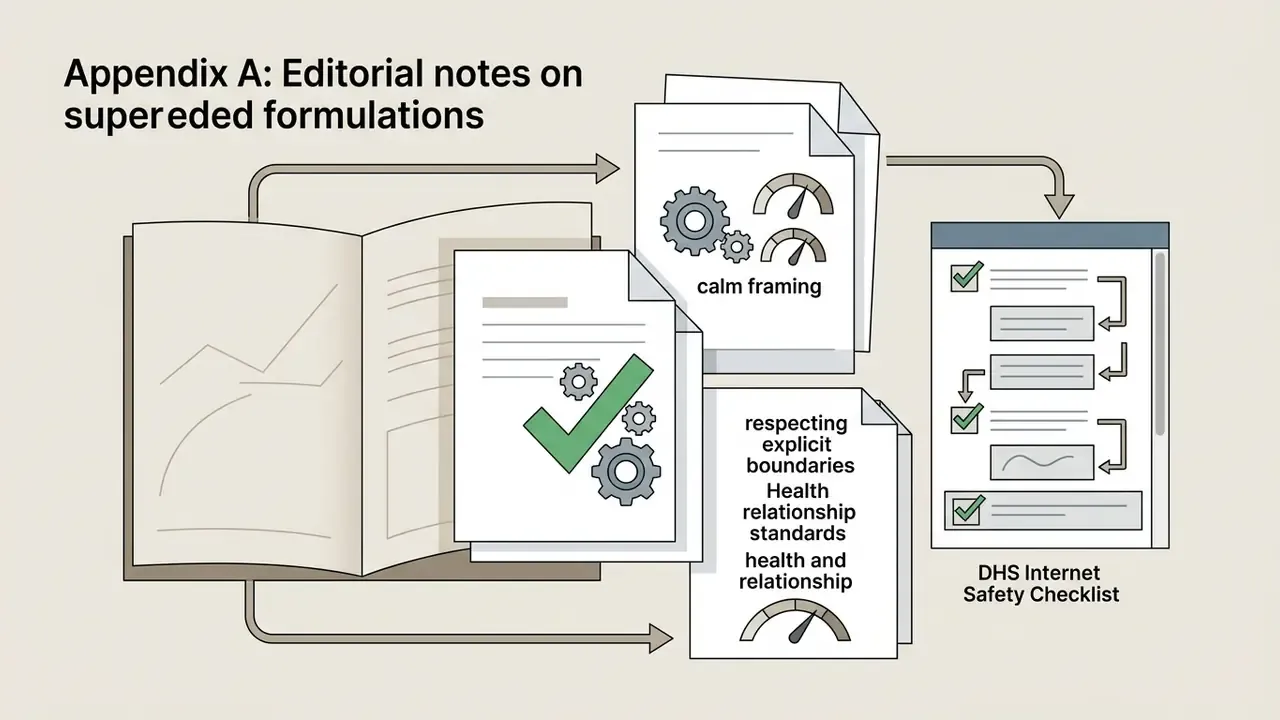
Appendix A: Editorial notes on superseded formulations
For transparency, the weaker formulations replaced during the Q1 2026 fact-check are preserved here with the reason for replacement.