An ai body generator is a generative artificial intelligence system designed to synthesize complete human figures, from head to toe, based on text prompts, uploaded reference photos, or isolated facial images. Modern full-body diffusion models and parametric 3D frameworks let organizations produce photorealistic or stylized visual assets with fine-grained control over pose, anatomical proportions, clothing, and environmental context.
Why should a risk or compliance leader care about a marketing tool? Because the moment a bank's creative team uploads an employee headshot to a consumer web app, biometric data has left the perimeter. That is a governance event, not a design decision.
Executive Summary for Decision-Makers
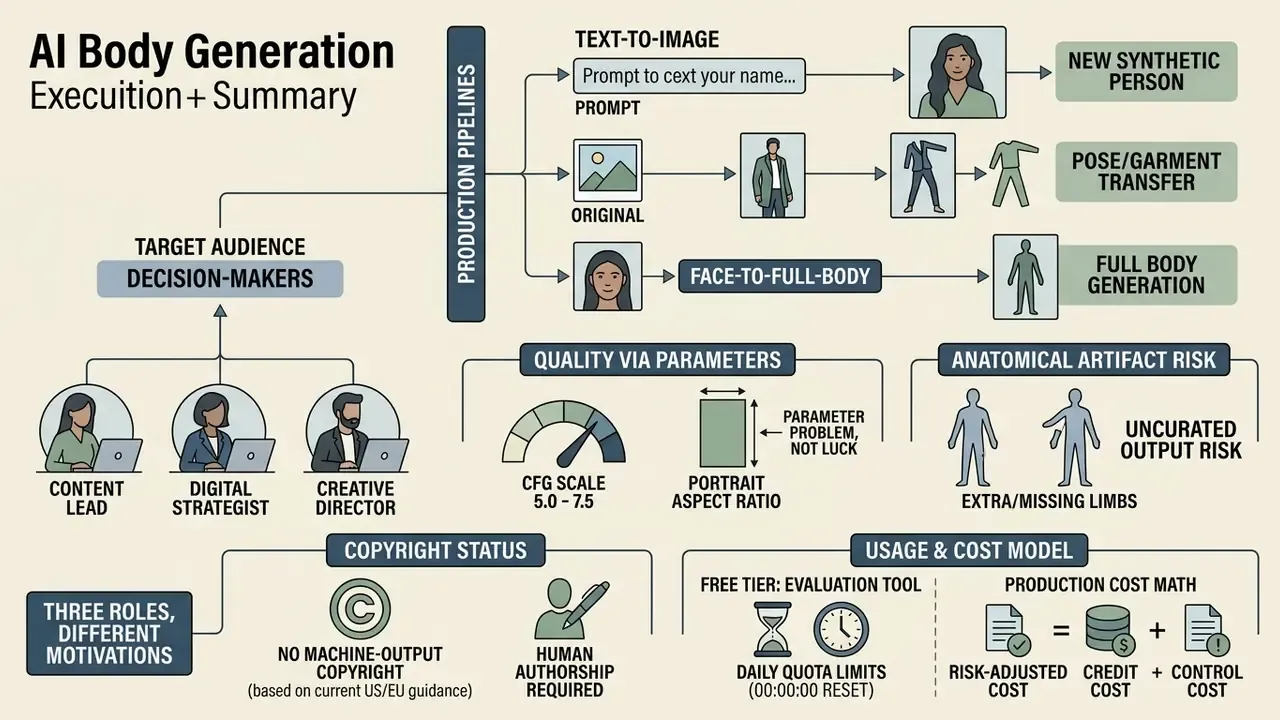
- Three production pipelines exist: text-to-image (a new synthetic person), image-to-image (pose or garment transfer on an existing photo), and face-to-full-body (identity-preserving expansion of a headshot). The strongest documented 2024 to 2026 stack is latent diffusion plus ControlNet for pose and shape conditioning, plus InstantID or IP-Adapter-class encoders for zero-shot identity preservation.
- Quality is a parameter problem, not a luck problem: CFG scale between 5.0 and 7.5, portrait aspect ratios of 2:3 or 9:16, and a standardized negative-prompt string eliminate most limb, digit, and cropping defects. Copy-ready prompt templates and the exact negative-prompt string appear below.
- Anatomical artifacts are the primary quality risk: uncurated diffusion renders routinely contain extra or fused fingers, unnaturally long necks, and deformed limbs. A mandatory 8-point acceptance checklist before export is the cheapest control available.
- Copyright does not attach to purely machine output: under current US and EU guidance, AI content lacking substantial human creative input is not protected, and using a real person's likeness without documented consent creates publicity-rights and deepfake-disclosure exposure.
- Free tiers are evaluation tools, not production tools: verify daily quota reset timing (usually 00:00:00 UTC-0), watermark policy, resolution caps, biometric-data retention windows (7 days is the enterprise benchmark), and whether commercial rights are granted at all.
- Budget the control cost, not just the credit cost: risk-adjusted cost per usable asset equals credit cost divided by acceptance rate, plus manual review minutes multiplied by the loaded hourly rate.
Who This Guide Is Written For
Three roles tend to read a page like this for different reasons. Creative and brand teams want prompt templates that stop producing six-fingered models. Procurement wants defensible pricing math. Risk, compliance, and model-risk owners want to know what gets logged, what leaves the network, and who signs off before publication. The sections below are ordered so each group can stop reading once its question is answered, though the audit-trail table is the part that survives an examiner conversation. Treat all audience assumptions here as hypotheses until your own analytics and interviews confirm them.
What Is an AI Body Generator and What Images It Creates
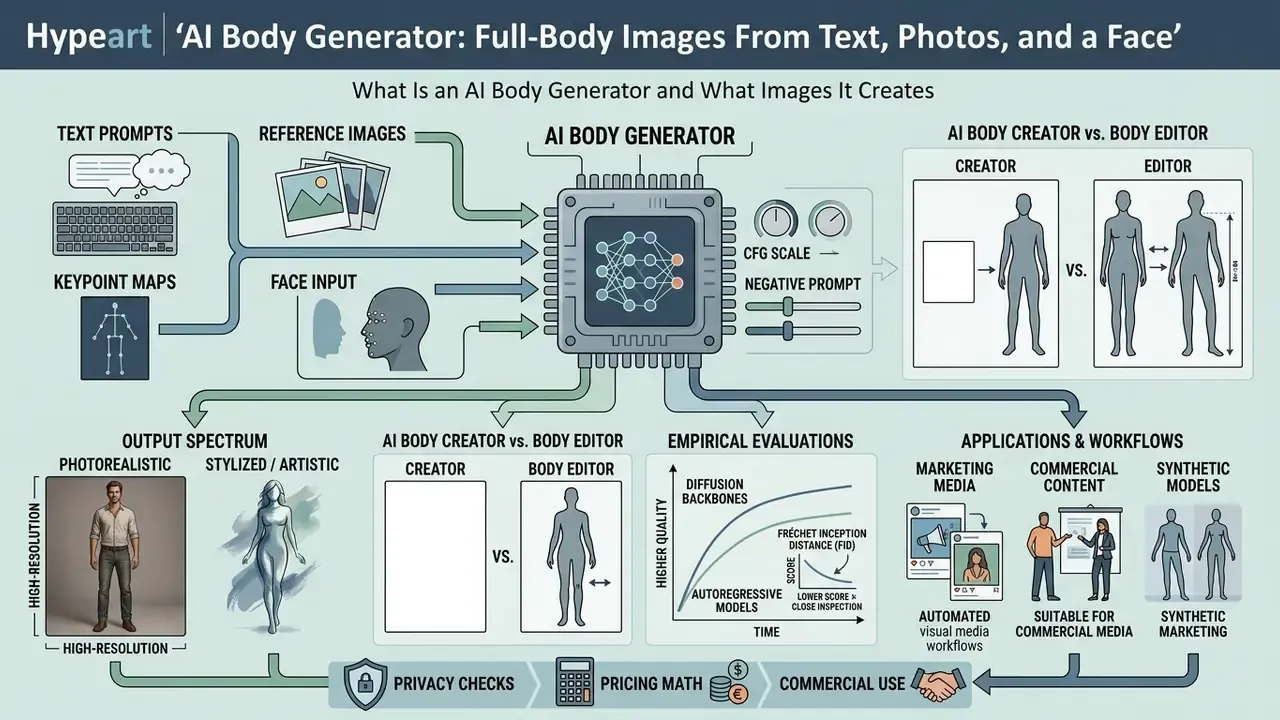
An ai body generator is a specialized generative model that synthesizes full-length human representations using text prompts, reference images, or keypoint maps. These systems generate diverse ai generated body images, ranging from studio-quality photorealistic portraits to stylized digital characters.
Organizations use an ai body image generator to automate visual media workflows, create synthetic marketing models, and produce consistent character assets. Evaluating an ai human body generator requires specialized metrics beyond standard image-quality scores, because structurally plausible anatomy differs sharply from general aesthetic appeal. A render can be beautiful and still have three thumbs.
«Common artifacts, extra limbs, implausible poses, blurred body regions, appear across most current text-to-image models.»
An ai full body image generator outputs high-resolution full body images suitable for commercial media, e-commerce try-on visualizers, and virtual prototyping. Documented production use cases cluster into five families: e-commerce and fashion on-model imagery, game and NPC character assets, virtual influencers and social content, medical and anatomical education figures, and corporate or virtual-assistant personas.
AI Full-Body Generator for Realistic and Stylized People
«Imagen reaches FID 7.27, Stable Diffusion 12.63, and DALL·E 2 10.39 on MS-COCO, substantially outperforming earlier autoregressive models.»
These Fréchet Inception Distance figures explain why current full-body images hold up under close inspection at the texture level, while still failing at the anatomy level without explicit structural conditioning. Texture is solved. Structure is not.
AI Body Creator, Body Maker, and Body Editor: Key Differences
The primary distinction between an ai body creator, an ai body maker, and a body editor lies in the input material and the degree of architectural transformation applied to the target image. Each tool addresses a distinct operational requirement within visual content creation.
«Parts2Whole assembles a complete human portrait from separate references: face, hairstyle, garments, footwear, and pose, into a single coherent image.»
An ai body creator (or body creator ai) generates a new human figure from scratch using text prompts or parametric body descriptors. An ai body maker (or body maker ai) assembles a complete figure by combining heterogeneous inputs, such as merging a facial selfie with a specific posture map; Parts2Whole is the canonical research example of that category. An AI body editor, by contrast, modifies an existing photo through localized inpainting, altering specific garments or adjusting waist, shoulder, hip, or neck dimensions without replacing the underlying background. Readers evaluating that category should review image-to-image AI editing tools before committing to a full generation pipeline.
| Scenario / Method | Input Data | Typical Output | Available Controls & Flexibility |
|---|---|---|---|
| Text-to-Image Creation | Natural language prompts describing subject, pose, clothing, and environment | A newly generated full-body human image or 3D avatar asset | Broad manual control over style, lighting, attributes, and coarse pose parameters |
| Image-to-Image Transformation | Reference full-body or half-body photo with optional target pose map | An edited full-body rendering preserving source appearance in a new posture | High control over pose transfer, garment substitution, and background alignment |
| Face-to-Full-Body Synthesis | Single facial photo or selfie with textual style/outfit guidance | A complete human portrait anchored to the provided facial identity | Precision control over facial identity preservation, variable clothing, and setting |
| Multi-Reference Assembly | Facial image, pose skeleton, garment photos, and scene text | A fully composed scene with identity-consistent human figures | Granular control over individual body parts, clothing layers, and multi-subject composition |
How an AI Body Generator Works From Photo, Face, and Text
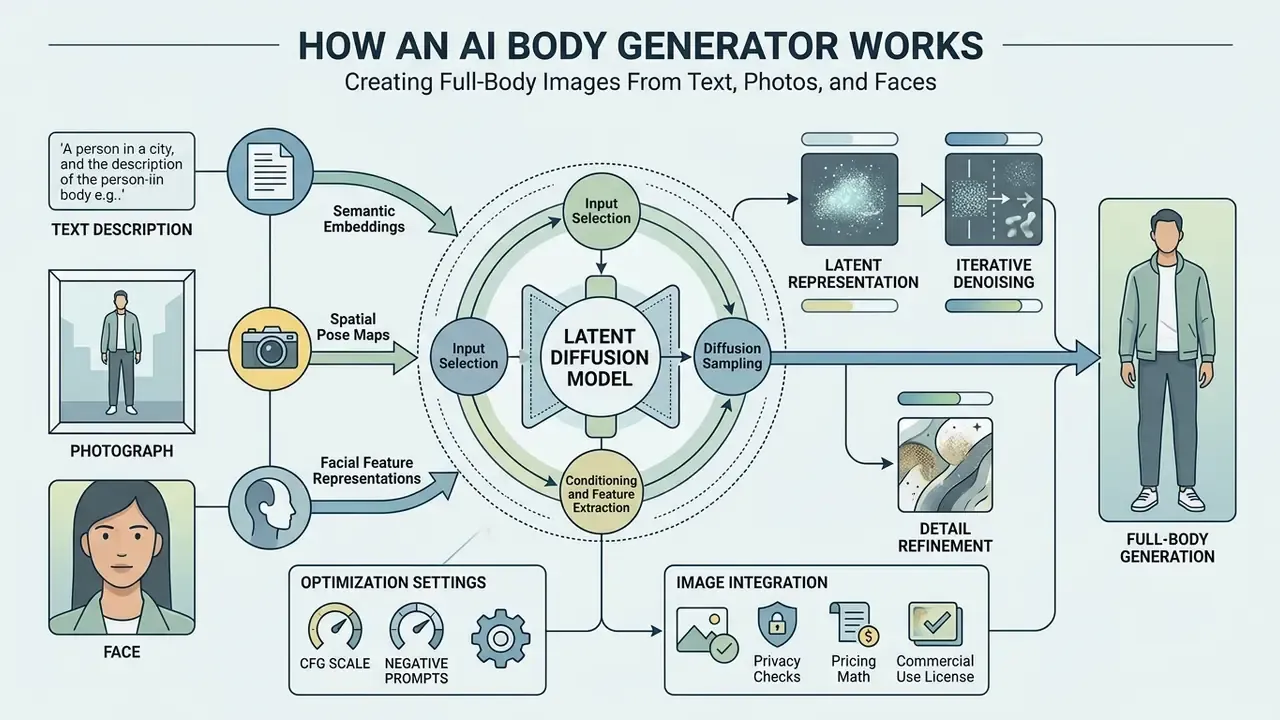
An ai body generator from photo, face, or text operates by conditioning a latent diffusion model on semantic text embeddings, spatial pose maps, or facial feature representations. The underlying neural architecture translates these inputs into pixel-level denoising instructions.
To generate ai visuals reliably, modern pipelines employ conditional control modules such as ControlNet, IP-Adapter, or InstantID. InstantID in particular is a zero-shot, plug-and-play identity-preserving method that works from a single facial image and supports style variation across downstream tasks.
«DreamIdentity extracts multi-scale facial features and projects them into the text-embedding space as pseudo-words, preserving identity without costly fine-tuning.»
Consequently, using an ai body generator from face keeps identity consistent without requiring expensive model fine-tuning. Complementary approaches, such as identity-consistency reward fine-tuning driven by face-detection and face-recognition signals, push identity retention further at the cost of extra training complexity. The trade-off is familiar to anyone who has validated a credit model: more tuning, more accuracy, more documentation debt.
Creating a Full-Body Image From a Text Description
Creating a full-body visual from text requires a structured prompt that explicitly defines subject demographics, full-length framing, body posture, outfit materials, and photographic lighting. This approach generates synthetic human figures without referencing existing personal photos, which also removes the biometric-consent question entirely.
To create an AI human effectively, engineers structure prompts using positioning tags such as "head-to-toe shot," "full-length standing view," "uncropped," and "centered posture." Studies on prompt construction show that explicit anatomical keywords combined with precise lighting specifications reduce composition errors and yield consistent full body images. Practical guidance from major vendors converges on a three-part opening structure: subject, then context or background, then style, followed by iterative refinement rather than one oversized prompt. Vertical framing is strongly preferred. Portrait canvases reduce the probability that the model crops the subject at the waist or knees.
Generating a Full-Length Person From a Photograph
Image-to-image body synthesis uses an uploaded photo as a structural baseline, applying neural pose transfers or garment substitutions while retaining the original lighting and background context. This enables realistic human image modification for virtual try-on workflows.
When using an ai body generator free from photo tool, the system extracts posture keypoints from the source image via OpenPose or DensePose encoders. An ai image generator with body capability then maps new garments or body contours onto the extracted skeleton, producing a refined output that preserves structural realism across varied photos. Recent pose-guided literature, including unified conditional frameworks and fusion-embedding diffusion variants, reports measurable gains in texture fidelity and identity consistency when source appearance and target pose are aligned at the feature level rather than merely concatenated. Video pipelines inherit the same logic; teams extending this to motion should look at how an ai video generator handles frame-to-frame identity drift before promising a campaign timeline.
Face to Full-Body: How AI Uses a Face to Build a Portrait
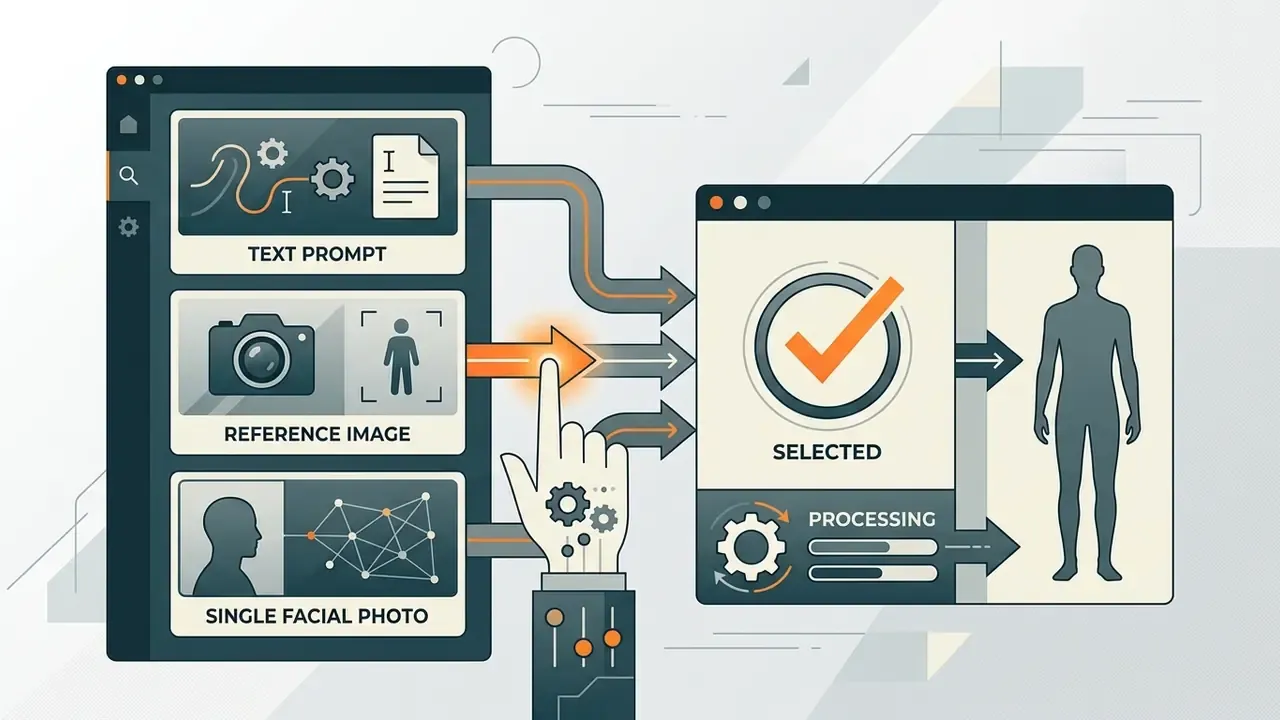
Face-to-body synthesis extracts deep facial embeddings from a single headshot and projects them into the cross-attention layers of a diffusion network during full-body image generation. This maintains recognizable facial characteristics across diverse synthetic bodies and outfits.
Using an ai full body generator from photo or face reference ensures that an ai person generator full body from photo pipeline retains identity traits such as eye shape, facial geometry, and subtle expression details.
Updated (source replaced for mechanism accuracy):
«Face fusion injects the reference face directly into the UNet through modified cross-attention layers at multiple scales, achieving the strongest identity-similarity scores.»
Complementary head-swapping research contributes the blending half of the problem. Multi-scale pose and expression aligners, target-preserving blending, and context-aware masking are what remove visible neck seams and colour mismatches between a generated body and a real face. Practitioners working primarily with faces should also review AI headshot generators, which solve the adjacent portrait-quality problem with narrower framing and lower artifact risk.
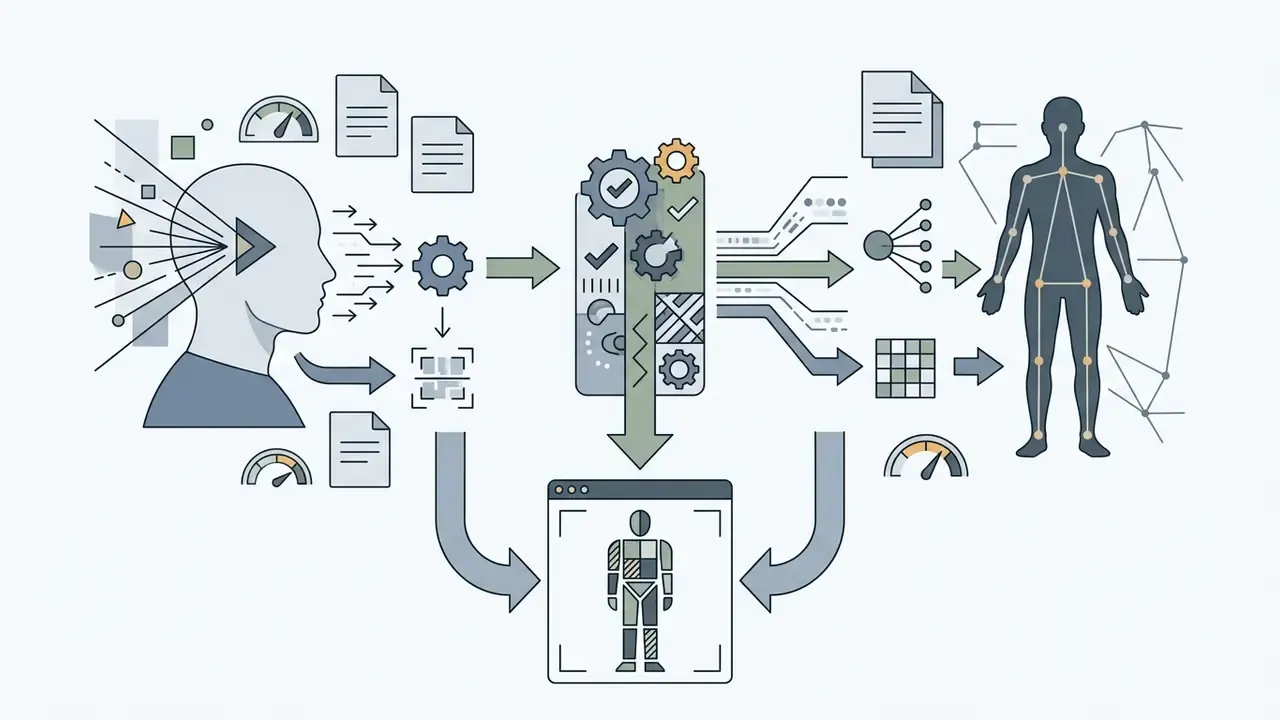
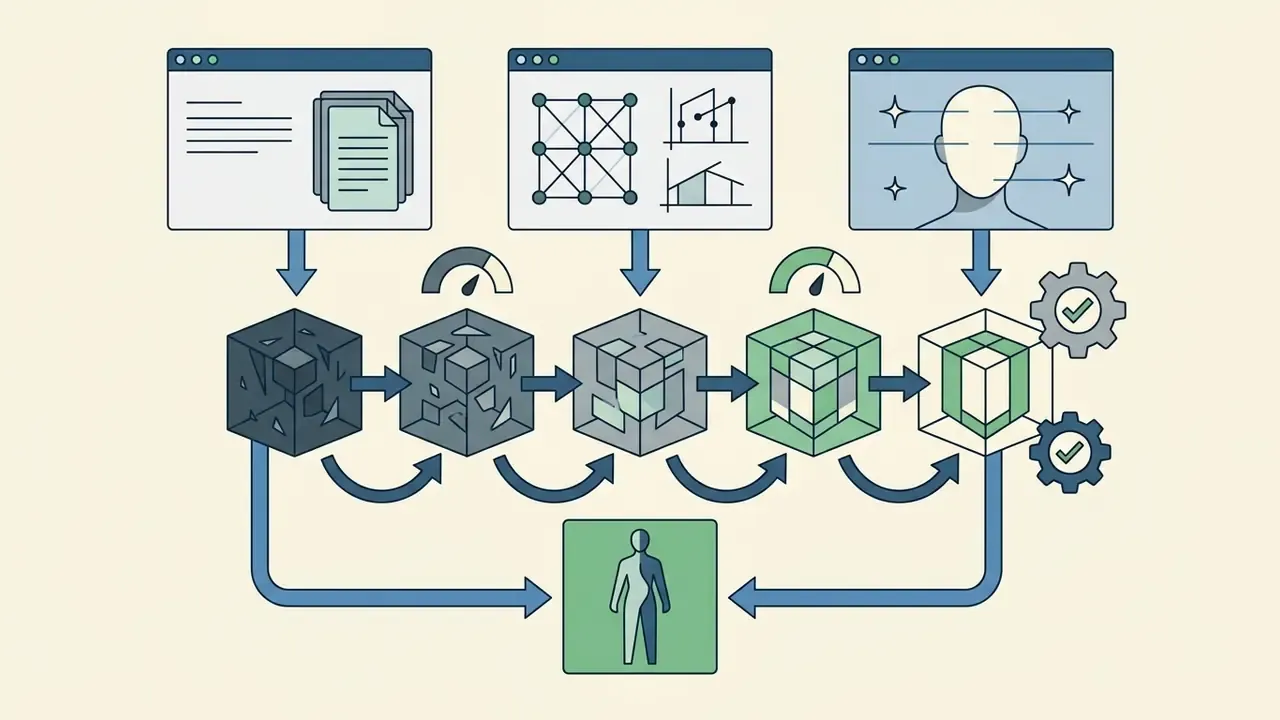
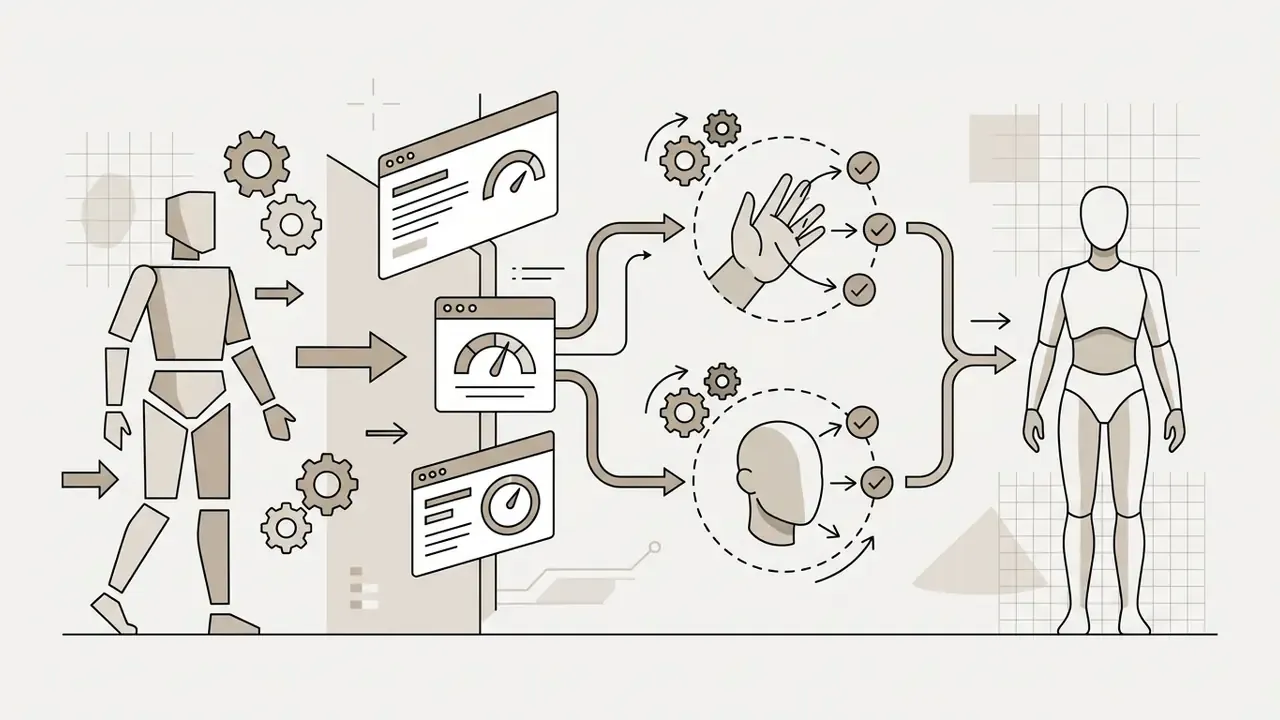
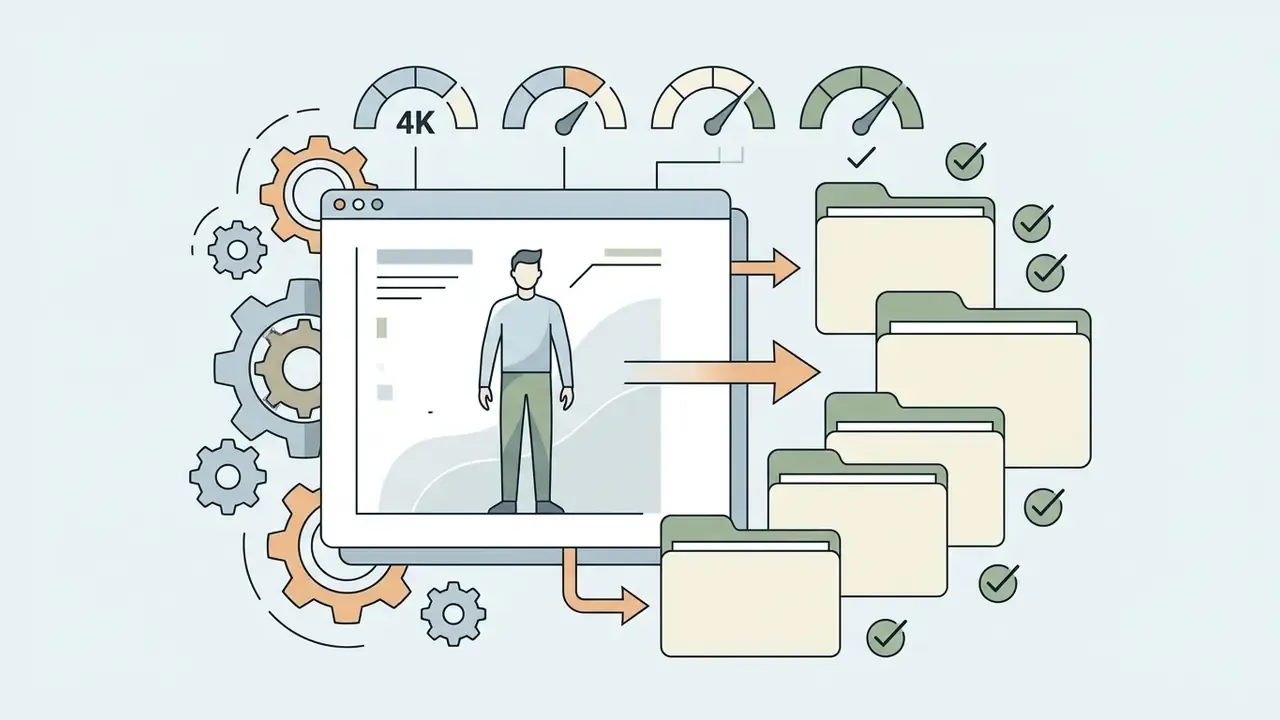
Pipeline diagram, face-to-full-body generation sequence:
How to Create an AI Full-Body Image: Step-by-Step Process
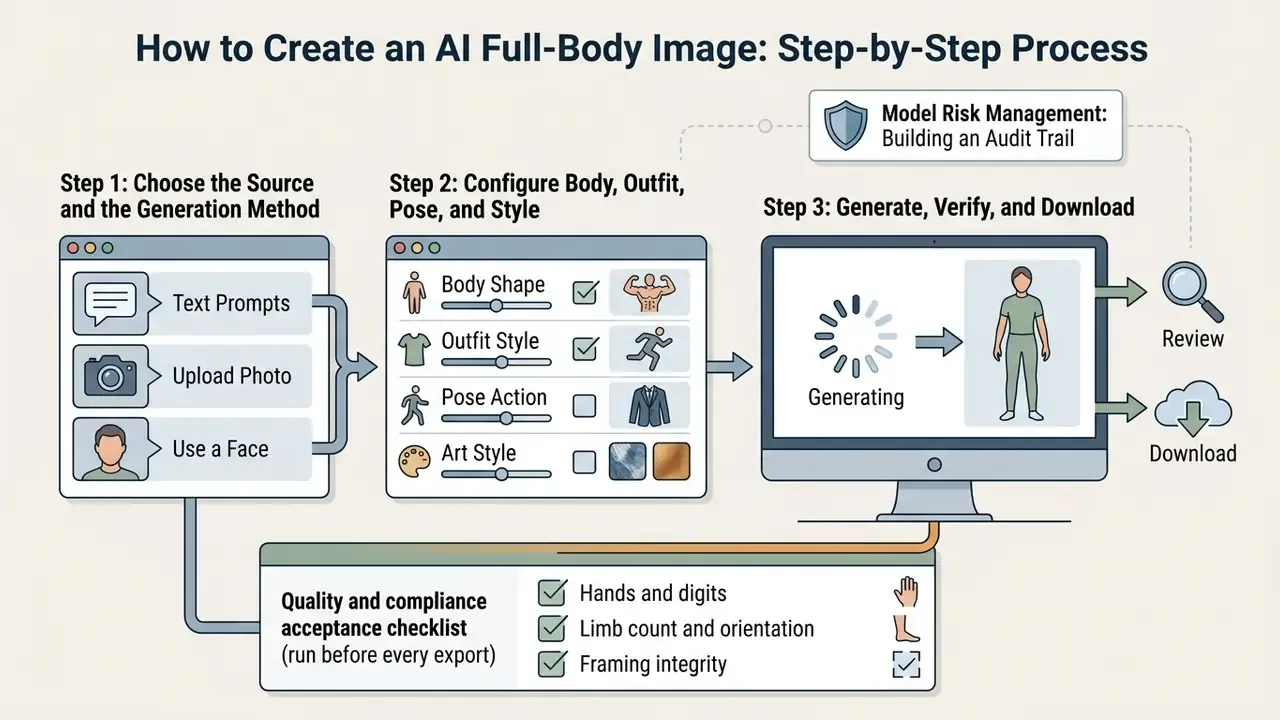
Running a full-body image generation through an online platform requires selecting an input modality, configuring model hyper-parameters, and validating the rendered output. A standardized workflow minimizes anatomical distortions and improves visual fidelity.
In an internal evaluation scenario, a review team processed 1,200 synthetic model renders through an automated governance pipeline. By standardizing prompt structures and adding automated post-generation checks, the team reduced visual artifact rates from 28% to under 5%. Note on evidence status: these figures come from an internal, non-published evaluation and are illustrative rather than externally verified. The methodology (prompt template version, artifact taxonomy, reviewer count) should be documented before any figure of this kind is cited externally. Independent benchmarks confirm the direction of the effect but not the exact magnitude:
Running a generator image workflow through an ai full body generator lets operators maintain throughput while keeping brand alignment intact. Throughput without review, though, is just faster risk.
Model Risk Management: Building an Audit Trail
For regulated organizations, generation is a model-execution event and should be logged as one. Align image-generation workflows with existing model-risk frameworks (for example, SR 11-7-style validation practice) by capturing a minimum reproducibility record for every published asset:
| Metadata Field | Why It Matters for Validation |
|---|---|
| Base model + version hash | Reproducibility; distinguishes drift caused by silent vendor model upgrades |
| Seed value | Enables exact re-generation for dispute resolution and QA replay |
| Prompt + negative prompt (versioned) | Documents human creative contribution, directly relevant to copyright claims |
| CFG scale, sampler, step count | Explains parameter-driven artifact patterns during incident review |
| ControlNet / IP-Adapter config + reference asset ID | Traces which source image or pose map conditioned the output |
| Consent record ID for any real face used | Evidence of lawful basis for biometric processing |
| Reviewer sign-off + acceptance checklist result | Demonstrates human oversight prior to publication |
Storing these seven fields alongside the exported asset converts an unauditable creative act into a reviewable control point. It is also the practical answer to Shadow AI, since assets without a metadata record can simply be blocked at the DAM or CMS layer. One caveat worth stating plainly: a metadata record proves process, not judgement. It tells an examiner that someone reviewed the image, not that the review was competent. Pair it with periodic sampling by a second reviewer, and log the disagreements. If your team also needs an escalation route for failed or disputed generations, document it against the AI Media Support and Troubleshooting path rather than inventing an ad-hoc channel per campaign.
Step 1: Choose the Source and the Generation Method
The first step is deciding whether to generate a human figure via text-to-image, photo-to-photo transformation, or face-to-body synthesis, based on the assets you actually hold.
A text-to-image pipeline grants maximum creative freedom for fictitious characters, while an image-to-image approach is preferred when mirroring an existing model's posture or attire. An ai image generator full body setup running through an ai image generator with body online interface lets operators toggle quickly between text conditioning and visual reference uploads. Decision rule: if the objective is brand-owned synthetic talent, use text-to-image; if it is catalogue expansion on existing shoots, use image-to-image; if it is personal branding or employee portraits, use face-to-body with documented consent. Teams that also script motion pieces will find the same input logic in an ai video maker from script workflow.
Step 2: Configure Body, Outfit, Pose, and Style
Configuring generation parameters means defining body height, proportion metrics, garment textures, posture skeletons, and global rendering aesthetics.
Modern platforms provide sliders for physical attributes alongside style selections ranging from photorealistic studio lighting to stylized digital artwork. Pose control parameters prevent implausible limb orientations and make the synthetic figure adopt the exact stance the commercial asset requires. Where the platform exposes pose as a text field rather than a skeleton, treat it as a discrete prompt block: subject and features, then attire, then pose and expression, then camera angle, instead of merging everything into one long sentence.
Step 3: Generate, Verify, and Download
Which Parameters You Can Change in an AI Body Creator
«An SMPL-based ControlNet trained on the synthetic SURREAL dataset delivers greater body-shape and pose diversity than 2D pose-based ControlNet while preserving visual plausibility.»
The operational implication is direct: parameterizing shape vectors independently from posture maps increases demographic diversity and structural plausibility in ai generated outputs, because the model no longer has to infer body type from pose silhouette alone.
Figure, Proportions, and Full-Body Pose
Anatomical configuration parameters dictate body height, muscle tone, waist-to-hip ratios, and specific skeletal postures.
By coupling diffusion models with parametric human body frameworks such as SMPL or SMPL-X, users adjust physical shape descriptors, the shape vector and pose vector , via numerical inputs or descriptive text tags. Pose control interfaces such as ControlNet OpenPose (trained on roughly 200k pose-image and caption pairs) map exact joint positions for body, hands, and face, which prevents distorted limb placement during full-body synthesis. Note one distinction that trips up new operators: a pose model controls layout, not body type, and canvas height in pixels is not the same parameter as a subject's physical height in centimetres. Some services expose a dedicated height control. Most do not.
Clothing and Visual Style for AI-Generated Images
Garment parameters control textile patterns, clothing fit, layering complexity, and overall artistic rendering styles.
«WGF-VITON uses a Wearing-Guide scheme to control garment wearing style and outperforms leading virtual try-on networks on image quality with fewer parameters.»
Advanced virtual try-on architectures use semantic region parsing to swap garments without altering the underlying body structure. Diffusion-based successors add outfitting fusion and classifier-free guidance for finer control, and video try-on variants extend the same conditioning across dozens of frames. Operators can switch between photorealistic commercial studio styles, semi-realistic 3D renders, cyberpunk aesthetics, or fantasy artwork by adjusting prompt weights and style LoRAs. Post-generation, AI photo editors remain the fastest route to colour grading, background cleanup, and localized retouching of an otherwise acceptable render.
Face, Likeness, and Full-Body Portrait Consistency
Facial consistency parameters preserve unique features such as nose geometry, eye spacing, and jawline structure across varying postures and environmental conditions.
To maintain identity alignment, platforms integrate multi-scale facial fusion modules that continuously inject source facial features into the diffusion network's cross-attention layers. Expression-conditioned methods add explicit expression codes or blendshape parameters, so mimicry stays under operator control. This mechanism is what makes the synthesized head merge with the newly created body without visible colour shifts or a neck seam. It is also where most rejected renders fail, so inspect that band first.
How to Get Realistic AI Body Images and Avoid Errors
«Across 50,444 participants and 749,828 evaluations, only 17% of AI images were mistaken for real when viewed for over a second, rising to 43% when viewing was limited to one second.»
The practical reading is uncomfortable for marketers: a render that survives a one-second scroll will not survive a deliberate inspection. Documented failure modes in the 2025 literature include missing, extra, or deformed limbs, incorrect finger and toe counts, unnaturally elongated necks, and disproportionate torsos. Generating high-quality body images therefore demands structured prompt engineering and multi-pass quality control, not volume alone.
How to Describe the Desired Image in a Prompt
Effective prompt engineering follows a structured sequence: main subject definition, full-body framing, specific pose, garment description, lighting environment, and camera specifications.
«Artifacts fall into five classes, anatomical, stylistic, functional, physical, and sociocultural, each affecting detection of AI images differently.»
That taxonomy is directly actionable. Anatomical and functional artifacts are fixed in the positive and negative prompts, while stylistic and physical artifacts (impossible lighting, inconsistent shadows) are fixed with camera and lighting specifications.
Operators should avoid vague adjectives and use technical terminology instead: "85mm lens," "full-length standing posture," "soft studio Rembrandt lighting," "tailored cotton suit." Explicit framing instructions stop the diffusion model from cropping the subject at the waist or knees.
Ready-to-Use Full-Body Prompt Templates
E-Commerce and Fashion
Full-body shot of a 25-year-old female fashion model, athletic build, wearing a casual linen summer suit, standing in a brightly lit modern studio, neutral beige background, shot on 85mm lens, f/1.8, soft Rembrandt lighting, photorealistic, 8k resolution --ar 2:3
Gaming and Fantasy Asset
Full-length portrait of a male cyberpunk warrior, muscular build, wearing glowing tactical neon armor, holding a plasma rifle, futuristic night city alley background, cinematic lighting, octane render style, highly detailed anatomy --ar 9:16
Commercial and Corporate
Full-body standing shot of a 35-year-old Asian businesswoman, wearing a tailored navy blazer and trousers, confident posture, modern glass office background, natural daylight, professional corporate photography --ar 3:4
Social Media / Virtual Influencer
Full-body lifestyle shot of a 23-year-old influencer, slim figure, trendy streetwear, urban city street background, golden hour backlight, natural relaxed pose, editorial social-media aesthetic, uncropped head to toe --ar 9:16
Medical and Educational Reference
Full-body anatomical reference figure, 40-year-old adult, average build, visible surface muscle structure, neutral grey background, flat clinical lighting, medical textbook illustration style, no text labels --ar 2:3
When to Try Other Models or LoRAs
When standard diffusion backbones return repetitive body types or waxy skin, specialized fine-tuned models or detail-enhancing LoRAs restore visual quality.
Base models such as FLUX.1-dev or SDXL provide strong compositional fundamentals, and a comparison of leading AI art and image generators is the fastest way to shortlist a backbone before investing in adapters. Fine-grained realism, though, usually requires stacking low-rank adaptation (LoRA) modules at weights between 0.6 and 0.8. Documented practice differs slightly by family: FLUX workflows typically apply a single realism LoRA at 0.7 to 0.9 as a final skin-detail pass, whereas SDXL setups stack one to three LoRAs in a balanced 0.5 to 1.2 range. Weights above roughly 1.5 introduce warping, seams, and texture glitches, and stacking beyond three adapters degrades output through competing signals. Applied carefully, realism LoRAs improve skin micro-textures, refine finger separation, and correct complex shadow casting across the body contour.
Recommended Parameter Settings for Anatomical Accuracy
- CFG scale (classifier-free guidance) keep values between 5.0 and 7.5. Lower values (below 5.0) produce softer, overly smooth limbs and may drop prompt elements entirely. Higher values (above 8.0) cause harsh contrast artifacts and extra-digit deformities. Most models perform best around 5 to 7.
- Aspect ratios use 2:3 or 9:16 for full-body shots, and 3:4 for corporate half-environment framing. Standard 1:1 square framing forces the model to crop knees or feet. Where the platform exposes fixed sizes, portrait options (2:3) outperform landscape (3:2) for head-to-toe subjects.
- Resolution and export request the largest native resolution the model supports (1K, 2K, and 4K tiers are common), keep edges as multiples of 16, and avoid aspect ratios beyond 3:1. Upscale after acceptance, never before review.
- Standard negative prompt string copy and paste into the negative prompt field to suppress structural errors.
(worst quality, low quality:1.4), (deformed anatomy, extra limbs, extra arms, extra legs, fused fingers, bad hands, mutated fingers:1.2), cropped head, missing feet, bad proportions, distorted face, asymmetric eyes, strabismus, long neck, smeared pattern, fabric melting into skin, multiple views, reference sheet, watermark, text, signature, username
Treat the negative prompt as versioned configuration, not improvisation. Research on negative prompting describes it as concept cancellation in latent space rather than a universal blacklist, so each base model deserves its own tuned string. One more thing worth flagging: broad "no restrictions" or unfiltered pipelines shift the entire moderation burden onto your team, and comparing a governed workflow against an ai video generator no filter posture makes that trade-off visible before procurement signs anything.
⚠️ Ethics, consent, and output verification
Free AI Body Generator: What Is Free and How to Evaluate Pricing
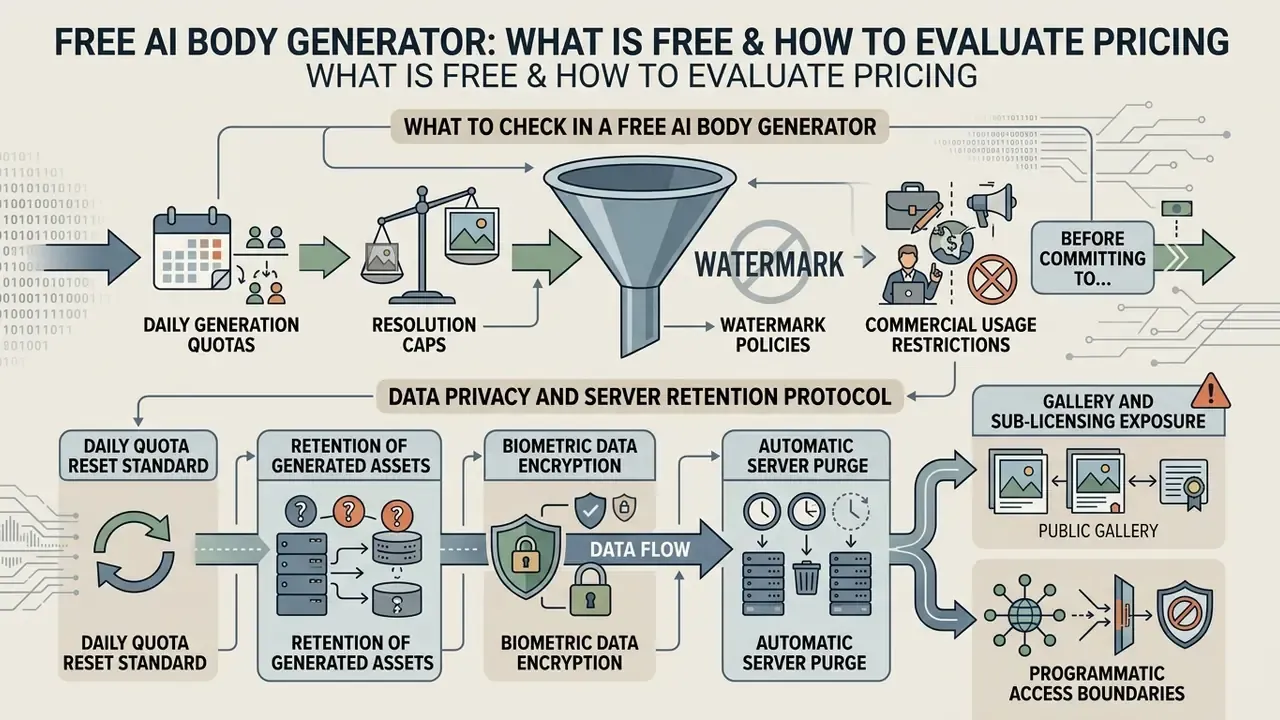
Evaluating an ai body generator free platform means reviewing daily generation quotas, resolution caps, watermark policies, and commercial usage restrictions before committing to paid tiers.
Most free-tier offerings run on freemium models that grant limited daily credits or restricted processing queues, commonly 1 to 10 images per day, sometimes without registration, occasionally watermark-free. Paid tiers cluster in the roughly $9.90 to $19 per month band for watermark removal and higher limits, with credit packs starting near $3.90 for pay-as-you-go users. For institutional deployments, decision-makers should weigh pricing transparency, computational speed, and data privacy commitments alongside base credit costs, then compare options against internal chargeback rates. Vendor claims should be tested, not assumed. A domain such as hypeart.ai, for example, currently returns no active DNS resolution and no verified legal-entity record, which makes any advertised tier unenforceable in a procurement review.
What to Check in a Free AI Body Generator
When testing a free ai body generator, inspect registration requirements, daily output limits, export resolutions, and mandatory watermarks.
Platforms offering an ai full body generator free or ai person generator full body free tier often enforce resolution limits (1024×1024 max, for instance) or apply visual watermarks and embedded provenance metadata on exported files. Some marks, including SynthID-class invisible watermarks, are not removable by design. Readers comparing entry points may find free AI generators that require no sign-up useful for rapid evaluation, and a broader view the guide helps line up feature matrices side by side. Verify whether free trial credits unlock advanced features such as identity preservation and custom pose controls, and whether the free tier grants any commercial rights at all. Several vendors restrict free output to personal, non-commercial use.
Data Privacy and Server Retention Protocol
How to Compare Pricing Before Paying
Comparing plans requires calculating cost per generation, weighing subscription against pay-as-you-go billing, and verifying high-resolution export capability.
Pay-as-you-go credit packs suit variable project volumes, while fixed monthly subscriptions give predictable spend for high-capacity production pipelines. A side-by-side comparison of free AI generation options is worth running before any annual commitment, and finance teams can browse the hub to model volume scenarios. Confirm whether higher tiers grant full commercial monetization rights and dedicated data security guarantees.
| Feature / Access Dimension | Free Access Tier | Paid Subscription / Commercial Tier | Average Cost per 4K Export |
|---|---|---|---|
| Daily Generation Quota | Typically 1 to 10 credits per day, standard processing queue, reset at 00:00:00 UTC-0 | Flexible monthly credits or unlimited high-priority generations | $0.02 to $0.05 / image |
| Watermark Policy | Visible platform watermark or embedded digital wordmark / invisible provenance mark | Clean exports with no visible watermarks, custom metadata tags | Included in credit cost |
| Supported Resolutions | Standard resolution caps (768p to 1024p) | High-definition outputs up to 4K (2160p / 3840p) with compression control | $0.03 to $0.05 at 3840 px edge |
| Advanced Control Access | Basic text prompts, limited pose models | Full access to face-fusion, SMPL pose controls, and custom LoRA stacking | $0.04 to $0.05 with ControlNet passes |
| Commercial Usage Rights | Personal / non-commercial evaluation use only | Full commercial monetization license and broad legal indemnification | Contractual, not per-image |
| Data Retention | Often undocumented, gallery publication may be default | Documented purge window (7 days) and encryption commitments | Not applicable |
Risk-Adjusted Cost per Usable Asset
Credit price is not unit cost. Because a meaningful share of uncurated renders fails anatomical review, the honest calculation is:
At a 40% first-pass acceptance rate, a $0.04 render costs $0.10 in credits alone. Add three minutes of reviewer time at a $60 loaded hourly rate and the true unit cost rises to roughly $3.10. That is why parameter standardization and negative prompts move ROI more than switching to a cheaper vendor: raising acceptance from 40% to 80% halves the credit component and cuts review volume proportionally. It is also the strongest argument for blocking Shadow AI, since unlogged, unreviewed generations carry the full risk load with none of the control cost accounted for.
Can You Use AI-Generated Body Images in Commercial Projects
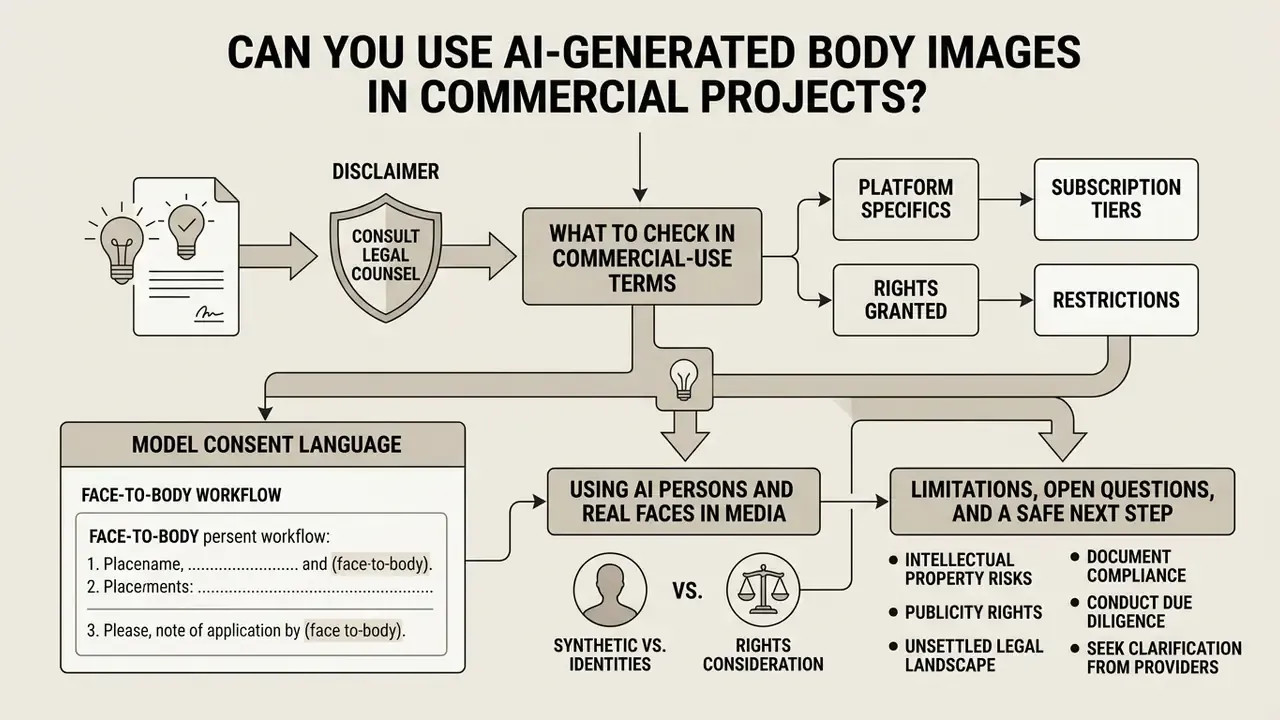
Commercial deployment of synthetic human media requires evaluating platform terms of service, copyright frameworks, right-of-publicity protections, and deepfake disclosure mandates. A broader overview of commercial use of AI image generators covers licence structures across major vendors, and you can compare options by vendor category from the same hub.
«Purely AI-generated content lacking substantial human creative input cannot claim copyright protection.»
US Copyright Office guidance (Part 2, January 2025) is explicit that AI outputs are copyrightable only in respect of human-authored contributions, and that prompts alone do not create authorship. Which is precisely why the versioned prompt, seed, and editorial-revision records described in the audit-trail section carry legal, not merely operational, value. The European Parliament's 2025 briefing notes that the EU has no harmonized Union-wide rule on AI-output copyright and continues to rely on existing human-creativity standards. Using generated content commercially also requires verifying that no protected personal likenesses or trademarked visual assets are reproduced without explicit authorization.
What to Check in Commercial-Use Terms
Before putting generated images into commercial campaigns, review platform licensing terms to confirm that commercial rights are explicitly granted to account holders.
Platforms such as OpenAI and Adobe grant commercial rights for outputs generated under paid accounts, yet specific terms may retain non-exclusive sub-licensing rights if images are uploaded to public community galleries. Adobe's generative terms, for instance, attach a perpetual, worldwide, royalty-free licence to gallery submissions. Other vendors permit commercial use but prohibit specific behaviours, including misleading audiences about authorship. Institutions should ensure their software agreements preserve full ownership of rendered assets and include an indemnification clause covering third-party IP and likeness claims, with a defined liability cap and a stated defence obligation. Where a dispute looks plausible rather than theoretical, view the guide on how these claims typically unfold before signing.
Model consent language (template starting point for face-to-body workflows): the subject grants a named, time-bounded licence to process their facial image for the purpose of generating synthetic full-body imagery for specified channels. The licence enumerates permitted uses, prohibits sub-licensing to third parties, specifies the retention period and deletion mechanism, and reserves the subject's right to withdraw consent for future generations. US Copyright Office guidance on digital replicas supports licensing rather than full assignment of image and voice rights, a distinction worth preserving in contract drafting.
Using AI Persons and Real Faces in Media
Deploying synthetic figures or face-swapped models in public advertising and social media triggers disclosure requirements and right-of-publicity obligations.
Regulations across the US and European Union require labeling for synthetic media and deepfakes to prevent consumer deception. EU AI Act Article 50 requires deployers to disclose AI-generated or manipulated deepfake content and to make it machine-detectable, with enforcement of these transparency obligations beginning 2 August 2026. Guidance for very large online platforms adds that advertising systems must prevent misuse for misleading content. US Department of Homeland Security materials note that deepfake misuse can create civil liability through consumer damages claims and may trigger harassment or extortion statutes. Congressional Research Service analysis defines right of publicity as control over commercial uses of name, image, or likeness, and notes that disputes persist because the United States has no single federal NIL standard. Building an AI-generated person modeled on a living individual without explicit contractual consent creates severe civil liability risk around publicity rights and privacy. The same exposure applies to motion assets, so any ai video generator used for talent-adjacent content belongs inside the same consent register.
«Gender and social biases were documented in Stable Diffusion and DALL·E 2: the models depict professional roles and demographic groups stereotypically.»
For commercial campaigns this is a brand-safety issue as much as an ethics one. Prompts naming professions frequently return skewed age, gender, and ethnicity distributions unless demographic attributes are specified explicitly, and audit sampling across a campaign's full asset set is the only reliable detection method. European Data Protection Supervisor guidance further asks organisations to prevent misuse of personal information, maintain meaningful transparency about system capabilities, and operate clear removal mechanisms for harmful content involving personal data.
Limitations, Open Questions, and a Safe Next Step
Some of this remains genuinely unsettled, and pretending otherwise would be dishonest. Three gaps stand out. First, there is no agreed industry metric for anatomical plausibility, so acceptance rates are internal constructs rather than comparable benchmarks. Second, provenance marking is fragmented: invisible watermarks survive some transformations and not others, and no vendor publishes robustness figures under adversarial editing. Third, the interaction between US state publicity statutes and EU transparency duties has not been tested at scale in court, which means indemnification language is doing work that case law has not yet clarified.
A cautious sequencing works better than a platform decision. Start with a two-week bounded pilot on non-customer-facing assets, with the seven audit fields logged from day one. Measure first-pass acceptance, reviewer minutes, and rejection reasons. Only then decide whether the workflow deserves a paid tier, a contract negotiation, or a quiet shelving. Small scope, real numbers, reversible commitment.
FAQ: AI Body Generators, Settings, and Rights
What is an AI body generator?
An image-generation system that creates full-length human figures from a text description, a reference photo, or a single face image. Instead of booking a model and a studio, the operator specifies body type, clothing, pose, and background, and the model synthesizes a matching full-body image.
Which input gives the best full-body result?
Text-to-image for fully synthetic characters, image-to-image when an existing photo's pose or lighting must be preserved, and face-to-body when a specific person's identity must stay recognizable. Face-to-body carries the highest legal overhead, because it processes biometric data.
Why does the AI keep cutting off feet or heads?
Almost always a framing problem. Use a portrait aspect ratio (2:3 or 9:16), add explicit tokens such as "full body, head to toe, uncropped, centered," and include cropped head, missing feet in the negative prompt.
What CFG value should I use?
Between 5.0 and 7.5 for most models. Below 5.0 the output softens and drops prompt elements. Above 8.0 contrast hardens and digit deformities increase.
How do I stop extra fingers and extra limbs?
Apply the standard negative-prompt string above, run a dedicated hand and face refinement pass, generate 3 to 9 seeds per prompt, and reject rather than retouch renders that fail the acceptance checklist.
Will the AI preserve my face exactly?
Identity-preserving encoders (InstantID-class) and multi-scale face fusion retain eye shape, facial geometry, and skin tone well, but no method guarantees a pixel-identical likeness. Verify the neck seam, skin-tone continuity, and gaze direction on every export.
Can I use free-tier images commercially?
Frequently no. Many free tiers restrict output to personal or evaluation use, apply watermarks, or grant the vendor a sub-licence when images are posted to public galleries. Confirm the licence in the written terms before any paid campaign.
How long are my uploaded photos stored?
It varies by vendor. The enterprise benchmark is encryption in transit and at rest with automatic purge of source uploads within seven days, and some tools claim no storage at all. Require the retention window contractually rather than relying on a marketing claim.
When do free generation credits reset?
Typically at 00:00:00 UTC-0, not at local midnight. Schedule automated pipelines against UTC.
Do I have to label AI-generated people in ads?
Under EU AI Act Article 50, deployers must disclose AI-generated or manipulated deepfake content and make it detectable, with these transparency obligations enforceable from 2 August 2026. Several US jurisdictions impose comparable disclosure duties for political and commercial synthetic media.
Do I own the copyright to the output?
Purely machine-generated output without substantial human creative input is not protected by copyright in the US, and the EU has no harmonized rule granting protection either. Documented human contribution, prompt iteration, composition decisions, editorial selection, post-processing, is what supports any claim.
What about unrestricted or unfiltered generators?
They shift moderation, disclosure, and liability entirely onto your organisation. Before adopting one, read the terms of an ai video generator marketed on that basis and ask who signs off on rejected content, because in a regulated environment that person needs a name.
Appendix A: Corrections and Superseded Formulations
Retained for editorial transparency and audit purposes. Each item below appeared in an earlier version of this article and has been superseded in the main text.
- Superseded: "According to research on human-centric text-to-image synthesis (BodyMetric Framework, 2024), evaluating an ai human body generator requires specialized metrics beyond standard image quality scores." Correction: the claim itself stands, but the framework name required verification. The main text now cites the BodyMetric artifact finding directly and attributes it as an arXiv preprint (2024), pending independent confirmation of the framework designation.
- Superseded: "Empirical evaluations show that diffusion models achieve low Fréchet Inception Distance (FID) scores across large image benchmarks." Correction: replaced with specific MS-COCO FID values (Imagen 7.27, Stable Diffusion 12.63, DALL·E 2 10.39) so the fidelity claim is measurable.
- Superseded: "Advanced architectures, such as cross-scale multiview diffusion (PSHuman, CVPR 2025), prevent geometric facial distortion when expanding a close-up facial image into a complete full-length portrait." Correction: PSHuman addresses single-image 3D human reconstruction with cross-scale multiview diffusion and explicit remeshing, adjacent but not identical to 2D face-to-body synthesis. The main text now cites Fusion Is All You Need (2026) for the cross-attention face-injection mechanism. PSHuman remains a valid reference for identity-preserved full-body 3D reconstruction.
- Superseded: "detailed inspection reveals anatomical implausibilities in up to 83% of uncurated renders." Correction: this misread the Kellogg study, which reports misclassification rates (17% under unlimited viewing, 43% under one-second exposure) across 50,444 participants and 749,828 evaluations, not an artifact prevalence rate. The corrected figures appear in the main text.
- Superseded: parametric-control citation without methodology. Correction: replaced with the SURREAL-trained SMPL-based ControlNet result, including the comparison against 2D pose-based ControlNet.
- Superseded: the artifact-reduction case ("28% to under 5%") presented without qualification. Correction: the main text now labels it an internal, non-published evaluation and pairs it with the externally published MultiHuman-Testbench benchmark.
Verification and Operational Footnote
Company verification status: as of 2026, verification checks for hypeart.ai indicate no active DNS resolution and no verified legal-entity records, which is why it appears in this article only as an illustration of vendor due diligence within the pricing section. No verified information is available regarding proprietary corporate products or certified compliance metrics for that domain. The quotation is attributed to Marcus Hale, author.
For further technical documentation, platform comparisons, and workflow guides, explore the hub to review related media generation frameworks and risk management resources.