«In automated learning systems, autonomous execution without verification creates unquantified risk. An AI homework helper picture tool must operate as an auditable cognitive aid, providing transparent reasoning steps rather than unverified answers.»
About the author: Marcus Hale is the author. His editorial focus is model validation workflows, multimodal system failure analysis, and vendor due diligence for document-processing pipelines. This guide itself was compiled from published benchmark suites, vendor disclosures, regulatory guidance, and hands-on evaluations of OCR-to-LLM pipelines. Last updated: 2026.
Executive Summary
- Document-reading accuracy is high but not absolute. In early 2026 evaluations, Claude Opus 4.7 reached 93.0% on DocVQA, GPT-5.5 reached 91.5%, and Gemini 3 reached 90.8%. Translated into plain terms: roughly one in twelve to one in fourteen document questions still fails.
- OCR-plus-image input consistently outperforms image-only input for text-heavy extraction. That is why two-stage parsers (layout detection, OCR, LaTeX, then LLM) remain the engineering standard.
- Step-by-step output has measurably higher instructional value than answer-only output. Direct answers are appropriate mainly for verifying work already completed.
- Input formats now extend beyond photographs to multi-page PDFs, scans, screenshots, and voice or audio dictation of word problems.
- Privacy exposure is real. Uploaded images are collected as user content under most vendor policies, retention windows commonly run to 30 days, and training opt-outs must be configured manually.
- Every AI-generated solution needs a structured five-step human audit before submission or reliance. No exceptions.
What This Guide Answers
- What actually happens between the photograph and the answer, layer by layer.
- How to capture, dictate, or scan input so the OCR stage does not poison the reasoning stage.
- Which subjects hold up under image-based solving, and which ones quietly fail.
- What a free tier really costs once you account for downsampling, model substitution, and data reuse.
- How schools, tutoring providers, and departments should run vendor due diligence before staff upload identifiable student work.
What Is an AI Homework Helper Picture Tool?
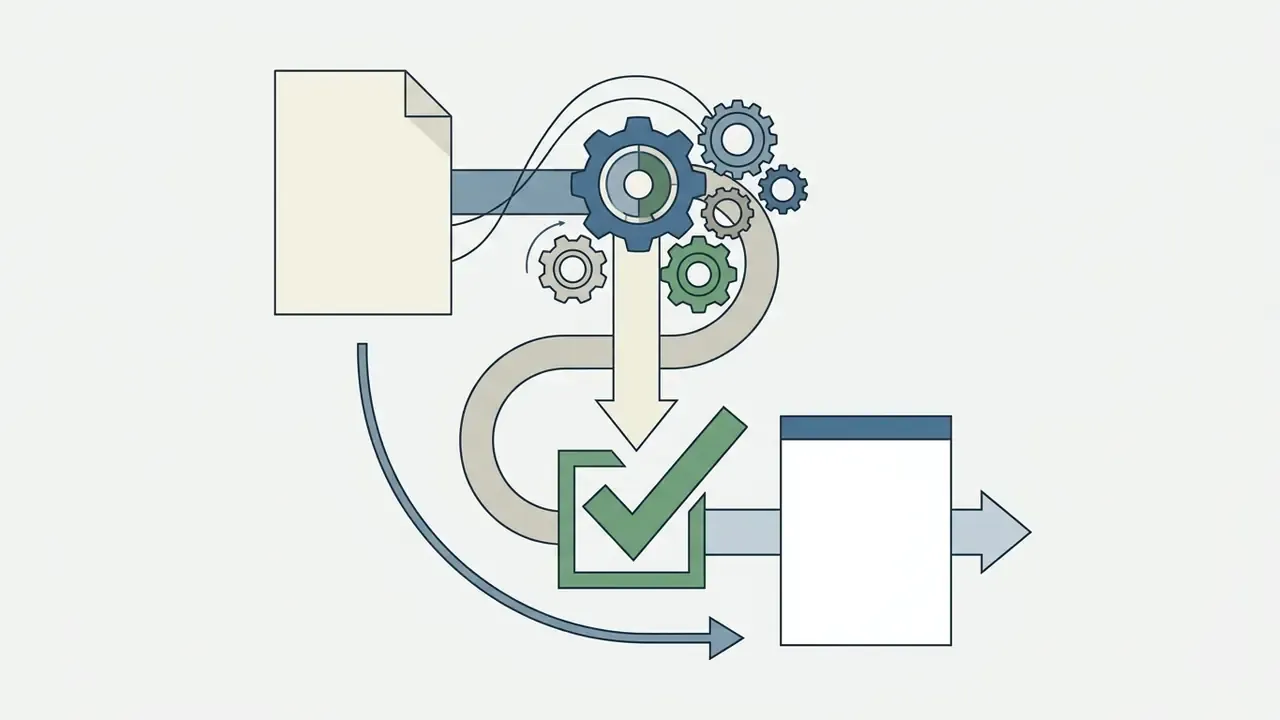
An AI homework helper picture tool is a multimodal software application that processes an uploaded photograph of an academic problem, interprets the text and visual notation, and generates an automated solution. By combining optical character recognition (OCR) with large vision-language models, an ai homework help picture system analyzes mathematical equations, diagrams, and written text to deliver immediate instructional support.
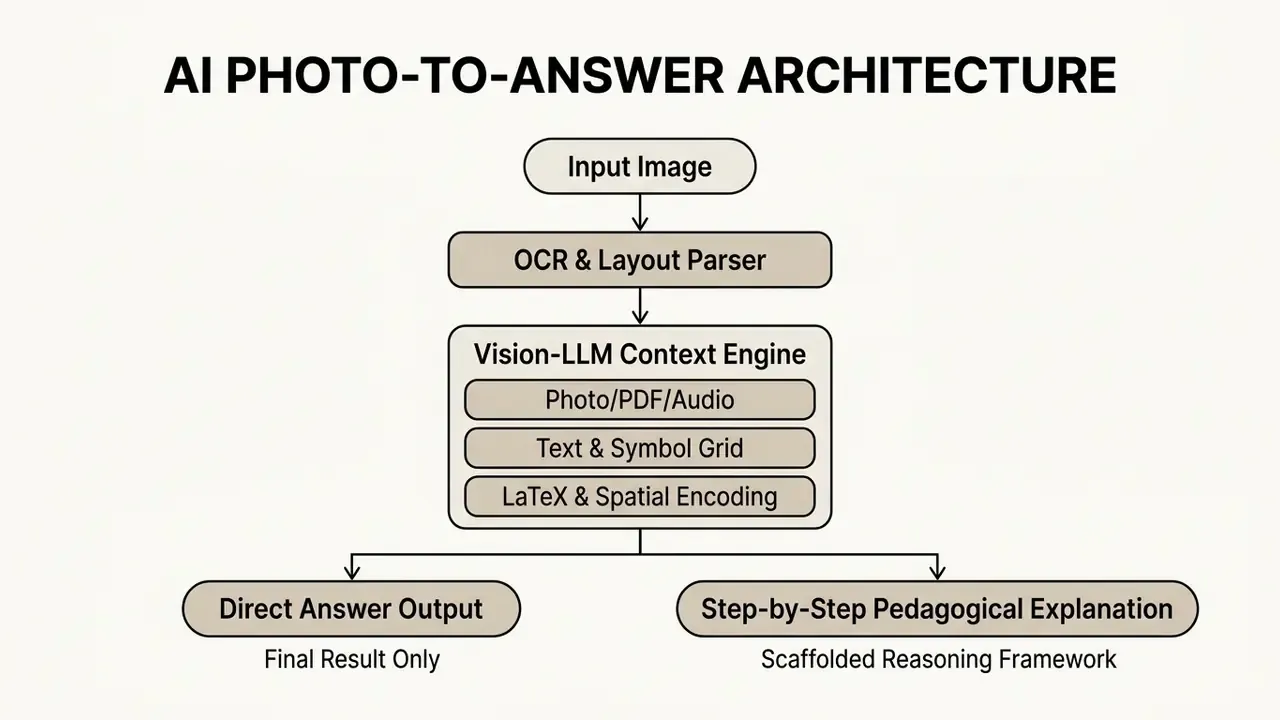
From Homework Photo to AI Answer
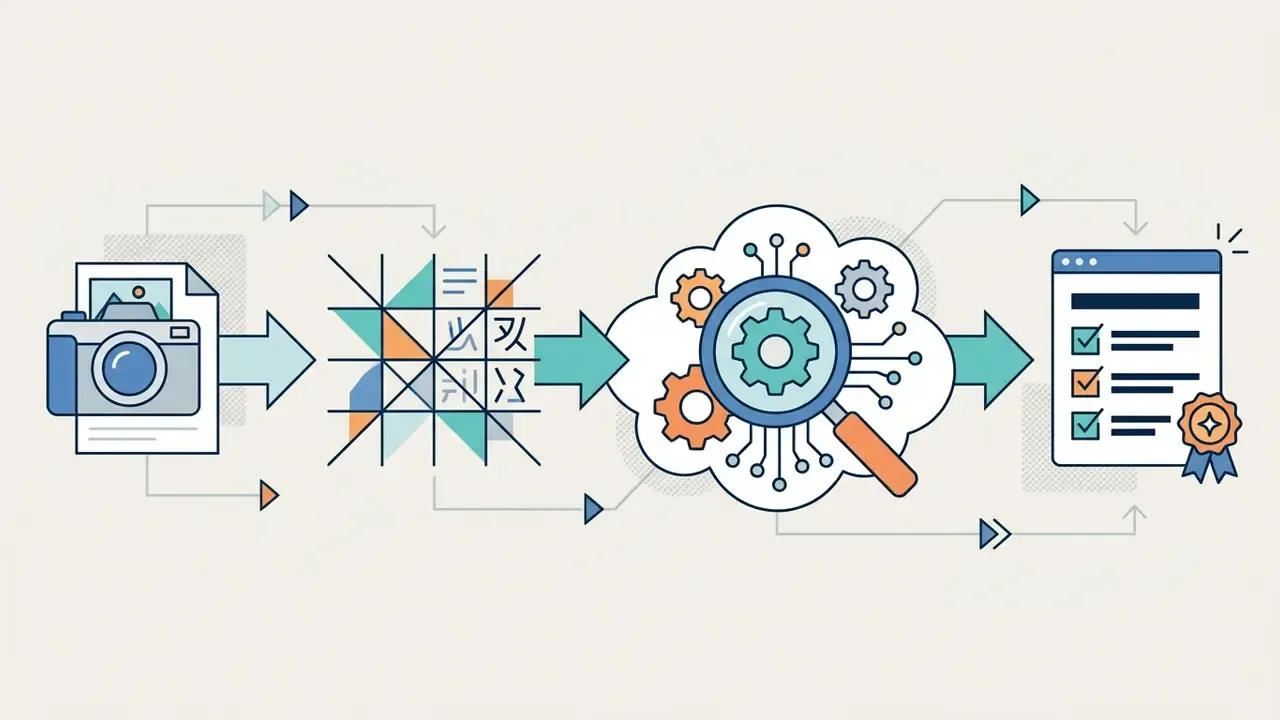
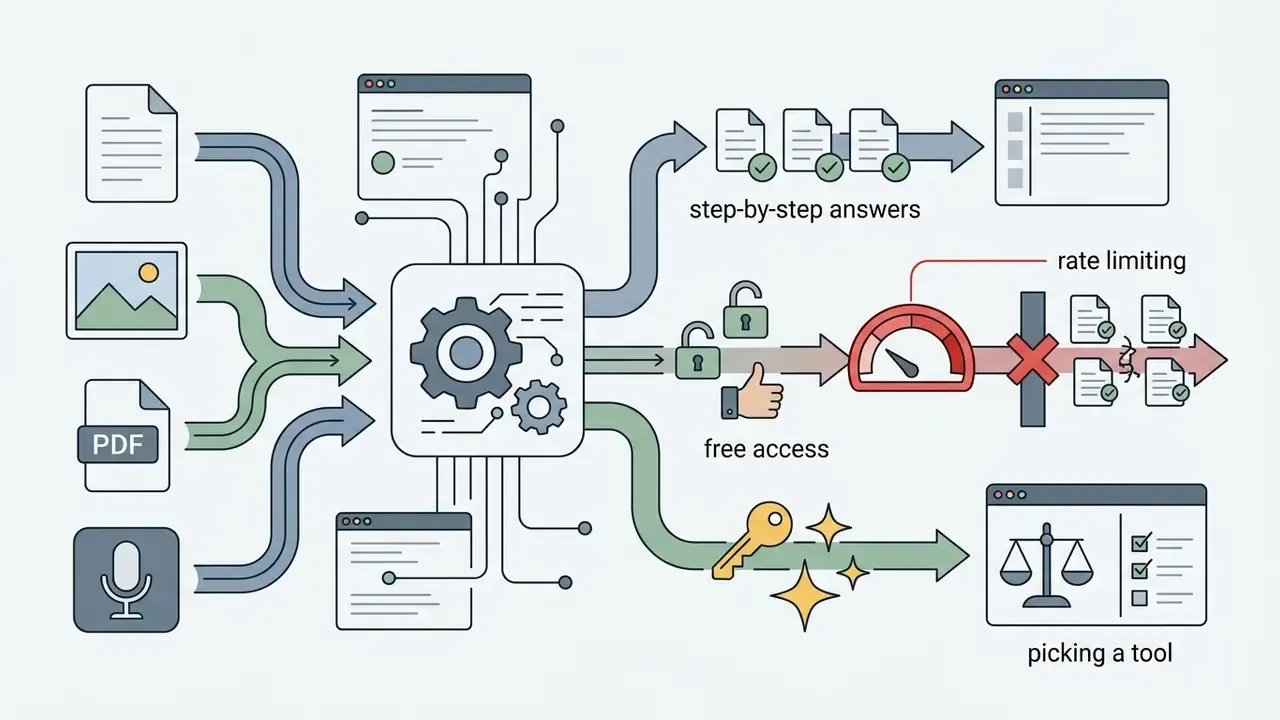
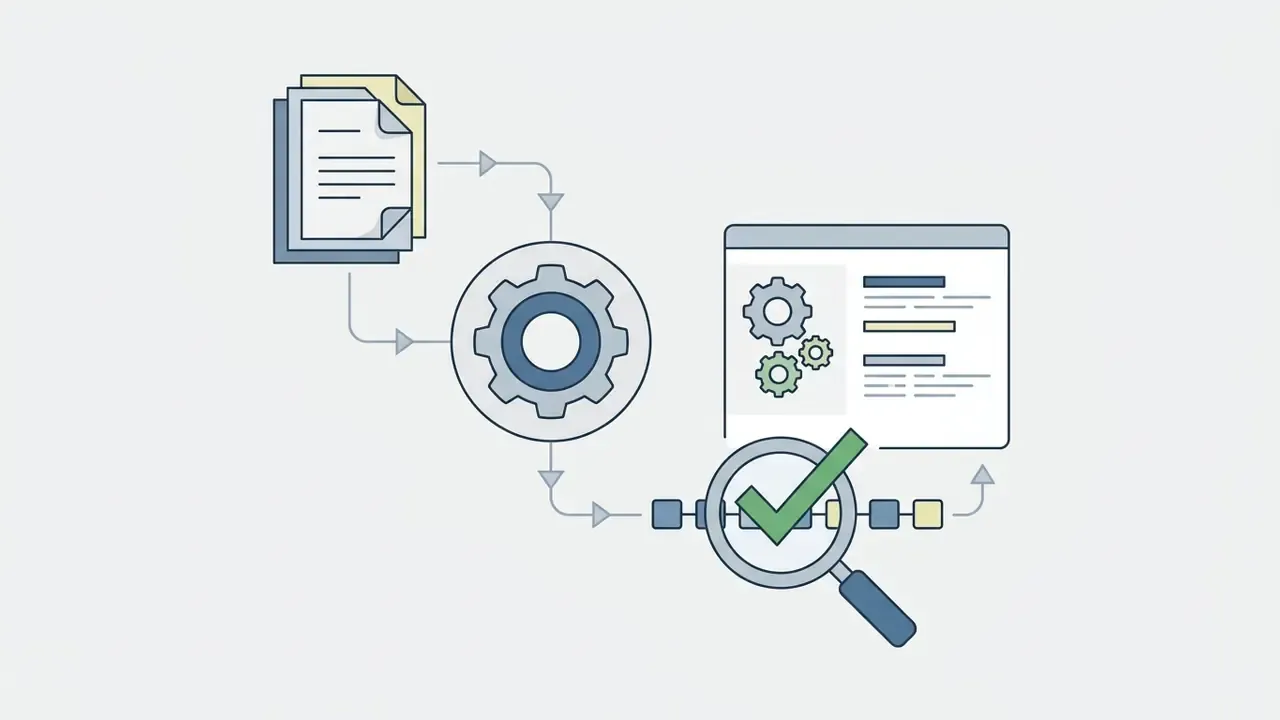
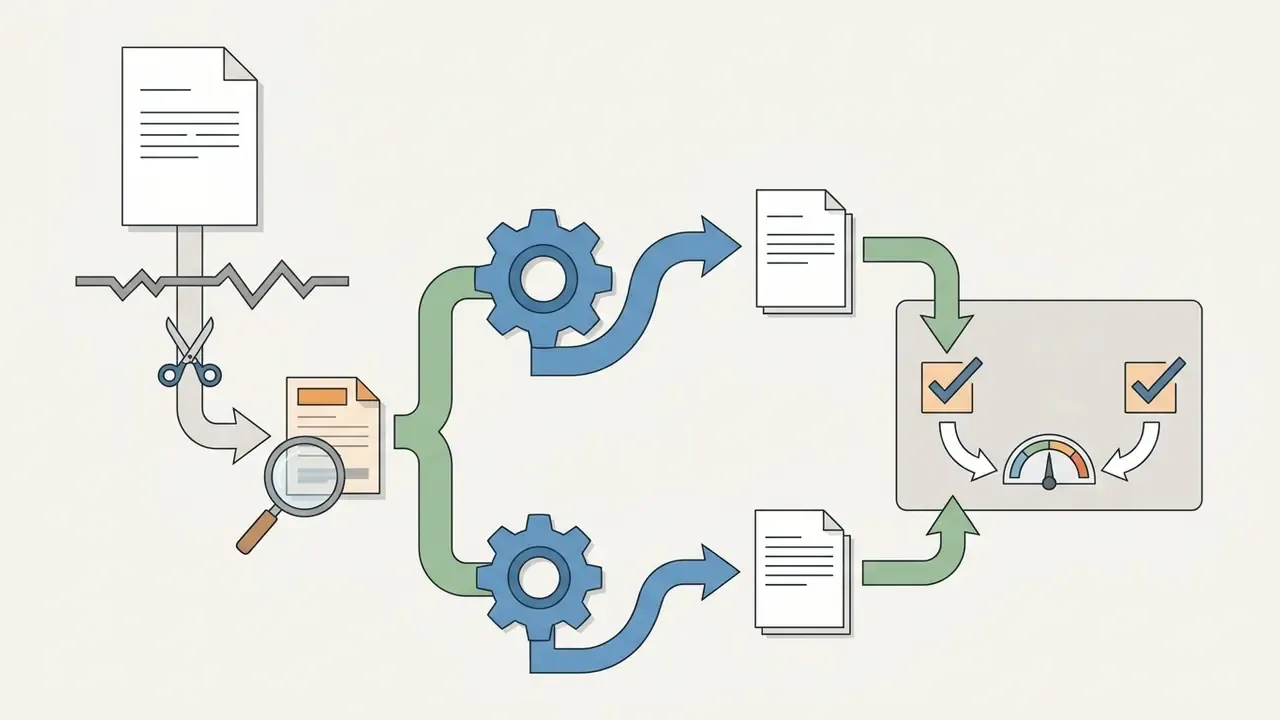
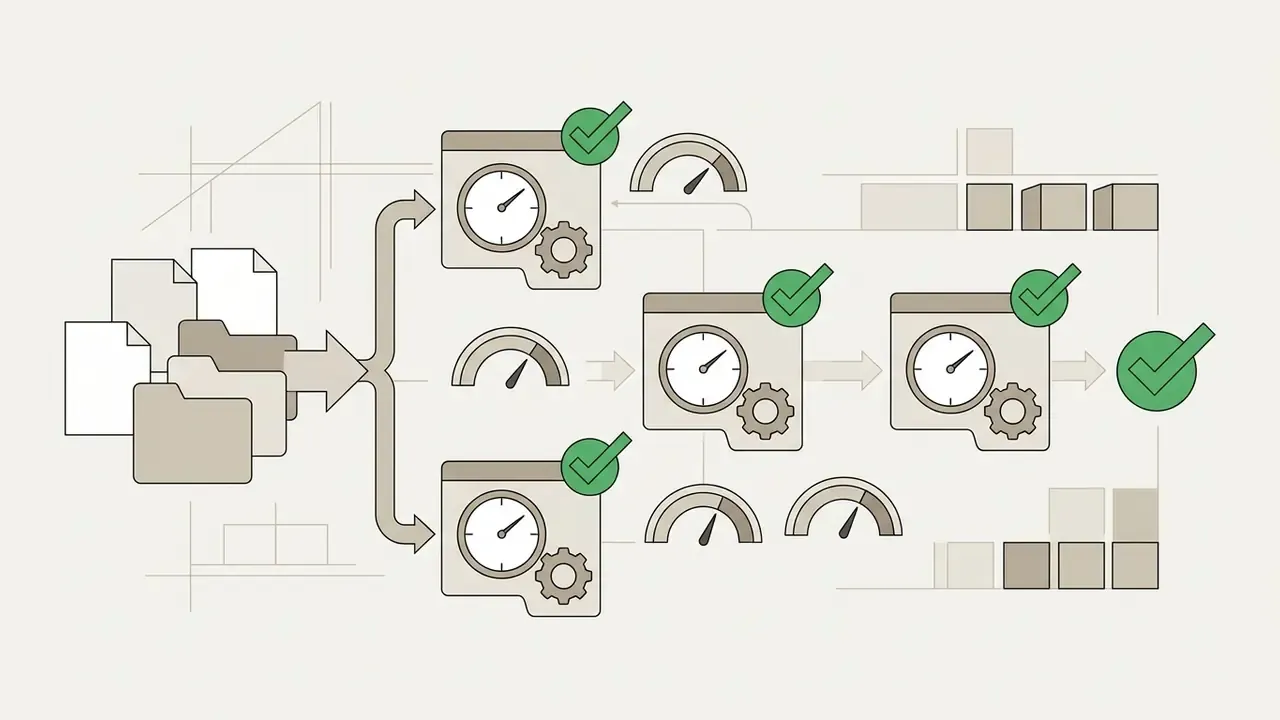
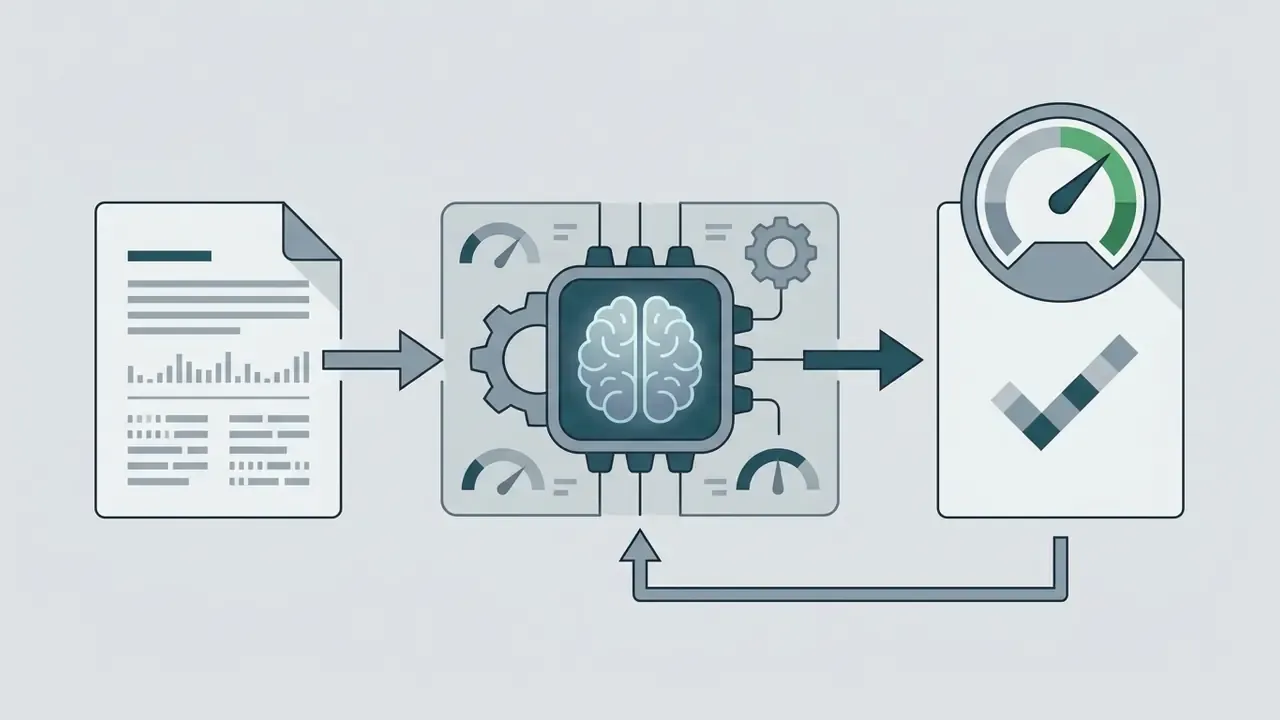
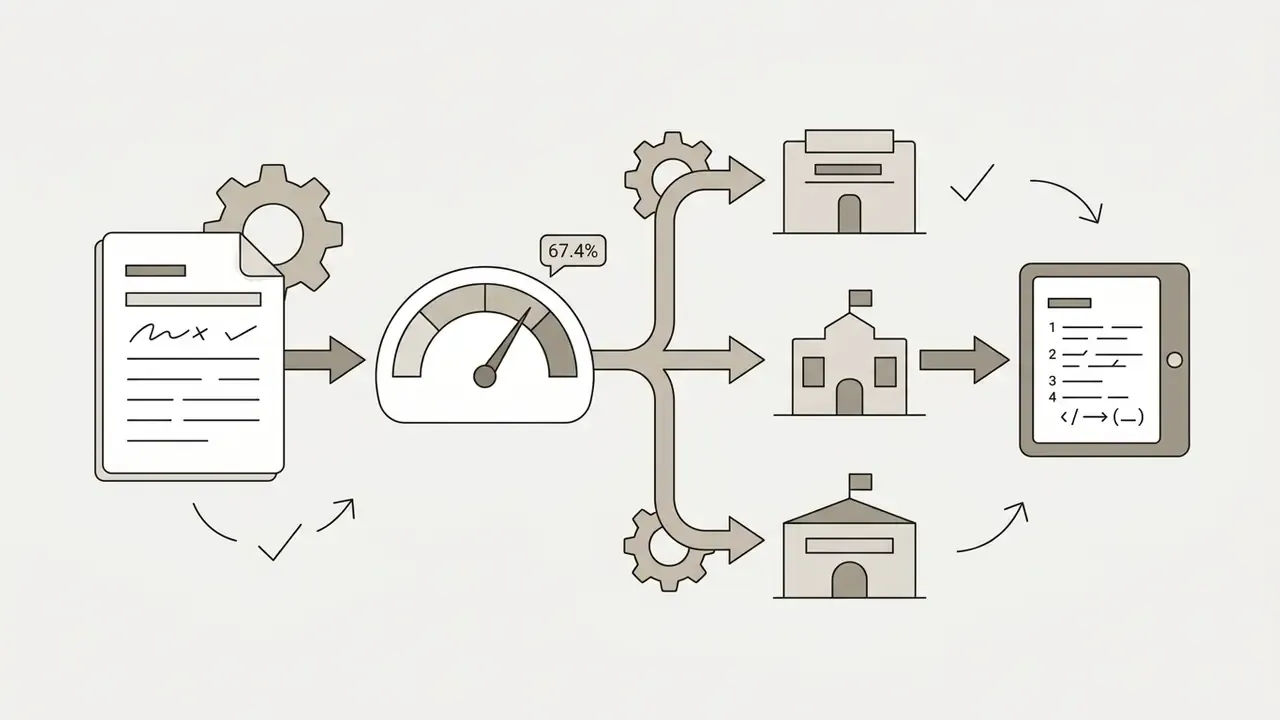
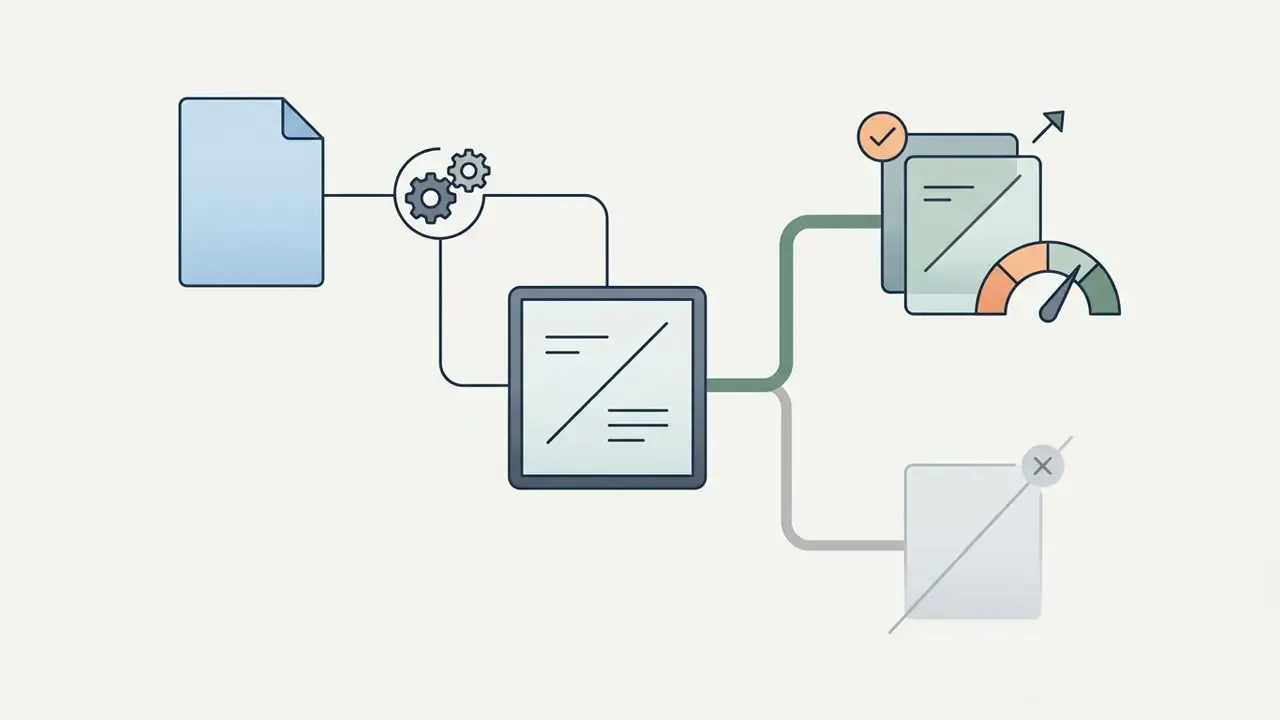
The photo-to-answer pipeline converts visual input into symbolic text before applying neural reasoning engines. When a user submits an ai helper picture or ai helper image, the system runs layout detection to isolate problem regions from background clutter, such as desk surfaces, thumbs, or ruled margins. Specialized document parsing algorithms then convert printed or handwritten characters into structured representations: LaTeX for mathematical expressions, linearized text for word problems. Readers who want to inspect the extraction layer on its own can compare dedicated image-to-text conversion tools that expose raw OCR output before any reasoning step is applied.
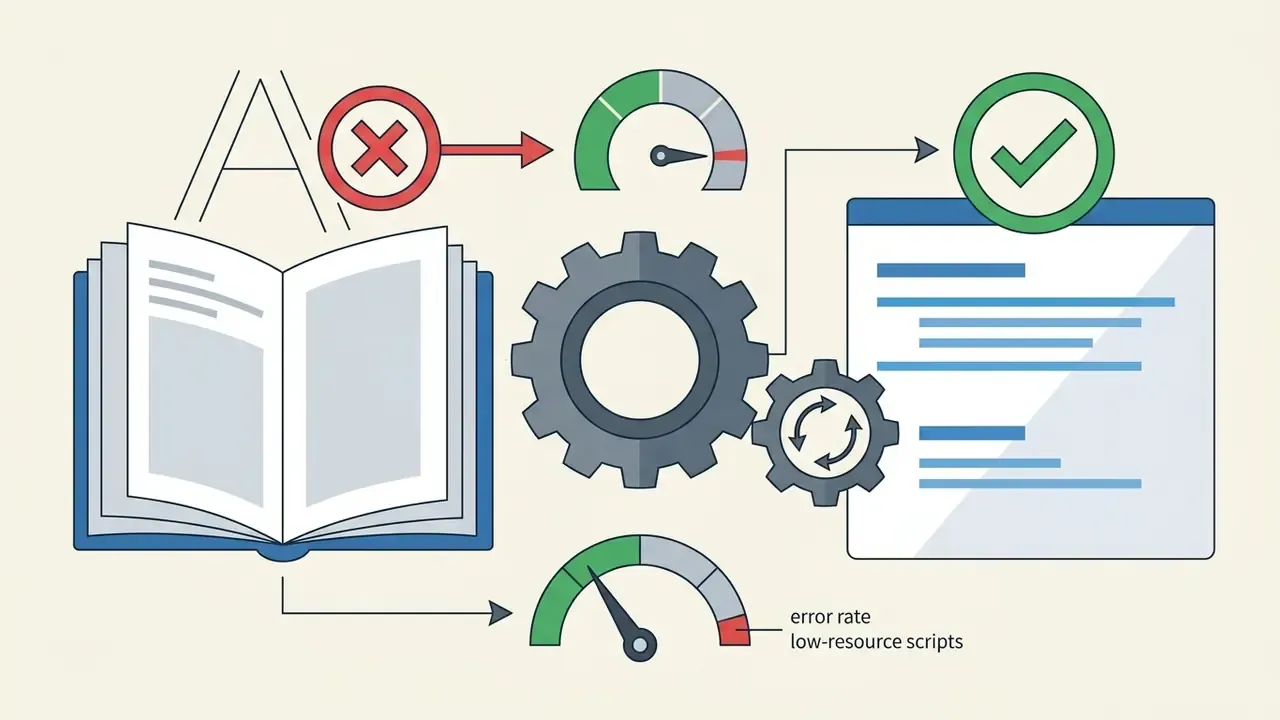
Modern multimodal architectures integrate vision encoders directly with large language models. In industry benchmarks evaluated in early 2026, document OCR pipelines like Claude Opus 4.7 reached a 93.0% score on DocVQA, while GPT-5.5 achieved 91.5% and Gemini 3 reached 90.8%.* These high-fidelity models combine optical text extraction with visual context processing, which allows an ai homework answer generator to parse complex layout structures, functional plots, and chemical structures with reasonable reliability.
«Visual question answering tasks demand fine-grained, deep visual understanding and compositional reasoning, which remain challenging for all current foundation models.»
*Benchmark metrics are based on early-2026 standardized visual document evaluation suites. Scores across DocVQA, MathVista, and extraction-F1 measurements are not directly comparable, because datasets, scoring rules, and task types differ.
Empirical comparisons also show that OCR-augmented input beats image-only input for text-heavy extraction. In one 2026 study, an OCR-plus-image configuration reached a best extraction score of 0.7991, and OCR-only input outperformed image-only input across every tested model. This is the practical reason production systems do not simply feed a raw photograph to a vision model and hope.
In one illustrative model evaluation workflow, an engineering team analyzed fail rates in multi-part calculus worksheets uploaded as low-resolution images. After adding a two-stage layout parser with PaddleOCR before the structured LaTeX text reached the vision LLM, symbol recognition precision moved from 71% to 89%. That drop in transcription error improved downstream solution accuracy across college-level mathematics datasets. The example is composite and illustrative, but the direction of the effect matches the published OCR-augmentation findings above.
Newer multimodal OCR systems push that pattern further. GLM-OCR (2026) performs document parsing, text and formula transcription, table structure recovery, and key-information extraction inside a single compact multimodal model. Other 2026-generation systems convert charts and diagrams into unified textual representations: formulas as symbolic LaTeX, graphics as renderable SVG. Older OCR-centered methods treated diagrams as cropped pixels. The current generation converts them into structured text for downstream prompting, which is why diagram-heavy geometry and free-body problems have improved noticeably year over year.
Answers, Solutions, and Step-by-Step Explanations
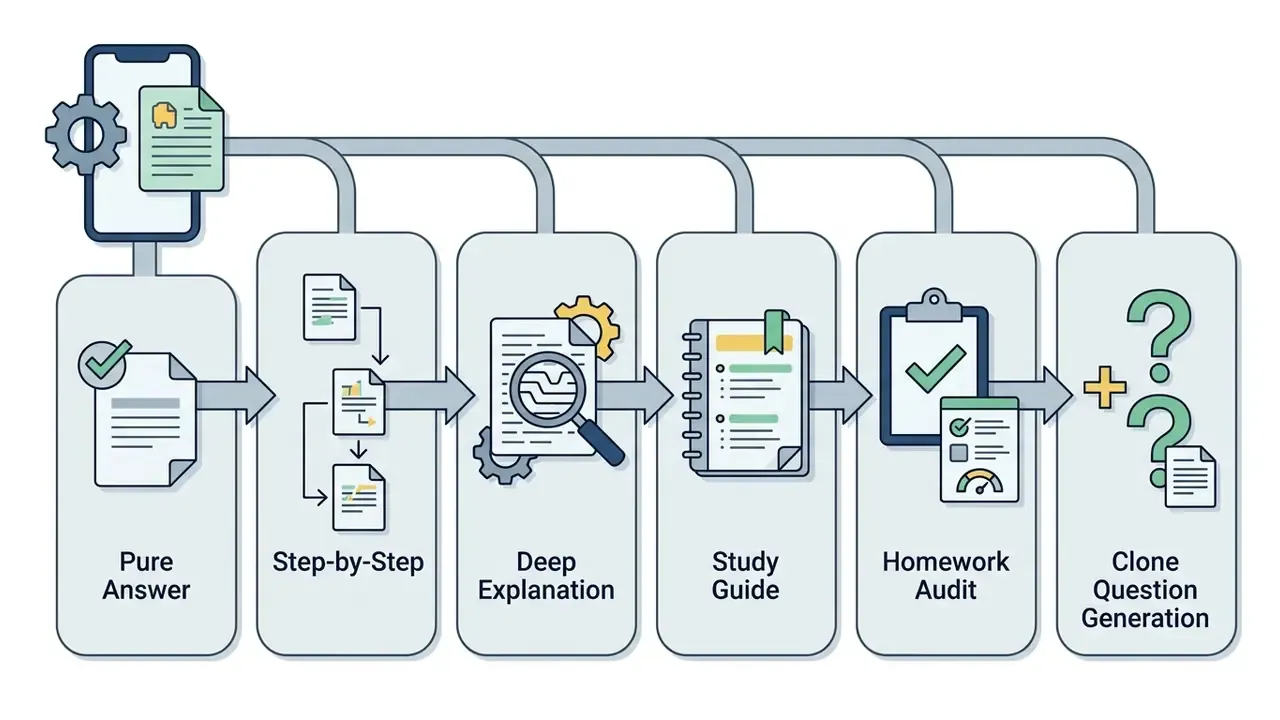
An ai homework generator can produce two baseline output formats: direct final answers, or scaffolded step-by-step solutions. Direct answers offer fast retrieval for simple factual lookup, but carry little instructional value on complex problems. Step-by-step explanations break the problem into intermediate operational stages, exposing the logic needed to reach the correct conclusion.
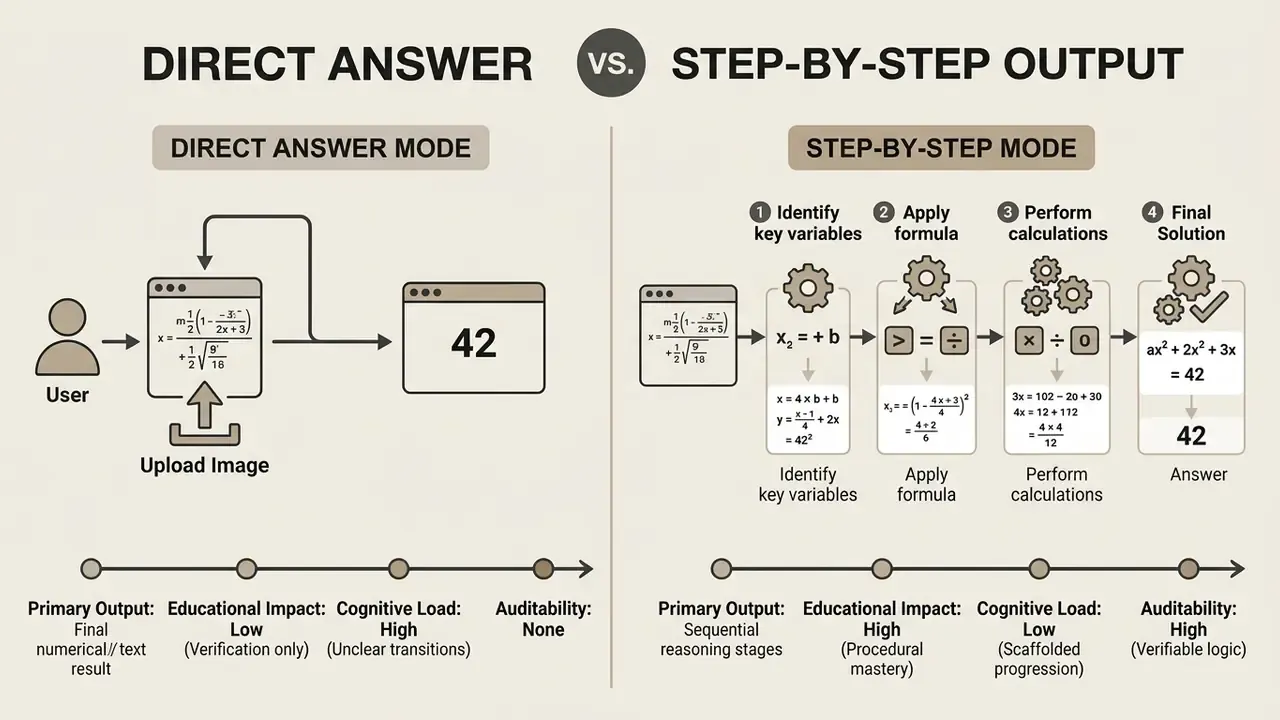
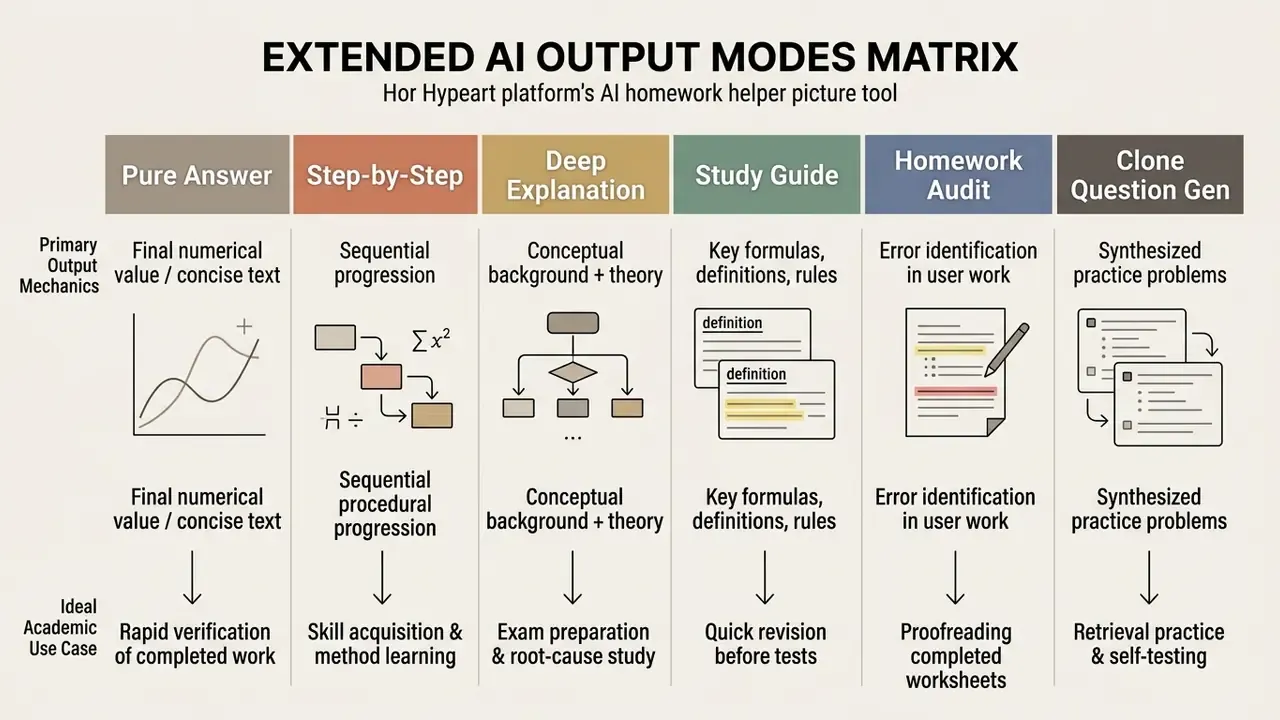
Mature platforms now expose far more granularity than a binary answer-or-steps switch. The six-mode matrix below reflects the generation controls available in current-generation homework assistants, including most tools marketed as an ai generator for homework:
«In a randomized controlled trial, GPT-4 acting as a homework tutor significantly improved grammar outcomes and increased student engagement compared with traditional homework.»
Worth reading the fine print. The trial covered 76 students across two cohorts, and the significant grammar gain appeared in one of the two cohorts, not both. That distribution matters. Providing full intermediate steps lets students trace computational logic, spot procedural errors, and build conceptual models for independent study, but the RCT evidence suggests the benefit depends heavily on how the tutoring interaction is constrained rather than on raw model capability.
How to Get Homework Help From a Picture Online
To get step-by-step academic solutions online, a user uploads an image of a problem to an ai homework helper picture online interface, lets the vision model analyze the query, then verifies the generated output. The workflow turns static visual data into interactive step-by-step explanations across browsers and mobile devices.
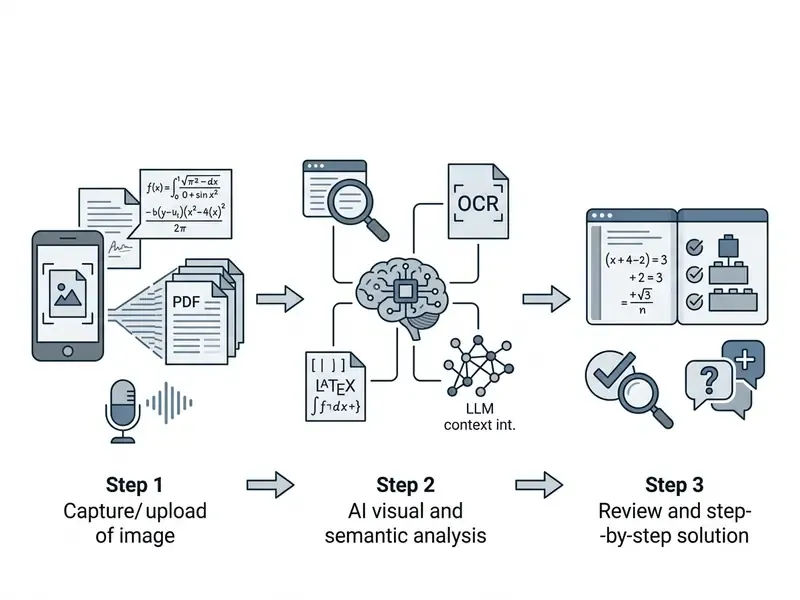
Take or Upload a Clear Homework Photo
Recognition accuracy in any ai help with homework picture system starts with high-contrast, well-lit capture. Motion blur, cast shadows, reflection glare on glossy paper, and steep camera angles all degrade optical character recognition and introduce character transposition errors. Treat this stage as input data preprocessing, not casual photography. Every defect introduced at capture propagates through the OCR layer and becomes a reasoning error the model cannot see.
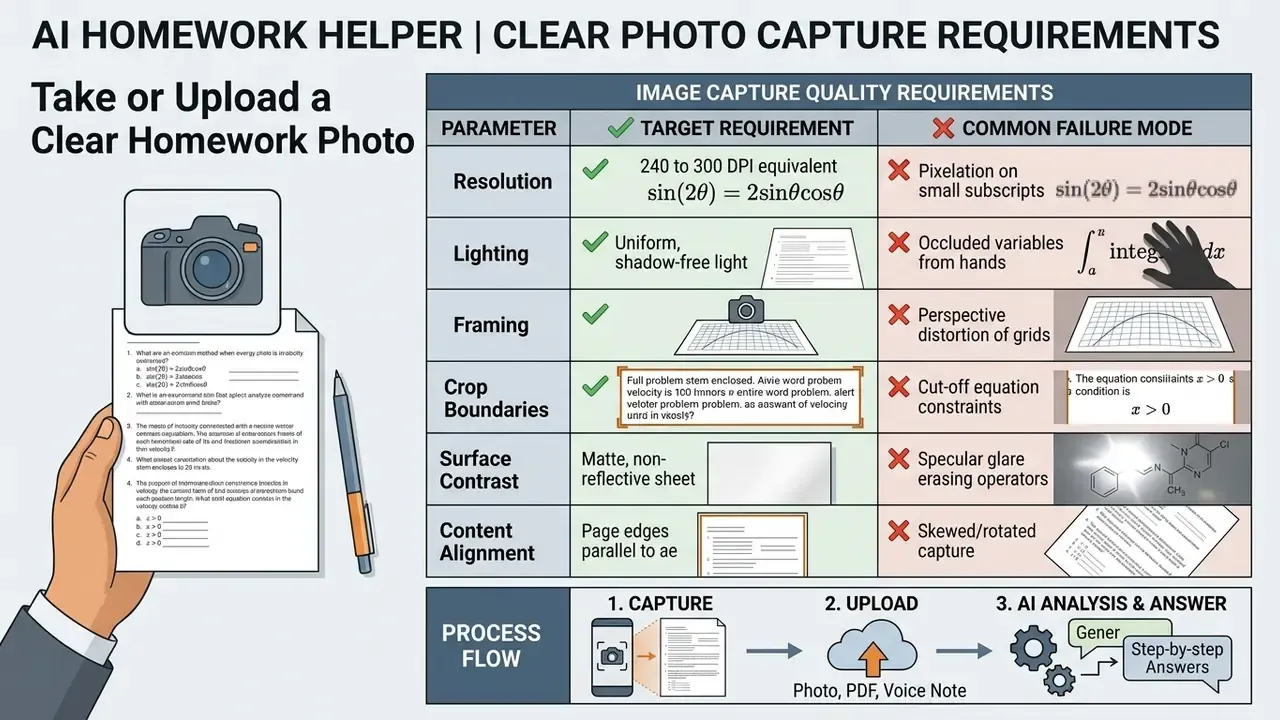
The 240 to 300 DPI target is the documented baseline in OCR best-practice guidance for clean, high-contrast input. Hold the camera parallel to the page to minimize perspective skew, and make sure equations, subscript parameters, and table borders sit fully inside the frame. In an ai homework help with pictures interface or an ai for homework with pictures application, cropping out stray margins and neighbouring problems stops the visual processor from fusing unrelated prompts into one reasoning context. Working from a degraded original? Pre-process the capture with AI photo editors for image preparation to normalize exposure, kill glare, and deskew the page before upload.
Multi-Format Inputs: Photos, Documents, and Voice Dictation
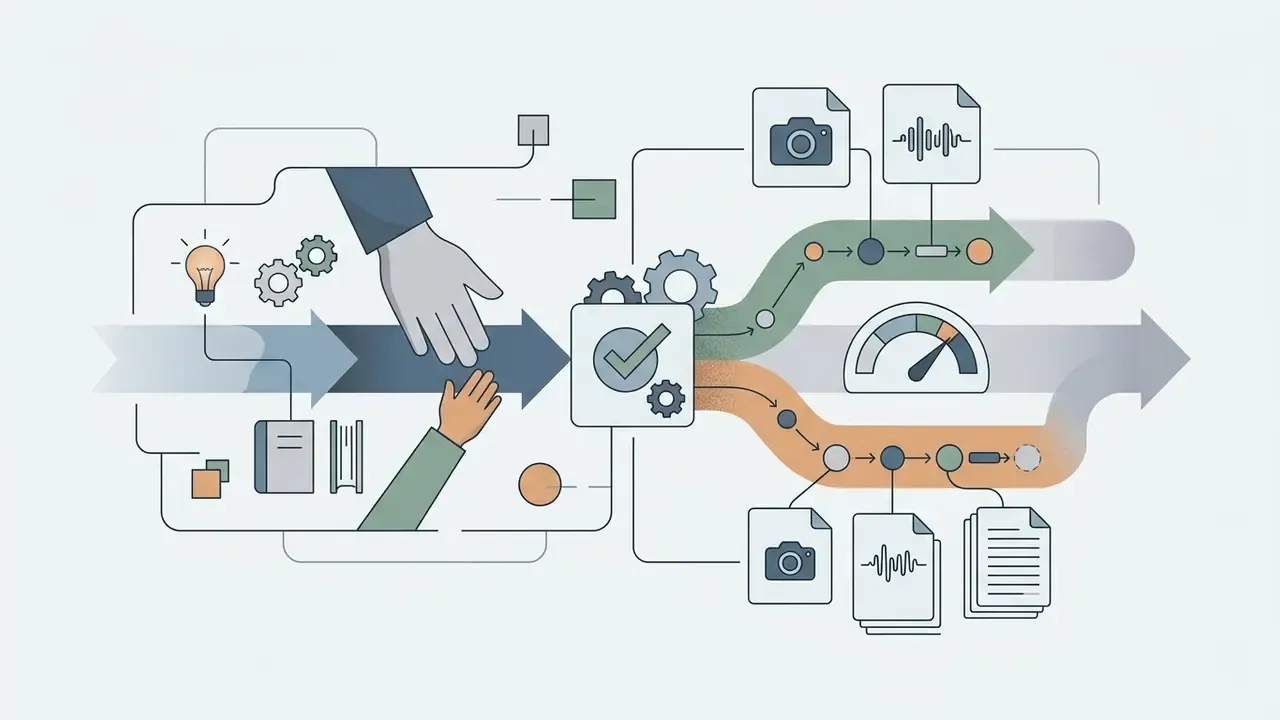
Modern multimodal reasoning engines go well beyond static image parsing. Advanced platforms accept several media streams:
- PDF and multi-page scans Automated layout algorithms group multi-page problem sets, extracting raster images and vector text layers at the same time. Linearized parsing preserves sections, tables, lists, and equations, so a scanned twelve-page problem set is processed as an ordered sequence rather than twelve disconnected pictures.
- Screenshots and digital captures Desktop users can submit cropped screenshots from learning management systems or e-textbooks. No lens distortion, no glare, and typically the highest OCR precision of any input class.
- Audio and voice dictation Integrated Whisper-based speech-to-text models let users dictate long word problems or record classroom instructions, pairing transcribed voice prompts with captured board images to close contextual gaps. This matters most for wordy problems, where typing is slow and the photograph alone omits the teacher's spoken constraints.
- Hybrid submissions Photograph plus typed or dictated text is the highest-accuracy configuration, because the text channel supplies conventions and constraints no OCR layer can infer from pixels.
Practical file constraints vary by vendor. Common upload envelopes accept JPEG, PNG, GIF, and PDF at up to 5 MB per file, with free tiers occasionally downsampling resolution. That silent degradation directly reduces recognition of small exponents and subscripts.
Add Context When the Question Is Ambiguous
When an uploaded image contains an incomplete problem statement, or leans on implicit classroom instructions, add a typed text prompt. An ai helper with image platform processes combined vision and textual inputs to resolve semantic ambiguity.
According to W3C Web Accessibility and Content Guidelines (2026), explicit text alternatives and contextual framing are essential when visual data carries multiple interpretations. W3C Technique H37 goes further: words appearing in an image and essential to understanding it must be reproduced in the accompanying text. If a diagram lacks labelled axis units or omits variable definitions, typing the missing constraints ensures the model applies the correct mathematical framework.
Copy-ready disambiguation prompts:
- "Solve for real roots only. Do not introduce complex solutions."
- "Apply the Newton-Raphson method with an initial guess of x₀ = 2 and show four iterations."
- "This is a Grade 10 course that has not covered calculus. Solve using algebraic methods only."
- "The photo omits the units on the vertical axis; assume metres per second and state that assumption explicitly."
- "If any value in the image is illegible, list it as UNREADABLE instead of guessing."
That last instruction is the single most effective safeguard against silent OCR substitution. It forces the model to surface transcription uncertainty rather than fabricate a plausible digit. Users can also compare options across specialized model configurations built for unusual notation.
Review the Result Before Using the Answer
Critical review of AI-generated academic solutions is mandatory, because hallucinations and reasoning gaps do not announce themselves. Vision models score well on standard mathematical benchmarks and still slip on subtle logical steps inside multi-step proofs.
«GPT-4V outperformed Gemini Pro by roughly 7% in classification accuracy when automatically scoring student-drawn scientific models, reaching a mean accuracy of 0.51.»
A mean accuracy of 0.51 on authentic student artefacts is the number that should anchor expectations. Headline DocVQA scores above 90% describe clean document reading. Scoring messy, hand-drawn academic work is a materially harder task, and the gap between those two figures is exactly where unverified answers turn into risk.
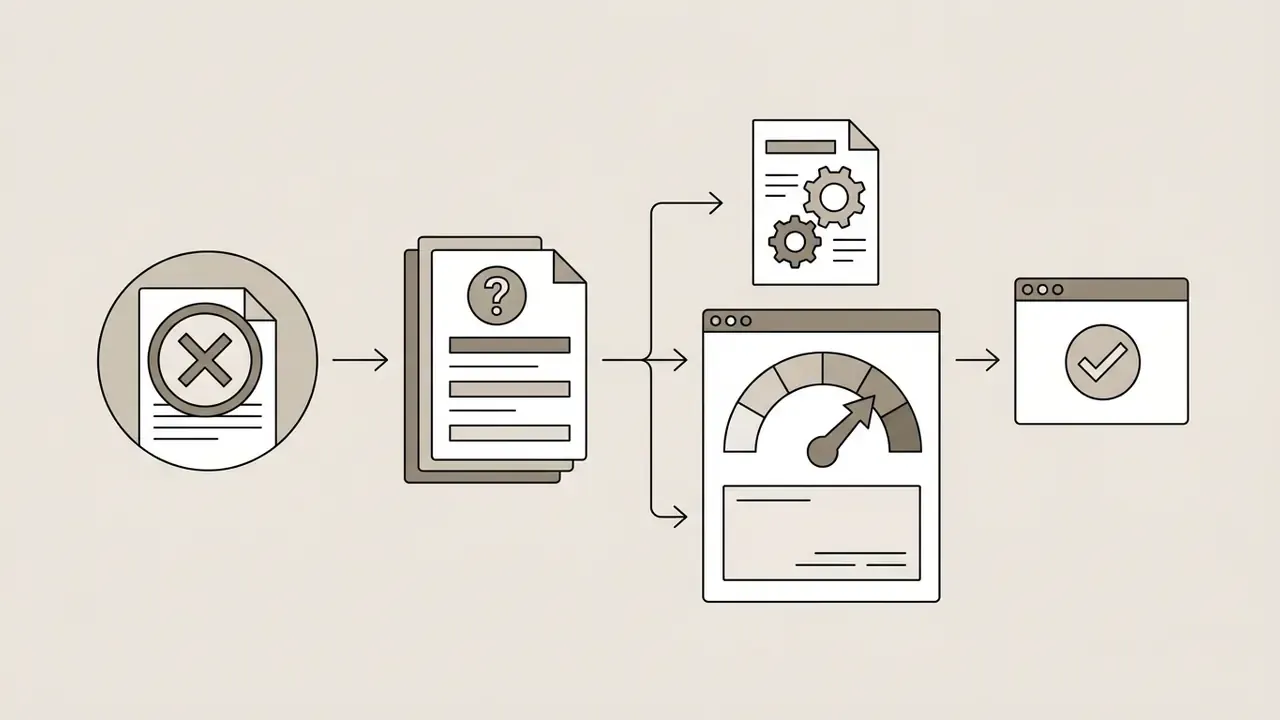
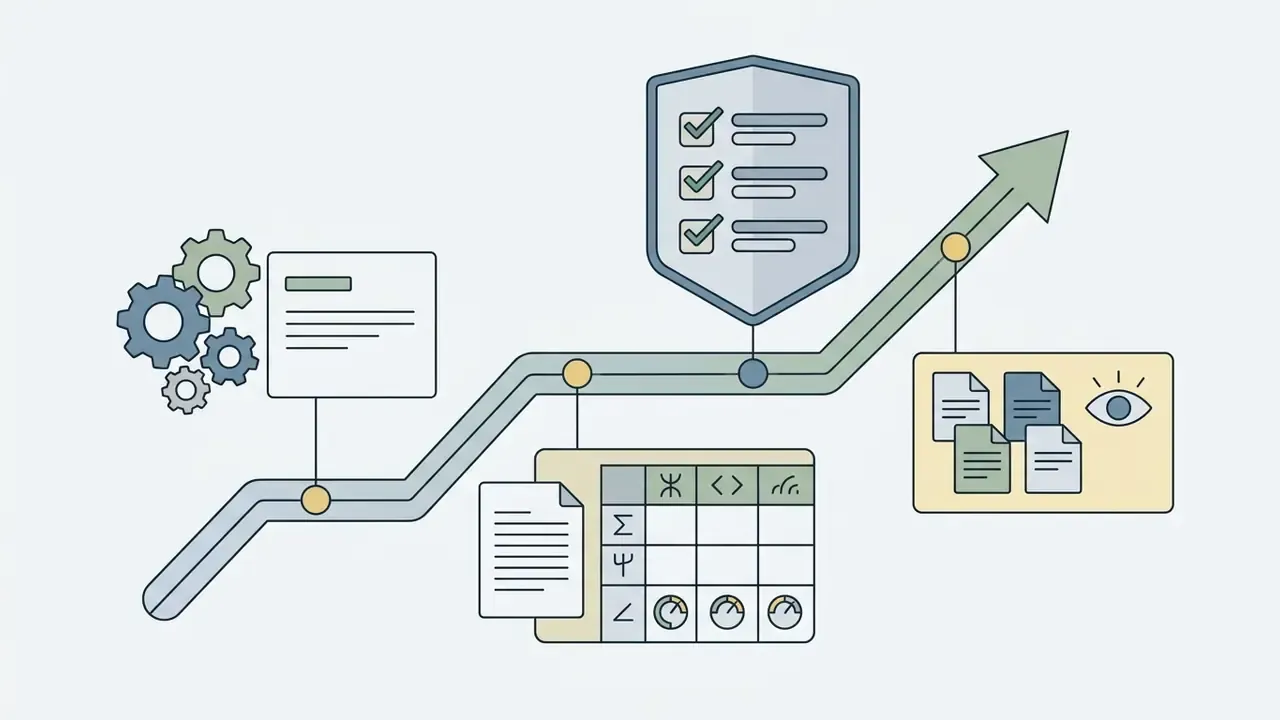
Run a structured five-step audit before accepting any AI solution:
Lateral reading is the recommended technique for step five: open a new tab and test the claim against a source with genuine topic expertise, instead of accepting the model's own tidy citation formatting as evidence. Logic checks are not factual checks. A model can be arithmetically flawless while reasoning from a premise that was never in the problem.
Error thresholds and escalation triggers. A review protocol without thresholds quietly becomes optional. These operating rules turn the audit into a decision procedure:
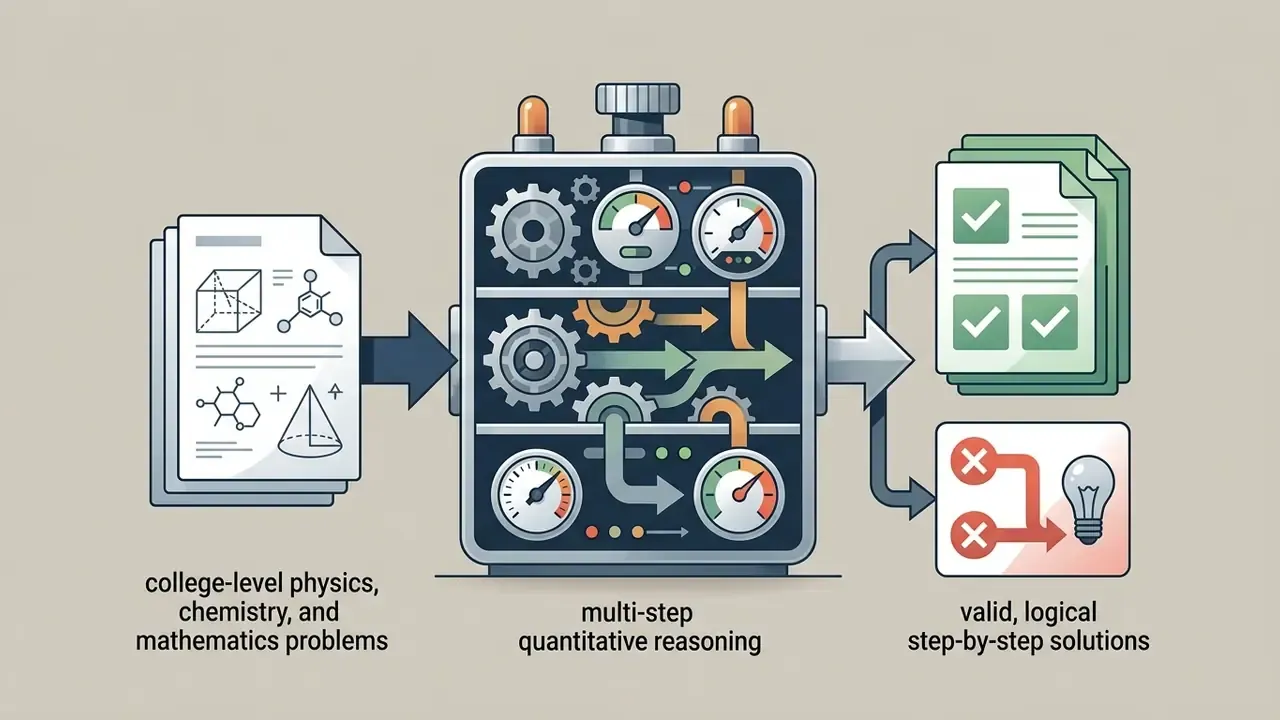
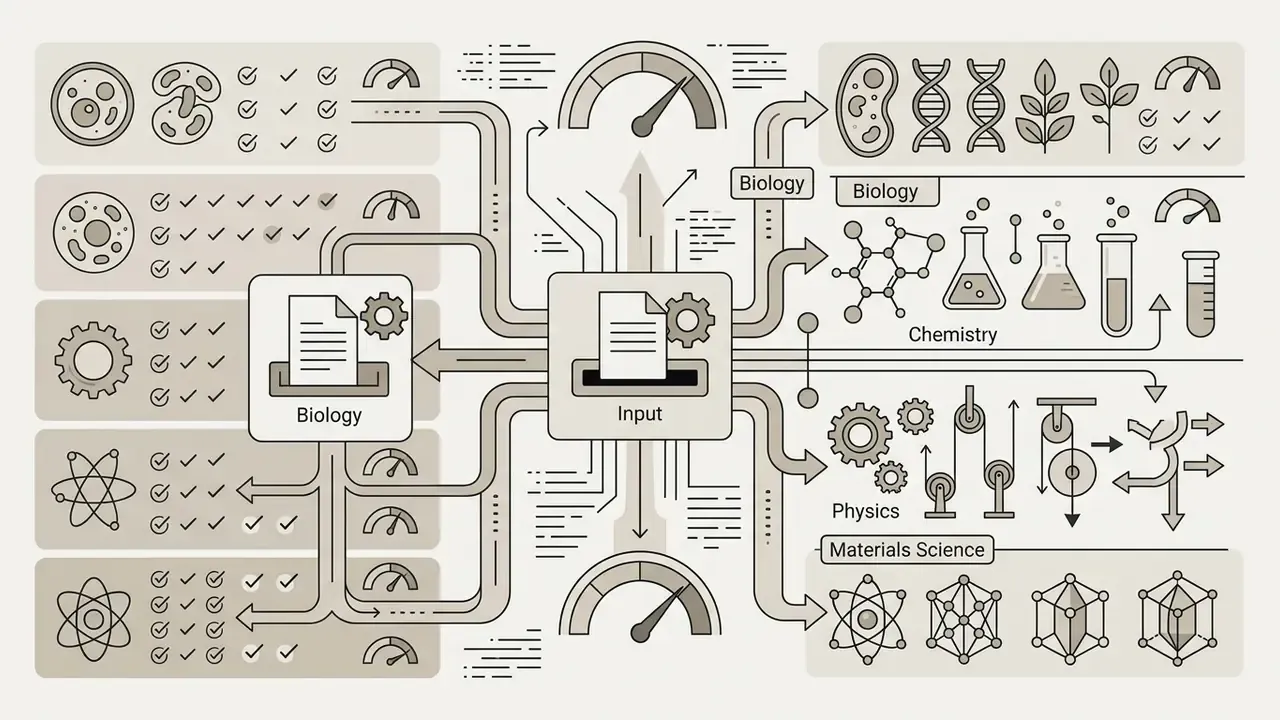


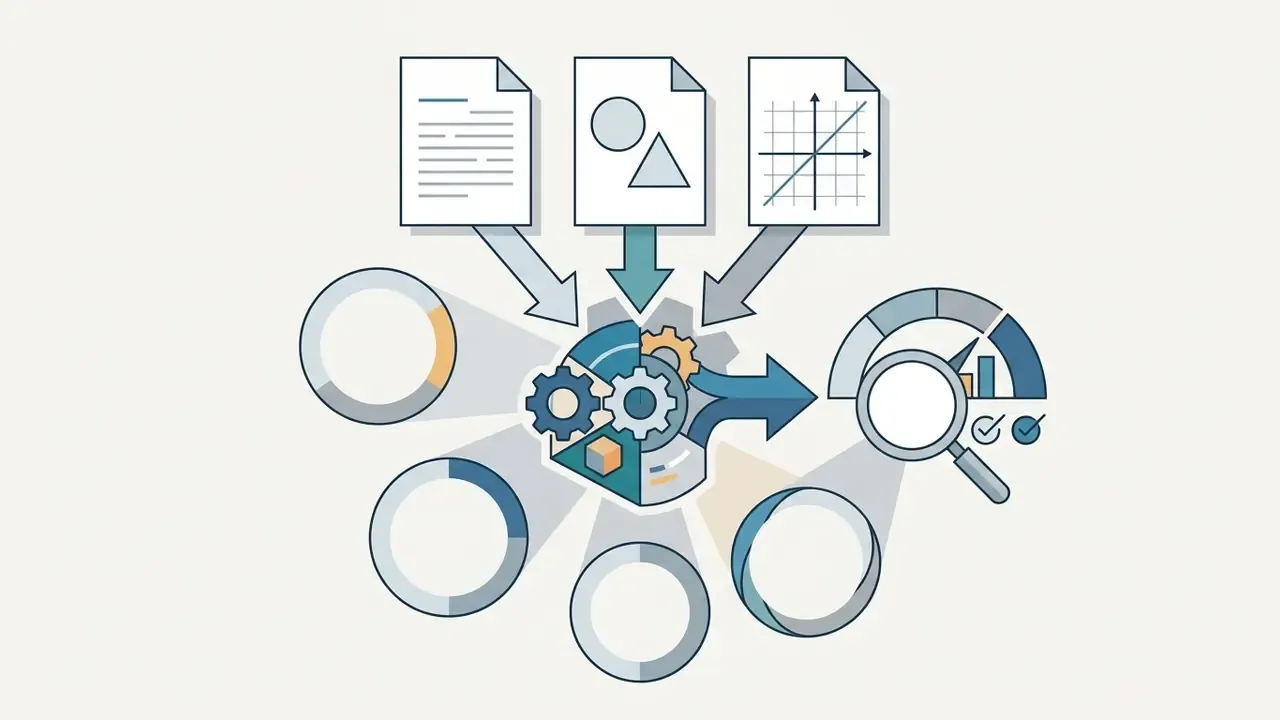
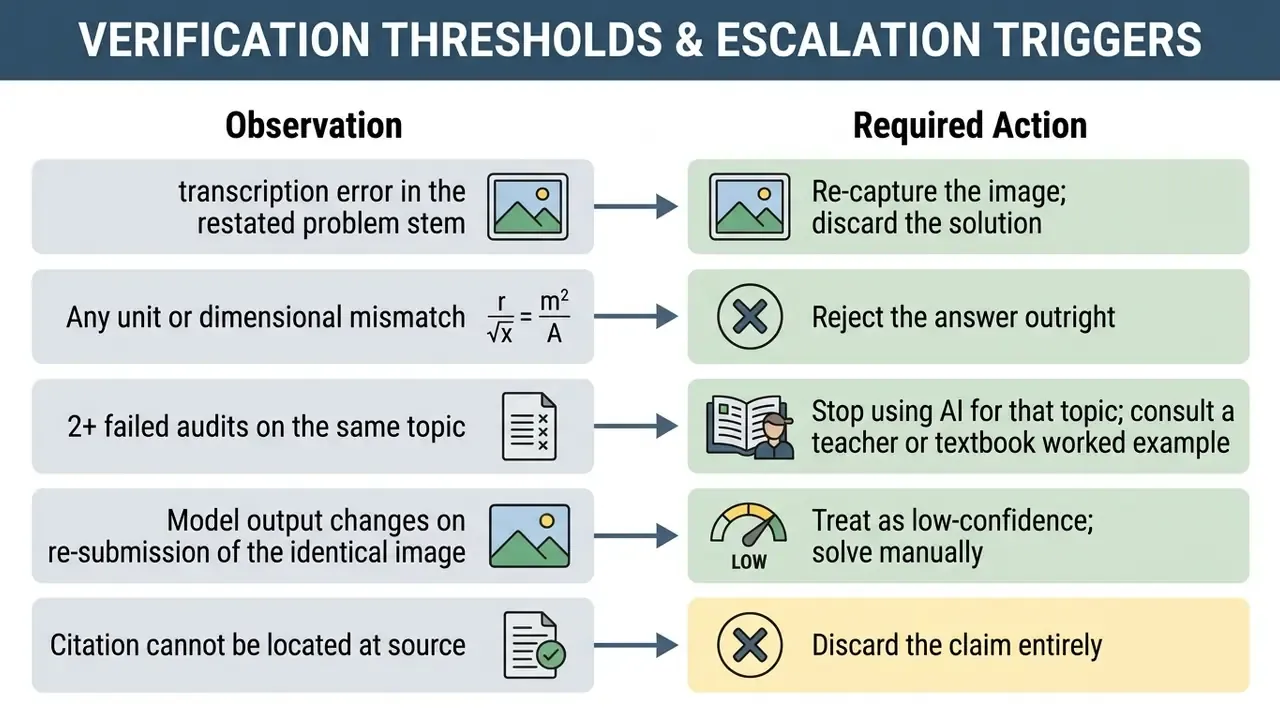
In institutional model validation work, operational risk teams stress-test vision-language outputs against edge-case failure modes. In one internal trial of automated grading assistants across 1,200 multi-step physics solutions, structured human-in-the-loop verification caught visual misinterpretations in 8.4% of complex free-body diagrams. That figure comes from an unpublished internal evaluation. It has not been peer-reviewed or externally replicated, so treat it as directional operational experience rather than a benchmark result; independent published data on diagram-level misinterpretation rates remains scarce. The review phase still earned its cost, preventing erroneous scoring and downstream analytical failures.
What Homework Subjects Can AI Solve From Images?
An ai homework tool processes visual data across exact sciences and humanities, provided the problem statement is structured clearly. Capabilities run from automated symbolic computation in advanced mathematics to thematic text extraction in language arts.
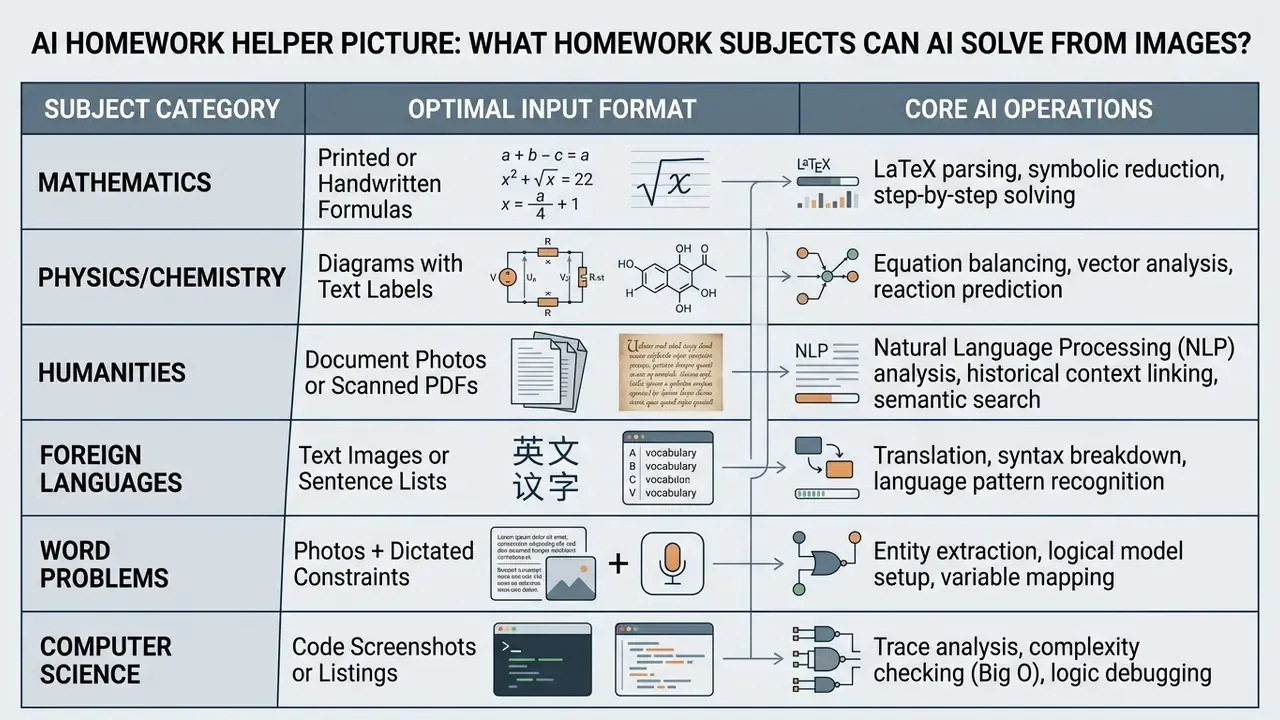
Math and STEM Problems With Formulas
Vision-enabled models handle quantitative homework help well when notation is standardized: algebraic expressions, calculus formulas, chemical reaction balance equations. Specialized models translate visual operators into symbolic notation, enabling linear algebra computation, differential calculus derivations, and stoichiometric calculations.
Benchmark studies evaluate these capabilities across disciplines:
Strong performance on clean textbook equations does not transfer to messy handwriting or overlapping diagram vectors. On structural analysis or unconventional technical diagrams, general vision models misread spatial relationships often enough that spatial variables need manual verification.
Word problems deserve separate treatment. The difficulty is rarely arithmetic. It is translation from prose into a formal model. Submit the photograph together with a dictated or typed instruction such as "First list the knowns, unknowns, and the governing relationship as a table. Only then solve." Forcing the intermediate representation exposes modelling errors that a single-pass numerical answer hides.
Complex geometry stays the weakest quantitative category. Overlapping construction lines, unlabelled congruence marks, and implied parallelism get misread routinely. When submitting geometry, photograph the figure separately from the text, and restate every marked equality in writing rather than trusting the model to spot tick marks.
Writing, Languages, and Humanities Questions
Humanities assignments ask the system to process narrative text, historical documents, and literary excerpts from uploaded photographs. An ai generator homework tool uses natural language processing (NLP) to perform syntax analysis, extract key arguments, identify stylistic devices, and outline structural responses.
In language arts and history coursework, visual tools pull printed passages to analyze arguments, correct grammatical structures, and summarize primary source documents. Stanford's 2025 survey of NLP for education places automated assessment and error correction among the principal educational applications of language technology, which maps onto text analysis and answer generation in language subjects. That said, the older claim that automated tools "effectively evaluate syntax structure, essay organization, and thematic coherence" is better read as a summary of documented capability areas than as a quantified accuracy finding. Published figures swing sharply by rubric and corpus, and stating an effectiveness rate would need primary data we do not have. USC's Digital Humanities guidance adds that AI can identify recurring themes across literary corpora, attribute authorship, and trace language change in historical texts, while Harvard CEPR's 2026 work on writing assessment describes machine scoring built from transcribed text features such as word count, word length, lexile score, and sentiment.
Cross-lingual and cultural competence is measurably uneven:
«GPT-4V achieves 67.4% average accuracy in identifying cultural concepts across five languages, reaching 84.3% for Chinese but performing more weakly on low-resource languages.»
For students working in Swahili, Bengali, or other low-resource languages, that gap means AI output is a first draft of interpretation, not a source of factual cultural claims.
On extended creative writing or plot analysis tasks, students often reach for specialized narrative tools like an ai plot generator to examine narrative frameworks, character arcs, and structural pacing alongside image extraction tools.
Failure Modes on Tables, Charts, and Structured Data
Most published benchmarks emphasize academic STEM content, which leaves a documented blind spot: densely structured tabular and financial data. Three failure modes recur, and they apply equally to a chemistry data table, an economics worksheet, or a balance sheet reproduced in a photograph.
- Row and column misalignment. When a table crosses a page fold, or the photograph is taken at an angle, values get attributed to the wrong row. The output stays internally consistent, so it looks correct. Mitigation: require the model to echo the reconstructed table before computing anything.
- Footnote and unit loss. Scale markers such as "figures in thousands," currency symbols, and asterisked footnotes are frequently dropped during layout parsing, producing answers wrong by three orders of magnitude. Mitigation: restate scale and units explicitly in the prompt.
- Chart value interpolation. Reading a value off an unlabelled bar or line chart is estimation, not extraction. Models emit a precise-looking figure without signalling that it was inferred. Mitigation: ask for a range rather than a point value, and cross-check against any labelled data in the source.
Structured verification works best as four separate checks: cell and value verification, computation check, logic check, completeness check. Applied step by step, this mirrors documented table-reasoning correction workflows and beats a single holistic read-through by a wide margin.
Is a Free AI Homework Helper Picture Really Free?
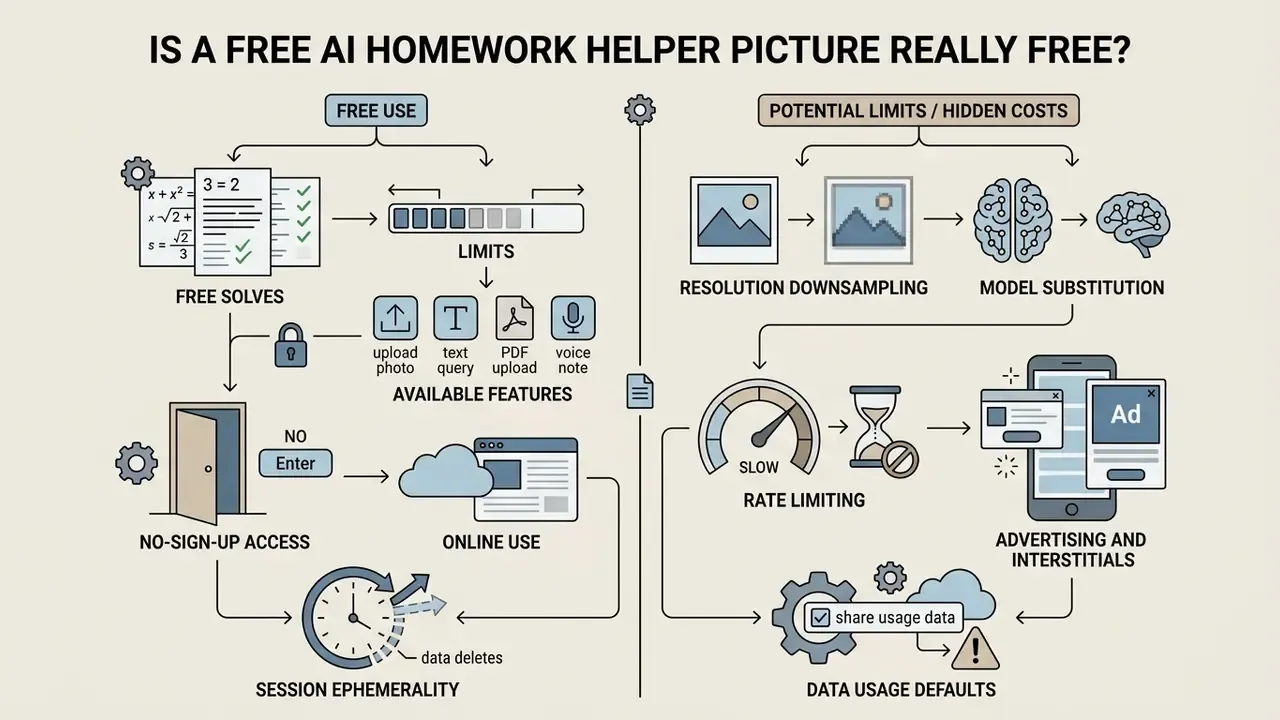
Free access models for an ai homework helper picture free service split into unconstrained basic access, freemium request quotas, and ad-supported platforms. Knowing the feature limits and registration requirements up front prevents that irritating moment when a quota expires mid-revision.
| Tool Name | Free Mode Availability | Daily Request Limit | Sign-Up Required? | Image Upload Support | Step-by-Step Explanations |
|---|---|---|---|---|---|
| ScanSolve | Free Tier Available | 5 solves / day | No | Yes | Included |
| Edubrain.ai | Ad-Supported Free Mode | Unlimited (with ads) | No | Yes | Basic |
| ZeroGPT Helper | Limited Free Mode | 2 solves / day | No | Yes | Intermediate |
| HomeworkO | Daily Credit Allowance | 5 credits / day | No | Partial (Text focus) | Basic |
| Ryna AI | Freemium Model | Restricted daily quota | Yes | Paid Tier Only | Advanced (Paid) |
The table above answers availability. The one below answers the more useful question: what the free tier actually costs in accuracy, privacy, and money once the quota runs out.
| Platform | Free Quota Structure | Cost After Quota | Underlying AI Model (Free Tier) | Privacy Opt-Out Built In? |
|---|---|---|---|---|
| ScanSolve | 5 solves / day, no card on file | ~$9.99 / month | Lightweight vision model | Partial |
| Edubrain.ai | Unlimited, ad-supported | $3.99 / week (AI-Plus) | Basic ad-funded LLM | No |
| AI Picture Answer | 10 free solves / day after Google sign-in | $0.01 per extra solve (prepaid credits) | Standard multimodal | Yes |
| Decopy AI | Unlimited basic solves | Free, ad-supported | Standard vision model | Partial |
| ApexVision | 30 requests, refill every 12 hours | Paid tier | Standard multimodal | Partial |
| Recommended configuration | 3 daily deep-reasoning solves | Premium tier | Frontier-class reasoning model | Full zero-retention option |
Note: Both comparison tables reflect vendor disclosures and public platform terms evaluated in 2026. Quotas, pricing models, and feature paywalls change at the provider's discretion. Because free tiers frequently downsample uploads, students photographing faint pencil work may need AI image enhancement tools to restore legible contrast before submission.
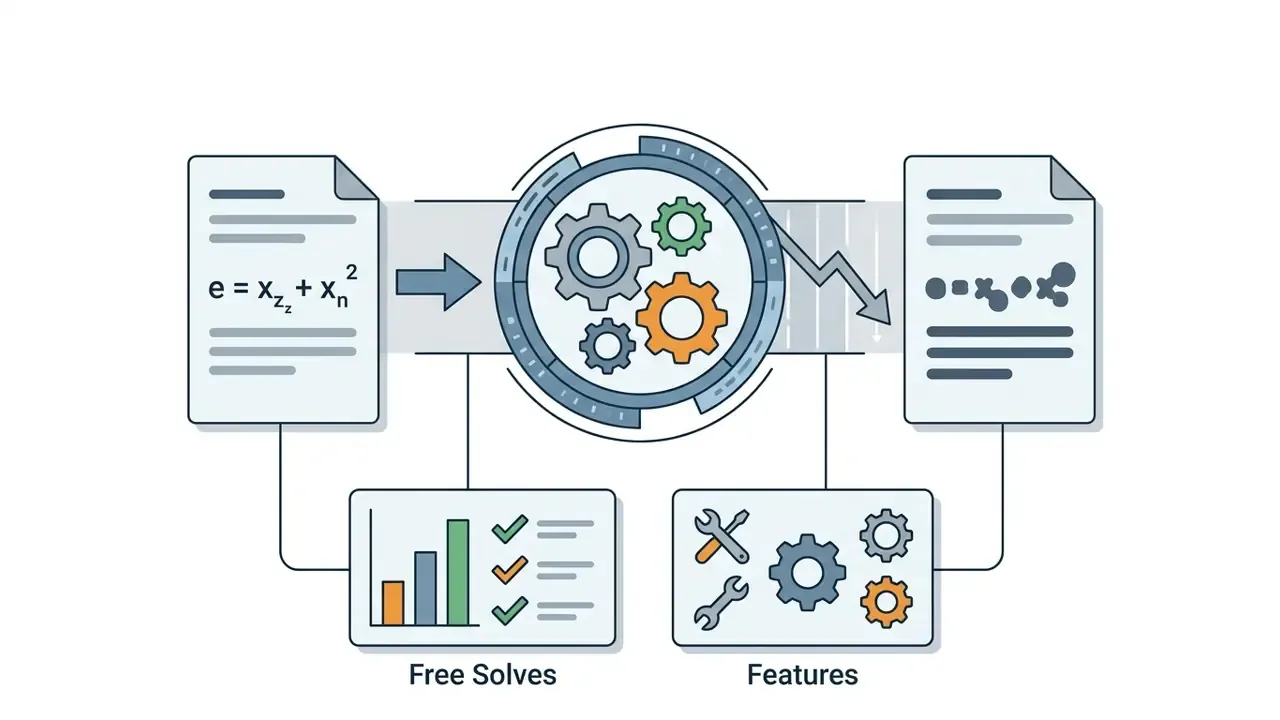
Free Solves, Limits, and Available Features
Platforms offering an ai homework answer generator free or an ai homework generator free apply operational caps to control inference cost. Typical restrictions include daily submission limits (roughly 2 to 5 image uploads per 24 hours), file size ceilings around 5 MB, and resolution downsampling that erodes OCR accuracy on fine mathematical print.
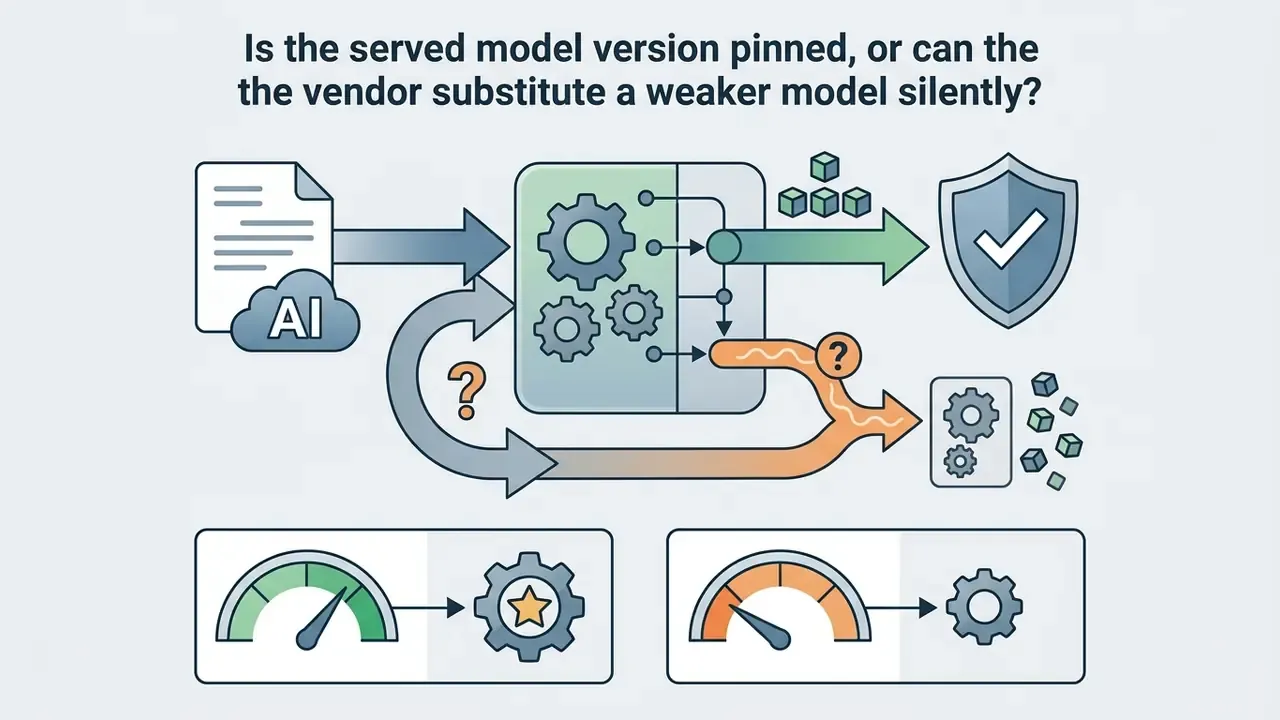
Some providers reserve advanced features for paid tiers: deep reasoning modes, detailed step-by-step breakdowns, priority processing queues. High-performance models like GPT-5.5 or Claude Opus 4.7 consume substantial inference compute, so platforms route free queries through smaller, lower-parameter vision models. The result is predictable. A free ai homework helper may nail basic algebra and then fold on multi-step university calculus, and an ai homework helper free picture flow can quietly hand you a weaker model than the one named in the marketing copy.
Model-level gating is documented in vendor material, not merely inferred. OpenAI's model pages list certain image models as unsupported on the free tier entirely, and API documentation applies per-tier throughput controls measured in images per minute, which means a free plan can be limited by request rate rather than by any published daily count. Google's Gemini image documentation shows input-complexity limits that differ by model: one variant works best with up to three input images, while a higher tier supports five high-fidelity inputs and up to fourteen images total. For a student photographing a five-page problem set, that ceiling is the operative constraint, not the pricing page.
The hidden costs of free tiers, ranked by practical impact:
- Resolution downsamplingquietly degrades subscript and exponent recognition.
- Model substitutionanswers your question with a weaker model than the benchmarks describe.
- Rate limitingstalls multi-problem sessions at the worst possible moment.
- Advertising and interstitialsimpose a measurable time cost during heavy revision weeks.
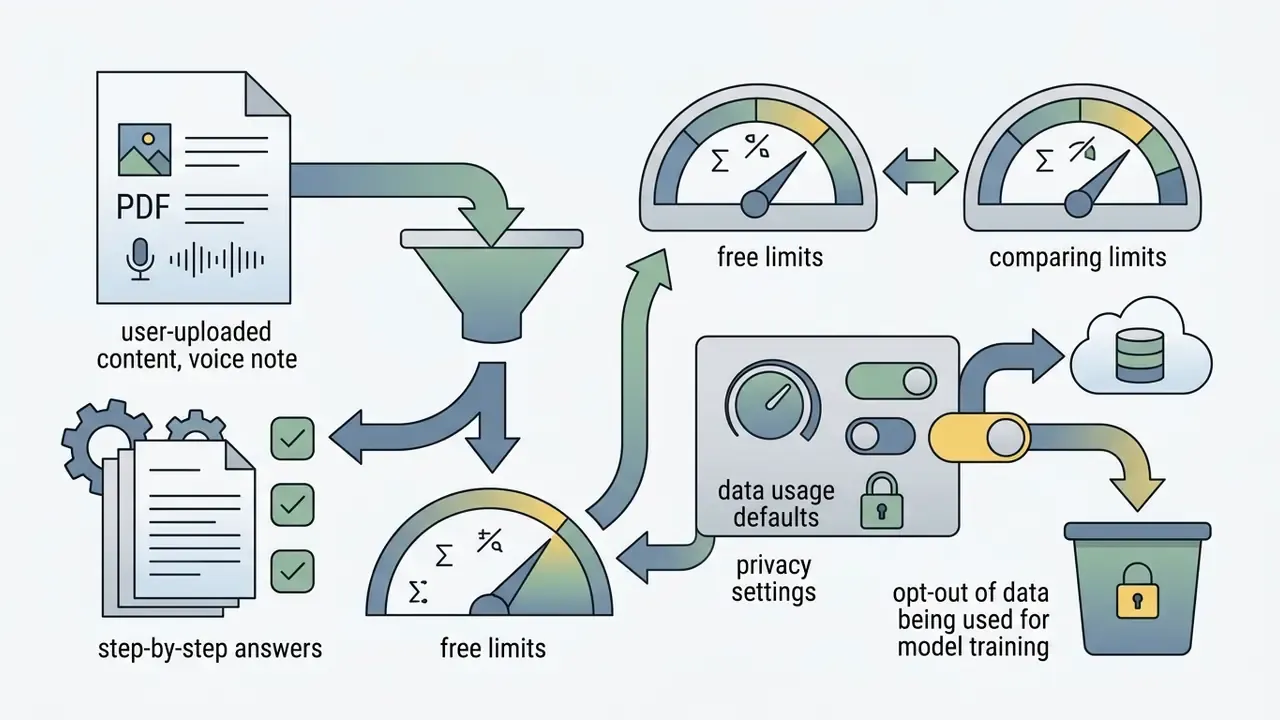
- Data usage defaultsmay feed uploads into model training unless you configure the opt-out.
No-Sign-Up Access and Online Use
Web utilities offering ai homework helper picture no sign up access process images instantly, with no profile and no credentials. These anonymous tools handle input inside temporary session memory, which removes friction for a fast ai help picture check between classes. Some are marketed as ai homework helper picture online free no sign up, and the label is usually accurate for core functionality.
The trade-offs against full account systems are real:
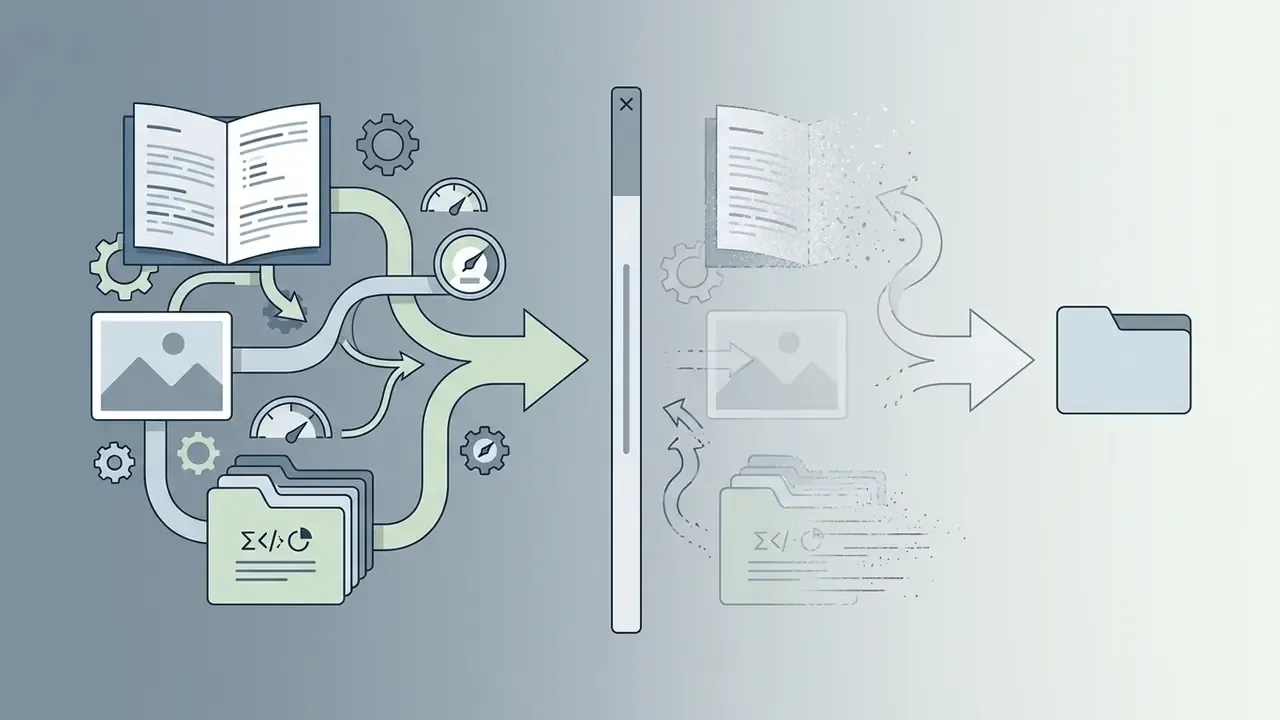
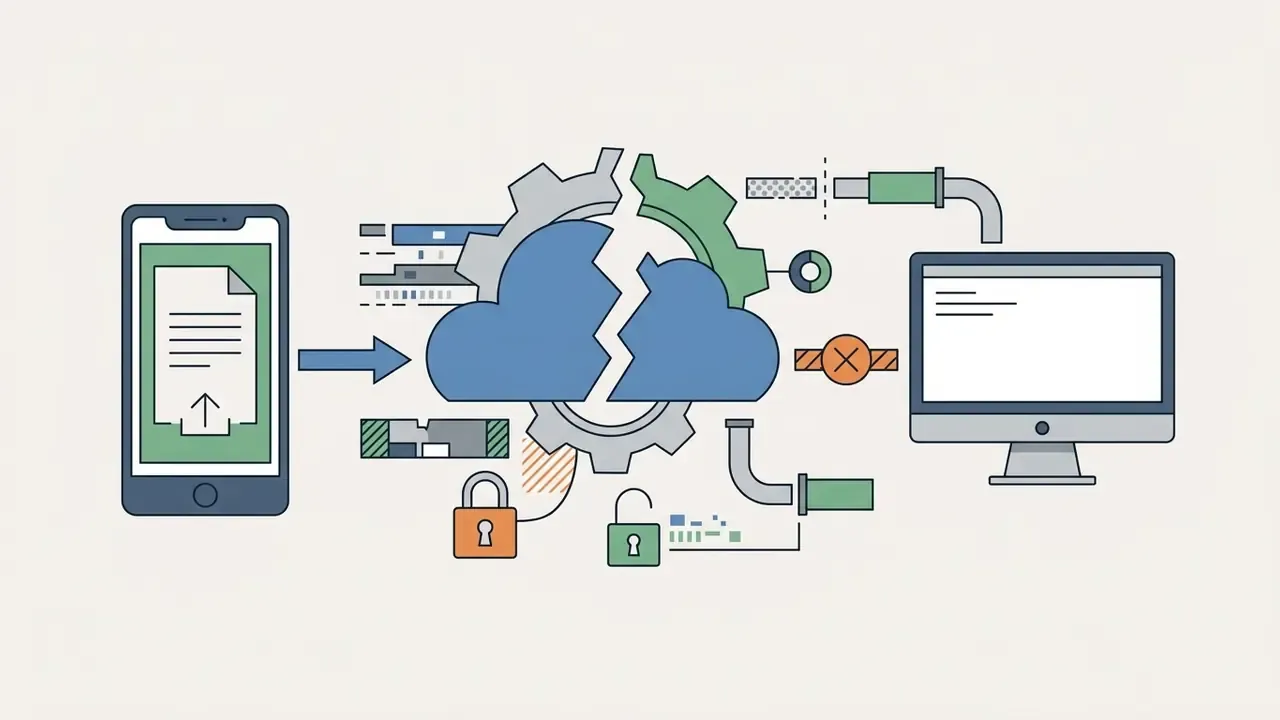
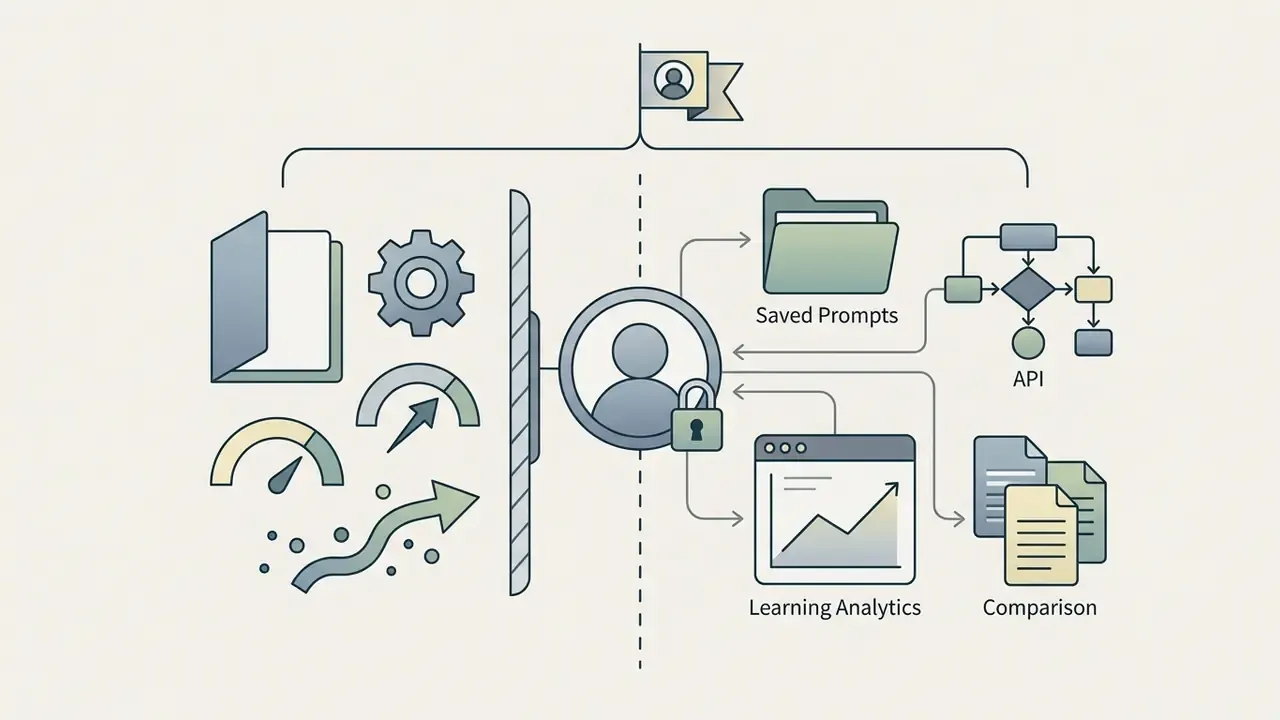
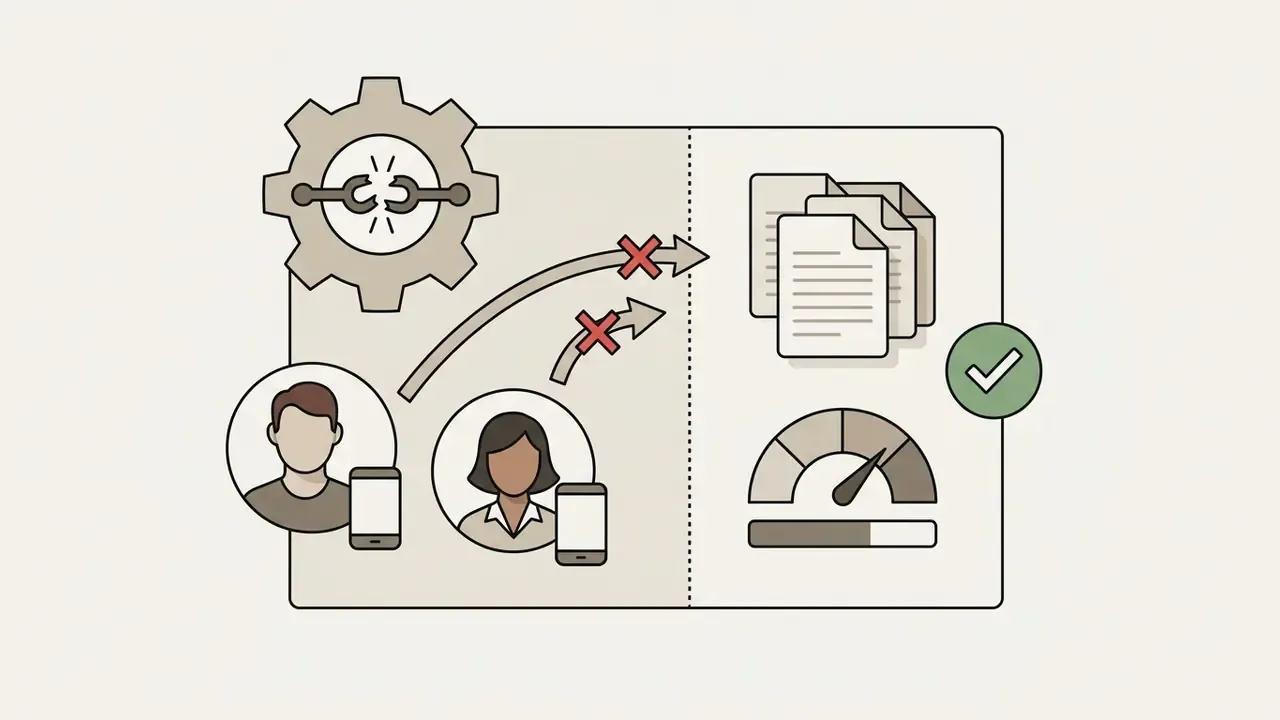
Curated inventories of login-free web applications note that such tools deliver most core features without an account, while 2026 analyses add the obvious corollary: no account means no cloud sync, no vendor-side backup, and weaker cross-device continuity. For one-off equation solving, no-sign-up wins. For an ongoing research project or a term-long study track, an authenticated platform with persistent history is the better call. Interactive study utilities are grouped separately, so if you want the calculator side of the toolset, open the hub.
How to Choose an AI Helper for Homework Pictures
Choosing an ai helper with pictures or ai homework helper image system comes down to three things: OCR accuracy, explanation depth, and data privacy safeguards. A defensible tool balances precise character recognition with transparent reasoning and strict handling of student data.
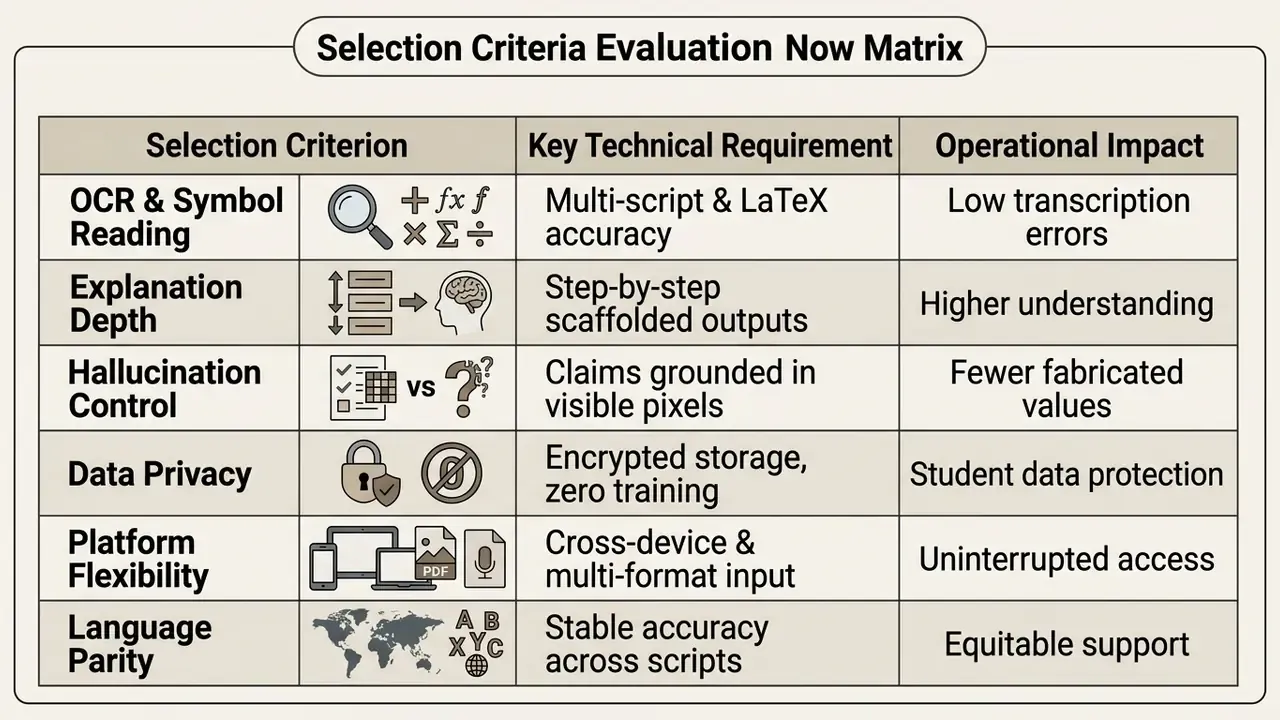
The 2024 to 2026 evaluation literature converges on a consistent set of dimensions for multimodal assistants: perceptual fidelity, hallucination control, reasoning coherence, robustness, language inclusivity, and instruction alignment. A 2026 human-centric framework for large multimodal models states the operative rule plainly: every claim must be grounded in evidence visible in the image. A 2024 survey on multimodal LLM evaluation adds that credible benchmarks must cover foundation capabilities, self-analysis, and extended applications, with explicit attention to data collection and annotation quality.
Image Reading and Handwritten Homework Support
An effective ai generator homework helper has to hold accuracy across clean printed textbook pages and messy human handwriting alike. Benchmark metrics from OmniHandwritingOCR (2026), which spans 77,572 labeled samples and evaluates 13 systems on handwritten text plus handwritten mathematical expressions, show wide variation on non-standard cursive and stacked fractions; Qwen3-VL-8B posted the strongest aggregate score in that evaluation. OmniDocBench (2025) treats formulas and handwriting as separate annotation targets in PDF parsing and reports Mathpix among the top formula extractors, while earlier math-expression benchmarks measure symbol-level character error rate (7.17 test CER for Google Cloud OCR versus 5.56 for a CTC Transformer) rather than plain OCR accuracy.
When evaluating an ai homework generator, test how the platform handles:
- Variable handwriting: legibility across cursive, sloped lines, and differing pen stroke thickness.
- Dense notation: correct isolation of exponents, subscripts, matrix elements, and chemical bond representations.
- Low-light artifacts: recognition stability under uneven lighting or paper folds.
- Mixed-script layouts: pages combining Latin variables with Cyrillic, Greek, or CJK annotations.
Systems built on specialized document OCR engines (Mathpix, Qwen3-VL models) outperform general-purpose vision models on dense mathematical layout. Choosing an assistant with proven multi-script capability cuts the amount of manual prompt correction you will do later. One caveat: because 2025 PDF-parsing benchmarks and 2026 handwritten-expression benchmarks use different datasets and metrics, cross-service rankings are not fully comparable. A five-image test on your own handwriting remains the most informative evaluation available to you.
Step-by-Step Solutions Instead of Answer-Only Results
Educational value hinges on whether the system explains the procedure or just hands over a number. Answer-only generators encourage passive copying, which builds no durable problem-solving competency.
Better platforms apply pedagogical scaffolding. They state the governing principle first, then the intermediate derivations, then the verified final value. That ordering lets a student pinpoint the exact stage where their own calculation diverged.
The worked-example literature describes this structure precisely: an expert solution presented for a novice, with explanation attached to each step, followed by practice. Guidance from Pearson and the UK Education Endowment Foundation frames worked examples as step-by-step demonstrations with explanations plus independent practice afterwards. Ready-answer generators do not appear in that literature as a learning method at all, because their output lacks the modelling and explanation steps the research identifies as the actual mechanism of learning.
Privacy and Control Over Uploaded Homework
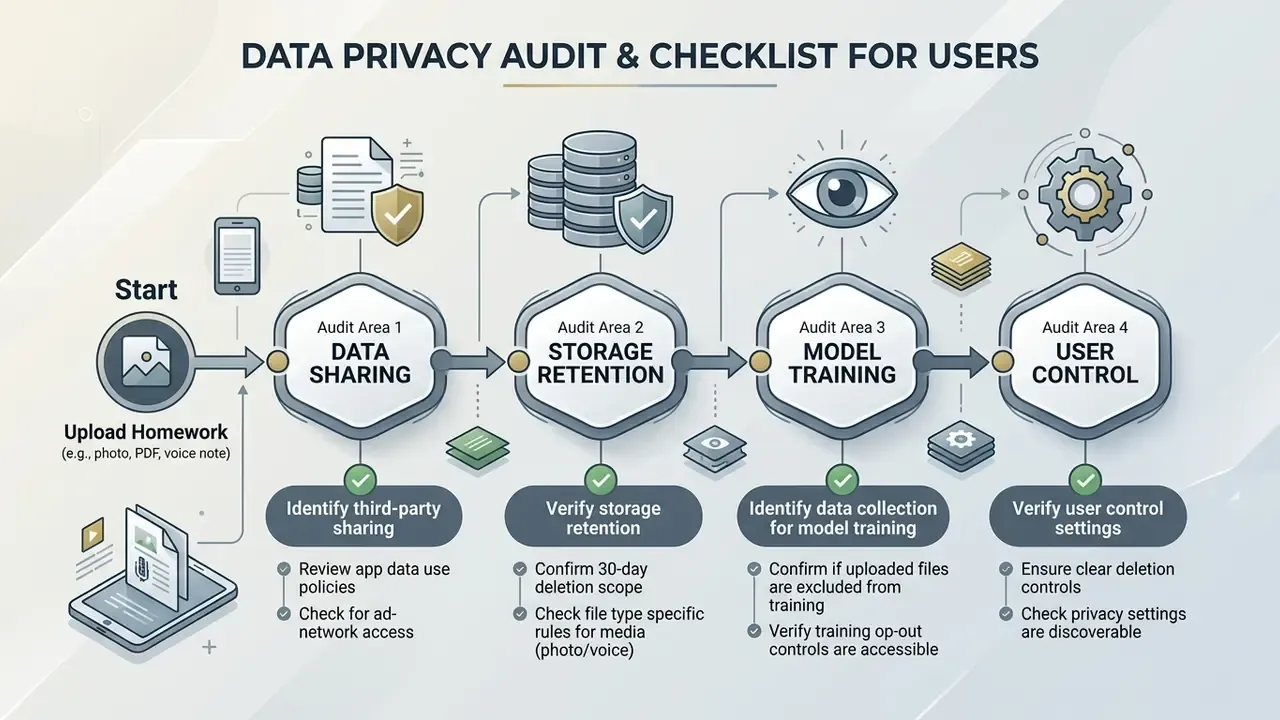
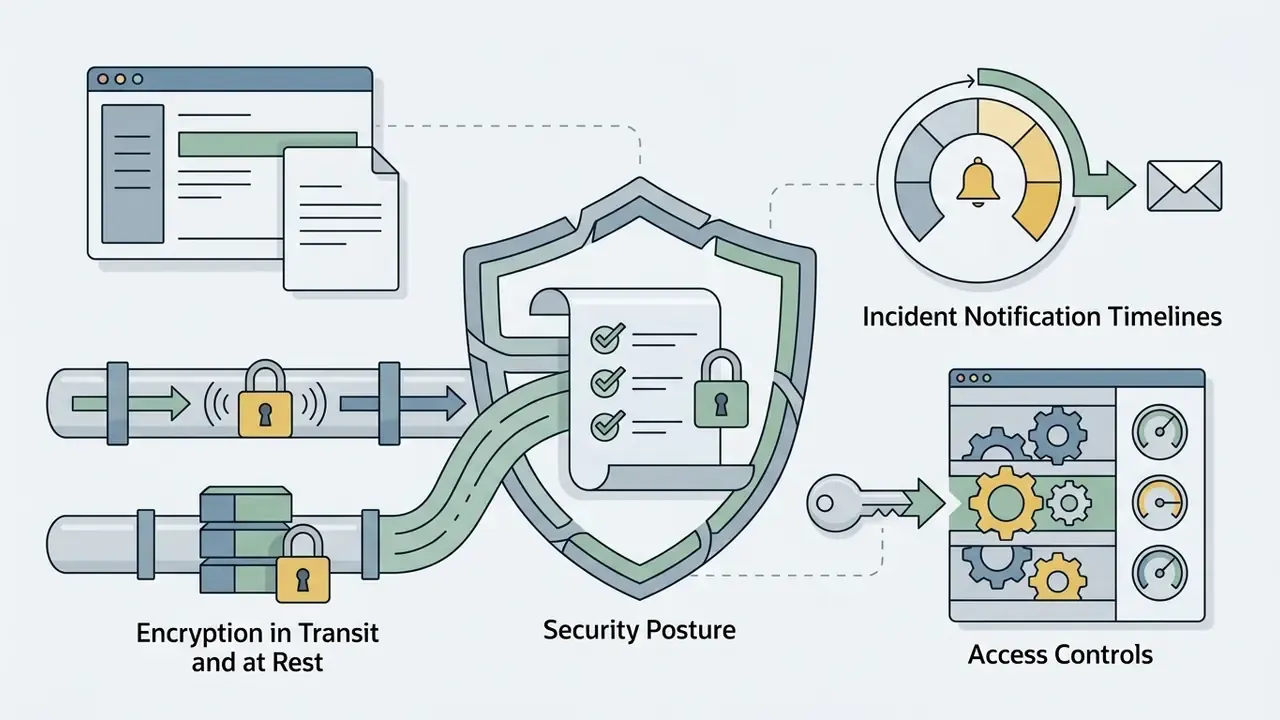
Uploading photographs of academic material raises data privacy and intellectual property questions. Images of notebook pages, graded assignments, or school exams can carry personally identifiable information (PII), institutional marks, and copyrighted text.
Shadow AI, Institutional Exposure, and Vendor Due Diligence
Consumer homework tools do not stay in the consumer domain. Teachers photograph graded scripts, tutoring centres upload assessment packs, and university teaching assistants scan marked exams, often through personal accounts on free, ad-supported services. That pattern is textbook shadow AI: sanctioned data flowing through unsanctioned processors, with no contractual basis, no retention guarantee, and no audit trail.
Where institutional exposure concentrates:
- Identifiable student work. A photographed script usually carries a name, a class code, a grade, and handwriting. Trivially re-identifiable.
- Assessment integrity. Uploading an unreleased exam paper to a public endpoint is a confidentiality incident regardless of the vendor's retention window.
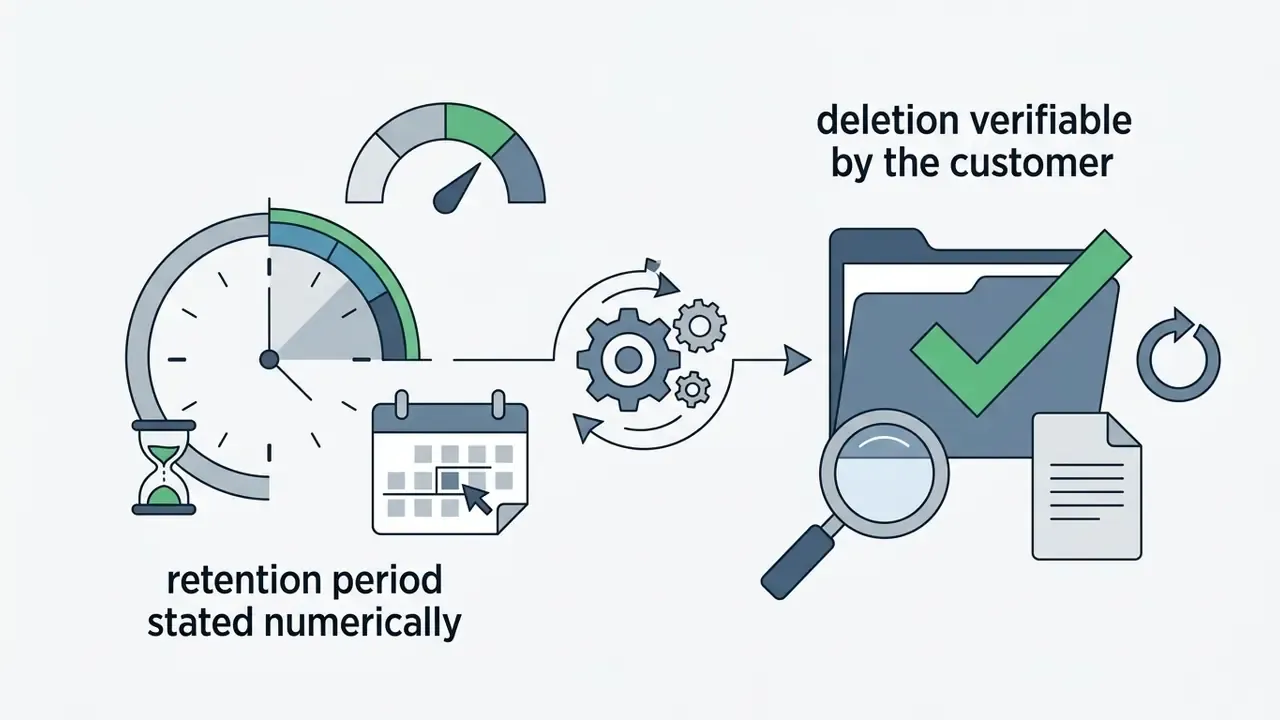
- Retention opacity. As the UK Department for Education report shows, tools may transmit original student work without publishing any retention policy at all.
- Training reuse. Free consumer tiers frequently default to permitting training use, and the opt-out is a setting, not a contract term.
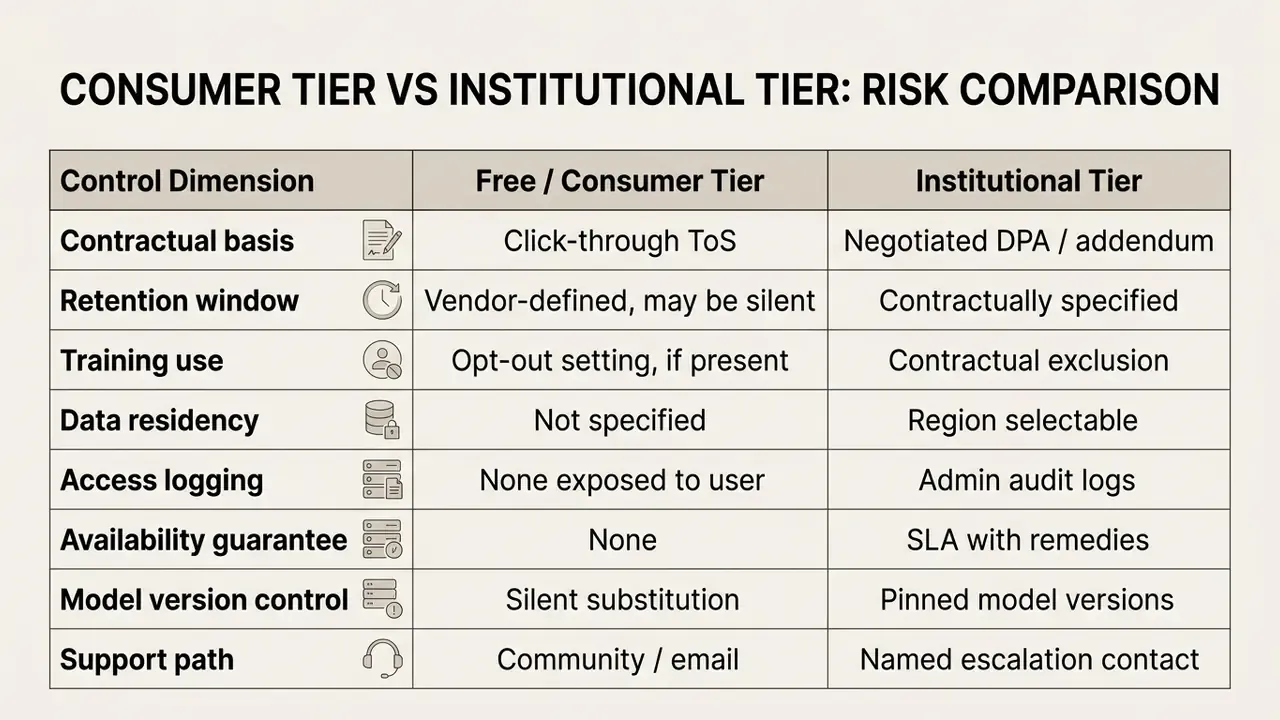
The practical control is not prohibition. It is providing an approved pathway. Where no sanctioned tool exists, uploads happen anyway through personal devices, and the institution loses visibility completely. For escalation contacts and service documentation, open the hub.

How to Use AI Homework Help Without Replacing Learning
An ai homework help platform earns its place as a study aid, not a substitute for thinking. Applied deliberately, AI output builds conceptual mastery while keeping academic integrity intact.
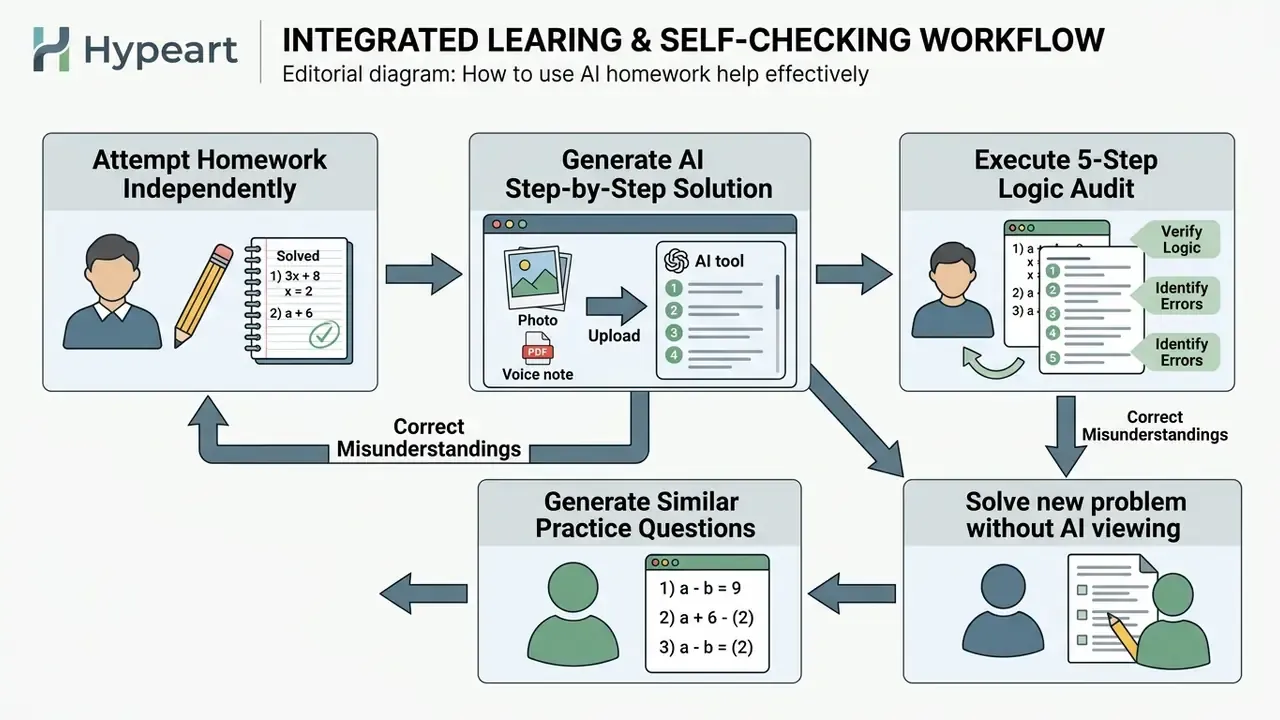
Official guidance backs this framing. The U.S. Department of Education (2025) states that federal education funds may support AI tools for individualized academic support, adaptive learning, and educator training in responsible use. Oregon Department of Education guidance, updated 2026, permits AI for selected parts of assignments, requires disclosure or citation of AI use, and warns against relying on AI-detection tools to adjudicate cheating. A 2026 Georgia Tech course policy captures the operational rule most cleanly: AI may be used as a learning aid, but submitted work must be the student's own. Use the tool as a learning experience, then close it before writing independently.
Use the Explanation to Check Your Own Work
The most effective way to use an ai homework answer generator is to solve the problem manually first, then consult the output. That single ordering change turns the assistant into a grading and self-diagnostic tool.
«GPT-4 was configured never to give the answer directly, to ask at least ten questions, and not to advance until the student answered correctly.»
That configuration is the transferable insight. The measured benefit came from constraining the model into a Socratic role, not from letting it produce solutions. Students can replicate the constraint with one system-style instruction at the start of a session.
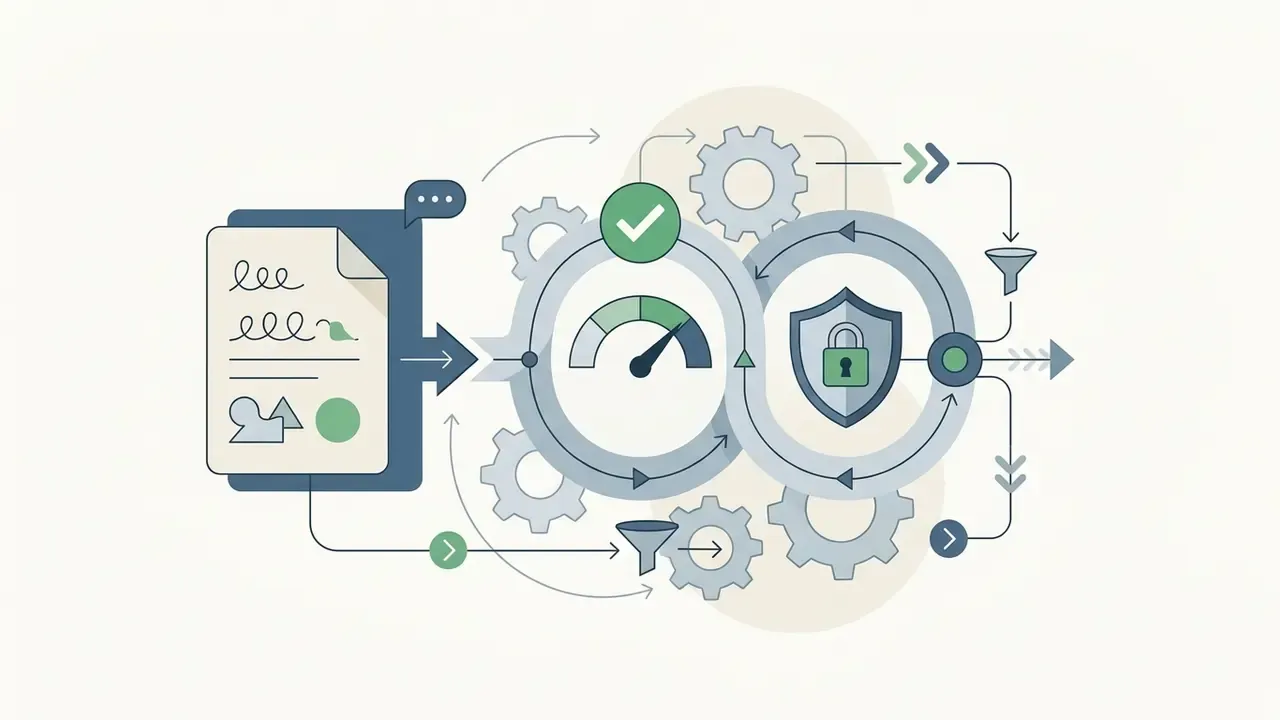
When comparing the AI's step-by-step breakdown against your own attempt:
This active loop reinforces procedural memory and blocks passive over-reliance. Documented self-checking workflows split the process into grounding checks, reasoning checks, and calculation checks applied per step. That discipline catches the nastiest class of error, where the arithmetic is flawless but the premise was invented.
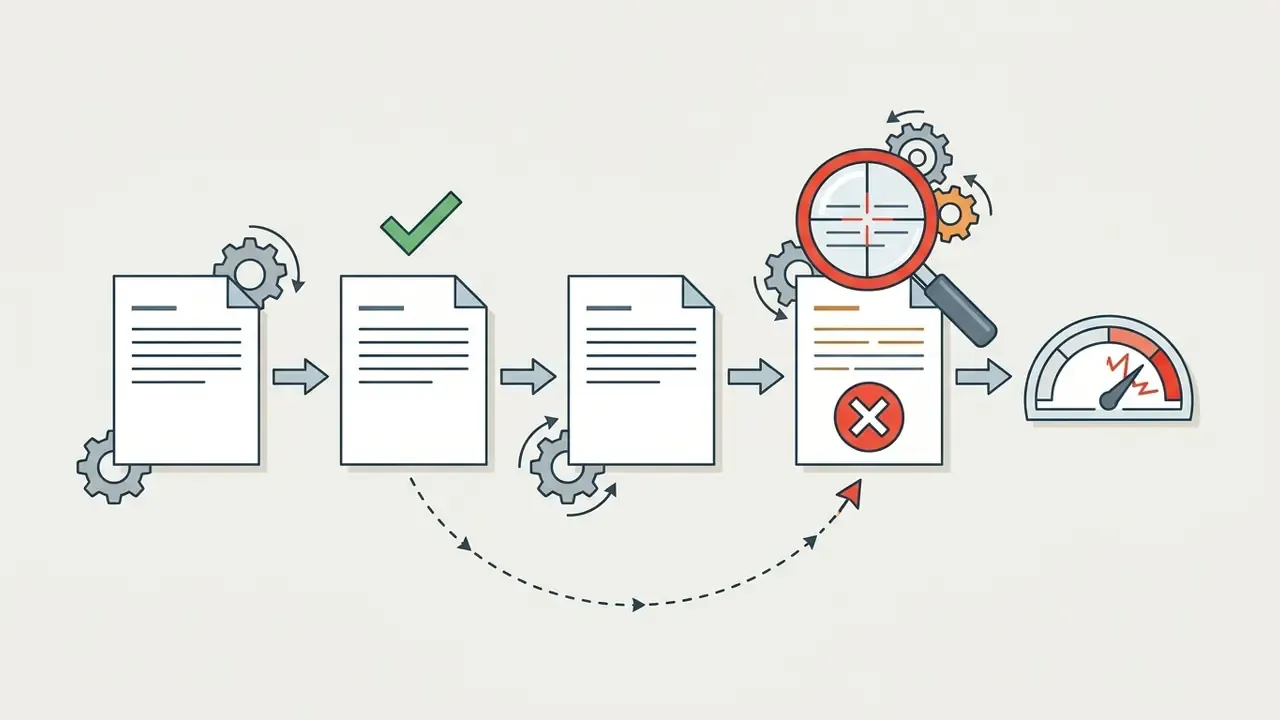
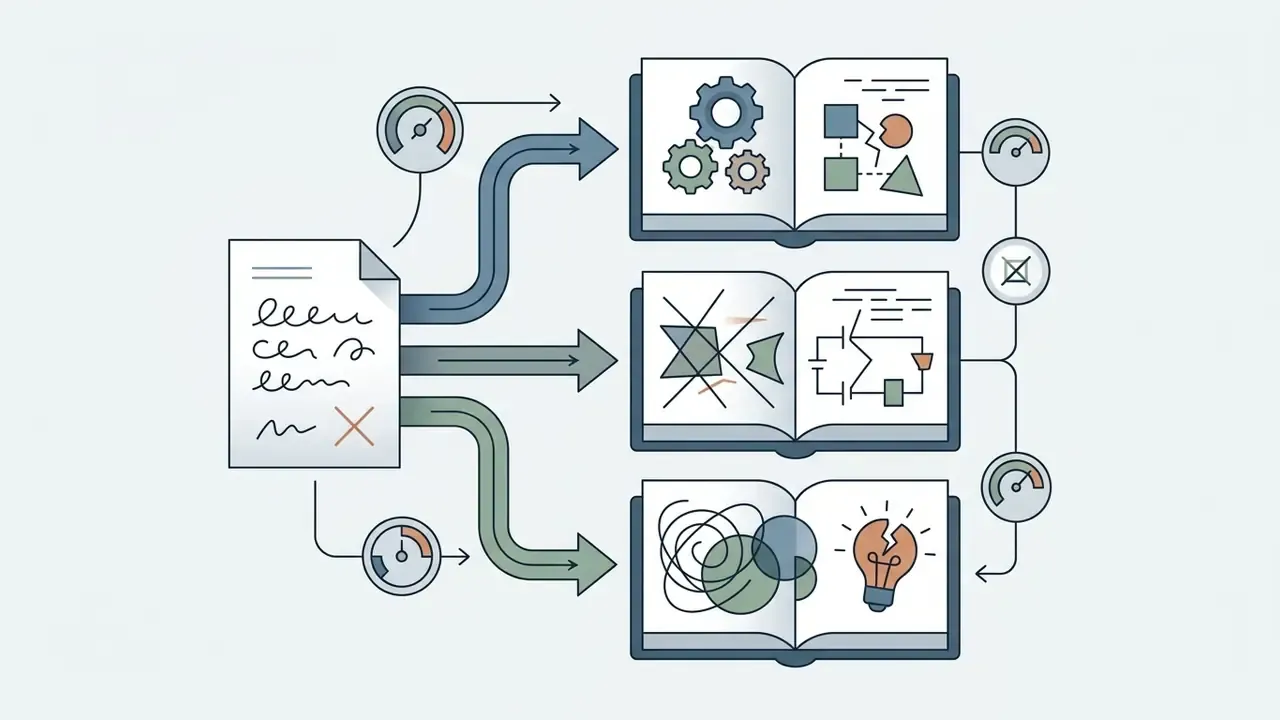
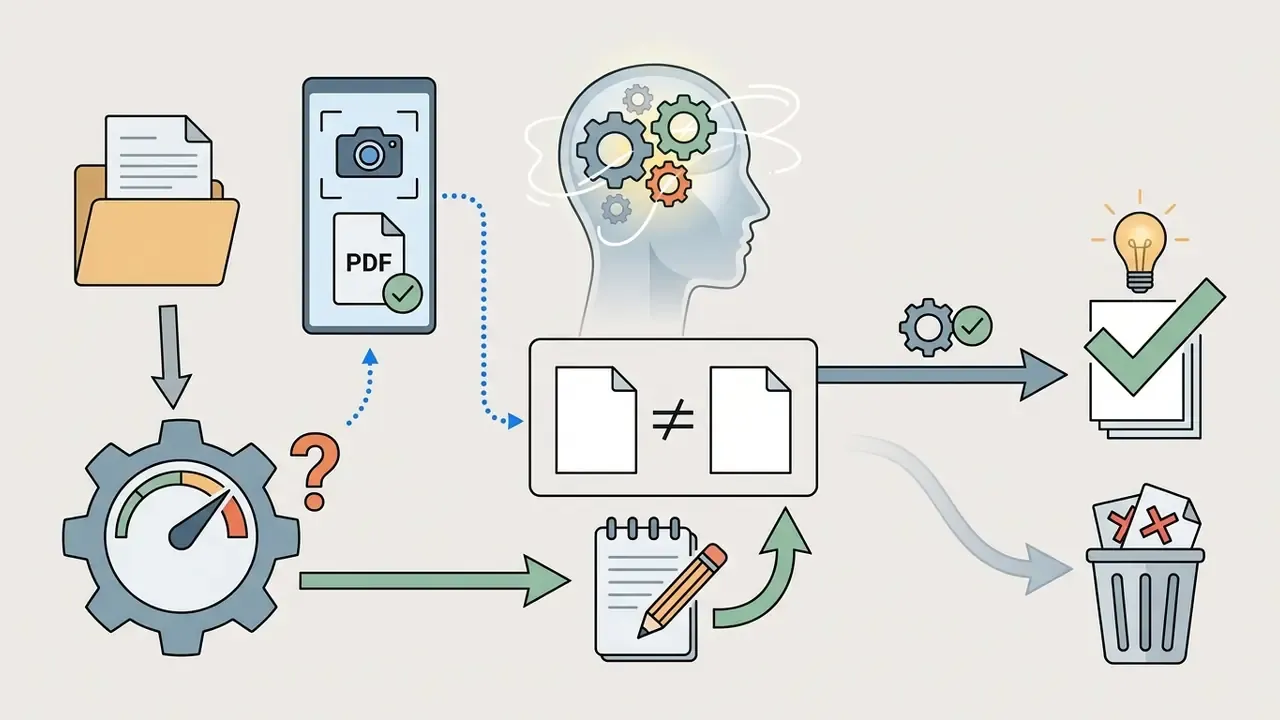
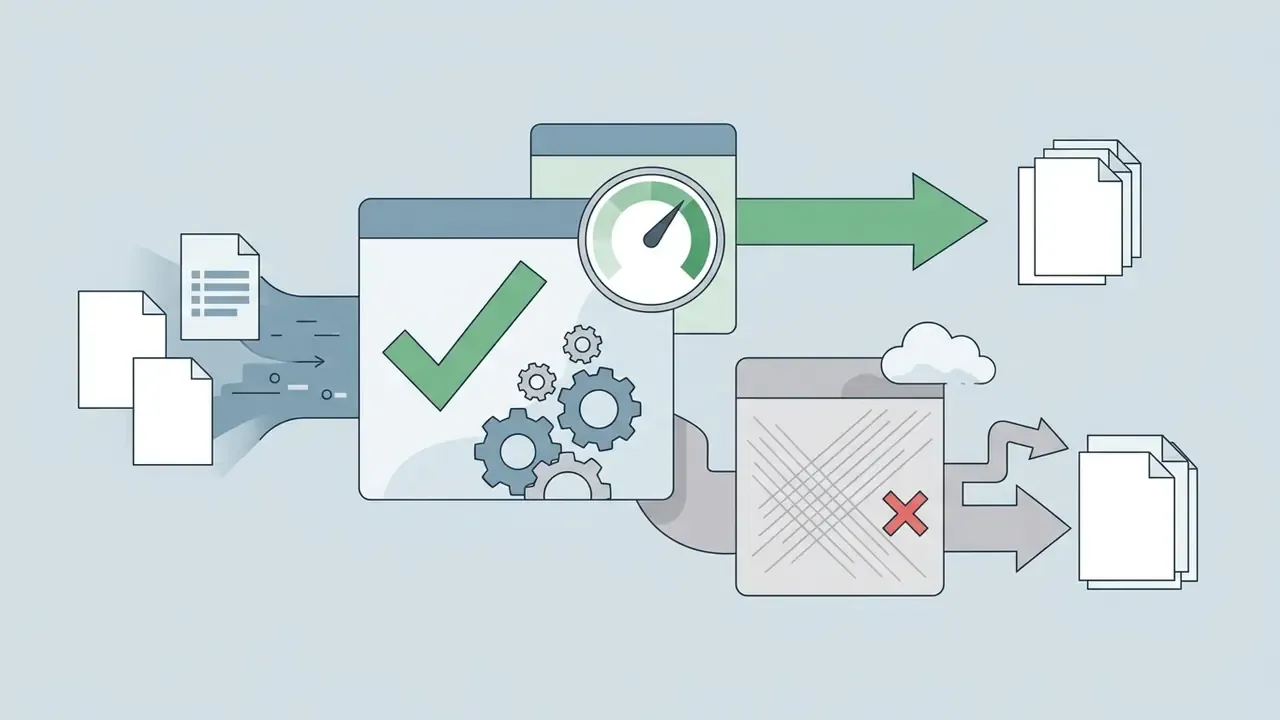
Executing an Automated Homework Audit (Correction Mode)
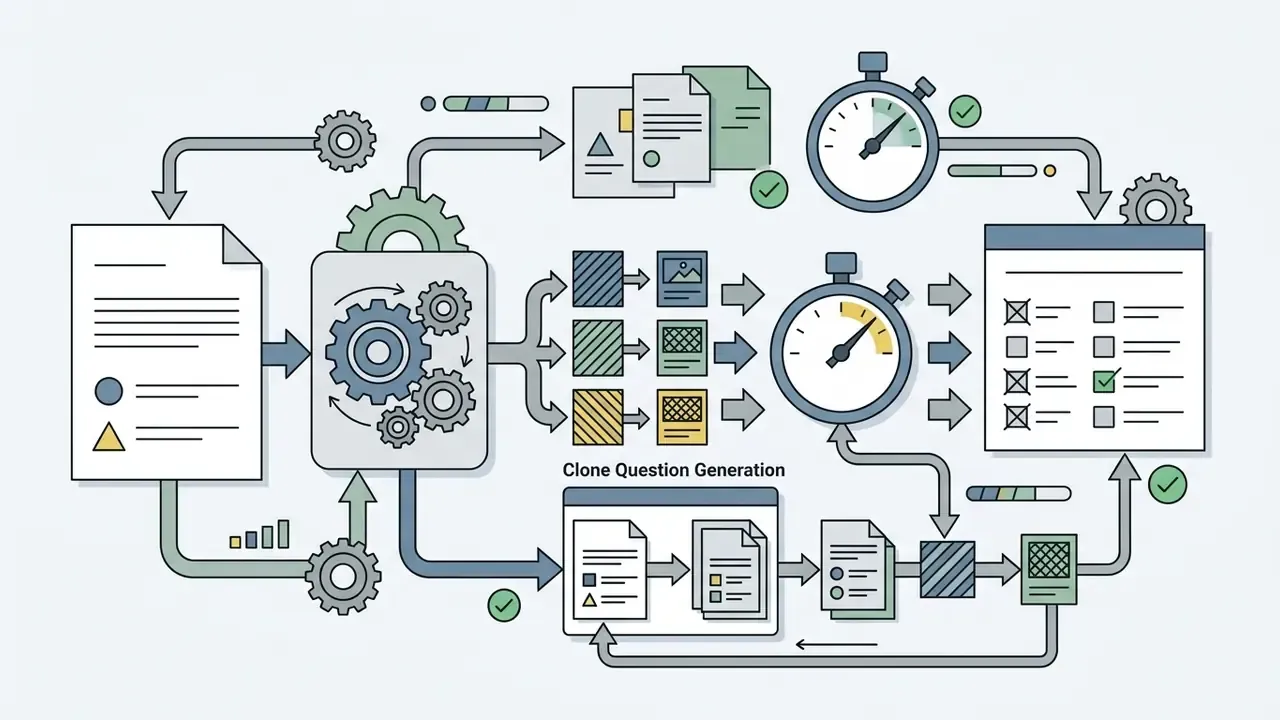
Turn Solved Problems Into Practice Questions
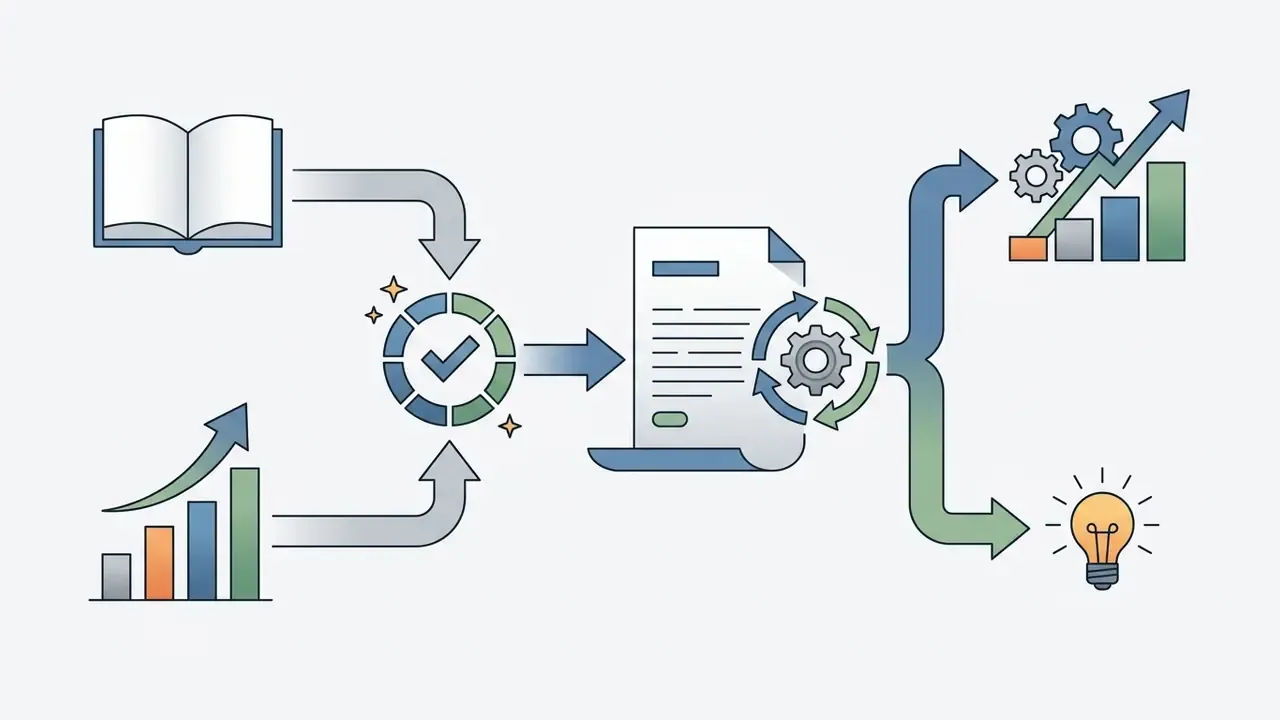
To consolidate learning after reviewing a solved problem, convert the completed solution into new exercises. Cognitive science on retrieval practice (Karpicke & Roediger, 2008) shows that testing memory yields significantly higher retention than re-reading a static solution.
«Students using GPT-4 for homework answered at least ten questions per topic and expressed willingness to continue using the system after the experiment ended.»
How to run the technique:
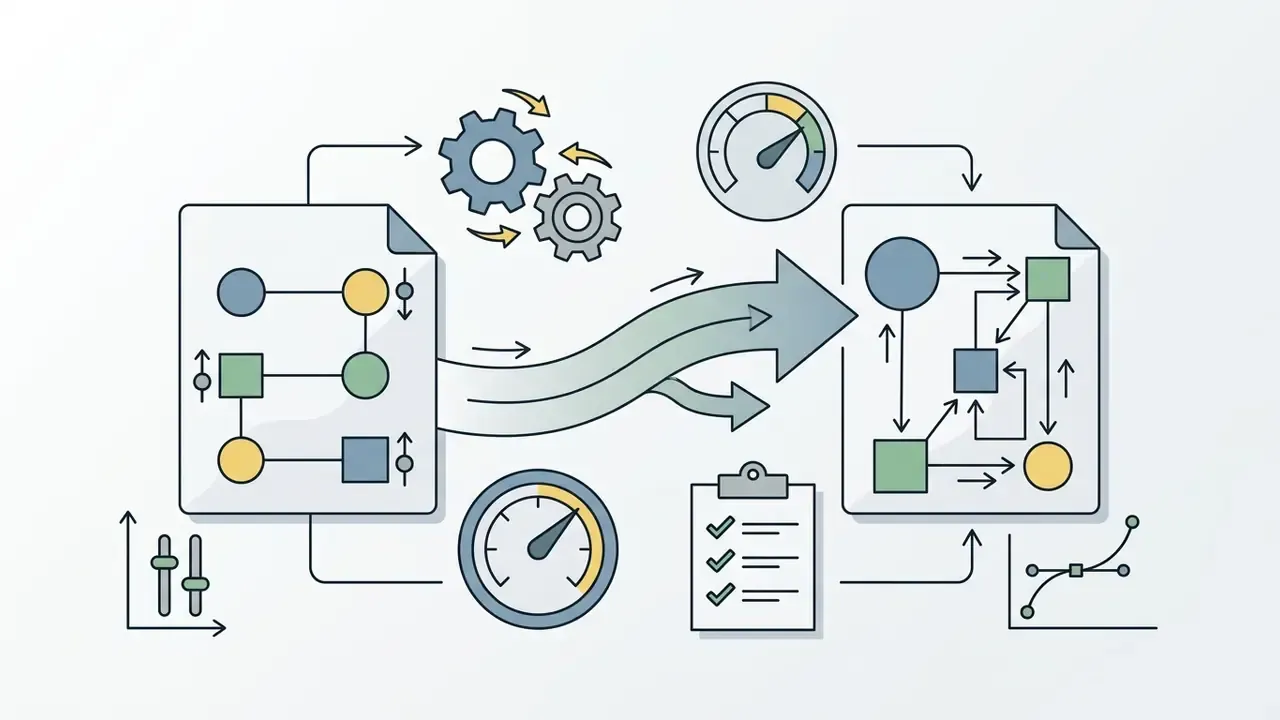
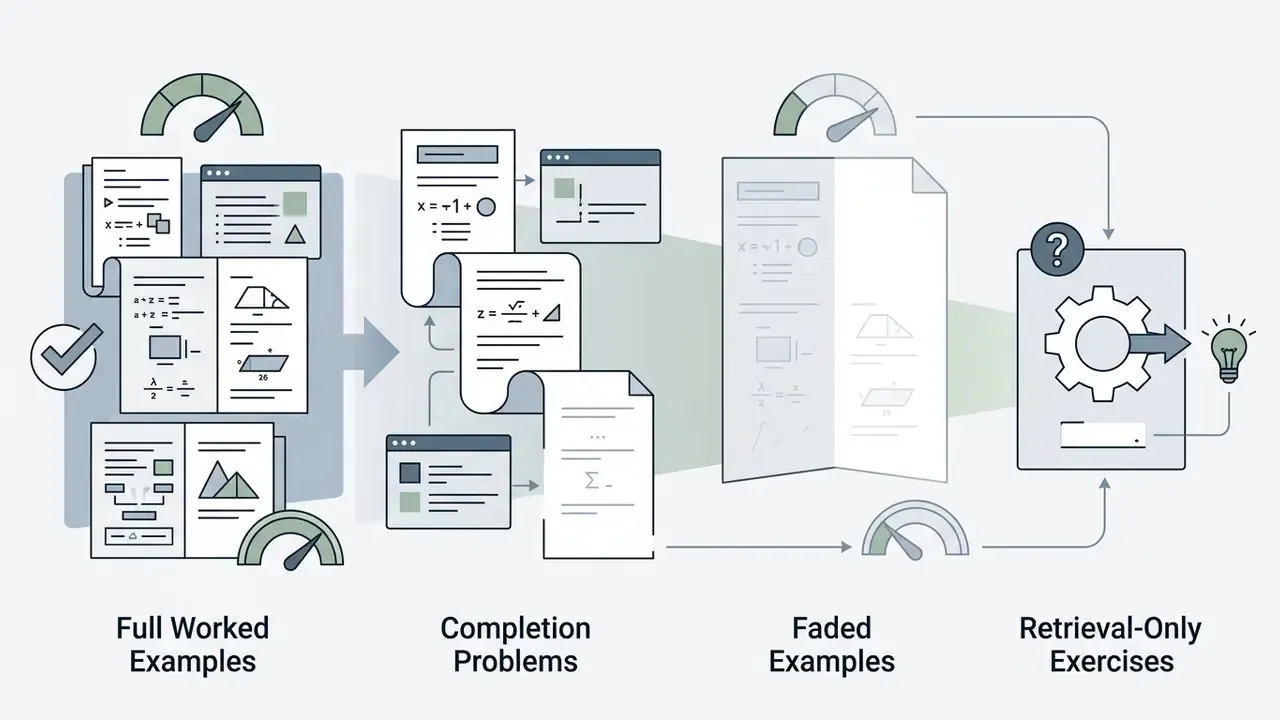
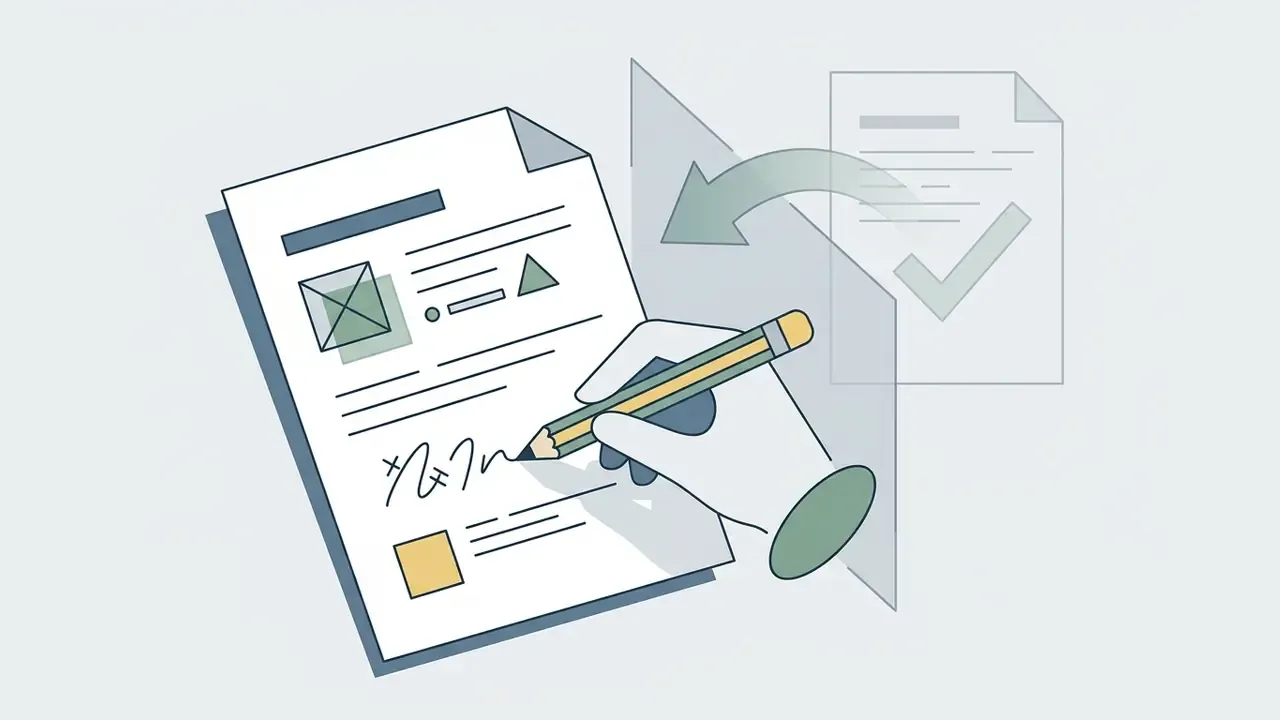
Evidence on sequencing is nuanced. A 2024 review indicates retrieval practice is stronger for factual memory while worked examples are stronger for procedural skill acquisition, and a 2025 study found that retrieval after basic understanding was established outperformed restudying worked examples for complex tasks at a one-week delay. Practically: lead with worked examples during initial learning, shift to retrieval as the retention interval stretches.
Students who extend self-study into non-quantitative subjects often use creative generation frameworks alongside image extraction: an ai poem generator for literary meter analysis, an ai podcast generator for audio study summaries, an ai playlist generator for structuring focused revision sessions, and lightweight free photo editors to assemble clean revision sheets from photographed notes. Cost tiers are summarized on the pricing page, and feature-level differences sit in the primary comparison hub.
Tailored Academic Workflows Across Education Levels
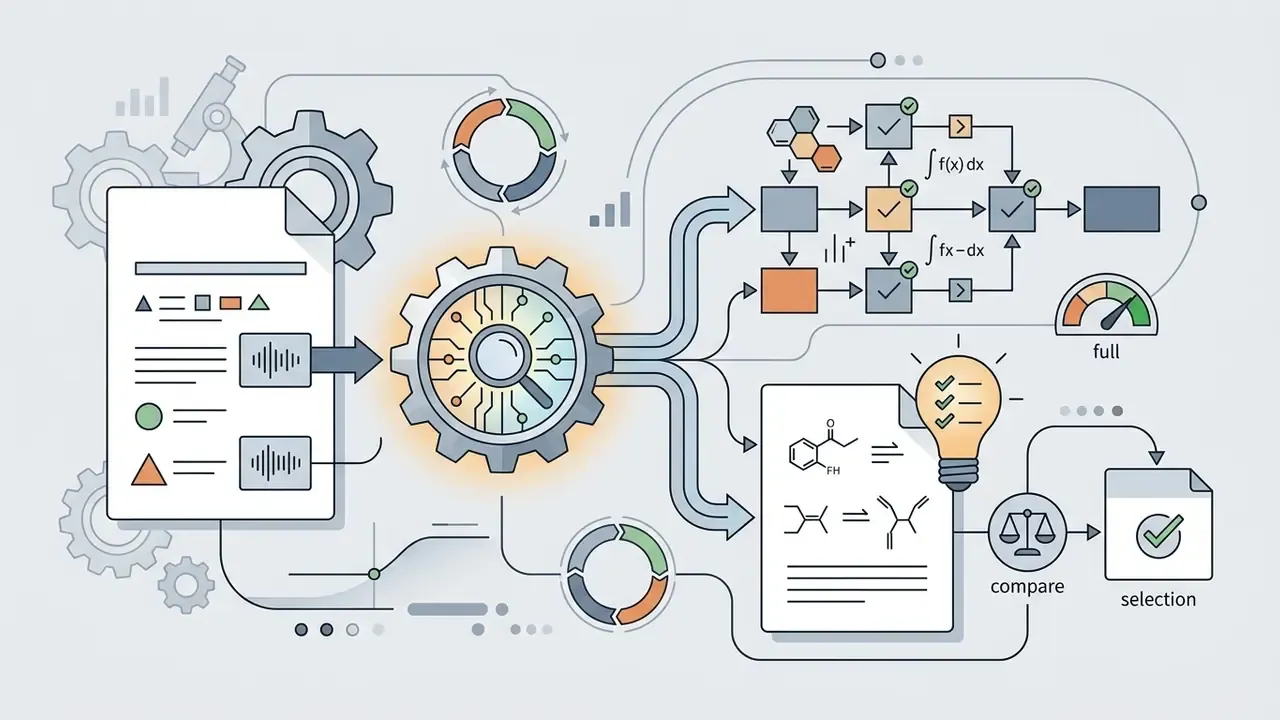
An ai for homework system adapts to specific academic requirements, and the correct output mode shifts sharply by audience:
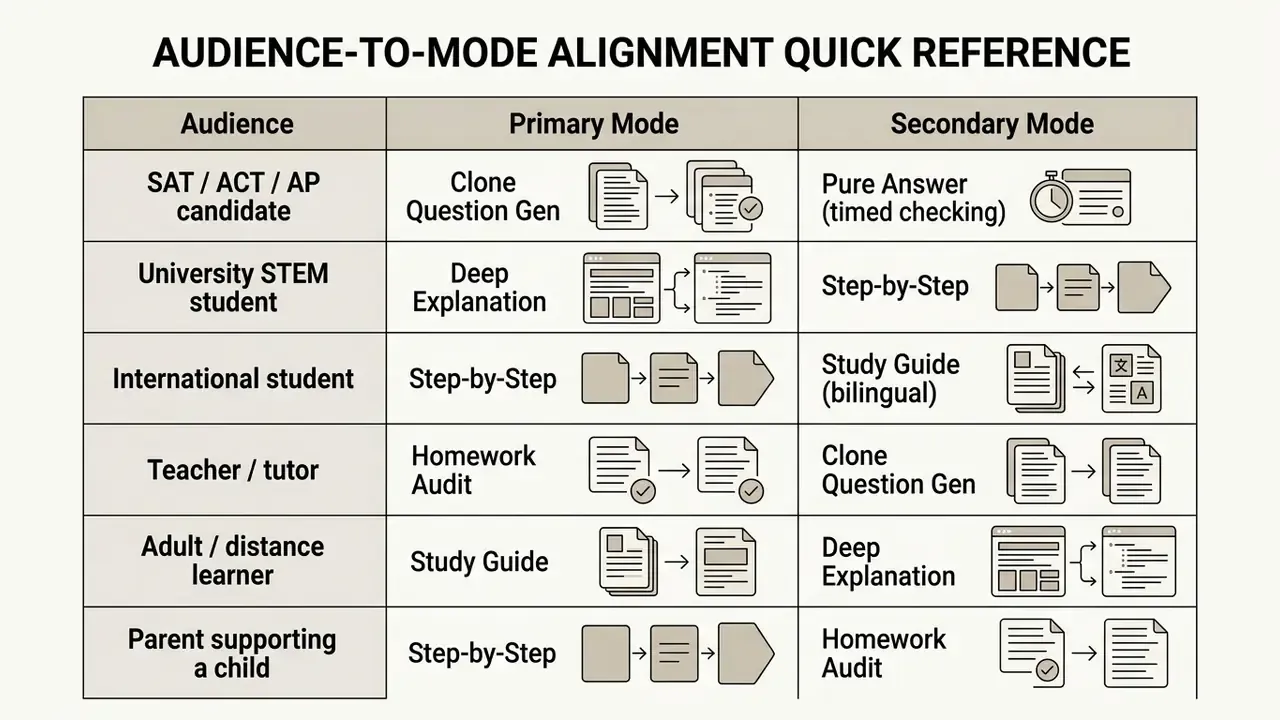
Academic integrity note: institutional rules differ. Brown University requires students to cite generative AI use and to submit screenshots of prompts and outputs. The California Department of Education (2026) states that undisclosed AI-generated content constitutes plagiarism, while cautioning that detection software should not be the sole basis for penalties. Cornell University discourages automatic AI-detection algorithms as evidence of violations because they are unreliable. Always confirm the policy governing your specific course before submitting AI-assisted work.
FAQ About AI Homework Helper Picture Tools
Can I Ask Follow-Up Questions About a Solution?
Yes. Modern multimodal interfaces support multi-turn conversation, so you can question specific steps inside a generated solution. Conversational architectures keep session context, which enables clarifying prompts such as "Explain how you factored the polynomial in step 3" or "Show an alternative integration method."
«The GPT-4 tutoring system provided immediate feedback, flagged grammar and spelling errors, and did not move to the next question until a correct answer was given.» — Vanzo, Chowdhury & Sachan, RCT study (2024). https://arxiv.org/abs/2402.12809 Technical feasibility is documented well beyond that trial. A 2024 study reports generating follow-up questions to gather additional context before continuing; a 2020 dialogue-system study describes a clarification pipeline spanning direct answers, confirmation, suggestions, and FAQ fallback; and industry work on interactive query clarification shows an agent suggesting labels, receiving user confirmation, then refining the query before answering.
Does an AI Homework Helper Work in Different Languages?
Yes. Leading vision-language models handle major international scripts, including Latin, Cyrillic, Chinese, Arabic, and Devanagari. Multilingual OCR benchmarks confirm strong transcription for high-resource languages, with character error rates climbing on low-resource scripts and mixed-language layouts. Concretely: CC-OCR (ICCV 2025) evaluates four tracks across 39 subsets covering ten major languages; OmniDocBench (CVPR 2025) reports higher error rates on mixed-language and rotated layouts than on single-language pages; PaddleOCR documents unified OCR support for 50 languages in PP-OCRv6 and recognition across 80+ languages overall; and Mistral OCR 4 (2026) claims leadership on an internal multilingual evaluation spanning eight language groups including Hindi, Bengali, Hebrew, Greek, Tamil, and Telugu. Vendor coverage claims are consistently broader than independently verified accuracy.
«GPT-4V outperforms competing models on cultural concept identification across five languages with 67.4% average accuracy, but performs more weakly on low-resource languages such as Swahili.» — Chen et al., «Exploring Visual Culture Awareness in GPT-4V» (2024). https://arxiv.org/abs/2402.06015 Submitting a non-English problem? Make sure the source image is sharply focused and evenly lit, and verify proper nouns and culturally specific terminology by hand.
Do I Need an App to Use an AI Homework Helper?
No. A dedicated mobile app is convenient for camera capture, and an ai homework helper picture app from Google Play or the App Store will feel smoother on a phone, but browser-based tools on desktop offer the same vision processing. Desktop interfaces accept screenshots, scanned PDFs, and saved camera images with no installation, and AI image upscalers for improving scan quality can rescue legibility in low-resolution archives before upload. Direct browser-versus-app comparative studies remain scarce. The available evidence is app-side: a 2024 review of 11,549 App Store and Google Play reviews across five generative AI apps found ChatGPT leading compound usability scores on both Android (0.504) and iOS (0.462), while a 2026 study of 20 university students using Copilot reported high satisfaction and accessible interface design alongside requests for better consistency and security. For integrated API access or workflow documentation, see the overview.
Can AI Solve Word Problems From a Photo?
Yes, and word problems are among the more reliable categories when handled correctly. The failure mode is translation, not calculation: the model must convert prose into a formal model. Photograph the full problem statement without cropping a sentence, then instruct the tool to list knowns, unknowns, and the governing relationship before solving. If the problem depends on spoken classroom context, dictate that context as an audio note alongside the image.
Can I Upload My Completed Homework to Be Checked?
Yes. Homework Audit mode accepts a photograph of finished handwritten work and identifies the line where reasoning breaks down. Use an instruction that explicitly withholds the final answer, so the diagnostic value survives. Re-run the audit after correcting the flagged step; if the second pass flags a different location, verify manually rather than trusting either verdict.
Is Using an AI Homework Helper Considered Cheating?
It depends entirely on the governing policy. Using AI to understand a method, check completed work, or generate extra practice is widely permitted and often encouraged. Submitting AI-generated text or solutions as original work without disclosure is treated as plagiarism under policies such as the California Department of Education model policy (2026). Several institutions require explicit citation of AI use, and some course policies prohibit AI assistance entirely on quizzes and tests. Confirm the rule for your course, disclose where required, and keep the final work your own.
How Accurate Are These Tools, Really?
Accuracy depends on the task class. Document reading on clean pages reaches roughly 90 to 93% on DocVQA-style benchmarks in early-2026 evaluations. Scoring authentic student-drawn scientific models is far harder: a mean accuracy of 0.51 was reported for the strongest model in one 2024 education study. Complex geometry, dense tables, and messy handwriting sit at the lower end. Vendor claims of "around 98% accuracy" read as marketing rather than measurement, since no published benchmark supports a uniform figure across subjects and input conditions. Treat every answer as a hypothesis until the five-step audit clears it.
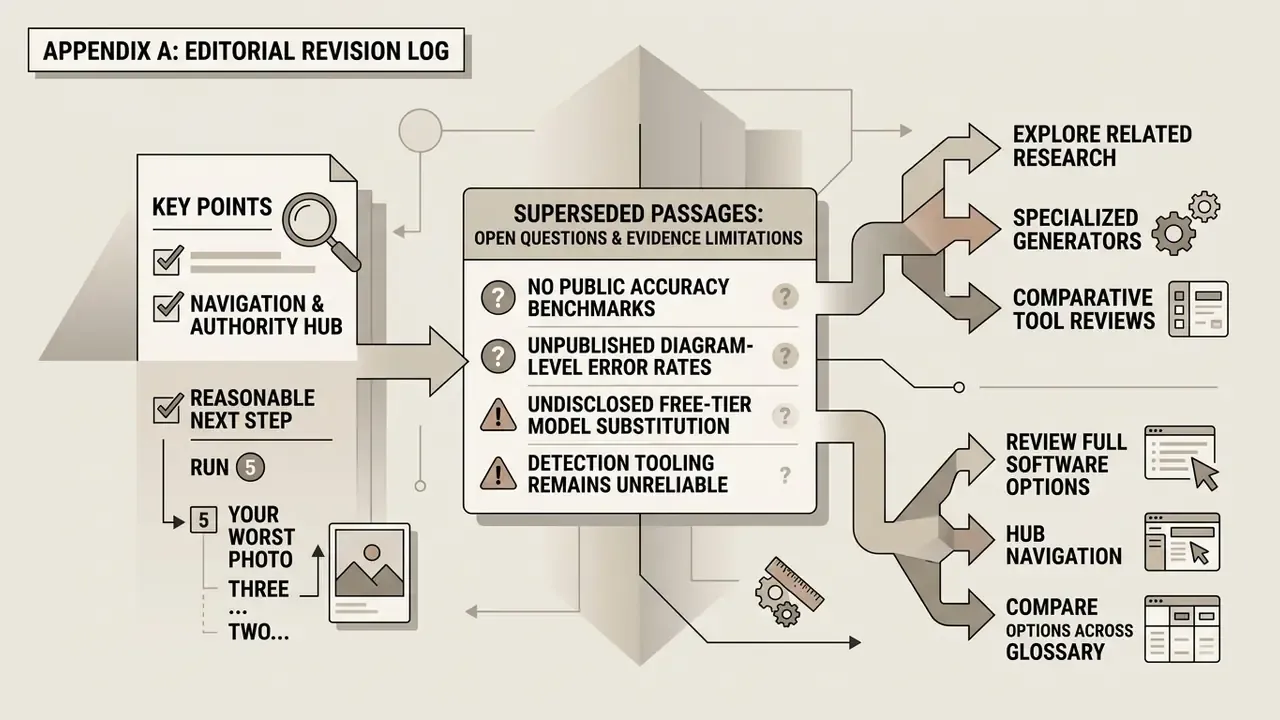
Appendix A: Editorial Revision Log (Superseded Passages)
For transparency, the following statements from earlier versions of this guide were revised in the current edition. The original phrasing is preserved alongside the reason for the change.
Reason for update: the original omitted methodology, sample size, and effect distribution. The current text specifies a 76-student RCT, names the measured outcome (grammar), and notes that the significant gain appeared in one of two cohorts.
Reason for update: the citation lacked an identifiable author, publication, and URL. It has been replaced with the Vanzo et al. (2024) RCT plus three attributable dialogue-system studies describing follow-up question generation and clarification pipelines.
Reason for update: the survey documents application areas rather than an effectiveness rate. The claim is now framed as a description of documented capability areas, with a note that quantified accuracy varies by rubric and corpus.
Reason for update: the figure originates from an unpublished internal evaluation. It is retained as directional operational experience, with an explicit note that it is neither peer-reviewed nor externally replicated.
Reason for update: benchmarks were named without figures. The current text specifies CC-OCR's four tracks and 39 subsets across ten languages, PaddleOCR's 50-language unified support and 80+ language recognition, OmniDocBench's mixed-layout error findings, and Mistral OCR 4's eight language groups.
Open Questions and Evidence Limitations