Generating strong headlines means balancing search intent, audience psychology, and hard platform limits. An AI title generator turns raw topics, full texts, or a keyword list into structured, catchy headline options in seconds. Modern title engines lean on natural language processing and transformer architectures to craft titles across very different media formats, from digital articles and ad units to academic papers and executive decks.
Executive Summary
- What it is software that converts a topic, abstract, or keyword set into multiple candidate titles using sequence-to-sequence transformer models (T5, BART, PEGASUS).
- What it needs from you five inputs, namely topic or context, keywords, content format, tone of voice, and output language.
- Where it works blog posts, YouTube videos, research papers, presentations, title cards, Google and Facebook ad headlines, email subject lines, landing page headlines, press releases.
- How to pick the winner generate 10 to 30 variants, score them with the TACT rubric (Taste, Attractiveness, Clarity, Truth), verify factual alignment, then A/B test the top two or three.
- Risk controls never paste PII, MNPI, or client-confidential data into a free tool; require human-in-the-loop sign-off on any published headline; check licensing terms before commercial use.
- Length cheat sheet blog 50 to 60 characters · YouTube under 70 · research paper 10 to 15 words · ad headline under 30 characters · email subject 30 to 50 characters.
1. What Is an AI Title Generator and Which Titles It Creates
An AI title generator is an automated software tool powered by machine learning models. It analyzes input text, topics, or keywords and returns tailored headline options. These systems read contextual signals to create catchy, creative, and professional titles across multiple publishing formats.
Contemporary implementations usually sit inside broader writing suites. Canva's title generator, for example, ships bundled with Magic Write and produces title ideas for blogs, email campaigns, social posts, ads, landing pages, product listings, presentations, and educational materials. It lets you add SEO keywords before generation, caps output at 500 words, and supports 18 languages.
1.1 How AI Creates Title Ideas from a Topic or Text
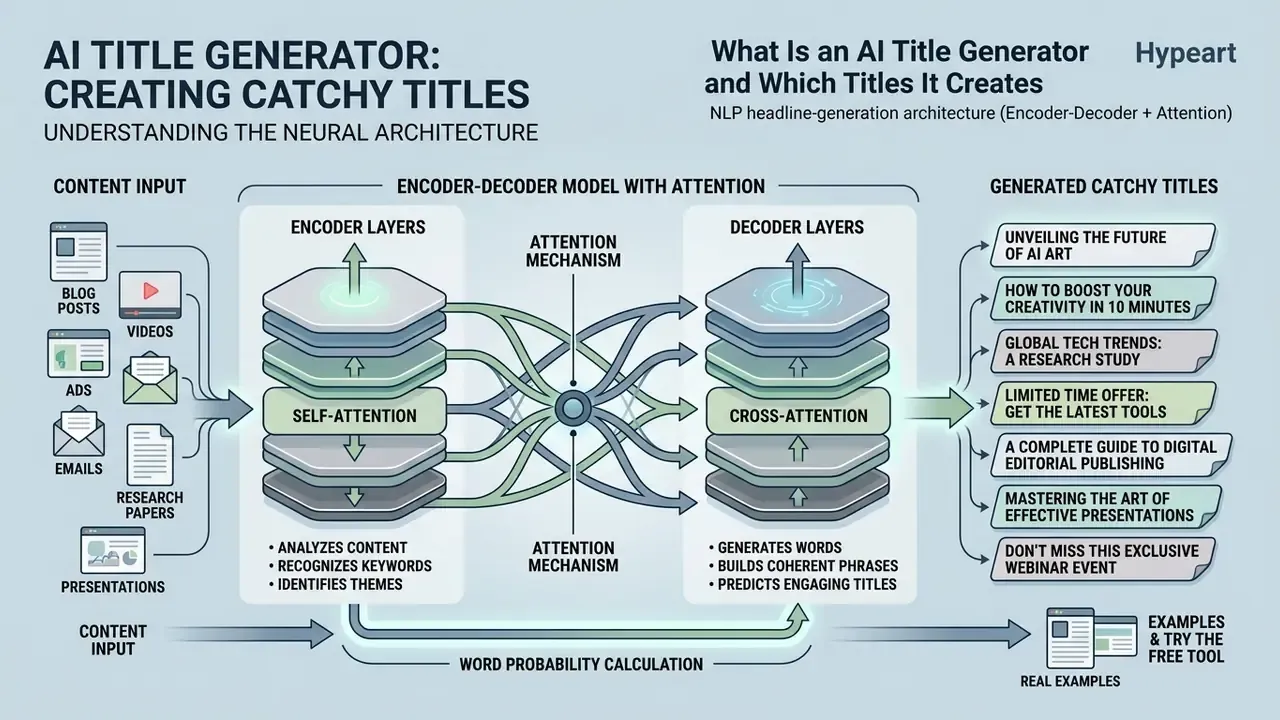
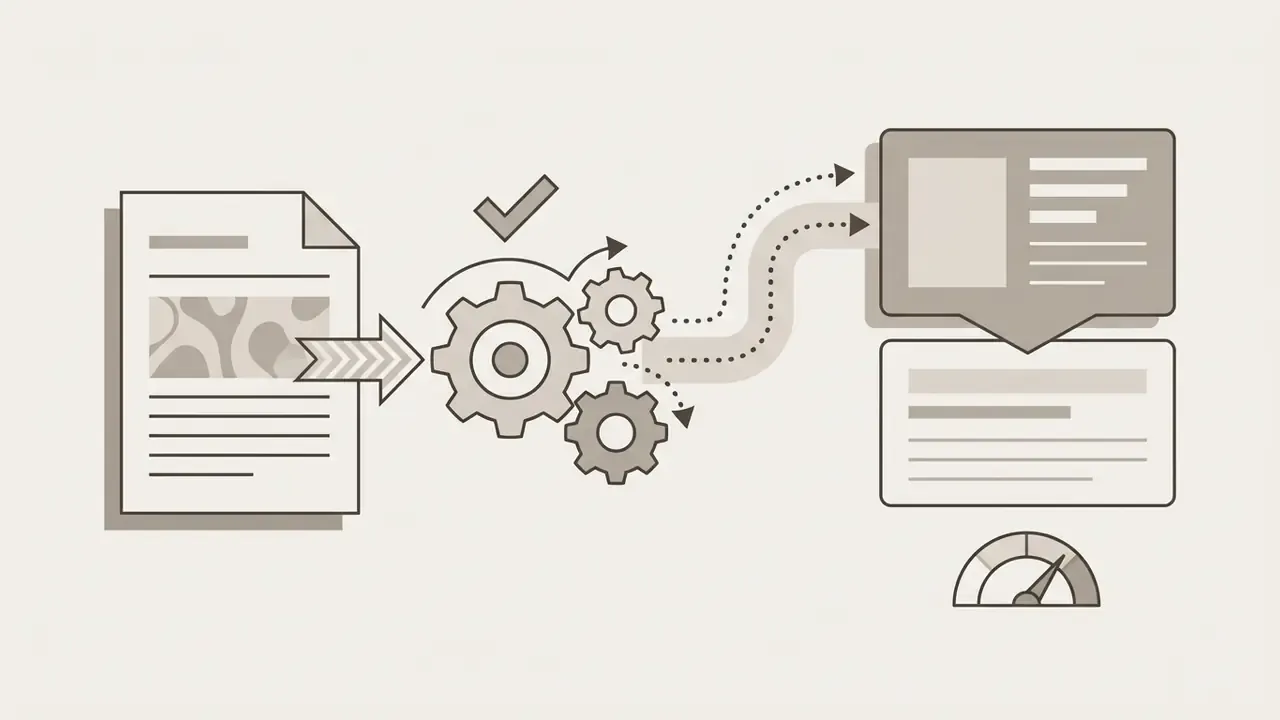
AI produces candidate titles by running a sequence-to-sequence transformation through encoder-decoder neural architectures with attention mechanisms. The encoder reads your input text or content description and builds a dense semantic representation. The decoder then generates candidate words one at a time, based on probabilistic token predictions.
«PEGASUS-large models consistently deliver the strongest results on ROUGE, BERTScore, and SciBERTScore when generating titles for research papers.»
In models such as fine-tuned T5, BART, or PEGASUS, topic-aware modules and copy mechanisms pull key entities, numerical figures, and core thematic phrases out of the source text. According to research on neural title generation published in PMC (PMC9152386, 2022), combining topic distributions with attention-guided decoding lets the system synthesize concise headline variants that stay semantically faithful to the primary text.
«Title information is aggregated per document word through attention during encoding, then a topic-aware decoder uses the learned topic distribution to produce topic-sensitive outputs.»
Practically, the model does not invent a title from nothing. It re-weights words that already exist in your input. So weak or vague input produces weak, generic output. That is architecture, not a product defect. Worth remembering before blaming the tool.
1.2 What Separates a Catchy Title from a Random One
A catchy title communicates value immediately, sparks curiosity, and matches reader intent. A random title uses generic phrasing and lacks focus. Clickable headlines rely on specific details, a clear value promise, and active phrasing.
Empirical evidence from an EMNLP 2023 study on news headline co-creation (Ding et al., 2023) evaluated 840 headlines across 2,400 human ratings. The ranking hierarchy was unambiguous:
«GPT-only headlines received the highest average quality scores; manually written headlines produced without AI assistance received the lowest.»
Effective titles use psychological triggers such as urgency, specificity, curiosity, benefit promise, social proof, and authority, without sliding into deceptive claims. Field data on headline performance shows that concrete details, a named protagonist, and a narrative frame raise perceived appeal. Filler words like easy, magic, best, or always correlate with weaker results. Mid-length headlines (roughly 81 to 100 characters in one dataset) and bracketed clarifications such as [Guide] or [2026 Data] have also been linked to higher click-through rates, although optimal length always depends on the channel and the measurement method.
1.3 Which Inputs Produce Accurate Results
Output precision depends on five input parameters: target topic, primary keywords, content category, tone of voice, and output language. Structured context prevents vague results and keeps the generated title inside the limits of its distribution channel.
Structured prompting frameworks, including the Context, Role, Action, Format, Tone model published in prompt-writing guidance from the University of Notre Dame and the Theme + Structure split used in Monash University's prompt guide, show that headline prompts must specify subject matter, output structure, and voice at the same time. Public-sector editorial guidance agrees:
Once those parameters are set, the title generator can adjust length constraints and vocabulary complexity to fit professional or commercial needs. A four-element prompt pattern documented in clinical prompt-design literature (role definition, context provision, task formulation, output specification) transfers directly to headline work and cuts the number of unusable variants per batch.
2. How to Use an AI Title Generator
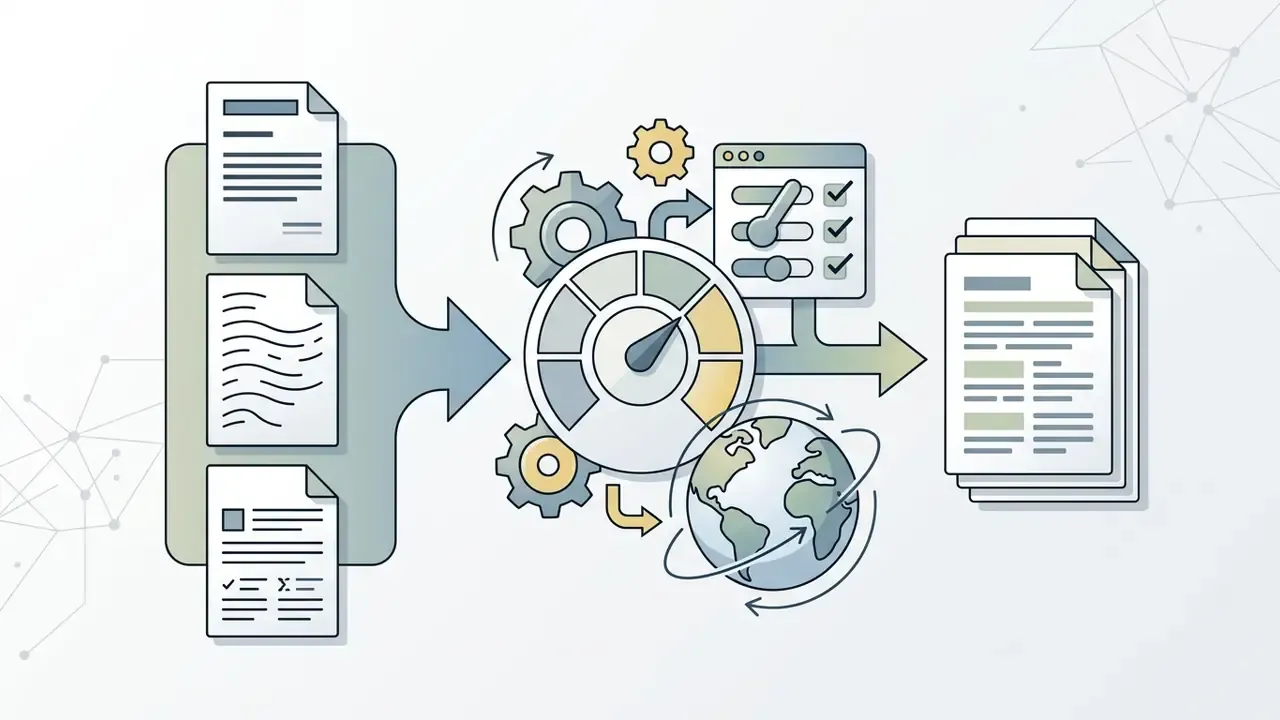
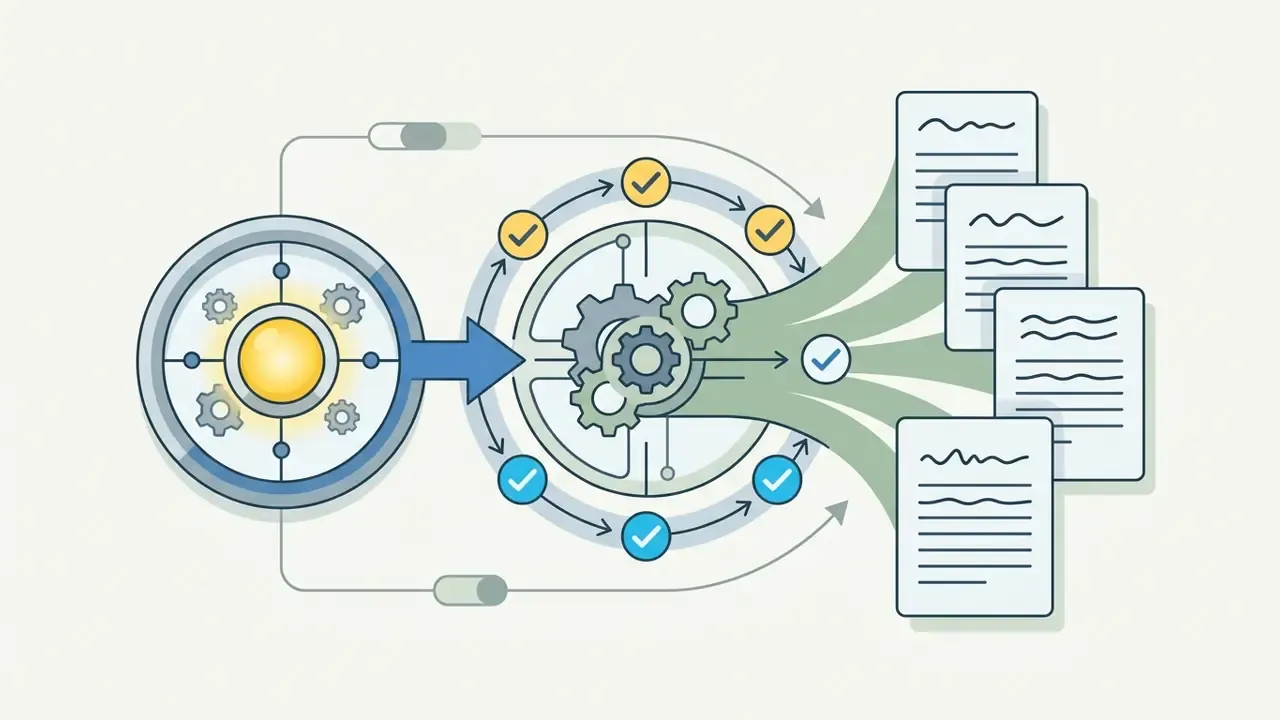
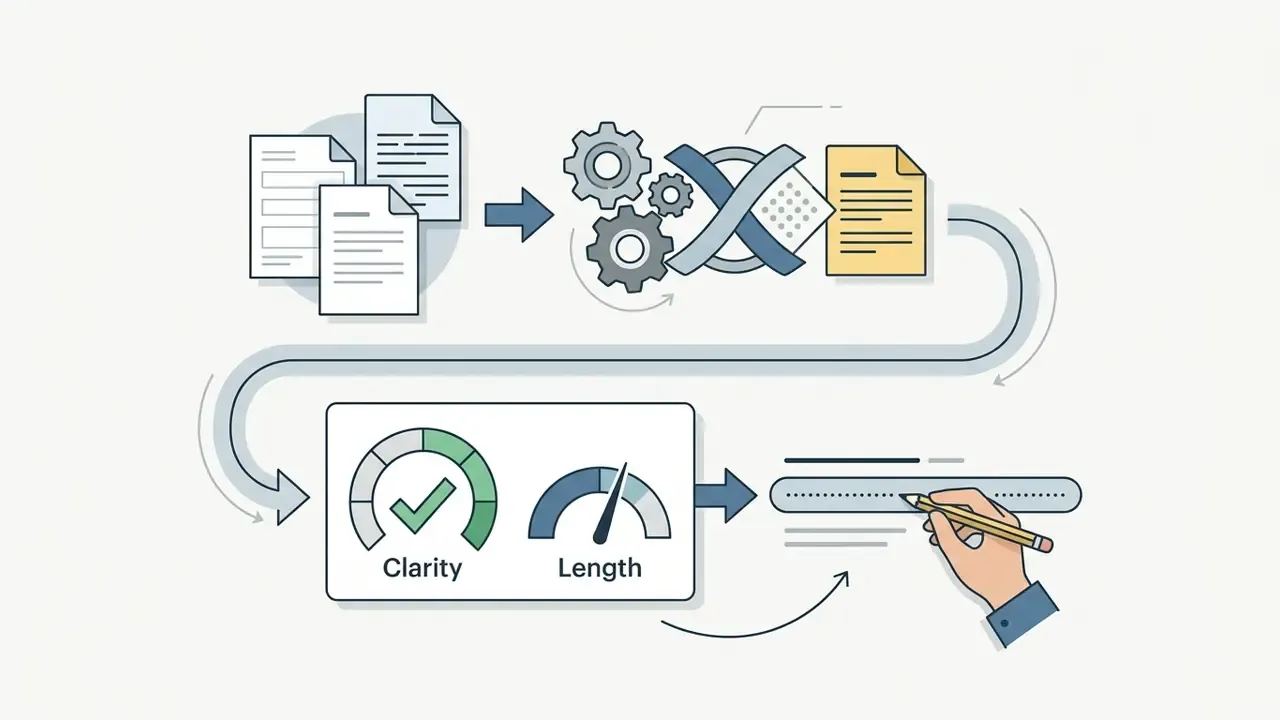
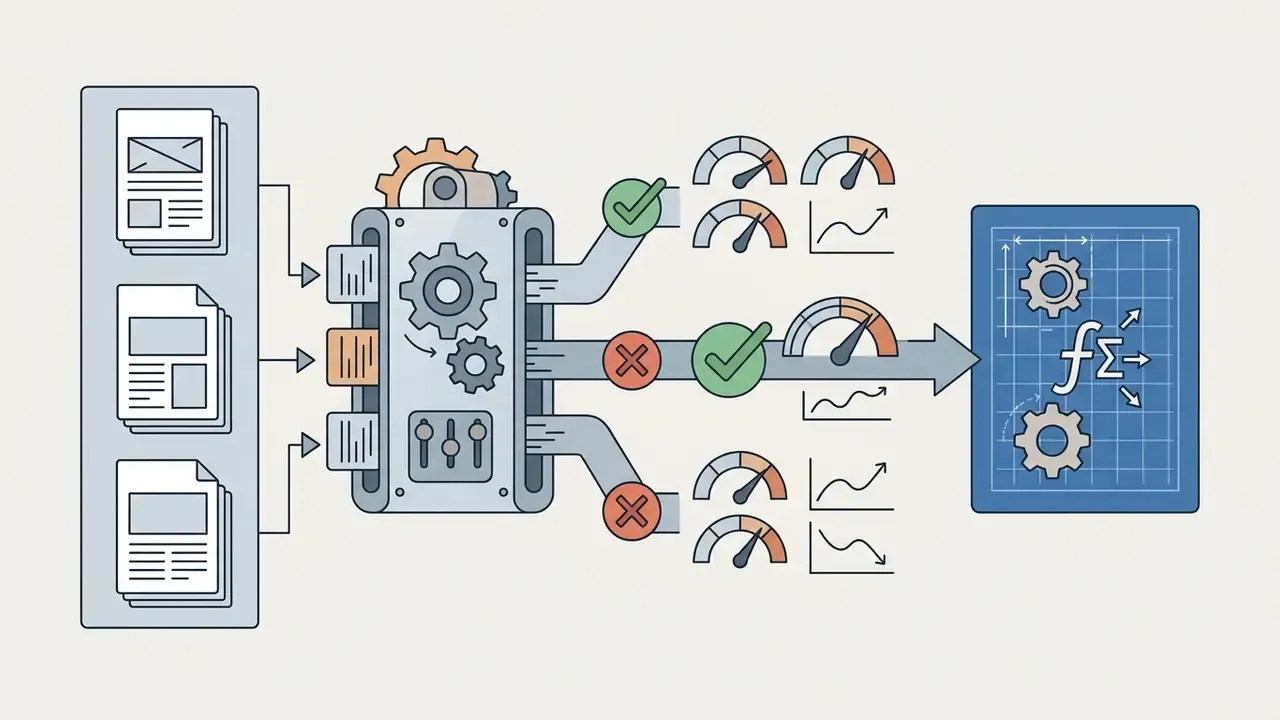
Working with an AI generator for titles follows a repeatable sequence: define the content category, enter core keywords or a text description, set stylistic controls, then review the candidates. The process below is the short version of what most editorial teams end up doing anyway.
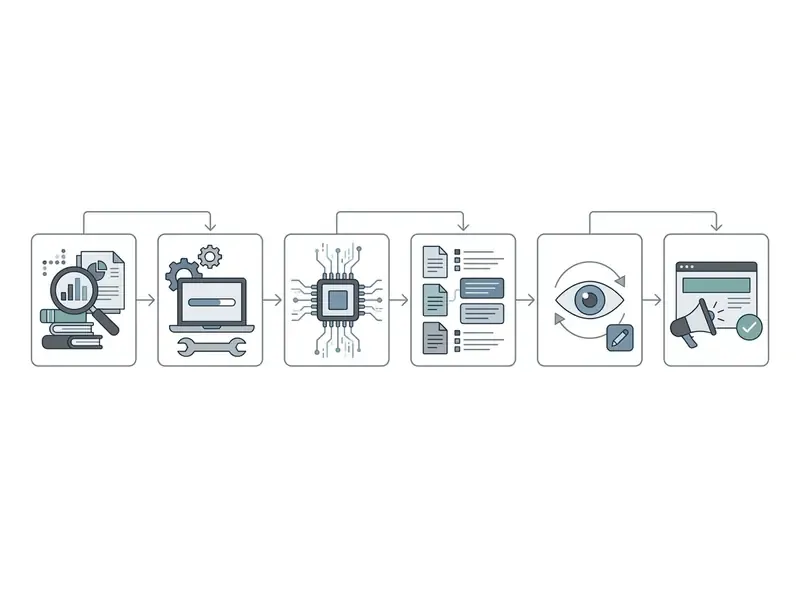
Workflow: AI Title Generation Process
2.1 Choose Content Type and Title Goal
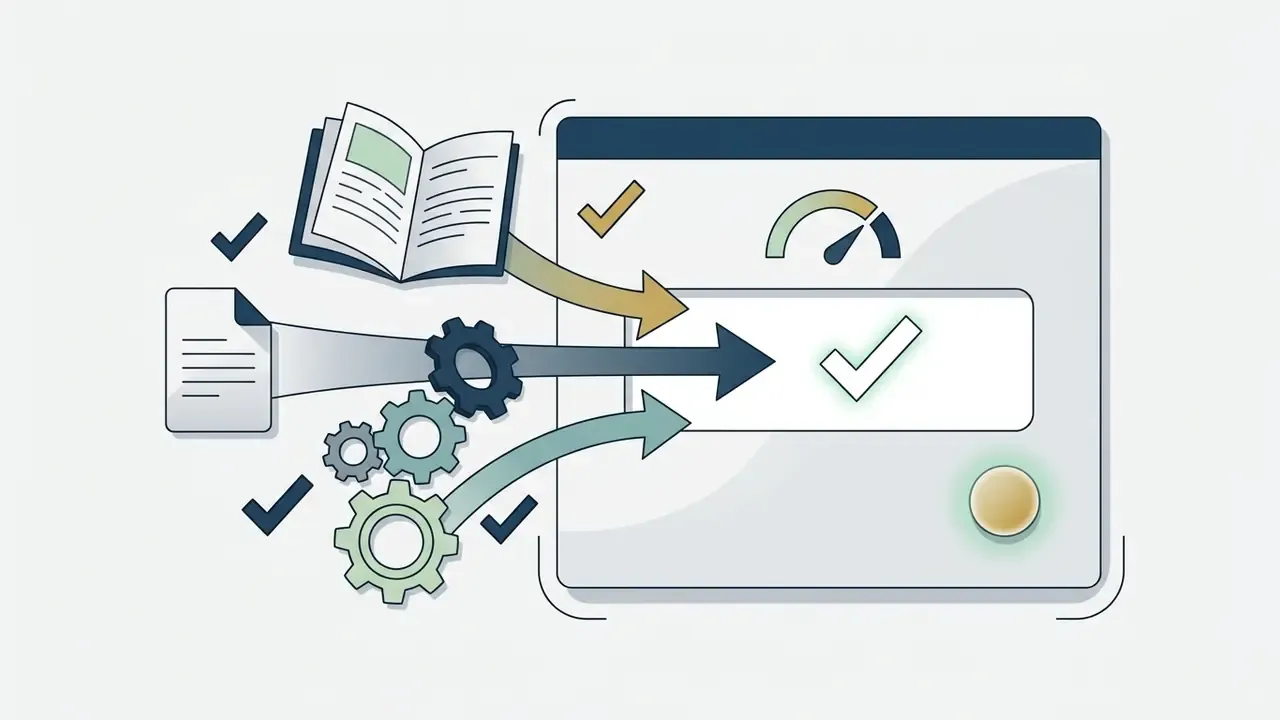
Picking the content category sets the baseline formatting rules, character limits, and stylistic expectations. An article title generator AI applies different structural rules than a tool built for short video titles or formal business reports.
Editorial standards from Microsoft and the Nielsen Norman Group stress that web headings work as scannable microcontent and need instant clarity:
Academic and technical document headings pull the other way: precise thematic framing beats emotional appeal. Goal selection matters as much as format. The same topic yields a different emphasis depending on whether you want traffic, engagement, or conversion.
2.2 Add a Description, Topic, or Keywords
Input quality dictates the accuracy and semantic relevance of every headline option you get back. A concise text summary or a curated set of target keywords stops the system from drifting into generic or off-topic territory.
«Focus prompts on subject and style keywords rather than connecting words; rephrasings that preserve the same keywords did not materially change generation quality.»
Research on prompt engineering (The Prompt Report: A Systematic Survey of Prompting Techniques, arXiv, 2024, https://arxiv.org/abs/2406.06608) treats prompting as a structured taxonomy of techniques rather than free-form wording. That supports a simple conclusion: stable outputs come from constrained, field-based inputs. For complex domain topics, feeding in the target search terms keeps the title generator anchored to your core semantic entities.
2.3 Configure Tone, Language, and Number of Ideas
Tone, language, and iteration volume are the three dials that let you tailor output for a specific audience or market. Modern titles AI systems support voice profiles from formal executive framing to casual conversational styles.
Enterprise content platforms allow tone switching on the fly while still enforcing brand voice. Amplience Workforce, for instance, stores multiple named tone profiles with a label plus a description, so the model follows the intended style at generation time. Generating 10 to 30 candidate titles in one pass gives you a wide spread of angles, and editors can shortlist the strongest for human refinement. Guidance from the NIST Quick-Start Guide for Using Artificial Intelligence notes that explicitly specifying tone helps align output with the target audience. That is precisely why tone is a field, not an afterthought.
2.4 Copy-Ready Enterprise Prompt Template
No embedded widget? You can reproduce the same output quality inside any general-purpose LLM with a structured template. Copy it, replace the bracketed fields, run it:
ROLE: You are a senior editor specializing in [industry] content.
CONTEXT: The content is a [blog post / research abstract / landing page / ad set]
about [topic]. Target audience: [audience]. Business goal: [traffic / conversion /
citation / open rate].
SOURCE MATERIAL: """[paste 3-5 sentences, abstract, or key findings]"""
MUST-INCLUDE KEYWORDS: [keyword 1], [keyword 2]
ACTION: Generate 15 title candidates in 3 groups of 5:
 (A) benefit-led, (B) curiosity-led, (C) literal/descriptive.
FORMAT: Numbered list. Hard limit: [50-60 characters / 10-15 words / under 30 characters].
Front-load the primary keyword in the first 40-50 characters.
TONE: [professional / persuasive / academic / neutral].
CONSTRAINTS: No exaggeration, no unverifiable claims, no clickbait curiosity gaps,
no promises the source material does not support. Do not invent statistics.
OUTPUT CHECK: After the list, flag any candidate whose claim is not directly
supported by the source material.
That final "output check" line is the cheapest factual-consistency guardrail available. It forces the model to self-flag unsupported claims before a human reviewer ever sees them.
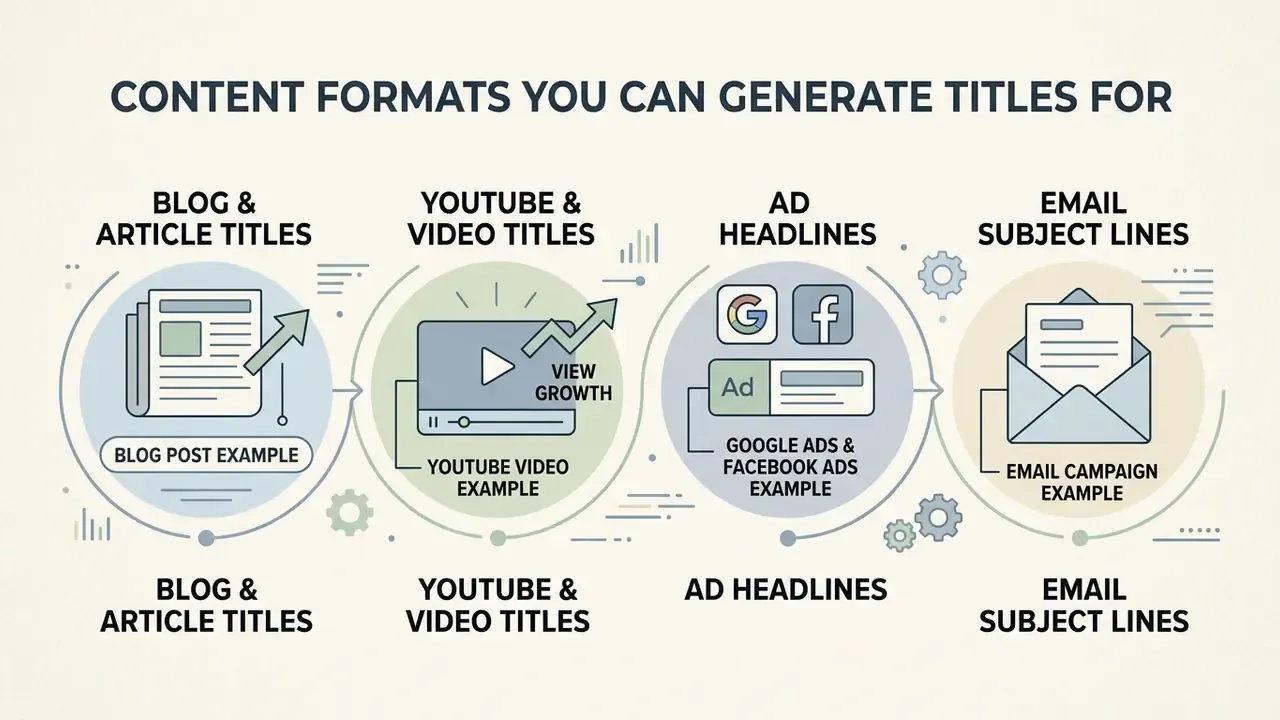
3. Content Formats You Can Generate Titles For
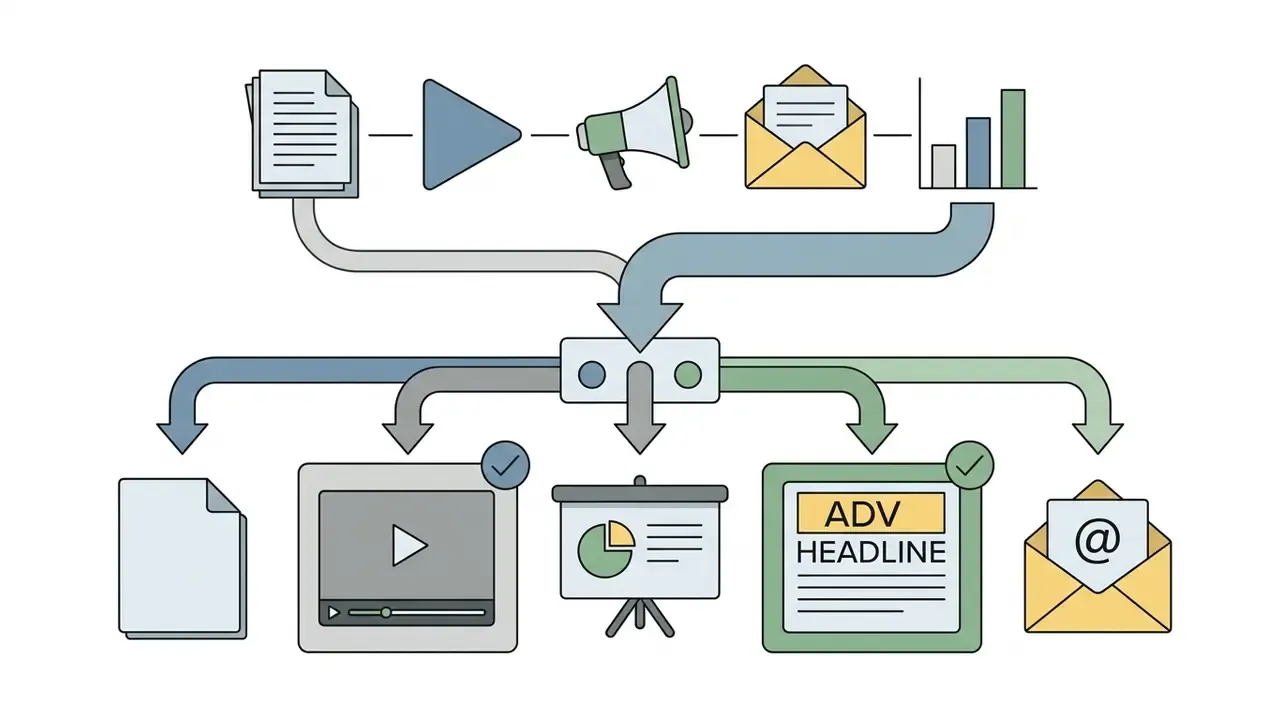
An AI title generator free online utility covers a wide spread of digital, commercial, and academic formats: blog posts, video uploads, academic papers, pitch decks, ad units, email campaigns, landing pages, and press releases. Each medium demands its own headline structure and length boundary.
| Content Format | Primary Title Goal | Key Input Parameters | Recommended Length |
|---|---|---|---|
| Blog Post / Article | Search visibility and reader click-through | Target topic, primary SEO keywords, reader intent | 50 to 60 characters (5 to 12 words) |
| YouTube Video | High CTR in feeds and immediate visual hooks | Video topic, curiosity trigger, audience context | Under 70 characters |
| Research Paper | Academic precision and thematic summary | Abstract text, methodology, core scientific terms | 10 to 15 words |
| Business Presentation | Executive clarity and slide context | Executive summary, key takeaway, slide objective | 4 to 8 words |
| Title Card / Graphic | Visual impact and brand hierarchy | Core phrase, brand voice, design real estate limit | 2 to 5 words |
| Digital Ads (Google / Facebook) | CTR and conversion rate | Product USP, target keyword, offer or price point | Under 30 characters |
| Email Subject Line | Open rate | Curiosity trigger, urgency, personalization token | 30 to 50 characters |
| Landing Page Headline | Value proposition clarity | Primary benefit, action verb, audience pain point | 6 to 10 words |
| Press Release / News Headline | Factual authority and media pickup | Announcement fact, entity name, date, outcome | 8 to 12 words |
| Book or Report Cover | Shelf recall and thematic promise | Genre, theme, audience, series context | 2 to 7 words |
| E-commerce Product Title | Marketplace discoverability | Brand, model, key attribute, size or quantity | Up to 75 characters (Amazon limit) |
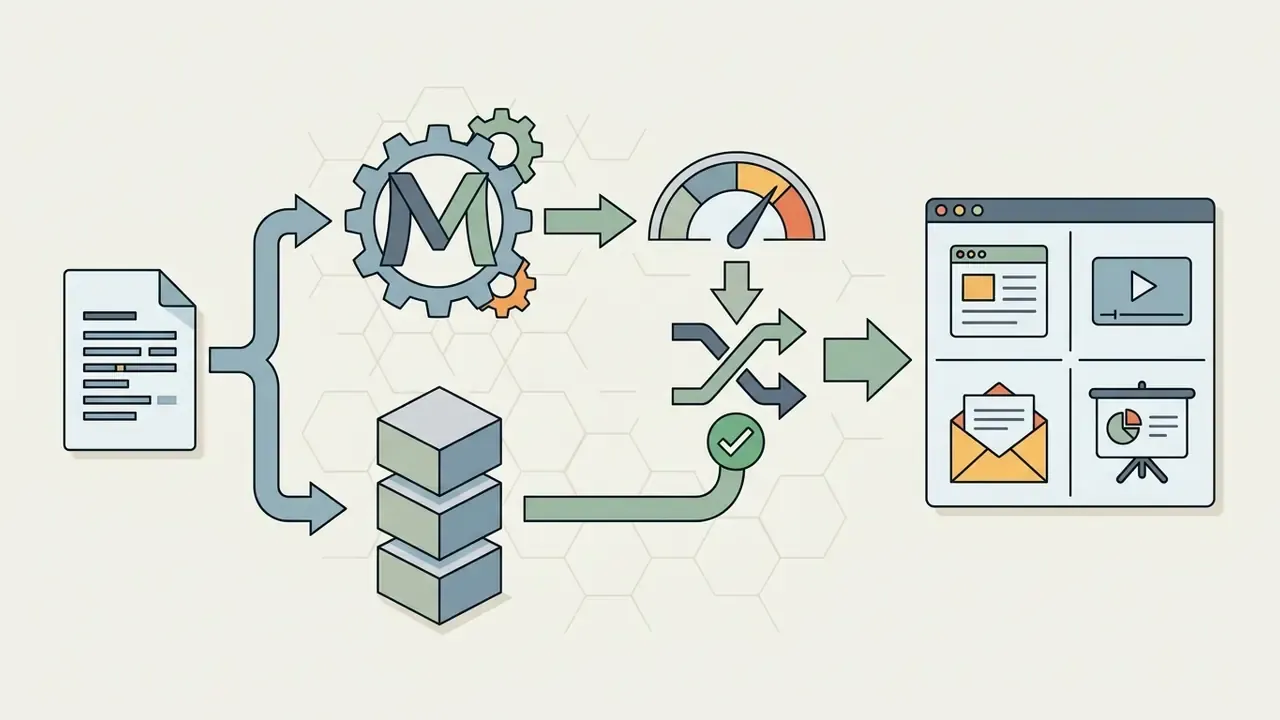
«The DIVER framework generates multiple semantically distinct headlines in a single pass, jointly optimizing quality and diversity through a composite reward function.»
Diversity is not cosmetic. In paid channels the whole value of a generator lies in producing genuinely different angles for A/B testing, not ten paraphrases of one idea.
3.1 Blog and Article Titles for Publications
A blog title has to fuse search intent with a credible value claim if it wants visibility and clicks. An AI article title generator helps content teams craft titles that balance target keywords against natural language patterns, which is what optimized titles actually mean in practice.
Example, blog post
Input:  Topic: "role of AI in healthcare" · Tone: persuasive · Format: blog
Output: 1. "Could Robots Be Your Next Nurse? Inside the AI Medical Shift"
        2. "From Bot to Doc: How AI Is Rewriting Modern Diagnostics"
        3. "AI in Healthcare: 7 Changes Patients Will Notice First"
        4. "Healthy Bytes: Why AI Became Medicine's Quiet MVP"
        5. "AI Diagnostics in 2026: What Works, What Still Fails"
Notice the split. Variants 1 and 2 are curiosity-led; 3 through 5 are literal and keyword-led. In organic search the literal ones usually win. On social distribution the curiosity ones do. Generating both groups in one batch is the practical reason to request 15 options instead of three.
When managing large publishing workflows, editors often review broader media architectures across our AI Media Glossary to standardize terminology. Teams benchmarking production costs for automated content tooling use our AI Media Pricing guides, and design-adjacent work is covered in our online photo editor guide.
3.2 YouTube and Video Titles for View Growth
Video titles need immediate visual impact and emotional pull to survive a crowded recommendation feed. The best AI title generator options for video platforms produce short phrases built to complement a custom thumbnail, which is why many creators pair them with AI video generators inside one production pipeline.
Example, YouTube video
Input:  Topic: "increasing productivity" · Tone: conversational · Format: YouTube
Output: 1. "Warning: Your Productivity Is Being Sabotaged Right Now"
        2. "Why Everything You Know About Productivity Is Wrong"
        3. "I Tried This 5-Minute Trick for 30 Days. Here's the Data"
        4. "Stop Wasting Time: The Only 3 Habits That Actually Work"
        5. "Are You Sure You're Getting the Most Out of Your Day?"
Official YouTube Help documentation insists that titles accurately represent the content while staying short enough to avoid truncation on mobile. YouTube permits 100 characters, but search and feed views commonly cut titles well before that, so 70 characters is the safer working ceiling.
A 2024 analysis of 16,215 YouTube video covers found that strong sentiment in thumbnails increased views, while strong sentiment in captions did the opposite. Read that as a division of labor: emotional load in the image, clarity in the title. Creators comparing production stacks can review our matrix of free AI video generators alongside the title workflow.
3.4 Email Subject Lines
Subject lines optimize for exactly one metric: open rate. The practical window is 30 to 50 characters, because mobile clients truncate anything longer and the preheader then carries the rest of the context. Useful inputs are a curiosity trigger, an urgency or scarcity cue, a personalization token, and the concrete offer.
Example, email campaign
Input:  Campaign: quarterly product update · Audience: existing users · Tone: friendly
Output: 1. "Your Q3 report is ready, {FirstName}"   (36 chars)
        2. "3 new features you asked for"            (28 chars)
        3. "We shipped the thing you requested"      (34 chars)
        4. "Closing Friday: your upgrade window"     (35 chars)
        5. "Quick question about your workspace"     (34 chars)
Always generate subject line and preheader as a pair. A tool that returns only the subject leaves the second-most-visible text in the inbox unwritten. Skip all-caps, multiple exclamation marks, and spam-trigger vocabulary; they depress deliverability no matter how good the wording is. If your team also drafts in-app or transactional copy, the same discipline applies to an ai message generator workflow.
3.5 Landing Page and Website Headlines
A landing page H1 is a value proposition, not a teaser. Target 6 to 10 words that name the primary benefit, the audience, and ideally the mechanism. An AI landing page headline generator performs best when the input carries the customer's pain point verbatim, lifted from support tickets or sales calls.
Example, landing page hero
Input:  Product: AI title generator · Pain point: "I waste an hour per post on headlines"
Output: 1. "Write Your Headline in 10 Seconds, Not an Hour"
        2. "Stop Guessing. Generate Titles That Actually Get Clicks"
        3. "30 SEO-Ready Titles From One Topic, Free"
        4. "The Fastest Way From Topic to Publish-Ready Headline"
        5. "Headlines for Blogs, Ads, Video, and Research Papers"
Pair each hero headline with a one-sentence subheading that carries the proof or the mechanism. A generator can produce both in a single request when the output format field says "headline plus subheadline."
3.6 Press Release and News Article Headlines
Press release headlines follow journalistic convention: the announcement fact leads, the entity is named, superlatives are cut, and the tense stays present or simple past. Sentence-style capitalization is the newsroom norm, unlike the Title Case used for academic headings.
Example, press release
Input:  Announcement: Series A funding, $12M, AI writing platform, led by Fund X
Output: 1. "AI writing platform raises $12M Series A led by Fund X"
        2. "Fund X leads $12M investment in AI content tooling startup"
        3. "Startup closes $12M to expand AI headline and copy tools"
Editorial guidance from defense and public-sector newsrooms is consistent about the requirement set: state what the story is about, summarize it, and show how it differs from other stories in the same news cycle. Any adjective the release cannot substantiate in the body should be deleted before distribution. Compliance teams tracking disclosure obligations can cross-check our AI Litigation and Case Timelines before issuing AI-related announcements.
3.7 Titles for Research Papers, Books, Projects, and Presentations
Academic and professional titles demand formal precision, objective terminology, and strict adherence to institutional formatting rules. An AI paper title generator or AI presentation title generator lets researchers and executives compress a dense technical report into a professional heading. The same logic covers a book title, a thesis, or a grant proposal.
Formatting conventions, not research findings, govern this format. APA 7th Edition prescribes Title Case with a centered, boldface Level 1 heading, and university guidance commonly recommends 10 to 15 words with important keywords near the front. The ACS Style Guide warns that a 14 or 15 word title is usually longer than it needs to be, while ISO 6357 covers layout and spine titles for books, serials, and reports. For multi-slide corporate decks, an AI project title generator creates uniform headings that match executive reporting expectations, and HUD-style report guidance requires the title page to carry the exact title, report date, organization name, and author or sponsor names.
How to generate a paper title from an abstract, step by step
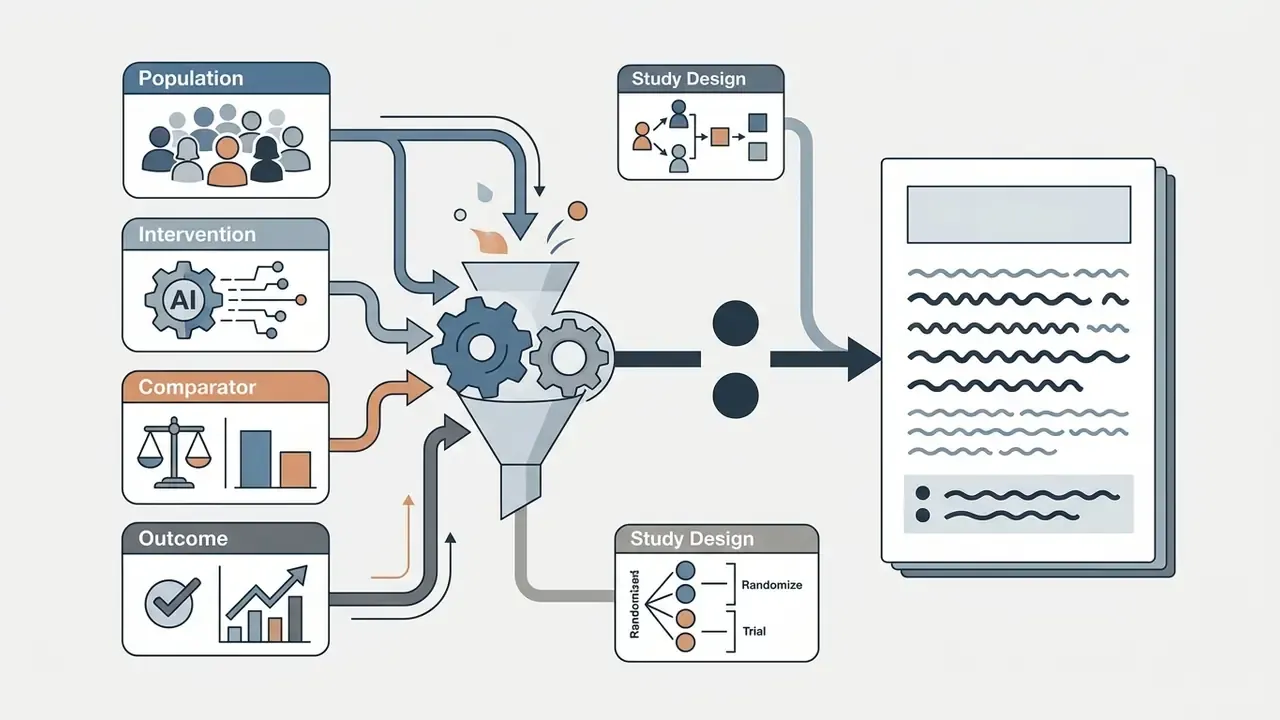
- Paste the full abstract (150 to 300 words) as source material. Abstract text beats a bare topic because it already contains the variables, population, and outcome.
- Declare the study type: systematic review, RCT, case study, qualitative interview study, simulation, meta-analysis.
- Declare the academic domain: Computer Science, Biomedicine, Psychology, Education, Environmental Studies, Business, Humanities.
- List mandatory keywords that must appear verbatim, typically the independent variable, the dependent variable, and the population.
- Set constraints: word ceiling, whether a colon-separated subtitle is allowed, whether the journal forbids questions or declarative claims.
- Request 8 to 10 variants, then check each against the abstract for overclaiming.
Discipline-specific conventions
Example, research paper title
Input:  Abstract on LLM headline quality · Study type: human evaluation · Domain: NLP
Output: 1. "Human Evaluation of LLM-Generated News Headlines: A 2,400-Rating Study"
        2. "Comparing GPT-Only, Co-Created, and Human Headlines Across Four Quality Criteria"
        3. "Quality and Effort Trade-offs in Human-AI Headline Co-Creation"
4. How to Choose the Best Title from Generated Variants
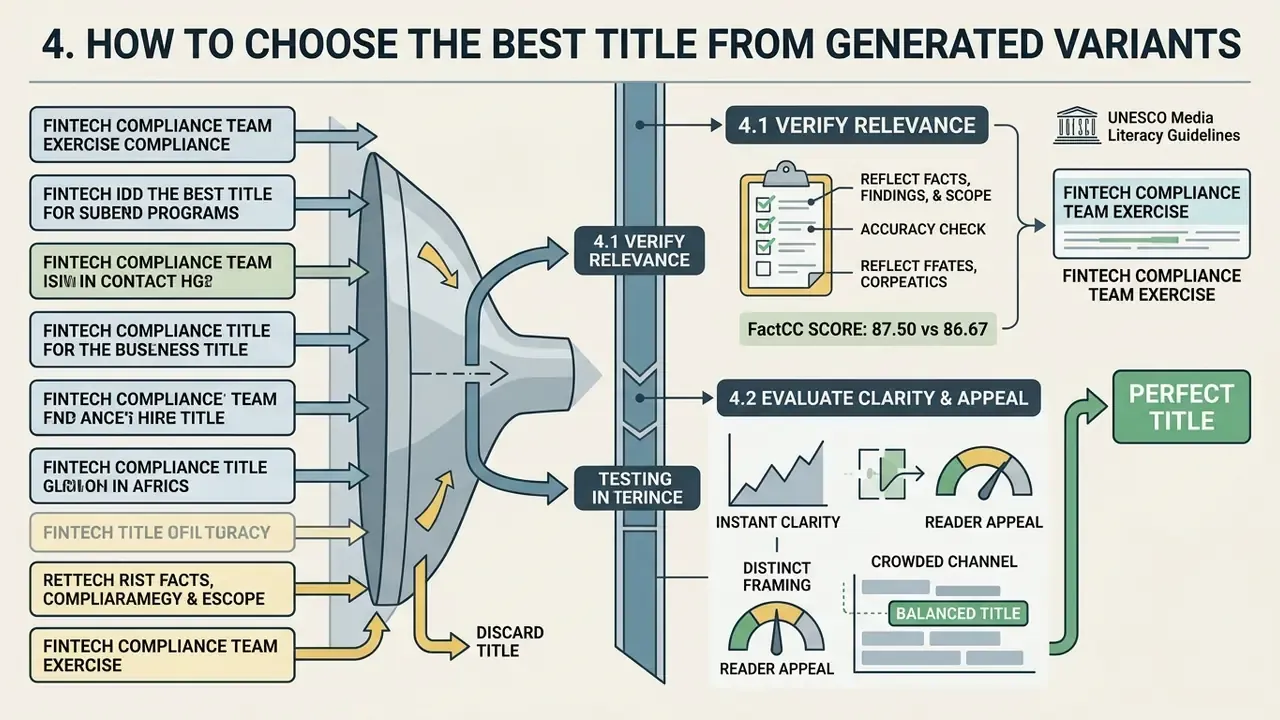
Selecting the best title from automated output means testing candidates against factual accuracy, reader clarity, and channel fit. Not against personal taste alone.
«Contemporary LLMs consistently produce more framed content than human authors, especially on politically and socially sensitive topics.»
That finding turns the selection stage into a risk control rather than an aesthetic exercise. The reviewer's job is to strip out framing the source material does not justify. Human editorial oversight is what keeps misleading claims and unnatural phrasing off the page.
4.1 Verify Relevance to Topic and Content
Relevance checks confirm that the chosen title reflects the actual facts, findings, and scope of the material underneath it. A title generator will happily hand you a sensational option that promises more than the body text delivers.
The UNESCO Media and Information Literacy Guidelines establish that factual verification means cross-checking generated headlines against primary source details, source dates, tone, intent, and core context. Fact-checking manuals published by Internews add a mechanical step: verify the claim, locate the original post or document, cross-check with independent sources.
4.2 Evaluate Clarity, Originality, and Appeal
A perfect title balances instant clarity with distinct framing so it survives a crowded channel. During selection, cut generic buzzwords and vague superlatives without mercy.
The EMNLP 2023 TACT evaluation framework (Taste, Attractiveness, Clarity, Truth) gives you a structured rubric for scoring candidates, with ties allowed when two options are genuinely comparable.
«The "Guidance + Selection" condition delivered the greatest benefit at the lowest cost in time and effort among all tested human-AI interaction formats.»
In operational terms: the most efficient workflow is neither full manual writing nor blind acceptance of model output. It is guiding the model with a structured brief, then selecting from its variants. Four criteria round out the rubric. Clarity, understood on first read, free of jargon and double meanings. Uniqueness, distinct from competing titles on the same SERP. Emotional response, measurable sentiment without manipulation. Audience fit, matching the reader's workload, motivation, and prior knowledge, as GOV.UK's writing guidance recommends. Teams that map decision criteria visually sometimes sketch this rubric with an ai mind map generator before onboarding new editors.
5. How to Create SEO Titles That Attract Clicks
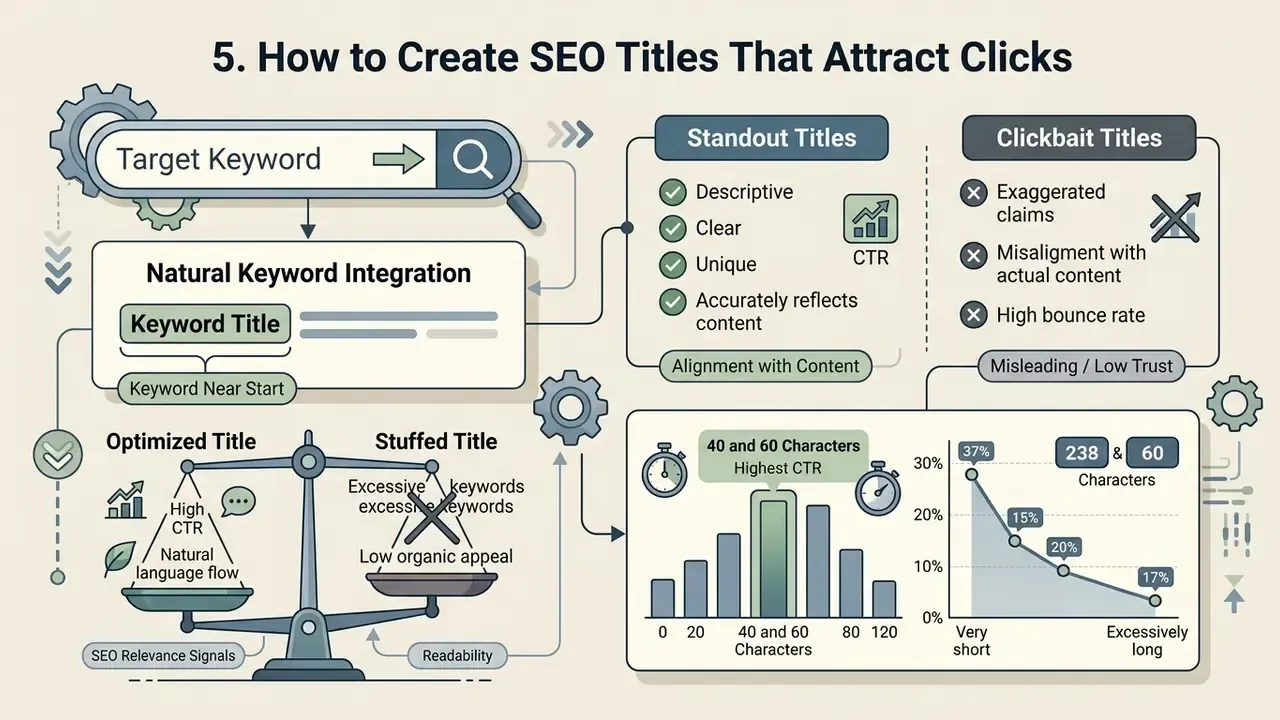
Effective SEO titles fold target search phrases into natural, engaging headlines that earn organic clicks. Combine search engine requirements with genuinely readable copy and you get optimized titles that hold up on the SERP.
5.1 Using Keywords in a Title Without Losing Natural Flow
Placing the target keyword near the start of the title tag improves relevance signals while keeping the line readable. An article title generator AI should land the primary key phrase inside the first 40 to 50 characters without twisting the grammar.
Documentation from the Purdue Online Writing Lab (OWL) and Purdue's SEO title-tag guidance recommends front-loading the target keyword, adding a secondary keyword after it, and keeping the title short enough to fit the visible portion of the snippet, typically the first 40 to 50 characters.
Backlinko's CTR analysis reports that title tags between 40 and 60 characters earned 33.3% higher click-through rates than titles outside that band, and UK Government publishing guidance for data catalogues sets the same practical target of 50 to 60 characters with keywords front-loaded. Avoiding keyword stuffing protects readability and aligns with Google Search Central quality guidelines, which apply identically to AI-assisted and manually written content.
5.2 Making a Title Stand Out Without Sliding into Clickbait
The line between a catchy headline and clickbait is alignment. The promise in the headline has to match the value in the content. Clickbait leans on exaggerated curiosity gaps that frustrate users and erode brand equity over time.
Research from the University of Florida IFAS/EDIS clickbait guidance warns that sensational titles may buy a temporary click spike while damaging long-term source credibility. A 2021 experiment found the credibility damage was heaviest for sources whose reputation was already weak.
«Deceptive AI classifications without explanations significantly increased trust in false headlines (β = 0.71, p < 0.0001) and reduced trust in true ones (β = −1.72, p < 0.0001).»
Sustainable organic growth rests on accurate, value-driven headlines. Studies on headline concreteness show that curiosity-gap framing can actively backfire in information-selection decisions, producing clicks with poor downstream engagement quality. Clicks you cannot keep are not really clicks.
Checklist0 / 8
Editorial teams that need throughput estimates for this checklist can model review time with our AI Media Calculators.
6. Free AI Title Generator for Professional and Business Tasks
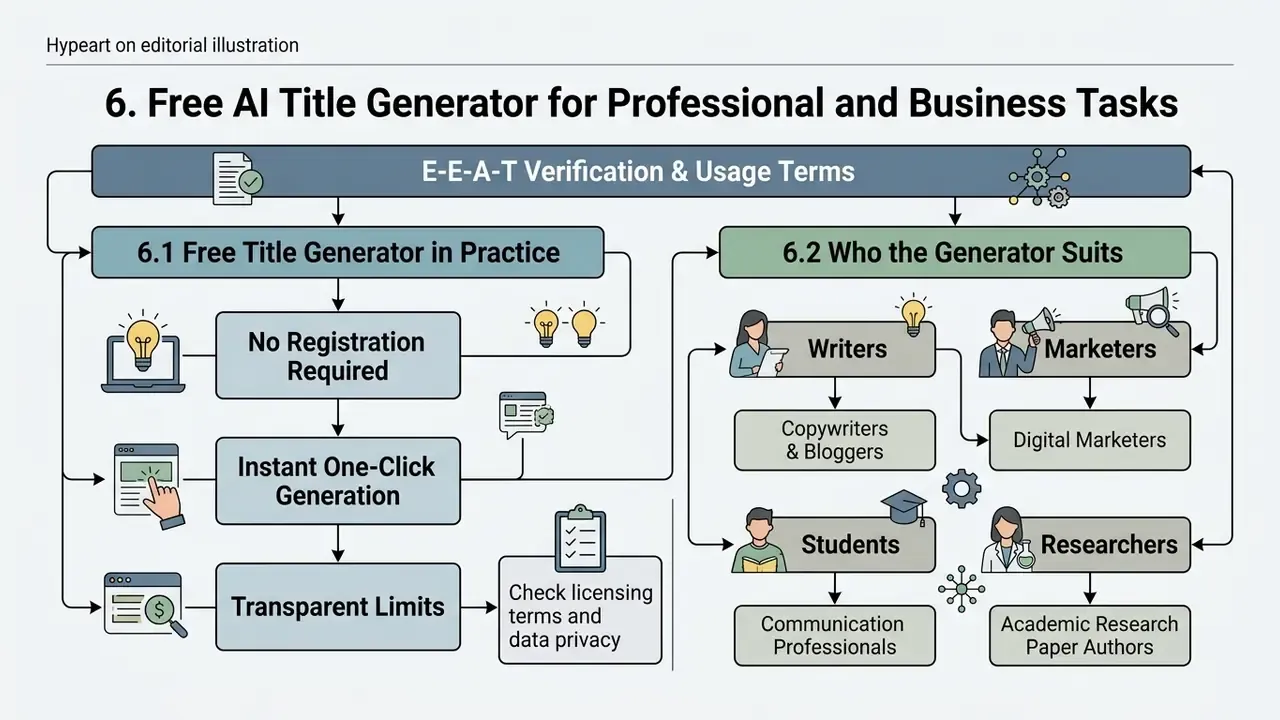
A free AI title generator is fine for enterprise and commercial drafting, provided you respect licensing terms and data privacy rules. Verify usage limits and data handling before wiring any tool into an operational workflow. That order matters, since the reverse sequence is how shadow AI starts.
E-E-A-T Verification and Usage Terms
Data sensitivity matrix: what may enter a free title generator
| Data class | Examples | Free public tool | Enterprise or private deployment |
|---|---|---|---|
| Public content | Published blog drafts, public abstracts, marketing topics | ✅ Allowed | ✅ Allowed |
| Internal non-sensitive | Generic slide topics, internal newsletter themes | ⚠️ Review policy first | ✅ Allowed |
| Client-confidential | Named client projects, unpublished case data | ❌ Prohibited | ⚠️ Contract-dependent |
| Personal data (PII) | Names, emails, health or HR records | ❌ Prohibited | ⚠️ DPA required |
| Material non-public info (MNPI) | Unpublished financials, M&A, regulatory filings | ❌ Prohibited | ❌ Prohibited without formal approval |
6.1 What "Free Title Generator" Means in Practice
In practice, an AI title generator free utility gives you unpaid access to basic generation, usually with daily request quotas or feature restrictions attached. Freemium platforms keep perpetual free access for low-volume users and reserve advanced customization for paid tiers.
The strongest free-tier propositions share three properties. Check all three before adopting a tool:
- No registration required. Generation runs in the browser with no account, no card, no email gate, so a single headline never costs a signup.
- Instant one-click generation. A topic or keyword string produces a full batch of candidates in seconds, with a "load more" action for extra angles instead of a fresh form submission.
- Transparent limits. The quota is published as a number (tokens per day, words per week, generations per day) rather than an unspecified "fair use" clause.
Also distinguish a time-limited trial from a standard free tier. A free tier stays available indefinitely at a lower ceiling; a trial expires and takes your workflow with it. Understanding those boundaries prevents disruption during high-volume production, and it mirrors metering patterns across major cloud AI services, where free usage is capped by explicit monthly quotas.
6.2 Who the Generator Suits: Writers, Marketers, Students, and Researchers
Automated title tools serve very different professional roles, from digital copywriters to enterprise communications teams. Each segment uses the same ai title creator for a different reason, mostly to break a creative block and get tailored options fast.
Teams integrating broader generative capability into structured workflows can explore technical options in our AI Media API Guides, compare platforms through our AI Media Comparison Matrices, review voice-side production in our AI voice generator guide, or open our AI Media Support and Troubleshooting documentation. Creative side projects, from an ai midi generator to an ai minecraft skin builder, follow the same input-quality logic.
7. FAQ: Common Questions About AI Title Generators
Short practical answers on technical capability, visual card creation, multi-language support, and integration options for title AI generator systems.
1 Can AI Create a Title for a Title Card or Title Design?
Yes. An AI title card generator or AI title design generator produces concise, high-impact wording built for graphic cards, presentation slides, and video intro frames. These utilities focus on short, high-contrast phrasing that survives being overlaid on visual media. Text models write the copy; automated graphic platforms then apply typography, hierarchy, and background design to export a finished card. Cover-page generators, for instance, assemble a complete PDF from title, organization name, and author fields. NIST's AI Risk Management Framework for generative AI (AI 600-1, 2024) classifies such outputs as derived synthetic content, which is why documentation and disclosure practices cover generated visuals as well as generated text. For design-focused automation, review the licensing models in our commercial use guidelines.
2 Can Titles Be Generated in Different Languages?
Yes. Modern titles generator tools support multi-language output, so you can produce headlines well beyond English. Advanced transformer models read input in one language and return localized options for a specific regional market. Canva's implementation, for example, documents 18 supported languages, Russian among them.
«The "Crafting Tomorrow's Headlines" benchmark covers four languages, English, Turkish, Hungarian, and Persian, with outputs from BloomZ, LLaMA-2, Mistral, and GPT-4.» Crafting Tomorrow's Headlines: Neural News Generation and Detection in English, Turkish, Hungarian, and Persian (2024). https://arxiv.org/ Quality is uneven, though. The Mukhyansh headline dataset covering eight Indic languages reports an average ROUGE-L of 31.43, while AFRIHG found Arabic, Amharic, and Tigrinya scoring below 4.0 ROUGE-1 in African-language headline generation. Factuality research (Multi-FAct, 2024) likewise shows English ahead of other languages in both accuracy and the volume of correct facts produced. So run human post-editing on non-English output to protect cultural nuance and regional terminology.
3 Is There a Limit on Output Length or Number of Titles?
Yes, and the platform sets it, not the model. Documented ceilings include a 500-word output cap per generation, daily token allowances of 2,500 to 5,000, and weekly word quotas around 1,000 on no-login tiers. Most tools return 5 to 10 titles per request with a "load more" action. Ten to thirty variants in total is the practical sweet spot between diversity and review effort.
4 Are Generated Titles Unique and Safe to Publish?
Outputs are newly generated strings rather than copied text, but uniqueness is probabilistic, not guaranteed. Short, formulaic headlines can collide with existing ones. Before publishing, search the exact title in quotation marks to confirm no direct clash on the same SERP, and confirm the tool's terms explicitly permit commercial publication. For marketplace listings, note that platform rules may differ: product titles generated with AI can require dedicated structured attributes for disclosure.
5 Does an AI Title Maker Replace an Editor?
No. Every credible framework reviewed here, TACT scoring, UNESCO verification criteria, Harvard's marketing guidance, factual-consistency benchmarks such as FactCC, places a human decision point after generation. The measured benefit of a title AI maker comes from the guidance-plus-selection pattern: the model supplies breadth, the editor supplies judgment. Treat the tool as an ai text title generator with a defined owner and an approval trail, and it behaves predictably. Skip the owner, and you have an unlogged publishing path nobody controls.
6 What Should We Do First, Practically?
Start small and reversible. Pick one content type, run 30 headlines through the prompt template, score them with TACT, and log which variant shipped and why. Two weeks of that log gives you a defensible baseline: measured CTR change, review time per headline, and a documented human sign-off. Then decide whether an embedded tool, an API integration, or an internal ai title name generator workflow earns the budget. No pilot expansion without evidence. Related Tools (footer): AI Media Glossary · AI menu generator · AI message generator · AI MIDI generator · AI mind map generator · AI Minecraft skin creator · AI mission statement builder · AI Media Calculators