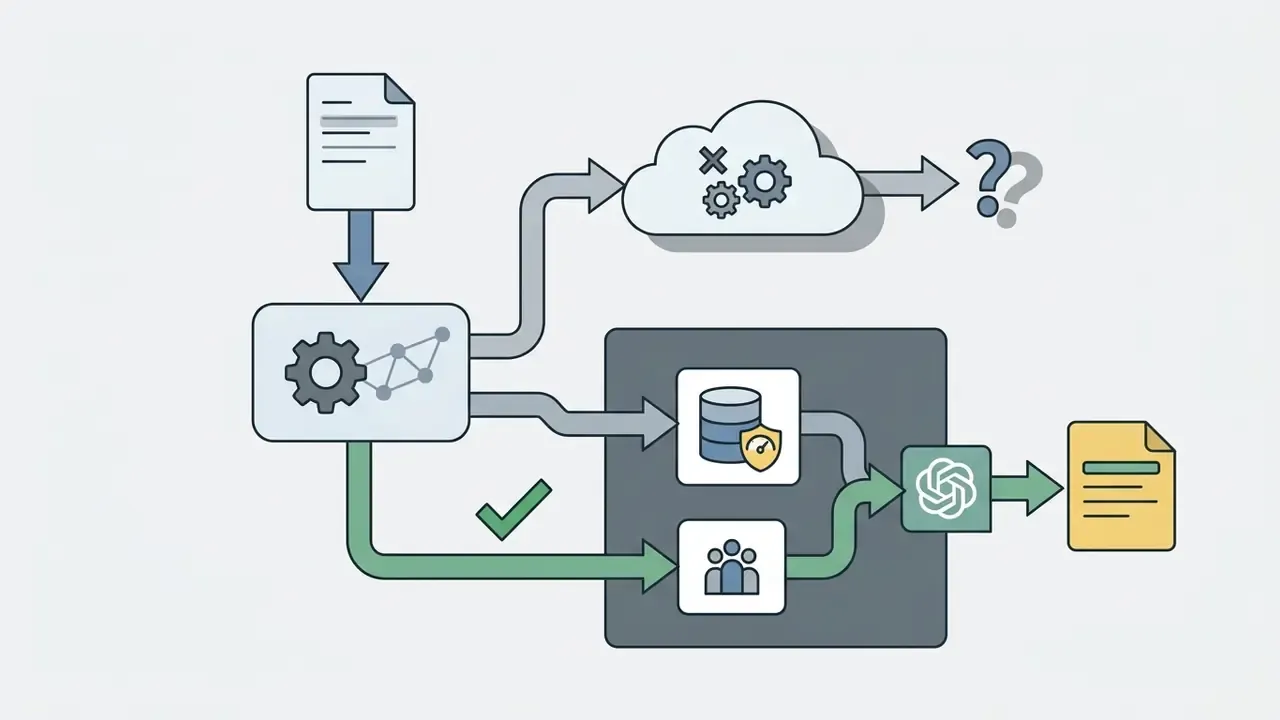
That second layer is the one that kills pilots. Not the pixels.
Decision summary for approvers, three lenses:
1. Midjourney vs ChatGPT: Quick Verdict and Tool Selection
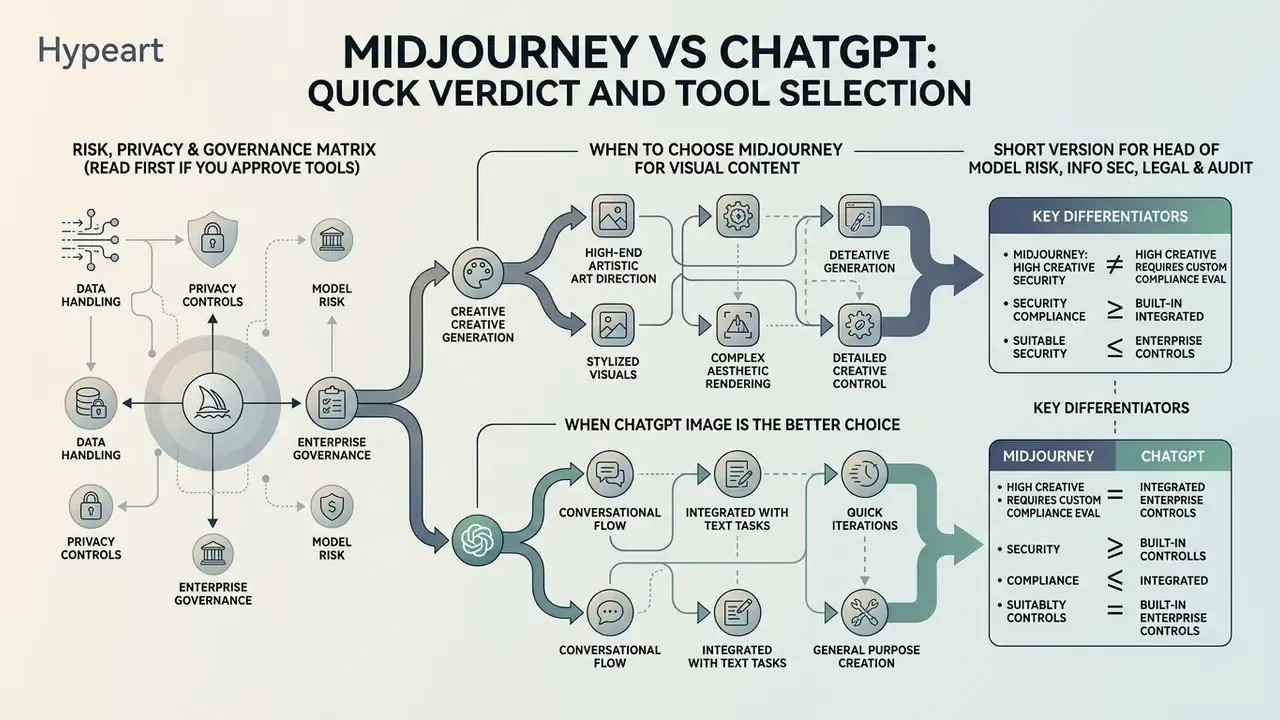
Midjourney is the stronger tool for high-end artistic art direction, stylized visuals and complex aesthetic rendering. ChatGPT Image, powered by GPT-4o and the DALL·E / GPT Image lineage, is better suited to precise prompt adherence, embedded text rendering and iterative conversational editing. For most enterprise marketing and design workflows, the practical answer to "which is better" is neither: it is a hybrid model that uses ChatGPT for prompt structuring and text-heavy visuals, and Midjourney for final high-fidelity rendering. Teams writing a broader tooling policy should also review the wider landscape of commercial use of AI image generators before standardizing on two vendors.
Comparative evaluation of Midjourney v6.1/v7 and ChatGPT Image for commercial enterprise workflows
| Evaluation criterion | Midjourney (v6.1 / v7) | ChatGPT Image (GPT-4o / GPT Image stack) | Practical business conclusion |
|---|---|---|---|
| Overall visual quality | Leading aesthetic score (9.3/10 in the ZSky 10,000-image benchmark). Exceptional lighting, texture and artistic coherence. | High quality (8.5/10), though outputs read slightly more synthetic and standardized. | Midjourney wins for brand campaigns, key visual art, mood boards and aesthetic marketing collateral. |
| Prompt adherence | Strong (8.4/10). Complex instructions often need advanced parameters such as --no, --cw or --style raw. | Leading instruction tracking (8.8/10; VQA 0.6871). Parses multi-object scenes accurately. | ChatGPT Image is preferred for multi-element compositions and literal instruction compliance. |
| Text rendering (in-image) | Moderate accuracy (62% single-word, 38% multi-word in v6.1; independent 2026 testing puts short-string accuracy near 40-60%). Better in v7, still prone to spelling artifacts. | High typography fidelity (74% single-word, 52% multi-word under benchmark conditions; 85-92% on short business phrases and wordmarks). | ChatGPT Image is necessary for banners, mockups, badges and social graphics with embedded typography. |
| Technical diagrams and labels | Attractive futuristic renders, but callout lines and component labels degrade into illegible glyphs. | Logically structured cutaway views with readable component labels, technically simplified. | ChatGPT Image is the only viable option for labeled schematics, explainer diagrams and process infographics. |
| Editing and refinement | Parameter-based tweaking, Vary (Region) inpainting, Editor and Retexture tools in the web UI. Higher learning curve. | Conversational multi-turn edits, brush-based regional selection, direct text instructions inside one thread. | ChatGPT Image gives faster revision loops for non-designers and rapid prototyping. |
| Vector / print delivery | Raster only. No editable SVG output. | Raster only. No editable SVG output. | Both require re-tracing in Illustrator, or a native vector generator such as Recraft V3, for logo and brand-book delivery. |
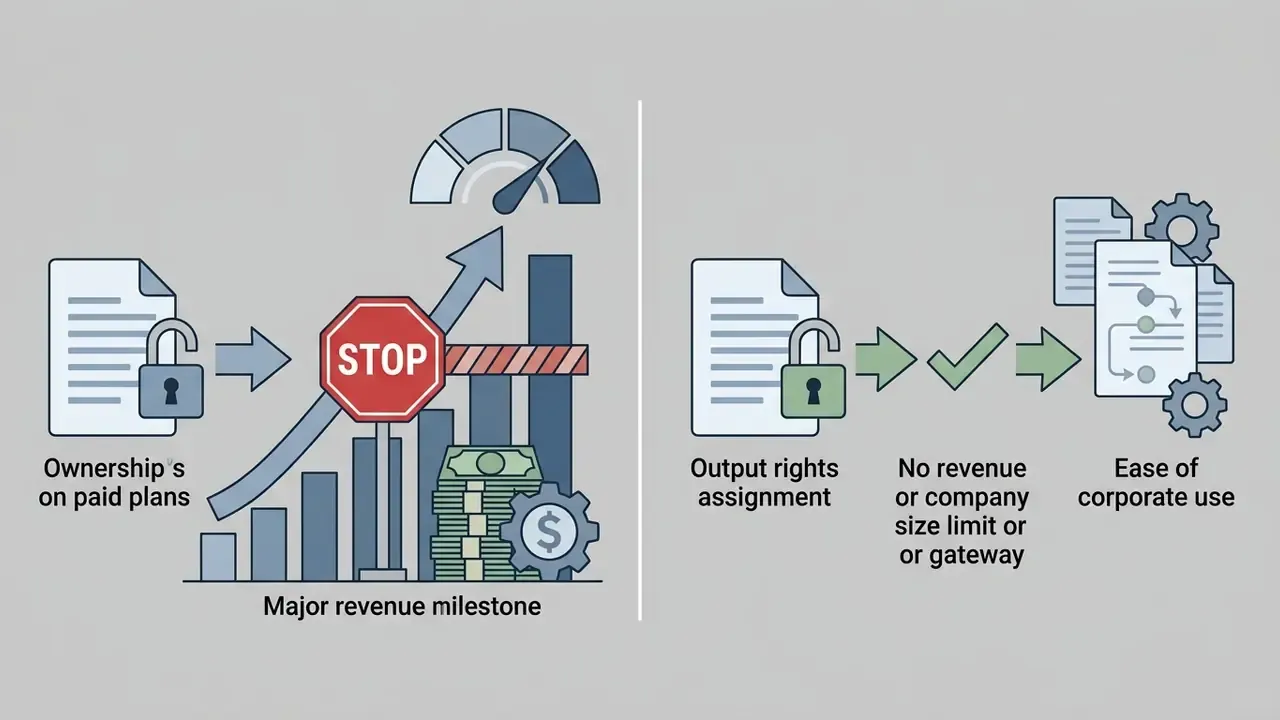
| Commercial rights and pricing | Subscription tiers ($10-$120/mo). Companies grossing more than $1M/year strictly require Pro ($60/mo) or Mega ($120/mo). | Included in ChatGPT Plus ($20/user/mo), Business or Enterprise, or metered via API tokens (roughly $0.04-$0.10 per image at aggregator rates). | Midjourney uses explicit revenue-tiered commercial terms; ChatGPT runs under unified OpenAI commercial policies. |
1.1 Risk, Privacy and Governance Matrix (Read This First If You Approve Tools)
In regulated industries, aesthetics are the secondary filter. The primary filter is whether the platform can be governed at all. The matrix below summarizes the control surface each vendor actually exposes.
Governance comparison: data, IP, access control and auditability
| Governance dimension | Midjourney | ChatGPT Image (Business / Enterprise) | Residual risk note |
|---|---|---|---|
| Output ownership | Subscriber owns created images and videos; commercial use requires a paid plan, and Pro/Mega above $1M gross revenue. | User owns output to the extent permitted by applicable law, per OpenAI Terms of Use. | Ownership is not copyrightability. Purely AI-generated images may be refused registration by the US Copyright Office. |
| IP indemnification | Not offered; the Terms provide a takedown process for copyright and trademark complaints instead. | Not offered at consumer/Plus tier; check current Business/Enterprise agreement language. | Where indemnity is mandatory, an enterprise-indemnified alternative (for example the Adobe Firefly enterprise tier) may be required. |
| Default output visibility | Public-by-default gallery feeds on Basic and Standard; Stealth Mode only on Pro ($60) and Mega ($120). | Private to the workspace; Business/Enterprise inputs and outputs excluded from model training. | Publishing a campaign brief as a prompt on a Basic plan is a disclosure event. Treat prompt text as data. |
| Access channel | Web app plus Discord (some option sets remain Discord-only), historically Discord-first onboarding. | Web, desktop and mobile inside the managed workspace; API for pipelines. | Many CISO policies prohibit Discord on corporate networks, which effectively blocks part of Midjourney's feature set. |
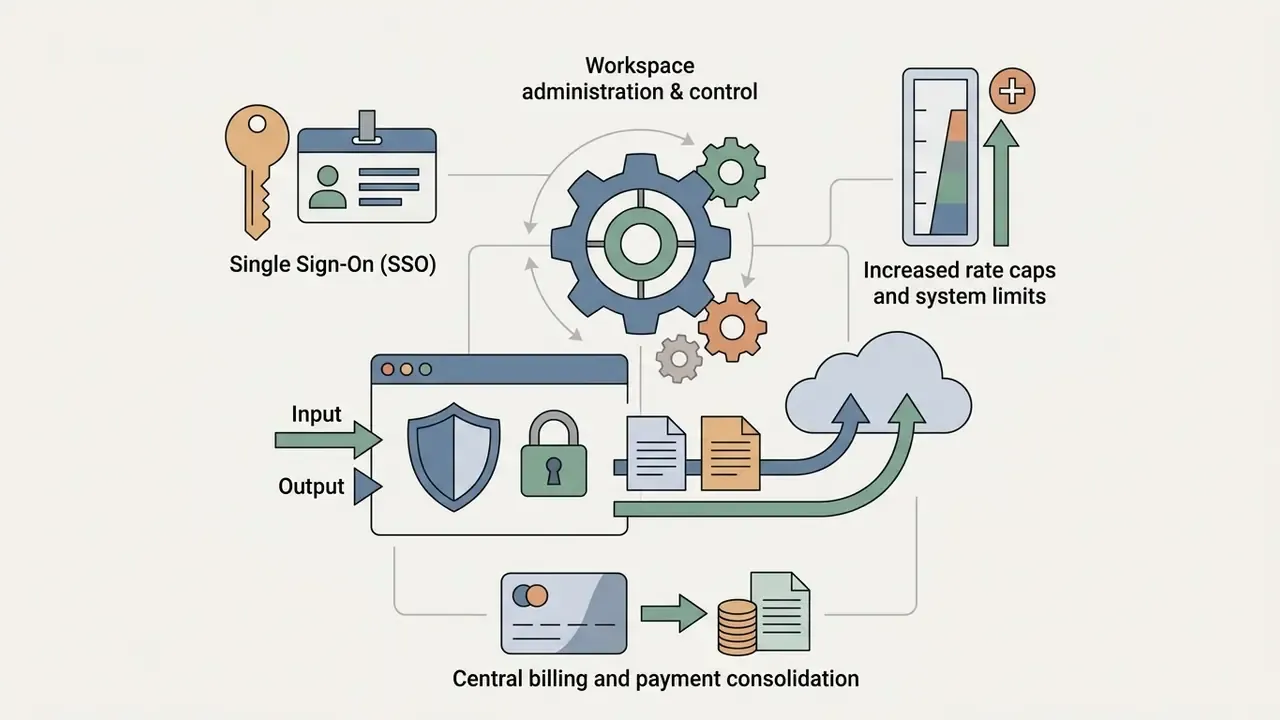
| SSO / RBAC / central billing | Individual subscriptions; no enterprise SSO documented in the public plan comparison. | Team and Enterprise workspaces with SSO, roles, permissions and central billing. | Without SSO, Midjourney seats are hard to inventory. A classic Shadow AI vector. |
| Audit trail and reproducibility | Seeds, parameters and version flags are reproducible by construction; job history sits in the web archive. | The chat thread preserves prompts and edits; workspace admin export supports retention. | Neither tool ships a GRC-ready log format. Export and retain prompt, seed, model version and date manually. |
| Official API | No official public API; third-party wrappers conflict with resale restrictions in the Terms. | Yes: OpenAI API plus aggregators (Replicate, Fal, Kie.ai) for metered generation. | Batch and automated pipelines in regulated environments are realistically ChatGPT-only today. |
Disclaimer: this matrix is general information, not legal advice. Licensing terms change often; verify the current Terms of Service on the official Midjourney and OpenAI sites before approving deployment.
1.2 When to Choose Midjourney for Visual Content
Midjourney is the right call when the business outcome depends on artistic style, visual depth, cinematic lighting and custom aesthetic control. It shines on concept art, brand mood boards, atmospheric photography, product visuals and abstract art, where visual fidelity outweighs textual literalism. Teams broadening the shortlist beyond two vendors often benchmark against the best AI image generators and the best AI art generators before committing budget. With dedicated parameters such as --stylize (artistic influence), --style raw (reducing default aesthetic bias), --quality (allocating GPU time to detail and texture) and --sref (style references), creative teams keep fine-grained control over brand identity and texture quality.
1.3 When ChatGPT Image Is the Better Choice
ChatGPT Image is the better selection for business tasks that need embedded typography, multi-turn conversational edits, or mixed text and visual generation in one pass. It performs well on social media visuals with readable slogans, product mockups carrying exact text labels, labeled diagrams and rapid content prototyping, especially when non-specialist users must refine visuals through plain natural-language feedback. Because generation lives inside a broader conversation, teams can refine copy, draft visual prompts and produce supporting assets in one workspace. Critically for governance, that workspace is managed, not a public community server.
1.4 Short Version for the Head of Model Risk
- Information security approve ChatGPT Business/Enterprise as the default. Approve Midjourney only on Pro/Mega with Stealth Mode enforced and a written rule that prompts carry no confidential, customer or unreleased-product information.
- Legal confirm the $1M revenue threshold applies to your entity, document the plan tier as evidence of licence compliance, and record that neither vendor provides IP indemnification.
- Audit require prompt, seed, model version and generation date for every published asset, so any external asset can be reconstructed on request.
2. How Midjourney and ChatGPT Image Differ
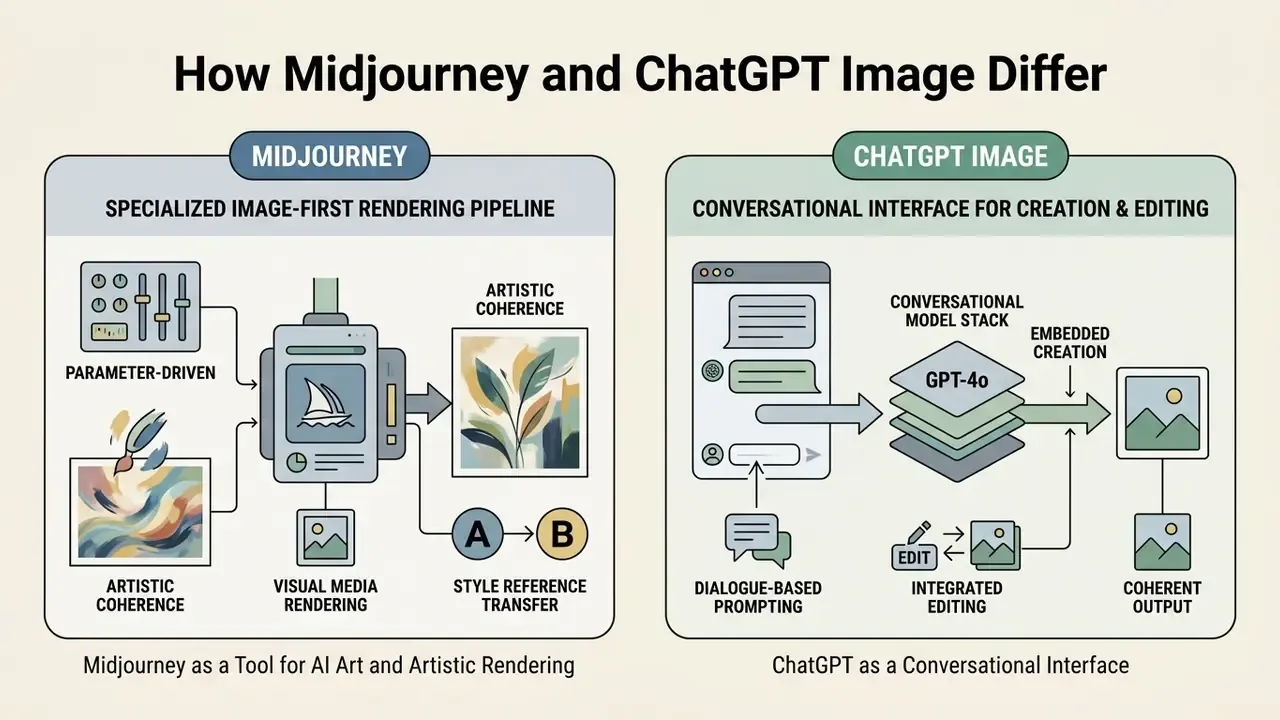
Midjourney works as a specialized, parameter-driven AI image generator built for visual media rendering. ChatGPT Image works as a conversational multimodal interface that folds image generation into a language-based workflow. That architectural difference changes how people interact with each platform: Midjourney relies on explicit visual settings and command-line style flags, while ChatGPT processes continuous dialogue and contextual instructions. It also changes the control surface available to compliance teams. Parameters are auditable strings. Conversational intent is auditable only as a preserved thread, which is a weaker artifact if nobody exports it.
2.1 Midjourney as a Tool for AI Art and Artistic Rendering
Midjourney is engineered as an image-first rendering pipeline optimized for artistic coherence, hyper-realistic textures and detailed creative styling. Users drive generation through Discord slash commands or the dedicated web interface, applying arguments such as aspect ratios (--ar 16:9), model versions (--v 7), quality settings (--q 2) and aesthetic chaos modifiers (--chaos). The platform also ships specialized image-to-image mechanisms: style reference seeds (--sref), style weight (--sw, 0-1000, default 100), moodboards and character consistency flags (--cref). In practice this is an art direction environment, not a general assistant. Readers new to the category can start with the fundamentals of AI art generators before wrestling with parameter syntax.
2.2 ChatGPT as a Conversational Interface for Generating and Editing Images
ChatGPT Image embeds creation directly into OpenAI's conversational model stack, using GPT-4o with integrated visual generation. Instead of structured flags, it translates natural-language description into visual output. Users upload source images, highlight regions and run targeted revisions with prompts like "replace the background with a minimalist office" or "correct the spelling on the product packaging." OpenAI's own guidance recommends adjusting one element at a time and keeping revisions small and targeted, which maps neatly onto controlled corporate review cycles. The result is a low-barrier, iterative editing environment for cross-functional teams. One practical note: prompts written as one to three clear sentences covering purpose, subject, action, place and style consistently beat parameter-style strings here.
3. Image Quality: Midjourney vs ChatGPT Across Output Types
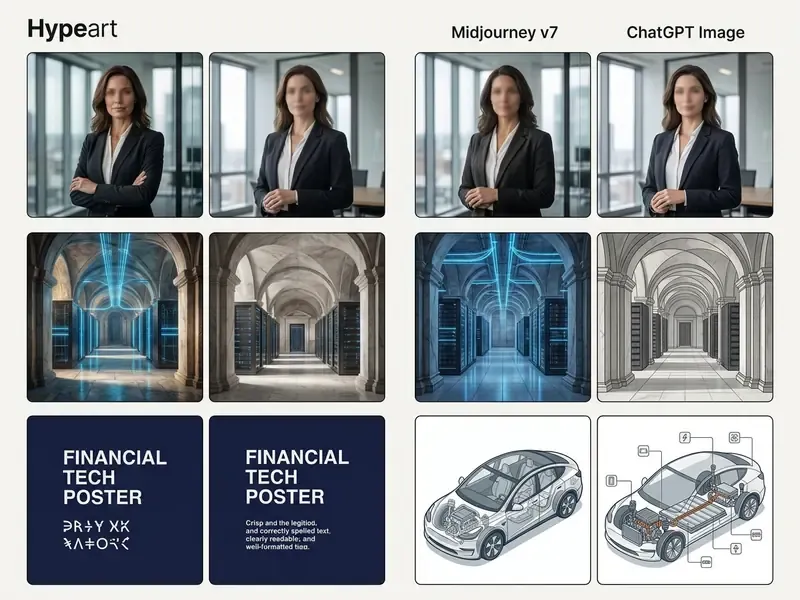
Midjourney delivers higher overall visual fidelity, richer organic texture and better cinematic lighting. ChatGPT Image delivers higher prompt accuracy, better multi-object composition compliance and far more accurate typography. To judge image quality honestly you have to look at four output types separately: artistic design, realistic photography, text-in-image work and labeled technical illustration.
3.1 Artistic Quality, Style and Level of Detail
In systematic visual evaluations, Midjourney keeps earning top marks for artistic depth, polish and composition. In the ZSky AI 10,000-image benchmark it reached a visual quality score of 9.3/10, ahead of general multi-purpose models.
Updated interpretation of human-preference data. Large-scale pairwise preference research does not show a decisive Midjourney lead on raw preference. It shows statistical parity with the strongest general-purpose model:
So what does the advantage actually consist of? Default taste. Colour grading, mood, editorial framing, light direction. Seven versions of curation produced a model whose out-of-the-box look resembles a fashion shoot, while GPT Image's default look resembles a competent, well-lit stock photograph. For concept art, cinematic stills and editorial campaigns, Midjourney still owns the ceiling. Its --quality parameter (2x or 4x GPU time) deepens texture and micro-detail further, which matters once a hero asset goes to print scale.
3.2 Realistic Images and Prompt Accuracy
Midjourney handles photographic texture beautifully, yet it usually needs explicit tuning, --style raw or lower stylization, to stop over-styling real-world subjects. Peer-reviewed evaluations, including the 2024 RSNA Radiology study on Midjourney v5.2/v6, noted that unguided outputs could introduce anatomical artifacts, imprecise digits, or quietly ignore minor prompt details.
Benchmarks focused on prompt adherence put OpenAI's visual pipeline at the top of compositional accuracy:
Illustrative case (regional financial institution). During a digital transformation initiative, a marketing team evaluated generators for compliant campaign collateral. They needed visuals of precise advisory settings, with specific brand colours and controlled spatial positioning. Standard prompts in Midjourney produced dramatic, cinematic scenes that broke corporate photography guidelines. After moving to ChatGPT Image, reviewers reported that most first-pass drafts already matched the required positioning and neutral lighting brief and needed only light correction. That is an internally observed outcome from one project, not a benchmarked figure. Midjourney stayed in the pipeline, but only for hero background assets where atmospheric depth was the point. (The original phrasing of this result is preserved in Appendix A.)
3.3 Text Rendering and Images With Lettering
Text inside generated images is the clearest performance split between these two platforms. Not close, honestly.
Specialized evaluations narrow the test to strings that actually matter commercially: wordmarks, product labels, headlines under ten words.
Independent 2026 hands-on testing lands in the same place with slightly different framing: short-string first-try accuracy sits near 85-90% for the GPT image stack versus 40-60% for Midjourney v7. Run a brand name such as "AURELIA COFFEE" ten times through Midjourney and about half the outputs will invent or drop characters. For posters, packaging, menus, signage and social cards where text is a featured element, start in ChatGPT Image. Plenty of designers generate the background scene in Midjourney and composite typography from ChatGPT, or from a text-specialist model such as Ideogram 3, on top.
3.4 Technical Diagrams, Schematics and Labeled Infographics
Creative comparisons skip this category almost every time, and for B2B, engineering and analytics teams it is decisive. Tested with the prompt A cutaway technical diagram of an electric car showing the battery, motors, and power distribution system. Include labels for key components. Blue and white color scheme, clean technical illustration style., the split is unambiguous:
Verdict: for any diagram whose job is to communicate a labeled structure, think process flows, org charts, cutaway schematics, risk taxonomies, dashboard mockups, ChatGPT Image is the only practical generator of the two. Use Midjourney for the decorative cover visual that sits above such a diagram.
3.5 Vector Output and Commercial Export
4. Pricing, Commercial Use, Governance and Limits
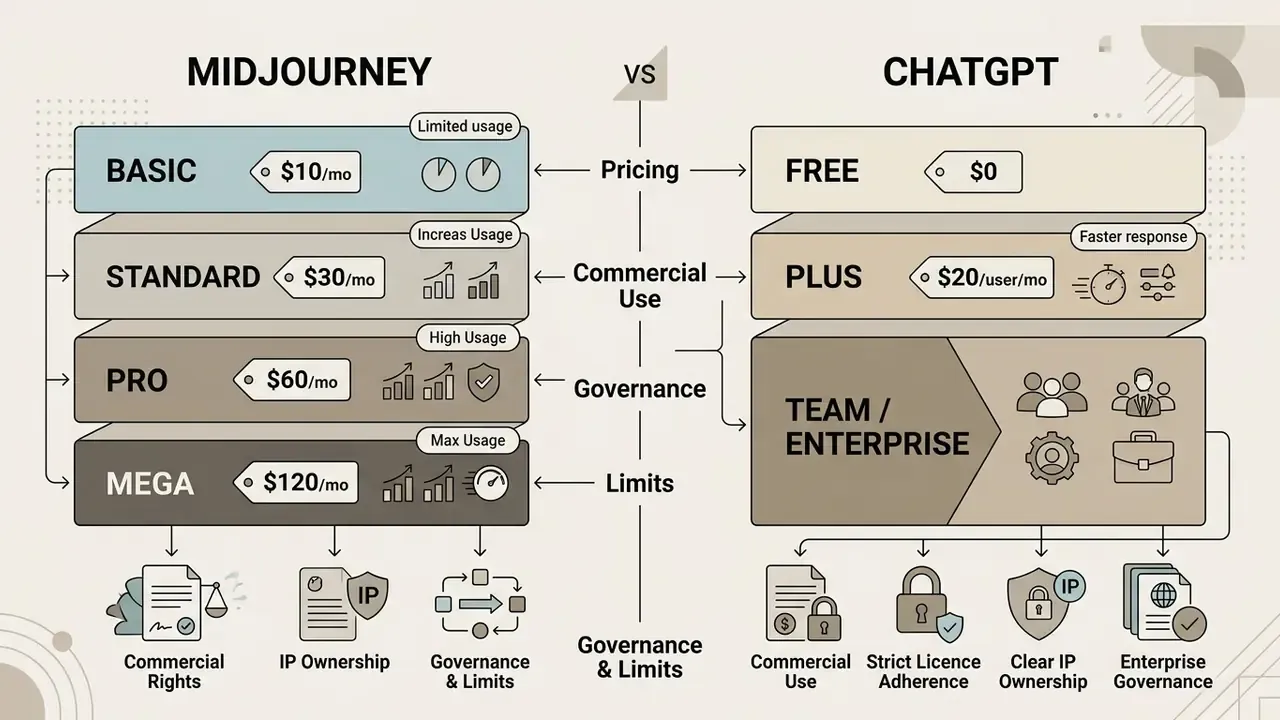
Commercial adoption of generative tools requires strict licence adherence, clear IP ownership, controllable data flows and transparent cost structures. Midjourney enforces explicit revenue-tiered commercial terms. OpenAI governs ChatGPT Image through unified platform usage policies and subscription tiers. This section deliberately sits before prompt engineering, because for regulated organizations licensing and data controls are deal-breakers, not optimizations.
4.1 Midjourney and ChatGPT Plus Costs: What Each Tier Includes
Midjourney runs on tiered monthly or annual subscriptions with fixed GPU time allocations:
- Basic ($10/mo) roughly 200 fast GPU generations per month, commercial usage rights below the $1M revenue threshold, web and Discord access, no Stealth Mode.
- Standard ($30/mo) 15 fast GPU hours per month, unlimited Relax Mode. The realistic commercial entry point for small teams.
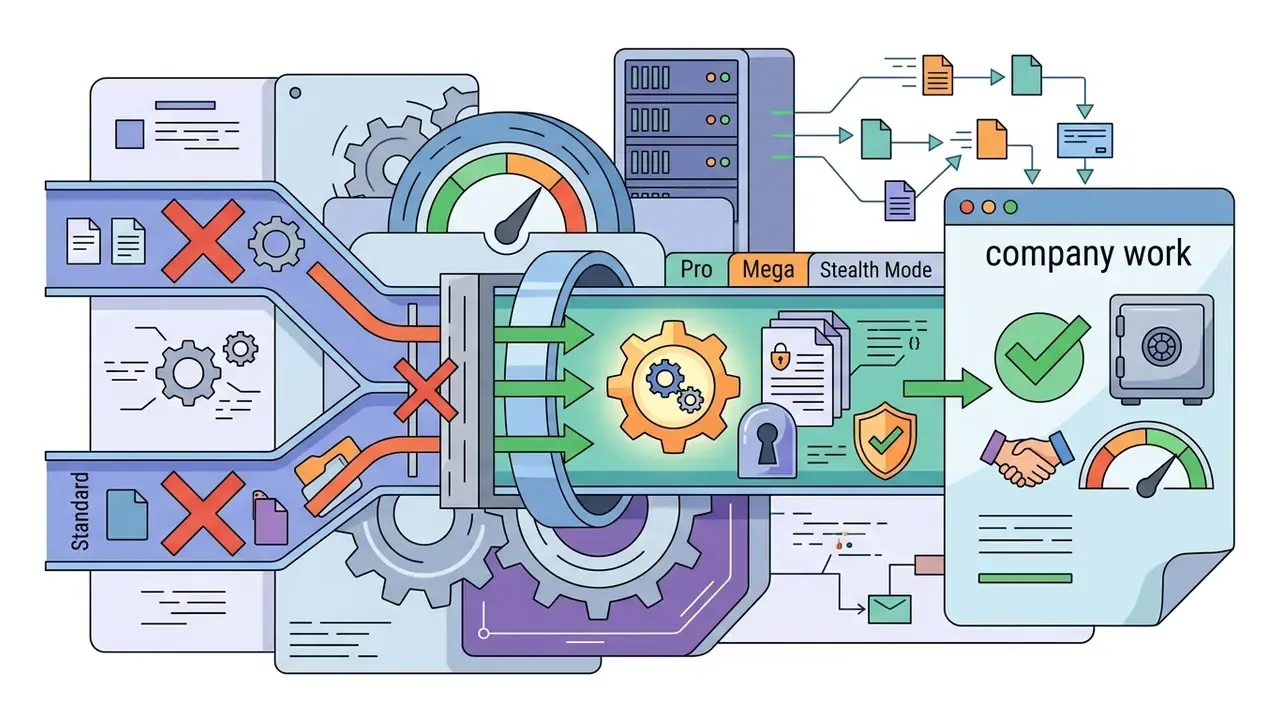
- Pro ($60/mo) 30 fast GPU hours, unlimited Relax Mode, Stealth Mode (keeps generated images private), required for companies grossing more than $1M/year.
- Mega ($120/mo) 60 fast GPU hours, unlimited Relax Mode, Stealth Mode, maximum concurrent jobs.
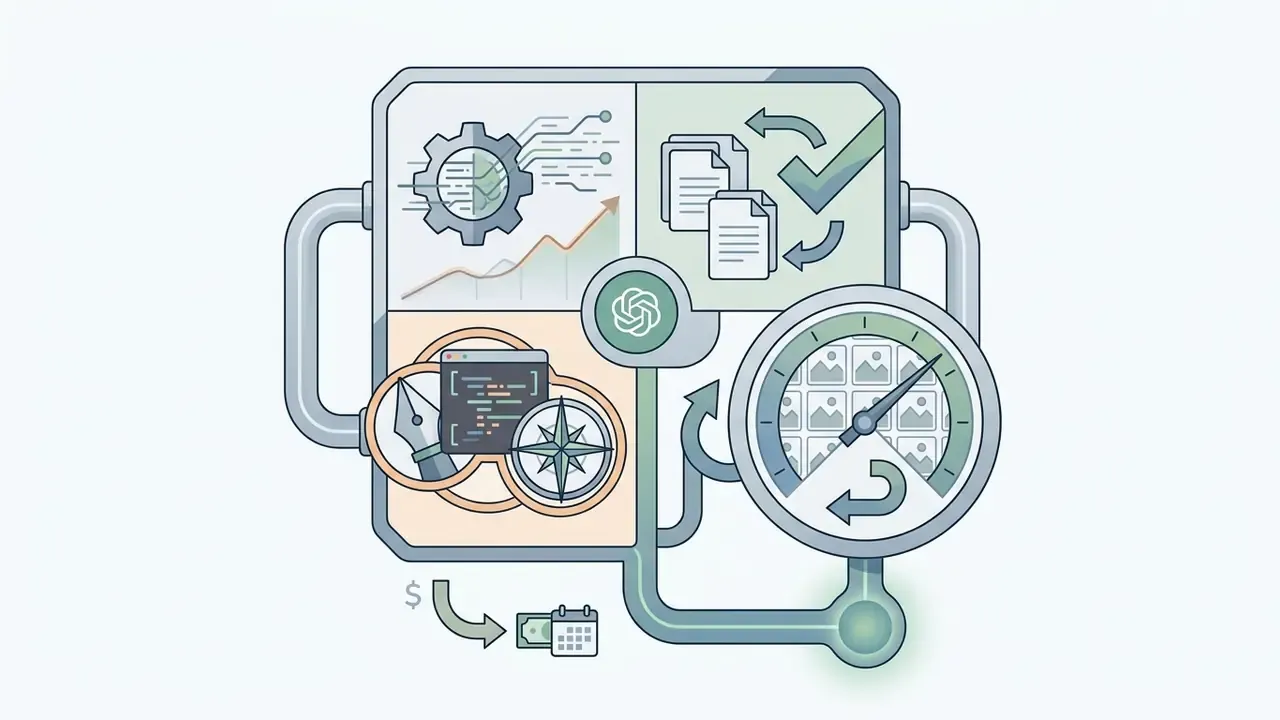
ChatGPT Image is reachable through OpenAI's multi-modal tier structure:
4.2 API Access and Pay-Per-Image Economics
If your organization does not need a daily seat for every user, metered API access is materially cheaper. Generation through OpenAI's API or cloud aggregators (Replicate, Fal, Kie.ai) costs roughly $0.04-$0.10 per image, which beats a subscription below roughly 200-400 images per user per month and removes seat sprawl entirely for automated pipelines.
A minimal integration pattern looks like this:
curl https://api.openai.com/v1/images \
  -H "Content-Type: application/json" \
  -H "Authorization: Bearer $API_KEY" \
  -d '{
    "model": "gpt-image",
    "prompt": "Clean technical illustration of a payment authorization flow, blue and white, labeled steps",
    "size": "1536x1024"
  }'
Two governance advantages follow from the API route. Every request is logged server-side by your own gateway, which closes the audit-trail gap described in 4.6, and no employee needs a personal consumer account. The trade-off: Midjourney has no official public API, and its Terms of Service prohibit reselling or redistributing the service itself, so third-party Midjourney "API" wrappers are a licence risk rather than a shortcut. Batch and automated commercial pipelines are, realistically, ChatGPT-only today. Teams comparing metered vendor economics across media types will find parallel calculations in our Google Veo API implementation guide.
4.3 Enterprise TCO: The Real Cost of Approval
Subscription price is the smallest line item on the sheet. A defensible corporate TCO model includes:
| Cost component | Midjourney (Pro/Mega) | ChatGPT (Business/Enterprise) |
|---|---|---|
| Licence | $60-$120 per seat/mo | $20-$30+ per seat/mo (bundled capability) |
| Identity and access | Manual seat inventory, no SSO, so admin overhead | SSO and RBAC included, near-zero marginal admin |
| Network and DLP controls | Discord egress rules, channel monitoring, prompt-hygiene training | Standard SaaS DLP posture |
| Legal review | Revenue-threshold compliance check, no indemnity, higher residual risk | Terms review, no indemnity, moderate residual risk |
| Audit tooling | Custom prompt and seed export process | Thread retention plus admin export or API gateway logs |
| Rework cost | High for text-bearing assets (composite in a second tool) | Low for text, higher for premium editorial mood |
The honest conclusion: Midjourney's sticker price is higher and its governance overhead is higher, but it buys an aesthetic ceiling the other tool cannot reach. Budget it as a specialist creative licence for a handful of art-direction seats, not as an org-wide rollout.
4.4 Commercial Rights, Terms and Privacy for Business
There is a second consequence of Midjourney's public-by-default architecture. Assets created on Basic or Standard tiers appear in public gallery feeds unless Stealth Mode is enabled on Pro or Mega, a direct disclosure risk for unreleased products and embargoed campaigns. The Terms also prohibit reselling or redistributing the service itself, which matters when agencies package generation capacity into client deliverables.
OpenAI's Terms of Use assign output ownership to the user to the extent permitted by law. Enterprise and Business agreements guarantee that customer inputs and generated outputs are not used to train OpenAI models.
4.5 Shadow AI, Discord and Access Control
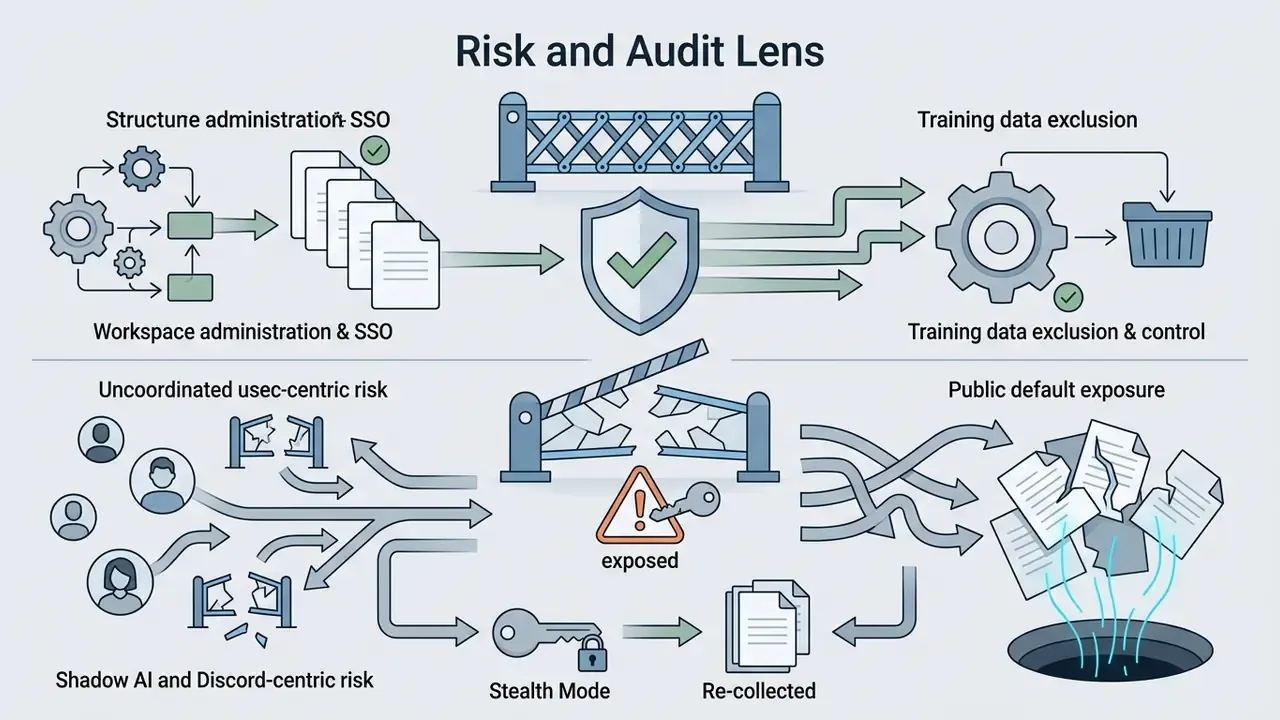
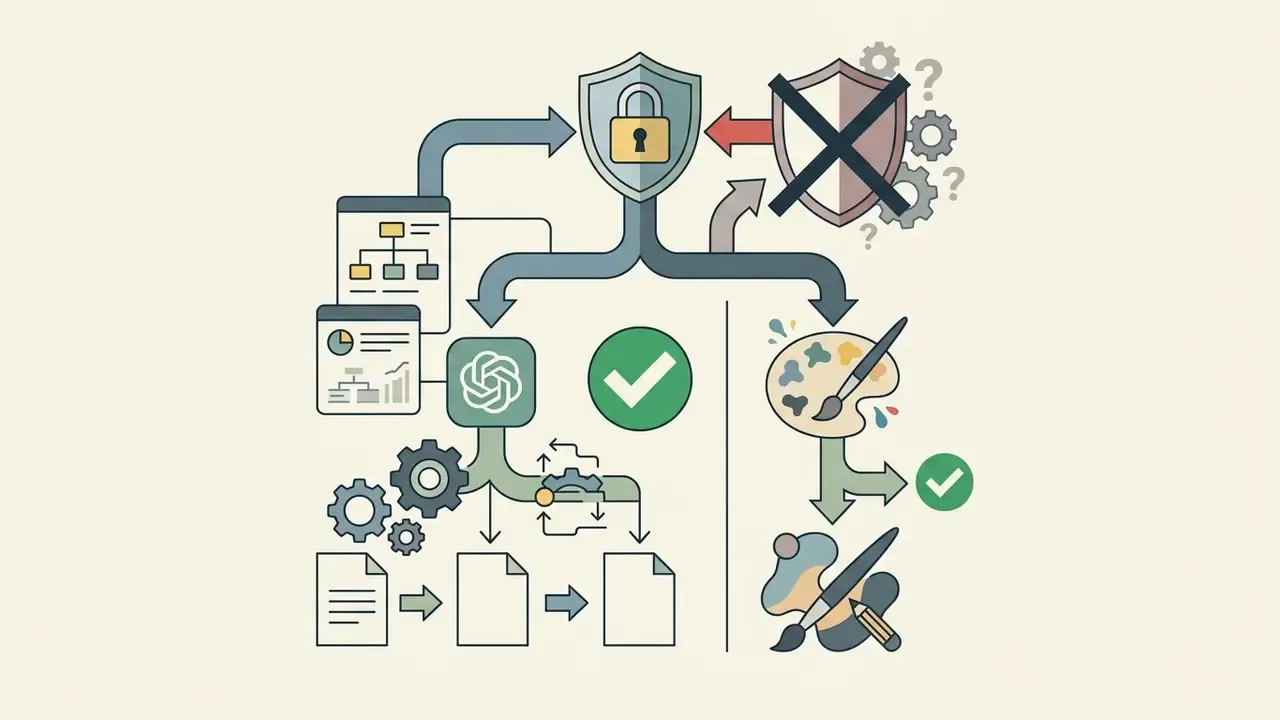
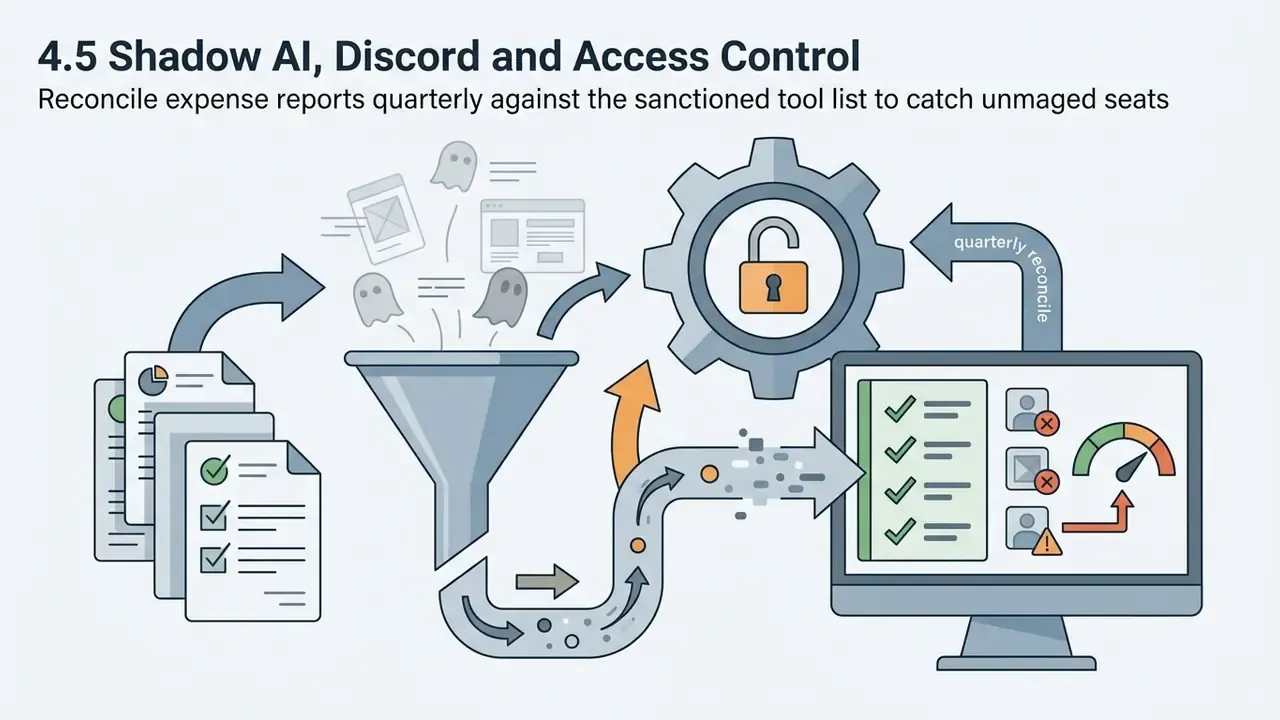
Shadow AI, meaning employees using unsanctioned generative tools with corporate data, is the most likely failure mode in this tool category. Midjourney's architecture amplifies it.
Where the exposure comes from:
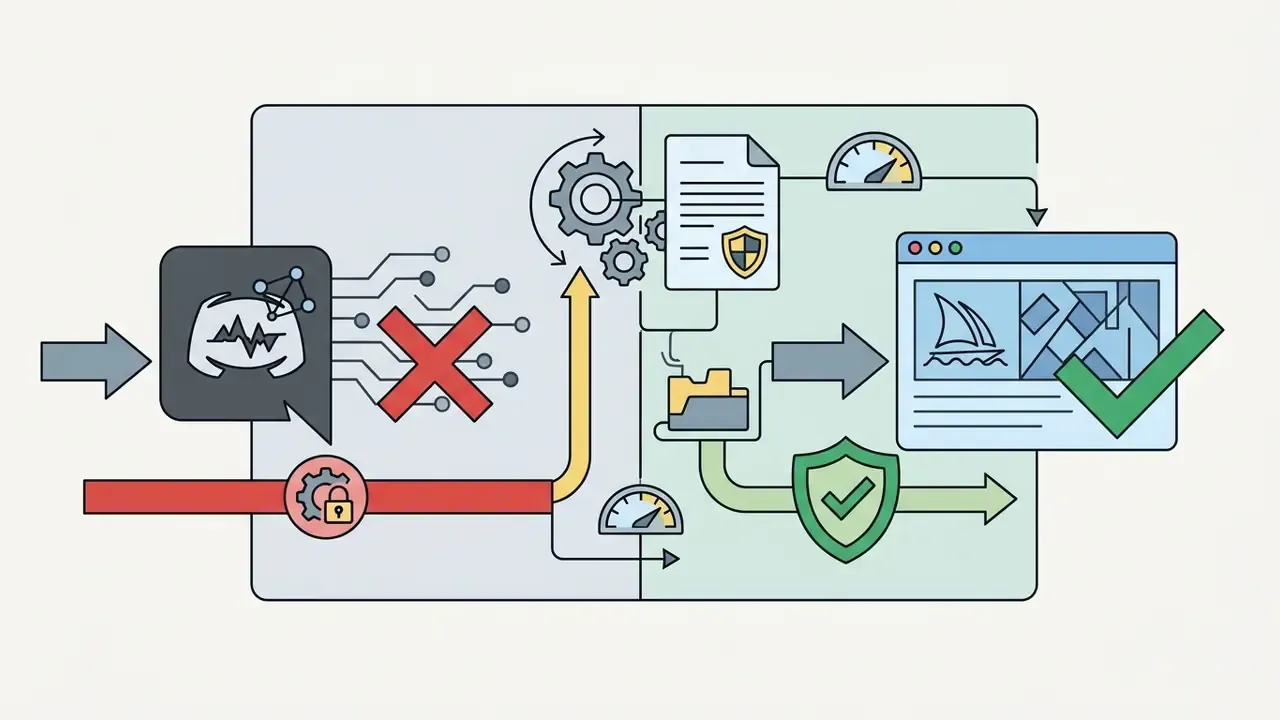
- Discord dependency. Part of Midjourney's feature set, including some option-set management, exists only in Discord. Discord is a consumer messaging platform, frequently prohibited by banking CISO policy, and its channels are not enterprise-logged.
- Public-by-default prompts. On Basic and Standard tiers, prompt text and outputs are visible in community feeds. A prompt describing an unannounced product or a client campaign is a disclosure, full stop.
- Personal-card subscriptions. Without SSO or central billing, seats stay invisible to IT asset inventory, so offboarding never revokes access.
4.6 Reproducibility and Audit Trail (Model Risk Management)
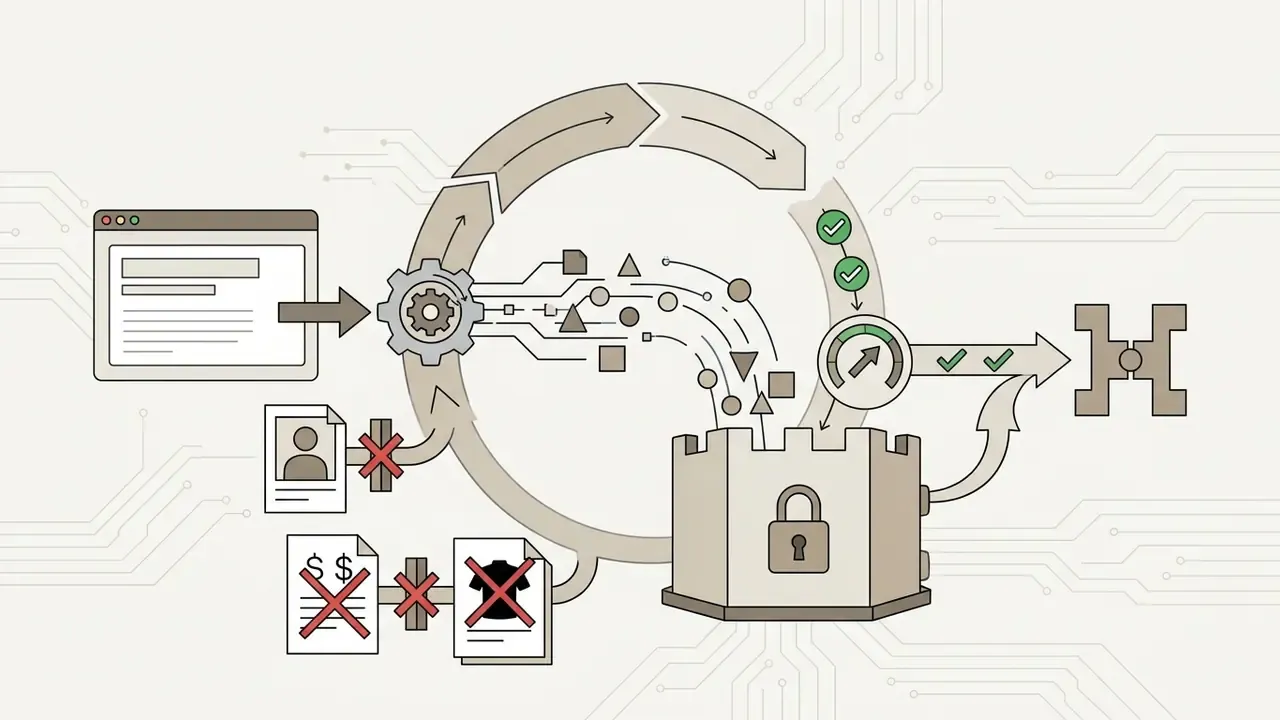
Model risk frameworks require outputs to be explainable and reproducible. Generative image tools are non-deterministic by default, so reproducibility has to be engineered at the workflow level rather than assumed.
Minimum audit record per published asset:
| Field | Midjourney | ChatGPT Image |
|---|---|---|
| Exact prompt string, including parameters | Copy from job archive | Copy from chat thread |
| Model version | --v flag value (for example v7) | Model name or build at generation time |
| Seed / job ID | Seed and job ID from archive | Message or response identifier |
| Aspect ratio and quality | --ar, --q, --stylize values | Requested size and quality |
| Generation date and operator | Required | Required |
| Review approval | Brand plus legal reviewer sign-off | Brand plus legal reviewer sign-off |
Store this record beside the asset in your DAM or GRC repository. NIST's evaluation guidance is explicit that version logging and reproducible metadata are what make comparisons and reviews defensible:
Because Midjourney exposes seeds and explicit parameter strings, it is arguably easier to reproduce a specific Midjourney render than a conversational ChatGPT edit chain, provided the operator captured the flags. Provided. ChatGPT, conversely, preserves the full instruction history natively inside the thread. Neither ships a GRC-ready export format, so the process above stays manual or gateway-automated.
4.7 Approval Checklist for the Head of Model Risk
Before granting employees access to either tool, confirm:
- Licence tier matches revenue.Above $1M gross annual revenue, only Midjourney Pro/Mega is compliant for company use.
- Privacy mode is on.Stealth Mode on Midjourney Pro/Mega, or a managed ChatGPT Business/Enterprise workspace with training-data exclusion.
- Identity is managed.SSO and RBAC where available; documented seat inventory and offboarding procedure where not.
- Channel is permitted.Discord either explicitly approved by the CISO or blocked, with web-app-only access for approved users.
- Audit fields are captured.Prompt, seed, model version, date and reviewer recorded for every published asset.
- Legal position documented.No IP indemnity, human-authorship evidence retained, AI-disclosure convention defined for regulated markets.
5. Prompts, Control and Editing: Where There Is More Flexibility
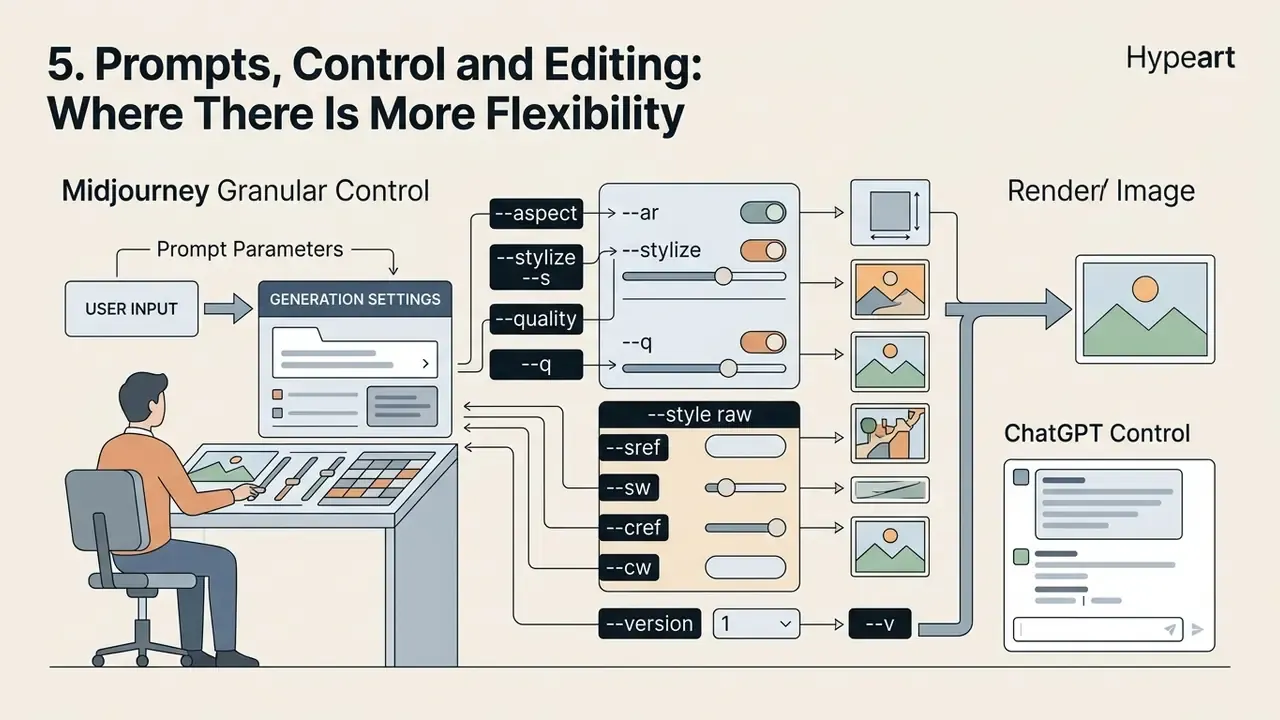
Midjourney gives granular, code-level control over generation parameters before rendering. ChatGPT Image excels at post-generation conversational edits and targeted region-specific refinements. The choice depends on whether your workflow leans on technical parameter configuration or interactive dialogue, and on who is doing the work: an art director or a product marketer.
5.1 Prompt Control and Generation Settings in Midjourney
Midjourney offers an extensive suite of explicit flags appended straight to the prompt:
--aspect/--aroutput dimensions, for example--ar 16:9or--ar 4:5.--stylize/--saesthetic strength from0(literal prompt tracking) to1000(maximum artistic intervention; default100).--quality/--qallocates GPU rendering time (.25,.5,1or2on supported versions) to refine detail and texture depth.--style rawreduces Midjourney's default aesthetic bias for documentary and product realism.--sref/--swapplies a Style Reference URL to copy aesthetic, colour palette and medium texture without duplicating subject matter; style weight ranges 0-1000.--crefand--cwmaintain Character Reference consistency across generations, with character weight from0to100.--version/--vselects the model build, and it is the single most important flag for audit reproducibility.Vary (Region),Editor,Retextureinpainting and surface-level revision by selecting a sub-region, editing the prompt text and regenerating only that section.
5.2 Conversational Editing and Refinement in ChatGPT
ChatGPT Image replaces flags with dialogue and direct selection tools. Users open a rendered image in Canvas or the chat interface, highlight an area with the brush selector, and type instructions such as "change the desk material to light oak" or "remove the mug on the right." OpenAI's documentation recommends describing both what should change and what should stay the same, and adjusting one element per turn to prevent drift. Multi-select plus undo and redo make region edits reversible, and message-attachment editing lets users revise earlier prompts or swap uploaded image assets inside the same thread without breaking context or starting a new session. For teams whose work is mostly correction rather than creation, it is worth comparing this workflow against dedicated AI image editors and conventional online photo editors before buying more seats.
6. Convenience, Speed and Workflow for Commercial Content
Bringing AI image generation into enterprise workflows means evaluating platform accessibility, rendering latency and team collaboration. Midjourney offers dedicated high-speed GPU modes suited to high-volume visual exploration. ChatGPT offers a central workspace that unifies text, code, analysis and visual asset creation, which is often the deciding factor for mixed teams.
6.1 Interface and Accessibility for Beginners and Teams
Midjourney carries a higher initial learning curve, because access historically ran through Discord server channels, slash commands (/imagine, /settings) and custom parameter syntax. Its web interface now smooths generation for active subscribers, although some option sets remain Discord-only. For enterprise teams, managing access controls and asset visibility in Discord takes administrative oversight and, in regulated environments, explicit CISO approval. ChatGPT uses a standard chat interface with no technical syntax, plus workspace-level billing, roles and permissions, so non-designers can generate and refine visuals inside a familiar governed environment on day one.
6.2 Generation Speed and Iteration in Real Workloads
Generation speed swings with system load and plan tier.
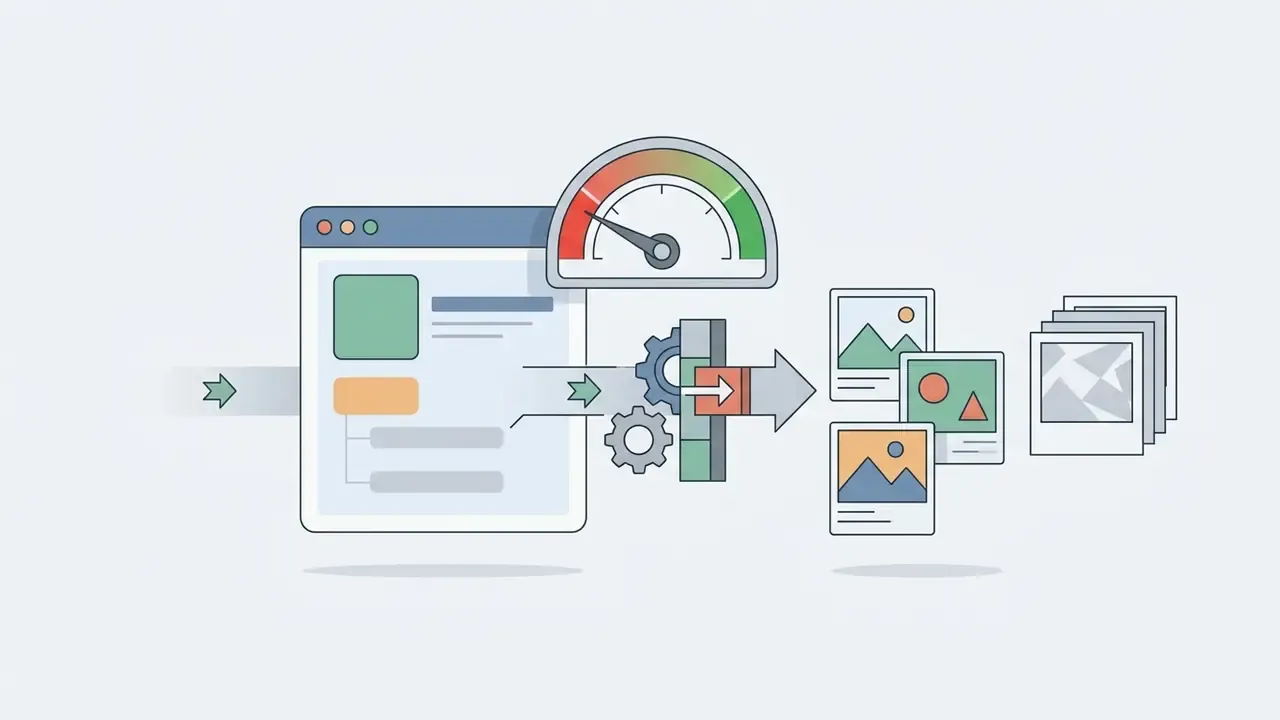
Midjourney offers distinct speed modes: Fast GPU (instant queue processing), Turbo (up to 4 times faster rendering), Draft (rapid, roughly half-cost iterations reported at up to 10 times standard speed) and Relax (unlimited queued generations on Standard, Pro and Mega). It also returns a four-image grid per job, which accelerates exploration. ChatGPT Image responds with consistent conversational latency, though peak server load introduces queue delay. Its real speed advantage is in iteration, not raw render time, because a correction does not require restating the whole brief.
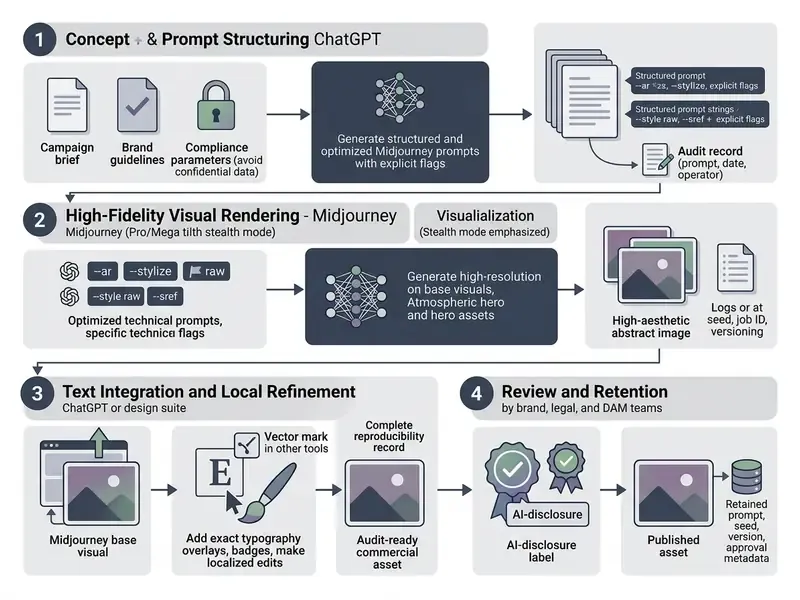
Illustrative case (corporate communications). A department needed 40 custom visual assets for an annual risk report, all matching strict corporate identity guidelines, and started with Midjourney alone. Designers burned hours adjusting parameter strings trying to render legible chart labels, which pushed the timeline. After the pipeline was rebuilt, Midjourney for base background textures, then those outputs imported into ChatGPT Image for localized edits and typography placement, the team reported a substantial reduction in review cycles per asset and delivered ahead of the revised schedule. This is an internally reported project outcome, not a controlled benchmark. The transferable lesson is the mechanism: remove typography from the Midjourney stage entirely. (The original phrasing of this result is preserved in Appendix A.)
6.3 Use in Marketing, Design and Product Workflows
In modern marketing and product design, teams rarely stay loyal to a single model.
Marketers use ChatGPT to draft campaign concepts, write ad copy, produce three-post social series and structure precise visual prompts. Those prompts feed Midjourney for high-impact hero images, background textures and concept art. When the final render needs localized edits, inserting a corporate logo or adding a readable text banner, the asset comes back into ChatGPT or a professional graphic editor; the mechanics of feeding an existing render back into a model are covered in our guide to image-to-image generators. Adjacent asset classes follow the same hybrid logic. Professional portraits increasingly come from AI headshot generators, while template-driven layout work lands in tools such as the Canva AI generator. To see how other specialized generative platforms compare across specific workflows, teams frequently consult broader commercial use ai tools evaluations.
7. Midjourney vs ChatGPT: Final Choice by Task
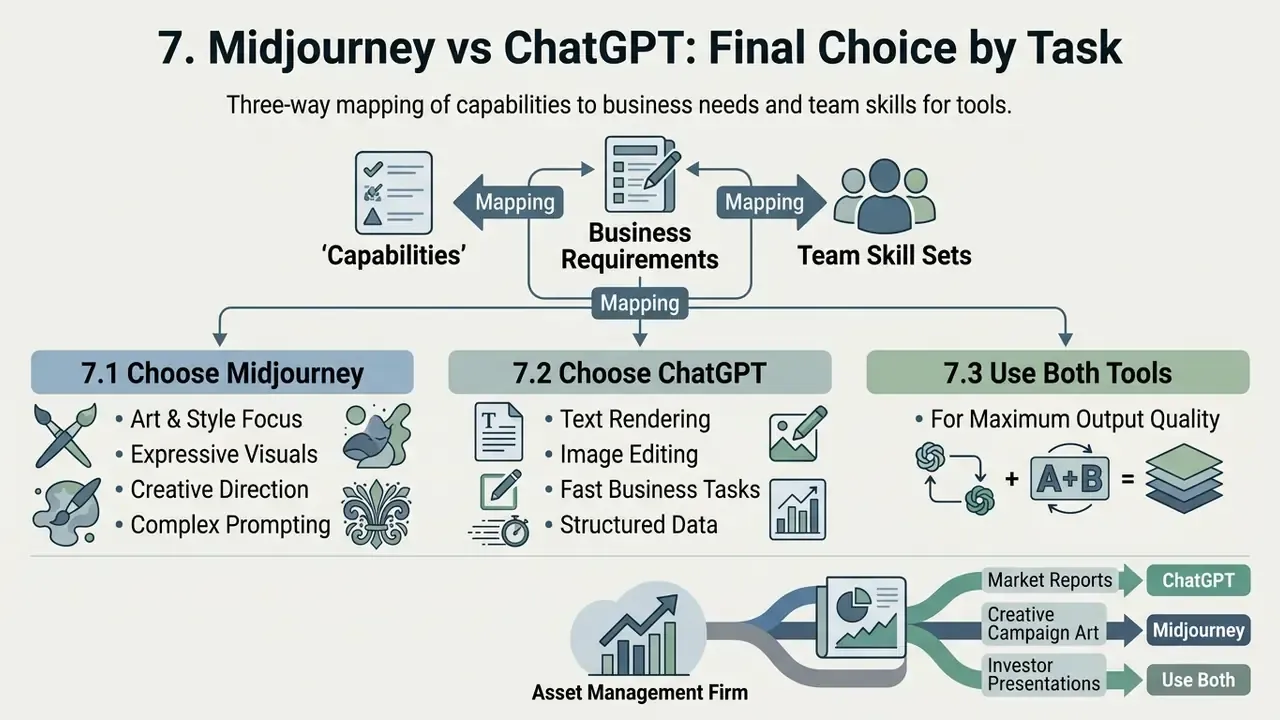
Choosing between Midjourney and ChatGPT Image comes down to mapping capabilities against business requirements, team skill sets and compliance constraints. The pros and cons only make sense per task, never in the abstract.
7.1 Choose Midjourney for Art, Style and Expressive Visuals
Choose Midjourney if the requirement is market-leading aesthetic quality, artistic direction, cinematic realism or consistent custom style across campaigns. It remains the definitive tool for brand designers, creative directors, concept artists and marketing teams building hero assets, where polish and parameter control (--ar, --stylize, --sref) drive brand differentiation, and where the licence tier, Stealth Mode and audit logging conditions from Section 4 are all satisfied. Teams weighing it against other engines can review Midjourney compared with alternatives for a tool-by-tool breakdown.
7.2 Choose ChatGPT for Text, Editing and Fast Business Tasks
Choose ChatGPT Image if the priority is legible embedded typography, labeled diagrams, rapid conversational revision, or image generation inside broader copywriting and multi-modal workflows. It suits social media managers, content marketers, product teams building quick prototypes and cross-functional units that want natural-language editing without parameter syntax. It is also the default choice for regulated environments, thanks to workspace administration, SSO, training-data exclusion and official API access. A deeper capability review sits in our evaluation of ChatGPT as an image generator.
7.3 Use Both Tools for Maximum Output Quality
For mature marketing and design departments, the effective answer is a hybrid production pipeline. Combining ChatGPT's prompt engineering and text rendering with Midjourney's high-fidelity rendering engine maximizes output quality while cutting revision overhead. Practically, nearly every designer running both converges on the same division of labour inside a month: ChatGPT for typography-heavy elements (wordmarks, posters with text, signage, diagrams), Midjourney for mood-heavy elements (background scenes, hero images, editorial portraits), composited in Photoshop or Affinity.
Illustrative case (asset management firm). A firm designing a digital campaign for a new investment product ran exactly this framework. Team members first used ChatGPT to refine messaging and generate structured visual prompts with lighting and camera specifications. Designers then processed those prompts in Midjourney, on Pro tier with Stealth Mode for data privacy, to render high-resolution background imagery, logging seeds and version flags for the compliance file. Finally the rendered assets returned to ChatGPT for precise, legible text badges and localized disclaimers. The reported result was agency-grade visual assets in roughly half the firm's standard production time, with the compliance record complete before review, not after it.
FAQ: Midjourney vs ChatGPT for Commercial Use
Do I own the copyright to images generated in ChatGPT and Midjourney?
Both vendors assign output rights to you. Midjourney states that subscribers own the images and videos they create, and OpenAI assigns output ownership to the user to the extent permitted by applicable law. Ownership is not the same as registrable copyright: purely machine-generated works may not qualify for protection without demonstrable human authorship. Neither vendor provides formal IP indemnification.
Can Midjourney v7 render readable text inside images?
Sometimes, and unreliably for commercial use. Benchmarked accuracy for v6.1 was 62% for single words and 38% for multi-word phrases. Version 7 improved substantially, roughly a 65% relative gain reported over v6, yet independent 2026 testing still puts short-string first-try accuracy at 40-60%. ChatGPT's image stack reaches about 74% in controlled benchmarks and 85-92% on short business phrases, so text-bearing assets belong there.
Which tool is cheaper for a team of five?
ChatGPT Plus at $20 per user, about $100 per month, bundles writing, research and images. Midjourney on the commercially realistic Standard tier is roughly $150 per month for images only, rising to $60-$120 per seat once company revenue crosses $1M and Pro or Mega becomes mandatory. If total volume stays under a few hundred images per month, metered API generation at $0.04-$0.10 per image is cheaper than either.
Can I get ChatGPT image generation without a subscription?
Yes. OpenAI's image API and aggregators such as Replicate, Fal and Kie.ai provide pay-per-image access at roughly $0.04-$0.10 per generation with no monthly minimum. It is also the preferred route for automated pipelines and centralized prompt logging. Midjourney has no official public API, and reselling or redistributing the service is prohibited by its Terms.
Does either tool output editable vector (SVG) files?
No. Both are raster-only. For logos, brand books and print-scale signage, generate the concept, then re-trace in Adobe Illustrator or regenerate through a native vector generator such as Recraft V3.
Is Midjourney safe to use inside a bank or regulated firm?
Only under conditions. Basic and Standard tiers publish prompts and outputs to public feeds, part of the feature set requires Discord (often prohibited by CISO policy), and no enterprise SSO is documented. Approve it on Pro or Mega only, with Stealth Mode enforced, web-app-only access, a prompt-hygiene rule barring confidential content, and manual logging of prompt, seed, model version and date.
Appendix A: Superseded Wording and Corrections
Limitations, Methodology and Primary Documentation Verification
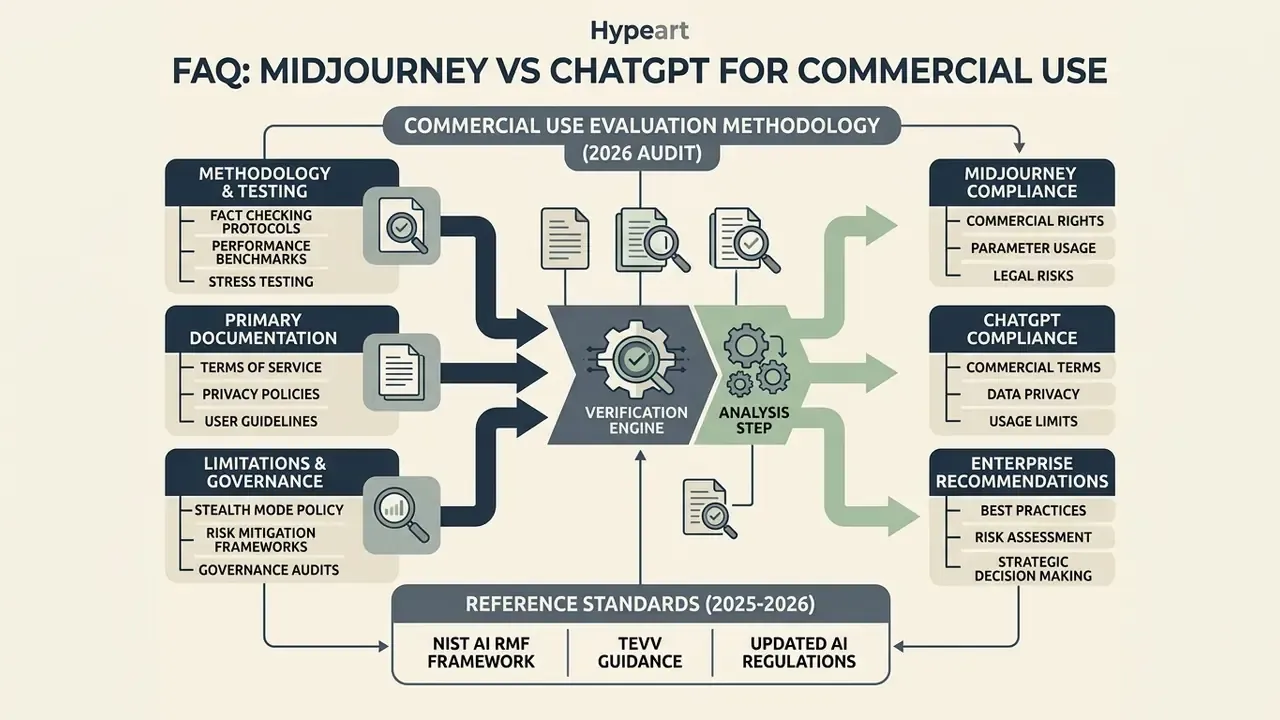
Fact check and testing methodology:
Next Step and Resource Index
A safe next step for a governance owner is narrow: approve one sanctioned path per use case, pilot it for a single campaign, and check whether the audit record in Section 4.6 can actually be produced on request. If it cannot, the tool is not ready for production regardless of how good the pixels look.
- Explore our database of AI Media Comparison Matrices for cross-platform tool evaluations.
- Access licensing, regulatory compliance and enterprise deployment guidance in the AI Media Commercial-Use Hub.