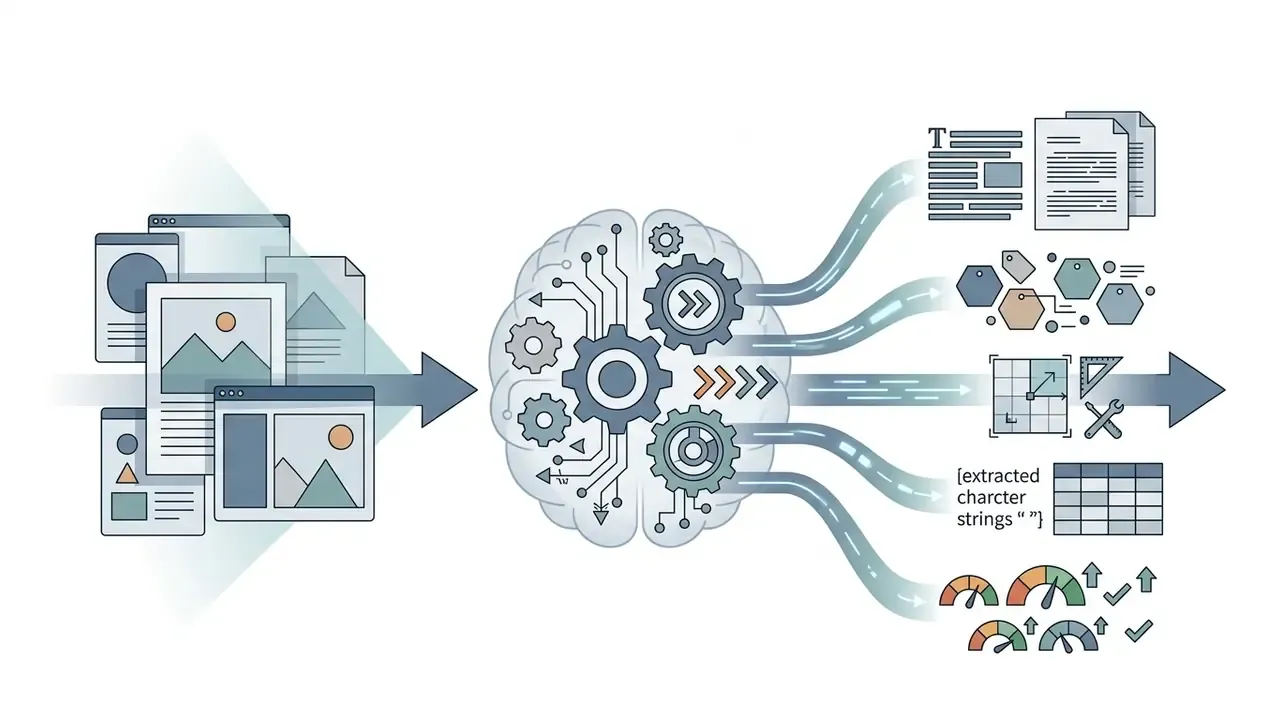
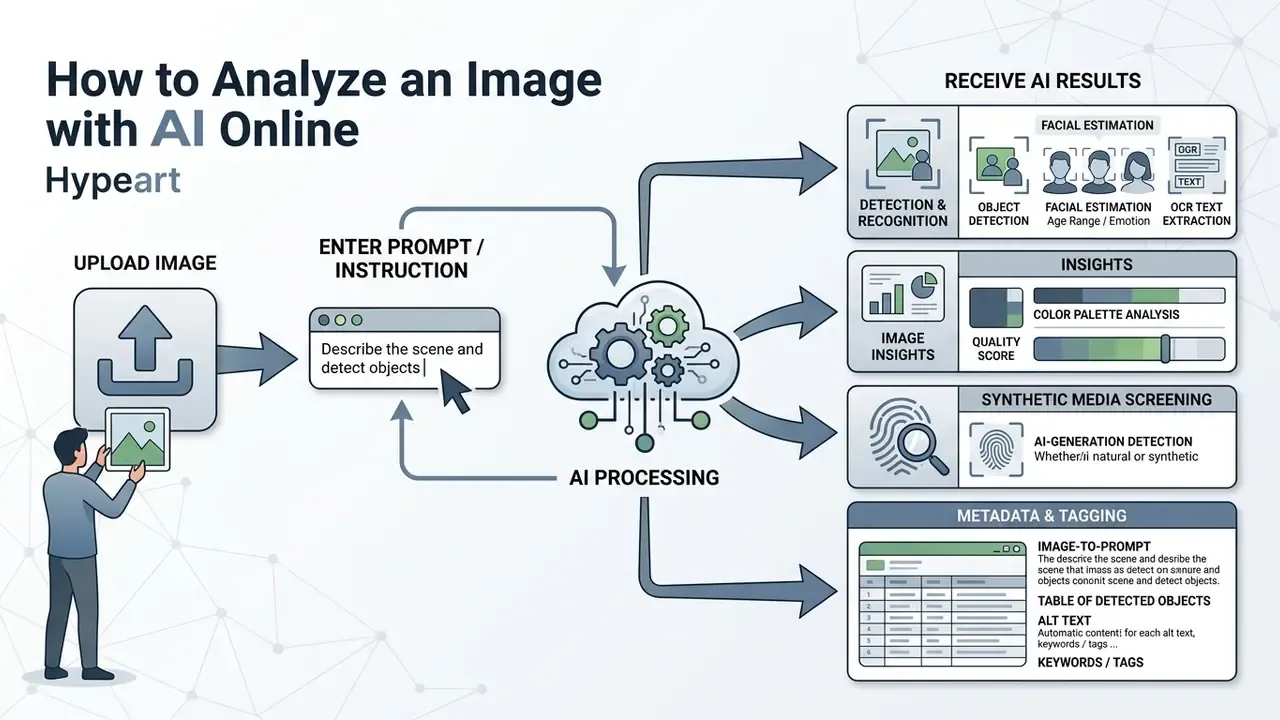
An AI image analyzer is a software tool powered by computer vision and vision-language models that automatically extracts, interprets, and describes visual data from uploaded digital photographs, documents, and screenshots. Unlike text-to-image generators that synthesize new artwork, an ai image analyzer processes existing visual inputs to generate structured metadata, object tags, readable text via Optical Character Recognition (OCR), color palettes, and natural-language scene descriptions.
Why should a bank risk officer care about a tool that captions photos? Because the same pipeline that writes alt text for a marketing asset is already being pointed at scanned invoices, KYC documents, and screenshots of core banking screens. Usually without an owner.
Executive Summary for Risk, Finance and Operations Leaders
What Is an AI Image Analyzer?
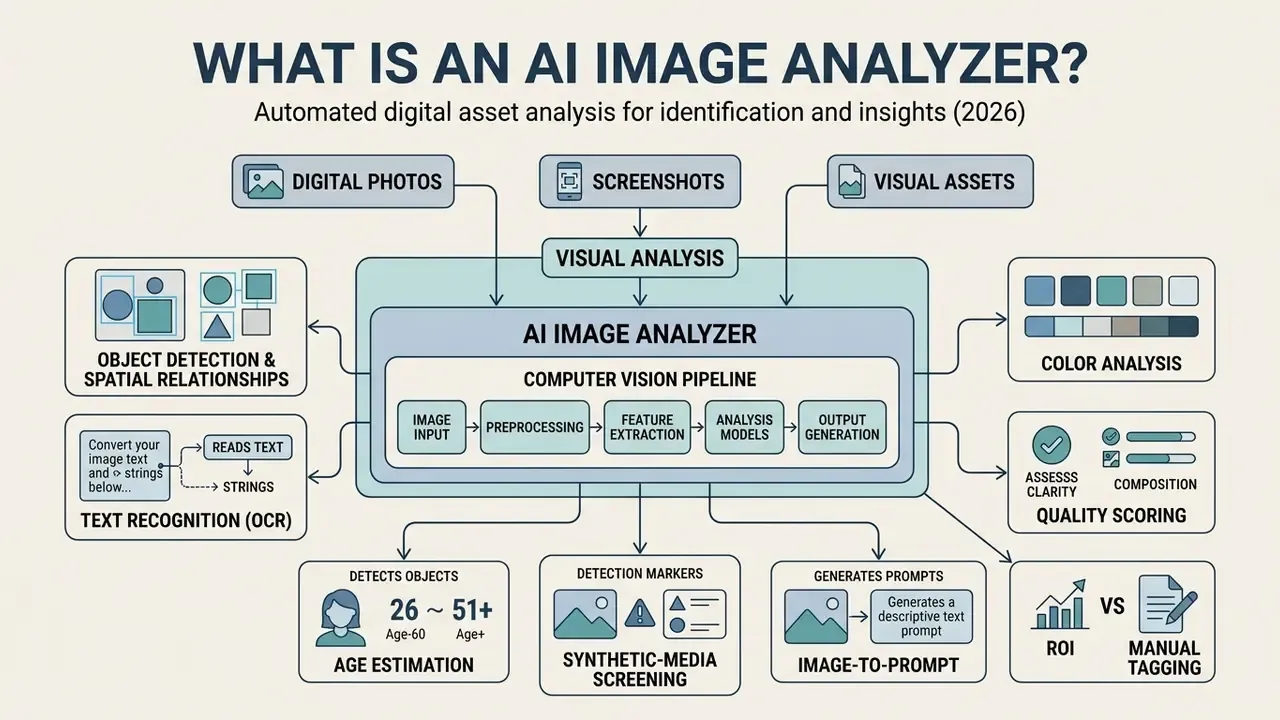
An ai image analyzer is an automated system designed to perform visual analysis on digital photos, screenshots, and visual assets by identifying objects, spatial relationships, embedded text, and aesthetic attributes. Modern image analysis platforms transform raw pixels into actionable text data, allowing organizations and individual users to parse visual content at scale. In search queries the same tool is spelled several ways, including ai image analyser and ai image analizer, and all of them describe the same capability.
While text-to-image systems generate synthetic visual assets from textual prompts, an ai image analysis system works in reverse. It accepts visual inputs to produce analytical outputs such as object labels, accessibility descriptions, and structured data tables. Readers looking for the opposite direction of the workflow, synthesis rather than interpretation, should review AI image generators instead. The primary purpose of ai for image analysis is to bridge the gap between unstructured image files and structured information databases.
«A single multimodal architecture supports captioning, visual question answering, text reading and object grounding simultaneously.»
That unified architecture is why one upload can return a caption, an OCR transcript, a bounding-box list, and a palette in a single pass. Until recently the same result required a hand-built OpenCV pipeline, separate detection models, and custom training data. Three engineers and a quarter, roughly.
AI Image Analyzer, Image Describer, Detector and AI Chat
An ai image analyzer combines several distinct computer vision capabilities into a single cohesive interface, including image describers, object detectors, and conversational vision models.
- Image Describer An image describer generates coherent, natural-language captions that summarize what is happening in a photo, serving as a foundation for alt text and asset indexing.
- Object Detector Identifies specific items, individuals, or brand logos within a frame and maps their exact spatial coordinates using bounding boxes.
- AI Visual Chat A conversational ai chat image analyzer or ai chatbot that can analyze images, allowing users to upload a photo and ask follow-up questions in natural language, including questions about diagrams embedded inside PDF pages.
- Synthetic-Media Detector A forensic classifier that estimates the probability an image was machine-generated or digitally manipulated. That is a different task from description, and it gets its own section below.
- Classic Computer Vision Pipeline Combines deterministic algorithms for image enhancement, noise reduction, deskew, dewarp, and edge detection prior to neural network evaluation.
How AI Image Analysis Works
Modern ai image analyze workflows rely on multimodal neural architectures that pass input image pixels through a visual encoder to create visual embeddings compatible with a language backbone. When an uploaded image enters the pipeline, the system aligns visual tokens with text tokens through pre-trained visual receptors. That alignment step is where most of the magic, and most of the hallucination, happens.
An advanced ai model evaluates visual features across multiple layers, extracting both low-level attributes such as contrast and edge sharpness and high-level semantics such as scene context. Preprocessing settings matter for cost and fidelity: GPT-4o-class APIs expose low, high, and auto detail modes, where low consumes a fixed token budget and high uses tile-based sizing that raises both accuracy and price. Once processing is complete, a text generator module converts these internal neural representations into readable text descriptions, structured JSON reports, or direct answers within an ai chat session. Understanding how the ai works at this level is not academic curiosity; it tells a validator where to look for failure.
What Can AI Analyze in an Image?
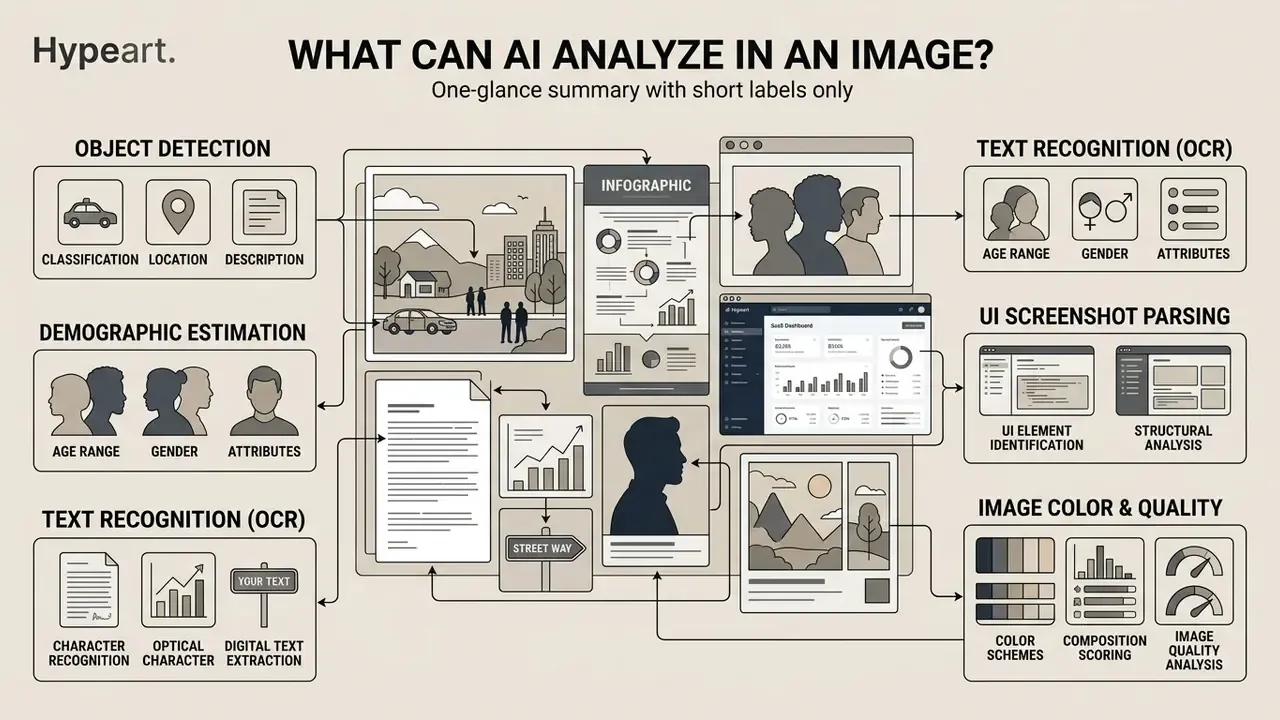
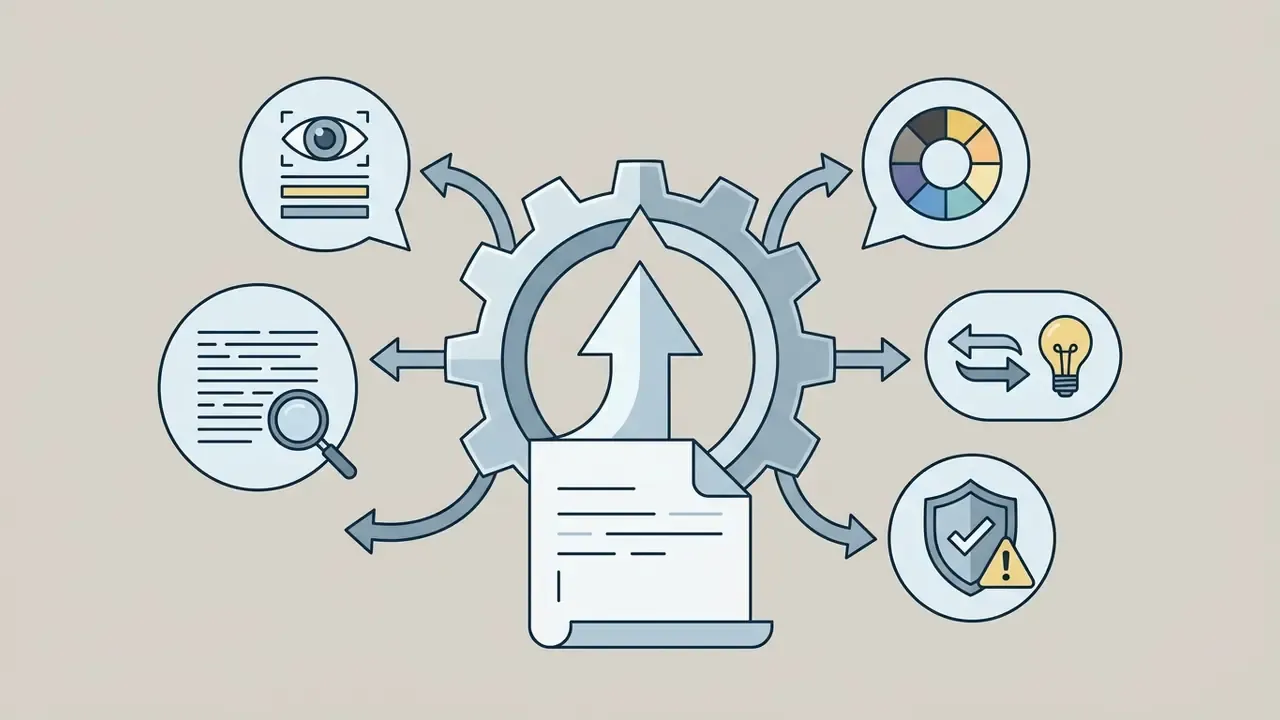
An ai for analyzing images can extract structured information from visual media, including physical object categories, written text, color schemes, framing aesthetics, demographic estimates, and potential content policy violations. By combining computer vision detectors with large vision-language models, an ai image analysis online tool processes both high-level semantic meaning and micro-level pixel characteristics.
| Analysis Task | What the AI Determines | Typical Result Format | Representative Research / Source |
|---|---|---|---|
| Object Detection & Scene Analysis | Identifies physical objects, people, products, background environments, and spatial relationships | Bounding boxes with confidence scores; scene summary report | Qwen-VL Technical Report, Alibaba Cloud, 2023; Objects365 annotation pipeline, 2019 |
| Text Recognition (OCR) | Extracts printed, stylized, or handwritten characters from documents, signs, receipts, and UI screenshots | Plain text strings; structured key-value pairs; searchable layout data | Google Cloud Document AI OCR, 2025; W3C WCAG PDF7 Guidelines |
| Color & Palette Extraction | Determines dominant visual colors, contrast ratios, and color harmony schemes | Hex/RGB color codes; 5-color palette swatches; color distribution notes | IEEE Transactions on Broadcasting (Deep Meta-Learning FR-IQA), 2023 |
| Composition & Quality Assessment | Evaluates lighting, focus, exposure, noise, blur, and rule-of-thirds framing alignment | Numerical quality scores (0 to 100); technical assessment notes | VQA² Instruction Dataset & Quality Benchmark, 2024 to 2025 |
| People, Demographics & Age Range | Detects human presence, counts subjects, and estimates probabilistic age brackets | Bounding boxes; estimated age ranges; minor-safety flags | Metadata2Go age-range estimation model documentation, 2026 |
| Accessibility & Alt Text | Synthesizes concise, context-aware visual summaries for screen reader compatibility | Natural language alt text; long descriptions for complex graphics | CapArena Captioning Benchmark, 2025; W3C WAI Images Tutorial, 2026 |
| Safety & Moderation Filtering | Flags explicit content, adult imagery, violence, graphic elements, or brand safety risks | Category labels (for example "safe" or "restricted"); policy confidence percentages | FACCT Content Moderation Studies, 2024; LSPD Nudity Classification Benchmarks |
| Synthetic-Origin Screening | Estimates likelihood that the file was generated or edited by a diffusion model | AI-likelihood percentage; confidence band; artifact heatmap | DailyBench, 2026; Comprehensive Zero-Shot Detector Evaluation, 2026 |
Object Detection and Visual Description
Object detection algorithms assign semantic labels and bounding boxes to items recognized inside a photograph, while visual describers synthesize these items into a cohesive narrative. Research on object detection systems evaluates reliability with IoU-based metrics such as mAP, mAP50 and mAP75, and robustness studies show standard detectors losing 30 to 60% of baseline performance on corrupted imagery. One clarification, since the earlier version of this article got it wrong: the Objects365 dataset is a large-scale annotation corpus used to train and grade localization quality, not a degradation benchmark in itself.
«Detectors scoring 91 to 96% on clean data fall to 54 to 66% on realistically manipulated images.»
When generating photo analysis summaries, state-of-the-art vision-language models now approach human baselines in detailed captioning for everyday scenes.
«Over 6,000 pairwise caption comparisons show GPT-4o-class models match or exceed human-written detailed descriptions.»
However, when scenes exhibit extreme visual crowding, abstract art styles, or overlapping objects, visual describers may hallucinate non-existent details or omit critical visual elements. A trading-floor photo with twelve monitors is a good stress test: the caption reads beautifully and the monitor count is often wrong.
Demographic and age range estimation: Visual classification models detect human presence, bound facial features, and estimate age brackets (for example 18 to 24 or 30 to 39), flagging potential minor-safety compliance risks for user-generated content platforms, dating apps, and marketplaces. Age brackets are produced as probability distributions, not measurements. They must never be used for legal age verification, KYC onboarding, benefit eligibility, or any regulated identity decision. In the U.S. financial sector such use would create an unvalidated model dependency inside a consumer-impacting decision path, which is precisely the finding no one wants in an exam letter.
Text Recognition from Photos, Documents and Screenshots
AI-driven Optical Character Recognition (OCR) converts visible characters embedded in product photos, receipts, legal filings, and UI screenshots into machine-readable digital text. Multi-language OCR engines support hundreds of printed languages and dozens of handwritten scripts, enabling automated data extraction for enterprise record-keeping (Google Cloud Document AI, 2025). Teams evaluating dedicated extraction utilities can compare image-to-text tools built specifically for document throughput.
«Qwen-VL is trained on image–caption–coordinate triplets, letting one interface read text from an image and answer questions about it.»
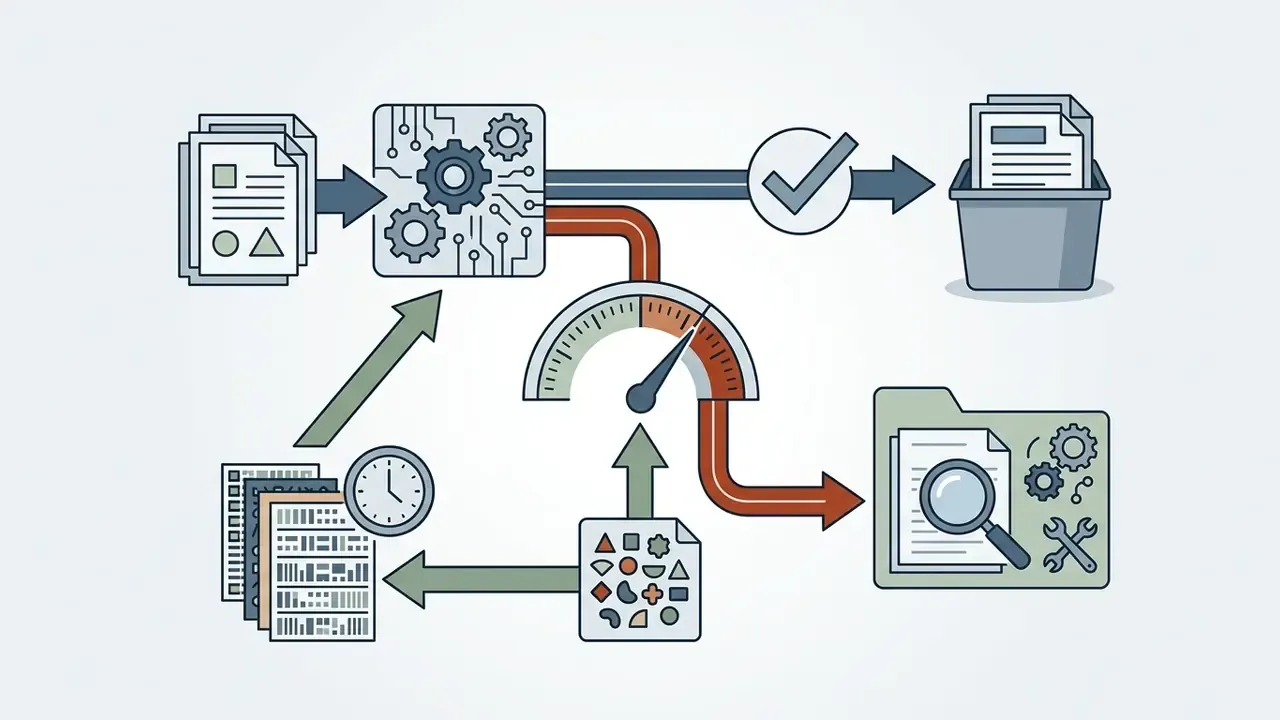
Illustrative workflow, figures not independently verified: an anonymized financial-services audit team has described routing scanned invoice screenshots through a vision OCR model, auto-extracting tabular fields, and forwarding any character below a calibrated confidence threshold to a human reviewer. The pattern is instructive, namely automation of extraction plus mandatory review of low-confidence tokens. The reported backlog reduction, though, is a vendor-side account without published methodology, sample size, or error-rate baseline, so treat it as a design pattern rather than a benchmark. To maintain high accuracy during text extraction, input images must keep legible resolution, minimal perspective skew, and clear lighting contrast across all characters. IBM's document-processing documentation notes that fonts below 8 points at 200 DPI or less routinely produce incorrect characters.
Parsing SaaS dashboards and UI screenshots: Unlike standard photographs, UI screenshots contain dense visual hierarchies, data tables, and micro-typography. Advanced vision-language models adjust bounding-box detection weights and relax the "subject versus background" assumption for non-photographic input, which lets them read structured data directly from software interfaces: Stripe analytics panels, BI dashboards, ERP screens, financial spreadsheets. In practice, screenshot volume often exceeds photographic volume in commercial deployments. Modern enterprise analyzers also generate structured output in 20+ languages, so a cross-border seller can publish localization-ready alt text and attribute tags for Amazon.de or Mercari.jp listings without a separate translation step.
Color, Composition and Image Quality Analysis
Automated color palette extraction algorithms group visual pixels into dominant color clusters using k-means spatial grouping and HSV or Lab color histogram evaluation, and newer methods support variable-size palettes plus neural color-compatibility scoring. These metrics let designers and brand managers check whether promotional assets match established corporate color guidelines, replacing a subjective "navy blue" judgment with a standardized #000080.
Composition and quality evaluation models score photographs on technical parameters such as edge sharpness, exposure balance, spatial noise, and chromatic aberration.
«A Conformer-based meta-learning model stayed competitive on three standard IQA datasets while adapting to unseen distortion types.»
These automated quality checks allow media teams to screen large volumes of user-generated imagery before publication. Where source files fall below the usable threshold, an AI image enhancer can restore contrast and sharpness before the asset is re-submitted for analysis.
How to Analyze an Image with AI Online
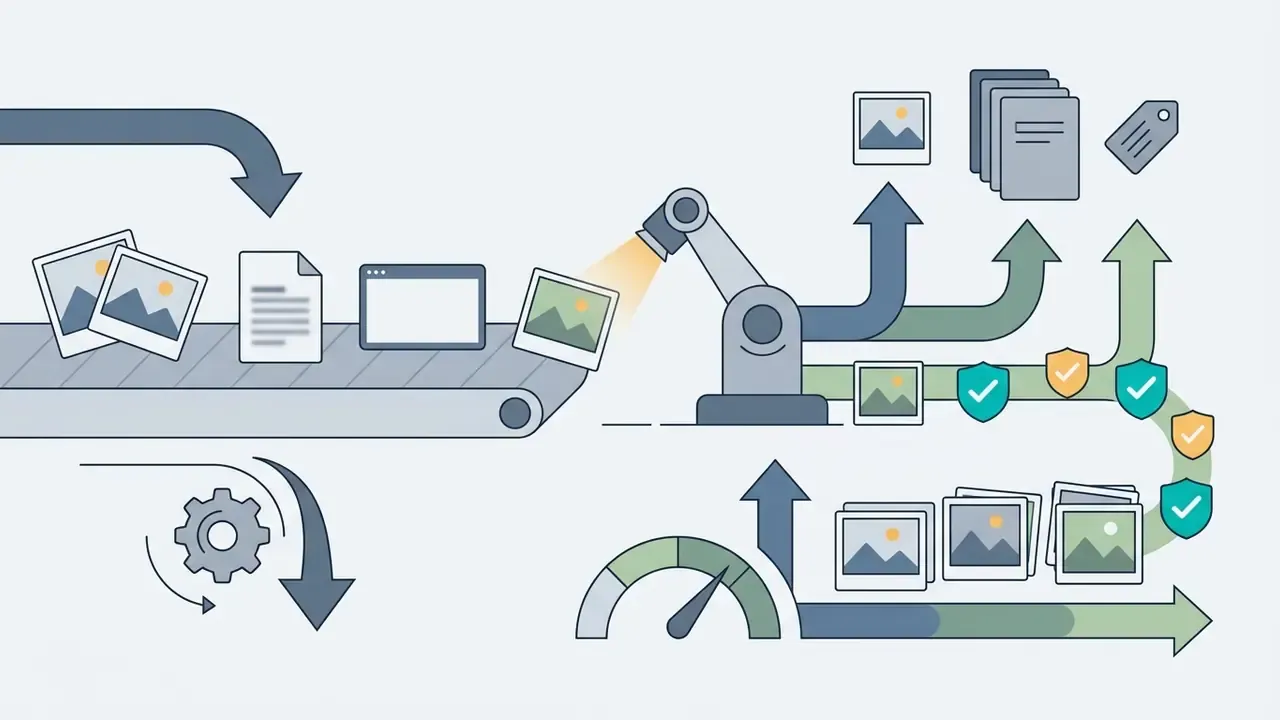
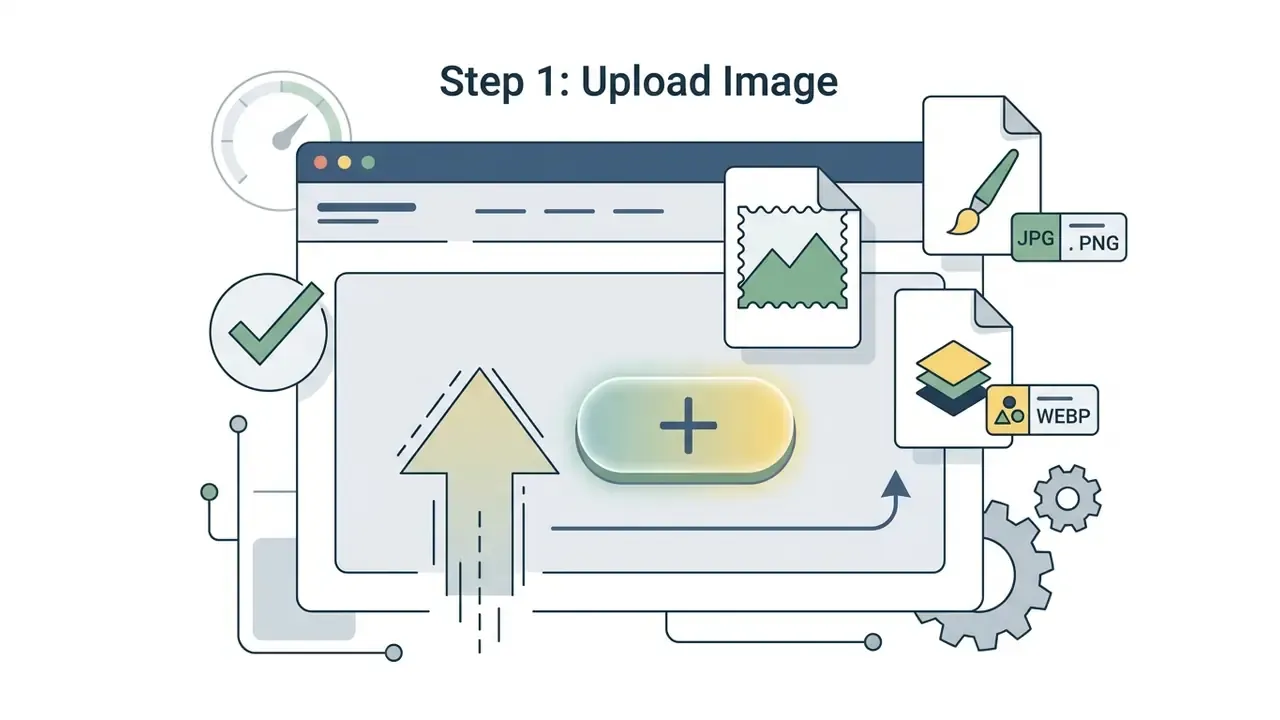
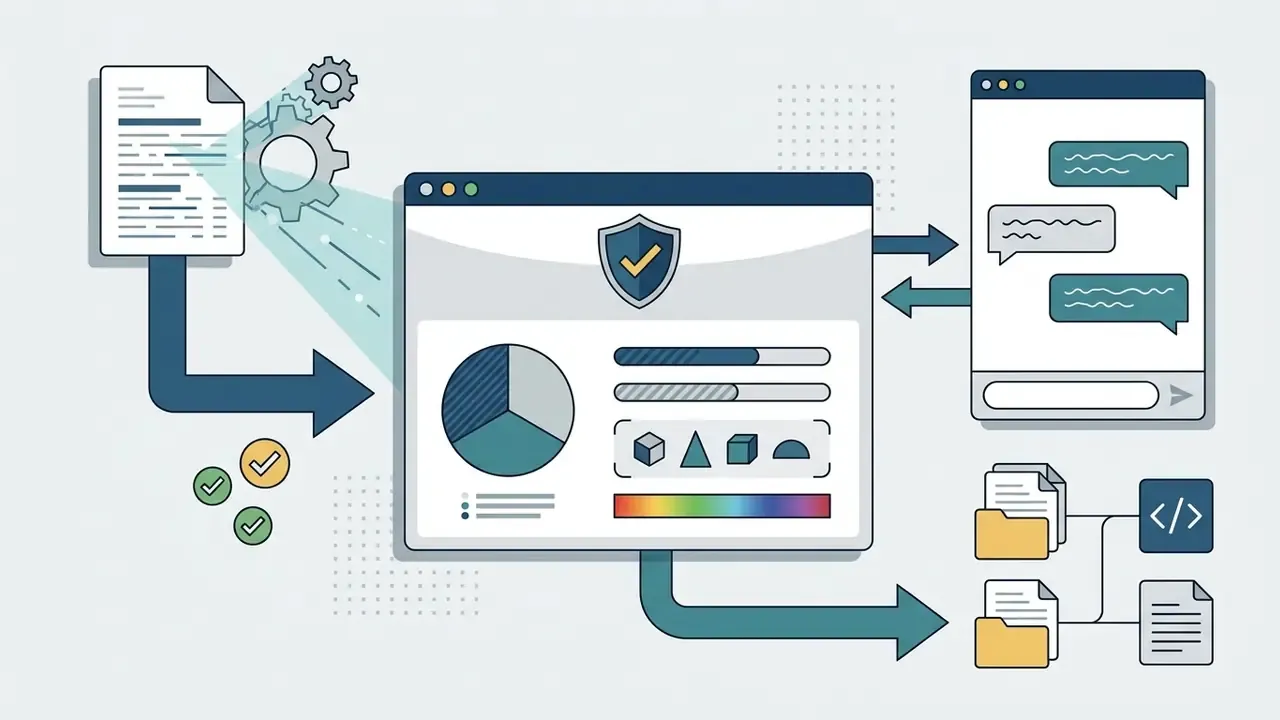
To ai analyze image assets online, users upload a media file, specify their analytical requirements or prompt questions, and review the structured results generated by the neural network. Most consumer interfaces return something readable within a few seconds.
For comparison, formal forensic practice inverts the emphasis. SWGDE's 2024 image-analysis guideline sequences the work as: review the request, create working copies, process for analysis or enhancement, then report a documented opinion. Consumer UX compresses those steps. Regulated workflows should not.
Upload an Image: Supported Formats and Requirements
Most online ai for picture analysis tools support standard web image file types, including jpg png webp variants. For reliable visual interpretation, input files should meet minimum technical thresholds for resolution and lighting clarity.
- Supported Formats JPG, JPEG, PNG, WEBP. Some platforms also decode HEIC or PDF pages on-device.
- Resolution Thresholds Ideal minimum resolution of 1280×720 pixels; maximum image dimension capped around 10,000×10,000 pixels.
- File Size Limits Free web tiers generally cap upload sizes between 4.4 MB and 50 MB per file; enterprise document APIs commonly accept 50 MB or 100-page batches.
- Lighting & Angle Even lighting, minimal glare, sharp focus, and flat capture angles prevent text distortion and object misclassification.
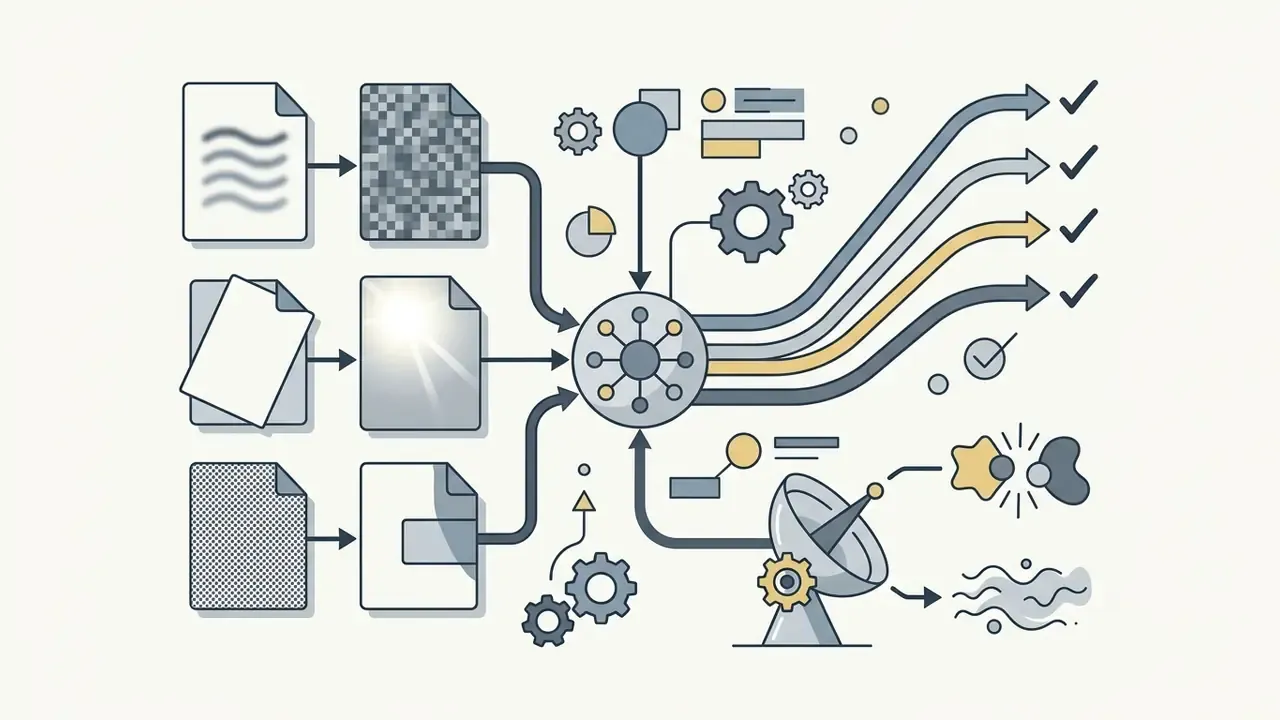
- Orientation & Pre-processing Images with mirrored text, upside-down orientation, or extreme perspective distortion should be auto-rotated, un-mirrored, deskewed and dewarped before OCR ingestion, otherwise you invite character hallucination and inverted spatial reasoning.
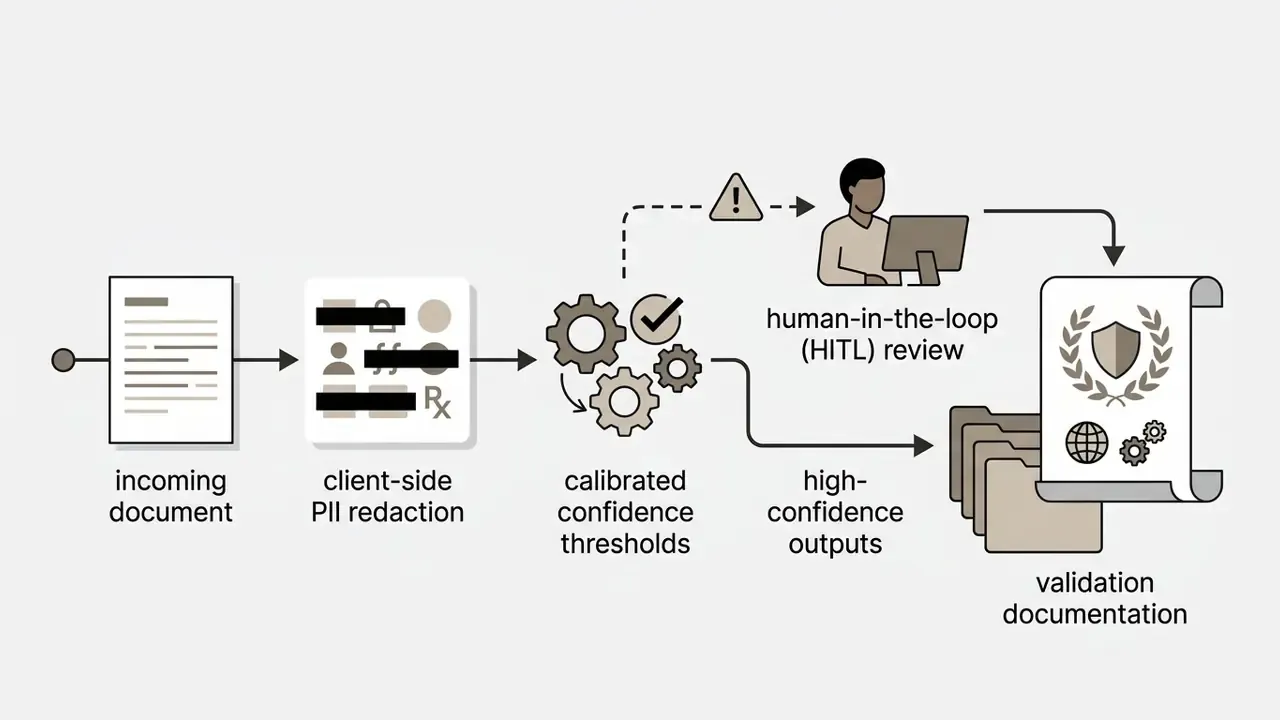
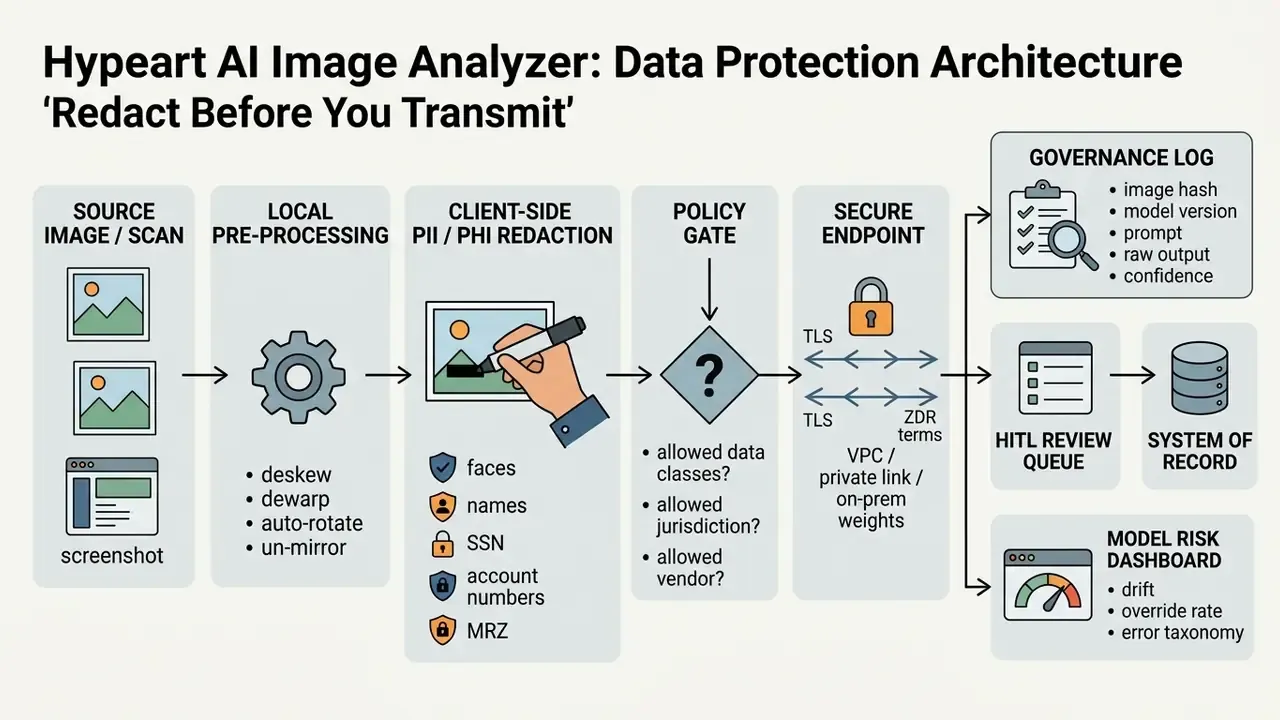
- Sensitive Content Redact faces, names, account numbers, and identifiers locally before upload if you do not want the model, or the vendor's logs, to read them.
Ask Questions and Give AI Instructions
Reverse Prompt Engineering (Image-to-Prompt Generation)
Visual analyzers can deconstruct existing artworks or photographs to generate optimized prompts for AI image generators such as Midjourney, Stable Diffusion, and Flux.1. This closes the loop between analysis and synthesis: the analyzer reads style, lighting and lens characteristics, then emits a reusable generation string for new generated images.
Example prompt for prompt extraction:
"Deconstruct this visual asset into a detailed generation prompt. Describe the core subject, art medium (e.g., 35mm photograph, octane render, watercolor), lighting setup (e.g., volumetric, golden hour), camera lens parameters (e.g., 85mm f/1.4), color palette, and stylistic influences. Format as a single continuous prompt compatible with Midjourney v6."
Variants worth keeping in a template library include image-to-Midjourney prompt, image-to-Stable-Diffusion prompt, image-to-Flux prompt, and style-only extraction, which deliberately omits the subject so the aesthetic can be transferred to a new concept. Note the intellectual-property caveat: reverse-engineering a prompt from a copyrighted or trademarked work does not grant rights to reproduce that work's protectable expression.
How Accurate Is AI Image Analysis?
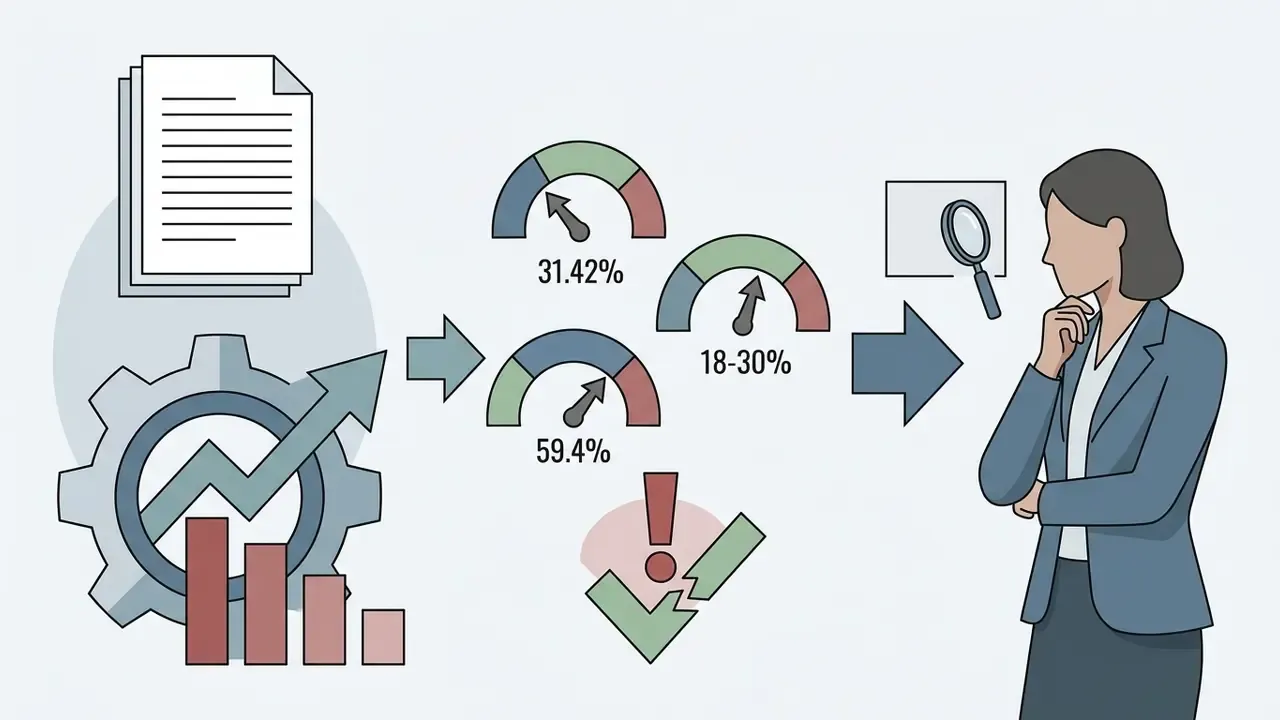
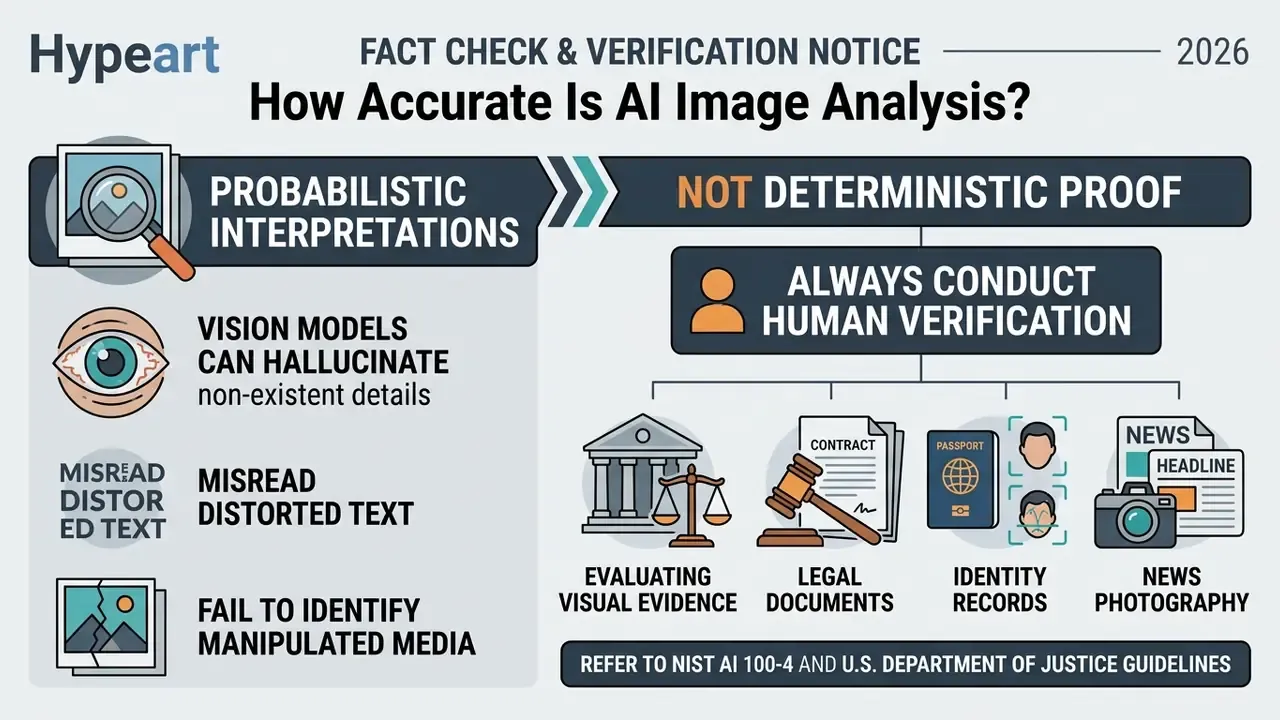
While modern vision-language models demonstrate high descriptive capabilities, ai analysis of images remains a probabilistic process subject to hallucination and classification errors. Performance metrics vary widely depending on image clarity, model architecture, domain alignment, and visual task complexity. HallusionBench reported GPT-4V at 31.42% question-pair accuracy with every other tested model below 16%, and EGOILLUSION's best score across ten multimodal models was 59.4%. A useful reminder: fluent prose is not the same thing as correct perception.
What Affects Image Analysis Results
Several technical factors directly influence how well the tool work holds up in production. When input conditions fall below optimal thresholds, the probability of neural network guessing rises substantially. A 2026 ACL paper frames it bluntly: hallucination becomes prevalent under visual information loss, because damaged or unclear regions trigger plausible-sounding guesses.
- Visual Degradation: Motion blur, heavy spatial compression, low resolution, and harsh glare reduce character and object recognition accuracy.
«Across 2.6 million images from 12 datasets, mean detector accuracy ranged from 37.5% to 75%, dropping to 18–30% on the newest generators.» — Comprehensive Zero-Shot Evaluation of AI-Generated Image Detectors, arXiv (2026). https://arxiv.org/abs/2506.05788
- Font & Graphic Complexity: Stylized typography, low DPI text (below 200 DPI), small font sizes (under 8pt), and skewed perspective angles cause severe OCR character dropouts (IBM Document Processing Documentation).
- Scene Overcrowding: Scenes with dozens of overlapping objects or abstract artistic elements confuse spatial reasoning modules, which leads to mislabeled boundaries.
«Top multimodal models reach 74.8% accuracy on image implication understanding, while humans average 90%.» — II-Bench: Image Implication Understanding Benchmark, arXiv (2024–2025). https://arxiv.org/abs/2406.05862
- Domain Shift: Models trained strictly on standard photographic datasets frequently show accuracy drops on specialized medical scans, satellite imagery, engineering drawings, or synthetic AI-generated art.
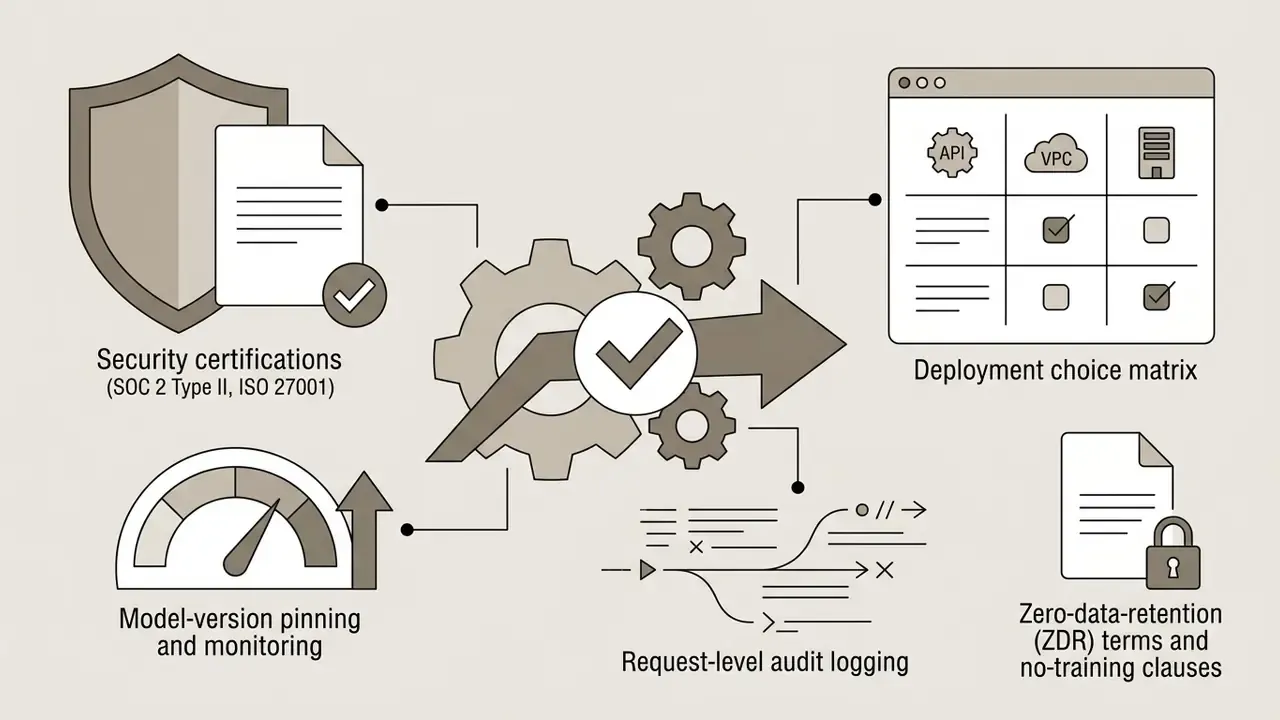
- Non-Determinism: Identical inputs can yield different phrasings or field values across calls. Pin the model version, set temperature to zero where the API allows it, and log raw responses if the output must be reproducible for an audit.
One practical corollary: a single clear subject in frame, shot at higher resolution under decent light, beats any amount of prompt tuning on a blurry file.
When AI Results Need Manual Verification
Human oversight is mandatory whenever an ai photo analysis outcome affects legal rights, financial reporting, compliance verification, or physical safety. Independent human validation stops automated errors from cascading into critical operations.
- Legal & Courtroom Evidence: Federal guidelines explicitly state that automated AI findings must not serve as the sole foundation for forensic conclusions in court proceedings (U.S. Department of Justice, Artificial Intelligence and Criminal Justice Final Report, 2024). CEPEJ's 2025 guidelines add that AI must not replace judicial assessment of evidence, and the National Center for State Courts' 2025 bench card instructs judges to demand provenance documentation or neutral expert review when authenticity answers are incomplete.
- Identity & KYC Verification: Document authentication systems must combine probabilistic AI vision checks with secondary cryptographic or human expert reviews (NIST AI 100-4 Guidelines). The U.S. Department of Defense media-integrity guidance states the principle as "detection, not verification."
- News & Photojournalism: Verifying whether a news photograph is authentic or synthetically altered requires multi-layered forensic analysis, and dedicated AI image detectors should be treated as one signal among several.
«Flux Dev, Firefly v4 and Midjourney v7 push mean detector accuracy down to 18–30%, making automated verification unreliable for legal purposes.»
Disclaimer: the information above is general in nature and does not replace advice from a legal or forensic-examination professional.
AI Image Analyzer vs. AI Detection: Spotting Synthetic Media
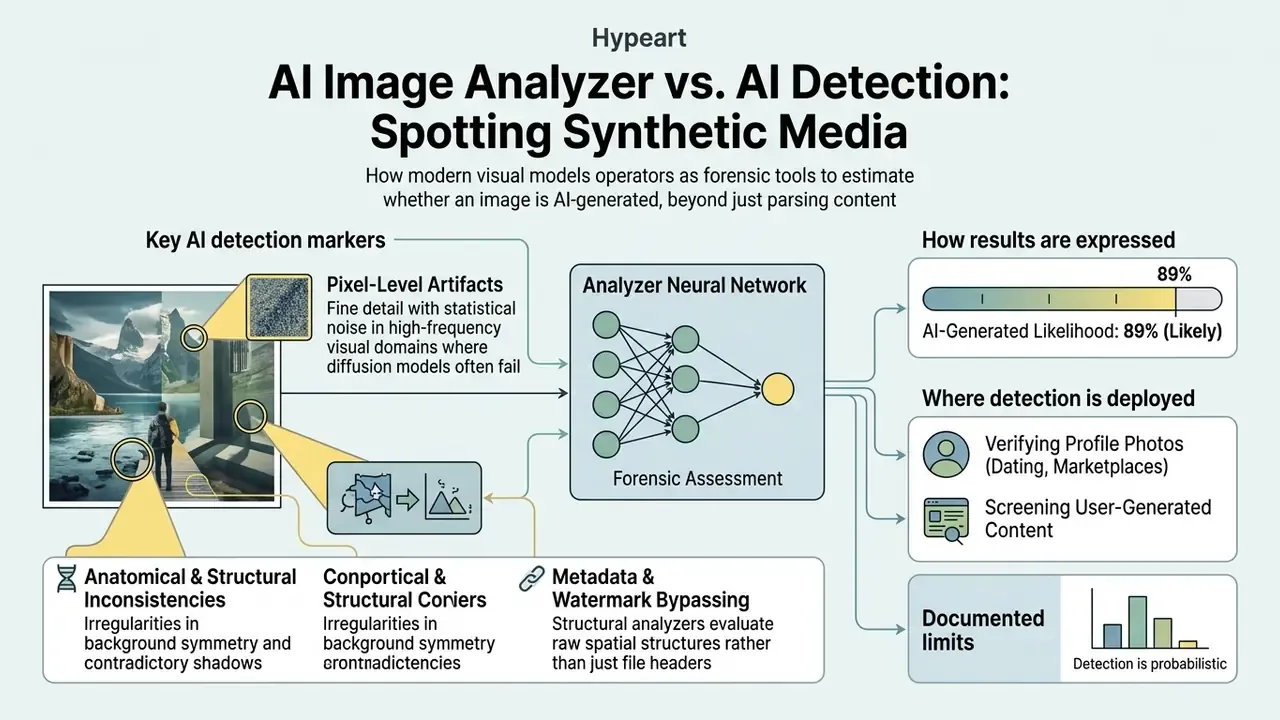
Beyond parsing content from authentic photographs, modern visual models operate as forensic tools to estimate whether an image was synthesized by AI generators such as Midjourney v6/v7, DALL·E 3, Stable Diffusion 3, Flux.1, or Ideogram. Description answers what is in this image. Detection answers was this image made by a camera. The two tasks use different training objectives and fail in different ways.
Key AI detection markers analyzed by neural networks:
AI Image Analysis Use Cases
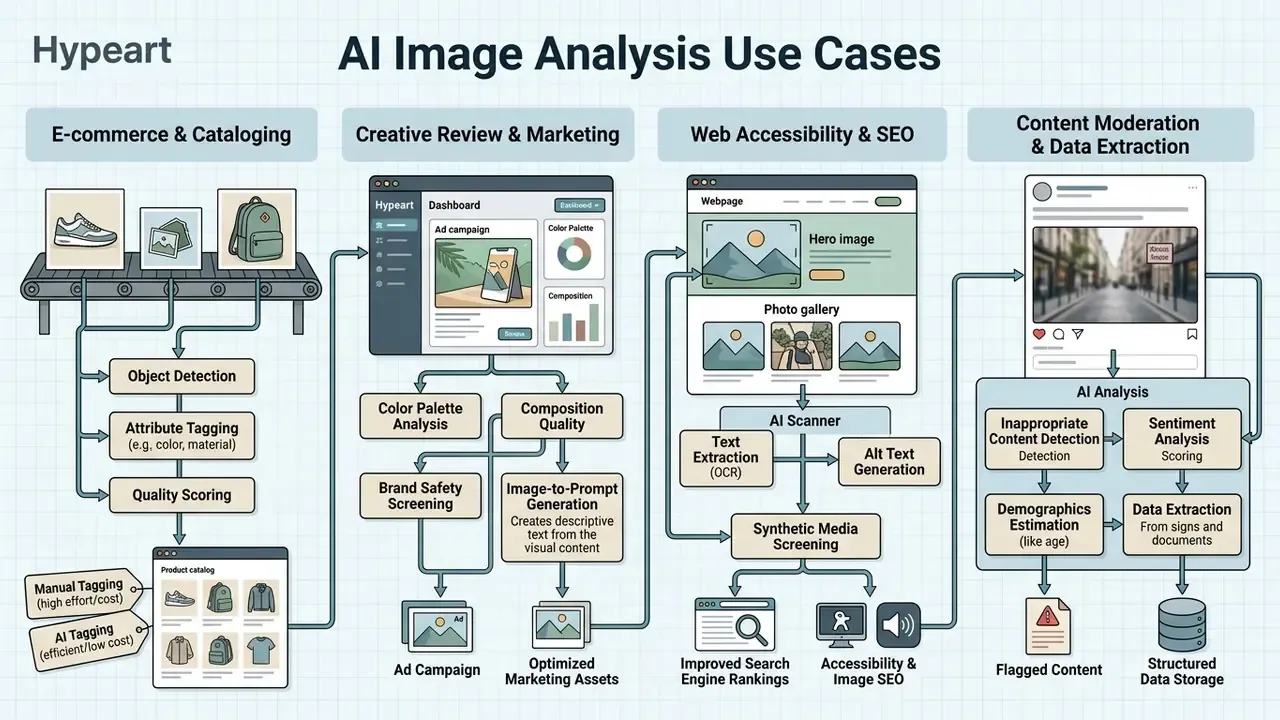
Organizations deploy ai image analyzer solutions across many operational workflows: e-commerce catalog management, web accessibility auditing, digital asset indexing, automated content moderation, and synthetic-media screening. The use cases below are the ones with the clearest cost math.
Product Photos, Cataloging and Marketing Creative Review
E-commerce retailers use ai for image analysis to streamline product inventory onboarding. Automated tools scan product photos to identify item attributes, color schemes, apparel patterns, and brand logos, generating structured inventory tags and auto-tagging suggestions without manual data entry. On sourcing: the strongest published evidence here is a 2021 INFORMS study showing that automatic tagging driven by content plus browsing behavior outperformed prior methods on a real-world dataset, plus a 2021 arXiv study on automated creative optimization reporting a 7% CTR lift in an online A/B test. Post-processing of catalog assets is a separate step, handled by a dedicated AI photo editor or by batch background tooling.
| Operational Metric | Manual Visual Tagging | Automated AI Image Analysis | Efficiency Gain |
|---|---|---|---|
| Processing Speed | 2 to 5 minutes per asset | 3 to 8 seconds per asset | ~35× faster |
| Estimated Cost | $0.15 to $0.50 per image (outsourced) | $0.0015 to $0.005 per image (API) | ~98% cost reduction |
| Color Precision | Subjective human estimation ("navy blue") | Exact Hex/RGB cluster extraction (#000080) | 100% standardized |
| OCR & Data Capture | Manual transcription (high typo risk) | Automated character extraction (<200 ms) | Error rates under 2% on clean inputs |
| Metadata Depth | 5 to 8 basic descriptive tags | 30+ structured metadata key-value pairs | ~4× data density |
| Consistency at Scale | Tagger A writes "blue", Tagger B writes "navy" | Identical methodology on every asset | Reproducible taxonomy |
| Scaling Cost Curve | More images means more headcount | Thousands of images at near-flat unit cost | Linear to sub-linear |
The economic reading is straightforward: the AI does not replace judgment, it replaces transcription. A human tagger records the obvious five to ten attributes. The model records colors, visible text, quality scores, composition notes, and suggested categories in one pass, at a predictable cost per image.
In digital marketing workflows, automated creative screening platforms review ad banners before campaign deployment. By evaluating visual hierarchy, brand logo placement, and contrast balance, creative teams tune asset designs for better click-through rates. To evaluate additional media workflows, creative directors can see the overview of automated media creation paths.
Alt Text, Accessibility and Image SEO
Generating accurate alternative text (alt text) is essential for web accessibility compliance under WCAG 2.2 and for search engine indexing. An ai picture analysis tool converts visual graphic details into descriptive text strings accessible to screen readers (W3C WAI Images Tutorial, 2026). W3C's taxonomy matters more than raw model quality: decorative images take alt="", functional images describe the action, informative images carry a short meaning-focused summary, and complex images require a full text equivalent elsewhere on the page.
«Four alt-text production processes, User-Evaluation, Lone Writer, Team Write-A-Thon and Artist-Writer, depend on human oversight for inclusive results.»
Example AI-generated accessibility output (plain description, not markup)
image file : financial-report-chart.webp
              rising from $1.2M to $2.8M."
caption    : "Figure 1: 2025 Quarterly Revenue Performance."
review     : human check of the figures before publication
Note what the model can and cannot do here. It reads the bars and the axis labels; it cannot confirm that $2.8M matches the filed statement. That reconciliation stays with a human, which is exactly why finance teams keep alt text for charts in a review queue rather than publishing it straight from the API.
Web publishing teams frequently combine image analysis with specialized optimization tools. Content teams looking to improve photo clarity before generating metadata can learn how to make ai photo assets more lifelike, raise resolution with an AI image upscaler, or use dedicated utilities to make an image hd for high-resolution displays. Multi-market publishers should also generate alt text in each storefront language rather than shipping English strings to localized domains.
Content Moderation, Research and Data Extraction
Online media platforms deploy computer vision classifiers to detect unsafe content and policy-violating visual uploads, such as graphic violence or adult imagery (FACCT Content Moderation Research, 2024). Lightweight ensemble models process high volumes of user uploads per second, flagging restricted files for review.
«A lightweight ensemble for explosion detection ran 7.64× faster than ResNet-50 with higher accuracy: "think less, think often".»
«Across six models and three datasets, MobileNetV3 and ConvNeXt convolutional architectures outperformed transformer baselines on F1 for adult-content classification.» — State-of-the-Art in Nudity Classification: A Comparative Analysis, arXiv (2023). https://arxiv.org/abs/2312.04367
In academic and financial research, automated image analyzers extract numerical data from embedded charts, diagrams, and financial tables (Computers MDPI Financial Report Study, 2024). Researchers convert raster graphics from PDF filings into structured CSV data tables for quantitative modeling, and 2025 to 2026 work on biomedical table extraction and batch figure digitization (PlotPick) extends the same pipeline to scientific literature at corpus scale. Record-keeping benefits too: images used across a decade of operations, a folder of 10,000 IMG_4827.jpg files, becomes searchable by subject, scene, dominant color, and embedded text after a single analysis pass.
Enterprise Governance & Risk Framework for Image AI
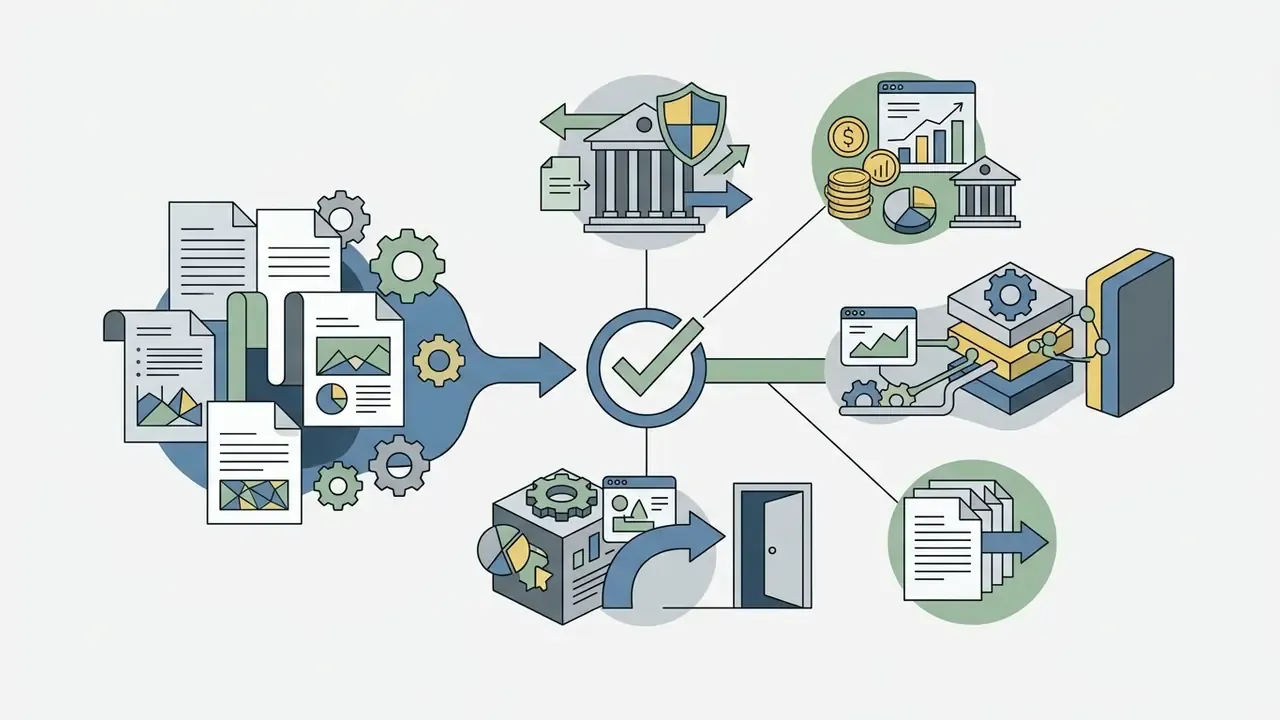
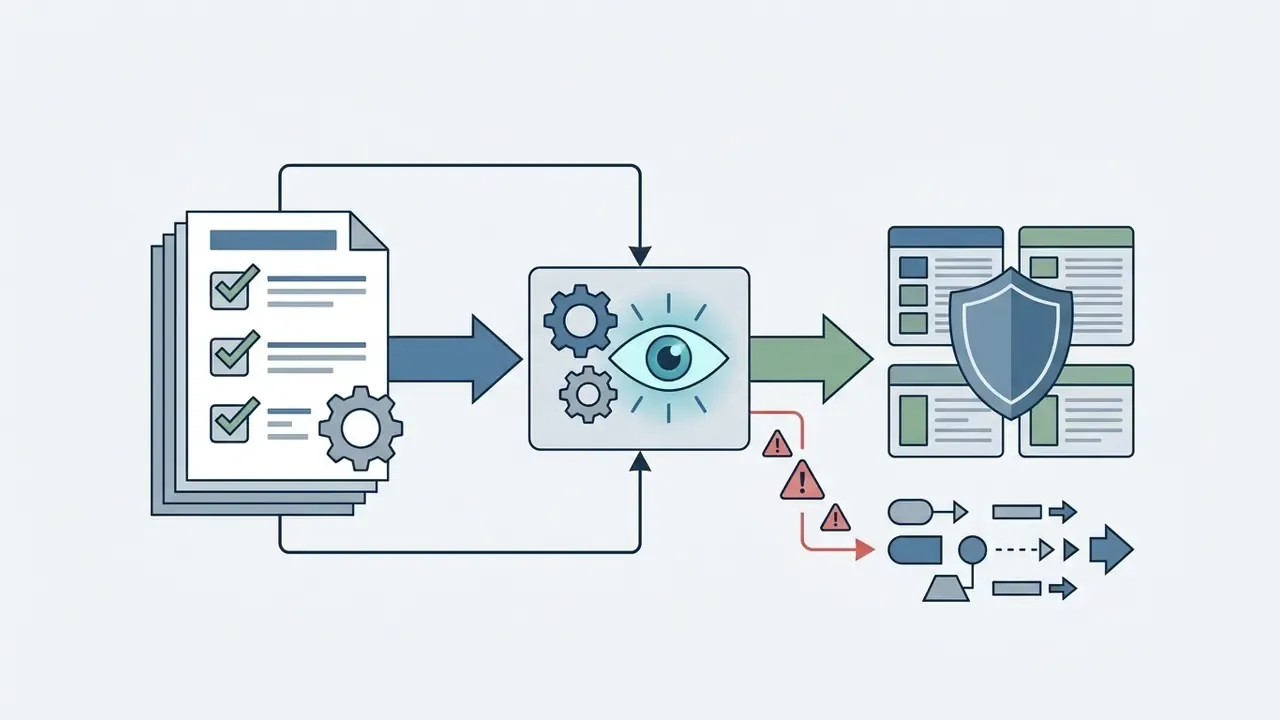
Consumer UX ends at "view results." Regulated deployment begins there. This section consolidates the controls a risk, audit, or model-validation function will ask for before an image analyzer touches production data.
Data Protection Architecture: Redact Before You Transmit
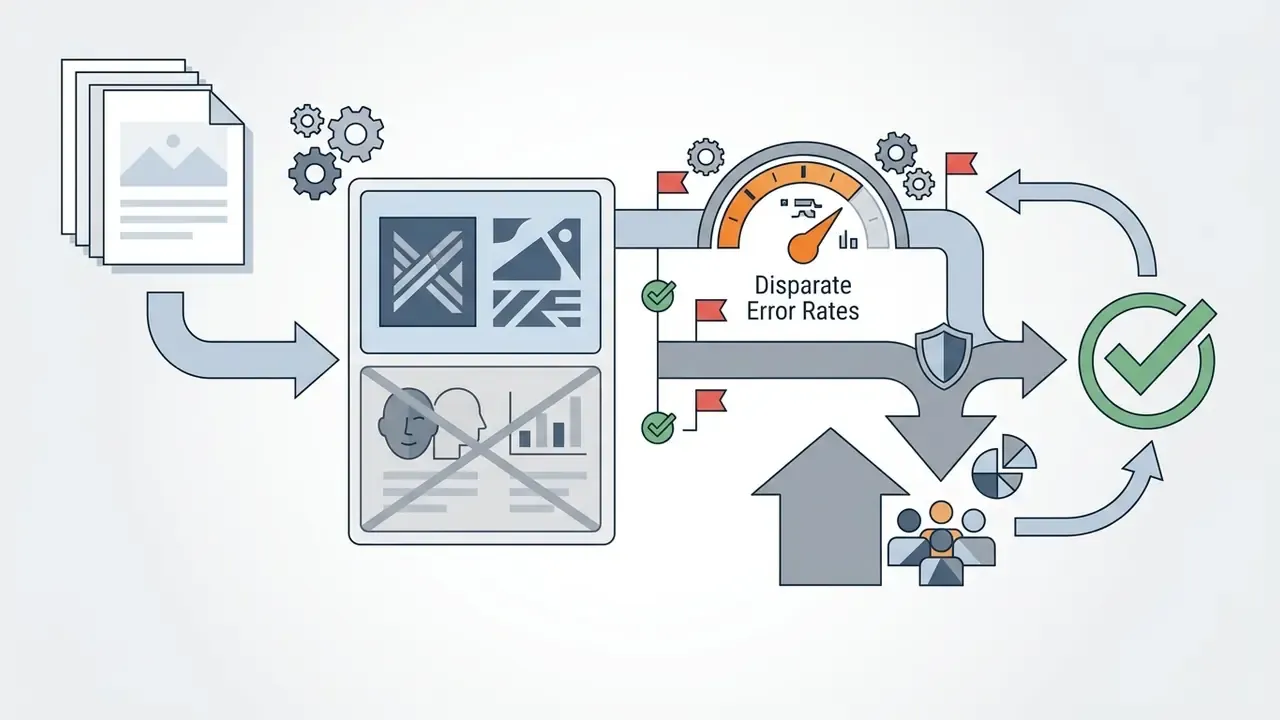
The dominant failure mode in financial-services pilots is not model error. It is uncontrolled transmission of personal data through a public web form, the classic shadow-AI pattern. Design the pipeline so the model never sees what it does not need.
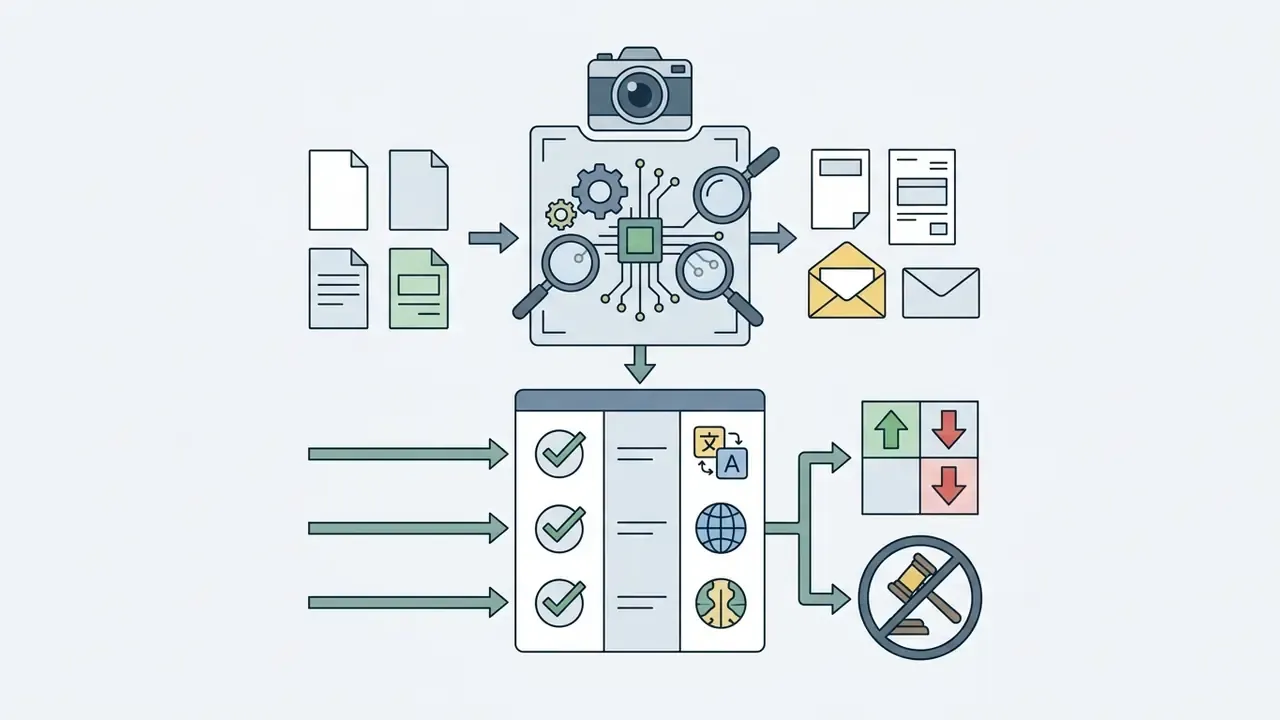
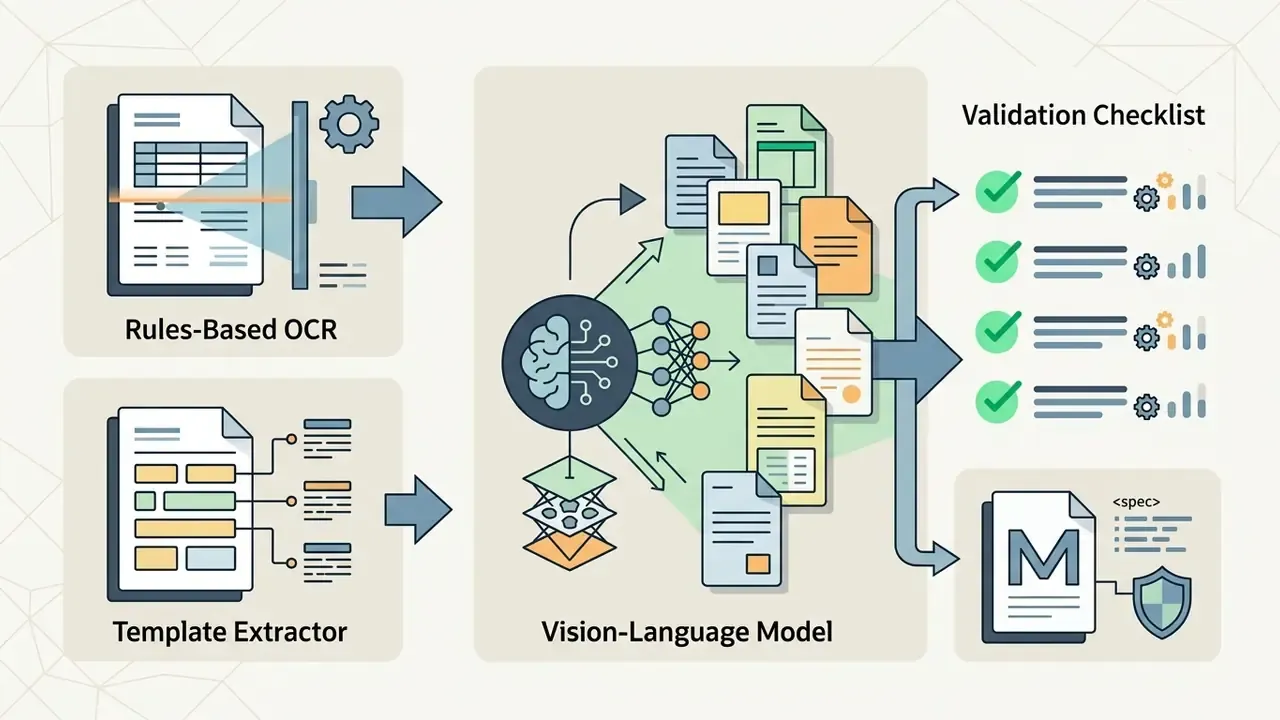
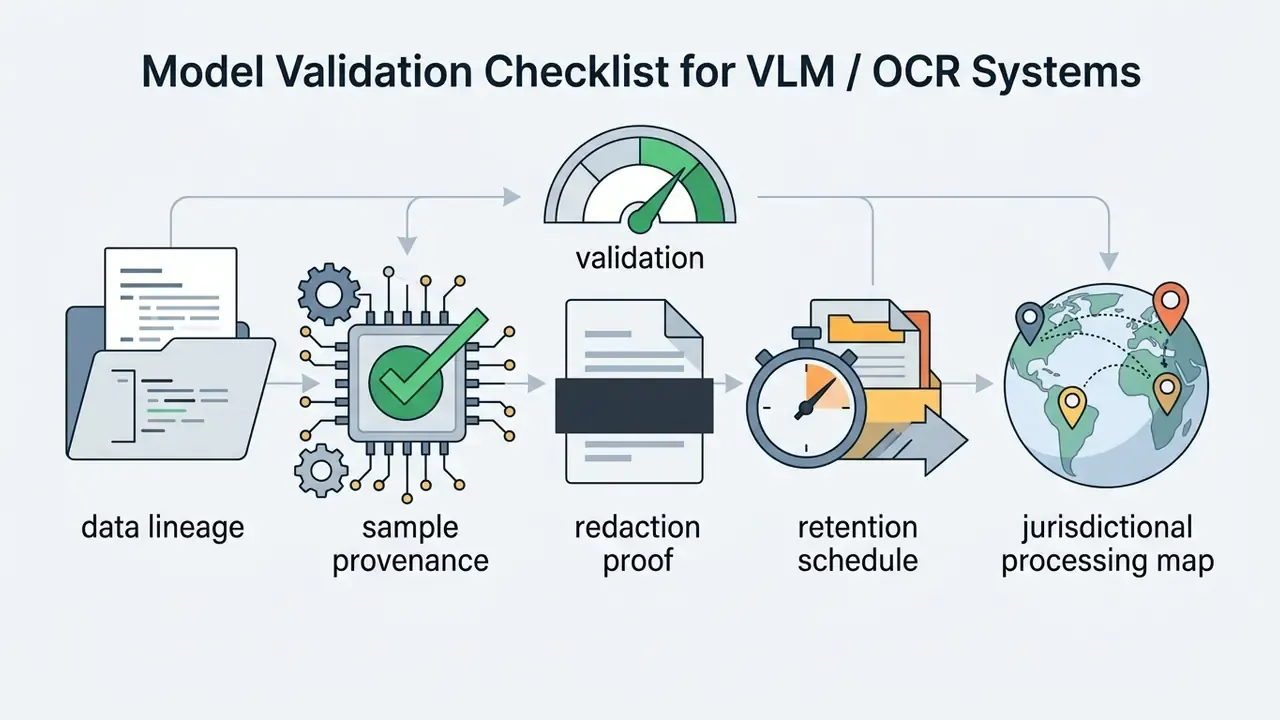
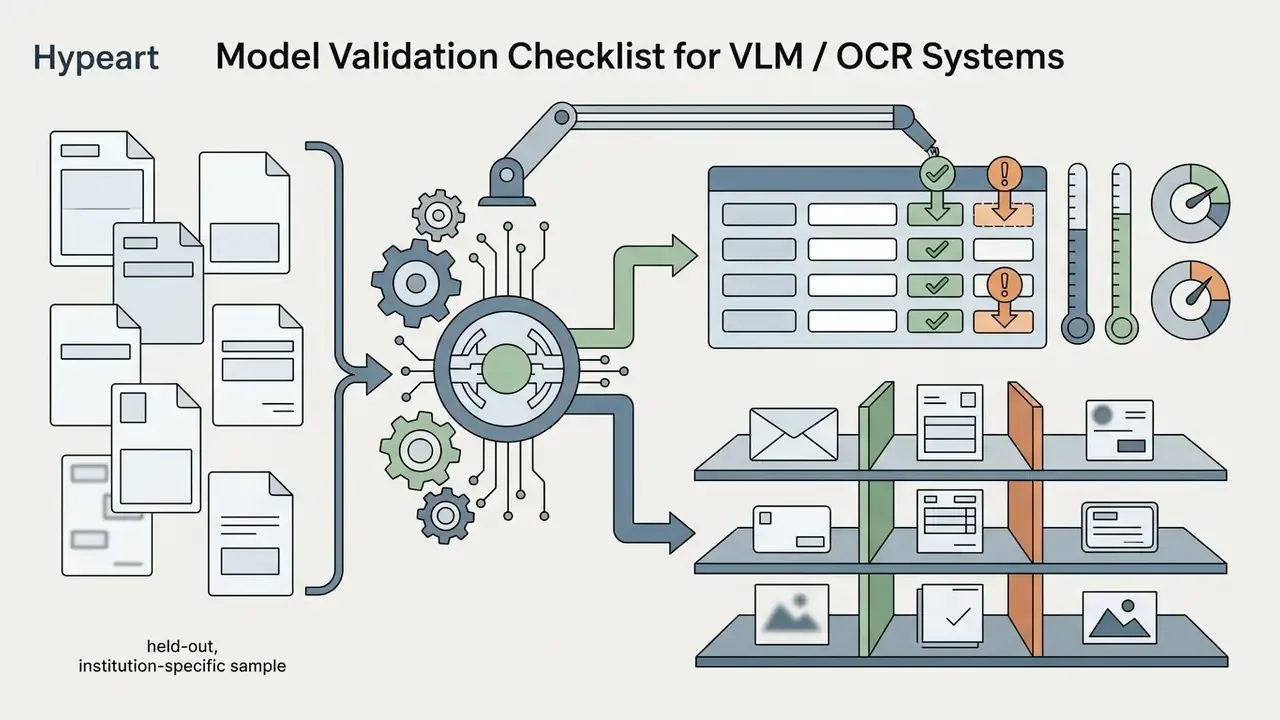
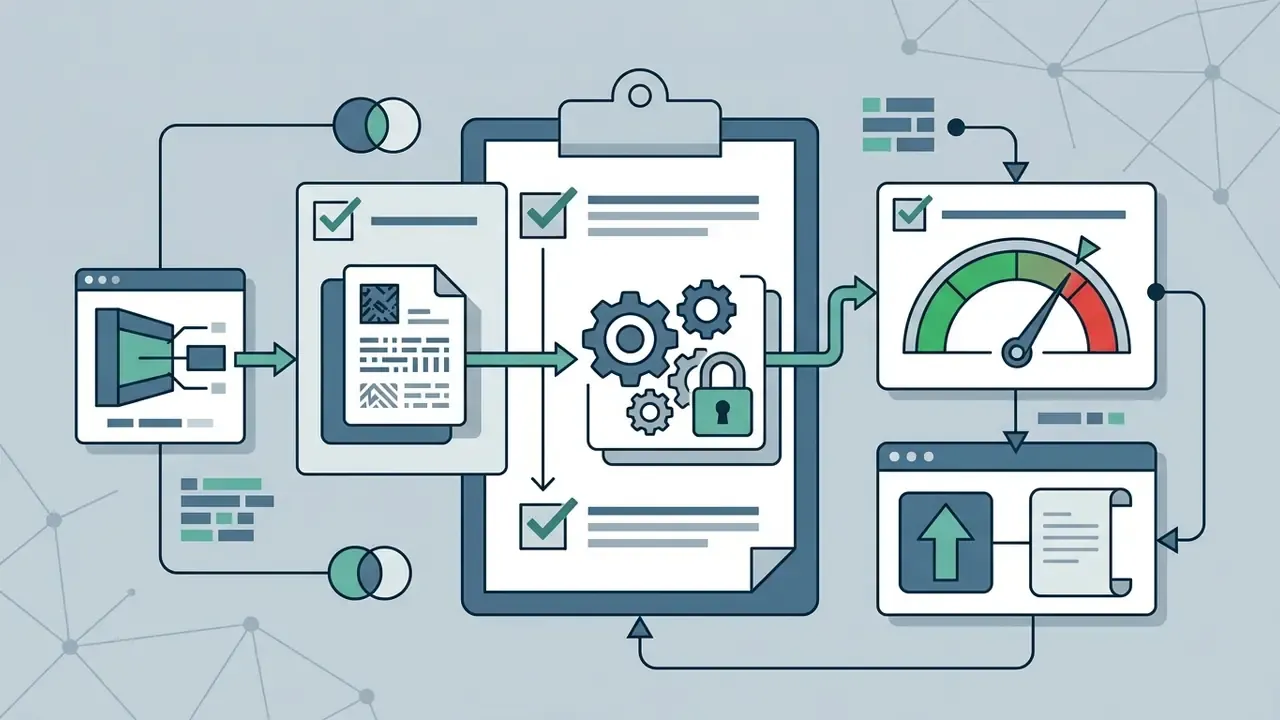
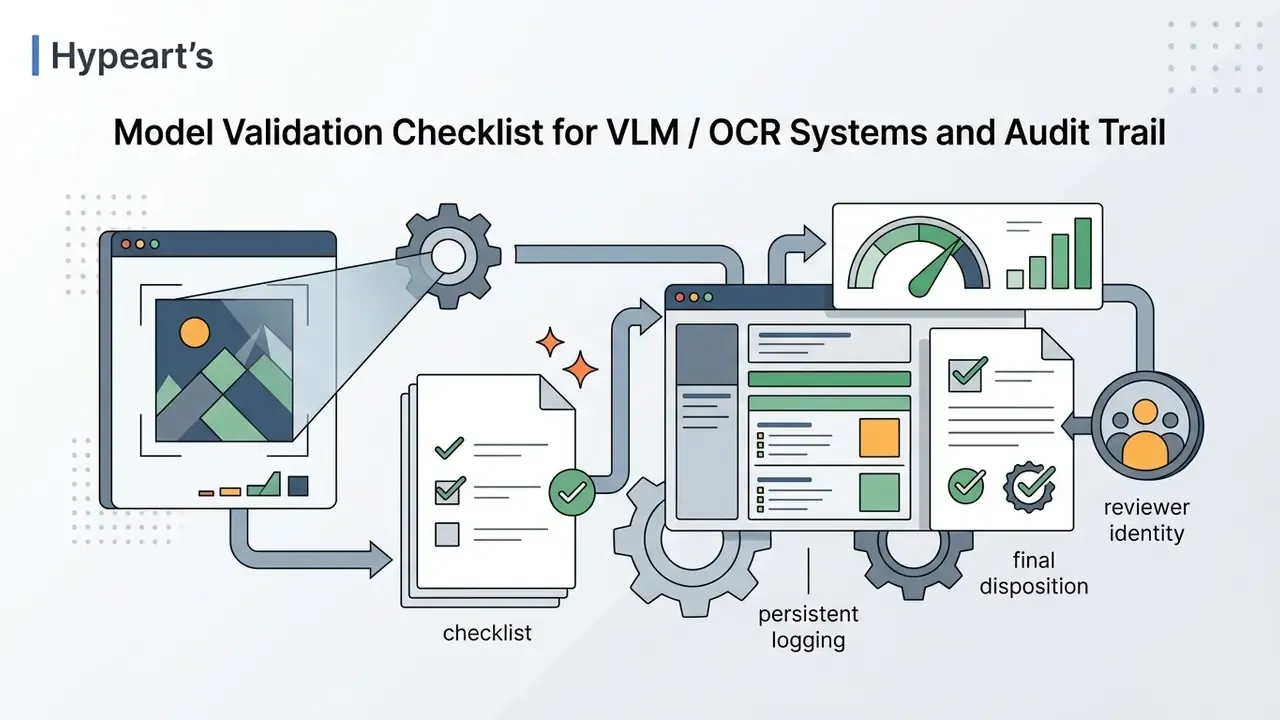
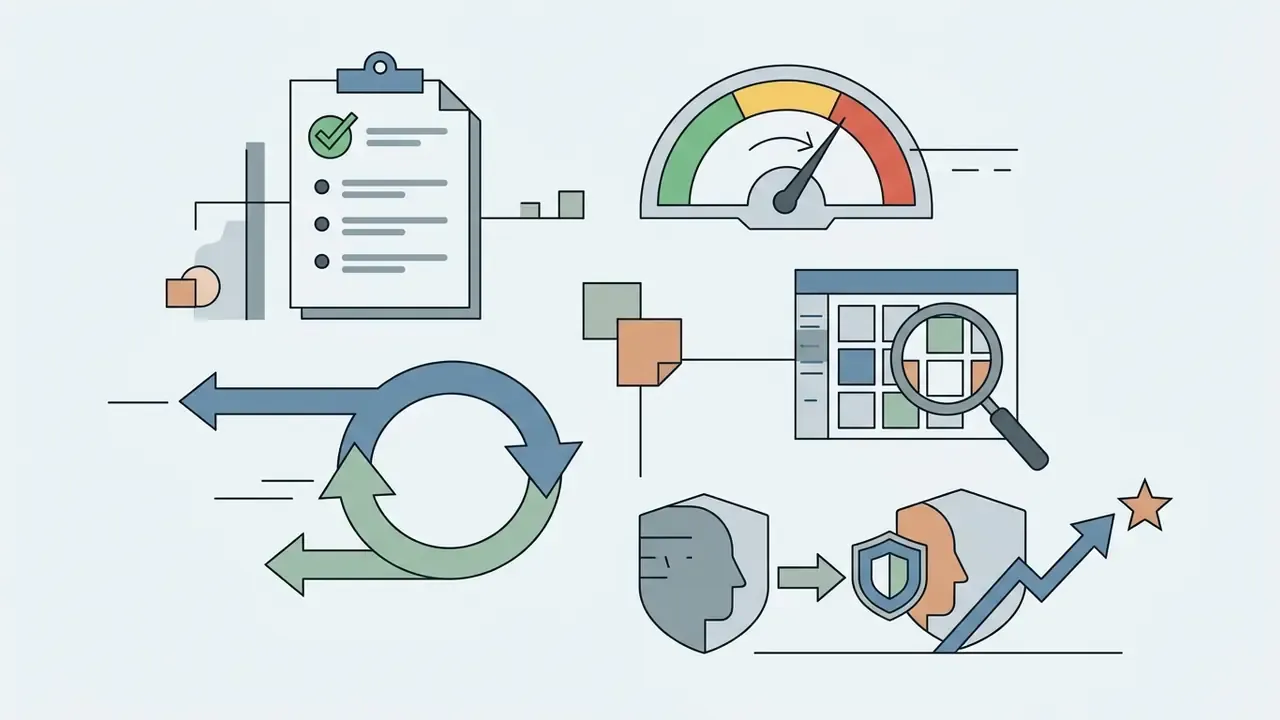
Model Validation Checklist for VLM / OCR Systems
Aligned to the NIST AI Risk Management Framework 1.0, ISO/IEC 23894:2023, ISO/IEC 42005:2025, and U.S. banking model-risk expectations (Federal Reserve SR 11-7, OCC 2011-12). This checklist is general guidance, not legal or regulatory advice; confirm applicability with your compliance function.
Deployment Models Compared
| Dimension | Public SaaS API | Private Cloud / VPC Instance | On-Premises Open-Weight VLM |
|---|---|---|---|
| Data residency control | Vendor-defined regions | Tenant-controlled region and network | Full internal control |
| Retention risk | Requires contractual ZDR | Configurable, log-controlled | No external transmission |
| Unit cost | Lowest per call at low volume | Mid; reserved capacity pricing | Highest fixed, lowest marginal at scale |
| Latency | Internet-dependent | Predictable, private link | Lowest, LAN-bound |
| Model quality | Frontier models first | Frontier models, slight lag | Open weights, typically behind frontier |
| Version control | Vendor may deprecate versions | Pinning usually available | Complete pinning |
| Validation burden | Vendor-dependency documentation | Moderate | Highest, since you own the model |
| Lock-in exposure | High without abstraction layer | Medium | Low |
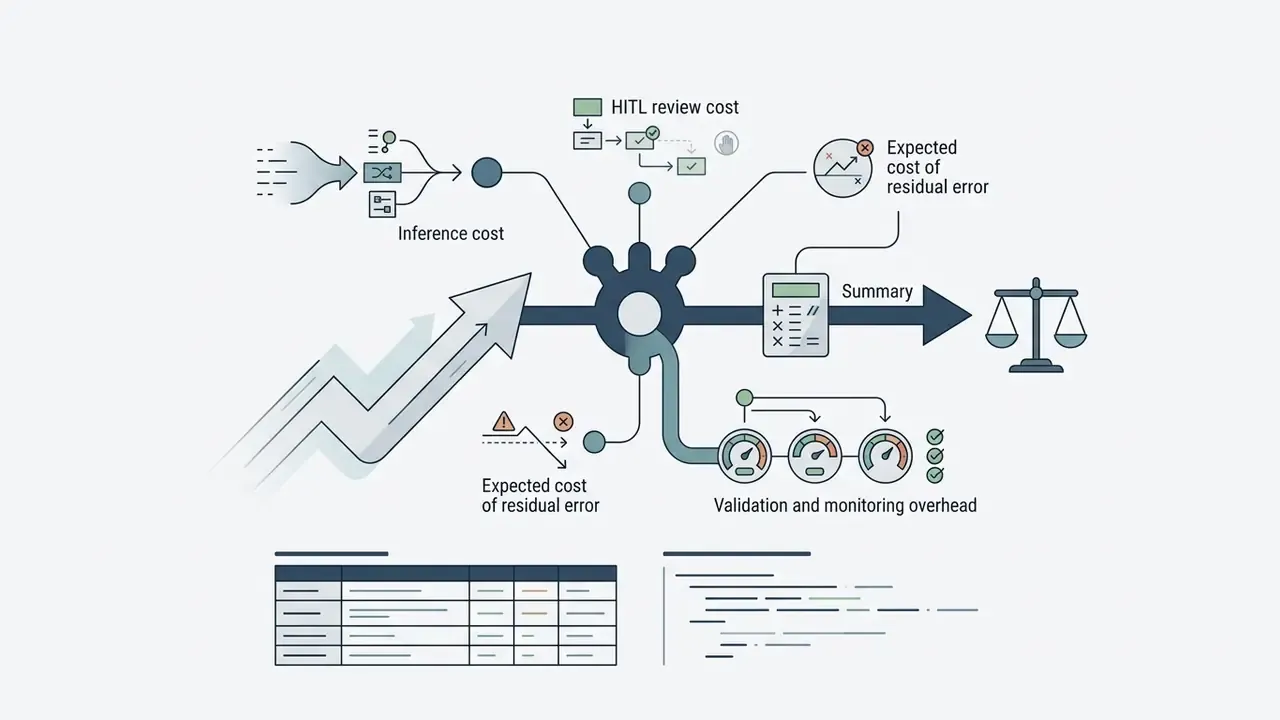
Risk-Adjusted ROI and Human-in-the-Loop Economics
Unit inference price is the smallest term in the equation. Model the full cost:
Total Cost = (V × C_api)
           + (V × R_hitl × C_review)
           + (V × E_residual × C_error)
           + C_validation_and_monitoring
V        = annual image volume
C_api    = inference cost per image
R_hitl   = share routed to human review (driven by confidence threshold)
C_review = fully loaded cost of one human review
E_residual = error rate surviving review
C_error  = expected cost per surviving error (rework, remediation, penalty)
| Scenario (100,000 images/year) | Fully manual | AI + 20% HITL | AI + 5% HITL (mature thresholds) |
|---|---|---|---|
| Inference cost | n/a | $300 (at $0.003) | $300 |
| Human handling | 100,000 × $0.30 = $30,000 | 20,000 × $0.30 = $6,000 | 5,000 × $0.30 = $1,500 |
| Validation & monitoring | low | $15,000 to $40,000 first year | $10,000 to $25,000 steady state |
| Residual error exposure | baseline | must be measured, not assumed | must be measured, not assumed |
Two honest caveats. First, tightening the confidence threshold lowers review cost but raises residual error exposure, so the optimum is an institution-specific calculation that requires your own labeled sample. Second, the validation and monitoring line is what separates a cheap pilot from a defensible production system; excluding it produces an ROI number no model-risk reviewer will accept.
How to Choose an AI Image Analyzer for Commercial Use
Selecting an ai image analyser platform for commercial integration requires evaluating security posture, data-retention terms, pricing models, API transaction throughput, processing limits, and privacy commitments.
| Selection Criterion | Free / Trial Tier Considerations | Enterprise / Commercial Considerations | Key Risk / Verification Focus |
|---|---|---|---|
| Usage Limits & Quotas | Daily caps (for example 50 requests/day) or monthly unit credits (1,000 units/mo on Google Vision; 5,000 transactions/mo on Azure Vision F0) | Tiered usage pricing ($0.0015 to $0.0025 per processed image; Textract-style per-page billing) | Verify overage charges and rate-limiting throttles under peak volume (F0 tiers cap at roughly 1 TPS). |
| Account & Card Rules | Select platforms offer basic web testing with no account and no signup | Requires verified organization accounts, API keys, SSO, and billing profiles | Confirm whether trial access requires upfront credit card bindings, and whether staff are already using unapproved free tools. |
| Security Attestation | Rarely documented; assume none | SOC 2 Type II, ISO 27001, penetration-test summaries, sub-processor list | Request the report, not the badge; check audit period and scope. |
| Supported Image Types | Standard web image types (JPG, png webp) capped at 2 MB to 5 MB file size | Broad support including multi-page PDF, TIFF, HEIC, BMP, and batch archives (commonly 50 MB or 100 pages) | Ensure file format compatibility aligns with your operational asset mix. |
| Batch Processing | Single image per upload or web form interaction | Asynchronous API endpoints handling multiple images in parallel | Assess request latency and queue stability during batch ingestion. |
| Privacy & Retention | Public uploads may be stored or used for neural network training | Zero-data-retention options; files deleted immediately post-analysis; no-training clauses | Check compliance with the EU AI Act, GDPR, sectoral rules, and enterprise data privacy policies. |
| Deployment Flexibility | Browser only | Public API, VPC, or self-hosted weights | Avoid architectures that cannot be re-pointed to a different underlying model. |
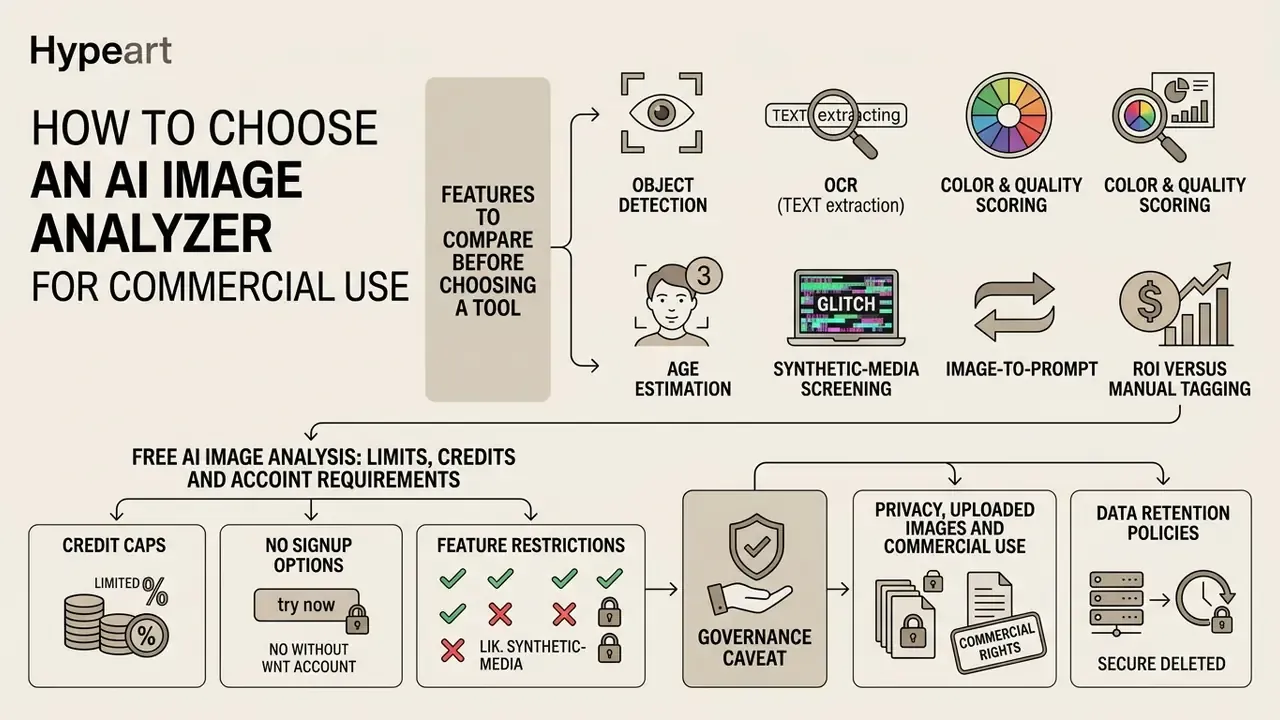
Features to Compare Before Choosing a Tool
Before adopting an ai image analyzer platform, technical leads should evaluate core system architecture specifications against operational requirements (NIST AI Risk Management Framework 1.0).
- Format Flexibility: Verify whether the API handles JPG, PNG, WEBP, HEIC, and scanned multi-page PDF files.
- Multimodal Capabilities: Determine whether the platform provides built-in OCR, color palette extraction, object localization, synthetic-media screening, and multilingual output out-of-the-box.
- Integration Infrastructure: Ensure compatibility with existing GRC and MRM registers, digital asset management (DAM), workflow orchestrators, and enterprise cloud storage systems.
- Model Agnosticism: Prefer a governance and prompt layer that can swap the underlying model, proprietary or open-weight, without re-engineering downstream consumers.
- Evaluation Benchmarks: Review model accuracy benchmark scores against independent testing suites such as CapArena, DailyBench, MuirBench, or II-Bench.
«CapArena-Auto reaches 94.3% correlation with human judgments at roughly $4 per evaluated model.»
Organizations evaluating different generative and analytical toolsets can see the overview of modern software suites to understand performance differences across vendors, and teams whose roadmap also includes synthesis can review the best AI image generators alongside their analysis stack.
Free AI Image Analysis: Limits, Credits and Account Requirements
Many platforms offer ai image analysis free access tiers so users can test basic visual analysis features, and several market themselves as ai image analysis free online with nothing to install. These are appropriate for evaluation and personal use, not for regulated data.
Users seeking no-cost creative and analytical options can compare options across various free utilities, or review the practical limits of a free photo editor before committing to an enterprise plan.
Privacy, Uploaded Images and Commercial Use
Commercial deployment of an ai analyze image workflow requires strict scrutiny of data privacy policies. Organizations under regulatory oversight must ensure that confidential business records or customer photographs are protected against unauthorized retention (OAIC AI Product Guidance).
- Data Retention Policies Verify whether the provider automatically deletes uploaded images immediately after returning analytical outputs, and whether logs, prompts, and derived embeddings fall under the same commitment.
- Training Opt-Outs Ensure commercial agreements explicitly prevent the vendor from using your uploaded business assets to train public AI models. The European Commission's July 2025 AI Act guidance requires general-purpose AI providers to maintain an EU copyright-compliance policy and publish a public summary of training content, which makes training-data provenance a contractual question rather than a courtesy.
- Licensing & Copyright Confirm that extracted text descriptions, metadata tags, and analytical reports carry full rights for commercial purposes without vendor restrictions. Note the jurisdictional split: the U.S. Copyright Office's 2023 guidance protects only human-authored contributions in AI-assisted text, and a 2025 European Parliament study concludes that purely AI-generated output without substantial human intervention is not eligible for copyright protection in the EU.
For organizations interested in specific commercial software tools, you can review the microsoft ai image generator guide, evaluate the microsoft designer ai image generator breakdown, examine the magic ai generator overview, or explore the magic hour ai image generator summary for additional platform analysis. Legal teams reviewing corporate AI policies can also browse the hub covering current AI regulatory developments.
AI Image Analyzer FAQ
Short answers to the frequently asked questions we receive about limits, access, and where a visual model can safely sit inside a controlled workflow.
Can AI Analyze Multiple Images at Once?
Yes. Multimodal vision-language models and batch processing APIs can evaluate multiple images within a single query or automated processing queue. MuirBench, which measures exactly this capability, spans 12 multi-image tasks, 2,600 questions and 11,264 images, averaging 4.3 images per instance. Newer suites (MIBench, MMIU, MIRB, M4Bench) exist precisely because cross-image alignment and comparison remain uneven.
«The evaluation spanned 2.6 million images drawn from 12 datasets.» — Comprehensive Zero-Shot Evaluation of AI-Generated Image Detectors, arXiv (2026). https://arxiv.org/abs/2506.05788 High-throughput enterprise APIs accept multi-image payloads, which lets systems compare visual attributes, track object changes across frames, or process entire image folders concurrently. Basic consumer web interfaces, on the other hand, often restrict free tier interactions to one upload per request to conserve bandwidth.
Do I Need a Credit Card or Account for Free AI Image Analysis?
No. Several lightweight web tools provide basic free ai image processing with no signup and no credit card required (Instant Tools AI; Metadata2Go; PixelPanda; ScreenApp). These tools let users upload a single photo, extract text, or view an automated description directly in the browser, with files deleted automatically after processing. Enterprise cloud platforms such as Google Cloud Vision or Microsoft Azure Document Intelligence do require account registration and billing setup to access recurring monthly free-tier allowances. Distinguish a genuine free tier from a trial: if a card is requested, you are in a trial.
Can an AI Image Analyzer Tell Me If a Photo Was Made by AI?
Partly. Synthetic-media detectors return a probability, a confidence band, and often an artifact heatmap, and they work without relying on watermarks or EXIF metadata. Accuracy degrades sharply on the newest generators and on heavily edited authentic photographs. Use detection as triage, corroborate with provenance (C2PA manifests, original capture files, reverse image search), and never treat a percentage as proof.
Can AI Estimate a Person's Age from a Photo?
It can output an estimated bracket such as 20 to 29 and flag likely minors, which is useful for pre-moderation queues. It is not age verification. These estimates are probabilistic, sensitive to lighting, pose, makeup, and the demographic distribution of training data, and unsuitable for legal age checks, KYC, or identity decisions.
Does It Work on Screenshots, Dashboards and Spreadsheets?
Yes, and in many commercial deployments screenshots outnumber photographs. Models tuned for non-photographic input relax the subject-versus-background assumption and raise OCR weighting, which lets them read SaaS dashboards, analytics panels, invoices, and tables. Accuracy still depends on resolution: a 200-pixel-wide thumbnail of a dashboard will not yield reliable figures.
Can the Output Be Used Commercially?
Usually yes for tags, alt text, and descriptions, subject to the vendor's terms. Confirm three things in writing: that you hold rights to the input imagery, that the vendor claims no license over your uploads, and that outputs carry no attribution or field-of-use restriction. Remember that copyright protection for purely machine-generated text is limited or absent in both U.S. and EU guidance.
What Should I Never Use an AI Image Analyzer For?
Sole-source identity verification, legal age checks, forensic conclusions presented as fact, medical diagnosis, automated adverse decisions affecting consumers, and any workflow where an unreviewed hallucination would be materially harmful. In each case the model may participate as an input. A qualified human makes the determination.
Appendix A: Editorial Revisions and Source Corrections
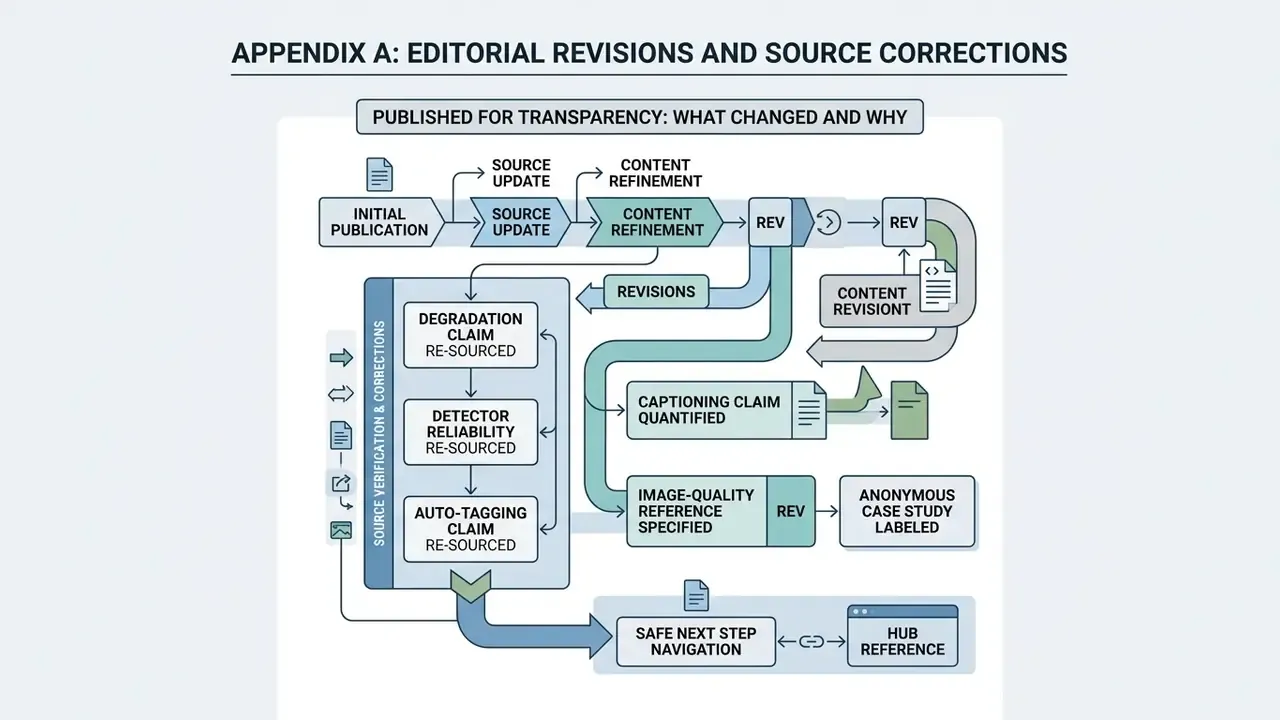
Published for transparency, so readers can see what changed and why.
- Degradation claim re-sourced. The earlier text read: "detection accuracy declining up to 30% on heavily corrupted or low-resolution files (Objects365 Benchmark Studies)." Objects365 is a large-scale detection dataset with a manual multi-step annotation pipeline, not a corruption benchmark. The corrected figure, 30 to 60% performance loss on corrupted imagery, comes from robustness studies, with clean-versus-manipulated numbers (91 to 96% down to 54 to 66%) taken from DailyBench (arXiv, 2026).
- Captioning claim quantified. The earlier bare reference "(CapArena Benchmark, 2025)" has been replaced with the benchmark's actual method and result: 6,000+ pairwise comparisons showing GPT-4o-class models matching or exceeding human-written detailed captions.
- Image-quality reference specified. "(IEEE Transactions on Broadcasting, 2023)" now cites the specific Conformer-based deep meta-learning FR-IQA model and its cross-dataset result.
- Detector reliability re-sourced. "(EGOILLUSION Benchmark, 2026)" has been supplemented with the zero-shot detector evaluation across 2.6 million images (37.5 to 75% mean accuracy; 18 to 30% on Flux Dev, Firefly v4 and Midjourney v7). EGOILLUSION's own figure, a 59.4% best score across ten multimodal models, is retained in the accuracy section.
- Anonymous case study labeled. The financial-services invoice-OCR example is retained as an illustrative design pattern and explicitly marked as not independently verified, with no published sample size or baseline error rate.
- Auto-tagging claim re-sourced. "(INFORMS E-Commerce Auto-Tagging Study)" is now tied to the 2021 INFORMS result on content-and-behavior tagging and a separate 2021 creative-optimization A/B test reporting a 7% CTR lift.
- Corporate transparency note (restated). The prior parenthetical read: "As of August 2026, no verified independent entity or SOC 2 compliance documentation is confirmed for Hypeart AI Media / hypeart.ai." Restated for clarity: this article, published by Hypeart AI Media, is editorial analysis. It does not represent a vendor security attestation, and no SOC 2 or equivalent certification is asserted for any entity named here. Tool and platform mentions are illustrative, non-binding, and not endorsements. Verify every vendor claim, covering retention, training use, certification and pricing, against the vendor's own current contractual documentation before procurement.
General disclaimer: this article provides general information about image-analysis technology, benchmarks, and governance practice. It is not legal, regulatory, financial, medical, or forensic advice. Regulatory expectations differ by jurisdiction, sector, and use case; consult qualified counsel and your model-risk or compliance function before deploying vision models in consequential workflows.
A Safe Next Step
Pick one low-consequence, high-volume workflow. Alt text for marketing assets, or first-pass extraction on internal invoices. Label 300 samples by hand, measure field-level accuracy, set a confidence threshold from that sample, and route everything below it to a named reviewer. Register the model in your inventory before the pilot, not after. If the numbers hold for a quarter, expand the scope. If they do not, you have learned it for the price of a few hundred labels.