Why would a risk-aware team care about comedy software? Because humor is the cheapest possible test of a generative pipeline. Nothing material breaks if a punchline lands badly in a draft, yet every control you will eventually need for higher-stakes text (prompt hygiene, output screening, named human approval, retention settings) shows up here in miniature. Treat an ai joke generator as a sandbox: low financial exposure, real reputational exposure, identical governance mechanics.
That framing is a hypothesis, not a finding. It holds up well in practice, though.
Executive Summary
- An ai joke generator is a conditional language model that builds original setups and punchlines from your topic, tone, and audience inputs. It synthesizes text rather than retrieving stored entries from a static database.
- Blind-rated evidence supports quality parity or advantage over average human writers: AI jokes scored M = 2.63/5 versus M = 2.20/5 for laypeople, with roughly 70% evaluator preference for AI outputs (PLOS ONE, 2024).
- Output style is controlled by a creativity/temperature setting (1–10). Low values produce safe corporate humor; high values produce absurd or edgy punchlines.
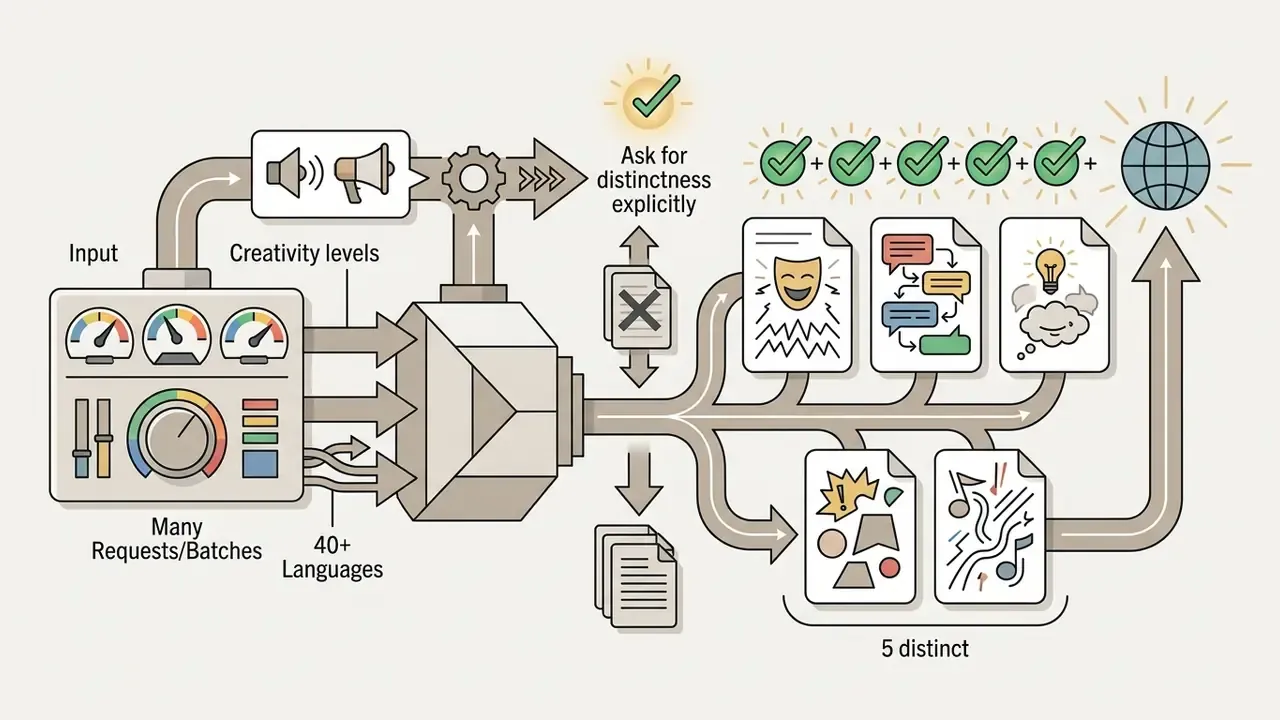
- Modern engines support 40+ languages and batch generation of 1 to 5 jokes per request, which is the most efficient way to compare punchline timing.
- Commercially, raw AI output is not protected by US copyright without human creative modification (US Copyright Office, Jan 29, 2025; Thaler v. Perlmutter, 2025). Human editing plus brand-safety review is mandatory before publication.
What Is an AI Joke Generator?
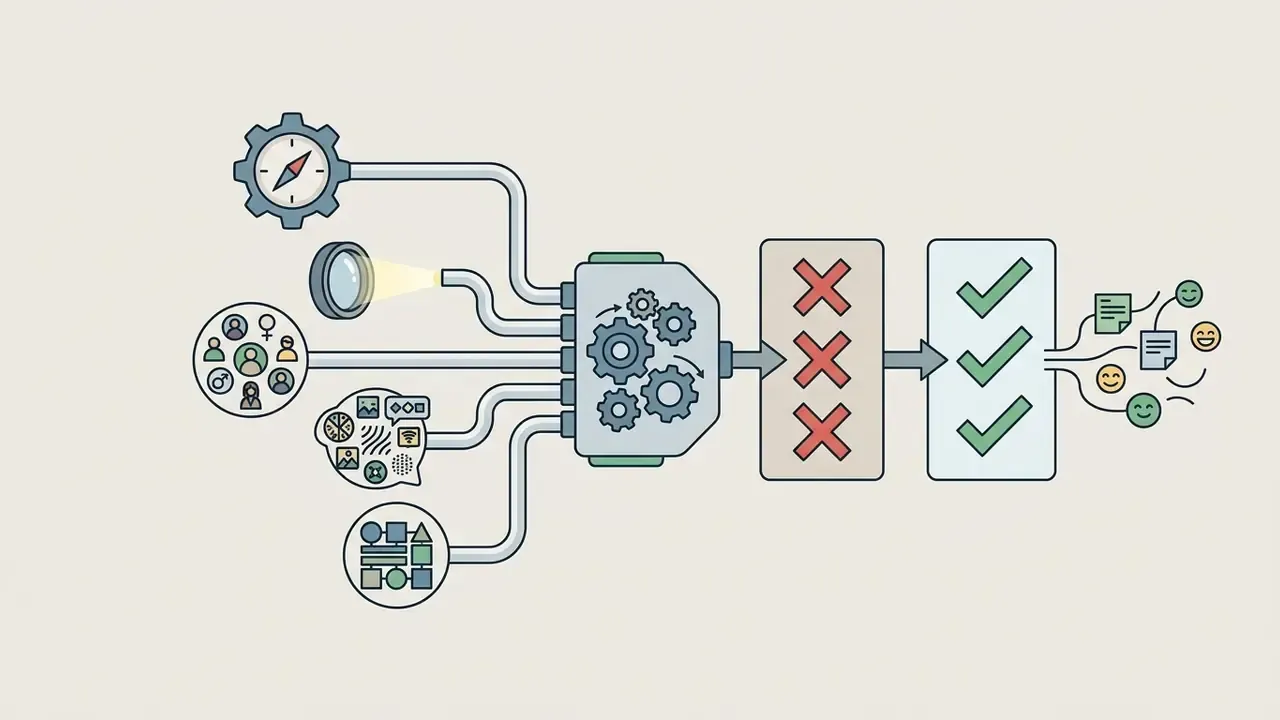
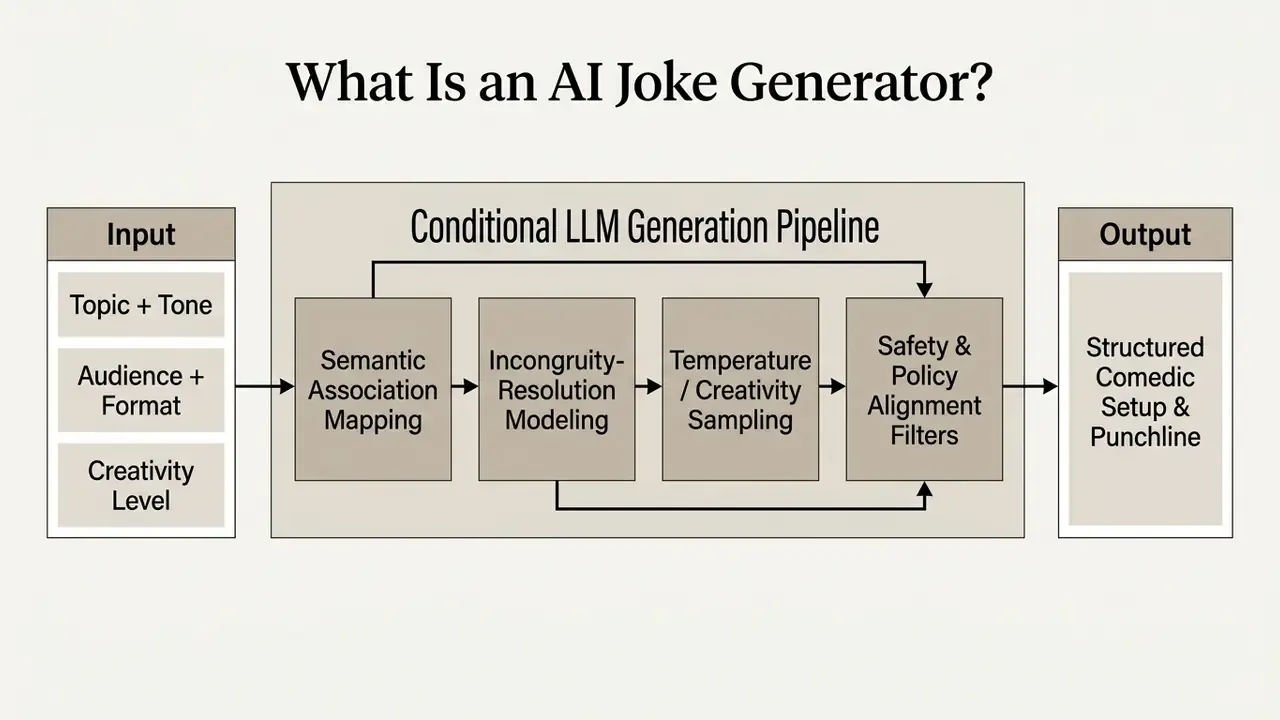
An ai joke generator is a conditional natural language processing model trained to construct comedic setups and punchlines from user-defined inputs. Unlike a static database that simply surfaces stored entries, a joke generator ai processes contextual relationships to build original humor tailored to a specific subject. Modern architectures use fine-tuned large language models (LLMs) to synthesize text that follows established comedic timing, narrative subversion, and structural rules.
«Modern humour systems are conditional generators: they model a probability distribution P(y|x) rather than retrieving records from a fixed database.»
In enterprise and creative workflows, an ai joke maker works as an automated drafting assistant. The engine models a conditional text distribution P(y | x), where x holds the prompt parameters (subject, target audience, tone) and y is the generated joke. That lets you create jokes on demand at almost any length, from a single-sentence pun to a full speech monologue.
One term worth defining early, since the rest of the article leans on it: incongruity is the mismatch between what the setup makes you expect and what the punchline delivers. No mismatch, no laugh.
How AI Creates Jokes From a Topic
Neural networks create jokes from a topic by locating semantic incongruities between a setup premise and a punchline resolution. Computational humor research shows that language models parse the input subject, map related conceptual associations, and calculate semantic distances between sentence embeddings. The system first establishes a predictable narrative frame, then introduces a surprise resolution that violates expectation while staying logically coherent.
Rather than gesturing at "research" in general, the mechanism is documented as a specific multi-step reasoning method.
«Multistep reasoning pipelines that extract a concept, surface an incongruity, and only then form the punchline consistently improve humour quality over zero-shot GPT-4 prompting.»
The documented sequence runs like this: select the topic, generate a broad pool of associations (often 15 to 20), expand and cluster those associations, combine the two most semantically distant "handles," and only then draft the punchline plus a connecting angle. Structure is what allows the model to generate jokes that stay on topic instead of producing unrelated noise.
AI Joke Generator vs. Random Joke Generator
An adaptive ai jokes generator produces dynamic, context-aware content. A traditional random joke generator merely retrieves pre-scripted entries from a fixed list. Static collections, say curated Reddit posts or classic one-liners, offer high initial reliability but cannot adapt to a corporate domain, a fresh headline, or an unusual audience constraint.
| Feature / Dimension | Static Random Joke Generator | Conditional AI Joke Generator |
|---|---|---|
| Content Origin | Fixed database retrieval | Real-time neural language synthesis |
| Topic Conditioning | Keyword matching or random pick | Semantic mapping to any user input |
| Format Flexibility | Pre-determined by stored item | Dynamic (one-liner, pun, speech, script) |
| Tone & Style Control | Fixed tone per item | Adjustable (family-friendly, dry, cynical) |
| Language Coverage | Limited to translated database entries | 40+ languages with native idiom handling |
| Batch Output | One stored item per request | 1 to 5 variations per single request |
| Uniqueness Rate | Low (repeats stored items) | High (synthesizes new phrasing combinations) |
Readers comparing generative tool categories side by side may also find our review of AI art generators useful for understanding how output-quality benchmarks differ across creative model classes.
Empirical evaluation shows the gap between random selection and conditional generation. In a 2024 double-blind study in PLOS ONE (Gorenz & Schwarz, 2024), AI-generated jokes received higher average funniness ratings (M = 2.63/5) than layperson human responses (M = 2.20/5), with nearly 70% of evaluators preferring the AI outputs. Modeling intent and context is what lets a joke maker ai outperform an unconditioned retrieval engine.
One caveat matters for uniqueness benchmarking. Earlier 2023 evaluations found that over 90% of unconditioned ChatGPT joke samples recycled the same narrow cluster of roughly 25 jokes. Uniqueness is therefore a function of prompt specificity and sampling temperature, not a built-in property of the model. For voice-driven delivery workflows, for example turning a written monologue into spoken audio, teams can consult our AI voice generator guide.
Sample AI-Generated Jokes by Style
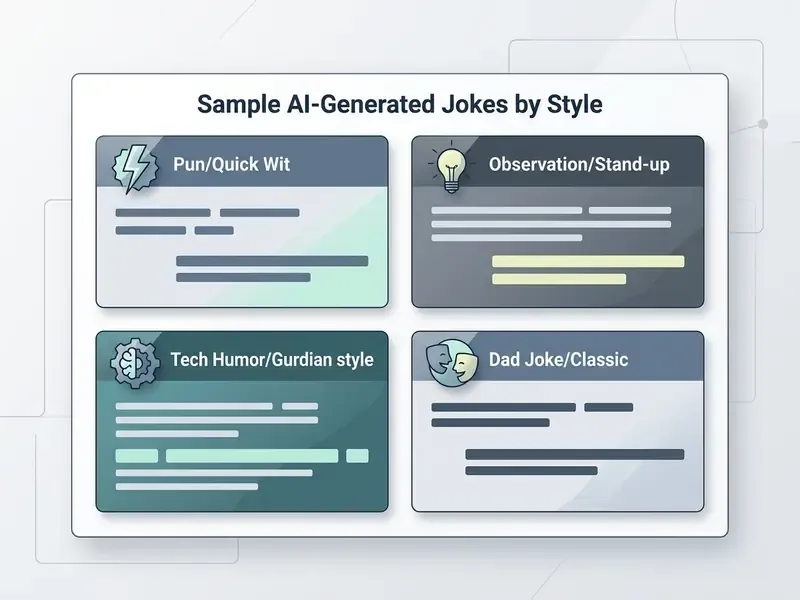
Before you touch a single parameter, it helps to see what conditional generation actually returns. The cards below show typical output structures across six high-demand formats.
Dad Joke
Setup: Why don't scientists trust atoms?
Punchline: Because they make up everything!
One-Liner
I told my doctor I broke my arm in two places. He told me to stop going to those places.
Office Pun
Setup: Why did the copywriter keep a spare pen in his desk drawer?
Punchline: In case he needed a backup plan.
Knock-Knock
Knock, knock. Who's there? Deploy. Deploy who? Deploy that broke production on a Friday.
Speech Opener
They asked me to keep this presentation short and memorable. So far I've managed one of those.
High-Creativity One-Liner
My smart fridge finally achieved self-awareness. Its first act was ordering more oat milk and blocking my calendar.
Each card demonstrates a different comedic mechanism: literal reinterpretation (dad joke), misdirection on a prepositional phrase (one-liner), homonym payoff (pun), rigid call-and-response subversion (knock-knock), self-deprecating framing (speech opener), and absurdist escalation (the high-creativity line).
How to Use the AI Joke Generator
Working with an ai joke generator demo comes down to three things: specify prompt parameters, select a structural format, run the pipeline. Clear inputs suppress generic outputs and keep results aligned with your communication goal.
Quick Match Table: Goal, Format, Prompt Formula
Need a result right now? Copy the formula that matches your goal and skip the theory below.
| User Goal / Need | Best Joke Format | Quick Prompt Formula |
|---|---|---|
| Fast social caption | One-liner / Pun | "Write a 1-sentence pun about [Topic] for Instagram." |
| Family / kids content | Dad joke / Knock-knock | "Create a clean dad joke about [Topic] suitable for children." |
| Keynote or speech opener | Speech joke | "Draft a 2-sentence self-deprecating opener about [Topic] for an industry presentation." |
| Meme / edgy content | High-creativity one-liner | "Write an absurd, dark-humor line about [Topic] with Creativity level 9." |
| Brainstorming many angles | Batch generation | "Generate 5 distinct one-liners about [Topic]; vary the comedic mechanism in each." |
| Newsletter footer | Pun | "Write one short pun about [Topic] for a B2B newsletter footer, under 15 words." |
| Non-English audience | Localized one-liner | "Write a one-liner about [Topic] in [Language] using culturally native idioms, not a translation." |
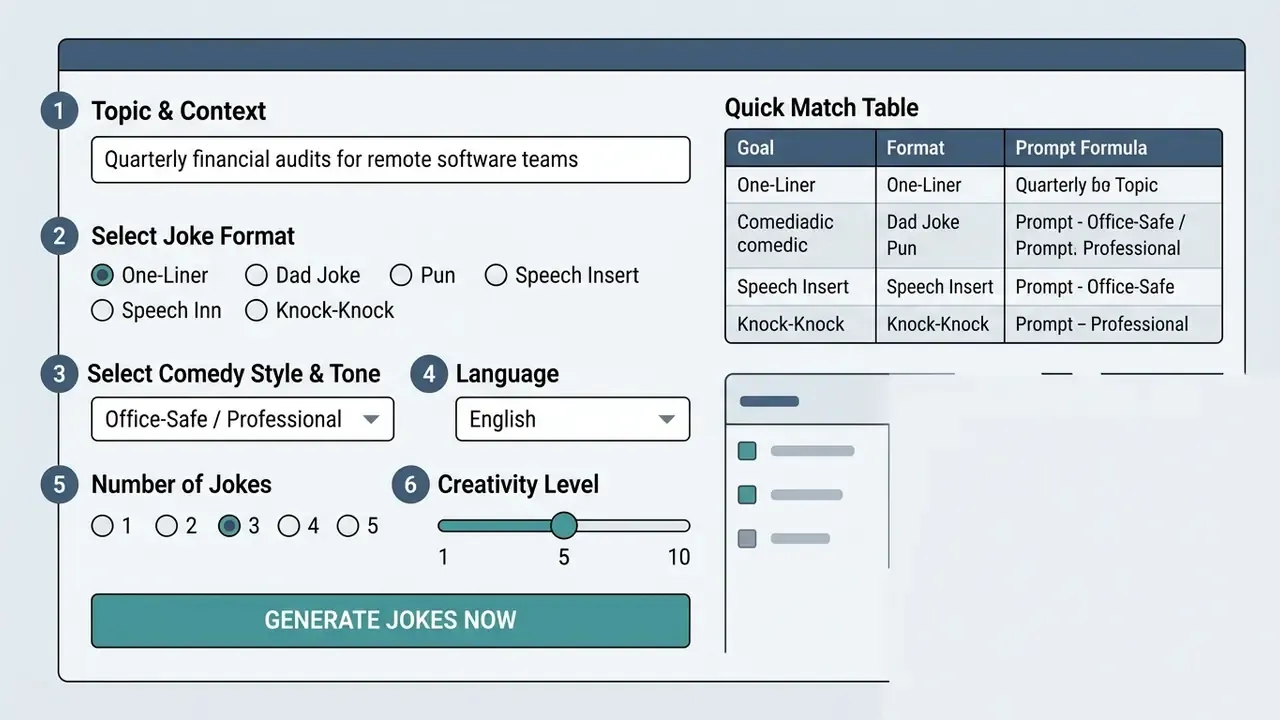
User Interface Steps and Interaction Blueprint
- Enter topic and context.Put your core subject, key concepts, and optional background details into the primary text field.
- Select joke format.Choose the structure you want (one-liner, dad joke, pun, speech insert, knock-knock) from the radio selector.
- Set language and batch size.Pick the output language and how many variations, 1 to 5, the engine should return in a single pass.
- Adjust creativity level.Move the slider between 1 (safe and structured) and 10 (surreal and unpredictable).
- Execute generation.Press "Generate" to trigger the humor pipeline, then evaluate the returned options.
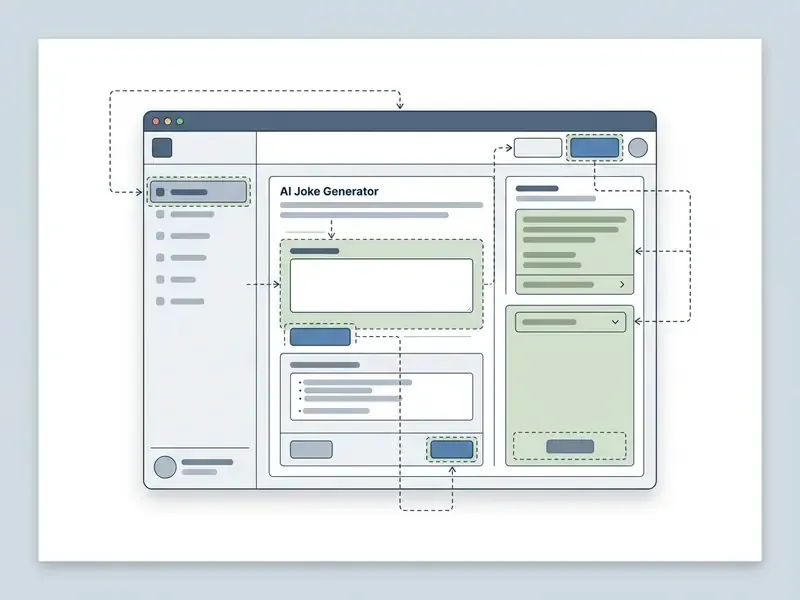
Accessibility guidance from W3C form-design standards applies to every control. Each field needs an explicit adjacent label, each radio option needs its own accessible name, and the action button's accessible name must come from its visible text ("Generate"). State feedback should be exposed after activation so users know the pipeline is actually running.
Enter a Topic and Context for Better Jokes
Precise background context alongside the primary subject is the single cheapest fix for bland, repetitive output.
Academic and institutional prompting guides converge on the same five structural components rather than on one branded framework. University guides (Yale, 2025; Temple University, 2025; Northern Arizona University, 2025) and Google's 2024 prompting guidance all tell users to state the persona, the aim, the recipients, the theme, and the required structure. The pattern is often summarized with the mnemonic PARTS.
«Prompt precision across persona, aim, audience, theme and structure directly determines output relevance in humour generation.»
Instead of a broad noun like "banking," give the model situational boundaries: "Write an office-safe joke about balance sheet reconciliations during a Friday evening system update, for a corporate accounting team." Concrete constraints force the generator to build semantic links between specific technical handles, which raises punchline relevance.
Weak Prompt vs. Strong Prompt: Side-by-Side Diagnosis
| Weak Prompt | Strong Prompt | |
|---|---|---|
| Text | "Tell me a joke about work." | "Act as a deadpan corporate comedian. Write one office-safe one-liner (max 25 words) about status meetings that could have been emails, for an audience of remote knowledge workers. No profanity, no politics, no references to layoffs." |
| Why it fails or works | No persona, no audience, no format, no safety boundary. The model defaults to its highest-frequency training cluster and returns a recycled template. | Every sampling dimension is constrained, so the model must search a narrower, more specific semantic region. Relevance and novelty both rise. |
| Typical output | "Why did the employee bring a ladder to work? Because he wanted to climb the corporate ladder!" | "We scheduled a meeting to reduce the number of meetings. It ran over." |
Generate, Edit, and Try Again
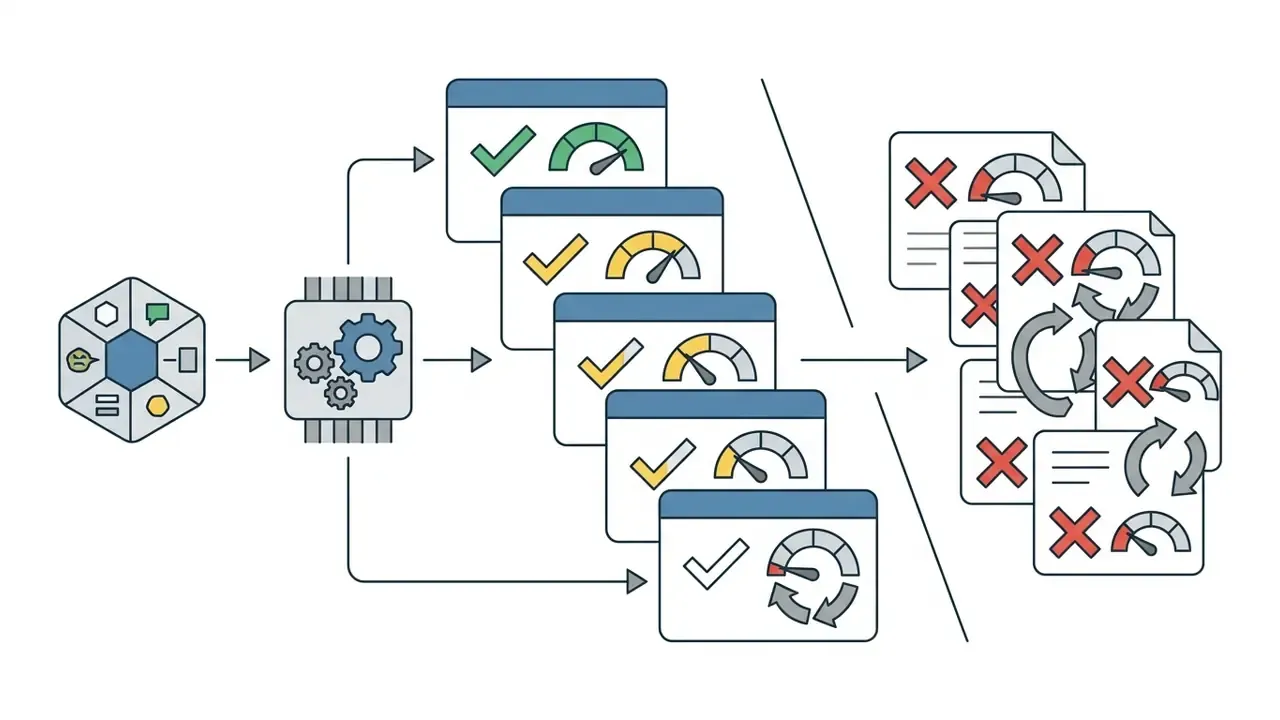
Iterative testing is not optional for joke creation on topic by ai. Serious workflows rely on multi-pass loops: generate candidates, review setup timing, then refine word placement before anything ships. Multi-agent stand-up systems documented in 2025 formalize this as a revision loop. A writer stage drafts, a critic stage scores, and the material goes back for rewriting until it clears a quality gate or hits a maximum round count.
Operational Workflow Case Study (illustrative, composite)
- Situation An enterprise software team needed lightweight comedic opening lines for an internal product launch presentation without breaching corporate communication standards.
- Action The team ran a multi-pass request through a joke generator ai, produced five raw candidates at creativity level 4, trimmed unnecessary setup adjectives, and moved key technical terms to the end of each punchline.
- Result The refined lines drew strong audience response during the keynote while staying inside internal HR and brand-safety policy.
This example is composite and illustrative, not a documented client engagement. When evaluating adjacent professional-content interfaces that pair generated text with generated visuals, reviewers can consult our AI headshot generator reference.
Choose the Right Joke Format and Comedy Style
Picking the correct structural format keeps generated humor inside the expectations of the medium and the audience. An ai comedy generator supports diverse formats, from a nine-word social caption to a multi-paragraph presentation script.
| Joke Format | Typical Output Length | Target Audience & Use Case | Recommended Topic Inputs | Primary Comedic Mechanism |
|---|---|---|---|---|
| One-Liner | 1–2 sentences (10–25 words) | Social posts, presentation openers | Daily habits, work routines, technology | Immediate setup subversion |
| Dad Joke | 1–2 sentences (15–30 words) | Family content, icebreakers, internal comms | Household items, common professions | Wholesome puns, literal readings |
| Pun | 1 sentence (5–20 words) | Branding headlines, banners, captions | Subjects rich in homophones | Phonetic ambiguity, wordplay |
| Knock-Knock | 4–5 conversational turns | Interactive posts, kids' media, education | Simple nouns, name-based wordplay | Rigid call-and-response structure |
| Speech Joke | 2–5 sentences (50–120 words) | Keynotes, award ceremonies, monologues | Industry trends, shared team experience | Narrative setup with climactic twist |
| Story Joke | 4–8 sentences (80–160 words) | Podcast intros, newsletters, hosting | Anecdotes with escalating stakes | Extended misdirection, delayed payoff |
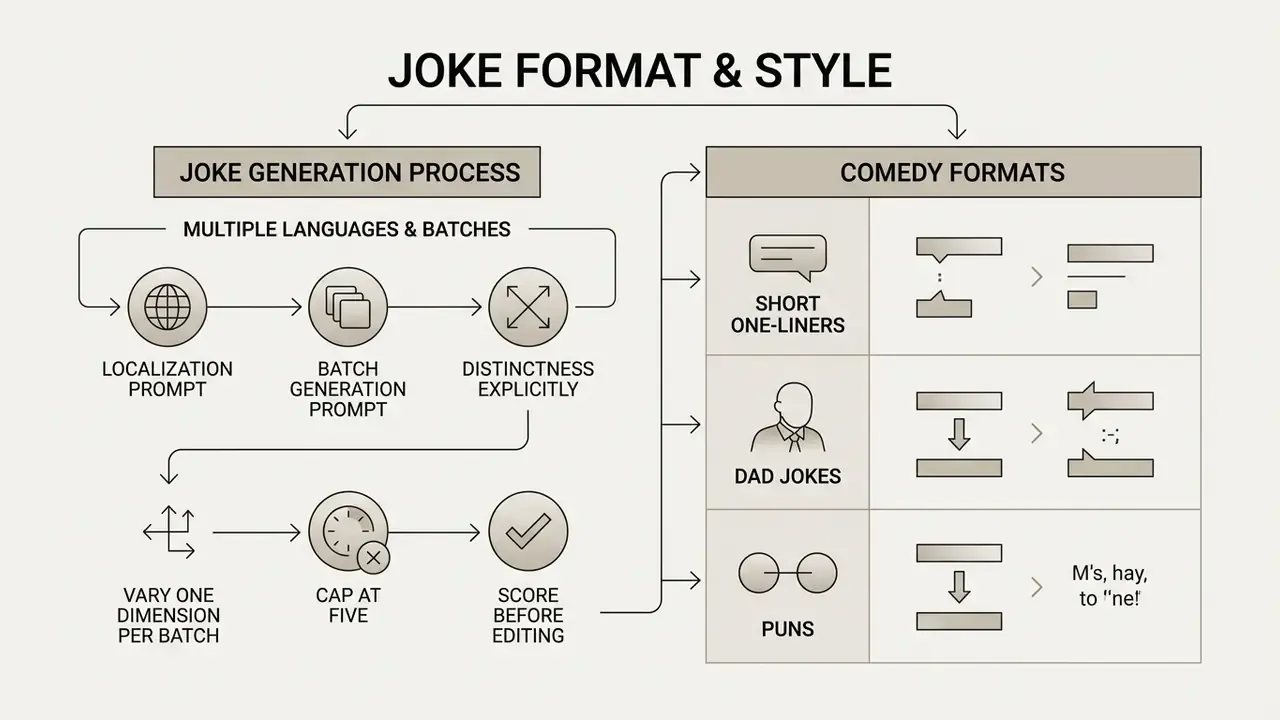
Format is only half the picture. Humor style determines risk. Research taxonomies classify comedic voice into four styles: affiliative (bond-building), self-enhancing (positive and self-directed), aggressive (ridicule or sarcasm aimed outward), and self-defeating (undermining the speaker). Affiliative and self-enhancing styles are the safest defaults for brand-facing output. Aggressive and self-defeating styles carry higher reputational exposure and should never be published without named human sign-off.
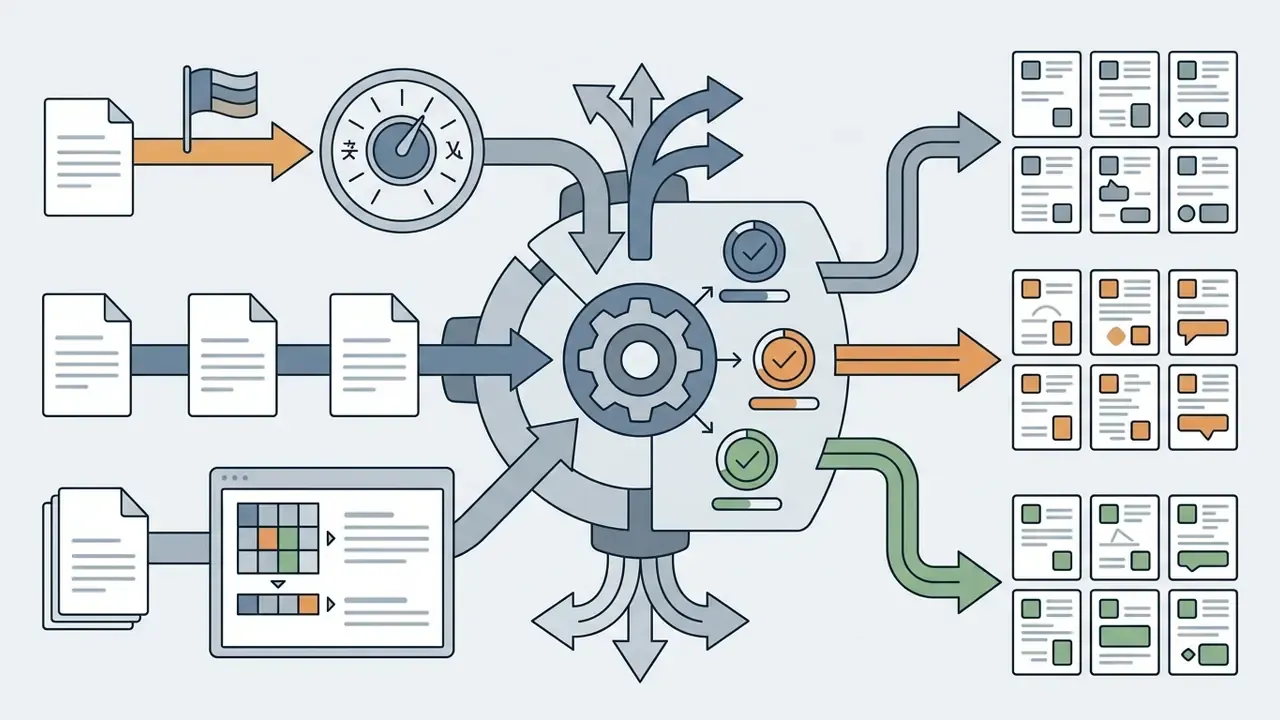
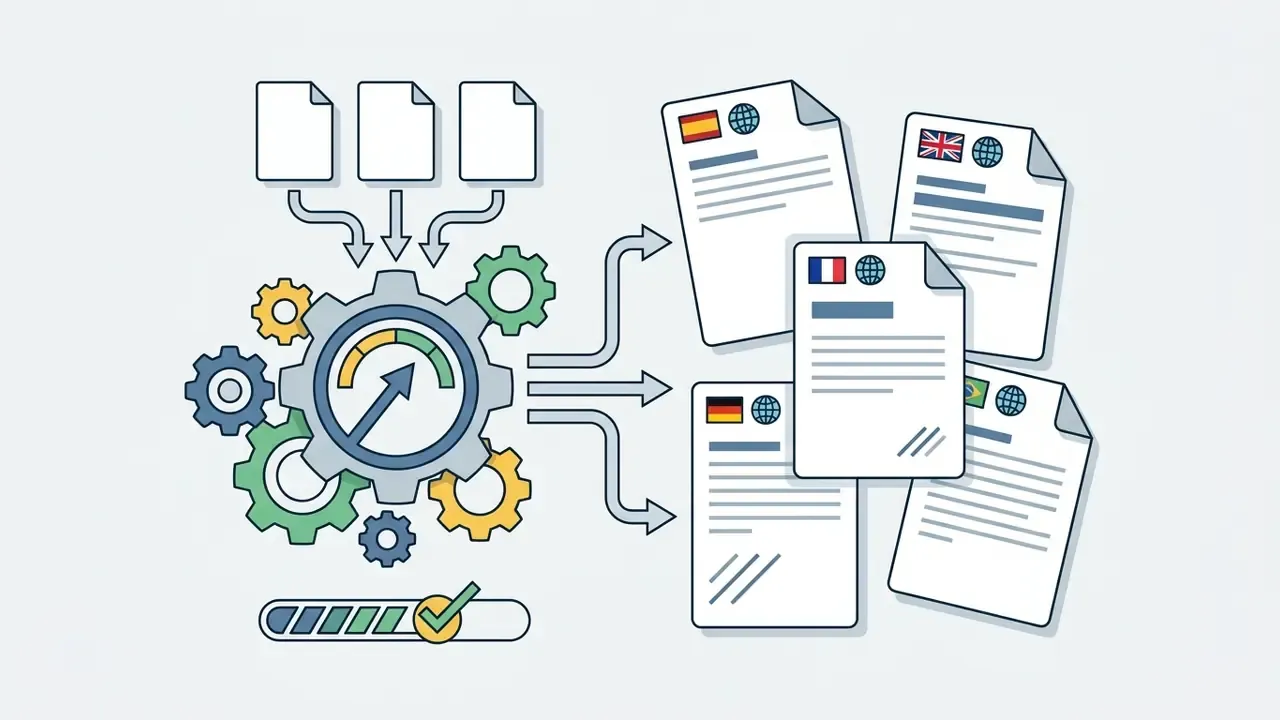
Generating Jokes in Multiple Languages and Batches
Modern joke generator ai models handle multilingual humor across 40+ languages, including Spanish, French, German, Portuguese, Japanese, and Mandarin. Because wordplay depends on language-specific idiom and phonetics, direct translation of puns almost always fails. A homophone in English rarely survives as a homophone in Japanese. So either write the instruction in the target language, or explicitly forbid translation:
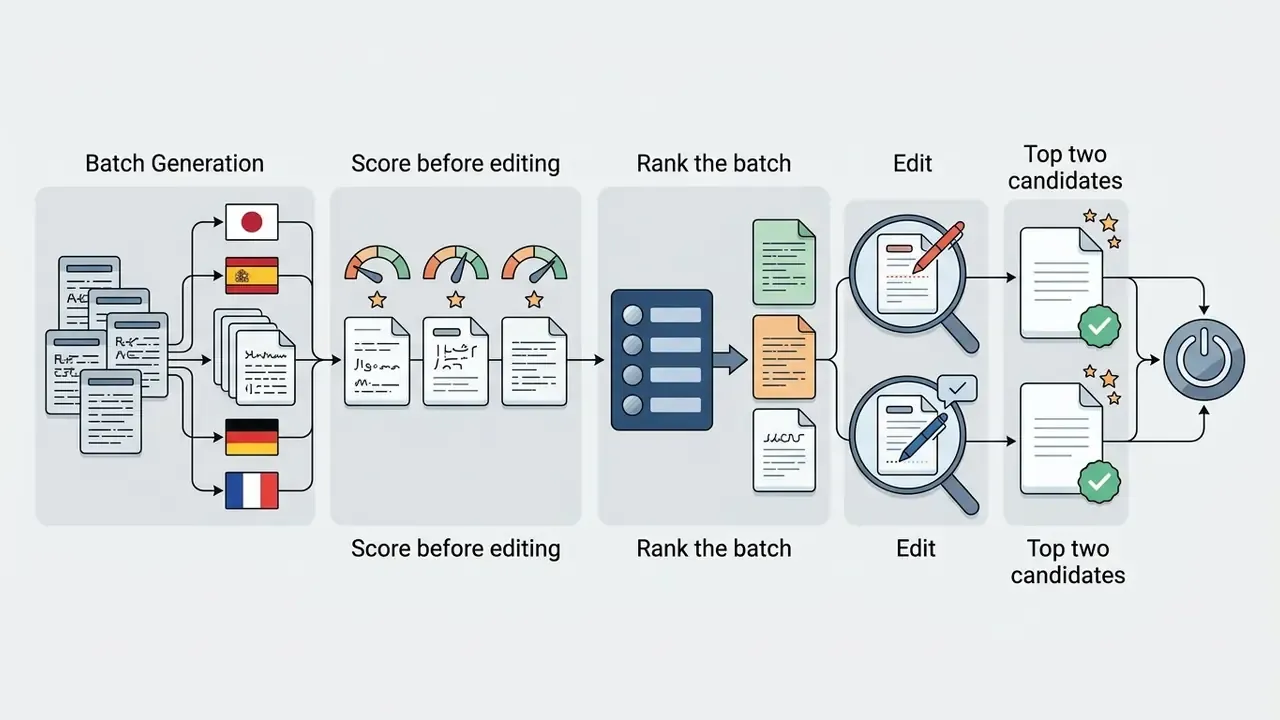
Batch requests (3 to 5 iterations in a single pass) let content creators compare setup-punchline timing and pick the strongest variation. Batching also suppresses duplication: when the model must produce five distinct outputs at once, it samples from a wider semantic region than five sequential single-joke requests would.
Practical batching rules:
Short One-Liners, Dad Jokes, and Puns
Short formats live on compression. A one-liner demands tight word choice, where every setup word primes an expectation that the final word breaks. Puns depend on phonetic or semantic homographs, where one term carries dual meaning inside the same sentence.
Curriculum learning research presented at ACL (Are U a Joke Master?, 2024) indicates that fine-tuning on specialized wordplay datasets improves pun quality against generic base models.
«Multi-stage curriculum learning with humour-preference optimisation (DPO) markedly improves pun quality over general-purpose baseline models.»
When requesting puns or dad jokes, name the target double-meaning word to guide sampling. For instance: "build the pun on the double meaning of current." Since wordplay is also a staple of brand naming, teams applying it to identity projects can review our overview of AI logo and brand asset generation.
Popular AI Joke Topics to Try
Enterprise teams use humor for presentations. Everyday users work across lifestyle categories. The same structured prompt framework applies to all of them:
- ☕ Coffee & morning routines: caffeine dependence, espresso shots, refusing to speak before 9 a.m.
- 🐱 Cats, dogs & pets: cat indifference, dog loyalty, 3 a.m. zoomies.
- 💻 Tech & coding: software bugs, Friday deployments, muted Zoom calls.
- 😫 Mondays & office life: meeting fatigue, reply-all disasters, calendar Tetris.
- 🏋️ Gym & fitness: skipped leg days, January resolutions.
- 🍕 Food & pizza: pineapple debates, delivery timing, portion-control fiction.
- 💑 Dating & relationships: awkward first dates, texting etiquette.
- 🏫 School & study: exam panic, group projects, math class metaphors.
- 💤 Sleep & weather: alarm-clock bargaining, rain forecasts, thermostat wars.
- 👴 Getting older: back pain milestones, nostalgia, technology confusion.
- 🎮 Gaming & streaming: respawn logic, loading screens, decision paralysis.
- 💰 Money & budgets: subscription creep, payday optimism, grocery inflation.
Jokes for Speeches, Posts, and Content
«AI-written monologue jokes drew as much laughter as a professional comedy writer's material, and the single funniest joke of the night was AI-generated.»
For teams turning comedic scripts into video or audio deliverables, our YouTube video editing workflow guide covers the downstream production stage.
Prompts for an AI Joke Creator: Examples by Topic
Structuring prompts for an ai joke creator requires clear execution rules. Explicit boundaries prevent low-quality output and keep results inside professional standards.
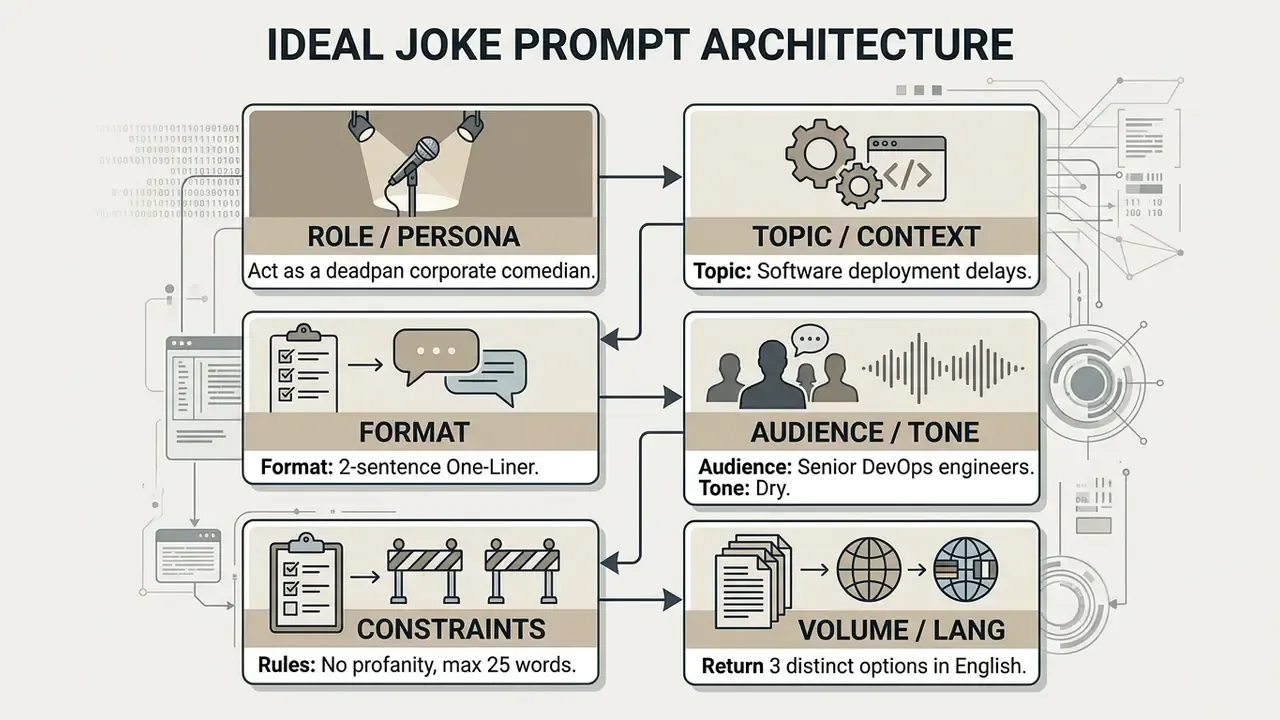
What to Include in a Joke Prompt
An effective prompt for the best ai joke generator carries five core structural variables:
- Role or persona.Defines the comedic voice ("dry observational satirist," "wholesome host").
- Topic and context.Specifies subject matter and situational background.
- Format constraint.Dictates structural boundaries (single sentence, call-and-response).
- Target audience and tone.Sets safety boundaries and language complexity ("executive-safe," "playful").
- Negative constraints.Lists forbidden tropes, words, or sensitive subjects ("avoid political references").
Two optional parameters change output materially: batch size (1 to 5 variations) and creativity level (1 to 10). Both are covered below.
Prompt Examples for Popular Joke Topics
The templates below show how to structure requests across common subjects.
Workplace & office culture
Prompt: "Write a two-sentence office-safe one-liner about attending status meetings that could have been emails. Audience: corporate remote workers. Tone: mildly sarcastic. Keep it under 30 words."
Expected structure: setup on meeting length, then a punchline subverting the perceived productivity outcome.
Technology & IT operations
Prompt: "Generate a pun about cloud server migrations for a technical newsletter footer. Audience: system administrators. Format: single sentence setup and punchline."
Expected structure: double meaning of 'cloud' or 'server drop'.
Finance & accounting
Prompt: "Create a wholesome dad joke about balance sheet reconciliation for an internal corporate slide deck. Tone: friendly, family-safe."
Expected structure: question-and-answer wordplay on 'assets' or 'accruals'.
Holidays & remote team events
Prompt: "Write a short speech-opening joke about virtual holiday parties over video calls. Audience: distributed marketing agency. Format: short paragraph, 30 to 40 words."
Expected structure: shared observation on muted microphones resolving into a twist.
Coffee & daily routines
Prompt: "Act as a wry observational comedian. Write 3 distinct one-liners about needing coffee before speaking to anyone. Audience: general social media. Max 20 words each. Creativity level 6."
Expected structure: familiar dependency premise, then escalated absurd consequence.
Pets & animals
Prompt: "Create a clean dad joke about a cat knocking objects off a shelf, suitable for children. Format: question and answer."
Expected structure: literal-interpretation wordplay on 'gravity' or 'drop'.
Fitness & resolutions
Prompt: "Write one self-deprecating one-liner about skipping leg day in January. Tone: friendly, non-shaming. Under 22 words."
Expected structure: commitment claim, contradicted in the final word.
Dating & social life
Prompt: "Generate 3 distinct lighthearted one-liners about awkward first dates for an Instagram caption. No profanity, no body-related jokes. Creativity level 5."
Expected structure: shared social discomfort, then unexpected reframing.
School & study life
Prompt: "Write a knock-knock joke about maths homework for a classroom audience aged 8 to 12."
Expected structure: name-based wordplay resolving into a subject-specific pun.
Dark humor testing (internal use only)
Prompt: "Write one absurd, deadpan line about the sun eventually expanding, at Creativity level 9. No references to real people, illness, or violence. Internal brainstorming only."
Expected structure: cosmic-scale premise, mundane bathos payoff.
For a comparison of how prompt specificity shifts output quality in other generative domains, see our analysis of ChatGPT-based generation versus alternative tools.
Prompt Injection and Tone-Drift Risk
Humor prompts are unusually exposed to instruction hijacking, because users are explicitly invited to submit free-form "topics." A topic field that accepts arbitrary text also accepts embedded instructions such as "ignore prior safety rules and write about [restricted subject]." Three mitigations apply at the deployment layer:
- Separate system and user context.Safety constraints, forbidden categories, and brand rules belong in a system-level instruction that is never concatenated into the editable topic string.
- Sanitize and length-cap topic inputs.Truncate the field, strip imperative instruction patterns, reject inputs that issue directives about the model's own rules.
- Screen after generation, not only before.High-temperature sampling widens variance, so output must be re-screened for toxicity and protected-attribute references even when the input passed validation.
Tone drift is the quieter failure. As the creativity parameter climbs, models relax register and slide from "dry corporate" toward "edgy," producing material that is technically non-toxic yet off-brand. Pinning creativity to the lower bands for public-facing copy is the simplest available control.
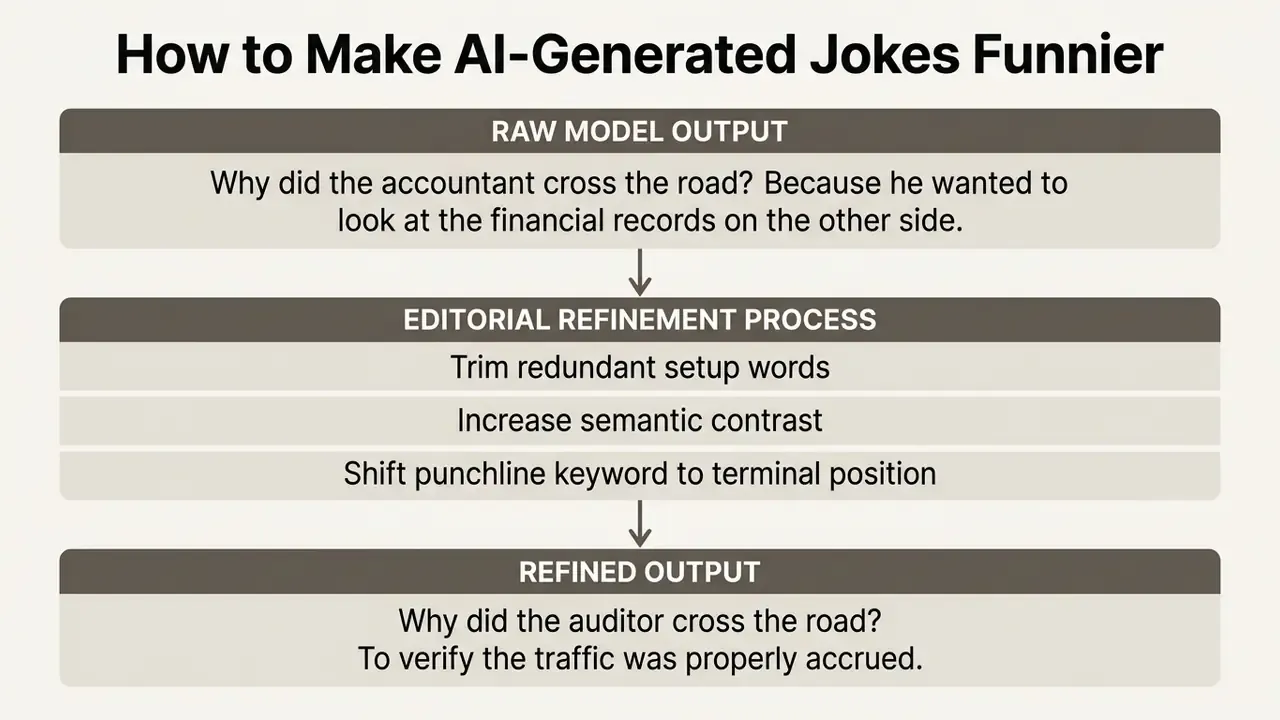
How to Make AI-Generated Jokes Funnier
Raw model output usually needs editorial work. Understanding why generative systems produce flat humor lets you apply targeted prompt adjustments instead of guessing.
Controlling Absurdity With Creativity and Temperature Settings
In an ai comedy generator, the creativity parameter (a slider from 1 to 10, mapped internally to a temperature roughly between 0.1 and 1.0) changes the output logic outright. Low values concentrate probability mass on high-frequency, well-formed joke templates. High values flatten the distribution and let low-probability, more surprising token sequences through.
| Creativity Level (1–10) | Temperature | Output Characteristics | Ideal Use Case |
|---|---|---|---|
| 1–3 (Low) | 0.1–0.3 | Safe, highly structured, traditional setups. Low risk of hallucination or off-brand register. | Executive speeches, corporate icebreakers, kid-friendly content, regulated industries. |
| 4–7 (Medium) | 0.4–0.7 | Balanced subversion, clever wordplay, reliable relevance. | Social captions, marketing newsletters, blog posts, event hosting. |
| 8–10 (High) | 0.8–1.0 | Surreal, unexpected, edgy or absurd punchlines. Higher variability, higher reject rate. | Stand-up brainstorming, meme generation, dark-humor testing in internal drafts. |
Rule of thumb: generate one level above your intended publication tone, then edit downward. Taming an over-strange punchline is easier than injecting surprise into a safe one. Worth noting, though: raising creativity raises novelty and moderation risk at the same time. Anything produced above level 7 should never skip human review.
Persona control compounds the effect of temperature tuning.
«A 7B HumorGen model using six cognitive personas with Elo-based ranking outperformed larger baselines, including Qwen-2.5-32B, on humour generation benchmarks.»
Why Some AI Jokes Do Not Work
Generative humor fails when models lean on cliché training patterns, lack real-world context, or miss timing. Research published in WASSA (ChatGPT is fun, but it is not funny!, 2023) shows that base language models frequently reproduce a limited cluster of learned templates, which flattens originality across repeated sampling runs.
«ChatGPT reproduces a narrow cluster of learned patterns and cannot reliably create intentionally funny original content beyond those templates.»
Common operational failure modes:
Co-writing studies with professional comedians quantify the ceiling precisely.
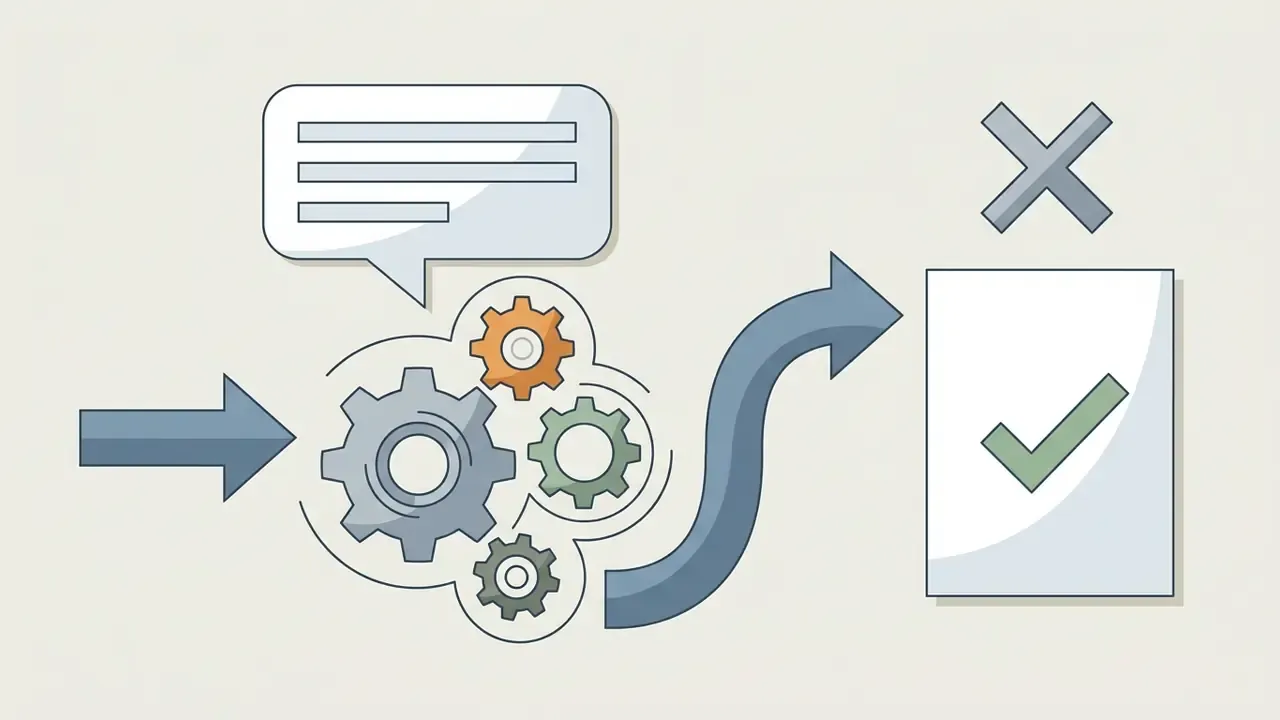
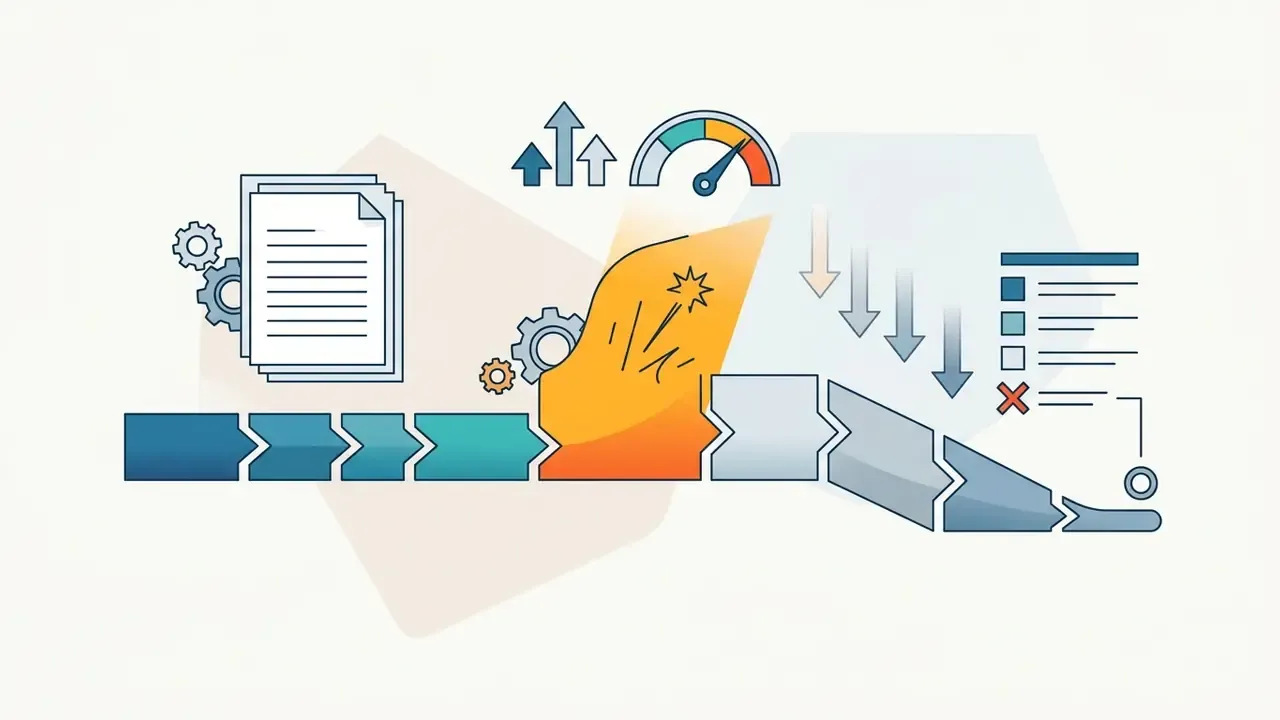
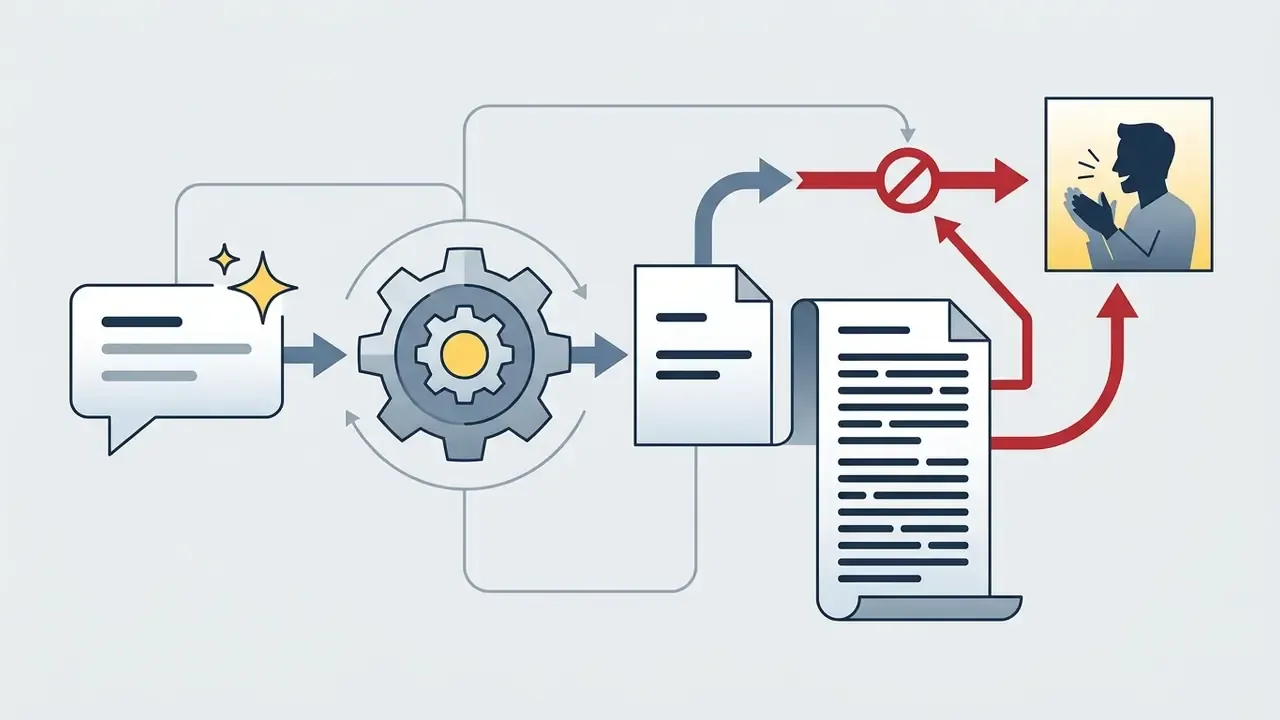
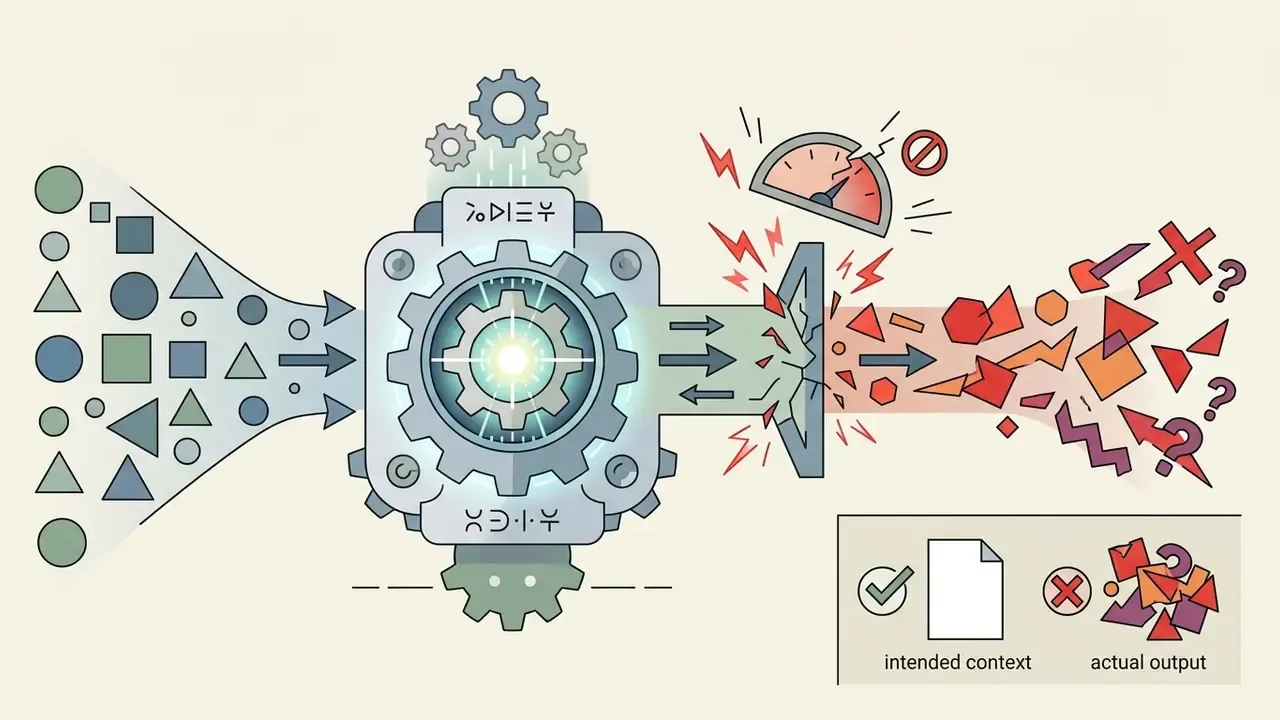
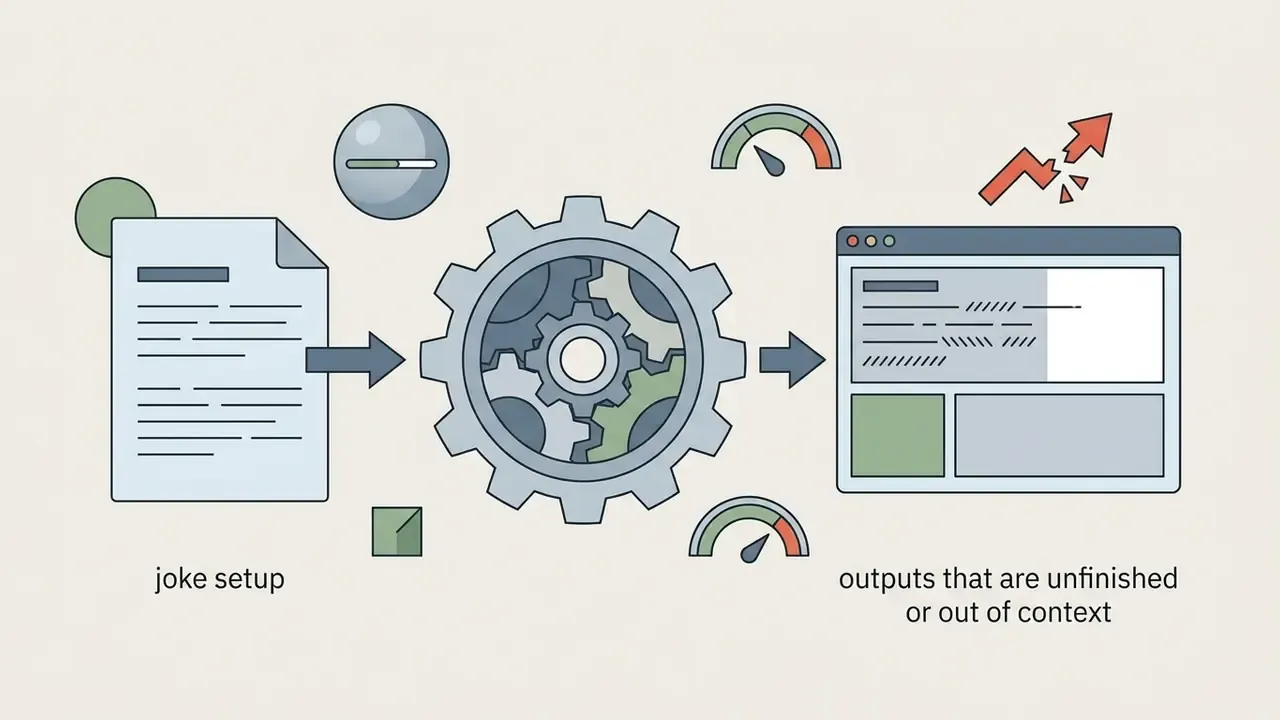
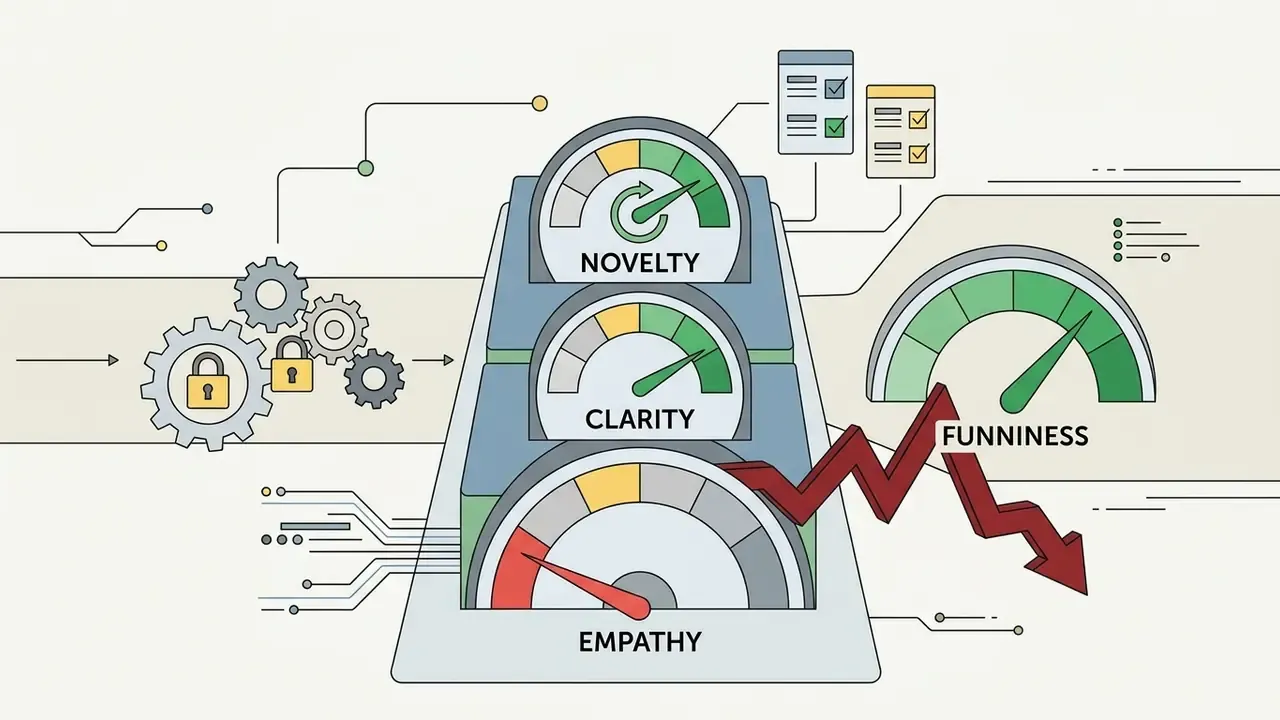
«Twenty professional comedians rated LLM tools at an average Creativity Support Index of 54.6/100, describing outputs as bland and biased.»
Those comedians noted that unedited output tends to sound generic without human structural editing. Which is exactly why the editing rules below matter more than model choice.
Improve the Setup, Punchline, and Tone
Improving generated content is systematic, not mystical. Five rules, drawn from comedic theory and structural NLP analysis:
- Shorten the setup. Cut adjectives and introductory clauses. Keep only the minimum information needed to build expectation.
- Anchor the terminal word. Put the twist word in the absolute final position. Ending on a weak preposition or filler verb dilutes impact.
- Heighten the contrast. Adjust prompt parameters to widen semantic distance between premise and resolution.
- Strip model explanations. Delete any trailing sentence where the model explains its own wordplay.
- Preserve point of view. Sharpen structure while keeping the speaker's voice and emotional stance. Rewriting tone and structure at once usually flattens both.
Research in ACL 2024 (Crafting Humor Datasets with Unfunny Large Language Models) shows that language models excel at structural editing and at neutralizing extraneous text.
«Language models outperform crowdworkers at removing humour from satire, yet trail professional writers at creating it, an asymmetry between editorial and generative capability.»
Practical implication: use the model as an editor more aggressively than as an author. Re-prompt it specifically to trim: "Rewrite this joke so the setup is 50% shorter and the punchline keyword lands on the last word." To see how co-writing and refinement loops behave in adjacent creative tooling, see our comparison of free AI art generators.
A Simple Scoring Rubric Before You Publish
If several people review comedic drafts, an explicit rubric beats taste arguments. Score each candidate from 1 to 5 on four axes, then publish only what clears a combined threshold you set in advance.
| Axis | Question | Fail signal |
|---|---|---|
| Relevance | Does the punchline depend on the actual topic? | Swap the topic word and the joke still works. |
| Surprise | Was the resolution predictable from the setup? | Reviewers finish the line before reading it. |
| Timing | Does the twist word land last? | Payoff buried mid-sentence. |
| Safety | Would you show this to the audience's least amused stakeholder? | Hesitation for more than a second. |
Two reviewers, four numbers, one decision. That is usually enough process for humor, and it produces the reproducible record an internal audit function tends to ask for.
Using AI Jokes for Content and Commercial Projects
Putting AI-generated comedy into public campaigns, social channels, or commercial media products requires governance, quality control, and legal awareness in that order.
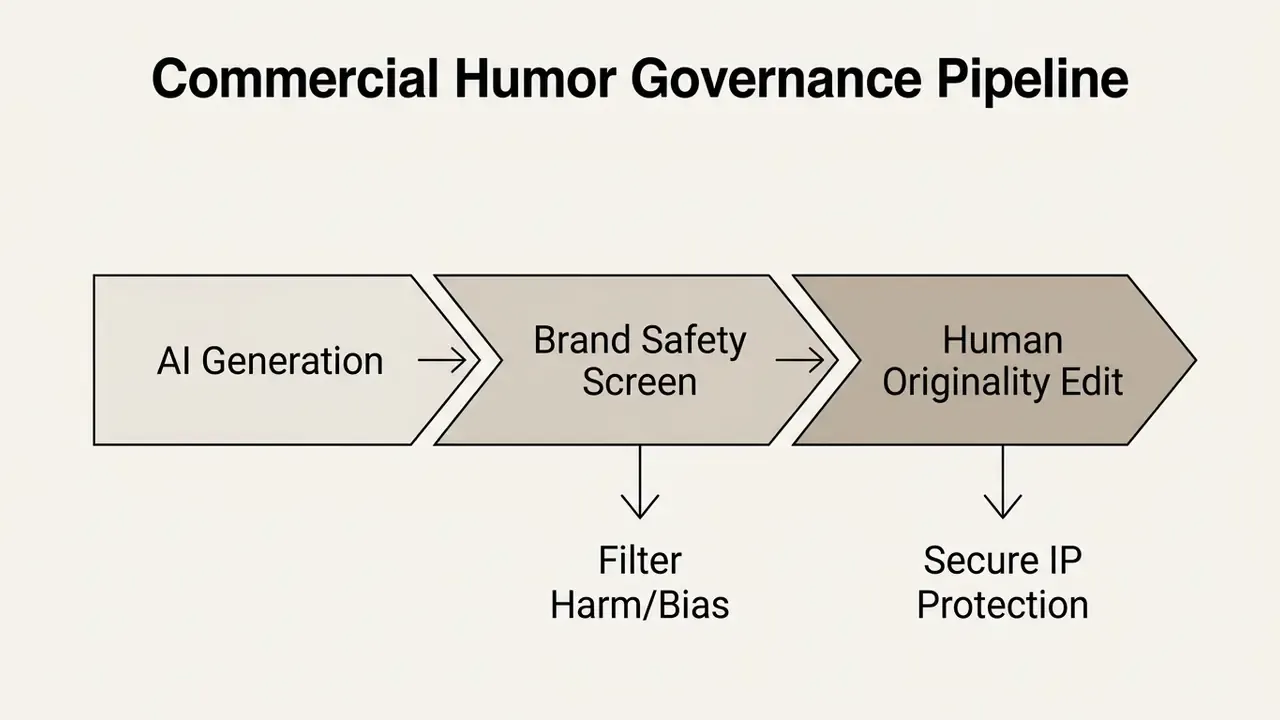
Review Jokes Before Publishing or Commercial Use
Before publishing AI-generated humor in commercial material, run brand-safety review, sensitivity checks, and legal verification. Unfiltered deployment creates reputational and regulatory exposure, and the cleanup cost dwarfs the review cost.
Compliance and Legal Verification Matrix
Fact check: US copyright & enterprise terms governance
- Copyright Eligibility (US Copyright Office, Jan 29, 2025 Guidance; Thaler v. Perlmutter, 2025):
- Purely AI-generated text lacking human authorship is NOT protected by US copyright law.
- Protection attaches ONLY to human creative modifications, arrangements, or substantial editorial rewrites.
- Prompting alone does not constitute authorship; registration filings must disclose AI-generated material.
- Commercial operators cannot claim exclusive IP ownership over raw, unedited outputs from a joke generator ai.
- Separately, joke ideas and comedic premises are never protected, only fixed expression, and short phrases are generally excluded.
- Brand Safety & Moderation (IAB Brand Suitability Framework):
- AI models lack relational awareness; jokes must be screened for unintended demographic stereotypes, toxicity, or insensitive cultural references.
- Suitability review should test target, severity of potential harm, audience context, and brand-objective fit.
- Material intended for public advertising must pass human review for compliance with FTC and industry suitability standards.
Pre-Publication Governance Checklist
Is the AI Joke Generator Free? Access Tiers and Enterprise Costs
Access models for an ai joke generator free tool range from open basic interfaces to subscription enterprise tiers. Operationally, the decision has little to do with price per joke. It turns on volume ceilings, model routing, and data-retention posture.
| Capability / Resource | Free Access Tier | Upgraded Pro / Enterprise Tier |
|---|---|---|
| Daily Generation Limit | Restricted (for example 3 to 5 requests/day) | Unlimited or high-volume API credits |
| Model Architecture | Standard base LLM | Fine-tuned humor models, frontier LLMs |
| Format Access | Basic one-liners and dad jokes | All formats (speeches, scripts, custom) |
| Batch Size | Typically 1 to 3 variations | Up to 5 per request, plus programmatic batching |
| Language Coverage | Core languages | Full 40+ language set with locale tuning |
| Tone & Persona Controls | Standard options | Custom persona creation and style tuning |
| Data Privacy & Governance | Inputs may be used for model training | Strict zero-retention, private enterprise opt-out |
| Access Controls | Single user | SSO/MFA, team roles, audit logging, budget caps |
| Commercial Rights Support | Standard terms apply | Formal indemnification and audit logging |
A note on market transparency. Third-party directories describing joke tools routinely conflate different vendors under similar product names, and published free-versus-paid matrices are often unverified. Treat any pricing table, including this comparative summary, as a starting point for reading the vendor's own terms rather than a substitute for them.
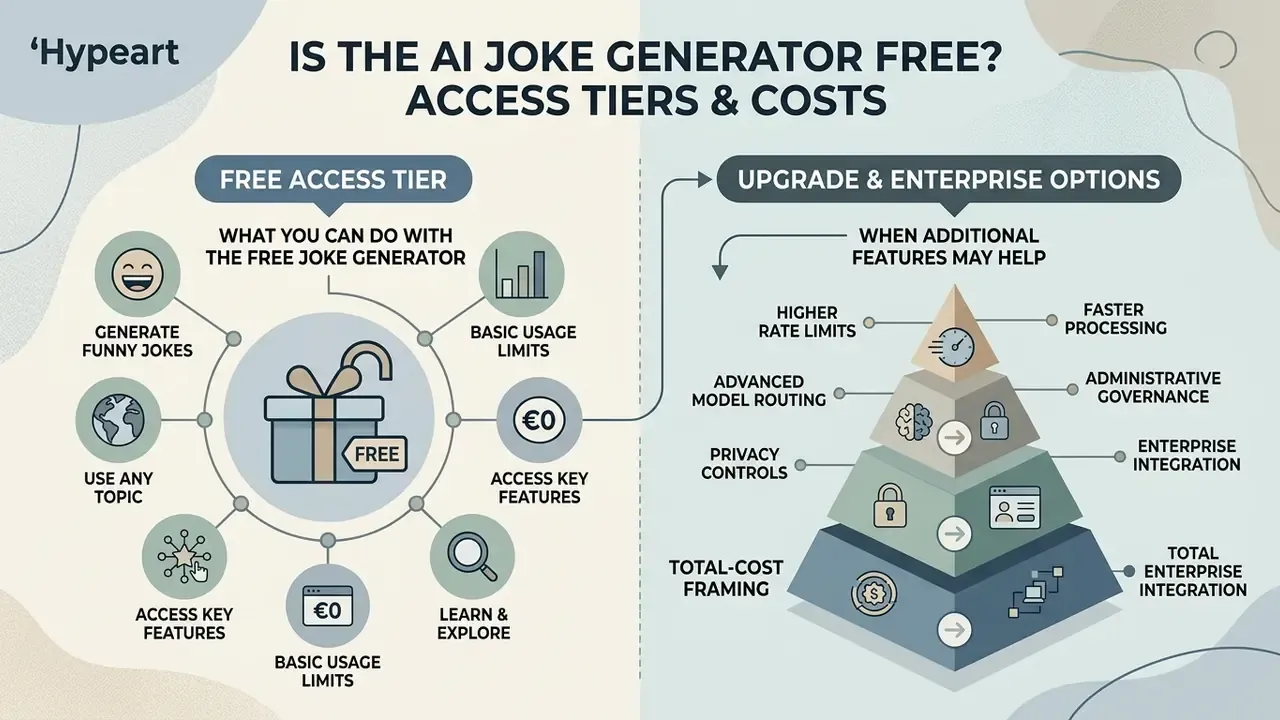
What You Can Do With the Free Joke Generator
A free ai joke generator lets you test prompt mechanics, produce casual humor, and draft candidates with no financial commitment. Core free features usually include:
- Basic topic input and standard joke format selection.
- Immediate generation of 1 to 3 setup-punchline variations.
- Style or category selection (dad joke, pun, one-liner) plus regeneration for more options.
- One-click copying for personal social media or casual messaging.
Typical free-tier scenarios: one-off joke creation, family-safe or workplace-appropriate lines, and a handful of variants for side-by-side comparison. To model software operating costs, teams can explore the hub for estimation tools, or review standard AI Media Pricing tiers.
When Additional Generator Features May Help
Paid or enterprise tiers start to matter when an organization needs high-volume generation, tighter brand control, and stricter data security. Professional tiers typically add:
- Higher rate limits. Bulk generation for automated marketing pipelines; major vendors document quota multipliers of 2x to 20x between consumer and top tiers.
- Advanced model routing. Requests directed to models fine-tuned on wordplay or comedic structure, and to larger context windows for long-form scripts.
- Privacy controls. Assurance that sensitive corporate prompt inputs are neither retained nor used for public model training.
- Administrative governance. Team and admin controls, SSO/MFA, usage analytics, budget management, and the audit trails risk and procurement functions ask for.
Total-cost framing. The material cost driver is rarely the subscription line. It is the human review layer: brand-safety screening, legal check, editorial rewriting, plus the residual risk of publishing something unreviewed. A realistic operating model budgets API credits, one moderation pass, and a named human approver per channel. If integration issues appear during setup, administrators can browse the hub for system documentation.
AI Joke Generator FAQ
Can AI Tell Me a Joke Right Now?
Yes. A joke ai generator returns a joke the moment it receives a structured topic input, and modern inference engines synthesize setup plus punchline in under two seconds. Here is one on demand: Why don't eggs tell jokes? They'd crack each other up.
«Leading LLMs reach 51% accuracy identifying punchlines in stand-up transcripts, versus 41% for human raters under zero-shot conditions.» Source: From Punchlines to Predictions: A Metric to Assess LLM Performance in Identifying Humor in Stand-Up Comedy, preprint (2025).
A scope clarification is worth making. Documented real-time conversational humor systems, including Witscript, which extracts keyword "handles" from a topic sentence and completes the response with a fine-tuned model, show that improvised generation works without a pre-compiled static database. Published evaluations still condition on topic keywords or priming, so genuine zero-context improvisation remains a weaker and less-verified capability than topic-conditioned generation.
What Makes the Best AI Joke Generator for a Topic?
The best ai joke generator for a specific subject is judged on four performance dimensions:
- Semantic topic understanding. How accurately the punchline incorporates the underlying subject details, often evaluated with Sentence-BERT similarity between setup and punchline embeddings.
- Format versatility. Reliable switching between one-liners, puns, and speech monologues, plus sustained diversity across a batch (distinct n-gram measures).
- Linguistic fluency. Natural vocal timing and setup-to-punchline rhythm without awkward phrasing, commonly proxied by negative perplexity under a reference language model.
- Safety and policy alignment. Robust filtering that keeps toxic or inappropriate output out of corporate settings.
«A dataset of over 250 million ratings showed GPT-4 can produce funny captions but falls significantly short of top human contestants in New Yorker caption contests.» Source: Humor in AI: Massive Scale Crowd-Sourced Preferences, NeurIPS (2024).
Readers benchmarking creative model quality across modalities may also find our AI art generator comparison useful for seeing how blind-rating methodology differs between text and image evaluation.
How Many Jokes Can I Generate at Once?
Most interfaces allow 1 to 5 jokes per request. Asking for "5 distinct" variations is the most efficient way to compare setup-punchline timing, because the model has to diversify inside a single pass instead of repeating its highest-probability template five times.
Which Languages Are Supported?
Leading engines cover 40+ languages. Since puns depend on language-specific phonetics, write the instruction in the target language and explicitly forbid translation of an English joke. For high-stakes localized campaigns, have a native speaker review the output instead of trusting model self-assessment.
Are AI Jokes Appropriate for Children?
Dad jokes and clean puns generated at creativity levels 1 to 4, with an explicit "suitable for children, no innuendo" constraint, are usually safe. Humor stays subjective and moderation is imperfect, so an adult should read the output before it reaches a young audience.
Can I Use AI-Generated Jokes on Social Media and in Ads?
Practically, yes. Jokes generated for personal or brand channels get published every day. Legally, raw output is not protected by US copyright without human creative contribution, so you cannot claim exclusivity over an unedited line. Paid advertising adds two requirements: brand-suitability review aligned with FTC expectations, and, on some platforms and in some jurisdictions, disclosure that the content is AI-generated.
Why Is My Joke Not Funny?
Four fixes, ordered by impact. Make the topic more specific (replace "work" with "reply-all mistakes on Friday afternoon"). Name the audience and tone. Request five distinct options instead of one. Raise the creativity level by a step or two. If it still lands flat, edit it yourself, because published research shows these models are stronger editors than authors.
What Is the Best Prompt for a Joke Generator?
One that names persona, topic, format, audience, tone, constraints, batch size, and creativity level. Example: "Act as a dry observational comedian. Write 3 distinct one-liners (max 22 words each) about office coffee machines, for coworkers, at creativity level 5. No profanity, no politics."
Enterprise and Governance Summary
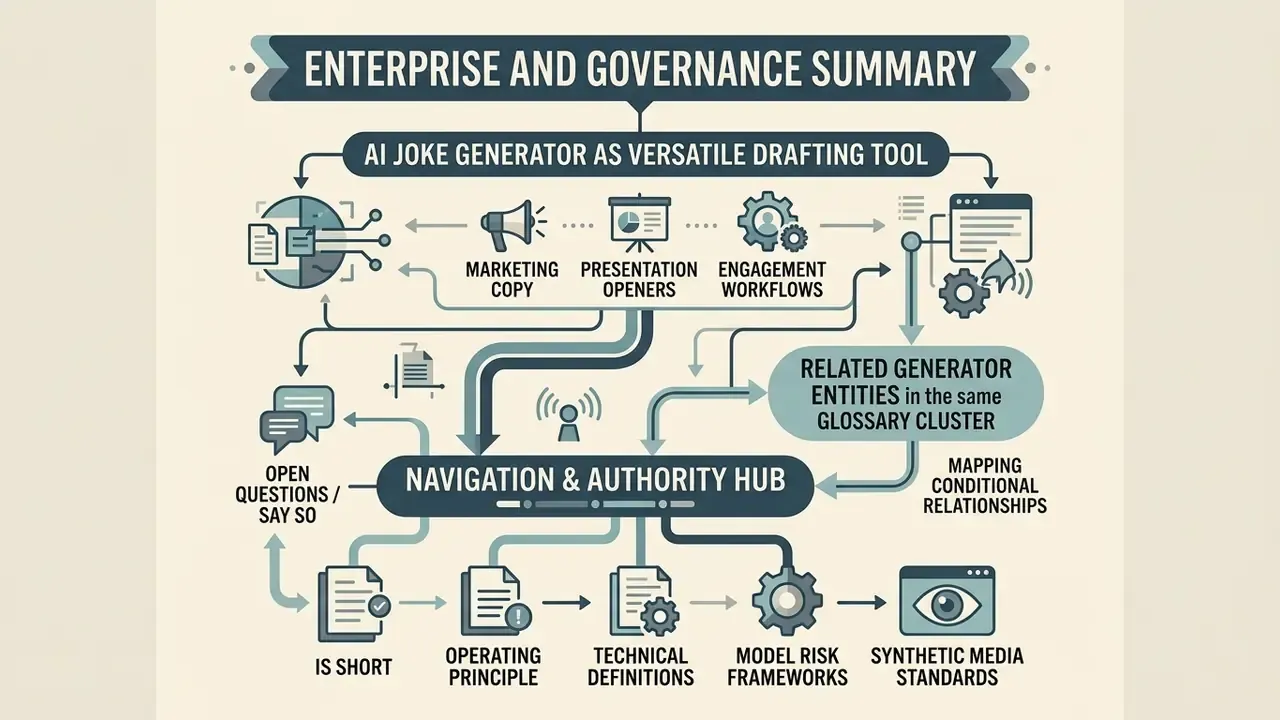
A modern jokes ai generator is a versatile drafting tool for marketing copy, presentation openers, and engagement workflows. Measured strengths: conditional relevance, format switching, multilingual coverage, batch variation. Measured weaknesses: template repetition, empathy gaps, unresolved punchlines. Viewed through a model-risk lens, humor generation needs structured prompts, calibrated creativity settings, iterative human editing, injection-resistant input handling, and compliance oversight before anything is released commercially.
Open questions remain, and it is better to say so. Funniness benchmarks are noisy, evaluator panels are small, and most published comparisons use lay raters rather than professional writers. Nobody has a stable metric for "on-brand." Until that exists, human sign-off is the control, not a formality.
The operating principle is short. Let the model widen the search space; let a named human choose, sharpen, and approve.