Last reviewed: February 2026 · Scope: creative quote generation and commercial quotation generation · Review type: documentation review, vendor feature audit, academic source verification.
Key takeaways for decision-makers
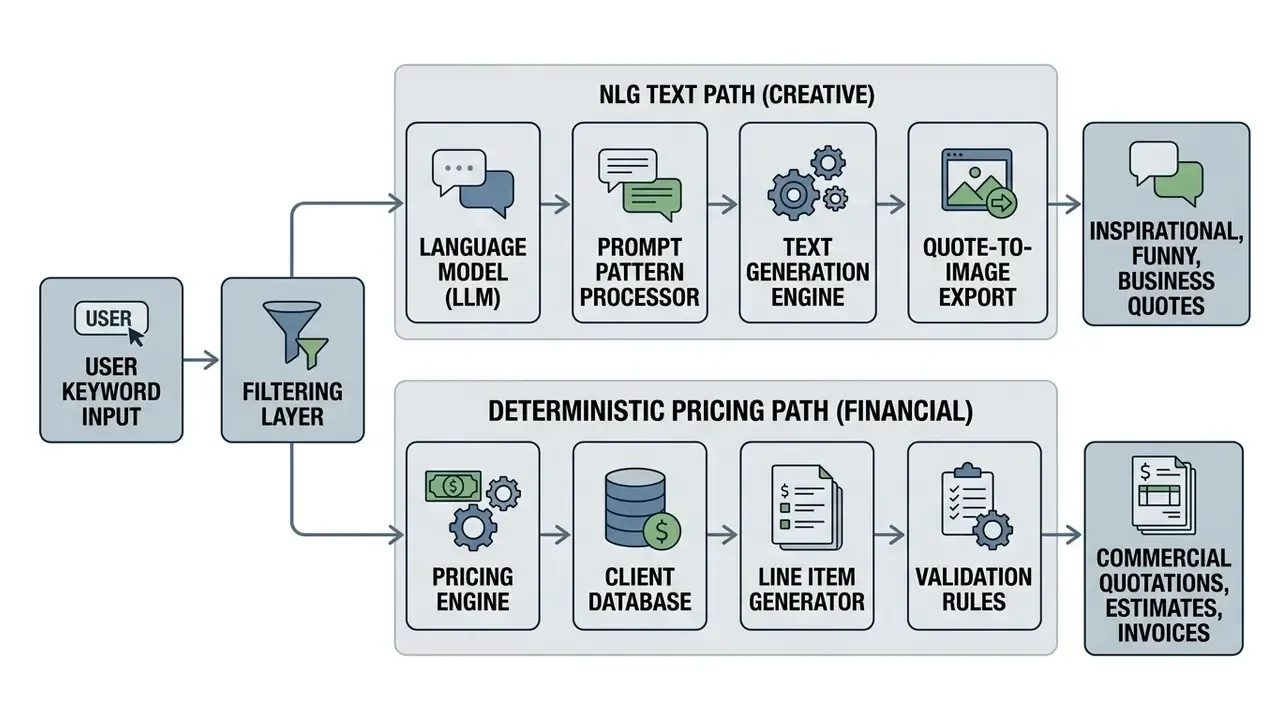
- The phrase "AI quote generator" covers two completely different product classes: natural language generation (NLG) tools that write short original sayings, captions and marketing lines, and commercial quotation tools (CPQ-adjacent) that assemble line-item pricing documents from CRM, ERP or CSV data.
- Never let a free-form language model calculate prices. Creative quote generation tolerates stylistic variance. Commercial quotations require deterministic arithmetic, audited tax logic and traceable data sources.
- A quote, an estimate and an invoice are legally distinct documents. A quote is a firm, time-limited offer. An estimate is an approximate good-faith figure. An invoice is a payment request issued after delivery.
- Prompt quality drives originality. Structured prompts that specify role, audience, situation, word count and negative constraints outperform single-keyword topics. Every time.
- Free tiers create data exposure. Public generators can quietly become a Shadow AI channel for confidential pricing and client records. Enterprise tiers exist largely to close that gap.
This page walks through definitions, the quote/estimate/invoice matrix, the generation workflow, quote-to-image production for social channels, quote categories, prompt design, legal limits, free versus controlled access, and a closing FAQ.
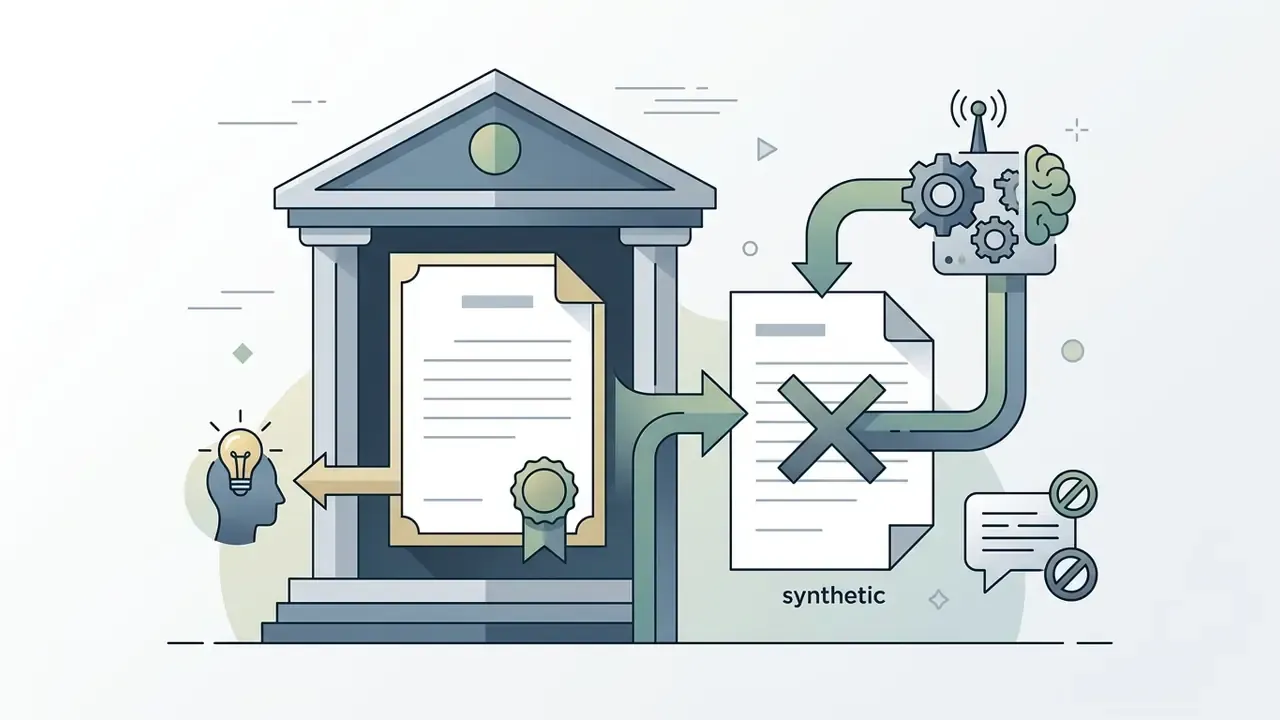
What is an AI quote generator and what can it create?
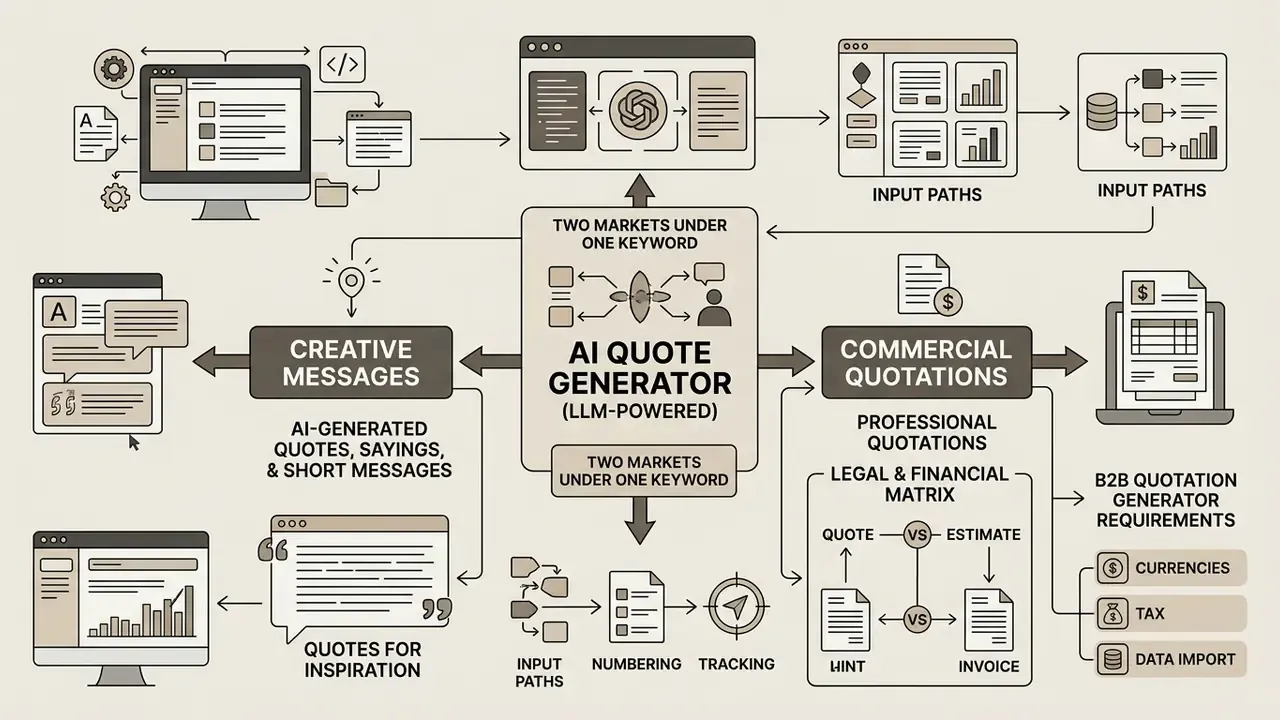
An AI quote generator is a software application powered by large language models (LLMs). It produces short, targeted text snippets, inspirational sayings, or formal pricing proposals from user input. Modern systems turn broad topics, raw source fragments, or structured CRM records into concise, stylistically tuned units of text.
Using an ai quote generator lets organizations and individual creators produce targeted written content in seconds. These tools rely on natural language generation techniques to condition output on variables such as tone, target audience and character length. Note the common misspelling in search: people also type "ai qoute generator" and land on the same tools.
Research into controllable text generation shows that hard prompts act as inference-stage control vectors. Input-level instructions steer output across formality, emotional coloring and structural constraints without retraining the model.
When an organization deploys an ai generator quote workflow, the resulting generated quotes serve different operational needs. Some tasks need fluid phrasing. Others need contractual precision. Research on quotation generation is blunt about the failure mode of unconstrained models:
«LLMs still hallucinate or miss expectations in quotation generation.»
Two markets under one keyword: NLG text versus commercial quotations
Two markets. One keyword. Confusing them is the single most expensive mistake in this category, so define which architecture you actually need before you shortlist a vendor.
| Dimension | Creative quote generation (NLG) | Commercial quotation generation (CPQ-style) |
|---|---|---|
| Core engine | LLM with stylistic conditioning (tone, length, persona) | Deterministic calculation layer plus template engine, optionally retrieval-grounded (RAG) on price books |
| Primary input | Topic, keyword, brand voice, source paragraph | Client record, line items, quantities, unit prices, tax jurisdiction |
| Tolerated variance | High, because several valid phrasings are desirable | Zero, because one arithmetic deviation is a commercial defect |
| Failure mode | Cliché phrasing, cultural misfire, hallucinated attribution | Wrong total, wrong tax rate, wrong validity date, unauthorized discount |
| Reviewer | Editor, brand or communications lead | Sales operations, finance, legal |
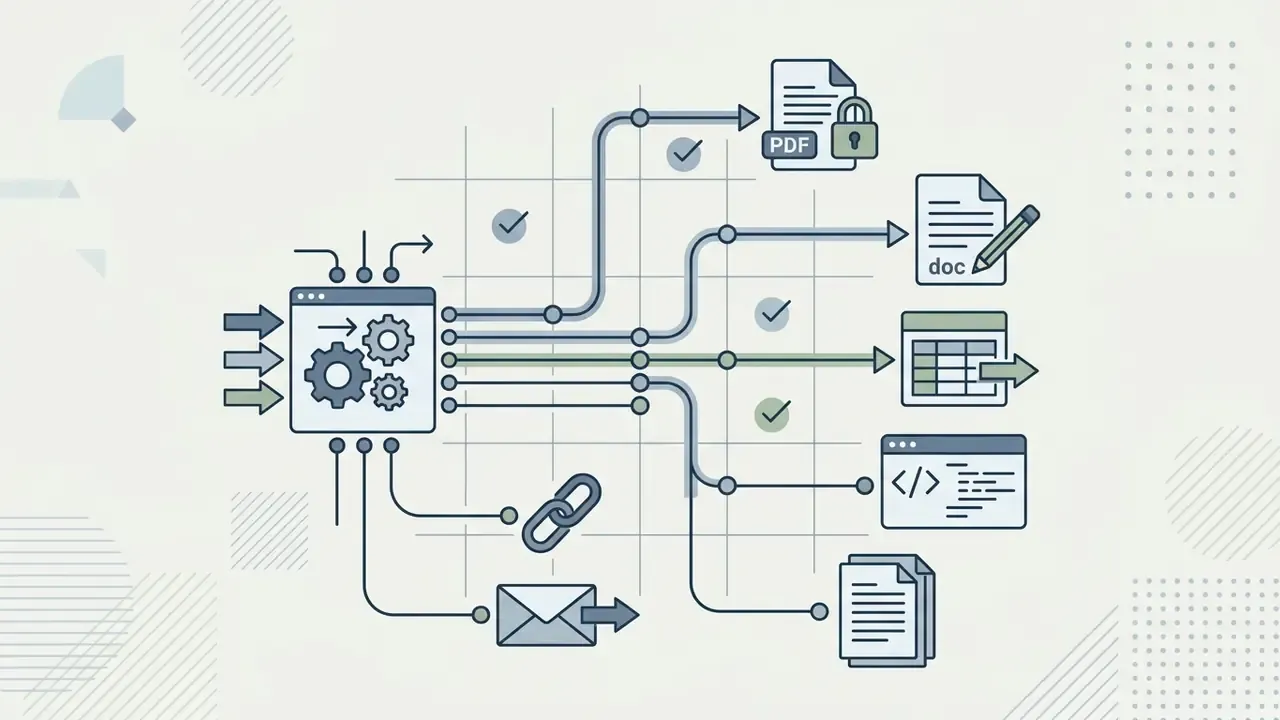
| Typical export | Text, caption, PNG or JPG quote card | PDF, Word, Excel, shareable link, one-click invoice |
AI-generated quotes, sayings and short messages
The practical corporate pattern stays identical whatever the headline metric. Fix the prompt constraints, let the system produce three candidates, route the preferred draft to a human editor, and log the prompt plus the selected output before distribution. Teams that build visual assets alongside text can review our guide to online photo editors for the design step that follows.
Quotes for inspiration versus professional quotations
Inspirational quotes chase emotional resonance. Professional quotations are structured, legally sensitive commercial proposals. Holding that boundary firmly is what stops a marketing tool from being used as a pricing tool.
Inspirational and motivational outputs depend on stylistic text transfer. These short statements encourage action, reflect organizational values, or supply an engaging hook for social media. Structurally they are brief and stylistic, and the reader is a general audience member, an employee, or a follower who needs a nudge.
A professional ai quotation generator or ai quotation maker works differently. It integrates with corporate systems of record such as enterprise resource planning (ERP) or customer relationship management (CRM) platforms. As documented in vendor implementations like HubSpot's AI Quote Software, professional quotation tools pull line-item prices, tax structures and terms to build a formal sales proposal from the deal record, which removes the manual copy-paste step between systems.
“Inspirational phrasing demands emotional flexibility. Commercial quotations demand absolute accuracy and CRM integration.” Marcus Hale, author
Separating creative quote generation from transactional pricing generation gives marketing teams fluid wording while finance keeps strict data integrity. For broader visual and textual capabilities, read the AI Media Glossary.
Quote vs estimate vs invoice: the legal and financial matrix
Buyers searching for a "quote generator" often need a commercial document, not an aphorism. The three documents below are not interchangeable, and treating them as synonyms creates disputes over price, scope and payment timing.
| Parameter | Commercial quote (quotation) | Estimate | Invoice |
|---|---|---|---|
| Price status | Fixed, firm offer | Approximate good-faith figure that may change | Final amount due |
| Legal force | Not binding when sent; generally binding on both parties once the client accepts inside the validity period | Non-binding; flexible as scope clarifies | Payment request issued after delivery; legally enforceable |
| Validity | Carries an explicit expiry date, commonly 30 to 90 days | Floating, with no firm commitment | States payment terms and due date |
| Typical use | Sales quote, service quote, bid quote in tenders, proforma invoice for international trade, custom quote | Early-stage scoping where labor or materials are uncertain | Post-delivery billing and accounting record |
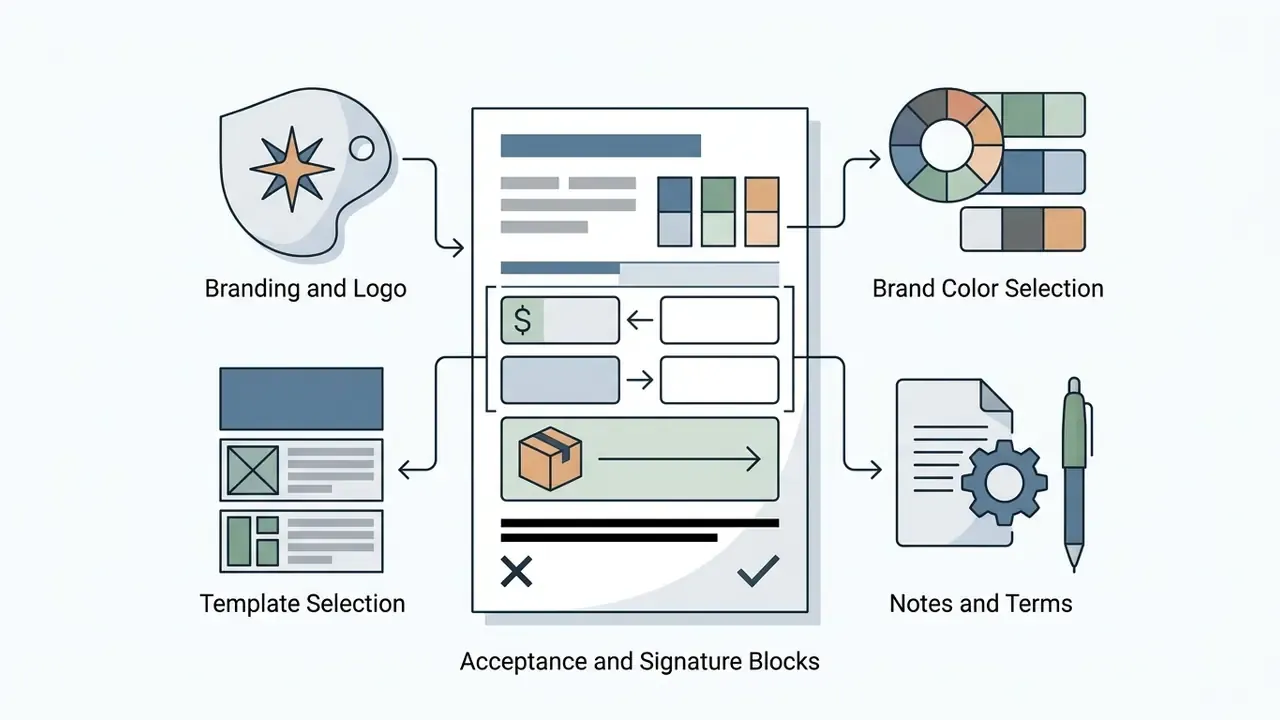
| Mandatory fields | Both parties' details, itemized pricing, quantities, unit prices, discounts, taxes, validity date, terms and conditions | Scope assumptions, indicative ranges, exclusions | Invoice number, tax details, payment methods, bank details |
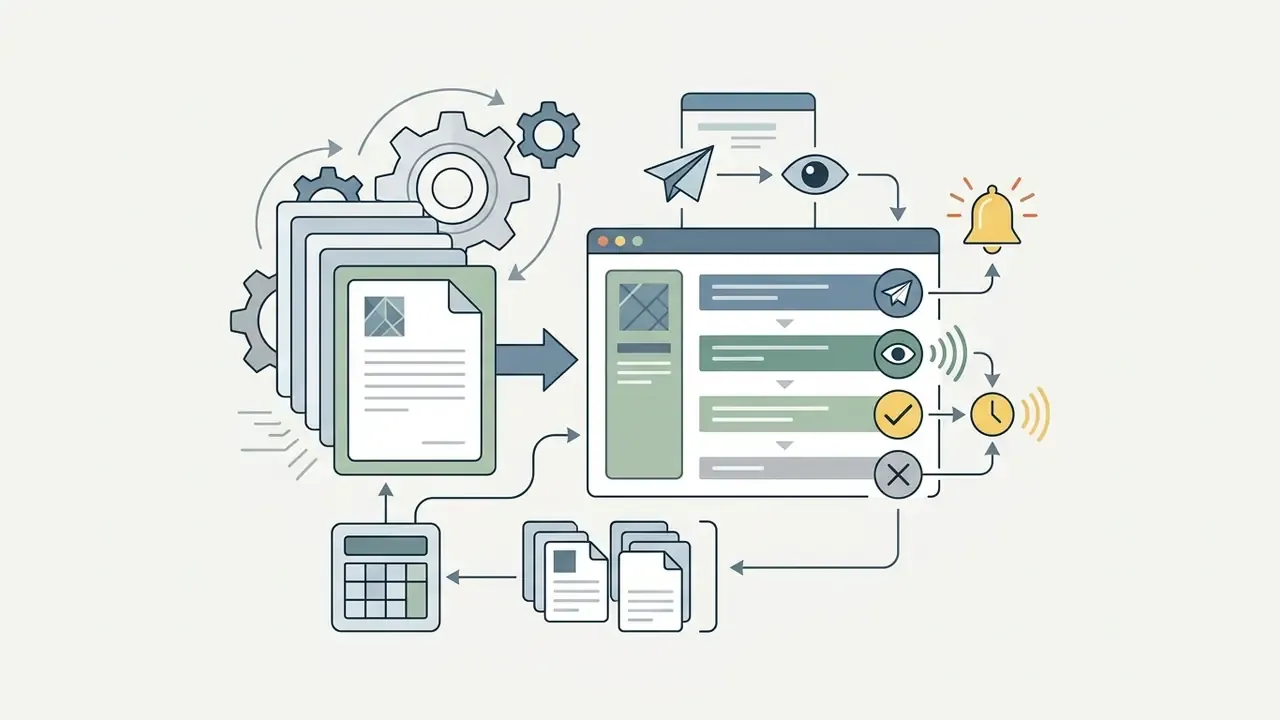
Two consequences follow. First, a clear expiry date protects the supplier if input costs move before acceptance. Second, once the client accepts, the quote should convert into an invoice without re-typing. One-click quote-to-invoice conversion removes the most common source of billing discrepancies and preserves the accepted line items, discounts and tax treatment exactly as agreed.
B2B quotation generator requirements: currencies, tax and data import
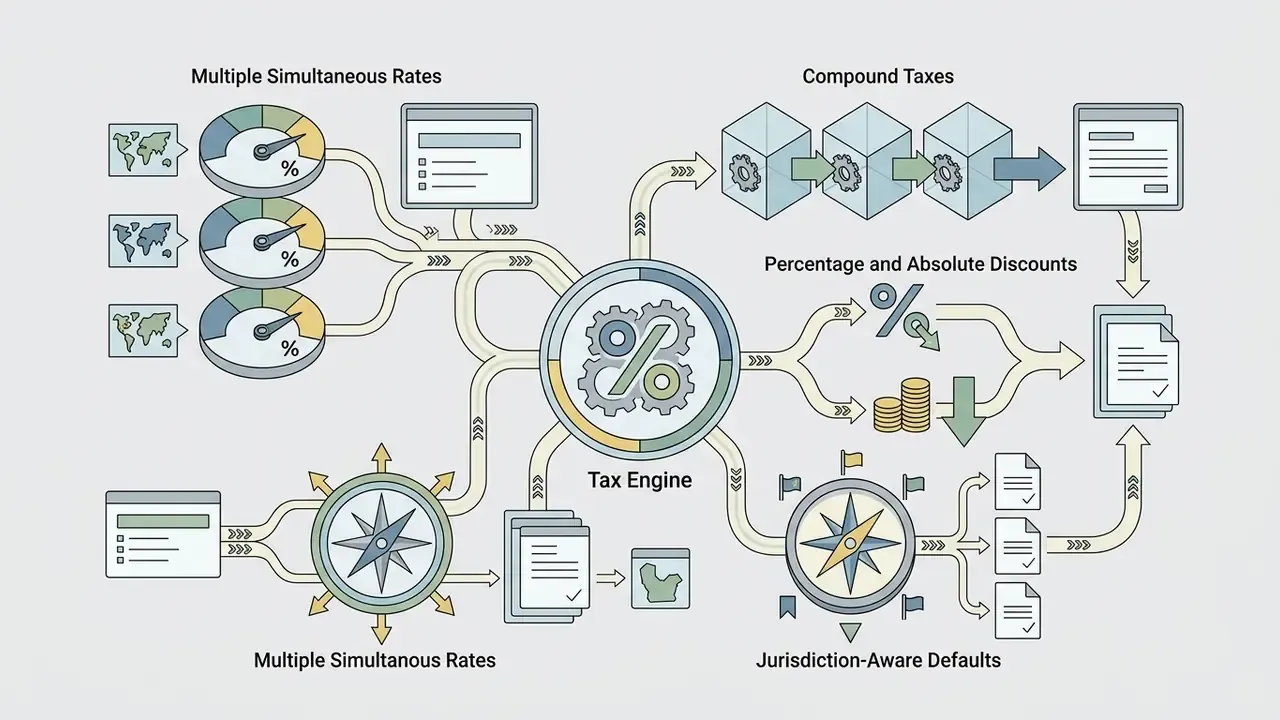
A professional B2B quote generator has to handle multi-currency conversion across 150 or more ISO currency codes with automatic symbol formatting. It must apply compound tax structures such as regional VAT, GST and sales tax, parse line-item data from CSV files or CRM exports, recalculate subtotals, discounts and grand totals the moment quantities change, and convert an accepted quote into an invoice in one click.
A production-grade specification should cover:
Governance detail worth stating early: name the owner of the quotation workflow. In a bank or a mature fintech, that owner sits in sales operations or finance, with model risk reviewing any generative component and internal audit sampling outputs. Organizations planning implementation costs can model them with our AI media calculators before signing anything.
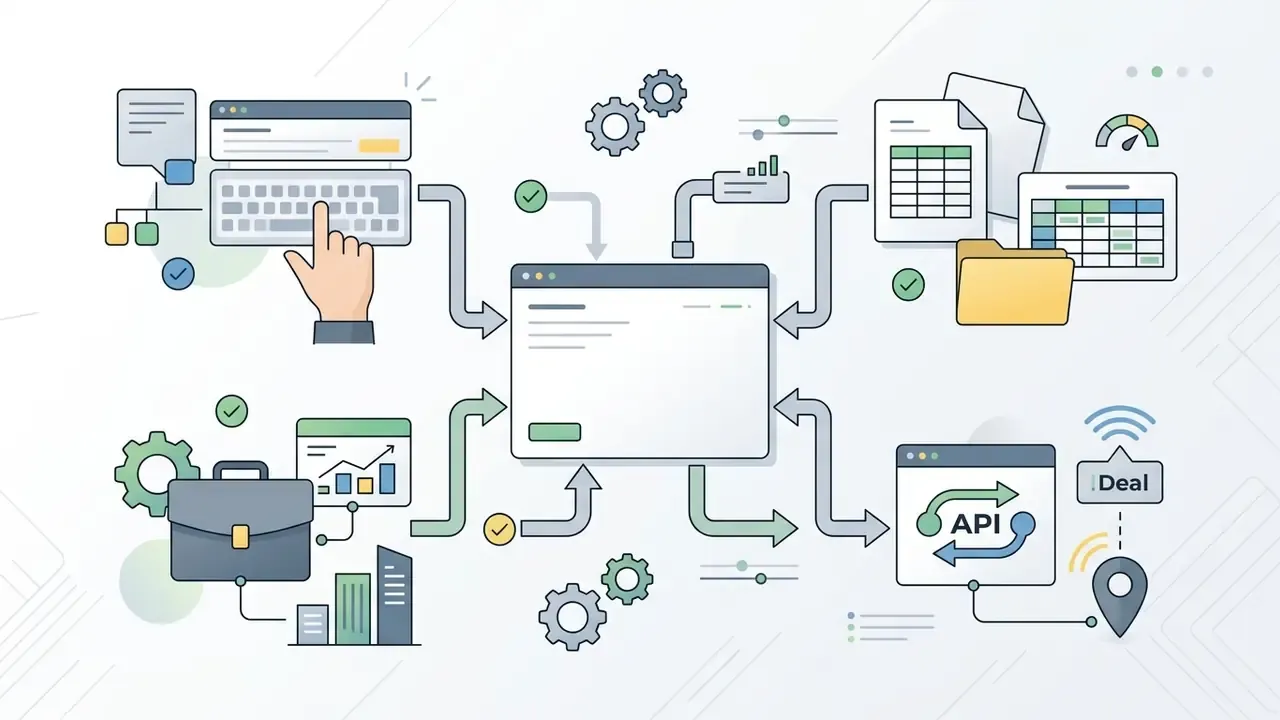
How to use an AI quote generator
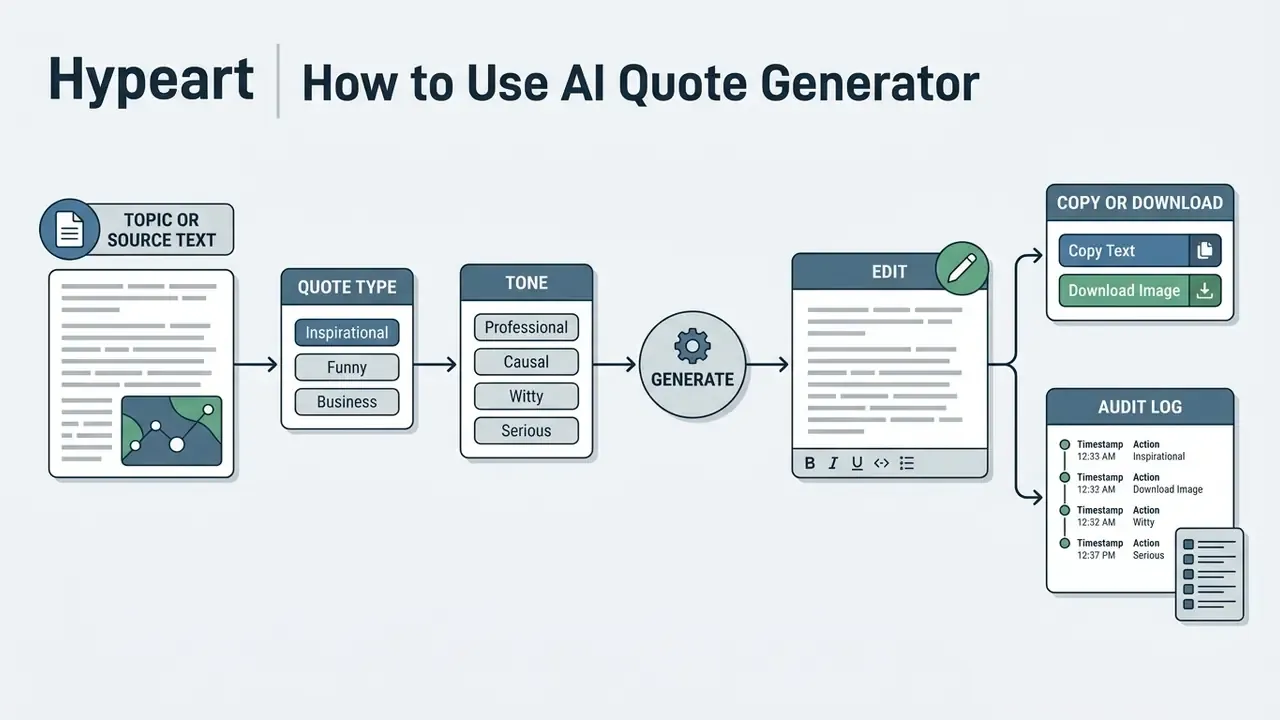
Using an ai quote generator from text means entering a source topic, choosing a tone, generating several options, refining the wording, then exporting or converting the result. This sequence keeps relevance high and strips out generic phrasing.
Consistent results come from an iterative loop that pairs algorithmic generation with human editorial oversight and a retained audit trail.
Workflow: step-by-step AI quote generation pipeline
Step 6 is the step most teams skip and the one auditors ask about first. Institutional citation guidance agrees on the metadata to retain: tool name and version, the prompt, the response, follow-up queries, and the generation date (MIT Libraries, Citing AI tools, updated 2026). Where output cannot be shared through a public URL, keep the generated content and prompts in an appendix or an internal record (RMIT Library, Citing and referencing guidelines for AI tools, updated 2026).
- Input sourceenter a direct text prompt, paste a source passage, upload a CSV of line items, or trigger a CRM or ERP API webhook.
- Select parameterschoose quote type (inspirational, motivational, funny, business, job) plus tone, language and length. For commercial quotes, set currency, tax rates, discounts and validity period.
- Execute generationrun the model to create three to five candidate outputs, or assemble the quotation template from structured data.
- Editorial reviewedit wording for clarity, brand alignment and factual accuracy, then verify arithmetic and attribution.
- Export outputcopy to clipboard, download PDF, Word, Excel or PNG, send by email, create a shareable link, or convert the accepted quote into an invoice in one click.
- Audit traillog the prompt, model name and version, generation date, all candidate variants and the approved final text, so compliance can reconstruct any published statement later.
Enter a topic, keyword or source text
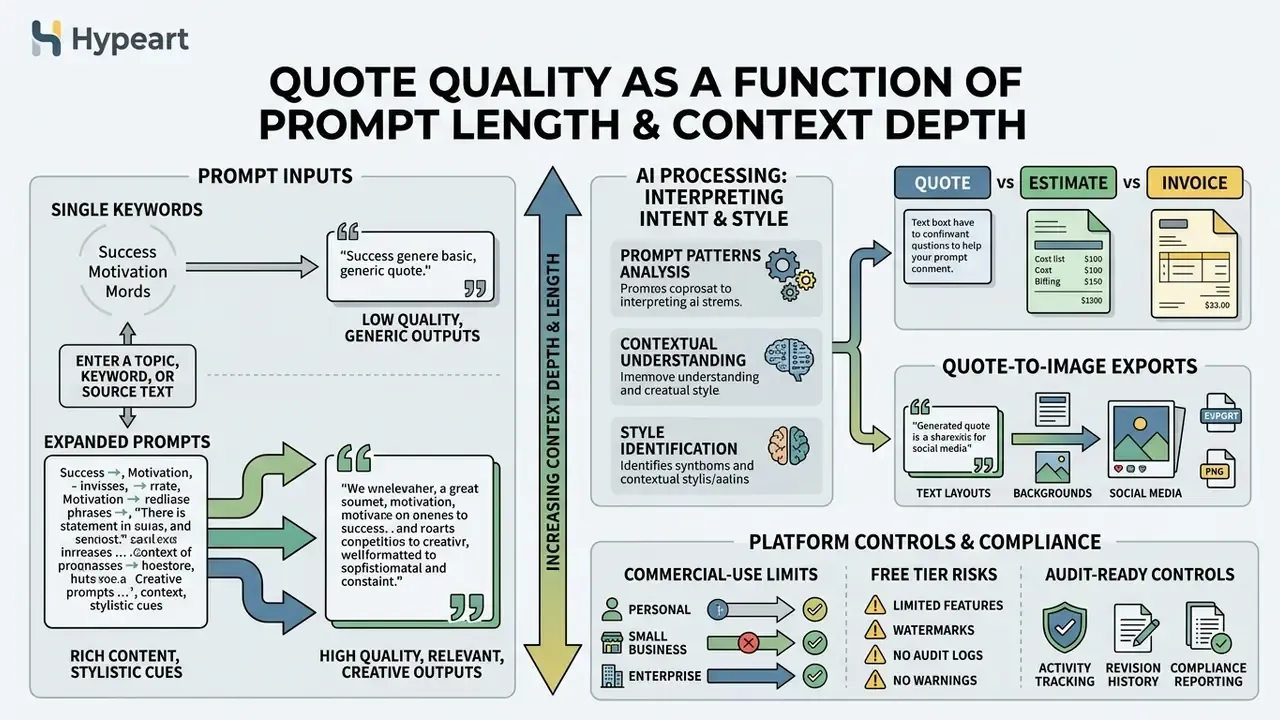
Output quality tracks input quality, closely. Detailed contextual background, specific scenario constraints or a source passage produce far sharper results than a generic single-word topic.
Rich inputs beat bare keywords because semantic matching works on meaning rather than token overlap. A full paragraph of context gives the model enough structure to select a specialized semantic cluster instead of falling back on a statistical cliché.
When using an ai text generator to create quotes, explicit parameters narrow the output distribution: target demographic, the current operational challenge, and the underlying message. You can also paste source excerpts to extract a concise summary statement, which keeps the generated line grounded in original documentation. For commercial documents, the equivalent of a rich prompt is a complete data record: client details, business or tax number, itemized scope, and explicit exclusions.
Choose tone, style and quote type
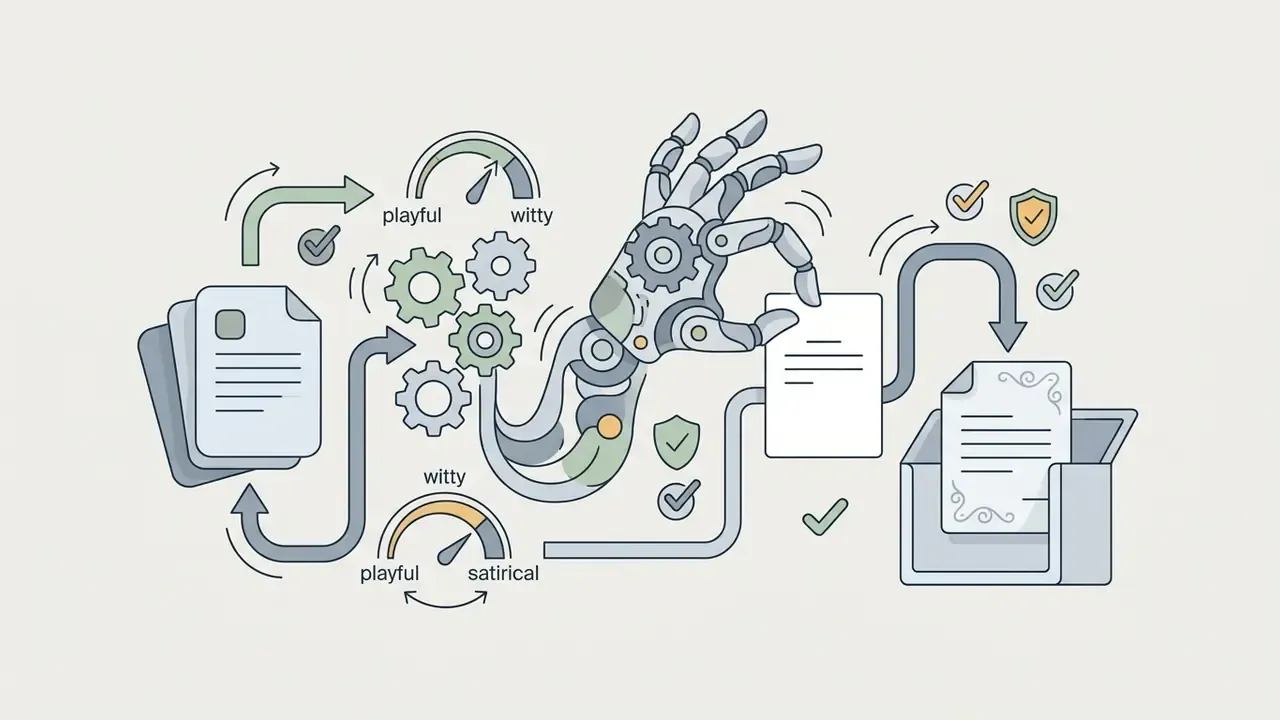
Configuring tone, style and content parameters steers the underlying language model toward specific rhetorical patterns. Presets shift output formality from casual humor to institutional authority in one click.
Vendor documentation from 2024 to 2026 shows a consistent pattern: three or four named tone presets plus a free-text custom option, with answer length, channel and language configured separately. Enterprise assistant platforms expose presets such as Professional, Informal and Enthusiastic alongside a custom tone description. Synthesis platforms expose numeric parameters, for example stability and style values on a 0.0 to 1.0 scale, where higher stability yields steadier delivery and higher style yields more characterful output.
Modern platforms let users choose parameters such as:
Explicit style parameters prevent stylistic drift, which keeps marketing copy inside institutional governance rules. Teams standardizing tone across audio and text assets can compare options in our guide to AI voice generators.


Generate, edit, copy and download the result
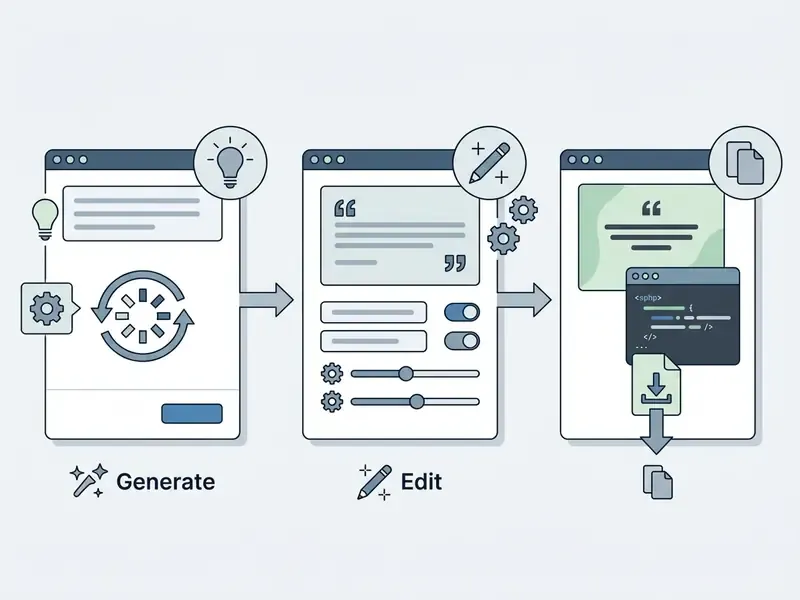
Once the parameters are set, run the model to generate several candidates, then review, refine, copy or download the final wording.
Human review before publication is not a stylistic preference. It is the documented consensus across publishing and editorial standards: AI-generated text must not be pasted into a publication unchanged, and authors stay responsible for accuracy because model output can be incorrect, incomplete or biased (ICMJE guidance on AI tools; FAO, Responsible use of AI in publishing, 2025, applied here strictly as a publishing-workflow standard).
Users can tune vocabulary, copy approved text to the clipboard, or download formatted assets for social media and executive presentations. Export practice that holds up under revision: keep the editable source, Word or a template file, for version history, deliver the frozen version as PDF, and store the prompt and output pair with the asset. Teams building an end-to-end content pipeline can review our guide to animation makers for downstream motion assets, or study how to convert image to video ai when a static quote card needs movement.
Types of quotes you can generate with AI
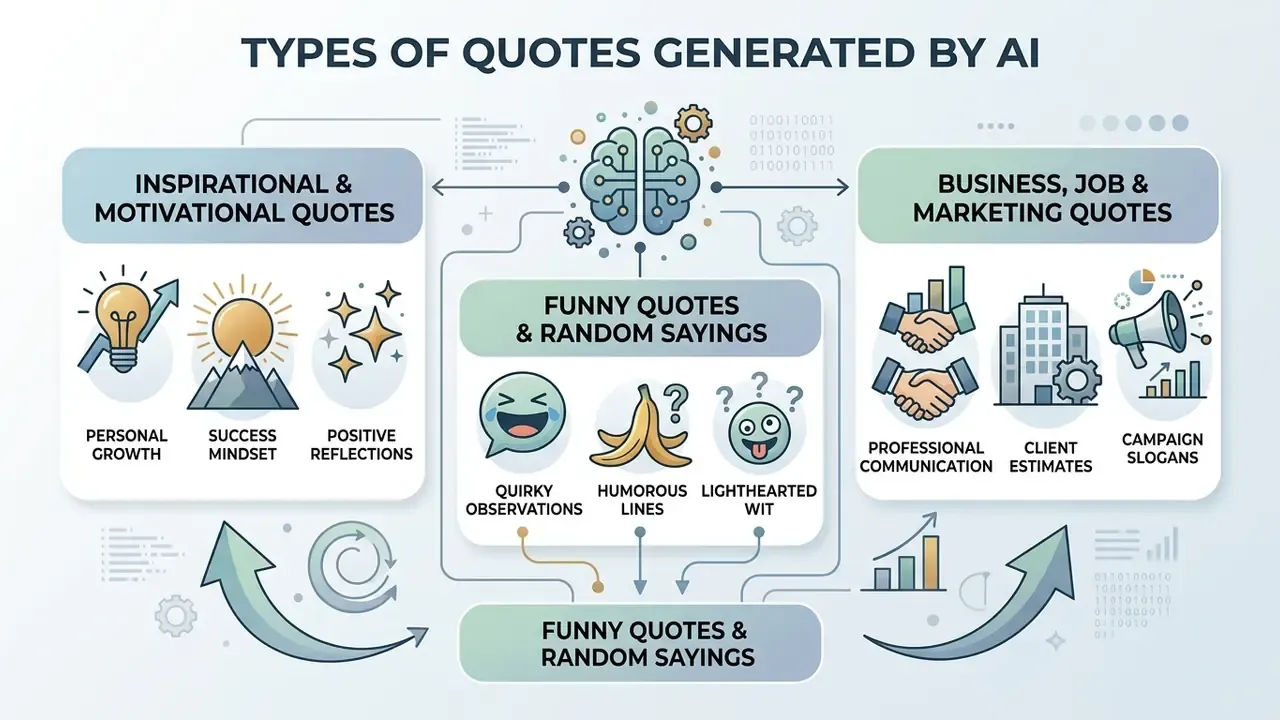
An ai quotes generator can produce diverse formats grouped by intent: inspirational advice, humorous sayings, professional business copy. Matching the format to the distribution channel is what lifts engagement, not raw volume.
Picking the right category is also how teams settle which tool is the best ai quote generator for a specific corporate, personal or promotional campaign.
Inspirational and motivational quotes
An ai inspirational quote generator writes reflective statements aimed at long-term growth. An ai motivational quote generator builds energetic phrasing designed to trigger immediate action.
Experimental work on tailored messaging shows that personalization to mood, self-efficacy and progress raises perceived motivational value relative to generic templates:
«A hybrid contextual-bandit and LLM design reaches acceptance levels comparable to a pure LLM condition while keeping intervention-selection logic transparent.»
Deploying an ai inspirational quotes generator or ai motivational quotes generator lets organizations deliver targeted encouragement for wellness platforms, internal newsletters and employee engagement programs. Teams pairing quote text with portrait assets for author cards can review our guide to AI headshot generators.
Funny quotes and random sayings
An ai funny quote generator creates lighthearted, satirical or humorous content for social engagement and casual brand communication.
Humor is still hard for generative models, and it shows.
Even so, an ai motivation generator running playful style settings produces engaging conversational snippets. Editors should review humorous output for tone, cultural fit and unintended double meaning. The usual failure mode is not offensive content. It is flat, overly literal or repetitive phrasing that quietly erodes brand voice.
Business, job and marketing quotes
An ai business quote generator writes persuasive snippets, value statements and landing page highlights. An ai job quote generator produces workplace-oriented leadership messaging.
In commercial settings, concise messaging speeds up customer engagement.
«Users of AI-structured content generate more high-similarity search queries, associated with roughly a 20% increase in featured product sales.»
Marketing teams use these tools for subject lines, promotional taglines, slide headlines and client-facing value statements. Disclosure expectations apply. Institutional guidance from 2024 to 2026 requires a written note of AI use in informal email, and fuller citation, meaning model, prompt, provider and generation date, in formal documents, with broader disclosure where AI materially shapes published text, imagery or synthesized voice. Teams building campaign assets in design suites can review our Canva AI Generator overview for licensing detail.
| Quote category | Primary objective | Recommended tone | Target audience | Example application |
|---|---|---|---|---|
| Inspirational | Encourage hope and reflection | Warm, thoughtful, supportive | General public, wellness readers | Personal growth posts, advice newsletters |
| Motivational | Drive immediate action and focus | Energetic, assertive, empowering | Athletes, sales teams, students | Goal reminders, productivity apps |
| Funny | Entertain and build informal rapport | Playful, witty, humorous | Social media followers, peers | Casual updates, marketing hooks |
| Business | Persuade and communicate value | Professional, clear, concise | Prospective clients, executives | Email subject lines, slide decks |
| Job | Support workplace culture | Encouraging, professional | Corporate employees, managers | HR communications, team announcements |
| Commercial quotation | Present a binding priced offer | Formal, precise, contractual | Procurement, finance, buyers | Sales quotes, service quotes, tender bids |
How to write prompts for more unique and relevant quotes
Effective prompts define an operational role, detailed context, structural constraints and explicit negative requirements. Clear parameters are the reason a model returns something usable instead of a cliché.
Official prompt-engineering documentation converges on the same four-part skeleton, persona, task, context, format, and adds constraint and grounding instructions. Google's Prompting Guide 101 groups effective prompts into Persona, Task, Context and Format. OpenAI recommends clear prompts with sufficient context followed by review-and-iterate cycles. Anthropic advises grounding the response in quoted source text before completing the task, which maps neatly onto source-based quote extraction. Microsoft's prompt-engineering documentation recommends describing the task specifically and restricting the operational space.
«Directive prompts provide more stable control over brevity and tone across iterations than example-only prompts.»
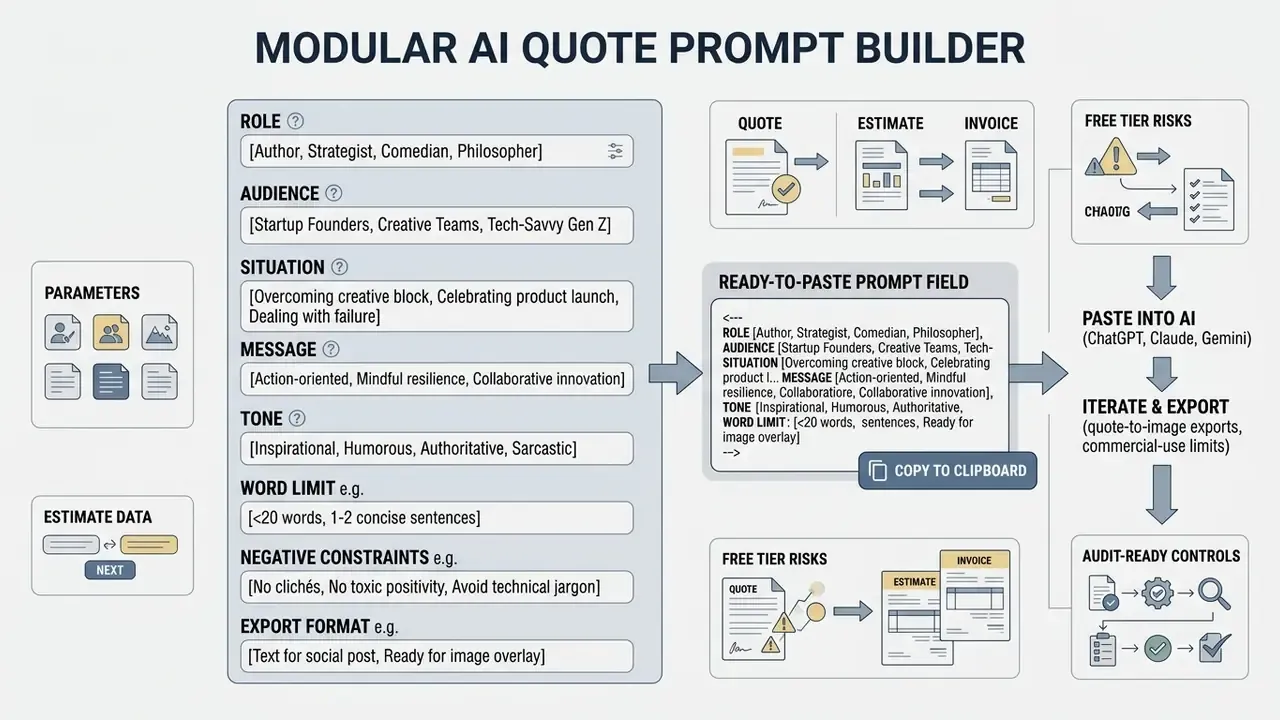
Add context instead of using a broad topic
Explicit audience details, situational background and a target goal produce nuanced text that sidesteps generic patterns.
University and professional-association guidance is consistent here. State who you are, who the audience is, what the situation is, and what output you expect. Monash University's prompting template uses persona, aim, recipients, theme and structure. The University of North Texas includes an explicit "Audience Context" field covering background and knowledge level. PRSA's AI Prompting 101 asks writers to define role, objectives, intended audience and situational background.
So instead of asking a model to "generate a business quote," write something bounded:
"Act as an executive leadership mentor. Write a concise, 14-word quote for mid-level managers navigating technological change. Focus on resilience and structured decision-making. Avoid cliché metaphors about journeys or horizons."
Experimental evidence supports granular personal or situational detail:
“The narrower the frame you give the model, the more original and usable the resulting thought.” Marcus Hale, author
Granular detail forces the model into specialized semantic clusters, which is where original phrasing lives. Negative constraints such as "avoid the words journey, unlock, unleash" remain the fastest single lever against cliché output. Worth trying before anything more elaborate.
Refine the wording until the quote fits your needs
Good quotes come out of an iterative loop. Evaluate the first outputs, adjust prompt parameters, then tighten specific vocabulary choices.
Research on preference-driven prompt refinement (arXiv, 2025) documents a continuous generate, evaluate, update cycle:
- Draft the initial prompt and generate the first output set.
- Mark preferred and non-preferred elements in the output.
- Fold that feedback back into the prompt, for example "make the tone more assertive and cut four words".
- Regenerate and compare variants.
- Stop on a defined rule: satisfaction, a fixed iteration limit, or no further improvement between passes.
«Iterative refinement through a generate, evaluate, update cycle substantially improves stylistic precision and uniqueness of short texts.»
Controlled iteration keeps the final text inside brand standards without flattening editorial integrity. Readers weighing generative engines can review our evaluation of ChatGPT image generation versus alternatives or compare alternative software in the hub.
Can you use AI-generated quotes for commercial purposes?
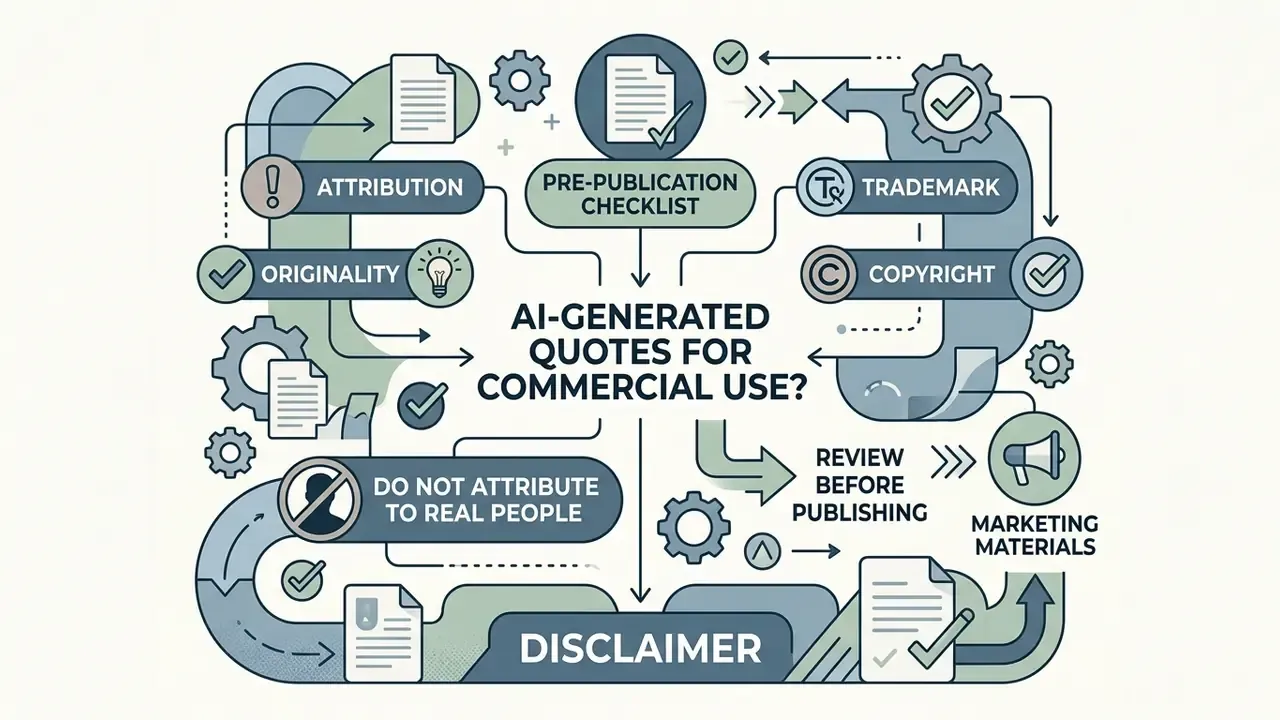
AI-generated quotes can generally be used commercially, provided the output does not infringe existing trademarks, reproduce copyrighted text, or falsely attribute a statement to a real individual.
Commercial deployment of synthetic text requires compliance with intellectual property standards and disclosure rules. Jurisdiction matters. U.S. guidance centers on human authorship and disclosure at registration, while a 2025 European Parliament study frames purely AI-generated output without substantial human intervention as ineligible for copyright protection and therefore freely reusable. Commerciality also remains one factor in fair-use analysis (Congressional Research Service, 2025), so generating quotes from copyrighted source text is not automatically safe just because the output reads as new. Teams tracking active disputes in this area can follow developments through our litigation coverage.
Do not attribute generated text to real people
Falsely attributing machine-generated statements to historical figures or living individuals creates serious legal and reputational exposure, including potential defamation claims and clear ethical breaches.
Guidelines from the Committee on Publication Ethics (COPE) and the International Committee of Medical Journal Editors (ICMJE) mandate human accountability for published text. COPE states that AI tools cannot be authors and that editors act where originality or authorship has been misrepresented. ICMJE states that chatbots cannot be listed as authors because they cannot be responsible for accuracy, integrity or originality, and that AI-generated material cannot be treated as a primary source.
The BBC/EBU News Integrity in AI Assistants Toolkit (2025) separates two failure modes that must be checked independently: a direct quote that is completely invented, and a real quote that is incorrectly or misleadingly attributed to the wrong speaker. Interpol's 2024 Beyond Illusions report frames source verification as checking the origin and authenticity of synthetic media, the credibility of the source, and the techniques used to create it.
«Market effects of AI output include lost licensing markets, direct substitution and systemic dilution, and all three are weighed in international copyright analysis.»
Organizations using synthetic quotes should present them as anonymous thematic copy or disclose their synthetic origin plainly.
Review quotes before publishing them in marketing materials
Before public deployment, marketing teams should run automated plagiarism checks and a human editorial pass to verify originality and brand fit.
«Purely machine-generated content lacks human authorship and cannot be registered for copyright protection without substantial human modification.»
Free AI quote generator: limits, downloads and access
Many providers offer an ai quote generator free or ai quotes generator free tier with basic text generation and defined usage boundaries.
Understanding those boundaries lets an organization test capability before committing to an enterprise license.
- Generation limits free tiers vary widely. Some citation and quote tools advertise unlimited free generation without an account. Others cap output, for example a documented 15-item free ceiling in one competing citation tool, or throttle daily requests.
- Export restrictions free access usually allows basic text copying and single-file export. Batch downloads, watermark-free graphics, Excel pricing exports and tracked shareable links are the common paid gates.
- Account gating search, formatting and export may be free, while saving projects, syncing across devices or exporting a full document set requires sign-up or payment.
- Licensing terms some free tools restrict output to personal use, while others explicitly permit commercial use during early access. Read the current terms, not a review from last year.
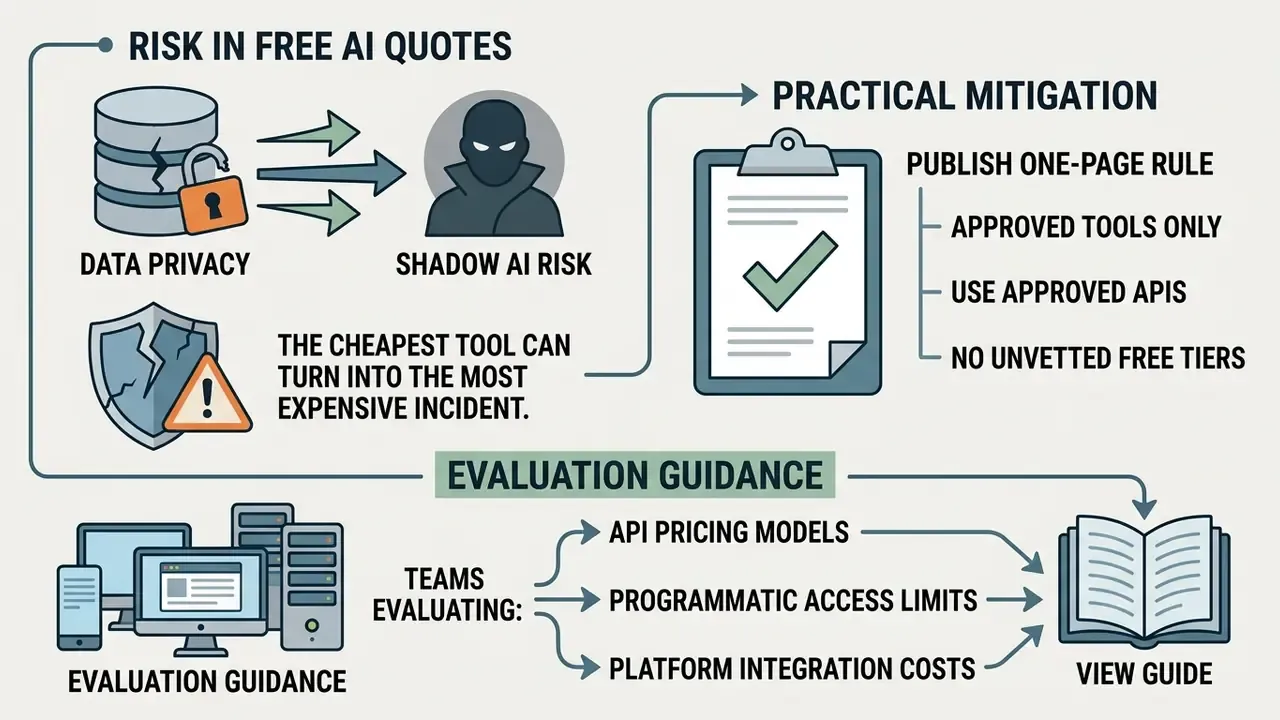
Data privacy and Shadow AI risk in free tiers
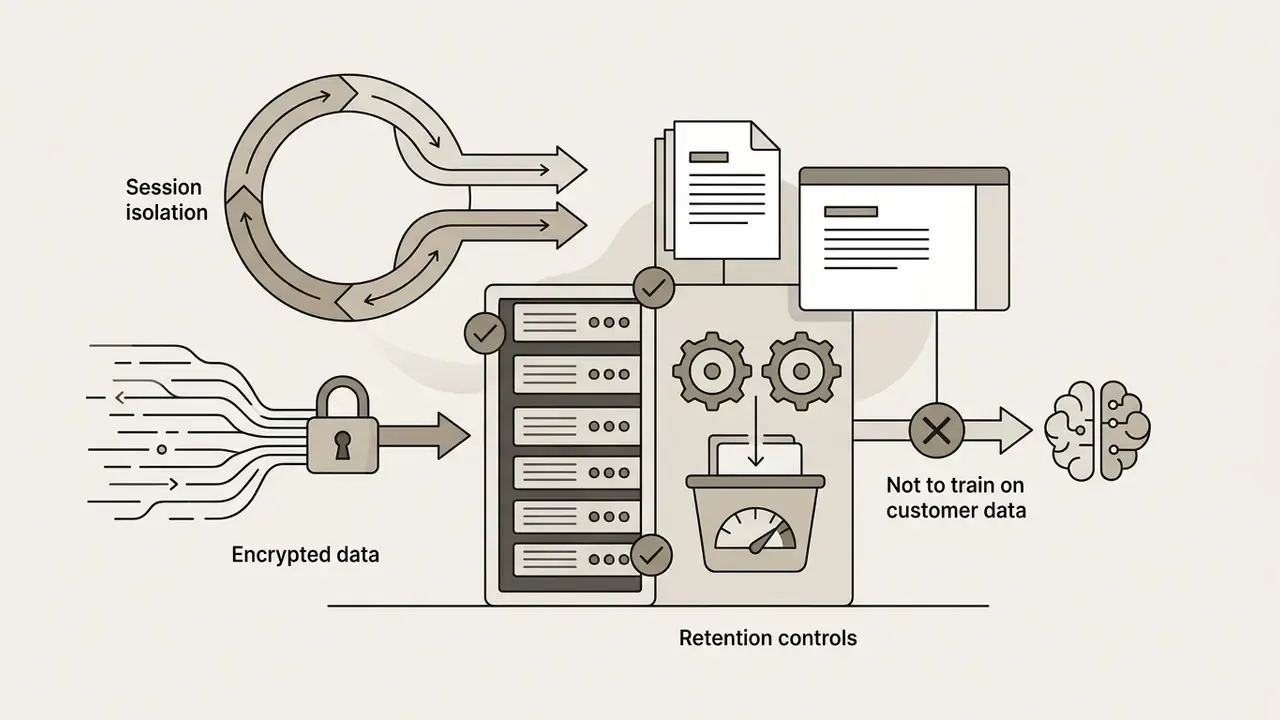
The cheapest tool can turn into the most expensive incident. Public free generators are a familiar Shadow AI channel: staff paste client names, unit prices, discount structures and unreleased campaign copy into an interface with no contractual data protection behind it.
| Dimension | Public free tier | Controlled enterprise deployment |
|---|---|---|
| Prompt retention | Often retained and may be used for model improvement unless opted out | Contractual no-training commitment, defined retention window |
| Data classification fit | Public and non-sensitive content only | Approved for internal and client-confidential data per policy |
| Access control | Personal accounts, no SSO | SSO, role-based access, least privilege |
| Auditability | No prompt log available to the organization | Centralized prompt and output logging for compliance review |
| Certifications | Usually none published | SOC 2 or ISO-aligned controls, DPA and subprocessor list |
| Cost profile | Zero direct cost, unmanaged risk cost | Predictable licensing, measurable total cost of ownership |
Practical mitigation is unglamorous and effective: publish a one-page rule that names approved tools, forbids pasting client identifiers or pricing into unapproved interfaces, and routes all commercial quotation work through the CRM-integrated system. Then sample the logs quarterly. If nobody checks, the rule is decoration.
Teams evaluating API pricing, programmatic access limits or platform integration costs can view the guide on APIs, follow a concrete implementation in our Google Veo API implementation guide, confirm current features through support resources, or model production costs with our AI Media Calculators.
FAQ about AI quote generators
Is a generated quote legally binding?
A quote is not binding the moment you send it, since the client is free to decline. Once the client accepts inside the stated validity period, both parties are generally bound to the quoted price and terms, and that is the practical difference from an estimate. Specific rules depend on national contract law, so confirm the position in your jurisdiction before relying on a template. Drafting with AI assistance changes nothing about contractual effect: the issuing business stays fully responsible for the numbers and terms it signs off.
What is the difference between a quote and an estimate?
A quote is a fixed price the client can rely on within its validity window. An estimate is an approximate good-faith figure that can move as scope and costs become clearer. Use a quote when you can commit to the number, and an estimate while scope is still uncertain. The comparison matrix earlier in this article lists validity, legal force and required fields side by side.
Can an AI quote generator create quotes in different languages?
Yes. Modern AI quote generators support generation across dozens of languages using multilingual models.
«The MEGA benchmark covers 70 typologically diverse languages across 21 language families and records substantial accuracy drops for non-English languages.» MEGA: Multilingual Evaluation of Generative AI. Quality stays highest in high-resource languages such as English, Spanish and French. Evaluation work from 2025 reports that unconstrained multilingual output often loses humor, idiom, tone fidelity and wordplay even when grammar survives, and that every tested language needed human correction to sound natural. Localization research shows controlled adaptation works better: modify named entities and cultural references while preserving dialogue act and intent. Engage native-speaking editors before publication.
How many quotes can AI generate from one prompt?
Roughly three to nine usable candidates per prompt execution.
«It is prudent to try multiple seeds; generating 3 to 9 different seeds gives a representative idea of what a prompt can return.» Design Guidelines for Prompt Engineering Text-to-Image Generative Models, ACM CHI (2022). Broader prompt-engineering surveys treat variant count as task-dependent rather than fixed, and retrieval-oriented experiments have produced dozens of prompt variants when the search space demanded it. For quote work, multi-candidate generation plus ranking is the practical method: produce a small set, rank candidates against style and message criteria, then refine the winner instead of rewriting the prompt from scratch.
Does an AI quote generator generate real famous quotes?
An AI quote generator creates novel text combinations. It is not an audited database of historical quotations.
«Language models can reproduce well-known quotations present in their training data, but they also generate plausible yet false statements and attributions.» Synthesis of quotation-generation research including QUILL, arXiv (2024). The difference is provenance. AI output comes from a model and a prompt. A famous quote is a traceable reproduction of a specific earlier speaker's words, authenticated by exact wording, locator and context. When a corporate publication needs an authoritative historical quote, verify the wording against primary archives or official transcripts rather than generative output. Searchable archives have overturned plenty of widely repeated attributions. Creators exploring visual libraries can review our comparison of free AI art generators and our reverse-image-search comparison for provenance checks on accompanying imagery.
Can I convert an accepted quote into an invoice automatically?
Yes. One-click quote-to-invoice conversion is standard in commercial quotation tools and is the recommended workflow. It carries accepted line items, quantities, discounts, tax treatment and terms into the invoice without manual re-entry, which removes the most frequent cause of billing disputes. Look for adjacent features too: status tracking (sent, viewed, accepted, expired), automated reminders, and payment options embedded in the resulting invoice.
Do I need to disclose that a quote was generated with AI?
It depends on channel and materiality. Institutional guidance from 2024 to 2026 asks for a written note of AI use even in informal email at some organizations, a fuller citation (model, prompt, provider, date) in formal documents, and disclosure whenever AI materially shapes published text, images, audio or data analysis. Where output cannot be professionally verified, disclosure is expected. For commercial quotations, disclosing drafting assistance does not reduce your responsibility for the pricing and terms stated.
What should a bank document before approving a quote generation tool?
Four artifacts, at minimum. First, an inventory entry naming the system, its owner, and the data classes it may touch. Second, a control description separating narrative generation from deterministic pricing. Third, a validation note explaining how output is reviewed and by whom, with escalation for exceptions. Fourth, a retention rule for prompt and output logs. This is a hypothesis about good practice rather than a regulatory checklist, and it should be tested against your own model risk policy and internal audit expectations.
Social media quote-to-image generation
A quote image generator turns approved text into a branded graphic sized for a specific channel, exported without watermarks so it can be published directly. This is the highest-volume use case in creative quote generation, and it carries its own parameter set.
Recommended production order for social teams:
Designers producing large volumes of quote cards can compare rendering engines in our comparison of the best AI art generators, browse reference examples of cool ai images, and check pipeline limits in our guide to free photo editors. Teams working in Spanish-language markets sometimes pair quote cards with short clips and look for ways to crear videos con inteligencia artificial gratis.