If you run model risk, compliance, or finance operations at a U.S. bank, the question is no longer whether to create AI. It is which layer you are accountable for, and what evidence you can put in front of an examiner. By 2026, enterprise AI creation has shifted away from training foundational models toward orchestrating instruction-driven agents, pre-trained base models, and application-layer software. The European Commission's AI Act guidelines and the U.S. National Institute of Standards and Technology (NIST) define AI systems through structural autonomy, dynamic context retrieval, and post-deployment adaptiveness (NIST, 2026; European Commission, 2025). Building a production-ready AI solution means picking an architectural pattern that balances delivery speed against model risk, data privacy, and lifecycle governance.
Executive Summary
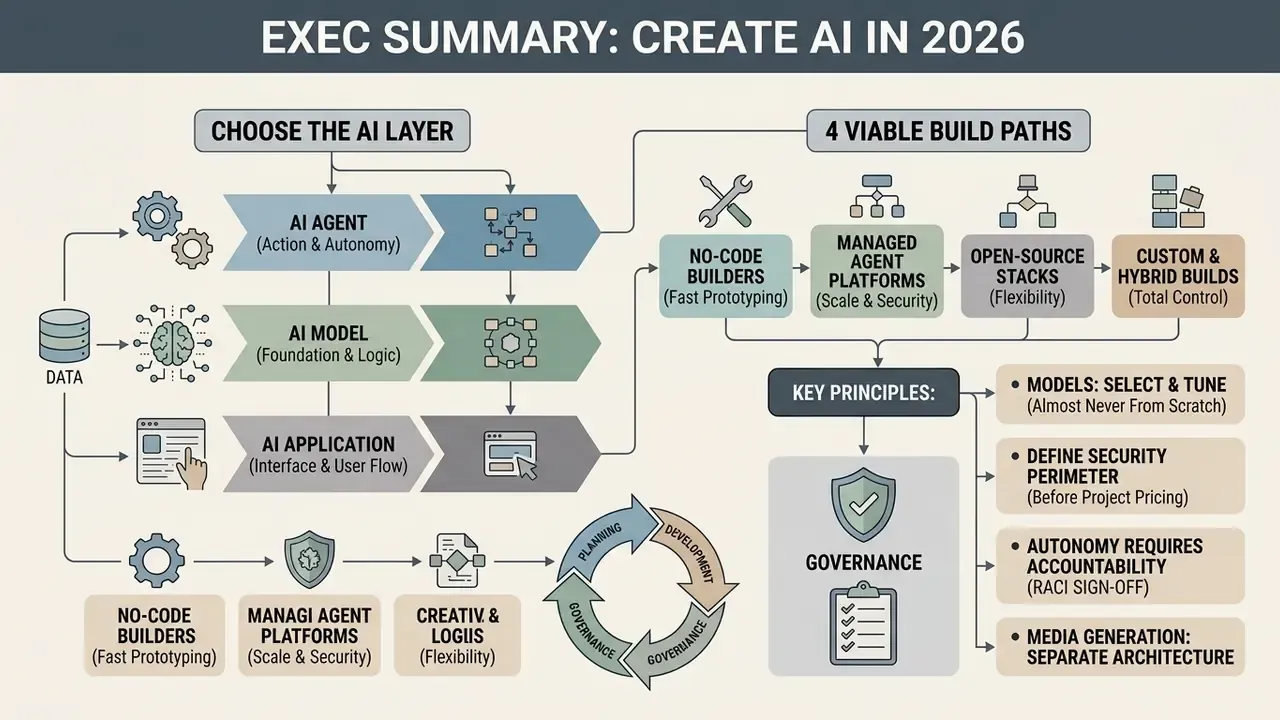
For readers who need the decision, not the deep dive:
- You almost never train a model from scratch. Directionally, the overwhelming majority of enterprise use cases are delivered with pre-trained base models plus prompt engineering, Retrieval-Augmented Generation (RAG), and light fine-tuning. Empirical survey data supports this pattern rather than in-house pretraining.
- Know which layer you are building. A model infers, an application packages inference into a workflow, and an agent plans and acts through tools with real side effects. Validation intensity scales with autonomy.
- Four viable build paths exist: no-code builders, managed agent platforms, open-source or self-hosted stacks, and custom code on third-party APIs. The differentiators are control, data residency, auditability, and Total Cost of Ownership (TCO).
- Define the security perimeter before you price the project. Context isolation, least-privilege RBAC, prompt-injection guardrails, and tamper-evident logging determine infrastructure and therefore TCO, not the reverse.
- Autonomy requires accountability. Assign explicit sign-off (business owner, model risk, CISO), maintain reproducible evaluation evidence, and keep a working kill switch before production release.
- Media generation is a separate architecture. Image, audio, and video generators use diffusion or visual-synthesis pipelines, upscaling stages, and a distinct intellectual-property risk profile. Raw AI outputs may not attract copyright at all.
Who This Guide Is Written For, and How to Read It
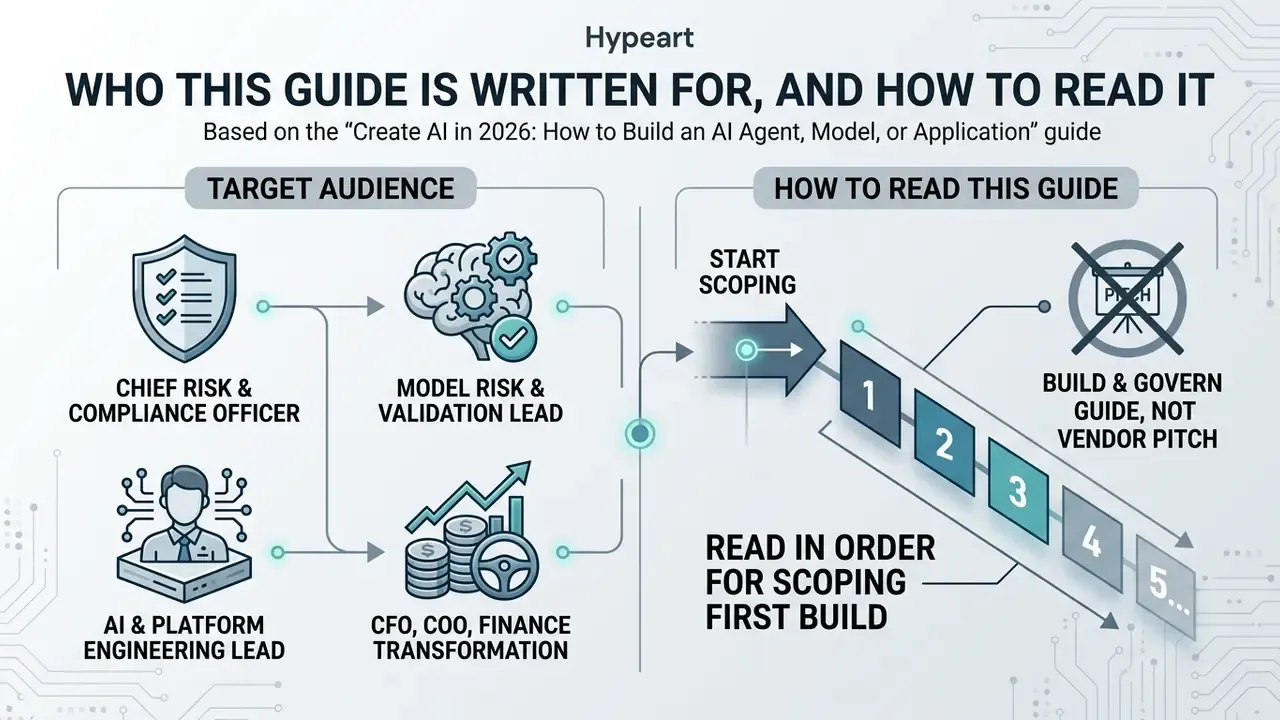
This is a build-and-govern guide, not a vendor pitch. It assumes you sit in one of four seats.
- Chief Risk or Compliance Officer. You need to know which AI experiences can be deployed without expanding uncontrolled risk, and where the escalation path sits.
- Head of Model Risk or independent validation. You need the evidence set: prompts, versions, evaluation runs, tool-invocation logs, and revalidation triggers.
- AI or platform engineering lead. You need the architecture decision, from no code through open source to custom code on APIs.
- CFO, COO, or finance transformation lead. You need a defensible number for accounts payable, reconciliations, and close automation, including the control layer.
Read it in order if you are scoping a first build. Jump straight to the cost and platform sections if the architecture is already chosen and the question is whether the business case survives contact with model risk. One caution before we start: every audience statement here should be treated as a hypothesis until your own analytics, interviews, or CRM data confirm it.
What Does It Mean to Create AI and What Products Can You Build?
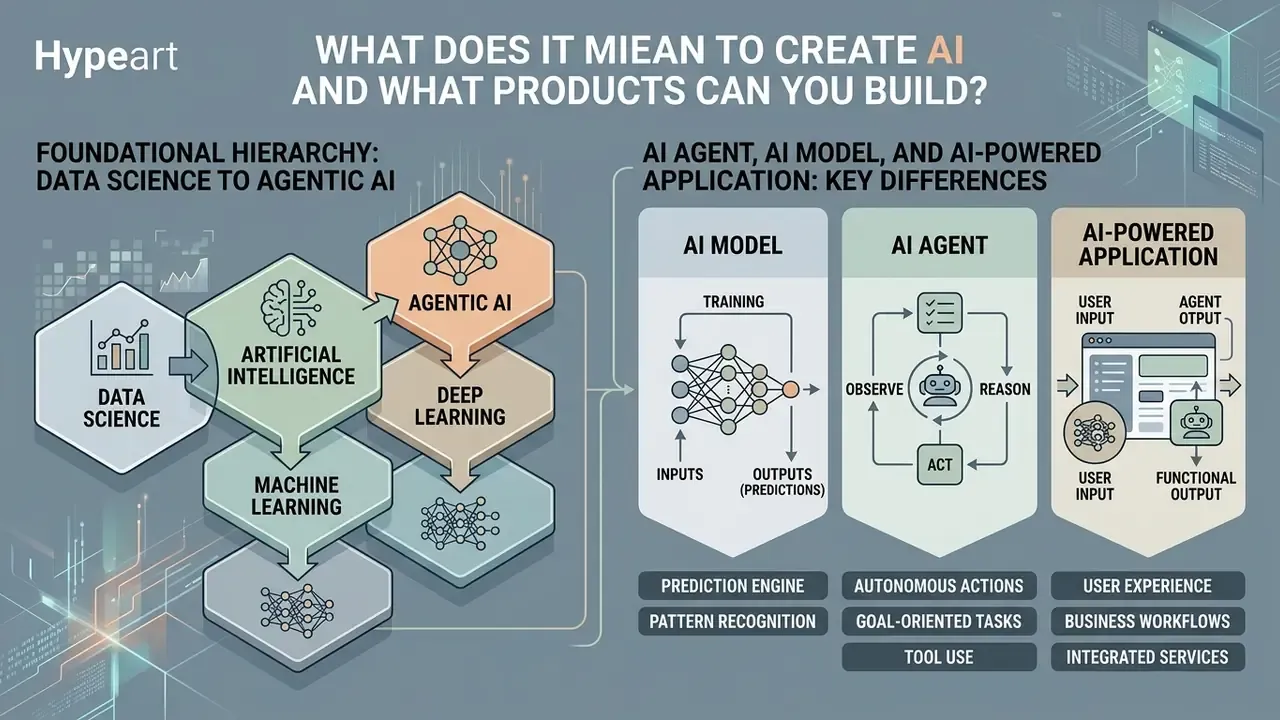
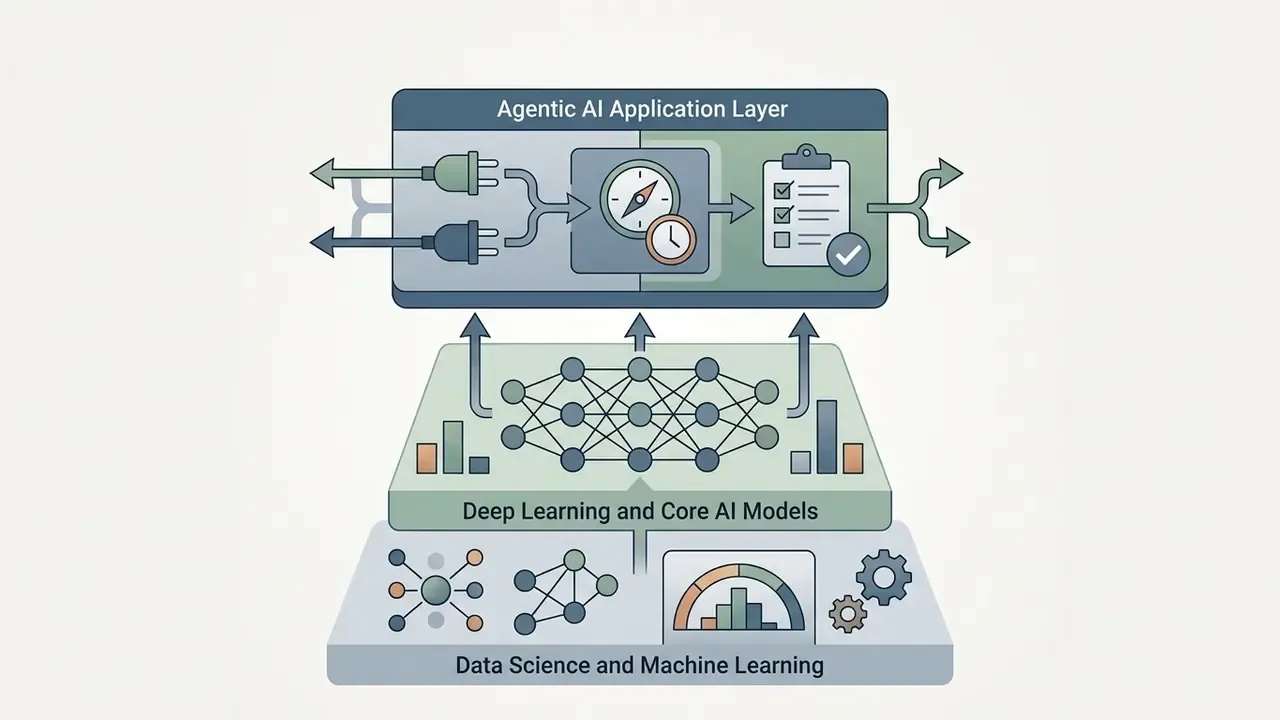
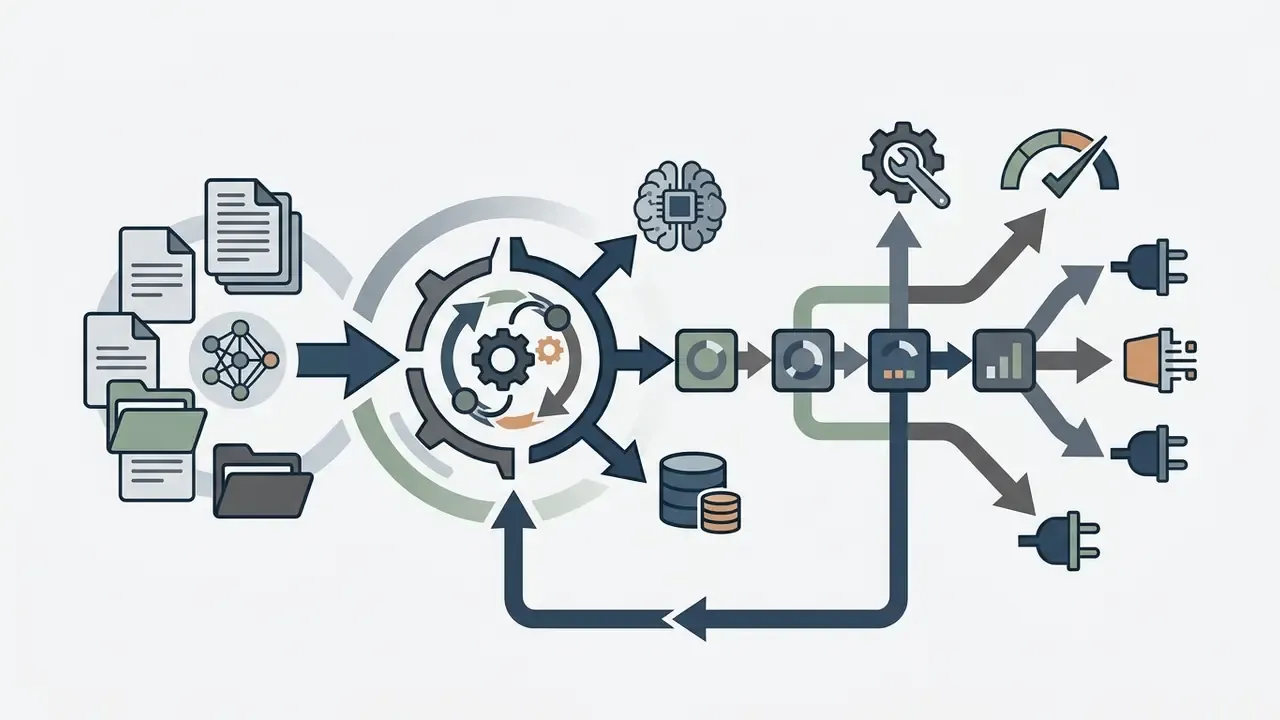
Creating AI means building software that uses machine learning models to synthesize information, generate outputs, or autonomously execute tasks based on user instructions and data inputs. Modern AI deployment spans three distinct layers: standalone models, integrated applications, and tool-using agentic architectures (Microsoft, 2025).
Foundational Hierarchy: From Data Science to Agentic AI
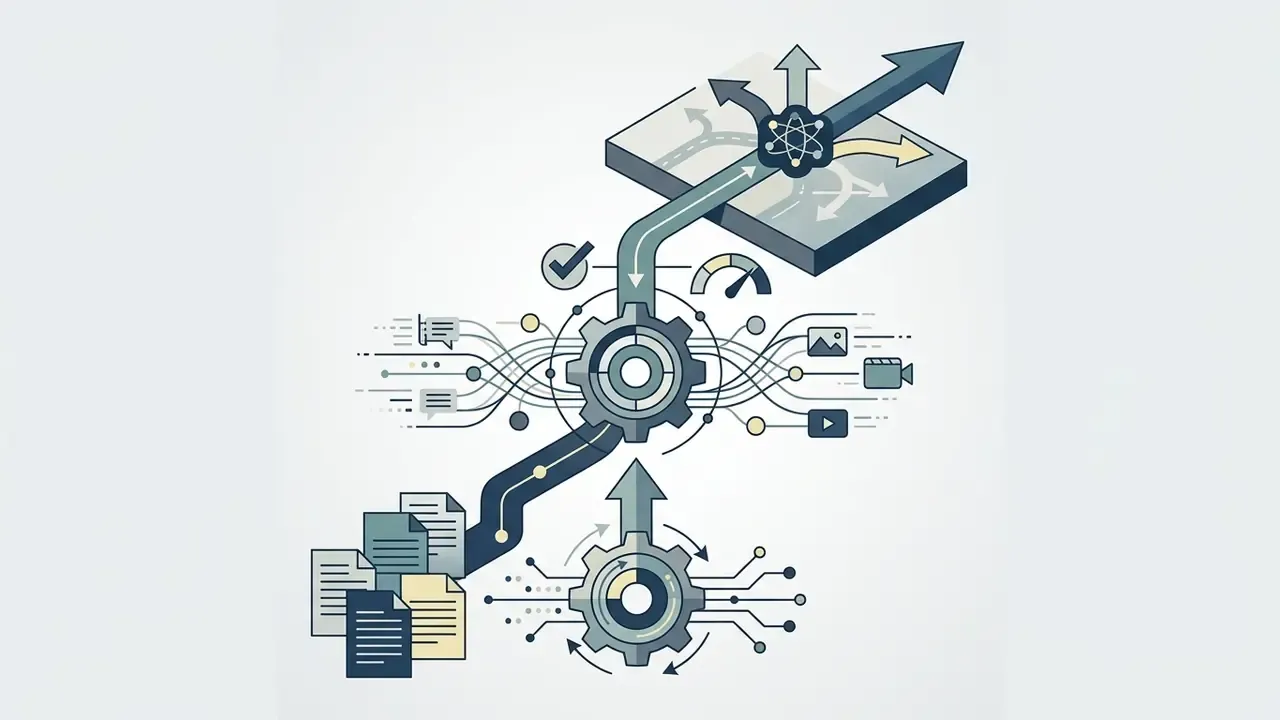
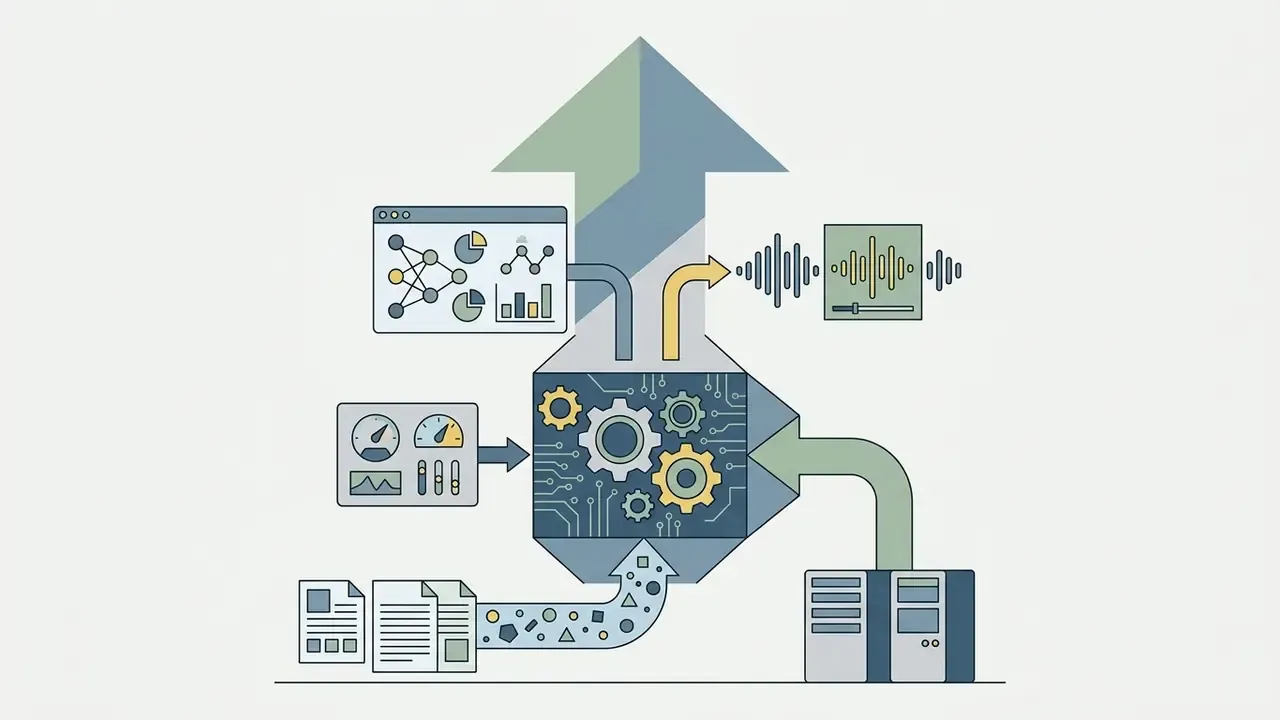
Before choosing an engineering approach, place the product you intend to build inside the wider data ecosystem. Skipping this step is the most common cause of over-engineered AI programs.
Design for a minimum viable solution first. Borrowing from lean manufacturing and Agile practice, the objective of a first AI build is a minimum viable solution that proves the concept, after which it can be enriched to cover the full use case. If a deterministic, rule-based workflow already solves the business problem, deploying a heavyweight LLM only inflates latency, model-risk surface, and TCO. The classic case of using a hammer to crack a nut.

AI Agent, AI Model, and AI-Powered Application: Key Differences
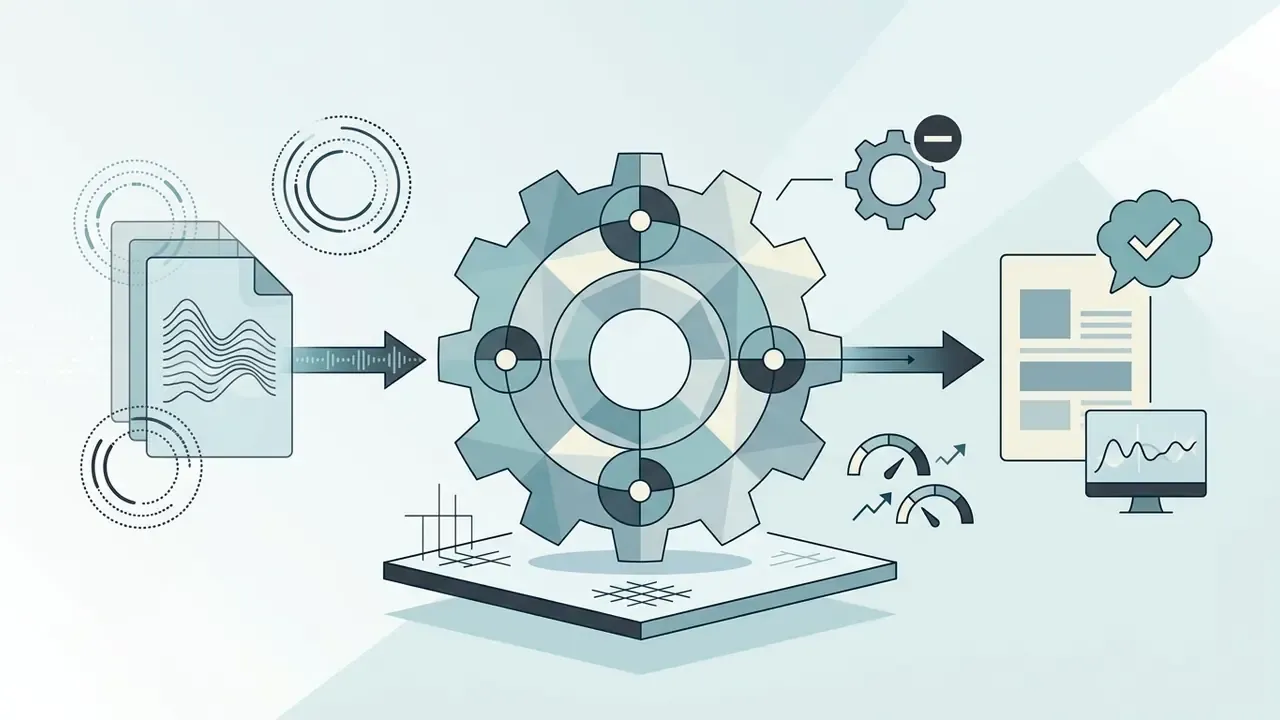
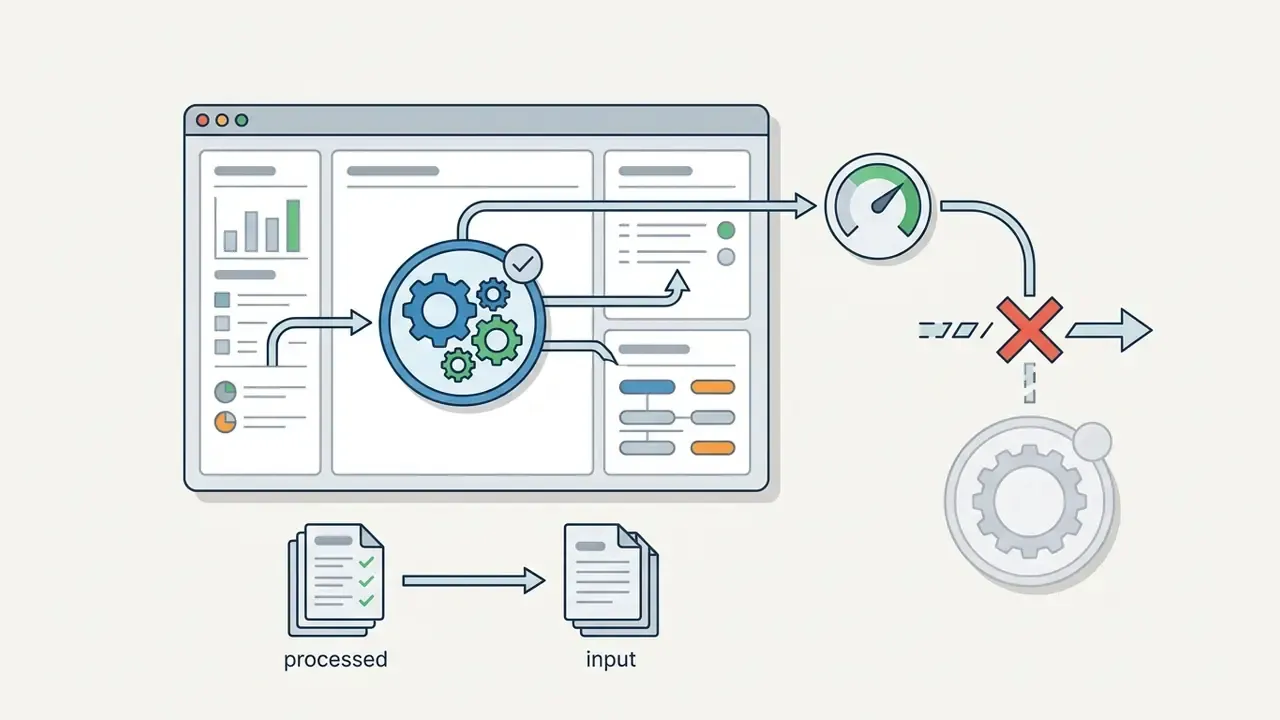
An AI model is a statistical engine that processes inputs to predict outputs. An AI application packages a model inside a fixed software workflow. An AI agent adds autonomous reasoning, memory, and external tool execution (NIST, 2026).
«An AI agent is a system able to perceive its environment, reason about goals, and take actions through an LLM and external tools to achieve them.»
The practical consequence for validation is scope of side effects. A model produces text. An agent moves money, updates records, or files documents. Model risk teams should therefore extend existing validation frameworks (SR 11-7 and OCC 2011-12 in U.S. banking, NIST AI RMF more broadly) to cover tool scopes, memory persistence, and non-determinism, not only output accuracy.
Which AI Experiences Can Be Deployed for Enterprise Workflows?
Enterprise AI experiences range from passive content generation to fully orchestrated workflow automation and autonomous task execution. Organizations choose their deployment pattern based on the required level of human oversight and system integration.
«Around 18% of SMEs began using generative AI services less than a year after LLMs became publicly available in late 2022.»
- Workflow Automation
- Agentic systems that process unstandardized documents, handle customer service inquiries, or automate back-office operations across enterprise platforms (Wornow et al., PVLDB, 2024).
- Autonomous Operations
- Multi-agent networks where specialized digital workers collaborate to execute multi-step analysis, financial reconciliation, or software testing (MLAS Survey, 2024).
- Interactive Business Applications
- Conversational domain assistants that help staff with process modeling, document drafting, or policy evaluation (LLM4PM, 2024).
- Generative Media Workflows
- Embedded engines designed for automated image generation, marketing asset localization, or dynamic documentation. Production pipelines usually chain synthesis with post-processing such as AI image upscalers before delivery.
| Product Format | Primary Purpose | Typical Complexity | Coding Requirement | Deployment Modes | Enterprise Use Cases |
|---|---|---|---|---|---|
| AI Agent | Autonomous task execution via planning, memory, and external tools | Medium to High | Low (no-code platforms) to High (custom code) | Cloud platforms, containerized workers, API integrations | Automated KYC processing, supply chain logistics, multi-agent analysis (NIST, 2026) |
| AI Model | Core statistical inference mapping inputs to target outputs | High (training or fine-tuning) | High | Cloud APIs, private inference servers, edge devices | Foundation layer for domain-specific classification or text synthesis (NIST AI RMF, 2023) |
| AI Image Generator | Visual media synthesis from text prompts or image inputs | Low to Medium | Low (API or SaaS) to High (custom pipeline) | Web interfaces, design tools, SaaS extensions | Marketing asset generation, product design prototyping with AI image generators (OECD, 2024) |
| AI-Powered Application | Software embedding AI capabilities inside business logic | Medium | Low (no-code interfaces) to High (full-stack SaaS) | Web apps, internal tools, managed cloud services | Intelligent document processing, CRM automation, generative media workflows built around AI video generators, process modeling support (LLM4PM, 2024) |
Ready-Made AI Micro-Application Blueprints by Vertical
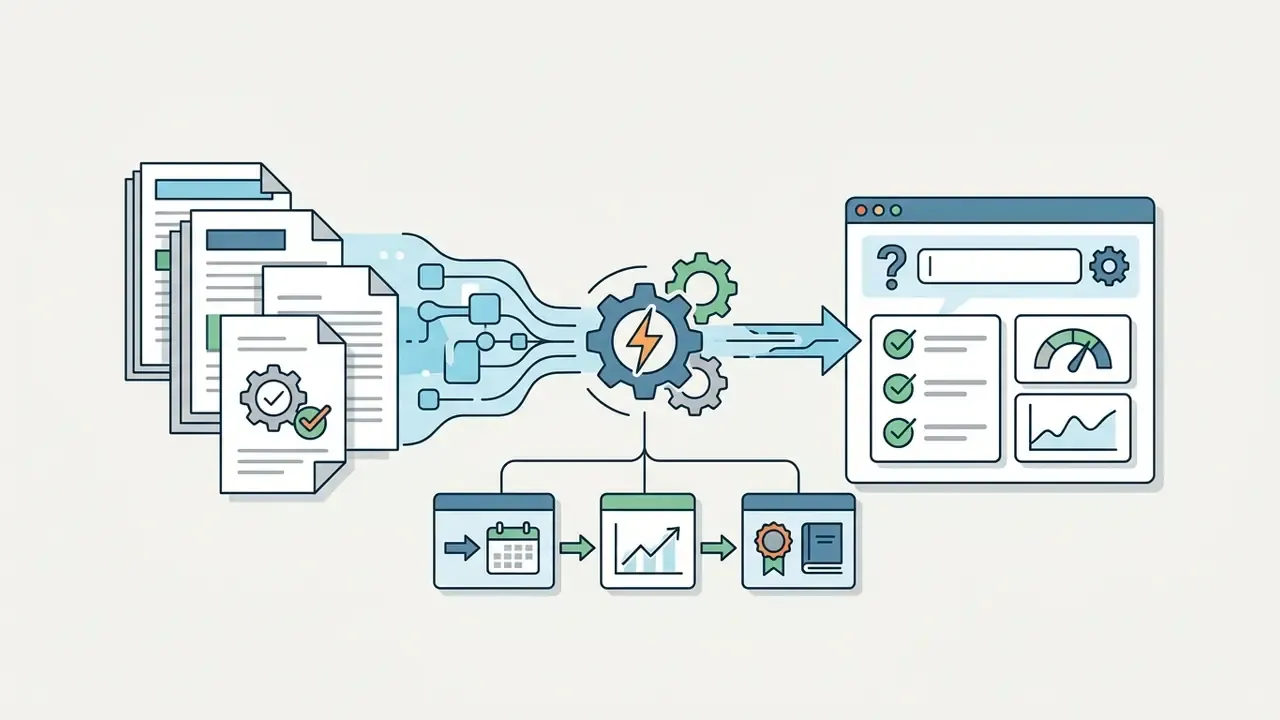
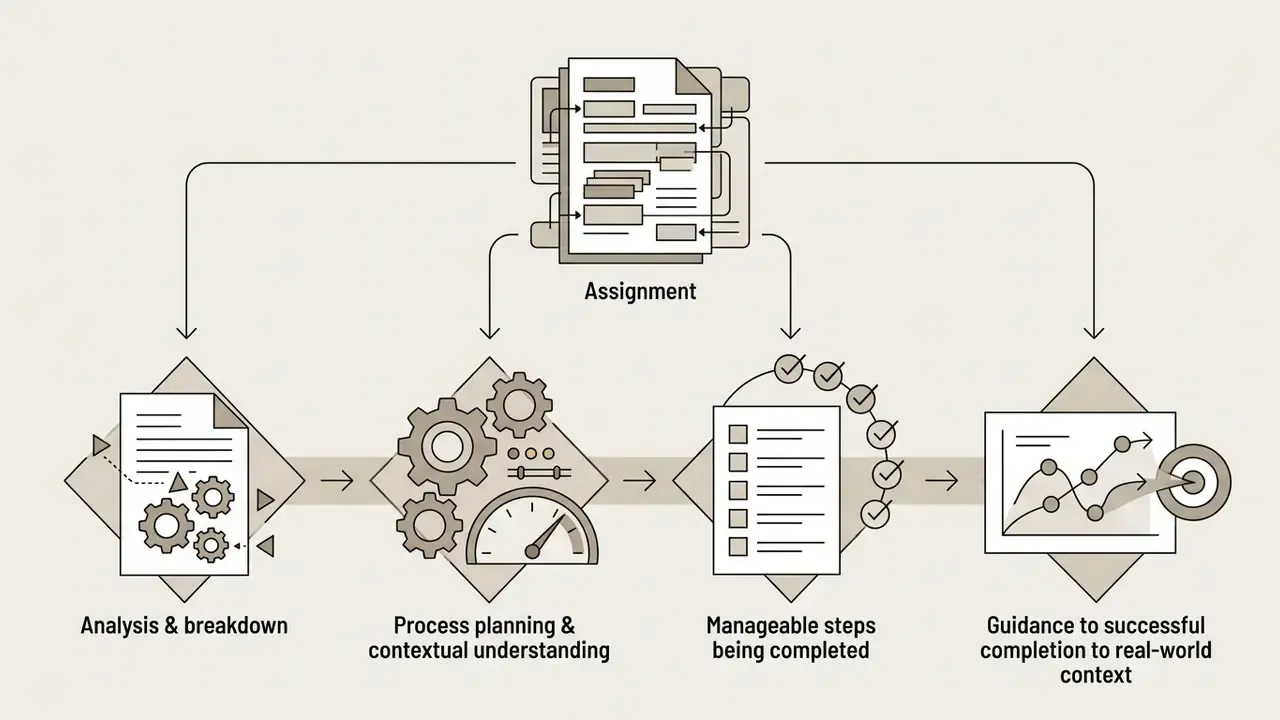
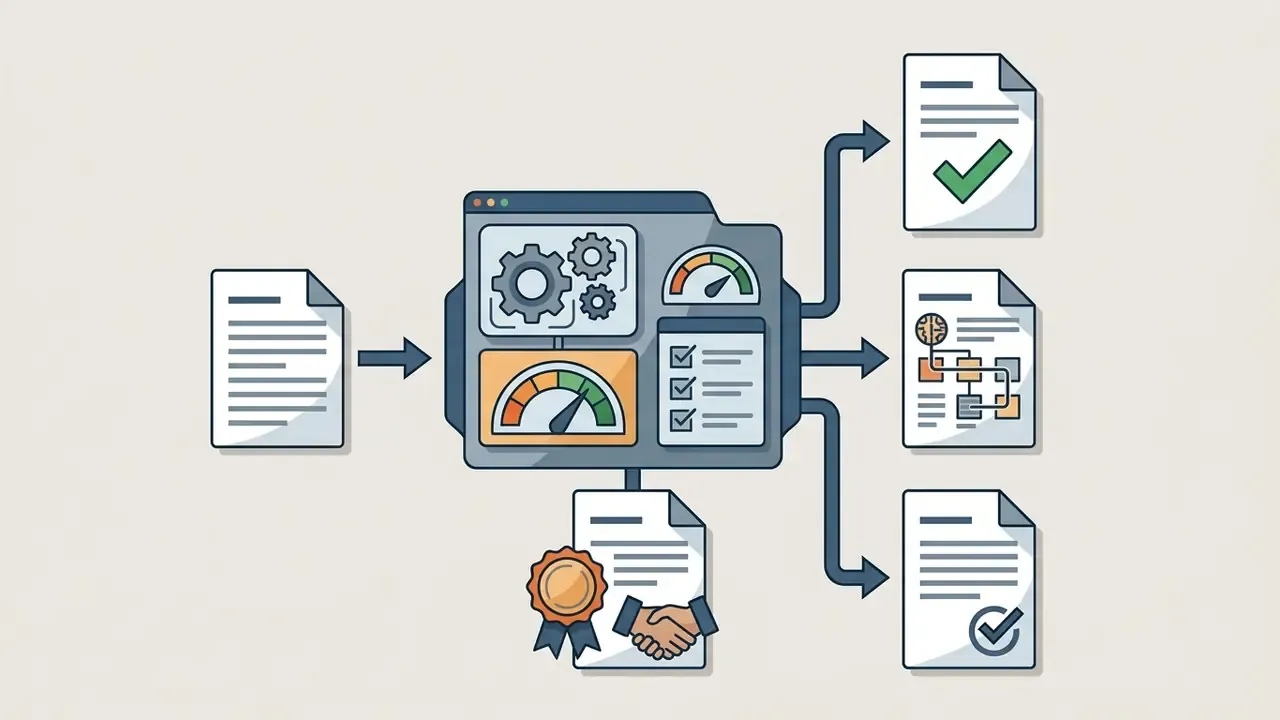
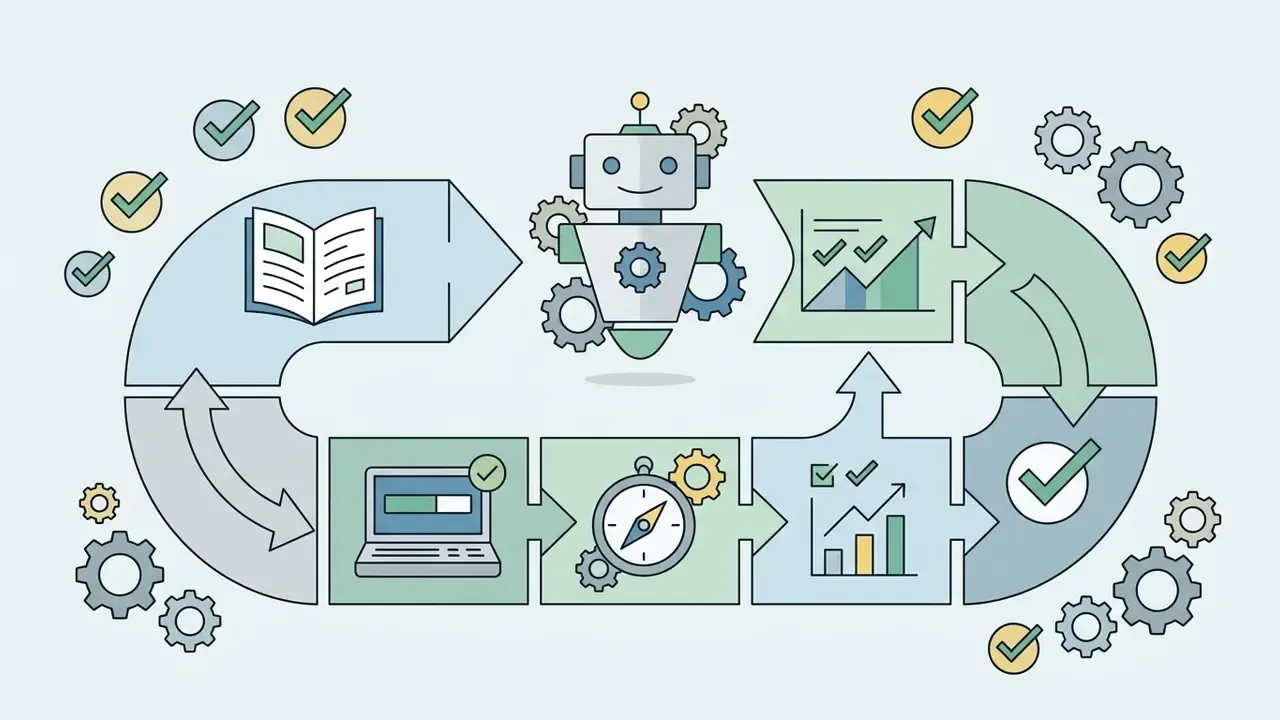
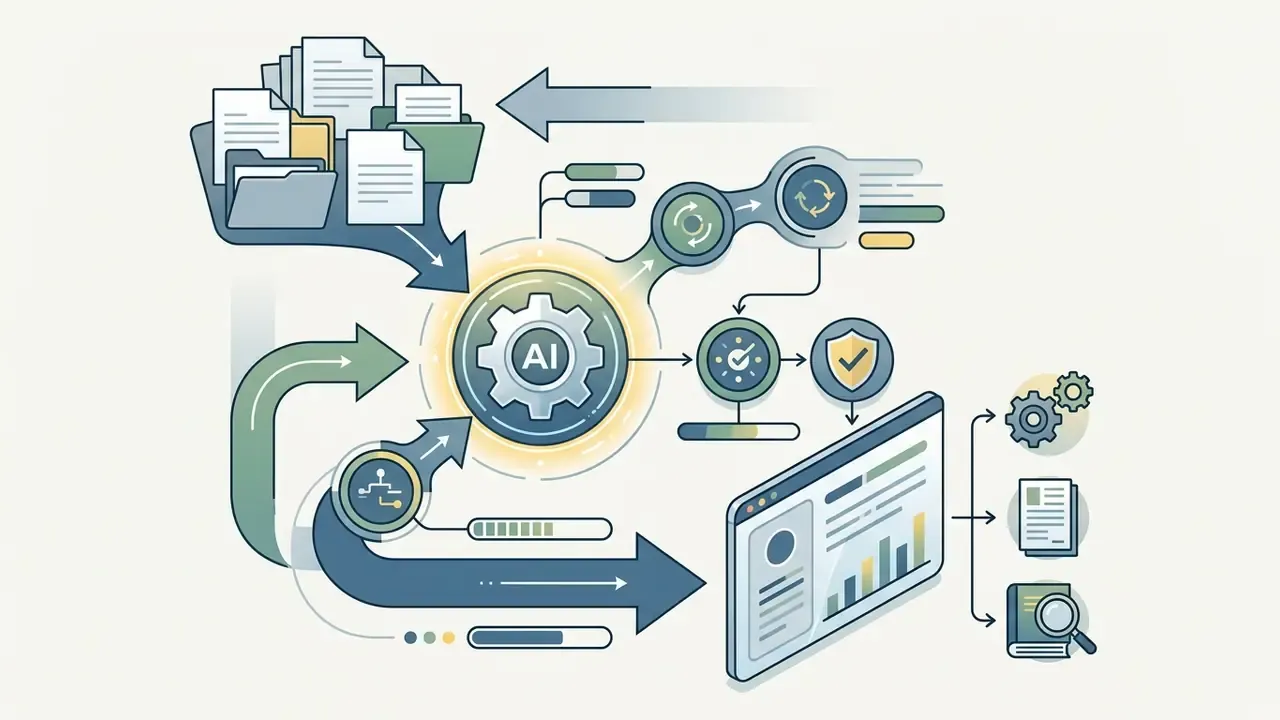
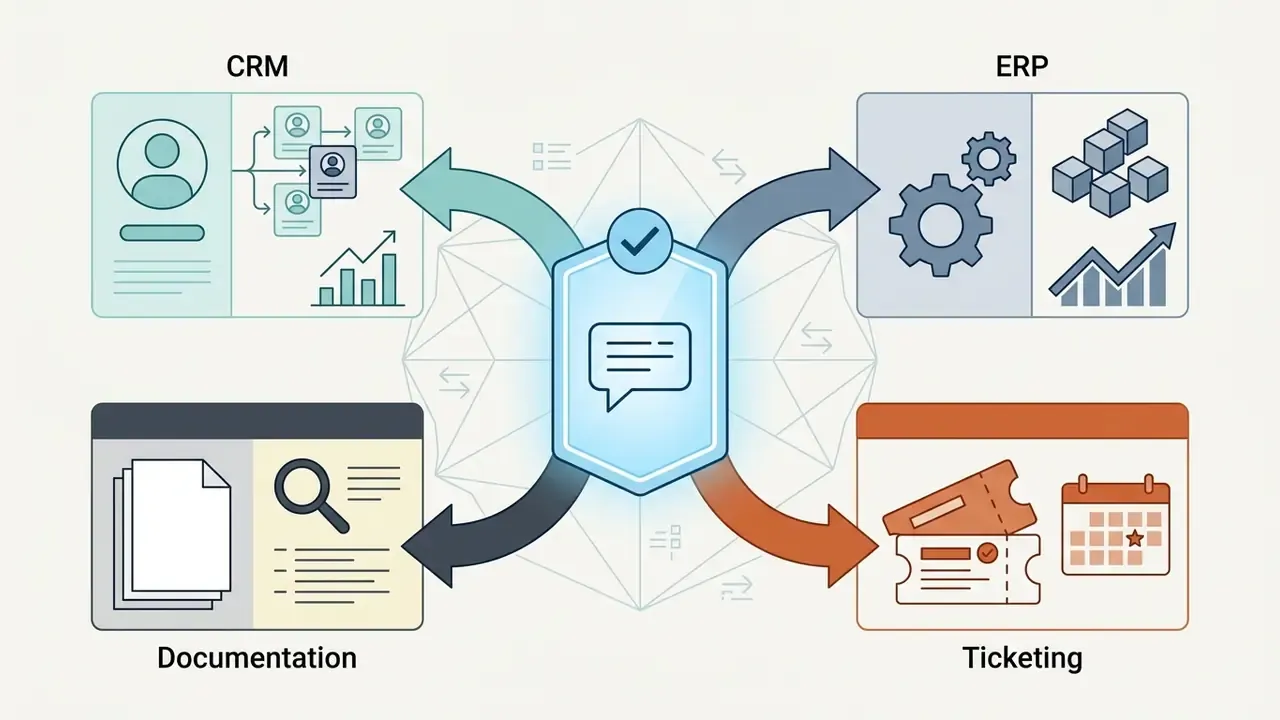
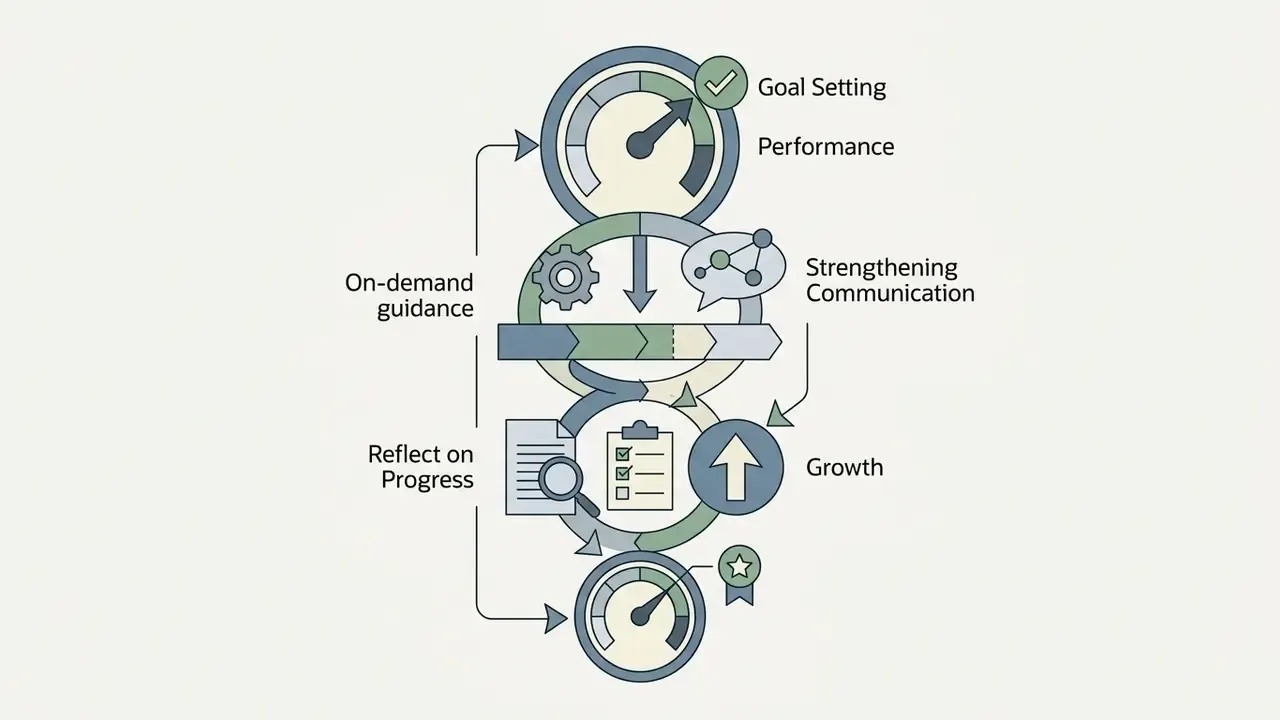
Most first builds do not need a novel architecture. They need a proven pattern. The following blueprints are deployed again and again across education, HR, support, and operations teams:
Architecting Generative Media Systems: AI Image, Audio, and Video Generators
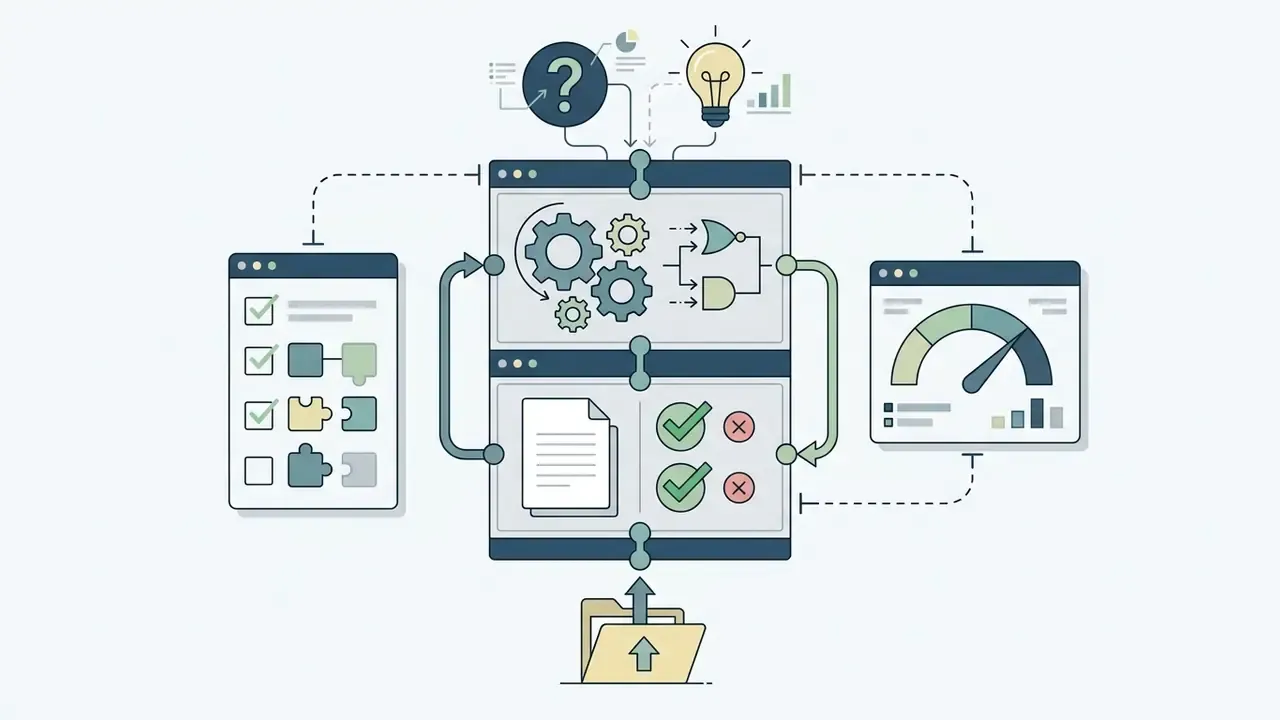
Building an AI image or video generator departs from the standard text-LLM pipeline and moves toward diffusion models or visual-synthesis transformers. Treat it as a distinct product architecture with its own quality tiers, cost curve, and legal exposure.
Core components of an image-generation pipeline:
- Synthesis engine Open diffusion weights (for example FLUX or Stable Diffusion class models) self-hosted on GPU infrastructure, or a commercial generation API when speed to market outweighs control.
- Prompt conditioning and style layer Parsing of the user prompt with automated injection of style keywords (photorealistic, anime, painterly, cinematic, graphic design, minimalist, low-poly) plus controls for lighting, colour, composition, and aspect ratio.
- Quality tiering Commercial generators typically expose graded modes: standard (fast, around 640×640), high-detail (around 1024×1024), and ultra-resolution 2K or 4K. Compute cost per image scales sharply with resolution and step count, so tier your pricing to that curve rather than offering one flat mode.
- Super-resolution and upscaling module An enhancement pass that raises resolution for print, web, or presentation output before final delivery. Small prints are usually acceptable straight from generation. Large-format output normally needs an explicit upscaling stage to avoid visible blur.
- Editing and post-processing tools Background removal, inpainting, outpainting, enhancement, and optional animation of a still frame. Teams prototyping motion output often start with a free ai video editor or a free ai video pipeline before committing GPU budget.
- Audio and narration layer Voice synthesis for documentation, training, and localized marketing. A free ai voice engine is often enough to validate demand, while a free ai video generator with voiceover covers combined narration workflows and a free ai video generator mobile app covers field teams. For static asset reuse, an image-to-motion path such as a free ai video generator from images shortens production cycles considerably.
- API surface Expose generation as an endpoint so the capability can be embedded into partner apps and internal design workflows.
How to Choose the Right Way to Build AI for Your Task
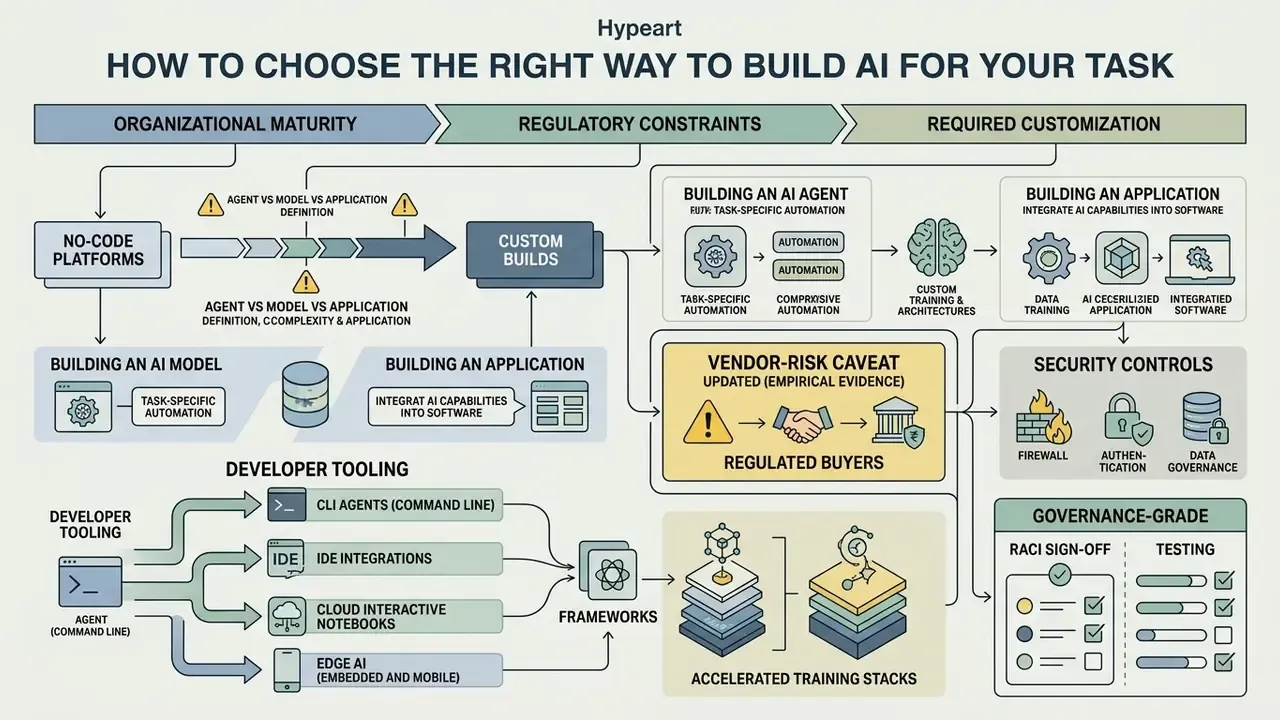
Selecting an AI development approach depends on your organization's technical maturity, regulatory constraints, and required level of software customization. Organizations can choose between visual no-code platforms, open-source model fine-tuning, or fully custom software development (NIST SP 800-218A, 2024).
No-Code and Agent Platforms for a Fast Start
«Non-technical business users successfully created automations for real enterprise applications and perceived the tool as usable and trustworthy.»
Vendor-risk caveat for regulated buyers. No-code convenience concentrates risk in the provider. Data is processed inside vendor infrastructure, model routing may change without notice, export of flows is often proprietary, and exit costs are real. Before selecting a no-code path, require SOC 2 or ISO evidence, contractual non-training and zero-retention clauses, defined data residency, log export in machine-readable form, and a documented migration route.
Developer Tooling: From CLI to IDE, Notebooks, and Edge AI
Beyond visual builders, professional AI development spans several distinct environment tiers, and mature teams usually combine all of them:
- CLI agents (command line): Lightweight, high-velocity surfaces for creating and running agents without a graphical interface. Autonomous code manipulation, repository builds, and local test execution scripted into CI jobs.
- IDE integrations: Coding assistants embedded directly into VS Code, JetBrains IntelliJ, or Android Studio, generating and reviewing code against real project context. Repository-level agents can additionally open pull requests and explain existing codebases.
- Cloud interactive notebooks: Browser-based environments such as Colab or Jupyter Hub with managed or free GPU accelerators, used for rapid prototyping, dataset inspection, and evaluation runs before productionization.
- Edge AI (embedded and mobile): Deployment of quantized, lightweight models directly on device, whether iOS, Android, IoT, or embedded web, through runtimes designed for constrained hardware. Edge inference removes network dependency, cuts latency to near zero, and keeps sensitive data on the device, which is often the deciding factor in privacy-restricted environments.
- Frameworks and accelerated training stacks: Accelerator-optimized numerical libraries and high-level modelling APIs (JAX-style differentiable numerical computing, TensorFlow and Keras-style model building) remain the foundation when custom architectures, quantization, or on-prem training are genuinely required.
Open Source, AutoML, and Custom Code for Complex Systems
Updated (illustrative pattern, unverified metrics removed). In commercial banking compliance pilots, a recurring pattern is a backlog of manual document validations across heterogeneous regulatory filings. Engineering teams respond with an agentic extraction pipeline plus mandatory human-in-the-loop verification for every low-confidence field. The reported benefit in such pilots is faster throughput on standardized filings with an unchanged control posture, because exceptions still route to a human reviewer. Publicly verified, methodologically documented throughput figures for this pattern are not available. Treat any single-institution percentage as an internal, non-audited estimate and validate against your own baseline before using it in a business case. The original quantified claim is preserved verbatim in Appendix A.
Hybrid Architectures for Legacy Core Systems
Regulated institutions rarely start from a clean slate. Where a legacy core banking, policy administration, or ERP platform cannot expose modern APIs, the workable pattern is hybrid. An integration layer (message queue, ESB, or read-only replica) mediates between the agent and the system of record. Writes execute through existing, already-validated transaction services rather than by the agent directly, and every proposed write is staged as a reviewable instruction. This preserves the existing control environment, keeps the agent outside the trust boundary of the system of record, and confines novel model risk to the reasoning layer.
When Standard Pre-Built AI Tools Are Enough
Building a custom AI system is unnecessary if the target capability is non-differentiating, standardized across the industry, and already addressed by vendor software with verified compliance certifications (api4ai, 2025; Turing, 2026).
Organizations should adopt off-the-shelf AI APIs or managed SaaS tools when fast deployment matters and standard data handling policies satisfy corporate governance standards. Vendor guidance frames the buy decision around six criteria: differentiation, time-to-market, TCO, scalability, compliance, and flexibility. Custom development is reserved for scenarios where model logic forms a core competitive advantage or requires deep integration with proprietary legacy systems (Composio, 2026).
Fact Check: Does Creating AI Require Training Your Own Model from Scratch?
Verdict: Myth. Modern AI development rarely requires training foundational models from scratch, which costs millions of dollars in compute infrastructure (Dell Technologies, 2025).
«Most organisations achieve meaningful results by combining existing models with agents and applications rather than building proprietary models from scratch.» OECD D4SME Survey, SME Digitalisation to Manage Shocks and Transitions (2024). https://doi.org/10.1787/oecd-d4sme-2024
The dominant delivery pattern is pre-trained base models combined with prompt engineering, Retrieval-Augmented Generation (RAG), and targeted fine-tuning. Zero-shot and few-shot prompting alone already produce useful behavior with no task-specific training data (Microsoft, 2025), and lifecycle guidance treats documentation, deployment, and governance as separable from pretraining (NTIA, 2024). Pre-trained foundation models already contain broad linguistic and structural capabilities, so developer customization focuses on connecting models to internal data sources and external action endpoints. Note on the widely circulated "over 90%" figure: it is directionally consistent with the sources above but is not a measured statistic in any standards publication cited here. Treat it as an industry heuristic, not a benchmark. Original phrasing retained in Appendix A.
What to Prepare Before You Create Your AI
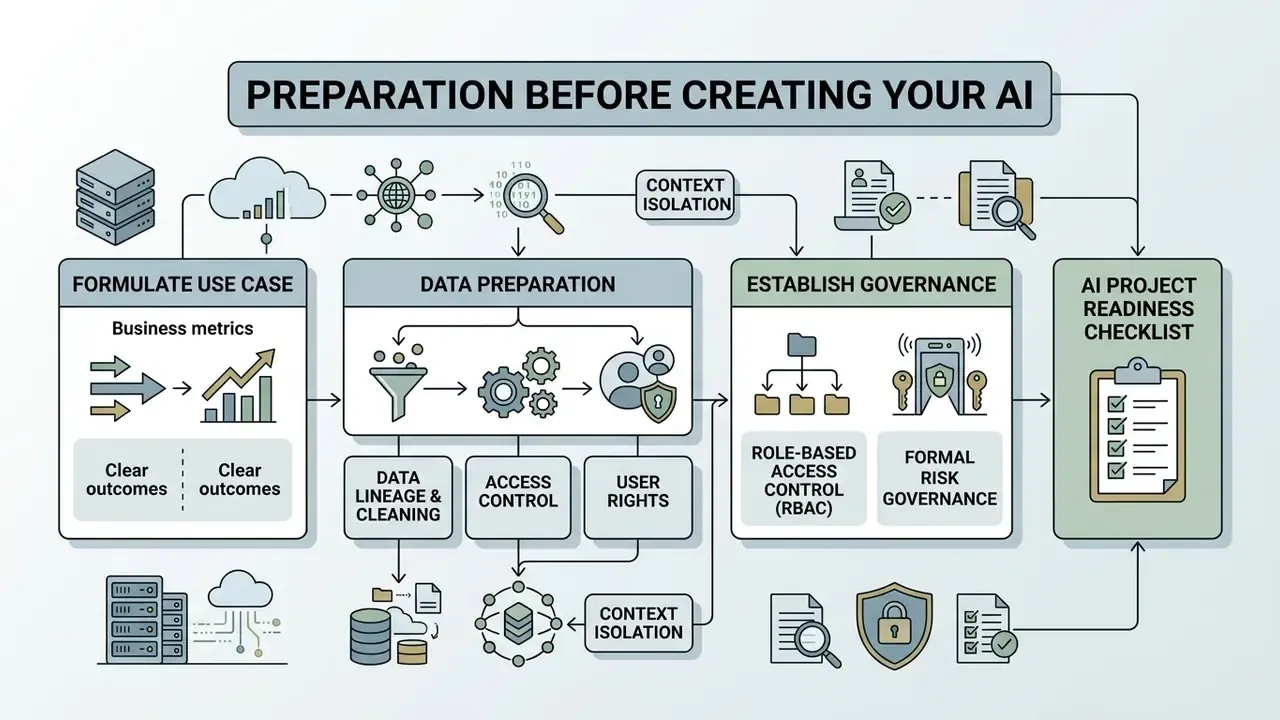
Successful AI deployment requires formal risk governance, data access boundaries, and clear business metrics before anyone writes code or configures platforms (METI AI Guidelines, 2026; OECD AI Governance Framework, 2024).
Formulating the Use Case and Expected Business Metrics
A production AI use case must define its business objectives, input data sources, target outputs, performance metrics, and human oversight mechanisms prior to development (NIST AI RMF, 2023; U.S. OMB Draft Guidance, 2024).
Organizations should map AI initiatives against specific operational bottlenecks rather than general technology goals. What breaks today, and how often?
«AI systems should be deployed to achieve specific beneficial outcomes, such as augmenting human capability and improving inclusiveness, rather than for the sake of the technology itself.»
Defining a use case involves identifying the business sponsor, declaring whether the task is safety-impacting or rights-impacting, and establishing quantitative KPIs such as task completion time, hallucination rate thresholds, or cost per transaction (NIST AI Playbook, 2026). Federal reporting templates additionally require the intended purpose, expected benefit, system outputs, target variables representing the desired real-world outcome, and development stage to be recorded per use case (U.S. agency reporting template, 2024).
Data Preparation, Access Control, and User Rights
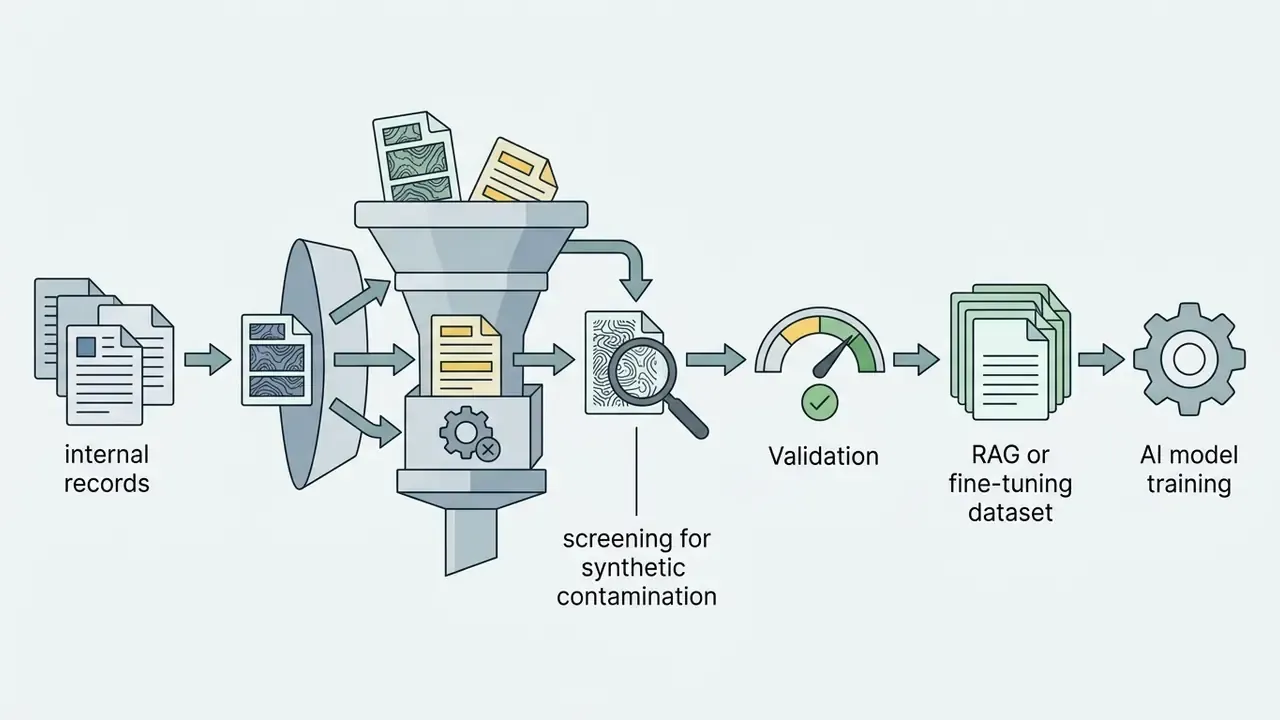
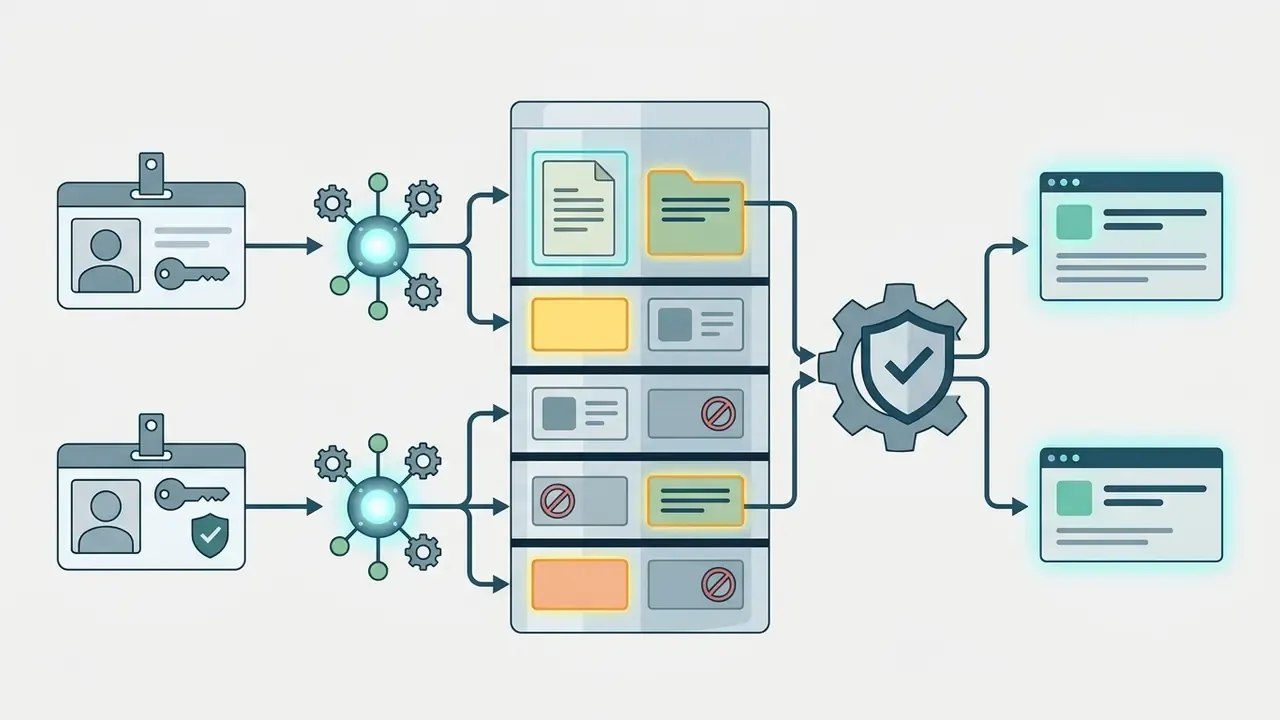
Integrating enterprise data into AI models requires checking data lineage, scrubbing sensitive data, and enforcing role-based access control (RBAC) across model contexts (NIST SP 800-218A, 2026; NIST SP 800-53 Rev. 5, 2020).
«OECD AI Principle 1.4 requires traceability of AI systems, including datasets, processes and decisions, across the full system lifecycle.»
AI Project Readiness Checklist
- Use case validation
- Data governance and audit
- Access control and security
- Platform and architecture selection
Checklist0 / 16
How to Create AI: Step-by-Step Pathway from Concept to Production
Moving an AI product from initial concept to controlled deployment follows an iterative lifecycle: prompt engineering and prototyping, systematic testing, controlled deployment, and post-launch monitoring (ISO/IEC 5338:2023; NIST AI RMF, 2023).
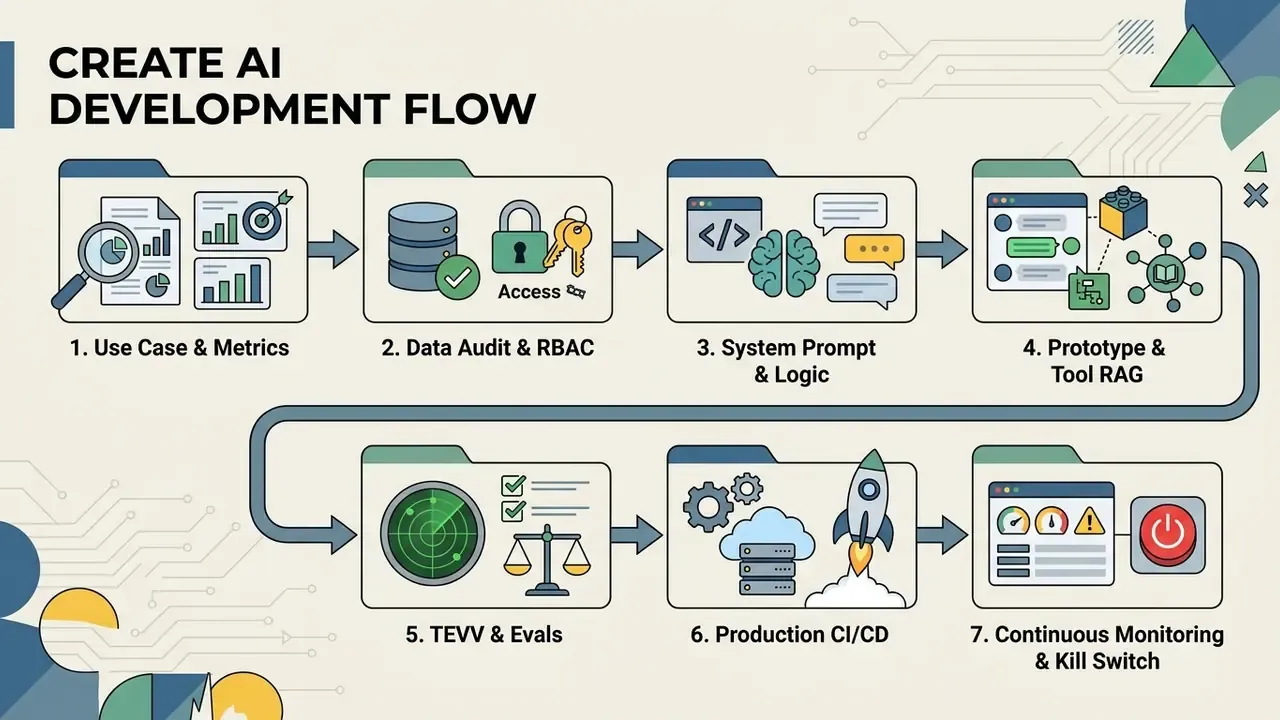
Flowchart description: sequence of stages required to create ai, test it, deploy it, and govern an enterprise AI system.
Task Description and Assembling the Initial AI Prototype
Building an initial prototype begins with a structured system prompt, execution guardrails, and the binding of necessary external tools (Amazon Connect AI Agent Guide, 2026; NIST SP 1353 Draft, 2026).
Rapid prototyping relies on explicit instructions rather than conversational prompts. A production-ready agent prompt establishes six core structural components: system persona, task scope, standard operating procedures, strict behavioral constraints, required JSON output schema, and escalation paths for ambiguous requests (Amazon Connect Guide, 2026). Static instructions belong at the start of the prompt, procedural lists should stay to three to five items for reliability, and the agent must be required to verify facts with available tools before acting. Developers then connect the base model to API tools and data stores using framework-level integrations or standardized protocols like the Model Context Protocol (MCP).
Testing Responses, Tool Execution Scenarios, and Edge Cases
Evaluating an AI system requires automated benchmarking (evals), tool-execution validation, and adversarial edge-case testing across defined dataset scenarios (NIST AI 200-2 ipd TEVV-Athlon, 2026; NIST AI 800-2 ipd, 2026).
Updated (illustrative pattern). A recurring failure mode in wealth-management deployments is unpredictable tool selection when client requests arrive unstructured: the model calls a plausible but incorrect function. The standard remediation is layered. Deterministic guardrails constrain the callable tool set, outputs follow a strict JSON schema, pre-action verification is mandatory, and step-level audit logging is captured before execution. The verifiable benefit is architectural rather than statistical. Unauthorized external API calls become structurally impossible, and every decision step produces a reproducible audit trail suitable for internal model risk review. This example is an illustrative composite of common deployment patterns, not a documented, independently audited case study. Original wording preserved in Appendix A.
Evaluation frameworks assess AI agents across three distinct performance vectors:
«Modular procedural memory significantly improves task success: orchestrator memory is critical for decomposition, while agent memory improves execution accuracy.»
Governance Accountability: RACI Matrix for AI Delivery
Autonomy without named accountability is the fastest route to a supervisory finding. Assign decision rights per stage before development begins.
| Lifecycle Stage | Business Owner | AI/Data Engineering | Model Risk / Independent Validation | CISO / Security | Compliance & Legal |
|---|---|---|---|---|---|
| Use case definition and metrics | A / R | C | C | I | C |
| Data sourcing, lineage, minimization | A | R | C | C | C |
| Architecture and platform selection | C | A / R | C | C | I |
| Prompt, guardrail, and tool-scope design | C | R | C | A (security controls) | I |
| TEVV, evaluation, and bias testing | I | R | A | C | C |
| Pre-production sign-off | A | R | A (independent) | A (security) | A (regulatory) |
| Production monitoring and incident response | A | R | C | R | I |
| Kill-switch invocation and rollback | A | R | C | A | I |
| Periodic revalidation and decommissioning | C | R | A | C | C |
R = Responsible, A = Accountable (sign-off), C = Consulted, I = Informed. In U.S. banking contexts, independent validation and challenge should be read alongside SR 11-7 and OCC 2011-12 expectations for model development, implementation, use, and validation.
Deploying AI and Ongoing Product Governance
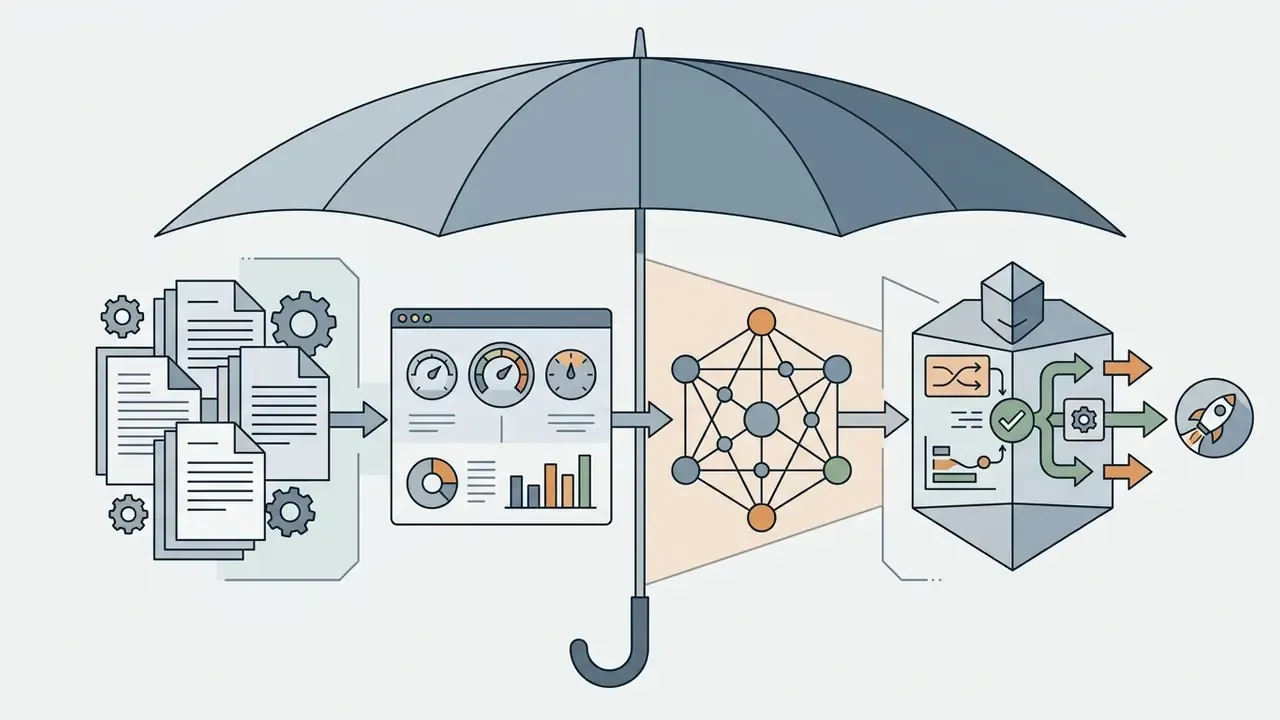
Deploying an AI product into production requires automated version control for prompts and models, telemetry logging, real-time hallucination monitoring, and explicit kill-switch controls (CISA/FBI Secure AI Deployment, 2025; NIST Cybersecurity Framework, 2025).
«Responsible AI governance requires transparency, accountability and continuous monitoring, with clear mechanisms to contest and correct AI-assisted decisions.»
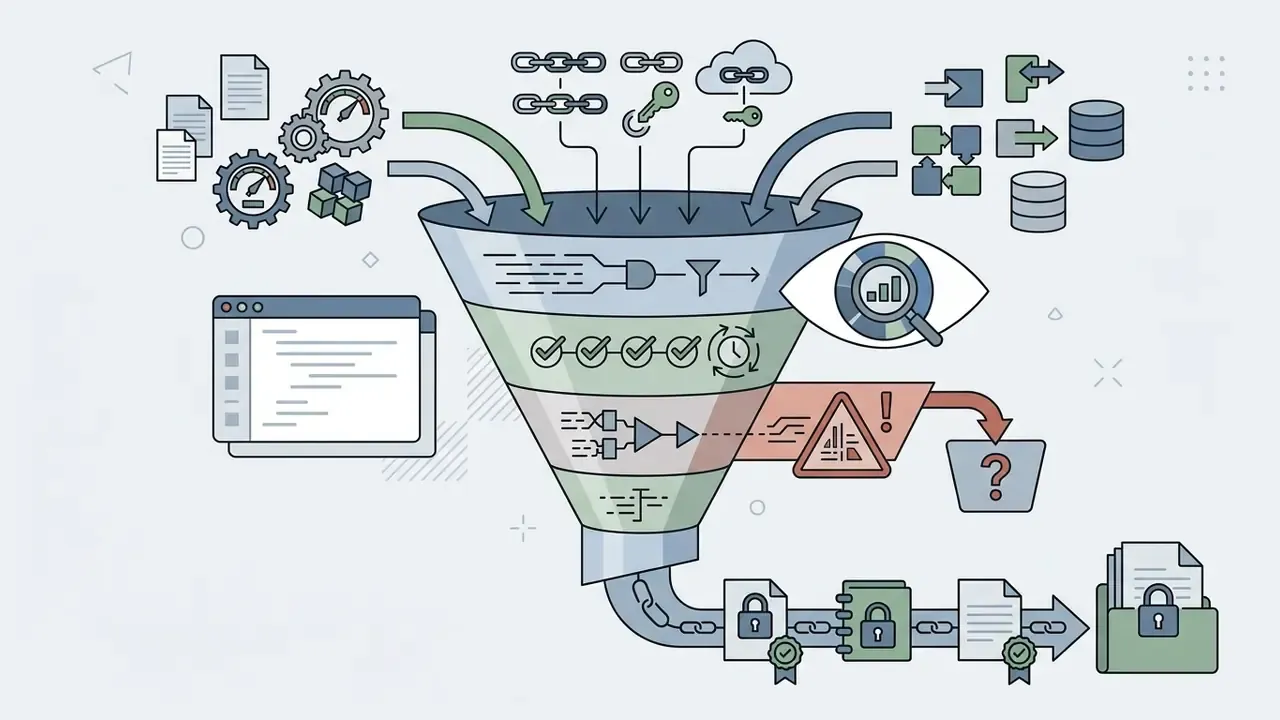
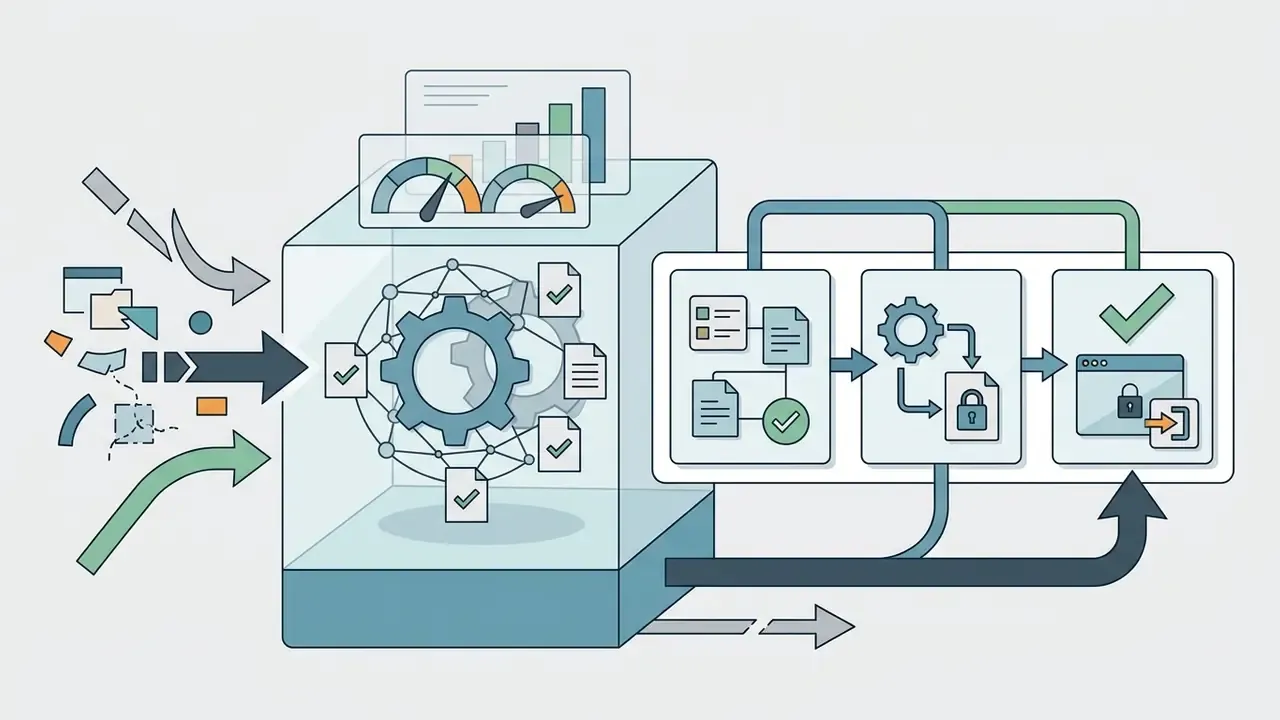
Production release involves packaging model workflows into containerized microservices managed via standard CI/CD pipelines. Continuous governance requires maintaining cryptographic hashes of active prompts and base models, logging every user interaction and agent decision step, and deploying real-time guardrail proxy layers that scan incoming inputs and outgoing model generations for sensitive data or harmful instructions (CISA/FBI, 2025). Deployment is not the end state. NIST places user feedback, override capability, post-deployment monitoring, and decommissioning inside the lifecycle, and supervisory handbooks split that lifecycle into use-case design, data acquisition, build and validation, deployment, and usage, monitoring, and change management (MAS AI Risk Management Handbook).
Security, Privacy, and Responsible AI Implementation
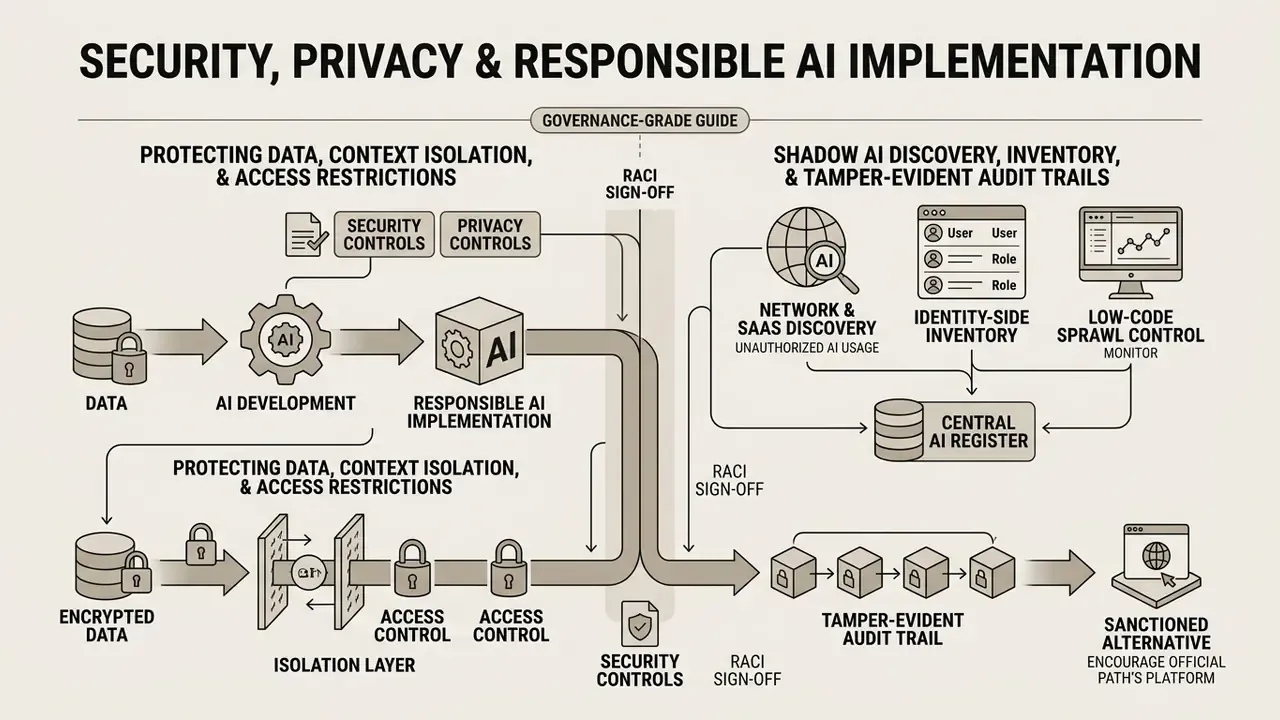
This section is general information and does not substitute for professional legal, security, or regulatory advice.
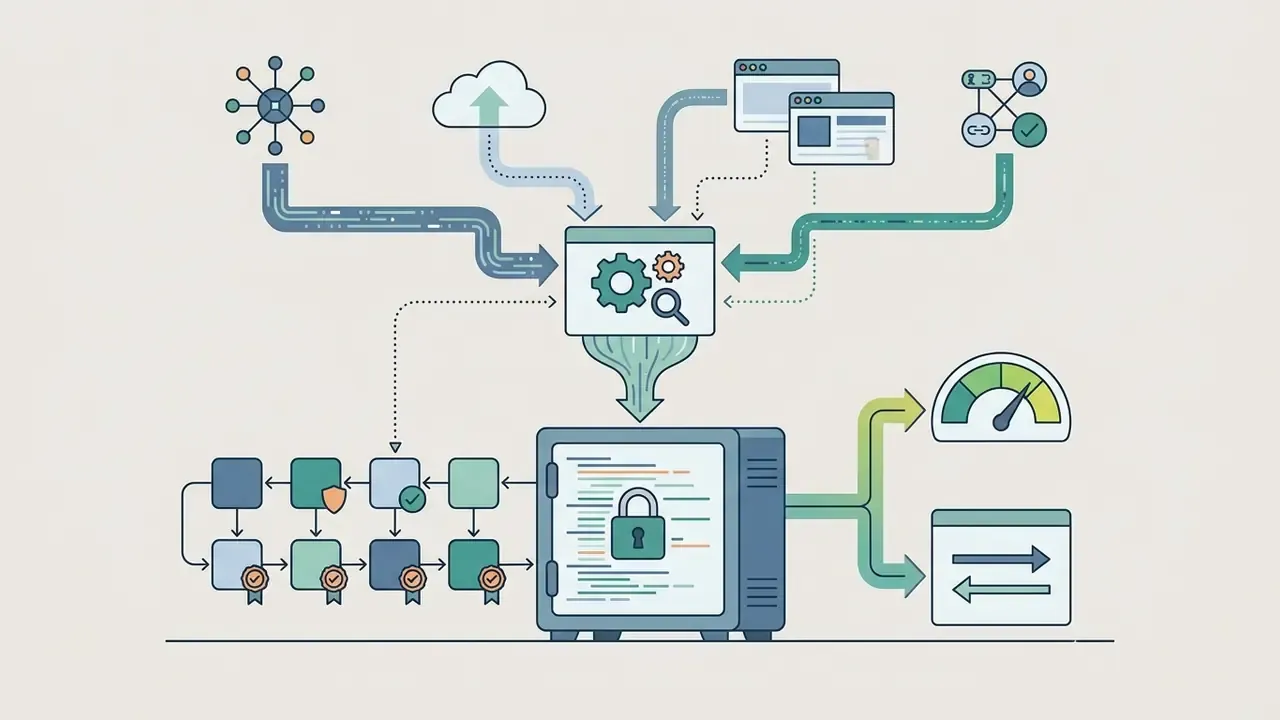
Deploying AI systems into enterprise workflows requires active safeguards against data leaks, prompt injection attacks, unverified outputs, and unauthorized access (NIST AI RMF Generative AI Profile, 2024; U.S. DHS, 2024). Define this perimeter before costing the project. Isolation requirements, hosting model, logging retention, and validation depth are the primary drivers of infrastructure spend discussed in the next section.
Protecting Data, Context Isolation, and Access Restrictions
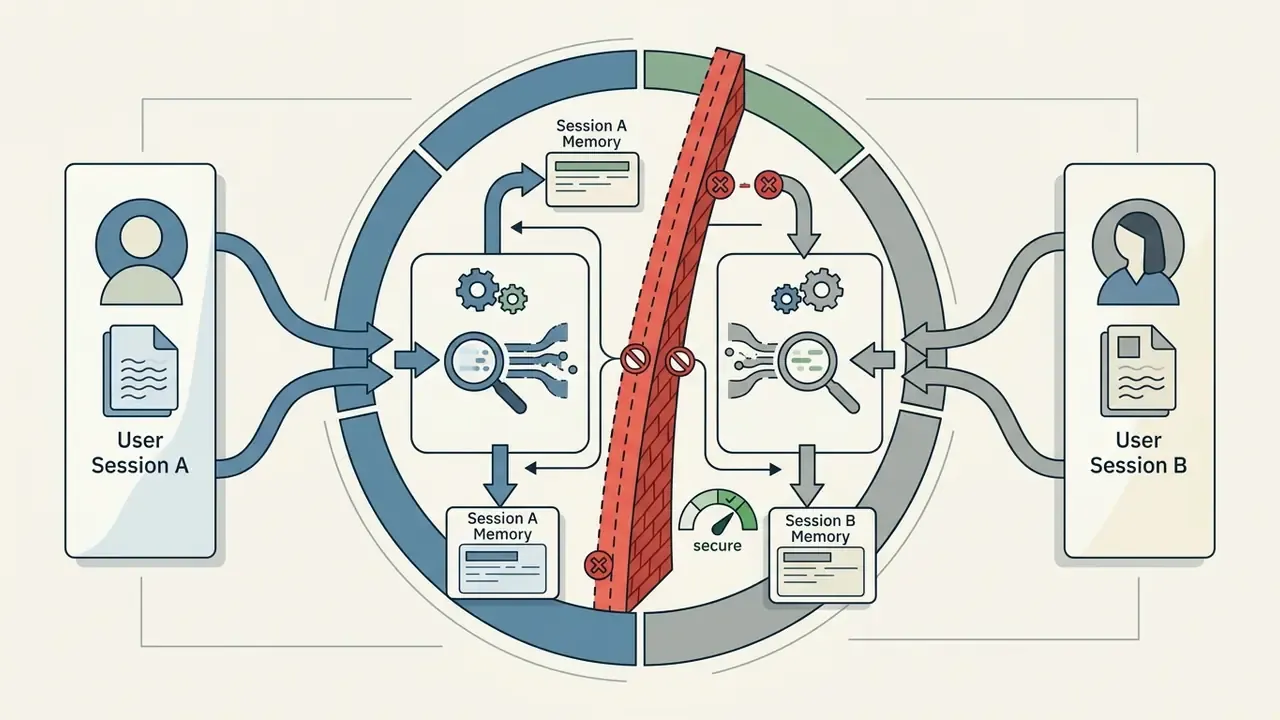
Protecting corporate data when using LLMs requires de-identification pipelines, input and output guardrails, zero-trust context isolation, and strict RBAC enforcement (NIST SP 800-239 Draft, 2025; NIST Cybersecurity Profile, 2025).
Direct prompt injection occurs when a malicious user crafts inputs designed to override system instructions.
Indirect prompt injection happens when an AI agent reads untrusted data, such as an external email or webpage, containing embedded instructions that hijack the agent's behavior (NIST AI RMF Profile, 2024). Institutions defend against these threats by placing sanitization proxy layers between retrieved context and the base model, enforcing context-based access control, minimizing sensitive data in prompts with runtime redaction and output filtering, and executing unverified code or web requests in isolated sandbox environments with time-limited entitlements (U.S. Department of Defense, 2026; OWASP, 2026).
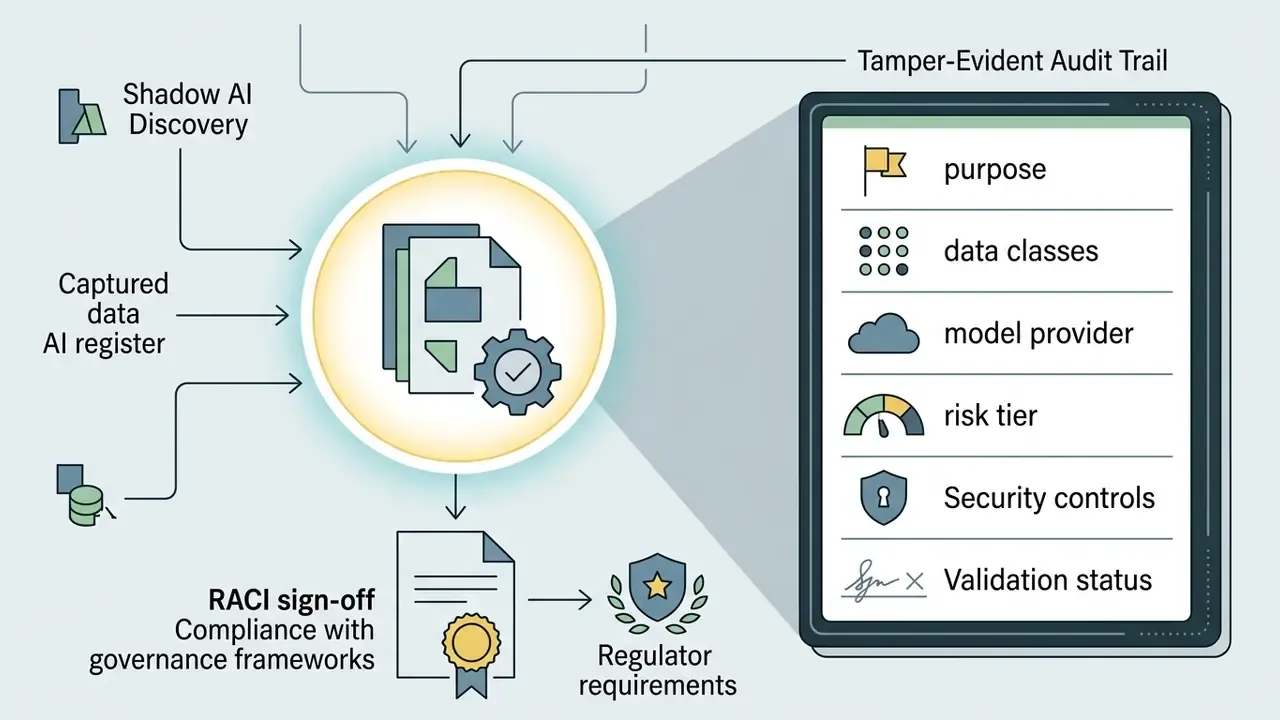
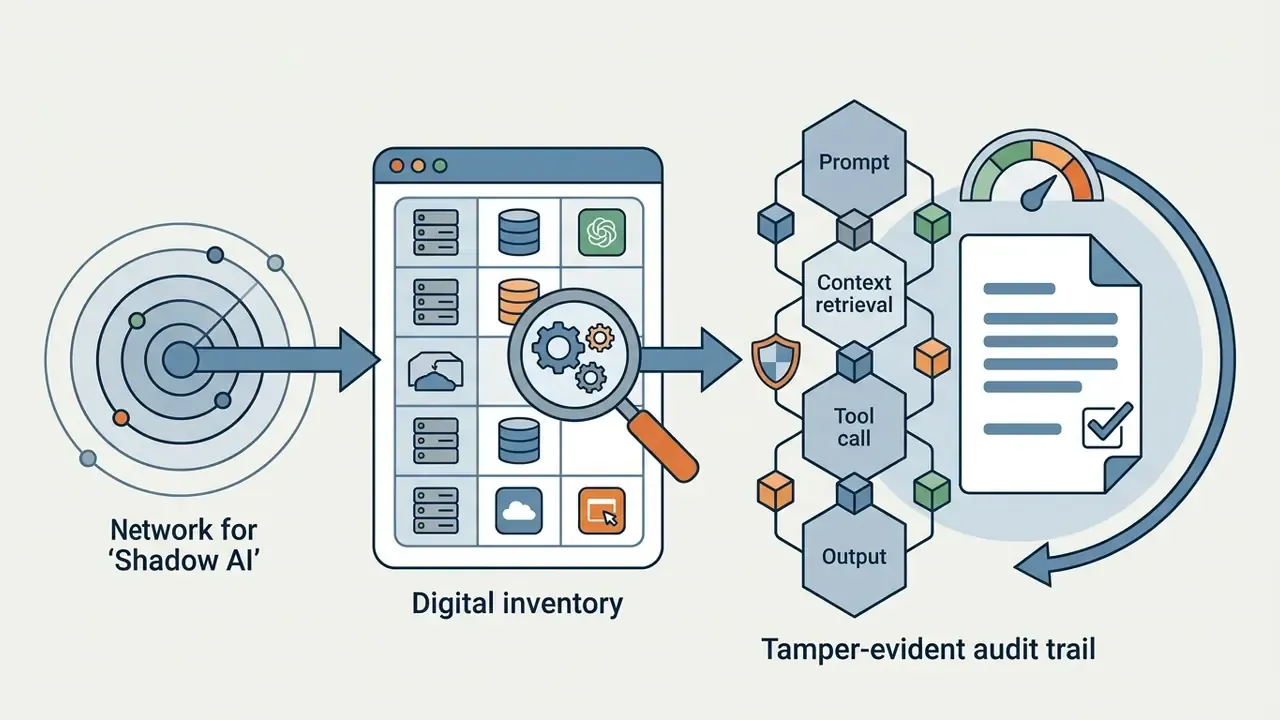
Shadow AI Discovery, Inventory, and Tamper-Evident Audit Trails
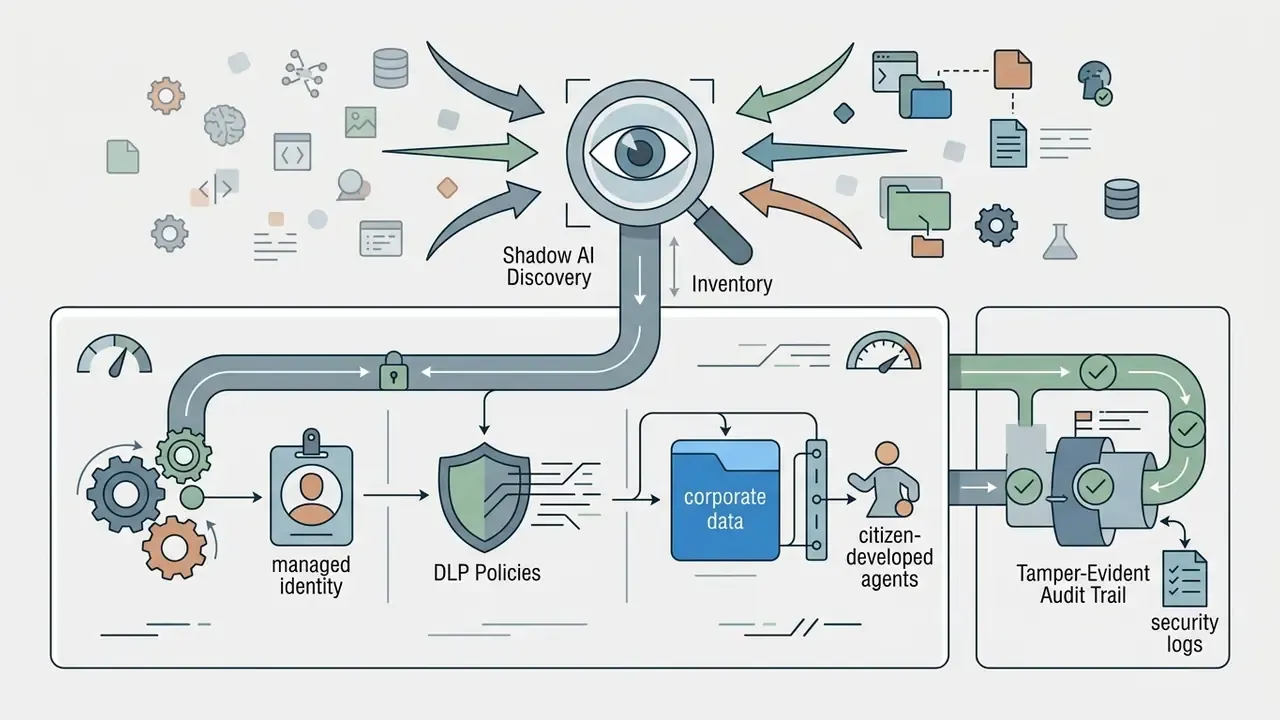
Unsanctioned AI use is now the largest uncontrolled exposure in most enterprises, because it moves regulated data outside the logged perimeter entirely. A defensible control set combines detection with evidence:
Validating AI Outputs and Managing Operational Risk
Establishing trustworthy AI requires automated output filtering, digital content provenance tracking, retained validation records, and explicit human accountability (NIST AI 600-1, 2024; UK Government, 2024).
Generative model outputs must pass automated verification checks before being displayed to end users or triggering downstream database changes. Content filters scan generated outputs for harmful language, structural hallucination, and factual inconsistency against source documentation. Where confidence is low, a weak answer should be replaced with an explicit warning rather than displayed (NIST AI 600-1, 2024; SDAIA generative AI guidelines, 2024).
«Policy efforts highlight AI risks related to increasingly sophisticated cyberattacks, lack of explainability, and various forms of manipulation and harm.»
When an AI agent assists in consequential business decisions, such as credit evaluation or automated payment settlement, the business keeps ultimate legal responsibility. That means recorded audit trails and explicit human sign-off options (U.S. DHS, 2024; Australia OAIC, 2024). Regulated U.S. financial institutions should map these controls onto existing model risk management expectations for development, implementation, use, and independent validation (Federal Reserve SR 11-7 / OCC Bulletin 2011-12), extending them to cover non-deterministic outputs, prompt and version provenance, and tool-invocation logs. Accountability frameworks describe this as answerability, auditability, and liability across the lifecycle, with recourse mechanisms when AI causes harm (UK Government, 2024).
Important Security and Legal Warning
The information above is general in nature and does not replace advice from a qualified professional.
The Cost of Creating AI and Selecting Platforms for Commercial Use
Calculating the financial model for an AI project requires evaluating inference tokens, platform licensing fees, hosting infrastructure, model fine-tuning, and ongoing maintenance controls (Dell Technologies, 2025; Mirantis, 2026).
Key Drivers of AI Project Financials and TCO
Total Cost of Ownership (TCO) for enterprise AI projects spans variable compute costs, fixed platform software fees, and operational compliance overhead (Intel AI Readiness Model, 2025).
«Only around 25% of SMEs report using AI in core operations, indicating substantial financial, skills and organisational barriers to adoption.»
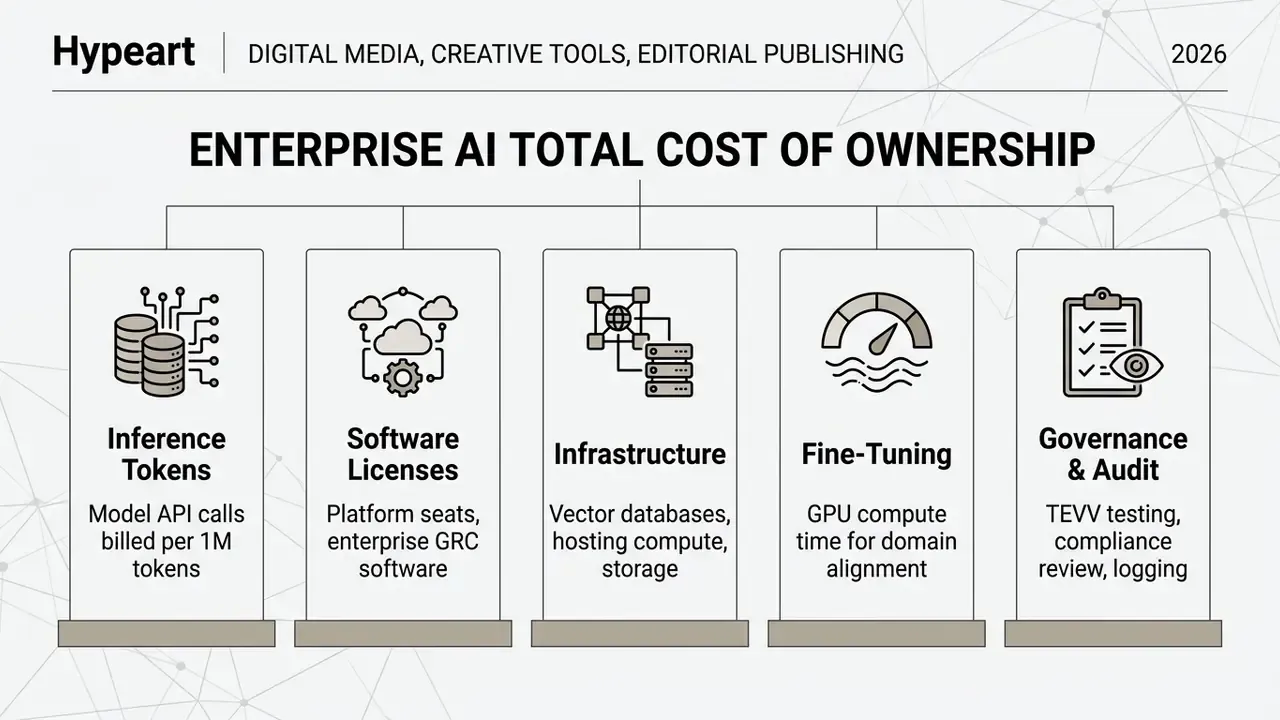
Step-by-Step TCO and Risk-Adjusted ROI Calculation
Use this sequence to convert an architecture choice into a defensible monthly figure and a risk-adjusted return.
Step 1. Estimate monthly token volume.
Monthly tokens = active users × interactions per user per month × (avg input tokens + avg output tokens per interaction)
Include retrieved RAG context in the input count. Retrieval is frequently the dominant token line.
Step 2. Price inference.
Inference cost = (input tokens ÷ 1M × input rate) + (output tokens ÷ 1M × output rate)
For self-hosted open weights, substitute: GPU-hours × hourly instance rate ÷ utilisation factor.
Step 3. Add fixed platform and infrastructure lines.
Platform seats, orchestration nodes, vector database, object storage, observability, and accelerator software licences.
Step 4. Amortise one-off build costs.
Amortised build = (engineering days × blended day rate + fine-tuning GPU spend) ÷ expected months in service
Step 5. Add the control layer.
Independent validation, TEVV runs, red-teaming, log retention, and periodic revalidation. Price these from internal rate cards, not from external percentages.
Step 6. Compute monthly TCO.
TCO = Inference + Fixed platform + Infrastructure + Amortised build + Control layer + Support
Step 7. Compute risk-adjusted ROI.
Risk-Adjusted ROI =
   [ Gross annual benefit
     − Annual TCO
     − Expected residual risk cost ]
   ÷ [ Annual TCO + One-off build cost ]
where  Expected residual risk cost
       = Σ ( probability of failure mode × financial impact × (1 − control effectiveness) )
Gross annual benefit should be measured against the pre-AI baseline: hours saved times loaded labour cost, error-rate reduction times cost per error, revenue lift. Failure modes to price explicitly include hallucinated customer-facing statements, unauthorized tool execution, data leakage, and regulatory remediation. A project whose risk-adjusted ROI turns positive only when residual risk is assumed to be zero should not pass sign-off. Full stop.
Step 8. Stress-test the model. Re-run at triple token volume, at a doubled model price, and with control effectiveness cut in half. Scenario fragility is itself a governance finding. If the numbers need a spreadsheet rather than a napkin, our calculators and AI Media Pricing Guides cover token, seat, and hosting assumptions in more detail.
Commercial Readiness Checklist: Compliance, Billing, and Security
Before launching an AI product commercially, the delivery team must verify compliance with international data privacy laws, secure billing systems, and contractual service-level agreements (EU AI Act Recital 69, 2026; EDPB Guidelines, 2020).
- Privacy and regulatory alignment
- Systems processing personal data must enforce data minimization, comply with GDPR requirements, and generate the automated technical documentation mandated by the EU AI Act. Annex V requires the declaration of conformity to state GDPR compliance where personal data are processed (EU AI Act Service Desk, 2026).
«Fragmented approaches between the AI and privacy communities create misunderstanding and additional complexity in compliance and enforcement.»
- Payment and billing isolation: E-commerce or subscription features must route payment card details through dedicated, PCI-compliant gateways. AI models must never handle raw payment credentials directly (EDPB Guidelines 06/2020, 2020).
- Service level agreements (SLAs): Enterprise deployments require contractual SLAs guaranteeing API availability, maximum system response latency, and dedicated technical support (European Commission, 2014).
- Content rights and disclosure: For generative media products, confirm licence pass-through, watermarking or metadata labelling of AI involvement, and jurisdiction-specific copyright positions before commercial launch (Hong Kong Generative AI Technical and Application Guideline, 2025).
| Approach | Up-Front & Operating Cost | Technical Control | Data Governance & Privacy | Deployment Flexibility | Scalability & Customization |
|---|---|---|---|---|---|
| No-Code Platform | Low initial cost, ongoing monthly subscription fees (IDA, 2024) | Low, constrained to vendor UI features and pre-built nodes | Data processed via vendor infrastructure, relies on vendor SOC 2 (OECD, 2024) | Primarily vendor cloud hosted, limited on-premise choices | High for standard tasks, low for proprietary algorithms |
| Agent Platform | Moderate, usage-based billing plus seat licenses (MLAS, 2024) | Medium, configurable agent workflows and routing logic | Multi-tenant cloud or dedicated private tenant options (MLAS, 2024) | Managed cloud infrastructure, API integrations | Flexible composition of multi-agent networks |
| Open-Source Stack | High up-front development, zero software license fees, higher supply-chain review effort (NIST, 2022) | Full control over model weights, context memory, and code | Complete data sovereignty, private hosting eliminates third-party leaks (EU AI Act, 2025) | Highly flexible: private cloud, air-gapped, on-premise, edge (NIST, 2020) | Unlimited architectural scalability and deep customization |
| Custom Code on APIs | Moderate up-front code build, variable inference API charges (Dell, 2025) | High software control, no direct control over model weights | Sent to third-party endpoints, requires contractual non-training clauses (DHS, 2024) | Hybrid: application hosted locally, inference via cloud endpoints | High application logic customization |
Buyers comparing generative media vendors as part of this matrix can review capability and licensing differences across AI image generators for commercial use before committing to a build-versus-buy decision. Where functionality, total cost, and cybersecurity posture are equivalent, public-sector open-source policy explicitly favours the open option (European Commission Open Source Strategy, 2021).
FAQ: Frequently Asked Questions About Creating AI
Can I Create My AI Without Programming Skills?
Yes. Non-technical users can build functional AI agents and workflow automations using visual no-code and low-code agent platforms (Langflow Docs, 2026). Visual drag-and-drop builders let users combine base models, file uploaders, RAG search engines, and communication channels, including AI art generators for visual output, without writing software code.
«In the IDA user study, business users without technical backgrounds successfully created automations for real enterprise applications and perceived the tool as usable and trustworthy.» IDA: Breaking Barriers in No-code UI Automation Through Large Language Models and Human-Centric Design, arXiv (2024). https://arxiv.org/abs/2407.16165 That said, enterprise deployments of no-code tools still require administrative oversight, identity provisioning, and strict data loss prevention (DLP) policies managed by IT teams (Microsoft Low-Code Governance, 2026; OWASP, 2026).
Citizen Development: What Are the Real Limits and Risks?
Unrestricted autonomy from a visual builder is not acceptable in secure or regulated environments. Official guidance recommends sandboxing, least privilege, time-limited entitlements, and threat modelling for agentic services (U.S. Department of Defense, 2026), while agentic governance models treat citizen-developer flows over real organizational data as a distinct maturity problem requiring human review, logging, and continuous oversight (OWASP, 2026). Public documentation on agent capability is also inconsistent, which limits confidence in broad vendor claims (MIT AI Agent Index, 2025). Practical rule: citizen development suits read-mostly, non-rights-impacting workflows. Anything that writes to a system of record, touches regulated data, or affects a customer outcome moves into the governed engineering pipeline with the RACI sign-offs described above.
Who Owns Images or Media Generated by an AI System?
Ownership and copyright are two separate questions. Platform terms typically grant the user broad commercial usage rights to their generations, including advertising, print, and NFT use. Copyright is narrower. Raw machine output produced without substantive human authorship may not be protected at all, and some providers explicitly state that generated images are public domain with no owner. Enterprises building on such outputs should therefore document the human creative contribution where protection matters, verify that the base-model licence permits commercial exploitation, and avoid contractual promises of exclusivity for unedited generations. Track ongoing disputes and rulings through AI Litigation and compliance coverage. This is general information, not legal advice.
Where Can Teams Find Support and Guidance During AI Development?
Development teams can reach official technical documentation, open-source reference architectures, and hands-on vendor workshops:
- Official documentation: NIST provides standardized frameworks including the NIST AI Risk Management Framework and the AI Standards Zero Draft for public-facing AI documentation (NIST, 2026).
- Technical workshops: Interactive training resources include Google's Document AI Workshop (OCR, batch and online processing, Form Parser, custom processors) and Microsoft's OpenAI Workshop labs on agentic and multi-agent architectures (Google, 2026; Microsoft, 2026).
- Developer communities: Open developer forums hosted by OpenAI, LangChain, and Flowise provide technical support for agent orchestration, prompt debugging, and tool integration (OpenAI Developer Community, 2026).
- Implementation help: Deployment guides, error triage, and platform-specific fixes sit in AI Media Support and Troubleshooting, and endpoint reference material in the AI Media API docs. Want to learn more before committing budget? Start there.
How Can Teams Safely Share AI Experiences and Workspaces?
Teams share AI applications and agent tools using enterprise admin consoles configured with domain-level role-based access controls (Google Workspace Admin, 2026; Kore.ai, 2026). Administrators set up dedicated team workspaces with a single accountable owner, assign specific user permissions, configure models and connectors, manage secrets, control access to connected corporate databases, apply DLP and data-region policies, and maintain centralized audit logs tracking AI usage, system inputs, and agent task execution across the whole organization (Google Workspace Admin, 2026; Kore.ai, 2026).
«Sharing AI systems across business units requires coordination mechanisms and shared standards to avoid fragmentation and inconsistent risk management.» An Adaptive Responsible AI Governance Framework for Decentralized Organizations (ARGO), arXiv (2025). https://arxiv.org/abs/2510
Limitations, Open Questions, and a Safe Next Step
Two honest caveats. First, the evidence base for agentic AI in regulated finance is still thin: most published throughput and accuracy claims come from single institutions, without independent methodology. Second, supervisory expectations for non-deterministic models keep moving, so any control set documented in 2026 should be revisited on a fixed cycle rather than treated as settled.
What remains unresolved? How much residual risk a board is willing to price for autonomous write actions. Whether independent validation can keep pace with weekly model updates. And who signs when an agent, not a person, makes the call.
A safe next step is small: pick one read-mostly use case, complete the readiness checklist above, and run the risk-adjusted ROI calculation with your own rate cards. If the number survives a triple-volume stress test, you have a business case. If not, you have saved a quarter.
Additional Information
About Hypeart
Hypeart (hypeart.ai): No verified information available. No company USP has been verified, so none is claimed here.
Editorial Disclaimer
This article is for educational and informational purposes only and does not constitute formal legal, regulatory, model risk, or financial advice. AI systems must be evaluated and deployed in compliance with applicable regional regulations, industry standards, and corporate governance policies. Information provided here is general in nature and does not replace consultation with a qualified professional.
Internal Resource Directory
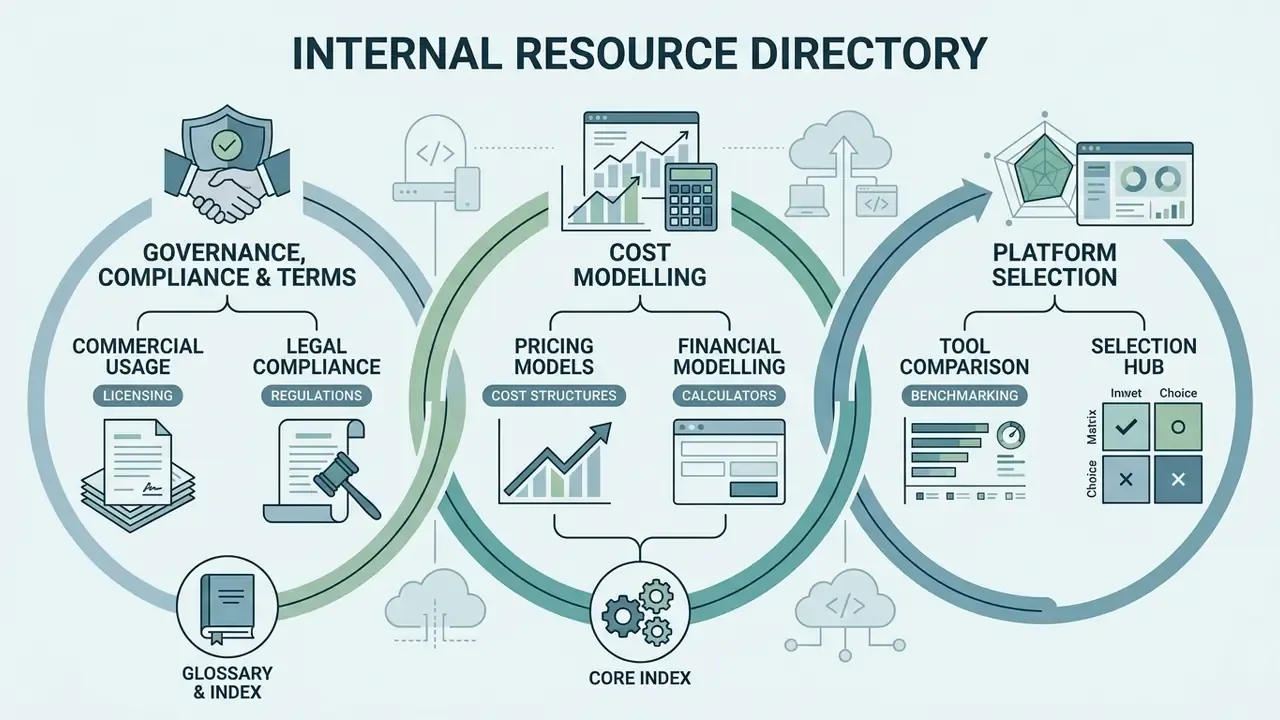
Governance, Compliance, and Commercial Terms
Cost Modelling and Platform Selection
Generative Media Implementation References
- Image generation and rights
- AI image generators for commercial use.
- Document and image ingestion
- image-to-text processing.
- Dataset integrity screening
- AI image detectors.
- Post-processing pipelines
- AI image upscalers.
- Video and voice prototyping
- free ai video editor, free ai video generator from images, free ai voice generator.