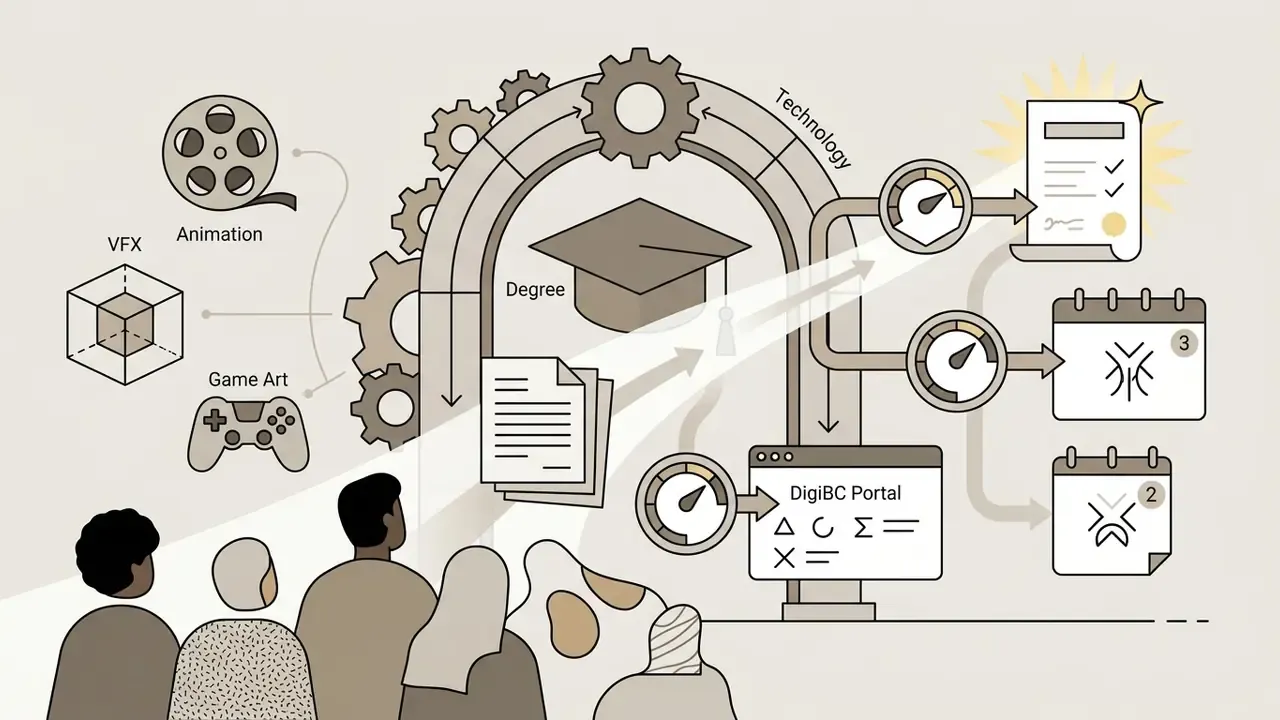
An online animation degree delivers formal postsecondary instruction in 2D and 3D animation, visual effects (VFX), and game art through distance-learning platforms. These programs prepare students for creative and technical production roles in film, television, game development, and digital media while granting accredited academic credentials. In plain terms: you learn a studio pipeline from your own desk.
What this guide covers:
- What an online animation degree is (credentials, CIP codes, credit loads)
- Program types and specialization tracks (2D, 3D, VFX, game art)
- Curriculum progression across a four-year bachelor's degree
- How distance-learning animation instruction is actually delivered
- How to compare online animation colleges, including leading institutions
- Generative AI integration and intellectual property risks in 2026 curricula
- Admissions and portfolio requirements
- Careers, salary data and market size
- Tuition, scholarships, financial aid and a return-on-investment model
- Frequently asked questions and a final decision framework
What Is an Online Animation Degree?
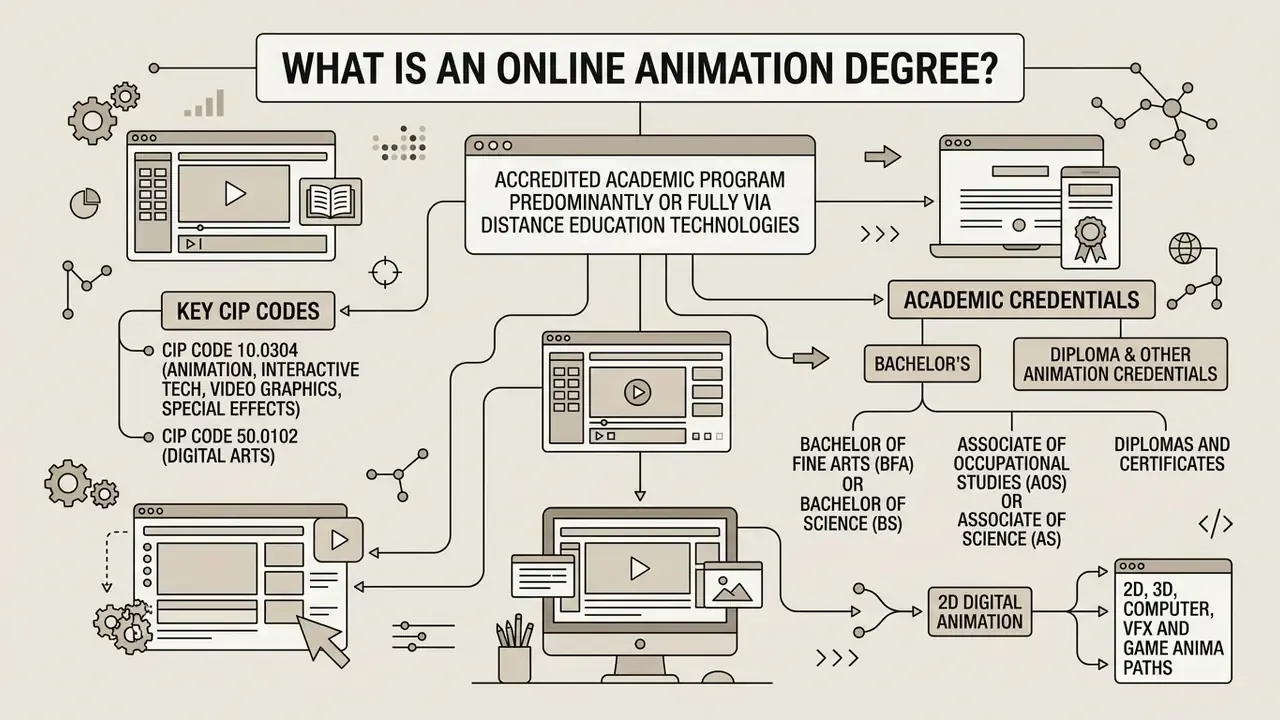
An online animation degree is an accredited academic program delivered predominantly or fully via distance education technologies that prepares students for professional roles across the digital animation production pipeline. It combines coursework in visual storytelling, observational drawing, character animation, 3D modeling, rigging, compositing, and real-time engine workflows.
Distance education in U.S. higher education is defined by the National Center for Education Statistics (NCES) as formal instruction where the learning group is separated from the instructor and interactive telecommunications systems are used for synchronous and asynchronous learning (NCES IPEDS, 2023). According to federal enrollment metrics, over 5.7 million postsecondary students in Title IV institutions were enrolled exclusively in distance education courses during the 2022–2023 academic year. That single figure is what moved online degree delivery from experiment to default instructional model (NCES Digest of Education Statistics, 2023).
«In provisional fall 2023 data, 25.6% of all U.S. postsecondary students, 4,982,428 people, were enrolled exclusively in distance education.»
That share matters for animation specifically. Exclusively online enrollment is no longer a marginal category, which is why accreditors, federal aid programs and studio recruiters increasingly treat distance-delivered art degrees as equivalent credentials, provided the curriculum, faculty credits and portfolio output hold up under inspection.
Animation programs typically fall under official academic taxonomies established by the U.S. Department of Education:
Why bother with codes? Because they tell you what a school actually reports to the federal government, which is usually more honest than the program landing page.
These programs mirror on-campus curricula by guiding students through pre-production, production, and post-production phases. Online delivery, though, replaces physical studio spaces with digital asset management systems, web-based video critique sessions, and cloud-rendered project submissions.
- CIP Code 10.0304 (Animation, Interactive Technology, Video Graphics, and Special Effects)
- Covers programs that prepare individuals to use computer software to manipulate static, animated, and sound images for commercial, industrial, and entertainment media (NCES CIP Taxonomy, 2020).
- CIP Code 50.0102 (Digital Arts)
- Covers broader programs focusing on digital images as the primary artistic medium, spanning motion graphics, 3D visualization, interactive media, and graphic design (NCES CIP Taxonomy, 2020).
Bachelor's, Diploma and Other Animation Credentials
Online animation credentials range from sub-degree certificates to full four-year bachelor's degrees, differing in credit hours, general education requirements, depth of technical training, and career entry points. Choosing the right credential level depends on career goals, prior college credit, and budget constraints. Mostly budget, if we are being frank.
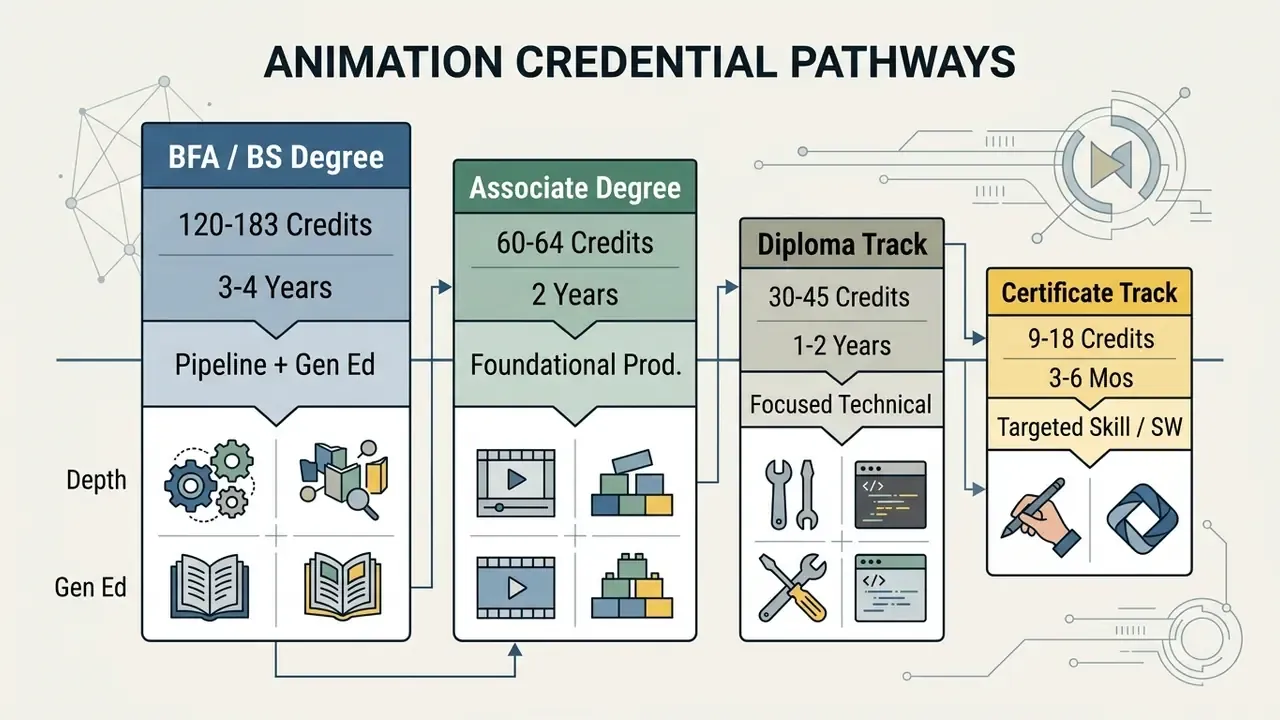
How much does the credential title actually matter? Animation hiring is portfolio-first. Published program outcomes and studio-facing rubrics consistently evaluate demoreels, breakdown sheets and shot-level authorship rather than the degree abbreviation on your transcript (SCAD Portfolio Guidelines, 2026; Indiana University Luddy Demoreel Standards, 2026). At the same time, accredited bachelor's degrees remain the most common route to institutional financial aid eligibility under Title IV, to formal internship pipelines, and to skilled-worker immigration categories that require a recognized degree. One caveat, flagged honestly: no single dataset compares long-term animation career outcomes strictly by credential type. So credential choice should be made on aid access, time-to-portfolio and total cost rather than on assumed employer preference. Where outcome data does exist, it is program-specific. DePaul's undergraduate career outcomes report, for instance, lists graduates placed as Junior Visual Effects Artist and Level Designer (DePaul Career Outcomes Report, 2024).

2D, 3D, Computer Animation, VFX and Game Animation Paths
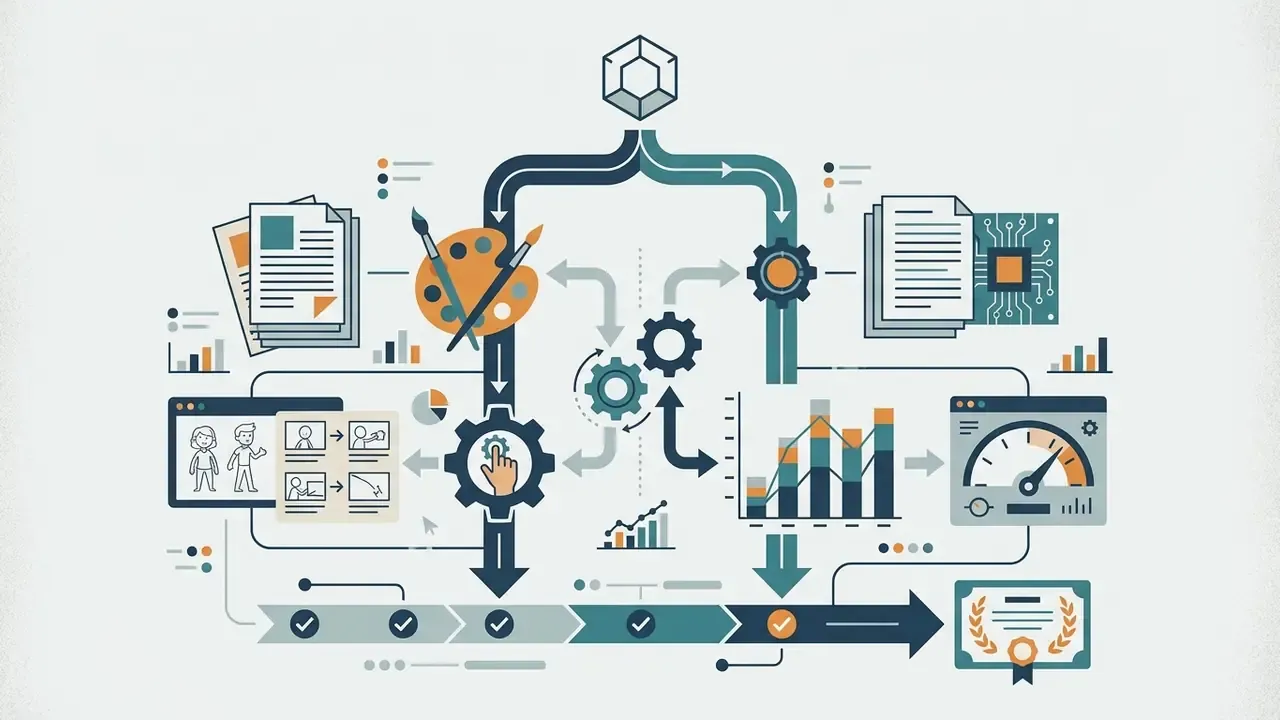
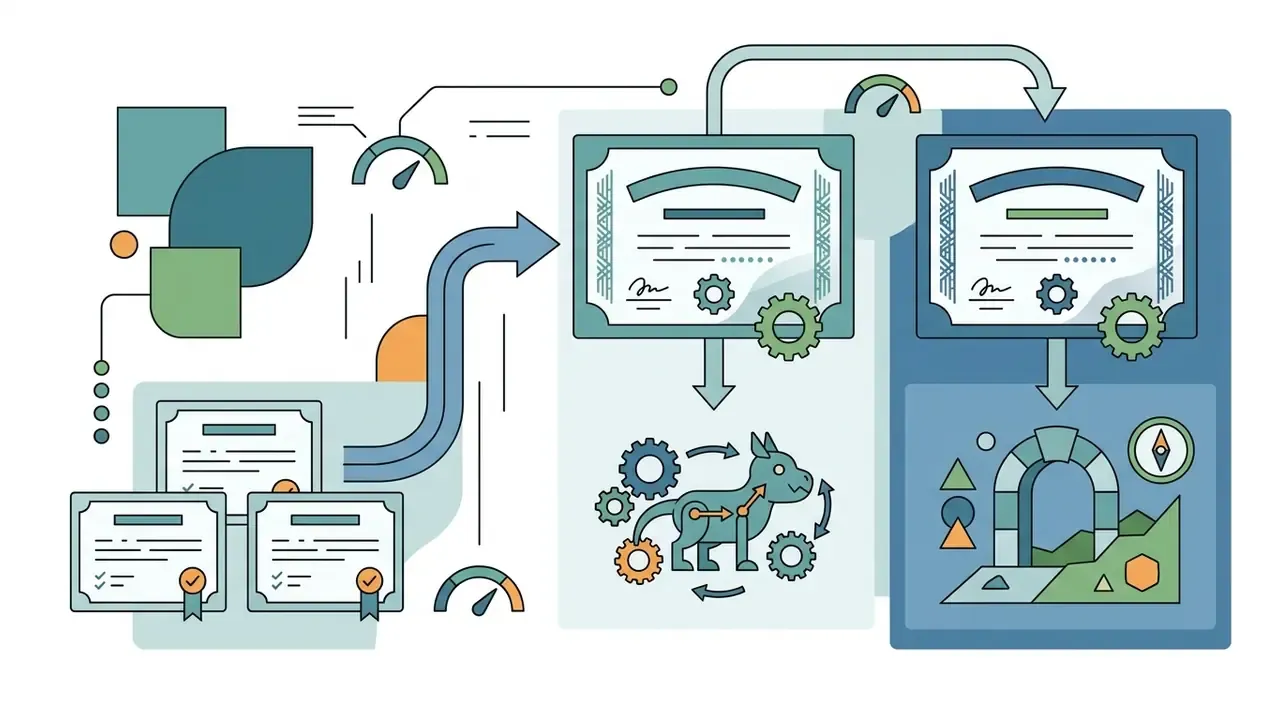
Animation degrees are organized into distinct technical tracks that dictate the software tools, mathematical concepts, and creative principles taught throughout the program. Understanding these structural differences helps align academic choices with specific studio roles.
- 2D Digital Animation Focuses on frame-by-frame movement, vector character rigging, sequential storytelling, storyboarding, and layout design. Key tools include Toon Boom Harmony, Adobe Animate, and TVPaint. Students who want to test motion timing before committing to a full degree can prototype in browser-based animation makers that expose keyframes, easing and export settings without a paid license.
- 3D Computer Animation Focuses on three-dimensional spatial manipulation, including keyframe performance, character rigging, skeletal hierarchies, weight distribution, and motion capture editing. Key tools include Autodesk Maya and Blender.
- Visual Effects (VFX) Combines live-action footage with computer-generated elements. Coursework covers matchmoving, green-screen keying, digital matte painting, particle simulations (smoke, fire, water), and node-based compositing. Key tools include Foundry Nuke, SideFX Houdini, and Adobe After Effects.
- Game Animation and Real-Time Art Focuses on interactive asset creation, low-polygon modeling, physically based rendering (PBR) texturing, and engine integration. Motion is authored as loopable state-machine clips (run cycles, attacks) optimized for real-time performance. Key engines include Unreal Engine and Unity.
Computer animation serves as the umbrella category for all digital production techniques. Students choosing a pathway should evaluate whether their creative preferences align with traditional drawing (2D), spatial modeling and rigging (3D or game), or compositing and physics-based simulations (VFX). The practical distinction is production constraint: 2D and 3D describe dimensionality, computer animation describes the method category, VFX is a hybrid of captured and generated imagery, and game animation is uniquely bounded by real-time runtime budgets. Miss that last point and your beautiful 90,000-triangle hero character never ships.
Types of Online Animation Degree Programs
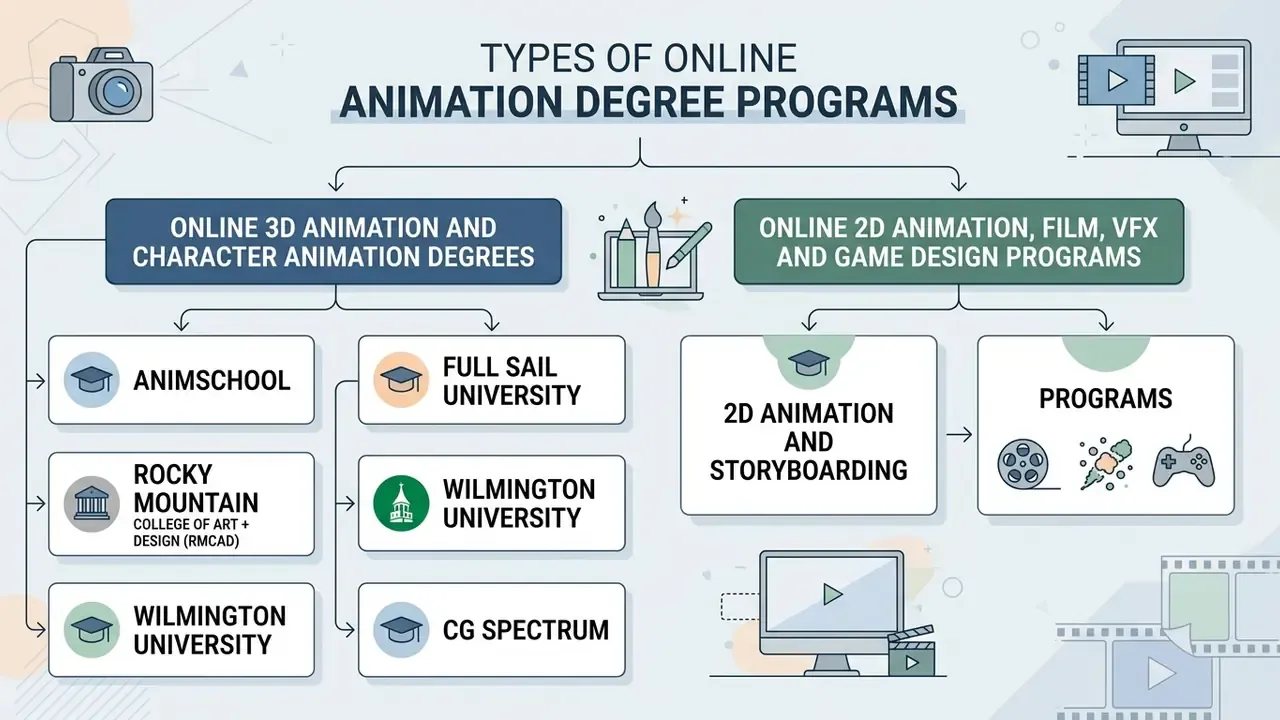
Online higher education institutions structure animation programs around specialized tracks that target specific industry pipelines. Selecting the correct concentration ensures coursework translates directly into applicable portfolio assets, not into a folder of unrelated exercises.
Online 3D Animation and Character Animation Degrees
Online 3D animation degrees prepare students to construct, rig, and animate digital characters and props within three-dimensional software environments. Curricula center on body mechanics, facial expressions, weight distribution, and theatrical acting principles.
Widely compared accredited online 3D animation schools and character animation programs include:
- AnimSchoolACCSC-accredited 7-term online program costing $11,340 total ($1,620 per 11-week term), focused specifically on 3D character animation and rigging workflows (AnimSchool FAQ, 2026).
- Full Sail UniversityACCSC-accredited online BS in Computer Animation covering 3D modeling, character rigging, shading, lighting, and compositing, with total published tuition of $63,500 to $66,500 (Full Sail University Tuition Guide, 2026).
- Rocky Mountain College of Art + Design (RMCAD)HLC-accredited online 3D Animation BFA covering 123 credit hours in 8-week terms, with tuition rates locked upon initial enrollment (RMCAD Online Animation Portal, 2026).
- Wilmington University100% online BS in Animation and 3D aimed at students entering 3D animation and visualization careers (Wilmington University Program Page, 2026).
- CG SpectrumTEQSA-accredited Bachelor of Animation and VFX plus a Diploma of 3D Animation, priced at A$59,999 and A$19,996 respectively for 2026 intakes (CG Spectrum Tuition & Payment Options, 2026).
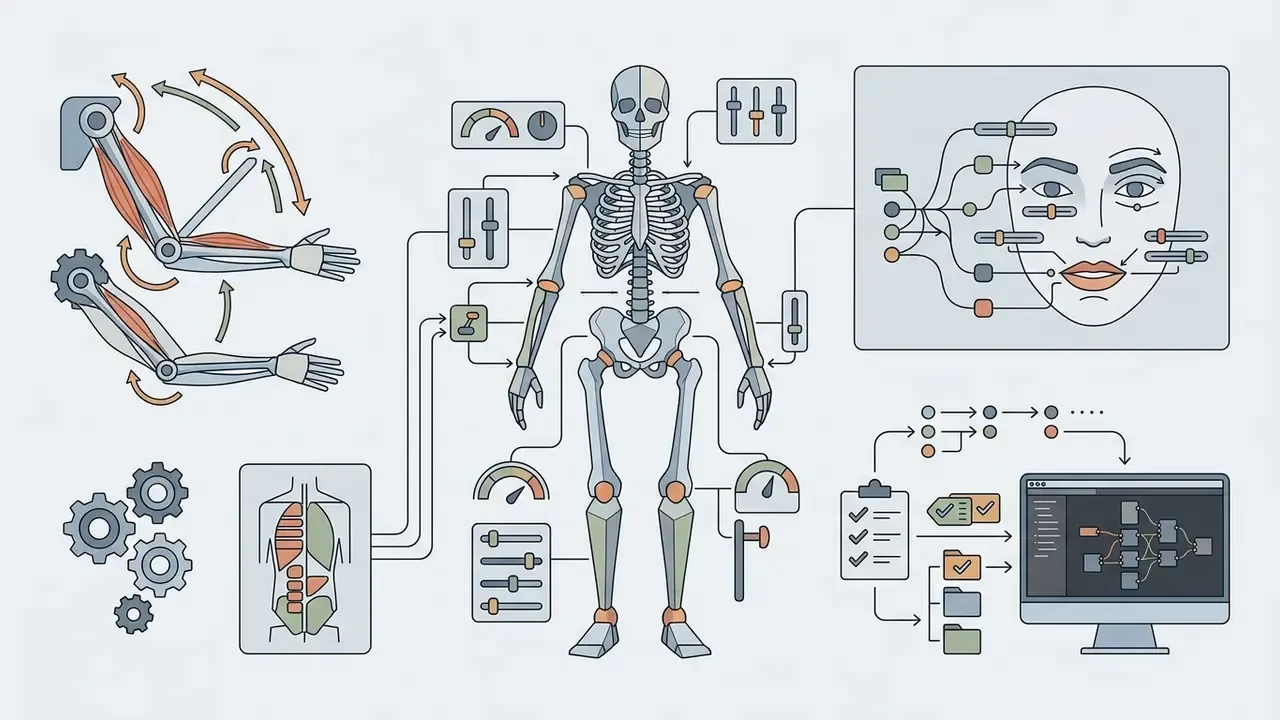
Coursework requires students to master genuinely complex digital workflows. Character rigging modules, for example, cover skeletal joint hierarchies, Inverse Kinematics and Forward Kinematics (IK/FK) switching, blend shapes for facial expressions, and weight painting (UNM Valencia GAME 150 Syllabus, 2025; UCSC ARTG 132 Syllabus, 2025). Software standards center on Autodesk Maya, Blender, and MotionBuilder. Technical prerequisites are explicit in published syllabi: the University of Florida's DIG 4354 3D Character Animation course requires Autodesk Maya 2024/2025, Adobe Photoshop, After Effects and Media Encoder, plus a two-monitor setup for online students (University of Florida Digital Worlds Syllabus, Fall 2025).
What the research actually measured. A quasi-experimental comparison of blended versus conventional lecture-based instruction in 3D animation and 3D modeling coursework found measurable differences in both assessment scores and applied skill transfer:
«Blended-format students achieved higher exam results and stronger skill application than cohorts taught in traditional lecture formats.»
The methodological caveat matters for prospective students. The measured advantage appears in cohorts where the online component includes structured, repeated project feedback loops rather than passive video consumption. Programs without mandatory graded critique cycles cannot be assumed to reproduce that result. Ask how many graded critiques per term. Get a number.
Online 2D Animation, Film, VFX and Game Design Programs
Online degree programs outside the pure 3D character animation track focus on narrative filmmaking, compositing pipelines, or real-time interactive game design. These programs adapt studio workflows for remote completion, and increasingly sit alongside production tooling such as AI video generators used for animatics, pitch reels and previsualization drafts.
- 2D Animation and Storyboarding Programs like CG Spectrum's Diploma of 2D Animation ($19,996 total) structure training around pre-production (visual development, scriptwriting, storyboarding), production (keyframing, inbetweening, vector cleanup), and post-production (sound sync, color grading) using Toon Boom Harmony and Adobe Creative Cloud (CG Spectrum Tuition Schedule, 2026). Script drafting exercises in these modules are where students most often experiment with an ai script generator for beat sheets, then rewrite every line by hand for authorship clarity.
- Game Art and Real-Time Animation Falmouth University offers an online BA (Hons) in Game Art that prepares remote students for international game studio pipelines. Coursework focuses on low-poly asset creation, modular environment assembly, and real-time lighting within Unreal Engine (Falmouth University Online Catalog, 2026).
- Visual Effects (VFX) Distance-learning programs such as the online BFA in Visual Effects at California College of ASU ($828 per credit) teach node-based compositing, matchmoving, dynamic particle generation, and green-screen integration (California College of ASU Fee Schedule, 2024–2025).
- Broad Visual Arts Completion Degrees Full Sail's online BS completion in Visual Arts allows students to select Computer Animation, Game Art, Digital Arts and Design, Digital Cinematography or Film concentrations, which suits transfer students who already hold an associate degree (Full Sail University Catalog, 2026).
- UK Distance Degrees Buckinghamshire New University's online BA (Hons) Animation (£8,430 per year, 2026–2027) and the University for the Creative Arts BA (Hons) Animation (£9,790 per year, 2026/27) deliver fully remote UK degrees inside animation, games and visual effects clusters.
The following comparative table synthesizes core operational differences across the major online animation degree programs and their tracks. Read across one row and you have the shape of a career.
| Specialization Track | Core Technical Focus | Primary Software Stack | Typical Portfolio Deliverables | Target Industry Roles |
|---|---|---|---|---|
| 2D Animation | Storyboarding, character design, keyframe motion, layout design | Toon Boom Harmony, Adobe Animate, TVPaint | Character turnarounds, animatics, 2D motion shots, layout art | 2D Animator, Storyboard Artist, Clean-up Artist, Motion Designer |
| 3D Character Animation | Body mechanics, acting performance, character rigging, keyframing | Autodesk Maya, Blender, MotionBuilder | 3D acting shots, walk cycles, weight tests, character demoreels | 3D Character Animator, Previs Artist, Layout Artist, Rigger |
| Visual Effects (VFX) | Compositing, particle simulation, matchmoving, matte painting | Foundry Nuke, SideFX Houdini, Adobe After Effects | CG live-action integration, explosion and water simulations, breakdown reels | VFX Compositor, Matchmove Artist, Effects TD, Roto Artist |
| Game Art & Animation | Real-time optimization, PBR texturing, state-machine animation loops | Unreal Engine, Unity, ZBrush, Substance Painter | Real-time environment scenes, game-ready character rigs, interactive clips | Game Animator, Environment Artist, Technical Artist, Character Modeler |
| Digital Arts / Motion Graphics | Kinetic typography, 2D and 3D brand design, compositing, visual communication | Adobe After Effects, Maxon Cinema 4D, Illustrator | Motion graphics showreels, title sequences, branded animated content | Motion Graphics Designer, Digital Artist, Multimedia Specialist |
In short: 2D rewards draftsmanship, 3D rewards patience with rigs, VFX rewards precision under supervisor notes, and game art rewards discipline about polygon and texture budgets. Students can review comprehensive tool evaluations in our AI Media Comparison Matrices and check commercial usage guidelines in the AI Media Commercial-Use Hub.
What You Learn in an Online Animation Bachelor's Degree
An online animation bachelor degree progresses from foundational artistic principles to advanced technical pipeline execution. The curriculum aims to produce graduates with both theoretical creative judgment and technical software proficiency. Judgment first, software second, which surprises a lot of applicants.
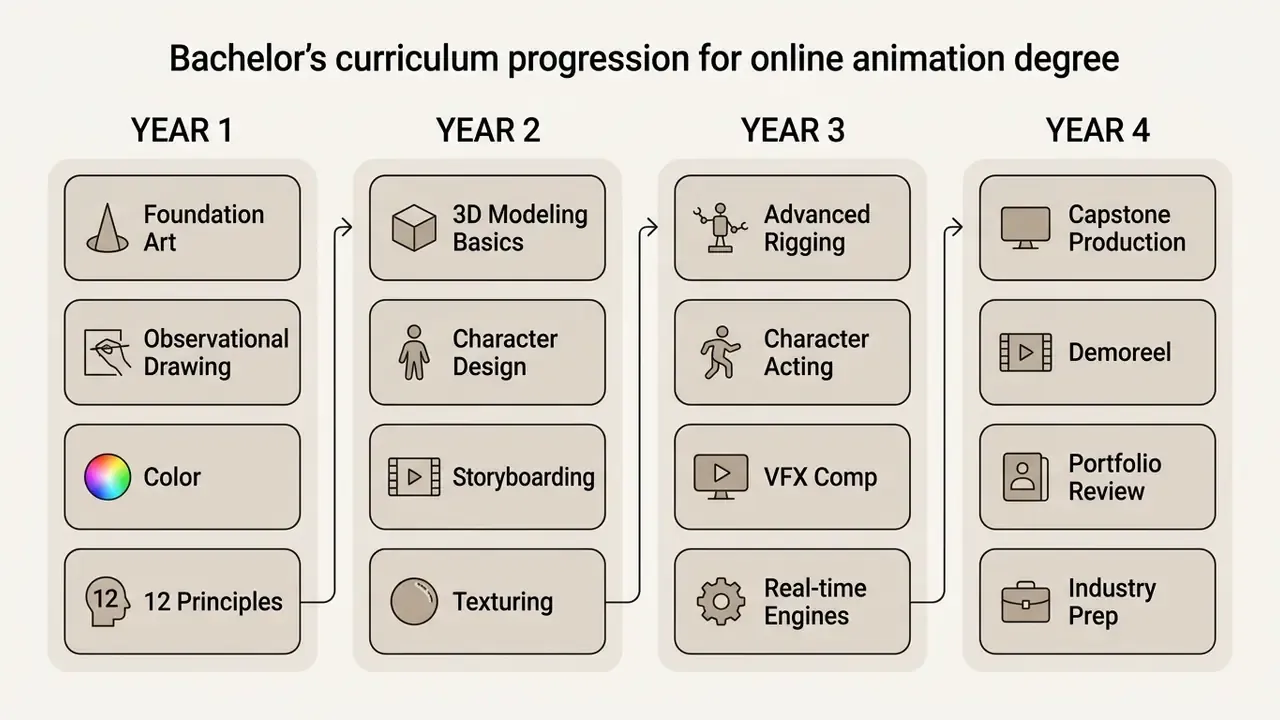
Animation Principles, Design and Visual Storytelling
Before mastering complex software, students complete foundational modules in visual expression, narrative structure, and classical animation theory. Core disciplines include:
- The 12 Principles of Animation: Originally codified by Disney animators Ollie Johnston and Frank Thomas, these animation principles remain mandatory coursework across accredited programs (University of Washington CSE 457 Lecture Notes, 2026; University of Toronto CSC418 Notes, 2026). Key principles include:
- Squash and Stretch (distorting geometry to show weight and flexibility).
- Anticipation (preparing the audience for an action).
- Staging (directing attention to clear narrative elements).
- Straight Ahead Action vs. Pose to Pose (spontaneous versus planned keyframing).
- Slow In and Slow Out (spacing frames to control acceleration).
- Arcs (ensuring natural circular trajectories in motion).
These foundational modules build the critical judgment required to critique motion before entering software-heavy phases.
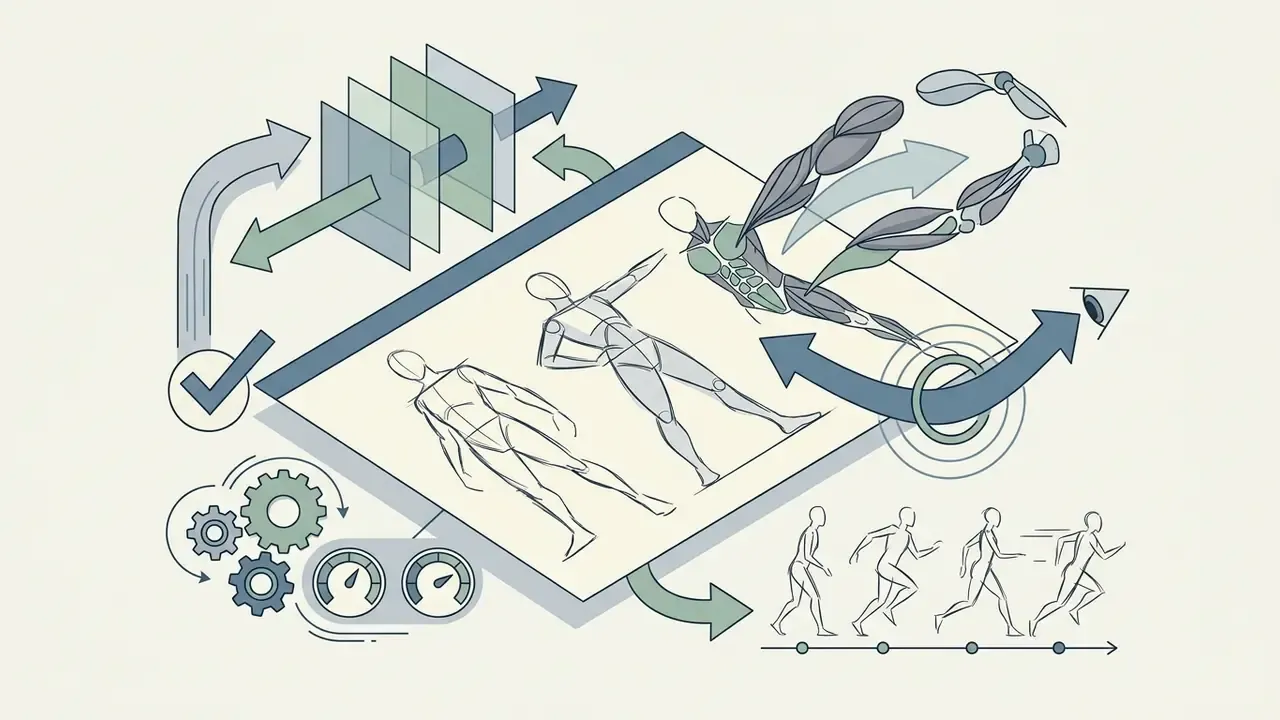
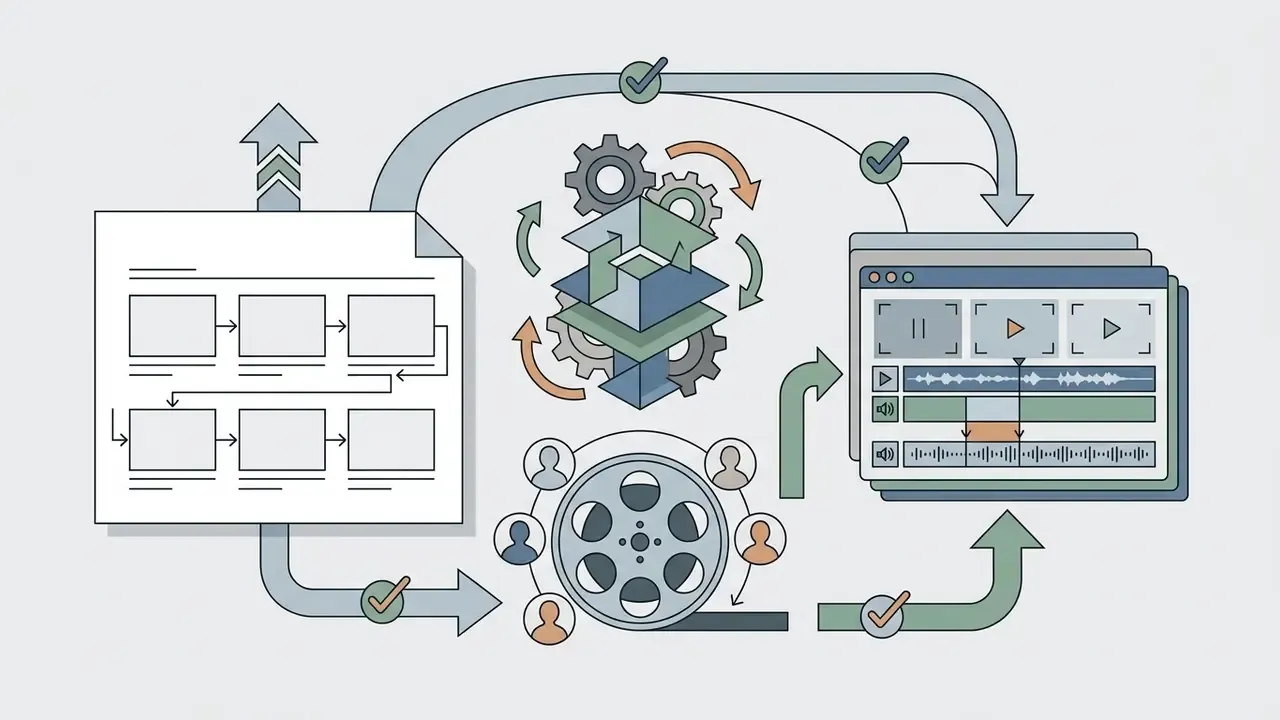
«3D animation makes abstract concepts concrete, improves retention and stimulates active learner participation.»
That 2019–2024 systematic review is a useful argument for why fundamentals precede software: the pedagogical value of animated media comes from clarity of motion and staging, not from render quality.
3D Modeling, Digital Imaging and Interactive Animation
As students advance into digital production modules, coursework shifts toward software workflows, asset generation, and spatial technical assembly.
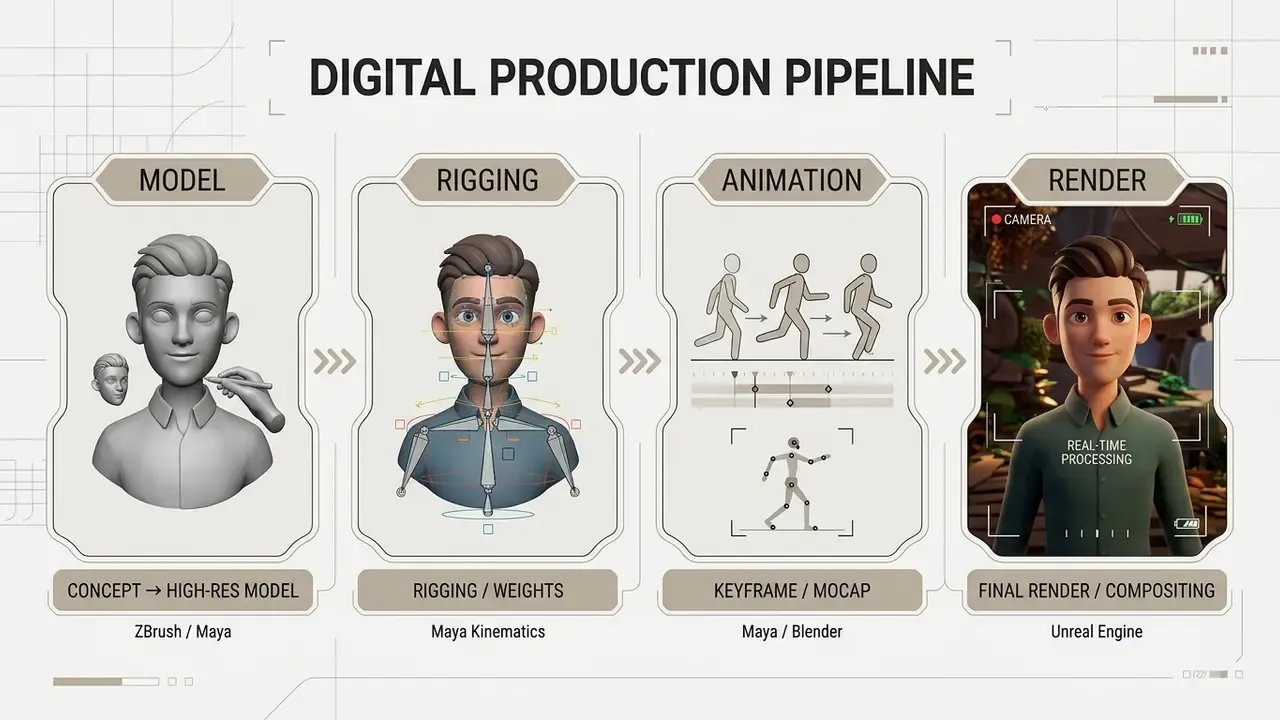
A systematic literature review on 3D animation instructional media published in the Journal of English Language Education concluded that interactive 3D visualizations meaningfully improve complex spatial comprehension and retention compared with static instruction (Pratama et al., 2024).
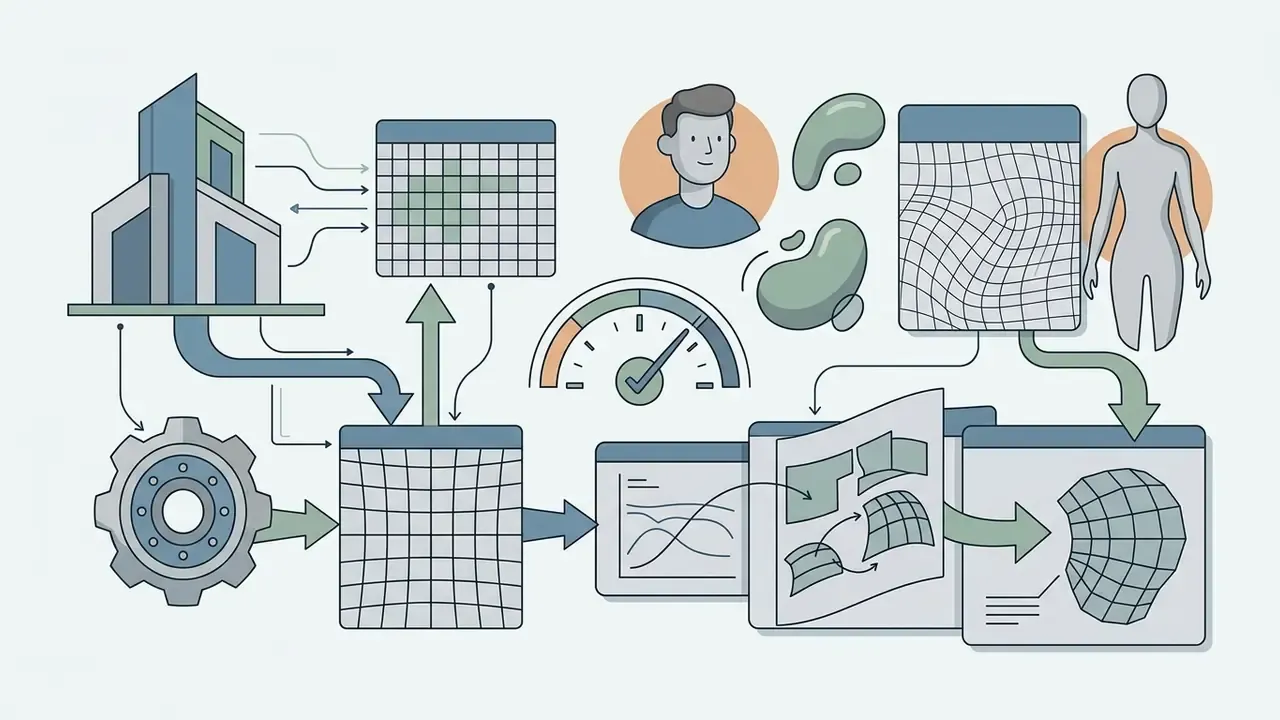
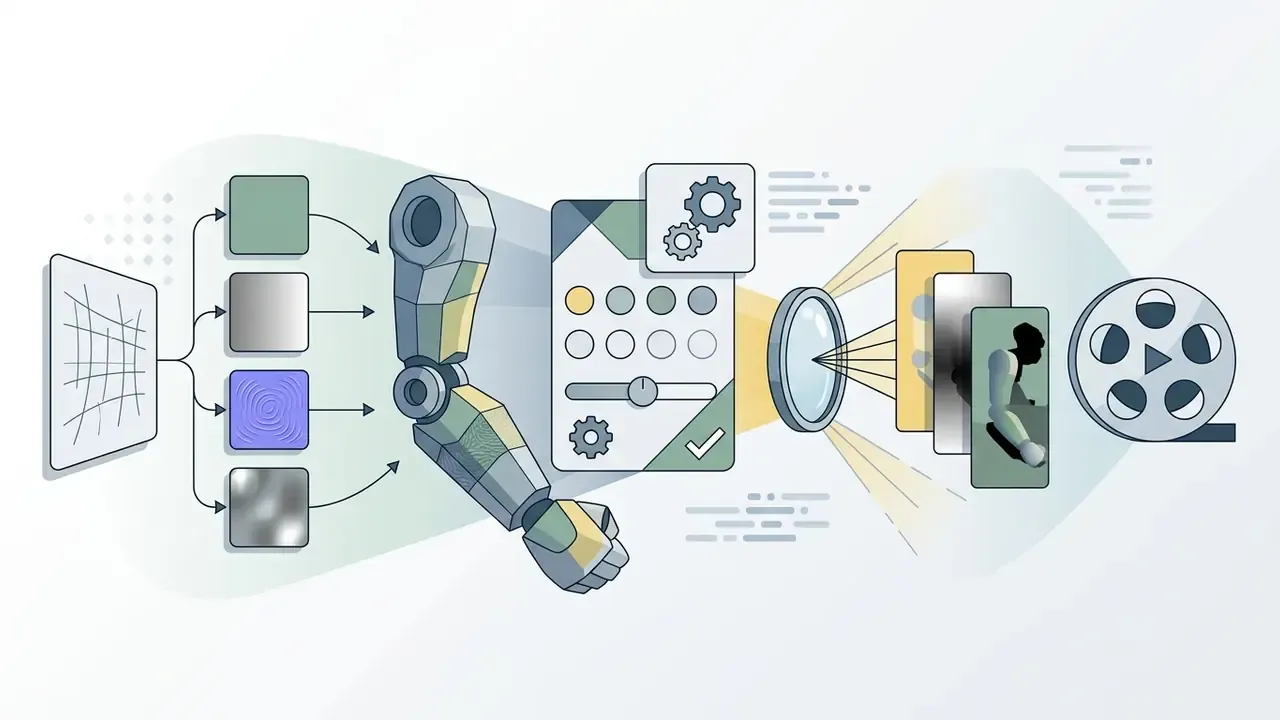
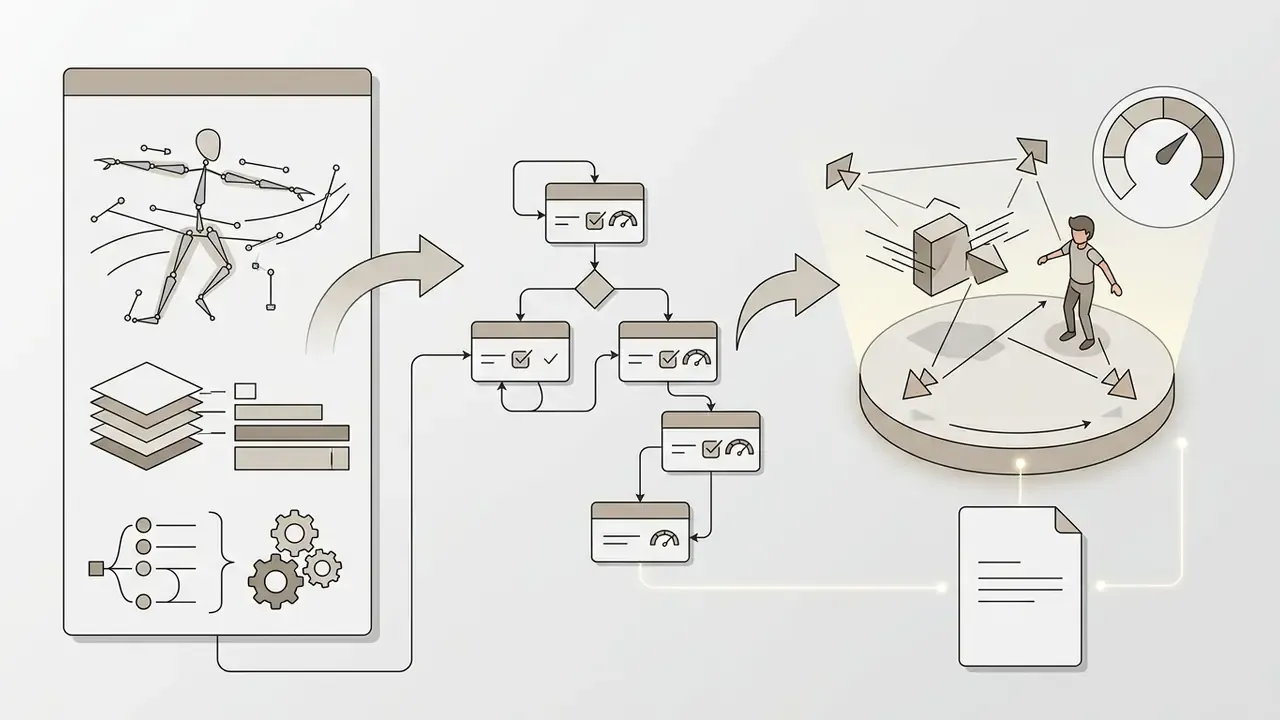
«Research on 3D-animation-based teaching and learning grew sharply between 2006 and 2023, peaking in 2023.»
How Online Animation Schools Deliver Training
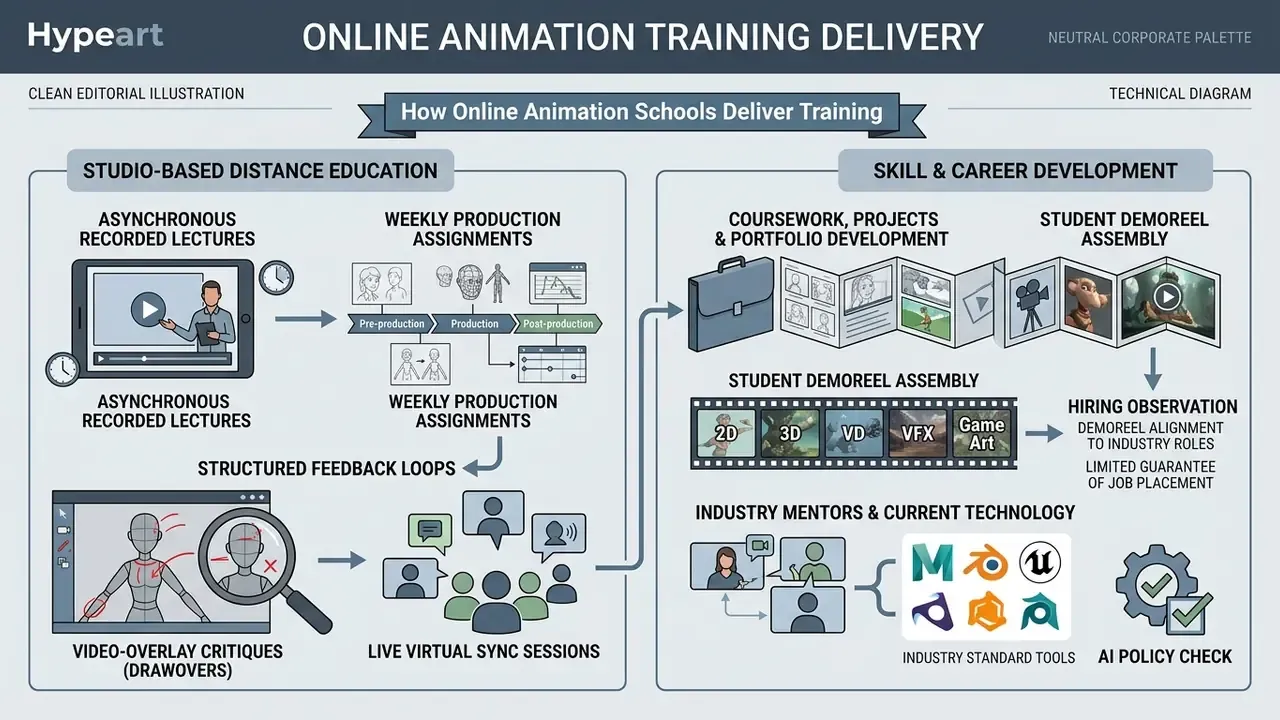
Delivering studio-based art education at a distance requires specific instructional software, structured feedback loops, and scheduled asset submission workflows. The mechanics are not glamorous, but they are what separate serious online animation colleges from video libraries with a login page.
Coursework, Projects and Portfolio Development
Online animation schools organize learning through Learning Management Systems (LMS) such as Canvas or proprietary portals. Instructional structures usually combine:
- Asynchronous Recorded Lectures Pre-recorded software tutorials, workflow breakdowns, and lecture modules that students review independently.
- Weekly Production Assignments Hands-on milestones (block out a walk cycle by Wednesday, submit rendered poses by Sunday) that enforce production discipline (Animation Mentor School Catalog, 2026). Animation Mentor's published catalog requires students to view the weekly lecture, complete the assignment and upload it by Sunday at 12:00 p.m. Pacific Time. Students juggling a job alongside coursework often map those deadlines with an ai schedule maker so render time is booked, not hoped for.
- Student Demoreel Assembly Building a 90-to-120-second video showreel that highlights a student's strongest 2 to 5 production clips (SCAD Portfolio Guidelines, 2026; Indiana University Luddy Demoreel Standards, 2026). Demoreels must include shot breakdown sheets specifying exact contributions, tools used, and individual roles.
Web-based video critique sessions, cloud-rendered project submissions and forum-based peer review replace the physical studio floor. The format has documented limits, though, and honest program evaluation should acknowledge them:
«Most surveyed design students preferred in-person delivery for project and drawing courses, though meta-analyses find no significant achievement gap between formats.»
«Hybrid delivery with personalized learning paths raised engagement 27%, creative performance 15% and satisfaction 28% versus traditional formats.» Hybrid learning study in fine arts, Membrane Technology (2023). https://semanticscholar.org/
Taken together, these findings support a practical rule: prefer hybrid or low-residency structures with personalized milestones over purely asynchronous video libraries, especially for drawing-heavy foundation years. Grading transparency helps too. Programs that publish assessment criteria per assignment, or that let students self-check work against a shared rubric before upload (an ai rubric generator can approximate this for self-study), tend to produce fewer confused resubmissions.
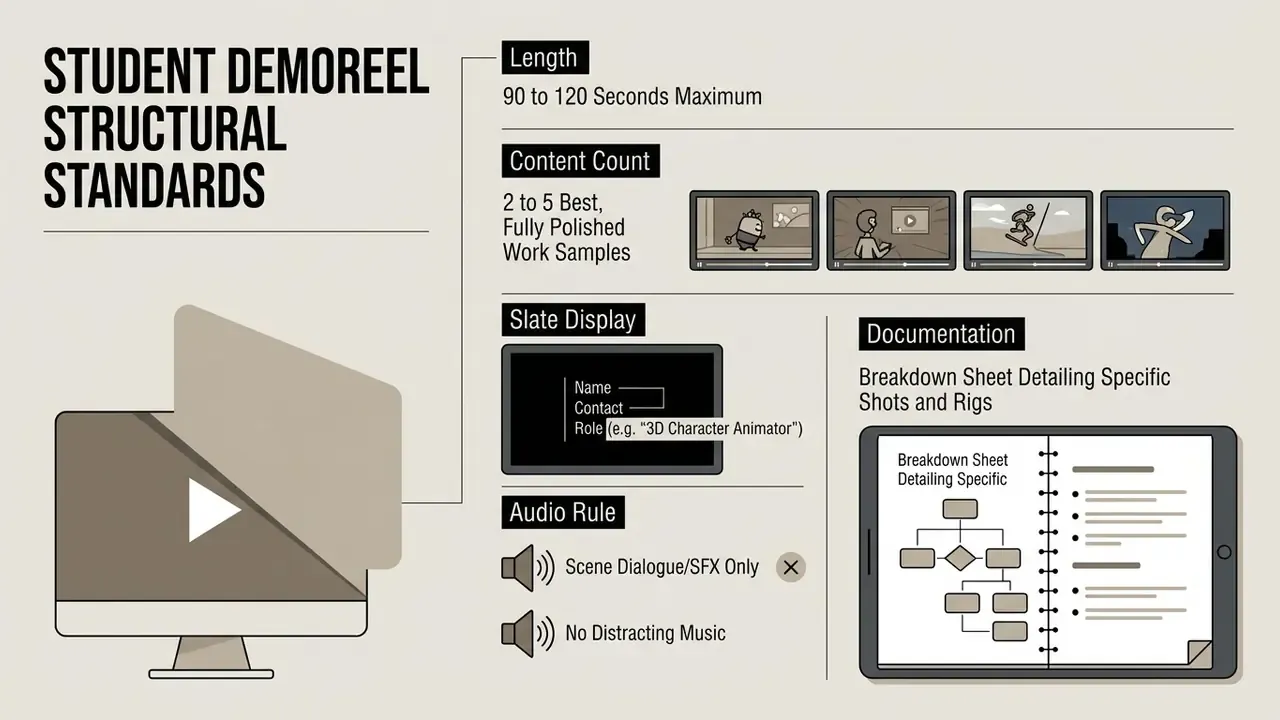
One hiring observation, with its limits stated. During a game development studio expansion, our lead technical director reviewed more than 140 entry-level applicant portfolios. Applicants who submitted concise 90-second reels built around isolated body mechanics, paired with a clear shot breakdown sheet, advanced to technical interviews at a markedly higher rate than applicants submitting unedited long-form student films. This is an internal observation from a single hiring cycle, not a controlled study: the sample was not randomized, the roles were animation-specific, and no external verification of the response-rate differential is available. Treat it as directional evidence that reel length discipline and authorship transparency reduce reviewer friction. Reviewers are tired. Respect their first fifteen seconds.
Industry Mentors, Studio Experience and Current Technology
High-quality online animation universities and schools replace traditional classroom lectures with industry-integrated mentoring formats:
- Video-Overlay Critiques (Drawovers) Instructors record screen video reviews of student work, drawing redline corrections directly over animated frames to fix arcs, timing, and anatomy.
- Live Virtual Sync Sessions Weekly web-camera sessions for group critique, Q&A, and live troubleshooting of software bugs (VFX Online Mentoring Program Review, IAFOR, 2020).
- Virtual Studio Capstones Senior team projects where remote students collaborate across time zones using cloud repositories (Git, Perforce) to simulate remote studio production (CodeDay Labs Virtual Internship Report, 2026). CodeDay Labs documented mentors from Netflix, SAP and Uber guiding students through real open-source production tasks. Teams that need reference or pitch material during pre-production often supplement traditional boards with the best AI video generators for rough motion tests.
Mentoring guidance for online programs adds a practical benchmark: mentors should provide scheduled, recurring feedback on assignments and performance, resolve technical and organizational blockers, and run webcam sessions with a defined agenda plus follow-up action items (The Art of Virtual Mentoring, Icahn School of Medicine at Mount Sinai, 2023).
Maximizing Mentorship and Studio Outreach
Technical growth in an online animation program depends less on lecture volume and more on how effectively students exploit the feedback loop:
- Native Scene File Reviews The most effective online instruction happens when mentors open raw project files (for example
.mbMaya scenes or.hipHoudini files) during 1-on-1 sessions to diagnose underlying rigging bugs, broken Euler angles, corrupted skin weights, or faulty graph editor tangents that cannot be spotted from a rendered video alone. Published student accounts from mentor-led online schools describe this as the decisive difference: having an experienced animator open the actual scene file is what resolved technical hurdles tutorials could not (CG Spectrum Student Testimonials, 2026). - Recruiter Etiquette When sending demoreels to studio talent acquisition teams, attach direct links to unlisted Vimeo or YouTube videos, never raw files requiring download. Include a one-page PDF breakdown sheet listing exact frame ranges, software used, and whether each asset was self-created or supplied by the school. Keep the email to three short paragraphs: role targeted, reel link, breakdown attachment.
- Career-Services Coaching Programs with dedicated career development staff coach students on industry role taxonomy, application sequencing and showreel positioning. Published graduate accounts credit that coaching with converting reels into first roles at studios including DreamWorks Animation and Sony Pictures Imageworks (CG Spectrum Student Testimonials, 2026).
- Alumni-First Outreach Before cold-contacting a recruiter, identify alumni already inside the studio. University-industry guidance documents that alumni employees actively surface internships and roles, review resumes and prepare candidates before interviews (UIDP Guide to Leveraging Alumni Networks, 2026).
- A Findable Portfolio Site Recruiters search names. A simple personal site with your reel, breakdown sheet and role keyword ("3D character animator") beats a social feed. Just keep the copy human; automated ai seo content generator output reads as filler on an artist page, and hiring managers notice.
How to Compare Online Animation Colleges and Universities
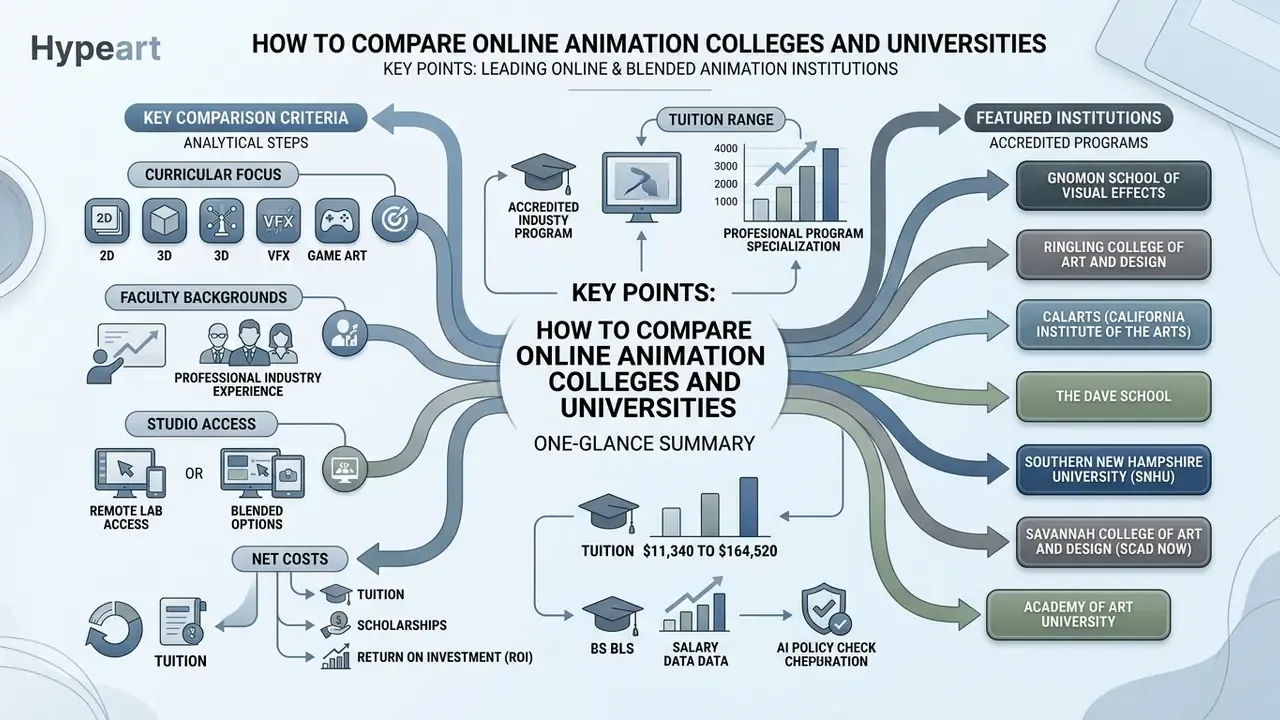
Evaluating online animation colleges requires looking past promotional materials to analyze curricular focus, faculty backgrounds, studio access, and net costs. Established quality frameworks for distance study weigh institutional planning, programme and course design, learner support, assessment, technology infrastructure and faculty quality (UNESCO IITE Benchmarking Guide, 2023; NECHE Distance Education Guidelines, 2024). A 2023 Delphi study of online higher-education institutions ranked teaching quality and learning experience as the top decision criteria, followed by student support, teacher support and technology infrastructure.
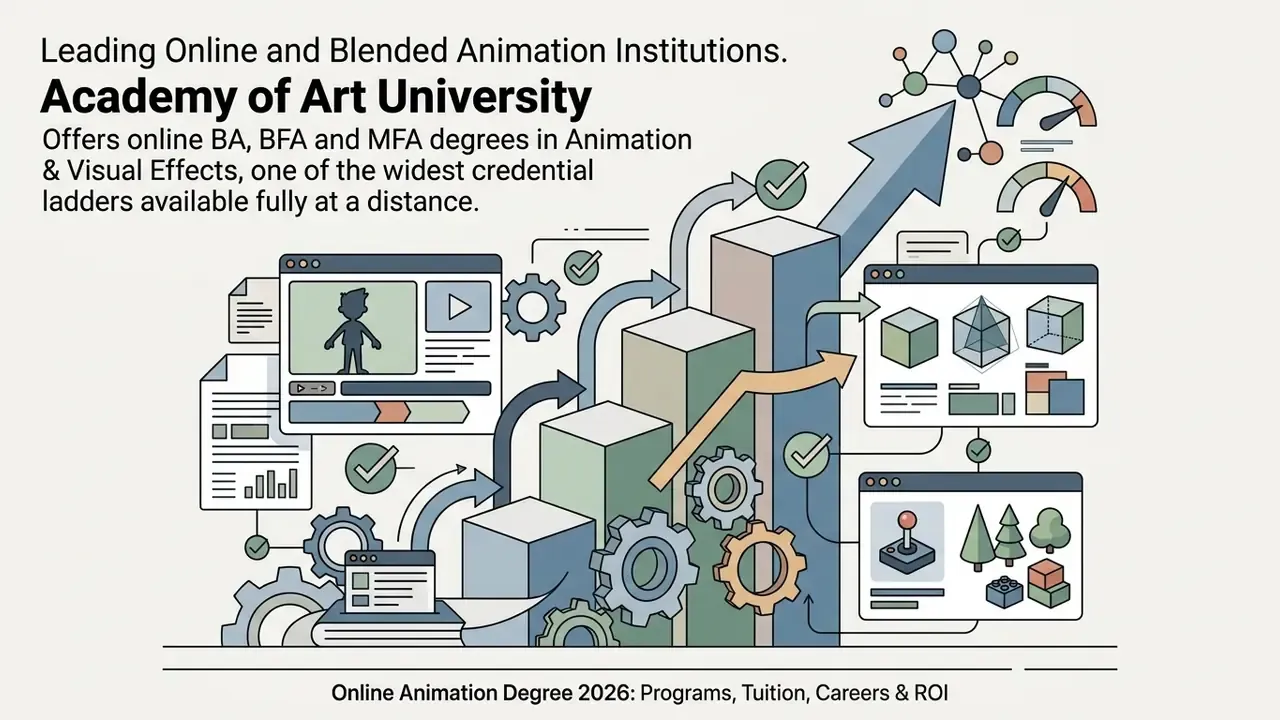
Leading Online and Blended Animation Institutions
When comparing online and low-residency options, applicants frequently weigh specialized online platforms against premier art institutes offering distance tracks:
Applicants weighing selective on-campus programs against online delivery should note that the legendary campus programs, RISD's Film/Animation/Video, Pratt Institute's 2D/3D Animation and Motion Arts BFA, SVA's BFA Animation, USC's Animation & Digital Arts, UCLA Design Media Arts, NYU and BYU, are primarily residential. Their value proposition is physical facilities (stop-motion stages, sound booths) and in-person critique. The online equivalents compete on mentor access, scheduling flexibility and cost.





Program Focus: Film, Games, 2D, 3D or VFX
Aligning an institution's curriculum with specific career goals prevents skills mismatches at graduation, which is the most expensive kind of mismatch.
- Film and Television Focus Prioritizes narrative pacing, acting performance, high-polygon detail, complex lighting, and offline rendering (Arnold, V-Ray).
- Game Art Focus Prioritizes real-time performance, low-poly mesh optimization, UV texture baking, dynamic state machines, and game engine logic (Unreal, Unity).
- VFX Focus Prioritizes photorealistic integration, node-based compositing, camera tracking, and physics-based particle simulations. Compositing graduates increasingly pair those skills with text-to-video AI tools for concept plates and layout previz, though final shot work remains node-based.
Outcome reports show real performance differences based on curricular alignment. Falmouth University's specialized BA (Hons) Game Art program reported that 95% of graduates were employed or in further study within 15 months of graduation, with 45% holding highly skilled digital media roles and roughly 30% working in professional web and multimedia design positions (Discover Uni Graduate Outcomes Data, 2021–2023). Broader visual arts programs with unspecialized digital tracks tend to show wider outcome variation (LCAD Graduate Outcomes Report, 2023).
That variation is significant at market scale, and prospective students should see both sides of it:
The gap between a specialized program's 95% and the sector-wide 55.4% is the single strongest argument for auditing published, program-level outcome data instead of institution-wide marketing claims.
Portfolio, Mentors and Connections to Animation Studios
Use the following evaluation matrix when comparing online animation degree programs:
| Evaluation Criterion | Assessment Benchmark | Primary Verification Source |
|---|---|---|
| Accreditation Status | Institutional accreditation by NASAD, ACCSC, HLC, or regional equivalents | CHEA / U.S. Department of Education Database |
| Specialization Depth | Dedicated track matching target industry (2D, 3D, VFX, or Game) | Official Program Curriculum Map & Course Descriptions |
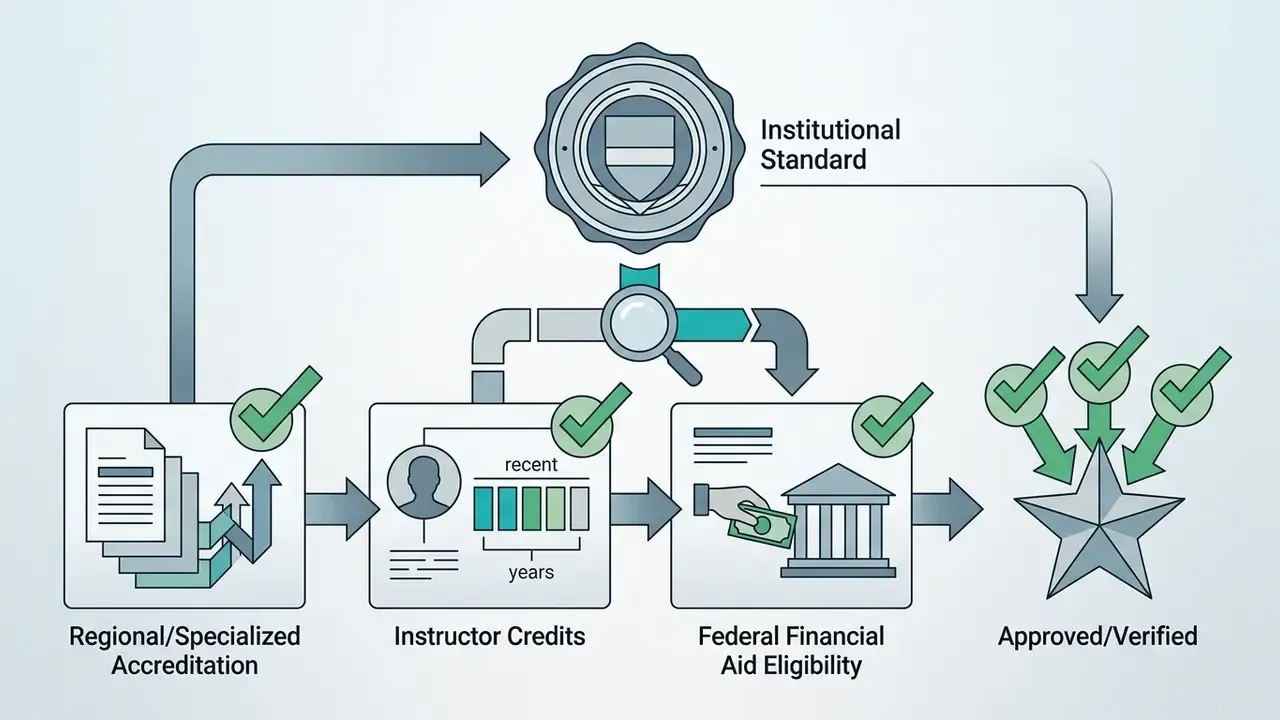
| Instructor Experience | Faculty with verified professional studio credits within the last 5 years | Faculty Directory, LinkedIn, IMDb / MobyGames |
| Hardware & Software Specs | Clear system requirements (RAM, GPU) and provided software licenses | School Technology Requirement Page |
| Portfolio Output | Required demoreel capstone with mandatory breakdown sheets | Student Gallery / Annual Demoreel Showcase |
| Tuition & Total Fees | Published total program cost including software, hardware, and fees | Official Financial Aid & Tuition Schedule Pages |
| Career Support | Portfolio reviews, career counseling, and active alumni networks | Institutional Graduate Outcome Disclosures |
| Feedback Structure | Scheduled 1-on-1 scene file reviews and recurring graded critique | Program Syllabi / Mentor Session Schedules |
In text form, the matrix rewards eight checks: accreditation, specialization depth, faculty credits, hardware and license clarity, demoreel requirements, total published cost, career support, and the cadence of graded feedback.
E-E-A-T Verification Checklist for Online Animation Schools
For help structuring your academic search, review our AI Media Calculators and AI Media Pricing Guides, and reach out through support if a figure in this guide looks out of date.
AI Integration and Intellectual Property Risks in Animation Curricula
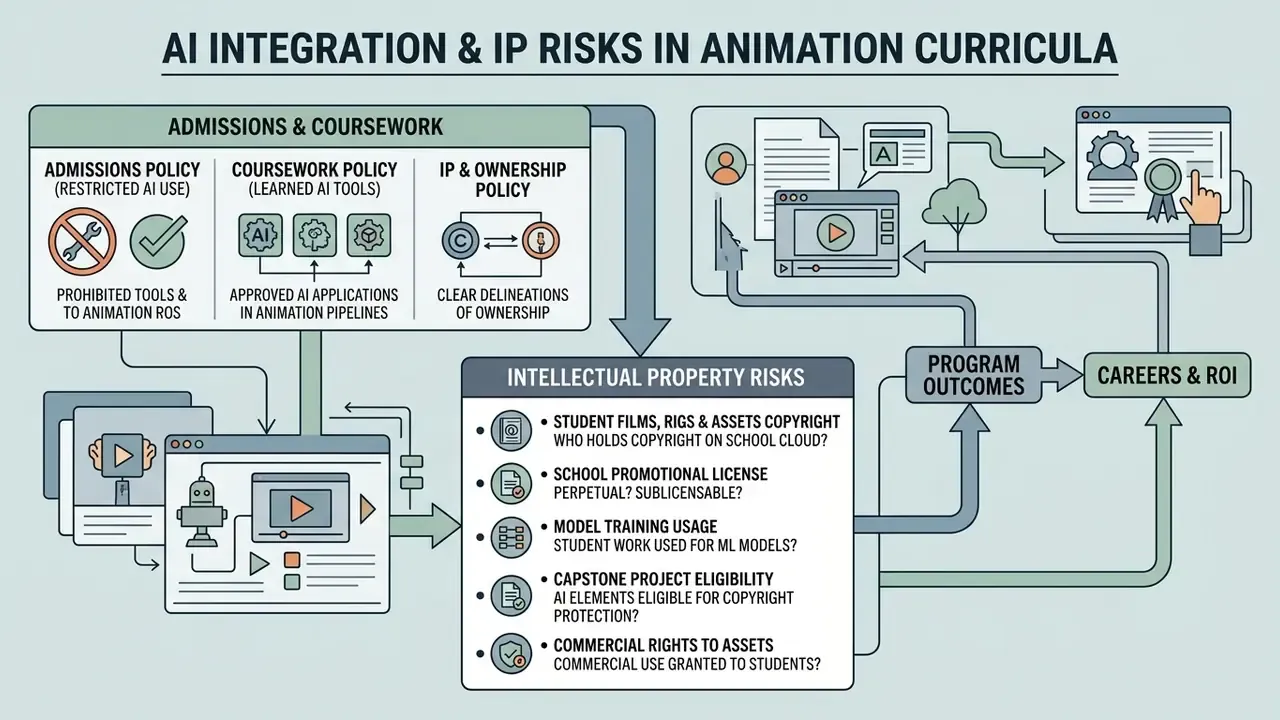
Generative AI is now the fastest-moving variable in animation education. It changes what a 2026 curriculum must teach, and what a program is allowed to accept as student work. Prospective students should audit three separate policy layers before enrolling.
1. Admissions policy (what AI you may not use). Selective fine arts programs increasingly ban AI-generated imagery from application portfolios outright, because portfolios exist to prove observational drawing and spatial reasoning ability (CSUF BFA Guidelines, 2025). That ban usually extends to consumer novelty tools; a stylized portrait from an ai selfie generator is not a life drawing, and submitting it where prohibited is treated as an academic integrity violation, not a stylistic choice.
2. Coursework policy (what AI you will learn). Toolchain vendors have already embedded machine-learning features into the standard animation stack. Autodesk's education materials describe AI-assisted motion capture cleanup, camera tracking, animation and compositing tools inside professional pipelines (Autodesk Education Resources, 2025). A program that never addresses machine-learning-assisted rotoscoping, denoising, retiming, upscaling, auto-rigging or mocap solving is training students on a narrower pipeline than the one studios actually run. When comparing programs, ask for the syllabus line items, not the marketing page, that cover AI-assisted cleanup, previz and asset iteration.
3. Intellectual property and ownership policy (who owns your work). This is the most commonly overlooked clause in enrollment agreements. Verify in writing:
- Who holds copyright to student films, rigs and assets created on school-provided cloud infrastructure.
- Whether the institution claims a perpetual promotional license to student work, and whether that license is revocable.
- Whether student submissions may be used to train institutional or third-party machine-learning models, and whether an opt-out exists.
- Whether AI-generated or AI-assisted elements in a capstone project are eligible for copyright protection at all. U.S. registration practice requires human authorship, which affects the commercial licensability of hybrid work.
- Whether commercially licensed generative tools used in coursework grant students commercial rights to outputs, or only educational rights. Our AI Media Commercial-Use Hub breaks down how those license tiers differ, and the AI Litigation and Case Timelines resource tracks the disputes actively reshaping training-data rules.
Practical portfolio guidance for 2026 applicants. Keep two asset sets: a fully human-authored core (life drawing, hand-keyed animation, original rigs) for admissions and animation-role applications, and a separate, clearly labeled AI-assisted set for pipeline or technical-artist roles where tool fluency is an asset. Label every shot on the breakdown sheet with the exact tool used and the exact human contribution. Studios penalize ambiguity far more heavily than they penalize tool use.
Admissions Requirements for an Online Animation Degree
Admissions criteria for an online animation bachelor degree vary depending on whether the institution uses open enrollment or selective, portfolio-gated admissions.
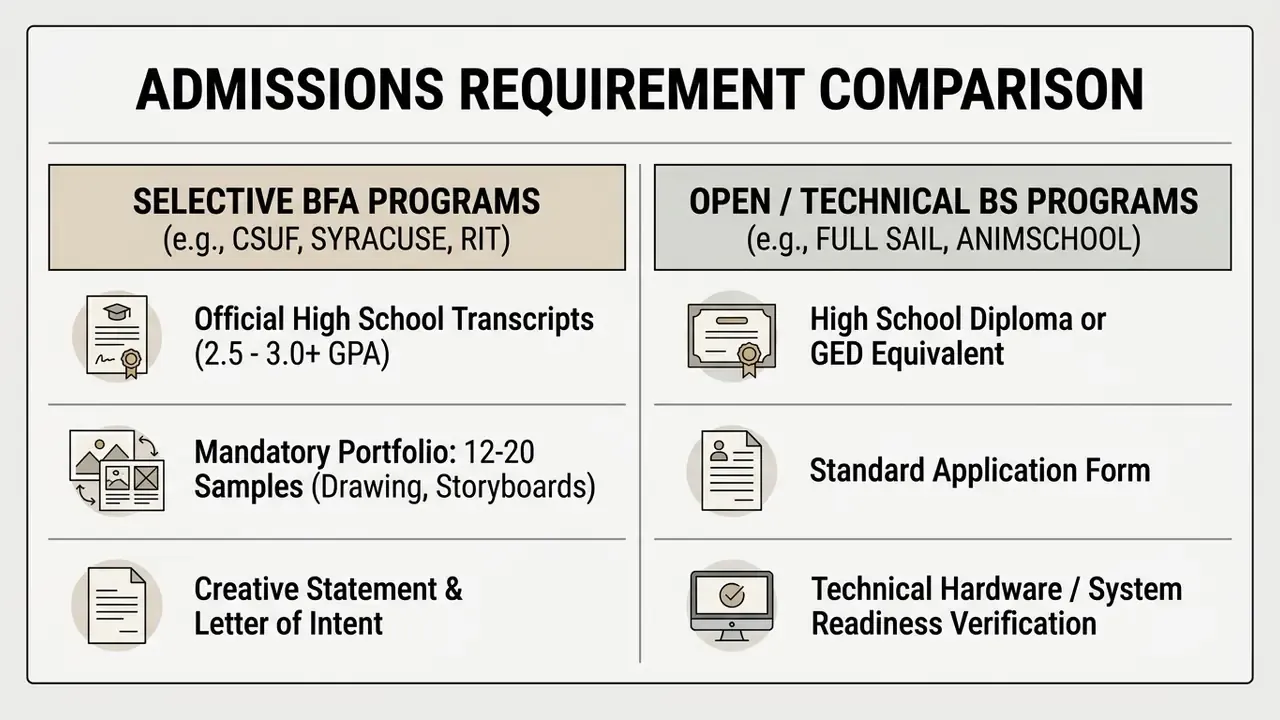
Internationally, requirements often add language proof and documented practical experience. The University of Luxembourg's Bachelor in Animation requires a secondary-school diploma, 60 ECTS or three-plus years of animation experience, B2 English or French, a motivation letter and a portfolio. Filmuniversität Babelsberg requires a university entrance qualification, CV, motivation letter, 12 weeks of practical experience and at least 20 artwork samples.
When an Animation Portfolio Is Required
Selective fine arts programs require a creative portfolio to evaluate drawing ability, spatial awareness, and visual storytelling potential.
- Required Content Types:
- Observational Drawing: Life drawing, human anatomy, still life, and environmental perspective drawings from direct observation (CSUF BFA Guidelines, 2025).
- Sequential Art: Storyboard panels, comic layouts, or animatics demonstrating visual storytelling and shot transitions (ArtCenter Portfolio Guide, 2026).
- Digital and 3D Artwork: Character designs, 2D vector illustrations, or original 3D renders, including modeling, rigging, lighting, texturing and compositing samples. Applicants exploring digital styles can study capability limits through our comparison of AI art generators, but must not submit generated images where prohibited.
Conversely, programs like DePaul University and Full Sail University offer entry paths without requiring prior animation experience, assessing applicants instead on creative motivation and general academic standing (DePaul Animation Admissions, 2026).
Transfer Credit and Preparation Before Enrollment
Transferring general education and foundational art credits reduces both tuition costs and time to completion. It is the cheapest lever available.
- Transfer Eligibility General education courses (English, Math, History) and foundational studio classes (Basic Drawing, 2D Design) transfer if completed at an accredited institution with a minimum grade of "C" (2.0 GPA) (Official Transcript Evaluation Standards, 2026).
- Documentation Requirements Official transcripts must show course title, credits or contact hours, term and final grade. Non-U.S. credentials frequently require course-by-course credential evaluation.
- Art Course Equivalence Transferring studio art or software-specific credits requires submitting course syllabi and portfolio work to prove equivalency with the receiving program's curriculum.
- Credit Caps and Deadlines Most institutions require students to complete their final 30 to 60 credit hours directly through the degree-granting school, and many require prior-learning or transfer petitions to be filed before the final 30 credits.
- Alternative Entry Metrics Arkansas State's online Animation & Motion Graphic pathway lists ACT/SAT scores for freshmen and 13-plus transferable credits at 2.0 GPA for transfer entry, which illustrates how open-admission institutions structure alternate routes.
Prospective students can prepare by building a pre-application drawing habit, completing an introductory 3D modeling course, and rehearsing style studies with free AI image generators as reference-gathering practice only, never as submitted portfolio work. Free desktop tools such as Blender remove the software cost barrier entirely during the preparation phase. Three months of daily gesture drawing changes an application. It really does.
Careers You Can Pursue With an Online Animation Degree
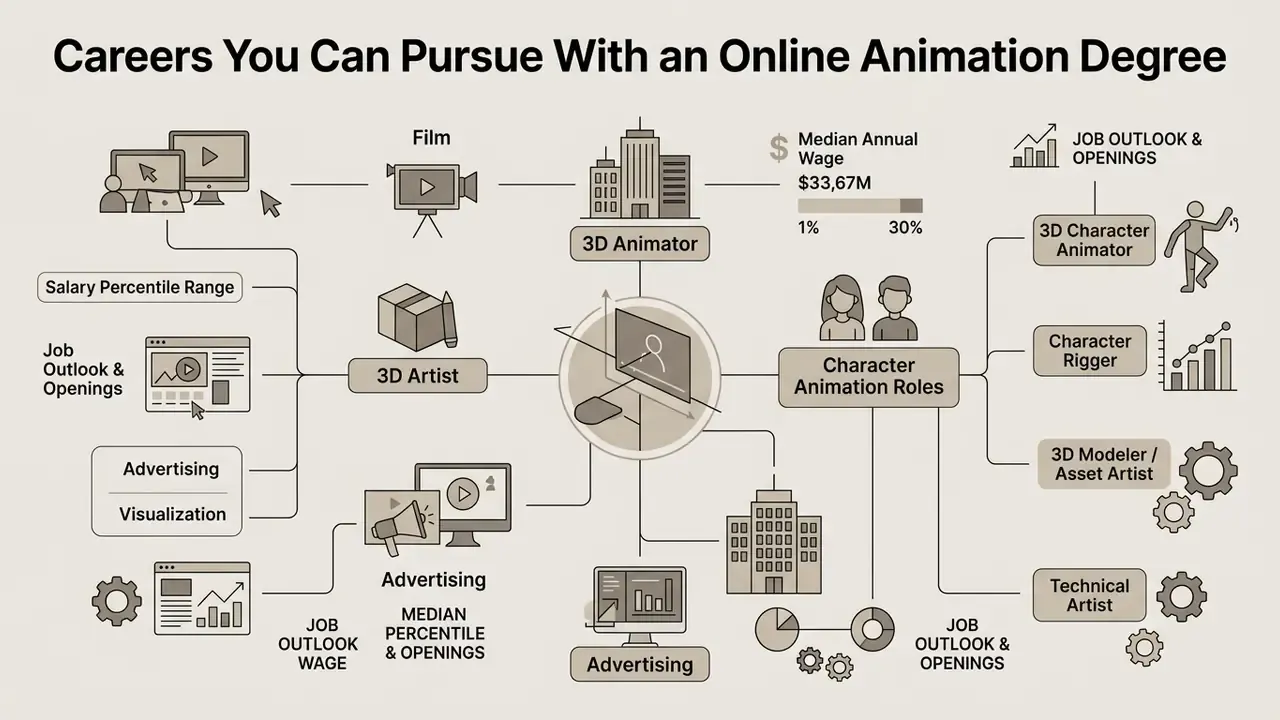
Graduates of online animation degrees enter a competitive job market spanning film, gaming, advertising, visualization, and software development. Reviewing realistic income before committing to tuition is the correct sequence for any debt-financed decision. Salary first, then the brochure.
3D Animator, 3D Artist and Character Animation Roles
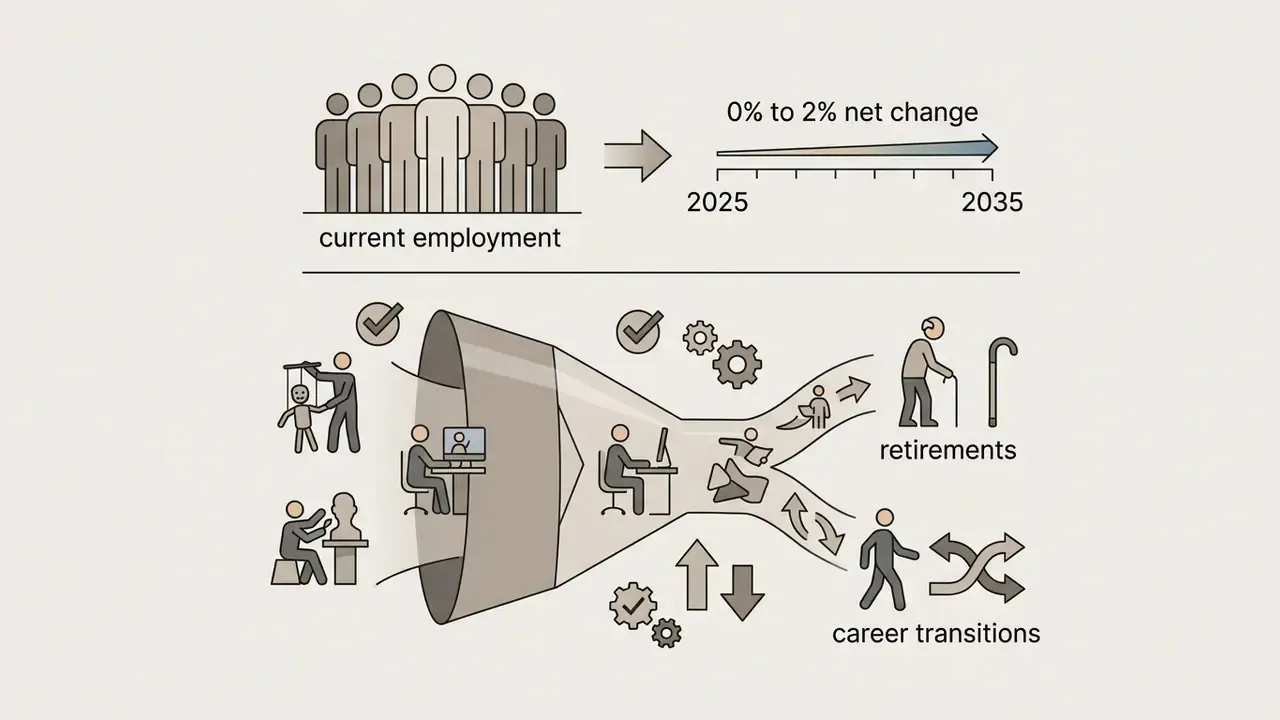
According to the U.S. Bureau of Labor Statistics (BLS), professionals in this field fall under the category of Special Effects Artists and Animators (SOC 27-1014) (U.S. BLS Occupational Outlook Handbook, May 2025):

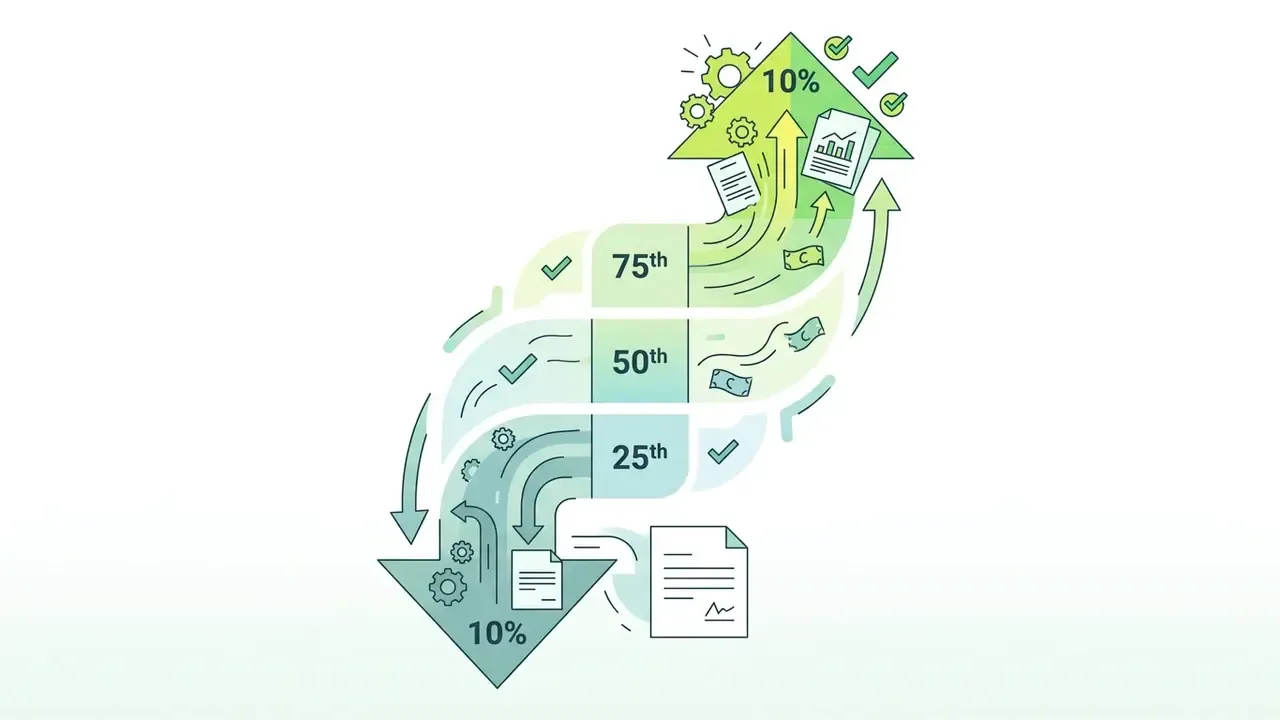
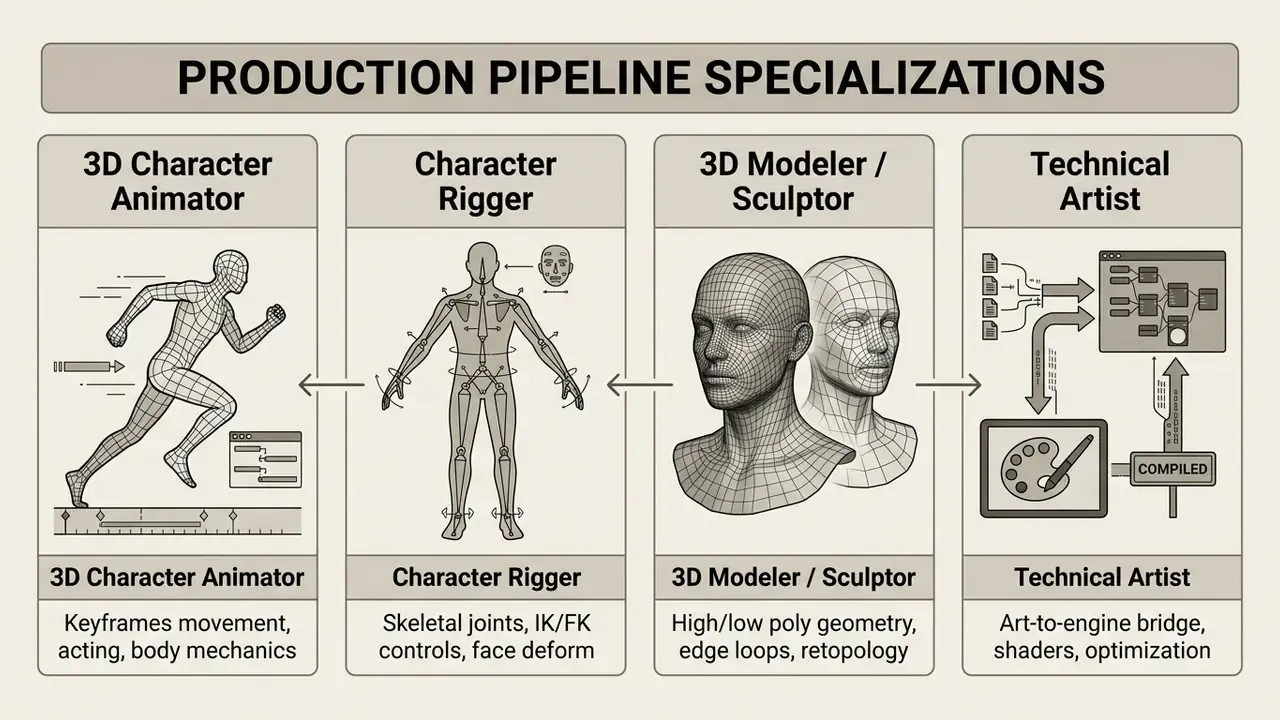
Primary studio specializations include:
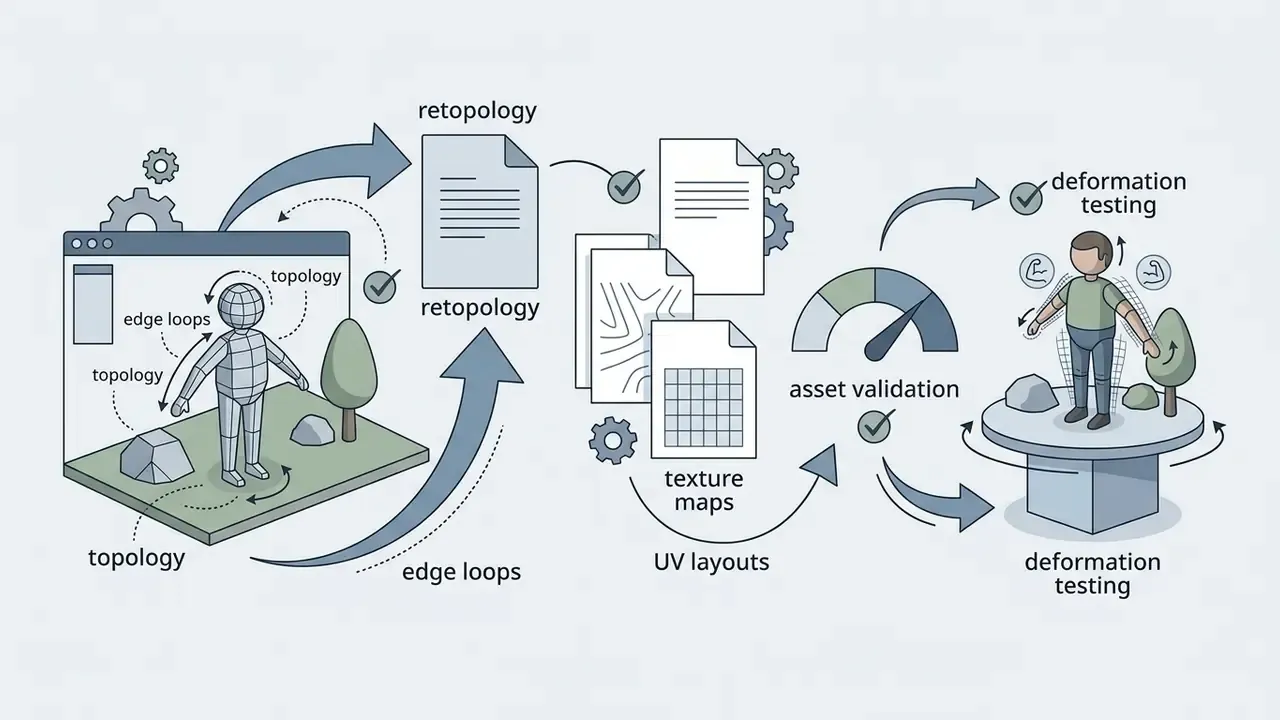
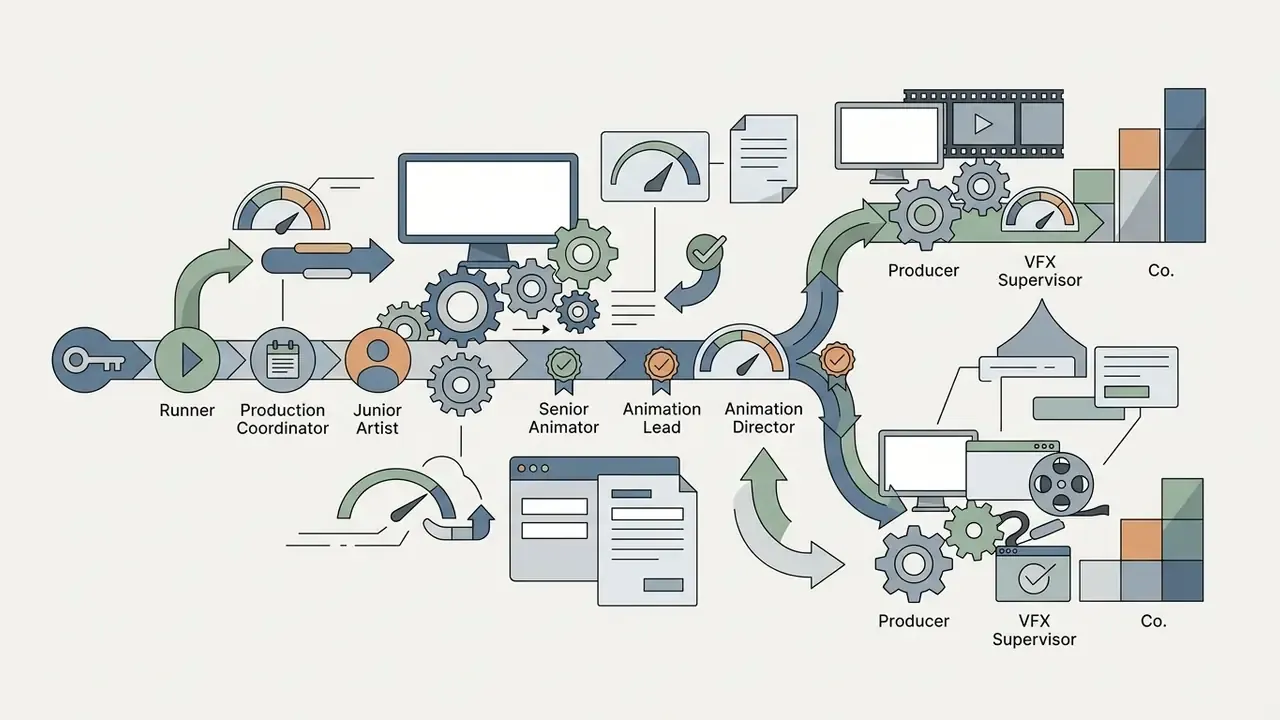
Adjacent roles that recruit from the same graduate pool include Lighting Artist, Environment Artist, Motion Capture Specialist, VFX Compositor, Motion Graphics Designer and, further up the ladder, Animation Director and Producer.

Film, Game and Visual Effects Career Paths
Career trajectories differ depending on whether a graduate works in linear entertainment (film and TV), real-time interactive media (games), or visual effects.
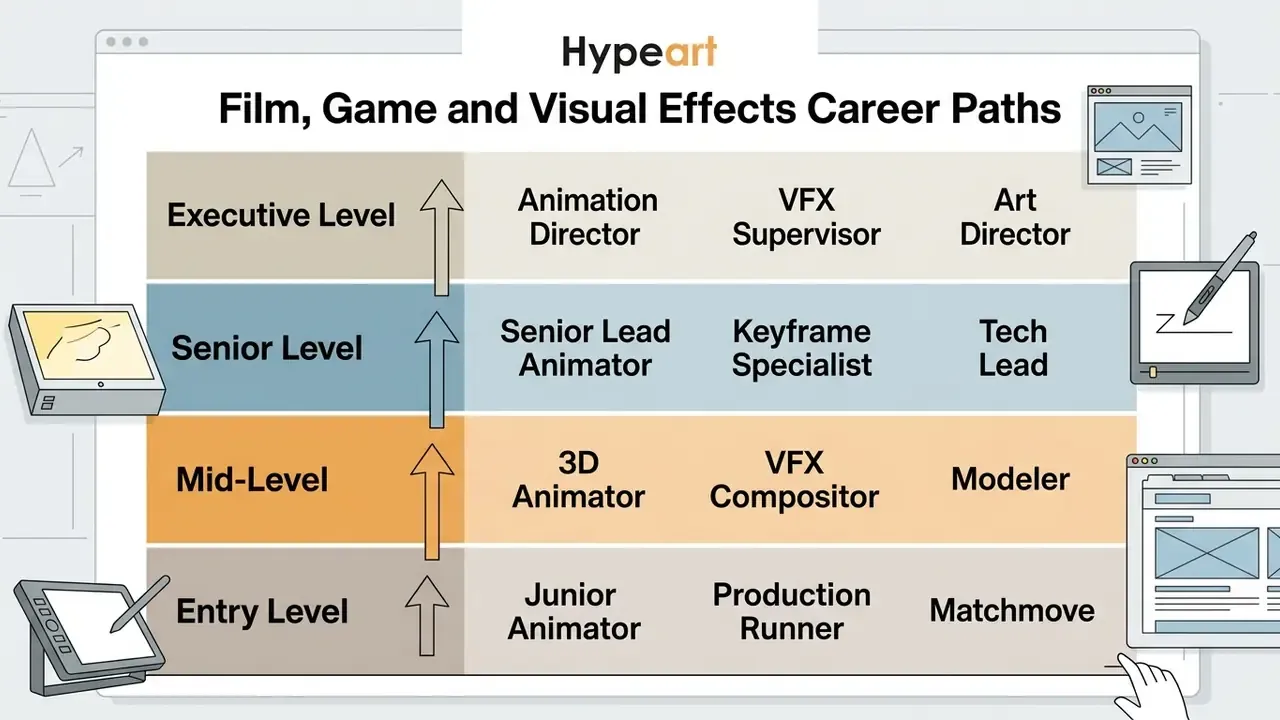
- Staff vs. Freelance Employment Dynamics:
- Salaried Staff Roles: Provide steady income, health benefits, and studio access, but may require living in studio hubs (Los Angeles, Vancouver, Montreal, London).
- Freelance / Contract Roles: Freelancers work project-by-project under client service agreements, often holding several contracts at once, with defined deliverables, deadlines and fees (WGGB Videogames Contract Guide, 2026). They enjoy remote flexibility but must manage self-employment taxes, equipment overhead, and contract pipelines. Independent contractors handling low-budget client work often supplement their pipeline with free AI video generators for animatics, social cutdowns and rapid client previews.
To learn more about media licensing and industry case law, consult our resource on AI Litigation and Case Timelines. Technical creators can review implementation approaches in our AI Media API Guides.

Online Animation Degree Tuition, Scholarships and Financial Aid
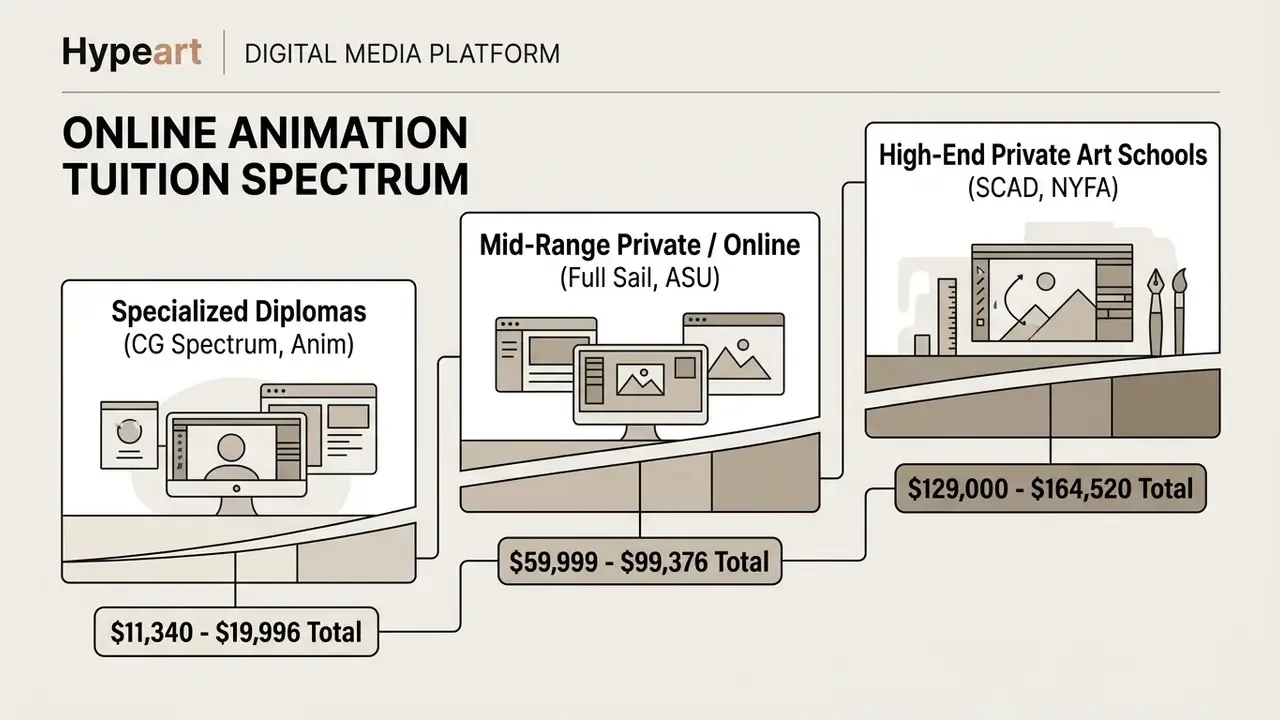
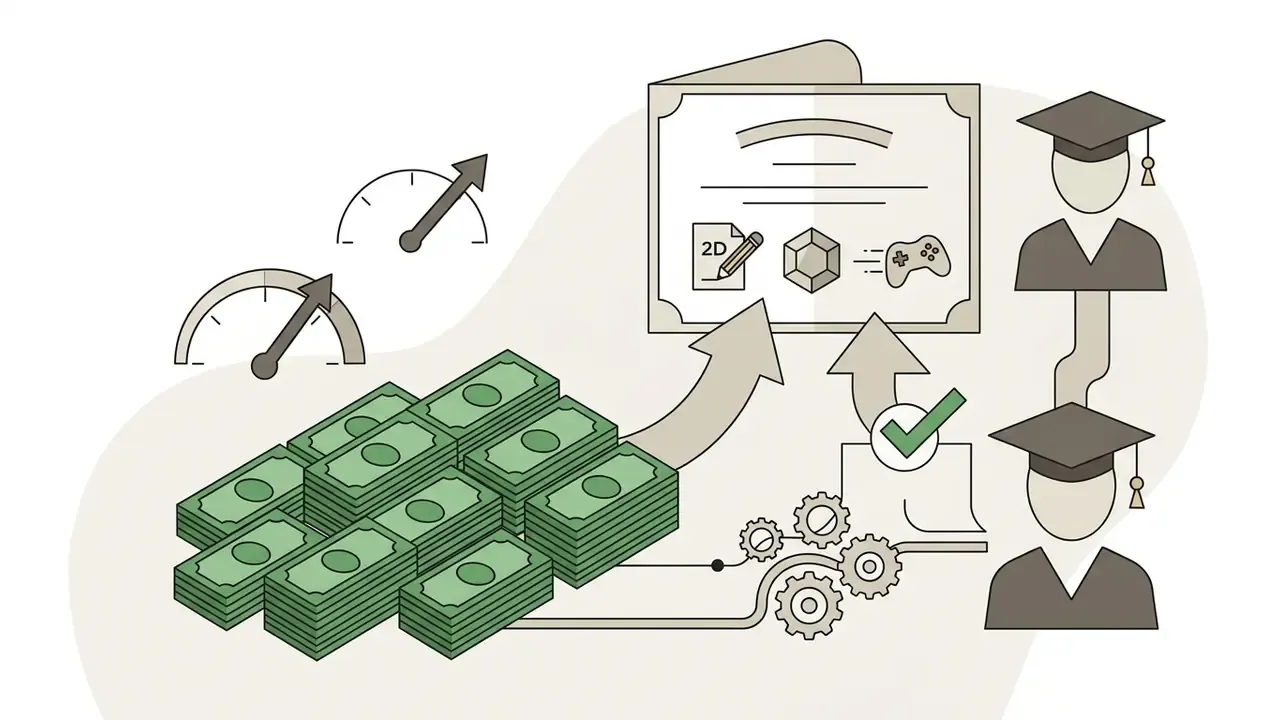
The total cost of an online animation degree varies widely based on institutional structure, credential level, and credit loads. The spread is dramatic: roughly fourteen times between the cheapest diploma and the priciest private BFA.
What to Compare Beyond Bachelor Degree Tuition
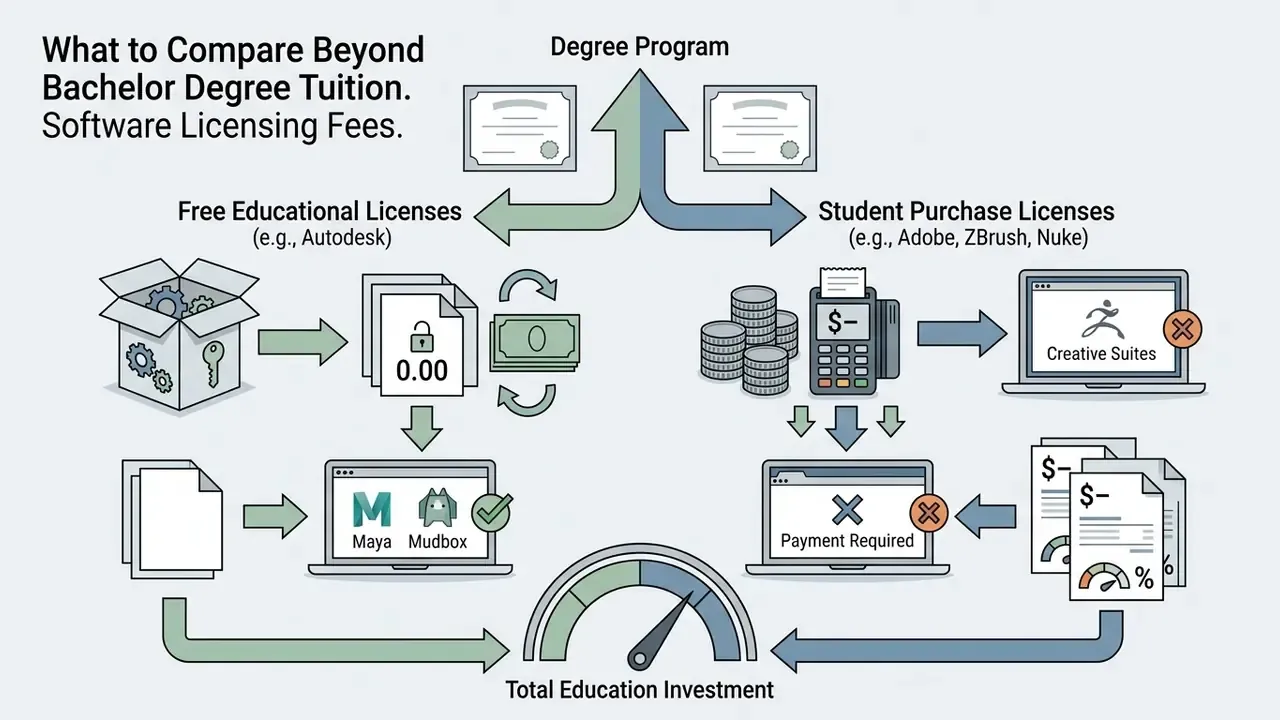
Published sticker prices rarely reflect the full cost of earning an online animation degree. Students must account for hardware, software licenses, and administrative fees on top of bachelor degree tuition or diploma tuition.
- Tuition Pricing Models:
- Per-Credit Pricing: RMCAD charges $712 per credit ($99,376 total tuition plus fees) (RMCAD Program Overview, 2026), while Sessions College charges $400 per credit ($48,000 total for 120 credits) (Sessions College Tuition Page, 2025).
- Flat-Rate Program Pricing: Full Sail charges $63,500 to $66,500 flat total tuition for its online Computer Animation BS (Full Sail Tuition Page, 2026).
- Annual Flat-Rate Pricing: SCAD charges $41,130 per academic year regardless of on-campus or online delivery, so $164,520 over four years (SCAD Catalog, 2025).
- Per-Term Pricing: AnimSchool charges $1,620 per 11-week term across 7 terms ($11,340 total), and NCAD lists $18,000 per academic year, which works out to $36,000 for the AOS and $81,000 for the BFA (AnimSchool FAQ, 2026; NCAD Catalog, 2024–2025).

Scholarships and Financial Aid for Animation Students
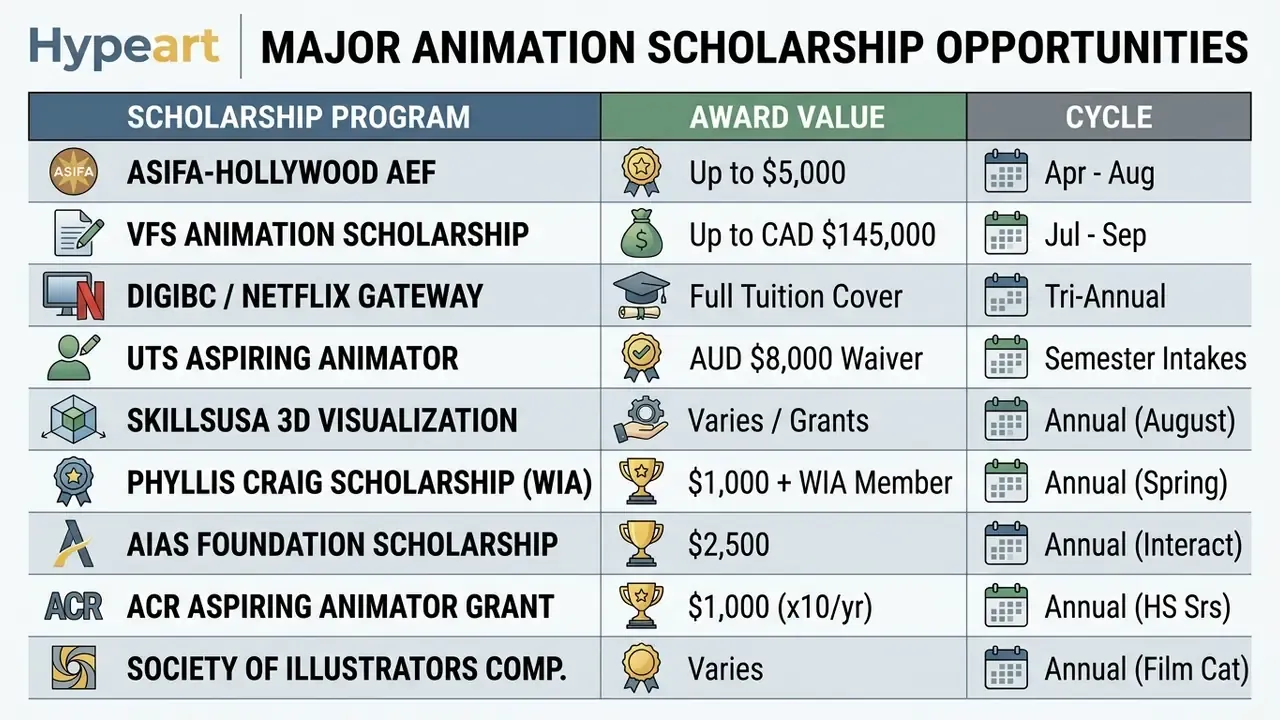
Online students enrolled in Title IV-accredited institutions can access federal, state, and private financial assistance. Stack them. Most awards below are not mutually exclusive.
The following comparative table summarizes tuition figures, credential levels, and financial structures across verified online animation programs:




| Institution & Program | Credential Level | Total Credits / Duration | Published Tuition & Rate Model | Financial Aid & Scholarship Options | Verification Date |
|---|---|---|---|---|---|
| AnimSchool | Program Certificate | 7 Terms (77 Weeks) | $11,340 Total ($1,620 per 11-week term) | Monthly payment plans; private loans | August 2026 |
| CG Spectrum | Bachelor / Diploma | 120 Credits / 1-3 Years | A$19,996 (Diploma) / A$59,999 (Bachelor) | Trimester installment plans (A$9,998) | August 2026 |
| Full Sail University | Bachelor of Science | 120 Credits / 29 Months | $63,500 - $66,500 Total Program Cost | Title IV FAFSA; momentum scholarships | August 2026 |
| RMCAD | Bachelor of Fine Arts | 123 Credits / 4 Years | $99,376 Total ($712 per credit hour) | Title IV FAFSA; locked start-date tuition | August 2026 |
| NCAD | AOS / BFA | 2 Years / 4 Years | $18,000 per year ($36,000 AOS / $81,000 BFA) | FAFSA federal and state aid | August 2026 |
| Buckinghamshire New Univ. | BA (Hons) Animation | 3 Years (Online) | £8,430 per year (2026–2027 rate) | UK Student Loans; university bursaries | April 2026 |
| Univ. for Creative Arts | BA (Hons) Animation | 3 Years (Online) | £9,790 per year (2026/27 BA rate) | UK Student Loans; international awards | August 2026 |
Modeling Return on Investment Before You Enroll
Animation debt is repaid out of entry-level wages, not median wages. So model affordability against a junior salary.
Debt-to-income rule of thumb:
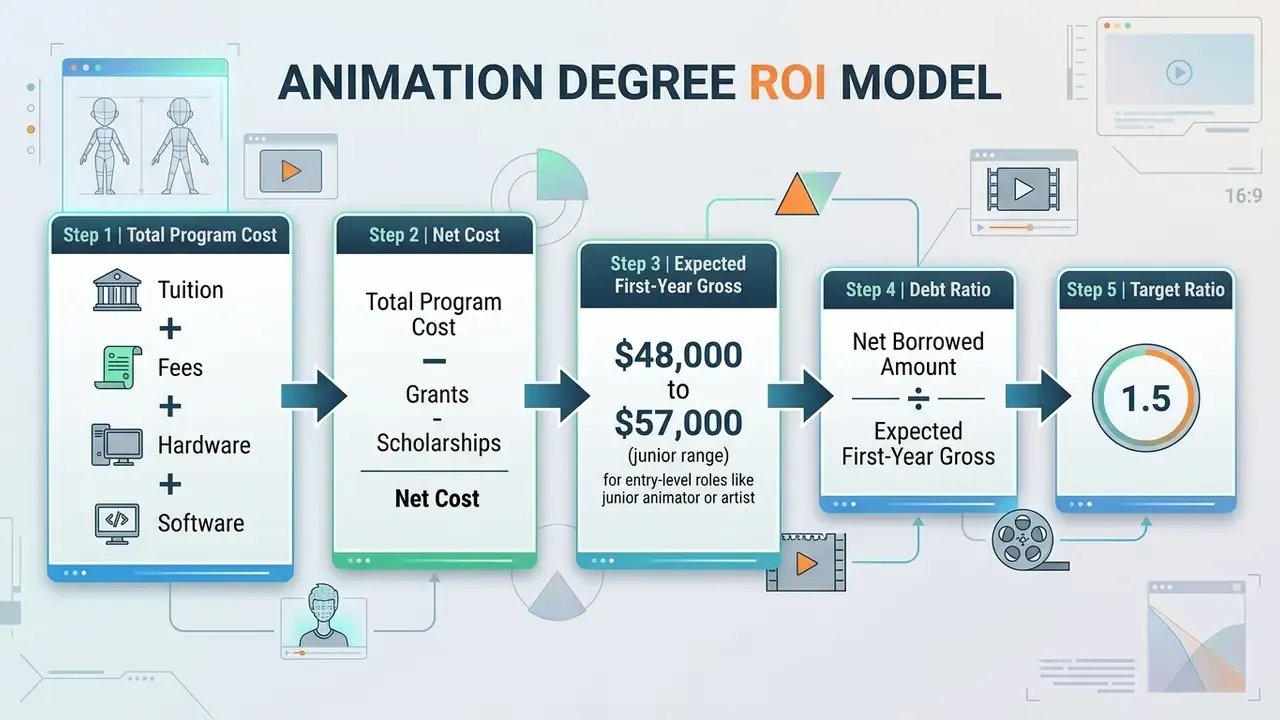
| Scenario | Net Borrowed | Expected First-Year Gross | Debt Ratio | Risk Read |
|---|---|---|---|---|
| Diploma track (AnimSchool plus $2,000 hardware) | ~$13,300 | $50,000 | 0.27 | Low |
| Mid-range online BS (Full Sail, partial aid) | ~$45,000 | $52,000 | 0.87 | Acceptable |
| Per-credit BFA (RMCAD, limited aid) | ~$85,000 | $52,000 | 1.63 | High; seek aid or transfer credits |
| Premium private BFA (SCAD list price) | ~$150,000 | $55,000 | 2.73 | Very high without major scholarship |
Three levers reduce the ratio without changing career outcomes: transferring general education credits from a community college, applying to the stackable scholarships listed above, and starting on free or education-licensed software (Blender, Autodesk education licenses) instead of buying commercial suites in year one. A fourth, less obvious lever: finishing on time. Every extra term at a per-credit school is pure added principal.
Financial Data Verification & Trust Disclaimer
Students evaluating degree costs can also consult our AI Media Pricing Guides and explore self-guided software tools listed in the AI Media Commercial-Use Hub.
Frequently Asked Questions (FAQ)
Is NASAD accreditation better than regional accreditation?
They serve different functions. Regional or institutional accreditation (HLC, SACSCOC, NECHE) governs Title IV federal financial aid eligibility and credit transferability. NASAD is a specialized accreditor for art and design programs and signals curricular quality within the discipline; ACCSC accredits career-focused institutions such as AnimSchool and Full Sail. Prioritize institutional accreditation for aid and transfer, then treat NASAD or ACCSC as a curriculum quality signal.
Can international students get an F-1 student visa for a fully online animation degree?
Generally no. U.S. student visa categories are built around in-person attendance, and fully online course loads typically do not satisfy the required in-person study minimums. Low-residency and hybrid programs may qualify depending on structure. International applicants should confirm requirements with the institution's designated school official and current immigration guidance before paying deposits. This is general information, not immigration advice.
Can I transfer from an online animation program to an on-campus degree later?
Often yes, subject to the rules covered above: accredited coursework, minimum grade of "C," syllabus-based equivalency review for studio classes, and residency requirements that usually reserve the final 30 to 60 credits for the degree-granting institution. Save every syllabus and every project file from day one. Equivalency reviews frequently request both.
What is the realistic minimum hardware specification?
A dedicated GPU (NVIDIA RTX-class or better), 16GB RAM as a floor and 32GB for simulation or dense-scene work, a pressure-sensitive tablet (Wacom or Huion), a webcam and microphone for critiques, and ideally dual monitors. Some syllabi, including the University of Florida's 3D character animation course, require a two-monitor setup for online students. Budget $1,200 to $3,000.
Can you get an animation degree online without a portfolio?
Yes, at open-admission institutions. Full Sail, AnimSchool and several online animation colleges admit on a high school diploma or GED plus a system readiness check. Selective BFA programs at CSUF, RIT or Syracuse still gate admission on 7 to 20 portfolio samples and a creative statement, so the portfolio question is really a question about which tier of school you are targeting.
Do I need a degree to get hired as an animator?
Hiring is portfolio-first, and diploma or certificate graduates do get hired on strong reels. What the degree adds is federal financial aid eligibility, structured internships, institutional career services, and a recognized credential for skilled-worker visa categories. Choose based on aid access and total cost, not on the assumption that a title alone converts to offers.
Can I use AI-generated work in my portfolio?
Not in admissions portfolios at programs that explicitly ban it, and never without labeling. For professional applications, disclose every tool and every human contribution on your breakdown sheet, and keep a fully human-authored core reel for animation roles.
How long does an online animation degree take?
Certificates run 3 to 6 months, diplomas 1 to 2 years, associate degrees about 2 years, and bachelor's degrees 3 to 4 years. Accelerated online formats, such as Full Sail's 29-month BS, compress the timeline through year-round terms.
Executive Summary & Final Decision Guide
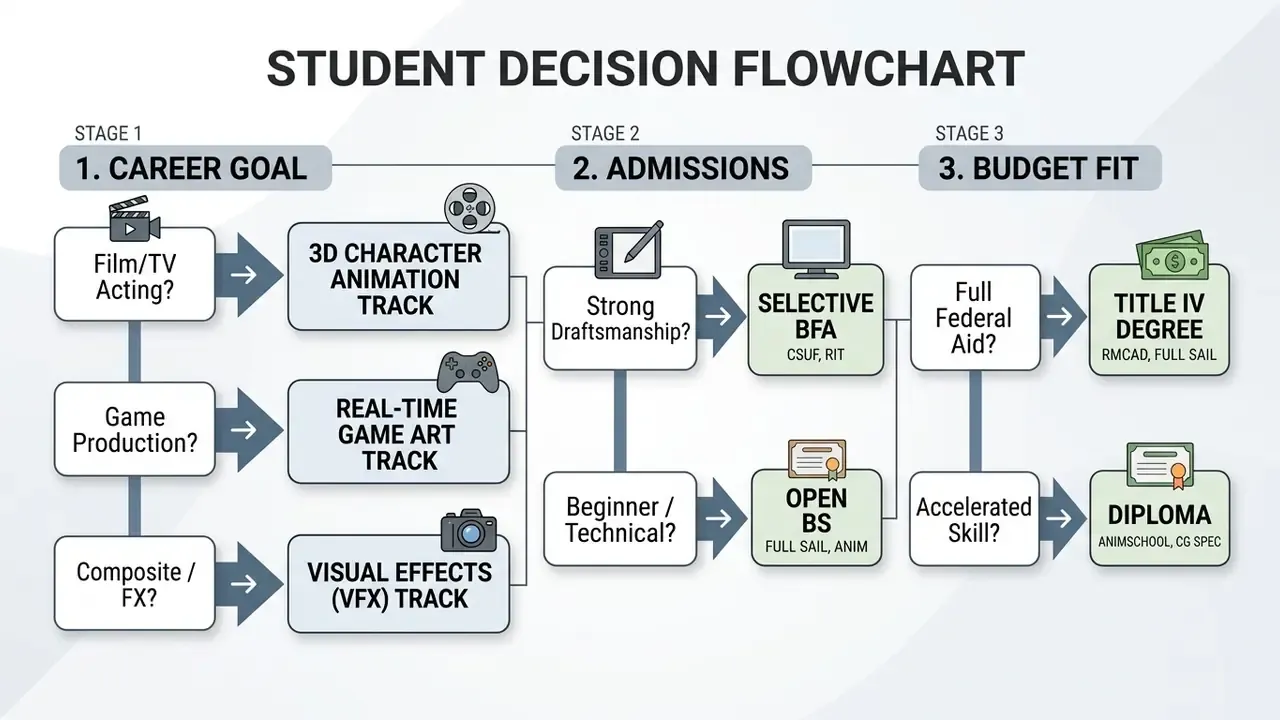
Selecting an online animation degree means balancing institutional accreditation, specialization fit, software stacks, portfolio support, and net costs. Six steps, in this order.





What to Do Next
- Shortlist three programs across different price tiers (diploma, mid-range online BS, per-credit BFA).
- Build or refresh a 90 to 120 second reel with a one-page breakdown sheet before you apply. It doubles as both an admissions asset and a scholarship asset.
- Run the debt-ratio calculation before signing any enrollment agreement.