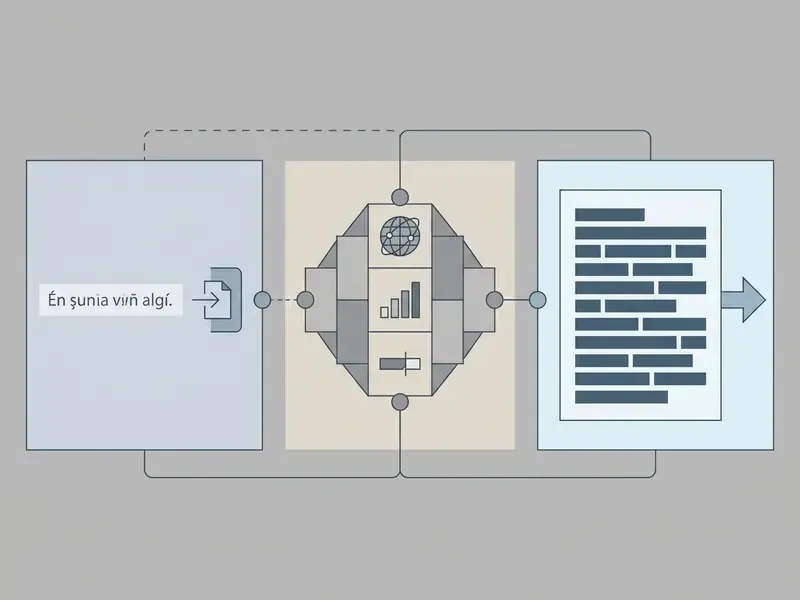
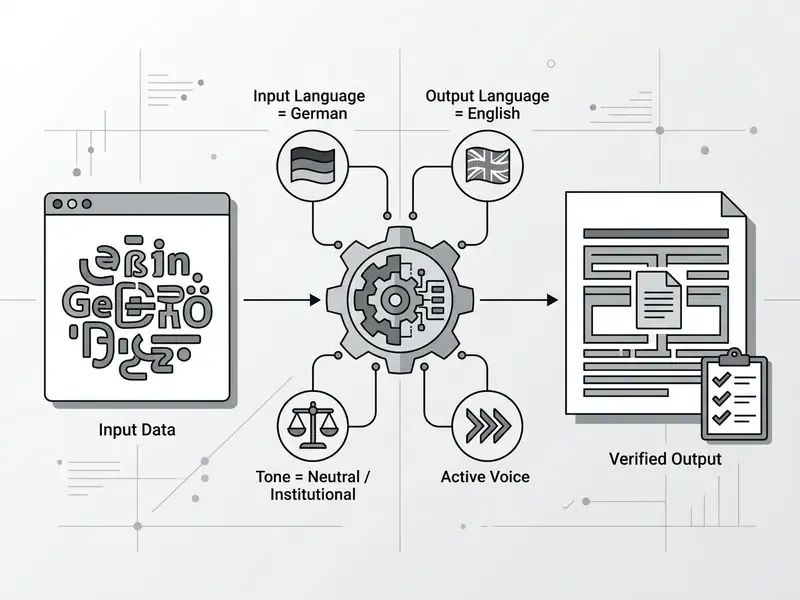
An ai sentence generator is an automated software tool that uses large language models (LLMs) to draft, expand, or complete text at the sentence level. These systems turn raw concepts, fragments, or keywords into grammatically structured English sentences shaped for a stated tone and audience.
Modern generative tools let users build clear messaging quickly, without drafting from a blank page. Understanding how an ai generator sentence mechanism works helps writers pick the right controls, live within free access limitations, and judge output honestly before publication.
Executive Summary
- What it is A sentence-level text generation interface built on transformer LLMs that predict tokens autoregressively from your prompt, keywords, or bullet points.
- Generator vs rewriter Generators compose new prose from abstract inputs; a rewriter sentence tool transforms existing text while preserving meaning. Choose by task scope, not by brand claim.
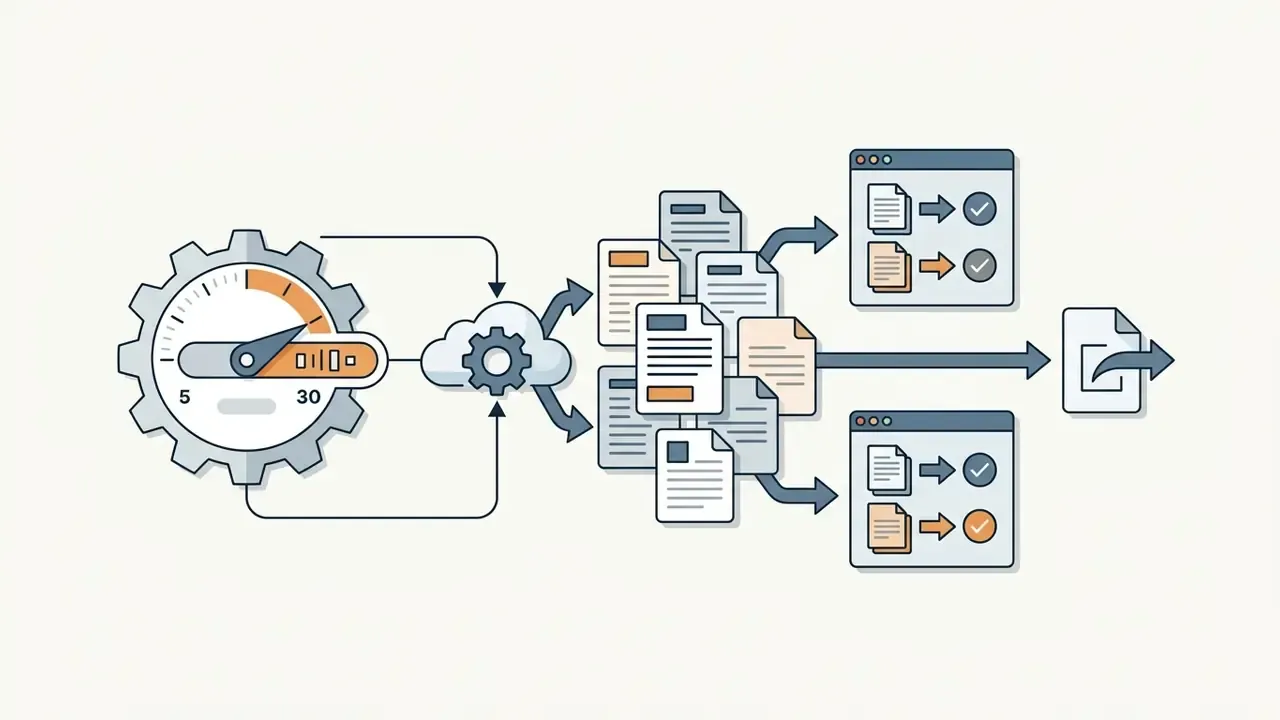
- How to control quality Supply anchor nouns, explicit length caps, tone parameters, and target audience. Generate 5 to 30 variants, then select and edit.
- Verification is mandatory Fact-check, tone-align, run plagiarism and originality scanning, and log human approval. Detection tools are probabilistic, not definitive.
- Commercial and legal position Purely machine-generated text lacks copyright protection without sufficient human creative contribution; platform terms govern ownership and reuse.
- Enterprise controls Map validation to recognized model-risk practice (Federal Reserve SR 11-7, OCC Bulletin 2011-12, and the NIST AI Risk Management Framework), require zero-data-retention tiers, and close Shadow AI gaps through DLP policy.
- Free vs paid Free tiers support occasional drafting under credit caps and looser privacy terms; regulated workflows generally require paid, contractually governed access.
What Is an AI Sentence Generator?
An ai sentence generator is a specialized natural language processing application that produces coherent single or multi-sentence outputs from user prompts. It uses statistical language patterns to predict likely word sequences, helping people articulate ideas, finish partial drafts, or test alternative phrasings.
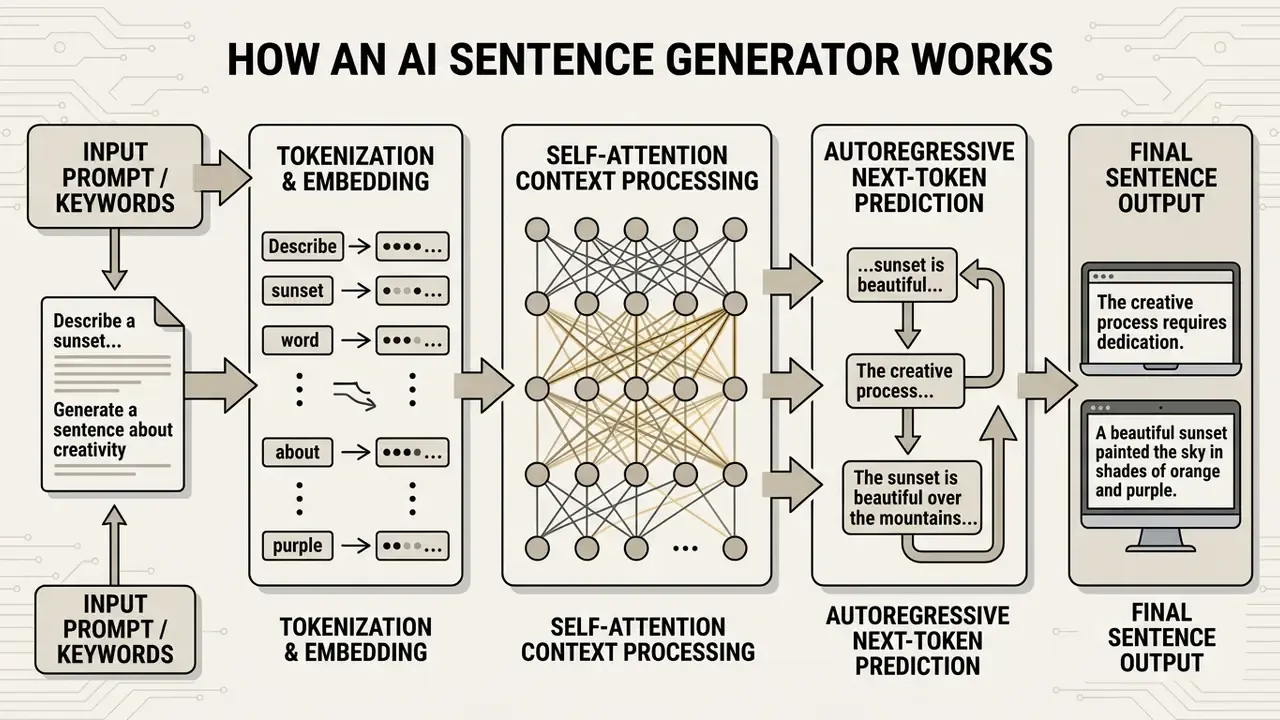
Unlike a basic text editor, an ai text generator reads the whole context window to keep structural continuity across clauses. An ai generator for sentences behaves like a digital writing assistant: structured prose, refined messaging, targeted fragments, produced in seconds rather than an afternoon.
How AI Generates Sentences From Context and Instructions
Large language models generate text through autoregressive next-token prediction. The model estimates the probability of the next word from all preceding tokens. When you submit a prompt, stacked Transformer layers apply self-attention to weigh relationships between words that sit far apart in the sequence. The architectural basis here is documented in peer-reviewed generative-writing literature, not in a single clinical index entry.
Instruction-tuned LLMs go through supervised fine-tuning and reinforcement learning from human feedback (RLHF) so they follow explicit user guidelines. That training is why an ai generator sentences interface can respect a word cap, hold active voice, or stay inside a domain vocabulary.
Decoding parameters matter as much as the prompt itself. Temperature and top-p sampling widen or narrow the probability distribution used to pick each token. Low temperature produces repeatable, conservative phrasing suited to regulated disclosures. Higher values increase lexical variety and, at the same time, hallucination exposure. Teams that need reproducible evidence for auditors should fix sampling parameters, record the model version, and store the exact prompt next to the output.
One practical detail from review work: the same prompt at temperature 0.2 and 0.9 can pass or fail a compliance read, and nobody can reconstruct which run shipped unless parameters were logged.
Sentence Generator vs AI Sentence Rewriter
A sentence generator builds new prose from abstract inputs, ideas, or talking points. A rewriter sentence tool reshapes existing phrasing while preserving the core meaning. Generative tools expand brief concepts into complete structures, which makes them useful for early drafting and ideation.
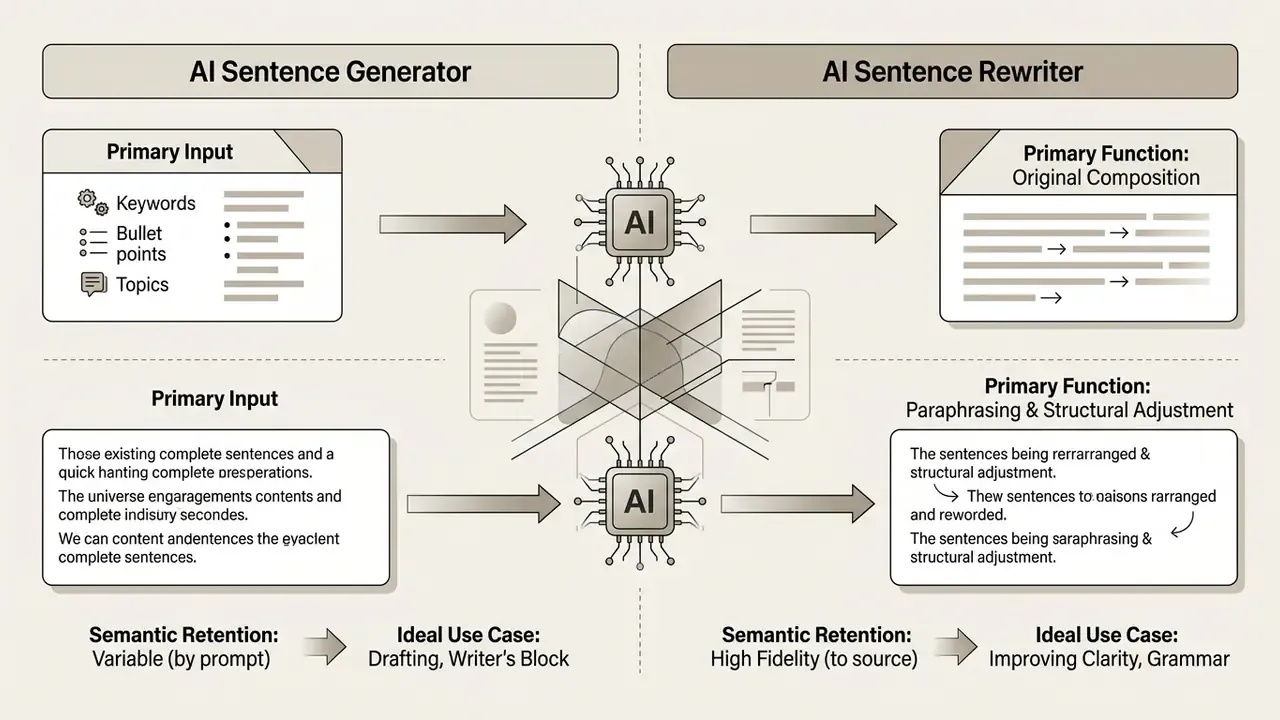
Empirical research shows that advanced LLMs performing sentence-level rewriting reach grammatical correction error rates between 0% and 4.17% across standard error categories, well ahead of legacy rule-based grammar checkers.
"ChatGPT-4 reached error rates of 0% to 4.17% across key grammatical categories, outperforming Grammarly Premium on all 20 error types."
Choosing between generation and rewriting depends on one question: do you need new content, or cleaner content? In practice, editorial teams run both. The generator drafts candidate structures from an outline; the rewriter compresses or formalizes the approved version. An ai generator sentence maker workflow often chains the two steps in a single interface.
How to Use an AI Sentence Generator
Using an ai sentence generator means giving clear inputs, configuring output style parameters, triggering generation, then reviewing candidates. A structured prompt usually gets you a usable sentence on the first pass rather than the fifth.
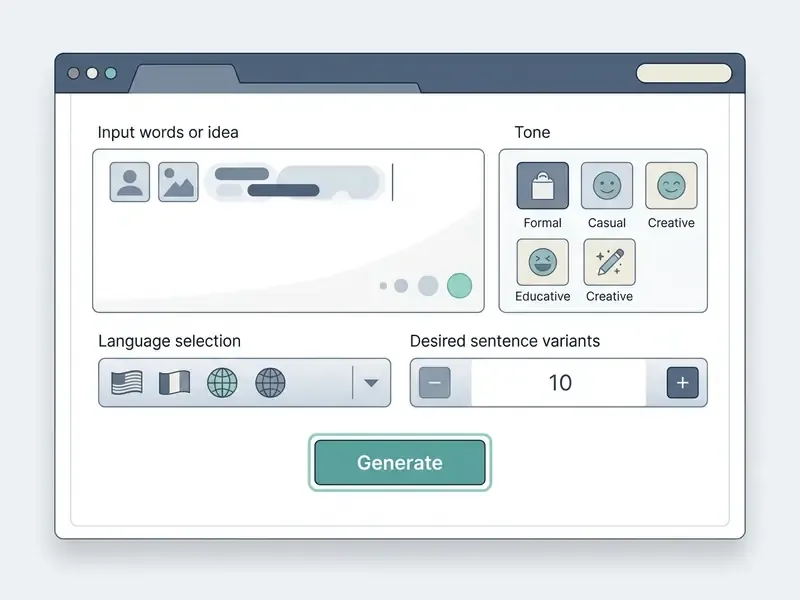
To get consistent results from an ai create sentences workflow, set explicit constraints on formatting, length, and subject matter before you press Generate.
Add Words, Ideas, or Talking Points
Good generation starts with structured input: core bullet points, primary keywords, or a half-written statement. An ai sentence generator from words lets you map target terminology directly into generated prose without hand-building each phrase.
In an internal publishing project that assessed automated drafting controls, an editorial team fed structured bullet points and fixed parameters into an ai sentence creator interface. Initial drafting revision cycles fell by roughly 40% while factual consistency held. That figure reflects one internal case study, not a universal benchmark. Published measurements report large but variable efficiency gains, depending on scaffolding level and reviewer experience.
[PROMPT TEMPLATE: High-Precision Sentence Generation]
[Context]: Writing an enterprise SaaS product description for technical directors.
[Input Keywords]: AI text generation, SOC 2 compliance, latency reduction.
[Constraint]: Active voice, maximum 18 words, authoritative tone.
[Desired Output]: "Our SOC 2-compliant AI engine generates enterprise copy instantly while reducing latency across publishing workflows."
When you feed raw inputs to an ai sentence generator from words, follow these input rules:
- Provide specific anchor nouns.Skip isolated adjectives; supply domain entities (use "cloud infrastructure", not "tech").
- Define structural boundaries.State length limits, for example "under 20 words", inside the prompt box.
- Isolate technical jargon.Wrap proprietary brand terms in quotation marks so the model does not read a product name as a verb.
- Separate instruction from source material.Put delimiters around pasted context, otherwise reference text gets treated as an instruction.
- State the audience explicitly.Naming the reader ("model risk committee", "first-year students") constrains vocabulary far better than a generic tone label.
- Never paste regulated data.Client identifiers, account numbers, and unpublished financials must be redacted before submission on any non-contracted tier.
Choose Tone, Writing Style, Audience, and Language
Style settings align generated sentences with reader expectations and brand guidelines. Most systems let you pick formal, conversational, authoritative, or persuasive registers before execution.
When building workflows across platforms, operators usually compare model capabilities and review subscription pricing before committing, looking for tools that support saved tone profiles and multilingual output, including an ai english generator mode for international teams.
Documented style taxonomies separate three independent dimensions: sentence mechanics (length, rhythm, clause density), tone (formality and emotional register), and style (informative, persuasive, empathetic, inspirational). Set all three and the default "over-formal and uniformly positive" cadence largely disappears.
A small observation from editing sessions: naming the audience does more for readability than any tone slider.
Generate Variants and Refine the Result
Pressing Generate prompts an ai sentence maker to return one or several candidates. Multiple outputs let you compare syntactic structures and pick the version that fits the surrounding paragraph rhythm.
Refinement means selecting the strongest variant, adjusting individual words, and repairing transitions. Self-consistency techniques, where several candidates are generated and scored against the prompt, lift final quality noticeably.
"Next-paragraph-level generation significantly improved writing quality and productivity, while sentence-level suggestions reduced quality by 0.29 points (p = 0.02)."
The practical implication is scope selection. Request a coherent block that maps to one outline point, then compress by hand, instead of stitching together atomized single-sentence completions.
Managing and Exporting Generated Outputs
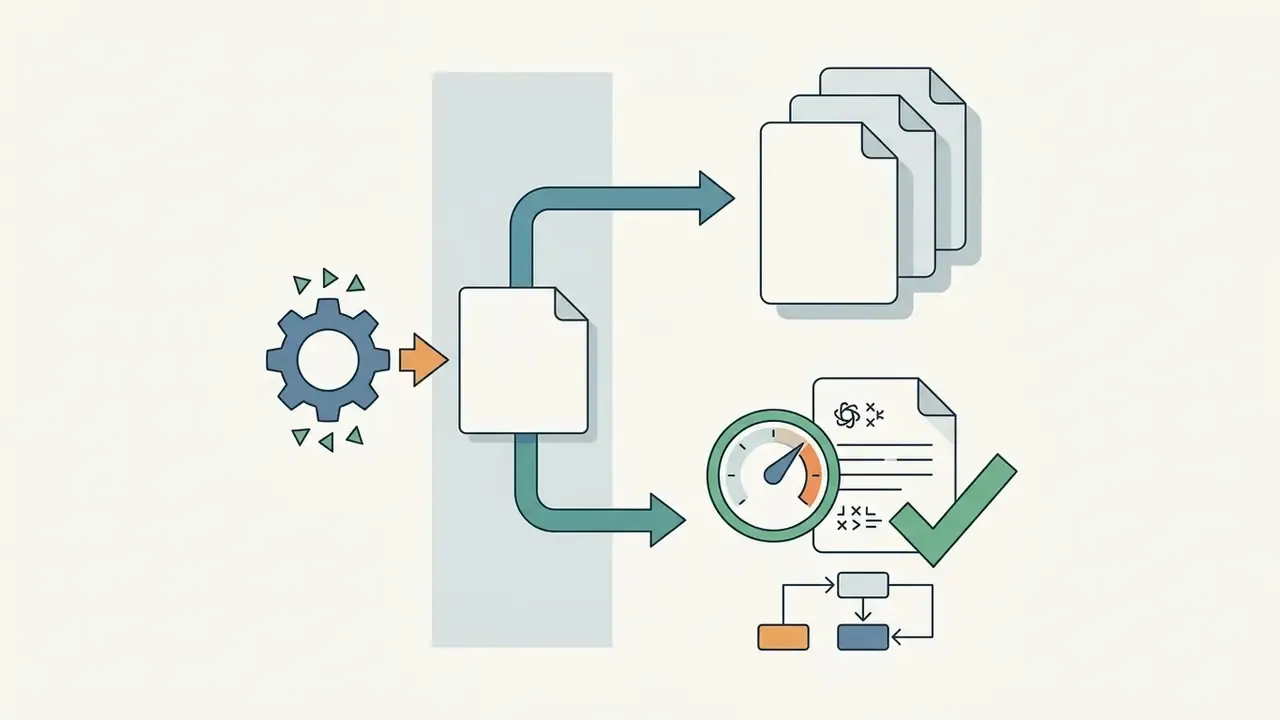
To keep production velocity high, advanced interfaces support batch generation and direct output management:
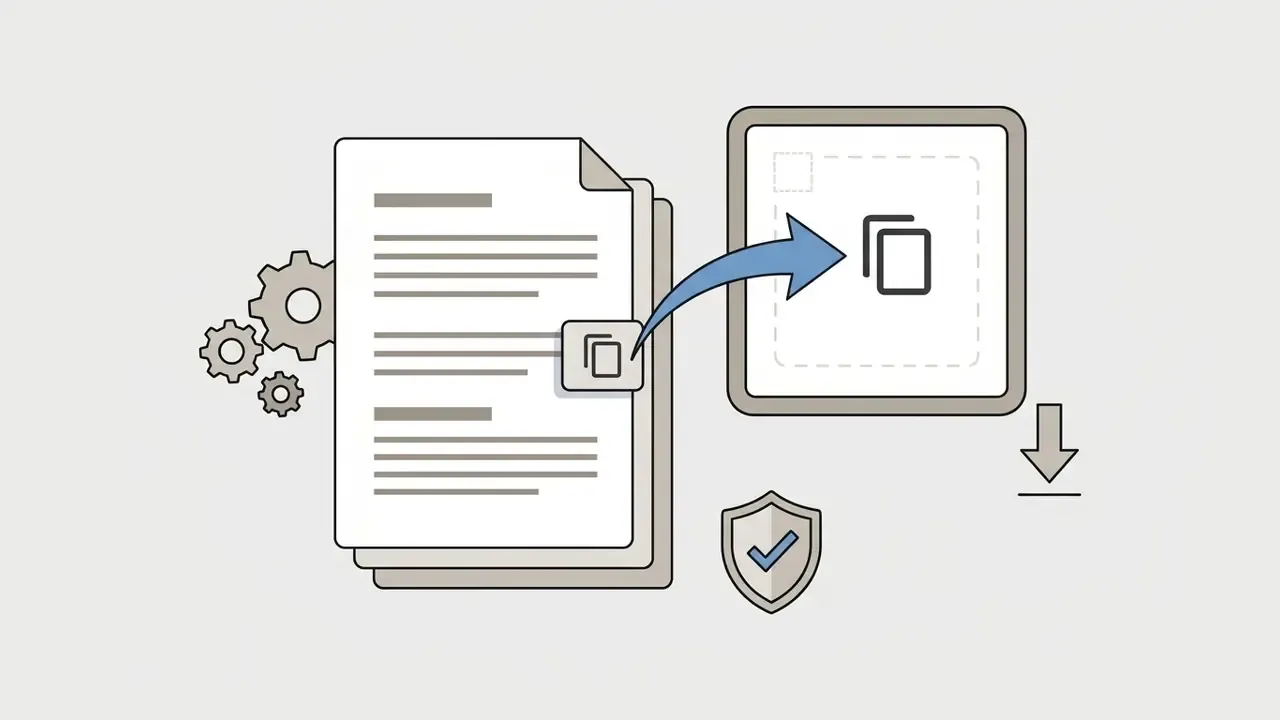
Copy icon beside any candidate to move formatted plain text into your editing environment.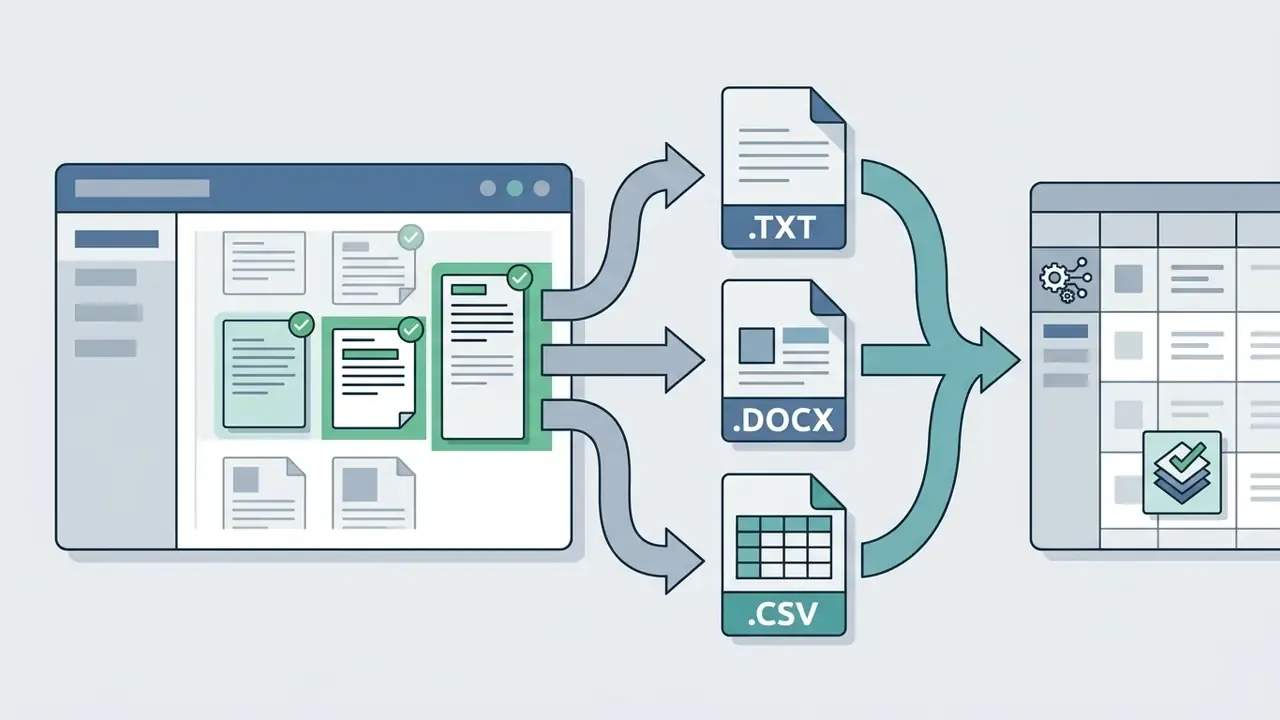
.TXT, .DOCX, or .CSV files for content management systems (CMS) or spreadsheet review.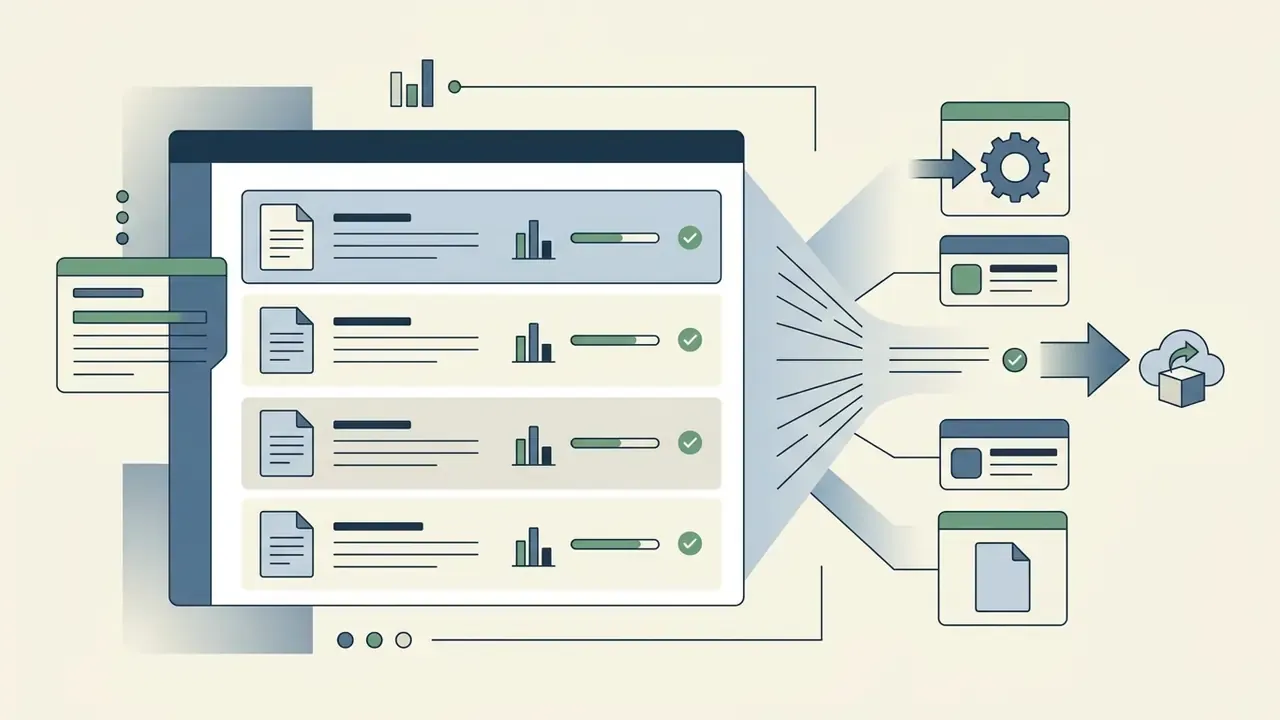
Sentence Types, Tone, and Writing Styles You Can Generate
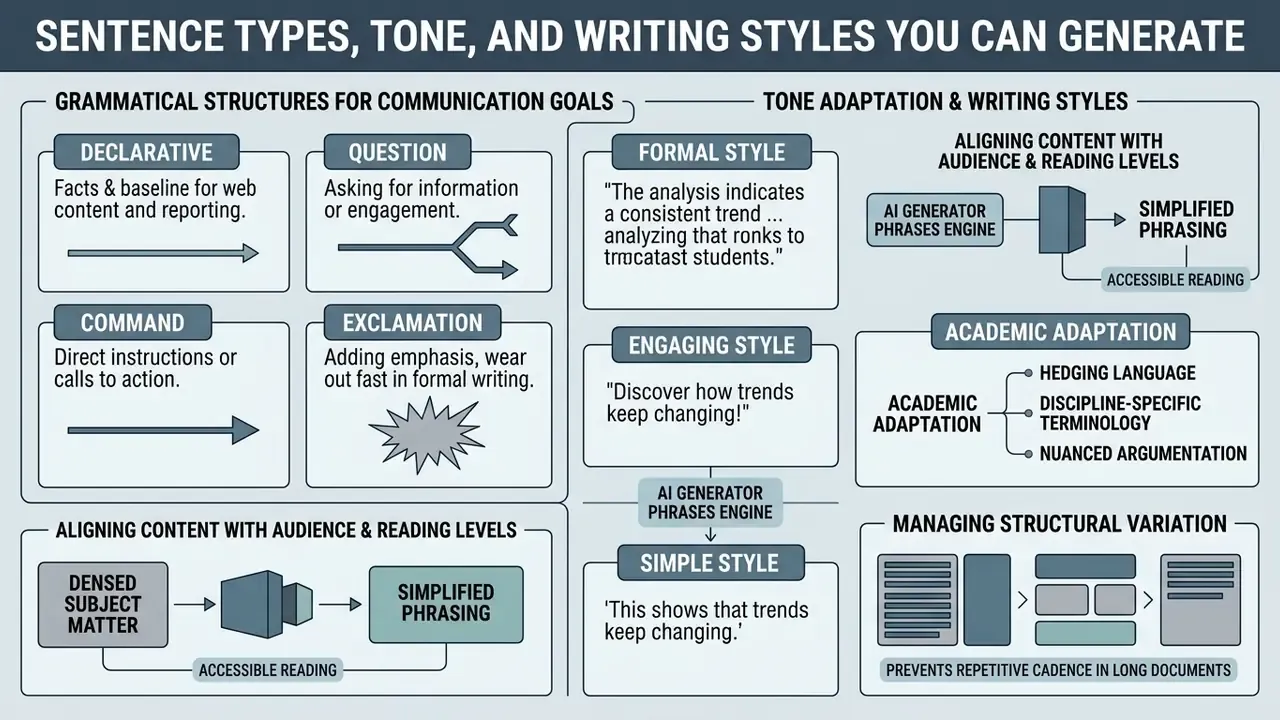
An ai generator phrases engine can produce very different grammatical structures for different communication goals. Adjust the instruction and you pivot between informational statements, direct commands, and analytical questions.
Managing structural variation prevents repetitive cadence in long documents. An ai phrase generator or ai phrase maker helps diversify sentence length and vocabulary across commercial assets, and an ai phrase generator free tier is usually enough to test that variation before you buy.
"Writing with InstructGPT statistically significantly reduces lexical and content diversity, making texts by different authors more similar to each other."
Because instruction-tuned models converge on similar phrasing, deliberate style rotation is a quality control, not a stylistic whim. The table below renders one subject, content automation, across all six sentence types, so the structural difference is visible without any change of topic.
| Sentence Type | Topic / Prompt Input | Output Example (Unified Topic: Content Automation) | Recommended Context |
|---|---|---|---|
| Declarative | AI drafting tools | "Automated writing tools decrease initial drafting time by converting outline points into structured text." | Reports, documentation, informational guides. |
| Interrogative | AI drafting tools | "How can automated writing tools improve your editorial team's daily publishing speed?" | Headings, blog introductions, FAQ sections. |
| Imperative | AI drafting tools | "Verify all AI-generated content against factual source data before sending it to publication." | SOPs, user manuals, policy guidelines. |
| Exclamatory | AI drafting tools | "Automated sentence drafting eliminates hours of manual typing!" | Social media copy, ad headlines, promotional assets. |
| Conditional | AI drafting tools | "If explicit contextual parameters are set, generated sentences require up to 40% fewer manual edits." | Risk evaluations, comparative software reviews. |
| Standard / Neutral | AI drafting tools | "The system accepts keyword inputs to generate alternative phrasing variants for editorial review." | Encyclopedic entries, executive summaries. |
Declarative, Question, Command, and Exclamation Sentences
Declarative sentences carry facts and form the baseline for web content and reporting. Interrogative sentences frame problems and organize FAQ sections. Imperative sentences drive action in calls to action and technical guides.
Exclamatory sentences add emphasis, and they wear out fast in formal business writing. Use them once, not five times. Picking the right grammatical function makes sure your sentences do the job the document needs. Dialogue-system documentation often treats exclamatives as a sub-case of declaratives, since the propositional content is identical and only the affective marker changes.
Formal, Engaging, Simple, and Different Writing Styles
Style adaptation keeps content aligned with audience expectations and reading levels. Formal registers suit academic papers and corporate policy. Engaging registers use active voice and direct address for blog readers.
Simplified phrasing turns dense subject matter into accessible reading. The same reduction logic appears in visual tooling that strips complex source assets down to clean representations, as covered in our overview of AI photo editing tools, the broader guide to online photo editors and their commercial workflows, and the walkthrough on how to turn photo into sketch with controlled output settings.
Academic adaptation asks for extra discipline: hedging language, discipline-specific terminology, nuanced transitions, and deliberate variation in rhythm. Those four habits prevent the rigid, machine-like cadence that reviewers flag first.
Who Can Use an AI Sentence Generator?
An ai generator for sentences serves very different users, from commercial copywriters chasing throughput to researchers clarifying a stubborn hypothesis. Natural language interfaces make automated drafting portable across professional domains, and readers evaluating adjacent tooling can review AI content generators across formats alongside text systems.
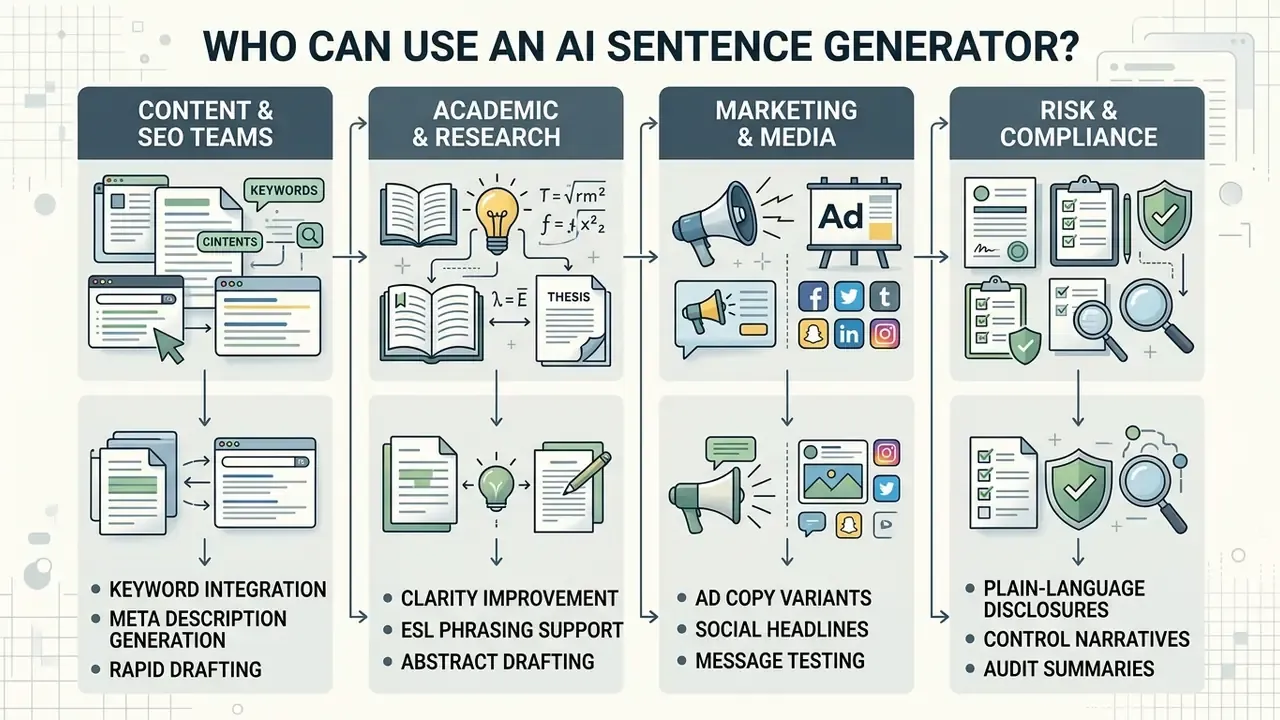
Deploying an ai sentence creater tool relieves workflow bottlenecks, so writers spend their hours on strategy, research verification, and editorial judgment.
Content Writers, Copywriters, and SEO Professionals
Content teams use sentence tools to speed up web copy, draft meta descriptions, and place target keywords without visible strain. Responsible search optimization practice, described in the AI Media Commercial-Use Hub, treats generated text as drafting help under strict quality control. Search platform guidance is consistent on one point: automated assistance is acceptable when output is accurate, useful, and non-commodity, while text produced mainly to manipulate rankings breaches spam policy.
Copywriters iterate on hooks and header variations with phrase generators. Multimedia teams pair the text workflow with AI video generators for multichannel campaigns, check implementation economics in the Google Veo API cost and limits guide, and source distribution clips through a twitter video downloader when repurposing owned social assets.
Students, Teachers, and Researchers
Academic users lean on sentence tools to tighten complex prose, verify grammar, and repair logical transitions. ESL students and international researchers gain the most, especially when drafting thesis statements or peer-review responses.
"Generative AI cut average writing time for graduate students by 65% and lifted average grades from B+ to A, with slightly larger gains for ESL students."
Educators bring sentence tools into writing curricula to demonstrate syntactic variation, comparing generator output with student drafts to teach clause construction. Instructional designers extend the approach to multimedia assets, using the guide to animation makers, templates, and export options, the AI voice generator licensing overview, and low-cost visual exercises such as turn photo into sketch free for accessible course material.
Marketers, Journalists, and Everyday Writers
Marketers run sentence engines as message generators, testing alternative value propositions across demographic segments. Research on generative writing tools reports drafting time reductions of up to 65%, which mostly buys more iteration rather than fewer people.
Journalists use them differently: fast lede variants, then hard verification. Everyday writers draft professional email, polish personal notes, and prepare social posts. Media teams evaluating adjacent visual tooling consult the best AI image generators for media projects, the comparative review of the best AI art generators by quality, pricing, and licensing, workflows to turn photo into short video, and guides on how to turn picture into animated campaign assets. Audio teams add soundtrack options through udio ai music reviews.
Is a Free AI Sentence Generator Enough for Your Task?
Evaluating an ai sentence generator free tier means weighing zero cost against usage caps, model selection, and data privacy terms. Basic tools deliver real value for occasional drafting. Enterprise tasks usually need paid infrastructure, a trade-off examined further in our analysis of free AI generators with credit limits and the free photo editor feature-limit breakdown.
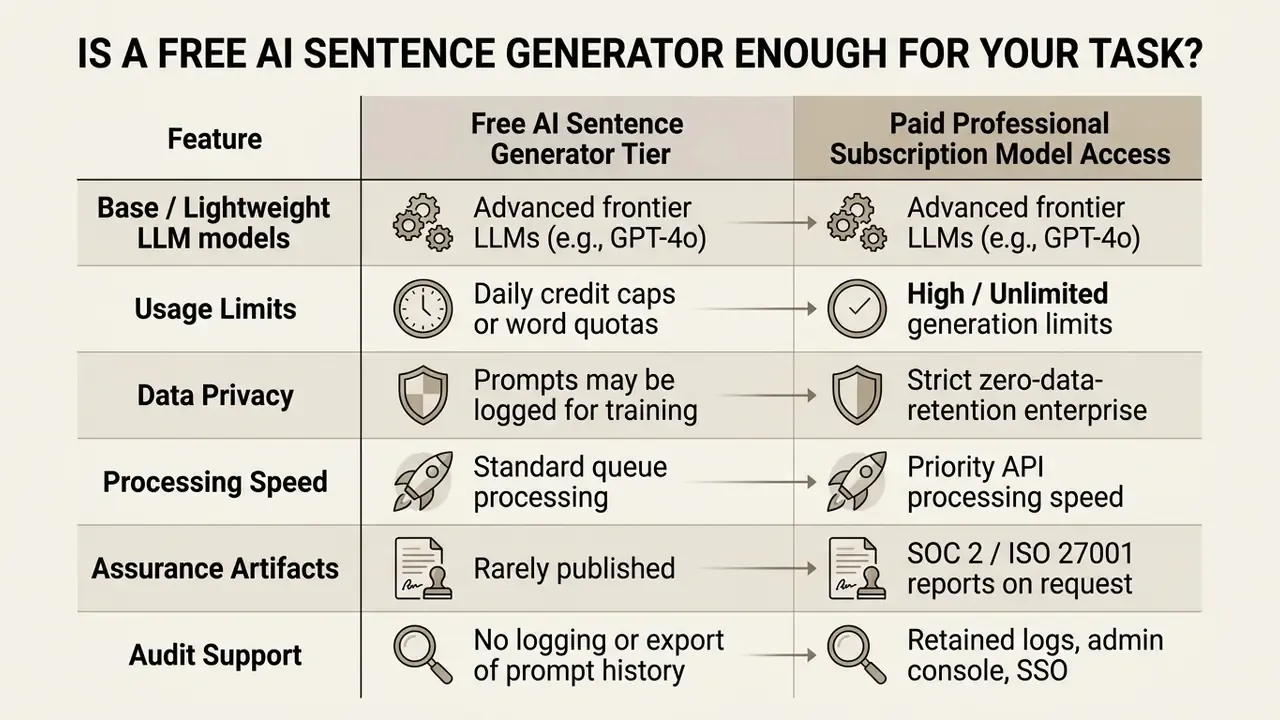
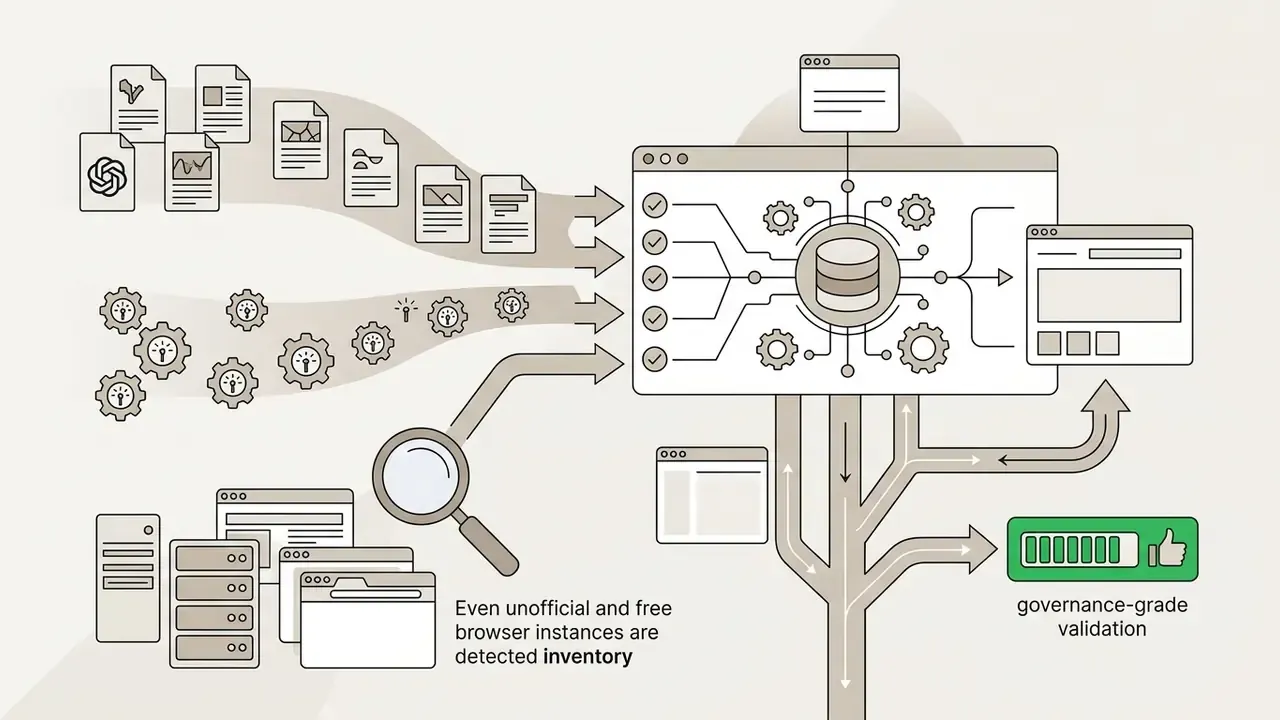
Organizations modelling long-term software cost often use AI Media Calculators to project consumption and test whether free ai access covers steady operational demand. For regulated functions, price is rarely the deciding variable. What decides it: whether the vendor contractually excludes prompt retention and training reuse, and whether admin controls stop unsanctioned Shadow AI use outside the approved tier.
Free Online Access, Sign-In, and Credits
An ai sentence generator free online service often allows no-sign-up access for light tasks, so you can test behaviour before handing over account details. An ai generator sentence free platform normally enforces rate limits, capping you at a fixed number of daily generation credits. Searchers looking for an ai sentence generator online free option usually land on exactly these gated tiers.
Knowing the quota refresh cycle prevents avoidable interruptions. When daily limits hit zero on an ai free sentence generator, you either wait for reset or move to a paid tier for continuous processing. Published free-access models fall into three patterns: no-registration access with daily generation caps, credit pools that reset on a fixed cycle, and trial allowances that expire after a set period. Confirm which pattern applies before you schedule production work around the tool.
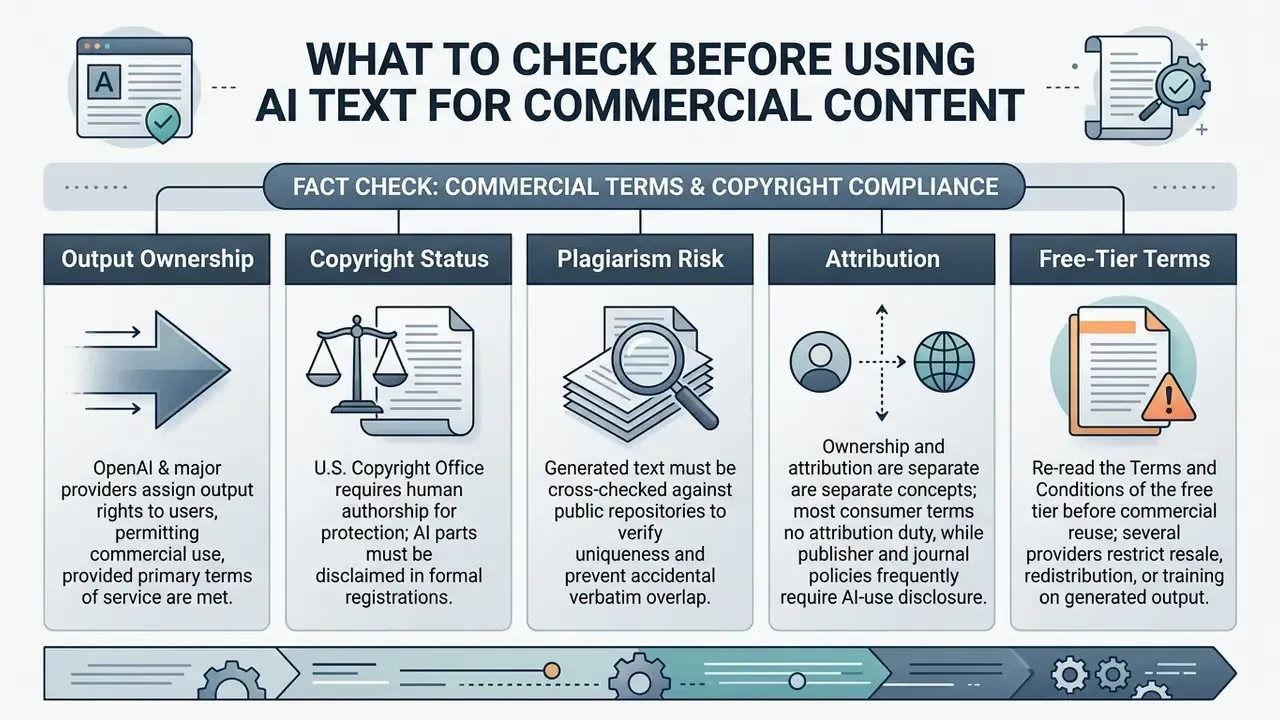
What to Check Before Using AI Text for Commercial Content
Before publishing AI-assisted copy commercially, verify the platform terms on output ownership and commercial rights. U.S. Copyright Office guidance is clear that purely machine-generated text lacks copyright protection unless a human contributed sufficient creative expression (U.S. Copyright Office Guidance, 2024).
"Technological reflexivity requires authors to critically assess how AI platform policies shape their writing practice and communication."
How to Check AI-Generated Sentences Before Publishing
Publishing generated text calls for a structured human-in-the-loop review: factual accuracy, grammar, tone alignment. Automated sentence generation without editorial validation is not a workflow, it is an incident waiting for a date.
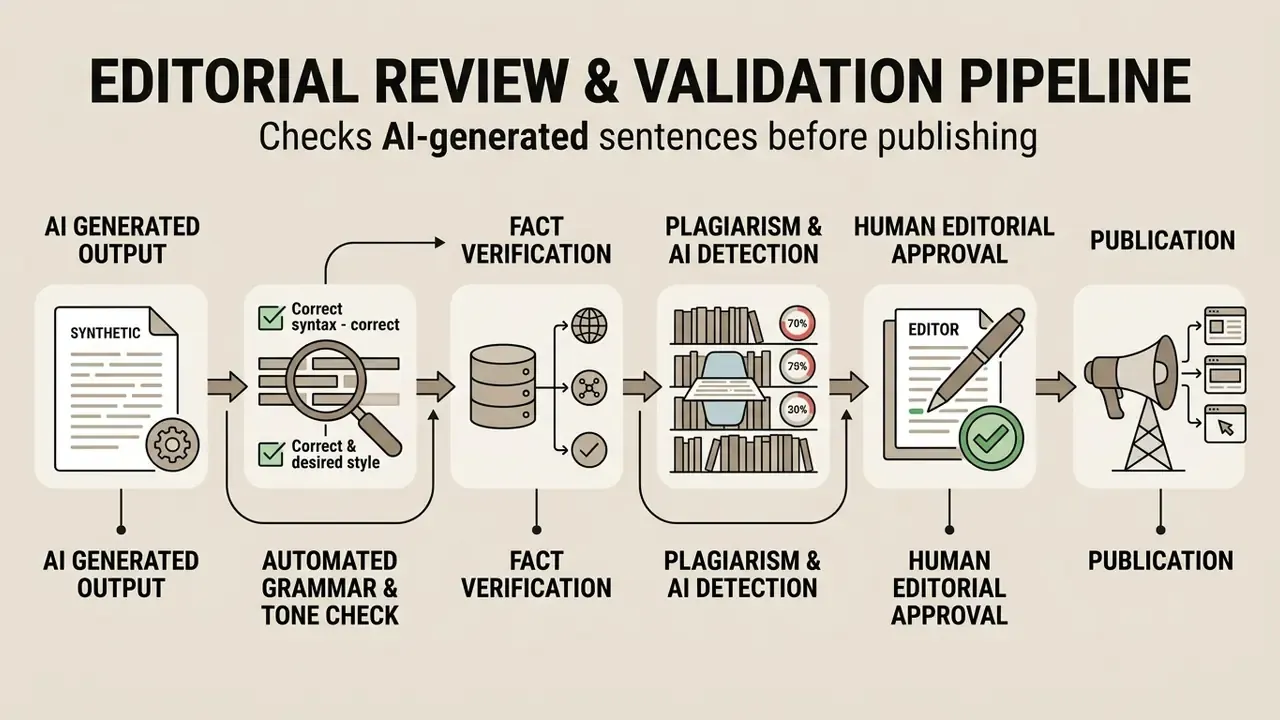
Systematic verification catches hallucinations, breaks repetitive syntax, and confirms that the final text says what the brief intended.
"GRACE-Agent reduced false positives to 9.2%, a 61.7% drop versus baseline ChatGPT zero-shot, at F0.5 = 84.1% on the test set."
That measurement is instructive for governance. Multi-stage pipelines beat single-pass checking, which is why a sequential review chain works better than one heroic "final read" by a tired editor.
Check Grammar, Clarity, and Tone
Review generated copy against plain-language guidance such as ISO 24495-1, which keeps sentences concise, clear, and direct (ISO Standards, 2023). Editors should cut passive constructions and confirm that technical terms match audience familiarity. ISO/IEC 23859:2023 extends the same requirement to interface text, and the U.S. National Archives Plain Writing Checklist offers a practical review order covering tone, active voice, word choice, and formatting.
"73.76% of GPT-4o edits that differed from the reference were judged by experts as equal or superior in quality."
Technical teams wiring automated editorial checks into their stack often consult AI Media API Guides to integrate spellchecking and readability scoring directly into content workflows. Quantitative reviewers also track reference-based similarity metrics (ROUGE, BLEU) and embedding-based semantic scores (BERTScore) when comparing candidates against an approved gold-standard passage. Those measures surface silent meaning drift that a grammar checker will never flag.
Rewrite, Edit, and Verify Originality
Manual editing is what turns a raw synthetic draft into publishable copy. A rewriter sentence tool, or plain hand editing, removes the formulaic cadence that standard language models fall into by default.
In a risk assessment for a financial publishing platform (illustrative composite case), compliance officers found ungrounded claims in raw synthetic copy. The team then made retrieval-augmented checks mandatory, and factual errors across roughly 1,200 publication assets dropped to zero in the following review cycle. Treat the number as a case observation, not a benchmark.
"Existing AI detectors are unreliable with obfuscated or mixed texts; no approach, whether watermarking, classifiers, or statistical methods, is foolproof."
So detector scores belong in the evidence file as one probabilistic signal, nothing more. Corroborating evidence includes prior author drafts, citation verification against primary databases, formatting anomalies, and a direct conversation with the author before any conclusion is recorded.
Governance, Model Risk, and Audit Trails
For a regulated institution, sentence generation is a controlled process, not an editorial convenience. Established model-risk practice, Federal Reserve SR 11-7 and OCC Bulletin 2011-12 supervisory guidance on model risk management, complemented by the NIST AI Risk Management Framework (AI RMF 1.0), expects documented purpose, conceptual soundness review, ongoing monitoring, and independent validation of any model that shapes external communication.
Translated into an editorial workflow:
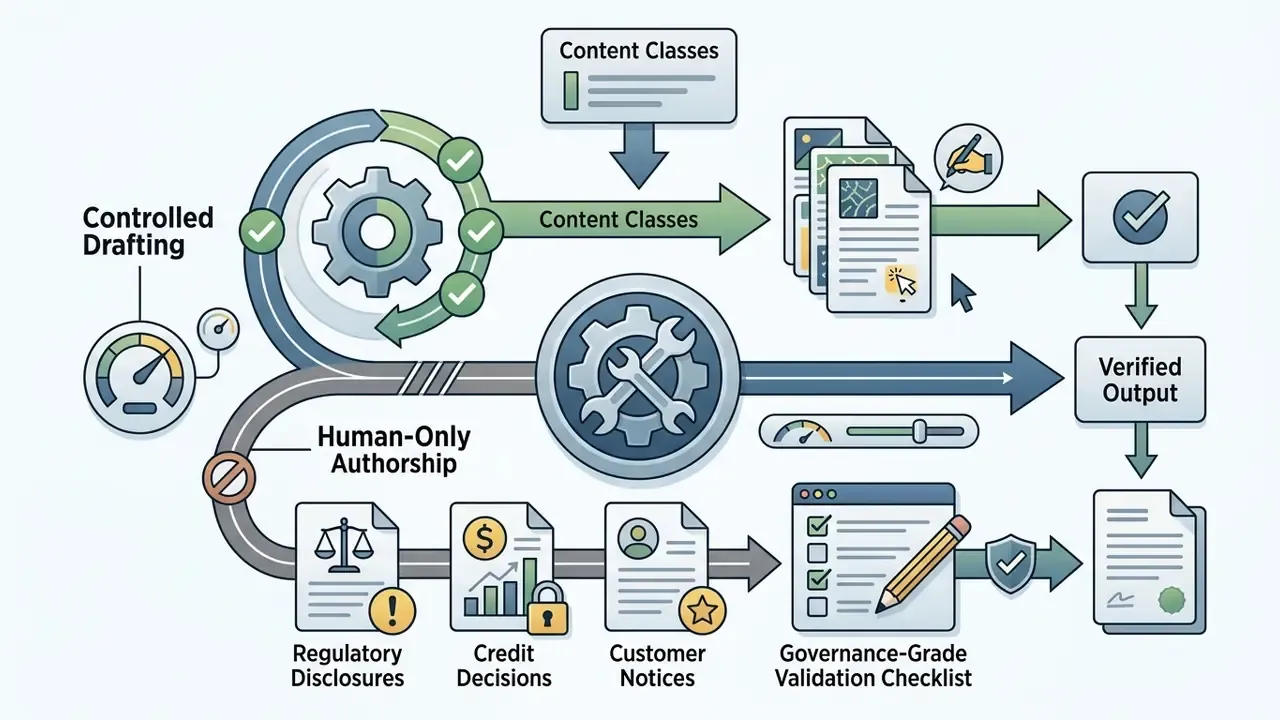
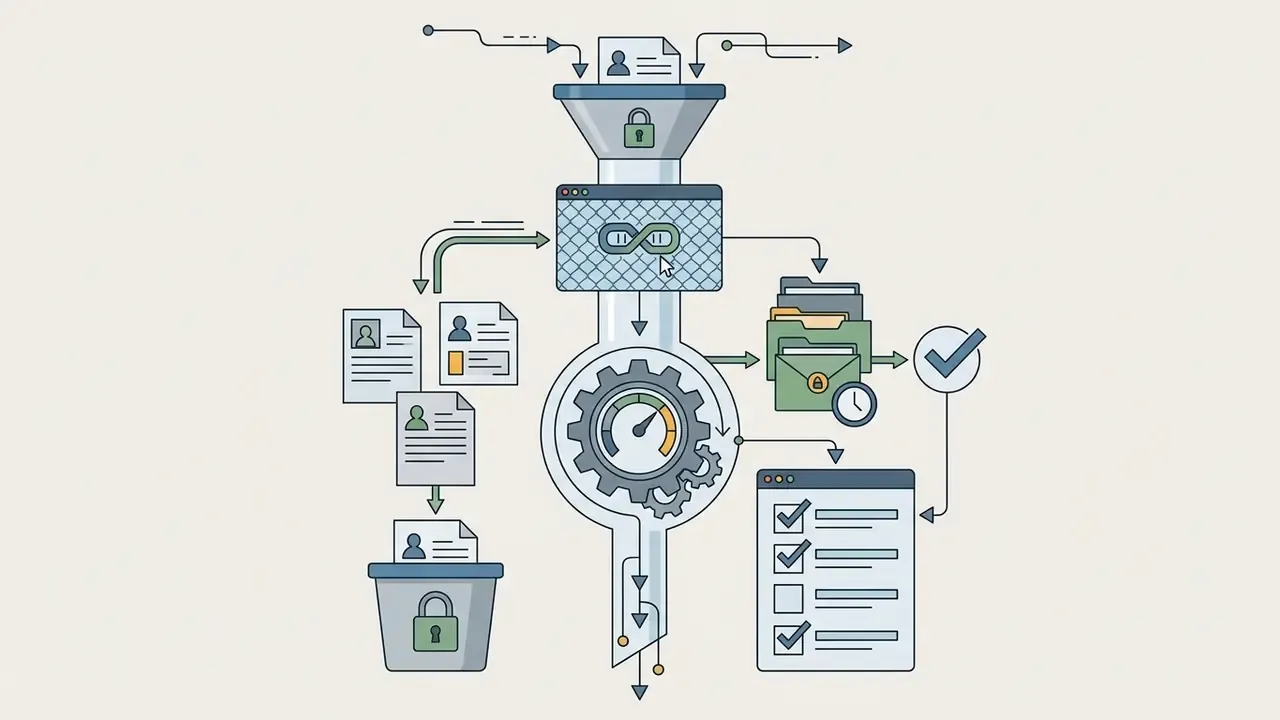
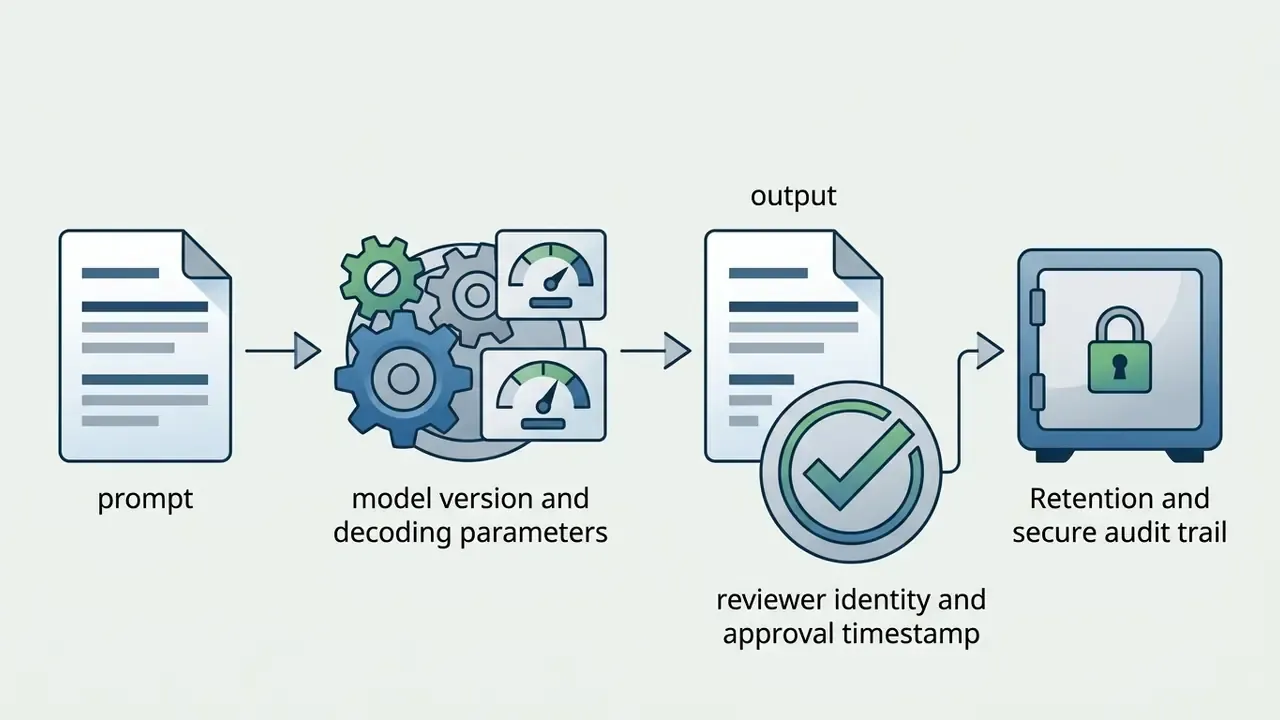
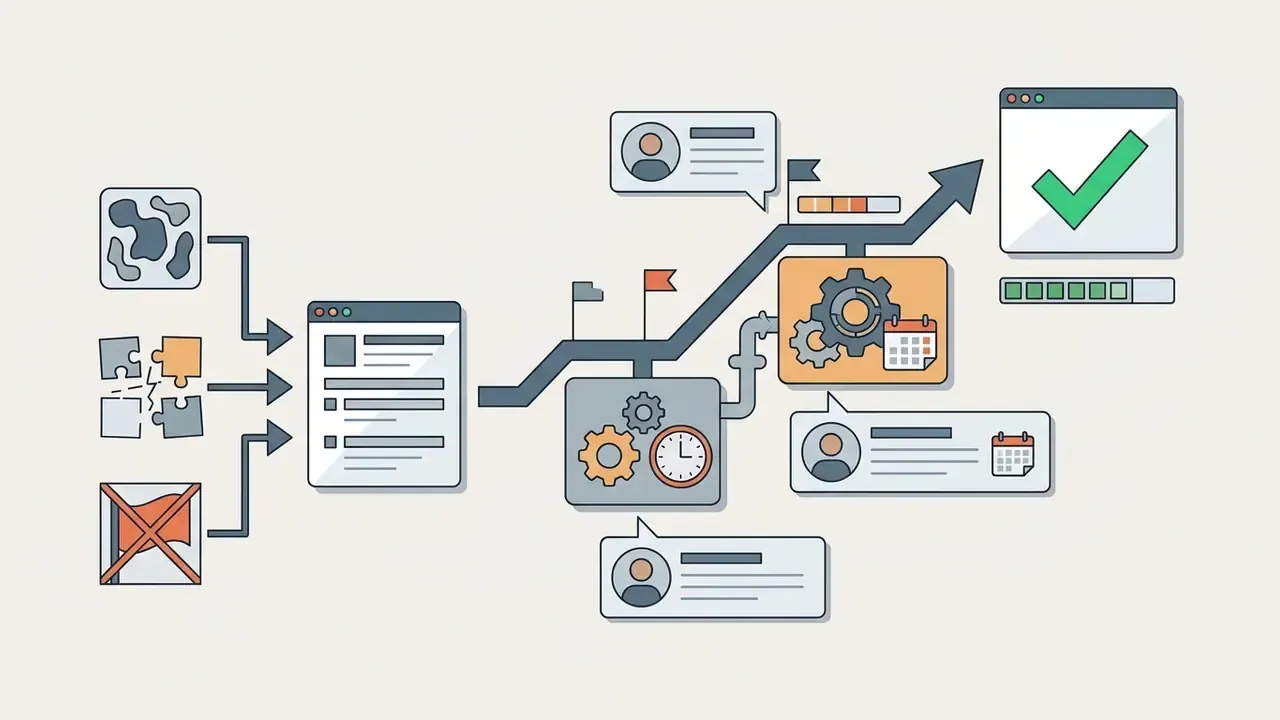
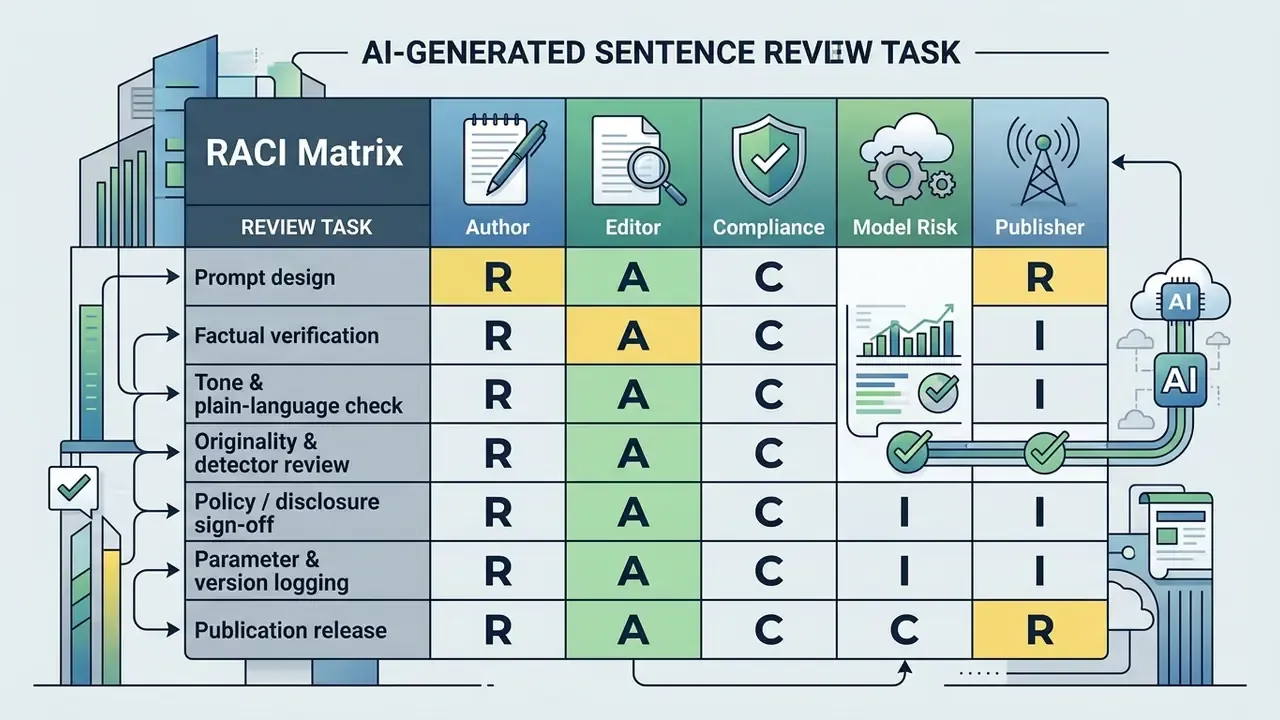
Two limitations deserve naming. First, none of this proves the model will behave identically next quarter after a silent vendor update. Second, control cost belongs in the ROI calculation; reviewer hours, logging infrastructure, and legal review are real line items, and leaving them out flatters the business case.
Pre-Publication Validation Checklist
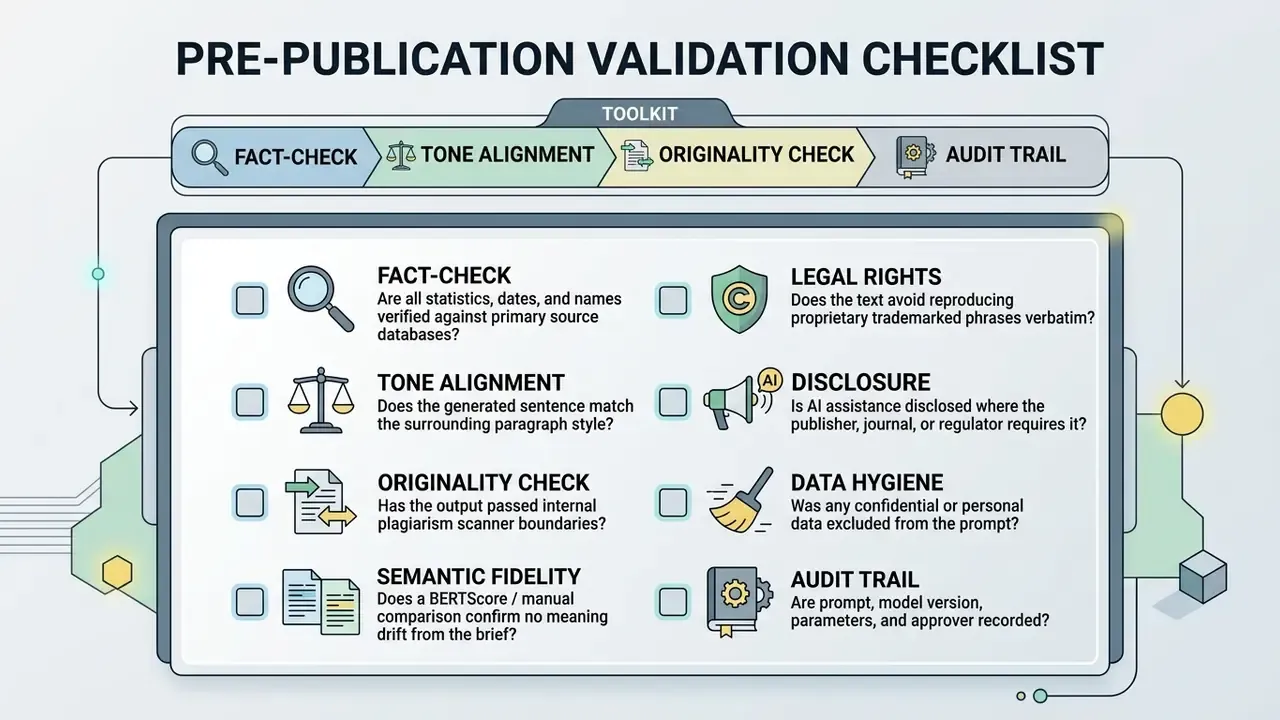
A safe next step for a governance team in 2026: pick one low-risk content class, run it through this checklist for a month, and measure reviewer time before scaling the tool anywhere near customer-facing disclosures.
FAQ About AI Sentence Generators
Short answers to recurring operational questions, including the misspelled query variants people actually type: ai chat sentence generator, ai sentence genrator, ai scentence generator, ai sentance generator, and ai sentance maker.
What Makes a Strong Sentence?
A strong sentence delivers one clear idea in active voice with specific vocabulary. Editorial style guidance, rather than empirical readability research, recommends an average sentence length of roughly 15 to 20 words, with 30 as an upper limit, and splitting anything longer (UKRI Style Guide). Technical-writing guidance adds three habits: choose strong specific verbs, avoid weak openers like "There is" or "There are", and front-load the most important information.
Can AI Create Unique Sentences?
Language models generate probabilistically and usually produce novel word combinations, yet 100% original phrasing cannot be guaranteed, because output derives from training-data patterns. Copyright guidance notes that generated output can be legally problematic where it is substantially similar to a preexisting protected work. Synthetic-content risk guidance therefore recommends provenance labeling, filtering, and output scanning rather than assumed novelty (U.S. Copyright Office, Copyright and Artificial Intelligence, 2024; NIST, Reducing Risks Posed by Synthetic Content, 2024). Run generated copy through plagiarism detection before commercial publication, and never trust a vendor claim of "100% unique" output without your own scan.
Can I Generate English Sentences in Different Languages?
Modern multilingual LLMs accept a prompt in one language and return finished sentences in English or another supported target language. Recent multilingual evaluation work shows that the instruction language itself measurably affects generation quality, with English instructions often yielding the strongest English output (ACL Anthology multilingual generation research, 2025). Cross-lingual prompting lets international teams submit local talking points and receive fluent English copy immediately. This capability removes the separate translation pass, so international teams draft native-level English assets straight from localized notes.
Does a Free Tool Expose Confidential Data?
On consumer tiers, prompts may be logged and reused for model improvement unless the provider states otherwise. Organizations handling client or financial data should require a contractual zero-data-retention configuration, request SOC 2 or ISO 27001 evidence, and route access through approved accounts so DLP monitoring applies. Free access and regulated data do not belong in the same sentence.
How Do Temperature and Top-p Affect Reliability?
Lower temperature and narrower top-p reduce lexical variety and increase reproducibility, which matters when the same prompt must return comparable output during validation. Higher values add creative variance and, with it, a higher probability of unsupported statements. Record the settings used for any published asset.
Which Metrics Should Reviewers Track?
Editorial teams usually combine three layers: rule-based checks (grammar, readability, sentence length), reference-based similarity metrics such as ROUGE and BLEU against an approved passage, and embedding-based semantic scores such as BERTScore to catch meaning drift. None of them replaces human factual verification.