Executive Summary
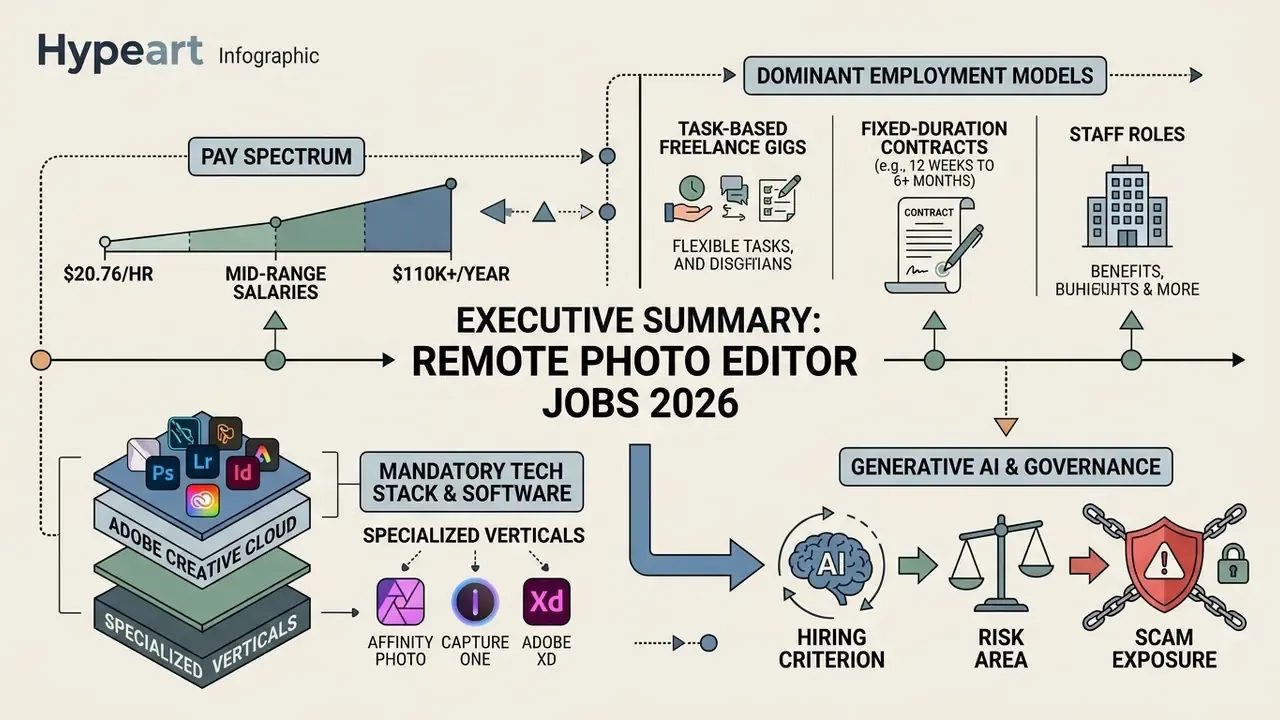
- Pay spans a wide spectrum. U.S. remote photo editing compensation clusters around $20.76 to $22.10 per hour for standard e-commerce and catalog post-production, rises to $33.92 per hour ($27.40 to $38.22 range) for high-complexity manipulation and beauty retouching, and reaches $95,000 to $110,000 annually for senior e-commerce and luxury fashion editors at national brands.
- Three employment models dominate: task-based freelance gigs, fixed-duration contracts (12 weeks to 6 months), and full-time remote staff roles with benefits.
- The mandatory stack is Adobe, but specialized verticals also run Affinity Photo, Capture One, Adobe XD, and Premiere Pro.
- Generative AI is now a hiring criterion, not a bonus. It is balanced against compliance limits such as the Getty Images 10% modification cap for certain editorial assets.
- Governance is the fastest-growing risk area. Shadow AI (uploading unreleased product imagery into public generators), IP ownership of generated pixels, and DAM access hygiene should be contractually controlled before onboarding remote editors.
- Scam exposure is real. Verify recruiter domains, cap test tasks at a single watermarked sample, and reject any listing requesting equipment or software fees.
How to Use This Guide
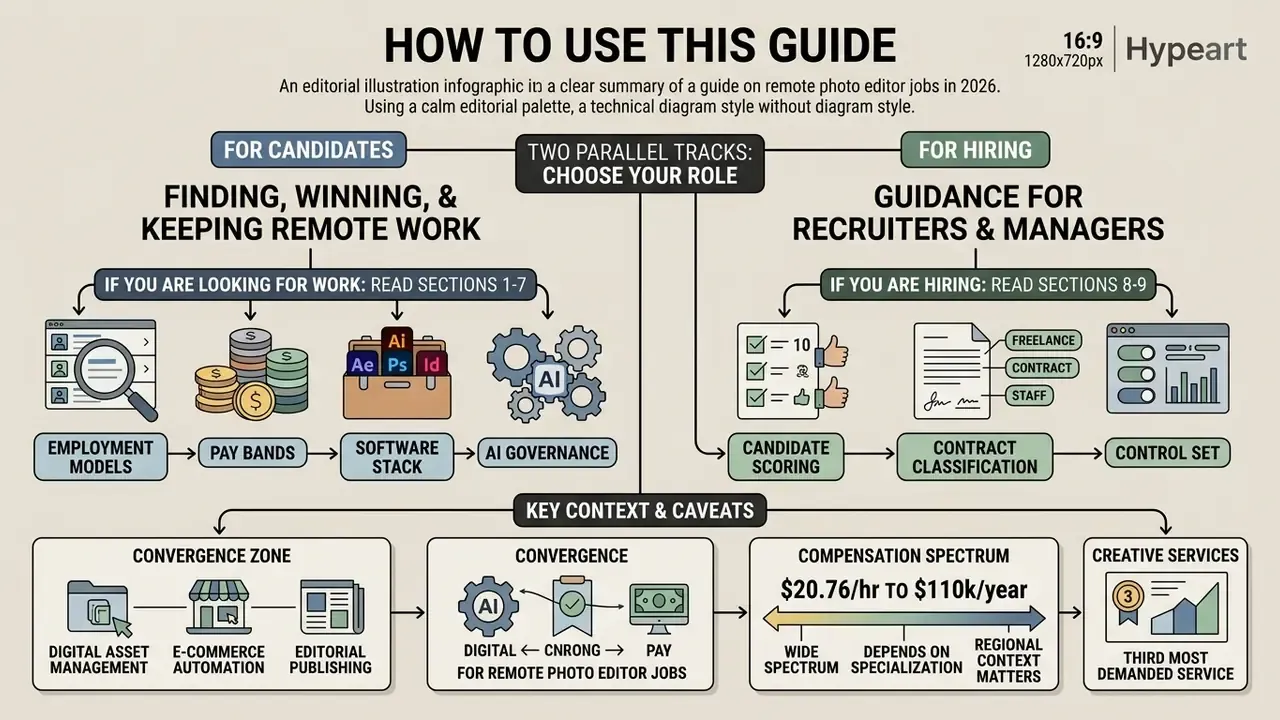
Two tracks run in parallel, so read the one that matches your job to be done.
If you are looking for work: sections 1 through 7 cover employment models, pay bands, the software stack, AI literacy expectations, sourcing channels, and the application sequence that actually gets replies.
If you are hiring: sections 8 and 9 cover candidate scoring, contract classification, and the control set that keeps pre-release imagery out of consumer AI tools.
One caveat about evidence. Compensation figures below come from public 2025 to 2026 listings, aggregator bands, and documented contracts. They are directional benchmarks, not an audited census. Where a number is vendor-reported or single-source, it is labeled as such in the body text. Treat audience assumptions the same way: hypotheses until your own interviews or ATS data confirm them.
Remote photo editor jobs sit at the convergence of digital asset management, e-commerce automation, and platform-mediated creative labor. In 2026, the U.S. labor market for remote photo editing shows hourly compensation clustering around $20.76 to $22.10 per hour for standard e-commerce and commercial catalog post-production (typical band: $16.35 to $29.81 per hour), while high-complexity image manipulation and specialized beauty or editorial retouching reach $33.92 per hour.
Compensation spans a far wider spectrum than a single hourly figure suggests, depending on specialization and industry vertical. Entry-level catalog and studio editors start at $28,000 to $39,000 annually. Short-term specialized creative project contracts range from $8,300 to $12,000 for 12-week milestone engagements. Contract e-commerce editors on 24-hour turnaround schedules see $16,500 to $24,800 per engagement. Mid-weight commercial colorists and luxury fashion retouchers earn $55,000 to $62,000. Lifestyle photo editors at national jewelry and home brands command $70,000 to $100,000. Senior e-commerce editors running high-volume AI-assisted pipelines reach $95,000 to $110,000 per year. Editorial publishing internships remain a common entry point, often structured around learning stipends of roughly $375 rather than full salaries.
Regional and contractual context matters as much as the headline number. U.S.-based staff roles are typically W-2 positions with benefits, while offshore and LATAM or APAC contractors are engaged as independent contractors under 1099 or W-8BEN documentation. Rates for real estate and catalog batch editing in some markets are posted as low as $600 to $700 per month for part-time social and photo-editing hybrids. Resume-based data outside the U.S. reflects the same asymmetry: remote image editor median pay in Ukraine sat at 25,000 UAH in August 2026 (n=69 resumes), rising to 35,000 UAH in Kyiv.
"Online gig work engages between 154 million and 435 million workers worldwide, equivalent to 4.4% to 12.0% of the global labor force."
Within that population, creative and multimedia tasks rank as the third most demanded service category worldwide. That ranking explains a lot: photo retouching remains one of the few visual disciplines with genuinely borderless demand.
For enterprises evaluating tooling alongside external talent, verified industry standards and licensing baselines are documented across the AI Media Commercial-Use Hub, which is the practical starting point for teams building a compliant remote post-production pipeline.
Part A: For Candidates. Finding, Winning, and Keeping Remote Photo Editing Work
Remote Photo Editor Employment Models: Freelance, Contract, and Full-Time Staff
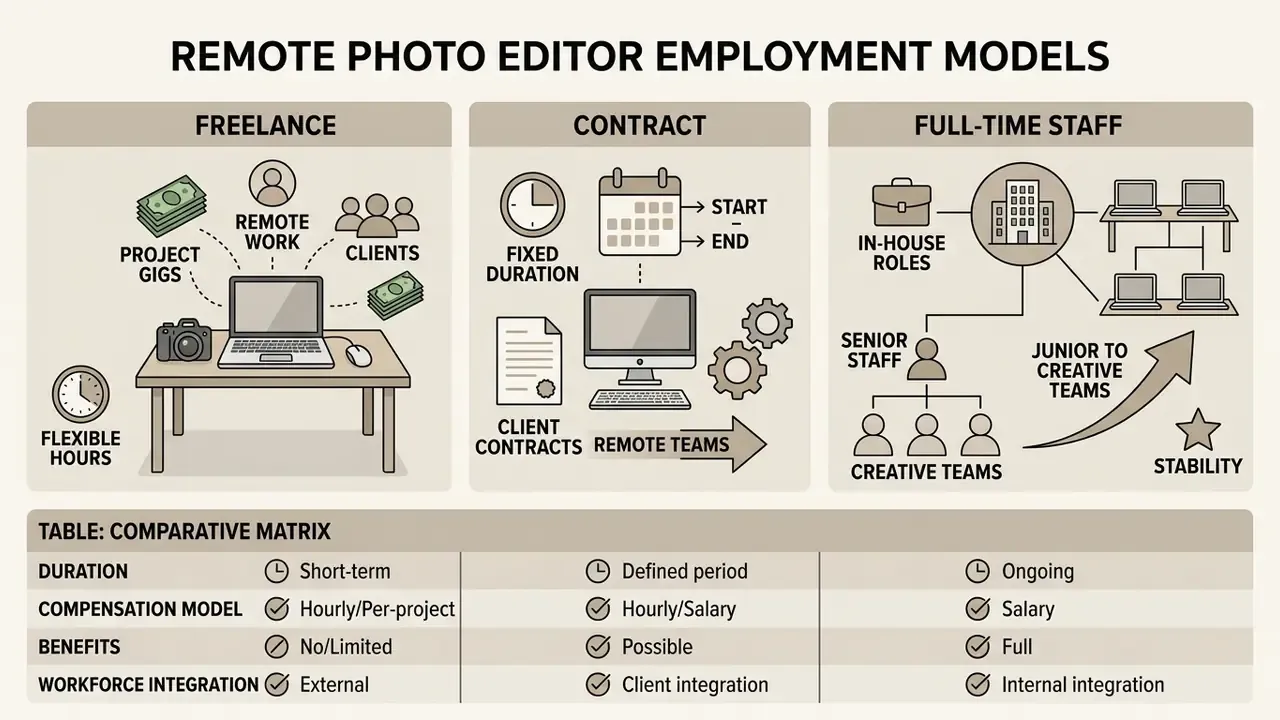
Remote photo editor jobs operate across three primary employment structures: short-term freelance gigs, fixed-duration client contracts, and full-time remote staff positions. Each model carries a different risk profile for income stability, benefits, and integration depth with the employer's production systems.
For visual content creators and commercial enterprises, choosing the correct working relationship depends on workload predictability, compliance requirements, and integration with internal digital asset management (DAM) systems, meaning the software layer that stores, versions, and releases approved files. Before locking in a format, editors and hiring managers alike benefit from benchmarking that layer. Our overview of AI photo editors for commercial workloads explains which tasks are realistically automatable and which still require billable manual hours.
Understanding how these roles are structured lets job seekers target relevant openings and lets hiring managers write enforceable service-level agreements (SLAs). For broader context on automated image production, teams frequently consult our AI Media Glossary to standardize terminology across creative, legal, and engineering stakeholders.
One practical caution, and it trips people up weekly: job boards routinely blend legal employment type with weekly schedule. A posting may be tagged "freelance" and "full-time hours" at the same time, because the platform treats contract form and the 40-hour commitment as separate fields. Always confirm which one governs payment, notice periods, and IP assignment. Ask in writing. A screenshot of the listing is not a contract.
Freelance Projects and Remote Contracts
Freelance photo editing work consists of task-based assignments where retouchers are compensated on a per-image, per-batch, or hourly basis. In commercial photography workflows, a standard freelance contract often structures deliverables as fixed-scope packages, such as editing and color-correcting a batch of 300 e-commerce product images for $500, with explicit terms covering revision rounds, background pure-white compliance, and same-day payment milestones upon invoice receipt. Documented 2025 agreements show comparable structures at higher precision tiers, for example a $1,064 total for approximately 300 images, payable the same day the invoice is issued via an online payment processor.
Public contract templates for editing work consistently separate one-off deliverables from longer engagements by defining scope, revision limits, payment milestones, and final invoice timing. Many long-term arrangements use monthly retainers or fixed fees for recurring volume, with an hourly rate reserved for out-of-scope requests. That structure matters for editors working with international clients across time zones, because "one small extra change" is the line item where freelance margins usually die.
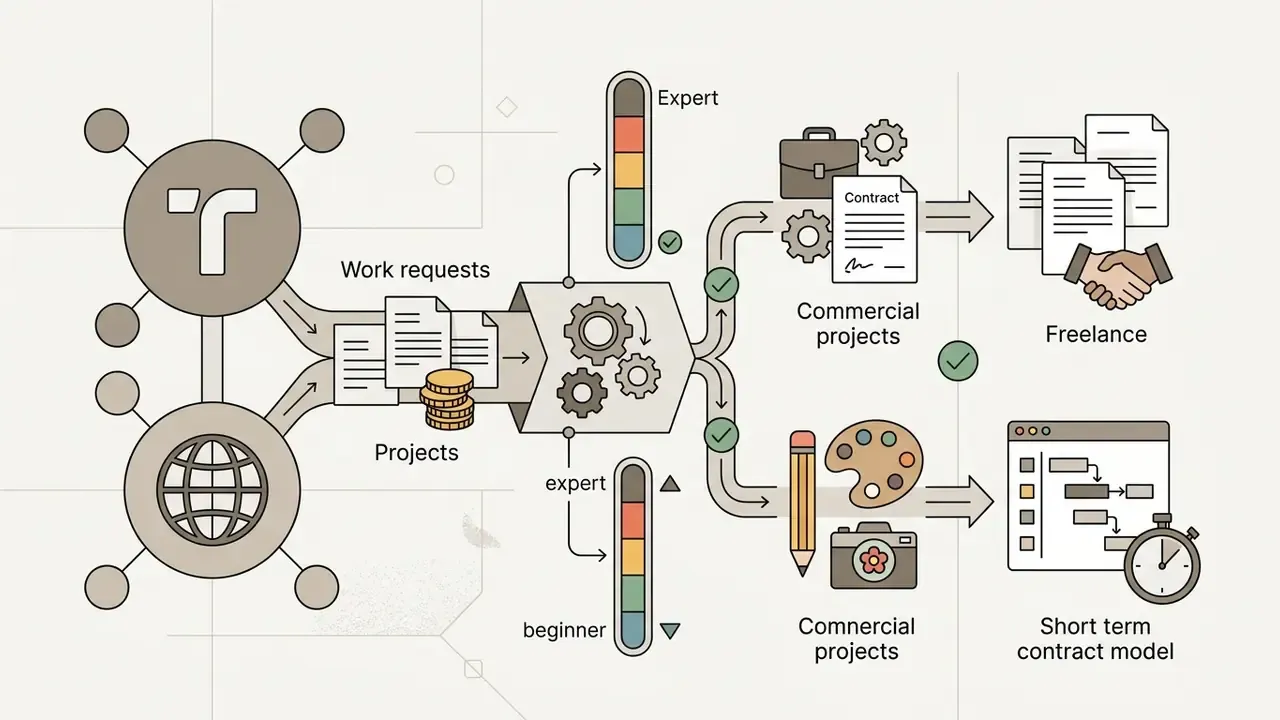
Longer-term contract positions provide fixed hourly commitments, typically 15 to 30 hours per week for periods ranging from 12 weeks to 6 months. Listings often describe them as "4 months with potential to extend" or "based on campaign and/or launch schedules," which lets agencies scale post-production capacity around product launches without expanding permanent headcount. To keep per-image margins viable at that volume, freelancers increasingly pair manual retouching with batch image enhancement tools, and refer to AI Media Calculators to estimate project margins and turnaround times before quoting.
Freelance and contract editors also rely on structured prompt libraries and metadata templates rather than ad-hoc text generation. Disciplined prompt engineering for generative fill and expansion tasks is what separates a reproducible pipeline from output quality that swings image to image.
In-House Roles: Junior, Senior, and Creative Teams
Full-time remote staff photo editors operate as integrated members of media, e-commerce, or corporate marketing teams, typically receiving fixed annual salaries, paid time off, and institutional benefits.
"The global creator economy grew by more than 165 million people between 2020 and 2022, reaching 303 million participants worldwide."
That expansion is why staff photo editing roles have shifted from purely executional retouching toward visual operations management. Recent U.S. recruitment listings for mid-to-senior photo editing positions, such as roles at national fashion and retail brands, specify annual compensation between $55,000 and $62,000 for candidates with two to five years of documented experience managing e-commerce, social media, and digital advertising assets. Senior e-commerce editors overseeing AI-assisted pipelines at apparel groups are posted at $95,000 to $110,000, while lifestyle photo editors at hybrid jewelry and home-goods brands appear at $70,000 to $100,000.
Junior photo editors focus primarily on execution tasks: background removal, basic color balancing, image masking, cropping, and catalog consistency. Many enter the field on non-subscription or entry-tier software before receiving an enterprise license, which is why our guide to free photo editors remains a common first reference point for candidates building a portfolio without a Creative Cloud subscription.
Mid-level editors own end-to-end image throughput: finalizing and outputting high-volume product and marketing imagery, including color balance, cleanup, masking, compositing, background extensions, and beautification, plus DAM file organization and direct collaboration with Product and E-commerce teams. Senior photo editors oversee workflow governance. They establish visual brand guidelines, manage digital asset libraries, coordinate cross-functional requests between photography and web development teams, monitor copyright and attribution rules, and validate legal usage rights. In media organizations, the same role also curates, publishes, and maintains image libraries while working alongside writers, designers, and technical teams.
Leveling is not standardized industry-wide. The junior, middle, and senior boundaries in the sources reviewed come from employer-specific job ads rather than an official competency framework, so a "senior" title at a 40-person DTC brand may map to a mid-weight role at a national retailer. Organizations evaluating enterprise software budgets for these creative teams can review structured tiering on our pricing page.
Table 1: Comparative matrix of remote photo editing employment formats
| Parameter | Freelance gigs | Fixed-term contracts | Remote staff positions |
|---|---|---|---|
| Task structure | Per-image or per-project batches; one-off requests | Campaign-based or scheduled weekly allocations | Continuous workflow management and asset oversight |
| Typical compensation | $20.76 to $33.92 per hour; $500 to $1,064 per 300-image batch | $8,300 to $24,800 per 12-week to 6-month engagement | $34,000 to $110,000 per year depending on seniority and vertical |
| Income predictability | Variable; highly dependent on client pipeline | Moderate; fixed rate for contract duration | High; fixed salary with standard employee benefits |
| Experience bar | Entry to expert; driven by portfolio quality | 1 to 3+ years of documented campaign experience | 2 to 5+ years; requires cross-team management skills |
| Engagement / tax form (US) | 1099, or W-8BEN for non-US contractors | 1099 or agency-of-record payroll | W-2 with benefits eligibility |
| Application path | Platform bidding, sample submission, direct outreach | Agency recruiting, test projects, portfolio review | Formal ATS submission, multi-stage interviews, test task |
Summary of Table 1: Freelance roles offer high schedule autonomy with variable income. Fixed-term contracts provide structured campaign-based revenue between $8,300 and $24,800 per engagement. Remote staff positions deliver predictable annual compensation ranging from $34,000 at entry level to $110,000 at senior e-commerce tiers, while demanding deeper organizational integration.
Essential Technical Skills, Software Stacks, and AI Tools for Remote Editors
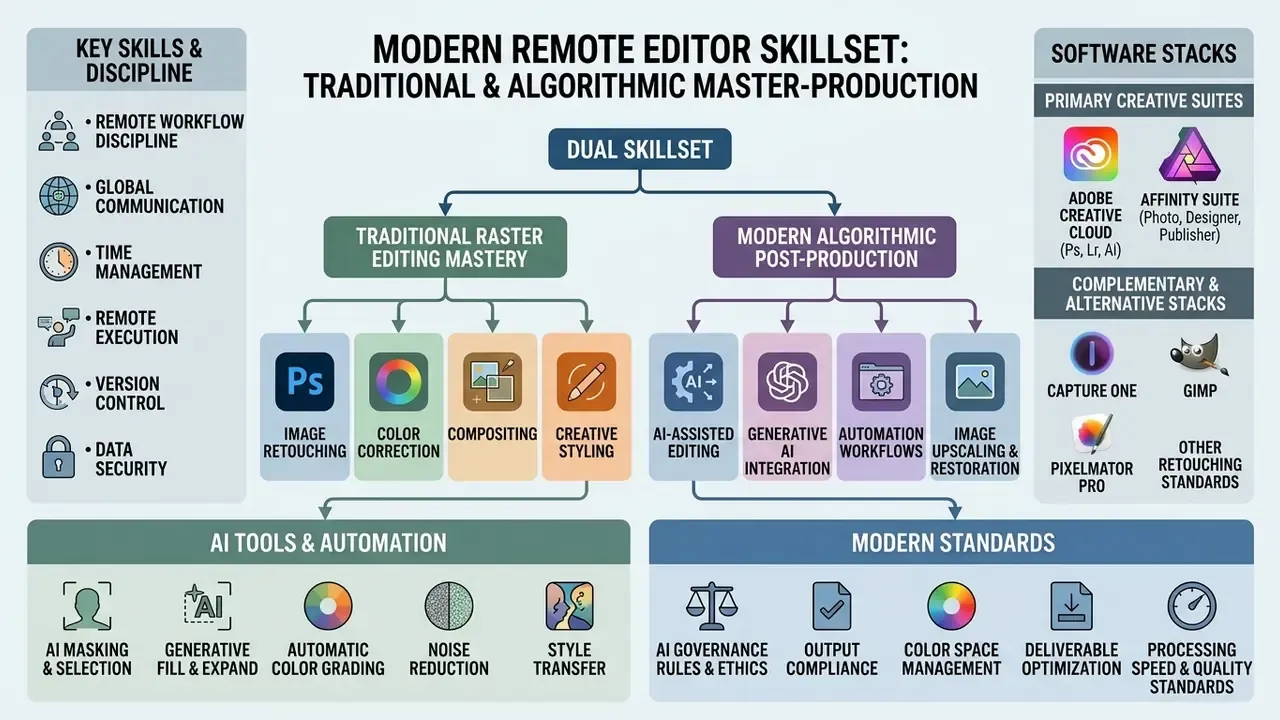
Modern remote photo editors need a dual skill set: traditional raster editing mastery plus modern algorithmic post-production. Professional visual creators are integrating generative models alongside non-destructive layer editing to accelerate commercial output without losing visual fidelity.
Technical proficiency across the Adobe Creative Cloud ecosystem is the single most frequently repeated requirement in verified 2025 to 2026 U.S. listings, appearing in the large majority of postings reviewed for this guide alongside digital asset management experience. Note on precision: no public dataset audited every U.S. listing, so read this as a directional pattern from ZipRecruiter and Indeed aggregations rather than a validated percentage. Teams needing a hard figure should run their own ATS keyword audit. Candidates comparing generative options before committing to a subscription can review our analysis of the best AI image generators for professional-grade output control.
The core competency ladder that appears consistently across guides and job ads:
Editors in high-volume environments increasingly own the automation layer themselves. They generate structured alt text and metadata at scale, map SKU identifiers to file names, and validate export presets before batches ever reach the DAM. Graphic design adjacency helps here too: a photo editor who understands layout grids will produce crops that survive a designer's template.



Photoshop, Lightroom, Alternative Software, and Retouching Standards
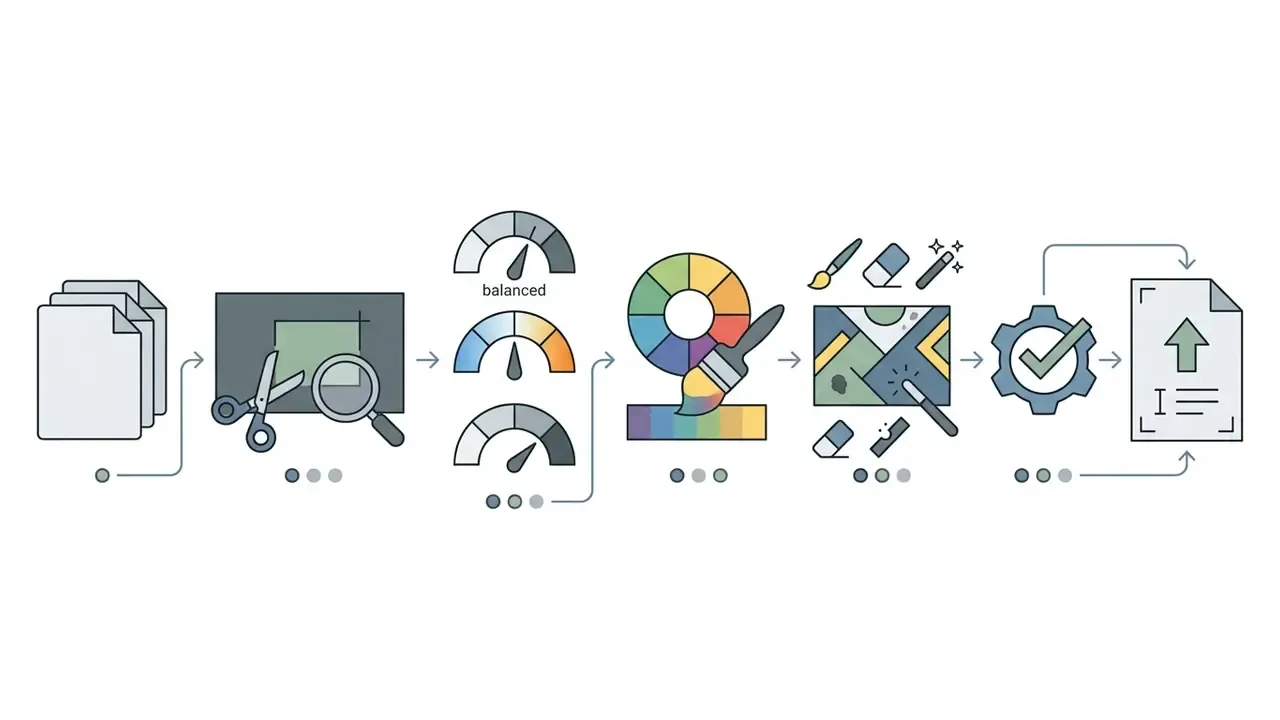
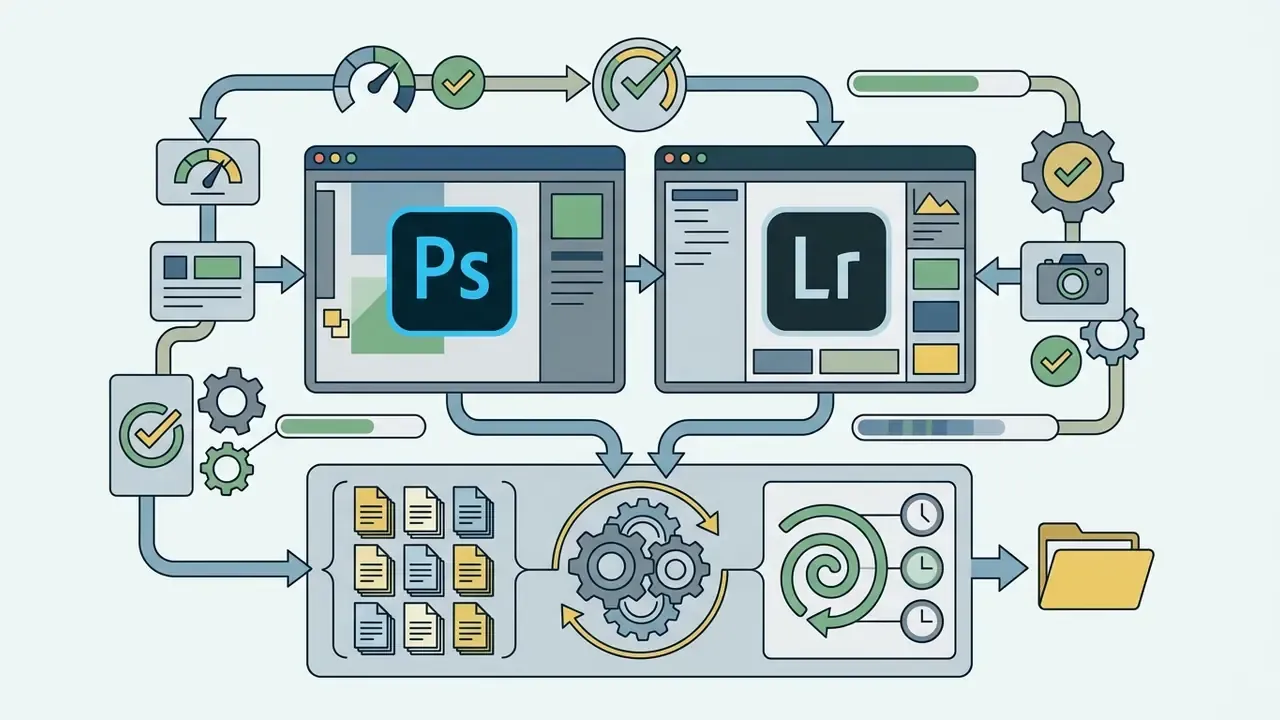
Adobe Photoshop and Adobe Lightroom represent the industry standard stack for post-production workflows. The baseline commercial workflow follows a strict sequence: initial culling and exposure correction in Lightroom, then non-destructive local retouching, frequency separation for skin cleanup, precision clipping paths, and color profile conversion in Photoshop. In 2025 to 2026 releases, Lightroom added Landscape Mask, Distraction Removal, AI Edit Status, and Assisted Culling for large collections, while Photoshop shipped Generative Upscale, Harmonize, and partner-model support inside Generative Fill.
Segment standards differ meaningfully. E-commerce work is governed by marketplace compliance: pure white backgrounds, minimum frame coverage for hero images, and batch color consistency across SKUs. Editorial work adds non-destructive local retouching, 100% quality control review, and publication-specific output specifications, including required color profiles and file formats. Documented 2025 public-sector image-editing standards explicitly include retouching to correct color, contrast, and tone, plus controlled modification of skin, makeup, and hair.
Beyond Adobe: alternative and adjacent stacks. Adobe Creative Cloud dominates enterprise requirements, yet commercial editors in specialized niches routinely work elsewhere. Real estate and architectural retouchers frequently leverage Affinity Photo for high-dynamic-range (HDR) batch processing, partly because of its non-subscription licensing model. One 2026 remote listing specified editing and enhancing real estate photographs in Affinity while performing quality-control checks on large batches under tight deadlines. High-end fashion studios rely on Capture One for superior raw tethering and precise color grading. Hybrid media teams increasingly list Adobe XD, Adobe Premiere Pro, and basic motion skills in the same requisition as photo retouching, because a single remote editor may be asked to deliver stills, layout mockups, and short-form vertical video from one shoot. Adjacent competencies now appearing in remote creative listings include color theory, typography, layout design, responsive design, visual identity systems, and light VFX support.
For e-commerce marketplaces, image specifications require exact technical parameters: pure white backgrounds (RGB 255, 255, 255), precise frame coverage ratios, and strict file size constraints. Miss one of those and the listing gets suppressed, not politely flagged. Teams seeking detailed software feature comparisons can consult our comprehensive guide on photo editor capabilities and platform compatibility, or compare compression trade-offs for mixed media deliverables in our video compressor guide.
AI Tools, Processing Speed, and Visual Quality Standards
Generative capabilities such as Adobe Firefly, Generative Fill, Generative Expand, AI-powered Denoise, Content-Aware Remove, and automated subject masking have reshaped post-production timelines. Adobe's own 2023 reporting, reiterated in 2025 product documentation, describes Generative Fill and Generative Expand as more than ten times faster than manual tools for comparable retouching tasks. Precision note: this is a vendor-reported benchmark, not an independently replicated measurement, and real-world gains depend on image complexity and revision cycles. Independent academic work supports the direction of travel:
How to Find and Apply for Remote Photo Editing Positions
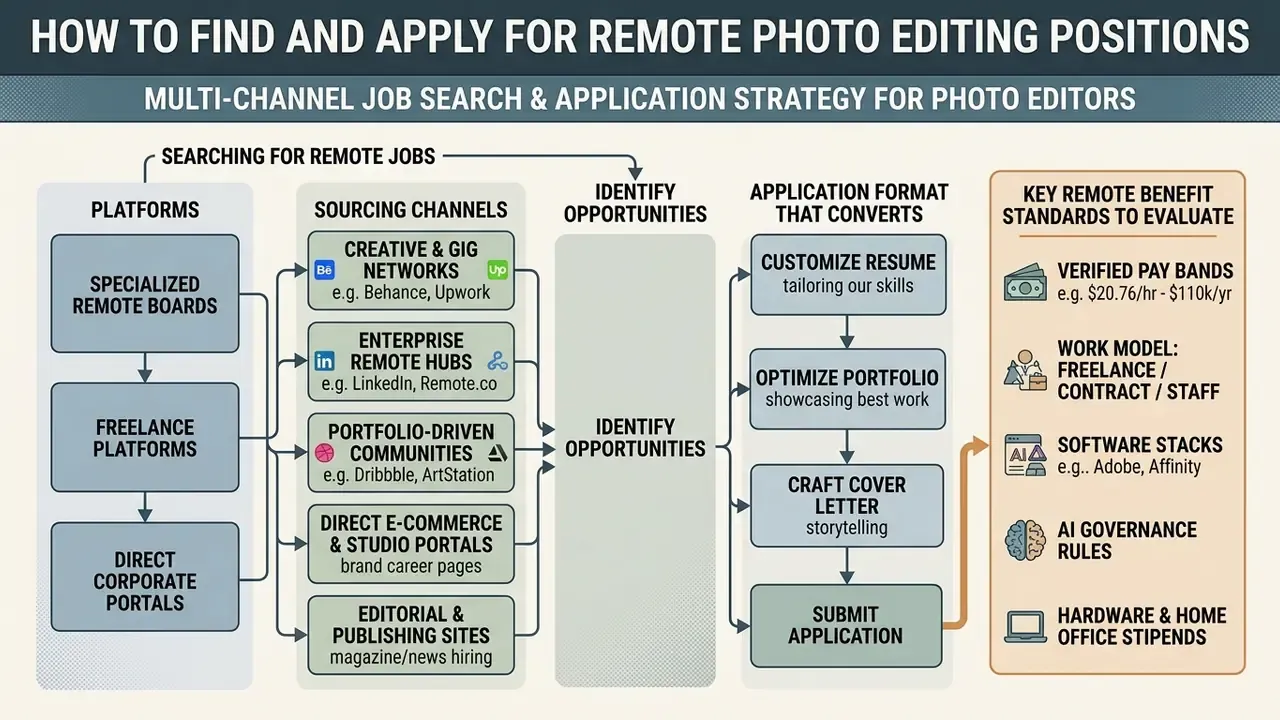
Searching for photo editor remote jobs works best as a multi-channel effort: specialized remote job boards, freelance platforms, and direct corporate career portals, run in parallel rather than one after another.
Verified sourcing channels for remote photo editors:

Application format that converts. A 2026 remote cover-letter framework recommends four paragraphs: a specific opening tied to the exact role, documented remote-work evidence, company-specific fit referencing two or three responsibilities lifted from the posting, and a brief close with time-zone availability. Target length is 250 to 350 words, exported as a clean PDF with a descriptive filename. Candidates should also provide a hosted portfolio demonstrating before-and-after retouching capability. Outpainting and background-extension samples are especially persuasive for e-commerce roles. Our guide to AI image expansion shows how to build those comparison frames without misrepresenting the original capture.
Key remote benefit standards to evaluate before applying:
- Hardware and home office stipends Verifiable remote roles typically offer a $500 to $1,500 initial setup budget or direct delivery of enterprise Apple or PC hardware, plus a calibrated display allowance for color-critical work.
- Software subscriptions Full coverage of Adobe Creative Cloud, Capture One, or cloud storage and review accounts (Dropbox, Frame.io).
- Educational budget $500 to $1,000 annually for masterclasses, AI retouching certifications, or color management training. Editorial internships sometimes substitute a learning stipend of around $375.
- Health and retirement (U.S. staff roles) Standard 401(k) matching alongside full medical, dental, vision, and life insurance.
- Time and flexibility Paid time off, unlimited or accrued vacation, flexible scheduling, sabbaticals, and in some cases a four-day workweek.
- Team and workspace support Coworking budget, company retreats, mental-wellness or gym allowances, and profit sharing or equity compensation at scale-ups.
- Merchandise and discounts Retail and apparel employers frequently add employee discounts, which materially affect total compensation at the $34k to $39k entry band.
Applicants troubleshooting portfolio displays or submission errors can access our AI Media Support and Troubleshooting portal for guidance.
Table 2: Application checklist for remote photo editor candidates
| Stage | Action items | Validation criteria |
|---|---|---|
| 1. Skill filtering | Filter open positions by software stack (Photoshop, Lightroom, Affinity, Capture One) and niche focus (e-commerce, beauty retouching, real estate, editorial). | Job description matches the candidate's core software competency and target hourly rate ($20 to $33 per hour). |
| 2. Requirement audit | Review experience thresholds (junior 1 to 2 years, mid 2 to 5, senior 5+) and delivery quotas, for example 50 SKU edits per day. | Candidate meets at least 80% of stated technical requirements and hardware specifications. |
| 3. Portfolio preparation | Assemble a curated portfolio of 10 to 15 high-resolution before-and-after split sliders tailored to the employer's industry. | Includes relevant commercial samples: background removal, color matching, frequency separation, background extension. |
| 4. Application submission | Draft a 250 to 350 word cover letter covering remote work reliability, time zone availability, and hosted portfolio URL. | Document exported as a clean PDF; letter addresses two or three specific job responsibilities. |
| 5. Test task governance | Confirm scope, ownership, and confidentiality terms of any test assignment before starting; request watermarked or non-embargoed source files. | Written confirmation that test output is limited in scope and covered by a mutual NDA where unreleased assets are involved. |
| 6. Pipeline tracking | Record submission dates, company contacts, test task statuses, and follow-up schedules in a tracking spreadsheet. | Follow-up sent 5 to 7 business days after submission if no response arrives. |
Summary of Table 2: A disciplined sequence, from targeted skill filtering and requirement audits through curated before-and-after portfolio submission and documented test-task terms, measurably improves candidate conversion during remote recruitment. Volume alone rarely does.
When evaluating enterprise tool selection or reviewing freelance software requirements, professionals frequently review our AI Media Comparison Matrices to assess alternative software performance and licensing terms.
Part B: For Enterprise Employers. Sourcing, Governance, and Hiring
How to Hire and Vet Remote Photo Editors for Commercial Projects
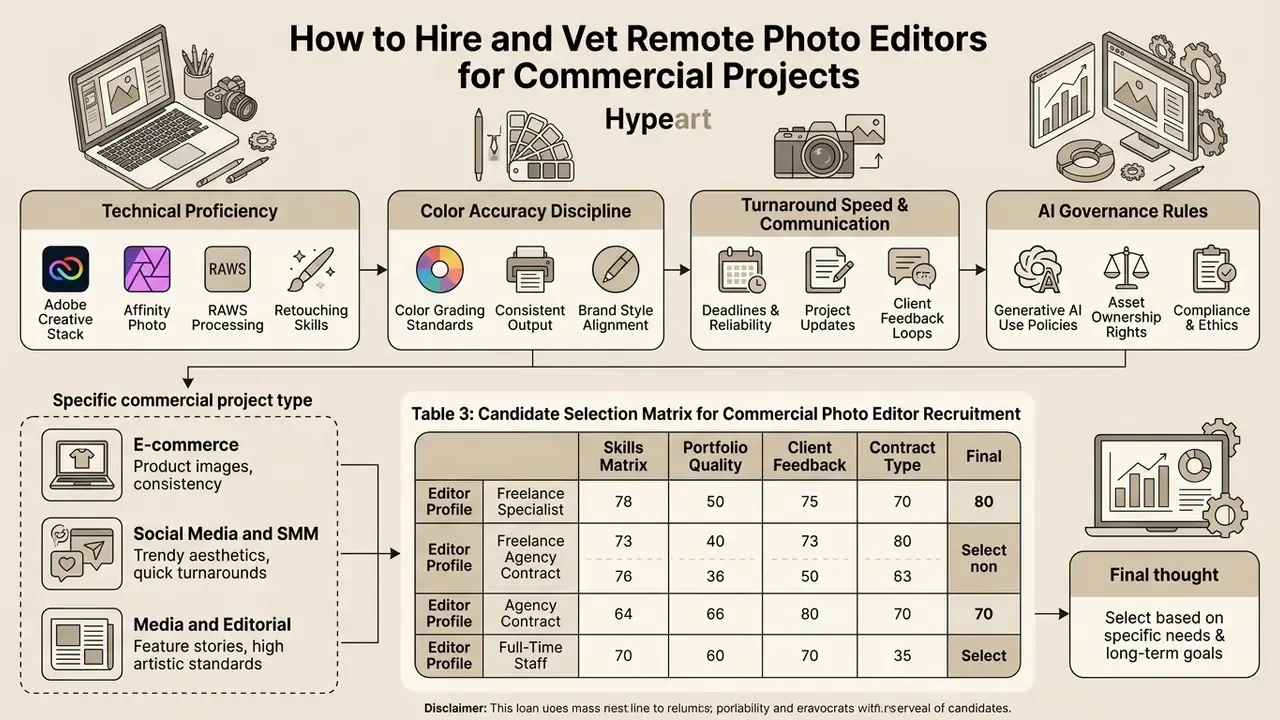
Hiring a remote photo editor means evaluating candidates across technical proficiency, color accuracy discipline, turnaround speed, and adherence to brand style guides. In high-volume e-commerce environments, inconsistent post-production reduces conversion and raises product returns. Resolution and detail preservation failures are a common root cause, which is why AI image upscaling is now a standard quality-assurance step rather than a rescue tool.
Segment-specific evaluation criteria differ:
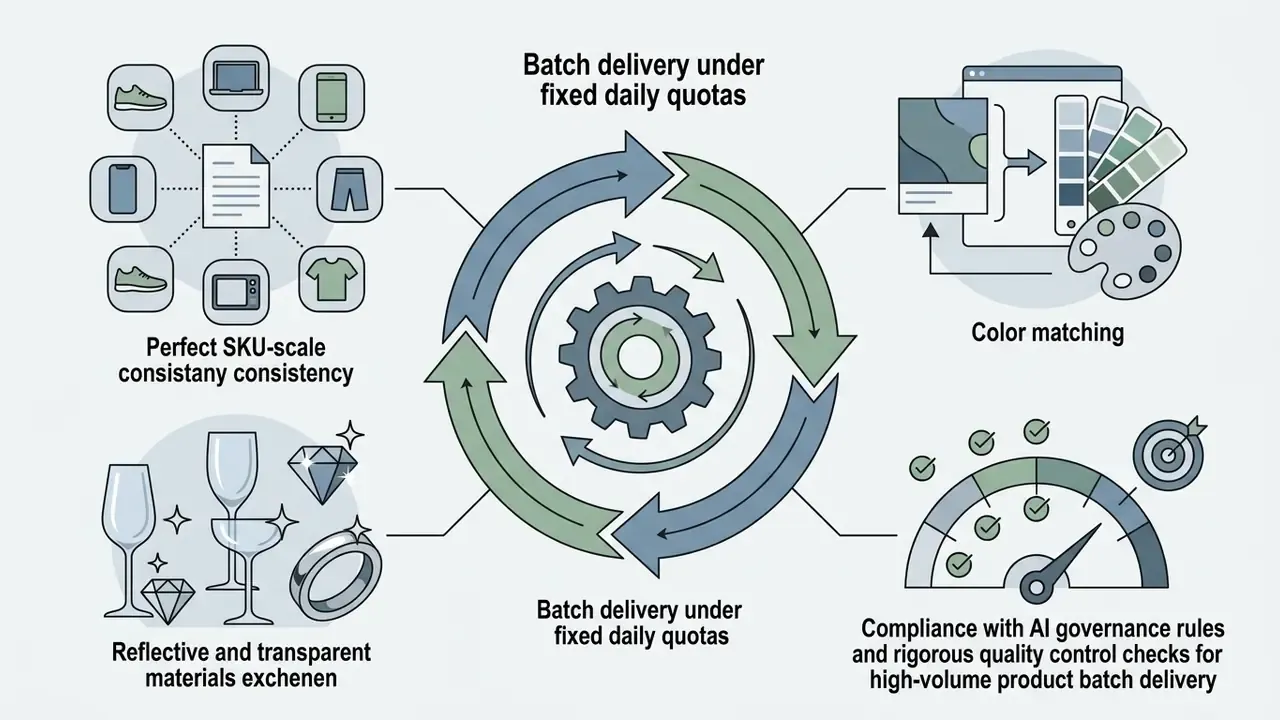


When recruiting external talent, hiring managers should apply a standardized scoring matrix so candidates are compared on the same axes rather than on interview charisma. Organizations integrating developer workflows or programmatic image processing can reference our AI Media API Guides to align human editing steps with automated asset pipelines.
Table 3: Candidate selection matrix for commercial photo editor recruitment
| Evaluation criterion | Weight | Target competency standard | Scoring benchmark (1 to 5) |
|---|---|---|---|
| Technical Photoshop mastery | 25% | Expert non-destructive editing, advanced masking, frequency separation, clipping paths. | 1: basic cropping. 5: flawless complex compositing and clean layer architecture. |
| Color management and accuracy | 20% | Strict sRGB and AdobeRGB profile management, batch color matching across product SKUs. | 1: noticeable color shift. 5: full color match across physical samples and displays. |
| AI tool integration | 15% | Effective use of Firefly, Generative Fill, and AI masking to accelerate batch processing within approved tooling. | 1: rejects AI efficiency. 5: balances AI speed with manual precision and policy limits. |
| Portfolio relevance | 20% | Commercial samples matching the employer's vertical (fashion, tech, media, real estate). | 1: generic personal photos. 5: highly relevant commercial e-commerce and editorial assets. |
| Turnaround speed and reliability | 10% | Proven ability to meet strict daily quotas, for example 40 to 60 finalized assets per day. | 1: misses test deadlines. 5: delivers ahead of schedule with no quality drop. |
| Brand guideline compliance | 10% | Adherence to visual style sheets, padding rules, shadow standards, and metadata. | 1: ignores spec sheet. 5: perfect execution of brand rules on first pass. |
Summary of Table 3: Weight selection decisions primarily on technical Photoshop mastery (25%), portfolio relevance (20%), and color management discipline (20%). Those three predict whether a remote recruit holds commercial visual standards under production load.
Legal compliance and intellectual property rights stay critical when contracting remote editors.
"The World Bank documented 23 regulatory reforms across 20 jurisdictions between 2016 and 2024 aimed at clarifying employment status and extending protections for platform workers."
Practically, a remote photo editor contract signed in 2026 should specify: engagement classification (employee versus independent contractor), governing jurisdiction, full assignment of copyright in delivered edits, warranties regarding third-party elements and stock licenses, disclosure obligations for generative AI usage, and data-handling terms for pre-release imagery. Teams tracking how disputes over training data and generated output are actually resolved can follow developments in our AI Litigation and compliance coverage before finalizing warranty language.
For broader commercial image generation and editing tooling, teams can explore options such as AI outpainting utilities and AI image generators for commercial use, or benchmark the market using our comparison of AI generators for commercial workloads. Enterprise teams managing executive branding assets often use a specialized AI headshot generator to keep team profiles visually consistent, while brands verifying where their licensed visuals appear downstream rely on reverse image search tooling as part of ongoing rights enforcement.
Enterprise AI Governance, Data Privacy, and IP Controls for Remote Editing Teams
The largest unmanaged risk in remote post-production is not editing quality. It is Shadow AI: an editor uploading unreleased product photography, embargoed campaign creative, or identifiable talent imagery into a consumer-grade generative service whose terms permit model training on submitted content. One unsanctioned upload can void an embargo, trigger a talent-release breach, or push proprietary product design into a third-party training corpus. That is a governance failure, not a creative one.
Control set for remote visual asset pipelines:
Pre-publication AI compliance checklist: approved tool used, generative share of frame documented, no third-party IP in prompt or reference, talent release covers any facial or body modification, color profile and marketplace spec validated, human reviewer signed off, provenance log written to the DAM record.
Open question worth naming: none of this fully answers how to audit a model's behavior when a vendor swaps the underlying generative engine mid-contract. Version pinning helps. It is not a complete answer, and honest procurement should say so.
Frequently Asked Questions (FAQ)
How much do remote photo editors actually earn in 2026?
U.S. hourly work clusters at $20.76 to $22.10 for general e-commerce editing, with a typical band of $16.35 to $29.81 and high-complexity manipulation at $33.92 per hour. Annual salaried roles range from $28,000 to $39,000 at entry level up to $95,000 to $110,000 for senior e-commerce editors managing AI-assisted pipelines.
Do I need Adobe Creative Cloud to get hired?
For most enterprise listings, yes. Photoshop and Lightroom proficiency is the default requirement. Real estate, architectural, and some studio roles accept or prefer Affinity Photo, and high-end fashion workflows often run Capture One. Starting on a free photo editor is viable for portfolio building, but expect a license requirement at contract stage.
Is a test task normal, and how large should it be?
Test tasks are standard. A legitimate one is a single representative image or a small watermarked set, scoped to demonstrate technique. Unpaid production batches, requests for dozens of finished SKUs, or any fee request are red flags.
Which is better financially: freelance or staff?
Freelance offers higher effective hourly rates and schedule autonomy, with volume that swings month to month. Staff roles trade rate ceiling for predictability, benefits, 401(k) matching, hardware stipends, and educational budgets that can add 15% to 25% to effective compensation.
Can I use generative AI on client work?
Only within the client's approved tool list and disclosure terms. Stock and editorial channels impose hard modification limits, and enterprise contracts increasingly require written disclosure of which regions were generated.
What portfolio pieces convert best?
Before-and-after split sliders in the employer's exact vertical: background removal on reflective products, batch color matching across a SKU family, frequency-separation skin work, and background extension for multi-format ad placements.
Are remote photo editing roles open to candidates outside the U.S.?
Frequently, yes, but the engagement form changes. Non-U.S. editors are usually contracted under 1099-equivalent or W-8BEN documentation rather than W-2 payroll, with time-zone overlap windows written into the agreement. Pay bands also localize, sometimes sharply, so compare offers against local market data rather than the U.S. headline range.
Appendix A: Editorial Notes on Superseded Statements
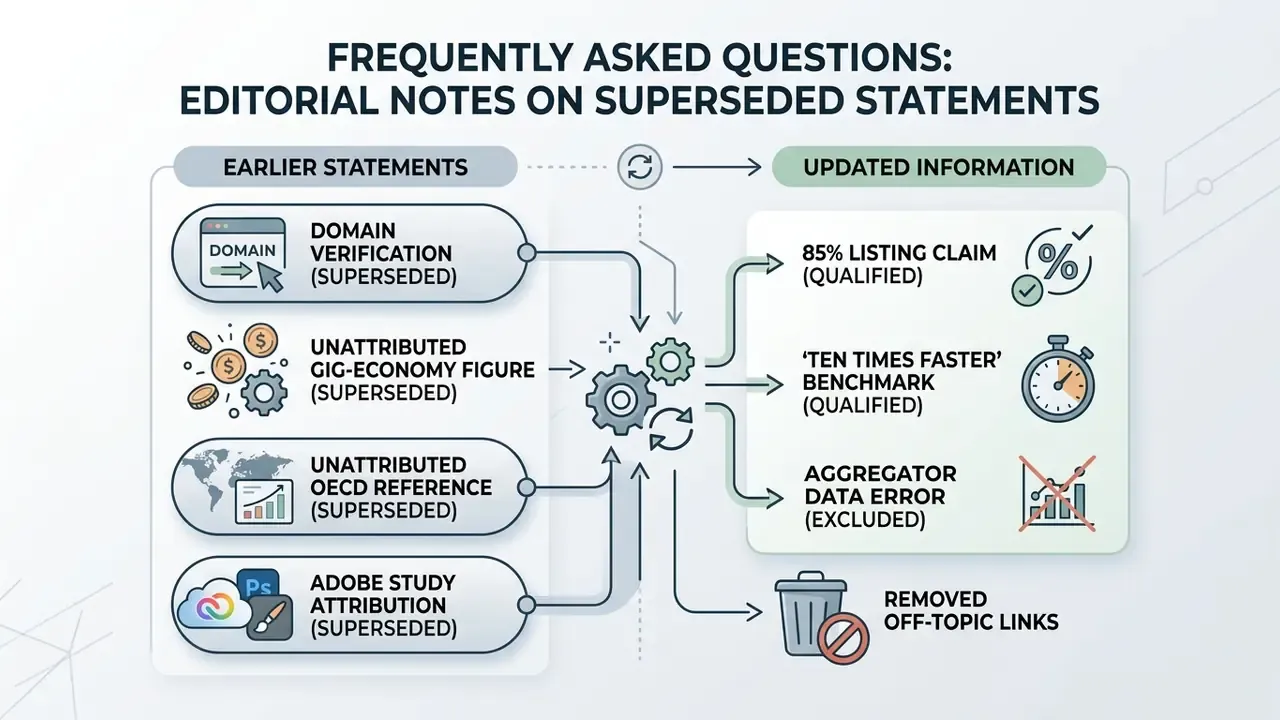
Method and Source Notes
Compensation figures were assembled from public U.S. job listings, aggregator bands, and documented freelance contracts dated 2025 and 2026, then cross-checked against non-U.S. resume data where available. Where only one source existed, the figure is presented as a single observation rather than a market average. Vendor performance claims are labeled as vendor-reported. Regulatory and licensing statements reflect published platform and contributor rules as of August 2026 and can change without notice, so verify current terms before syndication.