Last updated: September 2026.
Executive summary for risk, governance, and engineering leaders
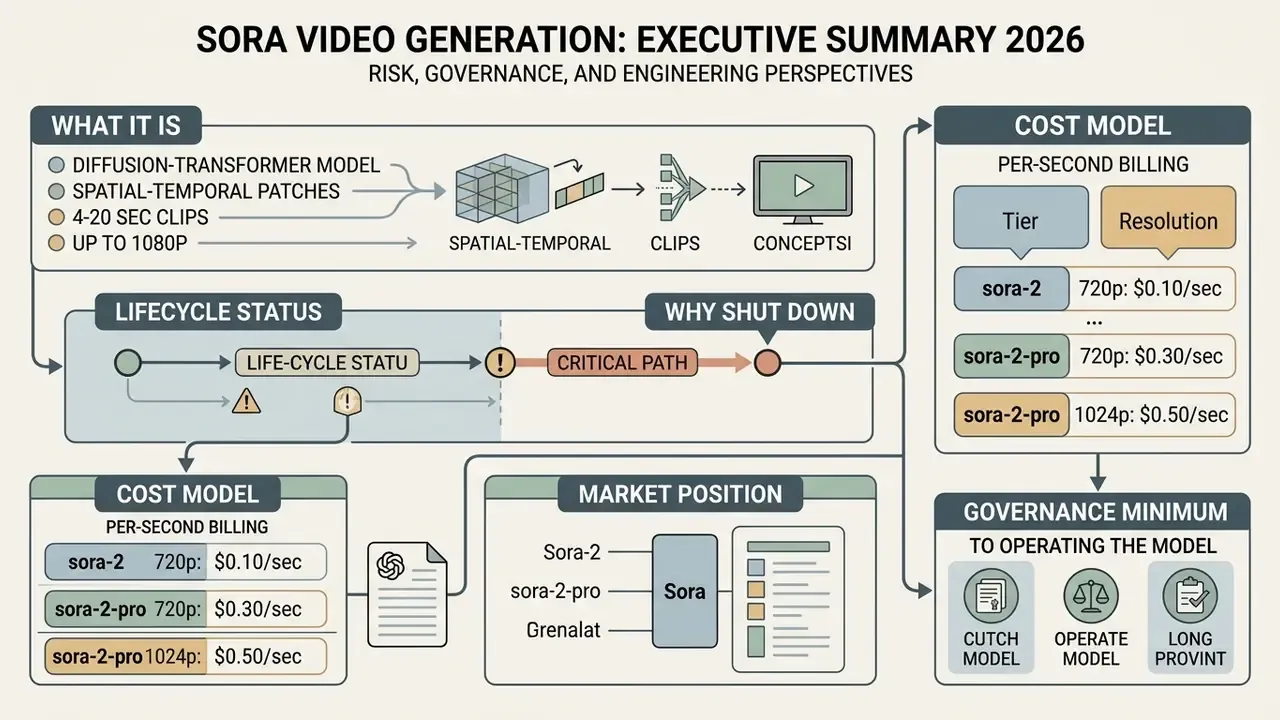
- What it is. Sora is OpenAI's diffusion-transformer video generation model operating on spatial-temporal "spacetime patches," producing clips of 4 to 20 seconds at up to 1080p with natively synchronized audio (dialogue, Foley sound effects, ambient soundscapes).
- What it does. Four production modes matter operationally: text-to-video, image-to-video (including Start Frame and End Frame keyframe interpolation), video extension or remix, and Cameos, meaning identity-verified insertion of a consented human likeness and voice.
- Lifecycle status, and this part is critical. Consumer web and app access was discontinued on April 26, 2026. The Videos API and every
sora-2/sora-2-proalias were scheduled for full shutdown on September 24, 2026, with no recommended replacement model. Read the cost models and integration patterns below as a migration baseline and as a reusable evaluation framework for successor systems, not as a long-term procurement plan. - Why it was shut down. Reported operating costs of roughly $1 million per day, a global user base that peaked near 1 million and then fell below 500,000, compute scarcity, and a strategic reallocation toward core enterprise products. A three-year, $1 billion Disney licensing deal announced in December 2025 wound down alongside the product.
- Cost model. Per-second billing:
sora-2720p at $0.10/sec;sora-2-proat $0.30/sec (720p), $0.50/sec (1024p), $0.70/sec (1080p). The Batch API halves every rate ($0.05 / $0.15 / $0.25 / $0.35 per second). True total cost of ownership has to add iteration ratio, human-in-the-loop review labor, and a risk-control reserve. - Market position. Independent leaderboards did not rank Sora 2 Pro first. Artificial Analysis placed it below ByteDance Seedance 2.0, Runway 4.5, and Kling 3.0, which is a material fact for any vendor-selection memo.
- Governance minimum. Model inventory registration, a pre-publication four-point risk audit (physics, audio-visual sync, likeness and IP, C2PA provenance), a reproducible audit trail (prompt, seed, parameters, input hashes, moderation verdicts), and Shadow AI controls at the network and expense-report layer.
Who this guide is for and how to read it
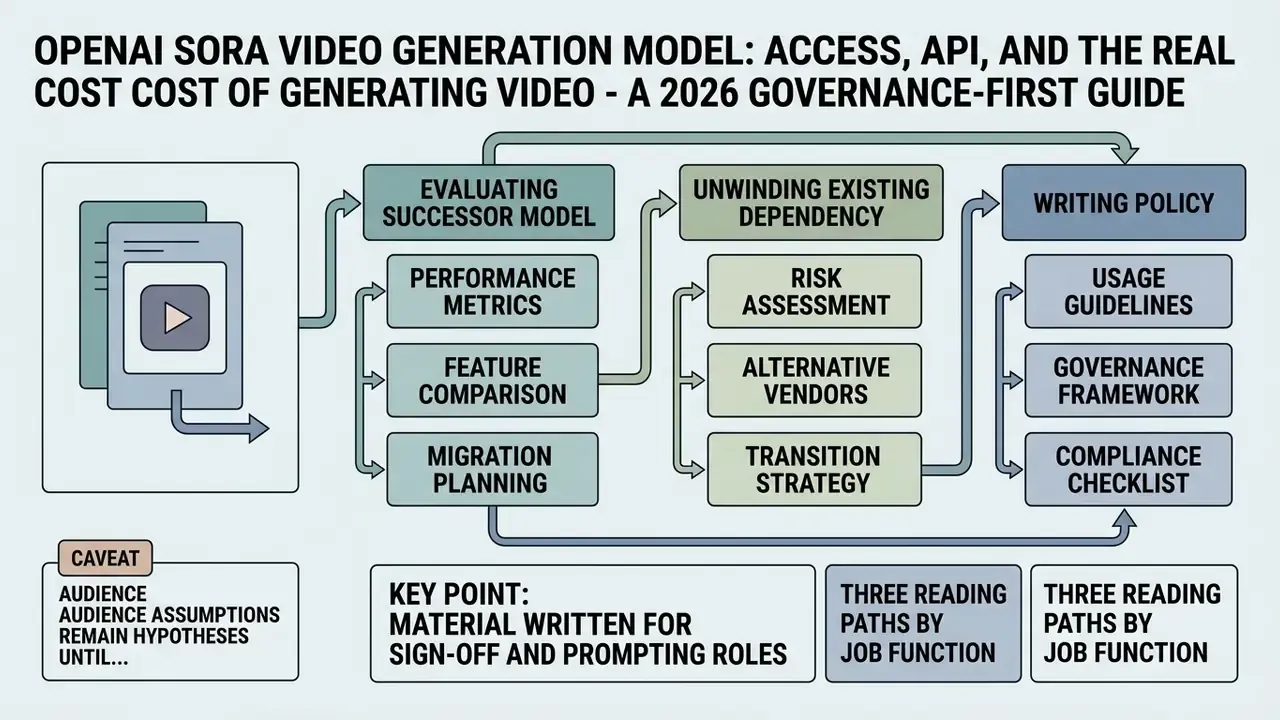
This material is written for the people who have to sign off, not only for the people who prompt. If you own model risk, compliance, or AI governance at a US bank or a mature fintech, the useful parts are the lifecycle record, the control framework, and the cost arithmetic. If you own the engineering integration, the API section carries working code and the async job semantics that carry over to competing providers almost unchanged.
Three reading paths, depending on your job to be done:
- Evaluating a successor video model. Start with the capability boundaries, then the four-point audit, then the total cost of ownership formula. Substitute the new vendor's per-second rate and the forecast holds.
- Unwinding an existing Sora dependency. Go to the access and deprecation record, complete the export sequence, and log the exit procedure in your vendor register.
- Writing policy before anyone generates anything. The model risk management subsection and the Shadow AI controls are the operative pages.
One caveat, stated once and meant throughout: audience assumptions in this piece remain hypotheses until confirmed by interviews, analytics, or verified customer research. Nothing here is legal advice.
What the OpenAI Sora video generation model is and which tasks it fits
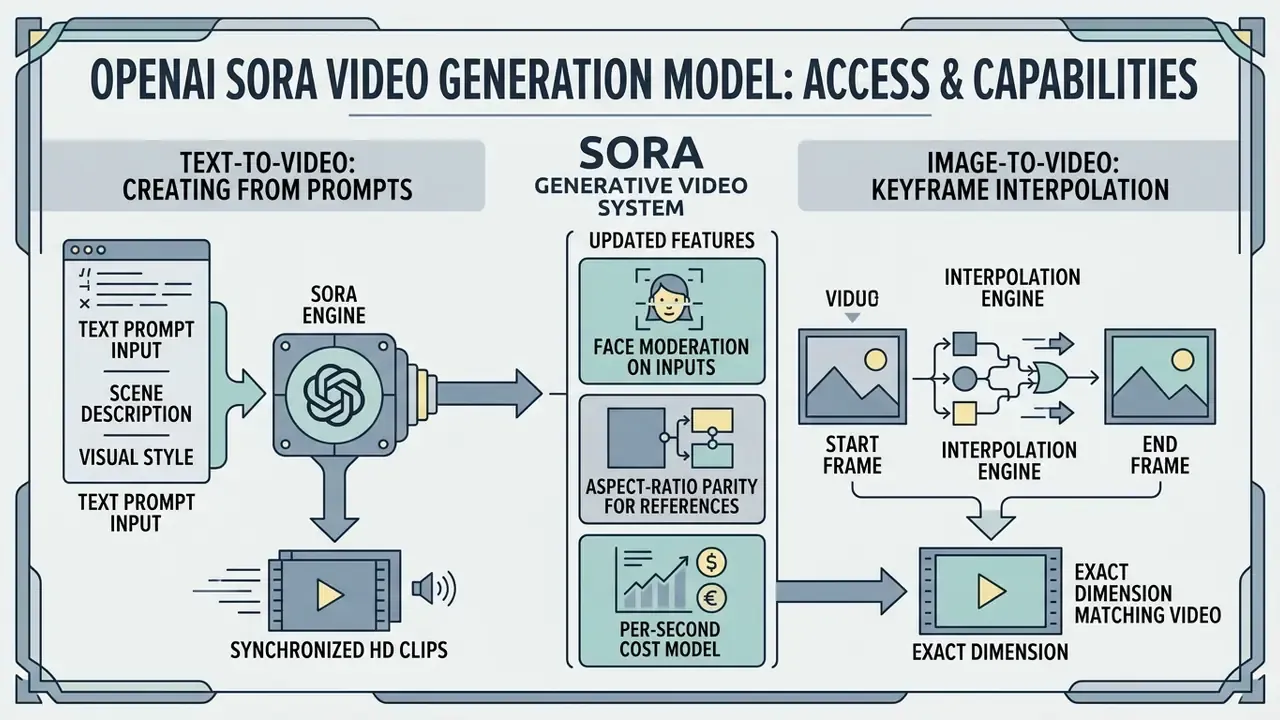
In two sentences: Sora is OpenAI's generative video system that converts text, images, and existing footage into high-definition clips with synchronized audio. It suits conceptual storyboarding, short-form social production, and product animation where turnaround speed outweighs full studio control.
The openai sora video generation model is a generative artificial intelligence system developed by OpenAI that transforms text prompts, static images, and existing video clips into high-definition video outputs up to 1080p resolution. Positioned as a world simulator, the openai sora ai model video generation architecture leverages a spatial-temporal diffusion transformer operating on visual spacetime patches, which enables reasonably deep semantic understanding of physical objects and camera dynamics.
«Sora is trained on videos and images of variable durations, resolutions and aspect ratios, using a unified latent representation for joint diffusion training.»
Architecturally, video is generated in latent space by denoising 3D patches, after which a video decompressor maps the result back to standard pixel space. Recaptioning, meaning the use of a video-to-text model to write detailed captions for training clips, improves prompt adherence. That single design choice explains a practical rule: highly specific prompts outperform vague ones, consistently.
Enterprise content creators, social media operations, and commercial video production pipelines used this video generation model to produce ai generated videos, streamline conceptual storyboarding, and accelerate short-form video creation without traditional studio filming overhead. Teams new to this product class should first establish shared vocabulary through a structured overview of AI video generators before comparing individual vendors. Shared vocabulary prevents a familiar failure: two committees approving different things under the same word.
Text-to-video: creating video from text prompts
Text-to-video in Sora converts descriptive text prompts directly into dynamic video sequences. The openai sora model video generation interface allows users to specify scene composition, subject behavior, lighting, and camera motion in natural language, then generate short sequences of up to 20 seconds, producing generated videos without a camera crew. Practitioners comparing conditioning approaches across vendors can review the wider category of text-to-video AI tools for baseline expectations. The model parses multi-shot instructions to maintain visual context across sequential frames, which lets creative teams execute a complex visual narrative from one textual brief.
«Sora understands not only what the user asked for in the prompt, but also how those things exist in the physical world.»
Supported durations are discrete: 4, 8, 12, 16, or 20 seconds. Both sora-2 and sora-2-pro support 16 and 20 second generations, while 1080p exports (1920×1080 or 1080×1920) require sora-2-pro.
Image-to-video: keyframe interpolation between Start Frame and End Frame
«Uploading characters with human likeness is blocked by default; input images containing human faces are currently rejected.»
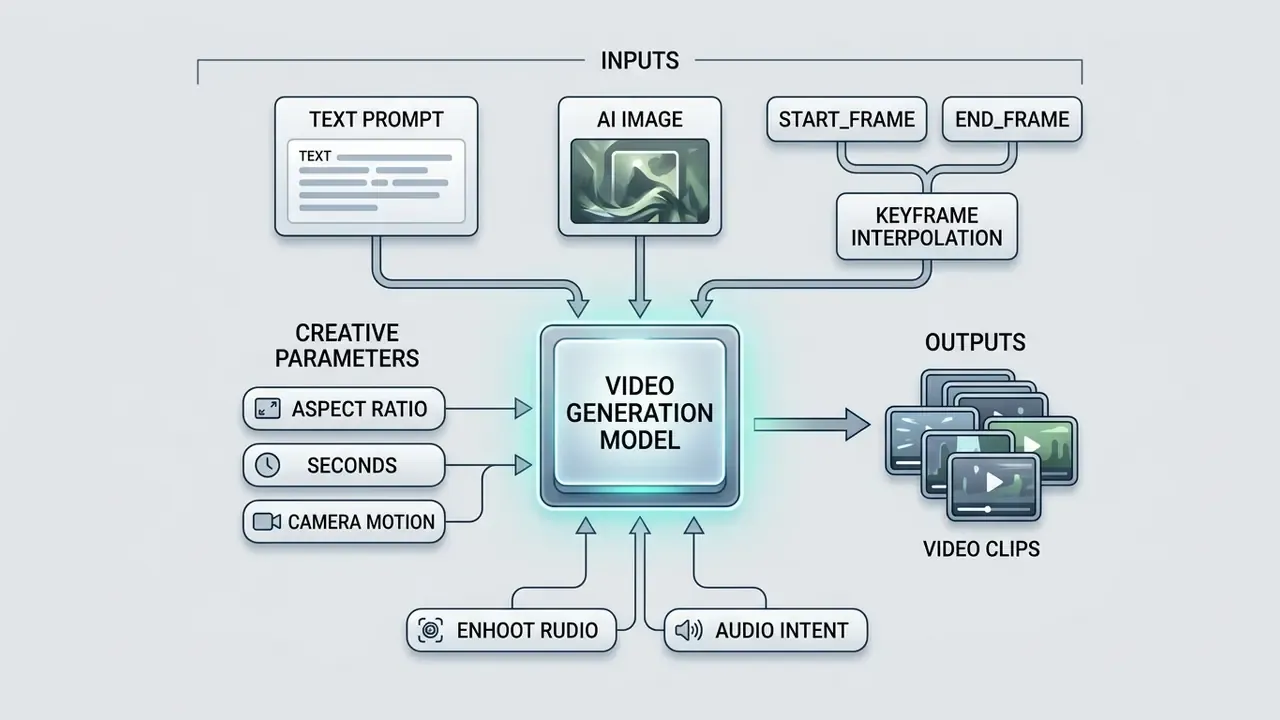
Sora capabilities for video and audio generation
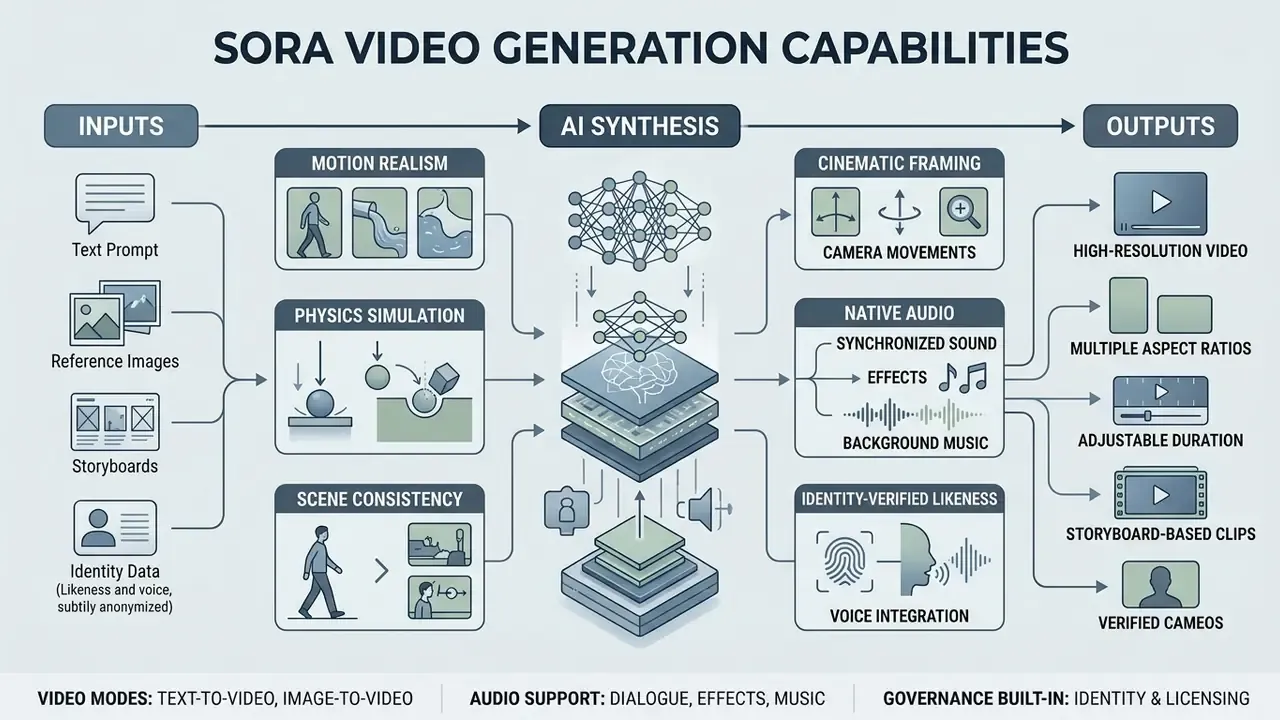
In two sentences: Sora combines high-resolution synthesis, cinematic framing control, native synchronized audio, and identity-verified likeness insertion. Each capability carries a matching verification obligation before any asset reaches public distribution.
The openai sora ai video generation capabilities encompass high-resolution video synthesis, flexible framing, and native multi-modal audio alignment. Engineered to produce realistic video and quality video, the openai sora video generation capabilities supported cinematic output formats alongside automated audio track generation. Advanced AI capability, yes. Unsupervised capability, no.
Motion realism, real world physics, and scene consistency
Sora models physical movement by simulating natural object dynamics, light transport, and continuous camera trajectories. That claim should be read as directional rather than absolute, because published evaluations show measurable failure modes rather than reliable physical simulation.
«WorldSimBench shows most models fail to reproduce physical object deformation and realistic scene depth in complex scenarios.»
Independent research reinforces the limitation. Models generalize acceptably inside their training distribution, then behave case-based rather than rule-based on out-of-distribution physics. Gravity, collision handling, object permanence, friction, and fluid dynamics remain documented weak points. Long-horizon consistency is further constrained by growing KV-cache size and diffusion denoising latency. Evaluators must therefore audit physics-aware artifacts before approving synthetic video clips for public distribution. Five categories to score: spatial corruption, temporal flicker, motion discontinuities, unstable camera trajectories, and implausible parallax.
A small observation from review practice worth repeating: reviewers catch flicker fast and miss parallax almost every time. Build the checklist so the hard category is not the last one.
Audio support: synchronized sound, sound effects, and background music
The openai sora video generation audio support in Sora 2 generates native synchronized audio, including dialogue, Foley sound effects, and environmental background music. Audio events are temporally aligned with visual action beats during diffusion itself, which removes manual post-production Foley alignment for standard media content.
«Sora 2 offers native synchronized audio generation, Foley, dialogue and ambient sound, as a core technical characteristic for professional production.»
Clip control: duration, aspect ratio, style, and camera movements
Sora provides granular control over structural clip parameters, so operators can tailor output formatting for specific distribution platforms. Key operational controls:
- Aspect ratio standard widescreen (16:9, 1280×720 or 1920×1080) for desktop and broadcast, vertical (9:16, 720×1280 or 1080×1920) for mobile social media, plus square formats.
- Duration discrete length selections of 4, 8, 12, 16, or 20 seconds.
- Camera movements prompt-directed framing commands including dolly tracking, panning, crane shots, and quick cuts.
- Storyboard and frame selection individual frames addressable by timestamp for frame-level narrative control.
| Feature / control | Technical parameter range | Practical application | Audit and verification requirement |
|---|---|---|---|
| Text-to-video | Prompts up to context limits; 4 to 20 sec duration | Rapid conceptual storyboarding and ad creative drafts | Verify prompt adherence and check for hallucinatory visual artifacts |
| Image-to-video (single anchor) | JPEG/PNG/WebP input; exact size match with output | Product animation and visual asset extension | Ensure source image matches target aspect ratio; verify face moderation |
| Start Frame + End Frame | Two image anchors, 20 MB or less each; JPG/JPEG/PNG/WEBP | Controlled transformations, brand transitions, before and after reveals | Inspect interpolated midpoint for geometry drift and morphing |
| Cameos (likeness insertion) | Identity-verified capture of appearance, gesture, voice | Founder-led marketing, internal comms, personalized outreach | Retain written consent record; verify revocation controls |
| Audio generation | Synchronized dialogue, SFX, ambient soundscapes | Full-spectrum media content synthesis without external Foley | Check audio-visual frame synchronization and dialogue clarity |
| Aspect ratio and size | 720p (720×1280 / 1280×720) to 1080p (1080×1920 / 1920×1080) | Cross-platform targeting (YouTube, TikTok, broadcast) | Inspect export resolution and prevent aspect stretching |
| Asset consistency | Up to 2 uploaded character IDs per video job | Multi-shot continuity across sequential marketing clips | Validate character geometry across cuts via frame-level inspection |
Once capability boundaries are understood, procurement teams normally move to a head-to-head evaluation. A structured matrix of the best AI video generators supports that step without re-running internal benchmarks from scratch.
Sora Cameos: personal avatar and voice integration
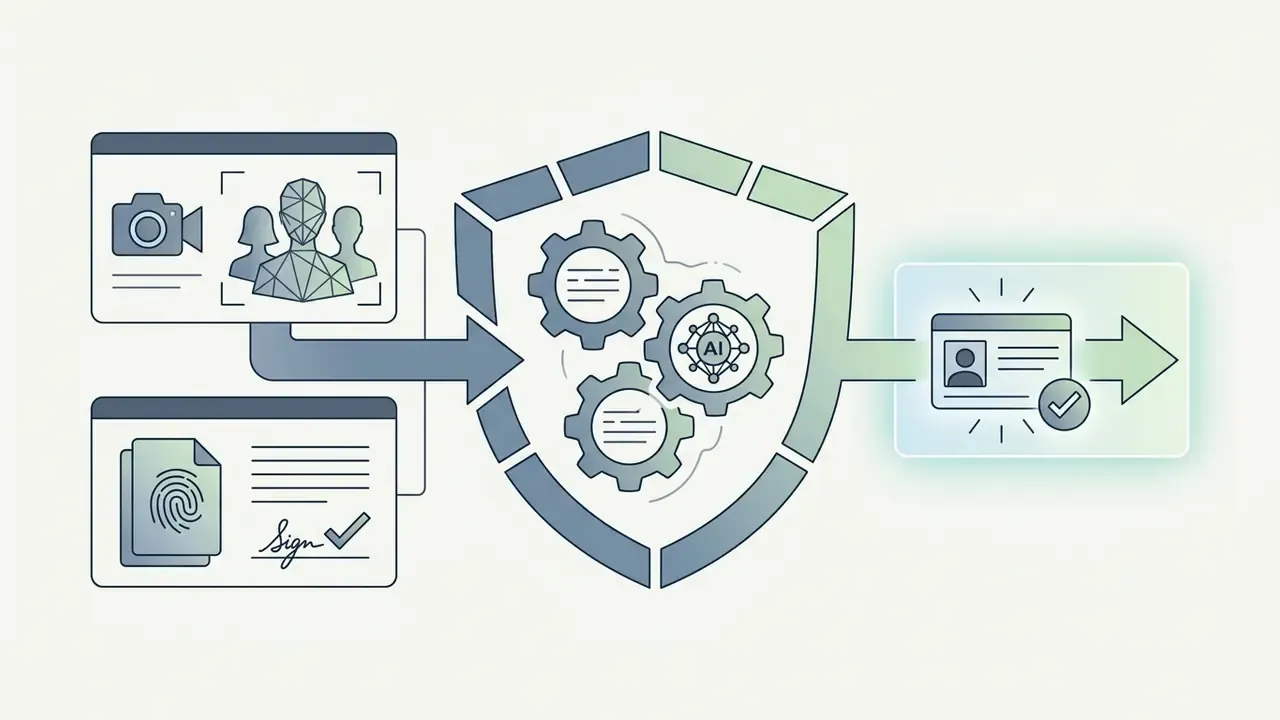
The Cameos feature inserts a digital double of a consenting user into generated footage while preserving biometric fidelity of face, gesture, and vocal timbre. Activation requires passing an identity verification flow, which doubles as the consent record. The system matches the uploaded reference capture against the motion vector in the scene, so the character interacts with surrounding objects along a physically coherent trajectory rather than sitting composited on top of the frame.
Operationally, Cameos closes the gap left by default face moderation. Ordinary image-to-video uploads containing human faces are rejected, whereas a verified Cameo is the sanctioned path for likeness use. Three governance requirements apply in regulated environments:
- Consent artifact retention.Store the verification timestamp, the consenting individual's acknowledgment, and the permitted usage scope in the same record as the generated asset.
- Revocation handling.Likeness permissions can be withdrawn, so asset management systems must support retroactive takedown of every derivative clip containing that Cameo.
- Employee likeness policy.Executive or staff Cameos in customer-facing material require sign-off from legal and HR, not marketing alone, because the output constitutes a synthetic statement attributable to a named person.
Image-to-video generations involving people carry stricter guardrails than character-based generation. That asymmetry is intentional: verified consent unlocks capability, anonymous uploads do not.
How to get access to OpenAI Sora video generation
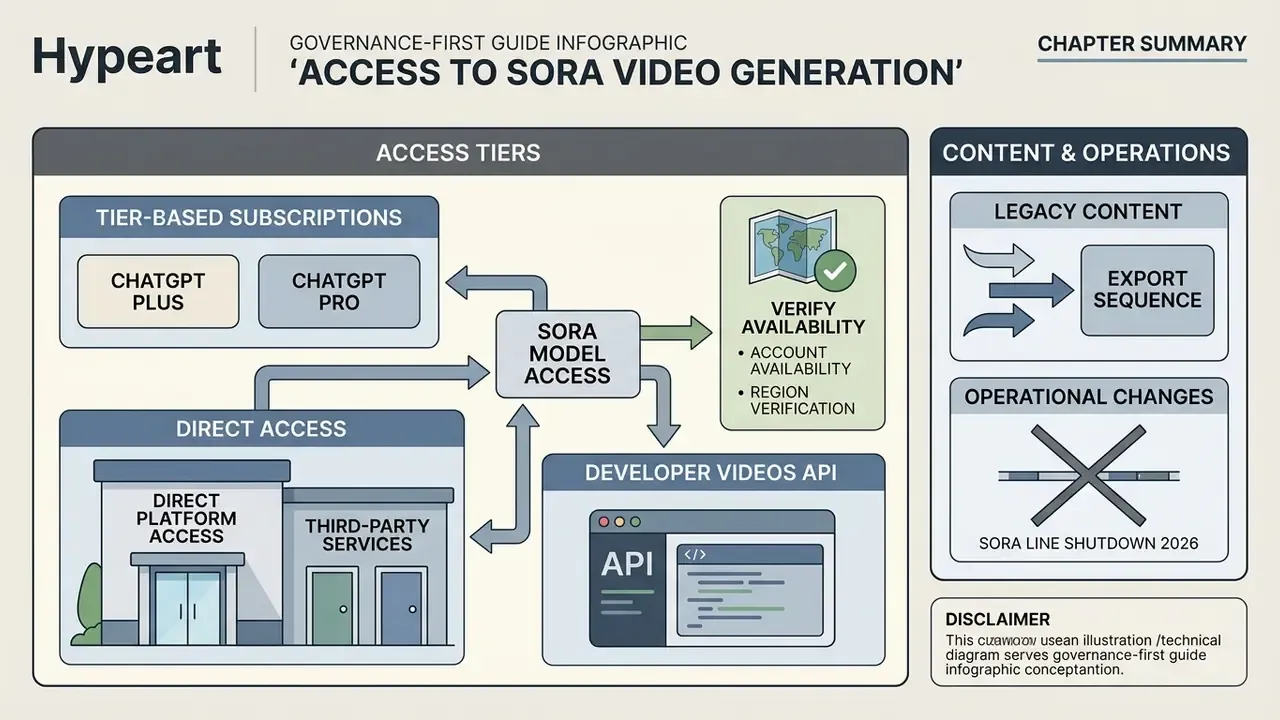
In two sentences: Access historically split into tier-based ChatGPT subscriptions, direct platform access at sora.com, and the developer Videos API. All three consumer surfaces are now closed, so this section functions as a lifecycle record and as a template for evaluating successor products.
Understanding how to access openai sora video generation requires distinguishing between consumer subscription interfaces, direct platform access, and enterprise API endpoints. Readers searching how to get access to openai sora video generation, how to get access to sora openai video generation, or how to access sora video generation openai must account for strict regional eligibility and platform access rules, including the openai sora video generation access sora entitlement split by plan.
Access through ChatGPT Plus and ChatGPT Pro
The openai chatgpt video generation feature was integrated directly into tier-based ChatGPT subscriptions. ChatGPT Plus ($20/month) provided standard access to unlimited images and video capped at 480p output on base web credits, 10-second maximum clip lengths, and single concurrent generation with watermarked exports. ChatGPT Pro ($200/month) unlocked full openai sora 2 video generation access: 1080p resolution, 20-second clips, 5 concurrent generations, priority rendering, and unwatermarked downloads. Enterprise, Team, and Edu subscriptions excluded Sora entitlements.
«The first generation of Sora became available to ChatGPT Plus and Pro users in the United States and Canada in December 2024, with geographic restrictions.»
A later Help Center revision widened eligibility to Plus, Team, and Pro while continuing to exclude Enterprise and Edu. That is a version difference, not a contradiction, and a reminder that entitlement language in vendor documentation drifts between releases. Detailed access guides are accessible via openai sora video generation access.
Direct platform access and access through third-party services
Official direct platform access ran through sora.com and the standalone Sora app, an interactive environment for prompting, editing, and community video sharing. The Sora 2 app also layered in social feed mechanics, which drew repeated comparisons to short-video networks in contemporary coverage.
Third-party creative suites occasionally offered wrapper integrations, yet official access remained tied strictly to OpenAI account credentials. This distinction matters for procurement. Reseller endpoints and "SDK-compatible" wrappers appear only in commercial aggregator documentation, never in OpenAI's own help pages, so they introduce an unvetted data-processing intermediary. To evaluate alternative commercial tools, organizations can compare options across generative media categories, and definitions for unfamiliar terms sit in the generative media glossary.
How to verify Sora availability by account and region
Regional openai sora video generation access availability was restricted at launch. The United Kingdom, Switzerland, and the European Economic Area were excluded on regulatory grounds, while North America and selected global territories were supported. Later supported-country listings added Japan, Korea, Mexico, Taiwan, Thailand, and several Latin American markets. Users verified openai sora video generation platform access by inspecting OpenAI account settings under subscription features and cross-checking the official supported-countries page. The same method answers the query openai sora video generation how to access sora for any successor product. To monitor service status and access changes, review openai sora video.
«After shutdown and the export window, OpenAI will permanently delete all data associated with users' Sora content.»
Export sequence for legacy content: open the sunset page, click Export, wait for the email notification that the package is ready, then download. Organizations that treated Sora outputs as archival brand assets must finish this before the window closes, because no post-deletion recovery path exists. None.
Why the Sora line was shut down in 2026
Market reporting attributes the shutdown to unit economics plus strategic reallocation rather than a single technical failure. Operating Sora reportedly cost OpenAI approximately $1 million per day, driven by the compute demands of diffusion-transformer video synthesis. Worldwide usage peaked near 1 million users after public launch and then fell to fewer than 500,000. Against that backdrop, with compute shortages and more efficient competing architectures such as Seedance 2.0 and Runway Gen-4.5 in the market, OpenAI announced discontinuation on March 24, 2026, closed the app on April 26, 2026, and scheduled API shutdown for September 24, 2026. The $1 billion, three-year Disney licensing arrangement announced in December 2025, which allowed more than 200 Disney characters to be generated on Sora 2, concluded alongside it. OpenAI's shutdown notice itself gave no specific cause.
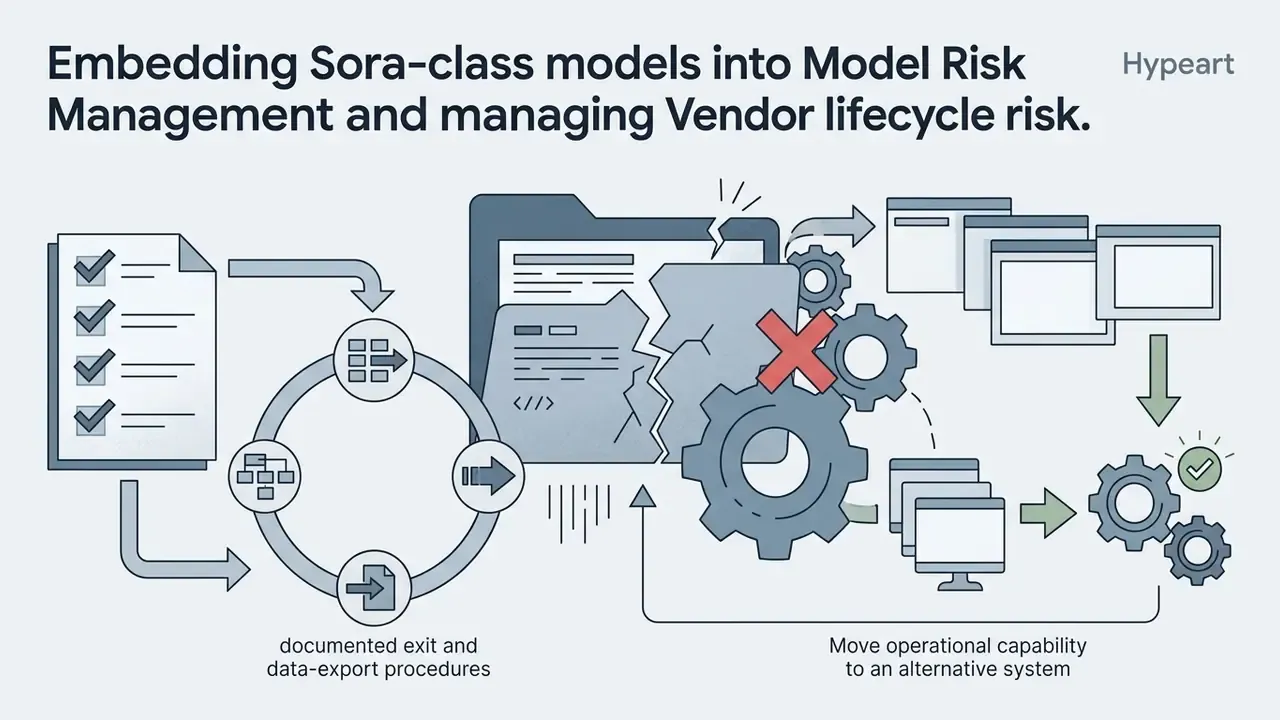
For risk committees the lesson generalizes past one vendor. Generative media capability can be withdrawn on roughly six months' notice, so any dependency requires an exit plan, an export procedure, and a documented successor candidate at the moment of adoption, not at end of life.
How to use Sora AI: workflow from prompt to finished video
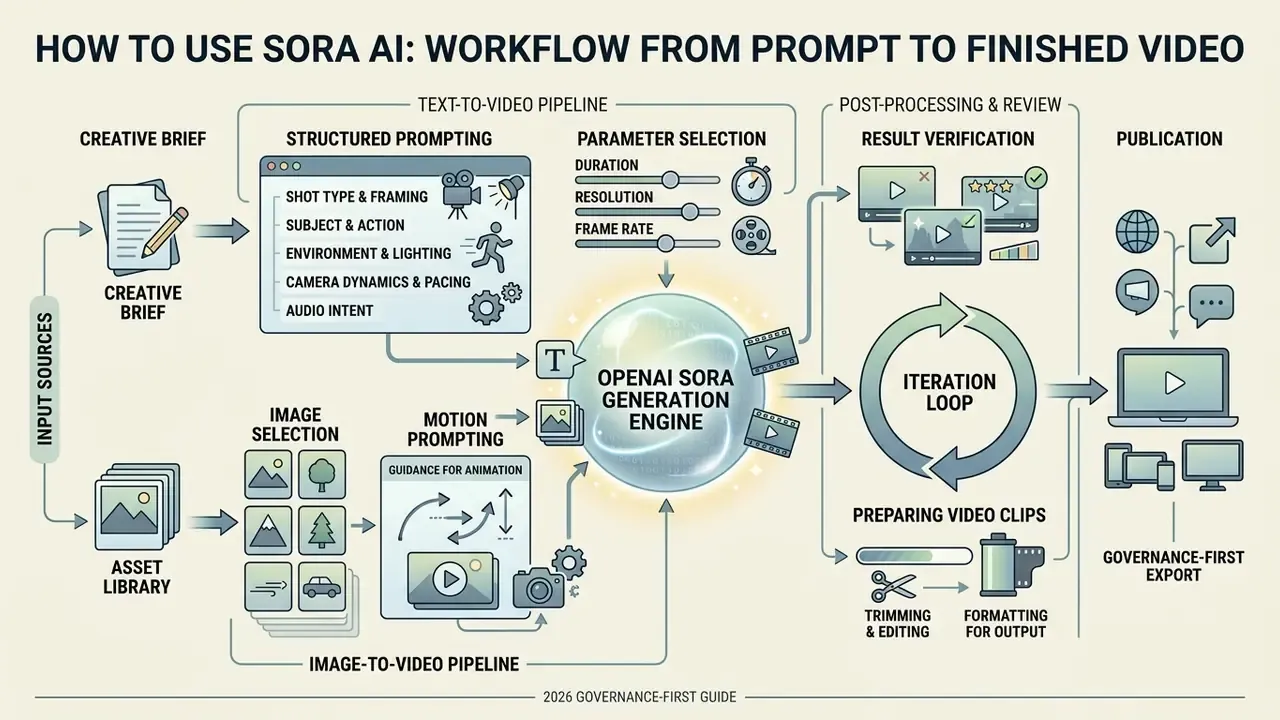
In two sentences: A repeatable pipeline moves from creative brief through structured prompting and parameter selection to artifact screening and export. Discipline at the prompt stage is the single largest lever on wasted spend, because every retry is billed.
Executing a structured production workflow keeps visual quality consistent and minimizes wasted API credits. Operators following an openai sora ai video generation tutorial should move systematically from creative brief to post-production quality control when learning how to use sora ai at team scale.
How to write text prompts for quality video
High-quality output requires structured prompt architecture. Effective prompts explicitly state:
- Shot type and framing: wide establishing shot, medium close-up, or overhead drone view.
- Subject and action: detailed description of primary actors, motion vectors, and interactions.
- Environment and lighting: volumetric fog, golden hour sunlight, or stark industrial neon.
- Camera dynamics and pacing: slow dolly forward, steady tracking shot, or rapid pan.
- Audio intent: explicit cues for background ambience, sound effects, or speech.
«Datanorth recommends explicitly stating camera movement ("Drone shot, tracking forward"), lighting conditions and subject action to achieve a cinematic result.»
OpenAI's own prompting guidance converges on the same skeleton: framing, depth of field, action described in beats, lighting, palette, plus explicit orientation and duration. Two reference-grade examples of the required specificity level:
- "Aerial drone shot over a coastal highway at dawn, low fog over the water, camera slowly pans upward, ambient wind and distant gulls."
- "Close-up of a steaming coffee cup on a wooden table, morning light through blinds, soft depth of field, quiet café murmur."
Vague prompts invite the model to invent unwanted details, which raises the attempt ratio and therefore the invoice. For deeper prompting terminology and tool-class context, consult the reference material on AI video generators.
When to choose text-to-video versus image-to-video
Understanding openai sora image to video how to use starts with a simple split. Choose text-to-video when generating entirely novel visual concepts from scratch. Choose image-to-video when animating existing brand photography, product imagery, or pre-approved character models, that is, whenever visual continuity is non-negotiable.
The decision rule reduces to input availability and continuity risk:
| Business condition | Recommended mode | Rationale |
|---|---|---|
| Only a written brief exists | Text-to-video | No visual anchor to preserve; maximum conceptual latitude |
| Approved product photography exists | Image-to-video (single anchor) | Locks geometry, colour, and packaging fidelity |
| Defined before and after transformation | Start Frame + End Frame | Deterministic endpoints reduce narrative drift |
| Named person must appear | Cameos with identity verification | Only sanctioned likeness path; produces a consent artifact |
| Existing approved clip needs continuation | Video extension or remix | Preserves established look without regenerating from zero |
Result verification, iteration, and preparing video clips for publication
After generation completes, operators run systematic quality checks on the resulting video clips. Visual artifacts, temporal flicker, unnatural motion physics, and audio-visual desynchronization all get flagged for iterative refinement. Physics-grounded self-refinement follows a defined loop: identify the violated physical rule, detect semantic mismatch against the brief, rewrite the prompt, regenerate. Once verified, finished assets export as standard MP4 files for external editing and publishing. Handoff typically goes to a conventional video editor, and budget-constrained teams can start from a survey of free video editing software or a platform-specific setup such as a YouTube video editor. Sample clips are available at openai sora video.
Illustrative scenario (hypothesis, not verified client data). Consider a financial-technology media team evaluating generative video workflows across roughly 120 promotional campaign assets. If the team standardizes prompt templates and screens for physics artifacts before compliance submission, the plausible mechanism of benefit is fewer round-trips between creative and review. Reviewers receive assets that already pass the mechanical checks, so their time goes to claims language rather than visual defects. Any percentage improvement quoted internally should be measured against a documented baseline of pre-change review cycle times before it is reported externally. The original unsourced formulation of this example is retained in Appendix A for transparency.
Limitations, risks, and quality control of AI generated videos
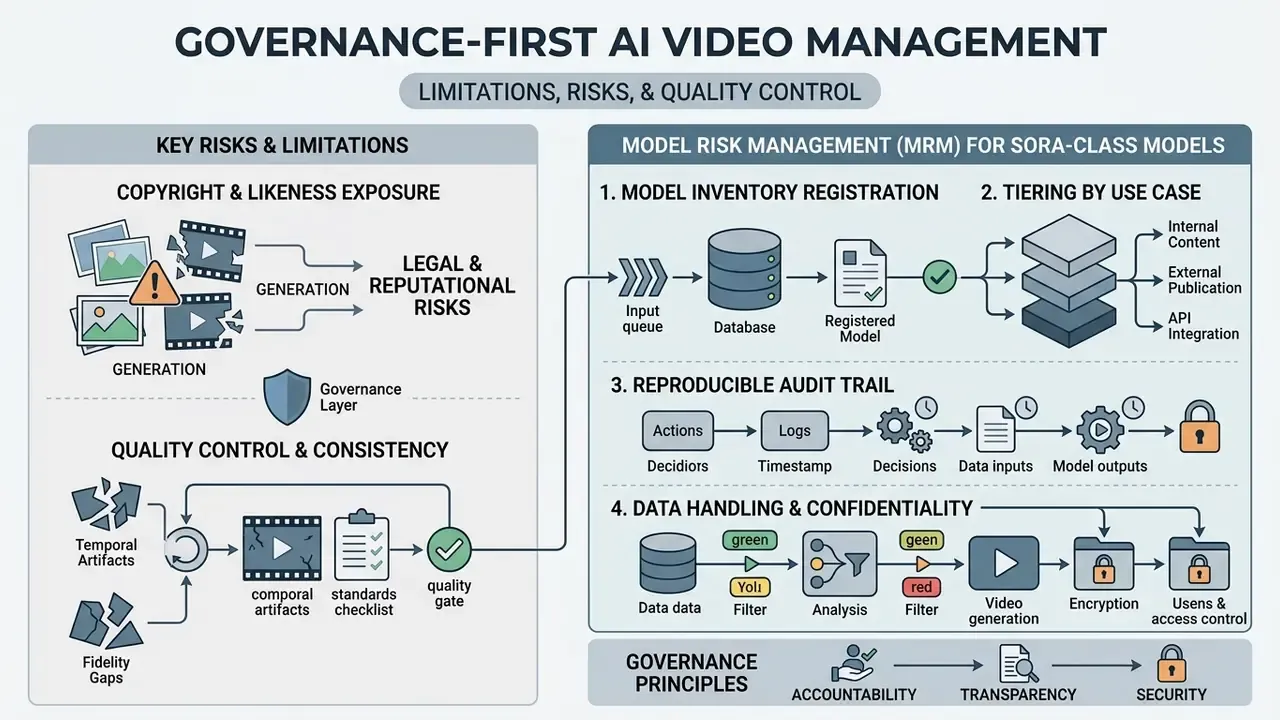
In two sentences: Generative video introduces technical failure modes, intellectual-property exposure, likeness risk, and Shadow AI exposure at the same time. Risk validation belongs before integration design and budget approval, not after.
Deploying generative video models into enterprise production introduces technical, legal, and reputational risk together. Models frequently fail to simulate basic physical mechanics accurately, glass breaking or liquid dynamics being the canonical examples, and they can exhibit spontaneous object morphing or temporal incoherence over longer clips.
«OpenAI acknowledges that Sora has imperfect understanding of physics and cause-and-effect, and red-teamers assess risks of bias propagation and misinformation.»
OpenAI's own world-simulator documentation lists the failure catalogue explicitly: inaccurate basic physics such as glass shattering, incorrect object-state changes such as food being eaten, long-video incoherence, spontaneous object appearances, and difficulty distinguishing left from right. For detailed analysis of operational constraints, consult openai sora video.
Risk managers must also mitigate compliance hazards: misinformation and disinformation, biases and stereotypes, copyright infringement, and unauthorized depiction of human likenesses. The Sora 2 System Card enumerates the misuse surface as impersonation, scams, fraud, non-consensual intimate imagery, defamation, and deceptive content. OpenAI enforced strict input moderation that blocked real human faces, public figures, minors, and copyrighted material.
«The Sora system card describes a layered moderation strategy: prompt transformations, multimodal classifiers, output filters and blocklists for policy-violating requests.»
Enterprise deployment requires mandatory human-in-the-loop review, adherence to C2PA metadata provenance standards, and systematic watermarking verification before public release. Watermark removal tools circulated within a week of the Sora 2 launch, so provenance verification cannot rest on the visible mark alone; invisible watermarking is the fallback layer that survives file modification. Independent verification of inbound synthetic media can be supported by AI image detectors as a secondary control, and teams that also run still-image pipelines should hold any image generator, Nano Banana included, to the same provenance checklist.
«T2VSafetyBench found no single model outperforms others across all safety aspects; a trade-off exists between usability and protection from harmful content.»
Copyright and likeness: the specific exposure
Two legal facts shape enterprise policy. First, US Copyright Office guidance states that more-than-de-minimis AI-generated material should be excluded from copyright claims, and human authors must disclaim AI-generated portions when registering works. A fully synthetic campaign asset may therefore be unprotectable. Second, the Copyright Office's report on digital replicas notes that copyright does not prevent unauthorized duplication of a person's image or voice, which shifts likeness protection onto publicity rights, contract, and consent records.
Sora 2 also launched with copyrighted content permitted by default unless rights holders opted out, a posture that drew criticism from industry bodies before OpenAI promised more granular controls. Any enterprise that generated character-adjacent material during that window should re-verify its clearance documentation now, not during a dispute.
Embedding Sora-class models into Model Risk Management
For banks, insurers, and fintechs operating under supervisory expectations for model risk, generative video should be onboarded through the existing framework rather than treated as a marketing toy outside scope:
External frameworks commonly referenced here include the NIST AI Risk Management Framework and existing supervisory guidance on model risk management. Mapping each control above to the institution's chosen framework is a required step and should be done with internal legal and compliance functions, not by a content team alone.
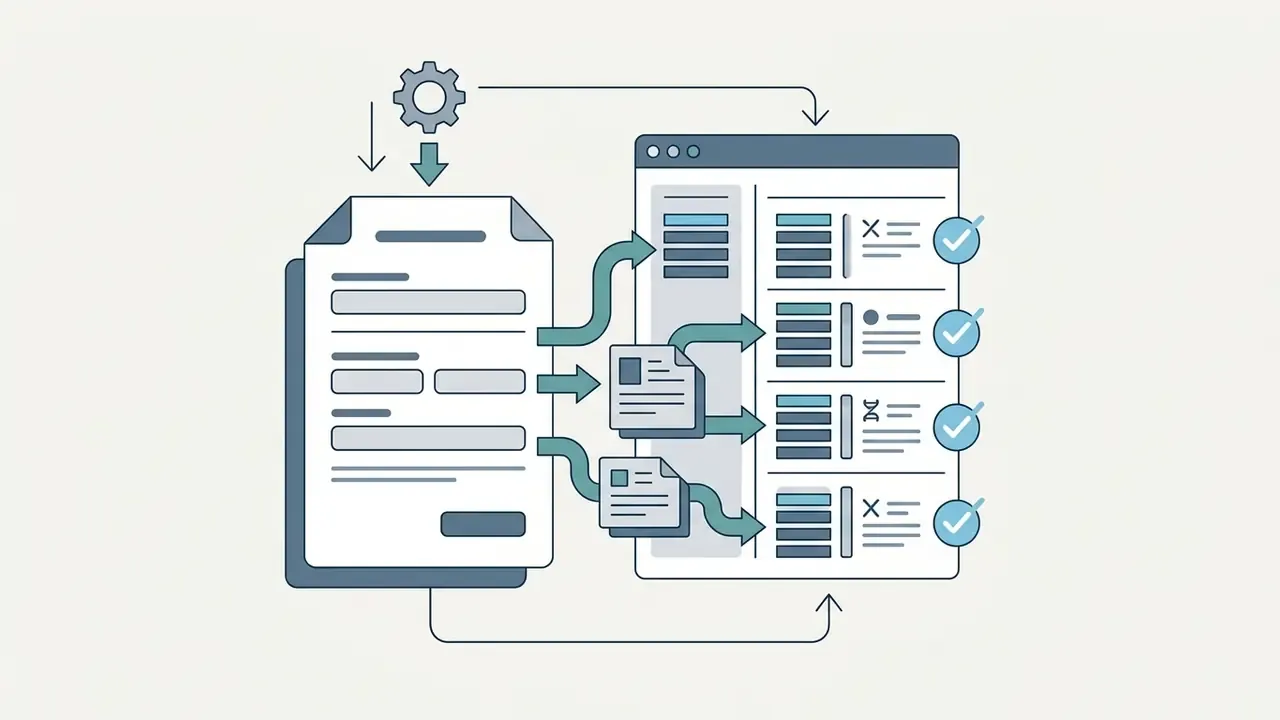
sora-2 or sora-2-pro), vendor, version date, intended use, owner, and validation status in the central AI asset register. Third-party model status does not exempt the entry.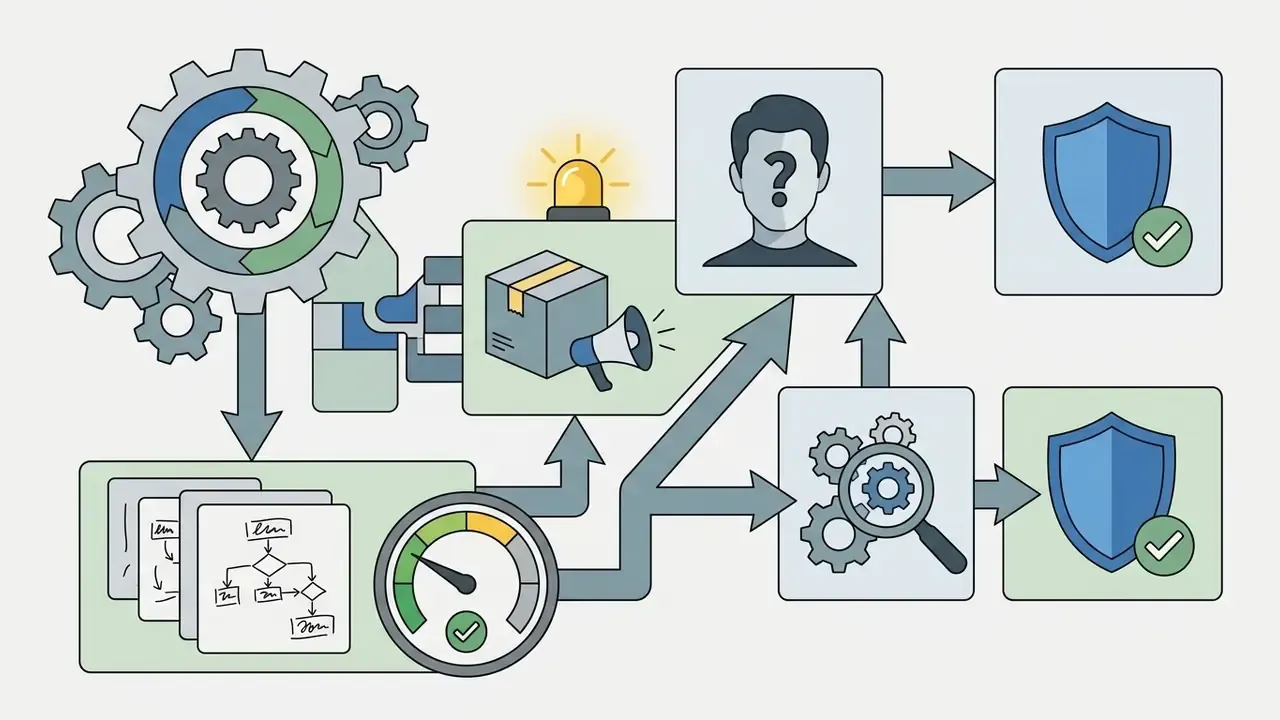
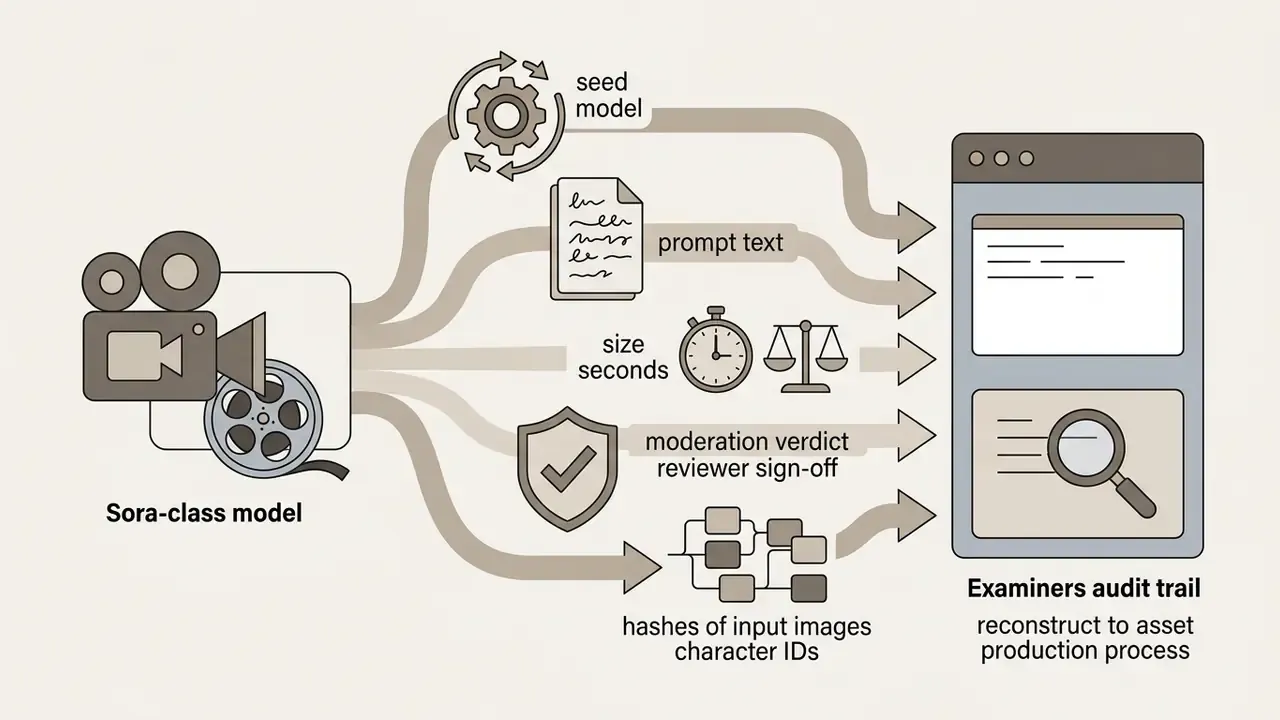
seed, model, size, seconds, hashes of input images, character IDs, moderation verdicts, and reviewer sign-off into the GRC or MRM system, so an examiner can reconstruct how any published asset was produced.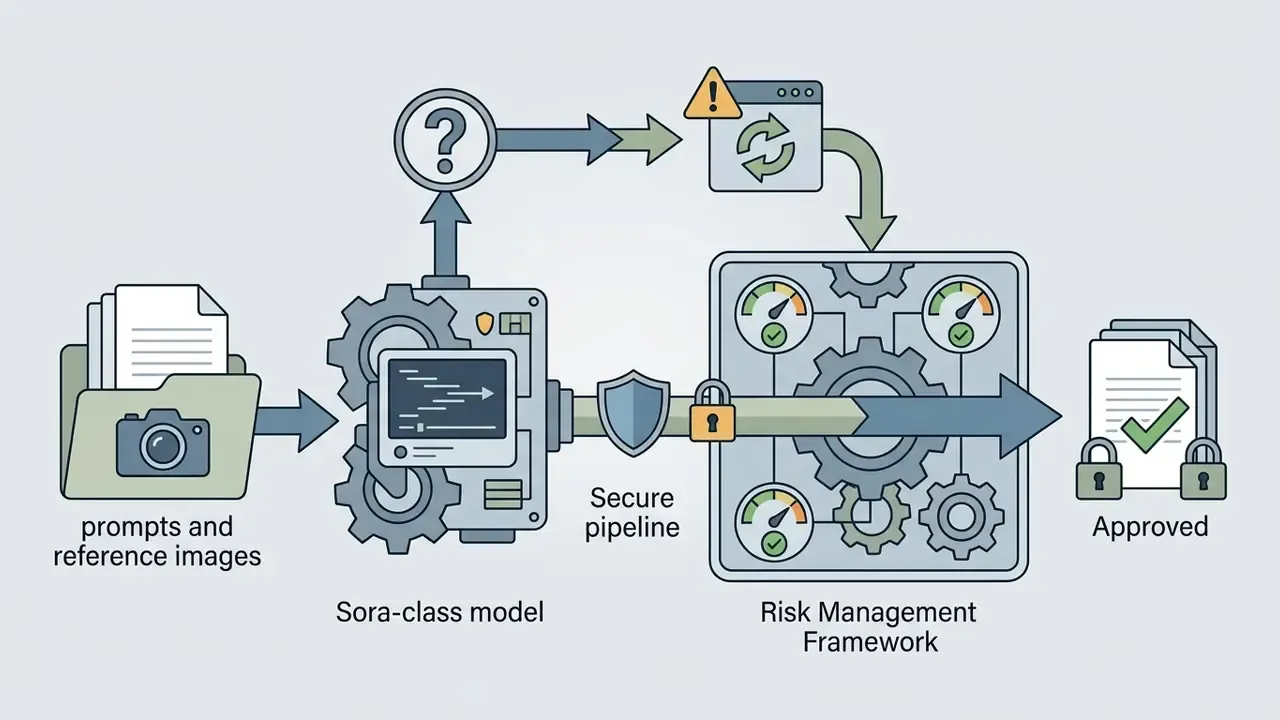
Sora API: integrating video generation into your product and team workflow
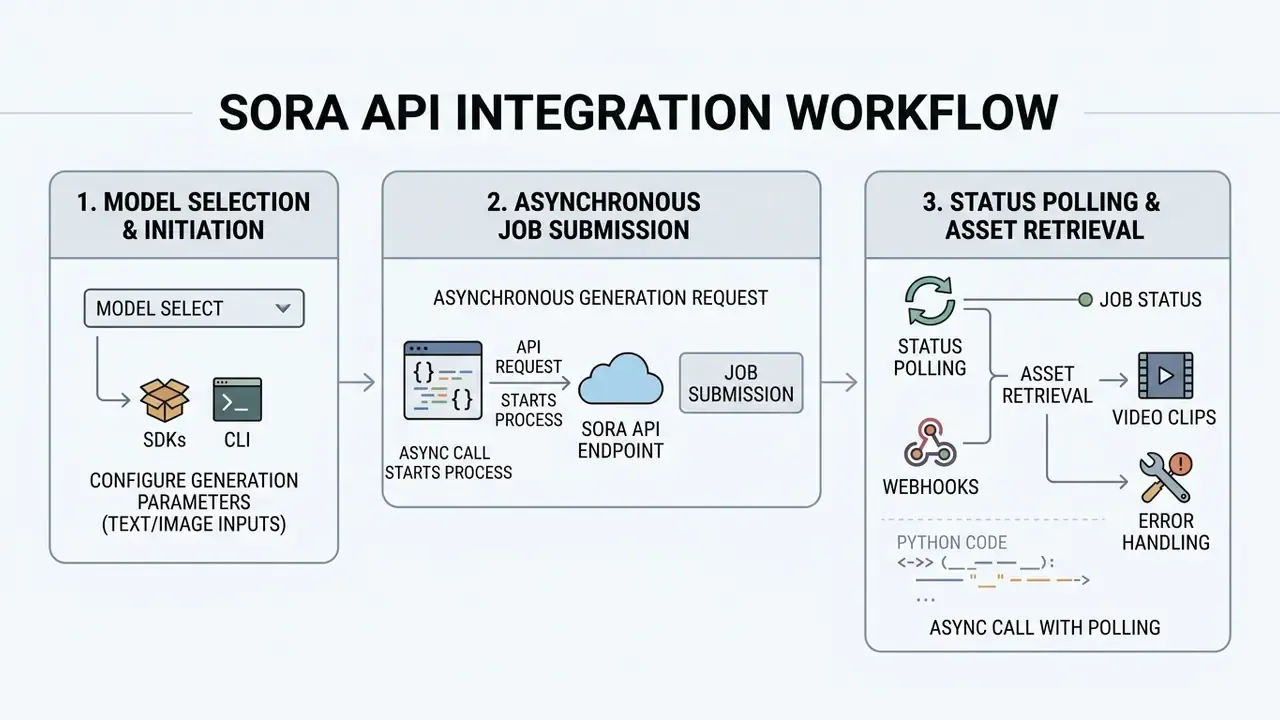
In two sentences: Programmatic access follows a standard create-job, then poll-or-webhook, then download-content pattern across the OpenAI SDKs. The same pattern generalizes to competing providers, which is why the integration work retains value after deprecation.
Programmatic integration via the OpenAI Videos API let software engineering teams embed automated video generation directly into enterprise products and media distribution pipelines. For operational checklists on API deployments, review the AI Media API documentation.
«Open-Sora successfully reproduced nearly all techniques from the Sora report, supporting video generation up to 16 seconds at 720p with controllable motion dynamics.»
That open-source lineage matters for continuity planning. Teams facing deprecation can evaluate self-hosted, fine-tuned reproductions alongside commercial successors instead of assuming a single migration path.
Model selection, SDKs, and CLI for the video generation workflow
Developers chose between two primary API model aliases: sora-2, optimized for rapid iteration, lower cost, and 720p output, and sora-2-pro, designed for production-grade 1080p output with synchronized audio. Use sora-2 for exploration of tone, structure, and visual style where turnaround matters more than fidelity. Use sora-2-pro for cinematic footage, marketing assets, and any case where visual precision is critical, including 1920×1080 or 1080×1920 exports. Both variants support 16 and 20 second generations. Teams planning post-deprecation continuity should benchmark against Google Veo as a like-for-like commercial alternative.
Standard OpenAI SDKs for Python and Node.js support video endpoint calls via REST methods. Azure OpenAI exposes the same Sora 2 workflow through AsyncOpenAI with a create_and_poll convenience helper. The full endpoint surface extends well beyond text-to-video: create, edits, extensions, characters, list, retrieve, delete, remix, and content retrieval.
Request parameters:
| Parameter | Type | Values and notes |
|---|---|---|
model | string | sora-2 or sora-2-pro |
prompt | string | Shot type, subject, action, setting, lighting, audio intent |
size | string | {width}x{height}; 720×1280, 1280×720, 1080×1920, 1920×1080 |
seconds | integer | 4, 8, 12, 16, 20 |
image | file | Optional reference anchor; must match output size exactly |
characters | array | Up to two uploaded character IDs per job |
«OpenAI's deprecation page states: the Videos API and all sora-2 aliases will be shut down on September 24, 2026 with no recommended replacement.»
Asynchronous generation, retrieving video clips, and error handling
Video synthesis needs significant compute time, so the API operates asynchronously:
- Job submission:
POST /v1/videosinitiates generation and returns a uniquejob_idwith an initial status (queuedorin_progress). - Status polling or webhooks: the application polls
GET /v1/videos/{job_id}or listens for HTTP webhook events (video.completedorvideo.failed). - Asset retrieval: on completion, the application fetches the binary MP4 payload via
GET /v1/videos/{job_id}/content.
Error handling logic must absorb HTTP 429 rate limit responses with exponential backoff and manage policy refusal errors from content moderation blocks. Rate limiting is typically enforced as a sliding window per API key, and Retry-After headers should be honoured rather than replaced by fixed sleeps. Fixed sleeps look tidy in code review and fail under load.
«The API supports webhooks for job completion notifications, which is recommended for efficiency instead of continuous status polling.»
Python, asynchronous call with explicit polling:
# Asynchronous Sora 2 API call with status polling
import asyncio
from openai import AsyncOpenAI
client = AsyncOpenAI()
async def generate_sora_video():
    video = await client.videos.create(
        model="sora-2-pro",
        prompt="Cinematic wide shot of a futuristic city, golden hour, slow dolly forward, ambient city hum",
        size="1920x1080",
        seconds=10,
    )
    # Poll generation status at a conservative interval
    while video.status in ["queued", "in_progress"]:
        await asyncio.sleep(10)
        video = await client.videos.retrieve(video.id)
    if video.status == "completed":
        print(f"Video ready. Job id: {video.id}")
    else:
        raise Exception(f"Generation failed: {video.error}")
asyncio.run(generate_sora_video())
Python, using the built-in create_and_poll helper:
import asyncio
from openai import AsyncOpenAI
client = AsyncOpenAI()
async def main() -> None:
    video = await client.videos.create_and_poll(
        model="sora-2",
        prompt="A close-up of rain hitting a neon-lit window, shallow depth of field",
        size="1280x720",
        seconds=8,
    )
    if video.status == "completed":
        content = await client.videos.download_content(video.id)
        content.write_to_file("output.mp4")
        print("Saved output.mp4")
    else:
        print("Video creation failed. Status:", video.status)
asyncio.run(main())
Node.js, create, poll, and retrieve:
import OpenAI from "openai";
import { setTimeout as sleep } from "node:timers/promises";
const openai = new OpenAI();
async function main() {
  let video = await openai.videos.create({
    model: "sora-2",
    prompt: "Aerial drone shot over a coastal highway at dawn, low fog, camera pans upward",
    size: "1280x720",
    seconds: 8,
  });
  while (video.status === "queued" || video.status === "in_progress") {
    await sleep(10000);
    video = await openai.videos.retrieve(video.id);
  }
  if (video.status === "completed") {
    console.log("Video successfully completed:", video.id);
  } else {
    console.error("Video creation failed. Status:", video.status);
  }
}
main();
Audit-trail requirement. Persist job_id, model, prompt, seed, size, seconds, input-image hashes, character IDs, final status, and any moderation refusal payload to durable storage at each stage. Without that record, a published asset cannot be reconstructed for an internal auditor or a regulator, which turns an otherwise compliant workflow into an unverifiable one.
When the API is justified for video production and when the platform suffices
Direct web platform usage is sufficient for ad-hoc creative exploration and manual storyboarding by individual content creators. API integration becomes financially and operationally necessary when automating high-volume content personalization, building customer-facing video features, or wiring video generation into digital asset management platforms. Public-sector API design guidance draws the same structural line: APIs serve system-to-system processes that span organizational boundaries, while web interfaces serve direct human use, and API-first design precedes UI design. Teams testing the waters before committing engineering effort can benchmark against free AI video generators to establish a quality floor.
Illustrative scenario (hypothesis, not verified client data). An enterprise automation group needing localized product demo videos across several regional markets would plausibly adopt asynchronous batch processing, so clip creation is driven from structured product-catalog data rather than manual prompting. The scaling mechanism is straightforward: catalog rows map to prompt templates, templates map to queued jobs, and centralized template ownership preserves brand governance. Volume claims such as "500 weekly clips" should be treated as a capacity target dependent on rate limits and review throughput, not as a published outcome. The original unsourced formulation is retained in Appendix A.
API cost and developer economics: budgeting Sora video generation
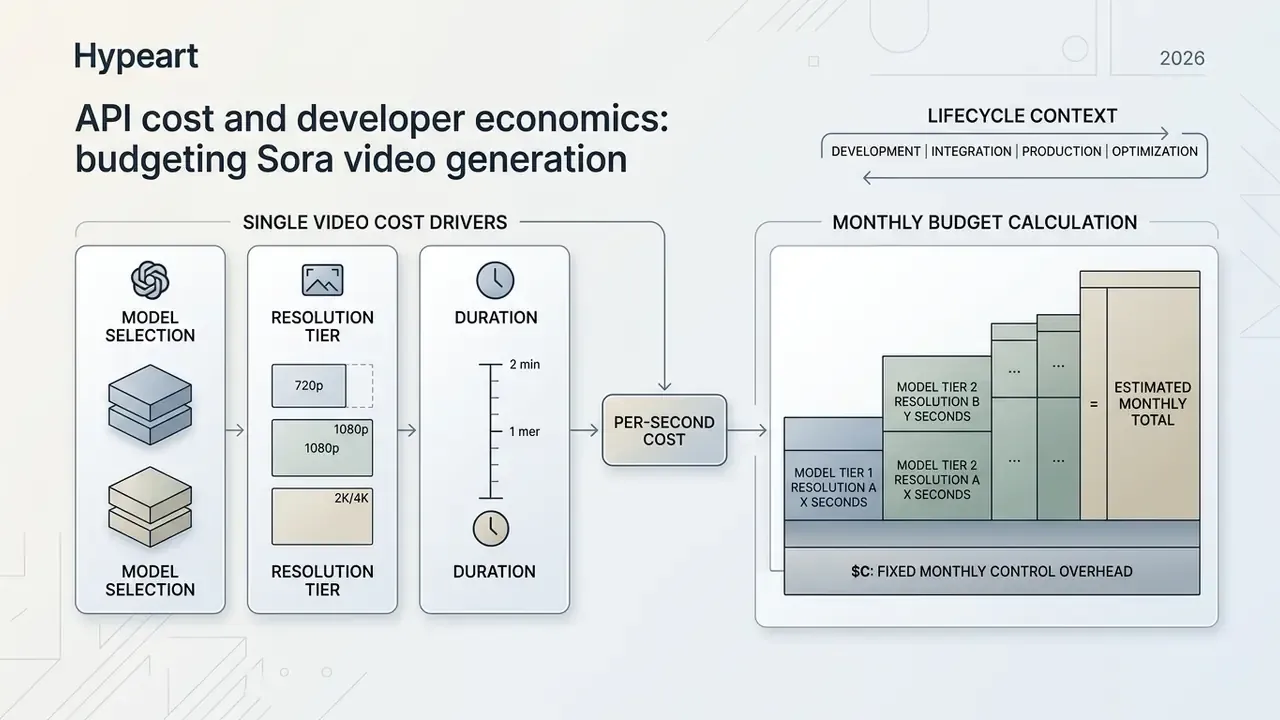
In two sentences: Video is billed per generated second, so cost scales linearly with duration, resolution tier, and retry count. Total cost of ownership must additionally include human review labor and a risk-control reserve.
Calculating operational expenditure for Sora API integration means modeling per-second generation rates against campaign volume, quality tiering, and retry overhead. Engineering leaders can build prospective budgets using specialized AI Media Calculators.
Which parameters drive the cost of a single generated video
The total price of an individual video generation job depends on three primary variables:
- Model selection:
sora-2versussora-2-pro. - Resolution tier: 720p, 1024p, or 1080p.
- Duration: generated length in exact seconds, from 4 to 20.
Billing is per generated second rather than per frame, and synchronized audio is bundled into the clip price; no separate audio line item appears on the official rate card. Batch API processing reduces standard rates by roughly 50% for non-real-time, offline render jobs.
«Open-Sora 2.0 demonstrates that a commercial-grade video model can be trained for roughly $200K, achieving 5 to 10 times greater cost efficiency than comparable systems.»
Worked unit costs at 8 seconds: $0.80 on sora-2; then $2.40, $4.00, and $5.60 on sora-2-pro at 720p, 1024p, and 1080p respectively.
How to calculate a monthly budget for AI video generation
To estimate monthly API expenditure, engineering teams apply the bottom-up formula:
Where:
- = number of approved final video assets required per month.
- = average duration per clip in seconds.
- = attempt ratio, meaning total generations per approved clip, accounting for prompt iteration and retries; typically 1.5 to 2.5.
- = official per-second rate for the selected model tier.
A media production team processing 200 approved 10-second clips per month at 1080p using sora-2-pro ($0.70/sec) with an attempt ratio of 2.0 would calculate: monthly compute spend. Before committing to paid tiers, teams can sanity-check requirements against free AI video generators to confirm that paid fidelity is genuinely required.
Total cost of ownership, extended formula for regulated environments:
- = average human review hours per approved asset (physics audit, audio sync, likeness and IP check, C2PA verification).
- = fully loaded hourly cost of the reviewer or compliance analyst.
- = risk reserve, a percentage uplift covering re-shoots after compliance rejection, takedowns triggered by likeness revocation, and legal review of contested assets.
Applied to the same example: if hours, /hour, , and is set at 10% of the preceding subtotal, review labor is , the subtotal is , and the reserve adds , for a $13,640 monthly TCO. Compute is 20% of the real cost. Governance is the majority of it. A budget proposal presenting only the compute line will understate spend by roughly a factor of five in review-heavy environments, which is exactly how AI ROI models quietly stop being true.
Alternative planning method for paid-media teams: winners needed divided by hit rate gives attempts needed; attempts multiplied by (generation cost plus test media plus tooling and labor) gives cost per winner.
Comparing API pricing, ChatGPT subscriptions, and third-party platforms
OpenAI's official API pricing structured video costs strictly per second:
sora-2(720p) $0.10 per second (Batch: $0.05)sora-2-pro(720p) $0.30 per second (Batch: $0.15)sora-2-pro(1024p) $0.50 per second (Batch: $0.25)sora-2-pro(1080p) $0.70 per second (Batch: $0.35)
«OpenAI's official pricing page confirms: sora-2 at $0.10/sec for 720p; sora-2-pro from $0.30 to $0.70/sec depending on resolution.»
Reference ladder for a 10-second clip: $1.00 (sora-2 720p), $3.00 (sora-2-pro 720p), $5.00 (1024p), $7.00 (1080p). Batch halves each figure.
Comparing a fixed $200 per month ChatGPT Pro subscription against usage-based API billing depends entirely on volume. Low-volume interactive prompting favors the fixed subscription; high-volume automated systems require API billing. Note that subscription and API billing are separate ledgers: Plus at $20 per month and Pro at $200 per month never included API usage. Third-party reseller platforms add a markup plus an extra data-processing intermediary, which is why their nominal convenience rarely survives a vendor-risk review. For a side-by-side view of competing vendor pricing, consult the comparison of AI video generators.
Sora 2 Pro versus Runway, Kling, and Seedance: independent benchmarks
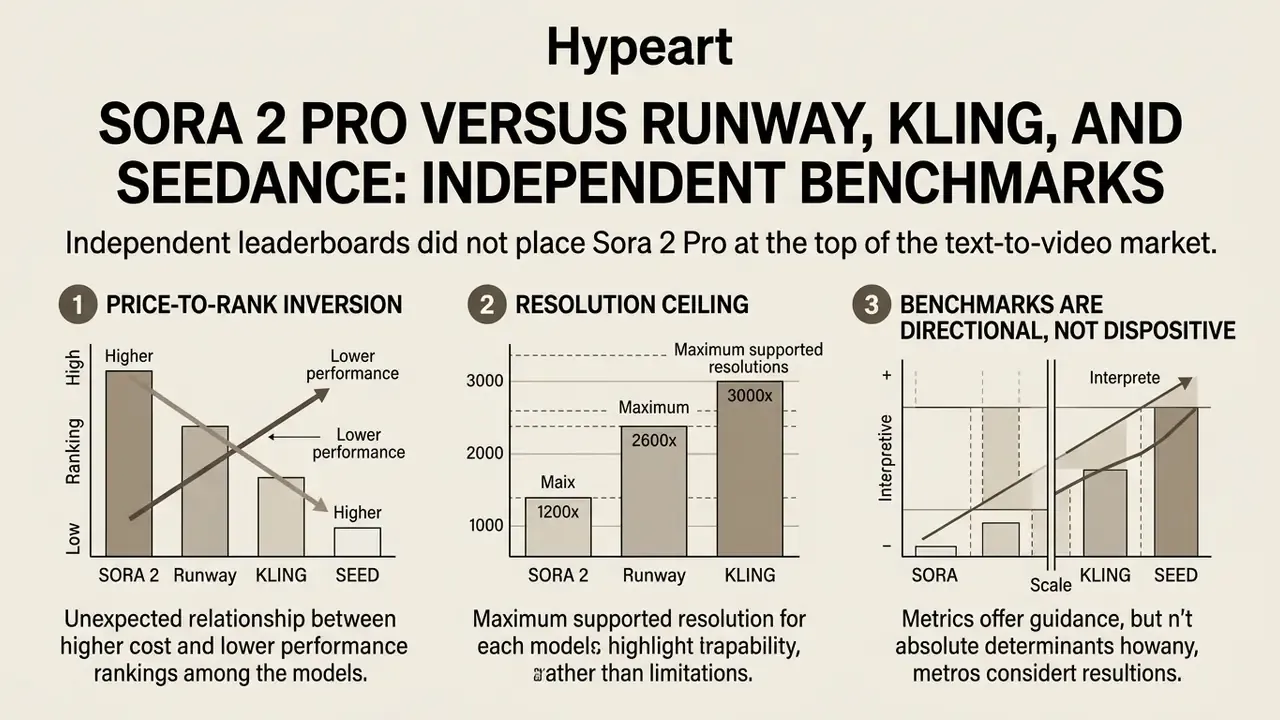
In two sentences: Independent leaderboards did not place Sora 2 Pro at the top of the text-to-video market. Any vendor-selection memo that treats Sora as the default leader misstates the competitive picture.
«Artificial Analysis have placed Sora 2 pro lower than other text-to-video AI generators in the market on its leaderboard. Other models, such as Seedance 2.0 from ByteDance, Runway 4.5 from Runway, and Kling 3.0 from KlingAI, have ranked higher than Sora 2.0.»
| Model / generator | Artificial Analysis rank | Motion physics | Max resolution | Indicative price (10 sec) |
|---|---|---|---|---|
| ByteDance Seedance 2.0 | #1 | High | 4K | ~$3.50 |
| Runway Gen-4.5 | #2 | Superior | 1080p | ~$5.00 |
| Kling AI 3.0 | #3 | Medium to high | 1080p | ~$2.80 |
| OpenAI Sora 2 Pro | #4 | High, with documented caveats | 1080p | $7.00 |
Ranking reflects the Artificial Analysis leaderboard as reported in 2026. Resolution and price columns are indicative comparison figures compiled from vendor-facing material for orientation only and require verification against current vendor pricing pages before procurement. Only the Sora 2 Pro figure of $7.00 per 10 seconds is confirmed against OpenAI's official rate card.
Three implications for selection:
- Price-to-rank inversion.
- Sora 2 Pro carried the highest indicative per-clip cost while ranking fourth, which is part of the economic context for its discontinuation.
- Resolution ceiling.
- Sora 2 Pro topped out at 1080p while at least one higher-ranked competitor advertised 4K, a real constraint for broadcast and out-of-home deliverables.
- Benchmarks are directional, not dispositive.
- Leaderboard position aggregates preference judgements. A regulated buyer should still run a task-specific evaluation on its own prompt set, with the four-point audit applied to every output.
FAQ: safe use of generative video in regulated organizations
Does using Sora-class APIs mean our prompts and reference images train the vendor's model?
Treat every prompt and uploaded image as a data transfer to a third party until contractual terms say otherwise. Confirm in writing whether inputs are retained, for how long, and whether they may be used for model improvement. Where zero-retention terms cannot be confirmed, restrict inputs to already-public assets and prohibit customer data, unreleased product information, and material covered by banking secrecy. Terms vary by product surface and contract tier, so verify against current vendor documentation rather than relying on secondary summaries.
Who owns the output, and can we copyright it?
US Copyright Office guidance indicates that more-than-de-minimis AI-generated material should be excluded from a copyright claim, and human authors must disclaim AI-generated portions at registration. Practically, a fully synthetic asset may be unprotectable, which affects brand-asset strategy. Commercial usage rights to the output are governed separately by vendor terms. This is general information, not legal advice.
What are the limitations of Sora for enterprise use cases?
Physics fidelity, long-horizon consistency, and object permanence are the documented weak points, and the model can invent objects mid-clip. Duration caps at 20 seconds, resolution caps at 1080p, and face uploads are blocked outside the verified likeness path. For regulated use cases the binding limitation is rarely visual anyway. It is the evidence you can produce afterwards.
How do we handle an employee or executive appearing in generated video?
Only through the identity-verified likeness path, with a retained consent artifact specifying permitted usage scope and duration, plus legal and HR sign-off for customer-facing material. Build retroactive takedown capability for every derivative asset, because consent can be withdrawn. Copyright alone does not prevent unauthorized duplication of a person's image or voice; protection rests on publicity rights, contract, and consent documentation.
Does a generative video model belong in our model inventory?
Yes. Third-party status creates no exemption. Register the alias, version, owner, intended use, risk tier, and validation status, and record the vendor's lifecycle risk. Sora's own 2026 shutdown, announced roughly six months before API sunset, is the cleanest available argument for documenting exit procedures at onboarding rather than at end of life.
What controls actually stop Shadow AI in generative video?
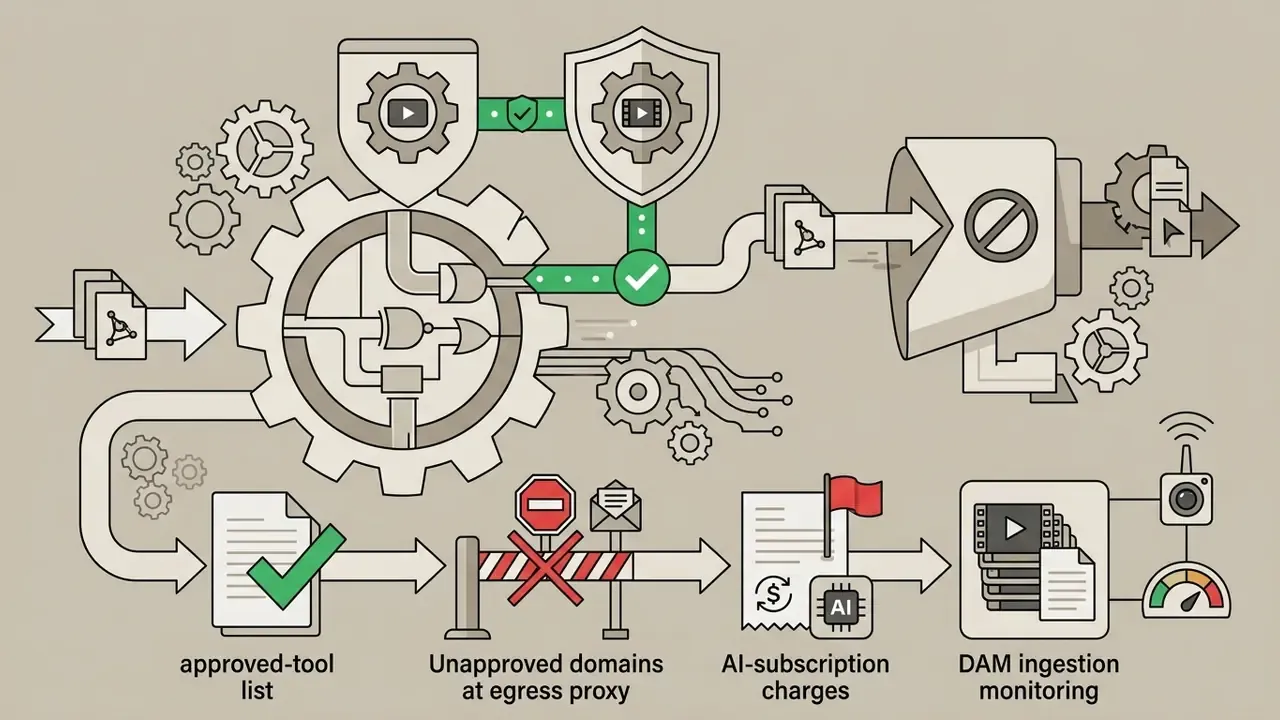
A combination: an approved-tool allowlist, egress filtering of unsanctioned generative-video domains, expense-report flagging of AI subscription charges, DAM ingestion rules that reject assets lacking provenance metadata, and, most effective in practice, a sanctioned internal path fast enough that nobody has an incentive to route around it.
How do we verify a video is AI-generated when we did not create it?
Apply a seven-point pass: watermark traces, on-screen text and numerals, basic physics plausibility, duration and format consistency, camera-movement coherence, geolocation consistency, and independent source corroboration. Supplement with detection tooling, and remember that visible watermarks can be stripped. Invisible provenance layers and C2PA assertions are the durable signals.
What is the minimum audit trail for a published synthetic asset?
Prompt text, model alias, seed, size, seconds, hashes of any input images, character IDs, moderation verdicts, reviewer identity, sign-off timestamp, and the provenance hash of the published file. If an examiner cannot reconstruct the asset from the record, the control has failed.
Is any of this cost model still useful after the API shutdown?
Yes. Per-second billing, iteration ratios, review labor, and risk reserve apply identically to successor APIs. Substituting a new vendor's per-second rate into the TCO formula produces a comparable forecast in minutes, which is the whole point of writing the formula down.
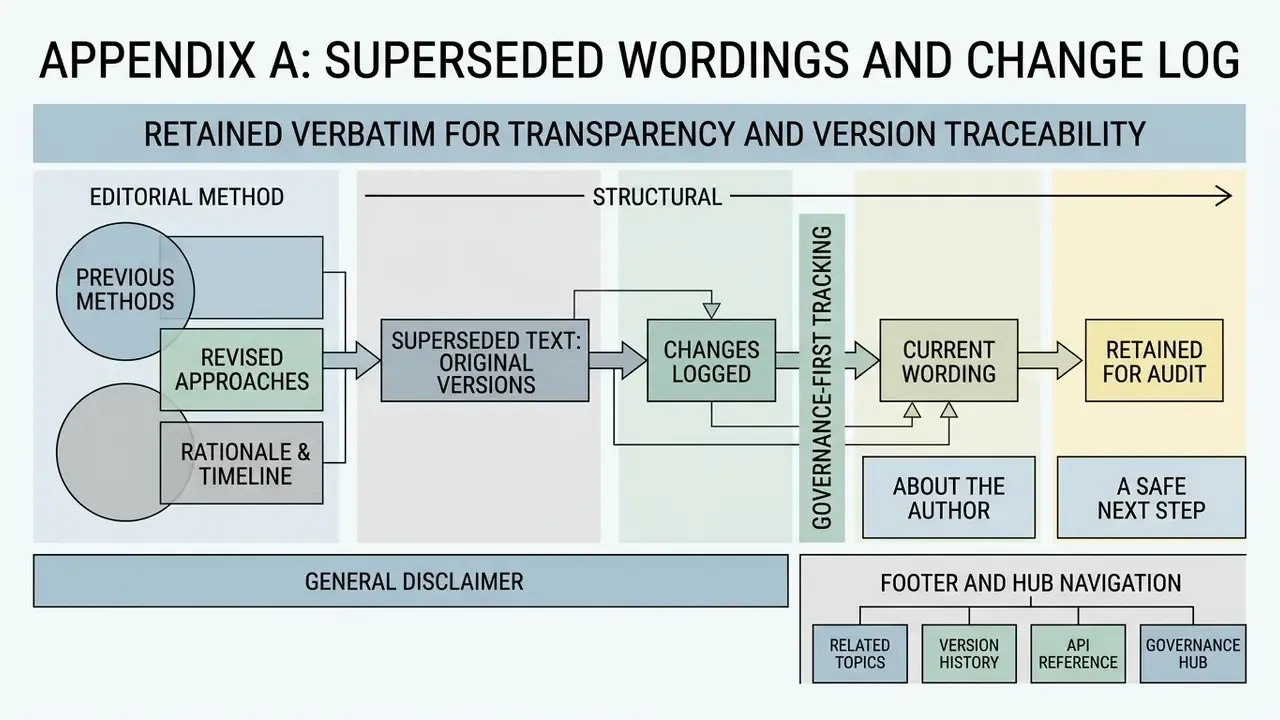
Appendix A: Superseded wordings and change log
Retained verbatim for transparency and version traceability. Each item was revised in the main text for accuracy, sourcing, or navigational compliance.
- Original image-to-video framing (revised in the image-to-video subsection to add Start and End Frame keyframing)"The openai sora image to video capability allows teams to supply a static ai image or reference visual as the initial frame anchor for video synthesis."
- Original ChatGPT Plus wording (revised in the access subsection for precision on where the 480p cap applied)"ChatGPT Plus ($20/month) provided standard access capped at 480p/720p resolution, 10-second maximum clip lengths, and single concurrent generation with watermarked exports."
- Original WorldSimBench reference (replaced in the motion realism subsection with a sourced quotation)"However, empirical studies such as WorldSimBench demonstrate that while the system handles simple linear motion effectively, it exhibits limitations in complex real world physics, multi-object collisions, and long-horizon scene consistency."
- Original fintech case wording (reframed in the verification subsection as an unverified hypothesis)"A financial technology media team evaluated generative video workflows across 120 promotional campaign assets. By implementing structured prompt templates and automated physics artifact screening prior to publication, the team reduced compliance review cycles by 40% while preventing visual brand distortions across social media channels."
- Original enterprise automation case wording (reframed in the API justification subsection as an unverified hypothesis)"An enterprise automation group needed to produce localized product demo videos across multiple regional markets. By implementing asynchronous batch processing via the OpenAI API, the group automated video creation from structured product catalog data, scaling production to 500 weekly clips while maintaining centralized brand governance."
- Non-compliant anchors replaced with descriptive anchors"browse the hub" and "explore the hub" appeared in the prompting, API justification, and pricing sections, plus a duplicated pair in the footer. Each was replaced with a topic-bearing anchor pointing to the same destination.
- Structural changethe limitations and risk-control section, originally positioned last, now precedes API integration and cost modeling, because validation is a prerequisite to integration design for risk and governance audiences.
- Navigational changethe anchor-linked table of contents was replaced with a short reading-path orientation section, since anchor indexes added no decision value for this audience.