«No evidence, no autonomy. An ai bio generator functions as an input-driven drafting tool, not an independent decision-maker and not a verified author.» Marcus Hale, AI Governance and Model Risk Lead. Author note: Marcus Hale writes about AI governance and model risk for this publication.
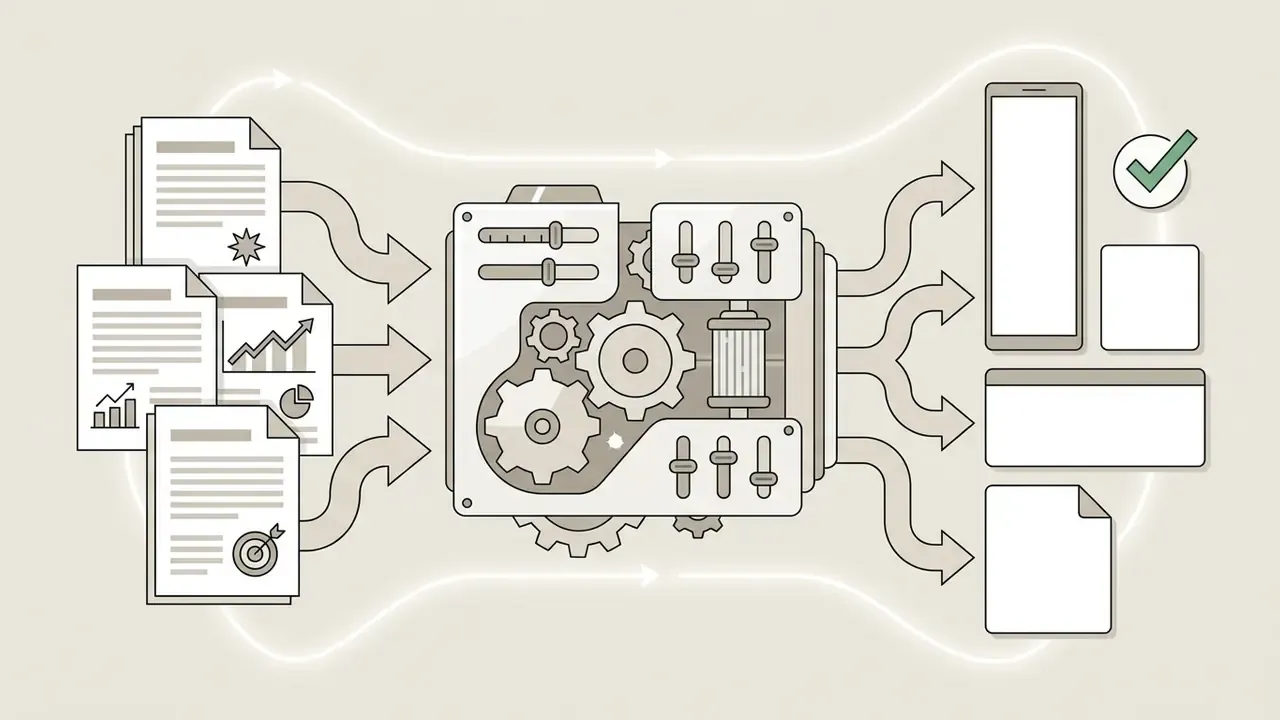
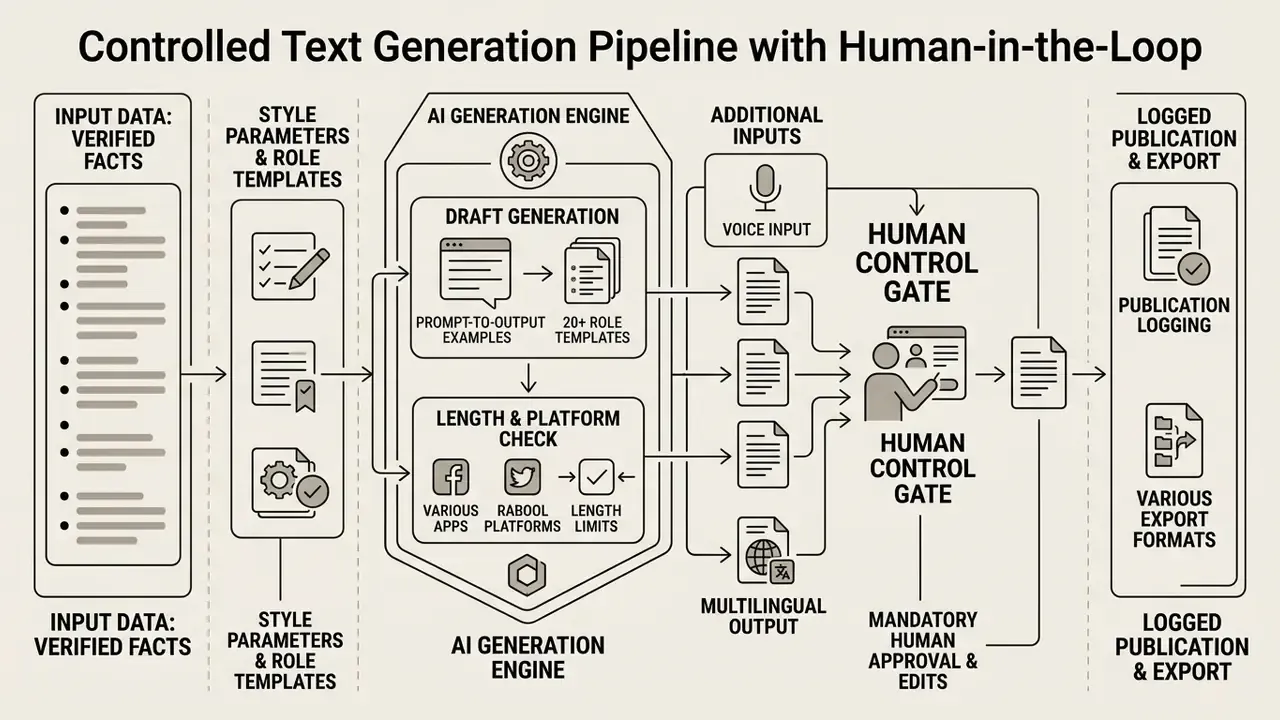
An ai bio generator is an automated text-generation tool that turns structured facts about a person or a company into a cohesive summary. These systems apply controlled language models to shape personal background, career milestones, and key achievements into targeted profile copy. Risk and compliance leaders treat the result the way they treat any assisted-text artifact: as an unverified draft that needs a named reviewer. For teams that also generate visual assets alongside profile text, it helps to compare options before standardizing on a single vendor.
Simple tool. Non-trivial governance.
Executive Summary: What Matters Before You Publish
Who This Guide Is For
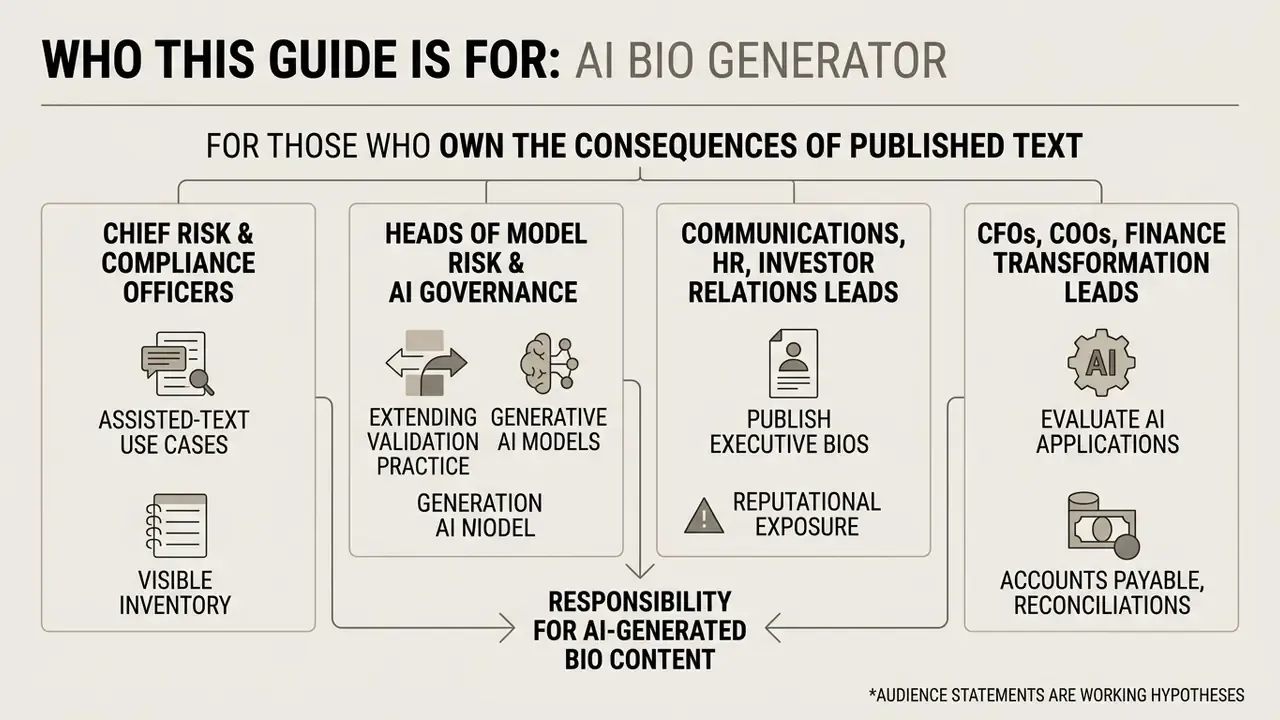
This page is written for people who own the consequences of published text, not only its production.
- Chief risk and compliance officers who need assisted-text use cases visible inside an existing inventory rather than scattered across marketing folders.
- Heads of model risk and AI governance extending validation practice from credit and AML models to generative drafting tools.
- Communications, HR, and investor relations leads who publish executive bios and carry reputational exposure when a date or an award is wrong.
- CFOs, COOs, and finance transformation leads who already evaluate AI for accounts payable, reconciliations, and financial close, and who want the same control logic applied to public-facing copy.
One caveat, stated openly: audience statements above are working hypotheses. They stay hypotheses until analytics, interviews, CRM data, or verified customer research confirm them.
What Is an AI Bio Generator and What Is It For?
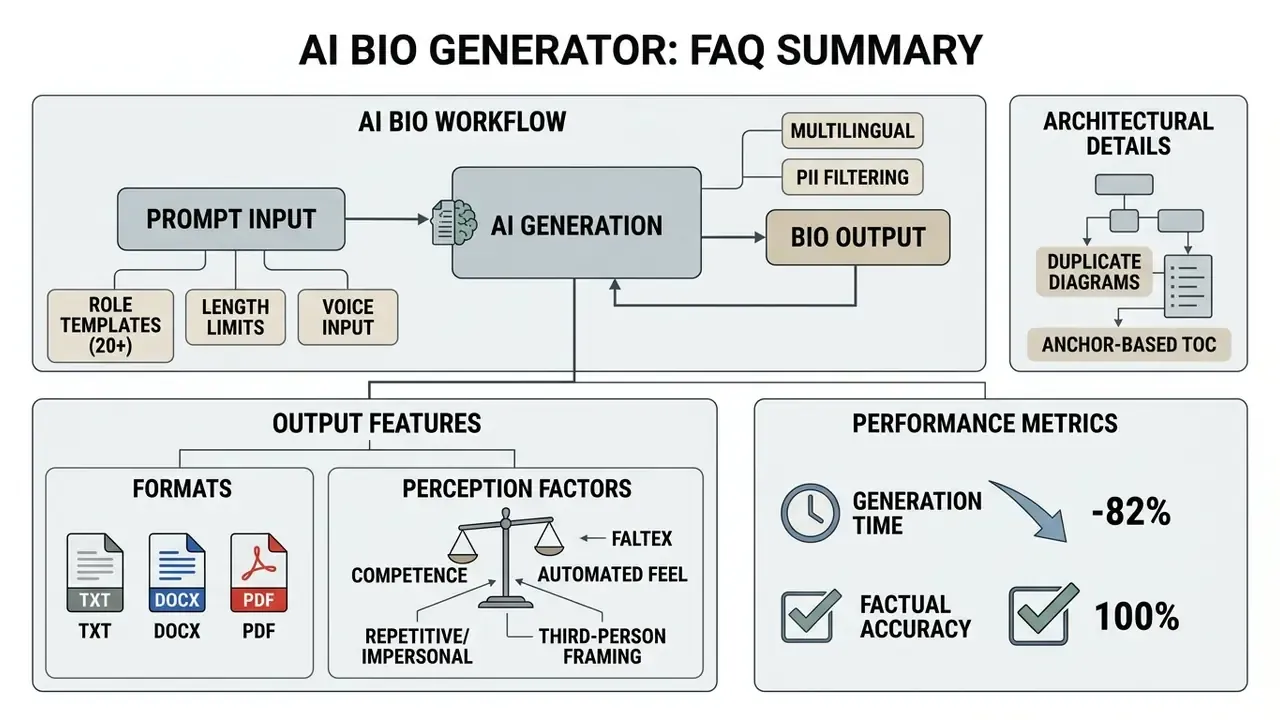
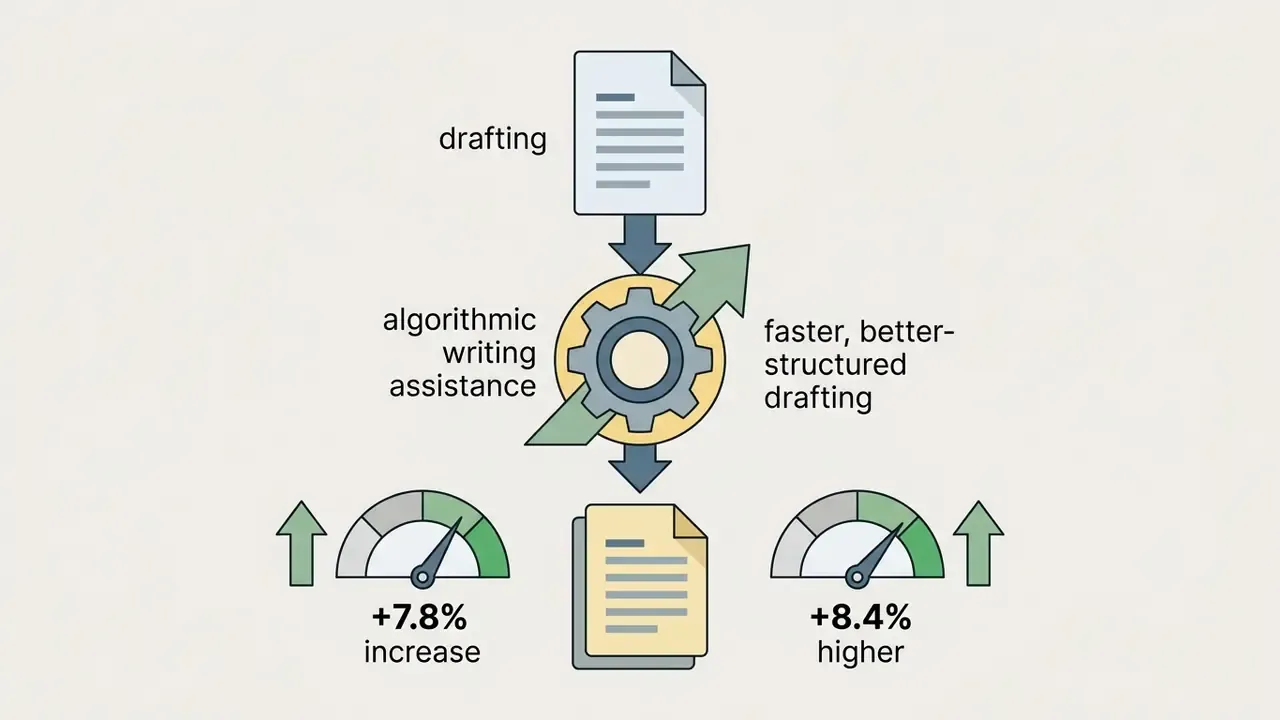
An ai bio generator processes structured inputs, such as job titles, core achievements, and target platforms, to produce standardized profile summaries. Financial institutions, technology companies, and independent consultants use an ai bio creator to accelerate first-draft writing for team directories, conference rosters, and corporate disclosures. An ai generator for bio tasks reduces drafting latency while keeping corporate messaging consistent across external touchpoints.
«Algorithmic writing assistance on professional profiles raised the probability of being hired by roughly 8%, without reducing employer satisfaction.»
When establishing baseline authority across enterprise media hubs, governance teams frequently review the standardized terminology hub to align classification rules before rollout. Classification first, generation second. That order saves rework later.
How a Bio Differs from a Biography and an About Me Section
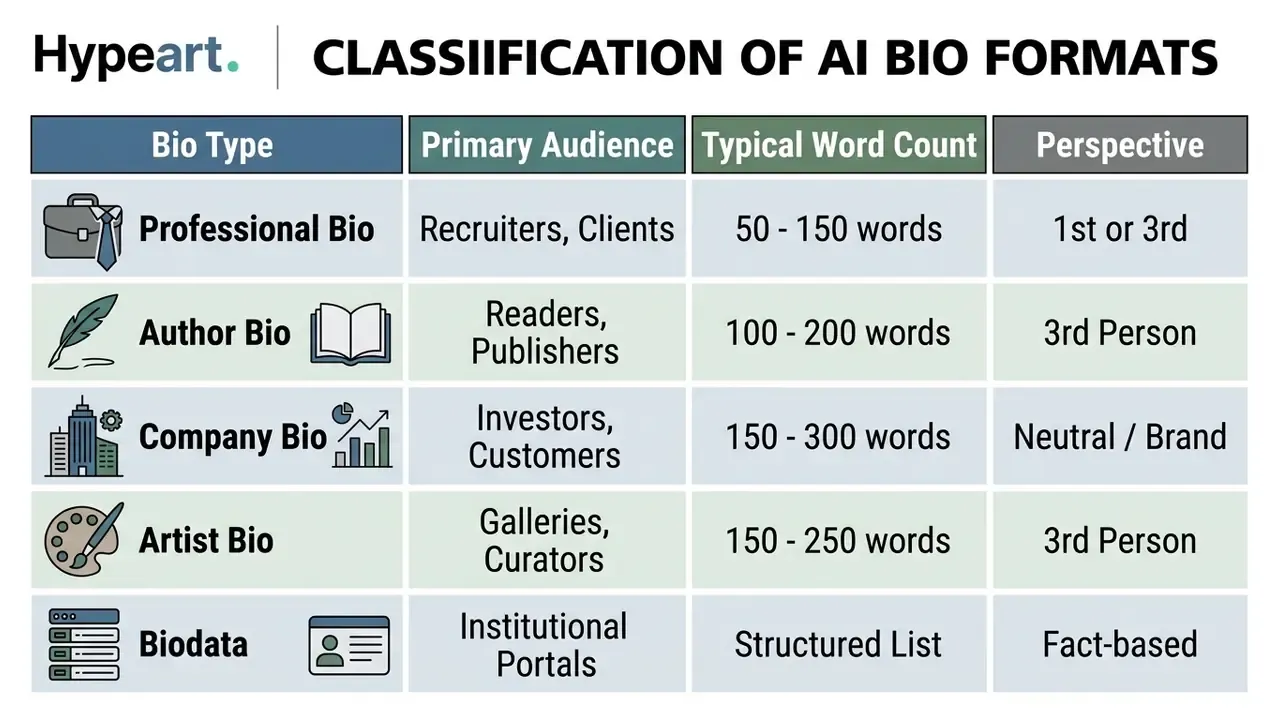
A bio, a full biography, and an "About Me" section serve distinct operational purposes across corporate and personal channels. A short bio runs 40 to 75 words and stays focused on current roles, high-impact metrics, and an immediate value proposition. Portfolio-length biographies typically run 100 to 150 words. A complete corporate or speaker biography spans 200 to 300 words and details chronological career trajectory, academic credentials, and institutional governance background. Official government and defense biography standards cap final documents at roughly 250 words or two printed pages, with acronyms and degrees spelled out on first use.
An "About Me" section uses conversational, first-person phrasing built for personal websites and direct audience engagement. Organizations configuring digital persona workflows often pair it with an AI headshot generator so text summaries and visual representation stay consistent. Choosing the right format prevents reader overload and keeps the profile aligned with platform expectations.
| Format | Typical length | Perspective | Primary venue |
|---|---|---|---|
| Short bio | 40–75 words | 1st or 3rd | Social profiles, panels, bylines |
| Portfolio biography | 100–150 words | 3rd | Portfolio pages, media kits |
| Corporate / speaker biography | 200–300 words | 3rd | Company sites, conference programs |
| About Me | 120–400 words | 1st | Personal websites, LinkedIn About |
| Email signature bio | 15–60 words | Neutral / no pronouns | Outbound correspondence |
What Data AI Uses to Create a Bio
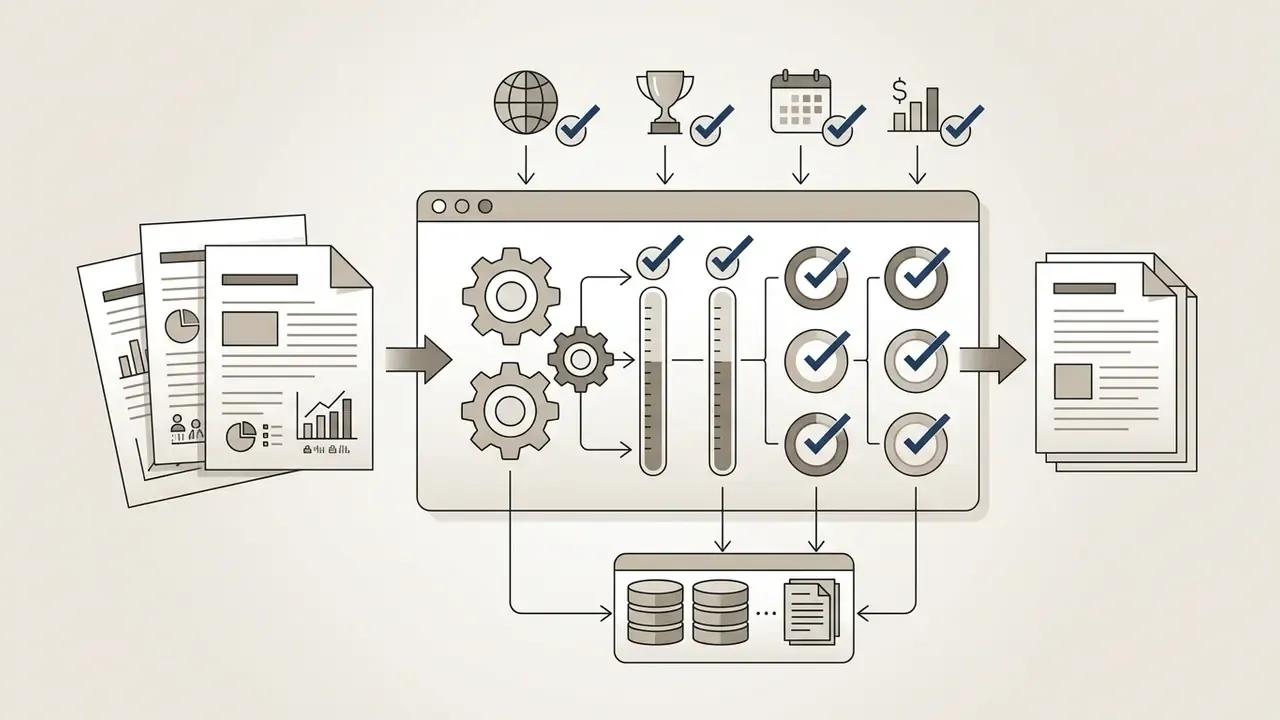
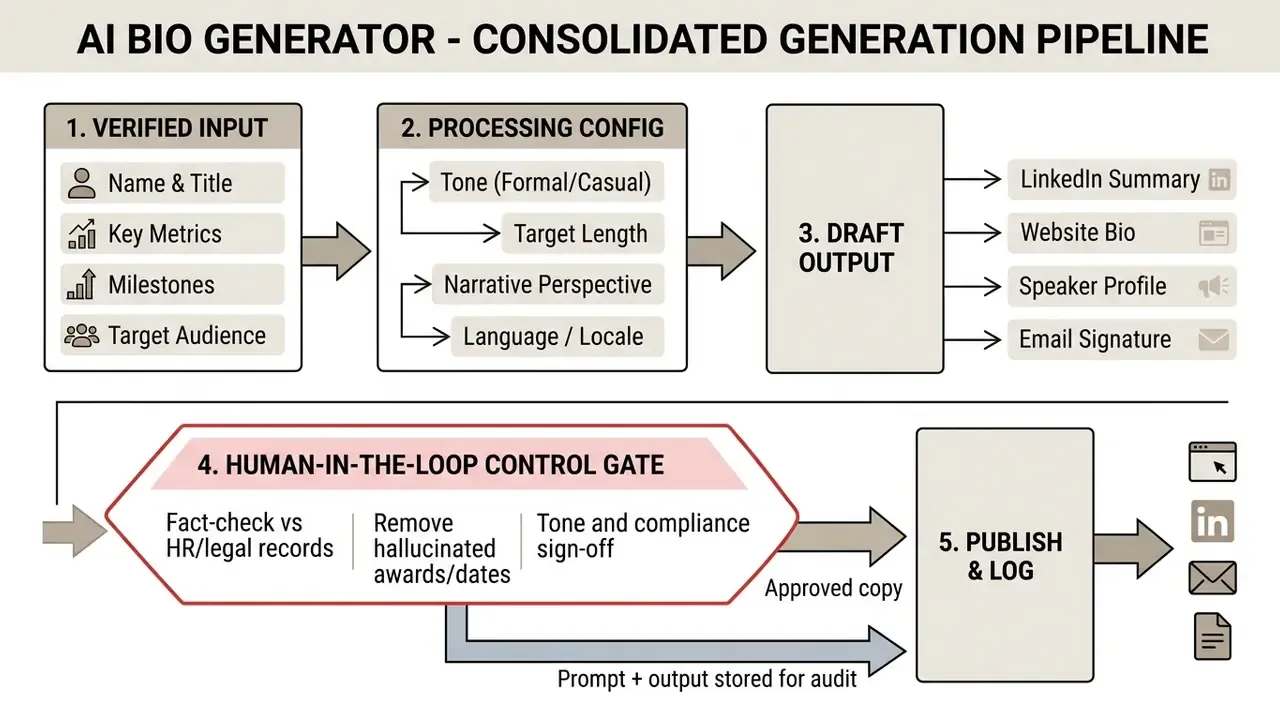
An ai generator bio system relies on structured prompts to hold factual accuracy and limit invented claims. The model needs verified parameters: full legal or professional name, current organizational title, quantifiable achievements, and an explicit target audience definition. Structured intake templates used by public institutions expand that further into education and training, prior employers, affiliations, publications, and awards. Empirical research shows that specific context modules improve output fidelity, sometimes dramatically.
According to the long-form factuality study D-FActScore (arXiv, 2024):
«Language models frequently mix facts about different people when generating biographies from minimal prompts.»
Including explicit career milestones and verified credentials keeps the model from pulling false external associations. Updated: the risk is now quantified. Decomposed factuality scoring lands roughly 10% below standard FActScore precisely because of entity-merging errors on ambiguous names.
What Types of Bios You Can Create with AI
Organizations and professionals use an ai bio generator to produce targeted text formats for specialized commercial environments. Those formats range from corporate executive summaries and creative portfolio briefs to structured biographical records, including an ai biodata generator output for institutional portals. Specialized prompt parameters keep the result aligned with industry-specific compliance expectations.
Specialized Bio Templates Supported by AI Engines
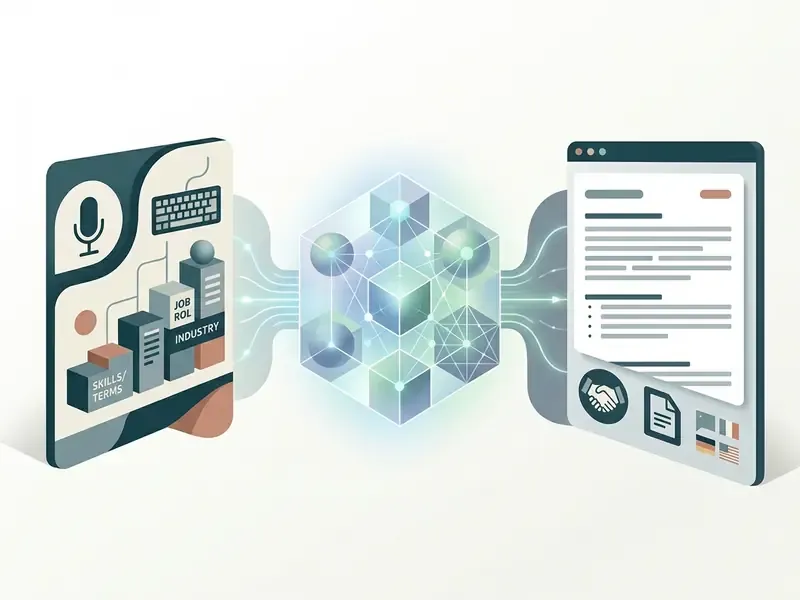
Beyond the five core formats, modern engines ship role-specific prompt presets. Each preset changes which evidence the model foregrounds:
- Real Estate Agent Bio local market sales volume, license numbers, transaction counts, and client trust metrics.
- Software Engineer / Tech Bio tech stack (Python, AWS, React, Kubernetes), open-source contributions, and system architecture wins.
- Healthcare & Psychologist Bio clinical credentials, board certifications, modalities practiced, and patient-care philosophy.
- Student & Recent Graduate Bio academic projects, internships, and coursework reframed as entry-level value propositions.
- Military Transition Bio defense leadership, clearance level where disclosable, and tactical operations translated into corporate management language.
- HR & Human Resources Bio headcount managed, retention improvements, and employment-law certifications.
- Executive Assistant Bio calendar and travel complexity, executive tier supported, and confidentiality track record.
- Financial Advisor Bio AUM ranges, licensing (Series designations), and fiduciary positioning.
- Accountant / Audit Bio CPA status, audit scope handled, and regulatory frameworks applied.
- Recruiter Bio placement volume, niche verticals, and time-to-fill benchmarks.
- Teacher, Instructor & Educator Bio subjects taught, curriculum design credits, and pedagogical approach.
- Speaker Bio signature topics, notable stages, and audience outcomes, held to 75–150 words for event programs.
- Freelancer & Consultant Bio service lines, engagement models, and named client proof points.
- Web Developer & Designer Bio portfolio highlights, performance metrics, and accessibility standards met.
- Chef & Hospitality Bio cuisine specialisation, venue history, and awards.
- Translator & Localisation Bio language pairs, subject-matter domains, and certification bodies.
- Social Worker & Non-Profit Bio caseload scope, licensure, and community impact figures.
- Entrepreneur & Founder Bio ventures launched, funding stages, and differentiation thesis.
- Trades & Services Bio (builder, painter, cleaning services) licensing, insurance coverage, service radius, and warranty terms.
- Corporate Biodata Sheet structured, fact-only listing for institutional portals and regulatory filings.
- Long-form personal narrative an ai autobiography generator preset stitches life-stage milestones into first-person chronology for memoirs, alumni features, and legacy pages.
Professional Bio for Work, Career, and LinkedIn
A professional bio focuses on career velocity, domain expertise, and measurable business performance. Professionals using an ai bio generator for work can produce executive summaries tailored to LinkedIn headers, internal directories, and client pitch decks. The system organizes the narrative around current leadership responsibility, prior institutional impact, and technical qualification. LinkedIn's own guidance recommends stating your value explicitly, embedding relevant keywords, and writing the About section in first person.
In enterprise deployments, teams often pair text generation with an AI headshot generator to keep executive rosters visually consistent.
Author Bio and Artist Bio for Publications and Creative Profiles
An ai author bio generator builds concise summaries for book jackets, academic publications, and editorial platforms. Authors using an ai author bio generator free tool can surface published titles, editorial awards, and central thematic focus. Book-jacket variants often compress to 50–100 words, while editorial and magazine bios sit at 100–200 words. The tone balances literary authority with accessible background context.
Similarly, an ai artist bio generator free system highlights mediums, exhibition history, and creative philosophy. Institutional arts guidance sets artist bios at 150–250 words in third person, covering medium, technique, style, accomplishments, and current projects, with a deliberate selection of best achievements rather than an exhaustive list. Creators running multi-channel campaigns frequently add an AI Facebook post generator to distribute updated bio announcements across social networks.
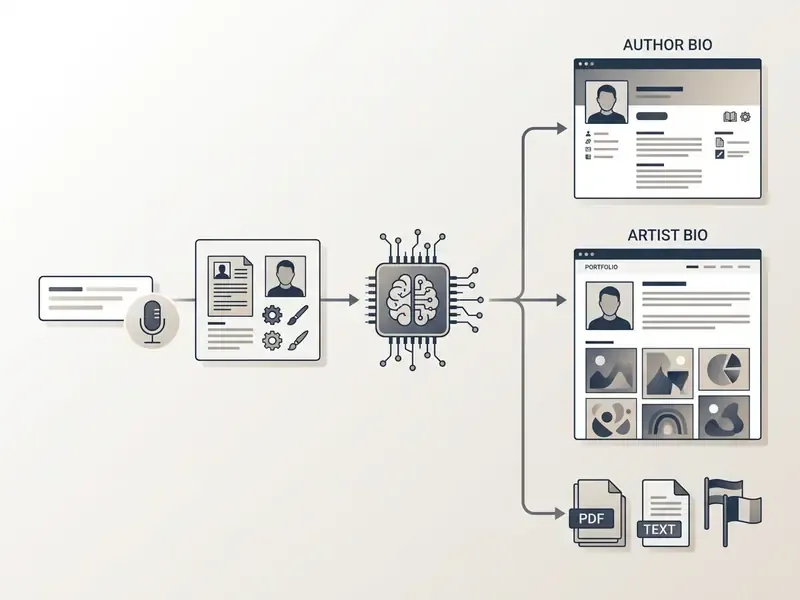
Prompt Input: "Name: Dana Reyes. Author of two nonfiction titles on urban infrastructure. MFA, Columbia. Longform contributor to two national magazines. Winner of a regional journalism award (2024). Tone: literary, authoritative, 3rd person. Length: 110 words."
Generated AI Output:
"Dana Reyes writes about the hidden systems that hold cities together. She is the author of two nonfiction titles on urban infrastructure, tracing how transit, water, and power networks shape everyday civic life. A graduate of Columbia's MFA program, Dana has contributed longform reporting to two national magazines and received a regional journalism award in 2024 for investigative coverage of municipal water contracts. Her current work examines maintenance backlogs in mid-sized American cities. She lives and reports from the Midwest."
Reviewer note: confirm award year and issuing body; confirm publication titles against contracts.
Company Bio and Business Bio for a Company Website
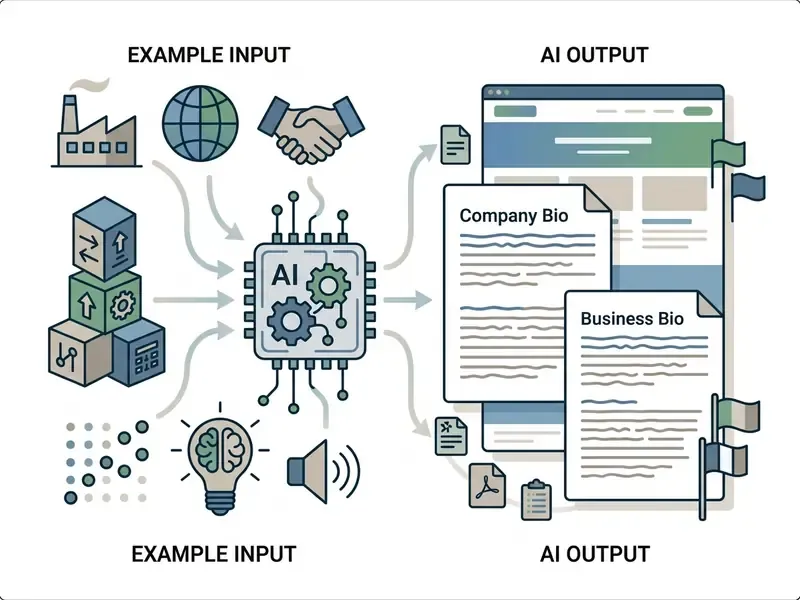
An ai company bio generator turns corporate milestones, mission statements, and product capabilities into formal organizational summaries. Businesses deploy an ai business bio generator to populate website "About" pages, investor relations decks, and procurement questionnaires. The resulting text communicates operational scale, institutional governance, and customer-facing value drivers. Established corporate-website practice recommends three structural blocks: company overview, mission and values, and products or services, each backed by facts rather than adjectives.
When setting commercial terms for marketing visual assets, teams review the AI Media Commercial-Use Hub to confirm legal compliance.
How to Create a Bio in an AI Bio Generator: A Step-by-Step Process
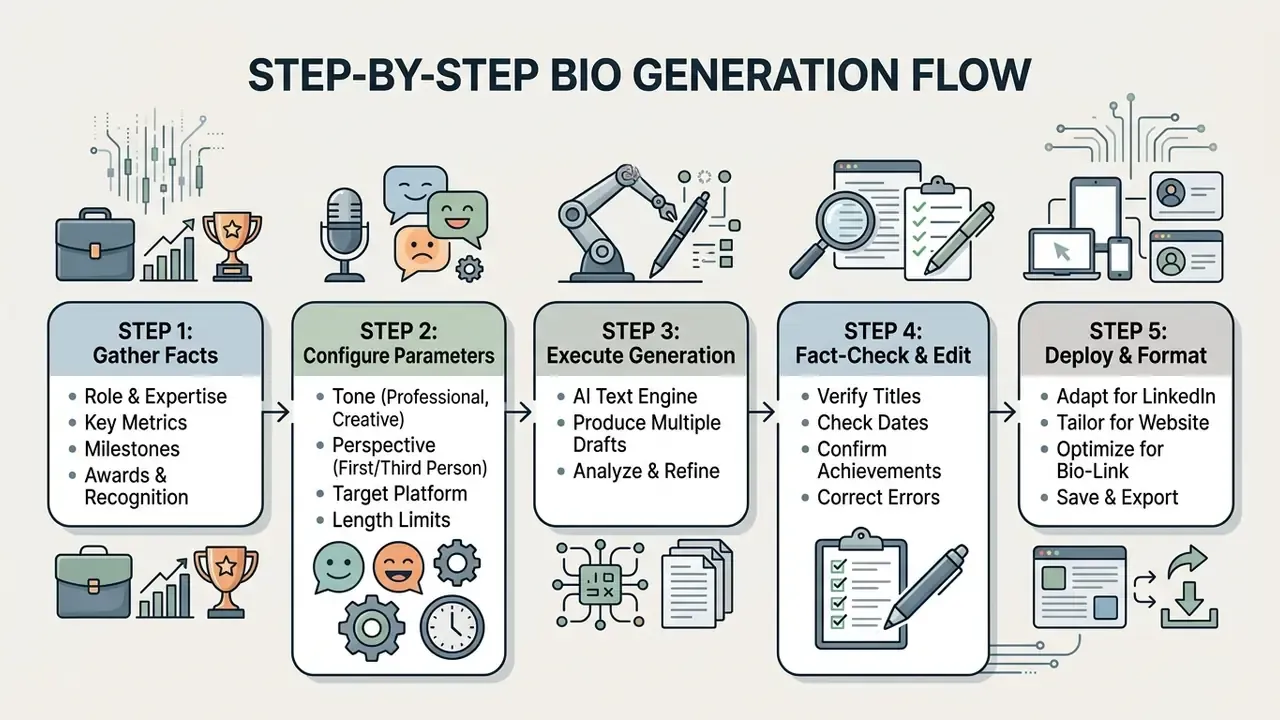
Producing an operational profile takes a structured sequence: prompt preparation, parameter selection, post-generation refinement. An ai create bio workflow avoids generic output by conditioning the model on verified user data. A systematic process keeps the generated profile accurate, compliant, and tuned to its channel. Check the platform constraints table in the next section before you start. Length ceilings should be an input to generation, not a discovery you make afterwards.
Describe Yourself, Your Experience, Achievements, and Key Facts
Output quality from an ai generator for bio depends directly on how specific the initial input is. Supply core factual elements: current professional title, total years of industry experience, key certifications, quantifiable metrics. Research on information-extraction prompting shows that three prompt modules (context, task description, restrictions) outperform loose free-text instructions, and that adding explicit field definitions and format constraints measurably improves extraction accuracy.
Concrete facts stop the model from filling contextual gaps with speculation. Creator-economy and platform-specific profiles follow the same rule: the more verifiable the input, the less the model improvises. When launching promotional campaigns, marketing teams often pair bio updates with an AI Facebook ad generator so messaging stays aligned across ad channels.
Safe Prompt Templates (No PII Required)
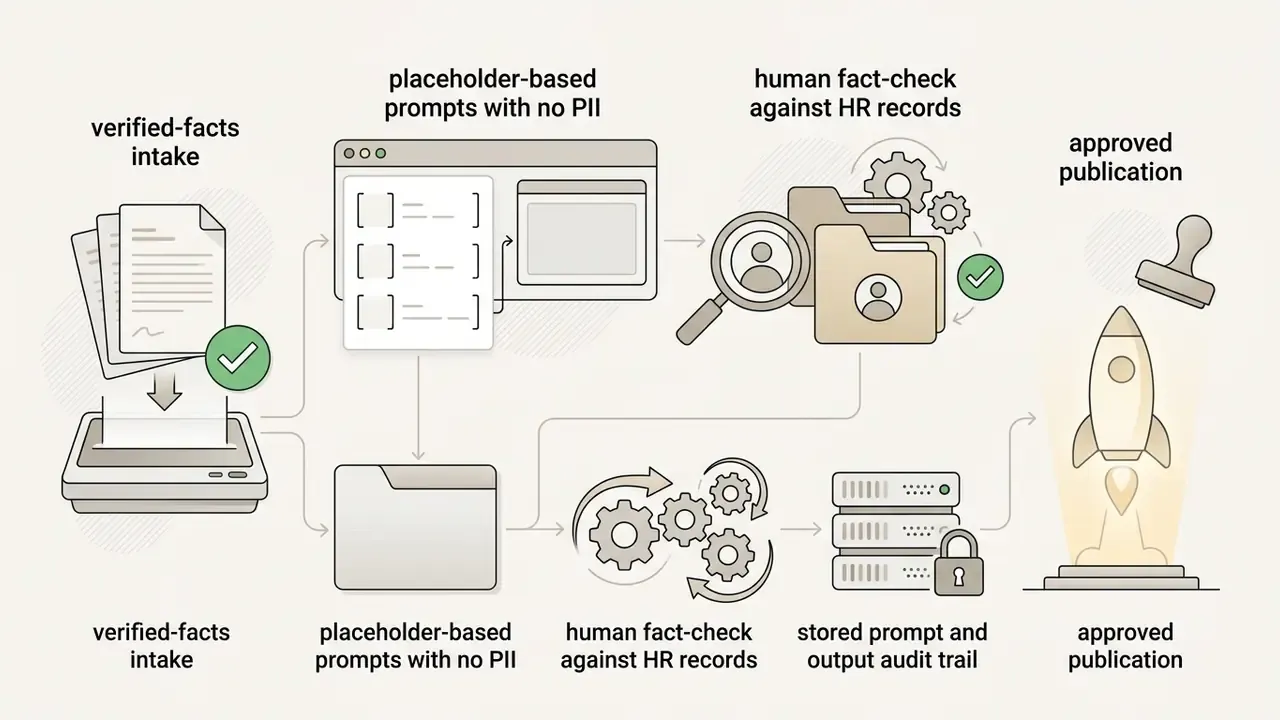
Enterprise deployments should not paste unredacted résumés into third-party endpoints. Placeholder-based prompts produce equivalent structure without exposing identifiable data:
TEMPLATE 1 - EXECUTIVE PROFILE
Role: [TITLE] at [ORG_PLACEHOLDER]
Tenure: [YEARS_EXP] years in [INDUSTRY]
Scope: [TEAM_SIZE] reports, [BUDGET_RANGE] portfolio
Proof points: [METRIC_1], [METRIC_2]
Credentials: [CERT_1], [DEGREE_1]
Audience: [BOARD / INVESTORS / CLIENTS]
Tone: formal, third person. Length: 120 words.
Constraint: use only the facts provided; do not infer awards, dates, or employers.
TEMPLATE 2 - COMPLIANCE / RISK OFFICER PROFILE
Role: [TITLE], [FUNCTION: Model Risk / Compliance / Audit]
Regulatory frameworks handled: [FRAMEWORK_1], [FRAMEWORK_2]
Examination or audit experience: [SCOPE_PLACEHOLDER]
Proof points: [METRIC_1]
Tone: neutral, third person. Length: 100 words.
Constraint: no superlatives; no unverifiable claims; no invented certifications.
TEMPLATE 3 - BOARD MEMBER SHORT BIO
Current role: [TITLE]
Board seats: [COUNT] in [SECTORS]
Signature expertise: [DOMAIN_1], [DOMAIN_2]
Tone: formal, third person. Length: 60 words.
Constraint: output exactly one paragraph; omit any fact not listed above.
Choose Style, Tone, Language, and Narrative Perspective
Tone and perspective settings shape how the audience reads the profile. An ai bio maker typically offers formal executive, approachable conversational, or authoritative expert registers. Perspective should match platform norms: first person ("I am") for personal websites, third person ("Jane Doe is") for corporate sites and event programs. Under the hood these controls are instruction conditioning plus decoding parameters. Instruction text sets tone and goals; sampling settings and maximum output length govern variety and size.
«Language models reliably express Big Five personality profiles, and human raters identify those traits with up to roughly 80% accuracy under blinded authorship.»
Supported File Formats, Voice Input, and Word-Level Editing
Modern ai bio generator online platforms offer flexible input and output pipelines for both enterprise and individual workflows:
- Multi-modal input submit raw text, upload an existing résumé or portfolio file (
PDF,DOCX,TXT), or use voice-based generation to dictate career milestones into a microphone. Voice pipelines rely on speech models similar to those documented in guides to AI voice generators. - Word-level finetuning advanced interfaces let you click a single word or phrase in the draft to adjust tone, swap synonyms, or change length without regenerating the whole document. A targeted alternative to full re-runs, and usually faster.
- Variant management most tools return short, medium, and long versions from one input, plus per-platform variants you can compare side by side and store as revision history.
- Export options completed profiles download as
PDF,DOCX,TXT, or web-readyHTMLandMarkdownfor direct CMS deployment, and print at standard A4 sizing for press kits. Sharing usually runs through email, LinkedIn, X, WhatsApp, or Messenger handoffs. - Cross-device access cloud accounts allow drafting on desktop and review on tablet or phone, with permissioned sharing for recruiters, editors, or compliance reviewers.
For governance purposes, documentation practice recommends that generated artifacts carry retrievable metadata, clear ownership, and versioned pointers, instead of living only in someone's clipboard.
Review, Edit, and Adapt the Finished Text
Post-generation editing is mandatory. It removes repetitive phrasing, unverified claims, and generic buzzwords. Review each draft against verified CVs or corporate records so factual integrity holds. Editing also protects an authentic personal voice while respecting character limits. Practical moves: delete empty adjectives and replace them with verbs or concrete images, insert numbers, dates, and named entities, restructure stiff transitions so the text reads naturally aloud, and add one specific detail only the subject would know.
Teams testing alternative creative workflows can explore the hub for additional technical guidance.
Checklist0 / 8
How to Adjust the Length, Tone, and Style of a Professional Bio
Optimizing a professional bio means balancing brevity against enough context to establish authority. Each digital channel imposes its own length restrictions and stylistic expectations, which dictate text density. Parameter controls inside an ai bio generator make adaptation across publishing environments straightforward.
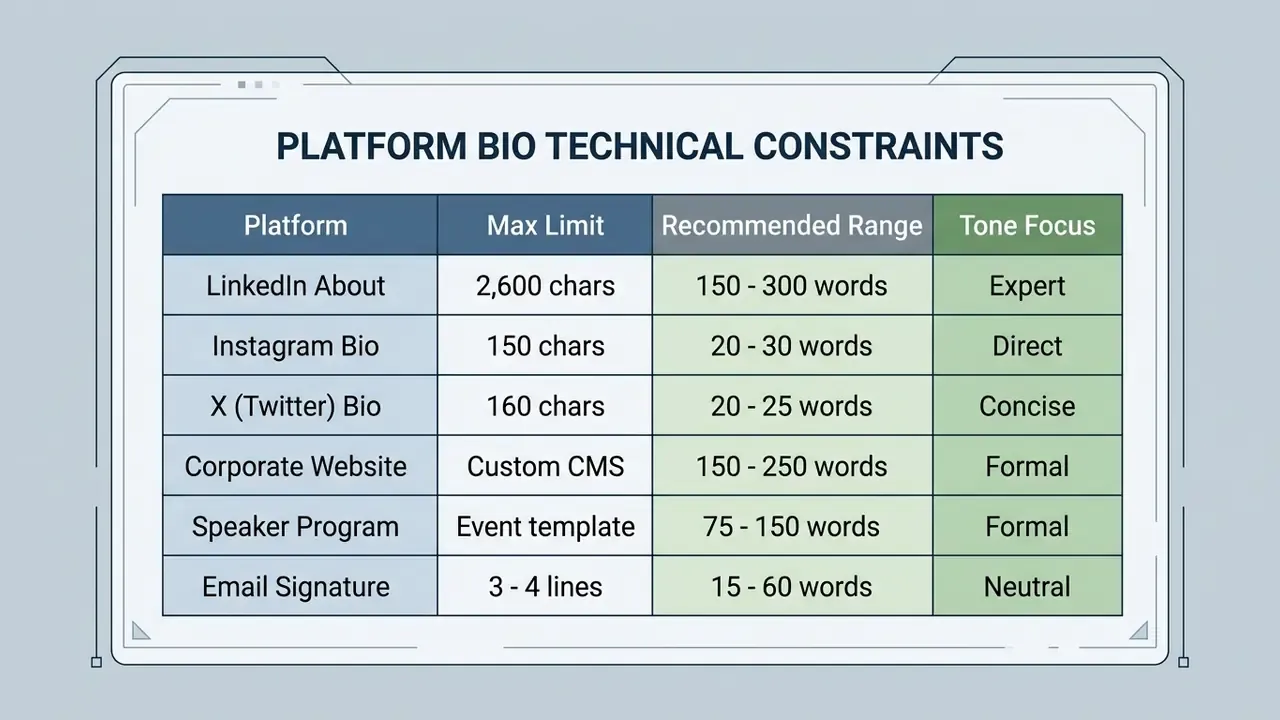
Character limits count spaces, line breaks, punctuation, and emojis. That detail regularly breaks otherwise finished Instagram and X bios. Personal websites impose no platform-wide ceiling; the effective limit is whatever the CMS template and page design allow.
First or Third Person: Which Format to Choose
Choosing between first person ("I lead...") and third person ("Marcus leads...") depends on ownership and publishing context. First-person narrative creates direct engagement, which suits personal blogs, LinkedIn summary sections, and consultation profiles. Third-person narrative creates objective distance and provides the formal structure expected in press releases, conference panels, and official corporate directories. Autobiographical formats use "I/me/my" by definition; biographies and institutional profiles use "he/she/they" plus the subject's name.
Updated (sourced). Experimental narrative research finds first-person framing produces higher immersion and stronger perceived social presence, while third-person framing can raise perceived trust and objectivity through that same distance. Perception heuristics, though, are unreliable:
«Participants identified whether text was written by a human or AI at only 50–52% accuracy, relying on flawed heuristics.»
The same study shows warm, first-person phrasing is more often assumed to be human-written. That assumption does not track actual authorship, so it should never substitute for verification or disclosure.
How to Get a Quality Bio: What to Include and What to Avoid
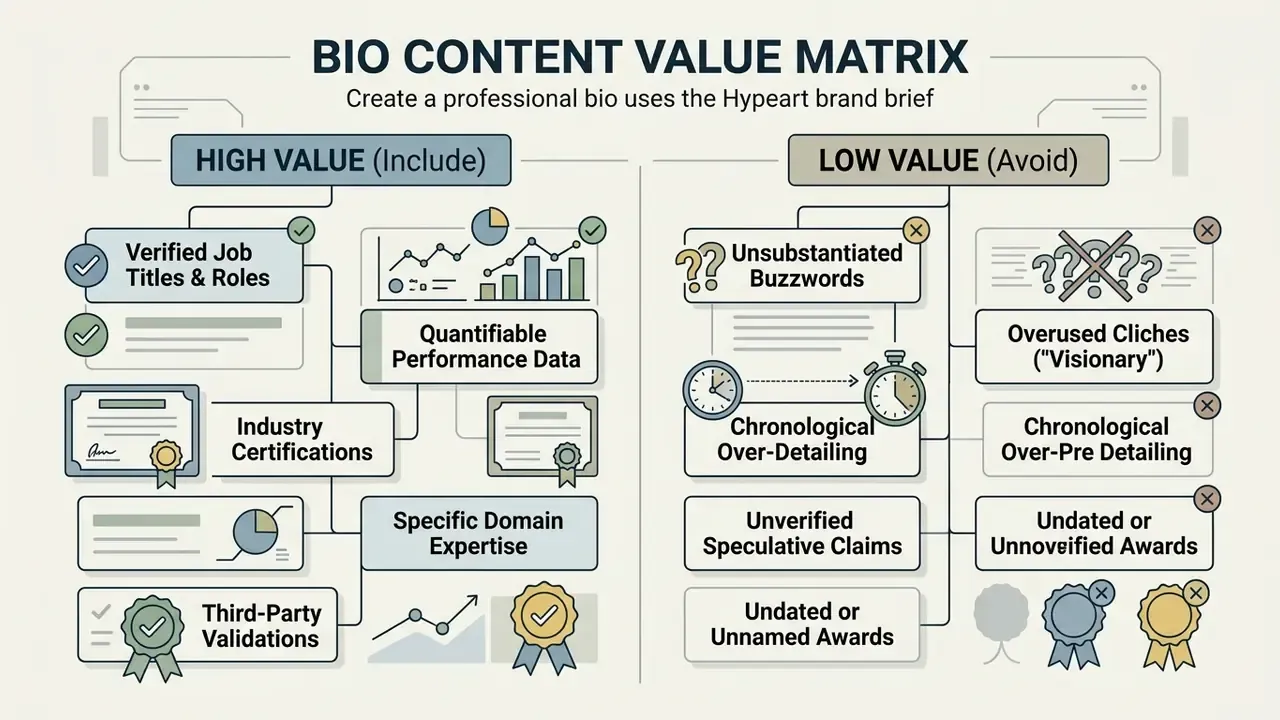
A high-impact profile combines verifiable achievements with clear positioning, and skips vague promotional language. Using an ai generator about me requires explicit control mechanisms so the generated text stays grounded in factual reality. Identify the high-value information and generic text becomes a credible professional asset.
What Facts Make a Bio Convincing and Specific
Specific, verifiable facts build trust fast with readers, investors, and hiring managers. Exact job titles, named certifications, institutional affiliations, and measurable outcomes validate authority. In B2B contexts the strongest signals are third-party validations: security certifications, named credentials, client testimonials, industry awards, precisely because an outsider can check them.
For instance, "managed a $40M risk portfolio" carries far more signal than "experienced financial manager." Metric-anchored phrasing does the same job in marketing bios: "35% more qualified leads in three months" beats "results-driven growth expert." When building team showcases, organizations increasingly standardize both text and imagery through comparisons of visual generation tools for corporate culture assets.
AI Bio Mistakes: Generic Phrases, Inaccurate Facts, and Unsuitable Tone
Common failures in AI-generated bios include hallucinated responsibilities, date drift, off-target word counts, inconsistent tone, and tired buzzwords like "synergistic" or "paradigm-shifting." Structured evaluations of AI-generated biographies flag exactly that cluster: word-count non-compliance, invented dates, and tone or structure variation between runs. Studies of AI-generated self-introduction letters describe output as monotonous in content and awkward in sentence construction. Prose-generation audits in adjacent domains report accidental omissions near 18%, hallucinations near 11.5%, and accidental inclusions near 9.3%.
Updated (sourced). Readers will not catch this for you:
«Participants identified whether text was written by a human or AI at only 50–52% accuracy, relying on flawed heuristics.»
Models may also merge details from different public figures with similar names:
«Models mix data about different people with similar names: D-FActScore lands roughly 10% below standard FActScore because of such errors.»
To weigh software options for marketing workflows, teams can view the guide for tier-by-tier breakdowns.
Where synthetic media accompanies published bios, verification extends to imagery as well. Teams increasingly pair textual fact-checks with AI image detectors before a profile page goes live.
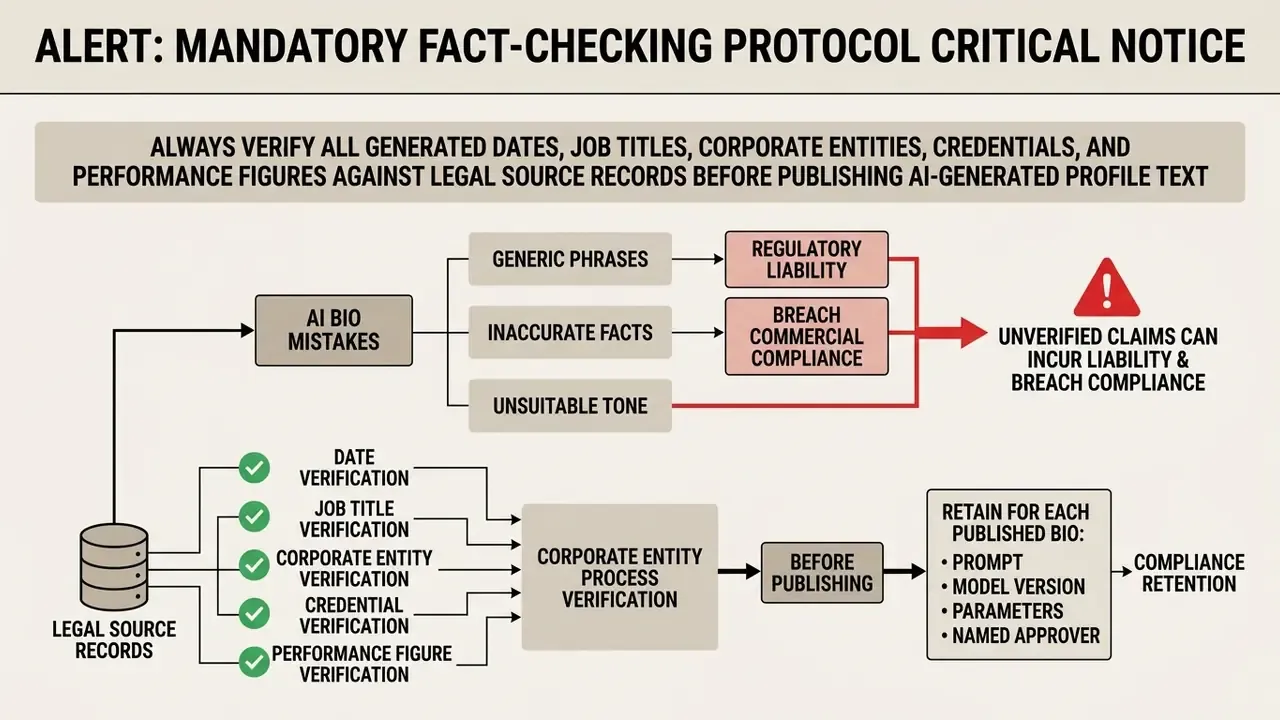
Verification Rules Before Publishing on Behalf of a Specialist or Brand
Free AI Bio Generator, Pricing, Commercial Use, and Shadow AI Risk
Evaluating an ai bio generator free tool means reviewing access limits, data privacy terms, and commercial licensing. Many platforms offer free entry tiers with restricted daily generation caps or token allowances, basic tone options, and plain text output. Some documented free tiers run on explicit daily token budgets rather than an unlimited promise. Paid plans, including an ai bio generator for business tier, unlock expanded multi-language support, custom persona controls, version history, and explicit corporate usage rights. The same pattern holds for an ai about me generator free or ai biography generator free variant: the free tier drafts, the paid tier documents.
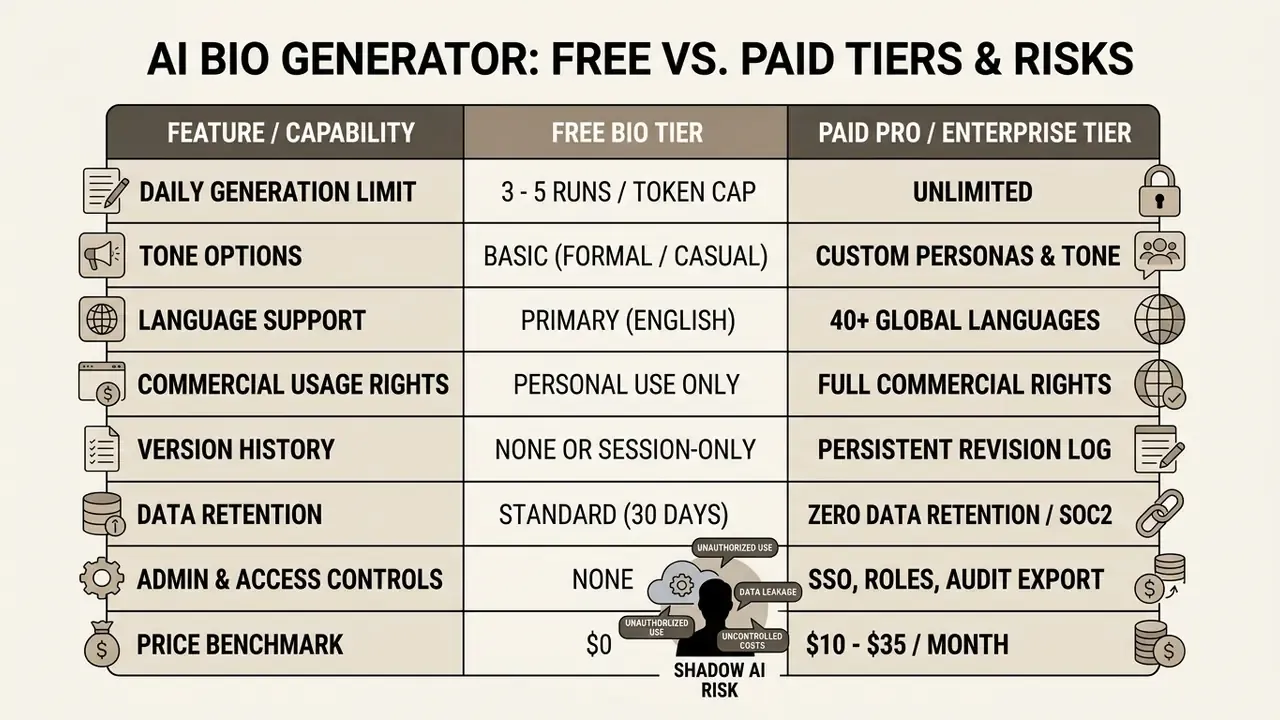
When rolling AI tools across enterprise operations, legal teams monitor AI Litigation and Case Timelines to track regulatory developments on synthetic text, authorship, and copyright ownership. Review platform terms to confirm whether generated text can be used freely in commercial marketing materials. Procurement teams often benchmark those clauses against terms documented for AI image generators for commercial use, since licensing language for text and image outputs frequently diverges inside the same vendor.
Perception economics belong in the commercial calculation too:
«When AI authorship is disclosed, perceived competence of the author drops (M=4.95 vs M=5.47 for humans), although content quality is rated equally.»
In practice that means disclosure should be decided deliberately, at policy level, not improvised profile by profile.
Shadow AI, PII Exposure, and Data Residency
The most under-managed risk in bio generation is not hallucination. It is unmanaged input. When an executive pastes an unreleased résumé, an unannounced promotion, compensation data, or a pre-disclosure board appointment into a consumer-tier generator, the organization has just performed an uncontrolled data export. Nobody logged it. Nobody approved it.
Controls that materially reduce this exposure:
- Placeholder-first prompting. Use
[TITLE],[YEARS_EXP],[METRIC_1]instead of real identifiers, then substitute verified values locally after generation. - Approved-tool list. Publish a short list of sanctioned generators with contractual zero-retention or short-retention terms, and discourage or block the rest at the network layer.
- Retention diligence. Confirm whether prompts, outputs, logs, and backups are retained, for how long, and whether deletion is immediate or deferred. Retention windows differ substantially by vendor.
- Residency and sub-processors. For regulated entities, confirm processing region and named sub-processors before approving any tool for personnel data.
- Pre-disclosure embargo rules. Treat unannounced organizational changes as material non-public information. They do not belong in third-party prompts.
- Training-data opt-out. Prefer tiers that contractually exclude customer inputs from model training.
- BYOK and vendor independence. Where available, bring-your-own-key or model-agnostic deployment reduces lock-in and keeps inference inside contracted infrastructure.
One adjacent exposure deserves naming, because profile pages rarely ship as text alone. Synthetic imagery tools appear in the same workflow: an ai face generator, an ai face generator from photo, an ai face swap utility, or an ai family photo tool used for internal culture pages. Those tools ingest biometric-adjacent data, so they need the same approved-tool list, retention diligence, and consent documentation as text generators. Different medium, identical control question: who authorized the upload, and where does it live now?
Governance Integration: Audit Trail, Versioning, and Model Risk Registers
For institutions under model risk oversight, bio generation should be documented like any other assisted-text process:
- Register the use casein the AI or model inventory with owner, purpose, and risk tier. Even for low-risk drafting, presence in the register demonstrates coverage.
- Store prompt lineage.Retain prompt text, parameter settings, model and version identifiers, and timestamps alongside the published output.
- Version the artifact.Documentation practice treats artifacts as iterative across the lifecycle, so each approved bio revision should carry its own identifier, approver, and effective date.
- Log the control gate.Record who performed the factual verification and against which source system: HRIS, licensing registry, contract repository.
- Test instruction adequacy.Risk-management frameworks call for testing whether user instructions are sufficient. Sample prompts periodically to confirm required fields are actually being supplied.
- Escalate defects.Track hallucination incidents (invented awards, wrong dates, merged identities) as issues with root cause and remediation, not as one-off typos.
Cost modelling for enterprise rollout should include the price of these controls, so review time, storage, and approval workflow, not only licence fees. Teams sizing that overhead can open the hub and start from the standard templates.
Limitations and Open Questions
Honest caveats, because the evidence base is uneven. The hiring and wage effects reported by Wiles and colleagues come from an online labour marketplace, not from executive hiring inside regulated banks, so transfer is plausible but unproven. Factuality scores such as D-FActScore measure biography generation on public figures, which is a harder entity-disambiguation problem than drafting from supplied facts. Disclosure research measures perceived competence in controlled experiments, and long-run market reaction to routine AI disclosure remains open.
Vendor claims about zero retention are also difficult to verify without contract review and, ideally, third-party attestation. Treat marketing copy as a hypothesis. Treat the SOC 2 report as evidence.
Where to Use Your Ready AI Bio
A completed profile works as a core communication asset across digital and offline touchpoints. Organizations deploy an ai bio generator for website integration to keep leadership pages and author attribution boxes standardized. Picking the right distribution channel maximizes professional reach and brand consistency.
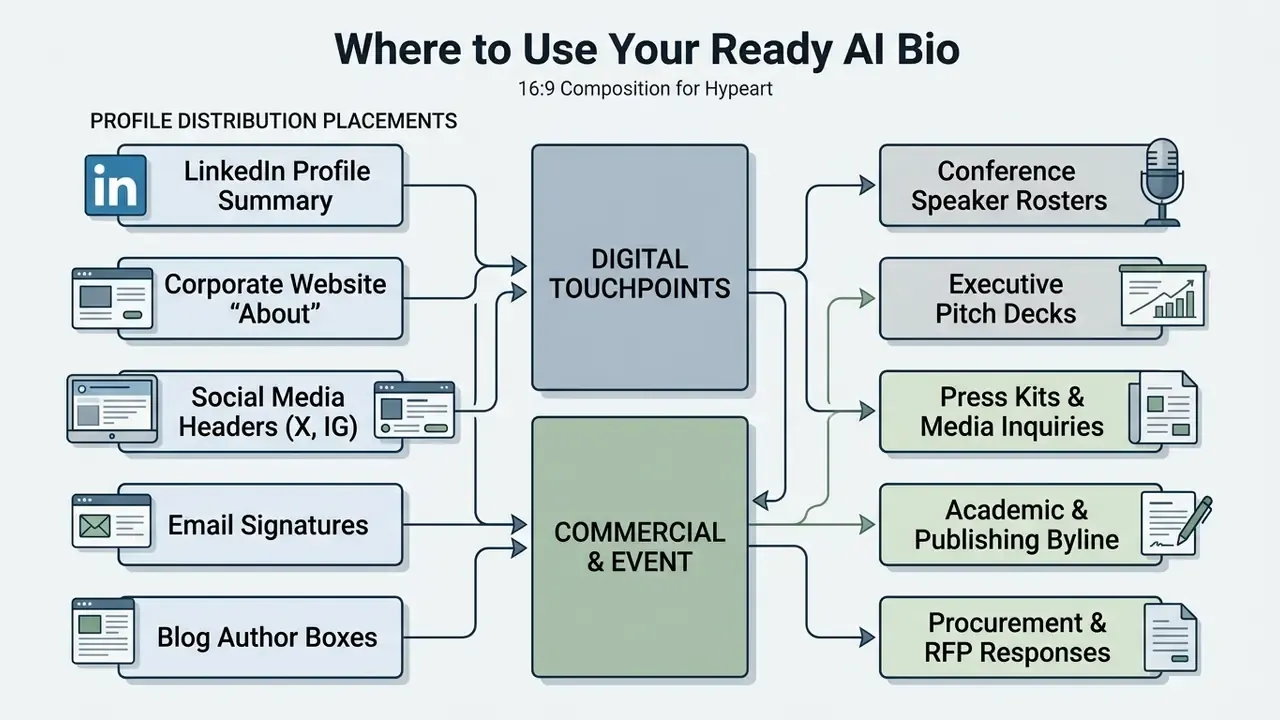
Channel-length discipline matters. Website About pages support longer first-person narratives of roughly 150–400 words, speaker programmes expect 75–150 words in formal third person, LinkedIn About sections commonly run 130–300 words, and email signatures compress to 30–60 words with name, title, company, and one link.
Bio for Personal Branding, Career, and Client Work
FAQ: Common Questions About AI Bio Generators
Does an AI Bio Generator Support Multiple Languages?
Updated. Yes. Leading ai bio generator engines produce multilingual output across 40+ languages, including English, Spanish, German, French, Italian, Portuguese, Dutch, Polish, Swedish, Russian, Mandarin, Japanese, Korean, Hindi, Arabic, Turkish, Vietnamese, Thai, Indonesian, and Malay. Rather than literal translation, modern models adapt localized professional phrasing, politeness conventions, and regional industry titles so the bio lands in the target market. Research on intralingual cultural adaptation evaluates exactly this trade-off across correctness, localization, and offensiveness, and finds that culture-specific references need replacement rather than word-for-word transfer. Native human review is still recommended for phrasing nuance, honorifics, and title equivalence.
Can You Save, Download, or Share Your Bio?
Most ai biography generator free tools let users copy generated text to the clipboard, export formatted drafts as PDF, DOCX, TXT, HTML, or Markdown, and share access links. Enterprise platforms add persistent account storage, so teams can save multiple profile versions and keep a historical revision log. Cloud availability keeps profile updates in sync across desktop, tablet, and mobile, with permissioned review for recruiters, editors, or compliance approvers.
Is It Safe to Upload My Résumé or Employee Data?
Not by default. Uploading a résumé transfers personal data, including employment history, education, sometimes contact details and compensation, to a third-party processor. Before uploading, confirm the retention window for prompts and outputs, whether inputs are excluded from model training, the processing region, and the named sub-processors. In regulated environments, prefer placeholder prompting plus an approved-tool list, and treat unannounced personnel changes as material non-public information that should never enter external systems.
Do I Have to Disclose That a Bio Was AI-Generated?
It depends on jurisdiction, publication context, and internal policy. Transparency rules in some jurisdictions require disclosure of AI-generated or AI-manipulated text published on matters of public interest, with machine-readable marking obligations phasing in from 2 August 2026 under EU rules. Independently of law, research shows disclosure lowers perceived author competence even when content quality is judged equal, so the decision should be a documented policy choice rather than an ad-hoc one. This paragraph is informational and not legal advice.
Can AI Invent Awards, Dates, or Employers?
Yes, and it does so fluently, which is the uncomfortable part. Decomposed factuality scoring shows models merge details between similarly named individuals, landing roughly 10% below standard factuality scores on biography tasks, while prose audits in adjacent domains report double-digit rates of omission and hallucination. Treat every award, date, employer, and metric as unverified until matched against a system of record.
How Long Should a Generated Bio Be?
Match the venue. Roughly 20–30 words for character-capped social bios, 40–75 words for short profile copy, 75–150 words for speaker programmes, 100–200 words for author and editorial bios, 150–300 words for LinkedIn About and corporate pages, and up to 250 words or two printed pages for official and executive biographies.
Which Roles and Industries Are Supported?
Practically any role with verifiable evidence: real estate, software engineering, healthcare and psychology, HR, finance and audit, recruiting, education, hospitality, translation, trades and services, military transition, students and recent graduates, executives, board members, and compliance functions. The template only changes which evidence class comes first: licensing, tech stack, clinical credentials, AUM, placements, or command experience.
What Is the Safest First Step for a Regulated Institution?
Start small and reversible. Pick one low-risk use case, such as internal directory bios, register it in the AI inventory, run it through placeholder prompts and a single named reviewer, and keep the prompt and output for ninety days. Measure two things: drafting time saved and defects caught at the gate. Expand only after the second measurement stays stable across a full review cycle.
Appendix A: Revised Statements and Editorial Notes