An AI face generator from photo is a digital synthesis system that uses input images as biometric and structural references to generate new, identity-preserving faces. Unlike text-to-image models that build faces solely from descriptive words, photo-conditioned generators extract latent facial embeddings, 2D keypoints, and 3D facial geometry from an uploaded photo to control the output. The uploaded image is the steering wheel. The prompt, when it exists at all, is just the road.
«In enterprise AI adoption and identity management, synthetic media stops being a visual novelty and becomes a managed operational vector the moment identity preservation, model auditing, and data lineage are formally bounded.»
— Marcus Hale, author.
Reviewed by the Enterprise AI Governance & Safety Team. Last content audit: 2026.
Executive Summary for Risk, Compliance, and Creative Leads
| Question | Short answer |
|---|---|
| What does the tool do? | Extracts a biometric identity embedding from one uploaded photo, then re-renders that identity inside a new scene, style, age band, or lighting setup. No prompt engineering and no model training required. |
| Which technology powers it? | Photo-conditioned latent diffusion with identity encoders (InstantID, FaceStudio, ConsistentID-class architectures) injected into cross-attention layers. |
| How accurate is identity? | Identity retention is measured with cosine similarity of face embeddings (ID-CSim). Production-grade photo-conditioned pipelines hold identity where prompt-only models cannot reproduce a specific person at all. |
| What input is required? | One frontal photo, JPG / PNG / WebP, up to 25 MB, at least 512×512 px across the facial bounding box, head pose within ±5°. |
| Who owns the output? | Under commercial platform terms, the subscriber receives full commercial exploitation rights (royalty-free). Statutory copyright in purely machine-generated pixels remains limited under U.S. guidance. |
| What is the main risk? | Uploaded selfies produce biometric templates that qualify as PII. Template inversion attacks and secondary model training are the two dominant exposure vectors. |
| Free vs. paid? | Free tiers cover evaluation (2–5 daily credits, watermarks, 1K exports). Paid tiers unlock 4K, batch ingestion, zero-data-retention, and commercial licensing. |
This guide moves from mechanics to workflow, then to realism, use cases, pricing tiers, commercial rights, and finally an enterprise audit checklist. Read the checklist last if you are buying, first if you are approving.
What Is an AI Face Generator from Photo?
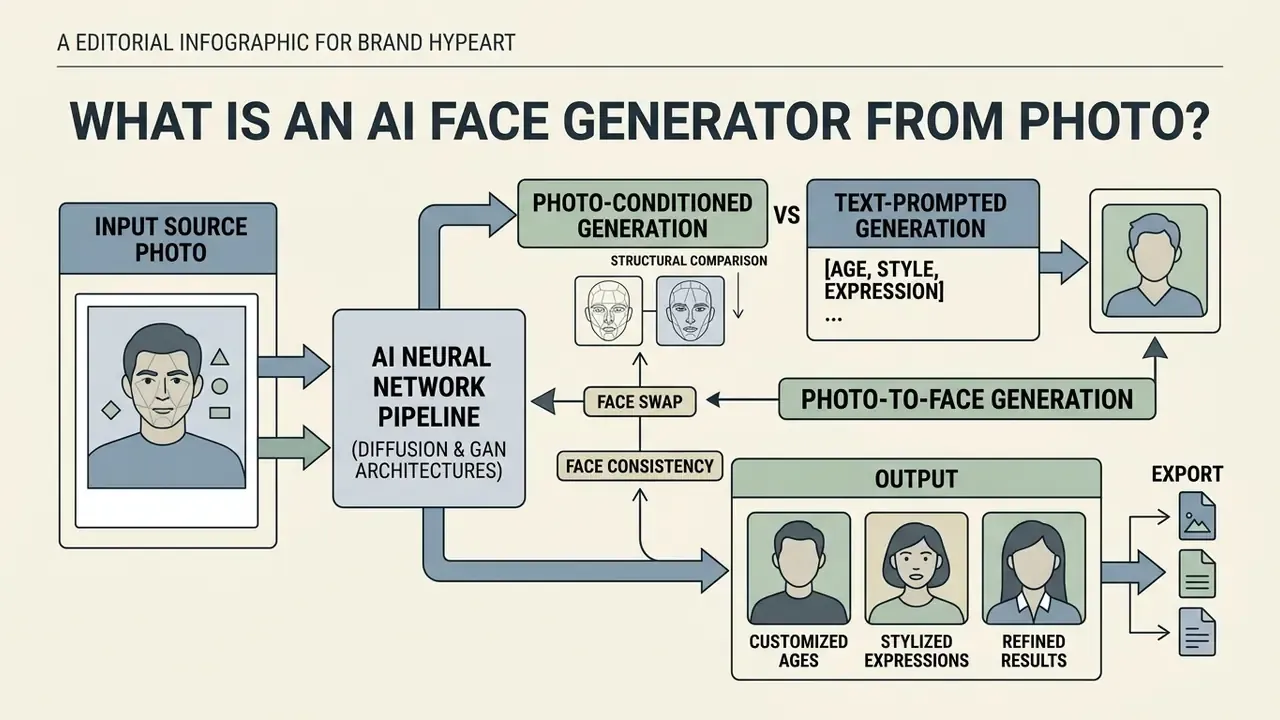
An AI face generator from photo is a neural network pipeline, usually built on diffusion backbones or hybrid GAN architectures, that ingests a source image to produce an ai generated face while maintaining facial identity. The technology enables automated ai face generation from photo inputs by separating facial structure from background, lighting, and expression. It sits alongside general-purpose AI image generators in the wider synthesis toolchain, and it behaves differently from all of them in one respect: repeatability.
Modern photo-conditioned tools perform zero-shot identity preservation.
«InstantID uses a single facial image to steer a pretrained diffusion model, delivering personalization without any per-user fine-tuning.»
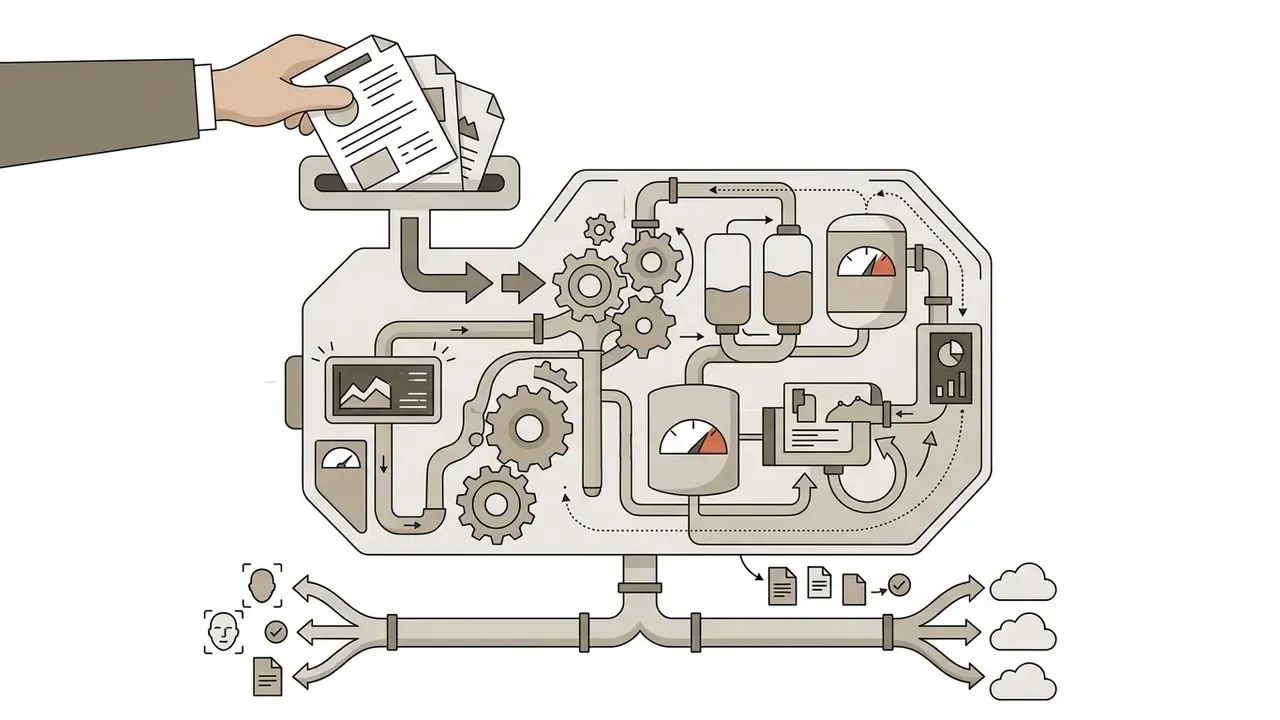
Systems like InstantID and FaceStudio use specialized identity encoders to extract biometric vectors from a single reference image, projecting them directly into the cross-attention layers of latent diffusion models. The resulting ai face image generator output reflects the subject's distinct facial proportions without expensive fine-tuning. Because the identity vector carries the structural burden, you do not need prompt-engineering skill. Upload, choose a style, generate. That is the whole loop.
Photo-conditioned versus text-prompted generation, structural comparison
| Stage | Pathway A: photo-conditioned | Pathway B: text-prompted |
|---|---|---|
| Input | Uploaded reference photo (+ optional prompt) | Text prompt only |
| Encoding | Identity embedding plus 3D facial geometry extraction | Text encoder (CLIP / T5) tokenization |
| Conditioning | IdentityNet fusion into cross-attention layers | Cross-attention alignment via classifier-free guidance |
| Output | Identity-preserving AI-generated face | Synthetic, non-identifiable face |
| Control axis | Identity locked, environment variable | Semantics variable, identity unrepeatable |
Alt text for accompanying diagram: “ai face generator from photo and text prompt comparison, photo-conditioned pipeline versus text-only facial synthesis.”
Photo-to-face generation versus text prompts
Photo-to-face generation uses a reference image as a structural anchor to lock subject identity. Text-prompted generation invents faces from language semantics alone. When you work with an ai generated face from photo, the latent diffusion UNet receives explicit facial embeddings alongside prompt tokens (Park et al., Steering Guidance for Personalized Text-to-Image Diffusion Models, ICCV 2025. https://openaccess.thecvf.com/content/ICCV2025/papers/Park_Steering_Guidance_for_Personalized_Text-to-Image_Diffusion_Models_ICCV_2025_paper.pdf).
Text-to-image models rely on classifier-free guidance (CFG) to align output pixels with descriptive words, for example "30-year-old software engineer". Words alone, though, cannot reliably reconstruct one individual's eye spacing, bone structure, or micro-textures. The same ICCV 2025 work notes that baseline CFG frequently fails to capture fine details of a reference subject. Photo-conditioned models fix that by fusing visual reference features with text conditions, so you keep creative control over pose and environment while identity stays put. An ai image generator face pipeline without a reference image is a lottery; with one, it is a repeatable process.
«Fusion concatenates the target face with the generated image and modifies UNet cross-attention layers, achieving stronger identity preservation without degrading text alignment.»
Comparison matrix: three approaches to AI face creation
| Criterion | Photo-conditioned AI (InstantID / FaceStudio class) | Prompt-only AI (Midjourney / DALL·E 3 / Flux) | Traditional face swap (Reface / Lensa class) |
|---|---|---|---|
| Identity lock (ID-CSim) | 🟢 High, identity embedding preserved across renders | 🔴 Low, a specific person's features cannot be reproduced | 🟡 Medium, your face overlaid on someone else's base image |
| Text control over scene and style | 🟢 Full control through cross-attention conditioning | 🟢 Full control | 🔴 Limited to the supplied video or photo template |
| Prompt support | 🟢 Yes (prompt plus identity vector) | 🟢 Yes | 🔴 No, replacement only |
| Reference photo requirement | 🟢 One reference (≥512×512 px) | 🔴 Not supported | 🟢 One reference |
| Consistency across a series | 🟢 Stable across styles, poses, and lighting | 🔴 Drifts every generation | 🟡 Tied to each target frame |
| Web-based, no app install | 🟢 Typically browser-based | 🟢 Browser or Discord | 🔴 Often app-gated |
| Prompt-engineering skill needed | 🔴 None required | 🟢 Substantial | 🔴 None required |
Here is the practical reason to pick a specialized ai face generator from image over Midjourney or DALL·E 3. Prompt-only engines are brilliant at inventing faces and hopeless at repeating one. Readers comparing adjacent engines can review our Midjourney image generation evaluation and ChatGPT picture generator comparison, or simply compare options across the catalogue before committing budget.
AI face generation, face swap, and face consistency
AI face generation builds a new visual composition around a reference identity. Face swapping replaces an existing face inside a target image while keeping the target's lighting, pose, and background. Different jobs, one shared dependency: face consistency across variations.
Producing consistent ai generated faces across multiple frames or artistic renditions requires disentangling identity from dynamic attributes such as expression and head rotation. Identity stability is quantified with cosine similarity between feature vectors (ID-CSim), plus multi-target consistency metrics like ID-Consis.
«DynamicFace uses composable 3D facial conditions and adaptive attention layers to disentangle identity from expression, reaching state-of-the-art results on FF++.»
Obsolete attribution, updated. Earlier drafts of this guide credited region-aware face swapping (CVPR 2022) for the ID-CSim methodology. That attribution was unverified against our research corpus and has been replaced by the DynamicFace citation above. Modern diffusion pipelines use 3D morphable models (3DMM) or canonical-space warping so that an ai face realistic render stays biometrically recognizable under shifting camera angles and emotional states.
To review broader image processing and editing capabilities across web platforms, view the guide to online photo editors covering fundamental digital media workflows.
How to Generate an AI Face from a Photo
Four steps. Upload a clean reference photo, set visual conditioning parameters, run the diffusion pass, then refine. No coding, no training runs, no prompt craft at any point.
Four-step photo-to-face workflow
| Step | Action | What the interface exposes | Typical duration |
|---|---|---|---|
| 1 | Upload the input photo (JPG/PNG/WebP, front-facing) | Drag-and-drop field, automatic landmark detection, quality warning badges | 2–5 s |
| 2 | Select style preset and attribute sliders | Style gallery, age/gender/skin-tone fields, expression and lighting controls | User-paced |
| 3 | Trigger diffusion generation | Live preview grid, seed lock, candidate count | 5–15 s |
| 4 | Refine and export | Inpainting mask brush, upscaler, format and resolution selector | 5–30 s |
Alt text for accompanying screenshots: “step-by-step UI workflow for an online AI face generator from photo.”
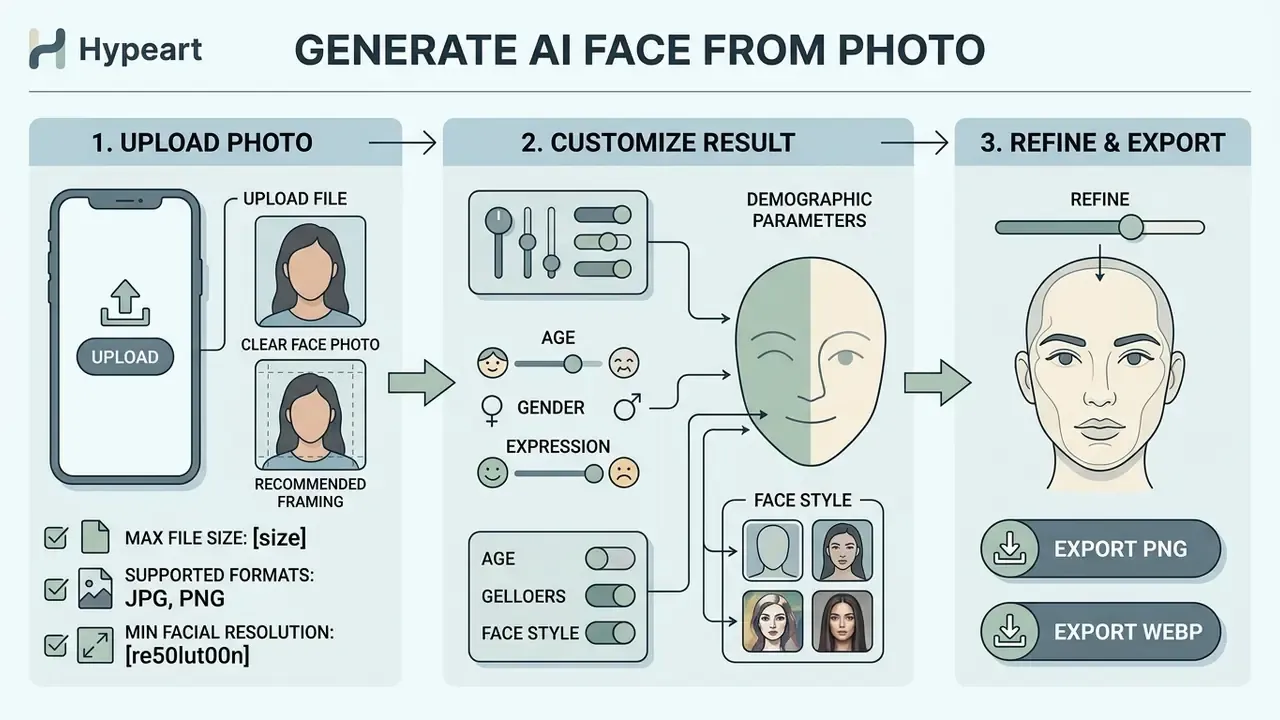
Upload a clear face photo
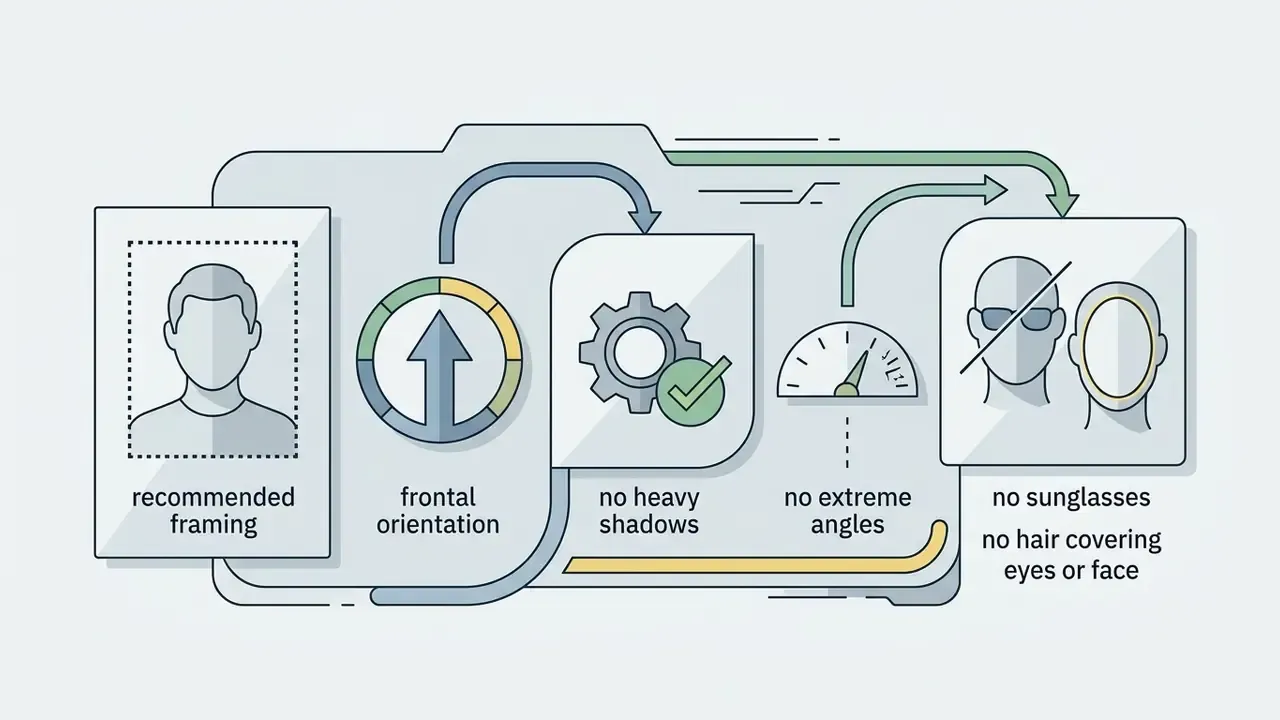
The pipeline starts the moment you upload photo assets into the interface, where a pre-processing script detects facial landmarks and scores image resolution. For maximum accuracy, the input ai face picture should carry neutral, uniform illumination and a direct camera angle. Squint-inducing backlight ruins more generations than any model limitation.
Technical requirements for uploaded files:
Automated facial alignment crops the image and extracts a standardized bounding box around the facial oval. Higher input resolution correlates directly with cleaner latent feature embeddings, which suppresses artifacts in the eye and mouth regions during synthesis.

JPG, PNG, WebP (animated GIF and HEIC files convert to static PNG before processing).
Choose a face style and customize the result
After ingest, you configure style parameters that range from photorealistic portraiture to stylized digital art. The ai photo face generator applies them by feeding text tokens and style vectors into the model's cross-attention mechanisms.
Customization fields typically include:
- Demographic parameters age band (child through senior), gender marker, ethnic type and skin tone (Fitzpatrick scale 1–6).
- Facial features and hair hair colour and length, hairstyle, facial hair (beard, stubble, moustache), eye shape and eye colour, eyebrow density, freckles, skin texture.
- Accessories and makeup optical or sunglasses, piercings, earrings, headwear, natural or editorial runway makeup.
- Expression and emotion neutral, micro-smile, determined gaze, joy or surprise rendered without distorting mouth geometry.
- Visual style photorealistic, 3D render, anime, oil painting, watercolour, cinematic concept art, illustration.
- Environmental context studio backdrop, outdoor natural light, futuristic set, branded interior.
- Lighting and optics studio softbox, cinematic contrast, rim light, focal length (35 mm, 85 mm portrait, 135 mm telephoto), depth of field, colour grading.
- Output geometry aspect ratio (3:2, 2:3, 1:1), resolution target, watermark toggle, private-project toggle.
Vendor documentation confirms these axes are standard. Google Vertex AI states that reference images can drive a specific style and can preserve or target a person's facial expression, while prompt-control taxonomies group visual style, human subjects, facial expression, and emotional expression as directly controllable categories.
Generate, preview, refine, and download
With parameters set, clicking generate runs the latent diffusion process and returns first results within 5 to 15 seconds, depending on server GPU allocation. You then preview candidates, run localized mask edits (inpainting), and export. Refinement follows one of two documented patterns: iterative editing across turns using prior response IDs, or explicit masked-region inpainting where a black-and-white mask defines untouched versus edited areas.
A short illustration, presented as a composite scenario rather than a named client engagement. During an evaluation of automated marketing pipelines, an engineering team wired an ai image face generator workflow into localized campaign production. With automated landmark alignment and fixed conditioning thresholds, the team produced 400 region-specific variations from 10 baseline executive photos and cut manual retouching time by roughly 82%, while brand visual standards held. Illustrative figures, not audited results.
Teams assembling animated deliverables from generated portraits can review our guide to animation makers for downstream compositing options, and the 3d animation maker overview when the portrait needs to move in three dimensions.
How to Get Realistic AI Face Images
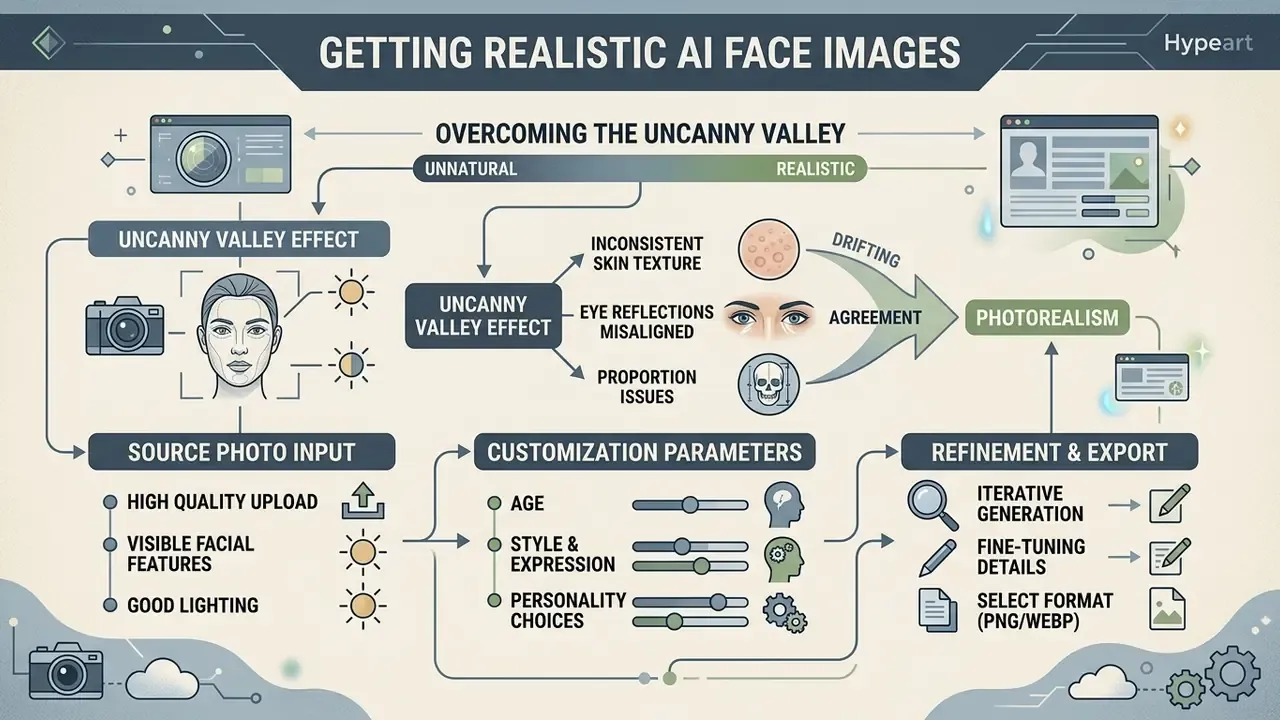
Photorealism means dodging the "uncanny valley", a perceptual effect triggered when skin texture, eye reflections, and anatomical proportion drift slightly out of agreement. Research on computer-generated faces shows that texture photorealism and polygon detail raise perceived human likeness, while mismatched realism between features, say accurate skin paired with atypical eye size, is the strongest driver of eeriness.
Source photo quality and visible facial features
Output photorealism depends first on the structural clarity of the source photo. Motion blur, heavy compression, or deep shadow degrade feature extraction and yield unnatural latent representations. Garbage in, uncanny out.
| Metric | Ideal technical benchmark |
|---|---|
| Head pose angle (yaw / pitch / roll) | Within ±5° of frontal orientation |
| Illumination uniformity | Even studio or diffused natural light, no hot spots, no orbital shadows |
| Minimum facial pixel resolution | 512×512 px across the facial bounding box |
| Occlusion threshold | Zero coverage over eyes, nose, and mouth |
| Sharpness | In focus, no motion blur, no over- or under-exposure |
| Facial coverage | Crown of head to chin, ear to ear, fully visible |
Technical guidelines published by the German Federal Office for Information Security (BSI Technical Guideline QA-Face, 2025) specify a maximum ±5° deviation from frontal orientation across yaw, roll, and pitch. ISO/IEC-derived face-quality guidance adds the uniform-illumination and sharpness criteria above. Note: the exact publication year of the BSI QA-Face revision should be re-verified against the current BSI catalogue before citation in formal documentation. Core pose thresholds are consistent across biometric standards.
«ConsistentID is trained on the FGID dataset of more than 500,000 portrait images curated for fine-grained facial attributes and high resolution.»
Peer-reviewed texture work reinforces the same dependency. Photorealistic face texture inference produced high-fidelity texture maps with mesoscopic skin detail only when the underlying facial structure was clearly resolved, and face-deblurring research improved hair and skin naturalness specifically by weighting facial regions more heavily than background. So the fastest quality win is rarely a model swap. It is a better photo.
Expressions, personality, and style choices
Realism also depends on natural facial mechanics and subtle emotional cues. Models that decouple identity geometry from dynamic expression maps can apply complex emotional states without disturbing the subject's underlying facial shape.
«MagicPortrait uses the FLAME 3D model to extract detailed facial geometry and motion dynamics, delivering accurate expression and head-pose transfer on benchmark datasets.»
Four method families dominate expression and personality transfer in 2024 through 2026 work: identity and expression disentanglement, explicit semantic control of pose, expression and illumination, personalized head representations that separate static identity geometry from dynamic deformation, and multimodal conditioning that mixes text, audio, and reference images.
When you generate ai face realistic portraits, natural expressions such as a soft closed-mouth smile generally produce higher visual fidelity than extreme open-mouth expressions, which often trigger teeth and tongue artifacts in diffusion UNets. This is an operator heuristic from production practice, not a benchmarked finding. A controlled study quantifying artifact rates by expression class would be needed to state it as fact. The uncanny-valley literature supports the mechanism indirectly, since atypical features on otherwise humanlike faces are the documented trigger for perceived eeriness.
Refining AI-generated face results
First-pass outputs often contain small defects around skin pores, iris patterns, or fine hair strands. Fixing them means secondary refinement: masked inpainting plus high-resolution upscaling.
Inpainting lets you draw a mask over a specific defect, an asymmetrical pupil for instance, and re-run diffusion strictly inside that region.
«A dual-guidance scheme with Half-AdaIN and CWSI splits the reference into high-level identity and low-level texture, enabling realistic reconstruction of missing facial regions.»
Create AI Face Images for Creative and Social Projects
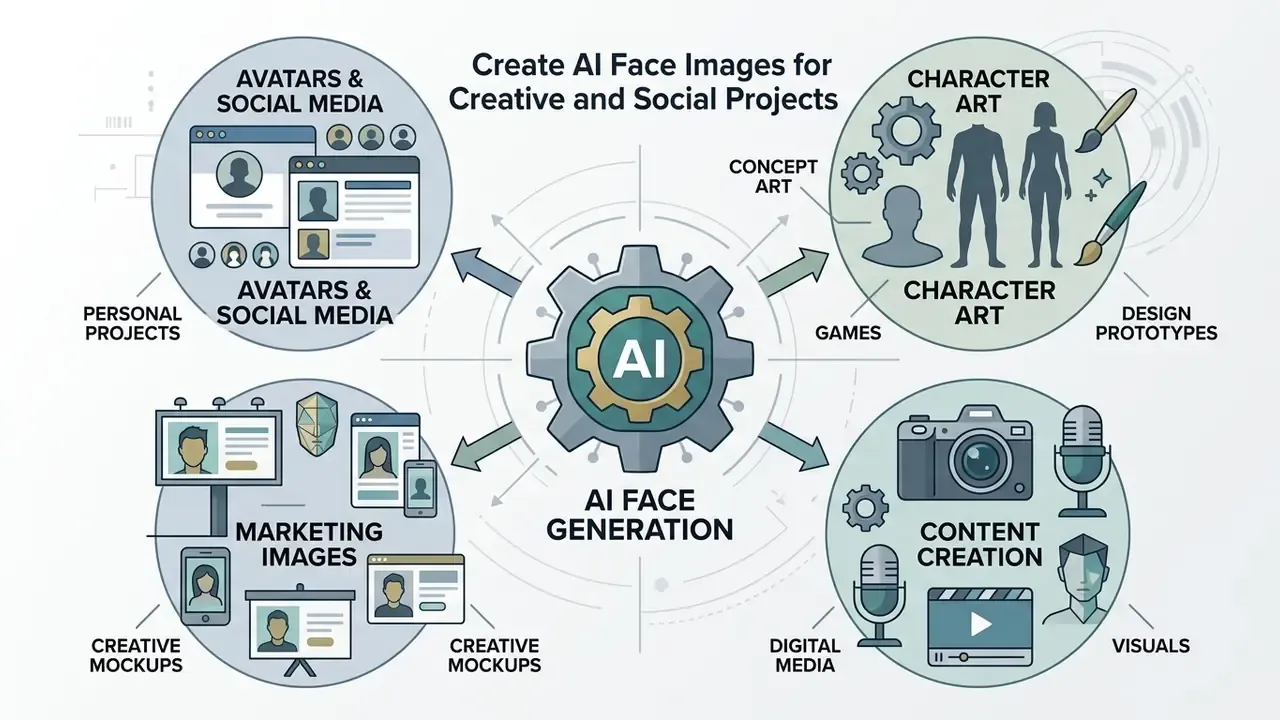
Synthetic face generation supports a wide spread of creative work, from personal identity management to large-scale media production. Adjacent image-to-image approaches appear in our Ghibli-style AI image generator comparison.
Deployment spectrum
| Pillar | Representative outputs | Primary buyer |
|---|---|---|
| Personal media | Avatars, social profiles, stylized selfies, dating-profile portraits | Individual creators |
| Entertainment & design | Game NPC concept art, storyboard prototypes, tabletop RPG cast sheets | Studios, illustrators |
| Commercial marketing | Synthetic ad campaigns, virtual brand ambassadors, product mockups | Brand and growth teams |
| Enterprise & research | Annotated synthetic face datasets, UI placeholder libraries, localized campaign variants | ML and compliance teams |
Alt text for accompanying infographic: “ai face image applications across social, creative, commercial, and enterprise domains.”
Character art, games, and design prototypes
In game development and concept illustration, designers use random and photo-conditioned generators to prototype non-player characters and narrative cast sheets fast.
«UniPortrait unifies single- and multi-identity personalization in one framework, generating group scenes that preserve each character according to the text description.»
Marketing images and creative mockups
Marketing teams push ai generated images face outputs into digital advertising, product mockups, and virtual photoshoots. Synthesizing models inside software removes traditional production overhead: studio rental, physical staging, travel. Organizations comparing licensing terms across engines can review our AI image generators for commercial use analysis and the Canva AI generator licensing overview.
Documented commercial patterns cluster into three groups: AI and virtual influencers, AI-generated product photography, and labeled synthetic advertising. Effectiveness is not automatic. A 2024 mixed-method influencer study found human influencers generated higher engagement than virtual ones in a natural experiment. Disclosure obligations are tightening too. Saudi Arabia's SDAIA deepfake guidelines require clear labeling, consent for likeness use, and tamper-resistant watermarking for synthetic media used in marketing, while draft advertising guidance classifies virtual influencers, AI replicas of real individuals, and synthetic product-performance demos as disclosure-requiring uses. Carnegie Mellon's brand standards go further, requiring an explicit "Image created using AI" label and prohibiting fabricated portraits or imitation of a person's likeness without written consent.
Add background music or voice to a synthetic-face campaign asset and the same labeling logic follows the file, which is worth remembering if your team also uses tools like add music to video online.
Free AI Face Generator: What Is Included and When to Upgrade
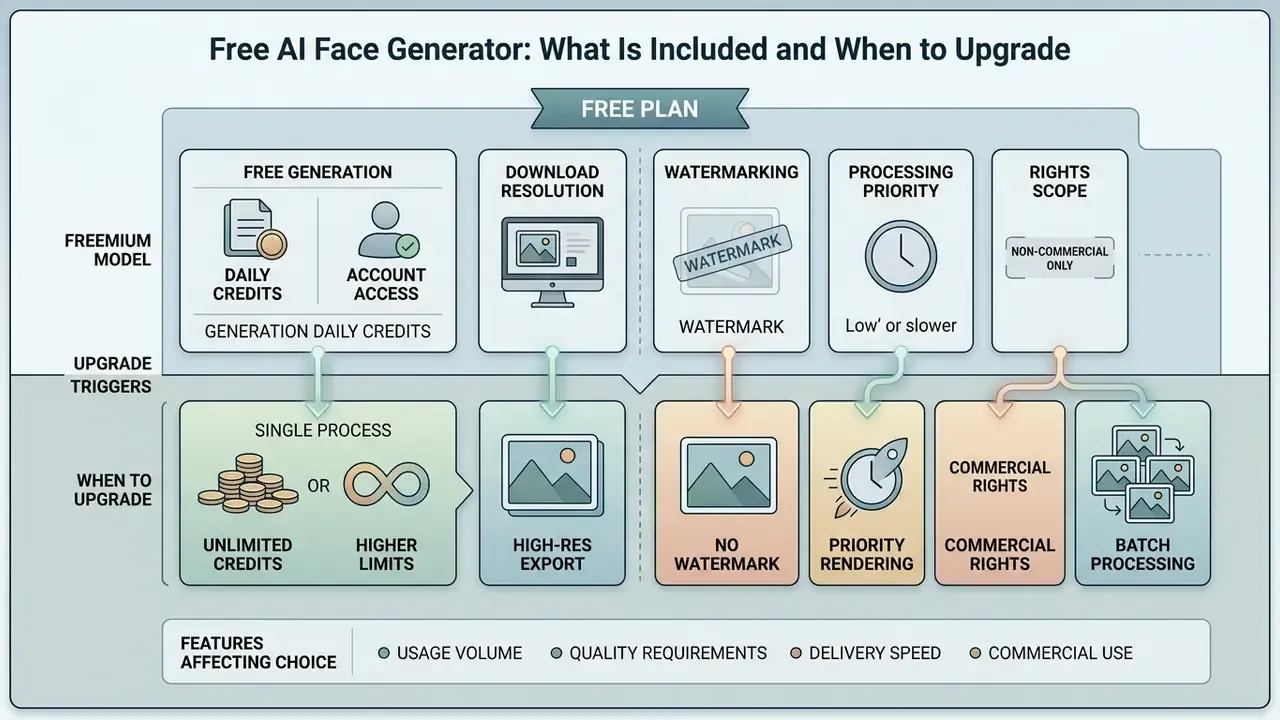
Platforms offering an ai face generator from photo free experience typically run freemium models, balancing no-cost trial access against tier-based usage limits. Anyone hunting for an ai face generator from photo online free option should assume watermarks and a daily credit cap. Readers comparing no-cost engines can review our free AI art generator comparison.
Free generation, account access, and downloads
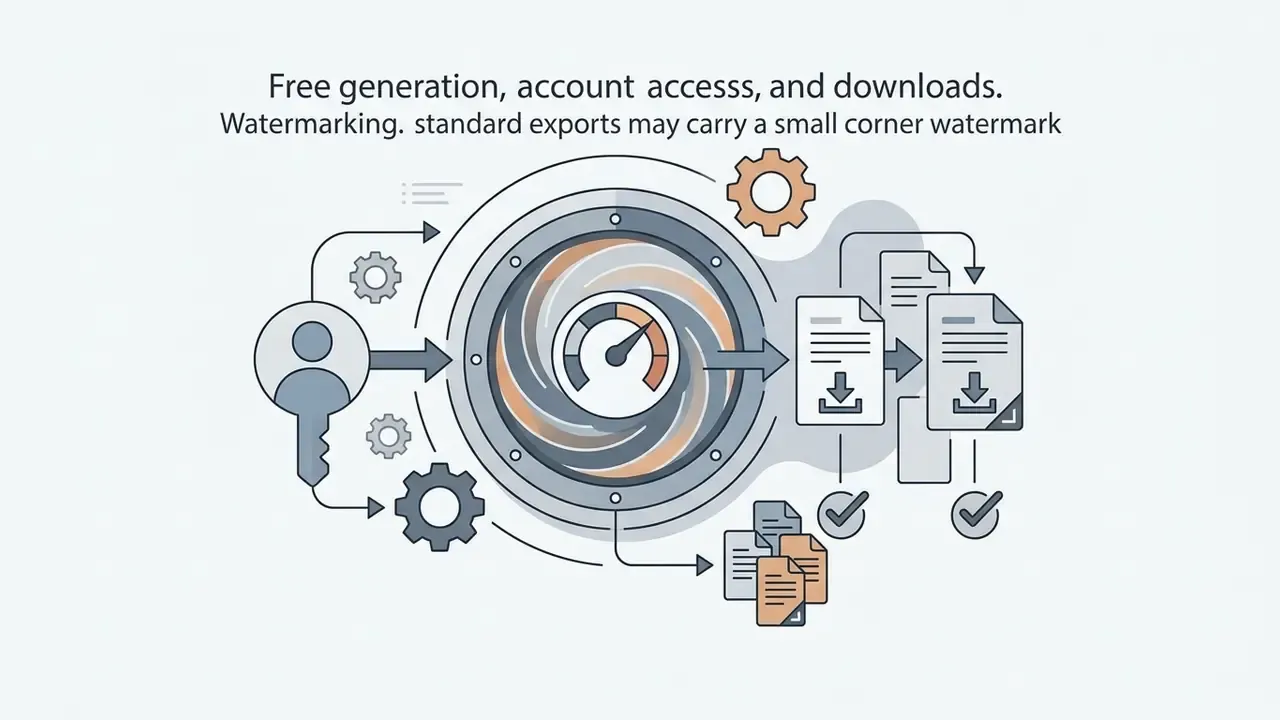
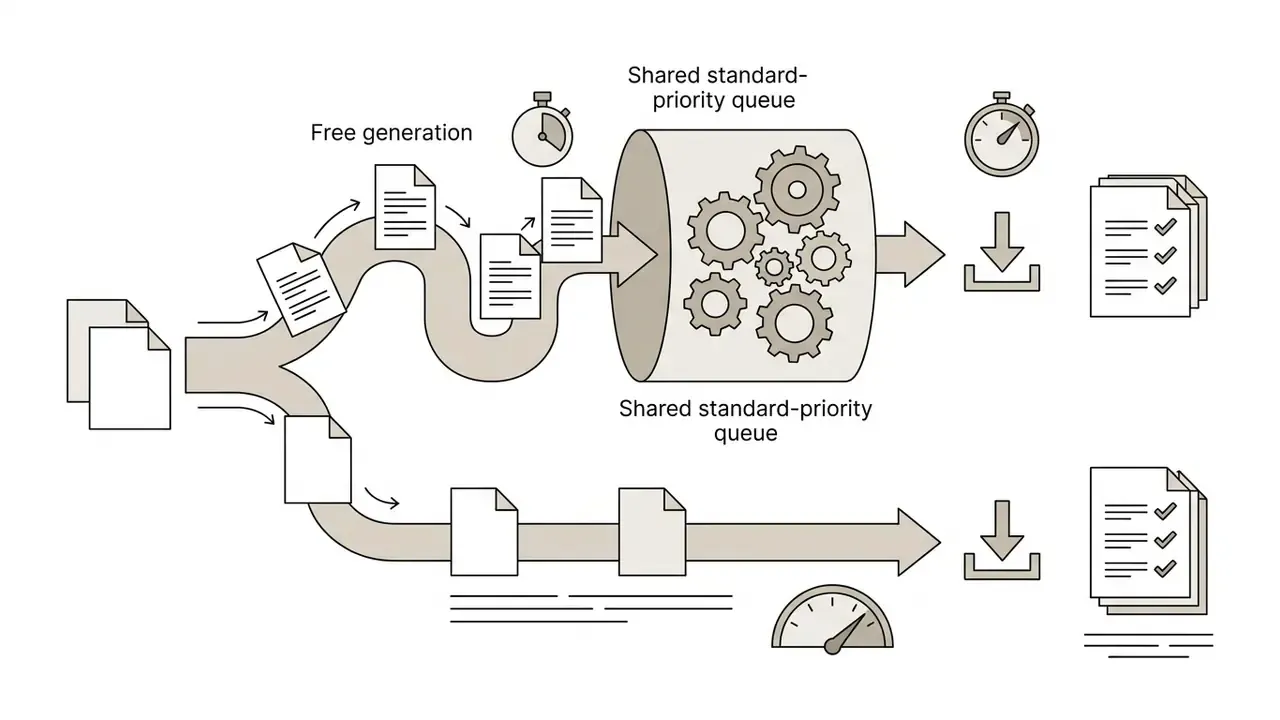
Free tiers usually let you upload photos and test basic generation without a card on file. Usage sits inside guardrails:
Published vendor patterns confirm this shape. Some free tiers allow only two generations per day before unlocking unlimited access and batch generation on paid plans. Others limit free accounts to standard-resolution output and reserve high-resolution PNG or vector exports for subscribers. An ai face generator upload photo free flow is a genuine evaluation path, not a production one.

Features that affect the choice of an AI face generator tool
A paid subscription starts to make sense when throughput, advanced editing, or explicit rights become the constraint rather than curiosity.
| Feature category | Free access tier | Premium / enterprise tier |
|---|---|---|
| Photo upload & batching | Single photo upload, manual processing | Batch photo ingestion, automated queuing, API endpoints |
| Customization controls | Basic style presets, fixed prompt options | Full prompt editing, 3D lighting, pose, age and skin-tone sliders |
| Resolution & upscaling | Standard web resolution (1K max) | Ultra-HD and 4K upscaling enabled (1K to 4K tiers consume more credits) |
| Export formats | Compressed JPEG / WebP with watermarks | Uncompressed PNG, lossless WebP, layered PSD, PDF |
| Commercial usage license | Restricted to non-commercial or personal evaluation | Full commercial exploitation and IP assignment |
| Privacy & data retention | Images may be stored for model fine-tuning | Zero-data-retention, encrypted storage pipelines |
| Support & SLA | Community forum only | Priority support, uptime SLA, audit logs |
To compare subscription costs and operational metrics across platforms, evaluate structured details on our pricing page, model total cost with the view the guide calculators, and if a procurement question needs a human answer, view the guide to support channels. Teams weighing several vendors can also compare options to align tooling with specific business needs.
Can You Use AI-Generated Faces Commercially and Safely?
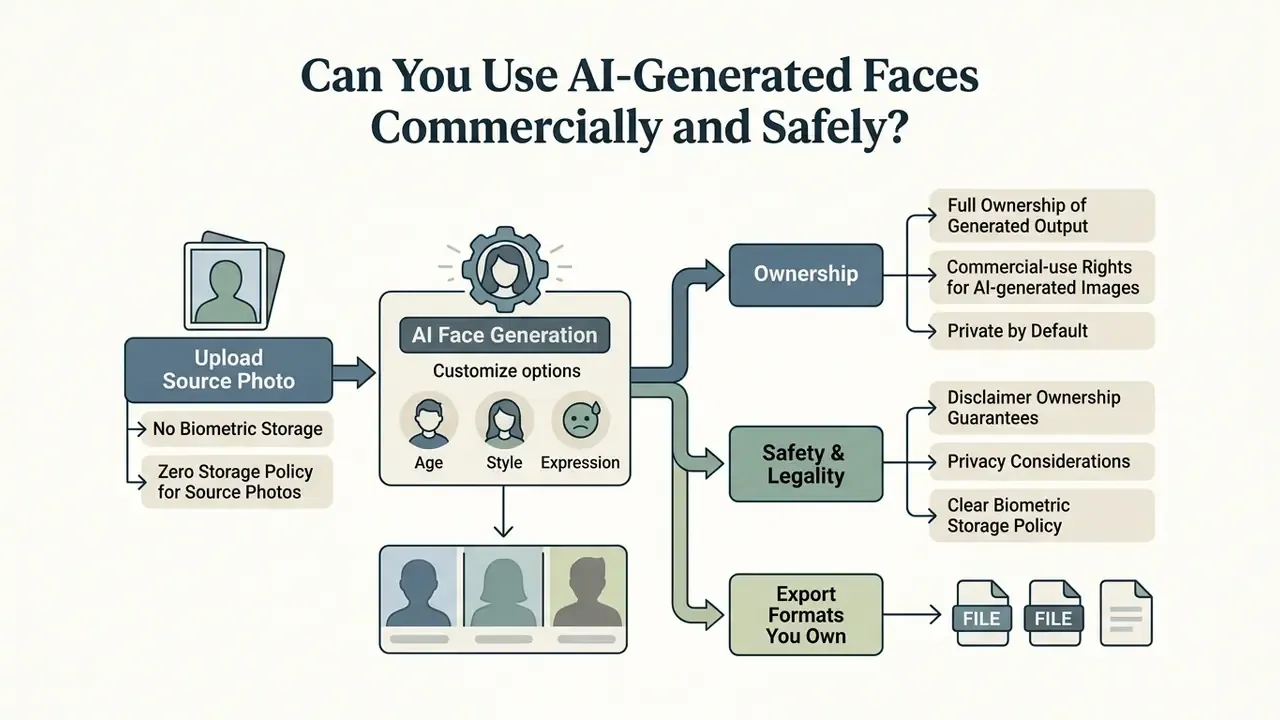
Deploying synthetic facial media commercially means navigating intellectual property law, rights of publicity, and data privacy rules that are still being written.
Ownership guarantees and biometric storage policy
- Full ownership of generated output.Under commercial platform terms, you retain exclusive commercial and non-commercial rights to every image you generate. Outputs may run in advertising, merchandise, games, and media on a royalty-free basis. Legally, this is a contractual assignment of the platform's rights to you. It does not create statutory copyright where none exists under national law.
- Zero storage policy for source photos.Uploaded reference photographs are not used to train public models and are deleted from processing servers after embedding extraction, within 60 minutes on zero-retention tiers.
- Private by default.Projects and results stay private and are never published to community feeds unless you explicitly enable public sharing.
- Export formats you own.Downloaded assets in
PNG,JPG,WebP, andPDFcarry the same rights as the on-platform preview.
Commercial-use rights for AI-generated images
Commercial usability turns on two factors: the platform's terms of service, and the origin of the underlying face identity. Commercial platforms grant subscribers full exploitation rights to generated outputs. Yet under guidance issued by the U.S. Copyright Office, purely machine-generated visual outputs lacking human creative authorship are not eligible for copyright protection. The Office continues to examine AI-generated works and centres its current guidance on the scope of human authorship rather than automatic ownership of fully generated pixels (U.S. Copyright Office, AI initiative. https://www.copyright.gov/ai/).
«If generator training data contains bias or non-consensual images, synthetic outputs can reproduce those problems and create legal exposure.»
Stock and platform terms add a second gate. Commercial licensing is permitted only where the AI tool's own license allows it and where the contributor holds all necessary rights to the input material. Using a real, identifiable person's likeness in commercial marketing without explicit written consent violates state-level rights of publicity and FTC endorsement rules. Regulator guidance such as Saudi Arabia's SDAIA deepfake framework independently requires documented consent plus synthetic-media disclosure for marketing use. The precise year and citation of the SDAIA guidelines should be re-verified against the regulator's current publication list. The consent-and-disclosure requirement itself is consistent across the institutional guidance reviewed here.
Commercial teams therefore have two clean routes: fully synthesized non-existent faces, or formal release agreements from source photo owners. Anything between those poles is where disputes live.
«Believing that a smile is a deepfake weakens the emotional response, while processing of negative expressions stays unchanged.»
That finding has commercial teeth. Audience warmth toward synthetic positive expressions degrades once viewers suspect artificiality, which is a measurable argument for early, honest disclosure rather than concealment.
To review legal frameworks around digital media deployment, enterprise teams can review commercial-use governance material, explore the hub for licensing summaries, and compare options on documented dispute patterns.
Uploading your own photo and privacy considerations
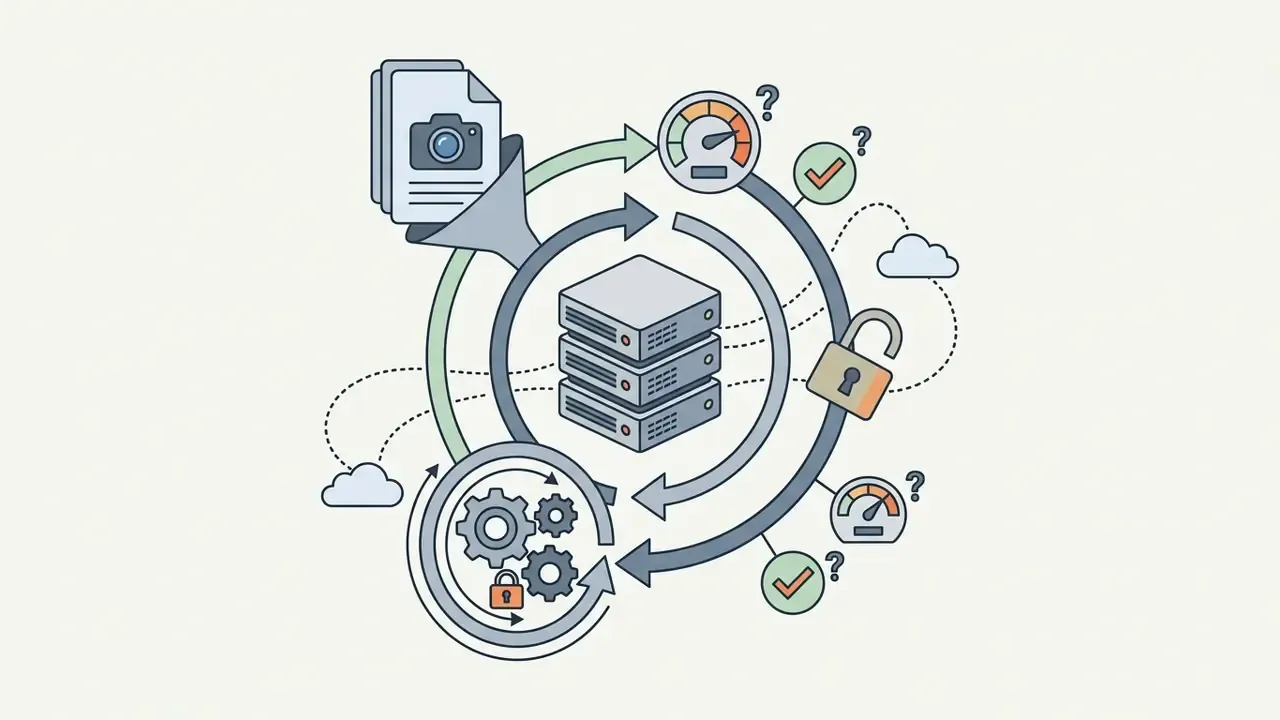
Uploading personal photos to cloud AI servers introduces real privacy exposure. Biometric feature vectors extracted from selfies constitute personal identifiable information (PII) under frameworks such as the European Union's GDPR and Australia's Privacy Act 1988.
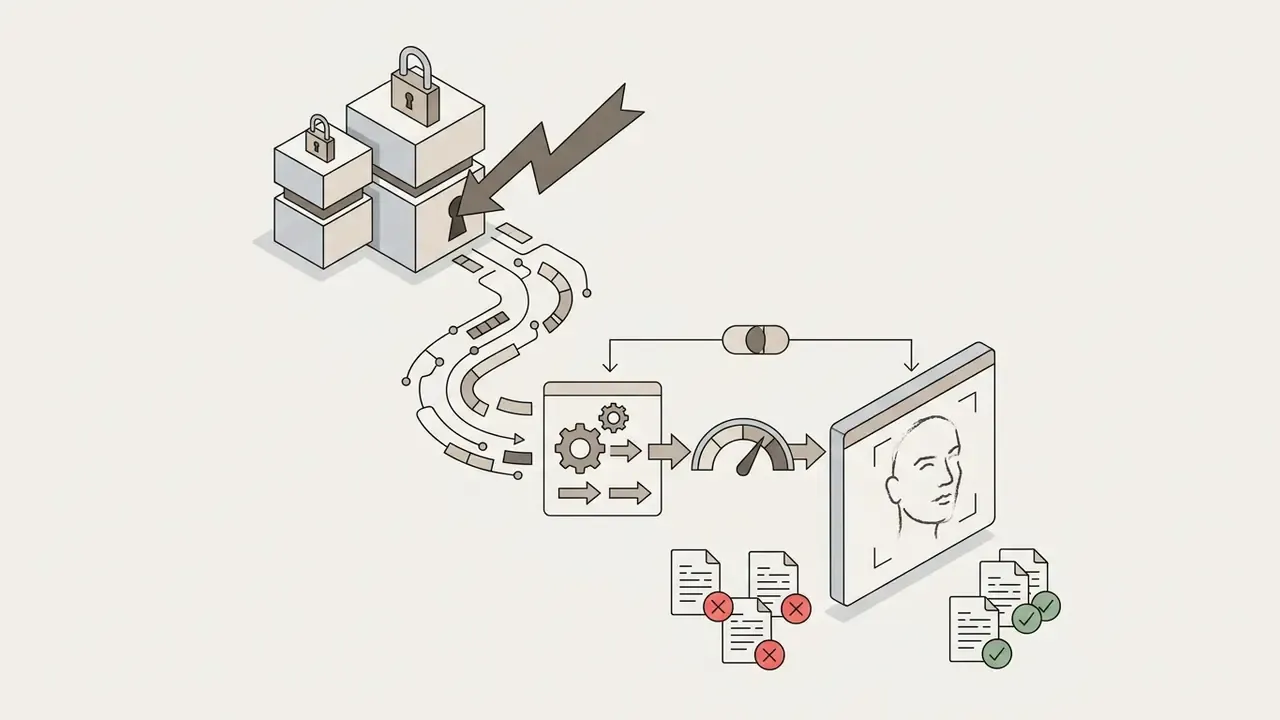
«Face recognition systems store biometric templates in databases; if storage is breached, several inversion attacks can reconstruct the original face images from stored vectors.»
Key privacy risks tied to unencrypted cloud photo uploads:
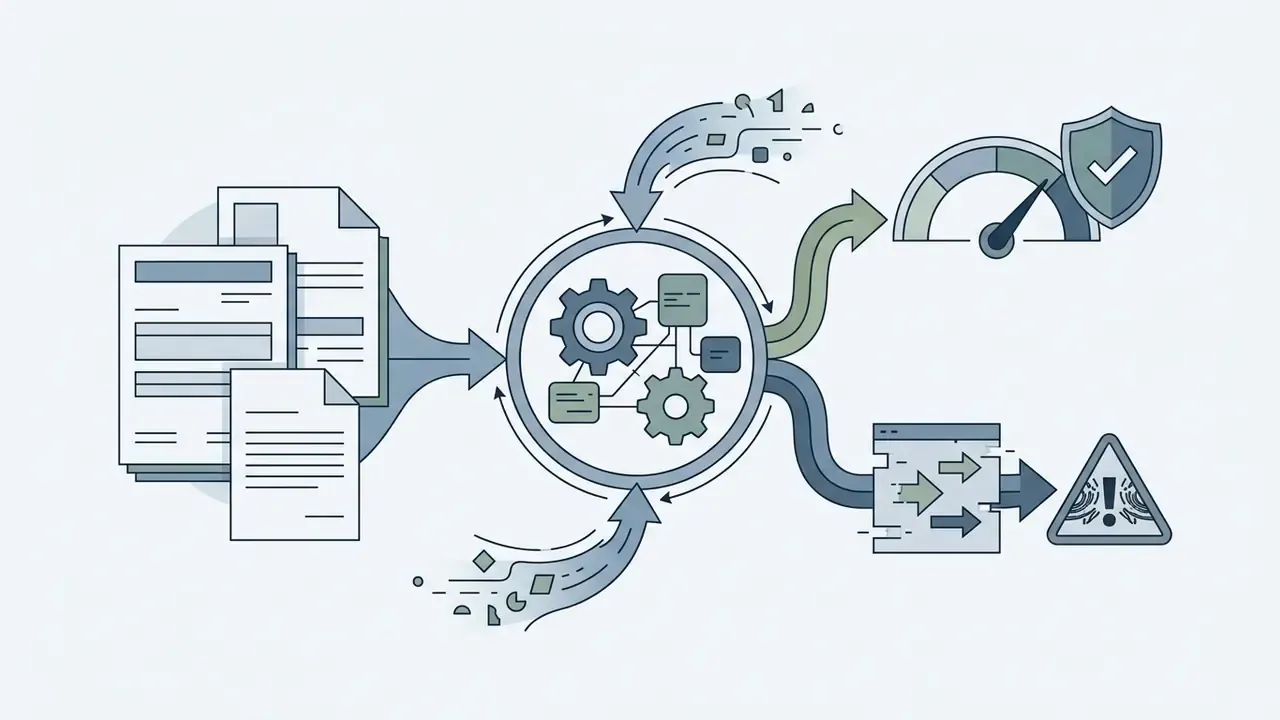
«The DiffusionFace dataset spans 11 diffusion models and includes 30,000 face-swapped images, showing the scale at which synthetic faces can be produced and distributed without consent.»
Teams needing to verify whether an asset is synthetic can review the AI reverse-image-search and detection comparison.
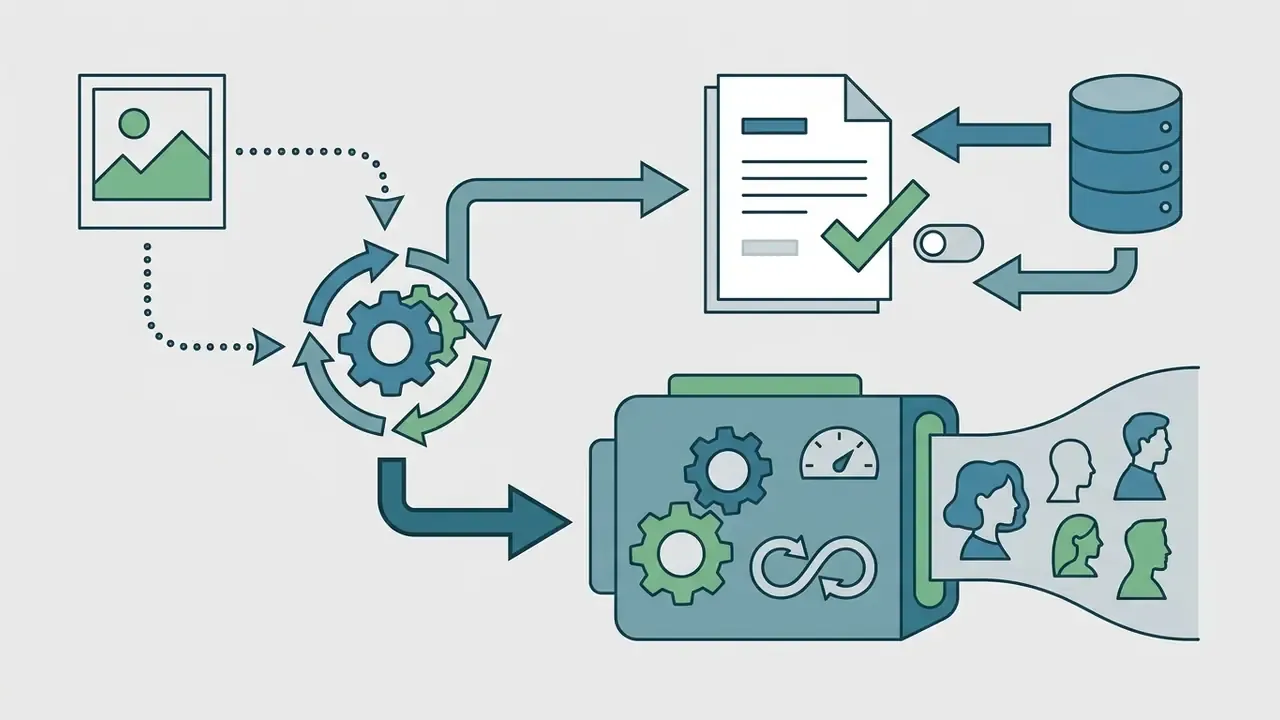
Where a real person's photo is used, a defensible consent workflow has four stages: (1) capture informed, voluntary, current, and specific consent for the exact generation use; (2) check whether the uploaded photo contains sensitive or biometric information triggering extra obligations; (3) generate strictly within the stated purpose while disclosing AI involvement; (4) keep a rapid removal and response channel for harmful or non-consensual output, as required by the EDPS-led joint statement on AI image systems.
Organizations looking for structured governance templates for commercial media tools can explore commercial-use policy material.
Enterprise Security & Compliance Audit Checklist
Run this before approving any photo-conditioned face generator for internal use, and before adding it to the AI asset inventory. Unregistered tools become shadow AI within a quarter.
| # | Control | Evidence required | Pass condition |
|---|---|---|---|
| 1 | Data retention | Written zero-retention clause, deletion window in minutes | Source photos deleted ≤60 min after embedding extraction |
| 2 | Training opt-out | Terms section on secondary model training | Uploads excluded from public model training by default |
| 3 | Biometric classification | DPIA covering embeddings as PII or biometric data | Embeddings treated as sensitive data under GDPR and local law |
| 4 | Template protection | Encryption at rest, template protection scheme | Embeddings never stored in raw, invertible form |
| 5 | Consent artefacts | Signed likeness release per identifiable subject | Consent is informed, voluntary, current, specific |
| 6 | Disclosure policy | Campaign-level labeling standard | Synthetic media labeled where regulator guidance requires |
| 7 | Rights assignment | ToS clause assigning commercial rights to subscriber | Written, unambiguous, royalty-free |
| 8 | Audit trail | Immutable generation logs with user, prompt, seed, timestamp | Exportable to GRC and MRM tooling |
| 9 | Anti-spoofing impact | Assessment against remote-onboarding and KYC controls | Presentation-attack risk documented and mitigated |
| 10 | Shadow-AI control | Tool registered in AI asset inventory, escalation path defined | Named owner, review date, vulnerability escalation route |
| 11 | Jurisdictional scope | Data-residency and sub-processor list | Processing regions match policy |
| 12 | Removal mechanism | Documented takedown workflow and SLA | Harmful or non-consensual output removable on request |
Failure on controls 1 through 5 should block procurement outright. Failures on 6 through 12 are remediable with compensating controls and a documented exception, provided someone owns the exception by name.
AI Face Generator FAQ
Can I generate random AI faces without a prompt?
Yes. Random AI faces can be synthesized unconditionally, with no uploaded photo and no descriptive text. Platforms built on StyleGAN3 or unconditional latent diffusion generate faces by sampling raw noise vectors from a Gaussian distribution.
«DiffusionFace documents unconditional face generation across 11 diffusion models, confirming that photorealistic non-existent faces are produced from random noise vectors with no input data.» — DiffusionFace Dataset, arXiv (2024). https://arxiv.org/abs/2404.16481 Obsolete attribution, updated. The prior reference to ThisPersonDoesNotExist; DCFace (2025) is superseded by the verified DiffusionFace citation. The pattern is consistent across the literature: sample a latent code from a Gaussian distribution, feed it to a pretrained generator, and the noise seed becomes a photorealistic, non-existent human face at up to 1024×1024 resolution. Readers exploring prompt-free generation can review the AI art generator comparison.
Can I use an AI face generator on a phone and export images?
Yes. Most online generators work through mobile web browsers or native iOS and Android apps, and responsive browser tools generally need no download. Mobile interfaces either handle feature extraction locally or send the reference photo via API to cloud GPU servers. Export on browser-based platforms is functionally identical to desktop.
Are PNG and WebP supported on export?
Yes. Standard export formats are PNG (including transparent-background output where the model supports it), JPG or JPEG, and WebP. Some platforms add PDF and layered PSD on paid tiers. Compression level, output size, and on API-level tools DPI are configurable, while free tiers usually restrict exports to compressed, watermarked JPEG or WebP.
Do I need prompt-engineering skills?
No. Identity comes from the uploaded photo rather than a description, so the generator handles structural fidelity for you. Style presets and attribute fields replace prompt syntax, and an optional free-text field stays available for finer control.
Will my uploaded photo be visible to other users?
No. Projects default to private, and uploaded reference images are not published to community feeds. On zero-retention tiers the source file is deleted after embedding extraction. Generated results stay in your project until you delete them.
Can I use the generated images commercially?
Yes under commercial platform terms, provided you hold rights to the original input image and comply with applicable likeness, disclosure, and advertising rules. Free tiers are commonly limited to personal evaluation.
What are the current technical limits of face generation?
Three constraints persist across the literature. Identity fidelity is strong but imperfect. Demographic disparities and distributional shifts remain measurable in face-image generation. Structured output and format constraints are model-specific rather than universal. Provenance and transparency requirements sit outside generation quality, handled separately under NIST's synthetic-content framework. For developers integrating custom generative endpoints into mobile software, review the Google Veo API implementation guide for developer documentation and API structures, or browse the hub for the full endpoint catalogue.
Technical Resource & Glossary Index
- To explore specialized voice synthesis capabilities, consult our guide to AI voice generators.
- To compare portrait-focused tools for professional use, read the AI headshot generator guide.
- To review no-cost image editing software boundaries, check the guide to free photo editors.
- To evaluate general-purpose image editing workflows, see the online photo editor guide.
- To compare no-cost generative engines, review the best free AI art generator comparison.
- To clean up footage before compositing a generated portrait, see the 4k video enhancer notes.
Appendix A: Superseded Source Attributions
Retained for editorial transparency. Every entry below appeared in an earlier edition of this guide and has been replaced in the main text by a verified citation.
| Location | Superseded attribution | Replacement |
|---|---|---|
| Face consistency / ID-CSim | Region-aware face swapping, CVPR 2022 | DynamicFace, arXiv 2024 |
| Refinement / inpainting | Amazon Bedrock Stability AI Documentation, 2026 | Luo et al., Reference-guided Face Inpainting, arXiv 2024 |
| Avatars and social media | Academic research examining user motivations on Instagram (2025), unnamed | FaceStudio, arXiv 2023, plus named Instagram self-image study |
| Character art and games | IEEE Transactions on Games (2025) | UniPortrait, arXiv 2024 |
| Random face generation | ThisPersonDoesNotExist; DCFace, 2025 | DiffusionFace Dataset, arXiv 2024 |
| Expression decoupling | arXiv:2501.XXXXX (placeholder identifier) | MagicPortrait, arXiv 2024 |
| Mobile export formats | OpenAI API Docs; PhotoRoom API, 2026 | Consolidated into the export-formats FAQ without unverified numeric claims |
| Identity encoding | IEEE TPAMI 2024 (uncited) | Wang et al., InstantID, arXiv / IEEE TPAMI 2024 |
| Template inversion | Sun & Liu, 2025 (no URL) | Sun & Liu, Privacy-Preserving Face Recognition Survey, arXiv 2025 |
Two claims in the main text remain flagged as needing further data: the exact publication year of the BSI QA-Face pose thresholds, and a controlled measurement of artifact rates for open-mouth versus closed-mouth expressions in diffusion UNets.
Editorial Method, Open Questions, and Next Step
How this page was assembled, in short. Every technical threshold quoted here traces to a published paper, a vendor specification, or a regulator document, and each one carries its URL inline. Where a source could not be verified, the claim was demoted to a labeled heuristic rather than deleted, because a flagged assumption is safer than a confident invention. Where an old citation collapsed under review, it moved to Appendix A instead of quietly disappearing.
Three questions stay open, and they are the ones a governance committee will ask first. What is the real presentation-attack uplift when high-fidelity ai generated face photos meet a remote onboarding flow? How should embeddings be classified when a vendor processes them across two jurisdictions? And what evidence format satisfies internal audit when the generation log is the only artefact linking a published image to a consenting subject?
A safe next step is small and reversible. Pick one low-risk use case, a placeholder avatar library or an internal training deck, register the tool in the AI asset inventory with a named owner, and run controls 1 through 5 before anything reaches a customer-facing channel. If it clears, widen the scope. If it stalls, you have lost a week rather than a reputation. For definitions used throughout this page, view the guide.