Executive Summary for Decision-Makers
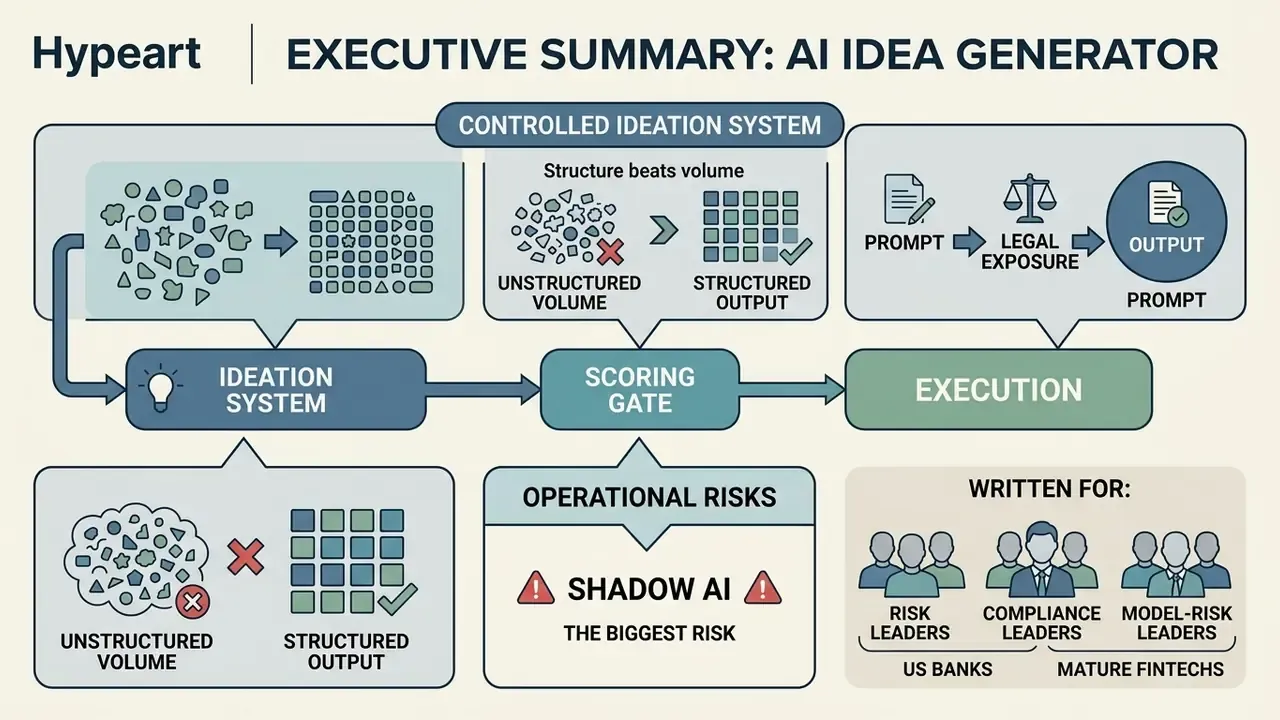
- An AI idea generator is a controlled ideation system, not a novelty toy. It converts context, constraints and retrieved internal data into ranked concepts. Google Cloud's enterprise Idea Generation agent (2026) formalizes this: users pick data sources, state a goal, then rank candidates through a tournament-style competition framework.
- Structure beats volume. Unguided prompting raises the creativity of individual ideas but narrows collective diversity. Structured retrieval-plus-ranking pipelines measurably increase the count of unique, high-rated concepts.
- Legal exposure sits in the output, not the prompt. Purely machine-generated material is not copyrightable in the US, and no AI system can be named as an inventor. Human contribution must be documented and auditable.
- The biggest operational risk is Shadow AI. Employees pasting proprietary product, pricing or customer data into public free generators create untracked data egress and gaps in the audit trail. Data isolation, zero-retention terms, logging and GRC integration matter more than free-tier generosity.
- Use a scoring gate before execution. Every candidate concept passes a four-vector decision matrix (alignment, feasibility, impact, IP and compliance risk) with a named human owner, before a single dollar of budget moves.
Who this page is written for: risk, compliance and model-risk leaders at US banks and mature fintechs, plus the product, finance and content leads who will actually run the prompts. The governance sections assume a regulated environment. The prompt and free-tool sections work anywhere, including a one-person consultancy on a Tuesday evening. Both audiences need the same thing in the end: a defensible reason to say yes or no to a generated idea.
What Is an AI Idea Generator?
An AI idea generator is a software system powered by large language models (LLMs) or retrieval-augmented architectures that turns user-supplied context into structured concepts, topics and actionable recommendations. Unlike a conventional random phrase sampler, a neural idea generator is built on semantic embeddings that read task goals, constraints and audience parameters. Feed it a short brief and the generator generate outputs that hold logical coherence and domain relevance, not pseudo-random word salad.
The difference from classic random idea generators is methodological, not cosmetic. Legacy story and concept tools pick arbitrary seed words, look up associated terms, then randomly assign theme, setting or characters. Neural systems encode the brief through learned embeddings, attention and context management. That is why relevance scales with input quality rather than with the length of a word list. Market materials for generative design and ideation tooling project 2026 revenue somewhere between USD 2.07B and 3.58B depending on methodology, driven mainly by faster iterative exploration and automated option generation.
A blunt caveat before the mechanics. A concept ai generator produces options, not judgment. It has no view on your risk appetite, your capital plan, or the examiner who will read your file next spring.
Ideas, Concepts, Topics and Suggestions: What AI Can Generate
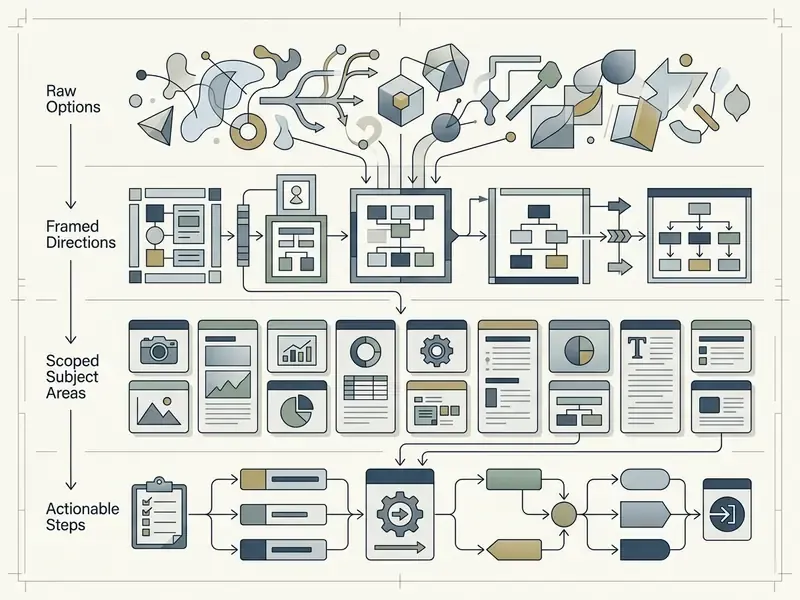
Generative systems produce output at four levels of abstraction: raw ideas, framed concepts, scoped topics, and concrete operational suggestions. A raw idea generator ai output gives you a directional spark. An ai concept generator adds strategic framing, including target demographics and functional boundaries. For example, an idea generator free tool might propose "a student financial tracking app" as a raw idea, while a full concept spells out the core architecture, the fee structure and the security controls.
| Output level | Prompt pattern | Enterprise example | Creative example |
|---|---|---|---|
| Idea | "Generate a variety of innovative options for…" | "Automated covenant-breach alerting for mid-market lending" | "A story about a lighthouse keeper" |
| Concept | Role-based plus contextual prompt | Named direction with users, boundaries, fee model, control points | Framed plot with setting, arc and tone |
| Topic | "Provide context" plus "be specific" | "Cash-flow reconciliation under rate volatility" | "Colour theory for print campaigns" |
| Suggestion | Instructional prompt ("write", "compare", "explain") | "Draft the executive summary for the risk committee" | "Rewrite the opening in a tighter voice" |
Why Structured Idea Generation Works Better Than Random Brainstorming
«ChatGPT increased the creativity of individual ideas but significantly reduced within-list diversity in 37 of 45 comparisons across five experiments.»
«The structured approach produced 3.4x more unique novel ideas and at least 2.5x more top-rated ideas than baseline unstructured prompting.» Hu et al., Nova: An Iterative Planning and Search Approach to Enhance Novelty and Diversity of LLM-Generated Ideas (2024). https://arxiv.org/abs/2410.14255
Read together, those two results separate two effects. Prompt structure improves control and top-end concept quality. Unguided single-shot prompting quietly collapses the breadth of the idea space. Explicit constraints keep the pool wide, so ideas can stay varied instead of looping through the same three phrasings. In practice this means the generation phase must be separated from the evaluation phase: quantity first, filtering second. And diversity has to be measured, not assumed.
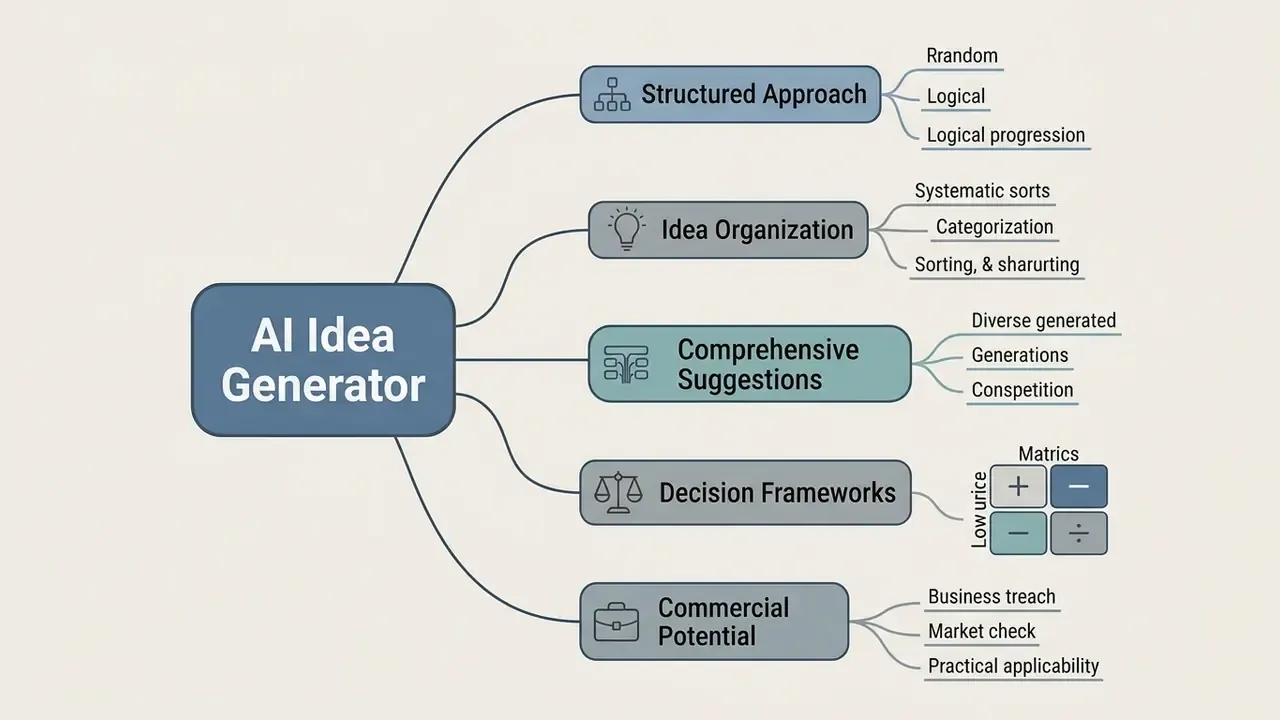
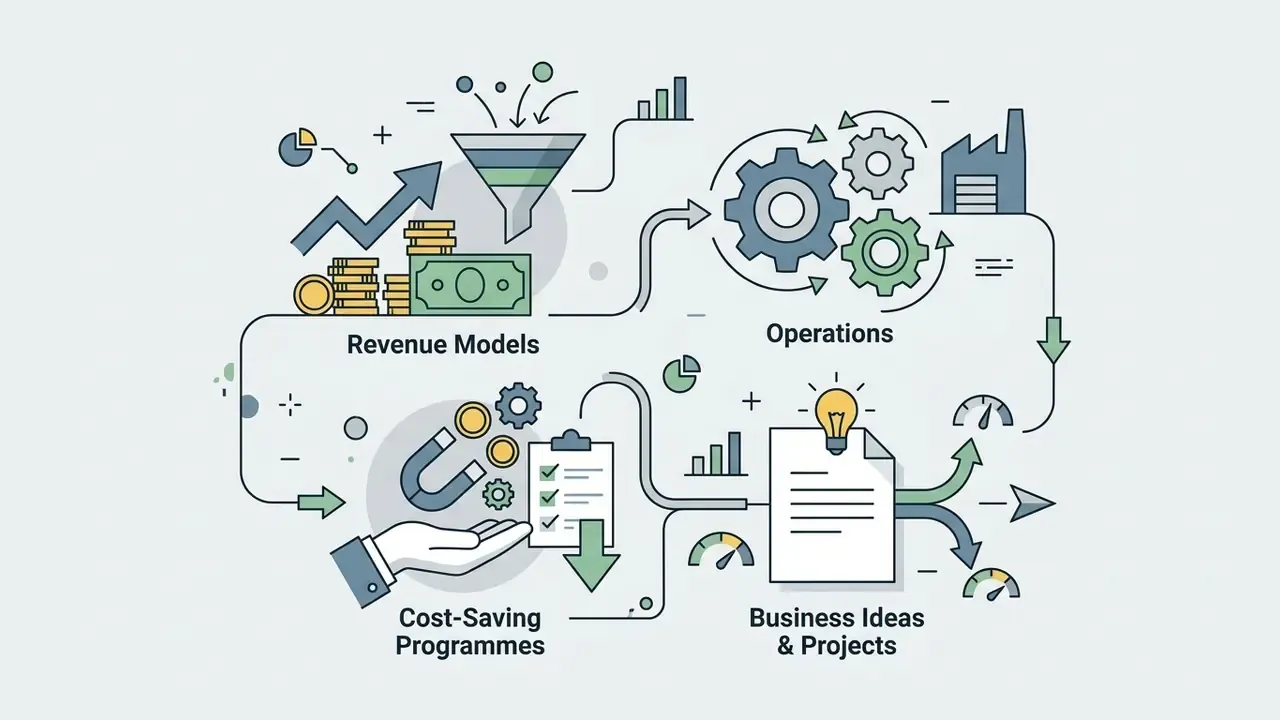
Branch labels, duplicated as text for accessibility:
What Can You Use an AI Generator for Ideas?
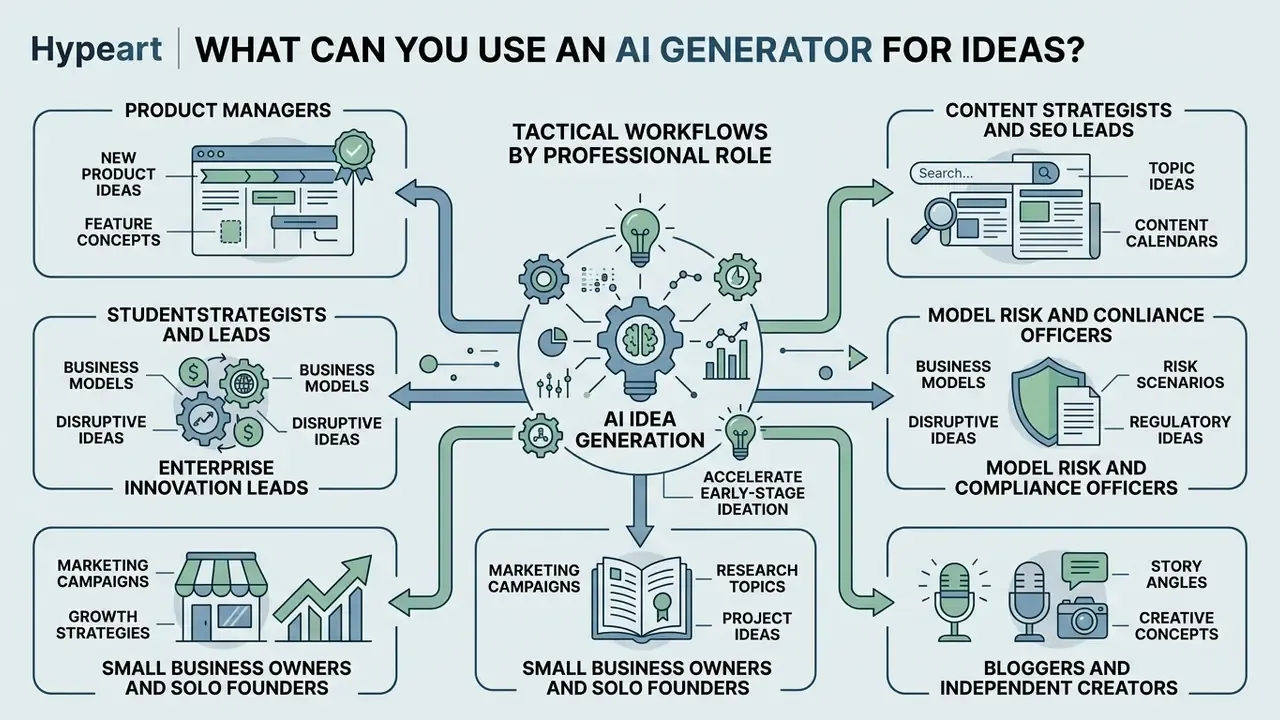
An ai generator for ideas serves innovation teams, product managers, academic researchers and content strategists who need to accelerate early-stage ideation. Organizations deploy an ai generator idea architecture to find market white space, outline project scopes and map multi-channel content roadmaps under defined constraints. Specify the objective and the boundary conditions, and an ai generator ideas pipeline translates an abstract goal into execution pathways you can actually staff.
Tactical Workflows by Professional Role
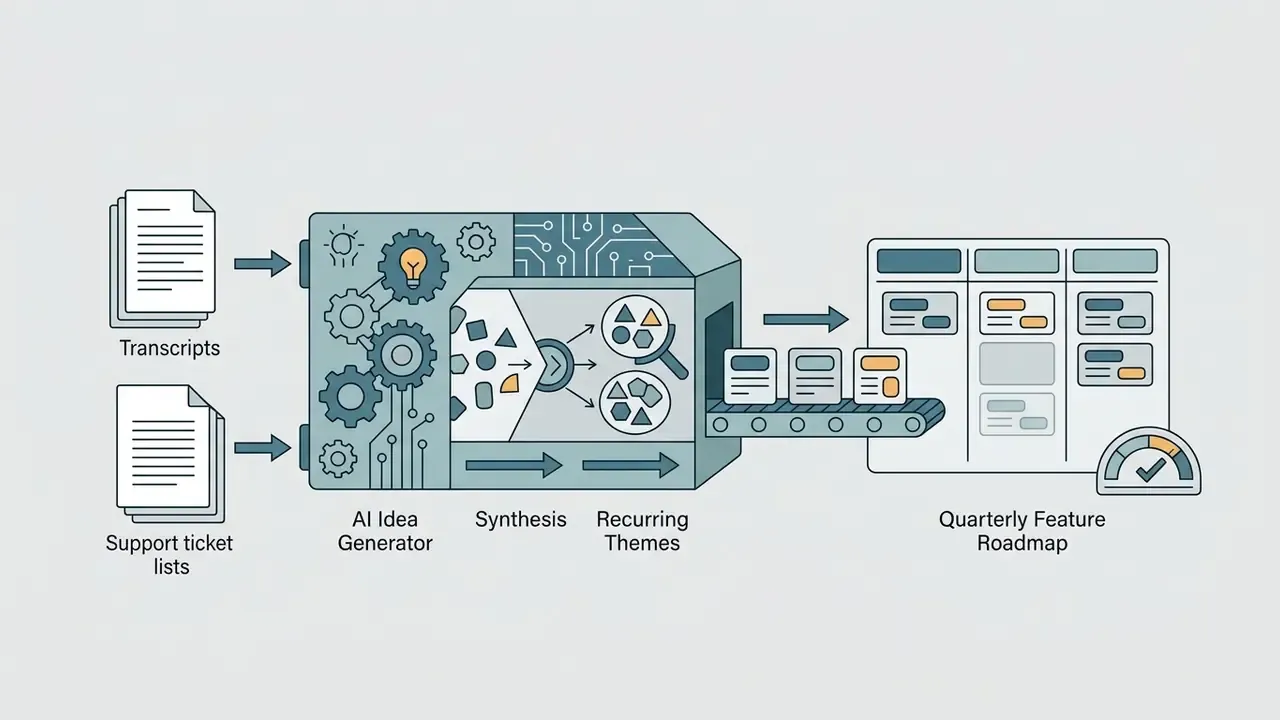
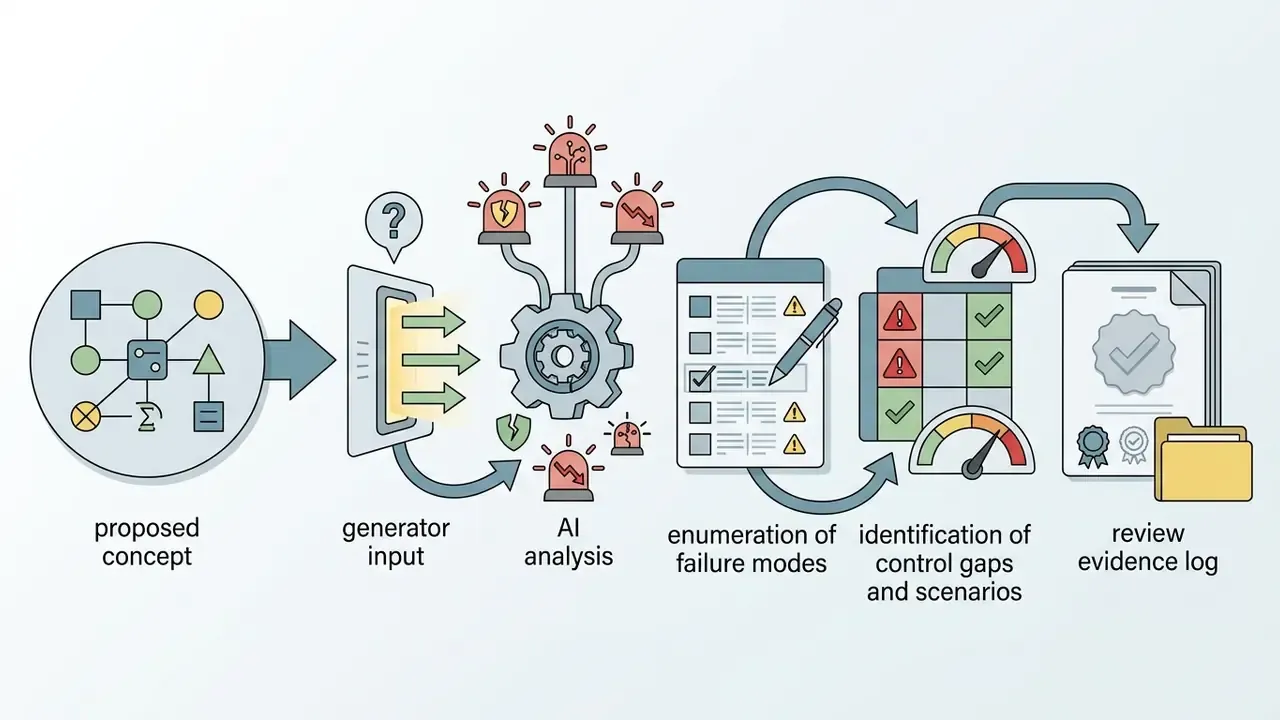
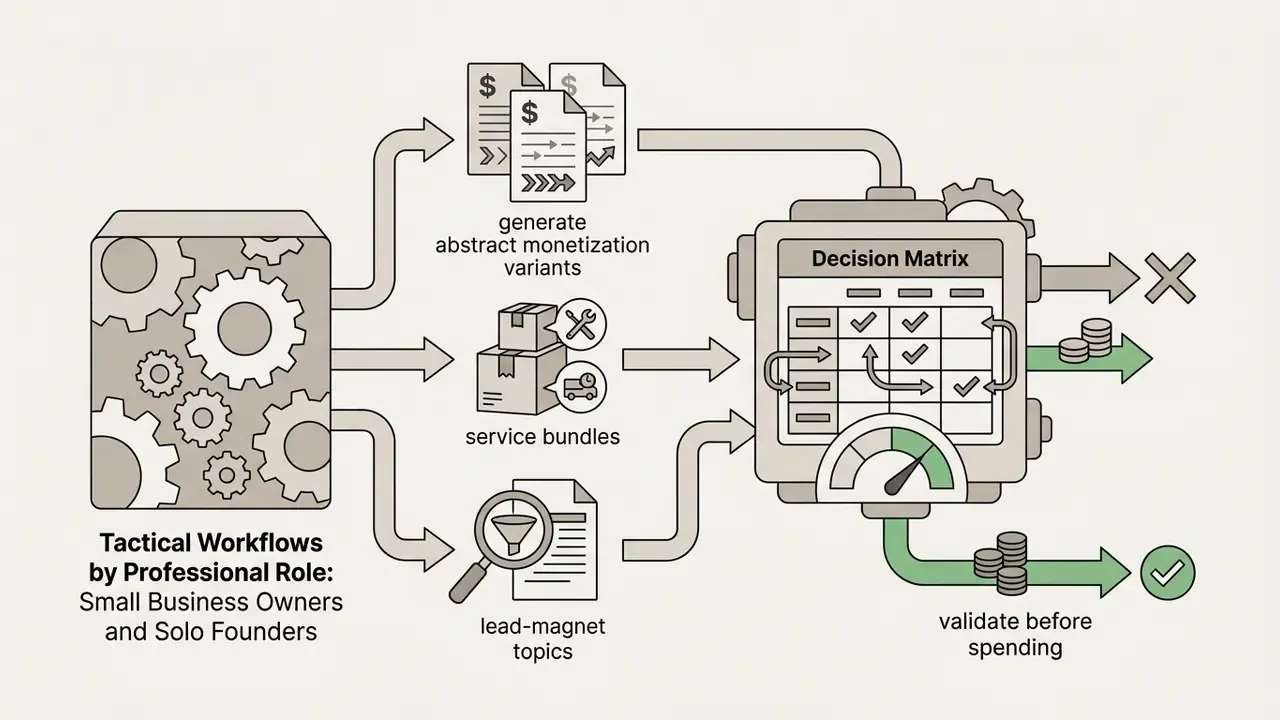
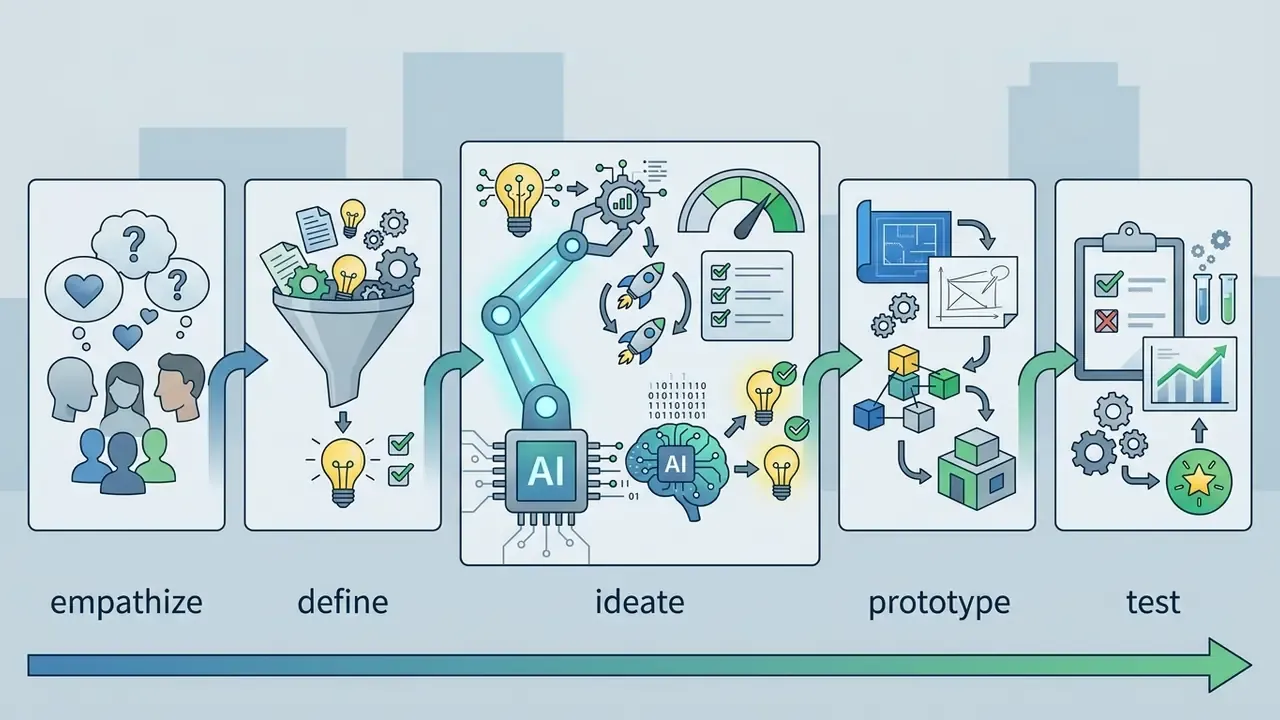
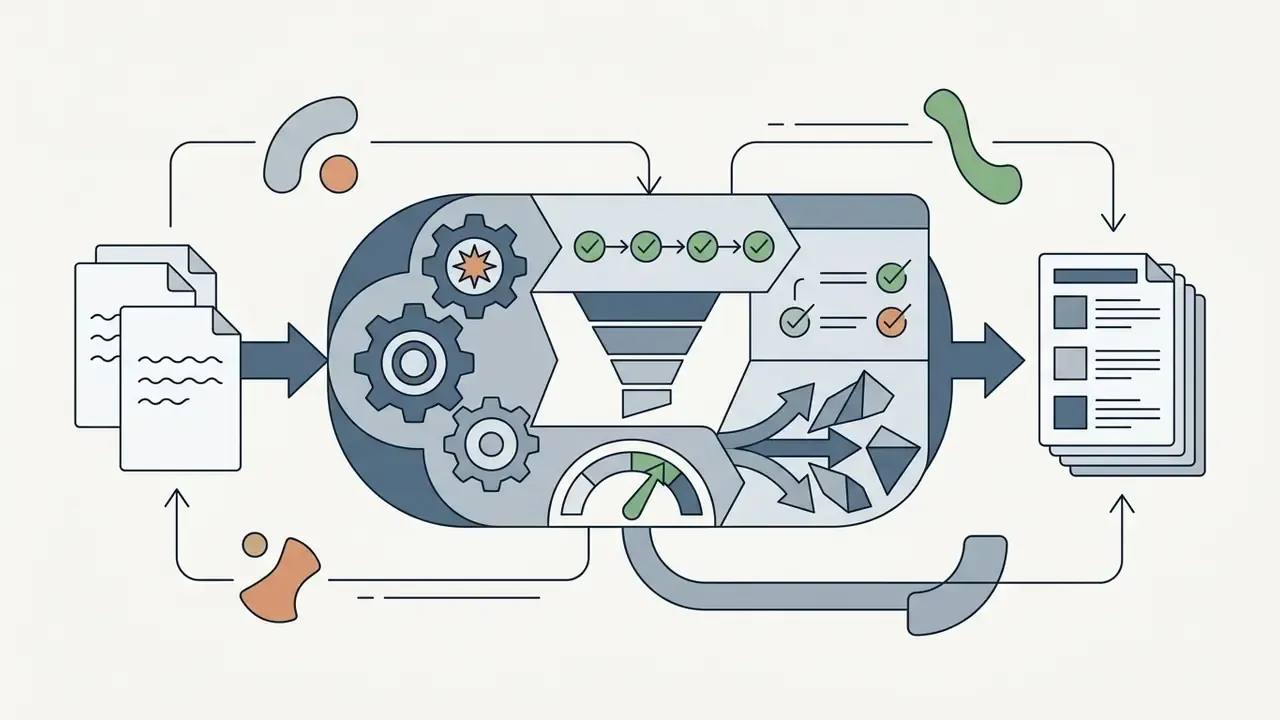
Product, Business and Invention Ideas
An ai product idea generator lets teams explore feature variants, business models and patentable directions before R&D capital is committed. In product innovation studies covering low-cost consumer offerings, top-tier AI-generated concepts reached up to seven times higher purchase-intent rankings than unassisted human baselines.
«AI-generated ideas were on average of higher quality and were roughly seven times more likely to rank in the top 10% on purchase intent than human ideas.»
Project Ideas for Teams, Students and Creators
An ai project idea generator converts a broad thematic objective into a scoped project with milestone dependencies, skill requirements and named risk factors. Studies on group ideation suggest that adding neural suggestions to team sessions widens the diversity of project vectors and loosens early groupthink.
Teams can enter target deliverables and available resources into an ai suggestion generator and get proposals matched to real capacity, not to an imaginary team of ten. One protocol earns its keep here: modified brainwriting. Participants write ideas independently in parallel three-minute rounds, then review human and LLM ideas side by side. The model's phrasing gets far less chance to anchor the room.
Content, Blog, Writing and Topic Ideas
An ai topics generator speeds editorial planning by turning baseline keywords into content clusters, audience-specific headlines and narrative outlines. Strategists use an ai suggestions generator to hold a publishing schedule across technical domains without thinning out subject-matter rigor. Condition an ai thought generator on a described reader persona and the discussion themes start hitting actual customer pain points rather than generic industry chatter.
Governance still applies to editorial output, and this is where many teams get sloppy. Google's 2026 guidance says AI-assisted content must stay accurate, high quality, relevant and people-first, and warns against mass-producing near-duplicate variation pages to game rankings. Purdue University's 2026 AI Content Guidelines require human review, fact-checking, bias screening and brand-voice editing before publication, and forbid AI as the final author of official statements. In the EU, the 2026 Code of Practice on transparency of AI-generated content adds labeling and disclosure duties.
Generating SEO-Optimized Headlines from Raw Topics
Turn raw topic output into higher-CTR headlines with structured constraints:
- Data-driven formula:
[Number] + [Adjective] + [Target Keyword] + [Outcome/Benefit] - Risk-aversion formula:
How to Avoid [Common Pitfall] in [Industry] Without [Negative Side-Effect] - Authority formula:
[Target Keyword]: What [Role] Should Check Before [Decision] - Search-intent matching: instruct the tool to output titles of 50 to 60 characters so the SERP does not truncate them, and to produce at least five variants per topic for A/B selection.
- Cluster discipline: one pillar page per core keyword, three to five supporting subtopics, one distinct primary intent per URL. That last rule is what prevents cannibalization.
How Does an AI Idea Generator Work?
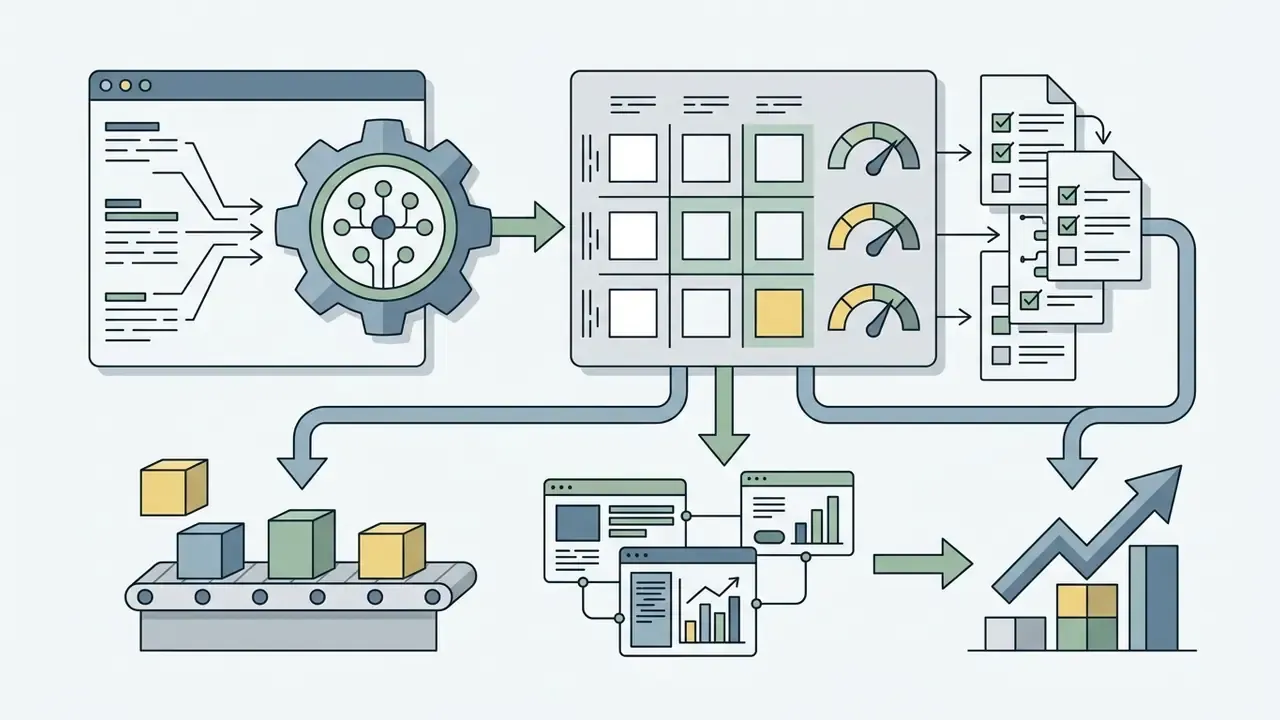
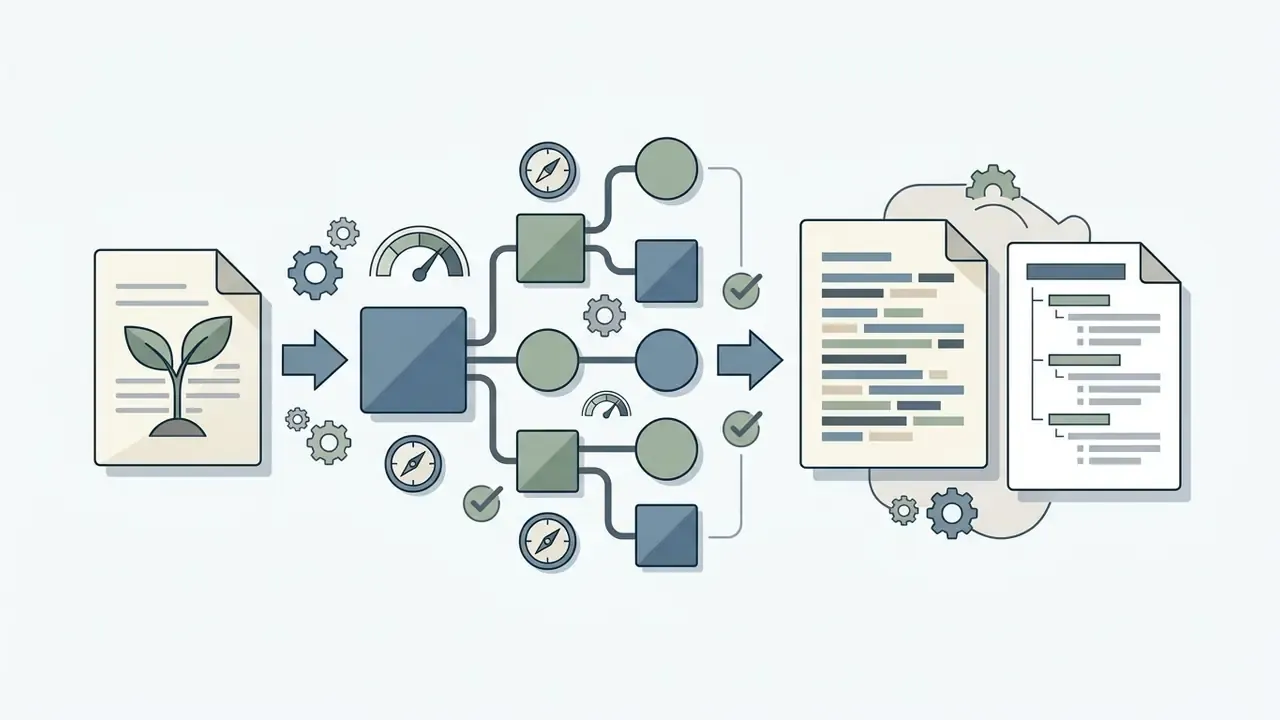
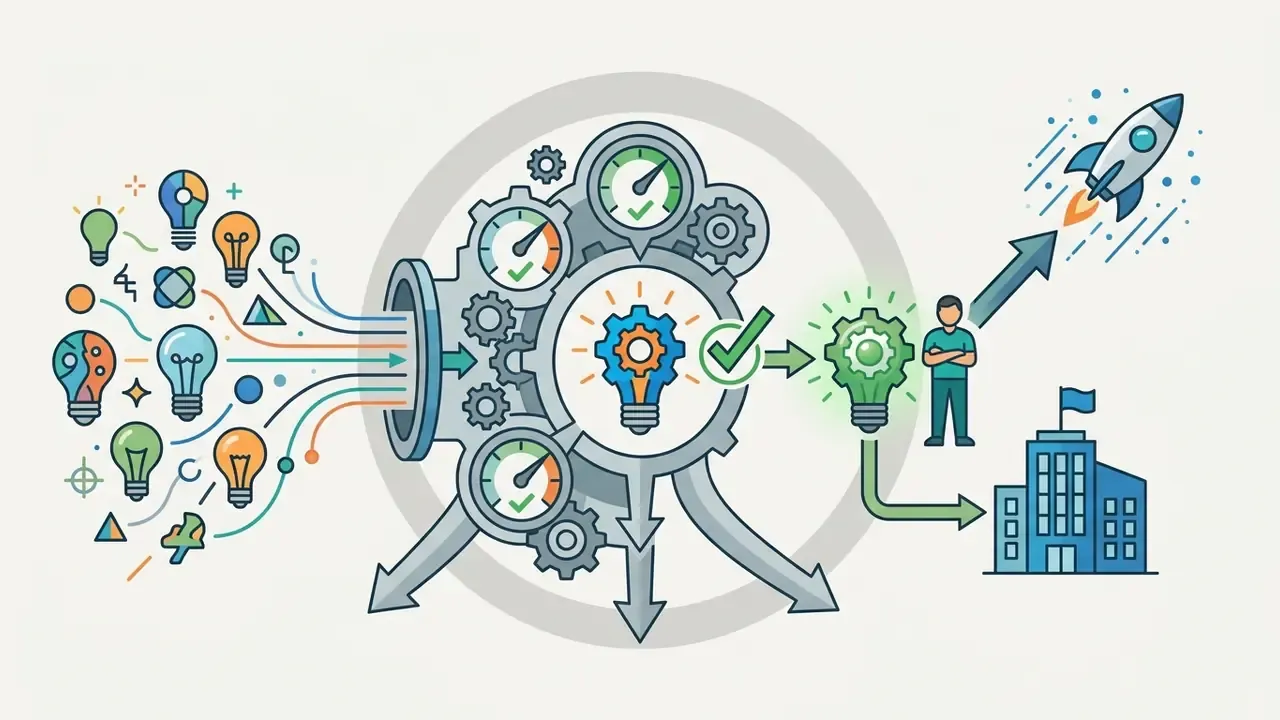
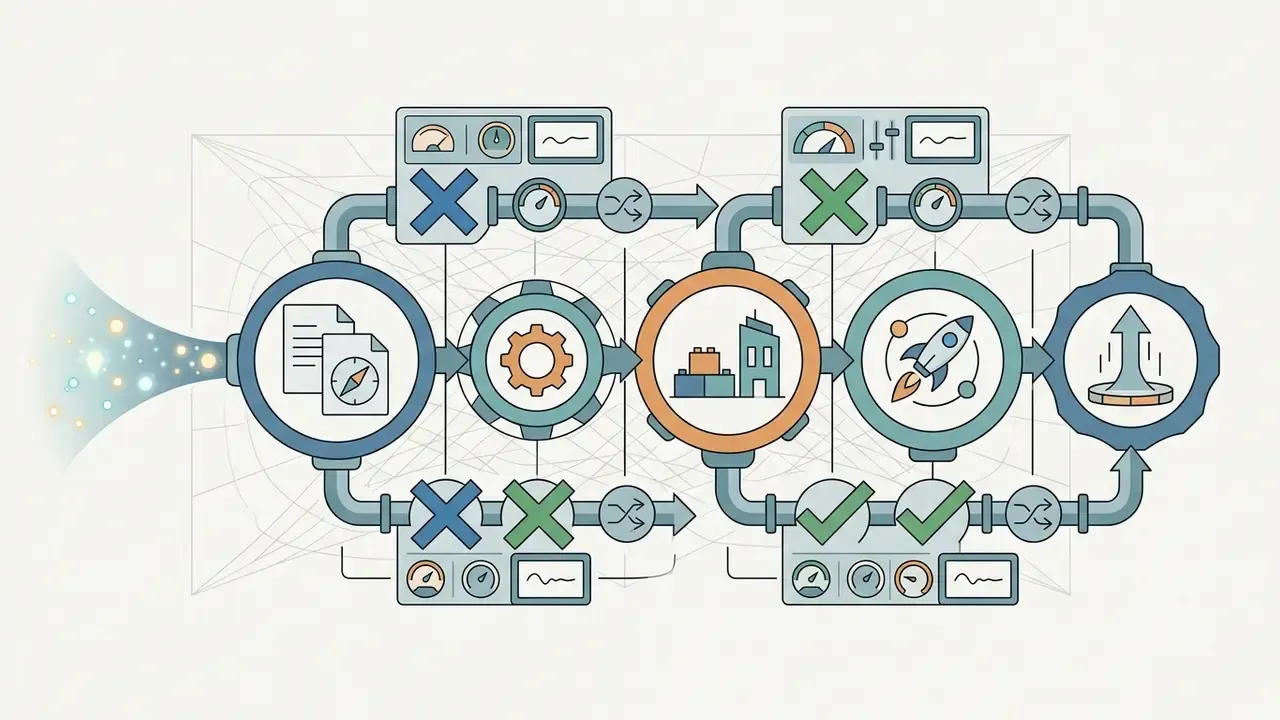
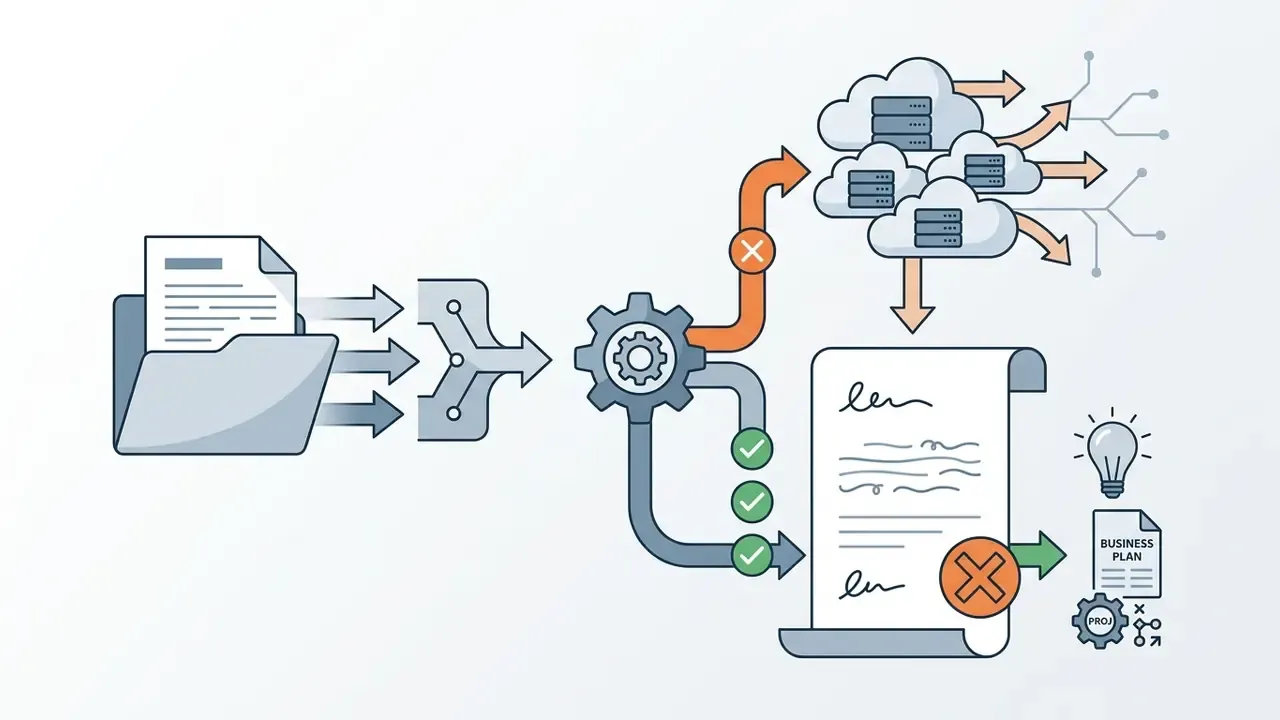
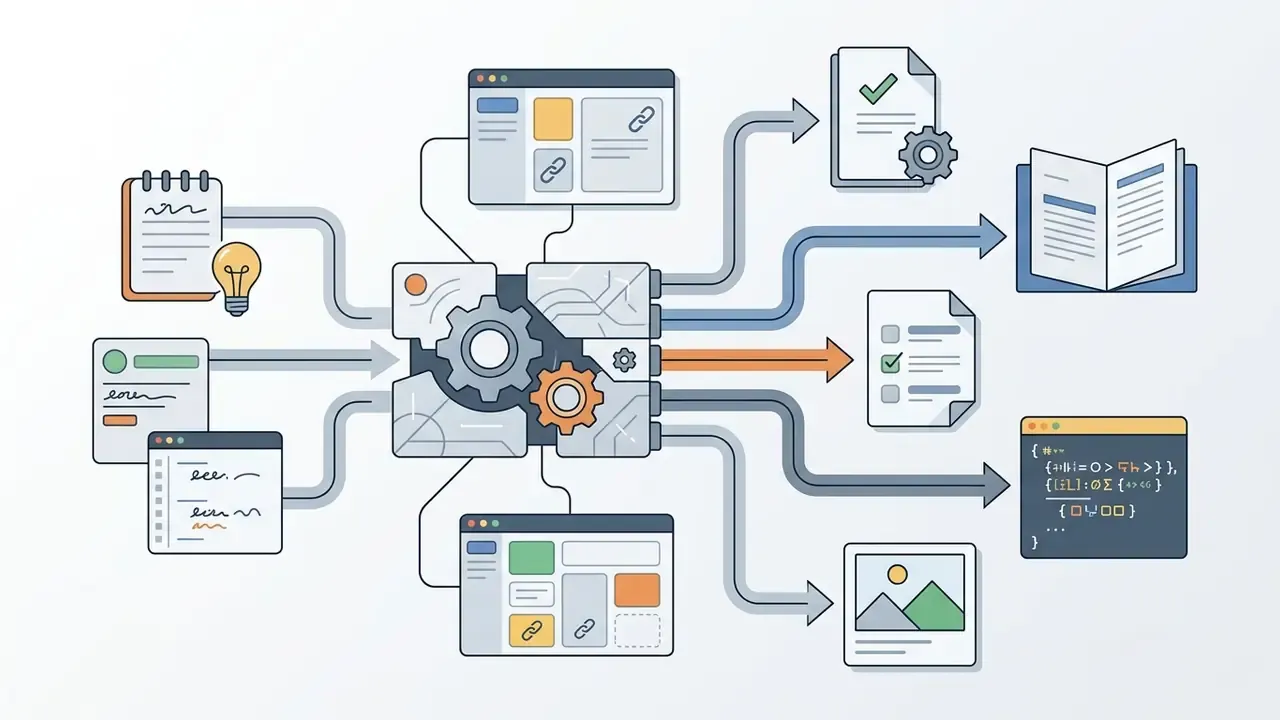
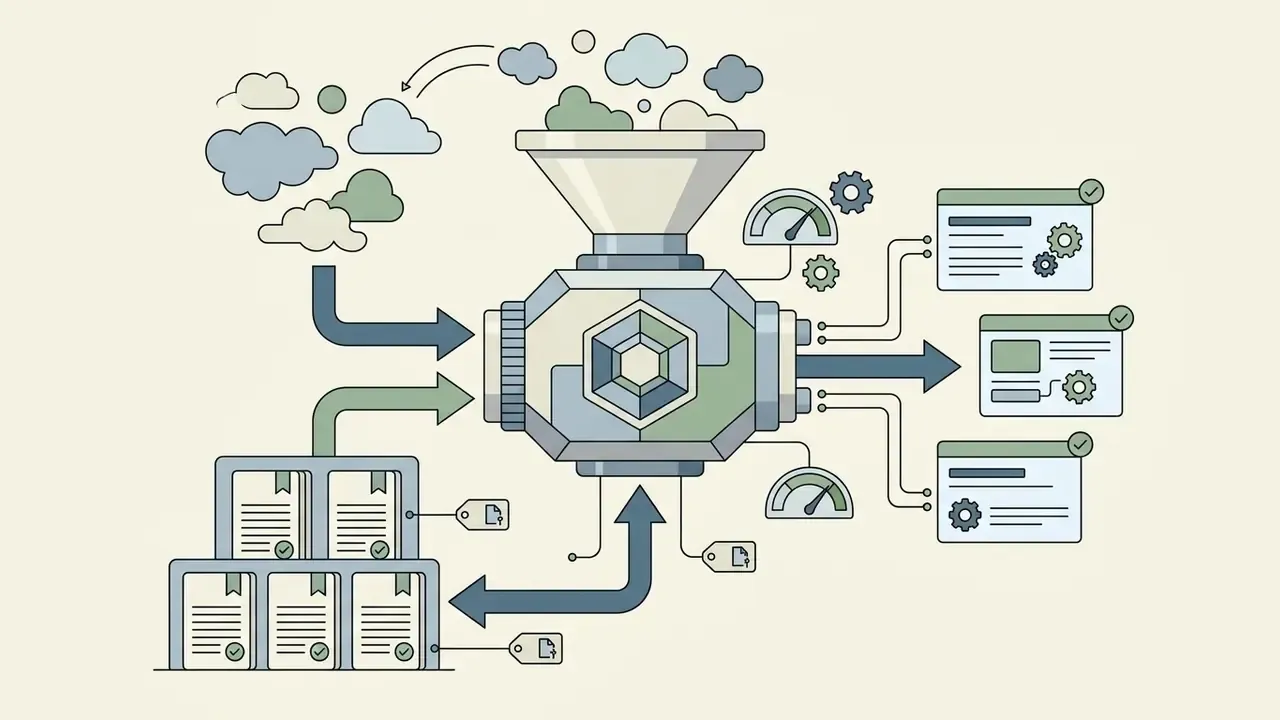
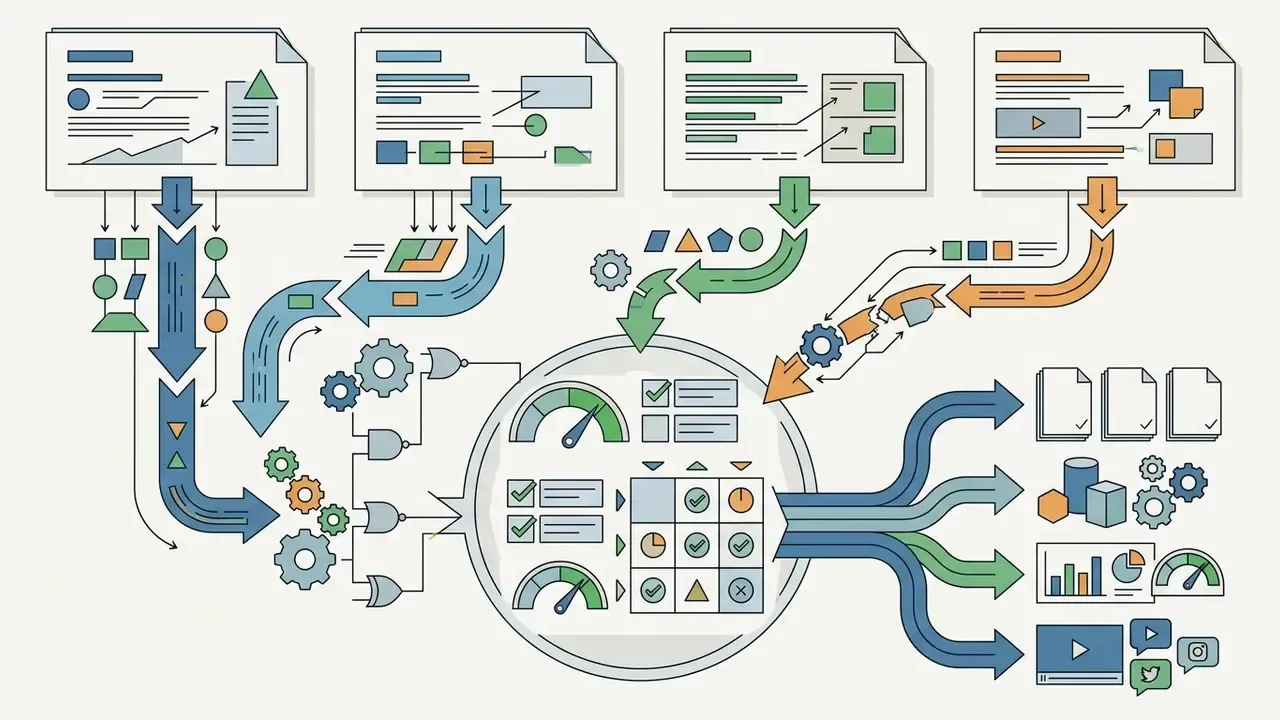
An ai ideas generator runs a three-stage pipeline: context input and retrieval, neural candidate generation, then human-led filtering and ranking. The flow keeps output anchored to domain data instead of unconditioned model weights.
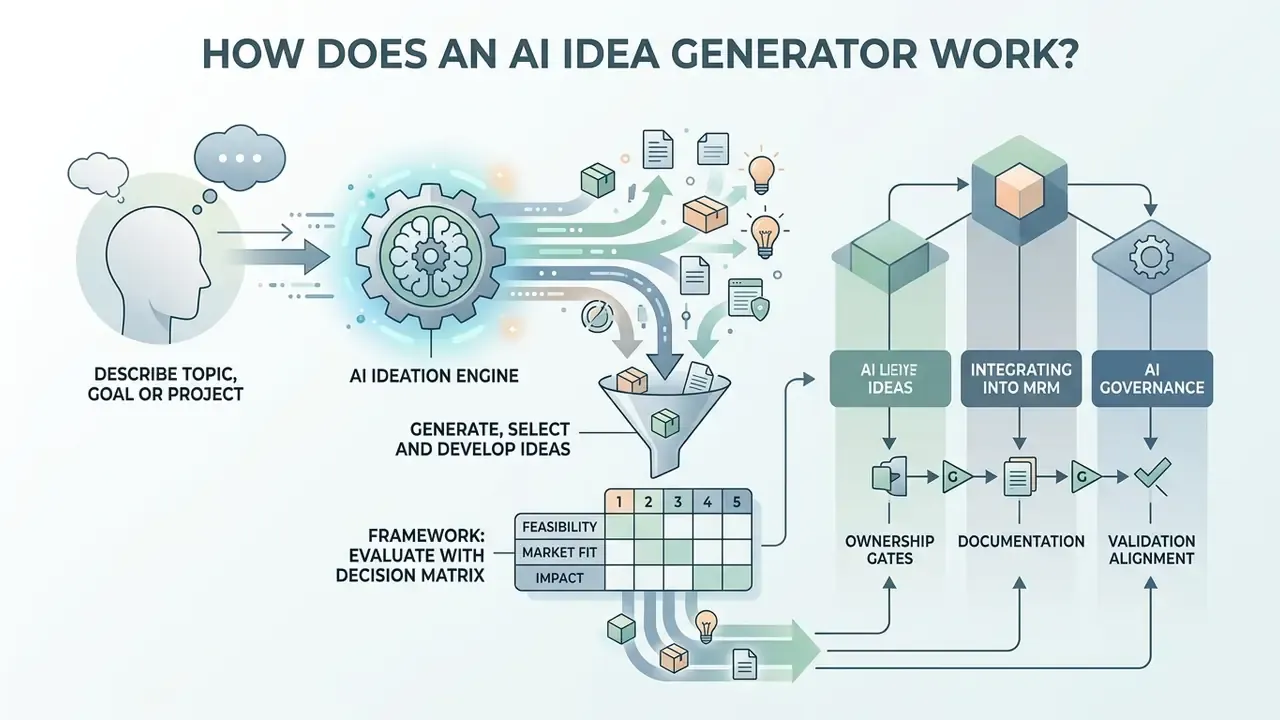
Stages, duplicated as a numbered list:
Describe the Topic, Goal or Project
The first stage means writing down explicit input parameters: core topic, organizational objective, target audience, operational constraints. Detailed background beats a single-word query every time, because it restricts the model's semantic search space to the domain you actually work in. NIST AI RMF 1.0 stresses that establishing operational context upfront lowers misalignment and hallucination risk during downstream inference. NIST's quick-start prompting guidance goes further: the stated audience should set abstraction level, terminology precision and response structure.
A minimum viable brief carries six fields: task or goal, context and background, audience, constraints and exclusions, required output format, evaluation criteria. University prompt-design sheets add a small but decisive rule. Replace generic audience labels ("business people") with described audiences ("mid-market commercial credit risk officers in US banks"). The difference in output is not subtle.
Generate, Select and Develop the Best Ideas
Stages two and three mean generating candidate pools, applying multi-criteria filtering, then elaborating the survivors into project blueprints. Frameworks such as Nova use multi-step retrieval and tournament ranking to surface the top decile of concepts for human review (Hu et al., 2024, https://arxiv.org/abs/2410.14255). Google Cloud's enterprise Idea Generation agent applies the same principle in production: select data sources, state a goal, then generate and rank through tournament-style competition. Selected outputs get expanded with targeted follow-up prompts into functional specifications.
Volume guidance from consumer-research practice is refreshingly concrete. Generate 30 to 120 candidates. Select the strongest. Check whether they are genuinely different and sufficiently bold. Modify them. Filter everything the model suggests. And note this: improvement of the next round comes from few-shot prompting, retrieval-augmented generation or fine-tuning, not from re-running the same prompt and hoping.
Framework: How to Evaluate AI Ideas with a Decision Matrix
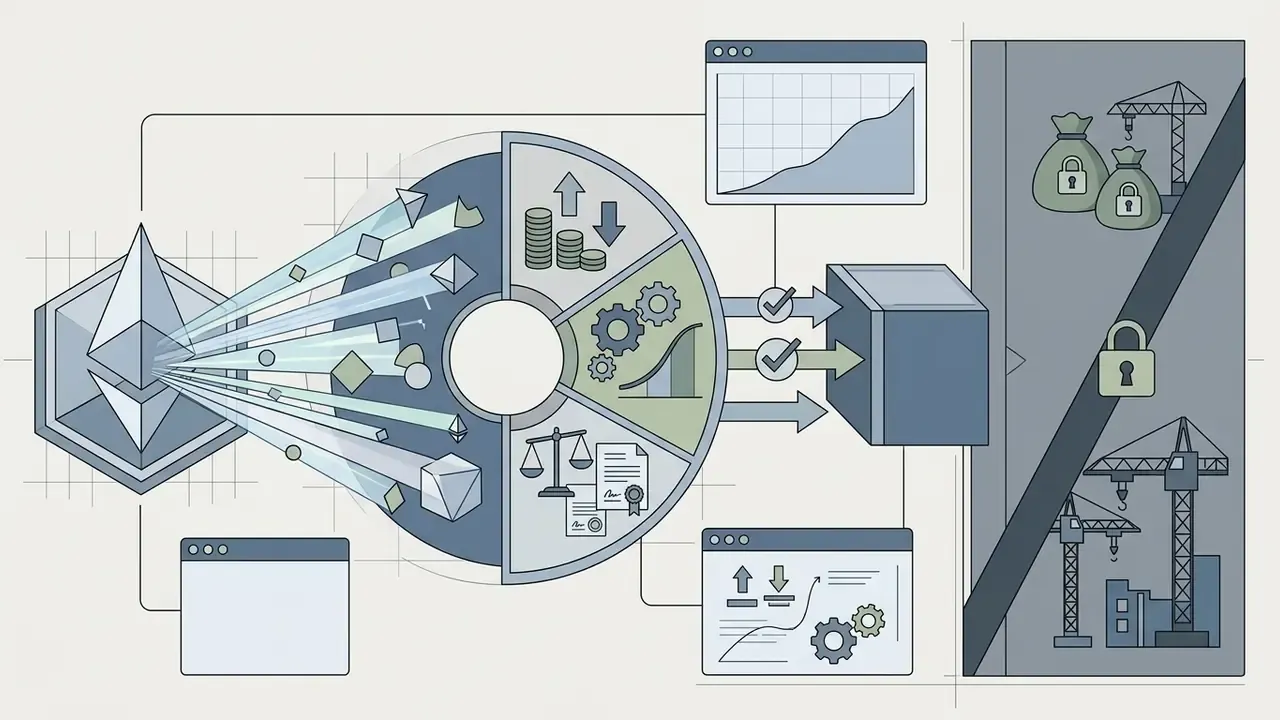
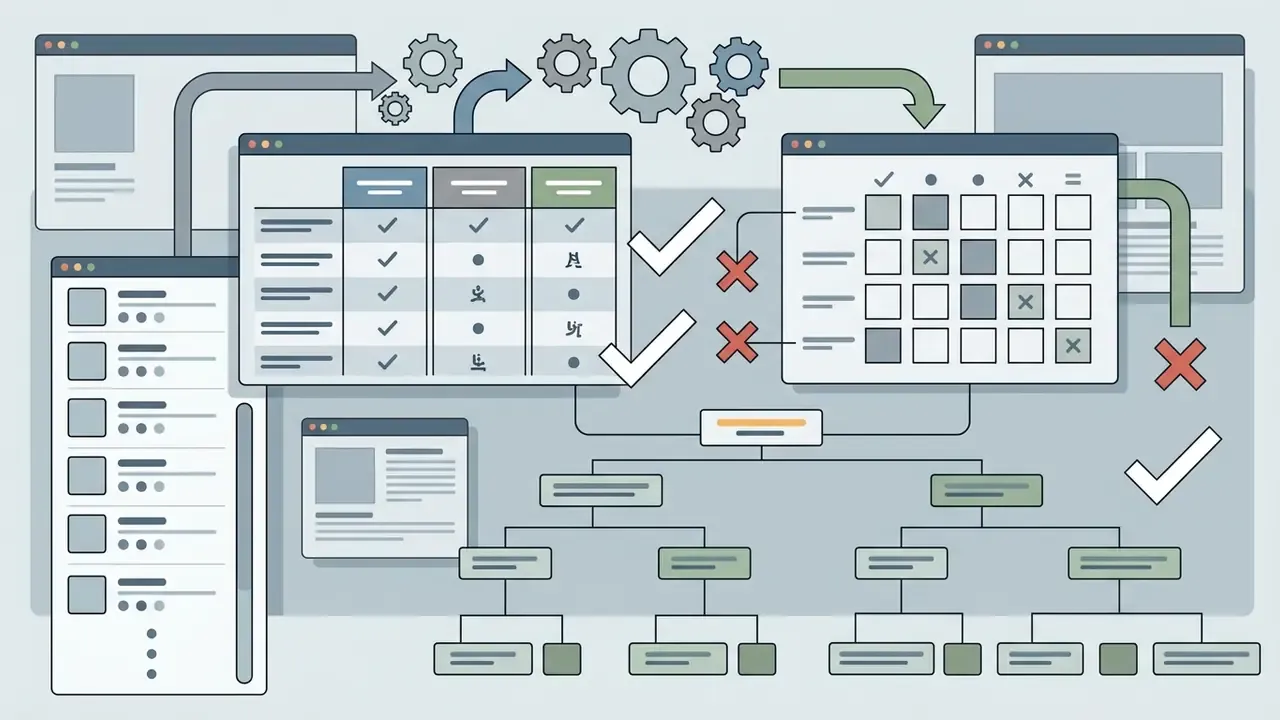
Once the candidate pool exists, run each concept through a four-vector scoring matrix on a 1 to 5 scale. This is the gate that filters operational noise out before anyone builds anything.
| Concept Name | Strategic Alignment (1-5) | Feasibility and Tech Effort (1-5) | Market/User Impact (1-5) | IP / Compliance Risk (1-5, lower is better) | Total Score (of 20) | Action Status |
|---|---|---|---|---|---|---|
| Concept A | 5 | 4 | 4 | 2 | 15 | Approved for PoC |
| Concept B | 2 | 5 | 3 | 5 | 15 | Rejected (low alignment, high risk) |
| Concept C | 4 | 3 | 5 | 1 | 13 | Park and re-scope |
Rules of use:
- Accept concepts scoring 14 or above, provided IP / Compliance Risk sits at 2 or below. A strong total never overrides a red compliance flag. Concept B above shows why the rule exists.
- Score independently, then reconcile. Two reviewers minimum. Disagreements wider than two points trigger a conversation, not an average.
- Keep the matrix to two to five criteria. Regulated teams usually swap one vector for "model risk and explainability".
- Record scores in the idea log. The matrix doubles as your audit artifact showing that human judgment was applied.
- For portfolio views, plot impact against feasibility and use IP risk as marker colour. Where criteria overlap heavily, a Venn diagram reads better than a scatter.
Integrating Ideation into MRM and AI Governance
For banks, insurers and other regulated institutions, an ideation pipeline only becomes usable once it maps onto existing model risk management practice:
- Ownershipevery accepted concept gets a named human owner and a sponsoring business unit before development starts. No evidence, no autonomy.
- Gatesoutput enters a stage-gated process (identify use case, PoC, prototype, MVP pilot, launch) with documented exit criteria at each gate.
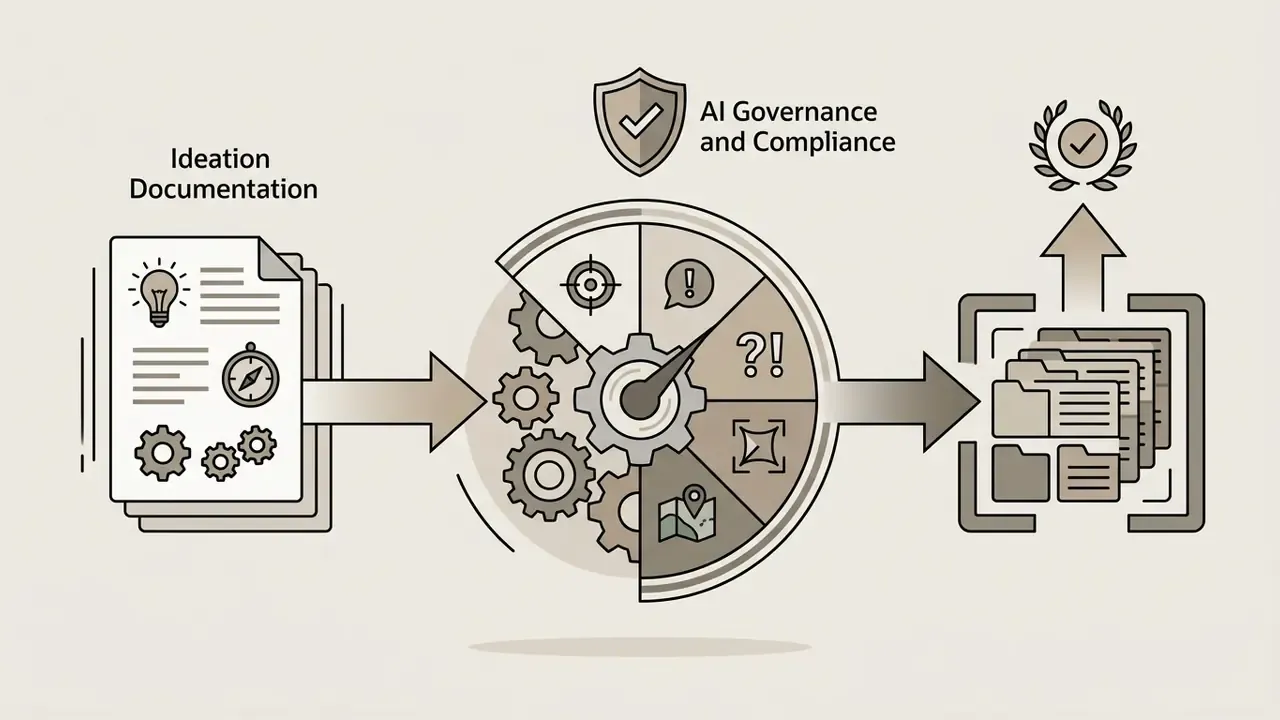
- DocumentationNIST AI RMF 1.0 expects intended use, assumptions, limitations and operational context to be documented. Those are the same fields your prompt brief already holds, so capture them once and reuse them as governance evidence.
- Validation alignmentwhere a concept becomes a model or a model-adjacent decision component, route it to independent validation under your existing framework. For US banks that means supervisory model-risk guidance. For EU deployments, AI Act obligations plus the 2026 transparency code.
- Escalation pathcompliance red flags go to the CCO, unresolved model risk to the CRO or the model risk committee, IP disputes to legal. Define the route before the first workshop, not after the first incident.
- ROI with control costsevaluate on risk-adjusted return. Expected benefit, minus build cost, minus recurring control cost (monitoring, validation, logging, review hours), minus a residual-risk allowance. Most inflated AI business cases fail on that third line.
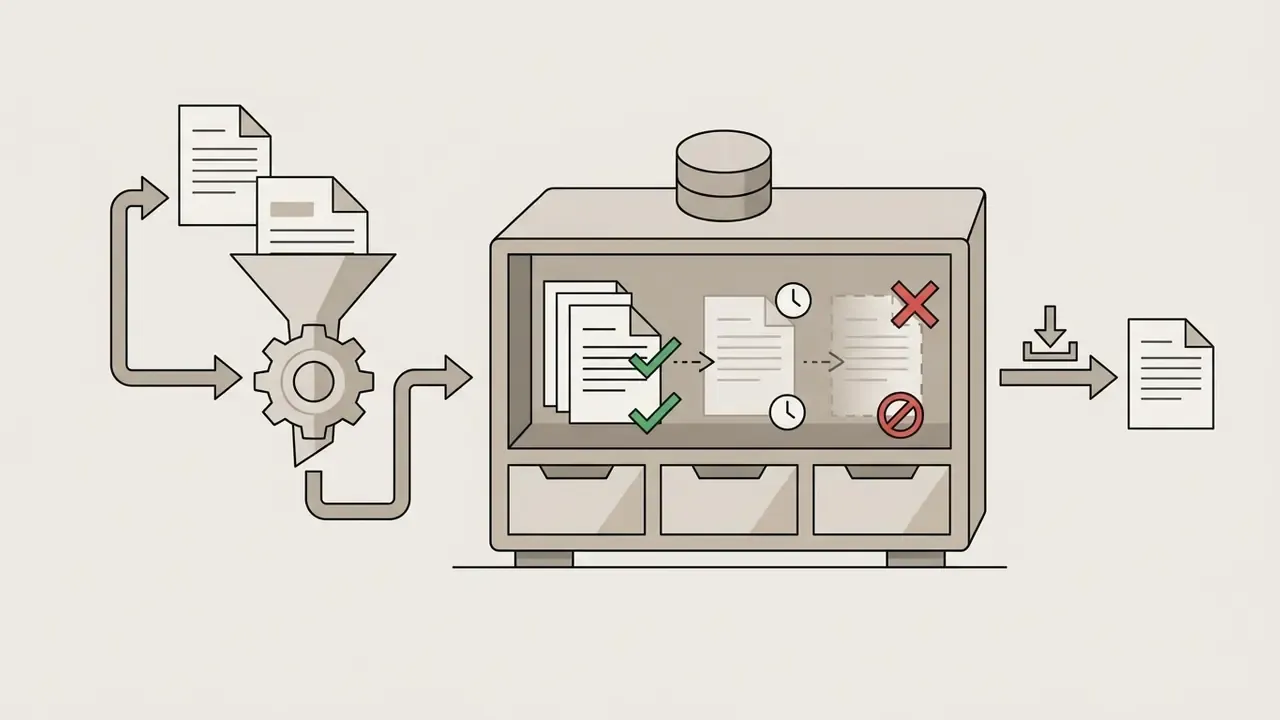
- Retention and exportenterprise agents may hold generated ideas only temporarily. Google Agentspace keeps idea content for 60 days and expects export, for example into a NotebookLM Enterprise notebook, for longer retention. Design the export step so audit evidence outlives the tool session.
Can You Use AI-Generated Ideas for Professional and Commercial Projects?
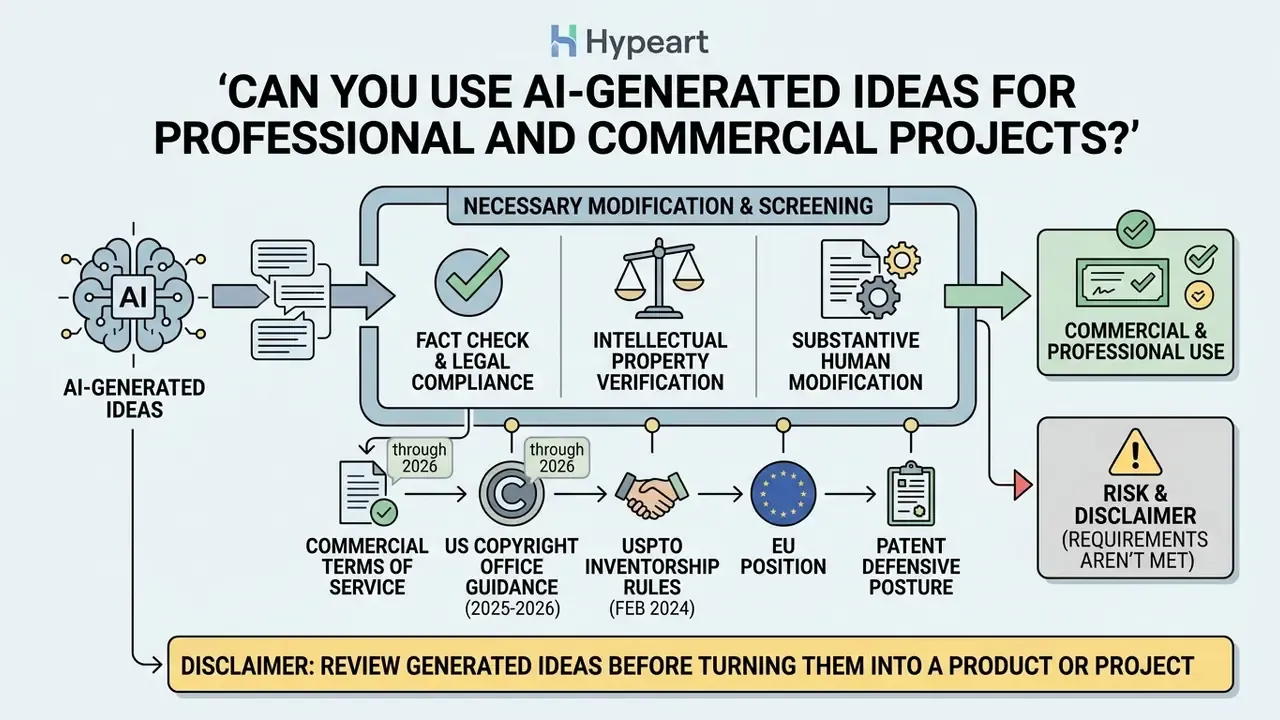
AI-generated ideas can be used commercially provided they pass substantive human modification, intellectual property verification and compliance screening. Under current US Copyright Office and USPTO guidance, purely machine-generated output holds no copyright protection and no inventorship status without demonstrable human conception. Teams reviewing institutional licensing frameworks can open the hub for enterprise guidance, and compare how platform-level terms are actually worded in the analysis of commercial use of AI image generators.
Fact check and legal compliance (2025 to 2026 guidance):
Review Generated Ideas Before Turning Them Into a Product or Project
A rigorous human-in-the-loop review is mandatory before AI suggestions enter a formal roadmap or a commercial offering. That means prior art searches, risk-adjusted ROI evaluation, and independent model validation to contain residual operational risk.
«LLM-generated ideas were judged significantly more novel than expert human ideas (p < 0.05), while scoring slightly lower on feasibility.»
That asymmetry, higher novelty and lower feasibility, is precisely why expert review is not optional. The NIH Generative AI Usage Toolkit (2025) sets a three-part standard for AI output: expert review, cross-referencing against trusted sources, and empirical testing. Patent-office practice adds the novelty dimension, since examination compares claimed features against the closest cited prior art. So the novelty check must precede any drafting effort, not follow it. Commercial viability is validated separately by documenting the problem, target users, differentiation and financial model before build.
Where regulatory or intellectual property disputes surface, legal officers should view the guide on emerging AI litigation precedents.
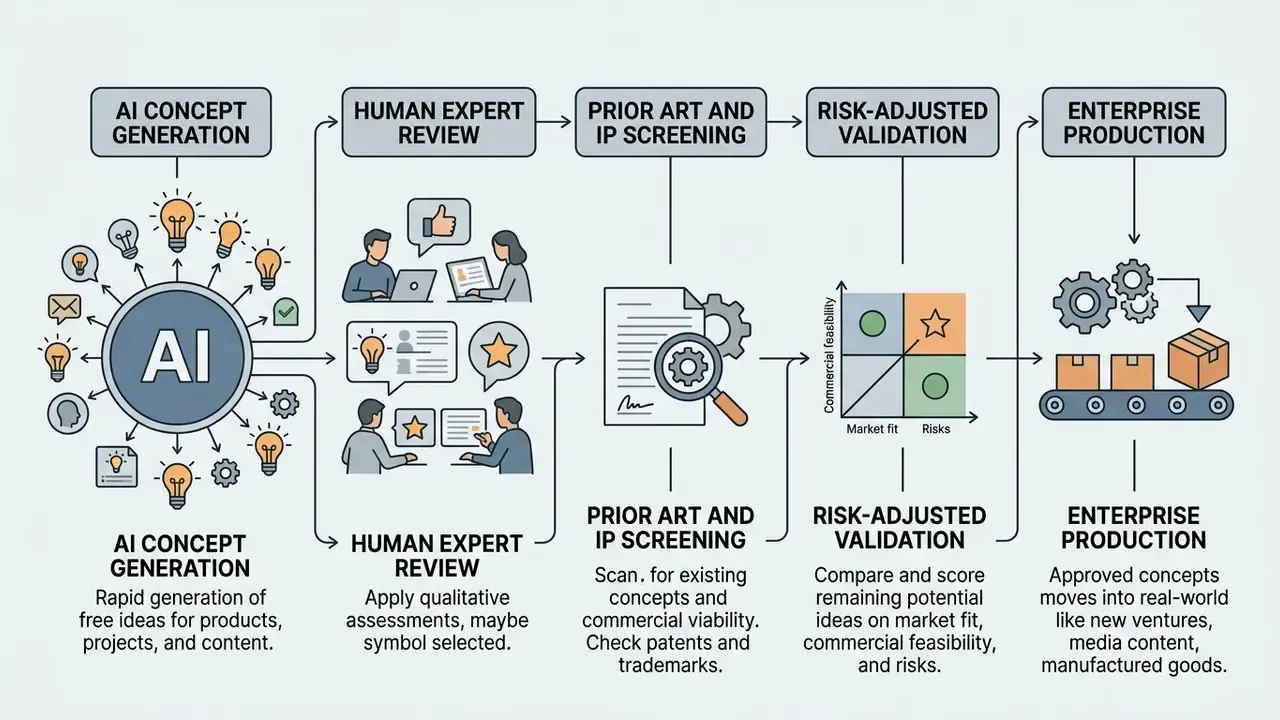
Audit Evidence Checklist: Clearing an Idea for Development
Keep these artifacts for every concept that passes the gate. This is what an internal auditor, an examiner, or opposing counsel will ask to see.
Checklist0 / 10
How to Get Better Ideas From an AI Idea Generator
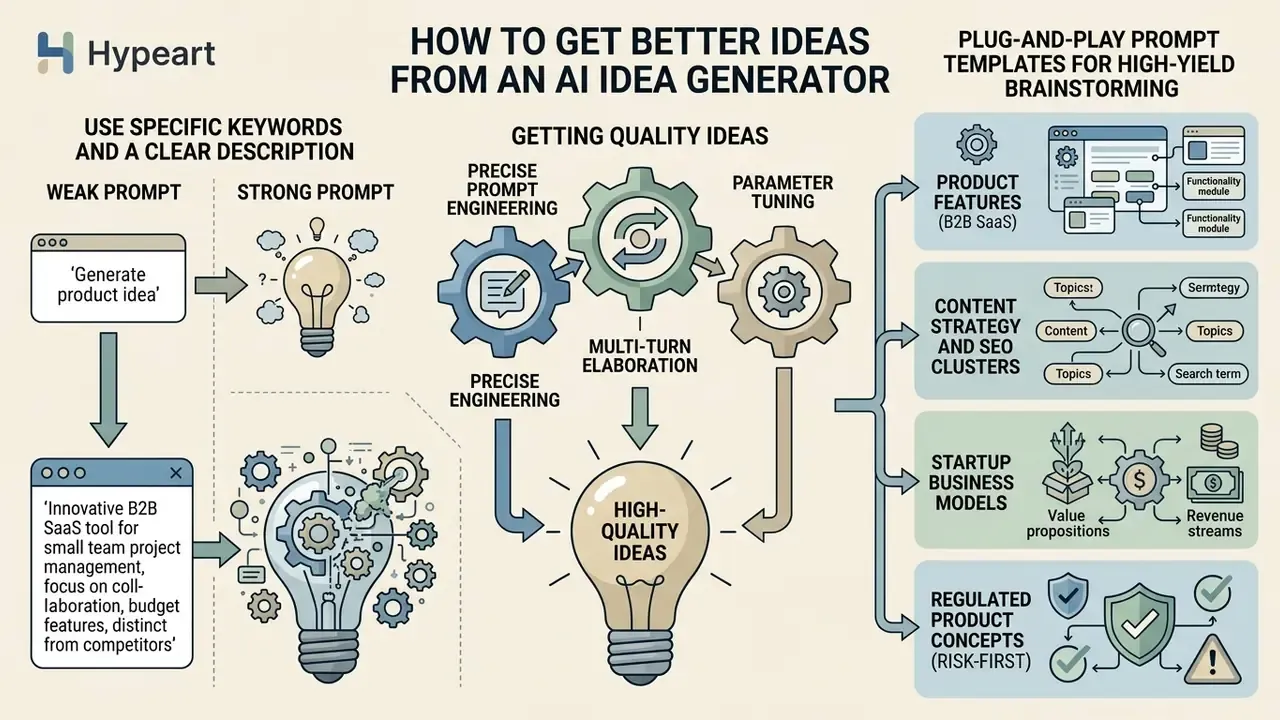
Getting quality out of an ai idea creator takes three things together: precise prompt engineering, multi-turn elaboration, and parameter tuning. Explicit negative constraints plus domain terminology raise novelty and cut fixation faster than anything else on the list.
One caution about complexity. A 2025 creativity study compared basic prompts, human-engineered prompts, automatically optimized prompts and chain-of-thought prompting, and the more elaborate methods did not reliably beat basic prompts on measured novelty. The practical reading: invest in context, constraints and iteration count first. Treat exotic prompt architectures as experiments to be tested, not defaults to be trusted.
Use Specific Keywords and a Clear Description
Precise domain keywords and detailed operational context dictate the specificity, and frankly the commercial usefulness, of what comes back. Prompt-engineering research shows that keyword density and explicit persona framing act as semantic anchors, steering the model toward specialized knowledge partitions.
«Chain-of-thought prompting reduces LLM fixation, and ordinary personas improve knowledge partitioning by acting as diverse sampling anchors.»
Interface guidelines add a useful economy. Subject and style keywords carry the signal, connecting words do not, and rephrasing the same keywords rarely changes output quality. Multiple descriptive keywords help, and keywords placed early in the prompt help more.
- Weak prompt "Give me some product ideas for banks."
- Strong prompt "Generate five automated risk-scoring feature concepts for US mid-market commercial credit risk officers. Focus on cash-flow reconciliation under volatile interest rate environments. Exclude retail mortgage products."
Plug-and-Play Prompt Templates for High-Yield Brainstorming
Copy and adapt these. Each one carries a negative constraint, which is the single fastest way out of the model's default answer set.
Product features (B2B SaaS):
Security-checked "Act as a Principal Product Manager. Generate 5 micro-feature concepts for [Target Product] targeting [User Persona] to solve [Specific Pain Point]. Enforce negative constraint: do not suggest mobile push notifications or email alerts. For each concept, list the primary data dependency and one adoption risk."Content strategy and SEO clusters:
Security-checked "Act as an Enterprise SEO Lead. Create a 4-tier content cluster topic map around [Core Keyword]. Include 1 pillar topic, 3 sub-topics, and 5 long-tail transactional Q&A angles for [Audience]. Output titles at 50-60 characters and label the search intent of each."Startup business models:
Security-checked "Generate 3 bootstrap-friendly monetization models for a platform focused on [Industry Niche]. Specify unit economics baseline, target gross margin, and primary regulatory risk factor. Exclude ad-supported models."Regulated product concepts (risk-first):
Security-checked "Act as a Model Risk Officer. Propose 5 operational improvements to [Process] in a [Jurisdiction] regulated institution. For each: control owner, required audit evidence, applicable regulation, and one failure mode. Exclude anything requiring new customer PII collection."Red-teaming an existing idea:
Security-checked "Critique this concept as a skeptical investment committee: [Paste concept]. Produce 7 reasons it fails, ranked by likelihood, and the cheapest test that would falsify each assumption."Sustainability and cost-saving programmes:
Security-checked "Generate 6 cost-saving initiatives for [Department] with under [Budget] implementation cost. Rank by payback period and note the internal stakeholder whose approval is required."
Aggregated scenario (illustrative, anonymized): an enterprise fraud risk team paired chain-of-thought prompting with domain-specific regulatory keywords while testing an ai idea maker workflow. By writing explicit compliance parameters and negative constraints into the prompts, the team produced three patent-eligible operational mechanisms that drew zero compliance flags during model validation. Disclosure: internally reported and anonymized. Not independently verified, and the outcome is workflow-specific rather than generalizable.
Explore Variations Instead of Choosing the First Result
Novelty comes from sampling multiple batches, not from accepting the first response. Individual outputs cluster semantically; scale the volume and coverage of the concept space widens considerably.
«Increasing the number of AI-generated ideas progressively improves coverage of the concept space, approaching the diversity level of human brainstorming.»
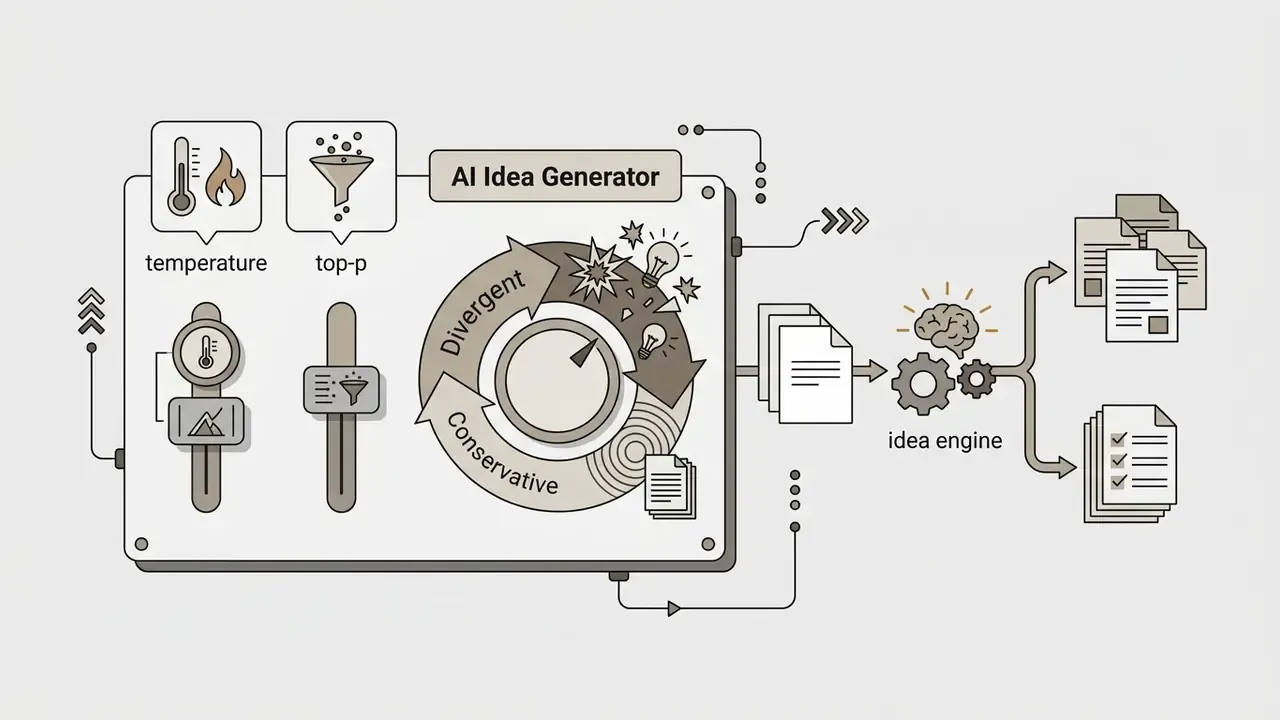
Adjusting decoding parameters, mainly temperature and top-p sampling, introduces variability at token selection and lets operators probe non-obvious directions on purpose. Temperature governs randomness: low values produce predictable, near-deterministic text suited to compliance-sensitive drafting, higher values widen the distribution for divergent exploration. Top-p, or nucleus sampling, restricts generation to the smallest token set whose cumulative probability reaches the threshold, so lower top-p narrows variation and higher top-p opens it up.
A workable loop: fix the brief, run three batches at rising temperature, then merge the strongest elements across responses into a hybrid concept. Hybrid prompting, meaning several smaller pools from differently framed prompts combined afterwards, consistently outperforms one large single-prompt pool. Teams weighing the cost of iterative sampling can see the overview of computational estimation frameworks before turning the dial to eleven.
Free AI Idea Generator: What to Check Before You Start
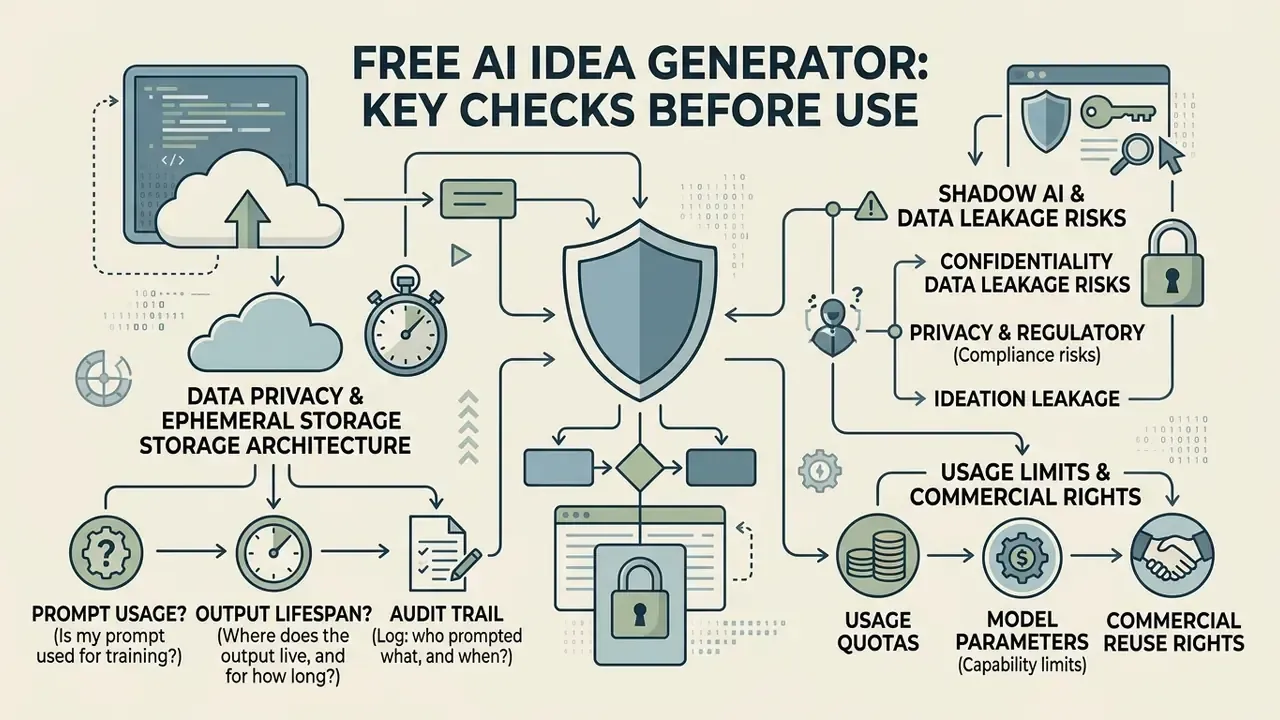
Assessing an ai idea generator free utility means inspecting usage quotas, data privacy disclosures, model parameter limits and commercial reuse rights. Free tiers usually give you a basic web interface with rate-limited generation. Enterprise workflows need dedicated endpoints and strict retention controls. A free ai idea generator is a fine sandbox, and a poor system of record.
| Tool Name | Free Access Tier | Generation Limits | Supported Task Types | Concept Expansion | Data Retention Policy | Retraining Exemption | Commercial Usage Terms |
|---|---|---|---|---|---|---|---|
| Ideanote | Yes (Free Plan) | 3 guest generations / 9 ideas total; 25 ideas per month after signup | Product, Project, Business | In-platform development, evaluation, measurement | Ideas stored locally in the browser until you sign up and save | Not stated for free tier, verify before use | Terms defined per subscription level |
| Canva AI | Yes (Free Tier) | 50 queries lifetime (500/mo Pro, Teams, Education) | Visual, Content, Business | Integrated design suite | Governed by platform terms | Not stated for free tier, verify before use | Text outputs carry no Canva copyright claim; usable for legal or commercial purposes under terms |
| Free.ai | Yes (Public) | Session-based caps; first session free | Startups, General Ideas | Copy, export, share | Not disclosed in public page | Not disclosed | Stated free for personal and commercial use |
| Keywords Everywhere | Yes (Shared) | 24 ideas per submission; 50 shared AI tokens per day across tools | Content, Topics, SEO | Text export | Governed by platform terms | Not disclosed | Governed by platform terms |
| MyMap-style visual generators | Yes (no signup) | Monthly AI message allowance on free accounts | Ideas, campaigns, projects | Expand, combine, group on canvas; comparison chart and decision matrix | Session or account-based | Not disclosed | Governed by platform terms |
Verify every cell against the provider's current terms before enterprise use. Free-tier policies change often, and the vendor page is the controlling source, not this table.
Data Privacy and Ephemeral Storage Architecture
With browser-based free generators, first establish whether prompt payloads feed model retraining, or whether a zero data retention (ZDR) policy applies. Decent free tools keep drafts in client-side storage through the LocalStorage API and protect traffic with TLS 1.3 in transit. Stronger platforms also state encryption at rest for anything exported to their servers. Ideanote, for instance, documents SSL in transit plus local browser storage until the user chooses to save. Whatever the tool, your team must never pass raw personally identifiable information (PII), non-public customer information (NPI), unreleased financial data or unpatented proprietary source code through an unapproved public endpoint.
Three questions settle most procurement debates:
- Is my prompt used for training?If the answer is unclear, treat it as yes.
- Where does the output live, and for how long?Ephemeral by default is good for privacy and bad for audit, so plan the export step.
- Can I produce a log of who prompted what, and when?If not, the tool cannot support a regulated workflow. Full stop.
Shadow AI and Data Leakage Risks in Ideation
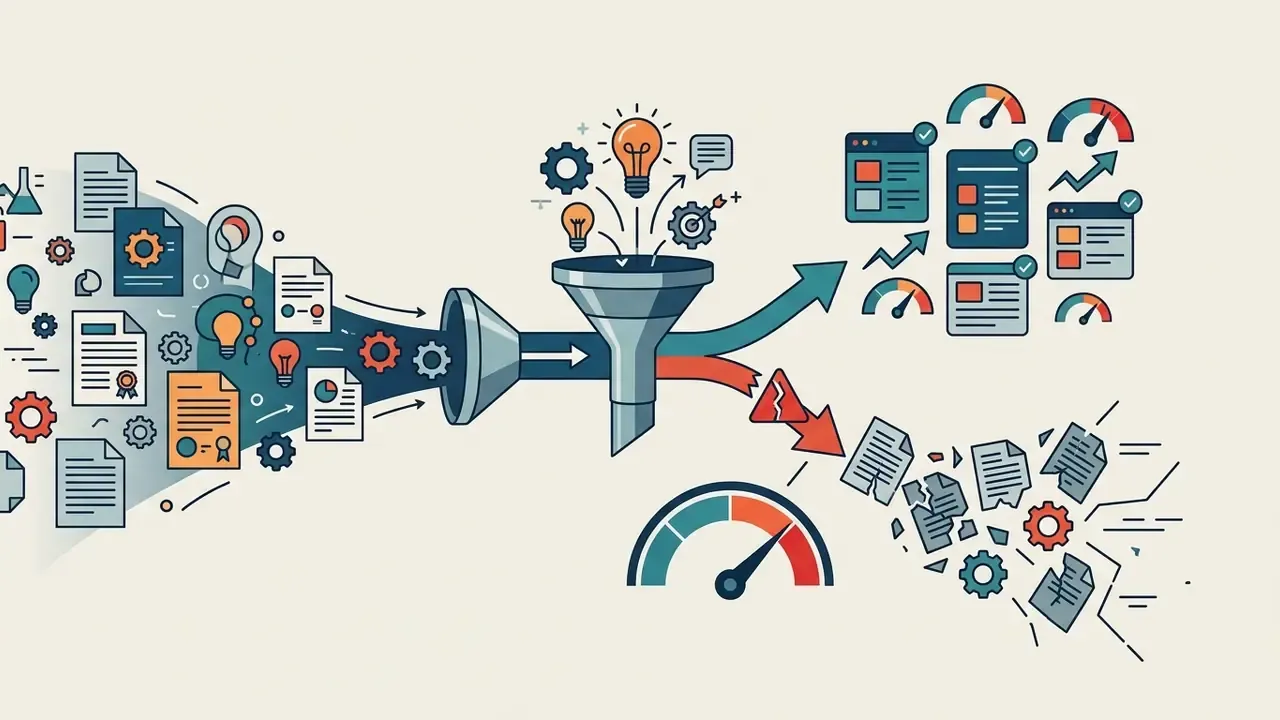
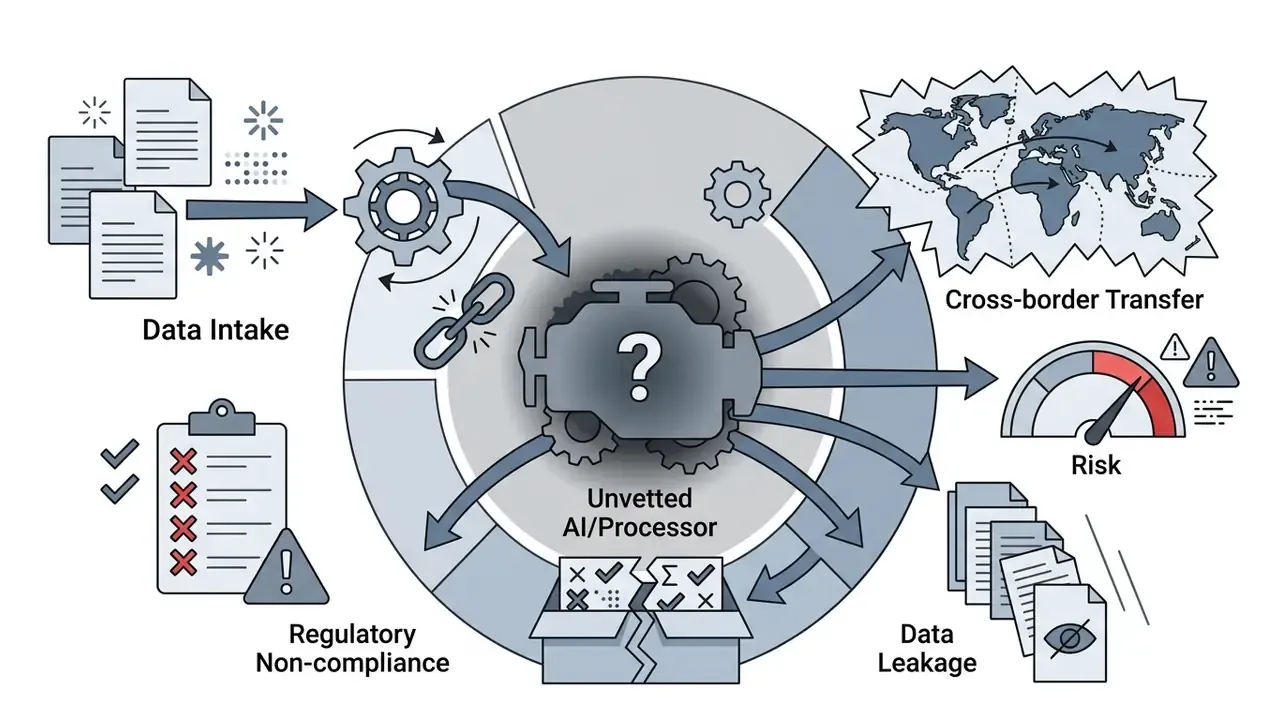
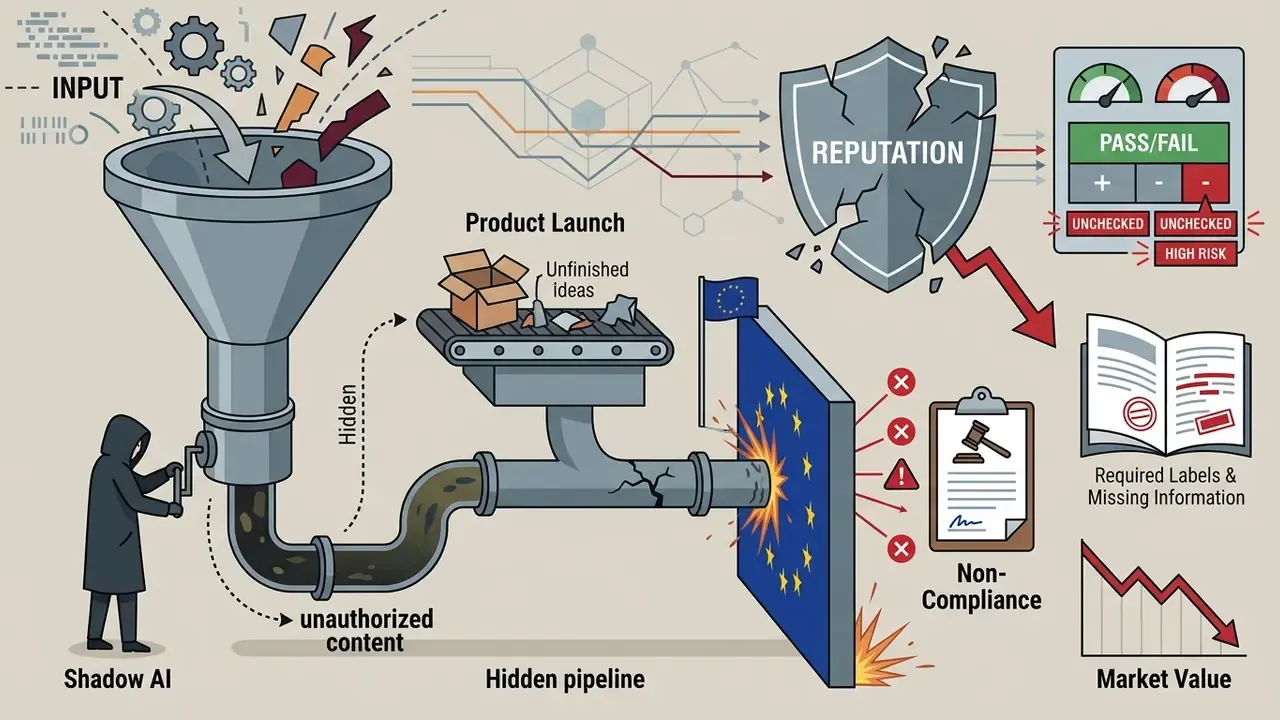
The common failure mode in large organizations is not a bad idea. It is an unauthorized tool. Staff under delivery pressure paste roadmaps, pricing tables, customer records or code into consumer generators, and the exposure carries no logging and no owner.
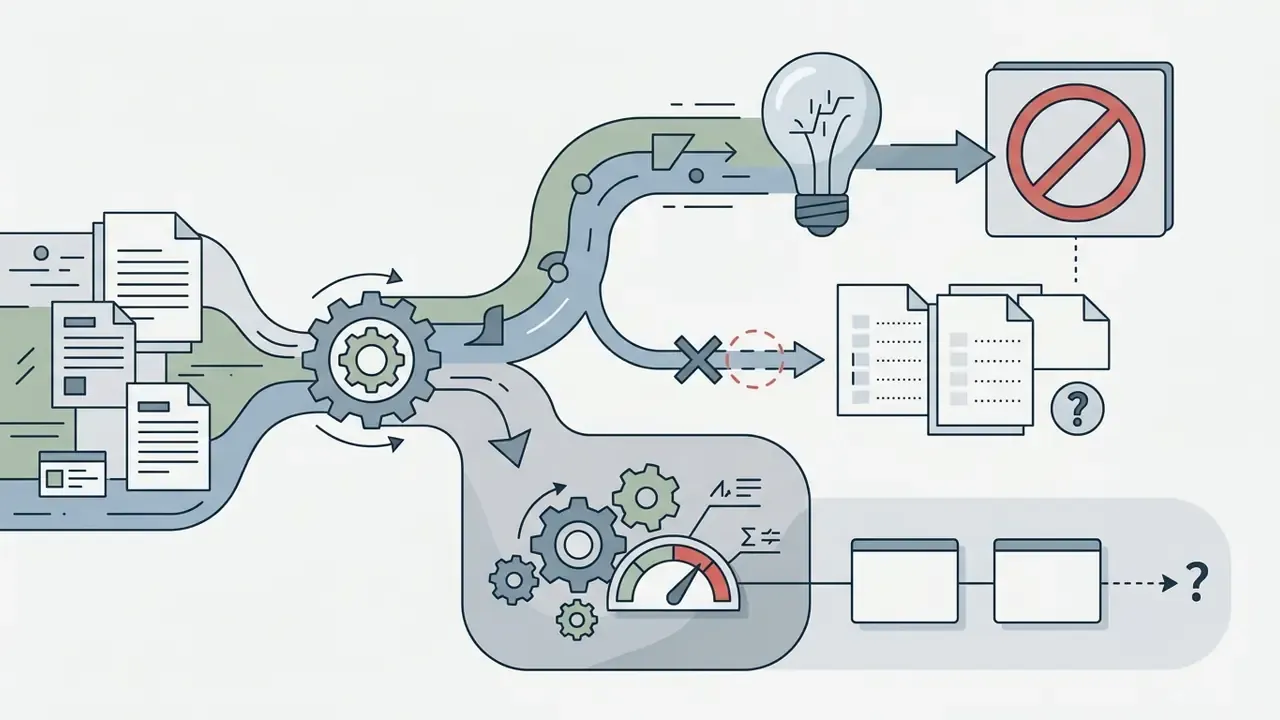
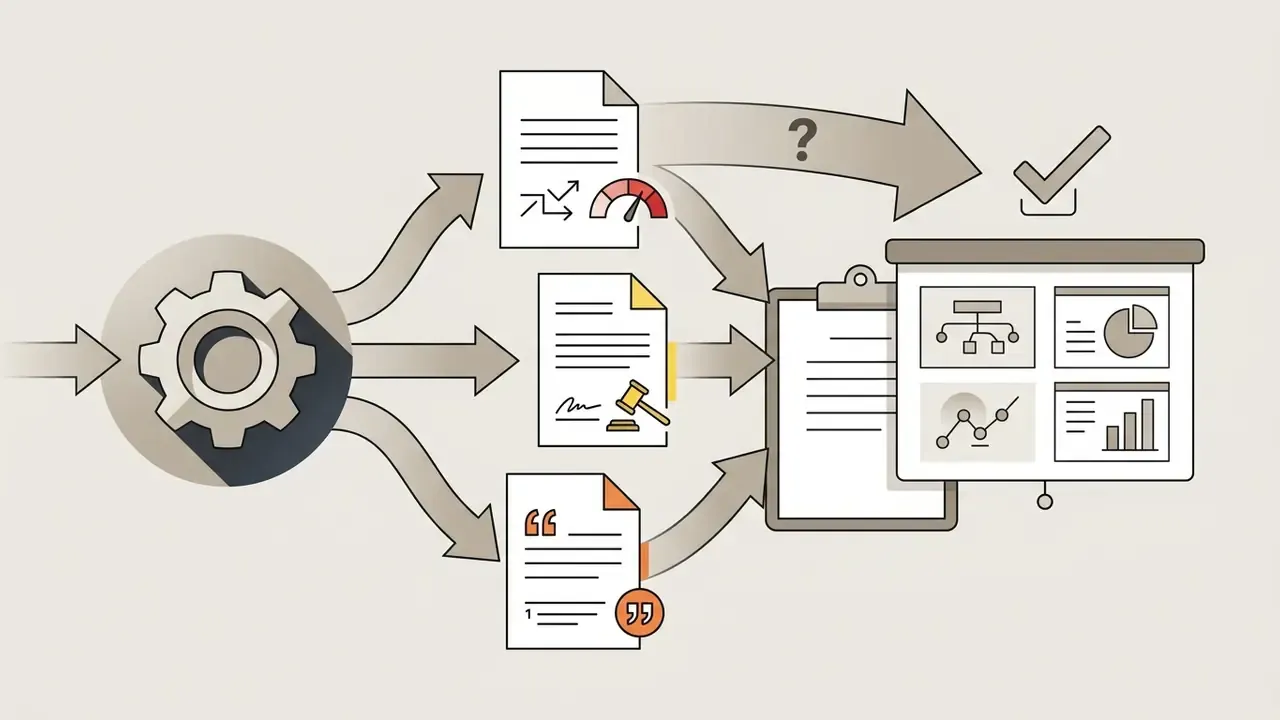
Risk register for unmanaged ideation tools:
Checklist0 / 8
Enterprise Versus Public Free Generators: Governance Selection Matrix
| Criterion | Public / free generator | Enterprise-grade requirement |
|---|---|---|
| Data isolation | Shared multi-tenant, often undocumented | Tenant isolation, regional data residency, documented sub-processors |
| Training on inputs | Frequently permitted by default | Contractual zero data retention or no-training commitment |
| Audit logging | Absent or user-visible only | Immutable prompt and response logs, exportable to SIEM |
| Identity and access | Personal email signup | SSO/SAML, SCIM provisioning, role-based access |
| Retention control | Session or browser-local, opaque | Configurable retention, legal hold, export before expiry (for example 60-day agent windows) |
| Model lineage | Model and version unstated | Pinned model versions, change notification, evaluation records |
| Grounding on internal data | None | Retrieval over approved corpora with source attribution |
| PII handling | No masking | Masking or tokenization plus DLP integration at the prompt boundary |
| Certifications | Rarely published | SOC 2 Type II, ISO 27001, penetration test summaries |
| GRC integration | None | Hooks into MRM inventory, issue tracking and approval workflow |
| Commercial rights | Plan-dependent, thin | Explicit output ownership, IP indemnity, defined use scope |
| True cost | "Free" plus unpriced control cost | Licence plus quantified monitoring, validation and review effort |
What a Free AI Idea Generator Can Help You Generate
An ai idea generator free online tool gives you rapid prototyping for blog topics, preliminary project outlines and draft feature suggestions. Individual creators and small teams can test concept viability there before paying for dedicated software. Anyone asking "can i generate commercial concepts on a free plan?" needs to read the provider terms closely, since free tiers sometimes log data publicly or block automated API access. For platform infrastructure, operators can inspect developer endpoints and view the guide on integration architecture, or compare quota behaviour in the review of free AI generators and their export limits.
Free tiers reliably cover single-session brainstorming, blog and social topic lists, first-draft outlines, naming variants and low-stakes internal workshops. An ai ideas generator free plan also works well for teaching, since students can see the effect of a sharper brief immediately. Free stops being enough at the point you need larger context windows, higher daily limits, premium reasoning models, deeper research passes, team workspaces, retention control or auditable logs. That threshold is exactly where paid and enterprise tiers earn their price.
How to Choose the Best AI Idea Generator
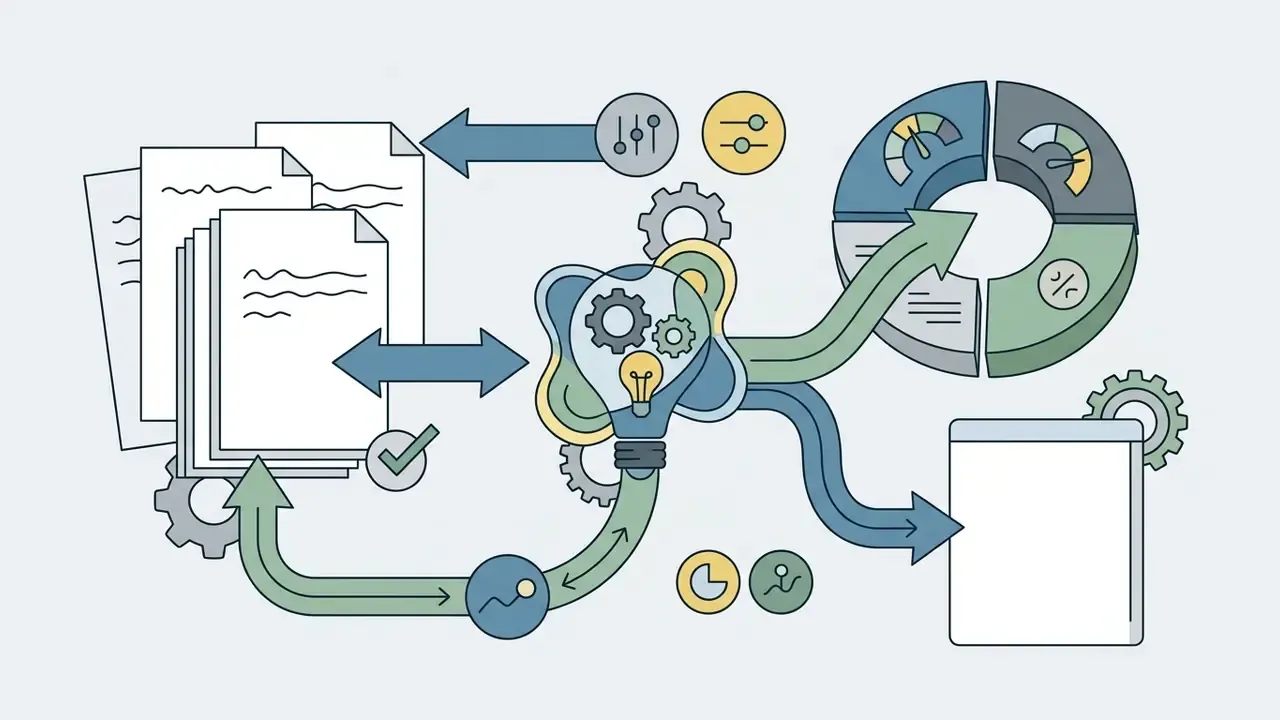
Choosing the best ai idea generator comes down to context window size, external knowledge integration, multi-format export and enterprise security compliance. Prioritize platforms that support auditable human-in-the-loop workflows and clean GRC integration. For a broader view of how free tiers restrict output and licensing, see the comparison of free AI video generators and their credit limits. If you are testing an idea generator ai free tier purely for personal work, the bar is lower, though the privacy questions above still apply.
Selection checklist:
Organizations shopping for dedicated enterprise software can compare model features or compare options across deployment models. Tier structures sit in the AI Media Pricing schedule.
On specific platform listings such as hypeart.ai: no verified information available. As of August 2026 the domain does not resolve through standard DNS channels, and no legal entity or product catalog has been verified. Treat an unverifiable vendor as a procurement blocker, not an option. Same rule applies to any idea maker ai tool that publishes no terms page.
FAQ: AI Idea Generator Questions
Is an AI idea generator free to use?
Many are free at entry level, with caps. Three generations before signup and roughly 25 ideas per month afterwards on some platforms, 50 lifetime queries on others, or a shared daily token budget. Claims of unlimited use usually mean unlimited attempts within rate limits, not unlimited compute.
Can an AI idea generator replace human brainstorming?
No. It widens the option space and kills the blank-page problem, but it cannot reliably separate good ideas from bad ones, own a decision, or carry accountability. Individual concept quality rises while collective diversity can fall, especially if you skip structured prompting.
How do I narrow down a long list of generated ideas?
Score them. Ask the model to evaluate candidates against your stated criteria (budget, feasibility, audience fit, novelty, compliance), then apply the four-vector decision matrix above with at least two human reviewers. Keep the scoring sheet as evidence.
Is every generated idea unique?
Outputs are conditioned on your description, so similar prompts produce similar ideas. Change the project description, raise temperature or top-p, or run several differently framed prompts and merge the strongest fragments.
Does the tool store my prompts?
Depends entirely on the provider. Some hold ideas only in browser local storage until you save them. Others log inputs and may train on them. Confirm retention and training policy in writing before you type anything confidential.
Can I use AI-generated ideas in professional and commercial projects?
Contractually, usually yes, since leading vendors assign output rights to the user. Legally, exclusivity is a different question: purely AI-generated material is not copyrightable in the US without meaningful human authorship, and no AI can be named as inventor on a patent. Add human contribution, document it, screen for prior art.
What are good starting prompts if I have no brief?
Use the templates above, or these openers: sustainable business ideas for a small eco-friendly startup; creative blog topics on productivity and remote work; cost-saving initiatives for a support department under a fixed budget; customer-satisfaction improvements for onboarding.
Which roles benefit most?
Product managers, content and SEO leads, innovation leads, risk and compliance officers, small business owners, students and independent creators. Each applies a different gate: PMs prioritize, strategists cluster, risk officers stress-test.
Technical Appendix and Governance Summary
- Primary focus AI governance, model risk management, controlled autonomy.
- Audience target CROs, CCOs, heads of model risk, enterprise innovation leaders, product and content leads.
- Core principle no evidence, no autonomy. Every AI-assisted concept needs a designated human owner, an audit trail and a validation record before production clearance.
- Reference standards cited NIST AI RMF 1.0 and NIST quick-start prompting guidance; USPTO AI inventorship guidance (February 2024); US Copyright Office AI registration guidance; EU AI Act GPAI copyright-policy obligation and the 2026 Code of Practice on transparency of AI-generated content; NIH Generative AI Usage Toolkit (2025) validation triad.
- Peer-reviewed and preprint evidence Nature Human Behaviour (2025) on AI-assisted brainstorming diversity; Nova iterative planning and search (arXiv:2410.14255); LLM ideation versus expert researchers (arXiv:2409.04109); AI ideas and collective diversity (arXiv:2407.29093); AI, creativity and diversity in product concepts (arXiv:2607.27553); targeted prompting interventions (arXiv:2602.20408).
Appendix A: Limitations and Open Questions
Honest edges, since a governance page without them is marketing.
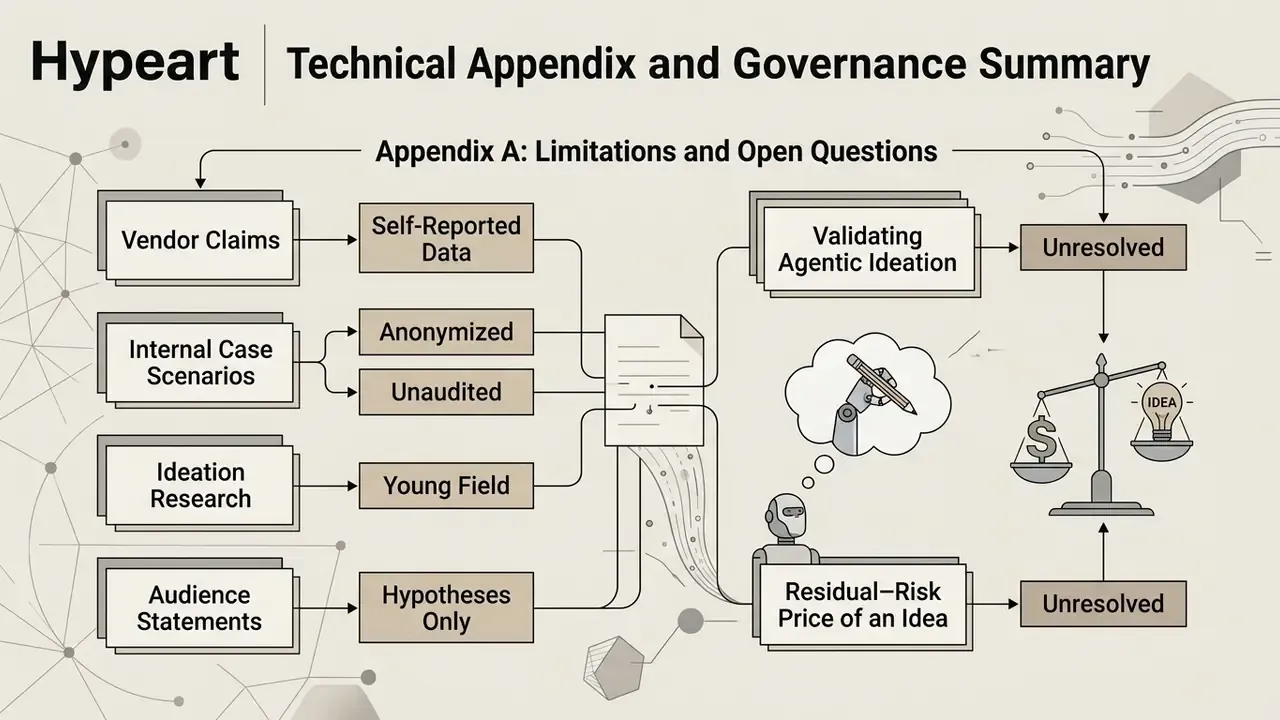
- Vendor claims are self-reported. Retention windows, training-exemption language and export limits in the comparison table come from public product pages. They change without notice, and only a signed contract binds a provider.
- The two internal case scenarios are anonymized and unaudited. The 42% reduction in invalid proposals and the ten-day committee cycle are client-side reported figures. Directional signals, not benchmarks. Treat any vendor quoting them back at you with suspicion.
- Ideation quality research is young. Effect sizes on novelty and diversity vary by domain, rater panel and prompt design. A 3.4x improvement in one academic setting does not transfer cleanly to commercial lending product design.
- Audience statements remain hypotheses. The role-based workflows in this article reflect observed patterns, not validated buyer research. Confirm them against your own analytics, interviews and CRM data before you build a programme around them.
- Unresolved: how to validate agentic ideation. Traditional model validation assumes a bounded input-output relationship. An agent that selects its own data sources and ranks its own candidates does not fit that assumption comfortably. Most institutions are still improvising here, and so is the guidance.
- Unresolved: the residual-risk price of an idea. Nobody has a defensible method for pricing the tail risk of a concept that passed a scoring gate and still failed in production. If your ROI model claims otherwise, check who wrote the model.
A safe next step, if you are early: pick one low-sensitivity process, run a governed ideation cycle end to end, and keep every artifact from the checklist above. One documented cycle teaches more than three vendor demos.
For complete architectural terminology and taxonomy specifications, view the guide in the central reference hub. For adjacent tooling economics, see the guides to free photo editors and video compressors.