Last updated: 2026. Reviewed for technical accuracy against ISO/IEC 18004:2024 and peer-reviewed generative-QR literature (CVPR 2024, WACV 2025).
Executive Summary for Risk, Compliance, and Marketing Leads
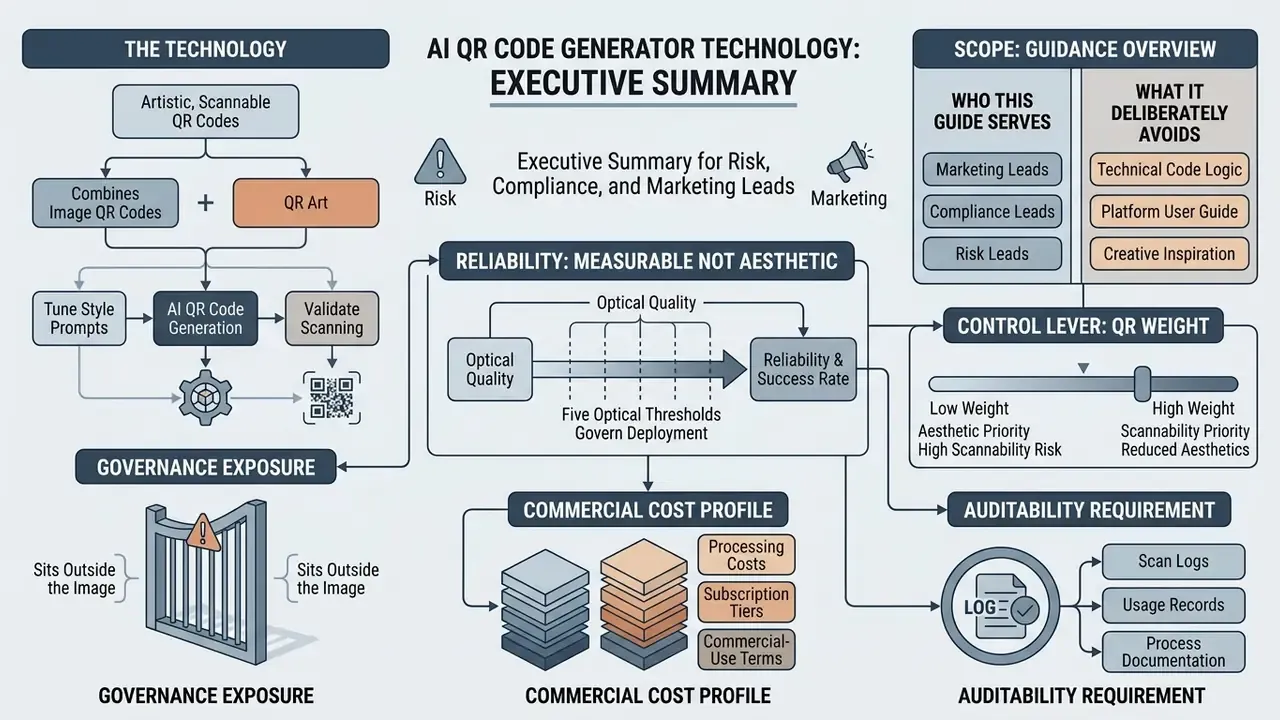
- What the technology is. An AI QR code generator conditions a latent diffusion model on two inputs simultaneously: a text prompt and a standards-compliant QR matrix defined by ISO/IEC 18004:2024. ControlNet adapters reshape module geometry into artwork without destroying the decodable payload.
- Reliability is measurable, not aesthetic. Peer-reviewed pipelines report scanning success rates above 95–99% under angle and error-tolerance stress tests, versus roughly 60% for naive ControlNet baselines. Machine readability is a testable metric, and it belongs in your acceptance criteria.
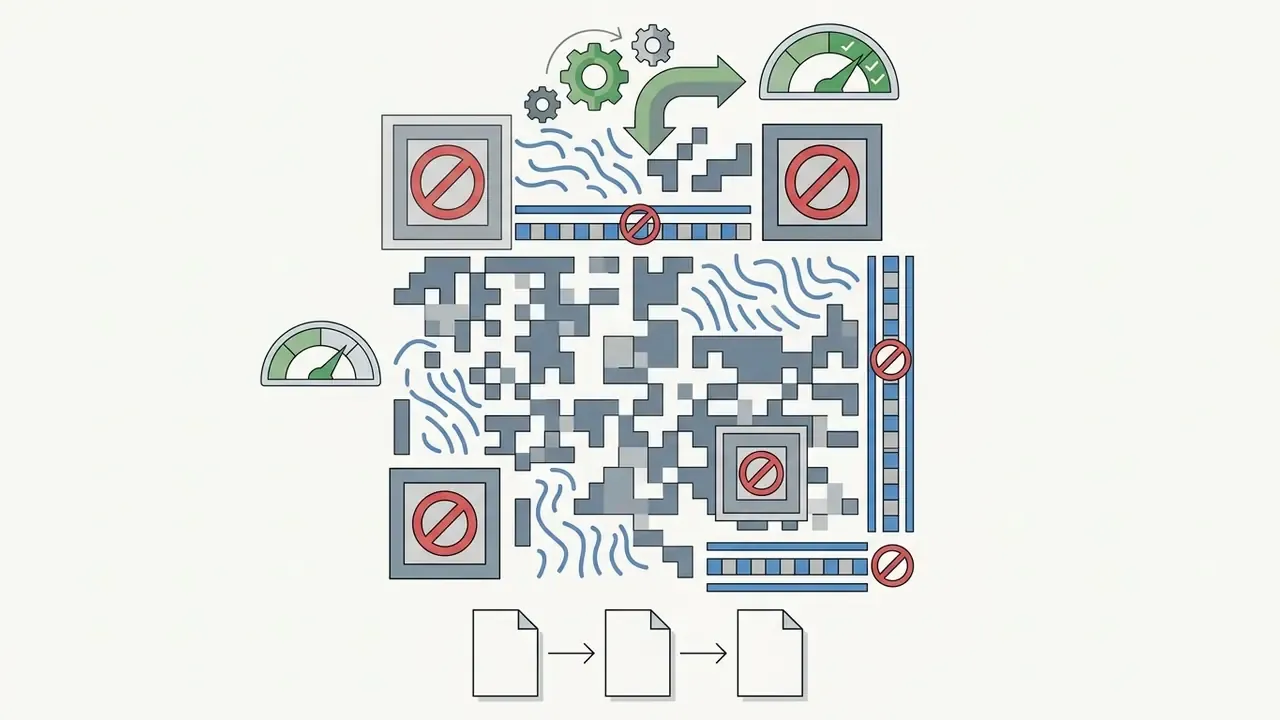
- Five optical thresholds govern deployment. Minimum 4:1 module contrast, a four-module quiet zone, unobstructed finder patterns, Level H (30%) error correction for artwork-heavy codes, and a 1:10 size-to-scan-distance ratio.
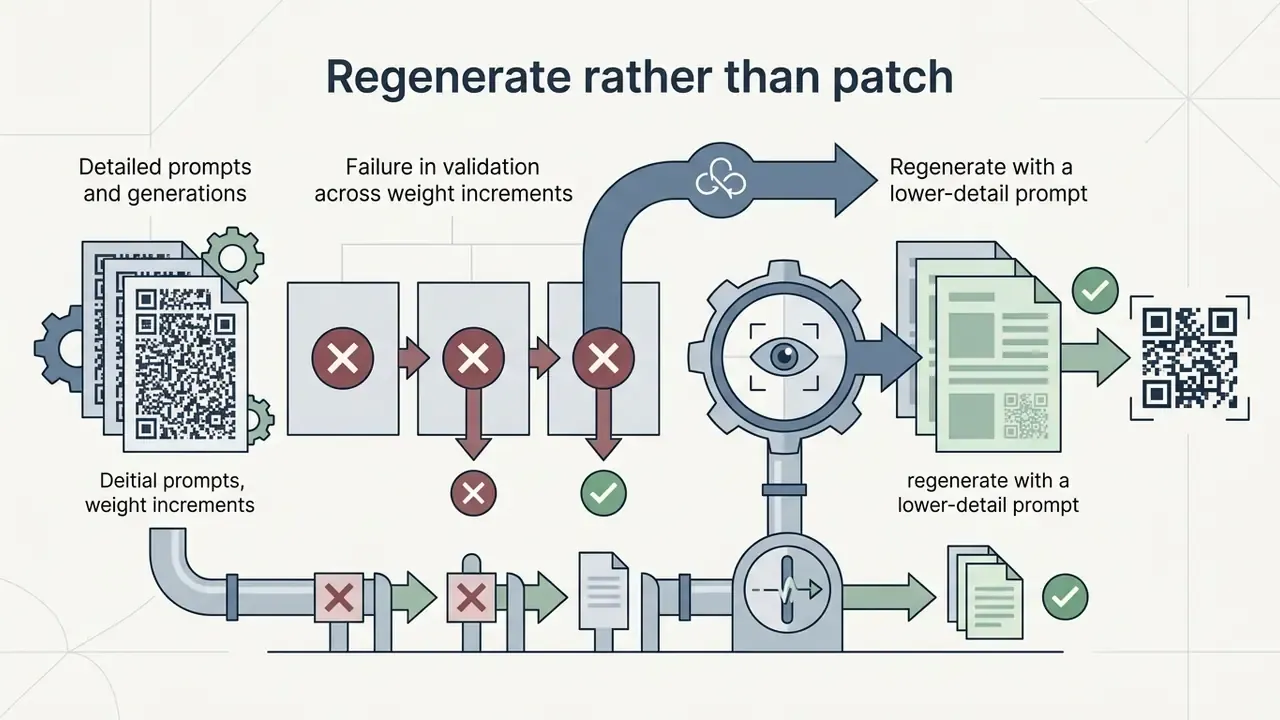
- The main control lever is QR Weight. If an artistic code fails validation, raise ControlNet conditioning strength (often labelled QR Weight) from a baseline of 0.35 toward 1.2–2.0, accepting reduced artistic detail in exchange for deterministic decodability.
- Governance exposure sits outside the image. Sending internal or pre-launch URLs to consumer SaaS generators is a Shadow AI risk; dynamic redirect infrastructure collects IP, geolocation, and device telemetry that must be mapped to GDPR/CCPA obligations and vendor SOC 2 Type II evidence.
- Commercial cost profile. Free tiers exist with watermarks and 1–5 dynamic links; paid plans run roughly $5–$50/month; API generation is priced per image (from approximately $0.0065–$0.009). Standard QR matrix technology is open-use, while vendor AI imagery, tracking infrastructure, and the trademark "QR Code" (Denso Wave Inc.) carry conditions.
- Auditability requirement. Log
seed,prompt,controlnet_weight, ECC level, model version, and validator output for every production code so a generated asset can be reproduced during review.
Scope: Who This Guide Serves and What It Deliberately Avoids
What an AI QR Code Generator Is and What Codes It Produces
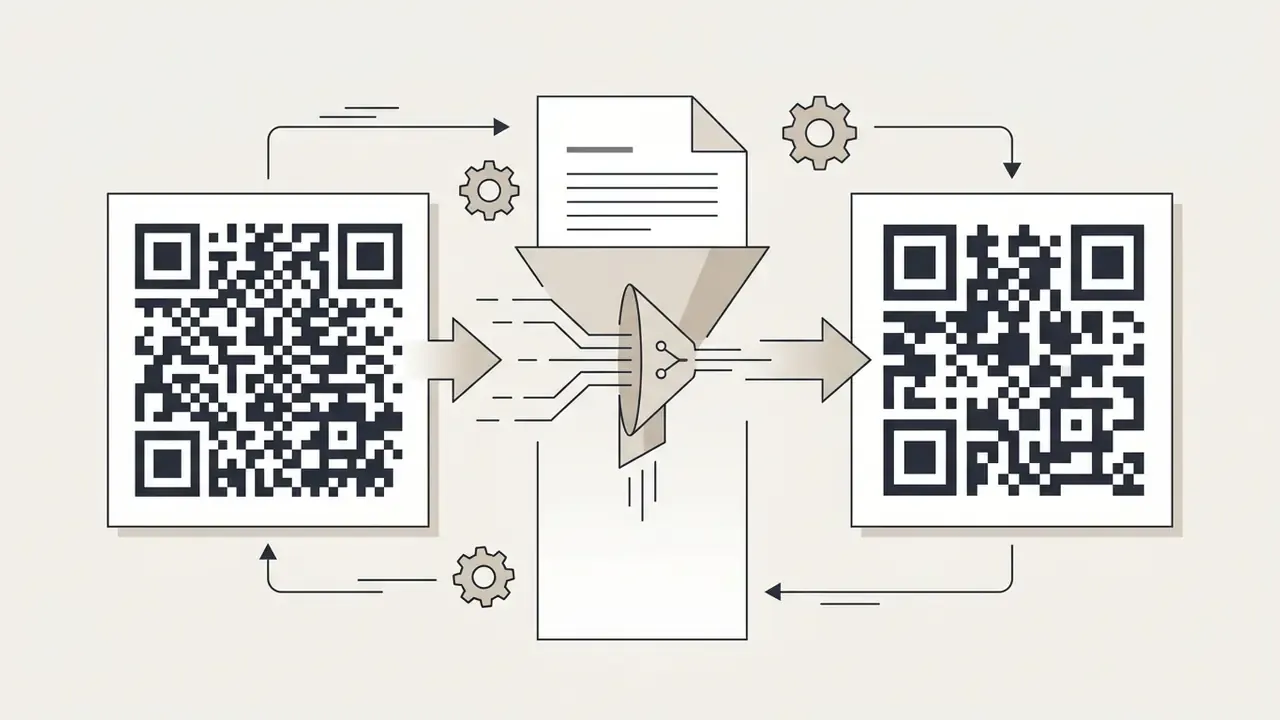
An ai qr code generator uses generative machine learning architectures, such as latent diffusion models, ControlNet adapters, and neural style-transfer networks, to blend aesthetic imagery into scannable two-dimensional matrices. Unlike traditional generators that output rigid binary grids, an ai q r code generator modifies module geometry, color contrast, and surface textures while maintaining data integrity.
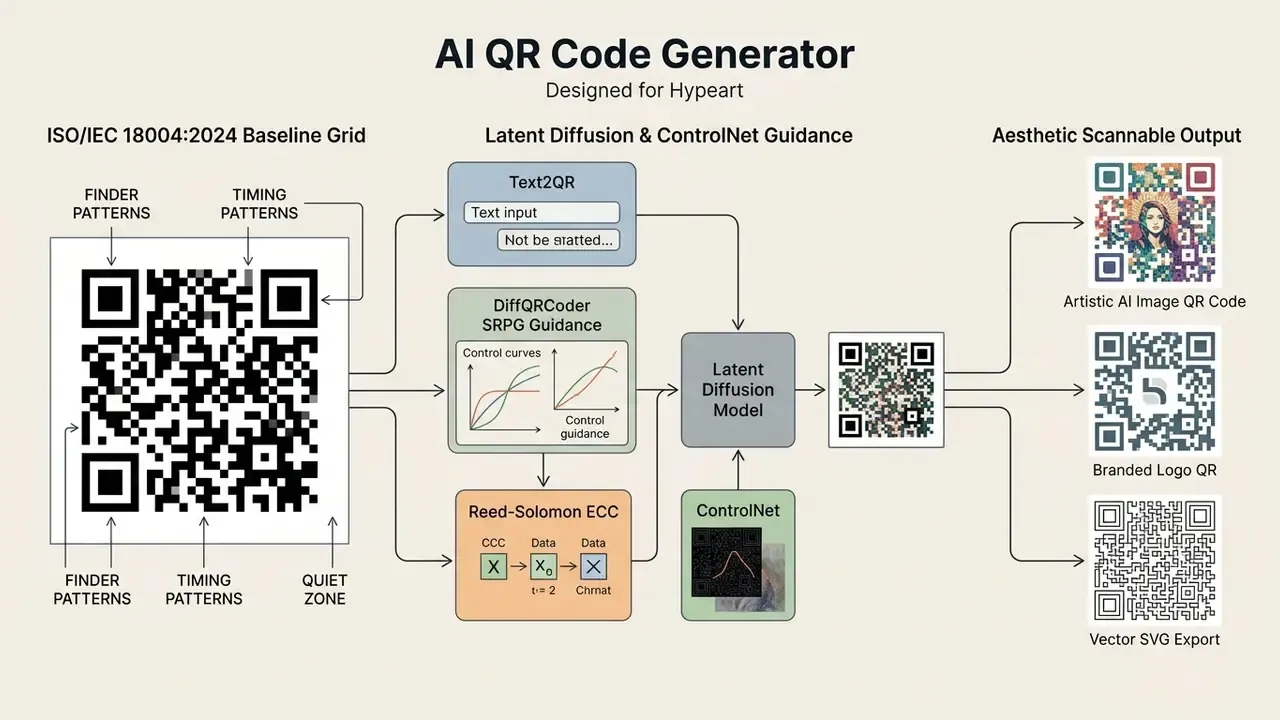
Modern systems leverage pipelines like Text2QR (CVPR 2024) and DiffQRCoder (WACV 2025) to condition diffusion models on both a text prompt and an underlying QR structure. This dual-conditioning process allows a qr code ai pipeline to transform plain codes into visual art. A q r code ai generator is therefore not a skinned version of a classic generator; the model participates in where the modules land.
Teams benchmarking the underlying visual models can review our comparison of AI image and art generators before selecting a QR synthesis stack, or study platform-level differences in our best AI art generator comparison.
The generated output retains standard machine readability. Specialized neural layers ensure that the primary data payload, whether an HTTPS URL, plain text, or a digital credential, remains fully decodable by standard smartphone optical sensors.
Earlier end-to-end research established the same principle without diffusion: ArtCoder (CVPR 2021) combined neural style transfer with a sampling-simulation layer and a module-based code loss, reporting average successful scanning rates above 96% for stylized codes. The lesson for governance teams has been consistent across a decade of literature. Readability must be optimized explicitly during generation, never assumed afterwards.
Plain QR Codes, Logo QR Codes, and AI QR Art
Standard black-and-white QR codes strictly enforce the ISO/IEC 18004:2024 module grid, maximizing optical contrast for legacy laser and CMOS scanners. Branded logo QR codes embed a central vector graphic by utilizing built-in Reed-Solomon error correction, which tolerates module occlusion up to designated thresholds.
In contrast, ai qr code generator art tools synthesize continuous photographic or illustrative artwork throughout the entire symbol matrix. Rather than treating the logo as an overlay, an ai art qr code generator reshapes individual modules into artwork features using neural guidance layers. Some vendors also market pseudo-depth or "3d qr code generator ai" presets; these are shaded 2D renders, not a change to the underlying symbology, and they still have to pass the same optical tests. Prompt libraries and style references for this stage can be sourced from dedicated AI art generators.
«ARM-QR applies Mask R-CNN to locate the region of interest inside a color image and embeds the QR symbol through a discrete wavelet transform, preserving readability.»
The structural distinction matters for compliance teams. A logo overlay leaves the code grid intact and relies purely on error correction, whereas AI art reallocates optical energy across the entire symbol. Payment marks illustrate the strict end of the spectrum: EMVCo rules state that the QR Payment Mark may not be visually altered at all, which rules out generative restyling for that specific asset class.
How to Create an AI QR Code: From Link to Download
To create qr outputs with high aesthetic appeal, operators follow a systematic generation workflow. Modern ai qr codes generator platforms enforce automated validation loops before exporting production files.
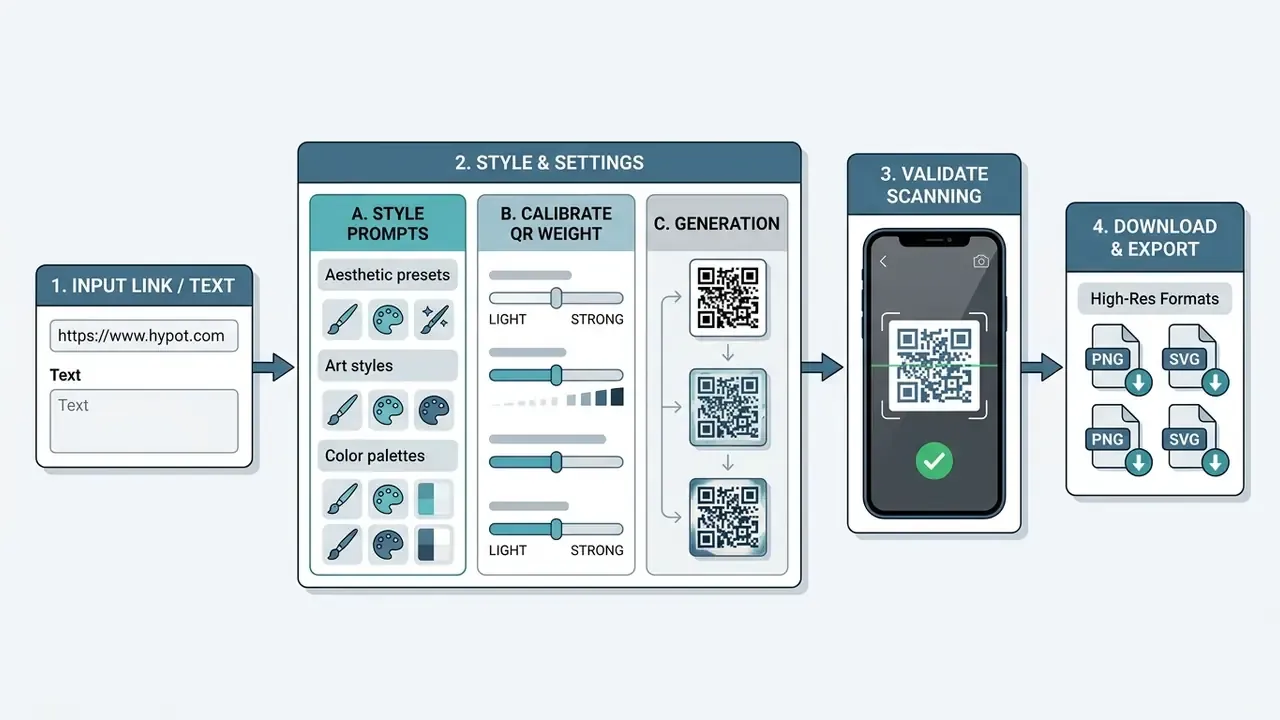
- Select Content Type Choose between URL, text, Wi-Fi, or app deep link payloads.
- Input Payload Data Enter the concise destination web address or short URL string.
- Configure AI Style & Prompt Input descriptive prompts or upload a brand logo for ControlNet conditioning.
- Execute Scan-Robustness Validation Run automated optical checks to evaluate finder pattern legibility.
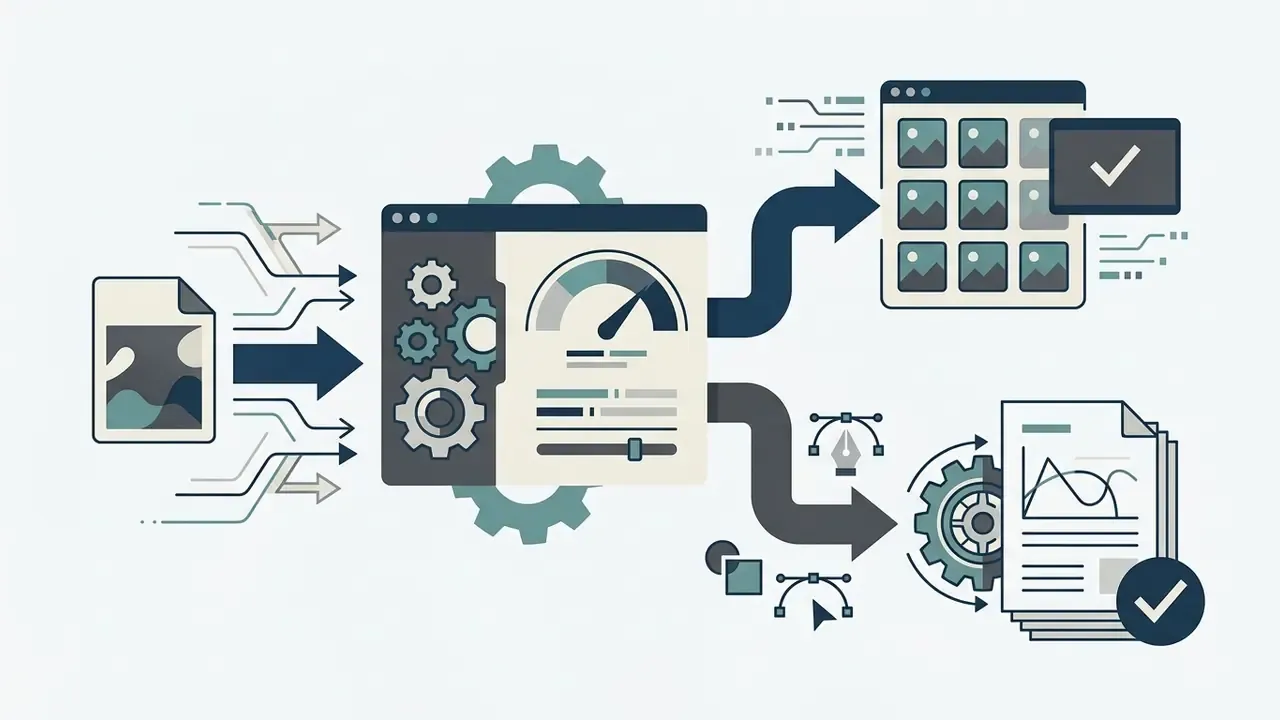
- Export File Select raster (PNG, JPG) or scalable vector (SVG, EPS) format for deployment.
Using a custom qr code generator ai, creators can systematically adjust prompt weights to refine visual appearance while monitoring decodability scores. Mature validators additionally generate degraded copies, blurred, rotated, compressed, shrunk, dimmed, and partially covered, then re-test each variant before the asset is cleared for print.
Choose the QR Code Type and Add Content
Selecting the correct content type is critical to control payload length and symbol complexity. When you generate a qr code, longer text strings force the matrix into higher symbol versions with denser module grids.
Minimizing character length allows an ai qr code maker to work with sparser grids, providing more continuous surface area for generative artwork synthesis. Always apply short URL structures when encoding complex web addresses. Public-sector guidance reaches the same conclusion from the field side: shorter URLs encode less information, which makes the symbol easier for a camera to resolve, and redirects should be used when the destination page may change.
Structured payload conventions help here. The European Payments Council QR specification, for example, splits the URL into fixed segments (domain, version, type, routing information, and payload in the query string) so density stays predictable across issuers.
What Data You Can Encode in an AI QR Code
An ai qr generator processes standard byte-mode payloads defined by international matrix standards. You can encode web destinations, vCard contact cards, Wi-Fi credentials, geolocation coordinates, event calendars, social media profile links, and mobile application deep links.
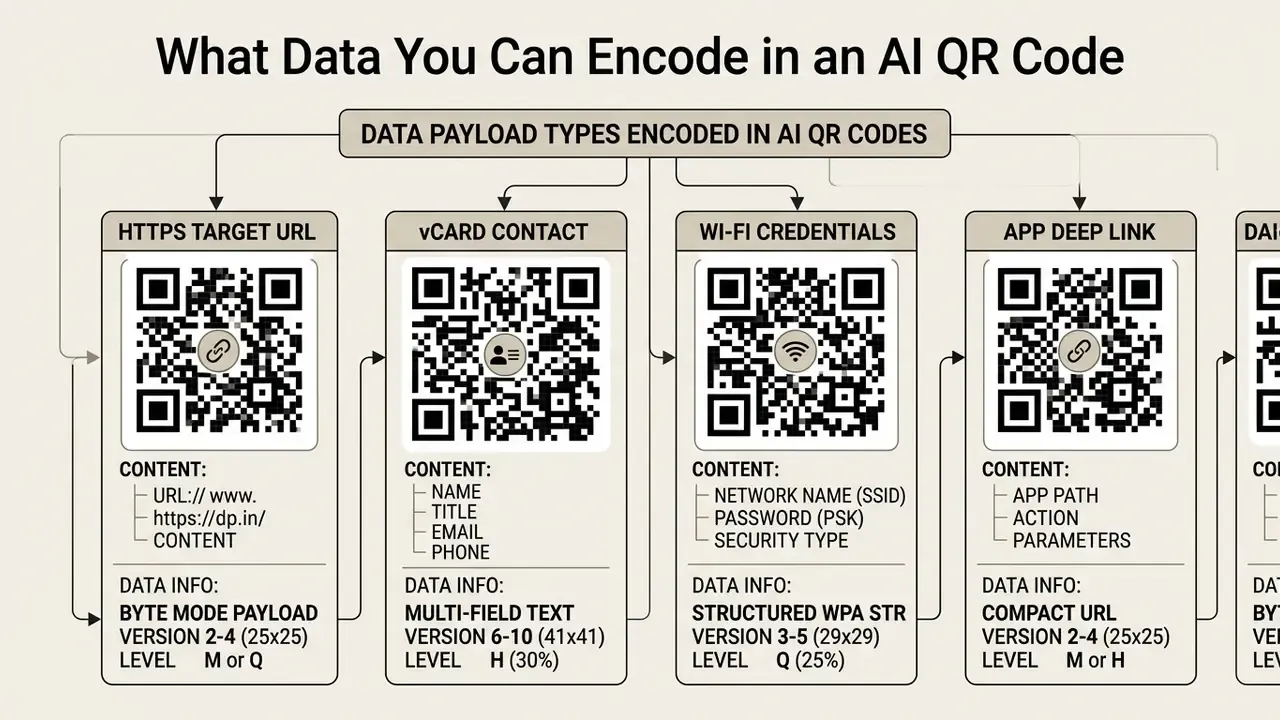
Leading platforms now expose 60+ payload types grouped into five practical clusters. Selecting the narrowest possible type keeps the grid sparse and the artwork legible:
- Business & E-commerceGoogle Reviews collection links, Stripe or PayPal payment links, PDF catalogues and price lists, hospitality menus, coupon and rebate flows, product landing pages, forms and surveys.
- Social & MessagingTikTok profiles, Instagram profile and Reels links, YouTube subscribe links, LinkedIn company and personal pages, Facebook pages, WhatsApp direct chat, Telegram, WeChat, X.
- Connectivity & ContactWi-Fi credentials (WPA2/WPA3), vCard 4.0 and MeCard business cards, pre-filled SMS, pre-filled email templates, click-to-call telephone numbers.
- Files & MediaMP3/audio streaming, Spotify and Apple Music links, image galleries, Google Drive and cloud document links, App Store / Google Play smart routing that detects iOS, Android, tablet, or desktop and falls back gracefully. Short product clips work well here, including assets from teams that convert image to video ai style demos for landing pages.
- Events & LocationiCal/vCalendar event invitations, geolocation coordinates for Google Maps and Apple Maps, ticketing and check-in links, Zoom or Microsoft Teams meeting access, event agendas and speaker bios.
Because payload length directly dictates symbol density, high-capacity payloads like multi-page PDF documents should not be embedded directly. Instead, embed an HTTPS link pointing to hosted digital media to preserve sparse module structures and ensure high optical recognition. For reference, ISO/IEC 18004:2024 caps a Version 40 symbol at 177×177 modules and 2,953 bytes in byte mode at error correction Level L, and every step up in ECC reduces usable payload further.
Set the AI Style, Prompt, Image, or Logo
Prompt engineering for a fancy qr code generator ai requires balancing artistic detail with functional contrast. Prompts should specify structural style, lighting, color palette, and core subject matter without introducing visual clutter near corner finder patterns. A compact and repeatable formula works best: subject + style + tone + quality tags, with low central detail, because the alignment pattern sits near the middle of the symbol.
Style preset library (tested prompt patterns):
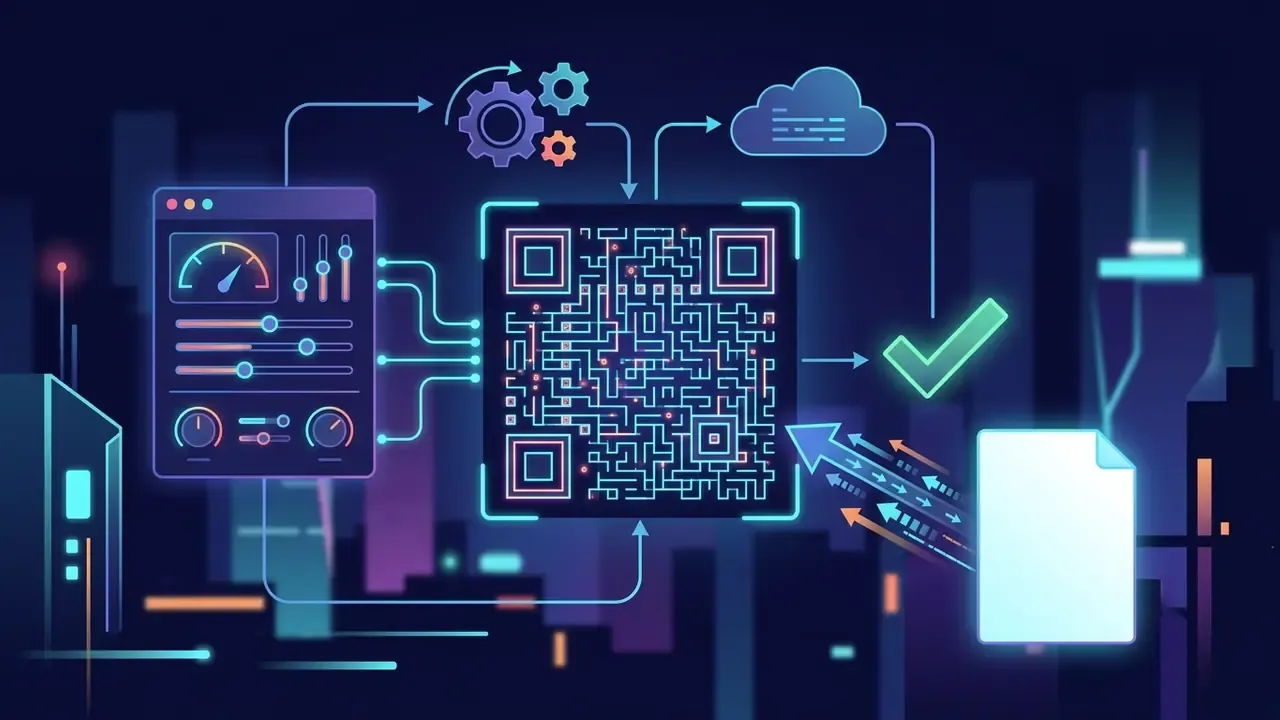
neon glowing lines, cyberpunk city background, dark module contrast, high detail, 8k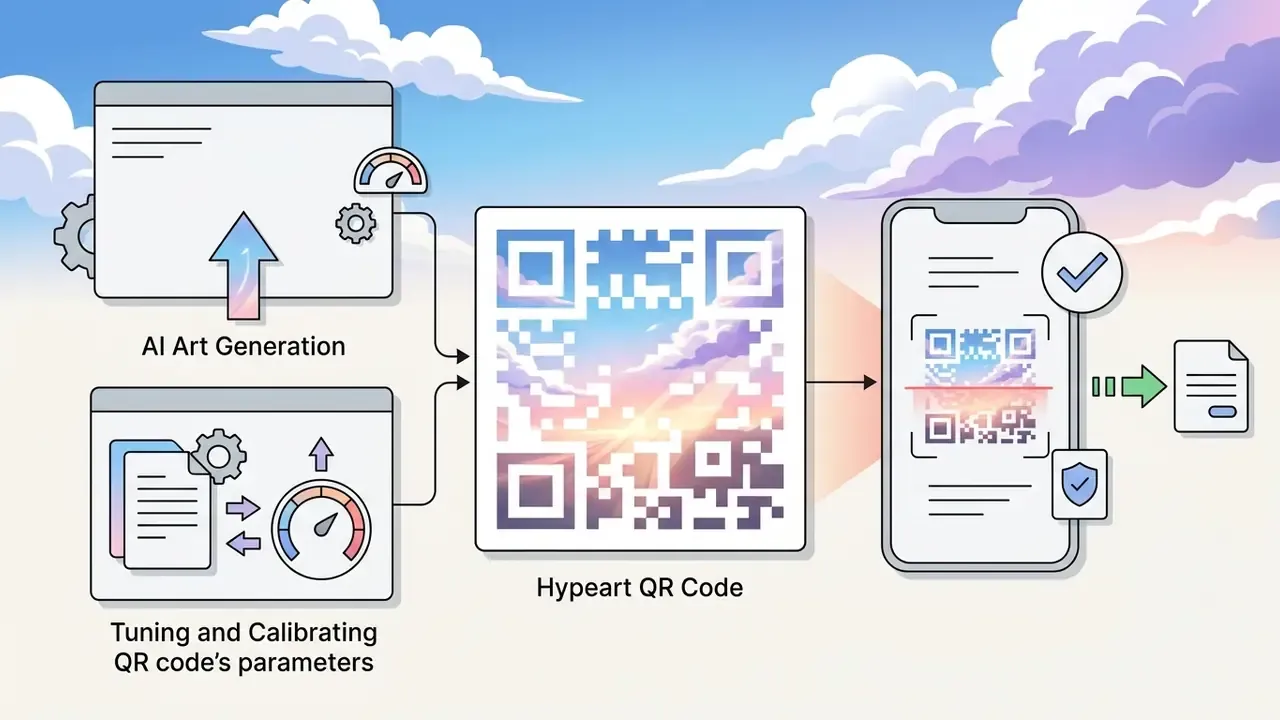
soft vibrant colors, anime sky with fluffy clouds, cinematic lighting, clean module integration
isometric low-poly building, terrazzo texture, subtle geometric modules, flat vector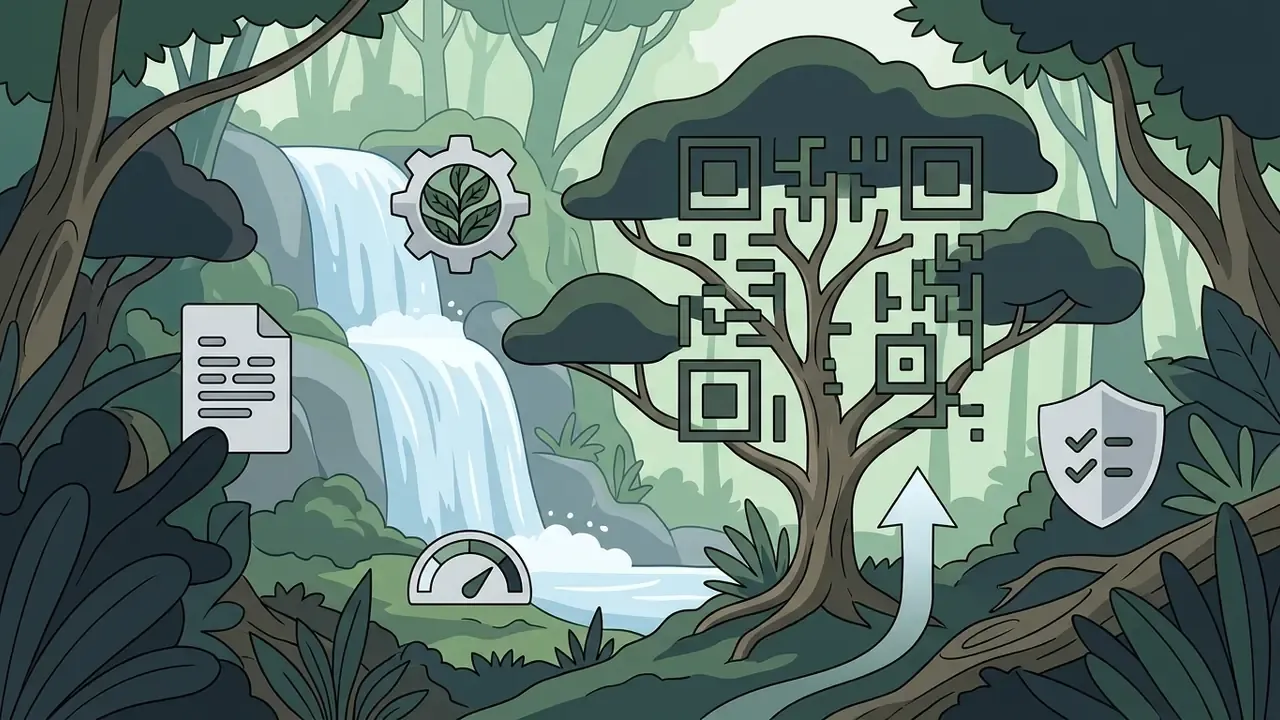
lush forest background, waterfall, natural lighting, organic shapes, dark foliage modules
cubist portrait, bold flat planes, restricted palette, strong tonal separation
monochrome geometric pattern, high-contrast dark modules on cream background, no textCommercial galleries typically ship between 17 and 157 curated presets across categories such as Mecha, Suburban, Snowy Village, World Map, Sakura, Tiger, and Landscape. Useful as a starting point, yes, but every preset still requires its own validation pass. Anime-adjacent styles are popular precisely because they tolerate heavy tonal separation; the same visual instinct drives teams who convert video to illustrated animation for campaign hero sections.
When integrating a corporate logo, keep central placement within 20% to 30% of total symbol area; conservative vendor tables recommend 10–15% when error correction is below Level H. Set neural guidance weights, labelled QR Weight or ControlNet conditioning strength depending on the interface, with a working range of 0.35 to 1.2. One correction to older guidance: values in the 0.3–0.5 band produce the most attractive artwork but are frequently too weak for reliable decoding on mid-range Android cameras. If scans fail, push the weight toward 2.0 (see the calibration procedure below).
Preview, Test, and Download the QR Code
Before publishing qr codes generated through AI pipelines, run optical scan validation tests under varying environmental conditions. Software validators simulate lens blur, rotation, angle distortion, and low ambient lighting.
Once validated, download the final asset in high-resolution raster or vector formats. Vector exports (SVG, EPS) preserve the crisp module edges required for large-format physical print displays. Keep the vector master; reprints a year later are where most teams discover they only saved a JPG.
Practical render specifications:
| Parameter | Typical value | Notes |
|---|---|---|
| Generation time | 10–60 seconds | Diffusion passes plus validation loop; queue load adds latency |
| Default raster output | 768×768 px, PNG | Adequate for web, email, and social placements |
| Print output | SVG / EPS / PDF, 300 DPI minimum | Vector preferred for packaging, posters, signage |
| Raster alternative | JPG | Avoid for print: compression artifacts blur module edges |
| Transparency | PNG with alpha or SVG | Keep the quiet zone light, never fully transparent over dark art |
AI Image QR Code and QR Code Art: Choosing the Design Format
Choosing the right visual style involves balancing visual identity requirements with optical scanner tolerance. An ai image qr code generator can produce both background-integrated artwork and clean logo-centered compositions.
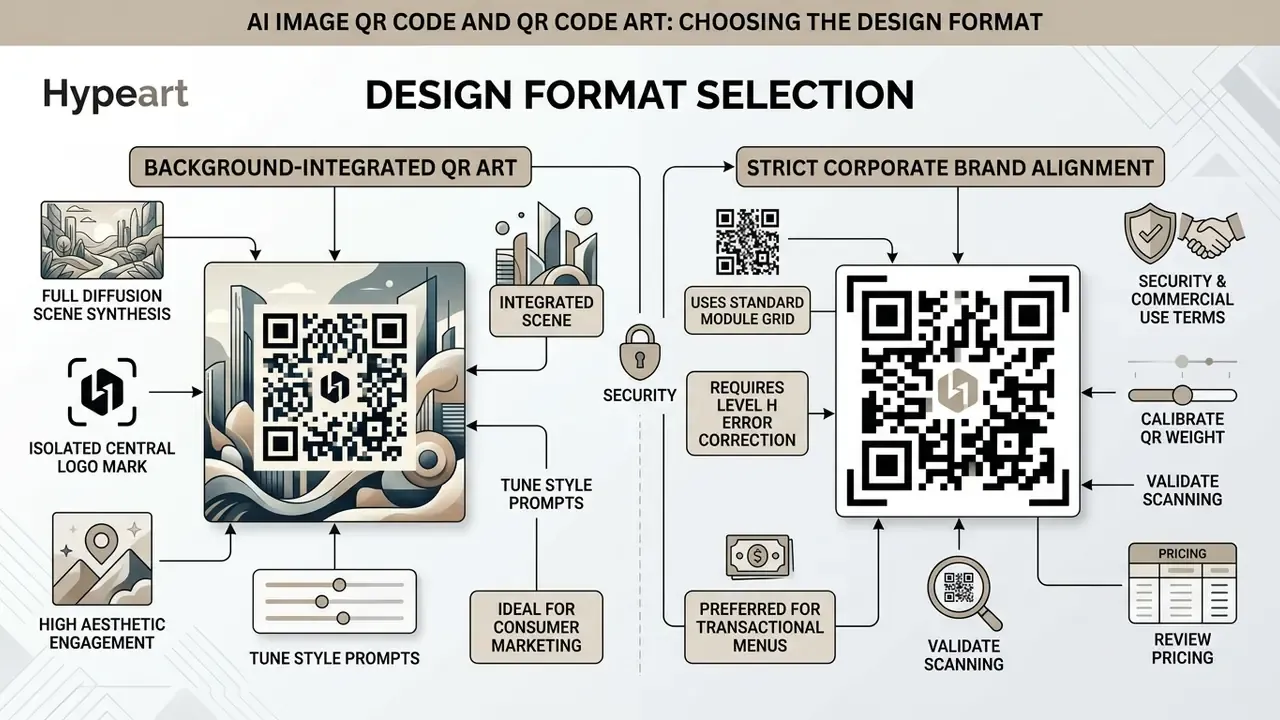
Selecting an art qr code generator mode depends on deployment context. High-impact promotional campaigns benefit from fully stylized images, whereas transactional payment displays require high module contrast. When in doubt in a regulated channel, choose the boring option.
AI QR Code With an Image: Background, Subject, and Visual Style
Generating an ai image qr code involves blending Stable Diffusion outputs directly with the module grid. An ai qr code generator with image input gives you more control than prompt-only generation, because you set the tonal map yourself. Fine-tuning the base artwork before conditioning, through cropping, denoising, and increased tonal separation, measurably improves validator pass rates; standard AI photo editors are sufficient for that preparation step, and lightweight utilities that convert image to other formats help when the source asset arrives in the wrong container.
«At 20% or higher CMYK saturation in a single channel, color-recognition algorithms reach roughly 99% success; when saturation falls to 5%, no tested algorithm exceeds 90%.»
The practical implication: a 10%–20% saturation delta between dark modules and background elements is the floor, not the target. For packaging and long-run print, design toward a 20%+ delta in at least one channel so that press tolerance and substrate absorption do not erode contrast below the recognition threshold.
Detail density also drives your error-correction choice. Denso Wave documents four error correction levels selected by expected damage, and the standard capacities are approximately L 7%, M 15%, Q 25%, H 30% of recoverable codewords (Denso Wave, https://www.qrcode.com/en/about/error_correction.html; USPTO, An Introduction To QR Code Technology). Heavily illustrated ai qr code images therefore belong at Level H, at the cost of reduced payload capacity for the same symbol version.
Logo-Shaped QR Codes for Brands
A barcode art generator setting can embed brand marks directly into the symbol core. To compensate for data module displacement caused by central logo placement, configure error correction to Level H (30%). Square or circular marks are the safest geometries; wide or tall irregular shapes occlude more consecutive modules and reduce recognition. Brand marks can be prepared or adapted with dedicated AI logo generators before conditioning.
Keep the perimeter finder patterns clear of decorative elements. The quiet zone surrounding the matrix must remain light-colored and free from overlapping visual text or graphics; GS1 branding guidance places brand wordmarks outside the symbol entirely.
«Face2QR reshuffles QR modules through an ID-aware ReShuffle step, preserving key visual features of the source image without breaking decodability.»
How to Make an AI QR Code Beautiful and Scannable
Ensuring high optical recognition rates across mobile hardware requires managing physical contrast, quiet zones, and module deformation. An ai q r code generator must adhere to deterministic optics rules. Aesthetics negotiate; physics does not.
| Scanability Factor | Operational Requirement | Failure Risk | Corrective Action |
|---|---|---|---|
| Module Contrast | Minimum 4:1 dark-on-light ratio | Camera thresholding failure | Darken foreground modules |
| Quiet Zone | Minimum 4 module widths | Finder pattern misread | Clear surrounding margin |
| Finder Patterns | 100% unobstructed corners | Code detection drop | Remove background artwork |
| Error Correction | Level H (30% redundancy) | Corrupted payload | Increase ECC level |
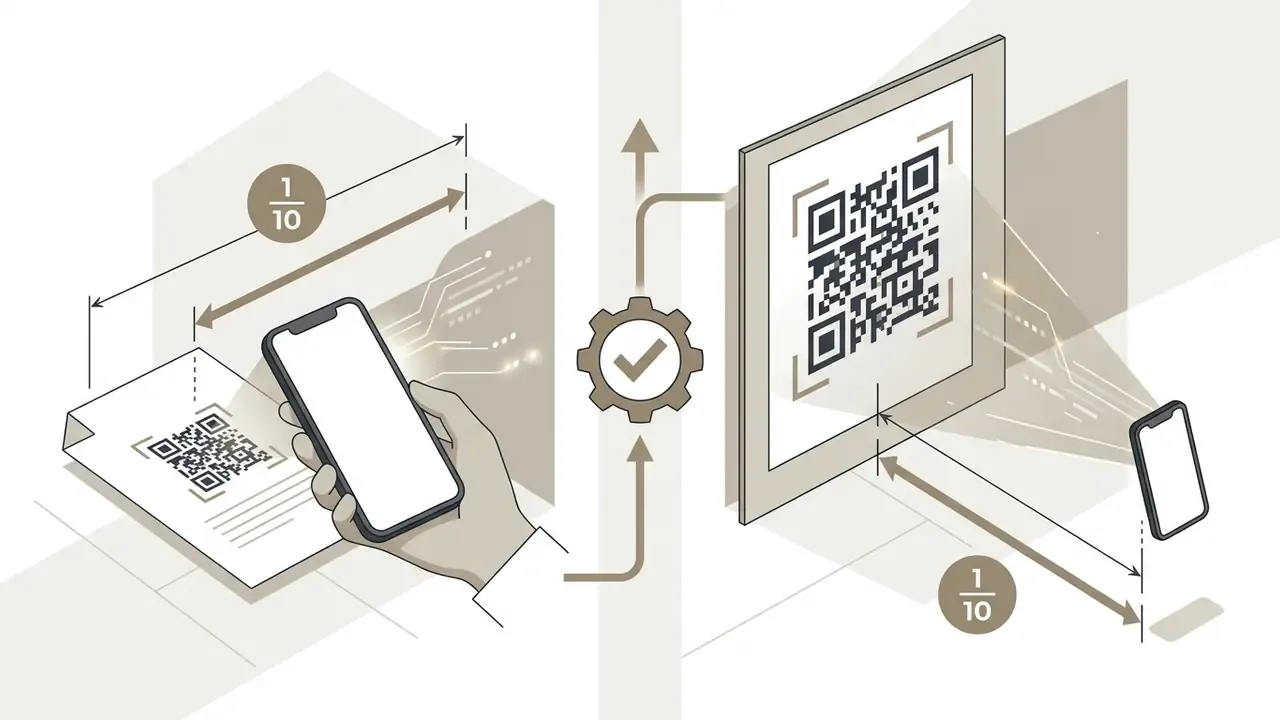
| Print Scale | 1 cm width per 10 cm scan distance | Focus acquisition error | Scale up physical asset |
| QR Weight | 0.35 baseline, 1.2–2.0 on failure | Structural pattern loss | Raise ControlNet strength |
| Print Resolution | 300 DPI minimum, vector preferred | Blurred module edges | Re-export as SVG/EPS |
Maintaining these physical standards ensures that custom qr ai generator outputs remain decodable across diverse smartphone camera modules. Both iOS and Android perform QR recognition natively at the OS and camera level on current devices, which means field failures are almost always capture-quality failures (size, focus, illumination, angle) rather than software gaps.
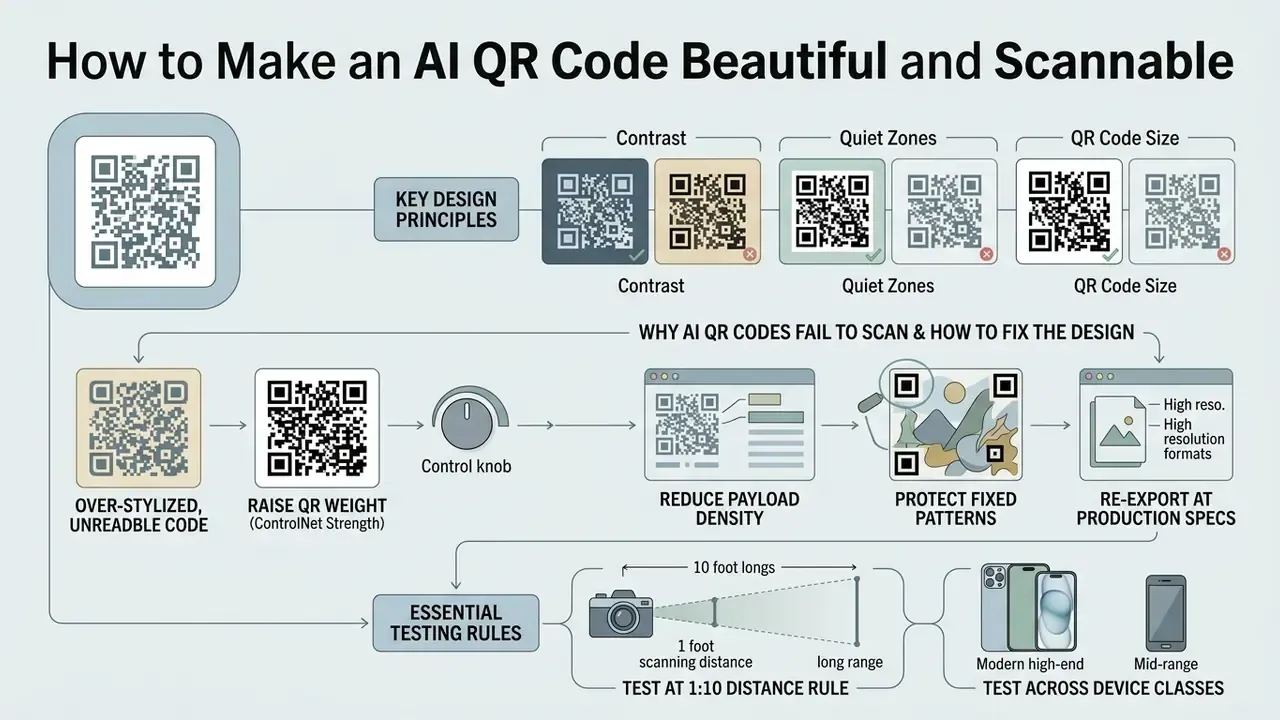
Contrast, Quiet Zones, and QR Code Size
Mobile optical sensors rely on distinct luminance thresholds to convert optical images into digital bitstreams. Always maintain dark modules over light backgrounds, avoiding low-contrast pastel combinations. Summaries of ISO/IEC 18004 express the same requirement optically as a print contrast signal of 0.6, while vendor guidance commonly restates it as a minimum 4:1 to 4.5:1 ratio.
The quiet zone must extend at least four module widths along all four borders. For physical materials like product packaging, business cards, or event signage, size the code so that its width equals at least one tenth of the anticipated scanning distance. For commercial print, hold 300 DPI as the minimum raster resolution; on digital screens, the governing constraint is rendered module size in device-independent pixels rather than DPI. Sizing math for print runs and scan-distance planning can be sketched quickly with basic calculators.
Why QR Code Art Fails to Scan and How to Fix the Design
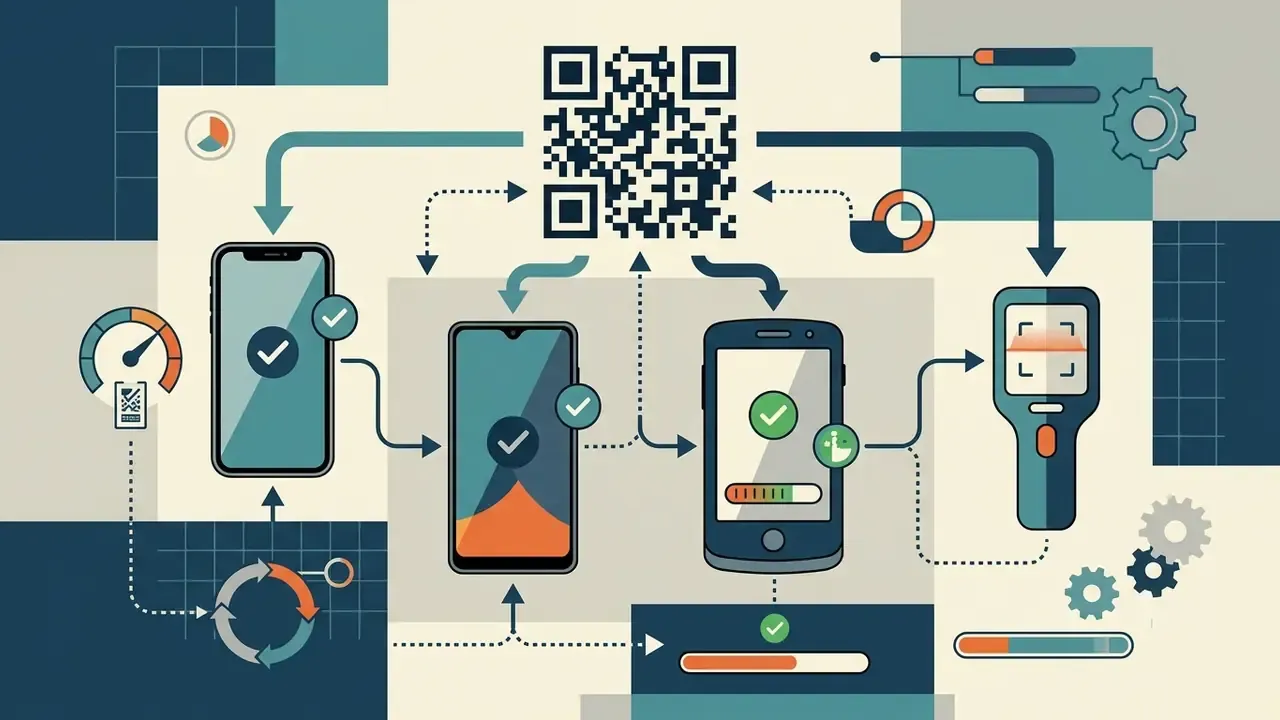
When an ai qr code image fails validation, the primary cause is usually structural pattern occlusion. If corner finder patterns or internal timing lines are obscured by background artwork, optical decoders cannot align the symbol grid.
To rectify scan failures, adjust ControlNet conditioning, increase background contrast, and confirm that Reed-Solomon error correction is set to Level H. Re-test degraded copies under simulated blur and rotation before finalizing print runs.
«With optimal deblurring parameters, recognition rates for QR versions 1–5 reach 96–99.67%, though results vary with version and blur severity.»

Pre-Print Validation Checklist
Checklist0 / 12
Where to Use Custom AI QR Codes
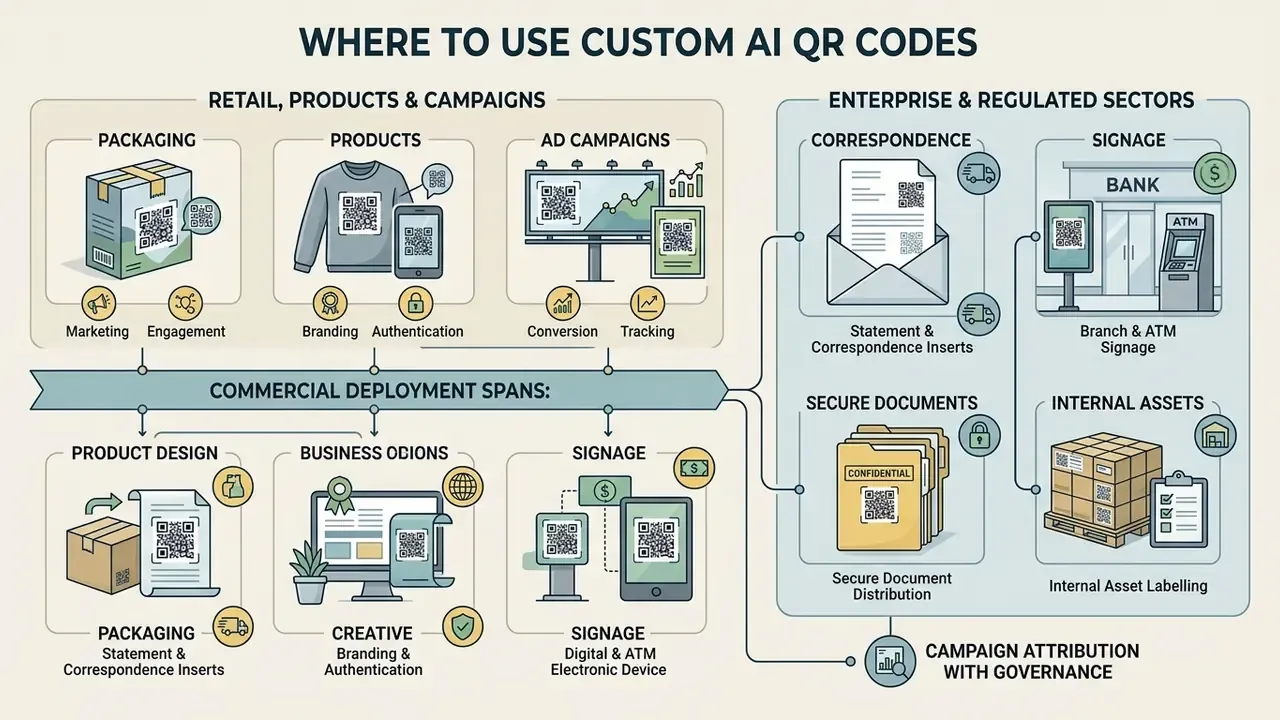
Commercial deployment of custom qr codes spans retail marketing, automated logistics, event access, and multi-channel digital publishing. Organizations leverage styled codes to drive higher audience interaction rates, and licensing conditions for the underlying imagery should be confirmed against the platform's commercial-use terms for AI images before launch.
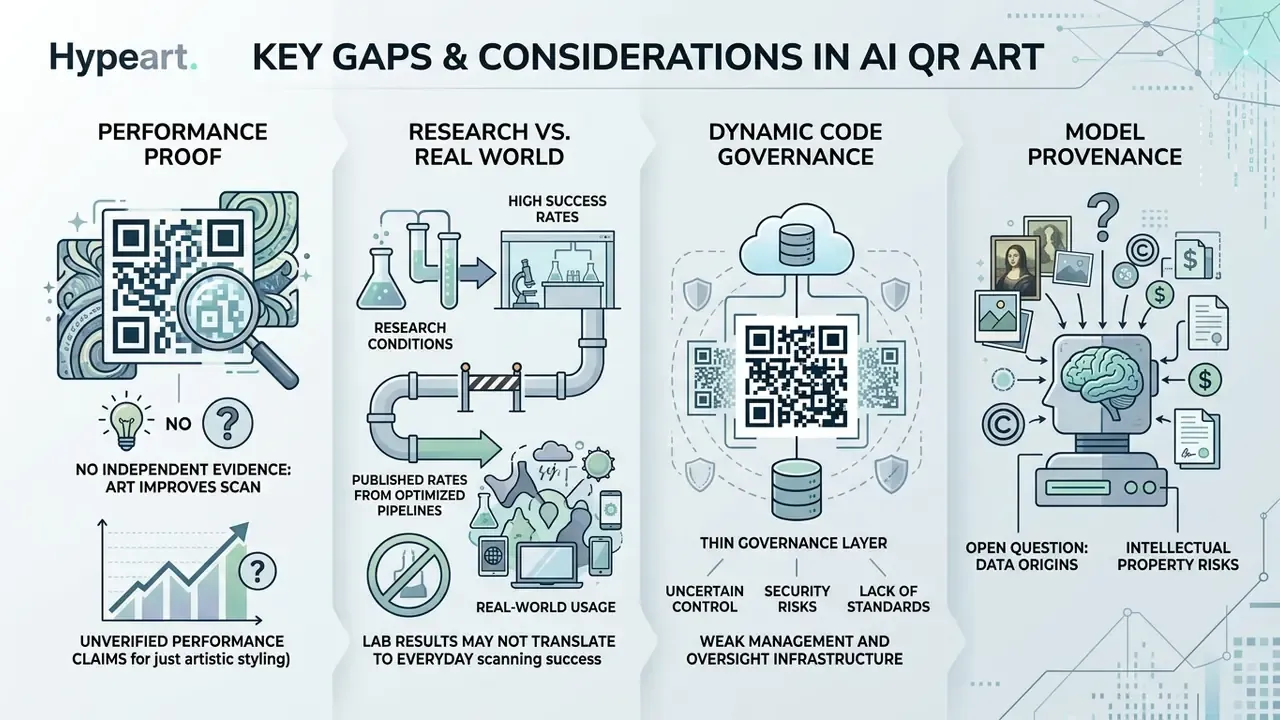
Evidence quality note. Uplift claims in this category are vendor-reported, not peer-reviewed. Platform-side figures published by QR generators cluster around +25% to +40% additional scans for branded or artistic codes versus plain black-and-white codes, with one vendor citing approximately +30% from its own platform data. A representative deployment pattern looks like this: a regional merchant replaces standard monochrome codes on product packaging with AI-styled codes pointing at dynamic landing endpoints, preserves a 4:1 module contrast ratio and Level H error correction, and reports a meaningful increase in scan interactions with no optical read failures at point-of-sale displays. Treat that shape of result as directional. The reproducible, independently verified figures are the scanning-robustness rates above, not the click-through deltas. Where uplift matters commercially, run your own A/B split with identical destinations and placements.
AI QR Codes for Packaging, Products, and Ad Campaigns
On physical consumer packaging, an artistic QR code transforms standard labels into digital engagement channels. Incorporating custom branding supports compliance initiatives such as the European Union Digital Product Passport by directing consumers to verified traceability, sustainability, and post-purchase data.
«Background complexity, code size, and quiet-zone integrity are the decisive variables for scan success on high-density packaging.»
Documented commercial examples exist at the brand level. The Flowcode and LOVE CORN packaging partnership (Business Wire, 2024), for instance, placed custom codes on CPG packaging routing scans to dynamic brand-activation landing pages, though performance metrics were not disclosed. For teams selecting the underlying generative image model for such campaigns, our evaluation of Midjourney image generation versus competing tools covers output quality, licensing, and control trade-offs relevant to commercial artwork. Teams weighing residual IP exposure on stylized imagery may also want the context in our AI Litigation and Case Timelines tracker.
Enterprise and Regulated-Sector Scenarios
Beyond consumer marketing, styled codes serve controlled enterprise workflows where an audit trail matters more than aesthetics:
In each of these cases the acceptance criterion is the same. A code is production-ready only when its generation parameters are logged, its destination is verified, and its scanning robustness is measured rather than assumed.
Static and Dynamic AI QR Codes: Editable Links and Scan Analytics
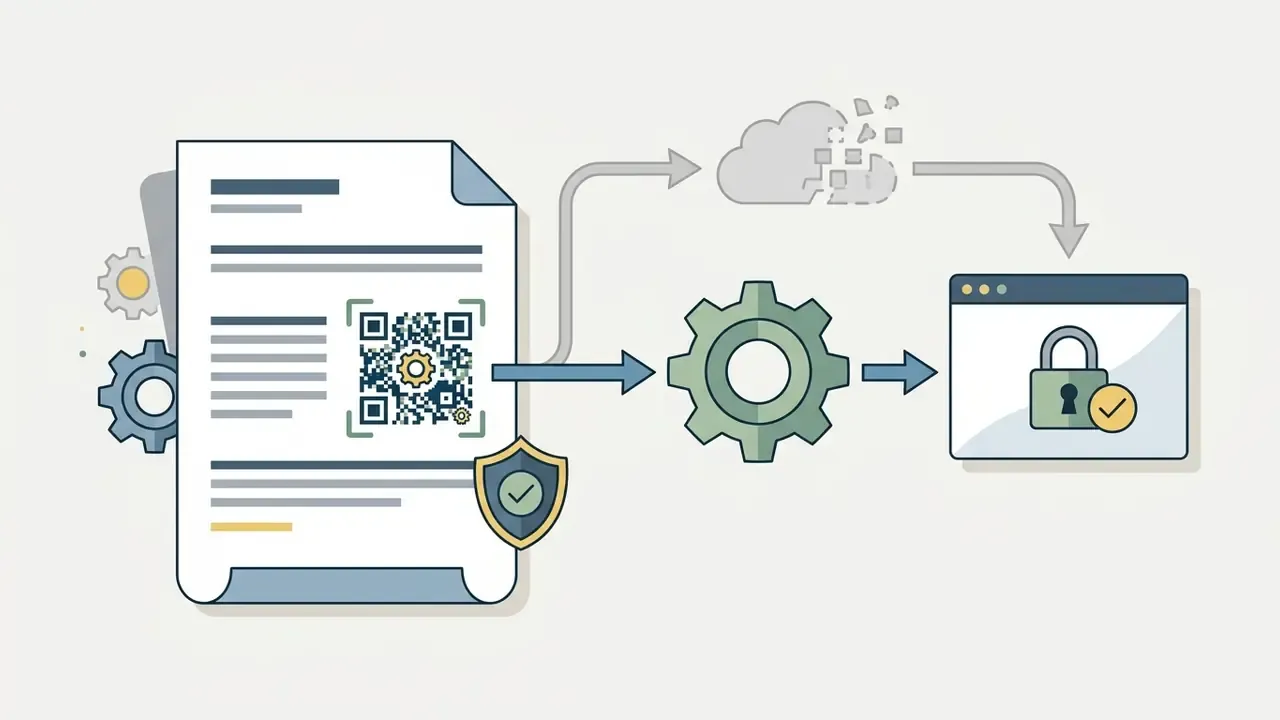
Choosing between static and dynamic architectures depends on operational requirements for payload editability and tracking telemetry.
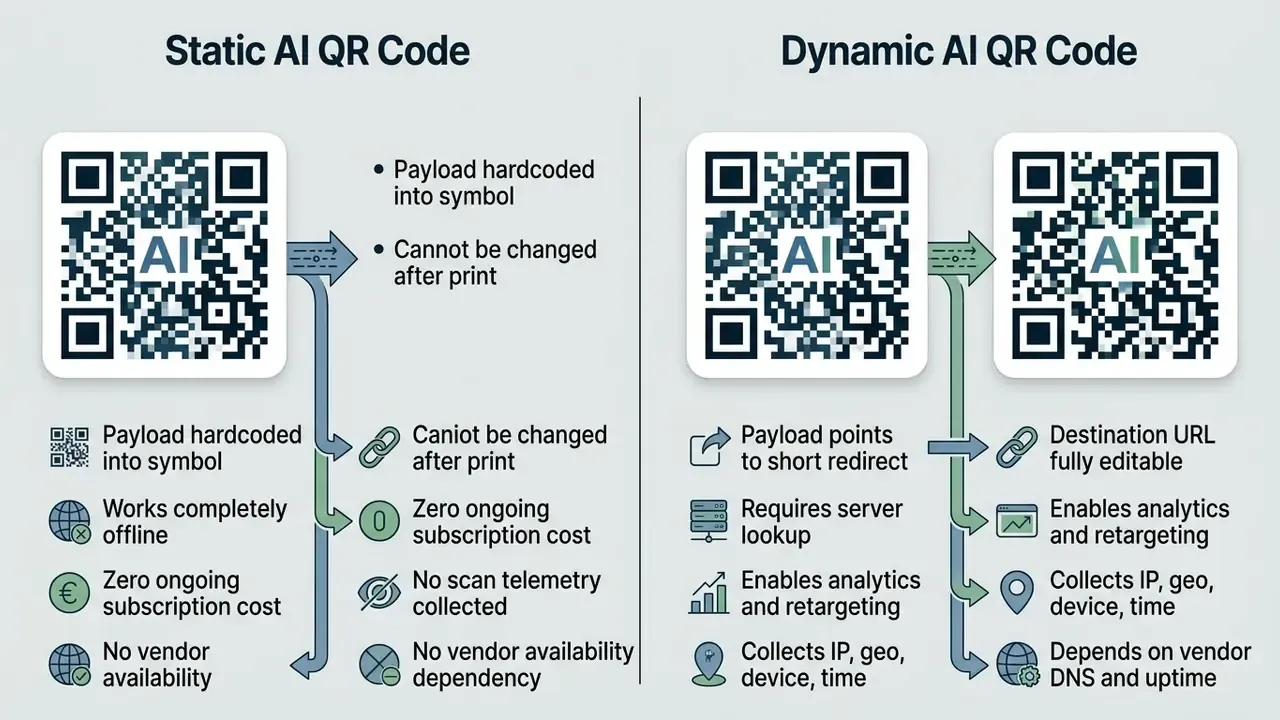
Understanding this operational distinction helps organizations select the appropriate infrastructure prior to launching physical print campaigns.
When a Static QR Code Is Enough
Static codes store payload data directly within the symbol matrix. They operate without third-party server redirects, making them ideal for fixed Wi-Fi credentials, permanent vCard contacts, plain text labels, or privacy-sensitive internal equipment labels. Decoding happens locally on the device, so the symbol itself is readable offline even when the destination requires connectivity.
Because static codes are immutable, any change to the underlying web address requires generating and reprinting new physical assets. That immutability is a feature in regulated contexts: there is no vendor-side surface on which a destination could be silently altered, and no scan telemetry to govern.
Why Businesses Need Dynamic QR Codes and Scan Tracking
Dynamic QR codes utilize lightweight intermediate redirect endpoints. This architecture allows operators to change destination links in real time without altering printed packaging or event signage.
Furthermore, dynamic infrastructure captures operational telemetry, including total qr codes scanned, scan timestamp, geographic location, device operating system, and browser type. Marketers can use this data to calculate campaign performance and model return on investment.
Data protection and safe redirects (anti-scam controls). Reputable dynamic-QR platforms encrypt traffic end to end (SSL/TLS), screen destination URLs against phishing and malware feeds, and block redirects to flagged domains. That is a direct response to the rise of "quishing" attacks, where legitimate printed codes are covered with malicious stickers. Vendors positioning for regulated buyers describe GDPR-compliant encrypted infrastructure, built-in protection against counterfeit codes, and anonymized scan analytics that exclude personal identifiers.
Compliance questions to answer before approving a dynamic code:
- Which telemetry fields are stored (full IP versus truncated IP, precise versus coarse geolocation, user agent)?
- Is the vendor a processor or an independent controller for scan data, and is a DPA in place?
- What is the retention period, and can it be configured to your policy?
- Are retargeting pixels fired on scan, and does that require consent in the target jurisdiction?
- What is the contractual uptime for the redirect service, and what happens to printed assets if the vendor's DNS or short domain lapses?
- Can the short domain be custom and brand-owned, reducing dependency and increasing scanner trust?
Vendor Risk, Data Privacy, and Shadow AI Controls
The generated image is rarely the largest risk in this workflow. The prompt and the destination URL are. When an employee pastes a pre-launch campaign URL, an internal portal address, or a customer-specific link into a consumer AI QR service, that string leaves the perimeter and may persist in vendor logs, prompt-history dashboards, or model-training datasets.
Checklist0 / 8
Control costs belong in the ROI model. A risk-adjusted view of an AI QR program counts subscription and API fees plus vendor due diligence, legal review of licensing terms, validation testing across device classes, and ongoing monitoring of destination integrity. Programs that skip the last item accumulate the most expensive failure mode: printed assets pointing at links no one owns. Procurement and onboarding questions that fall outside this article are covered in our support material, and you can view the guide for the escalation path.
Auditability and Model Determinism
Diffusion output is stochastic by default, which is a problem for any reviewer asked to reproduce a published asset. Treat each production code as a versioned artifact and record its full generation state.
| Audit field | Example value | Why it is retained |
|---|---|---|
asset_id | QR-2026-PKG-0148 | Links the printed SKU to the digital record |
payload | https://brand.link/spring26 | Verifies the encoded destination |
seed | 3841927465 | Enables deterministic regeneration |
prompt | "lush forest background, waterfall…" | Documents creative input |
model_version | SD-XL + QR ControlNet v2.1 | Ties output to a specific model build |
controlnet_weight | 1.35 | Explains the readability and aesthetics trade-off |
ecc_level | H (30%) | Confirms redundancy for artwork occlusion |
validator_report | pass, 12/12 degraded copies | Evidence of pre-print testing |
approver | Brand + Risk sign-off, date | Accountability trail |
Fixing the seed, prompt, and conditioning weight makes a generated code reproducible on demand. Think of it as version control for visual assets, and as the minimum an internal auditor needs to confirm that the code in the field is the code that was approved.
AI QR Generator vs Canva, Adobe Express, and QR Code Monkey
| Capability | Canva / Adobe Express | QR Code Monkey | Chrome / Edge built-in | AI QR Code Generator |
|---|---|---|---|---|
| Module geometry restyled by model | No | No | No | Yes (ControlNet-conditioned) |
| Logo overlay | Yes (centered overlay) | Yes | No | Yes, integrated into matrix |
| Custom colors and dot shapes | Limited | Yes | No | Yes, 50+ parameters typical |
| Prompt-driven artwork | No | No | No | Yes |
| Content types supported | URL-centric | Multiple | Single URL | 60+ payload types |
| Dynamic editable links | Limited / paid tiers | Limited | No | Yes |
| Built-in scannability validator | No | No | No | Yes, with regeneration gates |
| Scan analytics | Minimal | Basic | None | Geo, device, OS, timestamp |
| API / bulk generation | Limited | Limited | No | Yes, per-image pricing |
Design suites such as Canva and Adobe Express produce essentially static monochrome symbols with an optional centered logo, perfectly adequate for a plain link on a slide. QR Code Monkey adds color and module-shape control but performs no generative synthesis. Chrome's right-click "Create QR Code for this page" produces one plain code for one URL. An AI generator differs in kind, not degree: it reallocates the artwork across the module grid while a validator enforces decodability. Teams that already standardized on a design suite can compare feature depth in our overview of Canva AI generation features and licensing.
Free AI QR Code Generator, Pricing, and Business Use
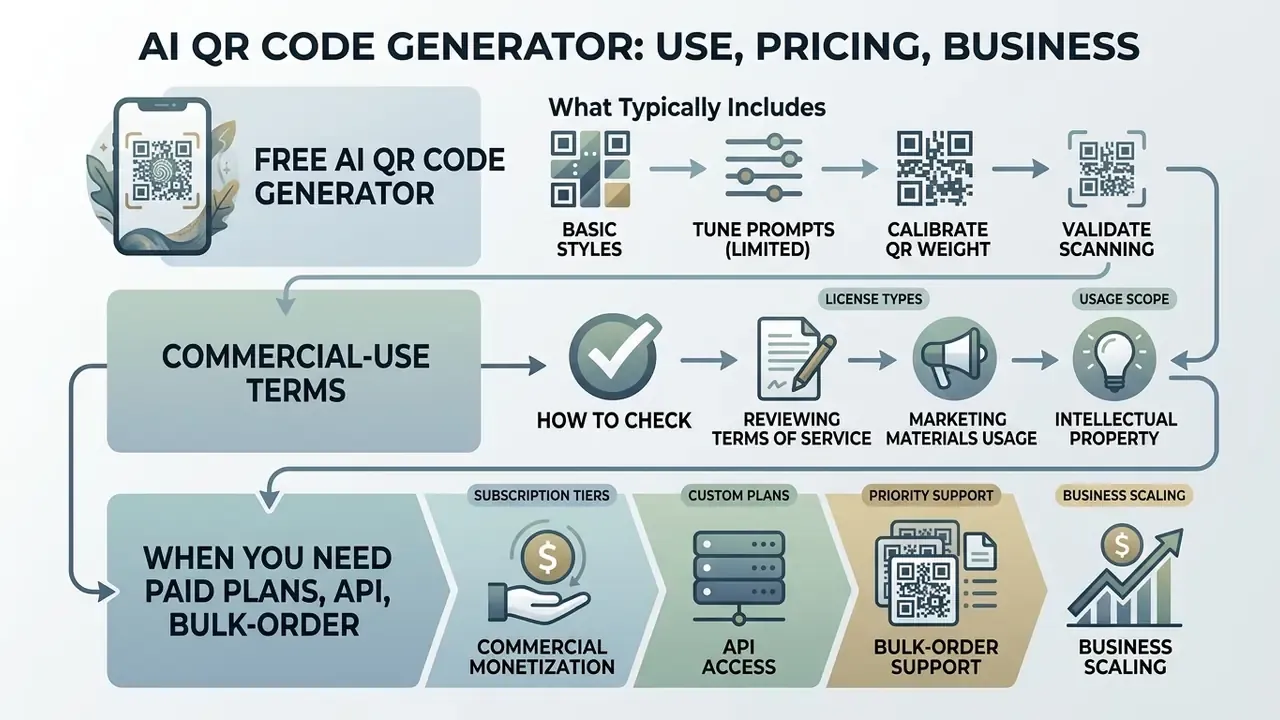
Commercial monetization structures for an ai qr code generator free platform typically use tiered subscription models. Organizations can create free ai qr codes under basic tiers before upgrading to enterprise plans; before committing budget, it is worth reviewing free AI image generators and free AI art tools that can supply the underlying artwork.
| Tier | Price Range | Watermark Policy | Dynamic Links | Monthly Scans | API Access |
|---|---|---|---|---|---|
| Free Plan | $0 / month | Optional/Vendor Mark | 1–5 Dynamic Links | 100–500 Scans | Restricted (≈100 req/mo) |
| Starter | $5–$20 / month | No Watermark | 10–50 Links | 10,000 Scans | Optional Add-on |
| Pro / Business | $30–$50 / month | No Watermark | 100–500 Links | Unlimited Scans | Included (≈10,000 req/mo) |
| Enterprise | Custom Quote | No Watermark | Unlimited | Custom Volume | Full Endpoint Access + SLA |
Evaluating platform pricing models ensures alignment with campaign budget constraints. Normalize annual-billing discounts, VAT, and currency before comparing vendors directly, and check whether "unlimited scans" carries a fair-use clause buried in the terms.
What a Free AI QR Code Generator Typically Includes
A free ai qr code generator plan generally provides static vector exports, basic prompt customization, and access to standard style presets. Some platforms offer limited trial tiers for dynamic link generation, commonly 3 to 5 dynamic codes and a few hundred tracked scans per month. In practice, free qr tiers are best treated as evaluation sandboxes rather than production infrastructure.
When using a qr art generator free tool, or any qr code ai art generator free tier, verify whether the export includes vendor watermarks or scan limits that could affect professional brand presentation. Style-library breadth on free plans ranges widely, from three presets to well over 130. Also confirm how many qr codes created on a free account remain accessible after the trial window closes; a few vendors disable dynamic redirects rather than merely locking the editor.
Verified Vendor Terms, Watermarks, and Commercial Rights (2026)
How to Check Commercial-Use Terms for QR Codes in Marketing Materials
This section is general information and does not replace advice from qualified counsel on intellectual property, trademark, or commercial licensing questions.
Before publishing generated assets on consumer packaging or broadcast media, review the provider's commercial licensing agreement. Confirm that the platform grants non-exclusive, worldwide, royalty-free commercial rights for generated images, and check whether the grant is perpetual or terminates with the subscription. That last clause is the one most often missed. Comparative licensing terms across major image platforms are summarized in our guide to commercial-use rights for AI images, in our review of Google's AI image generation terms, and across the wider AI Media Commercial-Use Hub.
«Standard QR matrix technology remains open-use; licensing constraints attach to vendor AI imagery, dynamic infrastructure, and branded marks.»
Additionally, observe trademark guidelines established by Denso Wave Inc., the legal owner of the registered trademark "QR Code." Proper trademark attribution should be included in printed documentation when referencing the term explicitly. Denso Wave holds the original patent but chose not to enforce it, which is why the symbology itself is freely implementable. Payment marks are the exception: EMVCo requires a written trademark license agreement for use of the EMV QR Payment Mark, and prohibits visual alteration of that mark.
When You Need a Paid Plan, API, or Bulk-Order Support
Enterprise operations require paid tiers when integrating automated QR synthesis directly into customer relationship management (CRM) systems or enterprise resource planning (ERP) platforms. Programmatic creation via dedicated endpoints simplifies bulk asset workflows, and per-image API pricing (roughly $0.0065–$0.009 at volume) makes unit economics predictable for catalog-scale deployments.
Selection criteria for a corporate agreement: documented API endpoints with rate limits, template-based bulk generation, CRM export or webhook support, individual onboarding, contractual SLA and priority support, SOC 2 Type II attestation, no model training on customer data, and custom deployment or data-residency options. Developers evaluating comparable generative-media API economics can review our Google Veo implementation and API cost guide for a reference model of endpoint pricing and quota planning.
Limitations and Open Questions
FAQ
Will an AI-styled QR code still scan reliably?
Yes, if it is validated rather than assumed. Peer-reviewed pipelines report 95–99% scanning success under stress conditions, but only when finder patterns, quiet zone, contrast, and error correction are preserved. Always run degraded-copy and multi-device tests before print.
How long does generation take, and what file do I get?
Typically 10–60 seconds per code. Standard raster output is 768×768 px PNG; production print work should be exported as SVG, EPS, or PDF at 300 DPI equivalence.
My QR code art does not scan. What is the single best fix?
Raise the QR Weight or ControlNet conditioning strength from the aesthetic baseline (≈0.35) toward 1.2–2.0, then re-test. Also shorten the payload, set ECC to Level H, and scan from ten times the code's physical size.
How many content types can an AI QR code encode?
Leading platforms support 60+ types across URLs, Wi-Fi, vCard, PDF links, Google Reviews, TikTok, Instagram, WhatsApp, YouTube, payment links, app-store smart links, calendar events, and geolocation.
Is a free AI QR code generator safe to use?
It depends on the vendor and the payload. Look for TLS encryption, GDPR-compliant processing, anti-scam screening of destination URLs, anonymized analytics, and an explicit statement that prompts and payloads are not used for model training. Never encode confidential or pre-launch URLs in an unvetted service.
Static or dynamic: which is safer from a privacy standpoint?
Static codes collect nothing and depend on no third-party server, which suits internal and privacy-sensitive assets. Dynamic codes enable editing and analytics but create a processor relationship over IP, geolocation, and device data that must be documented.
Can I use AI-generated QR codes commercially on packaging?
Generally yes on paid plans, subject to the vendor's license grant. The QR symbology itself is open-use; the AI artwork, tracking infrastructure, and the "QR Code" trademark carry conditions.
Does Chrome already have a QR code generator?
Yes. Right-click a page and choose "Create QR Code for this page." It produces a plain monochrome code for one URL, with no branding, no content-type options, no dynamic editing, and no analytics.
Which error correction level should artwork-heavy codes use?
Level H, which recovers approximately 30% of damaged codewords, versus roughly 7% (L), 15% (M), and 25% (Q). Higher redundancy reduces usable payload, so shorten the URL accordingly.
How do we make a generated code reproducible for audit?
Log the seed, prompt, model version, conditioning weight, ECC level, validator report, and approver for every production asset. Next Steps for AI Governance and Marketing Teams
- Define acceptance criteria in writing: 4:1 contrast, a 4-module quiet zone, Level H for artwork, 1:10 sizing, and a documented degraded-copy test suite.
- Approve a vendor shortlist with SOC 2 Type II evidence, a DPA, no-training commitments, and a transferable custom short domain.
- Publish a Shadow AI rule prohibiting external generation of codes containing non-public URLs or customer-specific parameters.
- Stand up an asset register capturing the audit fields above, owned jointly by brand and risk.
- Pilot on one campaign with an A/B split against a conventional code, measuring scan rate and read failures rather than relying on vendor uplift claims.
- Schedule destination monitoring so no printed asset ever outlives the link it points to. Start small, log everything, and let the validator, not the mood board, decide when a code ships.