About the author: Marcus Hale writes on model risk management (MRM), marketing technology governance, and controlled deployment of generative systems in regulated environments. His analysis focuses on the operational distance between a working pilot and an auditable production workflow.
Last updated: March 2026 | Reading time: ~22 minutes
Executive Summary
For operators evaluating an ai social media post generator at scale, marketing leads, CROs, compliance officers, and AI governance owners, the practical conclusions are:
- Hybrid beats both extremes. AI-drafted copy with light human editing outperformed both human-only and unedited AI copy in a controlled Facebook Dynamic Product Ads experiment (+26% CTR for the hybrid variant).
- Volume is not engagement. Large-scale platform data shows synthetic content raises publishing volume sharply while diluting average engagement per post unless curation is applied.
- Disclosure is now a platform requirement, not a preference. Photorealistic synthetic video and realistic-sounding audio must be labeled on Meta surfaces; failure to disclose carries enforcement consequences.
- Copyright is conditional. Purely machine-generated output without substantial human creative contribution is generally ineligible for copyright protection under US Copyright Office guidance, which directly affects asset resale and exclusivity claims.
- Free tiers are pilots, not production. API access, brand locking, audit logging, model versioning, SSO/RBAC, and data-retention controls sit behind paid or enterprise tiers.
- In regulated sectors, the tool is the smaller cost. Risk-adjusted ROI must include compliance review labor, records retention, DLP controls, and residual risk, not just seat licenses.
How to read this guide. If you own model risk or marketing compliance, the governance and control-layer material, followed by the risk-adjusted ROI model, will answer most of your questions; feature and platform detail then reads as implementation. If you own the content calendar, start with features and workflow, then check the pricing and commercial-rights sections before your first paid campaign.
The guide is built to answer six decision questions: what the tool actually produces, where data leaks first, which controls a supervisor will ask about, what the honest cost model looks like, who owns the output, and what a safe 30-day pilot looks like.
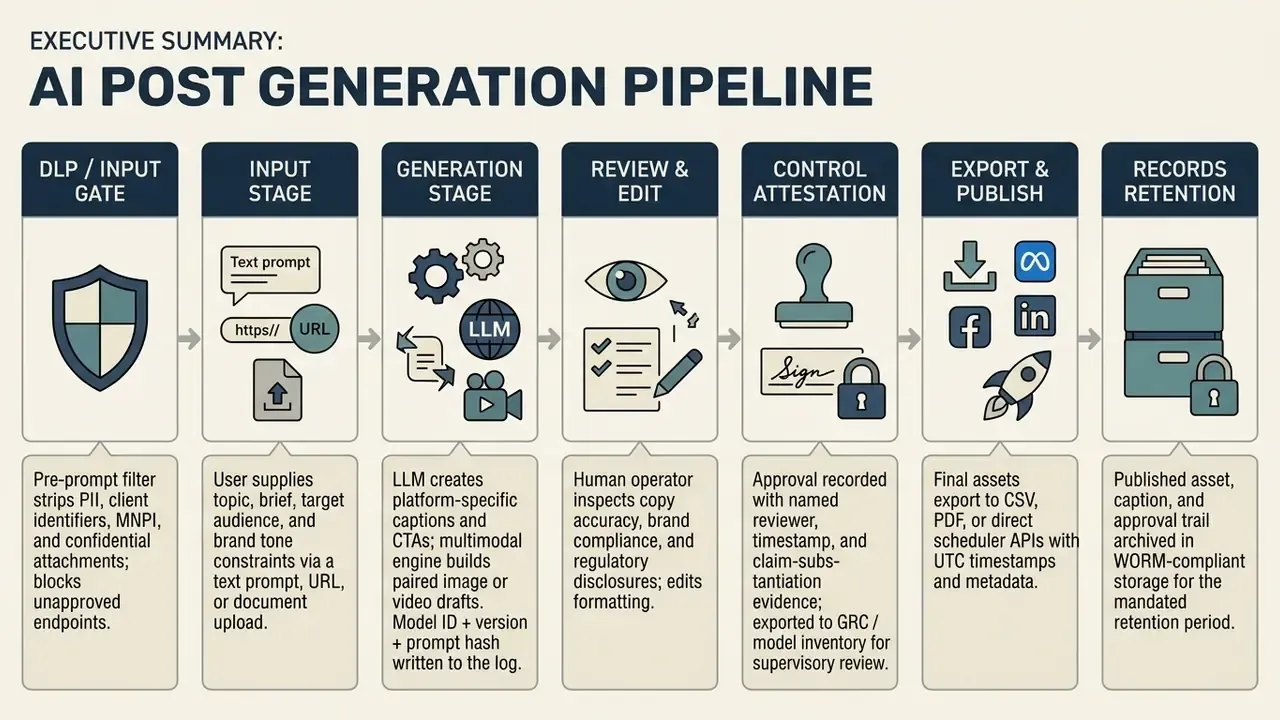
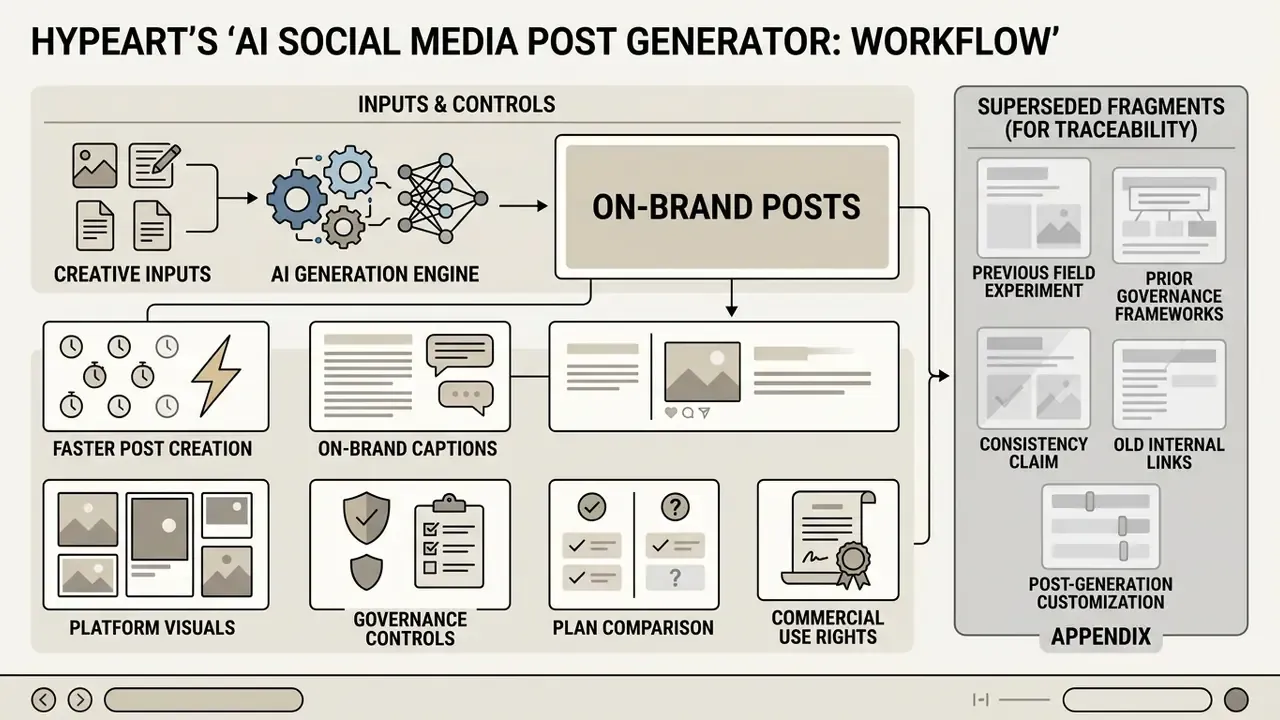
Figure 1: End-to-end architecture of an enterprise AI post generation workflow, including the DLP input gate, model-version logging, control attestation, and records-retention layers. High-volume publishing requires explicit review checkpoints prior to API handoff.
What Is an AI Social Media Post Generator?
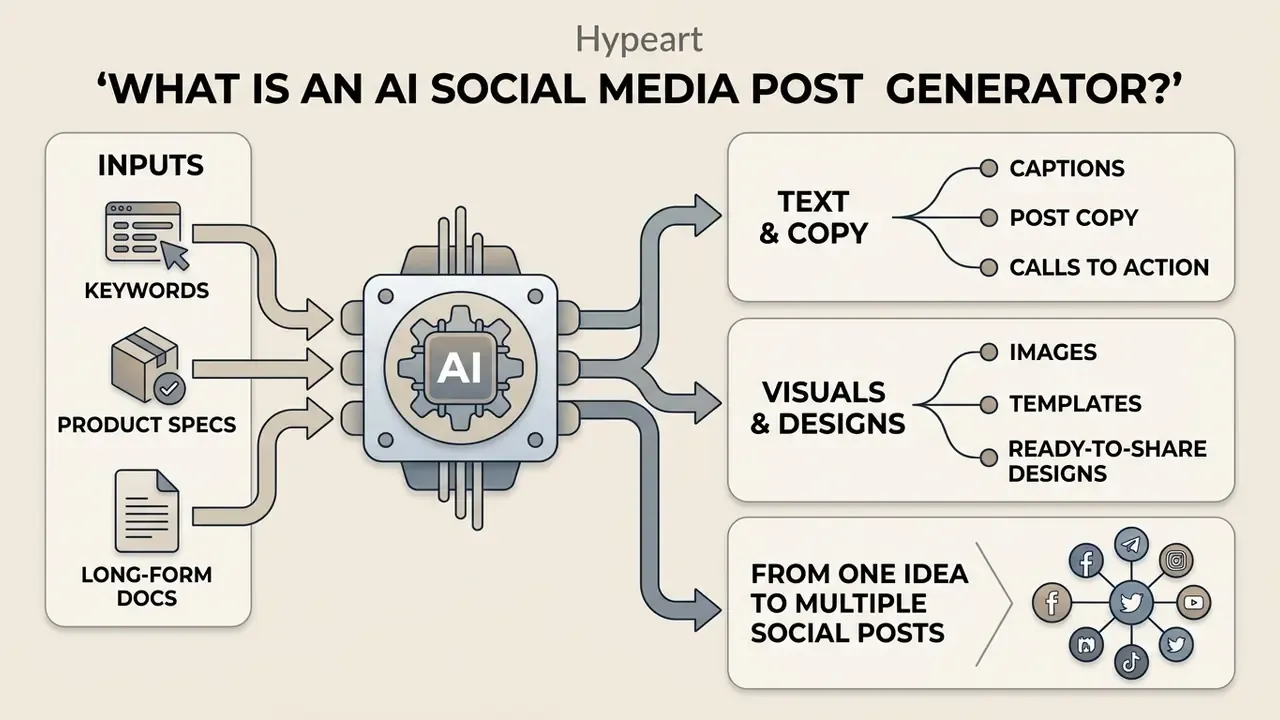
An ai social media post generator is an automated software solution that transforms structured inputs, such as keywords, product specifications, or long-form documents, into platform-tailored captions, visual assets, and engagement triggers. It reduces manual copywriting overhead by translating single concepts into channel-specific formats while maintaining brand parameters.
Vendors also market the same category as an ai based social media post generator: a system powered by large language models and multimodal generative frameworks that turns natural language prompts, documents, or strategic briefs into ready-to-publish captions, images, and post schedules. In enterprise workflows, these tools compress the cycle time between campaign inception and content deployment while providing structural consistency for brand messaging.
In architectural terms, vendor documentation consistently describes the same modular chain: input parsing (topic, keywords, uploaded PDF/DOCX/slides), intent and style selection, text generation, optional paired image generation, platform adaptation, and export. Outputs typically include the caption body, hashtags, a call-to-action line, and assets already resized for the target channel.
One distinction worth keeping in mind: producing a single post and producing a serialized content stream are different operations. The first needs a good prompt. The second needs a queue, a naming convention, and a reviewer with capacity.
Captions, Post Copy, and Calls to Action
AI text generation tools construct social copy by aligning natural language processing algorithms with platform syntax, character limits, and audience expectations. An ai content generator for social media constructs primary text, hook lines, and strategic calls to action (CTAs) based on defined campaign goals.
A field experiment run in Q4 2023 for a beauty brand in Singapore tested GPT-4-generated copy against human baselines on Facebook Dynamic Product Ads, spending up to $20,000 in media budget across the variants.
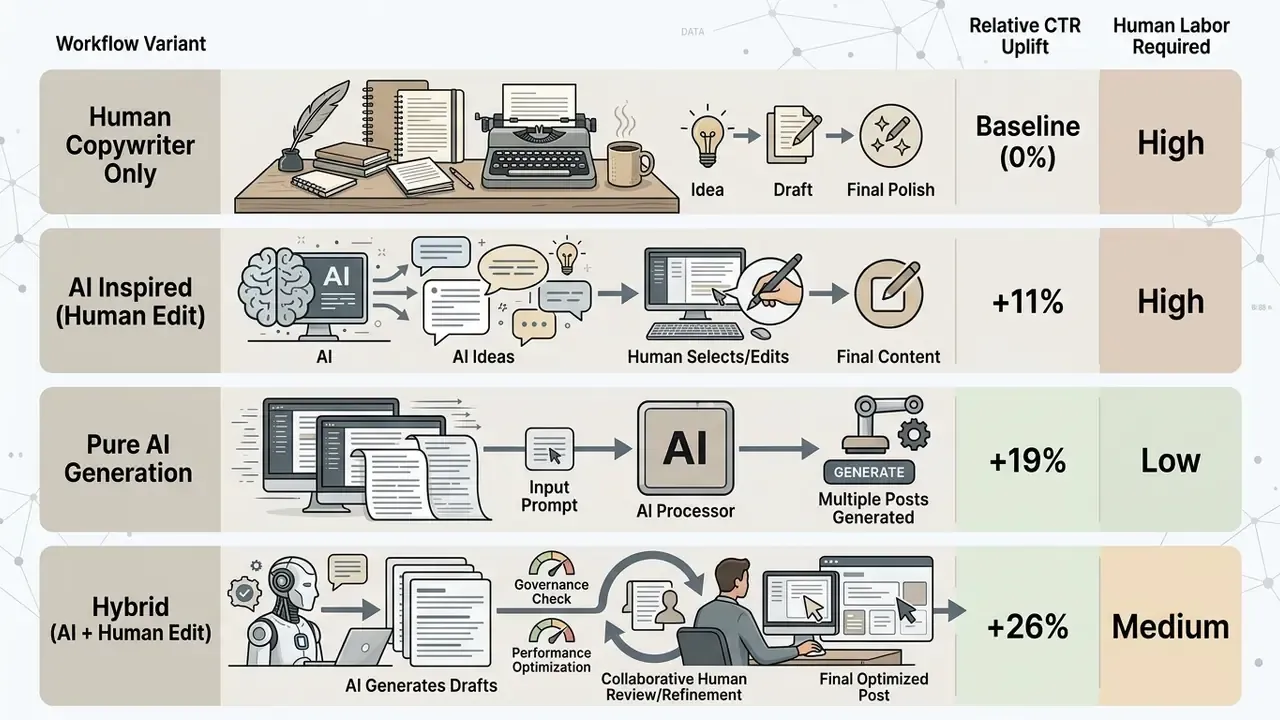
The operational reading of both datasets is consistent: generated copy is competitive with professional human copy on conversion metrics, and the marginal value of human involvement lies in editing and claim verification rather than first-draft production. Or, put less politely, the model can write the hook; it cannot substantiate it.
When evaluating specialized tools for creative assets, teams often review our AI Media Glossary to standardize technical definitions across cross-functional groups.
Governance, Data Protection, and Regulatory Controls
Generative post workflows introduce three control problems that generic marketing documentation ignores: data leakage at the prompt boundary, unrecorded model behavior, and communications that fall under supervisory rules. Organizations in banking, insurance, brokerage, and investment advisory contexts should treat a post generator as an in-scope model and an in-scope communications channel simultaneously.
Preventing Data Leakage and Shadow AI
The highest-frequency incident in early deployments is not a hallucinated statistic. It is an employee pasting confidential material into a consumer-grade endpoint to draft a post faster.
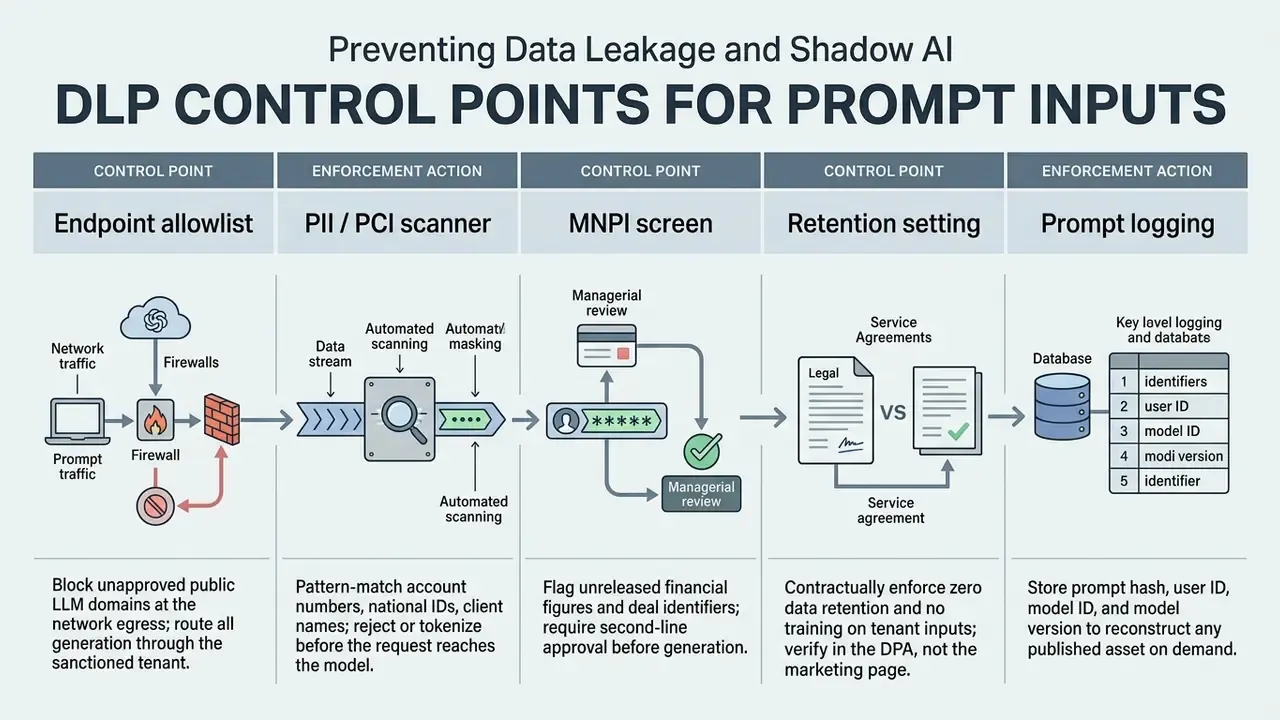
Shadow AI risk should be quantified rather than assumed: measure the share of published social assets whose drafting path cannot be reconstructed from logs. Any figure above zero is an open finding. Every ai generator post cycle, including throwaway drafts, should leave a retrievable trace.
Supervisory and Records Requirements
Regulated marketing teams must map generated posts to existing communications rules before scaling volume:
| Requirement Area | Practical Control for Generated Posts |
|---|---|
| Model risk oversight (SR 11-7 style frameworks) | Register the generator in the model inventory; document intended use, limitations, owner, and validation cadence. |
| Retail communications review (FINRA Rule 2210 context) | Route generated posts through principal review; retain evidence of approval prior to first use. |
| Adviser marketing rules (SEC Marketing Rule context) | Prohibit generated performance claims, testimonials, and hypothetical projections without required disclosures and substantiation files. |
| Books and records (SEC 17a-4 style retention) | Archive the final post, caption, imagery, and approval trail in non-rewriteable, non-erasable storage for the mandated period. |
| Platform disclosure (Meta AI labeling) | Apply the "AI Info" disclosure to photorealistic synthetic video and realistic-sounding audio, and record that the label was applied. |
| Third-party risk | Obtain SOC 2 Type II reports, subprocessor lists, and breach-notification terms from the vendor before onboarding. |
Core Features of an AI Content Generator for Social Media
Modern AI social media post platforms combine natural language parsing, brand asset controls, and interactive editing interfaces to ensure output meets commercial standards. Selecting the right platform requires evaluating specific ai content generator for social media features against enterprise risk and compliance controls.
Prompt-Based Generation and Content Variations
Prompt engines analyze strategic inputs, such as target demographic, emotional tone, and campaign offer, to generate multiple text and visual variations simultaneously. This capability allows marketing teams to conduct rapid multivariate testing across different messaging hooks.
In a 10-week randomized field trial involving 34,849 advertisers on Facebook Ads Manager, Meta evaluated its AdLlama reinforcement-learning model against standard baseline generators (Meta AI Advertising Report, AdLlama RLPF experiment, Feb to Apr 2024). Advertisers utilizing the performance-optimized ai generator social media features achieved a statistically significant 6.7% increase in overall click-through rates.
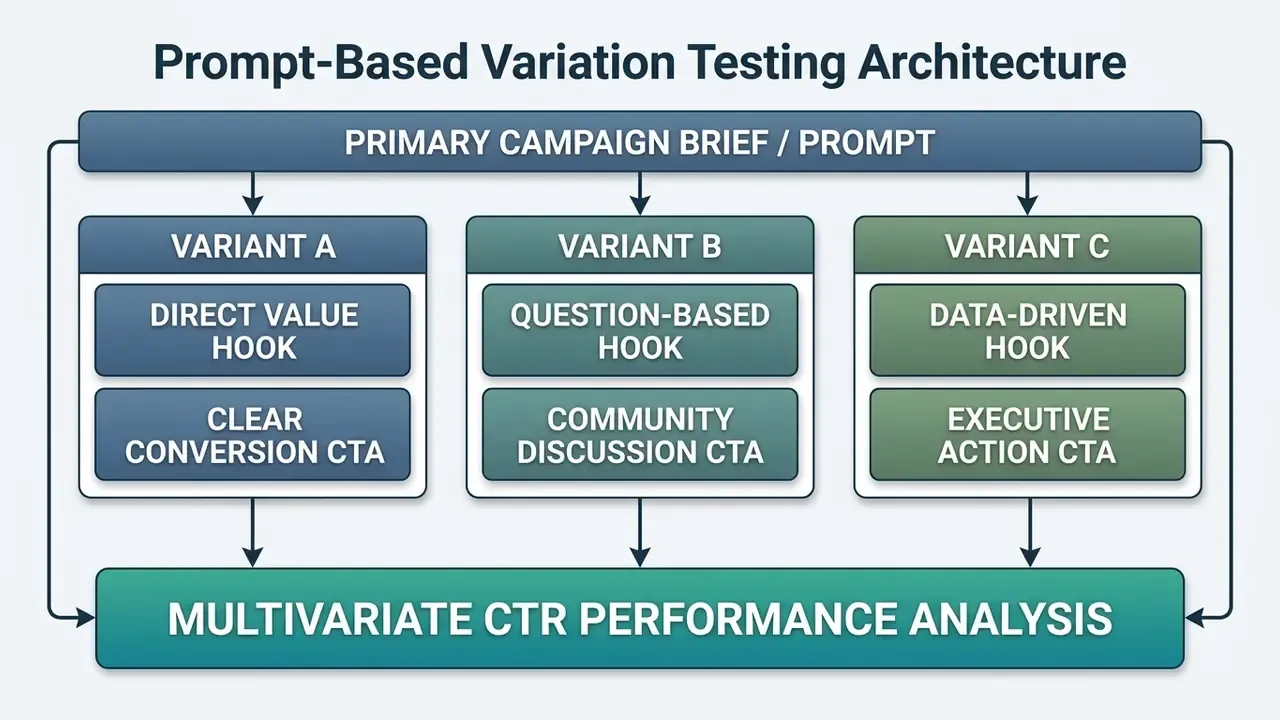
Statistical hygiene matters when variants come from prompts rather than human writers: semantically equivalent prompt rewrites can shift outputs, so credible testing uses several perturbations per condition and a permutation-style significance check instead of a single control-versus-challenger run.
For teams structuring corporate presentations alongside social campaigns, incorporating a slidesgo ai presentation setup helps align internal slide decks with external social creative.
Automated Website and Product Scraping (URL-to-Post)
Enterprise AI post generators streamline content sourcing by ingesting public URLs directly. Instead of writing manual briefs, operators submit a landing page or product URL. The system's web scraper extracts key metadata, product features, and visual assets, converting them into platform-ready post captions and promotional banners.
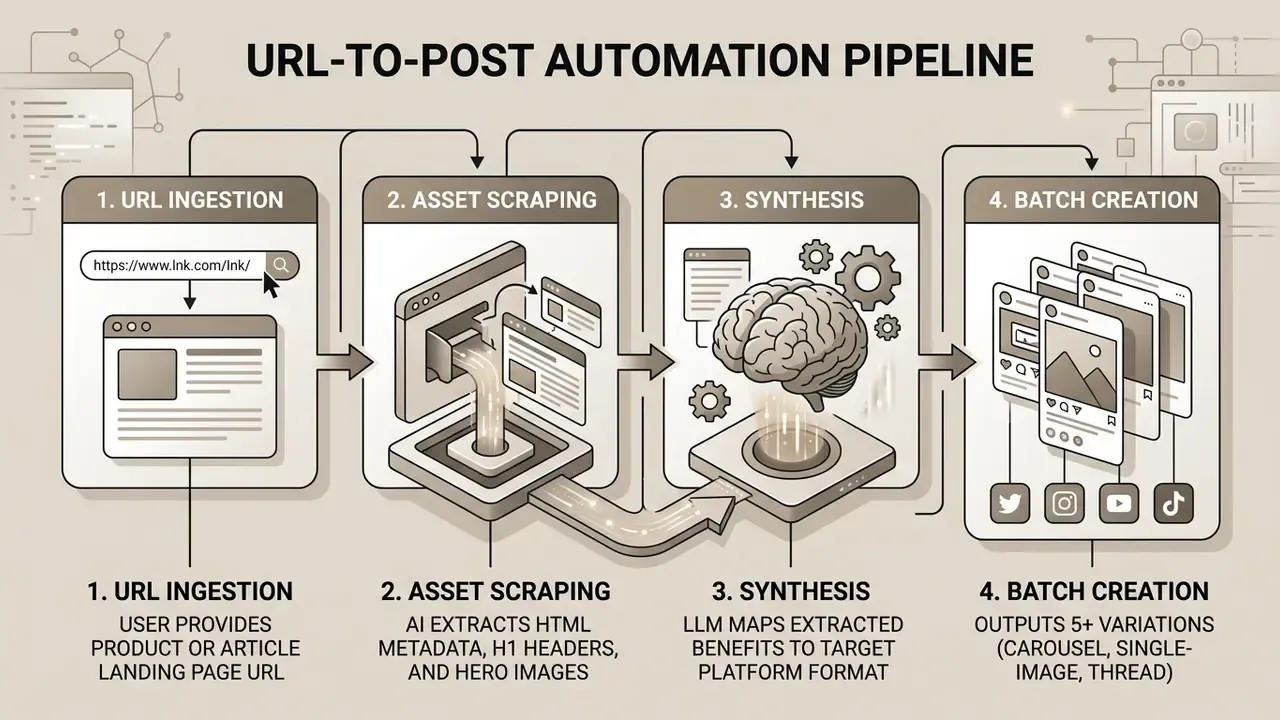
The same mechanism scales to catalog-level ingestion: connecting a commerce feed or sitemap allows a batch-oriented ai posts generator to build a rolling 30-day content calendar from live product data, pricing, and category structure. Two governance conditions apply. First, scraped claims inherit the accuracy of the source page: if the landing page contains an outdated price or an unsubstantiated performance claim, the generated post reproduces it faithfully. Second, scraped imagery must be checked for third-party rights before redistribution, particularly when a page hosts licensed stock or partner logos.
Native Text-to-Video Repurposing for Short-Form Channels
Modern social algorithms heavily prioritize video formats (Instagram Reels, YouTube Shorts, TikTok). Advanced post generators feature integrated AI video engines that convert text copy into fully animated short-form video assets in a single workflow.
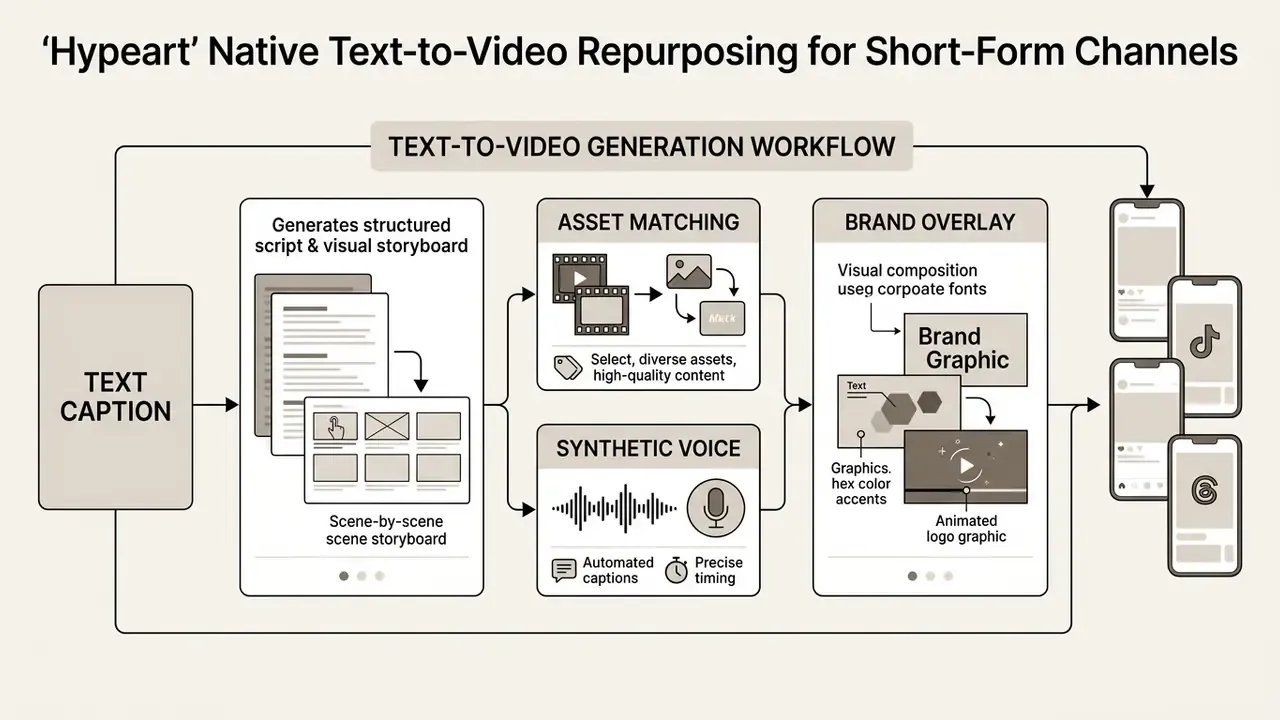
When transforming static posts into motion, systems automatically re-render video aspect ratios between vertical 9:16 (Stories and Reels) and square 1:1 (Feed and LinkedIn) without manual keyframe editing. Practical controls for this stage include synthetic-voice consent documentation, caption accuracy review (auto-generated subtitles frequently mis-transcribe product and ticker names), and file-weight optimization using a video compressor before upload. Teams building the narration layer separately should evaluate AI voice generators for licensing terms covering commercial broadcast use.
Editing Generated Posts Before Publishing
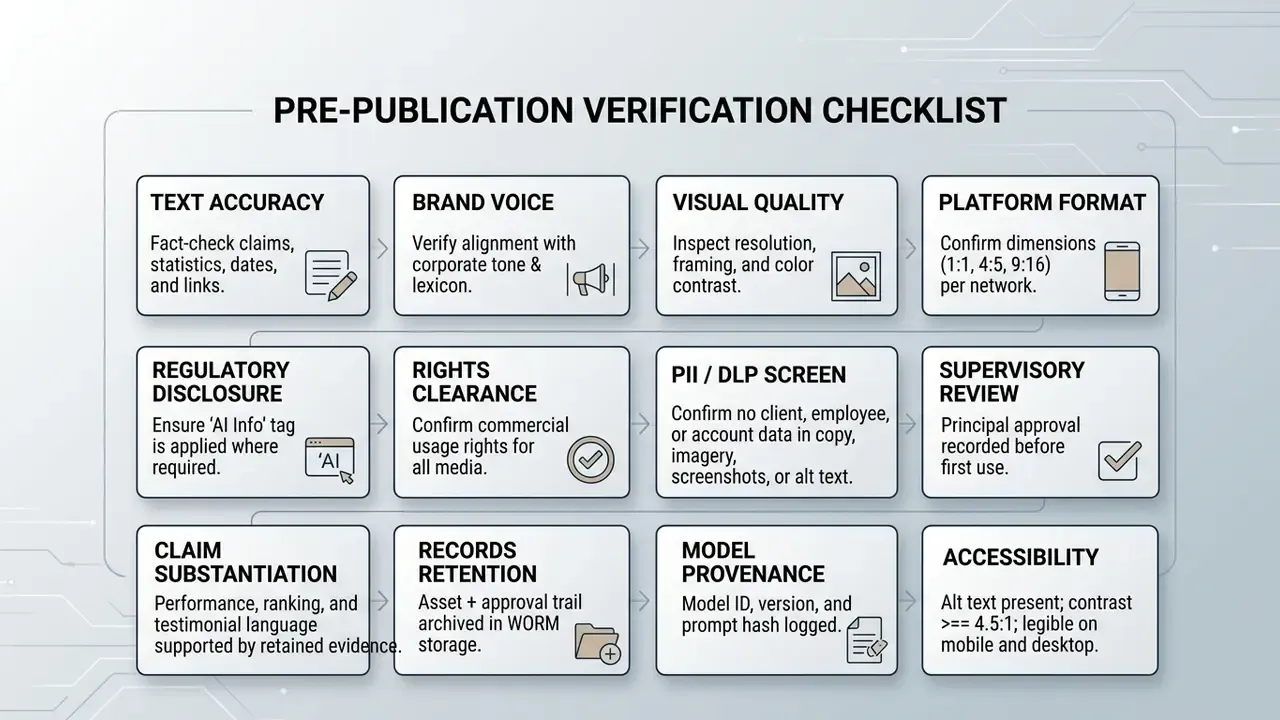
Post-generation customization controls allow human operators to modify copy syntax, re-crop visual assets, and verify claims before publication. Responsible deployment models mandate human review to eliminate factual errors and prevent unauthorized brand exposure.
Beyond basic text tweaking, modern visual workflows leverage In-Canvas Smart Editing (Touch Edit). Instead of regenerating an entire visual asset when a minor detail is incorrect, operators click specific image regions or select text blocks to perform targeted modifications.
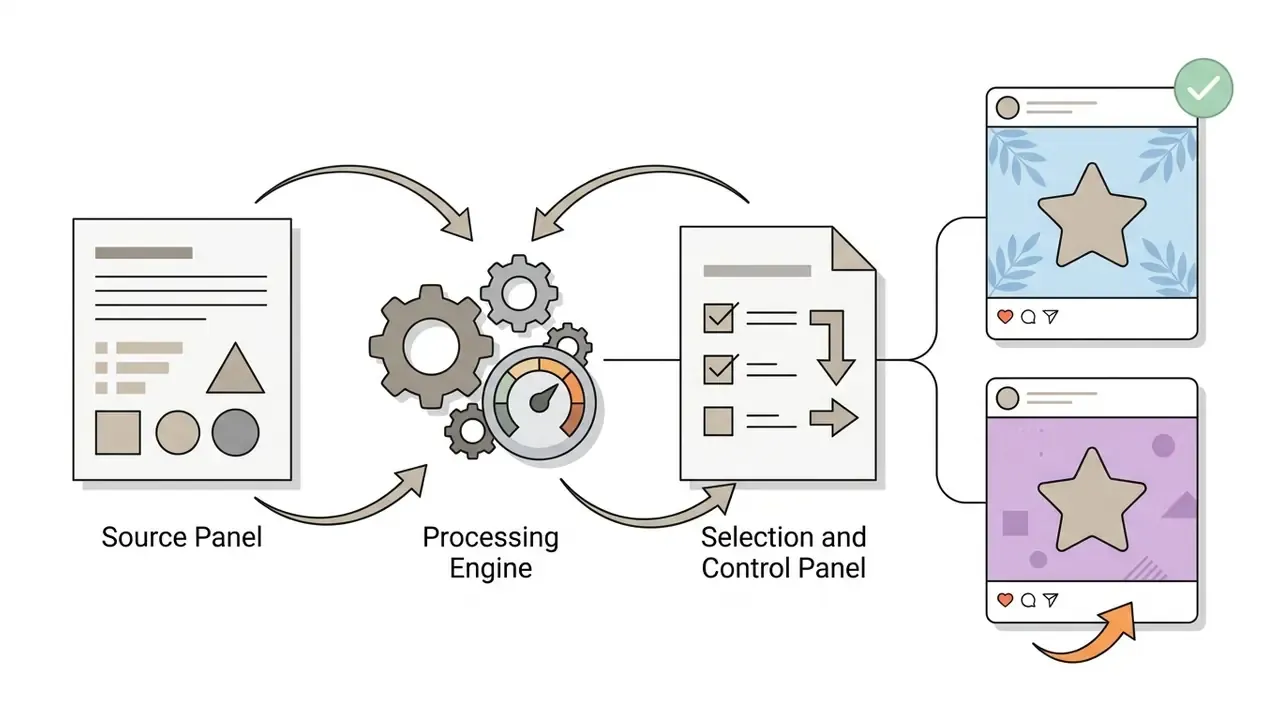
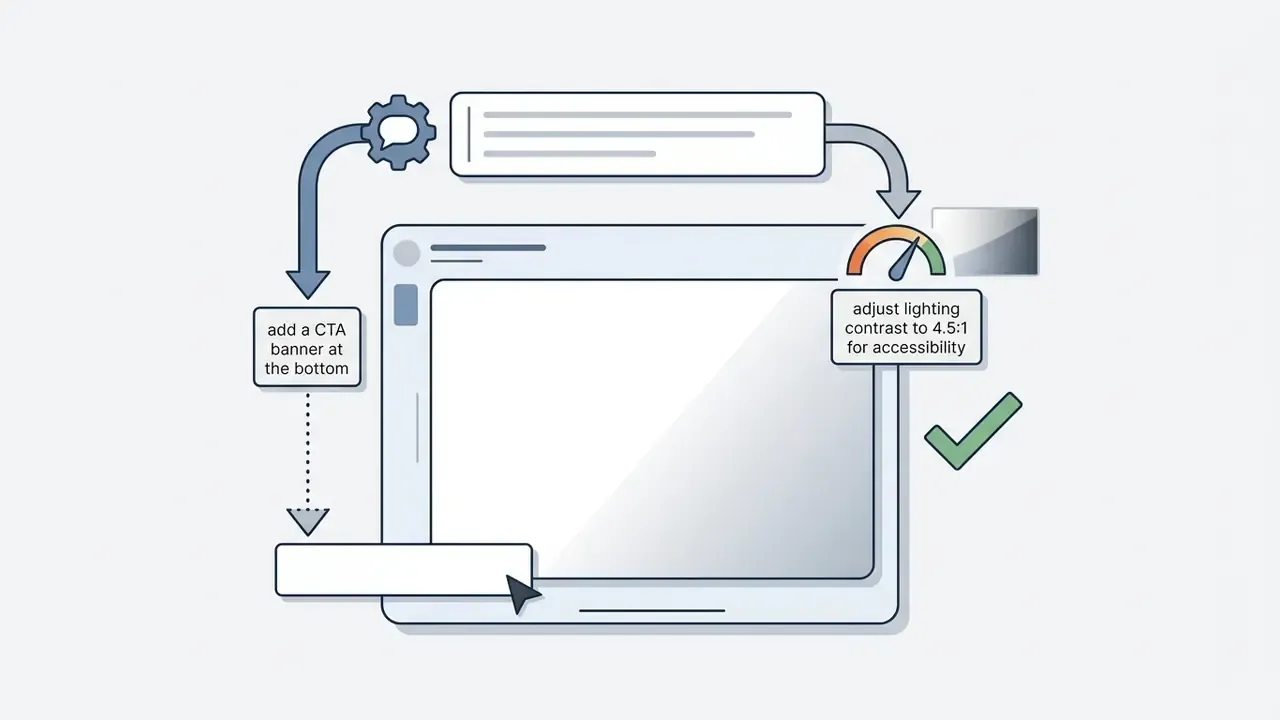
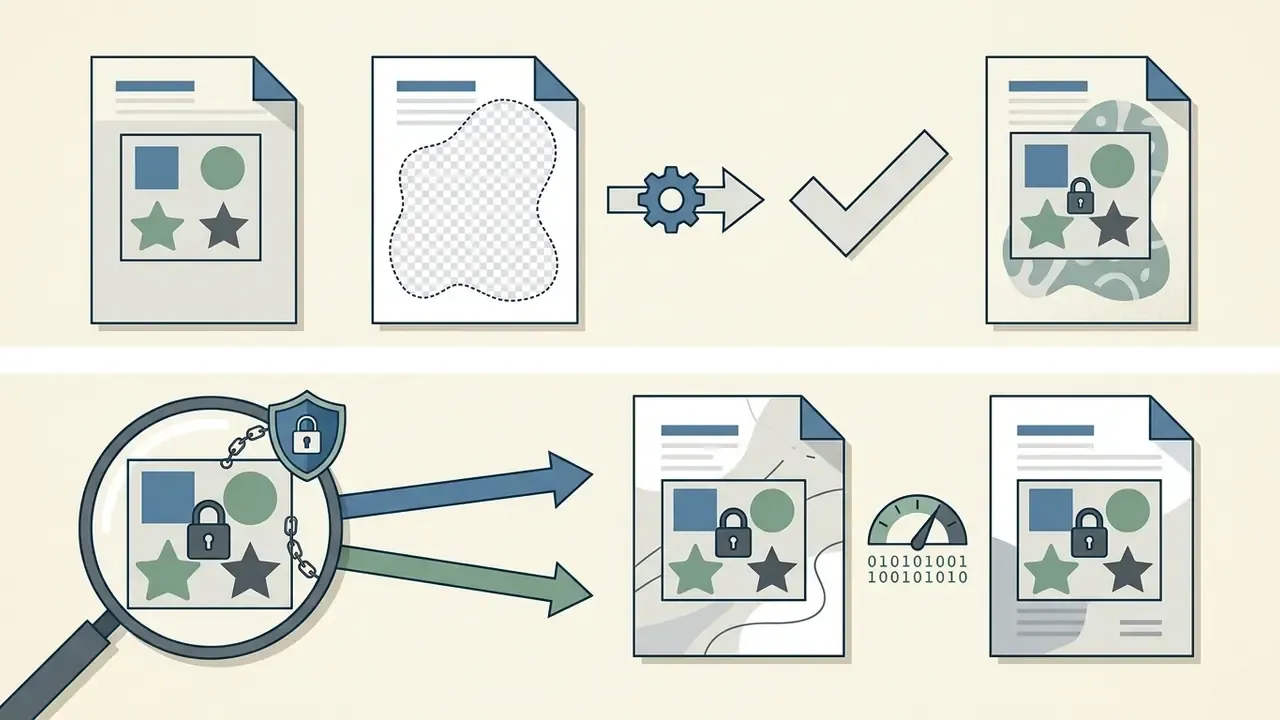
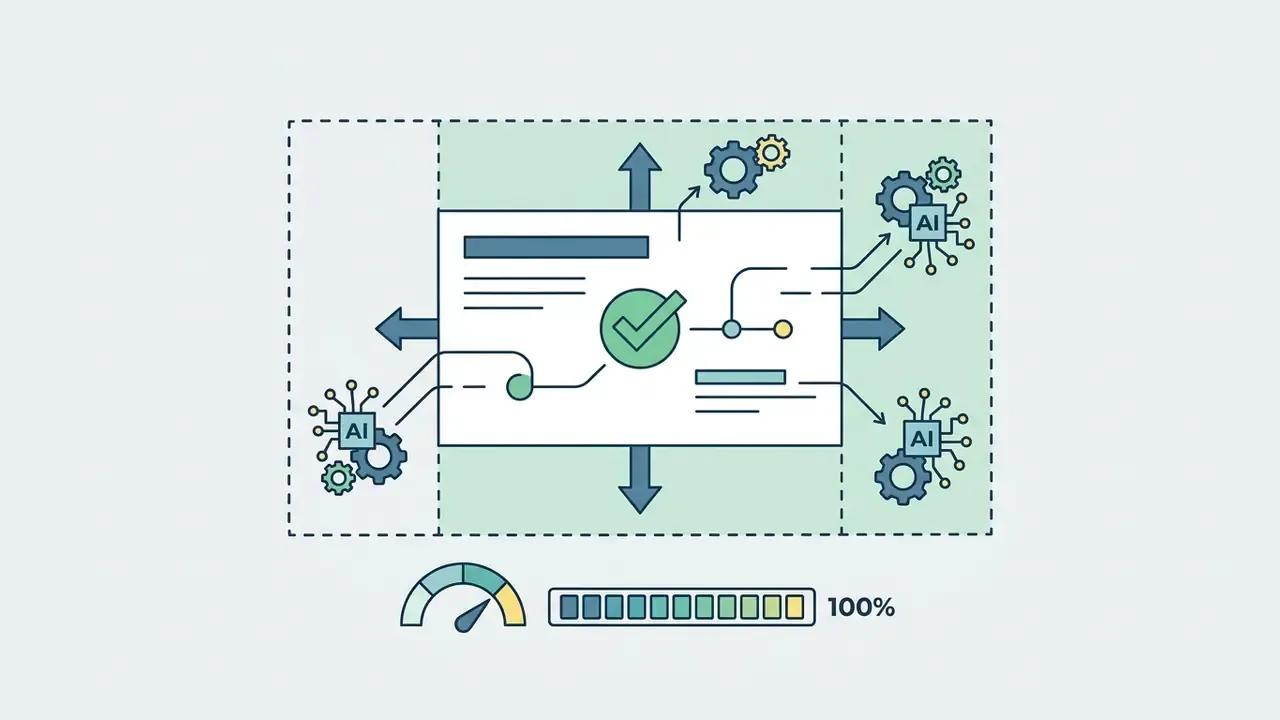
The compliance advantage of region-level editing is reproducibility: a masked edit changes one documented element, whereas full regeneration produces a new asset that must be re-reviewed end to end.
Documented disclosure standards. Institutional publishing and public-health communication standards now specify explicit labeling when generative tools produce or substantially modify public assets. IEEE requires the AI system to be identified and AI-generated sections marked with the level of use. CDC guidance states that text created in part or whole by generative AI must be clearly labeled, and that images or video must carry a visible watermark or label plus caption, alt text, transcript, or note. Elsevier requires an AI declaration disclosing the tool, version, and manner of use, including image generation or alteration, while Wiley requires authors to document when AI-generated images were created and to retain the tool's terms of service.
How to Create Social Media Posts With AI
Executing a controlled workflow with an ai create social media post engine requires a systematic process covering planning, generation, validation, and export. The steps below also apply when you ai create social media content in series rather than one post at a time.
Start With an Idea, Goal, and Prompt
Effective content generation begins with a structured prompt containing five core elements: role, task, context, constraints, and target format. Establishing these parameters prevents generic output and reduces manual editing time. Published B2B prompt frameworks describe the same skeleton under the RACE label, role, action, context, execute, and recommend attaching one or two example outputs when brand voice matching matters.
A regional fintech firm (illustrative example) sought to increase awareness for its automated commercial lending product without increasing agency overhead. The marketing lead submitted a structured prompt instructing the ai post maker to act as a B2B risk manager, summarize key lending efficiencies in three bullet points, enforce a professional tone, and append a specific landing page CTA. The system generated three compliant text options within seconds, eliminating roughly two days of initial agency drafting.
Generate a Post, Caption, and Visual Concept
Running the prompt causes the engine to produce paired text captions and visual recommendations. Modern systems generate square feed graphics alongside complementary copy in a single operational step, which is what most teams mean when they say they ai create post assets end to end. Effective visual prompts stay short and specific: one to three sentences covering purpose, subject, action, setting, and visual style, since the text brief is the sole input the image model receives.
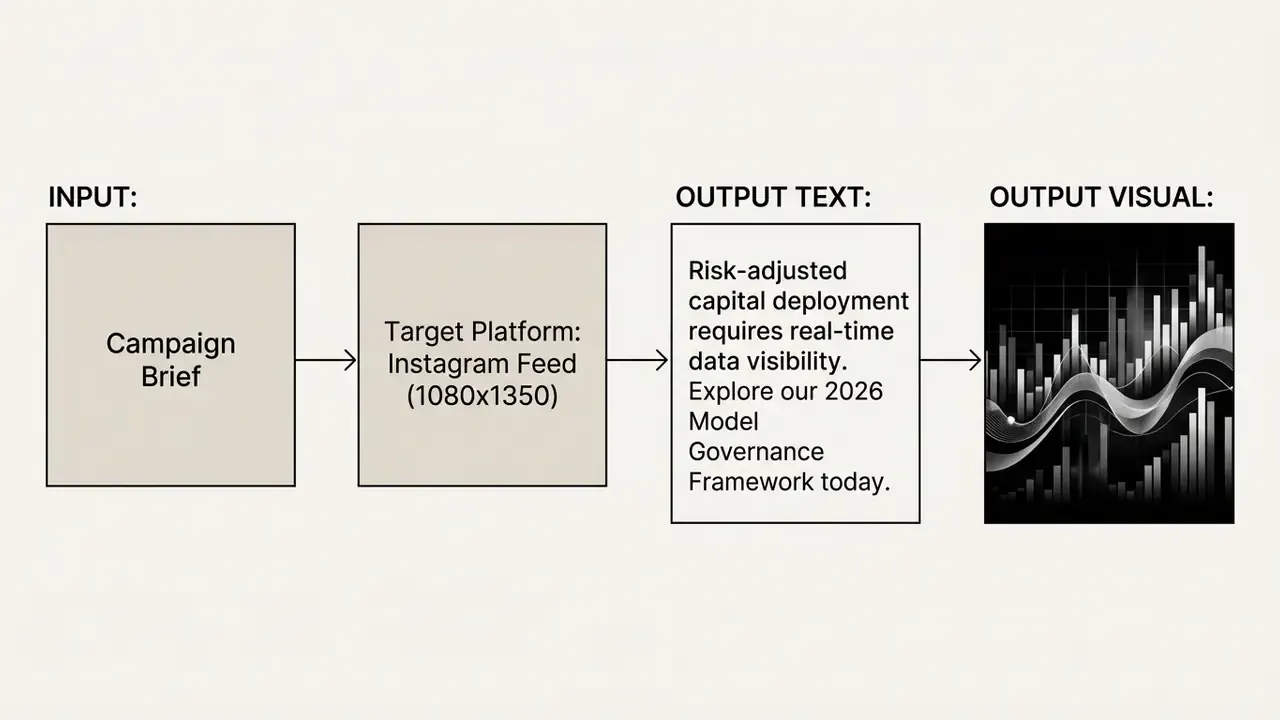
Teams extending a static creative into motion for Reels or Shorts can review image-to-video AI tools and their API cost structures before committing to per-asset video generation. Creators exploring stylistic visual variants can also review AI art generators and free AI art generators to evaluate style control, watermark policies, and content moderation boundaries across public generation models.
Generate Social Posts for Every Social Media Platform
Each social media network enforces distinct technical formats, audience expectations, and regulatory disclosure rules. A centralized ai generator for social media posts must adjust text framing and media dimensions according to target channel specifications.
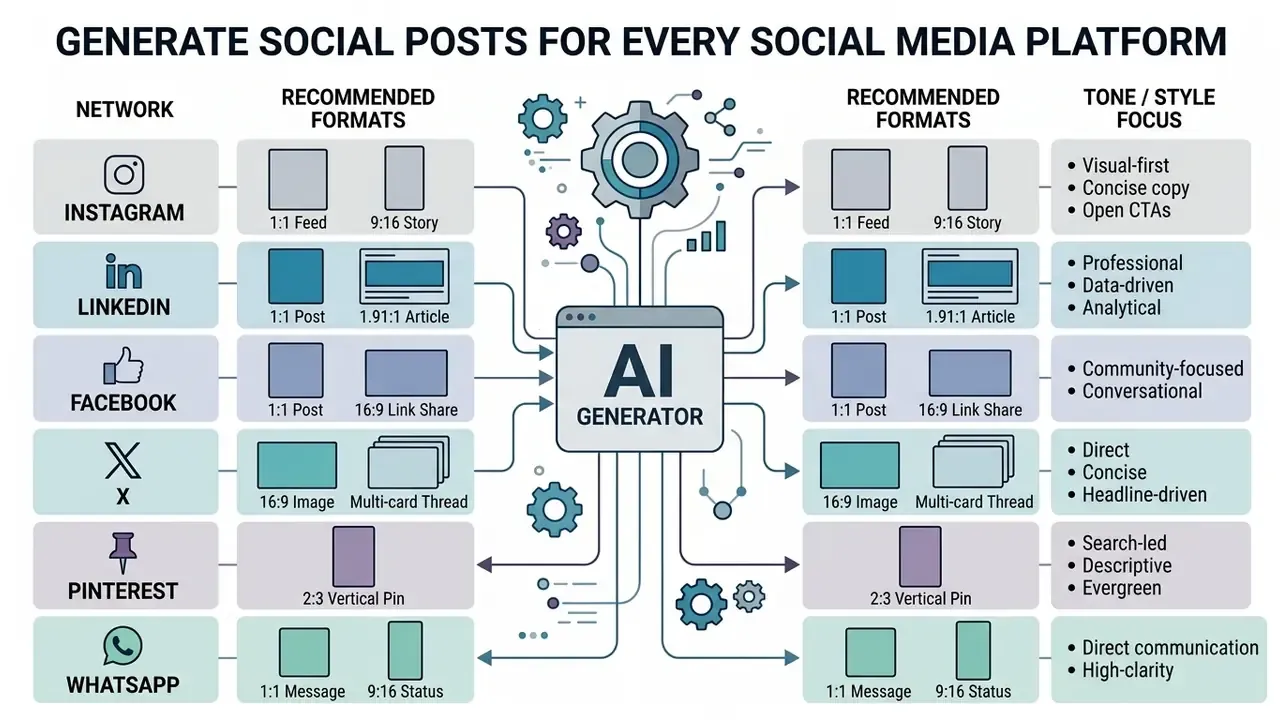
Instagram Posts, Stories, and Product Designs
Instagram generation focuses on visual assets paired with concise, engaging captions. Standard formats include square feed posts (1080x1080), vertical posts (1080x1350), and full-screen vertical Stories (1080x1920). Product cards are generated from catalog-tagged imagery in commerce surfaces rather than from a separate fixed canvas, so product data quality determines card accuracy.
Under Meta's 2026 platform policies, realistic synthetic media generated or altered by AI tools must include visible "AI Info" tags to ensure viewer transparency (Meta Transparency Center, 2026).
The operational takeaway for brand teams is that format and framing drive response more than the generation method. Synthetic imagery amplifies a strong format rather than substituting for one.
Publishers creating specialized short-form video assets should consult guides on AI video generators to understand duration limits, watermark policies, and algorithmic moderation controls on visual media platforms.
LinkedIn Posts for Business and Personal Brands
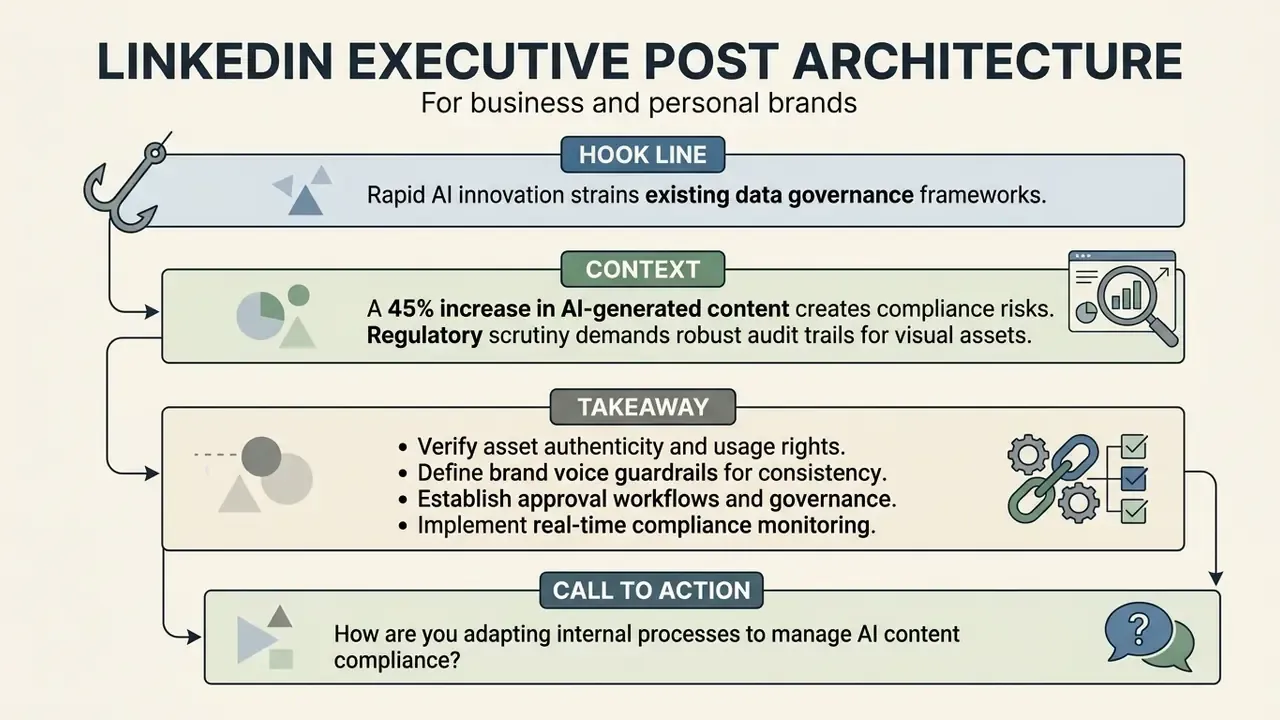
LinkedIn content requires analytical framing, professional insights, and clear structural organization. Using an ai business post generator allows executive teams and B2B marketers to draft thought-leadership posts that adhere to corporate governance standards.
Official LinkedIn publishing research indicates that posts structured with a direct hook line, a single core takeaway, and an open-ended discussion question yield higher engagement across professional networks (LinkedIn Publishing Playbook, 2025). Executive playbook guidance adds a portfolio constraint: maintain three to five recurring thought-leadership lanes, a recognizable tone, and a rotation across short posts, long articles, documents, and video rather than a single repeated format.
Executives who front these posts with a personal visual identity often standardize portraits through AI headshot generators, keeping profile imagery consistent across regional leadership teams.
Facebook, X (Twitter), Pinterest, and WhatsApp Formats
Cross-platform distribution requires adapting primary messaging to fit individual network features:



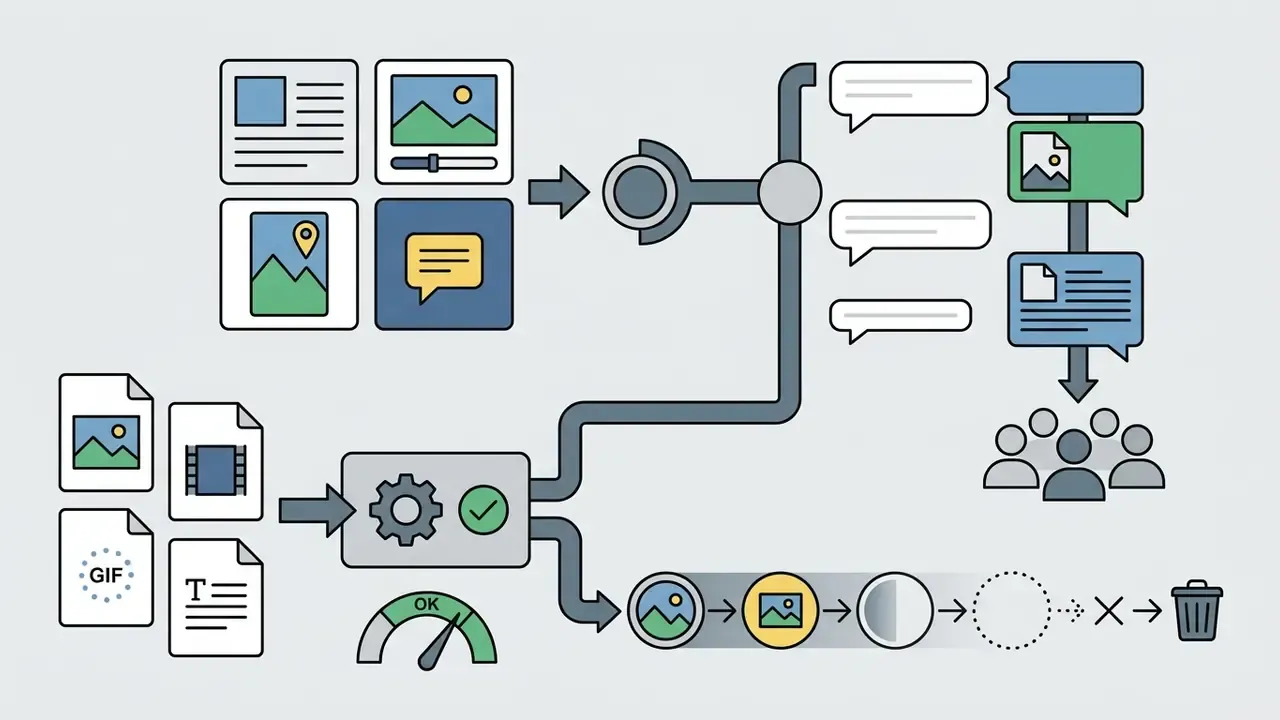
That concentration pattern matters for brand safety monitoring: synthetic visual content on X clusters around a small number of high-volume accounts, which makes provenance checks on inbound trend imagery more valuable than blanket volume alerts.
Media teams working with motion formats for messaging status updates can review free AI video generators for technical insight into short-form video compression and platform delivery, and use reverse image search tooling to verify the provenance of third-party visuals before resharing.
Multilingual Post Generation and Cultural Localization
Scaling campaigns across global markets requires more than direct word-for-word translation. Advanced AI social media generators incorporate regional language models supporting 40+ languages (including English, Spanish, German, French, and CJK languages). These systems automatically adjust tone, localized idioms, and character limits based on market-specific social networks (for example Line, WeChat, or regional X trends).
Localization workflow controls:
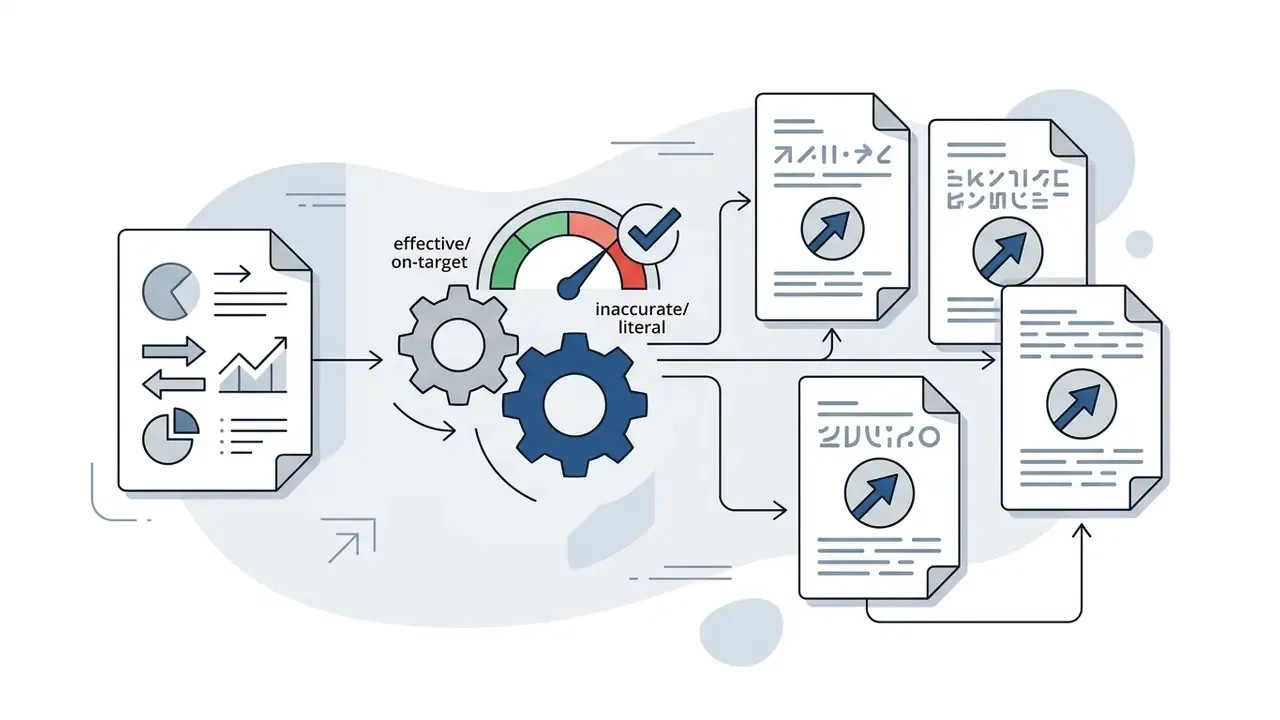
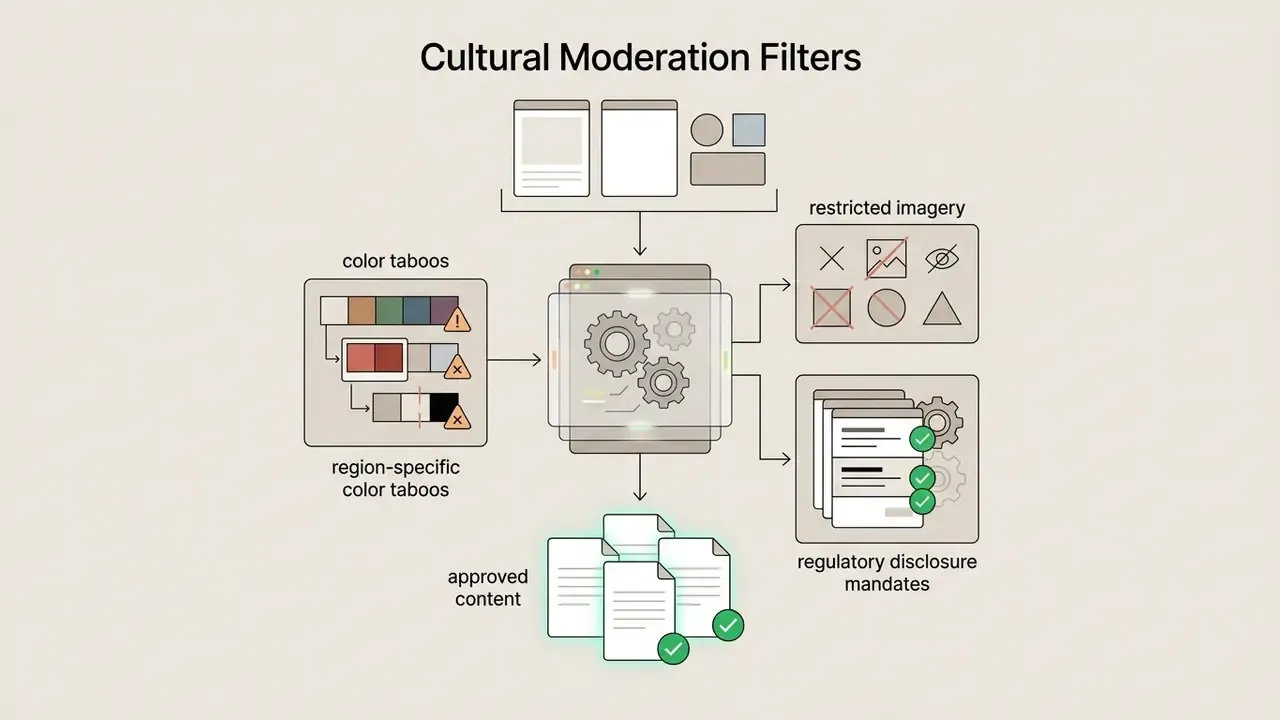

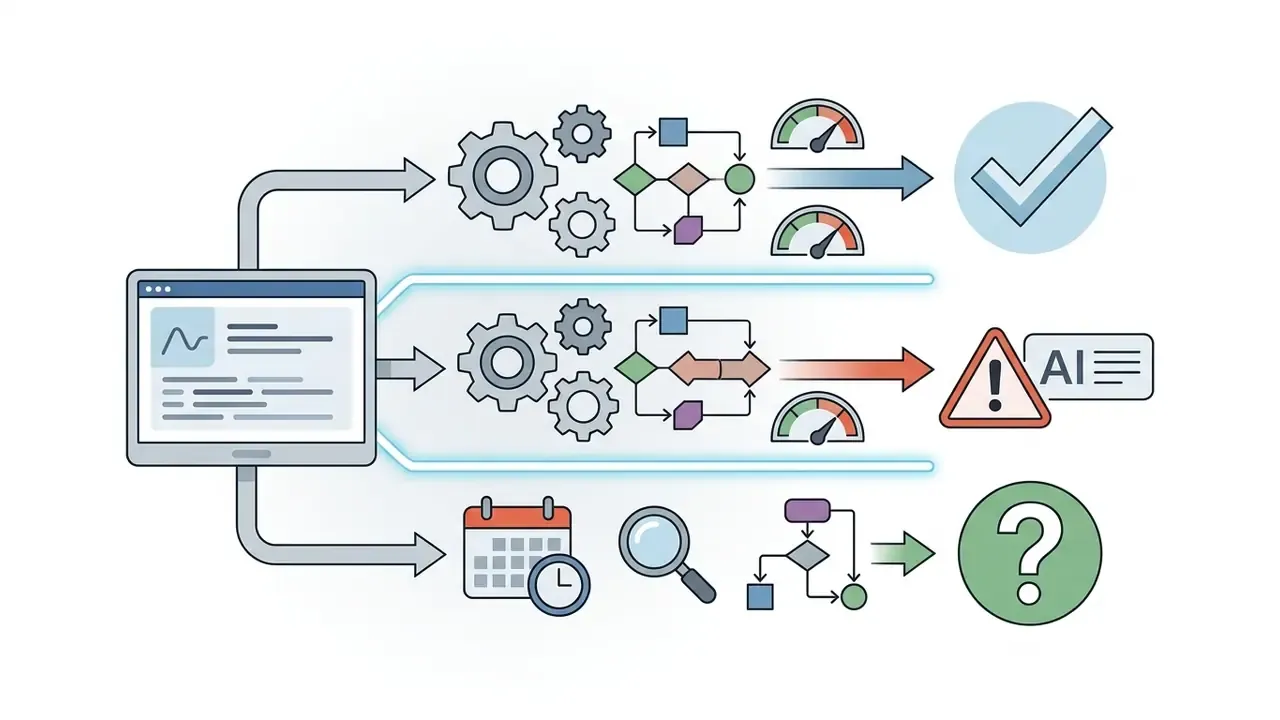
Two operational cautions apply. First, back-translation review by a native speaker remains necessary for regulated claims; a fluent translation can still shift a compliance-sensitive qualifier. Second, hashtag and CTA phrasing rarely transfers well, so localized campaigns should regenerate tags natively instead of translating them.
Use Cases for Businesses, Creators, and Marketing Teams
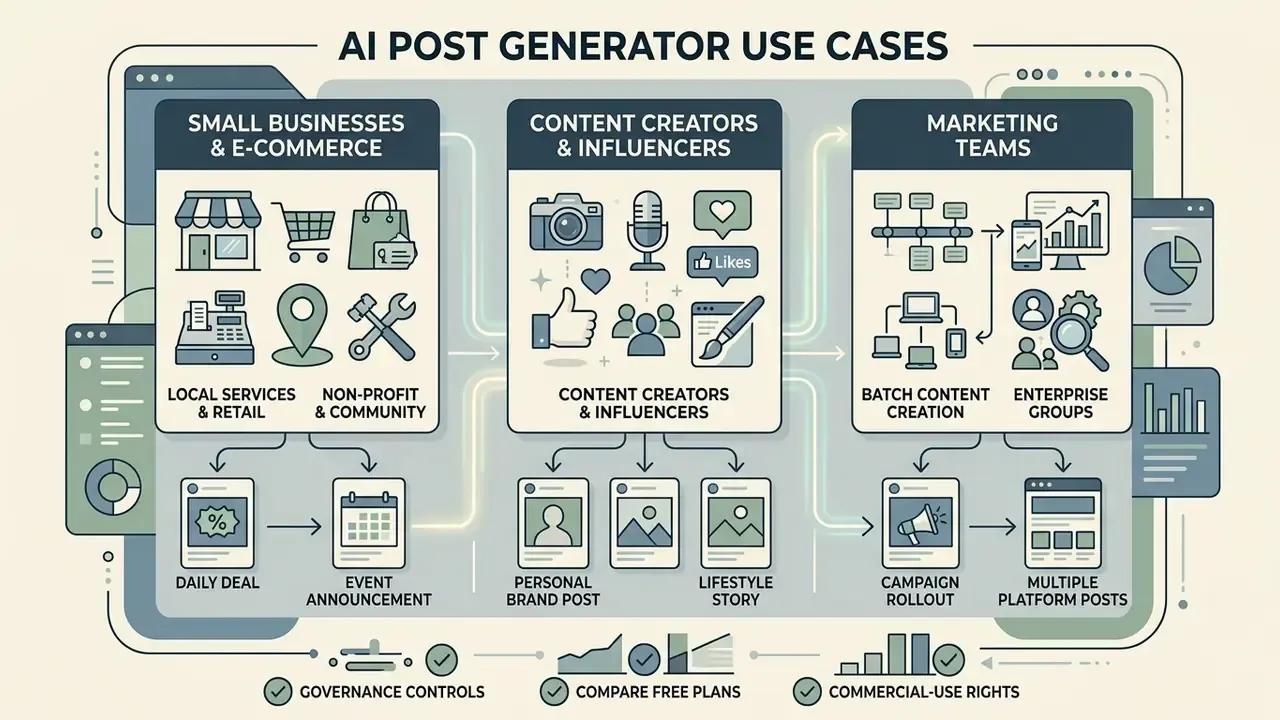
Deploying an ai marketing post generator spans multiple organizational structures, from small businesses managing daily social presence to enterprise marketing groups executing cross-channel campaigns.
AI Post Generator for Small Businesses and E-commerce
AI Post Creator for Content Creators and Influencers
Individual creators and personal brands leverage an ai post creator to maintain posting consistency and overcome topic saturation. An ai post generator for creators typically generates content outlines, draft hooks, and suggested visual themes, which lowers the skill barrier for people publishing without a design background.
Research analyzing creator posting habits found that only 2% of creators rely on fully unedited AI outputs (Social Media Creator Study, 2026; survey-based, sample composition and platform mix not published, so treat the figure as directional). Successful creators use AI tools primarily to accelerate initial drafting, performing manual editing to preserve authenticity.
On the consistency claim specifically, the supporting evidence comes from separate platform analysis rather than the creator survey:
A comparative 2026 dataset also found that virtual (AI-persona) accounts published roughly 17 posts per month versus about 32 for conventional creators, and only three of ten AI-driven accounts sustained a regular schedule. Evidence, then, that automation raises drafting speed but does not by itself produce cadence discipline.
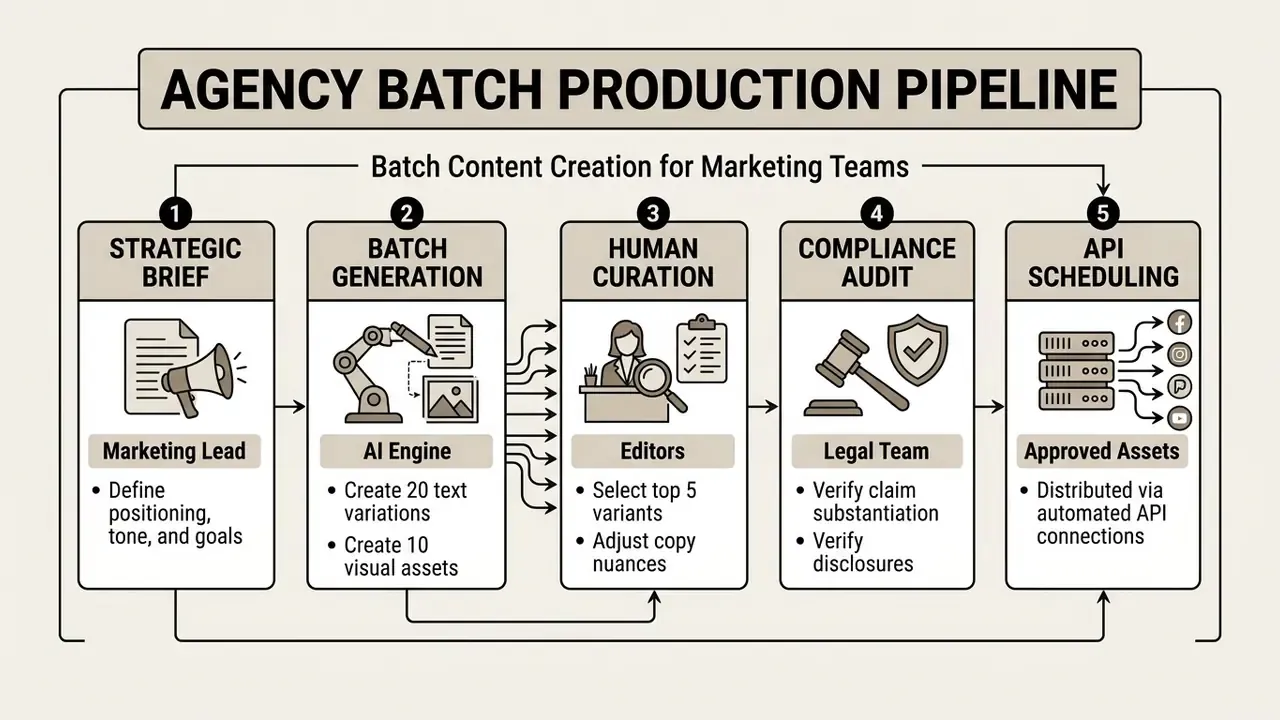
Batch Content Creation for Marketing Teams
Marketing departments use batch processing workflows to produce large volumes of campaign assets from a single core brief. This approach ensures brand alignment while allowing rapid content distribution across multiple regional teams and keeps social media marketing output on-brand at scale. Agency-side playbooks formalize the same sequence as a fixed handoff chain: human creative brief, AI generation, human curation, collaborative refinement, strategic approval.
Free Plans, Pricing, and Commercial Use of AI-Generated Posts
Evaluating AI social generation platforms requires assessing subscription tier structures, usage quotas, and the legal ownership rights associated with generated commercial output.
What a Free AI Post Generator Usually Includes
Free-tier offerings allow users to evaluate basic platform capabilities under restricted usage conditions. An ai free post generator typically provides limited monthly generation credits, basic text generation, and access to standard templates. Marketed variously as ai post generator free, ai post maker free, or a trial workspace, the constraint pattern is similar across vendors.
Common free plan restrictions include:
- Daily or monthly character limits (for example, 1,000 to 10,000 characters).
- Restricted access to advanced brand kit configurations.
- Mandatory platform watermarks on generated visual assets.
- Excluded API connectivity and batch processing tools.
Published free-tier quotas illustrate the range: one major design suite caps its writing assistant at roughly 25 total uses on the free plan, a scheduling tool limits browser-based generation to five post recommendations per day (with retries and tone changes counting against that ceiling), and text-focused generators commonly cap output around 10,000 characters per month. Quota reset rules differ by vendor, per day, per month, or per action, so pilot planning should confirm the counting method rather than the headline number.
Operators reviewing financial options across software providers can consult AI Media Pricing Guides for structured cost analyses.
When It Makes Sense to Upgrade Your Plan
You get access to more features by upgrading your plan, and that upgrade is justified when organizational requirements exceed basic generation limits. Paid tiers unlock the operational capabilities needed for commercial scaling.
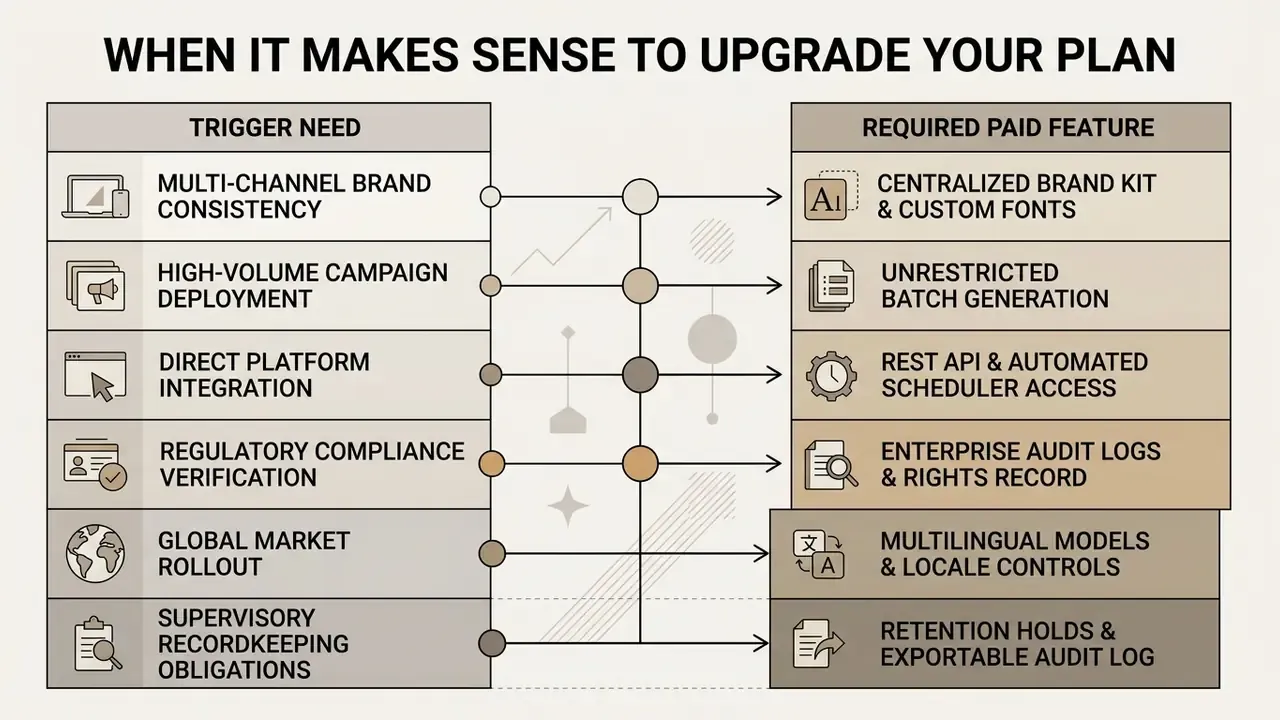
Vendor API documentation reinforces the same three upgrade drivers observed in enterprise procurement: programmatic batch creation and tracking, brand-kit application by identifier so automated output stays on-brand, and machine access for scheduled workflows.
Risk-Adjusted ROI Model for Regulated Teams
Standard vendor ROI math counts hours saved on copywriting and design. In regulated environments that understates cost, because every generated asset consumes review capacity and creates a record. A defensible model separates gross benefit from control cost:
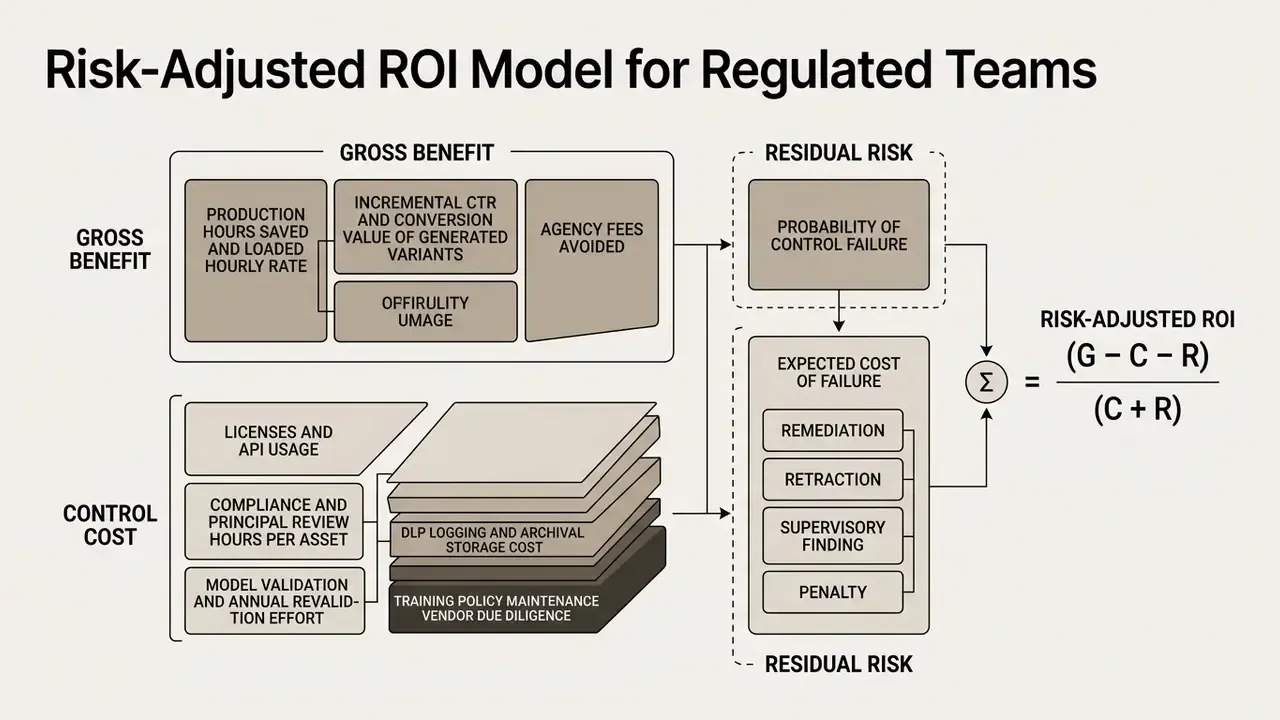
Two modeling notes. First, review cost scales with asset count, not with campaign count: a workflow that generates twenty variants where five were previously produced can consume more compliance capacity than it saves in production. Cap generated volume at reviewable throughput. Second, disclosure effects belong in the benefit term, since controlled studies have found that visible AI disclosure can reduce consumer engagement on some platforms. The same asset may perform differently labeled versus unlabeled, while the label remains mandatory.
A caveat on the residual-risk term: probability of control failure is rarely measurable at pilot scale. Most teams substitute a scenario range and revisit it after two quarters of published volume. That is defensible if the assumption is documented, and indefensible if it quietly disappears from the business case.
How to Check Commercial-Use Rights Before Publishing
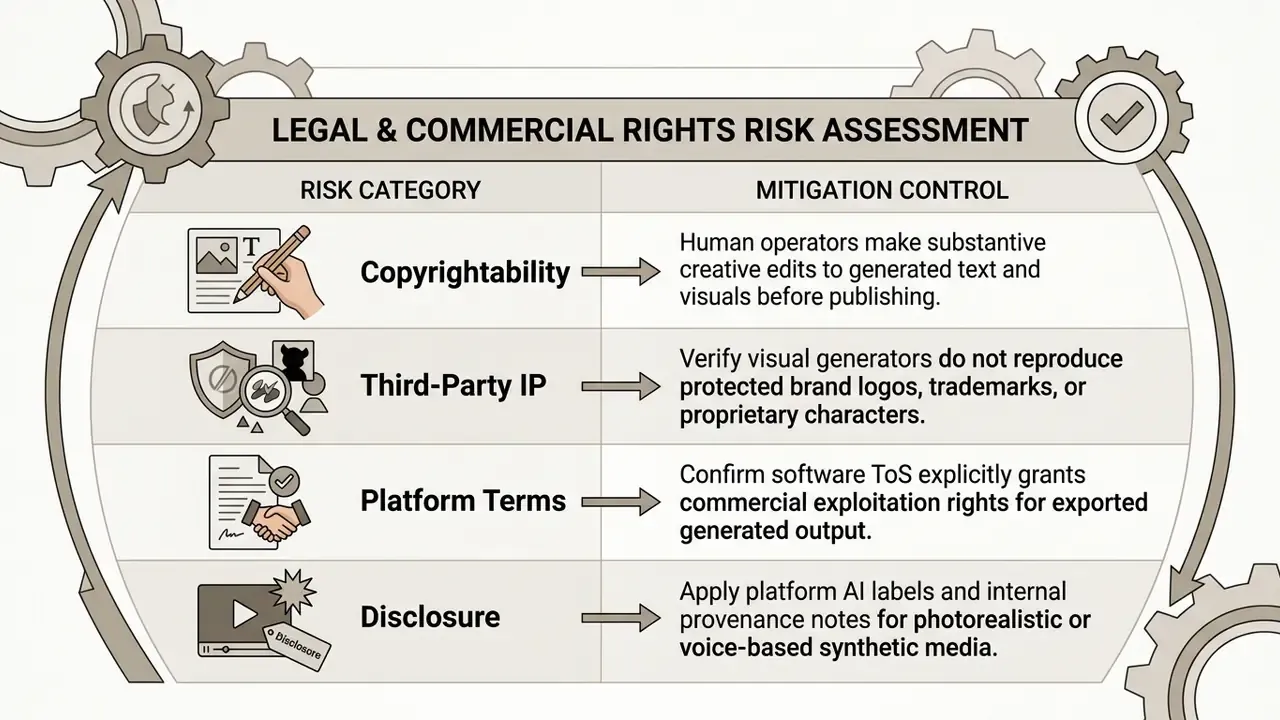
Third-party IP verification is easier when supported by tooling: AI image detectors and reverse-image verification help confirm that a generated visual does not closely reproduce an existing protected asset before it enters paid distribution.
Enterprise teams facing regulatory scrutiny or legal review regarding synthetic media IP can track emerging precedents through our AI Litigation and Case Timelines resource.
Legal Verification and Commercial Rights Assessment
Commercial viability depends on explicit compliance with vendor Terms of Service and statutory IP regulations. Major AI platform providers update usage terms regularly regarding asset ownership:
- Canva AI Terms Grants commercial deployment rights for exported designs incorporating Canva AI assets, provided users comply with base content license agreements. No copyright ownership claim is asserted over user inputs or generated outputs; Terms of Use updated 2026-03-29, with a separate Content License Agreement and AI Product Terms page (Canva Terms of Use, 2026). Operators comparing design-suite licensing can review the Canva AI Generator overview.
- Copy.ai Terms Grants users a worldwide, non-exclusive license to use, copy, modify, sell, create derivative works from, distribute, publicly display, and commercially exploit Generated Content for lawful business purposes; Terms of Service updated 2026-08-25 (Copy.ai Terms of Service, 2026).
- Jasper AI Terms Retains underlying platform IP as the exclusive property of Jasper and its licensors while granting users operational rights to output, subject to strict policy compliance against deceptive generation; Terms of Service updated 2026-08-25 (Jasper Terms of Service, 2026).
A structural note for procurement: Canva distributes AI rights language across multiple documents (Terms of Use, Content License Agreement, AI Product Terms), whereas Jasper and Copy.ai concentrate commercial-rights language inside their primary Terms pages. Reviewing only one document per vendor produces incomplete conclusions.
Organizations must independently audit vendor terms to ensure output licensing aligns with their specific commercial deployment requirements. Where final assets must meet print or paid-placement resolution standards, verify that upscaling and enhancement steps are covered by the same license; see guidance on commercial use of AI image upscaling and expansion tools. If technical or billing issues arise during enterprise integration, operators can consult AI Media Support and Troubleshooting resources.
FAQ
Can an AI post generator create posts directly from my website URL?
Yes. URL ingestion pipelines scrape page metadata, headings, product attributes, and hero imagery, then synthesize platform-specific captions and banners. Accuracy is bounded by the source page: outdated pricing or unsubstantiated claims carry through into the generated post, so scraped output still requires claim review.
How many languages can these tools handle, and is translation enough?
Enterprise-grade systems commonly support 40+ languages. Translation alone is insufficient. Localized posts need idiom adaptation, locale formatting (currency, dates, units), regenerated hashtags, and a check against region-specific platform disclosure rules.
Can I turn a text post into a Reel or Short automatically?
Yes. Text-to-video engines convert caption copy into a script and storyboard, match licensed footage, add neural voiceover with timed captions, apply brand overlays, and re-render between 9:16 and 1:1. Review auto-generated subtitles for proper nouns and confirm licensing for voice and stock assets.
Do I have to regenerate an image to fix one detail?
No. In-canvas Touch Edit and masked inpainting confine changes to a selected region or text block, preserving approved logo placement and legal footers. This also reduces re-review scope compared with full regeneration.
Do I own the commercial rights to generated posts?
Vendor terms commonly grant broad commercial exploitation rights to output, but copyright protection is a separate matter: purely machine-generated material without substantial human creative input is generally ineligible for protection under US Copyright Office guidance. Substantive human editing strengthens the claim to the human-authored portions.
Is disclosure of AI use required?
On Meta surfaces, photorealistic synthetic video and realistic-sounding audio require AI labeling, and content detected via industry provenance signals may be auto-labeled. Institutional standards from IEEE, CDC, Elsevier, and Wiley require explicit labeling or declaration for AI-generated text and imagery in published materials.
What should regulated firms check before rollout?
SOC 2 Type II assurance, SSO/RBAC, contractual zero data retention, region pinning, exportable audit logs with model version, retention-hold capability, and supervisory review workflow integration. Next Steps: Run a 30-Day Shadow AI and Control Audit
- Inventory usage. Query egress logs for traffic to public generative endpoints from marketing, sales, and communications functions.
- Trace provenance. Sample 25 published posts from the last quarter and attempt to reconstruct model, prompt, and approver from existing records. Log every failure.
- Register the model. Add the generator to the model inventory with owner, intended use, limitations, and validation cadence.
- Gate the input. Deploy PII/MNPI screening at the prompt boundary and route all generation through the sanctioned tenant.
- Cap volume to review capacity. Set a maximum weekly generated-asset count that compliance can actually approve.
- Close retention gaps. Confirm published assets and approval trails land in non-rewriteable archival storage. No evidence, no autonomy. That ordering is the whole point: the pilot earns scale by producing records, not by producing volume.
Appendix A: Superseded Fragments (Retained for Version Traceability)
Company Positioning Notice
Company query: hypeart.ai
No verified information is available regarding legal registration, operating history, commercial products, or official US presence for the domain. All deployment scenarios, case narratives, and organizational examples in this article are illustrative and hypothetical unless attributed to a named published source, and remain unverified by official corporate disclosures. No company USP is claimed here, because none has been verified.